In today’s interiors, the kitchen nook has shifted far beyond its original role as a simple corner for casual meals. Modern designs approach these small dining zones with the same level of care and composition seen in full-scale living spaces.
The focus moves toward balance, texture, and controlled visual rhythm, where every surface, shape, and material serves a purpose.
- Color is handled with extreme precision. Instead of sharp contrasts, natural woods, soft neutral fabrics, and gentle stone finishes create layers of warmth without overwhelming the eye. Materials like oak, walnut, limestone, and boucle fabrics bring depth while keeping tones comfortably close.
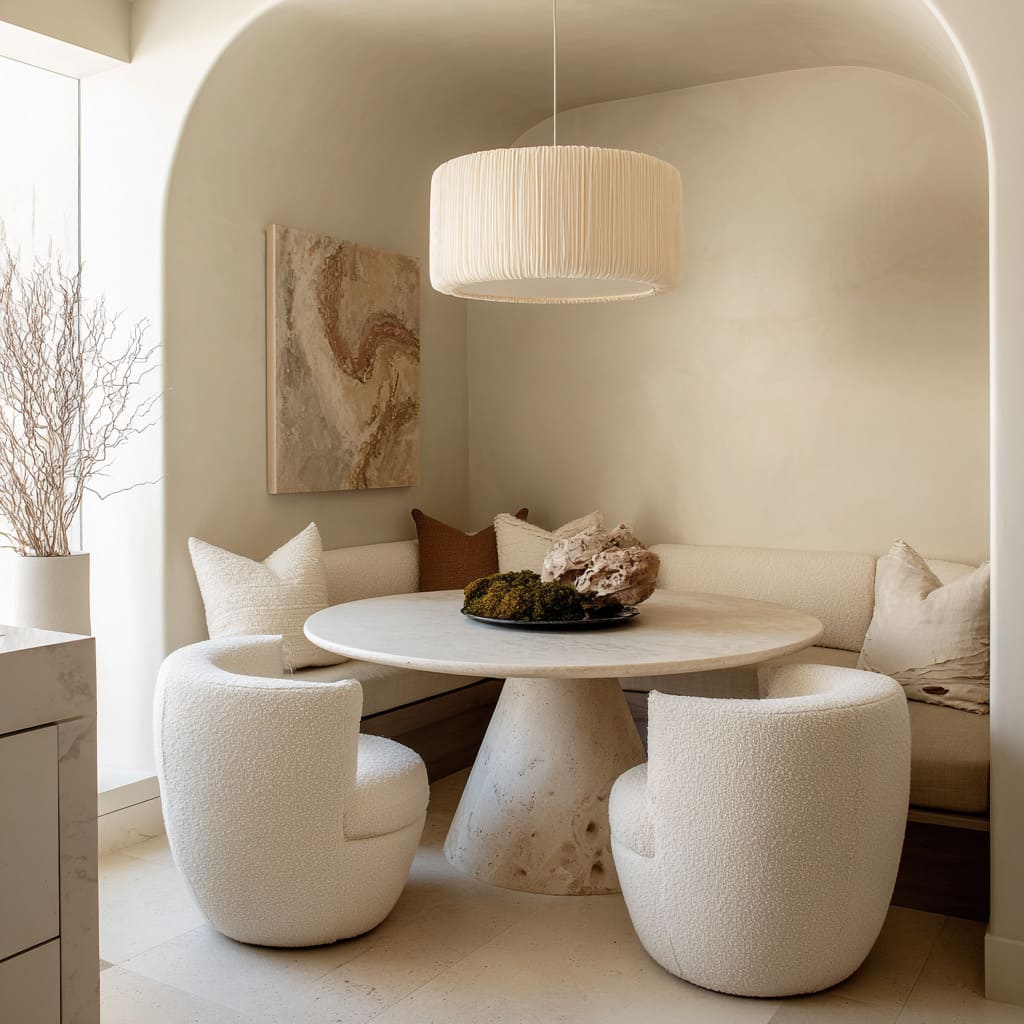
- Geometry becomes part of the comfort. Rounded tables, softly curved seating, and gentle oval forms replace sharp corners, allowing the space to feel both open and protective. These curves aren’t added as decoration—they shape how people physically experience the nook, offering quiet ease and a sense of enclosure.
- Light plays a more active role than simple illumination. Pendants, whether woven, sculptural, or glass, allow sunlight and shadows to create moving patterns throughout the day. These layered shadows introduce subtle variation across walls, fabrics, and tabletops, adding softness to otherwise clean-lined compositions.
- Decoration remains minimal but intentional. Sculptural objects—single-branch arrangements, raw wood, moss-filled bowls—act as quiet extensions of the room’s material language, offering small organic touches that reflect both interior shapes and outdoor surroundings.
- Connection with nature shapes the experience. Floor-to-ceiling windows pull surrounding trees, gardens, or distant views directly into the nook’s composition. Built-in seating often aligns with these views, merging indoor comfort with outdoor calm.
Through this blend of careful material control, geometric softness, and visual restraint, modern kitchen nook designs create spaces that feel calm, grounded, and visually rich without excess.
Controlled Visual Weight Through Negative Space and Mass Distribution
In modern kitchen nook design, a quiet balance emerges between solid presence and visual breathing room. What stands out is how open space plays as significant a role as the materials themselves.
The area surrounding the table is often kept intentionally open, allowing the structural elements—walls, expansive windows, or built-in seating—to quietly anchor the scene without visual overload.
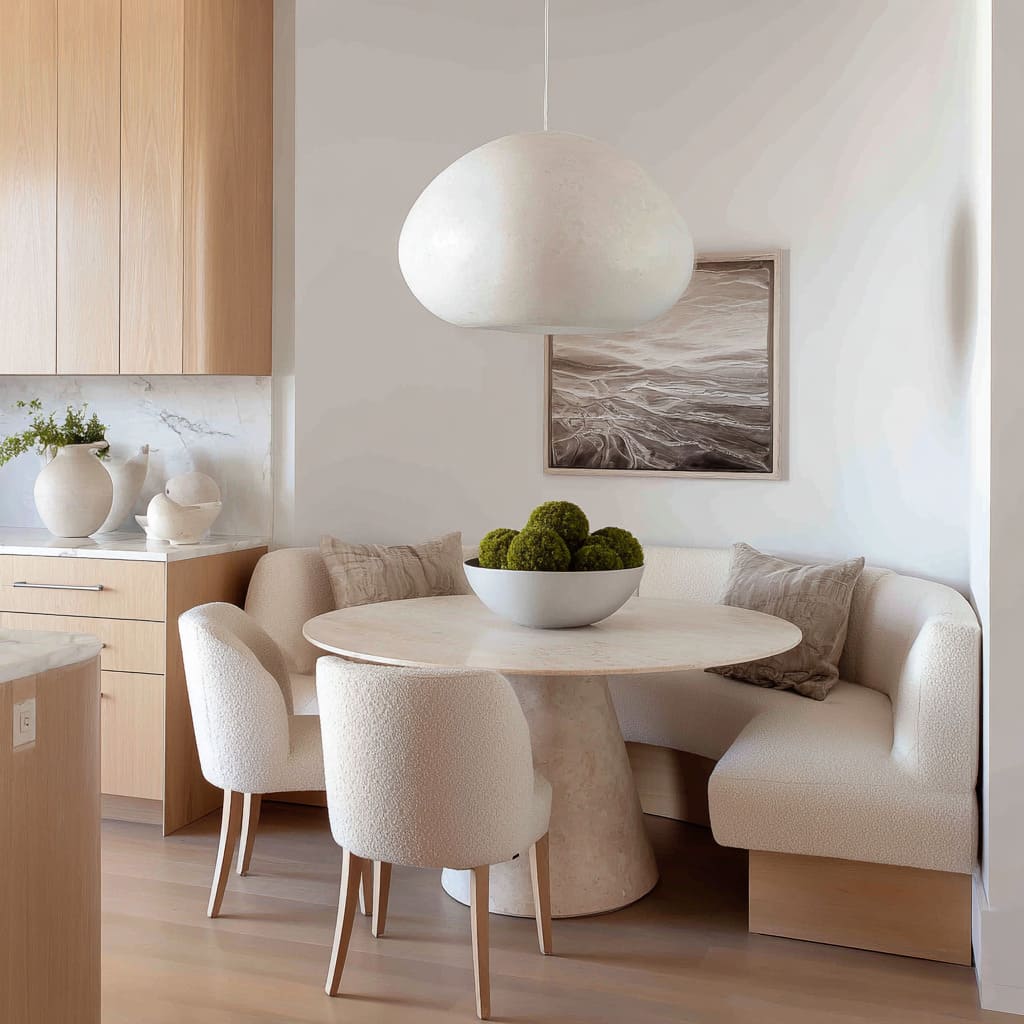
The tables often act as sculptural statements. Thick cylindrical stone pedestals, solid slabs of wood with visible grain, or softly textured limestone forms serve as steady focal points.
Their grounded appearance pulls attention inward but leaves surrounding space free, avoiding the sense of clutter that can easily develop in confined dining corners.
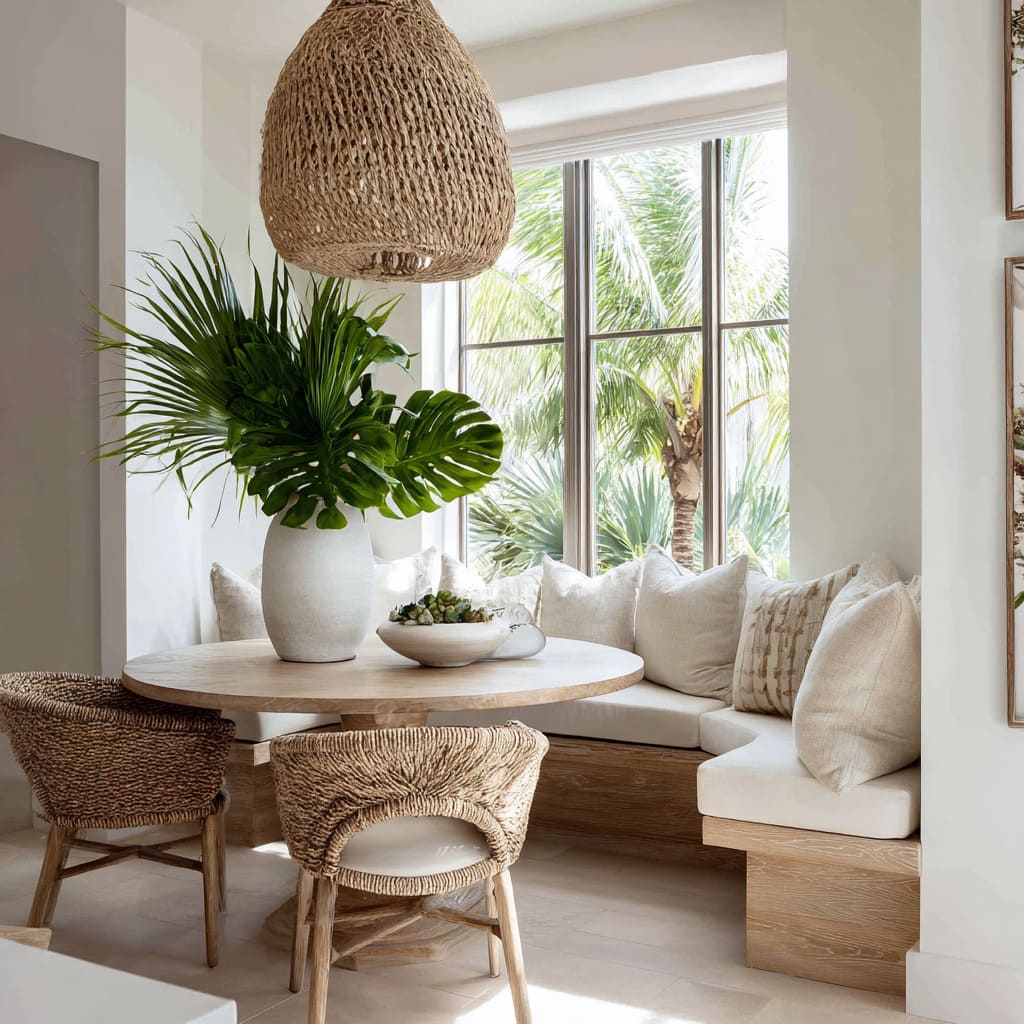
Seating choices also contribute greatly to this controlled sense of weight. Many modern kitchen nook ideas feature chairs with open barrel-style frames or softly contoured silhouettes.
These lighter forms let natural light flow easily through the composition, preventing the area from becoming visually dense even in compact layouts. The balance of solid and open elements ensures the entire nook feels calm, organized, and visually generous despite limited square footage.
This approach uses void and mass as visual language. The restraint creates a clean, composed atmosphere where each object holds its place without competing for dominance.
As a result, the room breathes—calmly anchored, softly defined.
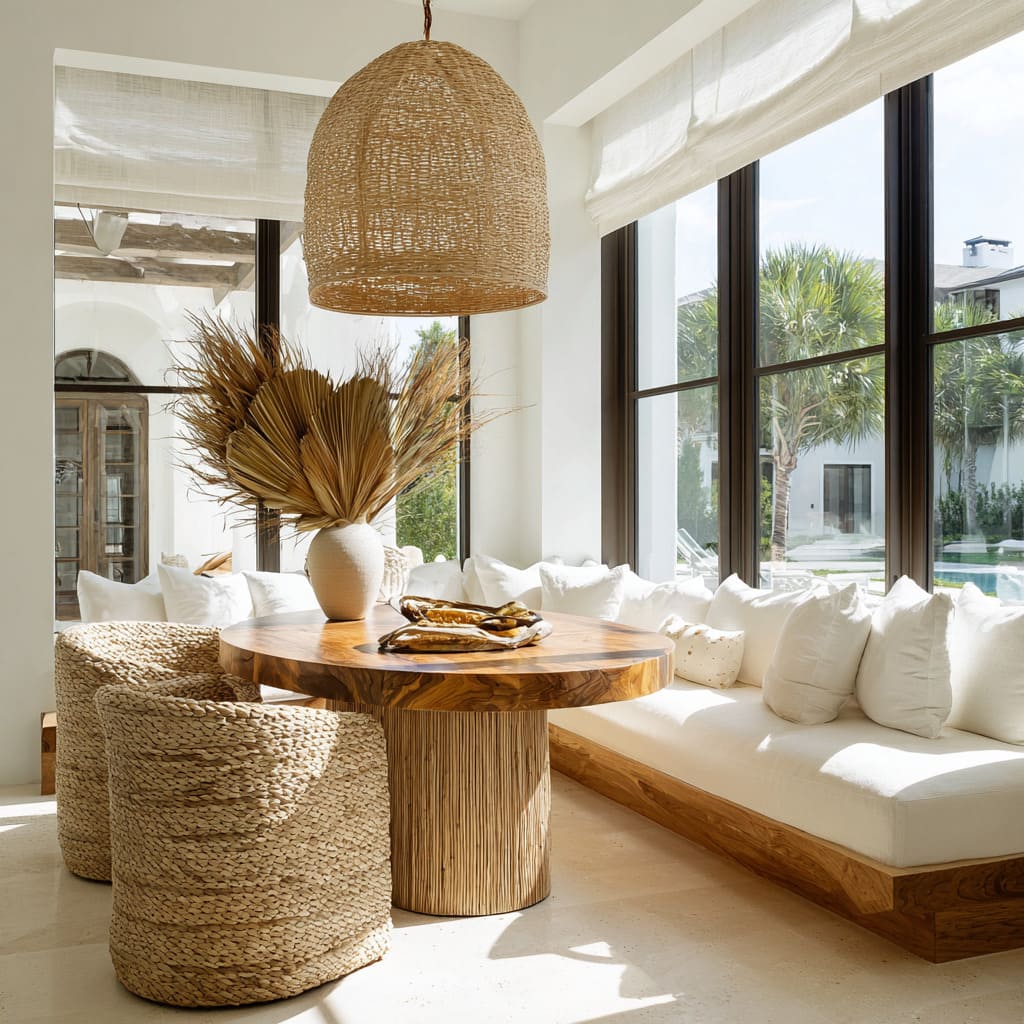
Tactile Geometry: Subtle Echoing of Architectural Lines in Soft Forms
Geometry within modern kitchen nooks is never an accident. There’s a quiet discipline behind the repeating curves, rounded shapes, and fluid forms that consistently appear throughout many modern designs.
Rather than sharp contrasts, such spaces often echo the lines found in their surrounding architecture.
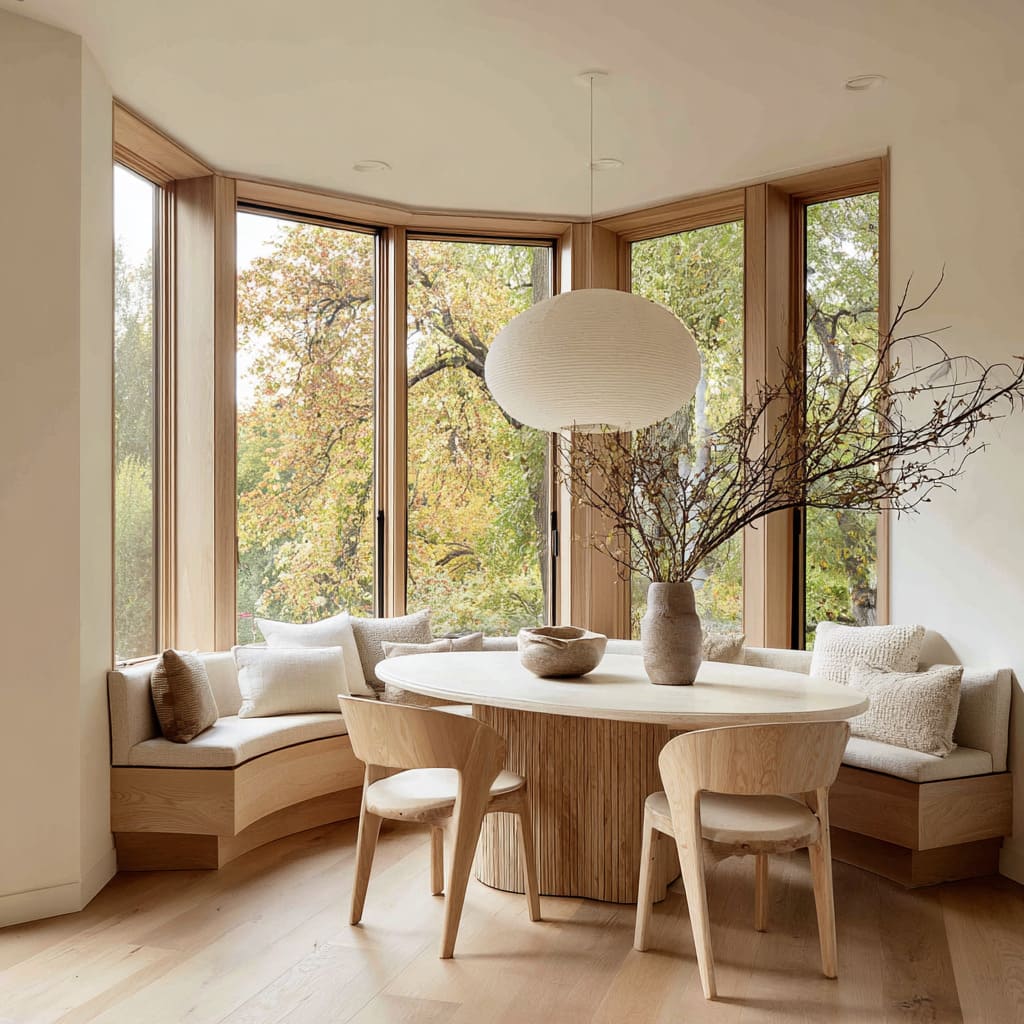
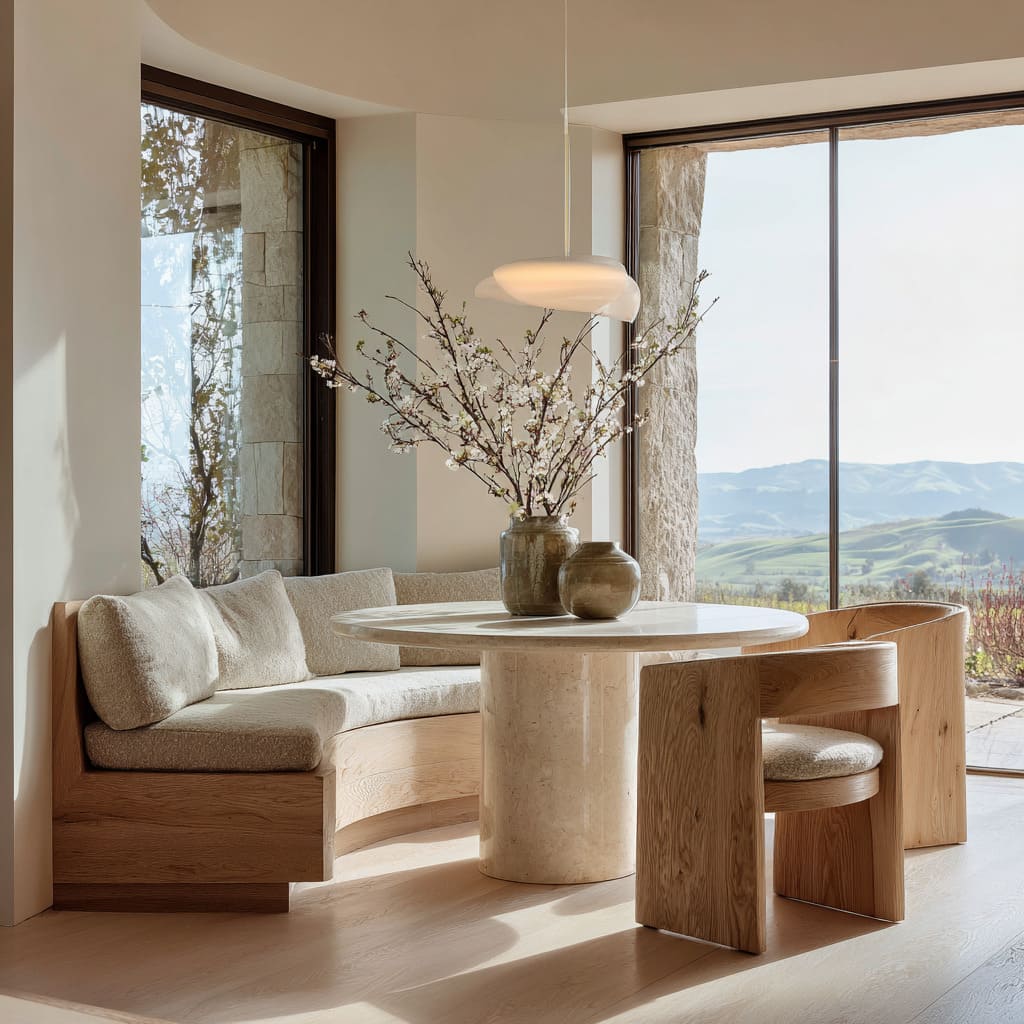
Tables frequently feature gentle curves and softened edges. Whether it’s a fully round tabletop or an oval surface, these shapes often respond to the lines of the windows or built-in seating that surround them.
The repetition of these arcs allows the furniture to blend naturally into the room’s structure, creating visual ease rather than interruption.
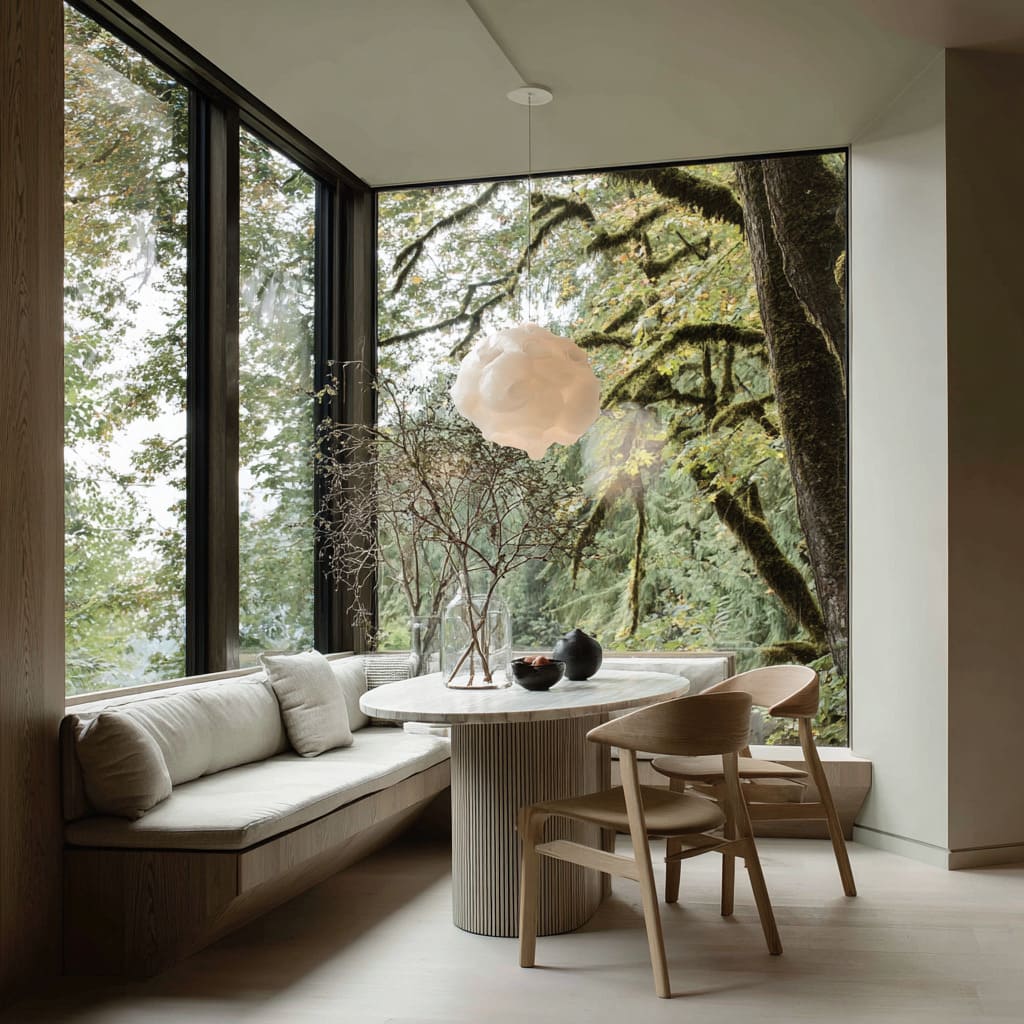
Bench seating mirrors these forms as well. Curved built-ins follow window bays or softly arched walls, wrapping the occupant within the flow of the space.
The seating blends into the room’s architecture, making it feel unified rather than divided into separate elements. Chairs continue this visual rhythm.
Barrel forms, rounded backs, and low sculptural curves reinforce the softness already introduced by the tables and benches. These gentle forms reduce the hard contrast between firm architectural lines like window mullions and floor planes, bringing everything into a quiet dialogue that feels cohesive and thoughtfully balanced.
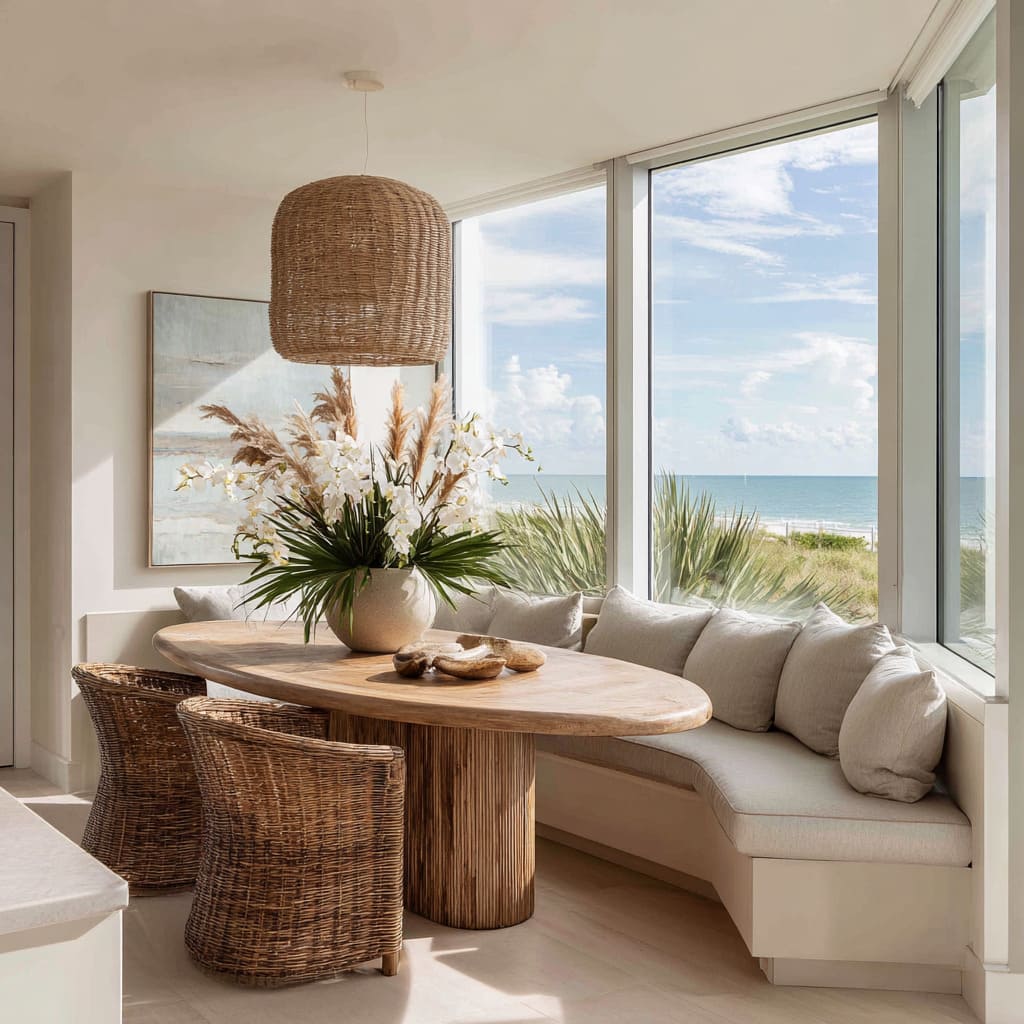
Through this geometric repetition, the room’s structure becomes comfortable to the eye. The gentle forms serve as natural extensions of the walls, windows, and ceiling shapes, allowing every part of the space to relate to one another with ease.
The entire nook feels continuous and inviting, without ever relying on heavy decoration or forced accents.
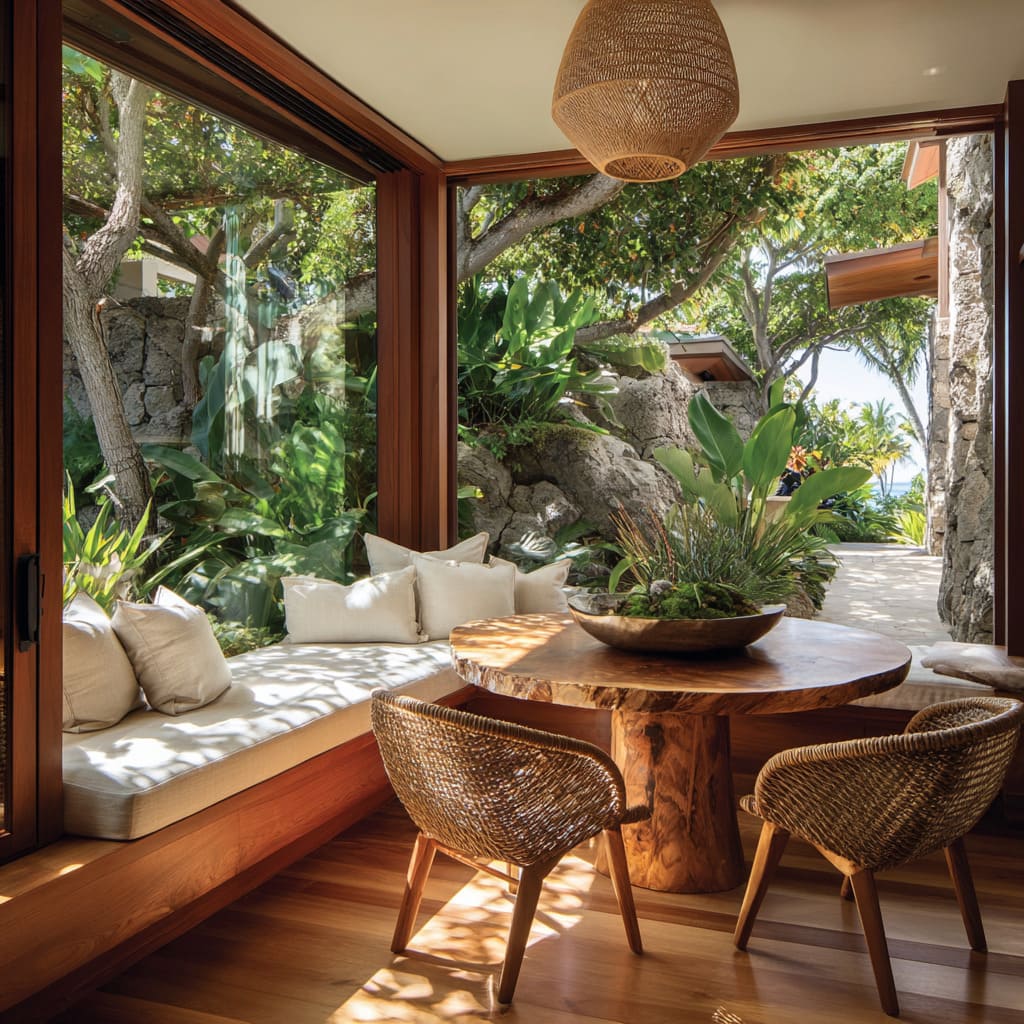
Vertical Rhythms: Micro-Repetitions Within a Horizontal Envelope
Modern contemporary kitchen nook ideas reveal how vertical rhythm can subtly bring movement into rooms that are otherwise horizontally focused. Although seating remains close to the ground, many designs use small vertical repetitions to keep the eye engaged without disturbing the calm flow of the space.
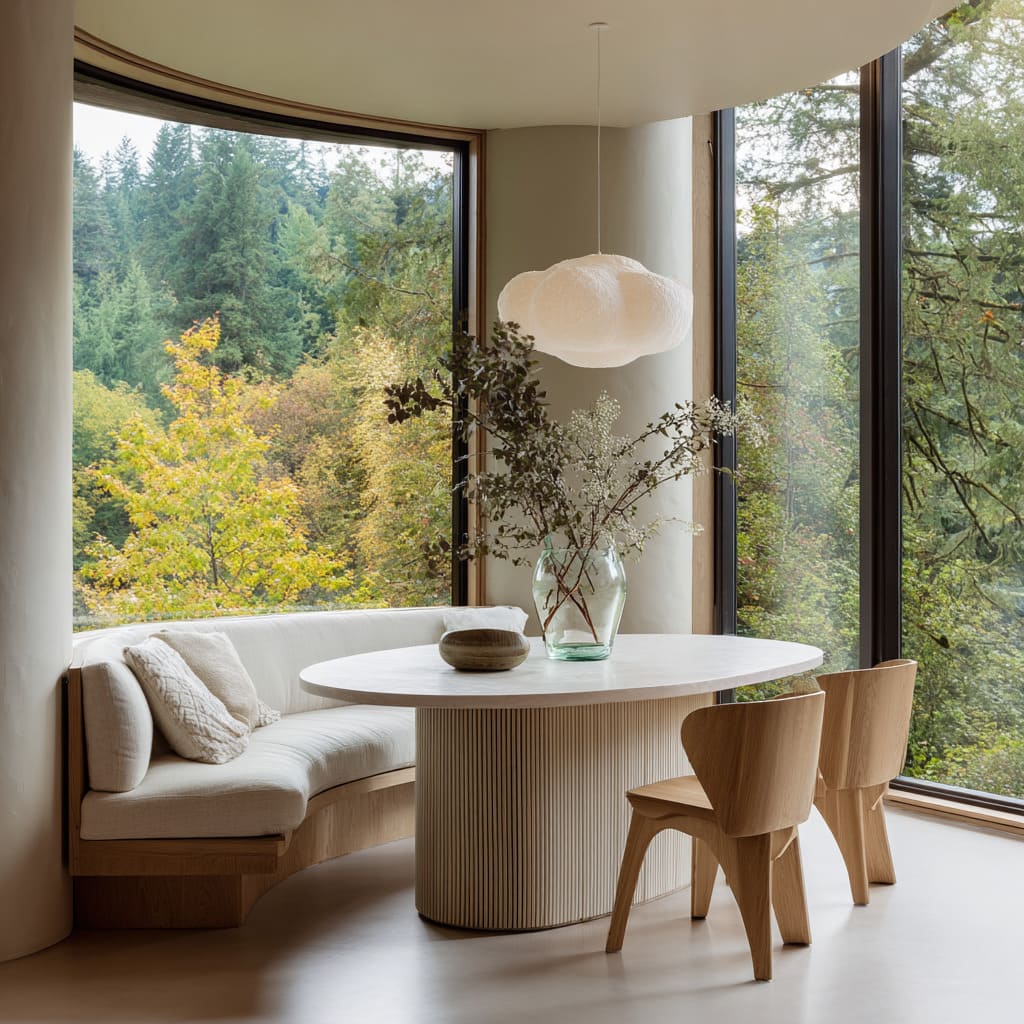
Channel tufting on bench backs introduces vertical softness. These fine seams create quiet, even lines that rise gently from the seat, adding a sense of motion without overwhelming the limited wall height often found in kitchen nooks.
The repetition remains light but creates a gentle energy, pulling the eye upward in a way that feels both orderly and calming. Ribbed table bases contribute further to this vertical play.
Thin, repeated vertical slats around cylindrical or conical table pedestals offer fine texture and controlled rhythm. They quietly echo nearby architectural lines—whether window frames, vertical wall paneling, or even the grain of wooden floors—tying every element into a shared language of repetition.
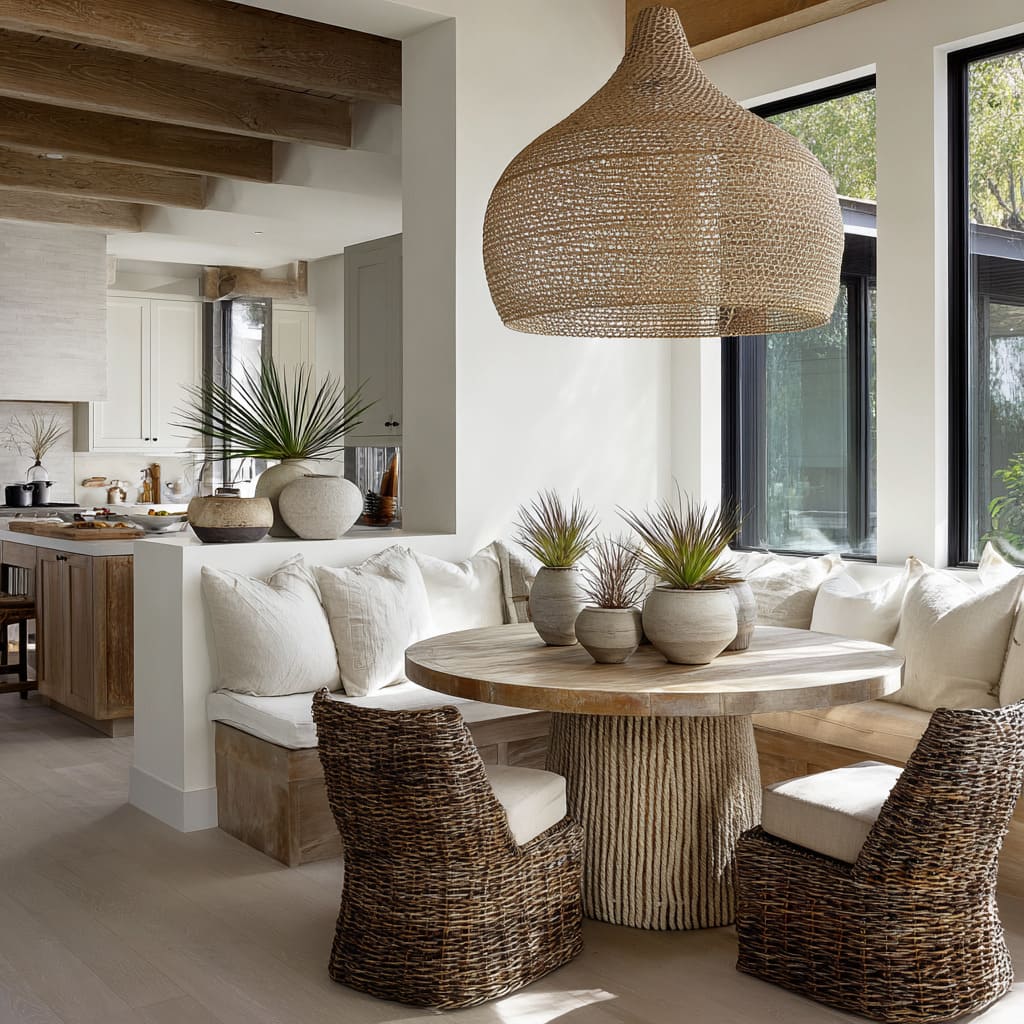
Window mullions often serve as the strongest vertical guides. In many designs, tall black-framed windows introduce sharp, uninterrupted lines that rise from floor to ceiling.
These mullions create strong scaffolding for the space, allowing rooms with moderate ceiling height to feel taller and more structured without adding actual volume. This careful application of vertical repetition allows the nook to feel balanced.
Vertical lines carry the eye gently upwards, preventing the design from feeling flat, while still respecting the horizontal nature of dining layouts. The result is a visual rhythm that remains calm yet active, without forcing heavy contrast or aggressive statements.
Natural Material Tonal Control: Layered Warmth Without Color Shift
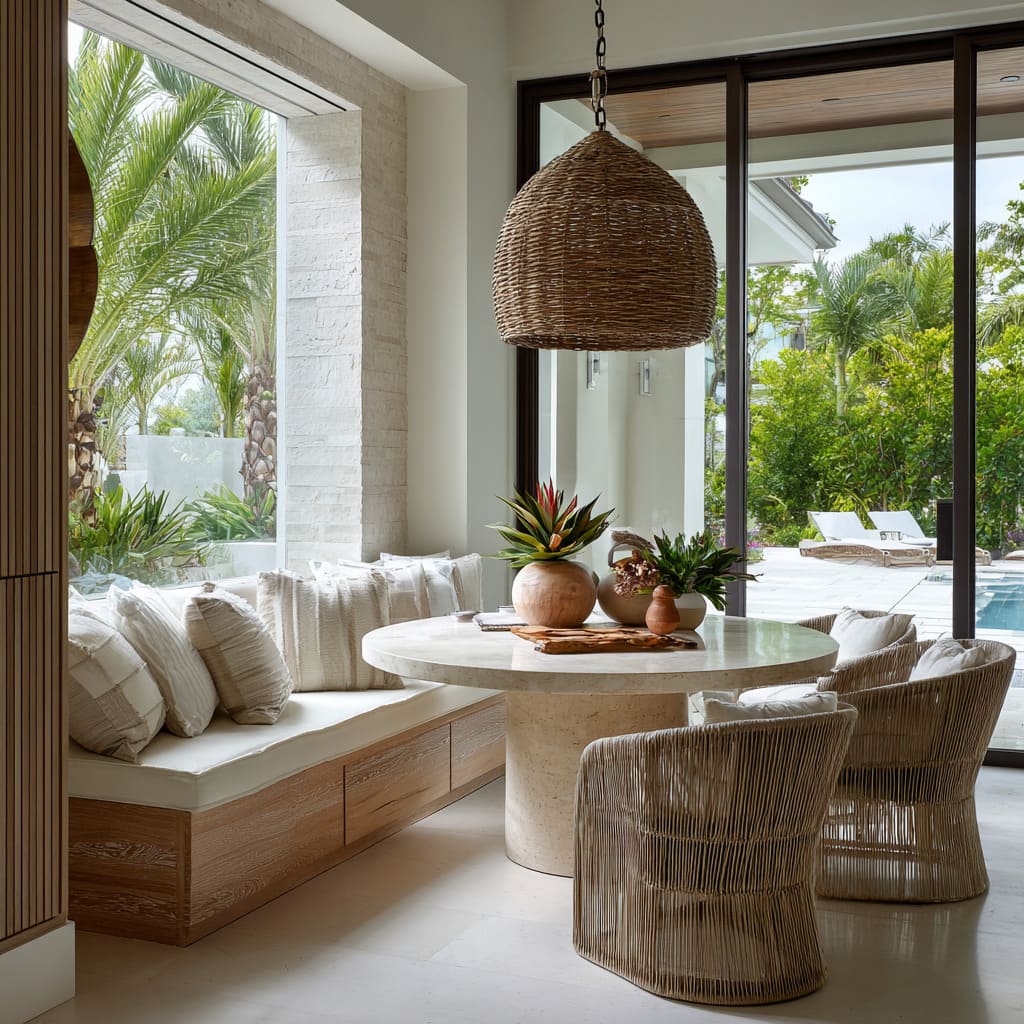
One of the most distinctive traits across modern kitchen nooks is the precise handling of color through material tonality rather than strong contrast. Instead of sharp color shifts, designers manipulate warmth and texture within an extremely narrow palette, allowing materials to speak through their surface qualities rather than bold pigments.
- Wood serves as the quiet foundation for these spaces. Species like oak, ash, teak, and walnut appear repeatedly, but rarely in their purest, untreated states. Through processes like bleaching, sanding, oiling, or light staining, their tones drift subtly from pale honey to warm sand or golden beige. The shifts remain within a controlled temperature range, never veering into stark light-dark contrasts.
- Fabrics add soft layering without introducing color noise. Upholstery choices remain tightly controlled: shades of ivory, oatmeal, pale stone, and warm beige dominate. Variation appears not through hue, but through surface feel—boucle’s looped texture, linen’s fine weave, velvet’s smooth luster, or the faint herringbone of tightly woven cottons. This allows depth and richness to emerge without disrupting visual calm.
When deeper tones are present, they are carefully balanced. Darker shades, such as charcoal or matte black leather, find their place alongside reflective stone surfaces, muted brass details, or the glow of natural light filtering through windows.
These combinations prevent the palette from becoming heavy or static, ensuring that even strong materials feel softened and approachable. The effect resembles temperature layering rather than color contrast.
Every surface contributes warmth and texture, while remaining within the same quiet spectrum. This approach allows the design to feel richly developed while staying restful to the eye, inviting long moments spent within the nook without visual fatigue.
Integration of Outdoor Views as Design Participants
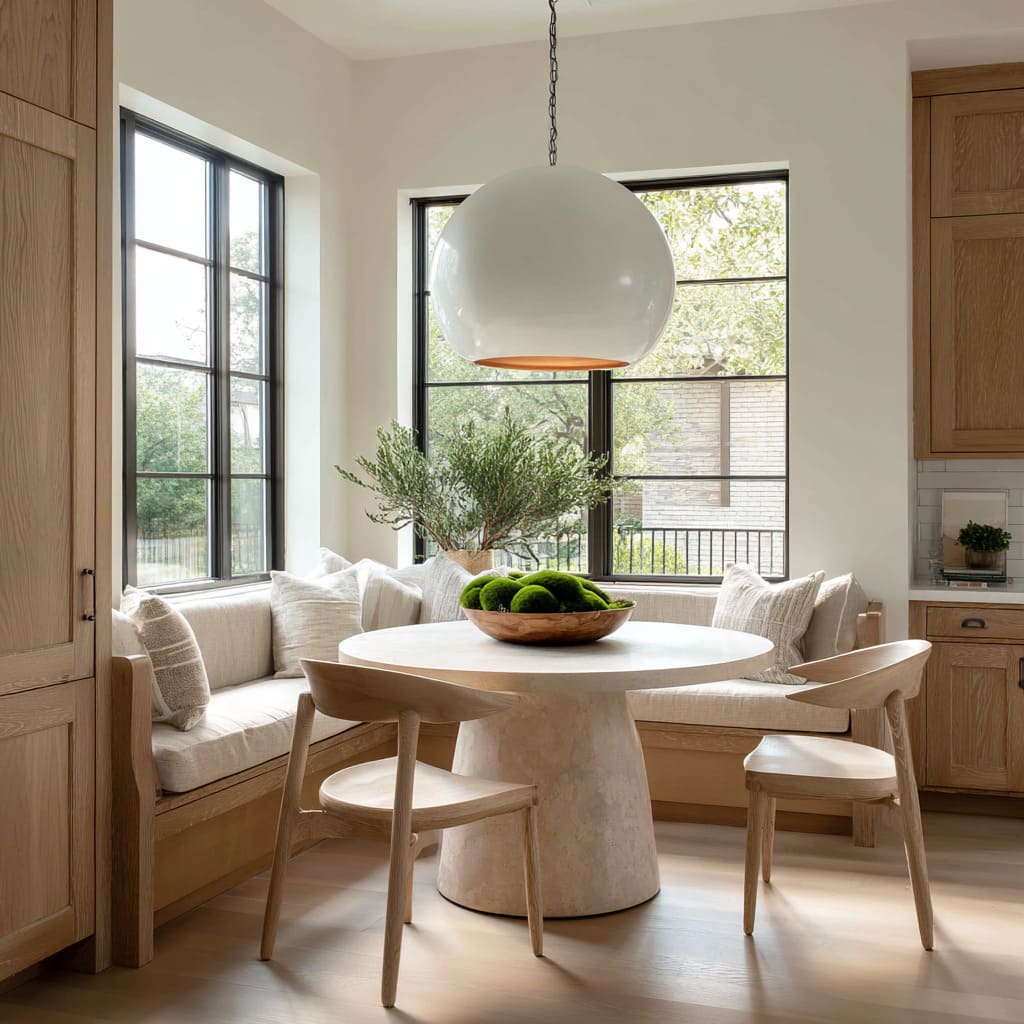
A defining feature in many modern kitchen nooks is how outdoor scenery becomes part of the interior composition itself. Rather than treating windows as simple openings, the surrounding nature is framed, positioned, and integrated to behave almost like a living extension of the room.
Tree canopies often serve as natural upper boundaries. Tall windows frame branches, leaves, and shifting seasonal foliage much like curated artwork.
These organic shapes create layers of visual depth, giving the nook a sense of immersion within the landscape rather than separation from it.
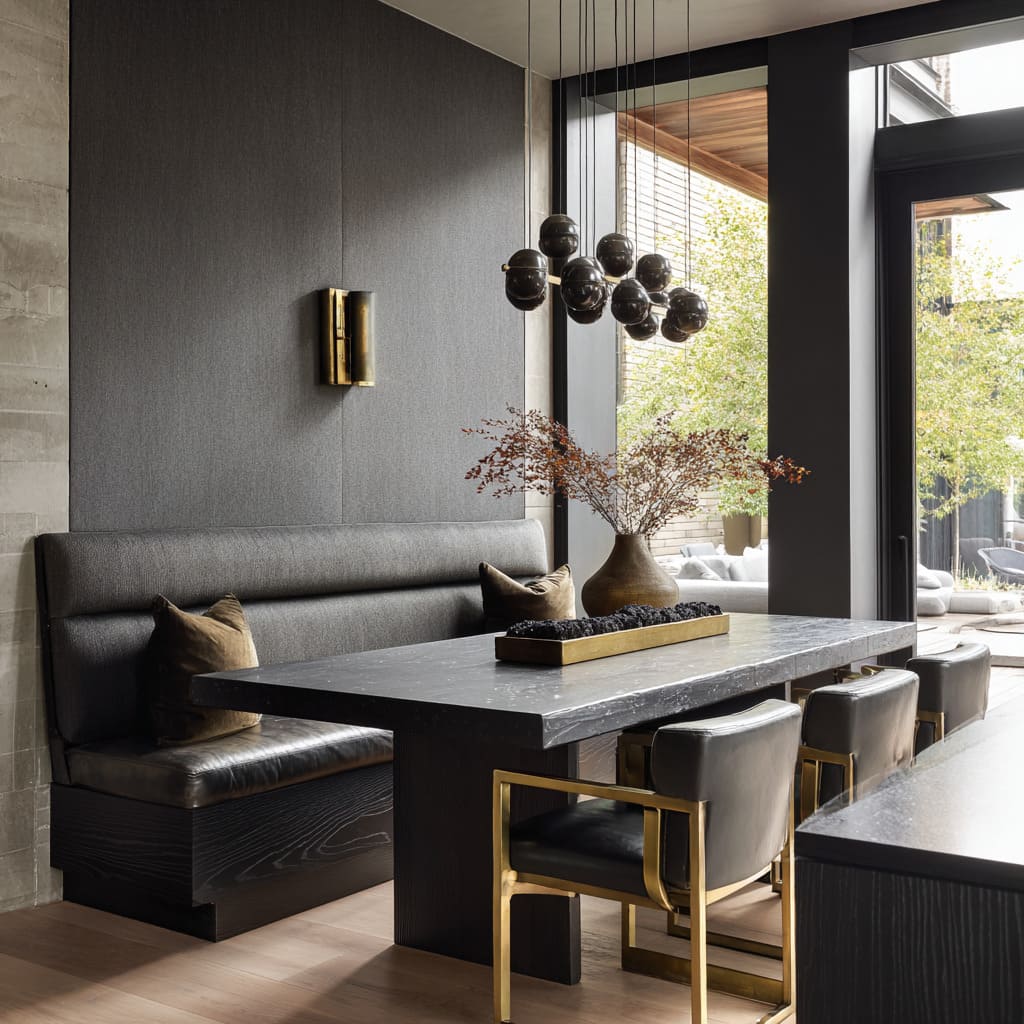
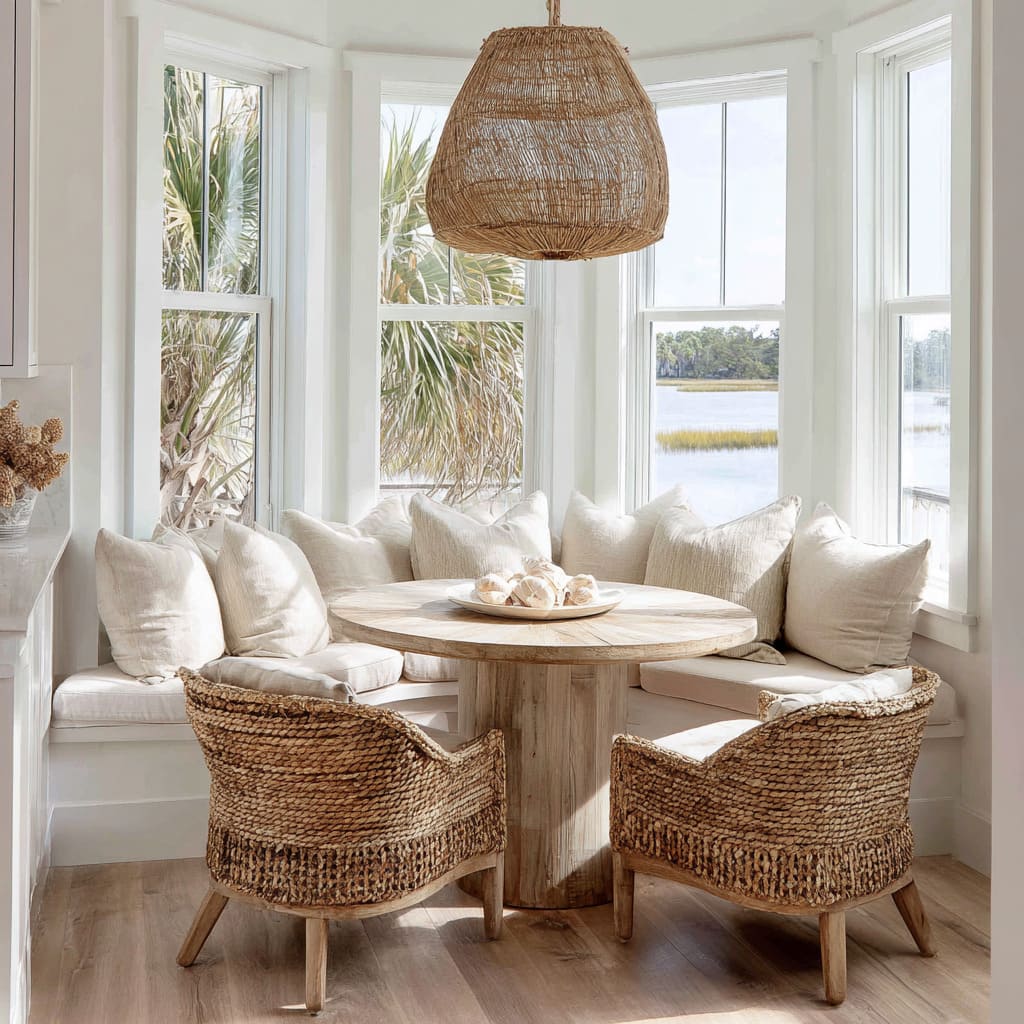
Coastal and garden plantings can merge directly into the indoor space. Palms, grasses, or nearby hedges sit close to the glass, blurring any harsh line between inside and outside.
The greenery appears woven into the seating zone, almost like oversized botanical décor that quietly fills peripheral space without the need for extra indoor ornamentation. The positioning of built-in seating often follows these outdoor references.
Banquette heights are calculated so that seated eye-level aligns with distant tree lines or horizon levels. Window sills are kept low to allow unobstructed views, maximizing the sense of openness.
This careful alignment lets the scenery serve as a dynamic backdrop that constantly shifts with daylight, weather, or seasons.
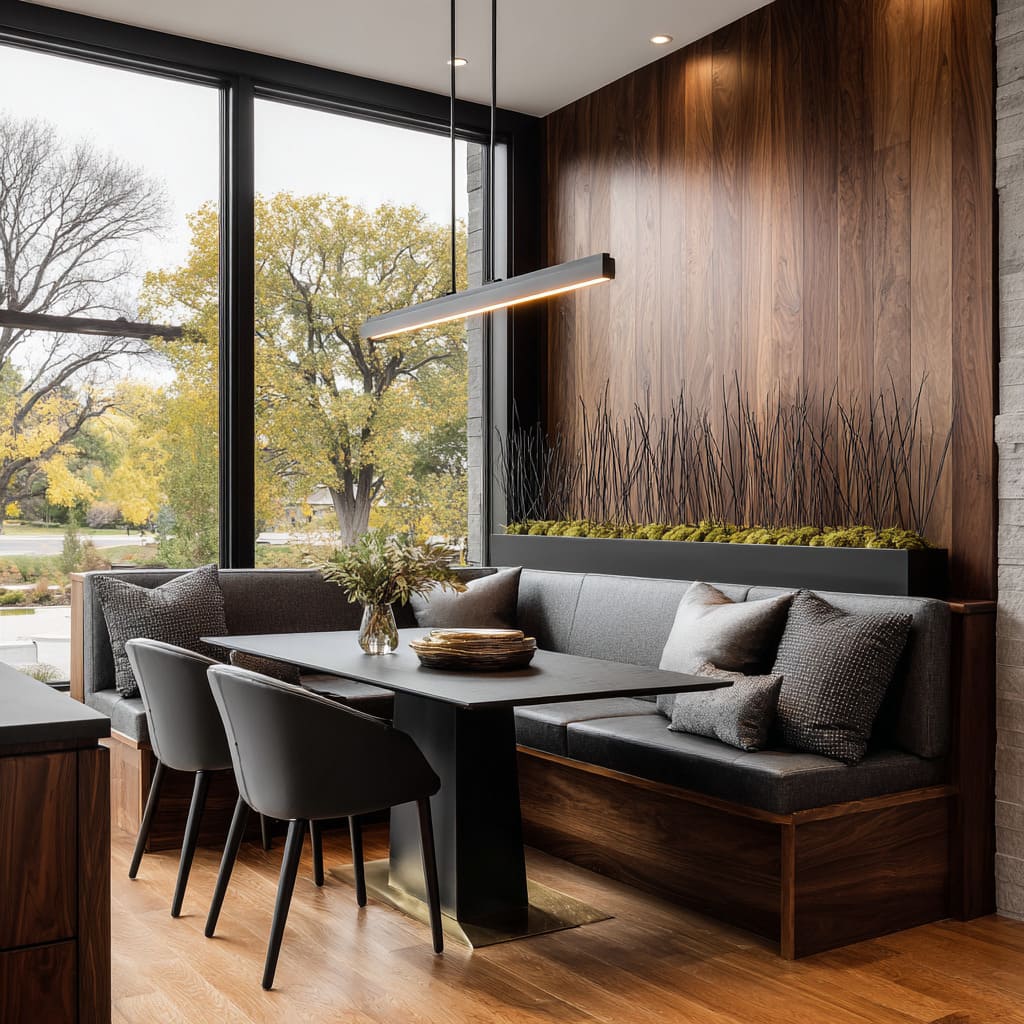
Through this design strategy, the views function as active design layers rather than background scenery. The result is an expanded spatial experience where the boundaries dissolve, and the natural world becomes part of the room’s composition.
In many ways, decorating a kitchen nook in this style means collaborating with the surroundings, allowing nature’s details to quietly fill the space with movement, depth, and calm.
The Use of Controlled Asymmetry for Organic Visual Movement
In many kitchen nooks, symmetry gives way to purposeful imbalance that keeps the space feeling alive. Instead of rigid visual order, these spaces introduce small irregularities that create softness, visual energy, and natural variation without disrupting calmness.
- Pendant lights often avoid perfect alignment. Rather than a single central fixture, multiple pendants are suspended at different heights or slightly offset positions. This staggered drop pattern allows light to scatter more organically across the table and seating, breaking the predictability of symmetry while adding quiet motion overhead.
- Sculptural branch arrangements introduce vertical contrast. Loose botanical elements—like slender branches or tall grasses—rise upward in asymmetric forms. Their shapes create subtle diagonal movements that soften otherwise horizontal layouts, pulling the eye gently upward without the need for heavy ornamentation.
- Seat cushions and throw pillows avoid rigid order. Layering pillows in varying volumes, textures, and heights allows backrests to feel soft and inviting rather than structured or static. This loose composition reflects how objects naturally settle rather than being strictly positioned.
Through these moves, a gentle rhythm forms across the nook. Asymmetry helps the composition breathe.
The eye moves across the space with ease, always finding small shifts and variations that prevent visual stagnation. Many modern kitchen nook decorating ideas lean into this relaxed control, where every object holds its own identity while contributing to a larger harmonious whole.
Architectural Merging of Kitchen Millwork and Nook Seating
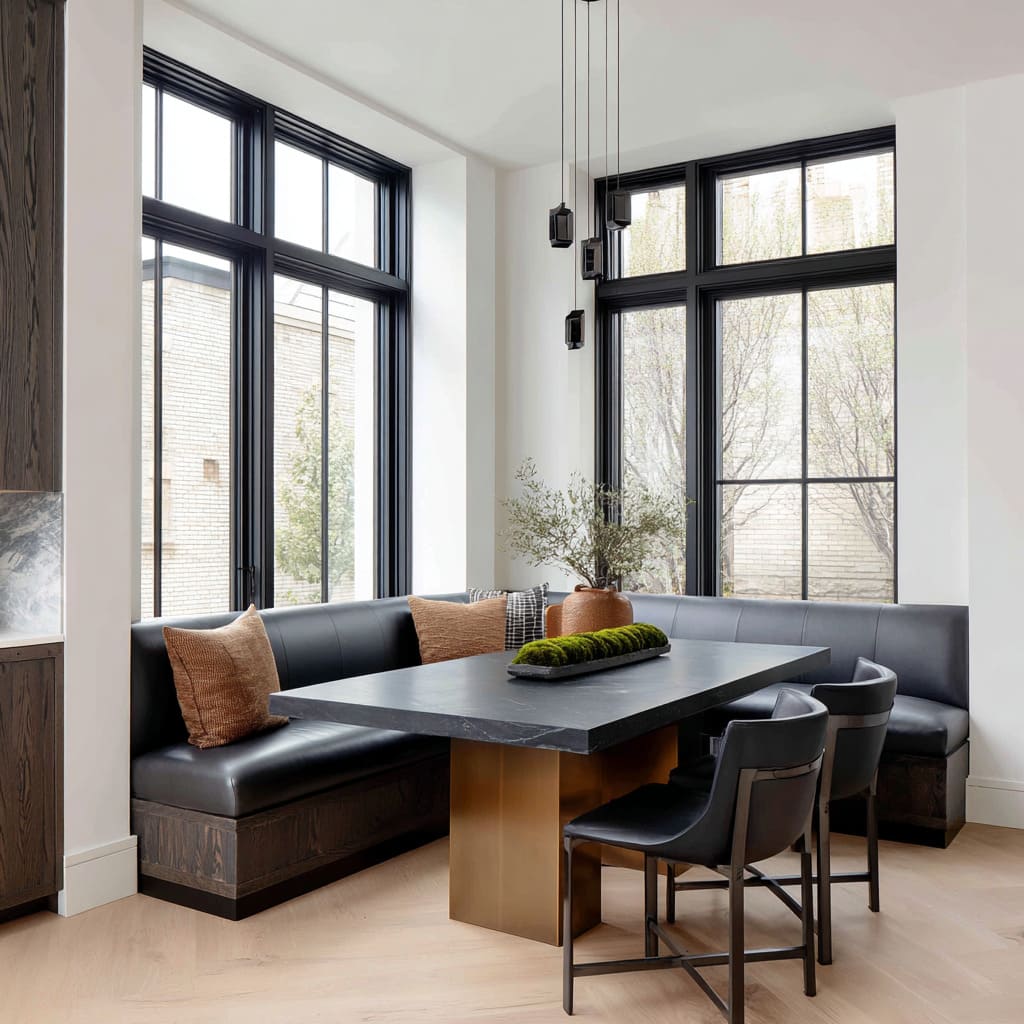
In many modern interiors, the division between cooking space and dining nook dissolves completely. Kitchen nook design ideas have moved far beyond separate seating arrangements, instead merging seamlessly into the kitchen’s existing millwork structure.
The result is a visual continuity where furniture and architecture share the same language.
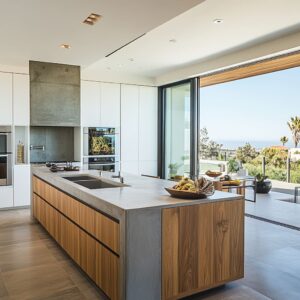
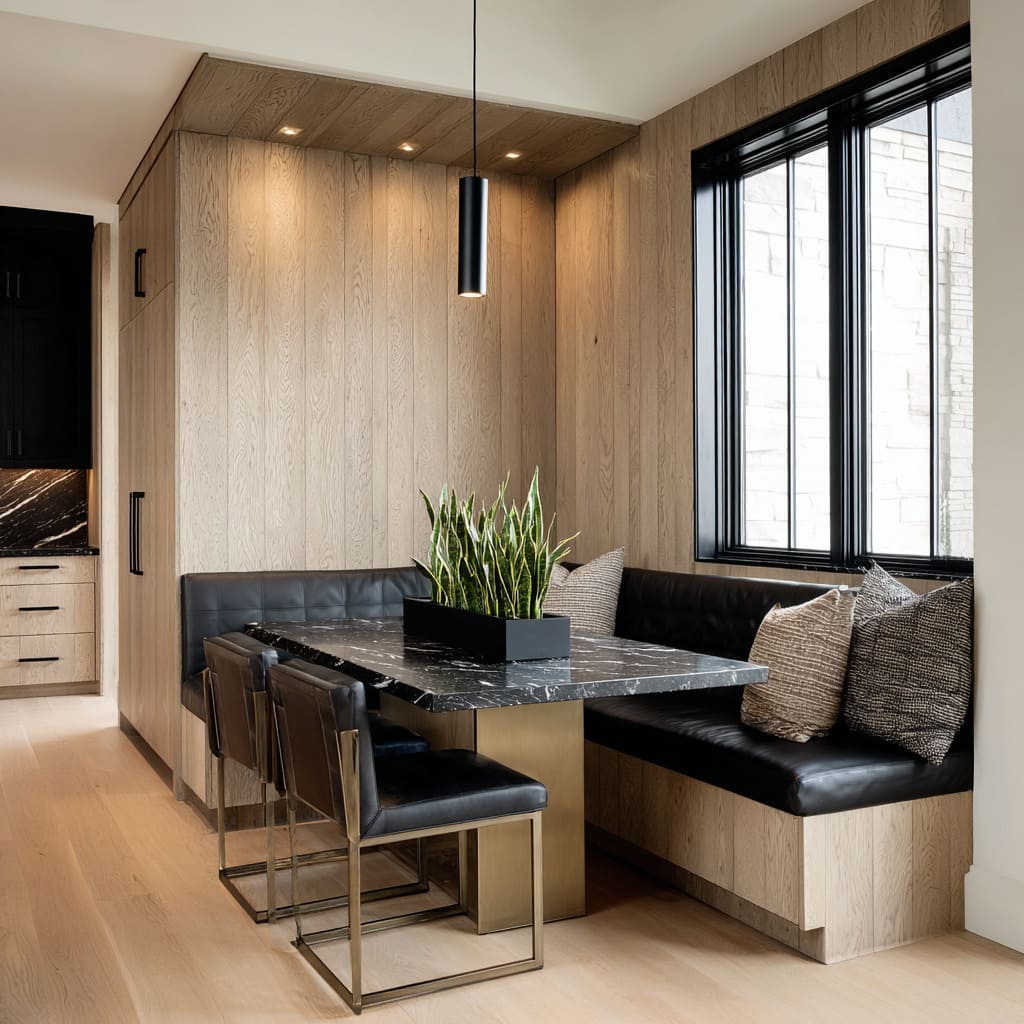
Materials carry across both spaces without interruption. The same oak, walnut, or ash used for cabinets often continues directly into the base of the nook’s seating.
Grain patterns align, finishes match, and every surface belongs to the same material family. This strategy allows the eye to read the room as one unified composition rather than a collection of separate zones.
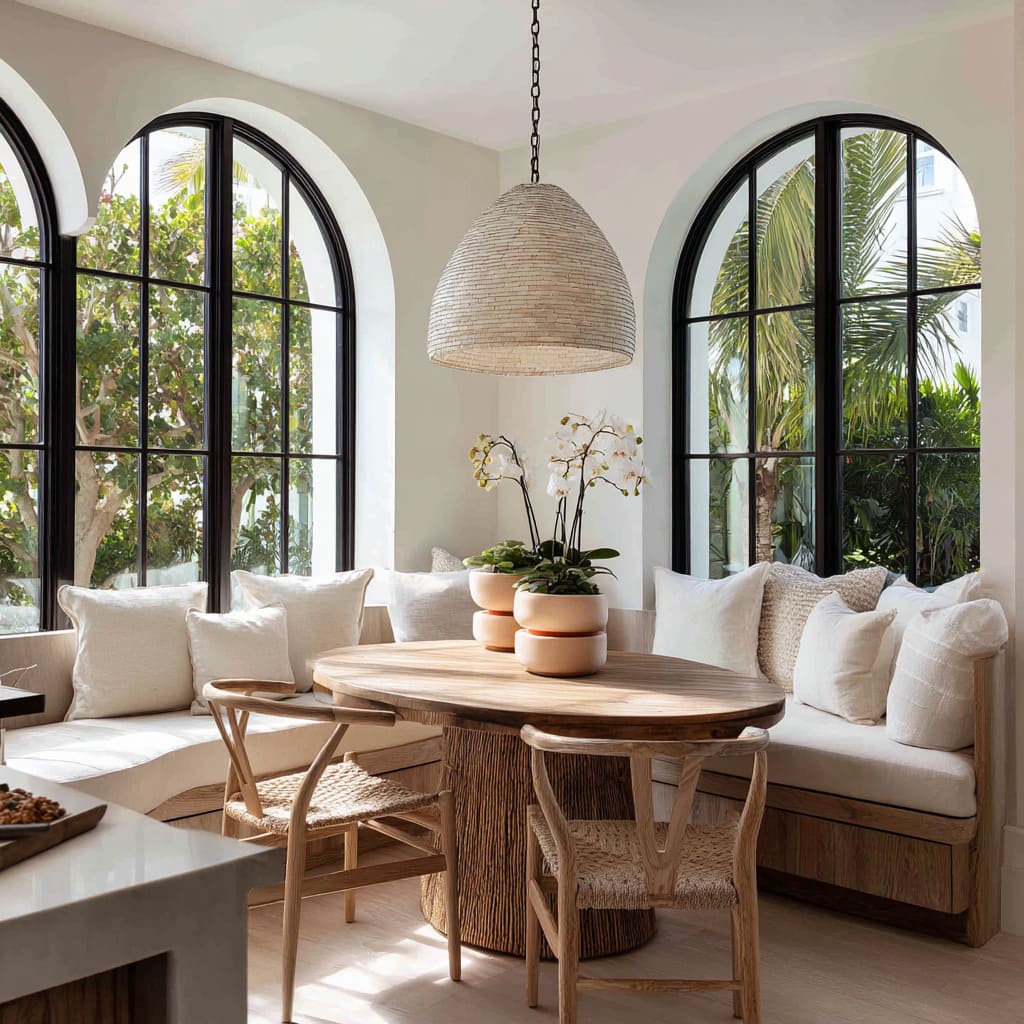
The boundaries between work and dining fade away. Prep zones, cabinetry, and the nook blend into a single volume, allowing the seating to feel integrated rather than added on.
Instead of reading as a freestanding dining area, the nook becomes an architectural extension of the kitchen itself.
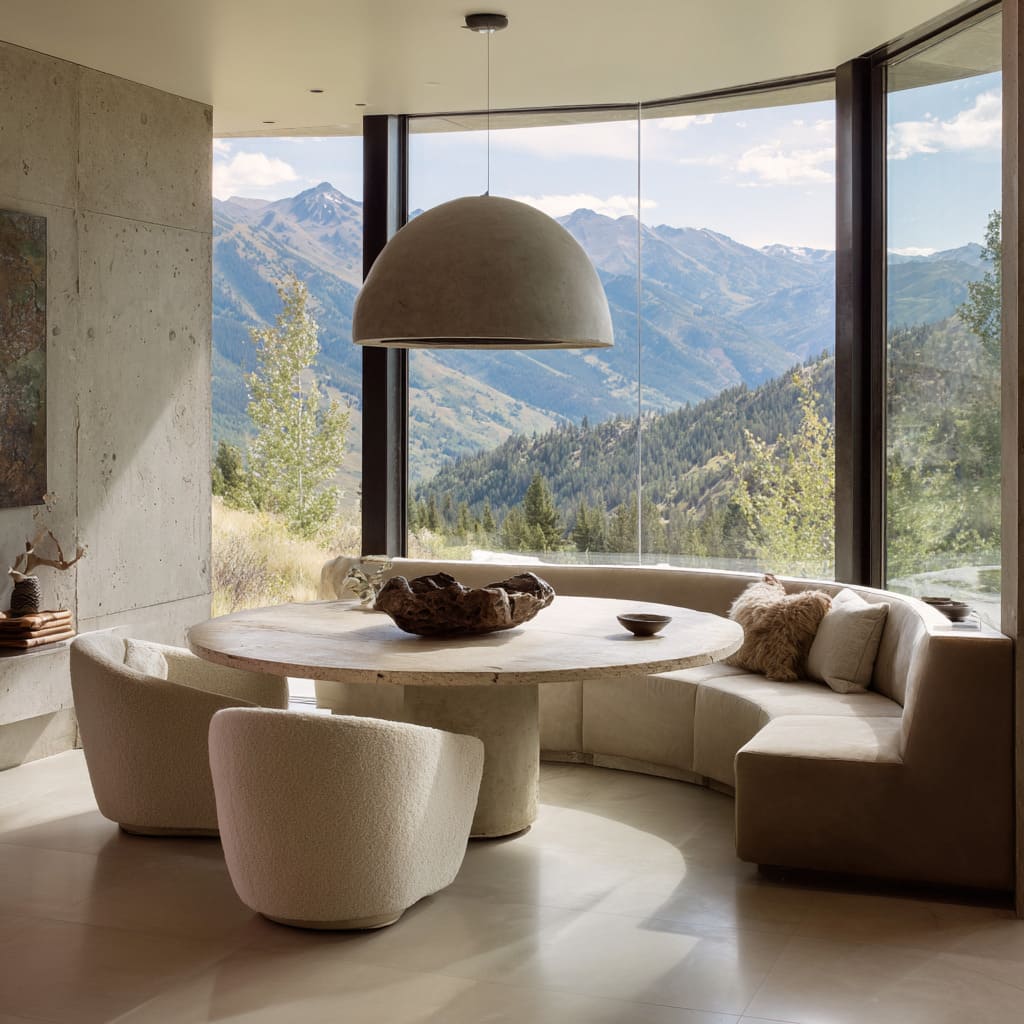
This continuous flow of millwork simplifies the room’s geometry. Without harsh transitions or competing finishes, the entire space feels controlled and visually expansive.
The seamless connection allows kitchens of any size to feel larger and more cohesive, with the built-in dining area functioning as part of the room’s original structure rather than an afterthought. The result is a space where every element speaks the same material language.
The kitchen nook built-in bench becomes part of the cabinetry itself, offering a clean, uninterrupted transition from storage to seating, all under one consistent design narrative.
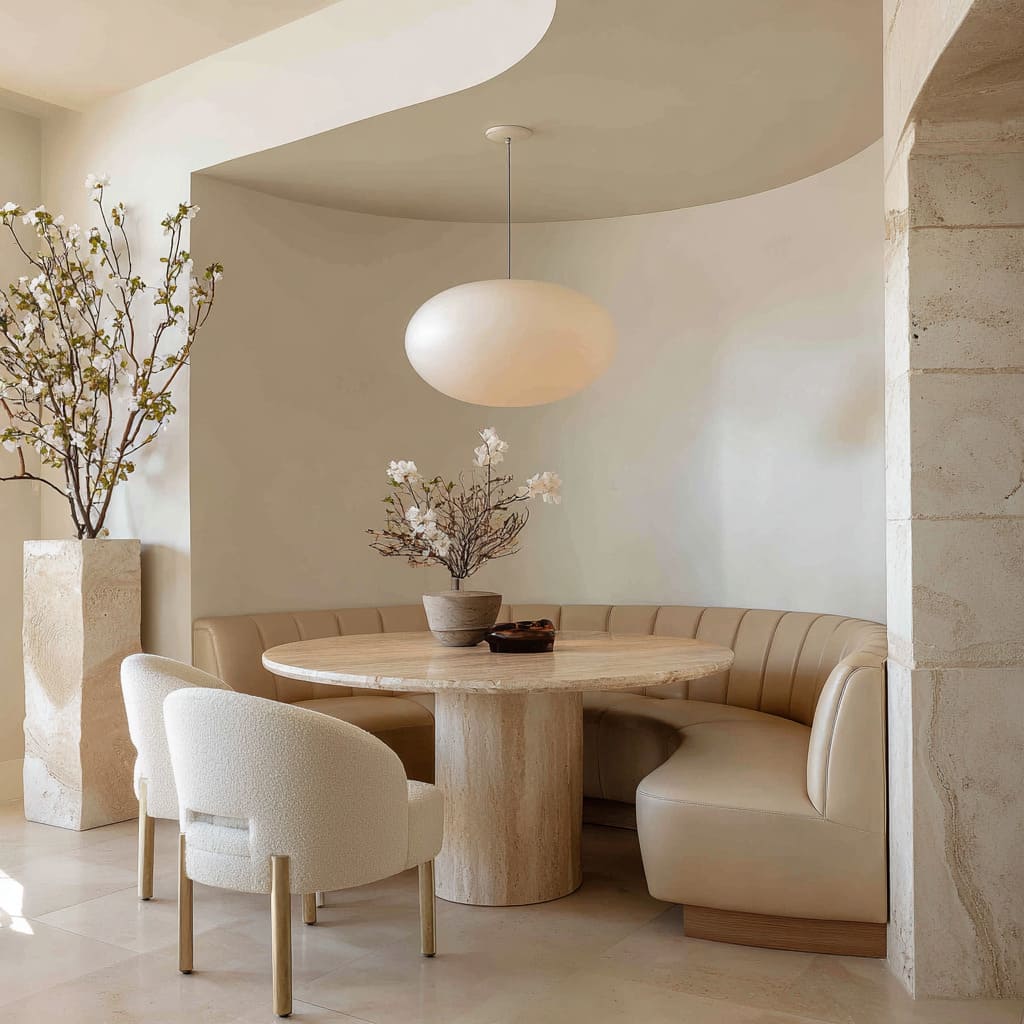
Sophisticated Handling of Shadow Play
Light in modern nooks is never simply functional. Instead, the focus shifts toward how light interacts with surfaces, creating layers of texture that evolve throughout the day.
Shadows serve as another material, adding depth and complexity without needing additional ornamentation.
- Loose-weave pendants produce soft layered shadows. As daylight filters through loosely woven natural fibers, intricate patterns fall across tables, cushions, and nearby walls. These shifting patterns add life to neutral color palettes, making each moment in the space feel slightly different as sunlight changes angle.
- Multi-orb pendants introduce floating vertical compositions. Their staggered positions allow light to scatter unpredictably, while the slight irregularities in their glass surfaces soften the glow. Instead of producing harsh spotlighting, these fixtures deliver a gentle spread of illumination, accompanied by faint, layered reflections.
- Even smooth, sculptural fixtures contribute to the play of light. White or pale stone pendants, when placed near large windows, absorb and reflect ambient light throughout the day. As outdoor light shifts, subtle gradients wash across their surfaces, creating an ever-present sense of movement within the space.
The shadows become part of the design itself. Rather than filling the nook with objects, these patterns introduce quiet motion and texture.
This allows the visual richness to grow from the interaction between material and light, creating a highly dynamic experience without overwhelming the calm, neutral aesthetic.
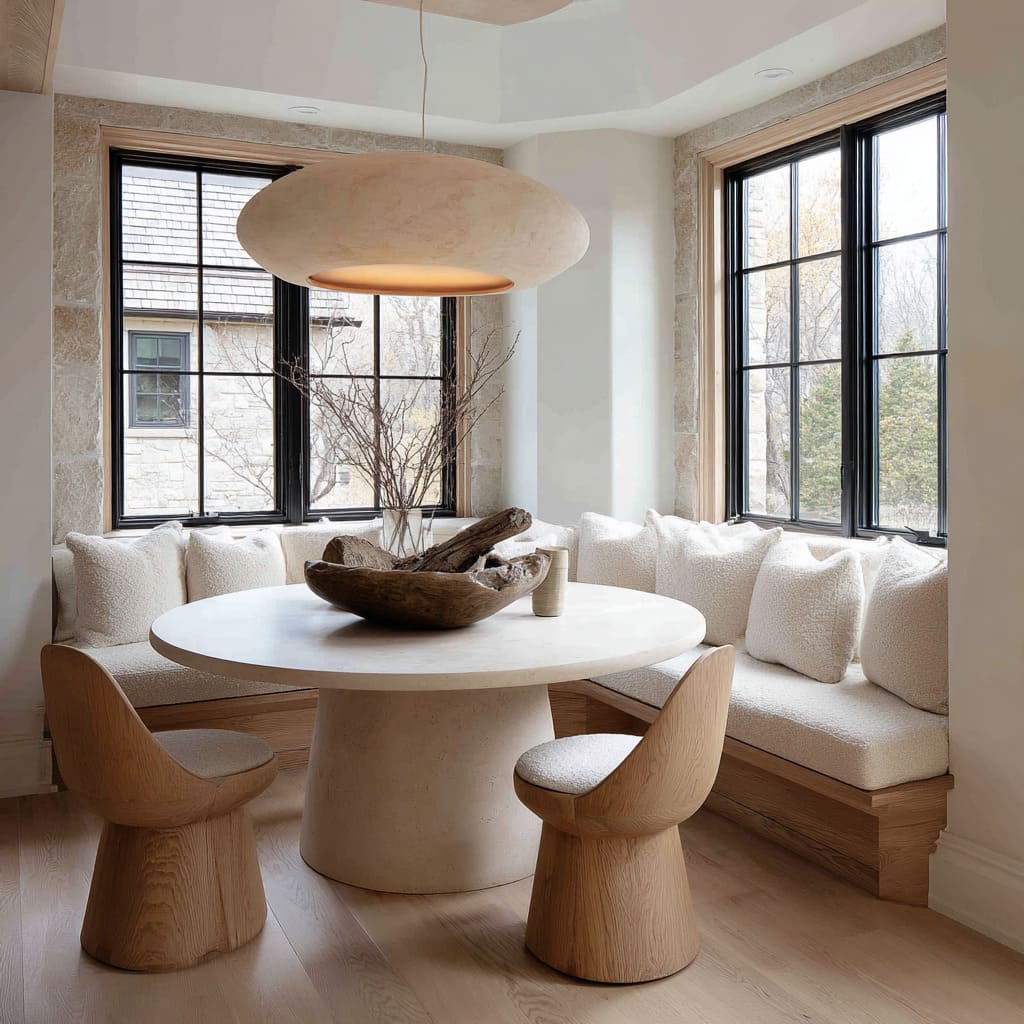
Sculptural Object Minimalism
Within many modern kitchen nook design ideas, decoration serves a far more precise role than simple adornment. Objects are selected with care, becoming visual anchors that echo the geometry and organic forms surrounding them.
Centerpieces often rely on raw, natural materials. A single slab of driftwood, hollowed stone vessels, smooth moss trays, or slender floral branches become the primary decorative elements.
Their shapes often mimic the larger forms found within the nook itself — curved banquettes, rounded tables, or arched window frames.
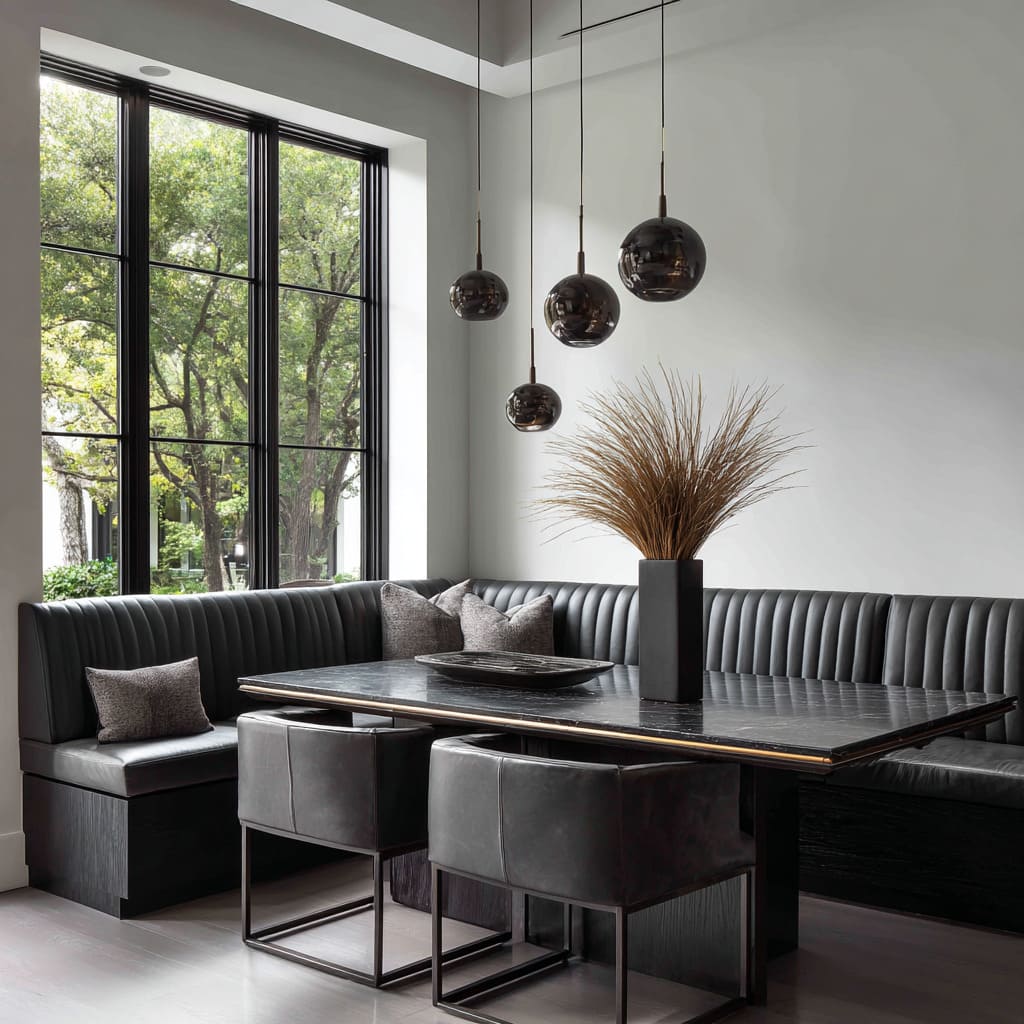
Rather than layering objects for effect, these sculptural pieces act as punctuation marks. They carry the weight of form and proportion without overwhelming the space.
The restraint keeps the eye focused, allowing texture, shape, and material to remain the primary conversation rather than complex arrangements. Their simplicity amplifies the surrounding design.
A hollowed stone bowl reflects the materiality of limestone table surfaces. A branch arrangement echoes the vertical rhythm introduced by window mullions or ribbed table bases.
Even a simple moss tray connects to the natural foliage visible beyond large windows, merging nature with interior design. In this approach, decor becomes a quiet extension of the room’s structure and surroundings.
Every object serves both a visual and conceptual purpose, reinforcing the harmony between built form and natural influence.
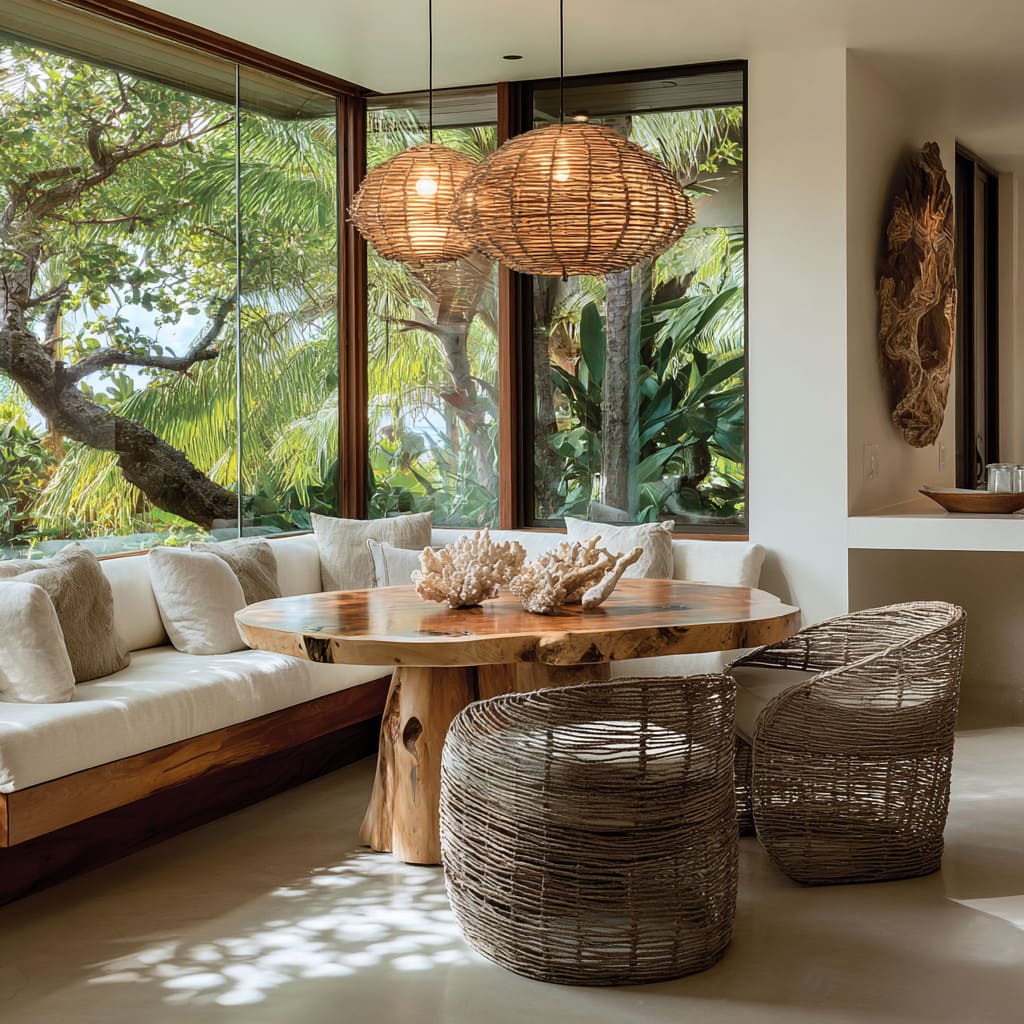
Soft Massing: The Architecture of Psychological Comfort
One of the most subtle, yet deeply effective, tactics found in modern kitchen nooks is the use of soft massing to promote comfort. Beyond aesthetics, these forms directly influence how occupants feel while using the space.
Rounded forms dominate the composition. Circular tables, softly curved walls, barrel-shaped chairs, and oval seating eliminate sharp corners.
This gentle geometry removes physical and visual tension, making the space feel both open and protective at once.
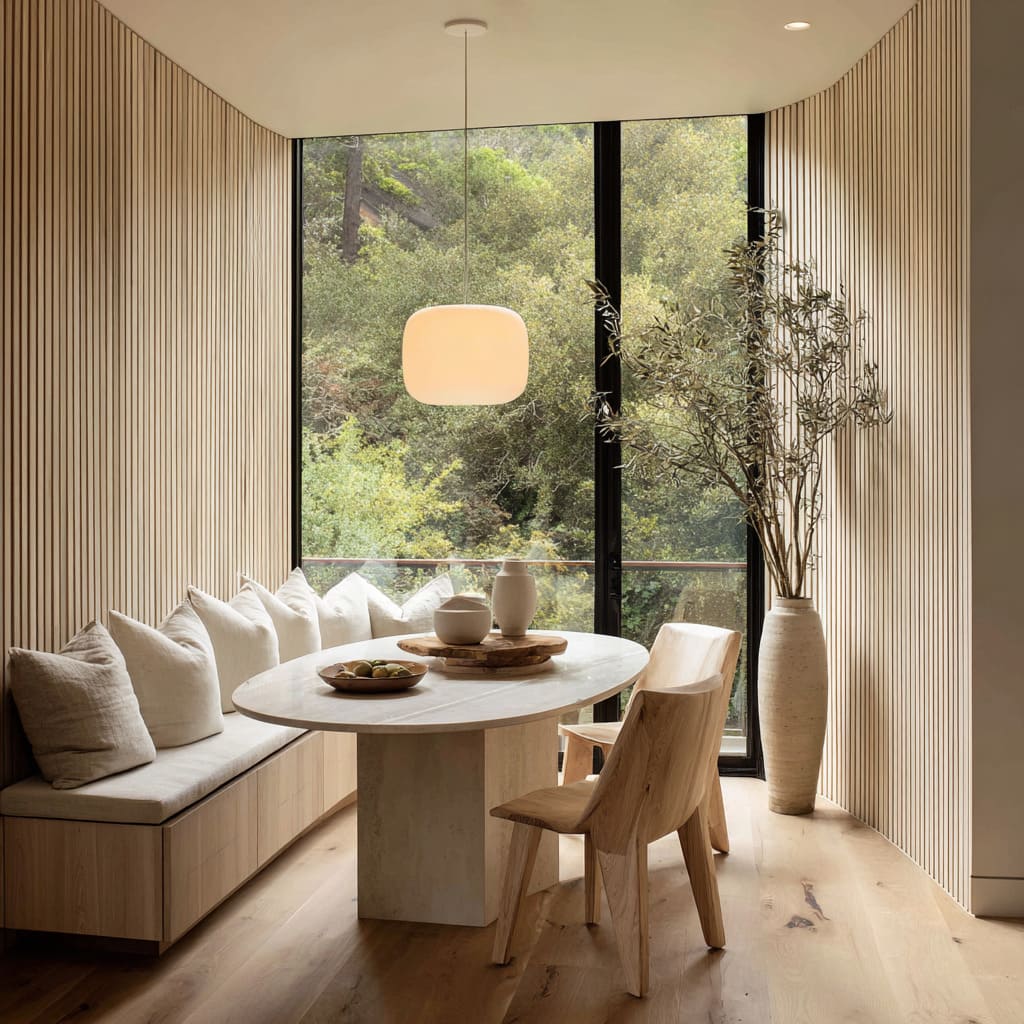
The design speaks directly to human comfort instincts. Subconsciously, these rounded shapes provide a sense of safety, as the body feels cradled within softly enclosed boundaries.
Without harsh edges interrupting movement or sightlines, the environment invites relaxation and calm presence. Even built-in elements support this effect.
The kitchen nook built-in bench often follows architectural curves, wrapping around windows or tucking into alcoves. This enveloping form enhances the sense of being settled into the room rather than simply seated within it.
Through this approach, the design offers more than visual softness. The curves engage deeper comfort responses, creating spaces where one can linger longer, enjoy conversation, or simply absorb the surrounding environment with ease.
Summary
The strength of modern kitchen nook designs lies in their control and quiet sophistication. What defines their character is not loud statements but precisely balanced design moves, including:
- Careful control of color temperature through materials
- Sculptural mass paired with generous negative space
- Seamless integration between kitchen cabinetry and nook seating
- Light and shadow treated as textural elements rather than pure illumination
- Minimal yet meaningful sculptural decorations drawn from nature
- Asymmetry used to introduce movement and prevent stagnation
- Curved forms and soft massing that create deeply comforting environments
Each of these choices works together to build compositions that feel complete, thoughtful, and quietly rich in detail — where every inch of the space supports both visual beauty and physical comfort.