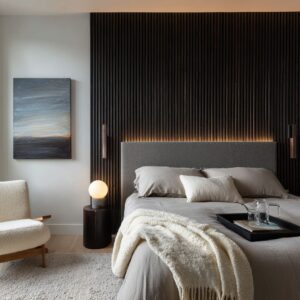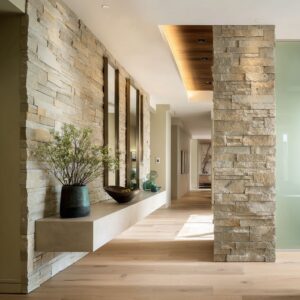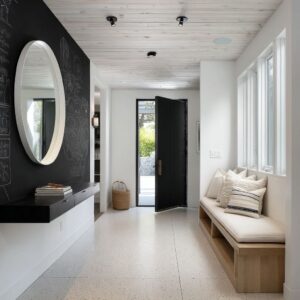

Across the newest wave of man cave shelf ideas, designers have completely shifted the visual language. The dark, overloaded storage walls of the past have been replaced by compositions of air, light, and texture.
Every surface now serves a quiet visual rhythm rather than brute display. These shelf ideas for man cave spaces show how modern styling turns functional storage into part of the architecture—refined, balanced, and emotionally calm.
The New Language of Light and Space
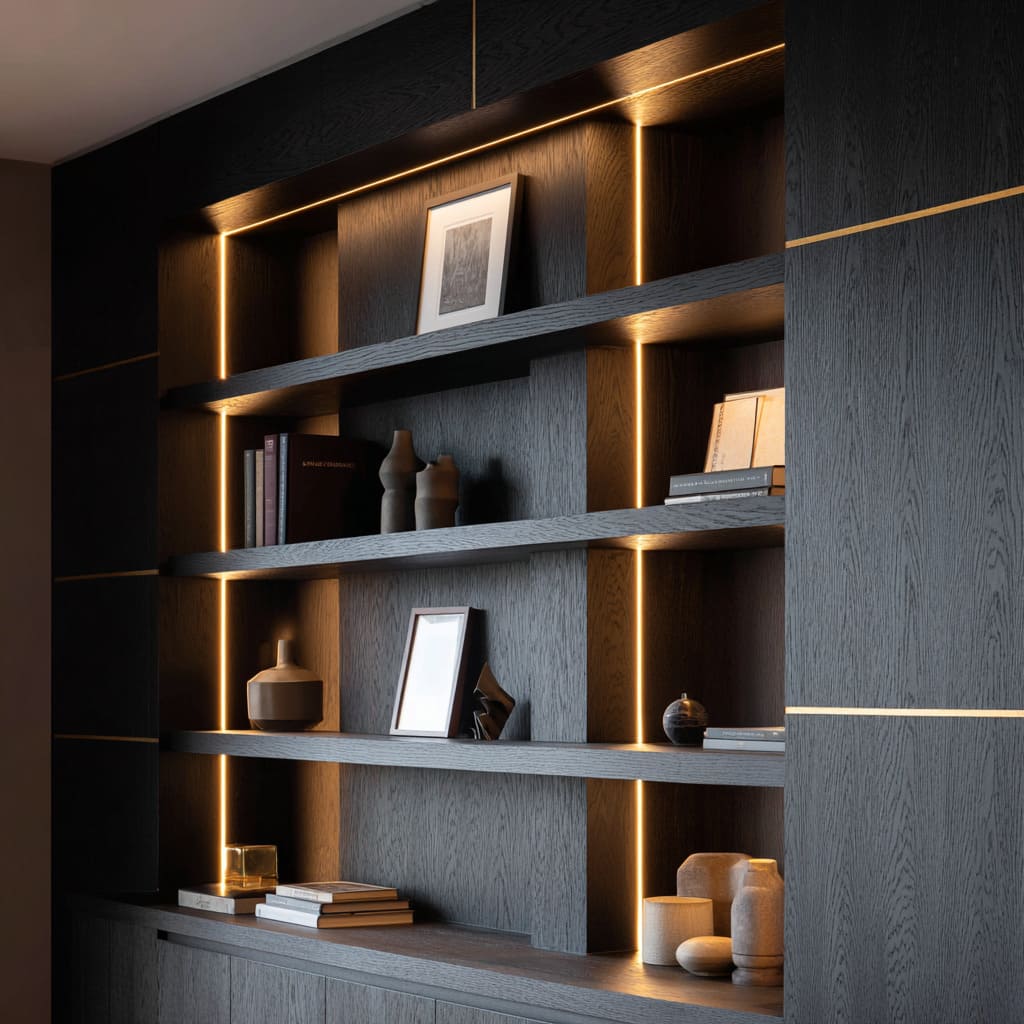
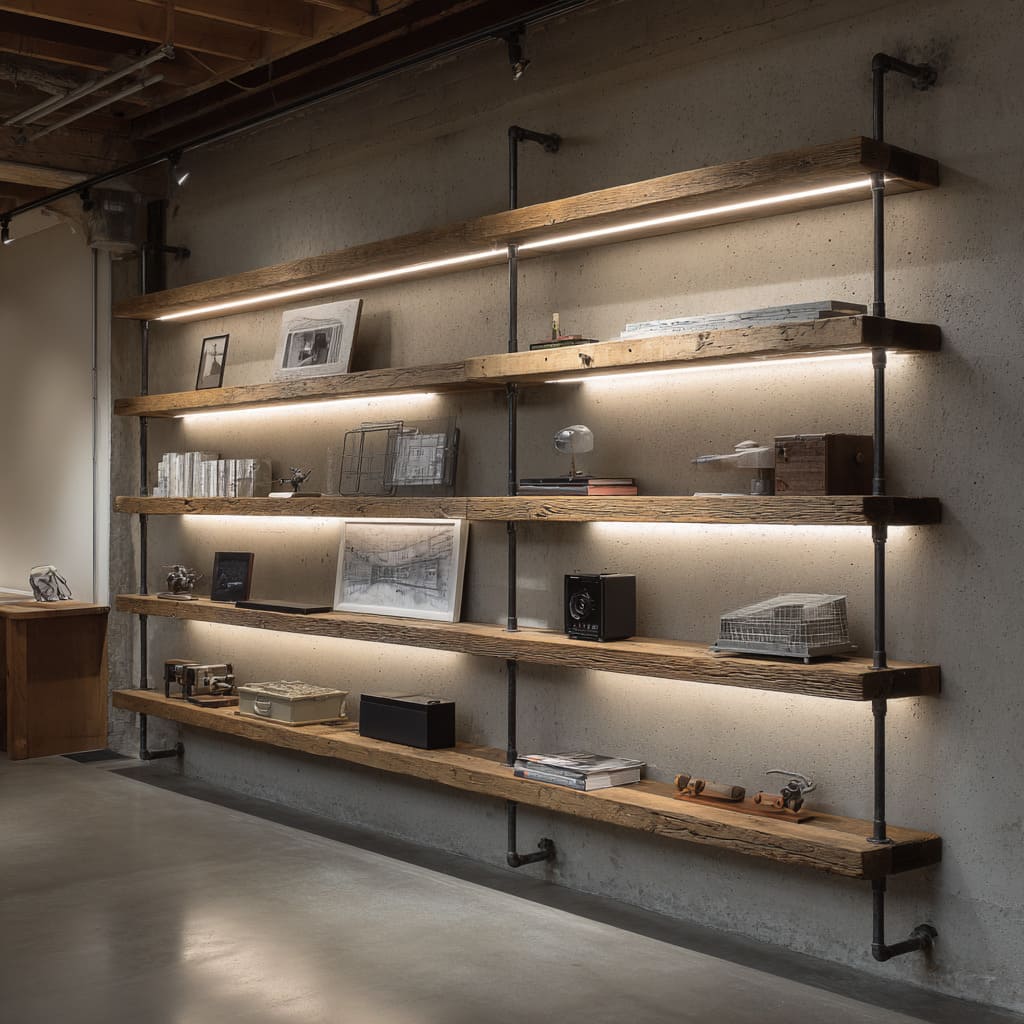
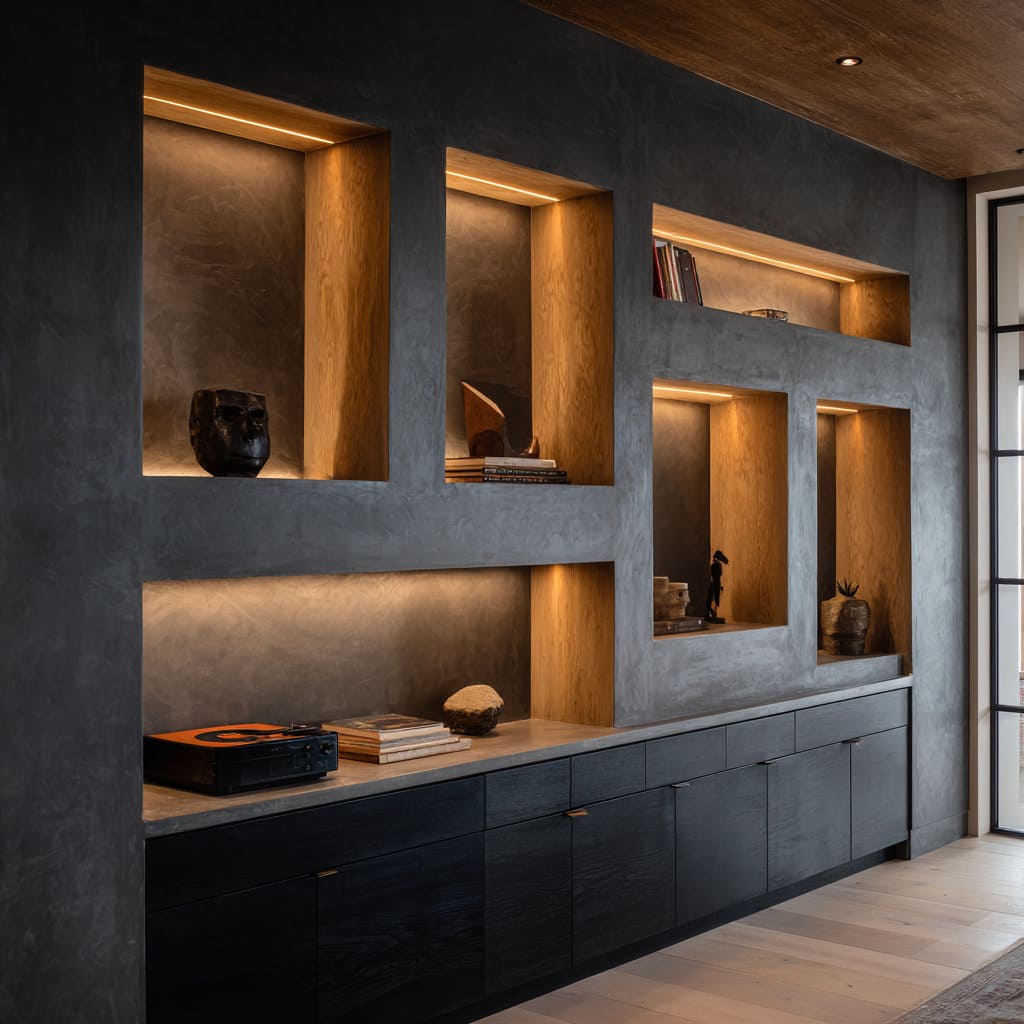
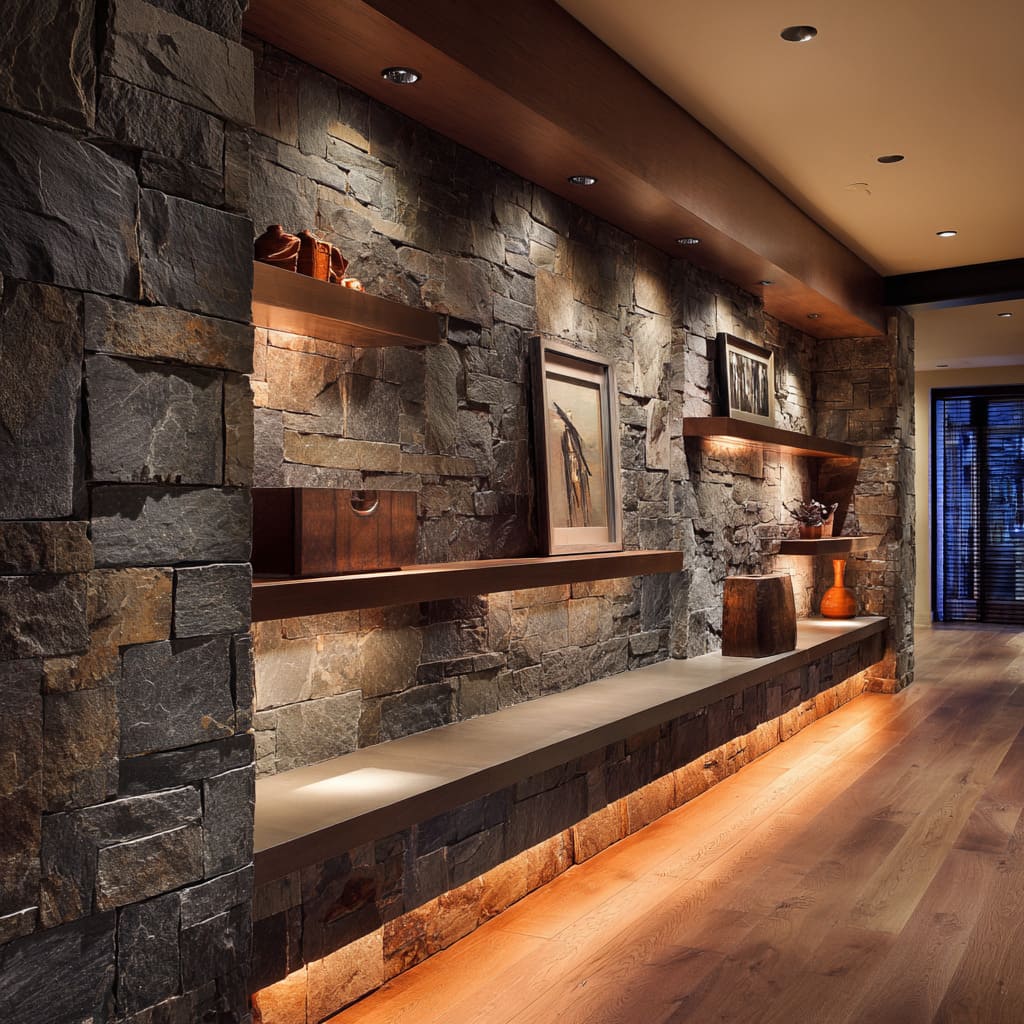
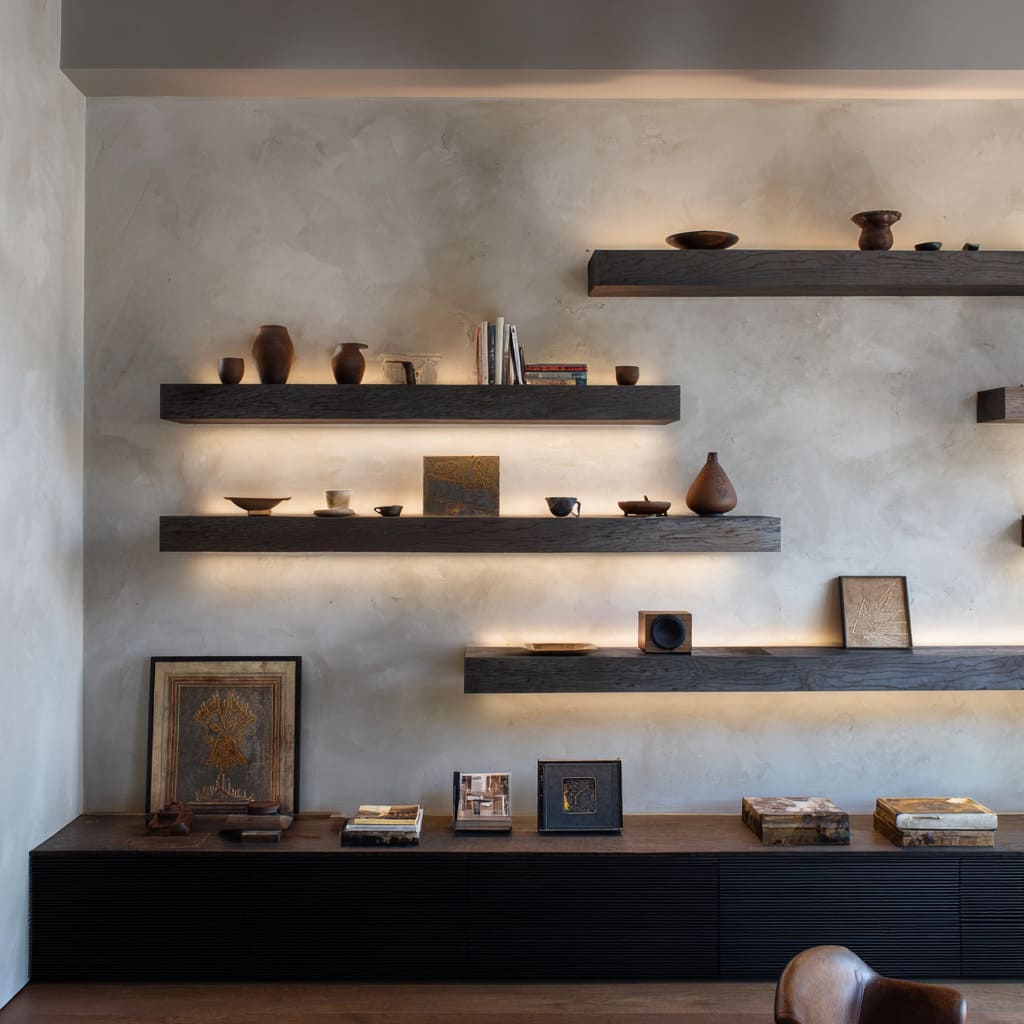
Lighting has become the main design instrument in modern man cave shelf decor. Thin LED reveals glide under wood planks or along vertical fins, sketching soft amber lines instead of bright spots.
The light doesn’t simply illuminate objects; it draws structure across the wall. Empty stretches of shelf are just as important as the filled ones—the glow flows through them, giving depth and continuity.
Negative space now functions as a design material in itself. By keeping at least a third of every shelf open, these new compositions allow light to breathe, helping the wall read like a quiet stage rather than a storage unit.
Texture Balance and Material Honesty
The charm of the modern man cave shelf ideas lies in how texture is managed. Designers use contrasts—plaster against walnut, concrete against oak, steel against clay—but they control surface energy carefully.
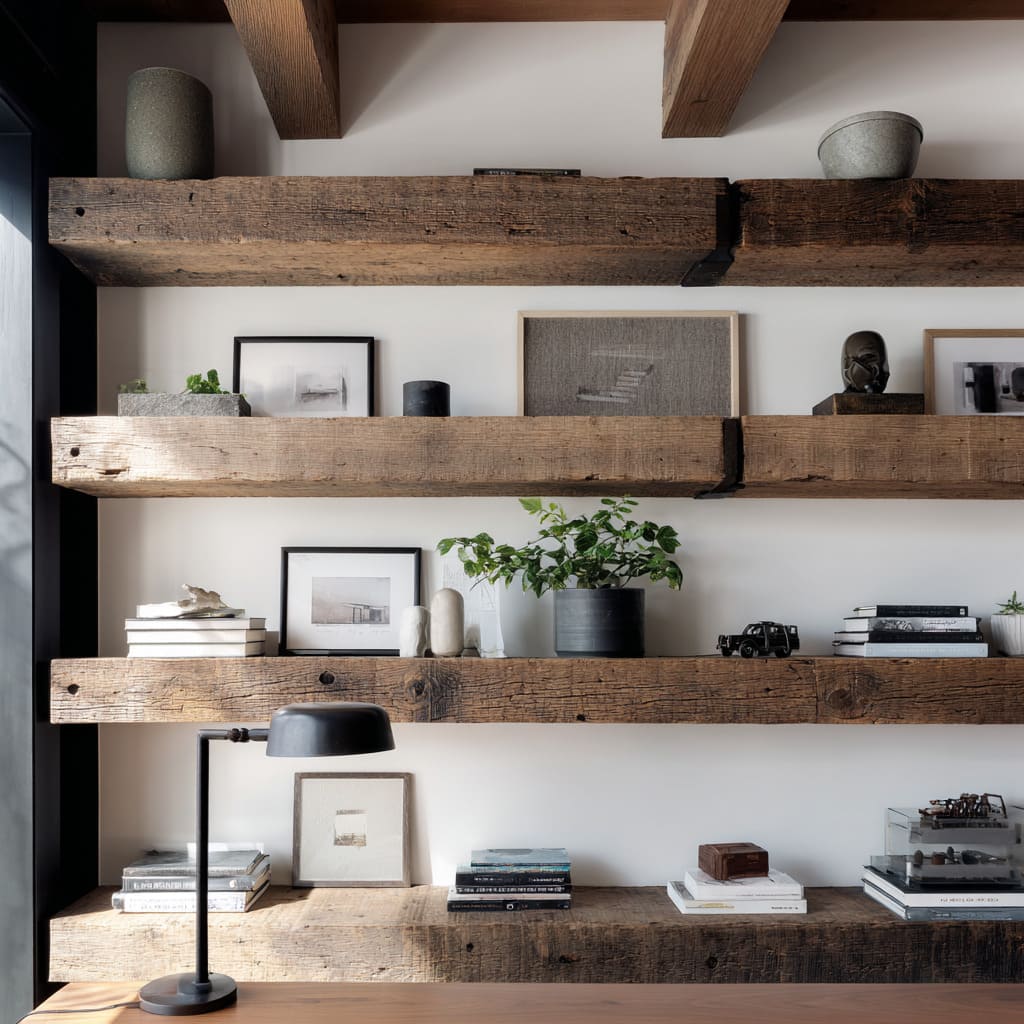
The rough and the smooth are tuned to the same visual frequency. For example, a coarse timber ledge might sit against soft lime-wash plaster, or split stone might meet matte black metal straps.
The alignment of texture depth between materials keeps the mix intentional, never chaotic. The materials themselves become the mood rather than decoration.
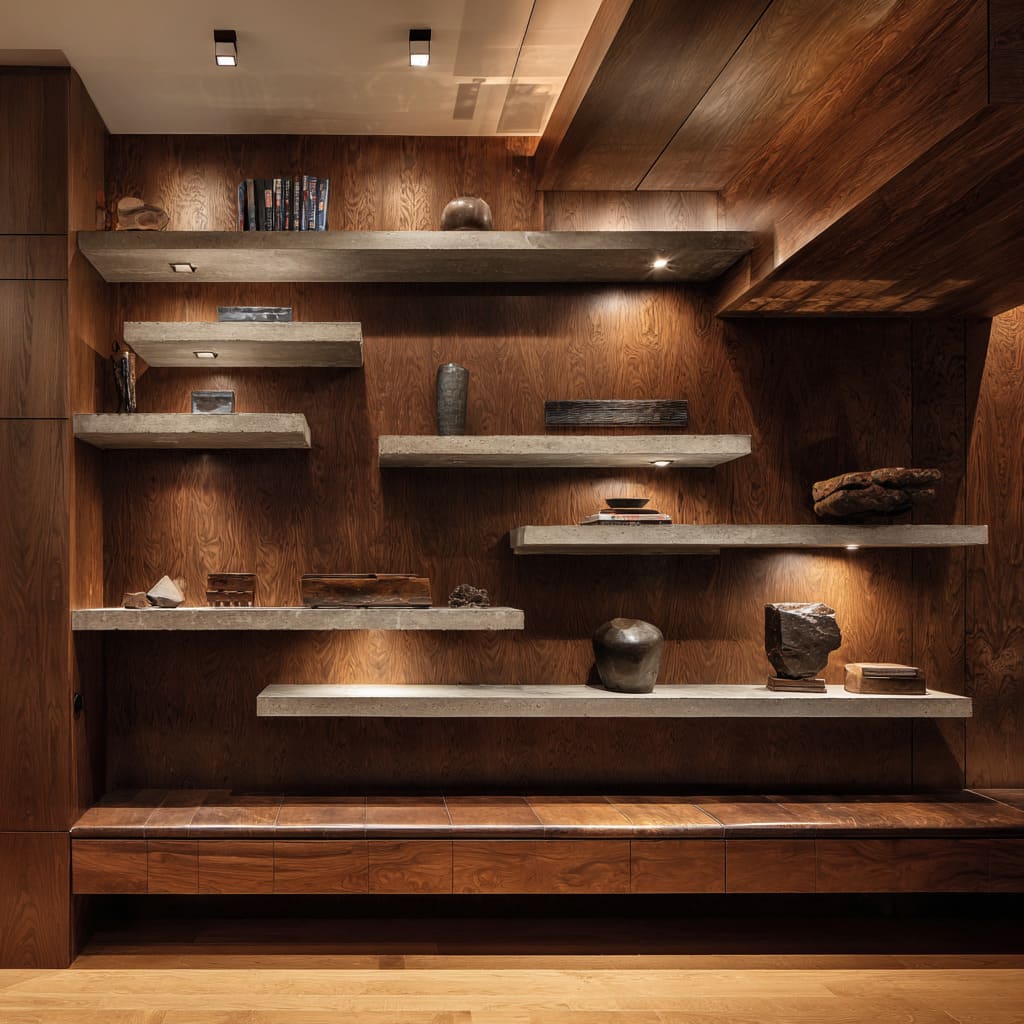
Common texture pairings in current designs:
- Rough-sawn wood with smooth plaster or clay walls
- Polished blackened steel against porous concrete
- Charcoal-stained oak over pale lime-wash surfaces
- Matte ceramics paired with faintly reflective glass fronts
Each combination turns the old heavy masculine palette into something grounded but visually lighter.
The Role of Asymmetry and Rhythm
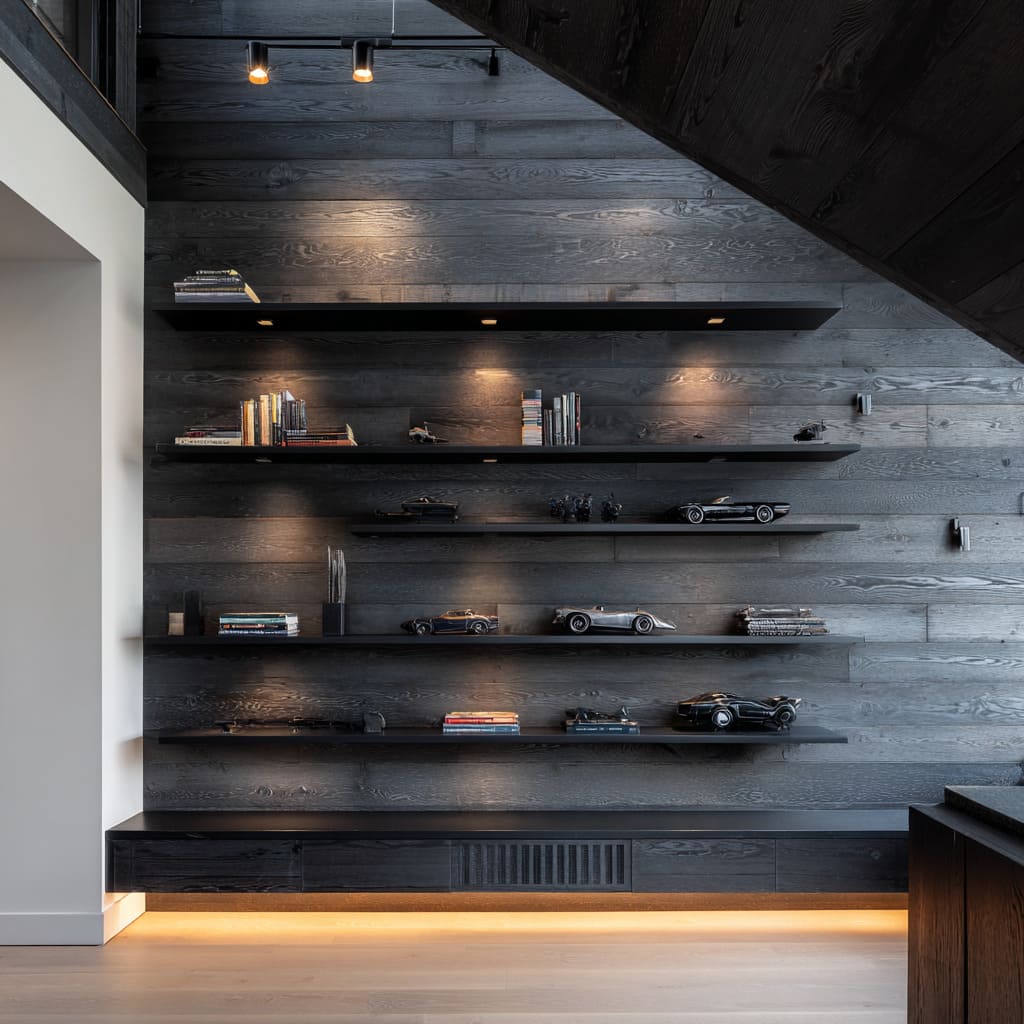
Modern shelf ideas for man cave interiors often use subtle irregularity to add visual life. Instead of rigid stacking, shelves shift by inches—longer, shorter, or offset.
These variations create a soft asymmetry that keeps the wall alive without feeling chaotic. Front edges line up along a single invisible datum, while thickness and finish stay consistent.
This gives calm order beneath the movement. Such rhythm, paired with repetition of light lines or bracket positions, forms the backbone of a visually strong yet gentle wall.
Layered Composition Instead of Clutter
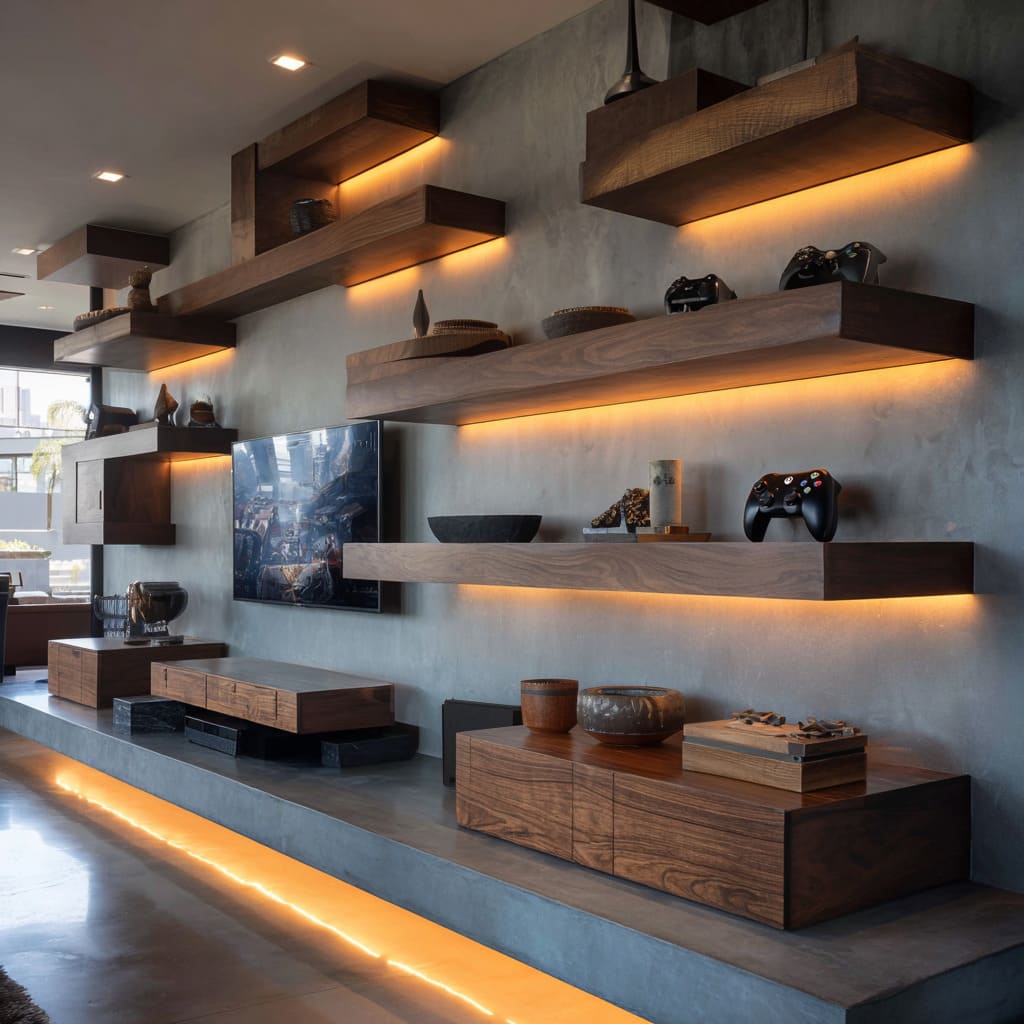
In today’s man cave shelf decor, clutter is replaced with curated density—a slow alternation between heavy and light. Designers speak of “tone bands” instead of color pops: lighter pieces rise high, darker ones ground the middle, and a single anchor item balances the view.
This approach organizes not by category but by mass and tone. Heavy objects, matte metals, or dark ceramics often stay around eye level; lighter, reflective, or translucent pieces rise above.
It’s a painterly logic applied to shelving, producing harmony without a single ornament shouting for attention.
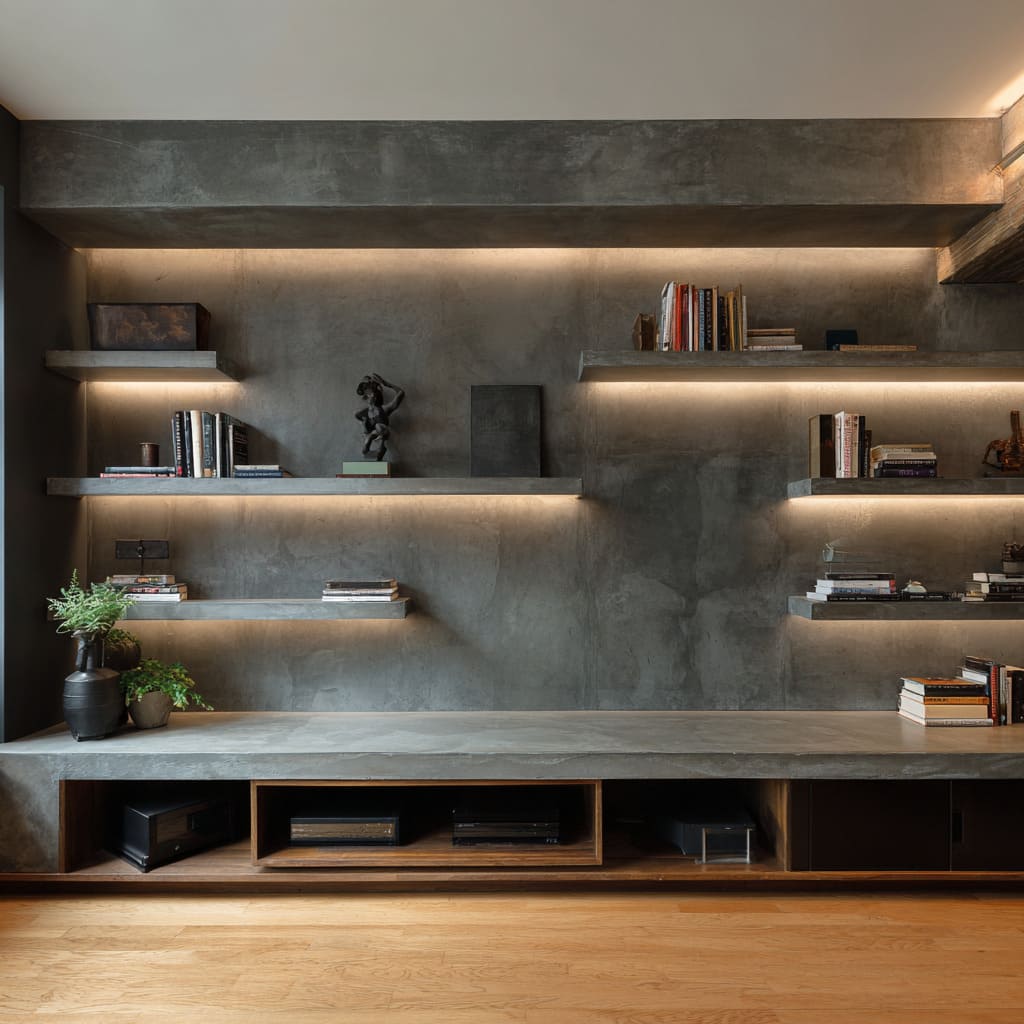
Visual rhythm strategies often found in these walls:
- One tall element per shelf to stop the eye
- Alternating dark–light–dark sequences across rows
- Aligning book or object tops into shared horizontal lines
- Using light fins or vertical partitions as recurring beats
Integration of Craft and Technology
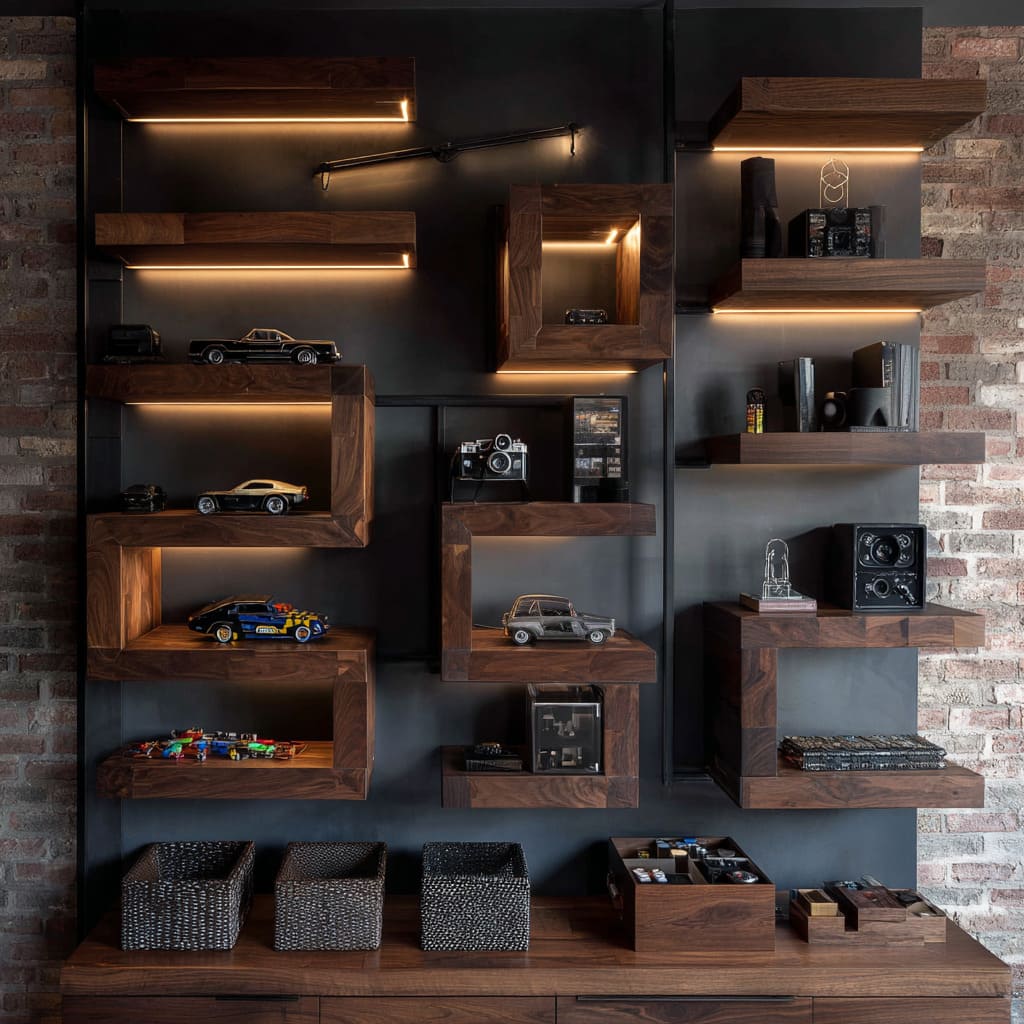
The strongest man cave shelf ideas merge tactile craft with discreet technology. Gear, speakers, and media equipment are no longer hidden; they’re positioned as part of the design but paired with crafted companions—wooden lids, stone bowls, clay vases—that soften their presence.
This equilibrium between machine precision and handmade warmth defines the new masculine aesthetic. It’s practical yet poetic, showing that refinement comes from contrast, not elimination.
Quiet Geometry and the Art of Framing
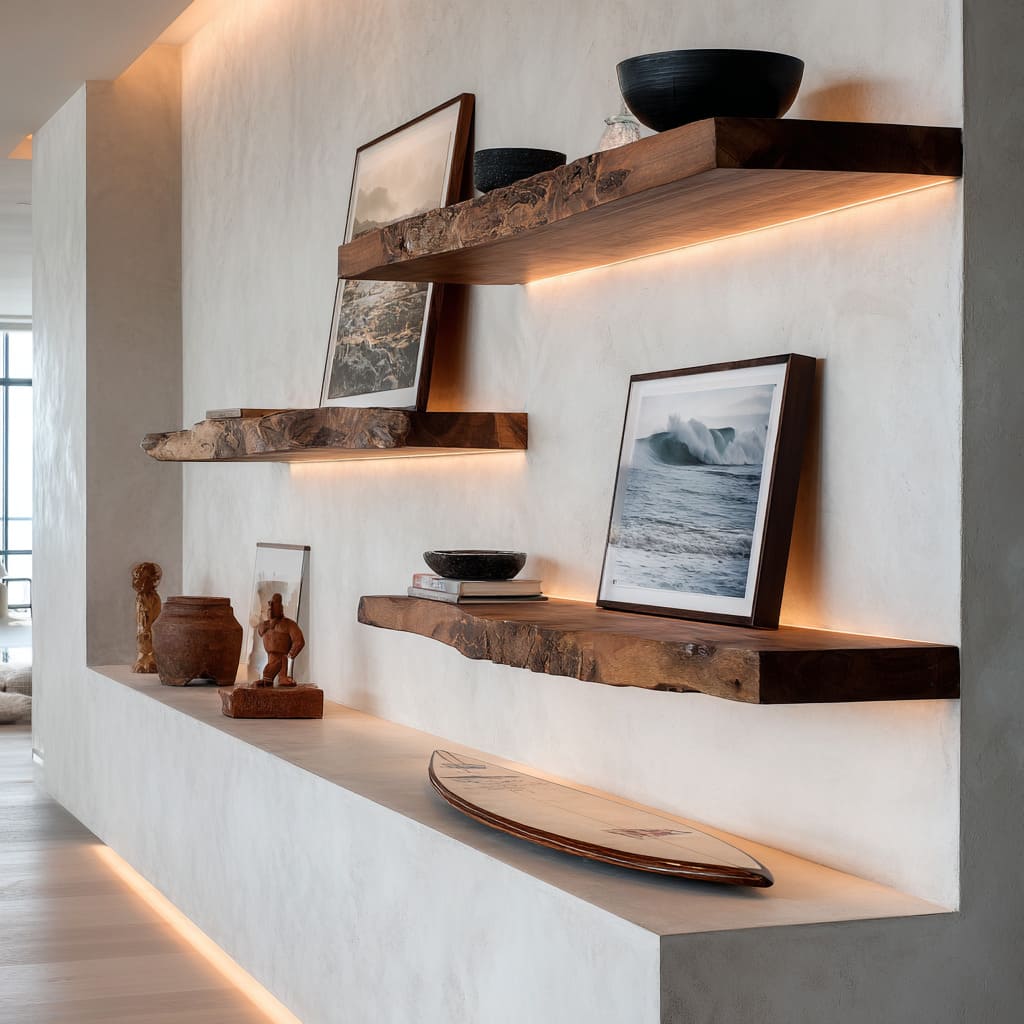
Another key to freshness is geometry. Modern shelf ideas for man cave emphasize clear rectangular logic broken by a single irregular line—a live-edge plank, a sculptural void, or a recessed box.
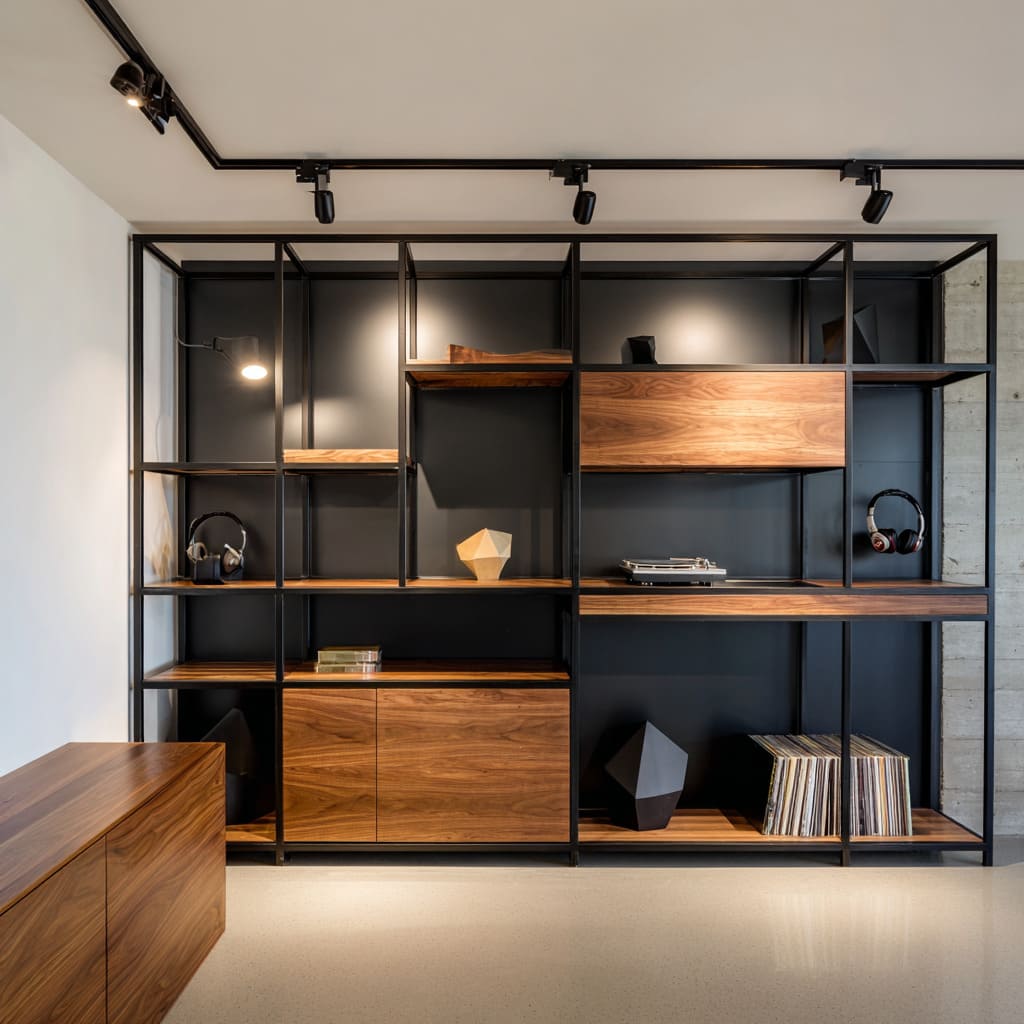
Some systems use walnut U- and C-frames around darker back panels, creating a play between solid and void that feels architectural. Others rely on mesh grids or steel uprights where boxes clip off-center, turning what used to be storage into layered composition.
Framing mass around collections allows walls to carry hobbies, tools, or artifacts without slipping into nostalgia.
Vertical Light as Visual Architecture
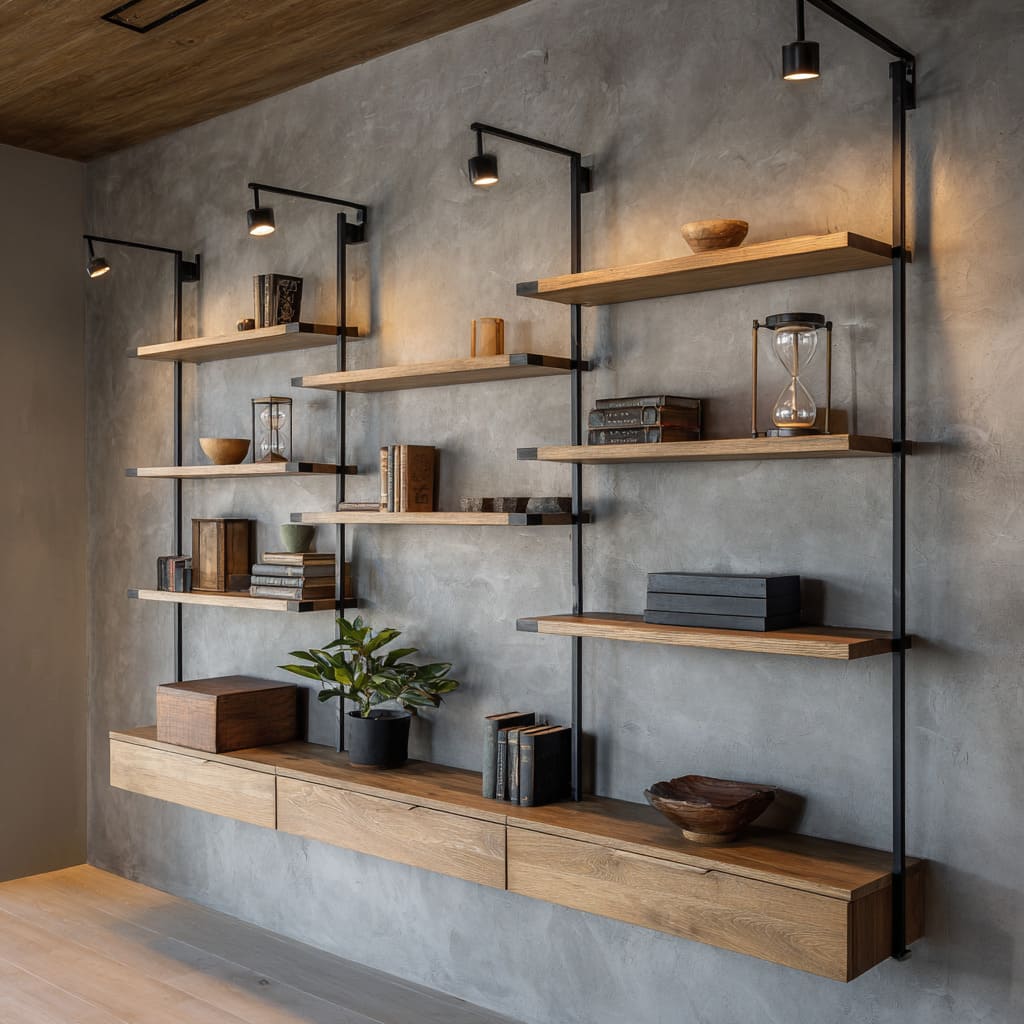
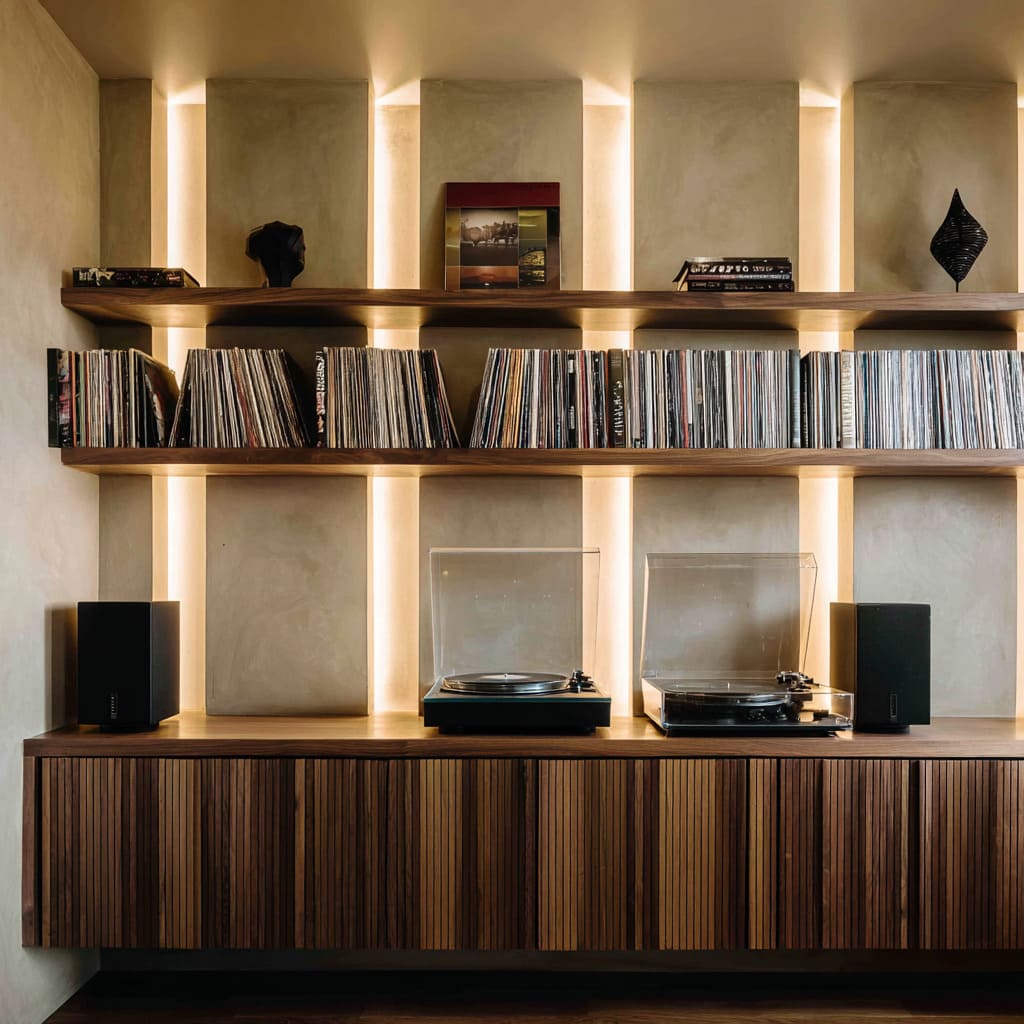
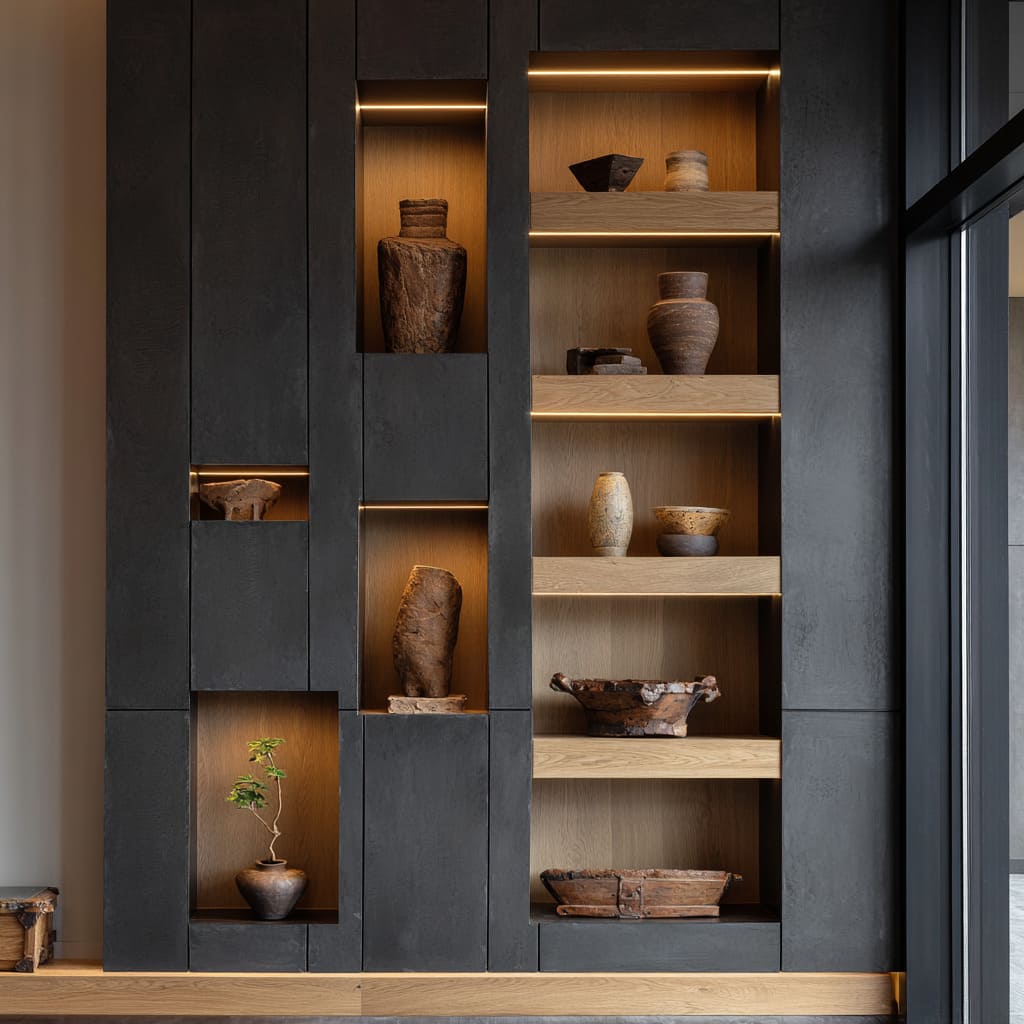
While older man caves relied on wall sconces or overhead lamps, current designs integrate vertical light as structure. Thin amber fins between wood columns create bays of calm illumination.
Instead of showcasing objects with glare, they sketch equal rhythm across the height of the wall. This approach transforms stacks of books, vinyl records, or pottery into vertical artwork, keeping the wall lighter and taller.
The New Warmth: Human Touch and Living Details
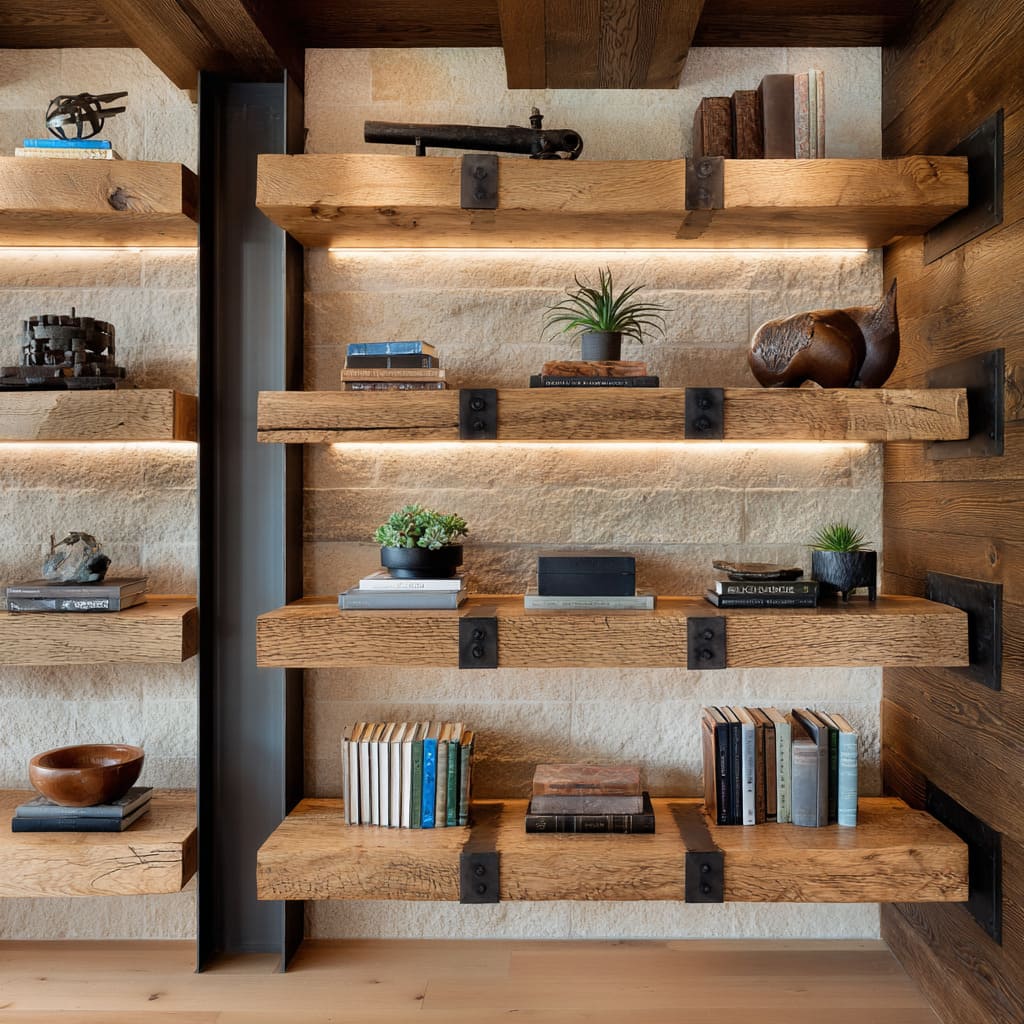
Even the most minimalist man cave shelf decor now includes signs of life—a small plant in a deep niche, a bonsai in a low slot, or a trailing pot catching the edge of light. These green notes appear rarely but with precision, offering relief from the darker palette.
Warmth also shows up where hands meet surfaces: oiled oak on cabinet tops, ribbed wood on credenzas, or matte clay on bowls. It’s a quiet humanism that replaces the old excess of trophies and neon lights.
Material Inversions that Redefine Weight
A major stylistic leap in current shelf ideas for man cave is the inversion of material expectations. Designers now let stone float while wood acts as background.
Concrete slabs hover with slim shadow gaps, and dark timber panels behave like soft cloth behind them. The result is visual surprise: the heaviest materials appear light.
Such inversions modernize the familiar palette instantly, steering the mood away from the cliché “heavy lodge” feeling toward something sculptural and balanced.
Visual Organization Strategies in Contemporary Shelving
To understand how these walls maintain their calm presence, one can group the design logic into distinct approaches:.
1) Light-driven organization
- Under-shelf lines forming continuous glow paths
- Vertical fins dividing objects into equal visual rhythms
- Floor or toe-kick lights creating base planes
2) Tone-driven organization
- Mid-level weight concentration
- Alternation between warm and cool surfaces
- Single dark anchor per bay or per wall
3) Form-driven organization
- Repetition of shelf thickness and front datum
- Asymmetric length variation
- Triadic groupings: one stack, one sculpture, one void
Together these systems explain why the new man cave shelf decor feels structured yet soft, deliberate yet relaxed.
From Display to Composition
Perhaps the most striking change is conceptual. The shelf wall is no longer a stage for possessions; it is a composition of light, tone, and material.
Objects simply occupy the roles within that composition. Books become risers; shadows act as frames.
The entire setup reads like an abstract artwork rather than a storage solution. By turning the old idea of “displaying things” into “balancing shapes,” these designs evolve the man cave aesthetic into a sophisticated environment.
Conclusion: The Calm Modernity of Restraint
Modern man cave shelf ideas prove that restraint can look powerful. What once meant a heavy, dark, trophy-filled cave now translates to a grounded, tactile, and visually open environment.
Through careful use of warm light, textural contrast, asymmetry, and curated negative space, designers have transformed these rooms into quiet galleries of character. The essence of every successful man cave shelf decor today is not the number of items it holds, but the rhythm between the few it chooses to display—and the calm, glowing air left around them.