In the new wave of man cave lighting ideas, designers are transforming what used to be dark dens into composed, cinematic environments where light sculpts space instead of flooding it. The shift moves far beyond the neon signs and ceiling cans of the past.
Today’s cool lighting for a man cave focuses on balance—warm edges, quiet ceilings, and hidden seams that guide the eye without overwhelming it. The goal is no longer to light the room but to shape how it feels.
The Rise of Light as Architecture
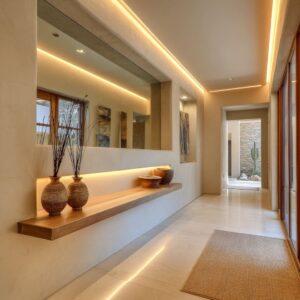
Across the best man cave LED lighting ideas, lighting has stopped being an accessory and become part of the structure itself. Designers now use linear LED seams, concealed coves, and wall grazes that describe the space’s geometry.
In a single basement or garage conversion, a perimeter light band can widen the room visually, lifting heavy ceilings and making brick or stone appear soft.
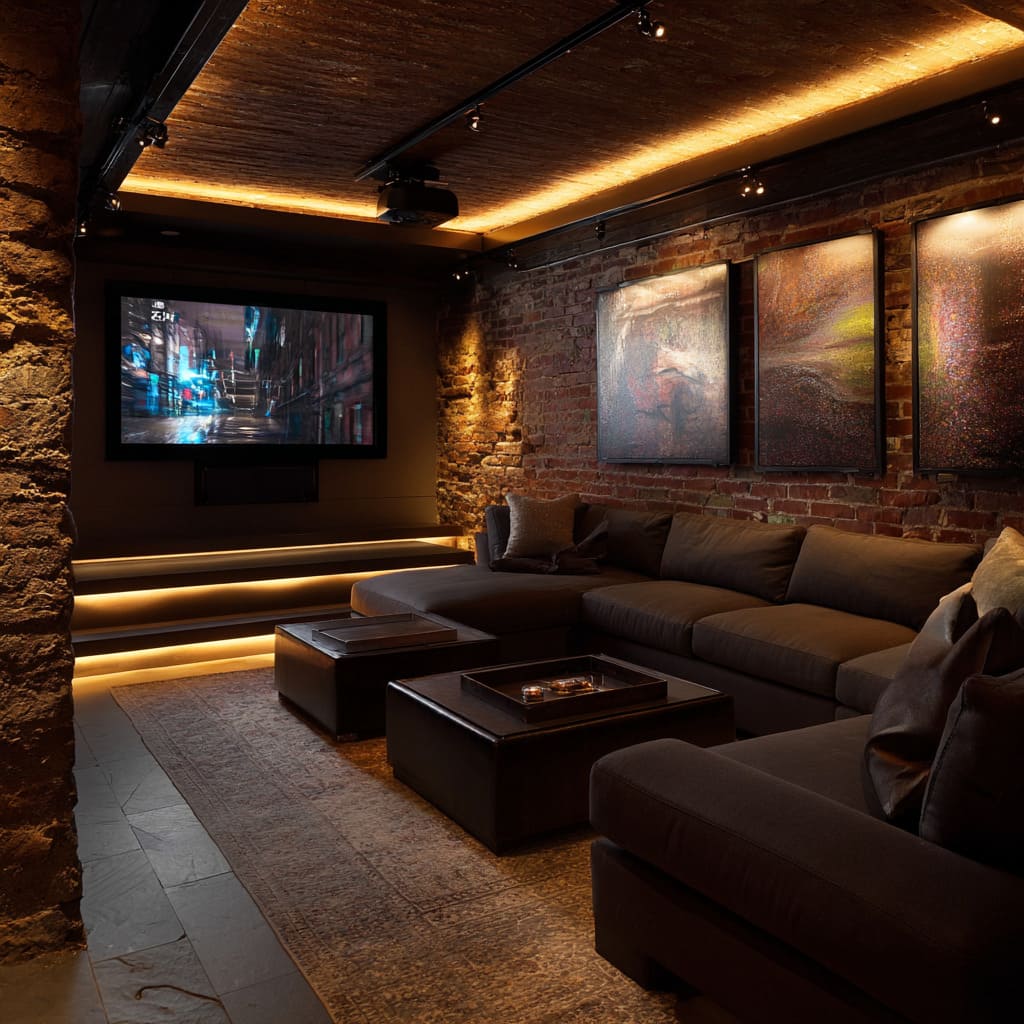
When light is drawn like joinery—following the edges, joints, and shelves—it stops functioning as illumination alone. The room becomes a composition of horizons: a glowing base, a lifted ceiling, and sculpted wall planes.
This approach keeps even the most compact room feeling broad and modern, a subtle evolution that defines the best man cave lighting ideas of recent years.
Grazing, Not Flooding
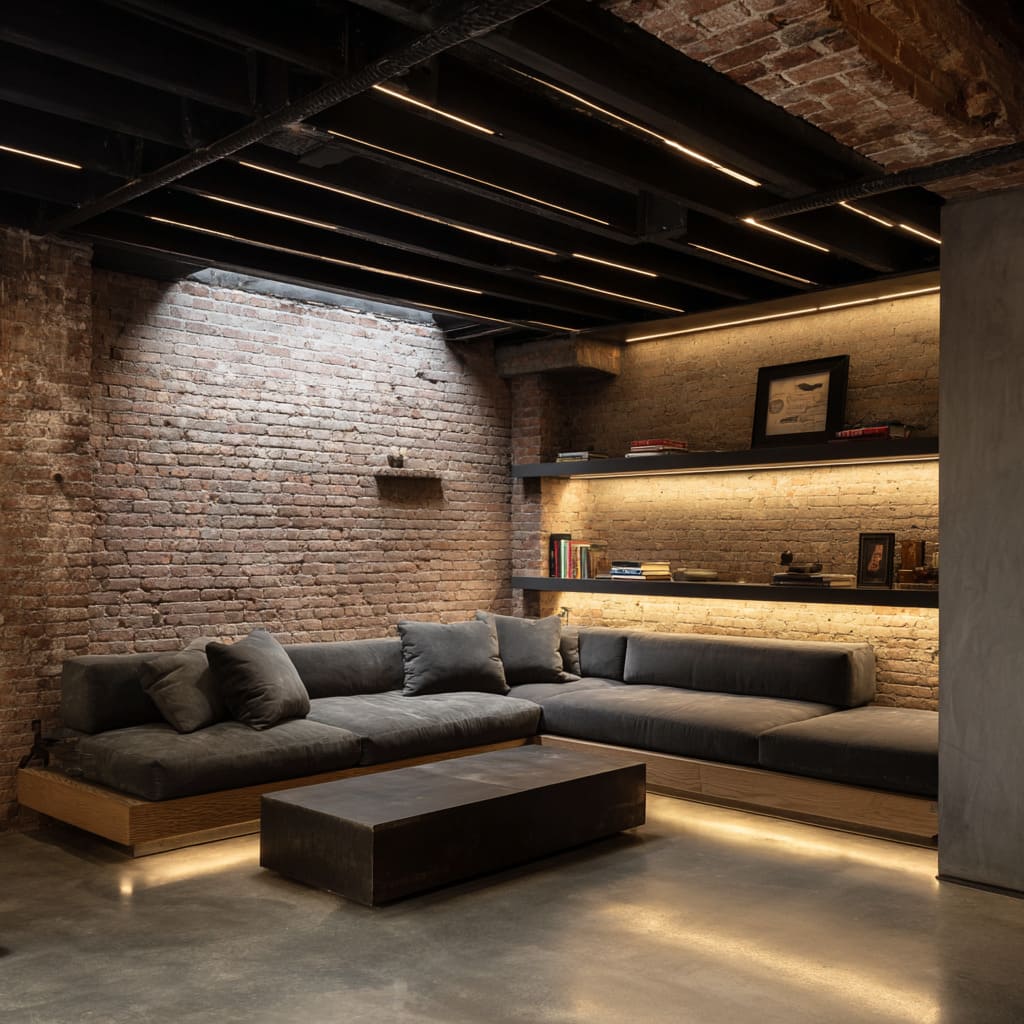
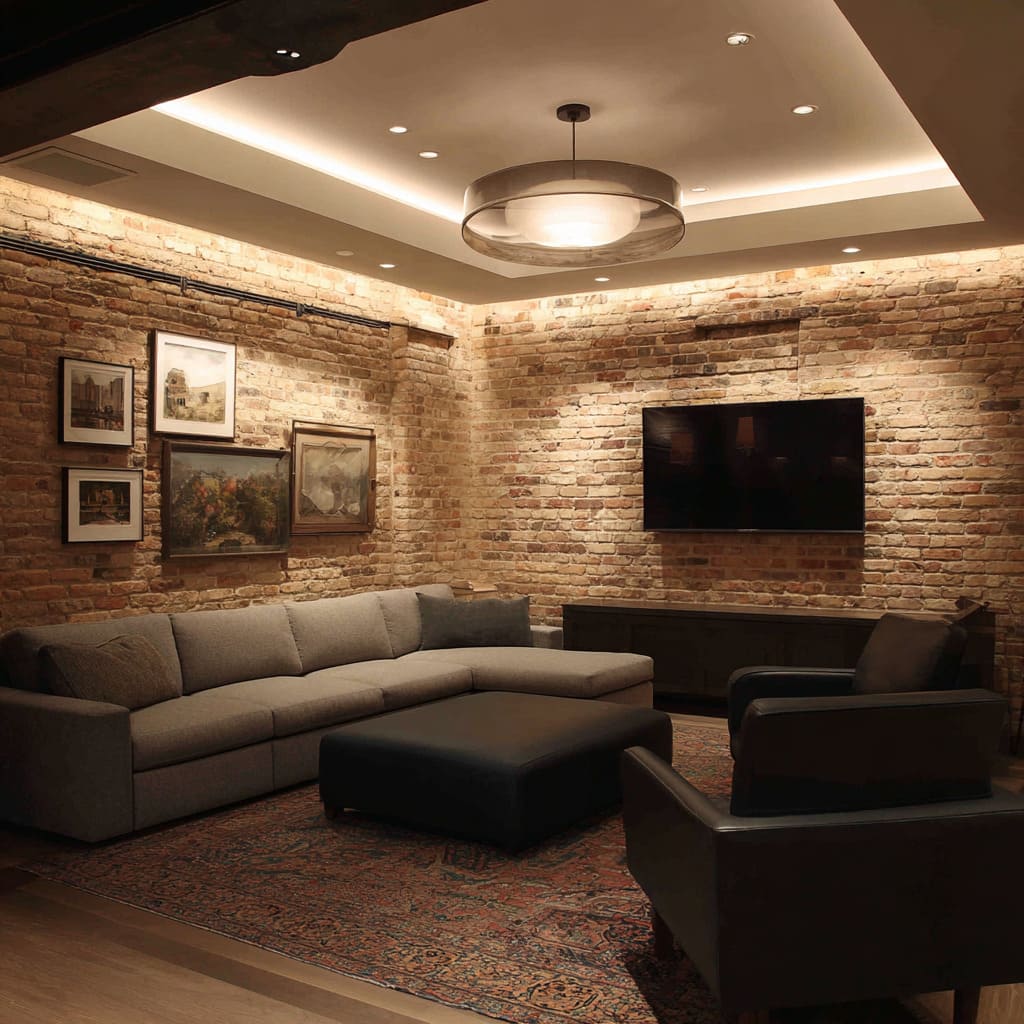
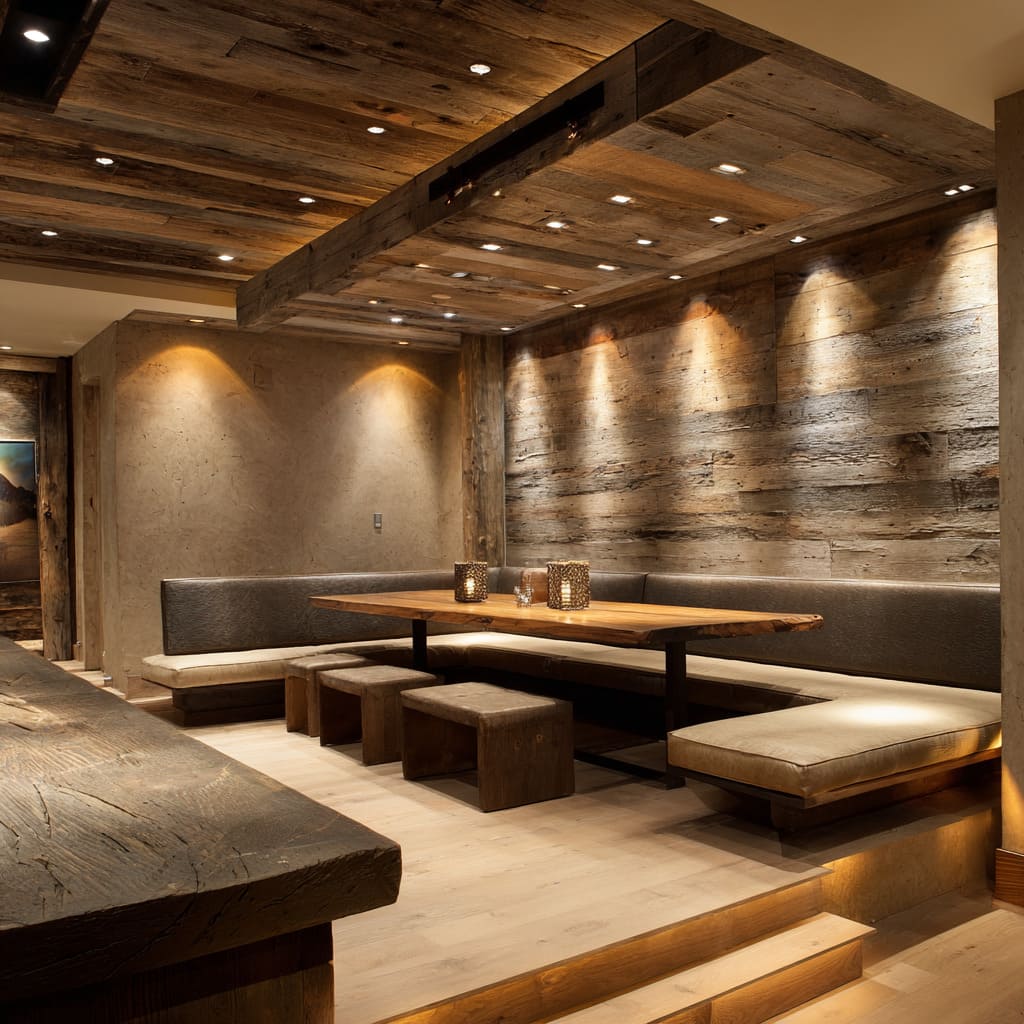
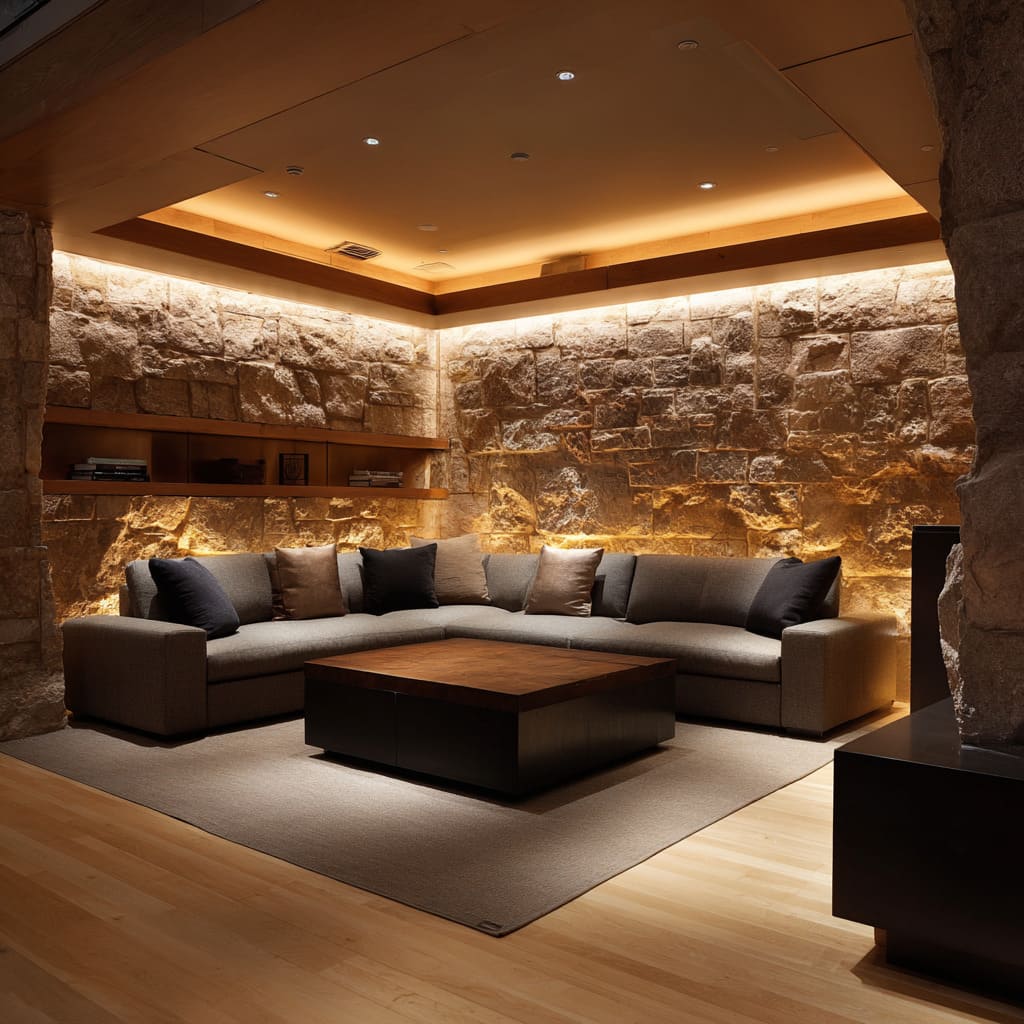
One of the most defining traits in cool lighting ideas for a man cave is grazing. Instead of pointing bright spots directly at objects, designers use narrow beams that skim across the surface—brick, concrete, wood—so textures appear deep and tactile.
A grazed brick wall gains warmth and character, while a reclaimed timber surface glows like it’s been polished by time.
This visual strategy replaces the harsh contrast of old basement lighting with a layered calm. Light no longer says, “Look here.
” It whispers, “This wall has depth. ” That soft restraint is what turns a once-rough space into a cool modern retreat.
The Ceiling as the Quiet Composer
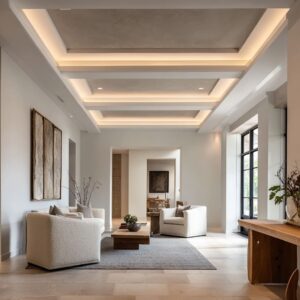
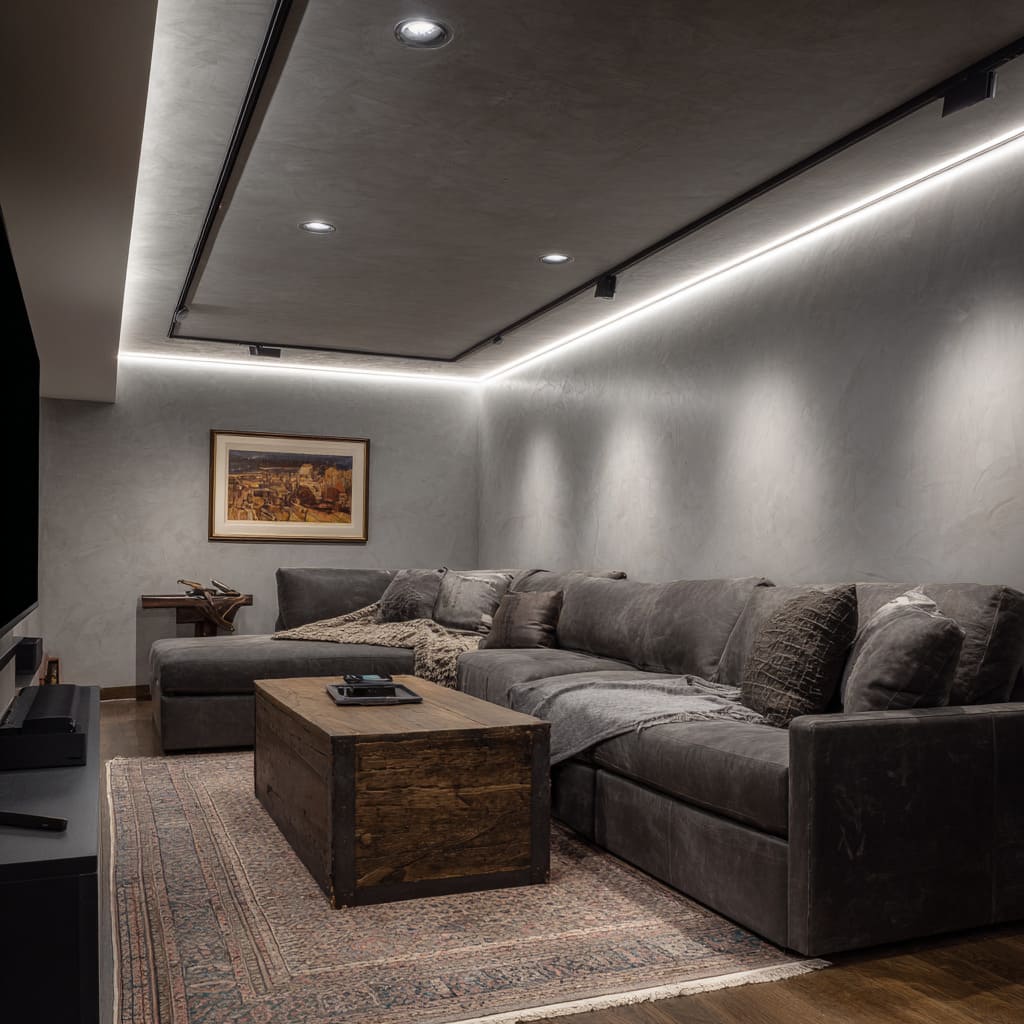
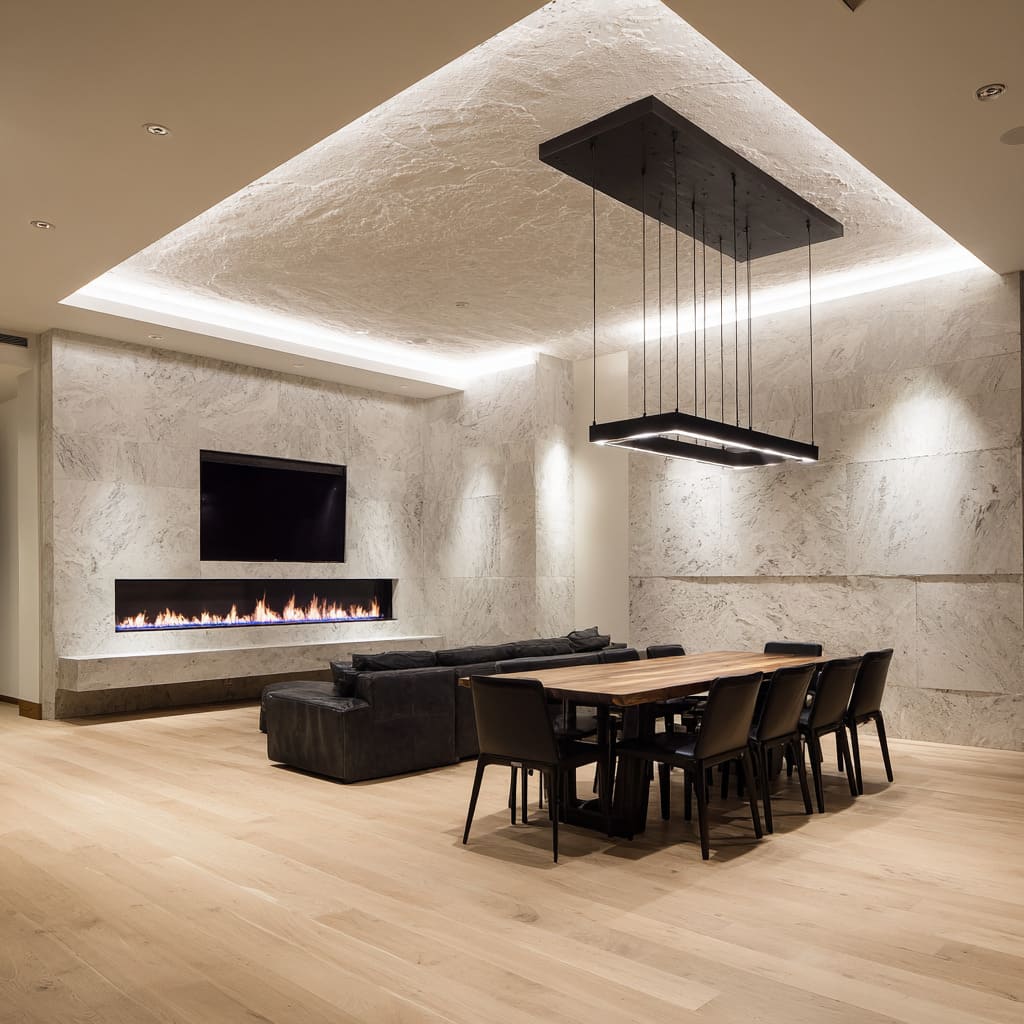
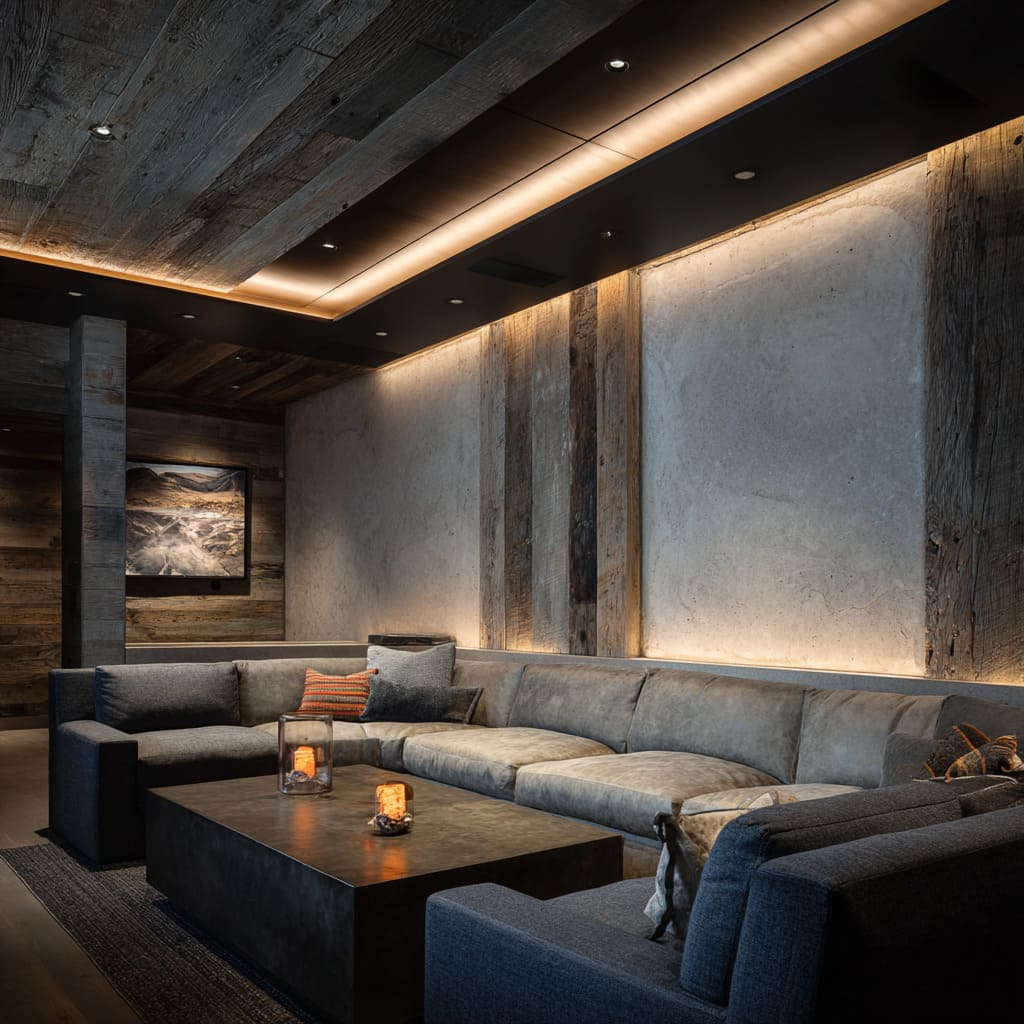
Ceilings have become the new design playground in garage man cave lighting ideas and other compact layouts. Shallow trays with hidden LED seams create an illusion of lift, making low rooms feel open.
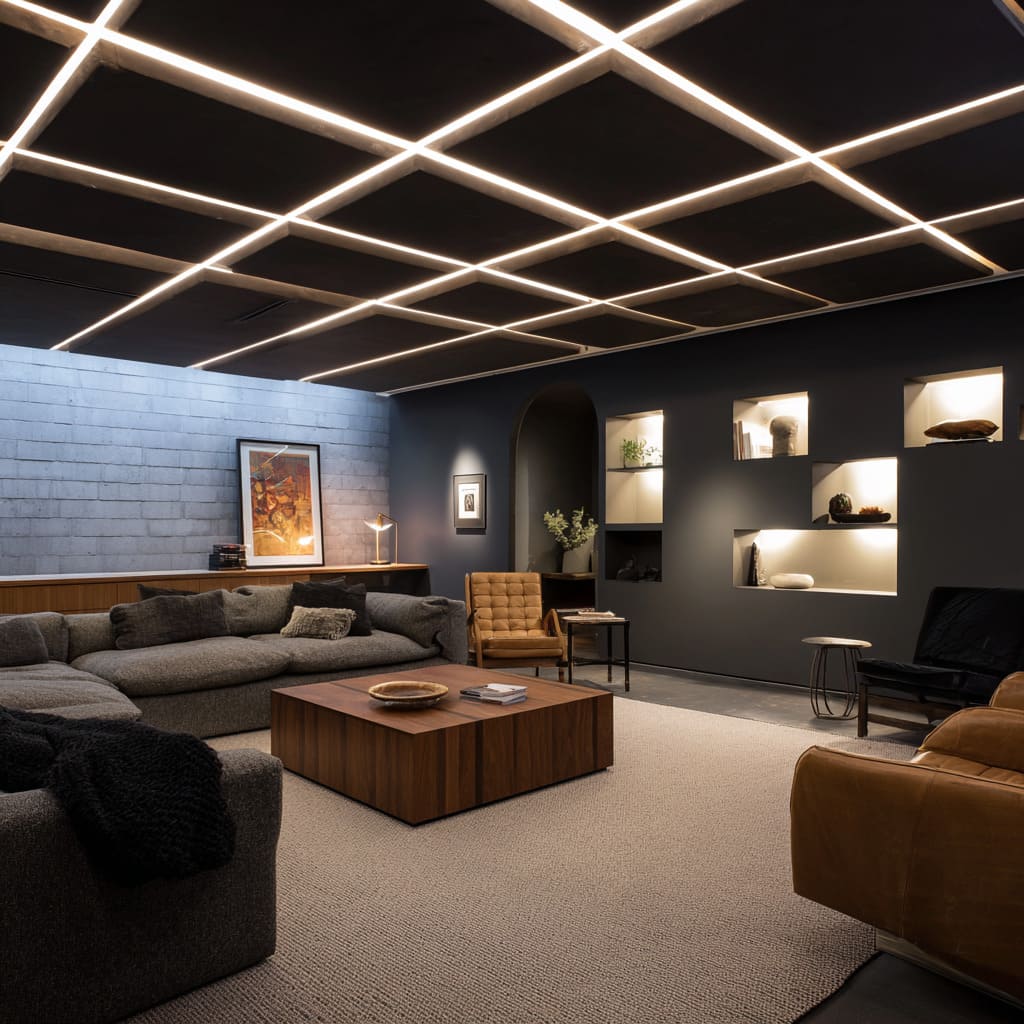
Diagonal or grid light lines cut through long spaces, turning static corridors into dynamic zones.
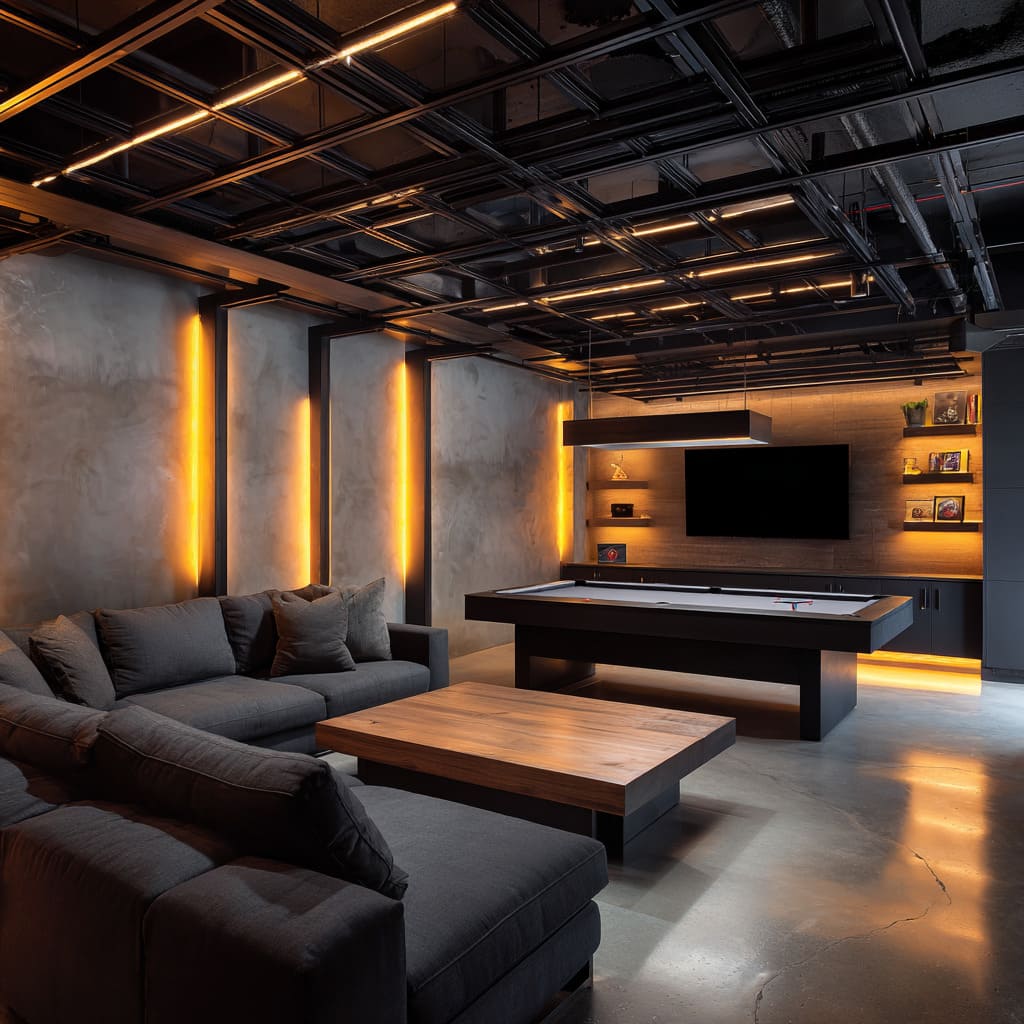
Some designers use glossy or reflective ceiling finishes so the light lines echo subtly above the viewer, doubling the visual rhythm without increasing brightness. It’s a minimalist trick that replaces heavy fixtures with fine graphic structure, keeping the atmosphere balanced between industrial and refined.
Floating Bases and Weight Anchors
The modern cave succeeds because it balances what floats and what stays grounded. A toe-kick glow beneath a sofa or console creates a soft horizon that lifts heavy furniture.
Nearby, one dense, matte table or a stone slab fireplace keeps the composition rooted.
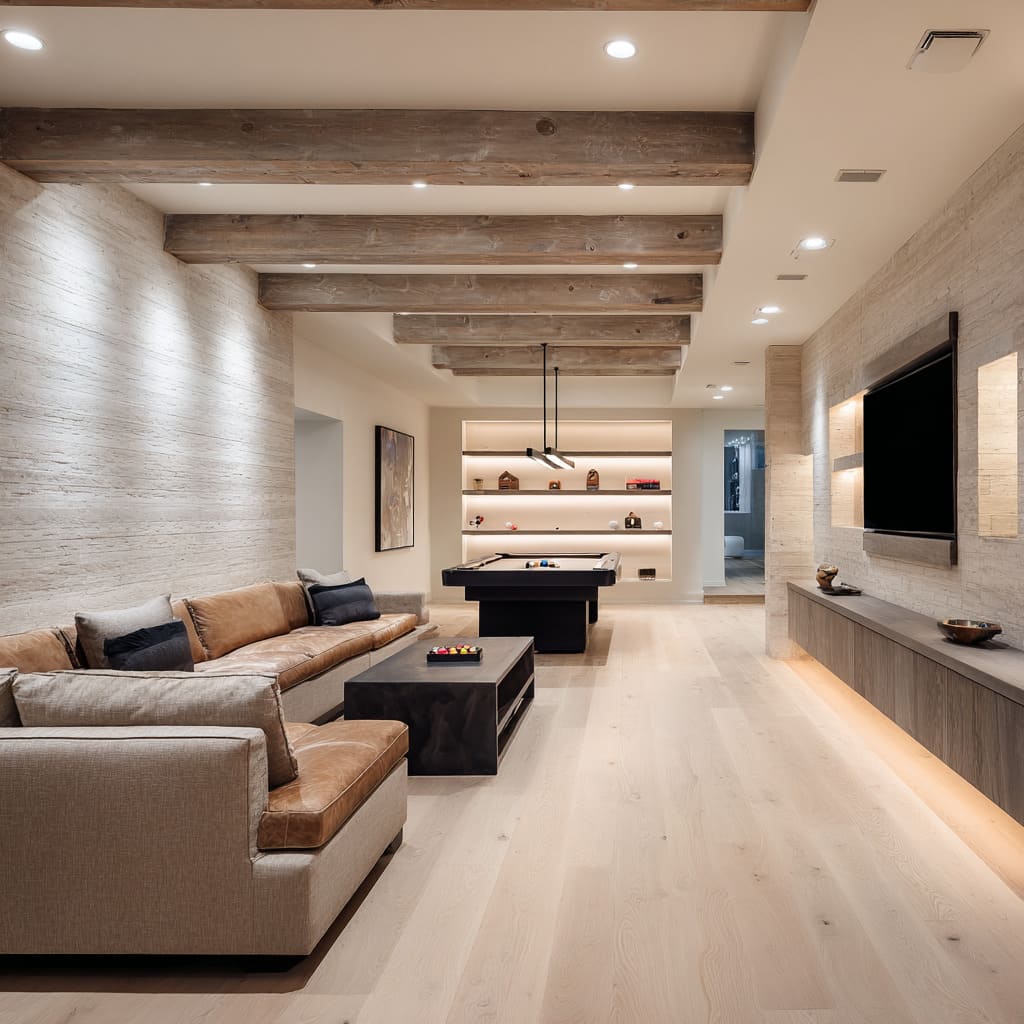
This pairing—floating glow below, solid anchor above—appears throughout current man cave LED lighting ideas. The contrast gives motion to the room: one line hovers, one line holds.
Together, they keep the setting calm but never dull.
Layered Warmth and Subtle Contrast
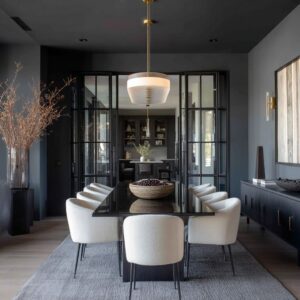
The lighting palette in today’s designs often shifts gently between warm amber and neutral white. This combination is vital in LED lighting ideas for a man cave because it lets the space feel both cozy and precise.
Warm seams soften industrial materials like concrete or steel, while cooler notes highlight details in timber, fabric, or artwork. By controlling temperature differences instead of brightness, designers add depth without clutter.
The light feels lived-in, not staged—a hallmark of the modern, understated man cave.
Lighting That Curates Instead of Clutters
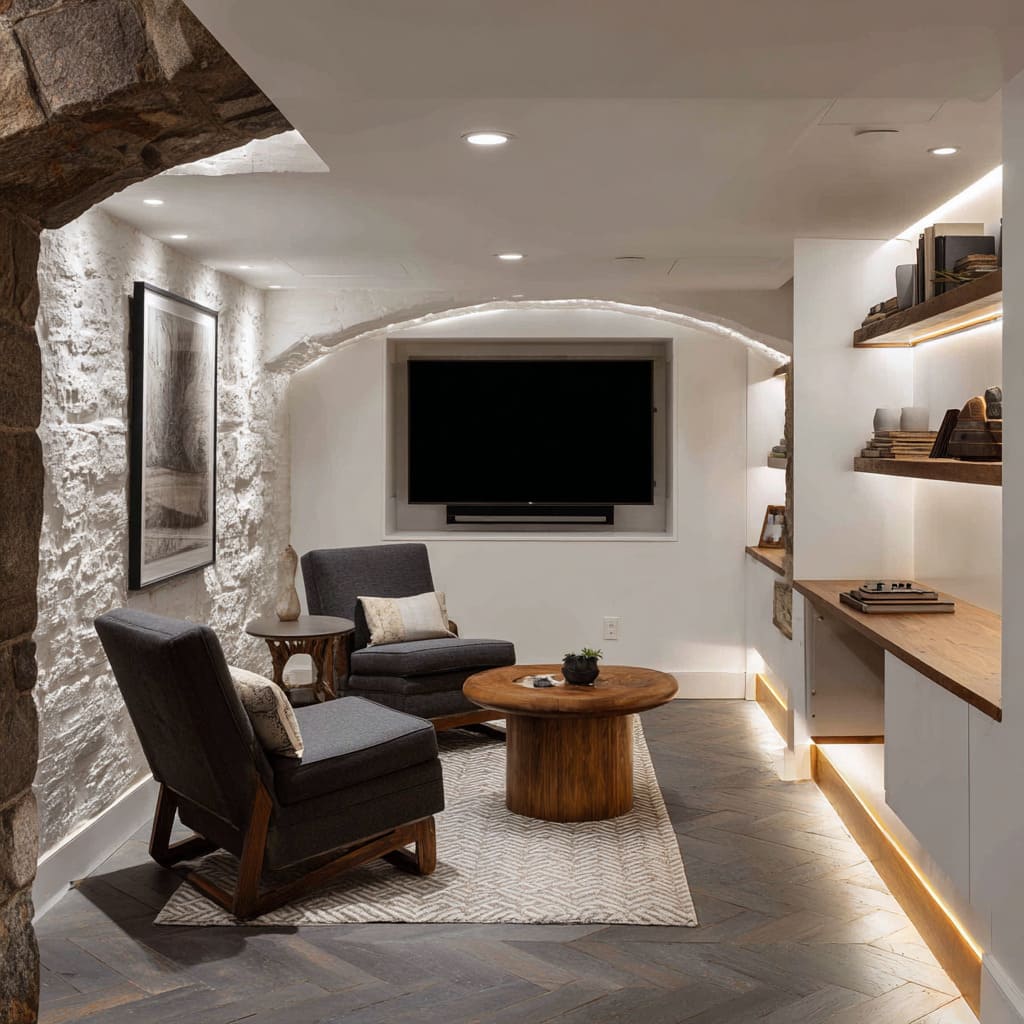
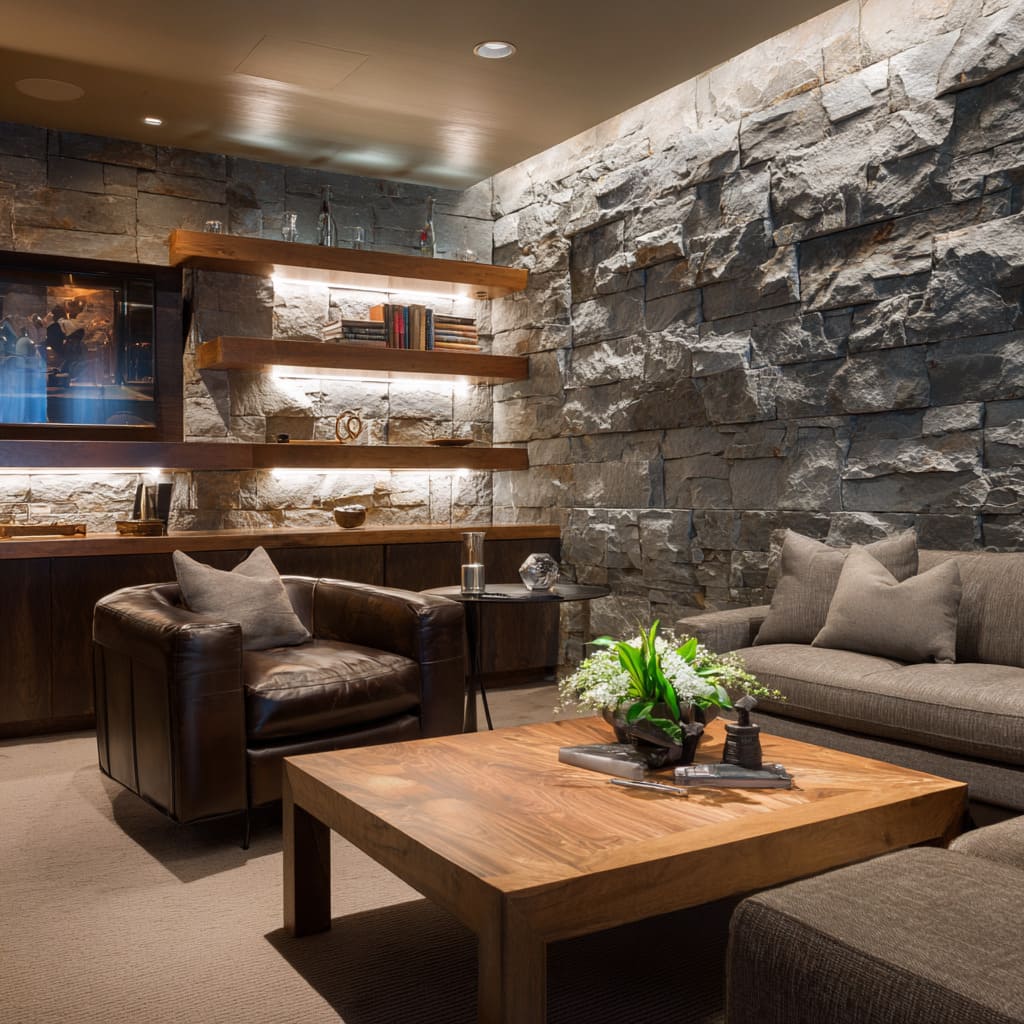
Shelving and storage areas used to be background elements. In new man cave lighting ideas, they’re treated as architectural features.
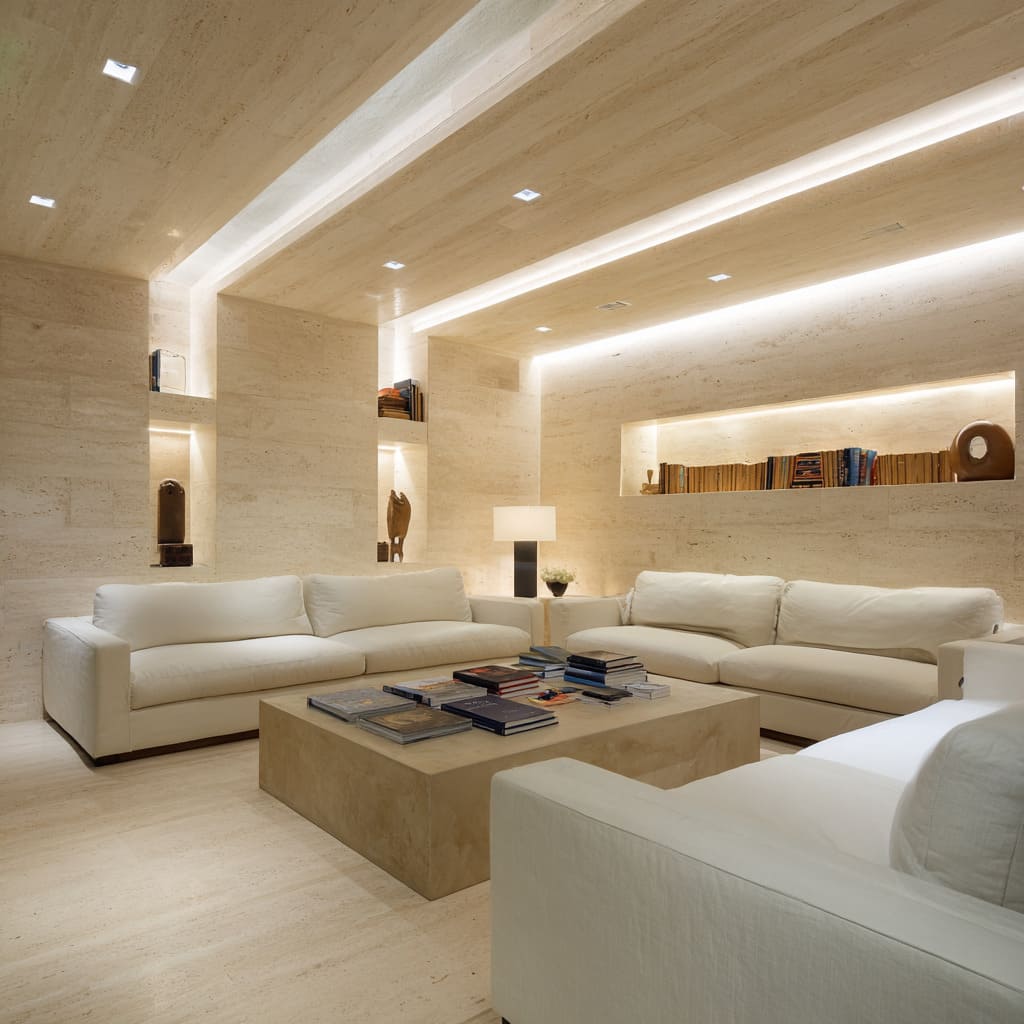
Strips placed along the shelf edges or sides turn each niche into a framed display where objects throw soft, centered shadows. Some compartments are left empty, giving negative space equal importance.
This curated rhythm replaces the trophy-laden shelves of older caves. The combination of shadow and glow makes the wall breathe, transforming storage into sculpture.
It’s one of the simplest ways to make cool lighting for a man cave look designed, not improvised.
Mood Over Brightness: The Cinematic Shift
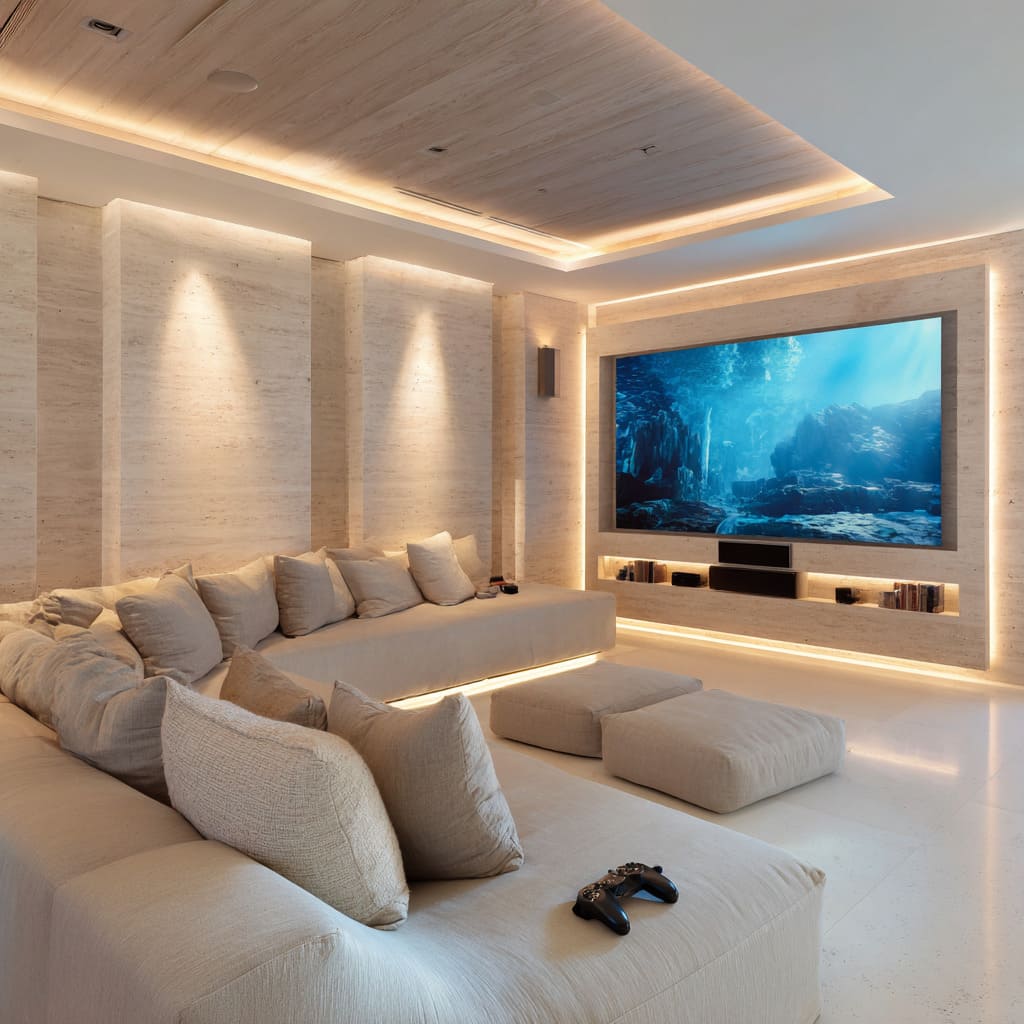
Where older dens relied on a single overhead source, modern layouts layer multiple light zones that play off one another.
- Ceiling coves define form and atmosphere
- Grazed walls bring material depth
- Toe-kick seams float furniture
- Framed screen glows pull focus without bulk
Together, these elements create the cinematic quality now typical of the best man cave lighting ideas. Even in rooms that serve as home theaters, the aim is not darkness but richness—depth through control rather than dimness for its own sake.
When Raw Becomes Refined
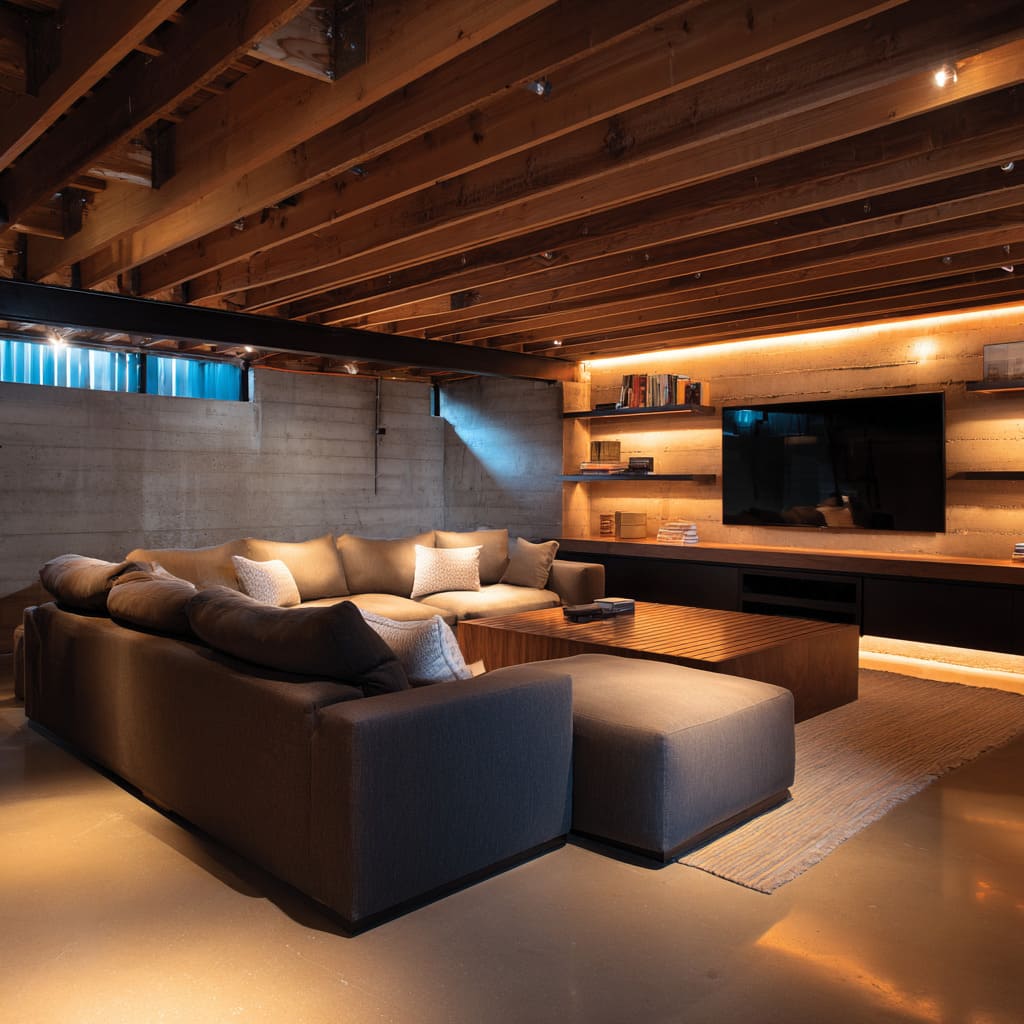
Another pattern visible in current garage man cave lighting ideas is the mix of exposed structure and soft seams. Joists, conduits, or steel frames remain visible, but light “edits” them into order.
Thin slots threaded between beams or vertical fins along columns transform raw architecture into rhythm. This balance keeps the authenticity of an industrial setting but removes its visual noise.
The light acts like punctuation, giving the ceiling or wall a composed beat that feels modern instead of mechanical.
Tone, Texture, and the New Masculine
The modern aesthetic avoids cliché masculinity. Matte surfaces, quiet fabrics, and natural materials take the lead.
Lighting is what gives these elements dimension. A wall wash across rough stone or a warm band under walnut shelving speaks more about comfort and sophistication than about strength.
In this design language, man cave LED lighting ideas emphasize emotional weight instead of literal brightness. The result is calm energy—a place meant for focus, sound, and atmosphere, not clutter.
Variations of the Look
Across homes, lofts, and garage conversions, several recurring compositions define the current language of cool lighting ideas for a man cave:
- The Floating Horizon Look – continuous base glow under furniture and shelving, paired with low, blocky anchors
- The Framed Screen Setup – nested light rectangles around the entertainment wall, turning the screen into an architectural feature
- The Material Grazing Approach – narrow beams that rake across brick or stone, revealing layers of age and craftsmanship
- The Grid Ceiling Concept – linear LED crossings that bring rhythm to long rectangular layouts
- The Timber Wash Aesthetic – under-shelf strips and mini spot cones highlighting wood grain for warmth and tactility
Each path shares the same intent: to let light draw the room’s geometry before anything else does.
The New Definition of Cool
What makes these spaces stand out is not gadgetry or colored LEDs but control. The modern man cave doesn’t shout through brightness or theme.
Instead, it relies on measured edges, deliberate shadows, and tone continuity between surfaces.
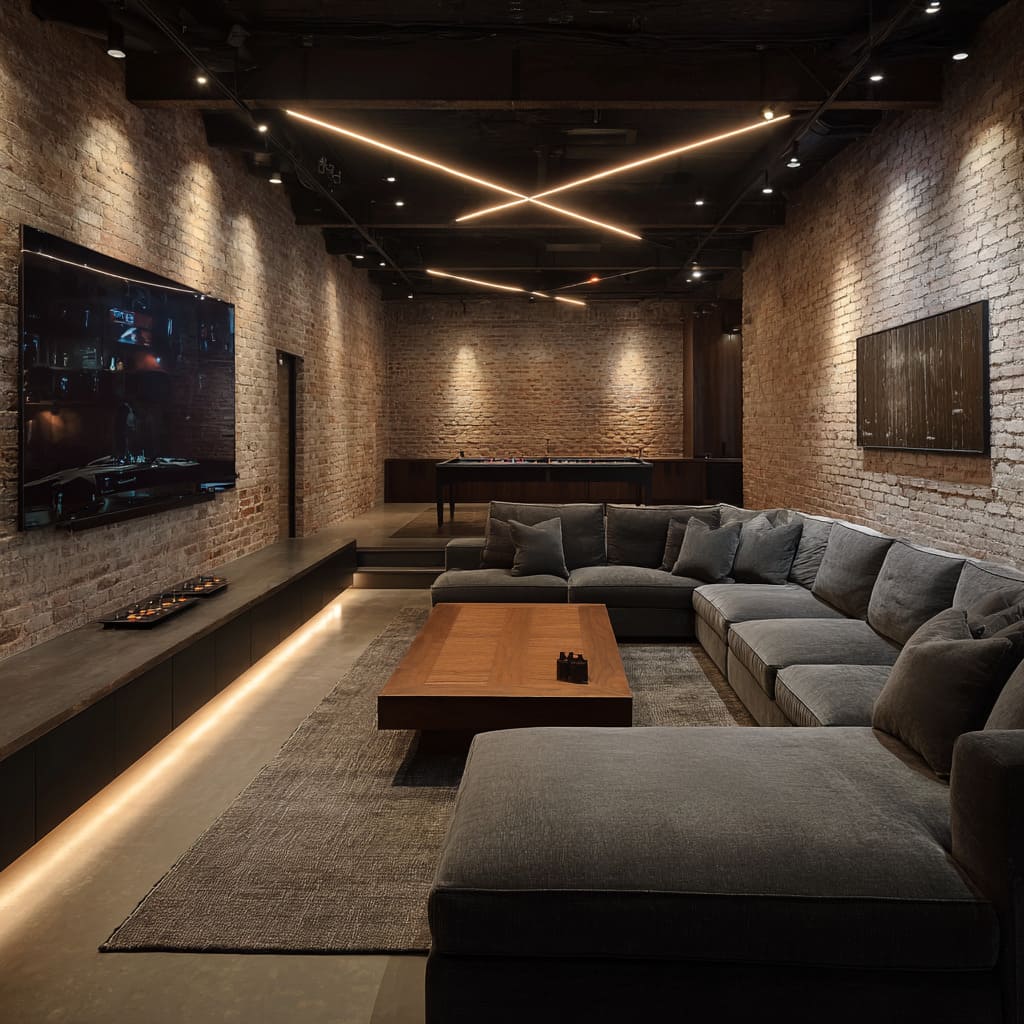
When you see a space that feels effortlessly current—a brick wall glowing like dusk, a ceiling floating in quiet amber, a sofa resting on a faint horizon line—you’re witnessing the outcome of this new design logic. These are the best man cave lighting ideas because they don’t depend on novelty; they depend on perception.
In short, light has become the new architecture of atmosphere. It’s what turns familiar basements, garages, or side rooms into modern retreats—spaces that feel composed, timeless, and unmistakably cool.