Modern interiors have quietly transformed the idea of a L-shape TV unit design for a hall. Once seen as a practical way to save space, the L-form has become a visual system that defines how the whole room feels—its light balance, proportion, and rhythm.
Designers can now treat the L-shaped TV cabinet design not as a piece of furniture, but as the central linework of the space—anchoring media, display, and architecture in one move. Below, we explore how the latest modern L-shaped tv cabinet design concepts shape rooms that feel composed, warm, and unmistakably current.
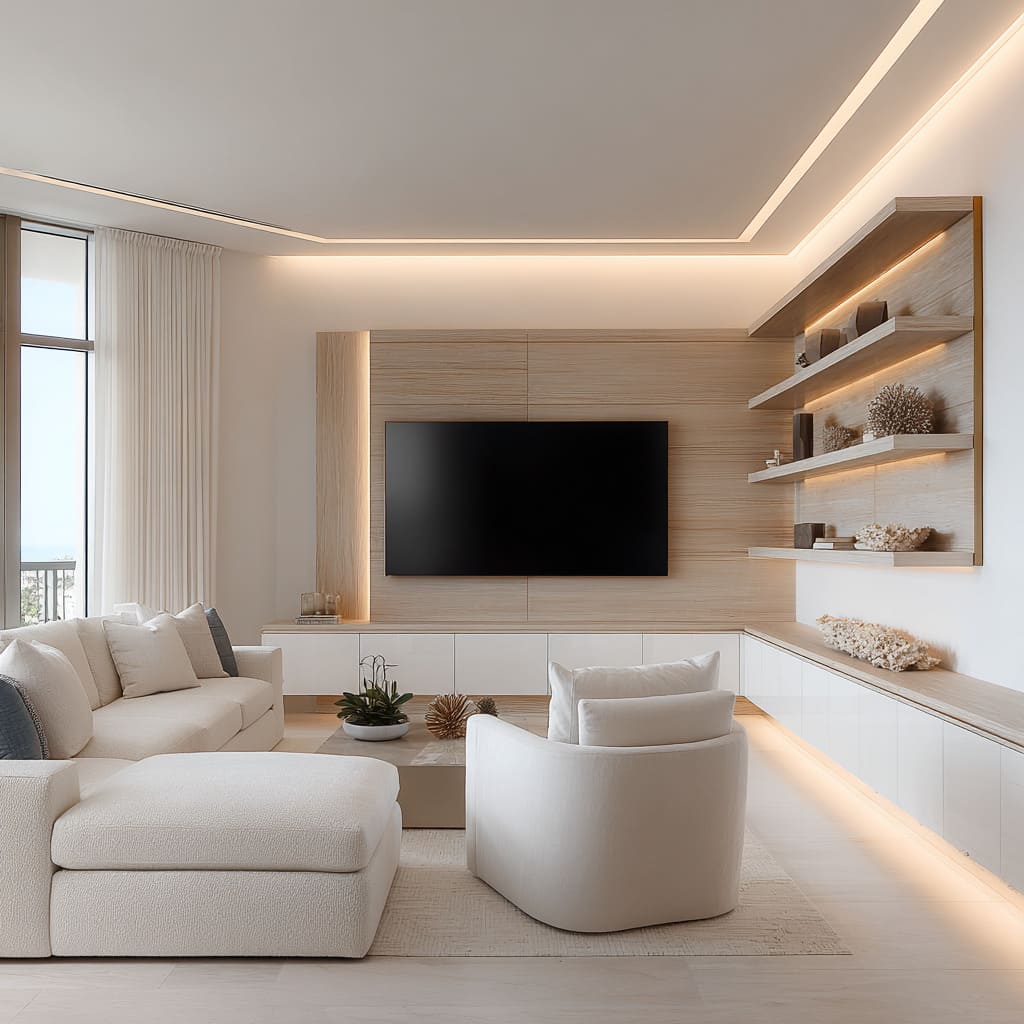
The New Role of the L: From Furniture to Visual Horizon
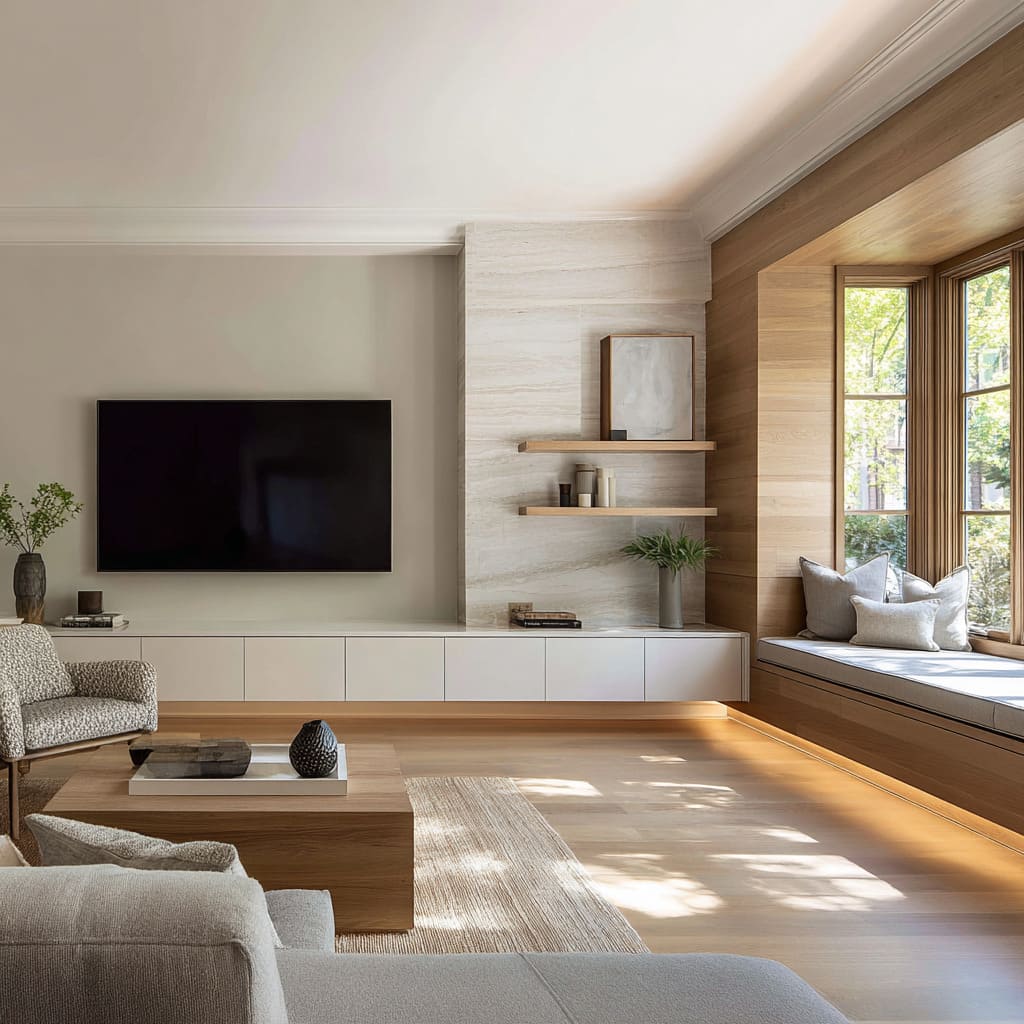
Across today’s interiors, the L-shaped tv wall unit designs serve as a low, continuous horizon. They tie together walls, windows, and furniture, often using a shared line that runs uninterrupted from the TV wall to a bench or display zone.
This linear logic creates calm and visual order—every object, light, and material rests along a shared rhythm.
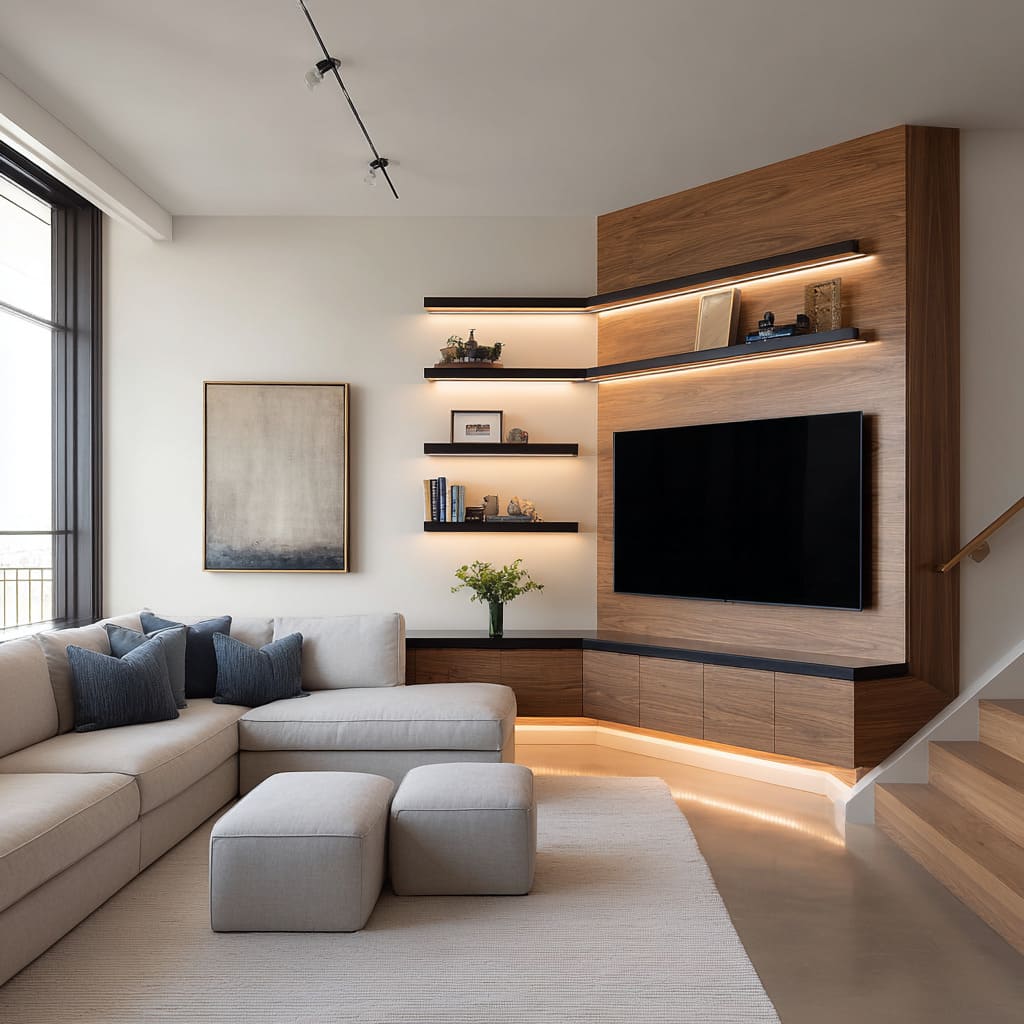
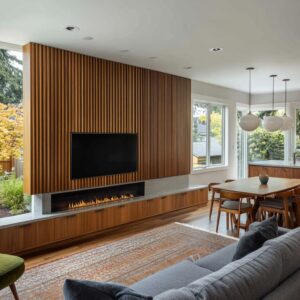
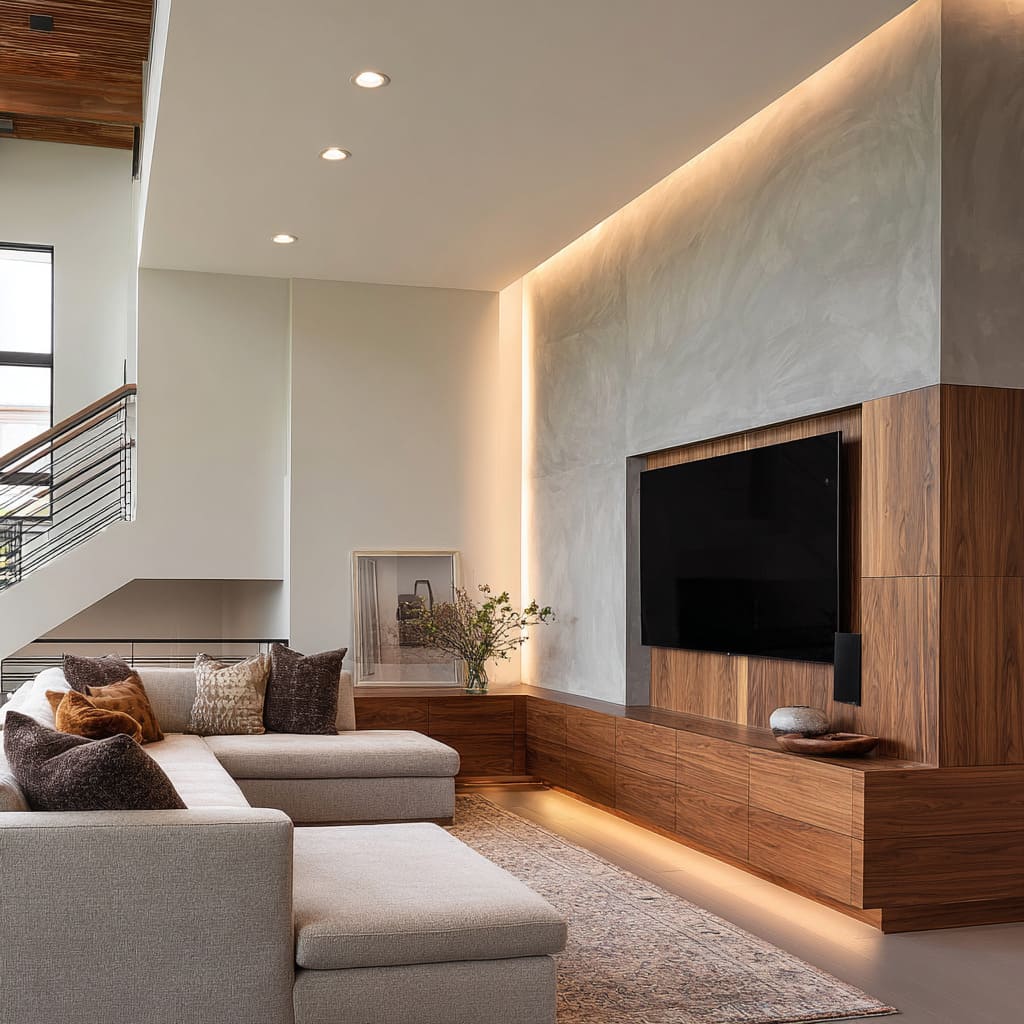
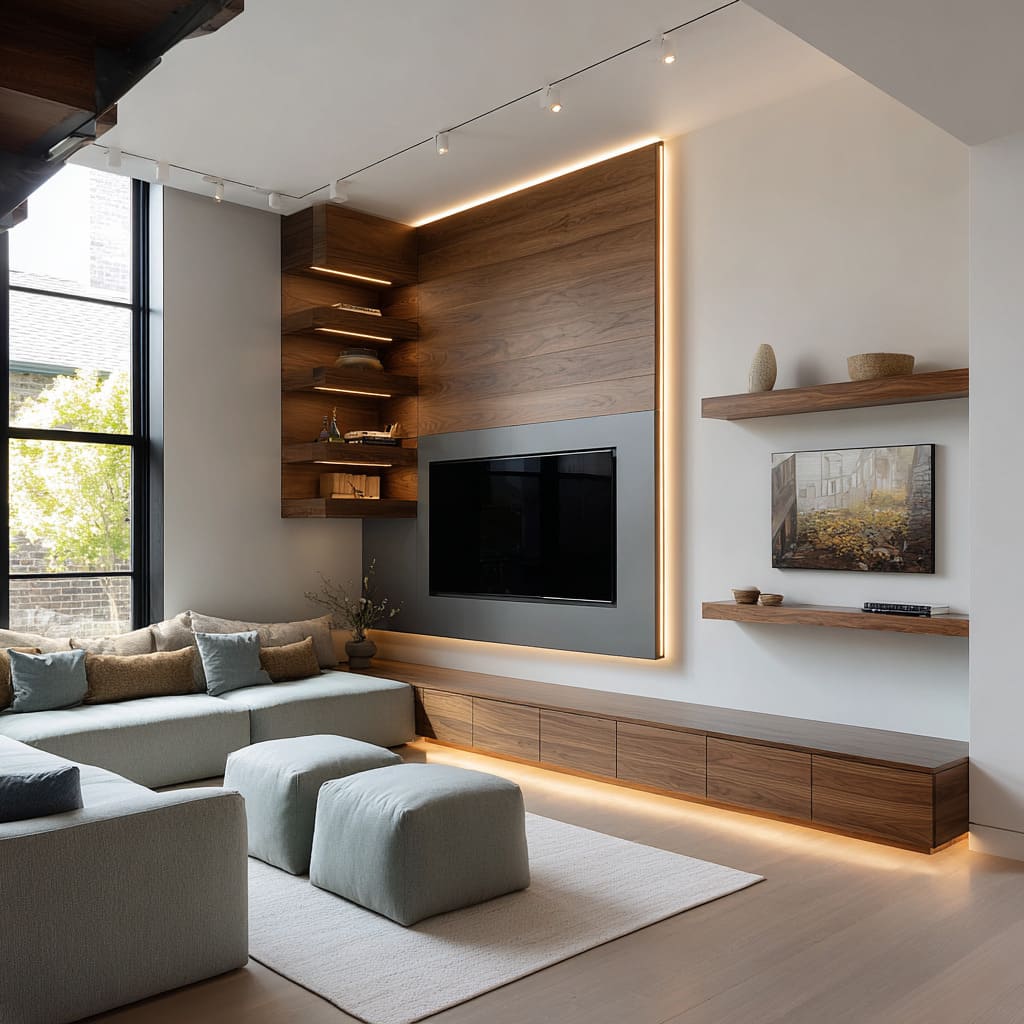
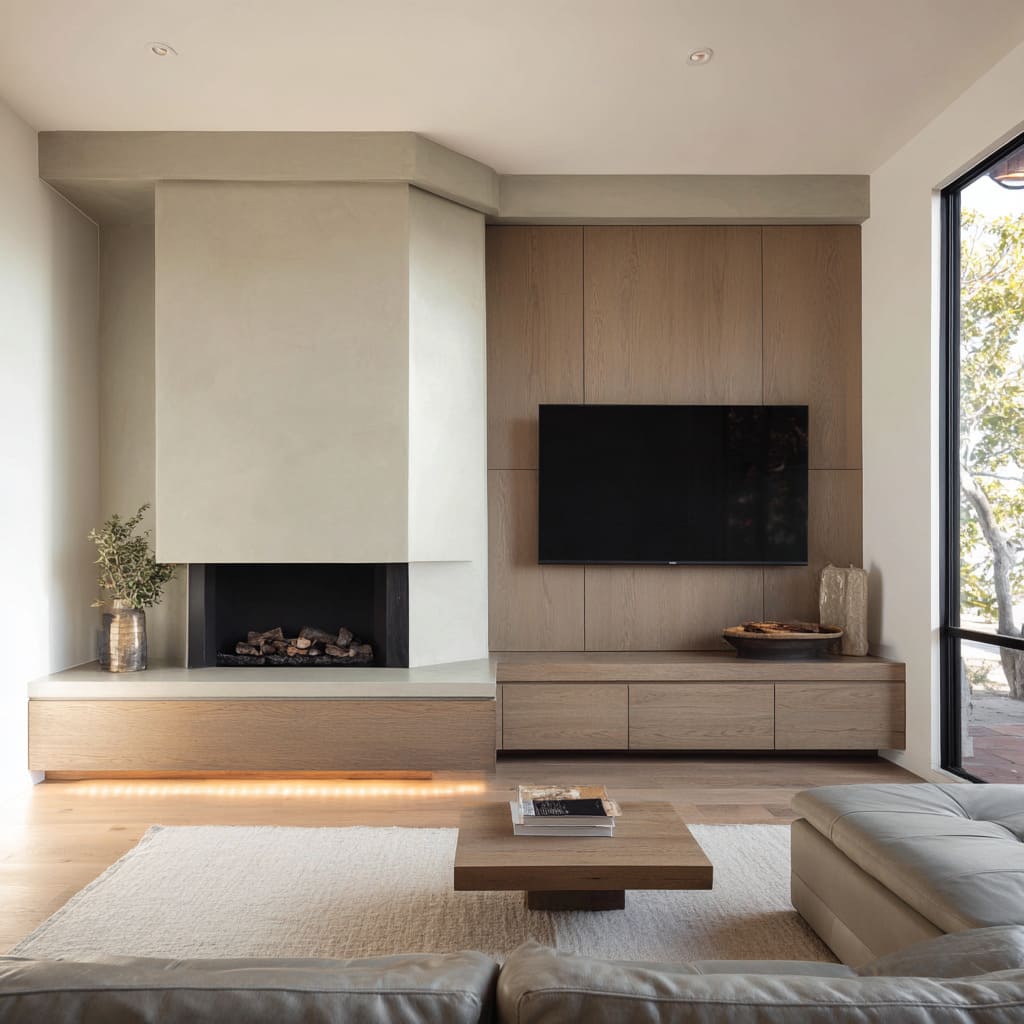
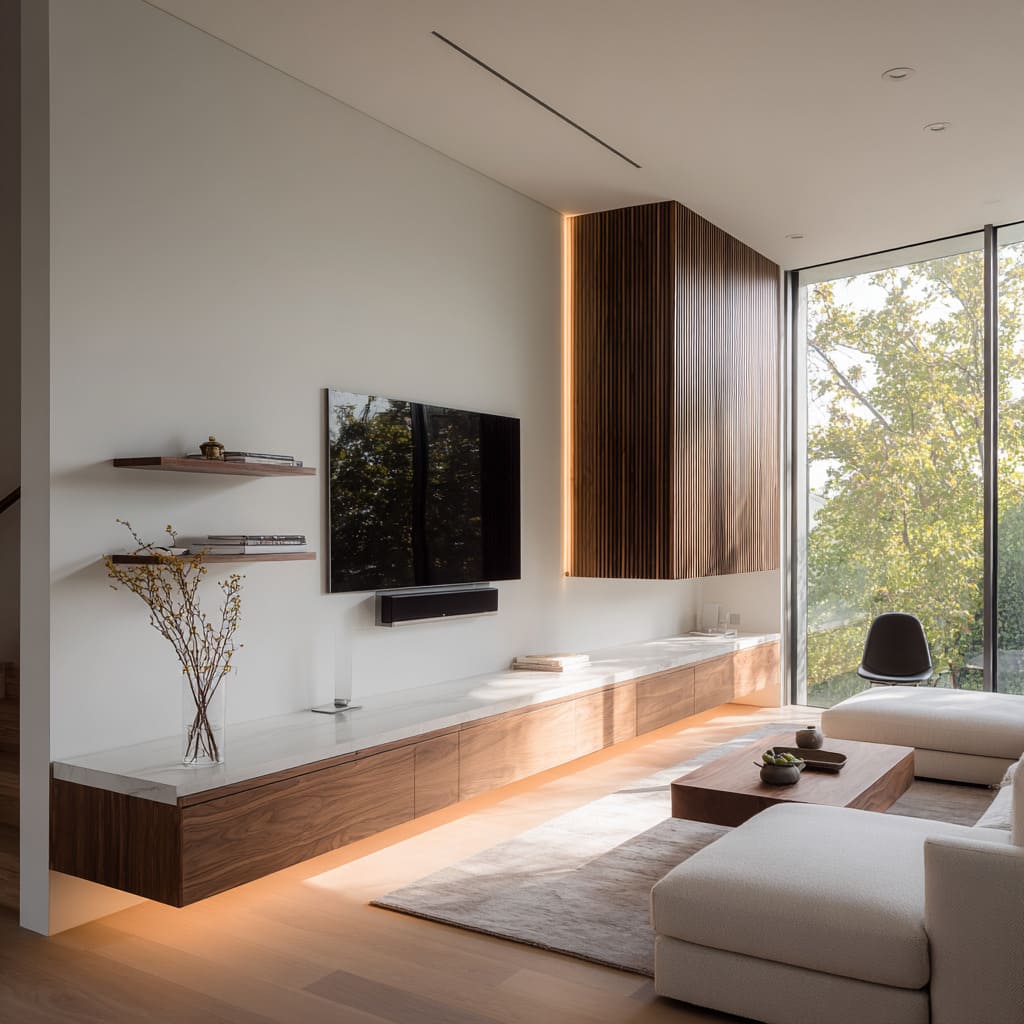
A key trend is the floating plinth look: long, wall-hung cabinets or drawers that appear to hover just above the floor thanks to hidden toe-kick lighting. That glow makes the mass feel weightless and visually widens the hall.
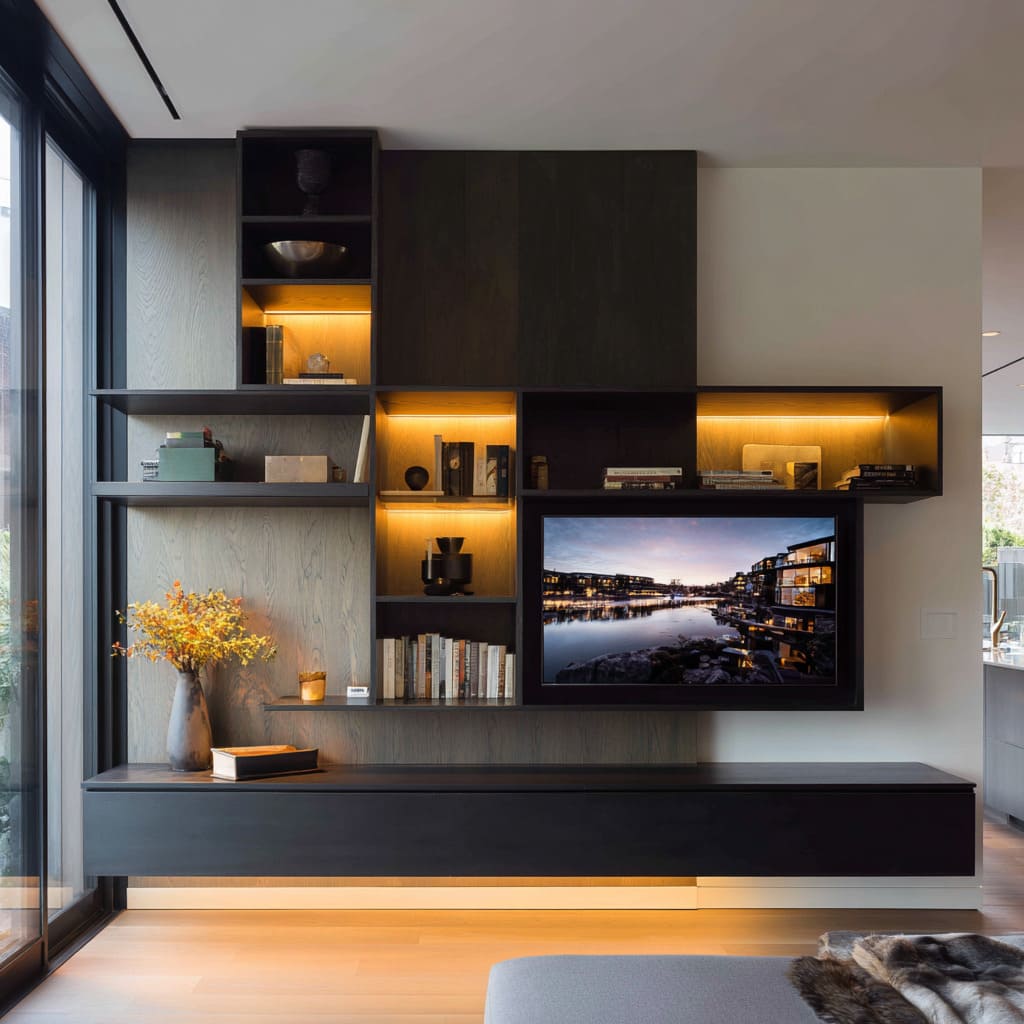
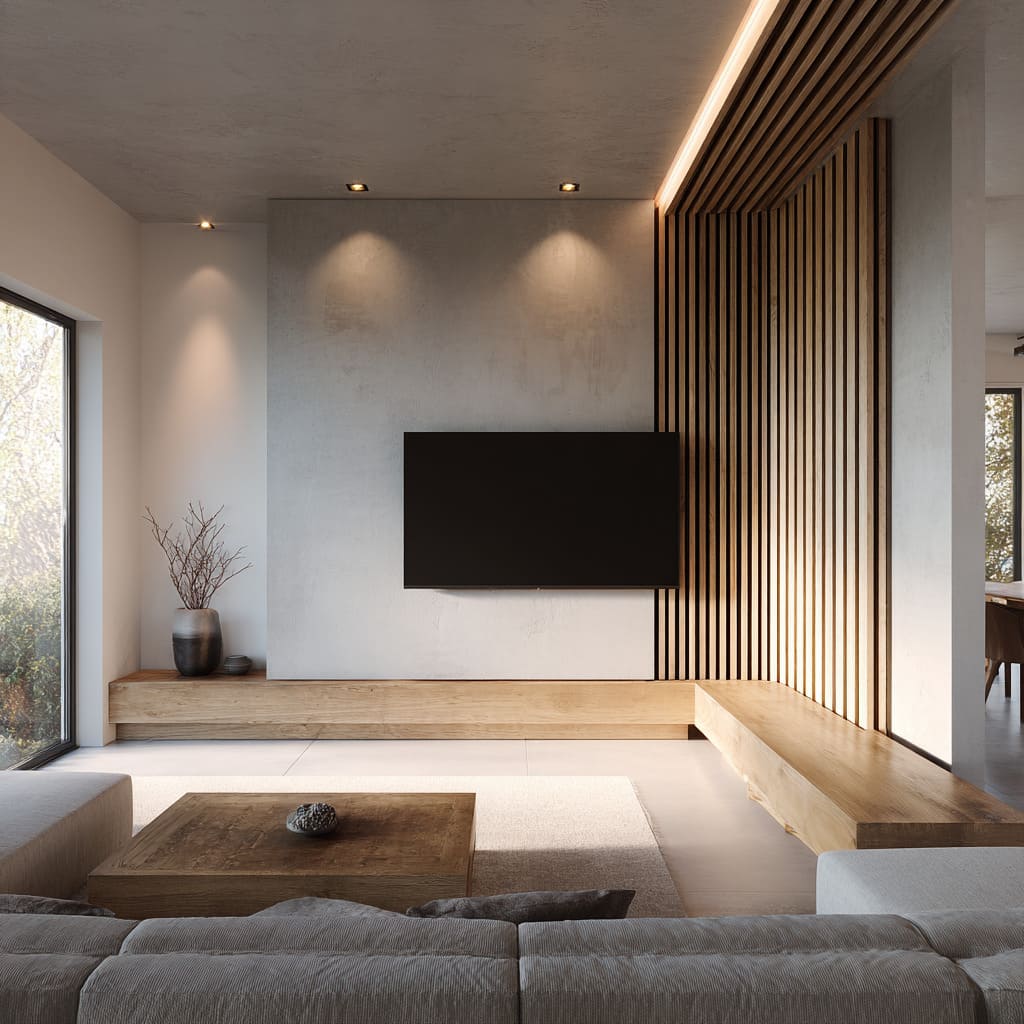
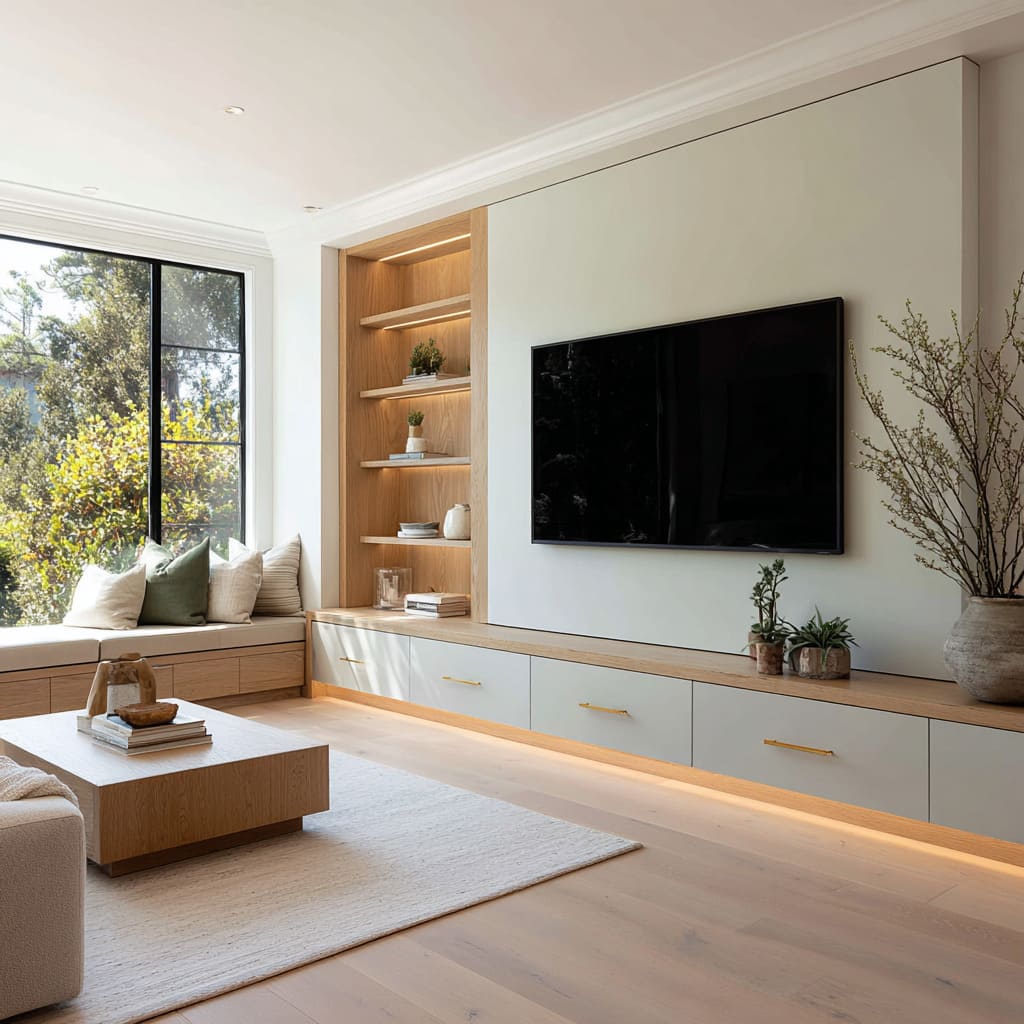
In many L-type TV showcase ideas, the return leg becomes a bench or window seat, linking the media zone with the view outside. The continuity of top lines, shelf edges, and window mullions keeps the space flowing without interruption.
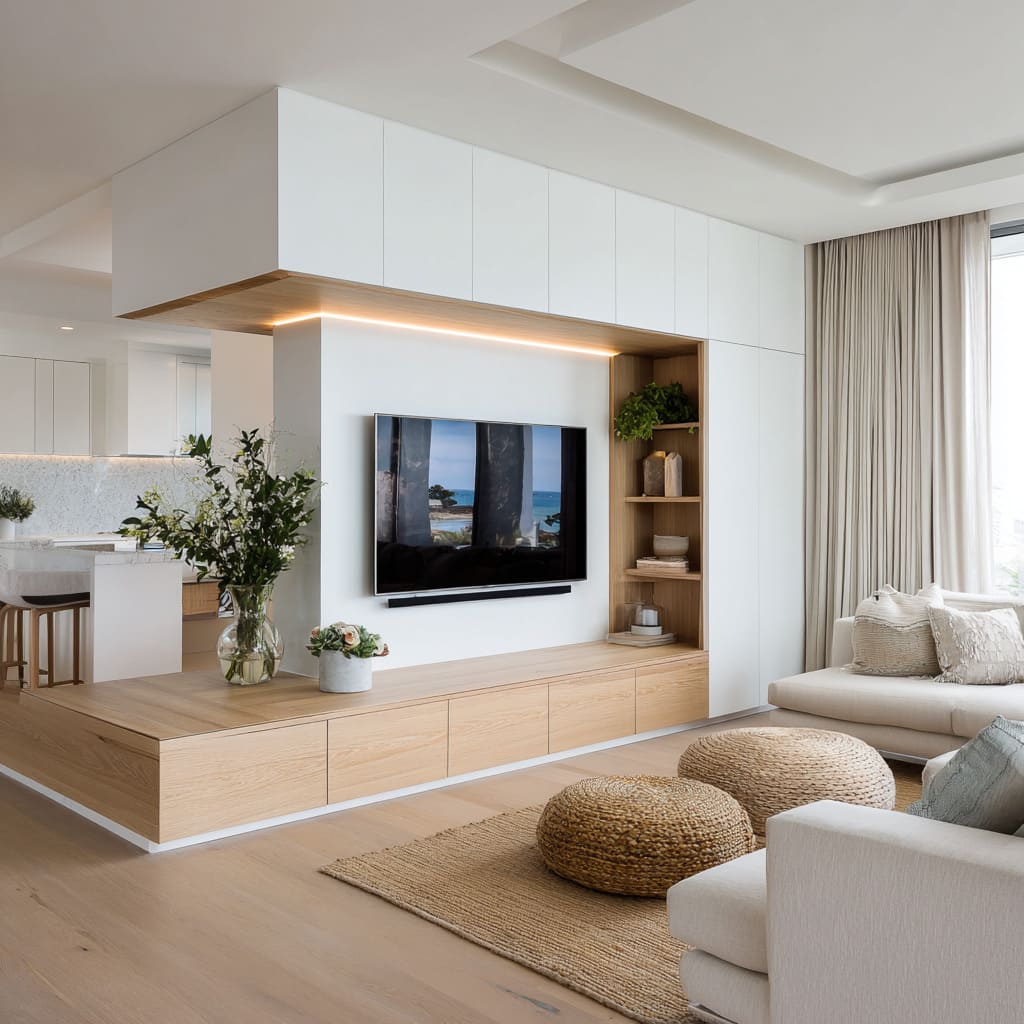
Corners as Design Statements
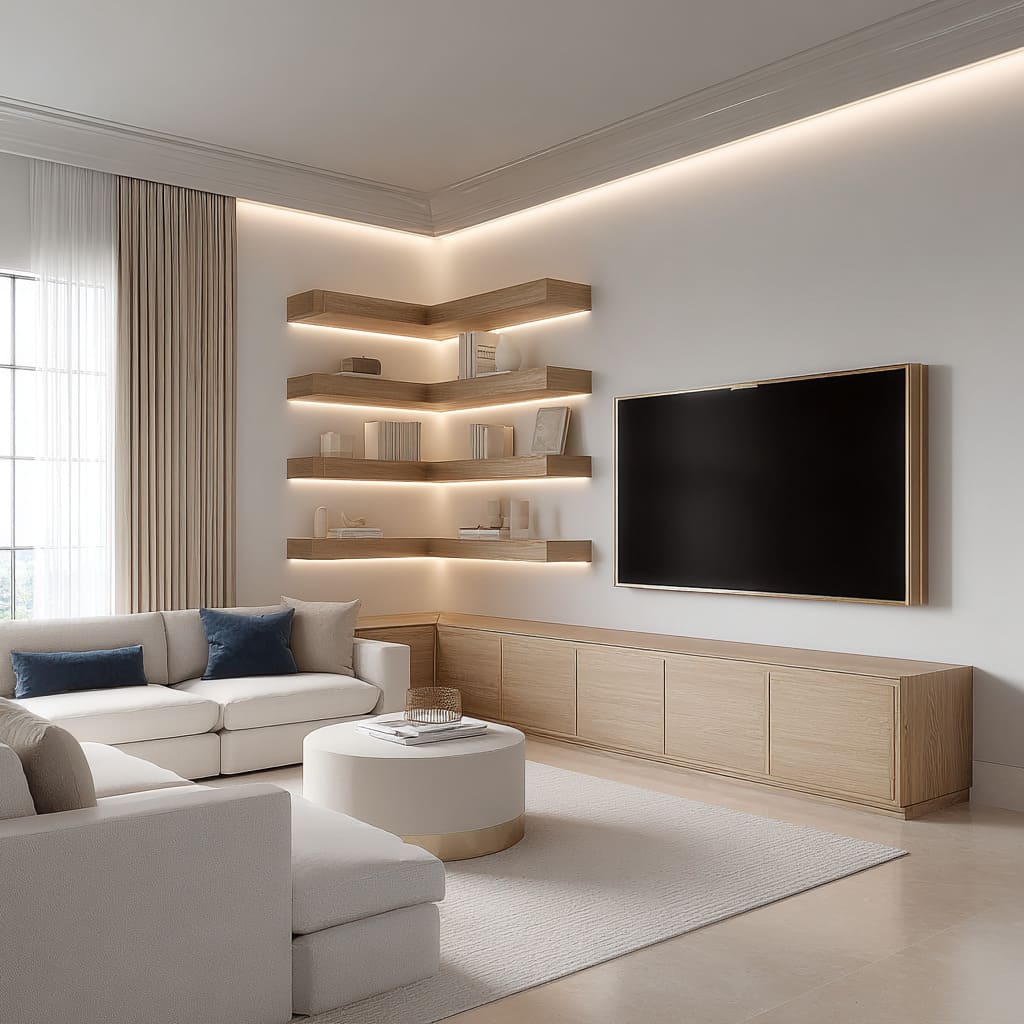
Corners are no longer problem areas—they’re now punctuation marks that define the whole composition. In many corner L-shaped tv wall unit designs, the pivot is treated like a hinge in the room’s language.
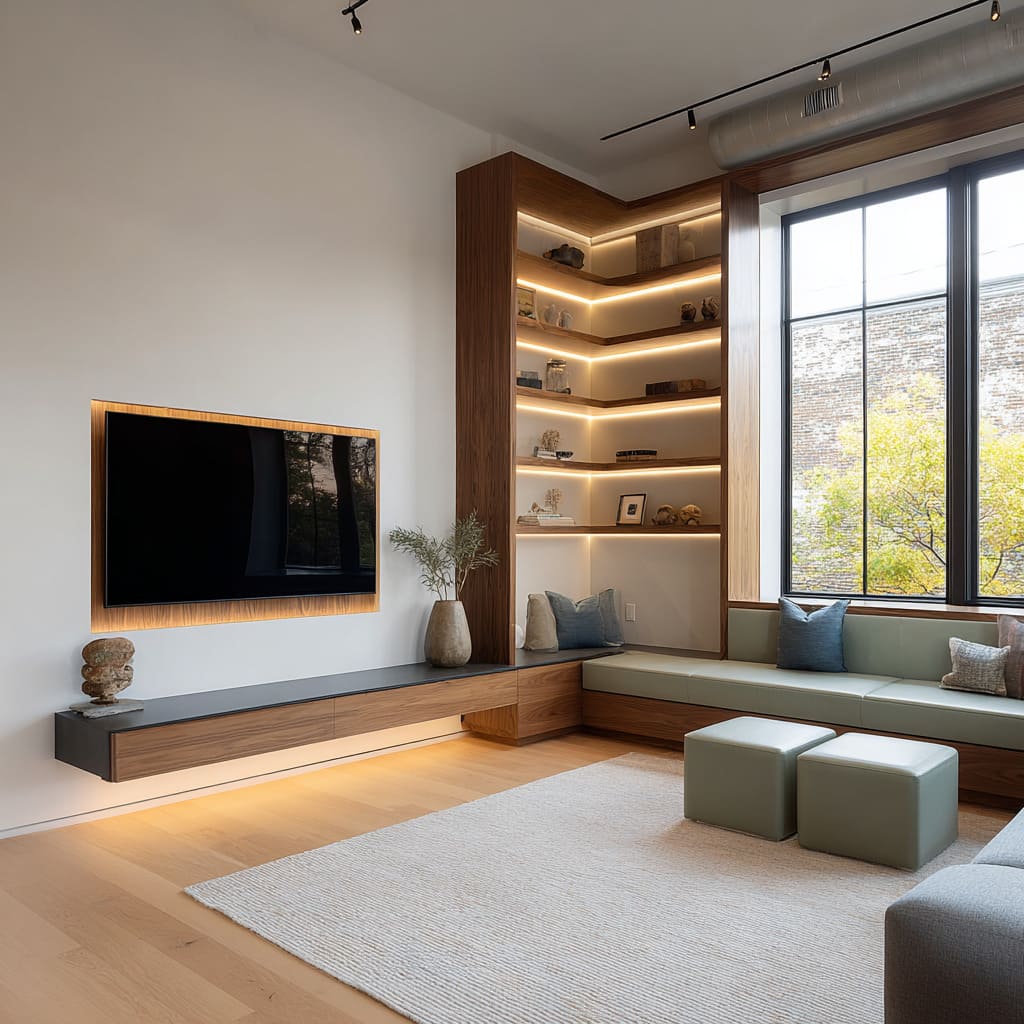
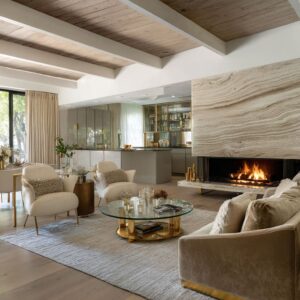
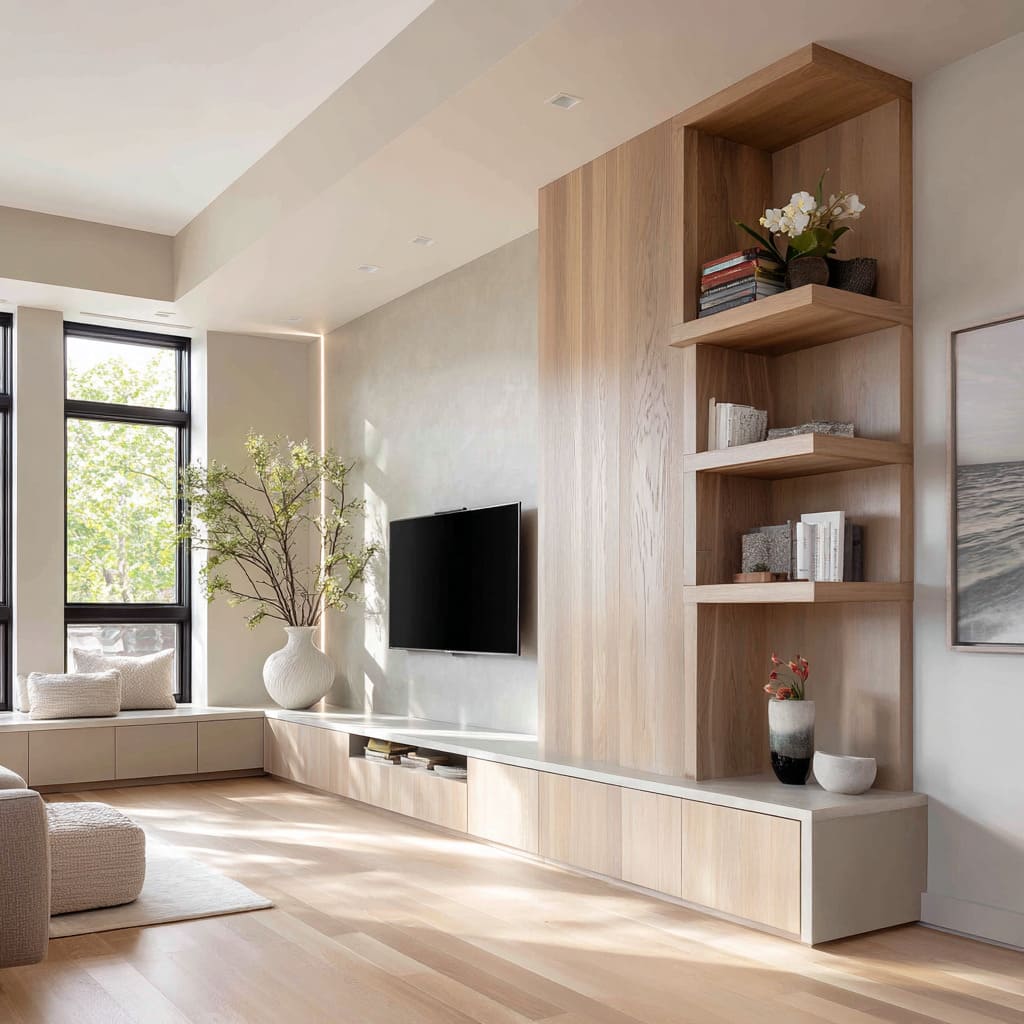
Designers use contrasting materials or lighting to express that moment: a slab of pale stone against a dark wall, a ribbed wooden tower catching vertical light, or a mirrored fold that visually erases the joint and doubles the view.
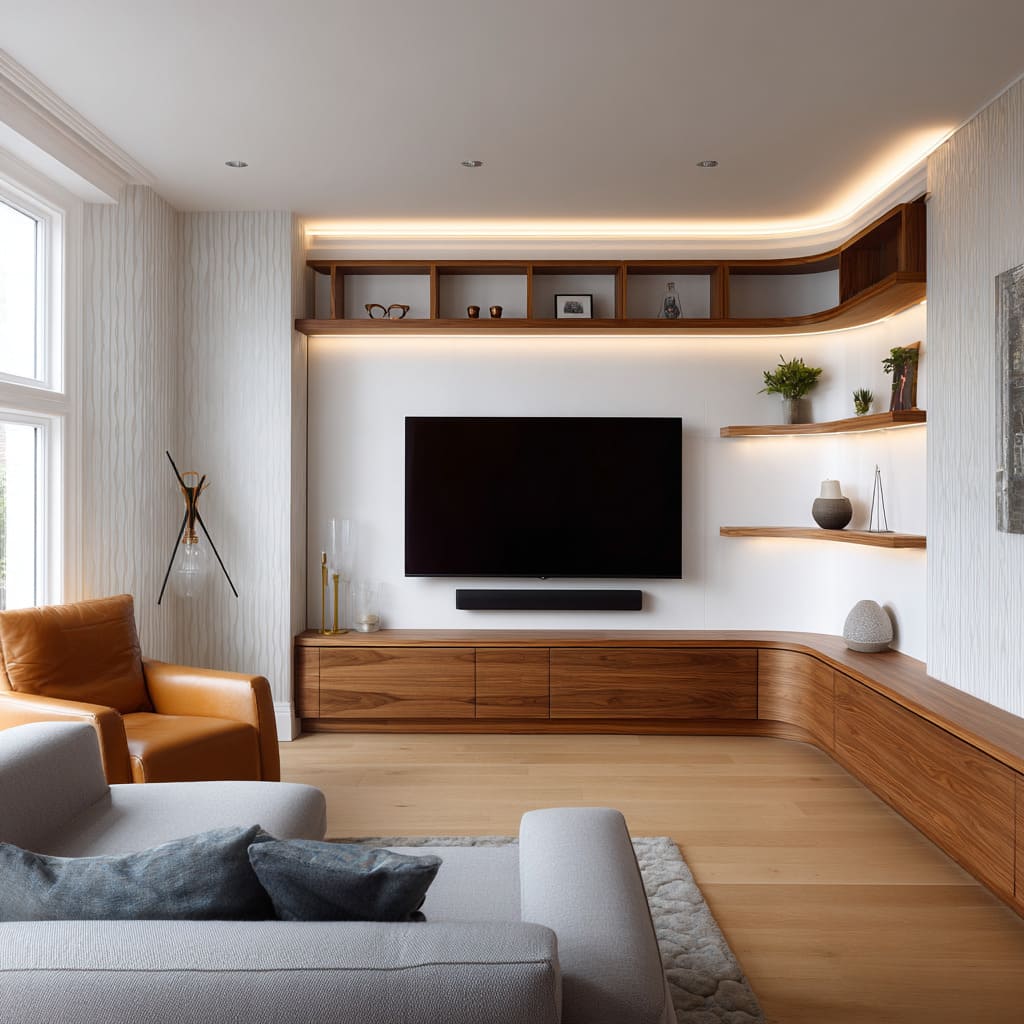
There are several ways to handle these corners:.
- Material hinge: using travertine, marble, or oak as the pivot element that turns the two legs into one gesture
- Light seam: a thin vertical LED line marking the turn without adding bulk
- Soft radius: rounding the joinery edge for a sculpted, continuous ribbon effect—popular in high-end L-shaped corner tv unit designs
- Chamfered connection: cutting the corner at an angle to improve TV visibility and soften tight spaces
Each approach turns the L from a utilitarian bend into the room’s defining moment.
The Role of Lighting: Floating, Framing, and Balancing
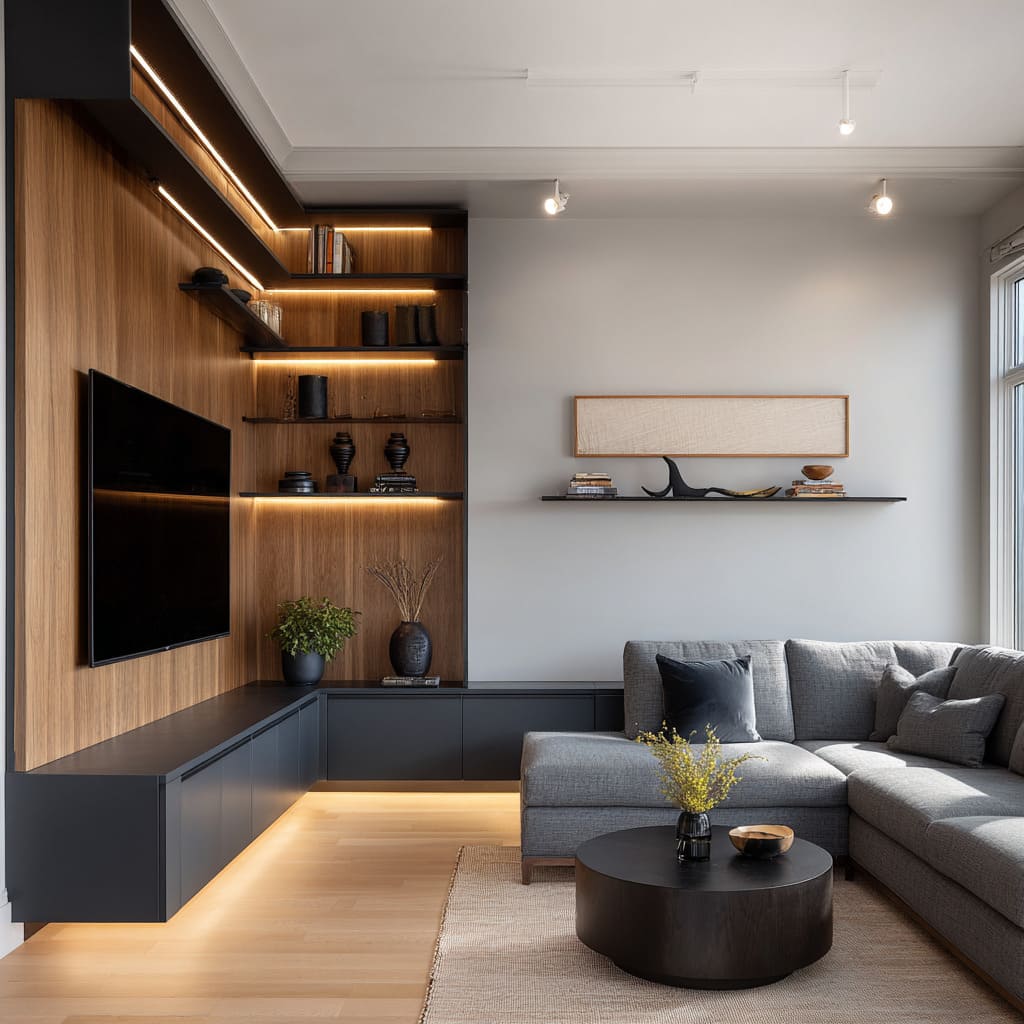
Light now acts as architecture for the L-shaped tv stand design. Instead of focusing brightness on the TV itself, they use hidden LEDs to outline form, separate mass from floor, and give objects depth.
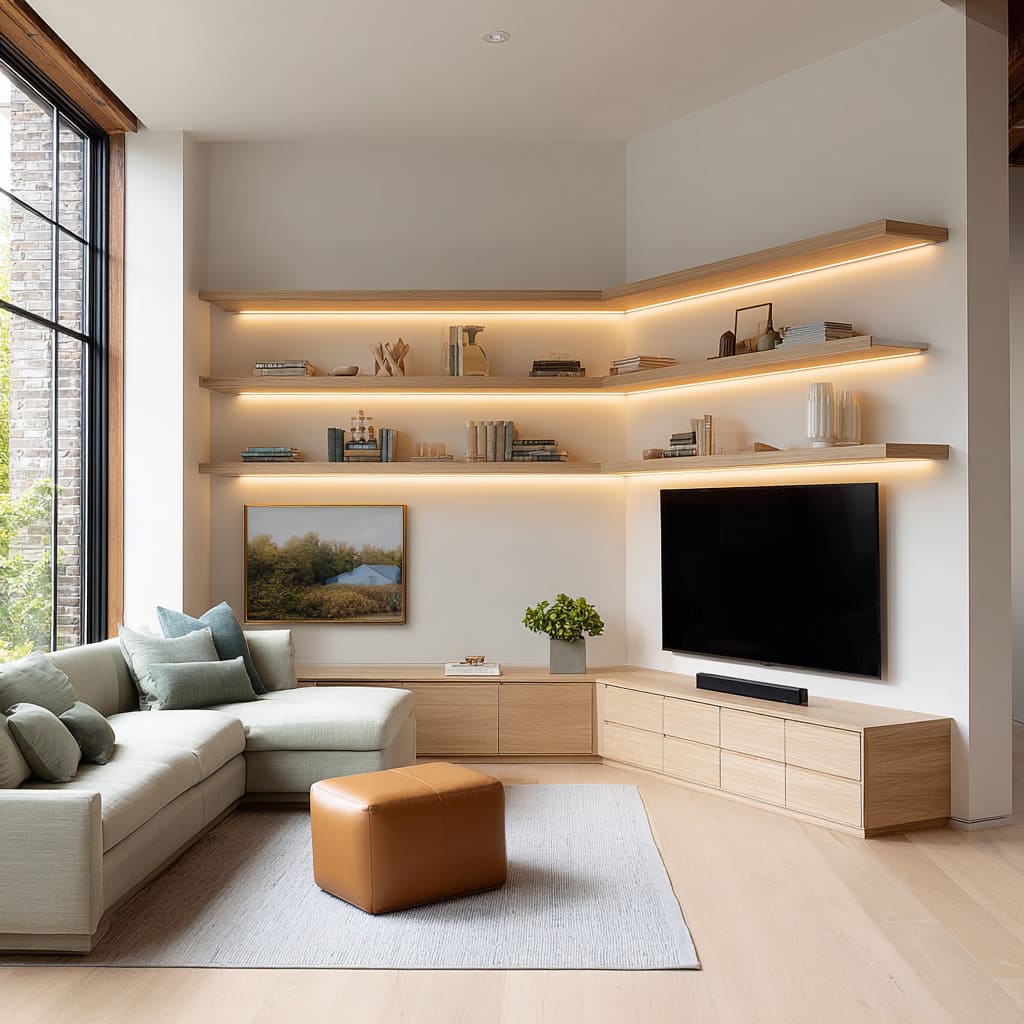
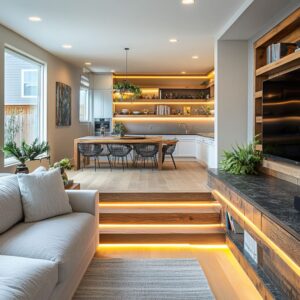
- Under-cabinet lighting is the signature move—it makes heavy cabinets seem to float and creates a calm glow across the flooring
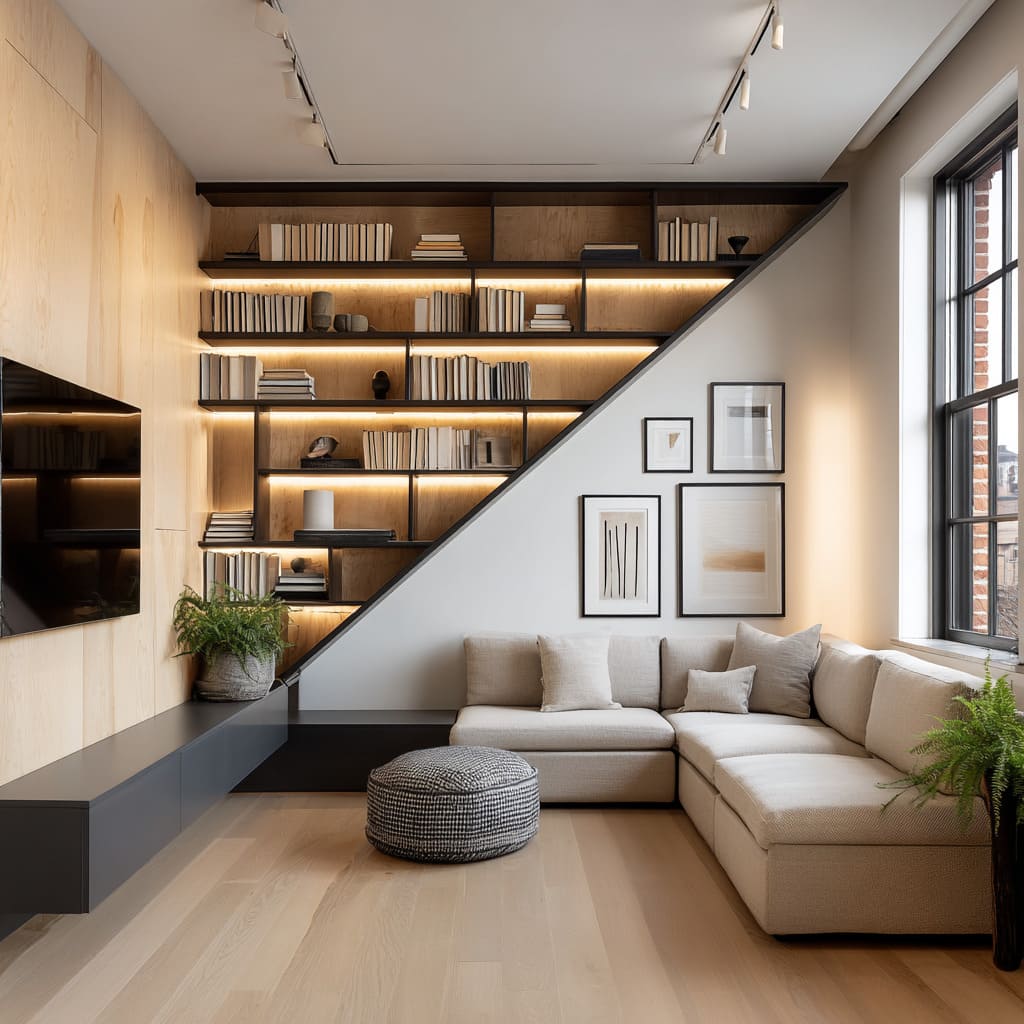
- Backlit shelves replace spotlights, so displayed pieces appear as silhouettes rather than bright clutter
- Vertical seams of light mark the L’s inner corner, creating a quiet lantern-like effect when seen from across the hall
- Ceiling coves often mirror the same L path below, wrapping the space in parallel ribbons of glow
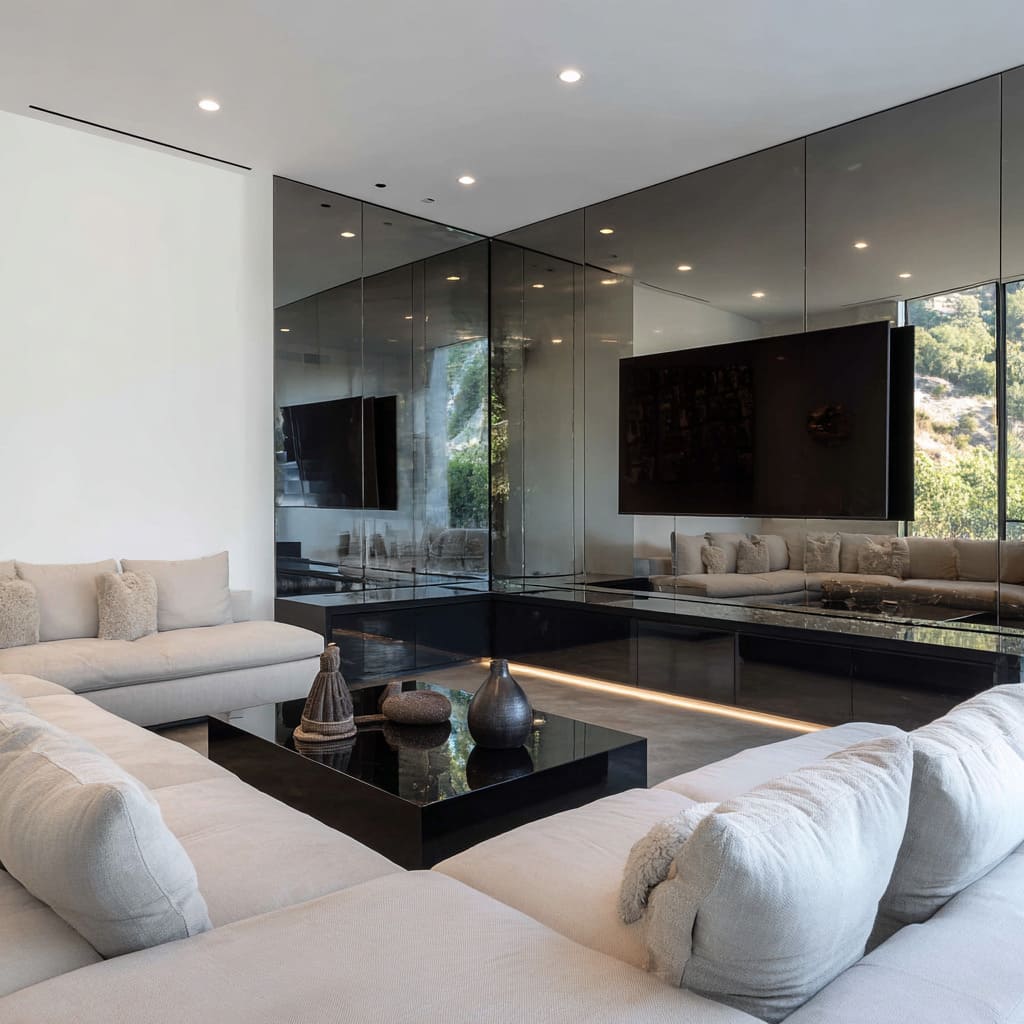
The effect is less about brightness and more about composition: light becomes the invisible frame that defines how the L-shaped wall unit designs breathe within the hall.
Material Conversations: Wood, Plaster, and Stone
Material pairing is where modern L-shaped TV unit design for a hall really shows its sophistication.
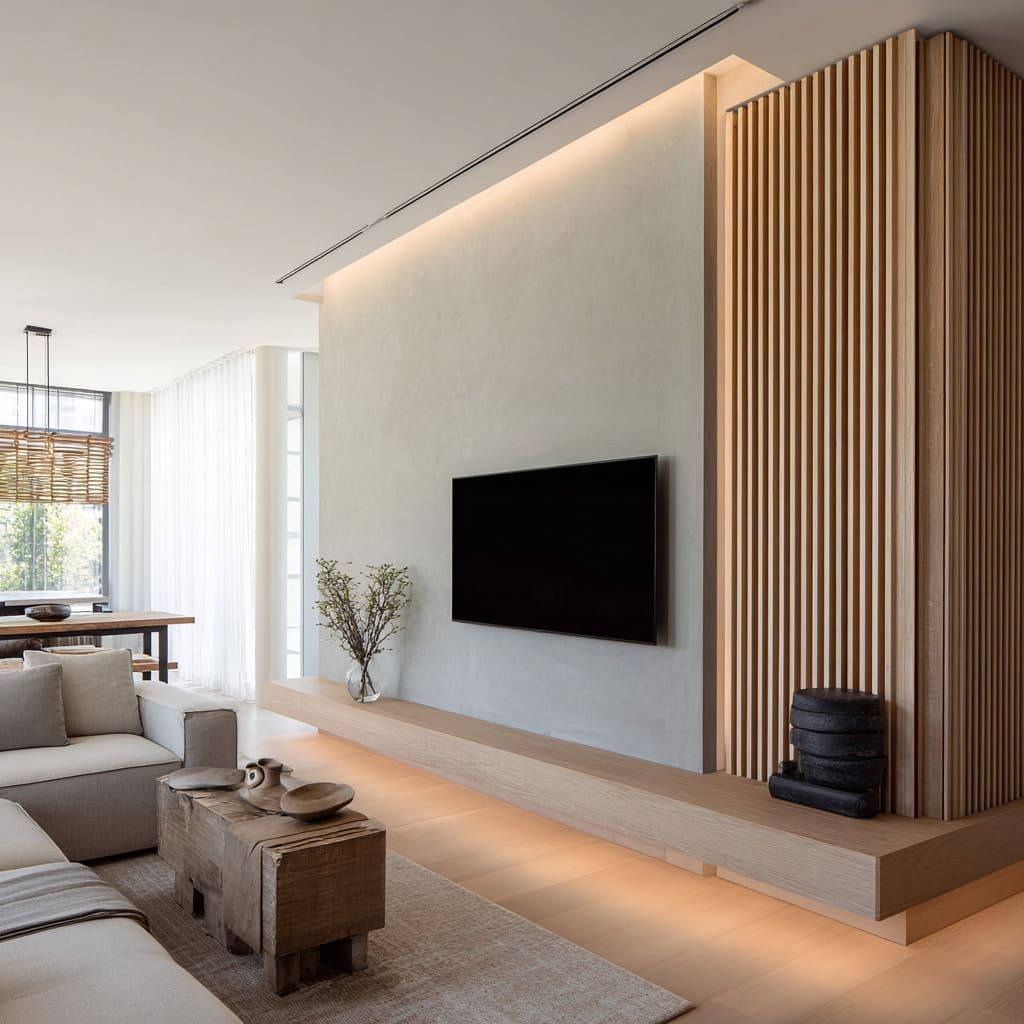
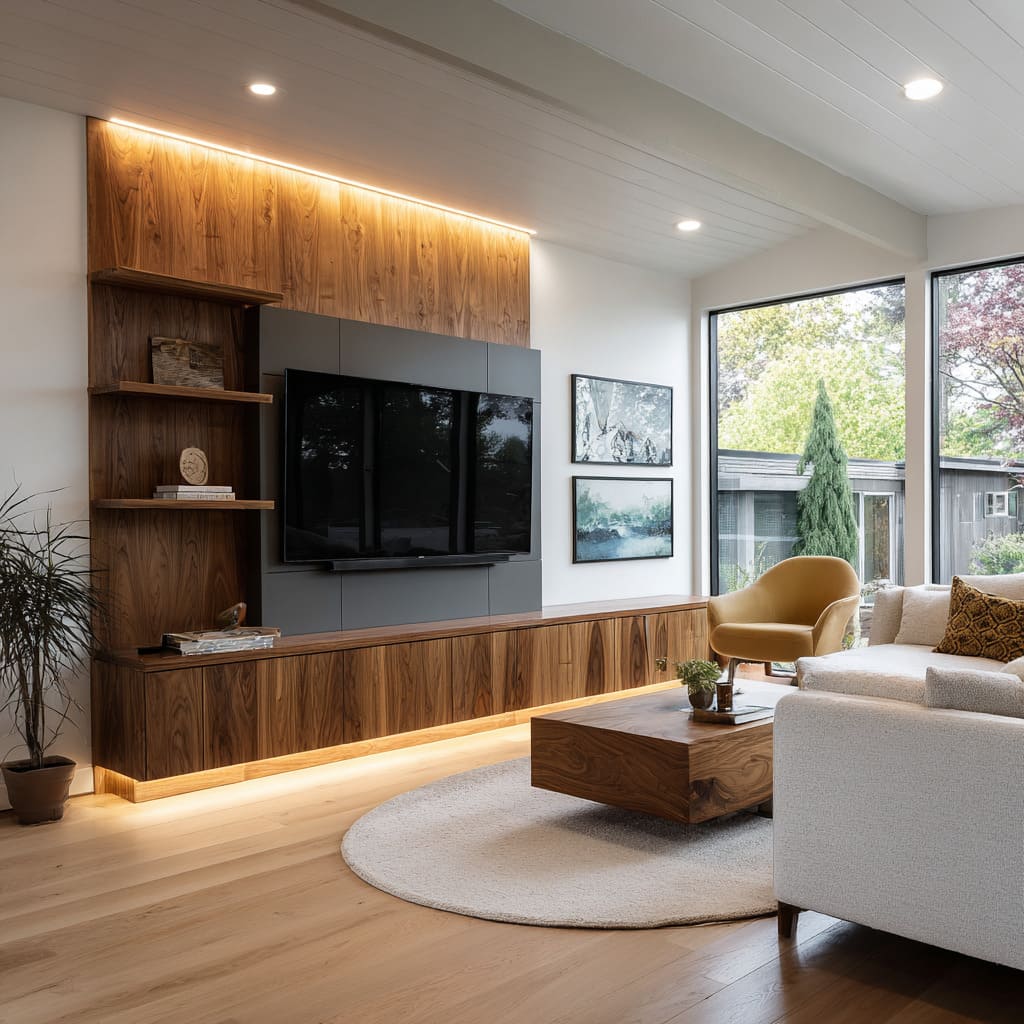
Warm walnut and pale oak are still leading choices, but they now offset them with cool matte plaster, travertine slabs, or soft gray panels. The shift in texture temperature—warm wood on one side, cool stone on the other—keeps the arrangement balanced.
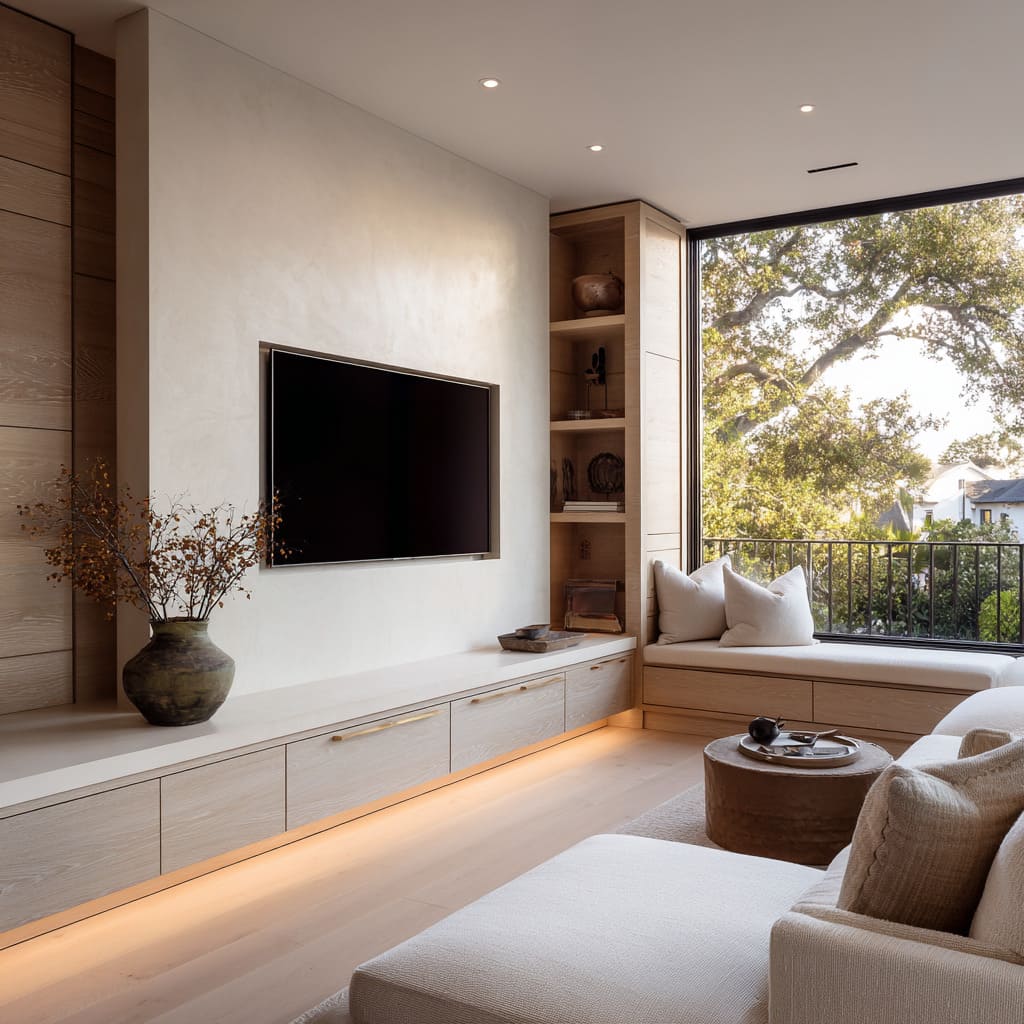
Plaster surfaces play an increasingly important role. Their soft texture absorbs light and gives a handcrafted feel that contrasts beautifully with clean cabinetry lines.
Similarly, using thin brass pulls or narrow frame trims adds a subtle metal accent that ties the look to lighting elements or coffee table edges. In some ideas, mirror or smoked glass turns the corner into an illusion, stretching the L into infinity—a bold move in ultra-modern L-shaped tv cabinet design.
How Composition and Proportion Shape Calm
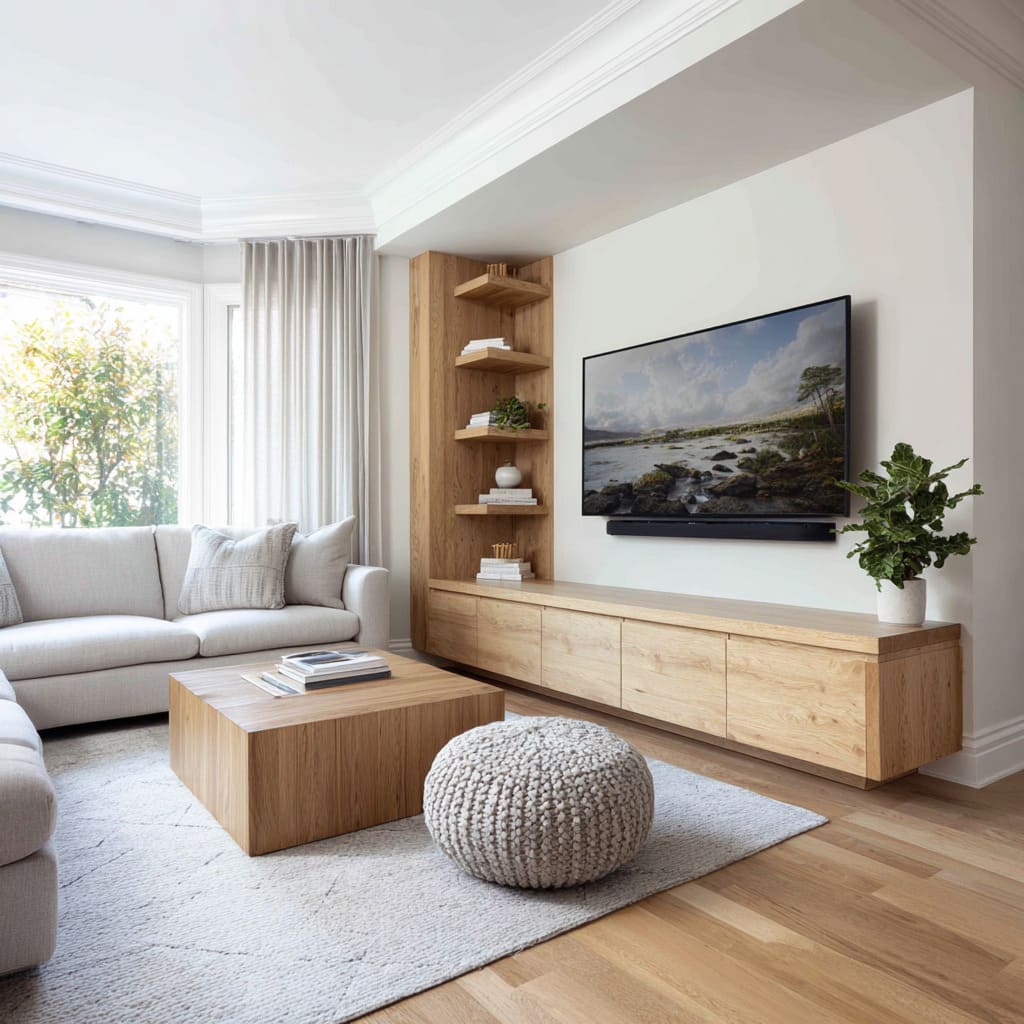
What sets a great l shaped tv unit design apart from a standard one is the precision of proportions. The best layouts align every visible line—cabinet tops, shelf undersides, TV bases—on a shared horizontal datum.
This alignment organizes the space more effectively than decoration ever could.
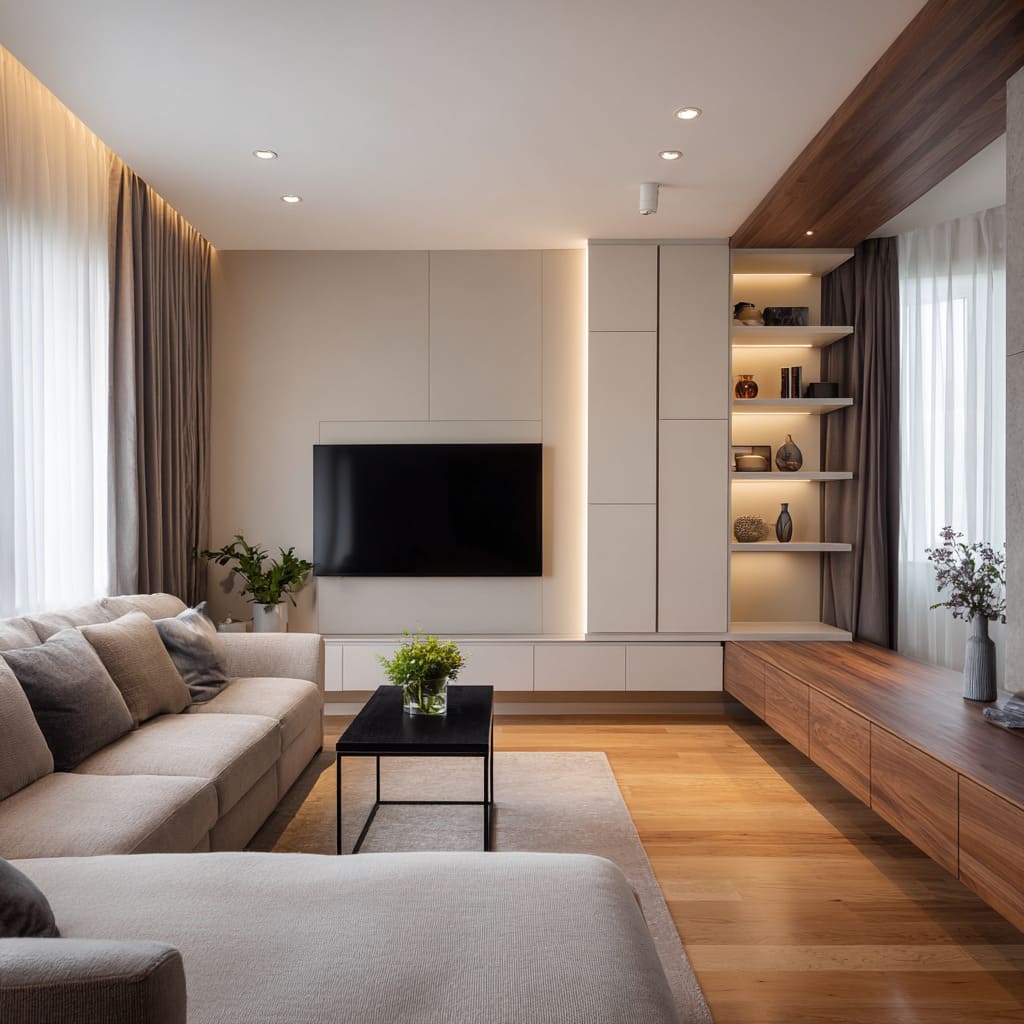
Another compositional trick is to repeat similar thicknesses: the cabinet top, shelf fascia, and even the coffee table edge often share the same profile. This echoing of proportion keeps the visual field quiet.
In minimalist versions, the L’s long run and return may both hover at bench height, keeping everything at one calm eye level.
Styling Language: Quiet Rhythm, Not Clutter
Styling plays a decisive role in how modern L-shaped tv unit design for a hall looks finished. Instead of dense décor, current designs favor sparse, tonal groupings.
Shelves glow softly behind ceramics, books, and vases in matte finishes so the light itself becomes part of the composition. The corner is often where scale changes gradually—taller sculptural pieces near the turn, smaller objects tapering out along the runs.
Some consistent styling codes emerge:.
- Low contrast: Pale books and ceramics under warm light, darker accents near edges for visual punctuation
- Single tall anchor: One branch or vase near a vertical light seam or tower
- Material echoes: Coffee table wood or rug tone repeating the cabinet veneer for unity
- Matte over gloss: Keeping reflections soft so lighting reads cleanly
This approach lets the L-shaped tv wall unit designs behave like a curated backdrop rather than a display case.
Seating and Furniture Alignment Around the L
In many new layouts, furniture positioning is directly tied to the geometry of the modern L-shaped tv cabinet design. Sectionals often land their corner exactly where the cabinetry changes direction, so the sofa’s shape and the L’s pivot share one visual axis.
Chaises or benches run parallel to the long cabinet leg, leaving open circulation around the inner corner. Low-backed seating keeps sightlines clear to the shelves and the wall behind the TV.
The idea isn’t to make the TV dominate—it’s to build a balanced social zone. By treating the L-shaped tv stand design as the anchor, the rest of the room naturally falls into harmony.
Even rugs are sometimes cut or placed to follow the L’s footprint, reinforcing that subtle boundary between the lounge area and adjoining spaces.
Popular Typologies in Current Design
While every designer approaches the L differently, several recognizable archetypes dominate today’s L-shaped wall unit designs:
- Plinth + Pivot Blade – long, floating cabinet with a vertical stone or timber slab defining the corner
- Display Wall + Low Return – one side filled with glowing shelves, the other reserved for closed storage
- Window Seat Continuum – TV leg transitions seamlessly into a built-in bench below glazing
- Double-Decker L – upper lighted shelf ribbon paired with lower storage run, keeping the corner open
- Rounded Ribbon – continuous curve with soft radii replacing sharp angles
- Amphitheater Corner – stepped benches and floating shelves wrapping a bright focal point
- Diagonal Grid – angled shelving following ceiling lines, turning constraints into visual energy
Each format offers a different balance between media, display, and architecture, proving that the L-shaped tv wall unit designs can be sculptural, minimal, or atmospheric depending on proportion and material.
The Modern Language of Calm Corners
The contemporary L-shaped corner tv unit designs speak in quiet geometry rather than decoration. Their strength lies in the relationship between horizontal and vertical lines, the way materials shift temperature, and how light outlines the form.
The L-shape connects two walls, but more importantly, it connects functions—media, storage, display, and architecture—into one calm statement.
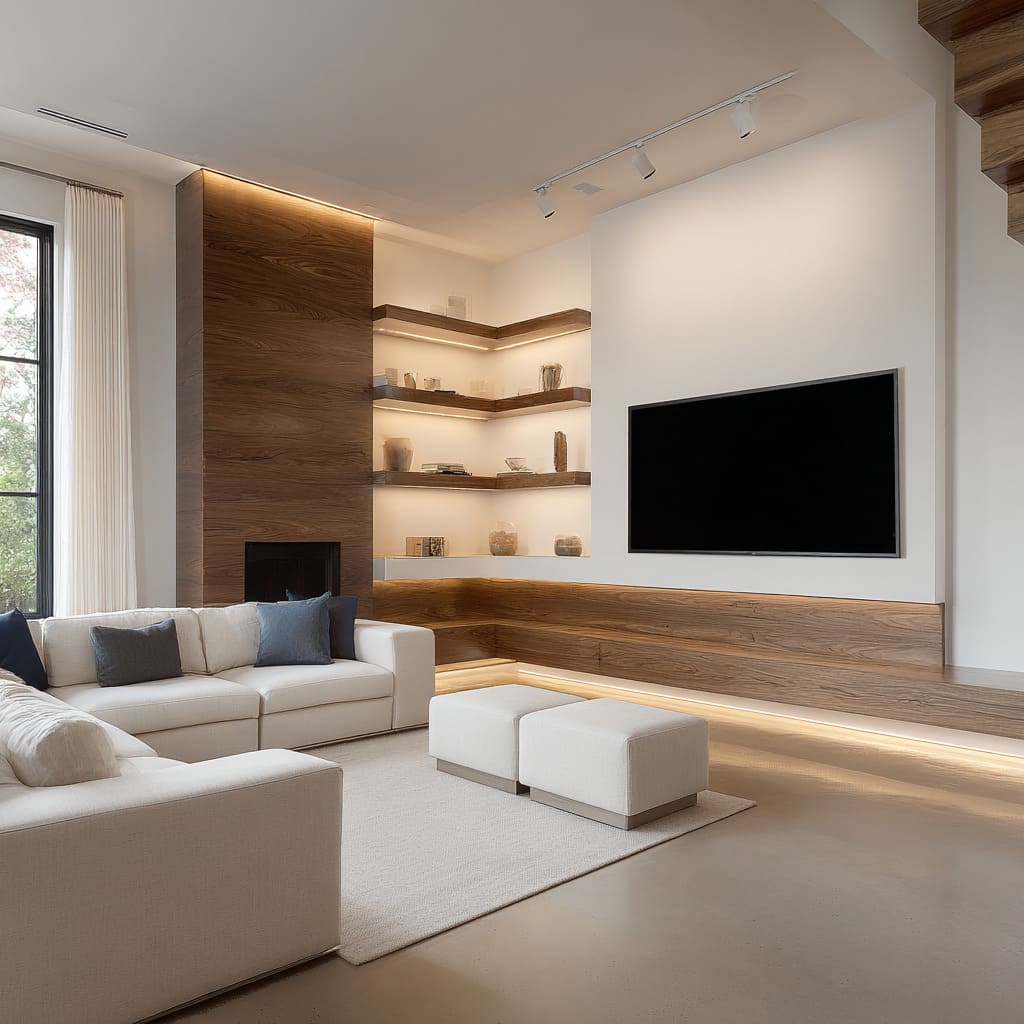
What once was a convenient corner solution has evolved into a design signature. In today’s homes and halls, the L-shape TV unit design for a hall defines atmosphere as much as it defines space: it’s the low horizon where light gathers, textures meet, and the room finally finds its rhythm.