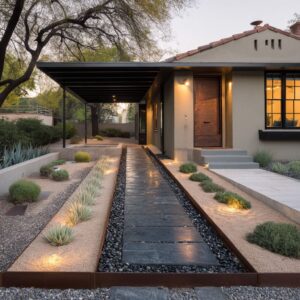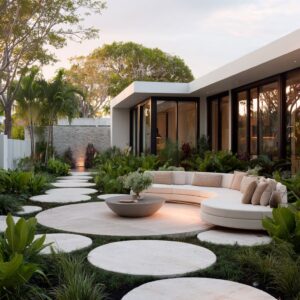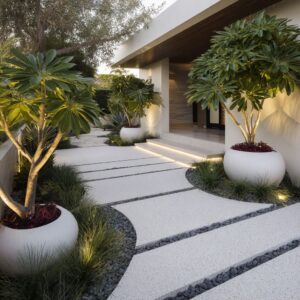
Deck skirting has become far more than a way to hide the space beneath an outdoor platform. In contemporary exterior design, the base of a deck now acts like a visual anchor—linking light, texture, and color into a refined composition that gives the whole façade character.
The most stylish modern deck skirting ideas transform simple perimeters into glowing ribbons, sculptural textures, or soft architectural frames. Instead of being purely functional, they define how a deck meets the ground and how light flows at dusk.
Below, we explore how design-minded approaches to deck underpinning ideas and under deck skirting ideas shape outdoor spaces that feel deliberate, composed, and visually balanced. Each concept focuses on appearance and atmosphere rather than construction or technical installation.
The Horizon Effect: When the Base Becomes a Line of Design
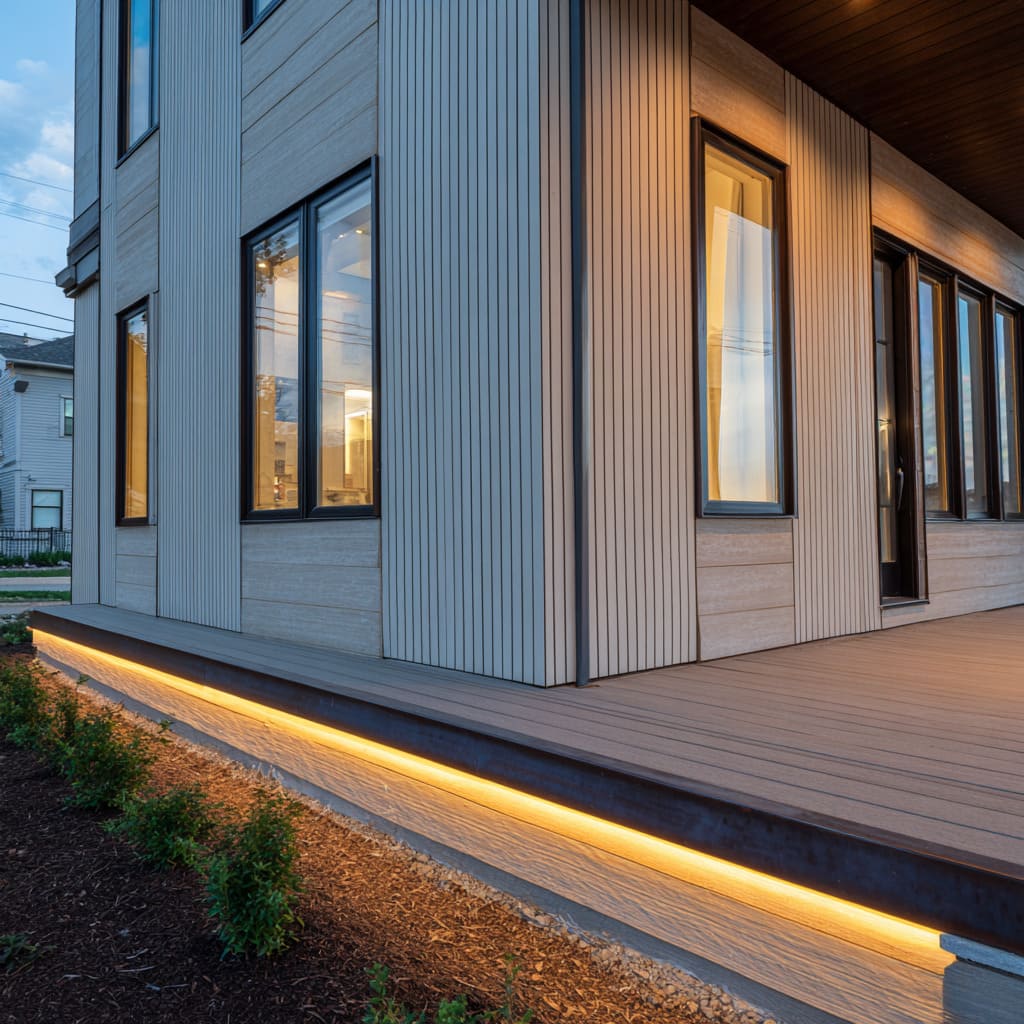
One of the most powerful visual strategies across modern deck skirting design is treating the entire lower edge as a single horizon line. A thin fascia in dark steel, a brushed brass cap, or a narrow LED reveal can define this line and make the deck appear weightless.
Whether the materials above are pale timber, vertical flutes, or black cladding, that consistent edge gives the whole composition calm order.
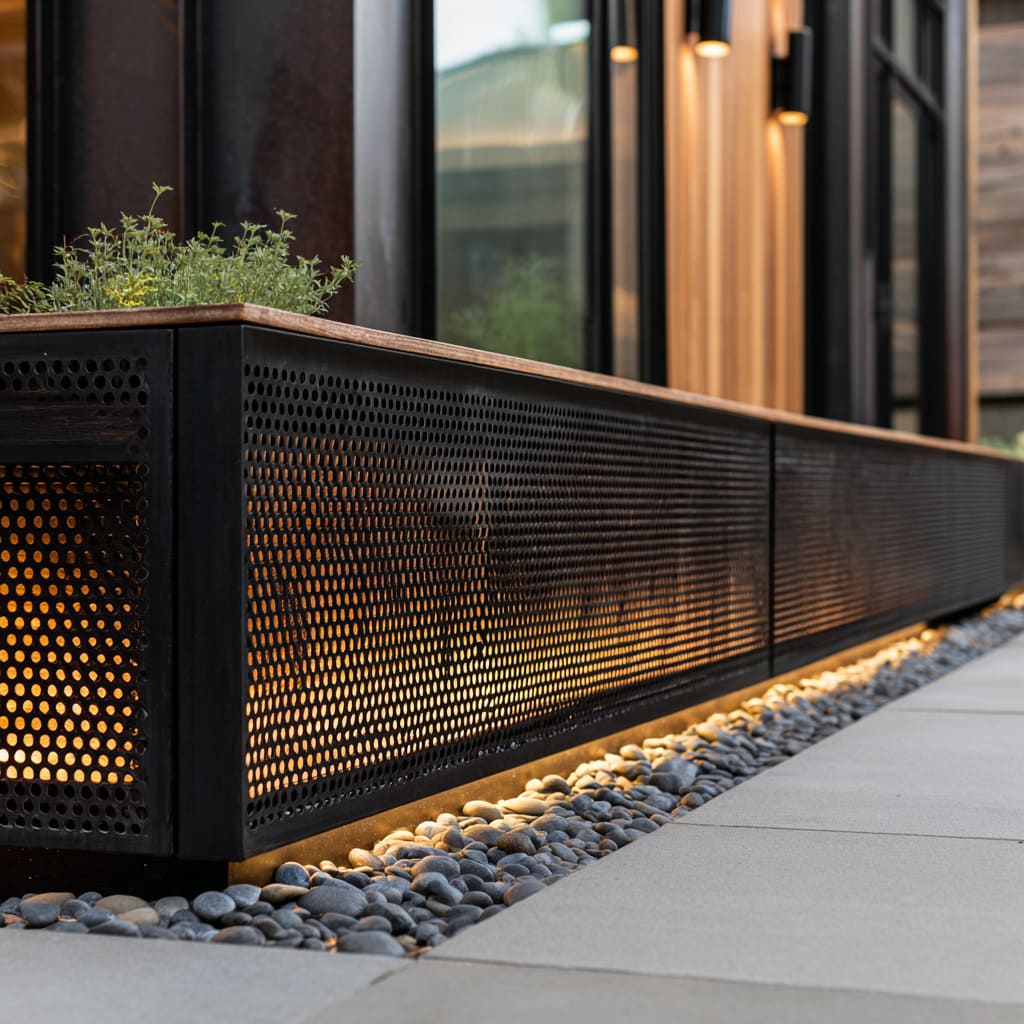
In daylight, the fascia works as a clean graphic boundary. At night, when a continuous warm light runs beneath it, the edge glows like a quiet ribbon wrapping the house.
This approach works especially well for modern decks surrounded by neutral paving or gravel since the line acts as a guide for the eye and connects all horizontal elements—deck, window trim, and soffit—into one visual system.
Lighting as Material, Not Decoration
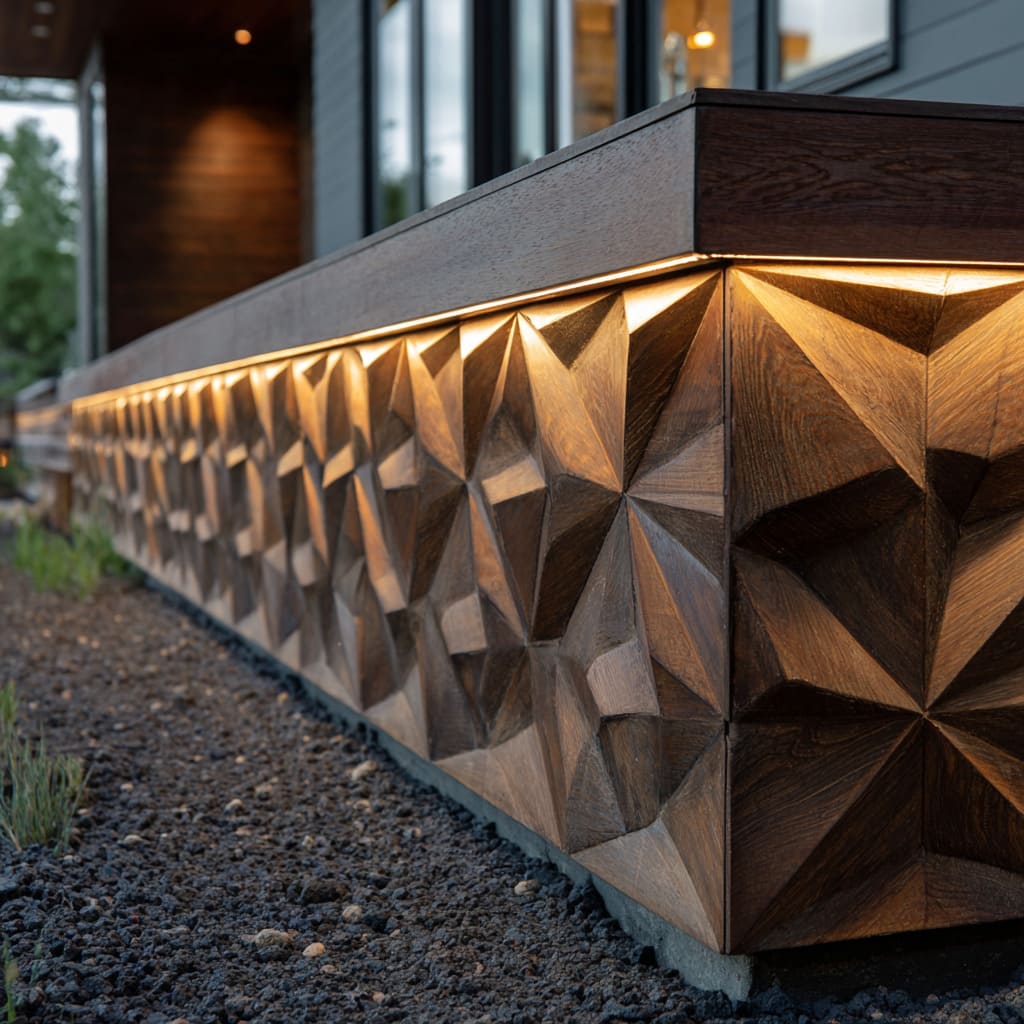
Many modern deck skirting ideas now rely on light as a core design element rather than an accessory. Subtle grazing light, when placed right above a carved or ribbed face, reveals every grain and shadow.
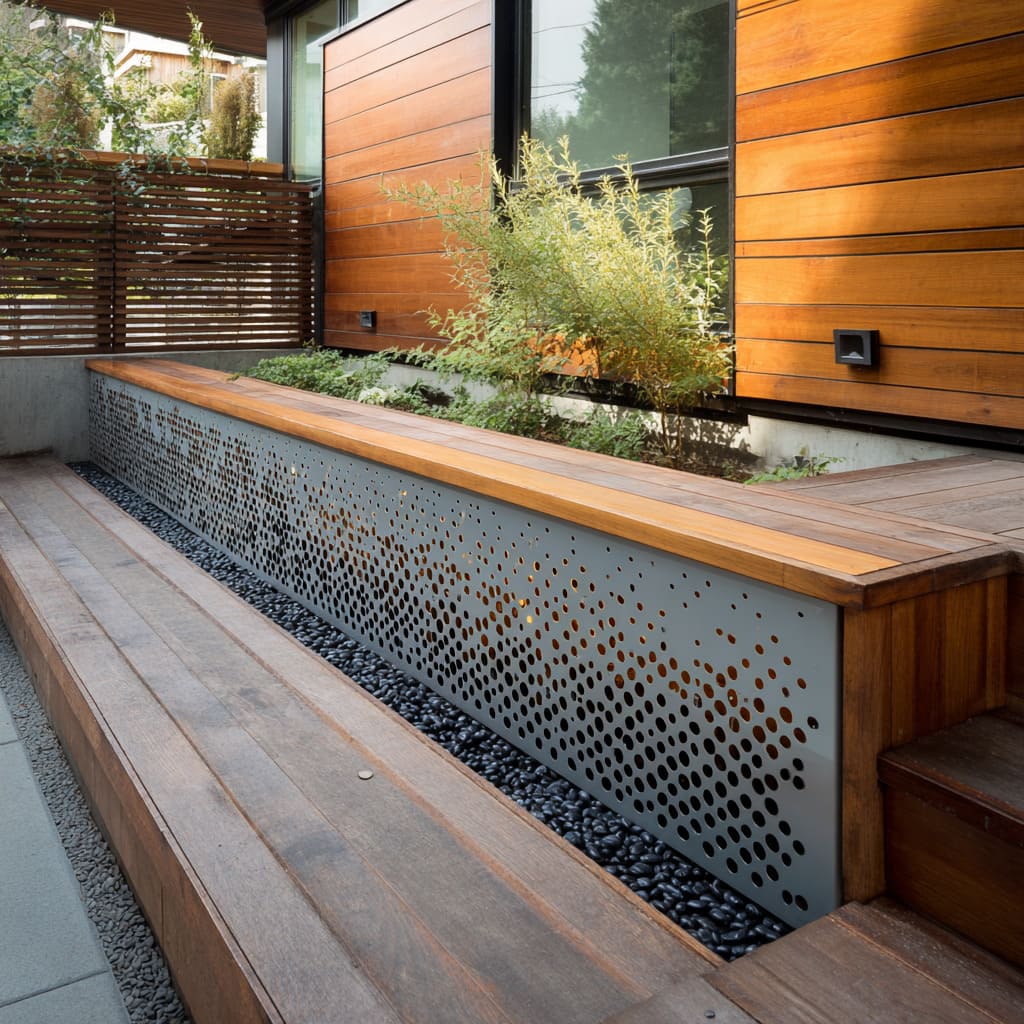
It turns wood, metal, or composite surfaces into softly glowing textures. Hidden linear LEDs inside perforated panels or behind mesh inserts create gradient effects that shift from amber to shadow, giving the skirt an inner life after sunset.
For example:.
- A dark perforated metal panel backed by soft lighting feels weightless instead of heavy
- Carved wood facets shimmer as grazing light moves across them
- Mesh inserts glow from within, acting like warm fabric around the base
By night, these illuminated bands define the outdoor mood. The best under deck skirting ideas use light to sculpt form—not to spotlight it—keeping the effect ambient and timeless.
Color Placement and Contrast
Color in deck skirting design is not about choosing a “nice shade. ” It’s about where the color sits and how it interacts with the surfaces above and below.
Designers often use dark bases and warm highlights to ground the structure while creating soft contrast. A charcoal fascia over a pale skirt can make the deck look thinner and more refined.
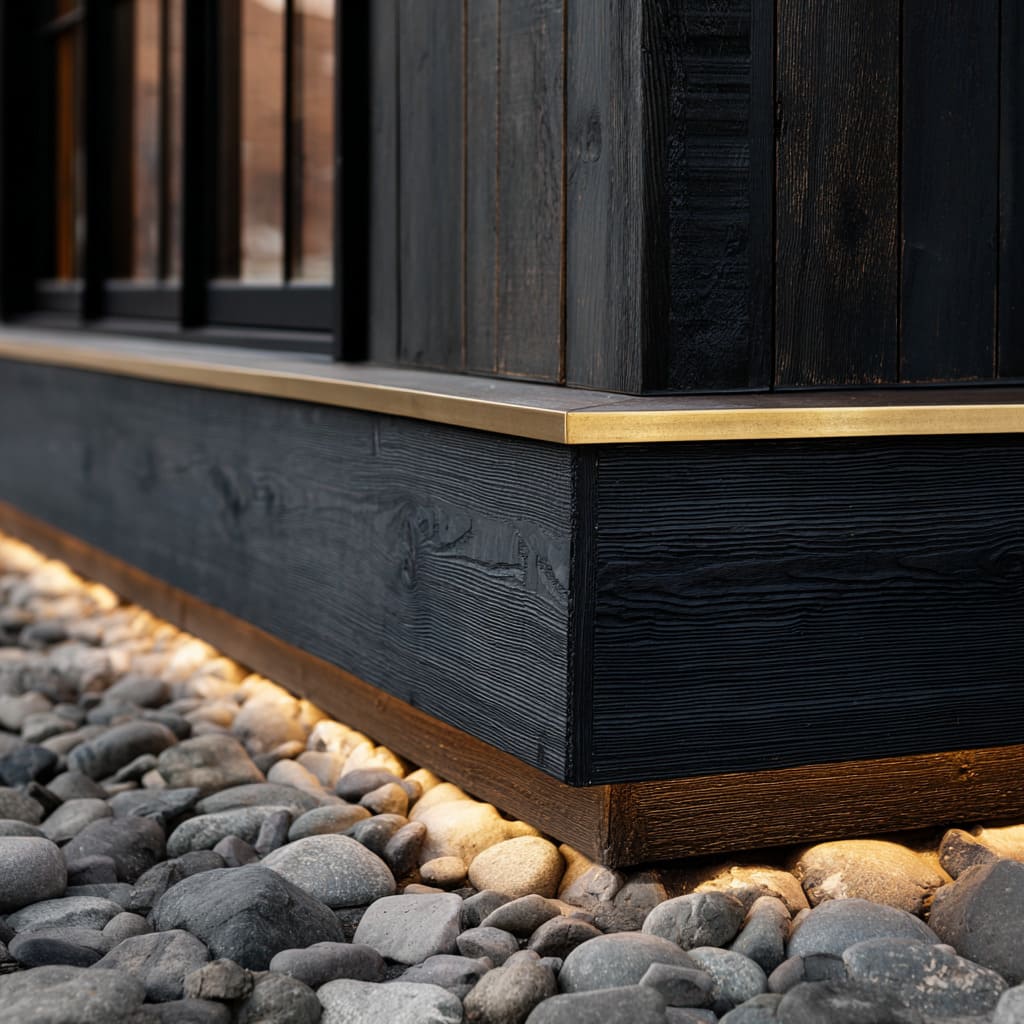
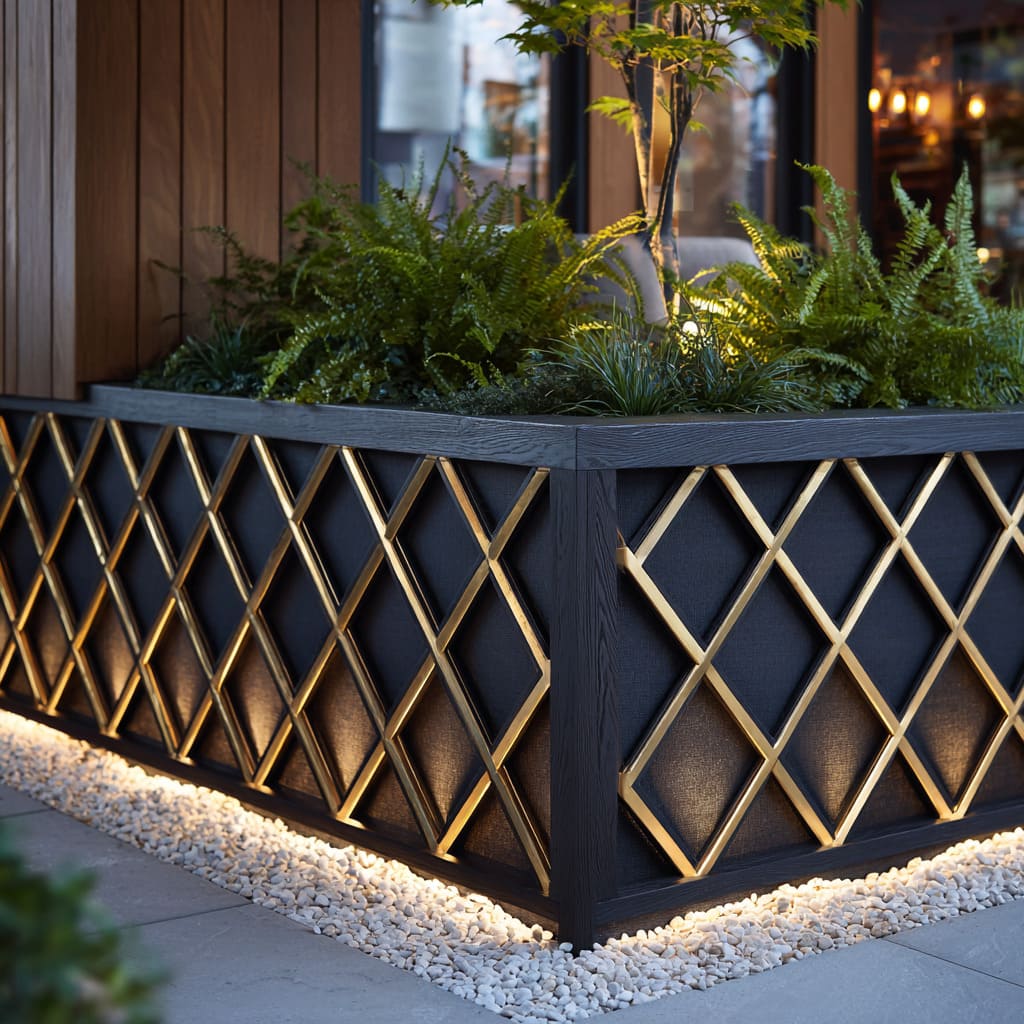
A slim brass or bronze line between darker boards adds subtle glow and elegance without visual clutter.
Common strategies include:.
- Dark base + warm accent — matte black wood with a brass top or amber light line
- Pale base + dark edge — light sandstone panels under a charcoal fascia to emphasize precision
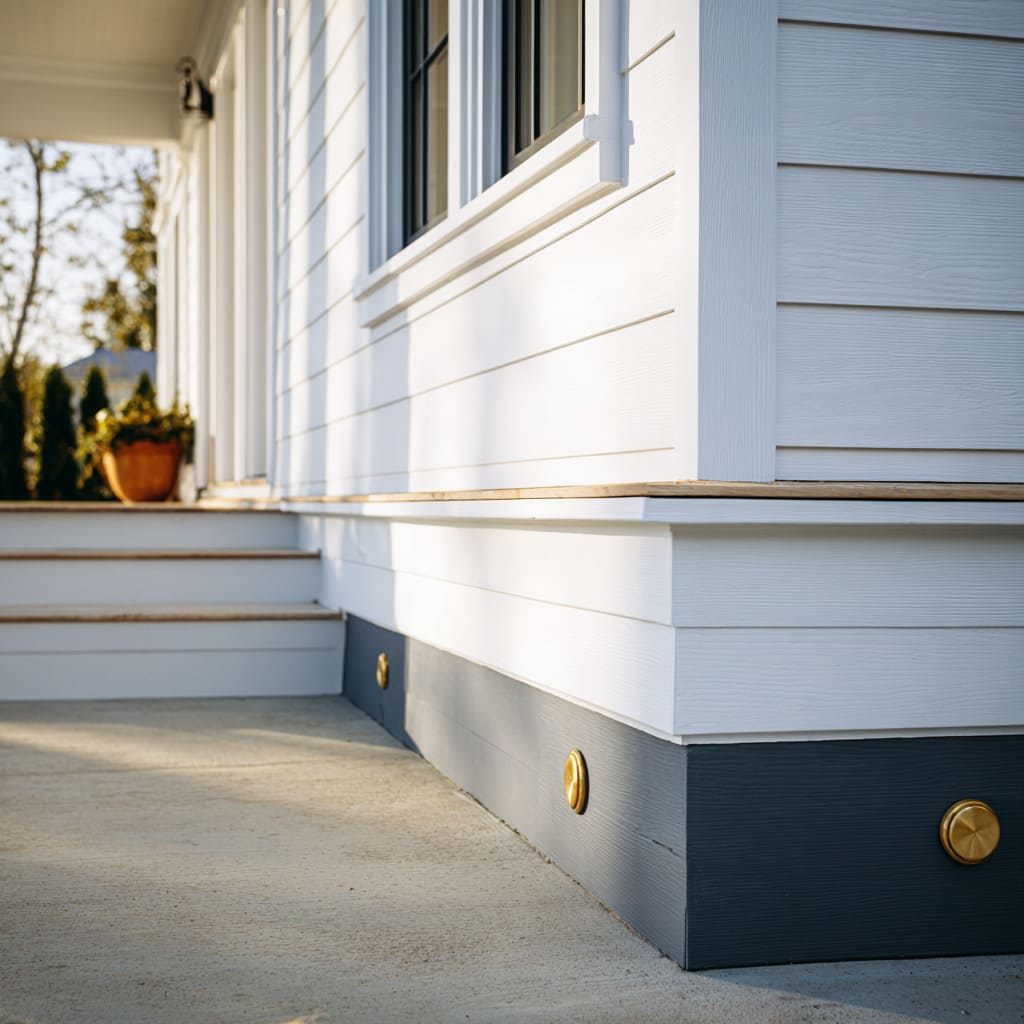
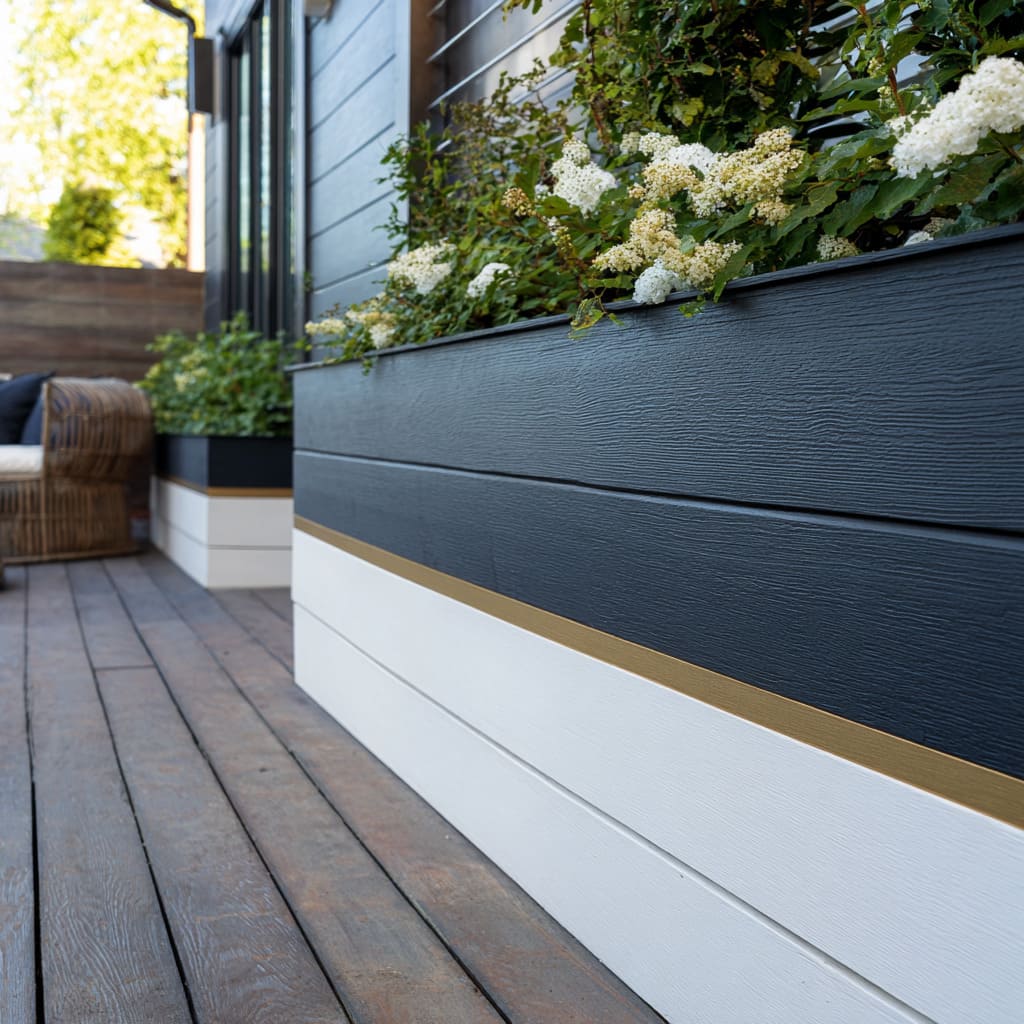
- Color-blocked banding — a blue-gray skirt under white siding creates a smart, traditional porch contrast
- Metallic stripe — a narrow bronze band dividing charcoal and bone-white panels gives a graphic yet balanced look
This layering of tones gives the impression of depth and craftsmanship while keeping the palette calm and modern.
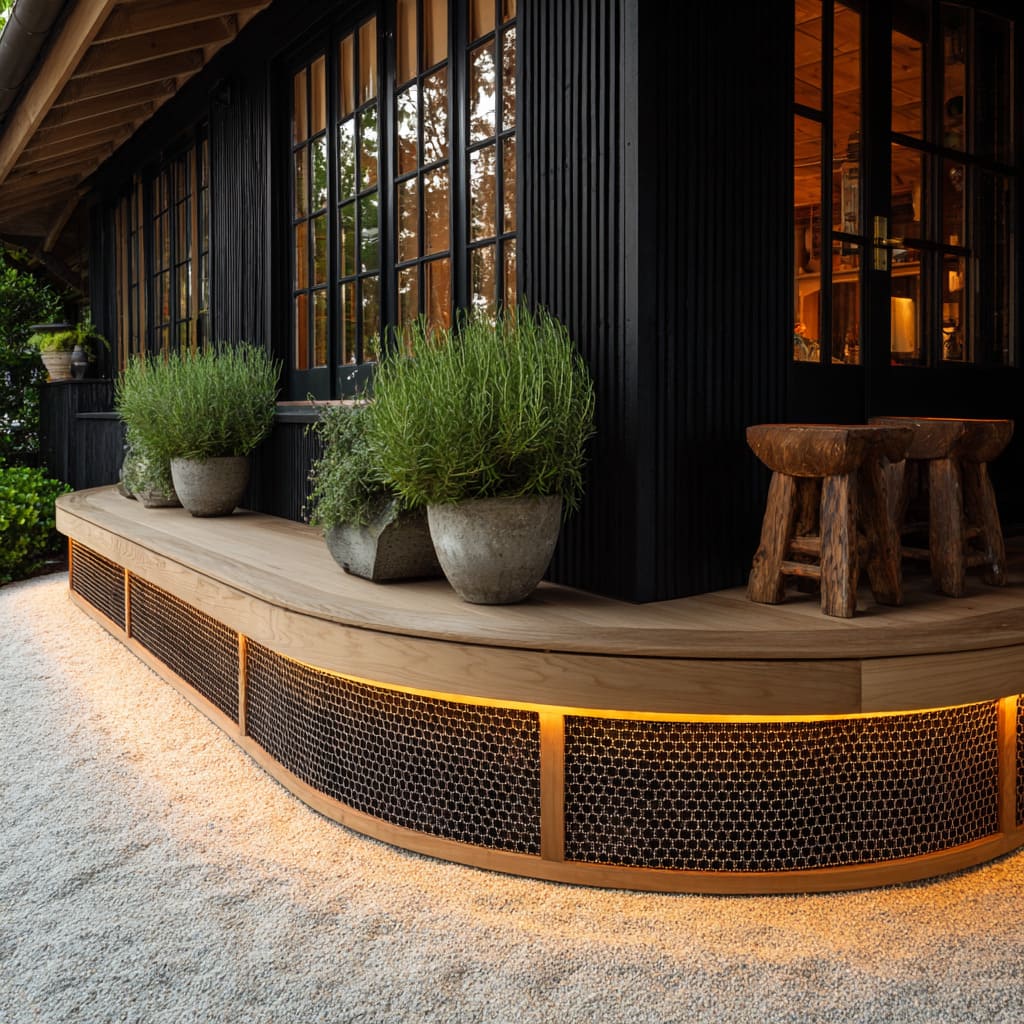
Textures That Move with Light
Texture plays a defining role in modern deck skirting ideas. When handled with care, texture makes the surface dynamic without adding busy patterns.
Finely carved wood, perforated aluminum, ribbed concrete, or vertical fluting all interact with natural light to create a sense of motion as the sun shifts.
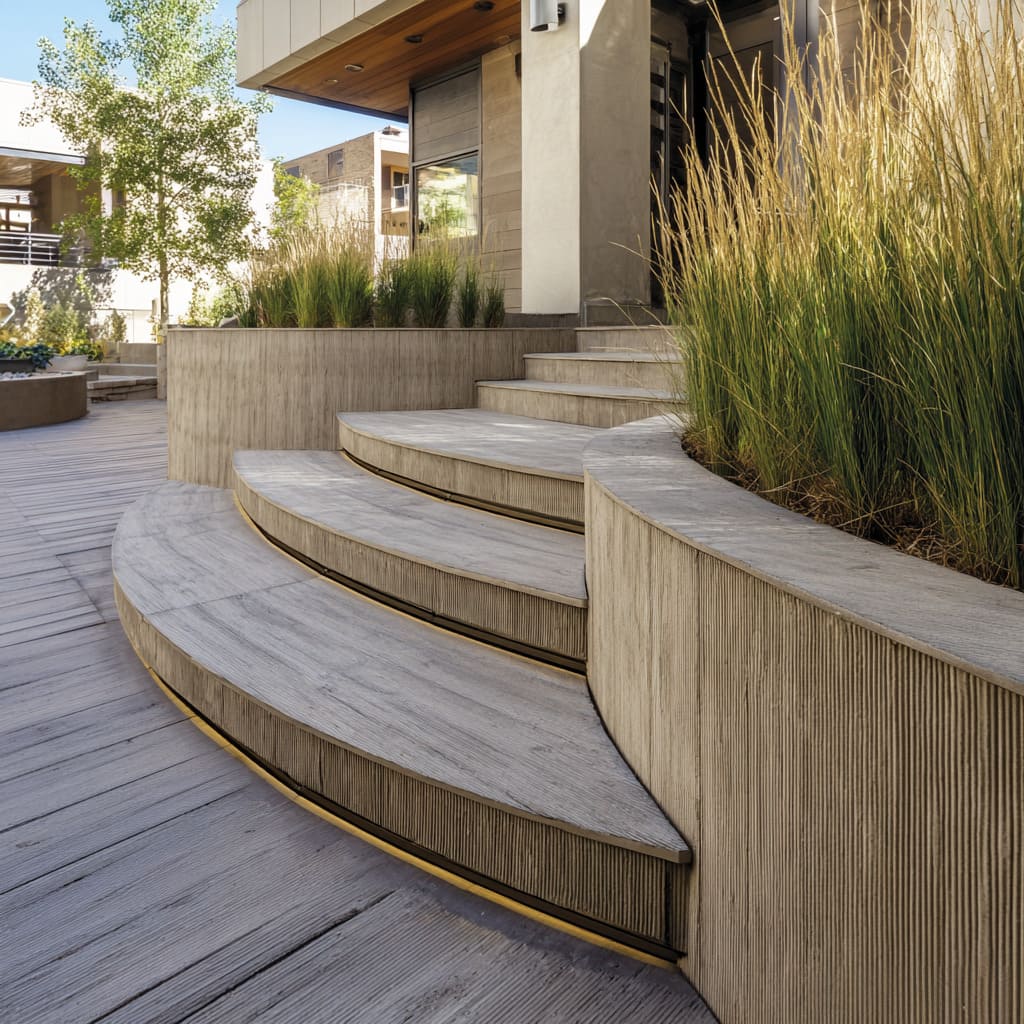
A fluted concrete skirt, for instance, creates thousands of small shadows—like soft fabric folds—giving even a solid material a sense of calm movement. Perforated panels, whether round-holed or botanical, add visual rhythm through varying densities.
The goal is not to show pattern for its own sake but to create a surface that breathes with the environment.
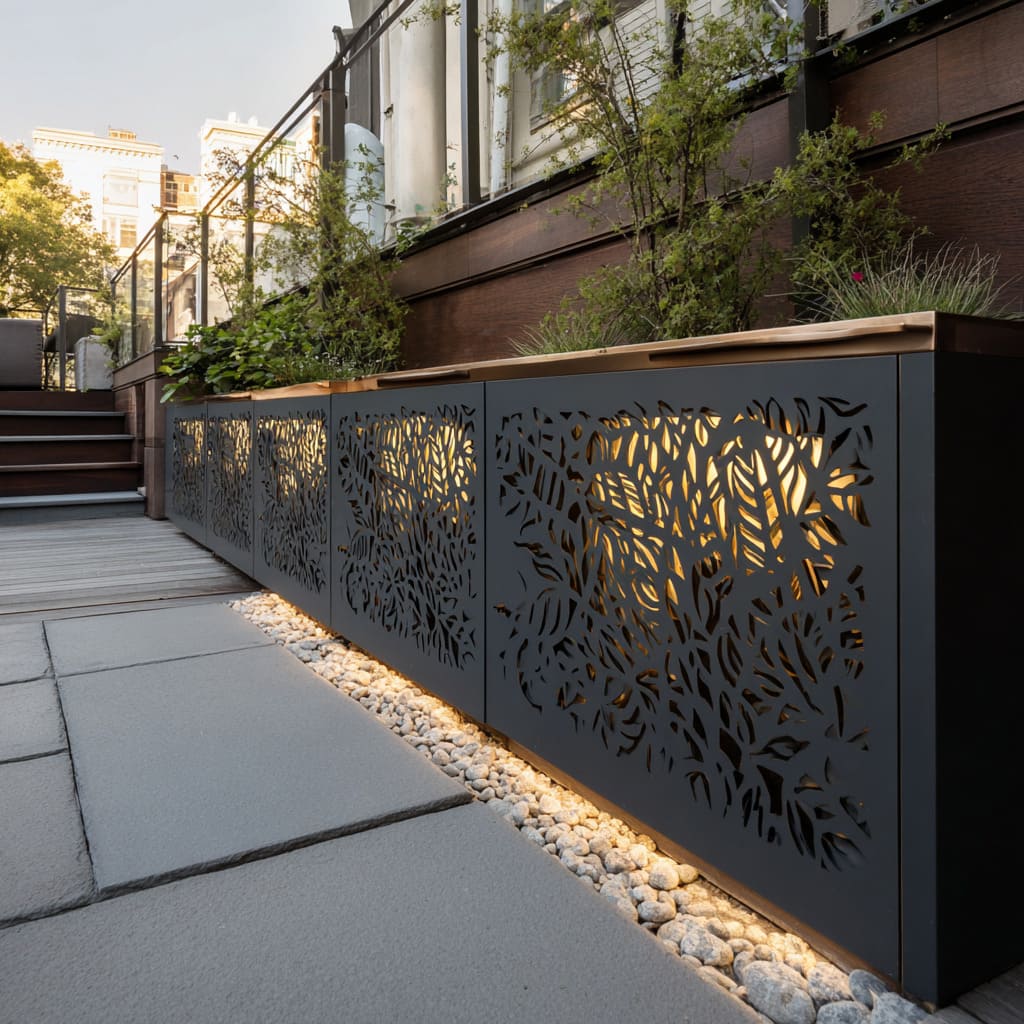
Pattern with Intent
Among the most stylish deck skirting ideas are those that integrate pattern as part of the architectural language. The best examples use geometry to guide the eye rather than to decorate.
Notable approaches include:.
- Chevron or herringbone boards framed in thin black metal to define direction
- Perforated screens with gradient hole sizes for soft transparency and a sense of motion
- Botanical cutouts that echo nearby plants, merging natural and artificial layers
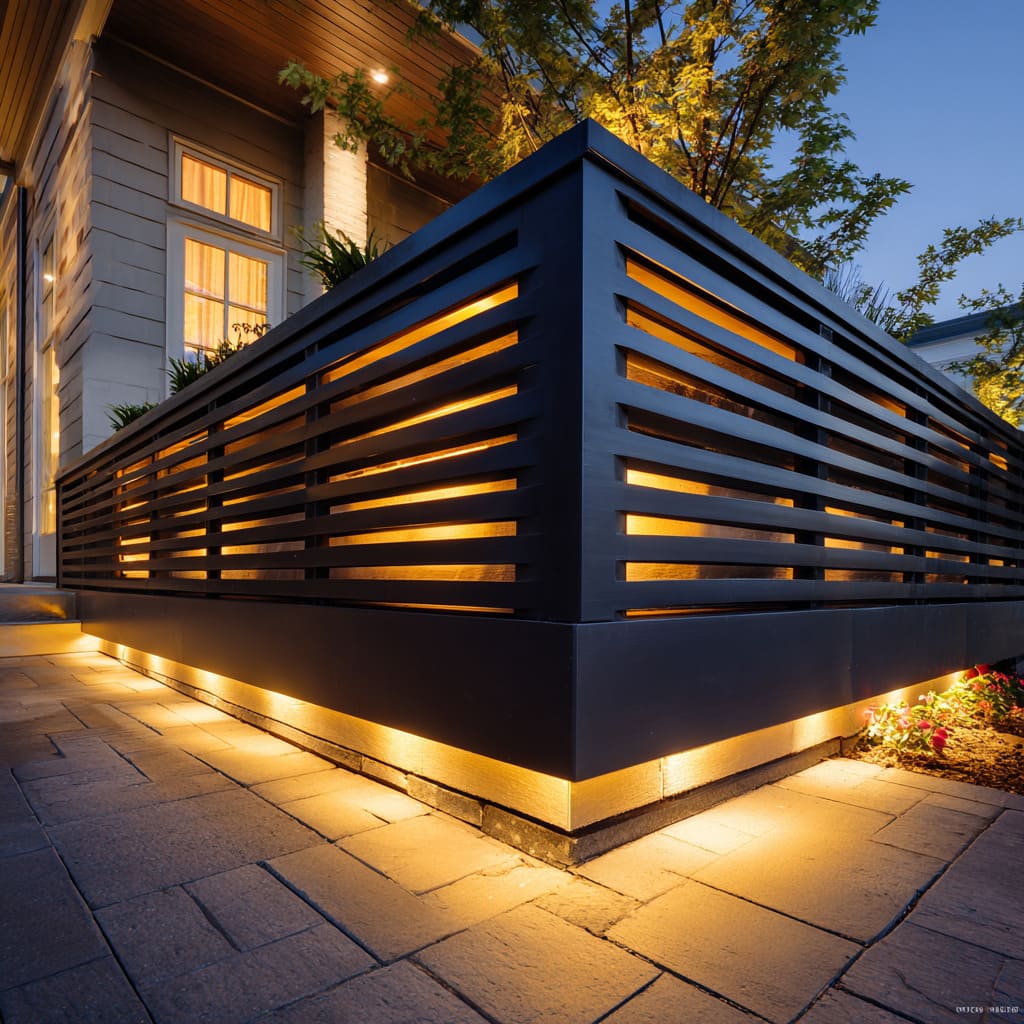
- Continuous louvers that double as privacy screens and lanterns when backlit
Patterns used in this way feel deliberate—more like a fabric weave than an ornament—and they give the façade rhythm when viewed from different angles.
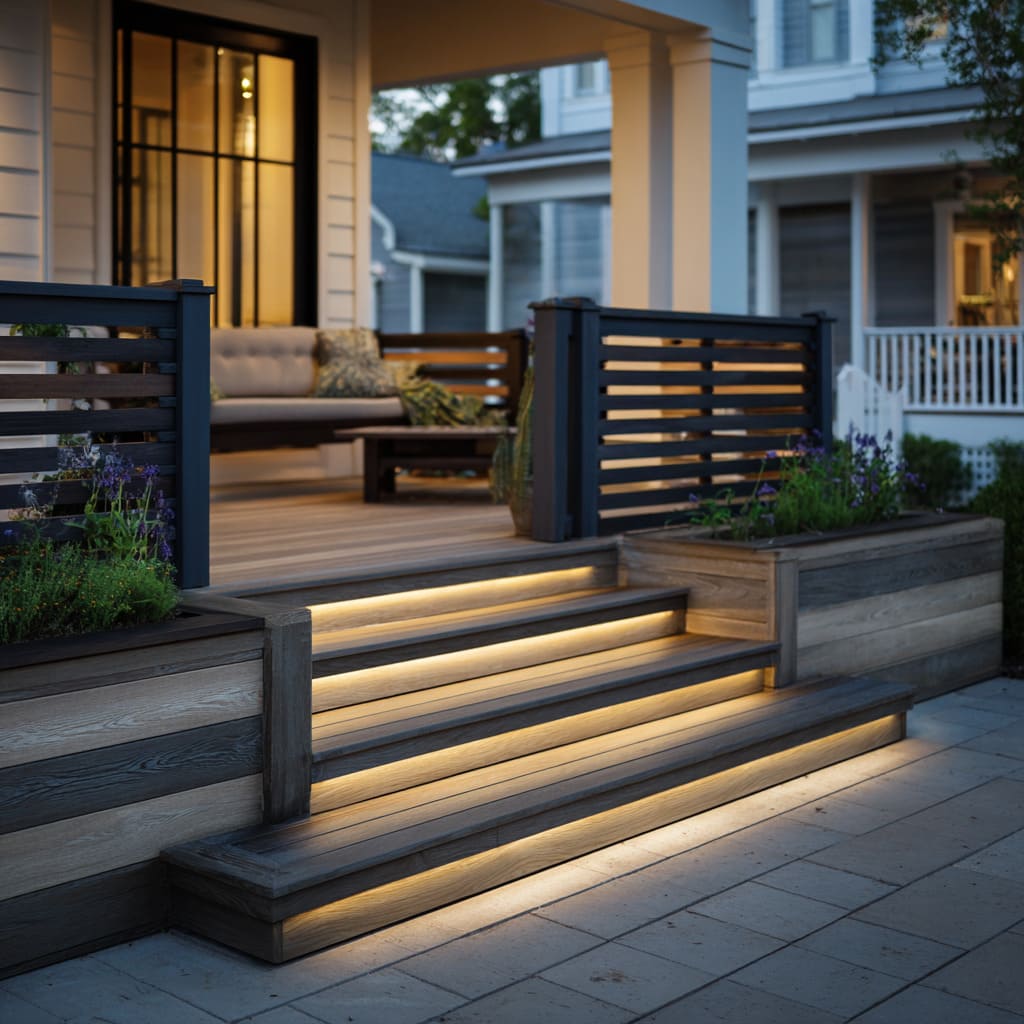
Corners, Curves, and Continuity
Corners often reveal how refined a deck base truly is. Crisp turns with uninterrupted trims or continuous metal lines instantly signal high visual quality.
Some modern deck skirting ideas extend that logic to curves: segmented wood or mesh arcs following a rounded bench create a crafted furniture-like impression. The light flowing along these curves reads as a gentle halo at night.
Continuity of detail—whether it’s a brass cap, a fascia band, or a groove line—is what separates sophisticated decks from ordinary ones. Even small design gestures gain power when they wrap cleanly around corners and stay visually unbroken.
Managing Visual Weight
The balance between grounded and light is crucial in deck underpinning ideas. A well-designed base can look solid without feeling heavy.
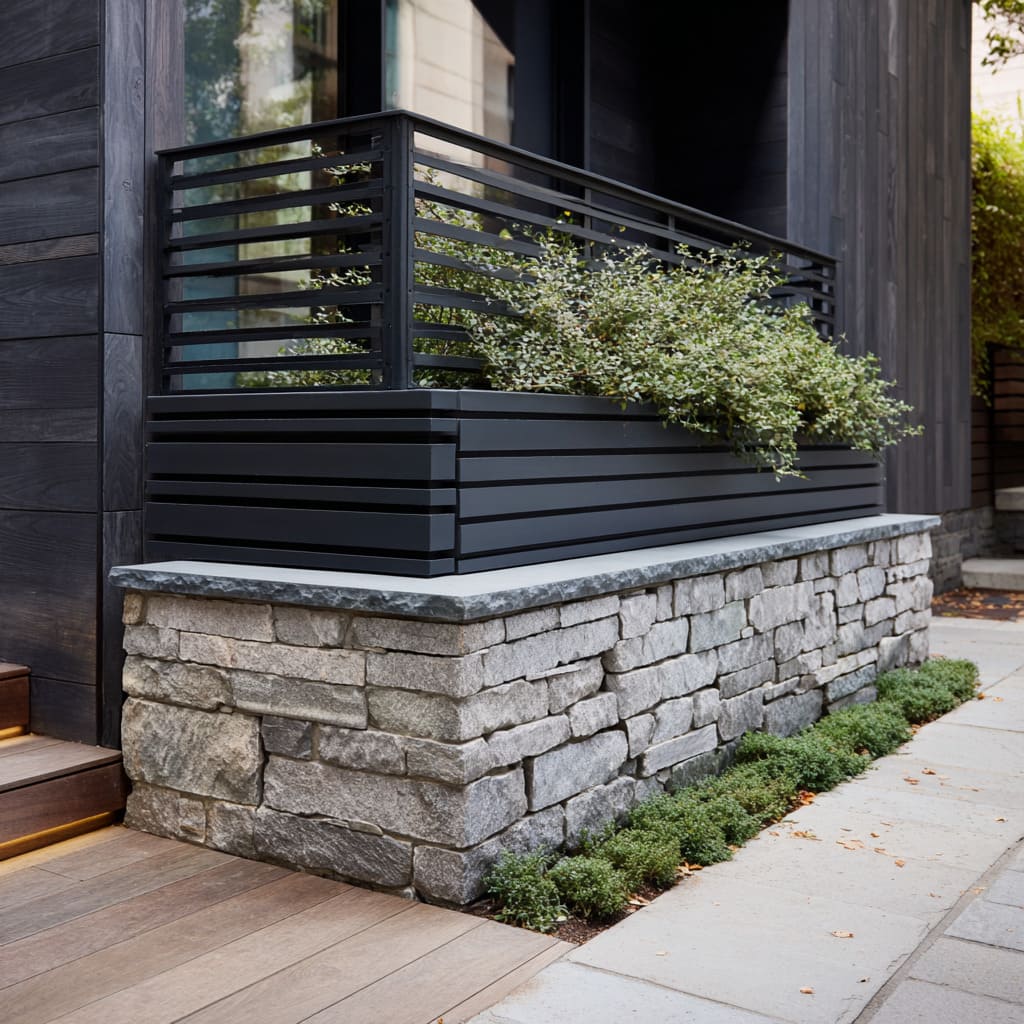
This is often achieved by pairing materials of different visual weights: rough stone at the bottom, slender wood or metal above, and a thin shadow or light reveal between them. That composition gives the impression of structure floating gracefully while still anchored to the earth.
Other examples:.
- A charred-wood skirt lifted by a light reveal makes the porch seem to hover
- A cool gray stone plinth capped with a thin bluestone ledge supports a darker screen above it, achieving both mass and precision
Through proportion, shadow, and tone, even robust materials can appear calm and refined.
Subtle Metal Accents: The Jewelry Effect
A small amount of metal can have a big visual impact in modern deck skirting design. Thin brass edges, beveled lattice strips, or round vents act like jewelry against neutral fields.
They catch just enough light to define shape and alignment without shouting for attention. When used sparingly, these accents reinforce precision and repeat the warm glow of lighting elsewhere in the scene.
Some of the most distinctive looks combine:.
- Deep black wood with a continuous brass cap
- Charcoal panels over pale stones with tiny brass insets
- Blue-gray bases with round polished vents that mimic cabinet hardware
These gestures don’t call attention—they signal craftsmanship.
Planting as Part of the Composition
Landscaping completes many modern deck skirting ideas. Trailing greenery softens geometric blockwork, tall grasses repeat vertical ribs, and pale gravel reflects light upward.
The plants aren’t an afterthought; they’re part of the rhythm. A well-placed plant can balance shadow and reflection, continuing the same line logic used in the deck itself.
Examples of visual synergy:.
- Breeze blocks paired with cascading succulents that echo the curves of the cutouts
- Vertical grasses mirroring fluted concrete ribs and catching the same grazing light
- River pebbles at the base of dark screens reflecting pinpoints of illumination like quiet stars
Here, nature participates in the design’s order rather than hiding it.
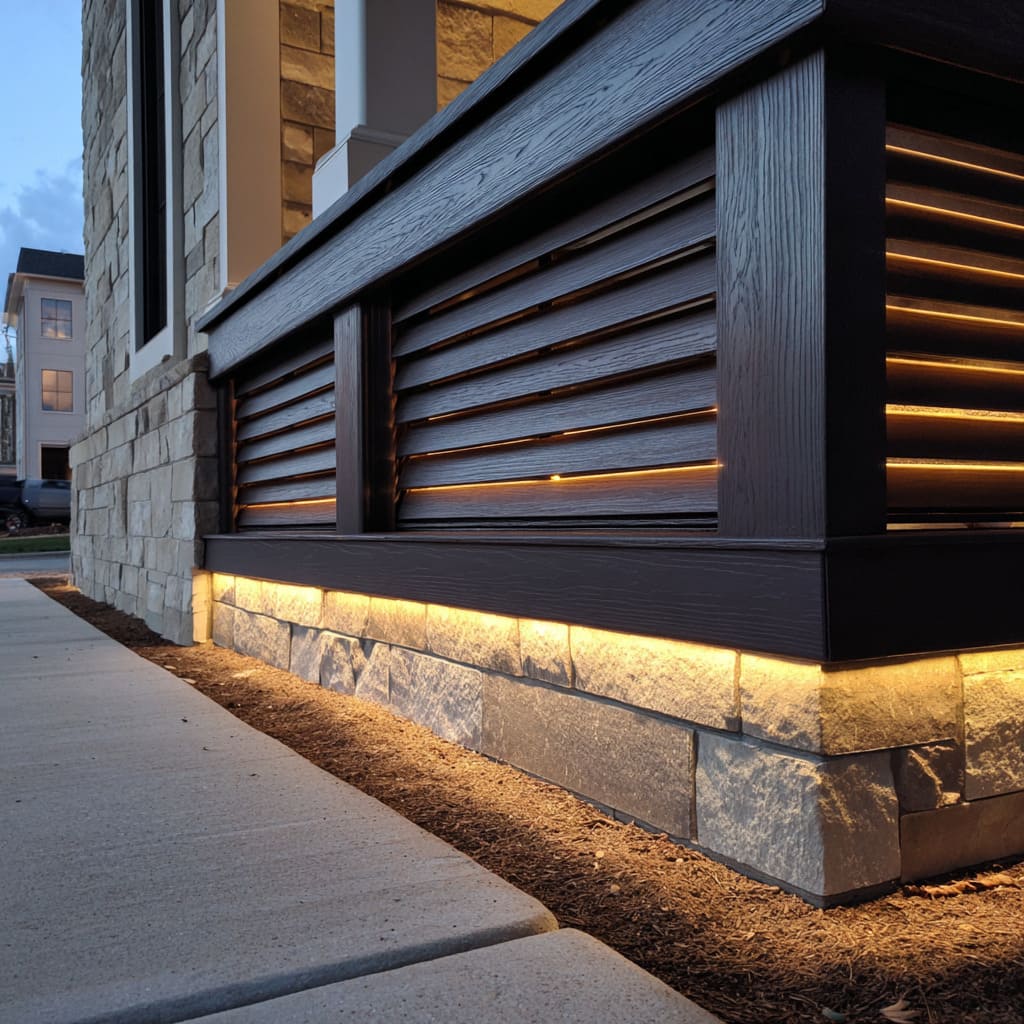
The Day–Night Transformation
A striking trait of modern under deck skirting ideas is how they behave differently from dawn to dusk. During the day, texture and shadow define form; at night, light and reflection take over.
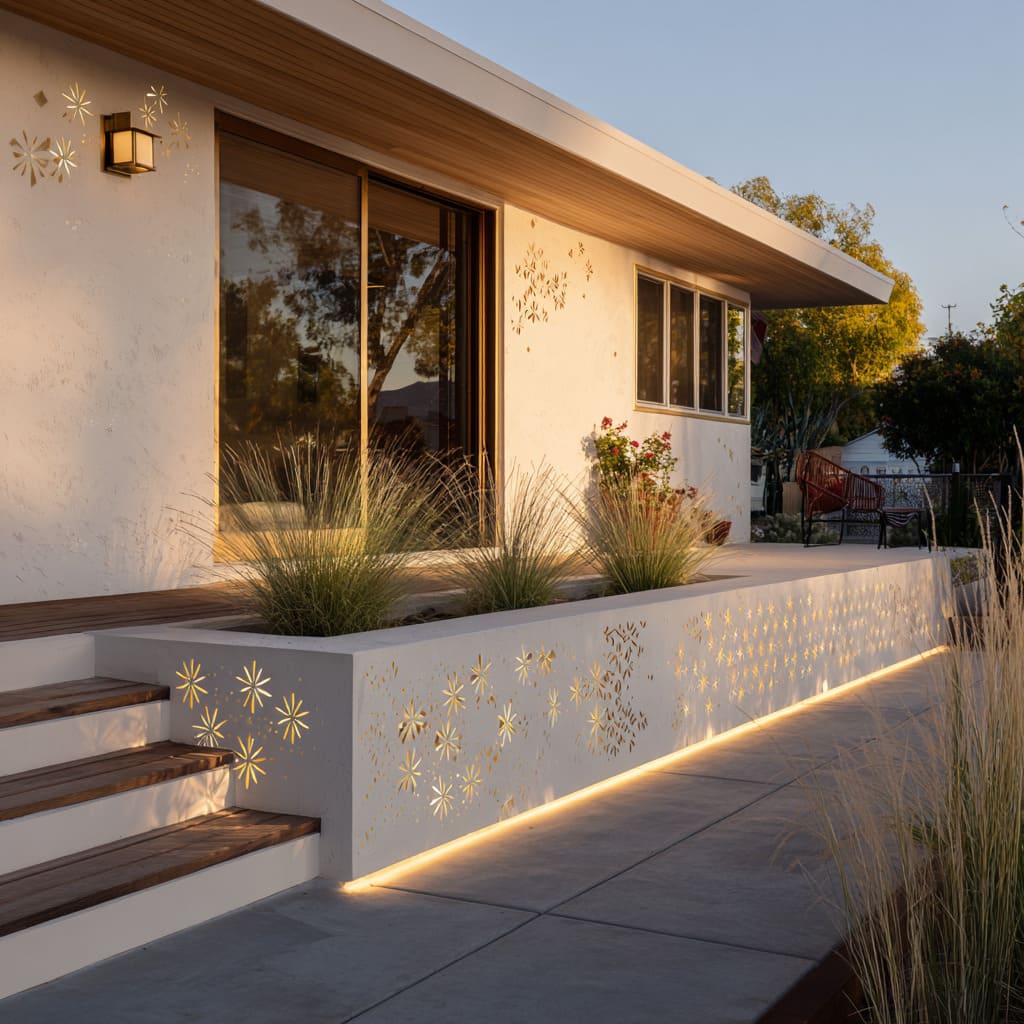
White perforated panels become glowing patterns. Dark skirts turn into weightless outlines traced by amber lines.
The best designs read as two distinct compositions—structured by day, atmospheric by night—using the same materials. This duality extends the design’s lifespan throughout the day and gives outdoor spaces that subtle sense of theater modern homes thrive on.
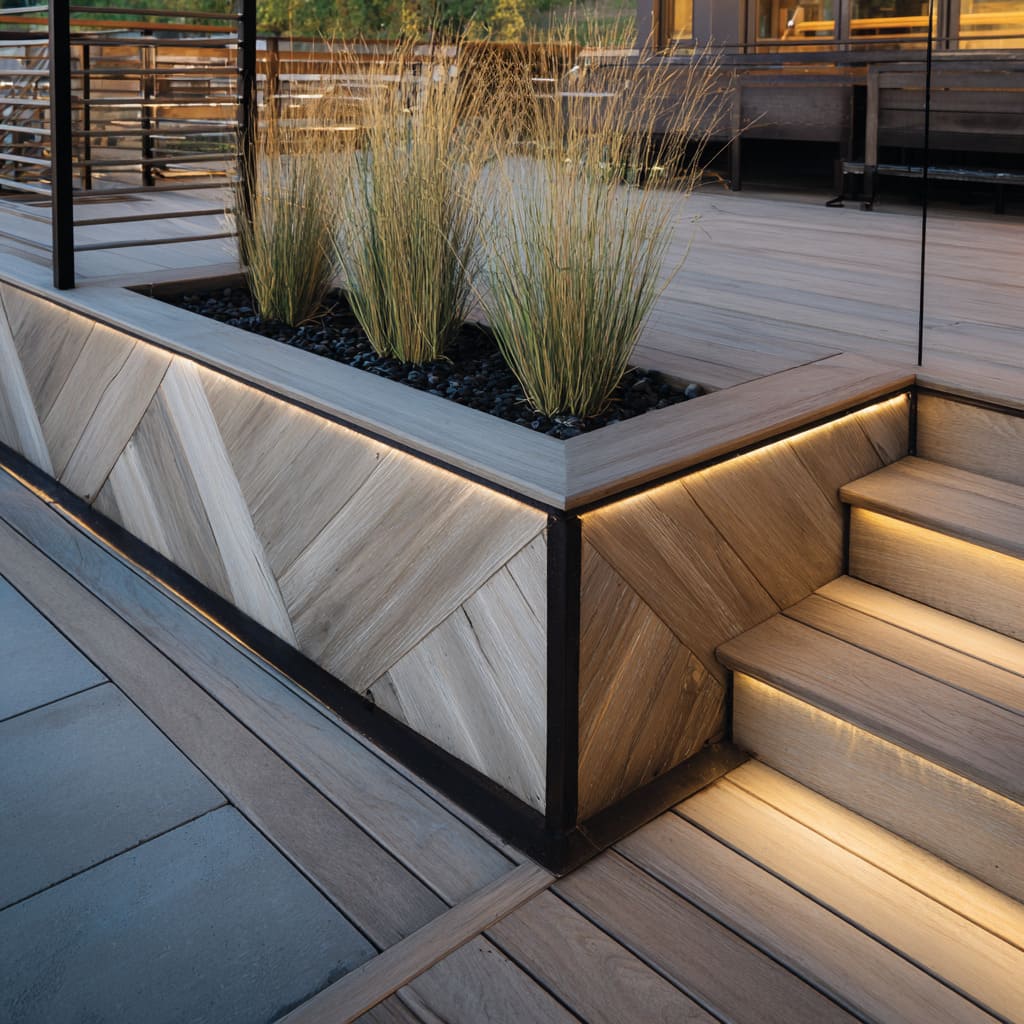
Integrating Ventilation Gracefully
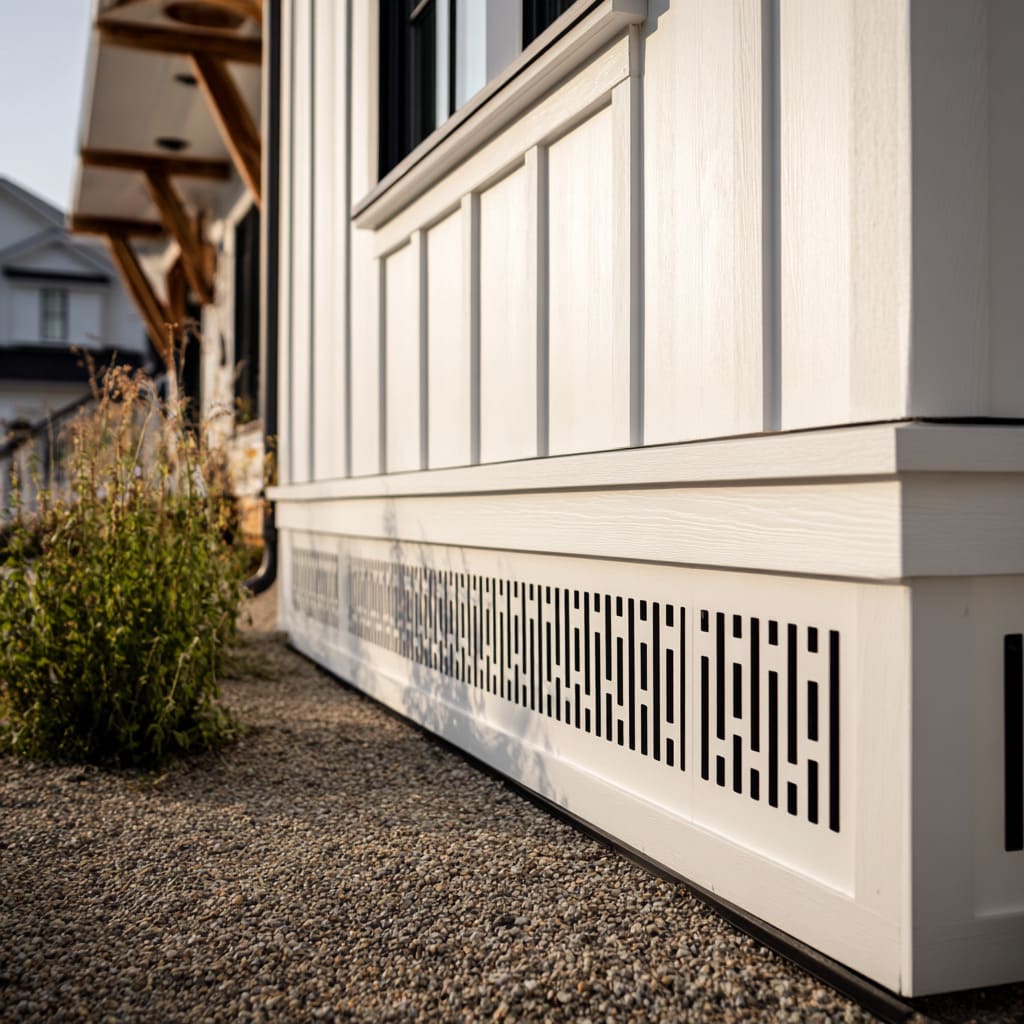
Ventilation openings, often overlooked in traditional decks, have become design features in deck underpinning ideas. Slotted cutouts, hole gradients, and brass-framed vents now double as visual rhythm.
When aligned with board seams or light lines, they look intentional rather than functional. The result is a breathable, shadowed surface that maintains both utility and refinement.
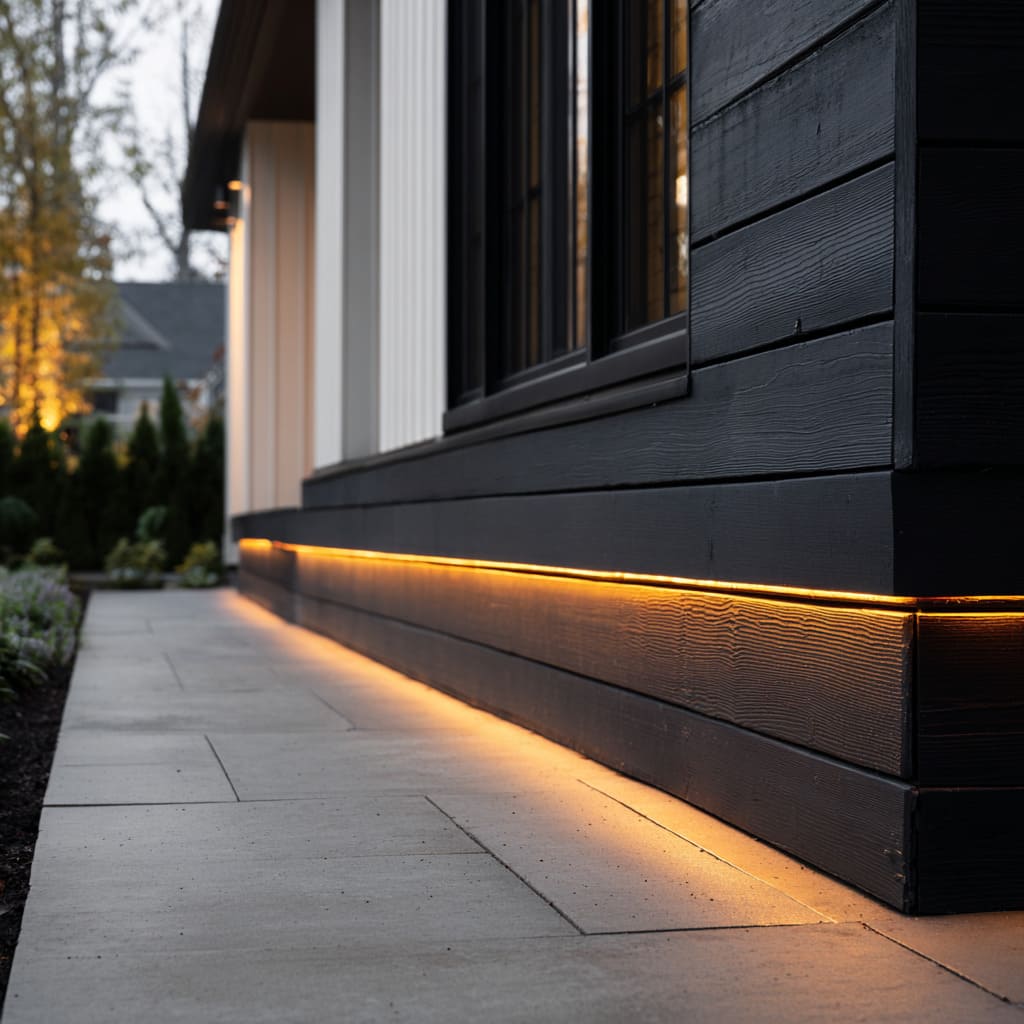
Horizontal Harmony and Layer Logic
Many successful deck skirting ideas repeat horizontal bands across the entire elevation—skirt, railing, planters, even bench tops share one visual order. This repetition makes the deck look cohesive at a glance.
When the lighting under stairs or along planters matches the base glow, everything reads as part of a single composition rather than separate add-ons. This concept often combines:.
- Layered stone base, thin metal cap, louvered rail above
- Matching tones between steps, skirts, and planter trims
- Repeated amber light lines that travel uninterrupted from stair to base
Such linear continuity helps define a unified outdoor architecture rather than scattered parts.
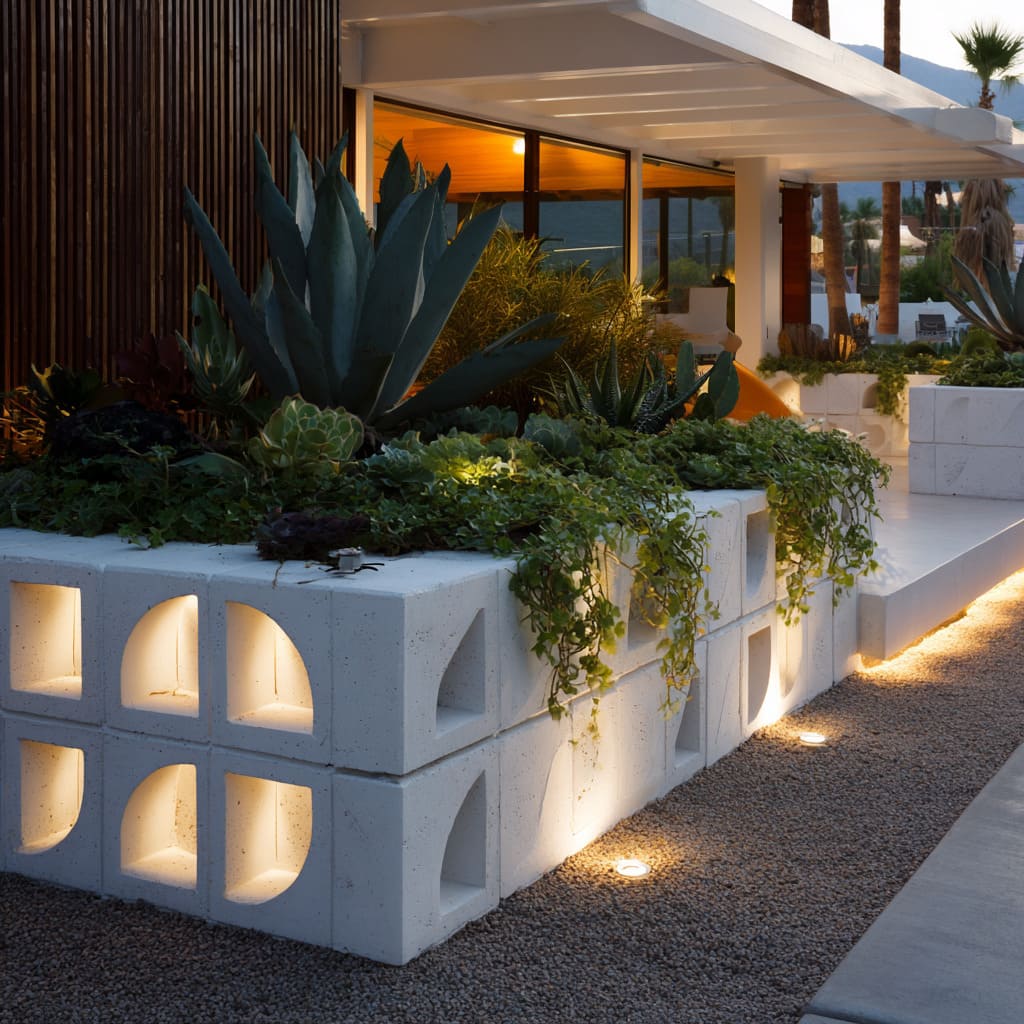
The Power of Neutrals: Black, White, and Driftwood
Among the palette choices dominating modern deck skirting design, black and white remain timeless. Black grounds the house, makes other colors pop, and pairs beautifully with warm lighting.
White, especially in patterned or perforated form, acts as a reflector—turning the deck into a soft lantern at night. Between the two, neutral driftwood tones bridge warmth and coolness, allowing texture and shadow to take the lead.
From Architecture to Furniture Craft
Some of the most distinctive modern deck skirting ideas treat the base as if it were built furniture rather than construction. Rounded wood benches with mesh insets, fluted concrete curves, or panel systems capped with polished metal create a crafted look reminiscent of high-end joinery.
These designs blur the boundary between landscape architecture and outdoor furniture, giving the porch a human, tactile quality.
The Ground as Reflector
What lies at the base of the skirt can influence its beauty as much as the skirt itself. Designers now use the ground plane—pebbles, gravel, or pale stone mulch—as a soft reflector that amplifies light and clarifies the edge.
Pale materials under warm LEDs scatter gentle light upward, while dark pebbles under subtle glow keep brightness contained and atmospheric. This overlooked layer is key to many elegant modern deck skirting ideas.
Final Reflection
In the most current modern deck skirting ideas, style comes not from extra decoration but from clarity and proportion. Each example balances line, light, color, and texture in restrained harmony.
Whether carved wood, perforated metal, fluted concrete, or stacked stone, the goal remains the same: to make the transition between deck and ground look intentional, graceful, and quietly expressive.
Through these carefully considered deck underpinning ideas and under deck skirting ideas, the base of a deck becomes a true architectural feature—grounded in the landscape yet visually floating with light. It’s proof that even the most functional part of an outdoor structure can become its most poetic detail.