A modern living room often gains its most calming moment not at the center of the room, but in the turn where two walls meet. That spot, once ignored or filled with accidental items, now works as a soft hinge between moods, textures, and light rhythms.
In many homes inspired by warm contemporary and subtle Scandinavian aesthetics, corner shelf decorations help guide the eye and give shape to that meeting point. With thick oak bands or walnut planks, pale plaster or soft mushroom tones, and the hush of linen-covered books, this small zone gains quiet presence.
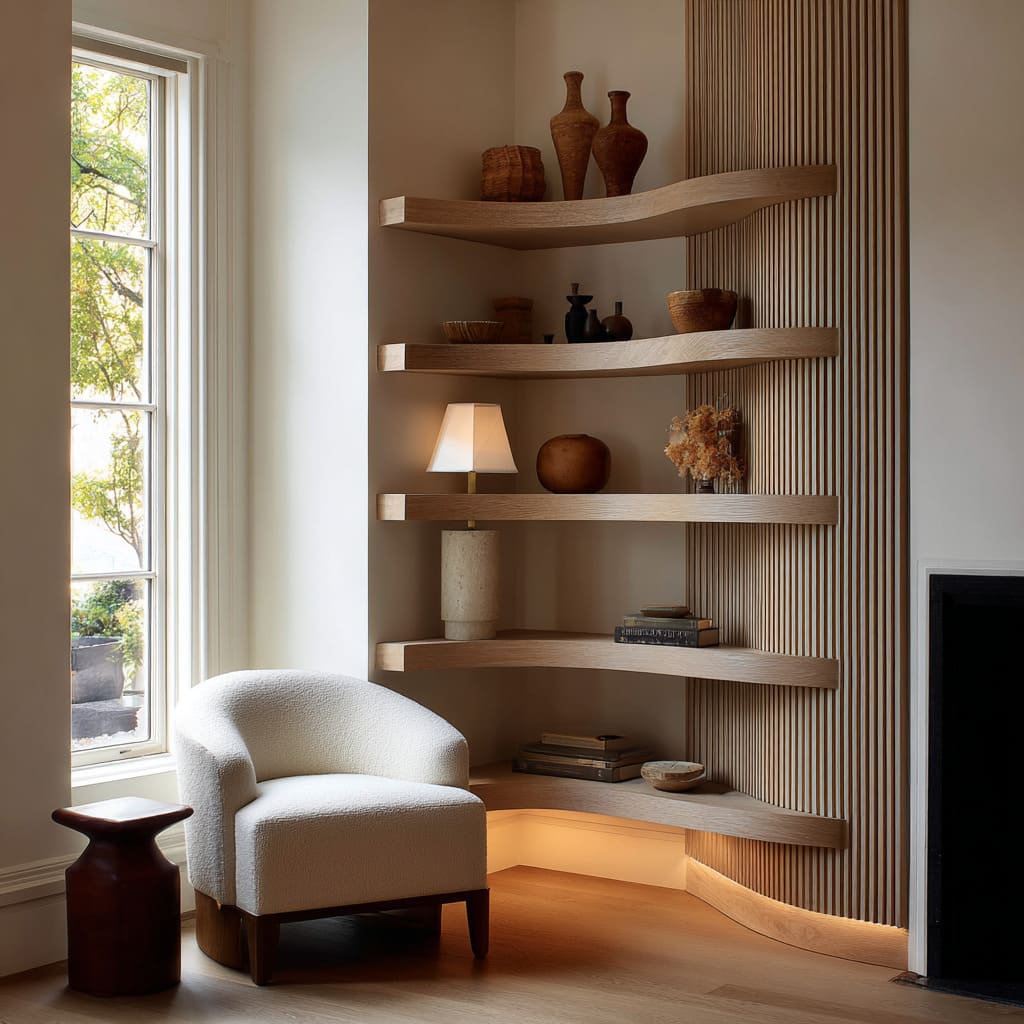
The strongest living room corner shelf ideas do not shout; they rely on one main horizontal line that glides around the angle, paired with thin vertical accents, so the area feels purposeful rather than patched.
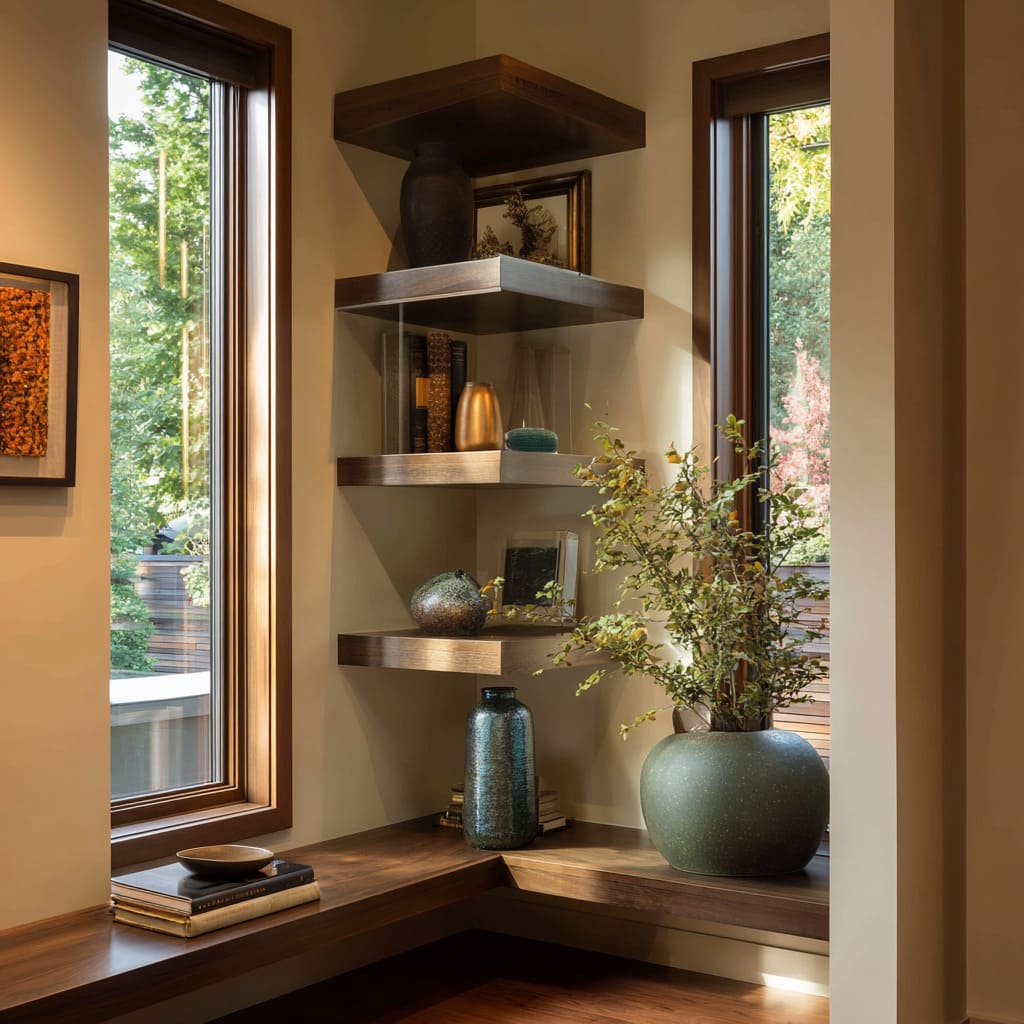
The look becomes calm, quietly layered, and full of gentle movement as daylight shifts, touching matte ceramics, soft glass edges, and rounded wooden vessels that sit toward the back of shelves while the front edges stay crisp and free.
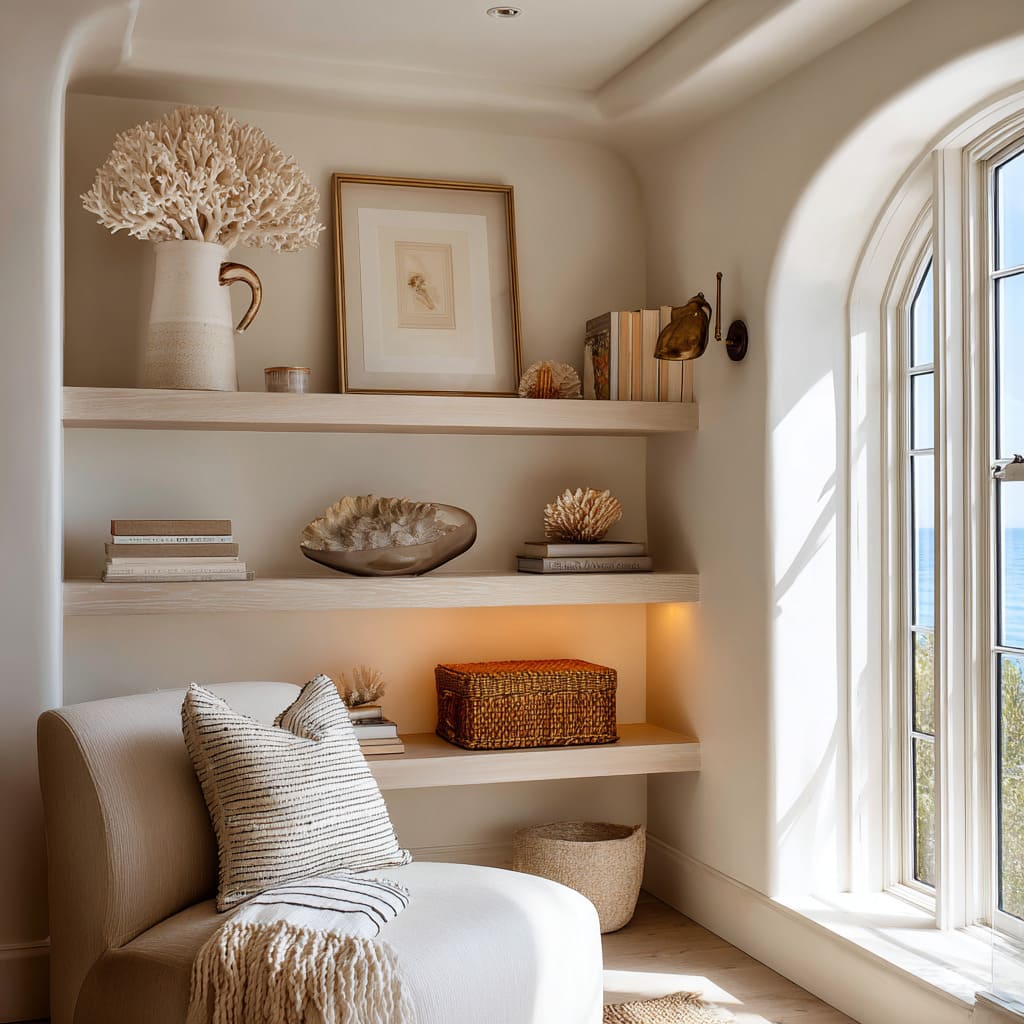
The corner as a hinge, not a full stop
Instead of letting the angle between two walls act like a dead point, many modern homes carry one continuous ledge, bench, or thick shelf across that transition. This single gesture turns the corner into a soft bend rather than a hard collision.
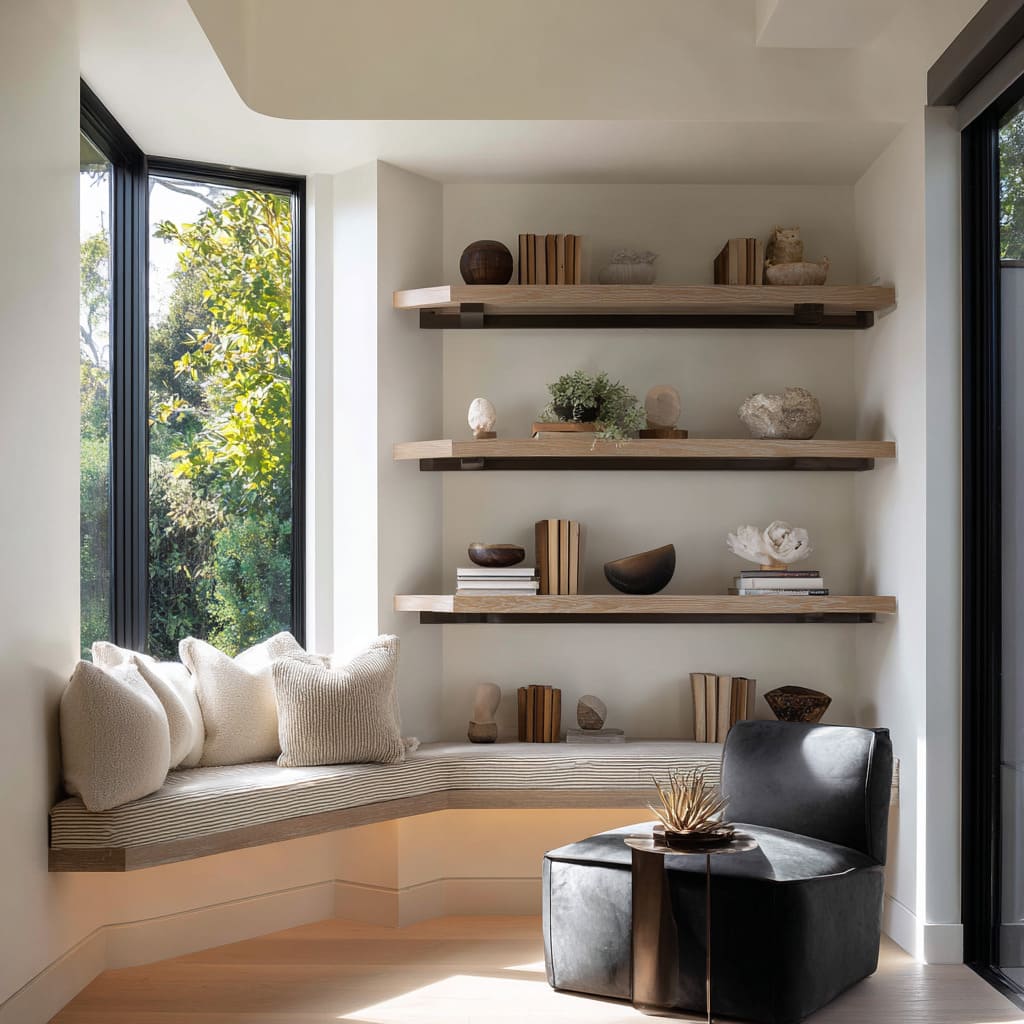
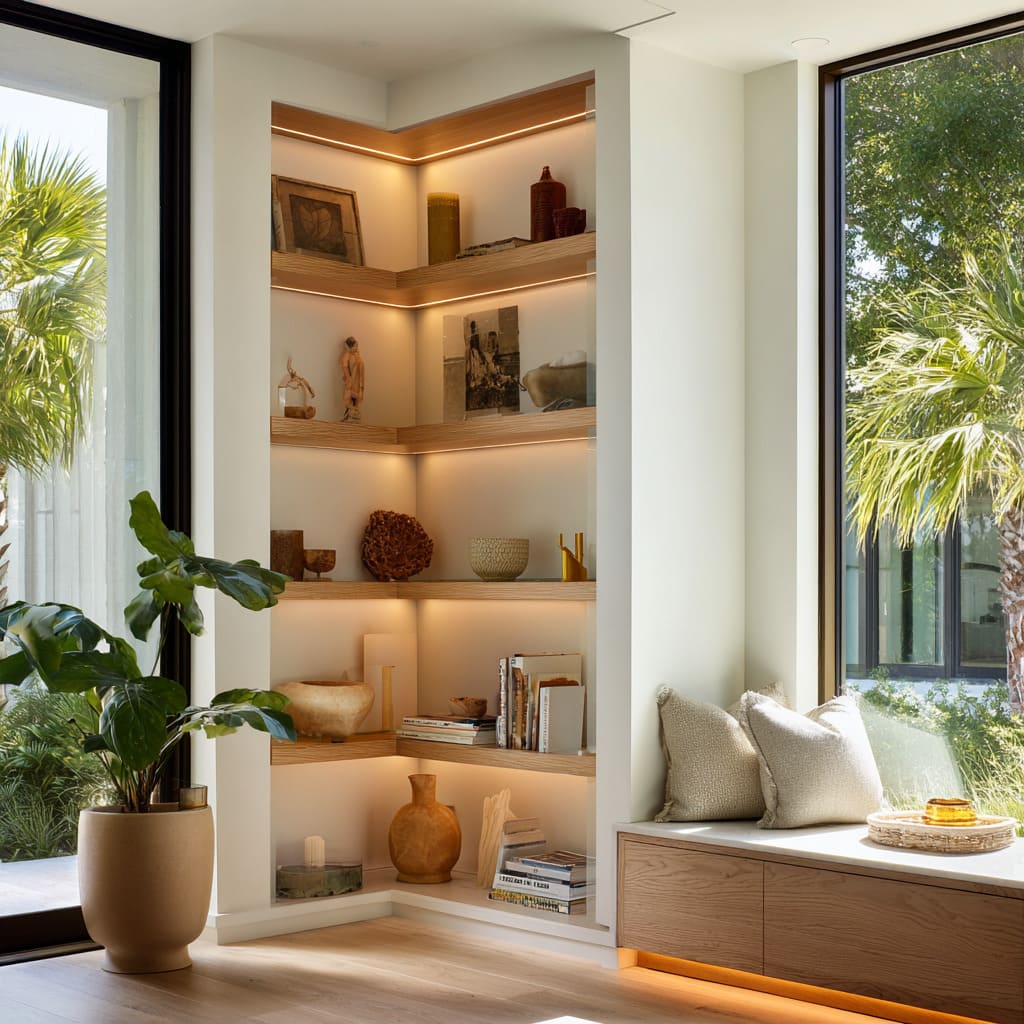
In corner floating shelf ideas, that uninterrupted line often runs beneath a window and then continues onto the adjacent wall, making the corner feel like a graceful link between views, seating, and shelving.
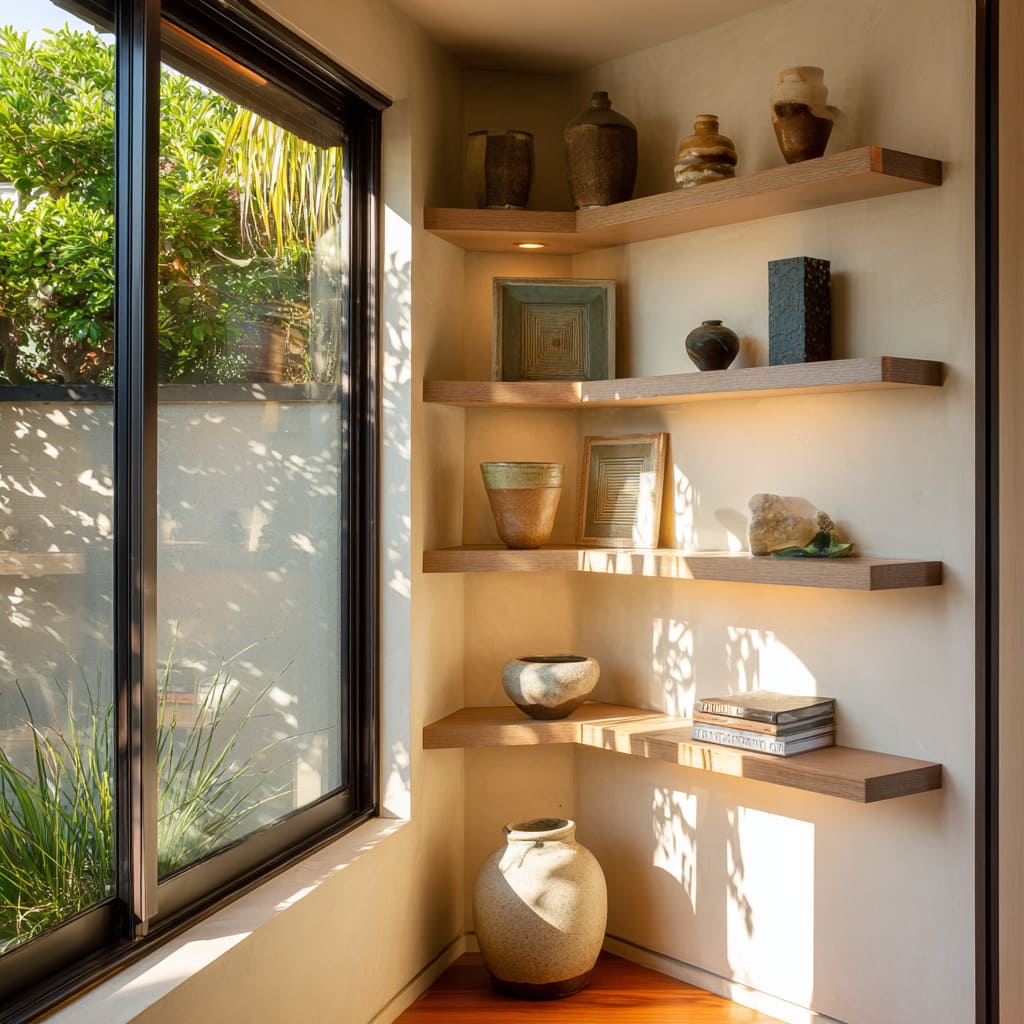
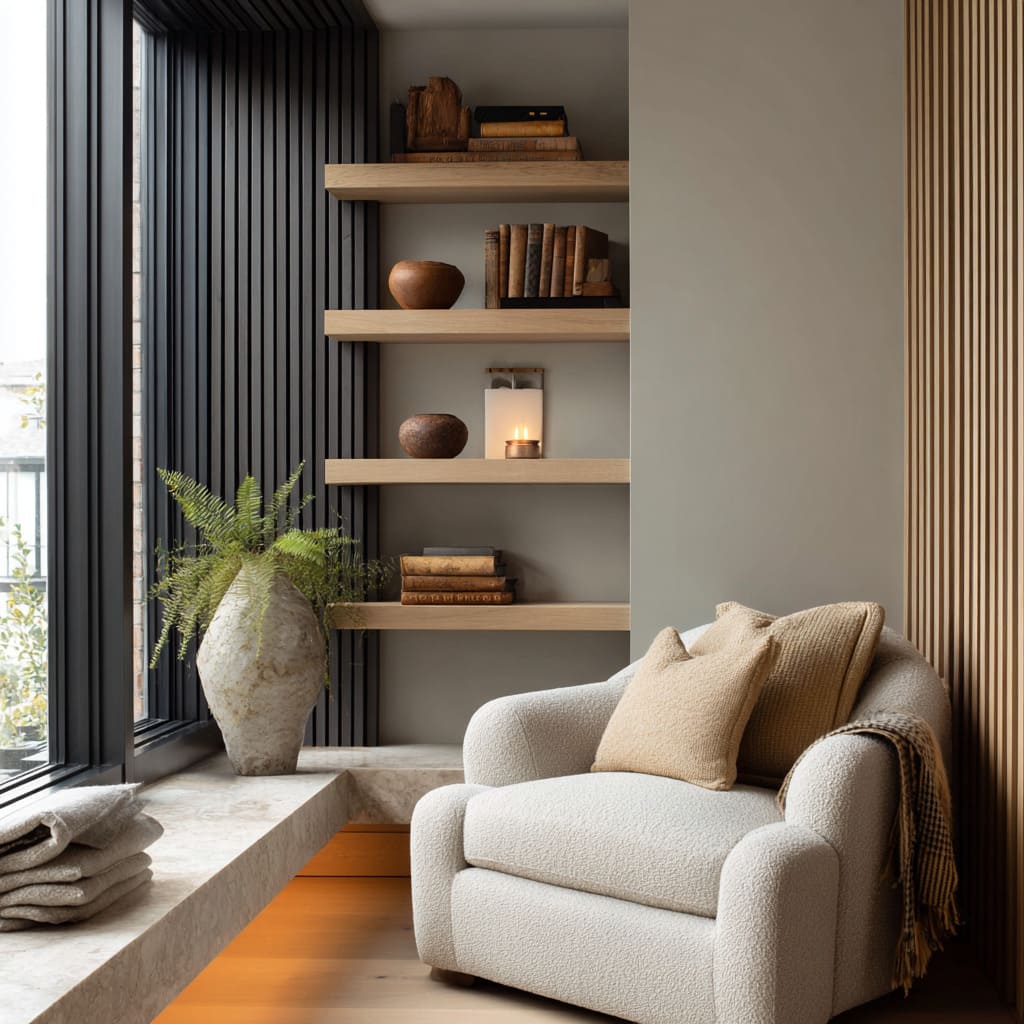
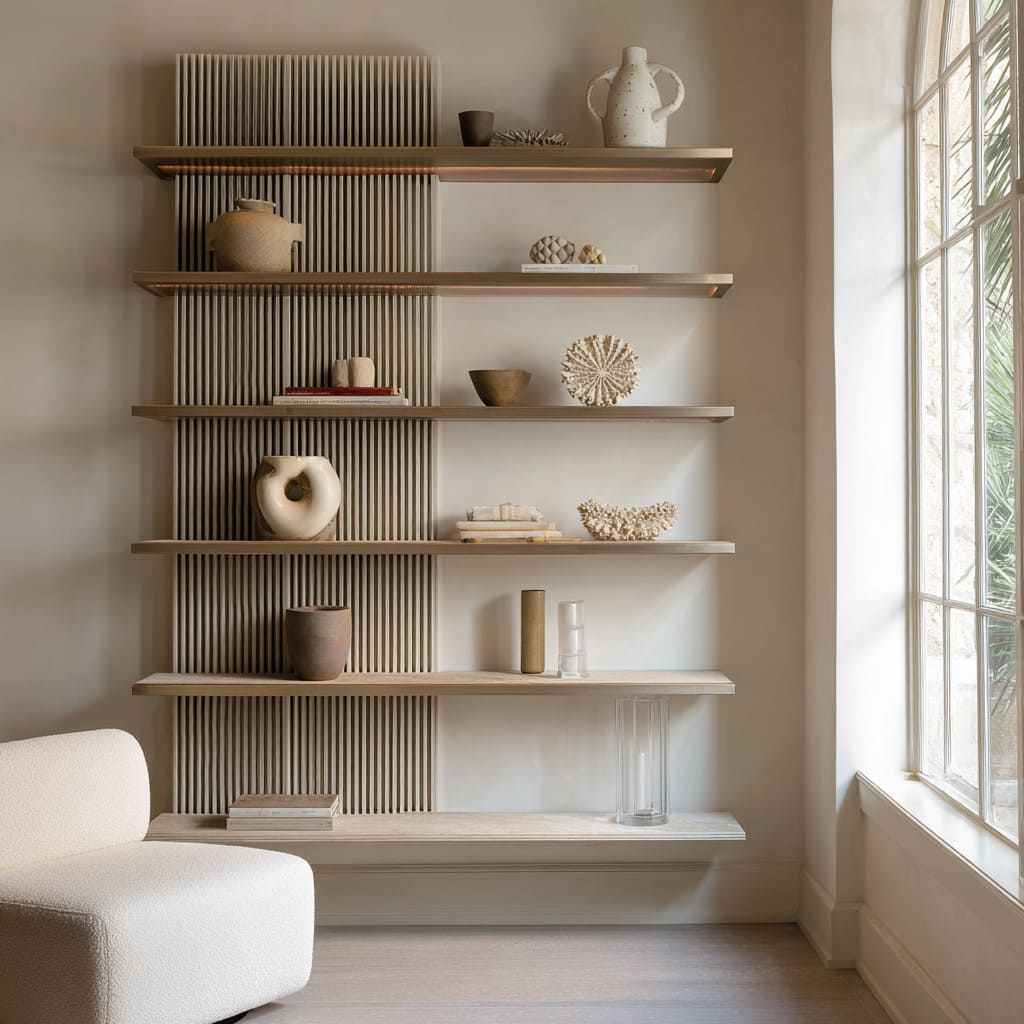
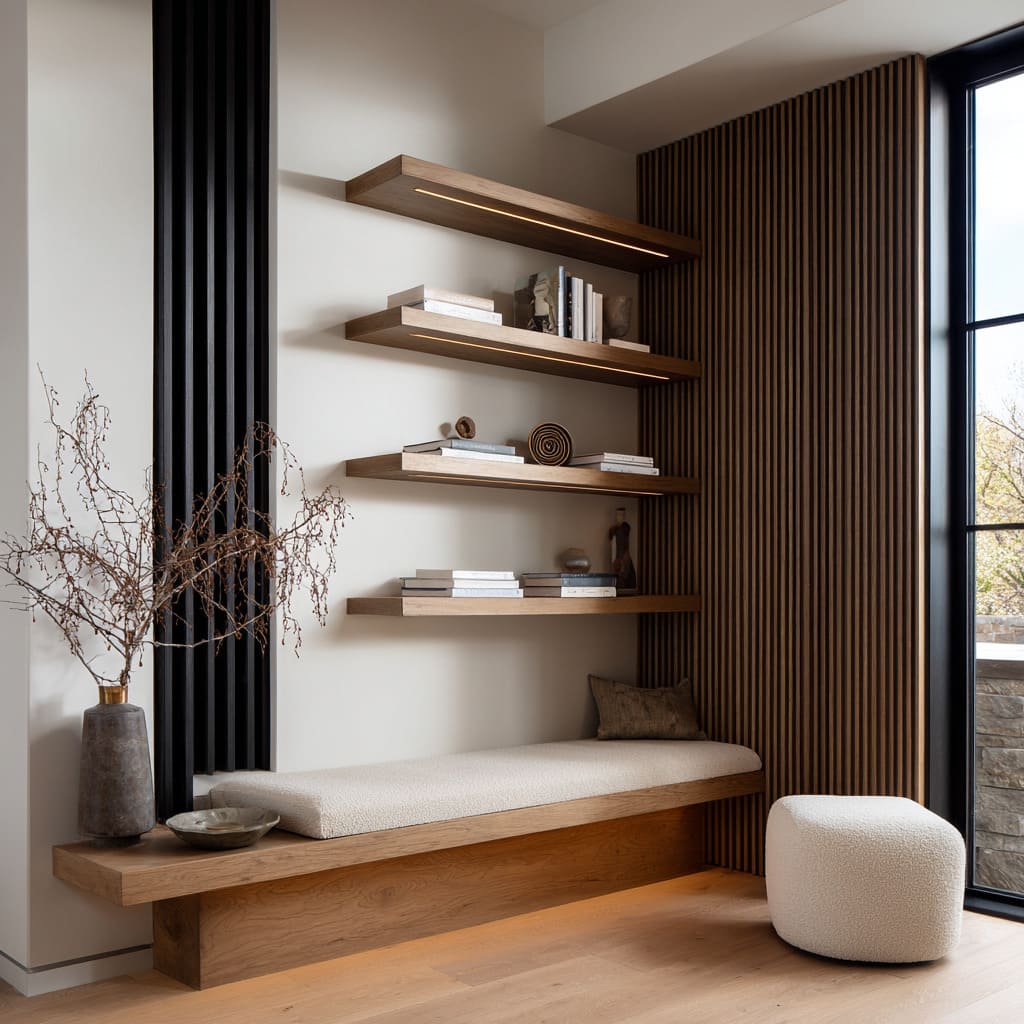
Paired with slim slatted panels, fine window muntins, or a ribbed strip tucked behind the shelves, the composition gains two tempos: wide, calm horizontals and fine, steady verticals. The mood stays relaxed and airy, especially when daylight grazes along those ribs or ripples gently across a chalky plaster surface.
That mix of light and rhythm becomes part of the décor itself, hinting at coastal ease or quiet city refinement without leaning on heavy ornament.

The clean front edge: why restraint feels rich
A key detail in refined corner shelf design ideas is how clean the shelf fronts remain. Instead of filling every inch with objects, items cluster toward the inner edge or back third of each shelf, leaving a visual runway along the face.
This simple move turns each level into a calm wood or stone band, making the installation feel architectural rather than busy.
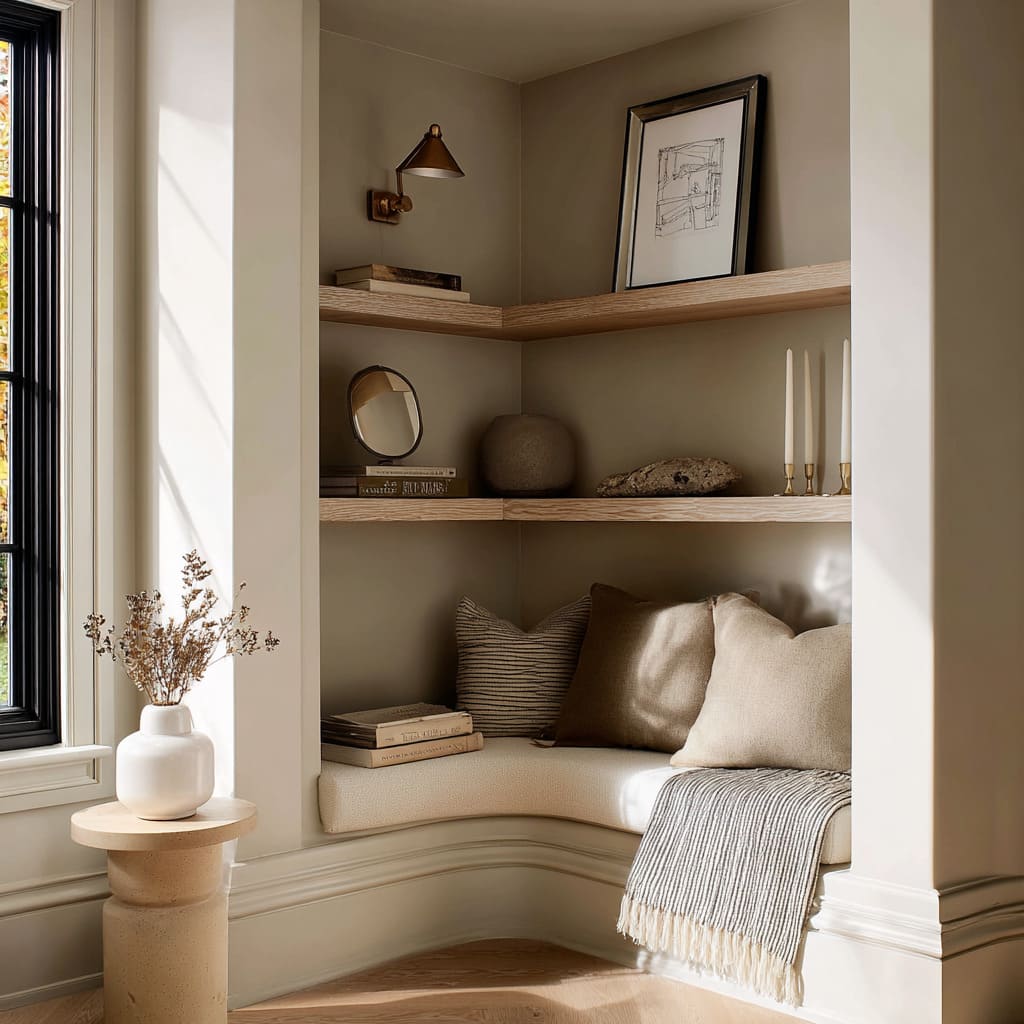
The shelves act like horizon lines while objects become supporting characters: a matte bowl here, a stack of linen-spined books there, a single dried stem standing upright to lift the eye. In living room corner wall shelf design, this is what gives corners a warm, gallery-like presence without appearing styled to perfection.
It shows a lived-in confidence—quiet pieces placed with intention, letting negative space breathe.
Materials that whisper rather than shout
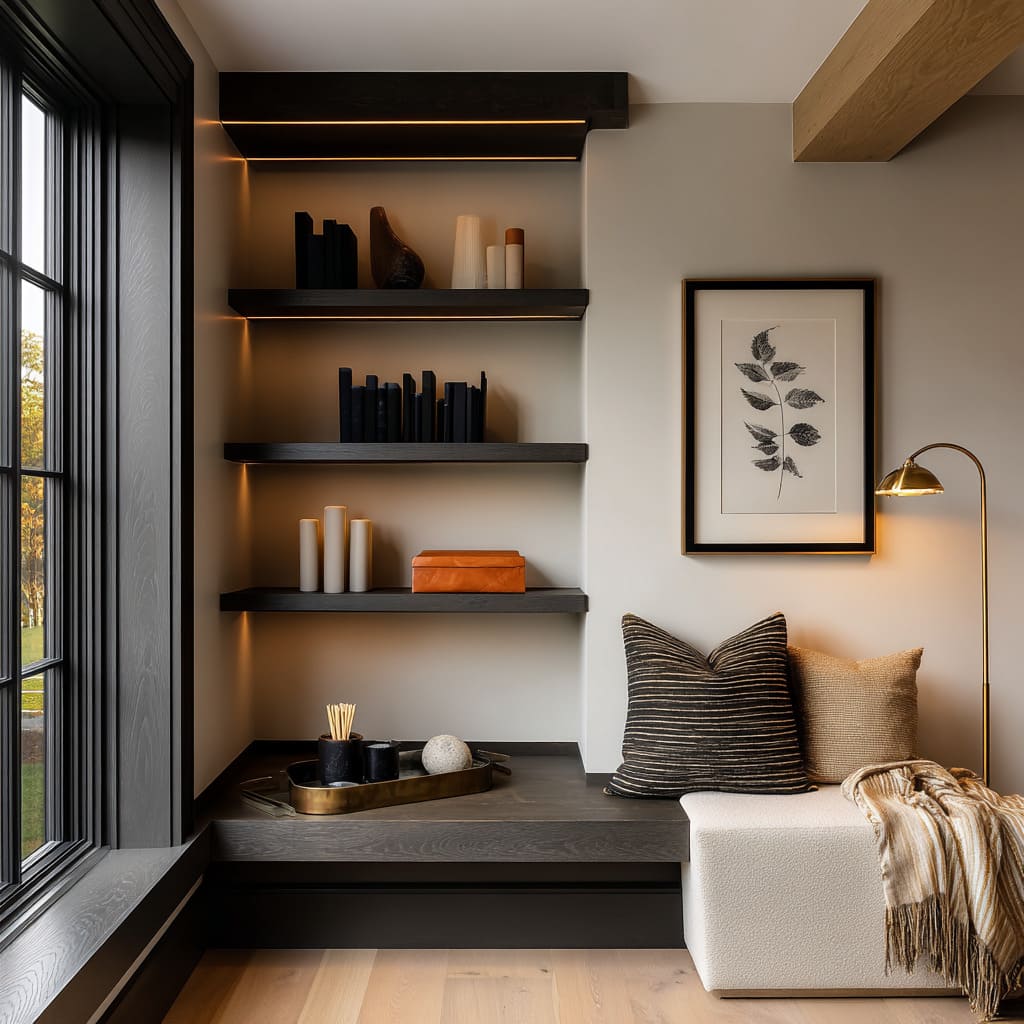
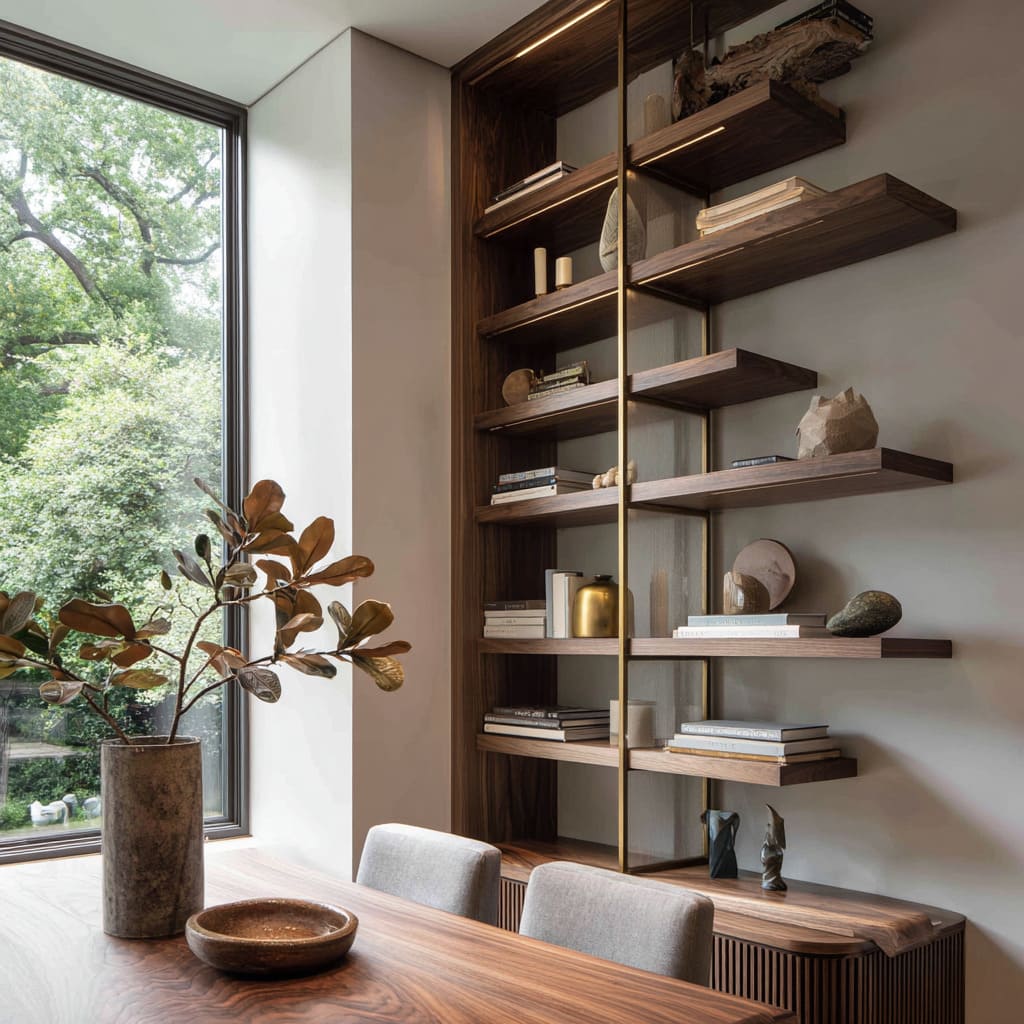
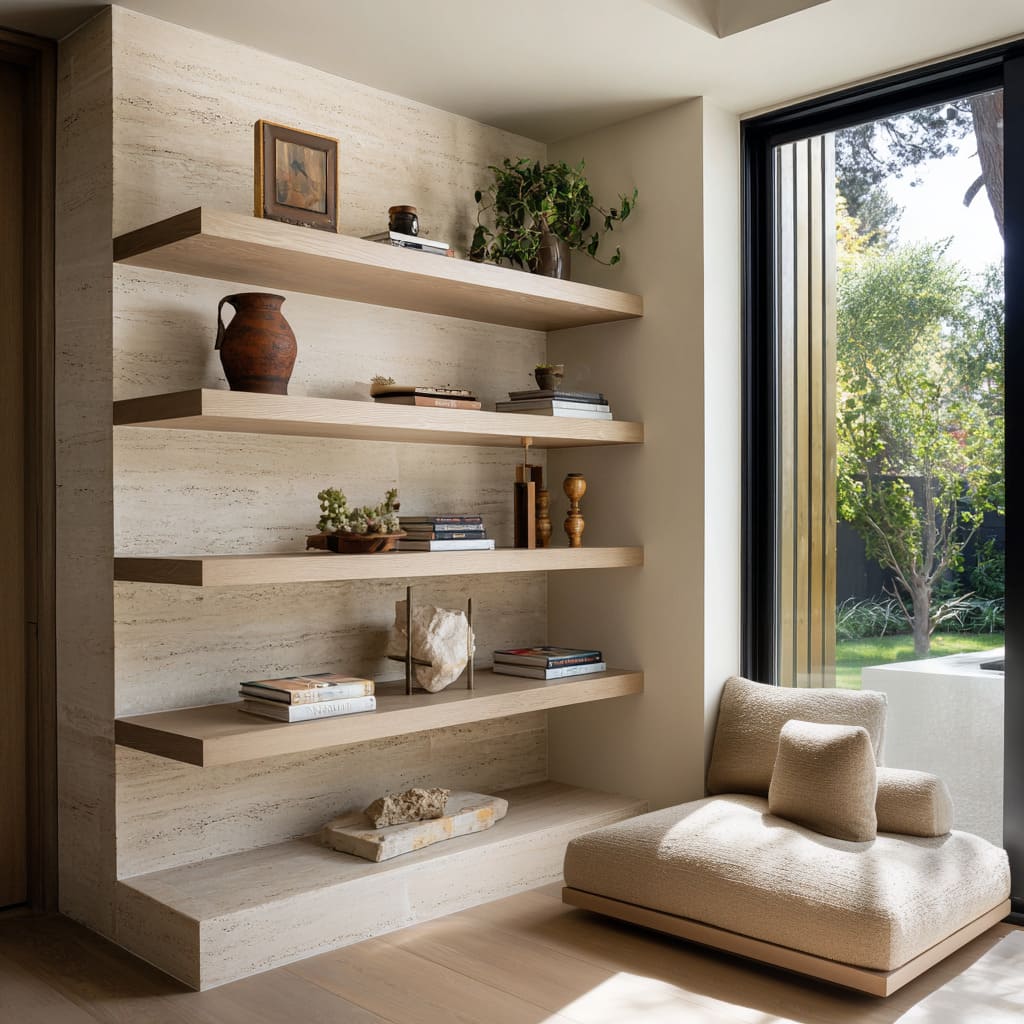
Timber, stone, and a soft range of neutral finishes remain the steady backbone of successful corner shelf decor ideas. Pale oak and cream plaster make daylight feel warm and creamy; deeper walnut against charcoal plaster builds theater without turning moody; travertine behind light oak shelves reads sun-washed and natural.
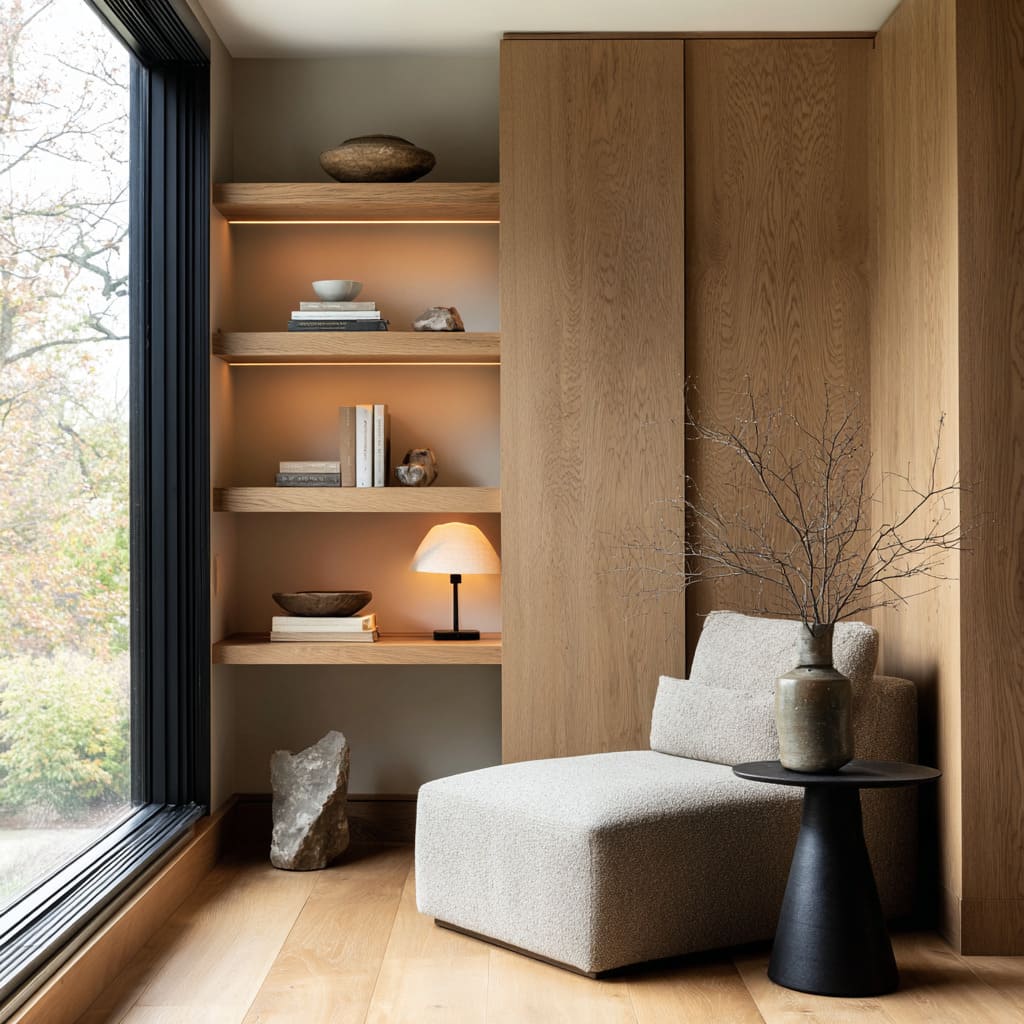
Metal accents usually appear as thin gestures—bronze “shoe” brackets, a slender lamp arm, or a minimal frame—to keep the composition light. Surfaces favor hand-feel over shine: nubby boucle cushions, linen book jackets, unglazed ceramics, river stones, and turned wood pieces.
Together these elements bring quiet tactility to the corner shelf zone, letting the design feel collected and honest.
Light as a styling tool, not a spotlight
In thoughtfully styled corners, light behaves like décor. Sometimes it comes from a long, barely visible line that washes down the back wall, turning objects into gentle silhouettes.
Other times an under-bench glow lifts the base so the corner feels airy near the floor, or one tiny orb lamp glows softly on a shelf like a bedside light in miniature.

With corner shelf unit decorating ideas, the balance between soft artificial lighting and natural window light is what gives each scene its character. Shadows help define texture: slatted timber throws narrow bands; thick shelves create calm stripes; a single tall vase casts a drawn-out branch shadow that feels lyrical rather than dramatic.
Visual balance: weight low, air high
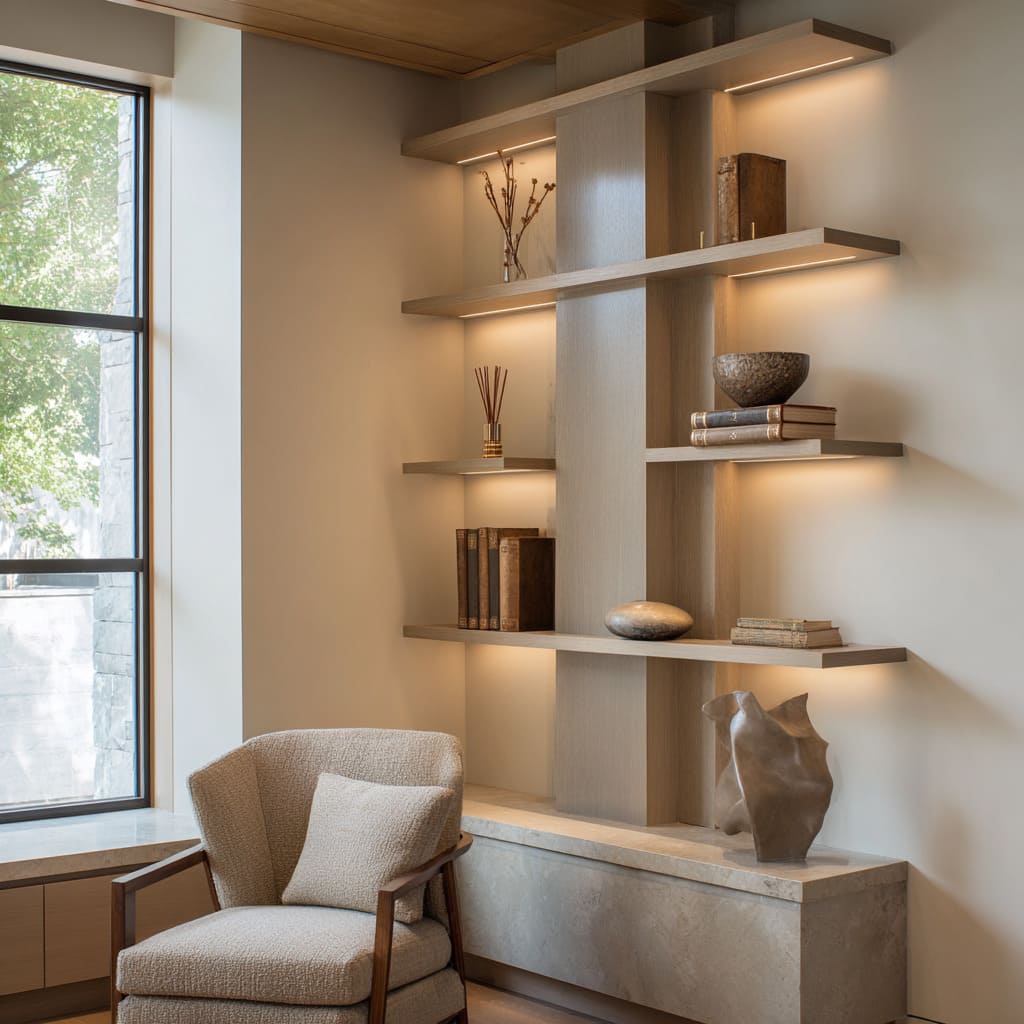
Good corner shelf design for a living room quietly follows a gravity logic. The heaviest pieces—carved stone, tall vessels, or stacked books—sit low and tuck closer to the inside angle.
Lighter gestures, like a slim framed print leaning casually, appear at higher levels.
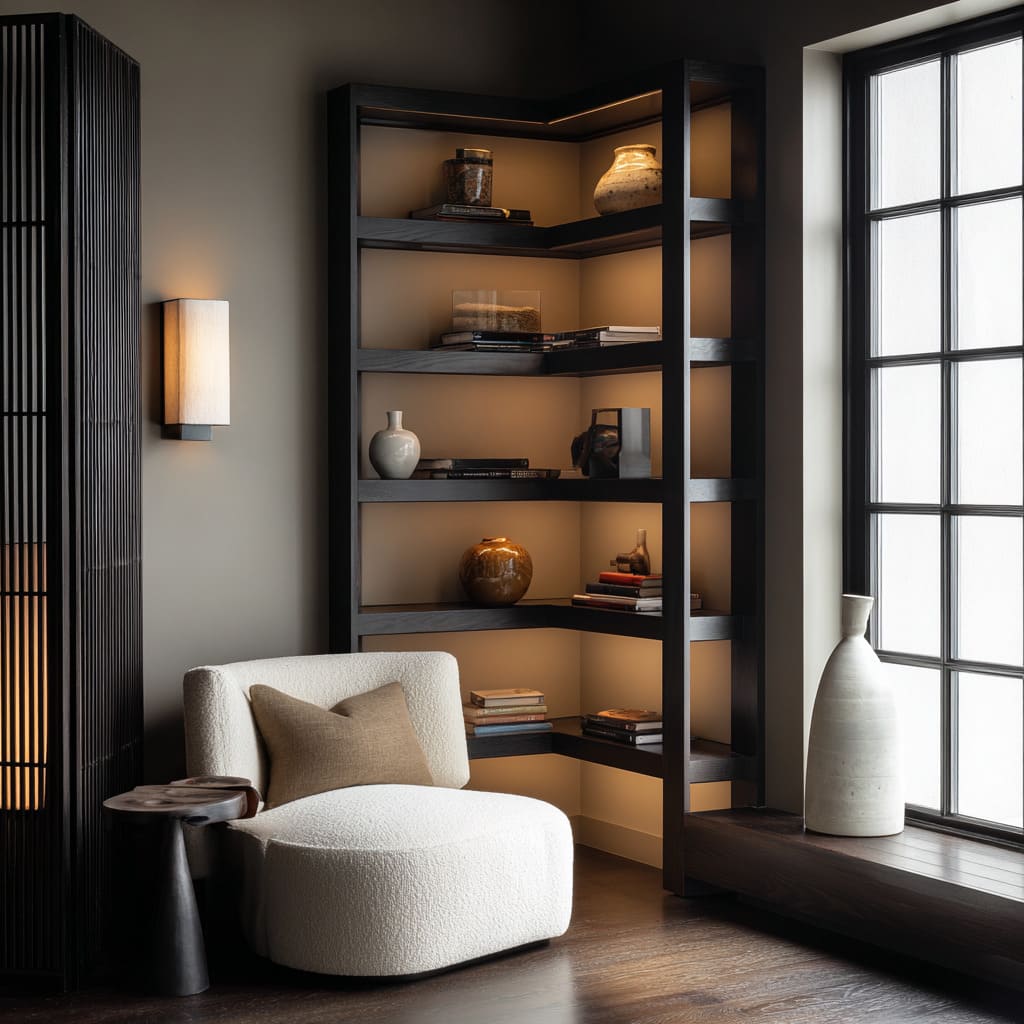
This approach prevents the corner from feeling top-heavy and lets the whole zone open upward toward daylight. Sometimes designers leave one shelf nearly bare, using one small bowl or thin vase as a visual pause.
That restraint keeps the eye moving comfortably across the corner, without tension or clutter.
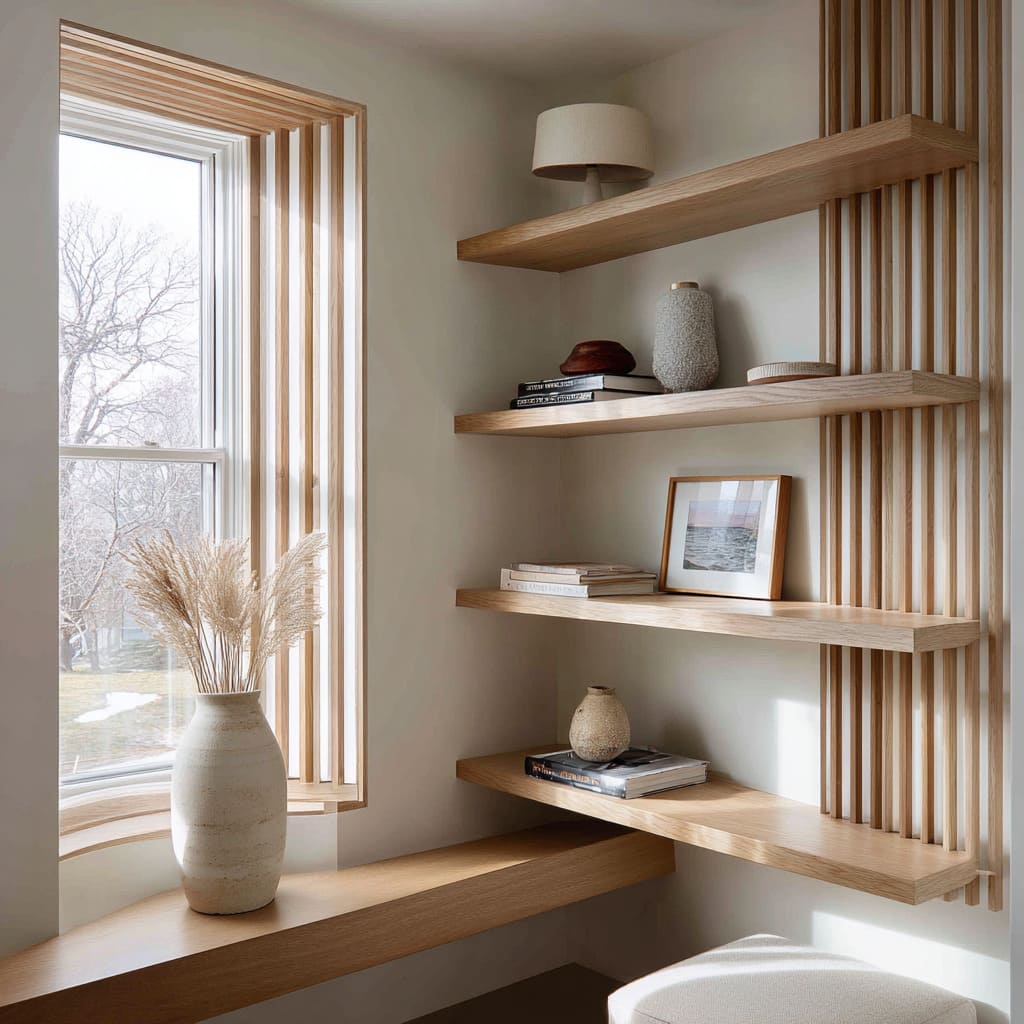
Shape language and gentle silhouettes
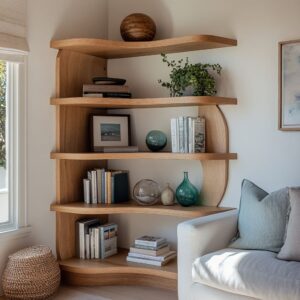
Rounded shapes soften a harsh angle: curved benches that nest into corners, eased shelf fronts that arc gently, pebble-like poufs, and cylindrical ceramics. These forms keep the space gentle and welcoming.
Angular silhouettes appear too—but sparingly: a squared edge on a stool, one crisp rectangular frame, or a stack of horizontal books to hold the rhythm. The mix helps living room corner shelf design feel grounded without becoming rigid.
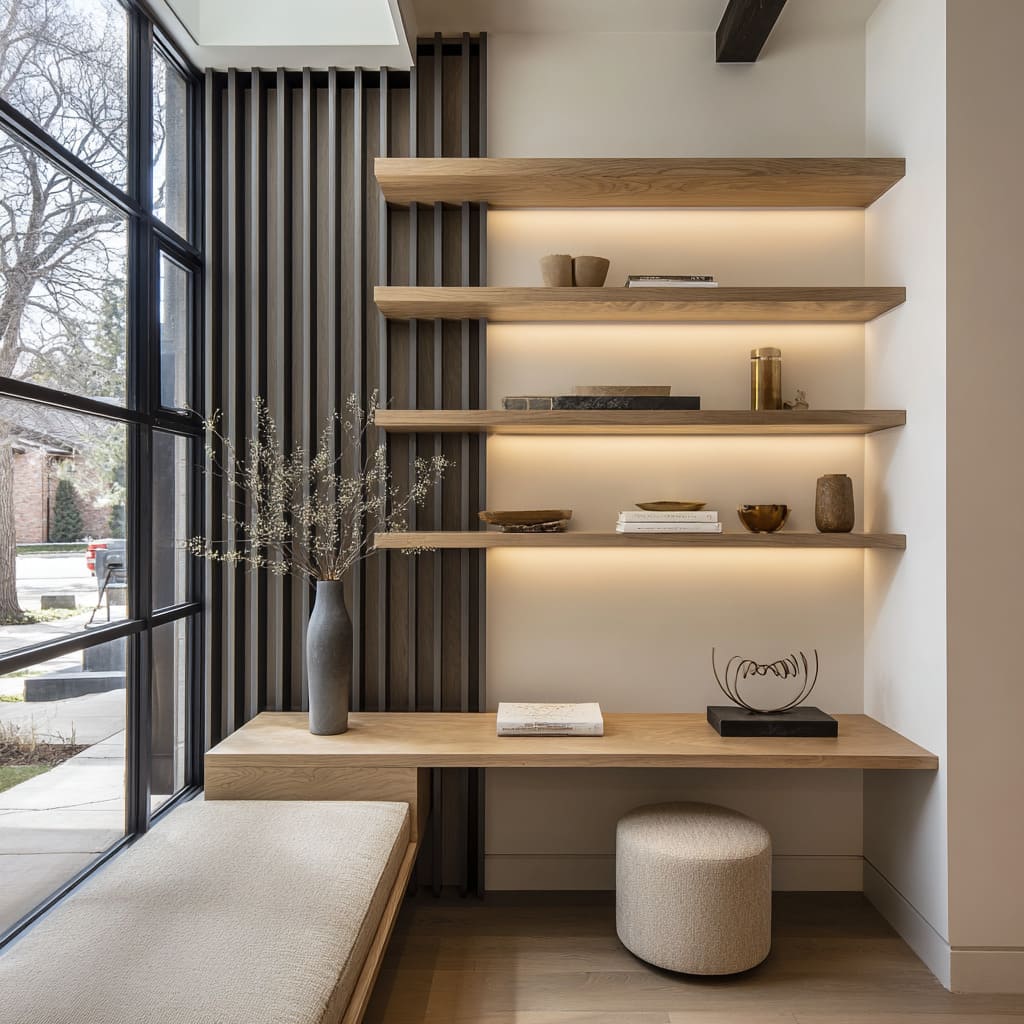
Examples of shape pairings seen across elevated interiors include:.
- one tall slim vessel paired with one wide low bowl
- a single square frame next to rounded pottery
- one delicate branch balancing a heavier, earthy sculpture
- rounded poufs paired with a linear bench
- slim metal lamps adding a tiny glimmer beside matte stone or plaster
The aim sits at the cross-section of calm, warmth, and balance.
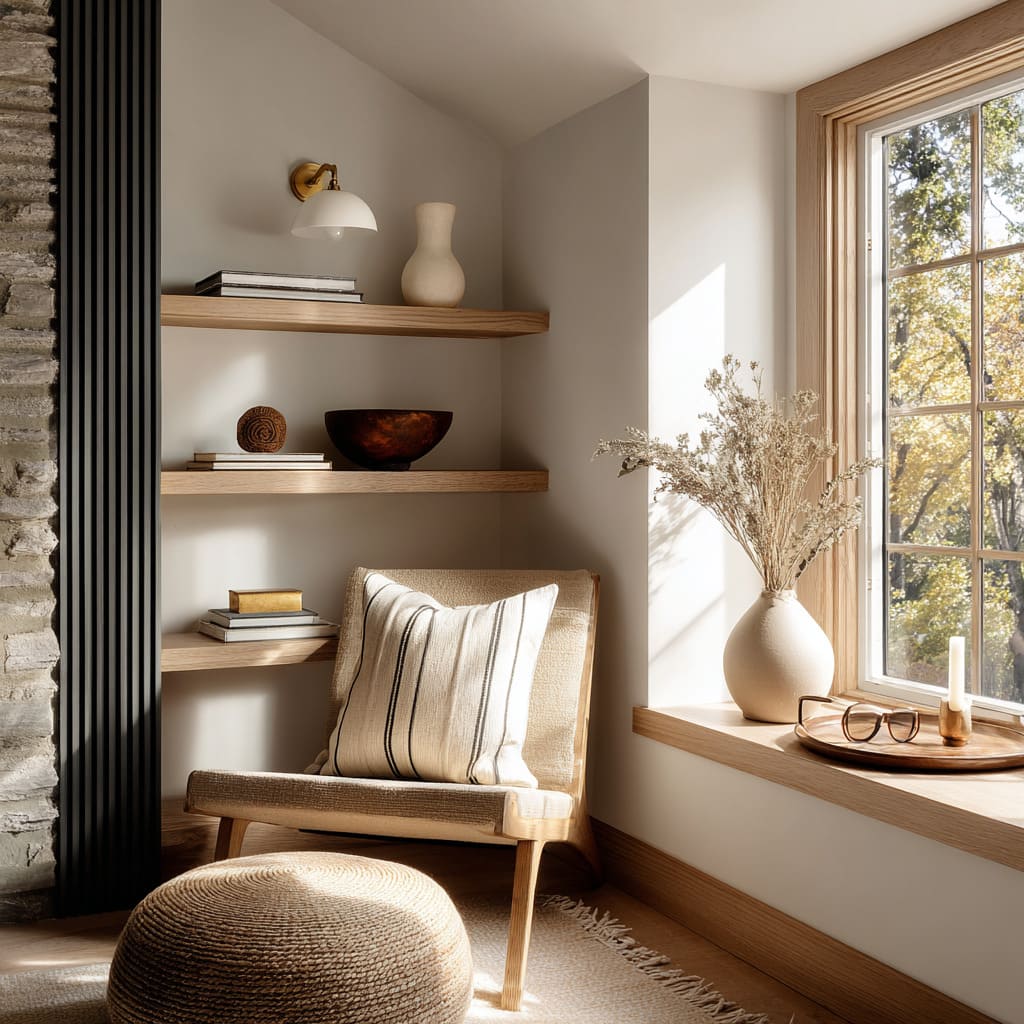
Natural rhythm and the power of repetition
The most refined corner shelf design ideas follow a kind of visual rhythm: soft-hard-soft, tall-low-tall, matte-textured-smooth. It can happen shelf by shelf or across the whole corner.
A trio of motifs often repeats—like stone, wood, and glass; or sand ceramic, linen book spines, and brass. That quiet echo builds harmony without falling into sameness.
Some spaces can even use one subtle theme—mini shells, tiny stacked bowls, slender candlesticks—appearing only twice so it feels intentional but not matching. The result is a corner that feels curated over time, not staged overnight.
When seating joins the corner story
Many modern interiors add a seat near the shelves. Low, armless lounge chairs in creamy textures, boucle cubes, or woven sling chairs bring ease without blocking the visual line of the shelves.
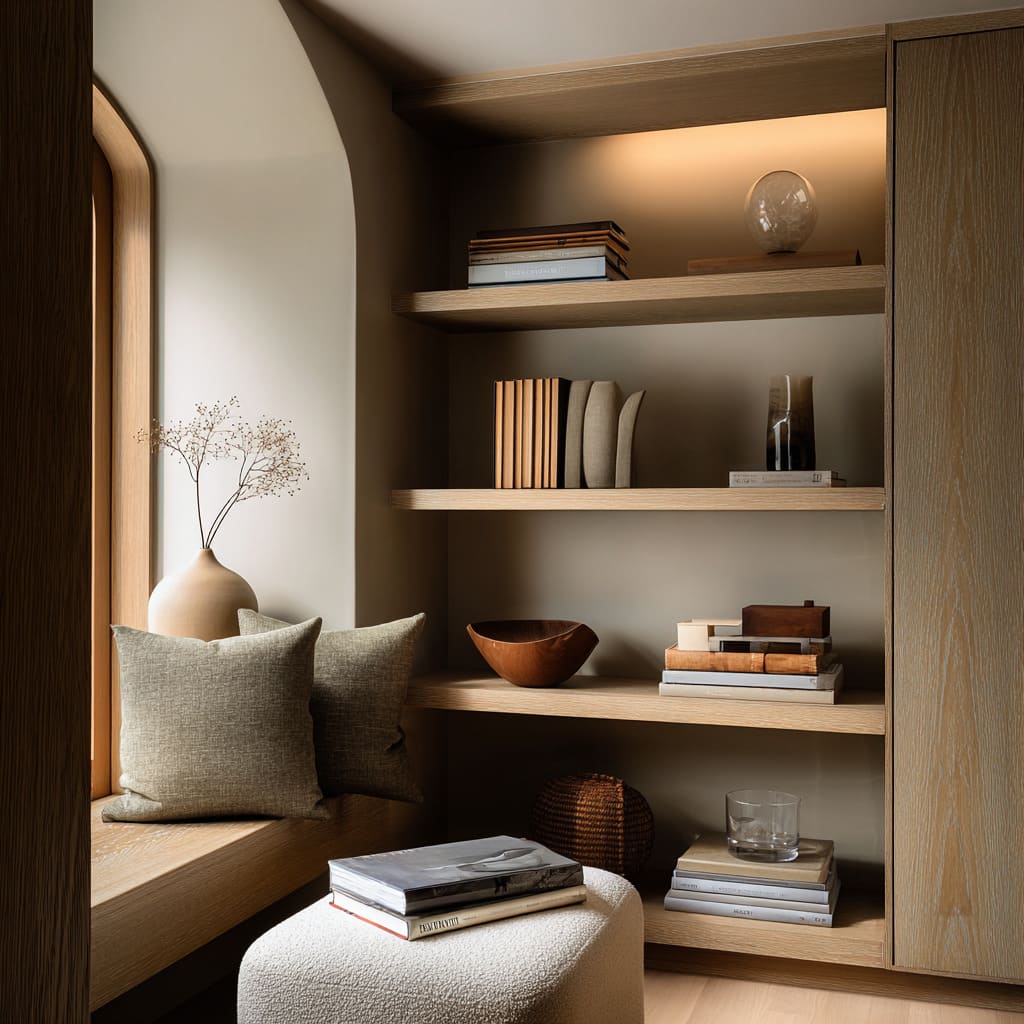
A round pouf or braided cushion can sit beneath the lowest span, softening that spot and making the corner feel open to pause and use.
When the shelf turns into a bench, pillows and a throw drape naturally, echoing the tones of the ceramics and books above. This blend of display and comfort makes living room corner shelf ideas feel alive—like a place to read, rest, or hold quiet moments, not a show unit.
Color in small, warm notes
With corner shelf decorations, color appears sparingly; the palette stays neutral so small accents can shine. A single cognac leather box, a warm terracotta vessel, a pale coral fragment, or one honeyed glass jar becomes a focal note.
These accents rarely appear twice—they land once so the eye catches them naturally and moves on.
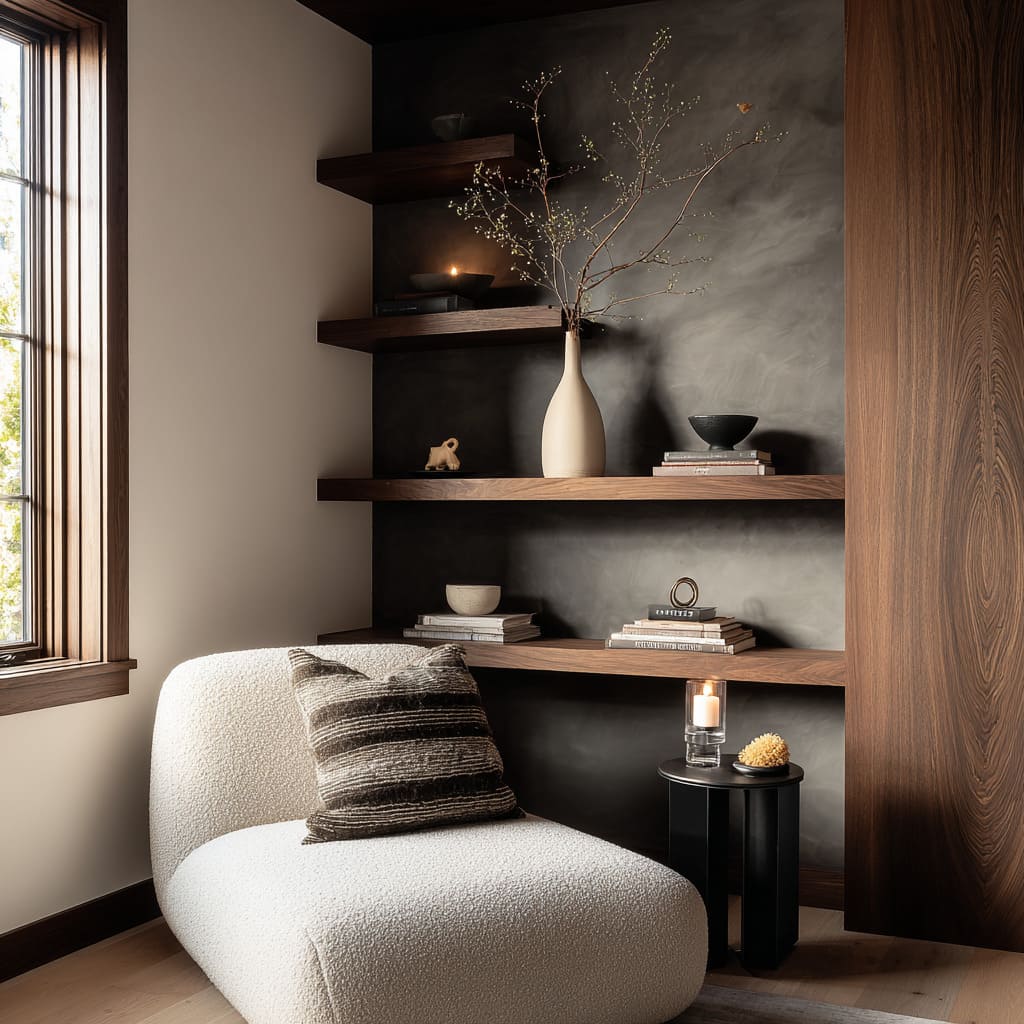
Earth tones hold things steady: sand, soft mushroom, warm stone, milky cream, gentle taupe, and deep charcoal. Black, when used, is crisp and minimal, often in a frame or slim metal piece.
The palette stays breathable so natural wood grain and shadow movement stay at the center.
Different moods, same quiet strength
One striking part of studying elevated corner shelf unit decorating ideas is seeing how many moods appear through subtle shifts:
- Sun-washed and relaxed, with pale shelves, shells, and rattan
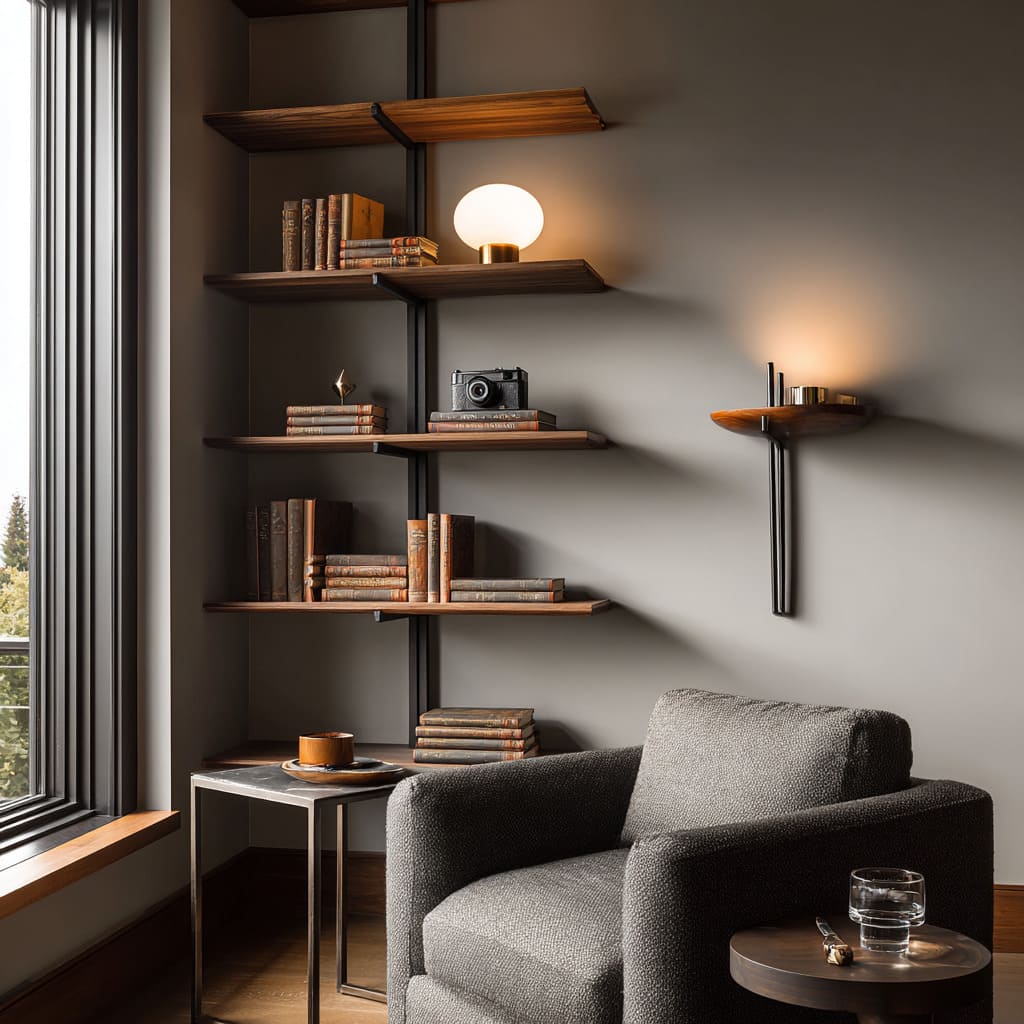
- Structured and serene, with charcoal plaster, walnut, and one brass light
- Nature-leaning, with travertine wrap, soft oak, and leafy stems
- City-modern, with black window lines, slim metal spines, and curated art
- Coastal easy, with sandy palettes, soft linen, and coral fragments
- Calm Nordic spirit, with bleached wood, paper-spine books, and dried branches
Each feels lived-in, quiet, and steady—not bright or showy.
Layering texture without noise
Texture rises above color in modern corner shelf decor ideas. Linen spines soften timber; clay jars meet ribbed glass; bowl edges contrast with smooth pebble stones.
Small changes in texture add character without pulling attention.
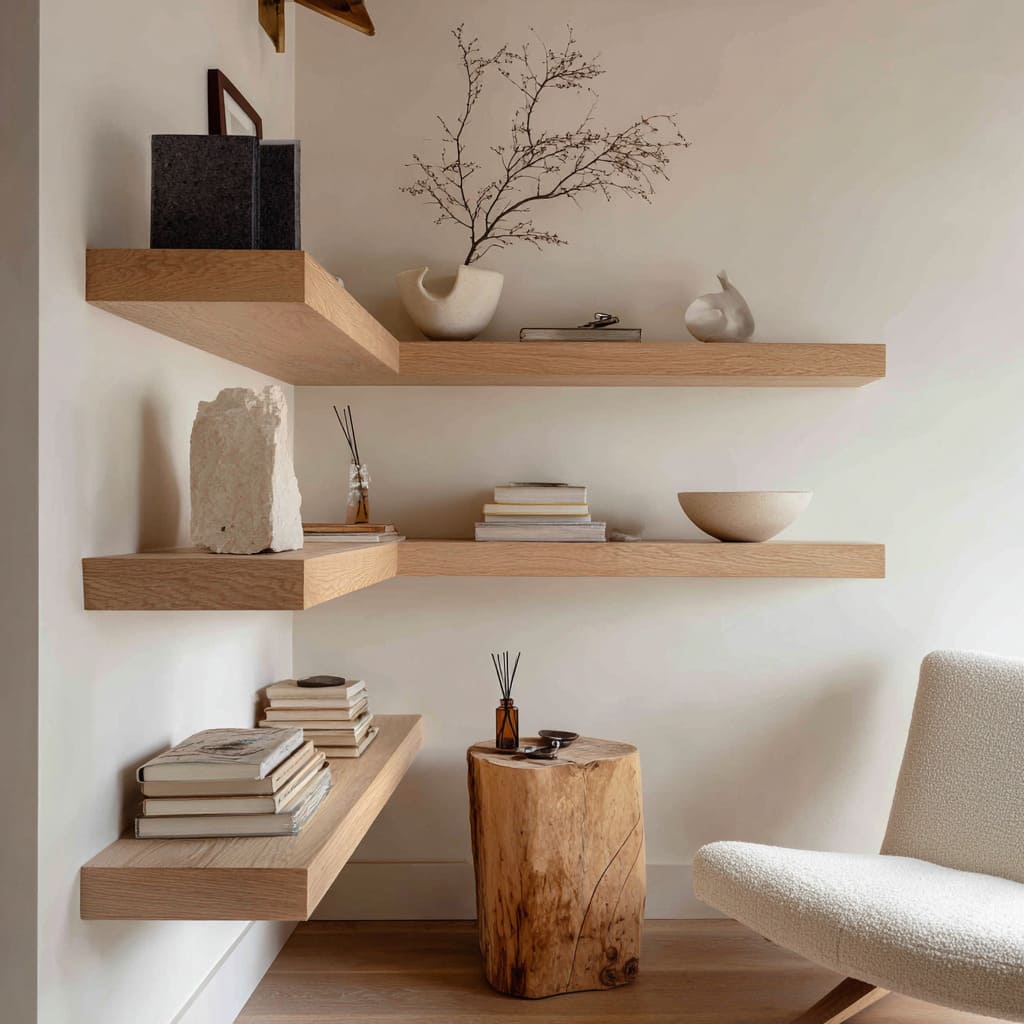
Upholstery stays soft and velvety or nubby and warm. Throws carry thin stripe lines, echoing slatted panels or window mullions.
Even the floor often joins the conversation—fringed rugs or boucle poufs near shelves add warmth without stealing calm.
Clear structure, gentle soul
A modern corner shelf arrangement thrives when the structure feels simple and the content feels personal. Thin metal acts almost like jewelry; warm grain reads strong but calm; small symbolic items—photos, incense bowls, sand-toned ceramics—carry memory and comfort.
This is where the depth of corner shelf design for a living room comes through: the corner feels steady, quiet, and ready to evolve with seasons and mood shifts.
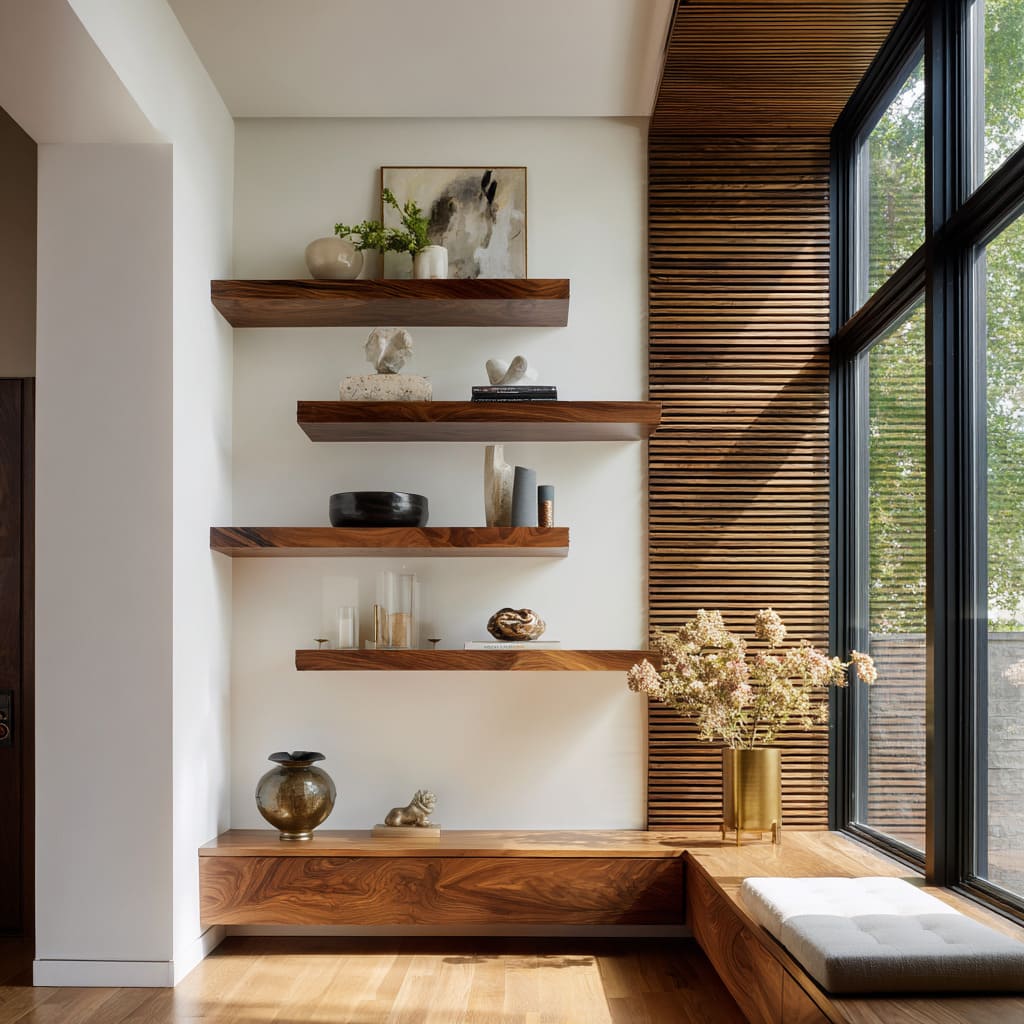
To see the underlying approach in list form, the mood often combines:.
- clean shelf fronts
- one steady horizontal
- vertical rib or slat detail
- sheltered negative space
- gentle warm accent
- matte textures
- one plant or branch as life gesture
- daylight as the softest layer
It feels effortless, even though the harmony comes from sensitivity to scale, tone, and placement.
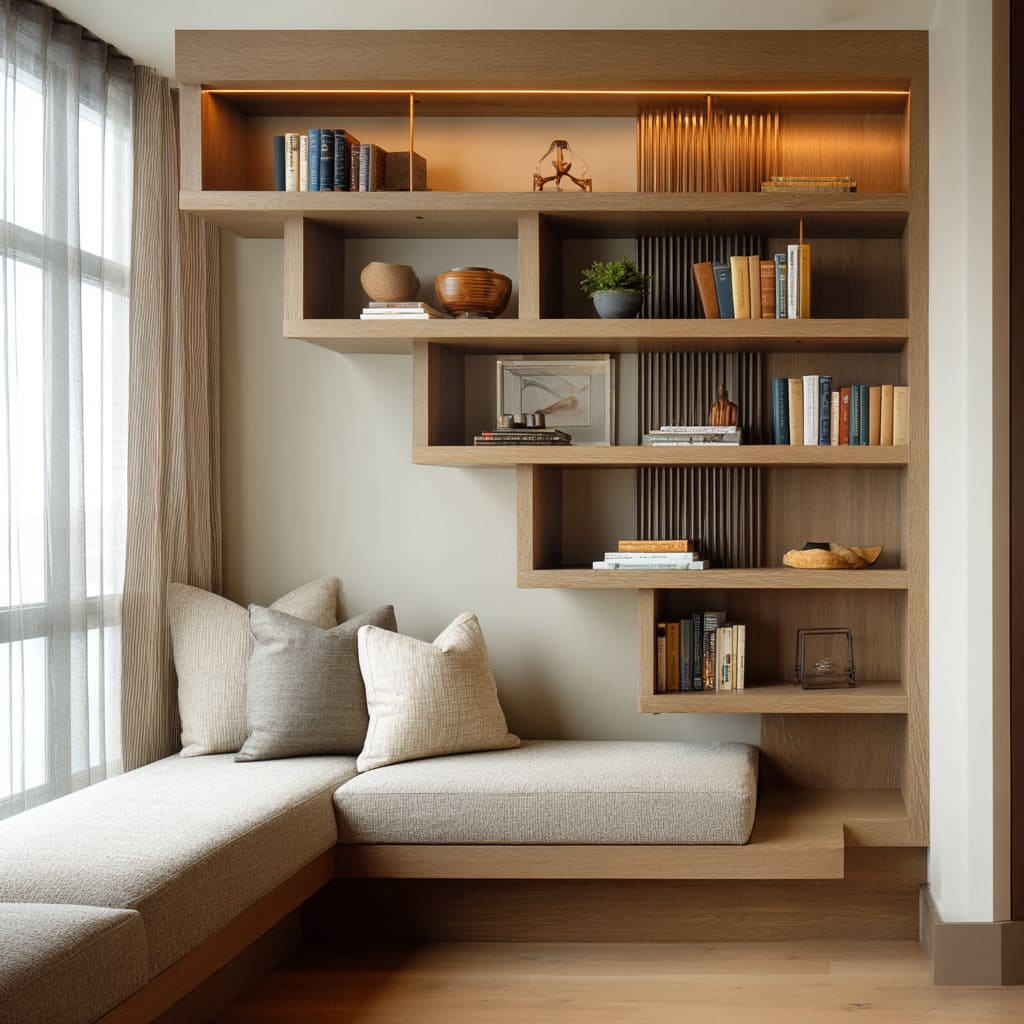
A living breathing moment, not a filler spot
The most inspiring corner floating shelf ideas turn a once-ignored angle into a soft retreat. Whether paired with a lounge chair, window bench, or simply used as a sculptural point, the entire setup feels like a breath in the room—a quiet place where objects rest and light lingers.
Living room corner shelf design today is less about showing collections and more about shaping a mood through subtle layers, simple lines, and the warmth of natural materials.
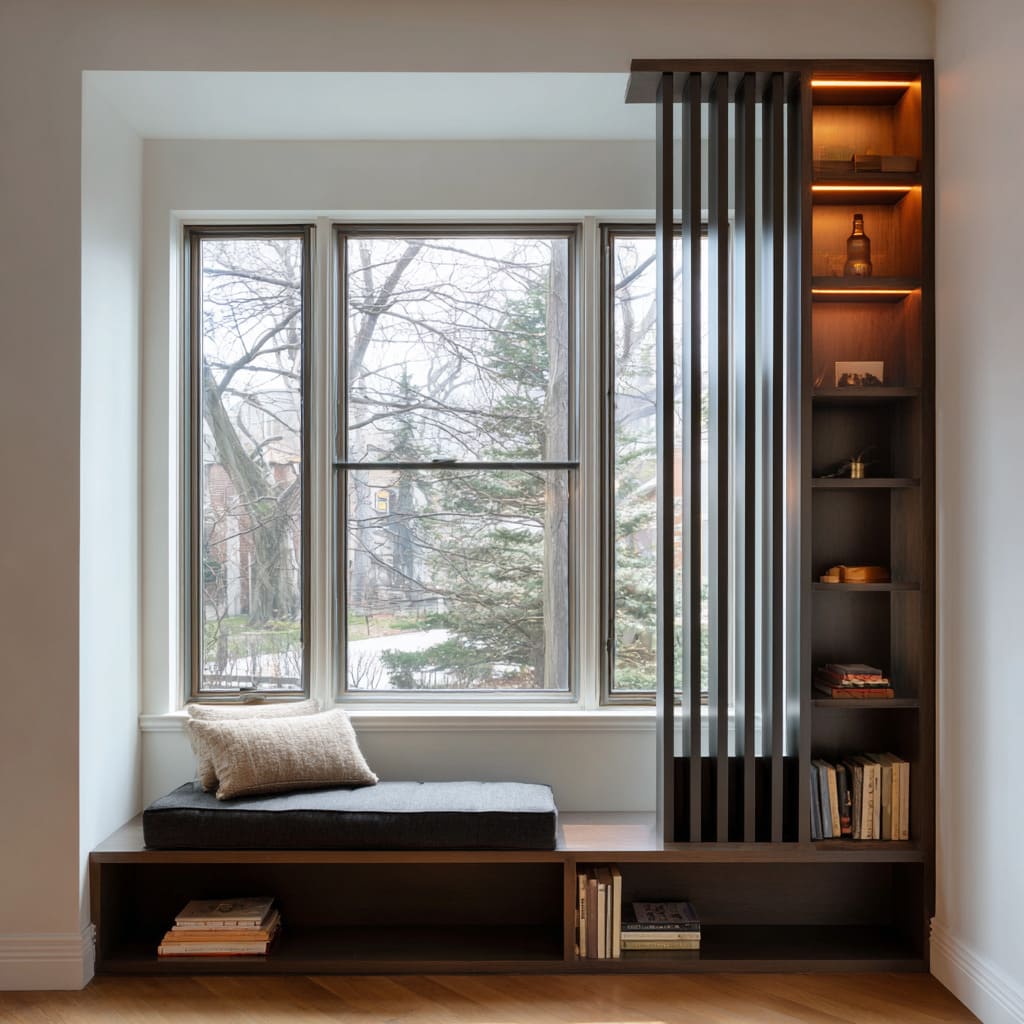
By treating the corner like a small stage for light, form, and tone, designers create spaces that feel soothing, grounded, and visually clear. Each element plays a role in the whole scene, from a single ceramic bowl to the direction of one soft daylight beam sliding across a ribbed panel.
A corner becomes not a leftover zone, but a calm pause in the home—steady, warm, and quietly full of life.