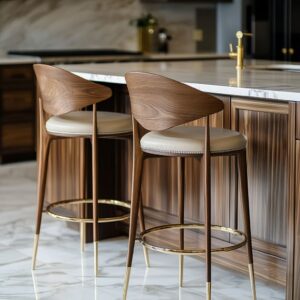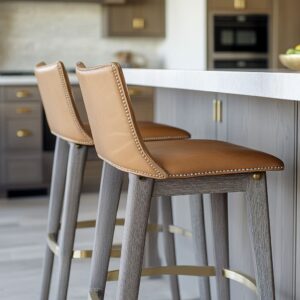
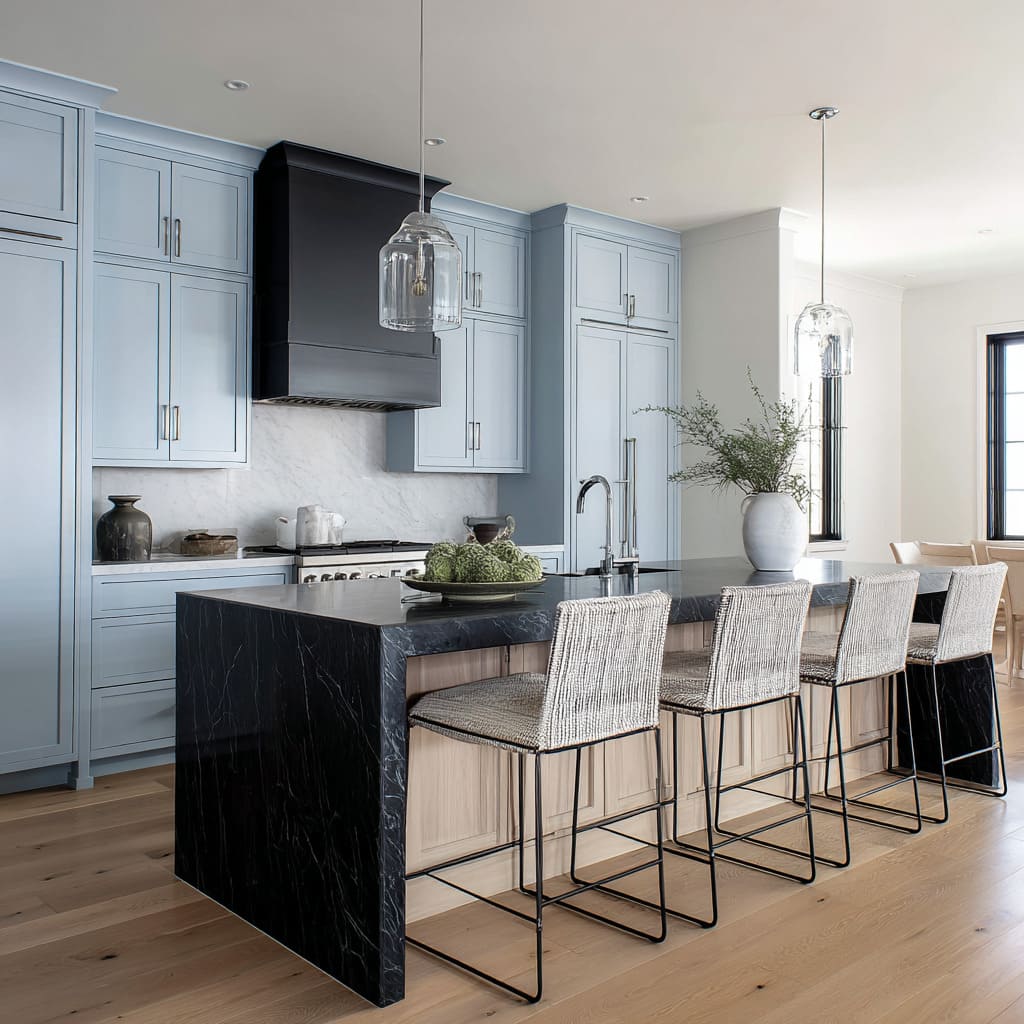
In modern kitchen designs, the island and the seating line often act like two architectural sentences written in one paragraph. The stone slab speaks with weight and clarity, while the stools provide rhythm, texture, and proportion.
The best bar stool ideas for kitchen island design depend on how those two sentences interact visually—one offering mass, the other line.
Designers often work with height hierarchy, keeping stool backs slightly below the counter to protect the slab horizon. This quiet rule maintains the sense of flow, ensuring the counter edge reads as one continuous line rather than being interrupted by rising silhouettes.
The eye perceives balance when every stool aligns with the island’s geometry—front rails parallel to toe kicks, stretcher lines syncing with reveals, and even gaps forming steady beats across the floor.
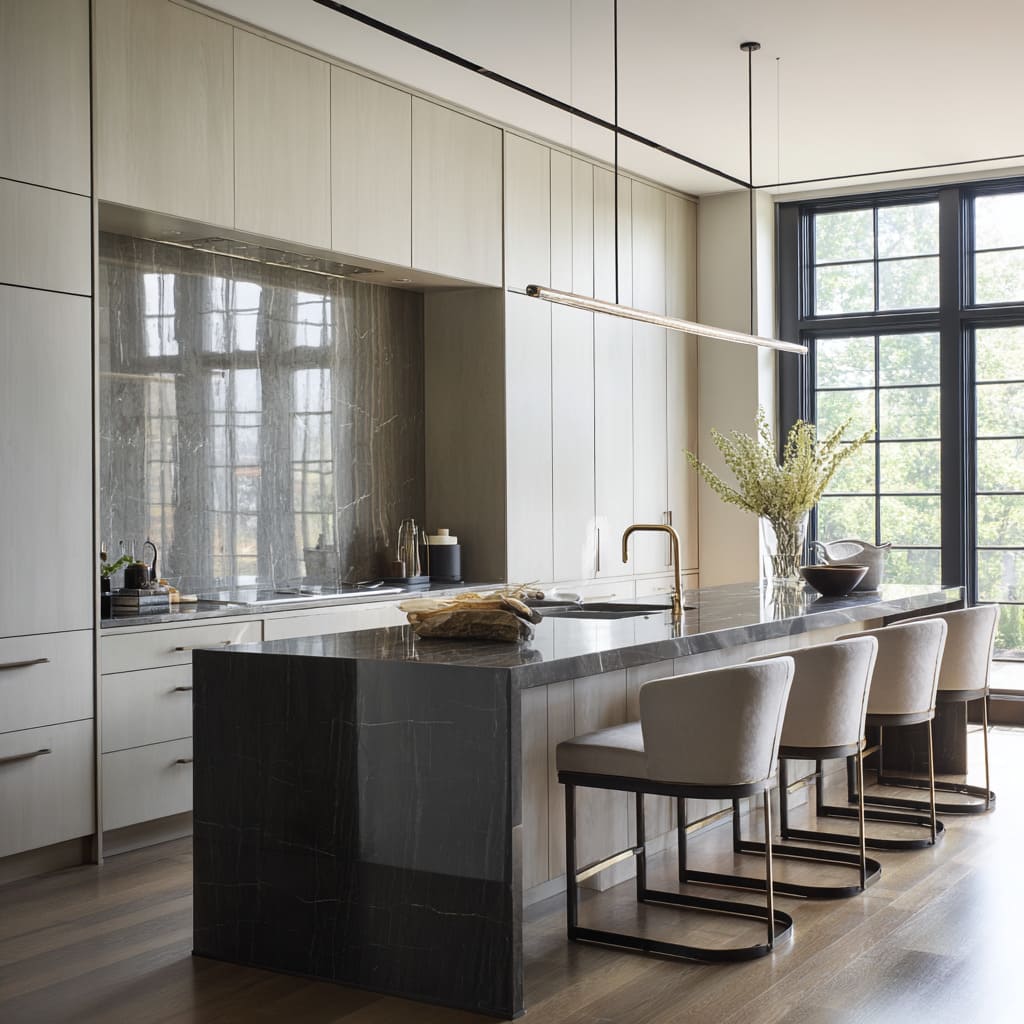
Material Pairing: Where Warmth Meets Precision
Modern interiors rely on three key materials to shape atmosphere—stone, wood, and metal. The art lies in how stools negotiate between them.
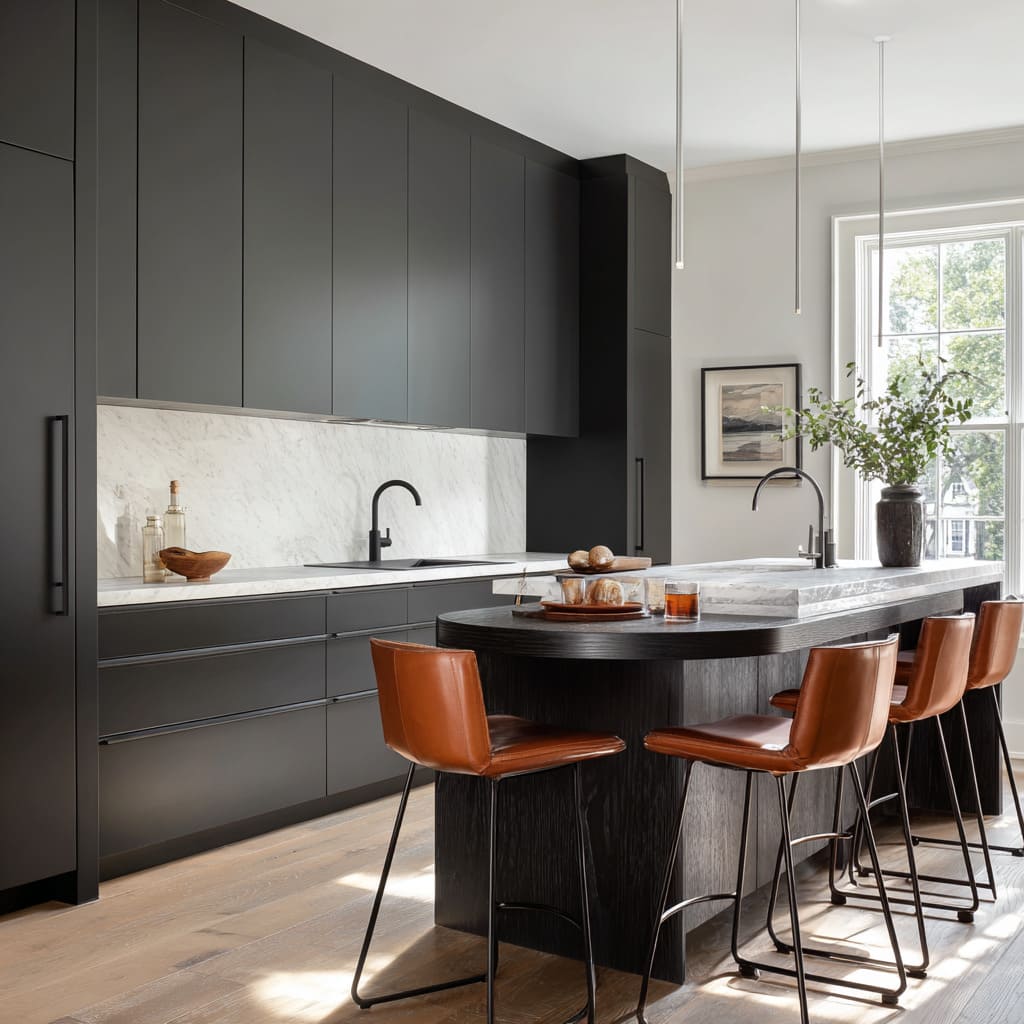
Leather upholstery bridges warmth and coolness: tan or caramel shades ease the contrast between dark cabinetry and pale counters, while gray tones soften black islands without flattening them. Matte finishes eliminate glare from pendant lighting and polished surfaces.
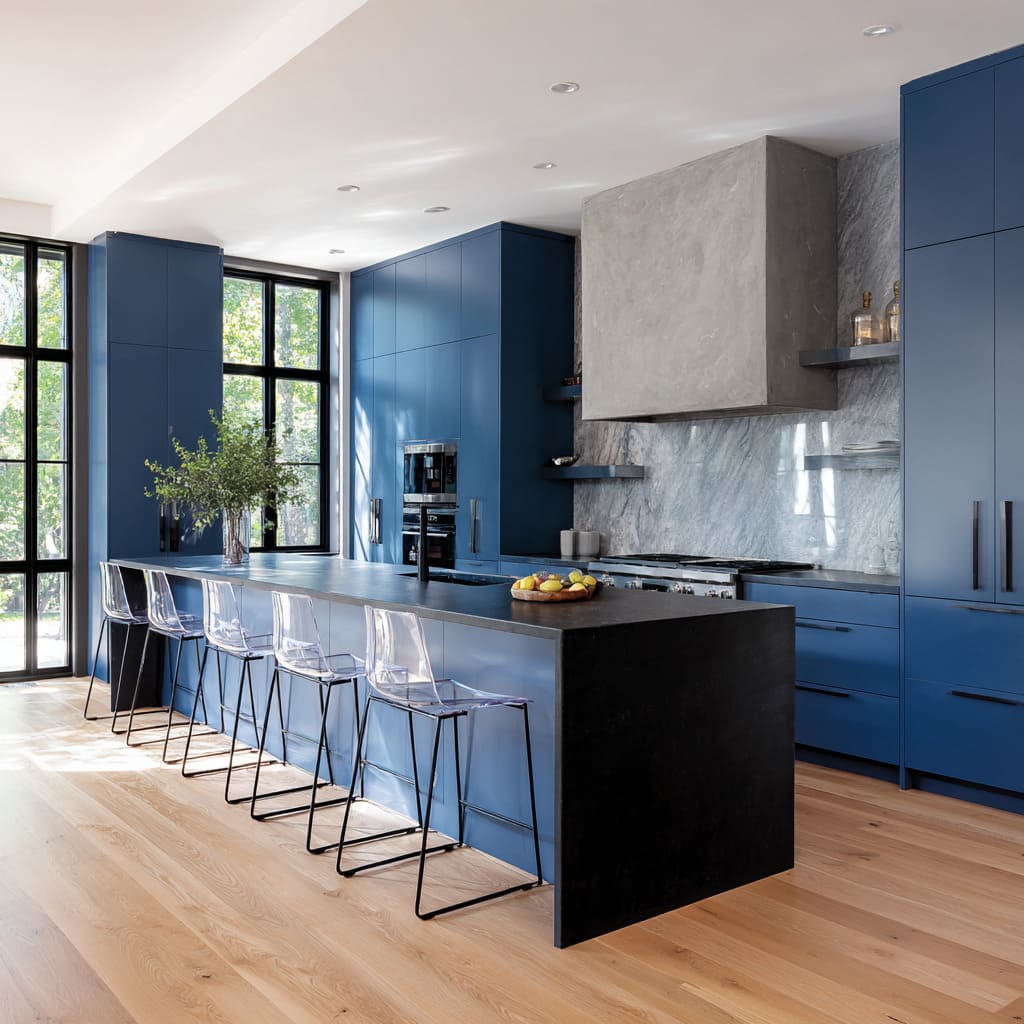
The tone-on-tone pairing of kitchen island bar stool ideas often plays in this range—walnut bases, black steel frames, and smooth leather tops. Each material expresses a role: wood gives structure, metal defines linework, and upholstery carries temperature.
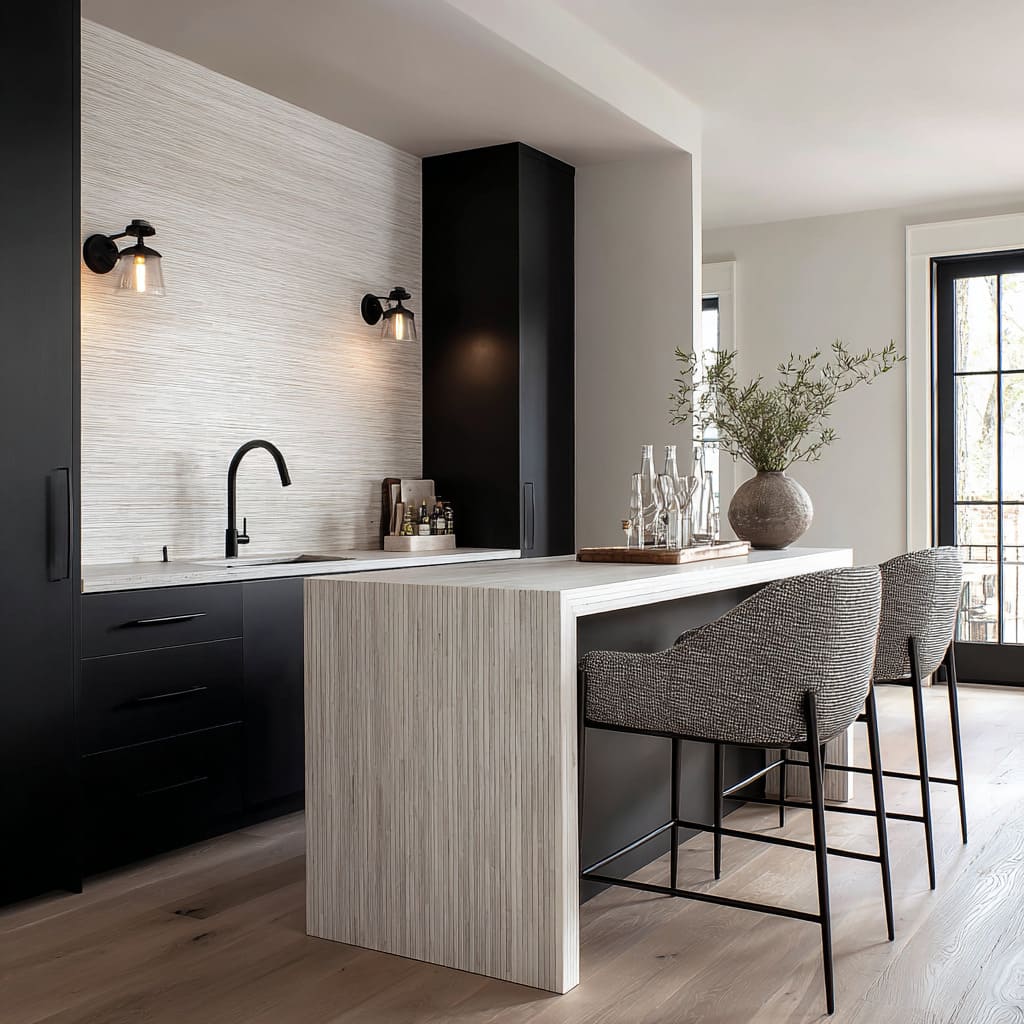
Material Mood Board:
- Stone + Leather: Adds grounding softness to a cold base.
- Wood + Fabric: Balances tactile and natural comfort.
- Metal + Acrylic: Keeps light moving through small kitchens with reflective control.
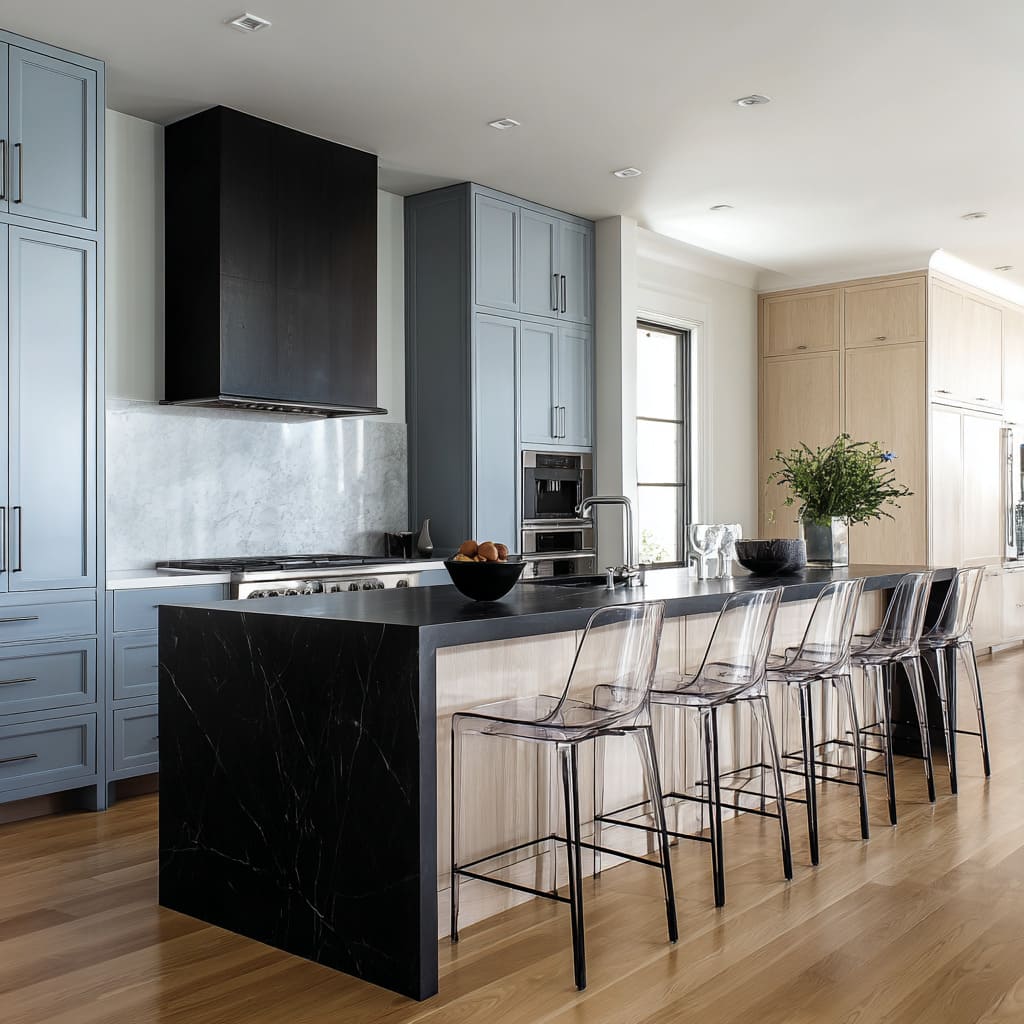
The Rhythm of Spacing and Alignment
Spacing is visual discipline. Perfectly measured distances between each stool turn the kitchen into a composition rather than a lineup.
The best kitchen island stool ideas rely on rhythm—each stool front edge parallel to the island’s plinth, back heights forming an invisible horizontal band.
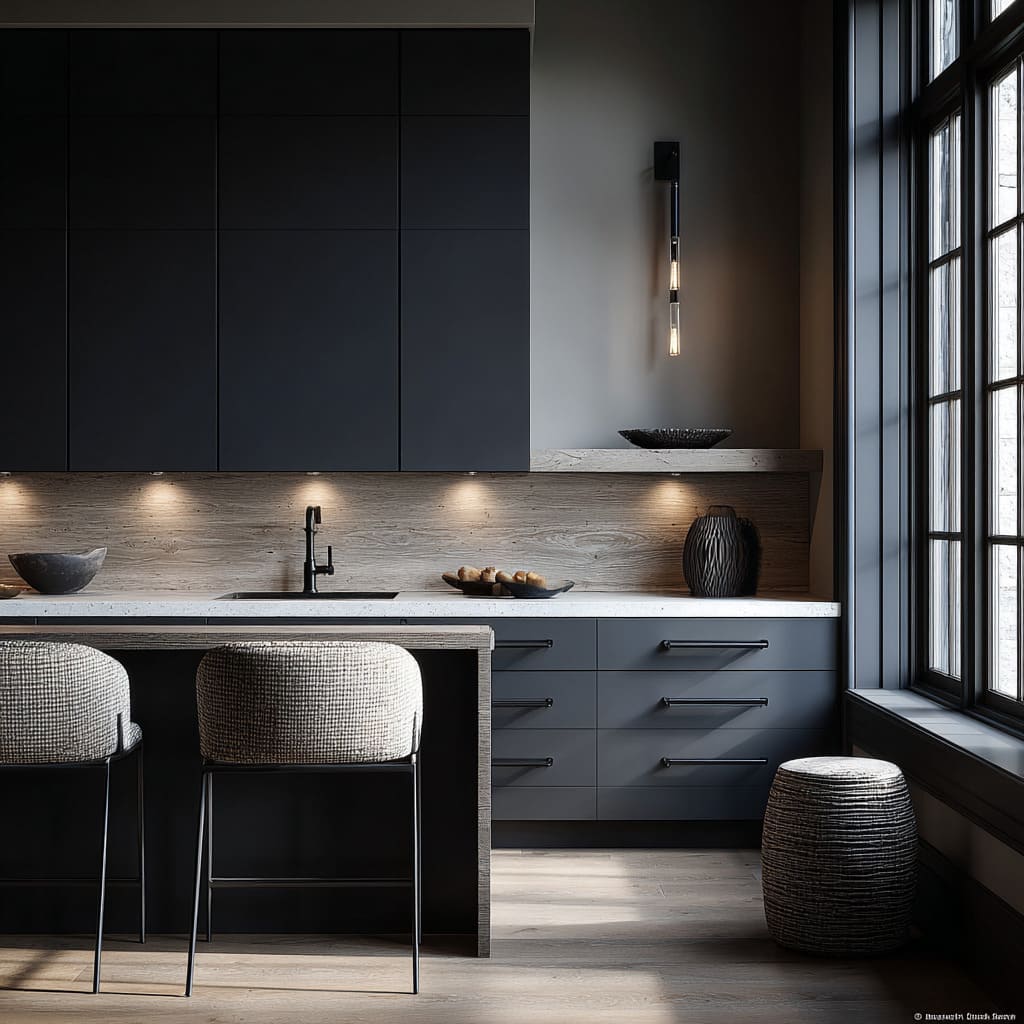
They often leave a deliberate hand-width gap from the waterfall edge to let stone corners breathe, signaling intention rather than accident. The repetition of form—five equal stools, matching footrest bars, identical shadows—translates geometry into calm.
Even in mixed-material spaces, order at the base creates serenity above.
Texture and Pattern as Quiet Energy
Surfaces define emotion as much as color. Smooth slabs demand contrast, and that contrast usually comes through fabric or weave.
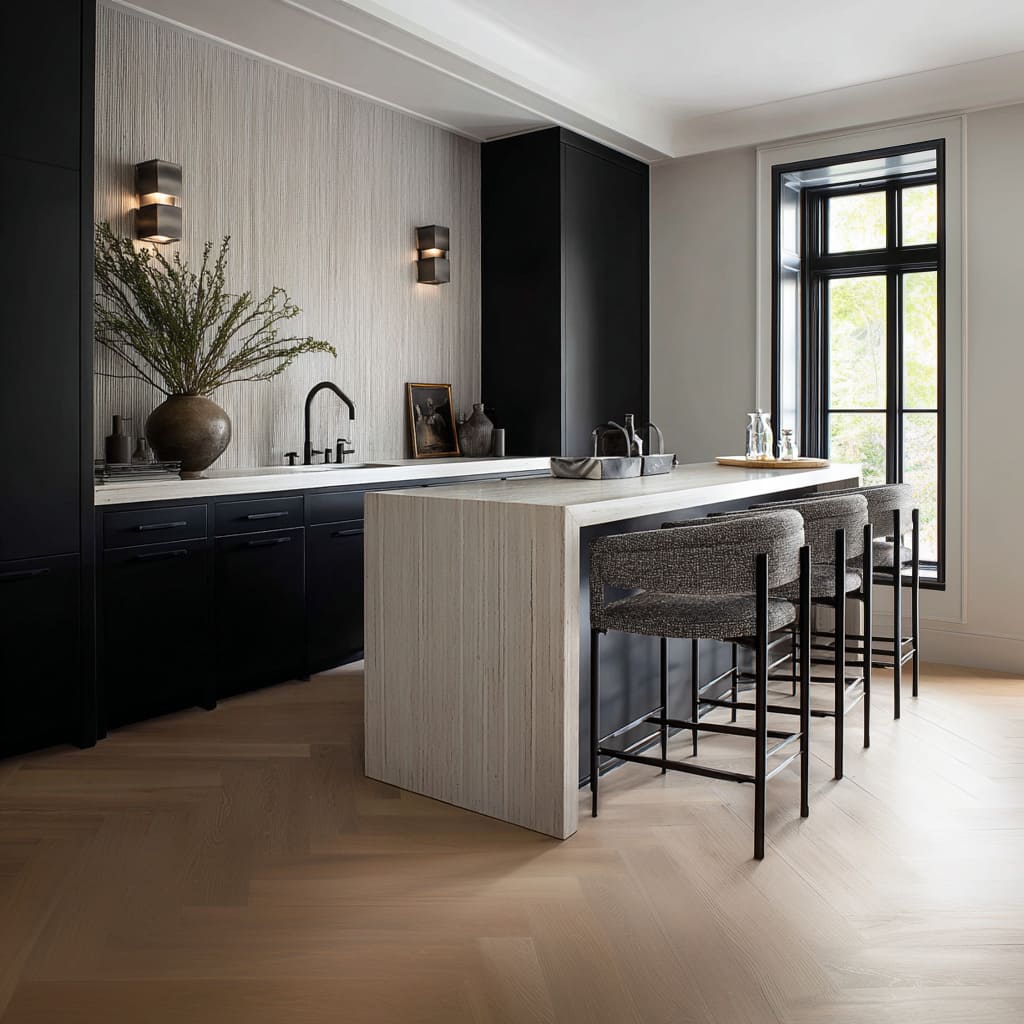
A tiny bouclé, micro-check, or peppered tweed adds soft motion to otherwise flat spaces. These textures collect light differently through the day, turning task lighting into a decorative tool.
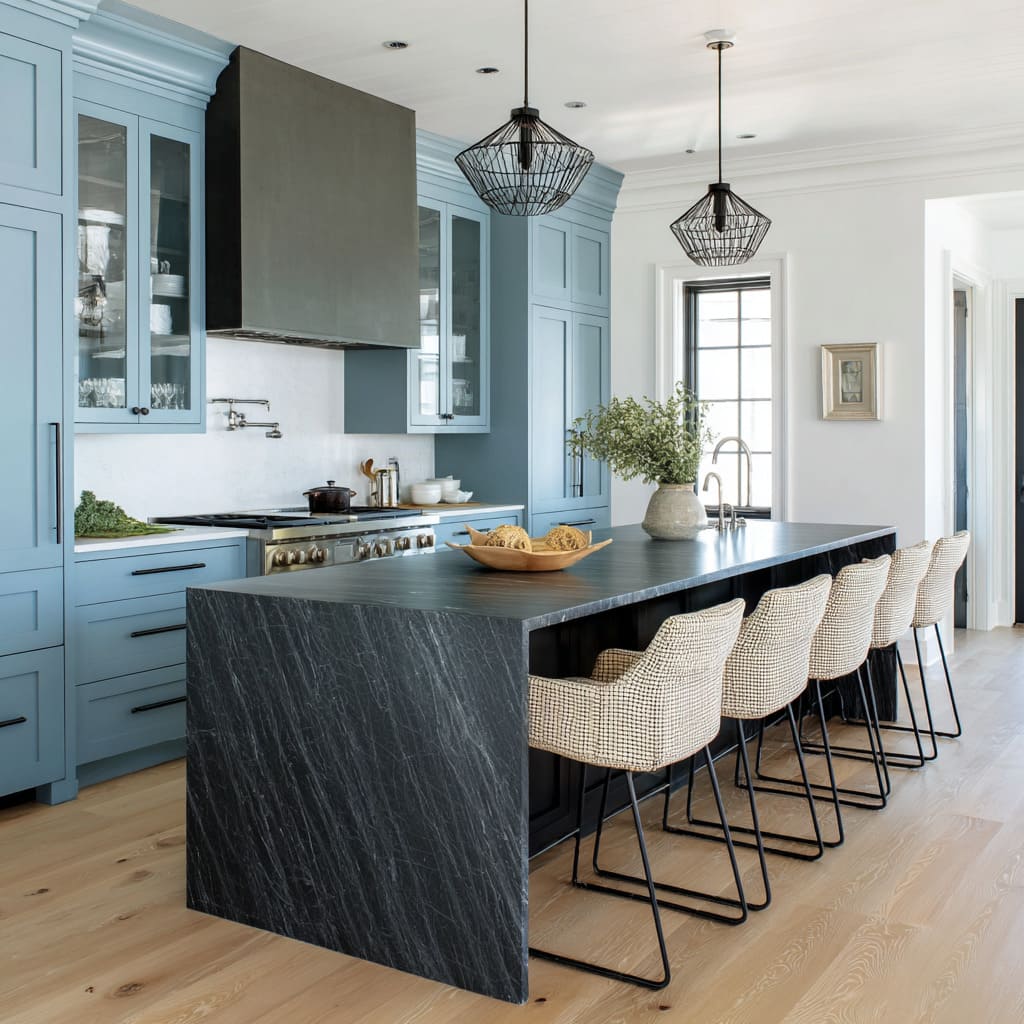
Within island stool ideas, fabric texture often decides the tone of the room more than hue. In darker kitchen designs, a mid-gray weave prevents the space from feeling lifeless; in bright schemes, creamy woven seats break uniformity with gentle shadow.
Small-scale textures give energy without noise—crucial when cabinetry and counters remain seamless.
Transparency and the Control of Visibility
Clear acrylic or polycarbonate stools are not about minimalism but visibility management. They allow the island’s front—whether painted, paneled, or veneered—to remain visible, turning the bar face into a decorative canvas.
In these island bar stool ideas, transparency acts like a lens: reflections move subtly as one walks, animating the space.
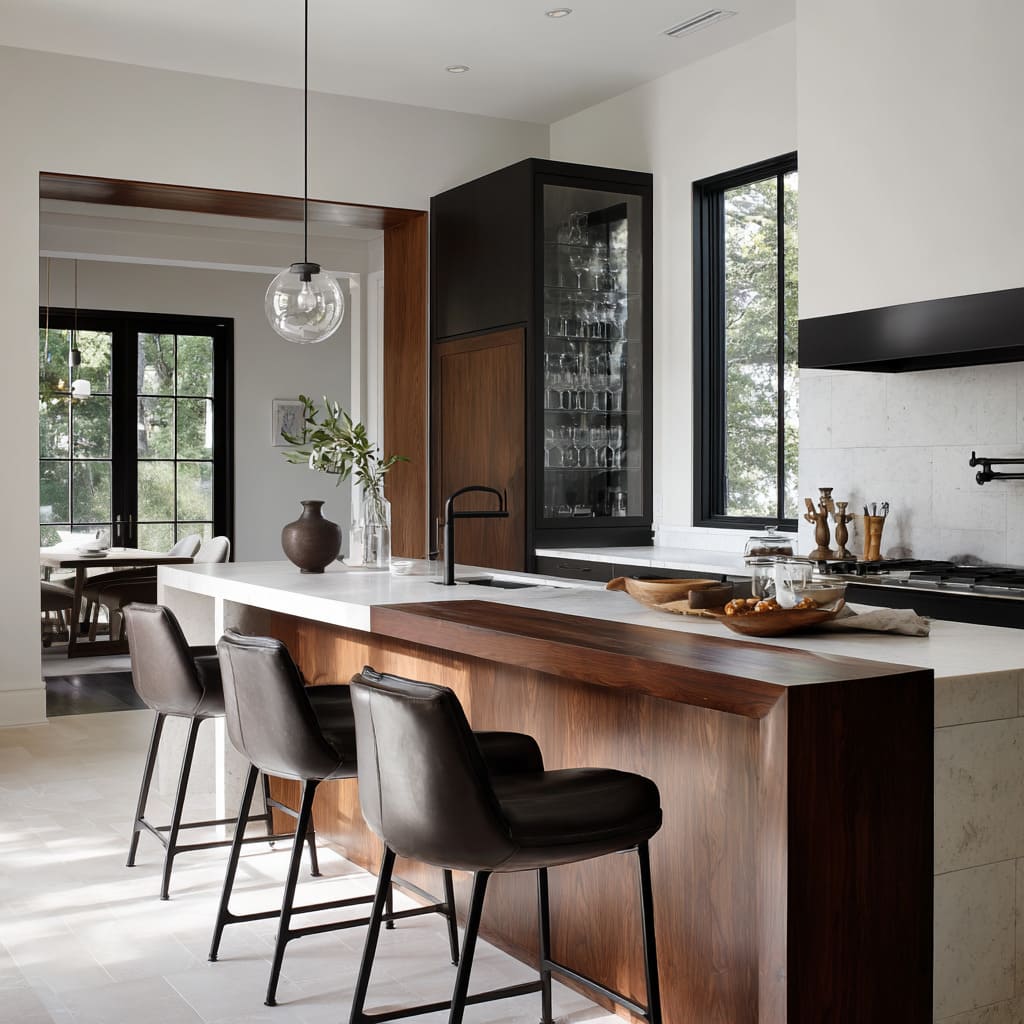
The acrylic’s thickness catches faint shadows on wood flooring, adding dimension without adding mass. With matte black sled legs to ground the form, such stools feel airy yet structured.
They work especially well where color or stone patterns on the island deserve to stay uninterrupted, using absence as design.
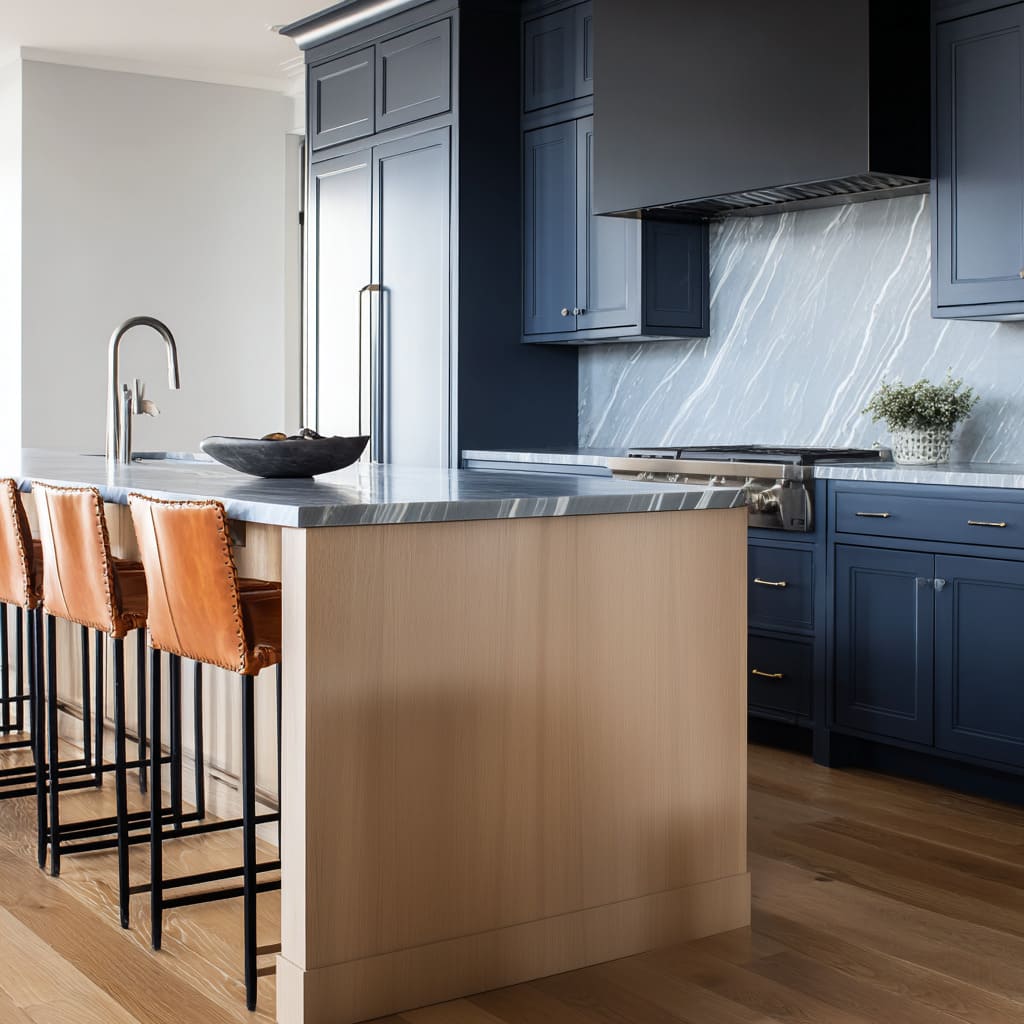
Geometry and the Dialogue of Forms
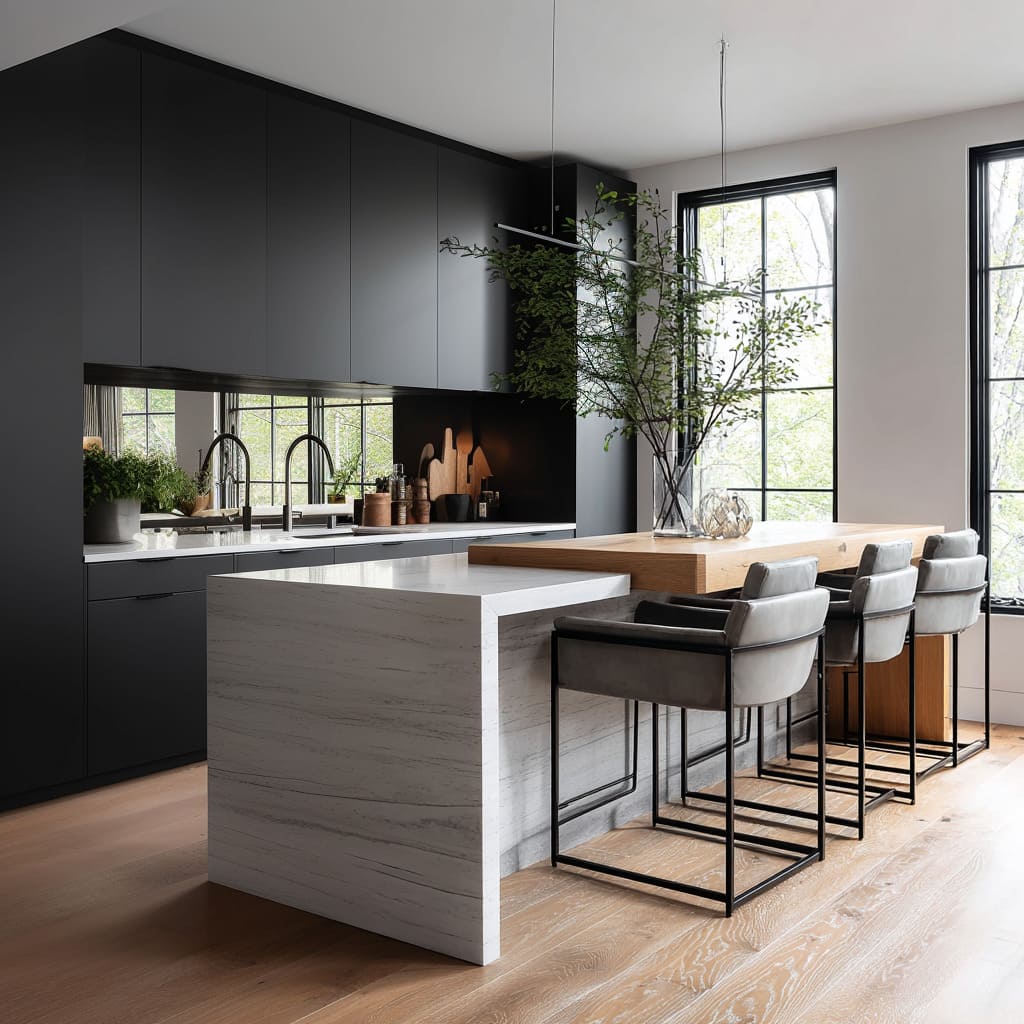
The geometry of stools often mirrors or counterbalances the island’s personality. A squared mitered waterfall slab asks for rectilinear stools—sharp seats, straight backs, and clean fronts.
Conversely, curved island corners invite rounded bucket seats or soft-edged cushions. The visual play between curve and line creates tempo within the kitchen’s architecture.
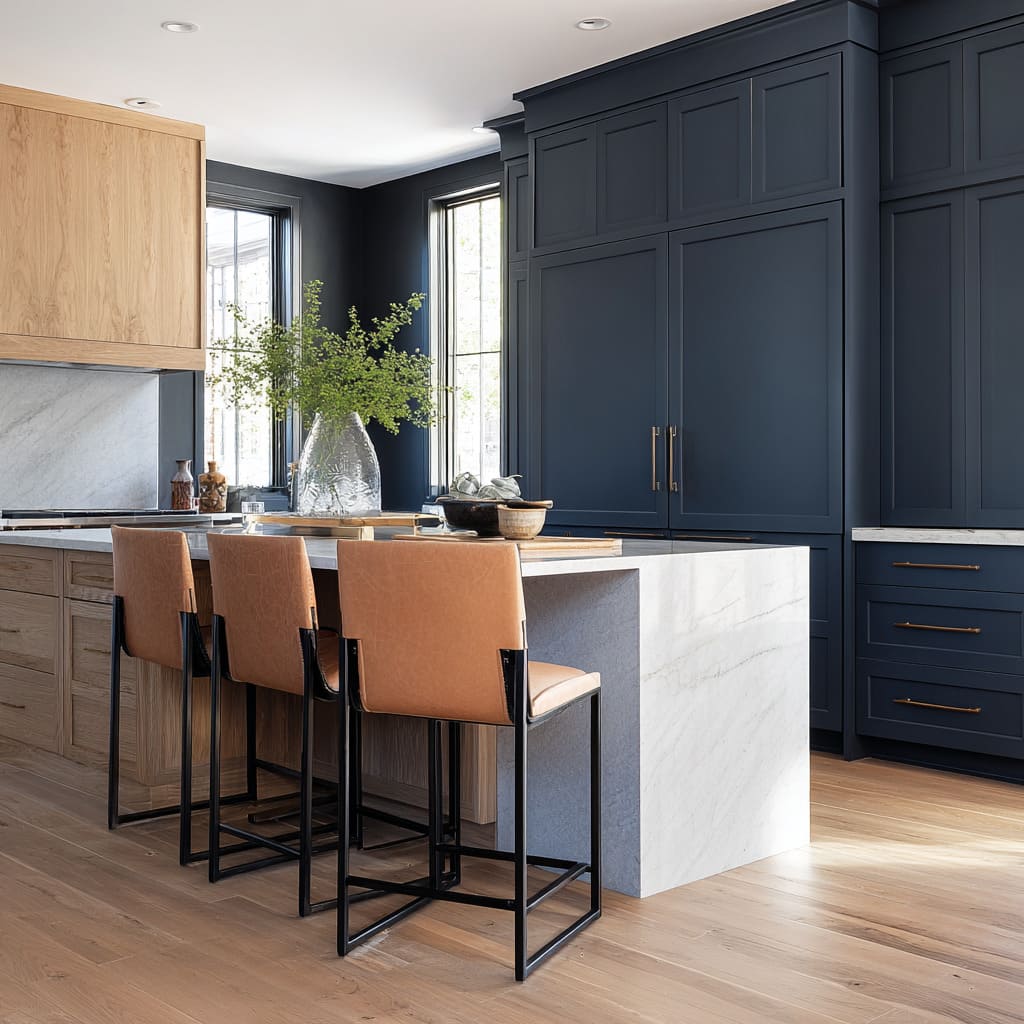
In many stool ideas for kitchen island designs, tension between round and straight makes the space feel dynamic but measured. Rounded seats on straight frames, for instance, keep the ensemble approachable without drifting into retro sentiment.
Geometry is emotional shorthand: edges define confidence, curves suggest comfort.
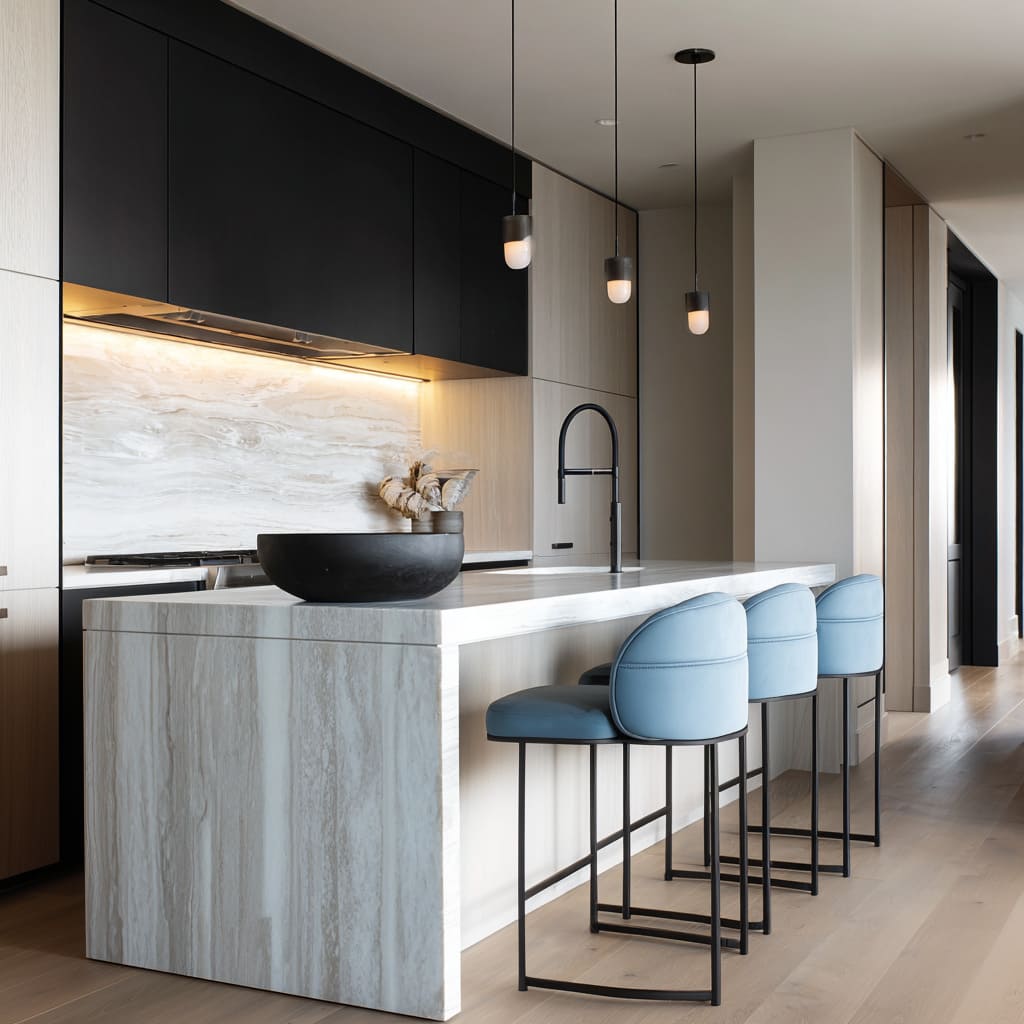
Value and Temperature: The Color Ladder
Beyond contrast, color operates by value and warmth. Mid-tone seating serves as a visual bridge—neither as dark as cabinetry nor as pale as countertops.
In layered kitchens, this middle value keeps transitions smooth. A gray boucle may sit between charcoal base units and white stone tops; a warm tan leather may link oak floors to blue cabinetry.
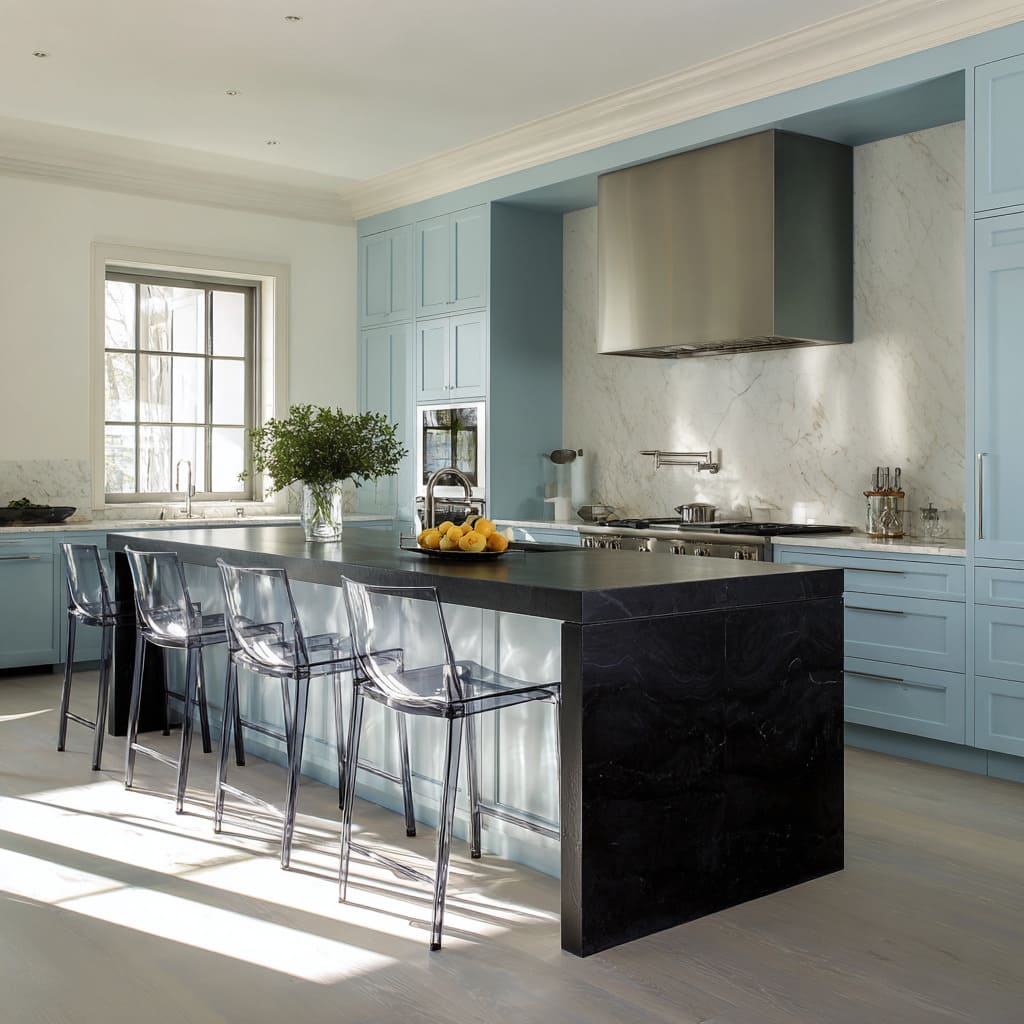
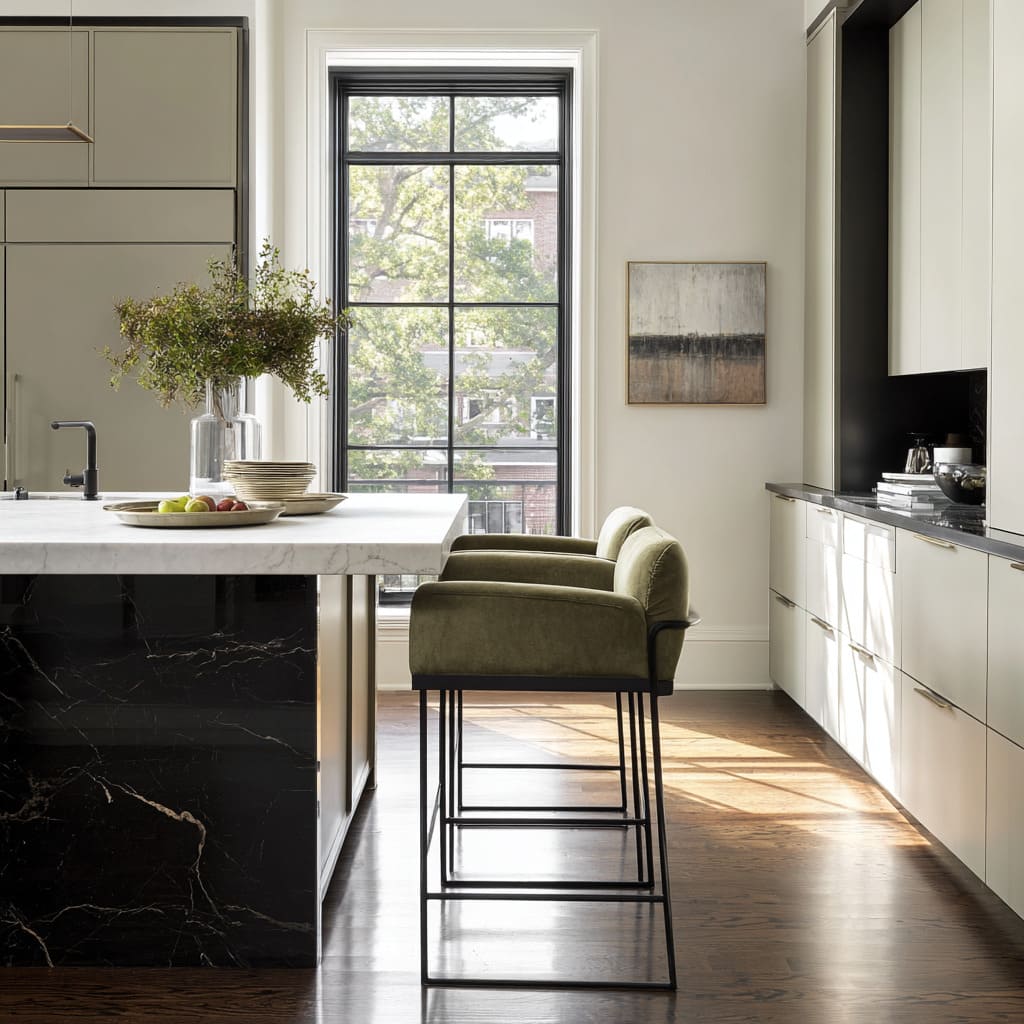
Every scene benefits from one temperature mediator. In neutral kitchens, even a whisper of powder-blue or mossy olive can adjust the emotional temperature.
These refined shades turn kitchen island stool ideas into color therapy: enough hue to carry mood, restrained enough to preserve harmony.
Light Behavior and Sheen Hierarchies
Light interacts differently with every surface, and thoughtful interiors choreograph those reactions. A honed countertop, satin stool leather, and brushed pendant finish together create what designers call a “sheen ladder”—a gentle gradient from matte to glow.
This control of reflection defines modernity.
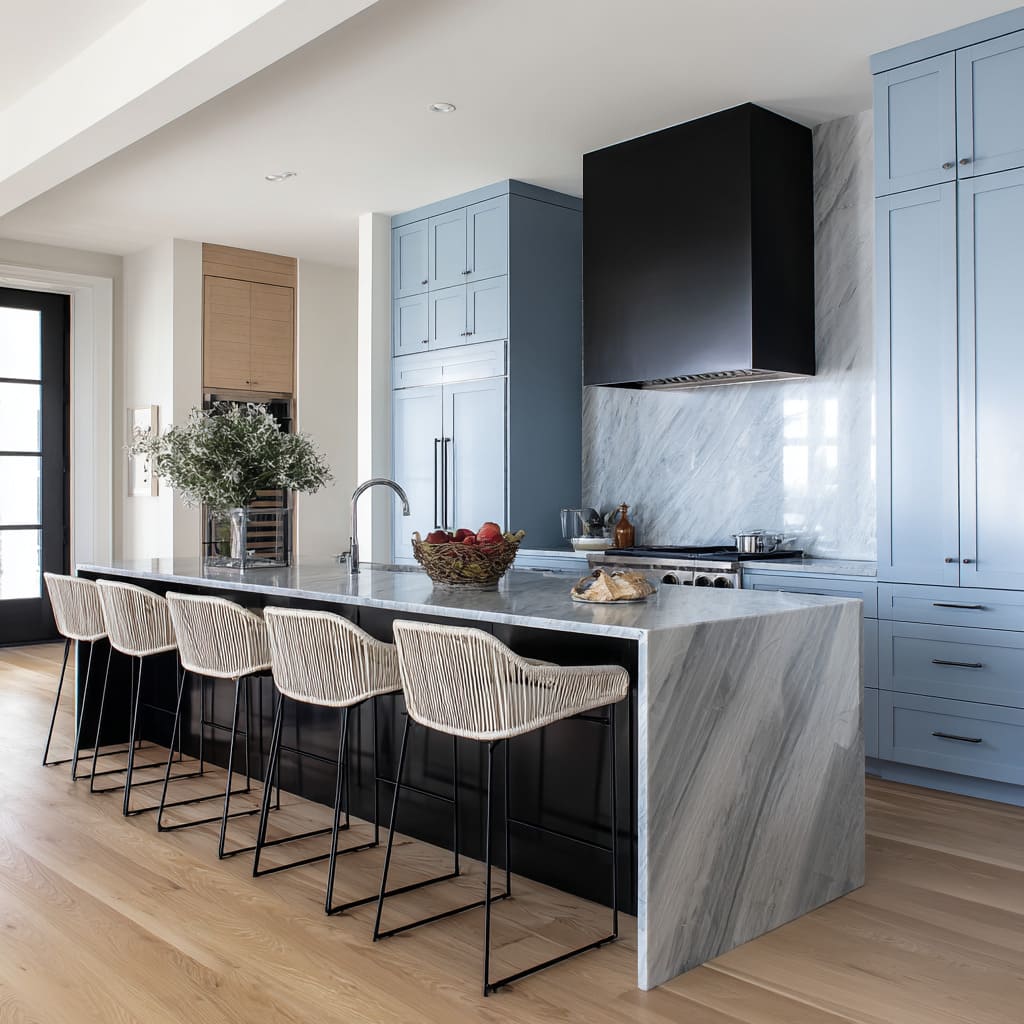
Bar stools play a central role in it: matte leather under pendant light stops harsh reflections; open-weave fabrics break direct glare into soft diffusion. In rooms with mirror backsplashes or glossy fluted panels, choosing non-reflective stool frames keeps balance.
These subtle choices maintain visual clarity while preserving depth in every viewing angle.
Color Accents and Small Echoes
Modern kitchen designs rarely use loud color, but one controlled accent can shift the tone entirely. Powder-blue leather against ivory stone, olive suede beside a black base, or caramel saddle seats under a marble counter—all work when echoed by small props.
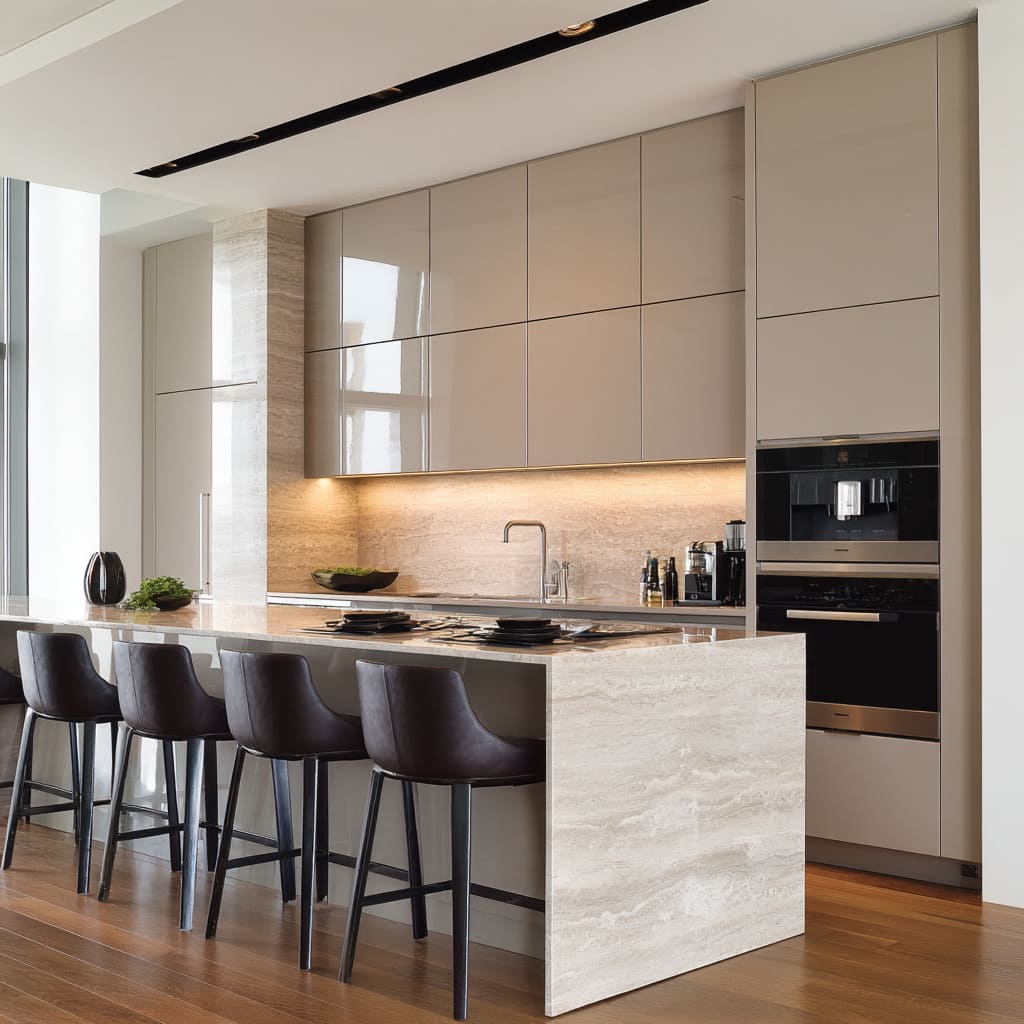
A matching ceramic bowl, an amber glass, or a wooden tray repeats the tone at another scale, integrating the accent naturally. Such combinations form part of evolving kitchen island bar stool ideas that depend on restraint.
The stools hold the emotional temperature, while repetition through décor ensures cohesion.
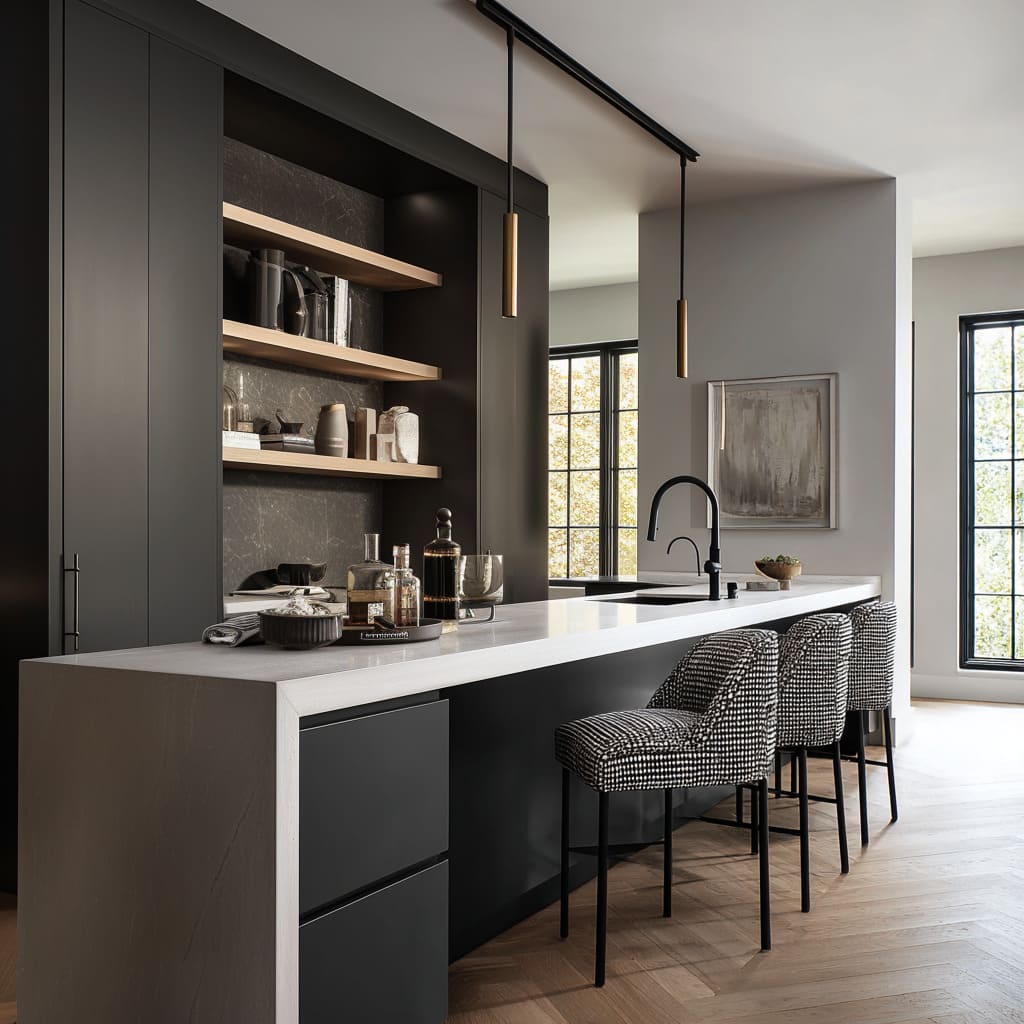
Harmony Between Architecture and Furniture
Successful bar stool ideas for kitchen island settings treat furniture as an extension of architecture. Lines from cabinet rails, window mullions, or pendant cords echo through the stool frames, turning multiple objects into one system.
Consistency of line weight and spacing achieves the visual calm that defines modern interiors.
Geometry, tone, sheen, and alignment all converge at the seating line—the meeting point of human scale and built structure. In this harmony, stools are not accessories but punctuation: small, precise marks that define rhythm, continuity, and visual comfort in every contemporary kitchen composition.