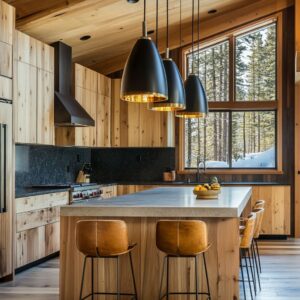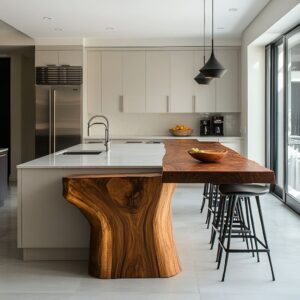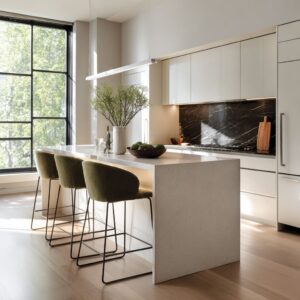
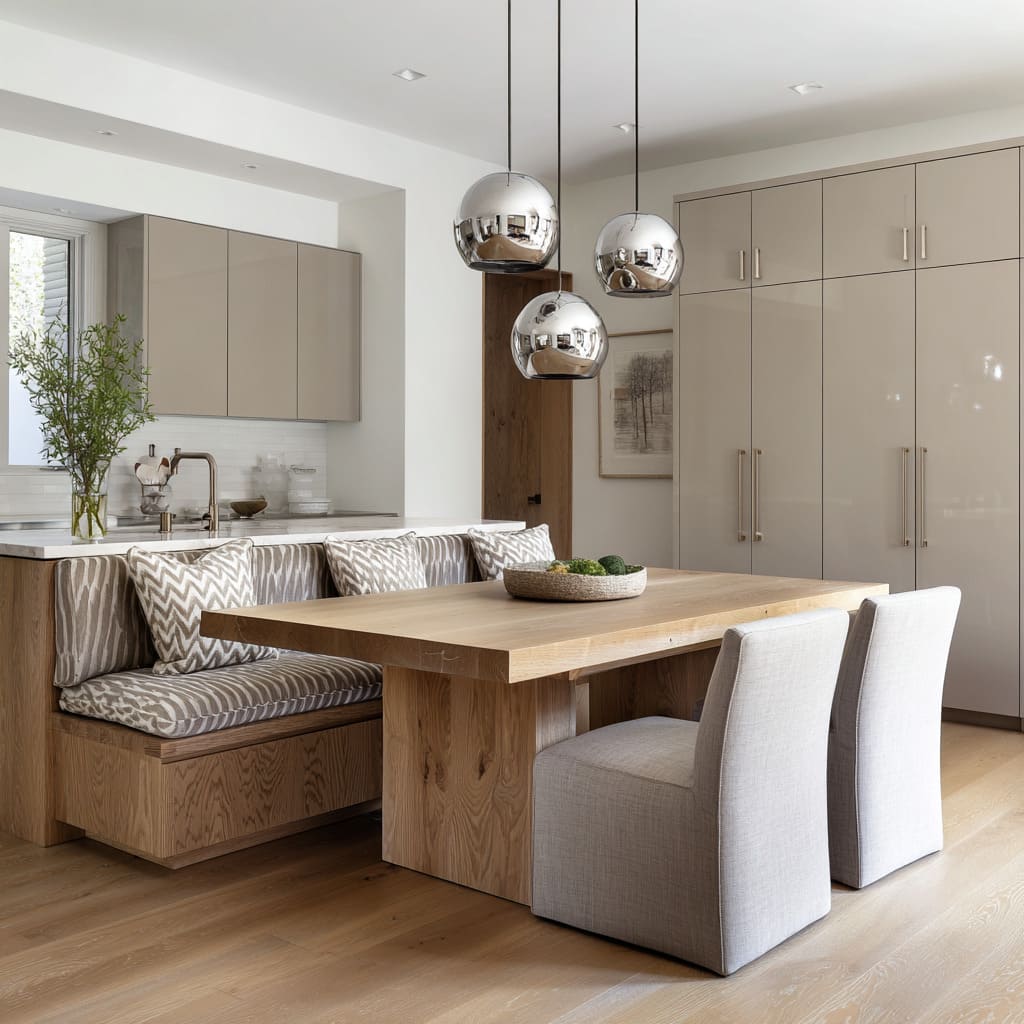
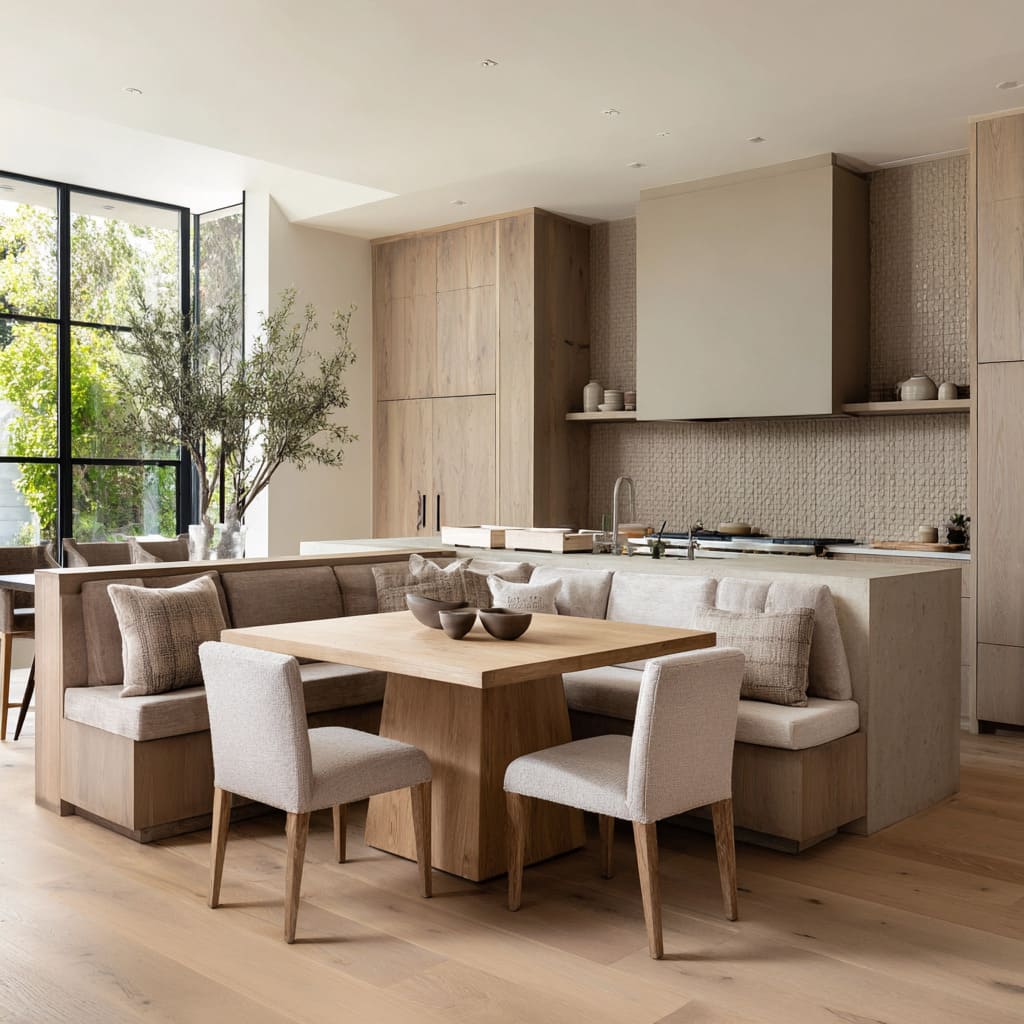
Modern interiors reinterpret the island as a unified social block—a sculpted volume where sitting, gathering, and food preparation merge into one connected whole. Instead of treating the table, banquette, and counter as separate elements, some current interiors form them as a continuous composition, where the island extends into an oak bench, wraps around a booth, or absorbs a cushioned alcove.
This move shifts the room’s atmosphere: the heart of the kitchen becomes a single, multi-purpose hub. The effect feels architectural, calm, and intentional, especially when the bench base lines up precisely with the table pedestal or when the seat height aligns with the slab edge.
These carefully tuned relationships create a visual “lock,” making the entire seating group read as one sculpted object.
Some layouts push the idea further by shaping full wrap-around corners. Others explore a long, linear cushioned strip carved into stone, where the island looks monolithic yet welcoming.
These configurations reveal how kitchen island designs with seating can behave almost like built-in furniture, blurring the usual boundaries between cooking, lounging, and dining.
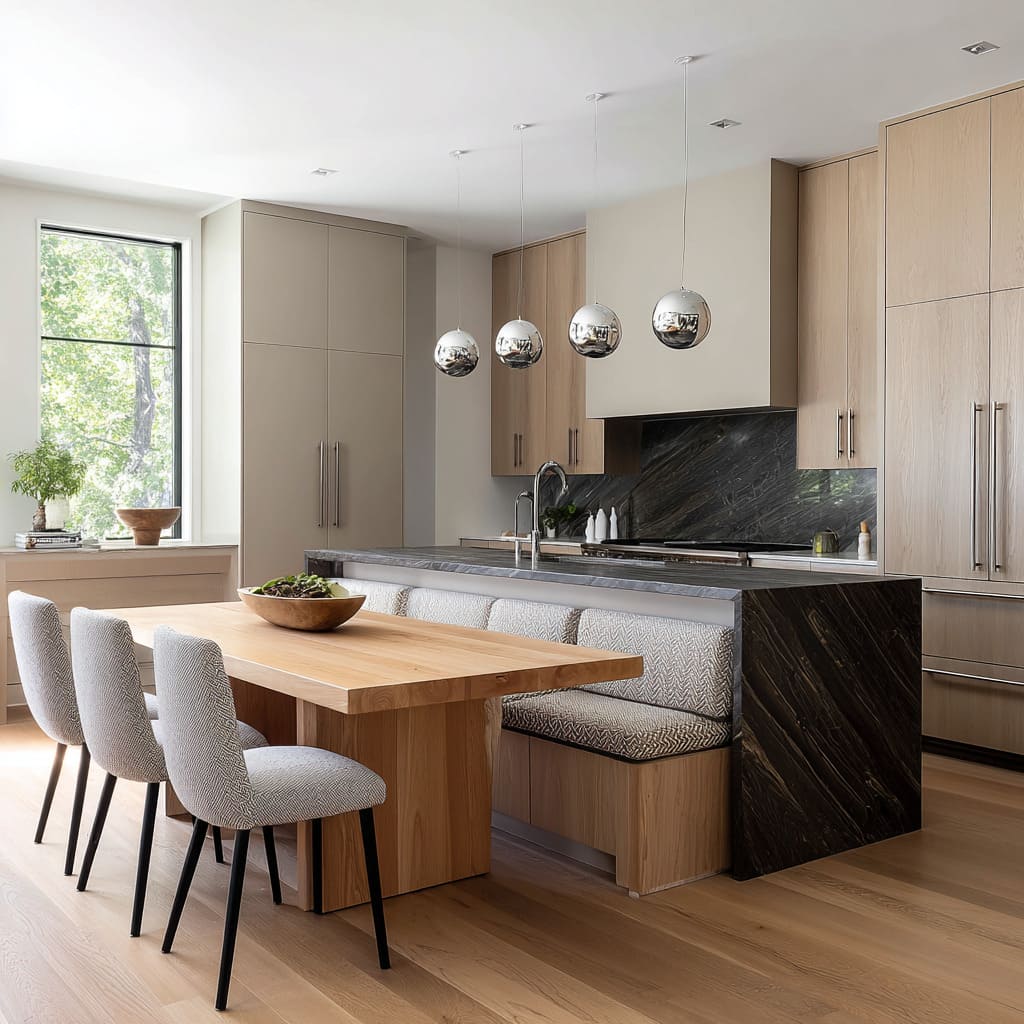
Horizon Lines, Seating Height, and the Quiet Rules That Keep Spaces Calm
A recurring visual strategy in stylish interiors is the control of horizontal lines. Designers consistently tune the height of pillows, bench backs, chair tops, shelves, and even hood bottoms so these elements sit on related levels.
This creates a “belt” around the room that unifies the kitchen’s visual field. In many examples, the backs of chairs sit slightly below the tops of bench cushions, so the banquette forms a continuous horizon line while chairs remain visually lighter.
Floating shelves often align with that same band, tying the cooking wall to the seating corner.
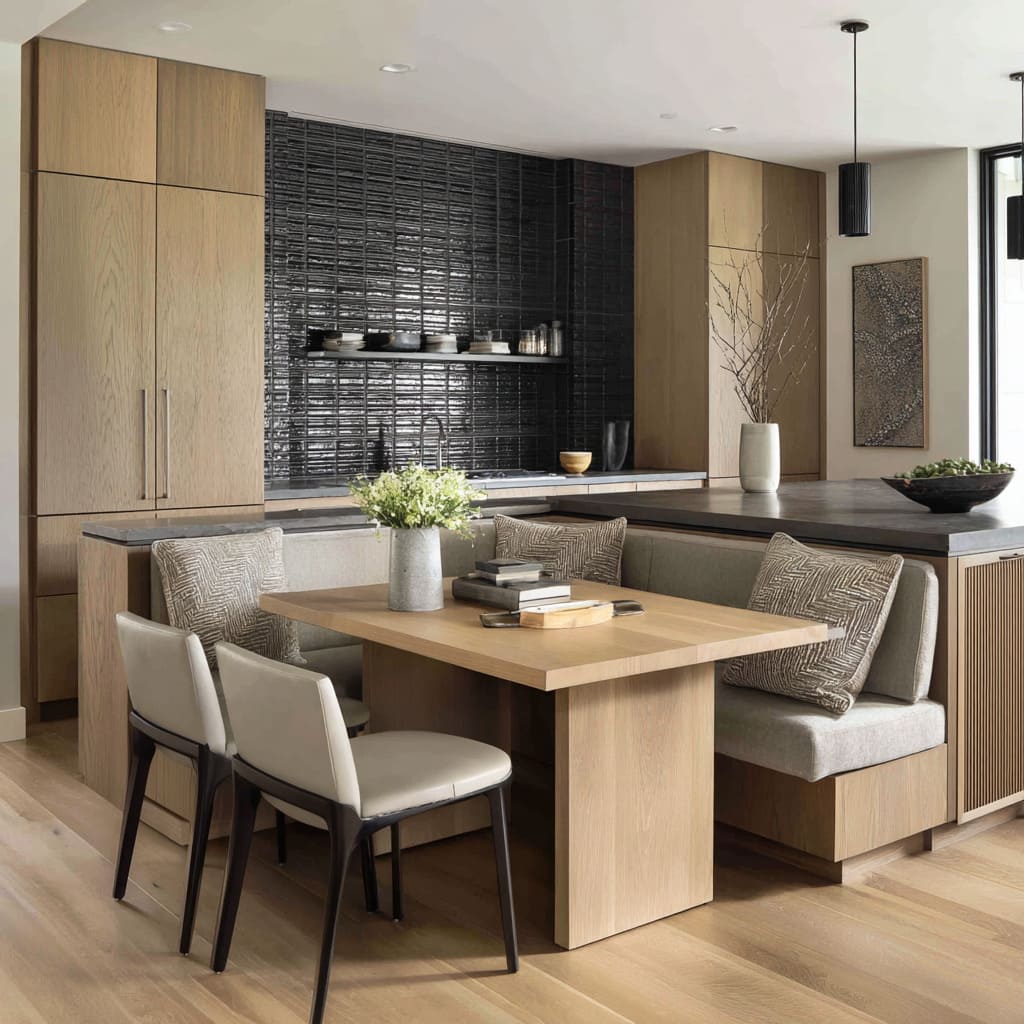
Why These Lines Matter
They anchor the room’s visual rhythm. Instead of multiple competing layers, the space offers a measured sequence that feels calm even when many materials are present.
Subtle Alignments That Shape Perception
- Bench cushions aligning with shelf height
- Chair backs sitting under the counter’s edge
- Table pedestals aligning with bench bases
- Slight reveals between stone and upholstery creating depth
Even trained eyes sometimes overlook these alignments, but they are the hidden scaffolding behind serene kitchens where the island and seating flow together without visual interruptions.
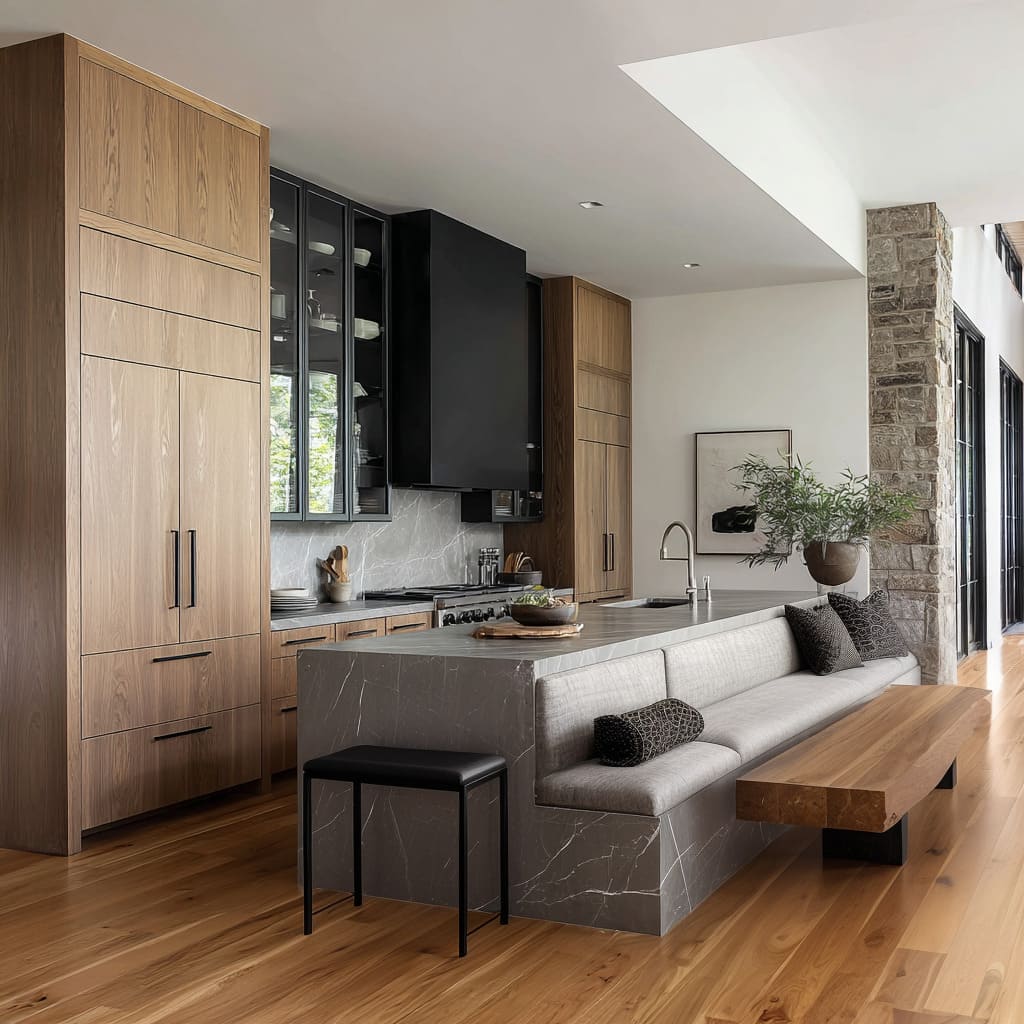
Material Temperature Gradients: Moving From Stone to Wood to Textile
Modern kitchen designs often organize the island seating corner through a gradient of material temperatures, moving from cool stone to warm wood to soft cushions. This sequencing balances the emotional experience of the room.
The stone slab—whether pale, veined, or deeply toned—sets the base note. Wood softens that coolness and leads the eye toward human scale, and textiles complete the transition with comfort and tactility.
Temperature Hierarchies in Contemporary Interiors
- Cool foundation: stone island faces, stone waterfall ends, marble backsplashes, or charcoal cladding
- Warm middle zone: oak bench bases, timber pedestals, walnut tables, or light-grain flooring
- Soft human layer: linen-like upholstery, leather banquettes, boucle chairs, or patterned pillows
This layered composition gives the seating area both visual depth and a tactile story. Projects using caramel leather against deep stone create a warm “core,” while schemes using pale linen cushions against muted wood offer a gentle, airy mood.
This is where ideas for kitchen islands with seating become more than functional arrangements; the palette itself guides how the room feels.
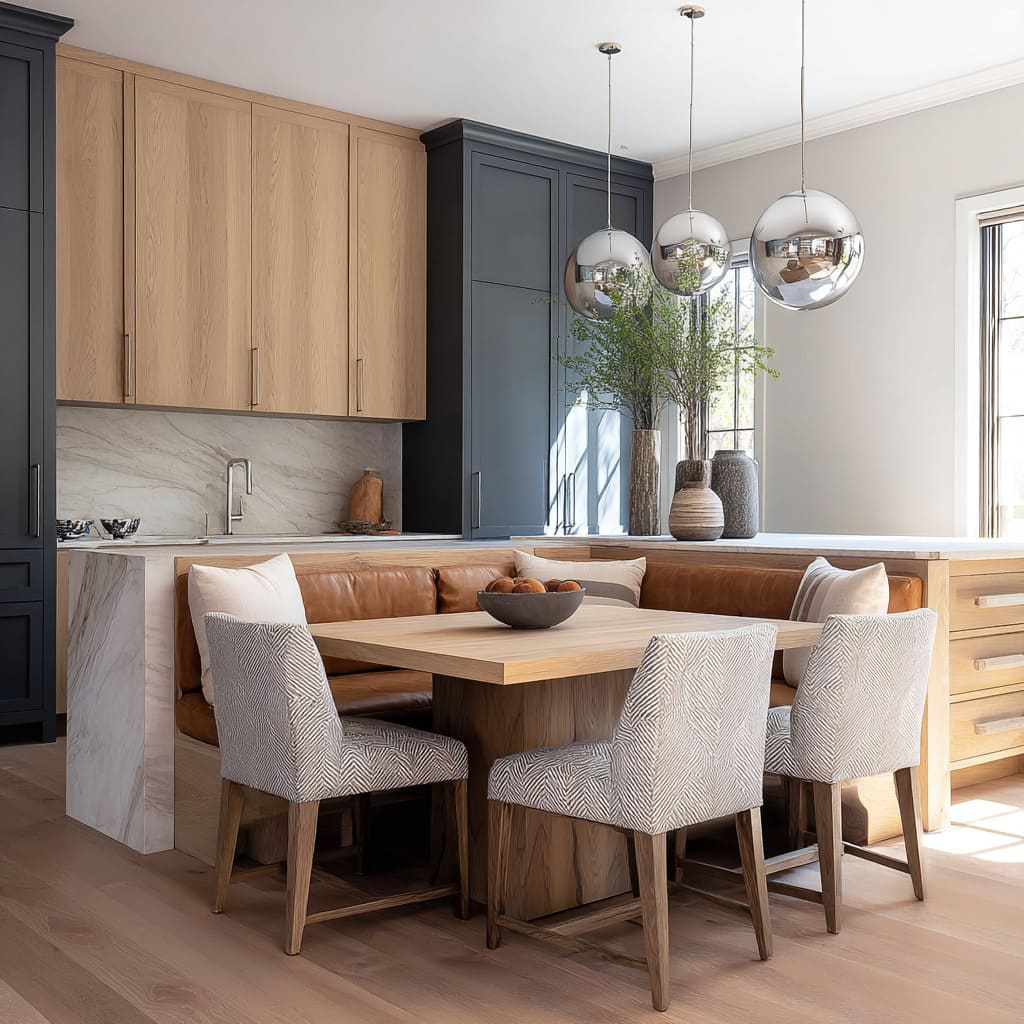
Patterns, Textures, and Optical Echoes
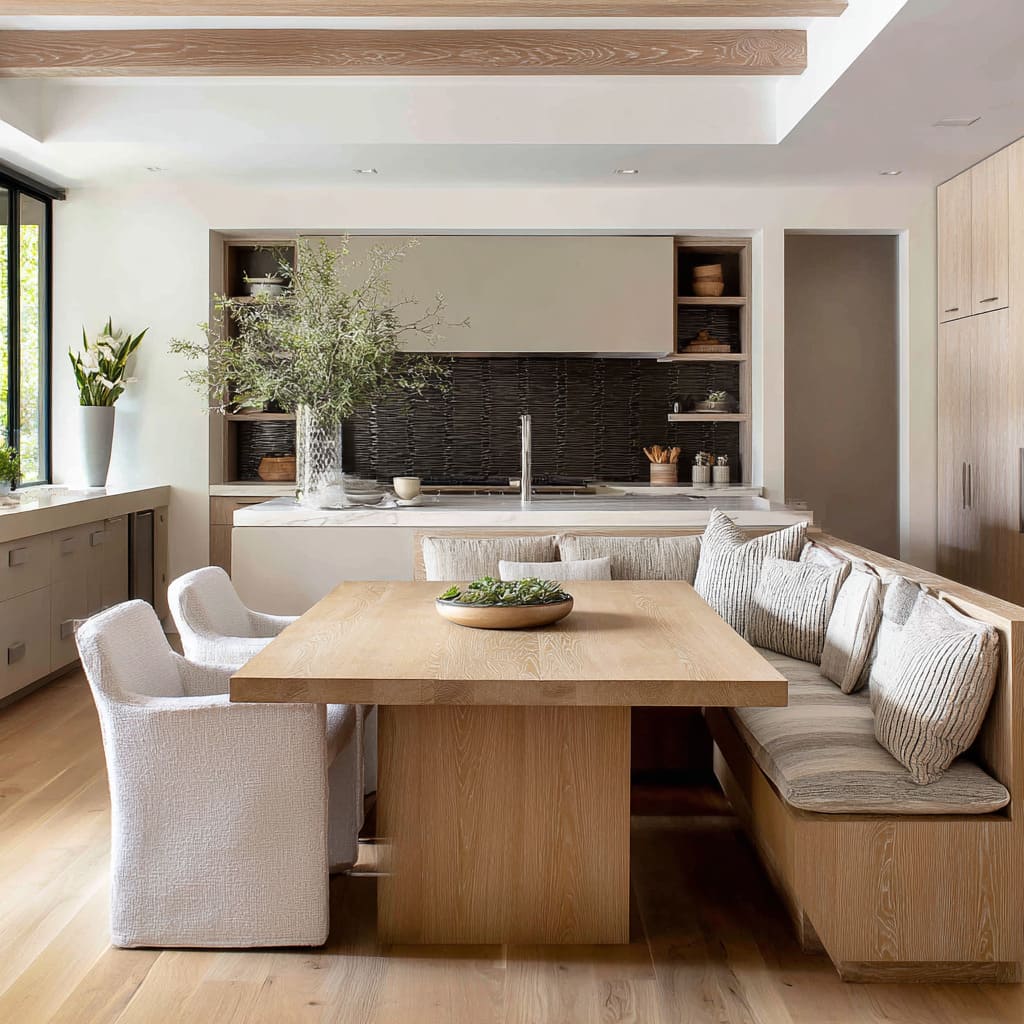
Pattern in such kitchen designs is never decorative filler—it is a deliberate echo of architectural rhythm. Zigzag cushions respond to the linear energy of floorboards.
Herringbone upholstery mirrors diagonal veining in stone. Boucle chairs soften rigid edges by introducing a tactile cloud-like texture that sits against rectilinear cabinetry.
These subtle echoes stitch the room together.
Texture Conversations Within the Seating Zone
- Chevron pillows: gentle diagonal beats that speak to grain direction or stone veining
- Leather benches: smooth surfaces that catch light without introducing noise
- Boucle chairs: fluffy, cozy counterpoints to structured cabinetry
- Small-scale herringbones: visual bridges between stronger patterns and plain surfaces
The seating area becomes a micro-world of fine visual conversations: grain speaking to pattern, sheen responding to matte, cushion forms balancing stone edges. Even the smallest pillow tilt or varied weave softens the strict geometry of the island, giving the corner an approachable, lived-in expression.
Reflective Globes, Clear Glass, and Lighting That Maps Social Activity
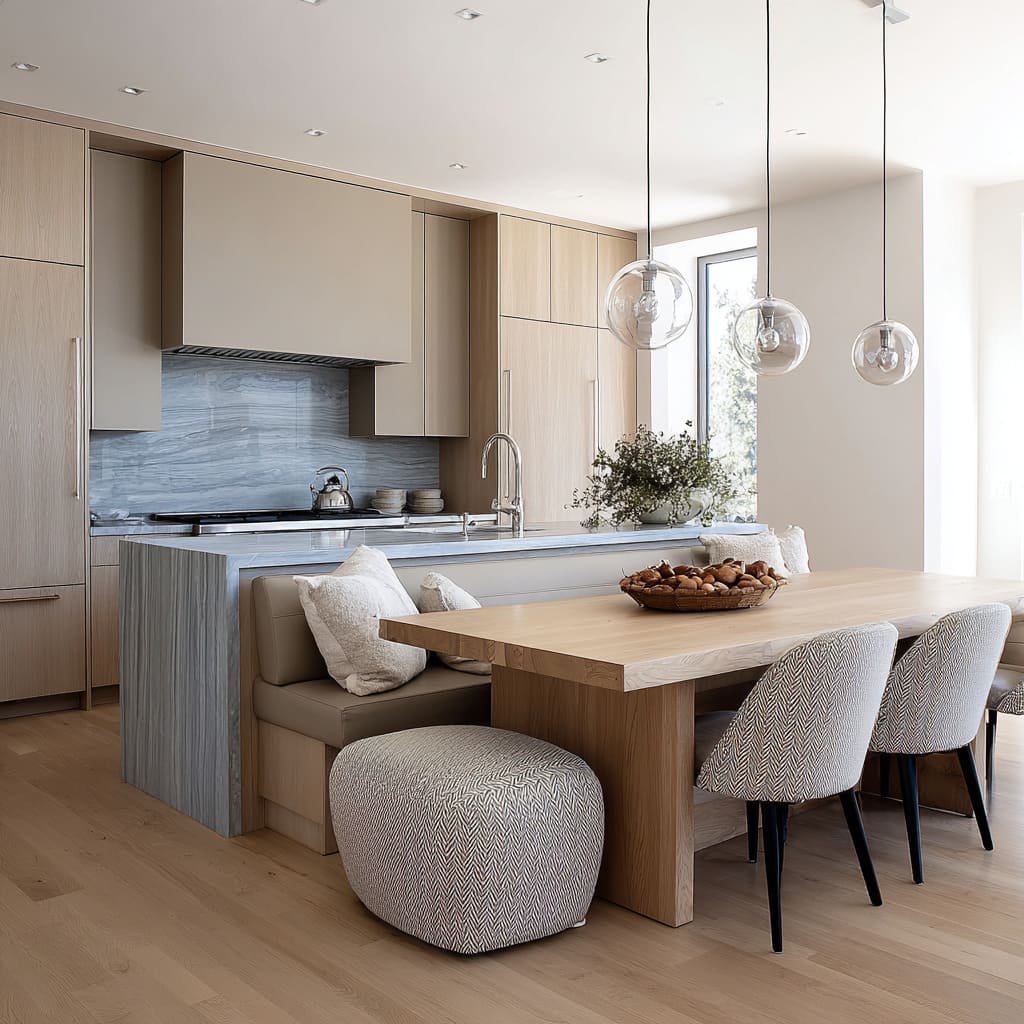
Lighting in such interior designs does far more than illuminate surfaces—it maps the emotional landscape of the kitchen. Chrome spheres suspended above the table create miniature mirrored worlds inside each globe, doubling and tripling reflections of stone, wood, chairs, and greenery.
A tight cluster of mirrored pendants over a booth signals an intimate center. A linear sequence of identical globes above the prep zone marks movement and direction.
Clear glass pendants behave differently: they show the bulbs inside, keep views open, and let the table remain visually dominant. They work especially well in lighter schemes where natural daylight is critical.
Lighting as Social Diagram
- Clustered chrome globes: define conversation zones
- Linear sequences: structure the working path
- Clear globes: provide visual openness
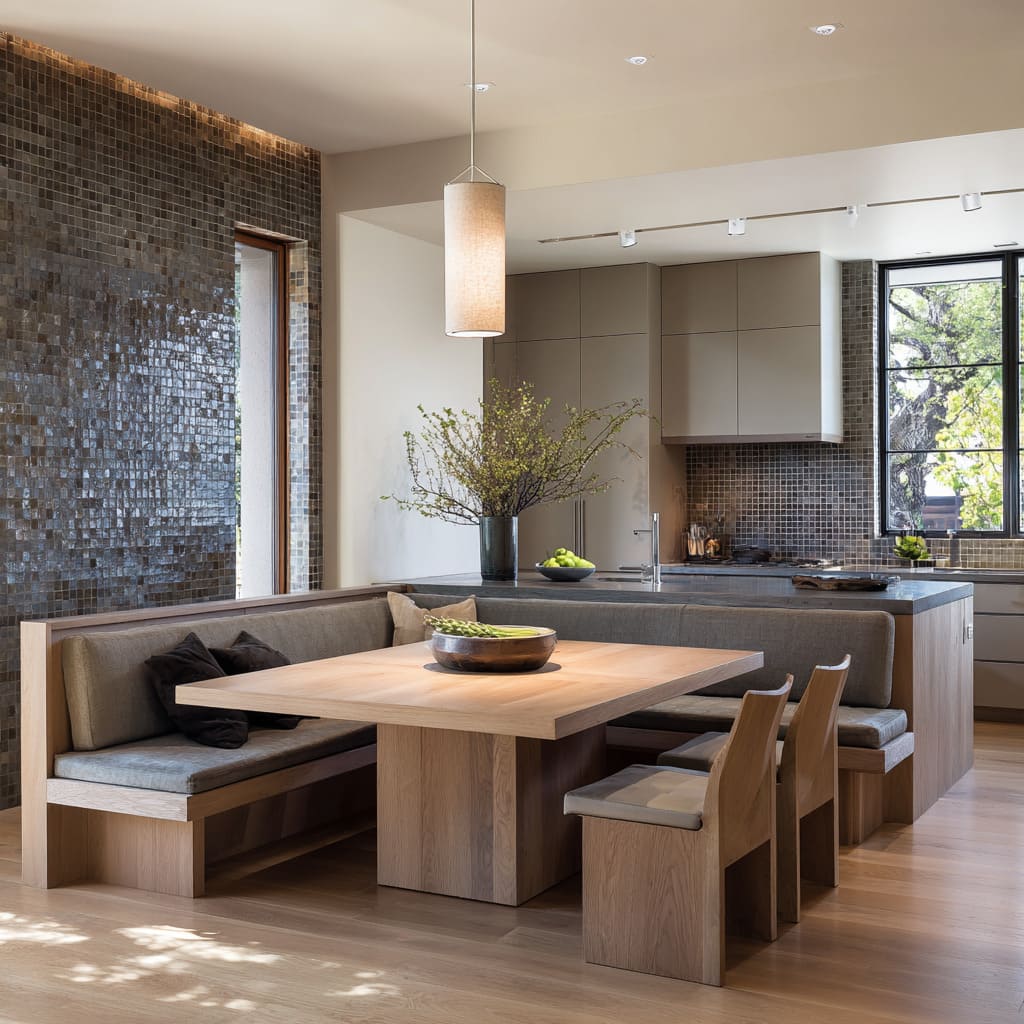
- Tall cylindrical pendants: center the table without adding heavy presence
From a seating perspective, these lights behave like punctuation marks—they articulate beginnings, pauses, and focal points within the layout. This is one reason many small kitchen island seating ideas rely on overhead fixtures for shaping intimacy without adding clutter to the counters.
Background Walls as Theatrical Backdrops for the Seating Corner
The wall behind the island seating acts like a stage set that amplifies the room’s personality. Dark, shimmering mosaics washed with warm LED light create depth and a sense of evening glow.
Rippled black tiles introduce quiet movement behind the bench, catching reflections of chairs and globes. Glass-front cabinets lit from within transform tableware into glowing sculptures.
Types of Backdrops Appearing in Modern Interiors
- Textured dark fields—glossy black surfaces, wavy tiles, bronzed mosaics that soften the bench’s upholstery while adding drama.
- Calm stone landscapes—soft grey slabs continuing the island’s veining into the cooking wall.
- Lantern-like display walls—internal cabinet lighting turning glassware into warm, ambient accents.
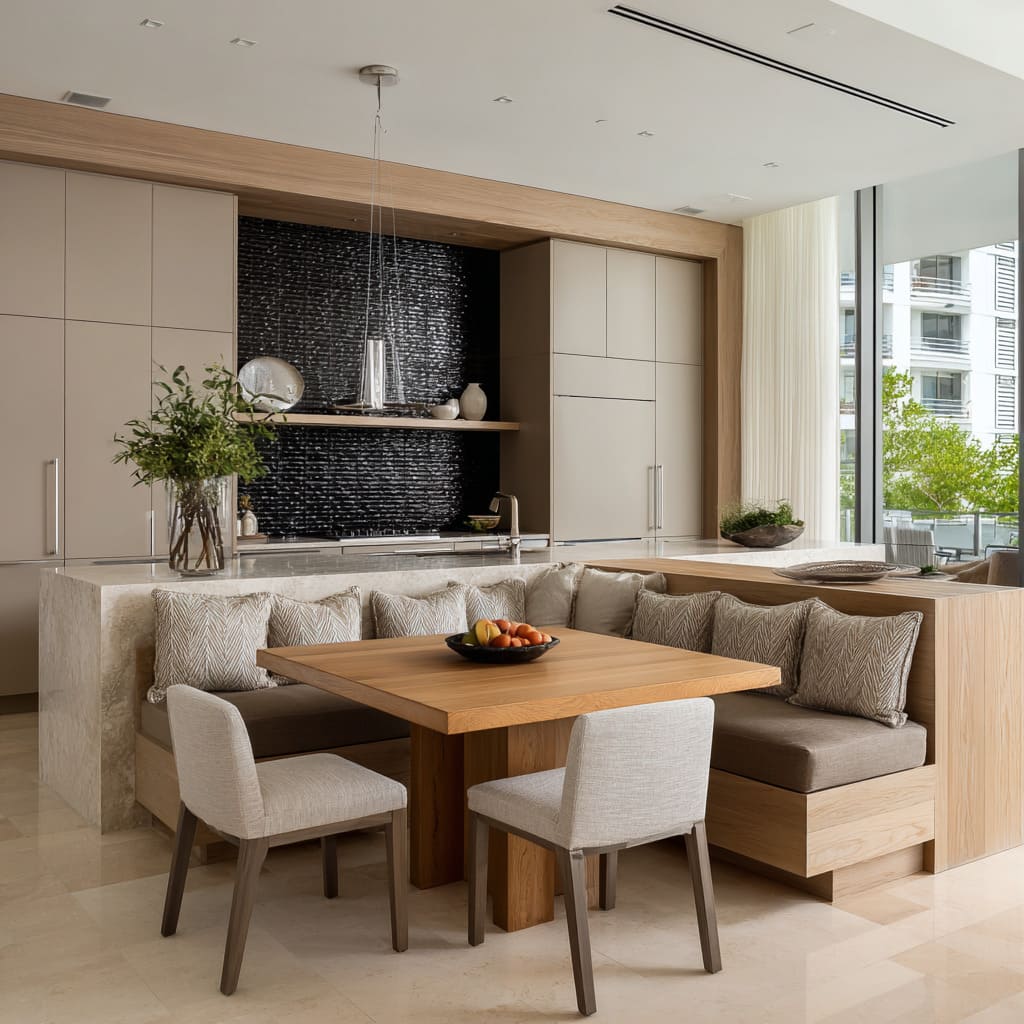
This idea is especially effective in layouts where the seating faces the cooking wall, a long window, or an illuminated cabinet wall. Even in a kitchen island with seating small space, a thoughtful background—whether textured tile or light wood—can anchor the entire arrangement and enrich the emotional atmosphere.
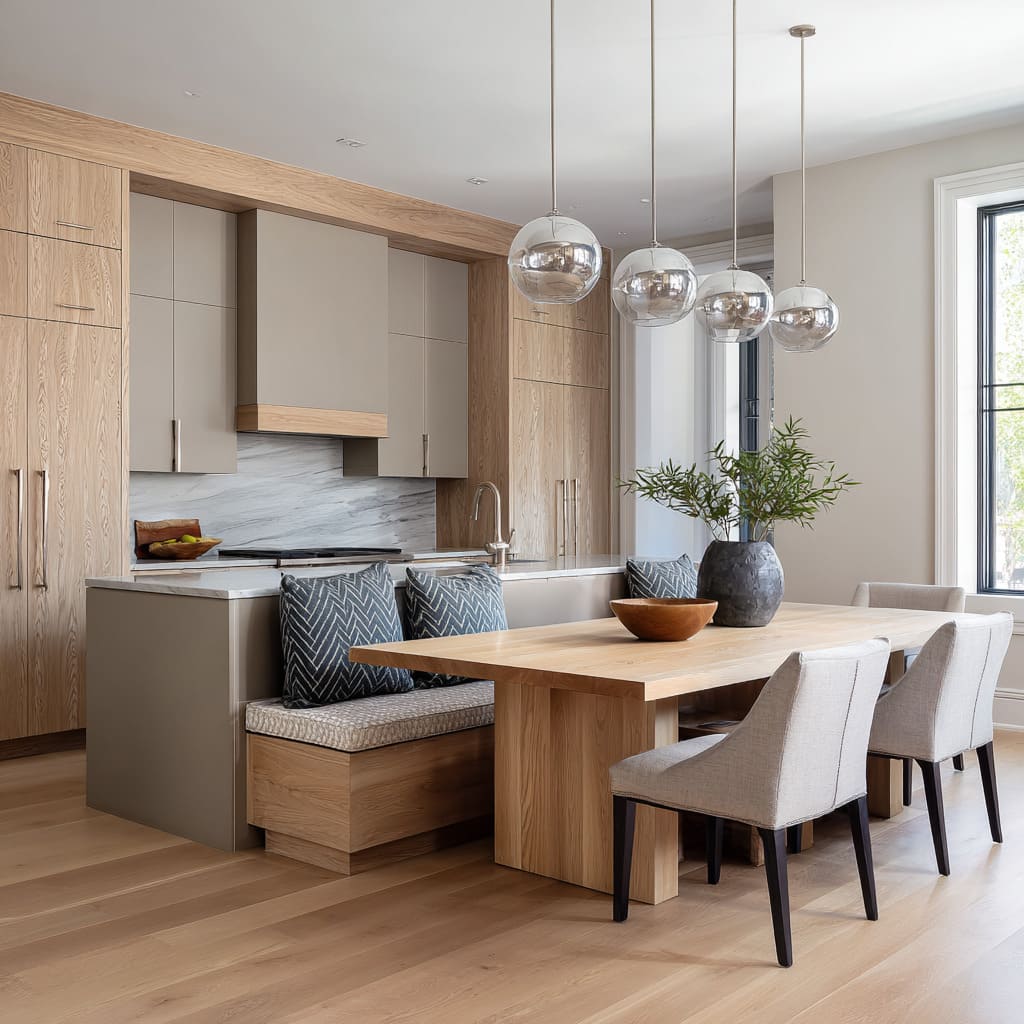
Seating Typologies, Social Dynamics, and How the Bench Shapes Interaction
Different seating shapes create different behaviors. U-shaped and L-shaped banquettes foster closeness, ideal for easy conversations and shared meals.
Linear benches running along one side of the island create a more casual, bar-like social strip—perfect for evening gatherings or quick breakfasts. Leather-wrapped corners feel like lounge alcoves, while neatly piped cushions form tucked-away breakfast nooks.
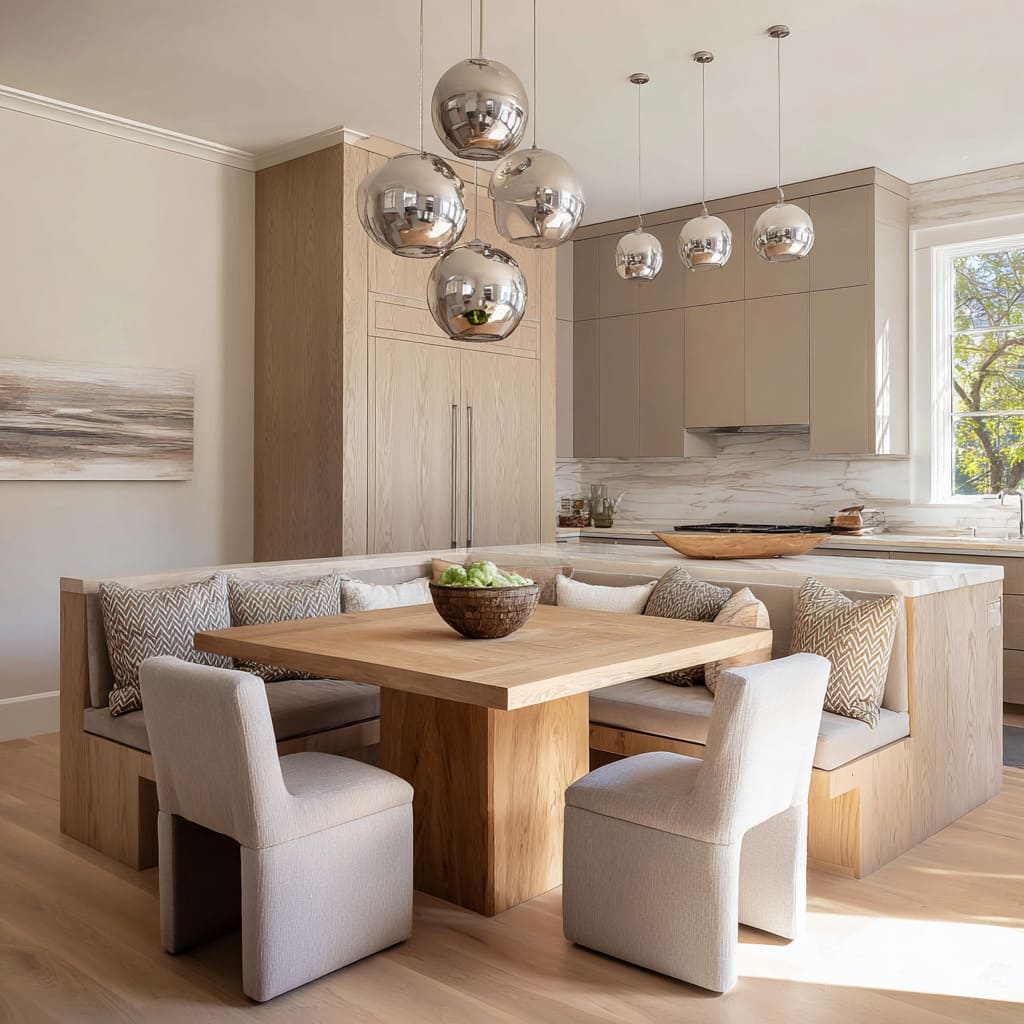
Bench Expressions in Modern Kitchens
- Corner booths: warm, enclosed, conversation-heavy spaces
- Linear benches: open, sociable, facing activity or view
- Bench-as-sofa forms: low backrests, leather or boucle fabrics adding lounge energy
- Bench carved into island stone: sculptural, gallery-like, perfect for strong materials
Each style works differently with chairs. Chairs often act as the “flexible” side, while the banquette becomes the “special” seat.
This pairing makes seating visually varied and emotionally tiered. The result aligns closely with contemporary interpretations of small kitchen island ideas with seating, which integrate multiple pieces without crowding the room.
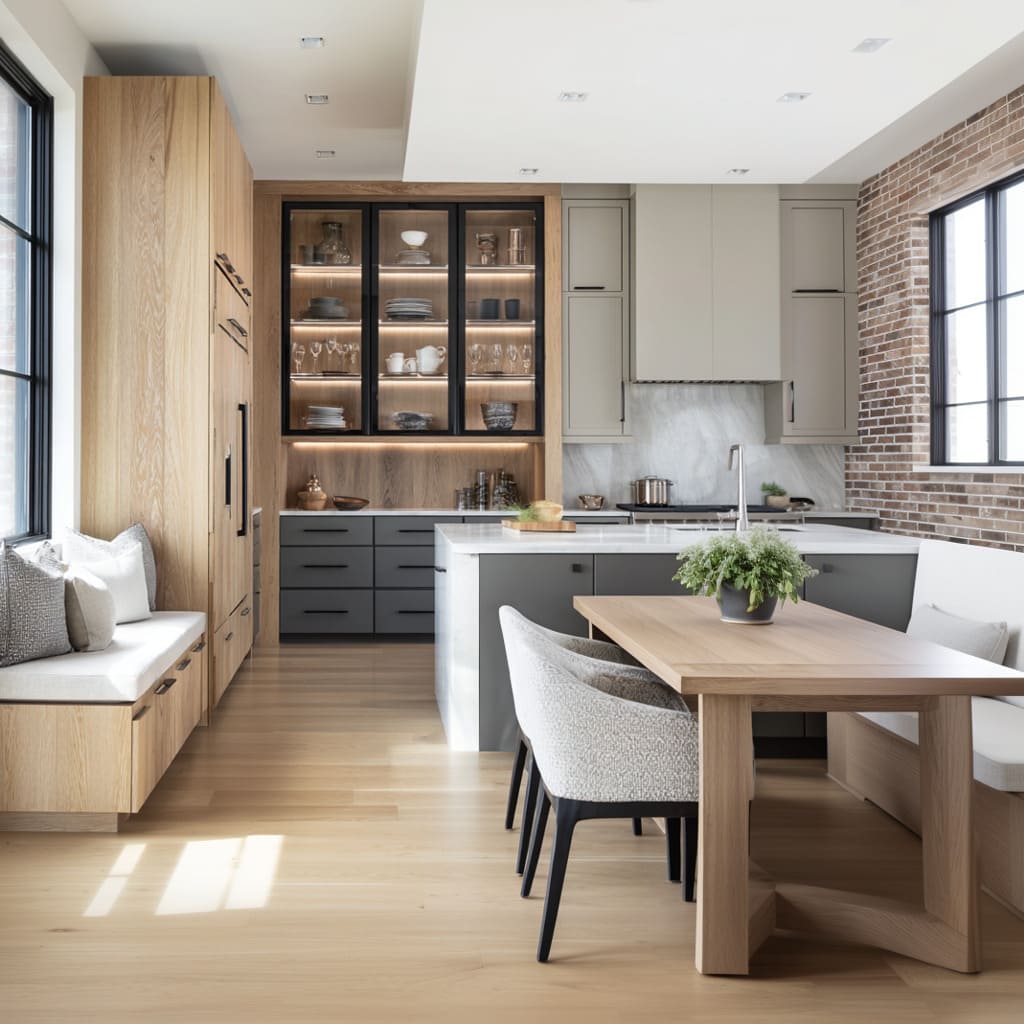
The Island as the Room’s Social Core: A Theme Across All Styles
Across the styles—muted, dramatic, bright, or rustic—the island remains the central social block. It becomes the backbone of daily life: a spot for conversation during meal prep, an informal dining corner, a soft lounge seat for laptop time, or a visually rich place to observe the room.
Seating woven into the island removes the old separation between cook and company, turning the kitchen into a shared experience rather than a production zone.
In long, narrow plans, the bench often acts like the hinge that ties the kitchen to the rest of the living space. In larger open layouts, the island seating corner becomes a room within a room: framed by light, surrounded by greenery, softened by upholstery, and oriented toward both the working and relaxing sides of the home.
These strategies shape beautiful environments that speak to modern living, even in compact interiors needing a kitchen island with small seating space solutions. And in plans where length is limited, the seating carved into one side of the island directly supports small kitchen island seating ideas, creating comfort without clutter.