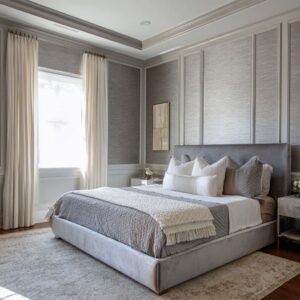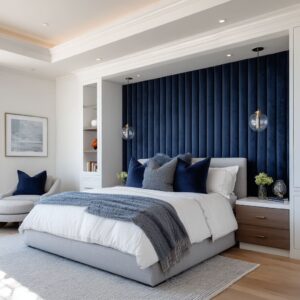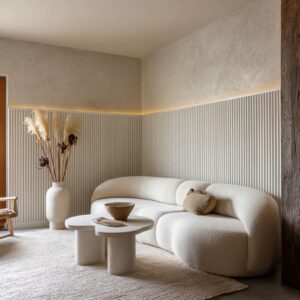
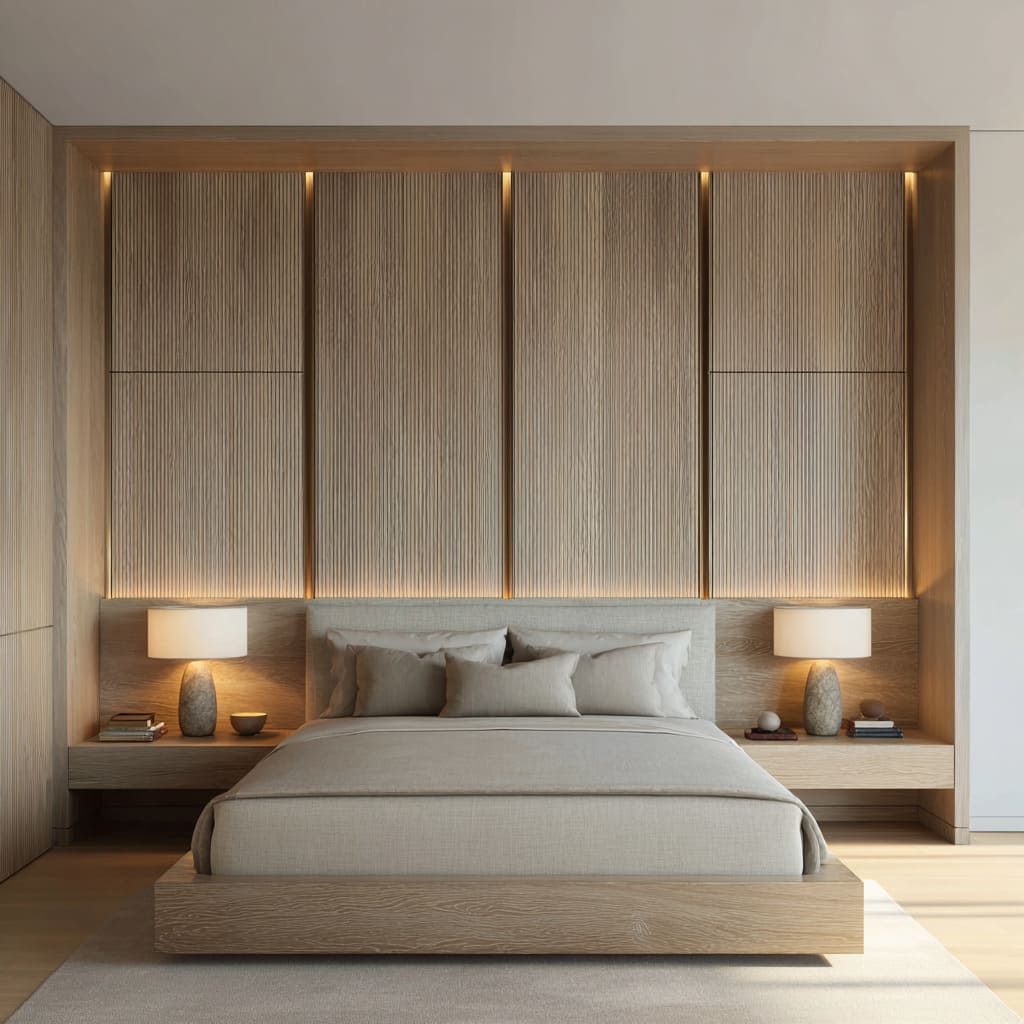
In many modern luxurious master bedroom interior designs, the surface behind the bed becomes the central identity of the room, behaving less like a flat backdrop and more like a crafted piece of interior architecture. Designs frequently treat the headboard wall as a vertical plane built from layered elements—slats, textile sections, stone modules, or illuminated seams—that alter the way the eye reads scale and emotion.
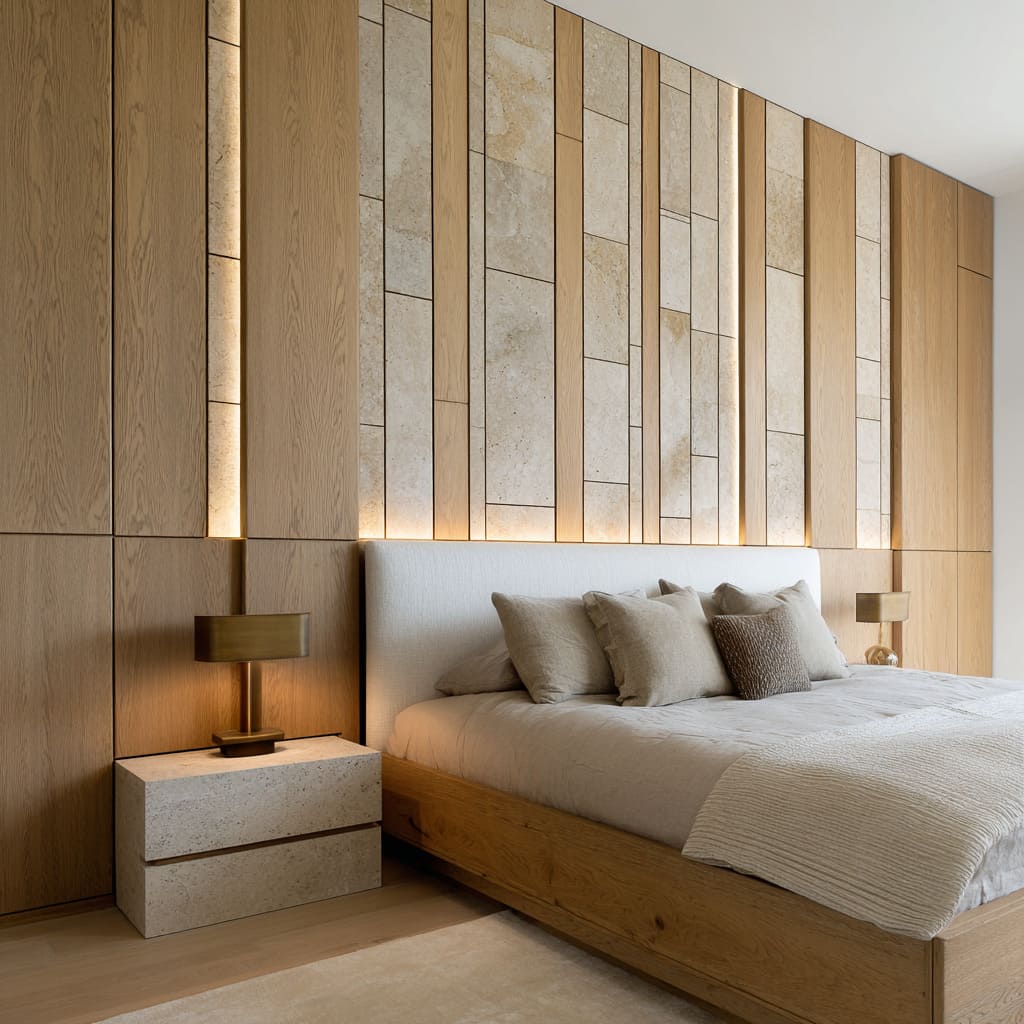
This is where the foundation of modern luxurious master bedroom atmosphere is formed. Timber panels rise from floor to ceiling with long, continuous lines that stretch the space visually.
Stone slabs behave like calm mineral fields where gentle variations in texture create a natural gradient across the surface. Upholstered segments soften the scale of tall rooms by adding a tactile layer that interacts quietly with light.
In some concepts, metal trims are inserted between panels to create visual joints that organize the material into a disciplined rhythm. In others, recessed niches appear as carved moments that interrupt the wall gently and introduce warm display lighting or shelves for curated pieces.
What defines this approach is a commitment to turning the headboard wall into a feature that sets the tone for the entire layout—an architectural gesture that communicates calm strength, warmth, and refined visual order.
Vertical Rhythm as a Silent Framework
Vertical segmentation is one of the most defining traits of luxurious bedroom decor ideas, and its power lies not in the presence of tall lines themselves but in how these lines guide the eye slowly rather than dramatically. Wood slats with tight spacing produce a steady visual pulse that lends a meditative quality to the room.
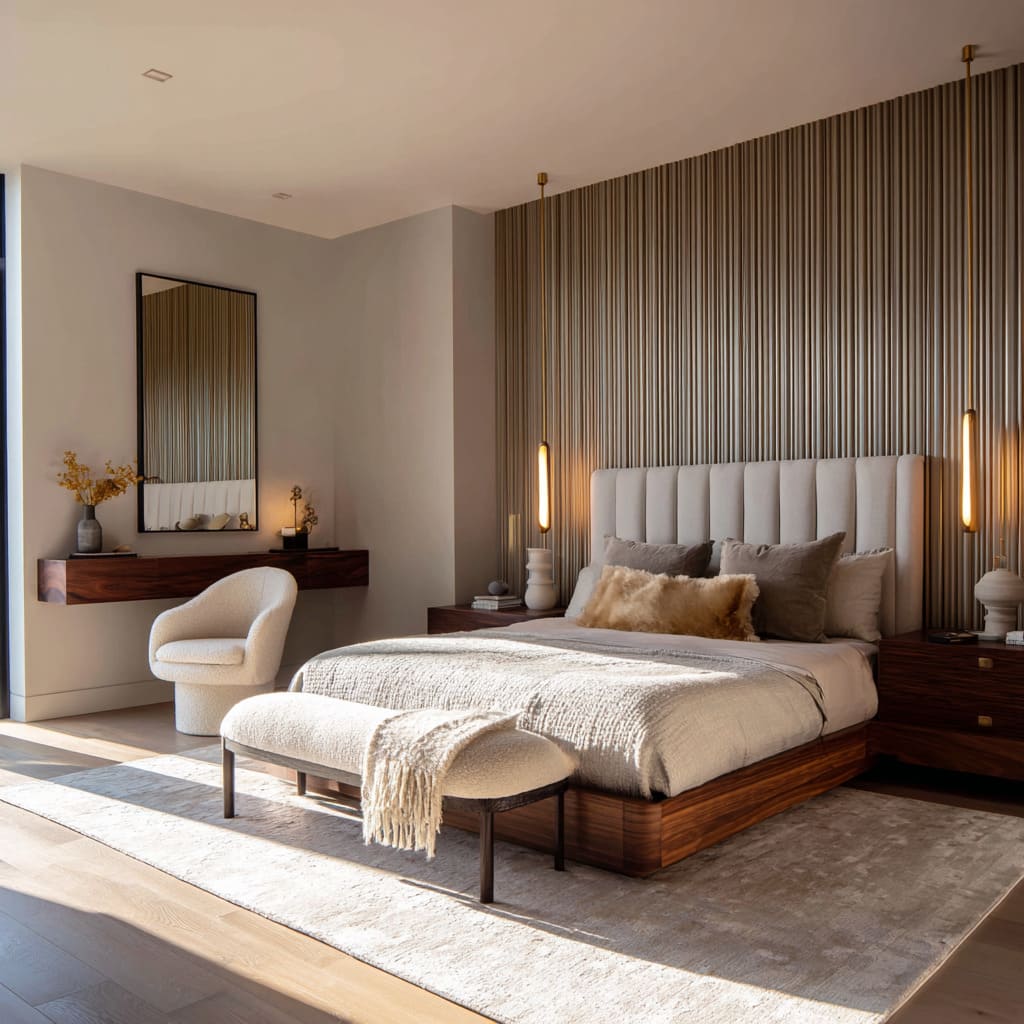
Stone joints arranged in varied modules generate a quiet grid that feels crafted rather than repetitive. Slim metal strips inserted between fabric or timber panels create a shimmering rhythm that shifts as light changes throughout the day.
In many concepts, vertical elements are paired deliberately with horizontal counterpoints to maintain balance: benches at the foot of the bed, platform bases that extend outward, long recessed shelves, or wide fireplaces. These horizontal shapes carry a soft grounding effect, counteracting the upward pull of the verticals.
The most intriguing detail is how designers often allow one or two elements to break the rigid order—irregular bronze seams, staggered light drops, or asymmetrical pendant alignment—to introduce a human touch that relaxes the composition. Vertical rhythm here serves as a visual language of calm structure, guiding the gaze along surfaces at a gentle pace.
Light Like Soft Jewelry
Lighting in the luxurious bedroom interior styling universe is not a functional layer but a material in its own right. Many contemporary concepts use light in thin seams, recessed channels, or hidden coves so the glow behaves like a warm thread woven through the architecture.
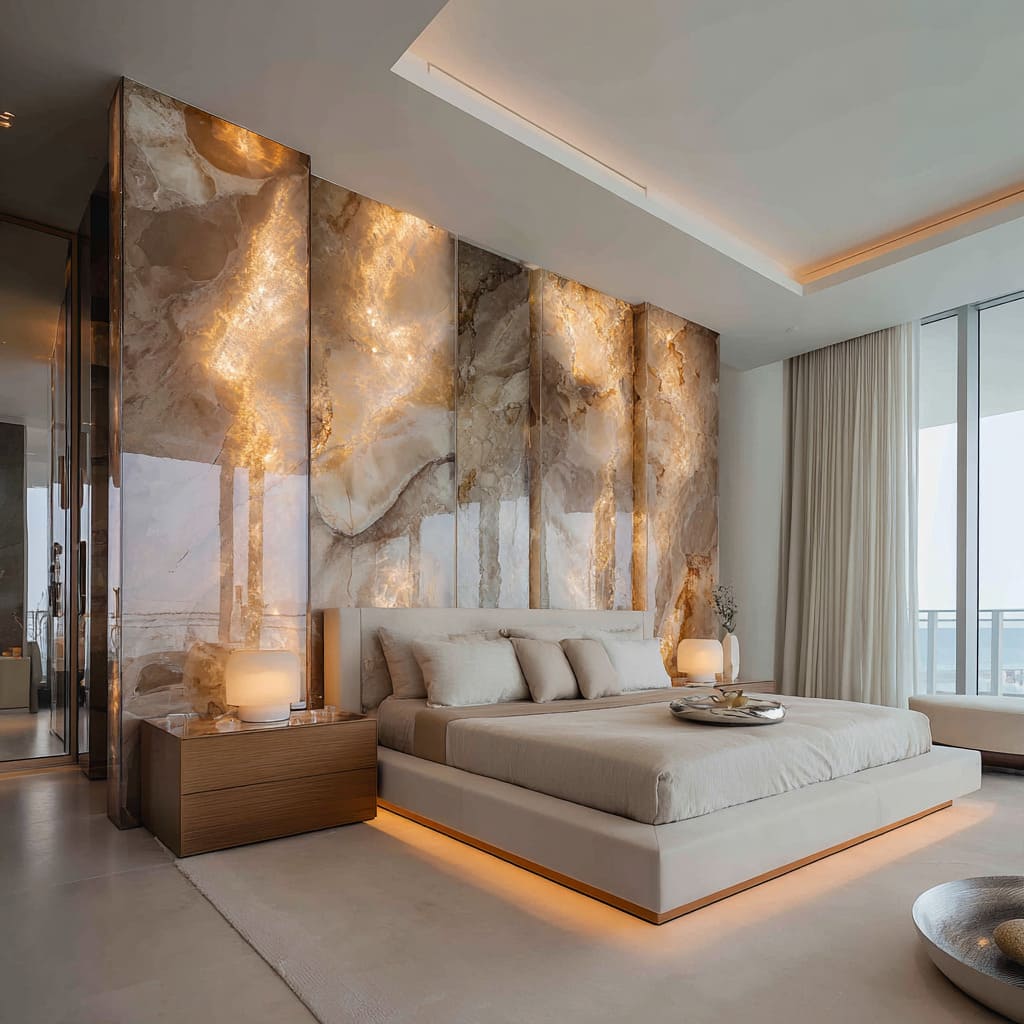
Vertical light gaps between timber boards or stone modules create soft luminous lines that introduce depth without calling attention to the fixtures. Backlit stone slabs appear almost translucent, producing a natural pattern of warm swirling tones that shift from pale honey to soft white.
Ceiling coves cast a calm glow down the upholstered wall, creating a smooth wash that accentuates texture. Under-bed lighting makes platforms appear gently elevated, softening the entire lower portion of the room.
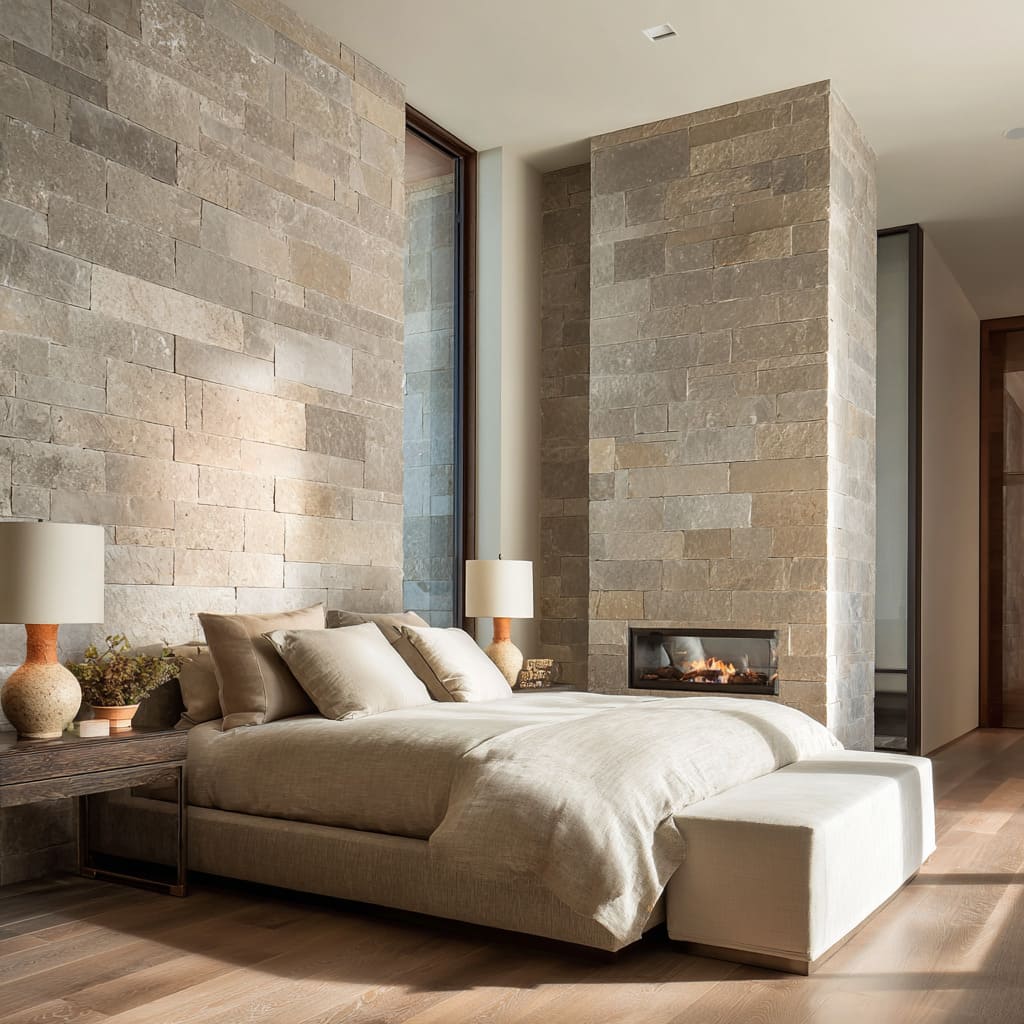
Niche lighting in display shelves highlights curated pieces—ceramic vessels, carved objects, or small sculptures—giving them a quiet importance. Fireplaces, placed low along the wall, become moving light sources that animate stone textures with flickering reflections.
In all cases, the glow is used sparingly and strategically, acting like subtle ornamentation that brings softness to heavy materials and depth to smooth ones.
Bed Geometry and Grounding Strategies
While the headboard wall carries the architectural strength, the bed introduces the softness that makes the whole environment feel inhabitable. In many of the most luxurious bedroom designs, beds are designed to act as wide, low, horizontal islands in front of tall vertical surfaces.
Headboards often echo the wall pattern but in fabric rather than rigid material—channel stitching mirroring timber grooves or fabric segmentation repeating wall seams. Platform frames stay close to the ground, creating a grounding effect that stabilizes taller surrounding elements.
Bedding layers rely on tactile variation rather than color contrast: matte linens paired with textured throws, heavier knits next to smooth fabrics, and pillows grouped by subtle tonal shifts. This soft volume plays an essential role by slowing down the vertical movement of the room, allowing the eye to settle.
Benches placed at the foot extend the horizontal footprint, adding continuity to the bed silhouette. In concepts where the wall is visually strong—like stone compositions or dense wood grids—the bed intentionally remains minimal to avoid any sense of visual competition.
The result is a relationship where the wall provides architectural depth and the bed provides emotional comfort.
Material Families and Their Interplay
Each luxurious master bedroom design uses a controlled palette of materials arranged in a harmonious dialogue rather than a clash of contrasts. Timber appears in two main tones: pale oak that captures daylight softly, and deeper walnut that enriches the evening glow.
Timber is used consistently across large surfaces—walls, platforms, or canopy frames—to give the room a sense of continuity. Stone behaves as the sculptural element: pale mineral slabs with gentle veining, textured blocks with vertical joints, or patterned surfaces backlit to reveal organic formations.
Such stones add weight and visual depth. Metal appears as thin accents in trims, pendant lights, or shelf details, usually in brushed brass or bronze tones that quietly reflect ambient lighting.
Textile layers complete the palette—wall upholstery, headboard fabric, rug textures, linen bedding—all in matte finishes to avoid glare. This material choreography creates a deep, calm landscape where every surface has a role in shaping atmosphere, with no single element overpowering others.
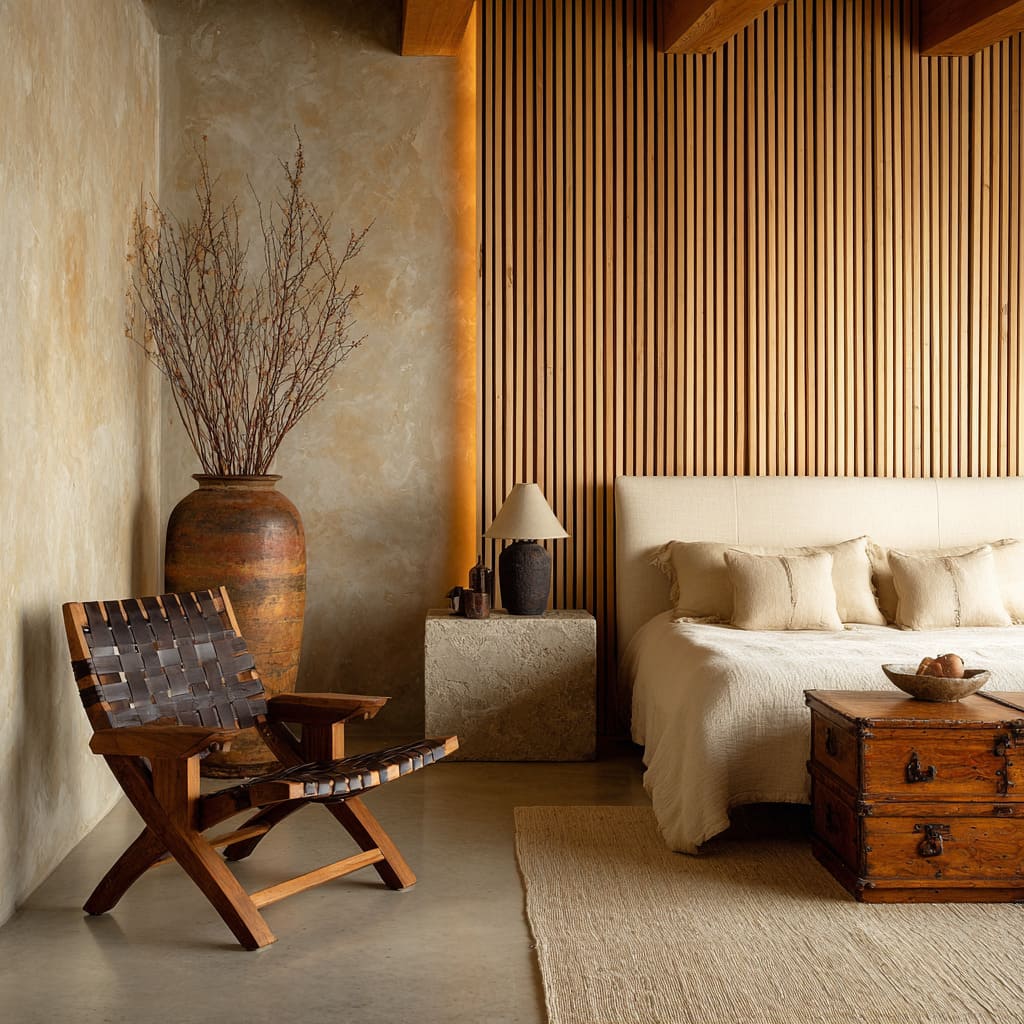
A blend of raw and refined textures adds character: rough plaster paired with smooth timber slats, or sculptural ceramic objects placed against warm wood.
Canopies, Niches, Floating Forms
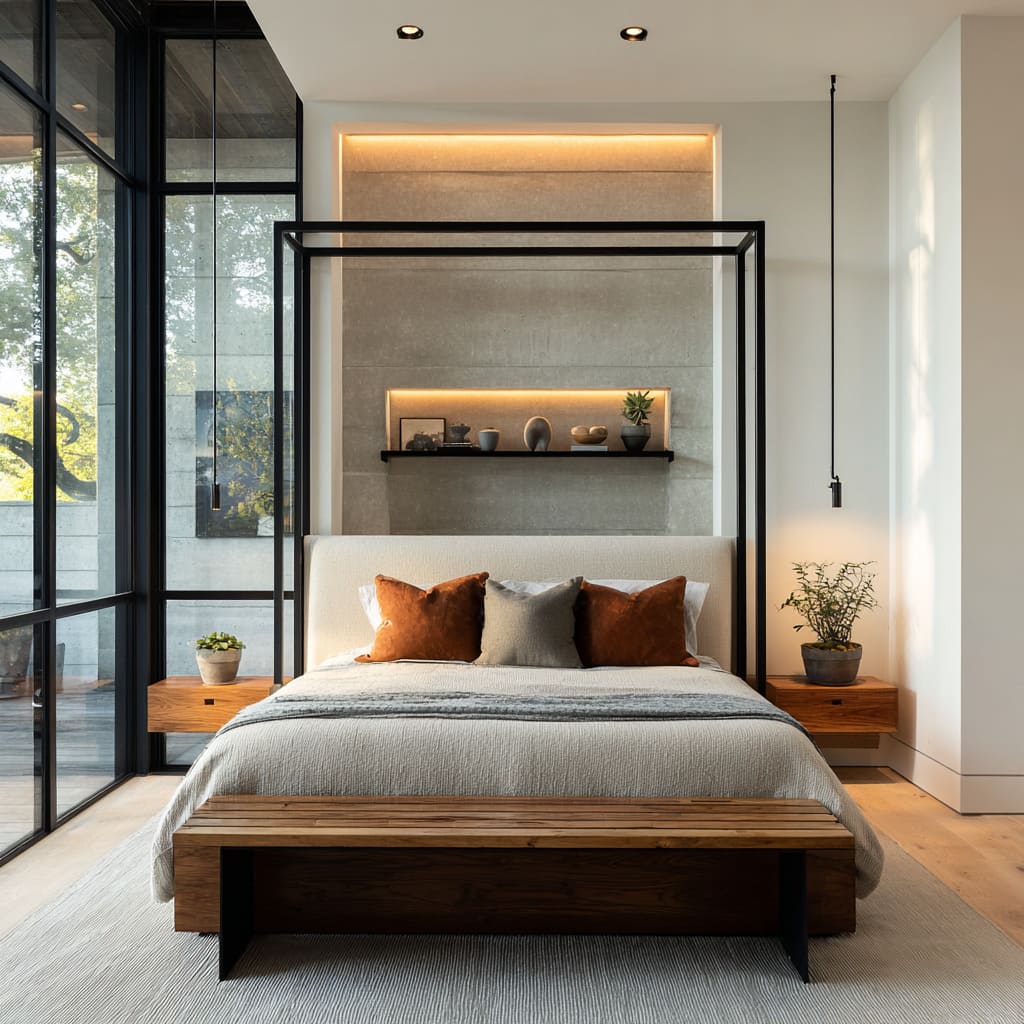
Many bedrooms introduce a series of subtle architectural gestures that enrich the visual experience without overwhelming it. Canopy frames in thin metal or solid oak outline the bed area, marking it as a distinct zone inside the room without enclosing it.
These frames create a refined silhouette that interacts with the vertical rhythm behind the bed. Recessed niches carved into stone or timber walls bring depth to the composition: open shelves with warm lighting acting like display alcoves, horizontal cuts across concrete-textured surfaces, or deeper niches with wooden interiors that contrast with surrounding stone.
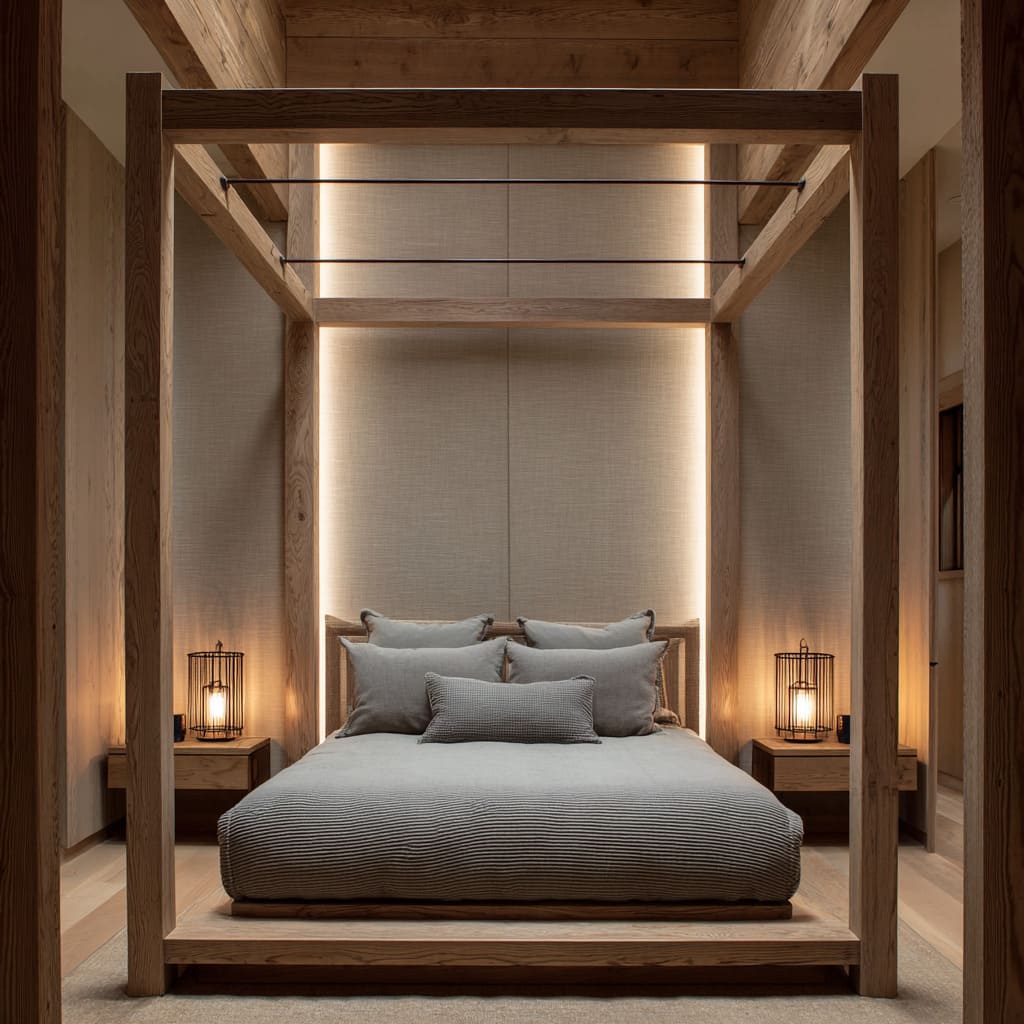
Floating nightstands and consoles add a sense of air at the lower part of the wall, allowing light to slide underneath and creating a layered effect. In layouts that include fireplaces, the firebox is often set low and wide, emphasizing the horizontal dimension and introducing a moving light source.
These micro-architectural moves contribute to the feeling that the space is shaped deliberately from multiple layers, each one softening or refining the next.
Balancing Raw and Refined Elements
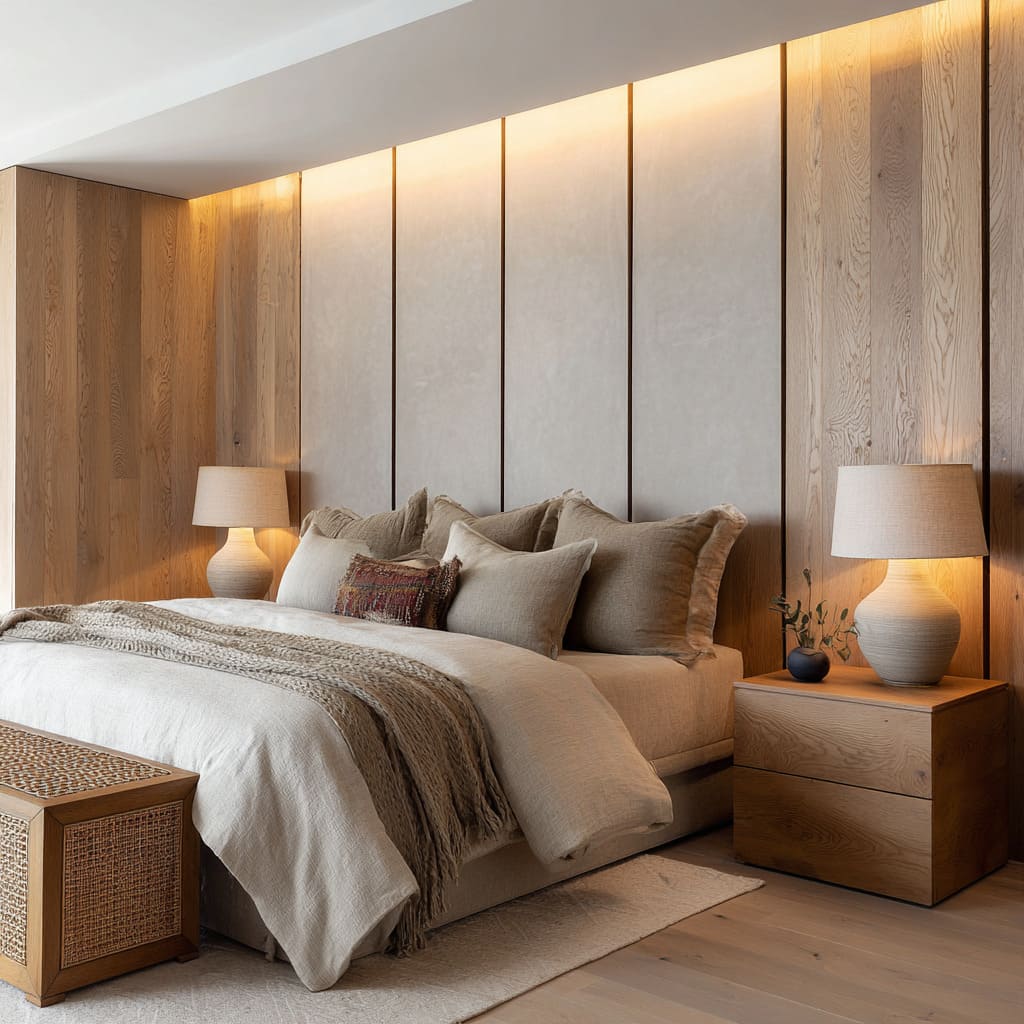
A notable theme across many of the most luxurious bedroom design ideas is the subtle blend of rustic and refined materials. Stone walls with natural variation form calm, grounding planes; their matte texture absorbs light and reduces visual noise.
Against this, designers introduce smooth architectural lines: slender canopy posts, thin pendant lights, straight-edged benches, or clean timber frames. Rough ceramic lamps, textured vases, or handmade clay objects sit alongside slatted wood or upholstered headboards, creating a contrast that feels intentional rather than abrupt.
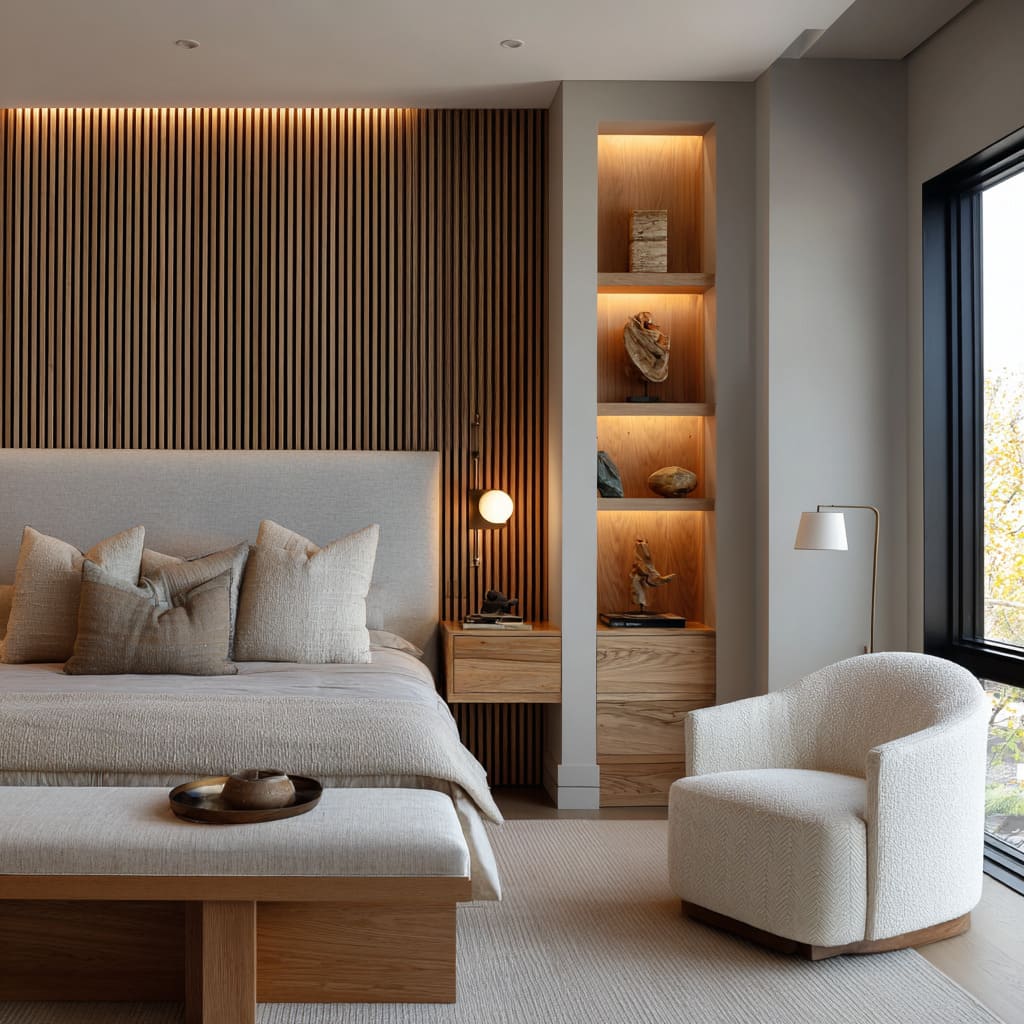
The meeting points between materials—plaster to timber, stone to oak, concrete texture to floating shelf—are often softened by a narrow vertical glow. This quiet transition highlights the surface differences without dividing them harshly.
Even in spaces with heavy materials, tone control remains gentle: sandy neutrals with muted browns, softened grey stone with warm timber, matte textiles layered without stark contrasts. This balance creates interiors that feel warm, tactile, and deeply atmospheric.
Styling Objects
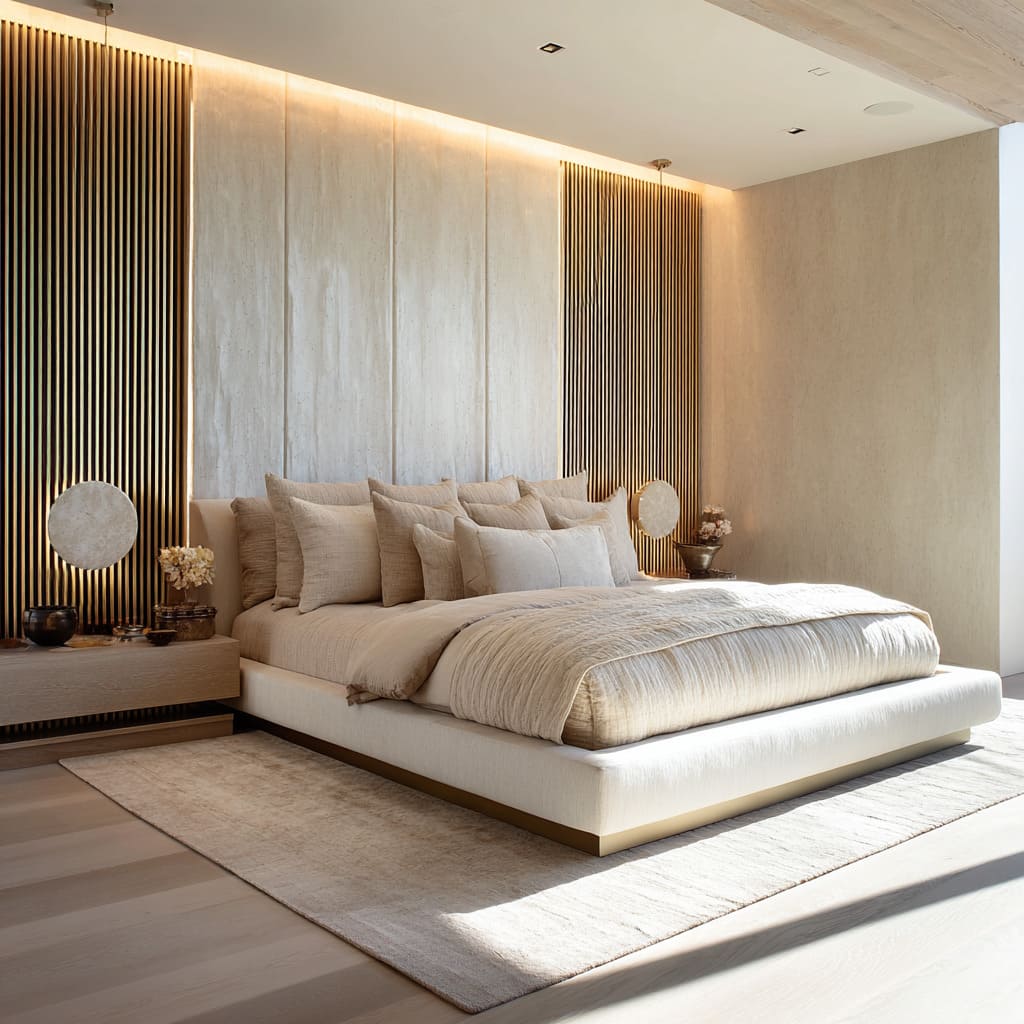
Objects in such bedroom designs serve as soft punctuation marks rather than decorative clutter. The styling language prioritizes sculptural silhouettes: rounded ceramic vases, small stone pieces, wooden bowls, or minimal metal spheres.
Such items are placed sparingly but with deliberate alignment—often matching vertical seams, slat intervals, or shelf divisions. Long branches or dried arrangements extend the vertical rhythm found in the wall surfaces, linking plant forms to architectural lines.
Books appear mostly in recessed niches or on floating nightstands, stacked with intention so they contribute to the visual order.
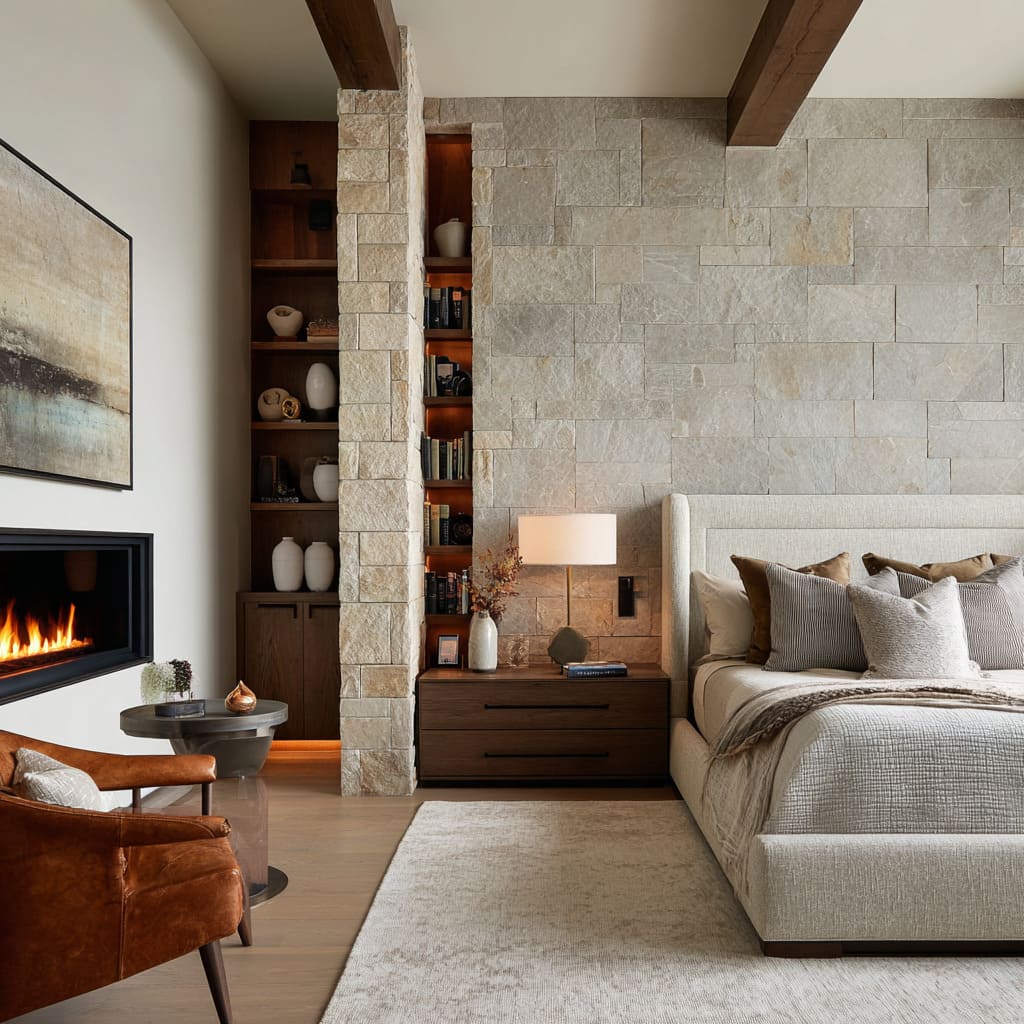
Textile throws and pillows, arranged with subtle tonal differences, reinforce softness and comfort. Armchairs near windows often use bouclé or woven textures to echo the tactile palette of the bed.
This approach to styling avoids ornamentation for its own sake; instead, each object contributes to a cohesive visual language of gentle shapes and warm textures, reinforcing the calm atmosphere of small luxurious bedroom ideas without overwhelming the composition.
Light Over Time
A deeper aspect of such luxurious interior designs is how the rooms behave throughout the day. In morning light, pale timber boards, linen headboards, and matte stone surfaces diffuse brightness gently, producing a soft glow rather than sharp contrast.
As afternoon light enters, recessed niches and vertical seams begin to reveal their warmth more clearly, making textures like slats, plaster, and fabric appear deeper. In the evening, fireplaces and concealed lighting become the main visual anchors.
Warm glows emphasize stone variation or timber grain, creating a calm interplay of highlights and shadows.
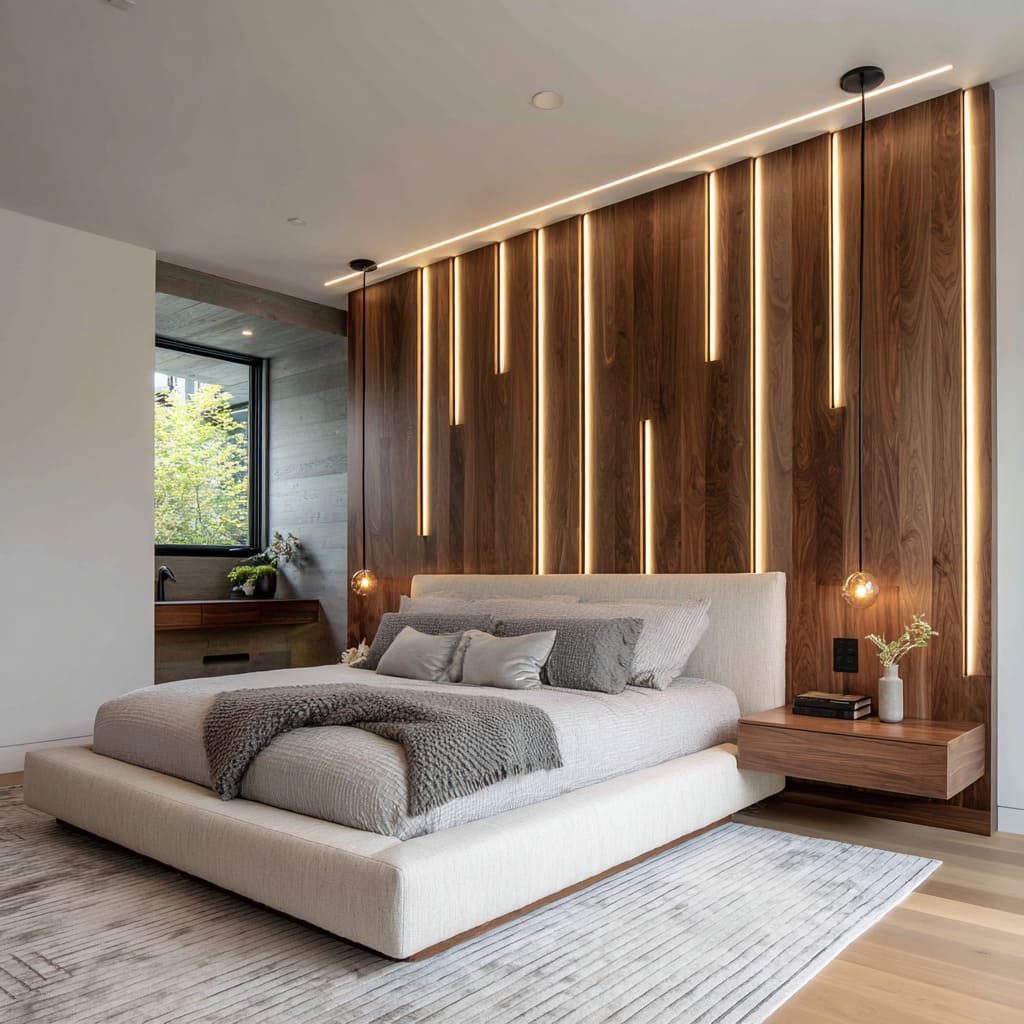
Pendant lights aligned with wall seams act as vertical accents. Under-bed lighting and ceiling coves produce a floating effect that softens the edges of the room, allowing the entire space to become a quiet retreat.
This time-based transformation demonstrates how the design is intended to support multiple moods—from soft morning brightness to evening calm—each one shaped by the carefully layered materials and lighting.
Three Overarching Design Families
Many of the most luxurious bedroom design concepts can be grouped into three broad categories, each defined by a specific interaction of materials and light.
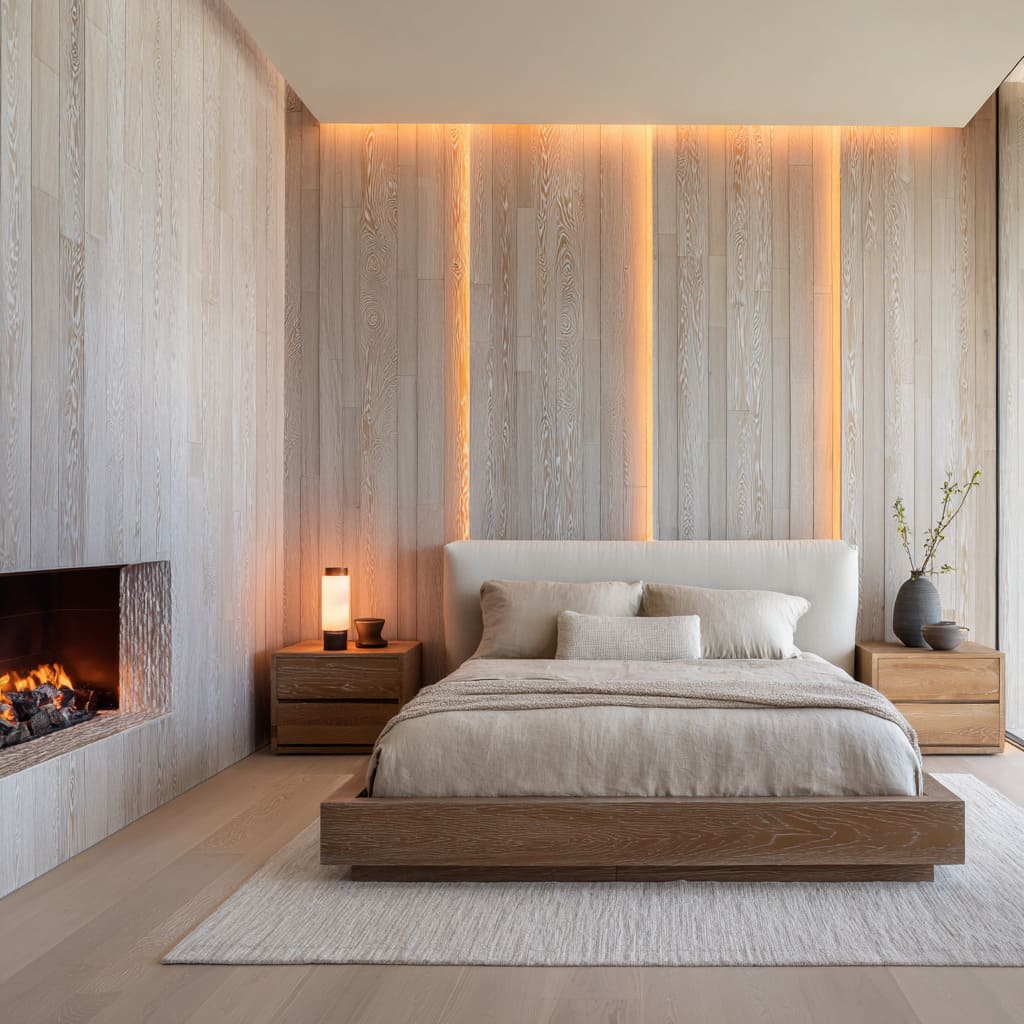
Here is a structured breakdown:.
A) Timber-Focused Rooms
- Tall slat walls
- Pale or walnut boards
- Vertical light seams
- Floating timber furniture
- Linen bedding and matte textures
These designs carry a warm, contemporary calm, forming a continuous envelope of natural tone.
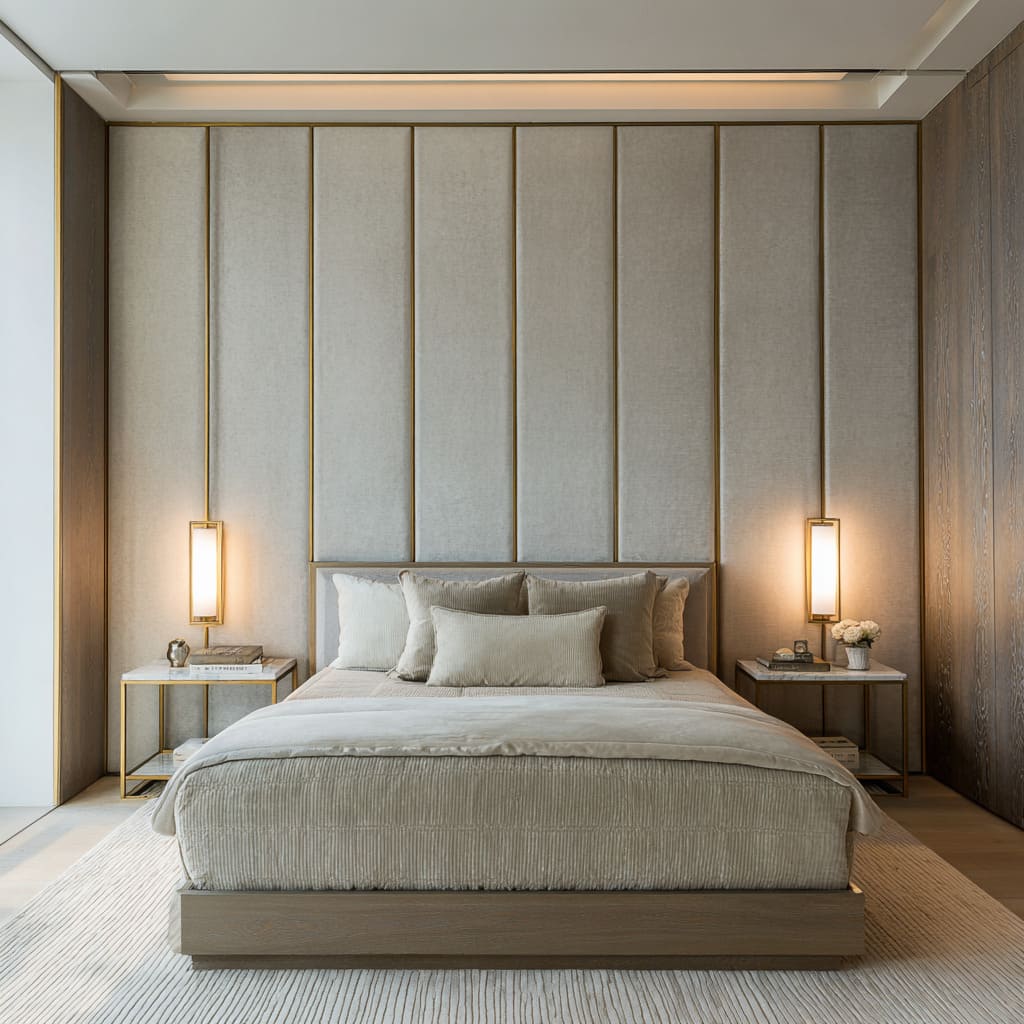
B) Stone-Centered Rooms
- Full stone headboard walls
- Backlit slabs with natural veining
- Low beds that appear anchored
- Fireplaces adding moving light
- Minimal color shifts
The mood is serene, grounded, and atmospheric.
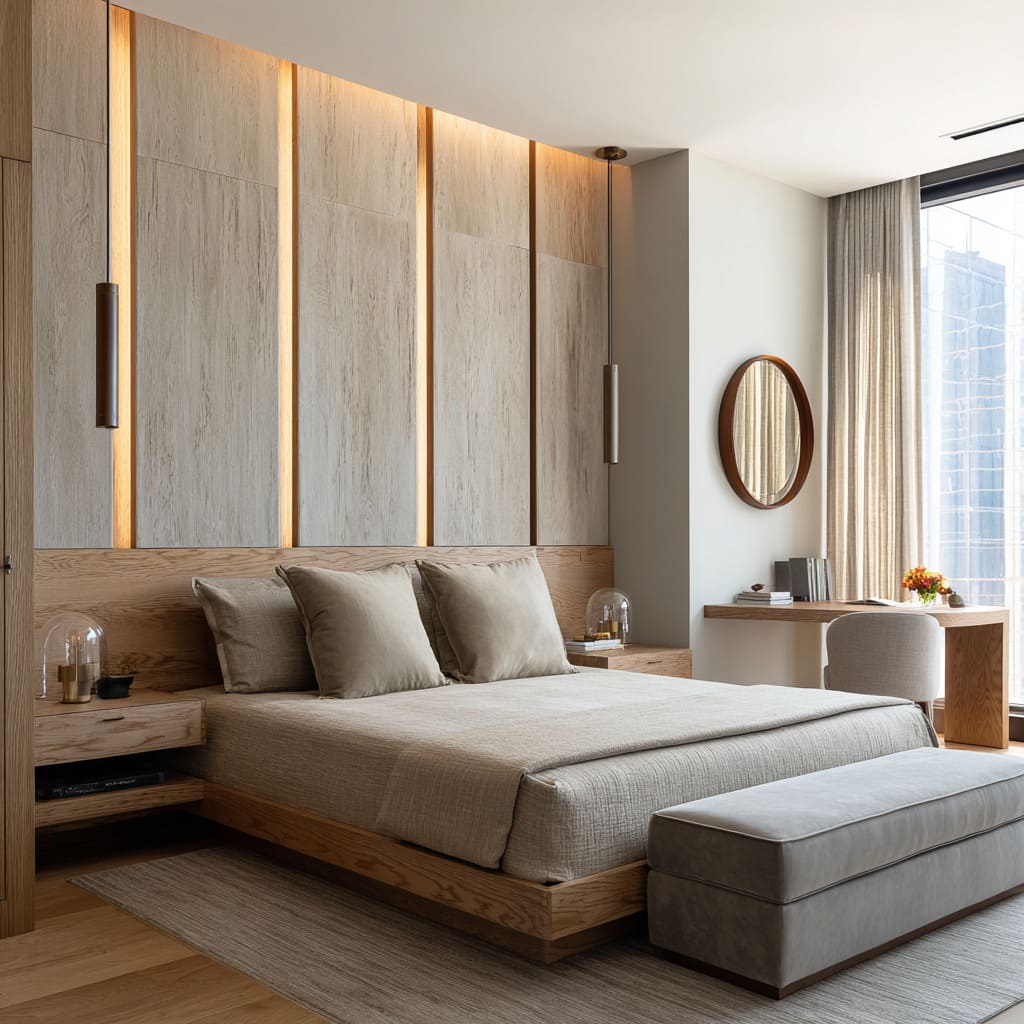
C) Rustic-Modern Hybrids
- Plaster textures with tonal variation
- Vintage trunks, rough ceramics
- Slim timber slats beside organic surfaces
- Warm glow marking boundaries
These ideas blend craft, texture, and clean lines for a soft, collected identity.
Together, they illustrate how most luxurious bedroom designs achieve richness through layered surfaces, quiet architectural gestures, and subtle lighting rather than bold contrasts or heavy ornamentation.