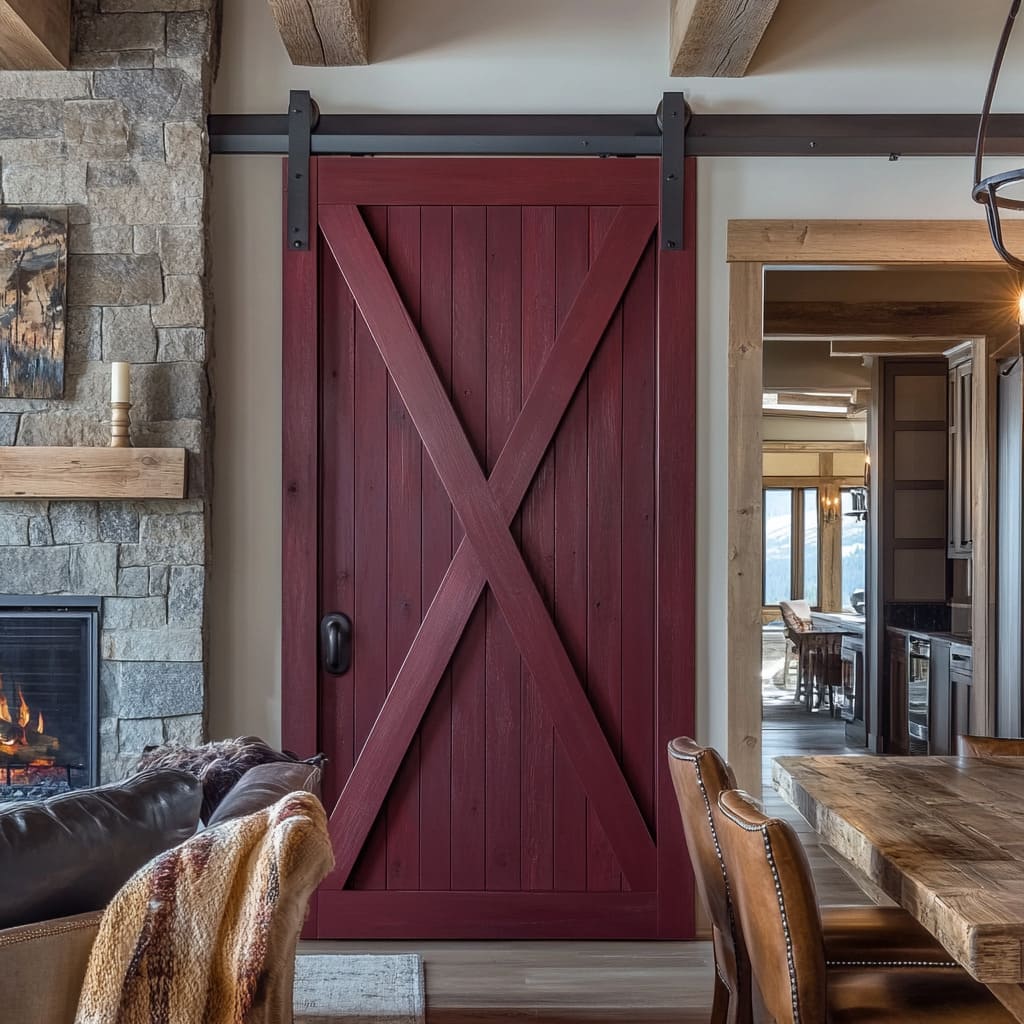
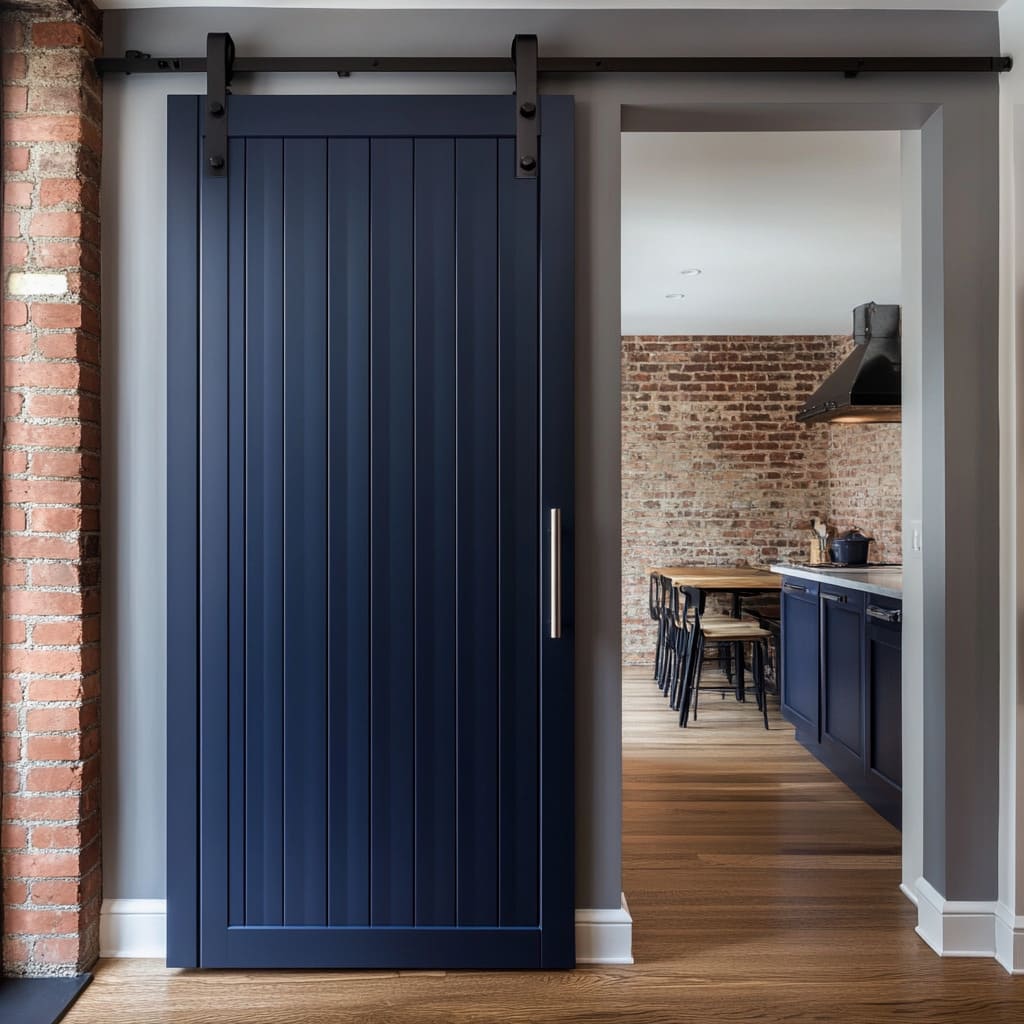
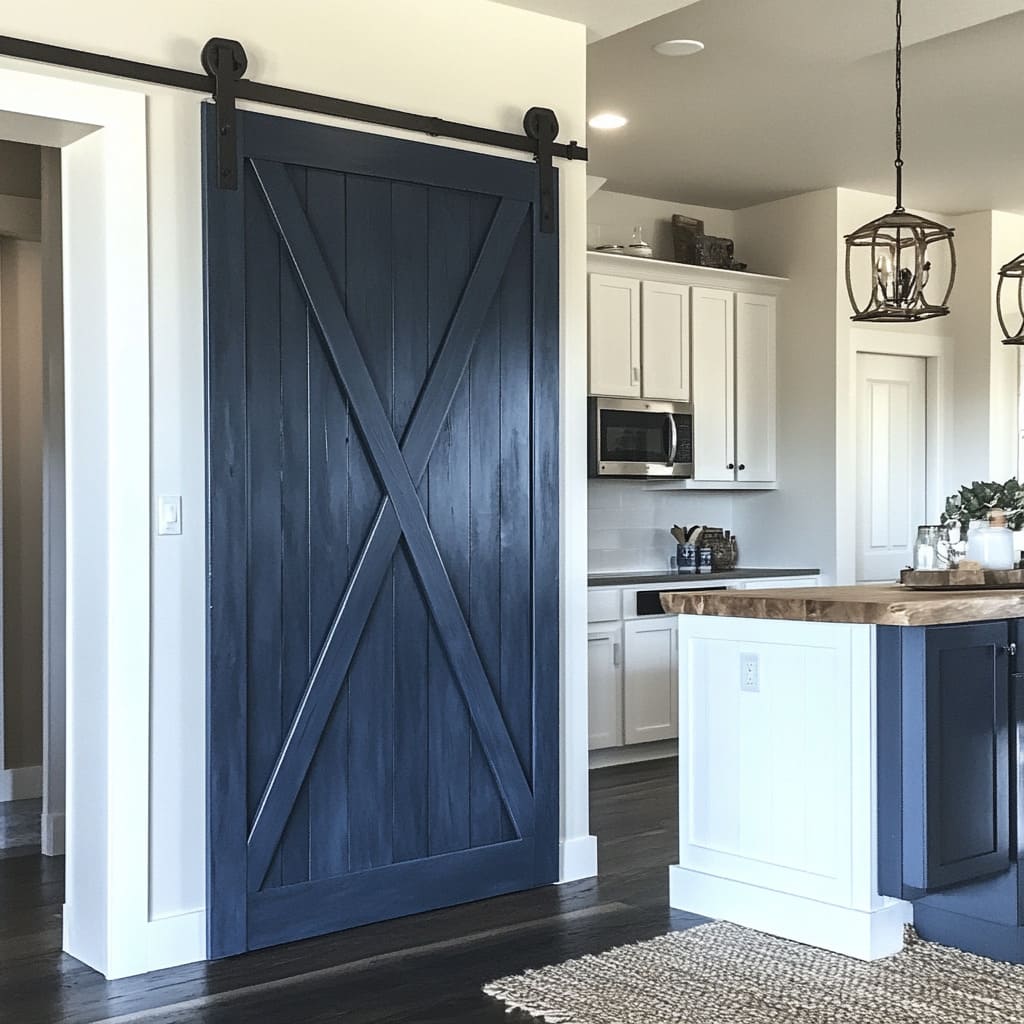
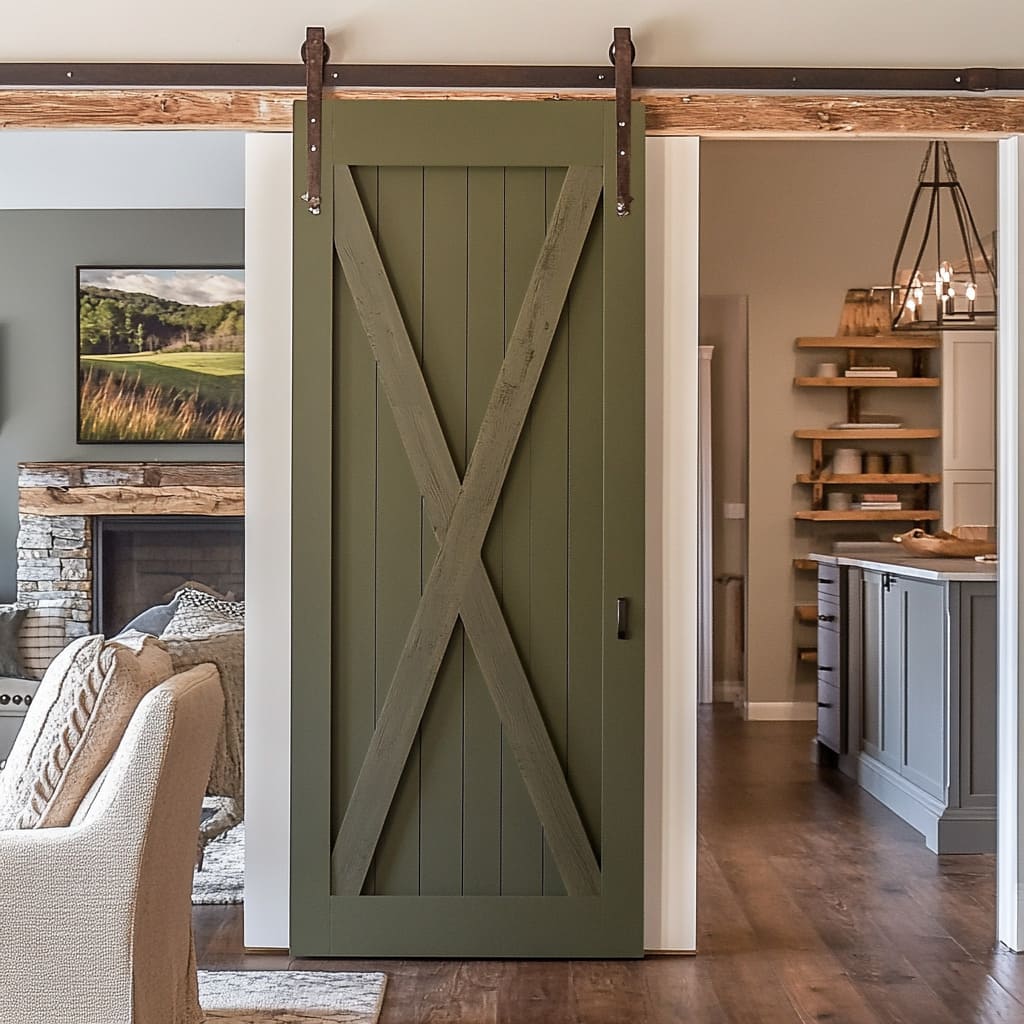
Color is the first force shaping how decorative sliding barn doors behave inside a room, long before pattern or hardware is noticed. Deep hues—navy, charcoal, burgundy, olive—establish stability and visual gravity, turning the doorway into a steady point that organizes the surrounding furniture.
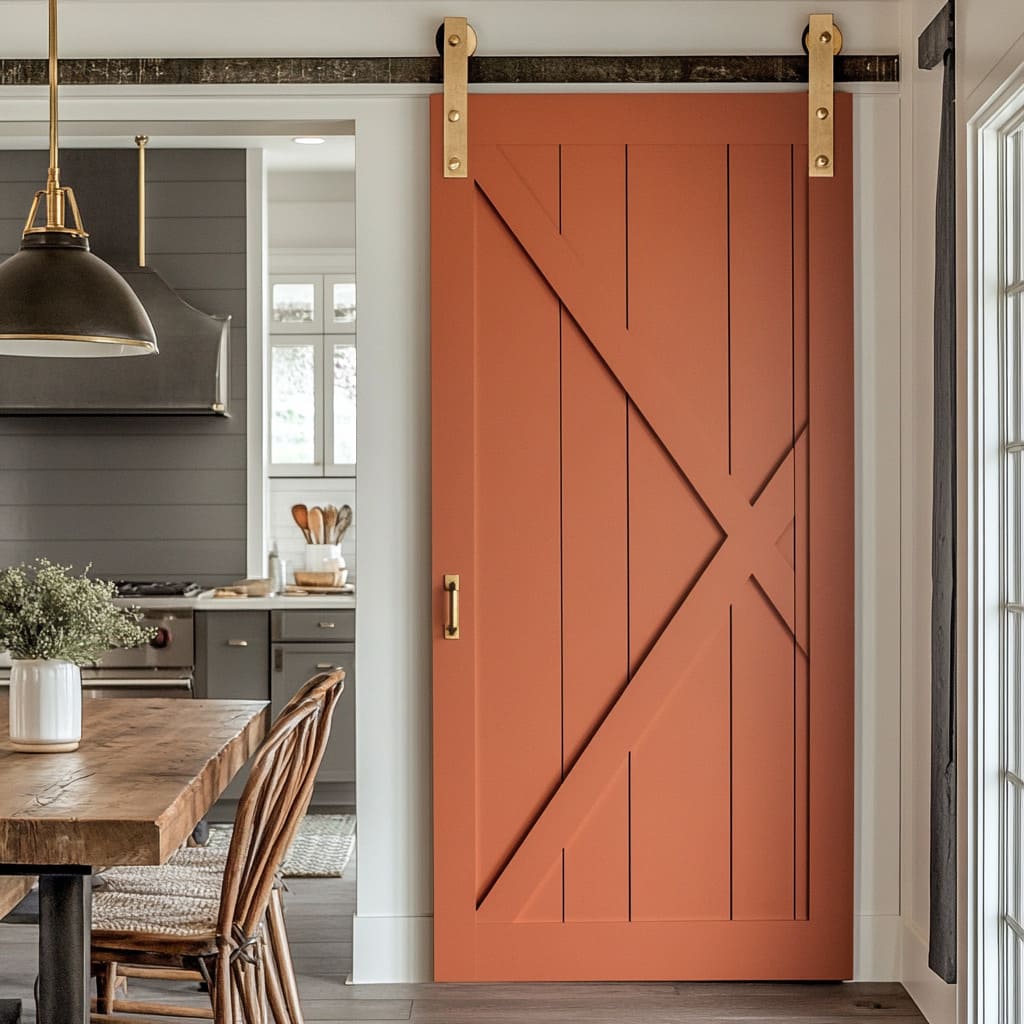
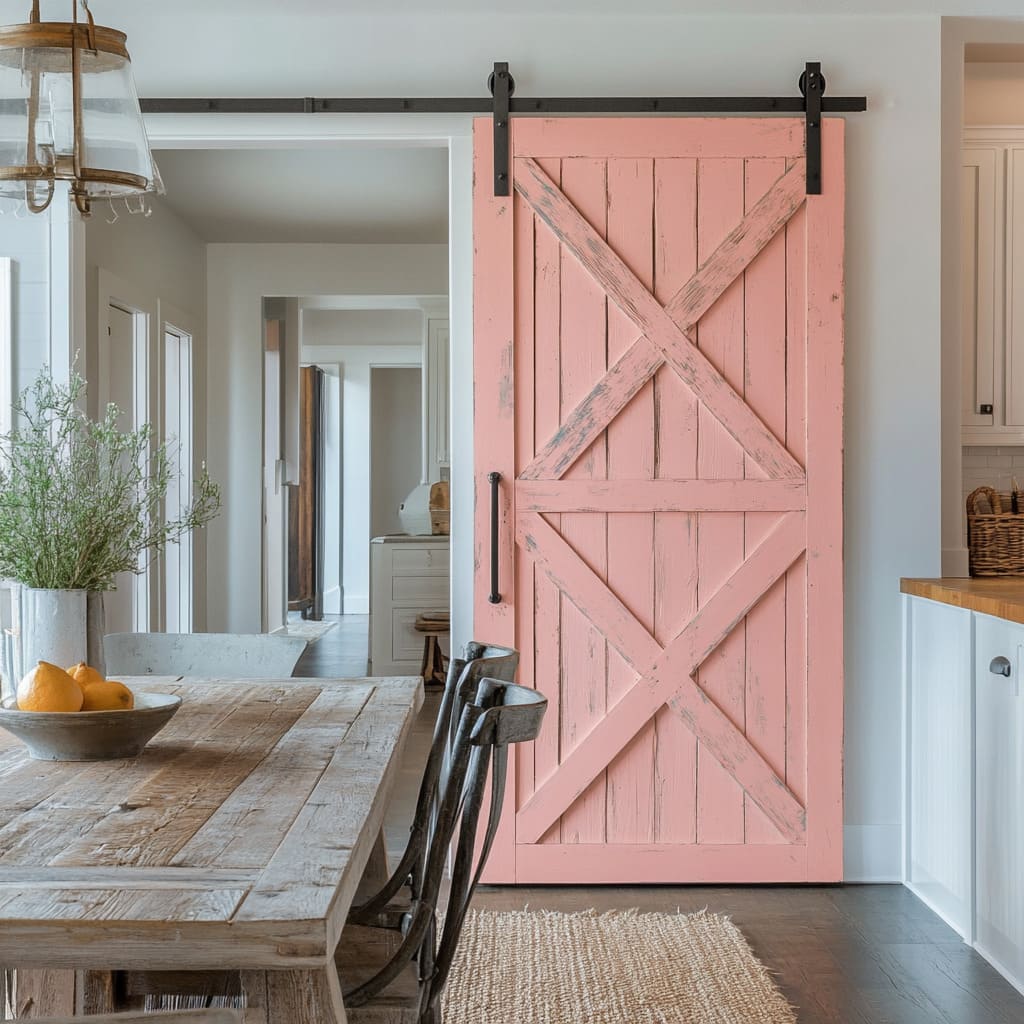
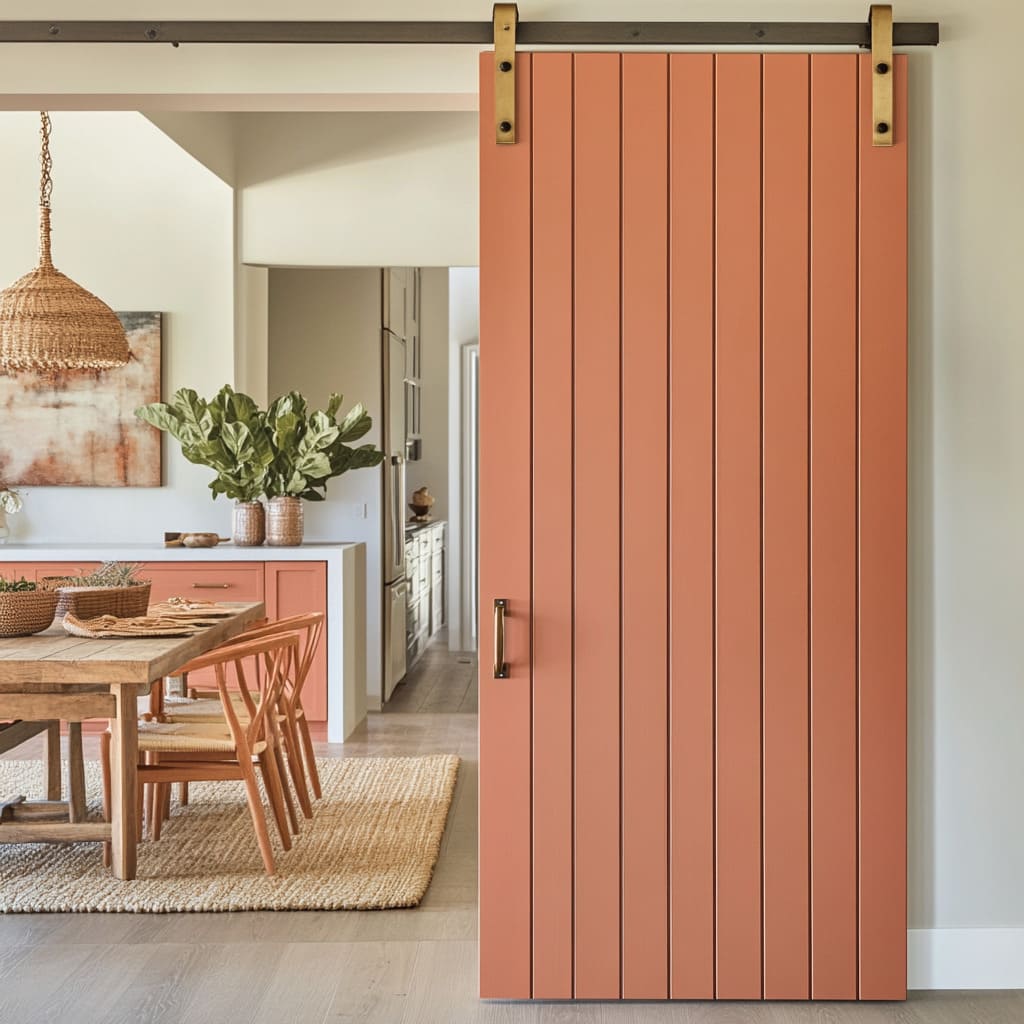
Warm pigments such as terracotta, peach, coral, and mustard act almost like gentle light sources, adding a feeling of calm brightness where neutral walls or stone textures might otherwise read cool. Pale tones, including lavender-gray, misty blue, and soft sage, dissolve the boundary between rooms, allowing the door to feel like air rather than structure.
Darker surfaces act like anchors; lighter surfaces behave like soft transitions. The interplay between color temperature and nearby materials is especially striking: warm doors make stone appear cooler and more textured, while dark doors make pale cabinetry appear brighter and lighter.
In this sense, color decisions for barn door ideas often carry as much impact as cabinetry finishes or wall shades.
Pattern Logic: How Line Direction Shapes Emotion and Space
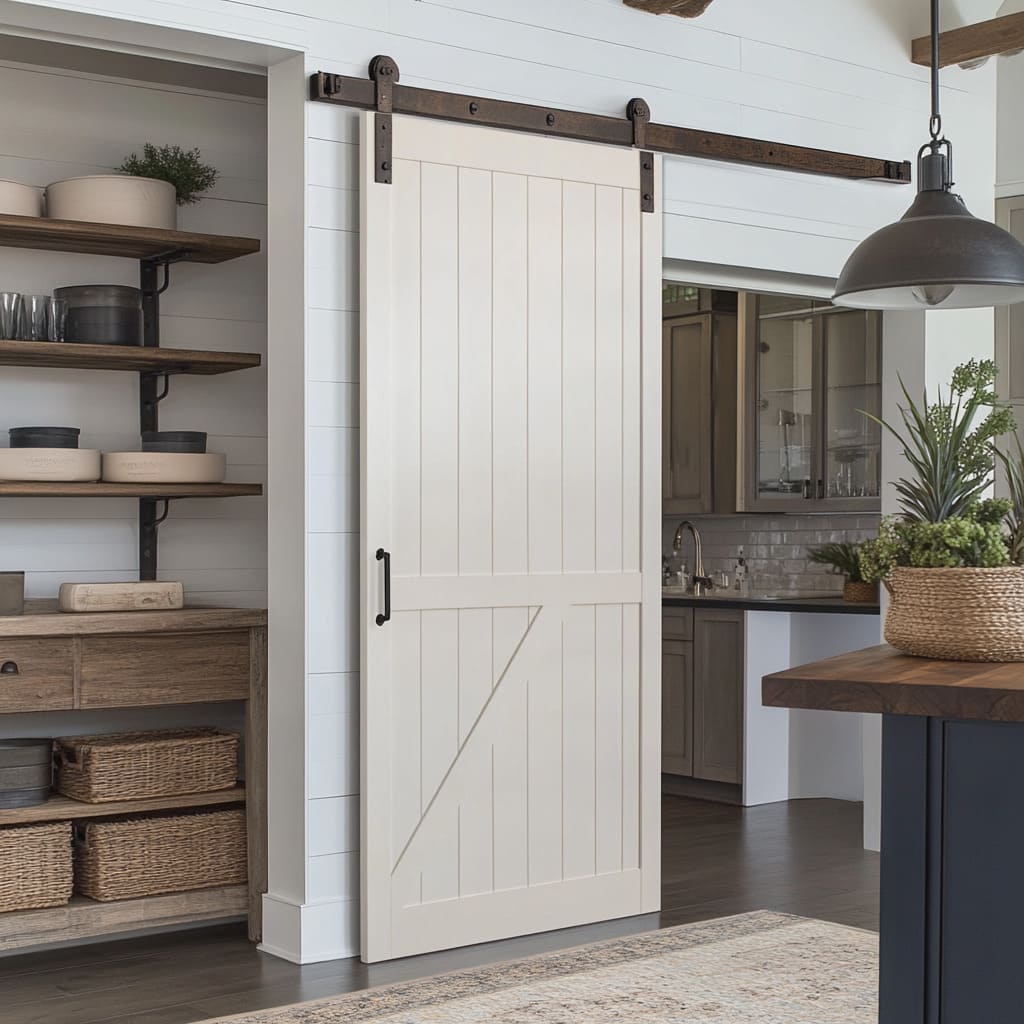
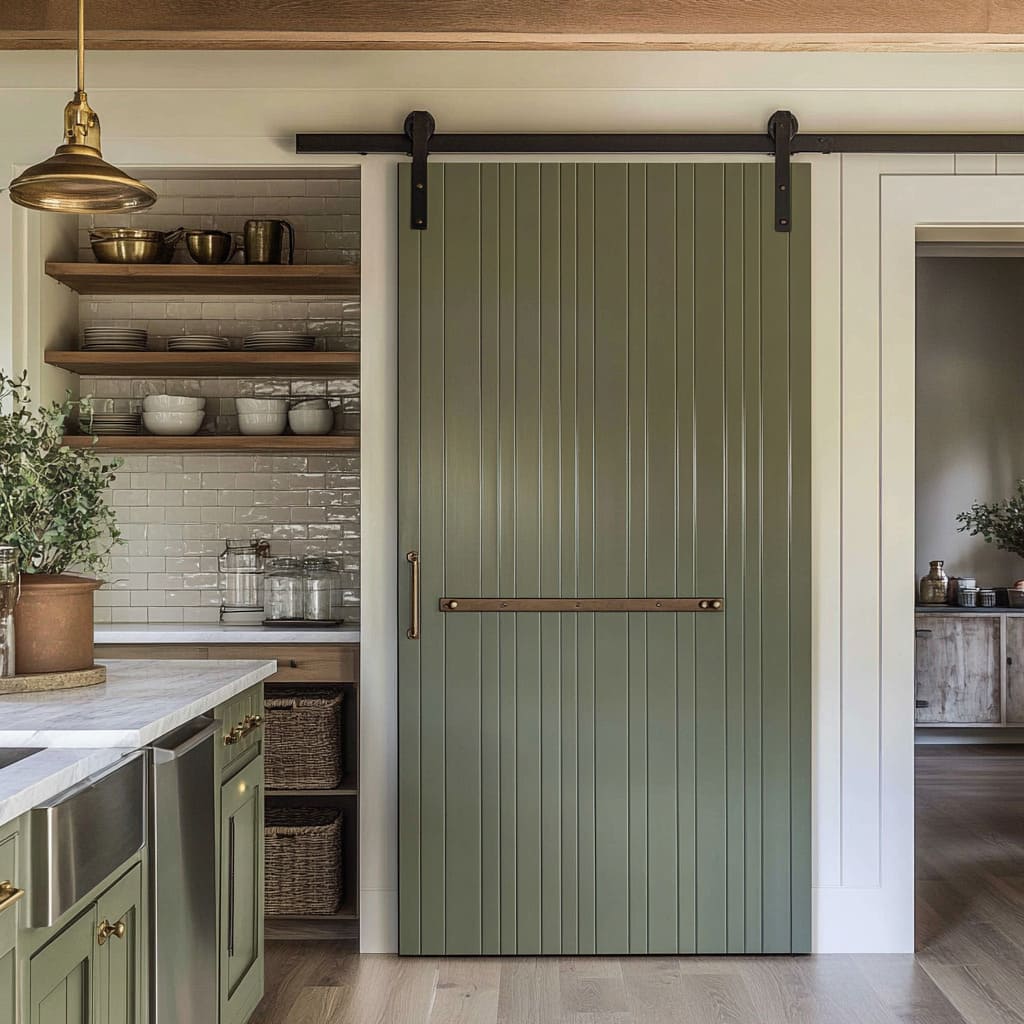
The direction of planks, braces, or overlays affects how a room feels. Vertical patterns lengthen the wall, especially when combined with slim planks or slats that produce subtle shadow lines.
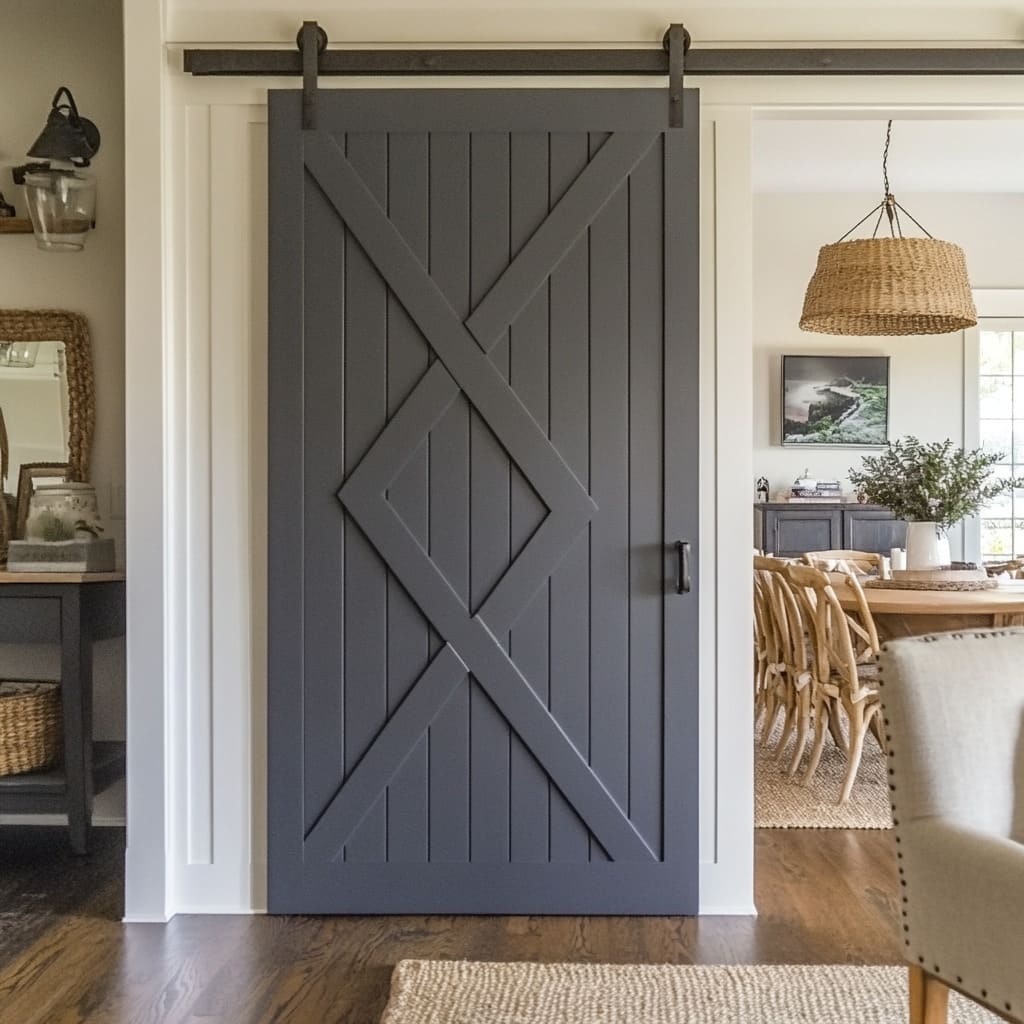
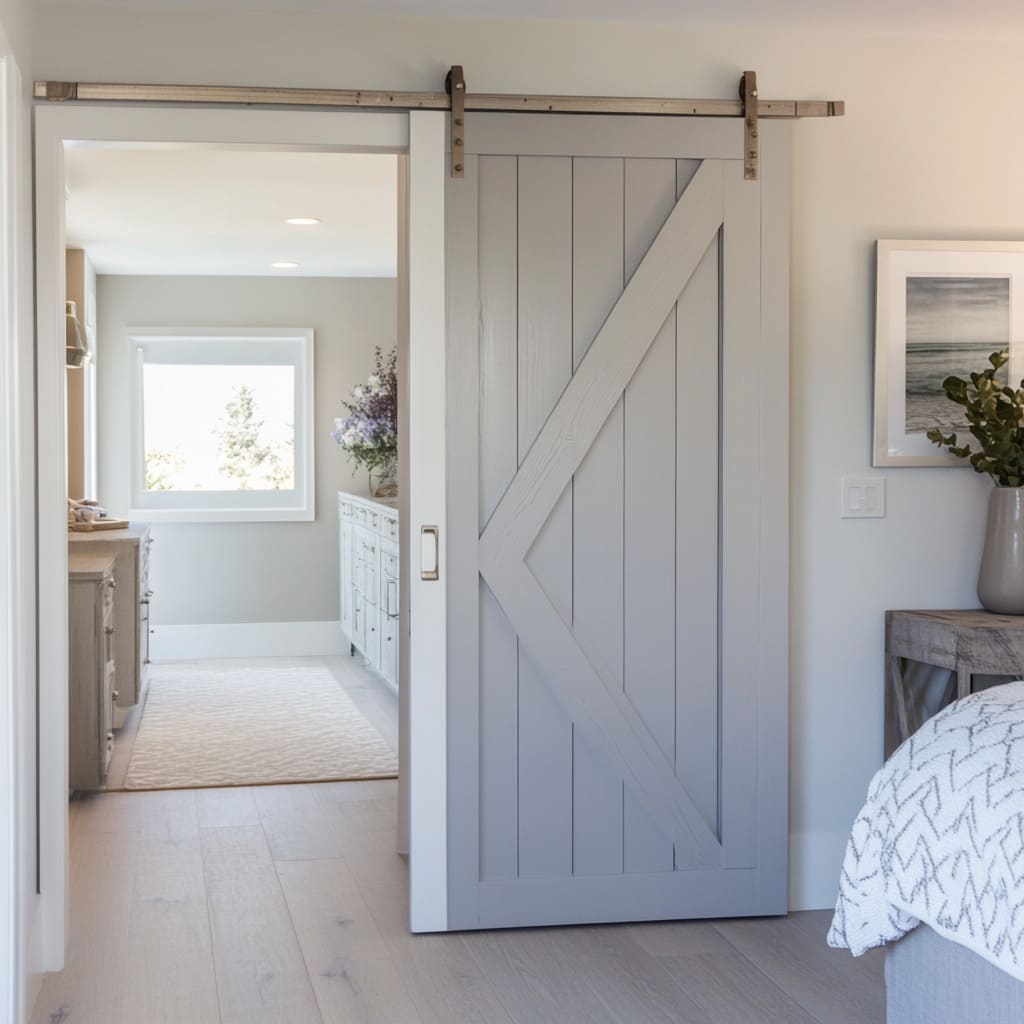
Diagonal structures, whether a single brace or a multi-piece arrangement, create movement inside an otherwise still architectural opening. Chevron or arrow-inspired compositions introduce energy by pushing the eye upward or sideways, and louver patterns soften the transition between rooms while suggesting airflow and openness.
Three Key Pattern Families:
- Vertical rhythm: narrow planks, slatted terracotta, repeating ribbed lines that create height and calm order.
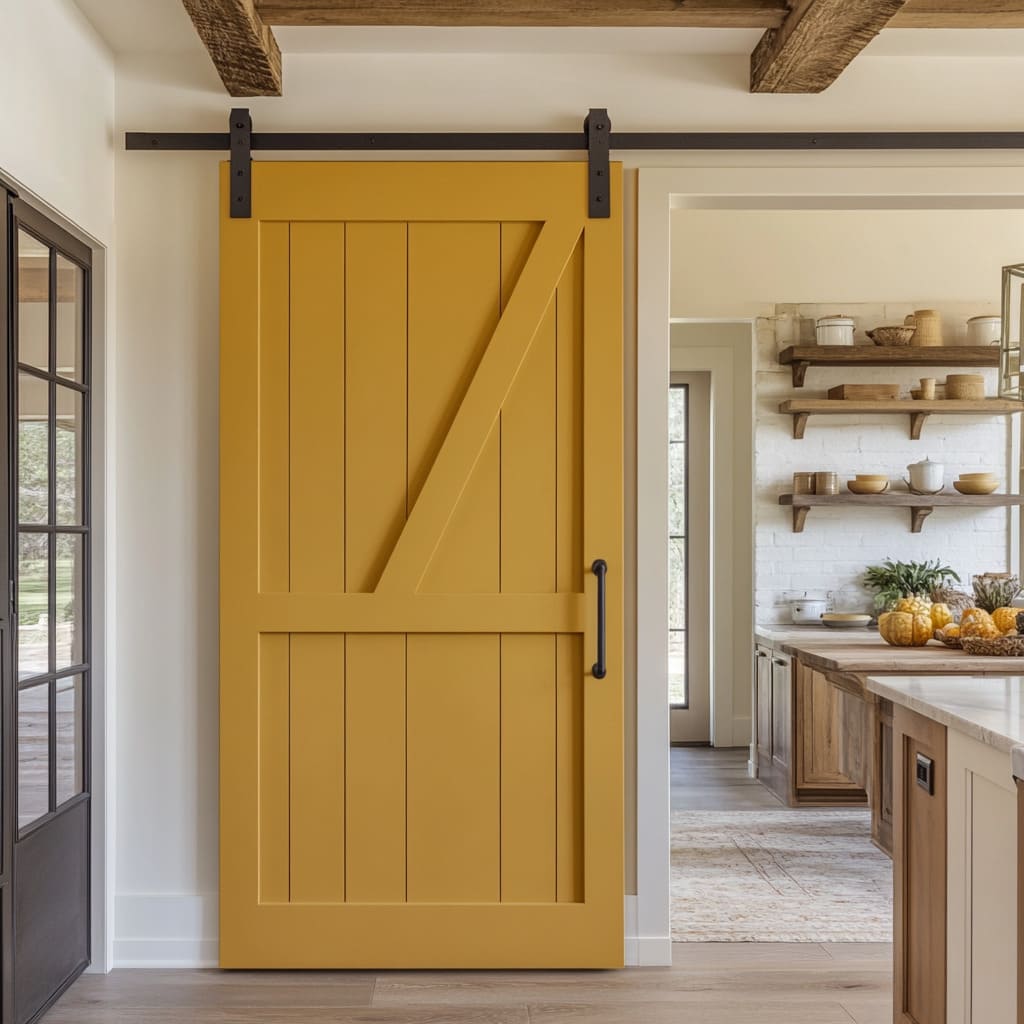
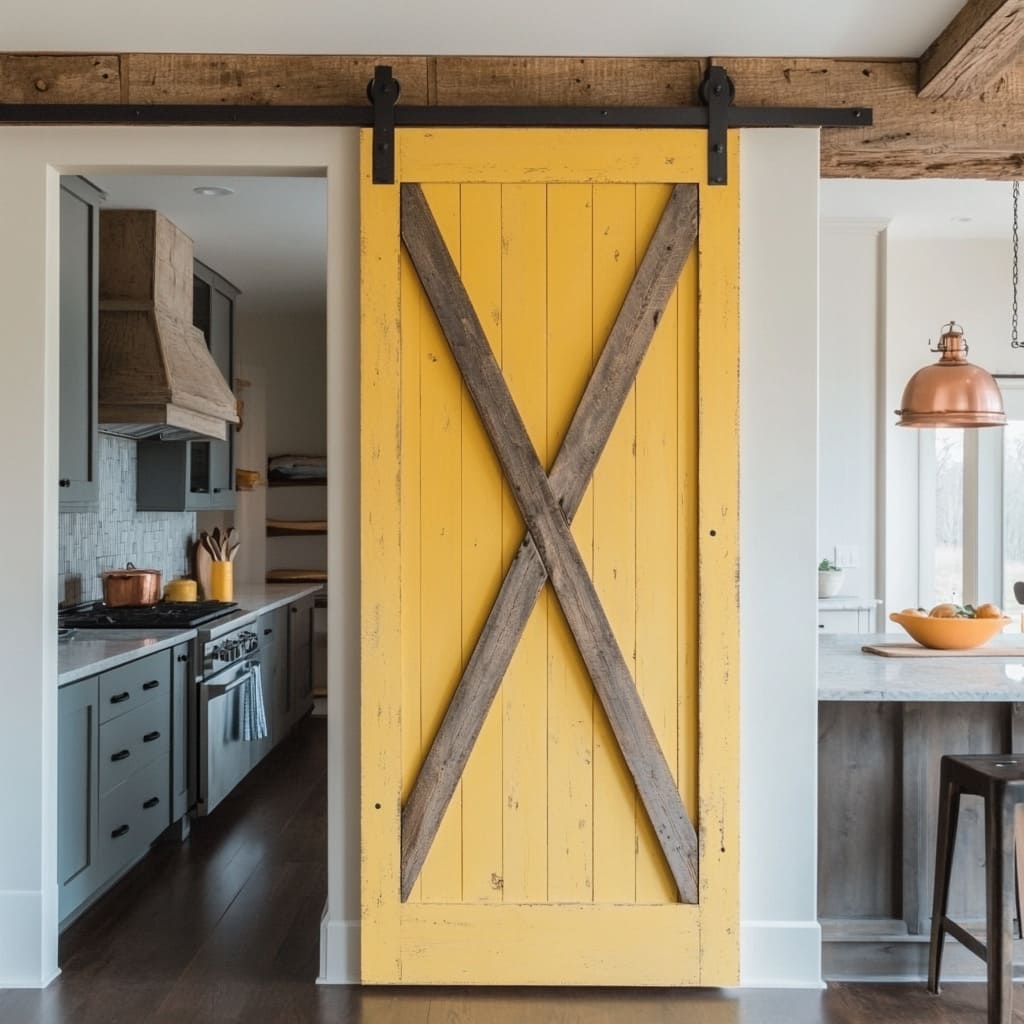
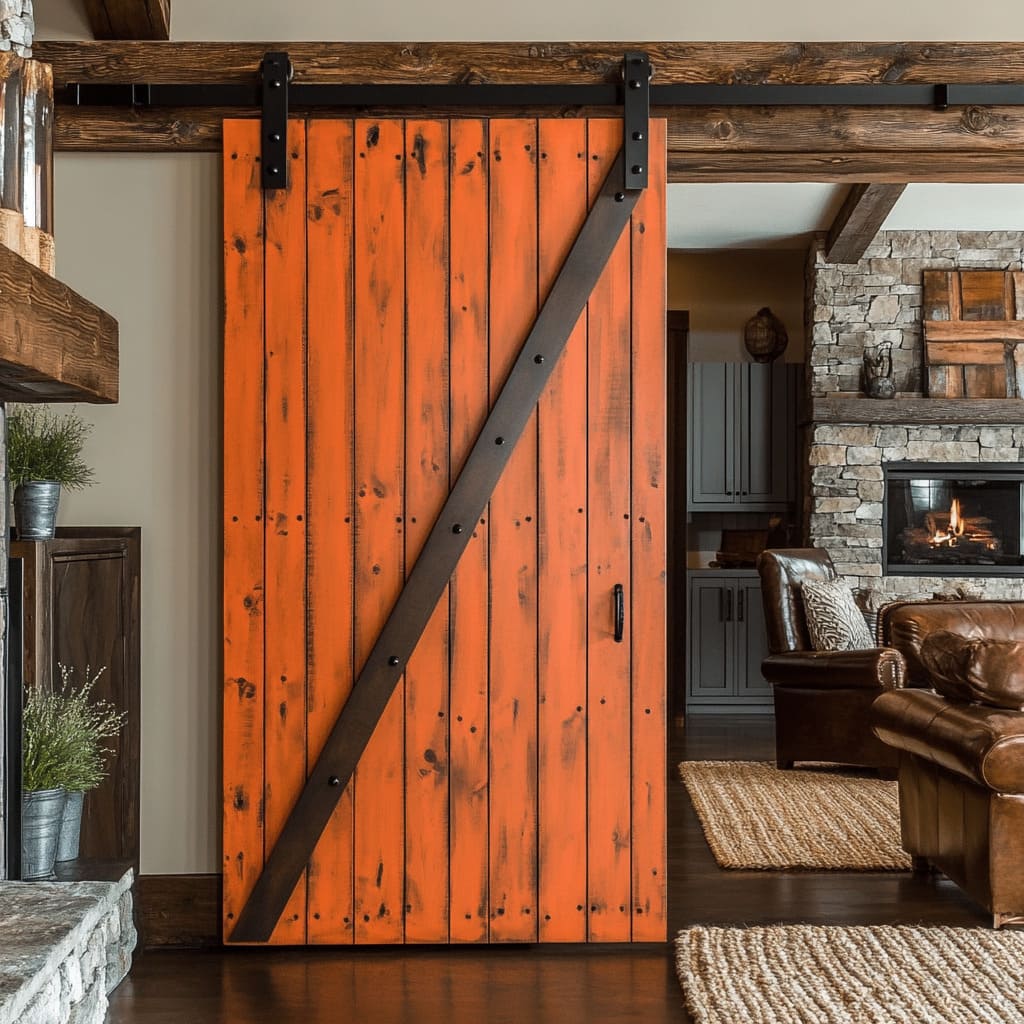
- Diagonal rhythm: X-braces, Z-braces, directional overlays that add movement without making the door feel busy.
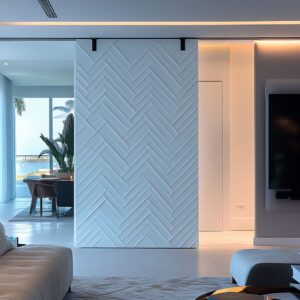
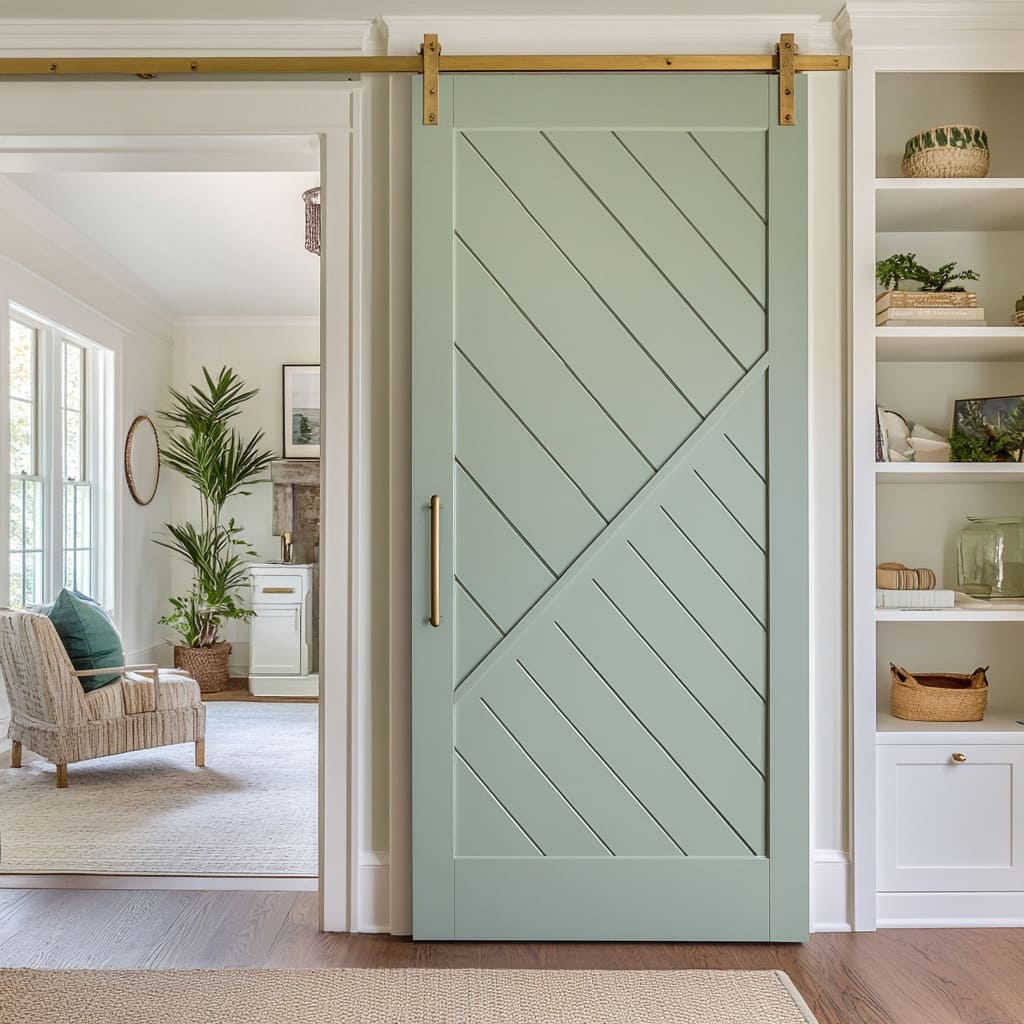
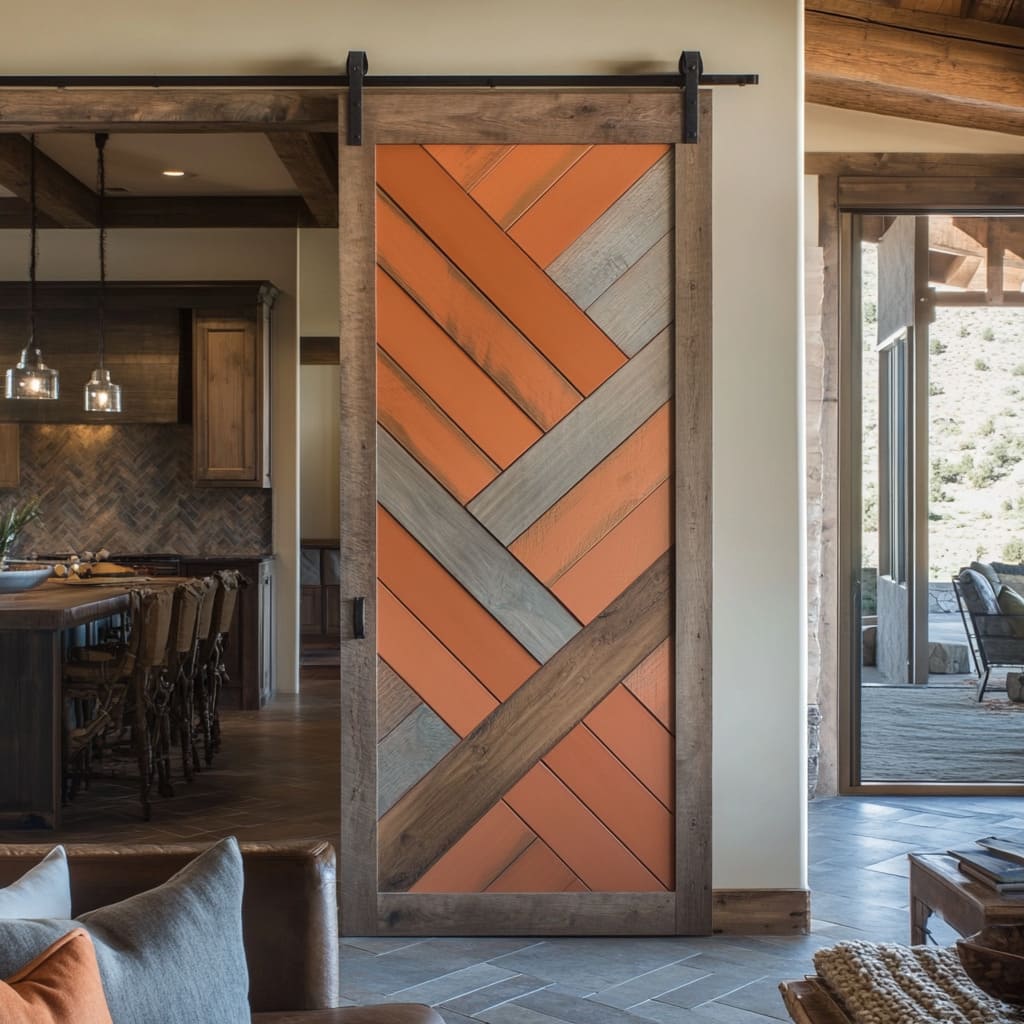
- Hybrid surfaces: chevron arrangements or diagonal planks that shift angle halfway down the door to create a quiet “folded textile” effect.
This subtle geometry is one reason many thoughtful barn door designs feel expressive without requiring elaborate ornamentation.
Warm Earth Tones as Emotional Centerpieces
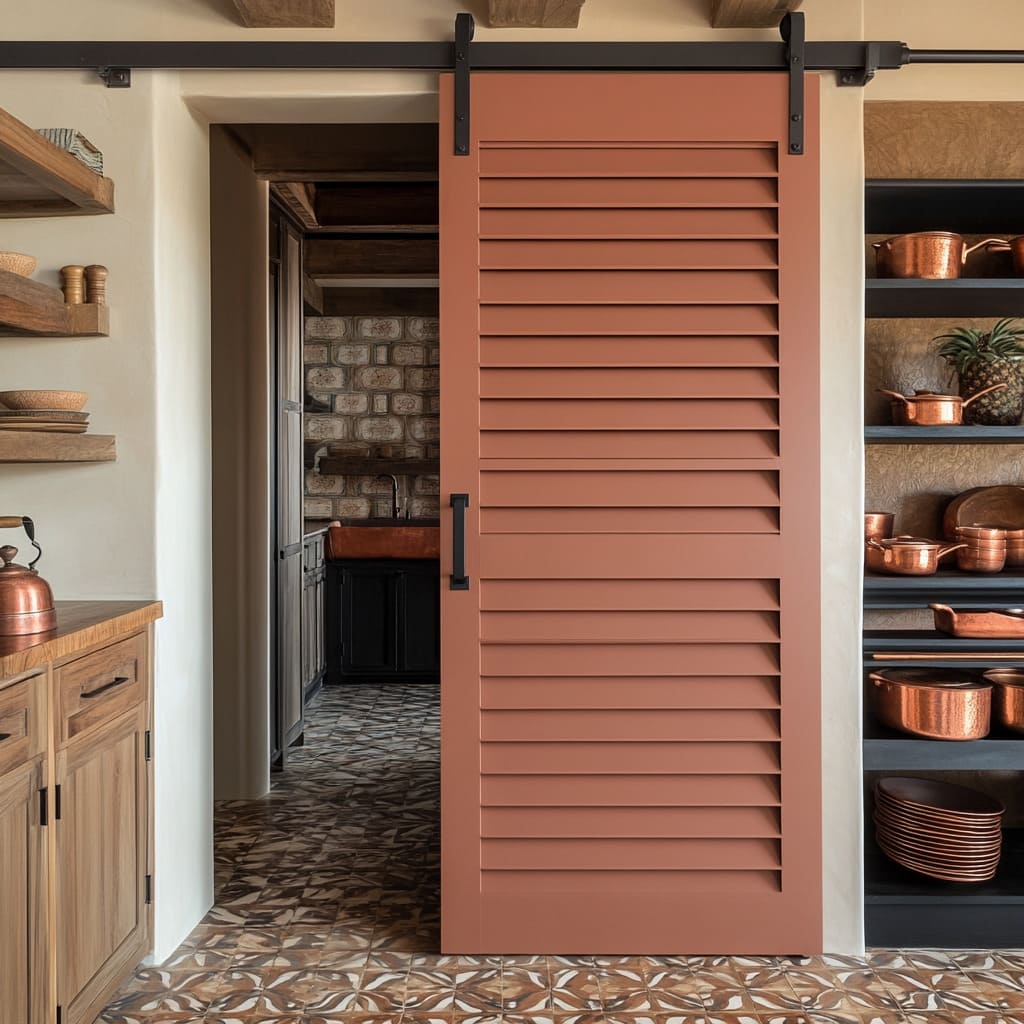
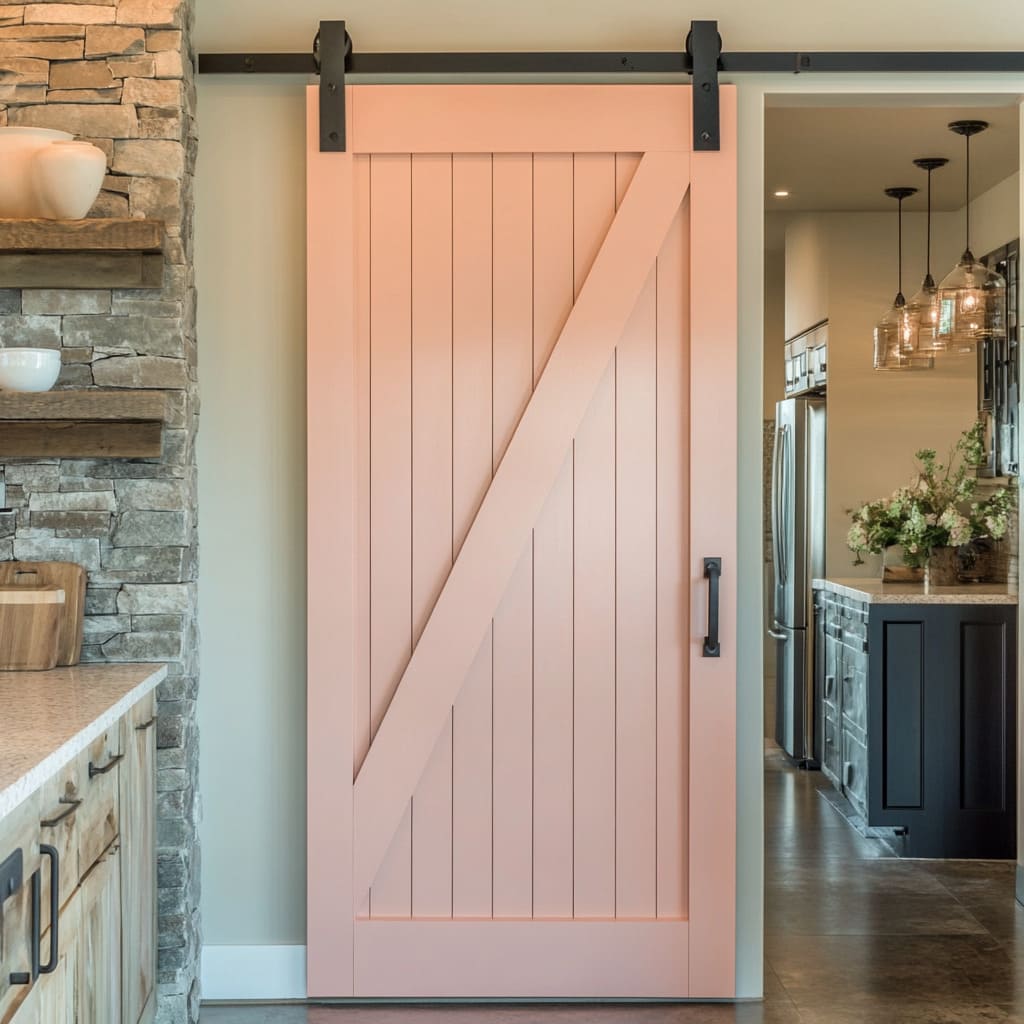
Warm colors are especially strong in this design category because they influence the perception of architectural materials around them. Terracotta, soft burnt orange, muted coral pink, and warm mustard are used not for boldness alone but for their ability to create a comfortable visual temperature inside natural settings.
In homes where stone fireplaces, reclaimed beams, artisan pottery, and woven seating are present, a warm door can become a unifying vertical plane.
Soft fade lines, distressed paint treatments, knotty textures, and shadow-catching grooves all enhance the dimensionality of the warm palette. In dining zones, an earthy orange vertical-slat panel ties together rustic ceramics and natural-fiber rugs; in living areas, a peach-toned door warms the cooler grays of adjacent stone.
This explains why designers often use warm tones when developing sliding door ideas that must visually balance cooler surfaces without overpowering them.
Cool and Misty Tones: Doors that Behave Like Atmosphere
Soft pastels and misty neutrals create doors that seem to blend into their environment rather than stand apart. Pale lavender-gray, dusty sage, sky-washed blue, and powder aqua produce a sense of calm that works well in bedrooms, dressing zones, breezy hallways, and quiet transition areas.
Such doors can carry a specific visual softness for three reasons:.
- Matte finishes diffuse light gently, preventing shine that would make the color louder.
- Slim handles or champagne-toned hardware disappear into the palette so pattern and silhouette stay gentle.
- Light gradients form naturally: the upper part of the panel reads cooler due to daylight, while the lower portion reads warmer due to flooring reflection.
Because these tones lean toward neutrality, they also help bind adjacent spaces together, a quality that defines many modern barn door ideas when designers want atmosphere rather than contrast.
Mixed-Material Door Concepts and Their Emotional Impact
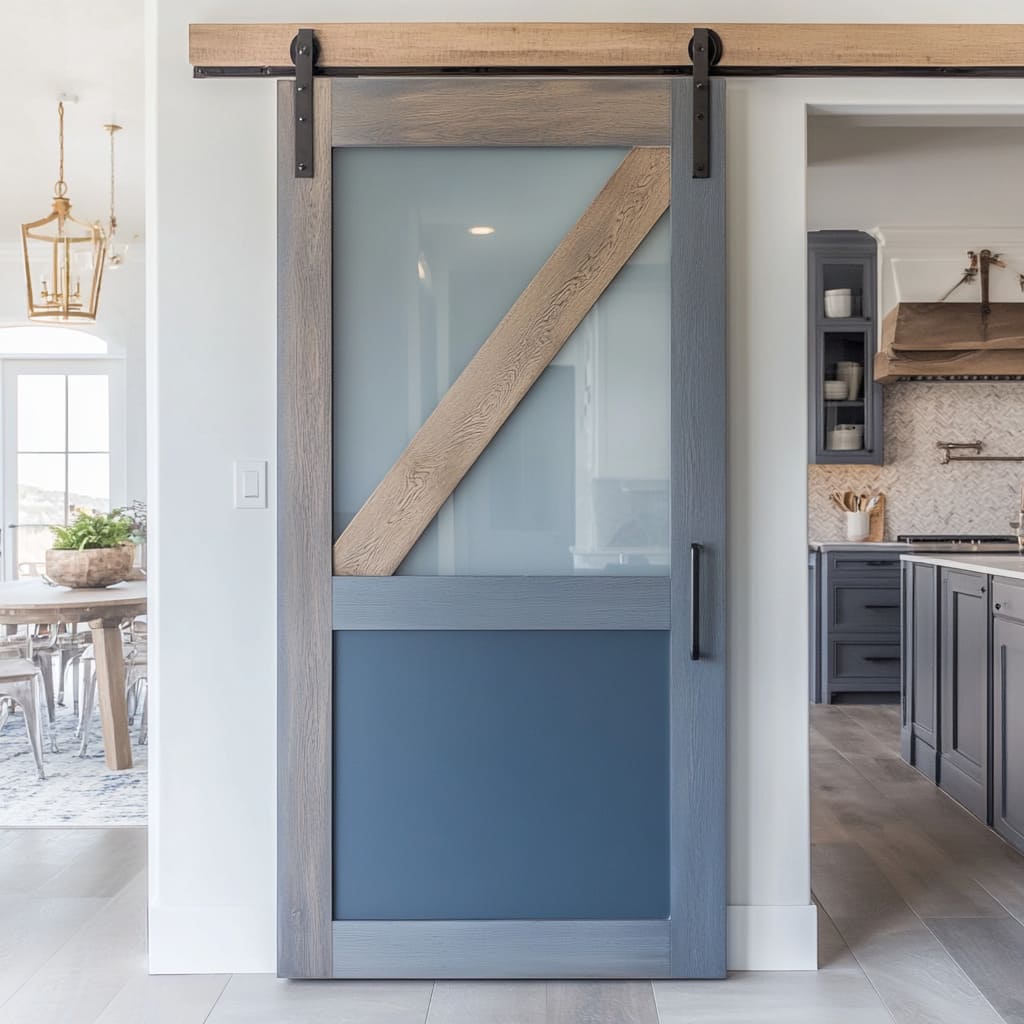
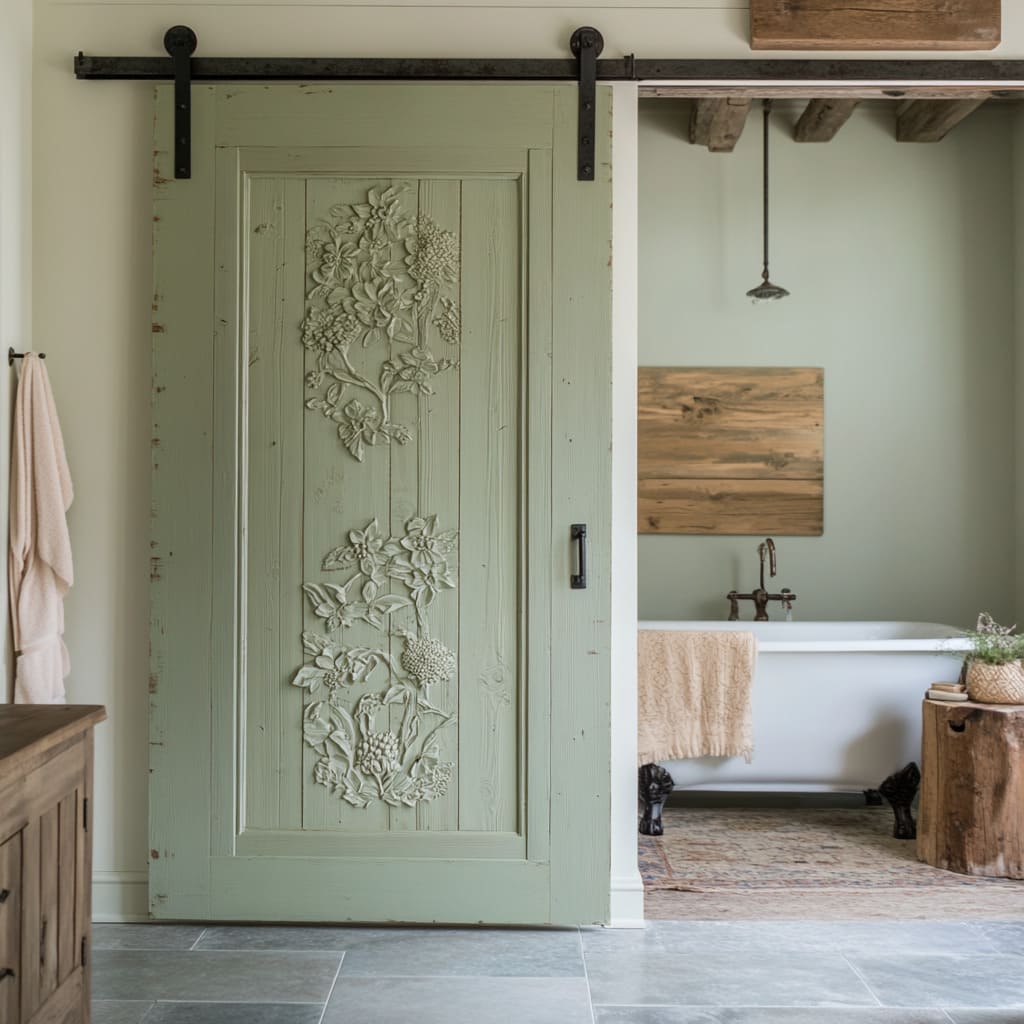
Some of the most striking visuals arise when painted surfaces meet raw textures. Contrasting materials—smooth terracotta paired with reclaimed gray wood, slate-blue panels cut by natural timber, frosted glass meeting diagonal braces—create a layered surface that reads more like crafted décor than a flat partition.
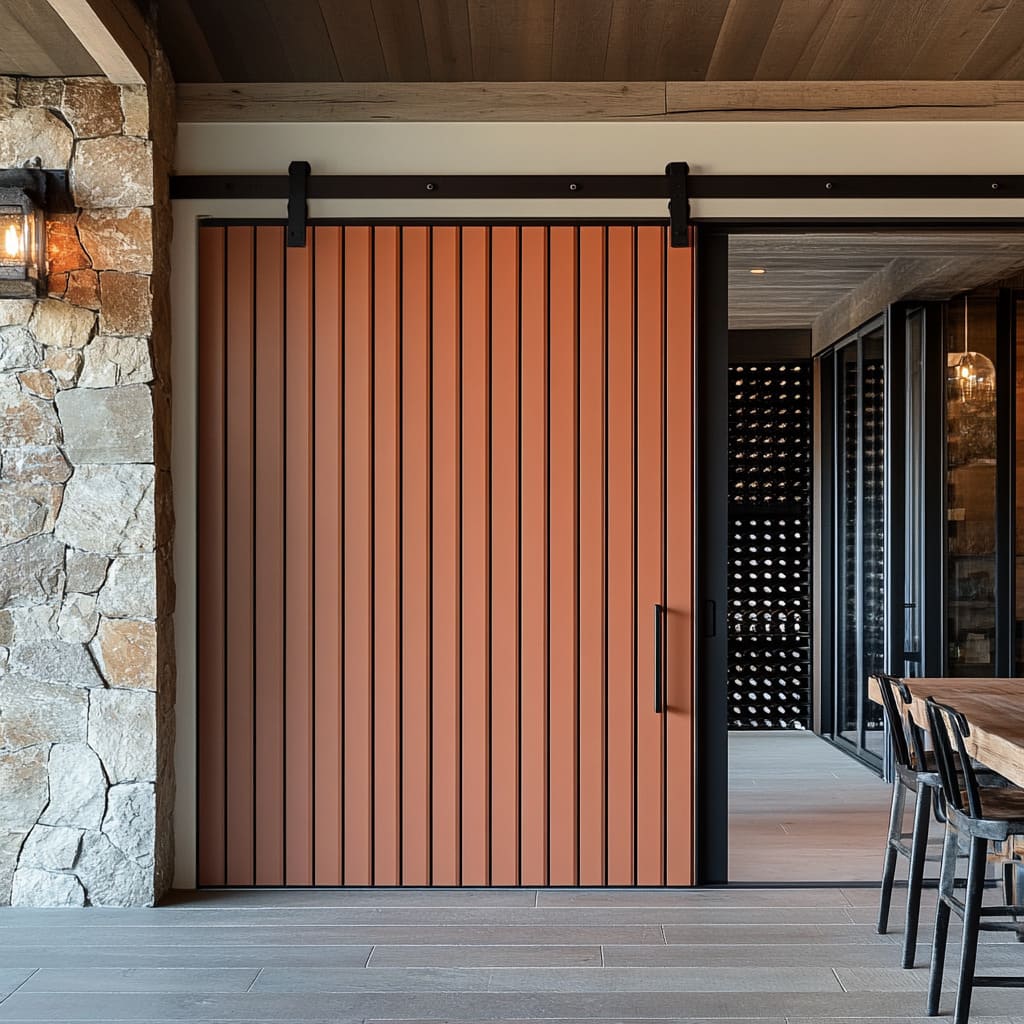
The combination of raw texture with calm paint introduces visual tension without any loudness. Subtle weathering, grain irregularities, knot marks, and aged edges add a sense of presence that cannot be achieved through color alone.
Examples of mixed surfaces:
- Paint + reclaimed wood
- Glass + wood brace
- Distressed color + smooth planks
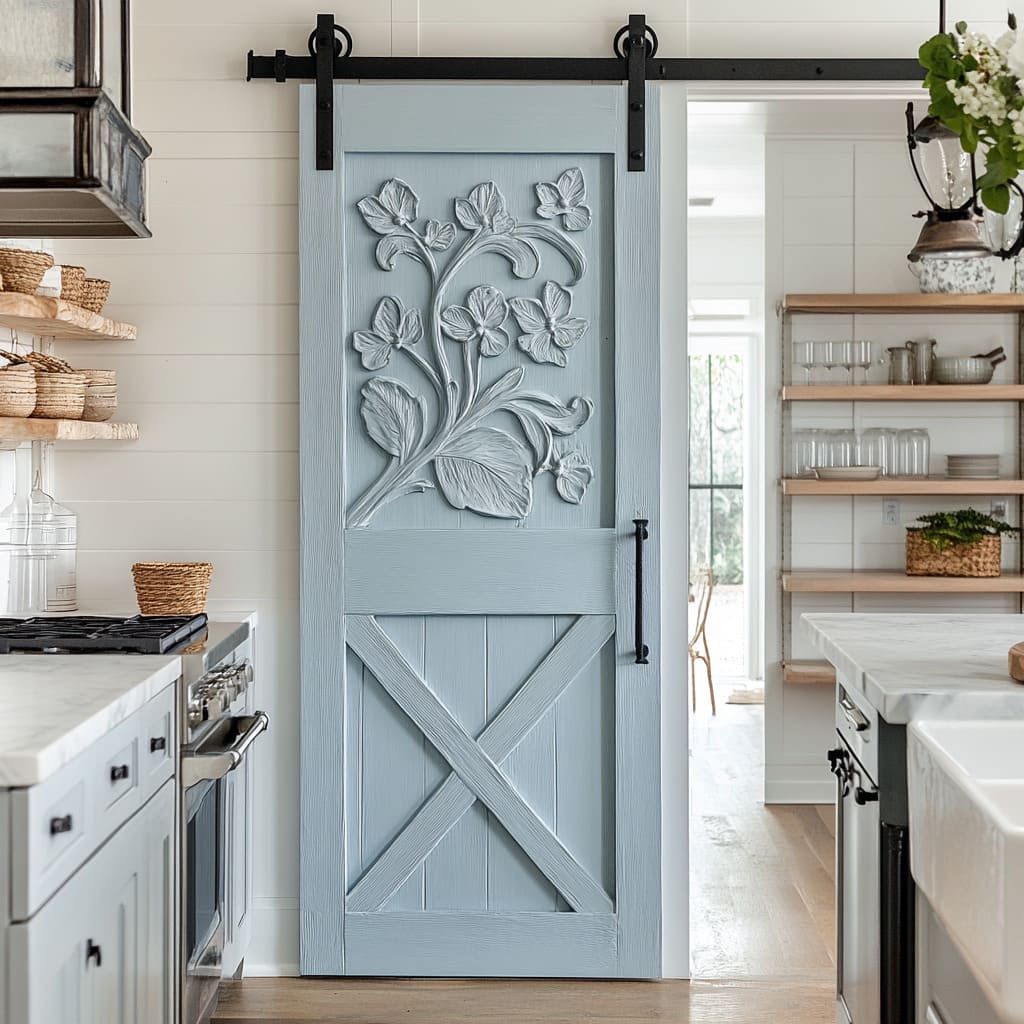
- Carved botanical panels + matte frames
This layered personality supports many expressive interior barn door ideas, keeping them feeling crafted rather than mass-produced.
Sculpted Glass Panels
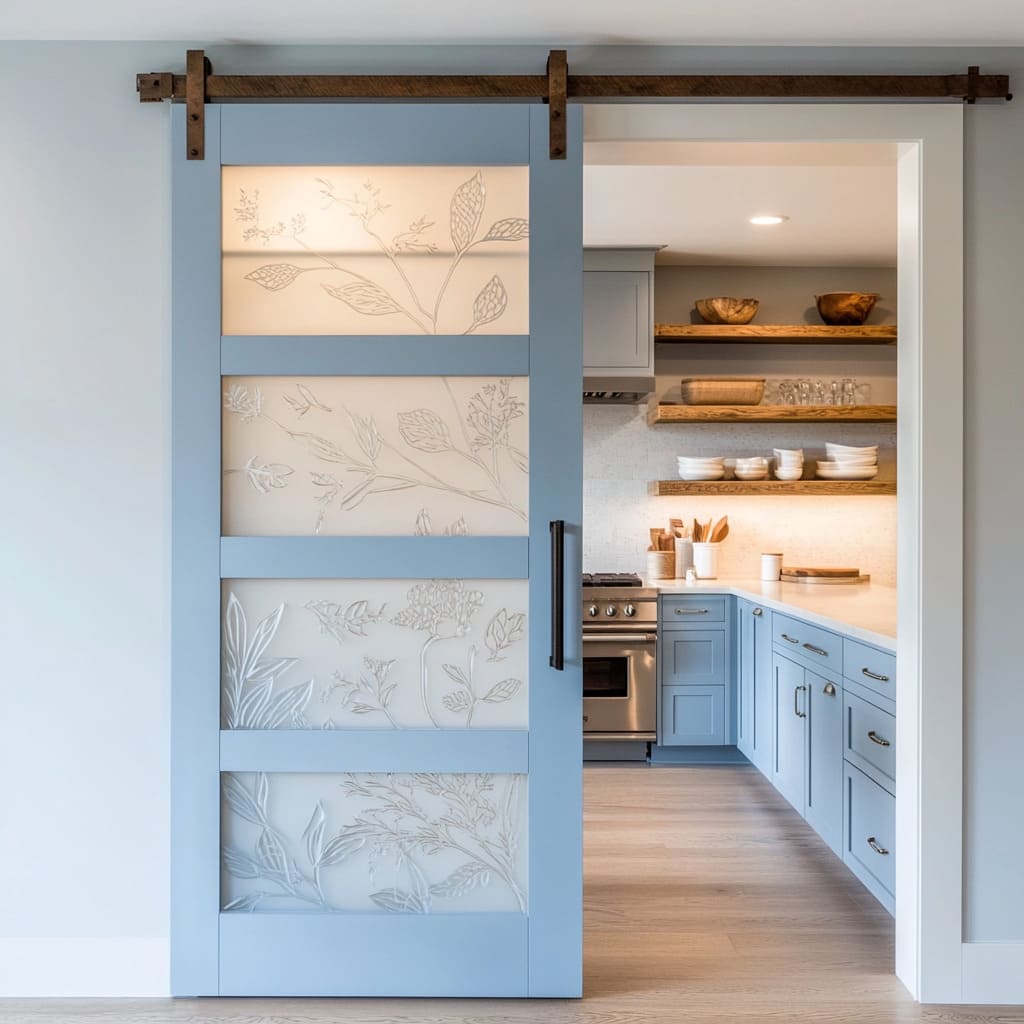
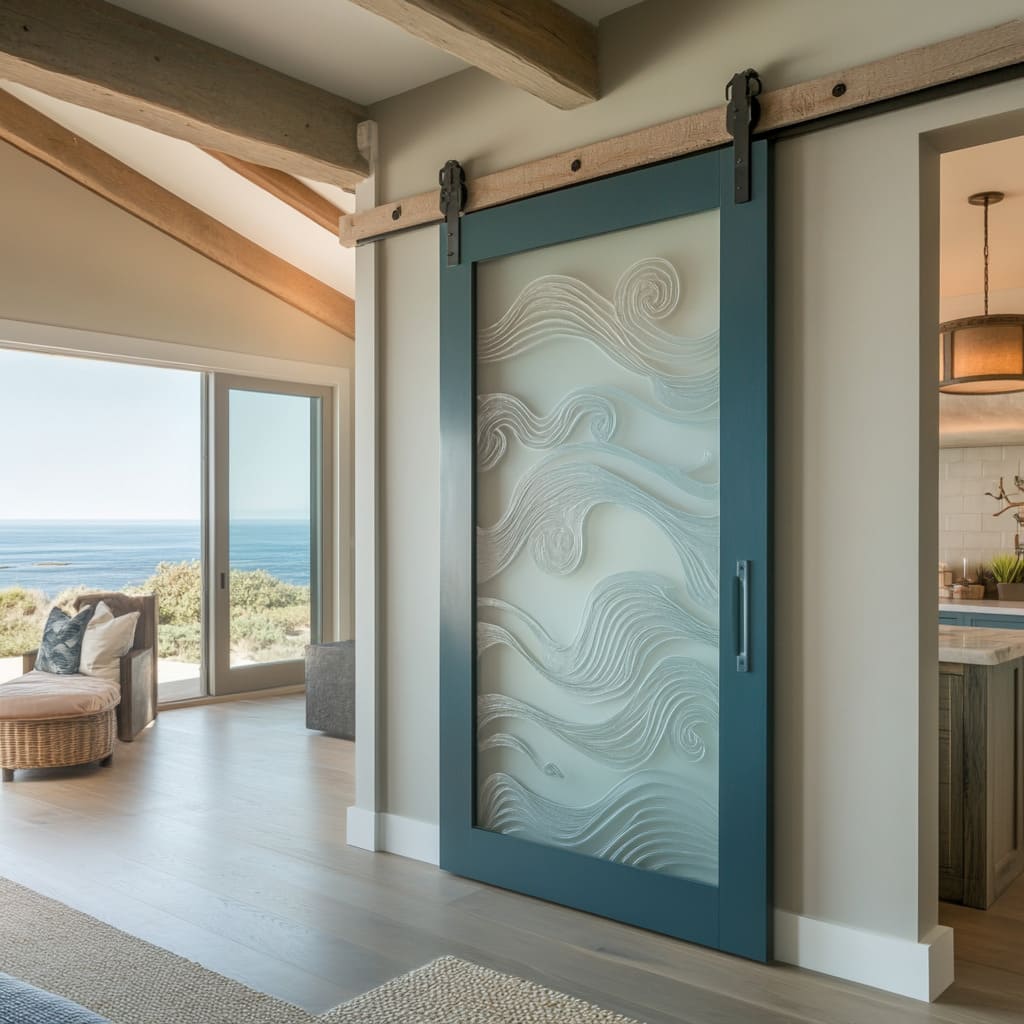
Some designs can treat the door as a light-shaping object. Sculpted glass with raised swirls creates highlights that shift as daylight moves, giving the surface quiet animation.
Frosted glass panels introduce haze rather than clarity, inviting natural light deeper into the home without revealing the room behind. These visual effects make the doorway behave almost like a lantern—something that glows, filters, and softens.
Two styles of luminous treatment:
- Frosted haze doors: provide privacy but brighten adjacent spaces.
- Sculpted wave glass: introduce curvature, movement, and reflection that complement soft textiles and curved furniture.
With these treatments, designers expand the range of barn door design ideas beyond wood-based solutions and into light-responsive surfaces.
The Track Line as Part of the Room’s Visual Grammar
The horizontal line of the sliding track often aligns with other architectural features. This visual “register line” can tie together a fireplace mantel, a timber beam, upper cabinetry, shelving brackets, or a dining room hood.
When the track sits in harmony with surrounding elements, the doorway becomes part of a larger composition rather than a single feature.
How track lines shape perception:
- High tracks emphasize verticality in narrow rooms.
- Tracks mounted on timber beams connect the door to rustic ceilings or natural wood furniture.
- Slim black rails behave like quiet underlines above the panel.
This understanding helps explain why designers pay careful attention to track tones in detailed barn door design ideas that rely on visual balance instead of ornamental complexity.
Handles as Vertical Punctuation Marks
Handles contribute subtle directionality. Tall handles emphasize height, grounding dark doors with a steady vertical stroke.
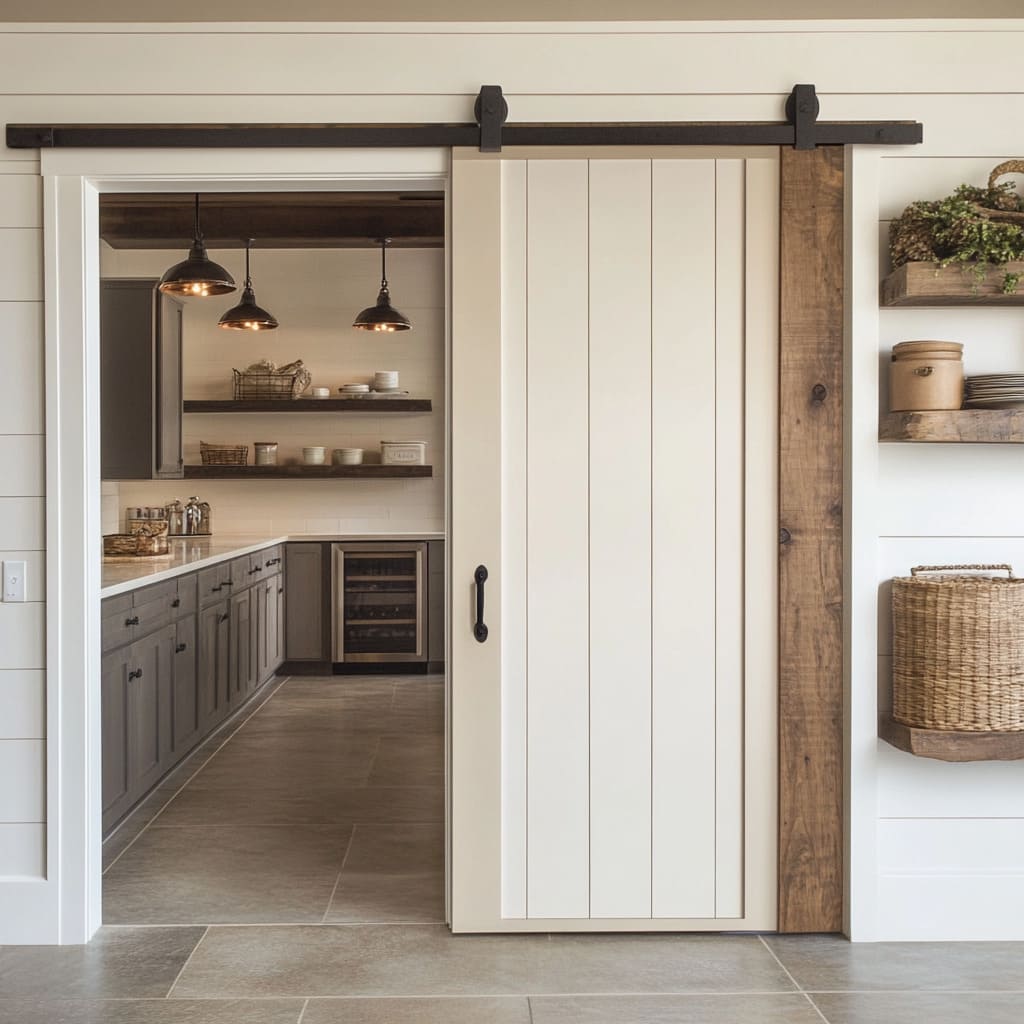
Small, low-contrast handles fade into ivory or pastel panels, allowing the surface pattern to become the main element.
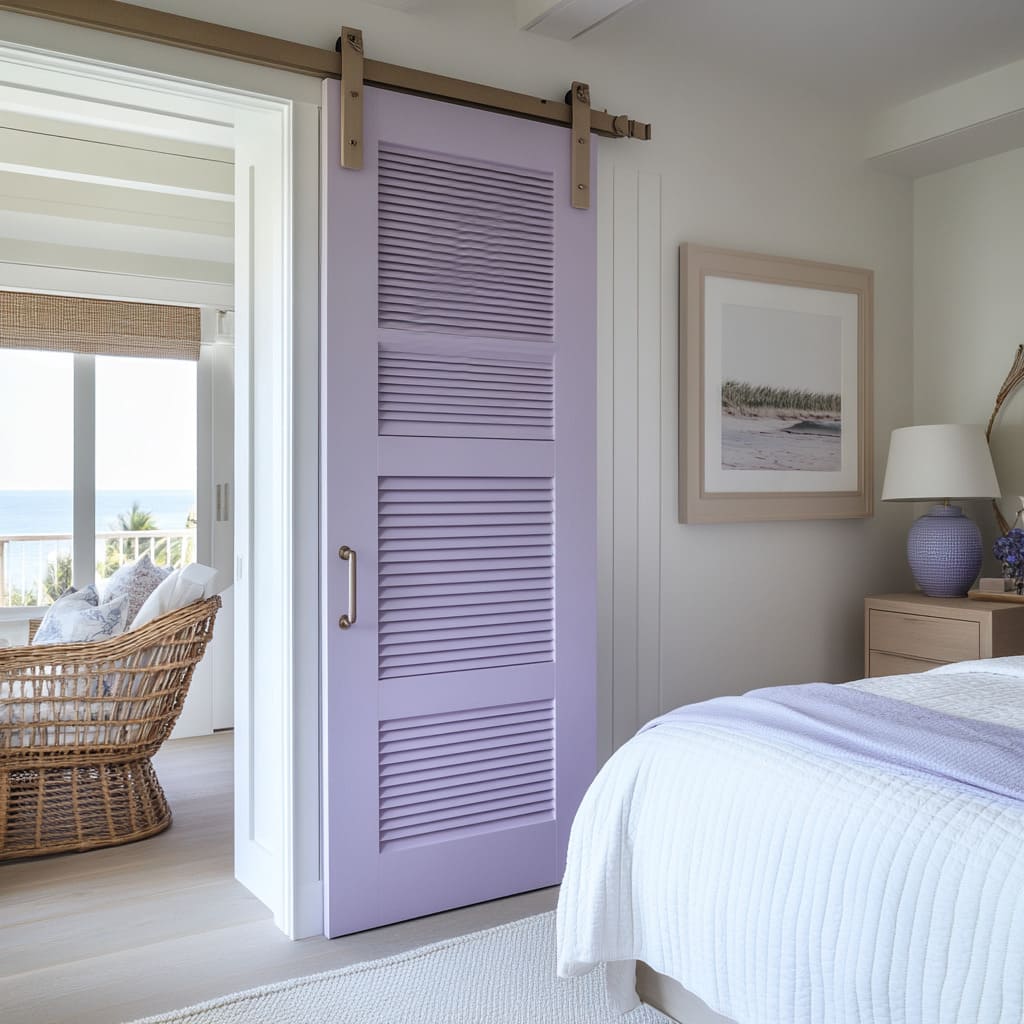
Brass handles bring soft warmth that helps unite terracotta, peach, or pink doors with warm metals used elsewhere in the room. Black handles reinforce graphic clarity when paired with strong, saturated colors.
Handle typologies:
- Tall, linear bars for strong vertical reading.
- Low-contrast handles for calm, architectural doors.
- Warm metal accents for earthy palettes.
- Dark iron lines for rustic or bold rooms.
Because handles behave like punctuation marks on a page, they help define the tone and rhythm of many expressive sliding barn door designs.
Doors as “Visual Transitions” Between Room Moods
A key idea from this collection is that doors often serve as visual transitions, not as separators. Deep olive, navy, and charcoal panels link living zones to kitchens with parallel tones.
Muted greens or pale neutrals bridge a pantry’s wooden shelving with a dining area’s soft ceramics.
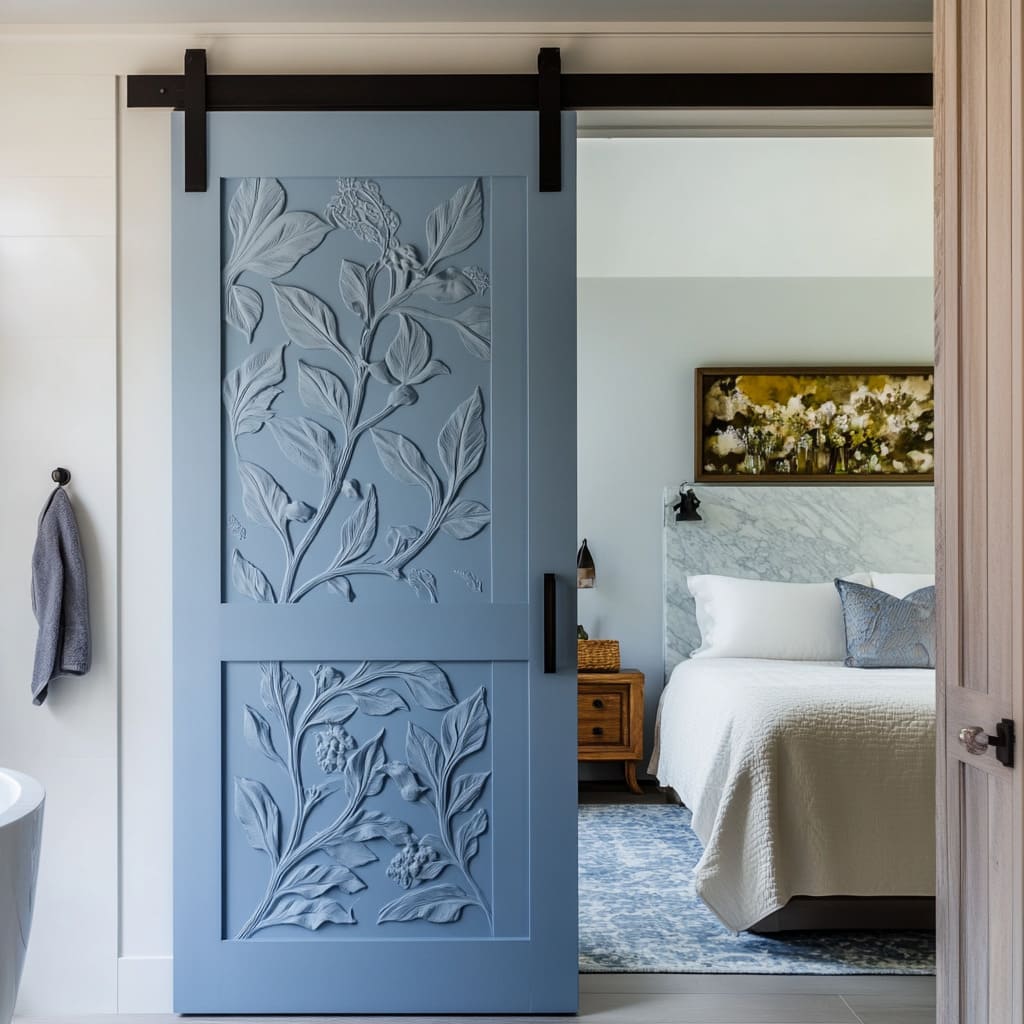
Botanical carvings tie kitchen shelving, natural plants, and dining art into a single flow. Warm-colored doors near cooler surfaces create controlled temperature shifts, while cool-toned doors soften the boundary between lively rooms and restful ones.
Doors often act as:
- Preview panels hinting at the palette inside the next room.
- Color mediators between warm textiles and cool stone.
- Texture bridges connecting woven furniture, wooden trays, and stone mantels.
This transitional nature is what distinguishes many thoughtful indoor barn door ideas, where the door becomes the link that stabilizes multiple adjoining moods.
Expressive Surfaces: Botanical Carving, Slatted Composition, and Chevron Movement
A significant part of this design vocabulary lies in the artistic surfaces that sit atop or within the door. Botanical carvings introduce soft depth, responding to light like sculpted plaster.
Vertical slats behave like a finely ribbed textile, echoing woven baskets, jute rugs, and slim-backed dining chairs. Chevron patterns generate movement and energy that lift calm kitchens or dining spaces.
These surfaces feel crafted and personal, often acting like artwork that happens to slide along a rail.
Three expressive surface categories:
- Carved botanical panels: gentle, shadow-rich, and decorative.
- Vertical slats: clean, disciplined, and height-enhancing.
- Chevron mosaics: dynamic, angular, and lively.
This approach defines many high-concept inside barn doors ideas, where the door becomes a focal point that carries the artistic personality of the room.
Earthy Neutrals and Two-Tone Geometry
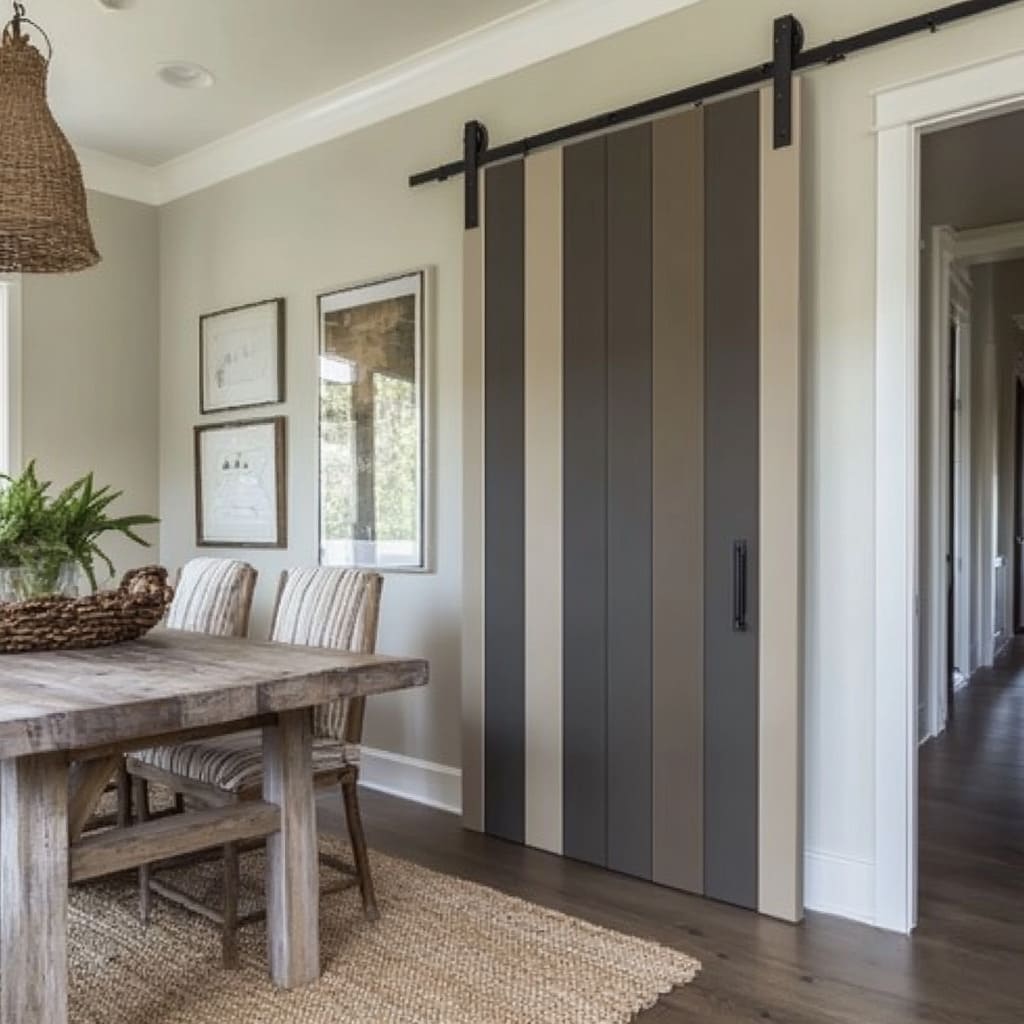
Two-tone doors with slim vertical planks blend rustic warmth and modern calm. When alternating taupe and brown are used, the door becomes a quiet backdrop that keeps the room feeling orderly while reinforcing natural materials such as wicker, jute, and raw wood.
These neutral pairings work especially well in soft dining spaces where subtle contrast matters more than bold color.
Slim dark hardware, pale walls, and layered domestic textures help the vertical pattern feel architectural instead of decorative. This structured neutrality aligns with many restrained indoor barn door ideas where softness and order must coexist.
Pastel Louvers and Coastal-Inspired Interiors
Louvered doors bring a breezy atmosphere to spaces near patios, sunrooms, and light-filled bedrooms. The slats cast rhythmic shadows that shift throughout the day, giving the door an ever-changing quality.
Lavender louvers soften the transition between resting areas and bright corridors. Terracotta louvers introduce grounded warmth in rustic kitchens, pairing beautifully with open shelves, copper accents, and textured tile floors.
Why louvers work visually:
- They evoke airflow and lightness.
- They mirror the rhythm of woven baskets and airy textiles.
- They prevent the doorway from feeling visually heavy.
This strategy reveals how some sliding door ideas soften strong architecture with rhythmic shadow play.
Sliding Barn Doors as Compact “Mood Boards” for Entire Rooms
Such doors can act as compact summaries of the rooms they connect. Botanical doors hint at natural interiors filled with soft ceramics.
Warm terracotta hints at kitchens rich in wood and copper. Ivory doors with rustic wood strips hint at pantries filled with matte-finish jars.
Sculpted glass hints at a coastal palette defined by flowing shapes and soft daylight.
A barn door can carry:
- the color story,
- the texture palette,
- the emotional intent of the adjoining rooms.
This function transforms indoor barn door ideas into decorative statements that behave like large, movable artworks rather than simple space dividers.