Window treatments can transform a December interior into a seasonal stage without relying on ornaments or bulky displays. The panels behave almost like stretched murals, carrying scenes that push the whole room into a cohesive holiday mood.
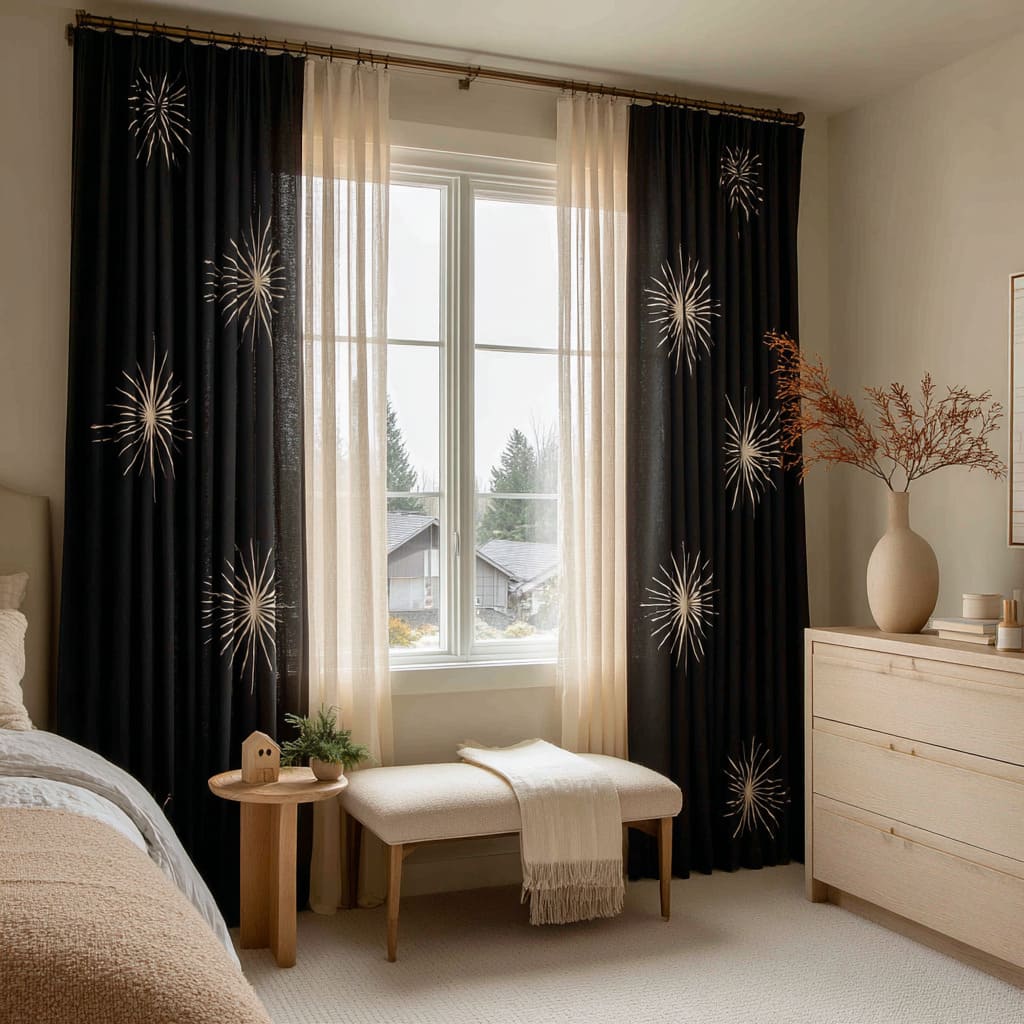
In many of the decorating concepts, tall drapery panels use borders, stripes, or large-scale silhouettes to build a visual story: forests rising from the hem, starbursts scattered across dark fabric, gingerbread borders walking along sheer linen, or stylized fir-fronds arranged in slow vertical rhythms. Instead of scattering festive objects around the room, the surface of the curtain becomes the primary medium for mood.
These curtain-as-art strategies allow a space to feel deeply December-like while keeping furniture, shelves, and surfaces minimal. It’s a shift from “decorating with objects” to “decorating with atmosphere,” where the window treatment itself is the story, and everything else quietly aligns behind it.
Dual Worlds: The Relationship Between Textile and Outdoor Scenery
One of the most refined aspects of these designs is how the window fabric interacts with the real landscape beyond the glass. The contrast between stylized patterns indoors and the literal world outdoors creates a dual narrative.
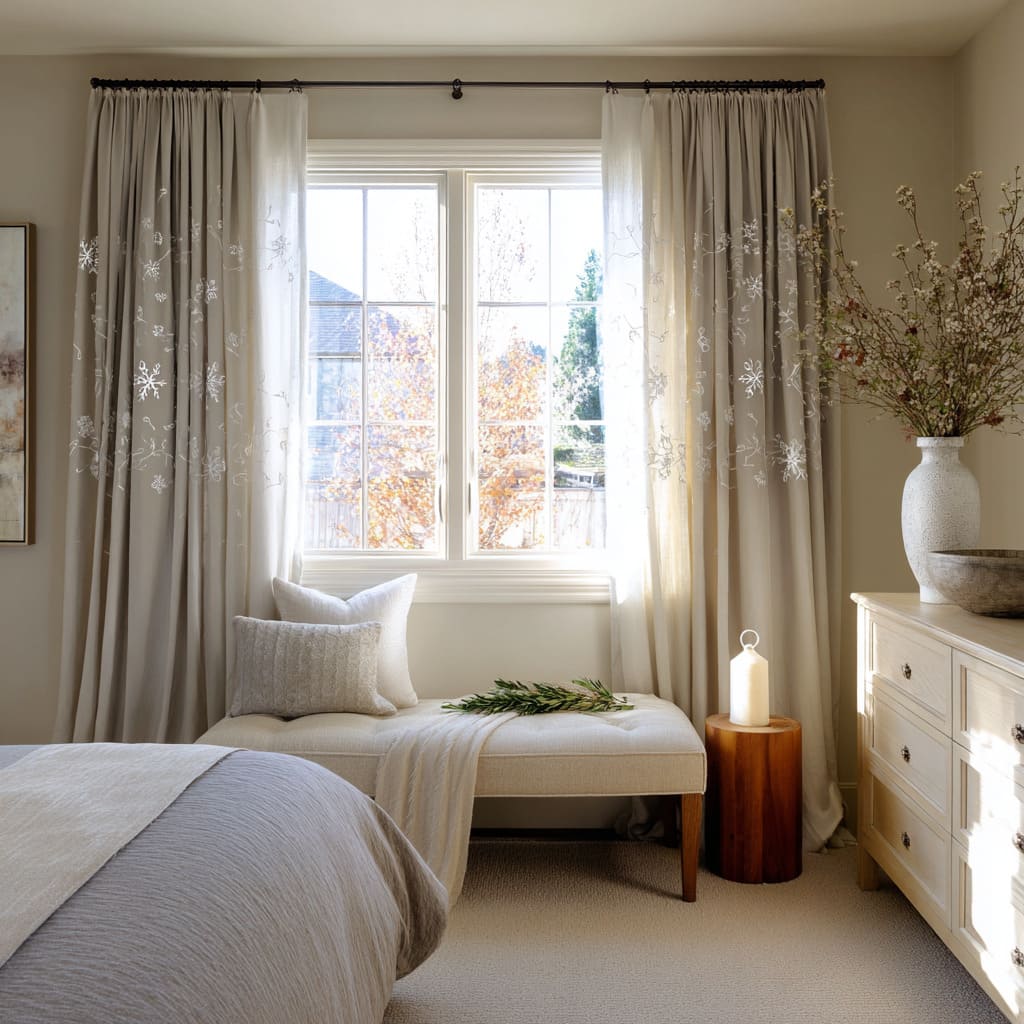
A curtain might display broad fir silhouettes while the real evergreens outside stand muted in winter haze. Sheers embroidered with drifting snowflakes soften daylight into a frost-like glow while the true snowfall outside rests on rooftops.
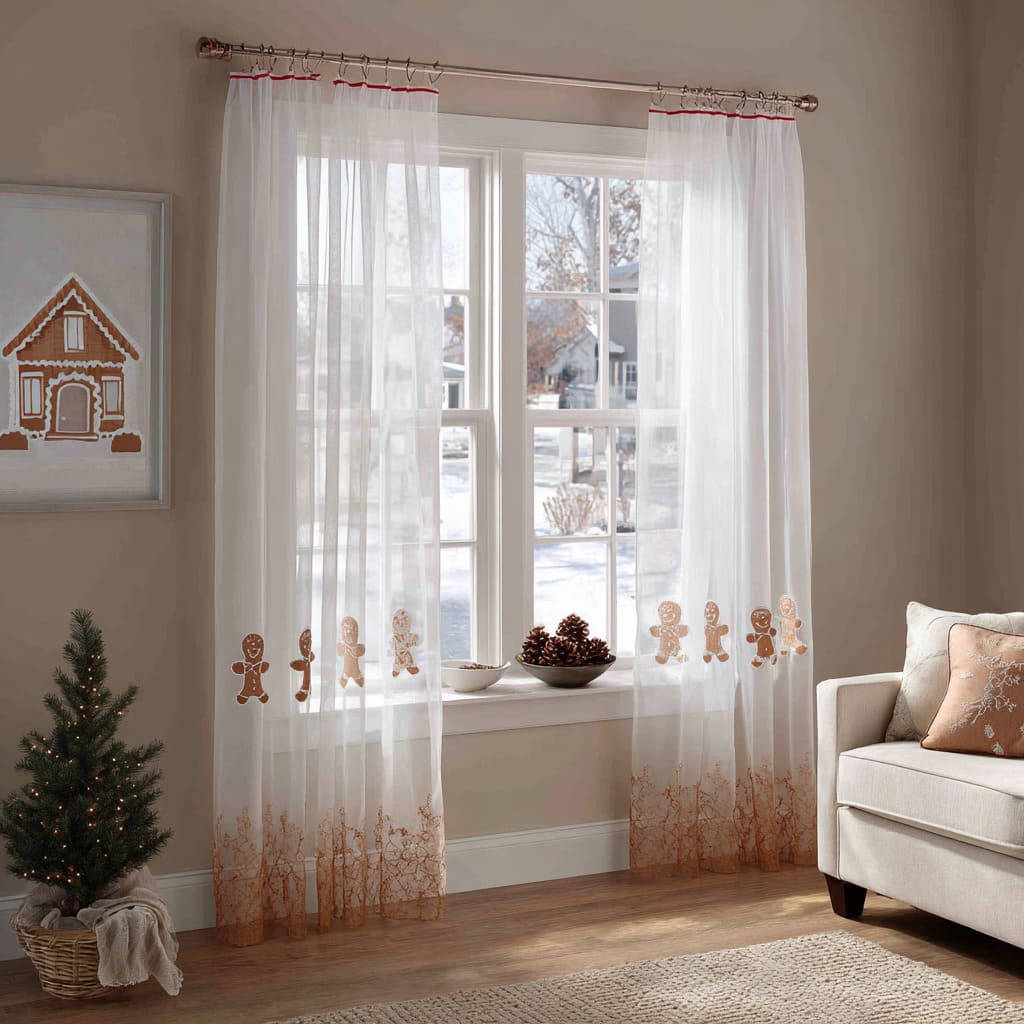
In some scenes, gingerbread motifs echo the pitched roofs and square panes of nearby homes, forming an interior “cookie version” of the real neighborhood. Dark charcoal panels printed with chalk-like branches frame pale outdoor skies, making the inside feel like evening even in daylight.
This tension—textile as reinterpretation of the landscape—turns the window into a layered vignette: real scenery in the background, curated scenery in the foreground, and a shifting blend of the two depending on the time of day.
Time-of-Day Scripts: How Layering Controls December Mood
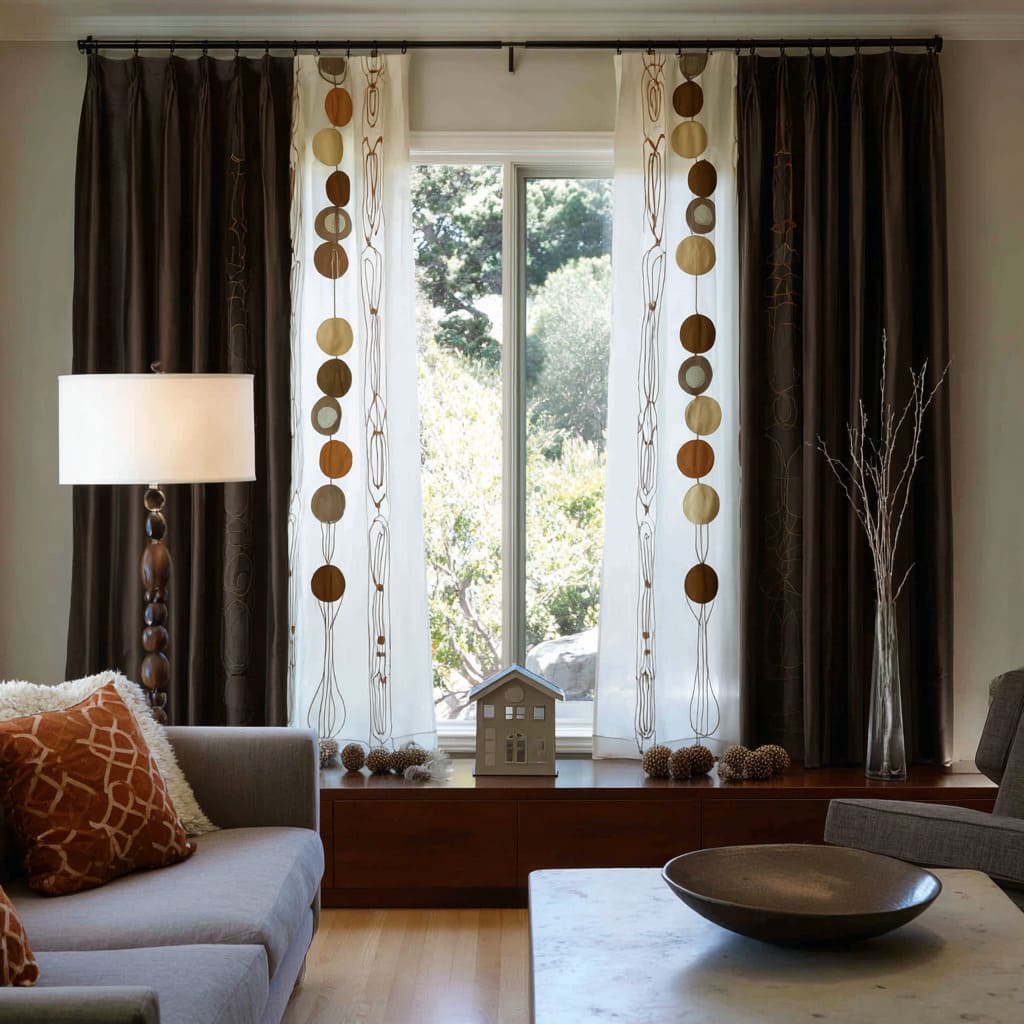
Layering plays a major emotional role in Christmas window treatment ideas, not through technical light control but through mood sequencing. Sheer panels often hang behind heavier drapes, creating two seasonal identities in the same room.
Variations in Tone Through the Day
- Daylight: Sheers catch bright winter light and dilute contrast, turning bold motifs behind them into gentle shadows.
- Afternoon: Patterns on heavy panels become more defined as the outdoor light softens, especially when motifs sit at sitting-height.
- Evening: Drawing the outer drapes forward shifts the room into a den-like atmosphere—starbursts glow, charcoal panels feel like night skies, and embroidered motifs shine in lamplight.
Visual Fog and Glow
Sheers behave like mist, softening the real outdoors into a watercolor backdrop while the interior motifs stay crisp. Heavier panels perform like theatrical curtains that close when the day ends, giving the room an enclosed, cocooned warmth.
This layering is not about function—it is about giving December its own lighting language within the window wall.
Seasonal Palettes: The Emotional Worlds Created by Color
The color choices across all sixteen decorating concepts fall into a handful of emotional worlds rather than a strict red-and-green formula.
Deep Red Worlds
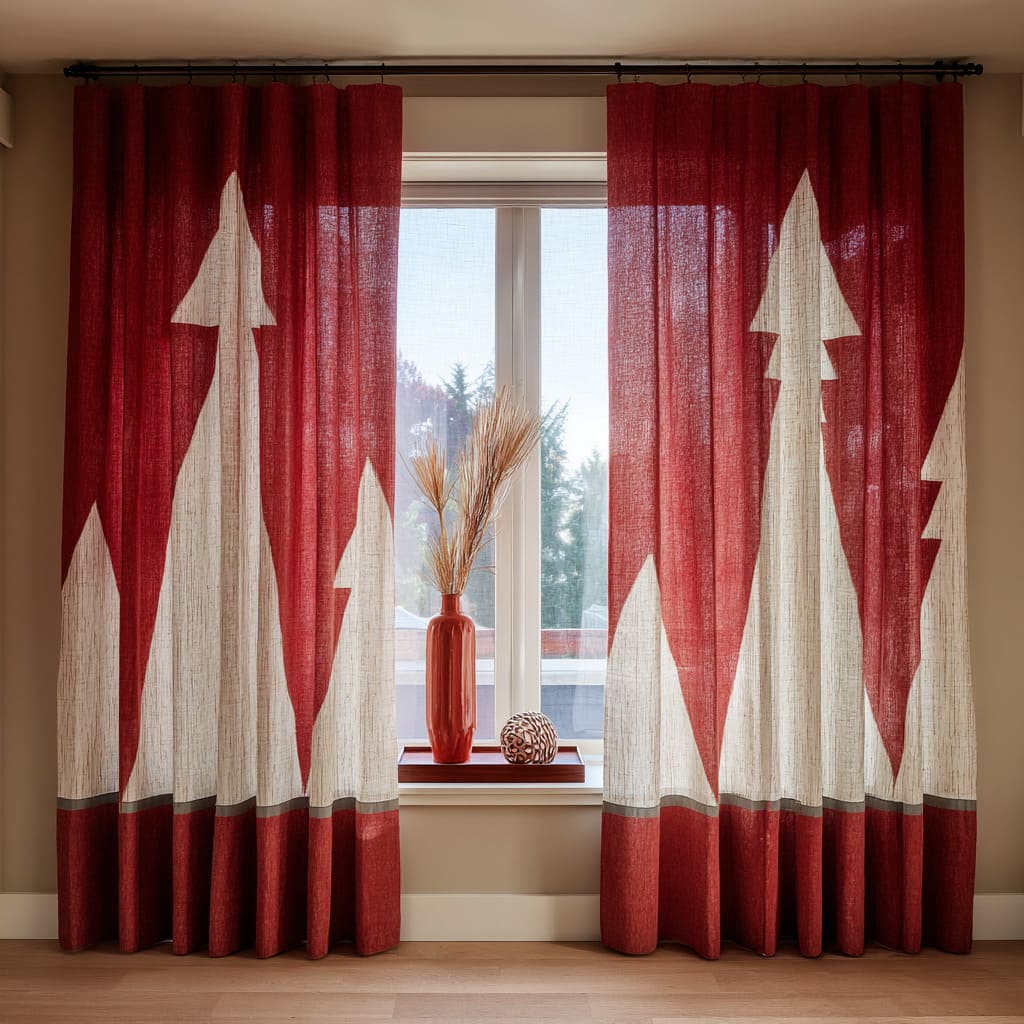
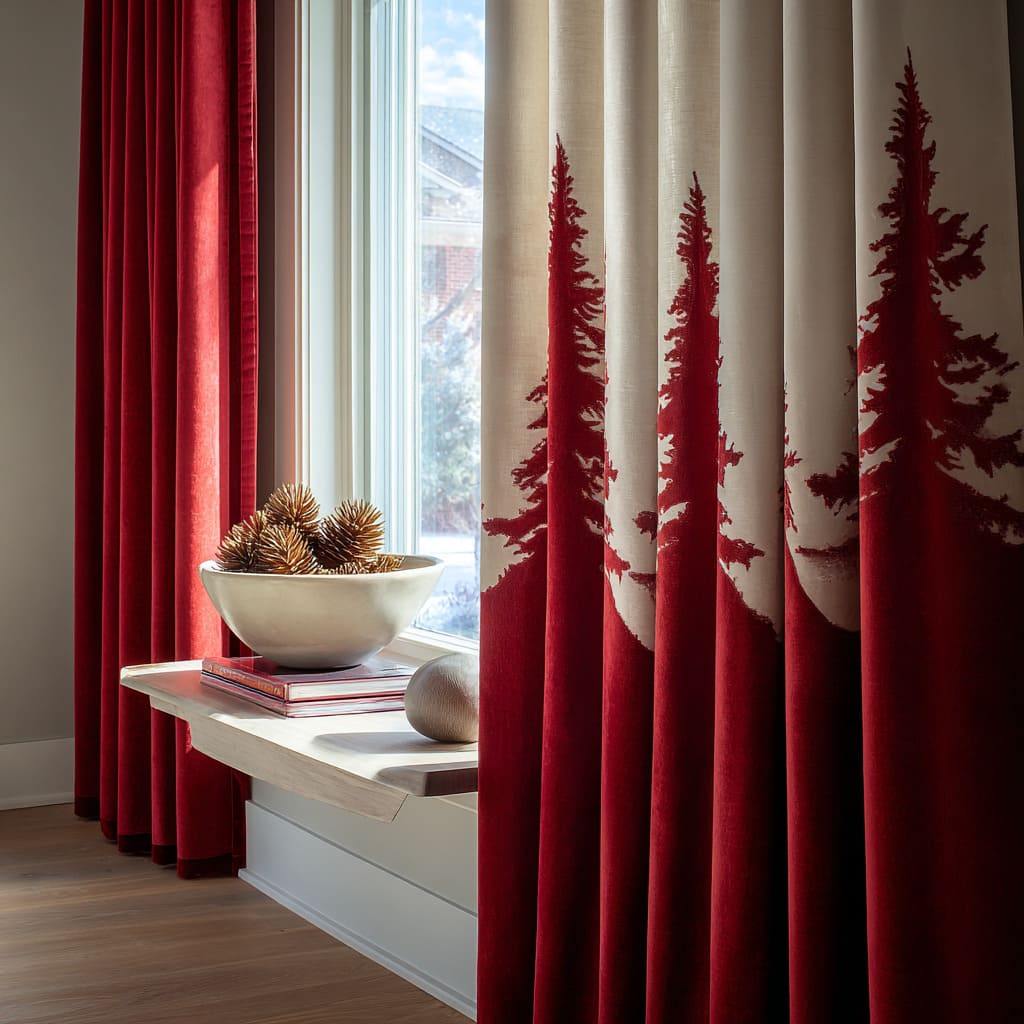
Cranberry curtains with forest bands evoke a cheerful winter graphicism—warm, lively, slightly Nordic.
Black and Charcoal Worlds
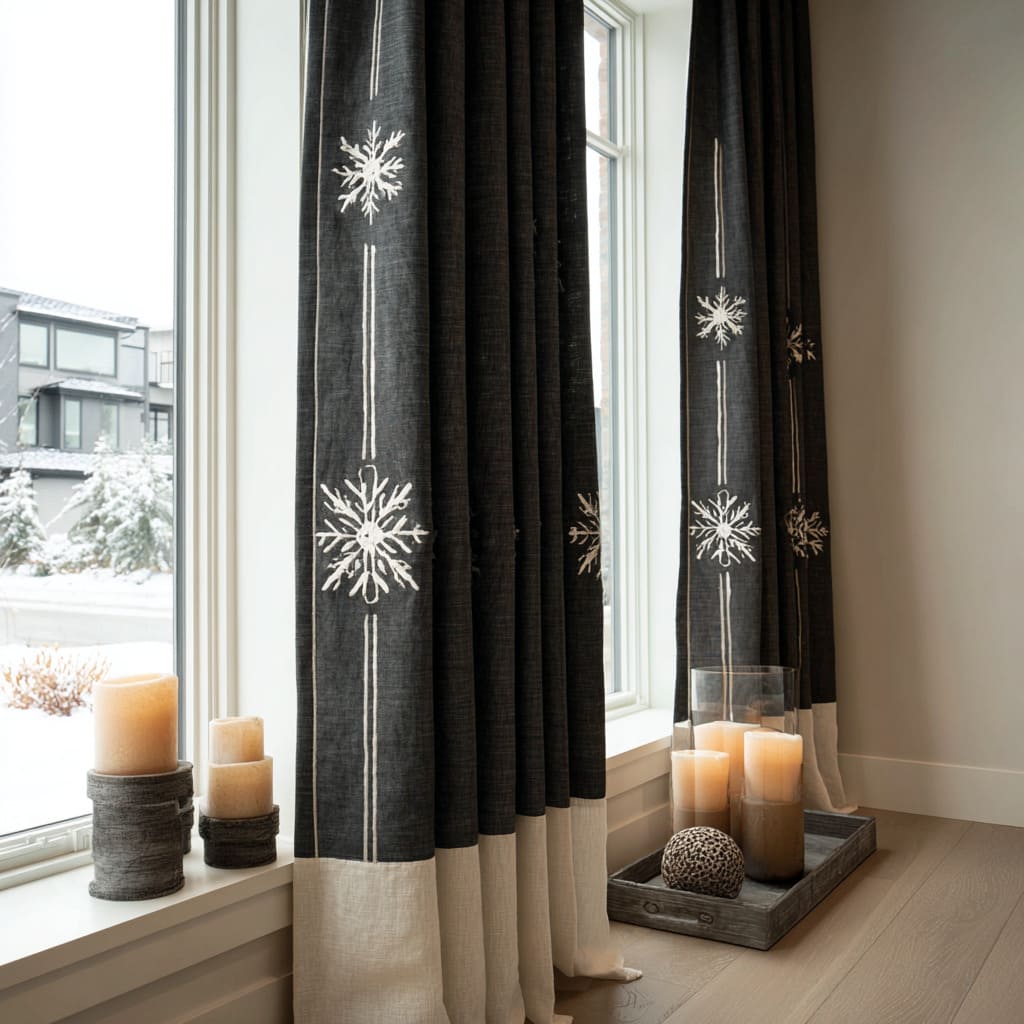
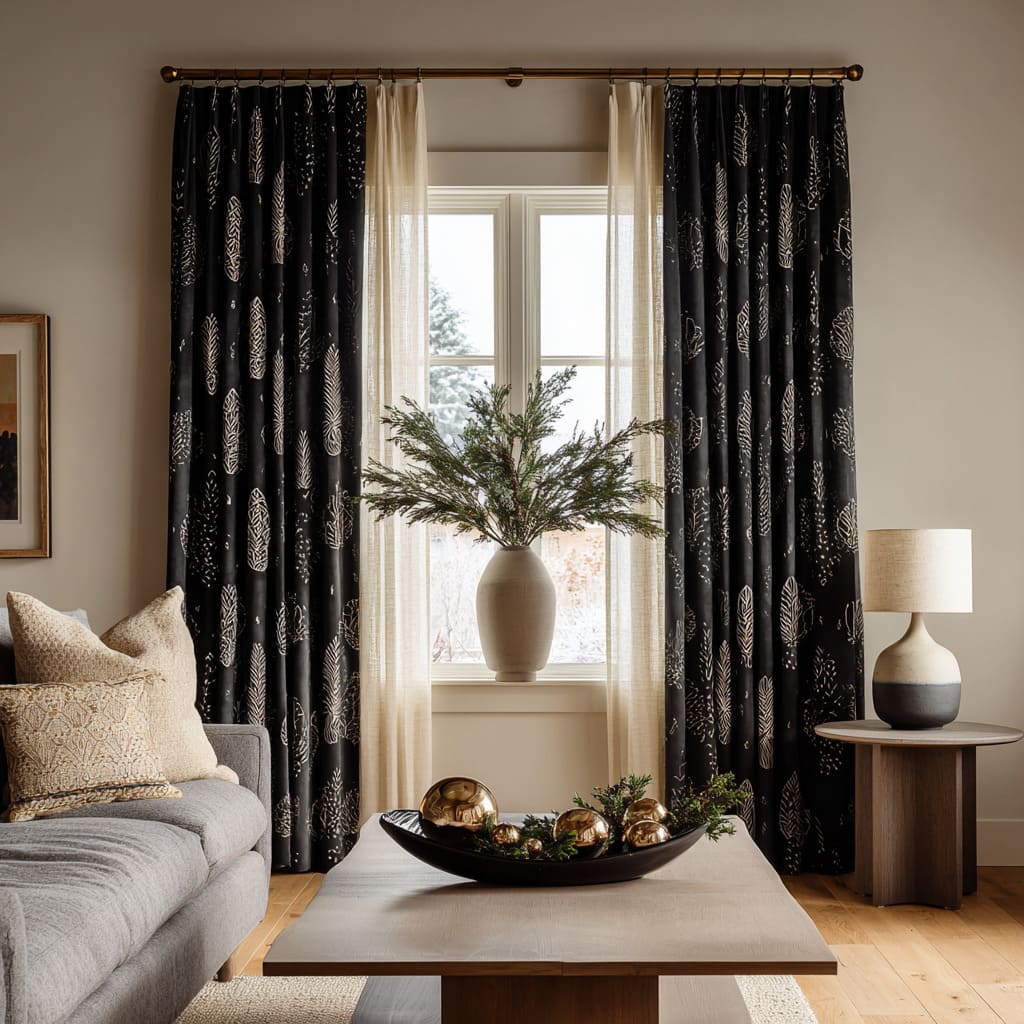
Matte black with champagne starbursts or chalk-white ovals sets a softly glamorous night-sky mood, suited for quiet winter evenings.
Sage and Herbal Worlds
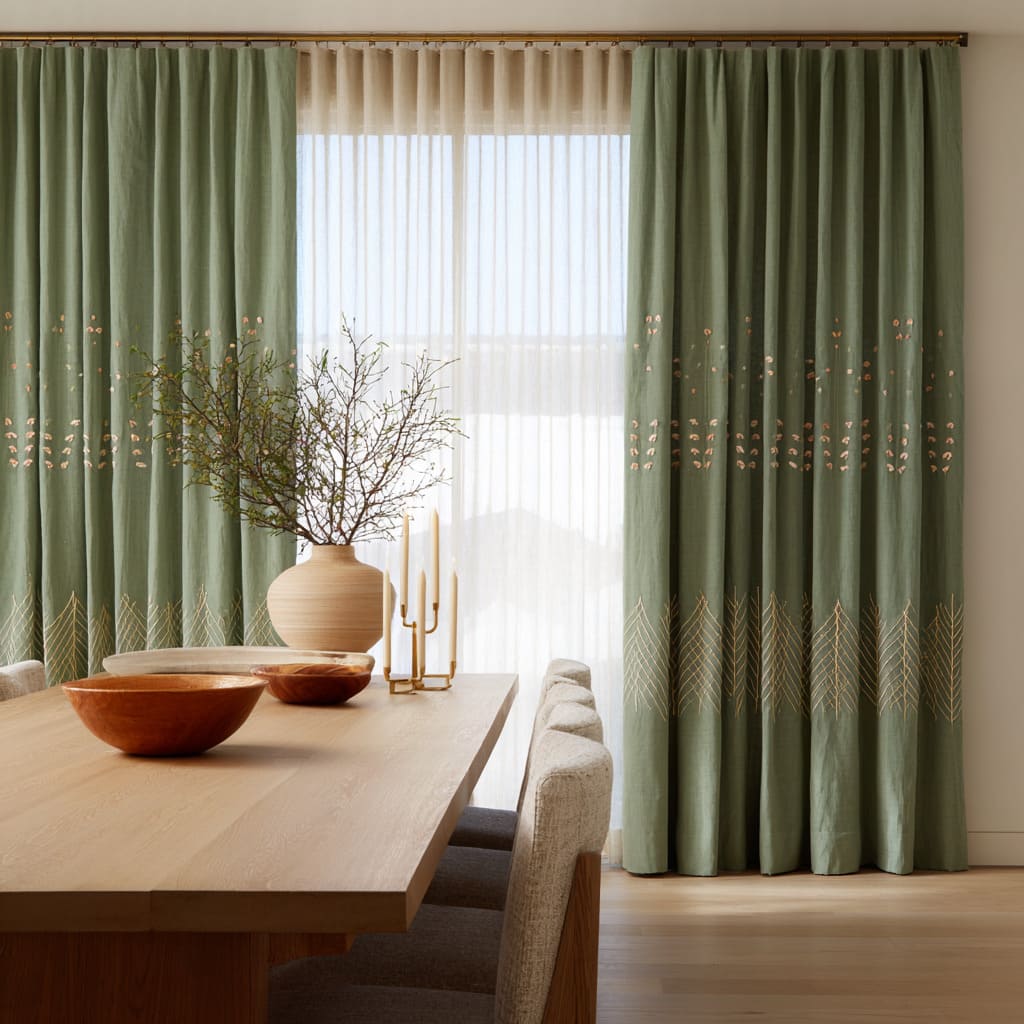
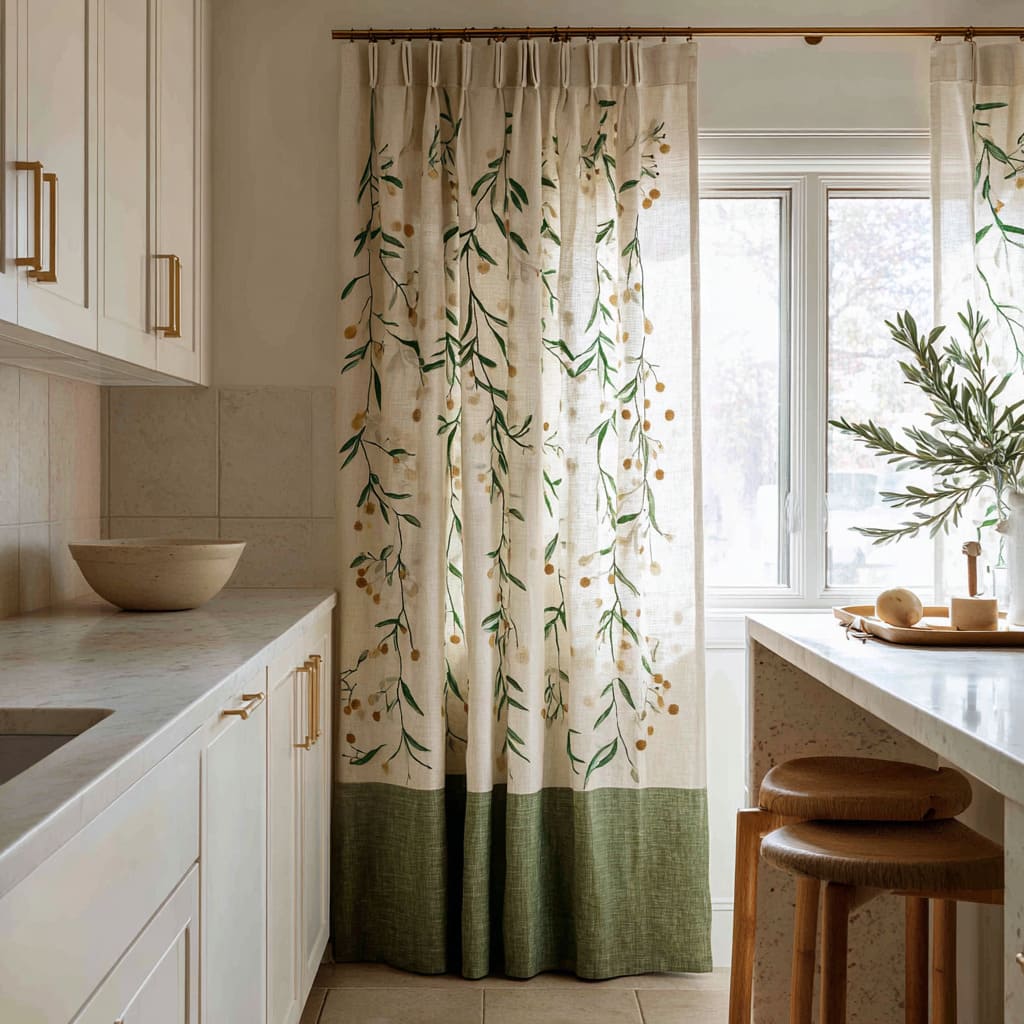
Dusty greens with gold embroidery or painterly branches express gentler forms of holiday greenery—relaxed, nature-leaning, and easily extended through the rest of winter.
Gingerbread Worlds
Caramel motifs paired with cream sheers create edible warmth that feels like stepping inside baked dough and powdered sugar.
Frosted Neutral Worlds
Greige curtains with tone-on-tone white embroidery create bright but quiet interiors, reminiscent of early-winter dawns.
Each palette corresponds to a different December atmosphere, shaping whether a room feels festive, serene, nostalgic, or night-focused without relying on literal Christmas objects.
The Reinvention of Classic Holiday Motifs
Holiday motifs appear throughout these curtain concepts, but they rarely look like their familiar forms.
Fir Trees as Graphic Elements
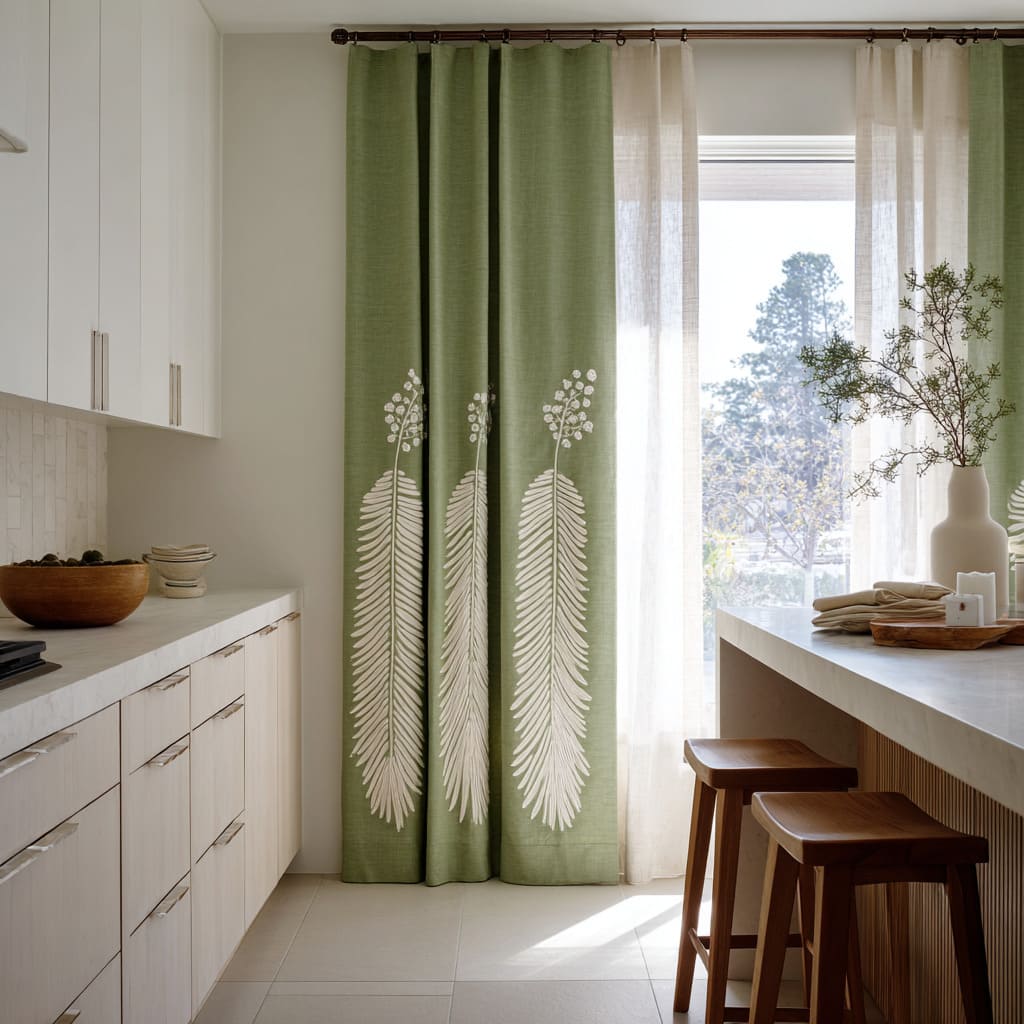
Some concepts use trees as flat triangular silhouettes rising from the hem; others reinterpret branches as long feather-like forms with berry clusters at the top. These shapes behave more like graphic design elements than plant illustrations.
Snowflakes as Vertical Markers
Rather than scattering them across the entire panel, some scenes place oversized snowflakes in strict vertical alignment. This shifts them from playful icons to patterned punctuation.
Stars as Mid-Century Motifs
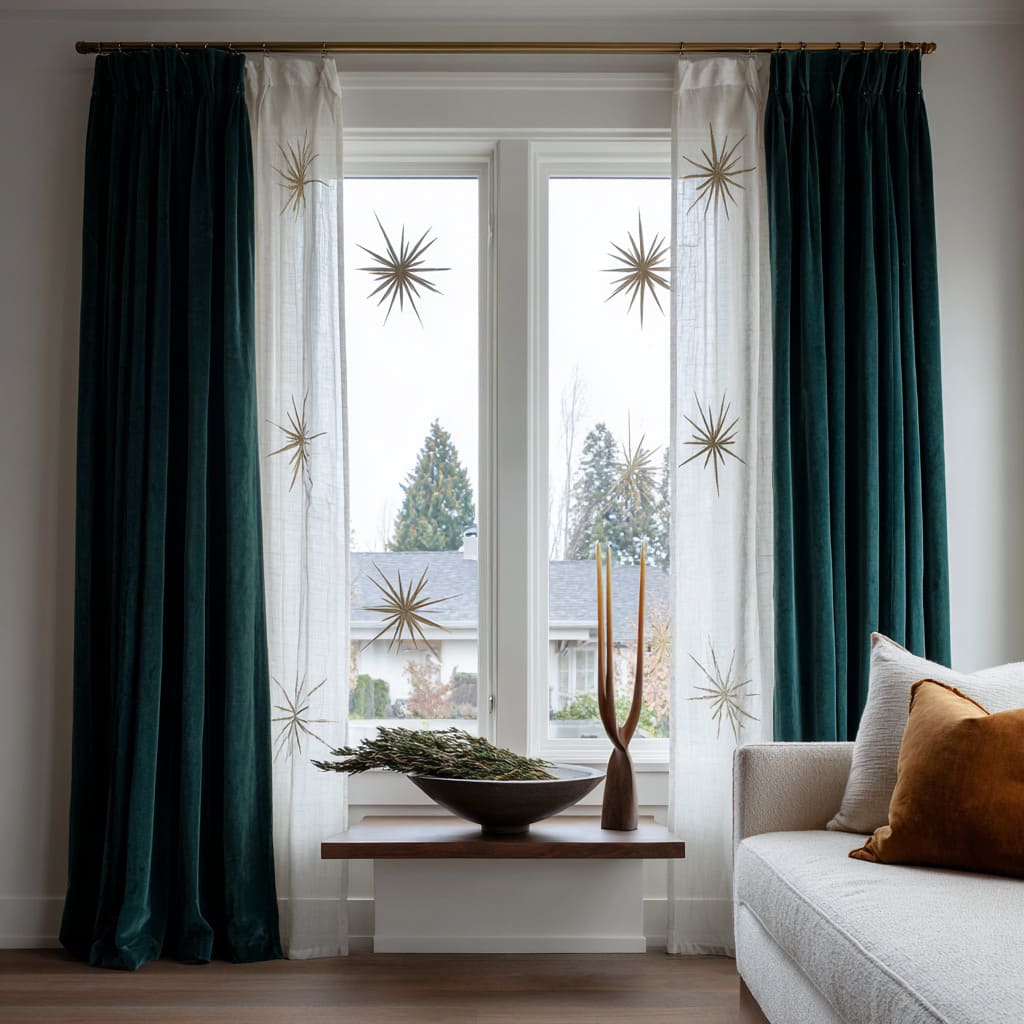
Long-tipped starbursts in warm metallic tones recall vintage lighting forms. Their placement in loose clusters gives the curtain a constellation-like serenity.
Berries as Light or Snow
White or golden berries serve triple duty—fruit, snowdrops, or soft glowing points—depending on their spacing.
Gingerbread as Architectural Friezes
A row of gingerbread figures near the hem acts like a warm caramel border, structured enough to feel graphic rather than whimsical.
This reinterpretation avoids cliché and lets holiday symbols act as sophisticated visual cues rather than theme decorations.
Echoes Between Textile and Decor Objects
A subtle but powerful strategy appears repeatedly: the motifs on the window panels are echoed in three-dimensional objects nearby. This creates a visual rhythm that pushes the entire room to feel unified.
Example Echo Patterns
- Circles: Round discs on the sheers pair with stacked-sphere lamp bases and pinecones arranged in lines.
- Lines: Embroidered stems relate to dried branches in vases or ribbed textures in bowls and candleholders.
- Shapes: Scalloped hems reappear in curved trays or soft-edged stools.
- Borders: Hem bands align with the proportions of dining tables, console shelves, or the height of windowsills.This is not matching or theming—it’s a shared geometry that binds fabric, decor, and architecture. When the curtain features a vertical motif, there’s often a vertical accessory beside it; when it features a stripe, there’s a similar horizontal element across the room. The repetition keeps the window treatment from feeling isolated and instead turns it into part of the space’s broader vocabulary.
How Motifs Interact with the Human Body
Many of the designs in these decorating concepts place motifs exactly where the body engages with the room. A seated person sees the tree bands, berry clusters, or gingerbread figures at eye level, because these motifs often sit within the lower third of the panel.
Standing eyes see calmer upper regions, which prevents visual overload while moving through the space.
Patterns and Movement
Motifs that stagger downwards—such as snowflakes placed at varying heights—mirror the path of a human descending through a hallway or stepping into an entry. Patterns that lean diagonally pull the eye toward the center of a kitchen or living space, guiding how someone visually “walks” through the room.
Tension Between Vertical and Horizontal
Long vertical pleats in drapery play against wide dining tables, console shelves, and kitchen counters, keeping the room visually organized. This spatial choreography makes window treatments feel alive, as if reacting to how people sit, move, approach, or pause.
Emotional Archetypes: Different Types of Winter Spaces
Across all concepts, the window becomes a seasonal emotional anchor point. The same room shape can feel dramatically different depending on the textile story layered across the glass.
Winter Graphicism
Red forests and stacked bands deliver bold, cheerful December energy.
Winter Solstice Calm
Dark drapes with tiny bursts or chalk-like foliage bring a contemplative winter-night atmosphere.
Nature-Forward Calm
Sage embroidery and painterly botanicals create soft, grounded interiors ideal for slow December days.
Playful Nostalgia
Gingerbread motifs and icing-like hems build a refined take on childlike holiday themes.
Frost-Morning Serenity
Greige and white embroidery feels like the first quiet daylight after snowfall.
In all these moods, the window treatment is doing the emotional heavy lifting while the furnishings stay minimal.
The curtain dictates the season; the decor simply supports it.
Structuring Seasonal Textiles: Borders, Columns, Stripes, and Bands
The compositional structure of these treatments is essential to how they communicate the holiday mood. They rely on architectural forms rather than scattered motifs.

Common Structures
- Hem Borders: Forest silhouettes, berry clusters, gingerbread friezes.
- Vertical Columns: Snowflake stripes, colossal fir-frond forms.
- Panel-Sized Murals: Red forests, chalked botanical ovals.
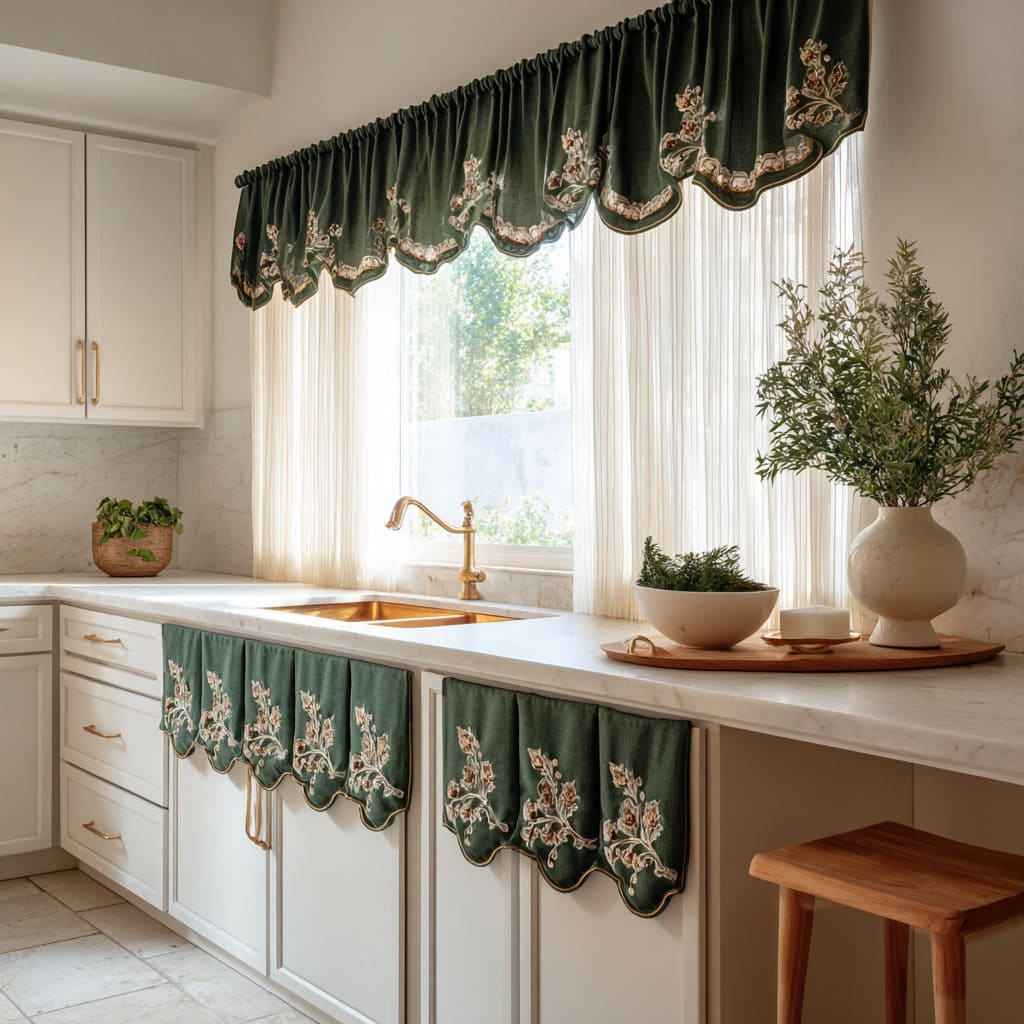
- Scalloped Edges: Embroidered valances and sink skirts that echo pastry forms.
These structures behave like the “architecture” of the textile. They avoid chaotic all-over prints and instead use precise zones of ornamentation. This approach is why even bold patterns feel stable and elegant.
Window Textiles as Soft Architecture
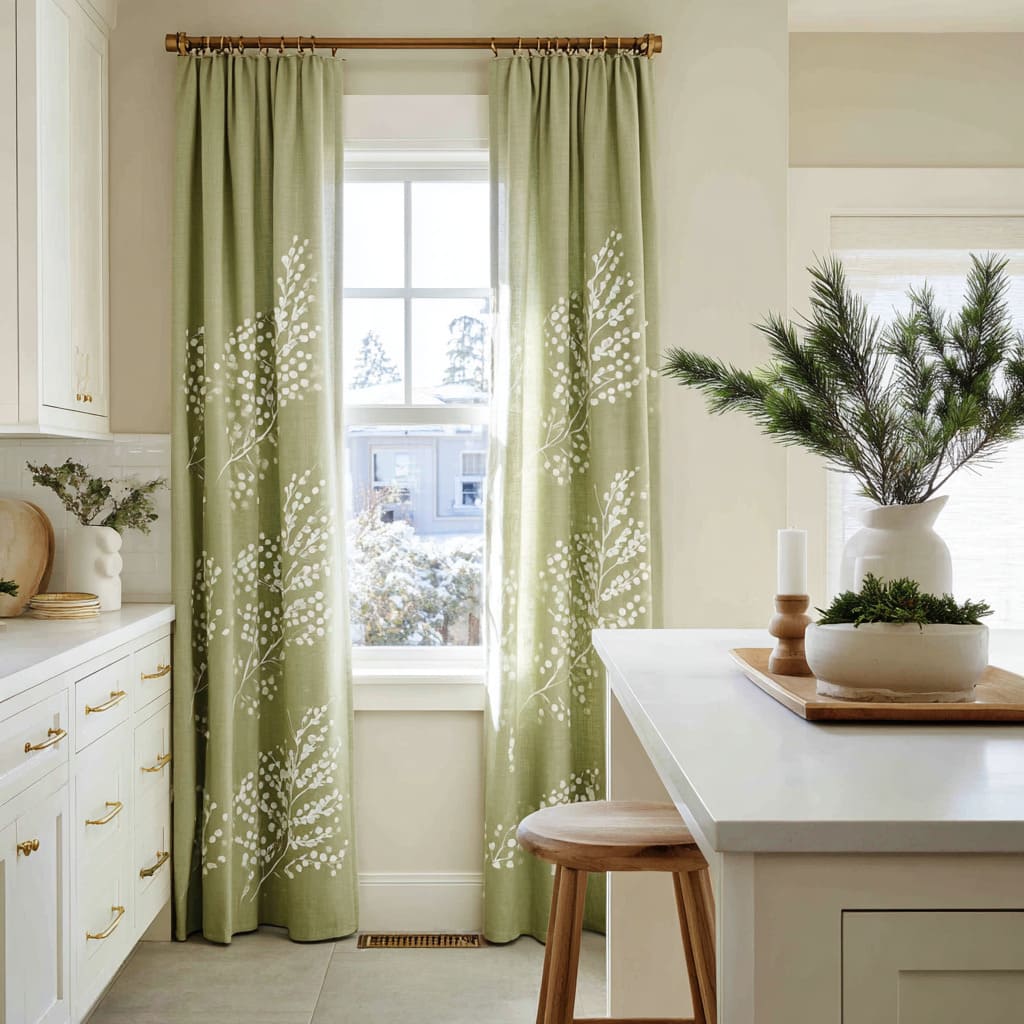
Across multiple scenes, the curtains behave more like soft walls than like fabric. Tall oat-colored panels or sage drapes turn the window into a full-height statement.
The motifs travel from top to bottom in a cohesive line, linking transom to floor in a single visual sweep. When a frosted decal on the glass aligns with embroidered snowflakes on the curtain beside it, the window becomes a single, multi-layered column of seasonal imagery.
Architectural Integration
- Curtains echo ceiling beams, tabletop lengths, or the grids of nearby furniture.
- Motifs often align with the height of benches, counters, or shelves.
- Sheers extend the wall visually, dissolving the boundary between inside and outside.This treatment makes the window less a functional opening and more a vertical plane shaped for December.
Incorporating Classic Forms: Valances, Skirts, and Sheer Swags
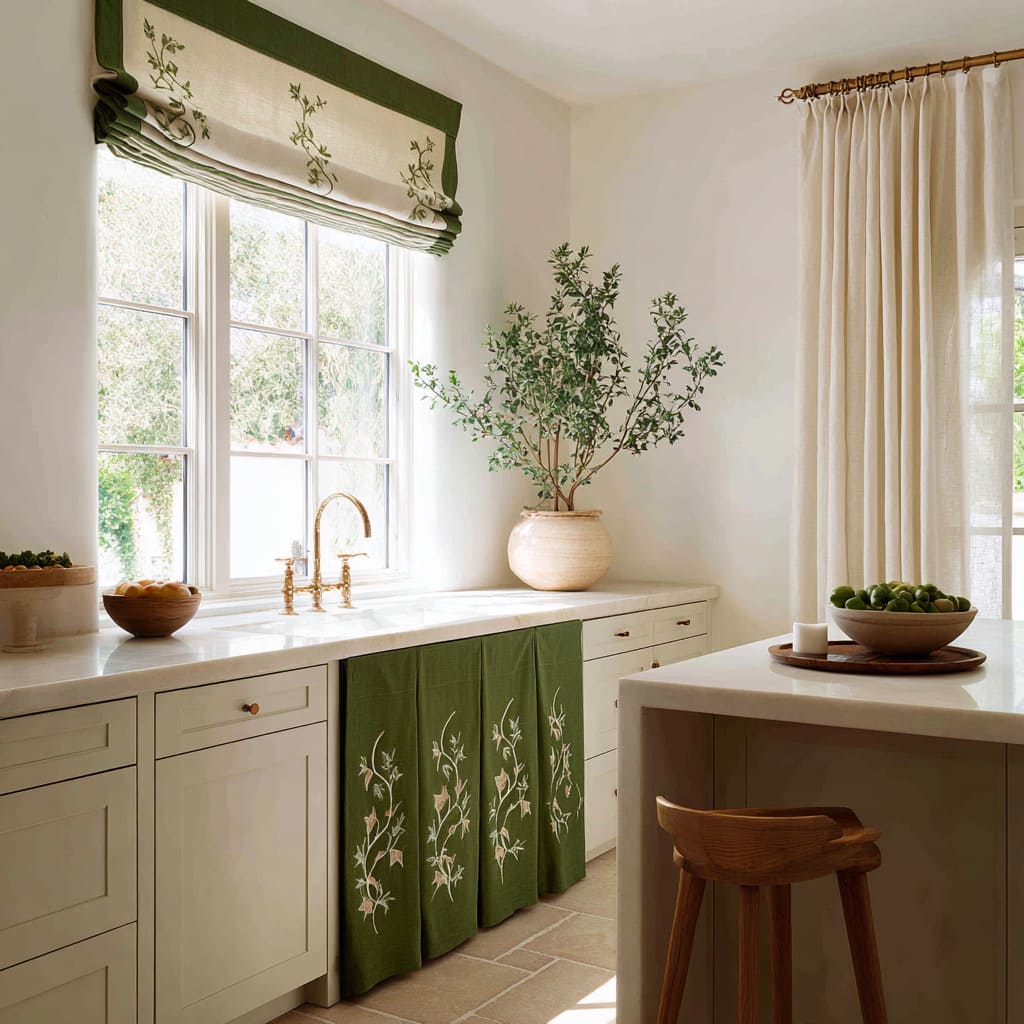
Beyond full-length panels, some decorating concepts use upper and lower textile elements to add structure. A gathered green valance with scalloped trim creates a festive crown above a kitchen window, while a matching sink skirt turns lower cabinetry into a soft, textile façade.
In other scenes, an airy curtain header carries a slim red line that acts almost like holiday ribbon. These layered elements mimic pastry edges, botanical garlands, or icing lines.
In broader terms, they belong in a category similar to Christmas valance ideas and Christmas window swags ideas, where the window is dressed in layers that carry seasonal mood without relying on conventional ornaments. When combined with full-length sheers or long embroidered panels, these elements offer a vertical hierarchy—ornament above, calm fabric below, and daylight diffusing through the center—that shapes the interior into a composed holiday tableau.
The Window as December’s Emotional Center
Taken together, all these concepts show a single underlying principle: the window is not simply a source of light—it is the emotional center of the winter interior. Whether through stylized forests, starbursts, delicate berry branches, or carved gingerbread silhouettes, the textile becomes the frame through which the season enters the home.
The outside world—snow, rooftops, pale skies—meets the inside world—soft fabric, warm wood, candlelight—in a layered composition that shifts throughout the day. The result is a room where the spirit of the season is held in the gentlest possible form: the softness of fabric, the silhouette of a motif, the glow of filtered light.
And within this wide vocabulary of design approaches, these Christmas window curtain ideas display how atmospheric, refined, and expressive a seasonal room can be when the story is told through fabric instead of objects.