In modern interior designs, the textile drawn across the top of a window operates as a mood-setting element rather than a decorative afterthought. This band of cloth can shift the emotional reading of a room by shaping how tall, low, open, or enclosed the wall feels.
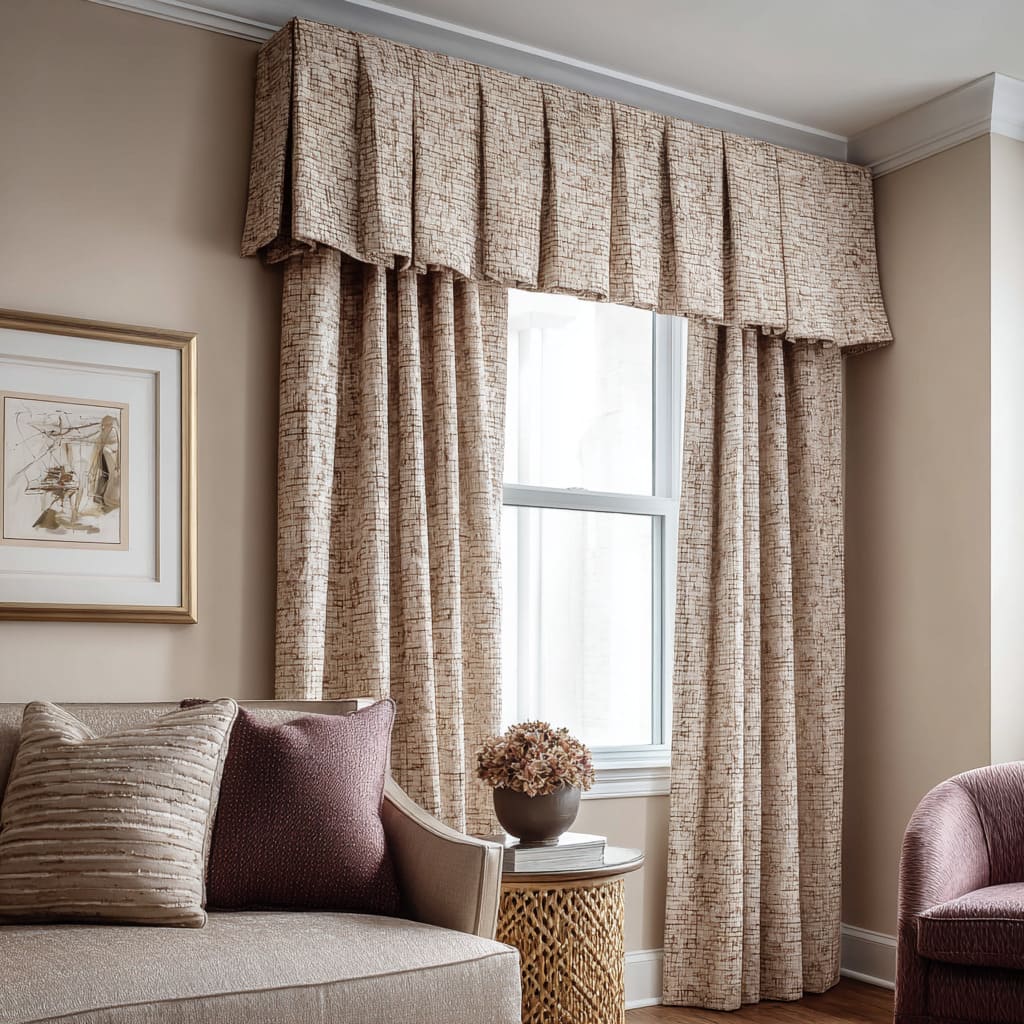
When the header sits close to the crown moulding, the eye treats the fabric as the visual end of the wall, which creates a softer, more composed horizon. When the header is slim, slightly lower, or softly contoured, the room can feel taller and more relaxed.
These variations form a broad family of modern valance ideas where textile modifies atmosphere through proportion alone. No matter the palette or material, the upper fabric line often becomes the device that decides whether a seating area feels airy, intimate, focused, or calm.
It acts almost like the “cap” of the room, setting a gentle emotional tone that influences everything below it, from the light across a sofa to the mood at a dining table or bay nook.
How the Header Redirects Attention Inside a Space
The placement and style of a valance quietly guide the viewer’s attention by determining what they notice first: the outdoors, the shape of the window, or the interior arrangement. In general practice, modern window valance ideas can be organized into three broad visual roles:
a) View-leading
Slim, unembellished headers allow the landscape to dominate. The fabric provides a clean top boundary, but the window remains visually open.
b) Textile-centred
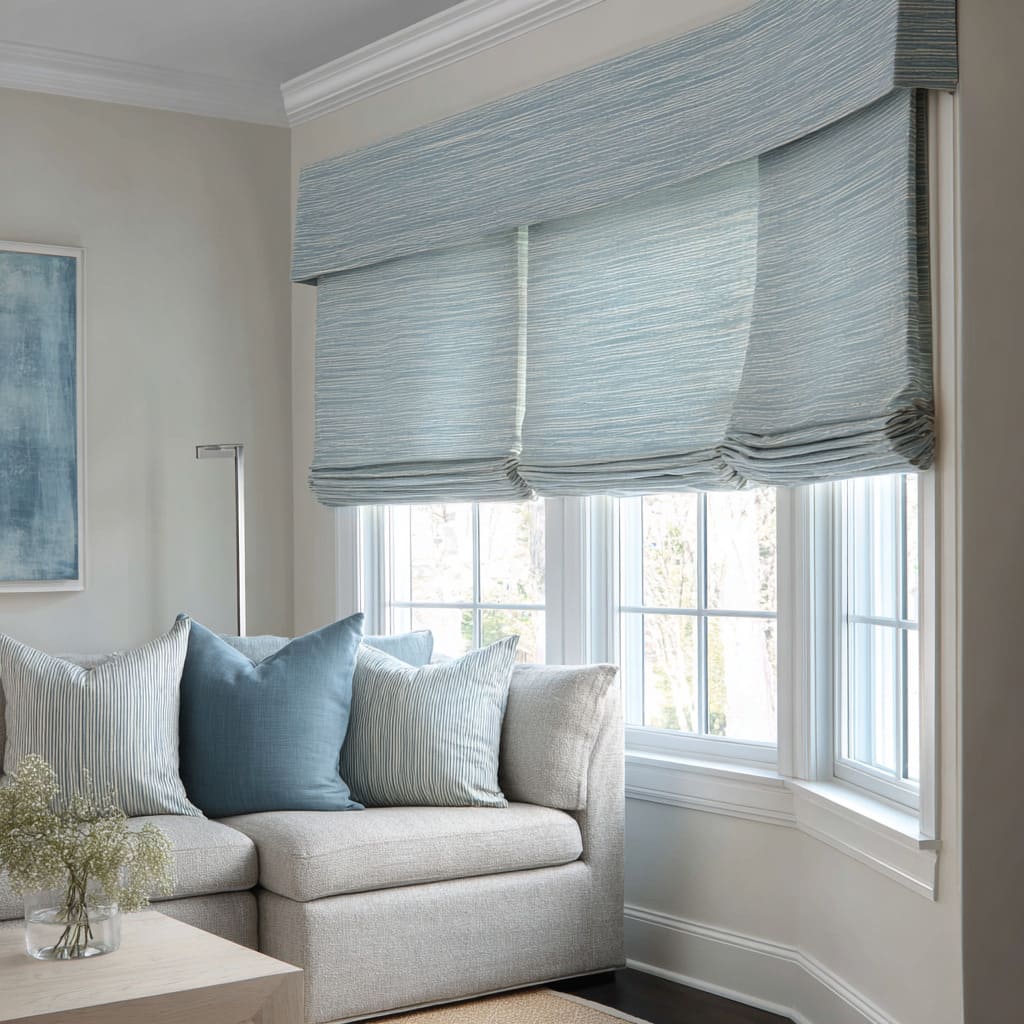
Layered shades, scalloped lower edges, or deep textured bands encourage the eye to rest on the textile itself before drifting outward. This approach suits interiors where material richness or light diffusion is meant to be a key feature.
c) Interior-focused
Deeper headers and partial upper shades draw attention inward, especially when coordinated with furniture color or wall art. Here, the window becomes a supporting element within a curated interior scene.
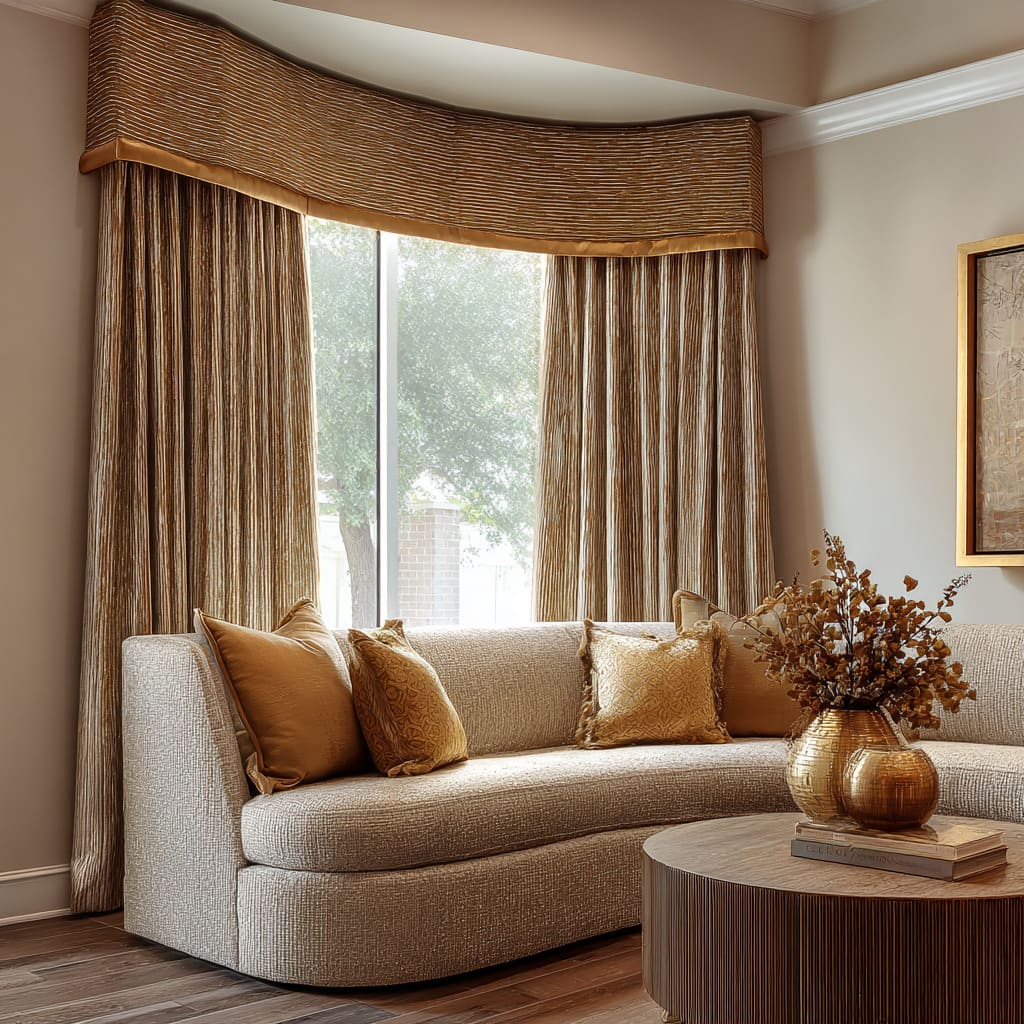
This redirection is subtle and non-verbal. It arises from height, depth, and the amount of glass left visible, giving designers a quiet tool for shaping how a room communicates visually.
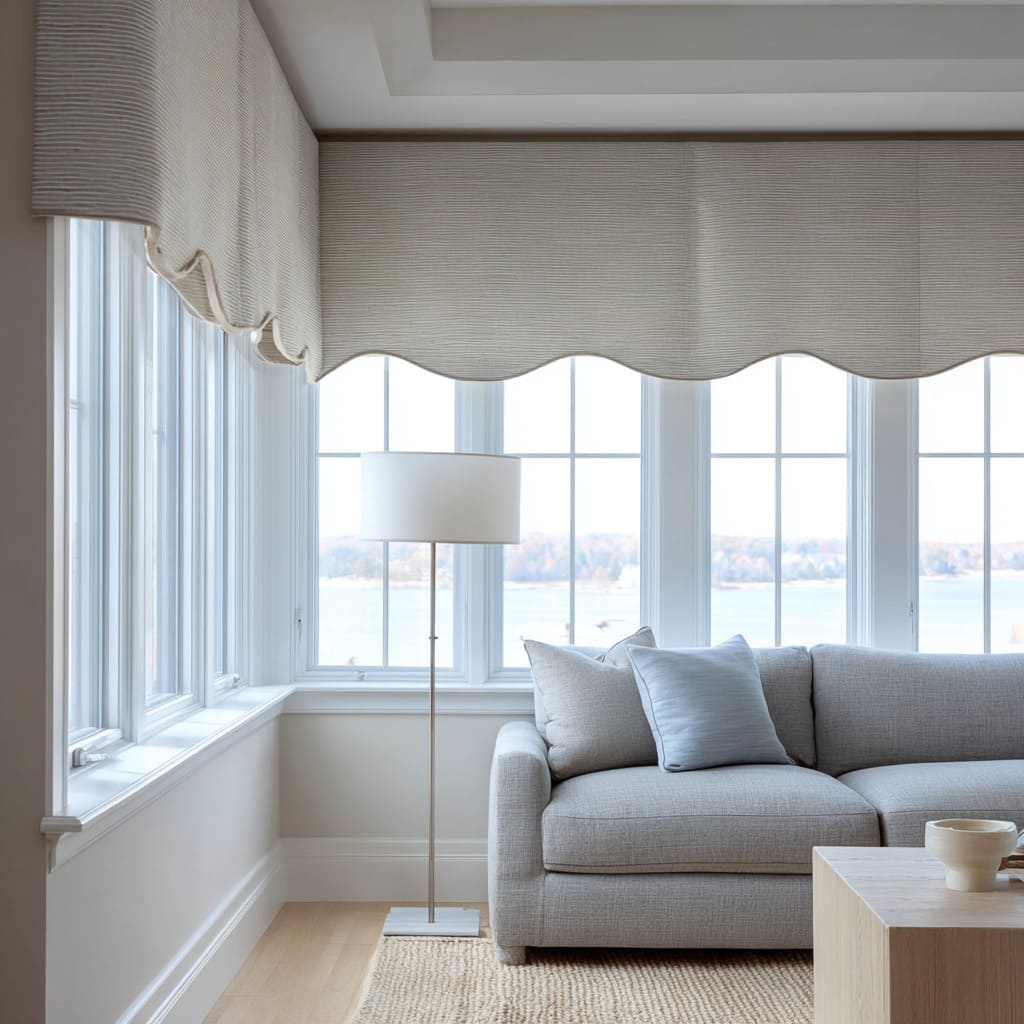
Emotional Temperature Through Top-Edge Color and Texture
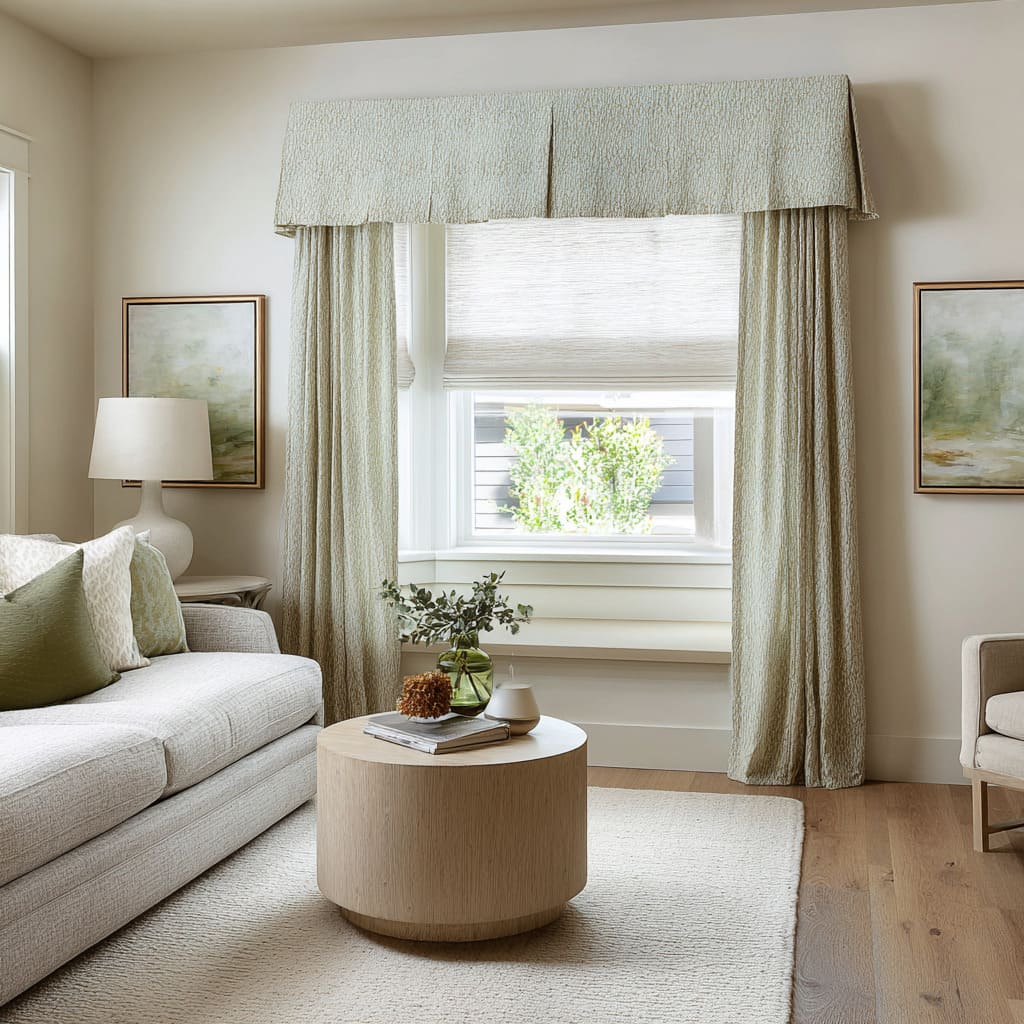
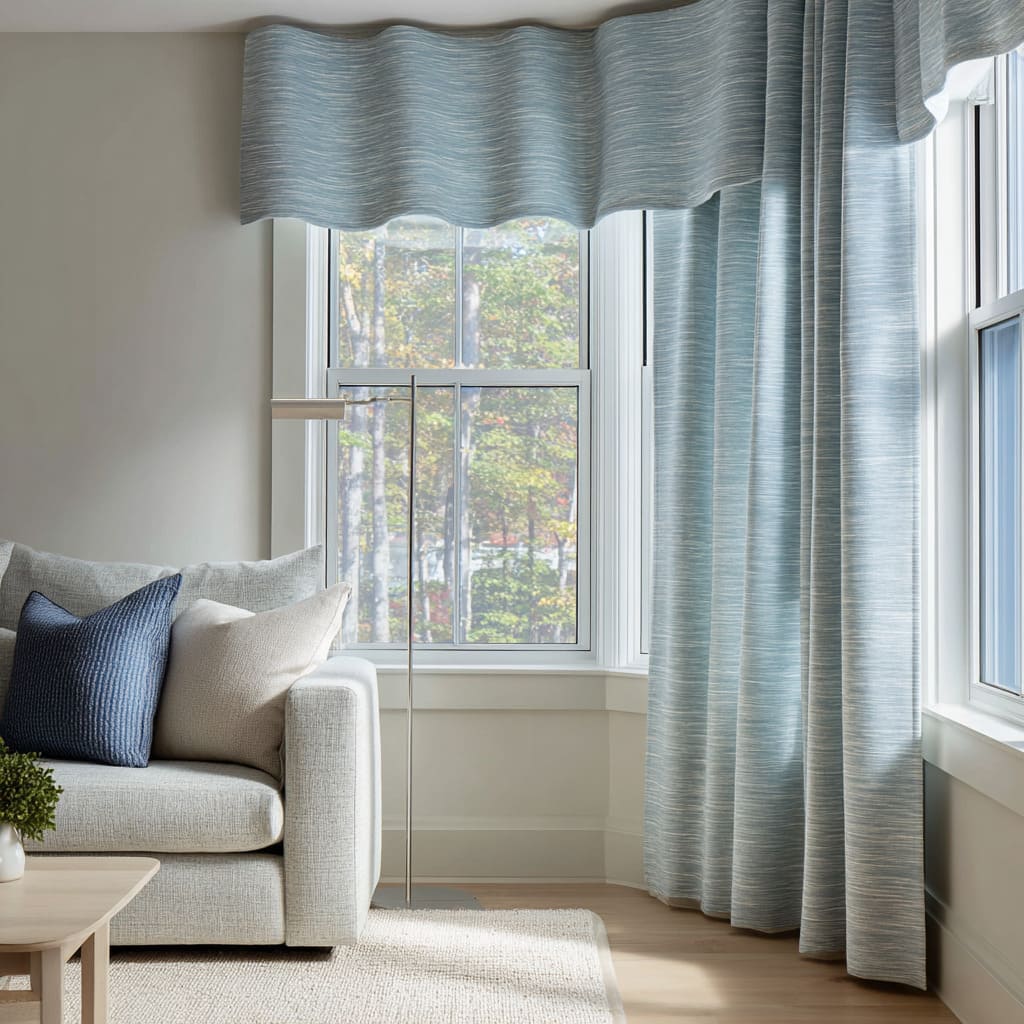
Colors and textures introduced at the top of the window exert strong influence over the perceived temperature of a room, creating sensations ranging from cool tranquility to warm enclosure. In many settings, muted blues, sea-glass greens, or gentle greys provide a sense of airiness, especially when used on straight-front cornices or lightly textured shades.
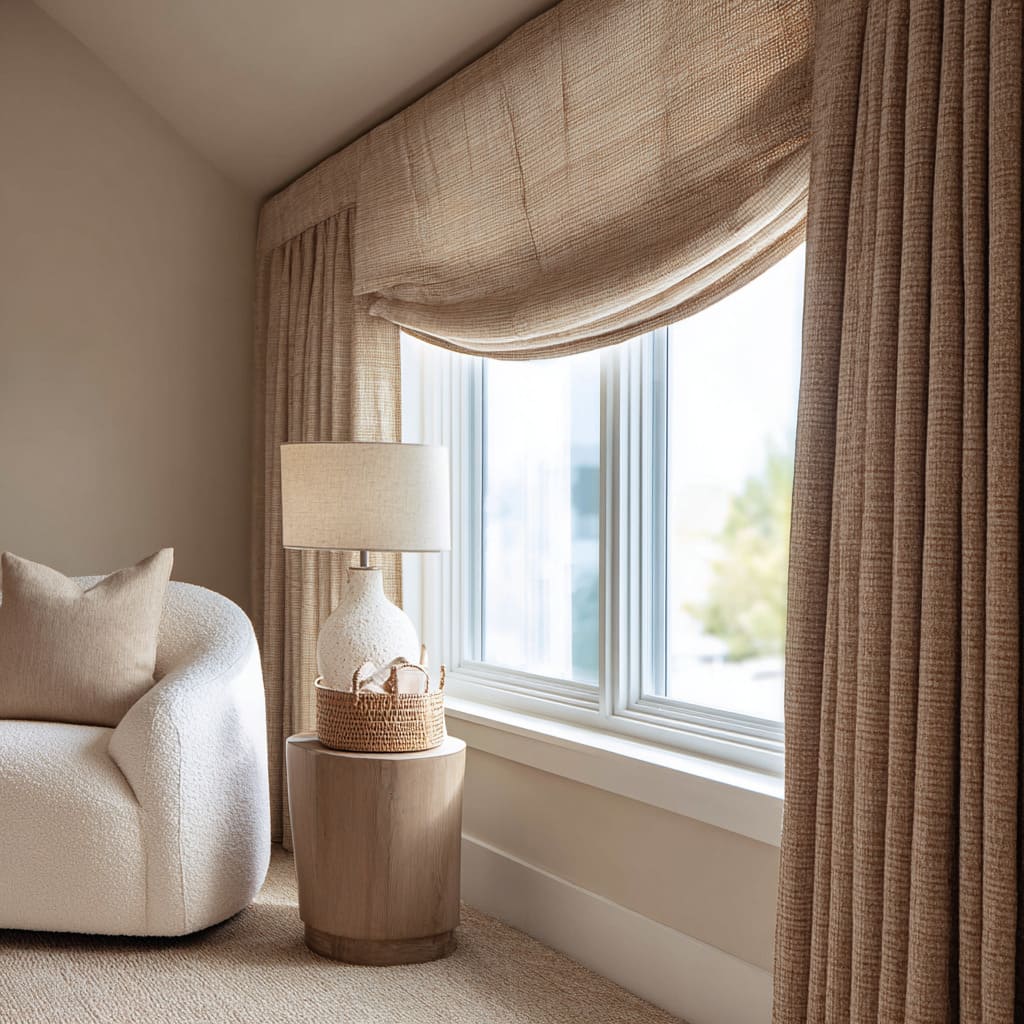
Warm tones—caramel, beige, brushed gold—impart a soft glow that can make lounge areas feel settled and inviting. Neutrals like oat, stone, or sand often serve as compositional stabilizers, keeping the focus on proportion rather than color expression.
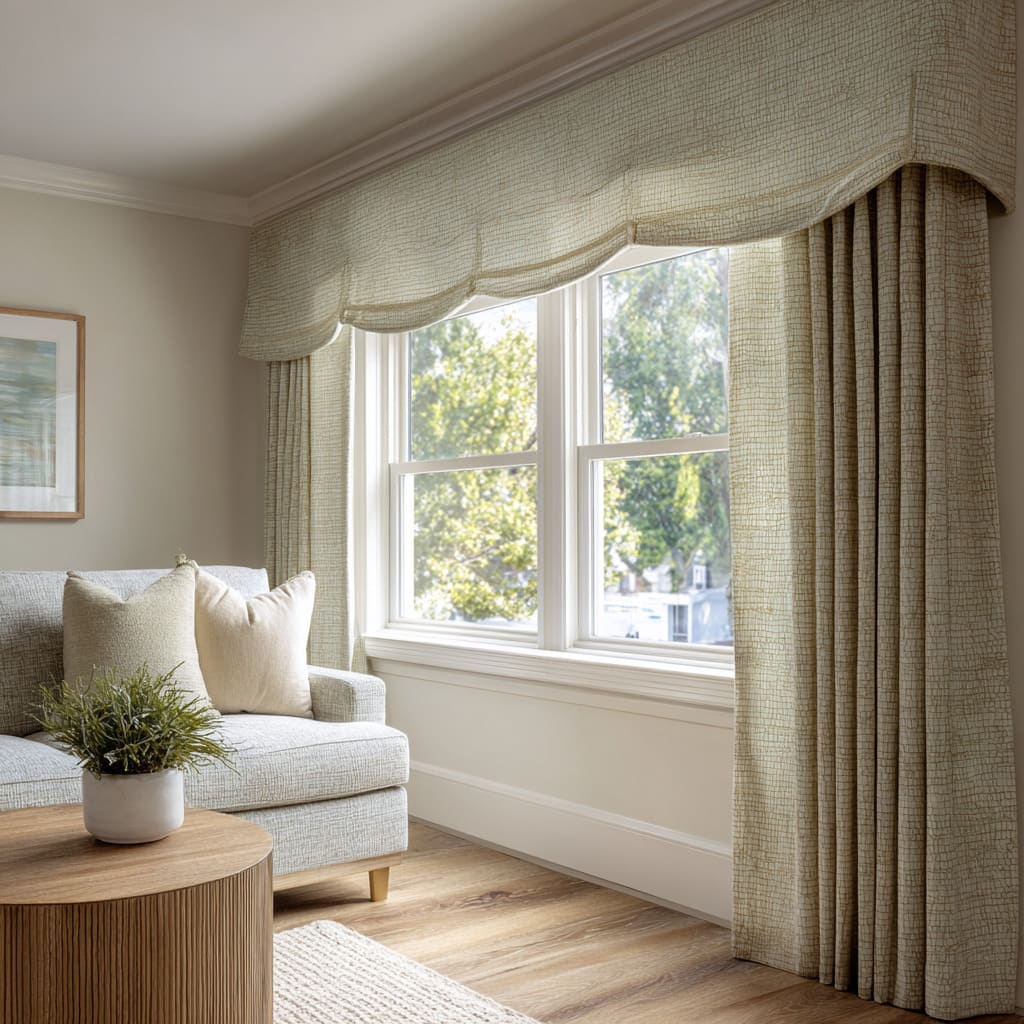
Structured observations about emotional temperature include:.
- Cool textile caps tend to evoke breezy, serene atmospheres.
- Warm-toned headers add intimacy and softness, particularly near seating zones.
- Neutral, texture-led bands maintain clarity and prevent visual noise.
- Concentrated color bands function as emotional markers without overwhelming the palette.
This temperature-setting role becomes an underlying principle for many modern valance design strategies.
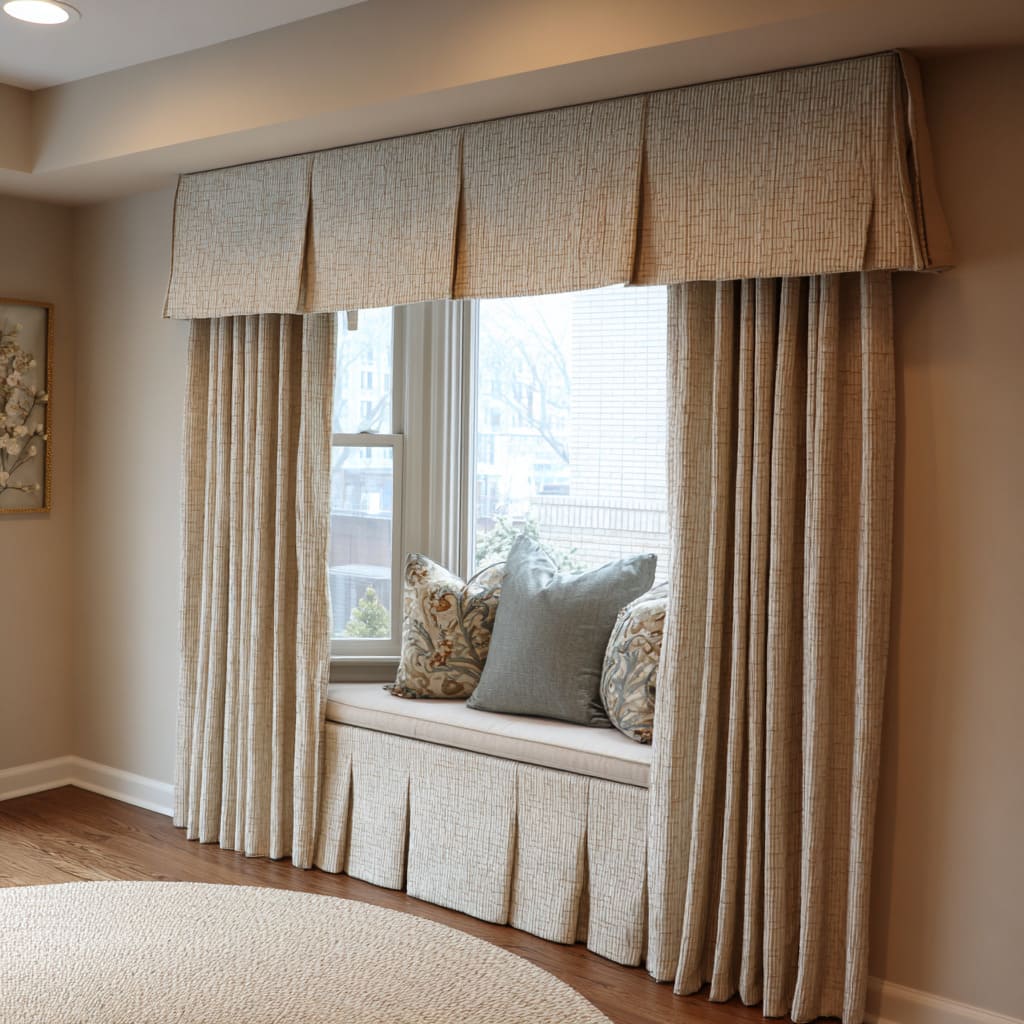
Valances as Interpreters Between Classic and Contemporary Lines
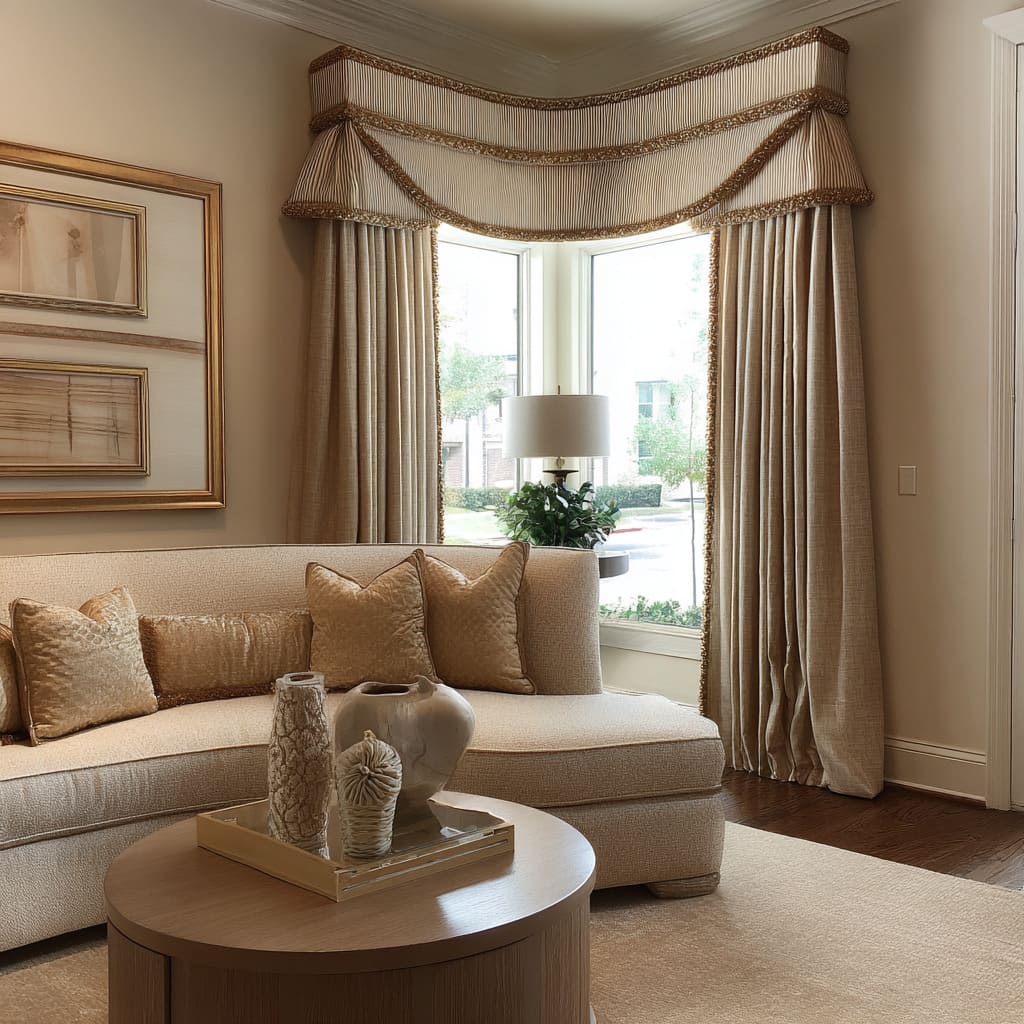
In interiors where architectural trim, divided windows, or traditional moulding remain present, valances often serve as quiet interpreters between older structural languages and newer aesthetic values. Instead of adding ornate elements, current approaches rely on simplified silhouettes—straight bands, gentle arcs, and broad scallops without embellishment.
These shapes respect the rhythm of the architecture while presenting a softened, contemporary reading.
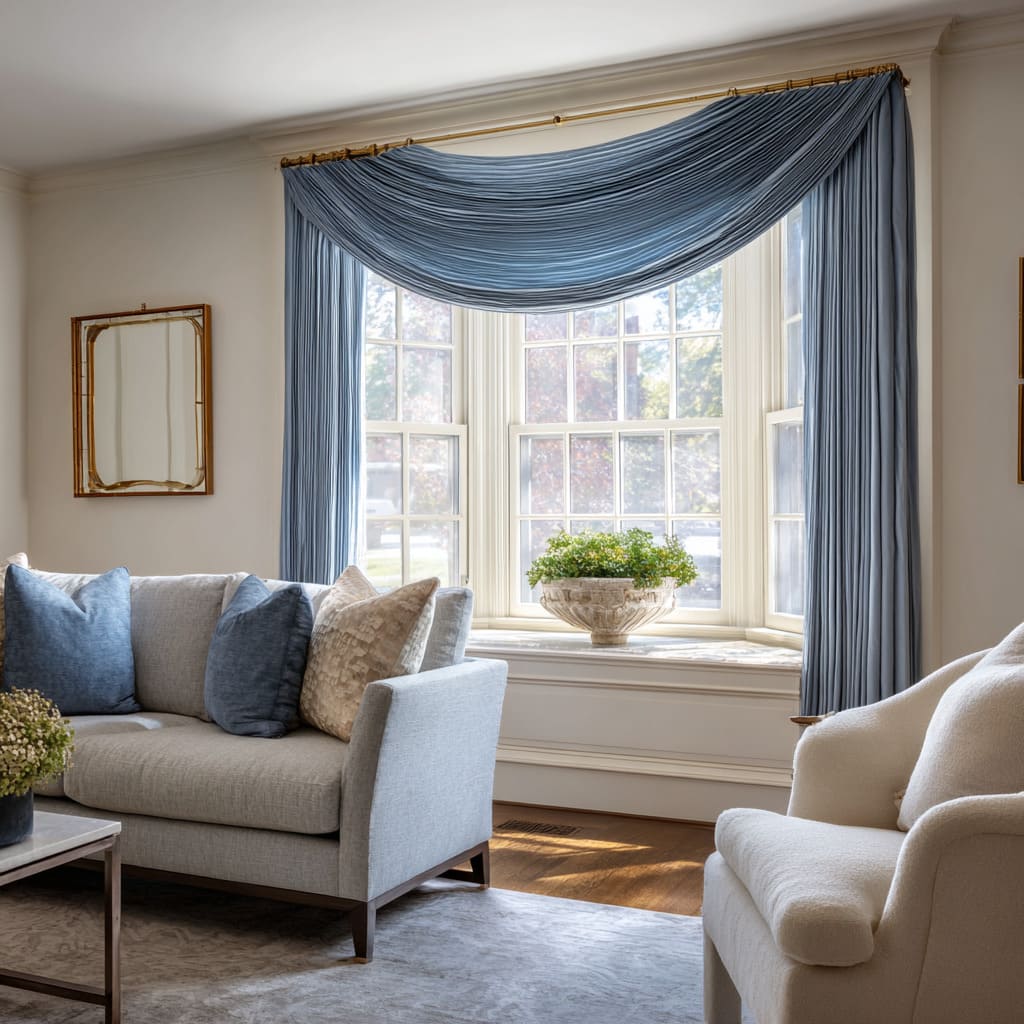
Design strategies commonly seen in transitional interiors include:.
- Aligning pleats or panel breaks with window divisions to acknowledge existing proportions.
- Replacing historical swag shapes with slow, wide curves that feel graphic but not nostalgic.
- Using unified textiles so the header becomes part of the wall’s compositional logic.
This translator role allows classic framing and modern restraint to coexist, giving windows a contemporary presence without erasing architectural character.
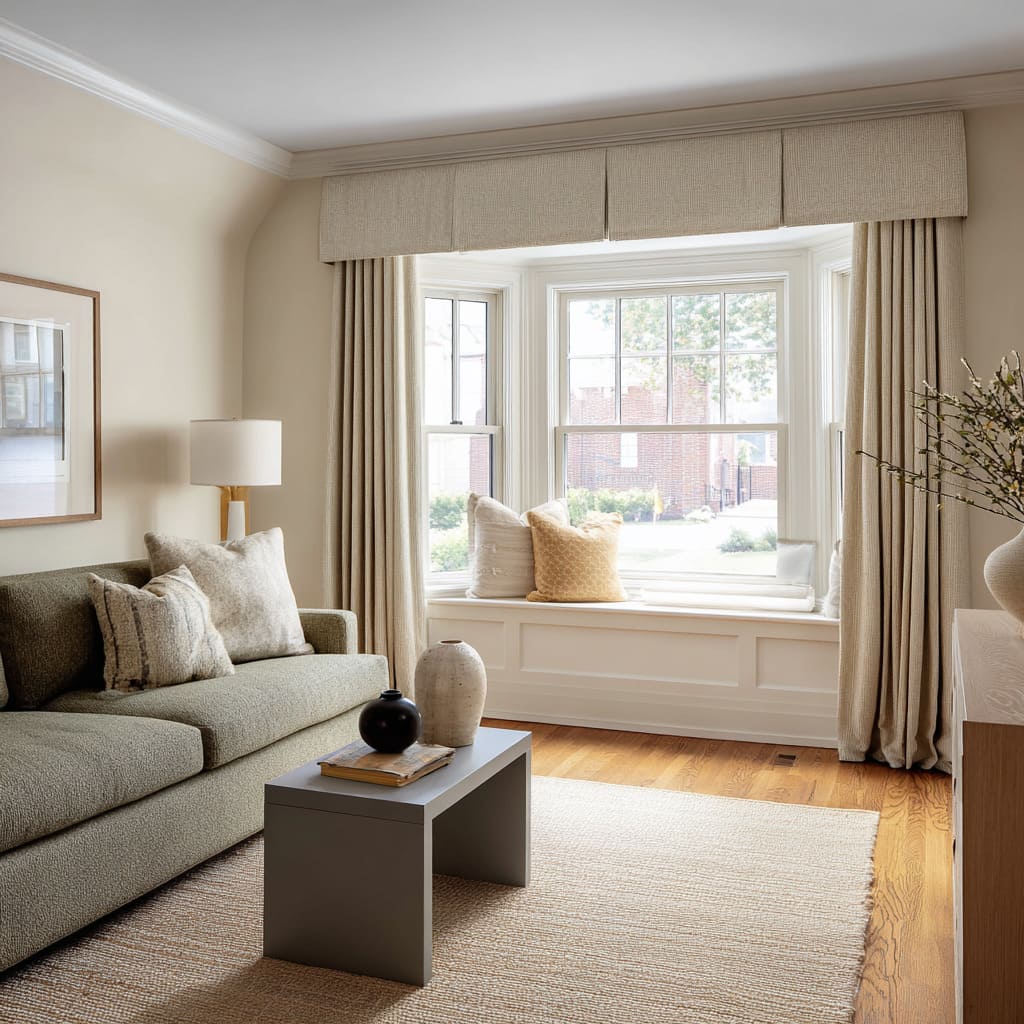
Textile Dialogues Across the Room
Modern valance thinking often extends beyond the window to form subtle “conversations” with other materials throughout the space. Because many interiors combine soft surfaces, tactile upholstery, natural fibers, and textural rugs, the upper fabric band becomes one link in a chain of related surfaces rather than a stand-alone feature.
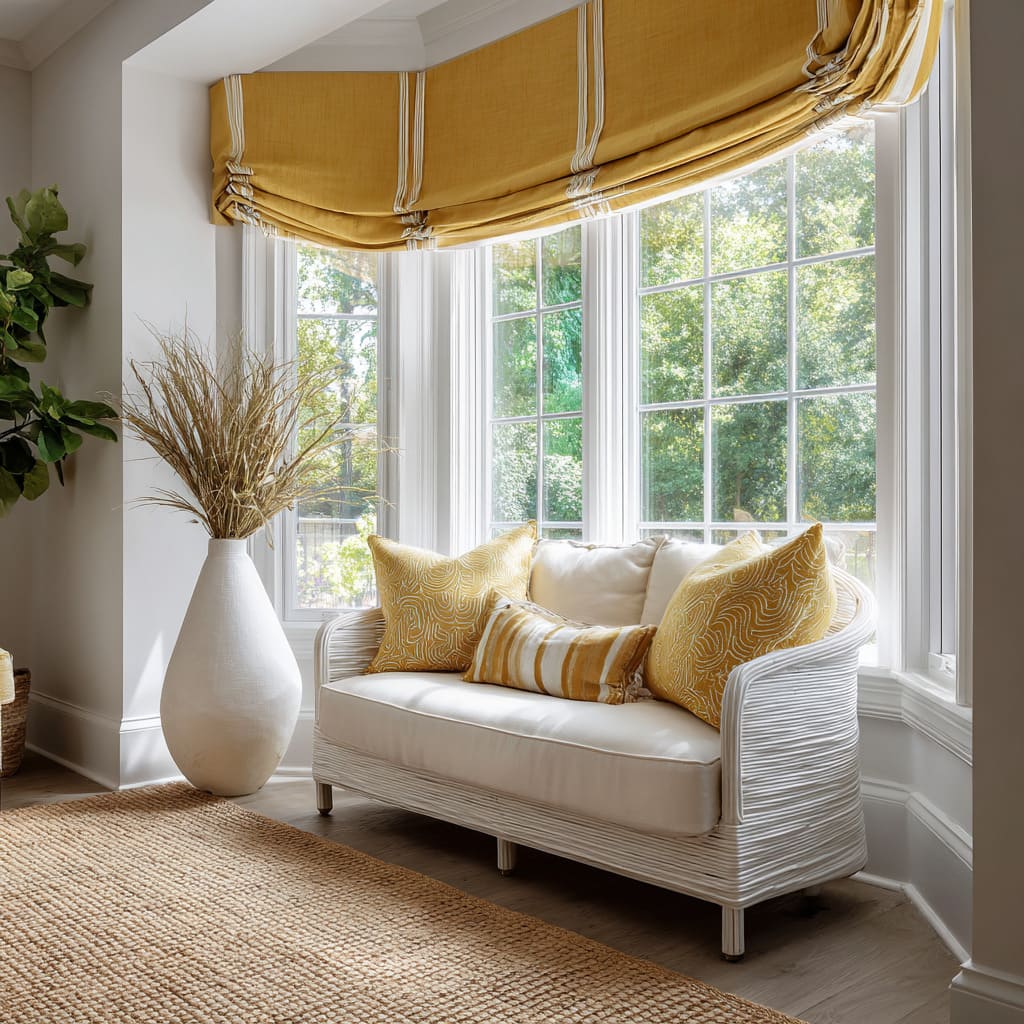
These dialogues may take several forms:.
- Texture Echoing: looped or bouclé valance fabrics relate to textured cushions or rug piles.
- Pattern Moderation: micro-grid or strié fabrics at the header may balance more pronounced weaves in seating textiles.
- Vertical–Horizontal Coordination: ribbed drapery pleats connect visually to fluted tables or paneled cabinetry.
- Material Families: matte linen headers pair naturally with ceramic decor and woven accents.
This network of relationships ensures the valance contributes to the overall tactile story rather than functioning merely as a decorative top edge.
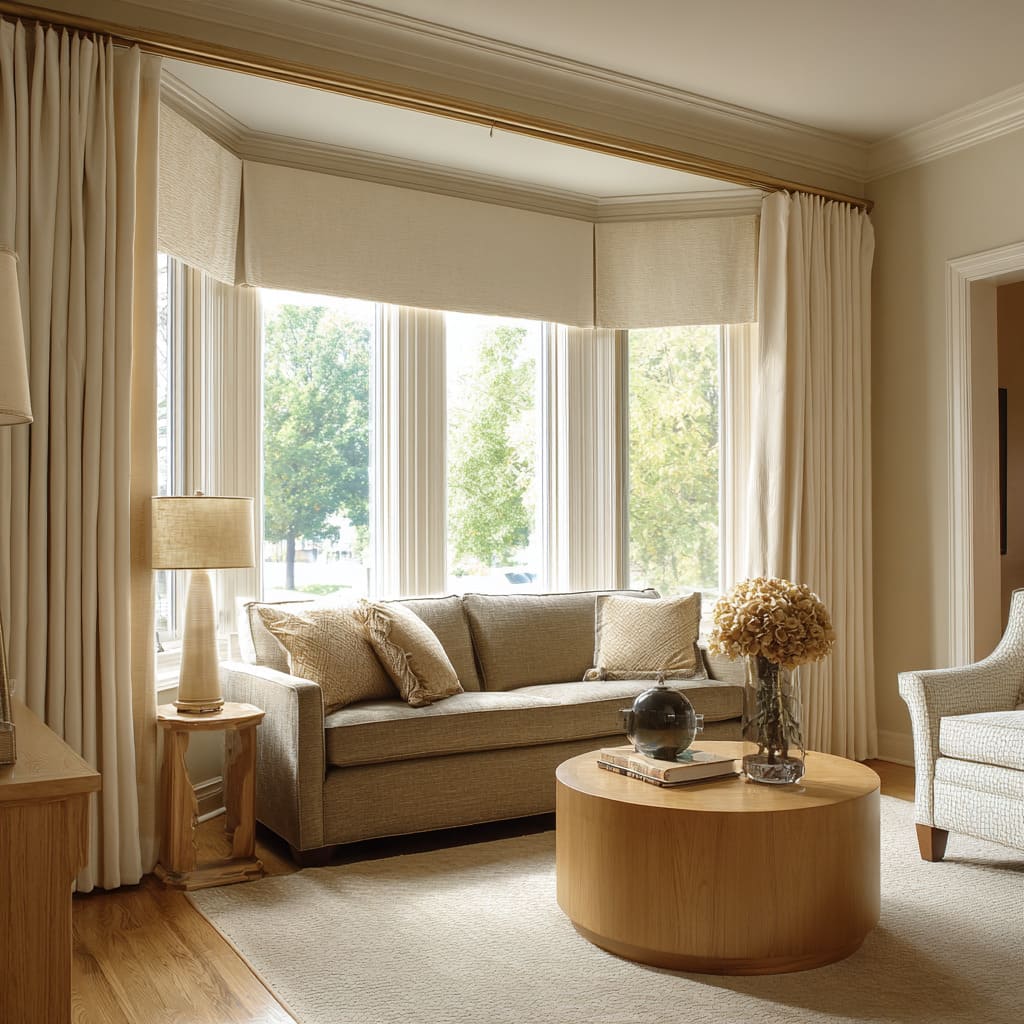
Social and Intimate Spatial Zones Shaped From Above
The height, style, and layering of the header can gently signal whether an area is meant for social interaction or more private, quiet use. This happens without barriers or partitions; the fabric line alone shapes the perception.
Social zones
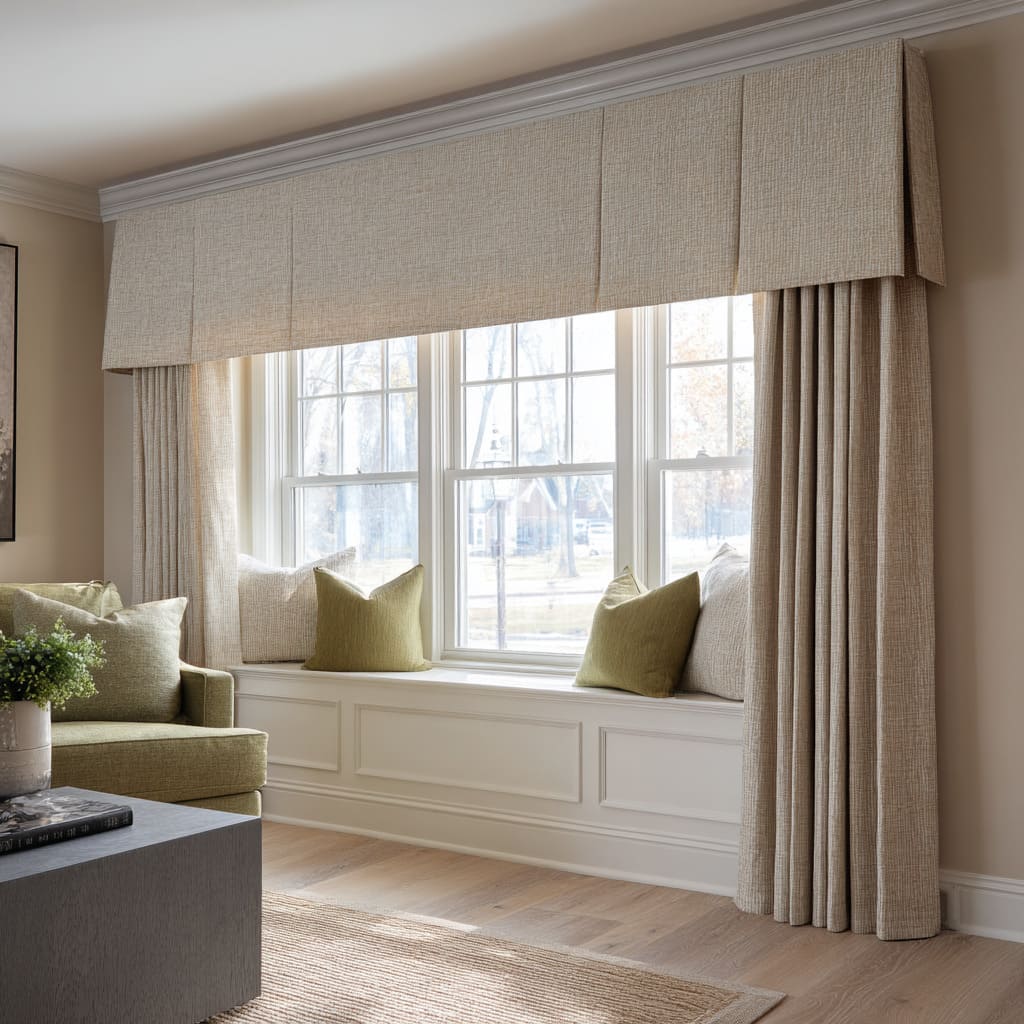
- Often characterized by straight, continuous cornices that stretch across wider walls.
- The eye remains open to surrounding spaces, supporting group interaction.
- Long drapery panels reinforce a sense of vertical openness.
Intimate zones
- Formed by layered shades, deeper headers, or wrapped corner valances.
- The height feels slightly lowered, encouraging stillness and focused use.
- Roman shades or curved lower edges create a gentle enclosure.
These dynamics give designers subtle tools for zoning large rooms, especially open-plan environments, without relying on furniture layout alone.
Theatrical Principles Applied With Restraint
Though the results look calm, many treatments borrow quietly from stagecraft. Headers sometimes act like soft proscenium frames, while layered Romans behave like backdrops that can be raised or lowered to adjust atmosphere.
Even wave-shaped valances function like visual curtains marking a scene transition.
However, modern practice emphasizes restraint rather than display:
- Curves are wide and shallow, not ornate.
- Pleats are controlled in depth and spacing.
- Edges remain clean and unembellished.

This creates a contemporary interpretation of theatrical logic, one suited to the understated look associated with modern curtain valance ideas.
Changing Light as the Main Decorative Feature
Because contemporary textile selection favors texture over print, daylight becomes the primary generator of pattern. As sun moves across the space, fabrics reveal shifting complexity—strié lines brighten, pleat edges form alternating light and shadow, and layered shades glow at their folds.
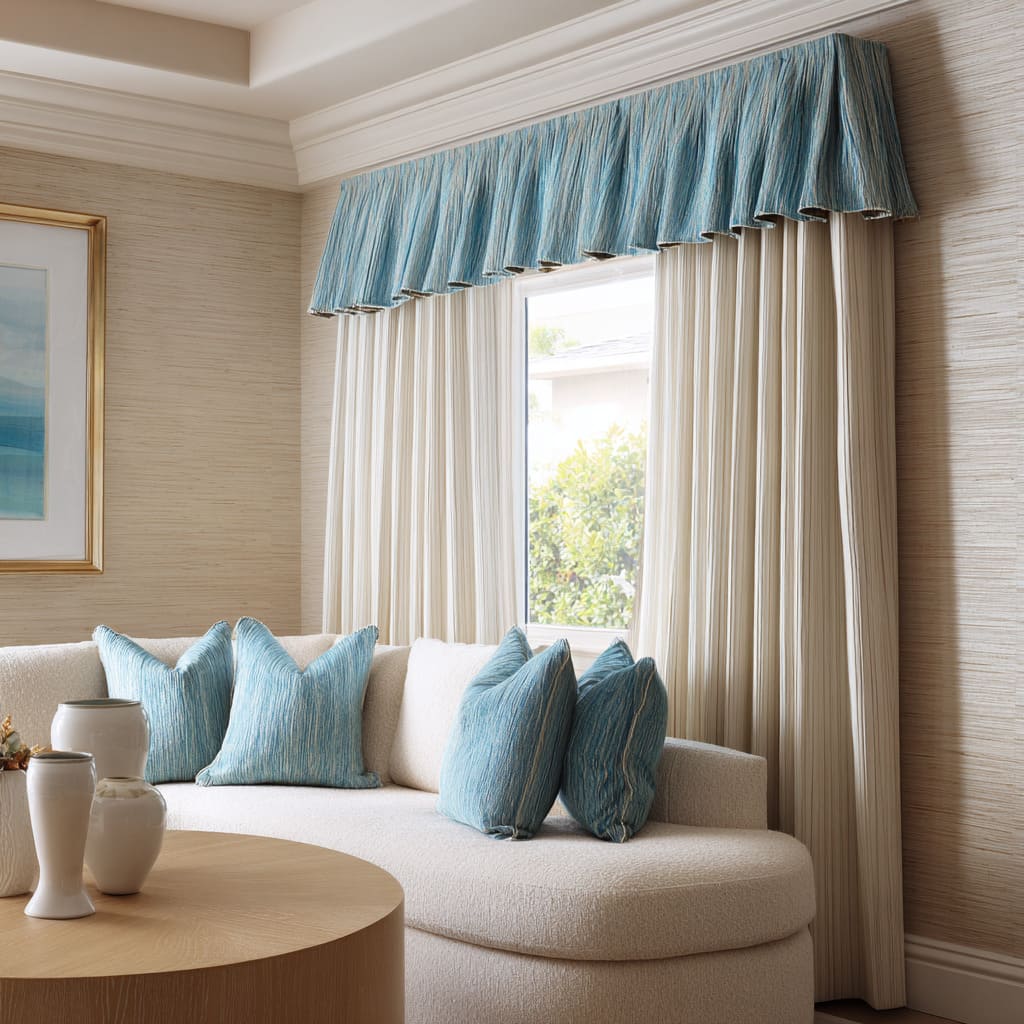
Key light-dependent behaviors include:.
- Raked sunlight that enhances ribbed or pleated edges.
- Filtered glow from partially lowered shades acting as a diffused light source.
- Evening illumination bringing out metallic threads or subtle sheens.
- Shadow tracing along scalloped or waved edges, creating soft, dynamic outlines.
This natural variability means the valance participates in the room differently throughout the day, offering visual richness without resorting to busy prints.
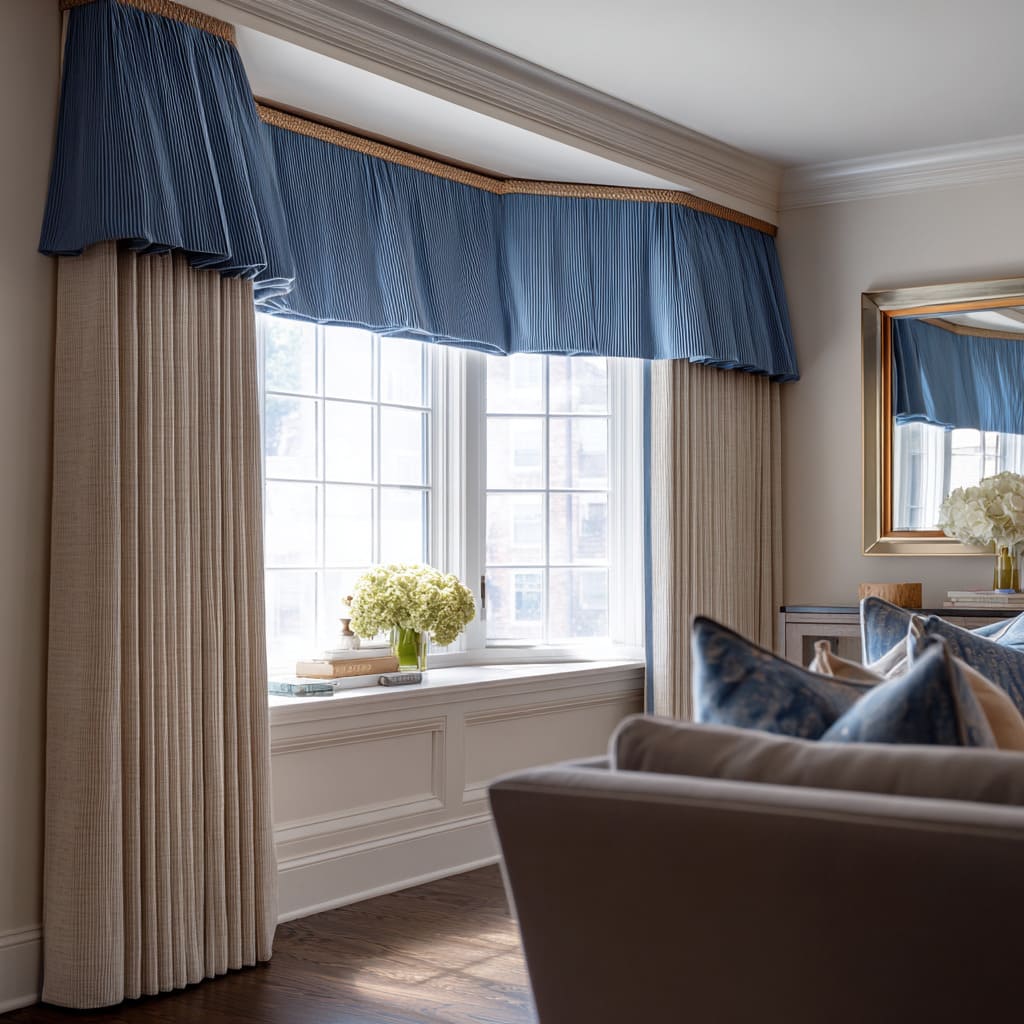
Window Areas as Framed Scenes
Whether or not seating directly occupies the window area, the elements around the opening often turn it into a framed visual “scene. ” Straight cornices act as upper rails, long curtains or narrow shade panels become vertical sides, and seat levels or consoles establish lower rails.
The composition can lean toward either structure or softness depending on the textile choice.
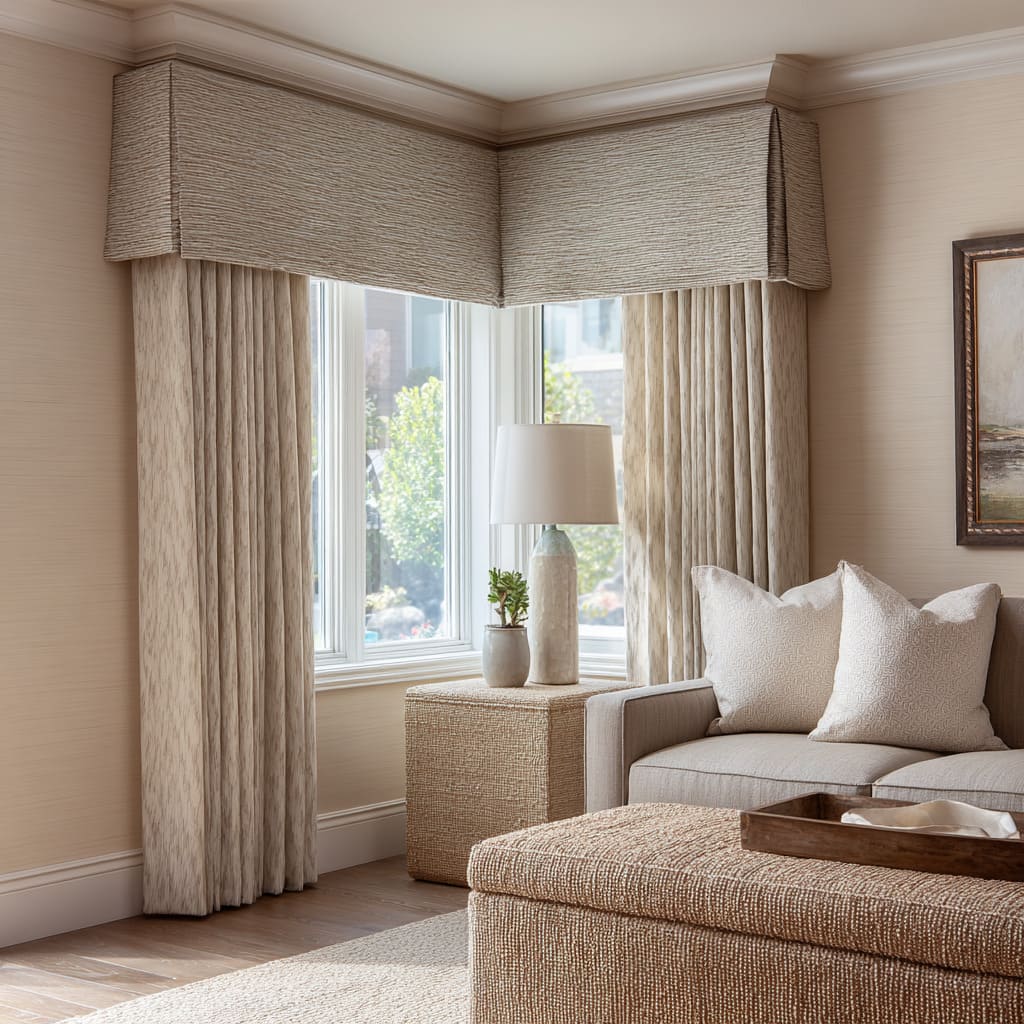
Broad categories of framing include:.
- Architectural framing using structured headers and straight panels.
- Soft alcove framing with layered shades and cohesive textiles around bays.
- Minimal framing with thin upper bands that let the casing and view dominate.
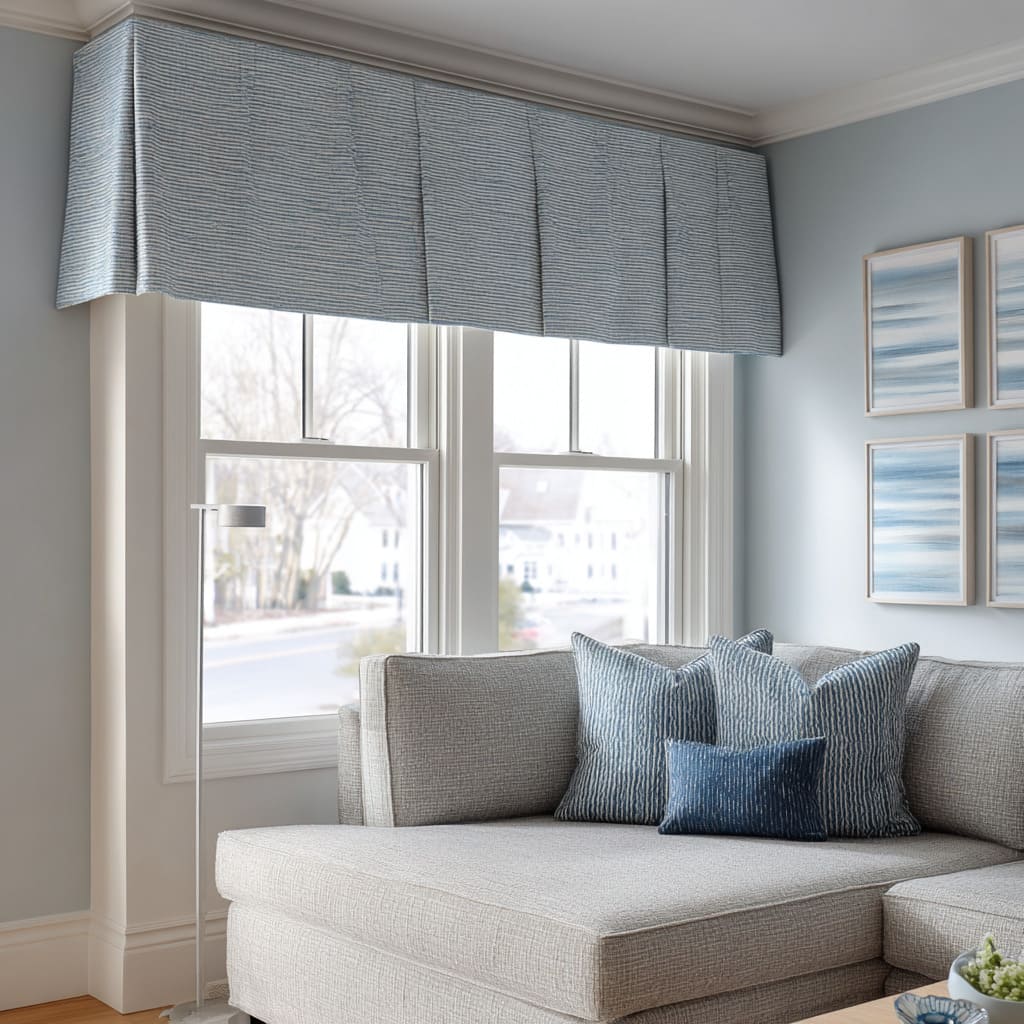
In every case, the valance participates in defining how the window is read—as a panorama, a niche, a glowing panel, or a composed part of the wall.
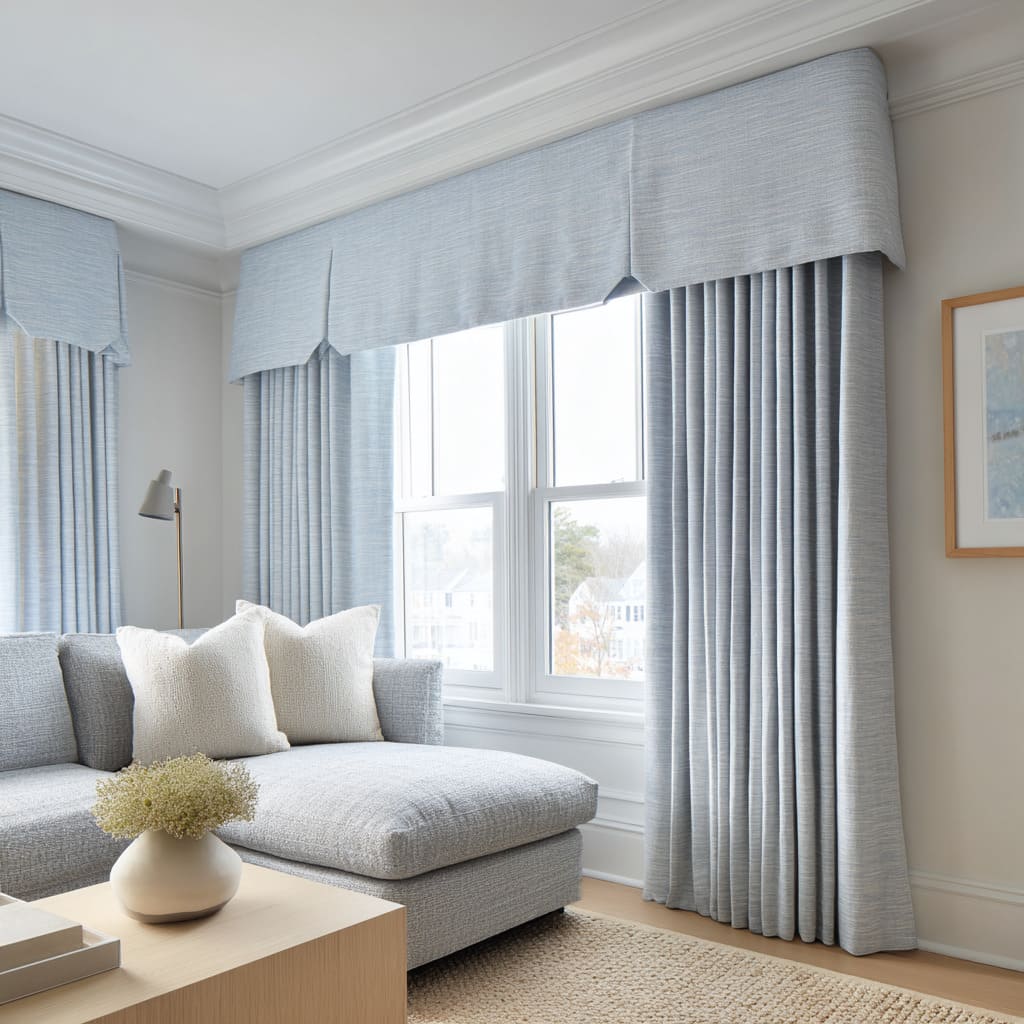
Repetition and Rhythm as the Unifying Mechanism
A defining feature in many interiors is how repetition stabilizes the visual environment. The valance is often responsible for initiating the core rhythm of the room.
Pleats, stitched panel breaks, curved outlines, or structural horizontals create a consistent cadence that other elements echo. Repeating motifs may appear as:.
- recurring ribbing on furniture
- patterned placement of art
- symmetrical cushion distribution
- related textures in seating or rugs
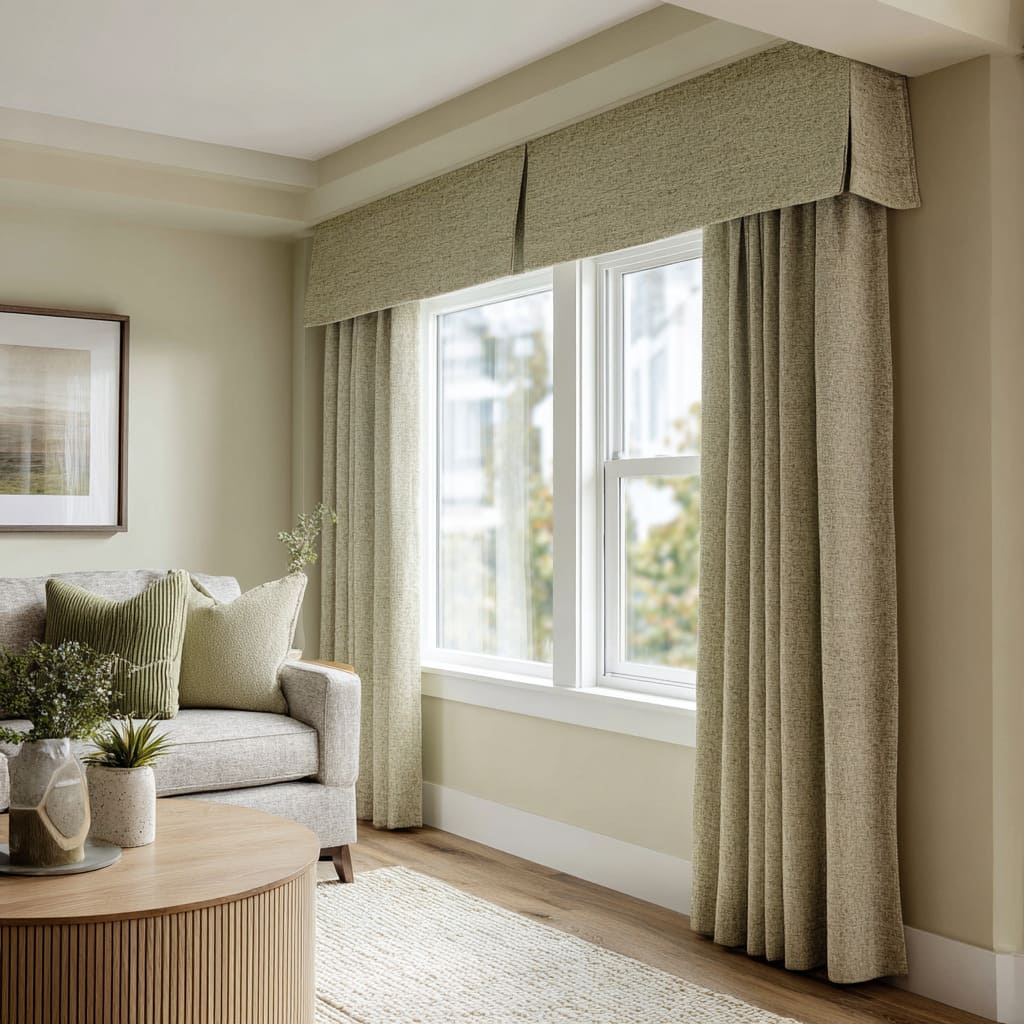
Because the valance sits high in the field of vision, its rhythm becomes an anchor. The rest of the room aligns with it consciously or intuitively, which is why small decisions at the header level can have large compositional impact.
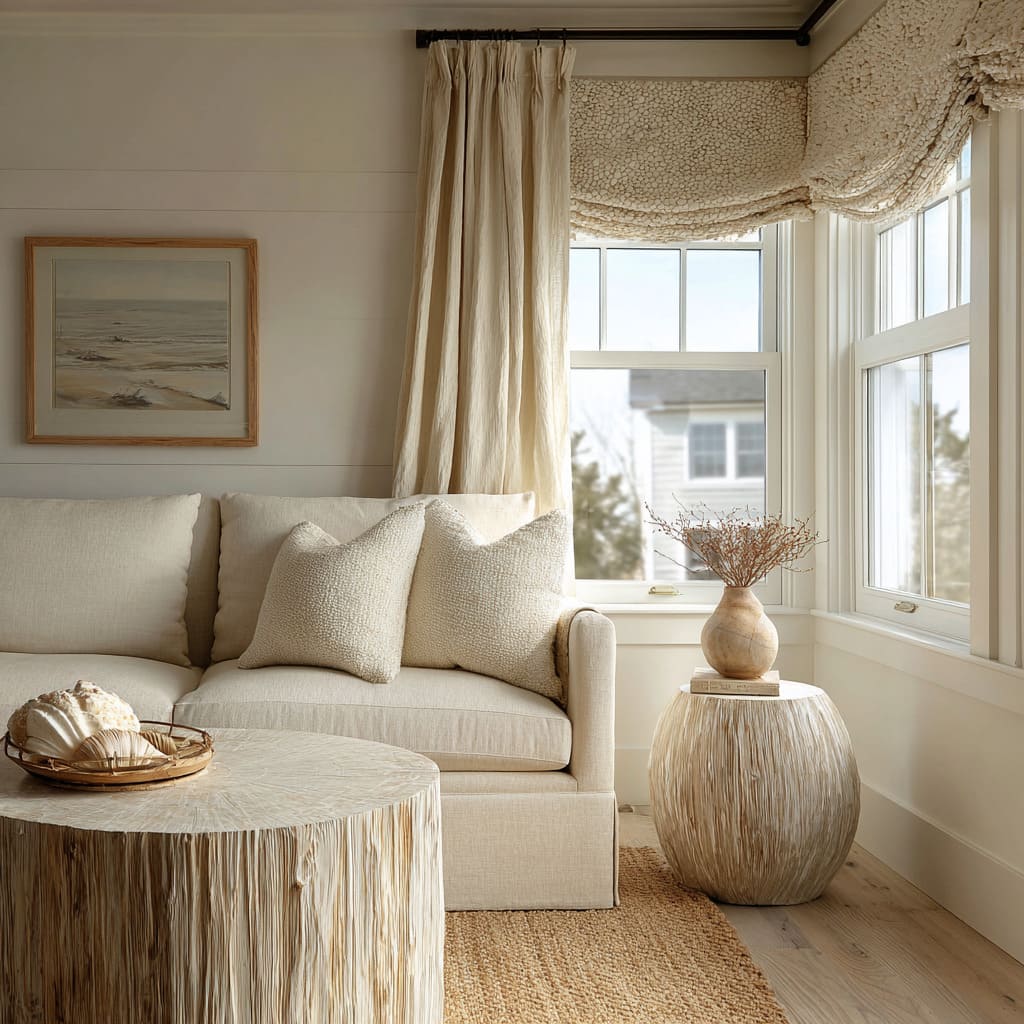
Coordinated Narratives Across Multiple Rooms
When used across several spaces, valances can act as linking devices, helping form a coherent narrative as someone moves through a home or multi-room environment. The continuity may appear through a shared color family, a favorite fabric texture, or a repeated shape such as a gentle wave or structured box.
Each room can still express its own identity—more layered in one area, more minimal in another—while maintaining a consistent top-edge language.
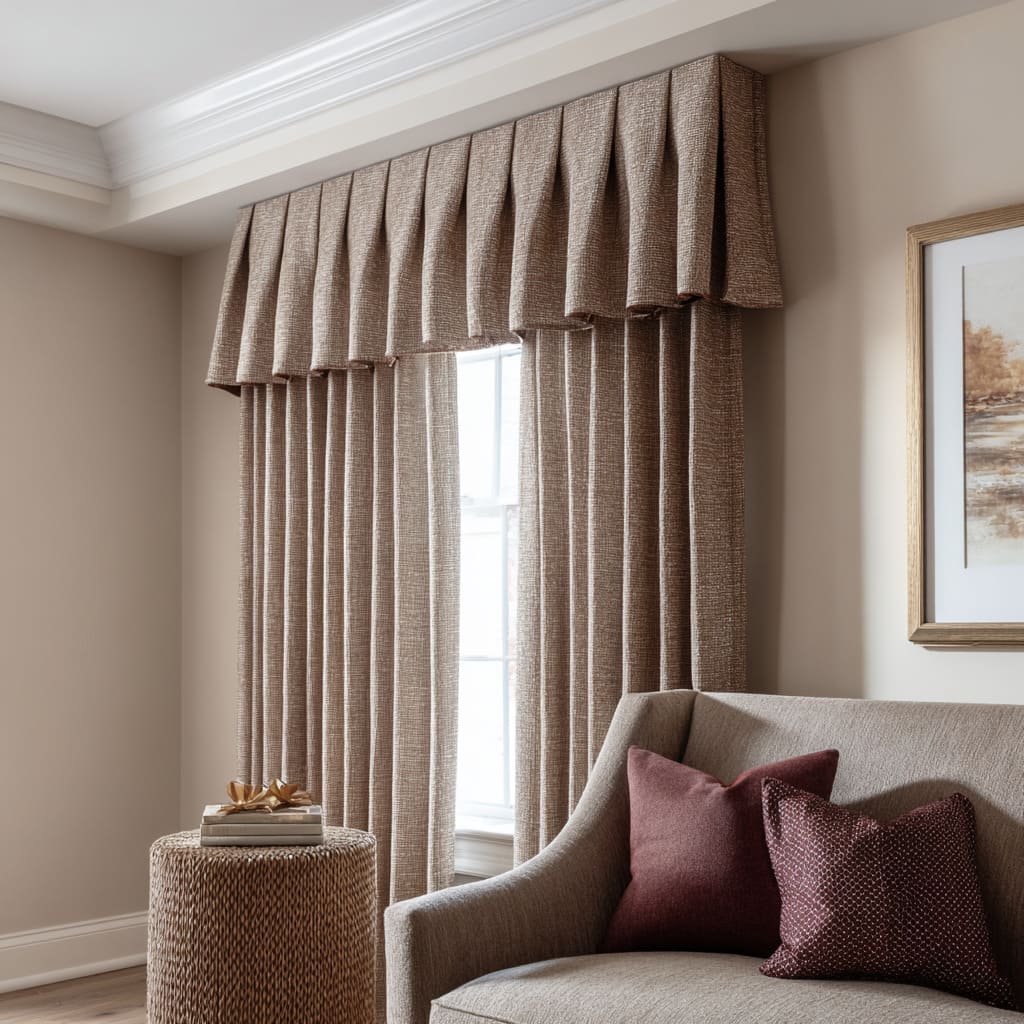
Narrative strategies often include:.
- Color families repeated in different intensities across rooms.
- Shape variations (straight, curved, layered) built from a shared vocabulary.
- Textural consistency that supports a unified sensory experience.
This holistic view reflects the direction many modern valance ideas take today: valances are not standalone flourishes but moving parts in a larger material and atmospheric story.
Valances as Quiet Connectors Between Architecture and Soft Furnishings
Across many design approaches, the valance sits at a unique intersection where hard surfaces meet textiles. It touches the domain of plaster, trim, casing, light, fabric, and even furniture alignment.
Its position at this crossroads allows it to tie together elements that might otherwise feel disjointed. Straight headers can moderate transitions between wall planes and tall drapery; layered shades link vertical furniture volumes to the horizontals of the ceiling; textured cornices soften stark architectural lines by introducing a tactile component where none previously existed.
This bridging role allows the valance to operate as a connector rather than an ornament—a structural participant in shaping how spaces relate horizontally, vertically, and atmospherically. And within this broader context, contemporary modern window valance ideas naturally integrate themselves into the flow of the room rather than acting as isolated accents.