People often think the hardest part of green sofa living room ideas is picking a shade that looks good on its own. Green rarely fails because it’s “the wrong green.
” It fails when the design gives the green no supporting story at eye level—no clear outline, no measured contrast steps, and no surrounding surfaces that stabilize the undertone.
The green pieces succeed because the room’s design treats green as a behavior that changes with three things:
- the filter created by wall color and nearby whites,
- the edge definition created by black elements, and
- the shadow quality created by texture (not extra colors).
That trio is the hidden structure behind the calm, grown-up look.
Undertone clarity: the design teaches the eye what “this green” is
A subtle but repeatable pattern is that the design contains at least one element that acts like an “undertone translator. ” This is not a color match.
It’s a cue that tells the viewer whether the green is blue-leaning, yellow-leaning, greyed, or saturated.
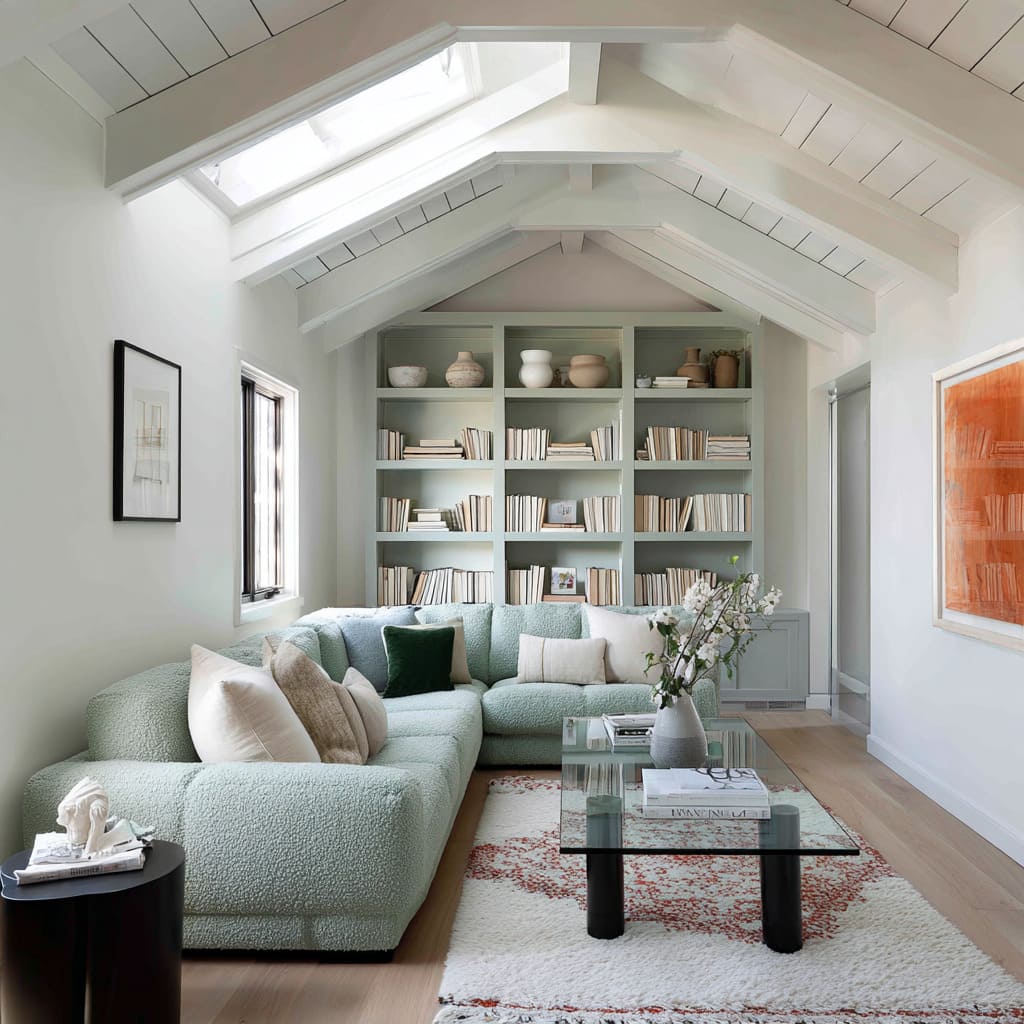
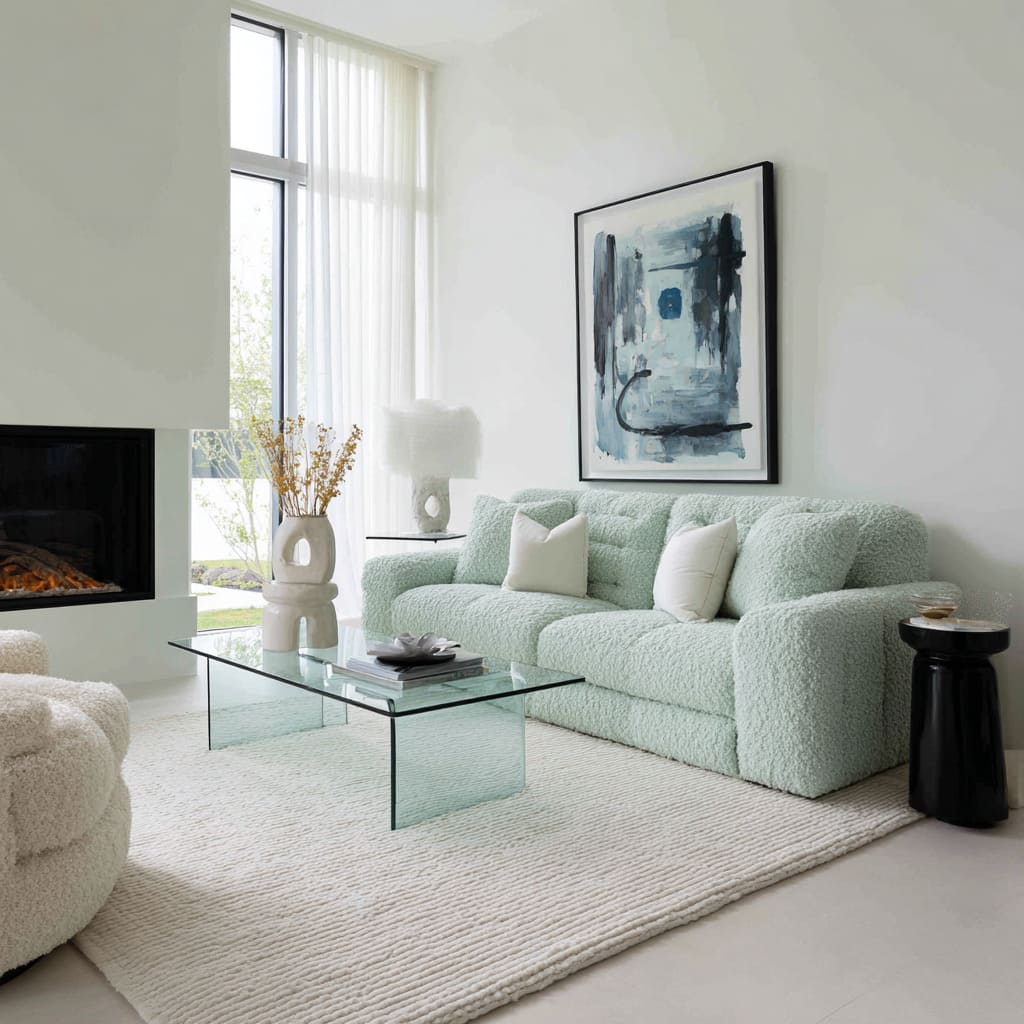
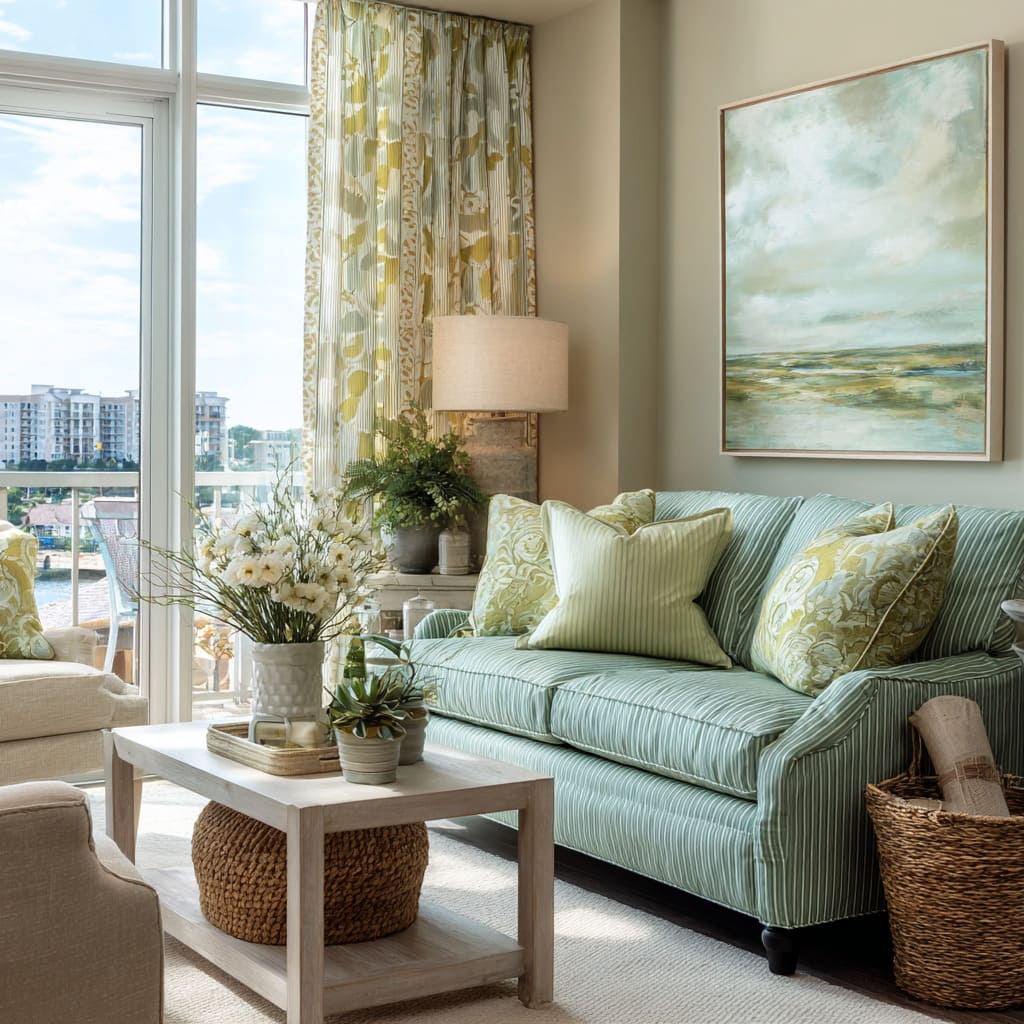
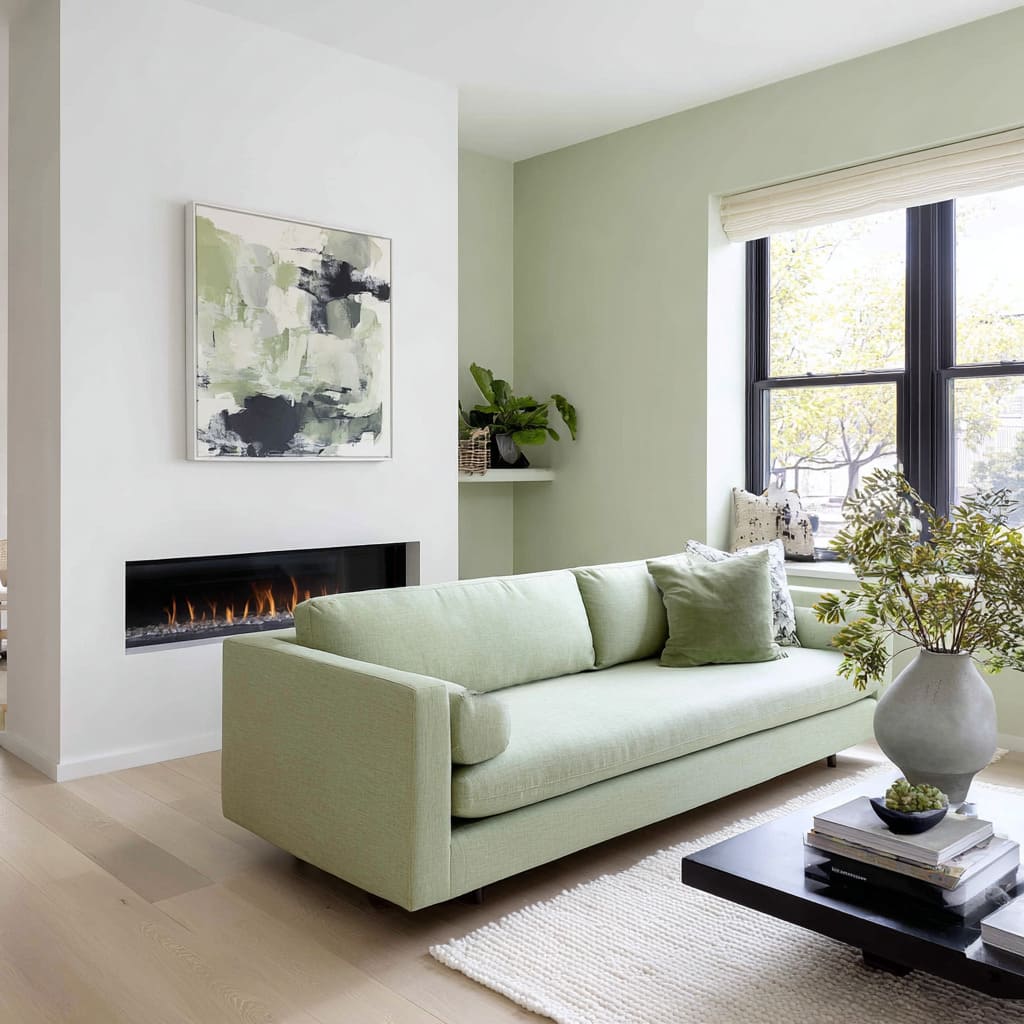
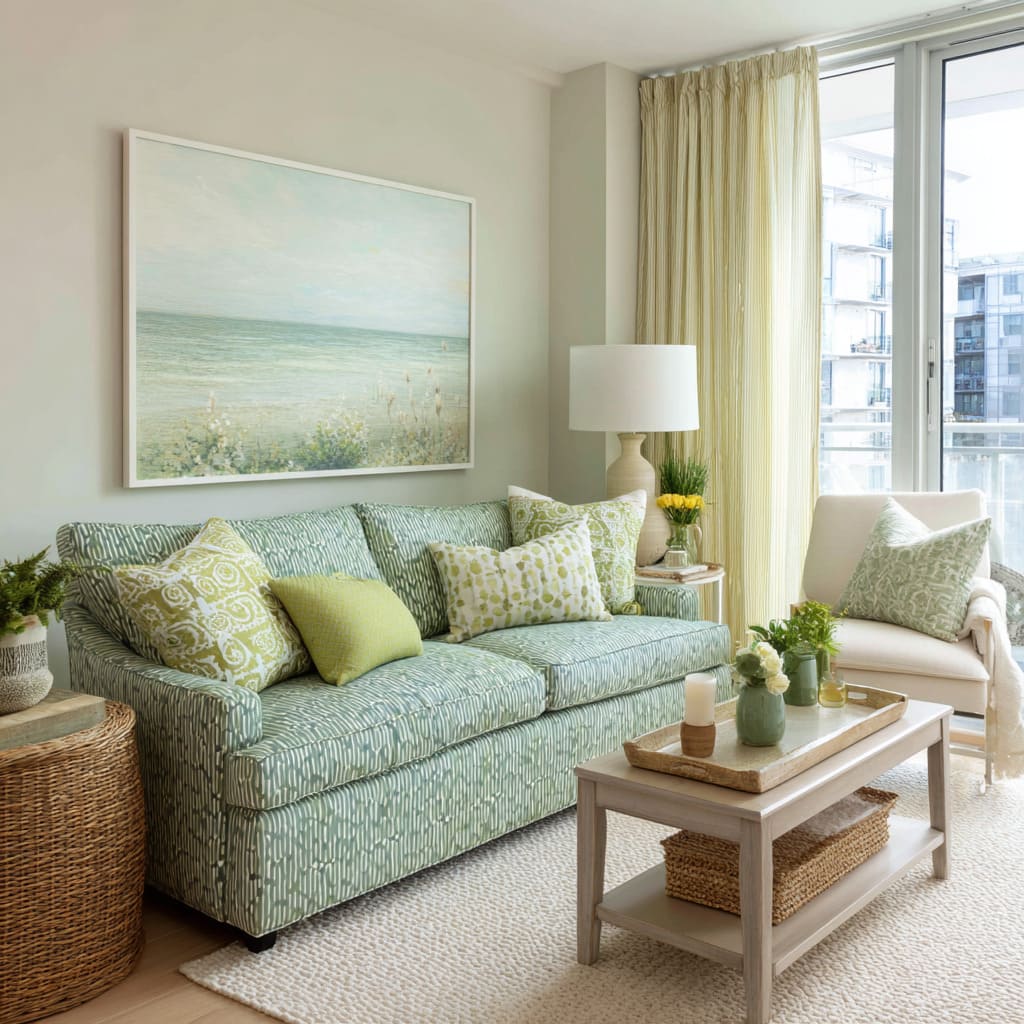
- Foe example, in the pale seafoam setting, the artwork above the seating can carry blue-grey and ink notes. That doesn’t compete with the upholstery; it labels it. The green reads as intentionally cool, not accidentally minty.
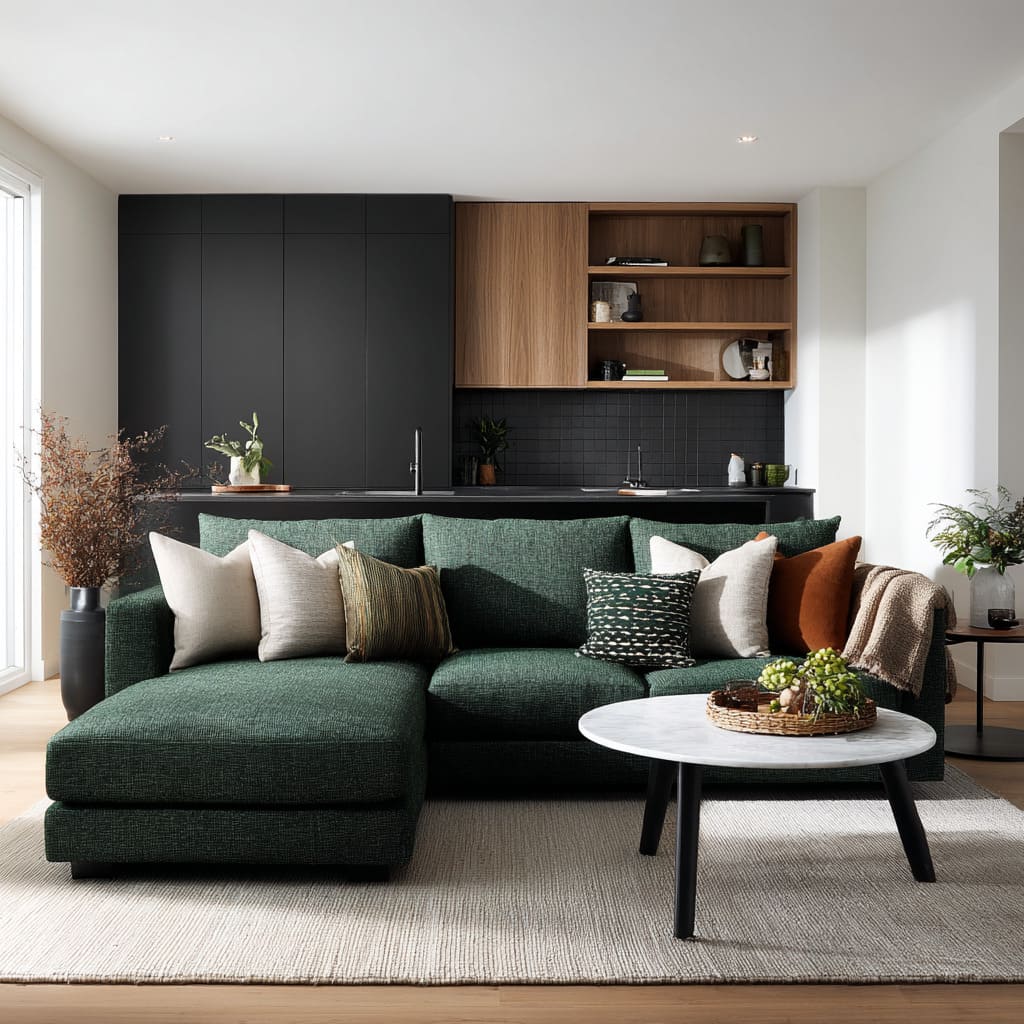
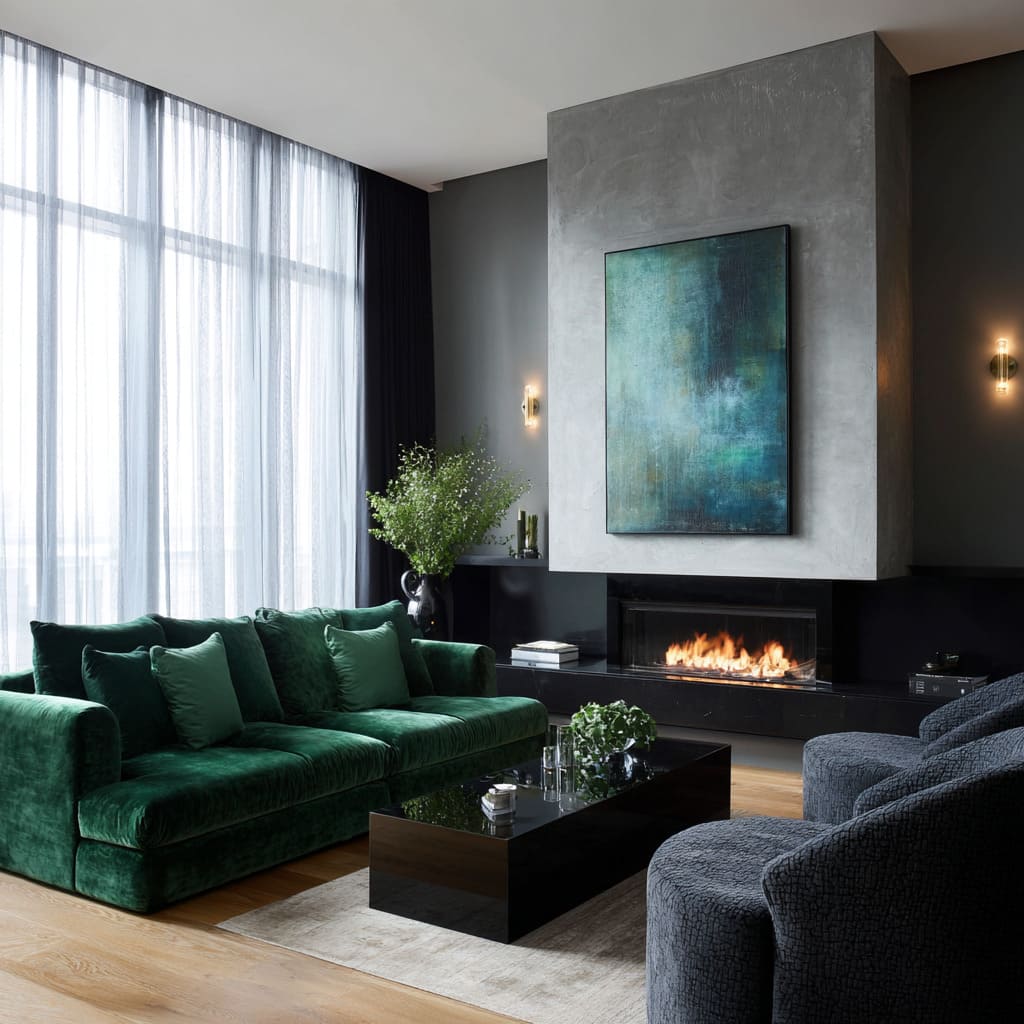
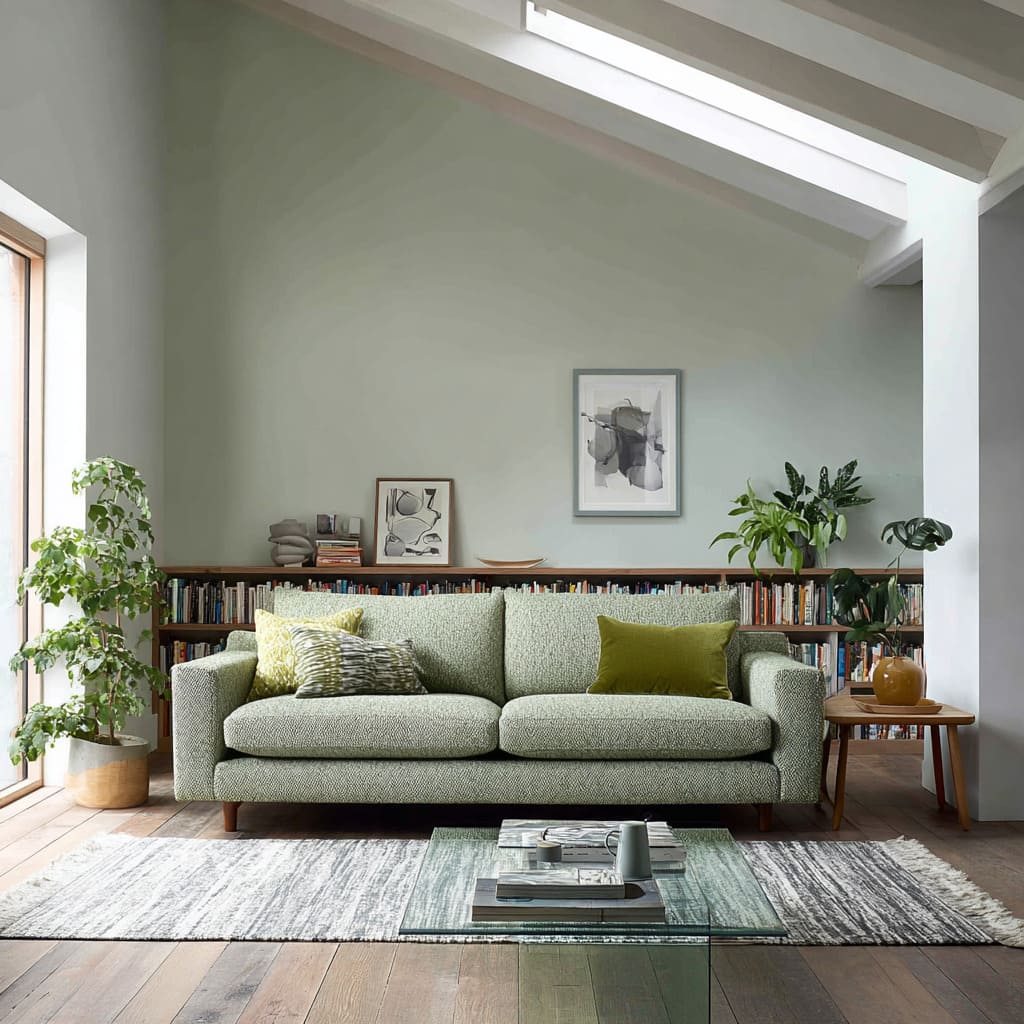
- In the darker forest setup, for example, the tall window and black frame can do the same job differently: they make the green read deeper and cleaner because the black edge removes the chance that the green looks smoky or brownish.
This is why a green can look “neon” in one design and “muddy” in another: if the design has no translator, the daylight decide the interpretation. When the room includes a translator, the green stays legible even as light changes.
The anti-theme strategy
The strongest green-based interior designs don’t “explain” themselves through green. Instead, the room’s identity is built through a clear material and shape structure—light surfaces, a few crisp dark lines, and one or two finishes that feel grounded.
Within that structure, green can take up the largest visual surface and still read calm, intentional, and grown-up, because it is contained by the room’s framework rather than acting as the framework.
A useful way to think about it: the design runs on a small set of repeating roles. One role sets brightness (clean light neutrals).
Another role draws edges (dark accents that outline forms). Another role gives weight (a grounded finish such as warm wood, aged tones, or matte solids).
Green then sits inside those roles as a major field of color—noticeable, but not responsible for the whole mood.
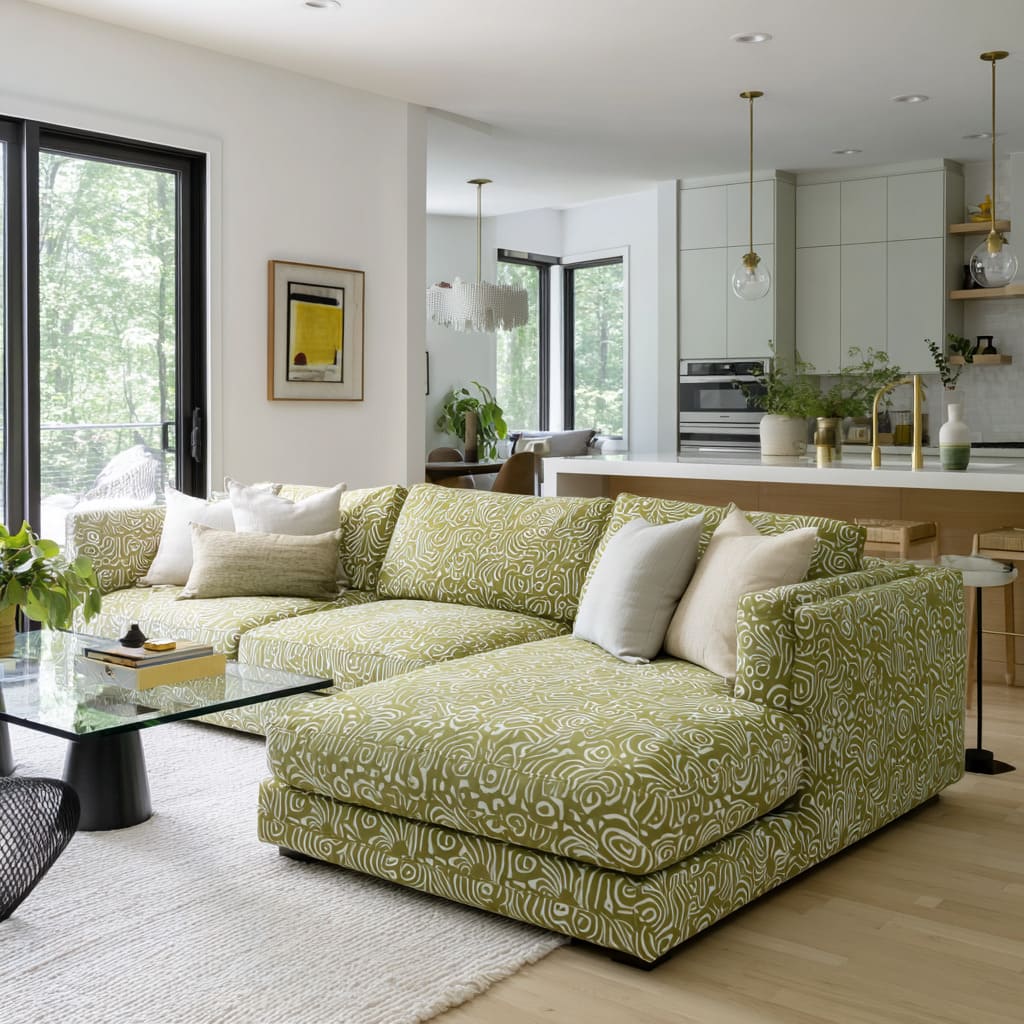
This is also why greenery in the space doesn’t automatically turn the look into a botanical theme. When plants are treated as secondary accents—small moments at the edges, not the main focal sequence—they behave like soft punctuation rather than a storyline.
The primary “sentence” the eye reads stays about proportion, contrast steps, and material rhythm, so green stays flexible and composed instead of turning into a literal theme.
Wall tone as a color-correcting filter, not a backdrop
The wall is often treated as neutral “background,” but such designs use a quieter mechanism: wall tone behaves like a lens that edits green. Two main wall behaviors:.
A) White walls that sparkle rather than flatten
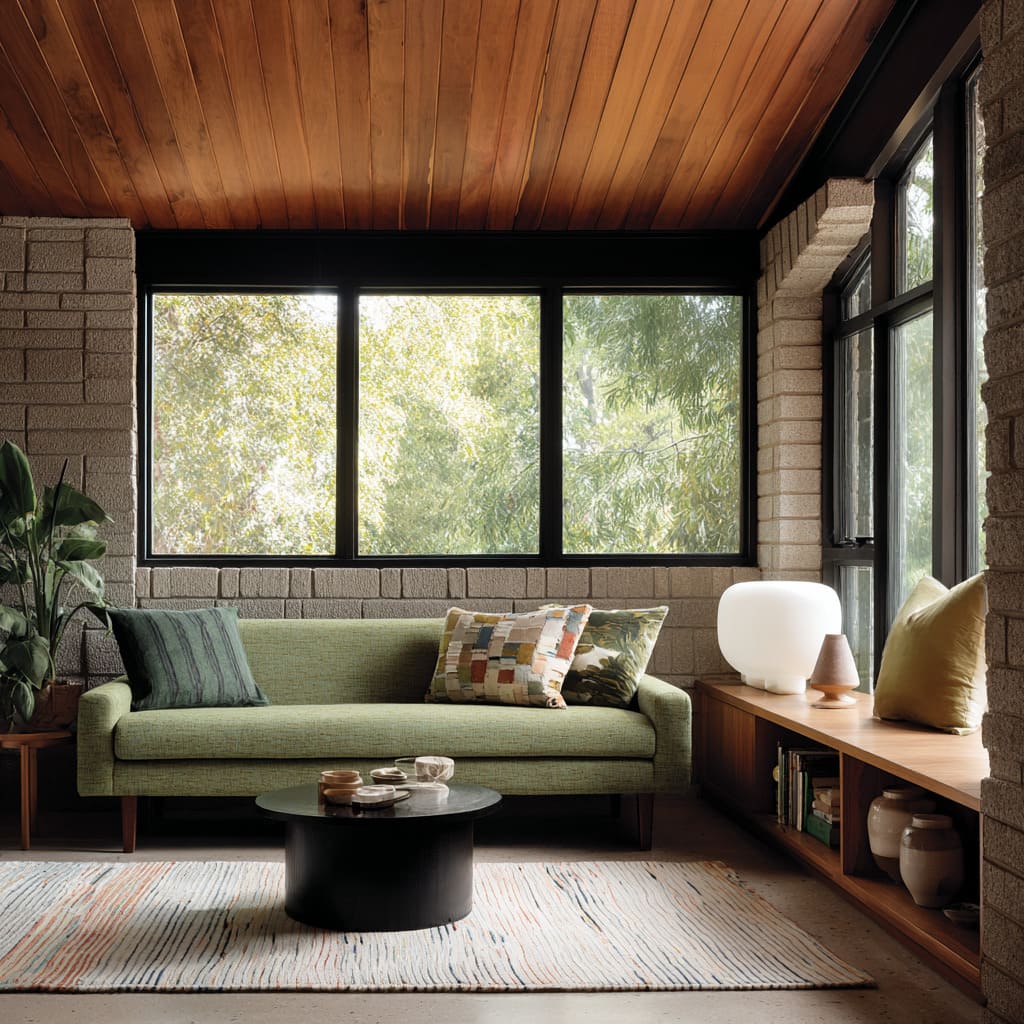
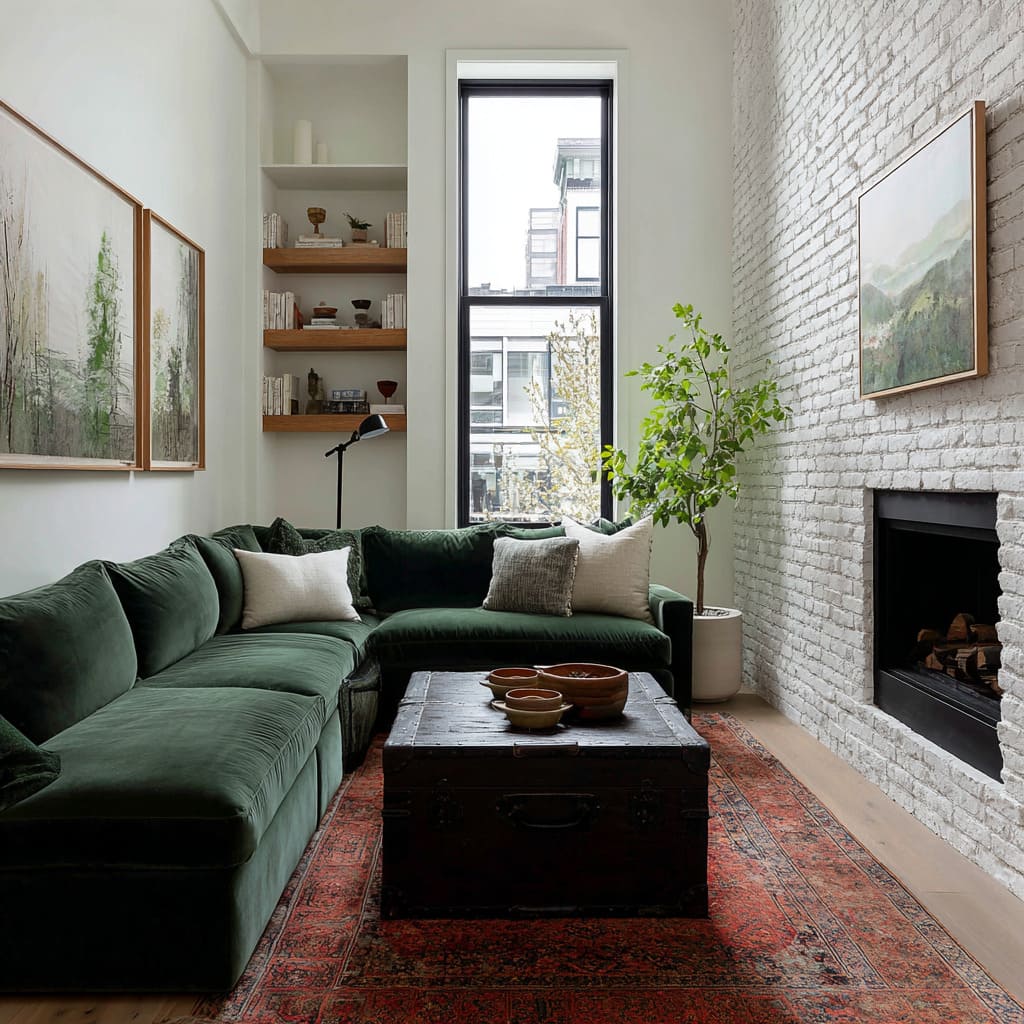
White-painted brick and slightly textured whites do something that flat bright white cannot: they create tiny shadow variations that soften the edge of a dark green. That keeps the sofa from turning into a heavy rectangle.
The wall isn’t merely light; it is active light—a surface with micro-contrast that keeps the room airy.
B) Green-tinted walls that create a gradient
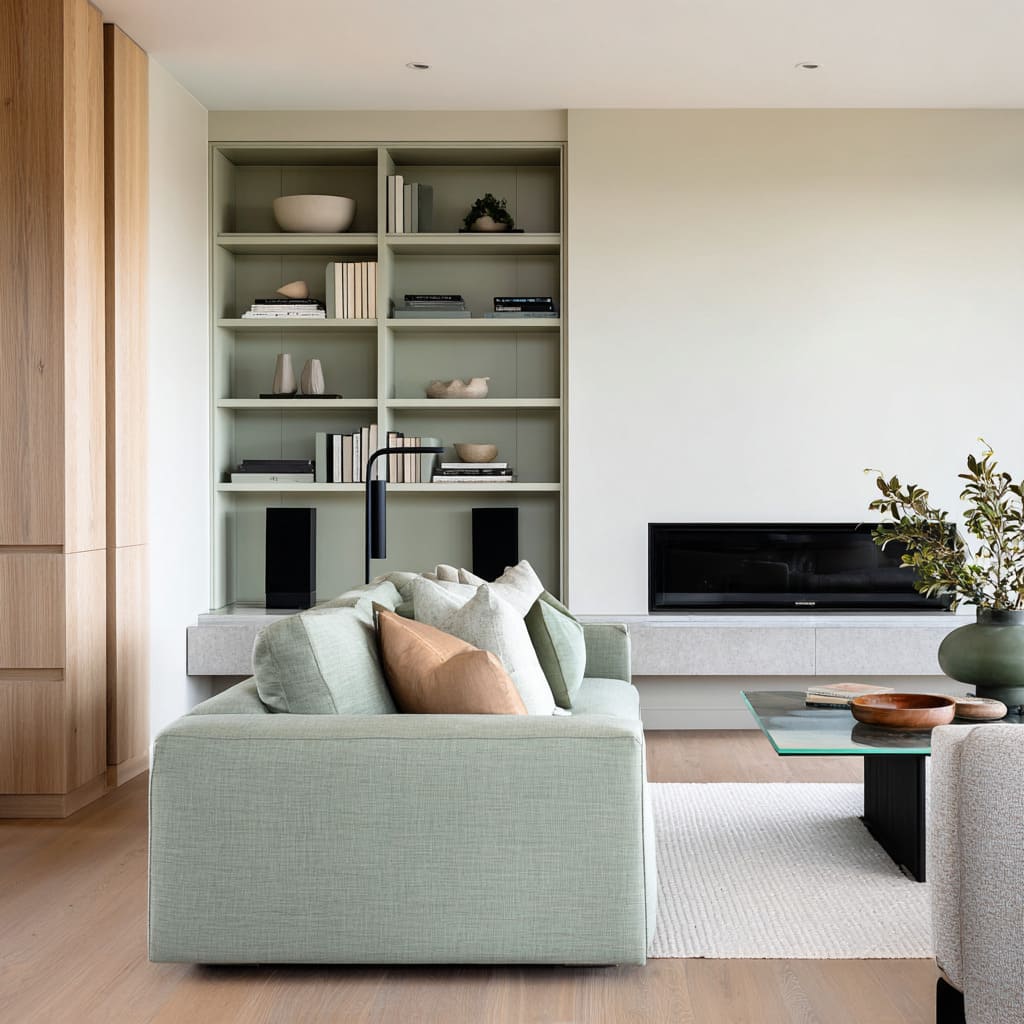
When the wall moves into a soft sage family, the sofa becomes part of a gradient rather than a single isolated color block. The sofa looks “settled,” not staged.
The key detail: the sofa stays slightly lighter than the wall, so the wall carries the atmospheric color and the sofa reads as a distinct object. This gradient method explains why green sofa interior design can feel fresh and current without extra decor: the envelope itself is doing the color work, so the styling can stay restrained.
Black elements as structural lines
When some black pieces are presented, this is where the most interesting shift happens. Black isn’t only contrast; it functions like a drafting line.
It turns green from “color” into “form. ”.
Frame black
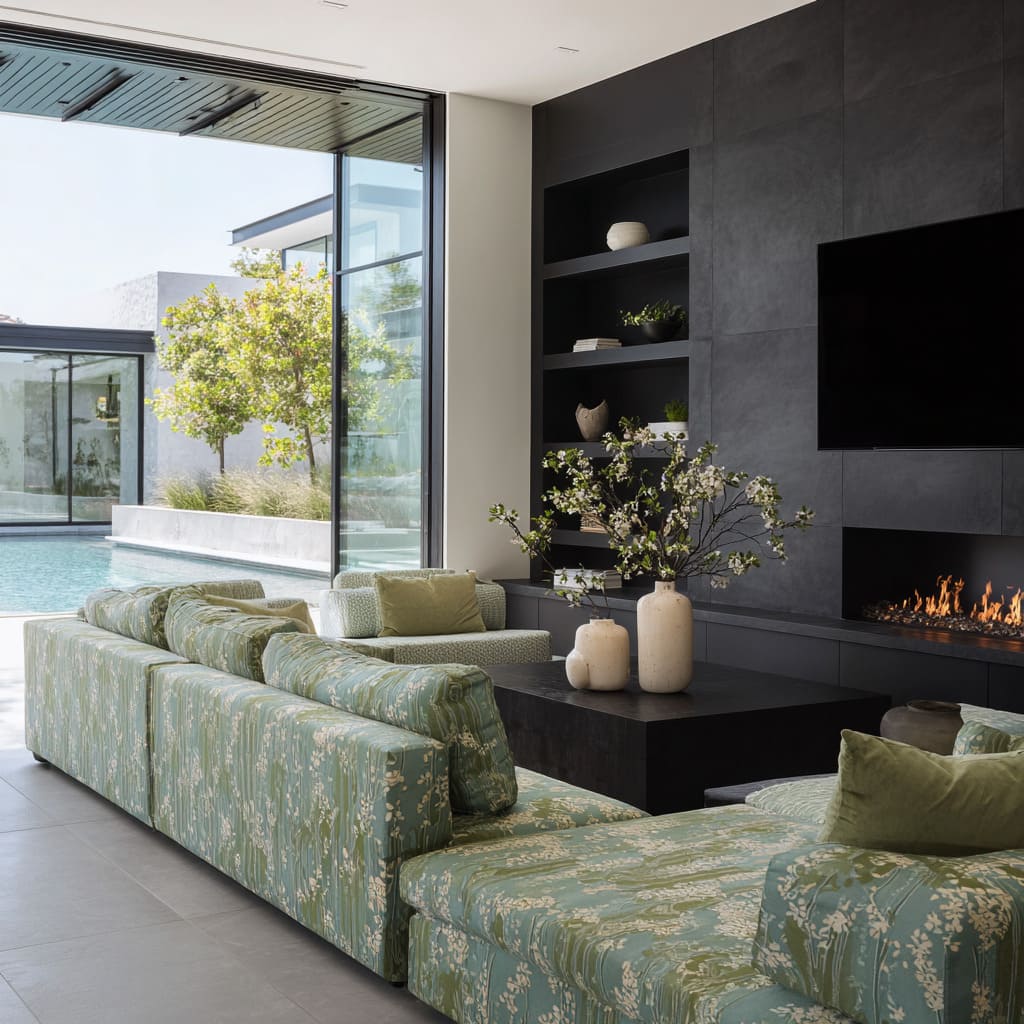
Black window frames and black art frames create a sharp perimeter. A pale green becomes more sophisticated when it’s outlined by black—because the eye can measure the shape cleanly.
Without that outline, pale greens easily feel washed out or sweet.
Anchor black
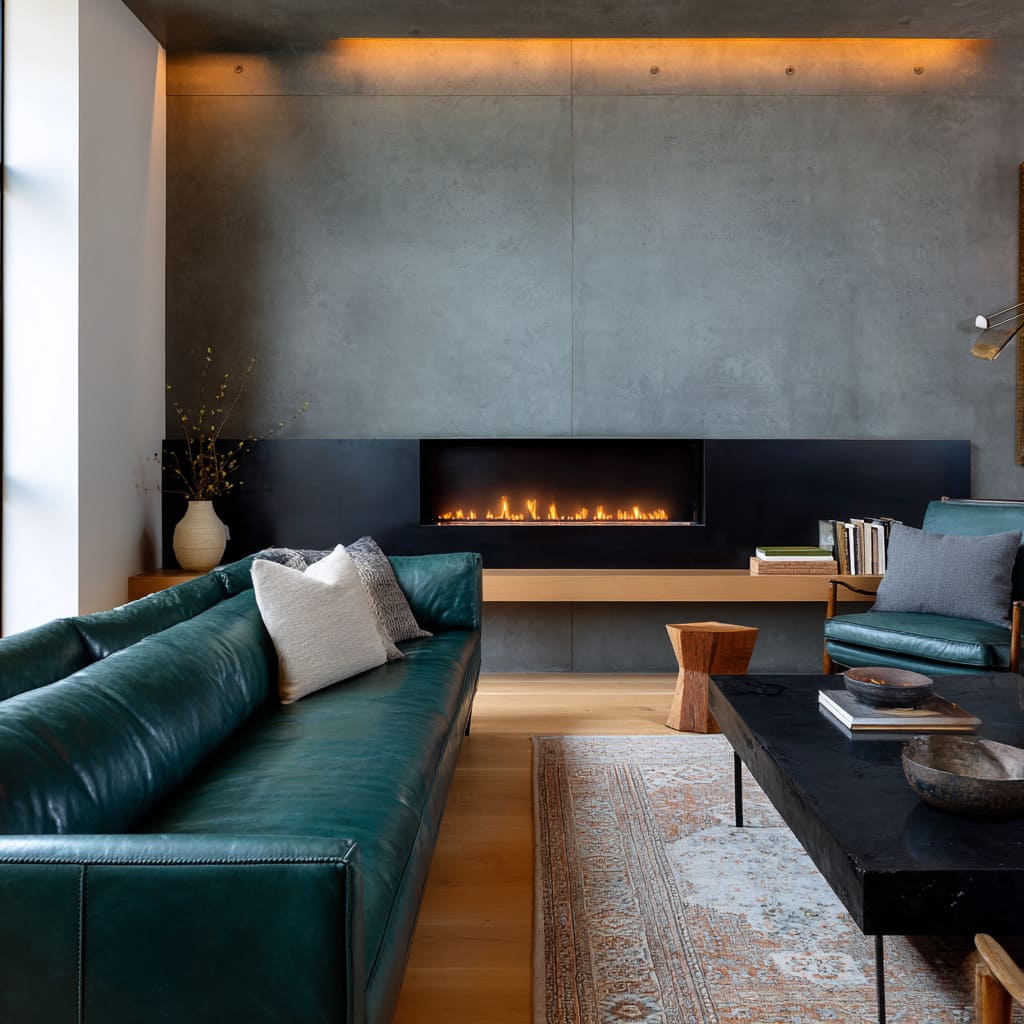
Black side tables and black coffee tables act like visual gravity. They keep a light palette from floating away and keep green from reading “decorative.
” The design gains seriousness without becoming dark.
Weight-control black
For example, a large dark textile wall piece over a fireplace is an unusual but powerful move: it makes the wall carry visual weight, which frees the green upholstery from being the only heavy note. That reduces the feeling that a green sectional is dominating the design.
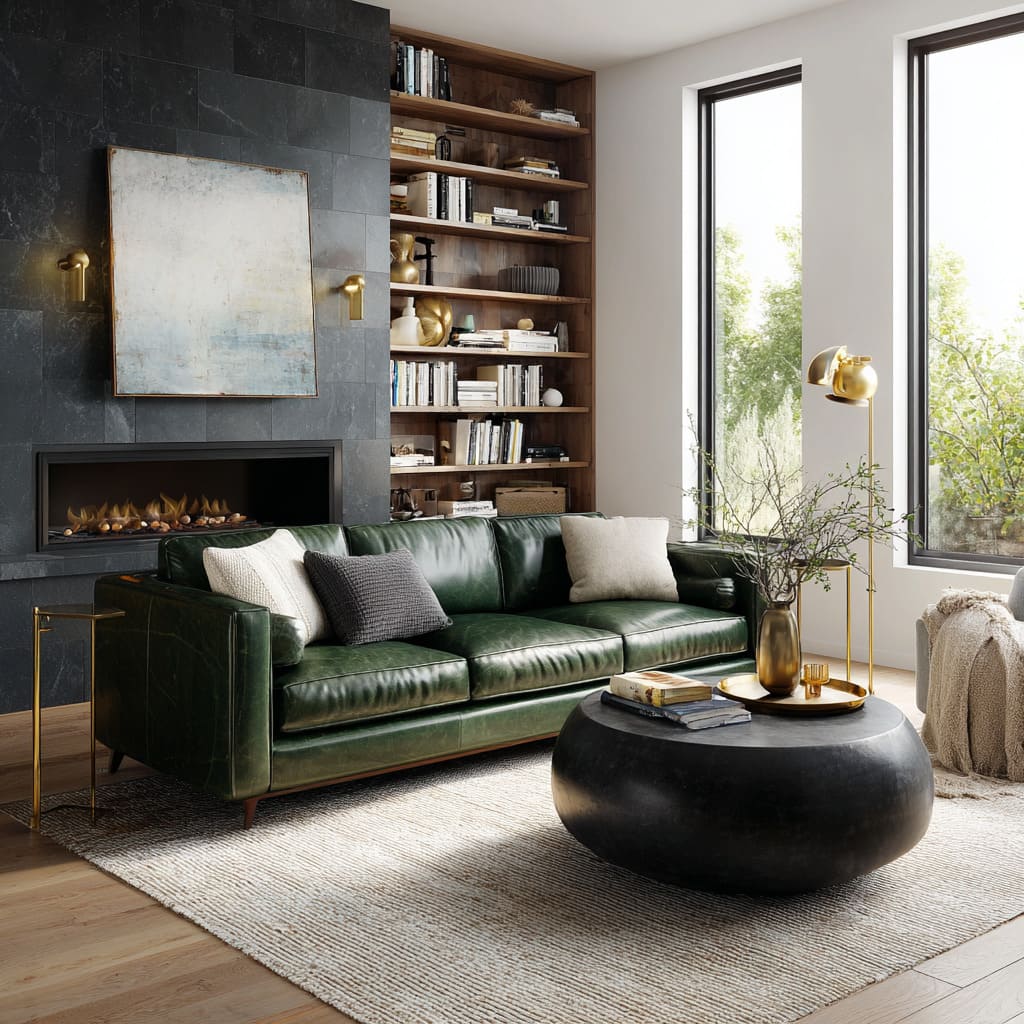
The deeper point: black isn’t there to “match” anything. It is there to create boundaries.
Green reads more intentional when the design contains boundaries. This is a major reason why “all-neutral plus green” can look incomplete, while “neutral plus green plus black” looks finished.
Texture as a shadow engine: why green looks expensive
Another less obvious pattern: the desgins can rely on texture to create depth that color would usually be asked to provide. That matters with green because green often reveals texture more strongly than beige or grey—especially in daylight.
Three texture behaviors are often in use:.
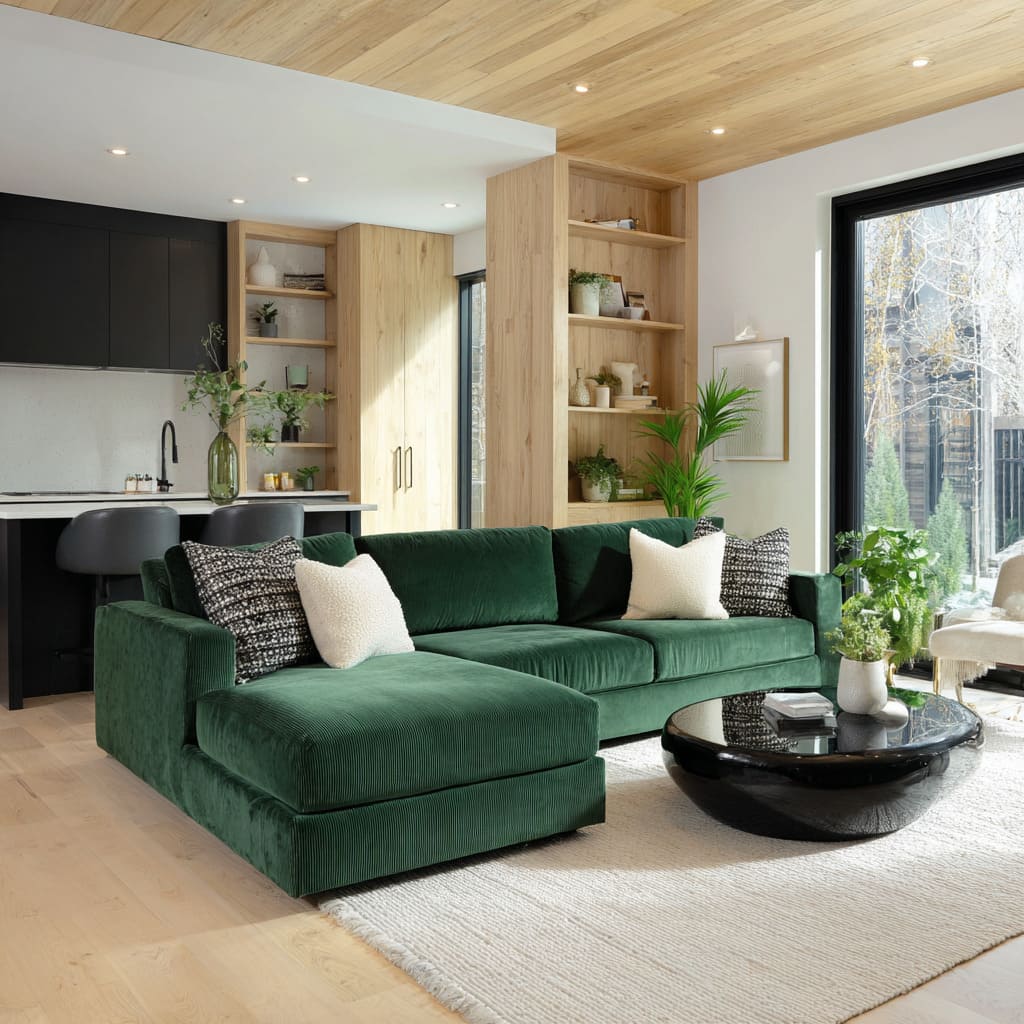
- Bouclé-like texture breaks light into tiny highlights and shadows, so a pale green stays dimensional even when the palette is minimal. It avoids the “flat mint slab” problem without needing patterned accents.
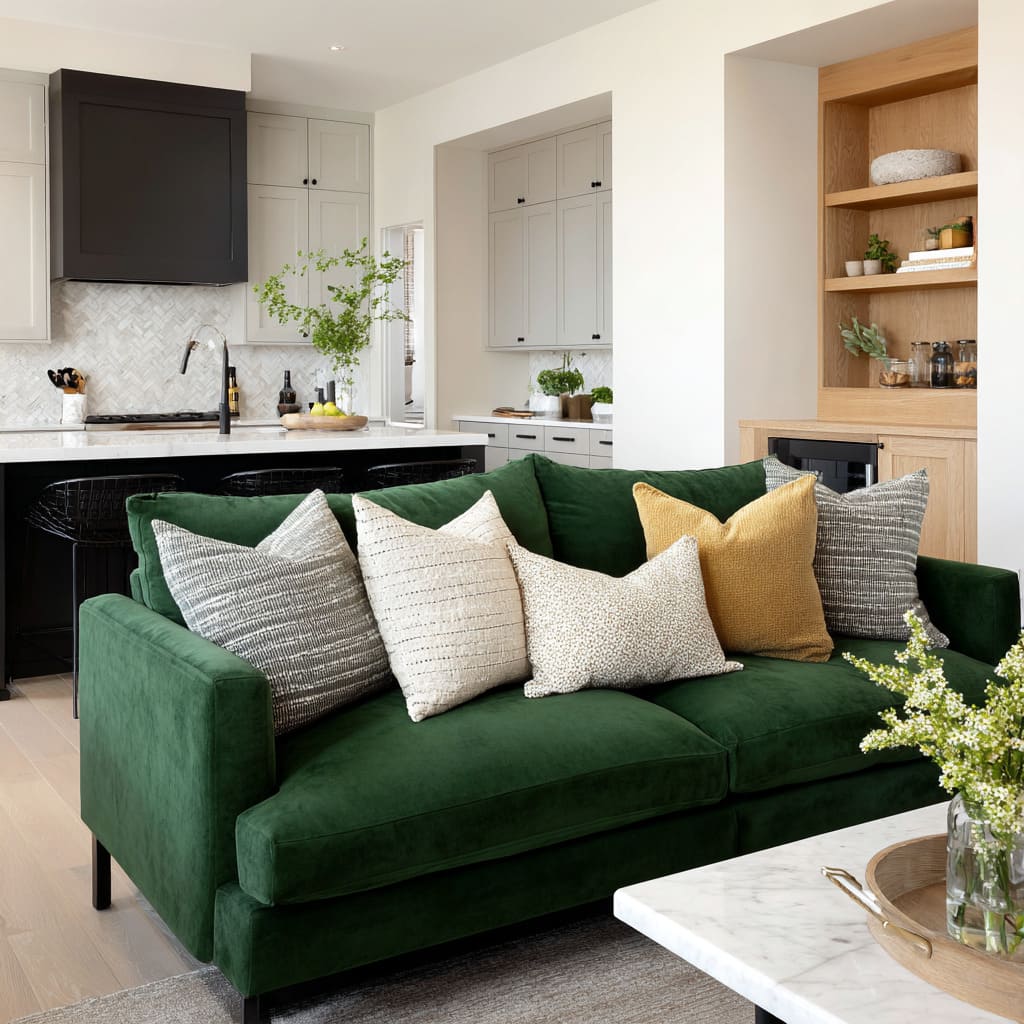
- Velvet-like depth absorbs light. That can read formal, but the room offsets it with rougher, time-worn elements so the green feels cozy rather than precious.
- Linen-like softness keeps pale green grounded and grown-up because the weave introduces visual grain. The grain acts like a gentle “noise” that prevents the color from looking too pure or too sweet.
This explains why some emerald green sofa living room ideas feel dramatic but still calm: the fabric itself creates a controlled shadow gradient, so the design doesn’t need loud contrast everywhere else.
Rugs as placement proof
Many people think the rug’s job is pattern or softness. The rug can do something more specific: it proves that the green seating belongs in the design.
Two approaches:.
Quiet rug that amplifies texture
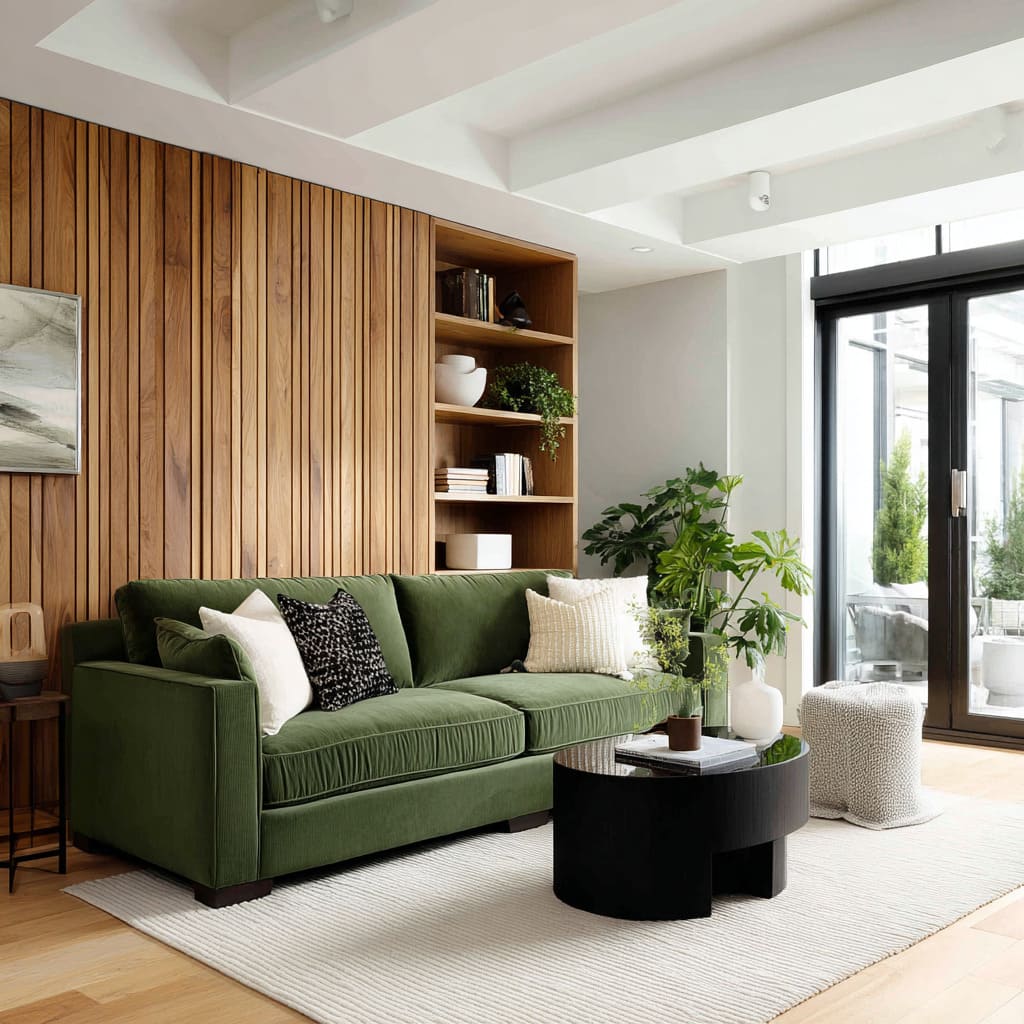
For example, if there is a seafoam sofa, the rug can be quiet and creamy, but it should not be blank. Its subtle ribbed texture keeps the center of the design from feeling empty.
The green reads intentional because the floor plane has its own quiet character.
Vintage-pattern rug that breaks predictability
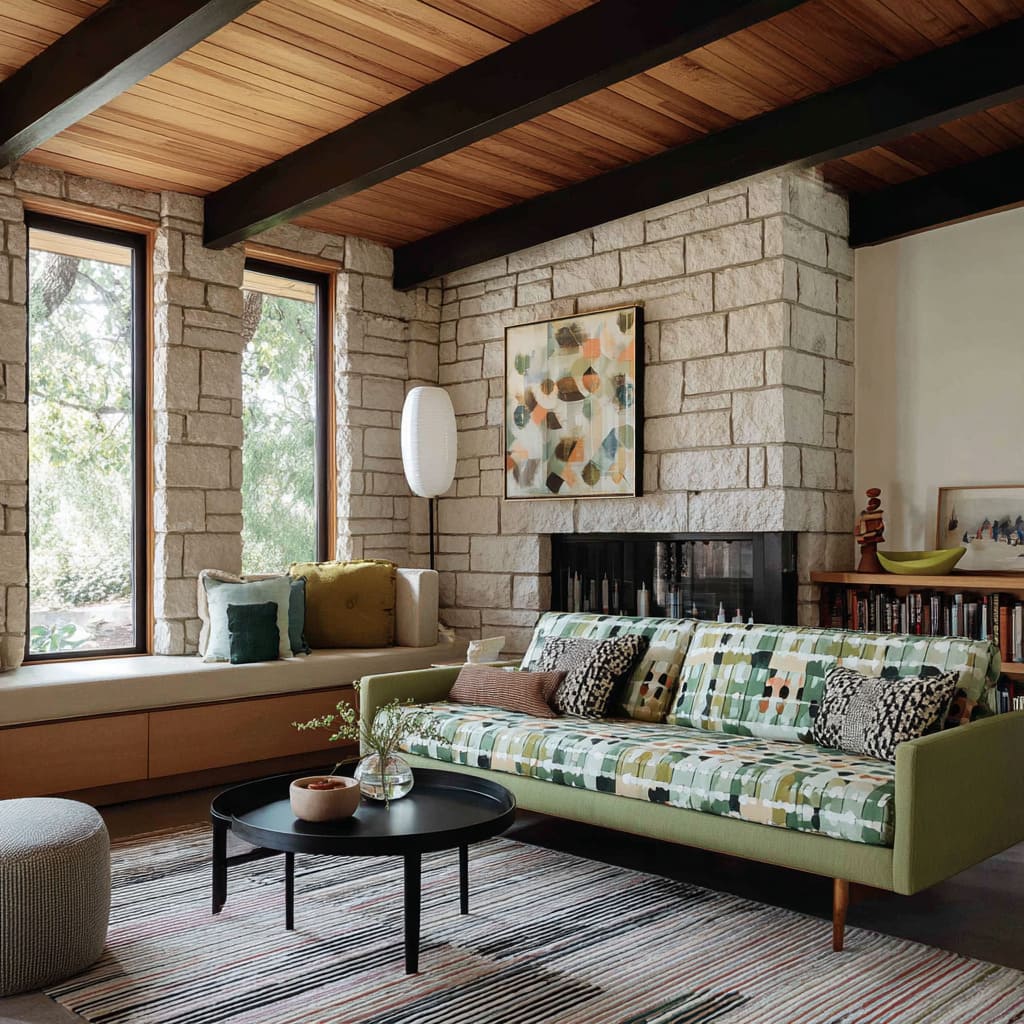
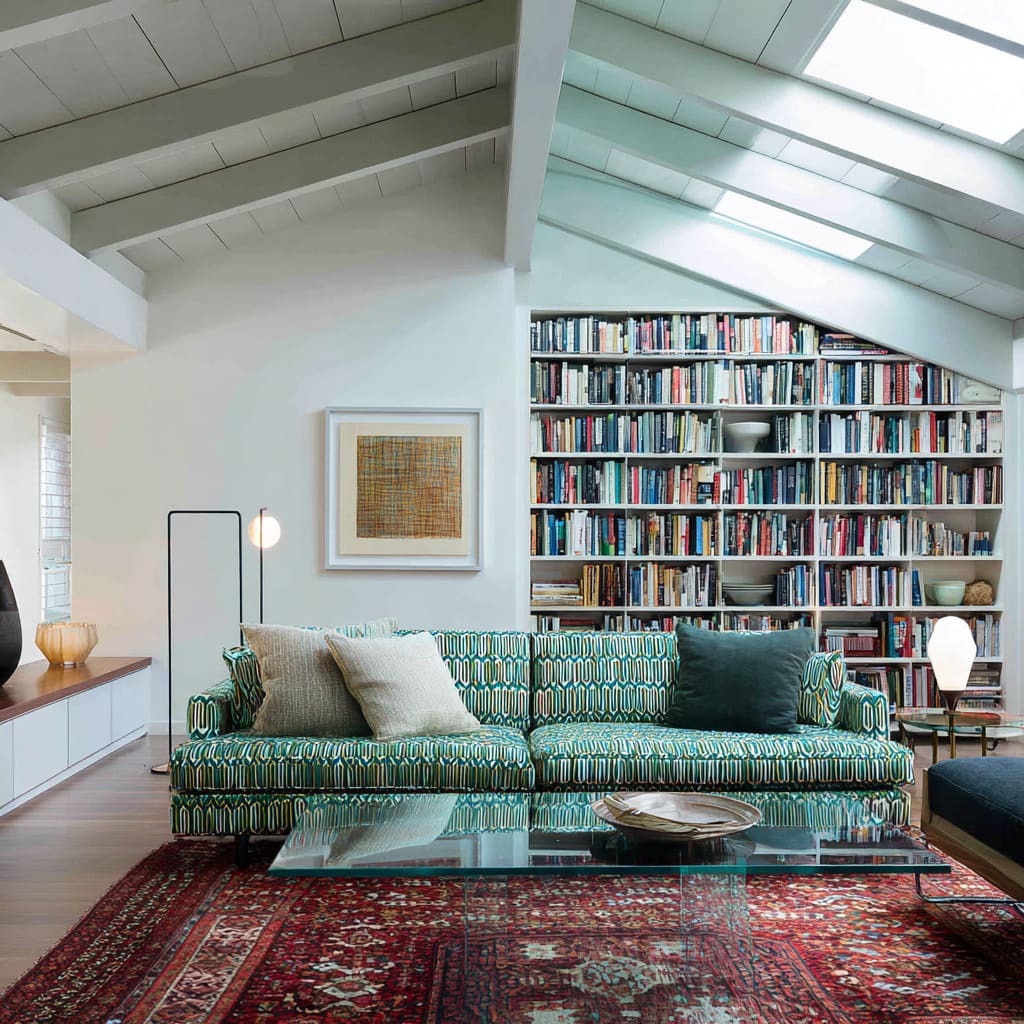
In darker designs, the muted red rug can seem risky at first glance, yet it performs a sophisticated function: it introduces “age” into the palette. The red is not bright; it’s softened, earthy, and filled with dark ink tones.
That turns the rug into a bridge between green and black elements, so the overall story becomes collected rather than themed.
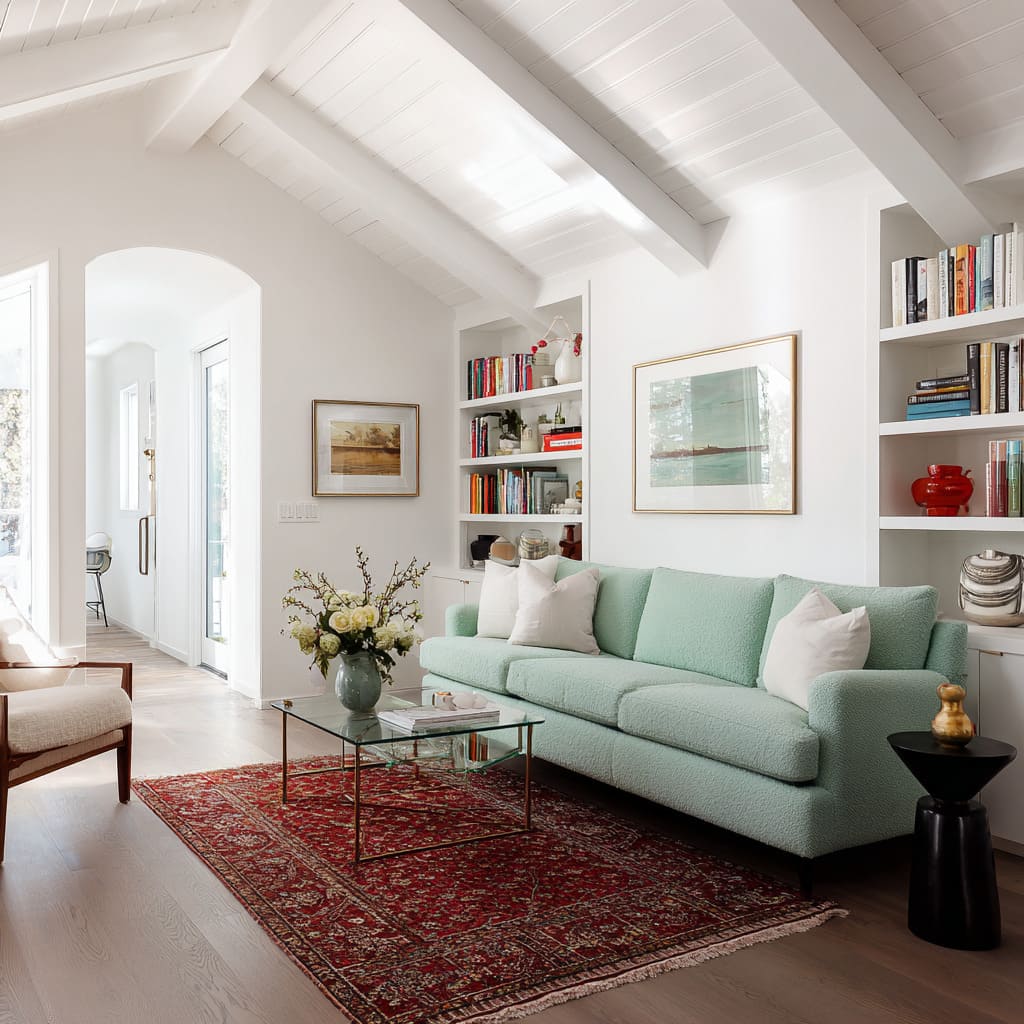
This is why dark green sofa living room ideas can handle a red rug without feeling seasonal: the red behaves like aged pigment, and the design inserts neutral buffers so green and red never become a loud pair.
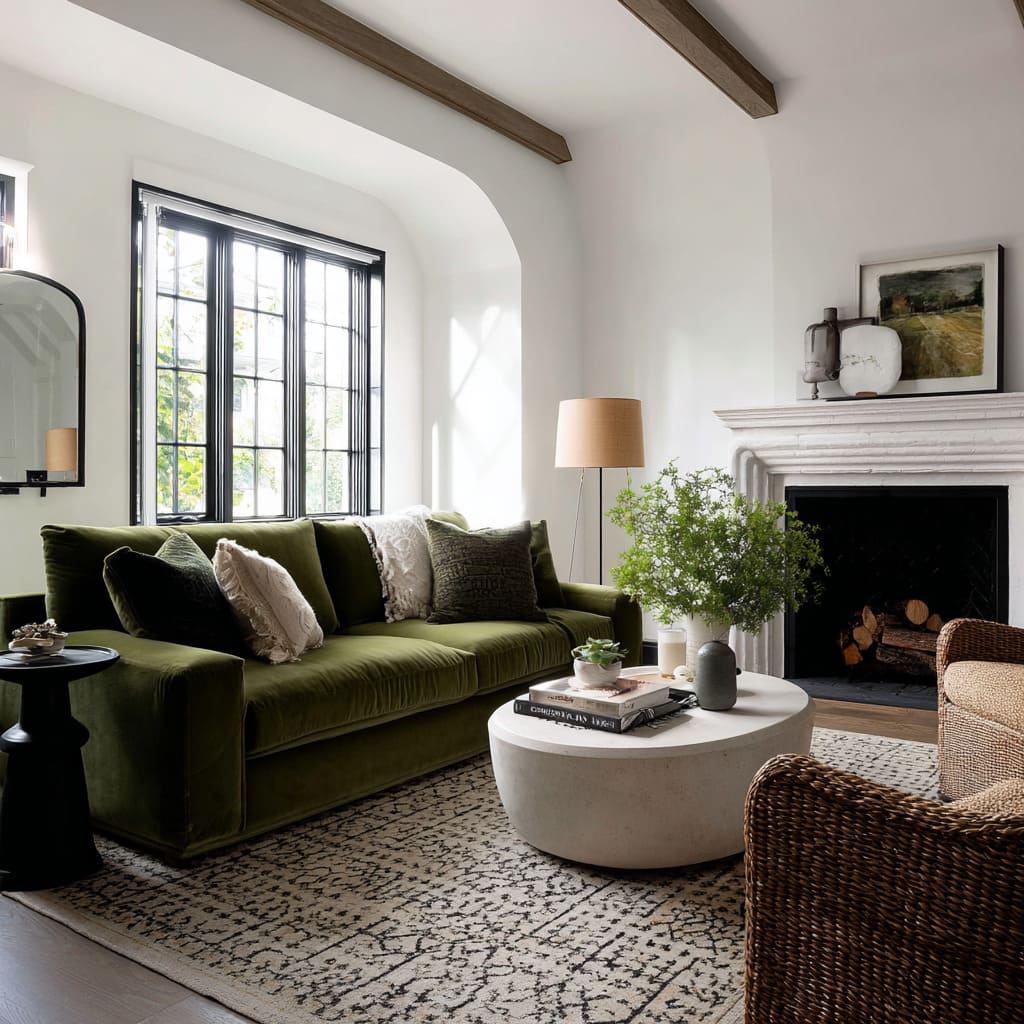
The contrast ladder: designs avoid one big jump
A recurring compositional trick here is that contrast isn’t delivered as a single dramatic pairing. It is layered in steps:.
- pale wall → medium green sofa → deeper green accent → black outline
- or textured white brick → deep green sofa → dark trunk table → patterned rug with black traces
When contrast is stepped like this, the design feels intentional and restful, even with strong colors. The eye can travel without getting stuck on one clash.
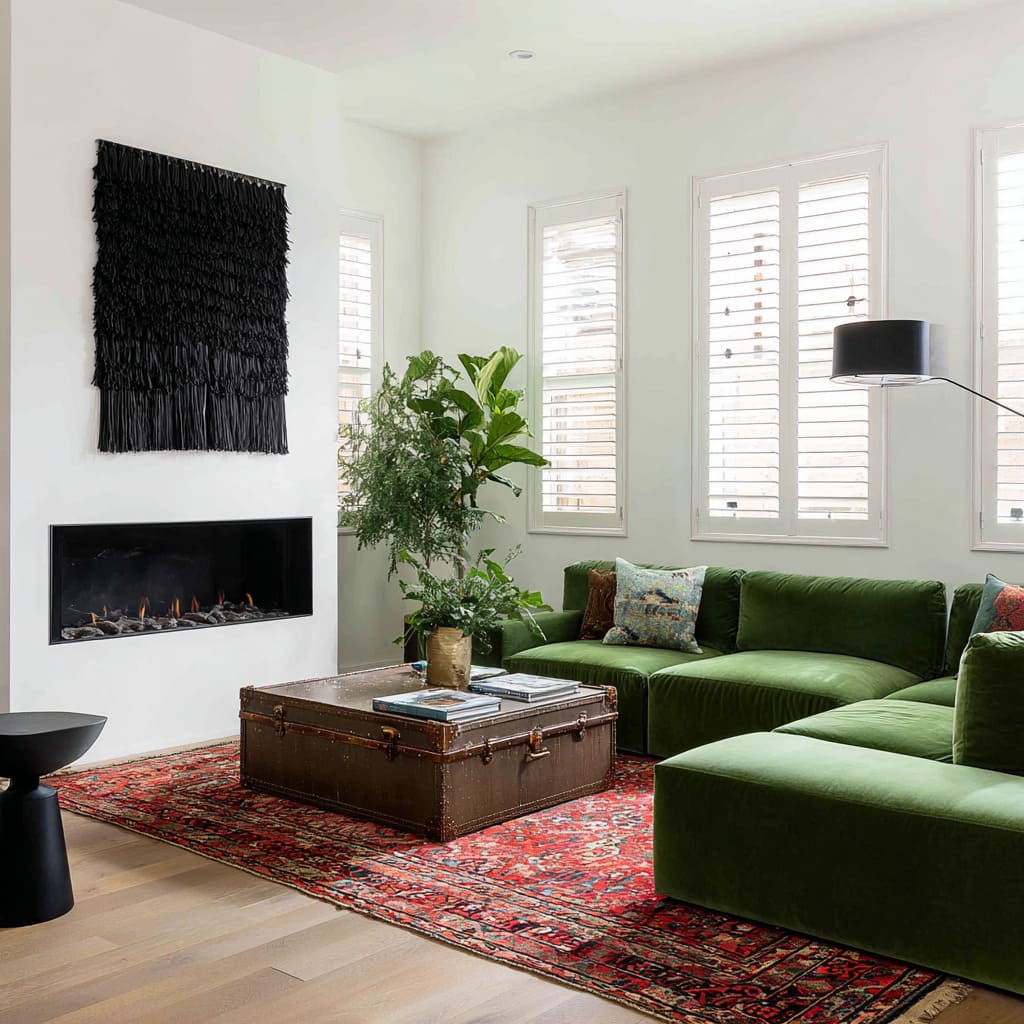
This is the deeper reason certain olive green sofa living room ideas look modern rather than dated: the olive is supported by stepped contrasts (white shutters, black accents, warm leather note), not by one blunt complementary color.
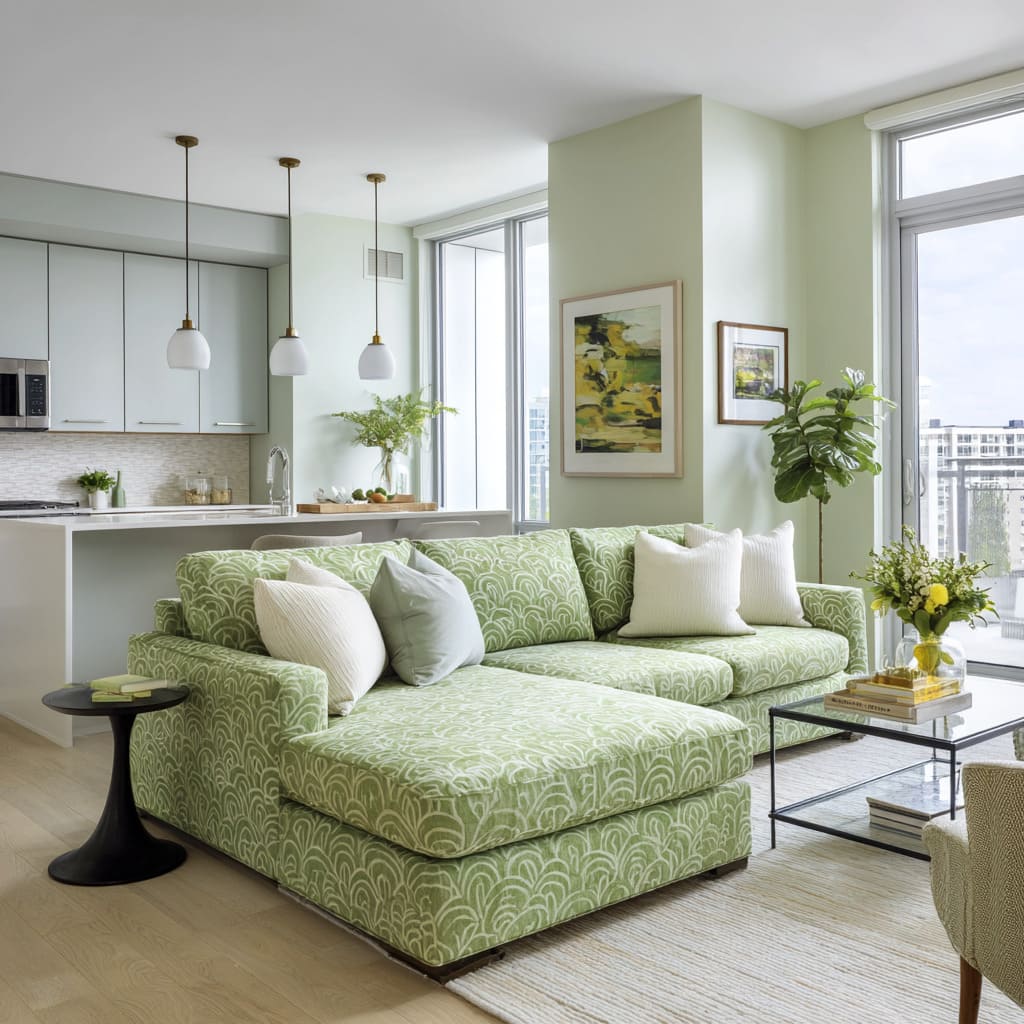
Why some designs feel cozy even with serious green
A deep green often reads formal because it feels saturated and heavy. Such designs soften that seriousness by using “time-coded” elements—objects that appear worn, matte, or handmade.
The trunk coffee table is the clearest example: it introduces a quiet roughness that makes the design feel lived-in. It also changes how green reads emotionally.
Instead of “museum velvet,” the green becomes part of a relaxed, collected space. Small pottery bowls do a similar job in miniature: they add warmth and casualness without changing the palette.
This is an important shift: coziness isn’t created by adding more soft items. It’s created by mixing the green with surfaces that don’t look pristine.
Light management as mood control
Green is famously sensitive to light. Such designs use a design-minded way of stabilizing it through light texture, not new colors.
- Shutters and sheer panels create filtered daylight, reducing harsh highlights that can make green look brighter than it really is.
- Firelight adds a warm moving note that prevents pale green designs from feeling cold, especially when the architecture is bright and minimal.
- Glass coffee tables reduce visual blockage in the center, allowing the rug and floor to stay visible, which makes the design feel brighter and larger—important when the sofa color carries weight.
This subtle light management is why green can stay consistent across the day without constant restyling.
The hidden styling math: how finished happens with very little
The most striking lesson is that design elements have a few visual functions:.
- one element that clarifies undertone (art, black frame, or wall tint),
- one element that anchors weight (black table, trunk, or dark hearth),
- one element that proves placement (rug behavior),
- and one element that softens mood (warm neutral, ceramic, or filtered light).
That small set of roles is what makes designs look complete without becoming busy. It’s also why green couch living room decorating ideas can remain minimal and still feel intentional: completeness is created by role coverage, not by quantity.
A palette map without stating rules
Design can stay season-neutral without looking sterile:.
- Pale greens stay fresh when paired with creamy neutrals (not icy whites), black outlines, and one soft warm note (firelight, pottery tone, or a warm textile).
- Dark greens stay fresh when paired with textured whites (brick, plaster, ribbed rug), a window that brings strong daylight, and one “aged” element that prevents the room from feeling too polished.
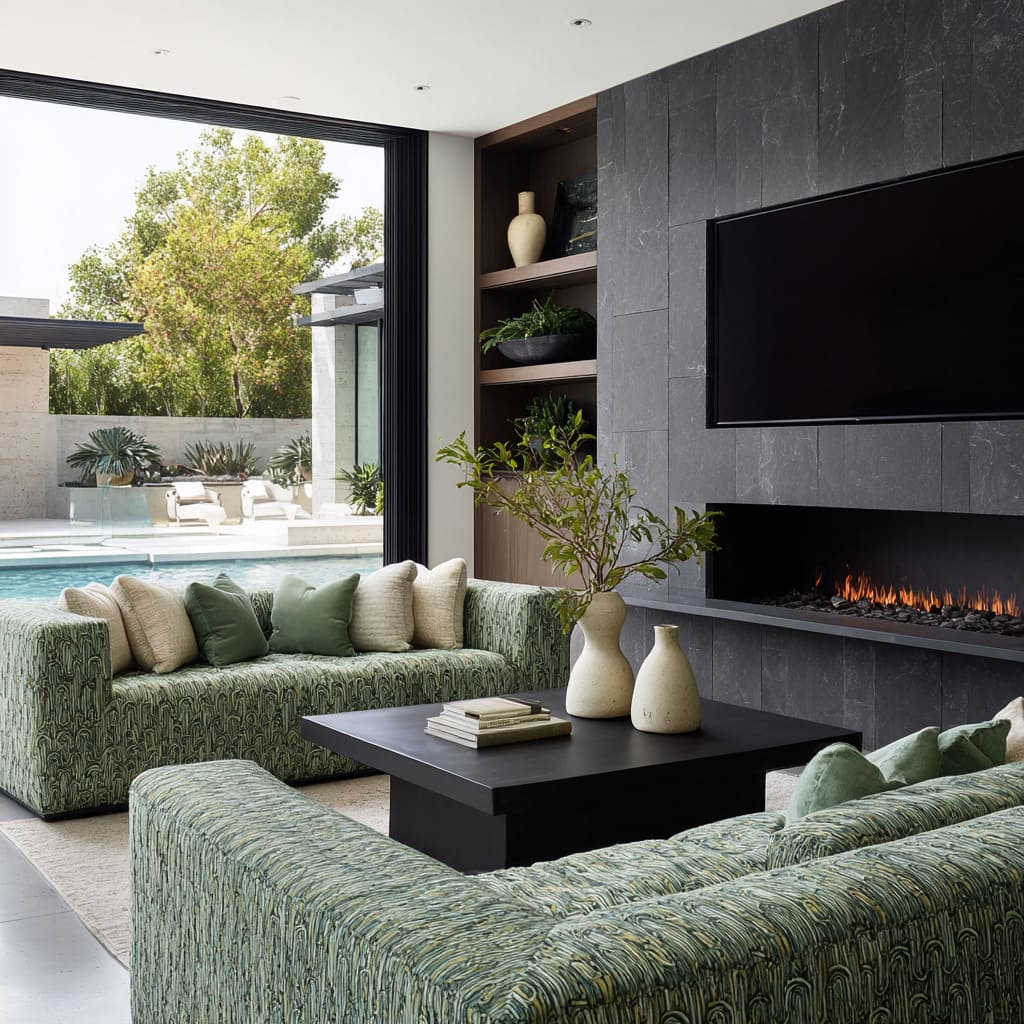
Notice what’s not necessary: overt seasonal decor. The design remains flexible because green is framed as an architectural color—supported by line, texture, and weight—rather than a holiday cue.
Where the green sofa becomes a style translator rather than a style dictator
Green adapts to different styles not by changing into a new identity, but by letting one supporting element set the era:.
- black-framed openings and black tables push green toward modern clarity,
- warm wood horizons and book walls push green toward relaxed, bookish calm,
- vintage rugs and trunks push green toward collected comfort,
- tonal green walls push green toward soft contemporary minimalism.
This is the quiet sophistication behind green seating: it does not force a single look. It reflects the structure around it.
That is why green couch living room ideas cover dramatic, calm, airy, or collected moods—without relying on obvious themes, and without needing to add more color “for interest. ”