A television has its own personality whether you want it or not: a dark, glossy, high-contrast rectangle that pulls attention fast. That is the core conflict.
A living room usually wants a gentler hierarchy—faces, daylight, textiles, a view, artwork, a fireplace, a place to sit and talk. A recessed TV wall can mediate that conflict because it changes the TV from an object stuck onto a surface into part of the wall’s construction of space and focus.
Think of the recess as a translator. It takes something that behaves like a device and gives it architectural manners: boundaries, depth, a base, and neighbors.
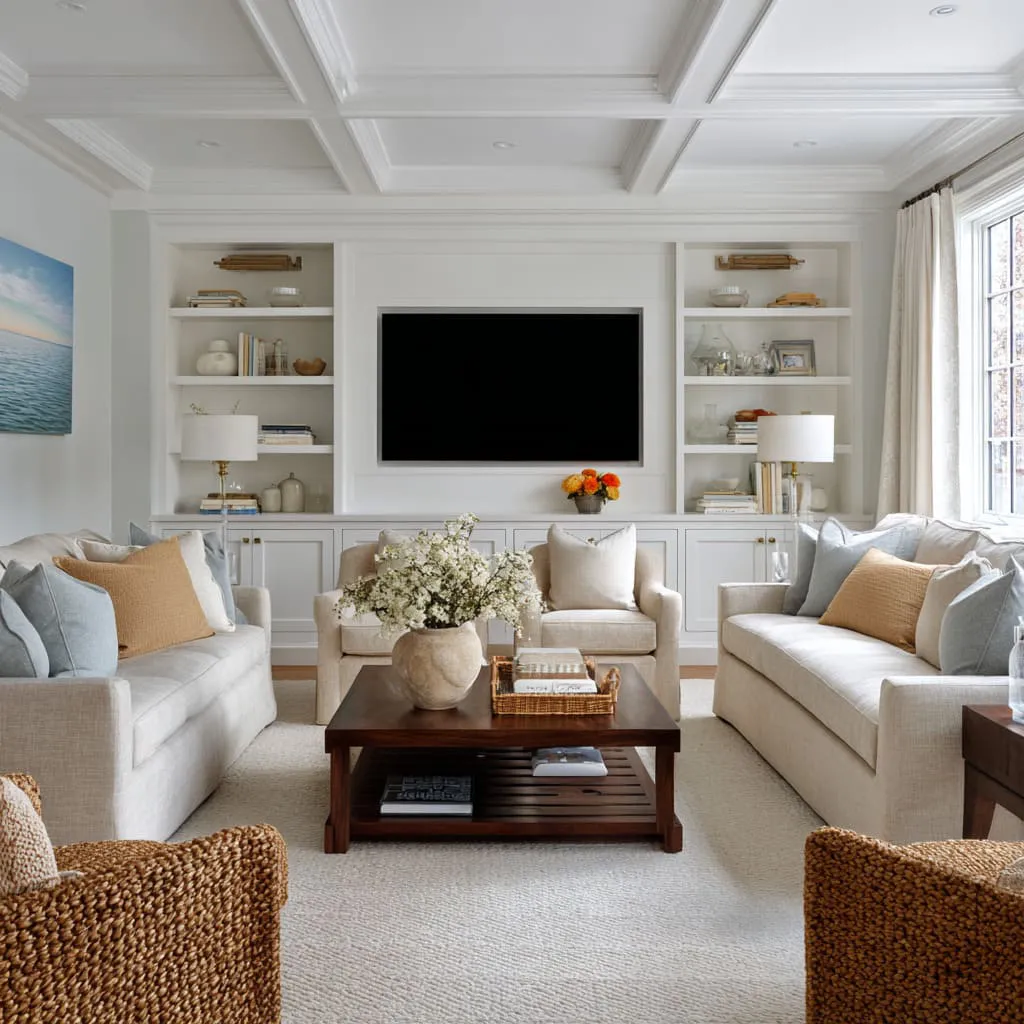
Contrast should be redistributed
The screen stays dark. What changes is whether it becomes the only deep value in the room.
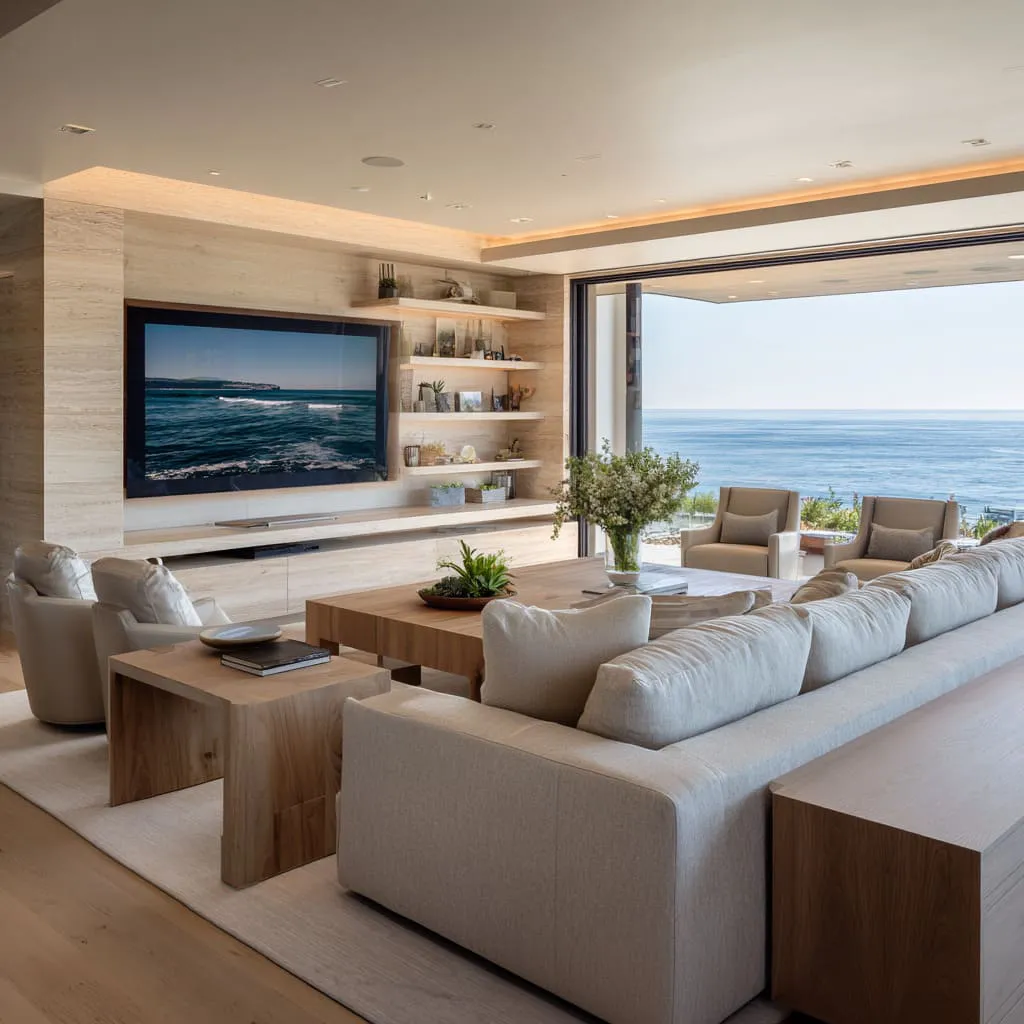
Three main design patterns:
- Add a second dark void. A fireplace opening, a shadow pocket, or a charcoal niche gives the TV company. Two dark rectangles on one wall feel like a planned rhythm, not a lone black stamp.
- Borrow dark notes from elsewhere. Black window grids, a door frame, a dark side table, or metal accents can share the same value range. The TV stops feeling like the only dramatic element.
- Let texture carry contrast. Stone joints, brick micro-shadows, slat gaps, and marble veining create tiny light/dark shifts that soften the TV edge. The wall itself gains internal variation, so the TV border feels less abrupt.
A useful perceptual rule: a lone dark rectangle pulls attention harder than a dark rectangle that belongs to a small family of dark elements.
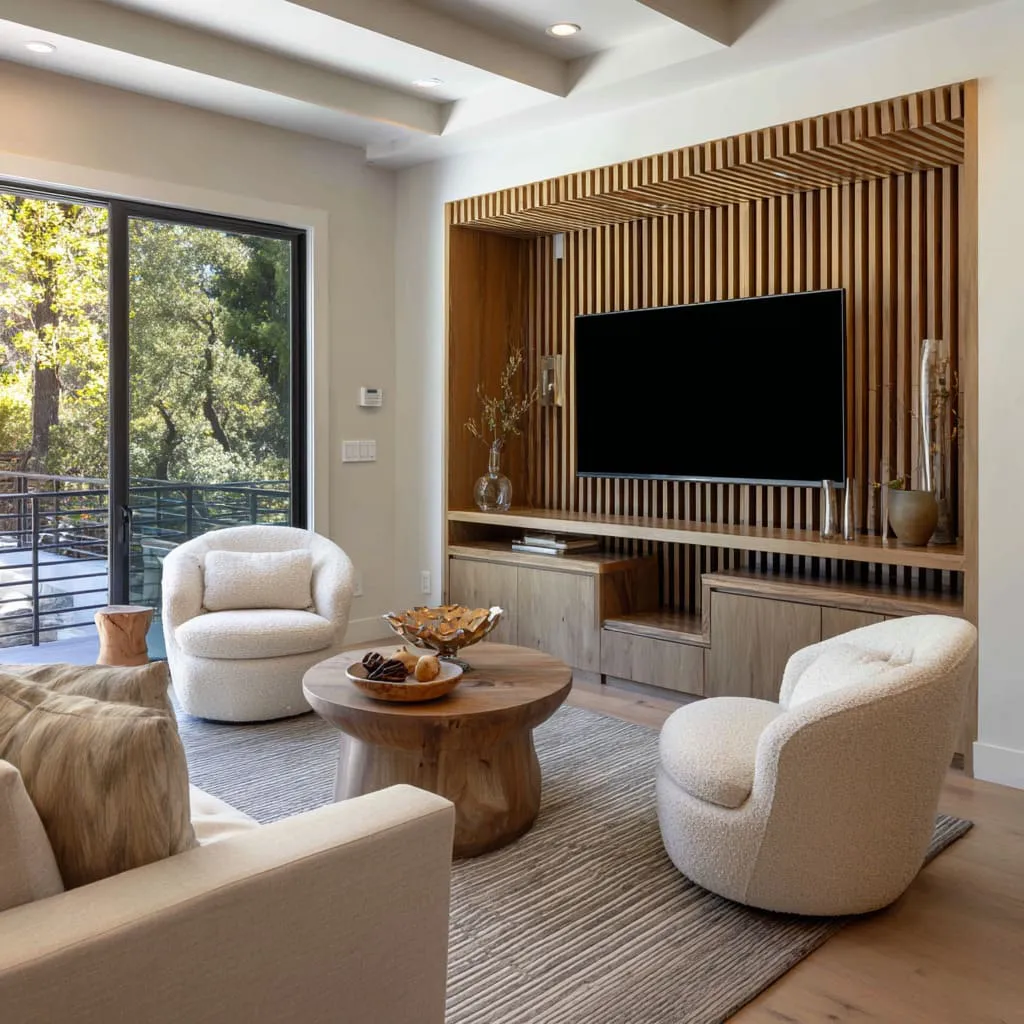
Depth acts as a distance buffer
Even a modest set-back changes the message from stuck on the wall to inside the room envelope. Two main depth behaviors:
- Shadow-frame depth: a minimal recess where side returns create a soft border. The TV looks assigned to a pocket, without dramatic shadows.
- Stage-bay depth: a deeper niche where the ceiling plane and side planes become part of the composition. The recess starts to feel like a small interior space.
This is doing social work. A TV on a flat wall can make the room feel screen-led.
A TV in a pocket feels zoned—one area for viewing, while the rest of the room keeps living-room priorities.
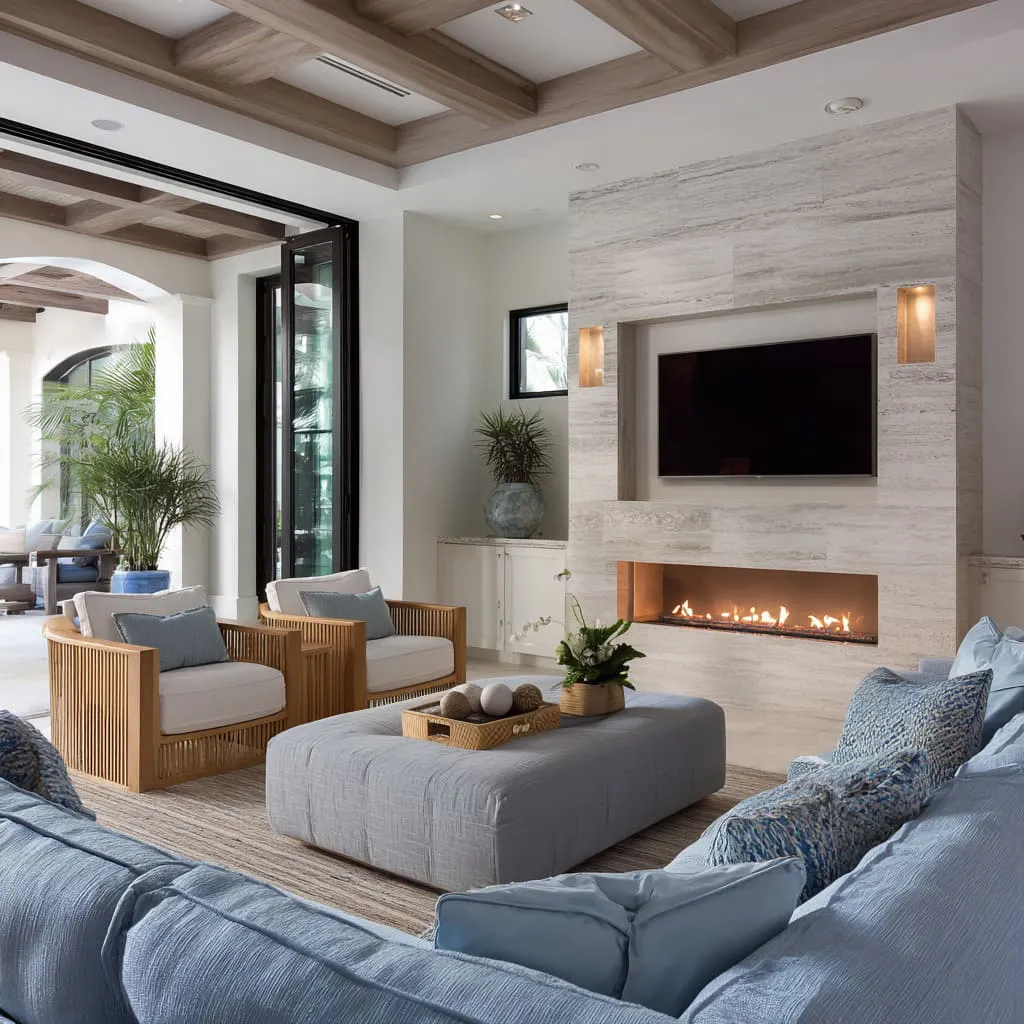
The ground line keeps the whole scene stable
Stylish recessed tv wall ideas often use a long horizontal element under the screen. That baseline aligns the TV with the seating geometry and prevents a floating effect.
There are three reliable versions:
- Minimal baseline: a thin ledge that acts as a limit and an organizer.
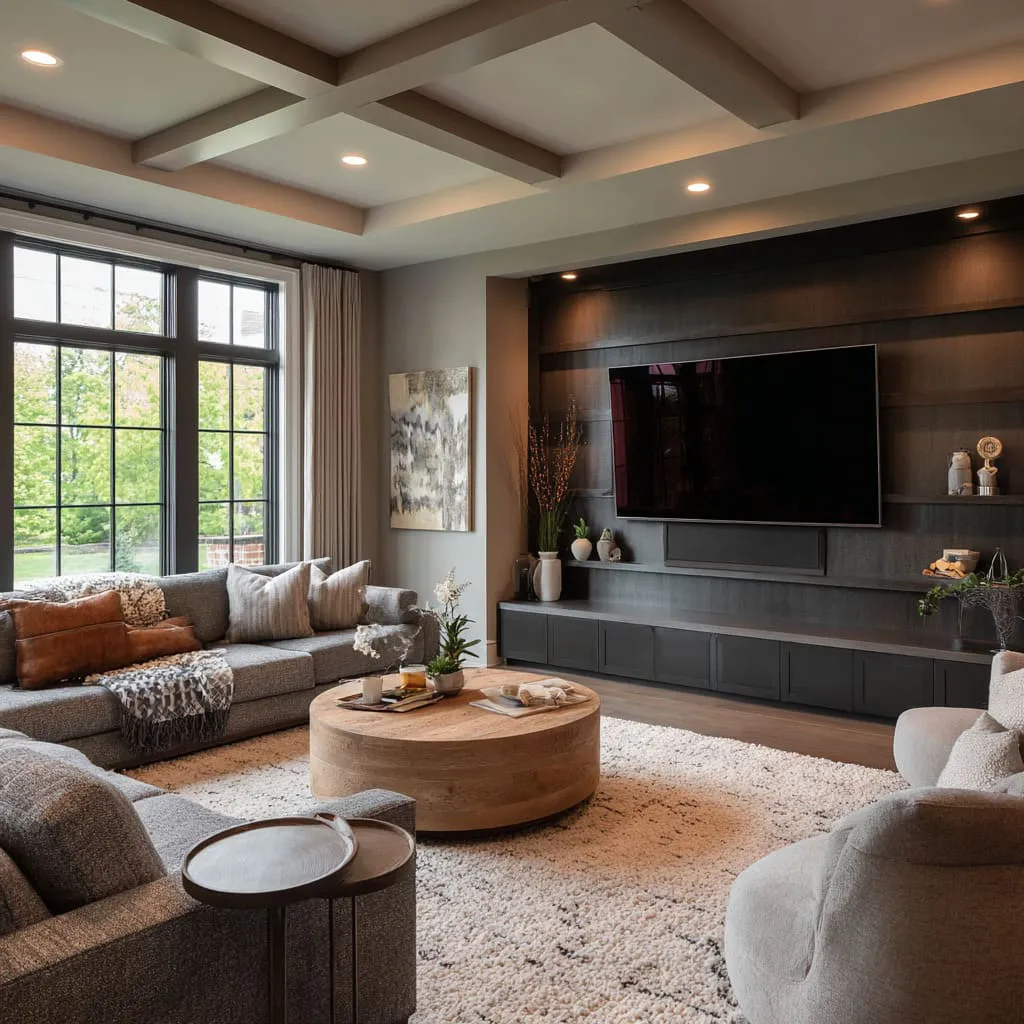
- Storage baseline: a cabinet band that delivers order and hides daily clutter.
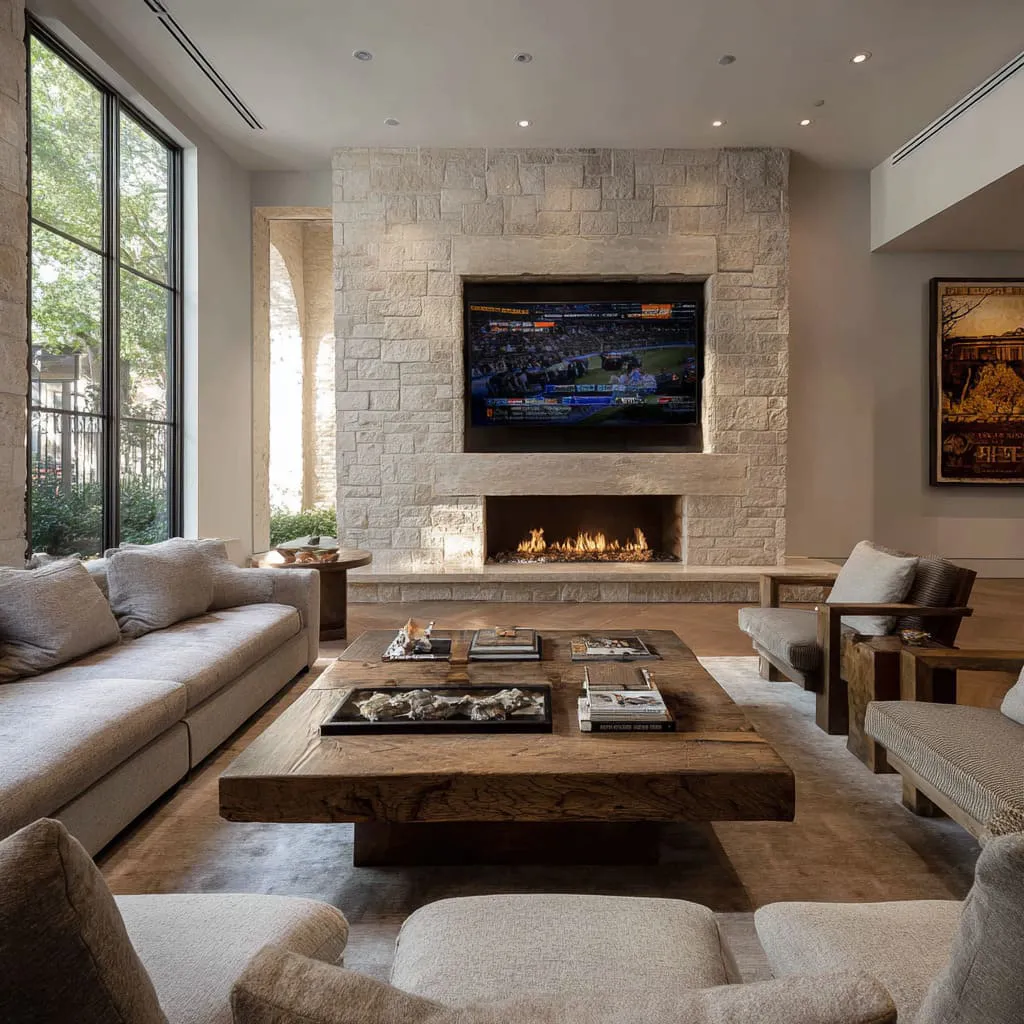
- Hearth baseline: a fireplace line that anchors the wall emotionally and visually, while also creating that second dark void.
A recessed TV wall often succeeds less because of the opening itself and more because of the baseline that locks the TV zone into the room’s larger proportion system.
Texture scale changes the job the wall can do
Texture is not one thing. Its scale changes the role it plays around a TV.
- Micro-texture (painted brick, fine wallpaper linework, woven finishes) softens edges and reduces the sticker-on-wall effect.
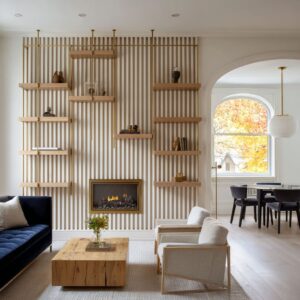
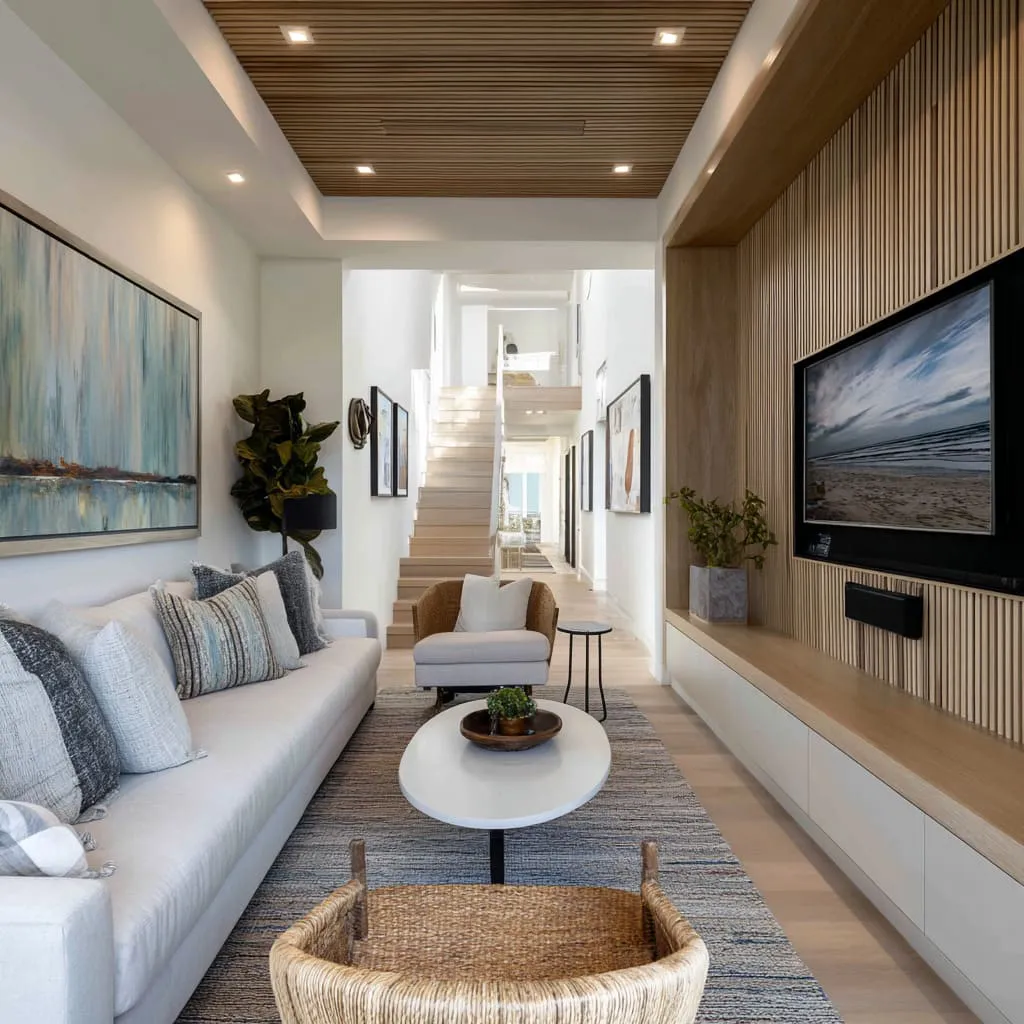
- Medium rhythm (tight vertical slats) provides a steady patterned field that can hold a large black rectangle without relying on lots of décor objects.
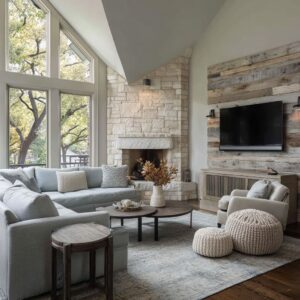
- Macro texture (rough stone blocks, chunky stacked stone, bold slat chambers) becomes a feature in its own right, with the TV acting as the still void inside that feature.
As texture scale increases, object strategy usually tightens: fewer items, lower clusters, clearer spacing. Otherwise the wall turns visually loud.
Warm/cool pairing works as a focus tool
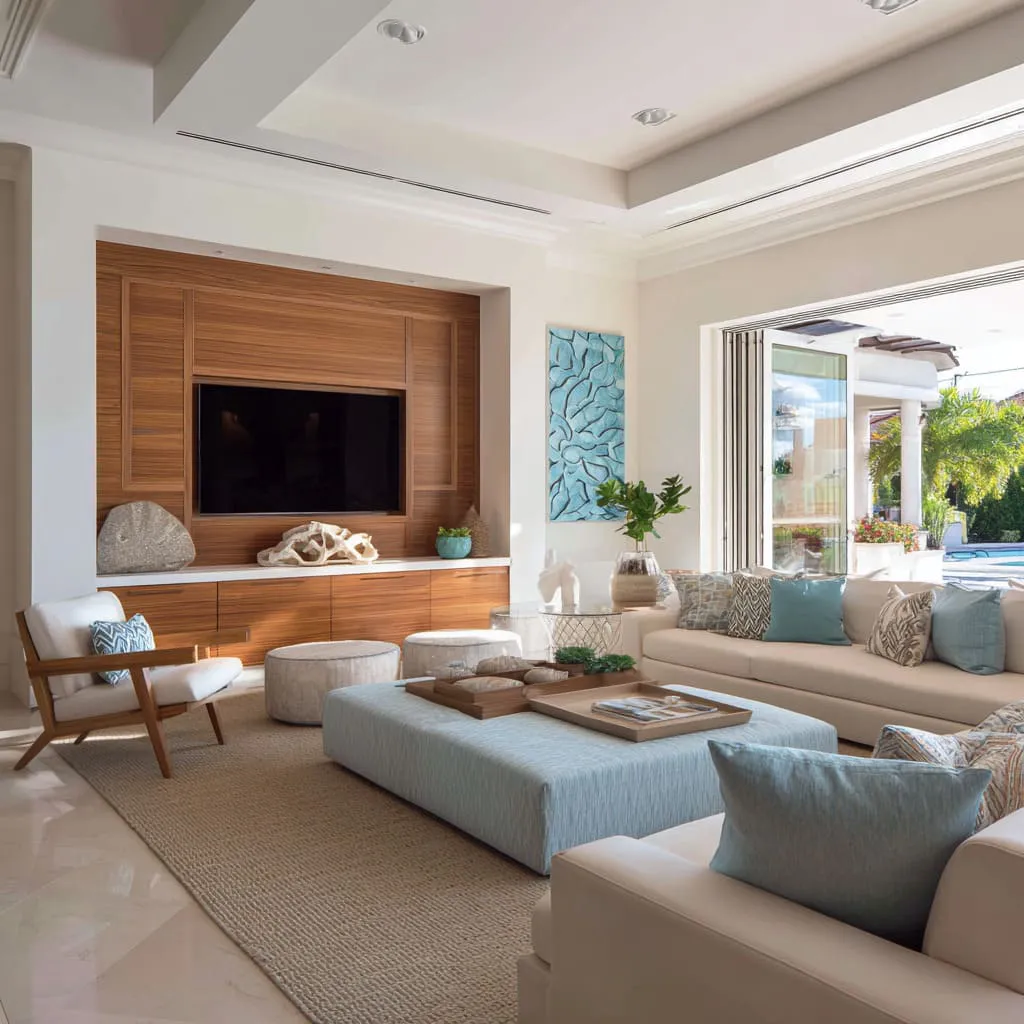
A stylish design pattern which works for many recessed TV ideas: Warm perimeter + cooler center field + dark screen. .
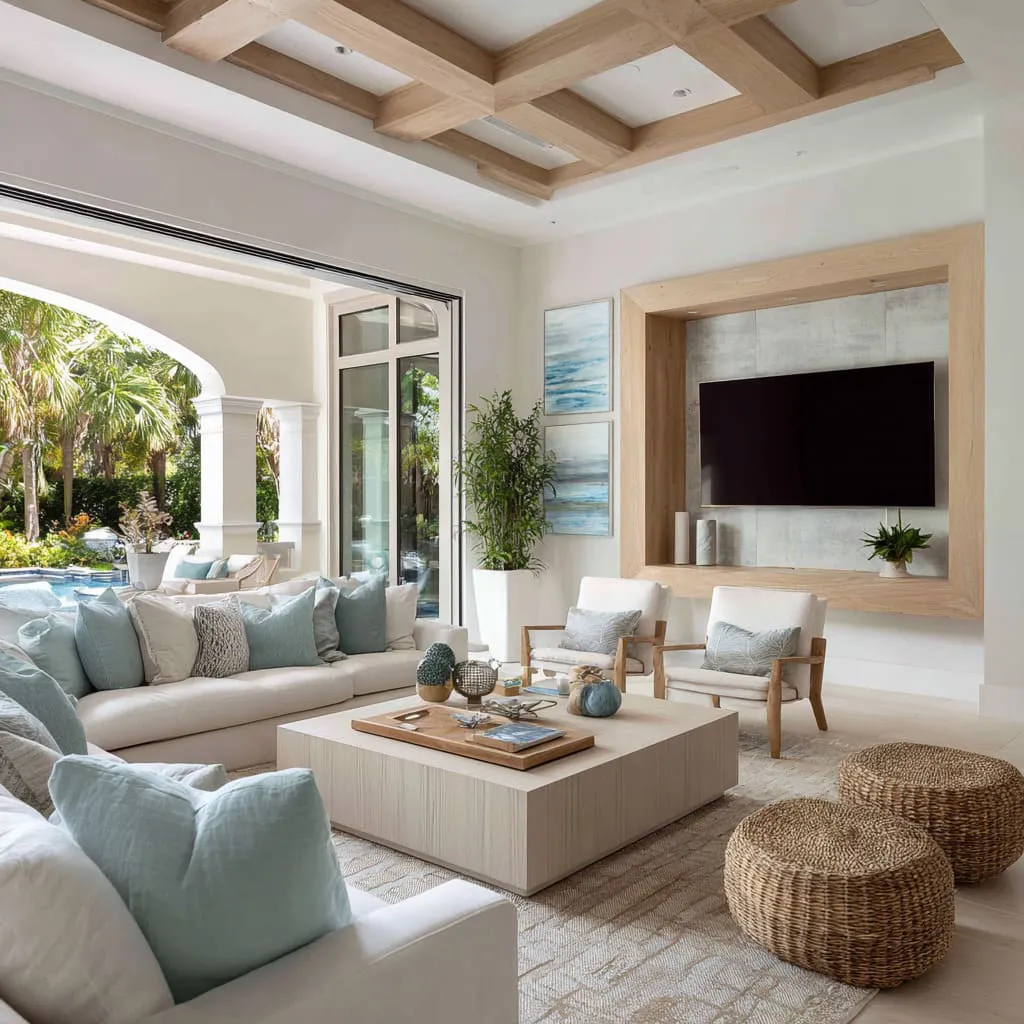
Warm wood surrounds feel human and near. Cooler mineral backings feel stable and farther back.
The TV sits between as the functional center. This creates perceived layering even when the actual recess is not deep: wall plane → warm surround → cool backing → screen.
This is why wood + stone (or wood + concrete-look, or wood returns around marble) often feels naturally ordered around a TV.
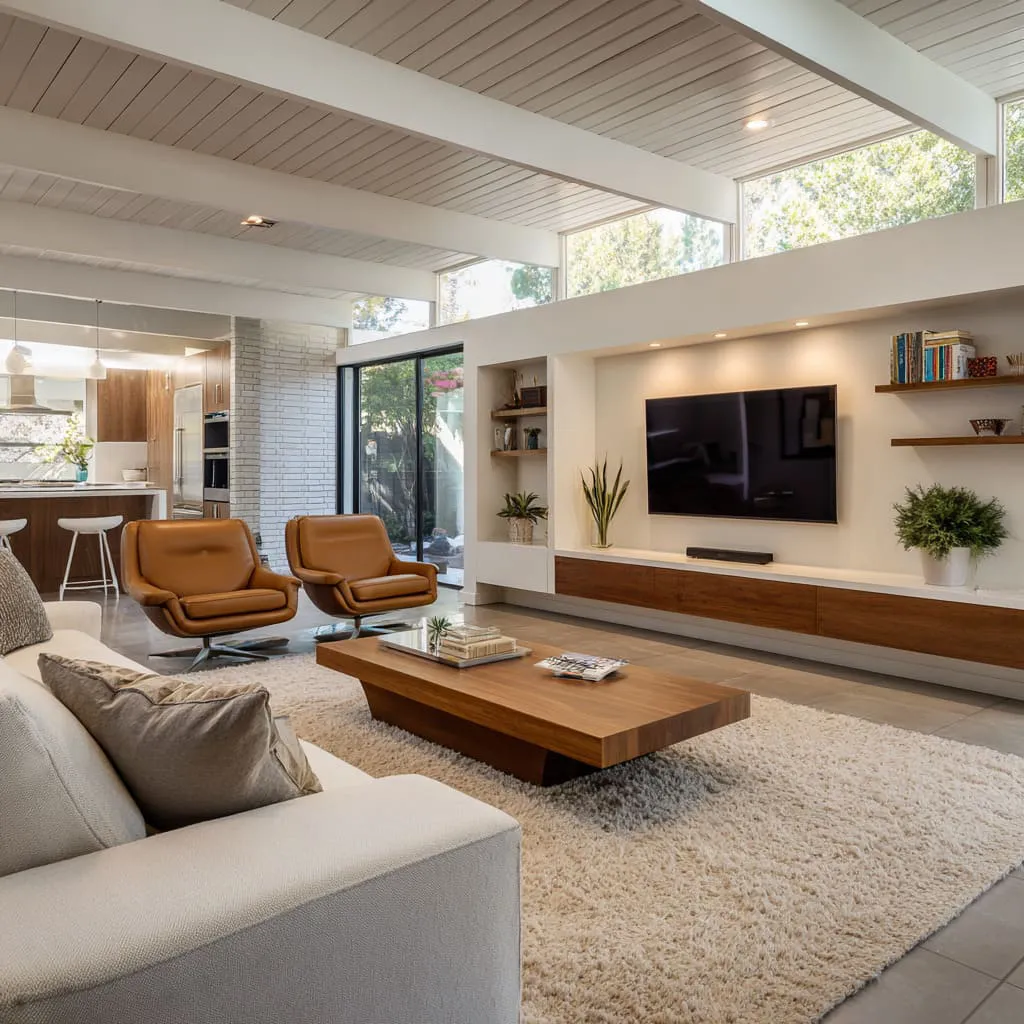
Companion bays reduce TV dominance without clutter
One of the strongest ways to prevent the room from orbiting the screen is to give the TV wall another job besides holding a TV.
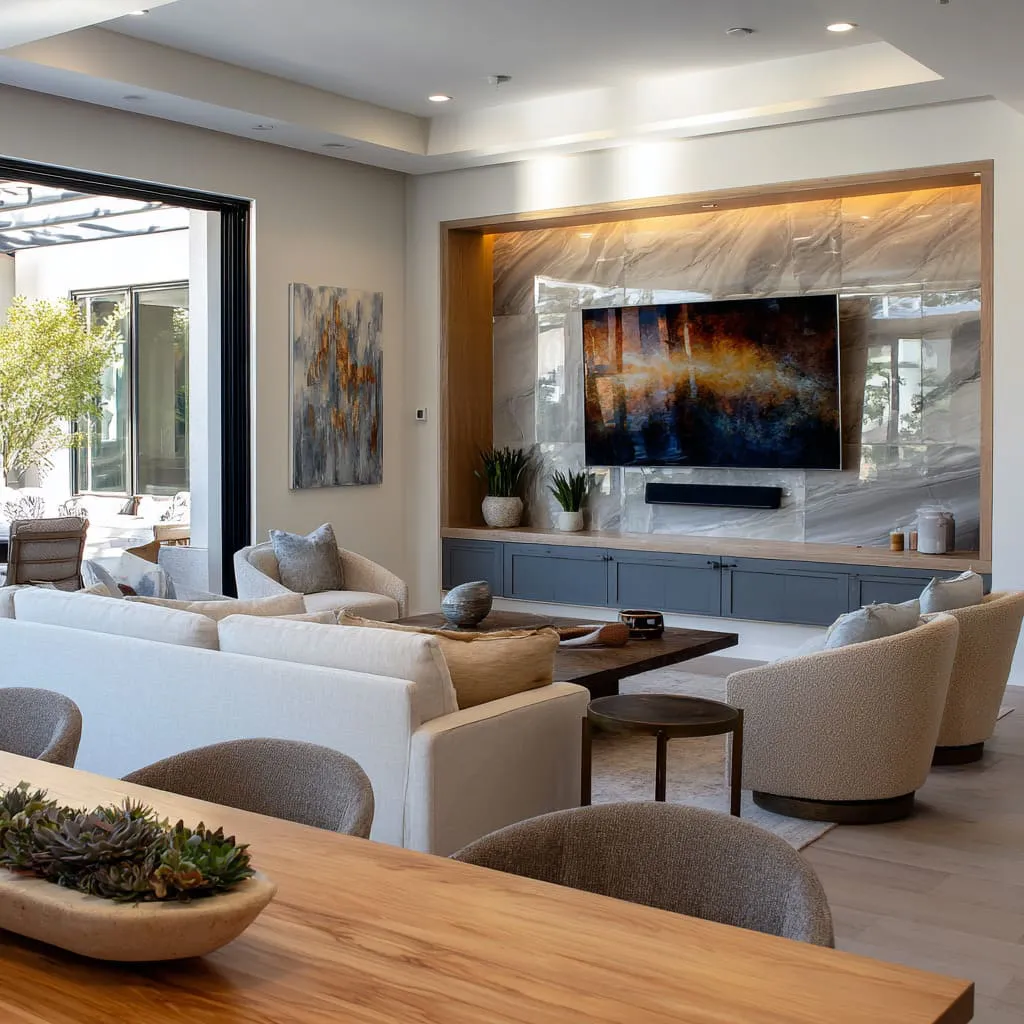
Two companion-bay roles:
- Lifestyle bay: books, ceramics, plants, spaced with air. The wall signals living, not viewing.
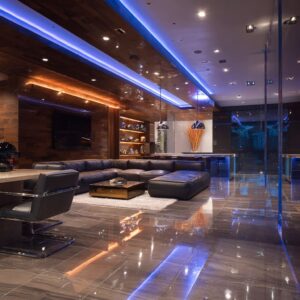
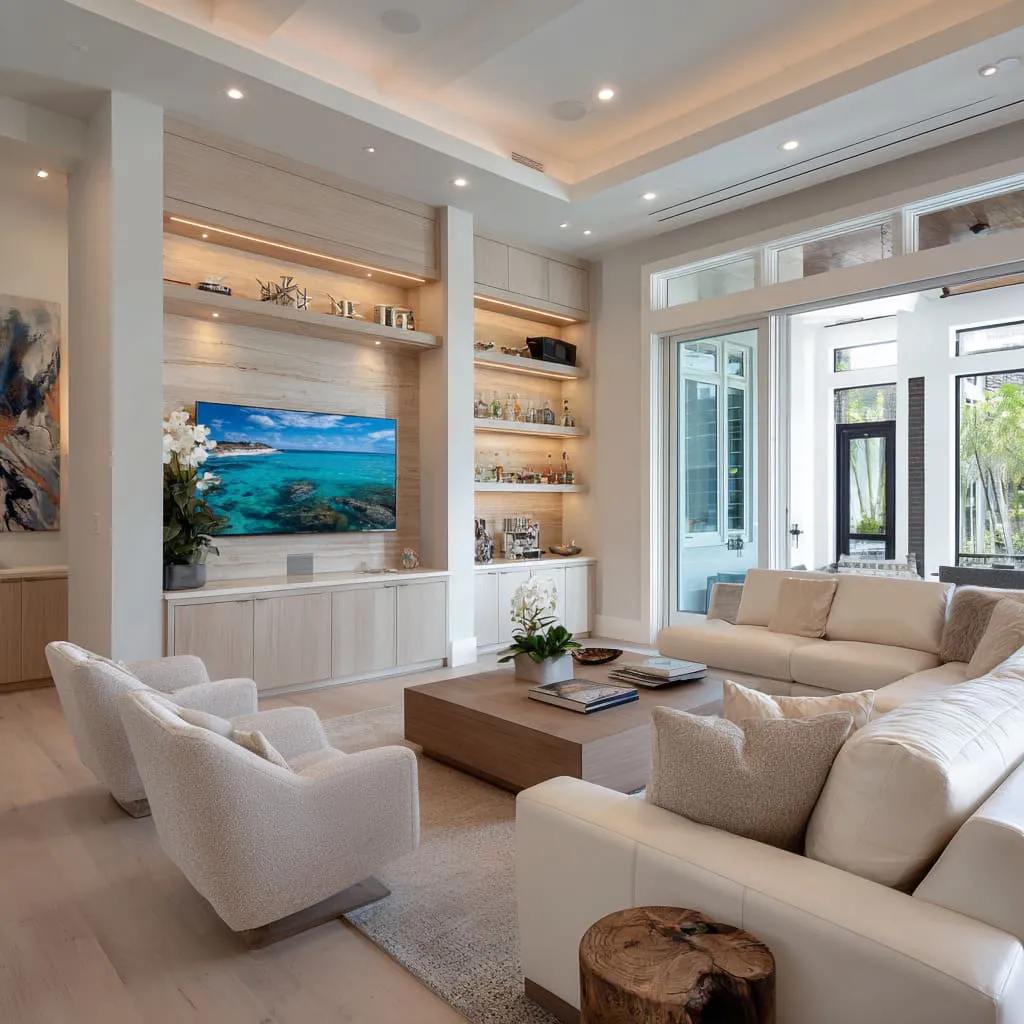
- Hospitality bay: a bar or display niche with shelf glow. The wall signals hosting and social use.
This changes the psychology of the wall. Instead of one target, the eye gets a small ecosystem: storage, display, texture, light, and the TV as one component.
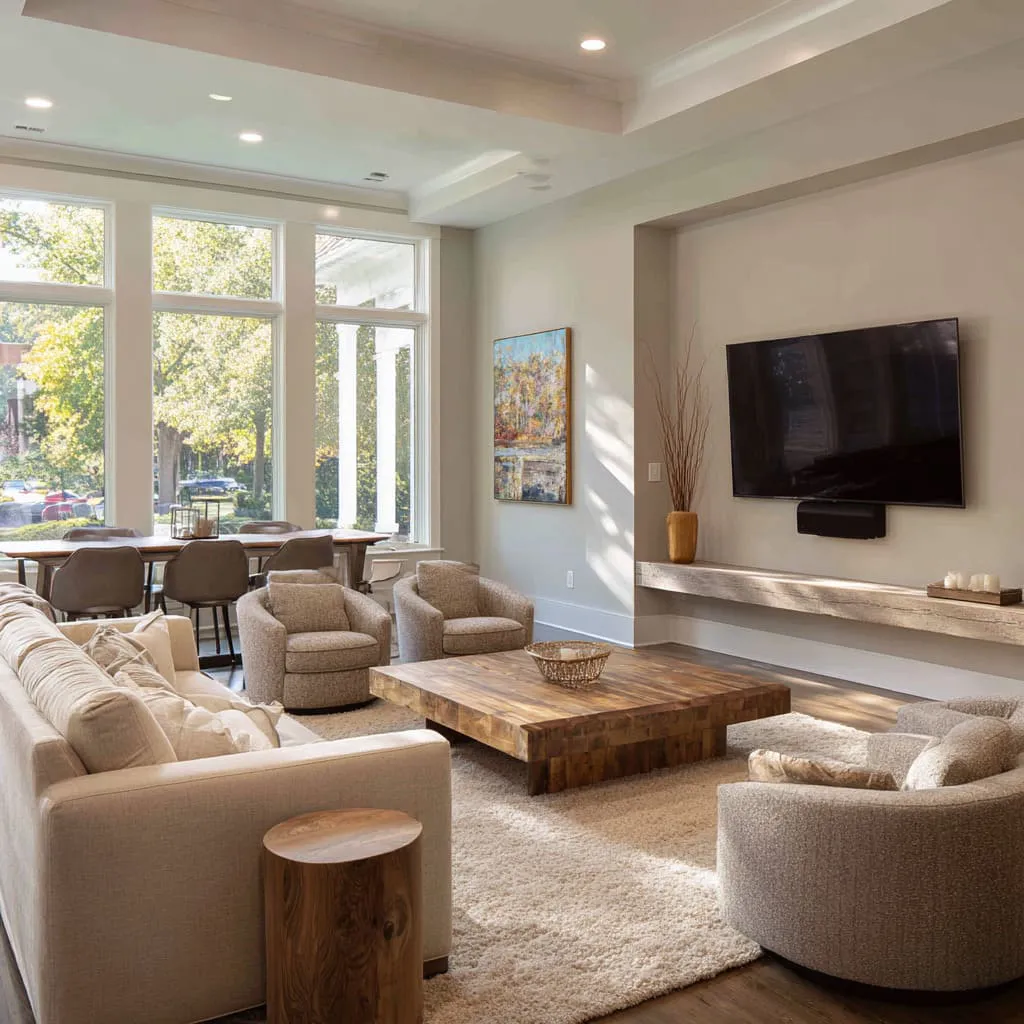
Lighting edits surfaces
In recessed TV walls, light often acts like a finishing material. It makes the niche feel complete when the screen is off, and it directs attention without extra objects.
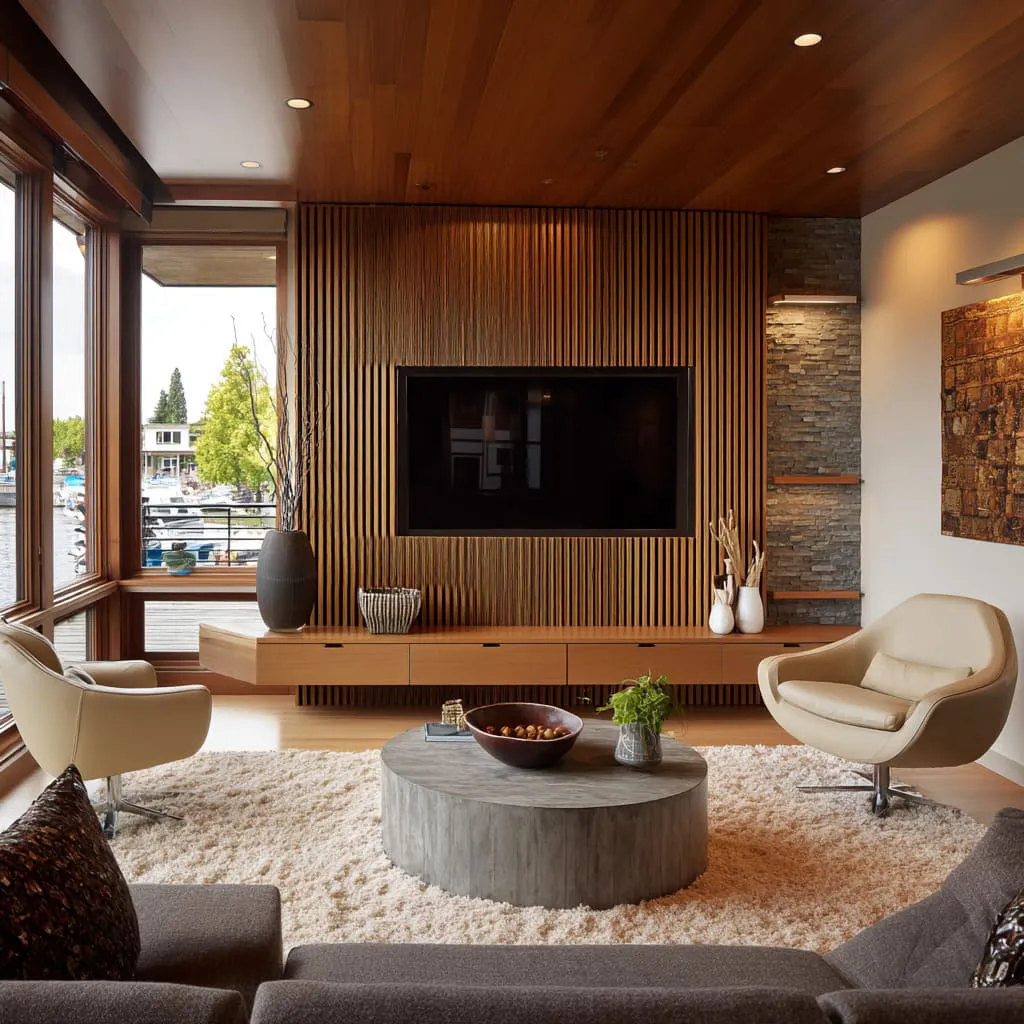
Three recurring lighting edits:
- Vertical gradient: brighter above, softer below, so the niche feels finished and the eye settles comfortably around the screen.
- Soft pool in a dark niche: downlights create tonal shifts so a charcoal zone feels dimensional rather than flat.
- Warm wash over stone or marble: the surface movement becomes visible, and the wall gains atmosphere that does not depend on décor.
These depth signals from light stand in for what people usually try to achieve with accessories.
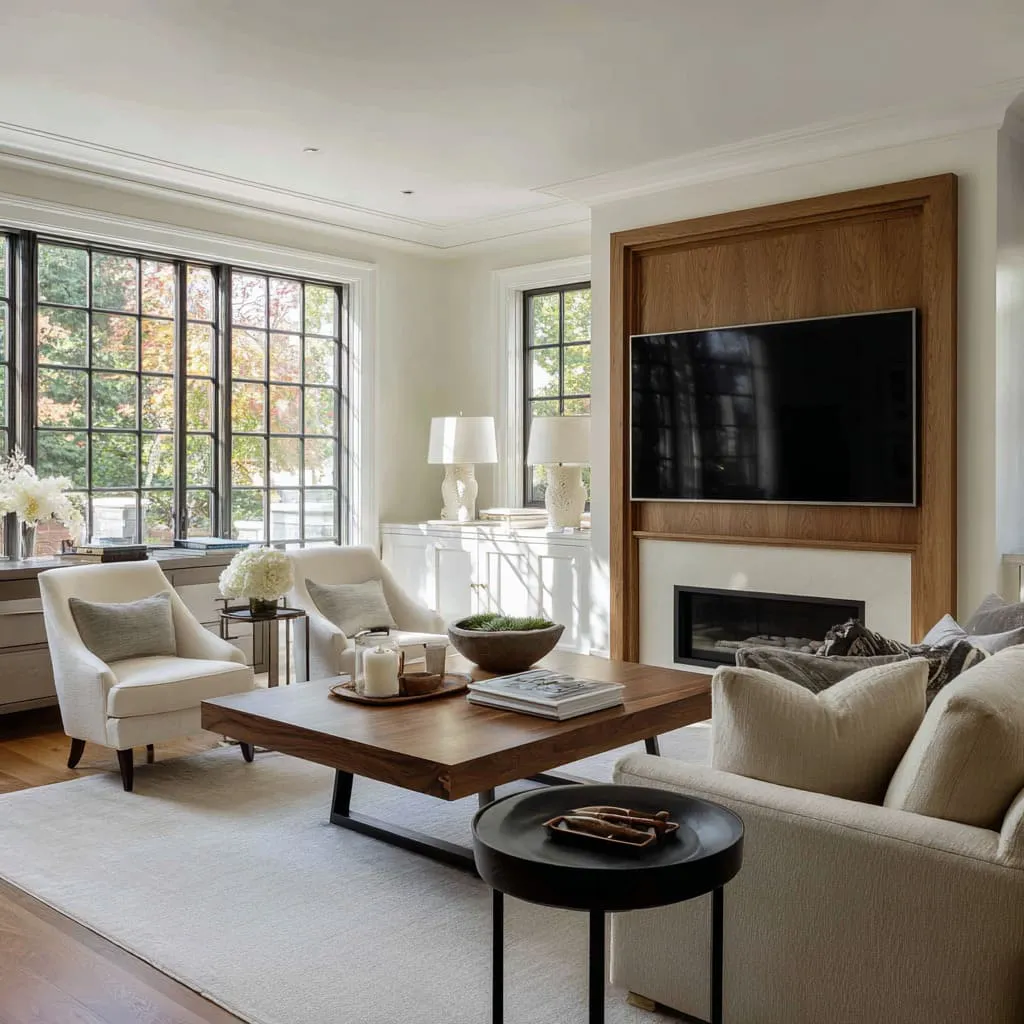
Anti-clutter devices: boundaries and containers
Two design tools which keep the TV wall from becoming a dumping zone.
- Boundary ledges: slim, continuous, not deep. They allow a few objects but discourage piles. The wall keeps its intention.
- Containment objects: trays, baskets, grouped clusters. They mirror the built-in wall’s order at a smaller scale—same idea, different size.
A useful takeaway: the wall feels cleaner when the room repeats the same order logic in multiple places—built-in storage, restrained ledge space, contained tabletop styling.
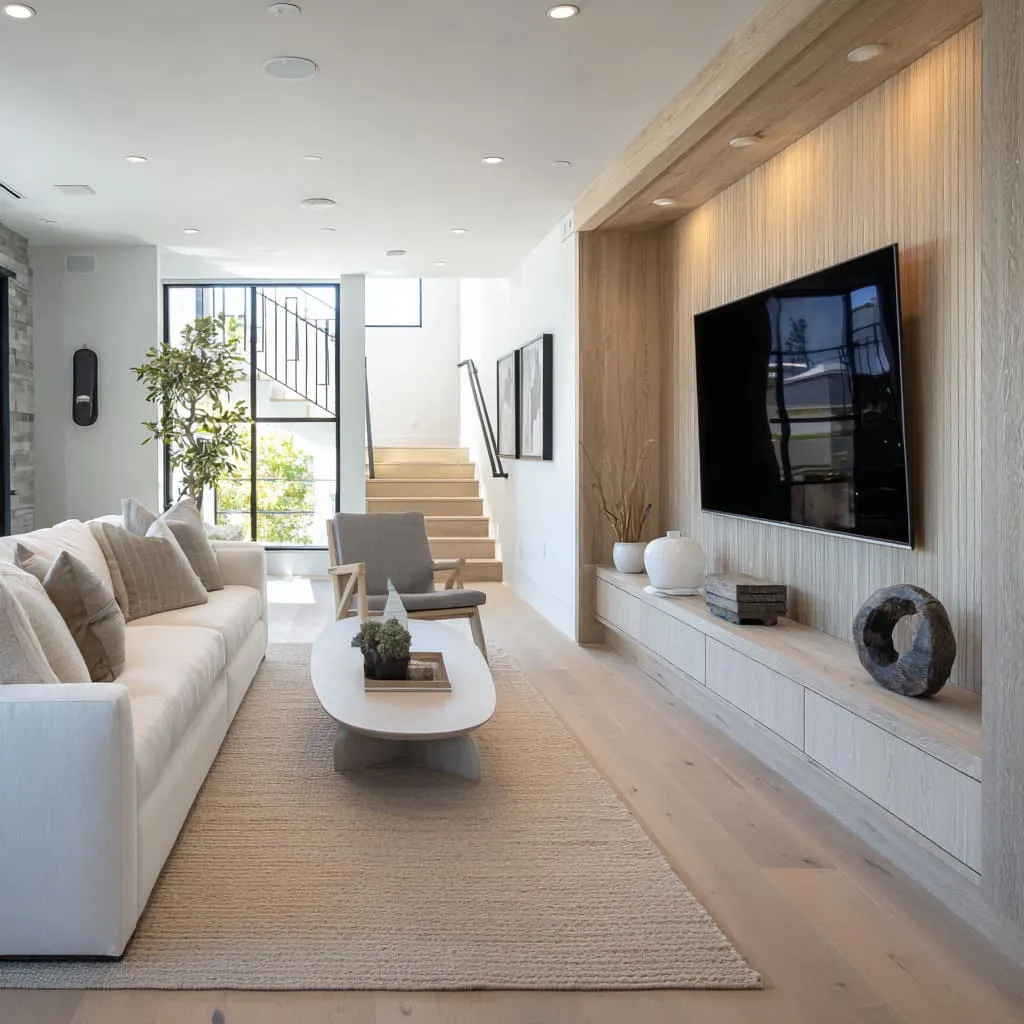
A recess can correct the plan
A recessed TV wall can act as spatial punctuation. Two plan-correction behaviors:
- Endcap / depth stop: in a long, narrow living zone, the recess becomes a destination point so the room stops feeling like a passage.
- Open-plan segmentation without heaviness: a shallow alcove plus a floating shelf keeps the floor visually open, so living and dining share space without a bulky divider.
This is where recessed TV walls quietly outperform many surface-mounted solutions: they can shape how a plan feels, not only how a wall looks.
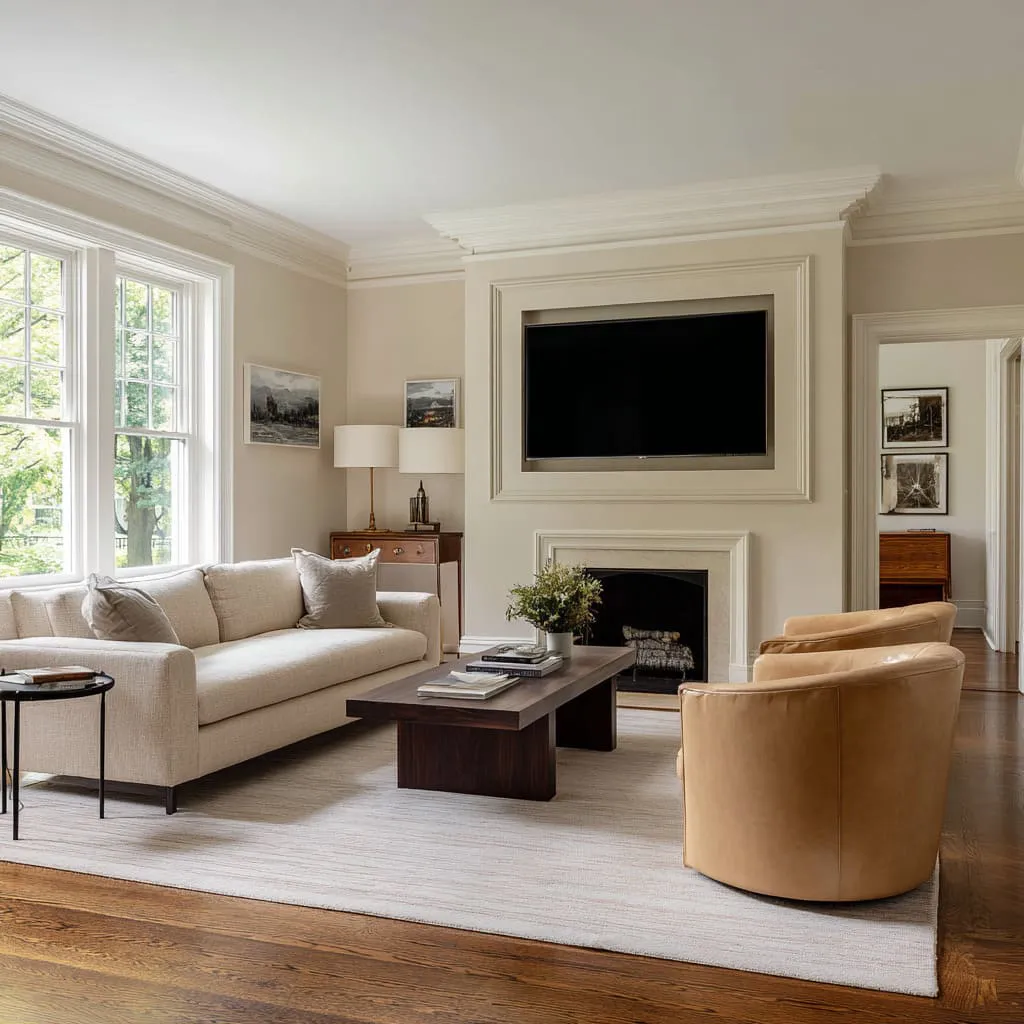
Five families of recessed TV walls To Know
Recessed TV wall designs can be grouped by what they accomplish (not by style):
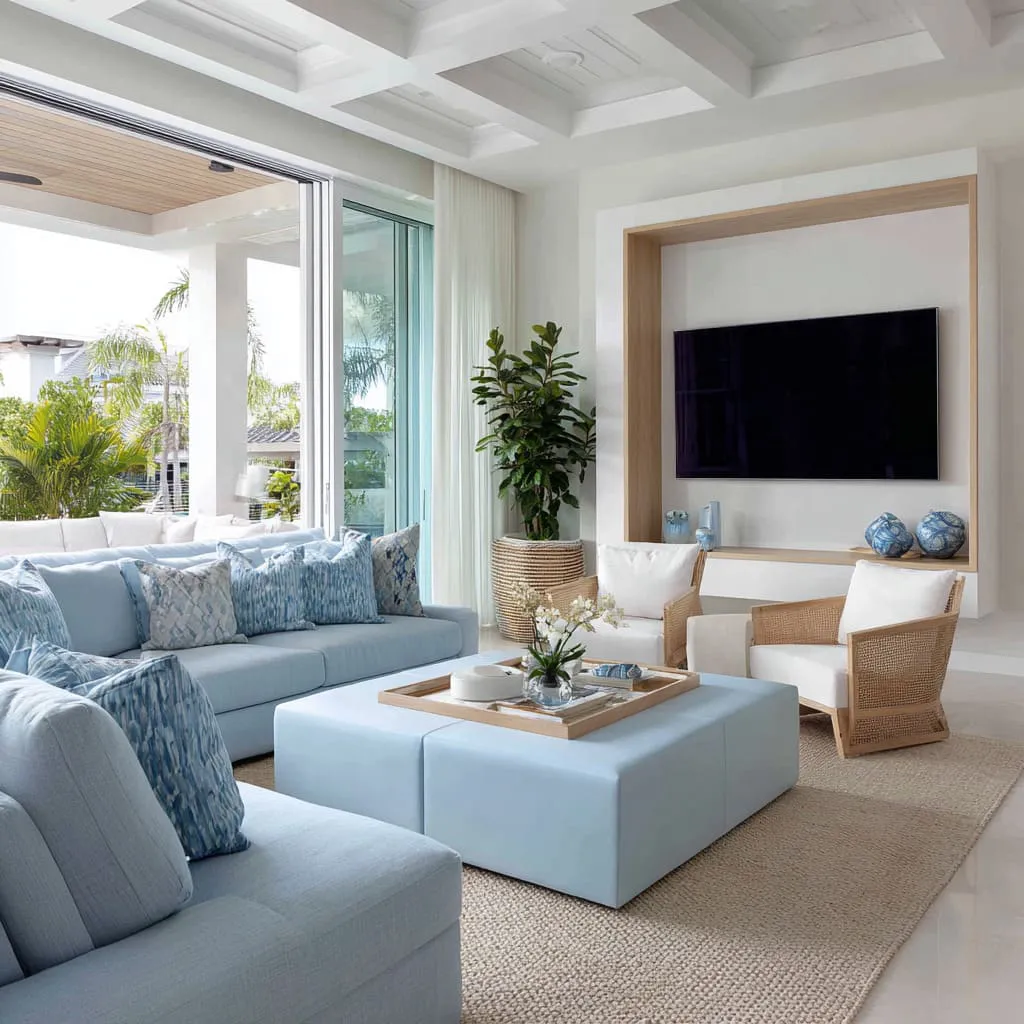
Edge-softening niches
Brick, wallpaper, woven texture, slats, marble veining—anything that breaks the TV edge with fine variation. These often feel friendly in daylight because the backing surface stays active even when the TV is off.
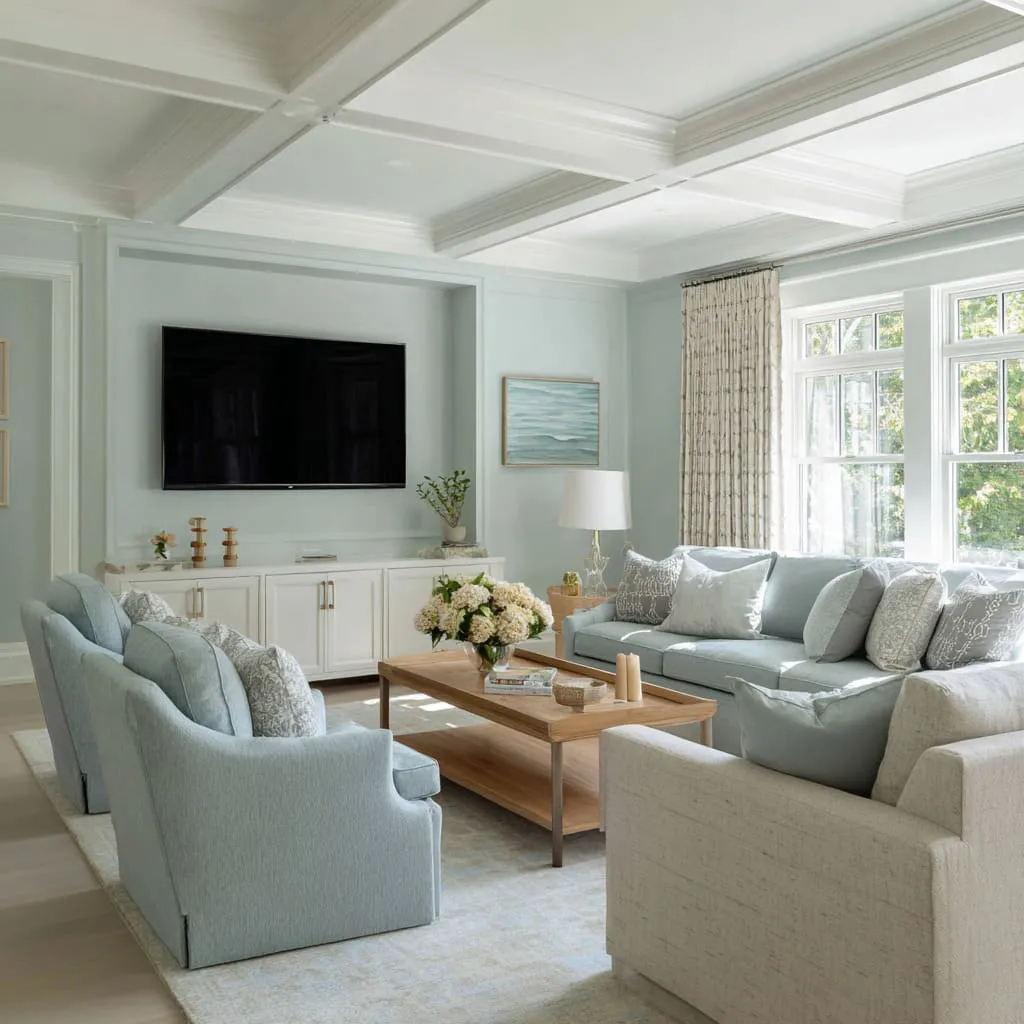
Architectural portal niches
A thick surround makes the TV feel assigned to architecture. Fireplace pairing often fits here because stacking two openings inside one boundary prevents the classic TV vs fireplace rivalry.
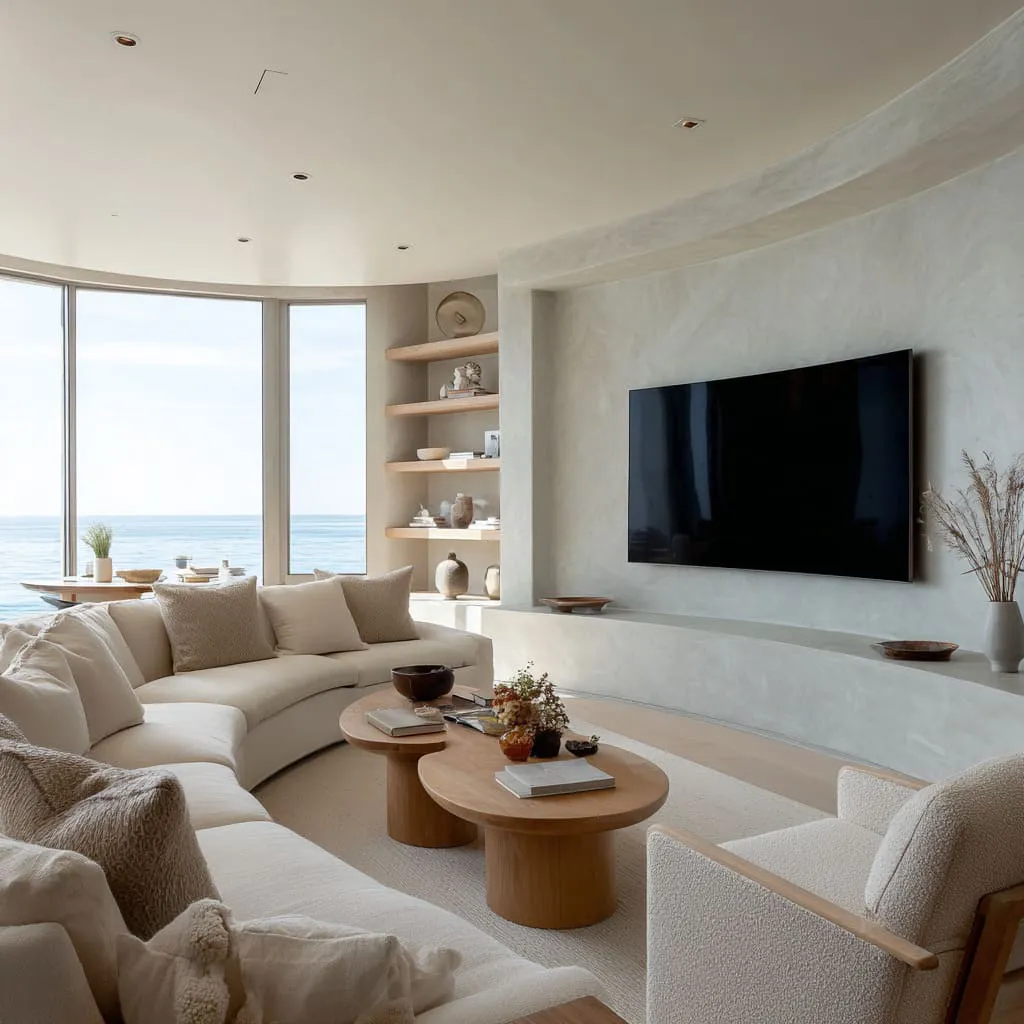
Continuous built-in fields
The TV sits inside a larger millwork field with a long cabinet baseline. This is a strong route for rooms that need storage order and a composed wall without lots of visible objects.
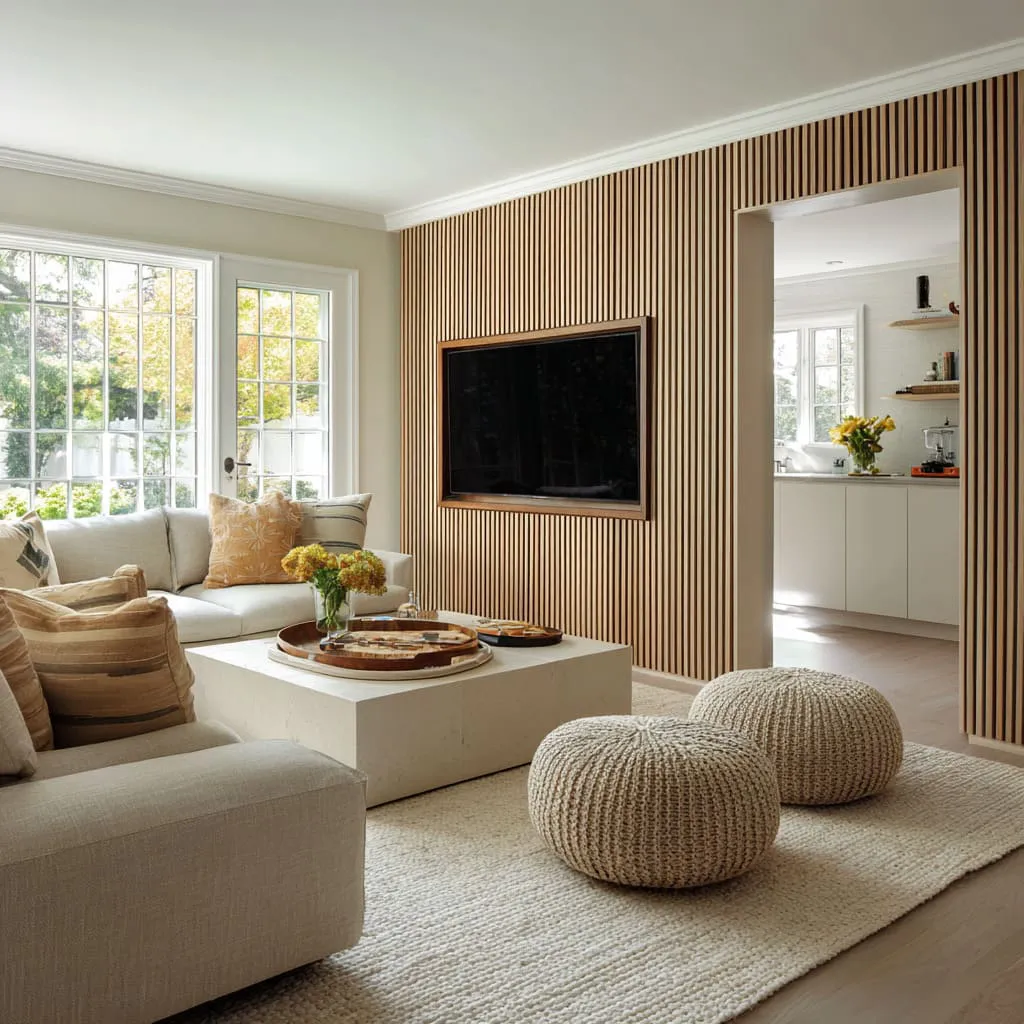
Lifestyle-wall compositions
The TV shares the wall with shelves or secondary bays so the wall communicates living patterns—books, plants, hosting—rather than a single viewing purpose.
Sculpted envelope solutions
Curved plaster-like forms and monolithic walls treat the recess as carved architecture. The wall itself carries the visual interest through form and daylight gradients, so objects can stay minimal.
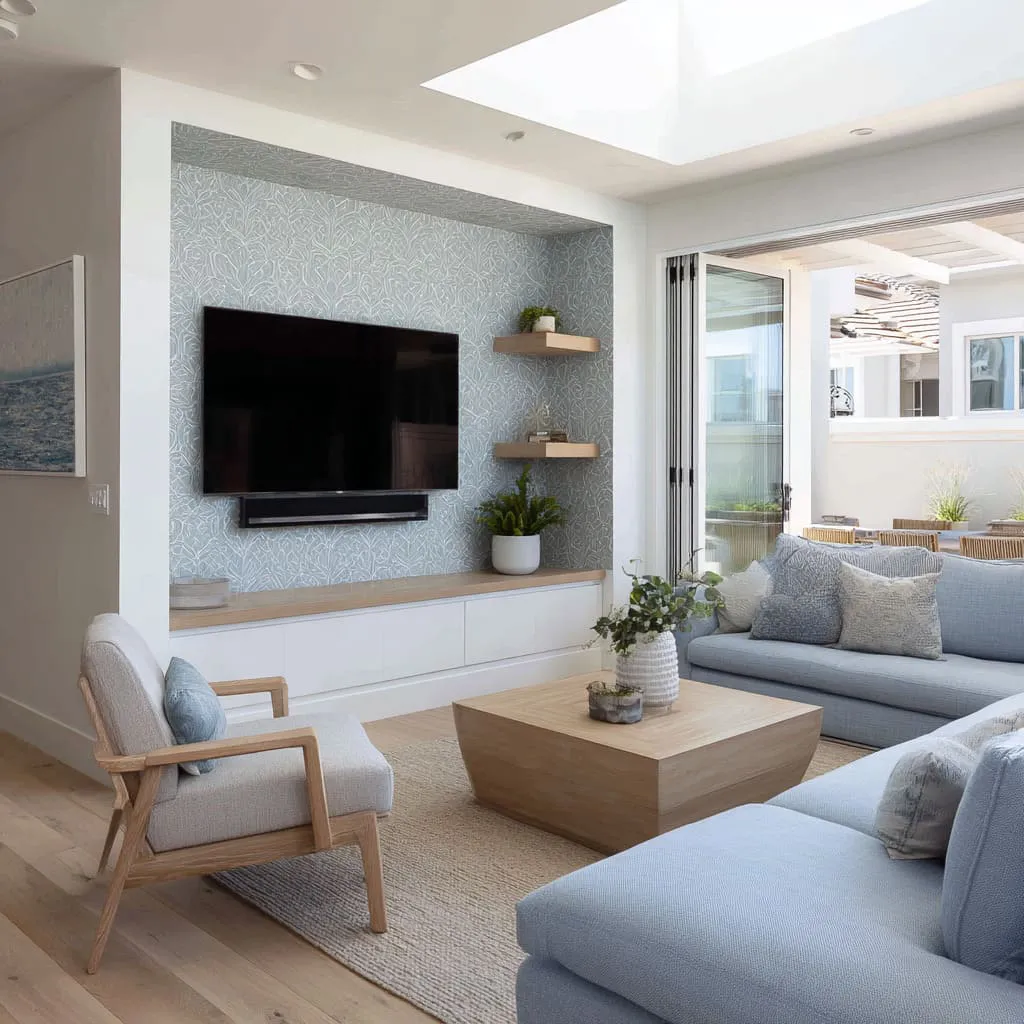
4 Recessed TV wall design approaches and the effects
- A TV tends to feel less dominant when it has a second dark void on the same wall (fireplace opening or dark niche).
- A TV zone tends to feel more finished when the niche has texture variation behind the screen or a deliberate lighting gradient.
- A wall tends to feel more aligned with the seating when there is a long baseline under the TV.
- In high-daylight rooms, pale backings plus controlled shadow edges often reduce the visual chaos of reflections around the screen area.
These are not rules carved in stone. They are just patterns, that you can predict the vibe.
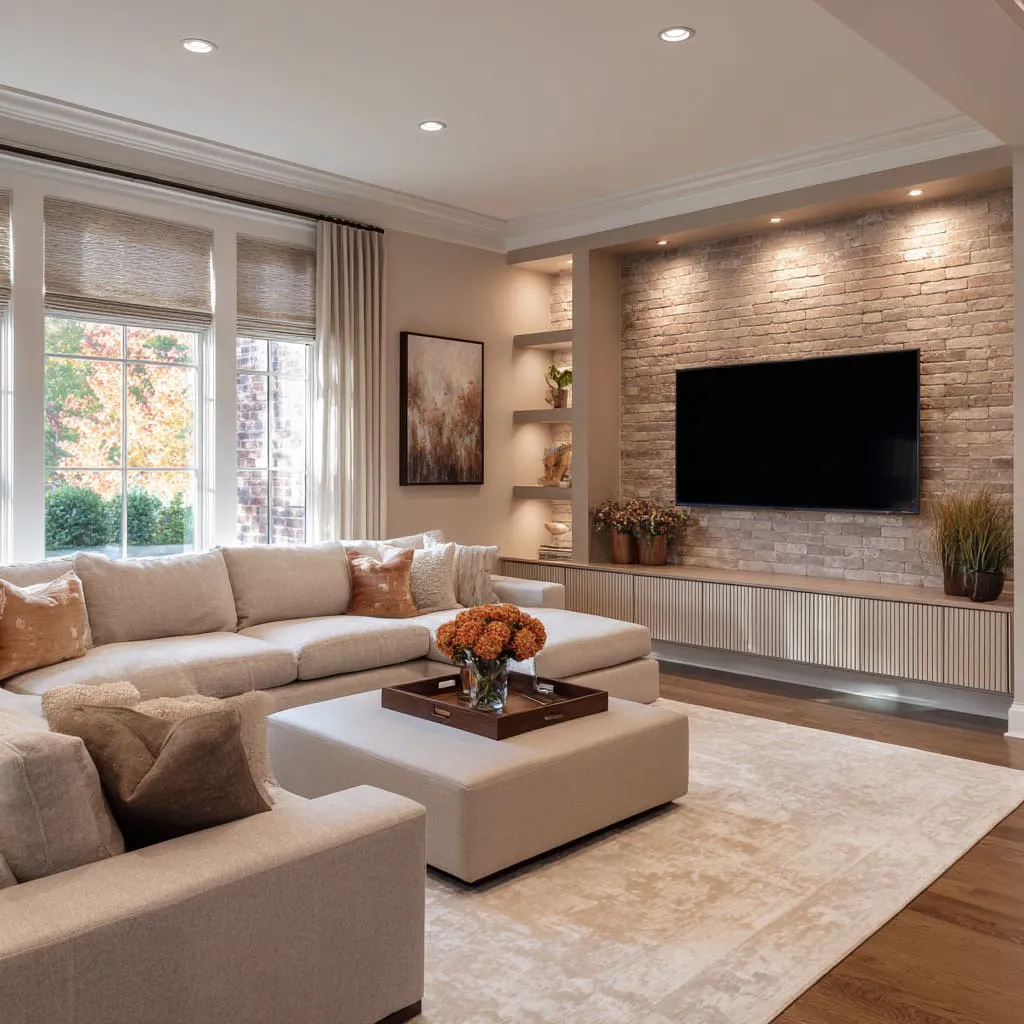
The design physics in one tight sequence
A recessed TV wall works when it does four things together:
- gives the TV a defined home
- softens the black edge through texture or value relationships
- anchors the composition with a baseline under the screen
- shares attention with something human—shelves, plants, a view, symmetry order, a hearth
That’s why recessed TV walls can look very different—brick pocket, stone volume, wood portal, plaster sculpture—yet still feel similarly resolved. The materials change.
The mechanics stay.
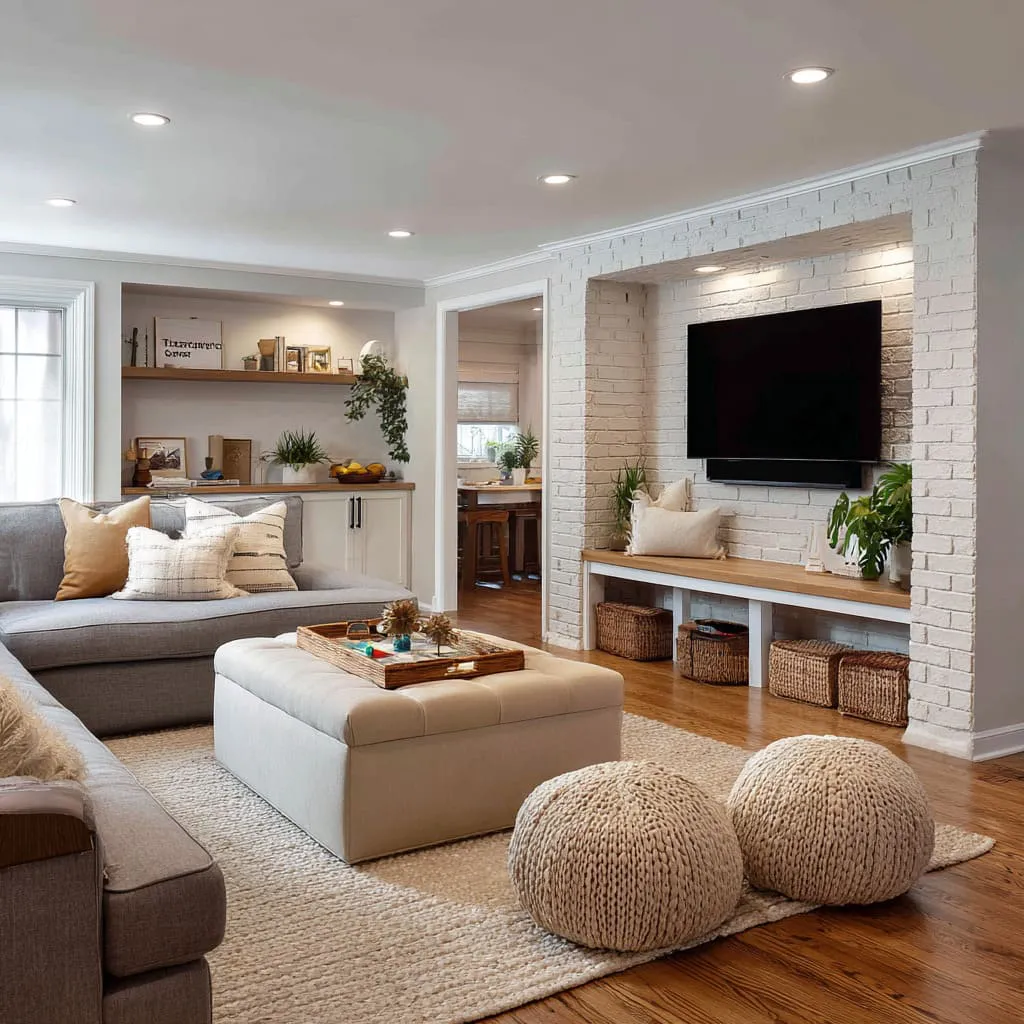
They solve three quiet problems at once: the TV’s loneliness, the wall’s emptiness, and the room’s tendency to reorganize itself around one glossy rectangle. The best schemes don’t try to disguise the screen with busy styling.
They give it a measured pocket so the edge looks intentional, then they build a second layer of structure that keeps working even when the TV is off—micro-shadows in brick or slats, movement in stone, a soft gradient of light that keeps the niche from turning into a dead hole.
Underneath, a long ledge, cabinet band, or hearth line acts like the wall’s spine, lining up the TV zone with the low horizon of sofas, ottomans, and rugs so the whole room feels settled. And once the wall includes one more purpose—storage that stays quiet, shelves that hold a few spaced objects, or a small bar-style bay—the TV becomes one event in a larger composition, not the single reason the wall exists.