A keeping room is a small sitting area near the kitchen, but that definition misses the reason this type of room still matters. In daily life, a keeping room works as a low-intensity social buffer between active domestic tasks and slower domestic presence.
It sits in the middle of two different rhythms: cooking and resting, movement and staying, conversation and personal pause, openness and shelter.
That in-between role is what gives the keeping room its value. A good one does not feel like a reduced living room tucked near the kitchen.
It feels like a domestic overlap zone: a place where someone can sit with coffee while another person cooks, where a child can do homework near the family without sitting at the main table, where a guest can stay close to the action without standing in the work path, and where one person can be present without needing to join the whole room fully.
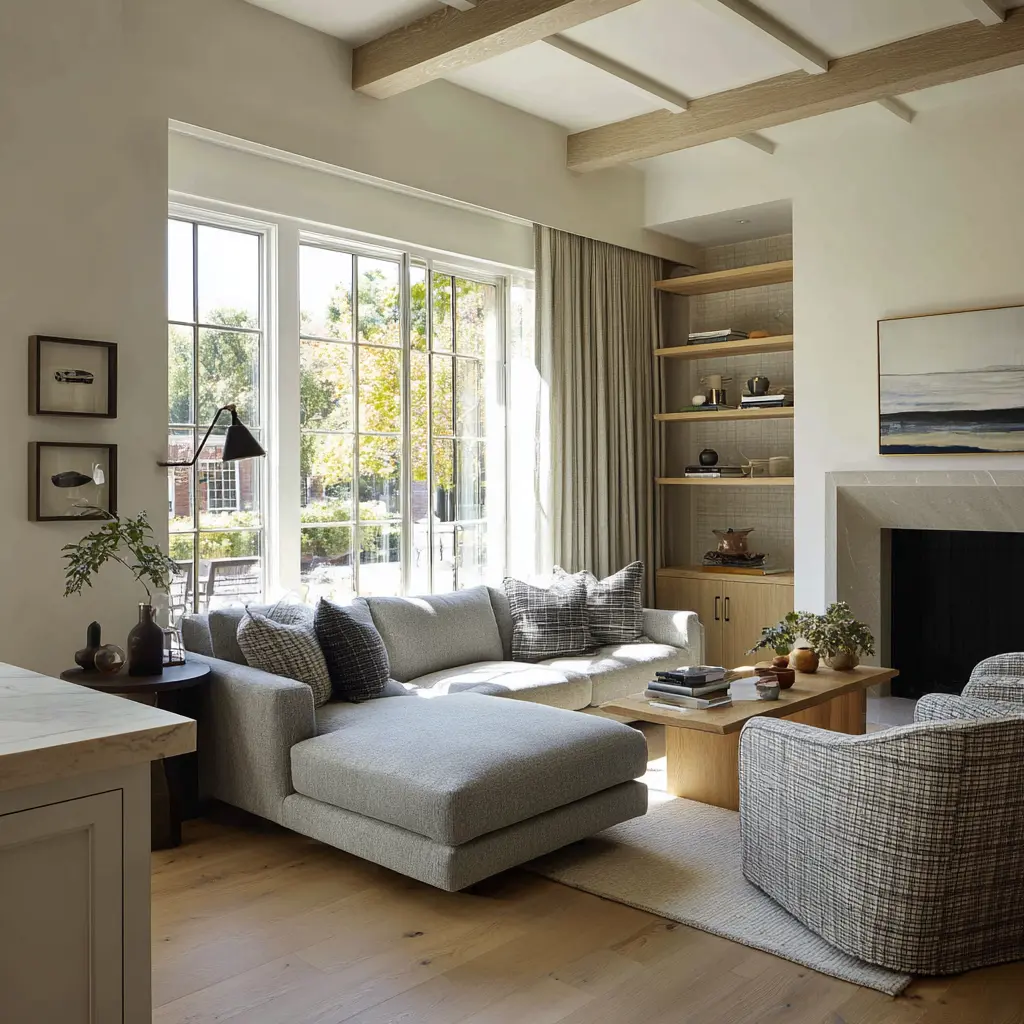
The keeping room designs can solve this layered role through a clear design pattern. They combine one strong anchoring element, one soft seating edge, and one secondary function beyond lounging.
That secondary function may be casual dining, reading, waiting, laptop use, daylight sitting, side-by-side conversation, or spillover seating beside the island. Once that extra role is present, the room starts to feel useful in a deep, everyday way rather than decorative in a thin one.
Why keeping rooms so often feel unfinished
One of the most common issues with a keeping room is that it can feel like leftover square footage. Because it often sits beside an island, breakfast corner, or open circulation zone, it can easily feel like a gap that got furnished rather than a room that was truly formed.
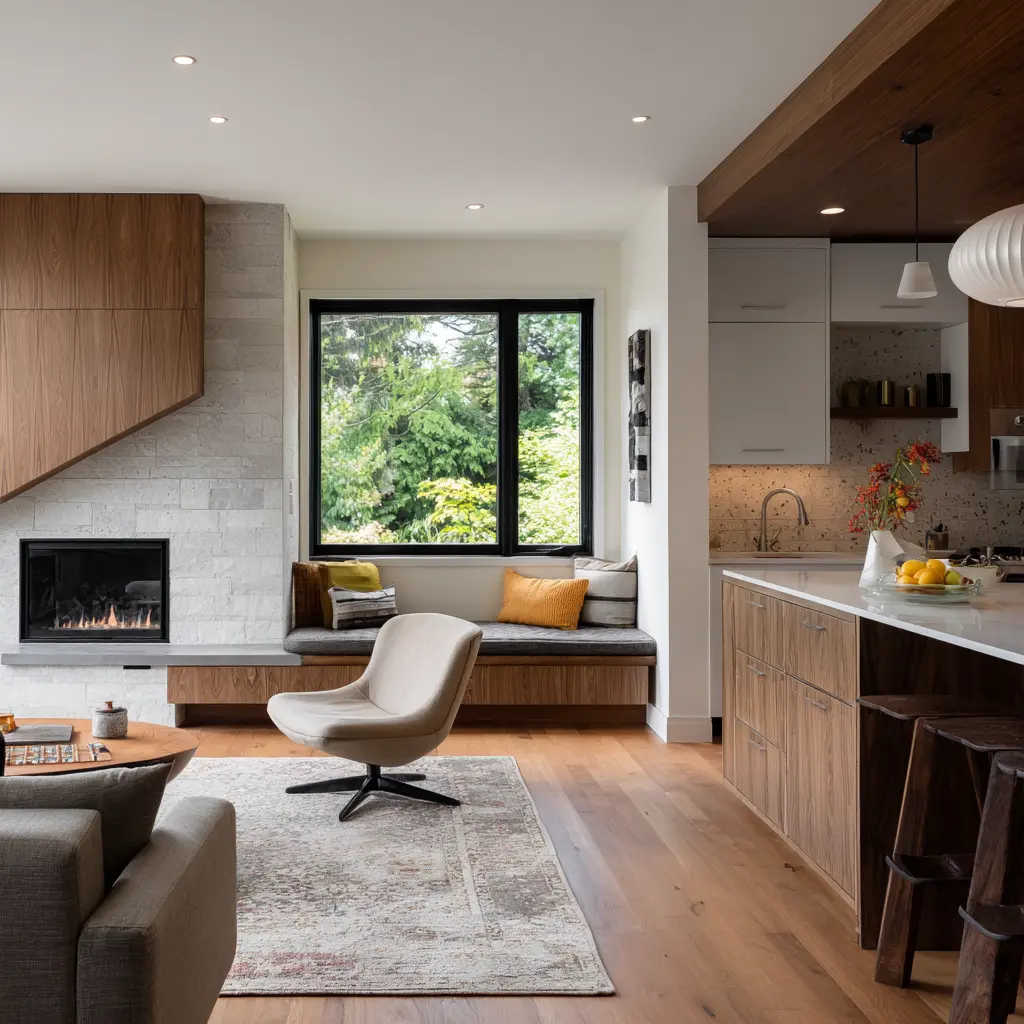
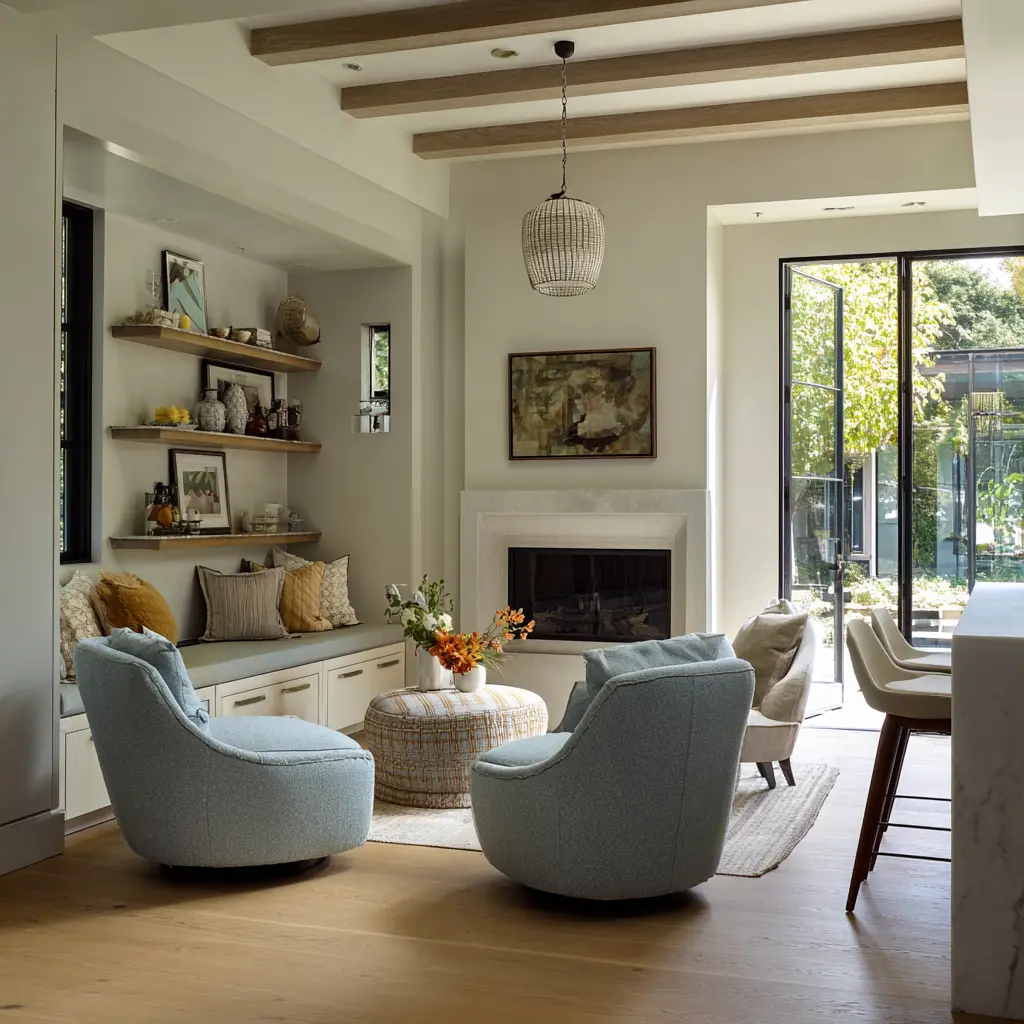
The designs that avoid this problem nearly always give the space at least one element that feels built into the house rather than placed into it later. That may be a fireplace wall, a long built-in bench, an alcove, a dark cabinet wall, a plaster volume, or a full window seat.
This kind of fixed element gives the room authority. It tells the eye that the space has a purpose of its own.
This is one of the clearest lessons in keeping room design: legitimacy depends less on square footage and more on whether the room has one identity-forming edge. A small room can feel complete if one side carries real architectural weight.
A larger room can still feel weak if everything in it is movable and nothing defines the perimeter. That is why keeping rooms should use the perimeter.
Instead of leaving the walls passive, they ask the walls to do work. The room gains shape, use, and belonging before extra decor even enters the plan.
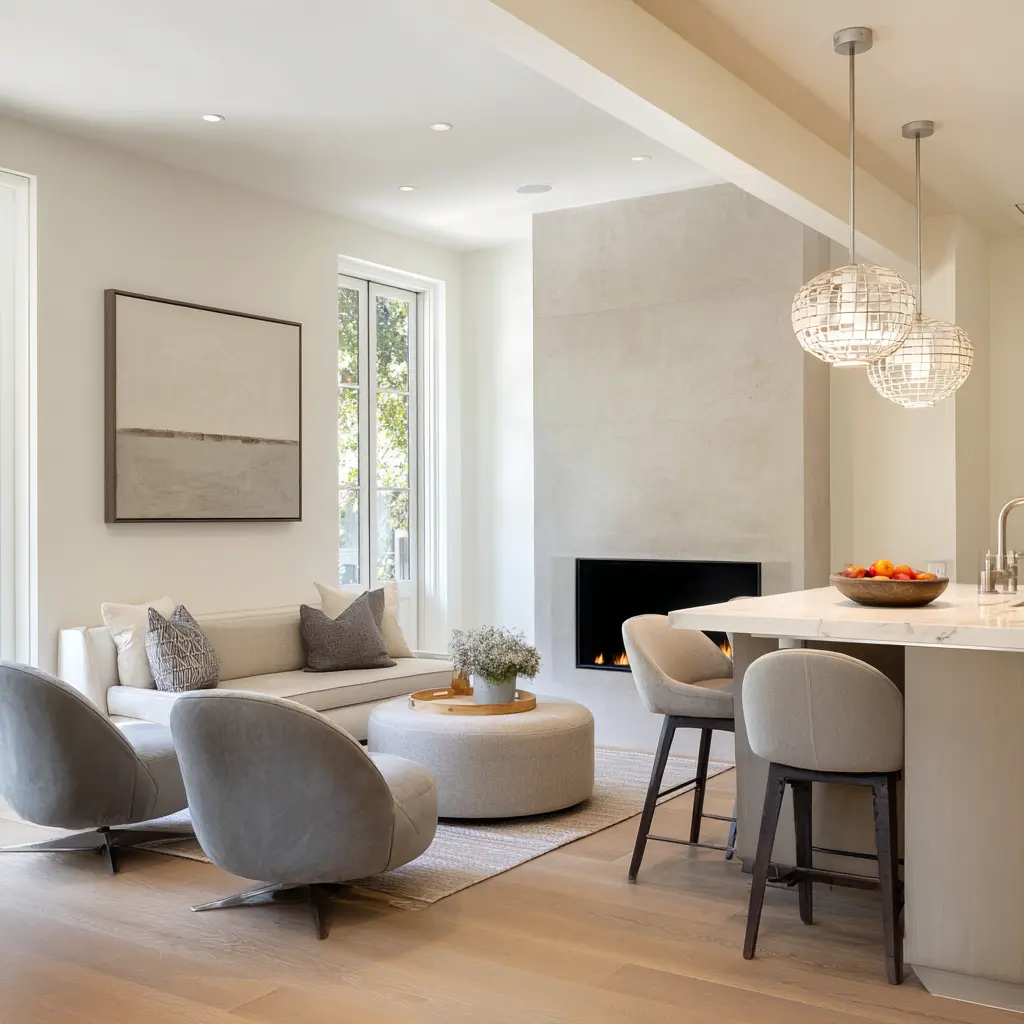
The anchor comes before the furniture
A keeping room needs a clear anchor before it needs extra seating. Without a stabilizing mass, more furniture often makes the space feel worse.
It starts to resemble a squeezed living room, and the more pieces that are added, the more the room can lose clarity. In many cases, the fireplace becomes that anchor.
But the fireplace only works fully when it does more than hold fire. The hearth can act in several roles at once.
It gives the room an emotional center, adds visual ballast so pale finishes do not drift, helps separate the lounge zone from the kitchen or dining area, and gives direction to the seating arrangement. Once the hearth does at least three of those jobs, the whole room feels more settled.
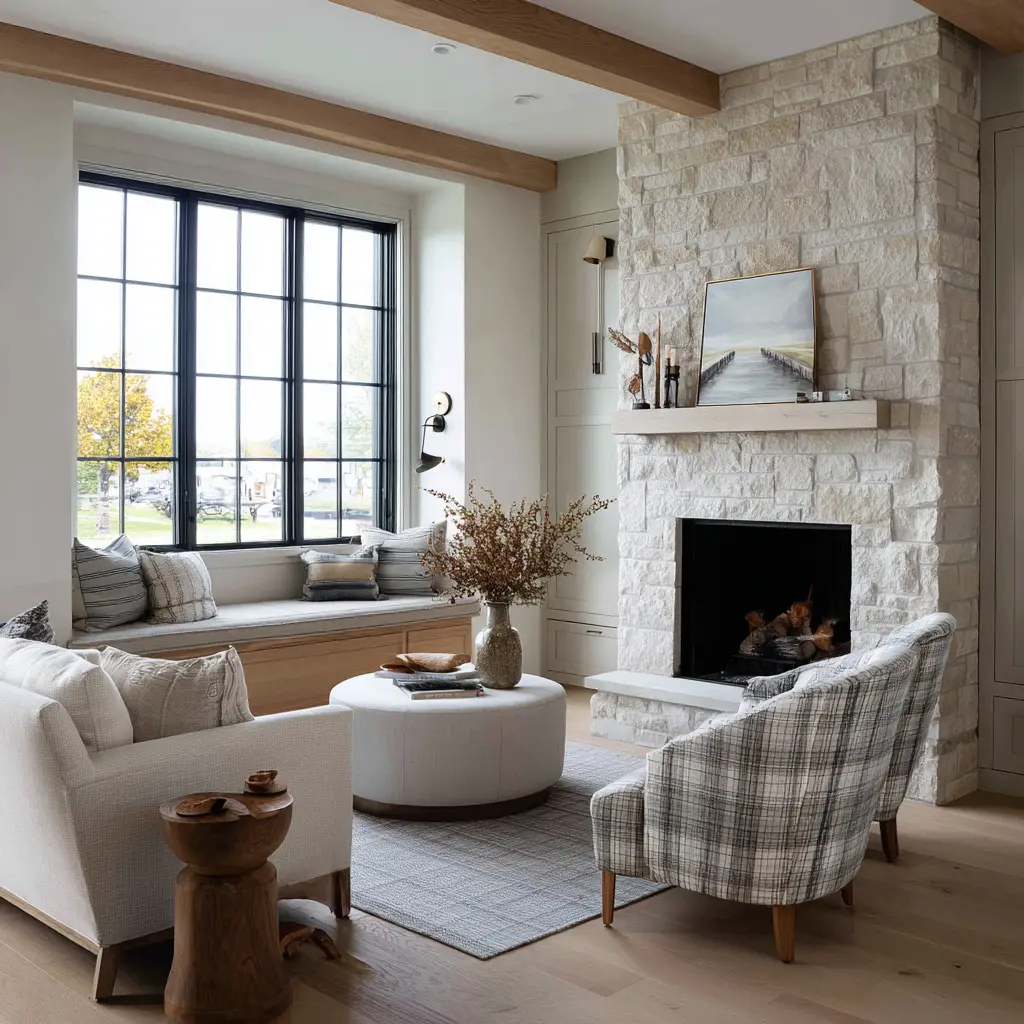
A purely decorative fireplace is far less effective than a fireplace that also organizes flow. That difference is subtle, but it changes everything.
In a good keeping room, the fire is not only something to look at. It helps explain where the room begins, where the eye should settle, and how different seating positions relate to one another.
This is also why pale plaster, soft stone, and white-painted brick appear so often in elegant keeping room design ideas. These finishes let the fireplace remain important without becoming severe or formal.
The surface stays gentle, while the fire opening itself carries the deepest contrast. The room gains a center, but not a harsh one.
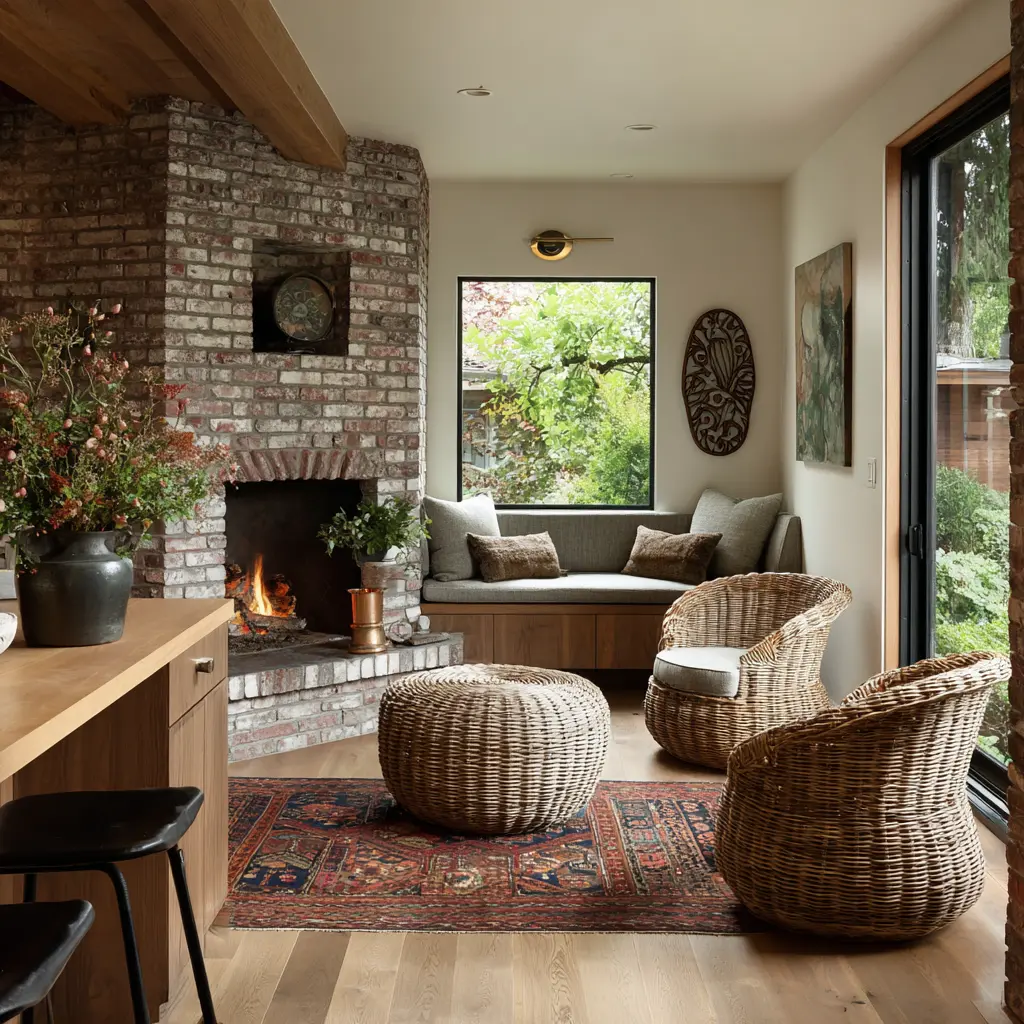
Why built-in seating changes the whole room
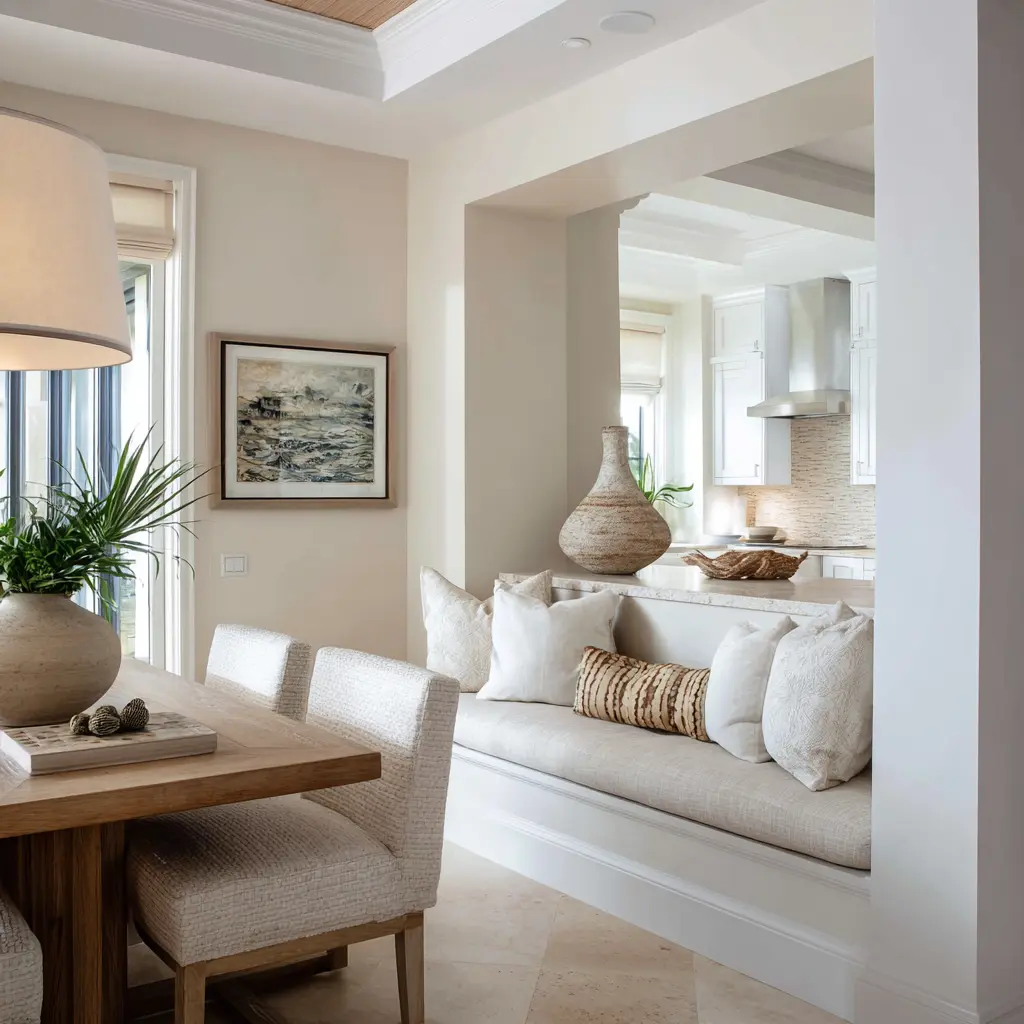
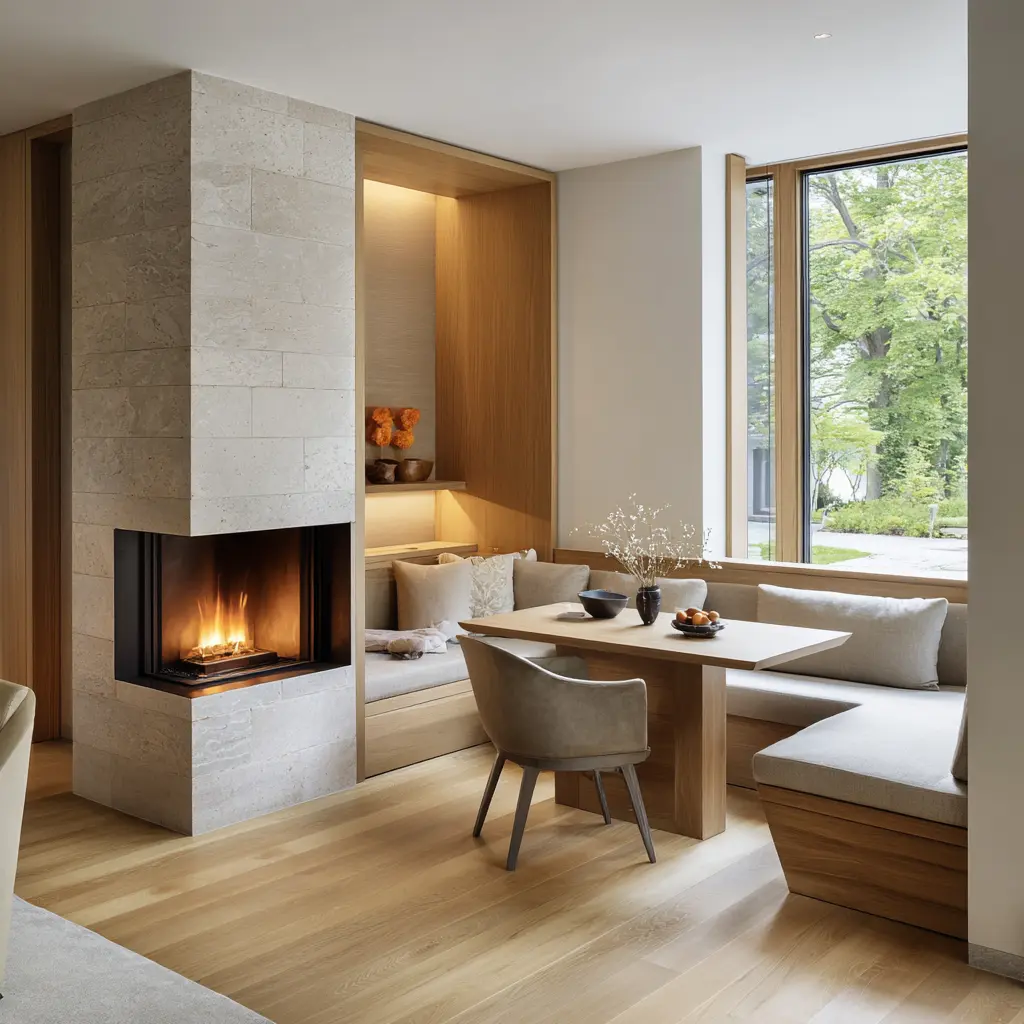
If the fireplace gives the keeping room a center, built-in seating often gives it a proper edge. Long benches, banquettes, and window seats are popular in effective keeping room layouts because they solve several problems at once.
First, they save floor depth. In a room that often shares space with a kitchen, every inch matters.
A built-in bench creates seating without the visual and physical bulk of another sofa or deep chair. Second, built-in seating makes the room feel planned into the house itself.
That instantly removes the feeling that spare furniture was pushed into a spare corner. Third, it creates a side-by-side social posture that suits the keeping room beautifully.
People can sit together in a less formal way than face-to-face seating, which fits the room’s softer role in family life.
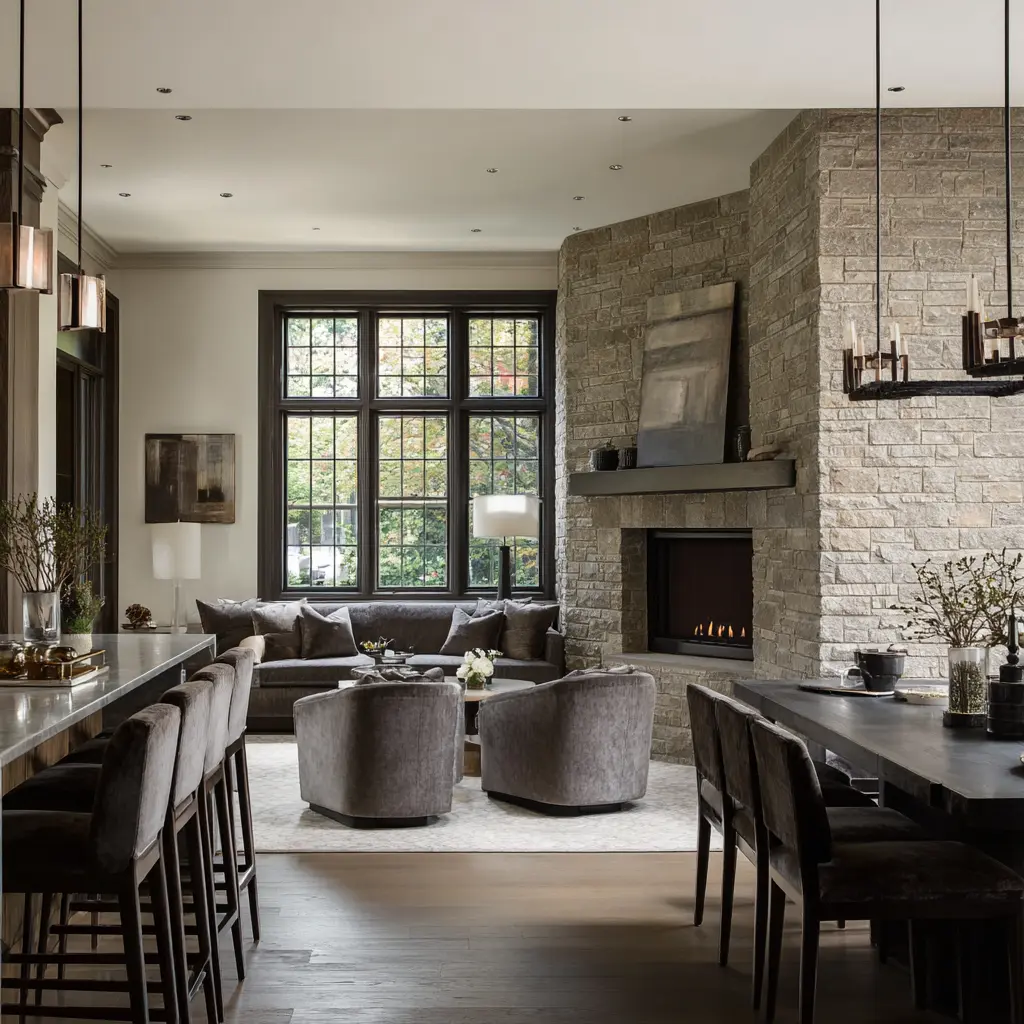
There is also a deeper spatial advantage here. When the perimeter becomes useful, the center can stay open, soft, and adaptable.
A window bench, banquette, or long upholstered ledge increases what might be called edge utility density: more inhabitable function is created by the outer edge of the room, which means the middle does not need to carry so much weight. This is one reason built-ins work especially well in smaller keeping rooms.
They turn corners into destinations, make windows part of the seating experience, and preserve the sense that the room can still breathe.
Closeness without cramping
A keeping room needs intimacy, but it should not feel pinched. If the room is too exposed, it loses its sheltering quality.
If it is too enclosed, it can feel stale or overly heavy. The most convincing examples strike a middle balance.
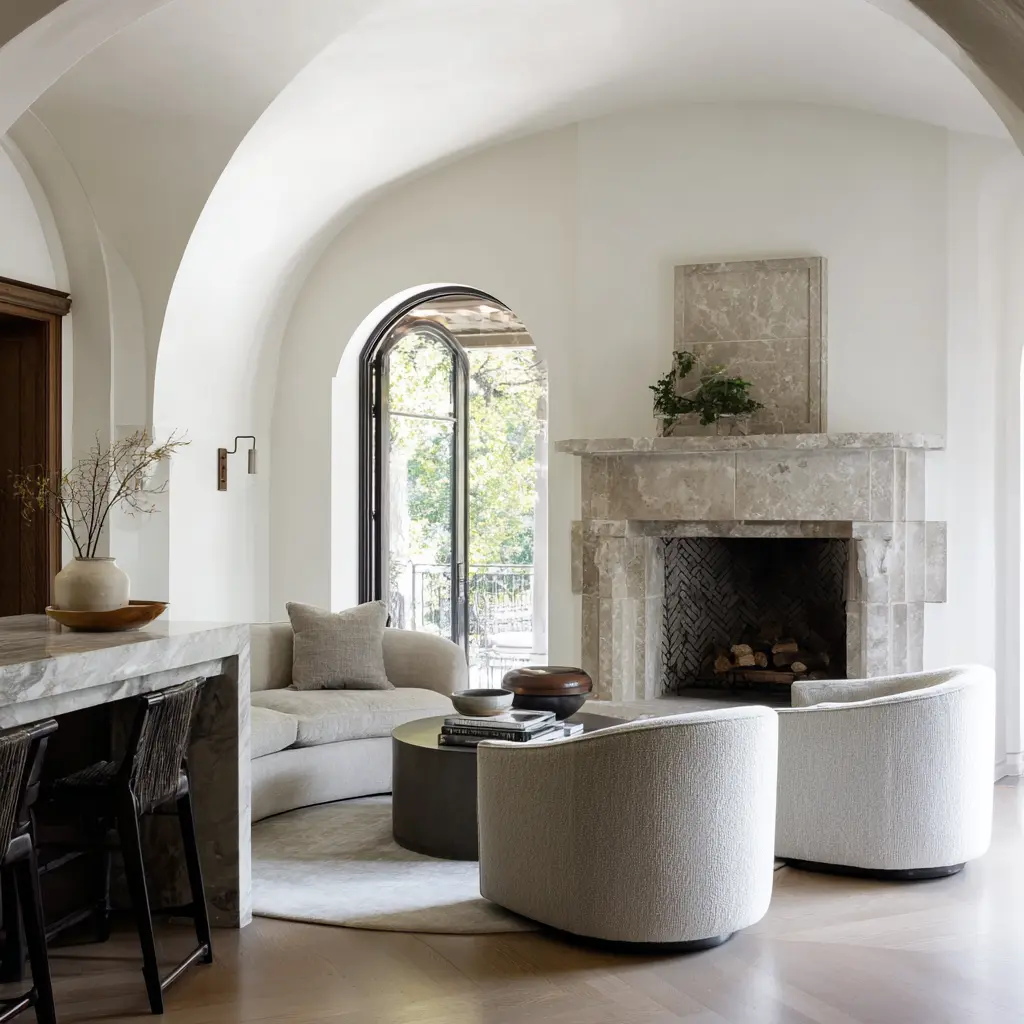
That balance does not always require full enclosure. Keeping room designs can use actual physical framing such as alcoves, niches, arches, darker side walls, recessed benches, or deeper window bays.
Others can create the same feeling through perception rather than hard construction. Curved chairs, sectional wraps, lower ceiling treatment, central hearth masses, and thickened side edges can all make the room feel closer and more protected even while it remains open.
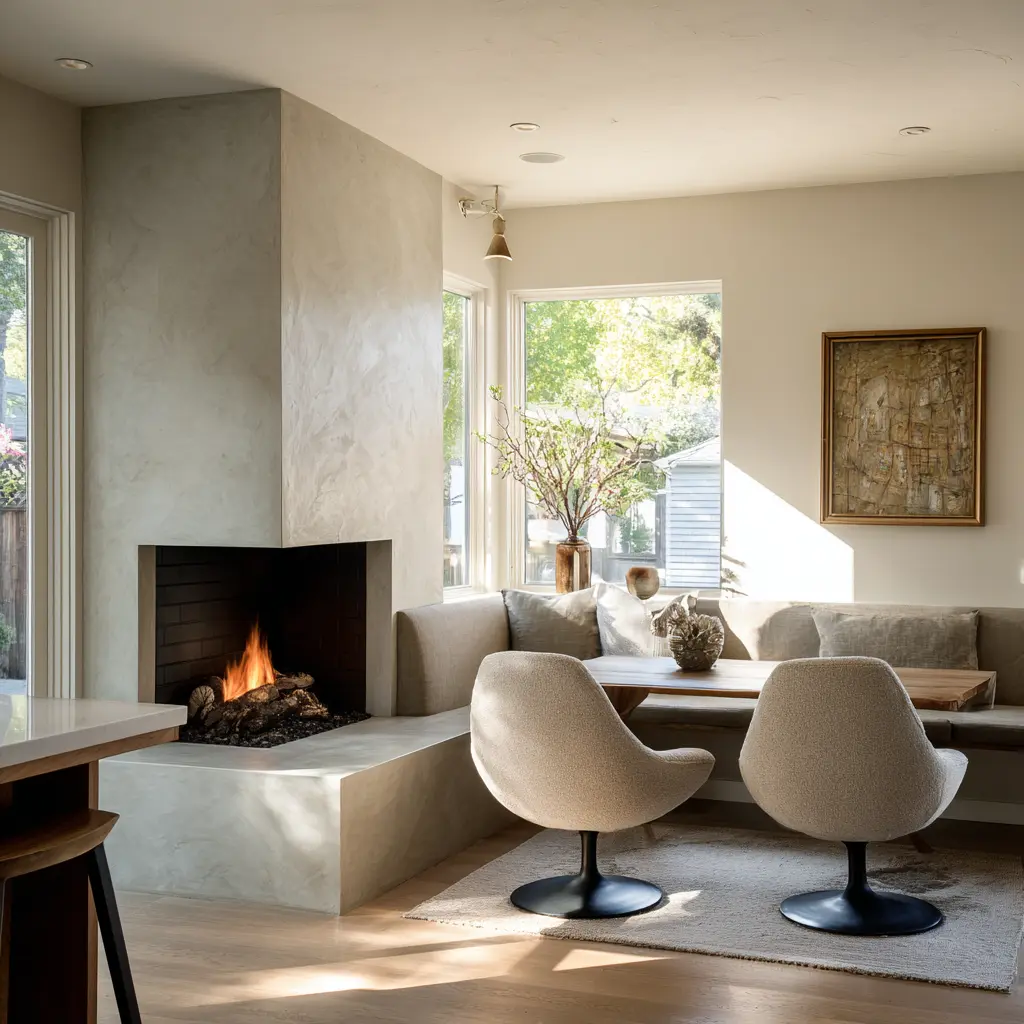
A useful pattern: one compressed edge, one open edge, and one strong center. That simple structure gives the room both shelter and relief.
One side holds the room in. Another side lets the room breathe.
The center ties the whole composition together. This is why the pairing of fire and window is so effective.
A fireplace grounds the room and pulls attention inward. A window, especially when paired with a bench or daylight seat, releases pressure and draws the eye outward.
Together, these two forces create emotional balance: warmth and brightness, inward focus and outward glance, shelter and openness. That dual-anchor system reduces the risk that a room feels too closed, too centered on one wall, or too dependent on styling to stay interesting.
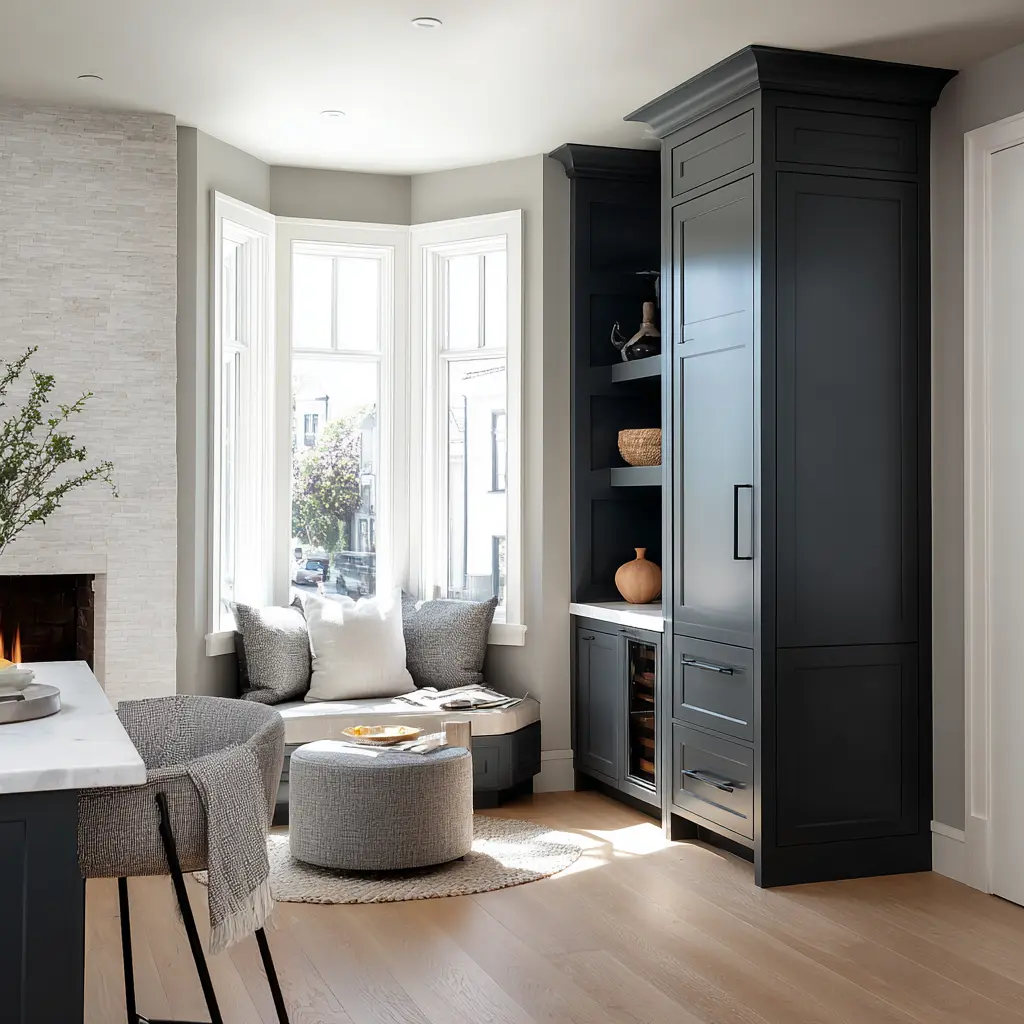
Making open layouts feel gathered
In larger homes, the keeping room faces a different problem. The room may not feel too small.
It may feel too diluted. In a broad open plan, a fireside zone can fade into the larger living, dining, and kitchen field unless something pulls it back into a smaller social radius.
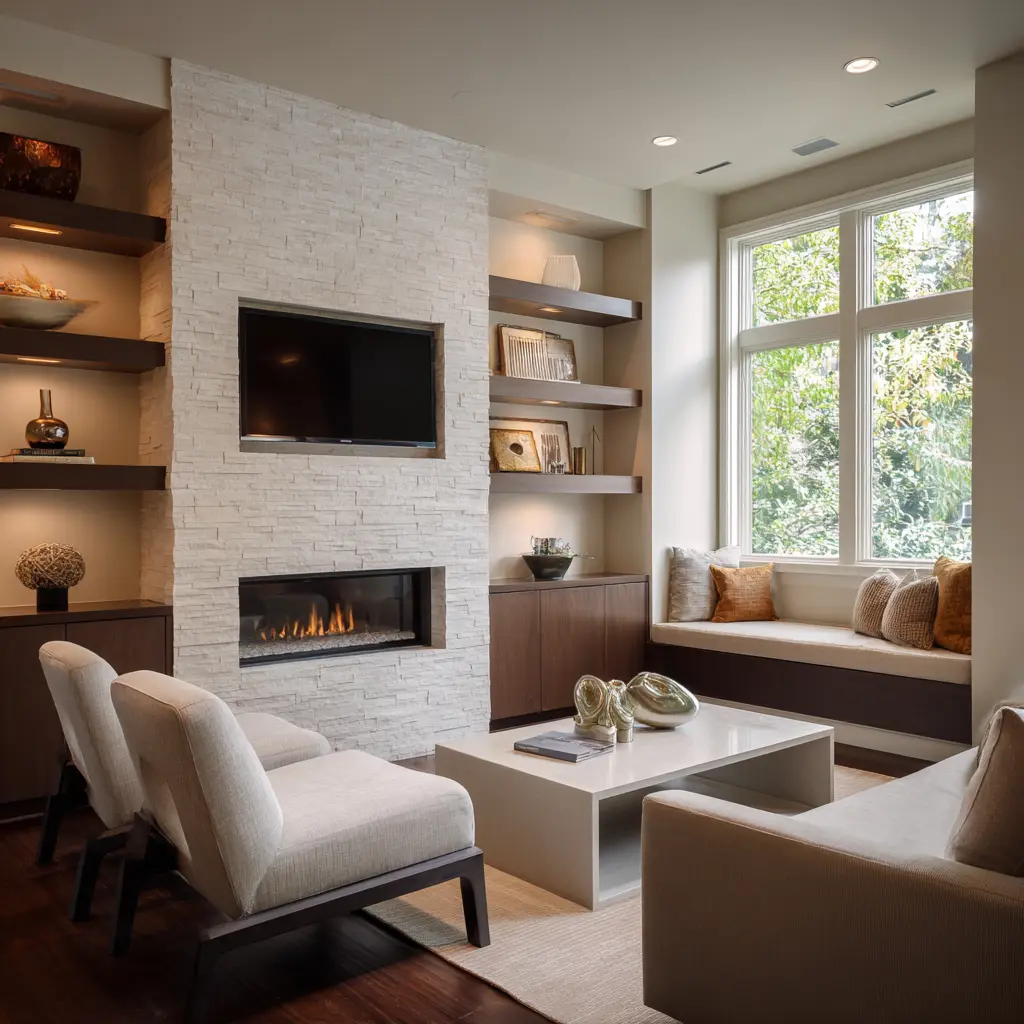
Open-plan keeping rooms can solve this by using density contrast rather than hard separation. The architecture can remain broad, but the seating cluster becomes tighter.
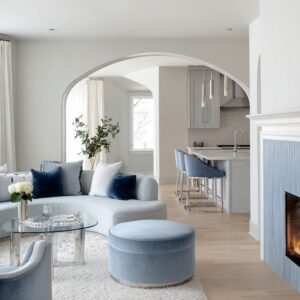
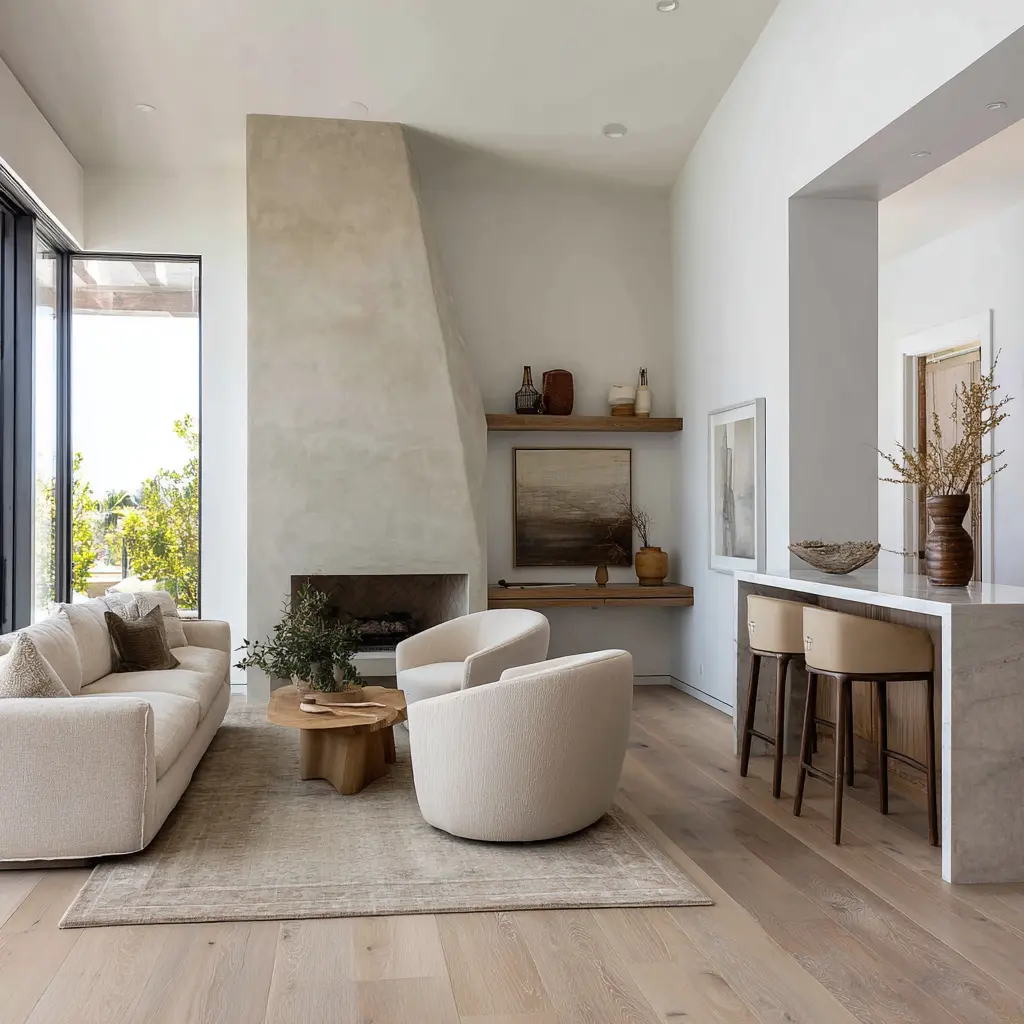
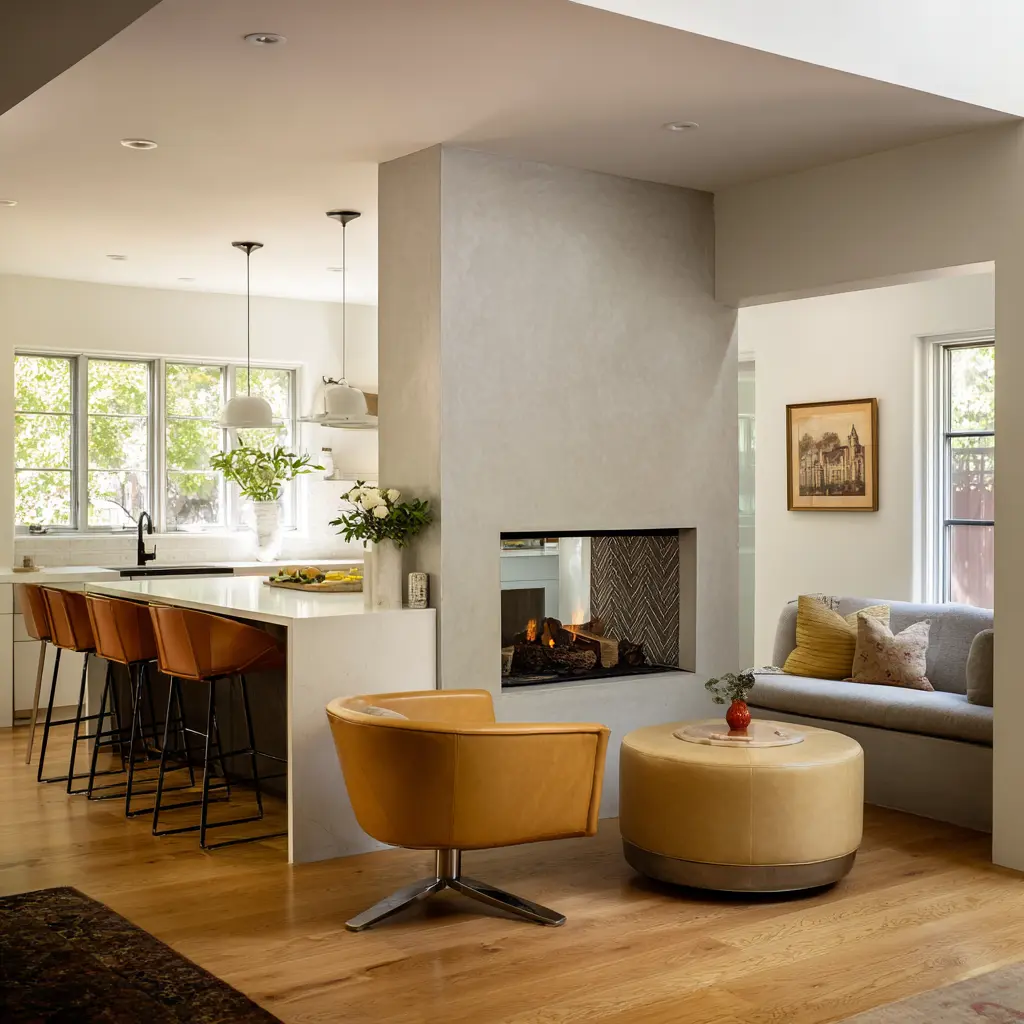
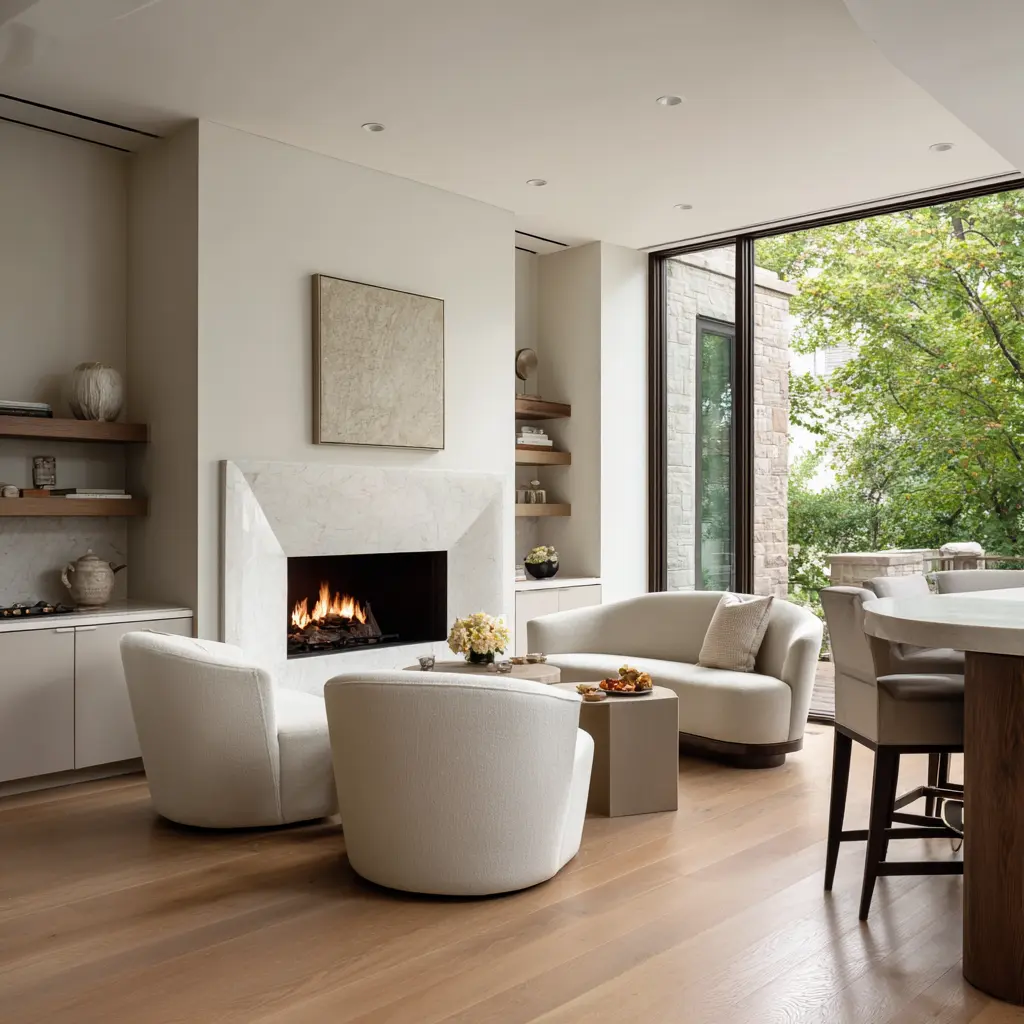
A freestanding or semi-freestanding fireplace volume often works well here because it acts as a hinge inside the plan. It gives the open room a domestic center without cutting off movement.
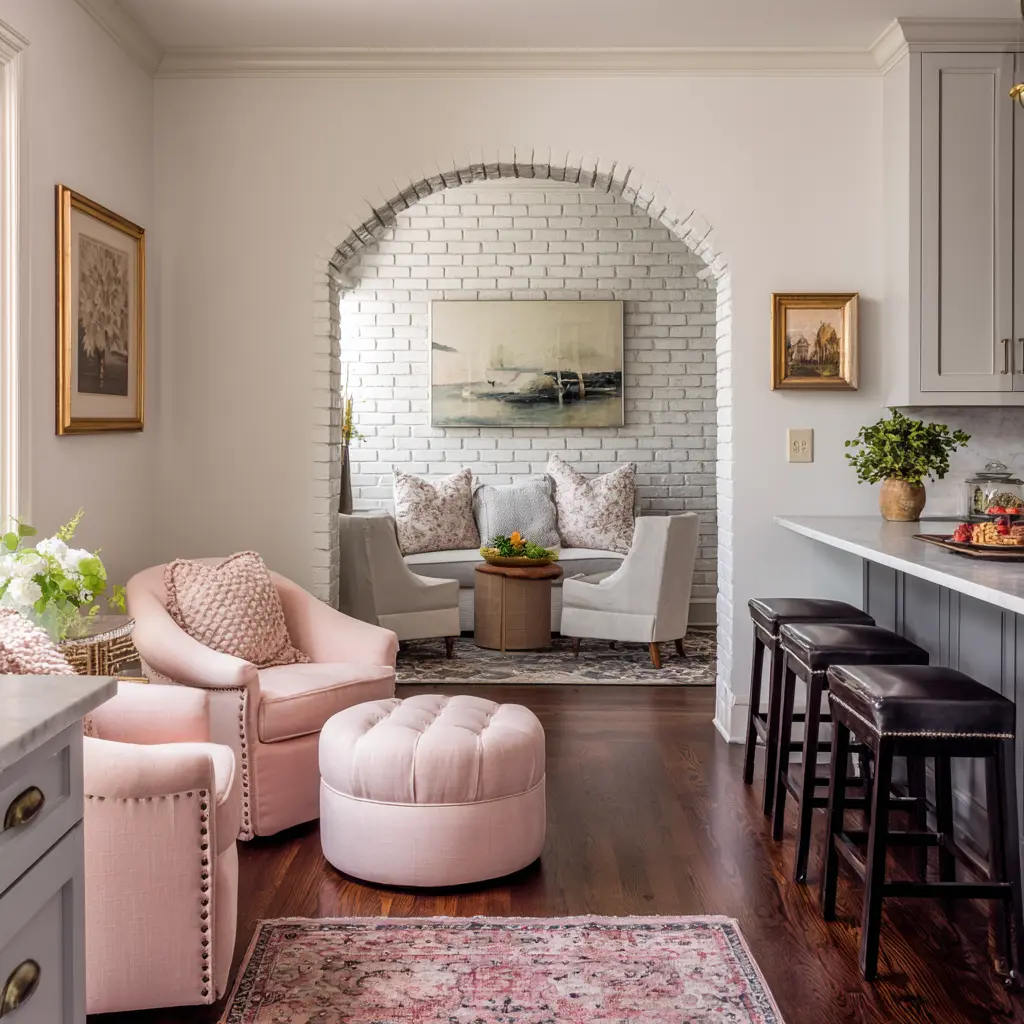
Furniture shape matters too. Curved lounge chairs, rounded ottomans, and lower, closer seating help pull people inward.
In a large room, this creates a more intimate social pocket without building walls. Scale contrast is equally important.
A large architectural mass, such as a plaster hearth block or tall stone wall, paired with a smaller, denser seating group creates focus through proportion. The room may be expansive, but the actual social field stays close.
This is one of the key lessons for larger keeping rooms: intimacy does not appear automatically just because there is a fireplace. In a broad room, closeness must be produced through a stronger hearth presence, a tighter seating radius, and careful control of visual weight.
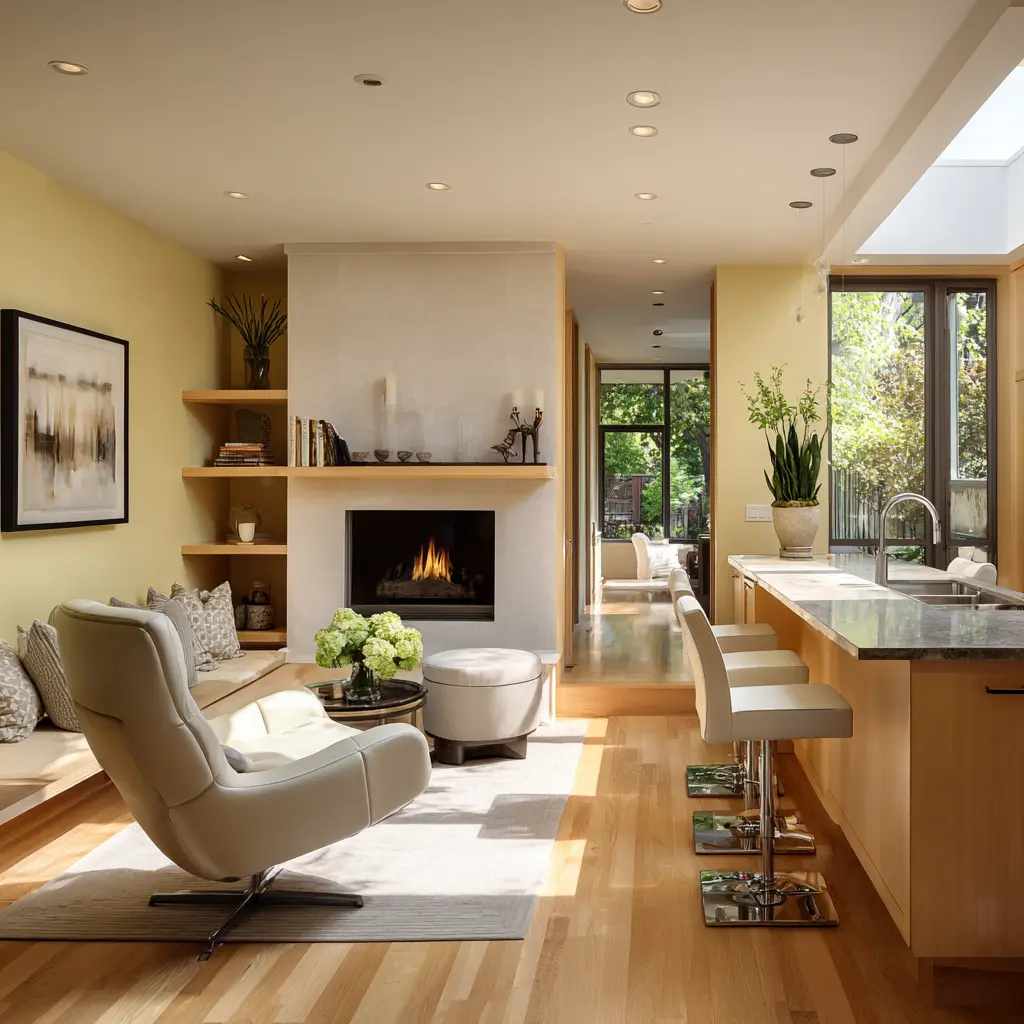
Keeping the kitchen connected without letting it take over
Since the keeping room often sits beside the kitchen, the relationship between the two spaces is central. A strong keeping room does not cut itself off from the kitchen.
It stays socially linked while becoming visually self-stabilized. That distinction matters.
Full separation would remove much of the room’s daily usefulness. The point is not to isolate the keeping room from cooking and household activity.
The point is to keep the room within that orbit while preventing it from being swallowed by it.
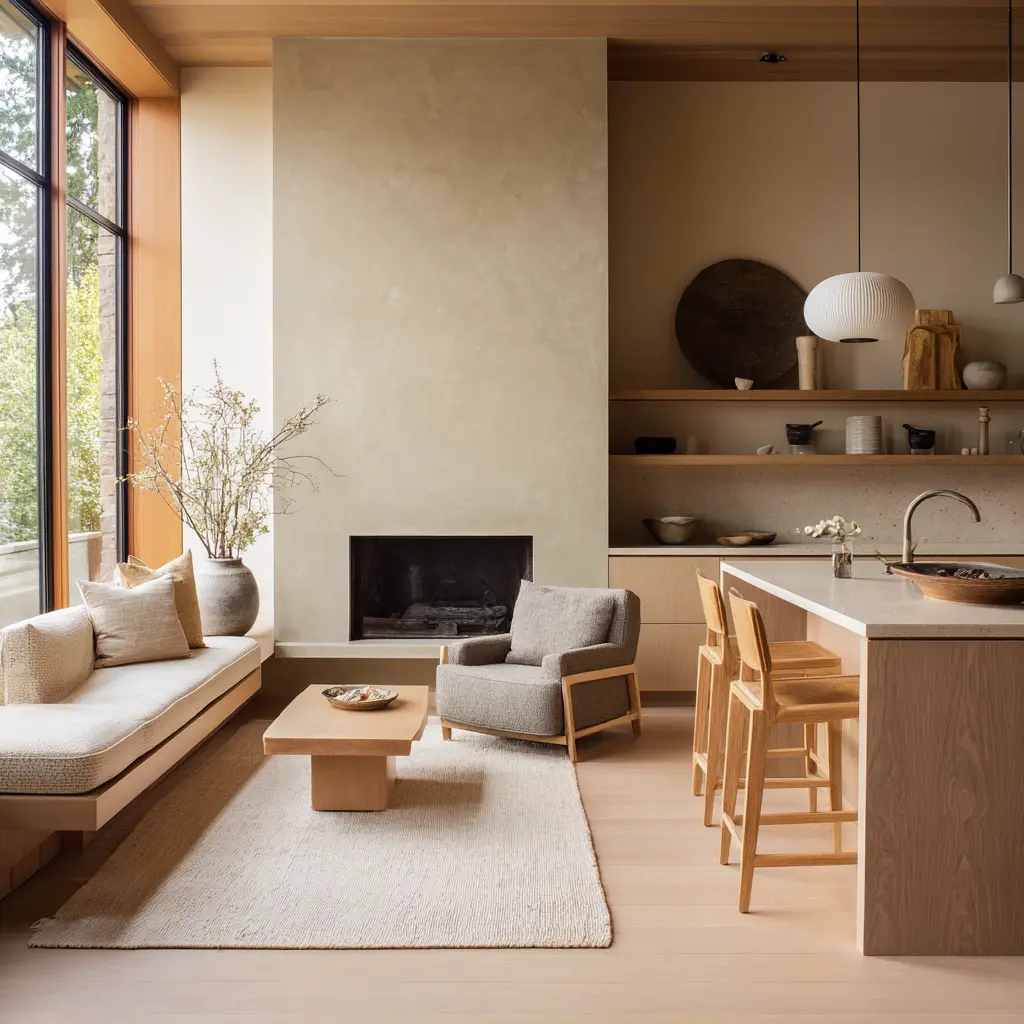
The better layouts do this in a few recurring ways. The fireplace often acts as a divider or hinge between the lounge side and the kitchen side.
Materials stay related, especially through warm woods, soft plaster tones, and similar upholstery values, so the two zones feel part of one house. At the same time, the keeping room is given its own seating posture.
Island stools serve a higher, more active perch. The keeping room offers a lower, softer, more settled way to sit.
That contrast lets both zones support the same conversation while still feeling different in purpose.
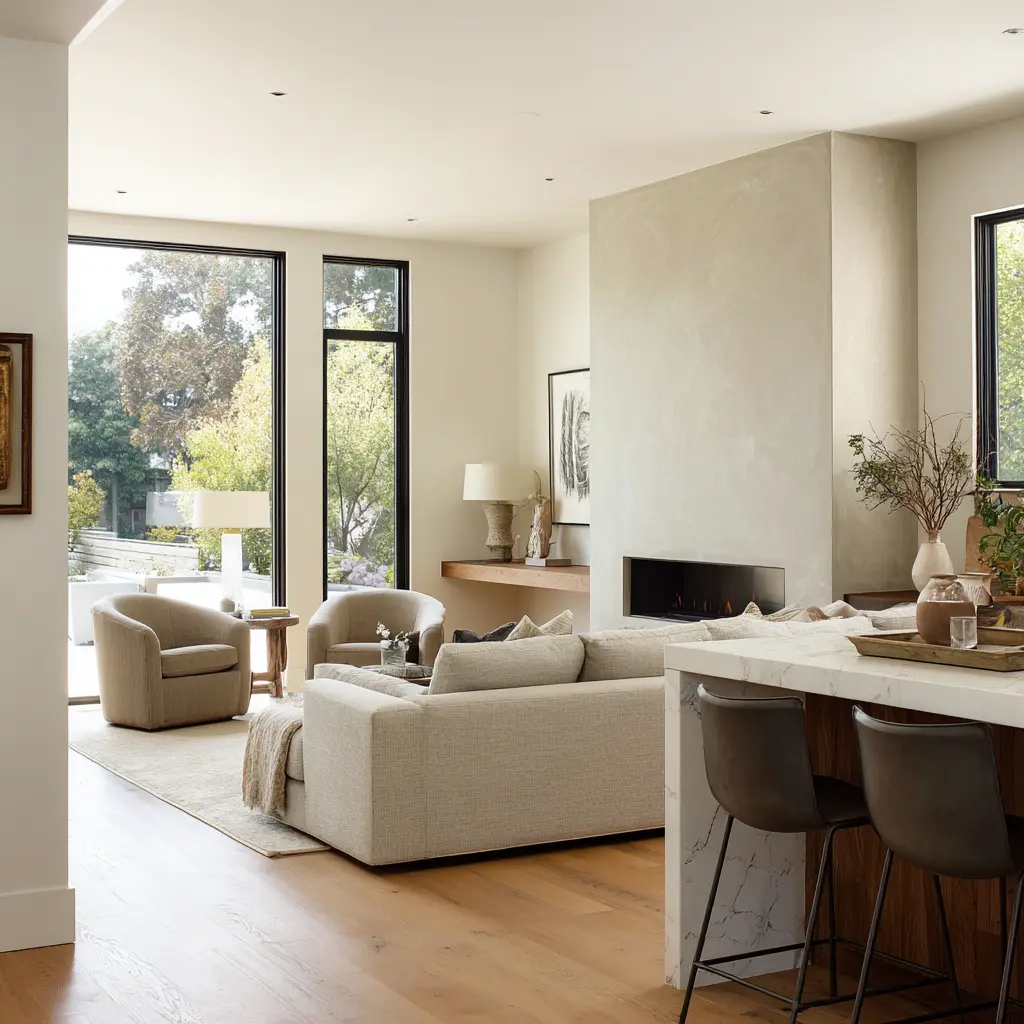
This is why bar stools beside lounge seating can work so well. They create layered social heights.
One person can sit at the island, another in a chair by the fire, and both remain part of the same domestic moment. The keeping room becomes a place for partial participation, not full removal.
Why pale rooms do not have to feel flat
Many keeping rooms rely on pale neutrals and restrained decor. That approach suits the room’s role, but it also creates a real risk.
Without enough variation, the room can lose depth and feel generic. Interior designs can avoid this by shifting contrast away from color and into other channels.
Stone is set against fabric. Smooth plaster is paired with wood grain.
Dark trim or firebox interiors punctuate pale upholstery. Rounded forms sit beside straighter planes.
Open shelves balance solid masses. Lit niches warm matte walls.
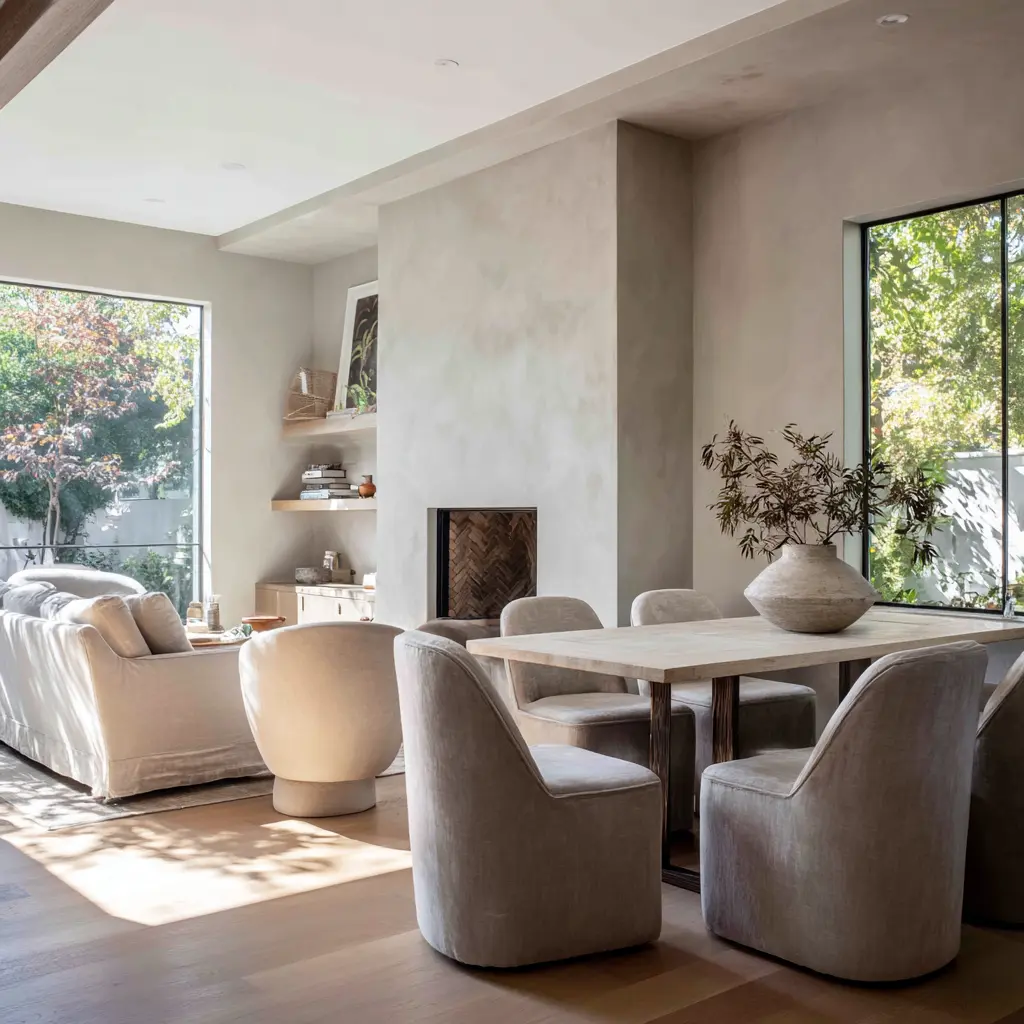
This reveals one of the hidden rules of keeping room design: emotional warmth often comes from contrast in form and surface, not from stronger hue. A close tonal palette can still feel rich if shape and texture are carefully paced.
That pacing is important. Stylish keeping rooms do not pile texture everywhere at once.
They distribute it. The anchor wall may hold the stone or plaster interest.
Seating introduces softness through fabric. Wood connects the lounge to the kitchen and ties horizontal planes together.
A woven detail may appear in one stool, one pendant, or one accent chair. Pattern is often kept low in the room, within the rug or a few pillows, so it adds depth without filling the walls with noise.
Small dark notes also matter more than they first appear. Window frames, stool legs, chair bases, side tables, shelf lines, and the dark fire opening itself often do a surprising amount of compositional work.
These tiny anchors sharpen pale spaces and keep them from drifting.
The behaviors a keeping room supports
A keeping room is useful because it supports several different modes of living within one small zone. This is where its design logic becomes especially interesting.
- It supports perch behavior: short sits, quick chats, waiting while someone cooks, a brief stop before moving on. This often comes from edge benches, small chairs near the hearth, or close proximity to the island.
- It supports linger behavior: coffee, reading, slower conversation, a longer sit in daylight. This usually depends on deeper chairs, a chaise, a soft ottoman, or a daybed-like bench near a window.
- It supports side-by-side companionship, which feels less formal than face-to-face seating. Banquettes, L-shaped benches, and long window seats make this easy.
- It supports soft co-presence. Two people can do different things while still sharing the same part of the house. One can sit at the island, another by the fire. One can settle into a window seat while another uses a swivel chair turned toward the kitchen.
- It also supports solitary retreat without isolation. This may be the most subtle role of all. A person can be present in the household but slightly withdrawn from its active center. Alcoves, window niches, side benches, and tucked sofa positions beside a central divider all make that possible.
This is one of the deepest insights: the keeping room is highly effective at supporting partial participation. It is not a full gathering room, and it is not a private room.
It sits in the middle, and that middle condition is exactly what makes it so useful.
Matching the room type to the plan
Not every keeping room should be built the same way. The right form depends on the footprint and the role it needs to play.
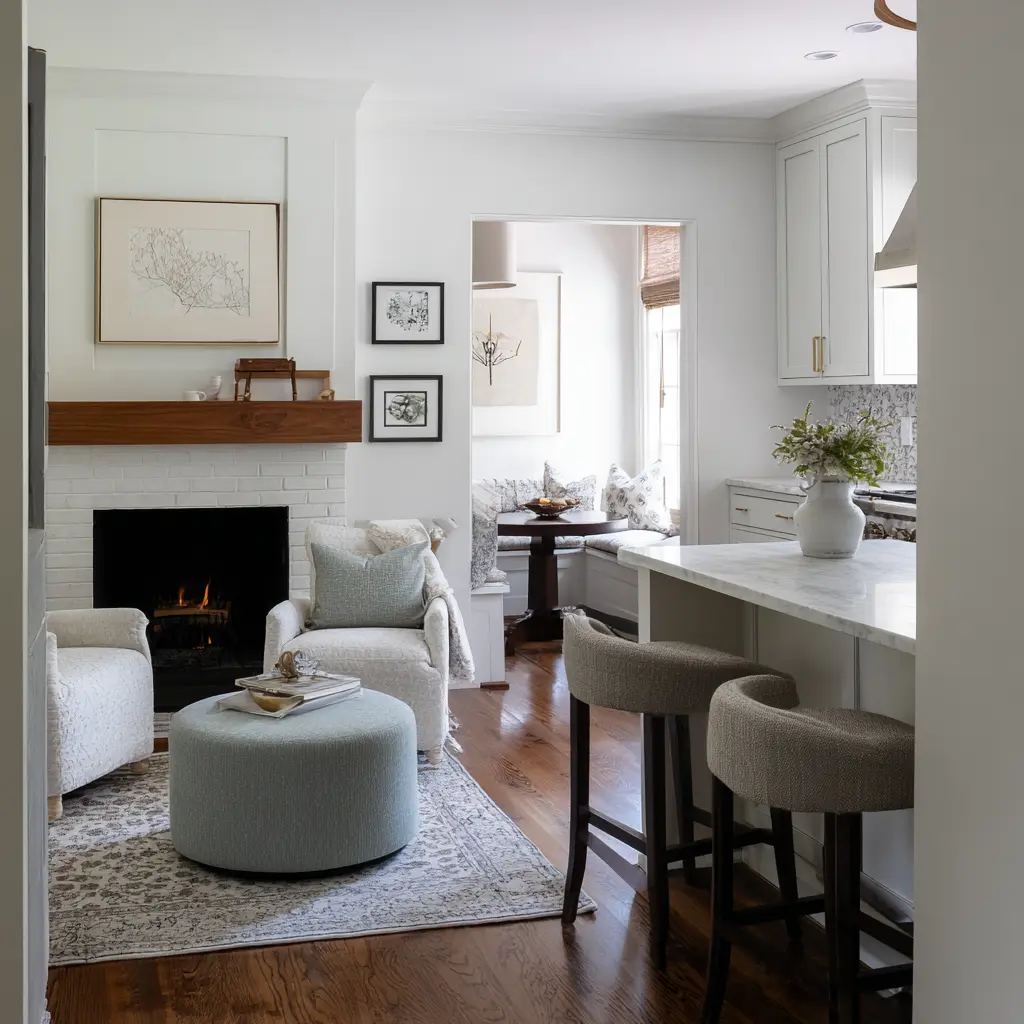
In a medium layout, a frontal-hearth compact lounge works well because it gives a familiar arrangement with a clear center. It usually needs a second softener such as a window bench, shelving, or daylight so the hearth does not dominate too heavily.
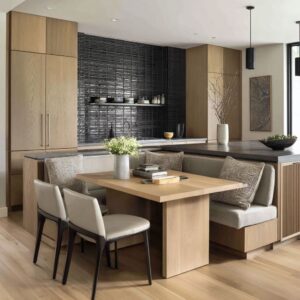
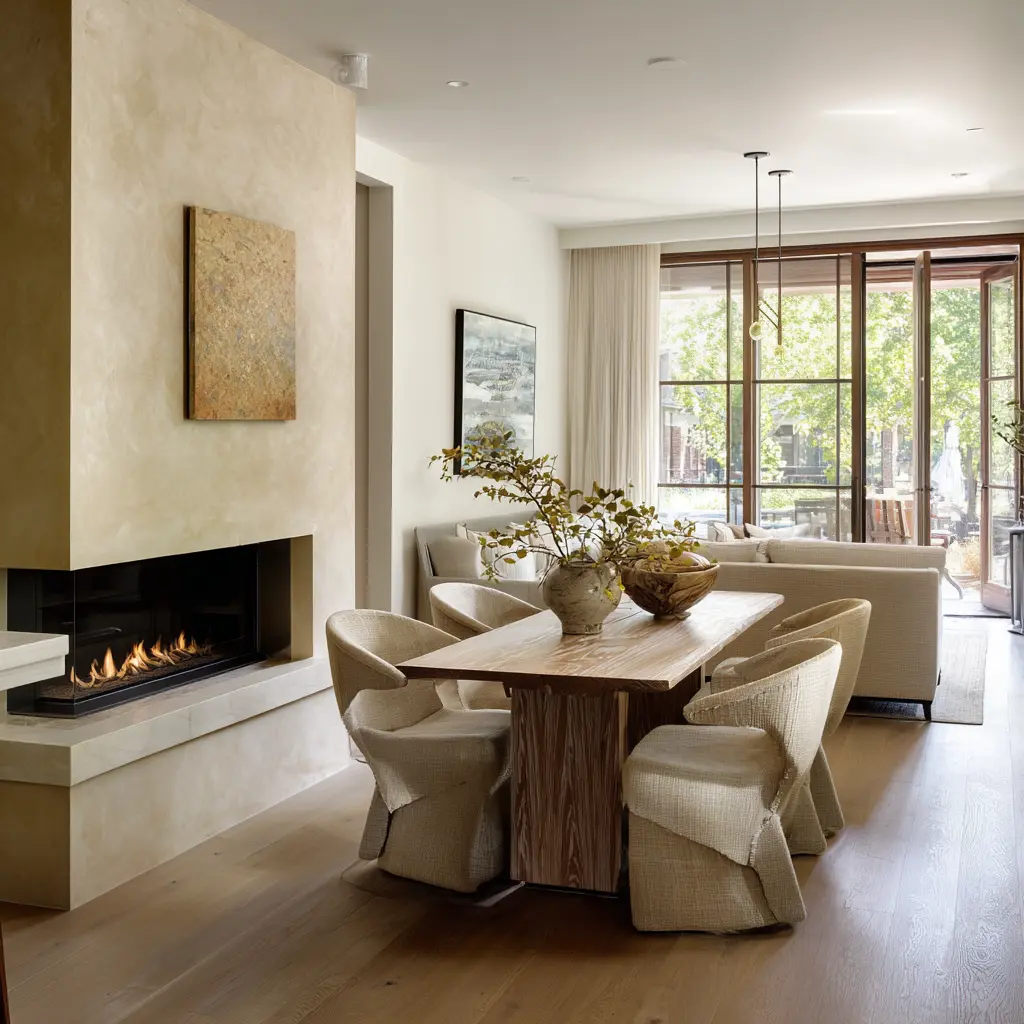
In tighter homes where every square meter must work harder, a hybrid dine-lounge layout can be very effective. A central or near-central table, softened by bench seating and less formal chairs, allows the room to support meals, coffee, and sitting without becoming a stiff breakfast nook.
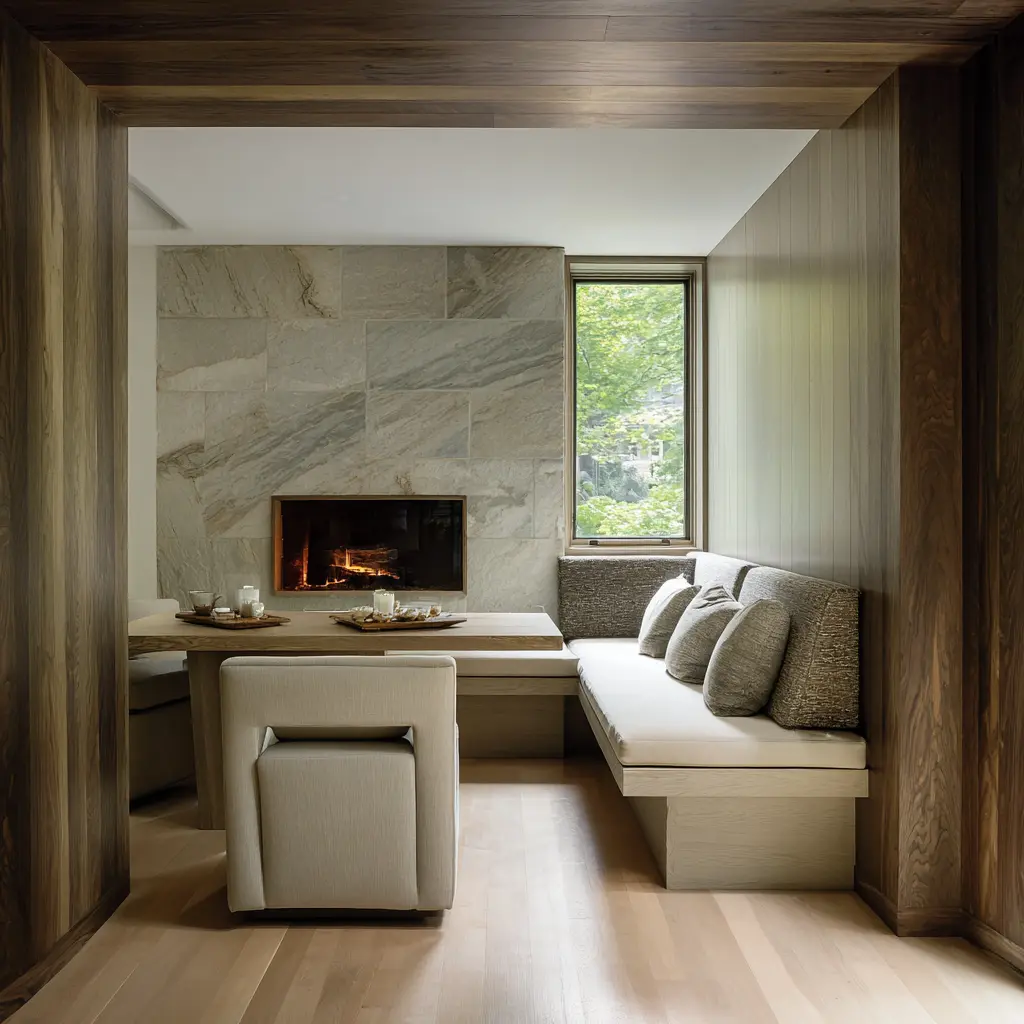
In smaller rooms that need stronger identity, a cocooned niche or alcove often works beautifully. A little enclosure can add a sense of refuge quickly, especially when balanced by one controlled opening or a good window.
In larger modern homes, a sculptural open-plan hinge is often the right move. A central hearth mass, low soft seating, and careful clustering can form a domestic center inside a much broader space.
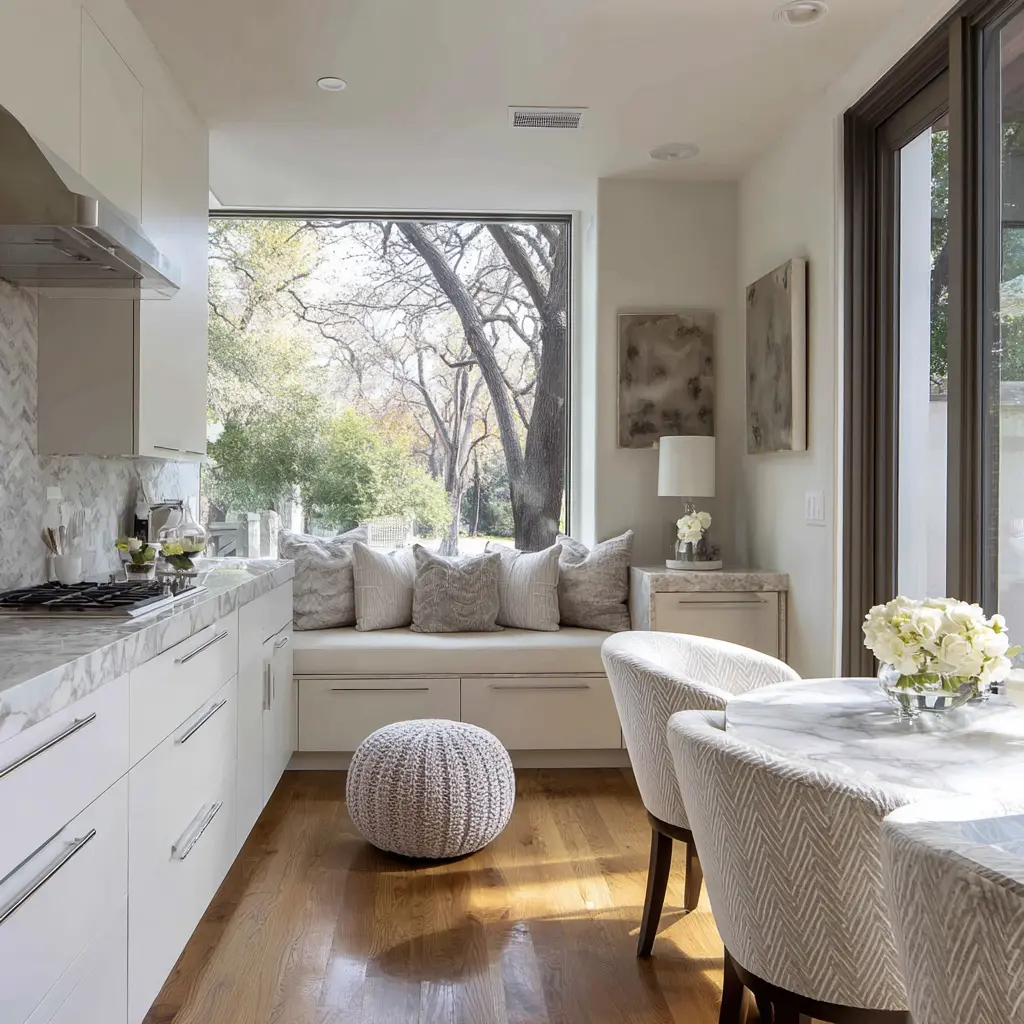
In narrow plans beside a kitchen run, a linear bench on one side and an island on the other can work very well. The key is to widen the composition visually with a long mantel, shelves, or a soft central object so the room does not feel like a corridor.
And in larger entertaining layouts, the keeping room needs higher gravity. Heavier materials, a stronger hearth wall, and a tightly scaled seating cluster can create real closeness inside a much bigger social field.
Common mistakes that weaken the room
What tends to go wrong. Too much movable furniture can make the room feel like a squeezed living room.
No architectural anchor can leave it feeling temporary. Strong openness with no counterweight can erase the room’s identity, especially in pale glass-heavy homes.
Too much decor in a small footprint can turn the space into a display corner rather than a lived-in one. A formal dining posture in a compact keeping room can make the room feel stiff and remove its softer in-between character.
And one-note seating limits daily usefulness because the room supports only one way of being in it. In most cases, the fix is not more.
The fix is better structure.
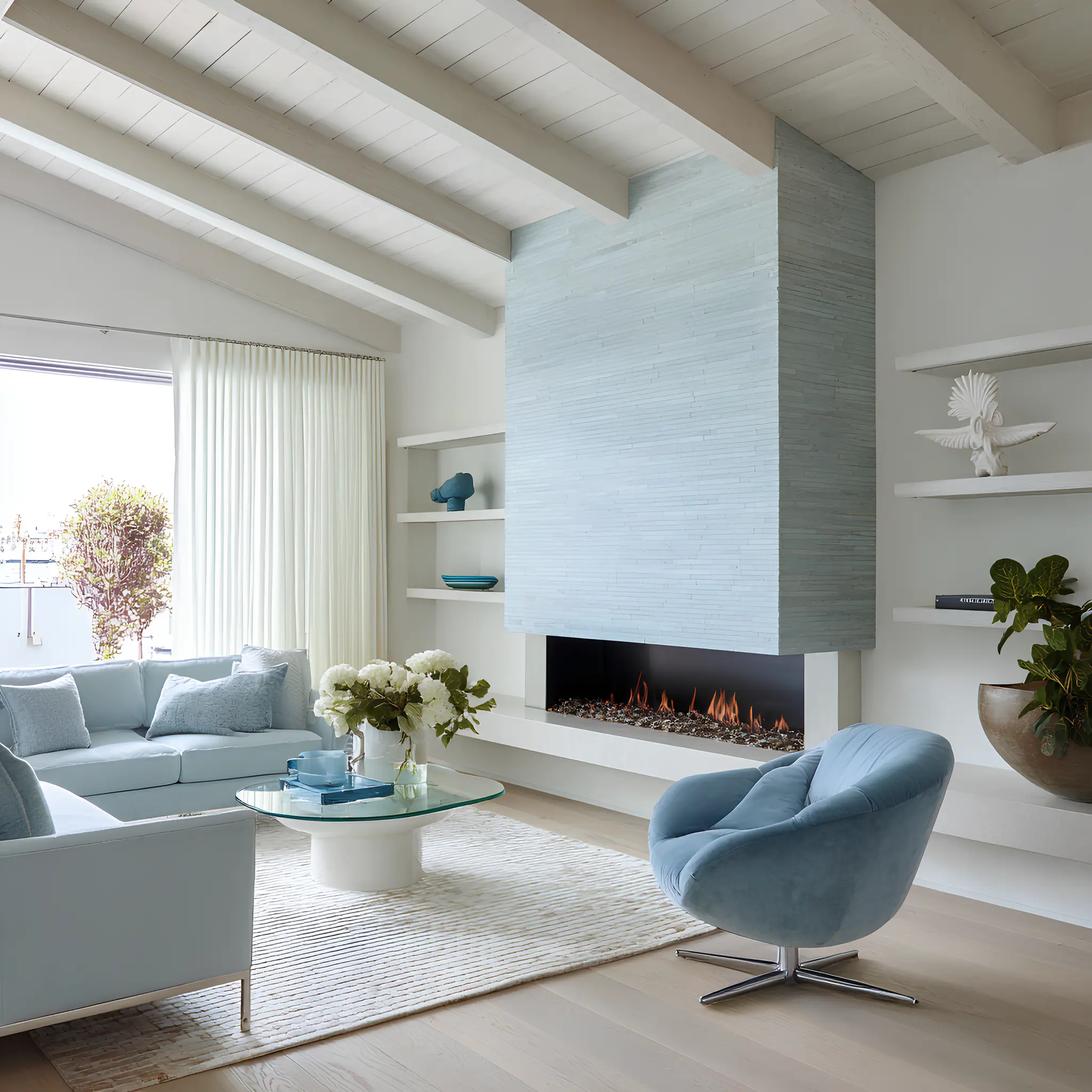
A practical way to shape a keeping room that works
A useful way to approach this room is to start with the bones, not the accessories. Begin with one clear anchor mass.
Add at least one perimeter seat if the footprint is tight. Keep the center soft and flexible.
Let the fireplace organize flow, not only mood. Pair the hearth with another soft anchor such as a window seat, shelving, or a side daylight spot.
Keep the kitchen related in material, but give the keeping room its own sitting posture. Use a close tonal family, then build depth through surface, line, and form.
Add only a few dark notes, but place them carefully. Offer at least two social distances, such as a shared cluster and a side perch.
And keep the decor edited so the room’s shape and mass can do the main work.
The deeper value of the keeping room
A well-designed keeping room is one of the most efficient spaces in a home because it compresses several domestic functions into one low-stress zone. It can support warmth, conversation, waiting, reading, casual meals, spillover seating, visual comfort, and soft supervision of kitchen activity, all within a relatively small footprint.
That is why the room still matters. It is not defined by size.
It is defined by how skillfully it handles tension: between activity and rest, between openness and shelter, between structure and softness. The keeping rooms that work well are anchored without feeling heavy, useful without feeling work-like, social without pressure, linked to the kitchen without disappearing into it, intimate without feeling sealed off, and restrained without falling flat.
That balance is what gives the keeping room its lasting appeal. It is a small room with a very specific job, and when the design is handled well, it becomes one of the most human parts of the house.