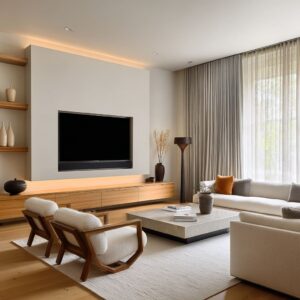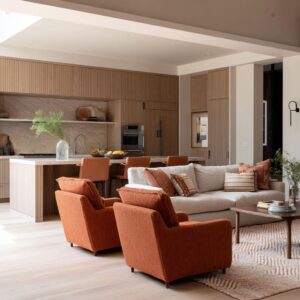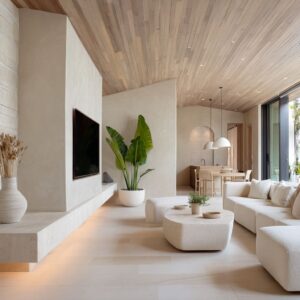
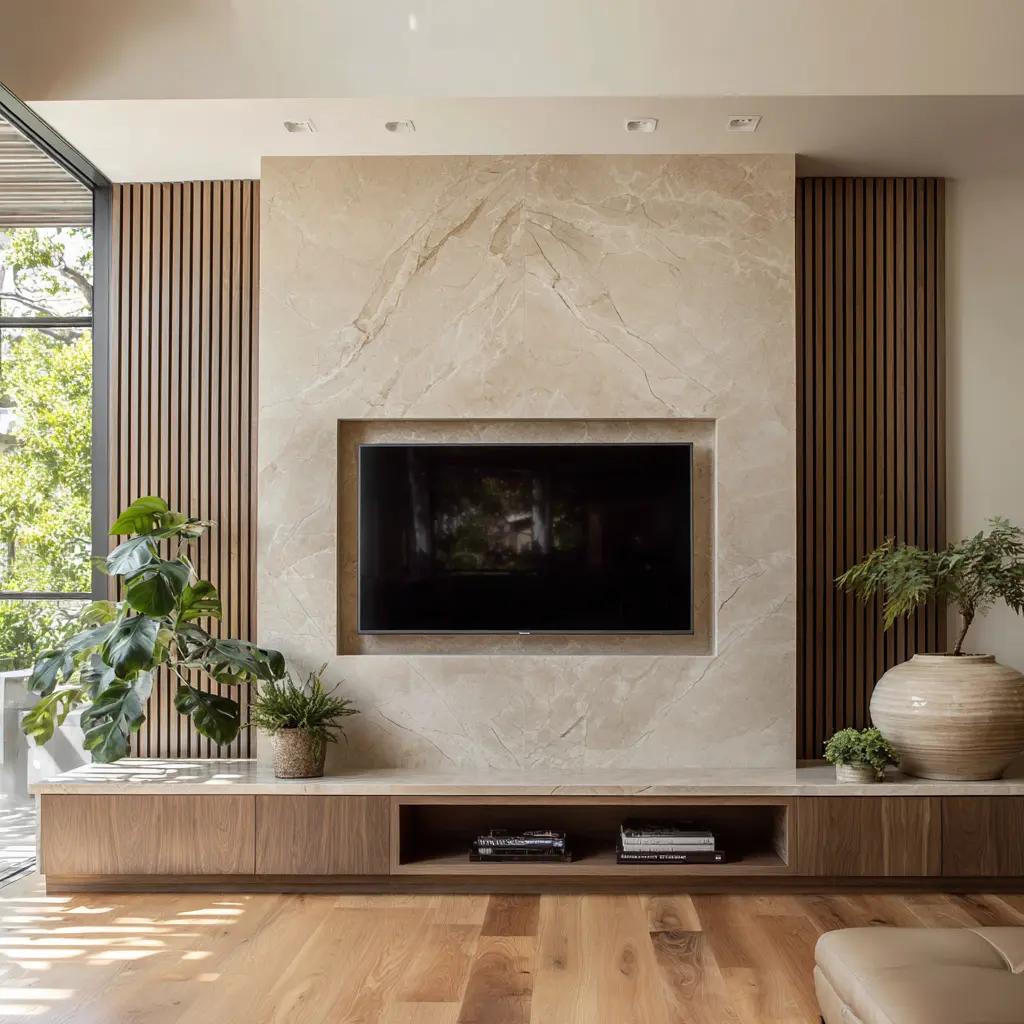
A well-designed TV wall can change the whole feel of a living room. Stylish modern built in tv wall ideas create a setting around the TV that feels grounded, warm, and visually settled, so the black rectangle does not interrupt the room.
Instead, the screen sits inside a larger composition shaped by depth, texture, proportion, and a clear sense of order.
That is what gives fresh built-in TV wall design its polished modern look. A thoughtful recess, a broad ledge, a fluted surface, a pale slab, or a softly framed niche can make the wall feel complete and intentional from the start.
He, we will look at the design moves that help a TV wall feel refined, current, and fully connected to the rest of the space, while still staying practical for everyday living.
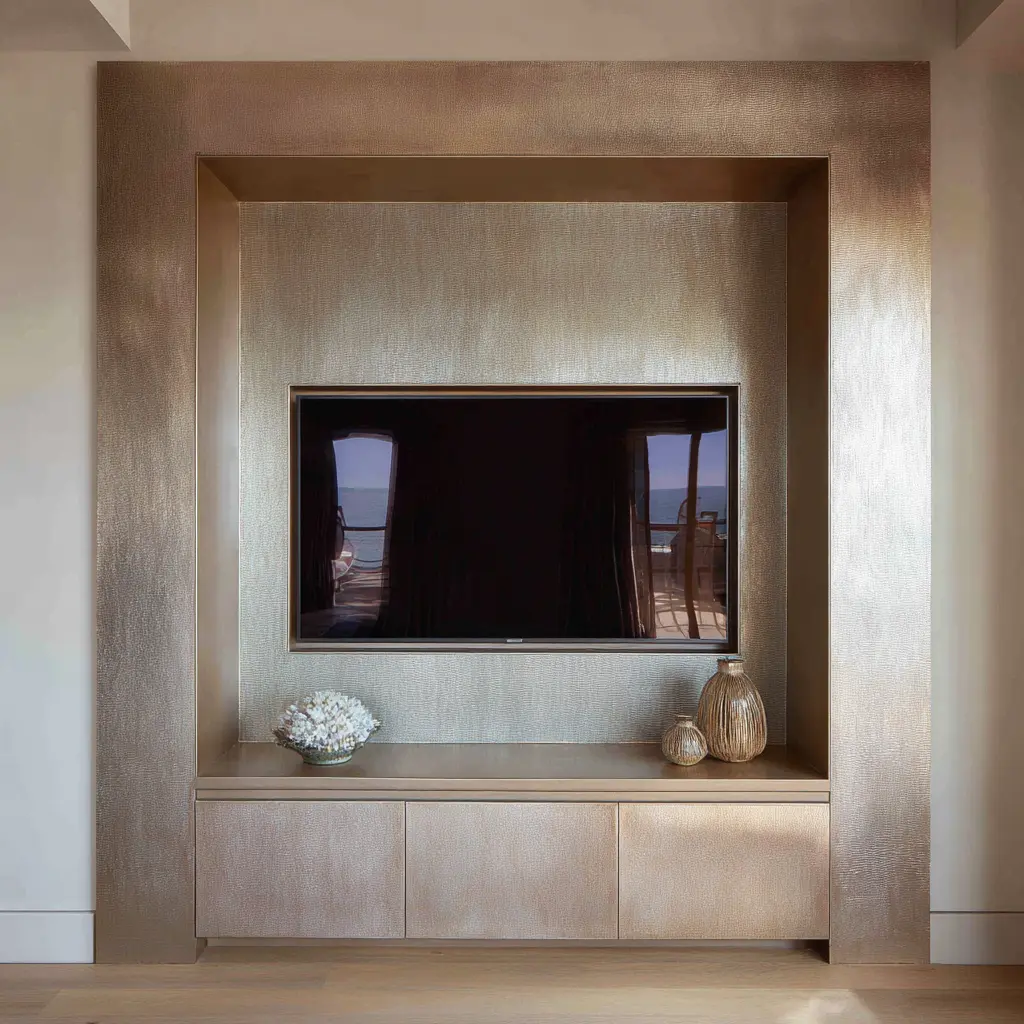
Why modern built-in TV walls feel so refined
First, modern built-in TV wall designs use a restricted palette. Instead of strong color contrast, the walls should stay inside warm, compressed ranges such as cream, beige, oak, taupe, bronze-beige, soft charcoal, and pale stone.
That narrow color spread makes the whole composition feel calmer and more intentional.
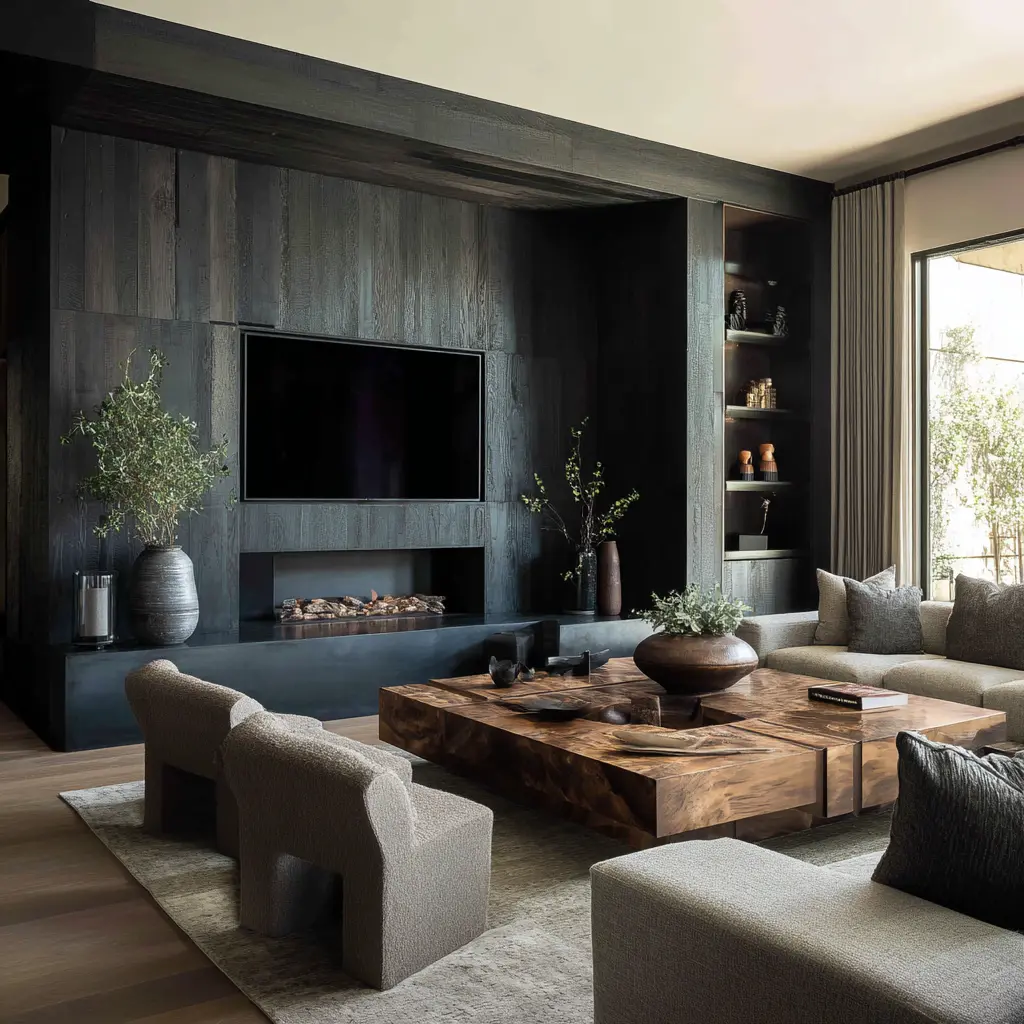
Second, it should use a strong horizontal base below the TV. This appears as a ledge, floating console, cabinet run, plinth, shelf, or long countertop.
That lower line matters far more than many people realize. It distributes visual weight, gives the eye a stable horizon, and keeps the screen from feeling stranded in the middle of the wall.
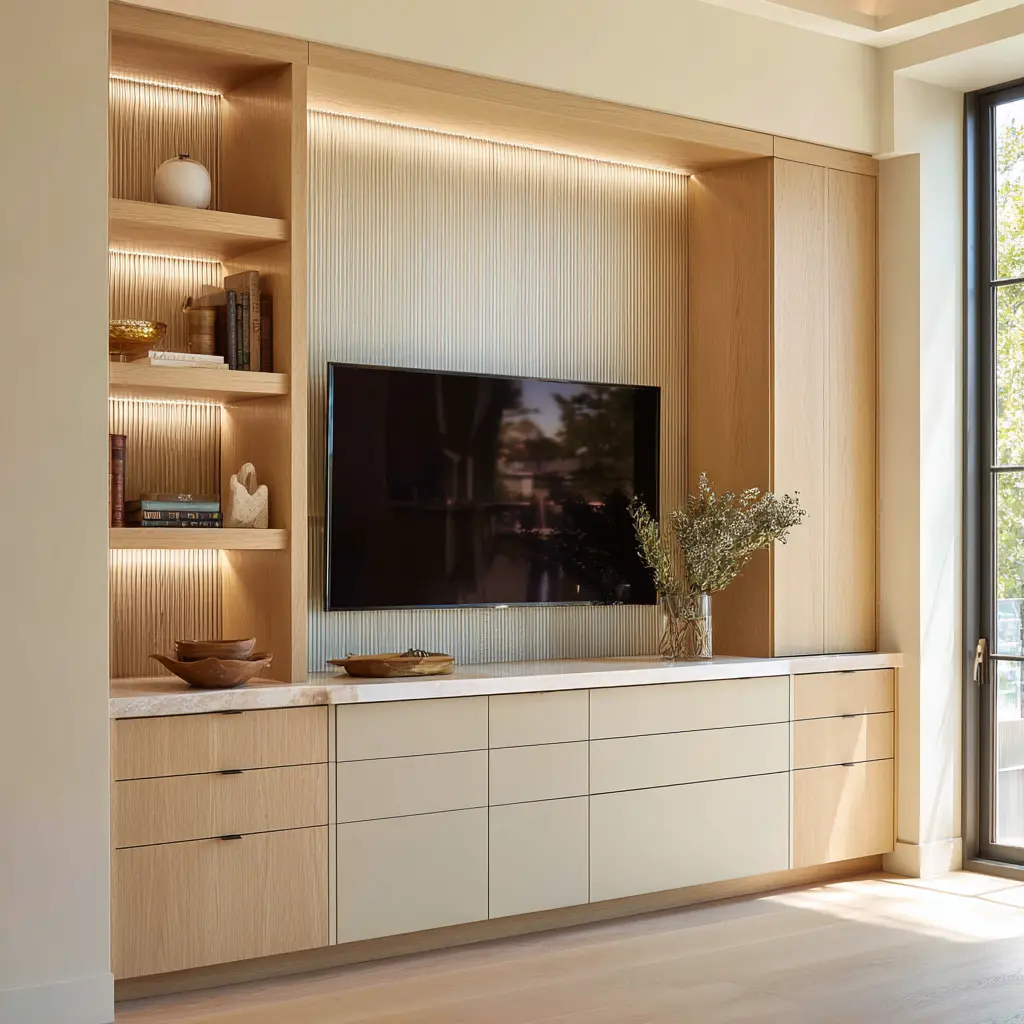
Third, modern designs rely on restraint in styling. There should be visible empty space.
Shelves are lightly filled. Objects are spaced apart.
Ledges are kept almost bare. That empty area is not wasted.
It is part of the composition. It lets the wall breathe, which is one of the main reasons these designs feel costly and controlled.
Taken together, these choices create a modern look through order, proportion, and material depth rather than through visual noise.
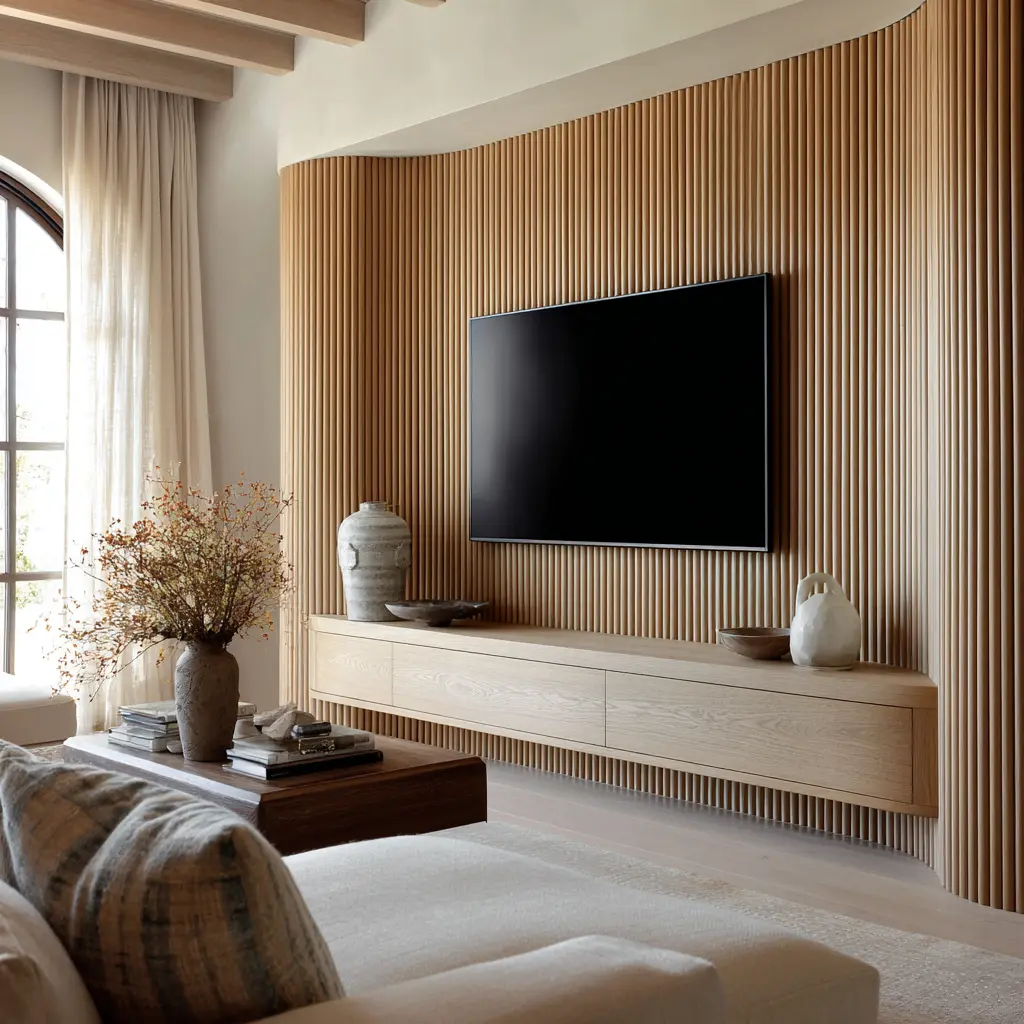
The six design moves that matter most
1) Give the TV a larger host field
This is the clearest rule in the entire study. A TV looks more integrated when it sits inside a field much larger than itself.
That larger field can be a wall of fluted wood, a pale stone slab, a framed cabinet opening, or a deep plaster recess. The visual message is simple: the screen belongs to something bigger.
If the TV is too close in size to its backing panel, the composition often feels cramped. If the wall around it has generous margins, the room feels calmer.
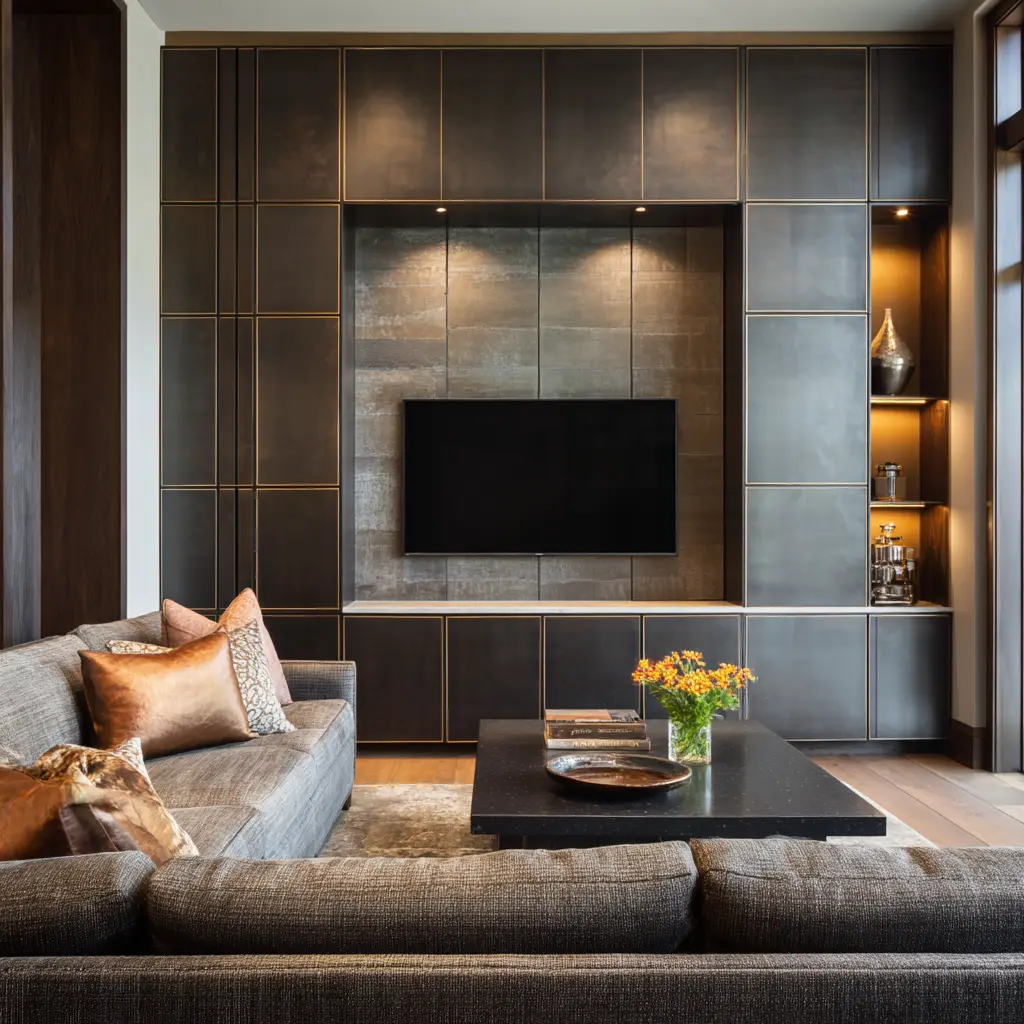
2) Use depth, not clutter, to create richness
One of the most useful built-in TV ideas is that the costly feel comes less from expensive materials alone and more from visible thickness and depth. Deep reveals, thick side returns, shadow gaps, portal-like frames, recessed chambers, and heavy ledges all make a wall feel more custom.
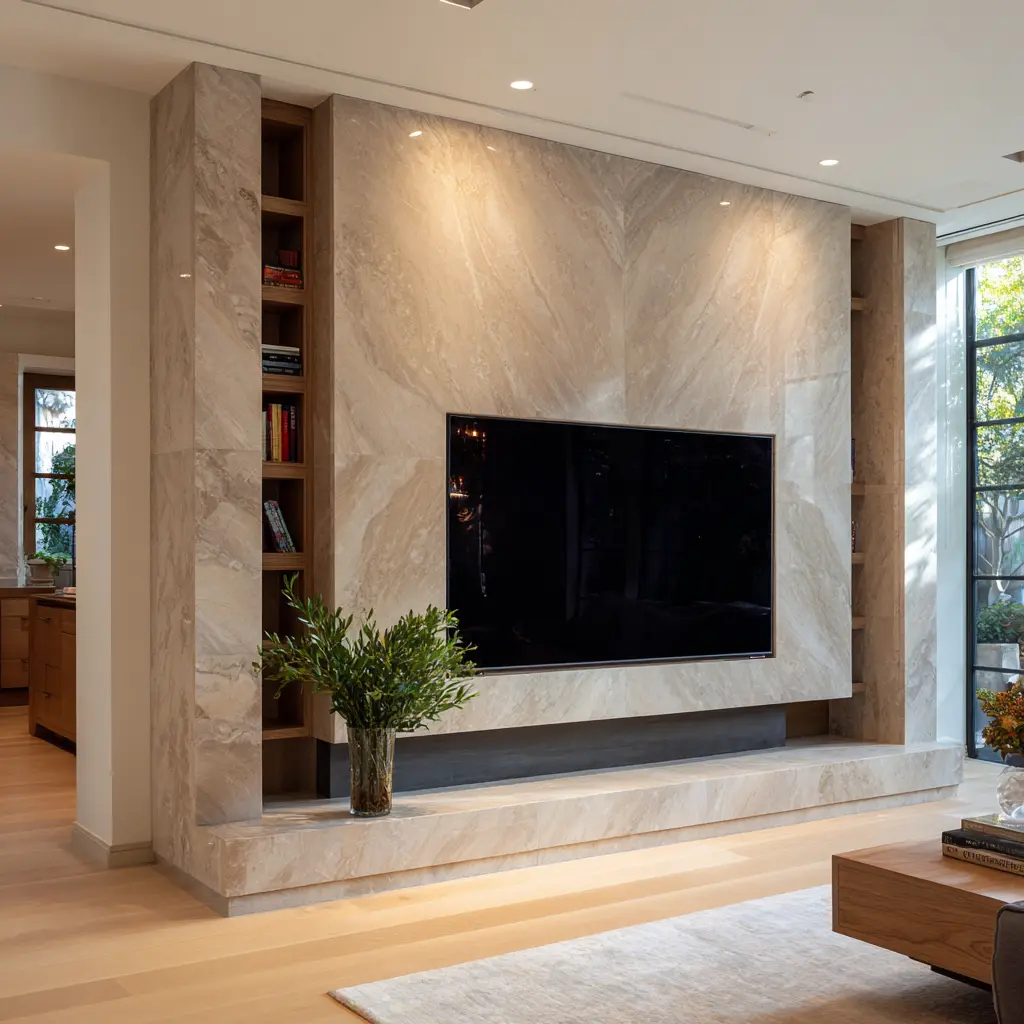
A simple warm plaster finish can look far more refined than a dramatic stone if the plaster wall has real depth and a well-shaped recess. A costly slab can look weaker if it is applied like a flat backdrop without clear edge conditions.
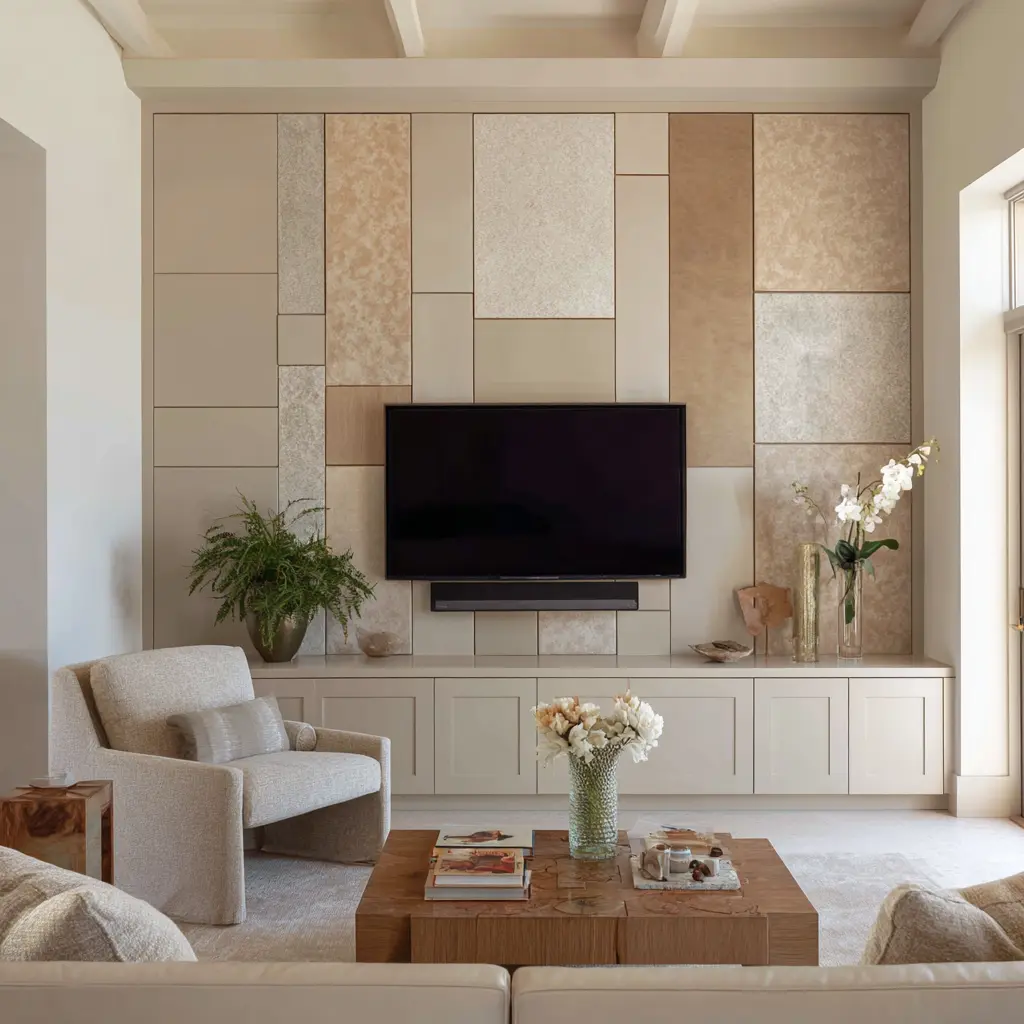
3) Let texture do the work instead of color
Since the palettes stay narrow, the visual richness comes from texture: ribbing, slats, wood grain, panel seams, plaster clouding, woven finishes, soft veining, sheen shifts, and shadow lines. This is one of the clearest patterns in the study.
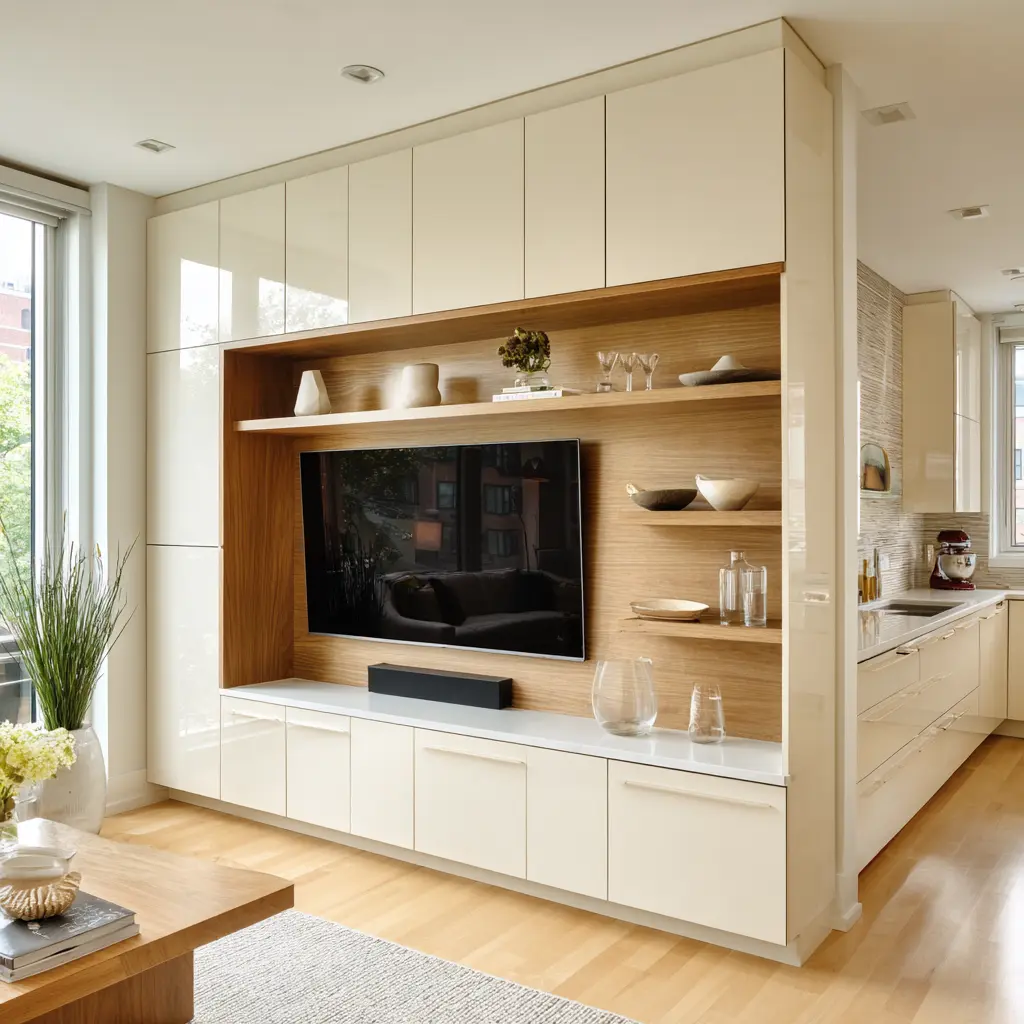
That means a fresh modern TV wall often benefits from one strong surface language rather than many colors. A full ribbed field in warm beige, a broad slab with soft mineral movement, or a textile-like wall wrap can carry the whole composition while keeping the room settled.
4) Balance vertical energy with a broad lower line
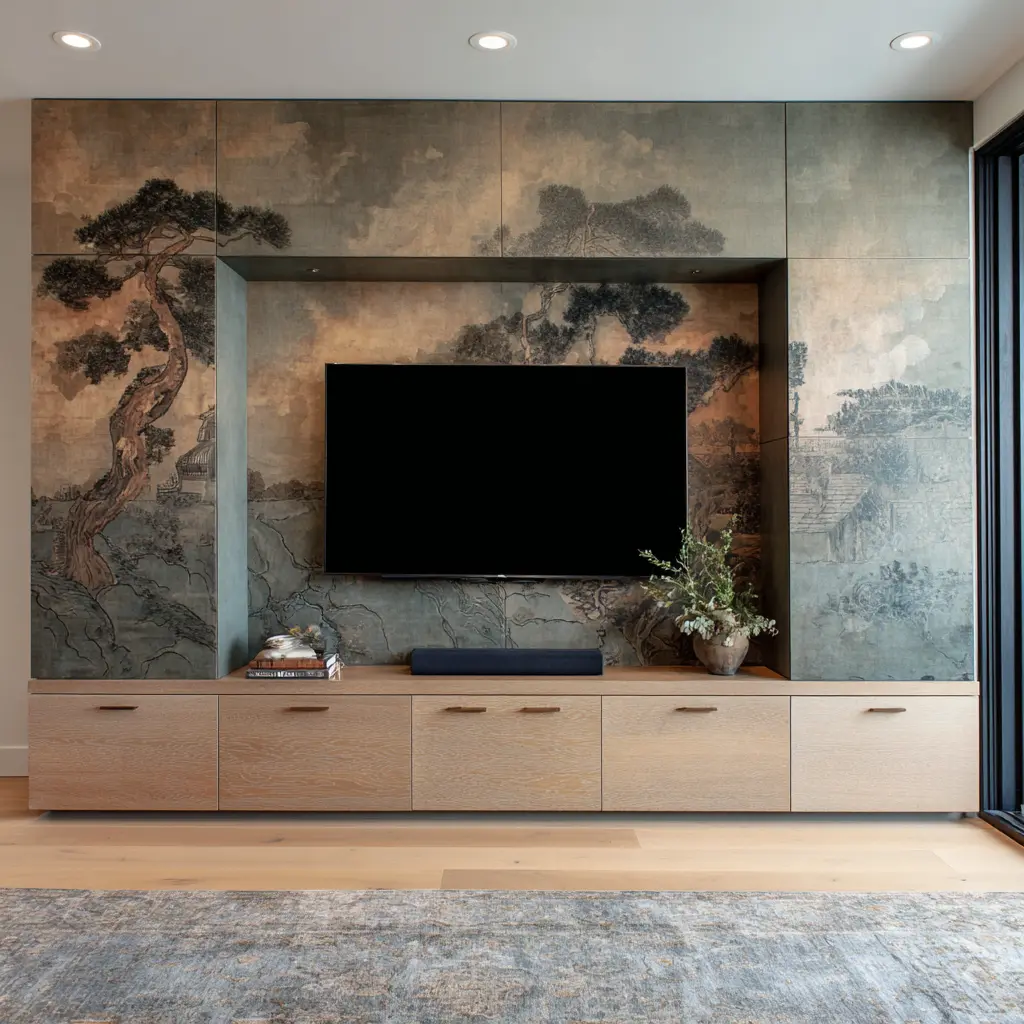
Many of the most striking walls use vertical flutes, tall slabs, side piers, or high framing. These vertical moves give stature and lift the eye.
But they should be balanced by a strong lower horizontal line: a long console, broad cabinet base, projecting plinth, or continuous ledge.
This two-direction balance is one of the hidden reasons modern TV walls feel stable. Without the lower base, a tall wall can feel tense or top-heavy.
Without the vertical force, the wall can feel too flat or ordinary. The best designs use both.
5) Keep the center disciplined and move detail to the edges
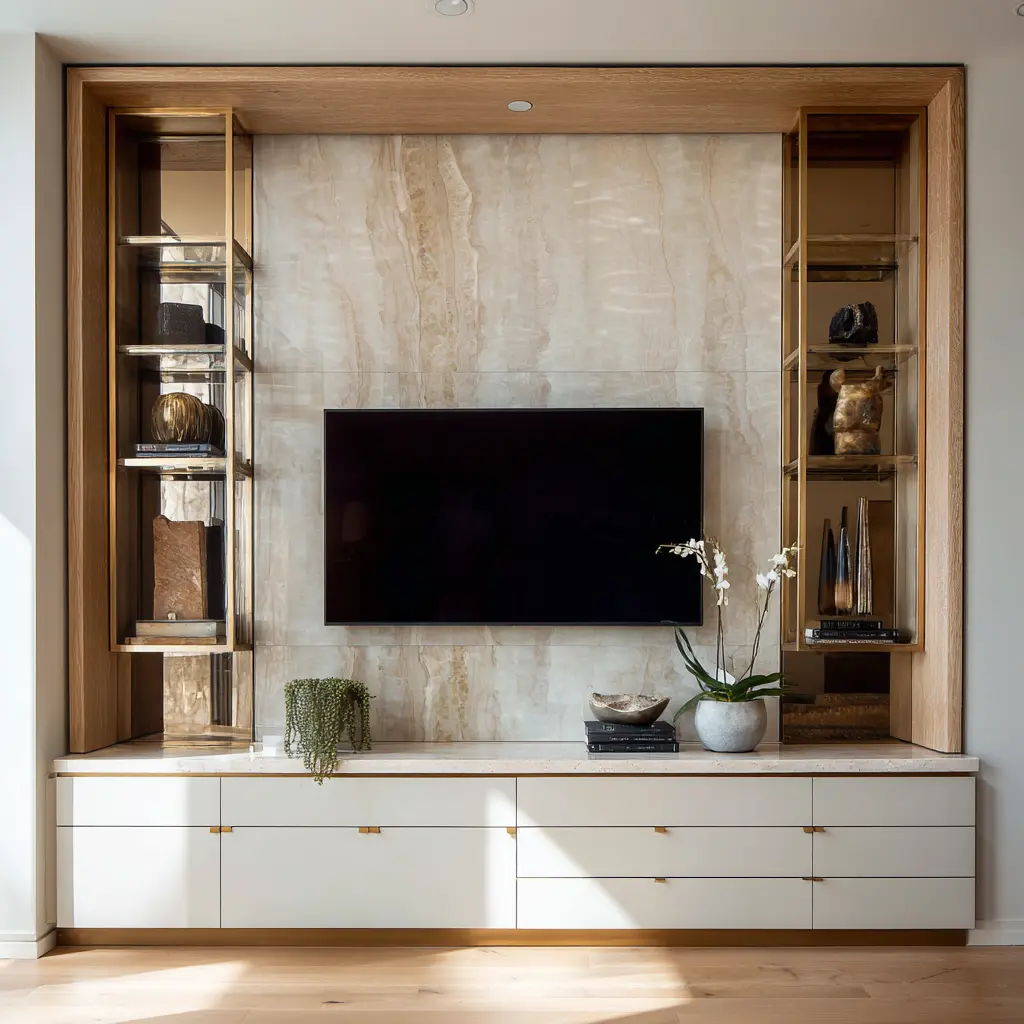
In modern designs, shelving and display are often present, but the layouts should not crowd the screen. Display can move to side pockets, narrow recesses, or lightly lit shelves at the margins.
The center remains simpler, with less visual interference.
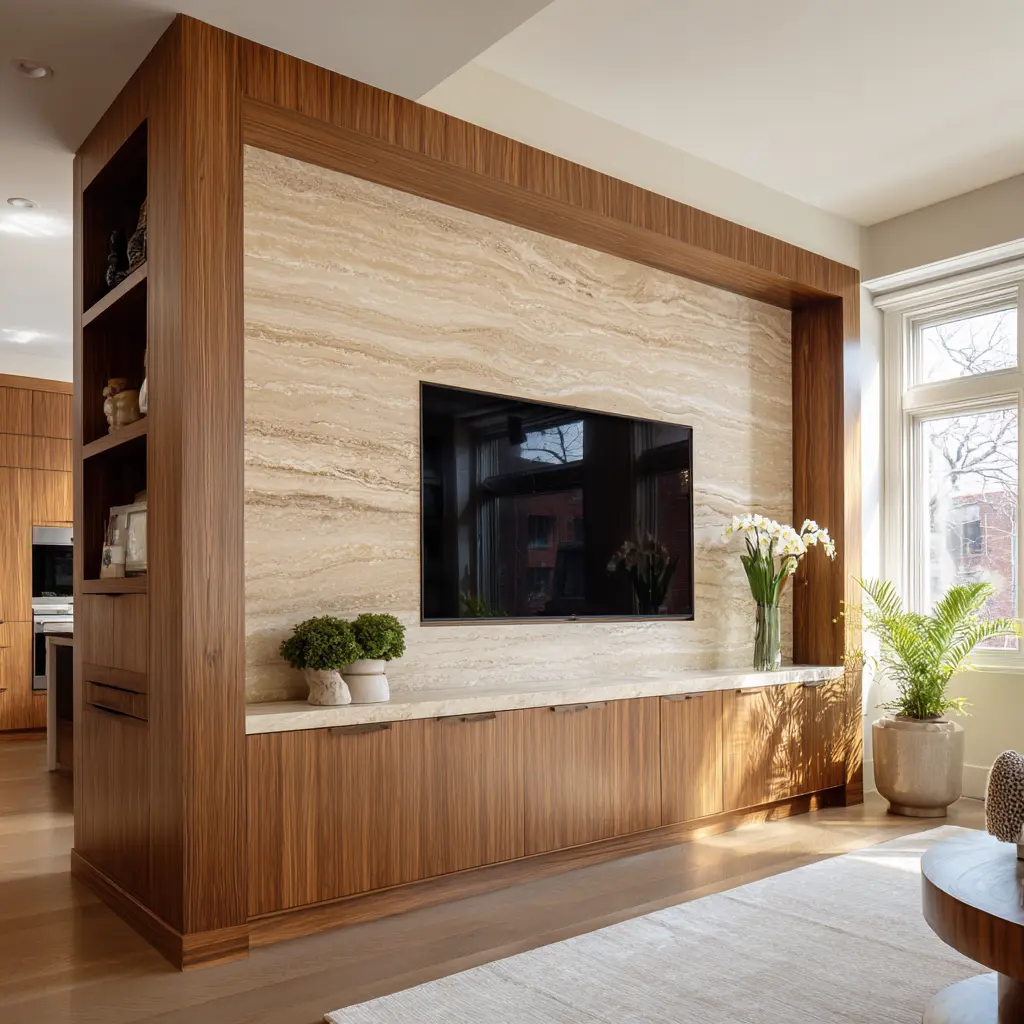
This creates a useful split in the composition: the center holds order, while the sides carry warmth and domestic character. Books, ceramics, small vessels, and decorative pieces work better when they support the media wall from the edge instead of competing with the screen.
6) Add a softening element near the wall
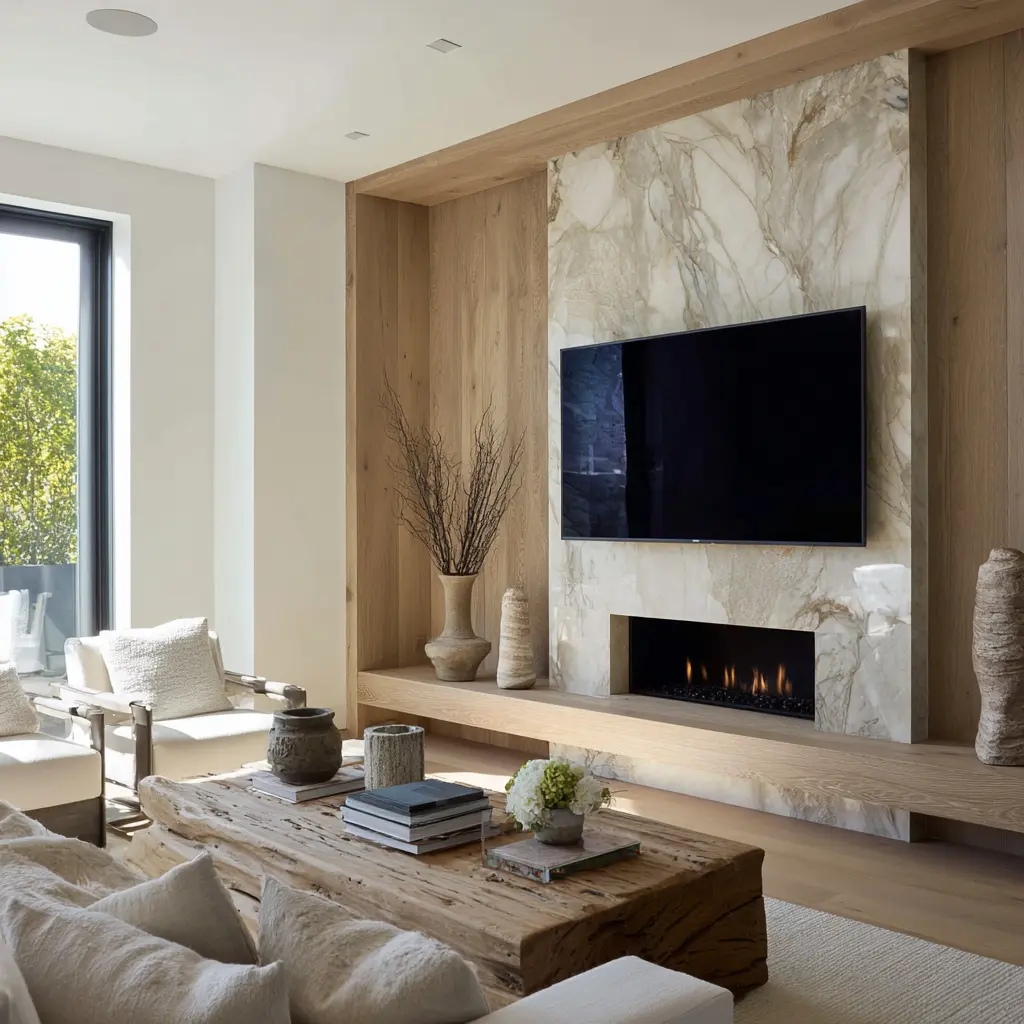
It is a good idea to have some kind of organic or rounded counterform: flowers, branches, greenery, dried stems, curved vessels, or warm lighting. These details matter because built-in TV walls are often linear and architectural.
Without some softer note nearby, the wall can feel too hard. That softening element does not need to be large.
A branch arrangement on the ledge, a rounded planter, a low bowl, or a warm-lit niche can be enough to bring comfort and keep the wall from feeling severe.
The built-in TV wall styles that feel especially fresh
There are style families, each of which creates a modern refined look in a different way.
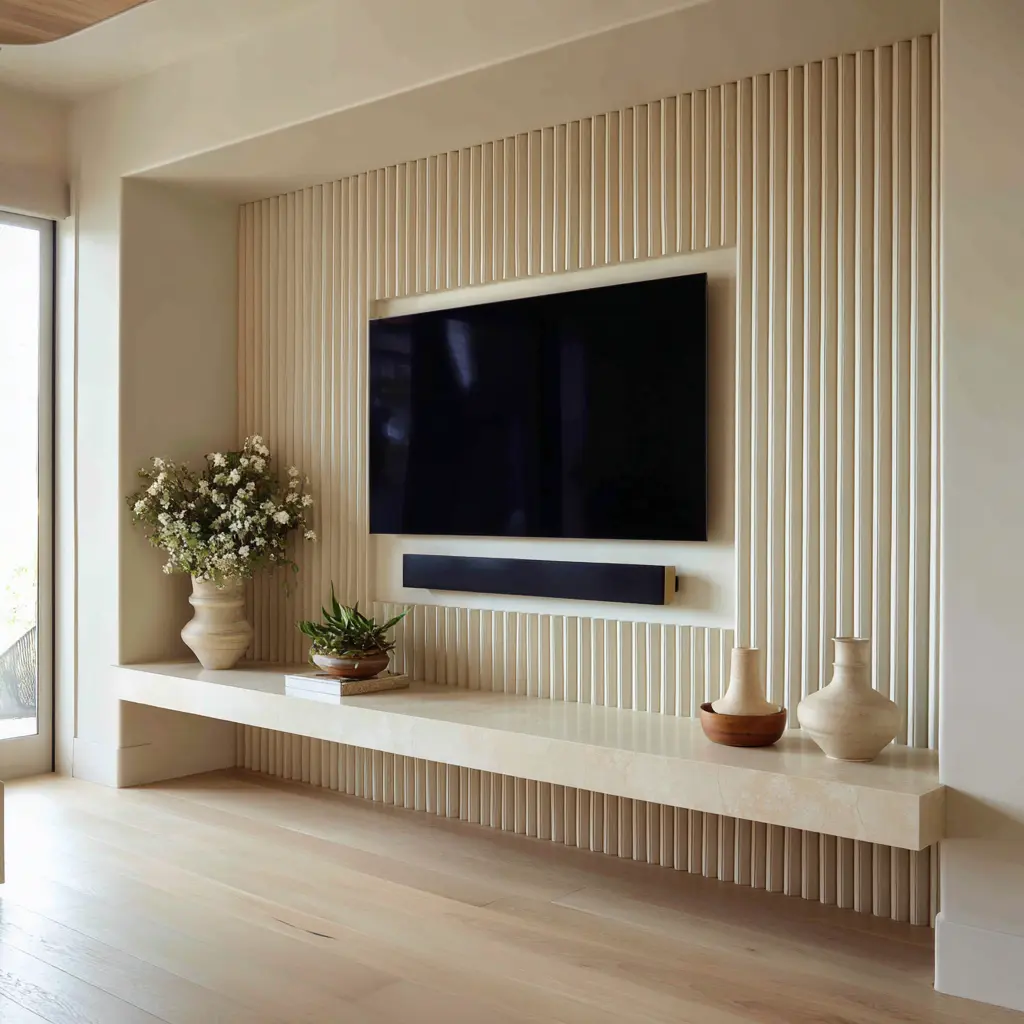
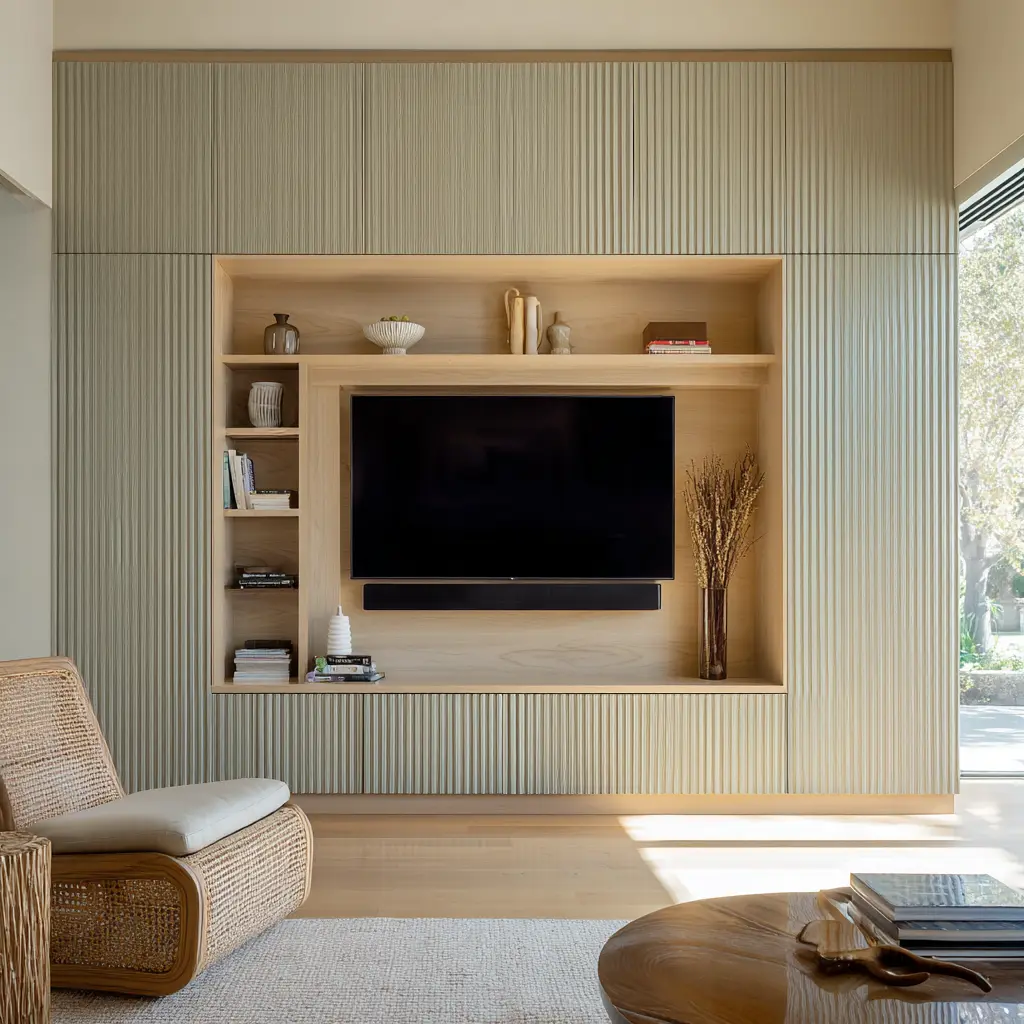
Ribbed and slatted texture walls
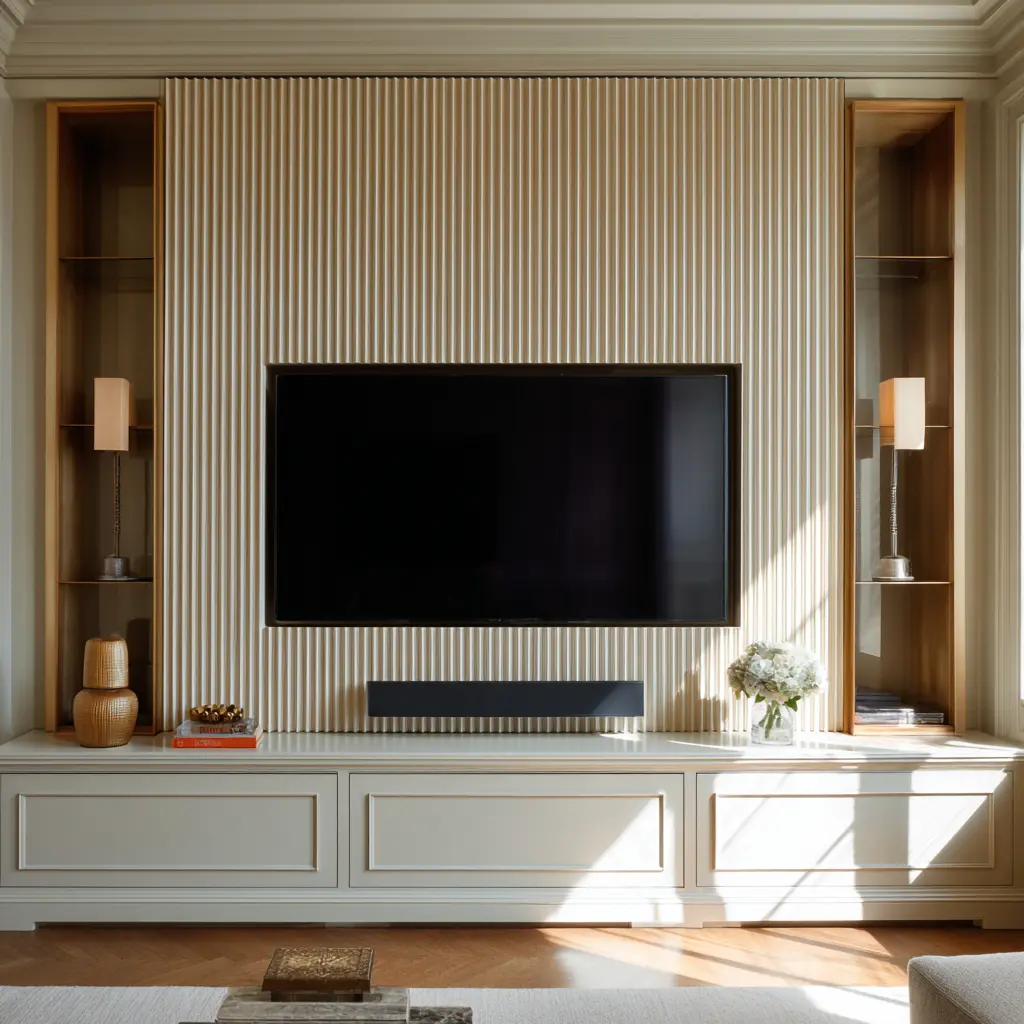
These types of walls use repeated vertical lines as the main surface language. Fluted wood, slim slats, or ribbed plaster create depth through light and shadow.
They work especially well in neutral rooms because they add surface interest without introducing busy color contrast. The TV usually sits inside a smoother inset so the screen feels cleaner against all that texture.
This style is a good fit for homes that want warmth, subtle detail, and a clean modern look without heavy stone drama.
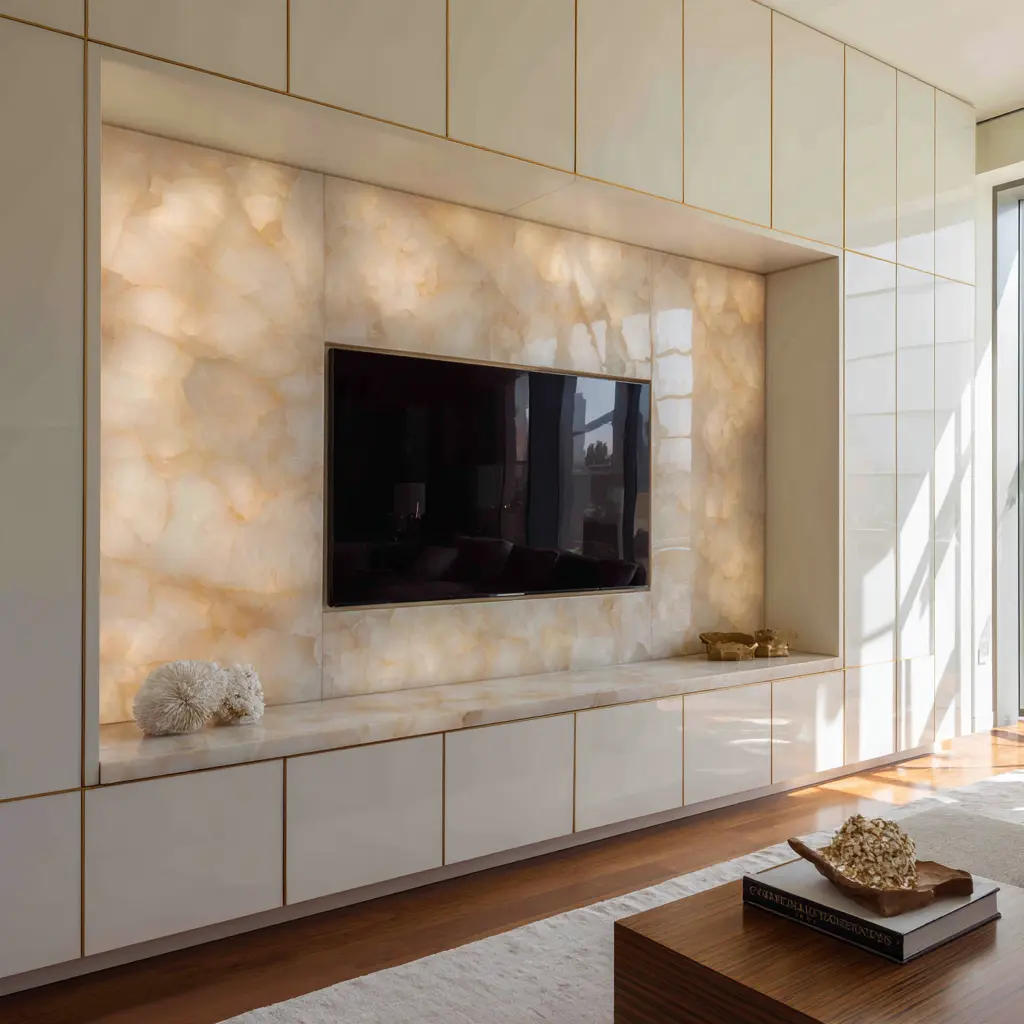
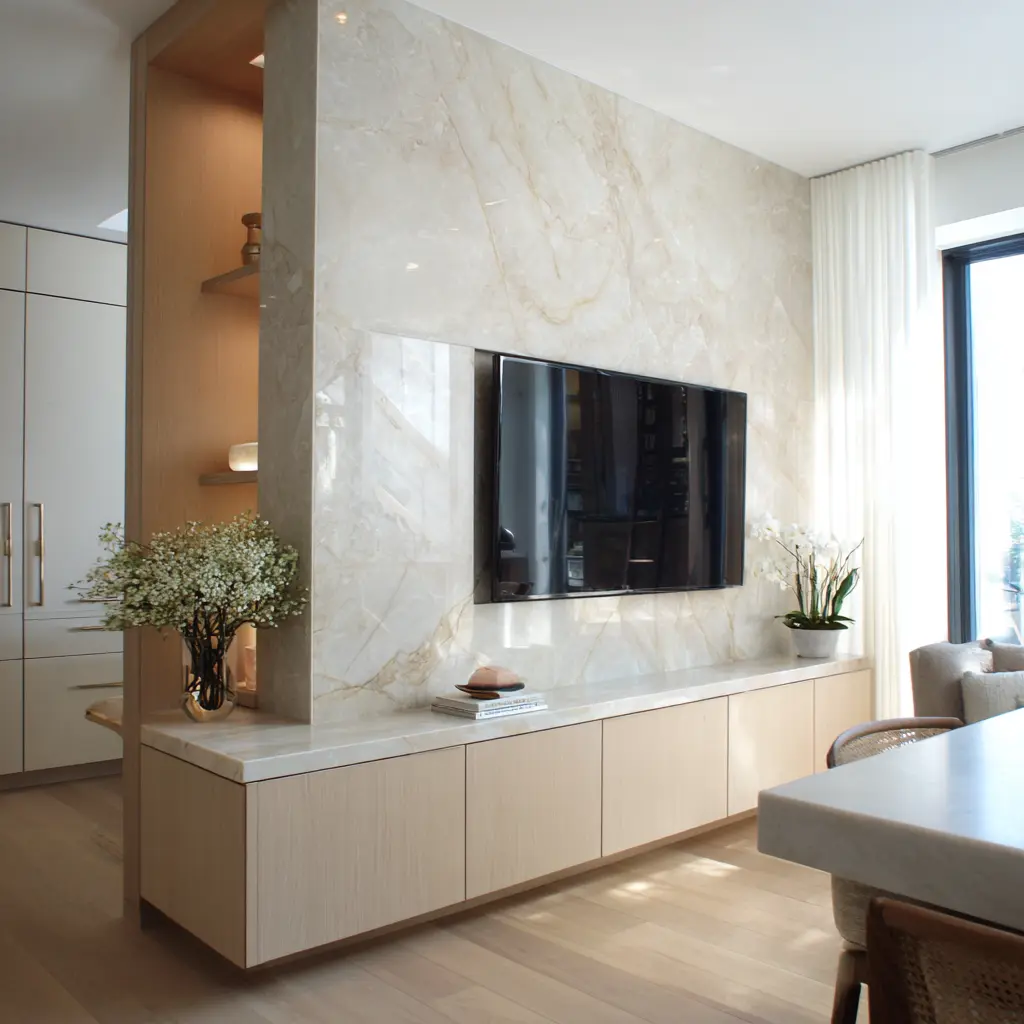
Monumental slab walls
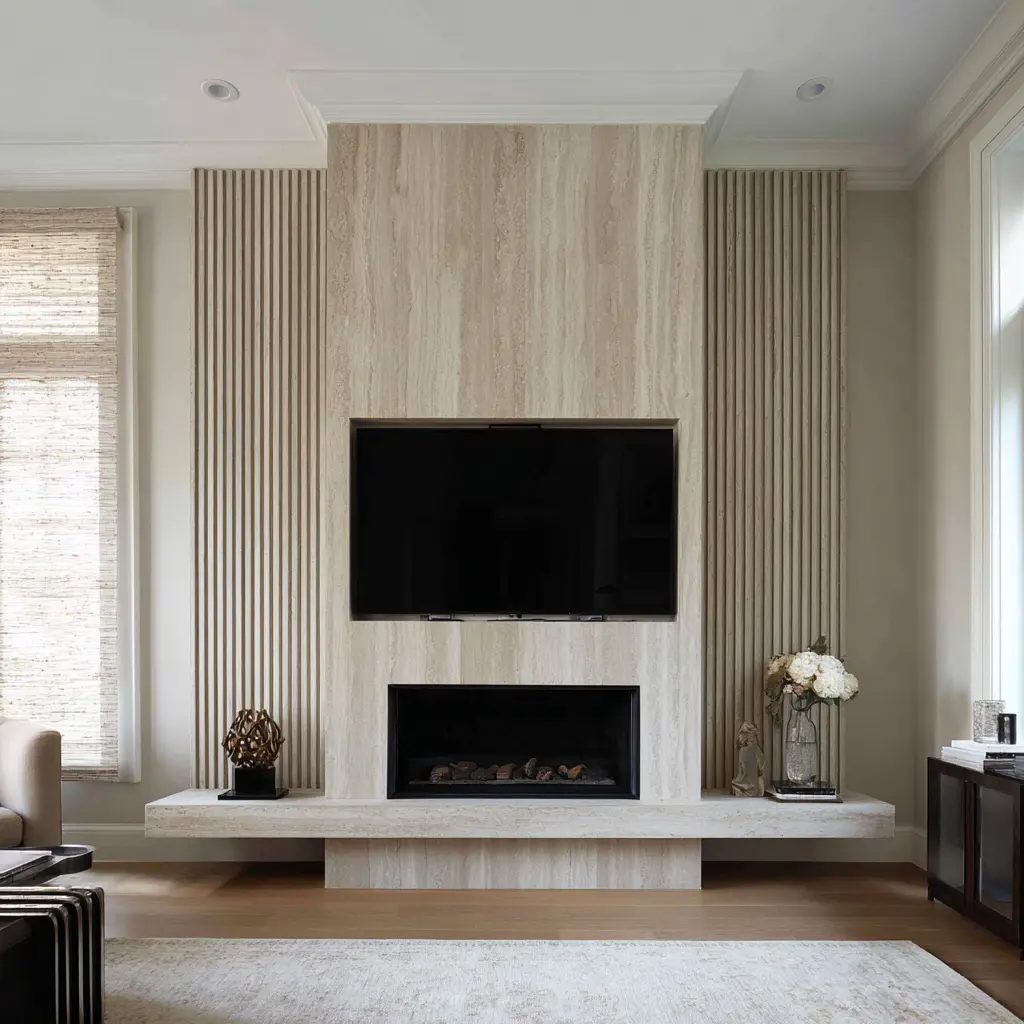
These design concepts use one broad mineral field, often in pale stone or stone-like material, to give the wall a strong sense of presence. The TV becomes a cut-in focal point inside a larger, calmer surface.
The long base below keeps the slab from feeling too severe. This family tends to feel architectural and grounded.
It is especially effective in larger living rooms where the wall needs to hold visual weight.
Framed portal walls
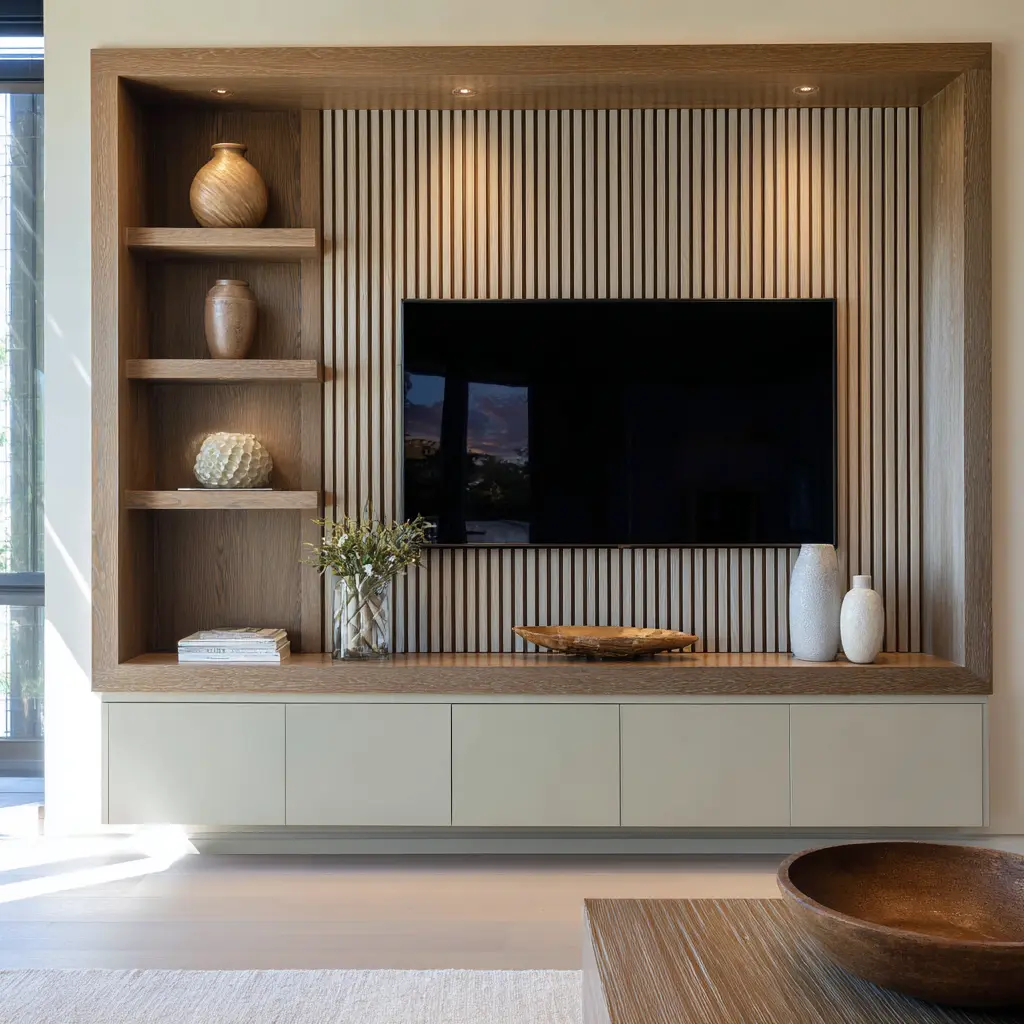
This one works for clear built-in looks. The full wall reads like a cabinet facade or architectural shell, then a central chamber is carved into it for the TV.
The outer frame gives order; the inner chamber often adds warmth through wood lining, softer lighting, or a calmer back panel. This style works well for people who want the TV wall to feel very integrated with storage, cabinetry, and the broader room envelope.
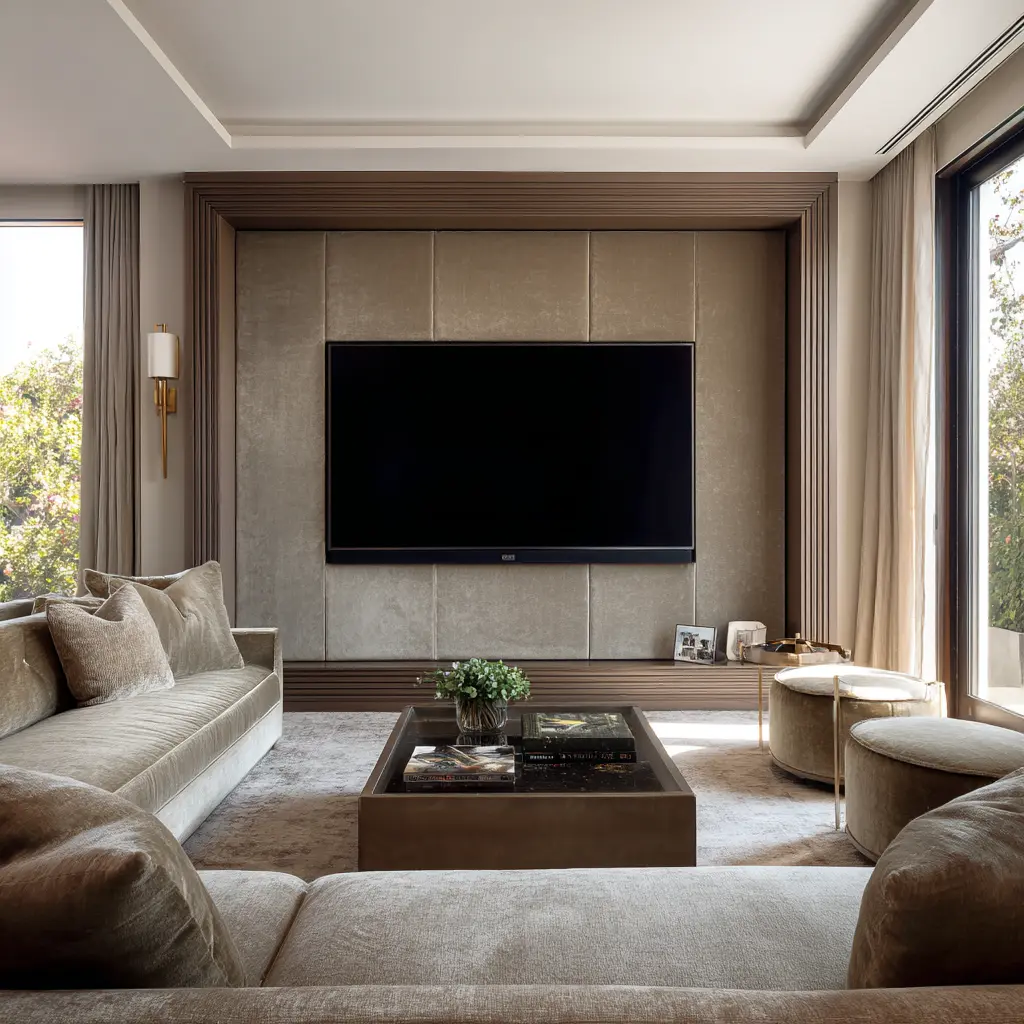
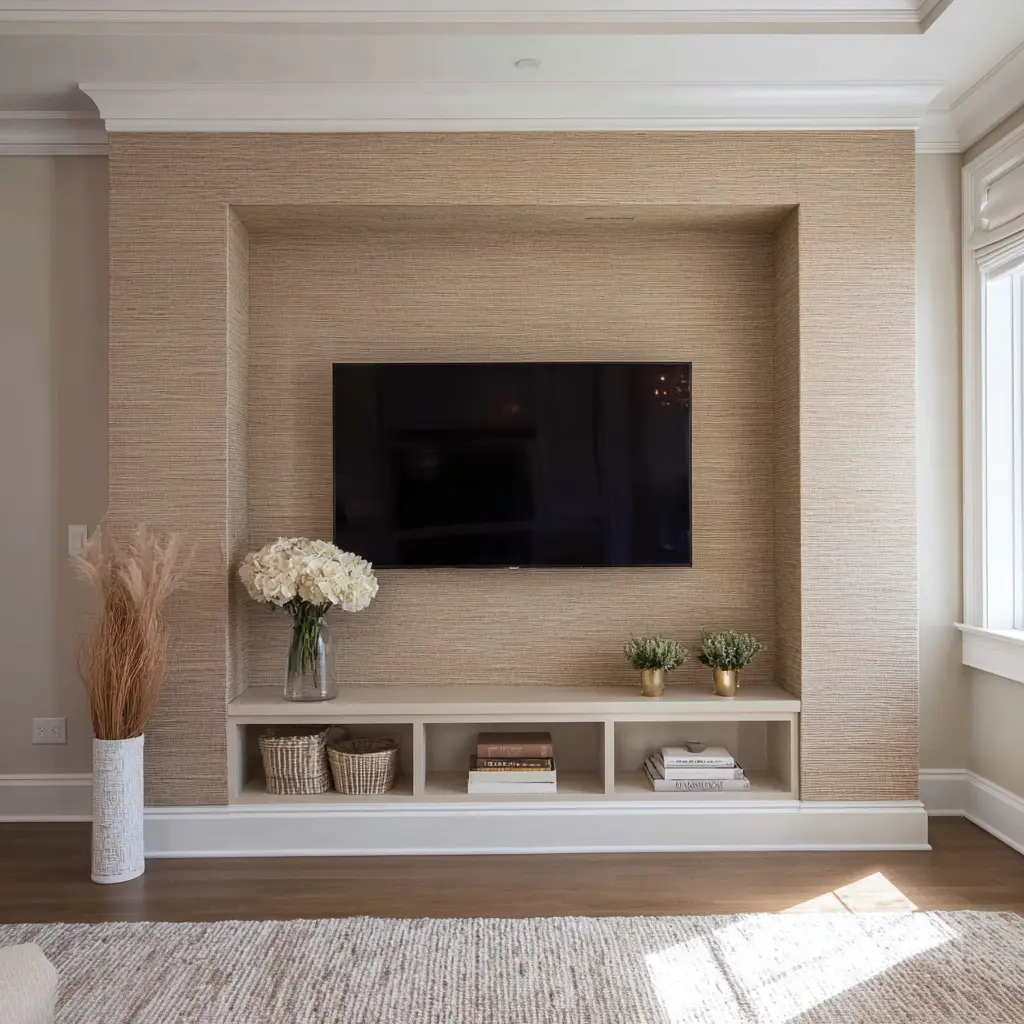
Soft textile-like recesses
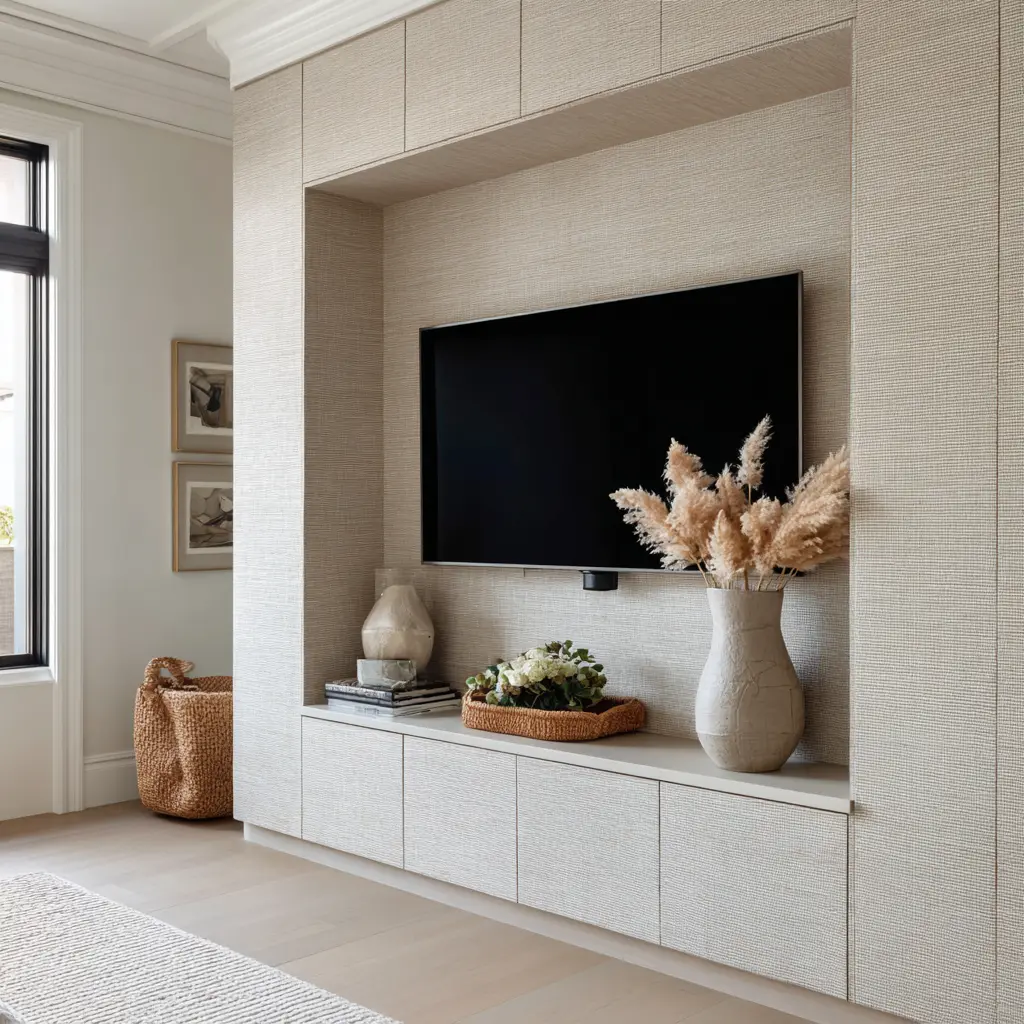
Calm design concepts use woven, matte, padded, or fabric-like wall finishes instead of dramatic grain or stone movement. These walls feel settled through enclosure, broad margins, and softness.
They prove that a modern TV wall does not need sharp contrast to feel high-end. This family suits rooms where comfort and a relaxed polished look matter more than bold architectural drama.
Decorative surface walls
A smaller group turns the wall itself into a large visual surface through mural-like finishes or layered panel compositions. These built-in TV ideas can look fresh and artistic, but they still keep the TV contained inside a larger order and usually simplify the lower cabinetry so the wall does not become too busy.
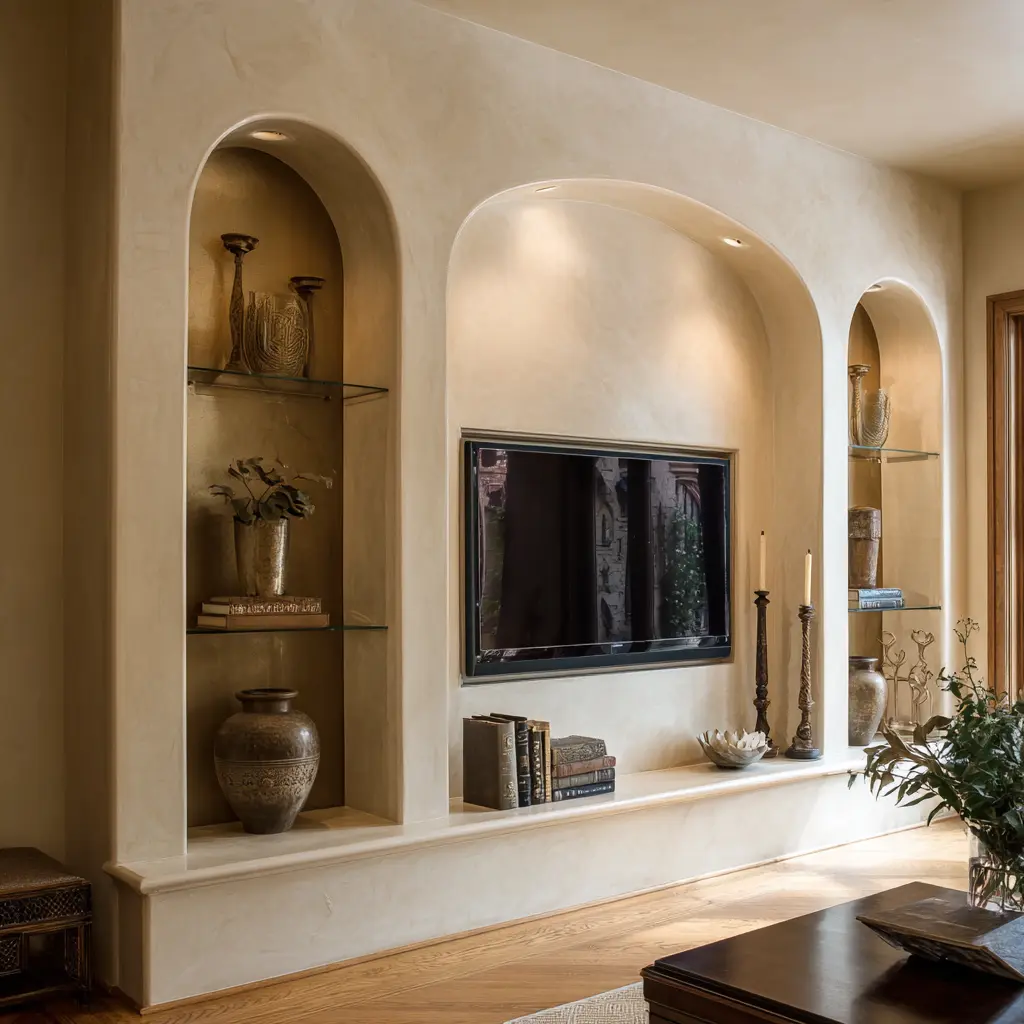
Carved plaster and arched forms
Curves stand out. Arched niches and soft-edged recesses make the wall feel shaped rather than assembled.
They reduce the mechanical feel of the TV and bring a more sculpted, human character to the room. For homeowners who want something softer than straight minimalist lines, this is one of distinctive directions.
Light colors and dark colors solve the TV issue differently
One more insight is that pale and dark TV walls do not work in the same way. A light wall absorbs the TV by surrounding it with warmth, generous margins, soft contrast, and tactile materials.
Cream plaster, pale oak, warm beige stone, and woven textures reduce tension around the black screen.
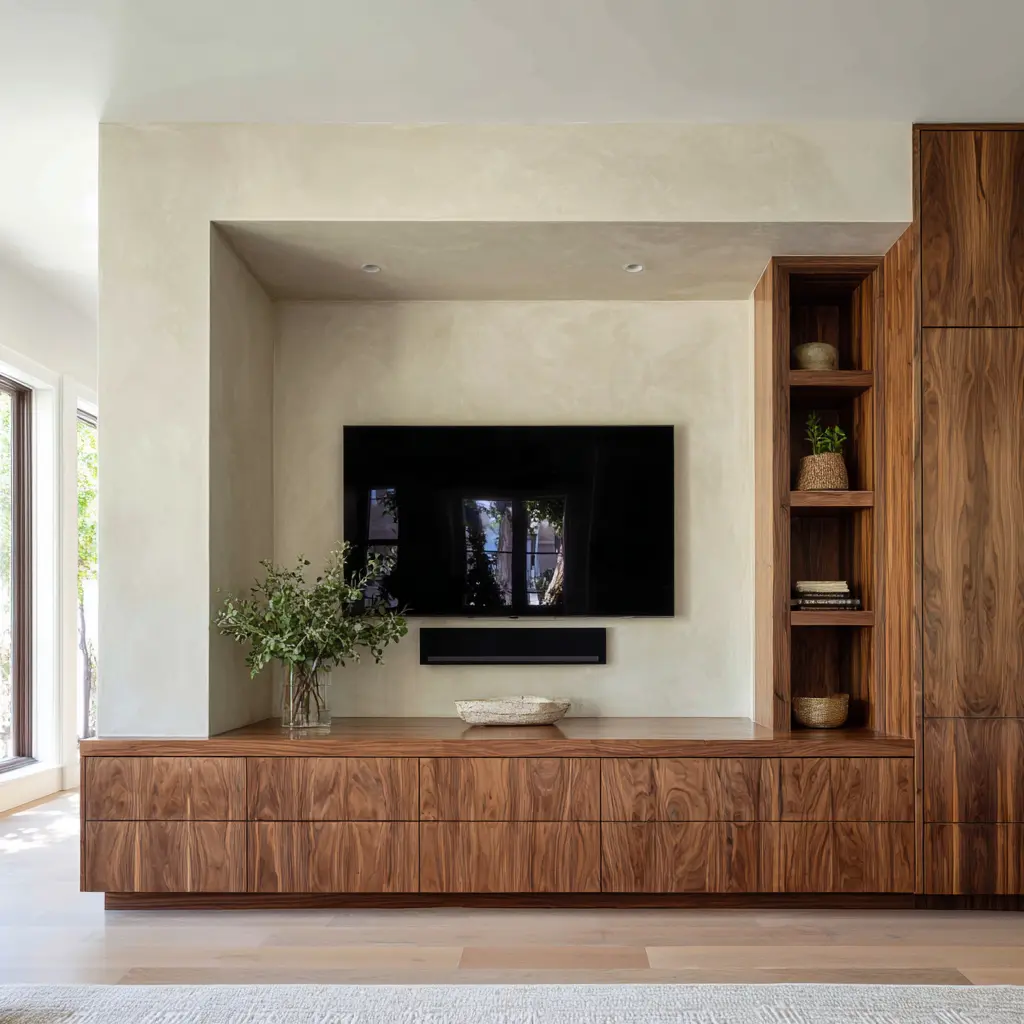
A dark wall solves the same issue by lowering the gap between wall and screen. For example, in a deep wood or charcoal composition, the TV becomes part of a darker field.
The softness then comes from warm lighting, fire, greenery, and careful material variation. So there is no single right color depth.
Both can work well. The important point is how the wall manages contrast, not whether it is pale or dark.
Why restraint often looks more costly than decoration
A modern built-in TV wall rarely needs crowded shelves, many small accessories, or loud material competition. The stylish modern walls favor: low clutter, large quiet surfaces, thick boundaries, material continuity, and broad empty margins.
That means the most refined result often comes from removing things, not adding them. A nearly empty ledge can look stronger than one filled with small objects.
A single branch arrangement can do more than many decorative pieces. A full wall wrapped in one finish often feels more complete than a patchwork of competing materials.
In other words, modern refinement in TV wall design often comes from subtraction.
The deeper reason built-in TV walls look good
What makes built-in TV walls feel modern and polished is not simply style. It is the way they act as architectural buffering.
They soften the tension between technology and domestic comfort. They reduce harsh contrast.
They keep scale under control. They stop storage from turning into clutter.
They give the eye a stable focal point without turning the room into a showroom of accessories.
That is why the best built-in TV walls feel so settled. They turn the screen into one controlled part of a warmer, thicker, lower-noise composition.
A fresh built-in TV wall succeeds when it does not ask the TV to carry the room on its own. Instead, it builds a complete setting around the screen—one with depth, proportion, texture, and restraint—so the whole wall feels like part of the home from the start.