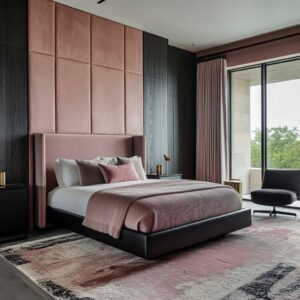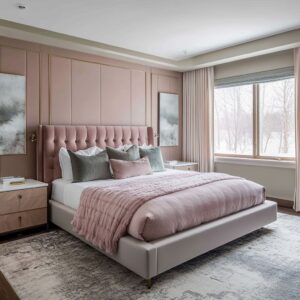
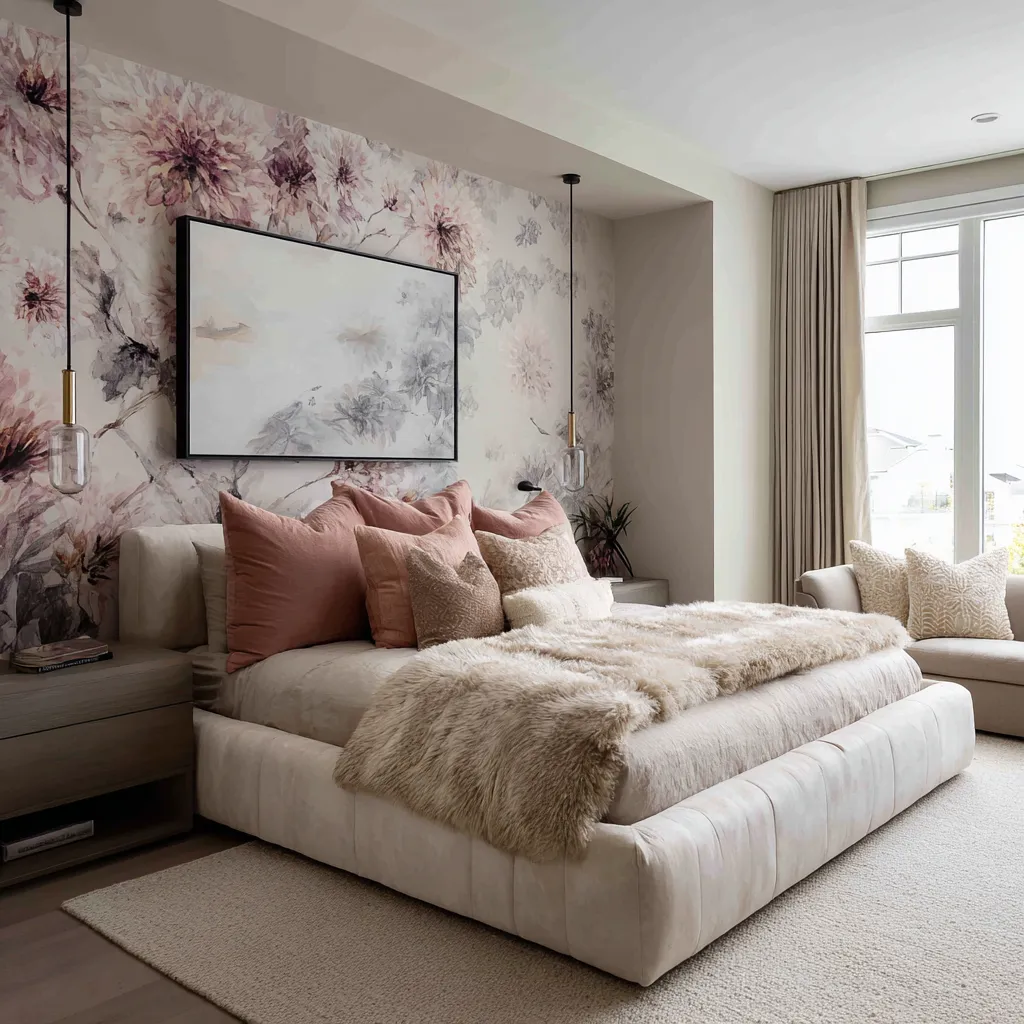
Pink maximalist bedroom designs work well when pink is treated as a full color environment instead of a decorative extra. The compelling maximalist bedroom ideas do not lean on one sweet blush repeated everywhere, and they do not depend on endless accessories scattered around the space.
Their richness comes from something more disciplined and more layered: a broad family of pink tones, a pale stabilizing base, one or two deeper anchors, tactile surfaces, and a setting that holds all that softness in place.
That balance matters because pink is unusually sensitive to context. The same dusty rose can feel plush and grown-up next to walnut, airy next to alabaster, moody next to oxblood, or botanical next to olive.
A pink maximalist bedroom therefore succeeds less through sheer quantity and more through how the tones are arranged, what materials sit beside them, and where the darkest notes are placed.
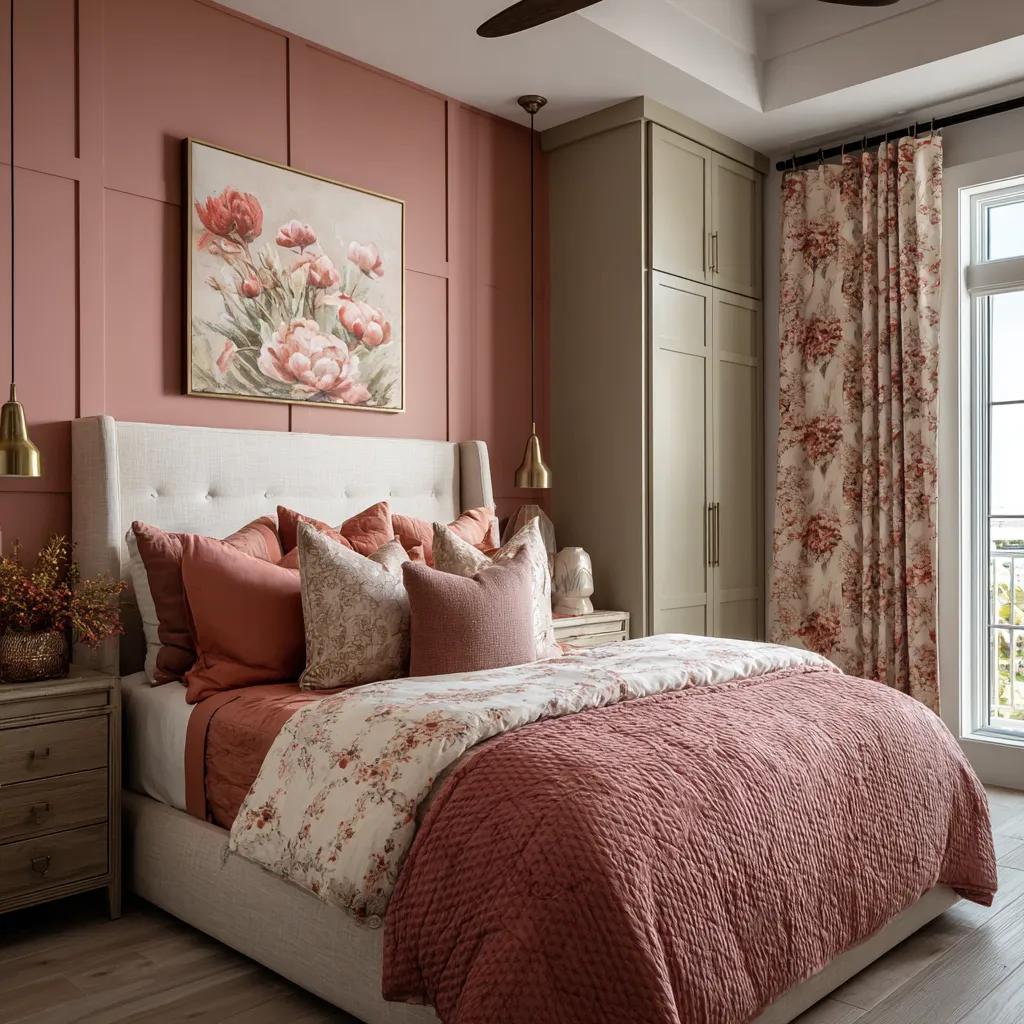
Refined versions of this style, pink behaves like an atmosphere with structure. It may spread through the wall, the bed, the drapery, the art, and the bench, but it is almost never allowed to dissolve into formless softness.
Something firmer is usually present to hold it together: paneling, shelving, a bed niche, a framed mural insert, darker millwork, walnut, stone, glass, brass, or a few crisp dark accents. That is what gives the room richness without blur.
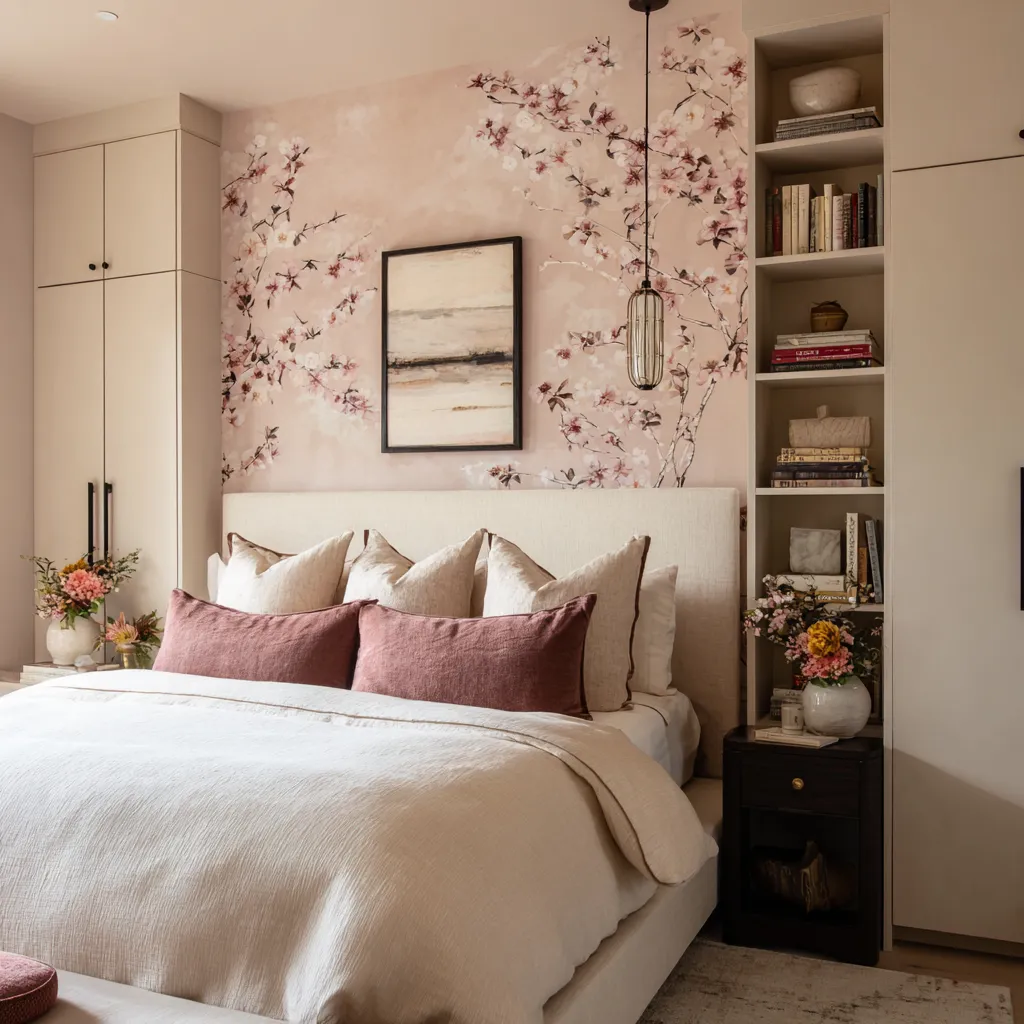
Pink works better as a range than as a single shade
In pink maximalist bedroom designs, one-note pink tends to flatten a room. A broad tonal family gives it shape.
The richer interiors usually move through several linked values such as shell pink, blush, dusty rose, mauve, berry, mulberry, plum, oxblood, lilac-gray, or terracotta-rose. Each tone performs a different role.
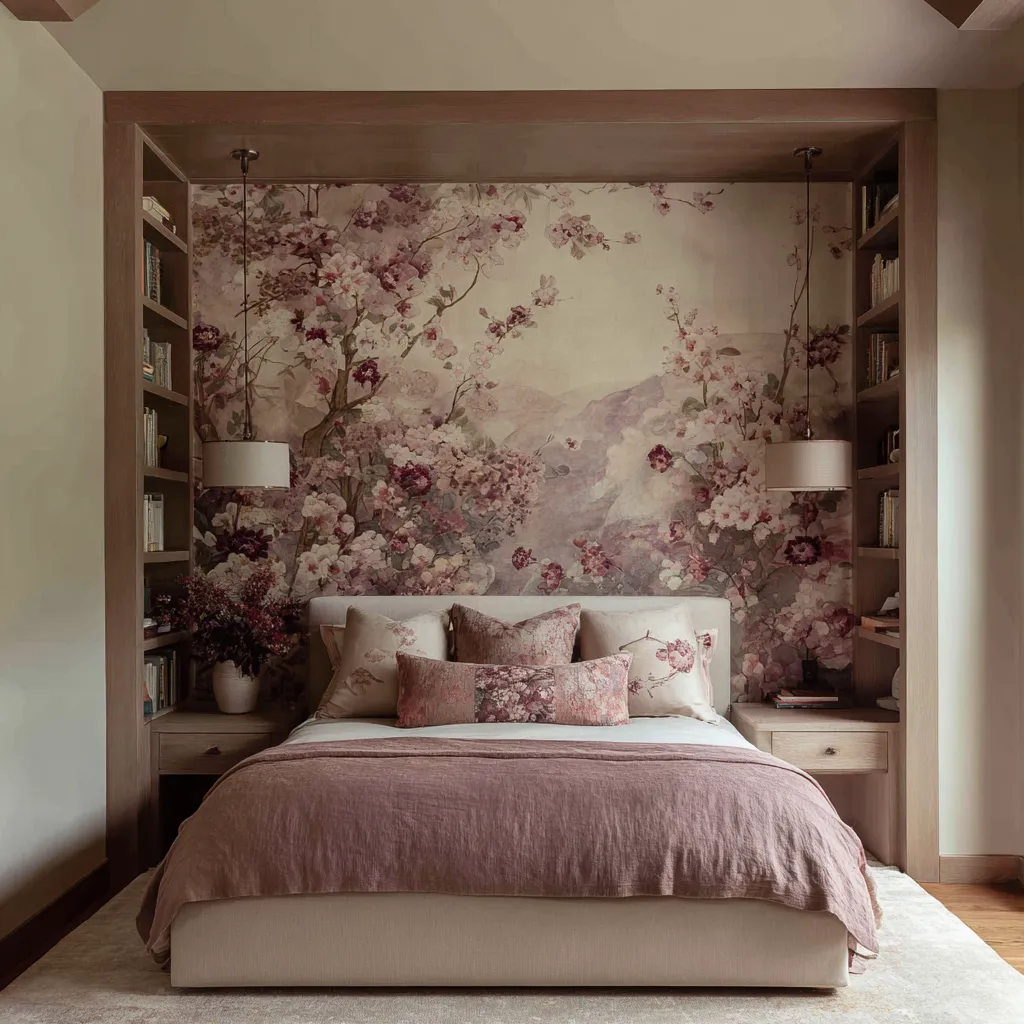
The palest pinks often live in the wall ground, the headboard surround, the rug, or the outer bedding layers. Mid-range pinks bring body to the room through coverlets, curtain fabric, painted millwork, or artwork.
The deepest notes, such as burgundy, mulberry, or wine, often sit near the headboard, in the back row of pillows, inside the mural center, or in the art above the bed. That placement is especially useful.
It gathers intensity where the eye naturally rests, but it does not drag the whole room downward. This is why pink bedroom ideas feel rich without feeling overfilled.
The variety is happening inside the color family itself. Pink is doing more work, so the room does not need piles of unrelated accents to create depth.
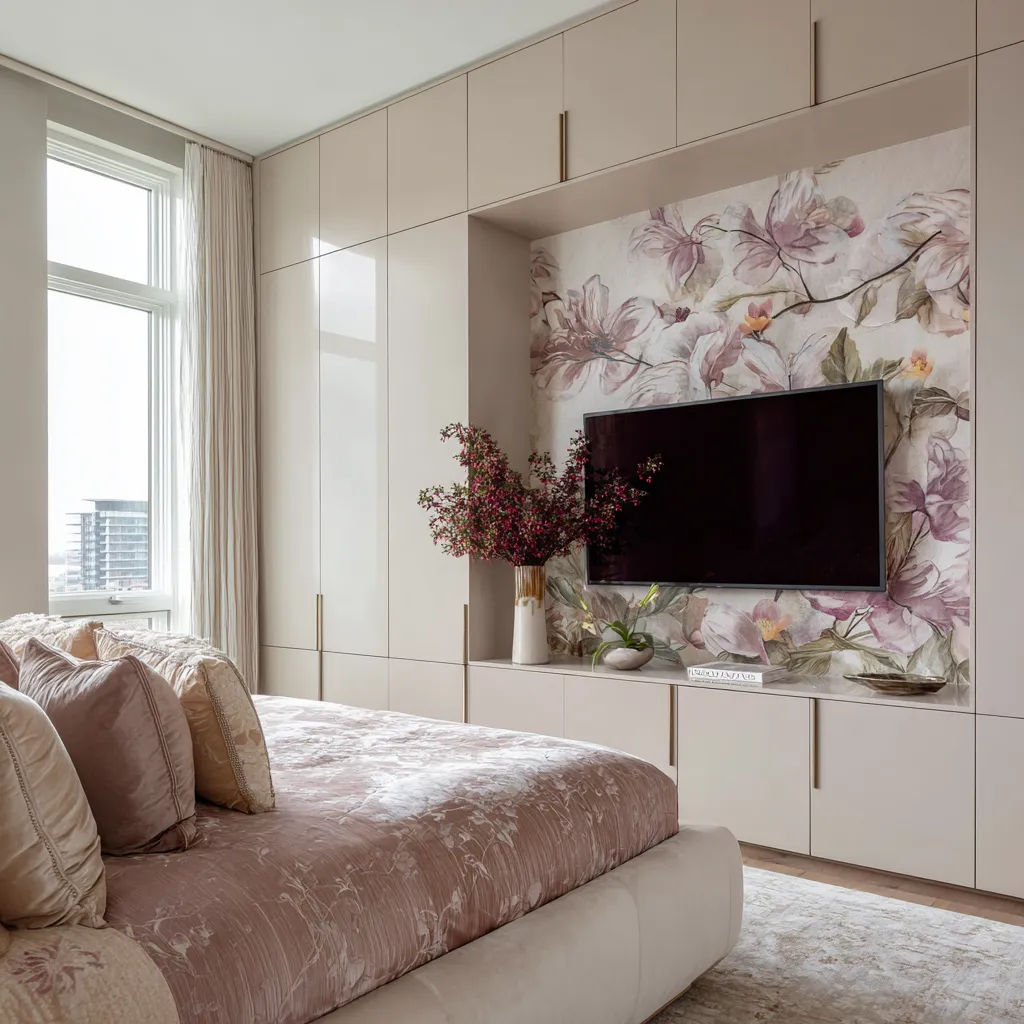
A pale structural base is what keeps pink maximalism modern
A common mistake is assuming that a maximalist pink bedroom needs every surface to be saturated. Many stylish designs become more convincing when large masses stay pale.
A cream upholstered bed, a soft ivory rug, a pale bench, a light duvet fold, or a bright window edge gives the eye relief and makes deeper pink notes feel intentional.
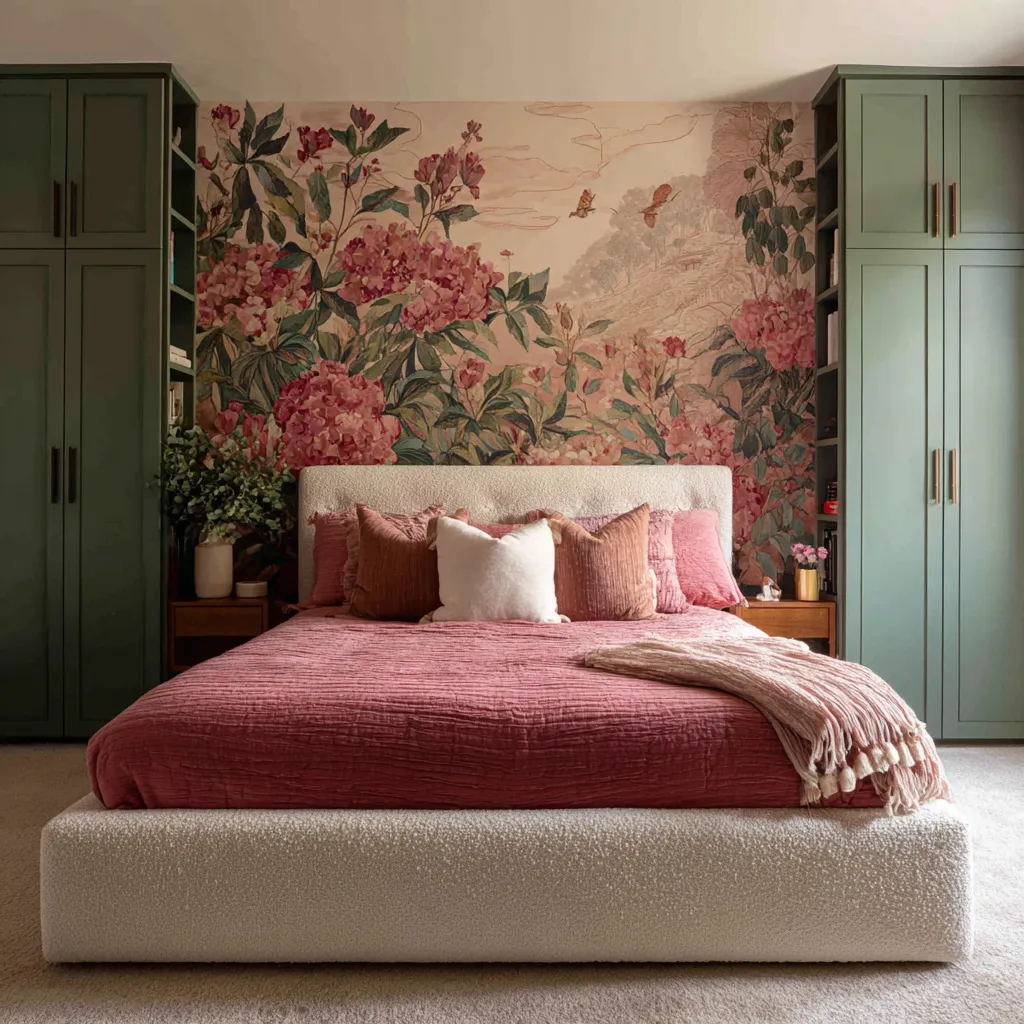
This pale mass is not an afterthought. It is structural.
It separates wall from bedding, art from upholstery, saturation from comfort. If a floral wall, dark rose pillows, mauve drapery, and a plum throw all exist at once, the room needs a broad light surface somewhere in the middle to keep those elements from collapsing into one dense field.
A pale headboard or bed base often performs that job better than any other piece in the room. That is also why even more dramatic pink bedroom ideas often keep the lower zone lighter.
The upper half may carry the deepest color, while the lower half stays creamier and more open. This gives the room lift.
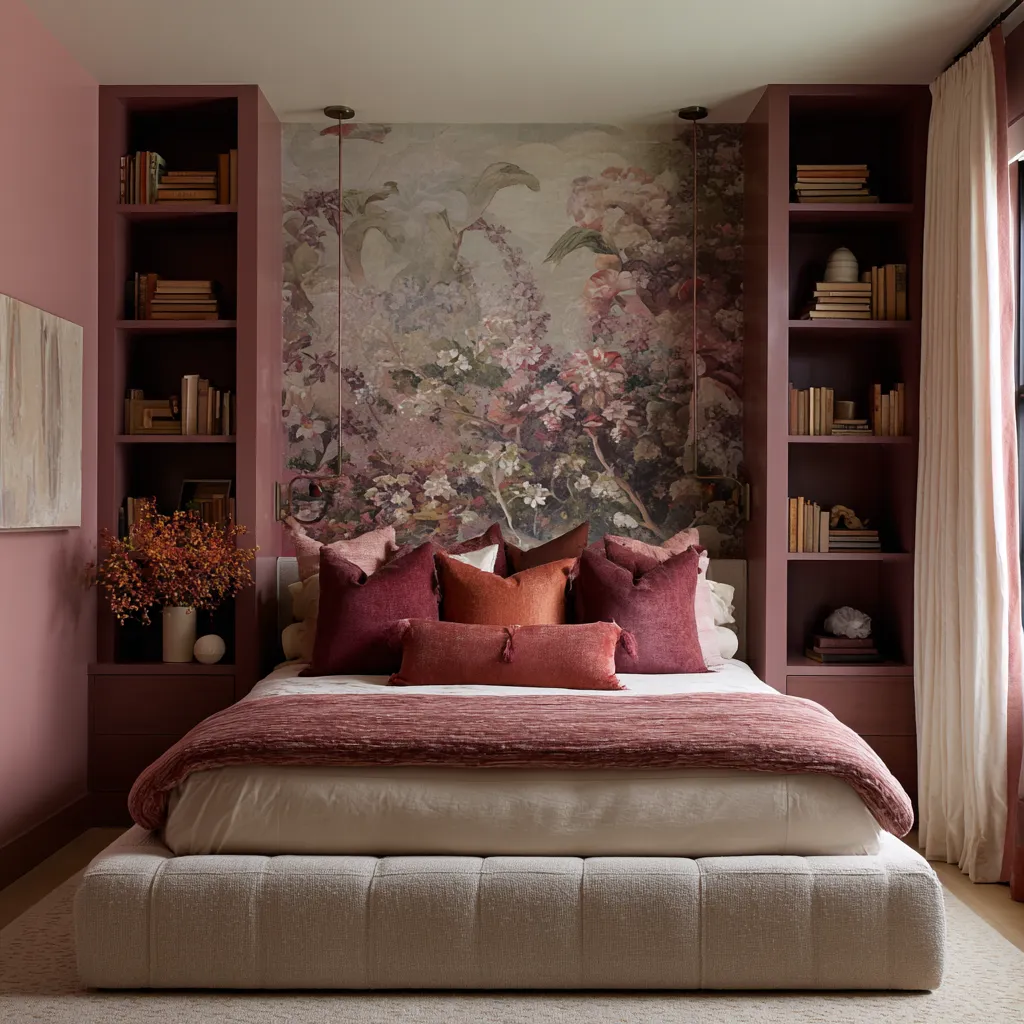
Modern pink maximalism is usually surface-rich, not object-heavy
Many people imagine maximalism as a room filled with many decorative items. In a bedroom, that approach can easily become restless.
The more refined pink versions build fullness through surfaces instead: upholstered volume, layered bedding, mural walls, textured throws, shelving wings, glass lighting, and a strong material mix.
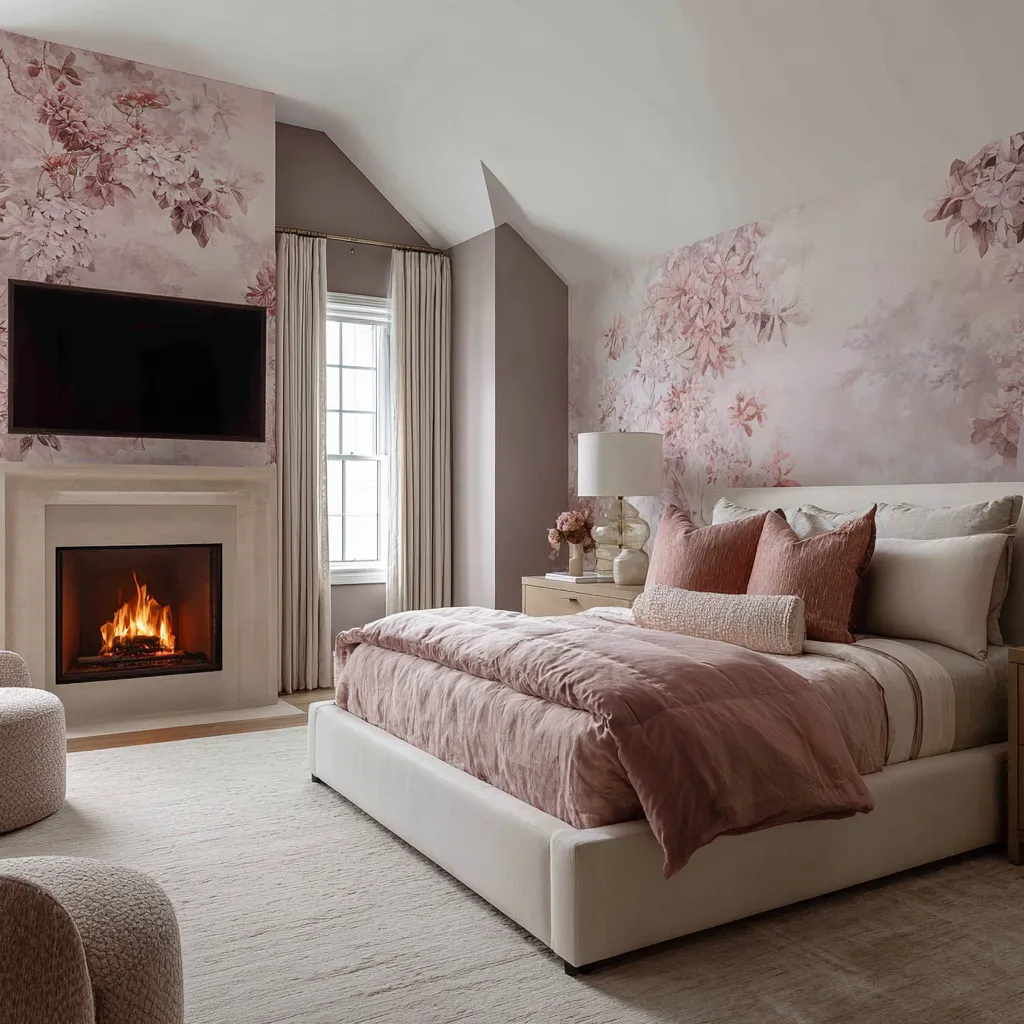
A room can feel lush with relatively few loose objects if it has enough tonal layering in the wall and bed, enough texture in the fabrics, and enough depth in the framing materials. Boucle, velvet, nubby linen, ribbed textiles, shaggy throws, painterly murals, plaster-like walls, and brushed or matte wood all add visual thickness.
They make the room feel inhabited and substantial without clutter. That distinction is important because bedrooms need softness and order at the same time.
Surface richness gives them both.
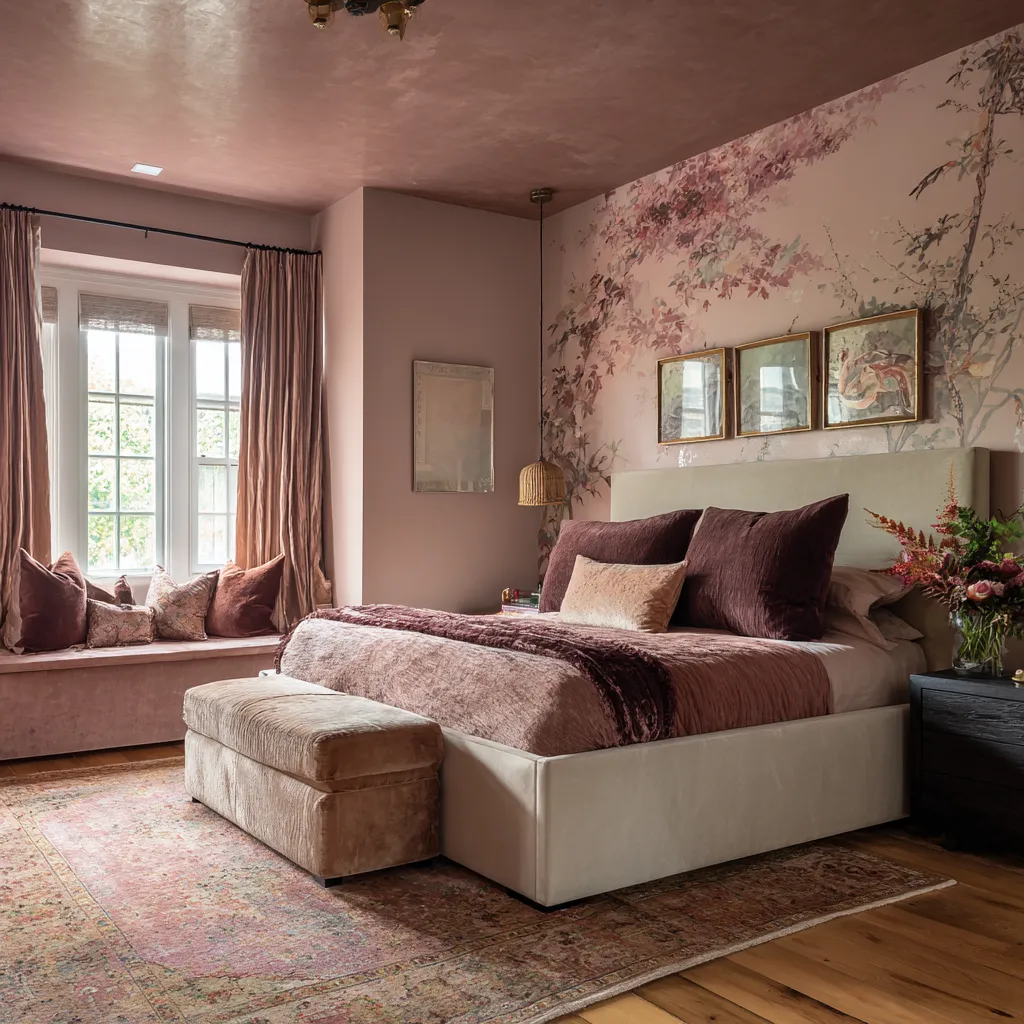
Floral walls work well when architecture edits them
Pink maximalist bedrooms often use florals, but floral content alone does not guarantee a fresh result. The more stylish designs usually edit their florals in some way.
A mural may be set inside a recess. A floral panel may sit between solid painted side walls.
Artwork may overlap the mural. The floral field may be large but sparse, with more open ground around the branches.
A built-in headboard wall may frame the blossoms so they feel embedded rather than pasted on.
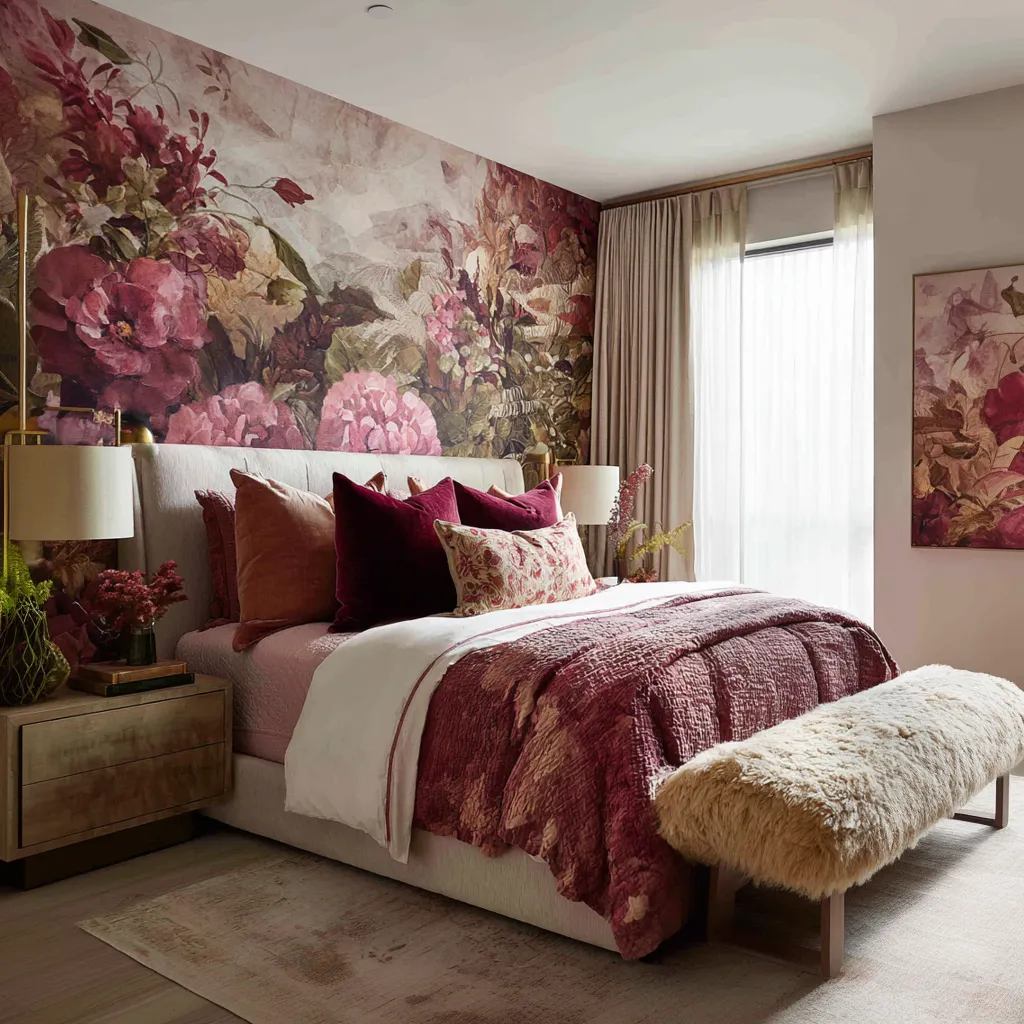
This is one of the principles in the style. Floral pattern feels more current when it is contained.
A fully immersive rose-and-peony envelope can still work, but it usually needs some interruption: panel joints, shelving, a plain painted border, suspended lights, a fireplace composition, or a broad upholstered headboard placed in front of it.
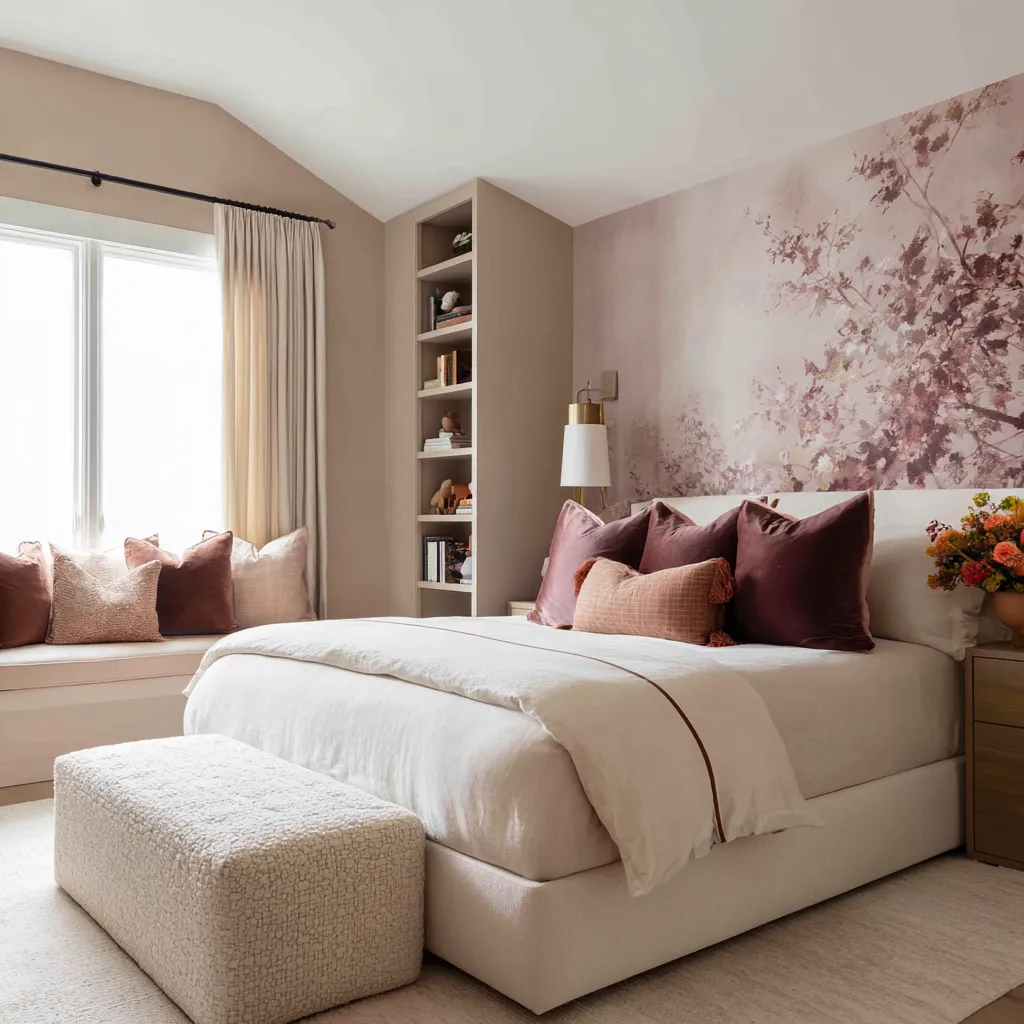
Painterly and faded florals also tend to feel fresher than crisp repeated floral motifs. Enlarged blossoms, blurred petals, botanical shadows, and murals with atmospheric background space usually create a more modern mood than tight repeated florals with sharp outlines.
The room keeps the romance of flowers while avoiding a decorative overload.
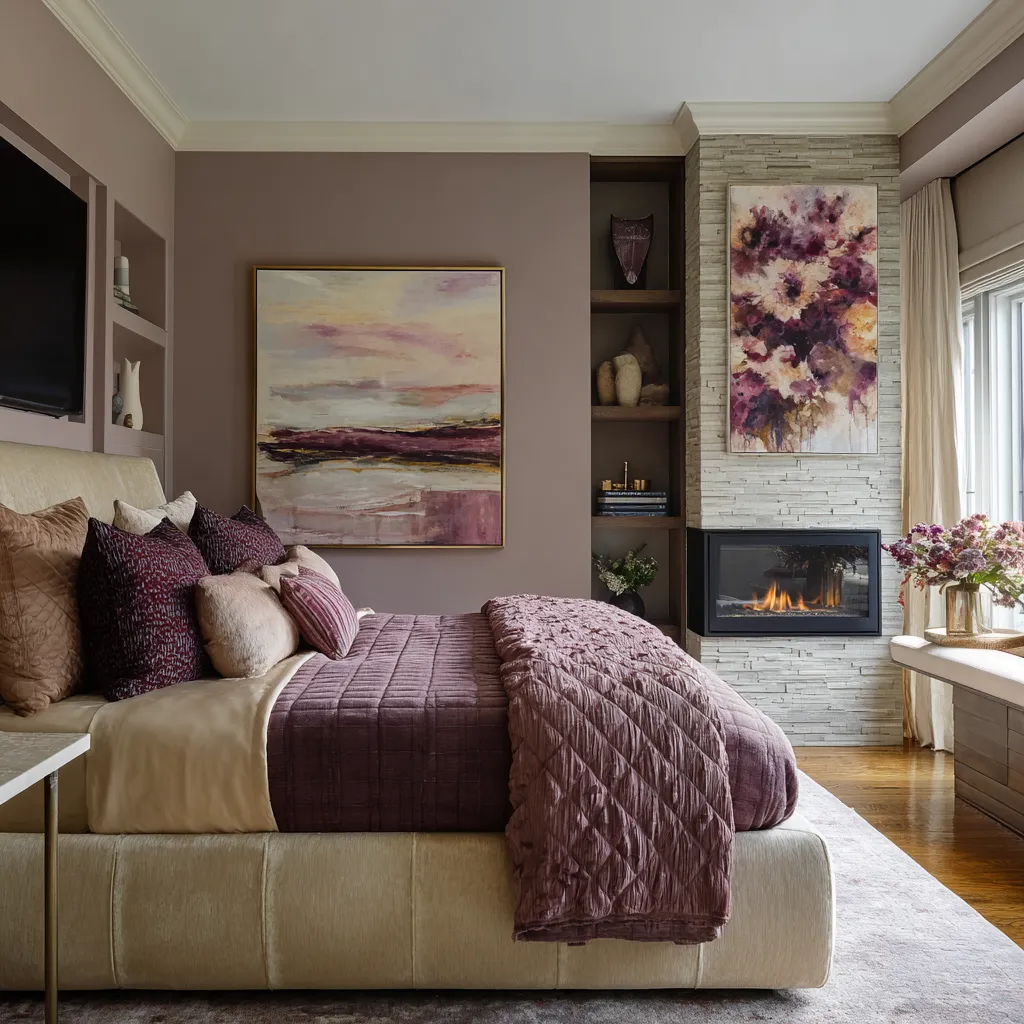
Dark framing makes pink feel more adult
Pink often gains depth when it is held against something darker and drier. This is one of the major shifts that separates a youthful pink room from a more grown and grounded one.
Deep millwork, mauve-brown built-ins, forest-toned cabinetry, walnut shelving, darker paneling, or a berry wall behind the bed gives softer pinks a sense of gravity.
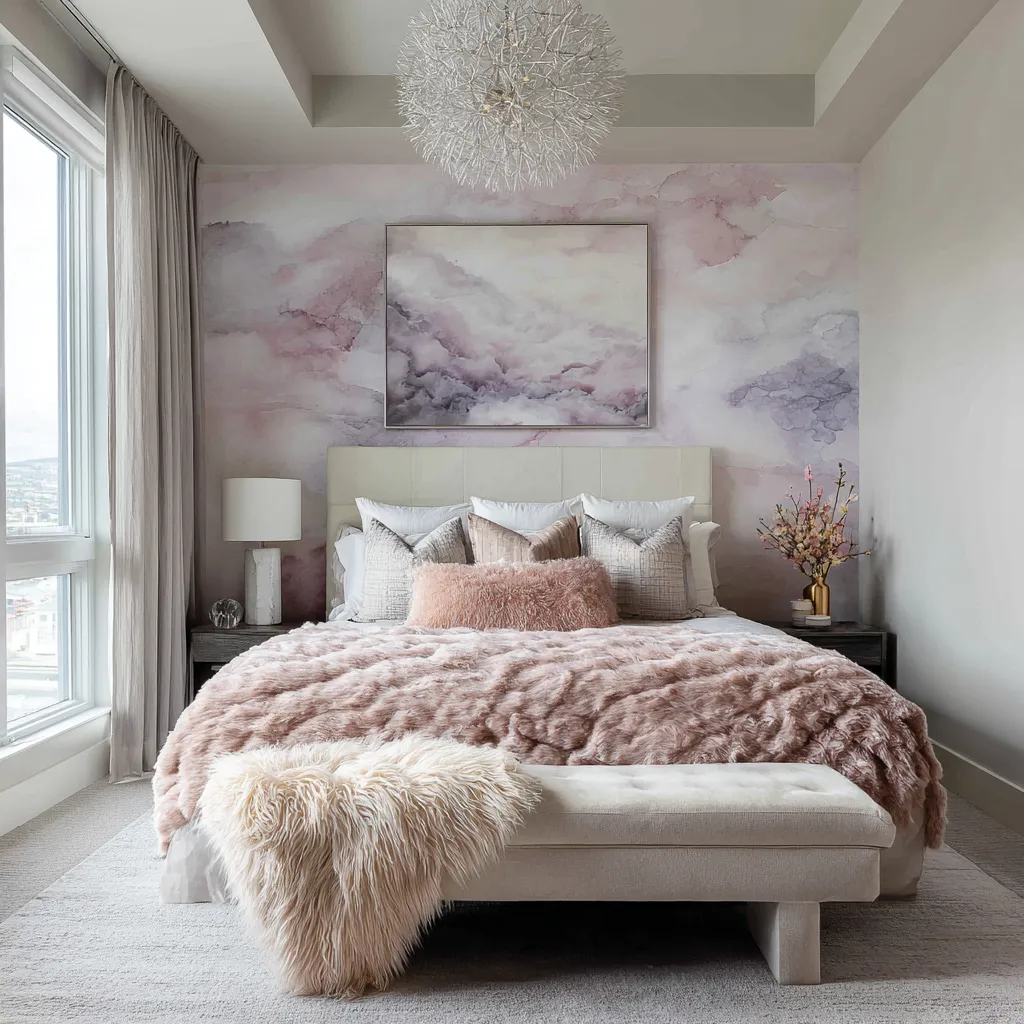
Dark framing is especially helpful because it reshapes pale pink. Blush looks creamier beside plum.
Dusty rose looks fuller beside walnut. A floral mural looks more luminous when darker shelving or a darker painted surround gives it contrast.
This kind of framing can make pink feel architectural rather than decorative.
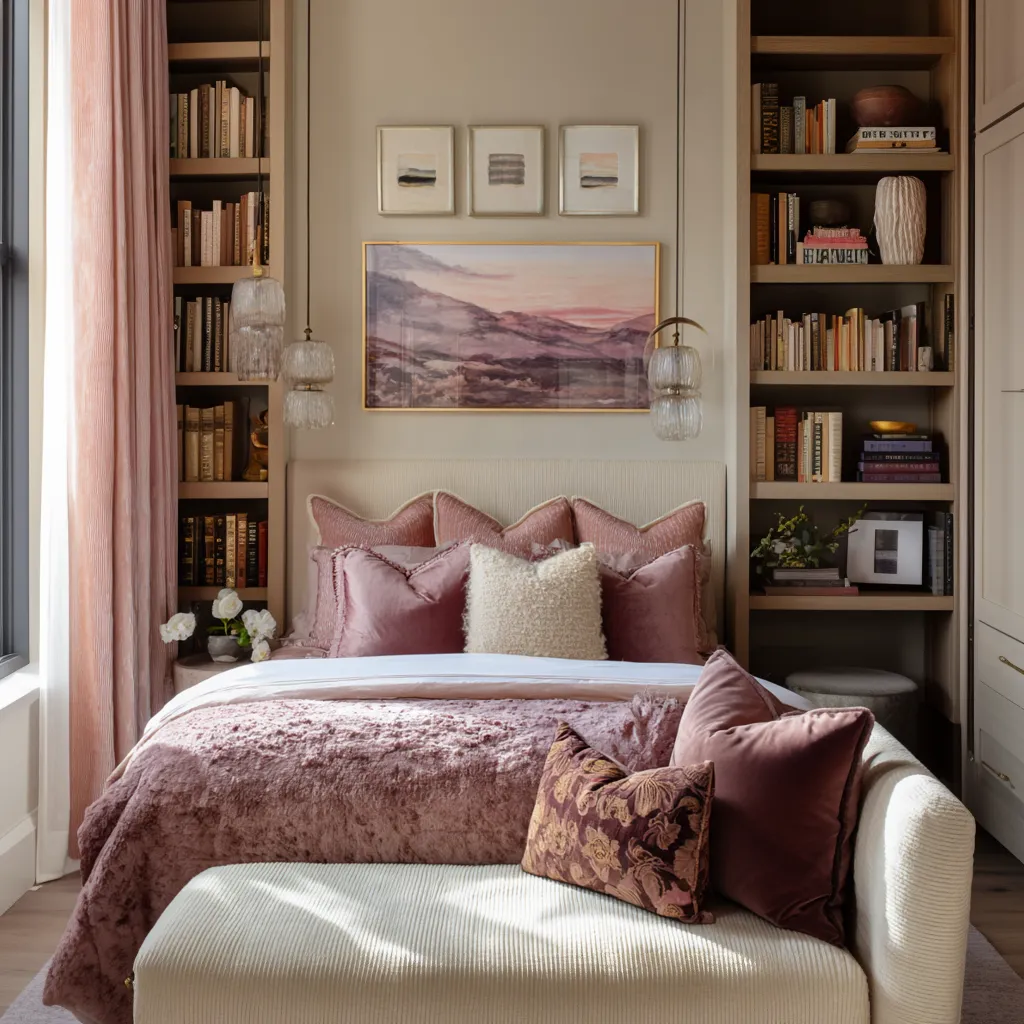
That does not mean the room needs heavy black everywhere. Thin black pendants, a television plane, reading lights, or window frames can sharpen the composition, but they usually work as punctuation.
The deeper sense of maturity comes more reliably from wood, stone, darker painted cabinetry, plaster, and mineral surfaces.
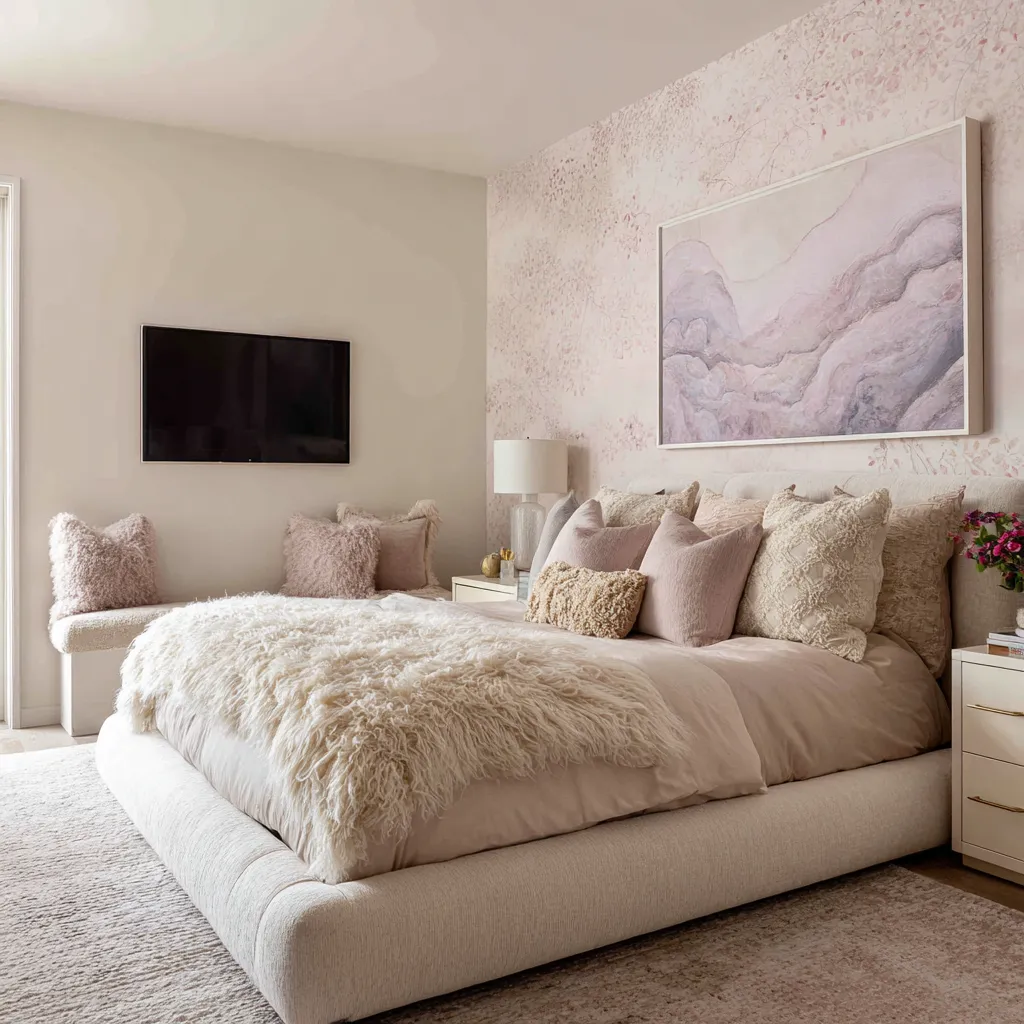
Dry, solid materials are essential partners for pink
Pink bedrooms often become richer when softness is paired with something firmer or drier. Walnut is one of the most useful partners because it adds warmth without sweetness.
Stone and pale mineral cladding bring a chalky, dry counterpoint that prevents the room from becoming too upholstered. Woven fiber pendants or natural-texture shades can cut through velvet and mural softness with a fibrous note.
Brass adds warmth and a small reflective edge. Glass can bring lightness and definition without bulk.
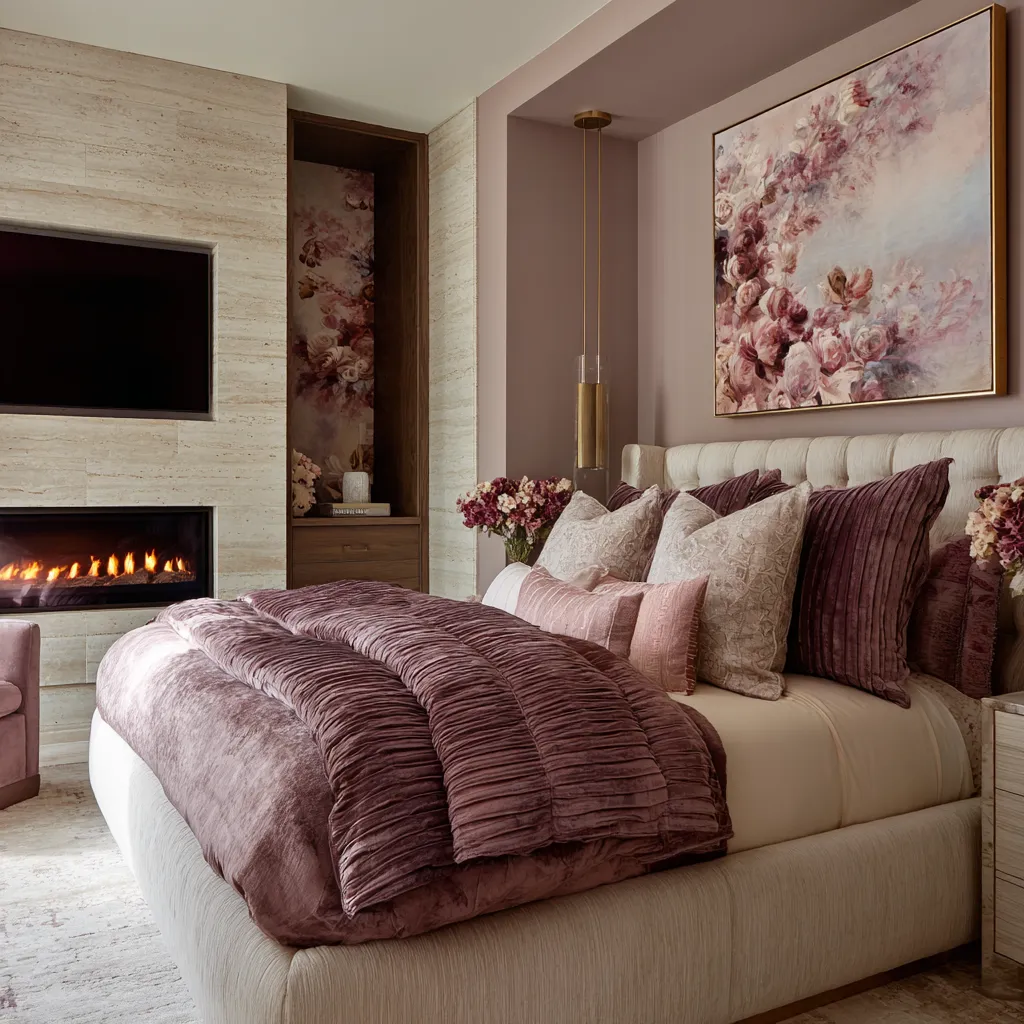
These materials matter because they keep pink from turning cosmetic. A room full of rosy tones and plush fabrics may feel soft and inviting, but without any dry or solid support it can lose shape.
One stone fireplace, one walnut nightstand, one shelving bay, one woven pendant, or one brass-and-glass bedside fitting can make the whole composition feel more rooted.
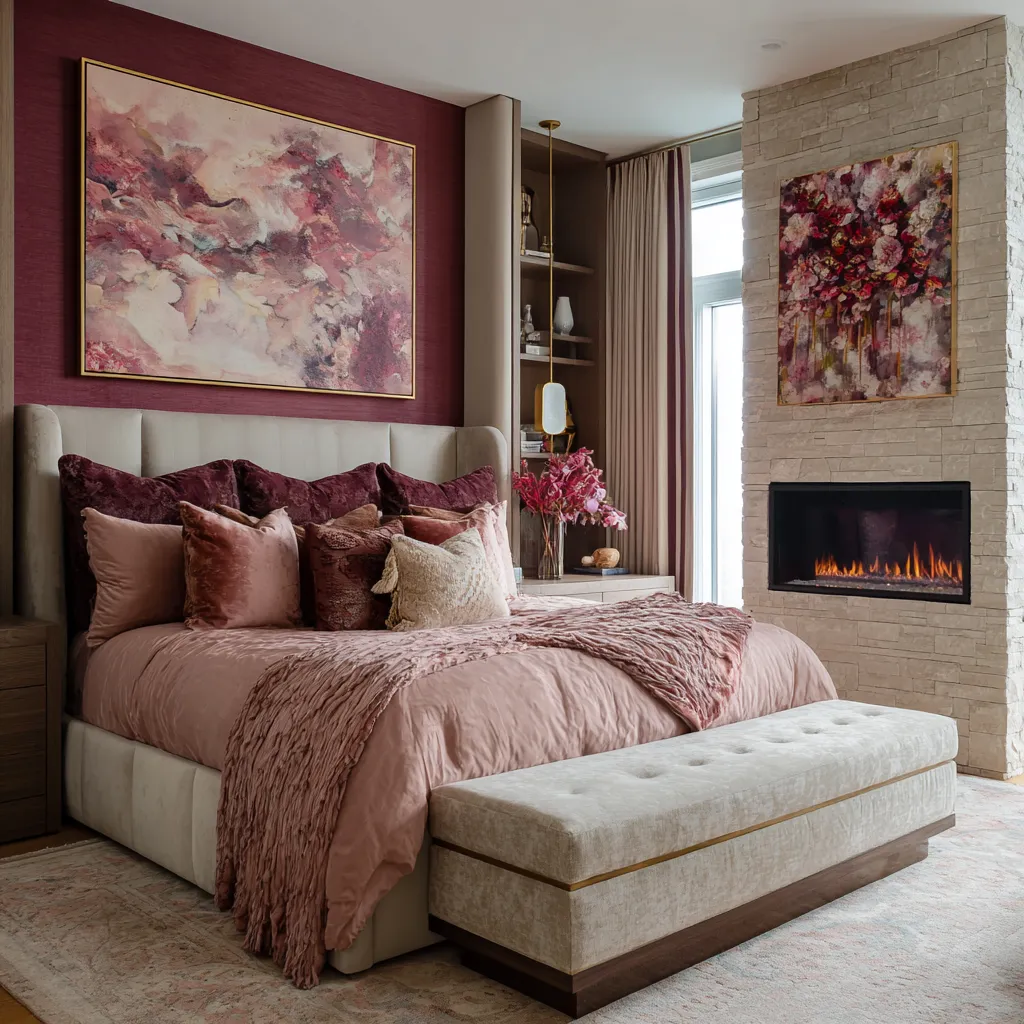
Stylish color pairings in modern pink maximalist bedrooms
Pink is remarkably flexible, but it works in different ways depending on the partner color.
- Blush, burgundy, and walnut create a warm, enveloping bedroom with depth and maturity. This combination is especially effective when the wall treatment is floral or painterly and the bed stays pale enough to keep the center open.
- Ballet pink, black, and cream produce a cleaner, more graphic version of the style. Here the pink stays light and airy, while thin black accents give it definition. This is one of the routes toward a more urban look.
- Antique rose, mauve-taupe, and walnut create a cocooning, slightly shadowed atmosphere. This palette works very well in bed alcoves, built-in headboard walls, or canopied niches where the room needs emotional warmth without sugary brightness.
- Dusty mauve, beige, black, and muted gold give pink a more edited and spacious direction. The room can still feel plush, but the largest surfaces remain light and the stronger pink appears in pillows, art, and a few selected layers.
- Rose-plum, smoky floral pink, and ivory create a denser, moodier composition. This combination works especially well when the floral wall is painterly rather than literal and when pale bedding or a pale bench relieves the darker wall.
- Pink with deep green or olive often brings out the botanical side of the room. Even a small olive pillow, leafy mural tones, or deep green framing cabinetry can move pink away from sweetness and toward a more garden-like, earthy mood. Green is useful, but too much of it can pull the room into a softer romantic direction rather than a sharper modern one.
- Icy pink, silver taupe, and alabaster create a cooler, cloud-like version of pink maximalism. In these rooms, texture often replaces contrast. Shag, bouclé, brushed textiles, pale art layers, and softly reflective lighting become the main sources of richness.
- Coral pink, terracotta, and muted olive push the palette toward warmth and sunlight. This branch of pink maximalism feels less powdery and more sun-washed. It works well in rooms that frame a floral mural inside painted architectural side panels or between lighter built-ins.
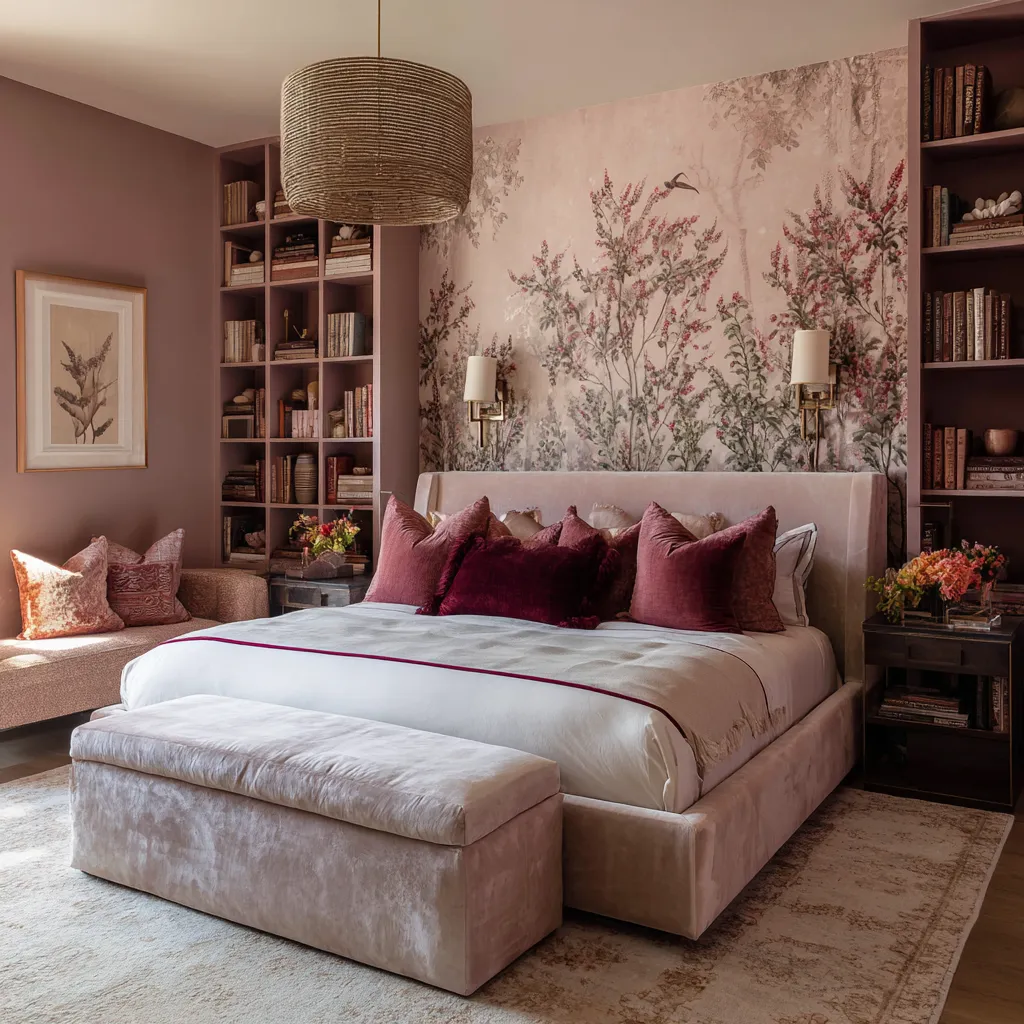
The bed should carry the drama without becoming heavy
In pink maximalist bedroom ideas, the bed is where the palette reaches its richest point, but the arrangement is carefully staged. The deepest tones usually sit high or central: back pillows in berry, oxblood, plum, or terracotta-rose; a mural center behind the headboard; an art field above the bed.
The lower bed often stays lighter through cream bedding, a pale duvet fold, or an ivory throw.
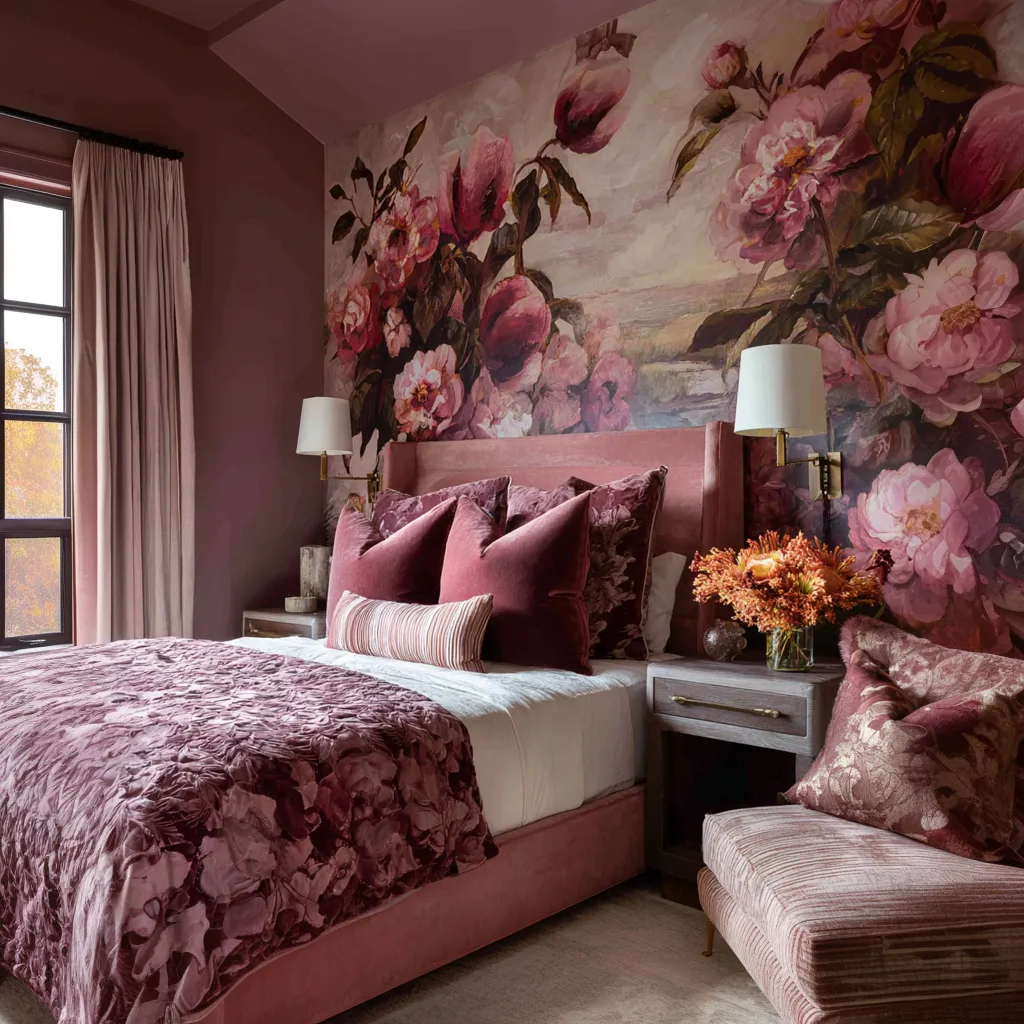
This arrangement creates warmth around the sleeping zone without letting the room feel bottom-heavy. It also makes the headboard wall feel more dimensional.
If the darkest notes are spread evenly across the duvet, the rug, the curtains, and the wall, the room can become too compressed. Concentrating them near the headboard gives the bedroom intensity with lift.
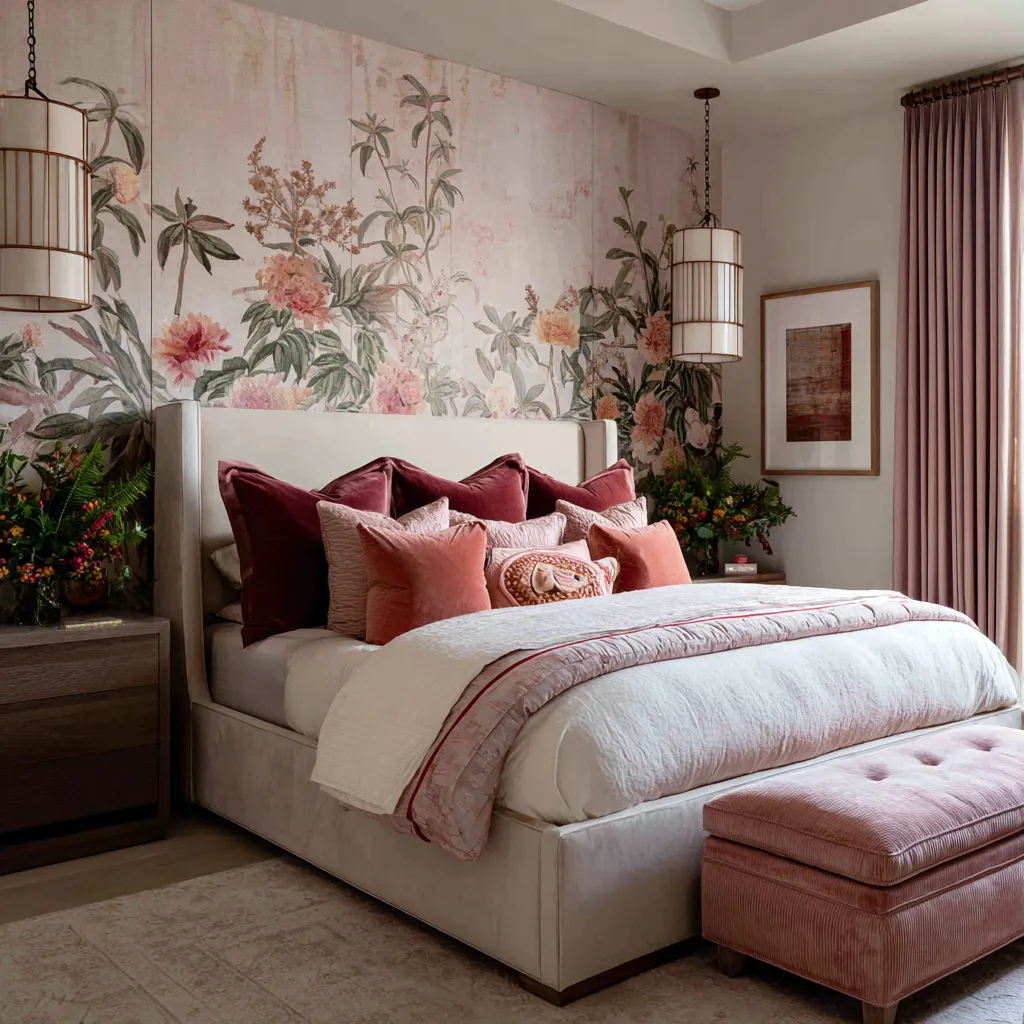
A pale upholstered bed is often the ideal base for this. It can sit in front of a floral wall, berry pillows, and mauve drapery and still keep the room visually stable.
That is why so many pink maximalist bedrooms rely on large cream or off-white bed frames. They are not neutral in a passive sense.
They are stabilizers.
Architectural framing is what turns decoration into composition
A pink bedroom feels more complete when its decorative event is held inside a spatial structure. This may be a recessed center panel behind the bed, a millwork bay with shelving on both sides, a paneled wall, a fireplace composition, a headboard alcove, or a built-in insert where the mural sits.
Once decoration is given a frame, it starts to feel integral to the room rather than applied to it.
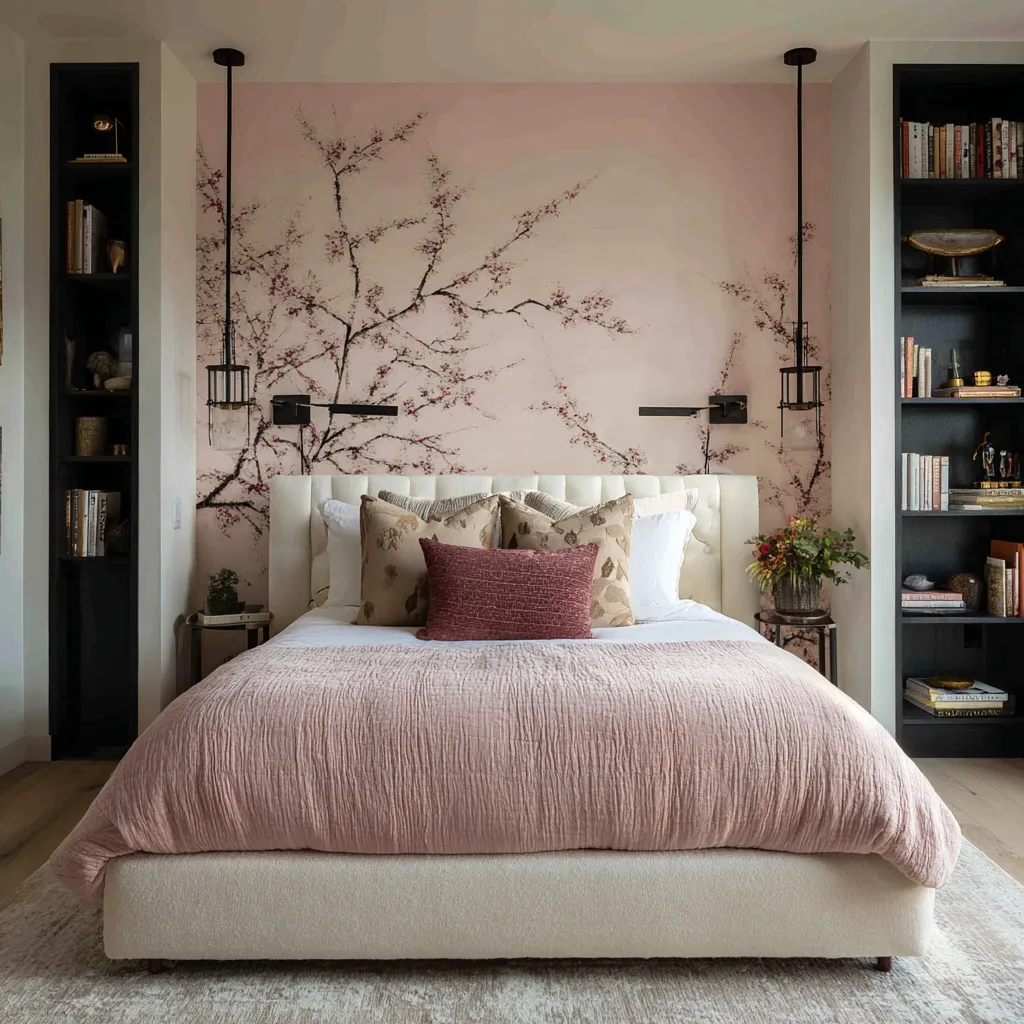
This is important in maximalist interiors because rich color and strong pattern can easily drift into softness without enough boundaries. Architecture gives the color edges.
It gives the eye a sense of placement. It tells the room where the richness begins and where it should pause.
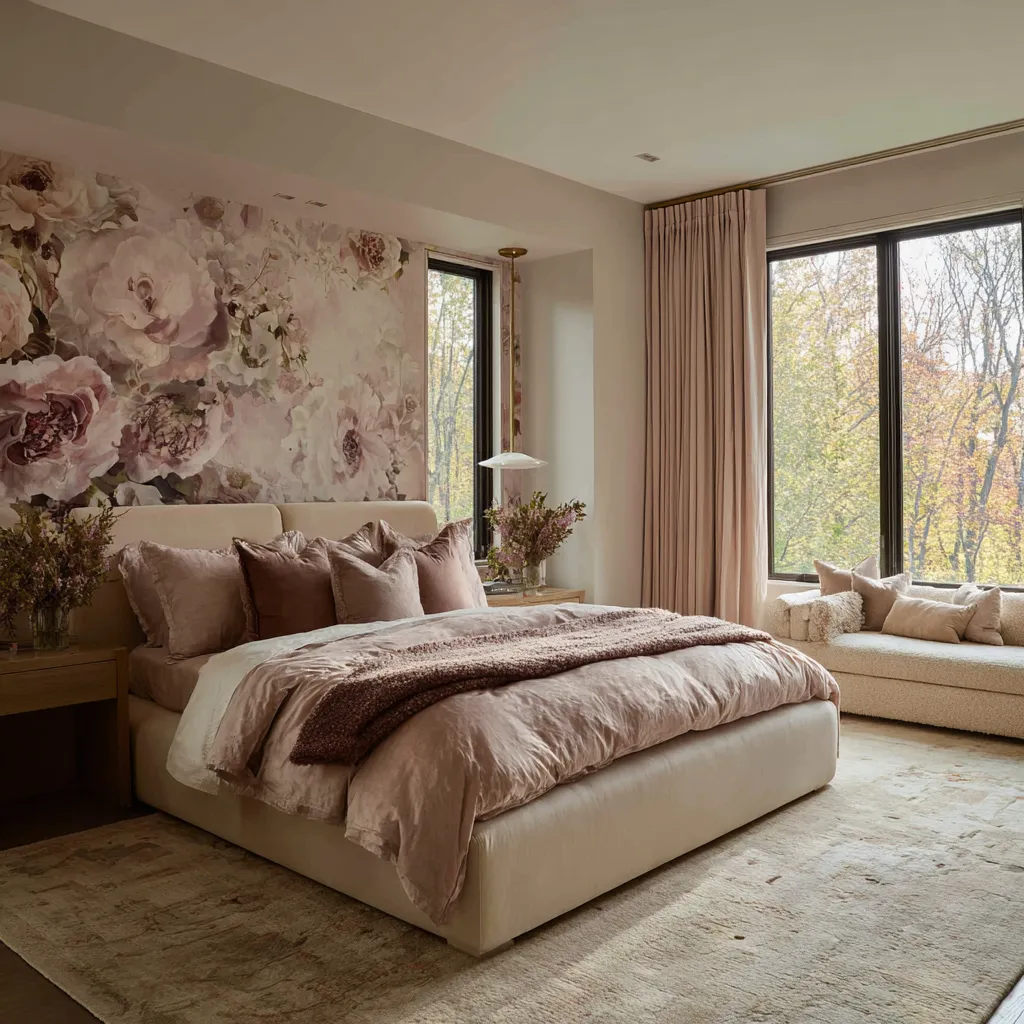
That is also why pink bedrooms with library-like shelving, layered art, and built-in symmetry can feel every bit as full as floral mural rooms. The maximalism is carried by composition, not by one decorative trick.
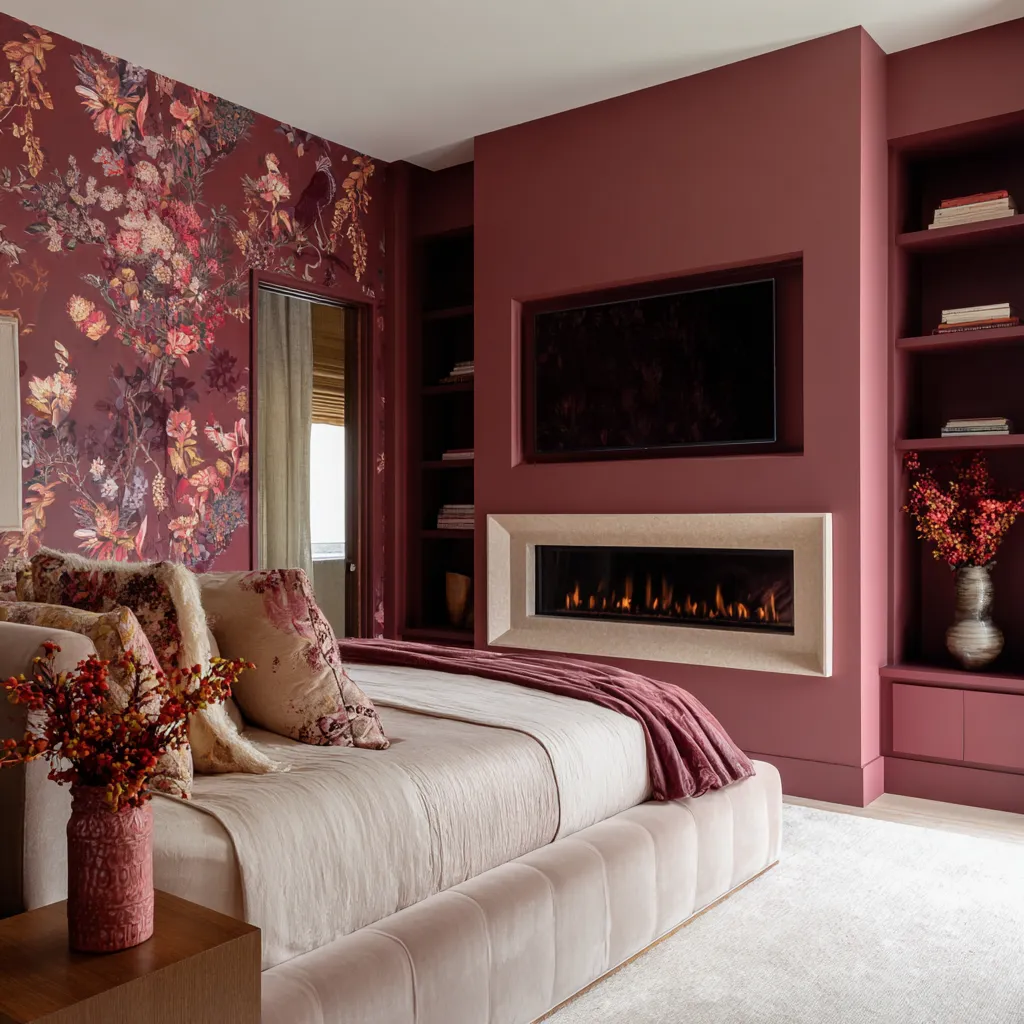
Texture can take the place of stronger color
Not every pink maximalist bedroom needs to move into plum, berry, and oxblood. Some of the compelling bedroom ideas stay very pale and build richness through texture.
A shag throw across blush bedding, a nubby cream center pillow, ribbed textile layers, bouclé seating, a faint blossom wall, and one large atmospheric art piece can create fullness even when the palette stays near ivory, shell pink, taupe, and lilac-gray.
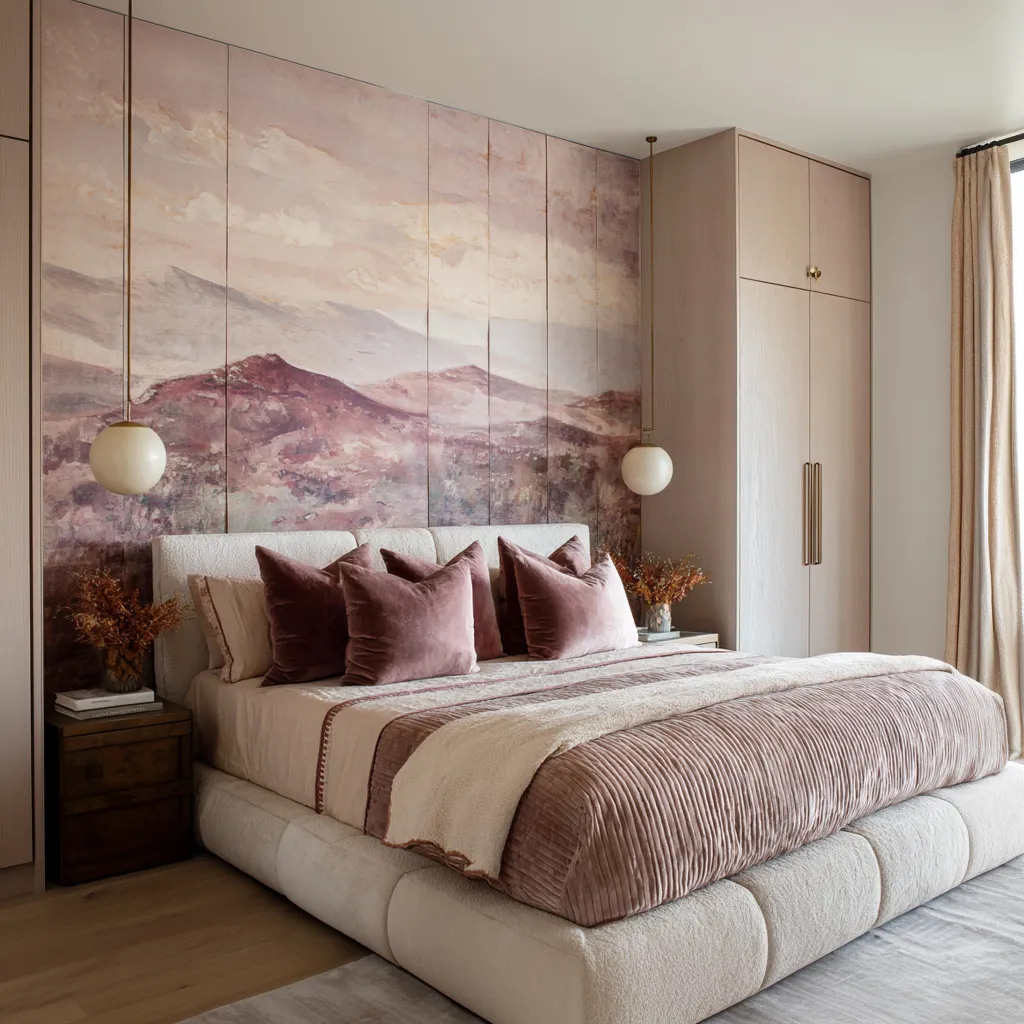
This softer branch of the style often feels open and luminous. It is especially effective when one or two dark or crisp accents are added in small doses, such as a black television plane, a darker nightstand, or a narrow metal pendant.
Those accents prevent the pale room from floating away.
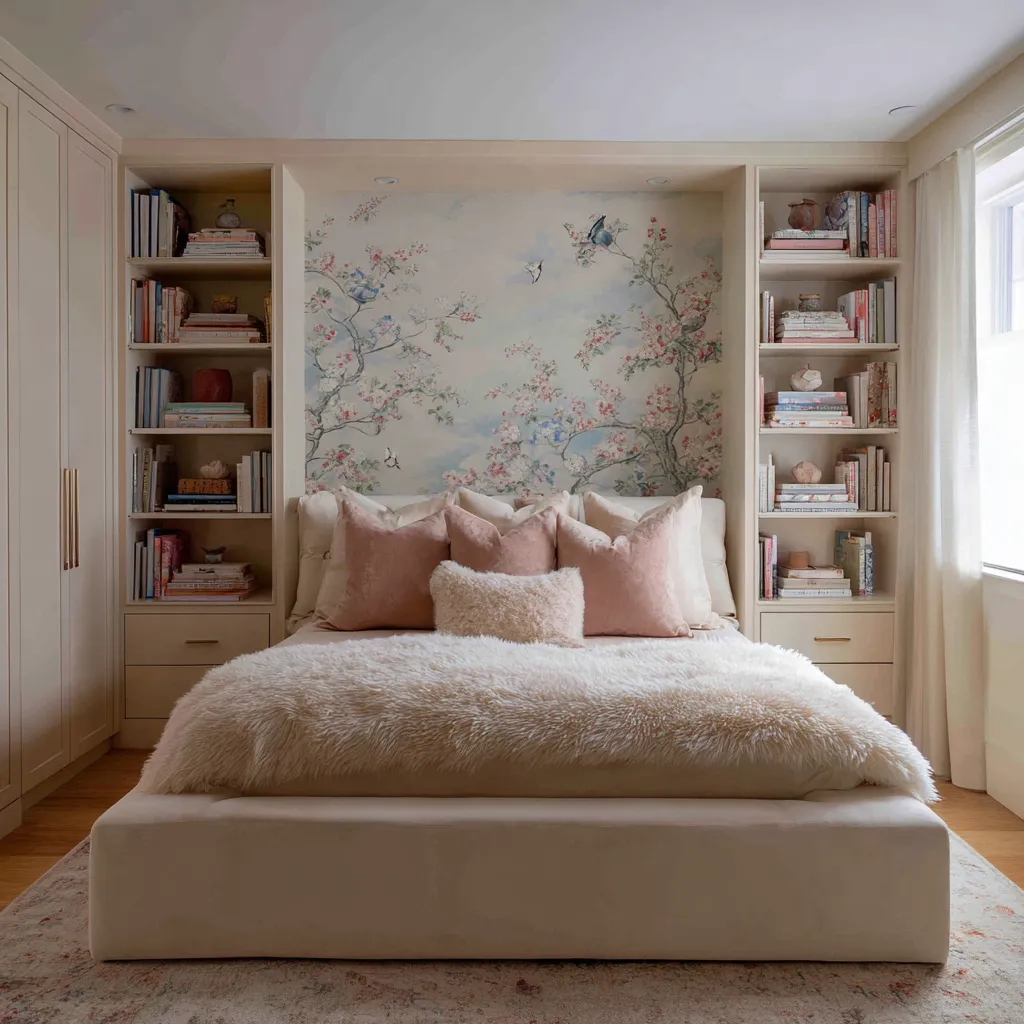
What to avoid in a pink maximalist bedroom
A few patterns tend to weaken the look.
- Using one flat pink everywhere often makes the room feel thinner rather than richer. The style needs tonal depth.
- Floral density without framing can quickly overwhelm the room. A mural usually benefits from paneling, recessing, artwork, shelving, or open ground.
- Too many soft surfaces with no dry partner can make the room lose structure. Pink needs wood, stone, plaster, fiber, brass, glass, or darker millwork to feel grounded.
- Dark saturation spread evenly from wall to floor can pull the room down. It is often better to concentrate the deepest tones high or centrally and keep the lower half lighter.
- Overreliance on accessories rarely solves a weak pink scheme. If the wall, bed, architecture, and material story are not working together, more objects will not fix the room.
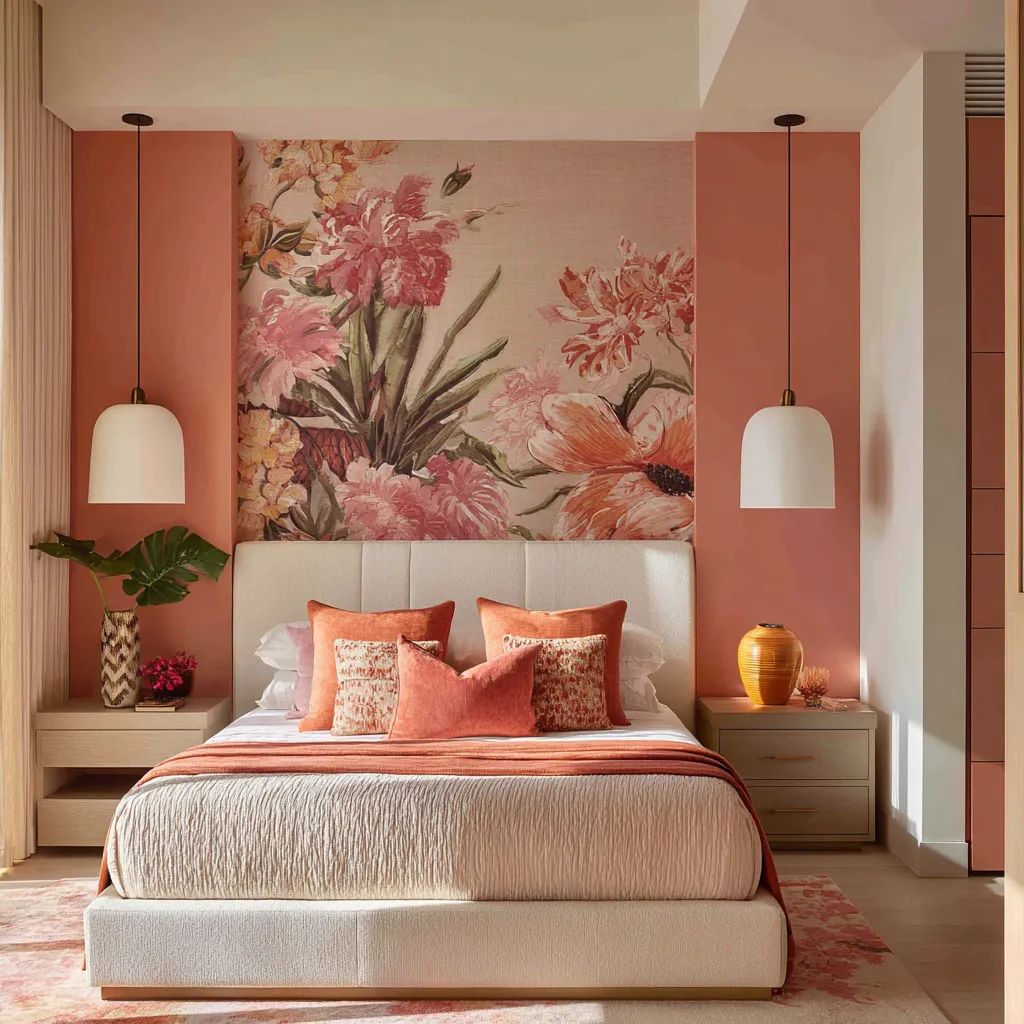
The logic of modern pink maximalism
A modern pink maximalist bedroom works when richness is paired with restraint in the right places. The room needs breadth of pink tone, but not pink everywhere at the same strength.
It needs softness, but also dry material support. It needs floral or atmospheric pattern, but held inside architecture.
It needs fullness, but not necessarily many objects. It needs darker depth, but placed with care.
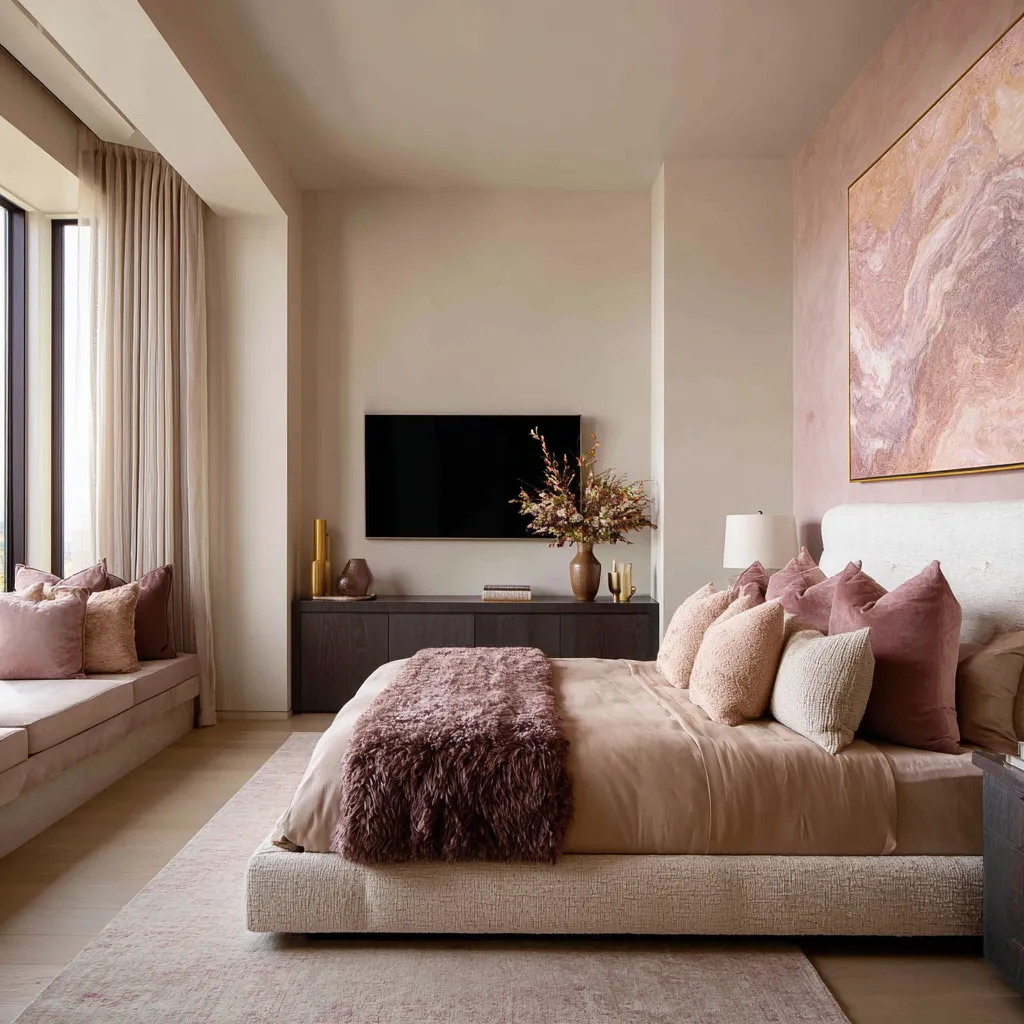
Memorable rooms treat pink as a full atmospheric language. They move from blush into dusty rose, mauve, berry, plum, terracotta, or lilac-gray.
They use a pale bed or pale rug as a stabilizing base. They bring in walnut, stone, glass, brass, or deeper millwork to give the palette weight.
They let the bed wall become the emotional center, while the rest of the room remains open enough for the eye to rest.
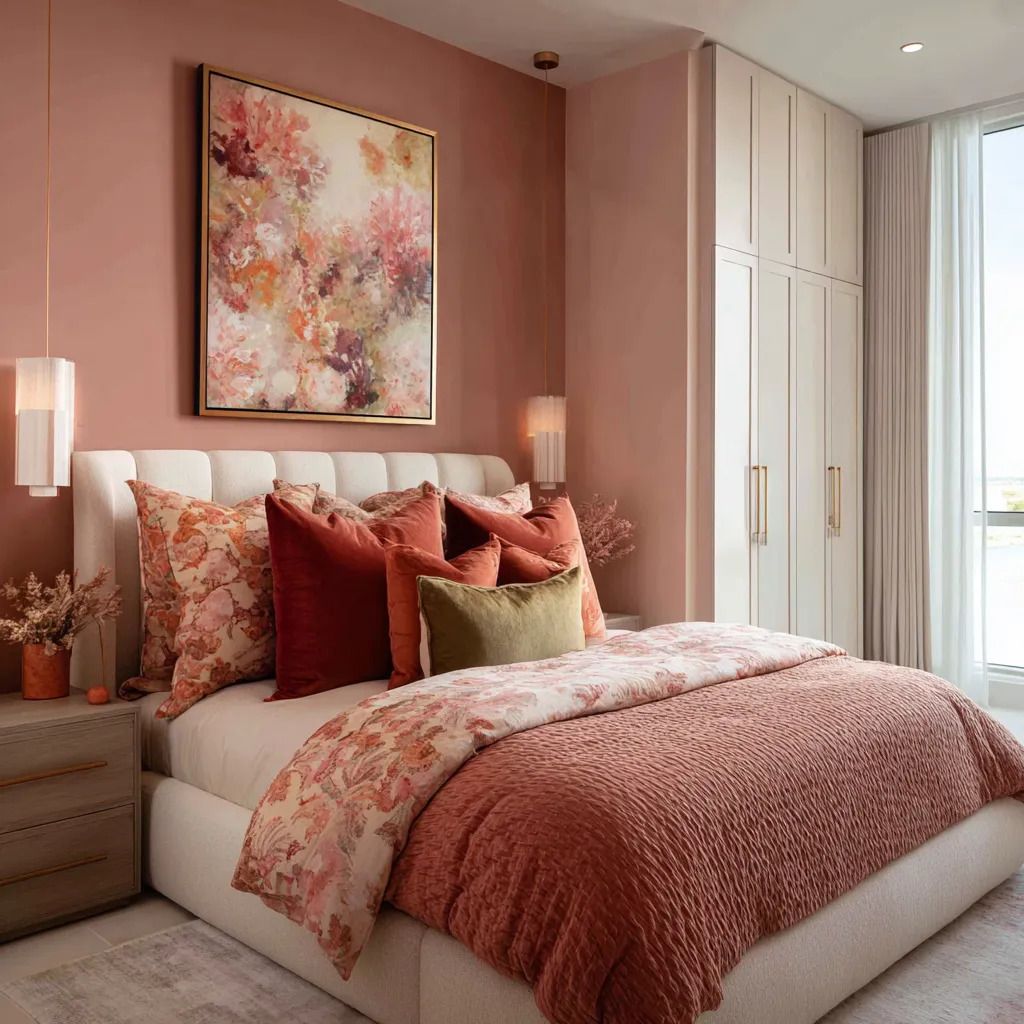
That is why a pink maximalist bedroom can feel lush, stylish, and composed at the same time. The secret is not pink plus more decoration.
It is pink given depth, placement, and structure.