In many contemporary design ideas, the vanity wall is no longer a thin tiled strip but a continuous surface that organizes the entire bathing zone. Instead of stopping at sink height, the backsplash stretches from counter to ceiling and occasionally wraps around niches or adjacent walls.
This shift transforms the surface into a defining spatial element: it behaves like a seamless screen behind which cabinetry, mirrors, and lighting are simply layered. Within these compositions, slender ceramic ribs, fine stone-look strips, micro-scaled mosaics, and even dark scallops extend uninterrupted behind faucets, mirrors, and shelving.
The wall stops functioning as a splash guard and becomes a calm but decisive anchor point, often mirroring the idea of a textile hung from above. The backsplash also can visually link vanity and toilet zones, creating one continuous plane that makes the whole layout feel unified, even when the fixtures themselves differ in form and color.
This approach unlocks visual stability: the cabinets float in front, the mirrors hover like discs on a draped surface, and the lighting grazes the texture to highlight its rhythm. This is where the most expressive vanity backsplash ideas emerge—not through color but through the way the wall behaves as architecture.
Surface as Textile: Turning Hard Tile Into Soft Visual Weave
A major movement in current bathroom vanity tile ideas involves treating ceramic, stone-look, or composite pieces as if they were fabrics. They use ultra-slim vertical ribs, reed-like strips, beaded mosaics, and fine undulating glazes to produce surfaces that read like pleats, corduroy, woven mats, or embroidered cloth.
Even though such walls are solid, the eye perceives them as flexible due to how light slides across the grooves.
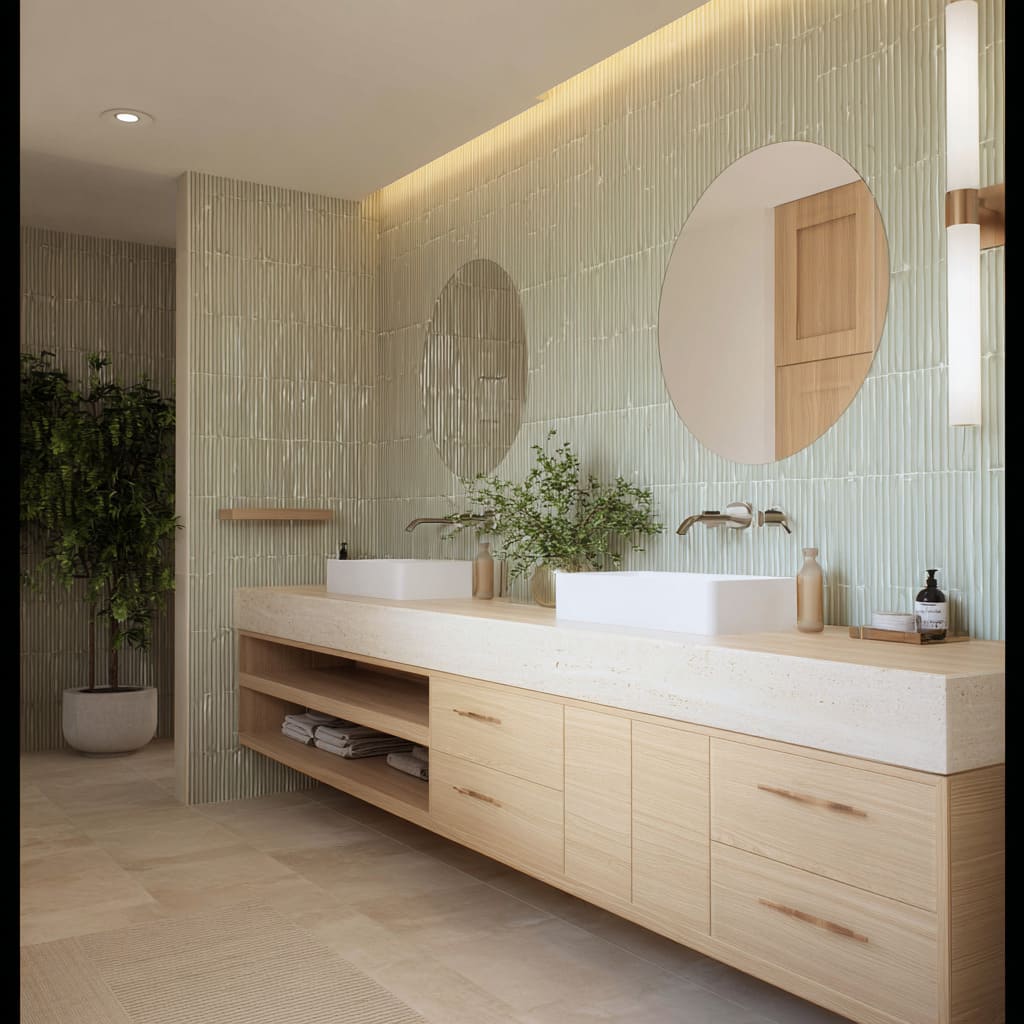
The textile logic shows up in several ways:
A) Pleated and ribbed “cloth” made of vertical tiles
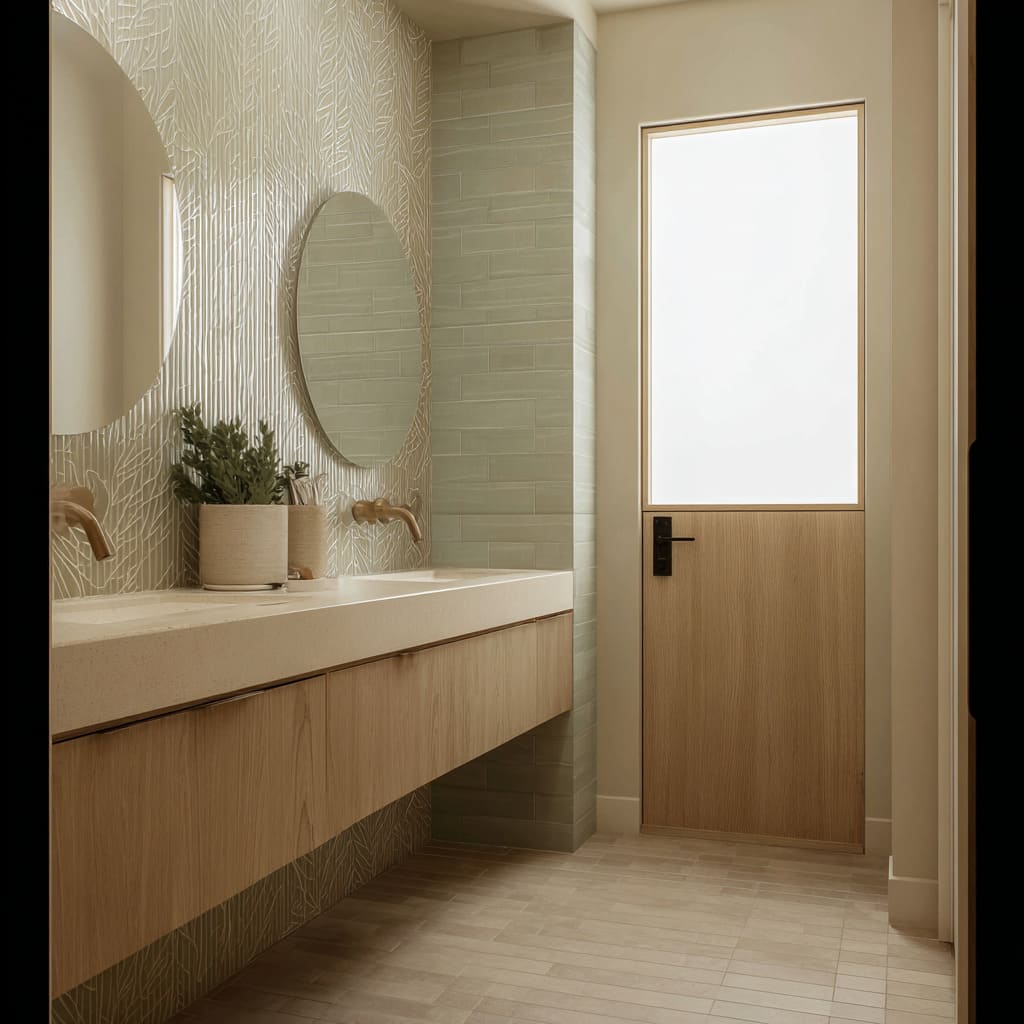
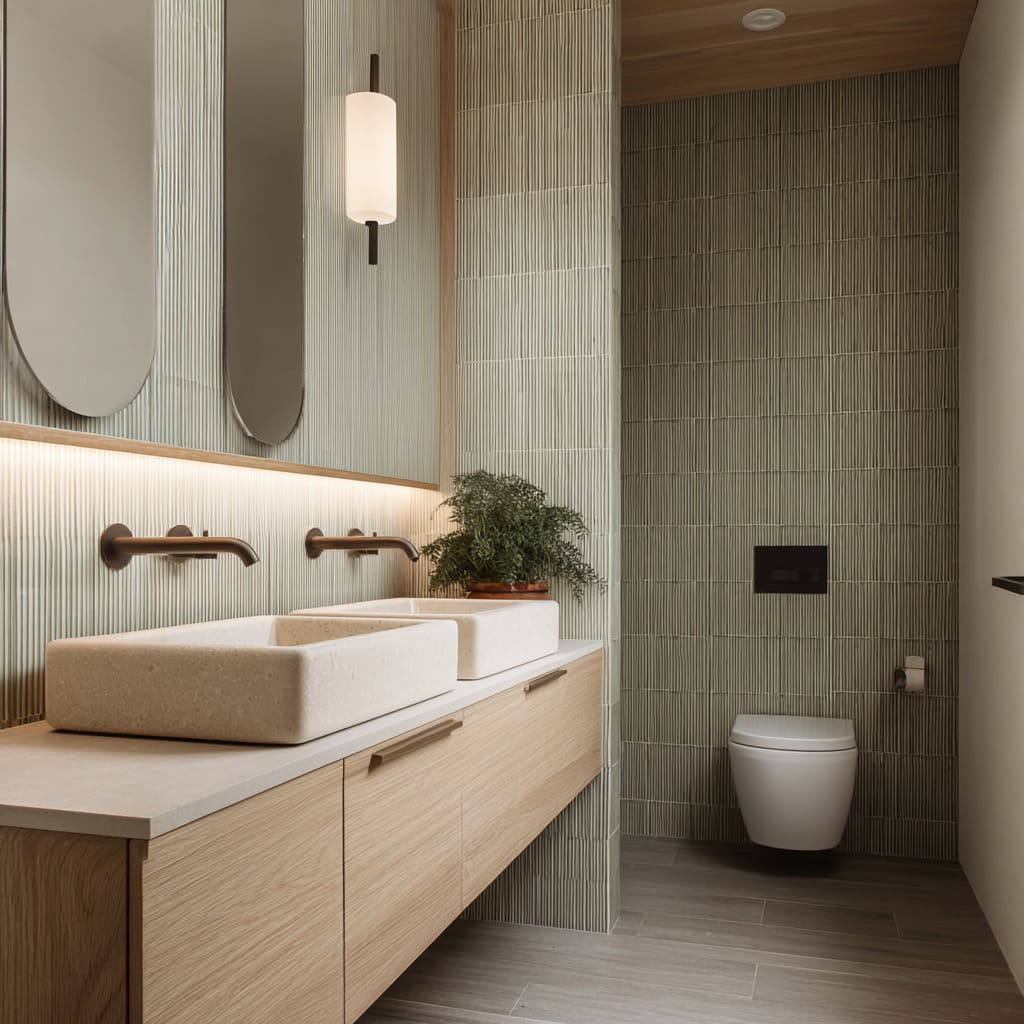
These narrow ribs capture gentle gradients when washed with cove lighting, making the wall feel like a soft curtain rather than a rigid panel. They become especially expressive in pale wood tones, sage ceramic glazes, warm cream surfaces, and muted stone colors.
B) Micro-mosaics used as woven grain
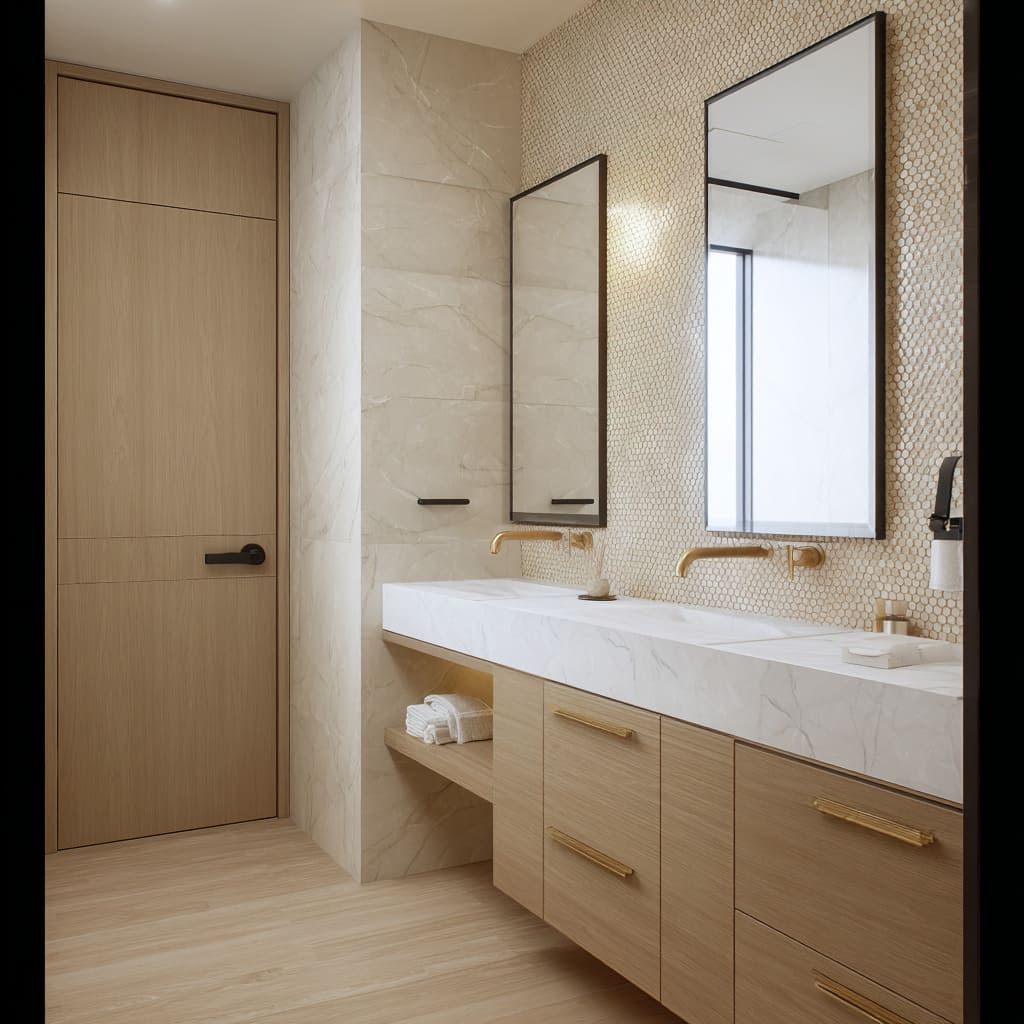
Tiny hexagons or penny rounds form fine micro-textures similar to a tightly woven linen. They catch light in tiny facets, making the backsplash shimmer softly without leaning into bold geometry.
C) Raised relief as stitched pattern
Some designs incorporate subtle botanical or line-based reliefs that behave like threadwork on a textile, allowing shadows to define the shape instead of pigment.
Through these approaches, the wall feels gentle, tactile, and fabric-like, even though it is built from hard surfaces.
This is the key shift that gives modern backsplashes their calm, spa-like feel.
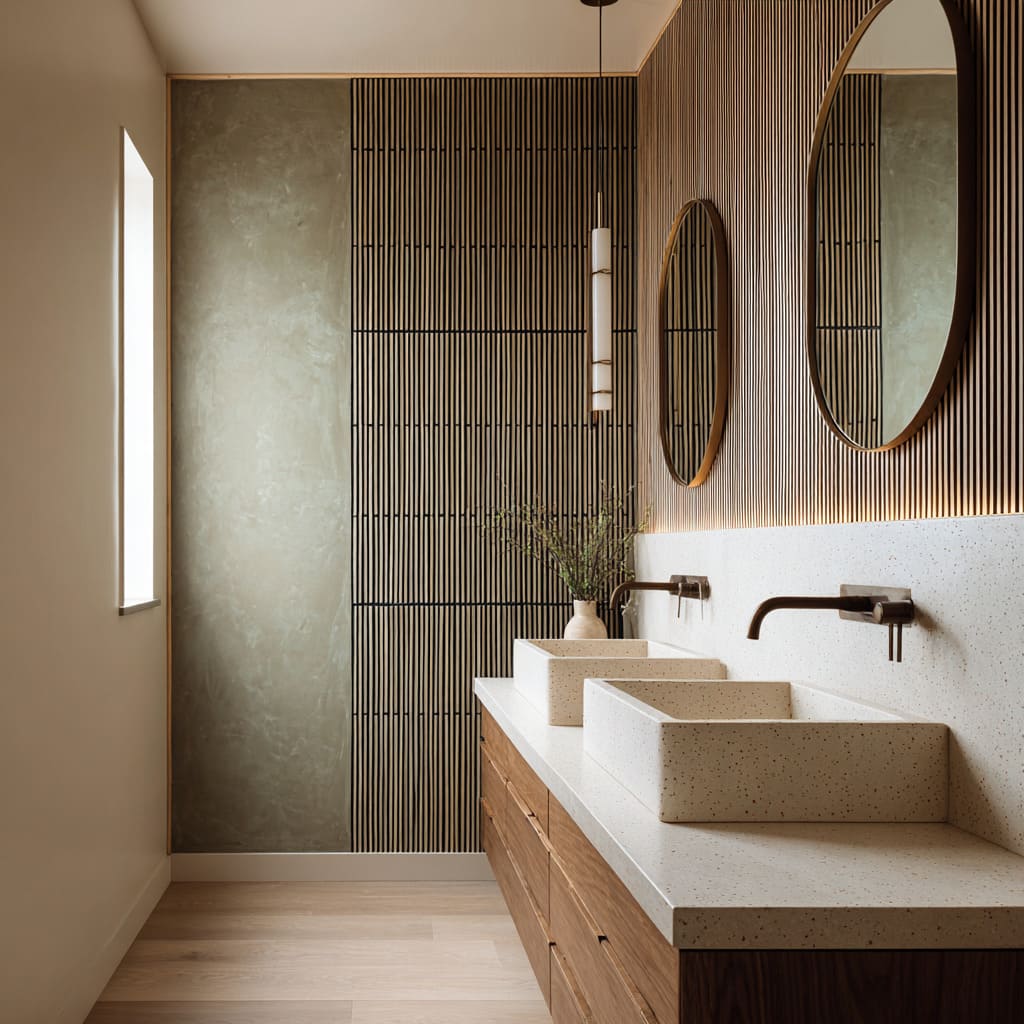
Light: How Grazing Illumination Creates Movement
The most striking bathroom design compositions rely less on tile graphics and more on the interaction of light with surface texture. Instead of spotlighting the vanity directly, the lighting strategy is arranged so that a concealed line—usually in a ceiling recess or a slim under-cabinet channel—grazes the backsplash and turns its ridges, beads, or curved edges into living gradients.
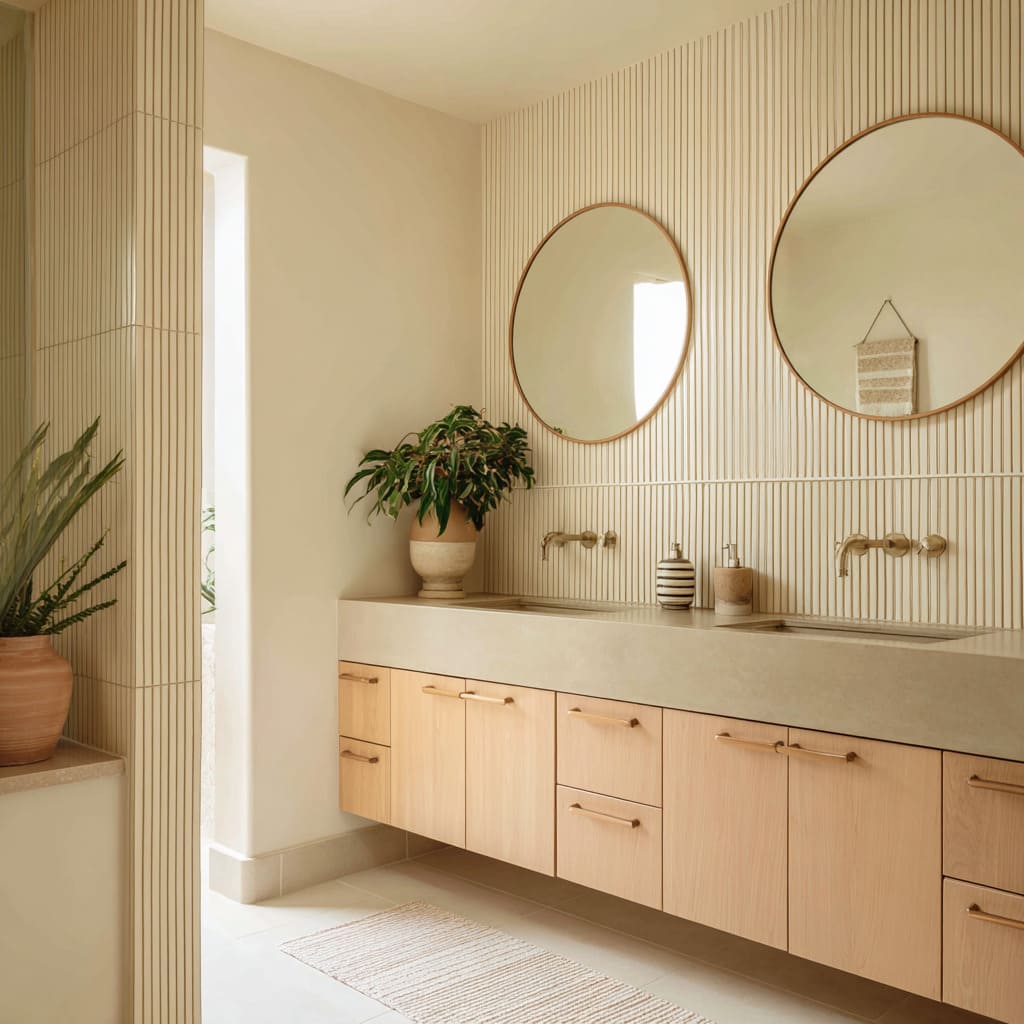
Notable light-texture partnerships:
- Vertical ribbing + top cove light: the glow travels down each groove, producing a gentle ombré effect.
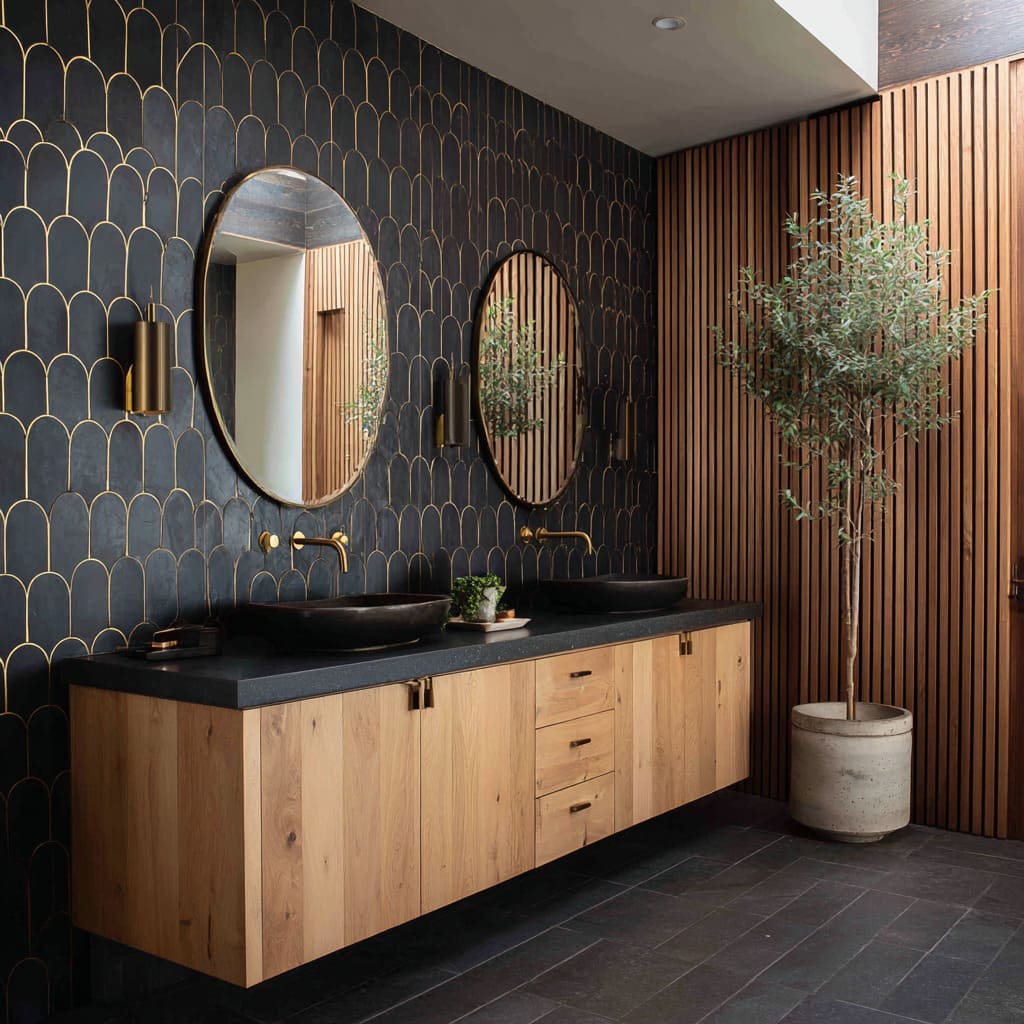
- Dark scallops + overhead wash: curved tile edges catch highlight like soft metallic arcs.
- Tiny domed mosaics + warm ceiling slot: hundreds of micro-reflections form a soft, sparkling veil.
- Horizontal mineral-glazed tiles + warm grazing beam: cool blues shift into golden-toned greens as the glaze reacts to warm light.
Because the illumination shapes the tile’s personality, the wall feels animated without any moving parts. The visual drama comes from gradients, shadow depth, and the way the surface changes as someone walks past.
In this sense, the wall’s “pattern” is dynamic—created not by grout lines but by light behavior—and this produces particularly refined bathroom vanity backsplash tile ideas that remain calm yet expressive.
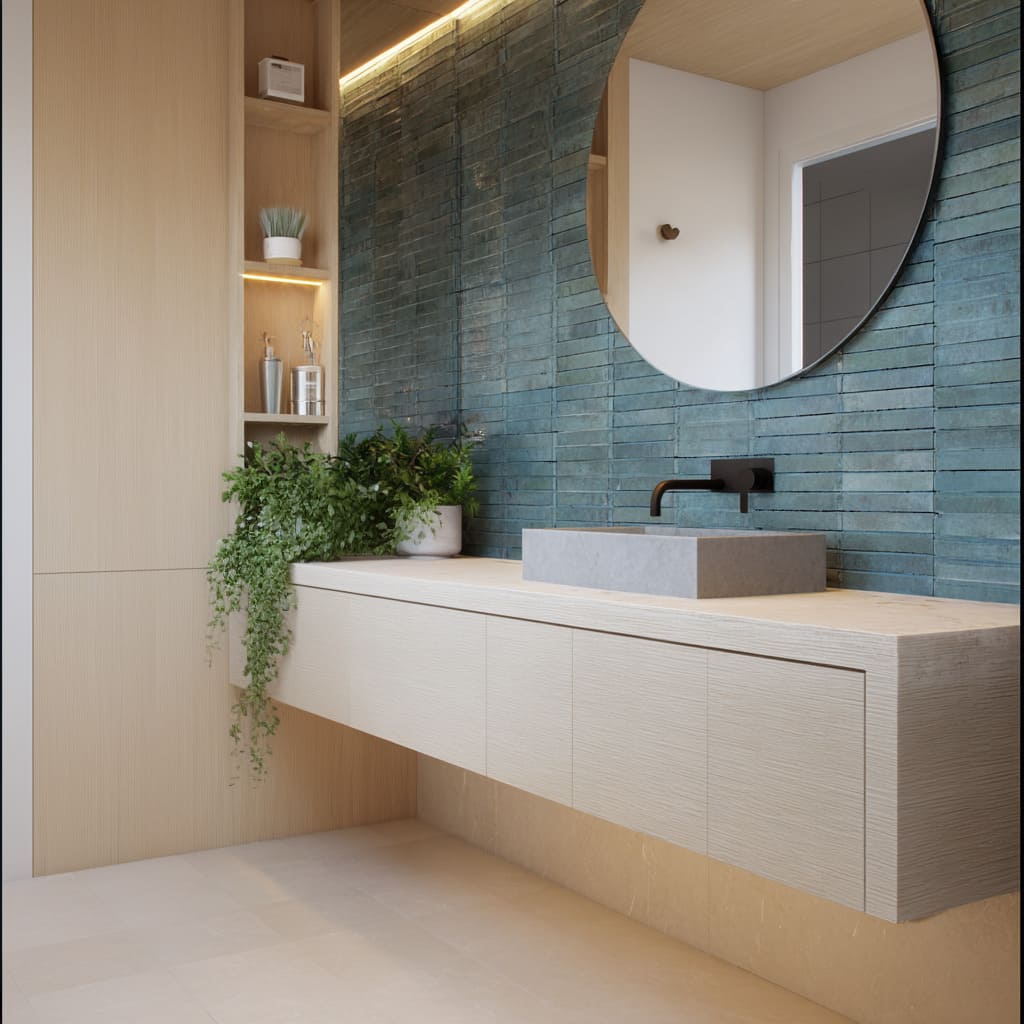
The Line vs. Curve Dialogue
What makes such spaces fresh is not only texture but the conversation between strong linear rhythms and soft curved elements. Many of the most compelling design concepts place round mirrors, arch-topped mirrors, pill-shaped mirrors, and curved vessel basins directly over strict vertical ribbing or crisp horizontal tilework.
The linear vibration of the wall sets up a disciplined backdrop, while the organic shapes soften the entire gesture.
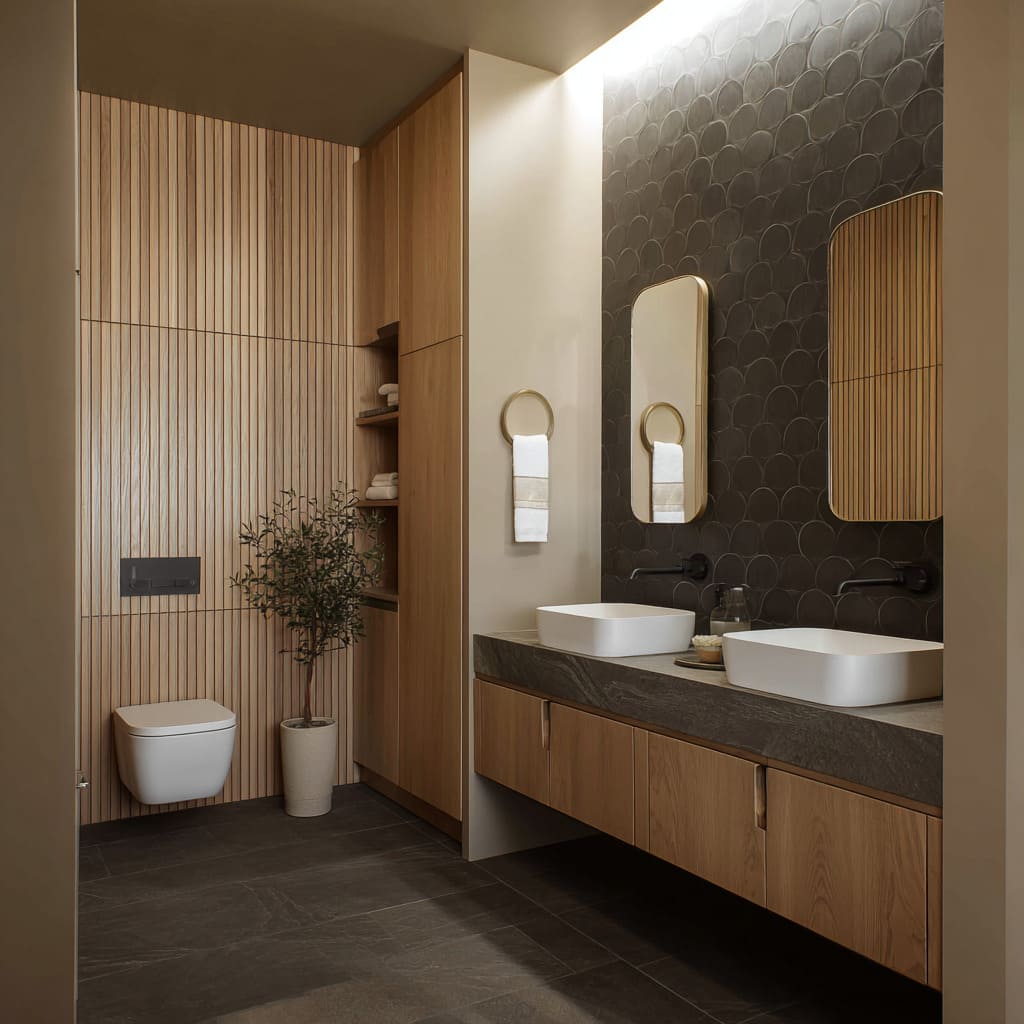
Three recurring geometric relationships:
- Straight vertical ribs + large round mirrors: the discs act like moons rising over a striped horizon.
- Horizontal stacked tiles + single circular centerpiece mirror: the soft geometry interrupts the calm lateral flow.
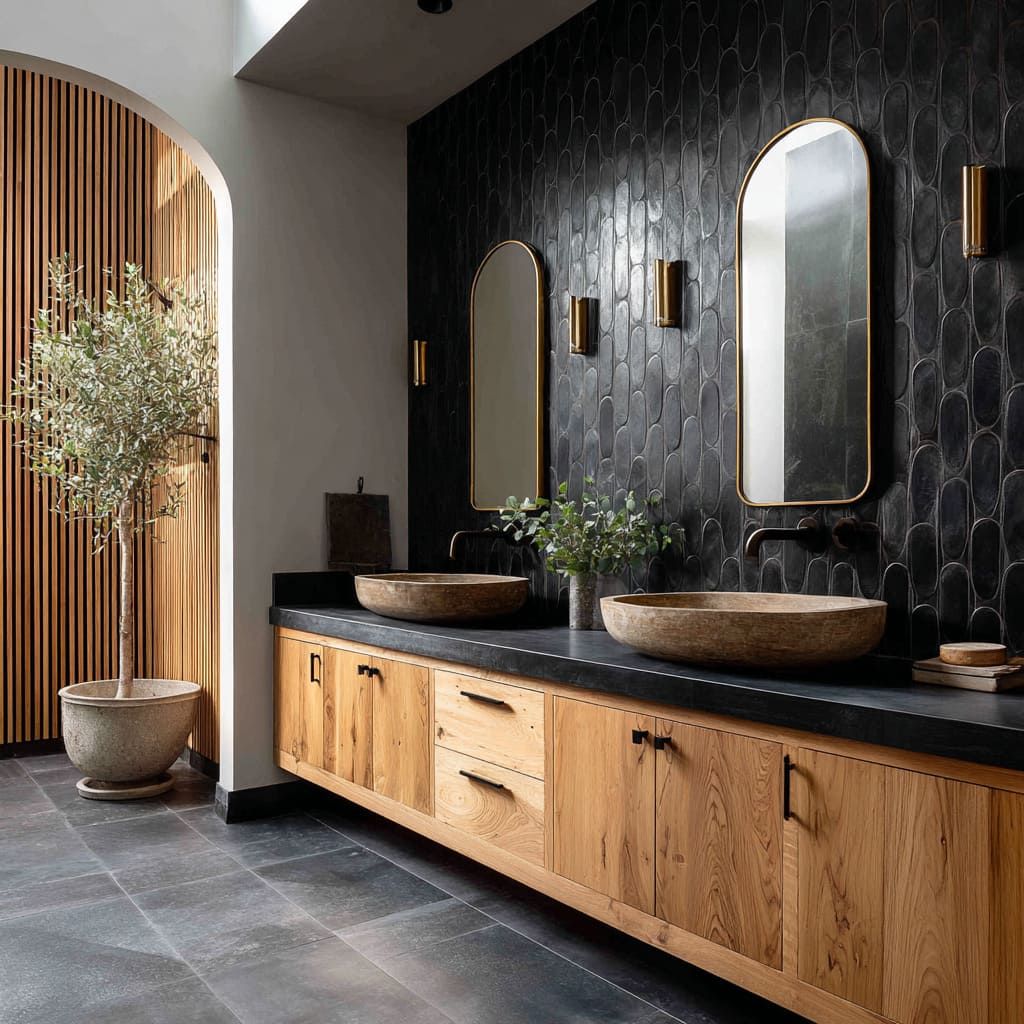
- Scalloped dark tiles + curved brass outlines + circular basins: repeated arcs create layered harmony that stays grounded through matte counters and rustic timber grains.
This interplay allows strong textures to remain serene instead of overwhelming. The curves give the eye a resting point, while the lines maintain architectural order.
Together, they produce a sense of sculptural balance ideal for modern bath vanity backsplash ideas.
Colors: Warm Neutrals, Gentle Greens, and Shadowed Blues
Color in such modern backsplashes rarely screams; instead, it works as tonal atmosphere. The majority of design concepts operate within three subtle families, each producing a different emotional temperature.
1) Warm tonal neutrals
Cream, beige, pale timber, honey-tinted penny tiles, and light terrazzo tones form the base of many schemes. These create spaces that feel sunlit, soft, and steady.
Texture does the work of expression rather than pigment.
2) Whisper-green palettes
Celadon, sage, and green-grey tones add a quiet coolness that pairs well with brass, oak, and white stone. These hues feel natural, spa-like, and grounded, especially when used in ribbed or handmade-look glazes.
3) Charcoal and teal-blue accents
Deep scallops, smoky blue-green strips, and ink-charcoal tiles act as shadow-pools within light rooms. They anchor the vanity wall and give metal accents—black, bronze, or brass—an elegant contrast that stays refined.
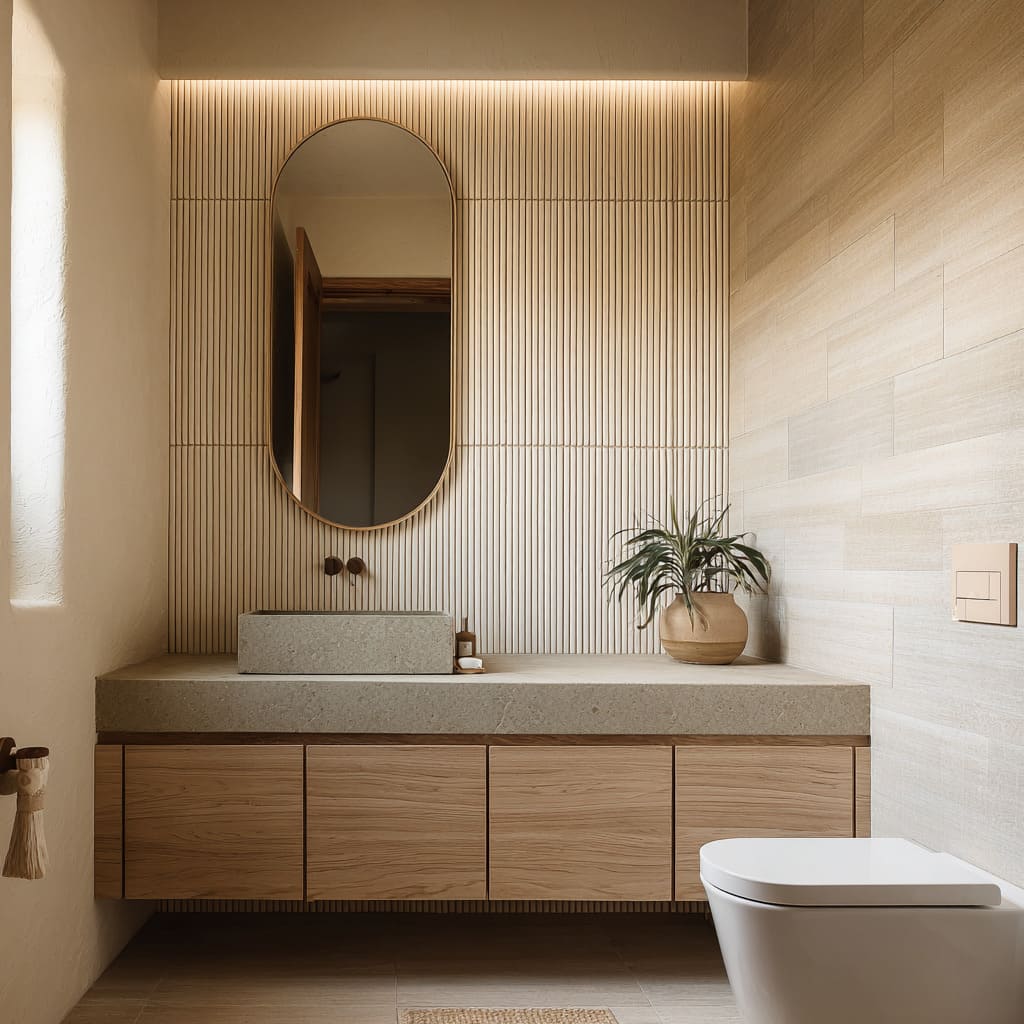
These tonal strategies ensure that bathroom tile ideas feel immersive without relying on pattern contrast. The real richness comes from the way texture, light, and nearby materials modify the hue.
Scale and Grain: Pairing Fine Texture with Broad, Quiet Surfaces
A central principle behind these compositions is scale balance. Wherever the backsplash uses fine grain—micro-mosaics, narrow ribs, scallops, or tightly stacked strips—the surrounding elements become larger, calmer, and simpler.
This scaling keeps the wall expressive but controlled.
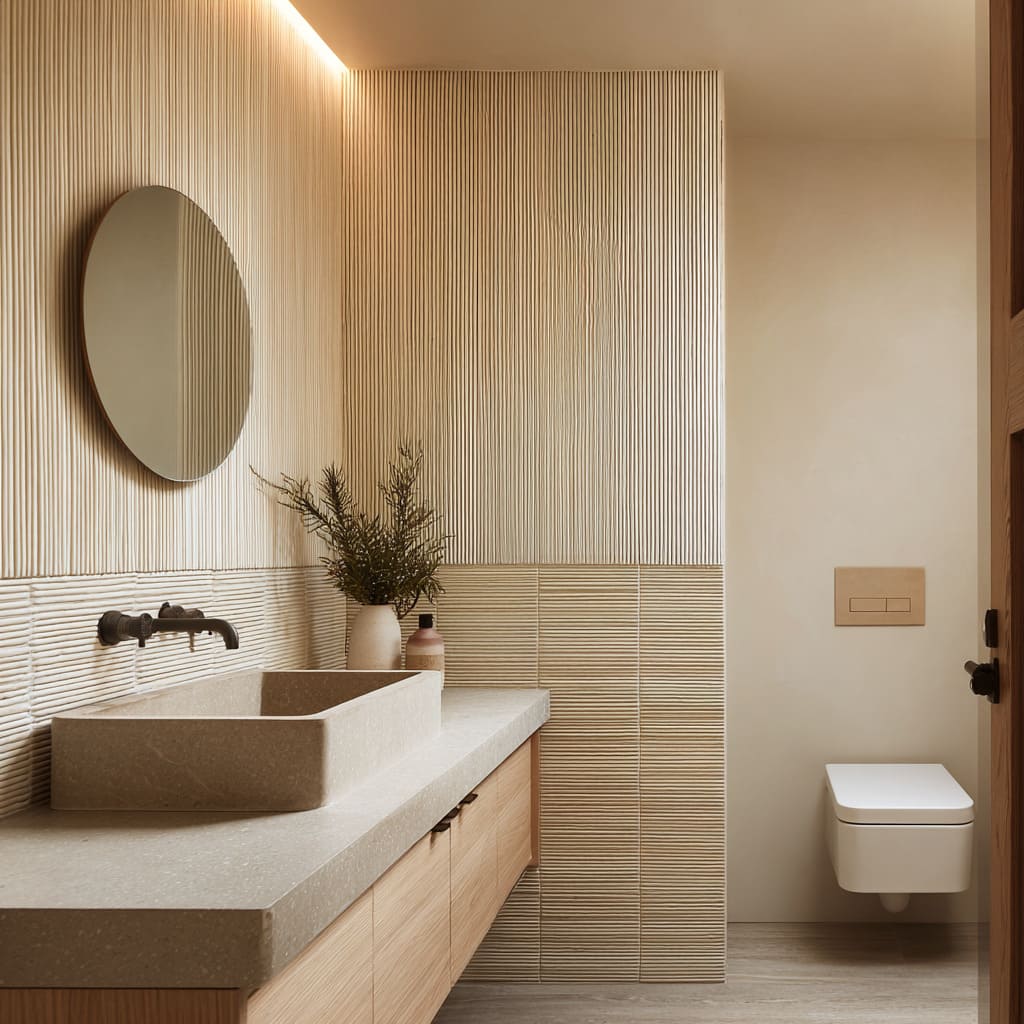
Common pairings:
- Fine hex or penny tiles paired with large stone slabs and thick counters.
- Slim vertical ribs paired with broad oak drawer fronts, long trough sinks, or simple timber cabinets.
- Tiny curved tile outlines paired with deep matte counters and wide planks of rustic oak.
- Elongated capsule tiles paired with round stone basins and unbroken black countertops.
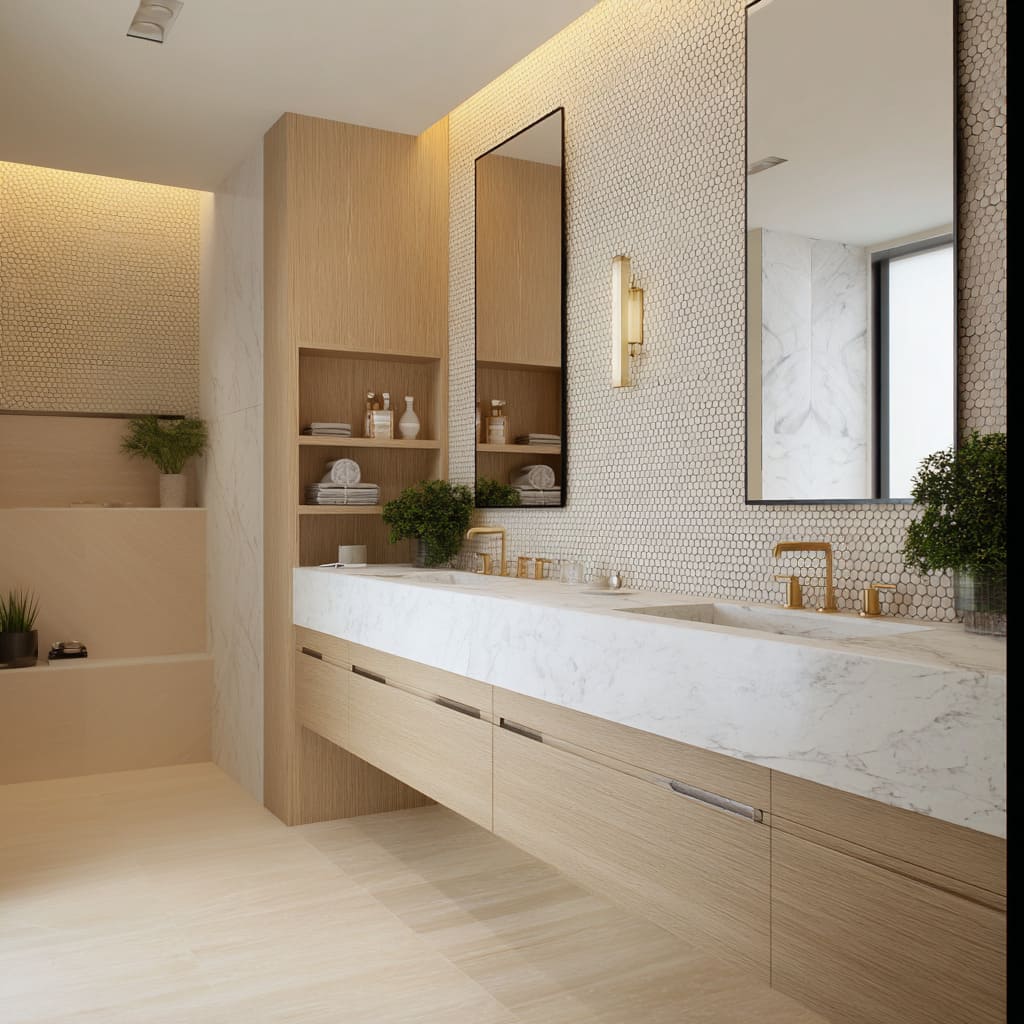
This grain contrast ensures that densely textured backsplashes do not overpower the room. Instead, they behave like detailed artwork layered over calm furniture, creating thoughtful bathroom vanity wall tile ideas that balance intensity with softness.
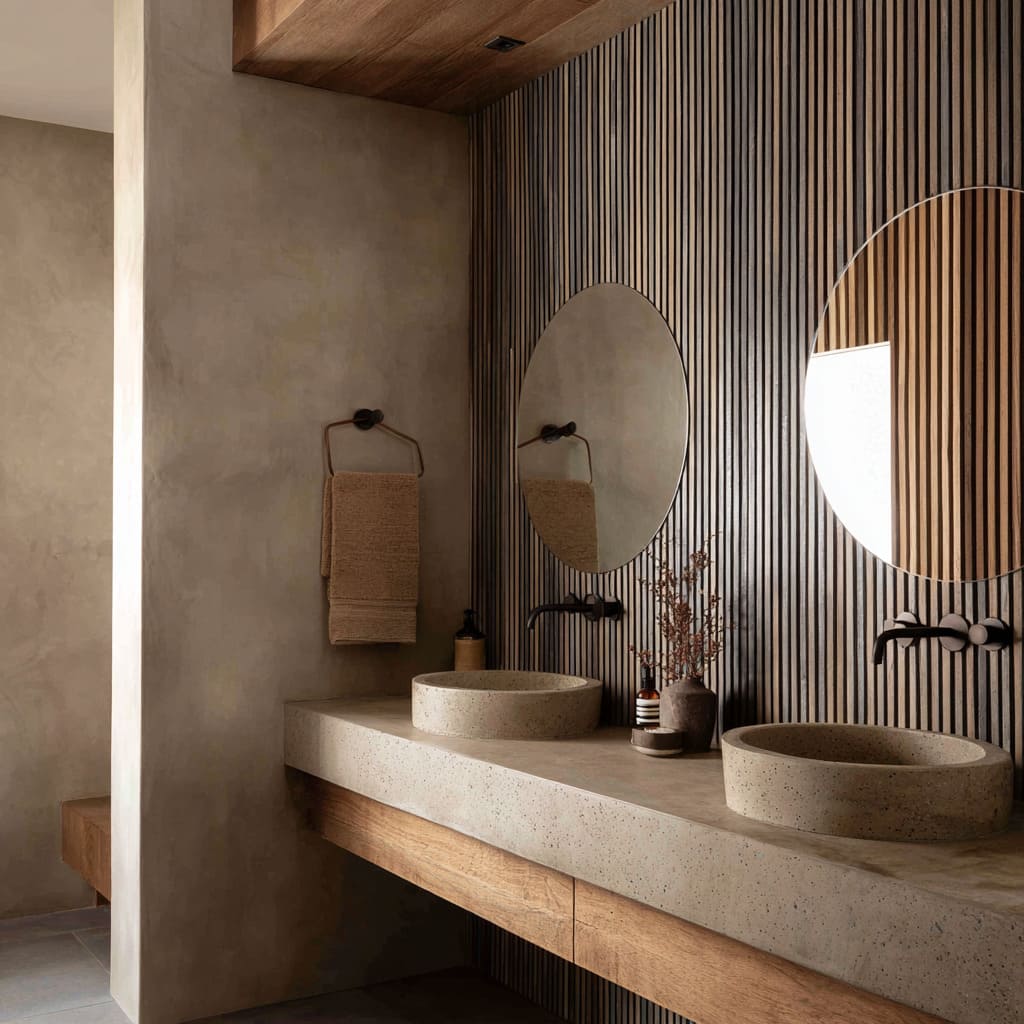
Unified Zones: How Backsplashes Connect Vanity, Storage, and Bath Spaces
Another important shift is how the same surface can be used to tie multiple zones together. Rather than isolating vanity, toilet, and bath alcoves, many concepts wrap the backsplash tile into corners, across partitions, or around tall storage towers.
This method produces a continuous field that quietly links functions.
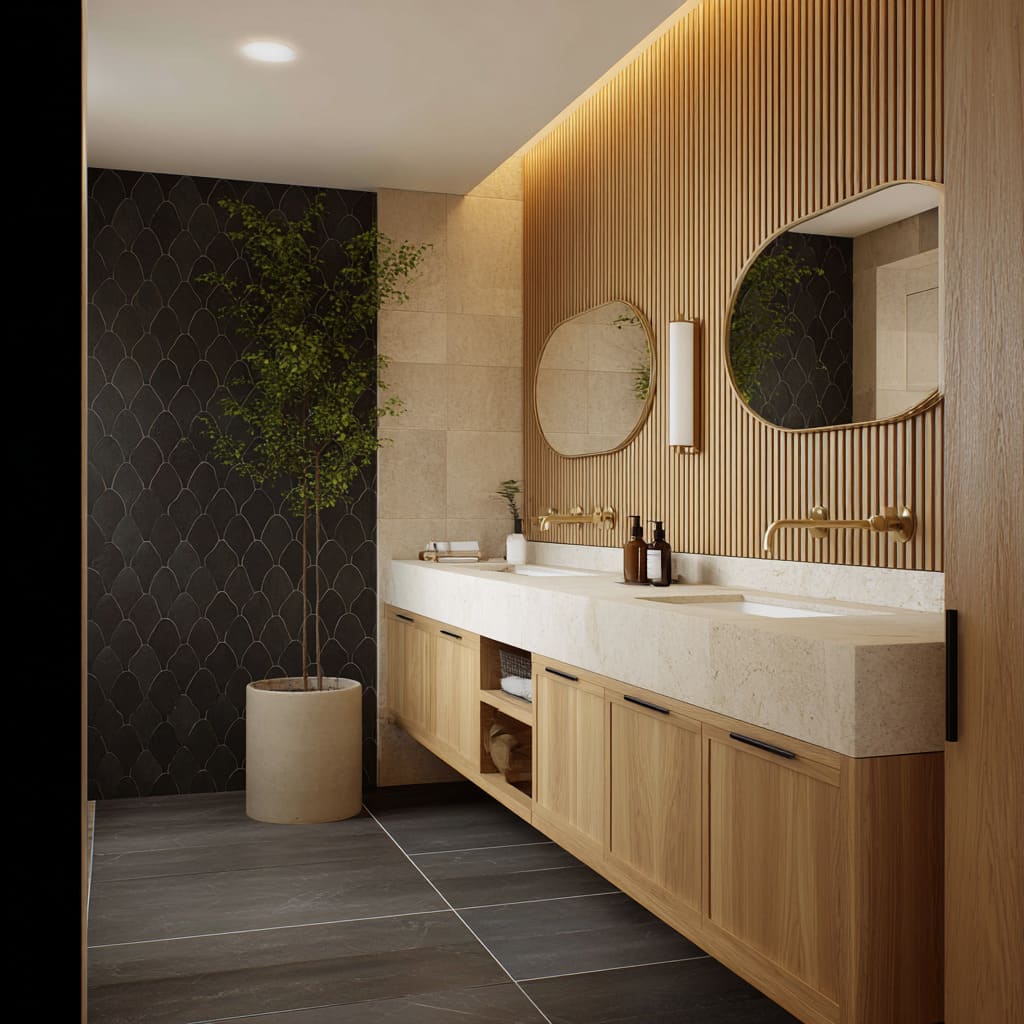
Examples of this unifying approach:
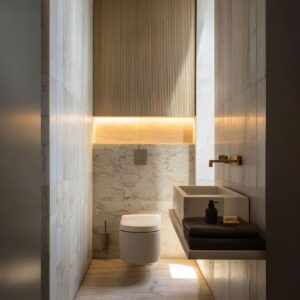
- A sage ribbed tile extends from vanity into a nearby toilet niche, making both areas feel like parts of a single serene envelope.
- A small hex tile climbs behind the vanity, reappears around a shelving tower, and resurfaces on the bath wall, acting as consistent background grain.
- Deep charcoal scallops sit opposite finely slatted timber, joined visually by a tall cabinet that bridges both textures.
Floating vanities, minimal hardware, open basins, and sculptural plants ensure that the tile surface stays visible enough to maintain this cohesion. These strategies reveal how tile can become the narrative thread across multiple bathroom moments, supporting layered vanity splashback ideas that read as part of a broader design language.
Mirrors as Portals: The Wall Continues Behind the Glass
A striking pattern throughout these concepts is the way mirrors behave—not as decorative frames, but as openings into the tile’s continuity. Round, oval, arch-topped, or pill-shaped mirrors appear to float over the backsplash like lenses through which the rest of the room is re-seen.
Reflections of timber walls, ceiling slats, and greenery allow the backsplash to feel even more expansive, as if it wraps behind and beyond the reflective surface. In rooms with bold tile patterns or dark scallops, mirrors soften the field, reintroducing daylight tones without interrupting the tile geometry.
In pale ribbed schemes, mirrors cut clear circles through the vertical flow, preventing the wall from feeling overly strict. This idea pulls the design past the literal: mirrors behave like secondary windows that extend the rhythm of the backsplash rather than interrupting it, becoming a quiet signature element within many fresh bathroom vanity backsplash tile ideas.
Plants, Objects, and Timber: Soft Elements That Bridge Textures
Because many backslash designs rely on strict geometry—vertical ribs, repeated curves, micro-dots—designers place organic or handcrafted elements exactly where transitions occur. Plants often stand at boundaries between warm and cool surfaces, or where tile shifts from line to curve, offering a gentle buffer.
Timber shelving blocks slice through textured fields, allowing everyday objects to sit in soft shadow. Ceramic vases, woven rugs, small trays, and glass bottles are chosen for shape rather than color, echoing the circles, ribs, or curves already present.
These accessories make the wall feel lived-in without diluting its design clarity. They also reinforce the idea that the backsplash is a calm backdrop for subtle, sculptural objects rather than a competing decorative voice.
As a result, even the smallest styling choice becomes part of a larger visual logic—one that supports thoughtful, contemporary bathroom vanity splashback tile ideas that prioritize cohesion and atmosphere over complexity.
Conclusion
Across all the approaches, the modern backsplash is not a minor decorative gesture but the visual structure of the vanity zone. Its height, texture, lighting, and geometry shape the feel of the entire bathroom.
From textile-inspired ribbing to shimmering mosaic veils, from dark scallop pools to warm neutral screens, each surface creates a specific atmosphere that cabinetry, mirrors, stone, and plants are carefully tuned to complement. Such concepts show that the freshest bath vanity backsplash ideas are less about pattern novelty and more about how tile becomes a luminous surface that organizes the room, interacts with light, and sets the character for everything placed in front of it.