Across the latest wave of small bedroom man cave ideas, we can see how a compact sleeping space can double as a personal retreat. Instead of dark dens packed with memorabilia, these new interiors focus on calm surfaces, sculptural organization, and subtle light.
The typical man cave in a small bedroom now mixes comfort with composition—balancing one statement piece with quiet, textured backdrops. Each design feels expressive yet controlled, where lighting, wall materials, and one or two standout elements define character more than the amount of furniture inside.
When Space Works Like a Gallery
A key feature in the newest small man cave bedroom ideas is how personal collections are arranged. Memorabilia is no longer scattered or stacked—it’s curated.
Sports gear, instruments, or boards become part of the wall composition rather than decoration. Designers often treat these items like art installations:.

- Straight bands or precise crosses organize objects into graphic structures
- Recessed wall niches hold gear behind warm edge lighting
- Shadow lines around mounted items make them appear to float
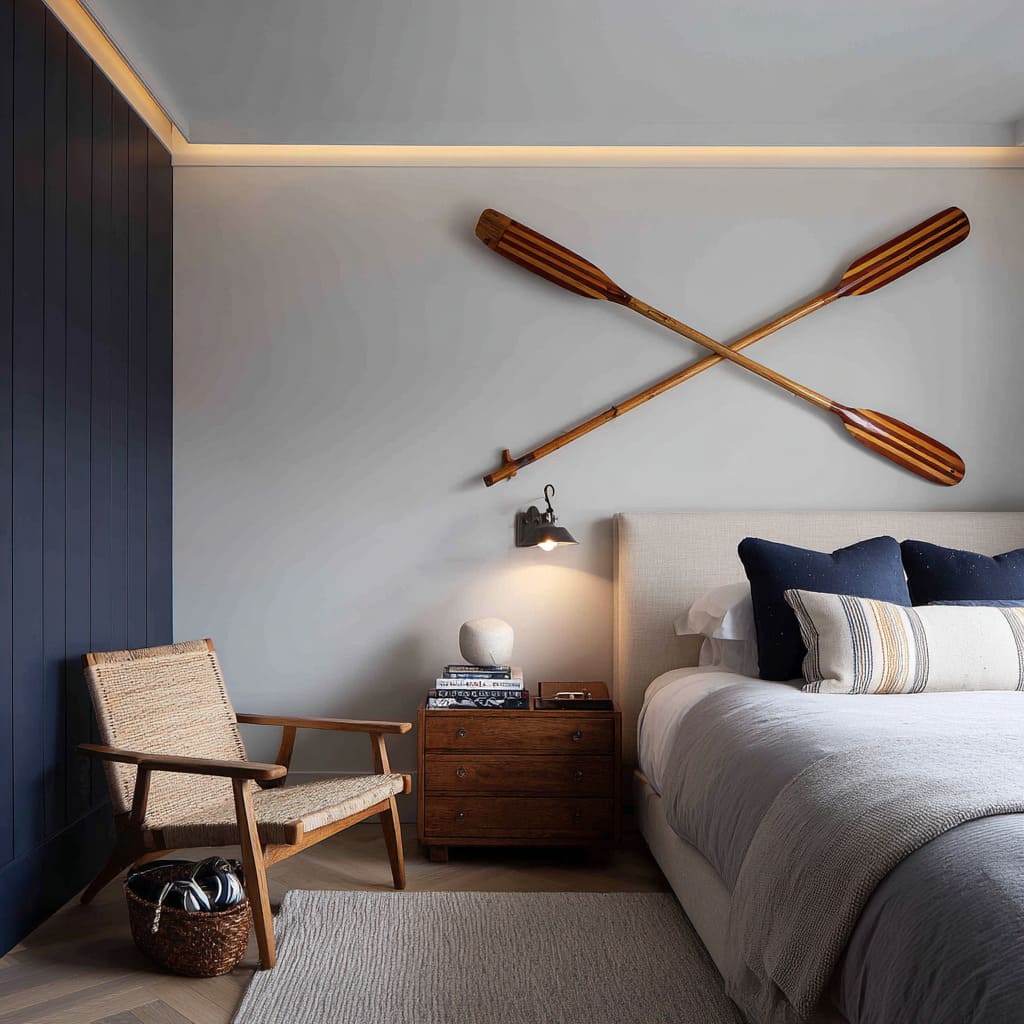
This gallery logic gives purpose to everything visible. A single surfboard aligned over the headboard, vintage skis crossed on a stone wall, or guitars placed in evenly lit zones—all of them anchor the room visually without clutter.
The result feels more like a calm studio than a crowded bedroom.

Light as the Main Design Tool
Light is the real architecture of these new spaces. The most striking man cave ideas for a small bedroom rely on soft, layered lighting rather than bright overhead fixtures.
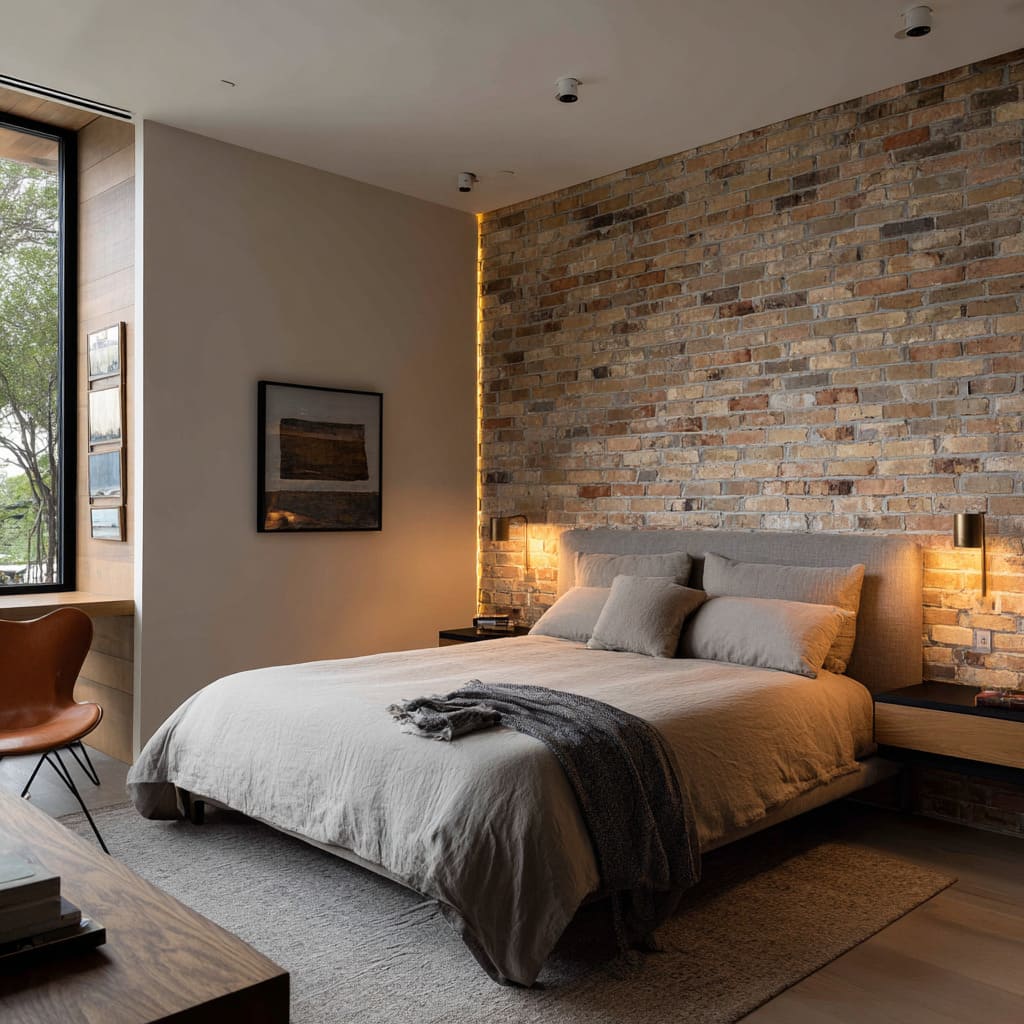
Cove lighting runs along ceilings or headboards, outlining the space with quiet definition. Narrow vertical strips in corners lift heavy walls of brick or concrete, while warm under-bed glows make platforms seem weightless.

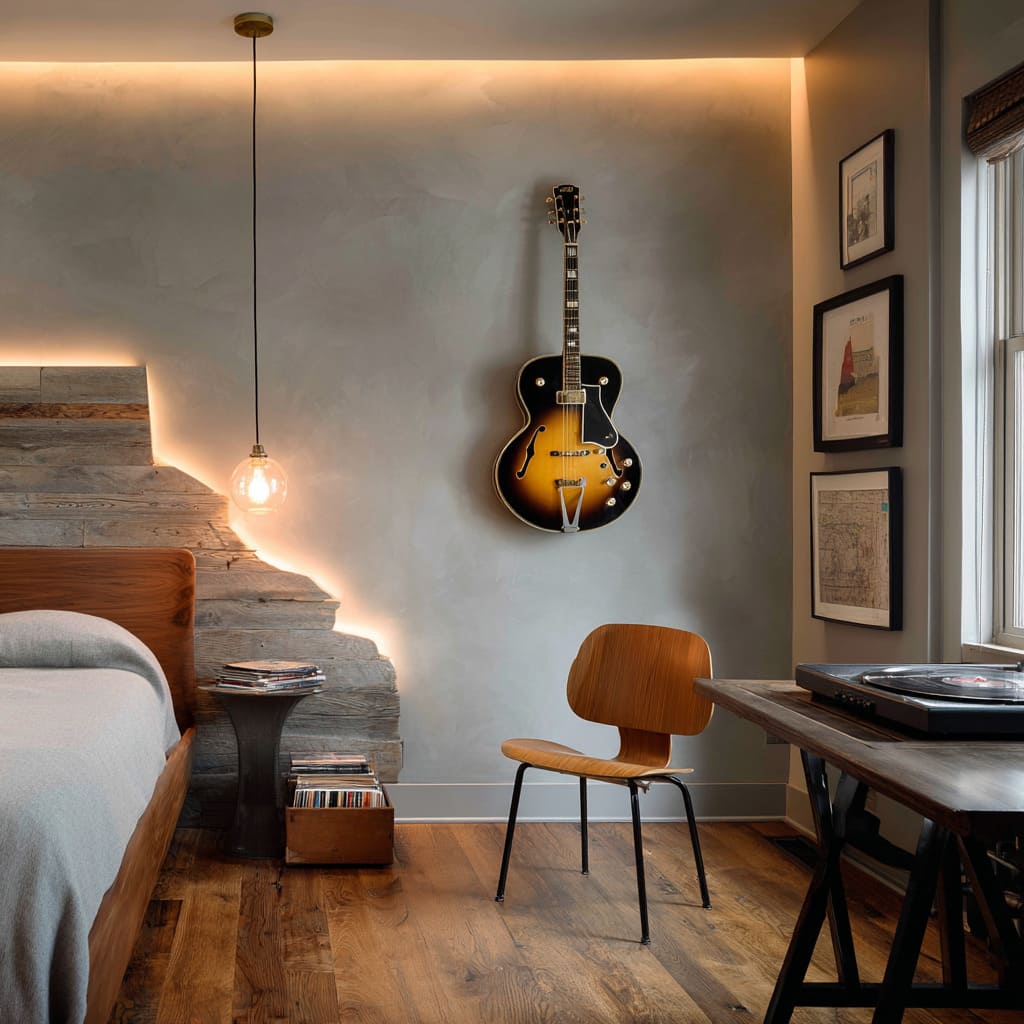
Instead of decorative lamps, many use light to draw shape: a beam tracing across a guitar’s curve, or a sliver at the edge of a brick wall that turns texture into sculpture. This approach creates depth without extra furniture, and it’s what gives many small bedroom man cave ideas their cool, composed mood—half studio, half hideout.
Fewer Objects, Stronger Materials
The modern man cave doesn’t chase variety—it celebrates reduction. Every element is chosen for tactile contrast.
Concrete pairs with linen. Walnut meets matte plaster.
Leather breaks through monochrome tones. These pairings keep the rooms masculine but not heavy.
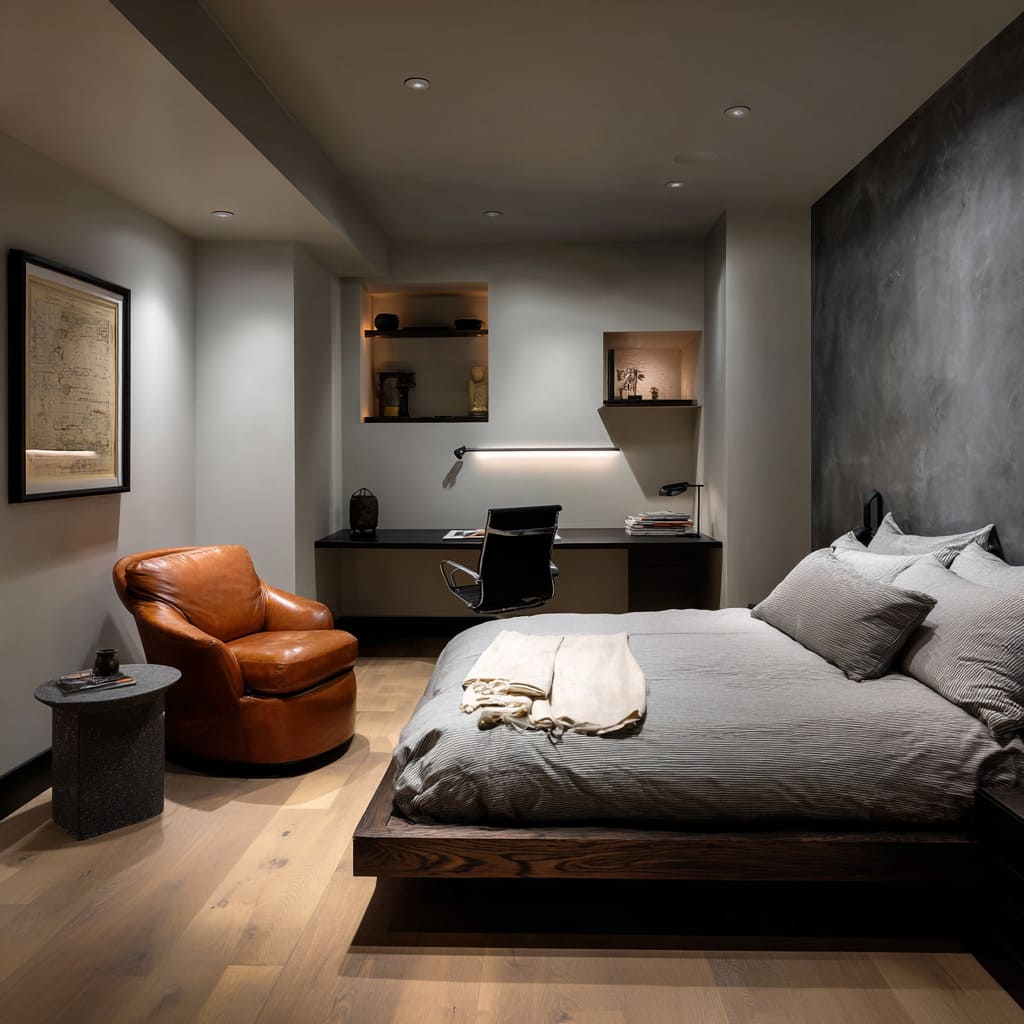
Even the color schemes follow this idea of calm restraint: navy with sand, charcoal with caramel, gray with oak.
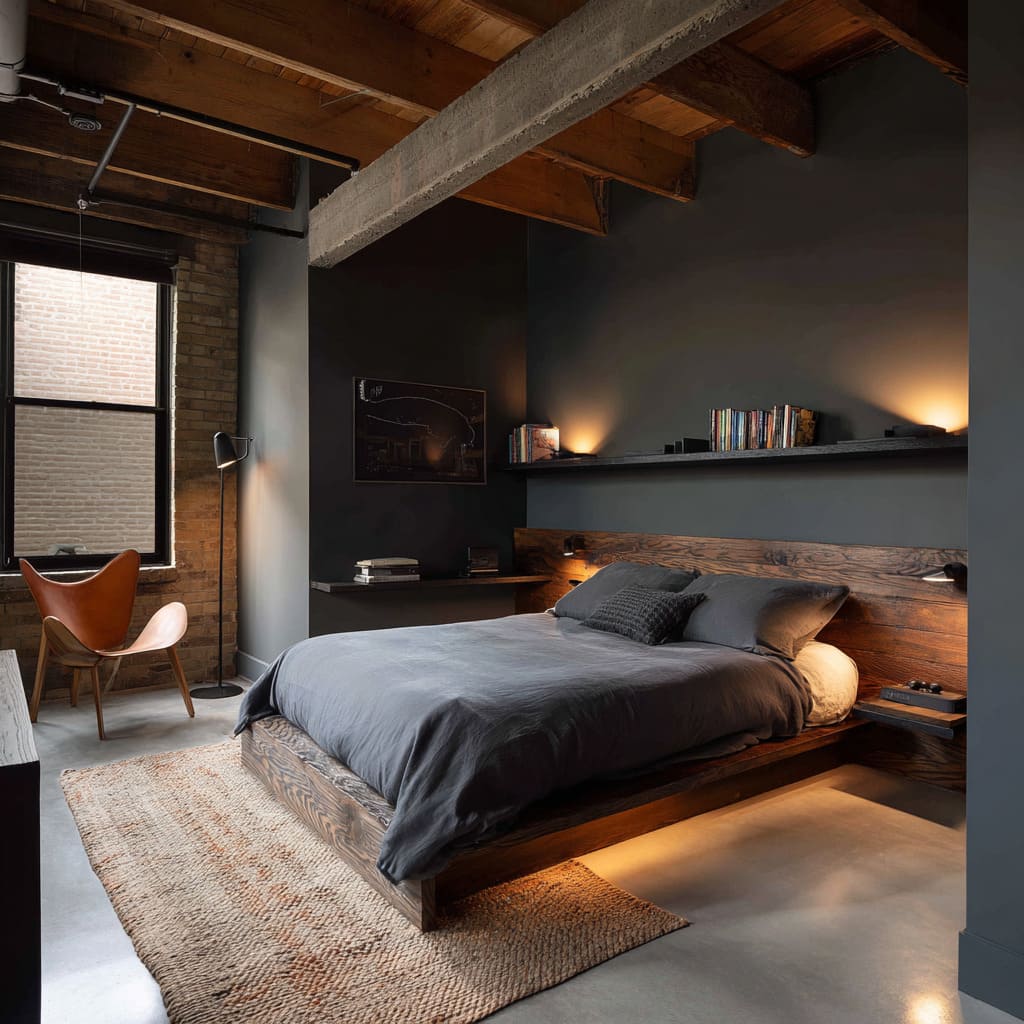
Texture has replaced decoration. You’ll notice channel-quilted duvets, woven cane bed frames, chambray rugs, and stone-washed fabrics.
None of these shout, but they add density and depth. When surfaces are this rich, a single chair in orange leather or a polished surfboard on the wall becomes all the accent the room needs.

The Power of the Single Statement
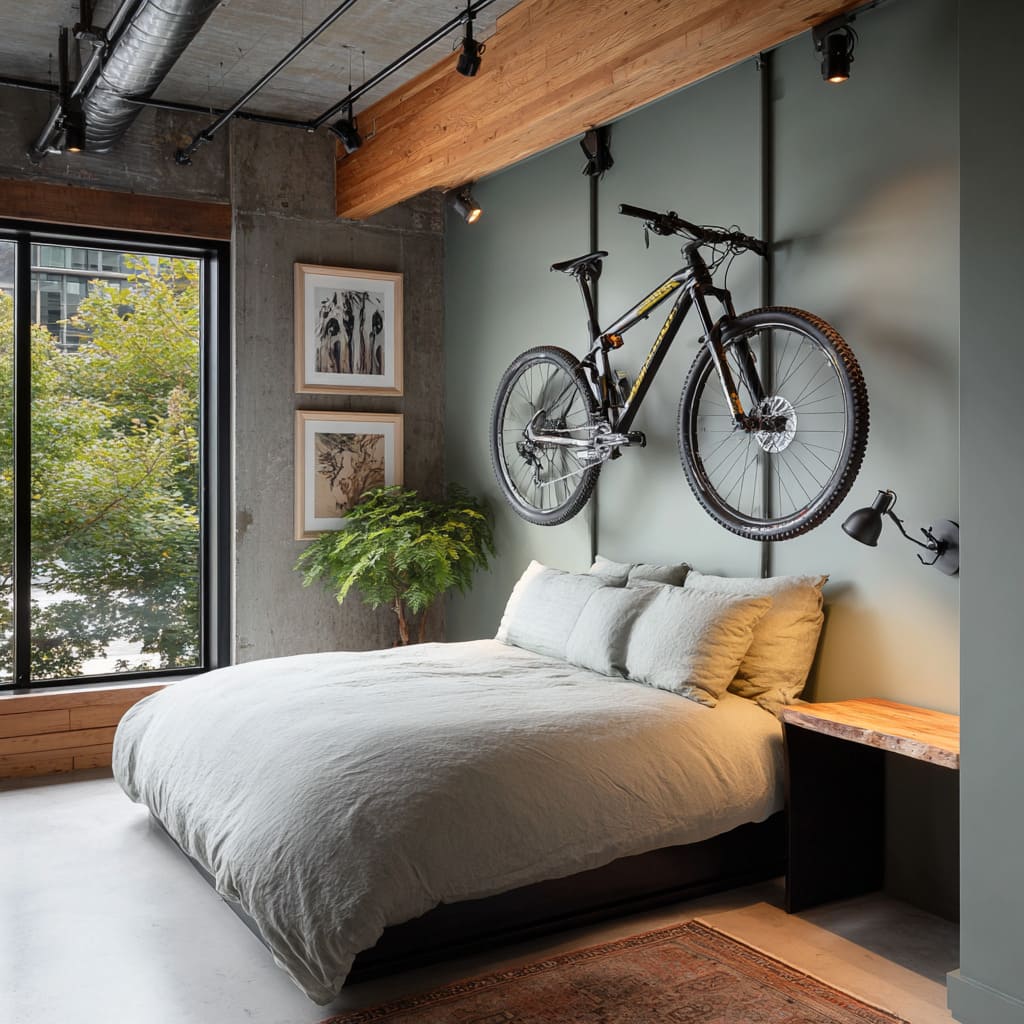
Almost every modern man cave in a small bedroom follows a one hero, one color story principle. Designers pick a central piece—a longboard, a bike, a guitar niche, or even boxing gloves—and let it lead the tone of the space.
Around it, the palette stays narrow, the lines stay clear, and the negative space does the styling.

These statement items gain importance through isolation. A surfboard on a pale wall, a pair of gloves hung off-center near a soft cove light, or a row of vintage bats glowing in a recessed case—each transforms nostalgia into visual rhythm.
The message is quiet confidence, not display.
Calm Order Through Geometry
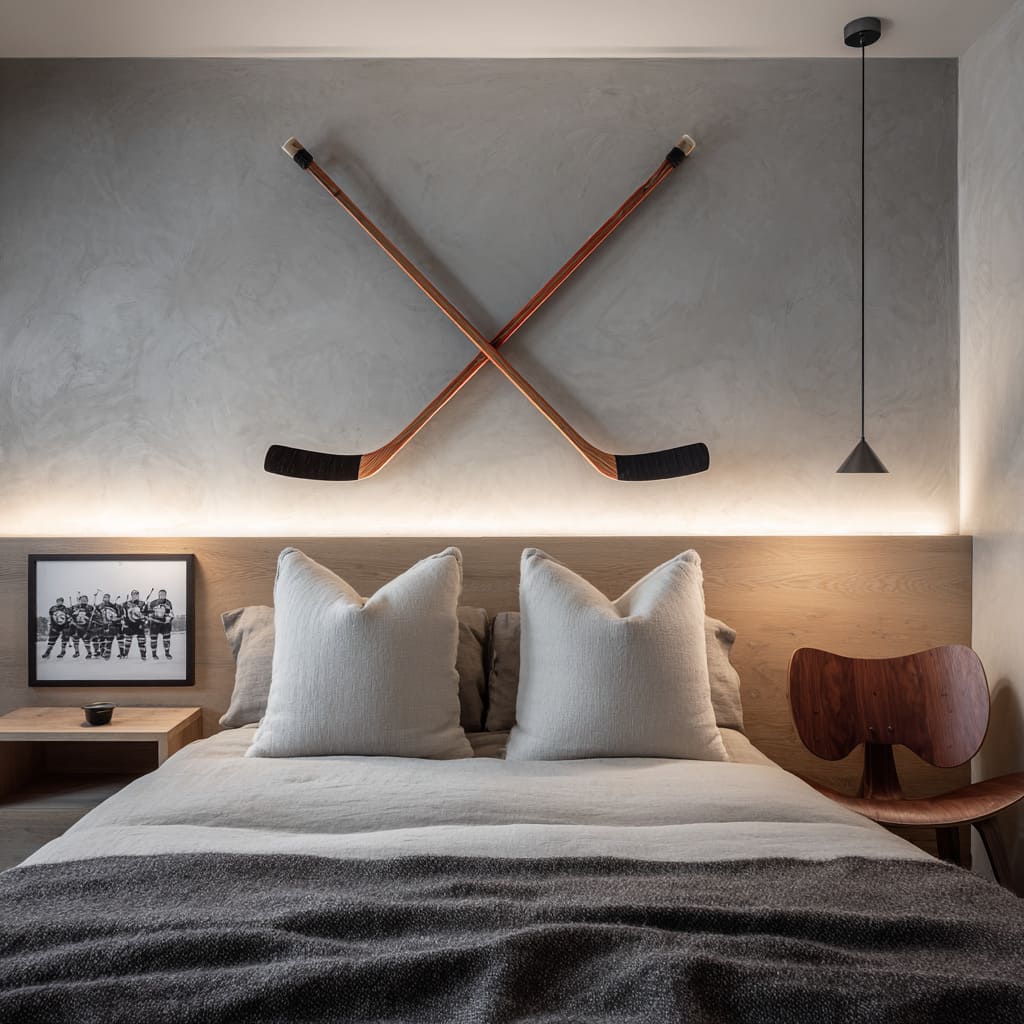
Geometry does the organizational work in these interiors. Low horizontal bands such as headboards or desks stretch rooms visually, while vertical slots or art stacks counterbalance them.
This play of width and height replaces clutter with structure.
You’ll find different ways to apply this balance:.
- Long floating desks continuing into night tables or ledges
- Wall-mounted shelves aligned with the bed’s horizon line
- Vertically stacked art by windows that stop the eye from drifting
It’s a choreography of sightlines and proportions that keeps even the smallest man cave bedroom orderly yet dynamic.
Light Furniture, Heavier Atmosphere
What makes these rooms appealing is the sense of weight without bulk. Beds often float on recessed bases or appear slimmer through shadow gaps.
Nightstands become cubes or wall-mounted planks. Lounge chairs are sculptural, with curved shells or patinated leather that contrast the crisp architecture.
The space reads grounded yet airy.

Underneath all that, the structure is invisible—what dominates is the feel: dim light tracing along the floor, fabric catching the glow, a smooth desk line dissolving into the wall. This subtle mix of light and shadow is what defines the current cool look of the small man cave bedroom ideas trend.
Sports and Music Themes Without the Cliché
A clear shift in design language is happening: sports and hobbies appear as refined visual stories instead of loud themes.
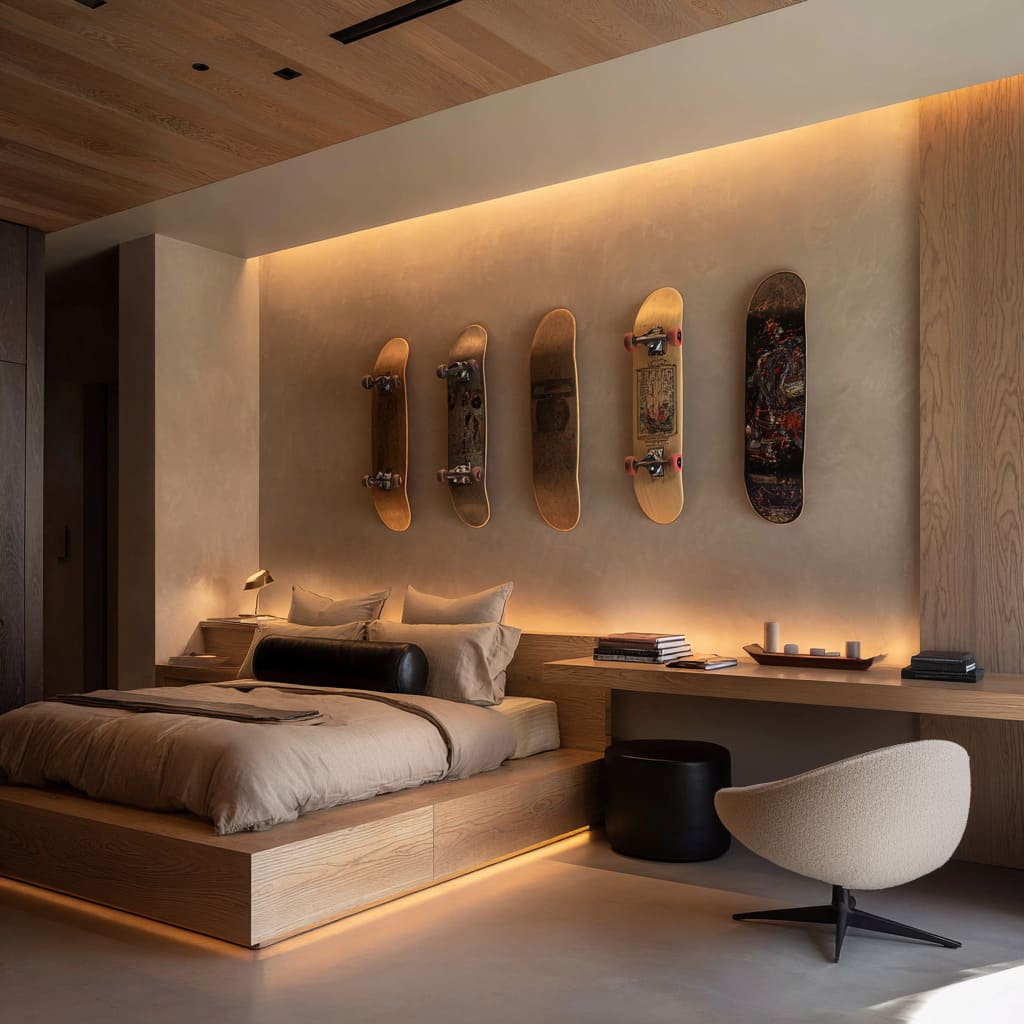
- Surf and skate rooms: clean boards treated as sculpture, warm oak, and plaster walls with soft light grazes
- Music setups: guitars framed by light, concrete walls that echo studio calm, and slim consoles for vinyl
- Sports motifs: boxing gloves or hockey sticks with generous blank space around them, turning equipment into icons instead of clutter
These setups combine nostalgia with geometry. Each object has breathing room, each material links to the next, and the overall impression is quietly curated rather than overtly masculine.
Color Temperature and Emotional Tone
A small man cave bedroom succeeds when color temperature matches purpose. Darker shells—charcoal, navy, graphite—hold warm pockets of caramel, brass, or amber light.
In brighter schemes, sand tones and pale woods gain definition through one dark accent, such as a black pendant or matte hardware.
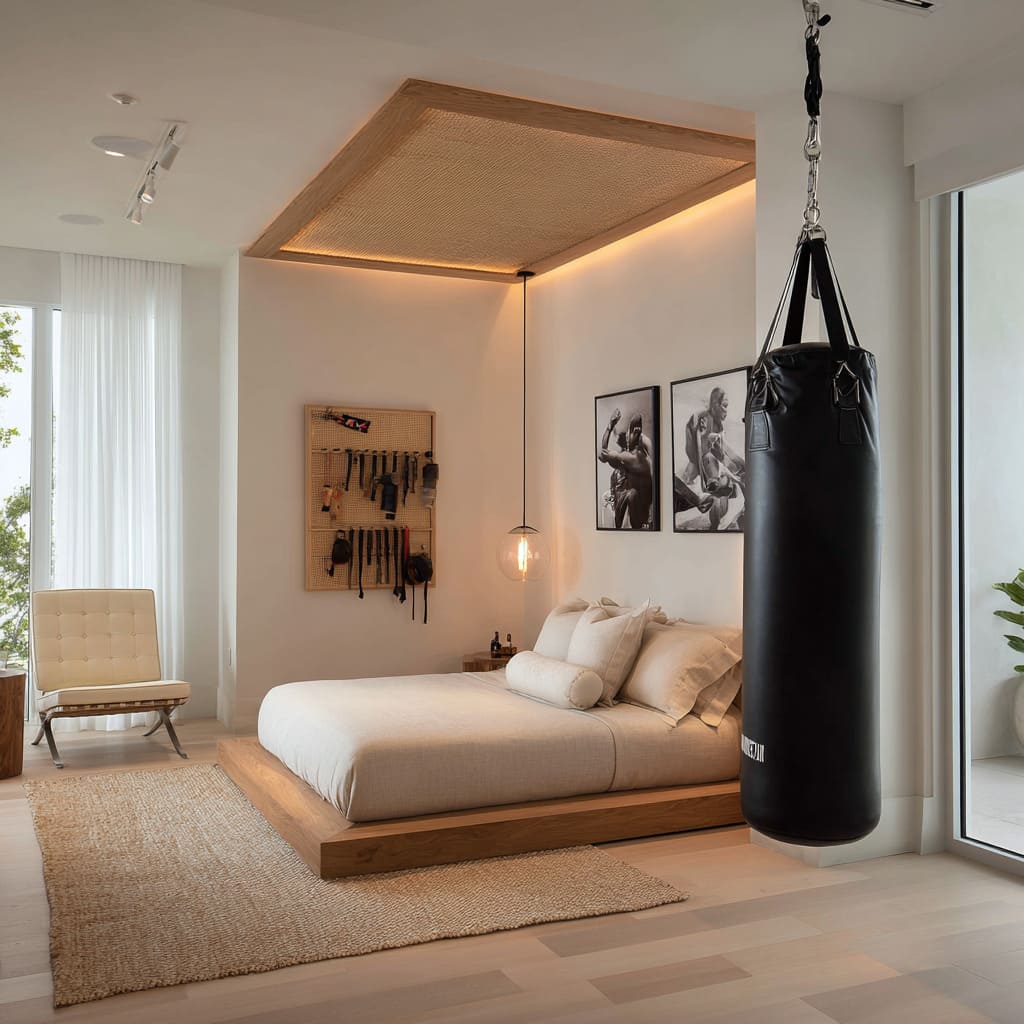
The psychology behind this balance is subtle: cooler bases create calm, while warmer accents make intimacy possible. This duality keeps the modern man cave emotionally steady—serious enough for focus, soft enough for rest.
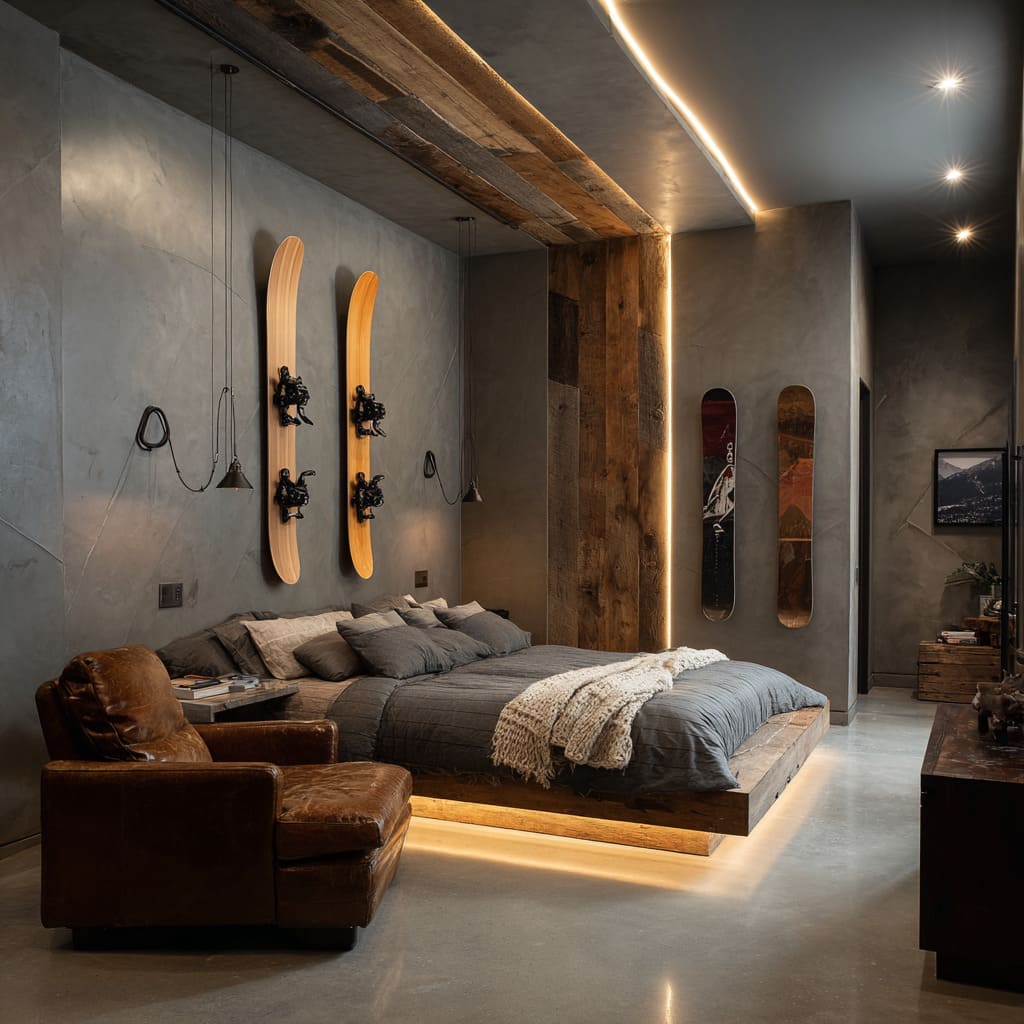
Light Framing and Edge Discipline
Another strong visual language in man cave ideas for a small bedroom is the use of edge framing. Designers outline planes rather than fill them.
Perimeter lighting around ceilings, soft under-glows at bed bases, and narrow reveals behind panels give structure without adding mass. Even art is often framed by light rather than heavy molding.
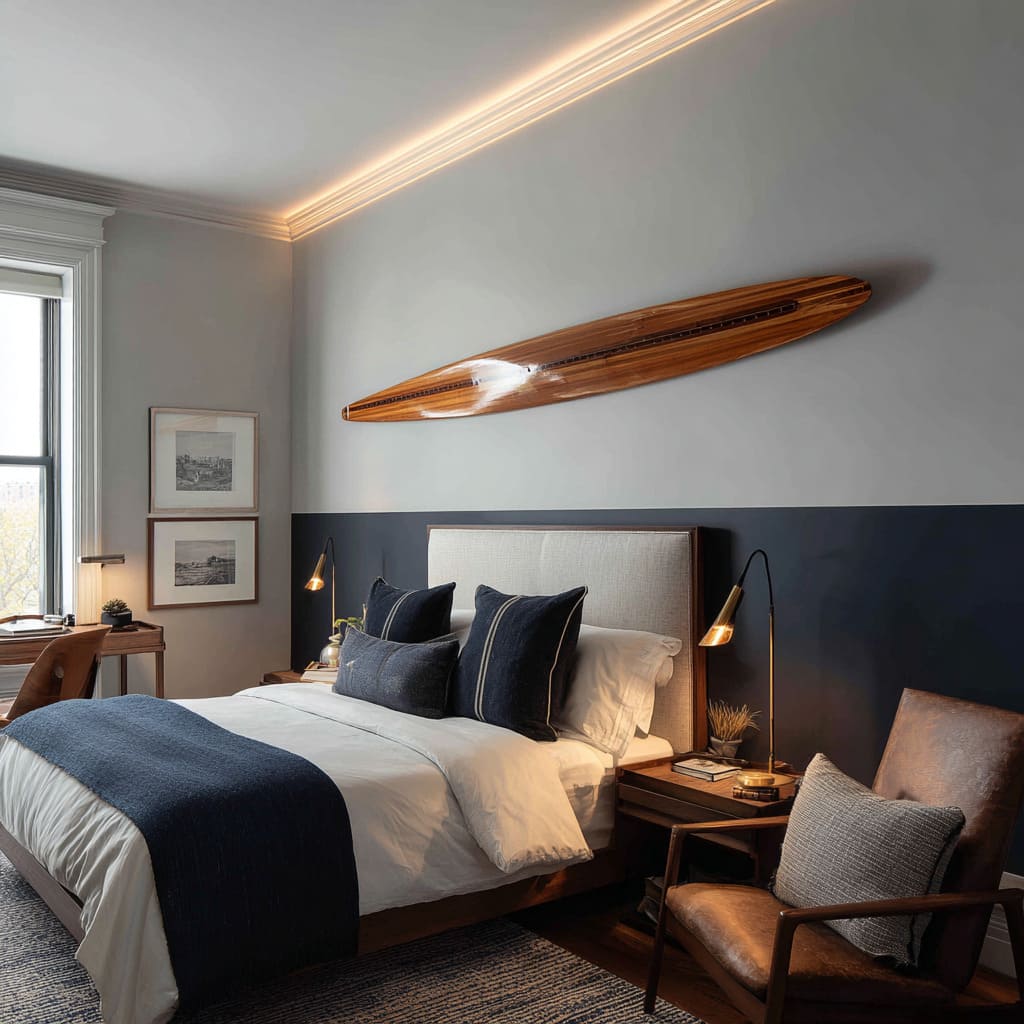
This discipline produces a look that feels custom even in compact spaces. It defines zones—the sleeping area, a reading corner, a display wall—without using walls or partitions.
The room becomes visually larger, and light takes over the role of architecture.

Quiet Luxury Through Texture Layers
Across all these new interpretations, what connects them is a commitment to quiet luxury. No bright finishes, no busy prints, no hard reflections.
Instead, tactile layering builds atmosphere:.
- Linen and velvet bedding mixing matte and soft sheen
- Raw brick with a narrow line of light to reveal shadow depth
- Wood and leather tones repeated in subtle rhythm across furniture edges
This kind of layering keeps the space approachable and sensory. It’s less about styling tricks and more about letting materials express weight, temperature, and time.
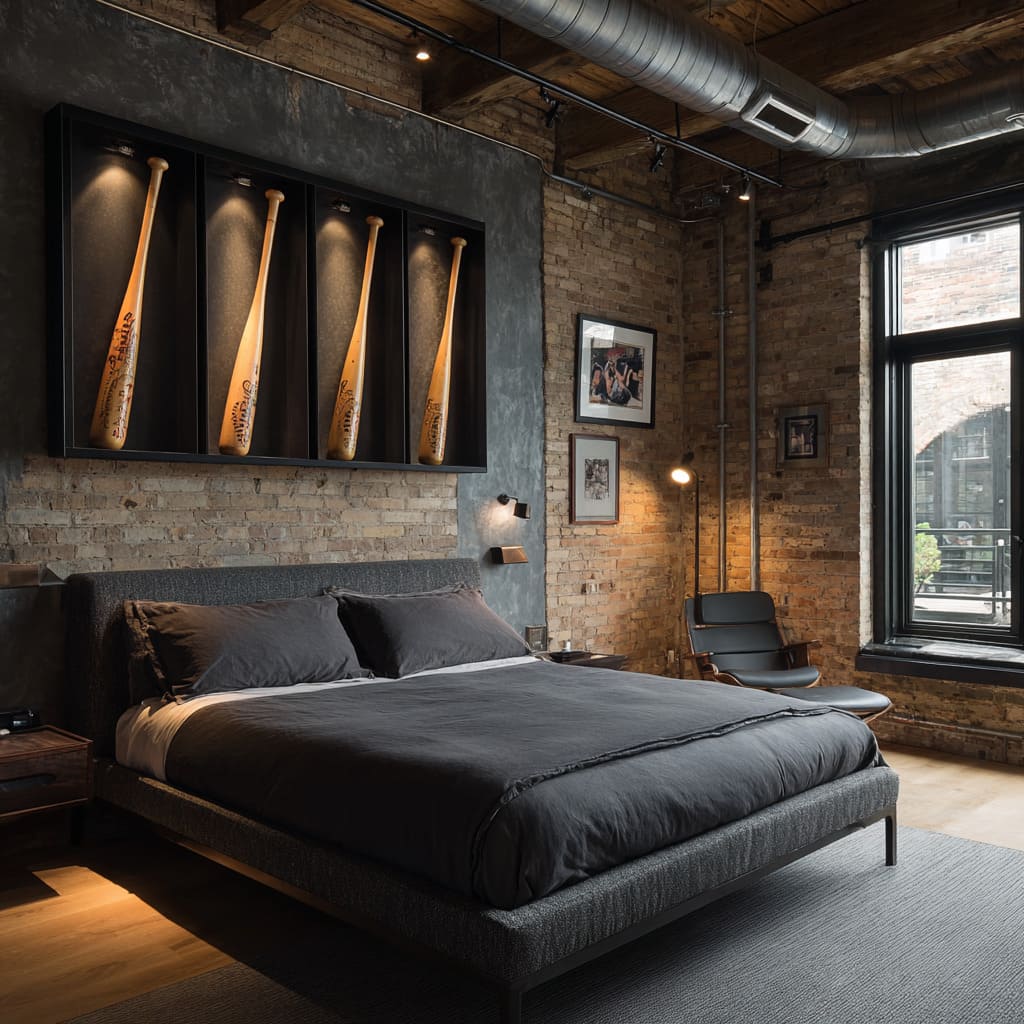
The Modern Mood: Stillness With Character
Ultimately, the most stylish small bedroom man cave ideas lean toward stillness rather than energy. They trade volume for mood, clutter for geometry, and bright light for sculpted glow.
Instruments, boards, or gloves remain personal markers, but the real personality emerges through texture and composition.
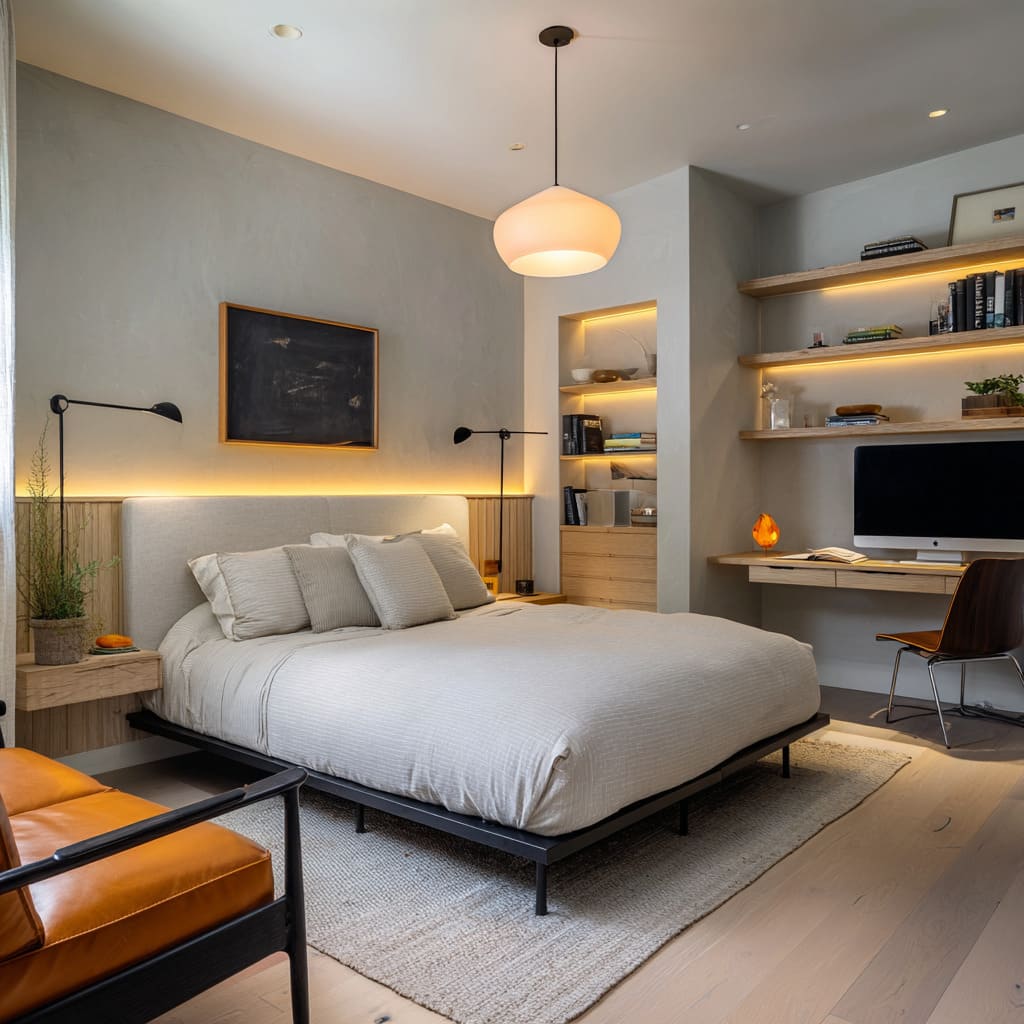
In the broader trend, the man cave in a small bedroom has evolved from a personal hideout into a designed environment—calm, curated, and connected through light. It’s a shift from collection to composition, from hobby space to atmosphere.
The modern approach shows that even in the smallest footprint, sophistication can exist in restraint, and individuality can live inside quiet order.