Coquette bedroom style isn’t powered by pink, and it doesn’t depend on one iconic object. It works like a little control design principles mixing gentle, romantic signals with fence, which conltrol them so the room stays clear and stylish.
Then romance presents, but not spills everywhere. Instead, it gathers in small places, while order is handled by rhythm and strict boundaries.
Softness has two jobs: create the mood, then stay readable
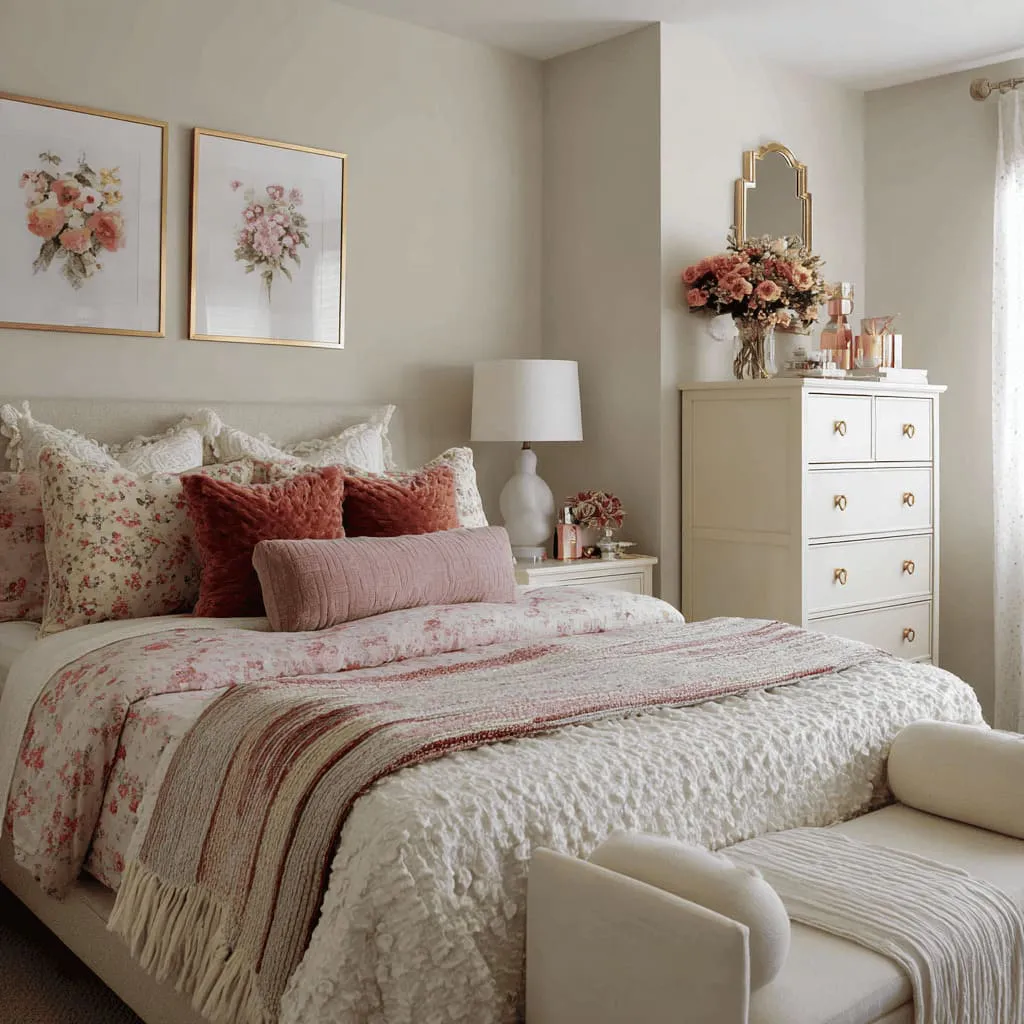
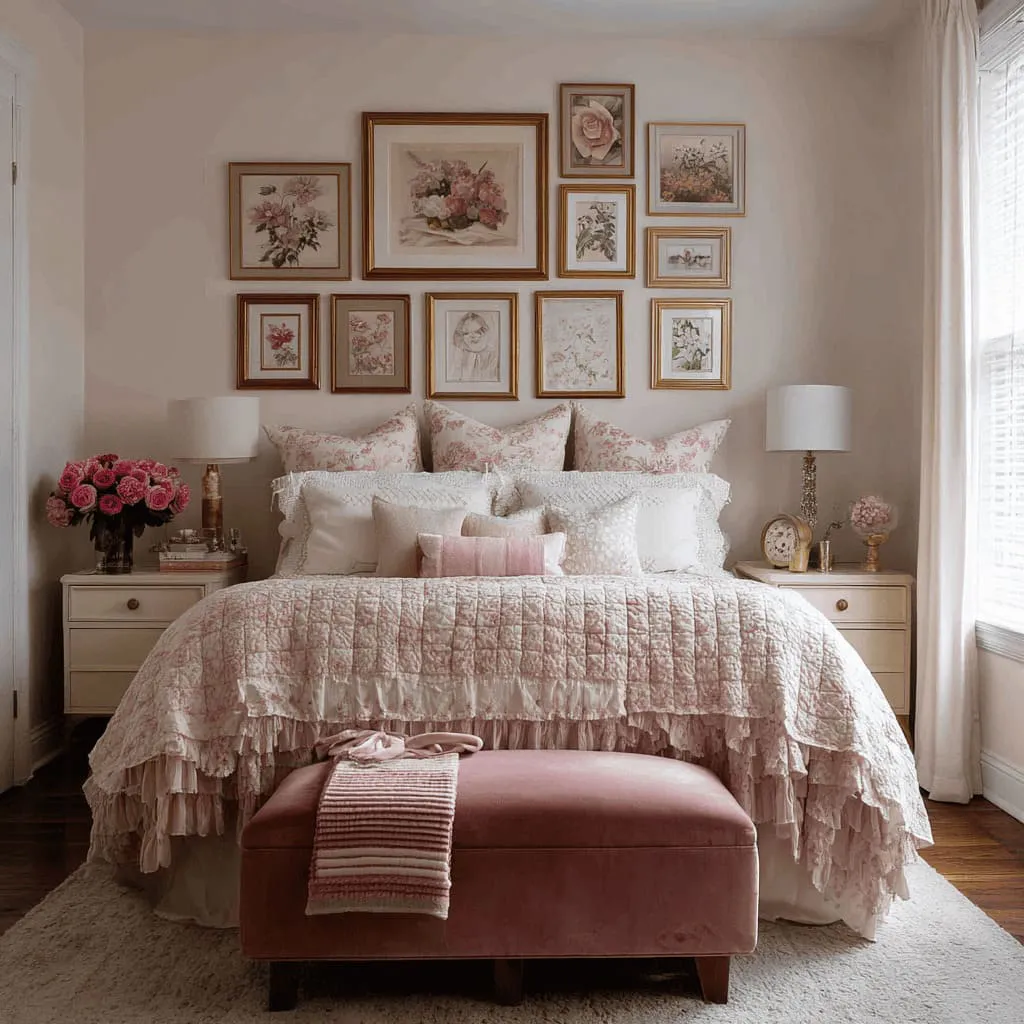
The sweet part is easy to spot: micro-florals, lace or eyelet, ruffles, gathered hems, pleats, scallops, bows, fluffy pillow stacks, and those watercolor-like prints that look faded instead of crisp. Add a little sparkle from crystal lighting, warm gold frames, or glass on a tray, and you get that coquette feeling fast.
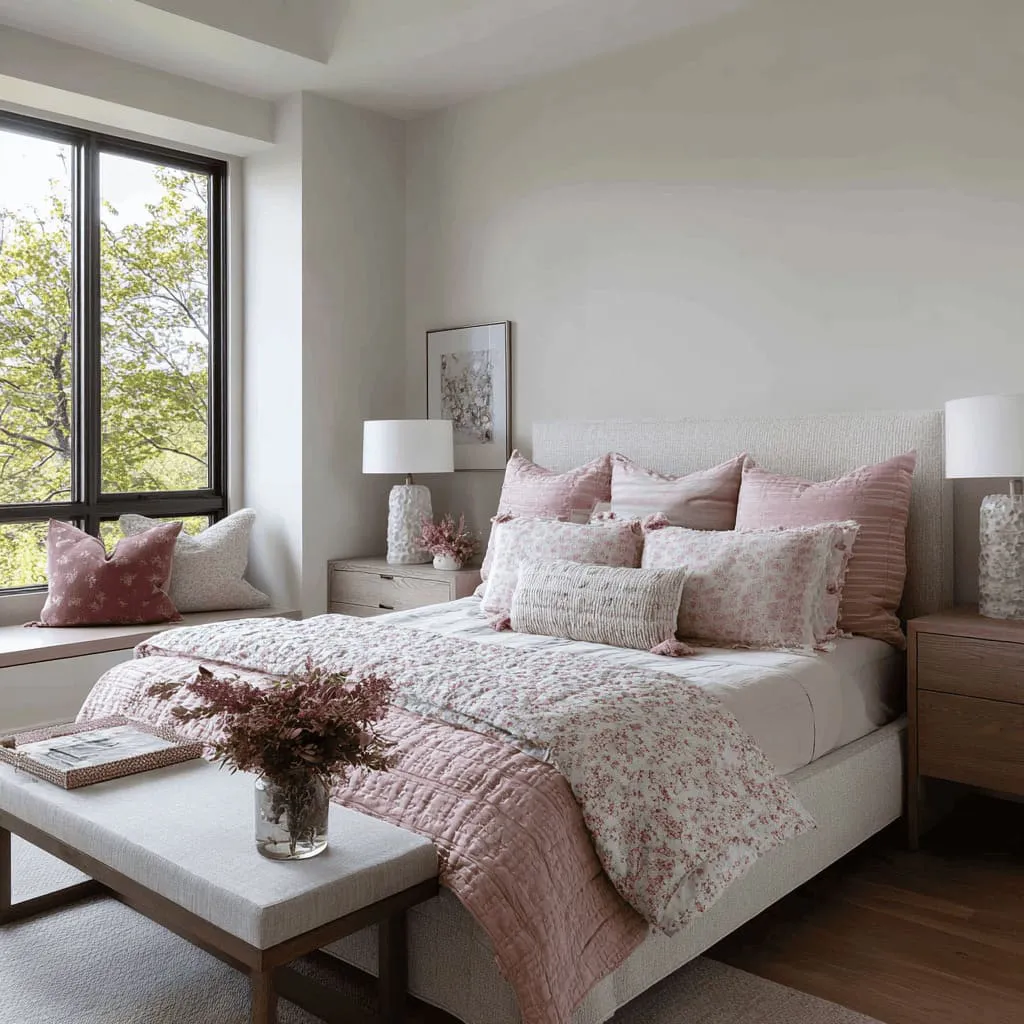
The interesting part is what keeps it from turning messy. The same design supervisors keep repeating: symmetry, channel tufting, stripes, panel rectangles, calm furniture silhouettes, big cream/white breathing areas, and one strong dark punctuation mark (often a TV or a black window outline).
It’s not about removing romance. It’s about giving it a frame.
Where the sweetness actually lives: edges, hems, and small repeats
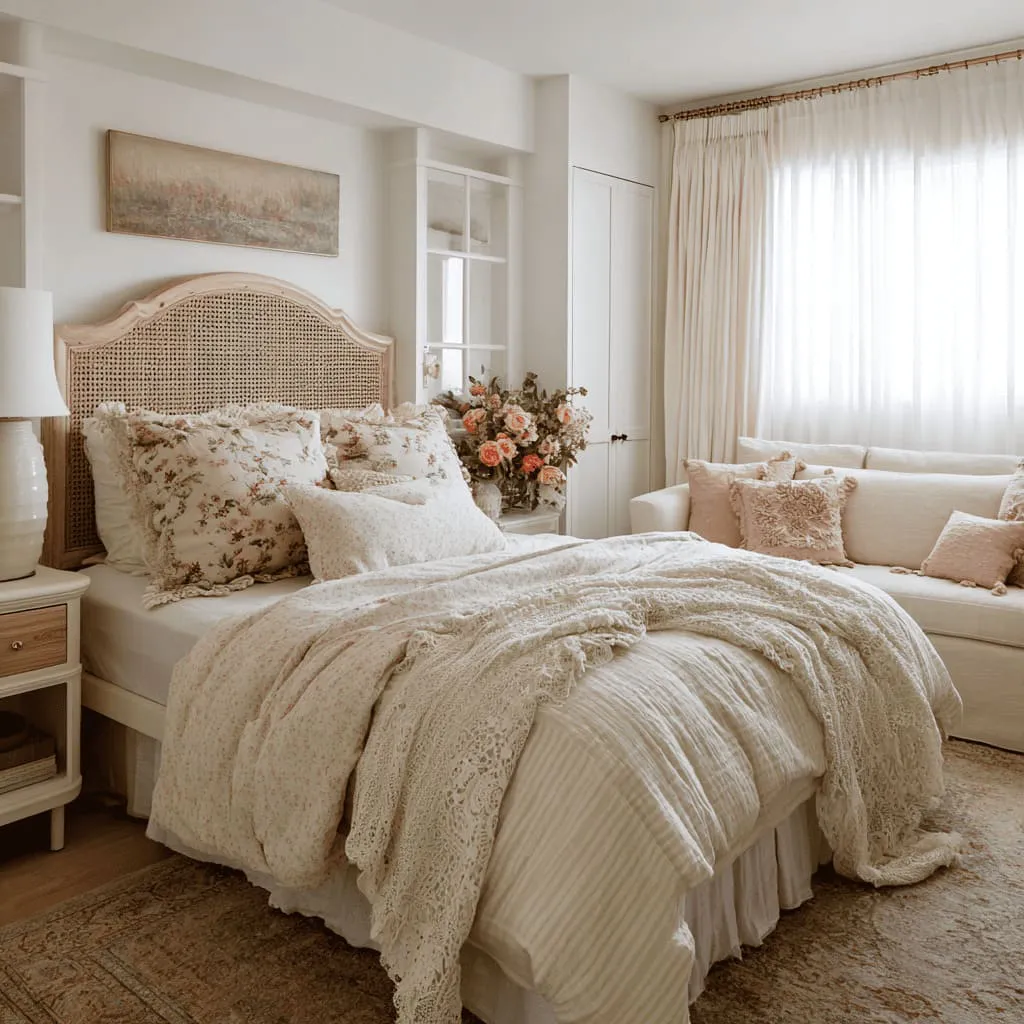
Stylish coquette bedrooms avoid putting romance in one huge block. Instead, sweetness sits on borders.
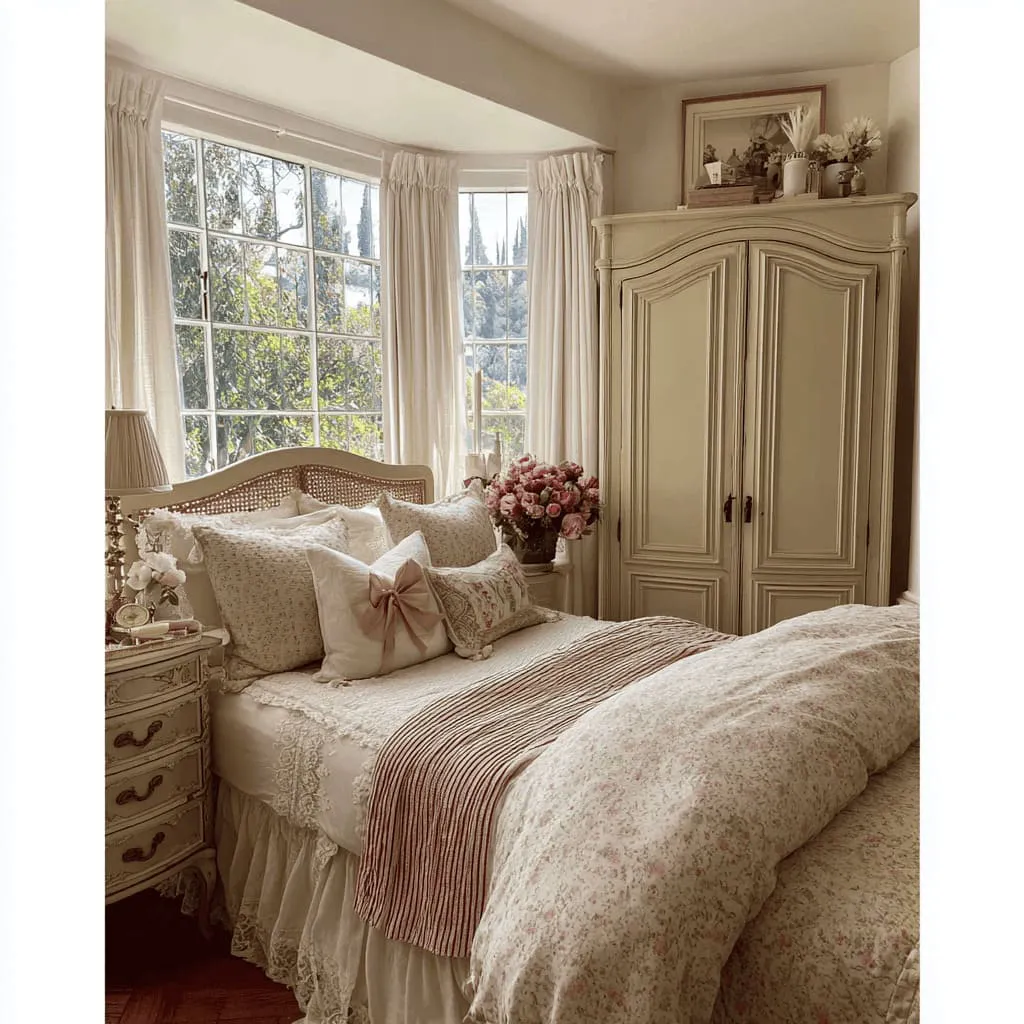
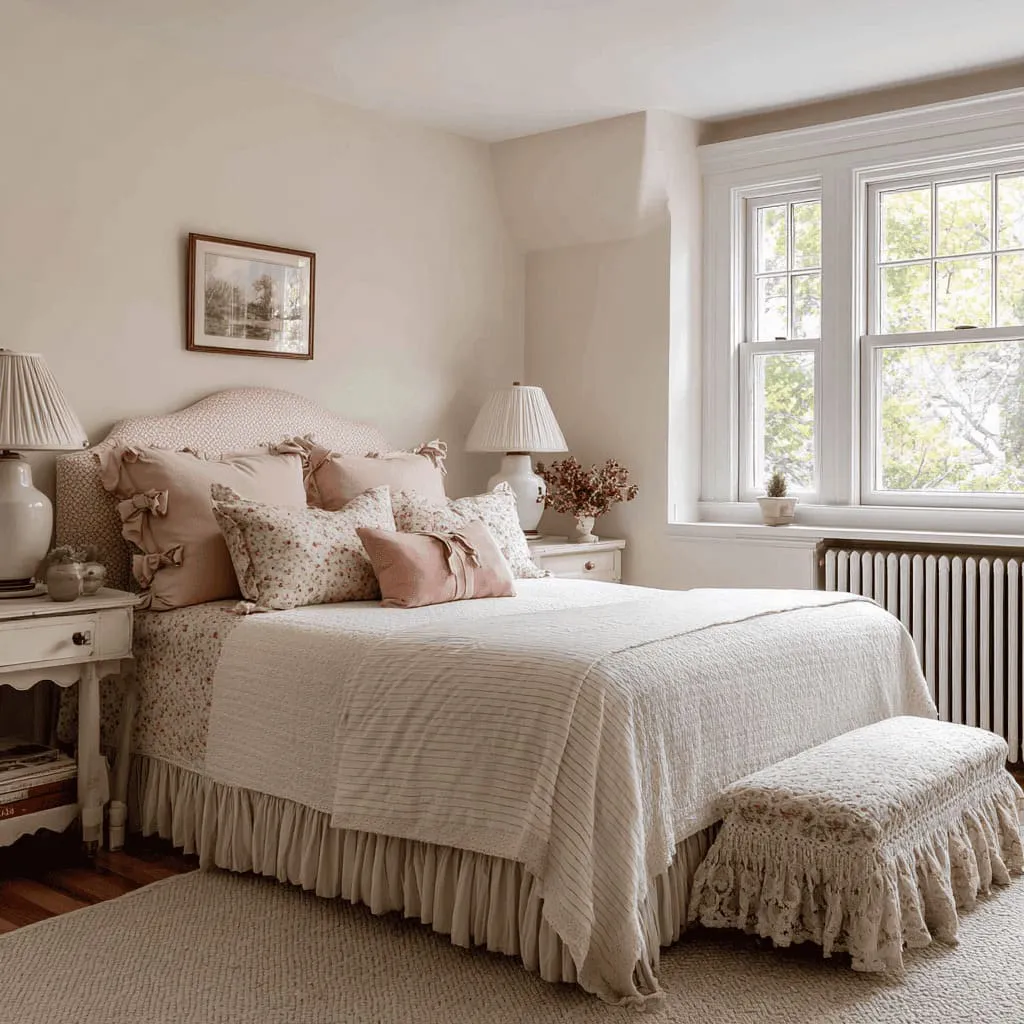
Think ruffled pillow flanges, tiny bow ties on seams, lace peeking at the duvet edge, a softly gathered bed skirt near the floor, tassels on one lumbar. Even pleated lampshades play the same role: they echo fabric folds without adding another busy textile print.
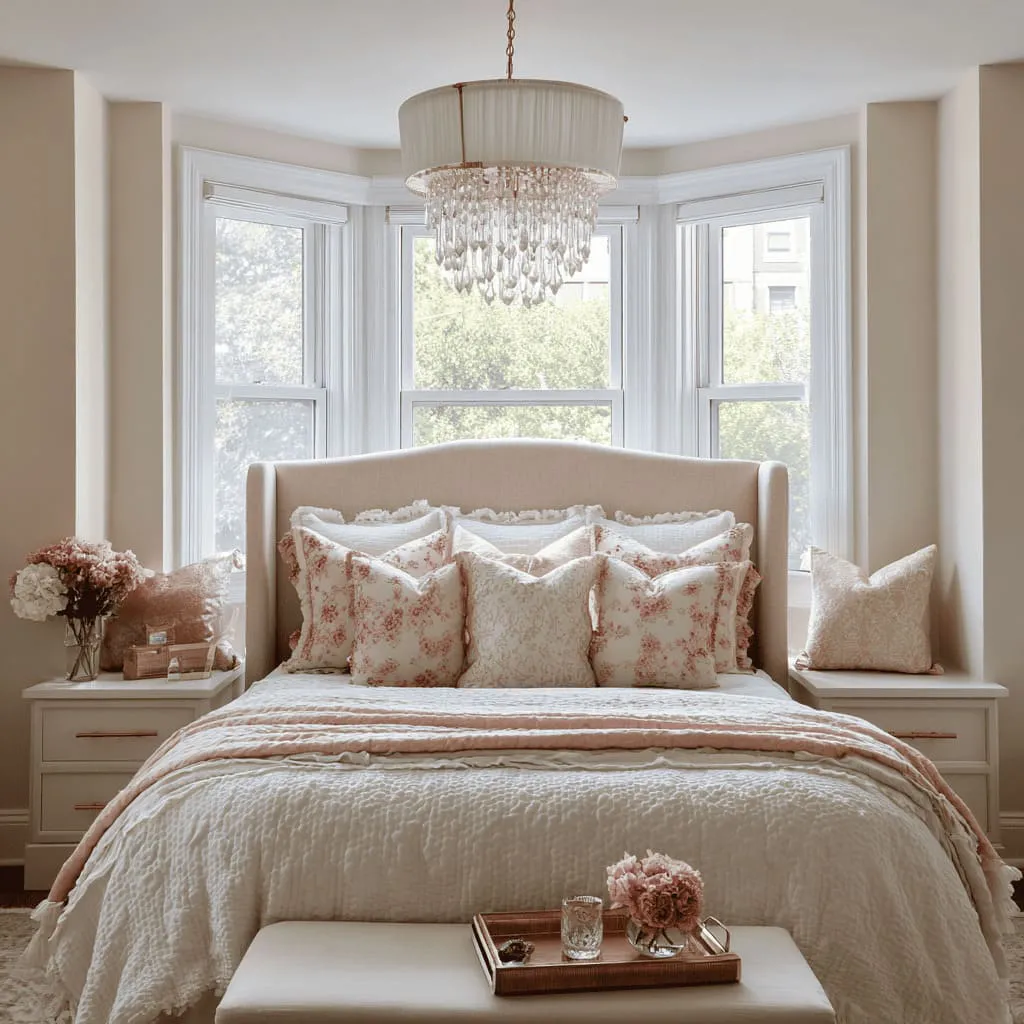
This is why the coquette interior designs can feel detailed up close, yet calm from across the space. The romance becomes a fine layer, not a loud panel.
The quiet hero: an order line
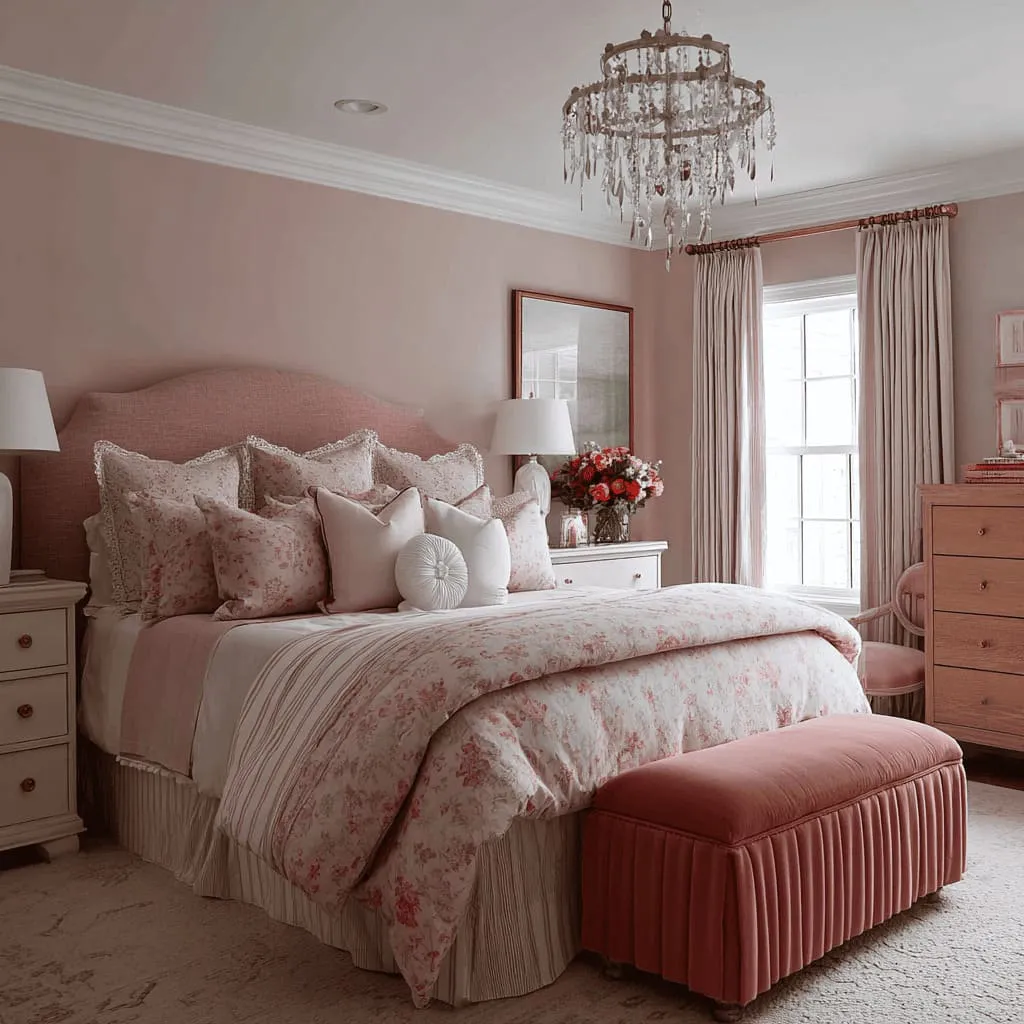
One move keeps can be used in different forms, and it does a surprising amount of work. A linear rhythm element straightens the whole composition.
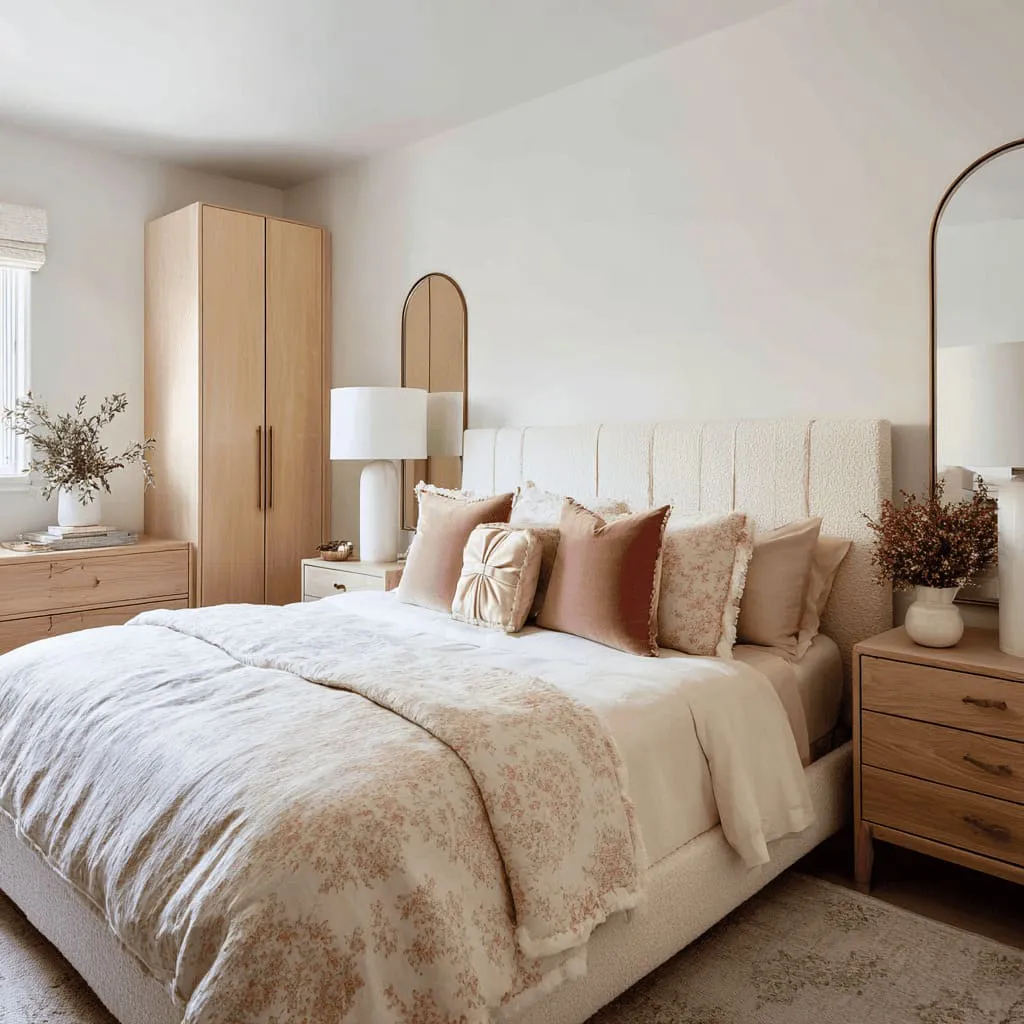
Sometimes it’s a stripe runner near the foot of the bed. Sometimes it’s stitched channels on a quilt.
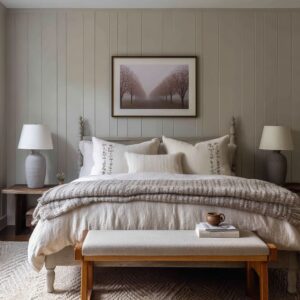
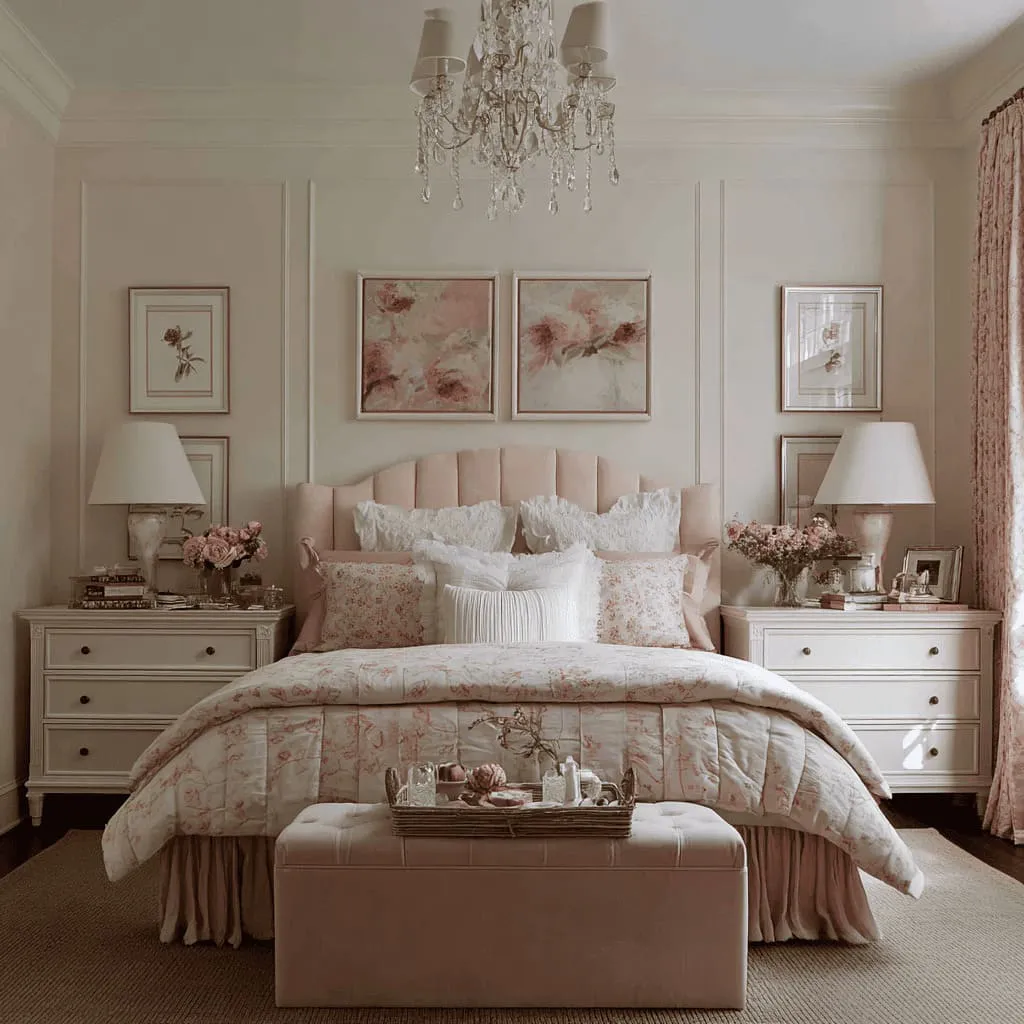
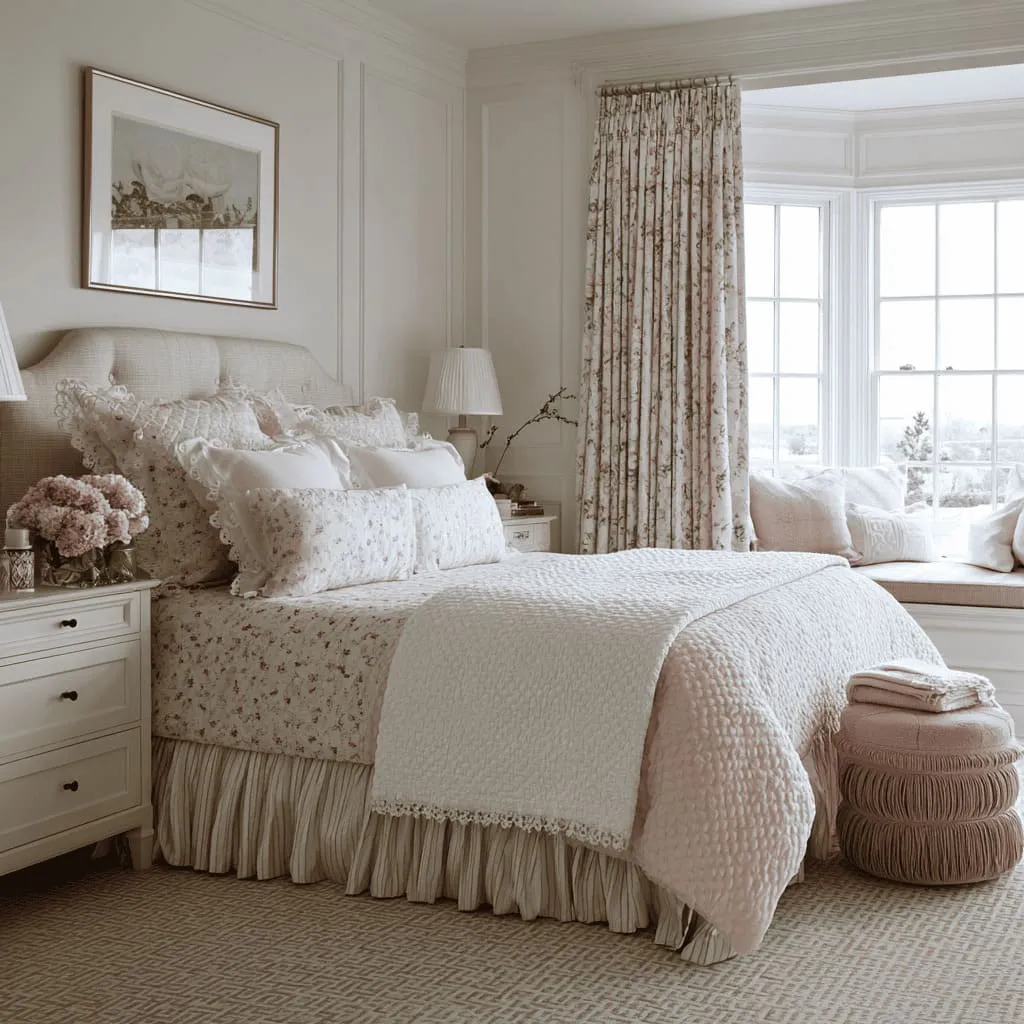
Sometimes it’s vertical channel tufting on the headboard or base. Sometimes it’s wall panel molding rectangles behind the bed, or beadboard verticals in an older shell.
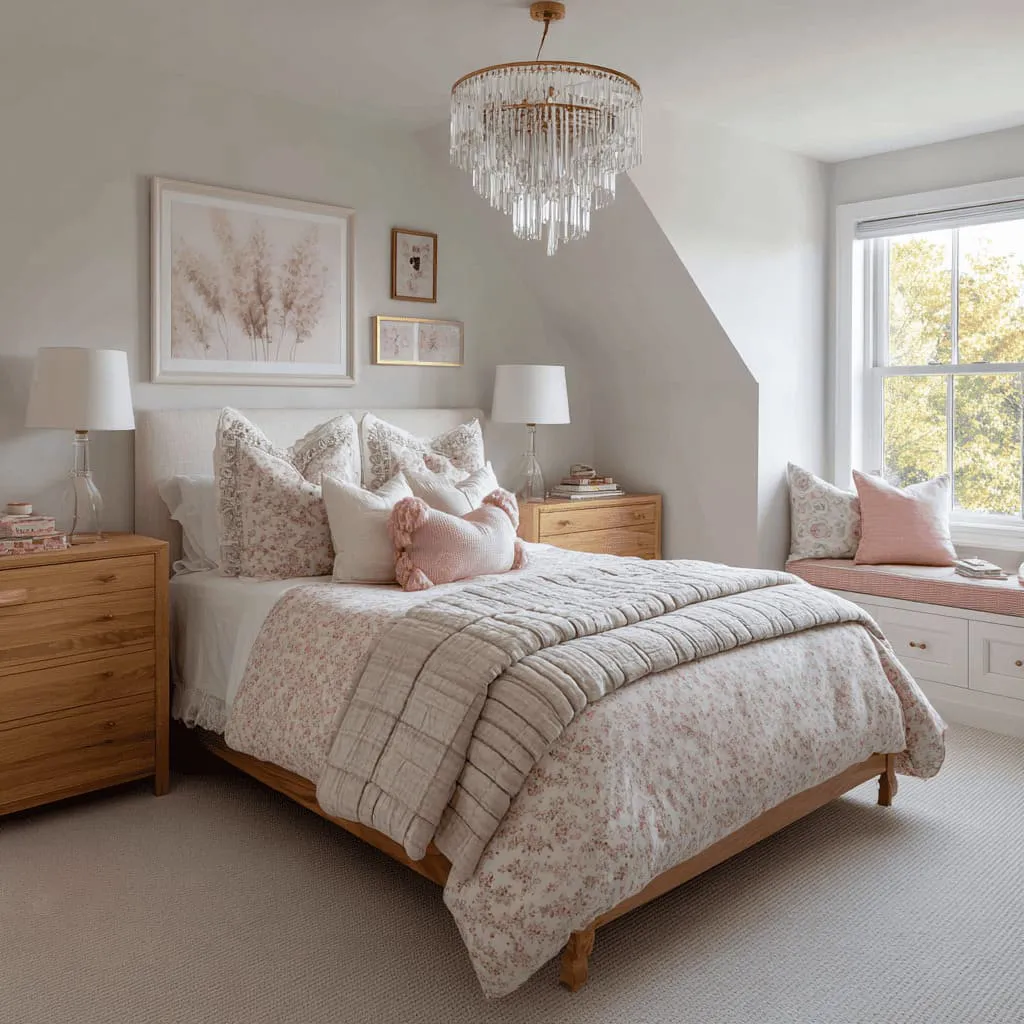
What’s notable is what this replaces. Coquette bedrooms can be based on bold color contrast to stay legible.
Here, a lot of palettes stay powdery and close in value, so clarity comes from rhythm instead: stripe, channel, grid, panel. That’s how pale blush and cream can stay clean instead of turning blurry.
Containment is part of the style
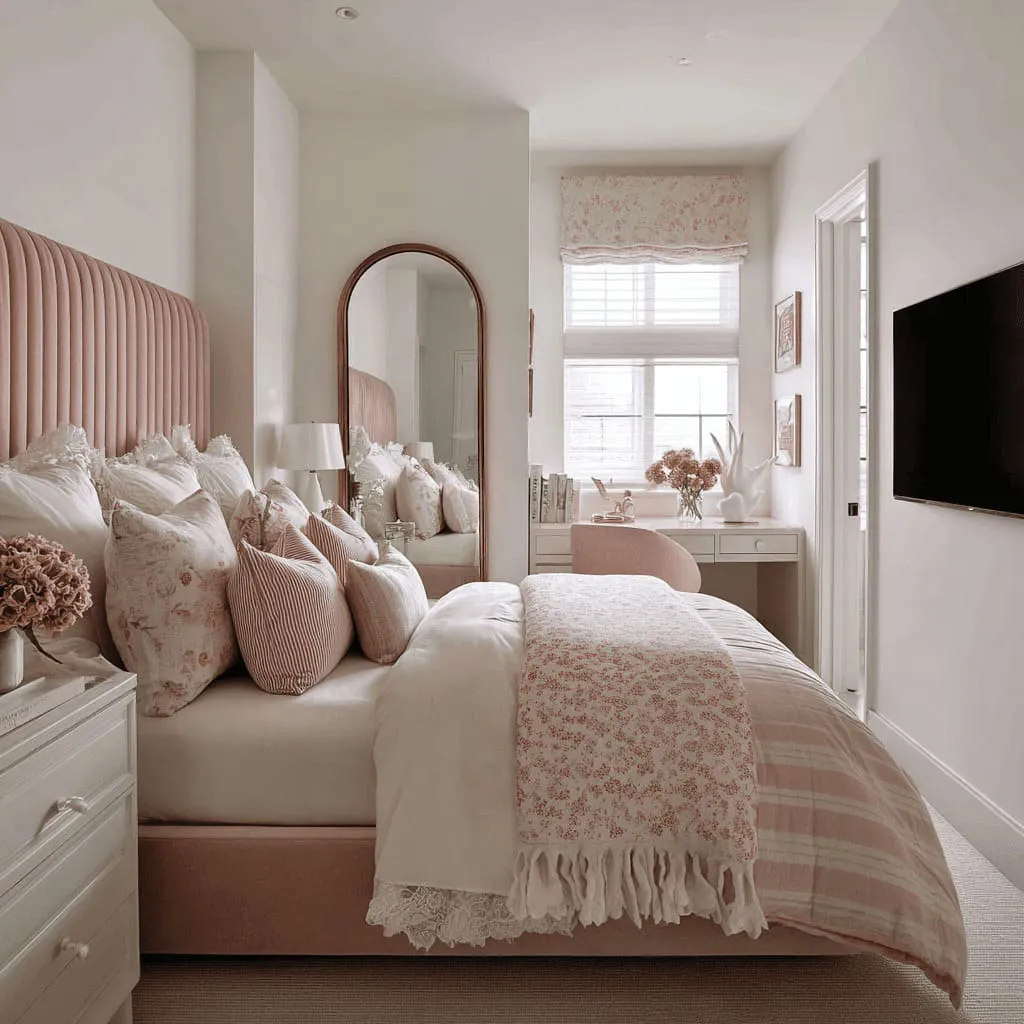
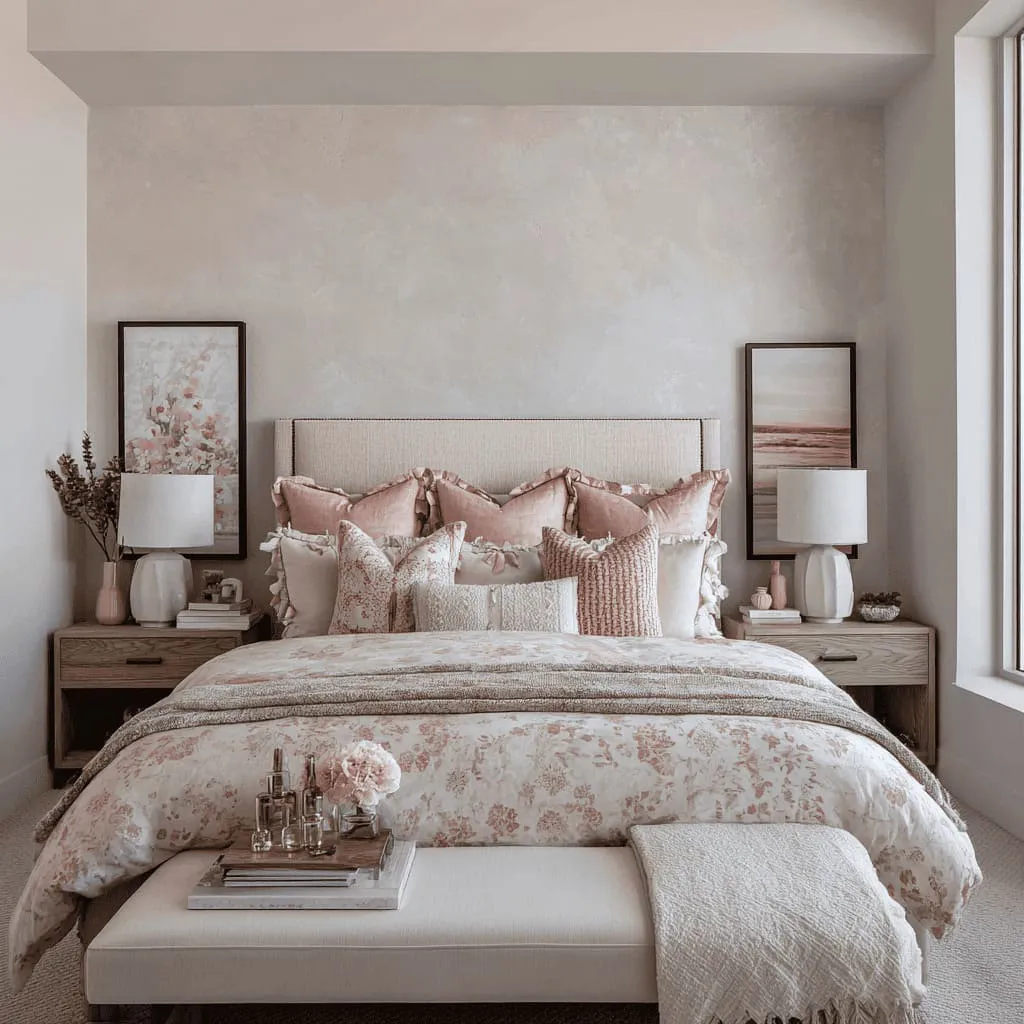
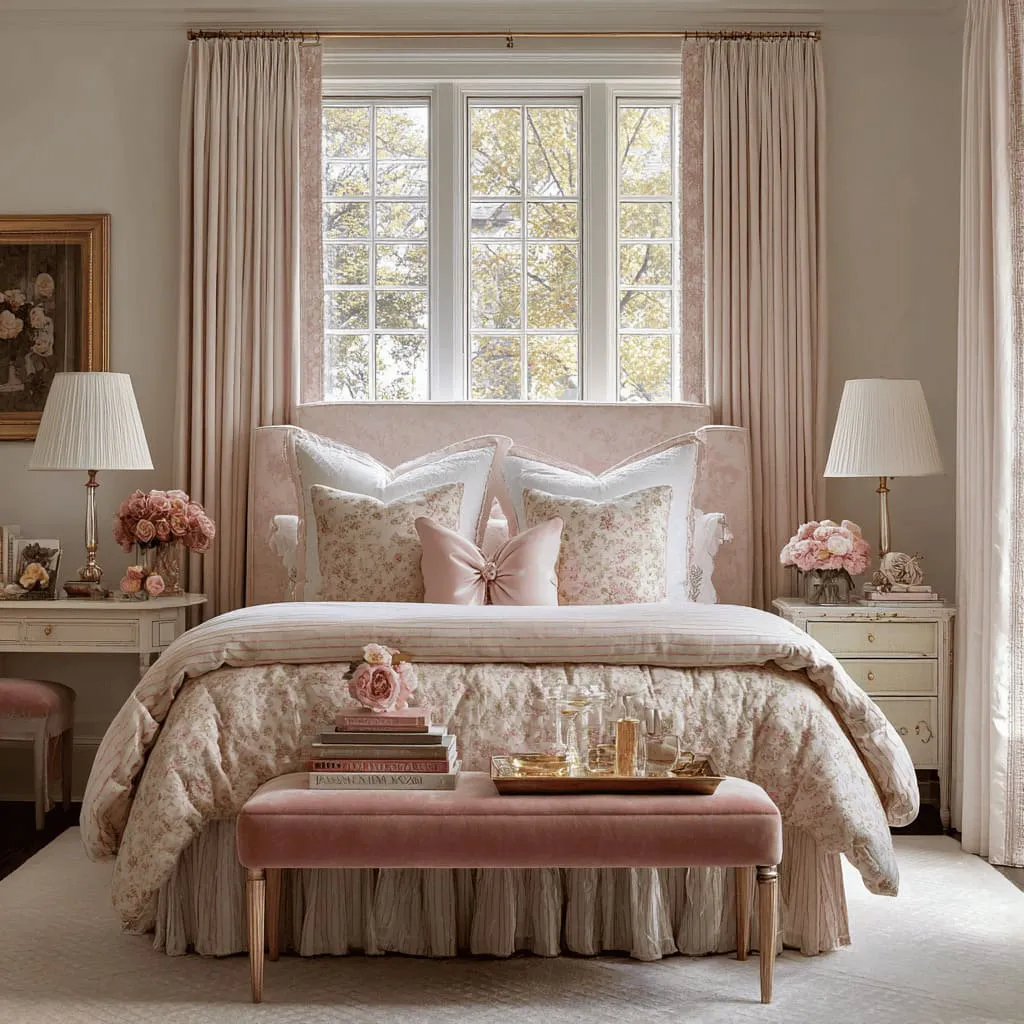
Another thing: coquette bedrooms look better when objects have assigned places. Instead of spreading small items all over the room, the interior design concepts that feel composed usually tend to gather them on one platform: a tray on a bench, a tray on an ottoman, or a grouped cluster on a dresser top.
That’s how you get the sense of ritual—perfume, skincare, books, a small vase—without turning surfaces into clutter. It also cuts down decision fatigue.
One stage gets the tiny sparkle things. The rest of the room stays quiet.
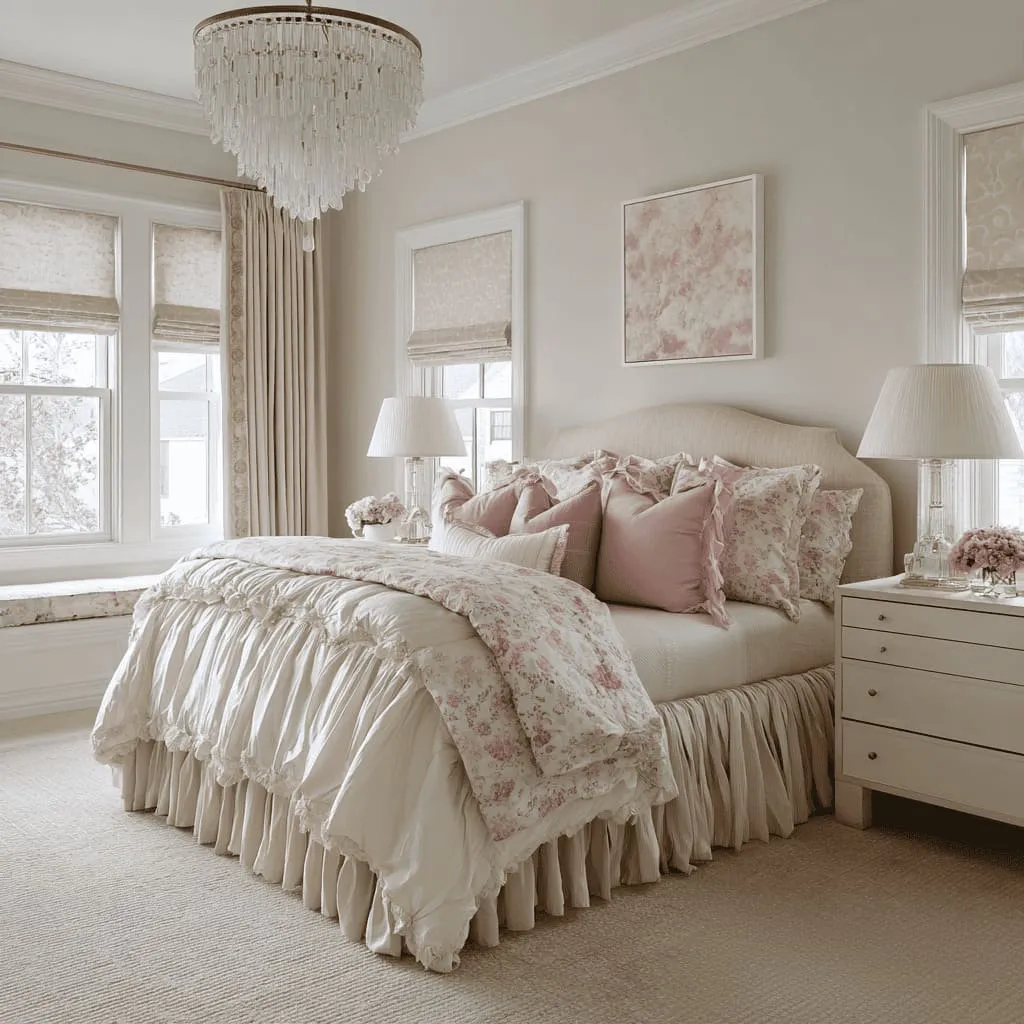
Why two-scene rooms feel finished without turning the bed into a mountain
Interior designs that feel complete usually build two main scenes, not one. The bed remains the emotional center, sure.
But there’s often a second character that carries the style so everything doesn’t depend on extra pillows: a dresser vignette, a window bench styled like a mini bed moment, a foot-of-bed seat with a tray, a chair/chaise corner, or a small desk/vanity zone tied back with one textile and one curve.
This isn’t decoration for decoration’s sake. It’s a composition trick.
When the room has two scenes, you can keep the bed restrained and the whole space still feels intentional.
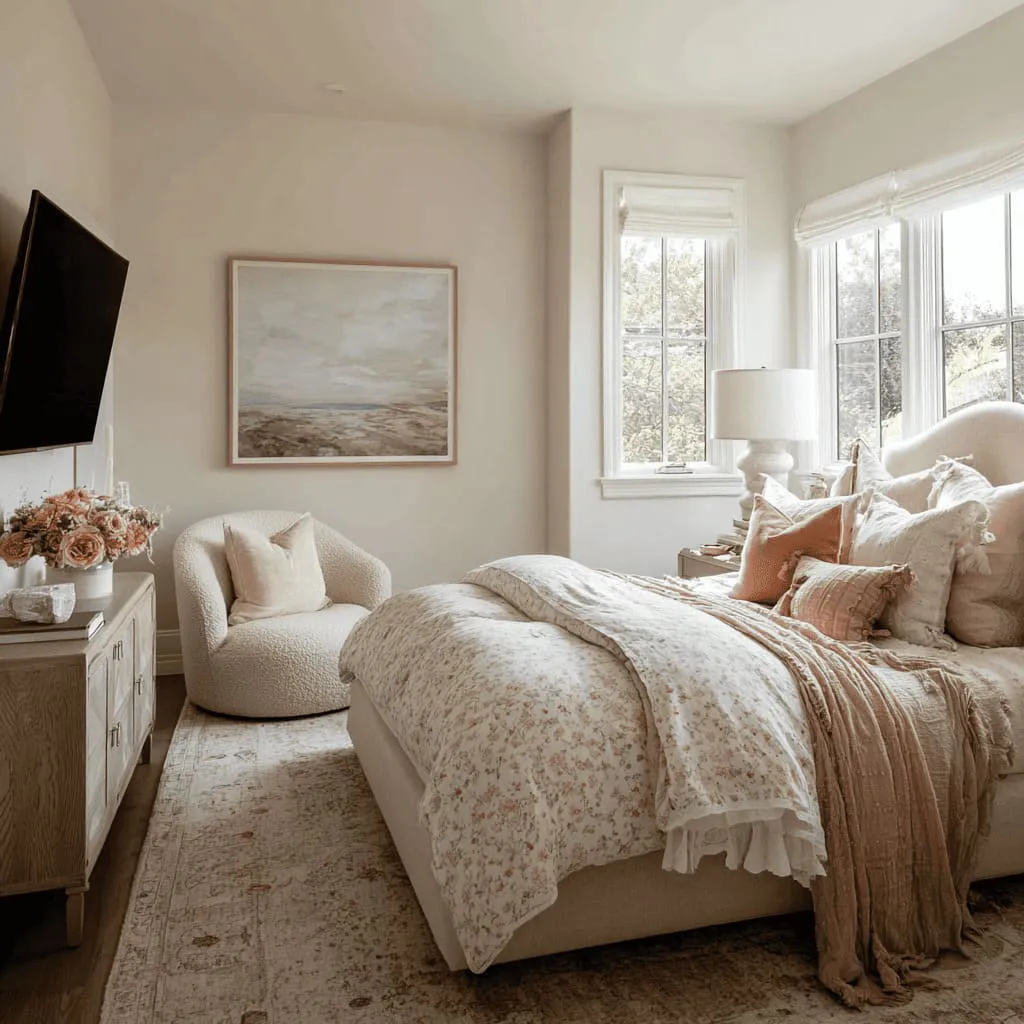
Romance can coexist with TV
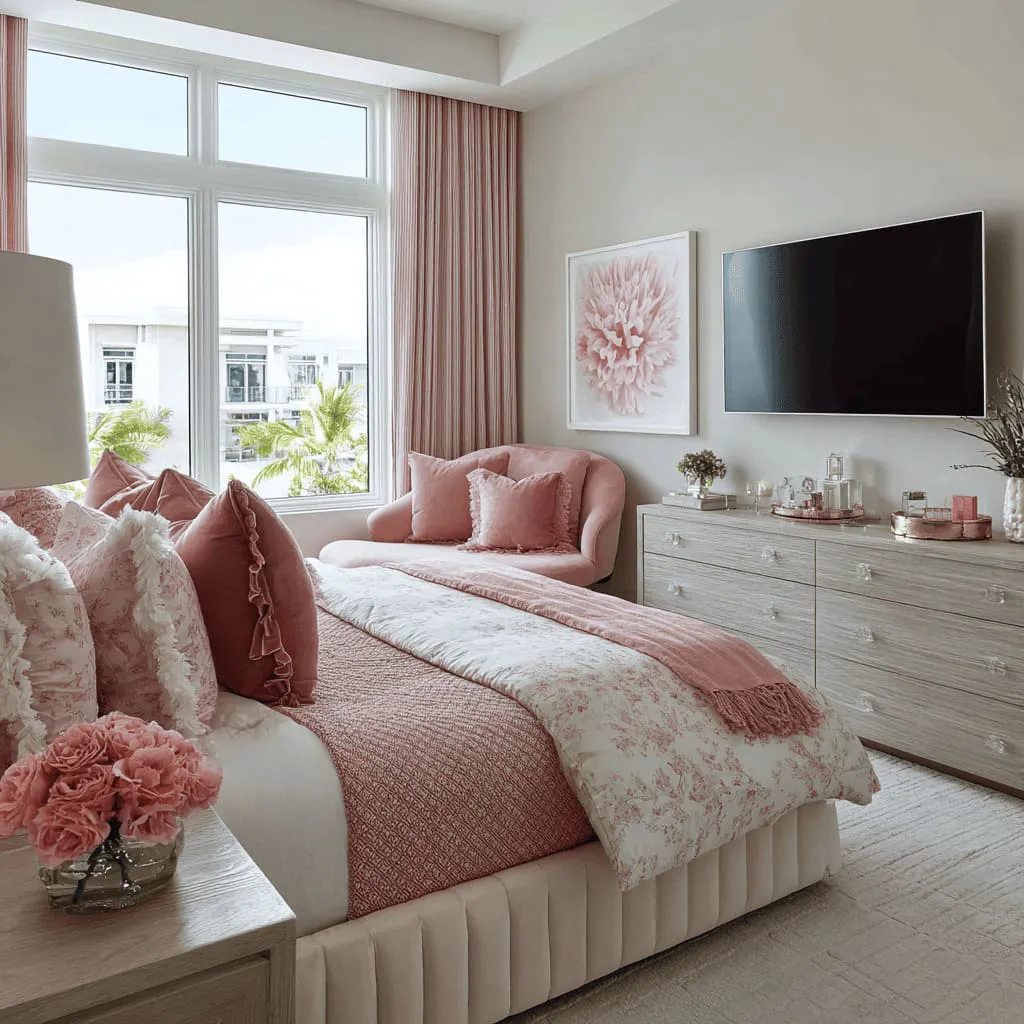
Coquette bedroom designs can nicely include a TV, a work spot, serious storage. They don’t have to fight those realities, but they isolate them.
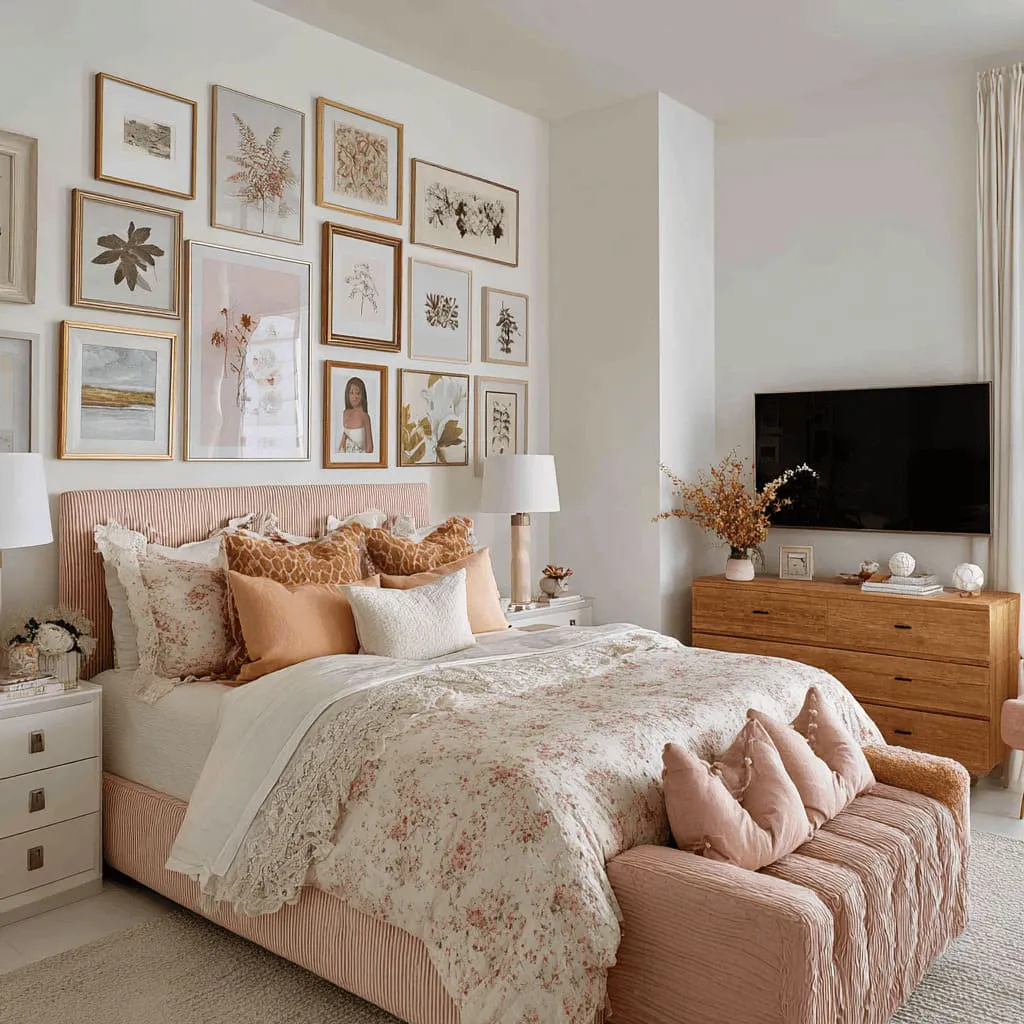
With a TV, the rule-set stays consistent. The screen becomes one dark punctuation mark, so the surrounding wall can stay pale and low-detail.
The console beneath can tend to be warm wood, because that warmth stops the media side from feeling techy. And the romantic density stays in textiles and one nearby art piece, not clustered around the screen.
No ring of frames. No extra black rectangles nearby.
Making it feel grown-up without stripping the sweet details
Maturity in interior design doesn’t come from dialing romance down to zero. It comes from tone anchors placed carefully.
Such designs often use quiet, sober art subjects a lot—landscapes, soft abstraction, botanical studies that feel calm rather than loud. Warm wood plays a role as an adult base note on nightstands and dressers.
Patina cues appear in antique-feeling frames or inherited silhouettes.
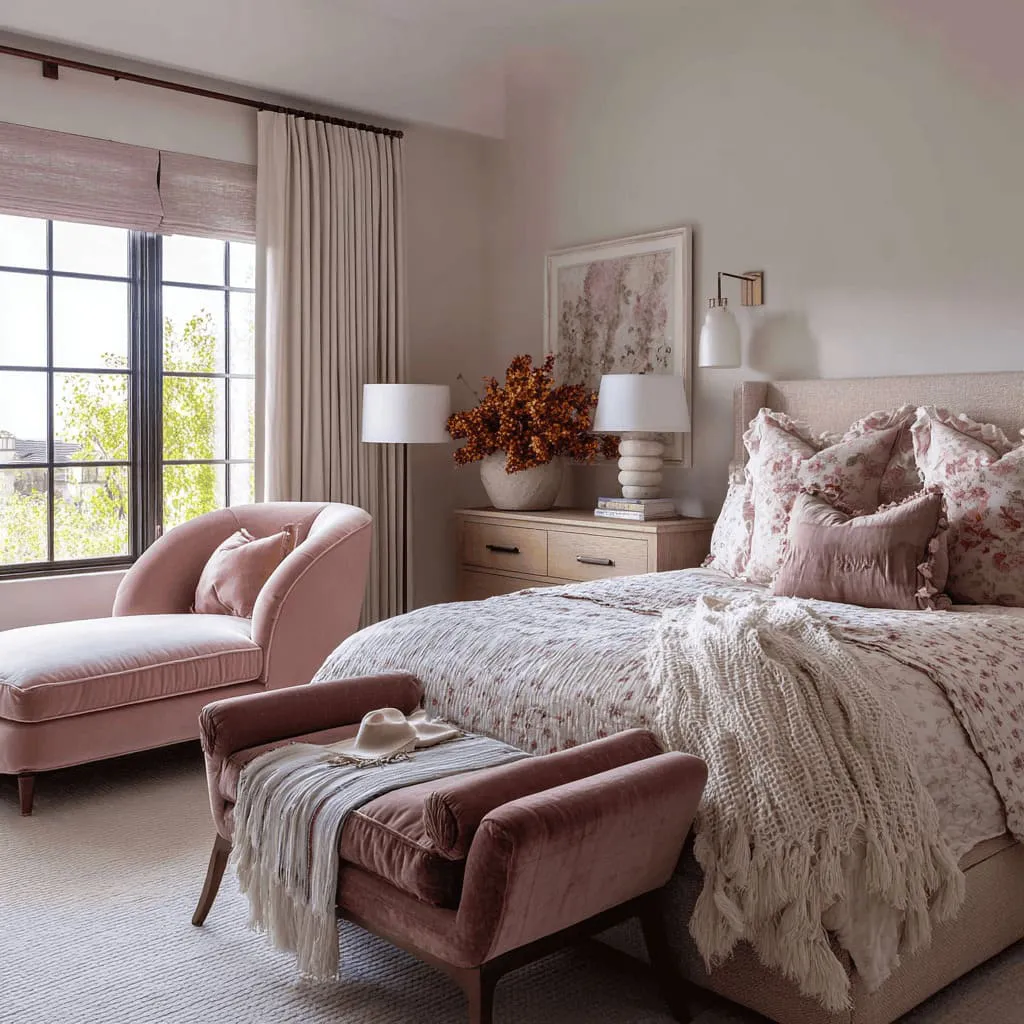
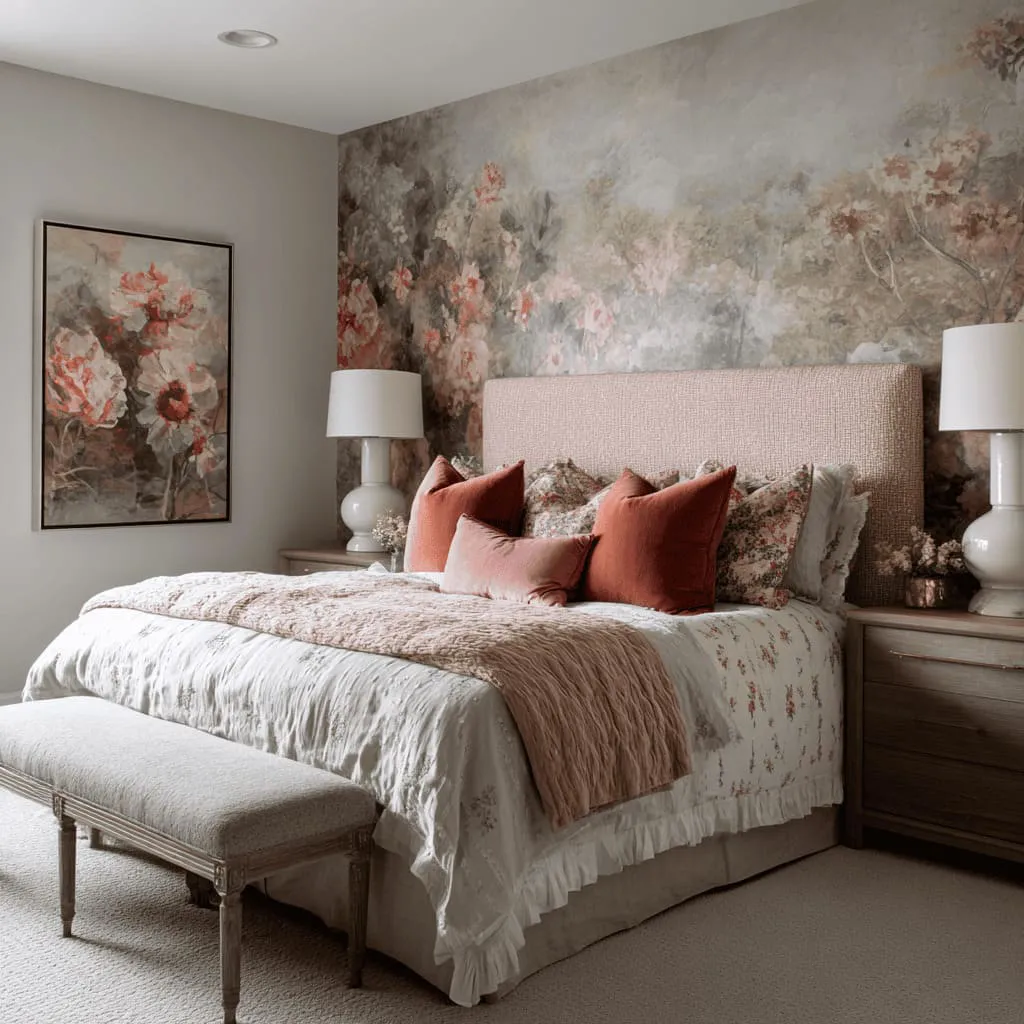
And there’s one more interesting move: one deeper warm value, used once in a controlled location. Terracotta, mauve, toasted rose, rust.
Often it lives on a bench at the foot of the bed, or on a front pillow, or a throw. That single deeper note gives the whole pale scheme depth, without needing to remove the coquette cues.
Curves are not random, and mirrors do more than decorate
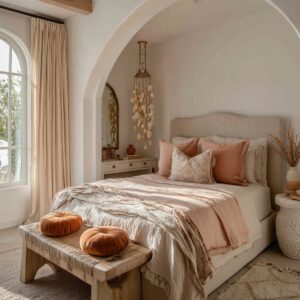
Arched mirrors is a popular item in coquette style interiors, and they behave like multi-tools. They can echo the headboard curve so the room’s soft geometry repeats.
They amplify daylight. And they create a getting-ready mood without forcing a full vanity block into the plan.
Another pattern: curves usually appear at least twice, in the same family. Headboard curve plus mirror arch.
Or chandelier drape plus headboard curve. That repetition is what makes the romance feel intentional, without adding a lot of extra objects.
Six fast coquette bedroom ideas
Coquette style bedroom interior can be based on these design ideas:
- Leaning into inherited softness: micro-florals, gentle trims, calm art, older-house cues.
- Leaning to soft glam: one ceiling sparkle node on a matte base, with restrained surfaces.
- Modern coquette: TV or desk included, romance kept in touchable textiles and curve cues.
- Use of clean space as the amplifier: fewer objects, stronger architecture, texture hierarchy doing the work.
- Based on a collector wall: gold frames act like jewelry so the bed can stay simpler.
- Moody garden: painterly florals plus terracotta warmth while the furniture stays quiet.
The nice part is that each idea can follow the same underlying logic. Only the constraints change.
Design Technics For Coquette Bedrooms
When you increase lace/ruffle density without adding a rhythm device (stripe/channel/panel), perceived clutter tends to rise fast. Increase floral area with a strong order line, and it usually feels calmer.
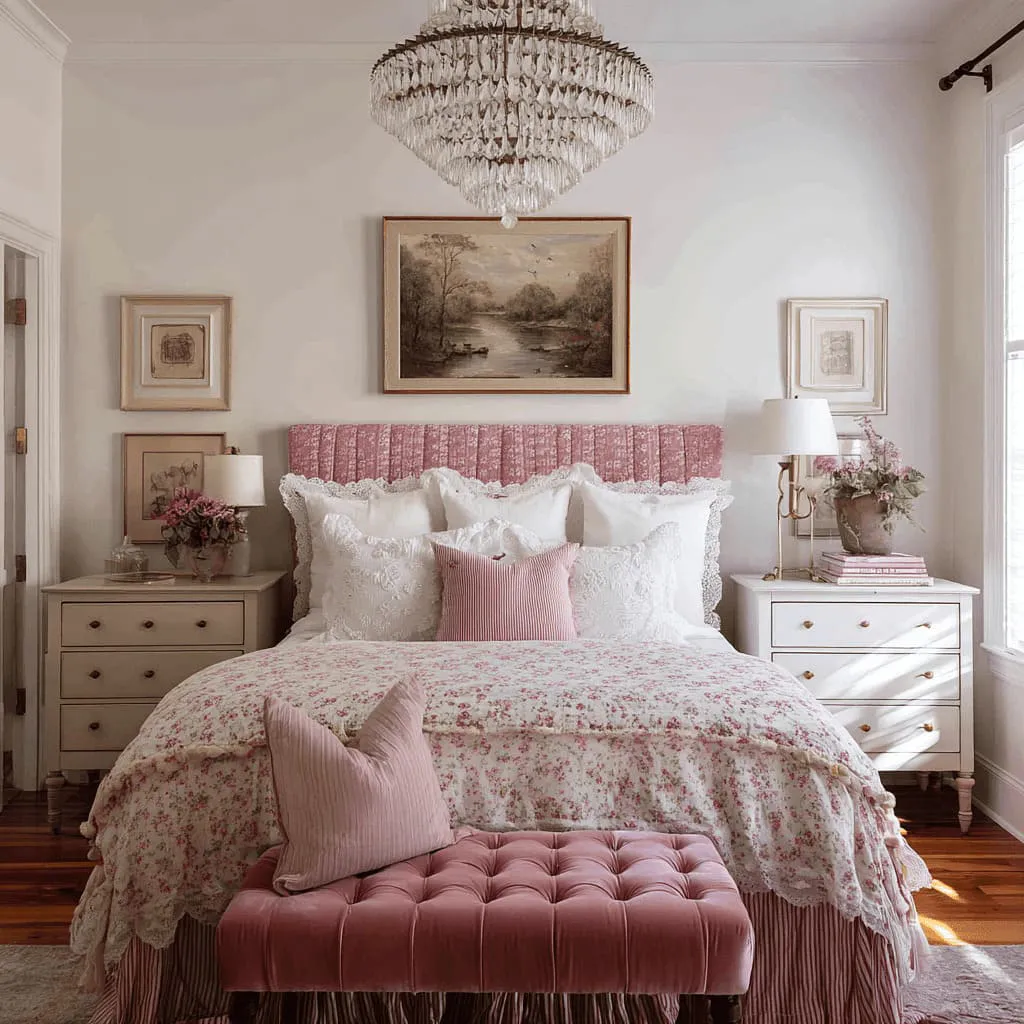
One dark anchor (TV or black window outline) can sharpen powdery palettes, but only if the surfaces around it stay low-detail.
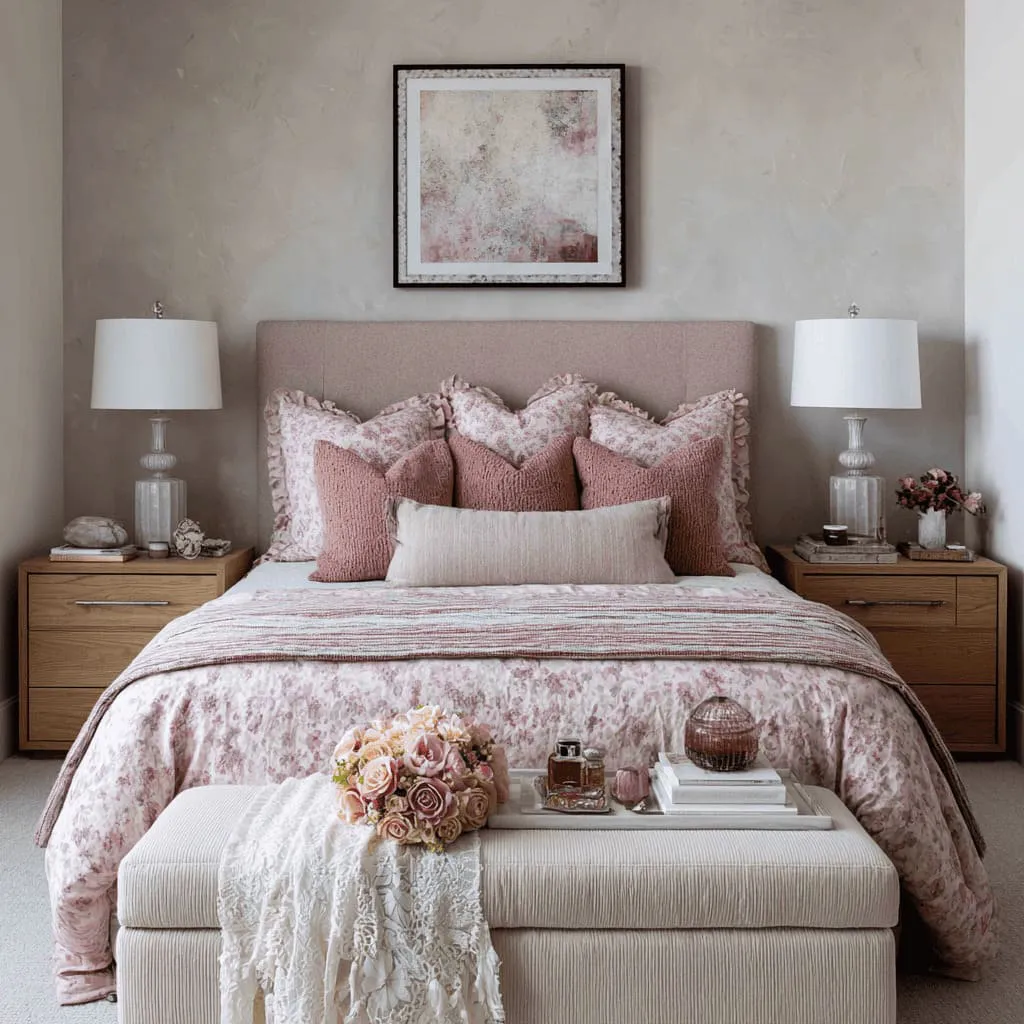
Putting one deeper warm value at the foot of the bed often makes a room feel more mature than adding extra pale pink pillows.
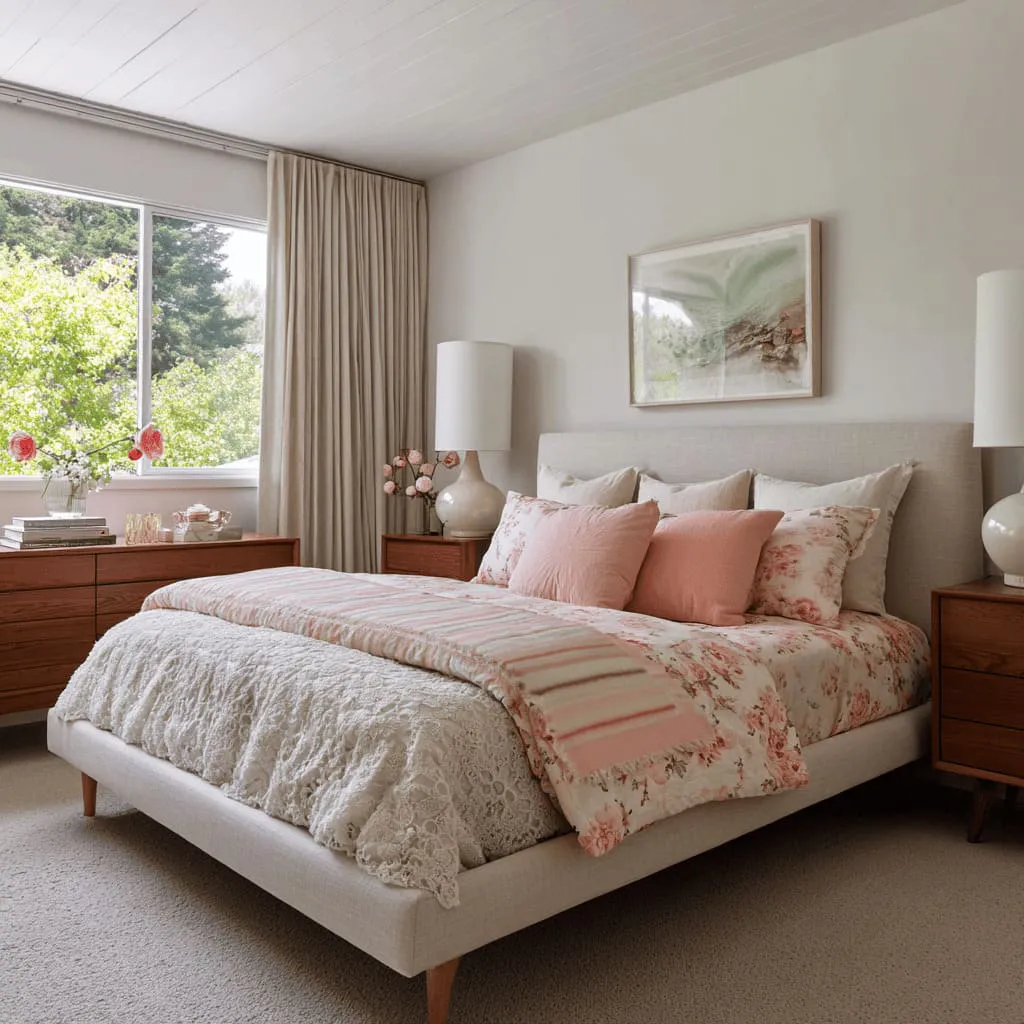
A two-scene layout (bed plus a vignette like a dresser/bench/window bench) tends to make interior design feel more complete than simply expanding the pillow stack.
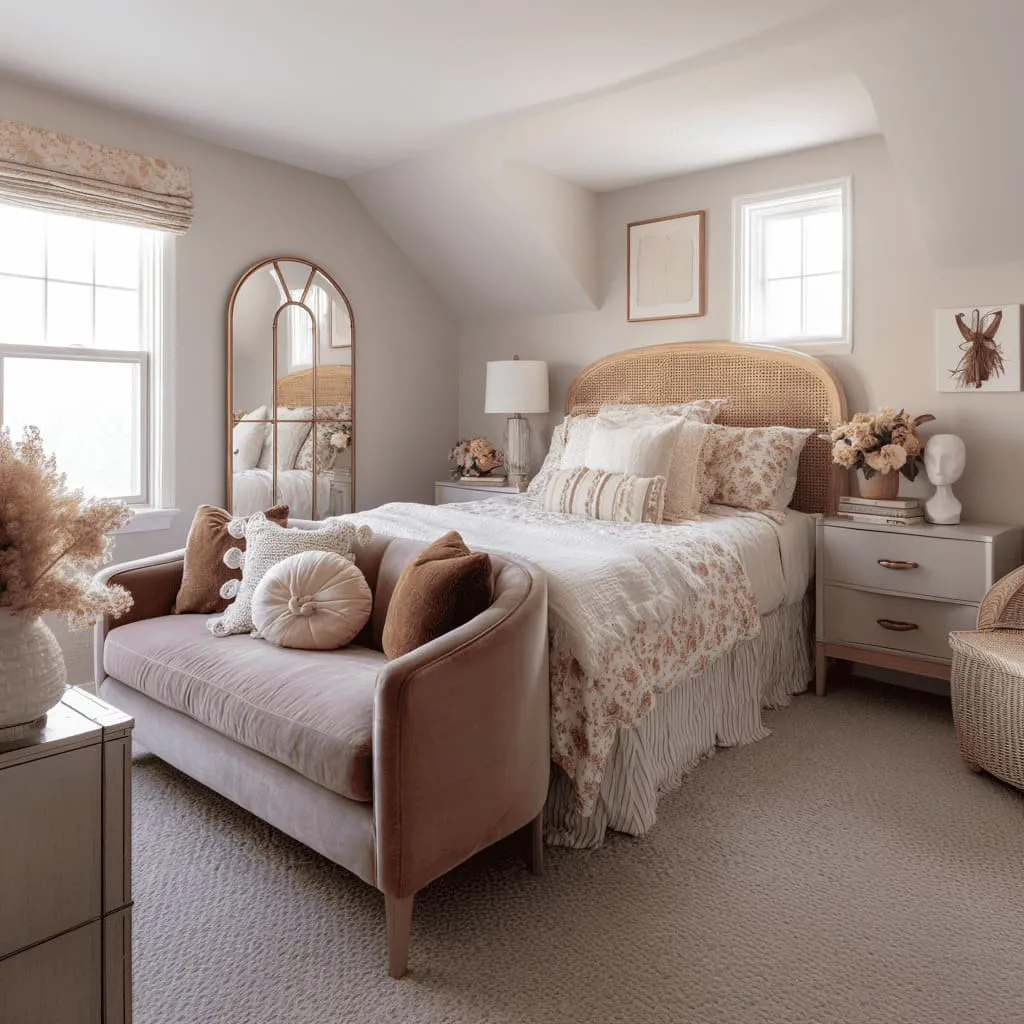
Washed, low-contrast florals let you use more floral surface area with less perceived busyness than high-contrast prints.
Repeating one curve type twice tends to boost cohesion more than adding a third curve in a different style.
Panel grids and channel tufting can compensate for low color contrast by giving the room built-in rhythm.
Gold frames can expand the crown of the bed zone and reduce the need for a dramatic headboard, as long as the frame tone stays consistent.
Tray-grouping on benches or dressers lowers the feeling of mess while still signaling personal ritual.
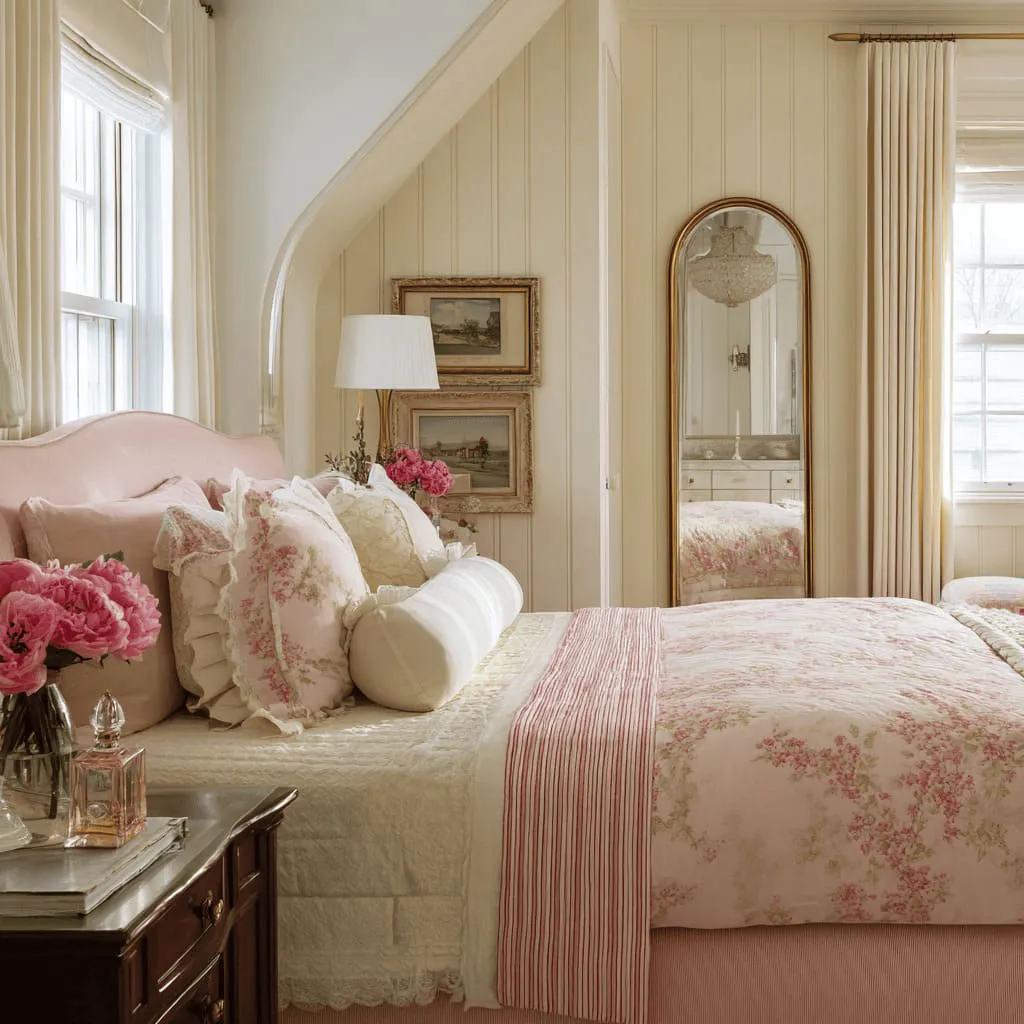
In sloped-ceiling rooms, stronger symmetry near the bed often reduces the awkward-shell feeling more effectively than adding extra decor.
The takeaway
Coquette style works when softness gets a clear job and a clear boundary. Sweetness sits on borders and small repeated details.
Rhythm devices keep the palette legible. Objects get assigned places to live.
And modern realities—TV, work, storage, big daylight—fit in fine when contrast and ornament stay tightly contained.