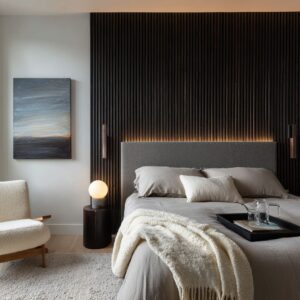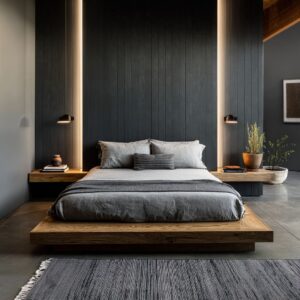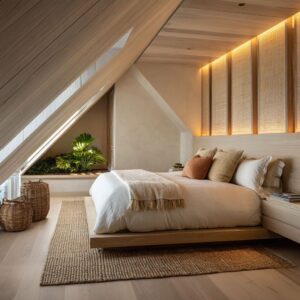
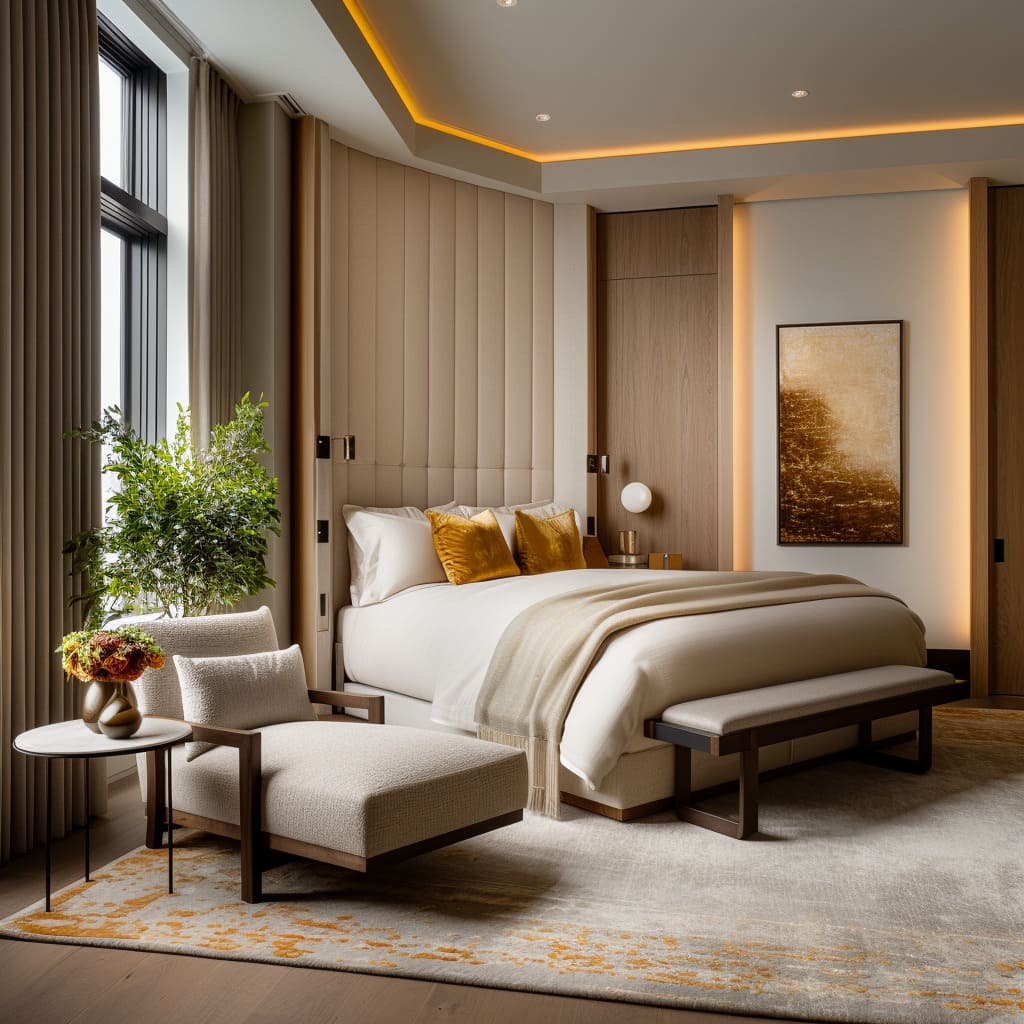
A corner bed design can read like a soft pivot in the room rather than a destination that furniture fell into by accident. When lines glide through the angle—thin shelves, low ledges, or padded panels—the corner stops looking like a collision of planes and starts acting as a gentle turn that calms the eye.
The most persuasive corner bed decorating ideas don’t rely on loud color or heavy ornament; they lean on continuity, shadow, and a few well-placed silhouettes that give the bed a visual anchor. In this light, the corner becomes an organizing feature: it can steady a strong window, settle a complex wall composition, or bring focus to a compact footprint where every inch must carry its weight.
This article looks closely at how that happens—the look, the feel, the mood—and what role each element plays in solving common visual or space-planning snags, with a special emphasis on corner bed design ideas that read clean and intentional.
One Line Through the Angle: Why Continuity Is the Real Luxury
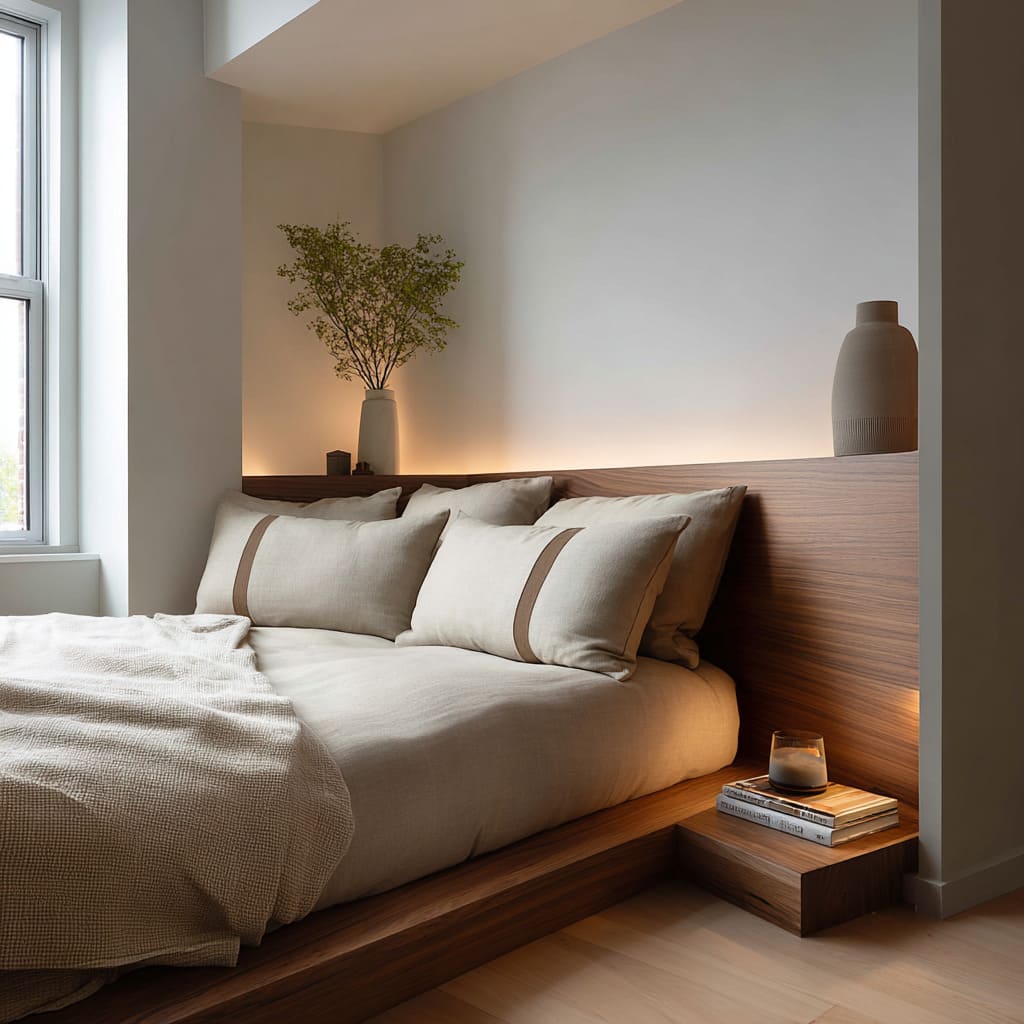
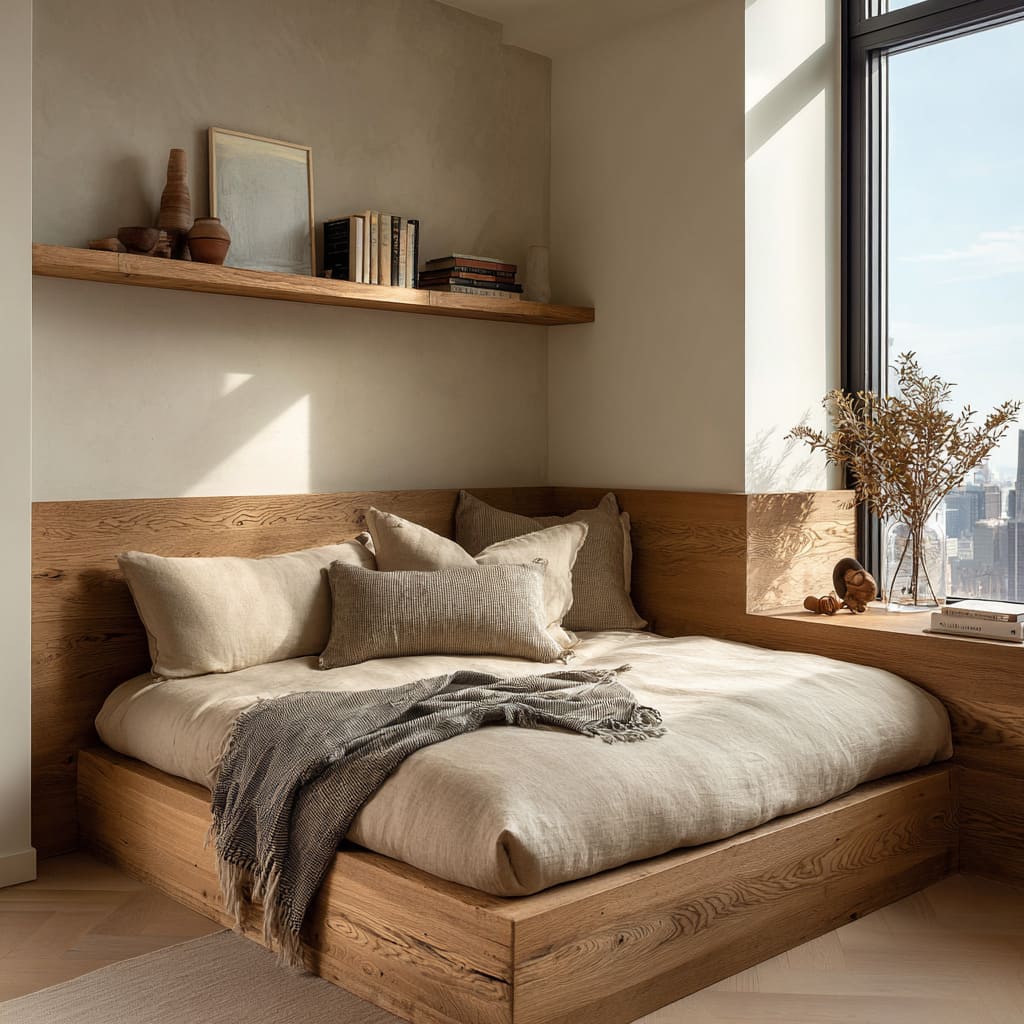
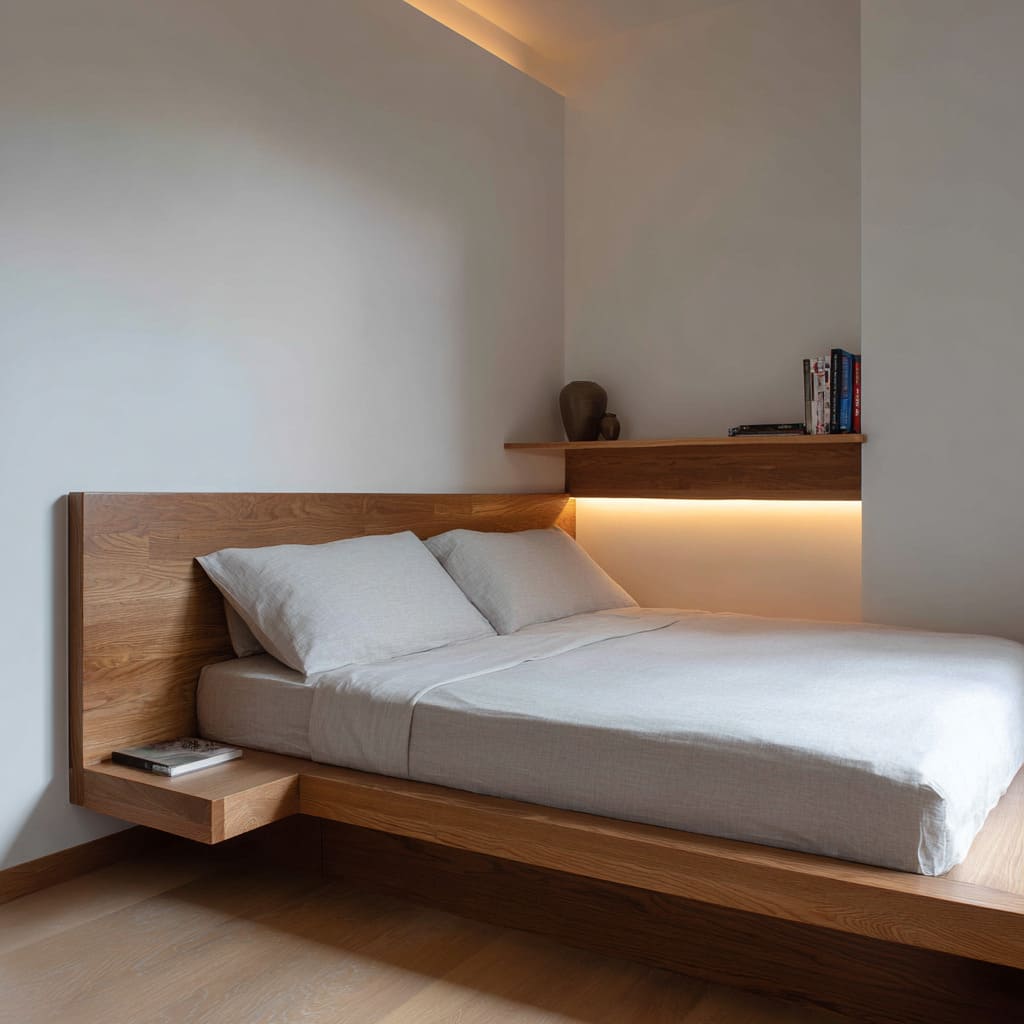
Many compelling rooms share one quiet habit: a single datum crosses the corner and ties both walls together. Sometimes it’s a low timber backboard that folds like a ribbon behind the pillows; sometimes a long, lightly styled shelf floats high with a faint underside glow; sometimes a slim ledge sits at pillow height and turns the corner as a narrow horizon.
The look is serene because the eye can follow one uninterrupted move instead of sorting out multiple objects arguing at ninety degrees. This continuity also solves a visual problem that haunts small corner bedroom ideas: corners often feel taller and emptier than the rest of the room.
A folded line—wood, fabric, or plaster—gives the angle a job, which keeps the bed from looking wedged in and lets the corner breathe. In a broad sense, corner bed interior design succeeds when the corner reads as a soft bend in the room’s story, not a dead end.
Shadow as Drawing: Using Light to Round a Right Angle
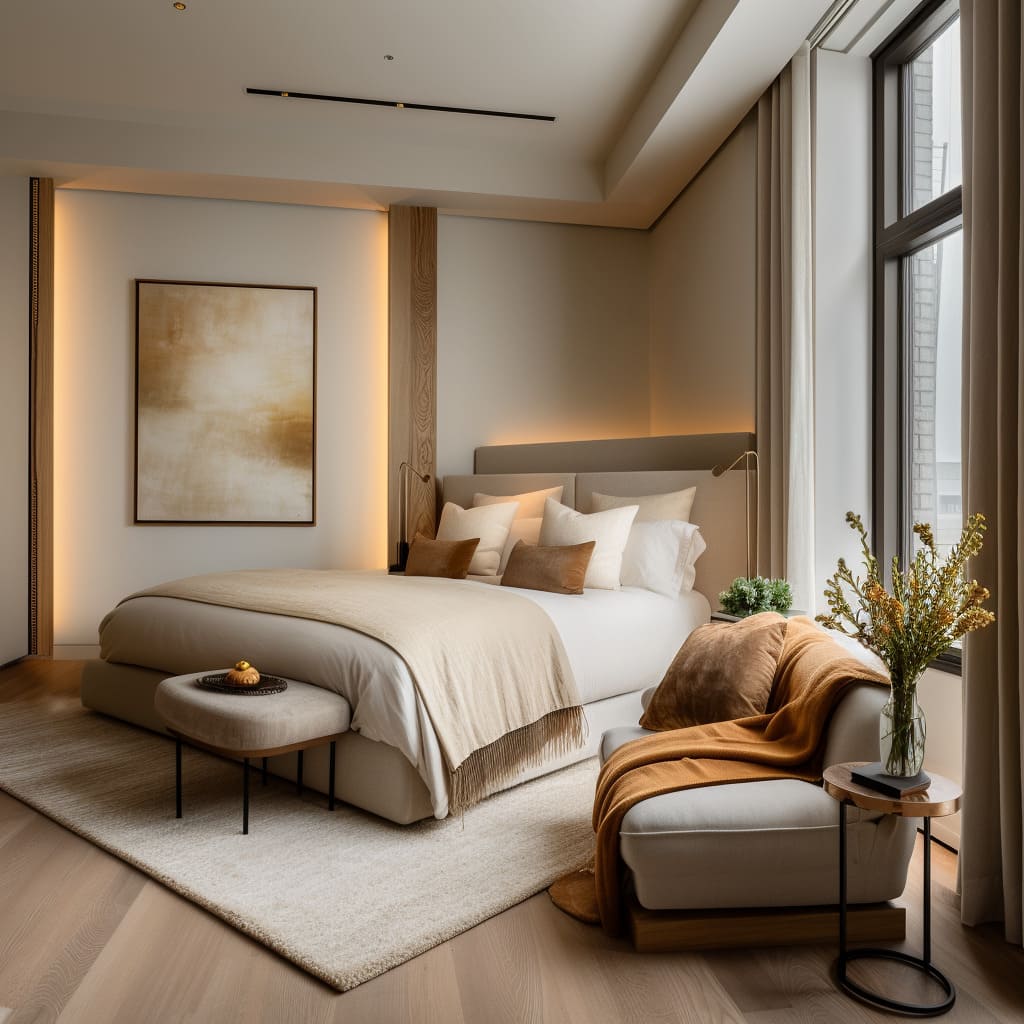
The most convincing corner scenes don’t blast light into the angle; they skim light along surfaces so gradients appear where hard edges used to be. A faint wash behind a floating headboard, a glow tucked under a shelf, a soft bar that kisses the wall just above the headboard—these touches act like charcoal shading, rounding the inside corner without a visible fixture taking the spotlight.
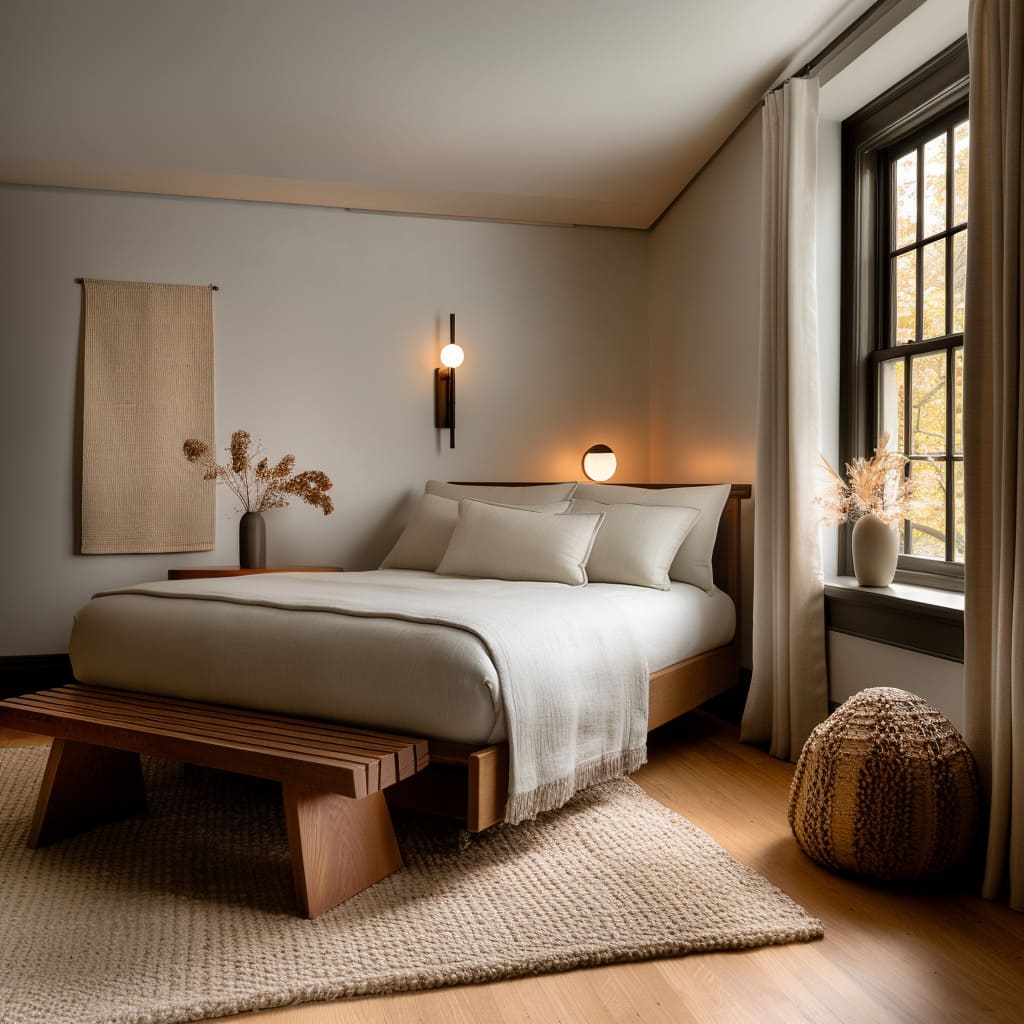
This approach does two things for corner bed design at once. First, it keeps the sleep zone gentle at night, with no glare across two planes.
Second, it replaces the need for bold contrast; when light becomes the ink, wood grain, linen texture, and matte walls can stay close in tone while still feeling layered. Even color-forward rooms gain from this logic: warm textiles glow deeper when the corner is lit from the side, and dark slatted wraps feel dimensional rather than flat.

The Bed as Part of the Architecture
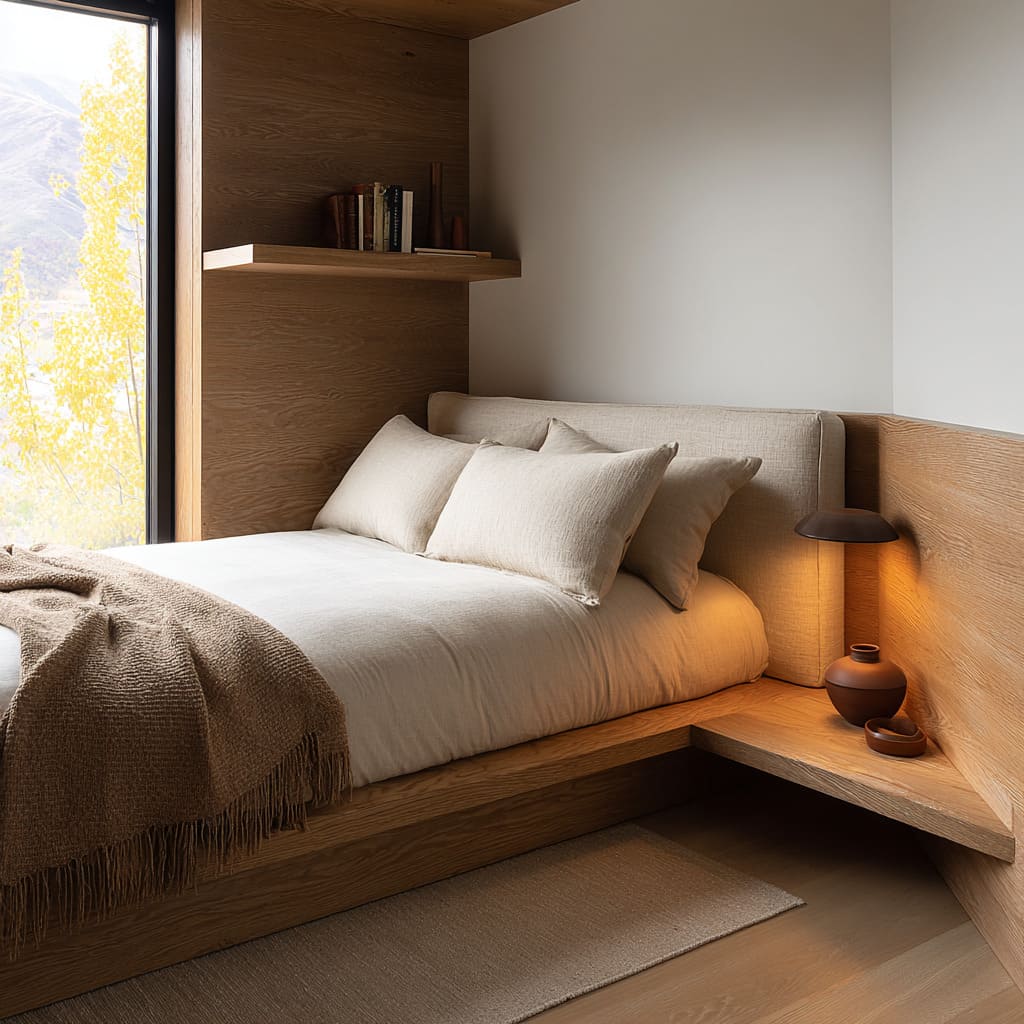
Great corner bed decorating ideas often stop treating the bed as a free-floating object and begin treating it as a continuation of the room’s bones. Platforms align to window sills so bedding can slide neatly under a jamb; low drawer runs bend like a bench around the corner; window seats kiss the mattress height and quietly become a night surface without extra furniture.
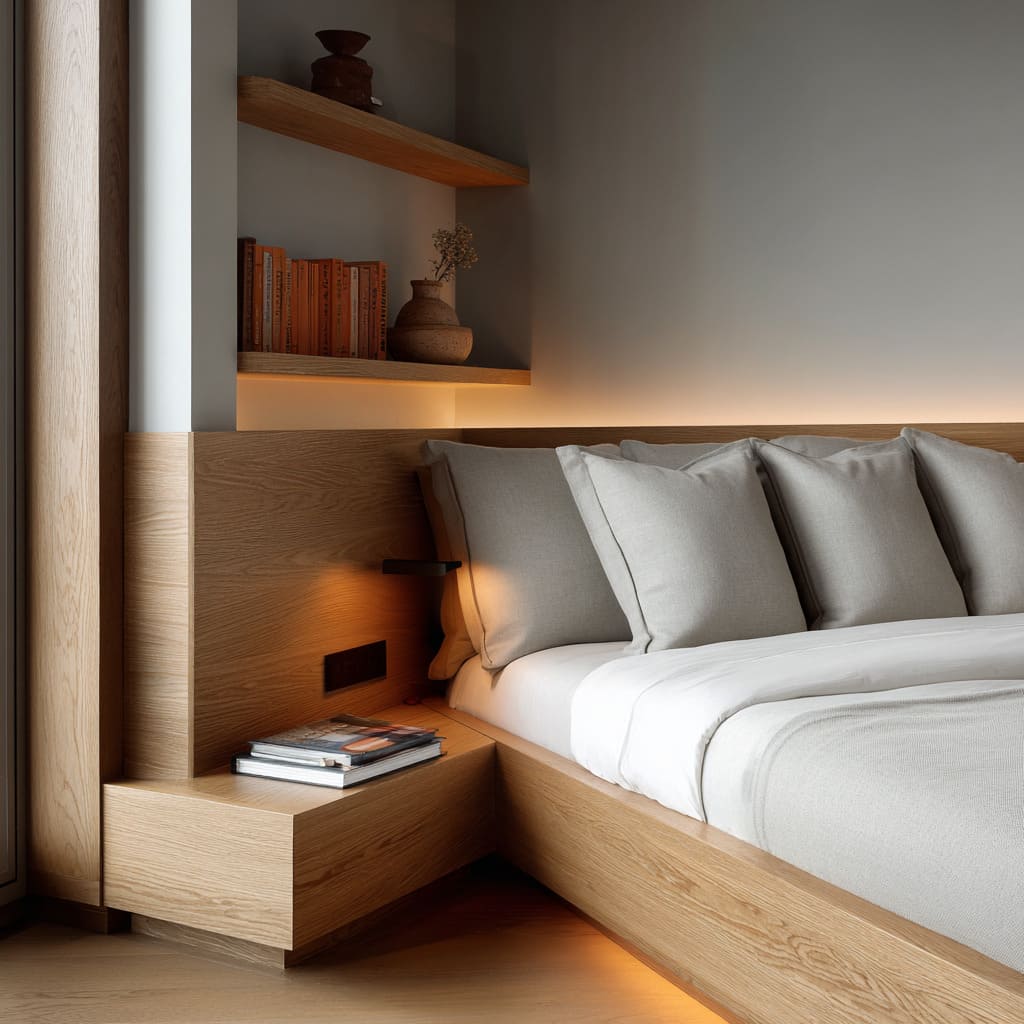
The visual payoff is clarity: the bed reads as if it belongs to the walls and windows that cradle it. This helps in rooms where the footprint is modest or where circulation slips tight beside glass, because the joinery and the mattress share one language.
That unity lowers visual noise, a powerful advantage for small corner bedroom ideas where a single strong move looks calmer than three disconnected ones.
L-Shaped Support: The Small Fix That Changes Everything
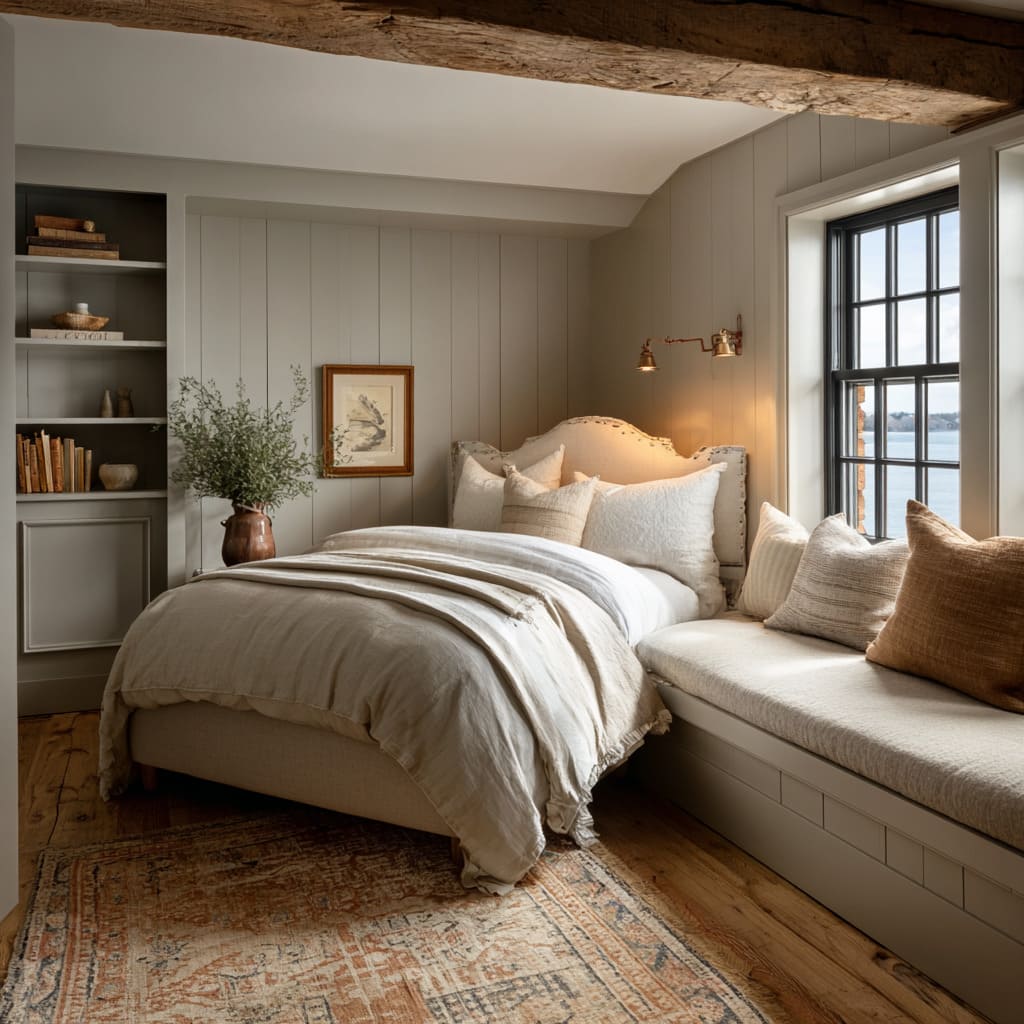
Pillows sliding into a crack is not just an annoyance; it looks messy. Corner bed design ideas that wrap a low backboard across both walls or pad the angle with fabric panels solve that in a single gesture.
The move supplies three wins at once: it holds cushions, it gives the eye a steady horizon, and it turns the corner into a backdrop instead of a void. Rounded outside edges on headboards and L-shelves add to the effect; that little radius softens how faces, elbows, and bedding meet the corner.
The result is quiet comfort that reads even in a photograph: soft edges, controlled lines, and a bed that appears considered rather than parked.
Light That Grades, Not Glares
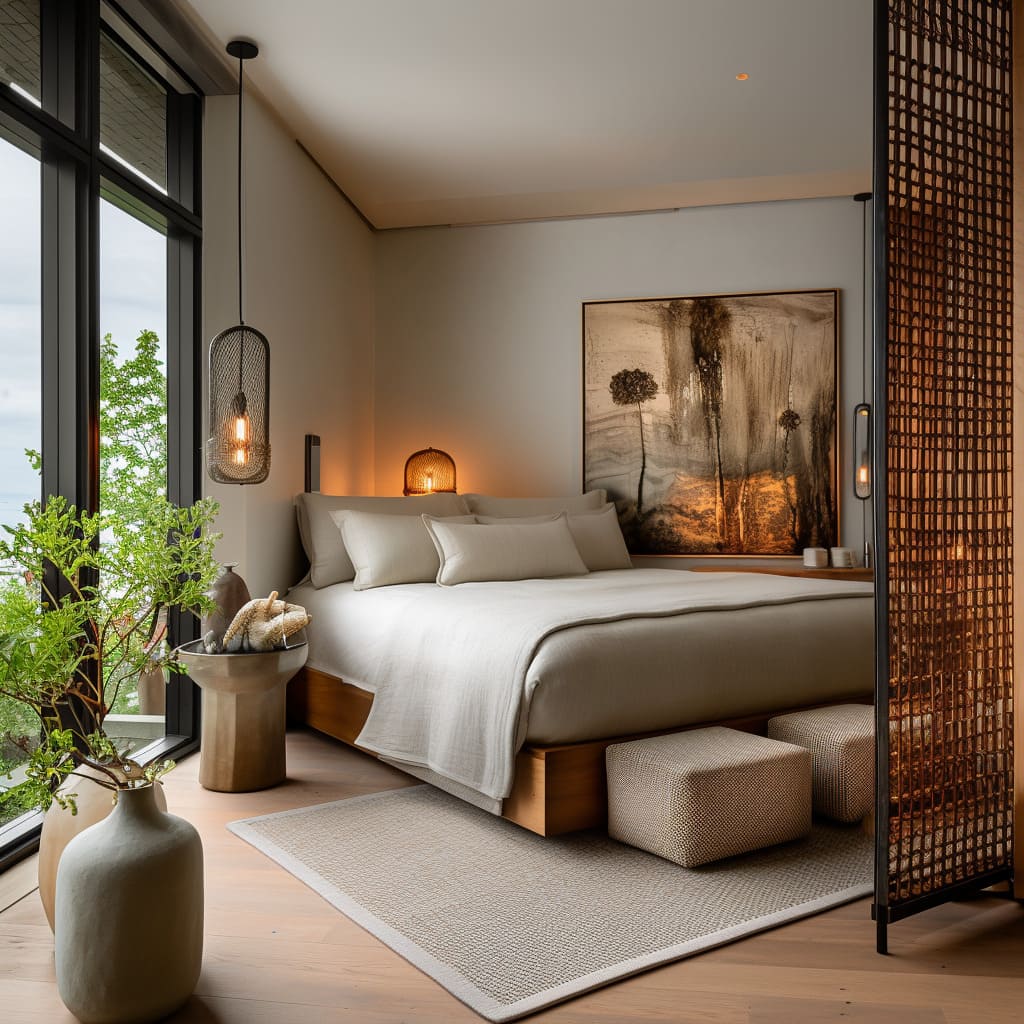
Pendants become sculptors when they’re placed thoughtfully. A pair hung at different heights—one dropped near the window edge, one held a touch higher deeper in the angle—creates a slow fade across the corner and marks the boundary between glass and wall without visual fuss.
Vertical sconces set slightly forward of the head trace a slim column that doubles as a night cue. Even tiny swing spots tucked into timber can push a warm oval across grain, adding depth.
The point is not “more lighting,” it’s better distribution: light that travels along surfaces turns right angles into curves the eye accepts, which is the essence of cozy corner bedroom ideas.
Tone-on-Tone and the Power of Texture
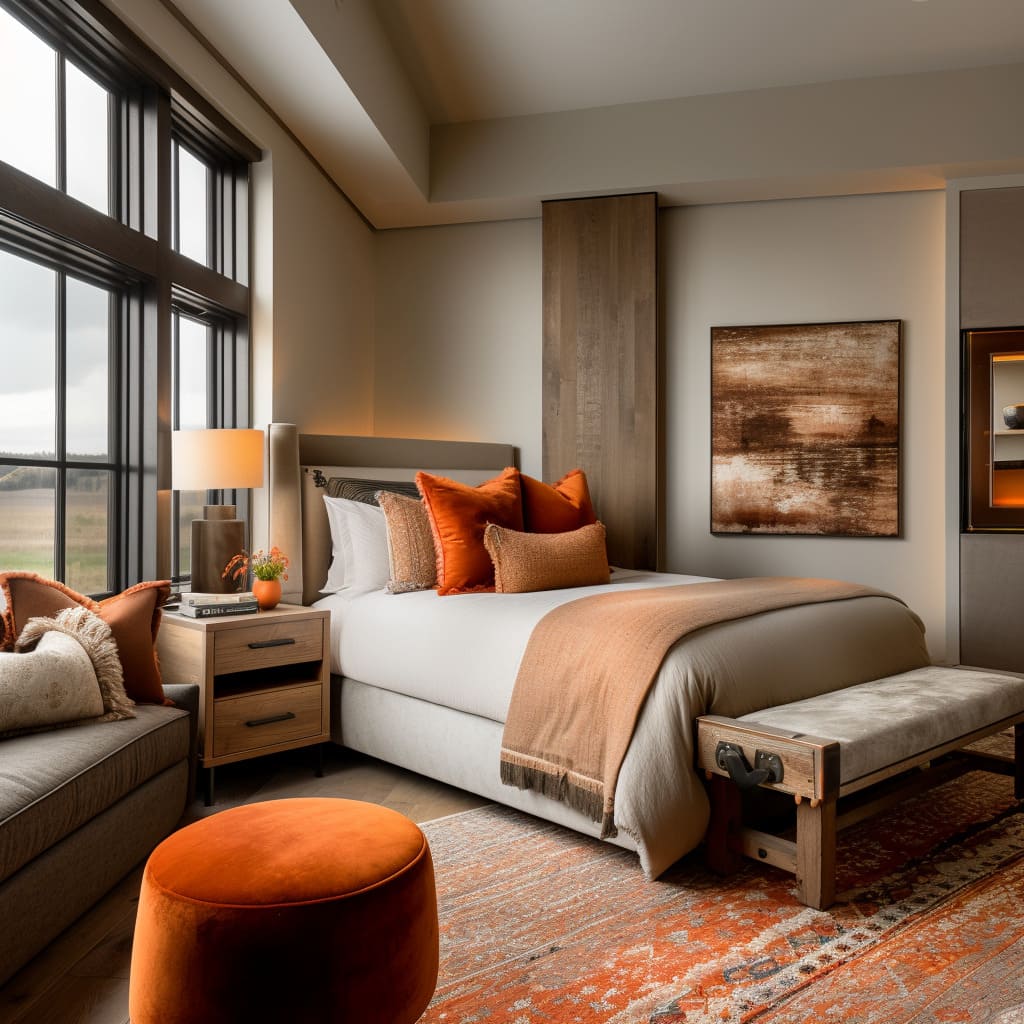
A lot of successful corner bedroom decor ideas keep color in a narrow band: oak with oatmeal, ash with soft gray, chalky plaster with pale travertine notes. With contrast dialed down, texture steps forward.
Nubby rugs stop a dark scheme from feeling stern; boucle cushions add a soft cloud to lean into; a velvet accent gives a single saturated note without shouting. Because the palette is held close, shadow lines become the true separators: a recessed plinth under a platform, the air gap behind a floating headboard, the under-shelf glow that draws a pencil-thin horizon.
This is why many of such rooms feel both warm and minimal even when storage and seating are tucked in; the materials are doing the talking rather than the color wheel.
Low Horizons: Ledges, Micro-Trays, and Breathing Space
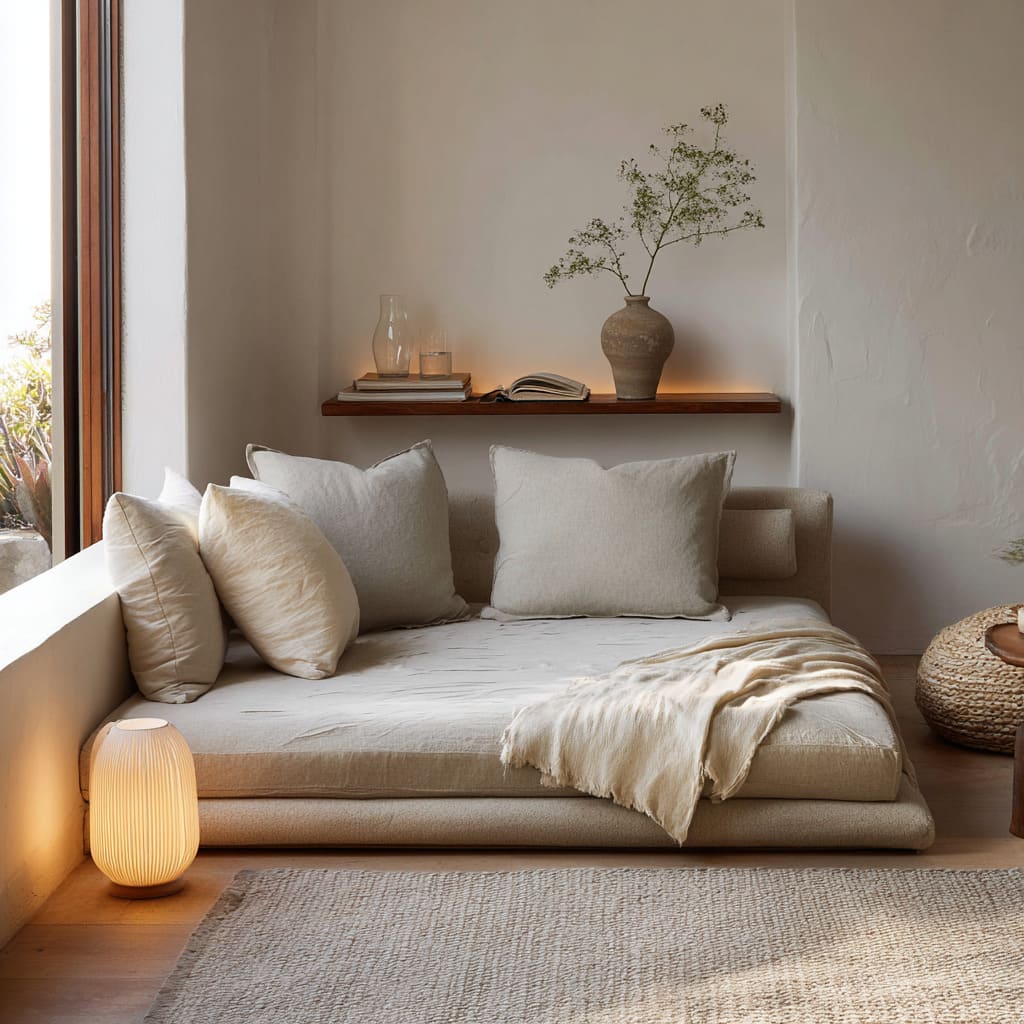
One of the most reliable moves in corner bed design ideas is a thin ledge that runs behind the pillows and turns the corner at about shoulder height. Styled lightly—branch in clay, a few matte books, low ceramics—it creates silhouettes against a soft wash and gives the head zone a calm baseline.
Equally effective are micro-trays cut below mattress height: small perches that hold a glass or book while keeping the bed edge clean. What both moves share is restraint.
They avoid the bulky nightstand trying to wedge itself into the angle and instead rely on slender planes that provide both function and a crisp graphic read. The space above them stays clear so the corner feels tall and unburdened.
Windows as Partners, Not Problems
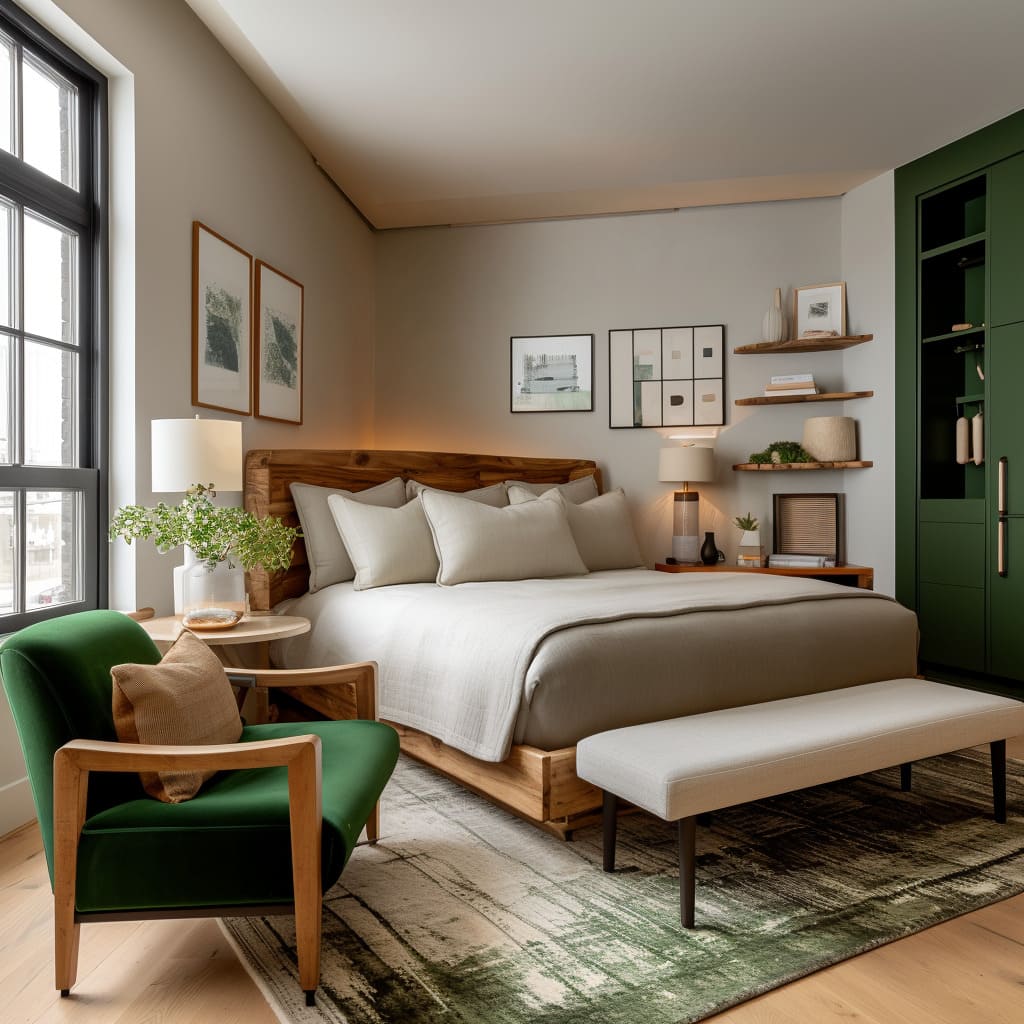
Corners near windows can feel unbalanced because the view pulls the eye sideways. Strong corner bed interior design counters this with quiet weight near the glass: a pendant that drops lower at the window edge, a tall vase placed exactly at the inner turn, a compact chair with a throw that mirrors the accent color at the pillows.
When the platform aligns to the sill, the bed and window become a single composition; bedding slides under the jamb without snags, and the corner looks crafted instead of improvised. Trim color helps manage depth: darker lines sharpen the opening in pale rooms; matching dark trim to dark slats compresses the perceived distance and keeps compact spaces feeling tidy.
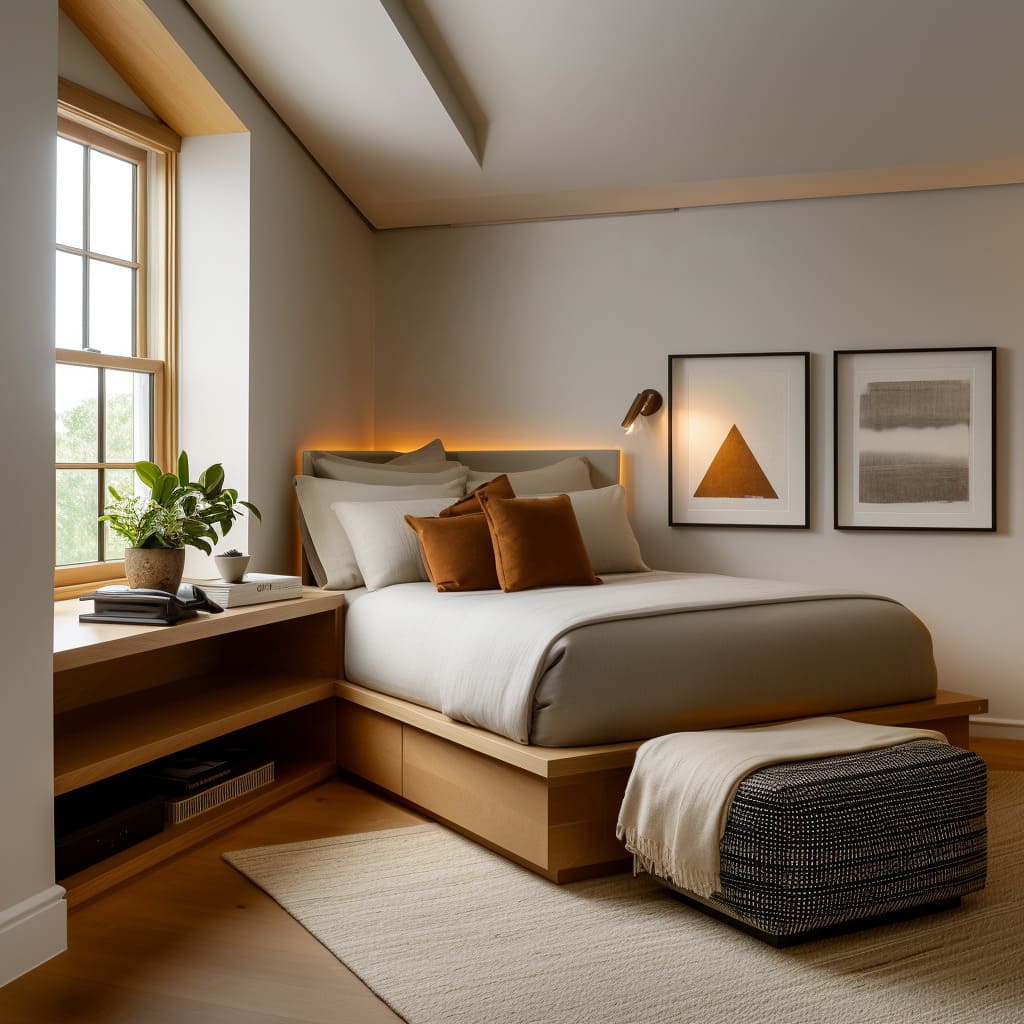
Seating, Benches, and the Runway Problem
Corners affect pathways. Benches with rounded ends plant a clear endpoint to the mattress and create a lane to the nearest door, while slatted foot pieces nested into a platform notch look unified instead of added later.
Tuckable cubes and poufs behave like friendly tools in corner bed decorating ideas—pulled out for shoes or a tray, hidden away to keep circulation open.
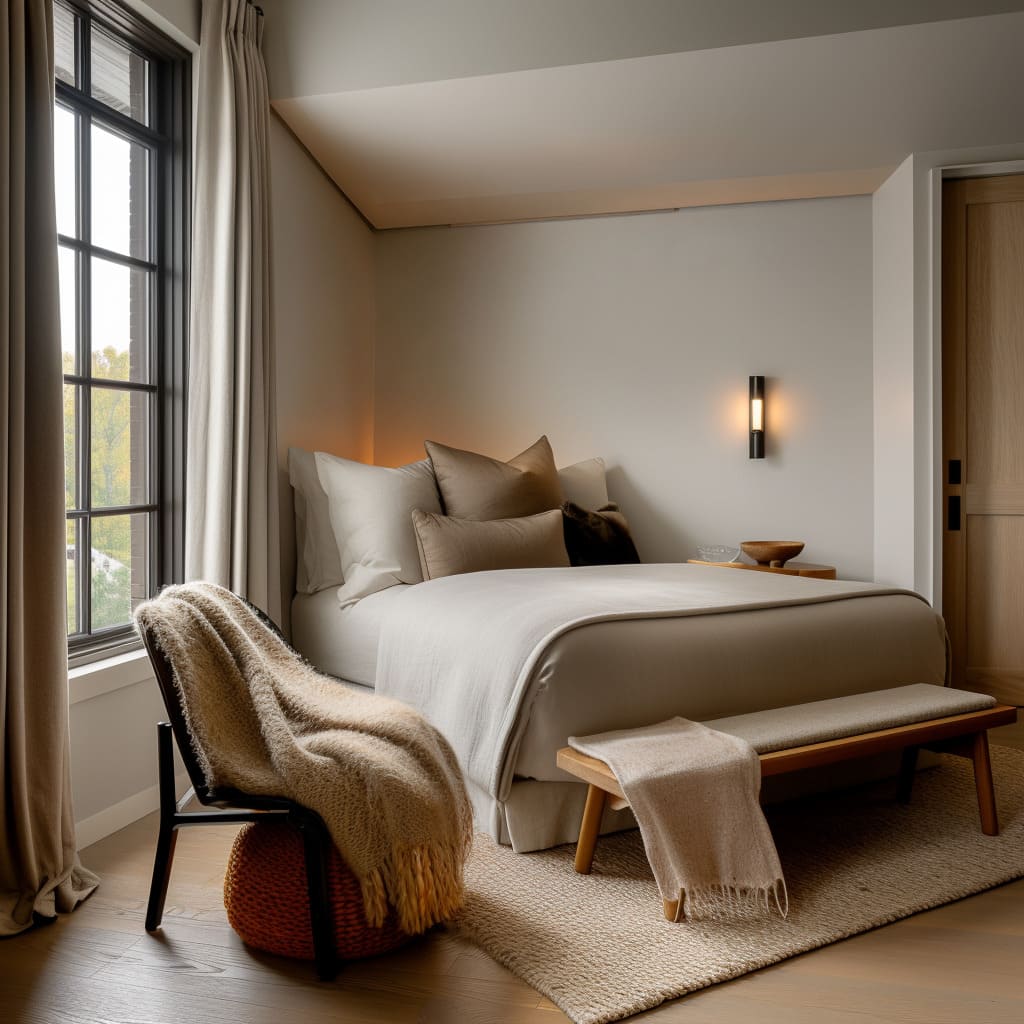
The most useful detail is kindness to shins: softened corners, lifted bases, and narrow rugs that stop short of frames so a slim halo of floor appears around the bed. Movement feels unforced because the furniture contours match the way bodies pass through tight routes.
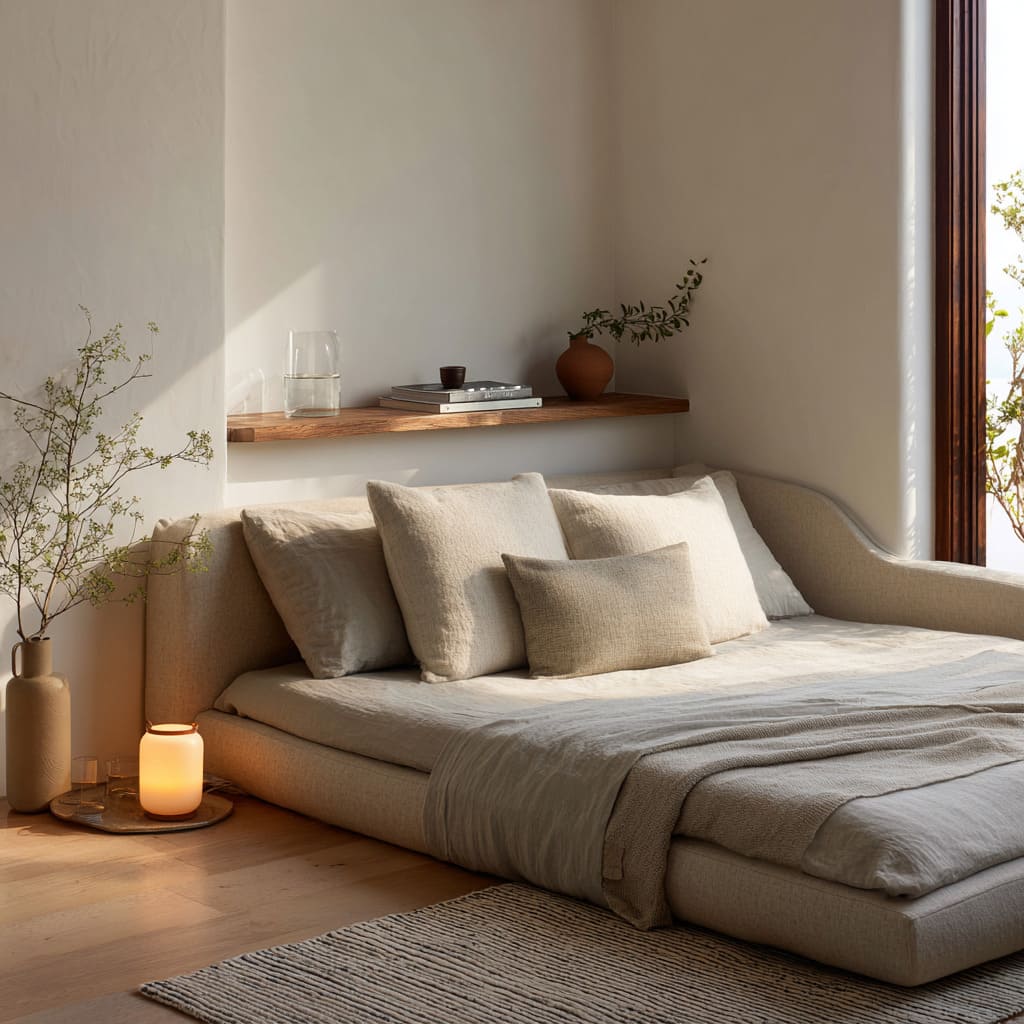
Styling That Stays Low and Calm
Objects remain low wherever heads might land. Overloaded shelves above pillows vanish from the most convincing corner bedroom decor ideas; instead, a high, lightly loaded run keeps the wall feeling airy, or art shifts off-center so cushions can breathe.
When artwork leads, it often acts like a visual headrest—a single moody field that lets the bed sit under a calm plane.
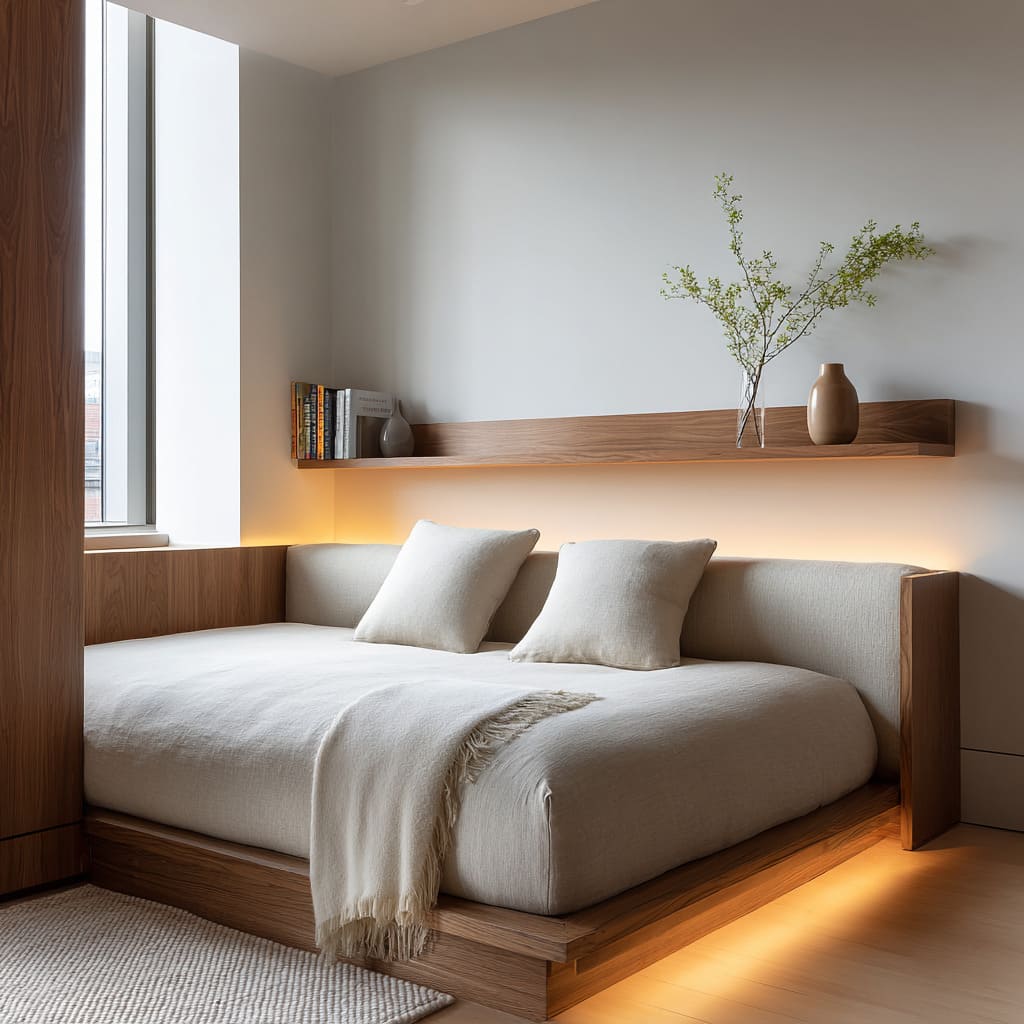
Elsewhere, texture becomes the narrative: ribbed panels, woven screens that echo window grids, wool loops underfoot. A few repeated forms—globes, slim stems, fine legs—add rhythm without requiring symmetry, which corners rarely allow.
The result is order without stiffness.
Mood Mechanics: Compression and Release
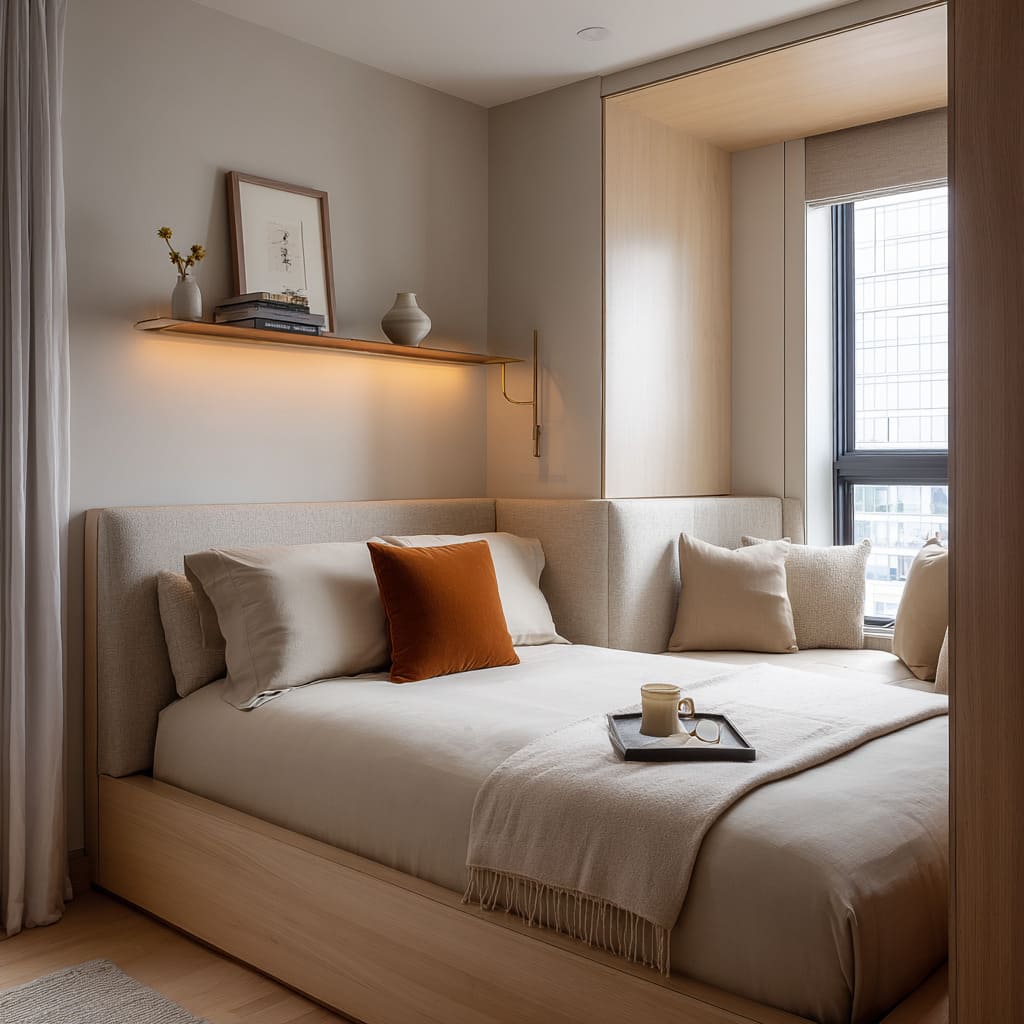
A slim soffit that frames the head, a floating headboard with a halo gap, one vertical sconce set just forward of the bed edge: together, these elements gently compress the head zone so sliding into that corner feels protected. The rest of the room opens up for release—clear floor at the base, a bench that defines a runway, drapery gathered generously to show a bright edge by day.
This breathing pattern explains why well-resolved corner bed design reads so restful in still images: there is a deliberate nest and a deliberate openness, and the corner is the hinge between them.
Common Visual Problems the Corner Quietly Solves
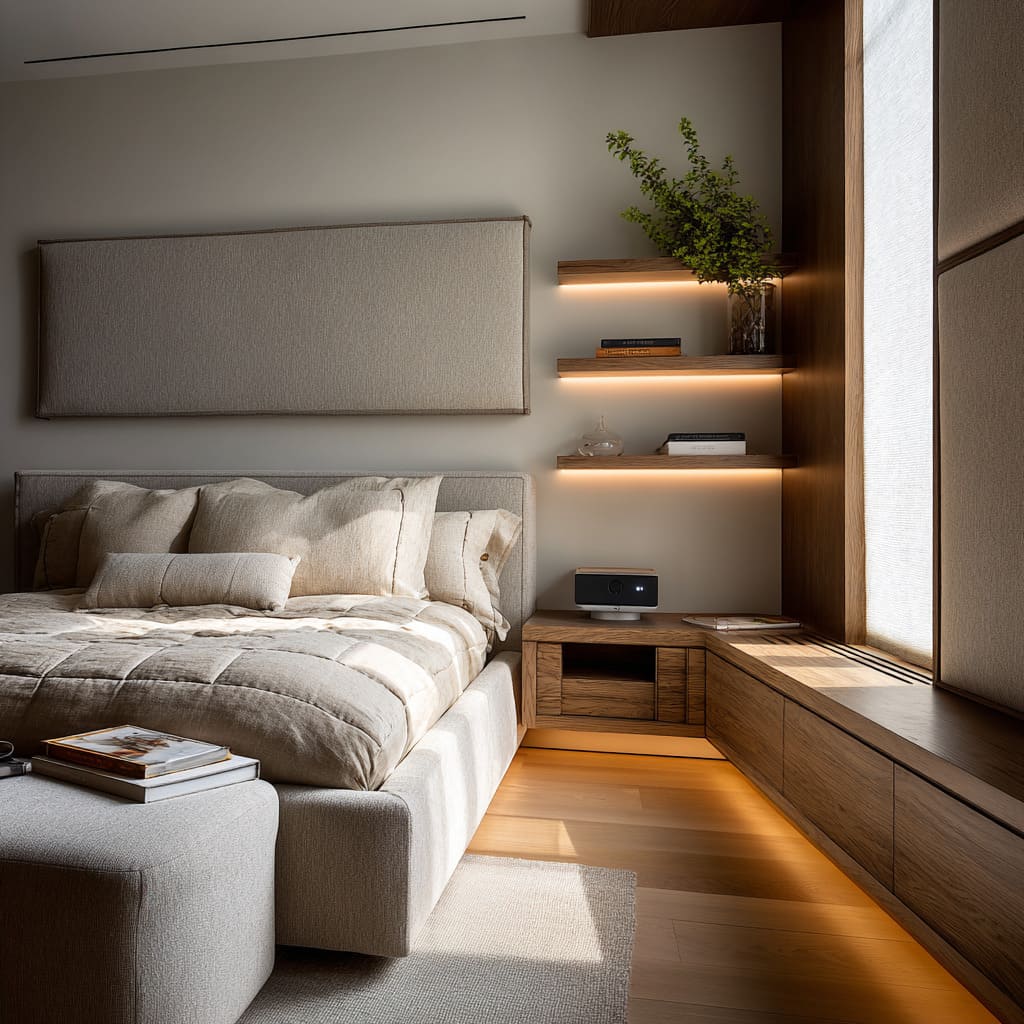
Some paragraphs benefit from lists, but here the list serves as a way to show how one move answers multiple issues at once:.
- Pillows drifting into the crack → L-shaped backboards or padded wraps create a steady horizon and contained cushion line.
- Corners that feel tall and empty → A continuous shelf or ledge folds the angle and adds a low silhouette against glow.
- Window crowding → Align platform to sill; place weight near glass (pendant drop, tall branch) so the bed doesn’t look pressed.
- Visual heaviness at the base → Recessed plinths and under-lighting lift the platform; a rug that stops short leaves a clean floor border.
- Asymmetry that feels accidental → Repeat forms (globes, slats, slim legs) and vary their placement; rhythm substitutes for mirror-image balance.
- Top-heavy styling → Keep objects low and spaced; increase shelf gaps as they rise; leave ends open for air.
Each bullet describes what the eye experiences, not how to build it; the focus remains on the look, the feel, and the compositional role the corner plays.
Style Families That Love the Corner
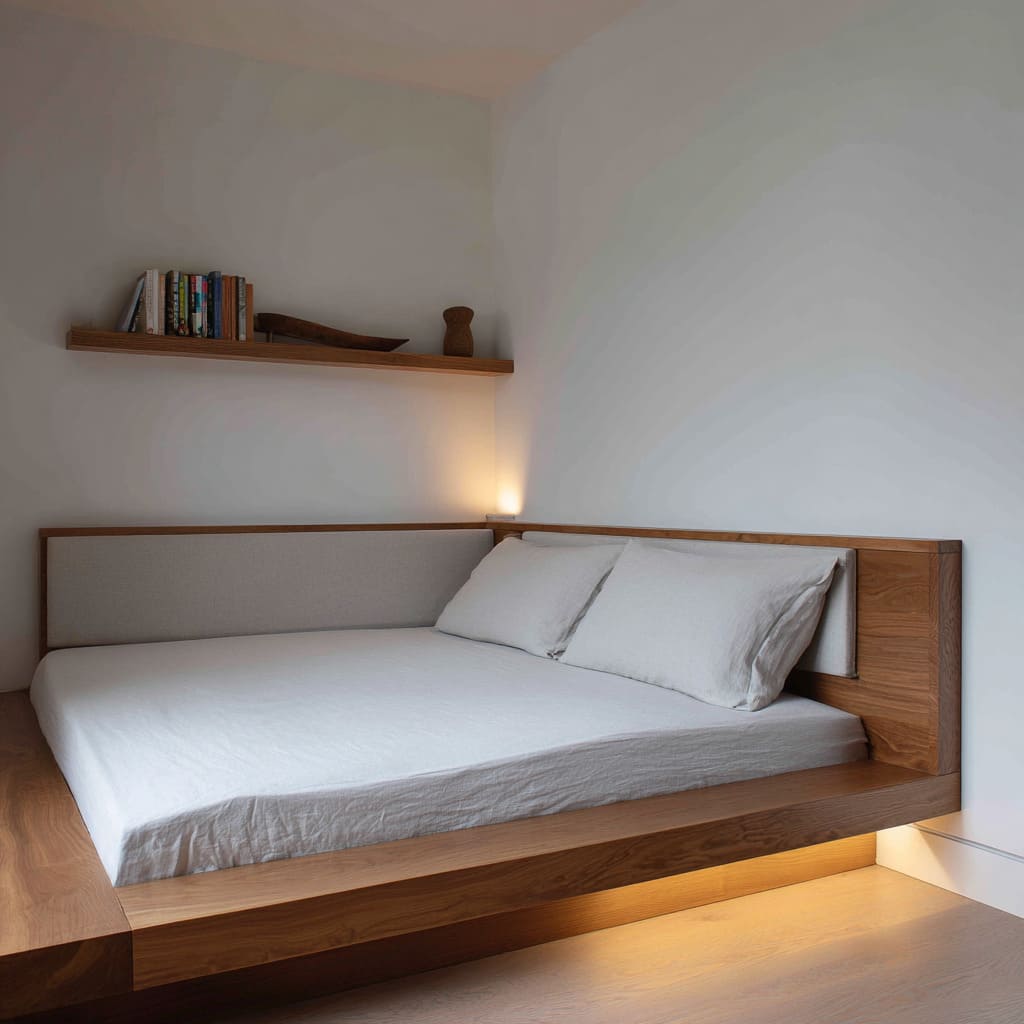
A few broad families, described in long form for nuance and with keyword integration that reads naturally:.
- Warm Natural Corner — Oak boards, oatmeal linen, and clay vessels meet a pencil-thin shelf glow that rounds the angle without a visible fixture. The bed looks stitched into the room, the platform appears to float thanks to a soft shadow line, and the whole corner bed design speaks in tone-on-tone layers that soothe without dulling the scene.
- Moody Graphic Corner — Dark slatted wraps travel through the corner like vertical music; amber cushions echo pendant warmth; a pale, chunky rug lightens the floor so the scheme never turns heavy. The bed becomes a silhouette against depth, a striking take within corner bed design ideas that relies on texture rather than pattern.
- Color-Led Cozy Corner — Burnt orange or gold used in three places—pillow, ottoman, artwork edge—binds the bed to the room without flooding it. A single vertical insert at the turn gives height exactly where it’s needed, a dependable move inside cozy corner bedroom ideas that want glow without clutter.
- Airy Minimal Corner — Near-floor platform with rounded rails, one slim shelf carrying low silhouettes, a lantern placed on the floor to keep sight lines clear; the corner reads sculpted and soft. This is corner bed interior design pared to essentials while staying tactile.
- Crafted Built-In Corner — Low drawers bend around the angle at seat height, short illuminated shelves float above, and a fabric-wrapped panel acts like a hush behind the pillows. Storage, display, and mood arrive as one thought—ideal for small corner bedroom ideas that still want presence.
Forms of Continuity: A List That Doubles as a Visual Map
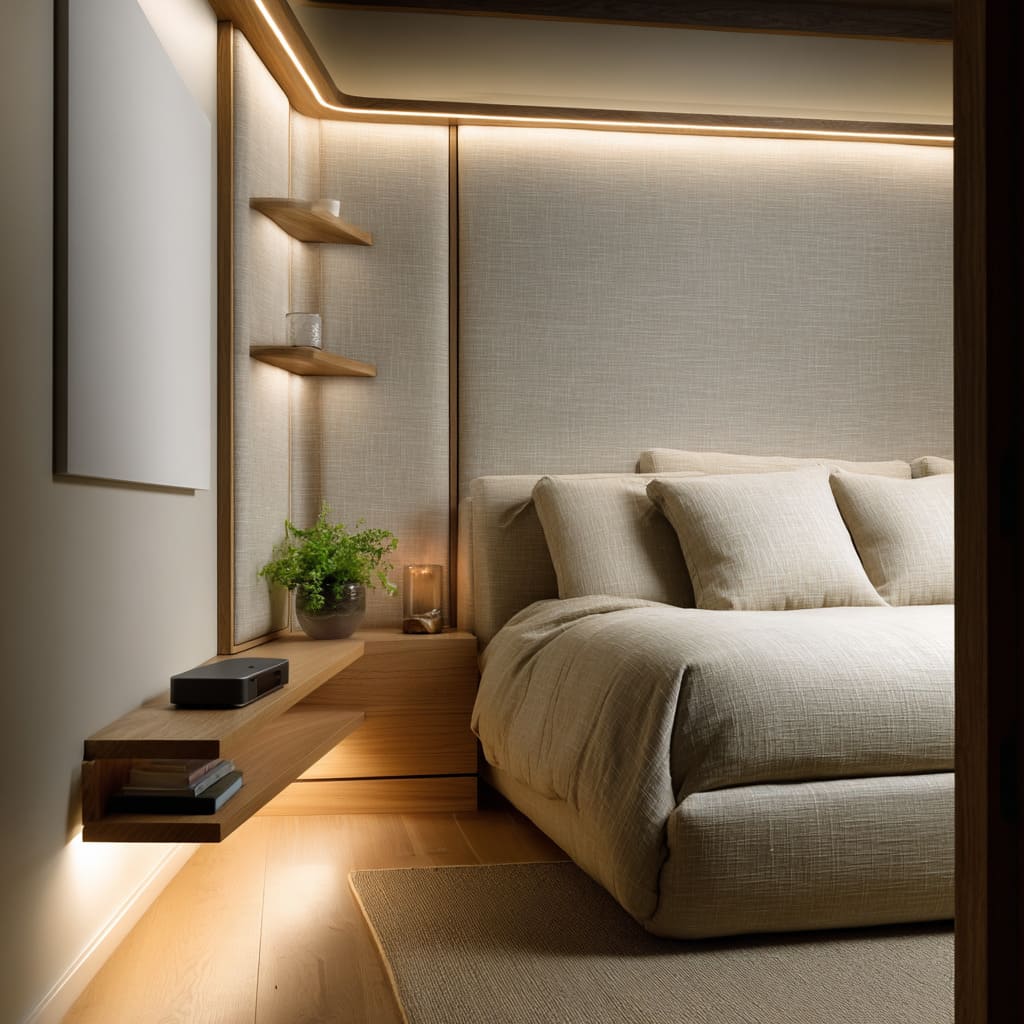
Because organizing methods can be helpful to read, here’s a long list that groups the quiet “tricks” by what they achieve:.
- Horizon Makers: long high shelf with underside wash; pillow-height ledge turning the corner; slim cove at soffit edge.
- Corner Softeners: micro-radius on headboard and shelf corners; floating headboard with halo gap; pendant heights staggered to grade light.
- Weight Balancers: lower pendant near glass; tall branch placed at the inner turn; dark trim echoing lamp stems to outline the opening.
- Ground-Lighteners: recessed plinth under platform; rug stopping short to show a thin frame of floor; open-leg bench aligned to the bed.
- Order Without Symmetry: repeated spheres (wall globe + table globe); angled bench legs echoing lamp stems; shelf spacing that widens as it rises.
- Calm Styling: low silhouettes (books horizontal, shallow bowls); ends of shelves left open; art offset to avoid fighting the cushion mass.
Each cluster addresses look and feel first, with the corner consistently treated as a soft pivot and the bed as part of the room’s composition rather than a piece parked in space.
Why This Matters for Searchable Inspiration
For readers skimming image galleries or design blogs, phrases like corner bed design, corner bed decorating ideas, and corner bed design ideas often point to quick fixes; yet the images that hold attention long term typically apply the slower, quieter habits described here.
They show corner bedroom decor ideas where one move carries the story—light that skims, a line that continues, texture that stands in for pattern—and where small corner bedroom ideas feel generous because edges float and objects stay low. Over time, those repeatable habits create a recognizable look: a room where the corner is not a leftover but a soft hinge that steadies the main scene.
Closing Thought: The Corner as the Quiet Heart
Seen through this lens, the corner is less a problem to hide and more a chance to give the room a calm turn. A shelf that glides, a ledge that sits exactly where a hand rests, a faint halo that rounds the meeting of walls—these are small gestures that add up to a room that looks collected and moves with ease.
Within corner bed interior design, the difference between cluttered and composed is often a single continuous line, a measured pool of light, and the decision to keep texture doing the heavy lifting while forms stay spare. That is the essence of corner bed design, and it is where cozy corner bedroom ideas become visual poetry without trying to shout.