A backyard fence has a reputation: background, boundary, the thing you try to hide with vines. But fence makeovers can treat it not only as a blank surface that needs stuff.
They can treat it as a role surface.
Sometimes it plays the part of a room wall behind a lounge nook. Sometimes it becomes a social counter where people perch with a drink.
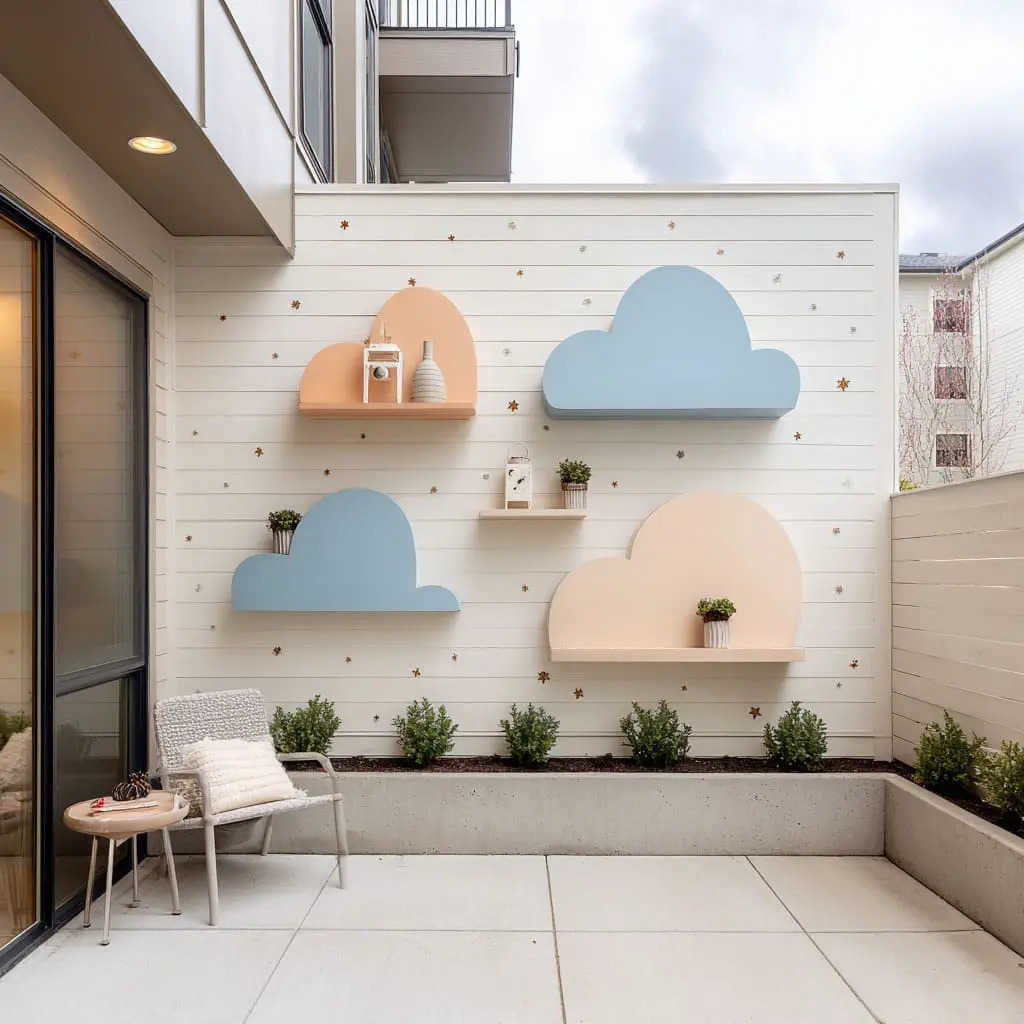
Sometimes it can act like a gallery plane, with decoration contained to a few art-scale inserts. And sometimes it turns into a landscape horizon that changes how tall and heavy the fence feels.
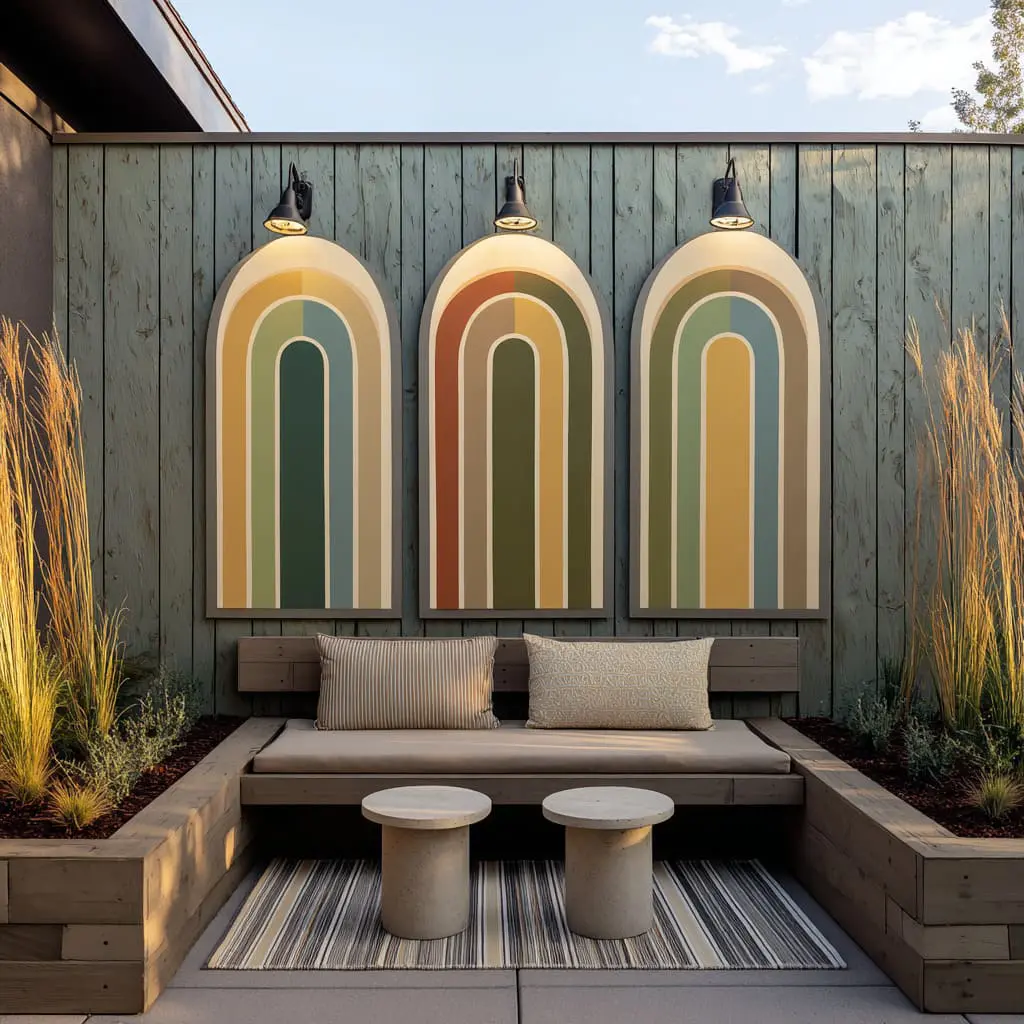
Once that shift happens, the decorating decisions get simpler. Not because you do less, but because every move has a job: establish order, add depth, set a use-script, and hold up in the evening.
The mid-height horizon band: order beats extra objects
If a fence feels messy, the instinct is to add more: one more hanging planter, one more sign, one more lantern. The cleaner results usually did the opposite.
They created one stable reference line at mid-height, then let everything else stay sparse.
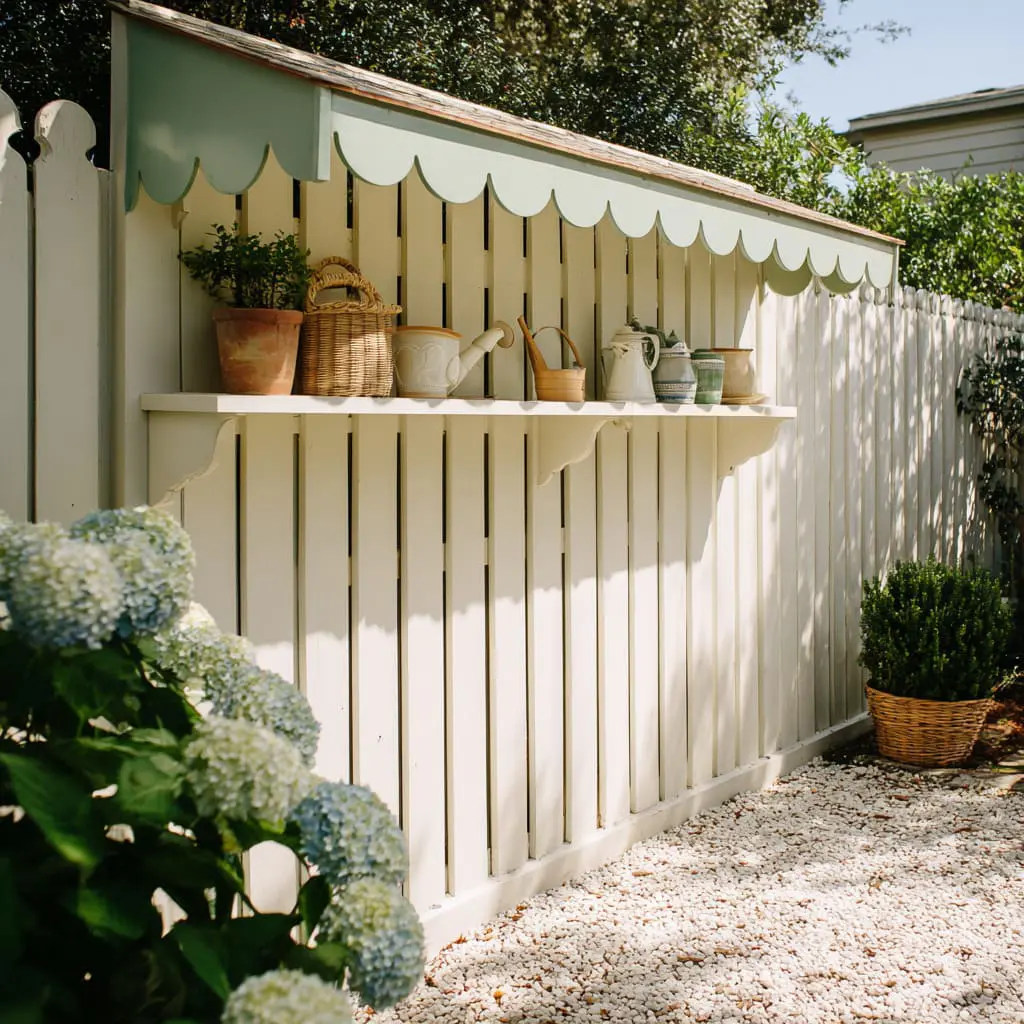
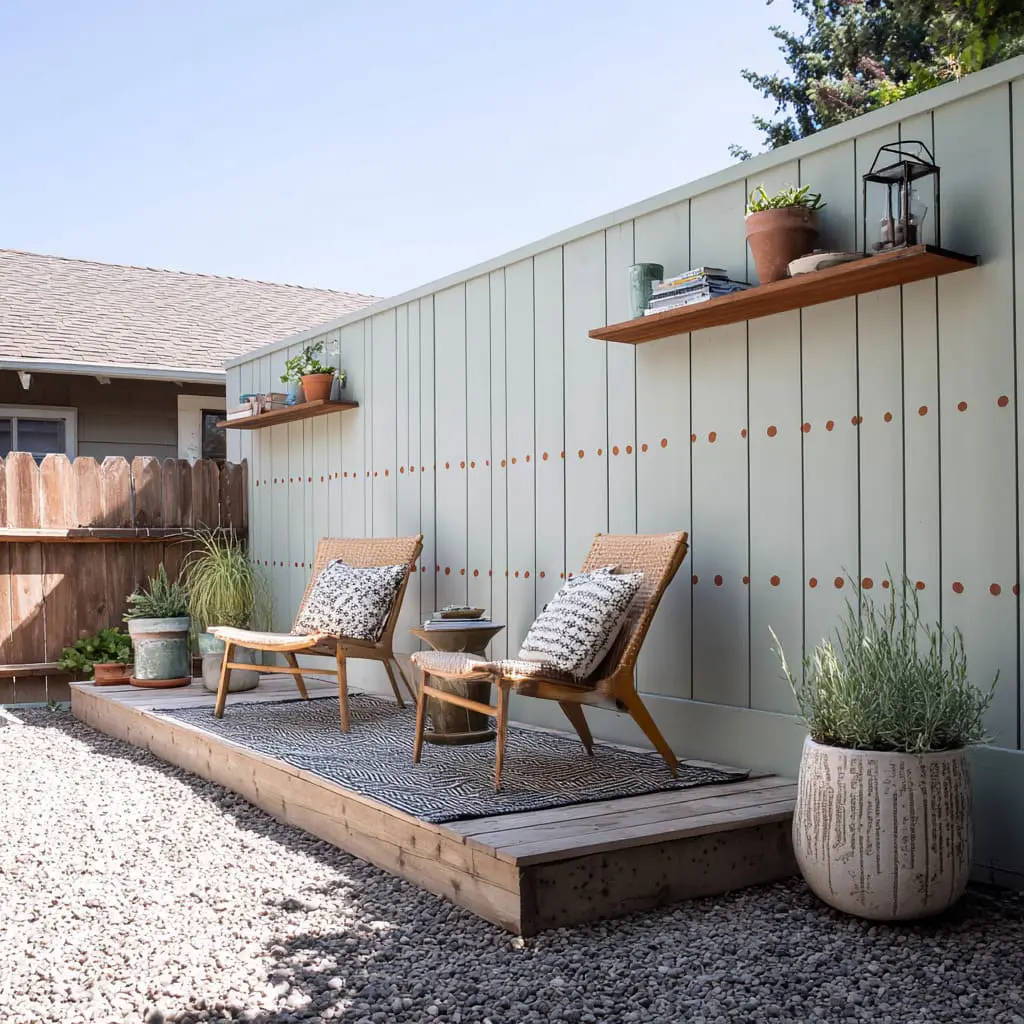
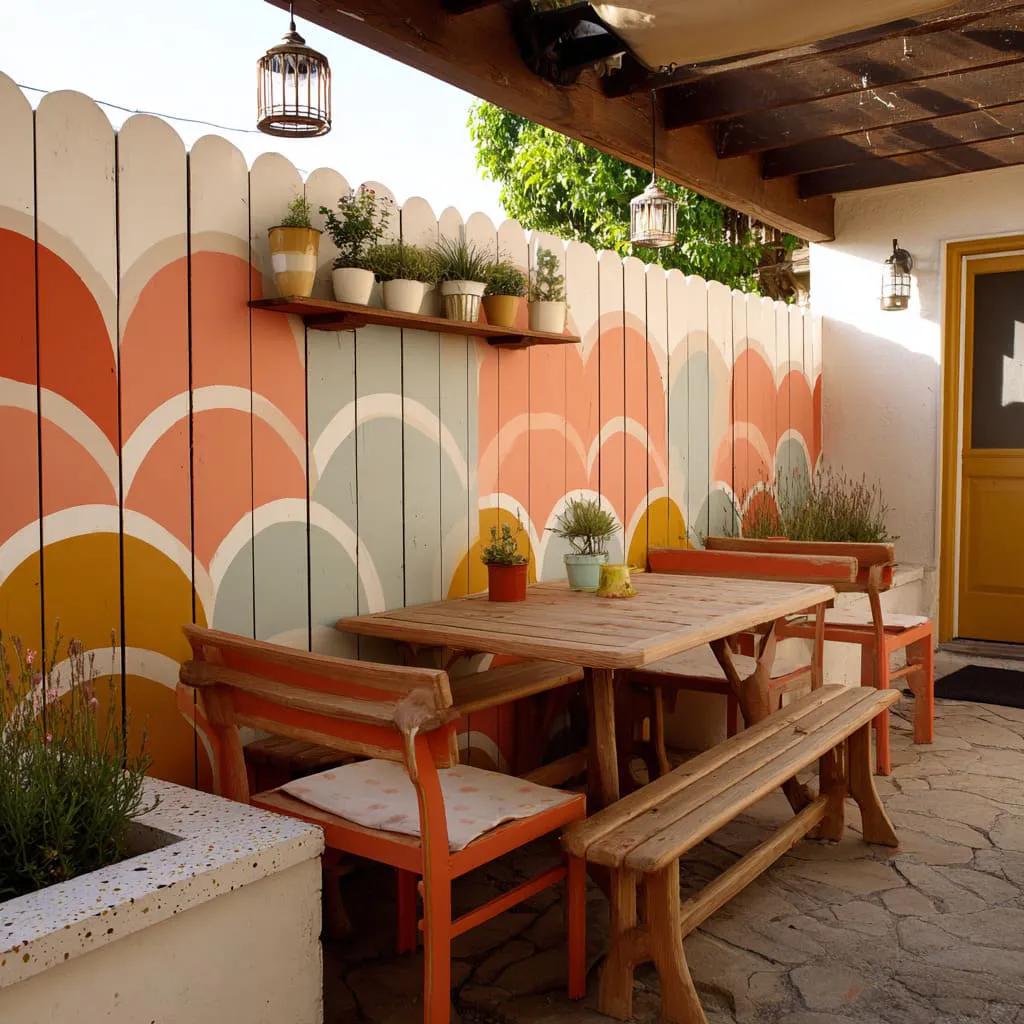
A horizon band can be literal, like a neat line of small dots running from one end to the other. Or it can be a scallop trim band that behaves like an awning edge.
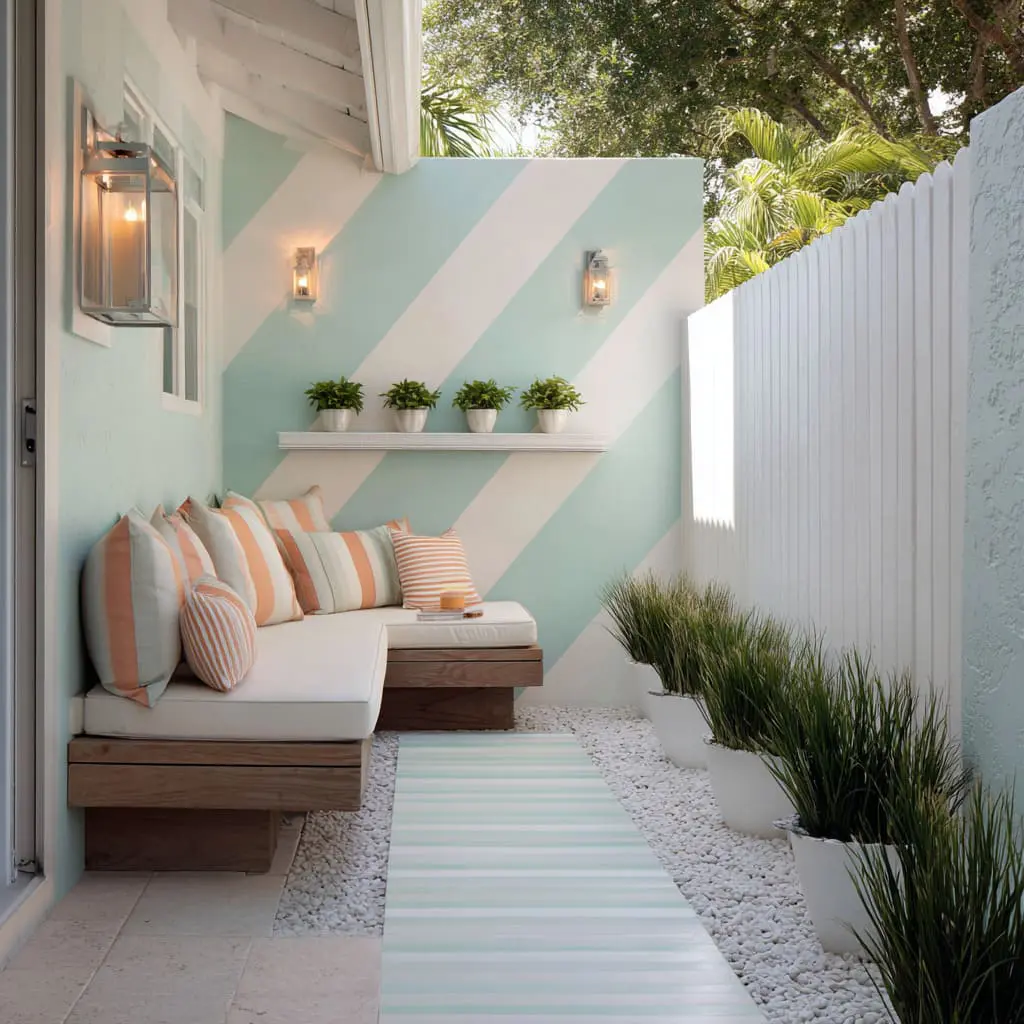
Or it can be a mural zone contained between two horizontals, where the art lives in a strip instead of spreading everywhere.
Why it works:
- It gives the eye a reliable checkpoint. Without it, the gaze skitters up and down fence boards, catching on random items. With it, the wall gains structure, the way a chair rail organizes an interior.
- It designs for the seated viewpoint. Many of the successful bands sit where you naturally look while sitting. That’s a quiet upgrade: the decoration meets the human eye line, not only the standing overview.
- It reduces perceived height. A tall fence can feel like a hard vertical block. A mid-height band breaks the wall into zones, so the fence feels less looming even before plants soften it.
The horizon band often replaces a whole category of clutter. Once the wall has that midline, you need fewer small accents to make it feel finished.
The band is doing the composition work that scattered objects try to do, usually with less success.
Cropping: the maturity filter for playful motifs
Playful shapes can swing childlike fast, even with a tasteful palette. The fix is: crop the motif.
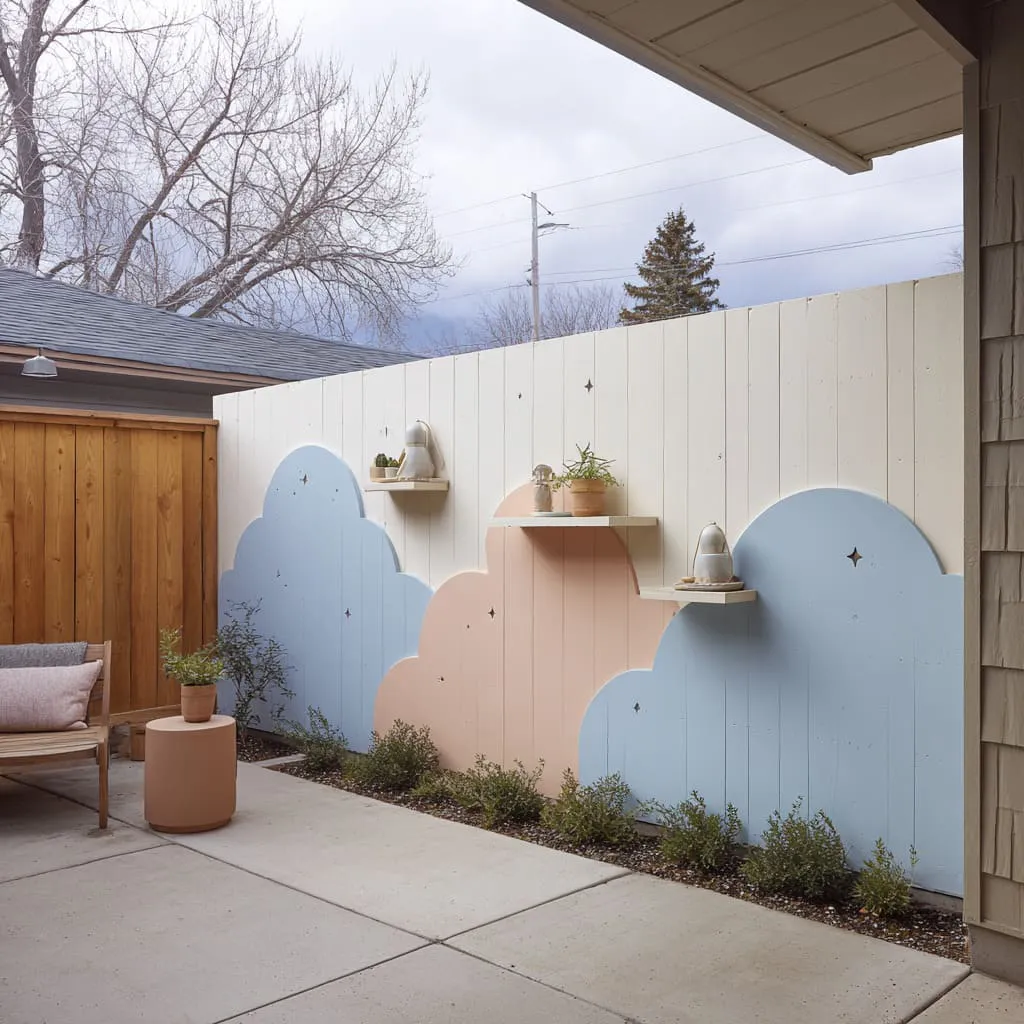
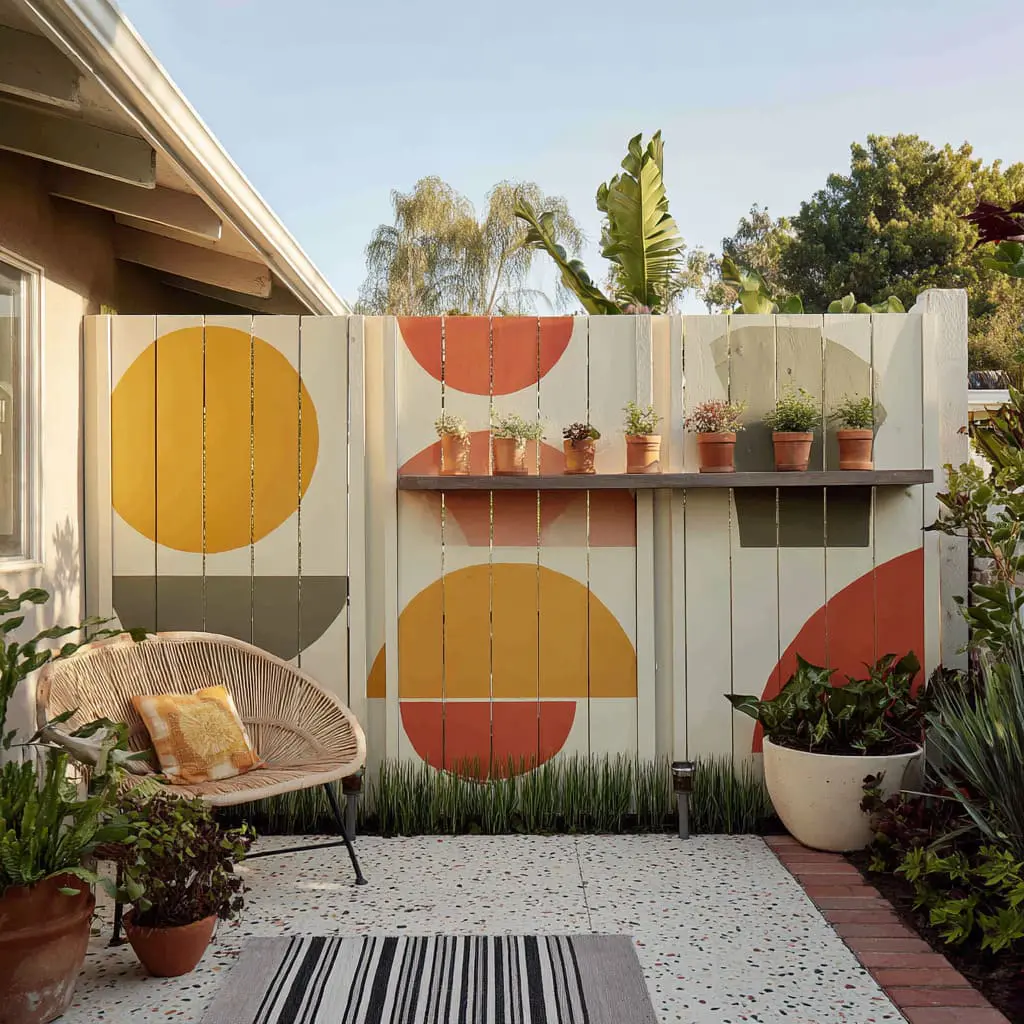
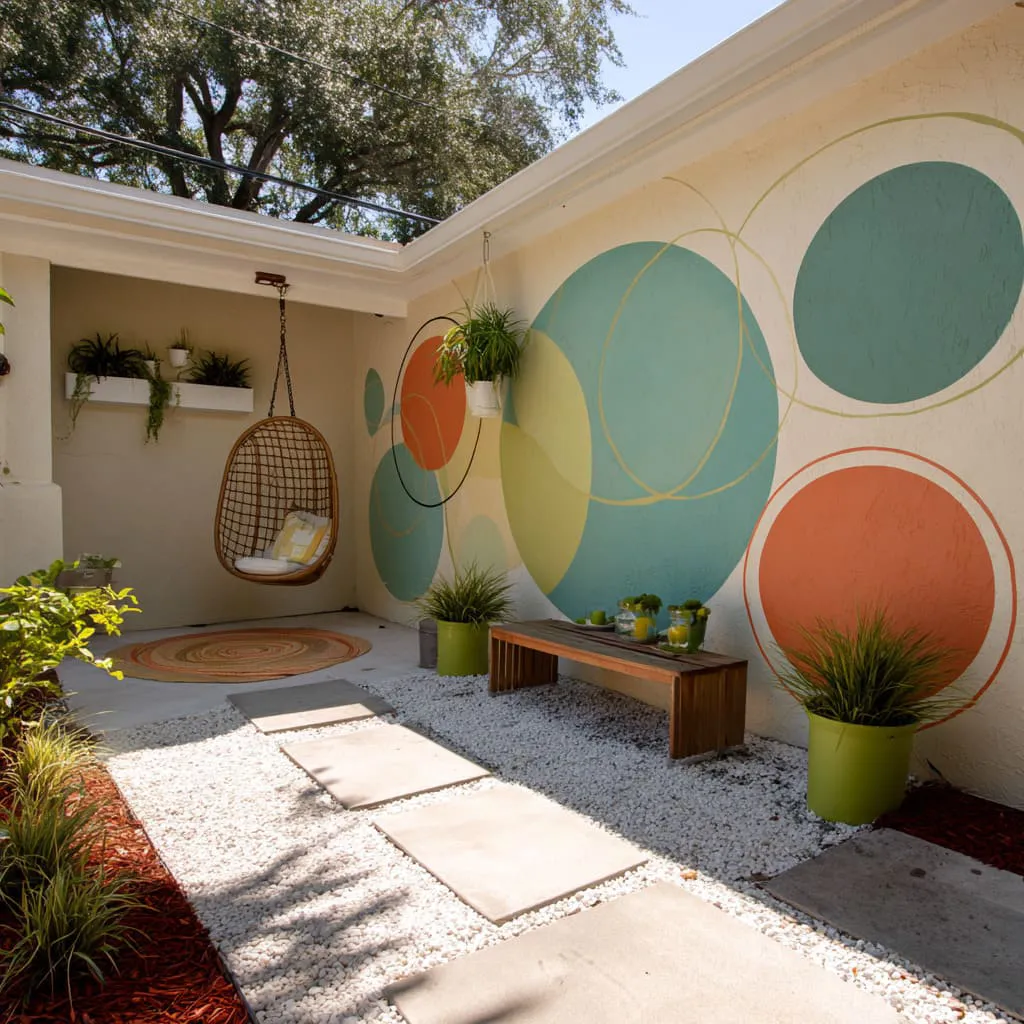
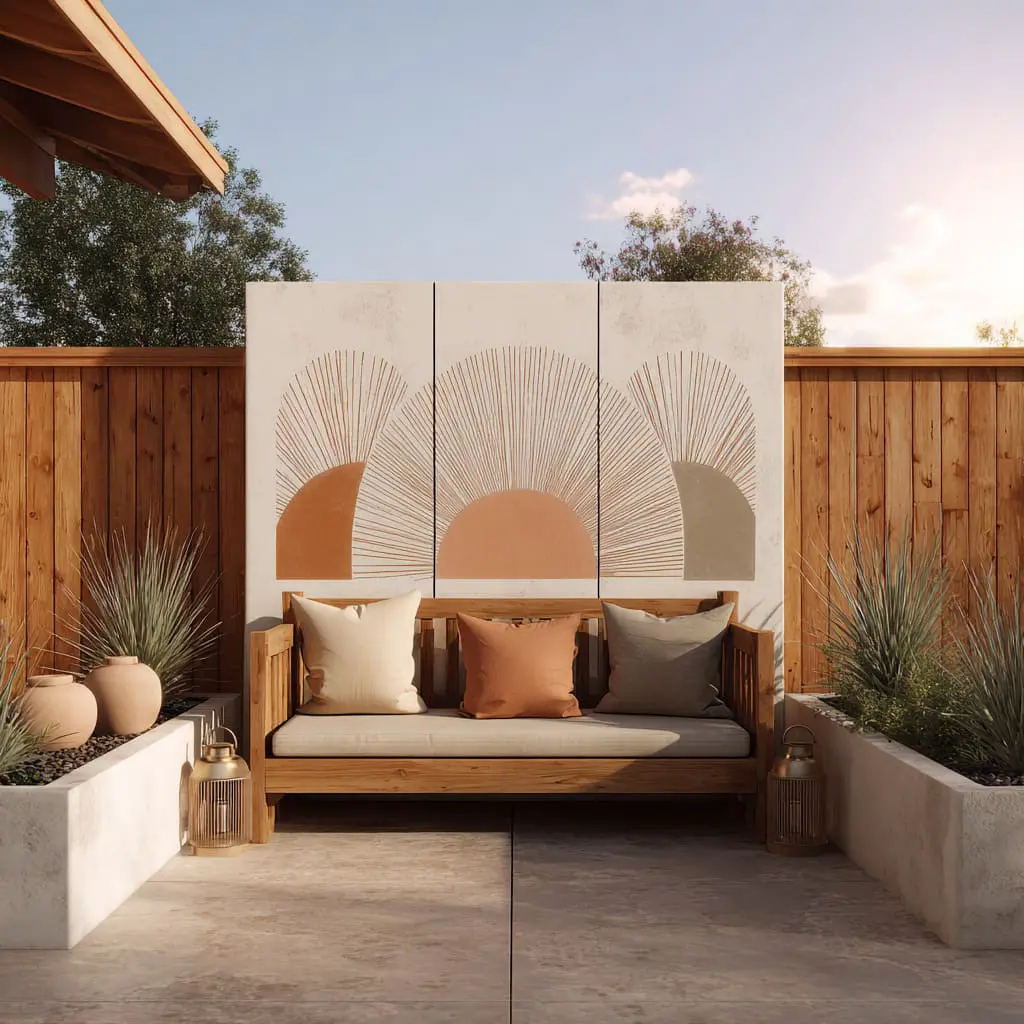
A giant circle painted as a partial sun, cut off by the fence edge, feels like graphic design. The same circle centered and fully contained can lean toward kids’ mural energy.
Oversized Memphis-style shapes behave the same way: cropped arcs and half-circles feel poster-like, while centered icons can feel like stickers.
Cropping changes three things at once:
- Scale perception. Cropping implies the shape continues beyond the frame, which makes it feel larger and more architectural.
- Intentionality. It creates the sense that someone composed the wall, not that someone filled it.
- Room hierarchy. With cropped shapes, the wall can become the identity of the outdoor nook. Furniture can stay simpler, because the fence carries the visual signature.
Cropping works even when the palette stays sweet. Pastel or sunny color doesn’t automatically make a wall childish.
The centering and containment often do. Cropping shifts the association from illustration to composition.
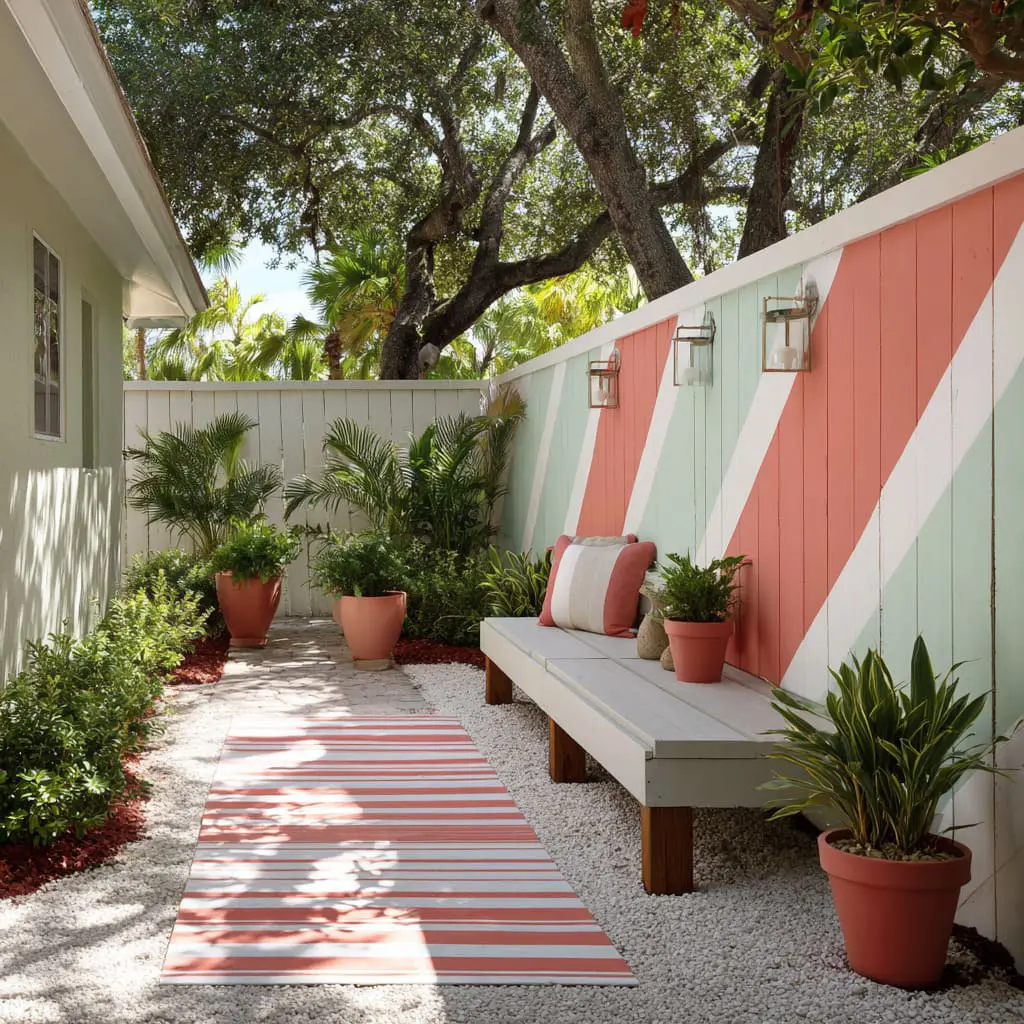
And it pairs naturally with another governance move: containment. If the cropped motif lives in a defined zone (one panel, one end of the fence, one section framed by posts), the rest of the fence stays quieter and the whole run feels curated.
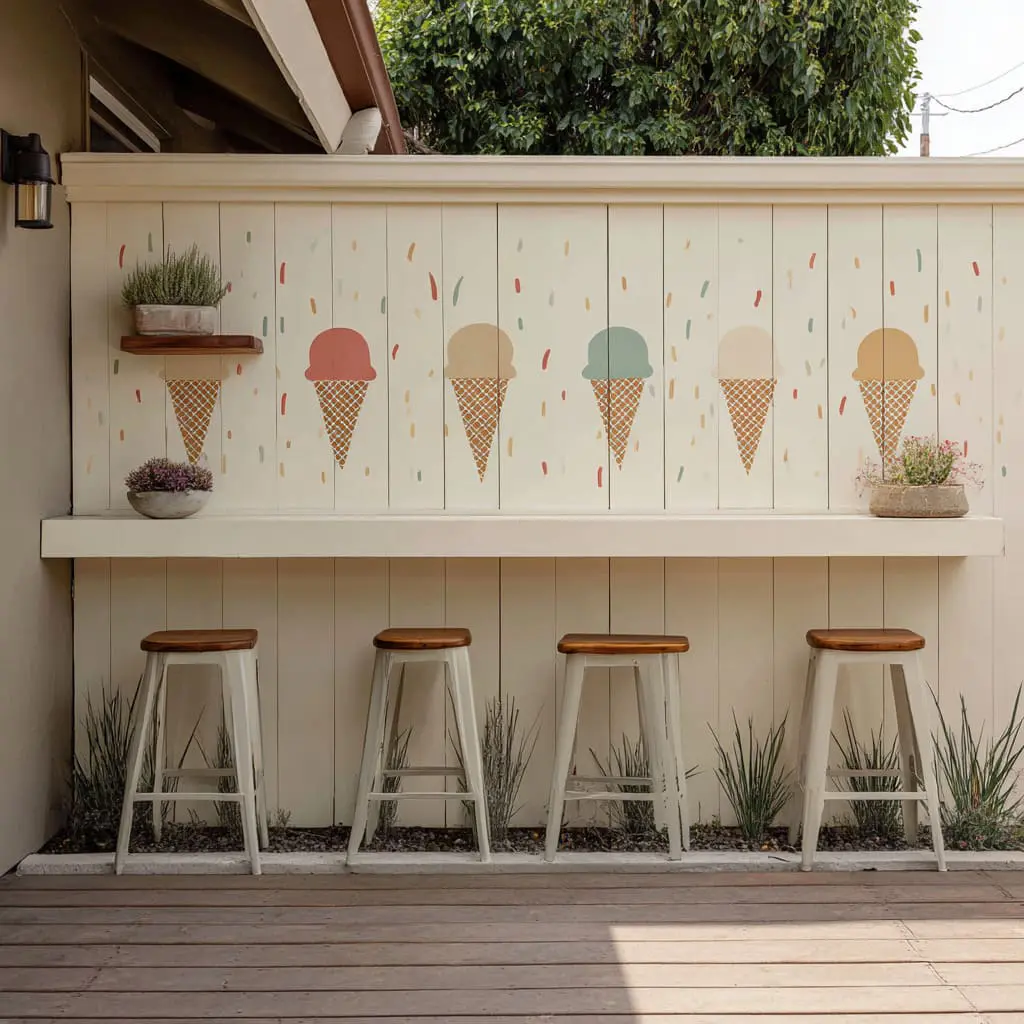
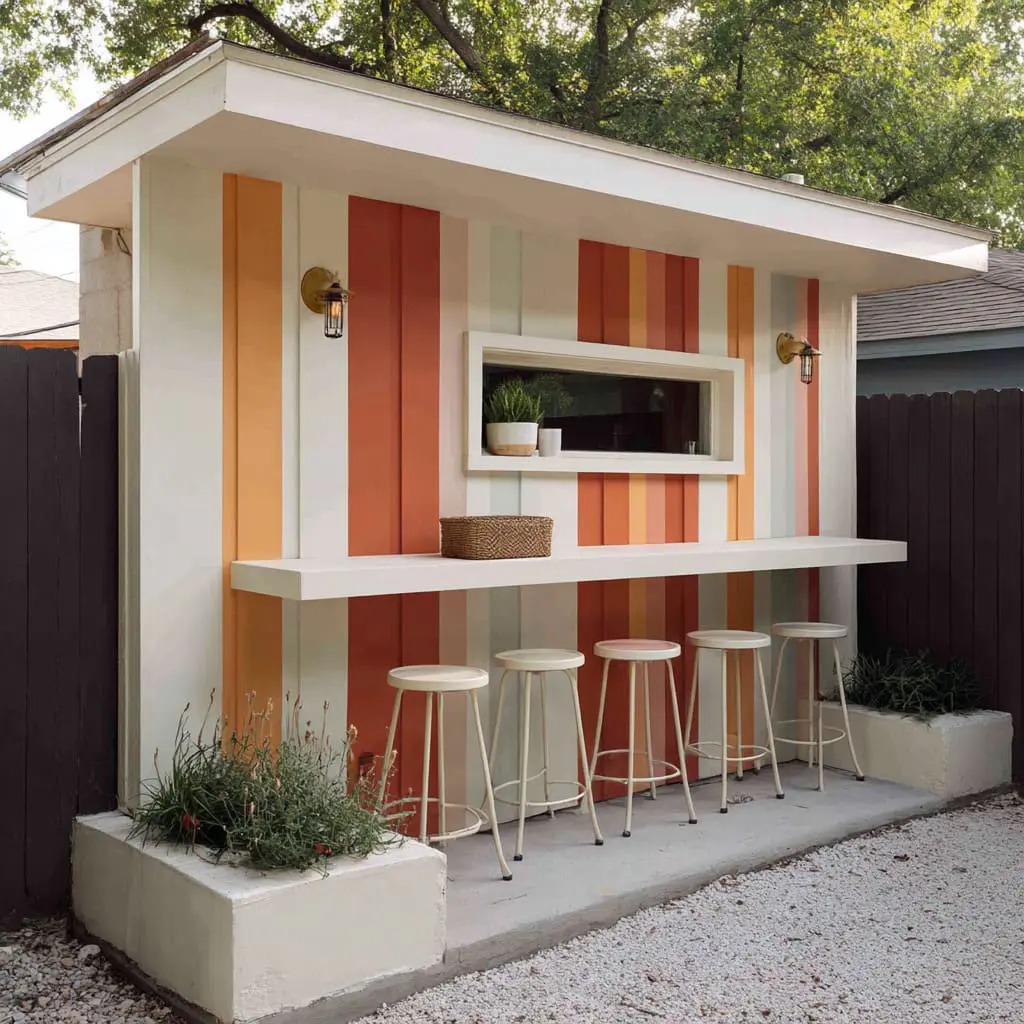
One long horizontal ledge: a visual stabilizer for vertical energy
Vertical boards are already visually busy. Add vertical stripes, and the wall can start vibrating.
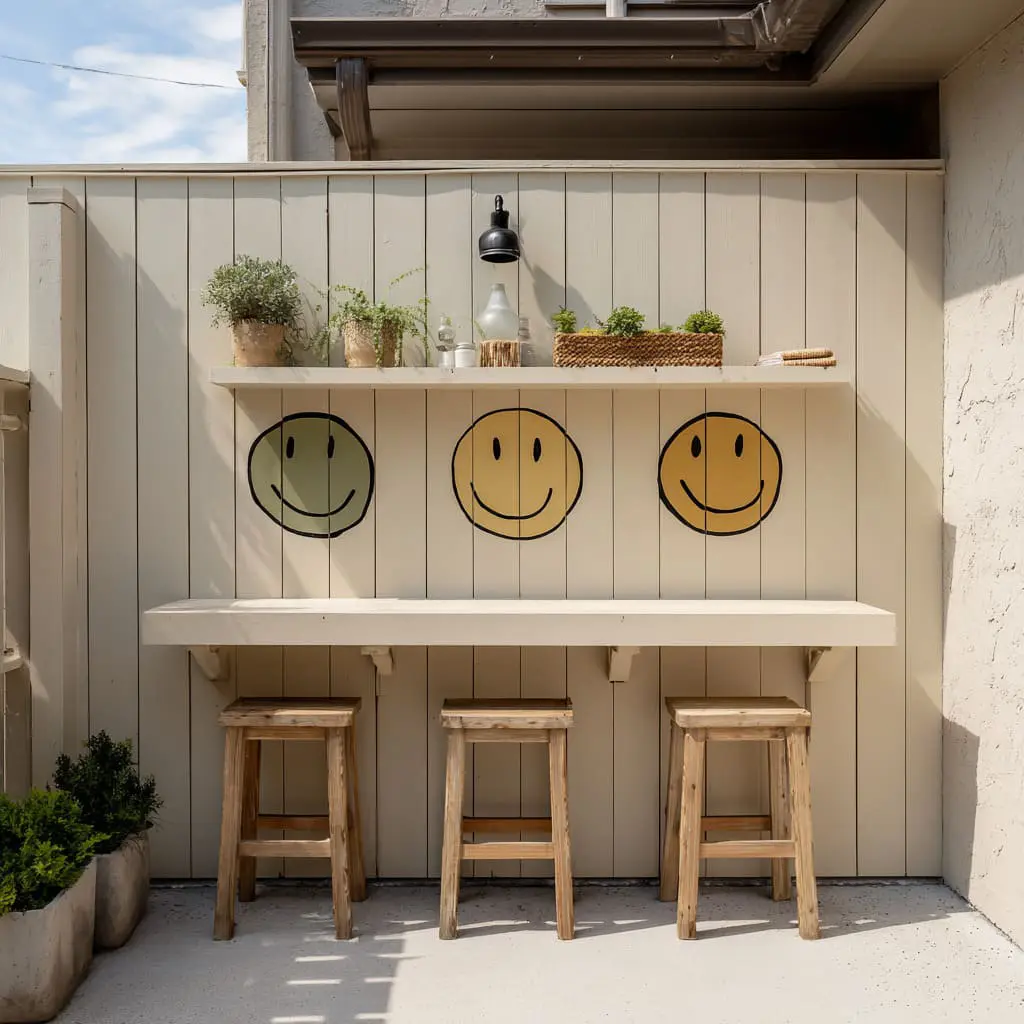
One of the simplest corrections is a single long horizontal ledge.
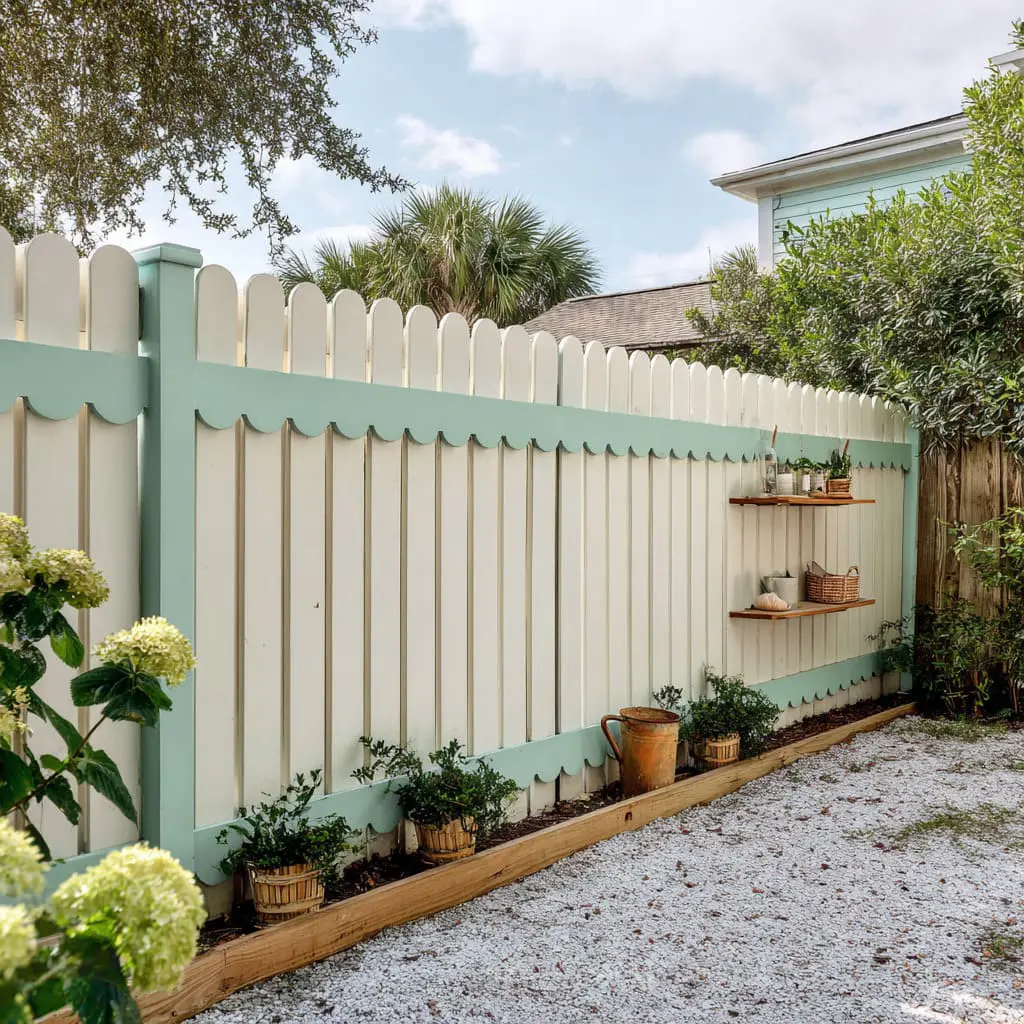
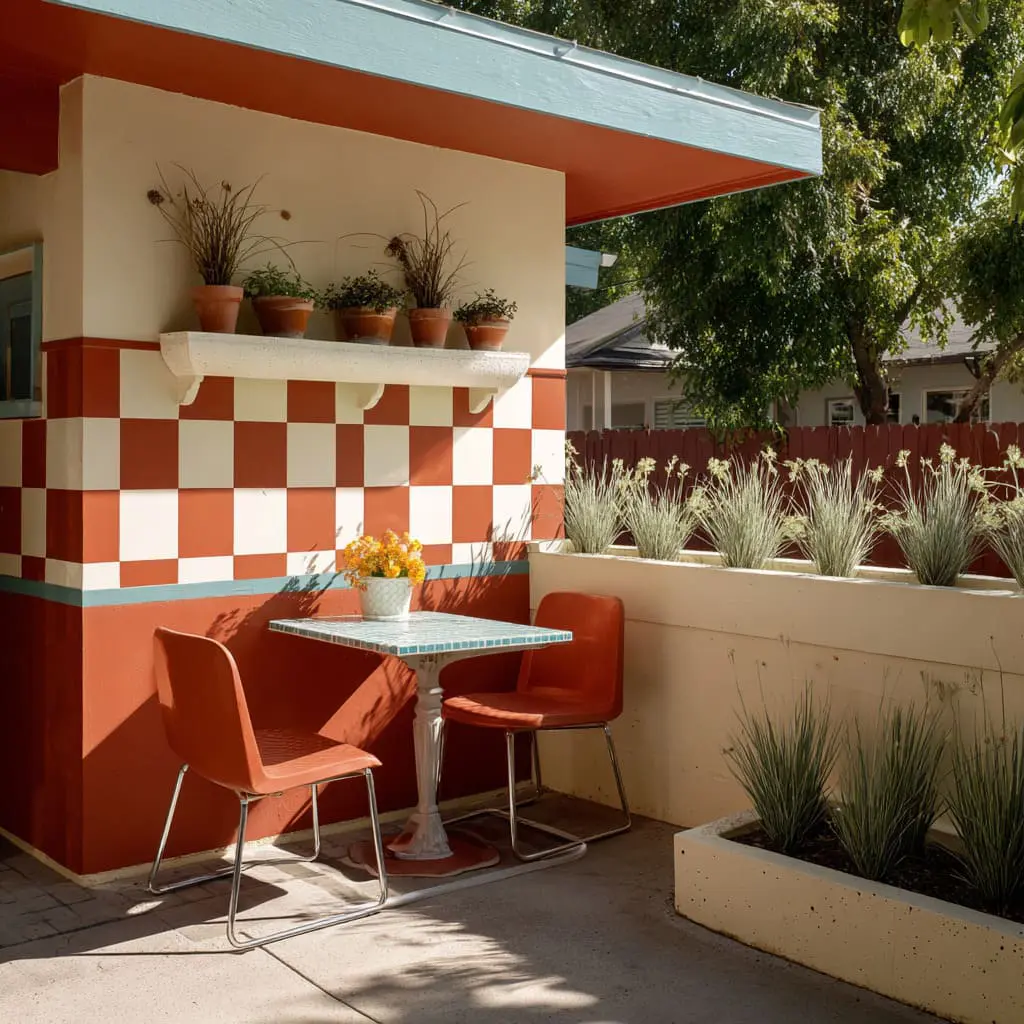
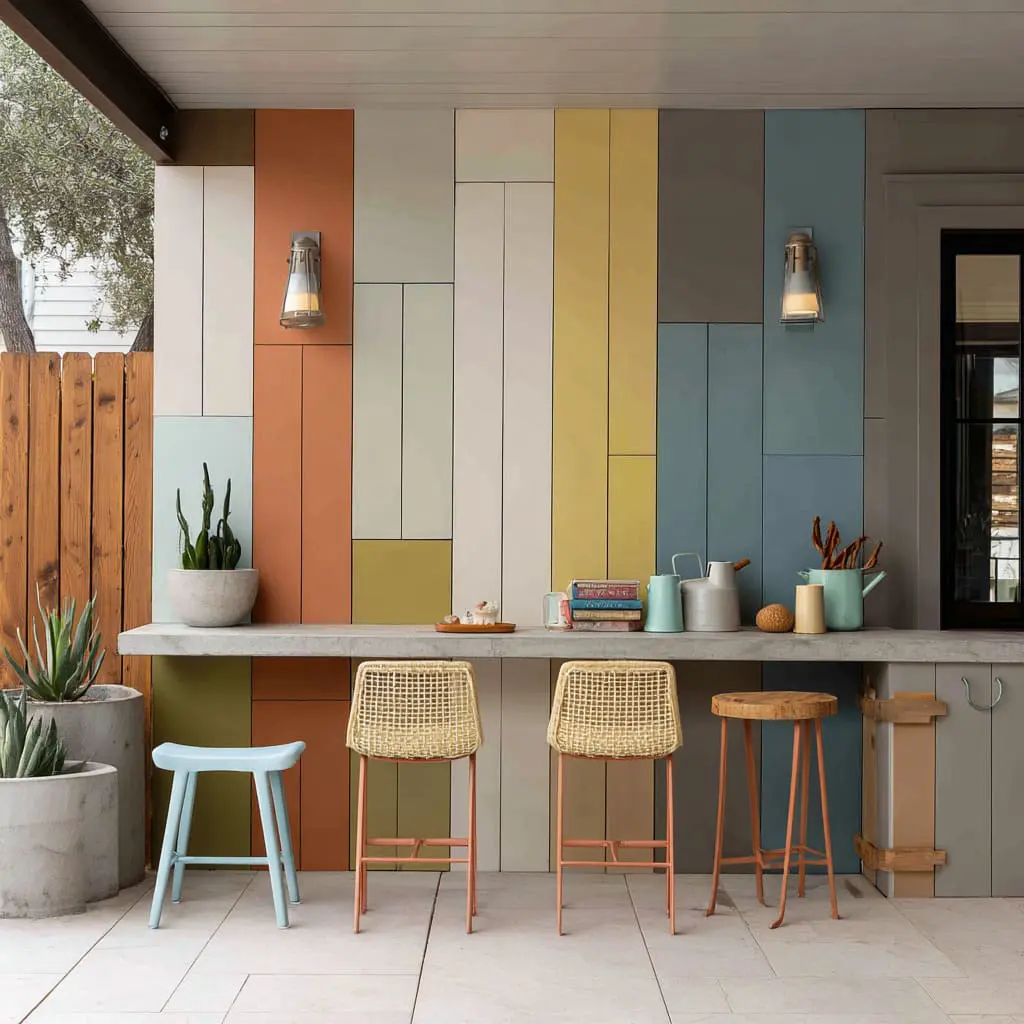
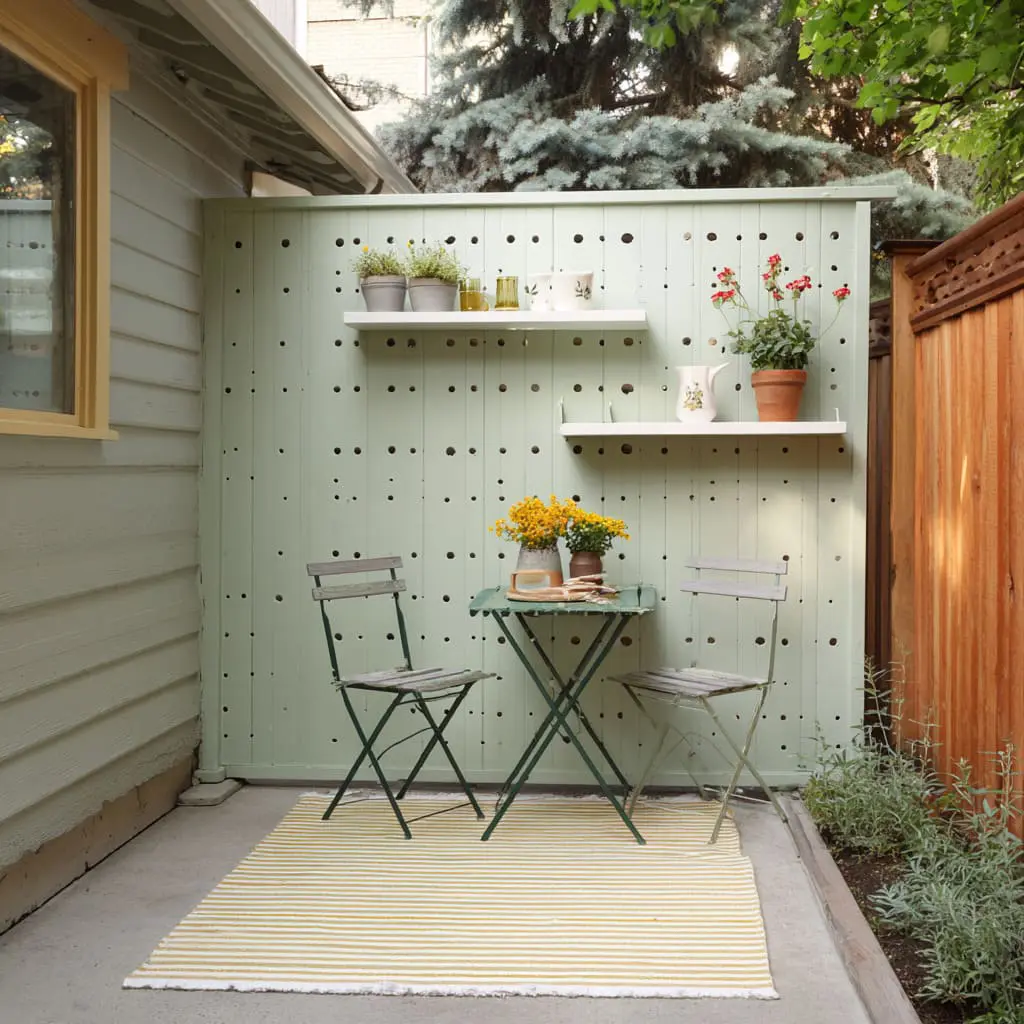
Sometimes it can be a slim shelf with a neat row of small pots. Sometimes it’s a deeper counter ledge with stools under it.
Either way, the ledge creates a dominant counter-direction: one long horizontal that calms the vertical rhythm.
That does several jobs at once:
- It reduces visual noise without reducing personality. The fence can still have pattern, icon bands, or color blocks, but the ledge gives the eye a place to rest.
- It adds depth with a shadow line. Paint is flat. A shelf projects. The shadow under a shelf makes the wall feel layered, even if the shelf styling stays minimal.
- It turns decoration into a use-script. A counter ledge instantly tells people what happens there: perch, set a drink down, pause, chat. That clarity makes the entire fence feel like part of the living zone, not a dressed-up boundary.
The ledge often allows mismatched seating to still feel intentional. When stools don’t match, the ledge acts like the unifying bar line.
The seating becomes a relaxed collected moment instead of a mismatch problem.
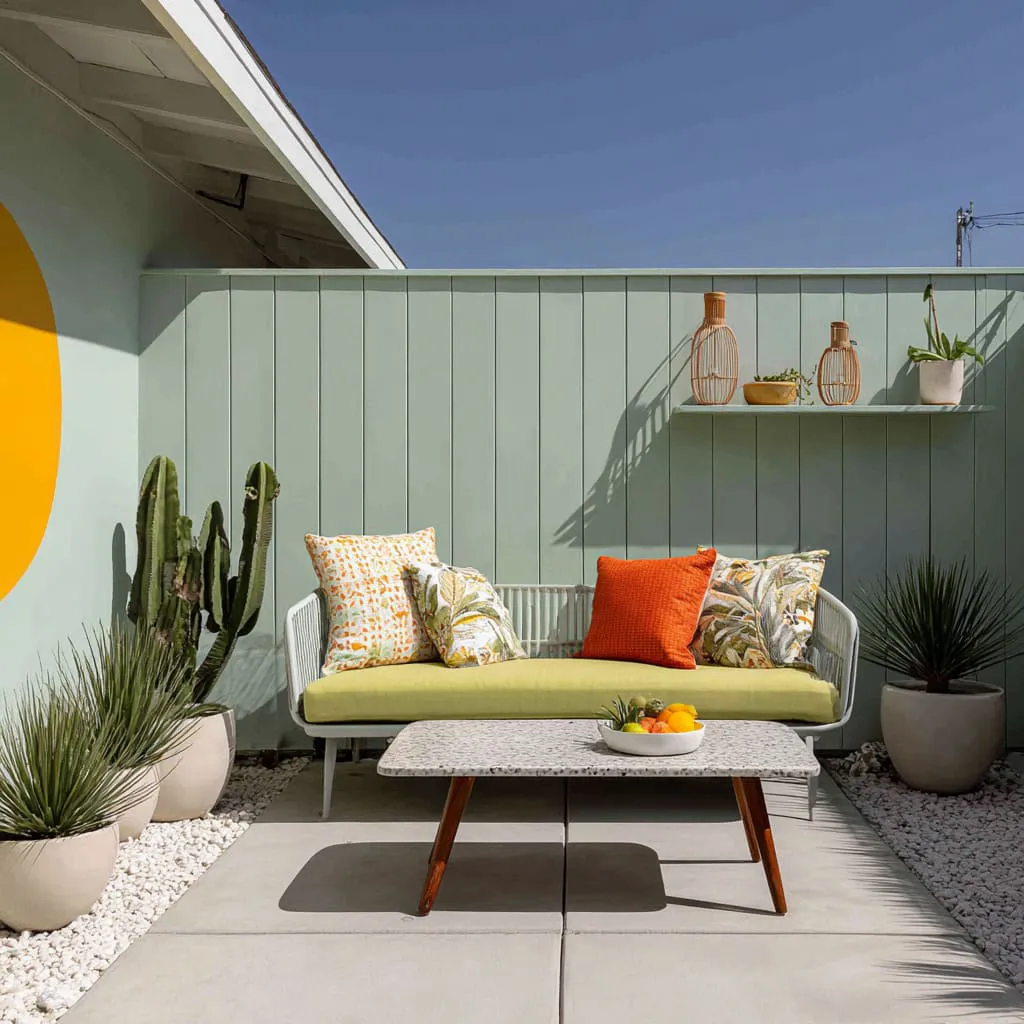
And notice how the stylish versions don’t overload the ledge. The styling stays selective: a few vessels, a couple of planters, maybe one tray grouping.
The ledge itself is the main graphic stroke.
Plant silhouette pairing: cohesion can come from shape
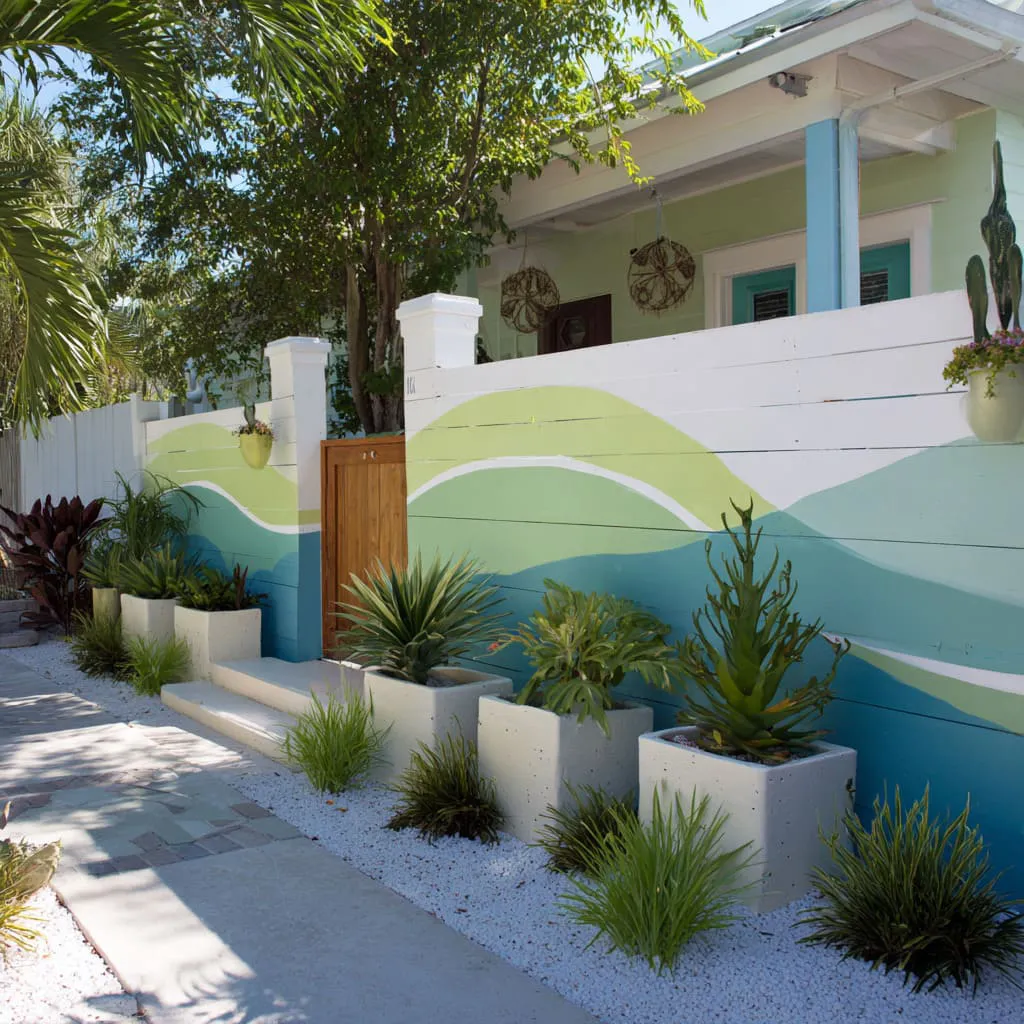
A common assumption is that planting has to match the paint palette to look cohesive. There is another fence decorating idea: silhouette match can do the unifying work even when the plant color doesn’t match the wall.
.
How plants can be chosen and placed:
- Spiky silhouettes echo thin rays, linework, or upright motifs (sunburst panels paired with drought-friendly spiky forms; wave bands paired with upright plants that feel like punctuation).
- Fine grasses echo micro-texture motifs like dots, sprinkles, or confetti. The wall offers tiny repeated marks; the planting offers tiny repeated blades. Different scale, similar visual language.
- Rounded mounds and clustered blooms support scallops and arches. Curves on the fence get answered by curves in foliage, so the scene feels harmonious without color matching.
Why shape pairing is so powerful:
- It works in changing light. Plant color shifts during the day. Silhouette is more stable.
- It keeps the palette from feeling forced. You can have a warm wall and cool green plants and still get a coherent result because the geometry is aligned.
- It makes the fence design feel embedded in the garden. When paint and planting share a form language, the mural stops feeling like an applied craft layer and starts feeling like part of the yard’s visual system.
This is also where base conditions matter. Many of the illustration examples use a narrow gravel strip or a low border at the fence base, then place plants as a measured rhythm on top of that.
The base line makes the silhouettes feel placed, not scattered.
Two-height lighting: depth at night without daytime clutter
Fence often looks great in daylight and then disappear at night. To solve it there is a two-height lighting strategy:
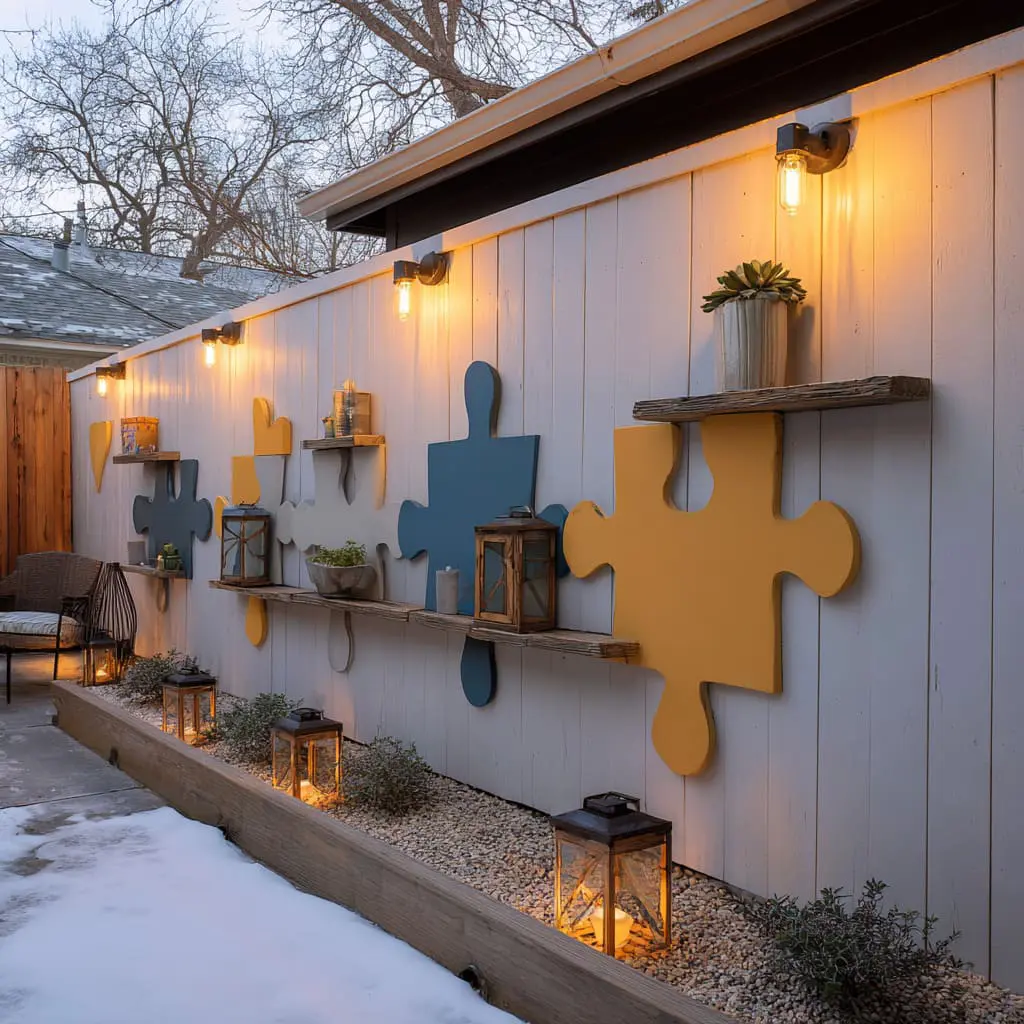
- High wash: sconces or fixtures mounted higher, casting light down the fence surface.
- Low glow: lanterns or small lights near the ground, adding warmth and depth at the base.
This pairing creates a layered scene without adding daytime objects. You’re not hanging more decor.
You’re changing how the wall reads once the sun is gone.
What the two-height approach accomplishes:
- It gives flat paint dimensionality. Light grazing a mural or patterned band creates subtle shadows on fence texture and shelf edges, which makes the surface feel less like a flat graphic.
- It supports composition. High fixtures can act as punctuation points along the top line of a feature zone. Low lights can bookend a bench or planters, reinforcing symmetry and calm.
- It makes the fence feel closer and more inviting. A wall that glows at two levels feels connected to the living area rather than sitting in darkness as a hard perimeter.
Lighting often becomes the only strong dark note in otherwise soft palettes. That contrast adds definition while leaving the wall styling minimal.
Putting the five rules together: the fence as an outdoor interior wall
Fence decoration that feels intentional tends to stack three layers, like an interior composition:
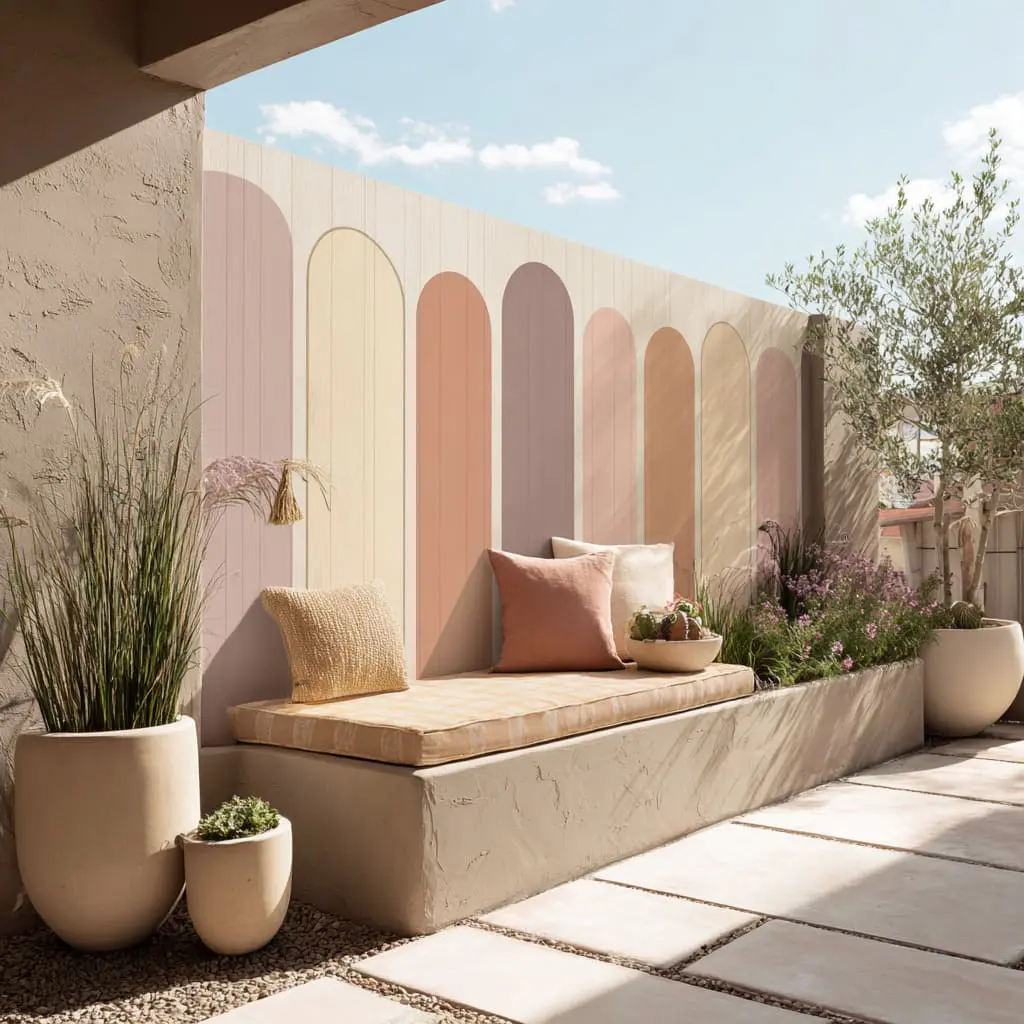
- Graphic governance
Baselines, spacing, containment, cropping, and a single dominant motif grammar. - Depth events
One shelf or counter line, a gravel or planter plinth, and a floor boundary like a rug, platform, or repeated paver rhythm. - Use-script
A clear reason to be there: a bench between planters, a bistro corner, a counter with stools, a path bench in a garden-room strip.
So, the five principles plug into that structure:
- the mid-height band organizes the wall,
- cropping keeps playful motifs grown-up,
- one long ledge quiets vertical energy and adds depth,
- plant silhouettes harmonize the scene even with mixed colors,
- two-height lighting gives nighttime presence with minimal daytime extras.
That’s how a fence stops feeling like the edge of the yard and starts feeling like the far wall of an outdoor room. The combination of these design principles creates many cute backyard fence decorating ideas for different layouts and purposes.