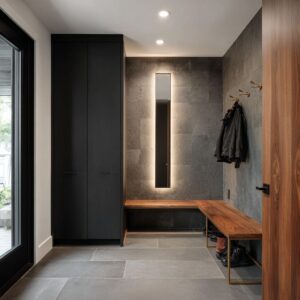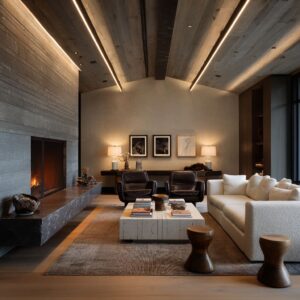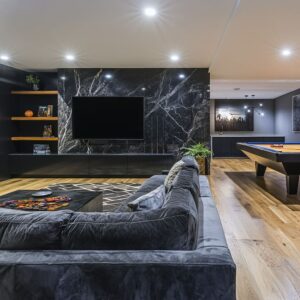
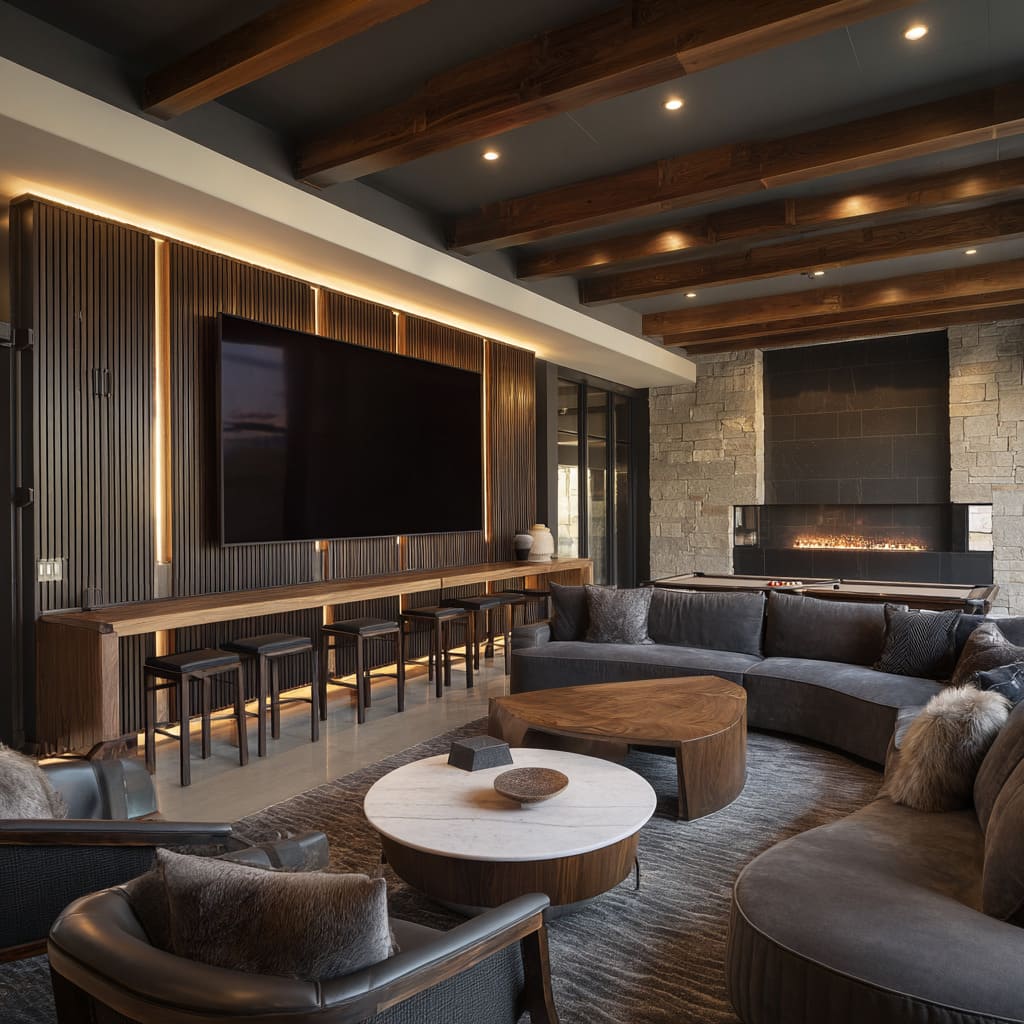
Dark interiors gain their strength not from a plain dark shade but from the way depth, surface rhythm, and subtle variation shape the environment. In many compositions, dark ribbing, vertical panel systems, and tall slatted walls turn shadow into an architectural language that organizes the scene.
Instead of a single plane of color, the wall becomes a series of upright lines that respond to the slightest light and create a sense of calm order. Brushed metal, slate-like panels, and charcoal boards add faint grain shifts that appear only when light grazes the surface, giving movement to areas that might otherwise feel still.
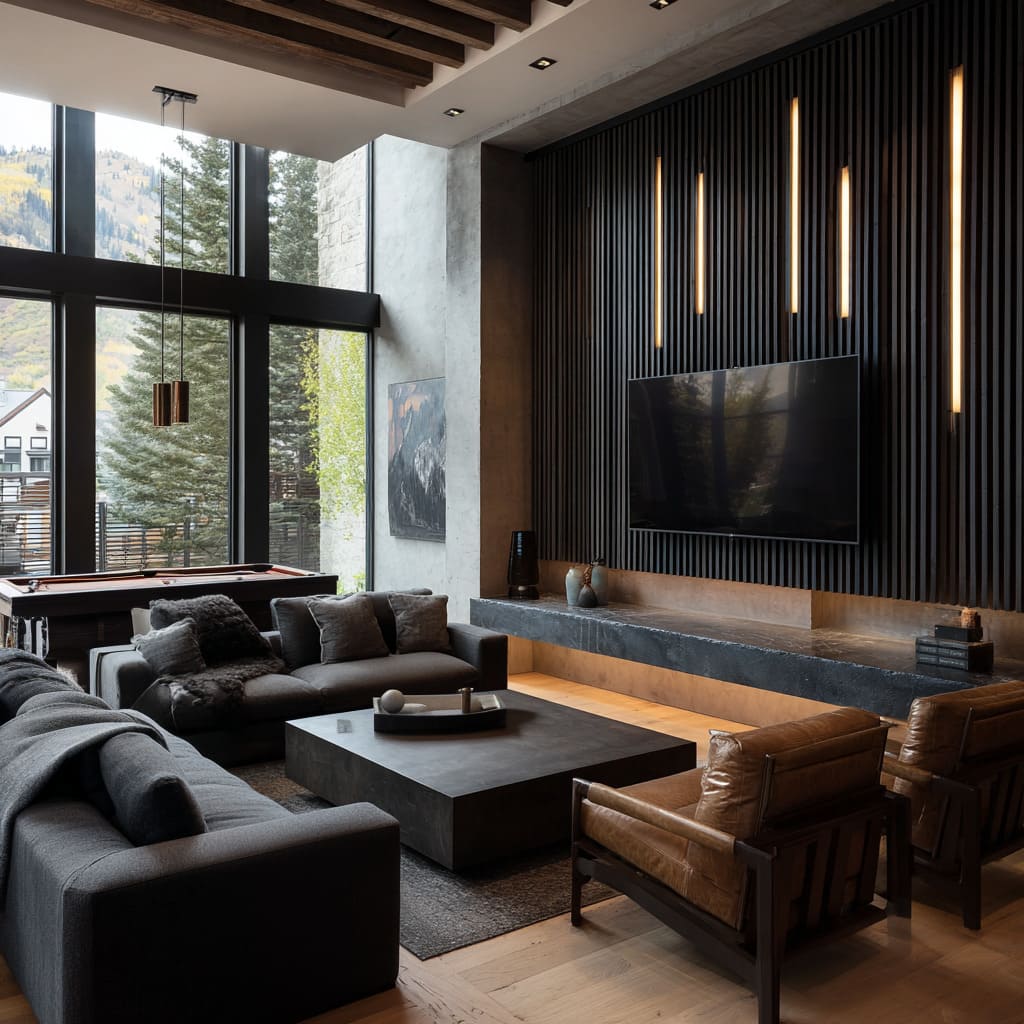
This method supports moody living room ideas by showing how shadow can communicate structure. Designers often pair these vertical systems with long horizontal elements—a floating bench, a stone ledge, a full-length console—so the eye settles into a stable visual base even while the walls reach upward with layered detailing.
The contrast between vertical and horizontal rhythm forms a balanced foundation that quietly defines the character of the design.
The Emotional Tempo Created by Lines, Grids, and Rhythm
A notable pattern repeated in multiple examples is the use of verticals and horizontals as emotional tools. Tall ribbing, metal uprights, timber beams, and narrow slats help set a slow and contemplative tempo, which is why these features frequently surround the TV or shelving areas.
Horizontals—stone benches, floating wood counters, long cabinets—establish a quiet “resting line” across the design. This dynamic becomes especially visible when these elements nest within one another, such as a strong vertical ribbed backdrop paired with a slim floating shelf and a stone ledge below it.
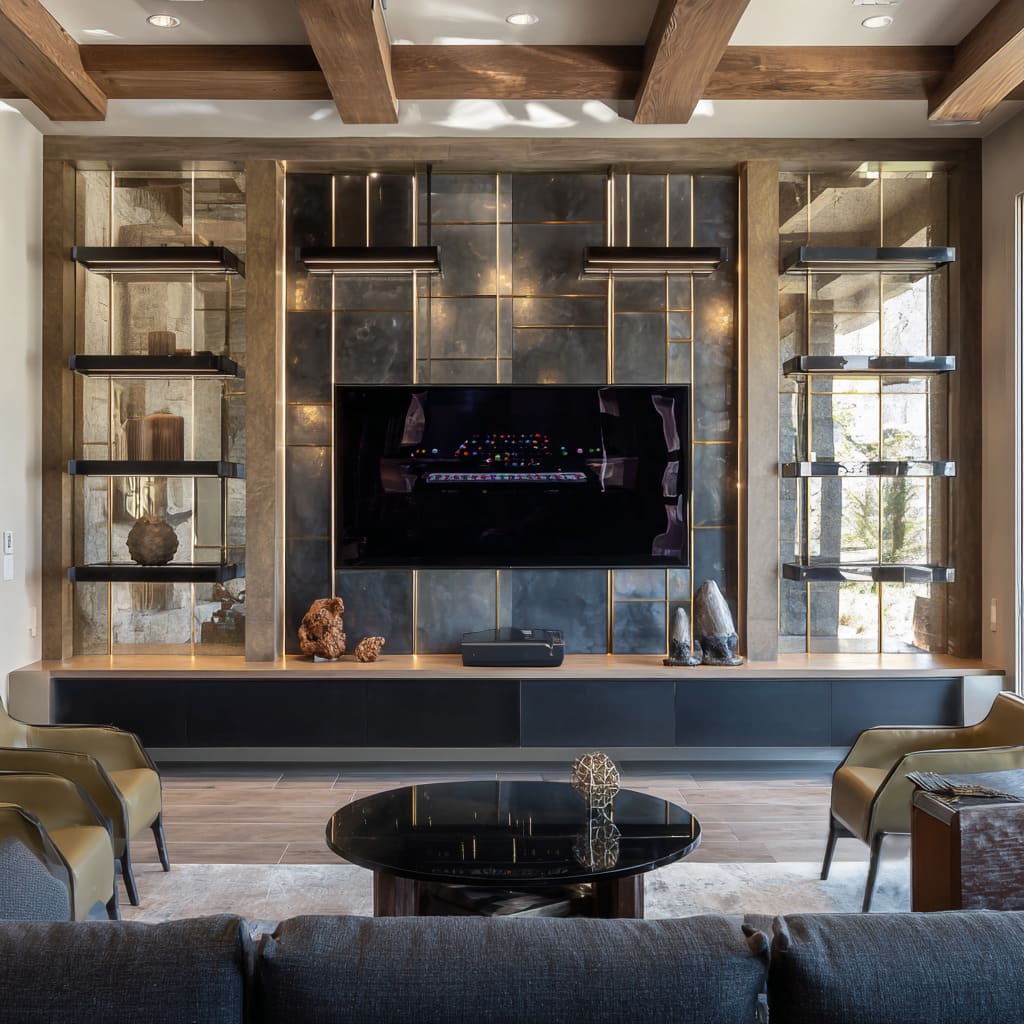
Subtleties within the structural rhythm include:
- Verticals for focus: repeated lines that direct attention upward without overwhelming the space.
- Horizontals for grounding: long edges that stabilize shadow-rich compositions.
- Offset intersections: slight asymmetry that keeps the structure from feeling rigid.
Together, these layers create a foundation for moody design that feels controlled yet soft, a blend of order and warmth.
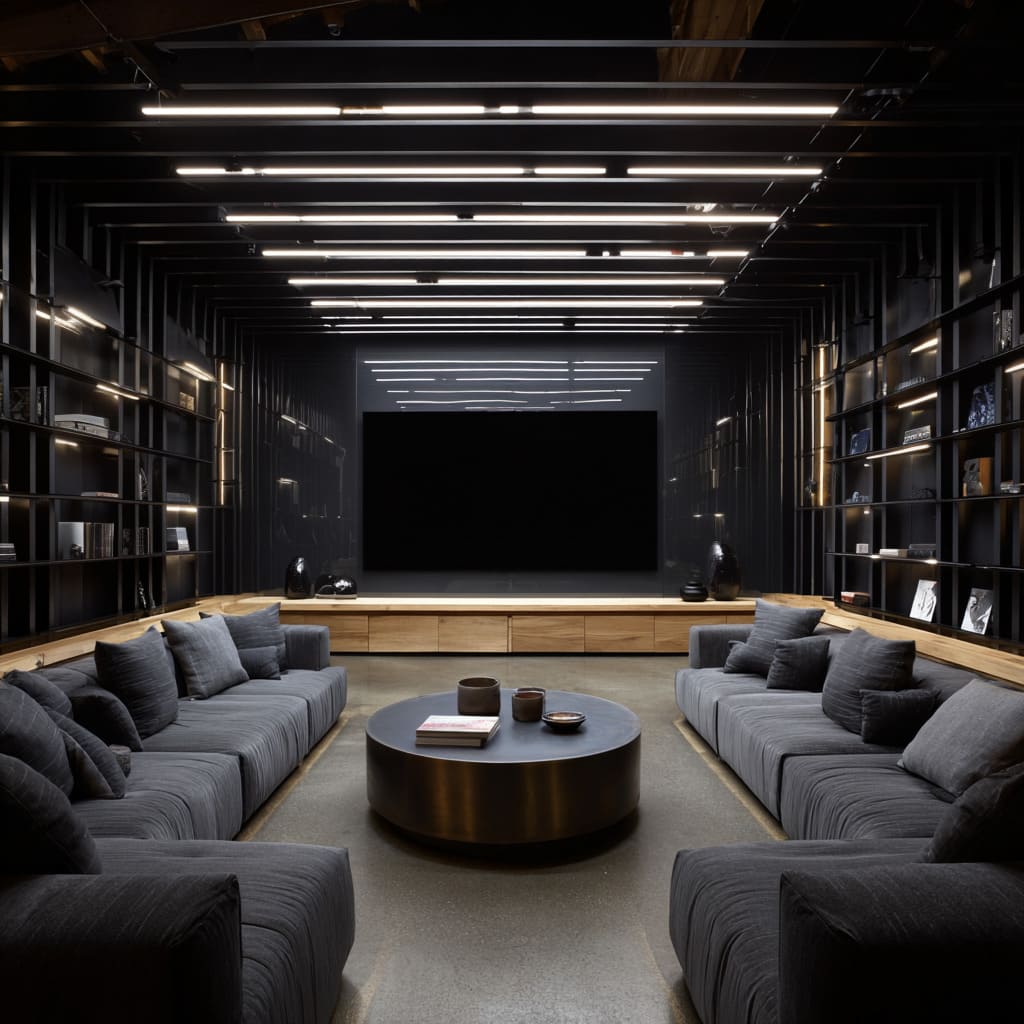
Indirect Light as a Soft Drawing Across Dark Materials
Lighting in such designs rarely shows its source. Instead, the effect appears through glows, halos, slots of warm light, and hidden reflections that move gently over stone, wood, and metal.
Narrow vertical strips inside ribbed walls act like glowing lines that break darkness with softness, while shelf backlighting forms a faint aura around sculptural objects. Under-lit consoles add a floating quality, and ceiling beams with hidden lighting create large shadows that shift throughout the day.
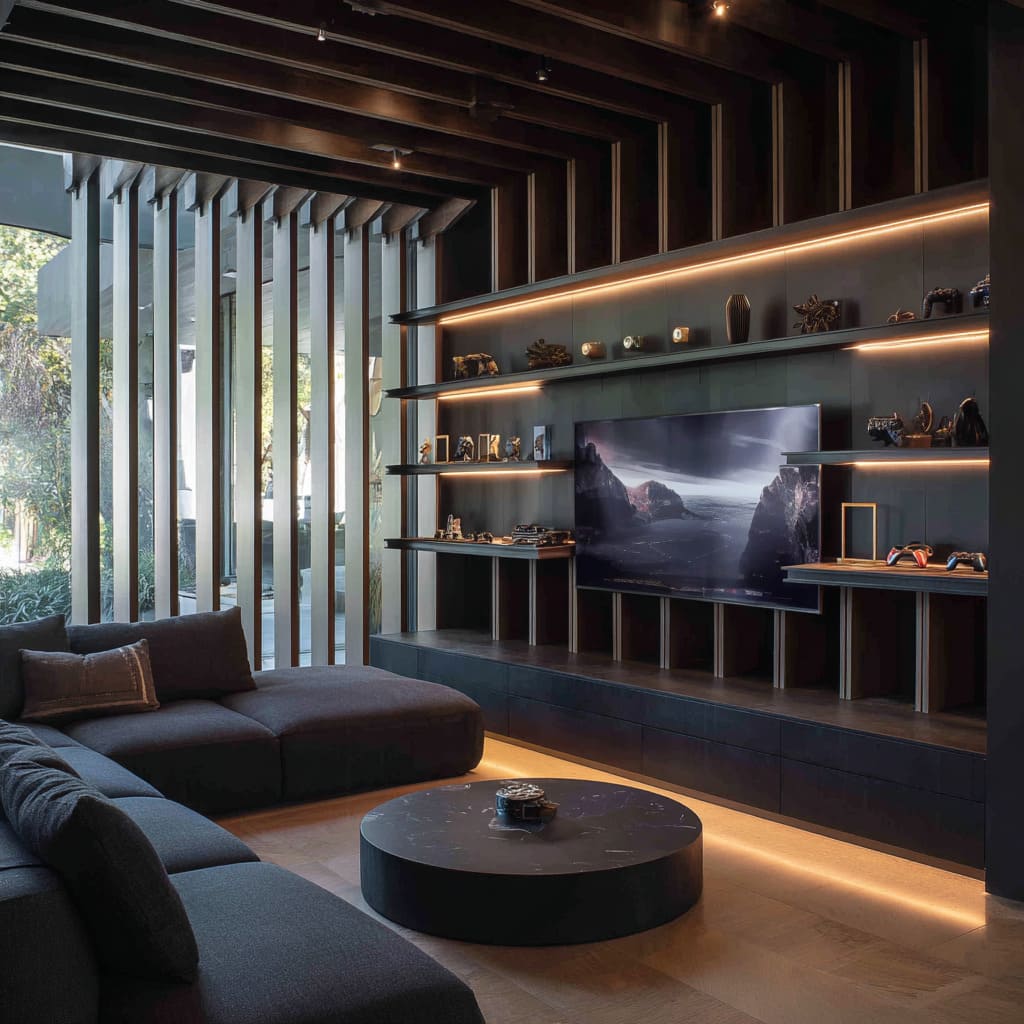
Lighting strategies that shape the atmosphere:
- Back-glow niches that create pockets of calm around objects.
- Linear lines of light placed off-center to build a natural irregularity.
- Floating under-lighting that lightens heavy forms without changing their color.
These lighting moods support dark moody living room ideas by emphasizing the softness of shadow rather than brightness. The focus is not illumination but the gradient—the slow slide from light to dark that makes every material feel layered and alive.
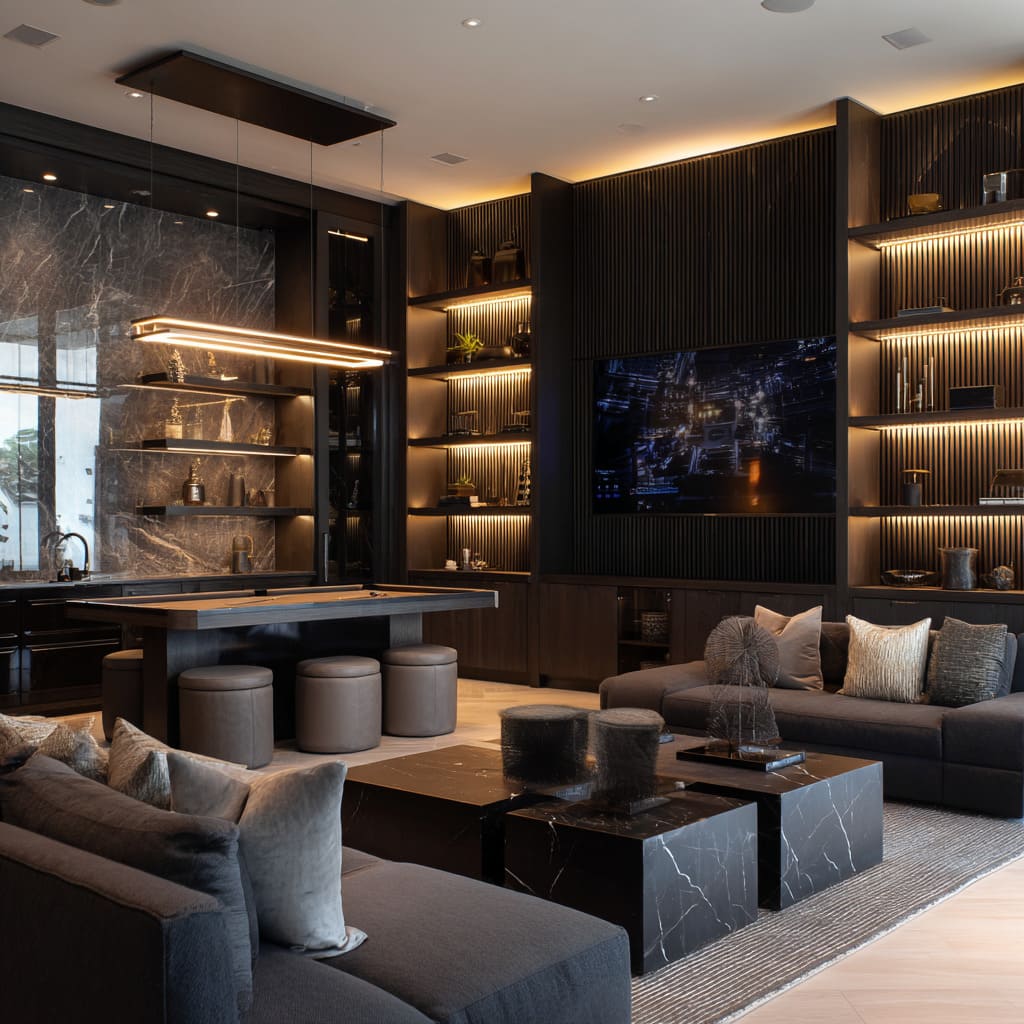
Shelving as a Composed Display, Not Storage
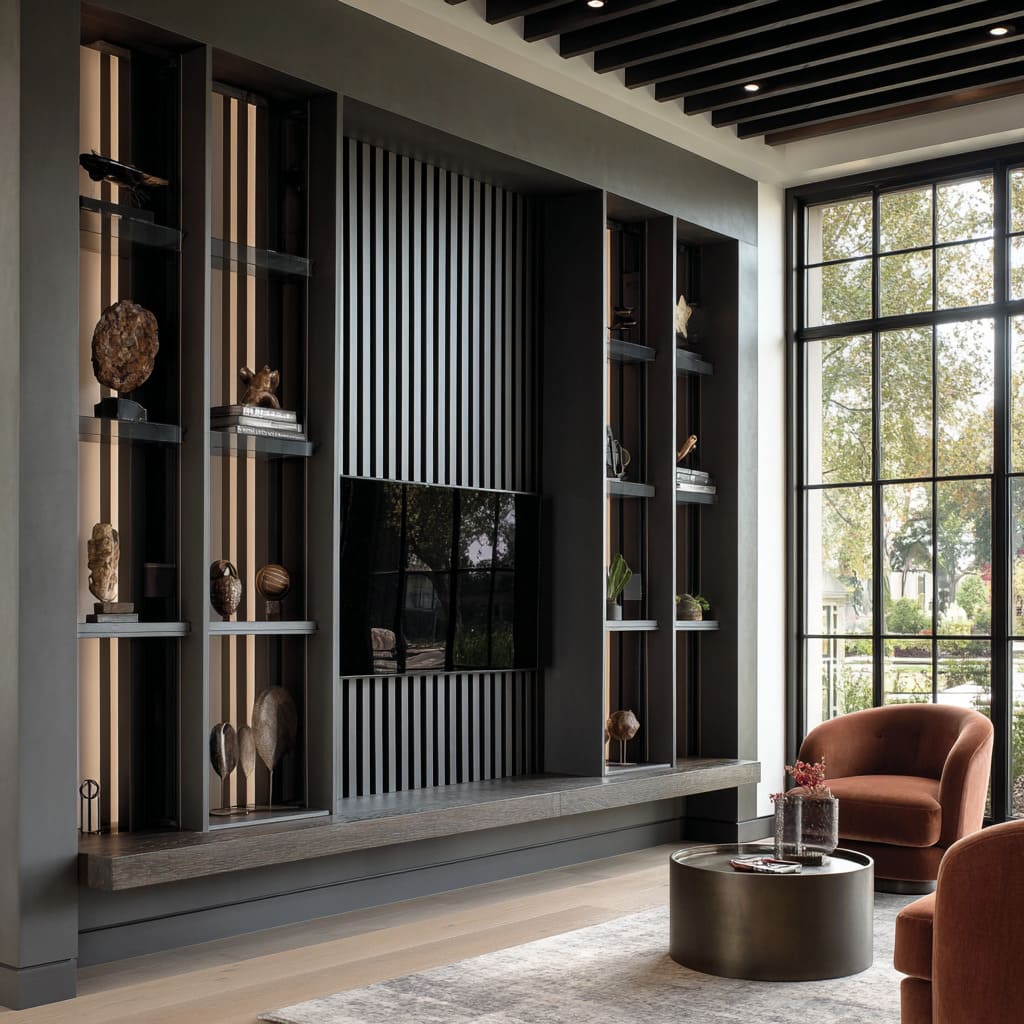
In all designs, shelving acts as an environment for curated silhouettes rather than a utilitarian area. Whether built from thin metal frames, floating timber layers, or recessed niches, the shelves function as quiet compositions arranged with negative space as carefully as the objects themselves.
Sculptural items—stone pieces, bronze forms, matte ceramics, dark-spined books—gain presence from the way the lighting wraps around them. Some designs use tall shelf towers that frame the TV, while others present grid-style illuminated squares where each object rests in its own soft glow.
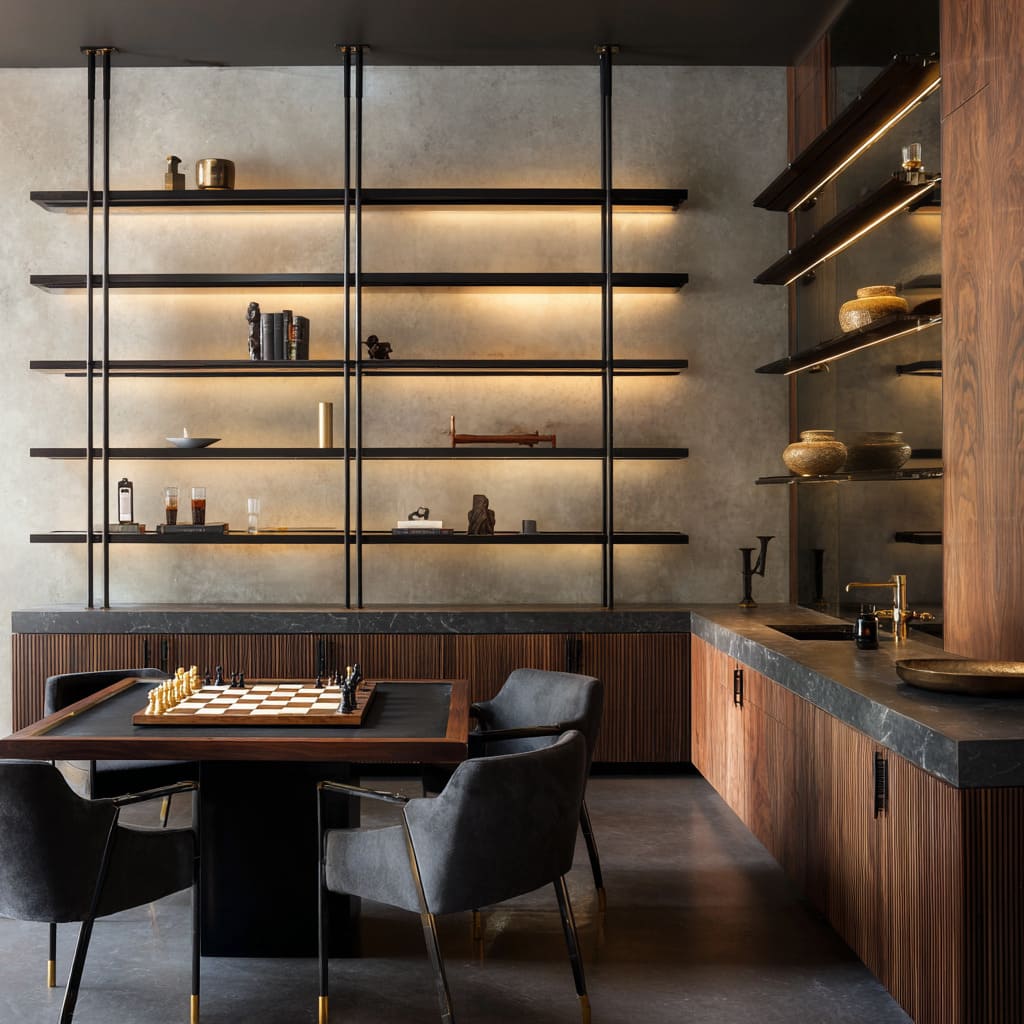
Key characteristics:
- Large spacing between objects to preserve shadow.
- Monochromatic or muted materials that avoid visual noise.
- Integration with vertical or grid systems so shelves become part of the wall rather than separate furniture.
This approach supports moody lounge room design by using display zones as emotional anchors instead of mere storage.
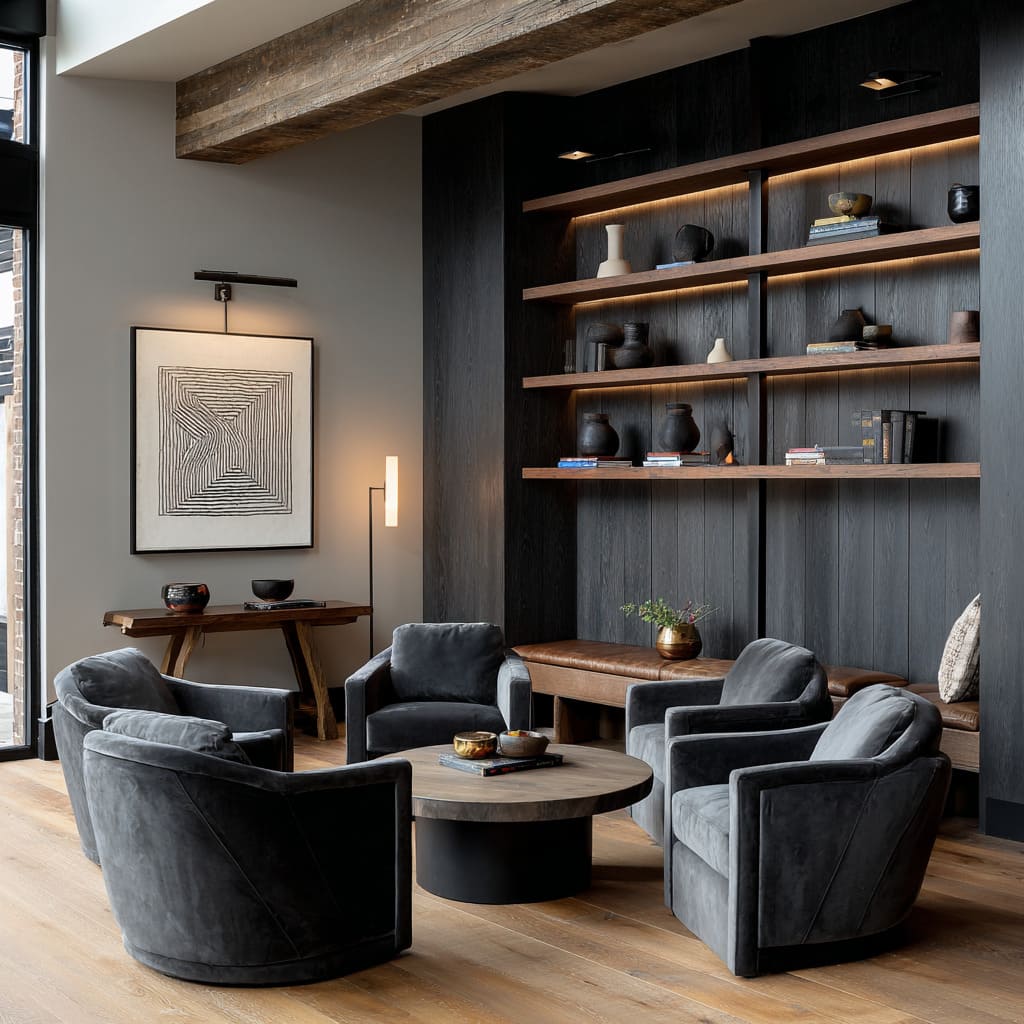
Curves and Soft Forms That Break Strict Architecture
With so many vertical and linear architectural elements forming the structure of designs, curved furniture becomes essential for balance. Rounded armchairs, soft-edged coffee tables, semicircular sofas, and circular seating clusters introduce warmth into a scene dominated by straight lines.
This contrast is not accidental; it is part of a deliberate visual strategy where strict architecture provides discipline while curved furniture provides comfort.
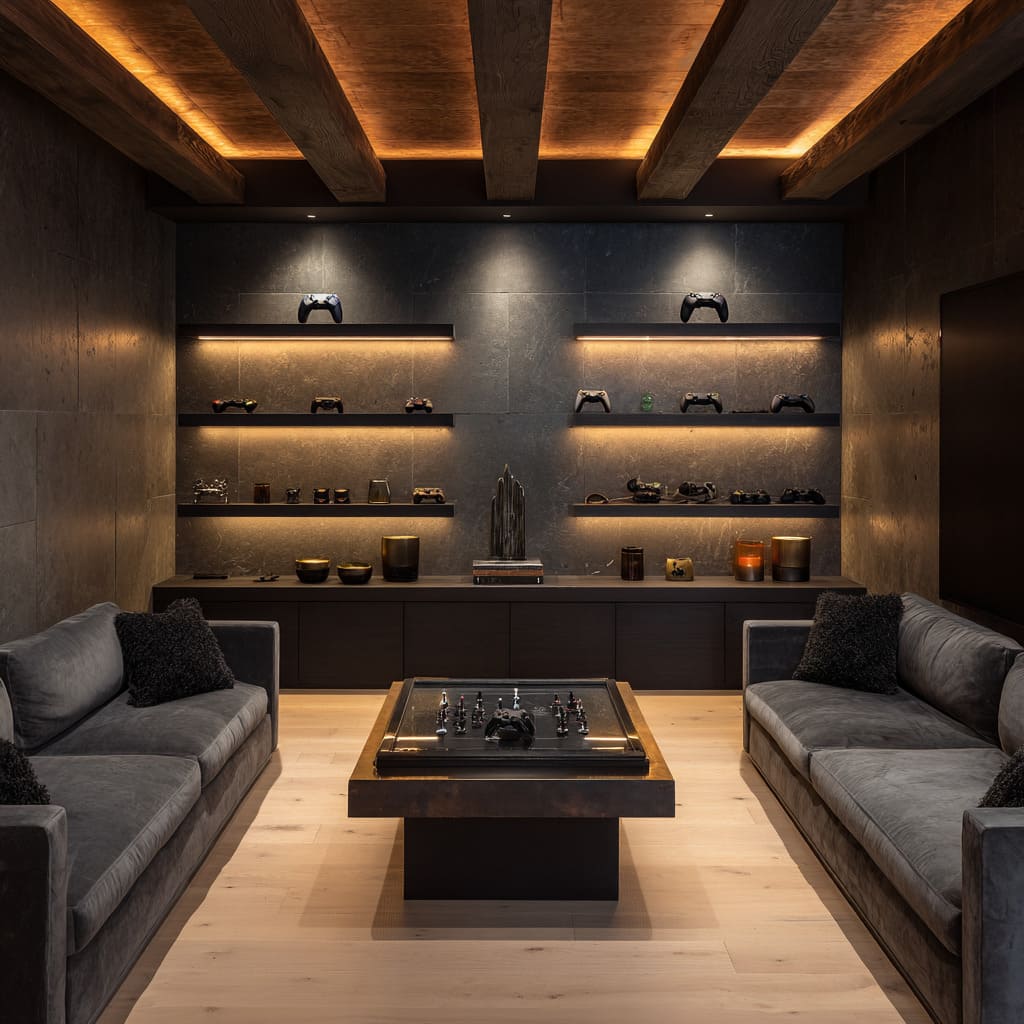
How furniture adds softness:
- Circular tables centered in the seating area bring a sense of calm continuity.
- Curved sectionals wrap around the central point like a protective gesture.
- Rounded corners on wood or stone tables offset the firmness of dark materials.
Through these gestures, the spaces avoid stiffness and instead evoke quiet social energy. This balance of strict lines and curved silhouettes is one of the defining forces behind moody sitting room design, adding softness without diminishing the dark palette.
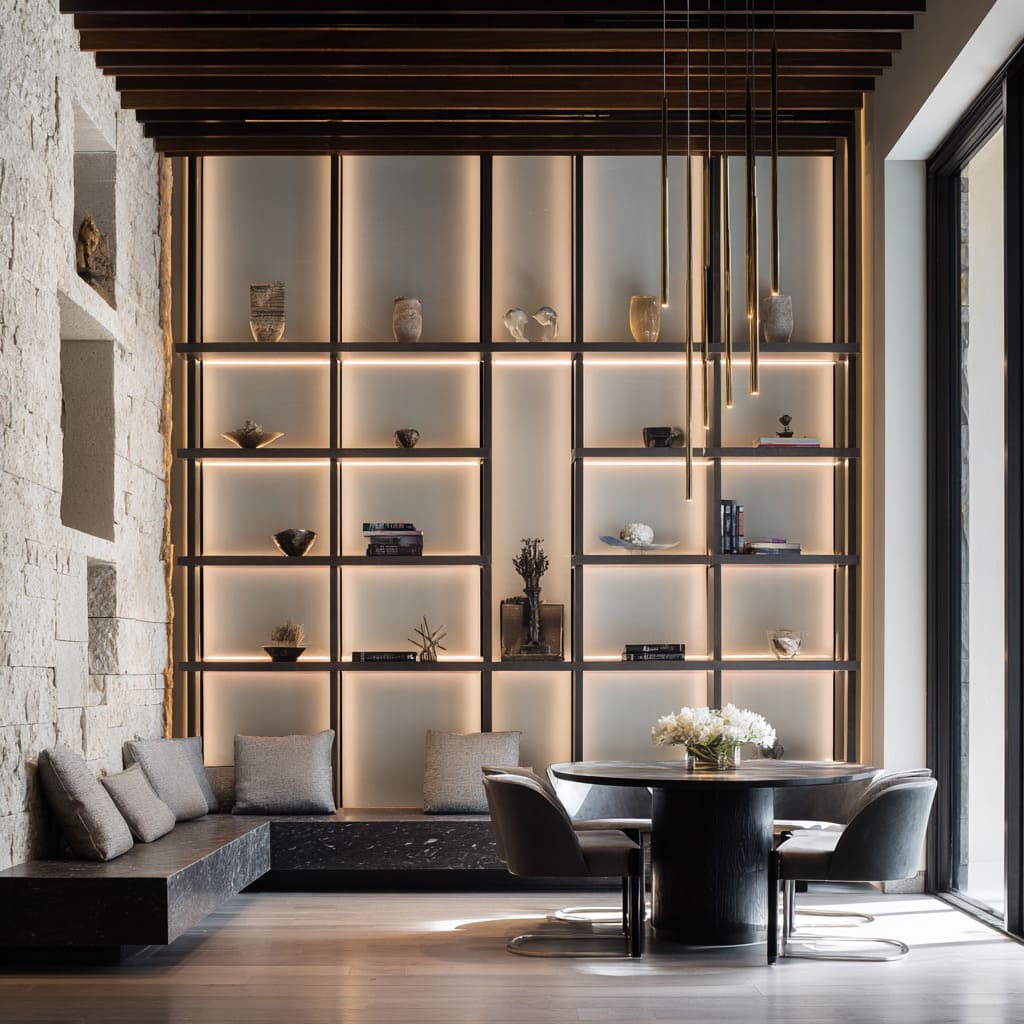
Dark Feature Walls
A recurring motif is the “stage wall,” where a TV, fireplace, or lit grid becomes the focal zone. Such walls are framed with ribbed surfaces, metal panels, stone slabs, or illuminated niches, each method acting like an architectural proscenium.
The design forms a clear visual destination, even when the room is part of a larger open layout.
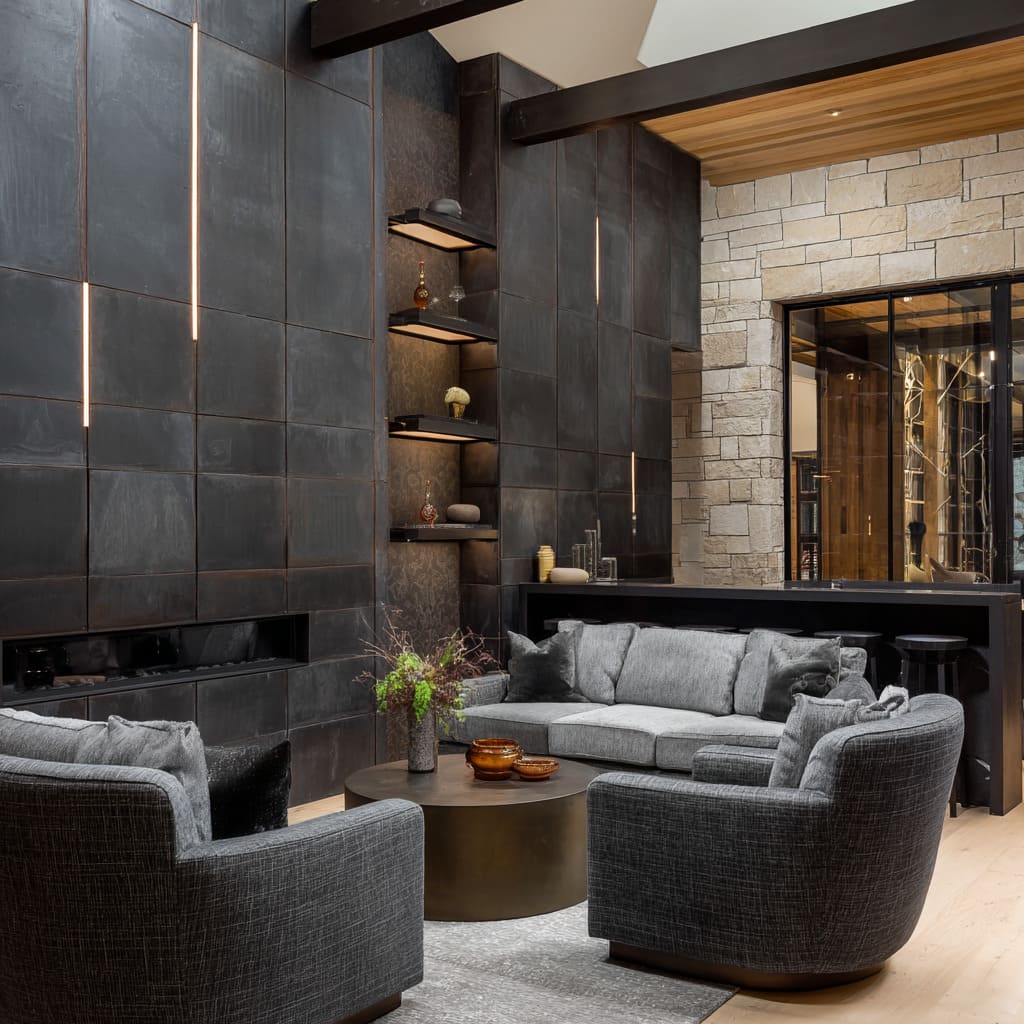
Common traits of stage-like walls:
- A long grounding base, such as a floating stone bench or dark cabinet.
- A strong vertical or geometric field that rises behind the screen or artwork.
- Carefully measured lighting that enhances depth but avoids harsh glare.
Such structured backdrops communicate focus, calm, and intention—qualities that define dark and moody living room ideas in modern settings. The feature wall becomes a quiet statement of identity, shaping every other element around it.
Hybrid Identities: Lounge, Game Zone, and Conversation Corner
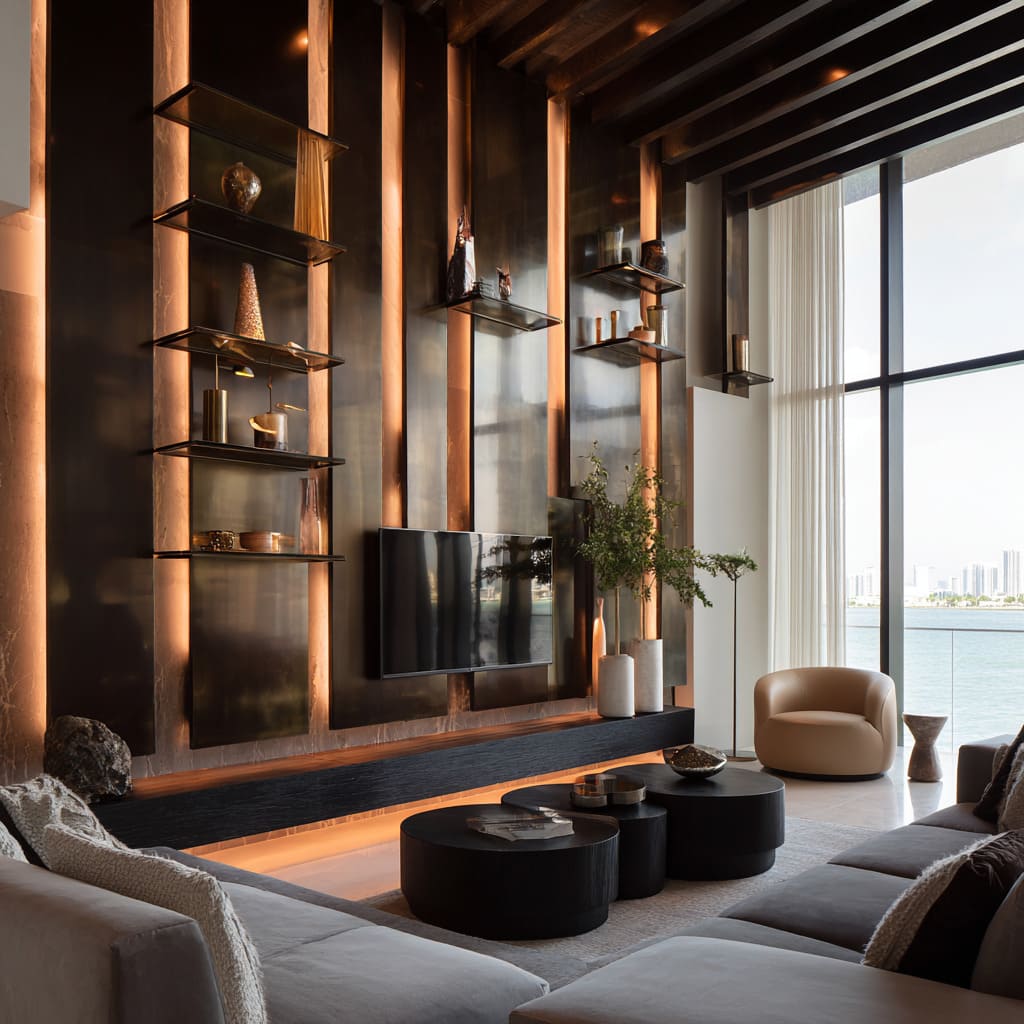
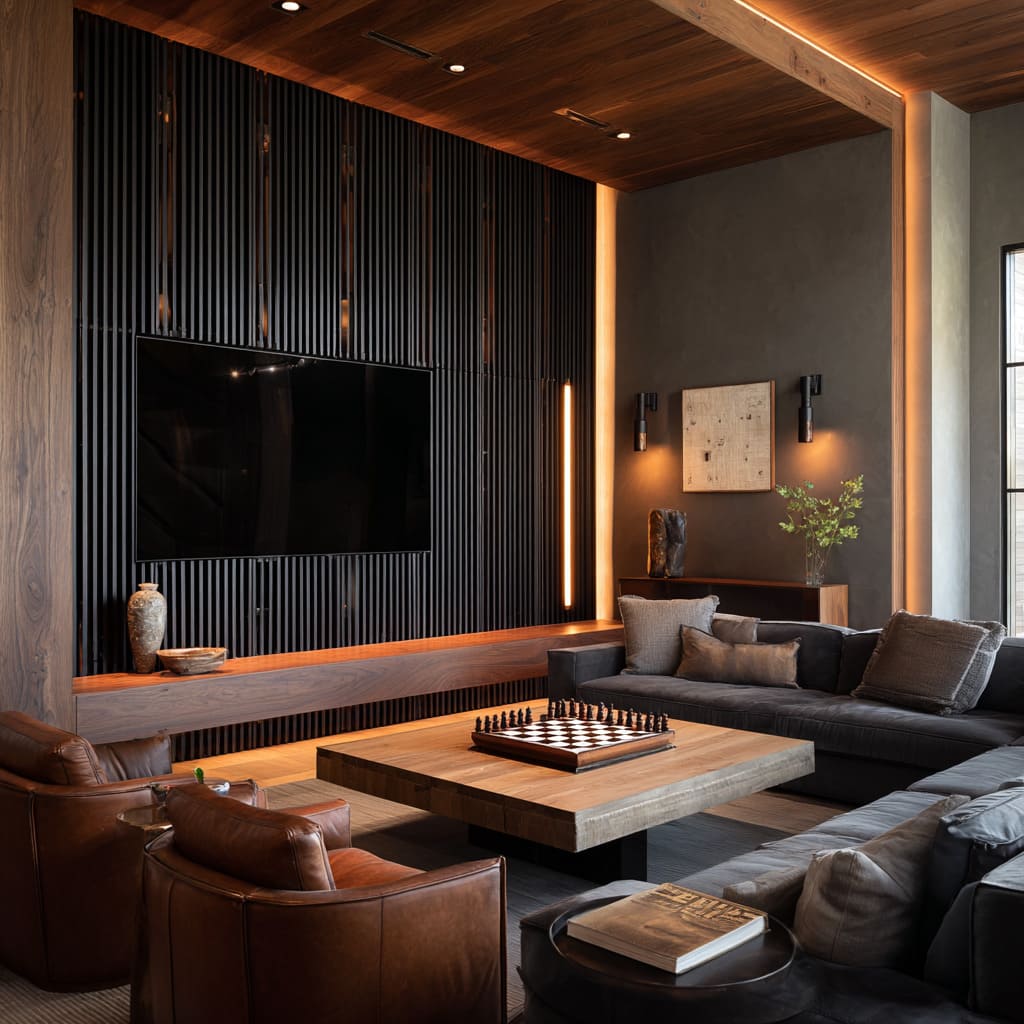
Many designs blend traditional living room roles with secondary functions, forming hybrid spaces where evening activities feel natural and cohesive. A long wood counter may maintaining the same palette as the seating area.
Stone counters within shelf systems act as game tables or display areas. Chess boards, minimal sinks, and sculpture-filled shelves add layers of use without interrupting the moody tone.
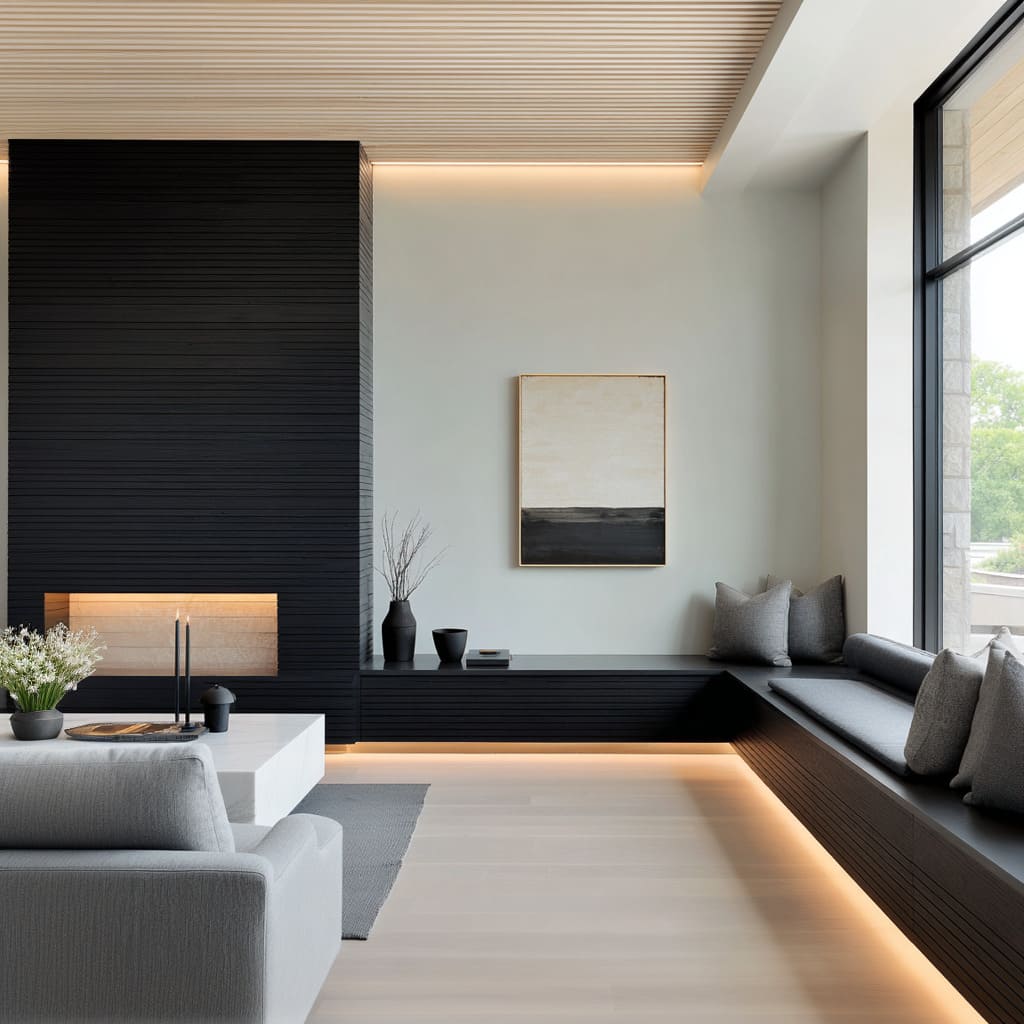
Blended identities can appear in several ways:
- Counters integrated into dark walls.
- Game tables placed at the center of circular seating arrangements.
- Display systems that merge dining, lounge, and entertainment moods.
This flexible identity supports the vocabulary of moody living room design, where the mood aligns naturally with slow evening routines—conversation, games, and calm.
Light, Nature, and Contrast: How Daylight Joins the Scene
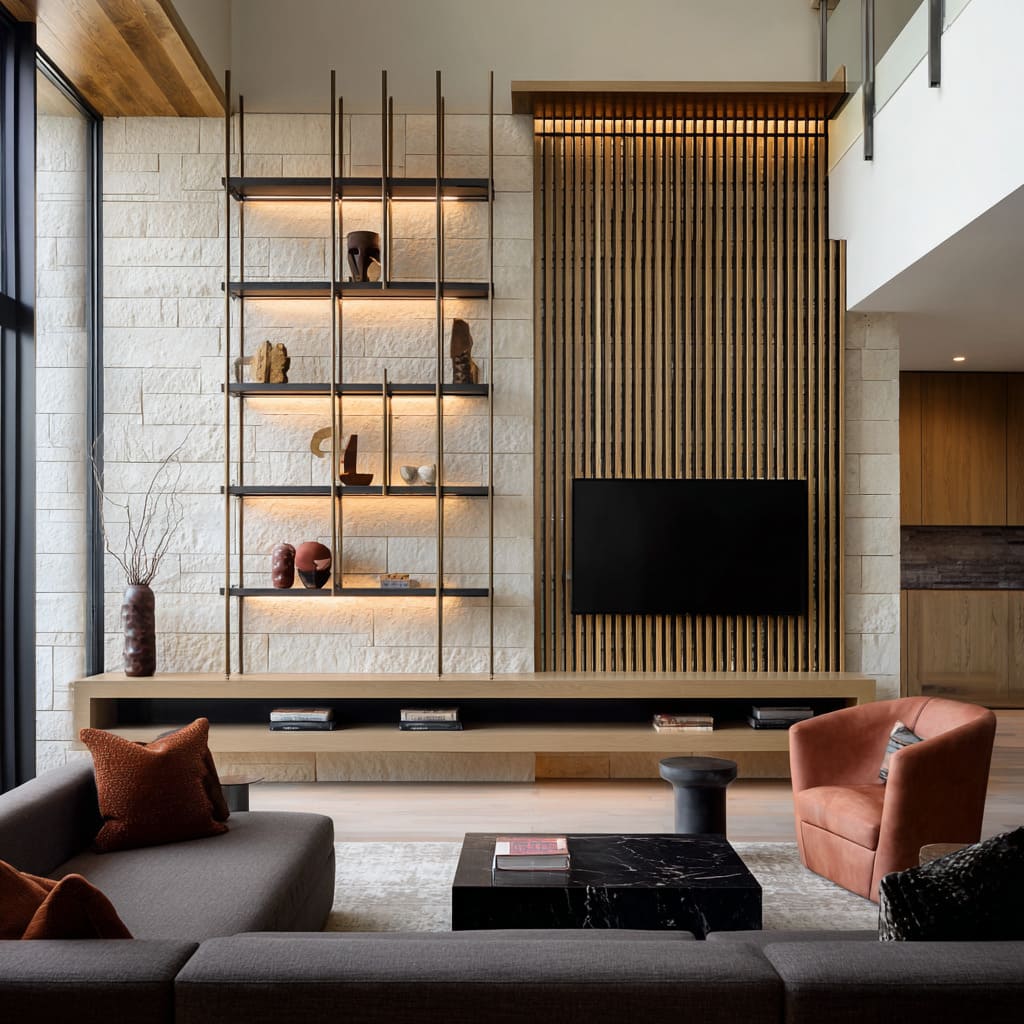
Despite the dark palettes, such designs do not reject daylight; instead, they frame it. Tall glazing appears beside ribbed panels so that brightness reads like part of the composition.
Metal-framed windows introduce slim vertical lines that echo interior slats. Lighter stone arches transition into darker zones with intention, giving the room a layered spatial hierarchy.
Three key approaches to daylight:
- Framing natural views as if they were artworks.
- Using daylight to graze ribbed or textured surfaces, revealing patterns hidden in shadow.
- Allowing natural and artificial lighting to meet without conflict, forming a seamless gradation of tone.
These techniques help shape environments where the mood feels consistent from morning to night, tying together the depth of shadow with the brightness outside and expanding the vocabulary of dark style living room ideas into an all-day emotional landscape.
Warm Touch Points: Timber, Leather, Bronze, and Tactile Fabrics
Most of the warmth originates not from color but from where the hand or body interacts with surfaces. Timber counters, leather chairs, warm metal trims, and soft throws appear specifically at touch height—seat edges, table rims, armchairs, and counters.
This placement gives warmth exactly where it matters emotionally, ensuring dark materials feel inviting rather than cold.
Materials used thoughtfully:
- Leather for gently aged softness.
- Deep timber for a grounded tactile presence.
- Bronze and brass to brighten edge details.
- Velvet and textured fabrics that absorb light calmly.
These elements contribute to the enveloping warmth and cohesion typical of refined dark lounge room design, allowing darkness to feel intimate rather than heavy.
The Overall Atmosphere
Taken together, all these strategies form an emotional ecosystem defined by calm shadows, layered textures, measured compositions, and a strong sense of intention. Each gesture—curved seating against strict ribbing, glowing lines against dark stone, warm shelves inside deep niches, sculptural objects with soft silhouettes—adds another layer to the room’s personality.
The result is a space that suggests evening routines, reflective moments, slow gatherings, and an environment where design speaks in gradients and edges rather than bright colors or noise. In this way, the qualities of a refined moody sitting room design emerge not through darkness alone but through structure, curation, spacing, and the soft interplay of light and shadow.