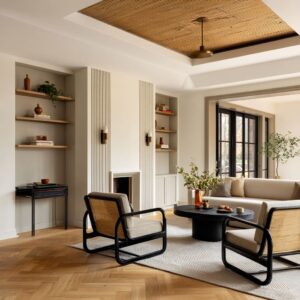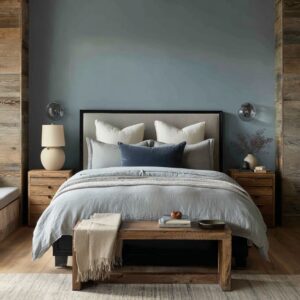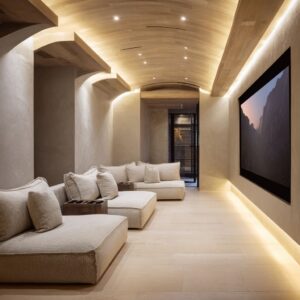
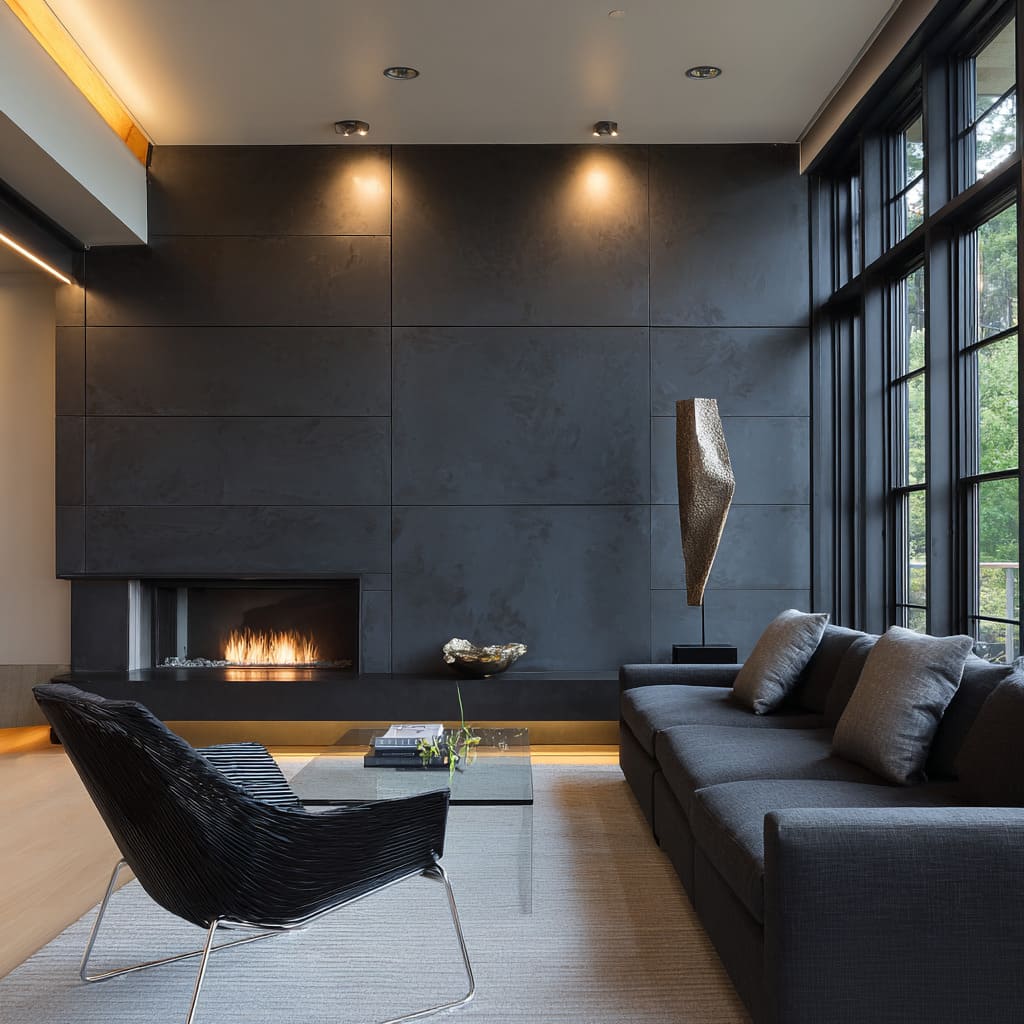
In many contemporary interior designs, the panel wall acts as a visual anchor that organizes furniture, art, and the overall sense of calm. Instead of behaving like a background surface, it becomes the element that gives the entire space coherence.
The panels often span full height, uninterrupted, shaping a calm plane that ties seating, lighting, and small details together. What makes these surfaces powerful is not loud material contrast but the way they set a rhythm that quietly directs the room.
The lines may run vertically, horizontally, or form large grids, yet the role is always the same: the paneling becomes a unifying container that supports the main furniture arrangement. In numerous interiors, the panel wall is built around a subtle rhythm—wide oak grids, fine timber battens, fluted plaster, woven squares, or even concrete-like slabs.
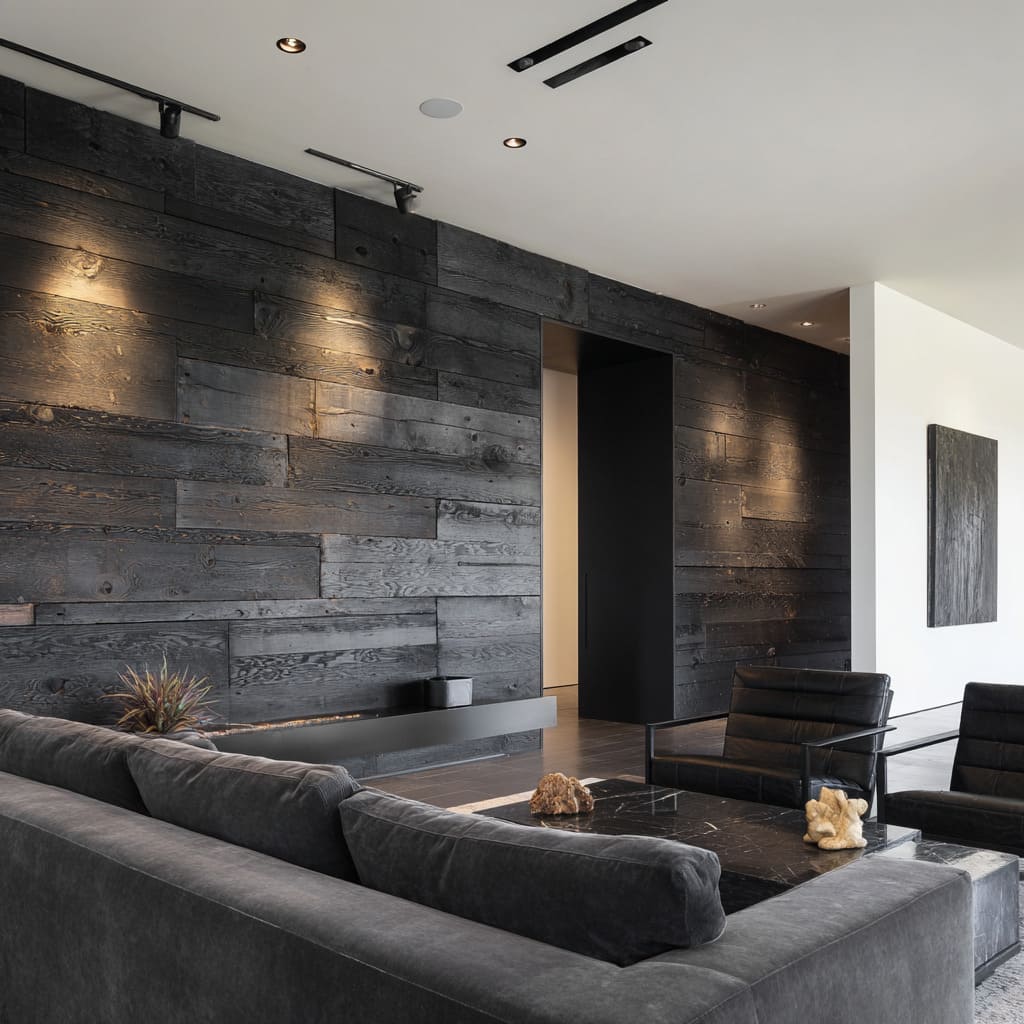
Each treatment creates a different visual tempo. The sofa, the art, and the lighting do not simply sit in front of the wall—they appear intentionally “linked” to it.
This connection is a hallmark of crafted living spaces where decorative wall panels for living room compositions influence everything else in the environment.
Vertical Movements: How Upright Lines Set Calm Structure
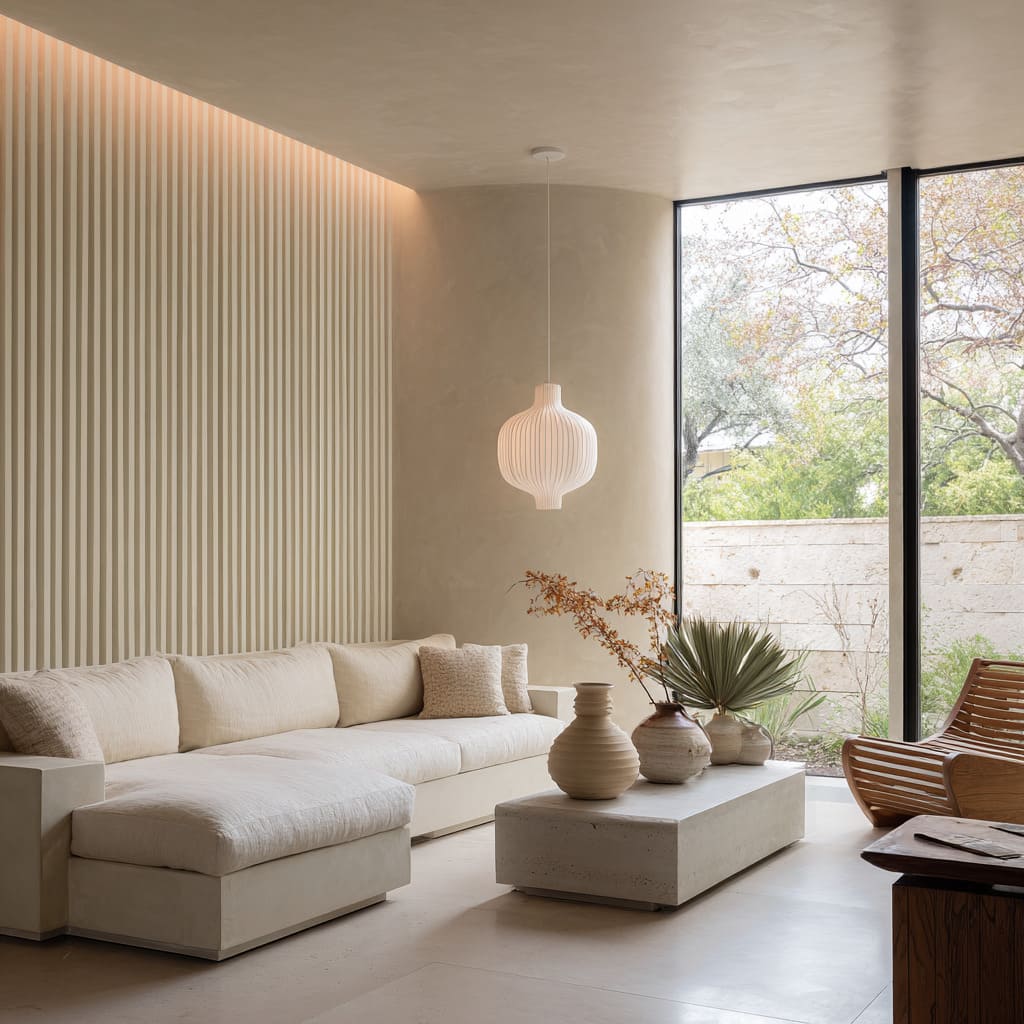
Vertical panel concepts rely on repetition to build an atmosphere of height, quiet order, and gentle upward motion. Such walls may use slim battens, narrow flutes, long boards, or fine striations, and their success comes from consistency.
The subtle idea behind these concepts is that the panel and the background often share nearly the same tone. Without color contrast, the texture becomes the star and the shadow does the storytelling.
The strong upward pull affects how sofas and tables are perceived; low seating feels even lower, making the room feel more open.
They often use only one disruption—a niche, a piece of art, or a corner curve—to stop the rhythm at one point, creating a focal moment in an otherwise measured environment. Vertical panels communicate serenity, making living room wall panelling ideas aligned with natural daylight, soft shadow transitions, and plant shapes.
Such walls also accept small sculptural accents gracefully, because the uninterrupted verticals act as a calm backdrop that elevates even minimal decor.
Grids and Squares: A Quiet Architectural Framework
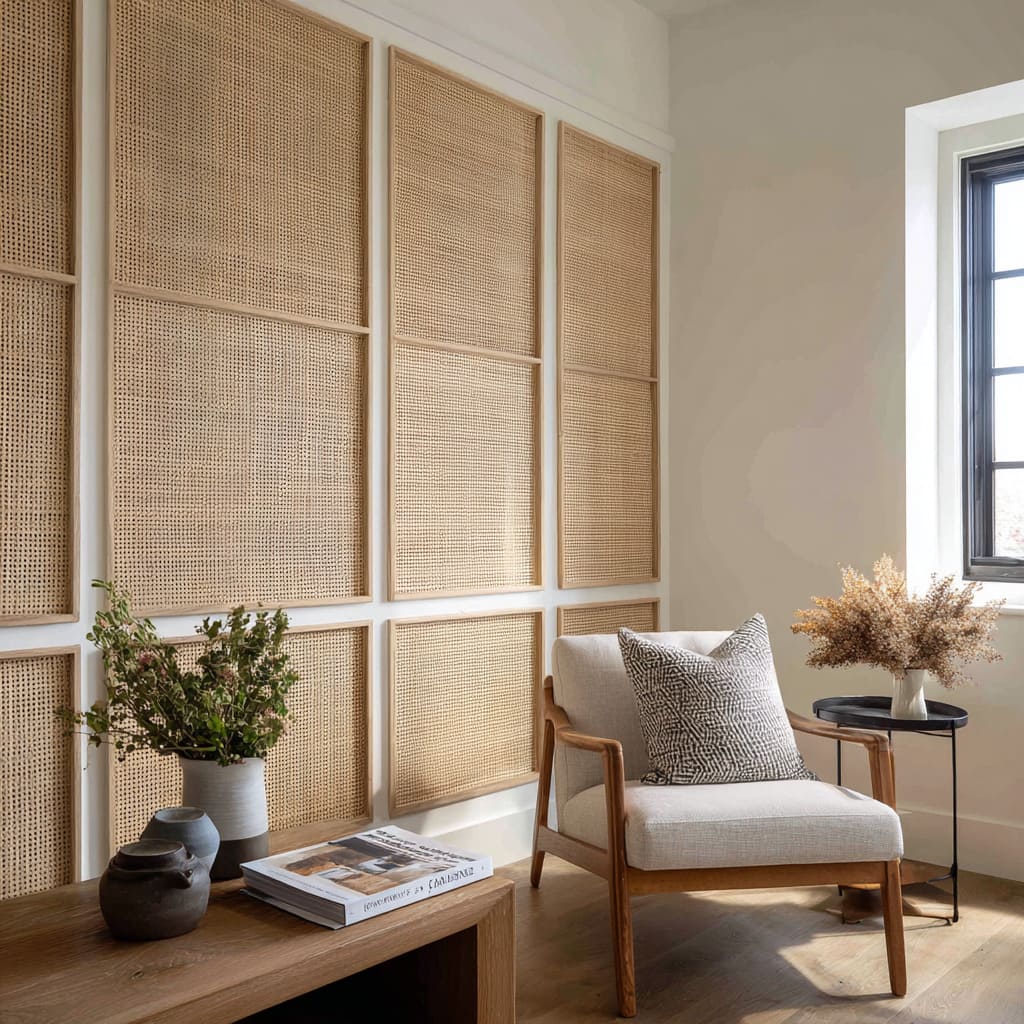
Grid-based designs introduce geometry that reads as steady and composed rather than busy. Their squares and rectangles may be large or narrow, light or dark, woven or wooden.
A defining move in such interiors is the scale: the grid units are generous. When combined with restrained trim, the wall feels modern and balanced.
Another characteristic is the alignment of grid lines with sofa cushions or console heights.
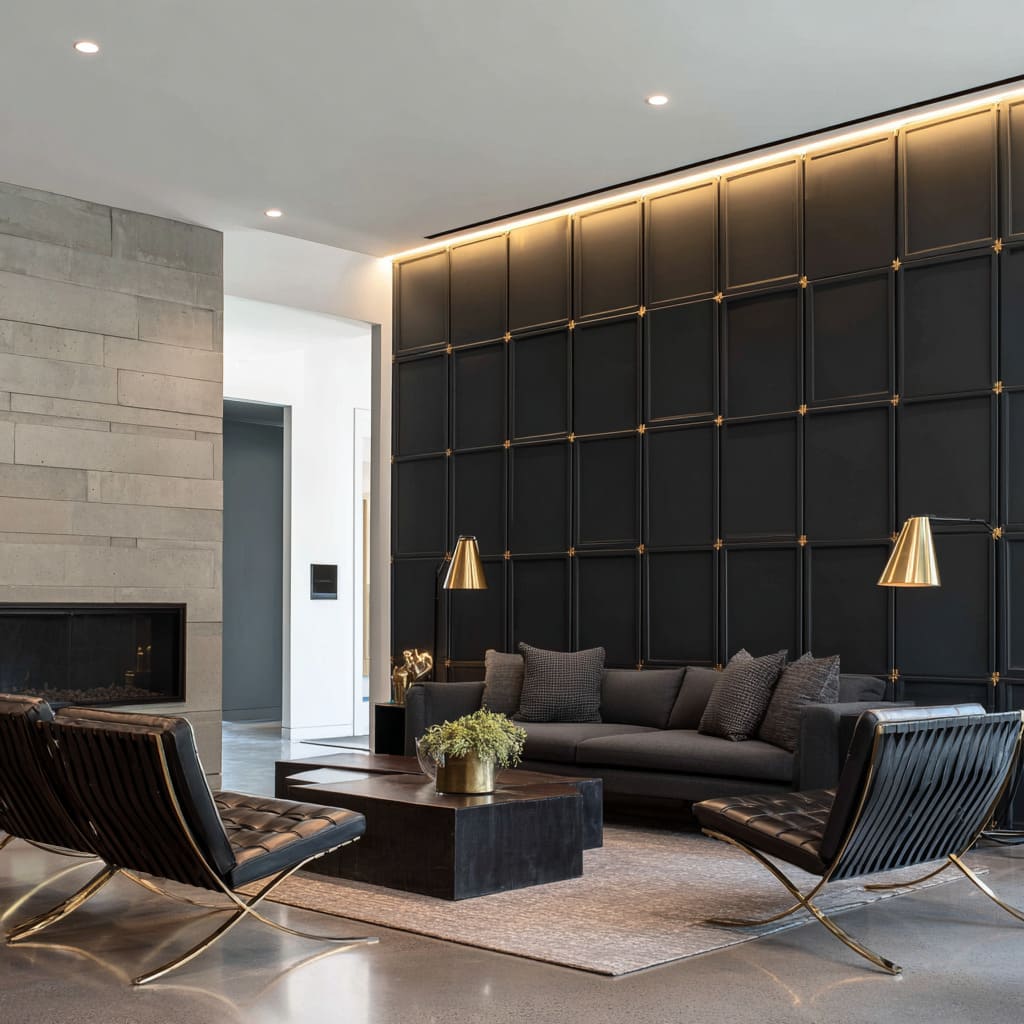
This creates a sense of order where the living room feels fitted, not incidental. Grids also allow a controlled placement of art: sometimes a single piece interrupts the pattern; other times an artwork cluster sits inside select cells.
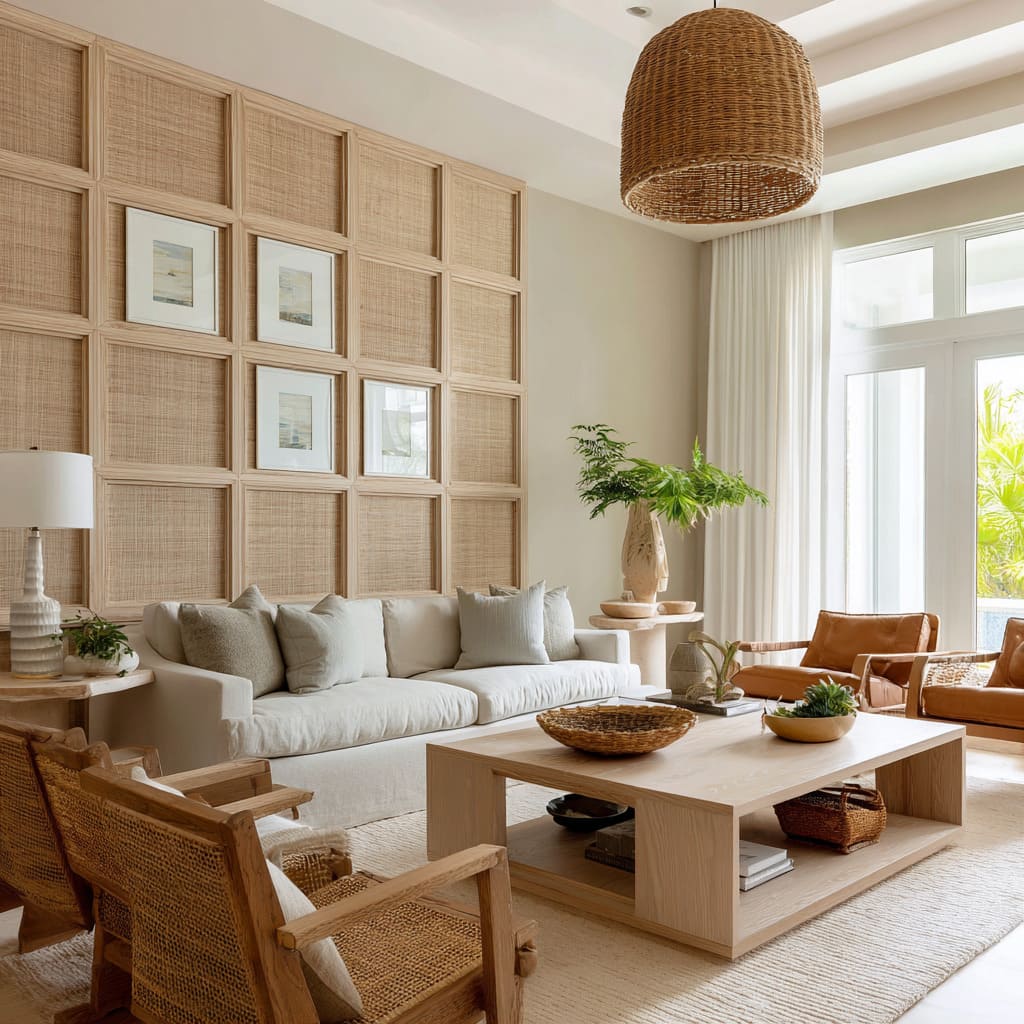
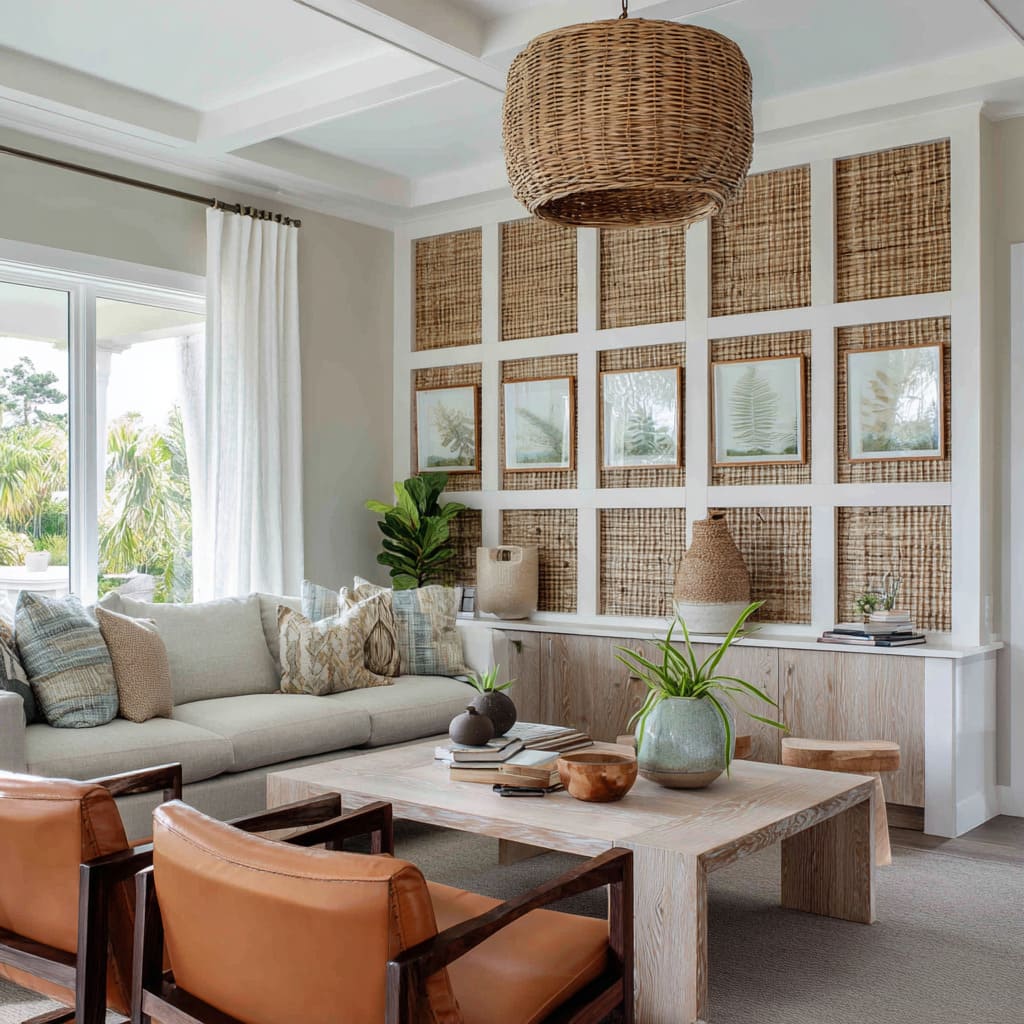
Their role is to introduce a quiet counterpoint without disrupting the overall stillness. In woven-grid concepts, natural fibers bring warmth and visual motion inside the rigid framework.
The combination of geometric discipline and organic texture turns these surfaces into decorative wall panels living room designs can rely on as both structure and atmosphere.
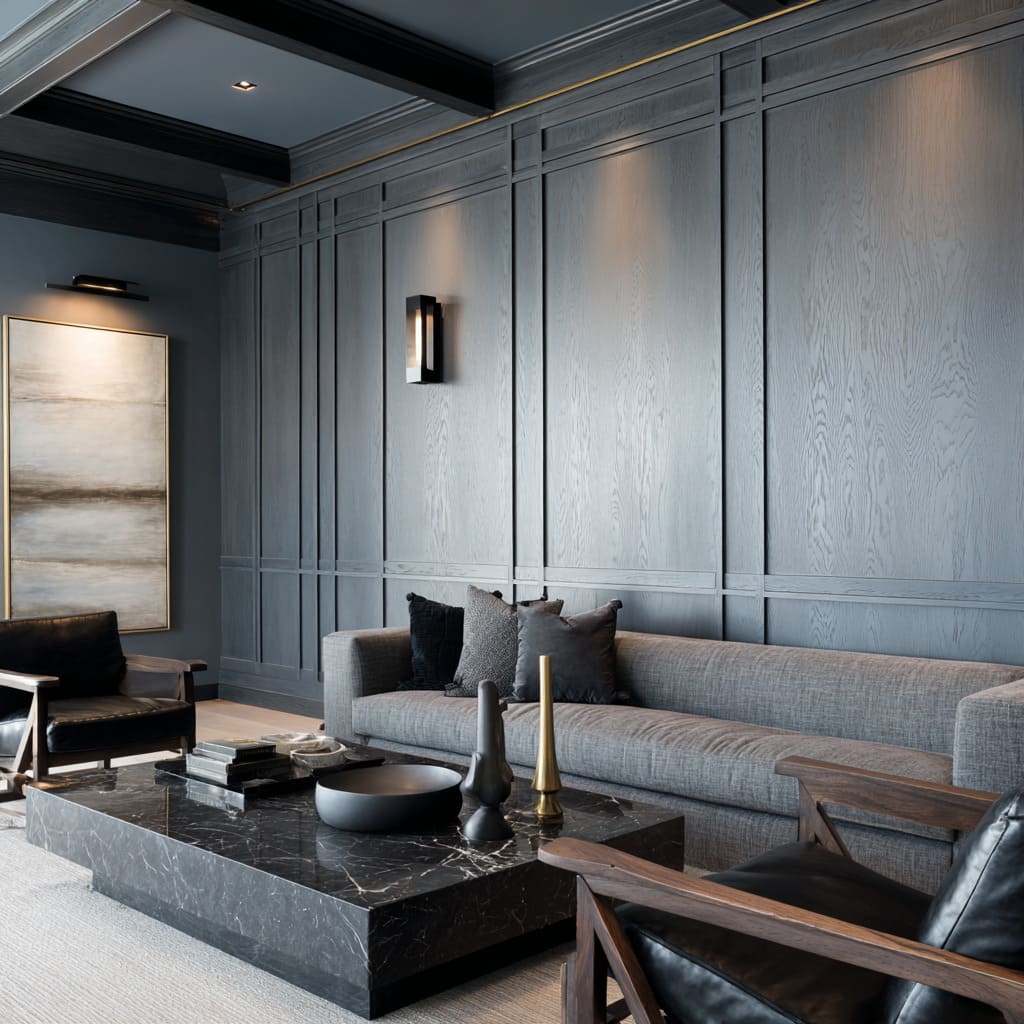
Horizontal Lines and Sun-Washed Calm
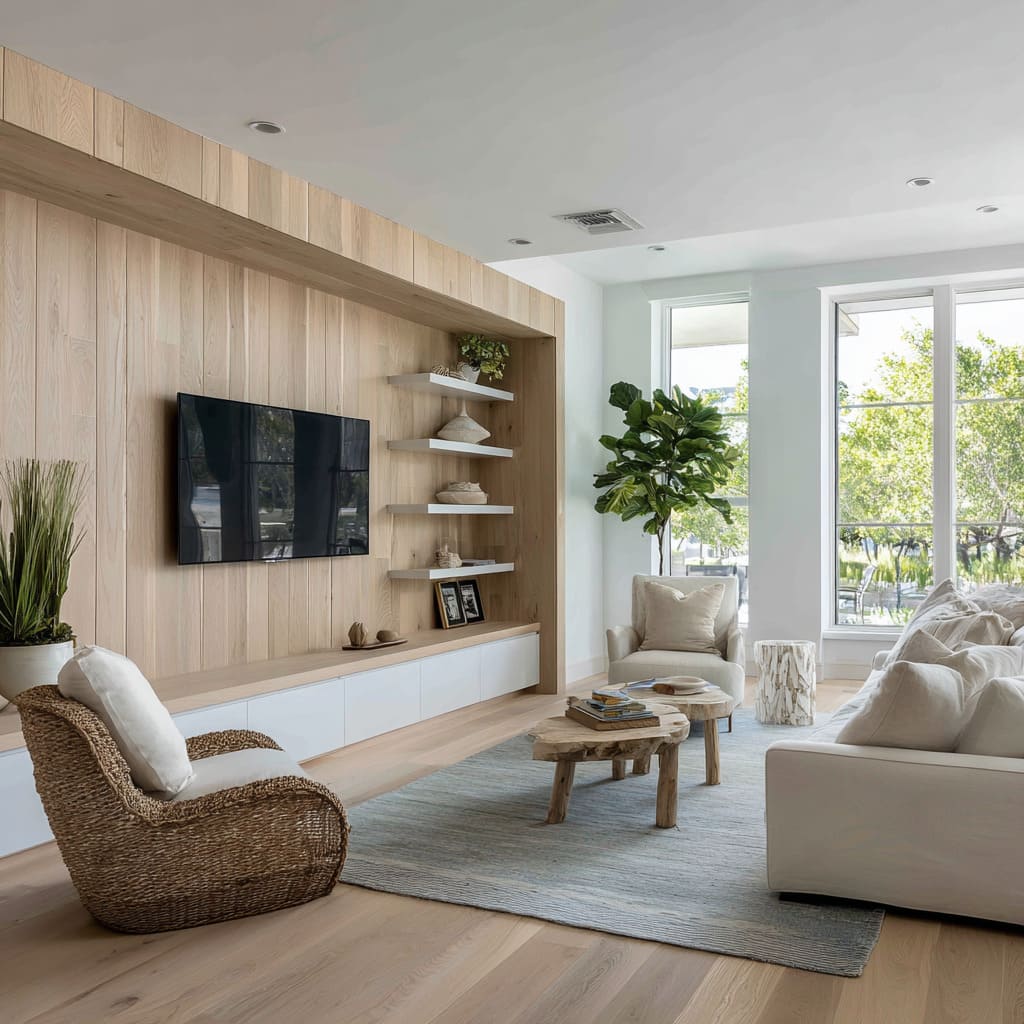
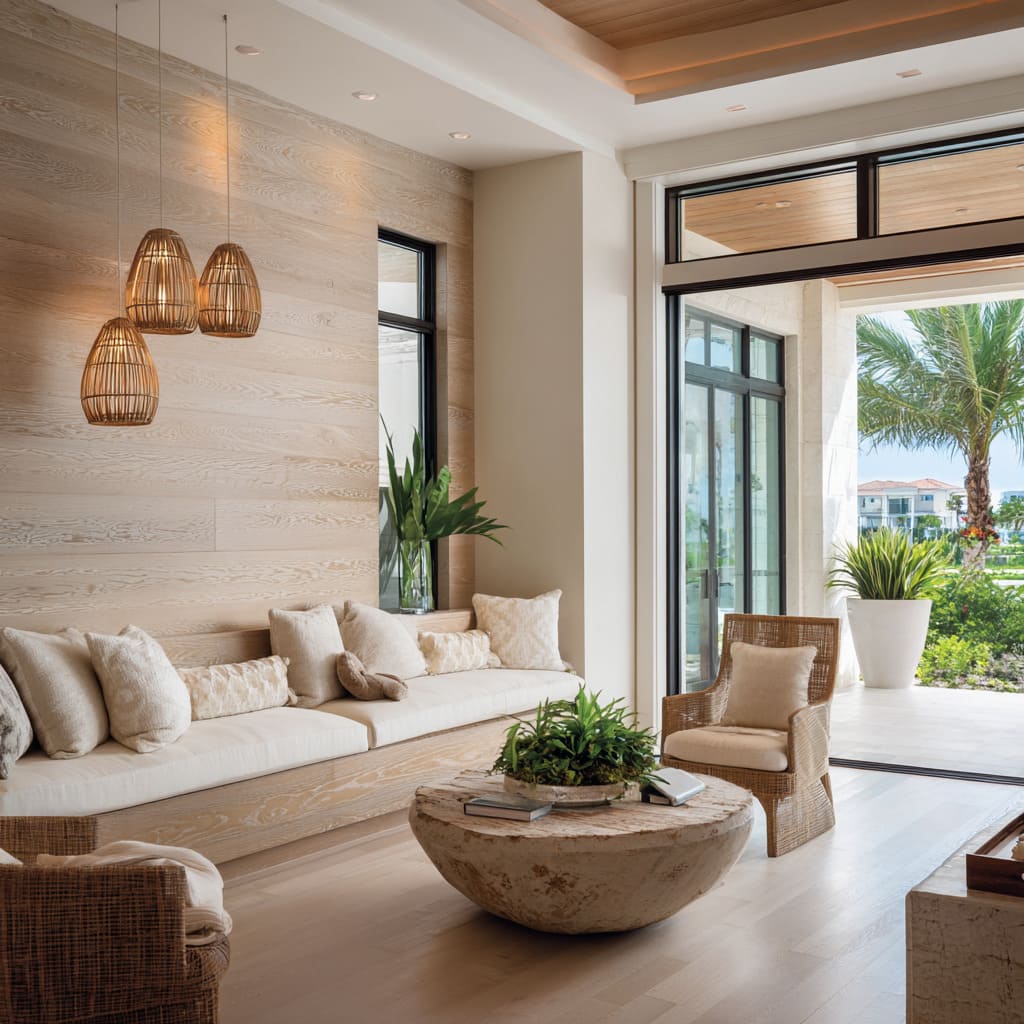
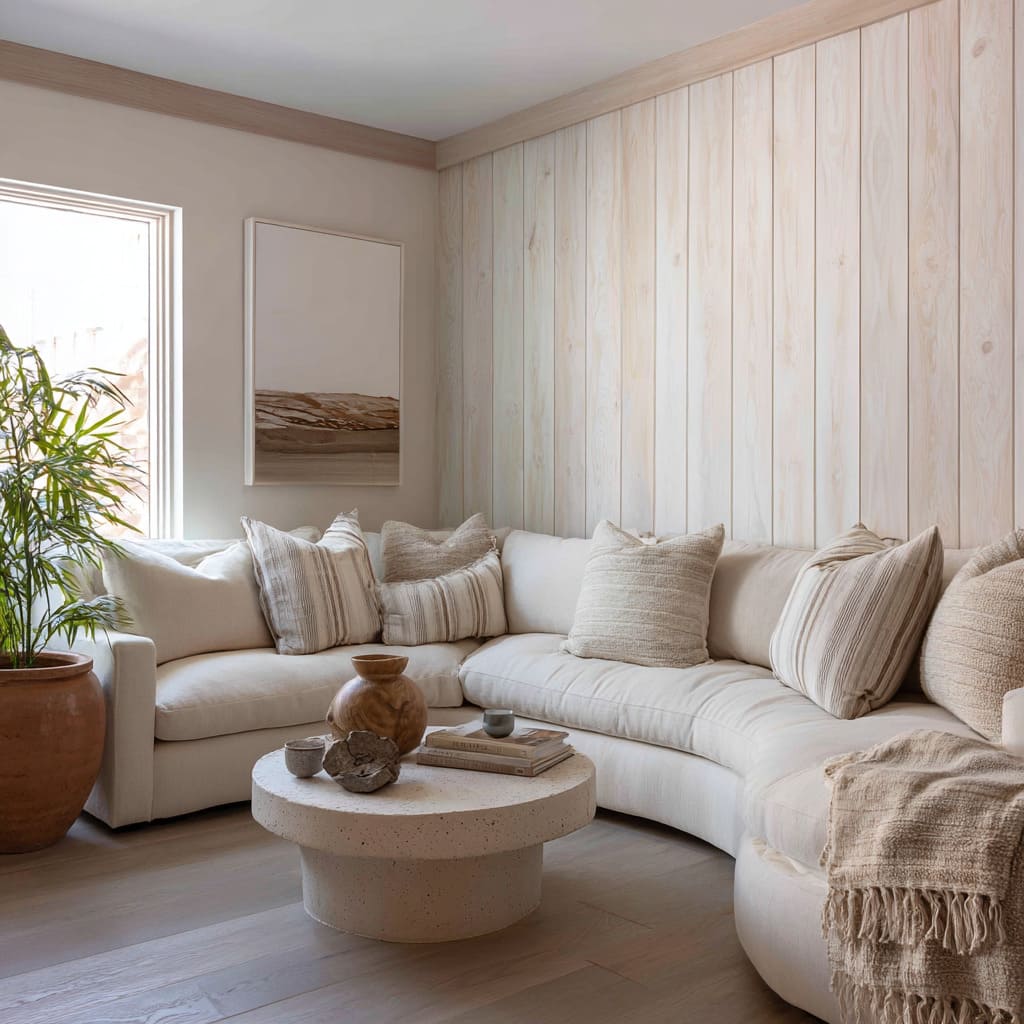
Long horizontal planks or bands establish a mood that feels wider, softer, and grounded. This method appears in relaxed interiors where the panel acts like a wooden horizon behind the seating.
The boards frequently carry pale, washed grain that shifts gently, giving the wall a soft sense of drift. In some interiors, horizontal lines extend into integrated benches or low ledges, forming a continuous architectural unit.
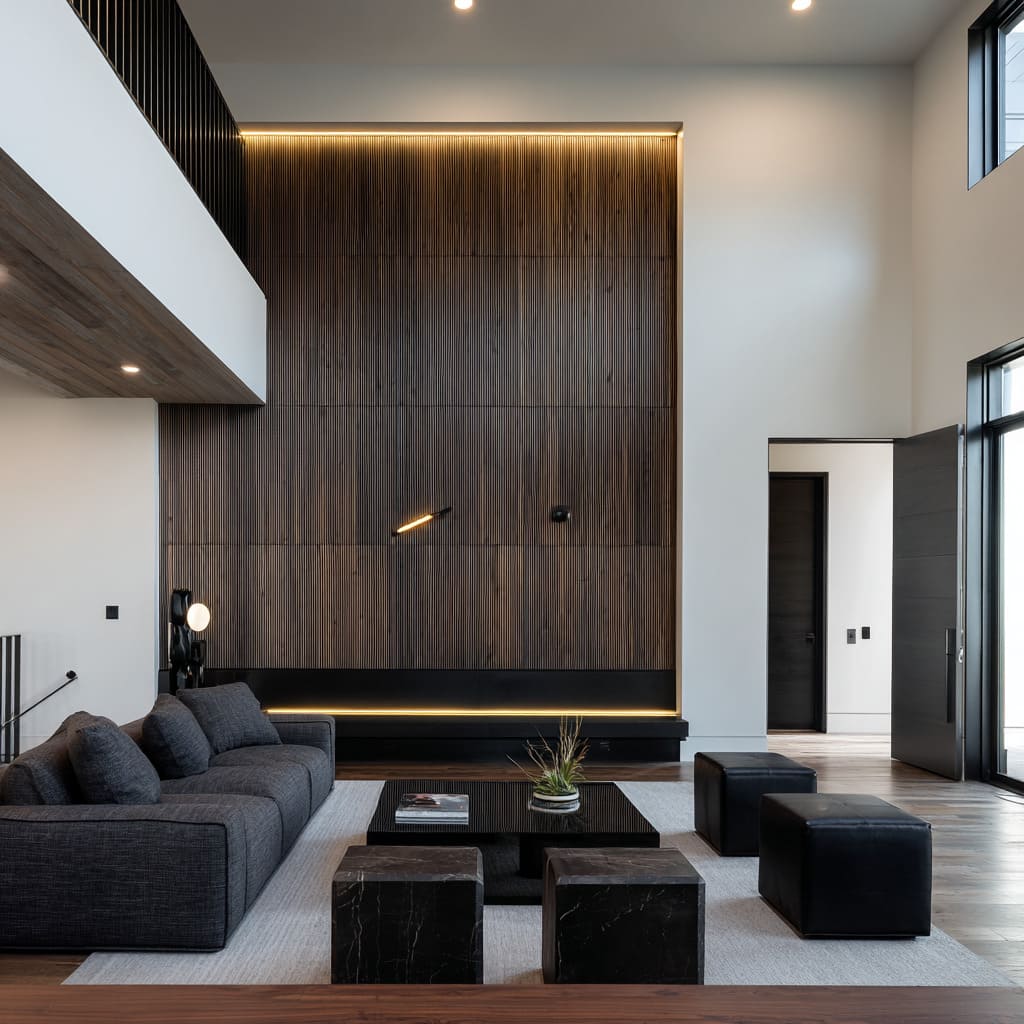
The combination avoids visual heaviness because the pale wood lifts the wall visually while the seating-line anchors it. In coastal-inspired settings or calm garden-facing spaces, these panels work with natural light in a quiet partnership: sunlight brushes across the planks and reveals every grain mark, making the entire wall feel alive.
Such walls form an ideal foundation for earthy ceramics, woven stools, soft upholstery, and greenery. The controlled horizontal stretch merges atmosphere with structure, tying furniture and accessories into one steady visual movement without any need for contrast or ornament.
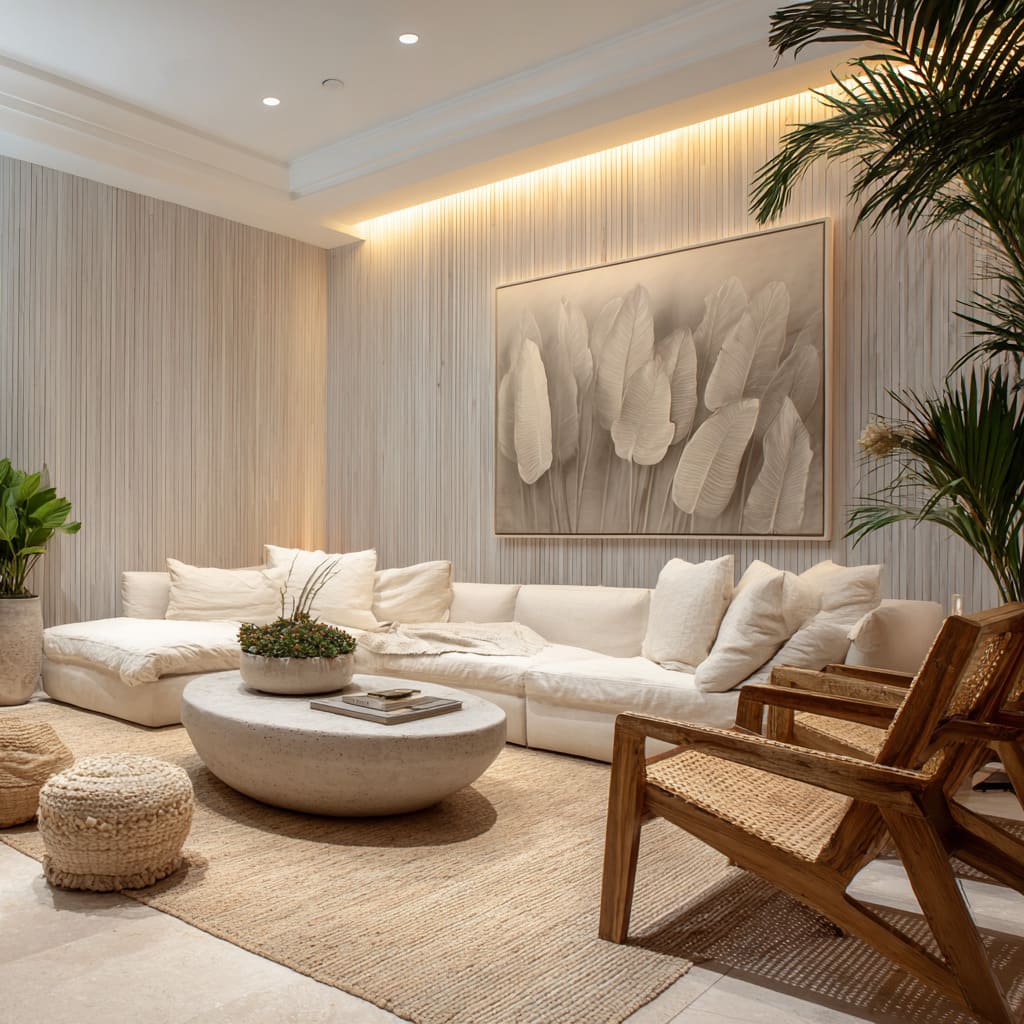
Light as a Material: How Glow and Shadow Shape the Wall
In contemporary interior designs, the glow around the panel often has as much importance as the panel itself. Designers treat light like a second surface—one that outlines the main material, underscores edges, and grazes texture.
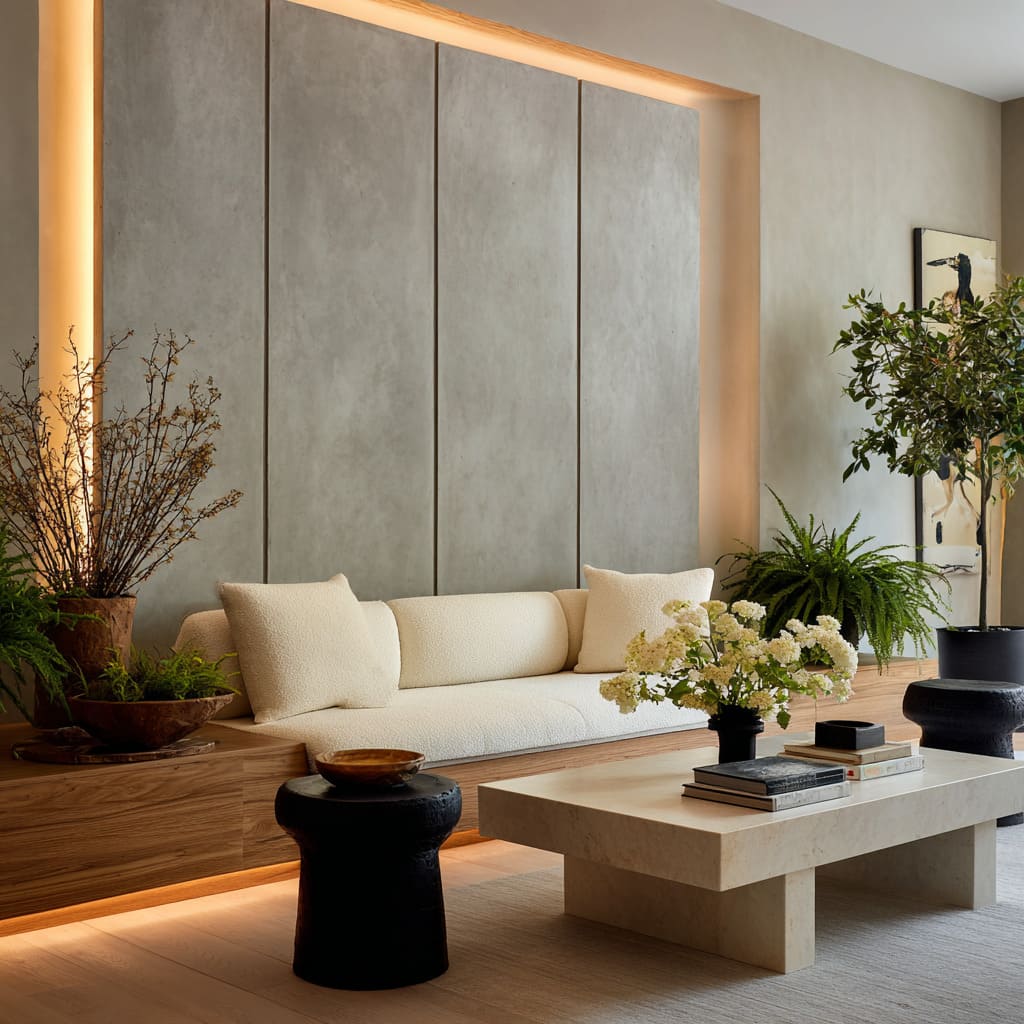
A common pattern is the use of top-edge lighting that brushes down ribbed surfaces, letting vertical shadows deepen as the day turns into evening. Another strategy is bottom-edge lighting, especially under built-in benches or below concrete slabs, creating a gentle sense of lift.
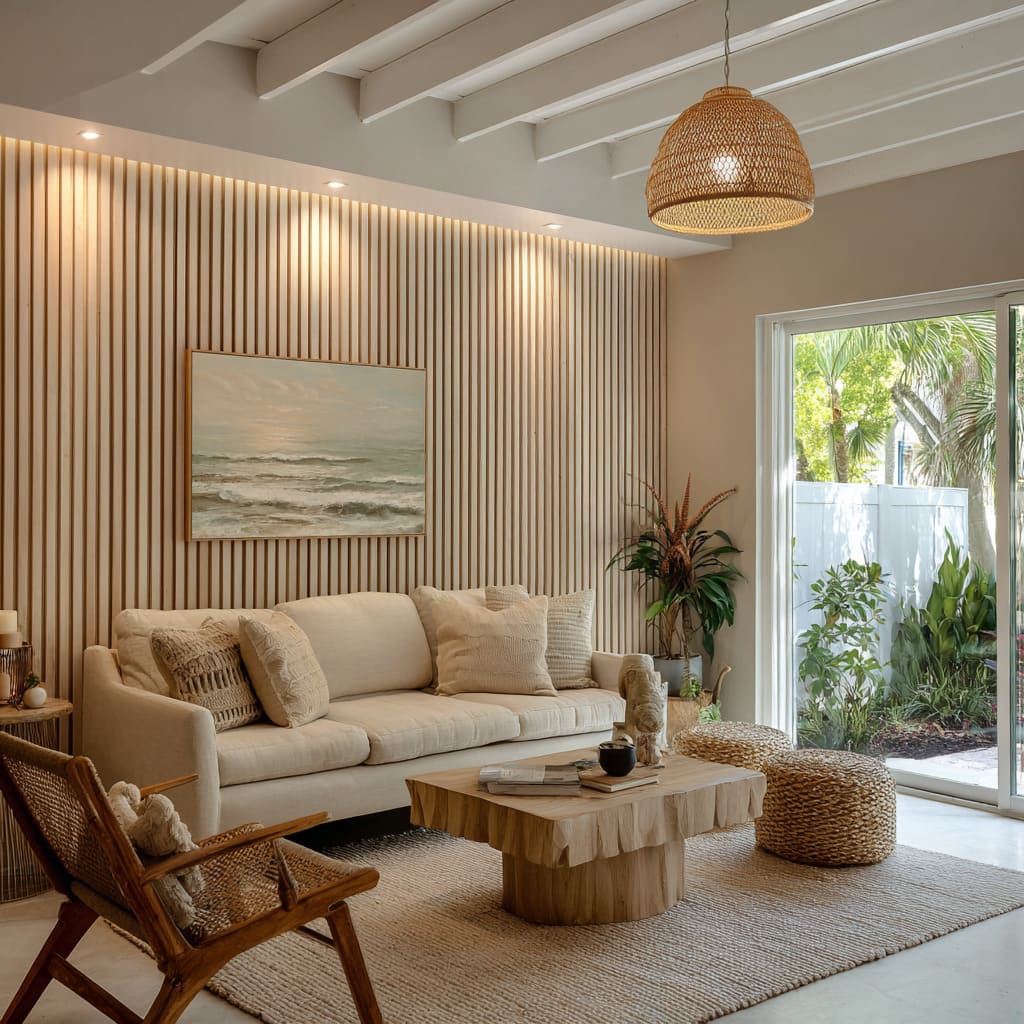
Even in darker settings, small brass points or warm sconces add subtle shimmer, softening structured walls. Many interiors rely on selective lighting: only certain zones are lit, leaving others in shadow to create depth.
This approach turns the wall into a living surface, shifting in mood without drawing attention to fixtures. When combined with wood grain, woven textures, or concrete hues, the glow shapes the emotional experience.
Distance, angle, and softness of the light all contribute to the wall’s presence in the room.
The Interplay Between Panel and Furniture
The most refined interiors treat the panel wall and the furniture as parts of one composition. A recurring invisible rule is alignment: seams often match cushion divisions, shelves align with console tops, and art centers align with panel joints.
This makes the living room concept feel designed from a single intention. Another frequent gesture is the pairing of strict wall lines with soft or curved seating.
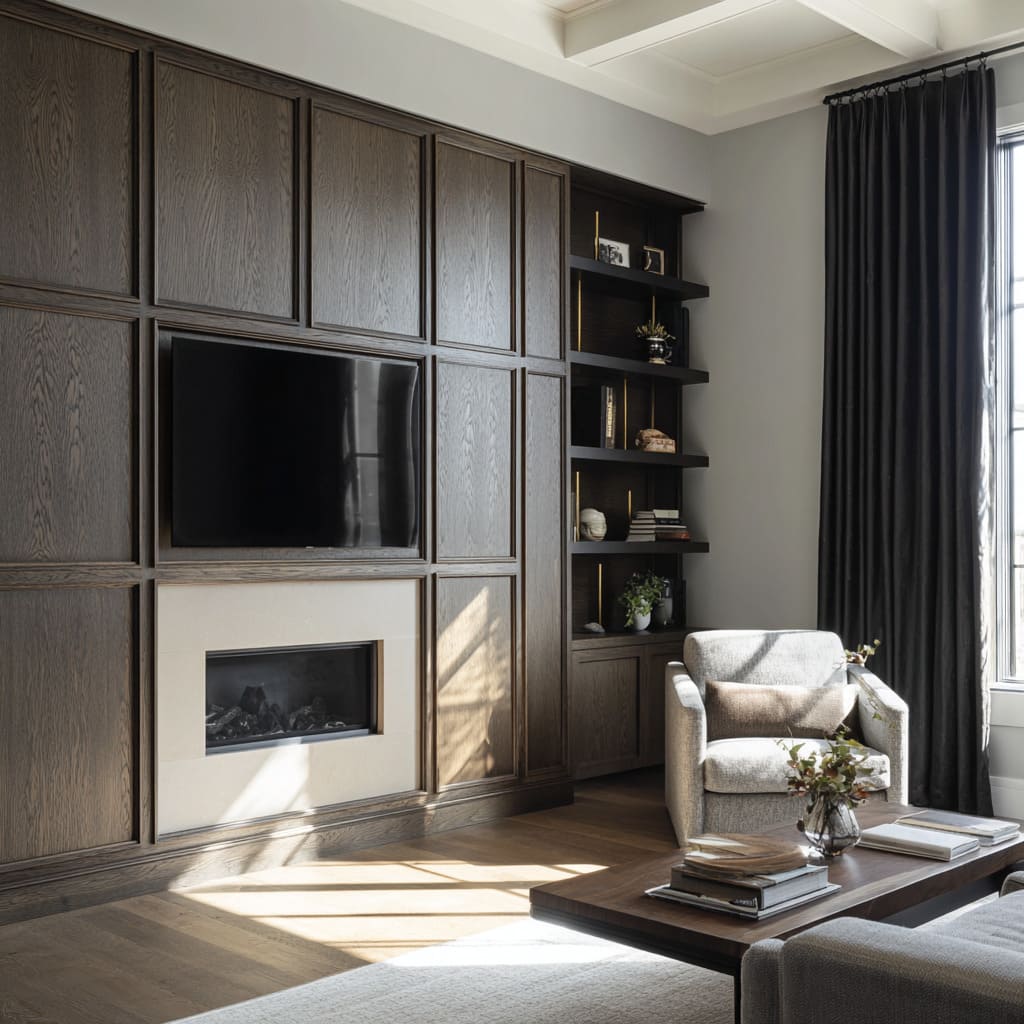
Large curved sofas sit gently in front of linear panels, calming the geometry while keeping the architecture prominent. In contrast, structured furniture with square edges works well in dark paneled spaces where the atmosphere leans moody and compact.
A common method is echoing the wall texture in a smaller object—a ribbed coffee table mirroring battens, a woven basket repeating cane squares, or a ceramic vase reflecting curved plaster. These echoes create visual harmony.
The full effect is a room where furniture and wall are not separate events but one interwoven scene.
The Soft Power of Natural Textures
Decorative panel surfaces frequently take their strength from subtle texture rather than color. Light oak, pale ash, bleached pine, and sandy woods shape calm spaces.
In deeper atmospheres, smoked or dark brown timbers deliver richness while still allowing grain movement to be visible. Some interiors use woven textures—cane, natural fibers, or mixed weaves—to pull warmth into the room while keeping a consistent rhythm.
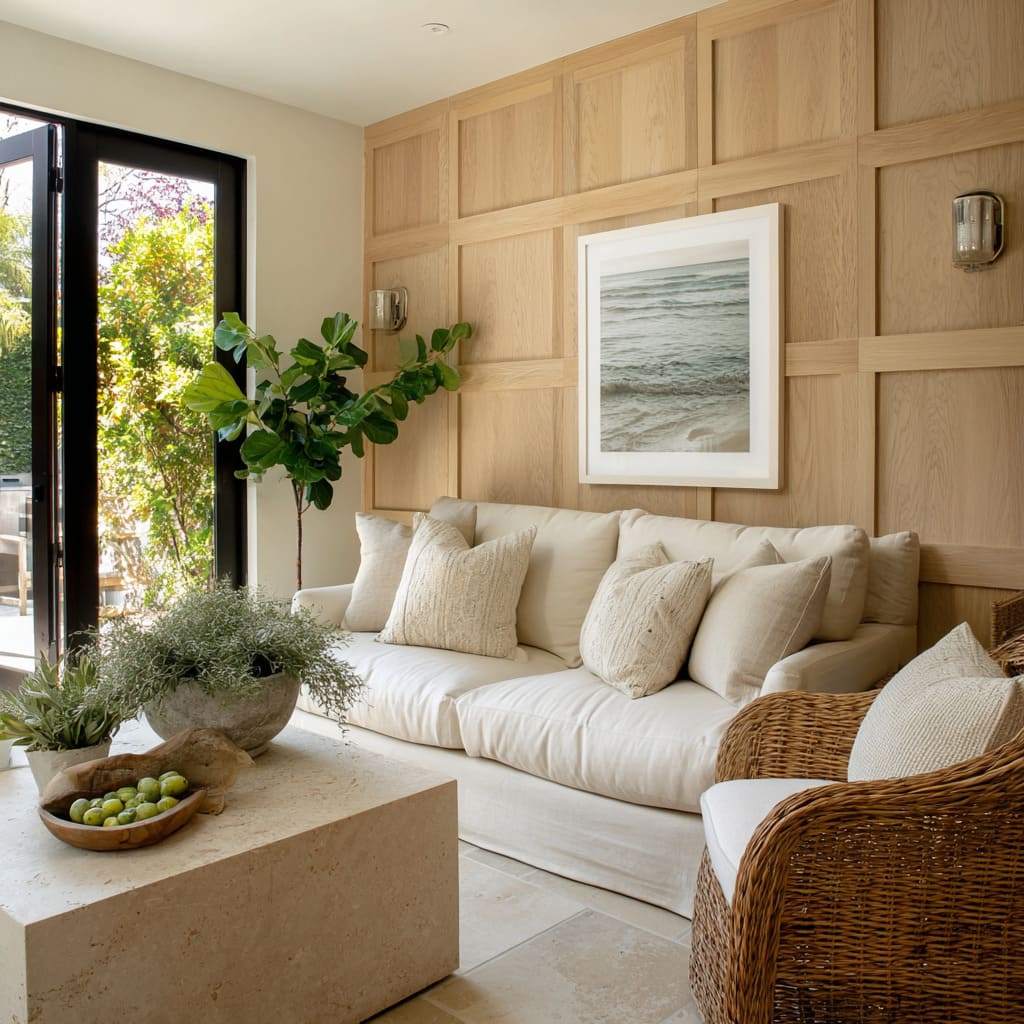
The varied patterns at close range add depth to the larger repetitive structure. Concrete-like slabs or cement surfaces appear in minimalist interiors where the cool tone contrasts with warm lighting and wood elements.
Despite their material differences, all textures share an important trait: the need for consistency. Tones, grain direction, and weave density stay steady across the wall so the room feels composed.
Natural texture becomes the main visual language, forming a grounded environment that pairs well with soft fabrics, pottery, and plant silhouettes.
Edge Treatments and Transitions That Define Mood
Panel walls reveal some of their most creative ideas in the treatment of corners, borders, and transitions. In some interiors, panels wrap smoothly into ceiling drops, shaping a subtle canopy effect that feels protective without closing the room.
In others, panels stop just before a window or opening, leaving a thin white strip as an intentional “breathing line. ” This small gap cools the rhythm and gives the eye a resting pause.
Some designs use a curved corner as a transition from fluted texture to plain plaster, turning the curve itself into a gentle architectural feature. Doors, too, behave differently in panel-heavy spaces: some openings appear like clean slices through a solid block, making the wall feel continuous.
Elsewhere, recessed niches soften the visual plane by breaking the verticals or horizontals. Each transition—soft stop, wrap-around, recessed drop—gives the wall a specific character.
The entire room mood often depends on how the panel meets the boundary.
Multi-Layer Composition: Display, Storage, and Texture Together
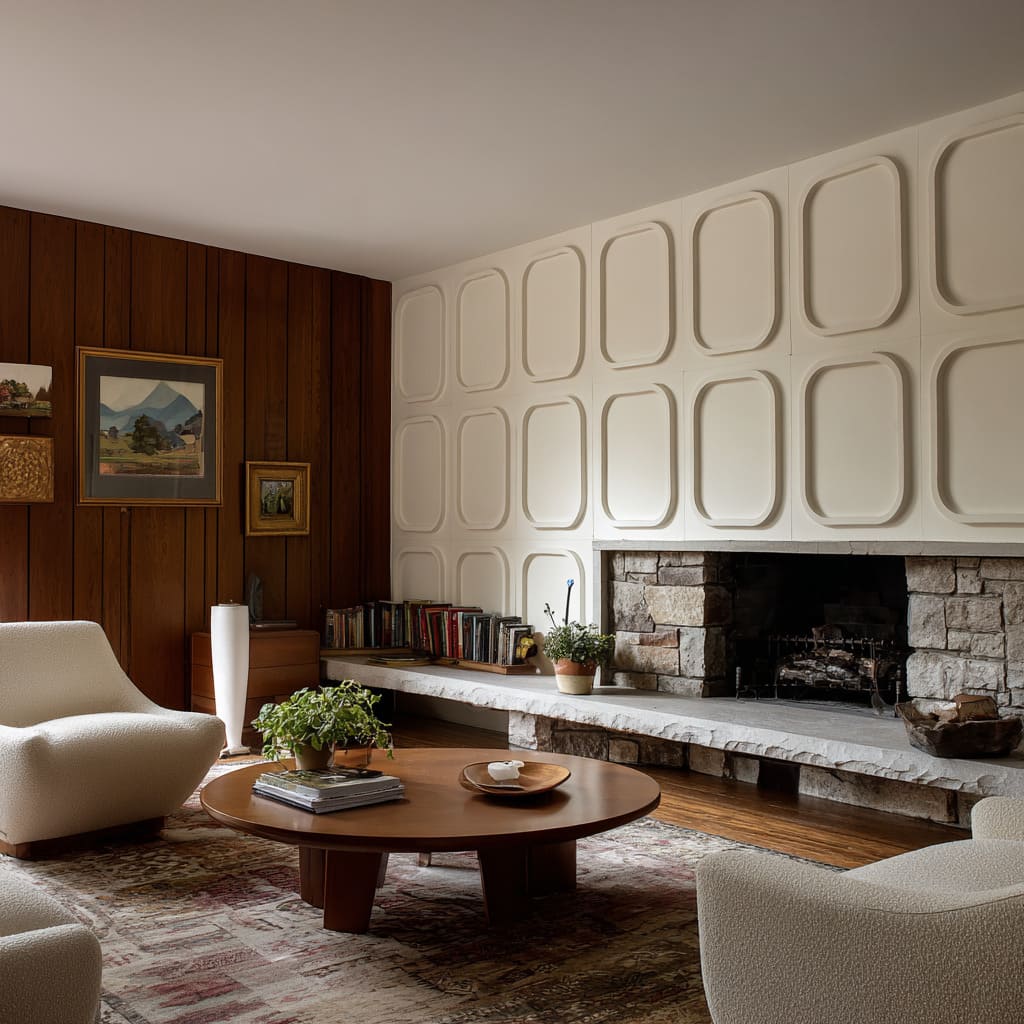
Many living room designs combine panels with floating shelves, built-in fireplaces, display units, or recessed artwork fields. These multi-layer concepts turn the wall into a complete composition instead of a single surface.
Shelves often stretch across the wall in long, uninterrupted strokes that counterbalance vertical battens or grids. Their placement is carefully measured so displayed objects appear to “breathe” within their zones.
In some interiors, brass insets or slim metal lines run between panel segments, giving a soft metallic sparkle that pairs with ceramics and sculptural lamps.
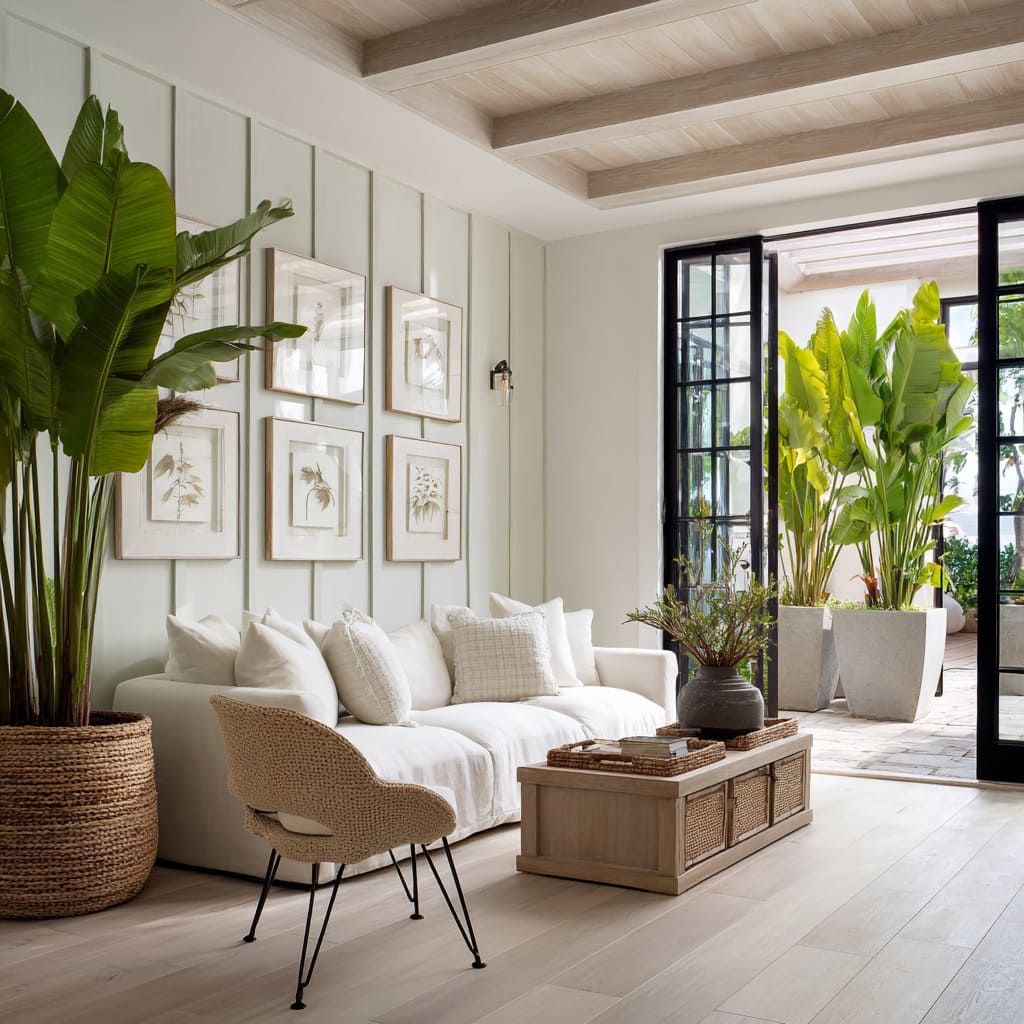
Fireplaces integrated into panel systems gain a quiet presence by sitting inside stone rectangles or framed volumes. In woven-grid designs, botanical art rests inside panel squares rather than overlapping frame lines, making the whole wall act like a curated arrangement.
These multi-layer systems illustrate how panelling ideas can combine texture, storage, and sculptural objects without ever feeling cluttered.
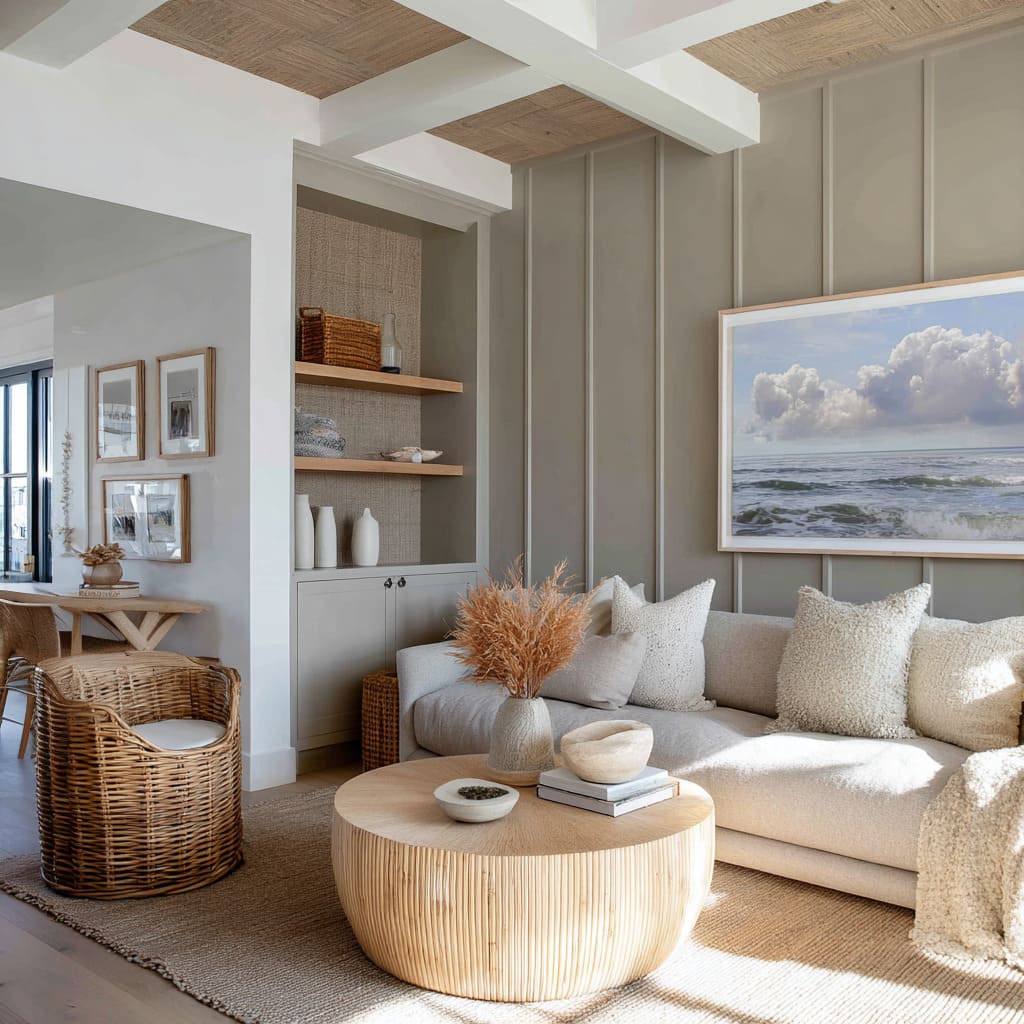
Atmospheres Defined by Material and Rhythm
Decorative wall concepts fall naturally into several atmosphere families.
Calm Natural Homes
Light wood, woven cane, pale plaster, botanical art, and soft curves create warm spaces that feel connected to nature. The panel rhythm stays subtle, and the furniture stays tactile.
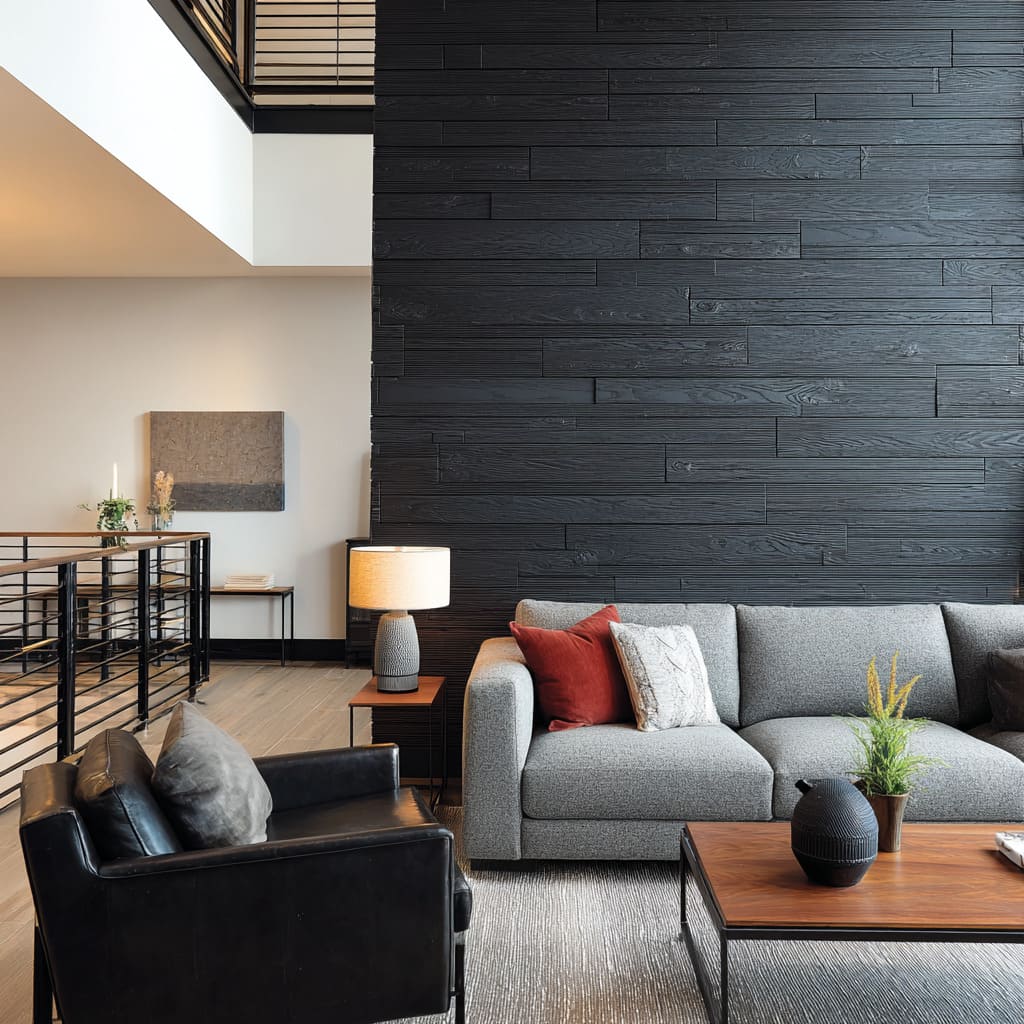
Dark Lounge Interiors
Structured grids, charcoal panels, brass points, dim glows, and polished stone form rooms with a rich, evening mood. The lines are pronounced but not loud, and the furnishings are low and weighty.
Minimal Architectural Rooms
Concrete-like slabs, halo lighting, double-height slats, and simple sculptural furniture define interiors where the wall behaves almost like a gallery piece. The textures are fine, the lighting is controlled, and color stays muted.
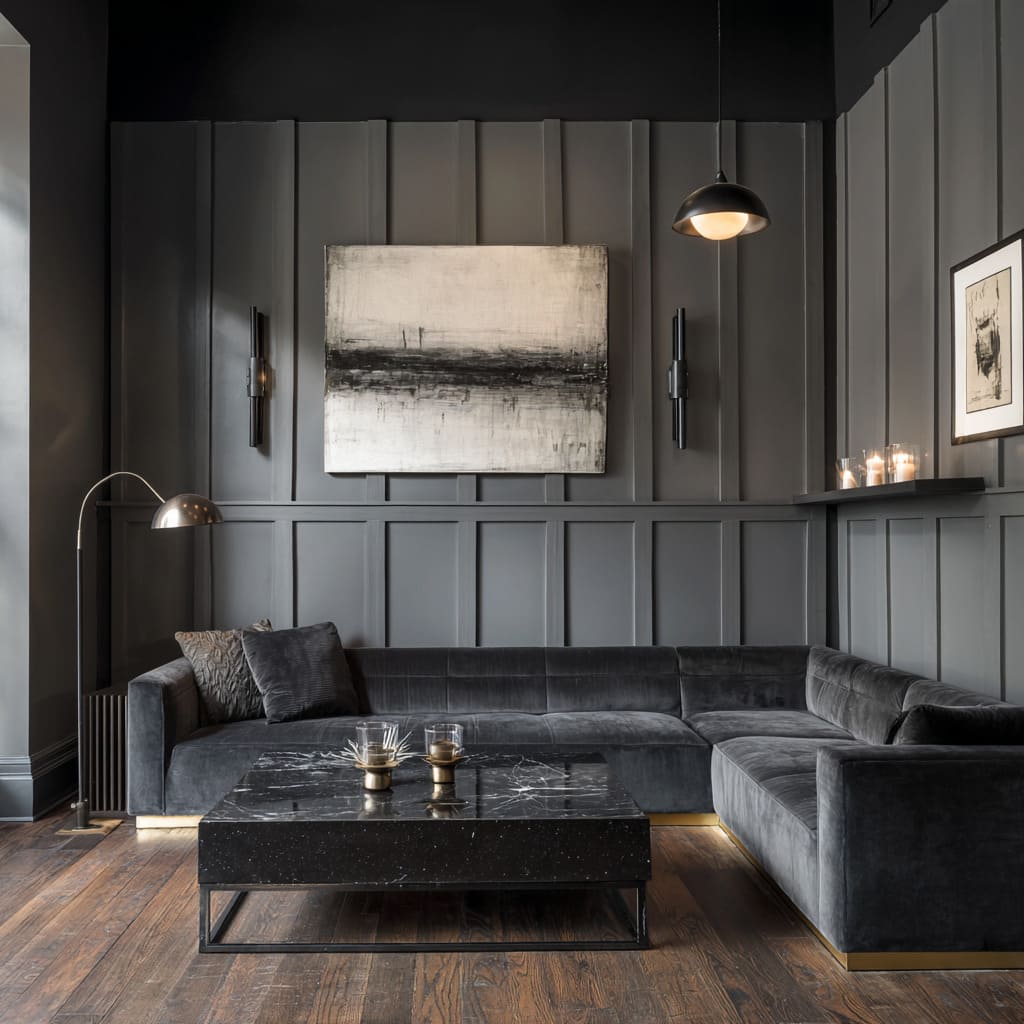
Across all types, the uniting principle is rhythm: repeating lines or shapes create emotional steadiness. The materials then adjust the mood—light woods softening the space, dark grains adding intimacy, woven elements giving airiness, and stone adding gravity.
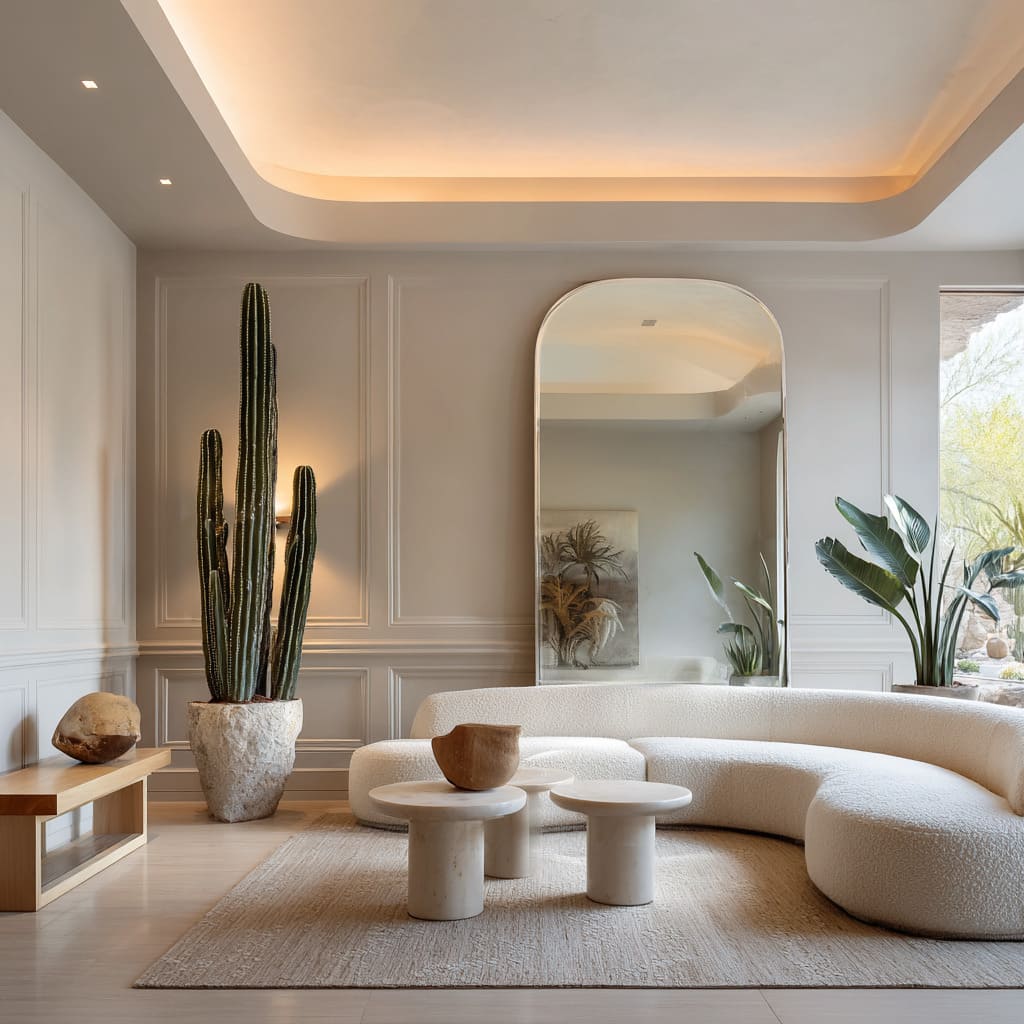
Curves, Soft Lines, and the Gentle Counterpoint
A significant theme in many interiors is the way curved forms counter straight panel lines. Fluted walls meet curved corners that glow softly under indirect light.
Large sofas with rounded edges settle in front of rigid grids, making the room feel more welcoming. Round stone tables, arched mirrors, basket-shaped pendants, and smooth ceramic vases all work as visual counterpoints to the discipline of grids and battens.
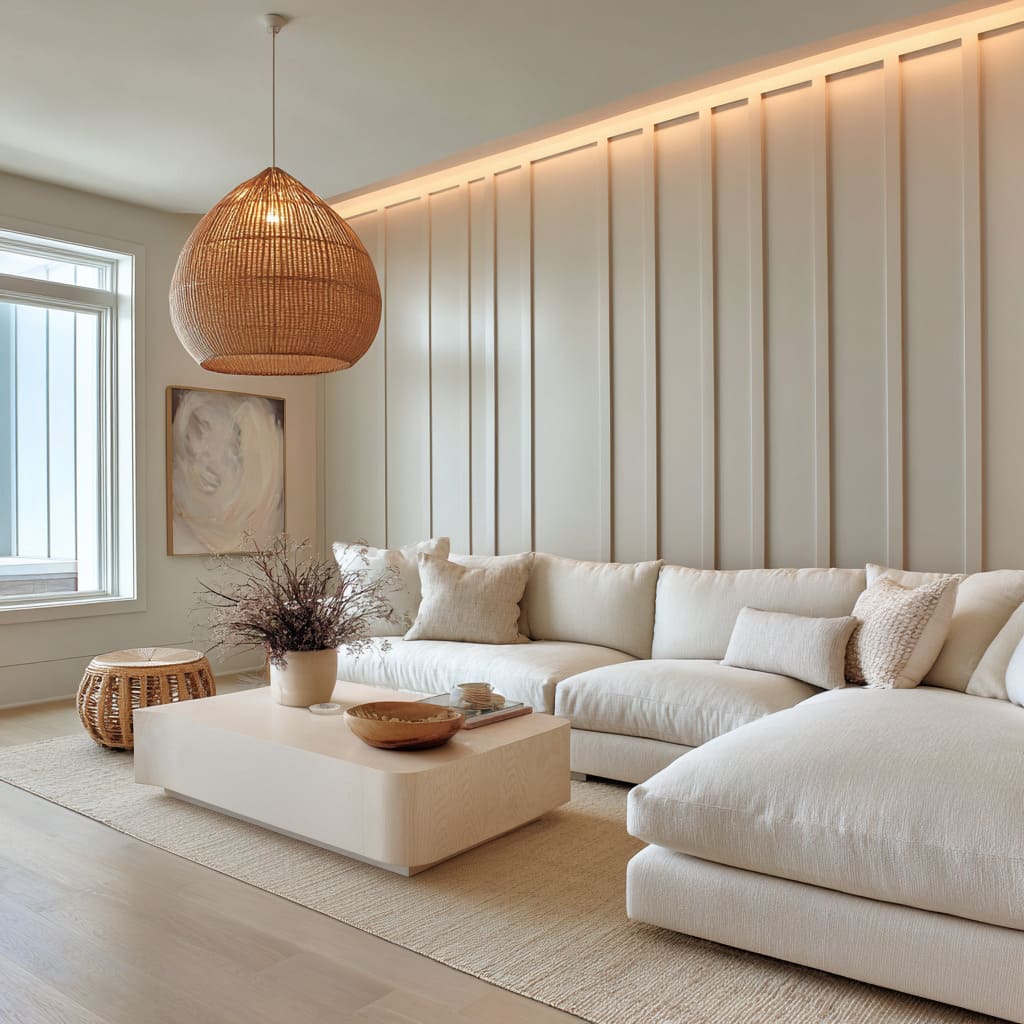
These curved objects behave almost like emotional elements—small gestures that soften the architectural discipline. Plant silhouettes add another layer of movement.
Tall leaves mirror vertical lines; wide leaves relax them. When these contrasts work together, the room gains balance.
The interplay of straight and curved shapes is one of the key interior wall cladding ideas used to bring warmth into structured layouts.
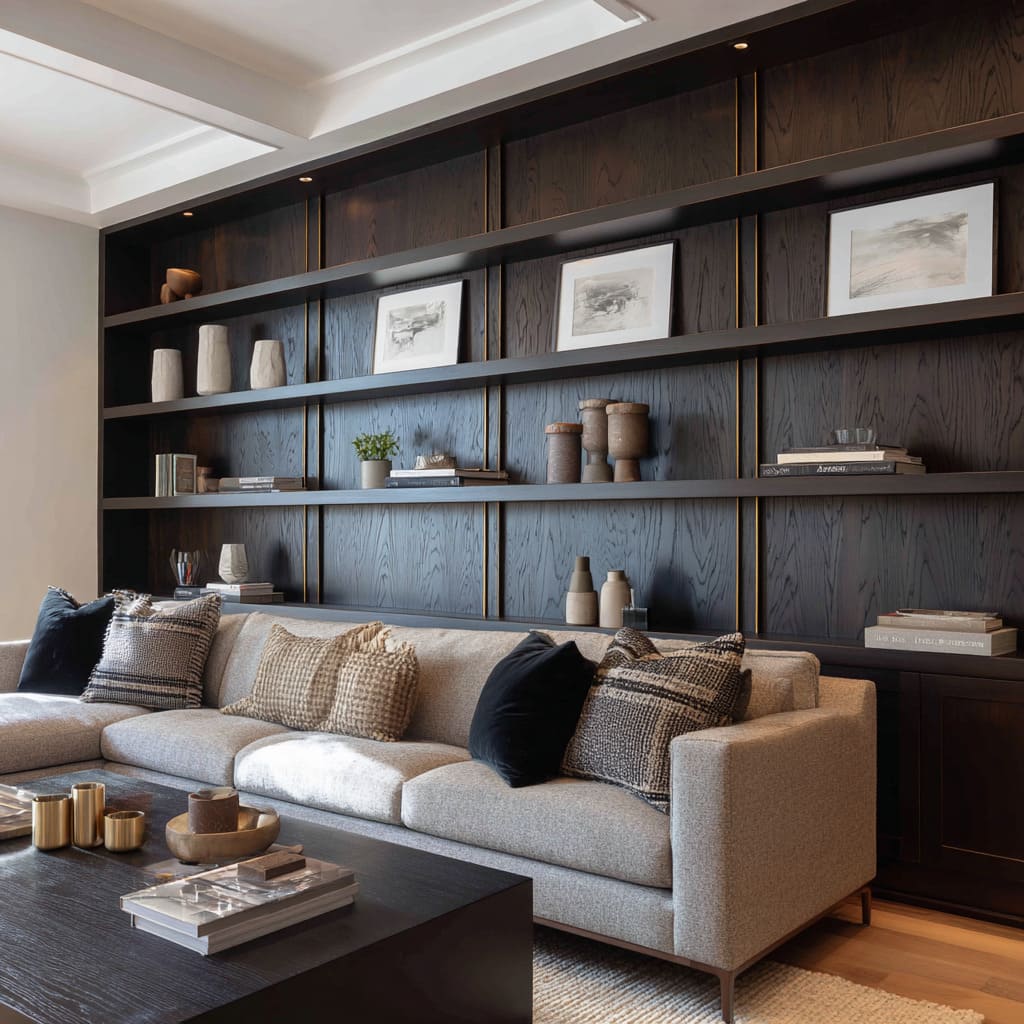
Layered Light and Surfaces That Change Through the Day
Soft glows, ceiling washes, floating bench lights, and angled spotlights allow panel walls to shift personality as daylight changes. Many walls are intentionally monochrome so the light—not pigment—creates the variation.
In the morning, grazing sun reveals grain patterns; by afternoon, the wall appears smoother; at night, warm artificial light reveals ribbing, seams, and woven textures more strongly.
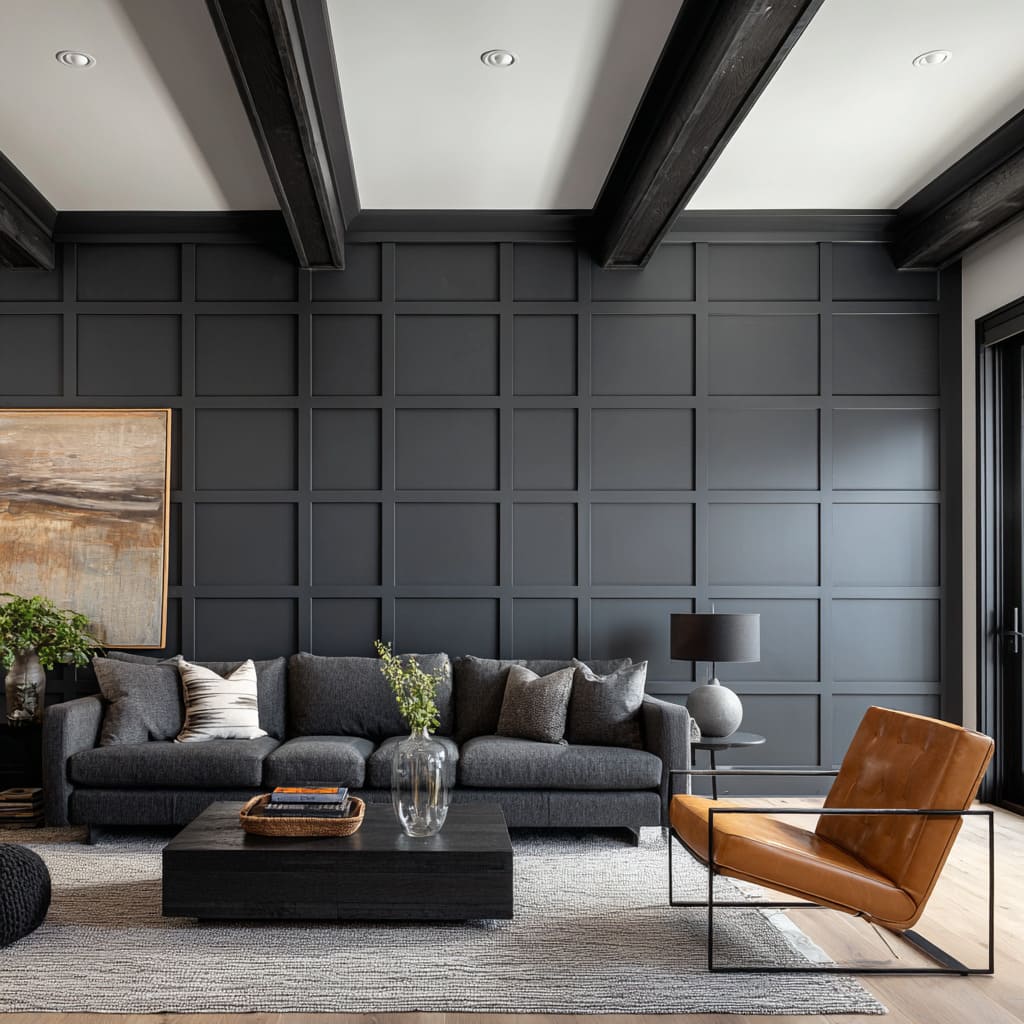
This variability is one reason panel walls feel alive. Even dark, matte surfaces gain subtle motion when light catches a raised edge or brushed texture.
Halo lighting around concrete slabs or cement-like surfaces transforms cool material into something welcoming.
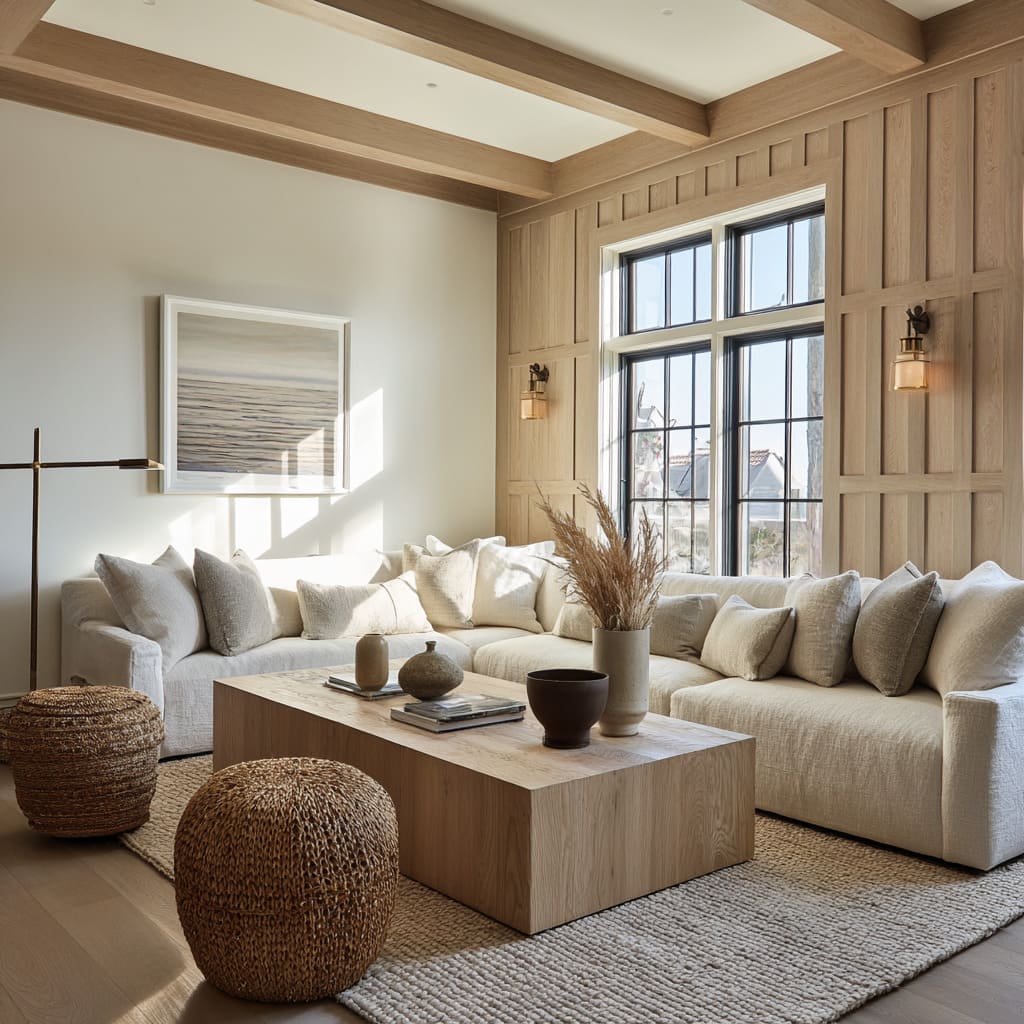
Floating benches with hidden glow lines feel lighter than their mass suggests. This shifting softness gives interiors emotional depth, making modern wall paneling ideas centered on rhythm, tone, and shadow rather than bright color.
The Spectrum of Panel Expressions
- Pale oak grids with gentle sandy tones
- Narrow flutes with soft grazing light
- Dark grids accented with small brass points
- Cane-filled frames that introduce natural fiber
- Concrete slabs framed in warm halo glows
- Horizontal planks paired with built-in benches
- Deep timber walls treated like art installations
- Soft molding fields paired with curved mirrors
- Vertical planks that blend into ceiling drops
- Panel-niche combinations mixing linear and woven textures
Each approach carries its own character, yet the shared principle is clarity: the panel defines the room’s structure, the light shapes its mood, and the furniture forms the final layer. Together, they create a visual language where interior wall paneling design ideas transform the living space without relying on heavy decoration.