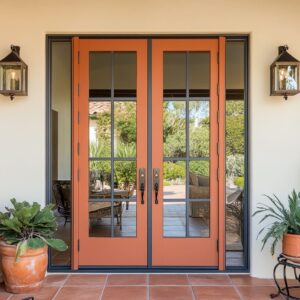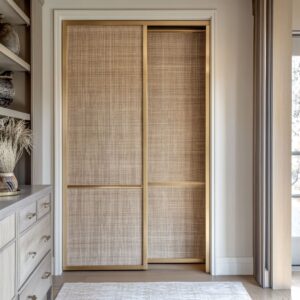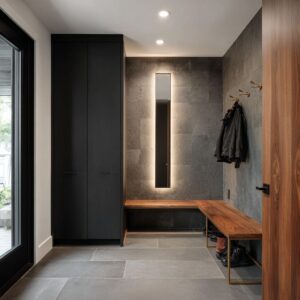
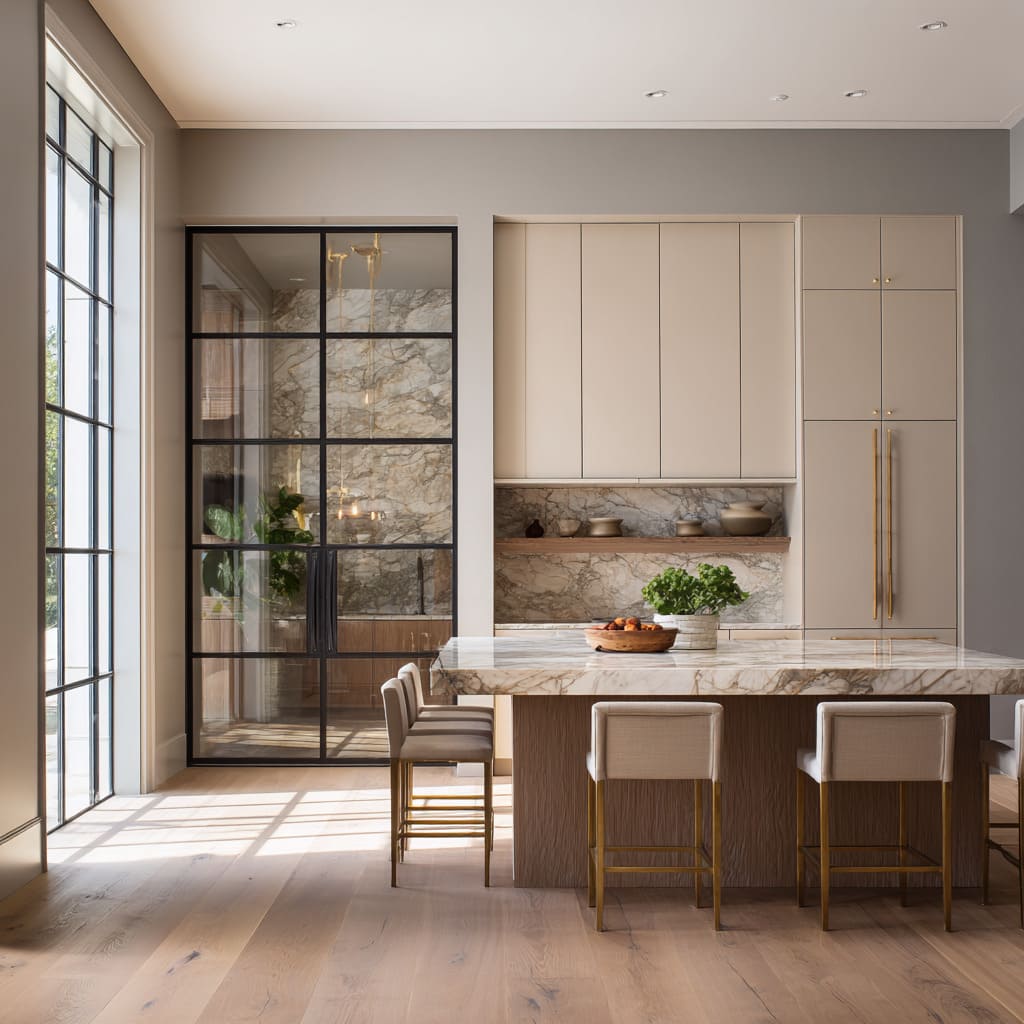
Modern glass door designs often behave like drawn architectural layers rather than simple connectors between rooms. Their presence is felt even when closed, because the door plane actively reshapes how space is read.
Instead of acting as a pause or interruption, the glass surface often becomes part of the wall composition itself, turning circulation points into moments of visual control. The most refined design ideas treat glass doors as planes that edit sightlines, regulate visual noise, and choreograph how one zone transitions into another.
The door’s frame, transparency, and proportion work together to establish rhythm and calm, often becoming the quiet backbone of the interior rather than a focal object demanding attention.
This approach explains why many modern designs rely on glass doors to organize rather than divide. By allowing light and partial views to pass through, the door creates a layered spatial reading: foreground, middle ground, and background remain visually connected, yet clearly structured.
This layered effect is especially powerful in open-plan settings where too much openness can feel visually exhausting. A glass door introduces a sense of boundary without weight, shaping space through perception rather than enclosure.
Line Discipline and Visual Rhythm as a Primary Design Strategy
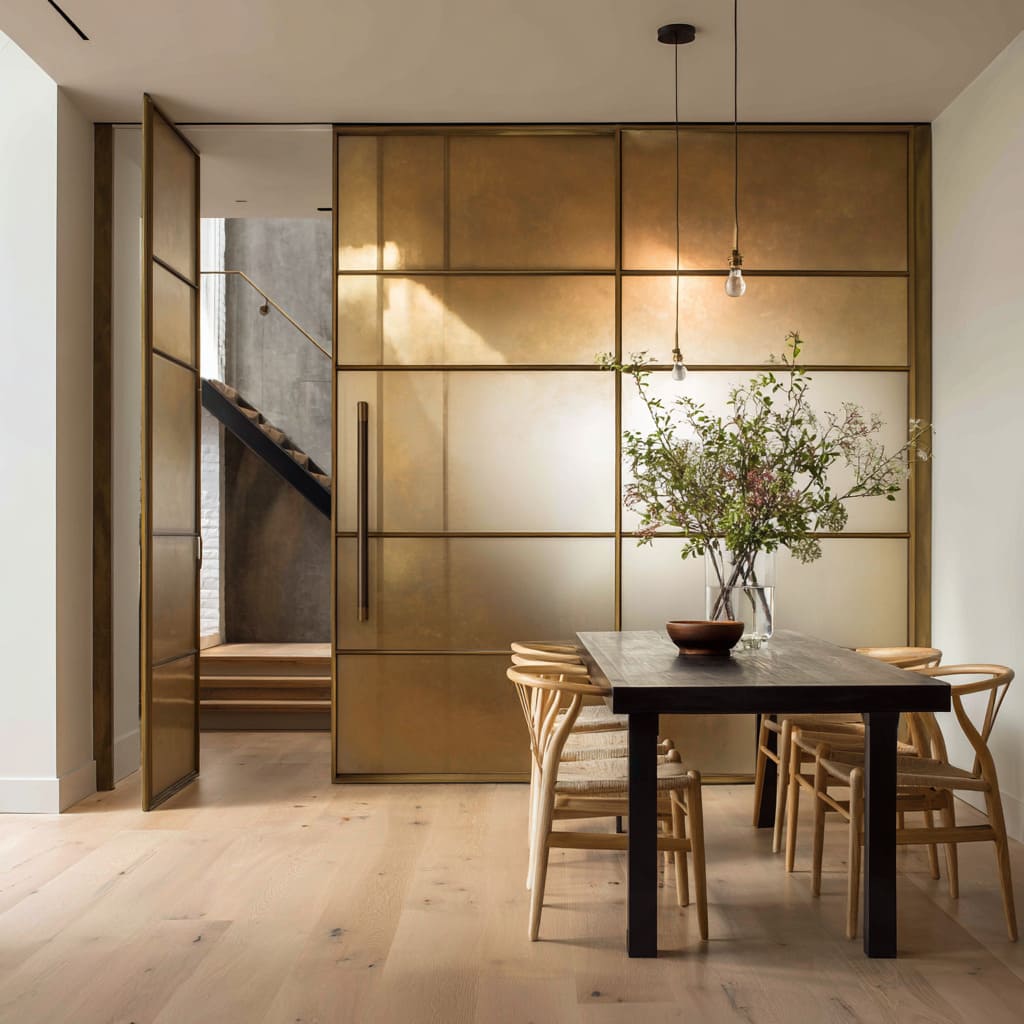
One of the most powerful strategies behind modern glass door compositions is line discipline. Mullions, frames, and divisions often echo existing linear systems within the interior, creating visual coherence that feels almost subconscious.
When vertical door divisions align with window frames, cabinet seams, shelving edges, or even curtain folds, the interior begins to read as one continuous graphic language rather than a collection of unrelated elements.
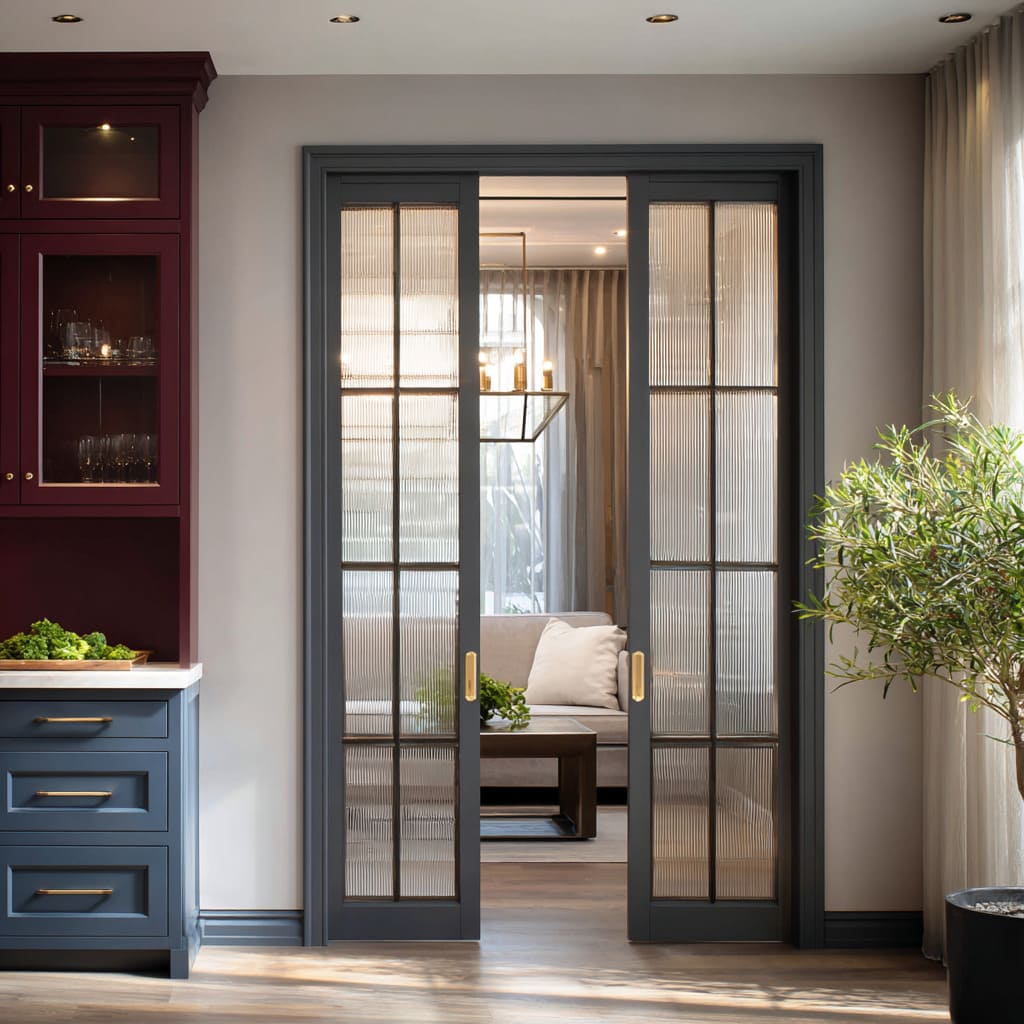
Glass doors frequently operate as a bridge between different line systems:
- Vertical mullions echoing tall cabinetry, shelving uprights, or drapery pleats
- Horizontal rails aligning with ceiling beams, shelf edges, or furniture heights
- Frame thickness matching panel joints, wall reveals, or trim depths
This repetition stabilizes the visual field. The door stops being read as a separate object and instead becomes a translator between architectural and decorative lines.
Even asymmetrical divisions can work when they quietly respond to surrounding proportions, allowing the composition to feel intentional rather than rigid.
Subtle asymmetry as a softening tool
Perfect symmetry can sometimes feel static. Slight shifts in mullion placement or panel sizing introduce a crafted quality that feels more human and spatially responsive, especially in interior designs that balance contemporary clarity with warmth.
Transparency, Blur, and the Editing of Visual Information
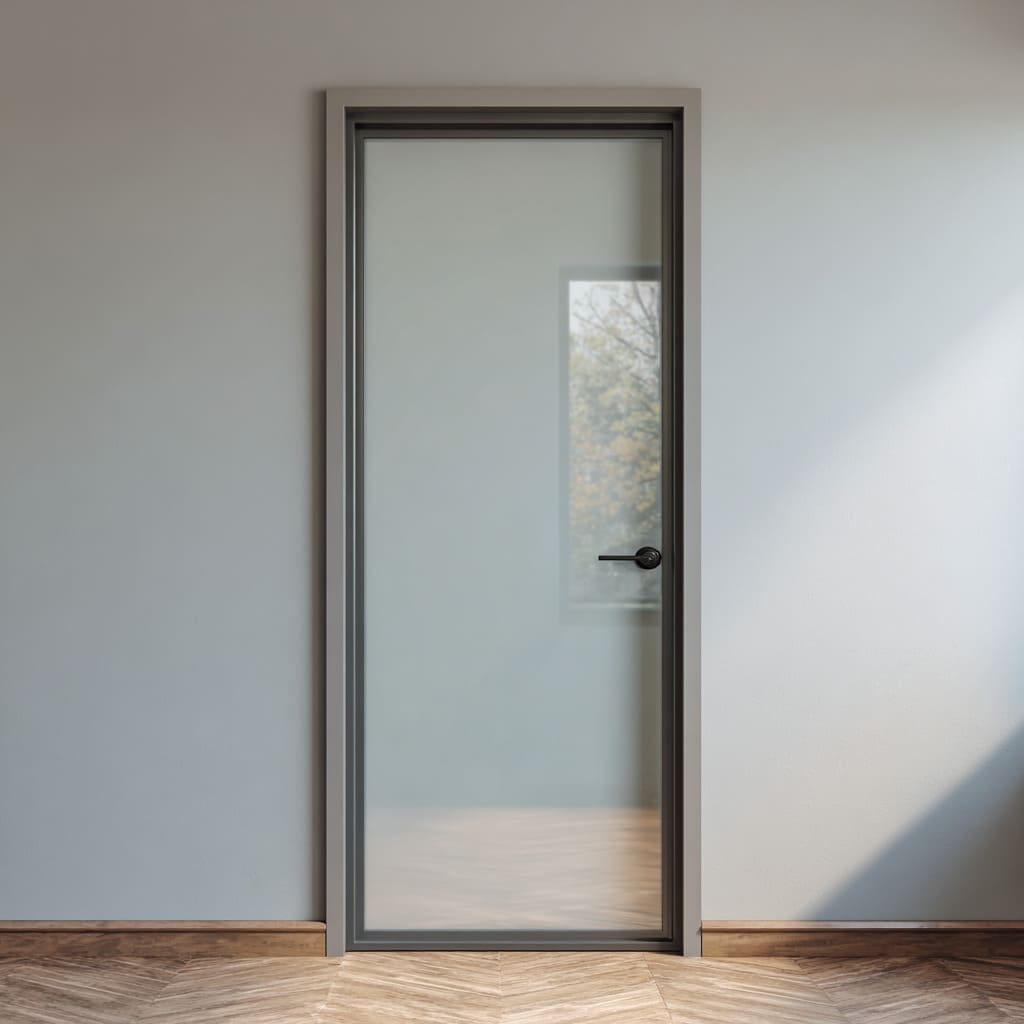
Modern glass doors are rarely about full exposure. Instead, they function as filters, deciding how much information travels from one space to another.
Clear glass, frosted panels, fluted surfaces, or patterned infill are not interchangeable choices; each carries a distinct visual effect that shapes mood.
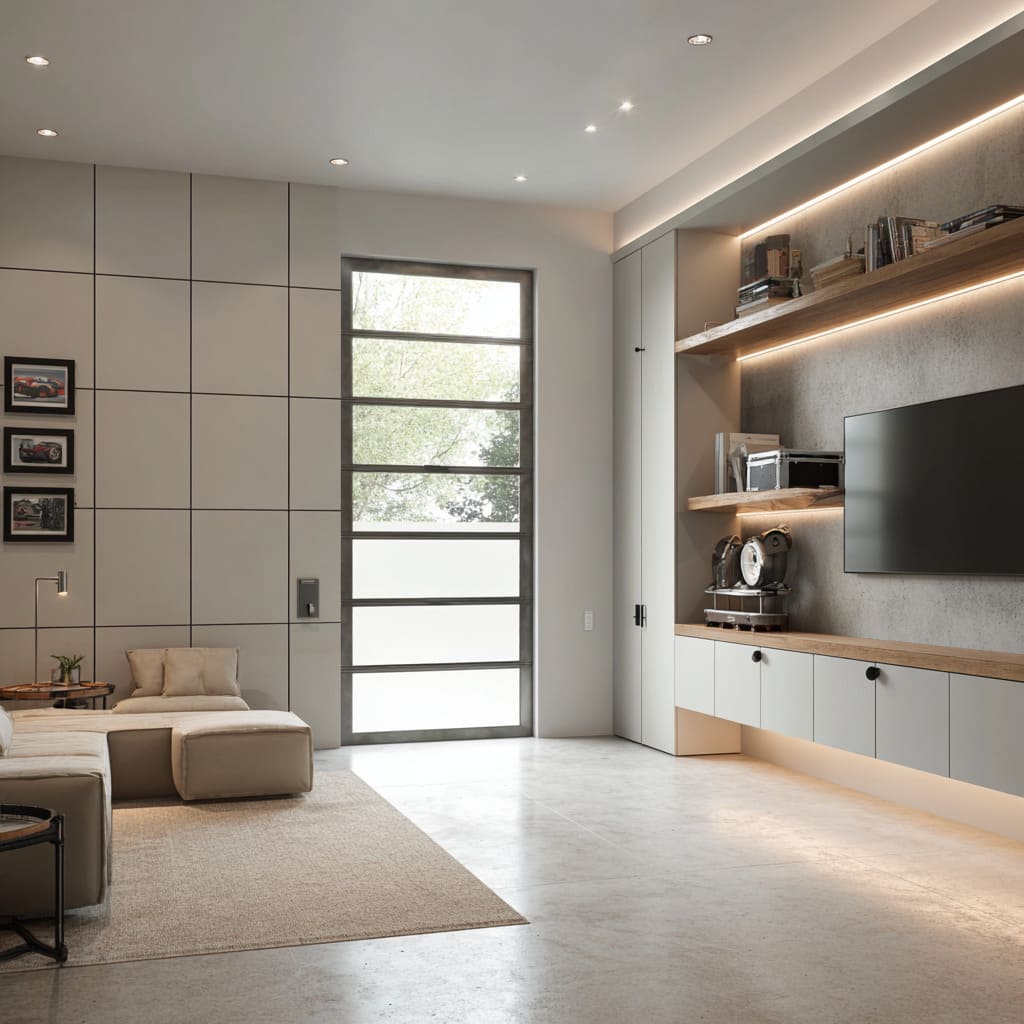
Clear glass transforms the space beyond into a curated backdrop. Objects behind the door begin to behave like part of the front room’s composition, encouraging careful placement and restraint.
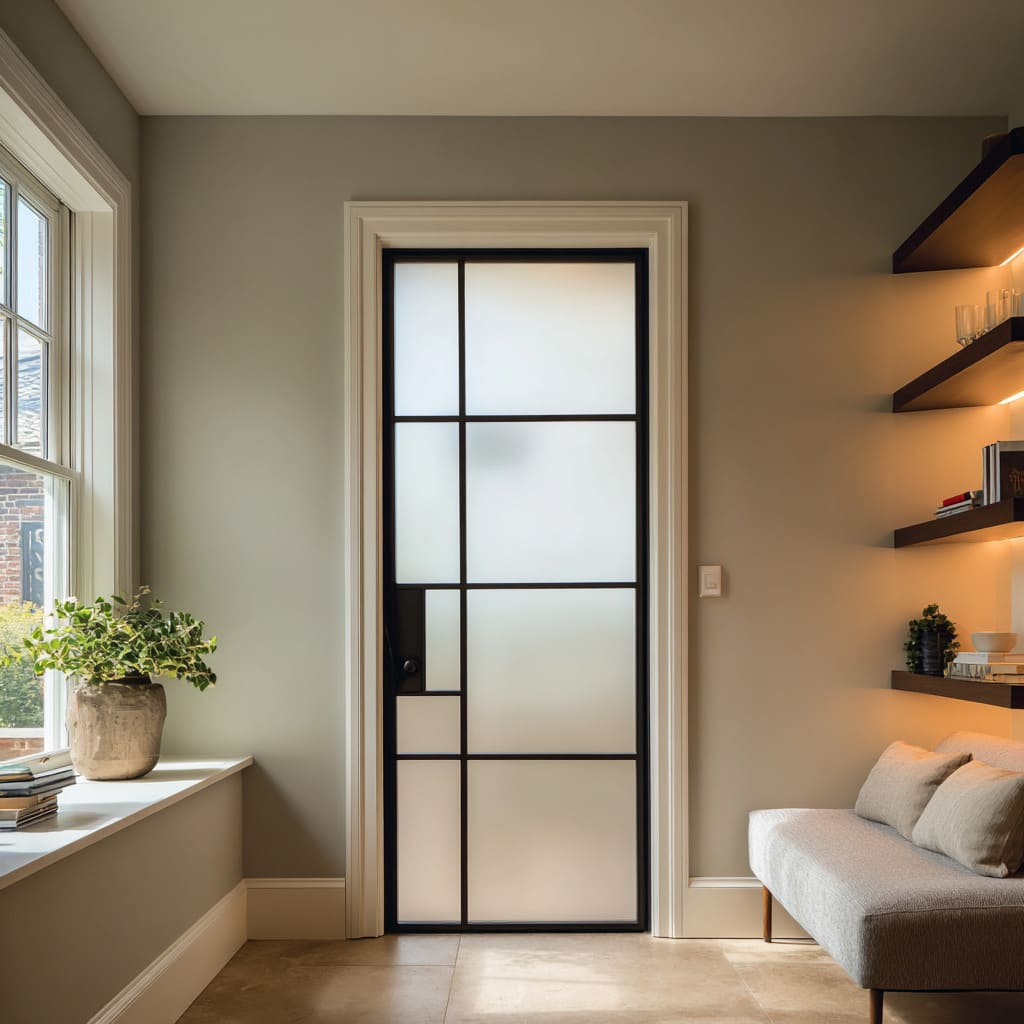
Frosted or translucent surfaces do something different: they dissolve detail while preserving light, allowing brightness to flow without visual distraction. This turns the door into a luminous plane rather than a window.
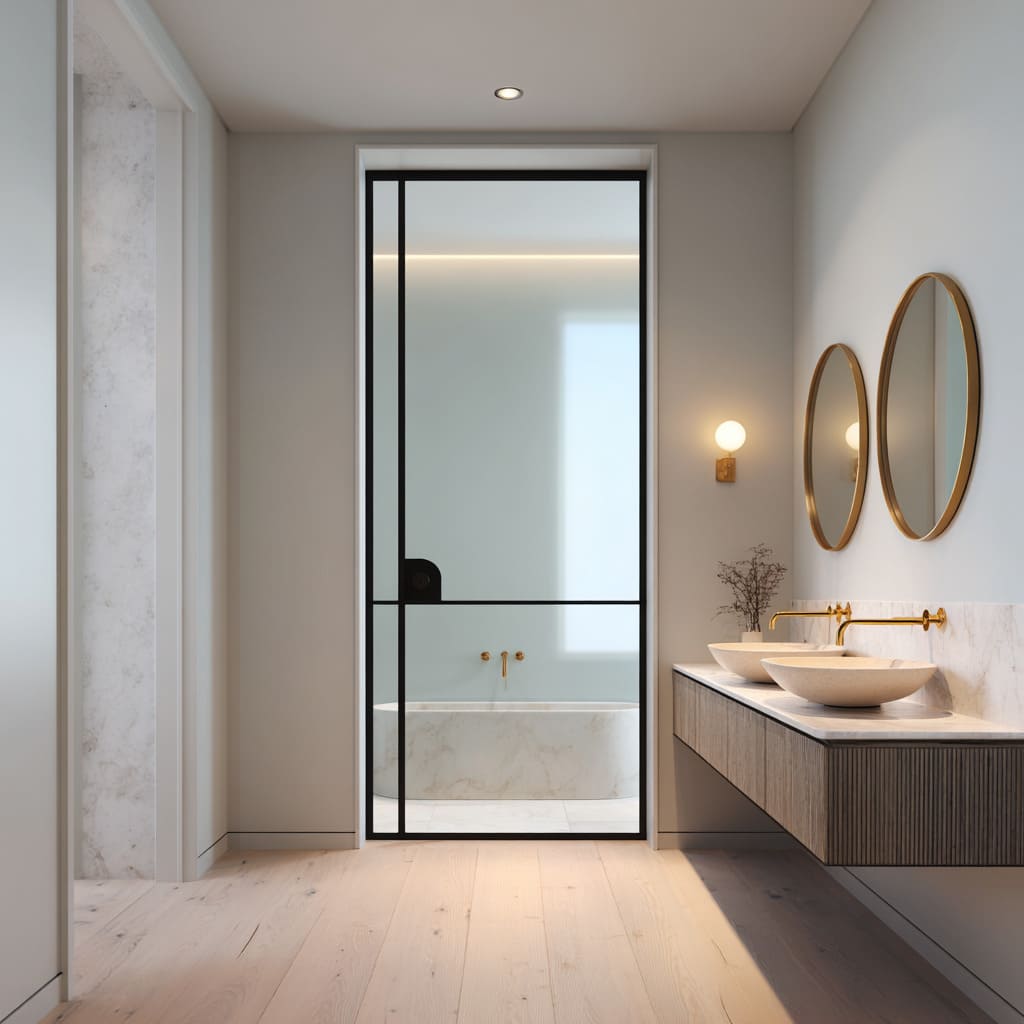
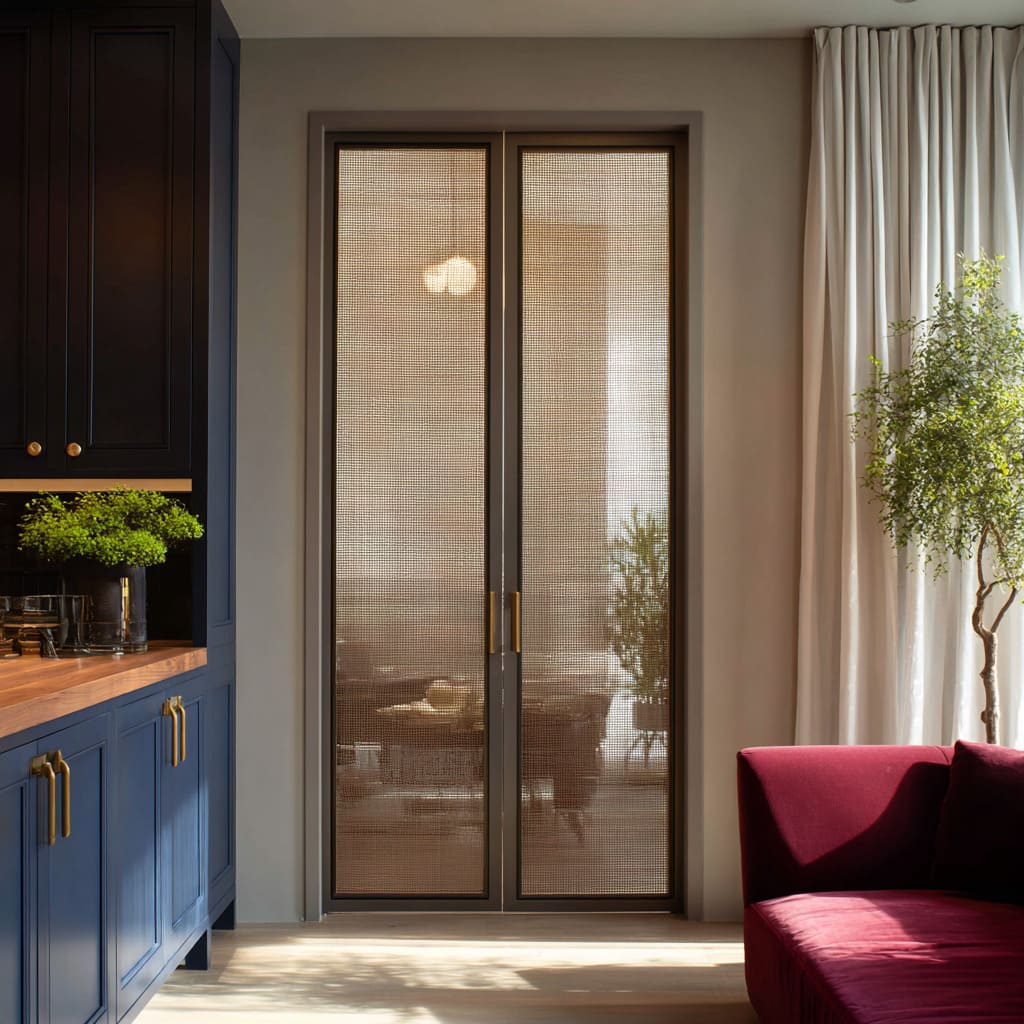
Fluted or textured glass introduces another layer, where forms are softened into rhythm and movement. Shapes elongate, shadows stretch, and activity becomes readable only as presence rather than detail.
This quality supports social spaces where connection is desired without exposure. The most compelling results come from controlled variation, such as combining one clearer panel within a largely diffused composition, or allowing subtle reflection zones to interrupt an otherwise matte surface.
These small inconsistencies prevent the door from feeling flat or inert.
Framing Logic: How Borders Define the Door’s Identity
The way a glass door is framed has a significant impact on how it is perceived within the interior. Dark frames assert structure and graphic clarity, while lighter or color-matched frames allow the glass itself to dominate.
In some settings, the frame reads as a drawn outline on a wall; in others, it behaves like a thin piece of furniture standing within the space.
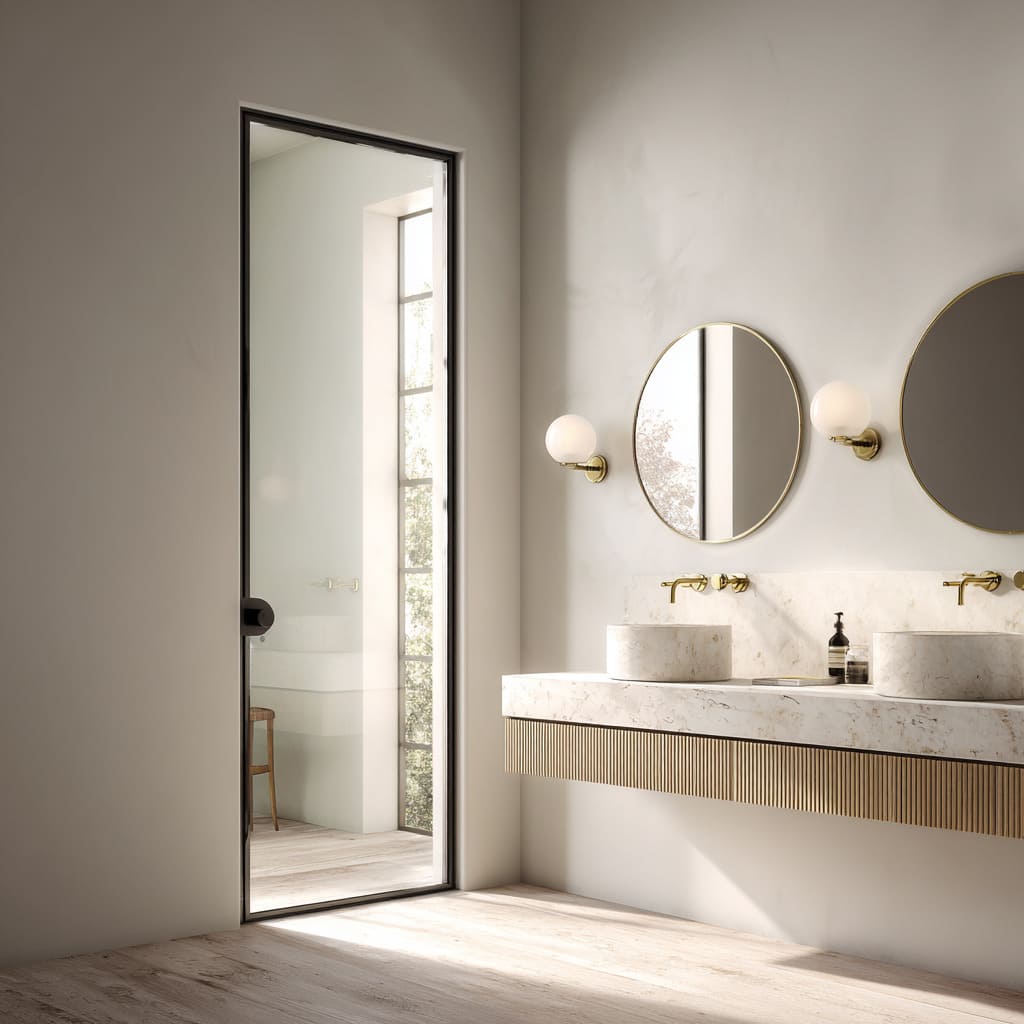
Several framing attitudes commonly shape modern designs:.
- Contrasting frames create visual punctuation and help anchor busy backgrounds
- Flush or color-matched frames allow the opening to feel carved from the wall
- Proud frames add depth and presence, turning the door into a sculptural element
Classic trim combined with a contemporary glass leaf often creates a layered dialogue between architectural memory and modern restraint. The door becomes a moment of transition not only between rooms, but between stylistic languages, without forcing either to dominate.
Hardware as Visual Punctuation and Spatial Cue
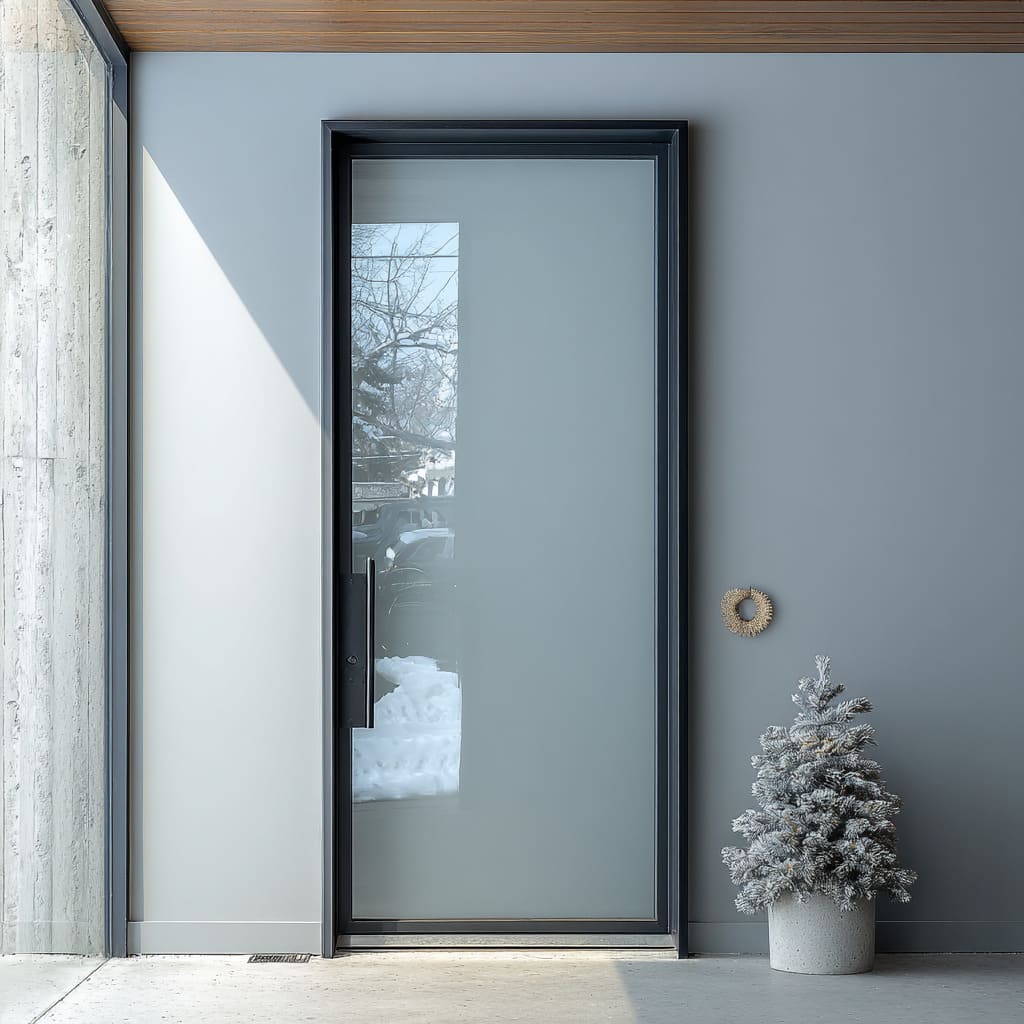
In visually disciplined interior designs, door hardware is rarely decorative in a traditional sense. Instead, it acts as punctuation, guiding the eye and subtly reinforcing proportion.
Long vertical pulls extend the perceived height of the door and echo architectural uprights. Small round knobs or recessed pulls operate more like graphic dots, carefully placed to avoid disturbing the calm surface of the glass.
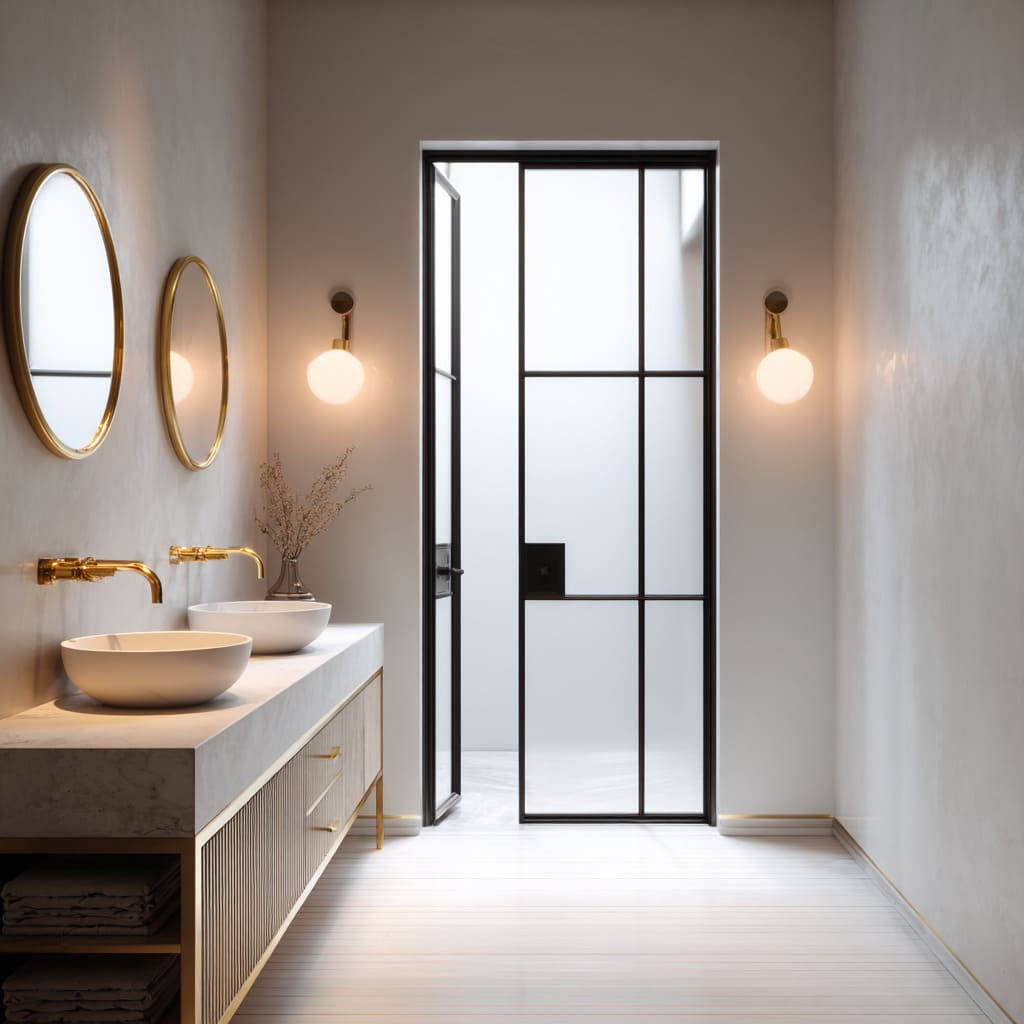
Hardware placement often responds to surrounding elements:.
- Lower-set pulls align with furniture heights or human interaction zones
- Vertical pulls repeat the door’s structural rhythm
- Paired handles on double doors introduce balance and social symmetry
When hardware tone matches other metal accents in the design—lighting details, cabinetry accents, or furniture legs—the door quietly joins a larger material conversation. This prevents it from reading as an isolated insert and instead positions it as part of the interior’s overall visual grammar.
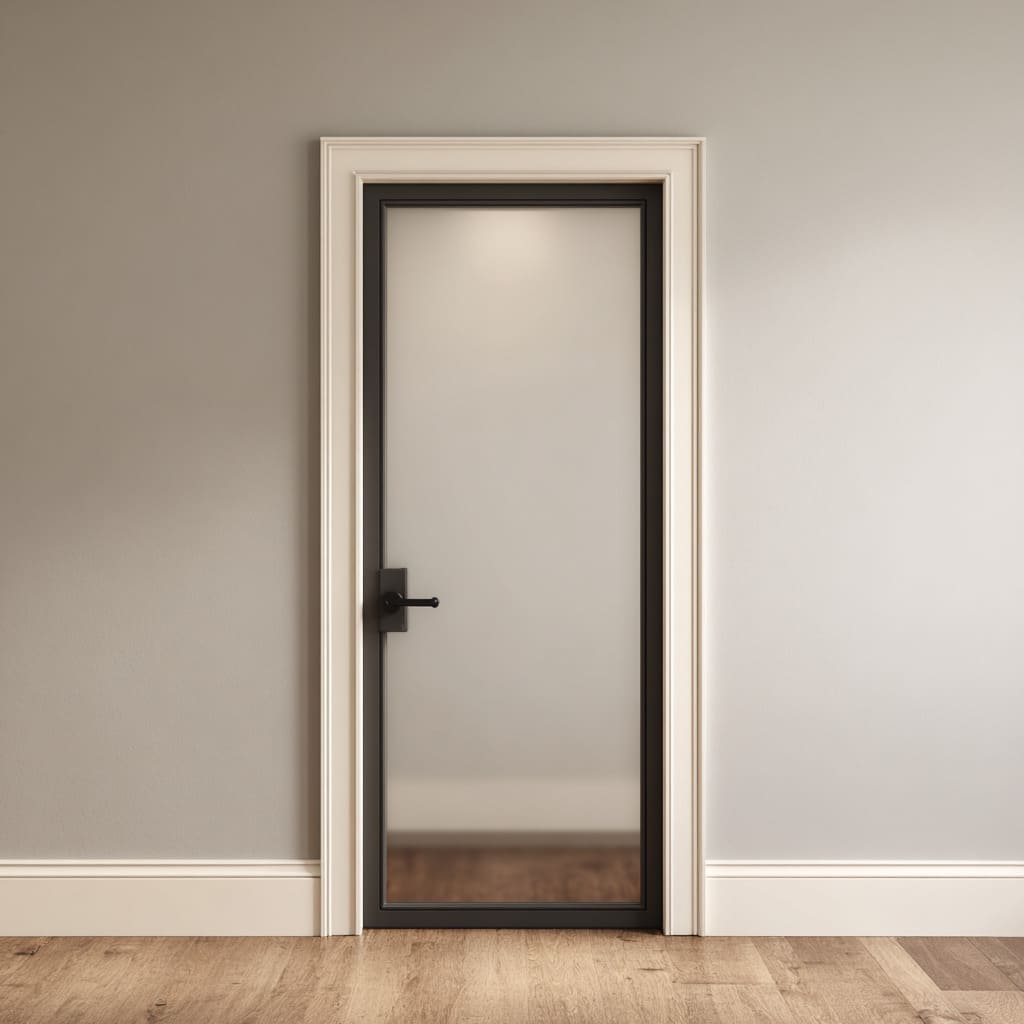
Light Behavior and the Door as a Mood Regulator
Beyond transparency, modern glass doors actively shape how light behaves within an interior. Diffused panels turn daylight into an ambient glow, reducing contrast and softening shadows.
Clear panels allow light to travel deeply into adjacent zones, reinforcing spatial continuity even when functions differ. In interior designs that mix natural and artificial lighting, the glass door often becomes the calibration surface between the two.
Daylight filtered through glass meets controlled interior lighting, creating a layered luminosity that feels calm and deliberate. Textured glass amplifies this effect by catching highlights and producing subtle shifts as light conditions change throughout the day.
This is why glass door ideas often succeed in spaces where atmosphere matters more than separation. The door becomes an active participant in shaping emotional tone, not simply a boundary.
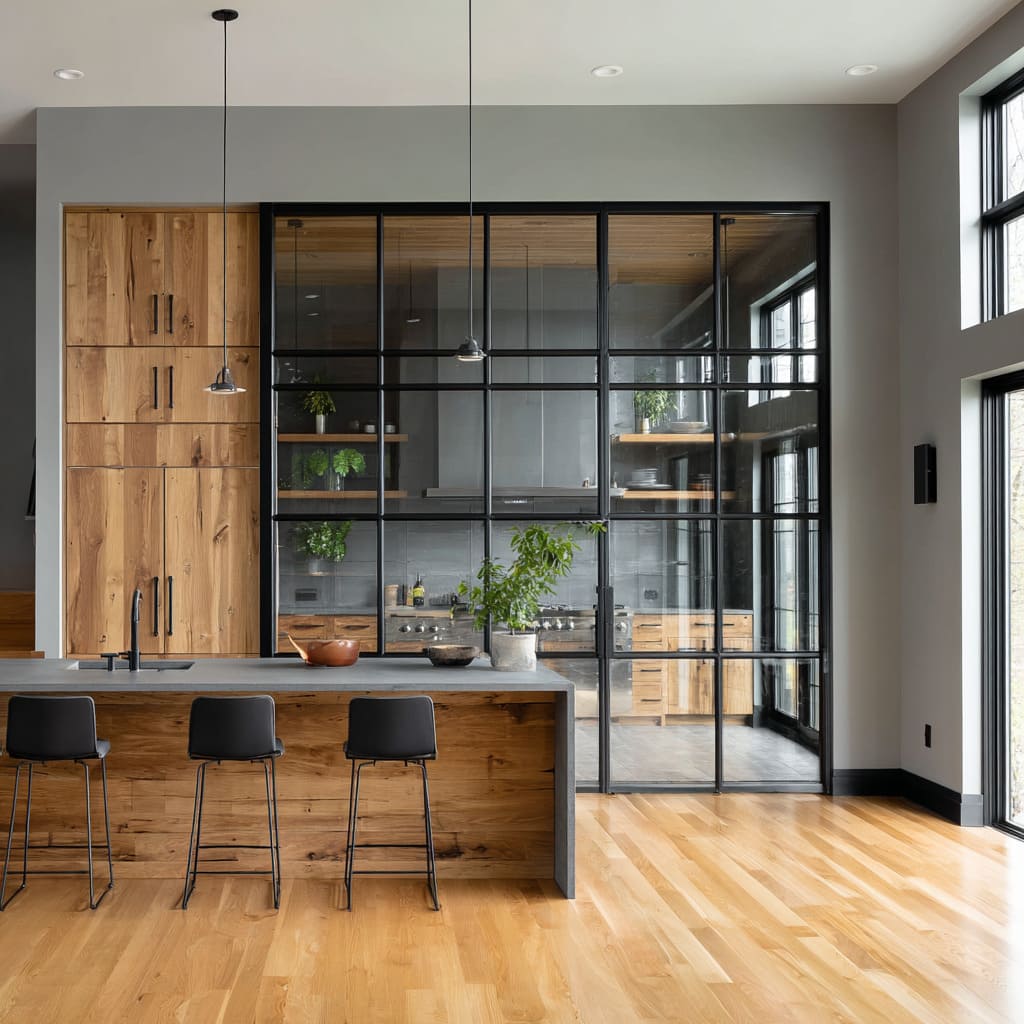
Decorative Alignment and the Door as a Curatorial Frame
One of the less obvious strategies in modern glass door design is its curatorial role. When objects, artwork, or shelving beyond the door are positioned to align with the door’s divisions, the door becomes a framing device.
Each pane behaves like a small composition, turning everyday elements into intentional visual moments.
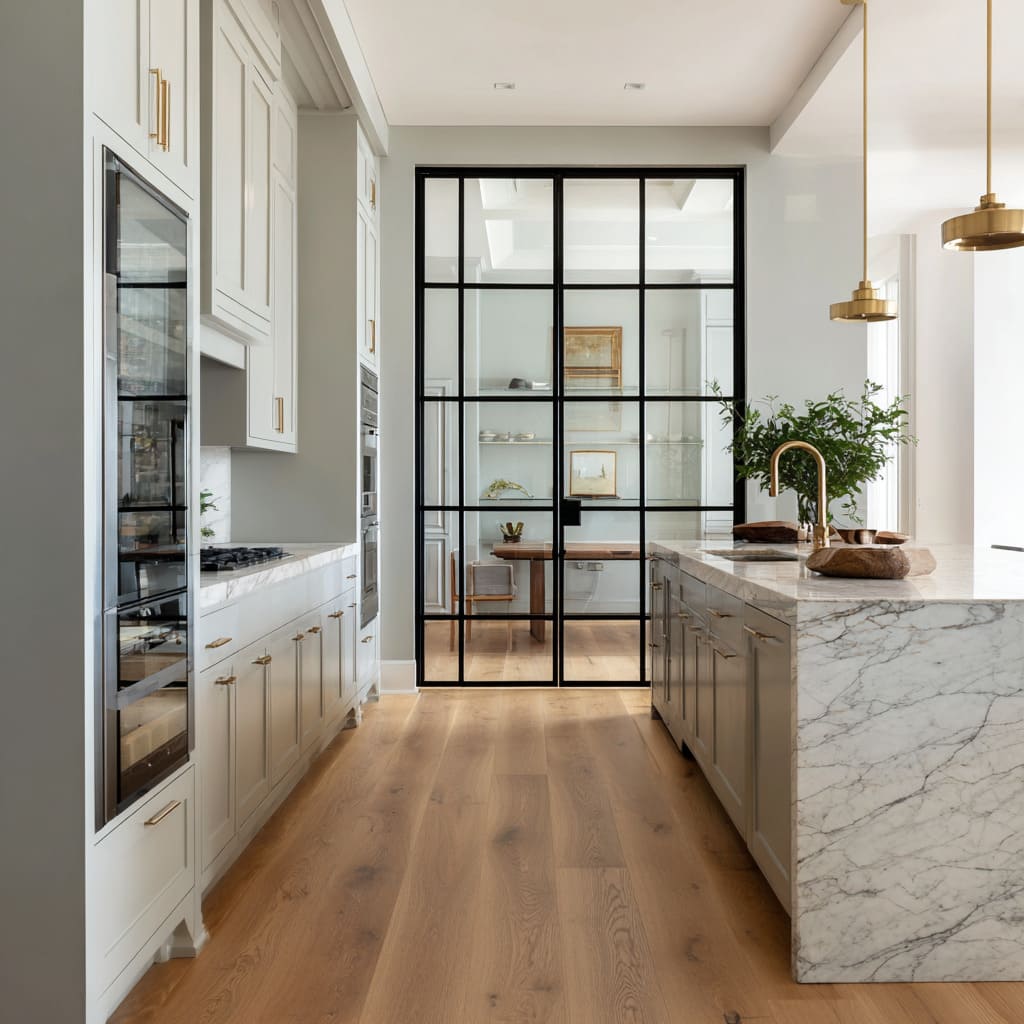
This strategy relies on restraint. The door works best when surrounding decor respects its geometry:.
- Artwork scaled to sit within glass panels
- Shelving arranged to align with mullion heights
- Plants used as soft counterpoints to rigid lines
Rather than adding decoration to the door itself, the surrounding environment is edited so the door can quietly organize what lies beyond. This approach supports interior designs that feel calm, layered, and thoughtfully composed without visual overload.
Glass Doors as Flexible Spatial Narratives
At a broader level, modern glass doors support ideas that shift mood without changing identity. They allow spaces to exist in multiple states: open yet composed, closed yet connected.
This flexibility is not expressed through mechanics but through visual continuity—shared materials, aligned lines, and controlled transparency.
In this context, ideas for sliding doors often appear as a narrative tool. The ability for a glass plane to glide aside or overlap introduces a sense of temporal change, allowing the interior to adapt visually throughout the day.
What matters is not movement itself, but how the door maintains compositional integrity in every position. Ultimately, contemporary interior designs use glass doors to slow perception, regulate attention, and reinforce calm.
By treating them as visual architecture rather than functional inserts, designers create spaces where separation feels intentional, light feels shaped, and the interior reads as a coherent whole rather than a sequence of rooms stitched together.