The most convincing dining room lounge ideas don’t look like a dining room with softer chairs. They look like a room that quietly edits posture, pacing, and attention so the dining zone reads as a place where people remain after the meal.
The difference sits in small, non-obvious controls: where the room places comfort at body level, how it removes “upright-only” seating signals, and how it spreads atmosphere so the table stops feeling like the only reason to sit there.
A useful way to read lounge diner ideas is to ignore the word “dining” for a moment and look for living-room cues that have been translated into a dining setting:
- A “soft wall” at sitting height (banquette backs, pillows, upholstered panels) that makes the interior design feel supportive at the exact level where bodies lean.
- A social shape language (circles, ovals, gentle curves) that reduces hierarchy and makes eye contact feel natural.
- A mood distribution system (pendant glow, picture lights, wall sconces, niche lighting) so the interior design does not depend on one bright overhead source.
- A hosting spine (sideboard, counter, niche, shelving) that carries the “stuff of life,” letting the table stay visually calm even in real use.
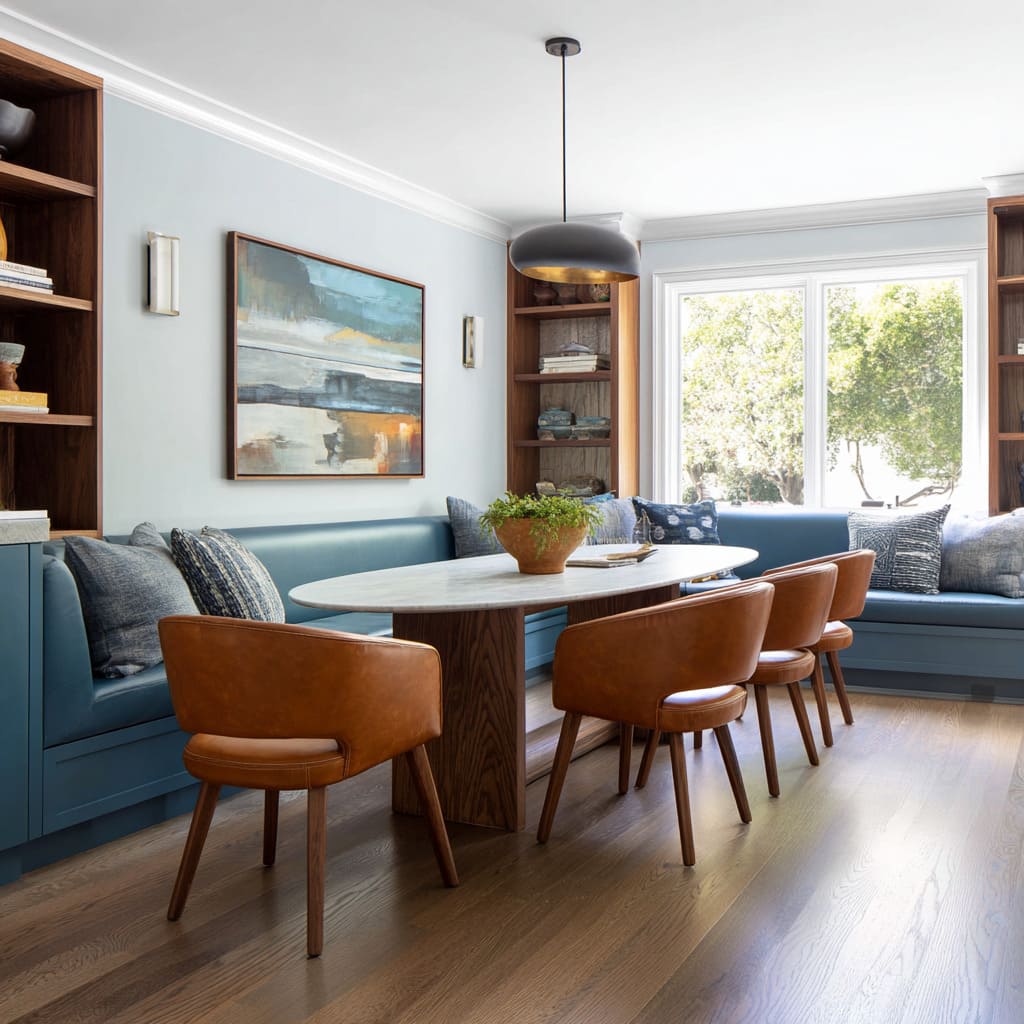
These moves are the deeper logic behind many combined lounge dining room designs: dining becomes one mode inside a wider set of relaxed behaviors—talking, reading, having a drink, leaning back, staying longer.
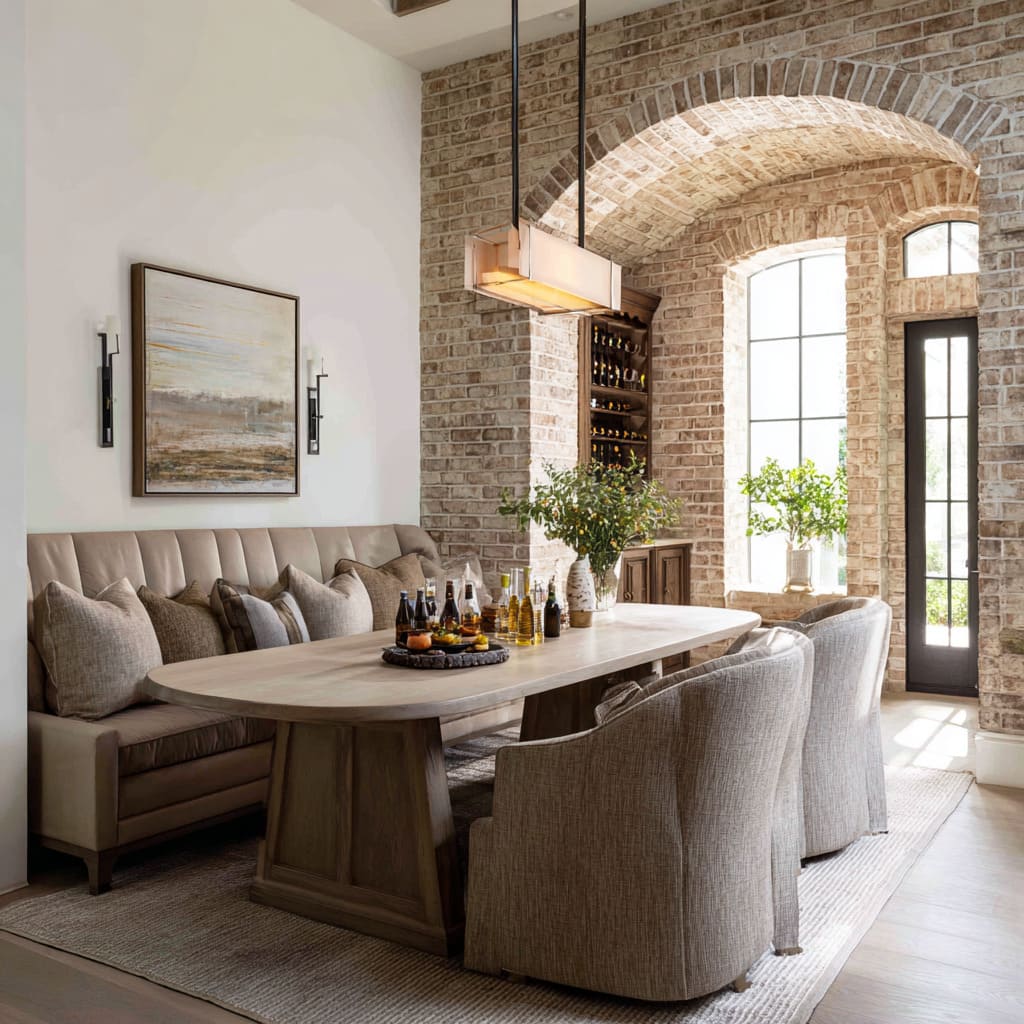
The hidden driver: posture design (why banquettes change time)
A dining chair asks for a certain kind of body language: sit, eat, stand. Lounge seating invites micro-adjustments that extend time: lean, curl, shift, angle toward someone, stay.
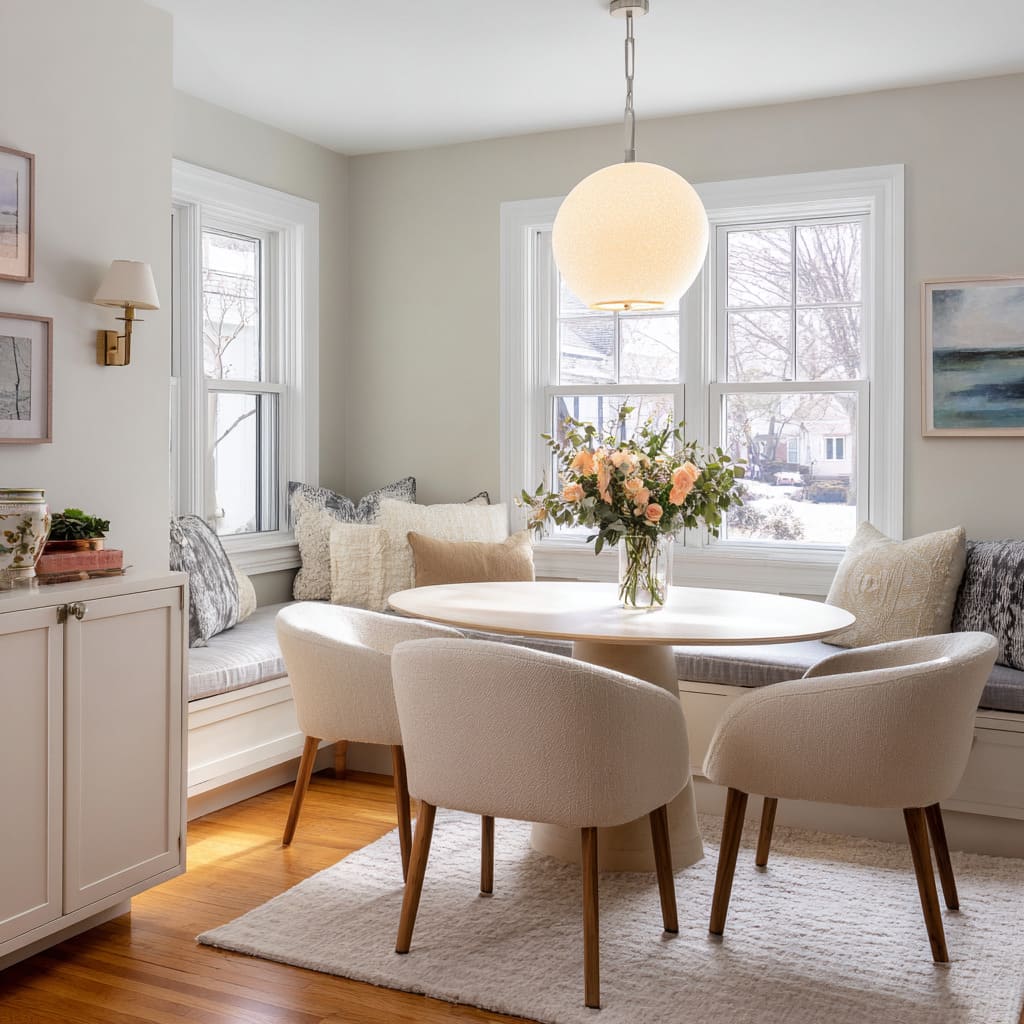
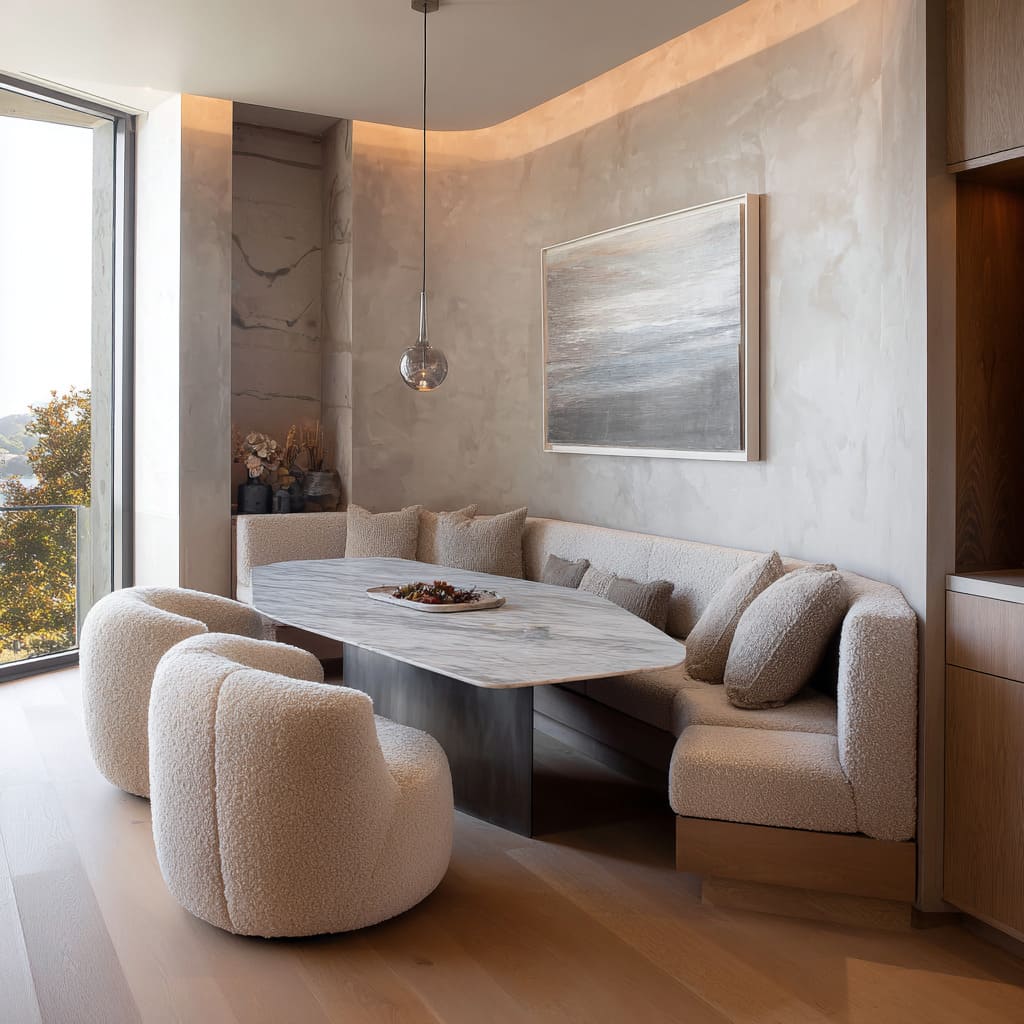
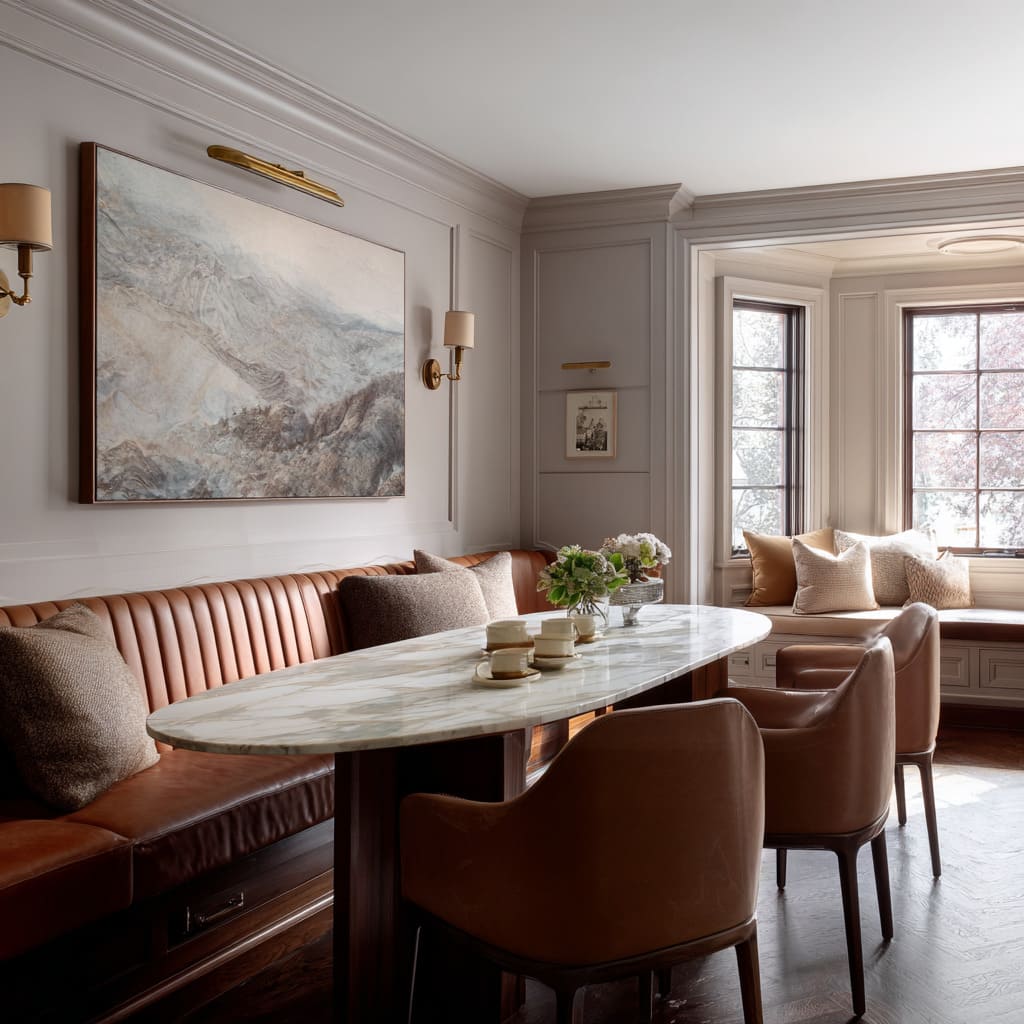
That’s why so many strong lounge dining room design ideas rely on a banquette that behaves like a sofa rather than a thin bench. The detail that often gets overlooked is not “banquette vs chairs,” but banquette back height and softness:
- A higher, cushioned back reads as a support surface, not just a boundary. Visually, the interior design says comfort first, table second.
- Pillows matter less as decoration and more as posture options. Variation in pillow firmness and size creates choices: upright conversation, relaxed corner lean, sideways perch. That variability is one of the clearest “stay longer” signals.
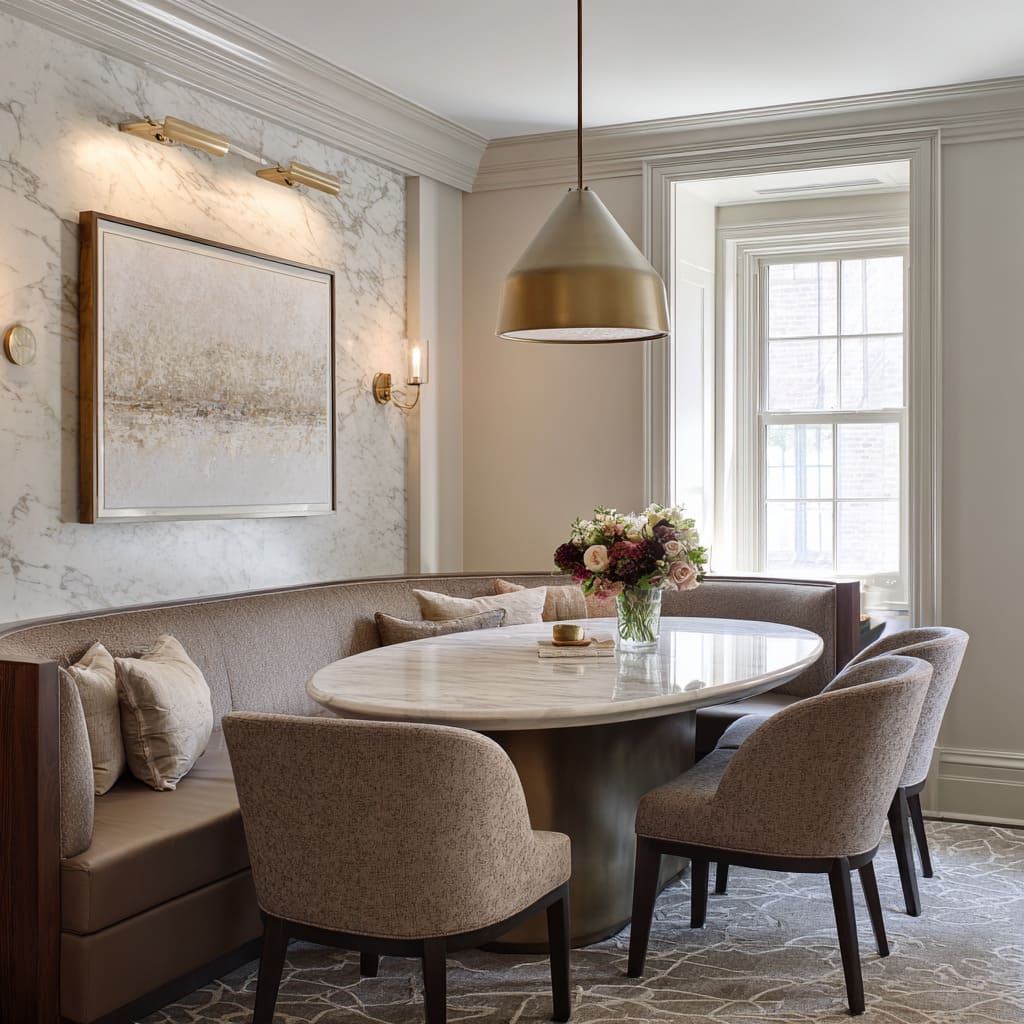
- Curved or wrapping banquettes subtly change social alignment. A straight bench sets a forward-facing line; a wrap creates a gathered arc where bodies face one another without effort.
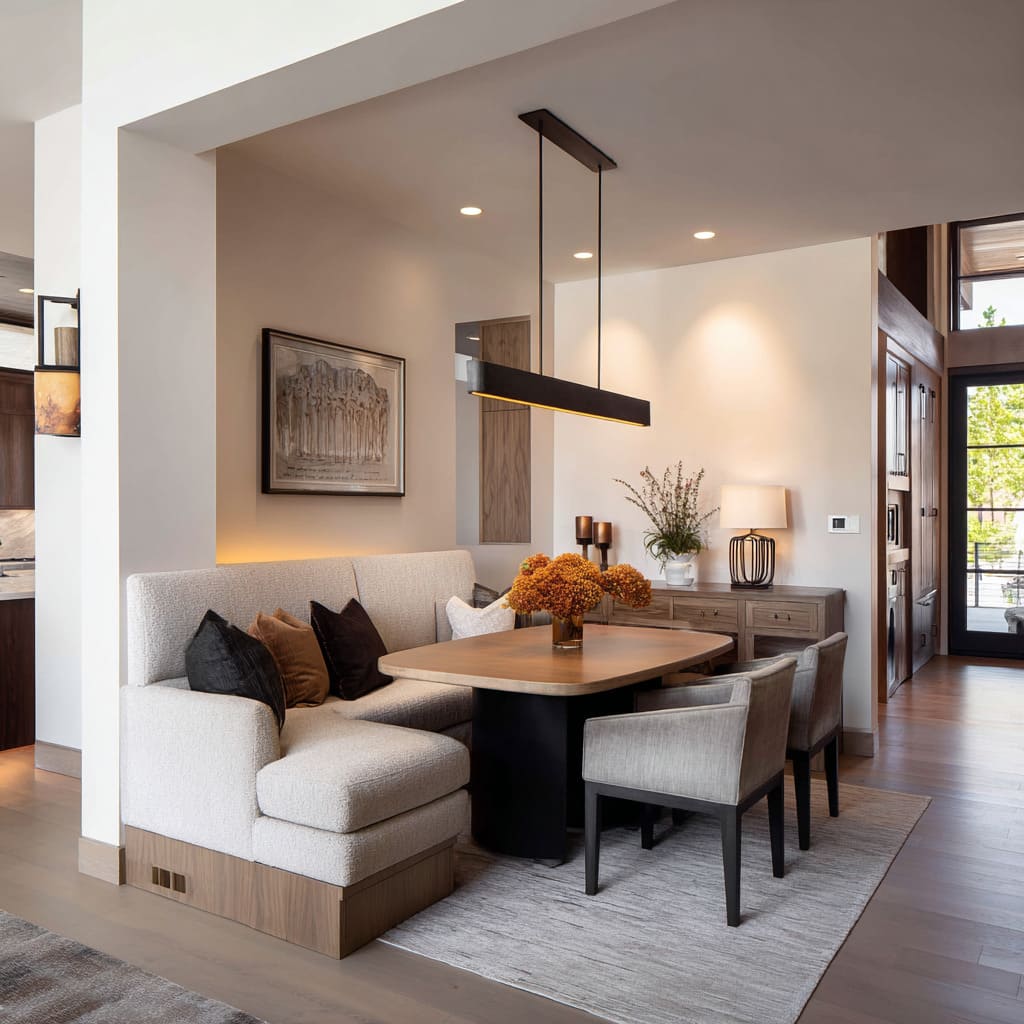
Even tufting or channeling becomes functional in a visual way. Shallow tufting and ribbing break up a large upholstered surface so it reads tailored rather than puffy.
The interior design communicates softness without looking sloppy, which is crucial in many lounge diner design ideas that try to feel calm and refined at the same time.
Social geometry: removing the “head of table” without saying it
Many dining room designs carry an invisible hierarchy because the furniture implies it. Rectangular tables often create an end-seat emphasis; paired chairs sometimes look like a lineup.
A lounge-like dining room interior design often softens that hierarchy through shape:.
- Round tables erase the head-of-table cue. They also compress conversational distance—everyone is equally “near” the center.
- Oval tables keep the social equality of a round form while giving a longer hosting surface. The oval reads gentle: no sharp corner tells the room where it “ends,” so conversation feels continuous.
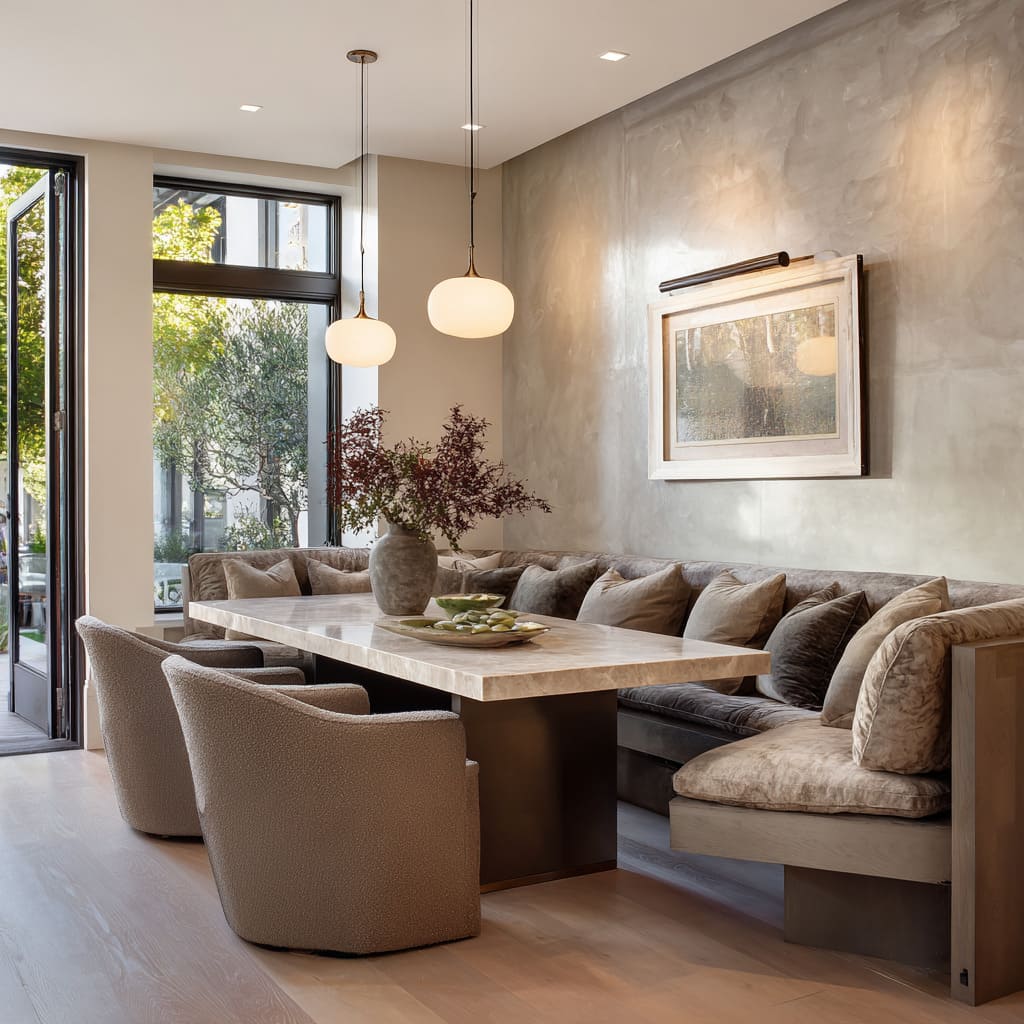
- Even long rectangular tables can read lounge-like if the ends are softened or if seating includes a banquette that turns one side into a continuous “sofa edge,” making the arrangement feel less like a formal grid.
This is where dining room lounge ideas get surprisingly psychological: the interior design stops announcing roles (host seat, guest seats) and starts suggesting a shared zone. That shift is a major reason some dining spaces feel “event-only,” while others feel like everyday living.
Attention management: the room chooses one hero
The strongest lounge dining room decorating ideas often do something that looks simple but is actually disciplined: they decide what carries visual weight, then they protect that decision from clutter.
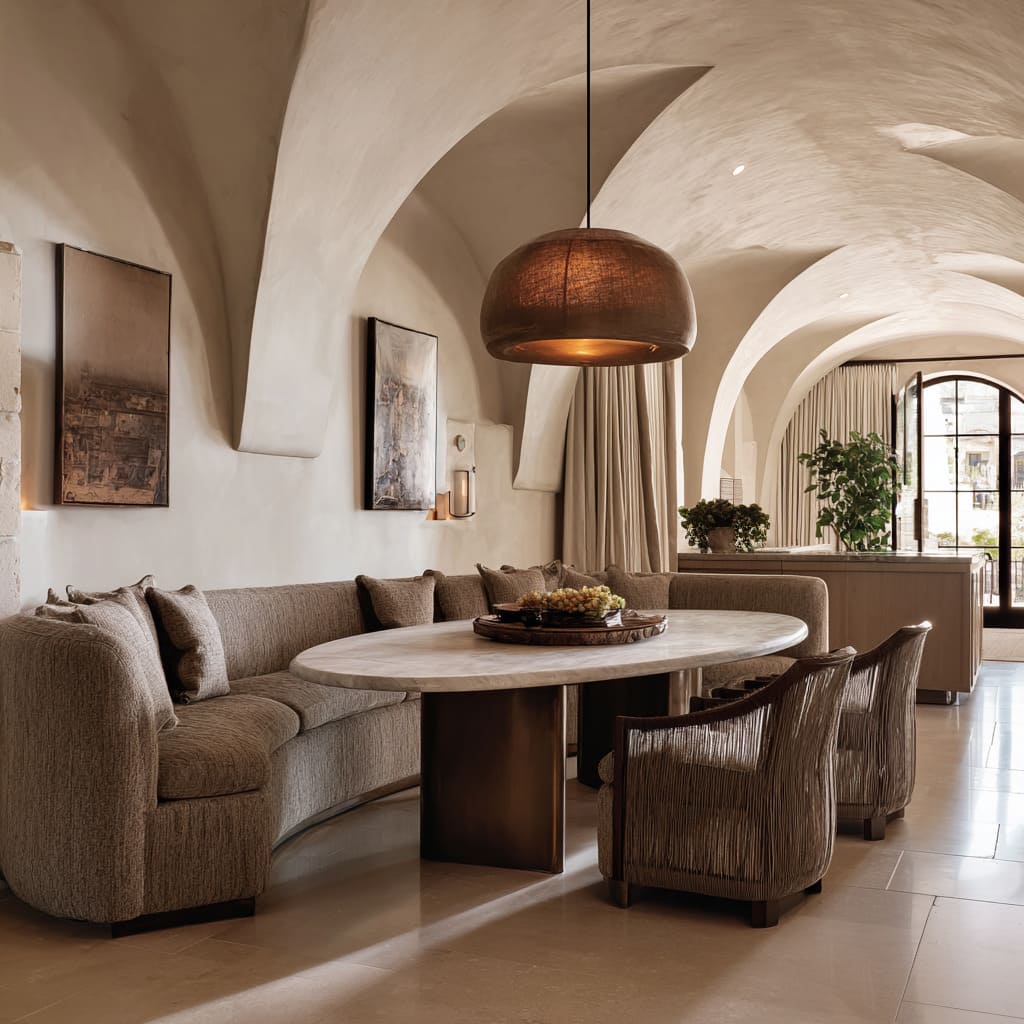
That “hero element” can be:.
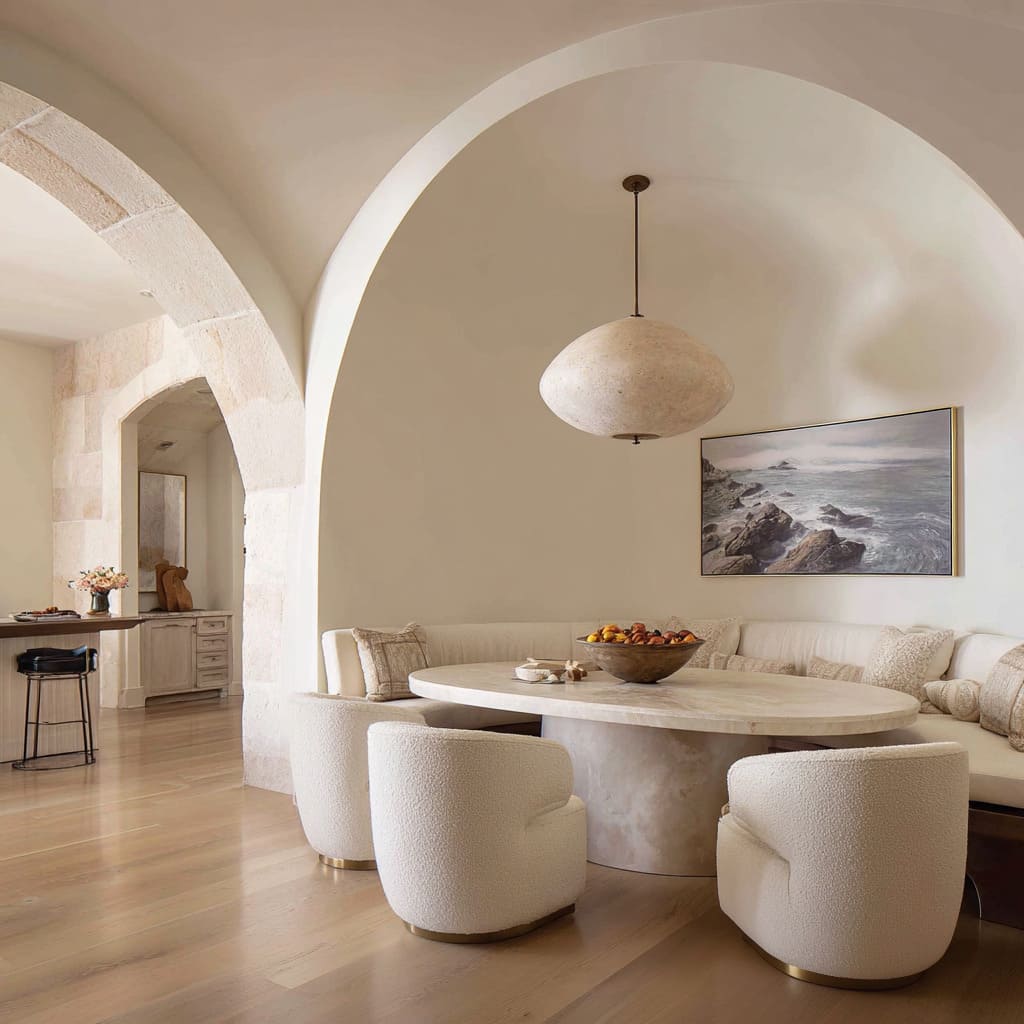
- A monolithic pedestal table base that reads sculptural and grounded.
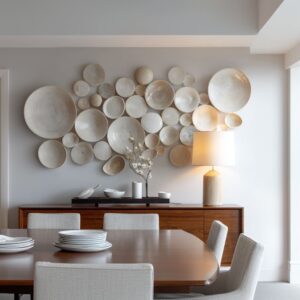
- A dramatic wall surface (brick arch, stone slab, textured wall field) that provides depth without extra objects.
- A single large artwork treated as atmosphere, sometimes supported by a picture light or flanked by sconces.
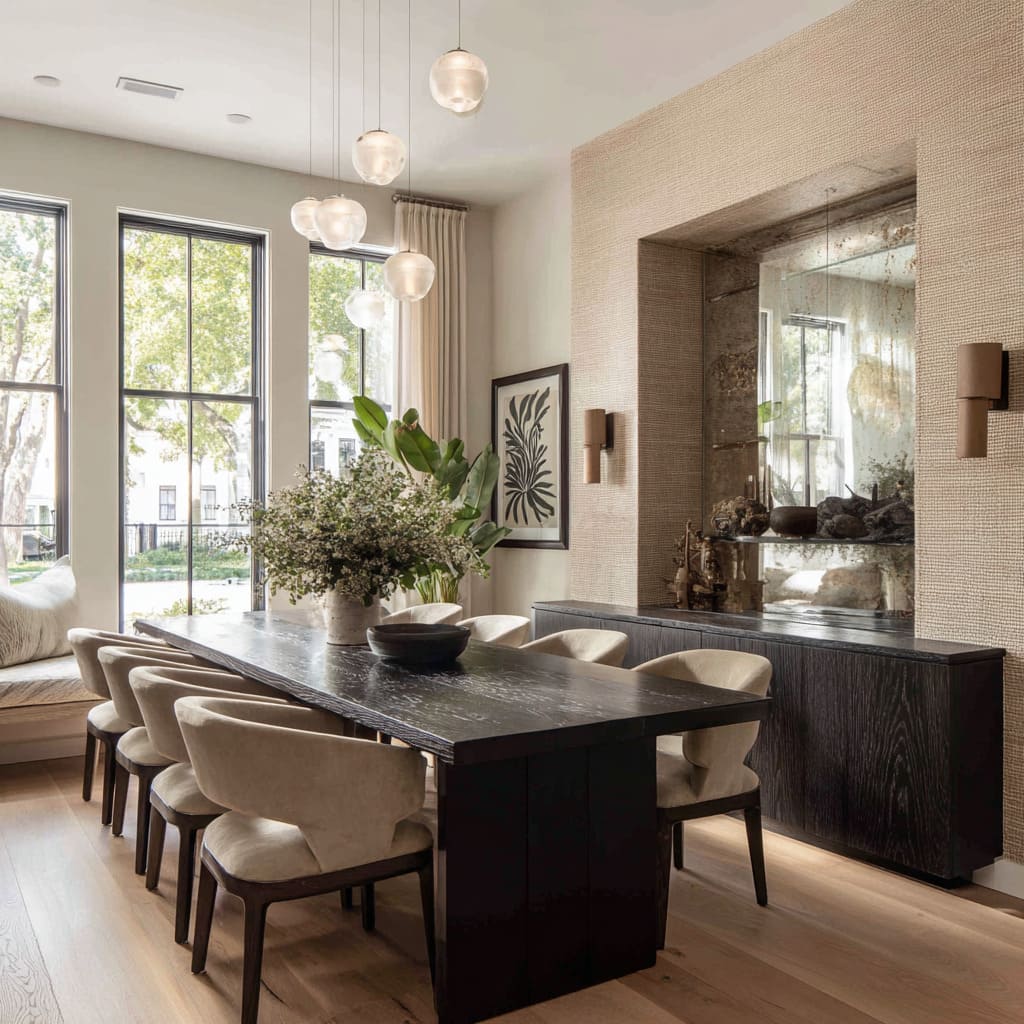
The non-trivial part is what happens next: the rest of the room goes quieter. This is why many lounge-dining room interior designs feel expensive without being busy.
They don’t scatter interest everywhere; they concentrate it and then leave space around it.
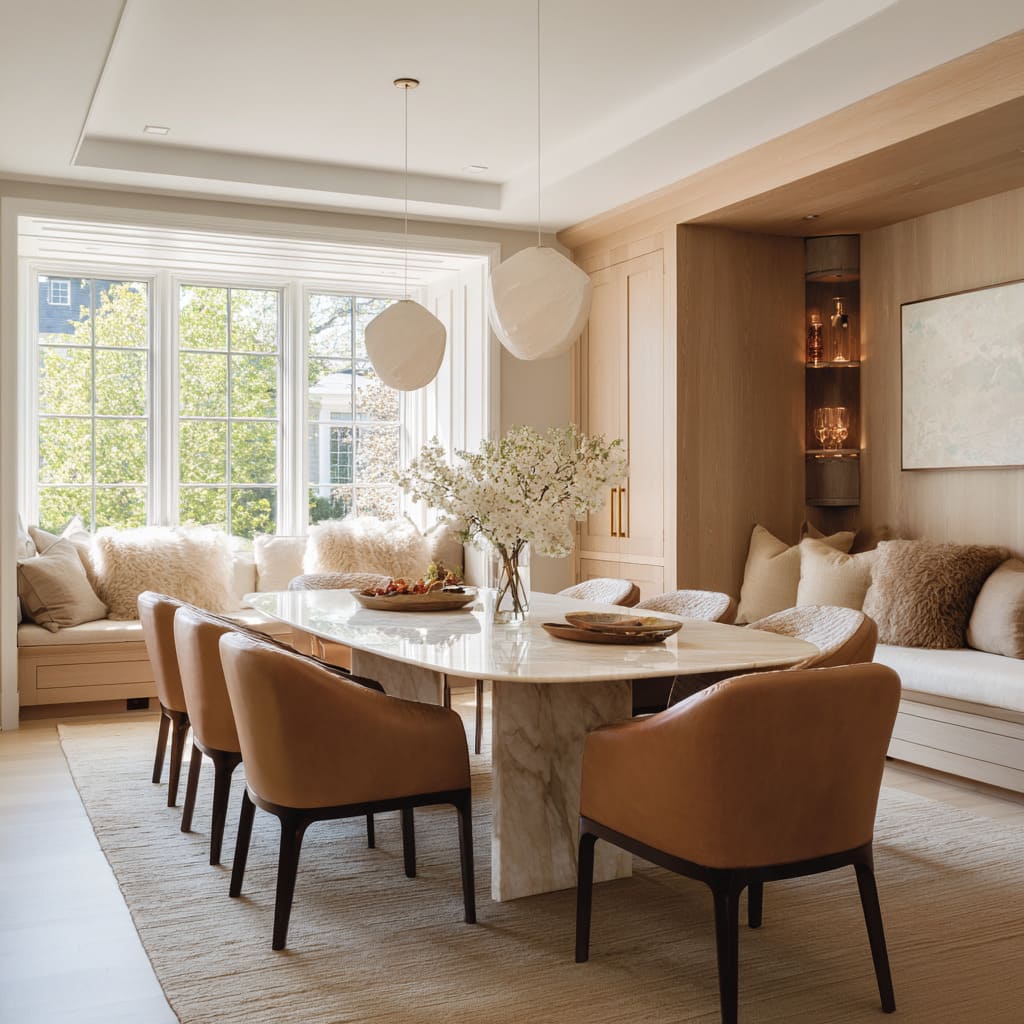
A brick arch, for example, has so much natural movement in its texture that the furniture can stay edited—smooth table planes, restrained art, low centerpieces. A stone feature wall can carry the visual drama so the tabletop can stay clear and real-life friendly.
The interior design is essentially saying: The background has enough rhythm; the foreground can relax.
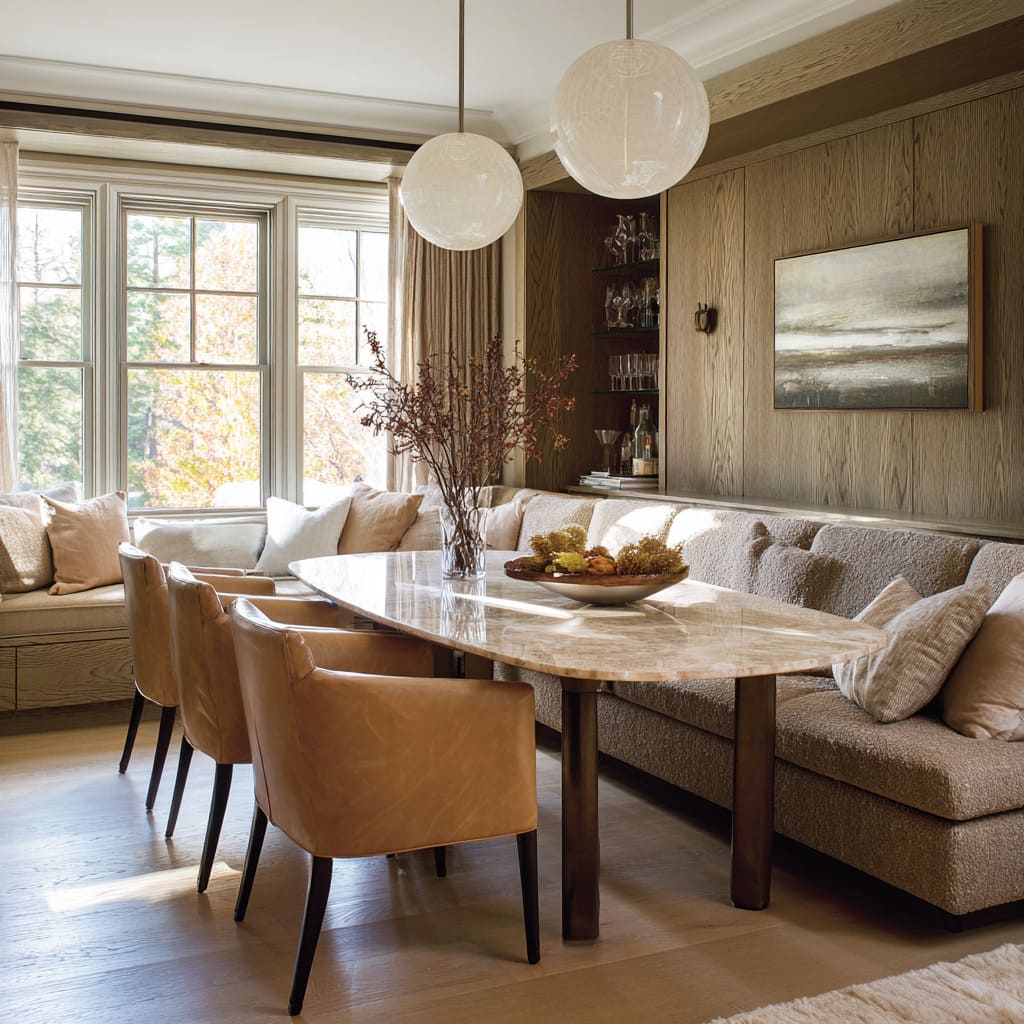
Light that behaves like hospitality
One of the most reliable signals in lounge dining room design ideas is layered lighting that sits at human height and spreads warmth without turning theatrical.
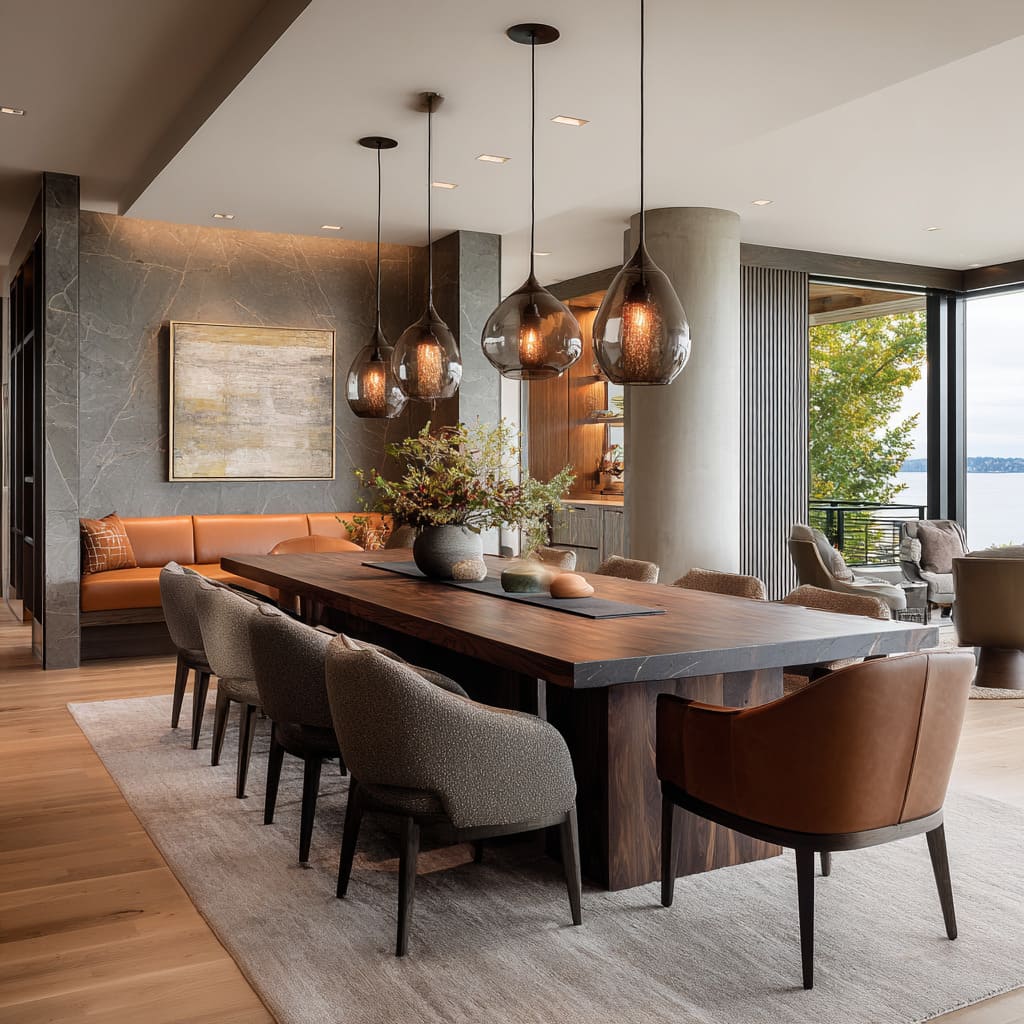
A dining room design feels less lounge-like when the only meaningful light is overhead. A lounge feeling arrives when light becomes a landscape:.
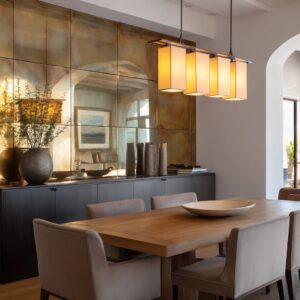
- Large shades or diffused pendants create a soft canopy that defines the zone while keeping glare low. Oversized pendants can make a dining nook feel like its own room, even inside an open plan, because the light reads as territory.
- Wall sconces shift attention from the table to the room itself. When sconces flank art or sit on a textured wall, the interior design feels designed for atmosphere, not only eating.
- Picture lights are a subtle lounge cue because they add a calm, focused glow that reads intimate at night. They make art behave like a mood device, similar to how a library lamp sets tone.
- Backlit shelves or niche lighting act as a second “evening anchor.” This is powerful because it allows the dining zone to feel warm after dark even if the pendant remains restrained.
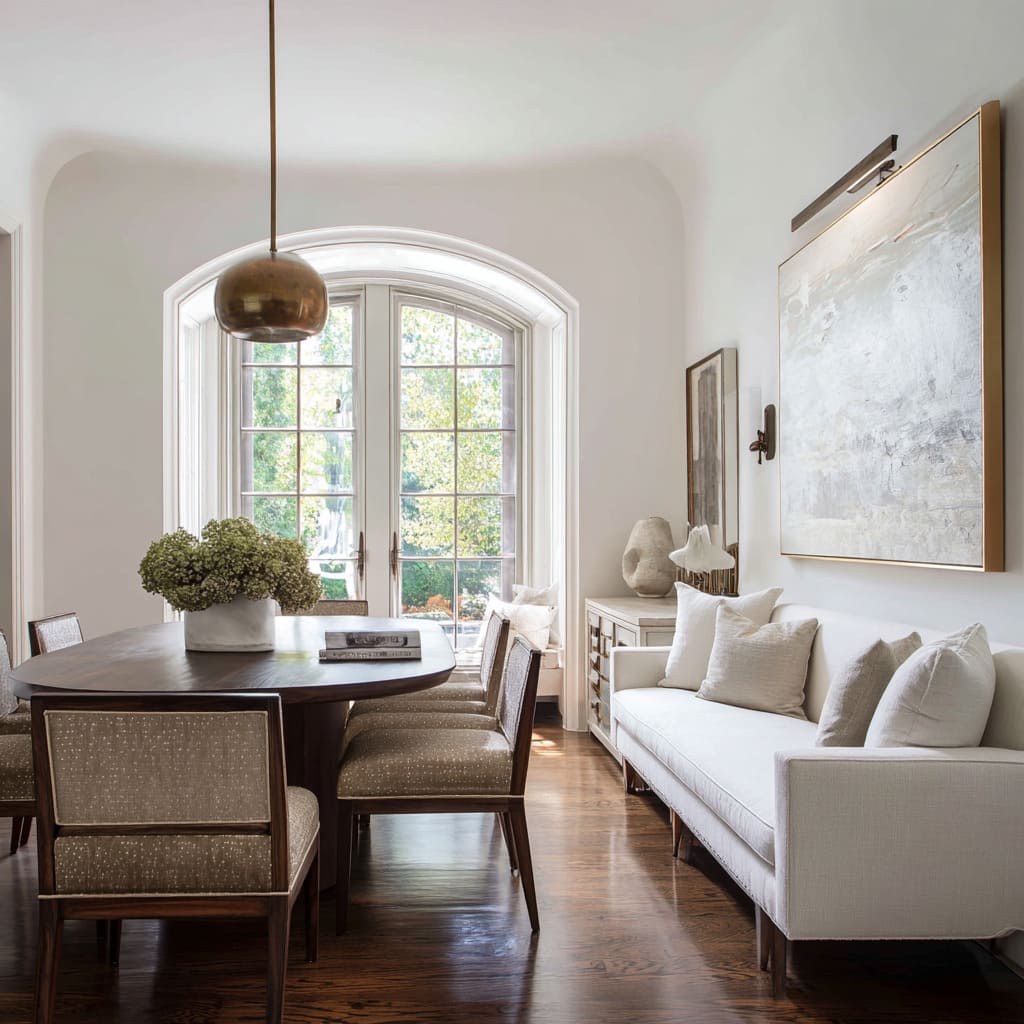
The deeper point: lounge lighting rarely relies on one bright source. It uses several gentle sources so the interior design can feel flattering, calm, and socially forgiving.
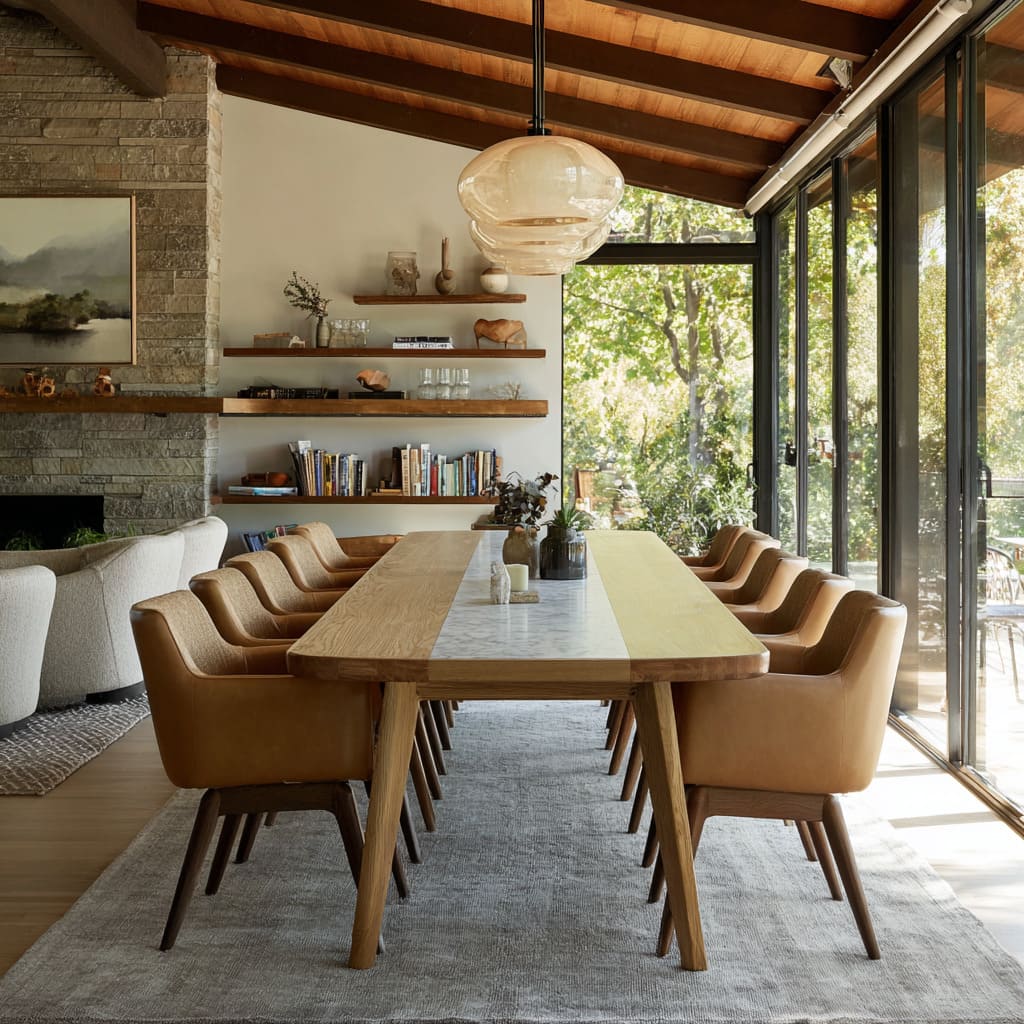
“Soft shimmer” without shine: how texture replaces sparkle
A lot of interior designs try to look rich by adding shine. Lounge-dining room designs often do the opposite: they aim for richness through texture that absorbs and diffuses light.
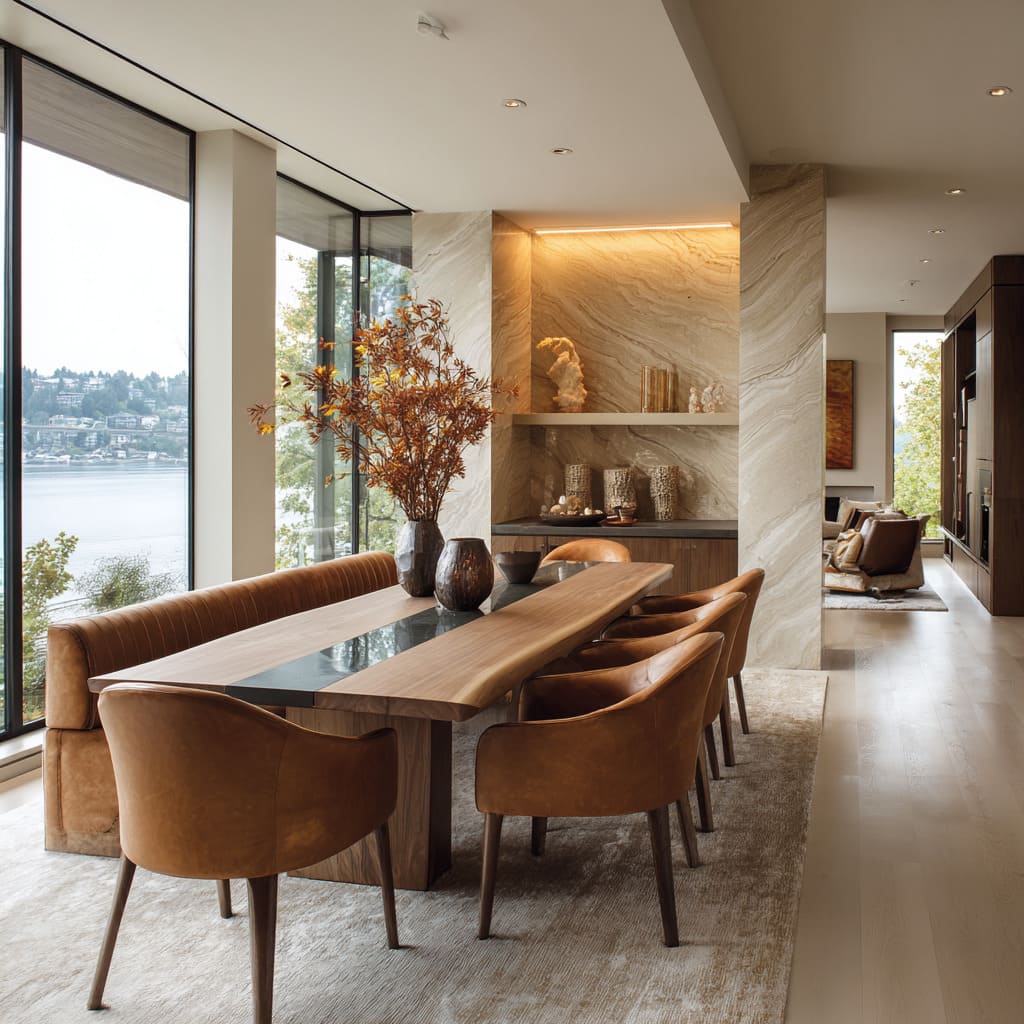
That shows up in specific ways:.
- Nubby, tweedy, boucle-like upholstery creates depth because it catches light in tiny variations rather than reflecting it in one hard flash.
- Grasscloth-like wall texture or a fine grid wall field can quiet reflections and give the room a stable backdrop.
- Smoked or lightly tinted glass pendants add a gentle reflective life, but the effect stays moody and soft rather than glittery.
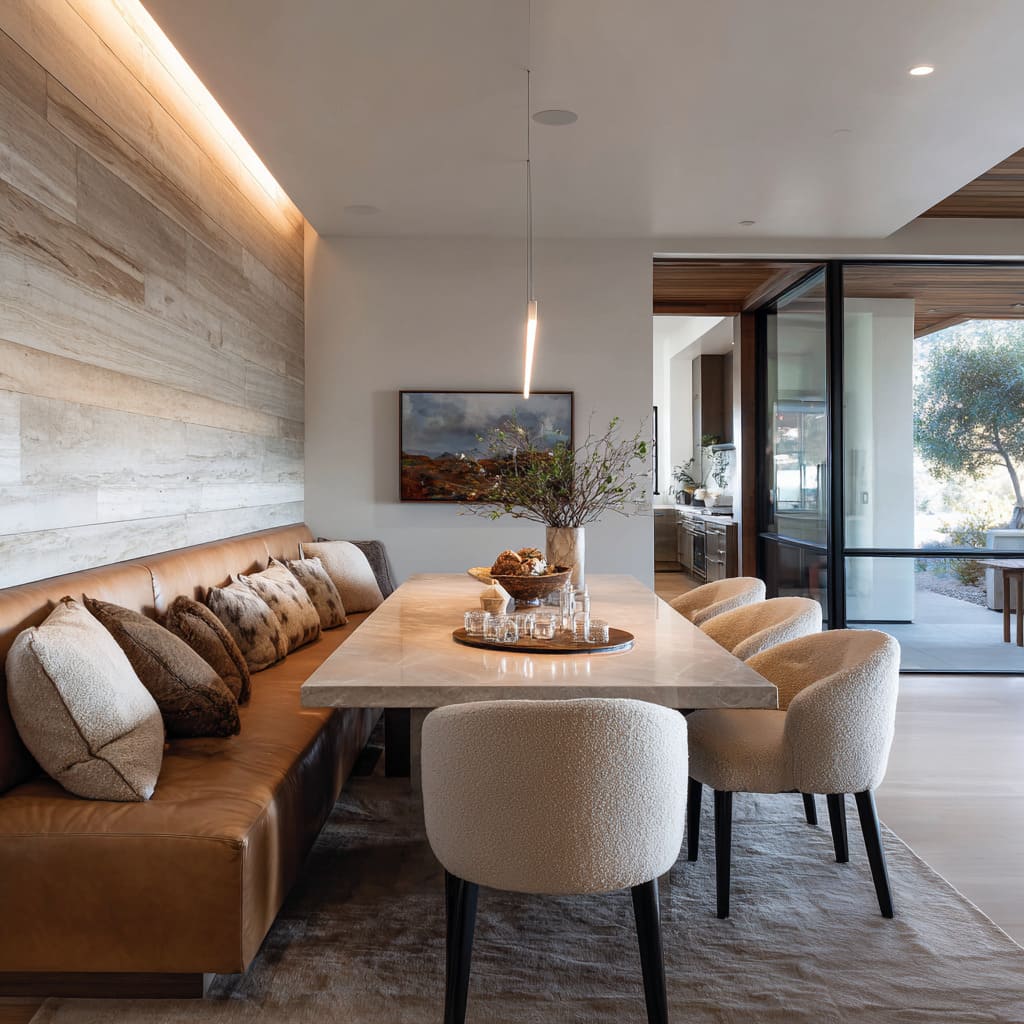
This is a non-obvious mechanism: the design feels layered and finished even with a limited palette because the surfaces create micro-contrast. Texture becomes the decor, which allows objects to be fewer and calmer.
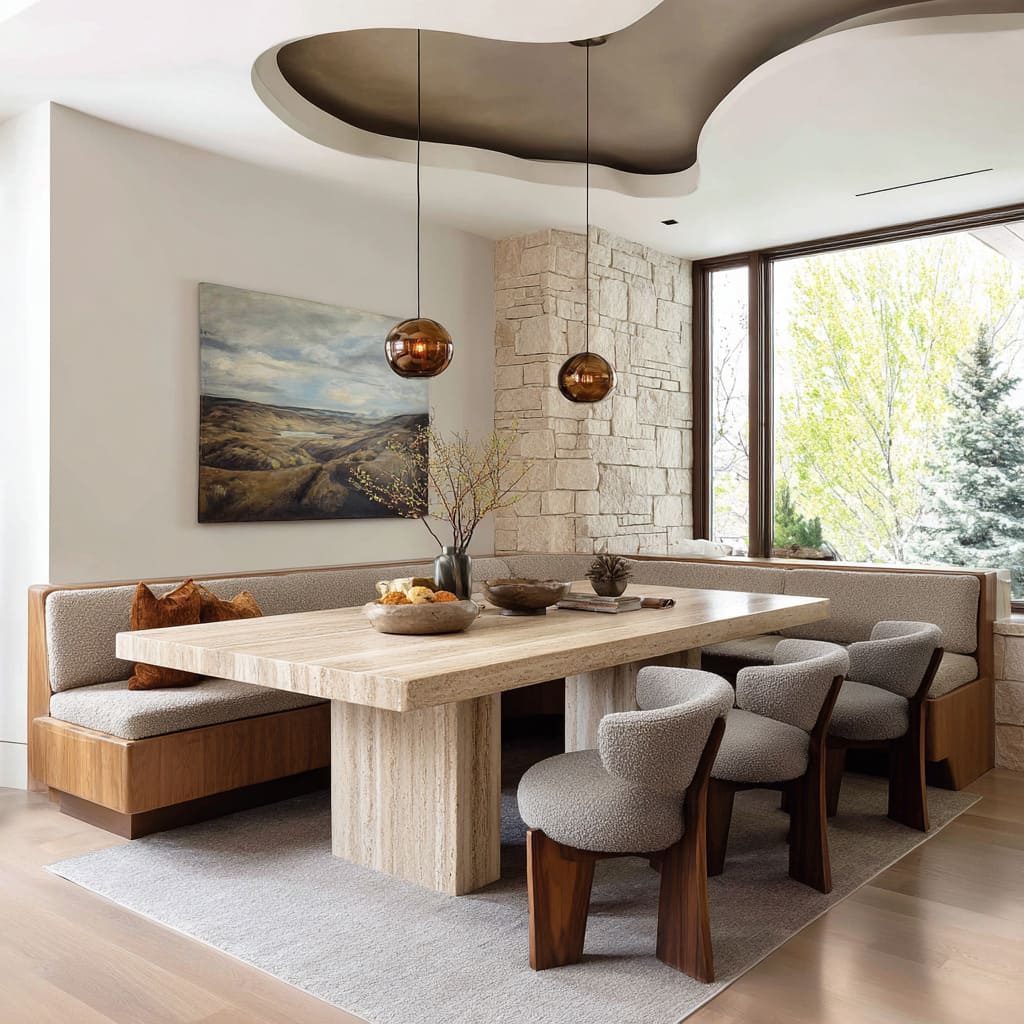
The tabletop as a social surface
Many dining room designs fail at the lounge feeling because the centerpiece behaves like a barrier. Lounge-dining rooms often style the table the way a lounge styles a coffee table: low, breathable, and easy to live with.
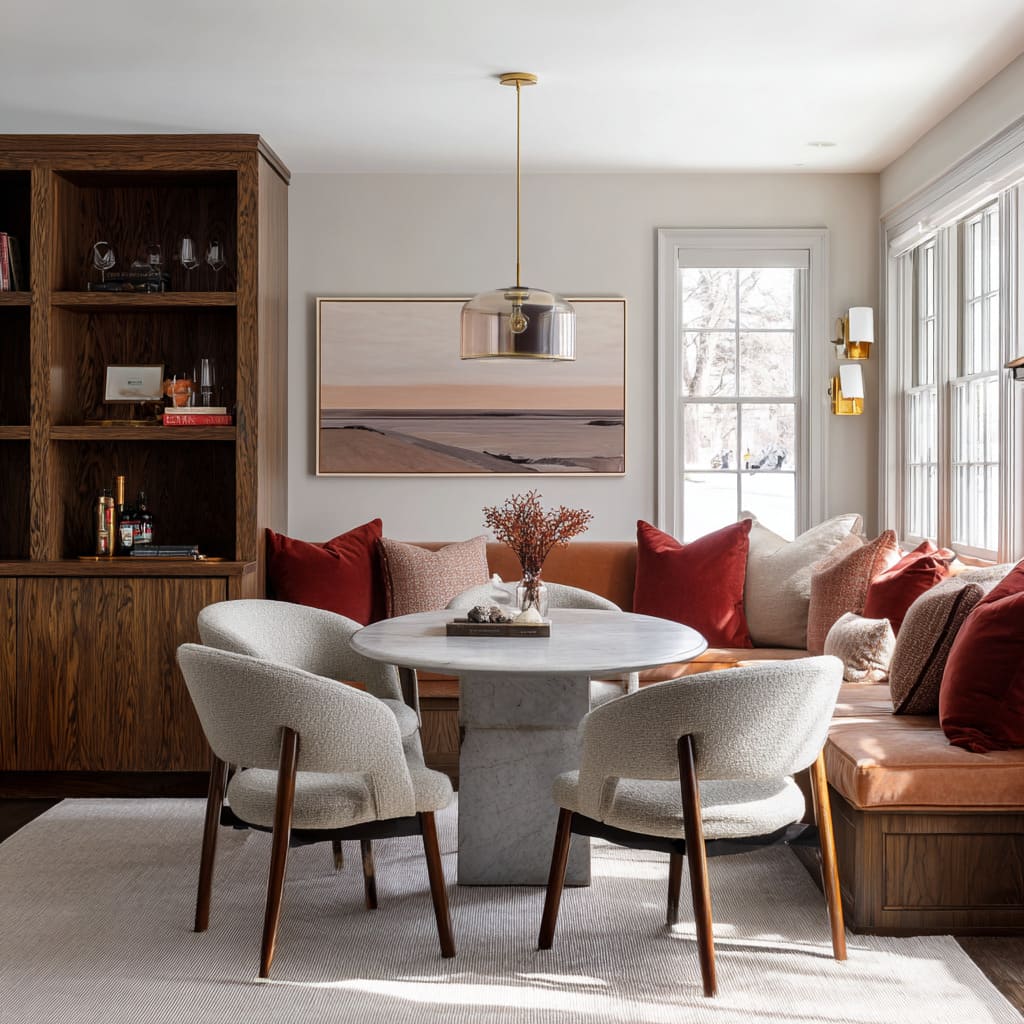
Patterns that show up repeatedly:.
- Low, clustered objects (bowls, trays, small vessels) that read like one calm mass rather than many scattered items.
- Airy branches that provide height without heaviness. The key is not height; it’s porosity. Thin branching forms lift the eye while keeping faces visible.
- A “center lane” effect on long tables (a built-in strip, darker inset, or implied runner zone) that organizes styling without needing a literal runner. It gives a natural place for daily objects to land, which keeps the table looking composed even when it’s being used.
A subtle lounge cue is when the table suggests “after dinner” without announcing it: a tray with glasses, a low bowl, a few controlled pieces. The interior design signals lingering without turning into a themed bar setup.
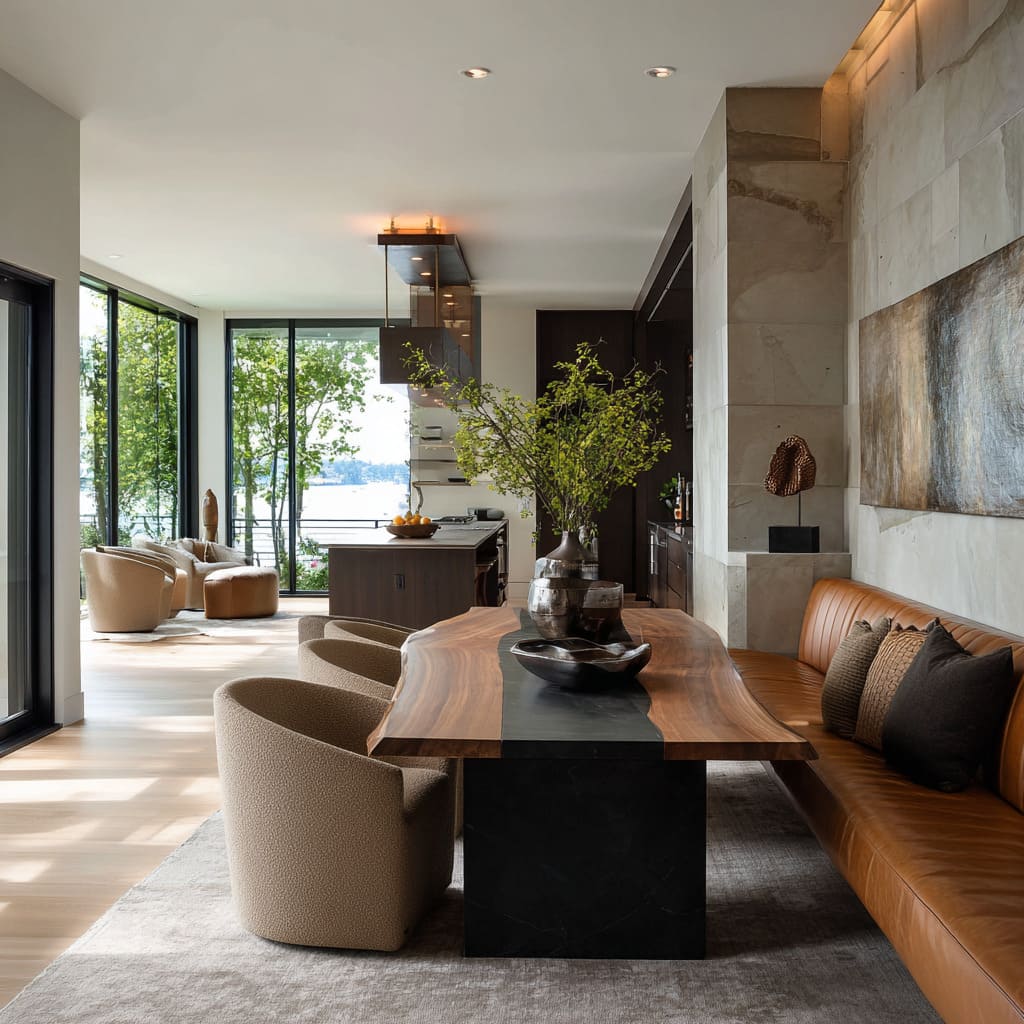
The supporting cast: why books, window perches, and sideboards matter
A dining room starts behaving like a lounge when it includes signs of slow time. Not slogans—clues.
Three cues appear again and again in strong lounge diner ideas:
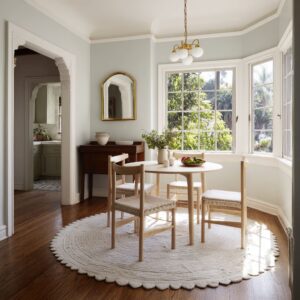
- Window seating integrated with the dining zone
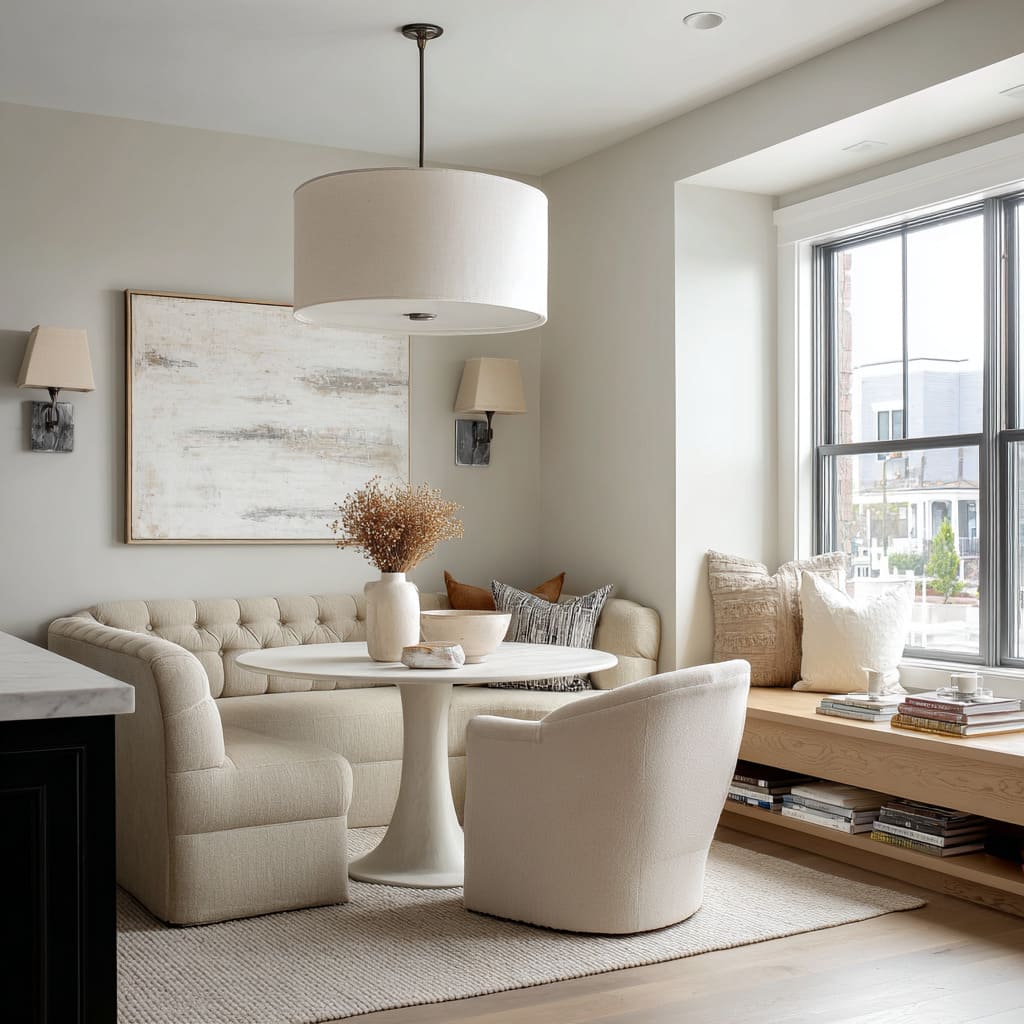
A window perch that aligns in height and softness with the main banquette creates an “overflow” posture. Someone can shift away from the table without leaving the social field. The design feels like it has multiple speeds: eat here, sit here, linger here. - Books near dining
Books in a dining area quietly change the story. They imply the space is used outside mealtimes—morning coffee, phone calls, thinking time. In visual terms, books add texture and personal rhythm without turning into clutter, especially when shelving is spaced with air. - A hosting spine that keeps the table visually clean
A sideboard, counter, niche, or shelving run functions like a backstage area. It holds glassware, vessels, serving pieces, and small rituals so the tabletop doesn’t become storage. This is a huge part of why many lounge dining room decorating ideas look calm: the room gives clutter a home, and the table gets to stay socially open.
Zone definition that feels natural
In open plans, dining areas can feel like furniture placed in the middle of nowhere. Lounge dining avoids that “floating set” feeling through quiet boundaries that don’t read as barriers.
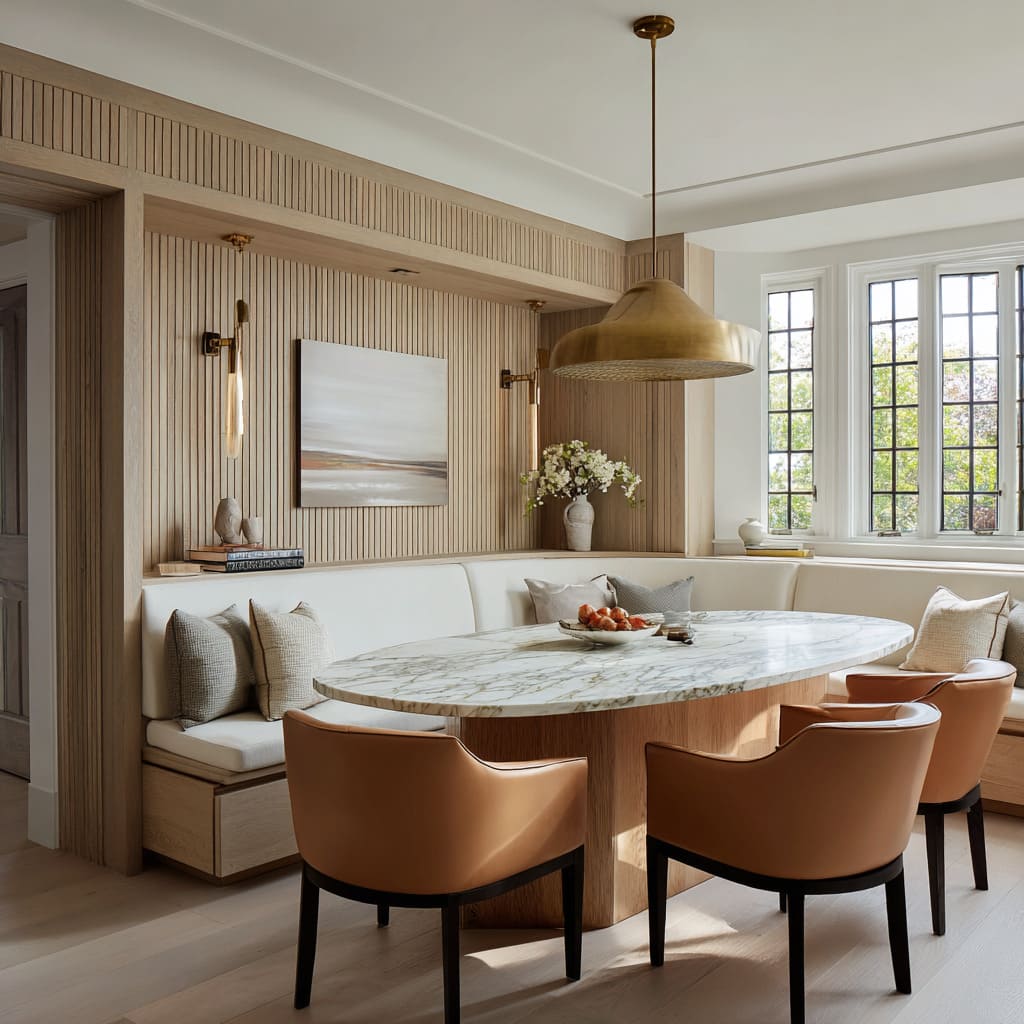
Common boundary types in lounge diner design ideas:
- Overhead framing: a ceiling recess shape, a soft canopy gesture, or a pendant that visually caps the zone.
- Perimeter anchoring: banquettes and built-ins that “dock” the dining area into a wall, making it feel intentional rather than temporary.
- Rug as platform: not as pattern drama, but as a calm base that visually slows the zone and makes it feel settled. The most lounge-like rugs tend to be low-contrast and generous enough that the seating does not look perched on a small island.
Architectural frames like arches and slat walls can act like enclosure without creating heaviness. They give the dining zone a sense of being held, which is a core lounge feeling.
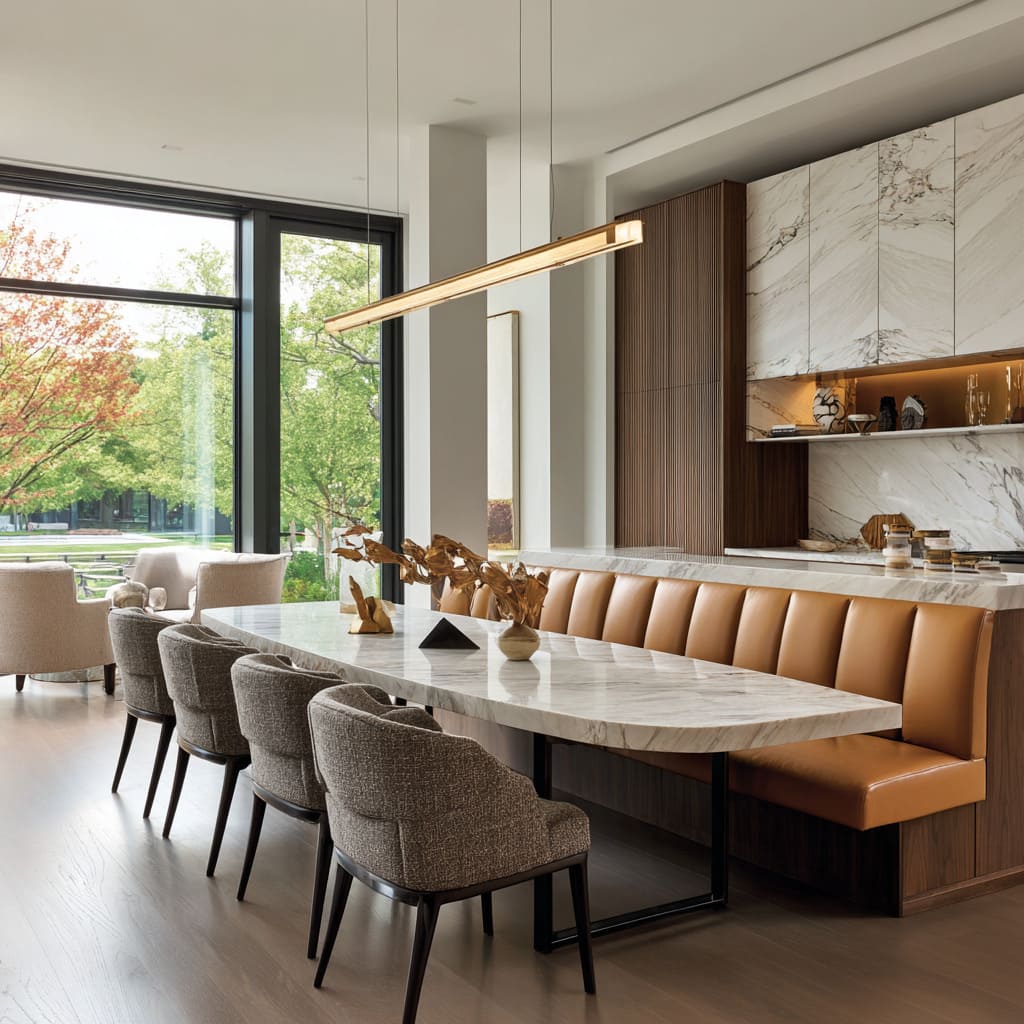
Balancing outward calm and inward glow
Some dining-lounge concepts feel great in daylight but go flat at night. Others feel moody at night but cold in the day.
They can tend to balance two kinds of focus:.
- Outward focus: views, greenery, daylight, open glass.
- Inward focus: warm niche glow, stone wall wash, picture lights, lower-level sconces.
When both exist, the interior design avoids feeling exposed. The view brings expansion; the interior glow brings refuge.
That combination is a subtle reason many lounge dining room designs feel emotionally stable: they offer openness and enclosure at the same time.
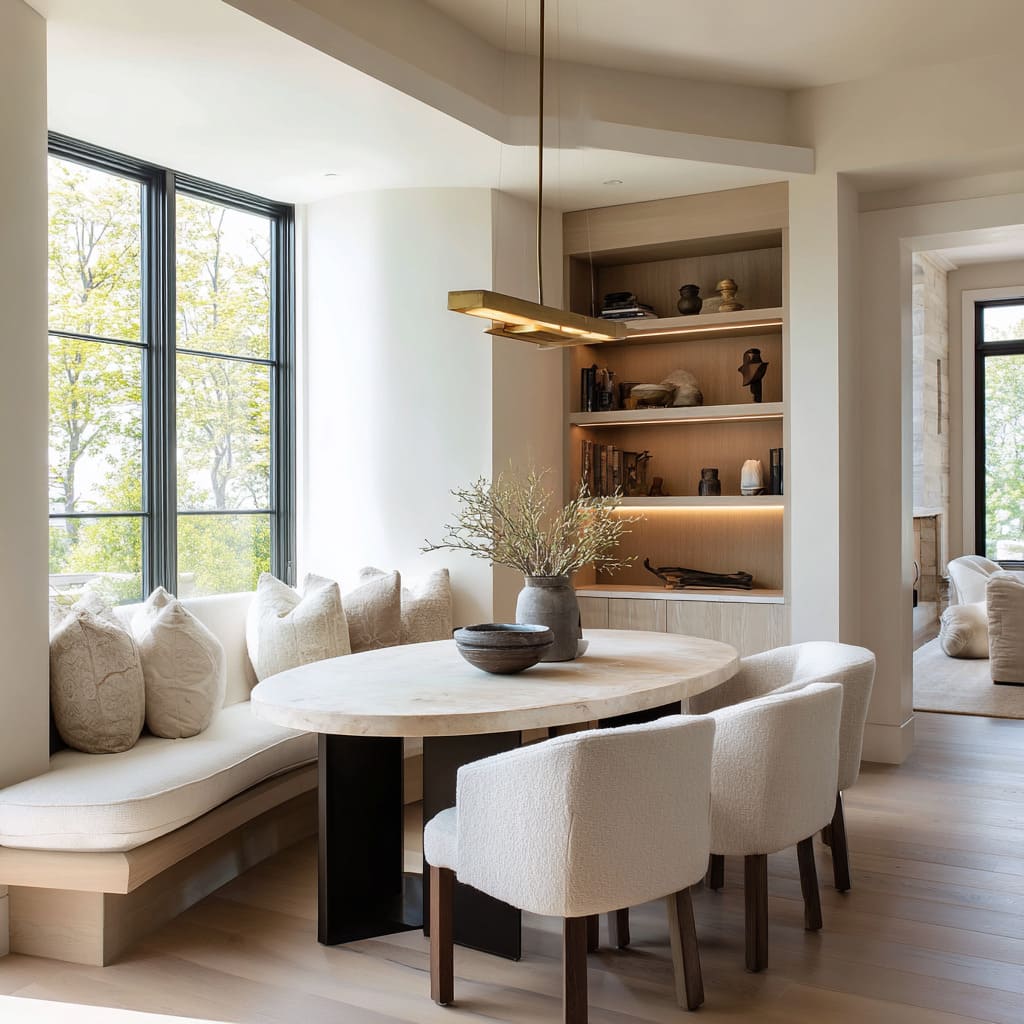
Palette logic: warmth at body level, structure at the edges
A lounge-dining palette often succeeds through placement, not through unusual colors. Pattern examples :.
- Warmth where the body lives: caramel leather, warm neutrals, textured upholstery, wood at hand height. When warmth sits at seating level, the design feels welcoming even if the walls are pale.
- Crisp structure at the perimeter: dark window frames, thin black lines, or darker chair legs that give definition without making the interior design heavy. These edge details keep soft palettes from feeling washed out.
- Soft gradients instead of jumps: creams into warm grays into gentle taupes. Low-contrast transitions reduce visual bouncing, which supports a restful, stay-longer mood.
A design can feel rich with a narrow palette if the textures carry the variation and the outlines stay controlled.
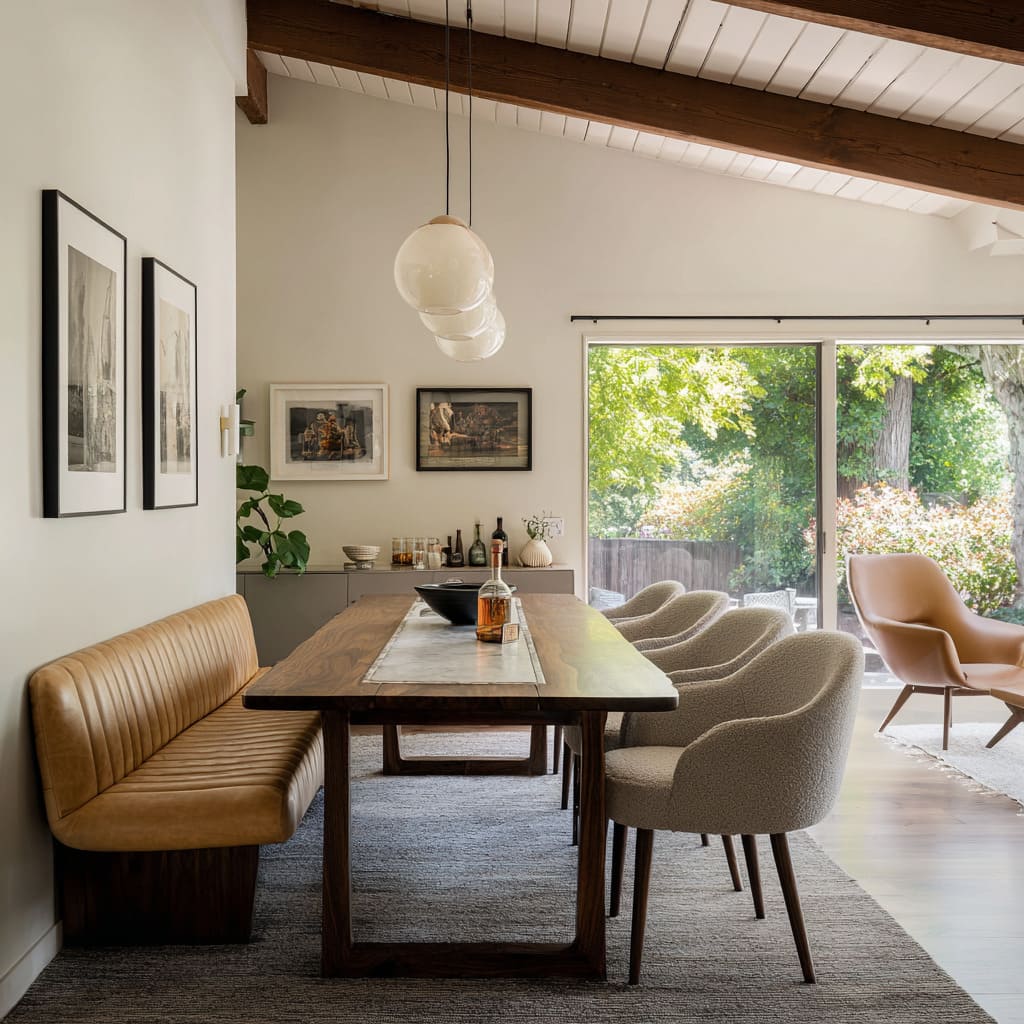
Three recurring “formats” of lounge dining, seen through behavior
Instead of thinking in styles, it helps to think in behavioral formats:.
A) The cocoon nook
A wrap banquette, round/oval table, oversized diffused pendant, and gentle wall lighting create a contained social bubble. The room reads intimate even if it sits inside a larger plan.
B) The open-plan runway
A long table paired with a continuous banquette line, a calm rug platform, and a strong backdrop wall (stone, textured surface, lit niche) turns the dining zone into a defined destination without blocking flow.
C) The “dining + landing” hybrid
A dining setup shares its axis with a sofa, window seat, or secondary perch so the gathering can shift posture mid-evening without changing rooms. This is where the dining room truly behaves like a lounge because it supports multiple modes at once.
These formats are the real backbone behind many lounge diner ideas: they’re not about specific decor items, they’re about how the room permits time.
Closing thought: the quiet signature of successful lounge dining
The deepest common thread in strong dining room lounge ideas is not a single furniture piece. It’s the room’s refusal to rush you.
That refusal shows up as soft posture options, socially generous shapes, low-glare lighting, controlled visual weight, and supporting elements (books, niches, sideboards, window perches) that make staying feel normal. The space does not look like it’s trying to prove anything.
It simply behaves like a lounge—calm, composed, and ready for the moment after dinner, which is often the best part of the night.