Modern kitchens often offer only one unobstructed vertical surface—the window—and this makes it the natural focal point for December styling. The seasonal mood can develop from how the textile at the window sets the December atmosphere.
Long drapery panels behave almost like soft murals, Roman shades operate like restrained art pieces, and short café curtains become quiet seasonal strips that sit exactly at working eye level. Unlike bulky décor that competes with countertop tasks, fabric on the window remains elevated, unbothered, and uninterrupted, allowing a kitchen to feel festive without losing function.
The power of the drapery is its reach: from ceiling to sill, or from sill to seat, the textile has the size to shape mood in a single gesture. This is why christmas kitchen window ideas often focus on pattern, repetition, and color rather than collections of objects.
The curtain can become the place where the seasonal story lives, while the rest of the kitchen remains practical, calm, and ready for everyday cooking.
Three Core Aesthetic Worlds: Forest, Snow, and Sky
There is a wide range of visual languages, yet most can fall into one of three atmospheric categories: forest-inspired graphics, snow-driven textures, or night-sky interpretations. Each category holds different emotional tones and suggests a different type of winter.
Forest-based Visual Language
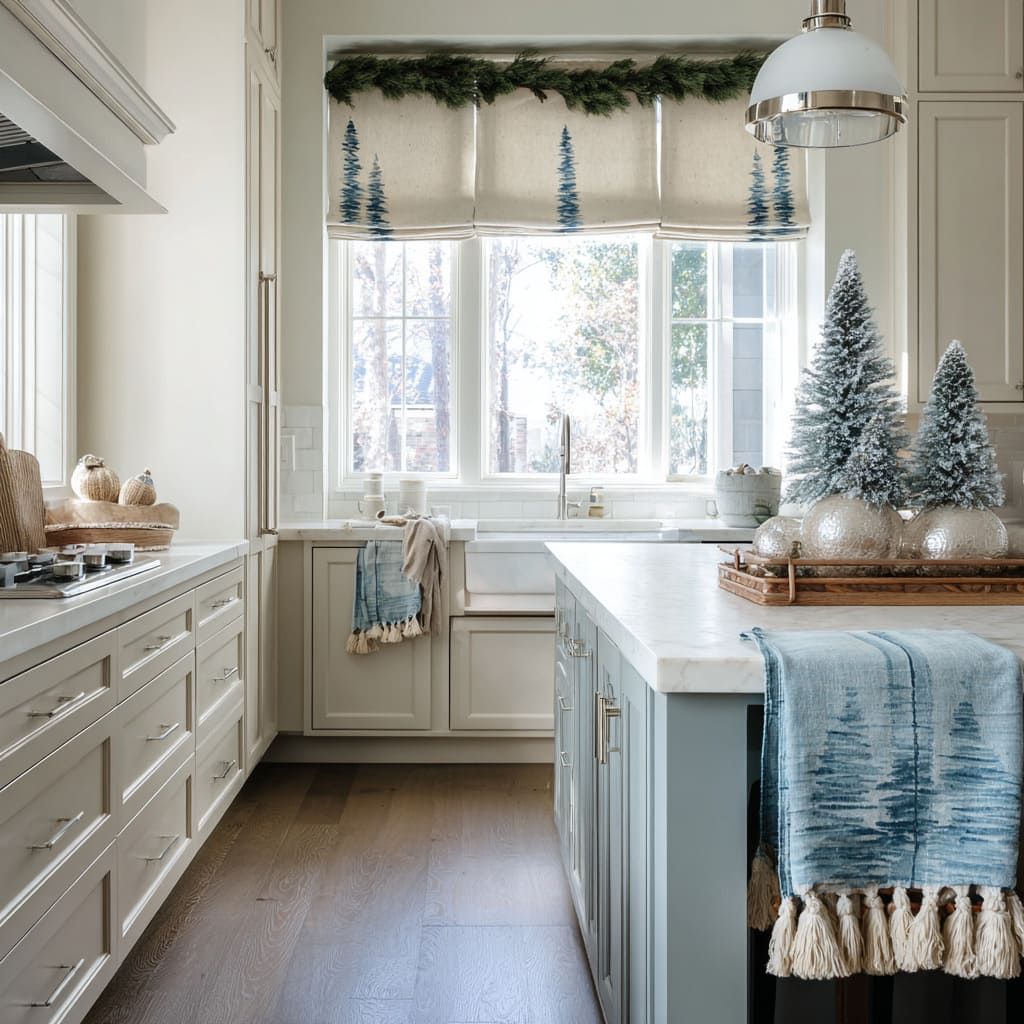
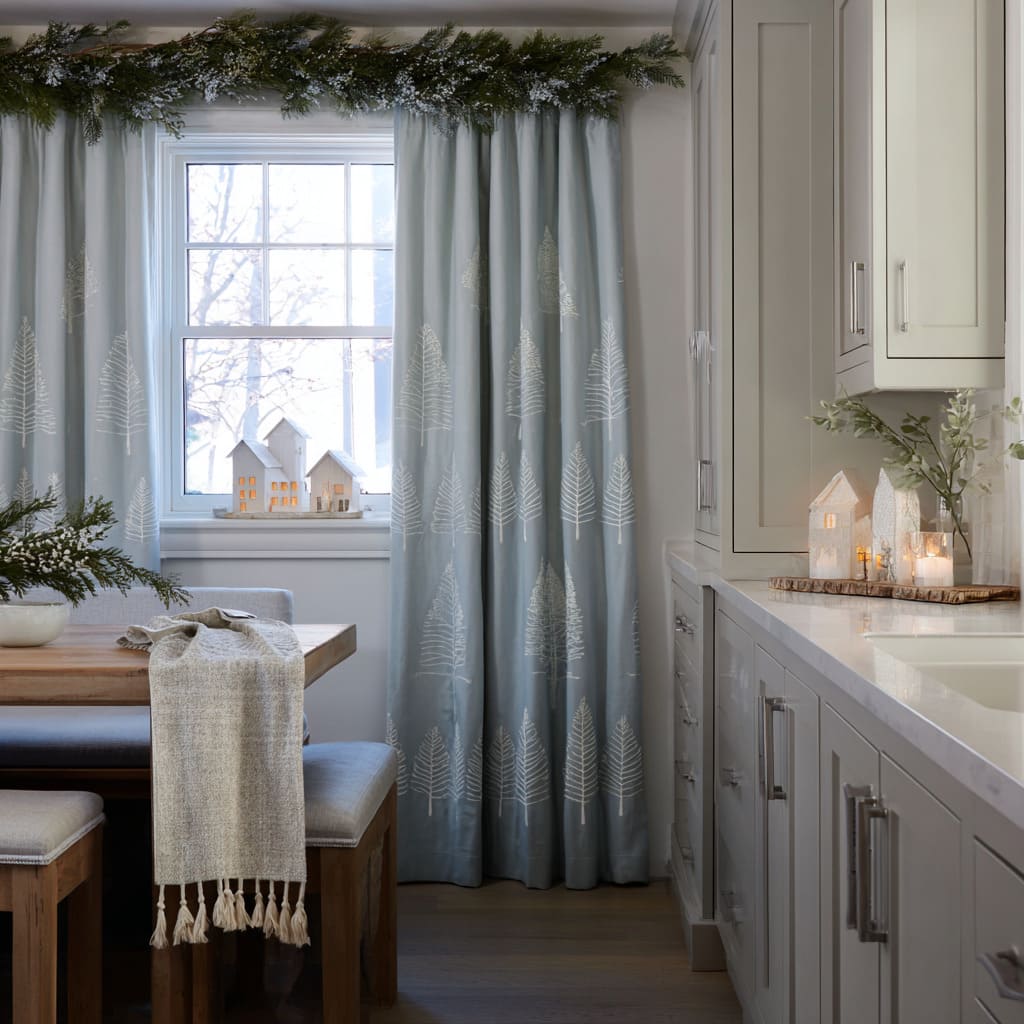
Forests are suggested through embroidered stems, printed tree silhouettes, narrow pine shapes, or geometric mountain peaks. These motifs operate as repeated vertical accents, strengthening the room’s architecture.
Snow-inspired Aesthetic
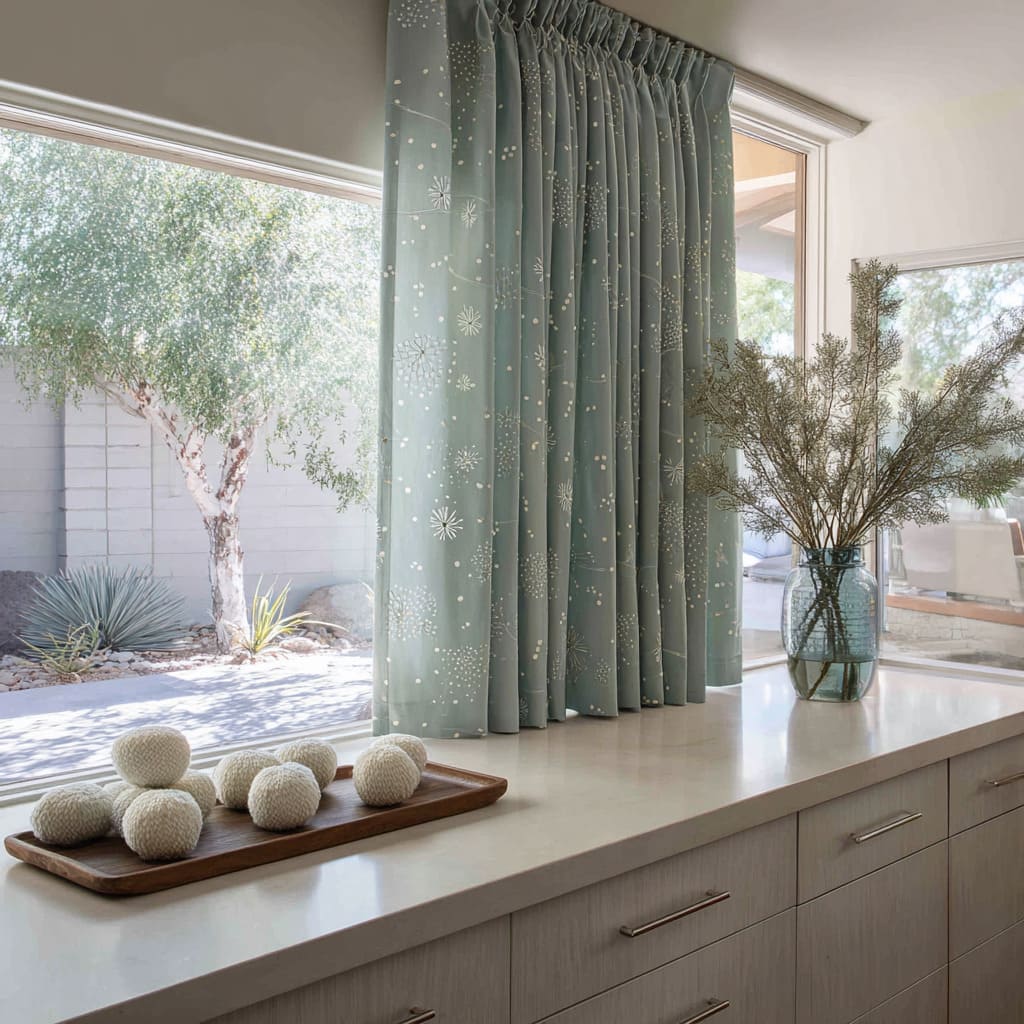
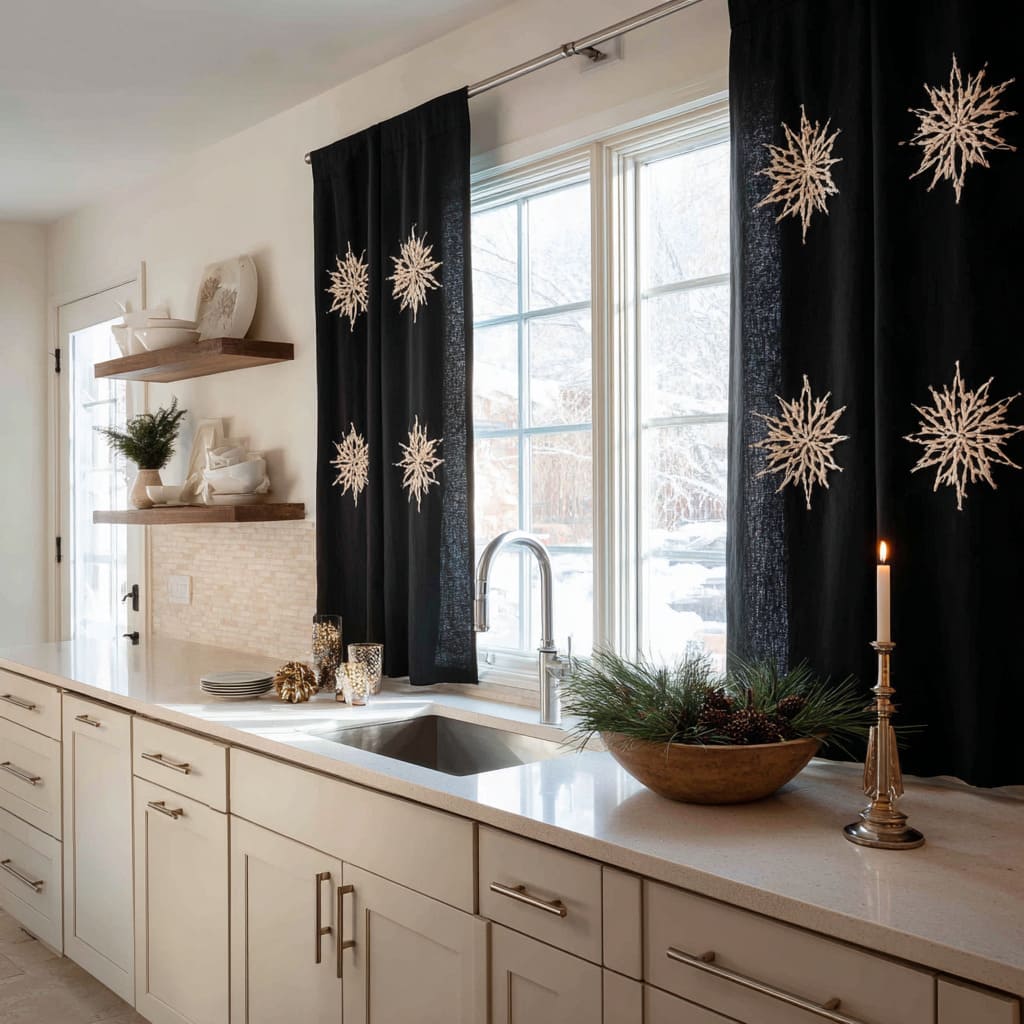
Snow appears as scattered dots, floating flakes, frosty bursts, or gently speckled surfaces. Patterns range from dense and graphic to soft and irregular, making it possible to tune the level of seasonality: large flakes feel festive, finer dots simply feel wintery.
Sky and Light-based Motifs
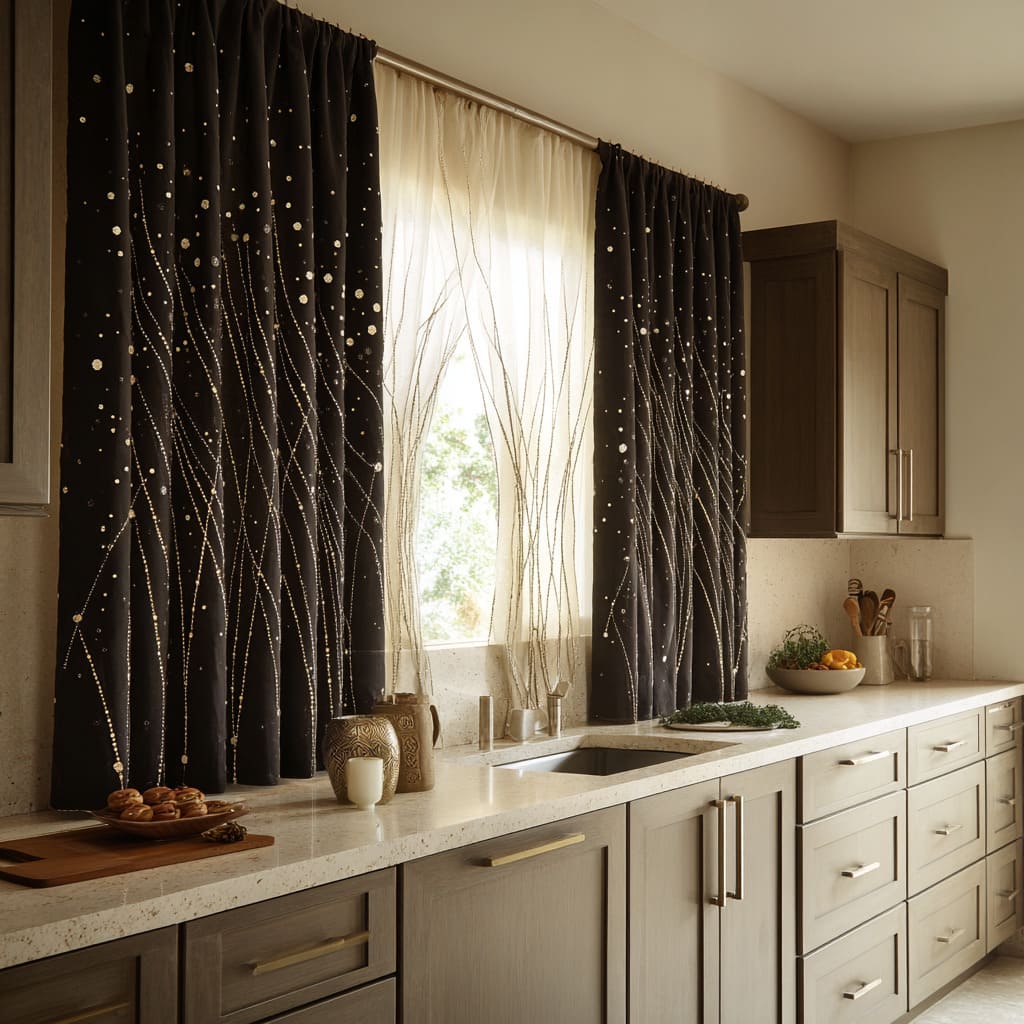
Night-sky patterns rely on dark textiles scattered with gold or ivory points, or wavy threads resembling strands of lights. These motifs hint at evening gatherings, candlelit moments, and quiet winter nights.
These three “worlds” create a structure for understanding how different kitchen designs achieve holiday mood without relying on traditional colors or symbols.
How Scale and Placement Shape the Winter Story
Pattern scale dramatically changes how festive a window feels. Large motifs turn the panel into a bold statement piece; medium motifs offer a gentle nod to December; tiny patterns softly animate the room without locking it into a specific holiday.
Placement matters equally.
Upper, Middle, or Lower Placement
Why Placement Matters Emotionally
A motif placed low feels cozy and calm, as if winter lives closer to everyday life—near hands, mugs, and dishes. A motif placed high feels like an overhead canopy, a “ceiling” of seasonal mood hovering gently above the task zone.
A pattern running top to bottom feels like walking through a soft snowfall. This subtle placement logic explains why certain kitchens feel morning-bright and others feel evening-cozy even when the motifs are similar.
When the Window Extends the Landscape Beyond the Glass
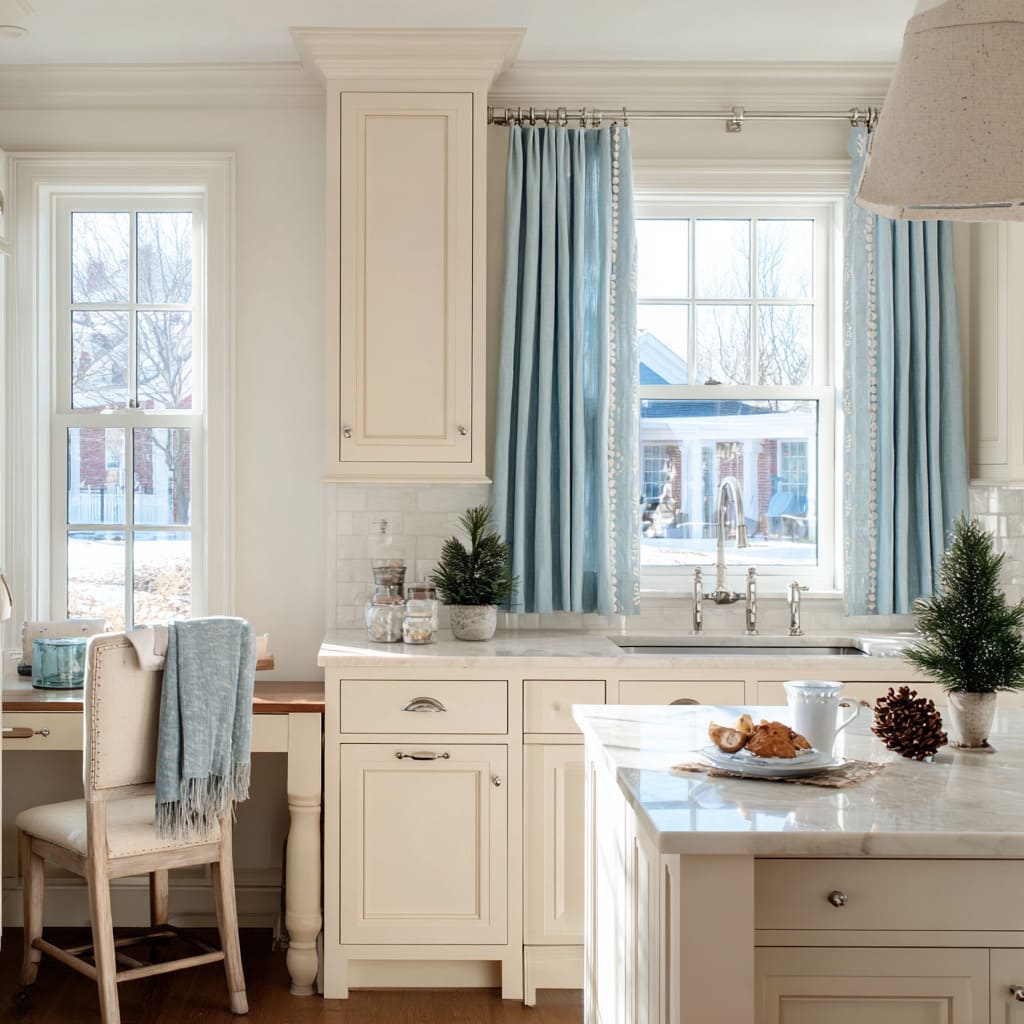
The seasonal story can grow from the dialogue between inside and outside. A snowy yard reflected in frosty curtains forms a layered visual echo; a winter sky extended by pale blue drapery pulls the exterior world into the room; a cluster of real evergreens outdoors finds its counterpart in embroidered tree motifs inside.
Exterior to Interior Echoes
- Snowfall outside and snowflake dots inside create a shared weather language.
- Bare branches beyond the window are mirrored through fine line-drawn motifs.
- Winter light entering the room amplifies patterns and turns translucent fabrics into illuminated surfaces.
Interior to Exterior Contrast
In cases located in warmer climates, the fabric intentionally compensates for outdoor conditions. A sunlit garden outside might be paired with an aqua curtain sprinkled with snow motifs, creating a gentle contrast between warm reality and cool seasonal imagination.
This contrast gives the kitchen design a layered winter feel without denying the local light or climate.
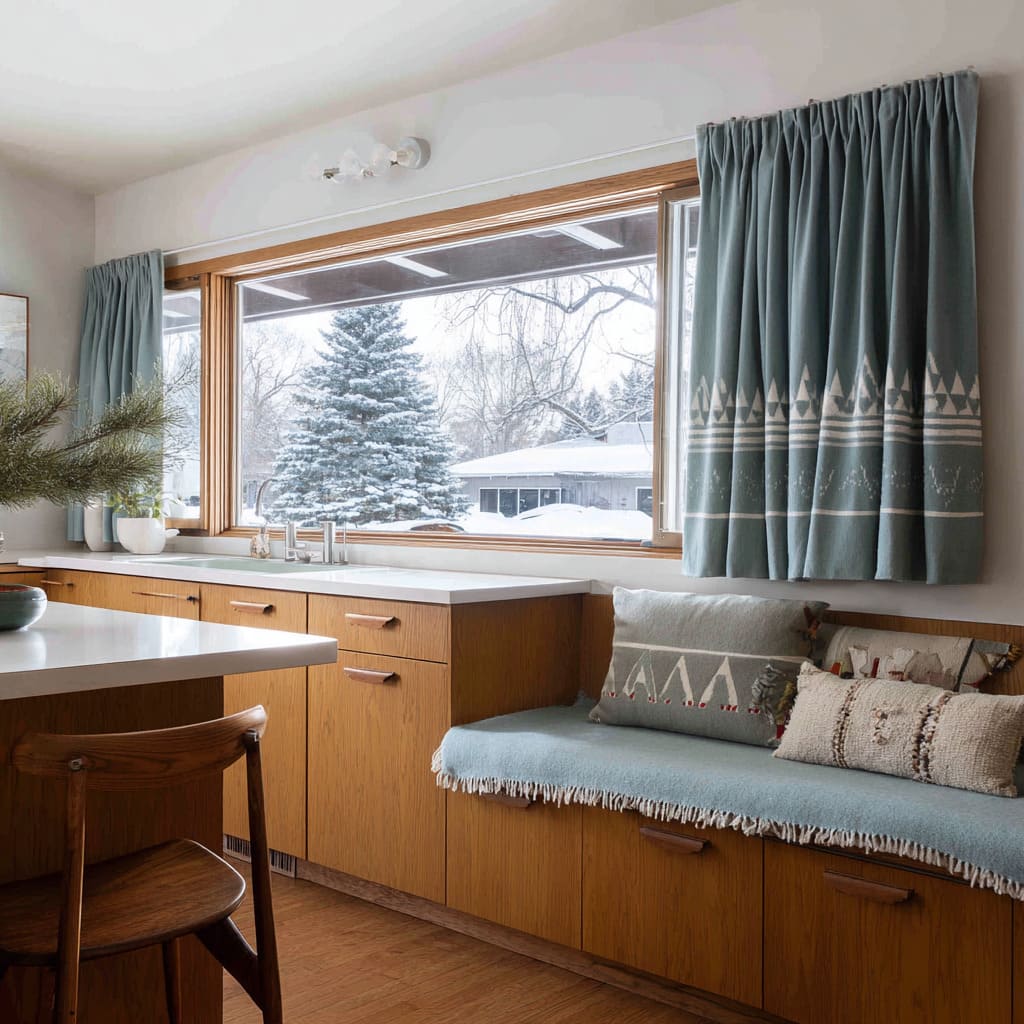
Soft, Mid, and Bold Seasonal Modes Through Color
Color remains one of the quietest but strongest influences on seasonal mood. Many contemporary December kitchen designs step away from bright reds in favor of softer palettes: icy blue, dusty sage, creamy linen, charcoal, and honey wood.
These tones allow winter styling to blend into everyday life.
Soft Mode
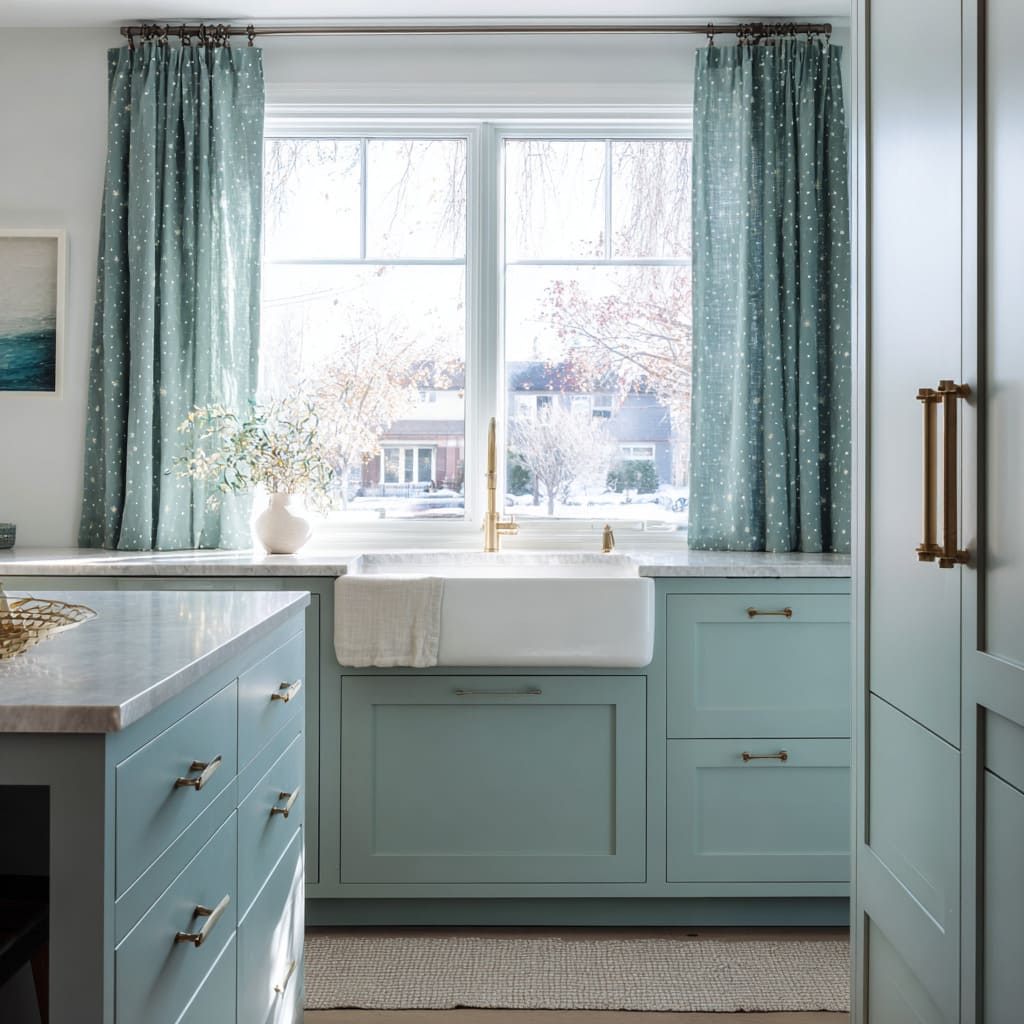
Blue-white palettes, sage with tiny white dots, or pale aqua scattered with snow specks form a gentle atmosphere that feels wintery but not holiday-specific.
Mid Mode
Tree motifs, garlands, low evergreen borders, and small clusters of glass ornaments add clearer seasonal signals while maintaining a restrained palette.
Bold Mode
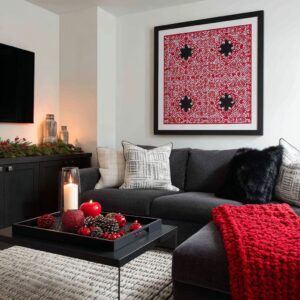
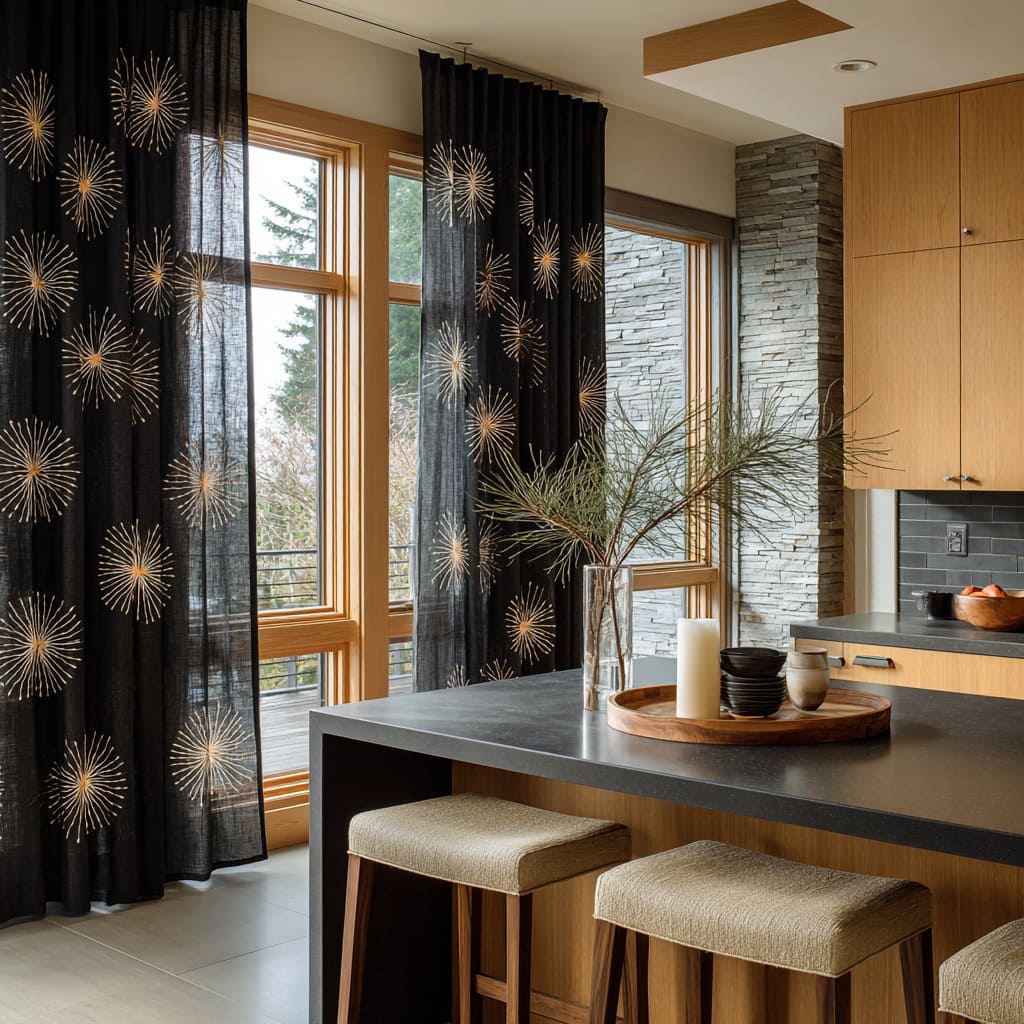
Black curtains with white snowflake medallions, deep charcoal panels with glowing embroidery, or gold bursts on dark fabric create theatrical December mood. In all modes, warm woods, soft metal finishes, candlelight, and simple tableware keep the kitchen look inviting and balanced.
Rhythm Through Repetition: How Motifs Travel Across the Room
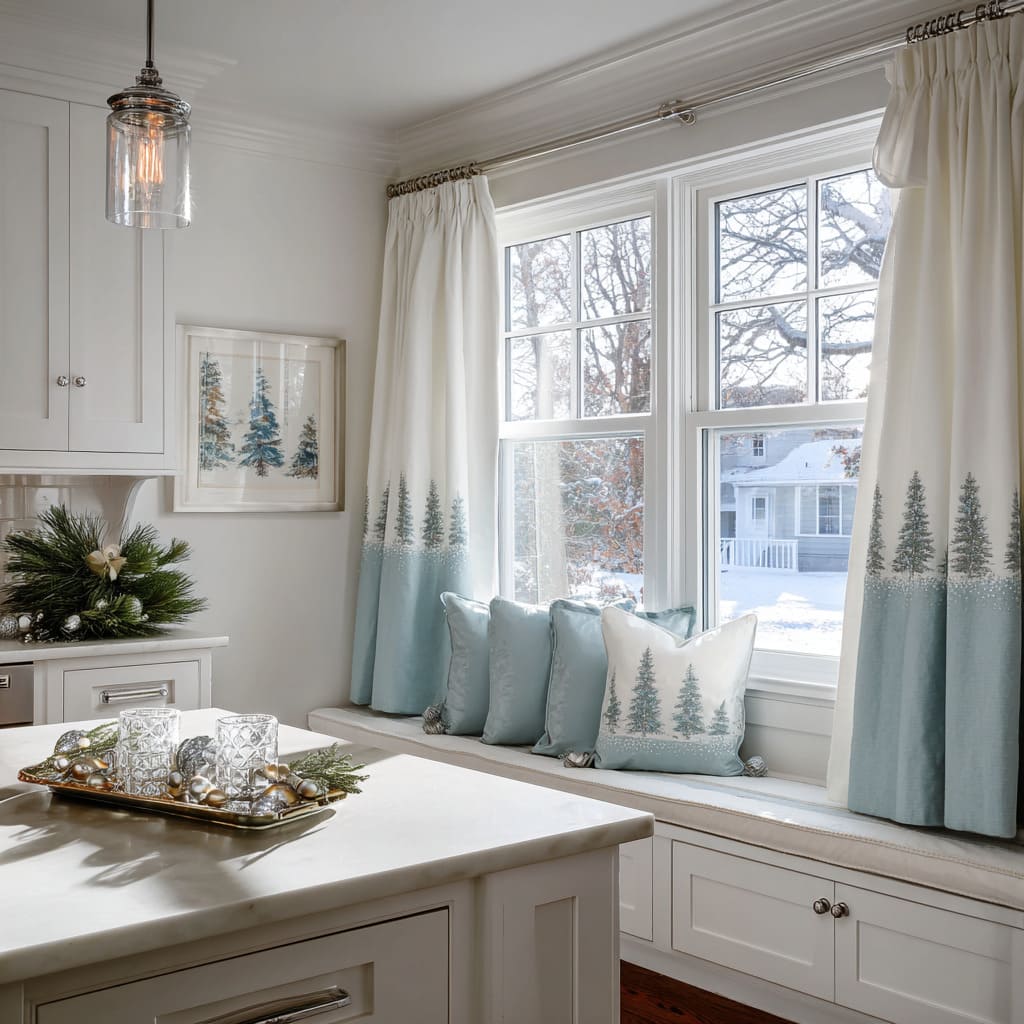
A key tactic can be the subtle repetition of the main curtain motif elsewhere in the kitchen. Instead of covering the room with multiple decorations, the design uses only two or three carefully placed echoes.
Typical Echo Paths
- Curtains → cushions on a bench.
- Curtains → small towel, table runner, or countertop textile.
- Curtains → miniature versions of motifs in décor (tree figurines, snow-covered bottle-brush pieces, white branches).
Why Two or Three Echoes Work Best
One repetition strengthens the connection between textile and object. A second repetition ties the motif into the architecture or tabletop.
A third, very small echo—like a tiny ornament or a single sprig of greenery—provides the finishing note. More than three echoes risks visual heaviness.
This approach allows decorating kitchen window for christmas to extend gently through the rest of the room without creating clutter.
Vignettes Instead of Clutter: The Power of Concentrated Seasonal Scenes
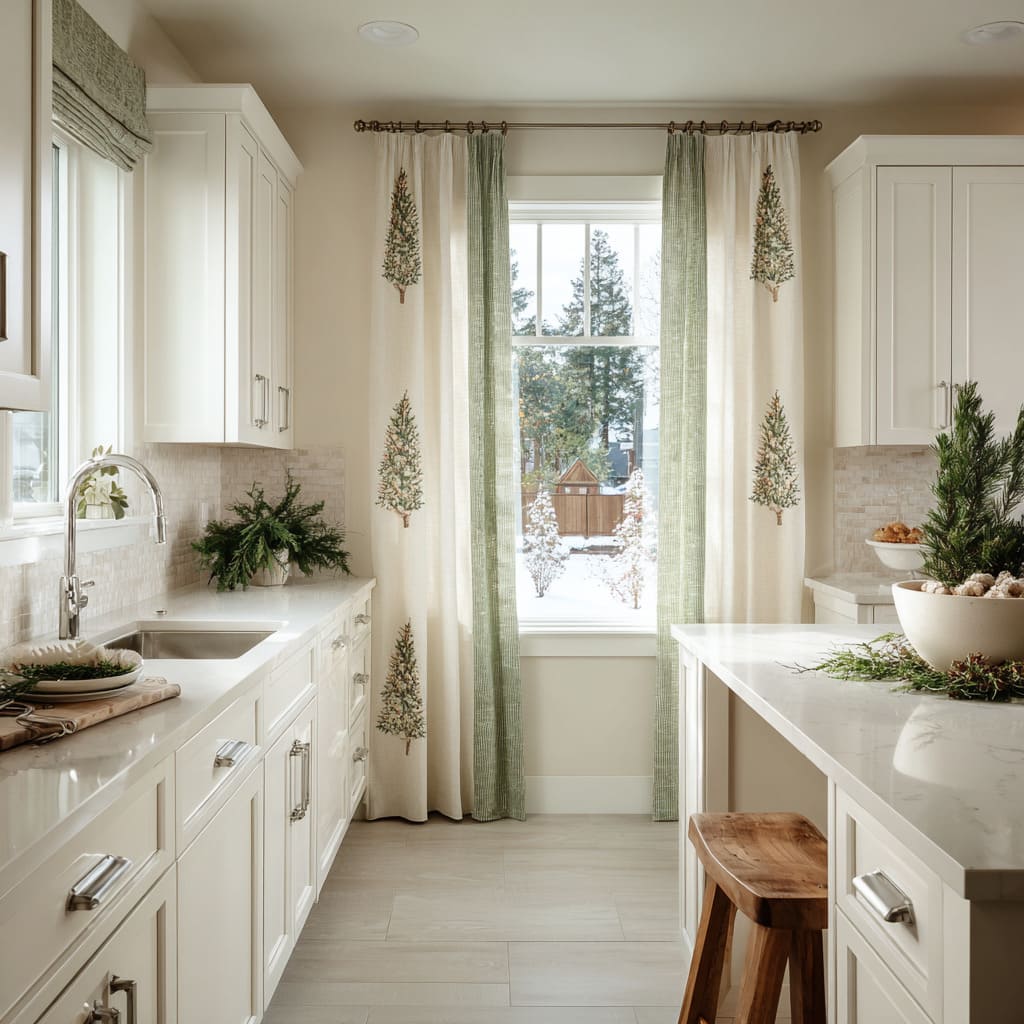
Contemporary kitchen designs rely heavily on tray-based vignettes rather than widespread ornamentation. These vignettes operate like micro-landscapes: small, complete compositions that sit together as one idea.
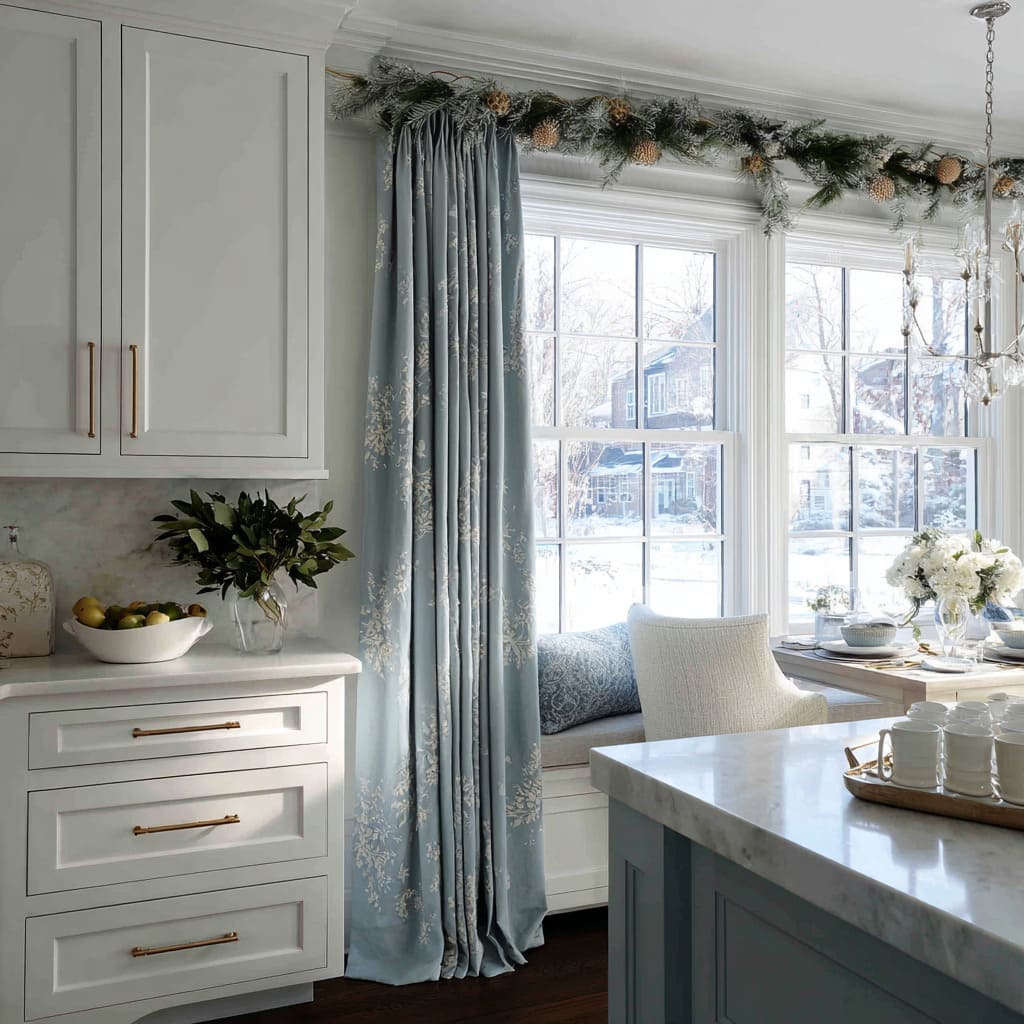
Common Vignette Structures
- Forest clusters: evergreen sprigs, candles, miniature tree figures, or a wood slice acting as a base.
- Snow scenes: glass cylinders with white flowers, soft blue pieces, and powdery surface textures.
- Evening accents: metallic jars, dark bowls, or luminous glass vessels that reflect warm light.
- Village themes: miniature house lanterns grouped in tight, organized clusters.
Tray placement prevents clutter, preserves workspace, and offers an easy way to shift the kitchen’s December identity without overwhelming the countertop. Each vignette supports the curtain, acting like a small chapter in the larger visual story introduced at the window.
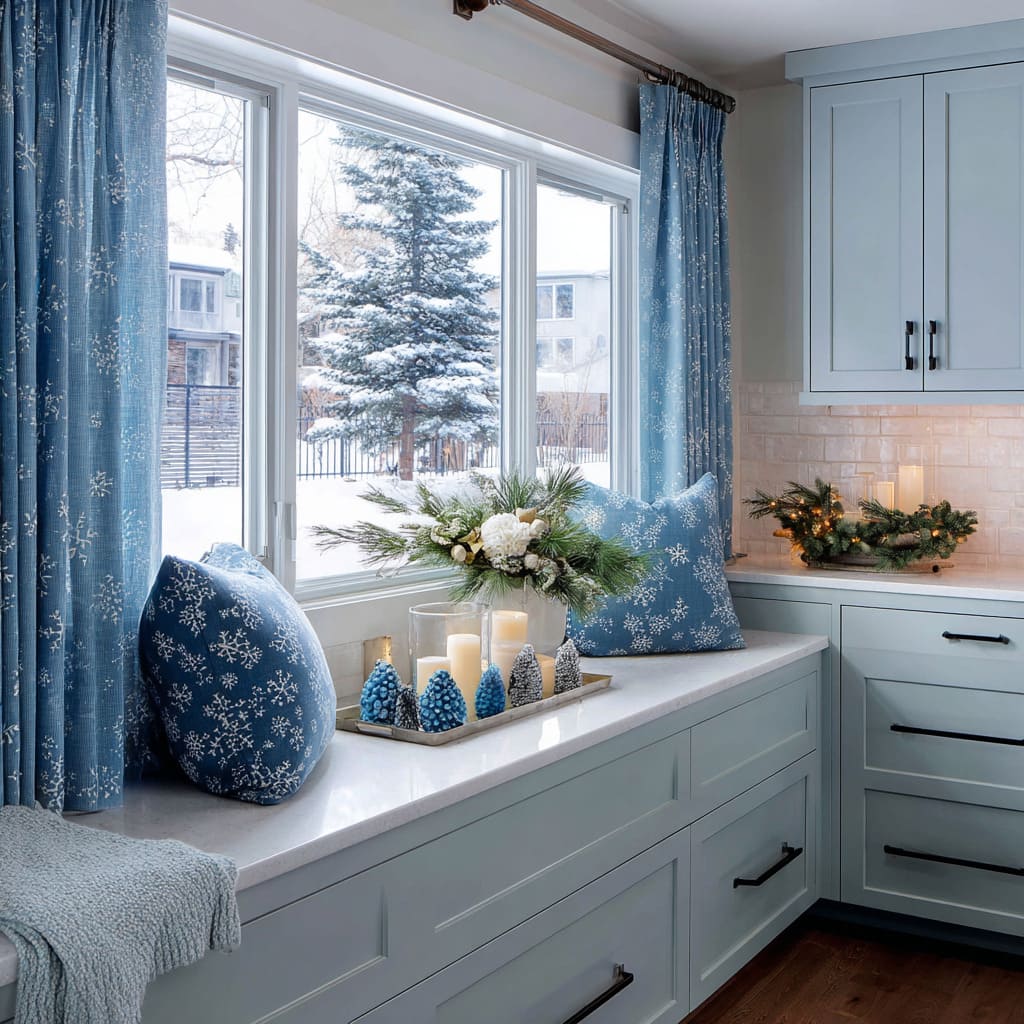
Light, Time of Day, and the Emotional Temperature
Seasonal kitchen decorating ideas can express completely different personalities depending on whether they lean toward morning brightness or evening glow. The fabric at the window often determines which direction the atmosphere takes.
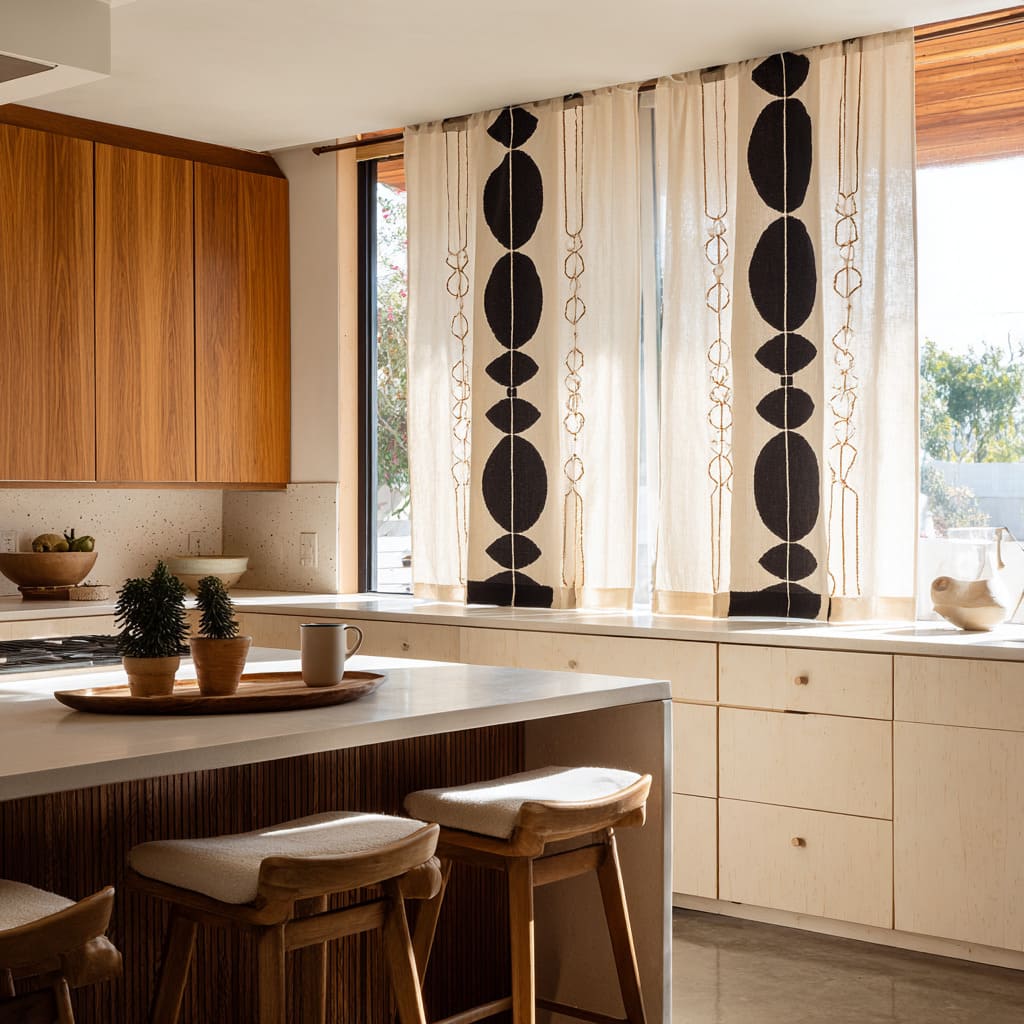
Morning Kitchens
These ideas rely on pale blues, whites, and soft greens. Sheer or translucent drapery creates a gentle glow as sunlight filters through patterns, making the kitchen feel bright and refreshed.
Morning kitchen ideas frequently include seating at the window—benches, cushions, and throws—enhancing the calm and slow pace associated with winter breakfasts.
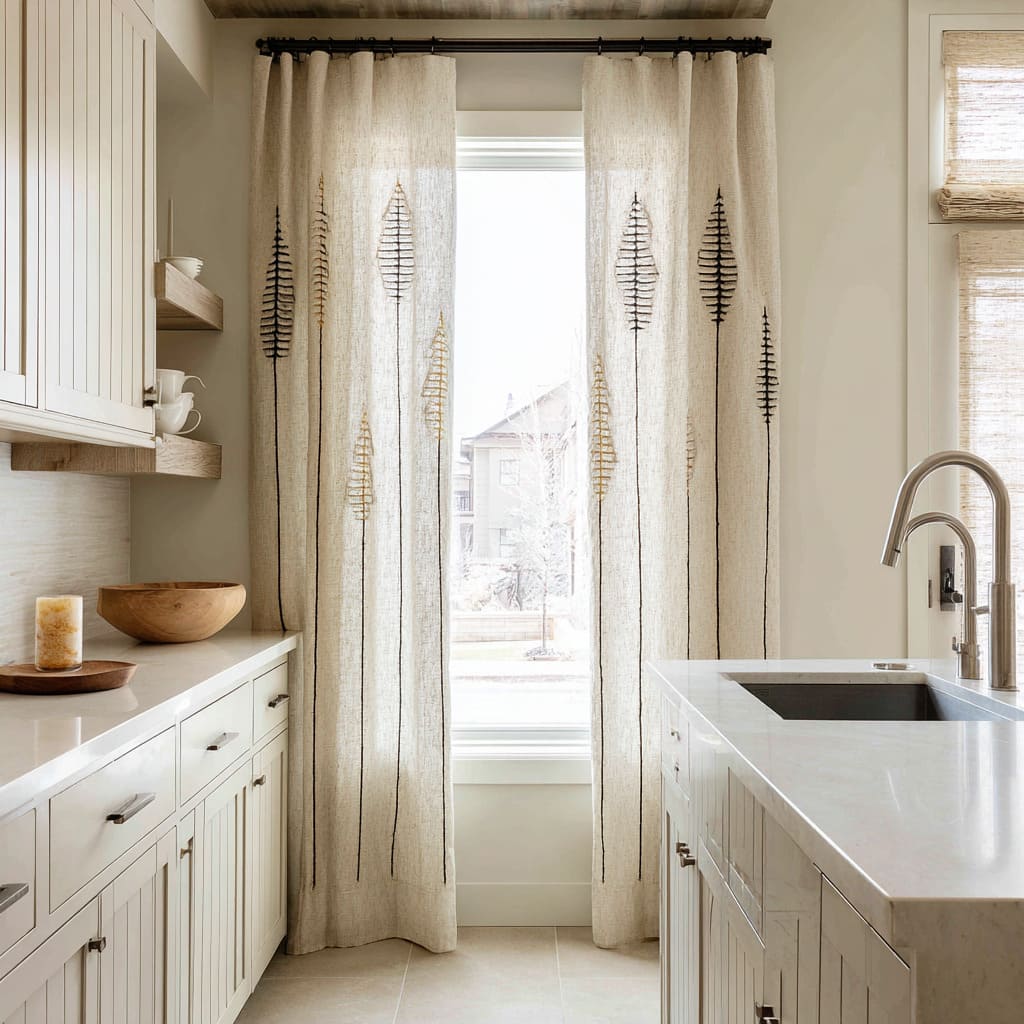
Evening Kitchens
These ideas use darker drapery: charcoal embroidered with gold, black scattered with starburst shapes, or deep fabrics carrying dotted motifs that resemble string lights. Once interior lights turn on, the patterns shine and create a dramatic backdrop for evening gatherings.
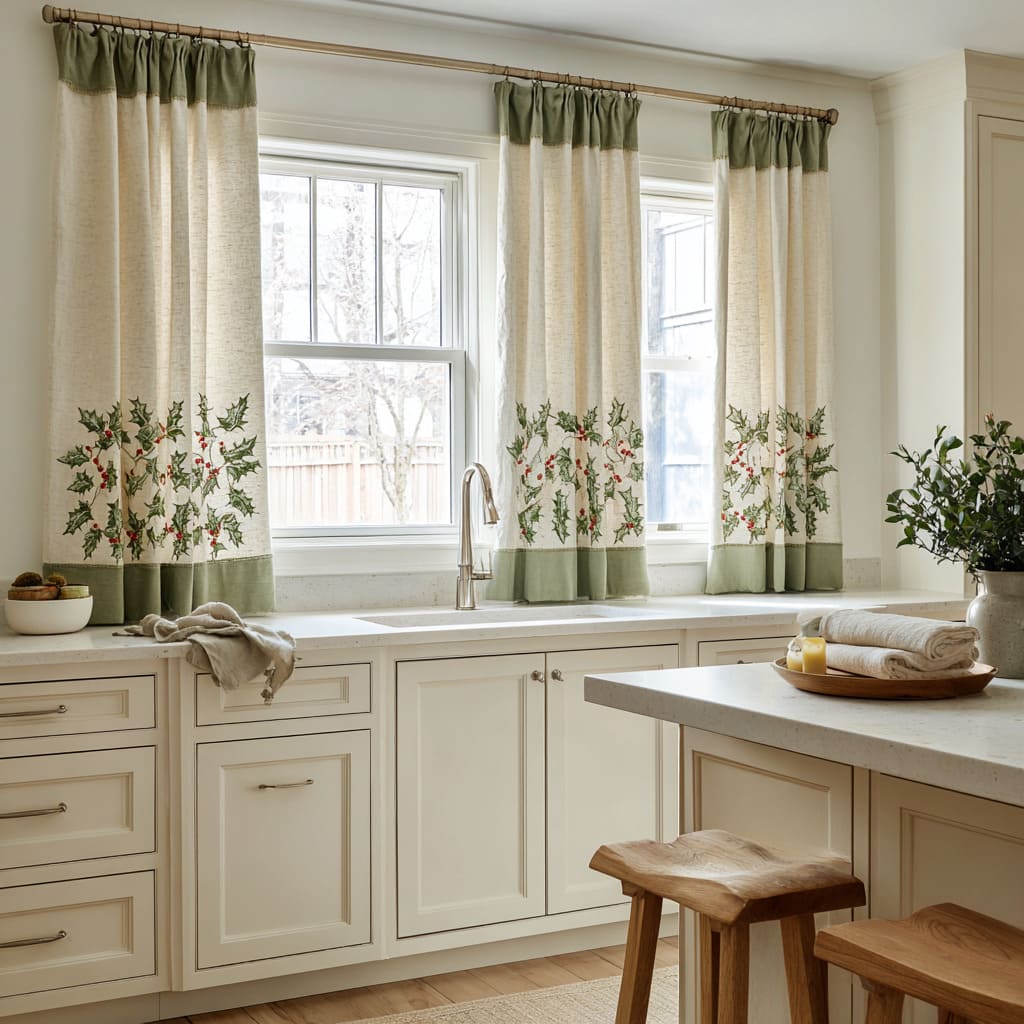
Both worlds rely on minimal accents placed with intention, allowing the window to guide the mood rather than relying on heavy décor. This dynamic use of time and light helps elevate kitchen window christmas ideas into a thoughtful design approach.
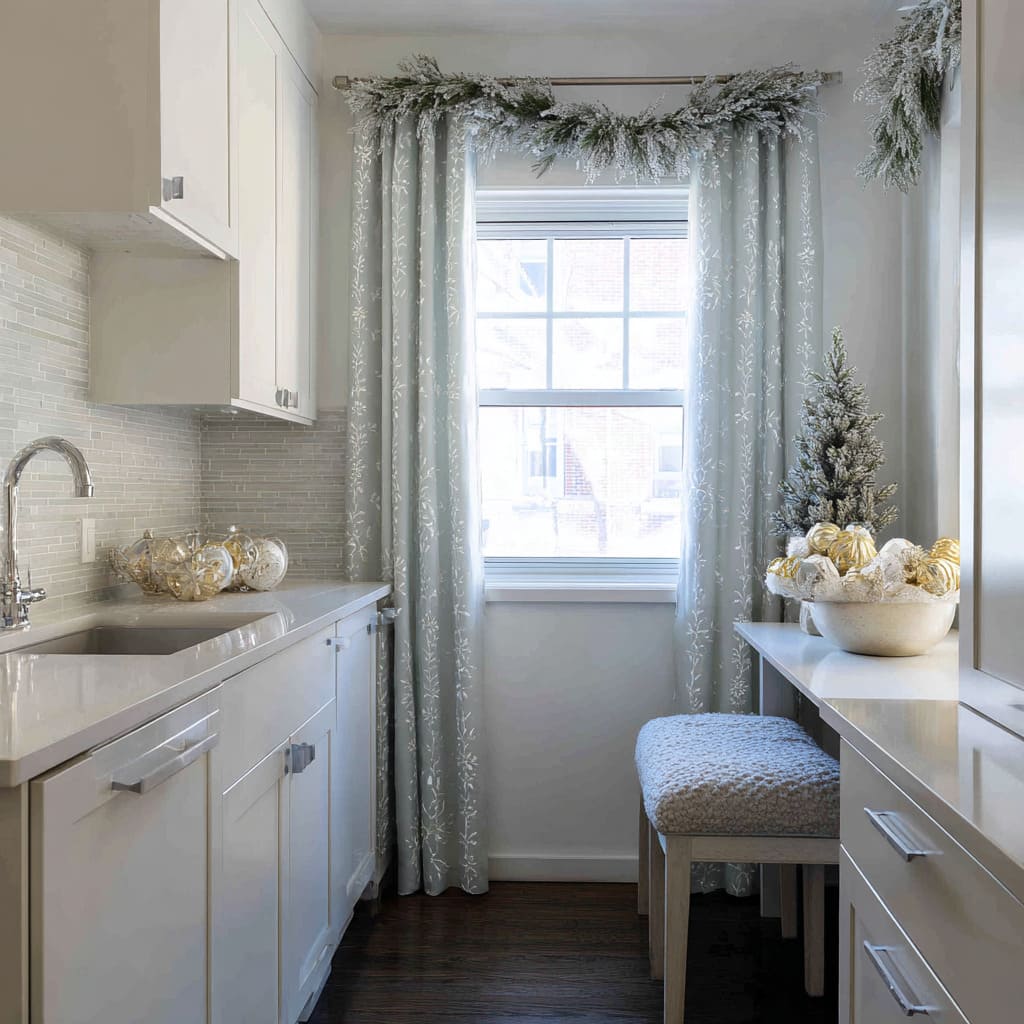
Patterned Textiles as Seasonal Architecture Within the Room
Patterned curtains can behave not merely as fabric but as architectural elements. They extend the height of the room, organize the visual flow, and create a seasonal “portal” at the end of a narrow galley or above a sink.
This effect transforms the window into a seasonal zone rather than a simple light source. With carefully chosen motifs—branches, trees, snowflakes, or line-drawn forms—the curtain becomes a December surface that shapes the surrounding palette.
Supporting elements such as wood stools, pale ceramics, greenery mounds, or clustered candles echo the curtain without competing with it. The entire kitchen joins in a quiet, structured winter narrative.
This is why many kitchen window christmas decorations focus not on quantity but on how a single strong textile can define the room.
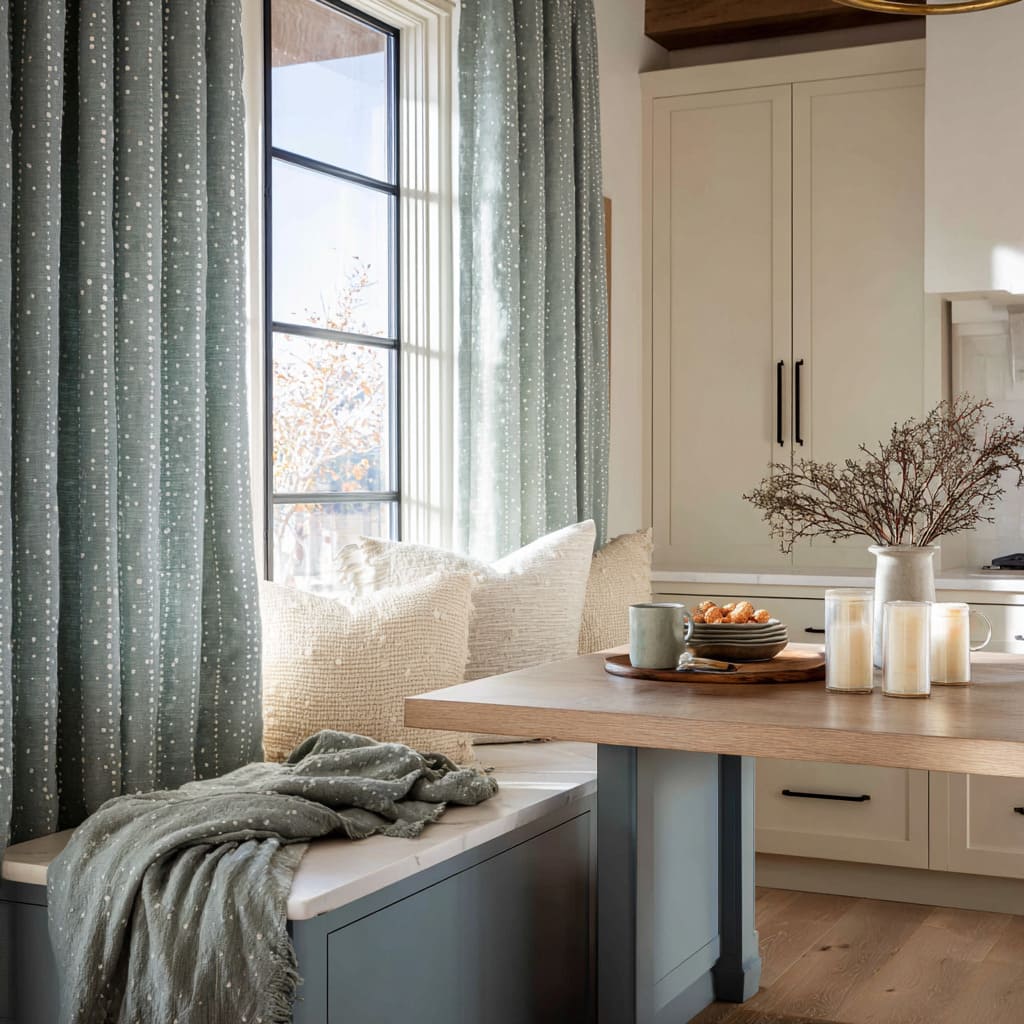
Multiple Readings: The Kitchen That Feels Festive Without Losing Utility
The modern approach to kitchen window ornament ideas embraces dual-purpose design. Every seasonal element has two readings: one for daily function and one for winter mood.
Curtains stay practical while also providing a December motif; benches remain seating while carrying subtle winter textiles; trays keep décor contained but still expressive; greenery rests lightly without blocking working space. This dual nature allows the kitchen design to feel festive without interfering with cooking, cleaning, or gathering.
The holiday story can be built not from many objects but from layered scenes, controlled repetition, color harmonies, and gentle winter references. The result is a December kitchen that feels lived in, warm, and atmospheric—a place where seasonal mood grows from fabric, light, and small groups of thoughtful details, rather than from volume or excess.
The Curtain as the Heart of Contemporary Holiday Expression
At the center of Christmas decorating ideas often is one shared insight: the curtain defines the seasonal identity of the modern kitchen. Whether it carries a forest band, a night-sky shimmer, an embroidered snowfall, or a geometric winter motif, the textile has the strength to steer the entire interior.
Surrounding elements simply echo and support it. This approach shows how kitchen window christmas decorations can be created with minimal effort yet maximum atmosphere when the window treatment is treated as the primary seasonal feature.
The curtain becomes the winter surface, the tone-setter, the quiet December signal that shapes the room’s personality. Everything else—garlands, greenery, small village pieces, candles, textiles—simply folds into the world the curtain creates.