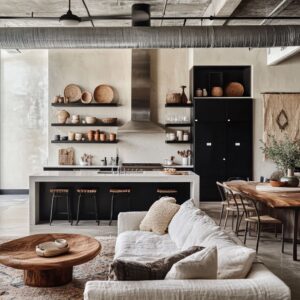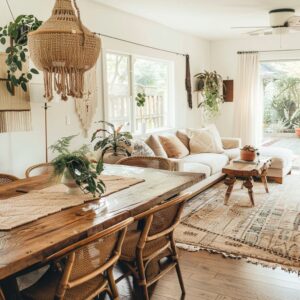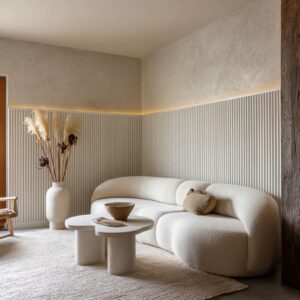
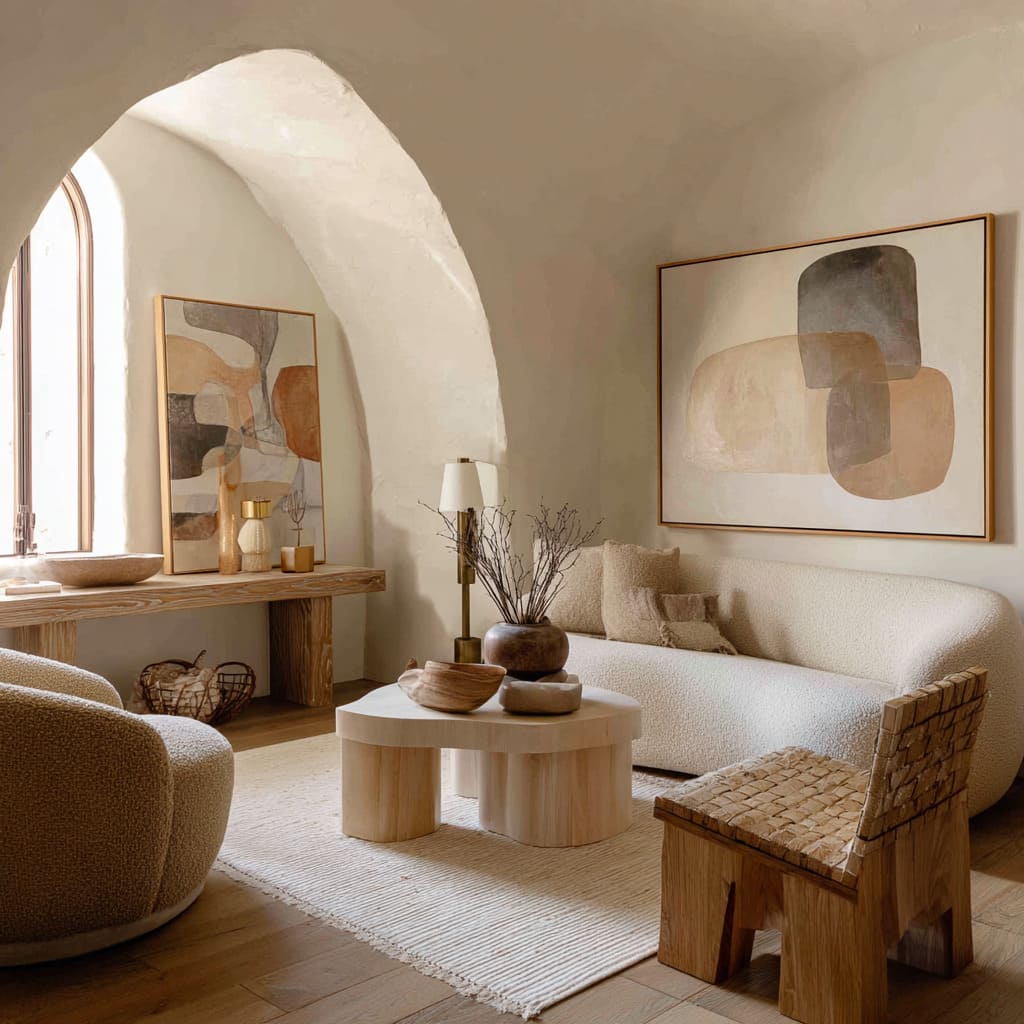
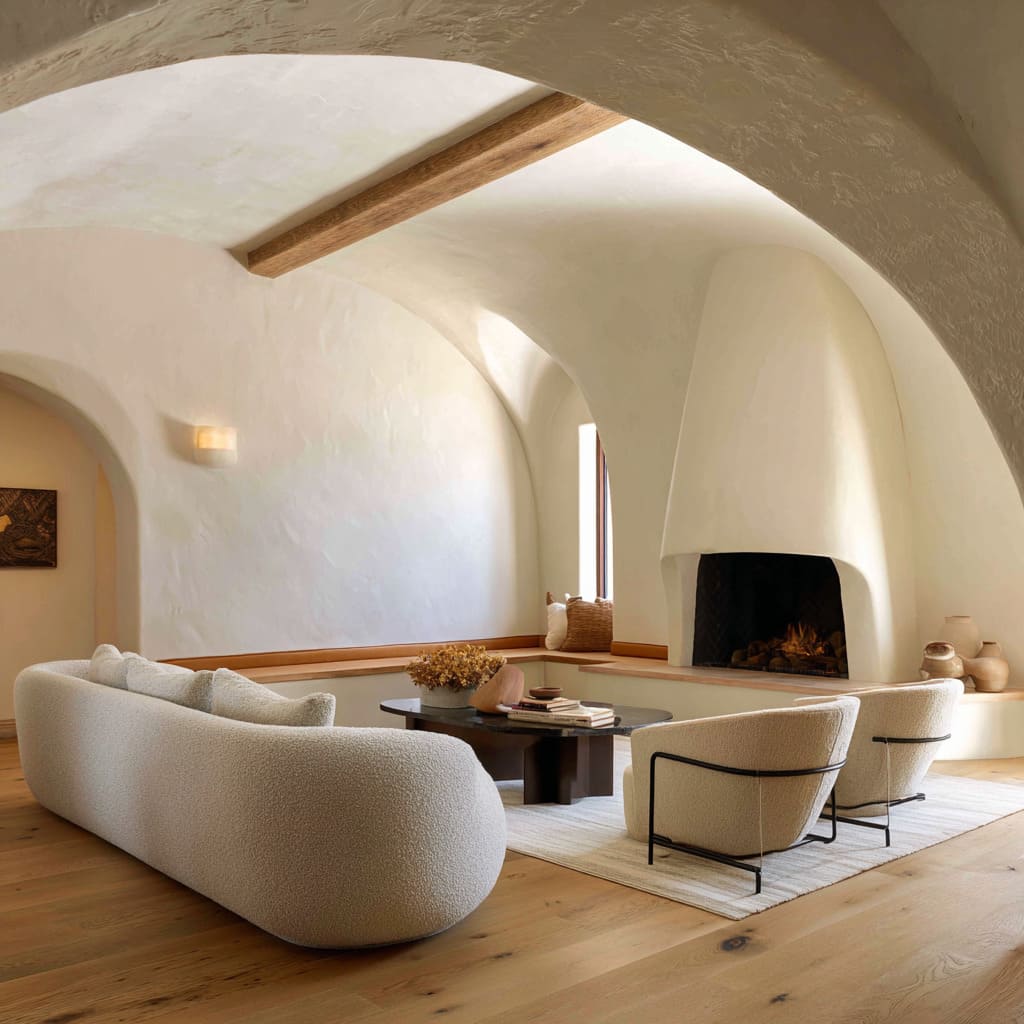
One of the strongest qualities of modern Spanish colonial interior design lies in the way walls and ceilings merge into a continuous, carved envelope that feels shaped rather than built. Instead of traditional straight-line construction, the surfaces bend softly into one another, creating gentle transitions where a ceiling line melts into wall curves without hard intersections.
These smoothed contours, especially in barrel vaults or wide arches, allow daylight to graze the surfaces in uneven gradients, making the plaster feel alive.
This softness removes visual fragmentation and gives the living room a sense of being formed from a single material mass. The result is an atmosphere where architectural presence replaces ornamentation, and sculptural volume becomes the primary decorative force.
When combined with thick-edged openings, deep-set windows, and alcoves that feel hand-carved, the architecture becomes an immersive shell, grounding the space in a language that is recognizably Spanish yet fully modern.
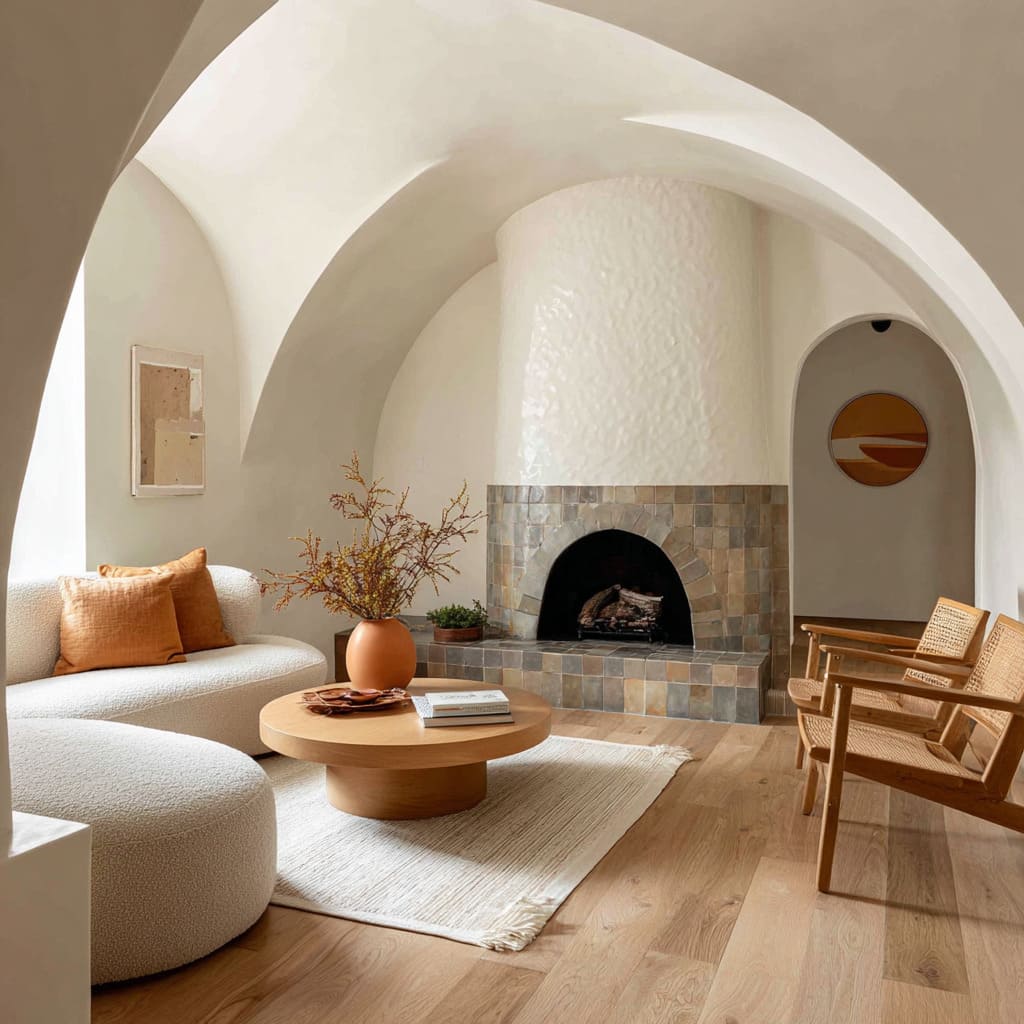
Compositional Hierarchy: How Spanish Colonial Style Organizes Attention
Beyond materials and curves, this style relies on a very controlled visual hierarchy, so the design never feels chaotic, even when there are many subtle layers. The eye is guided through a sequence of “anchoring levels,” each with its own role:.
Primary Anchors: Architectural Masses
These are the elements that define the room before any furniture enters:.
- Fireplaces as sculptural monoliths
- Tall, tapering volumes in plaster or stone.
- Often positioned centrally or at a strong axial end.
- Surfaces kept quiet so form and light do the work.
- Continuous runs of curves that act like a ceiling-scale artwork.
- Tall arches or steel-framed doors that frame landscape views.
- Deep reveals that broadcast wall thickness and age.
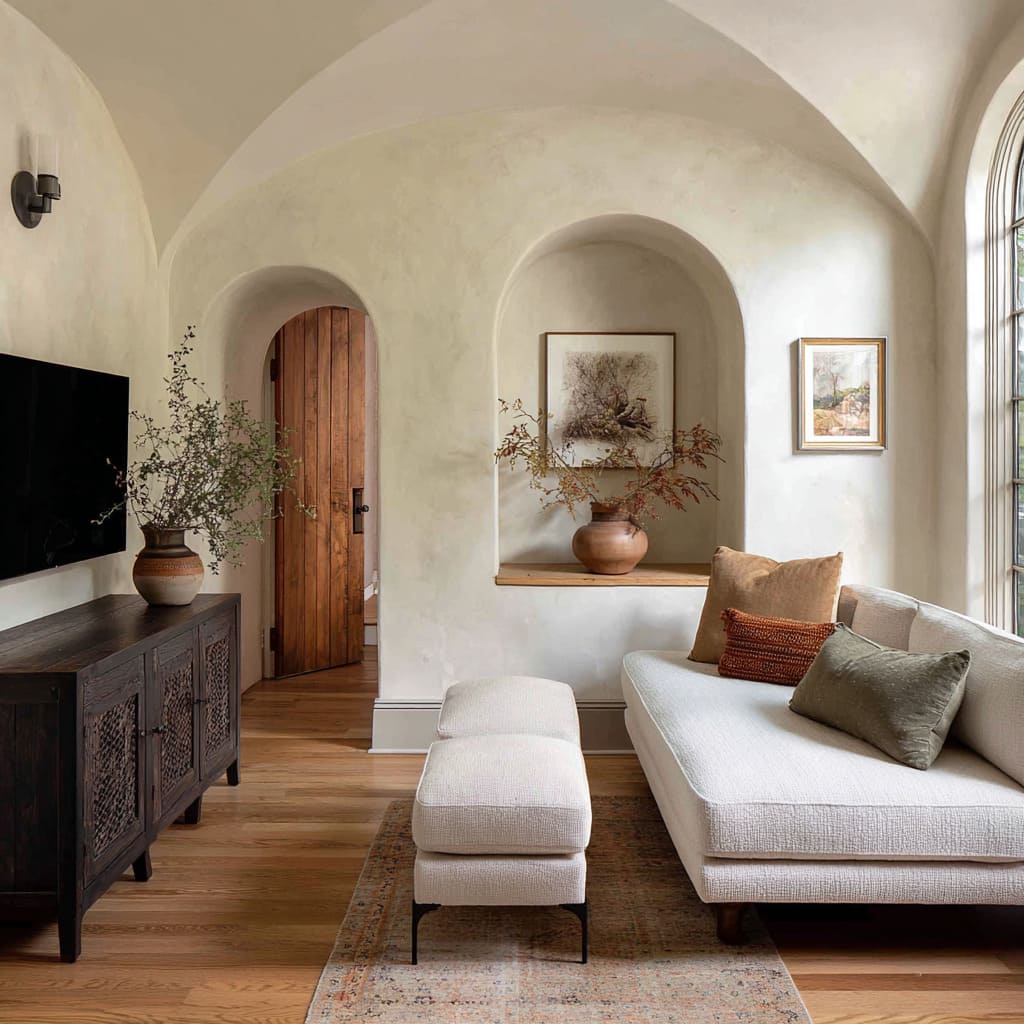
Secondary Anchors: Furniture Blocks and Benches
Once the architectural backbone is set, furniture establishes a second tier of focus:.
- Cloud-like sofas
- Rounded, low silhouettes that trace a soft horizon under strong architecture.
- Textured fabrics that resonate with plaster without copying it.
- Simple, heavy shapes in wood or stone that act as ground points.
- Continuous plaster seating that extends along a wall.
- Cushions and throws used sparingly to keep the line clear.
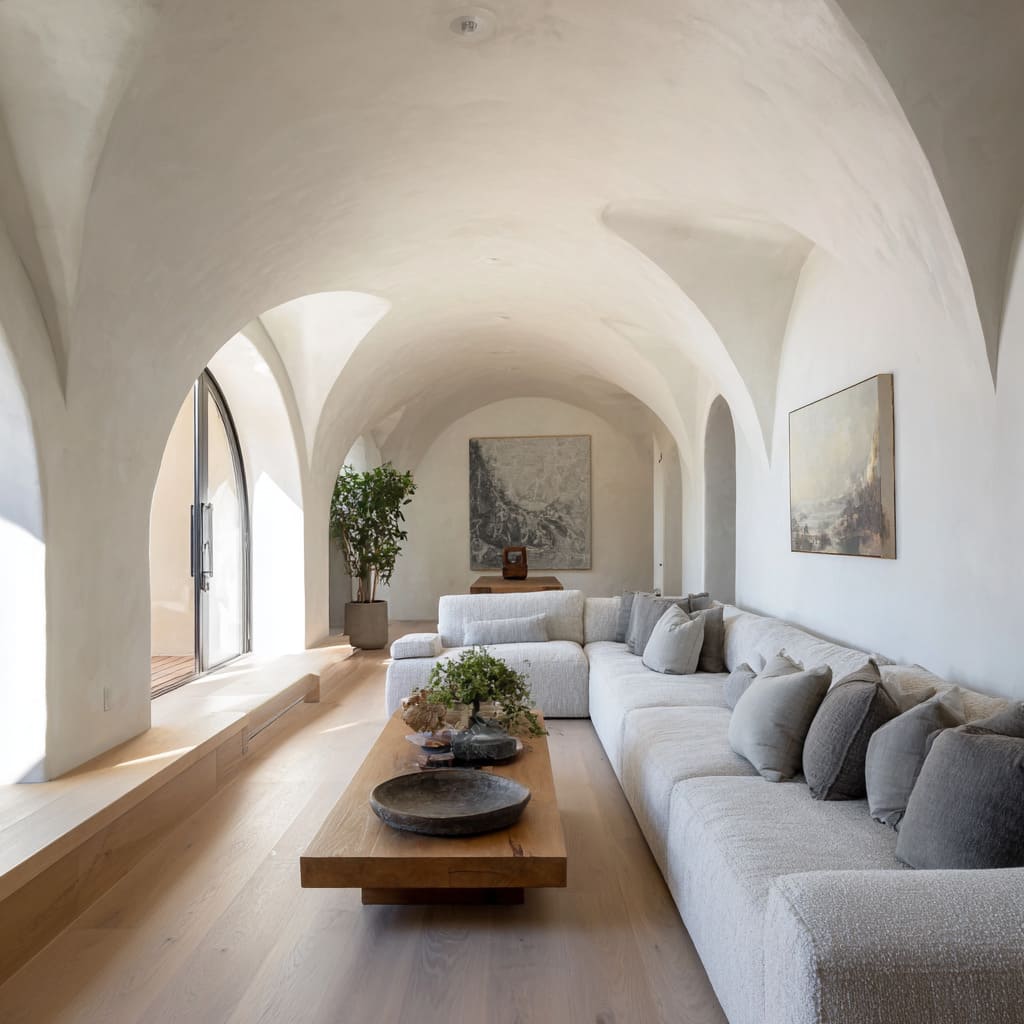
Tertiary Anchors: Objects, Art, and Plants
These details fine-tune the mood and give subtle narrative energy without clutter:.
- Pottery clusters and vessels
- Placed on hearths, long ledges, or console tops.
- Repeated forms and tones, but varied sizes and patinas.
- Abstract compositions in clay, stone, sand, or charcoal hues.
- Sculptural shapes rather than dense foliage.
- Positioned where light can cast interesting shadows on plaster.
This tiered hierarchy ensures that the design always reads from big to small: first structure, then furniture masses, then curated details. Even with many nuanced elements, the composition feels calm because the eye is always given a clear sequence to follow.
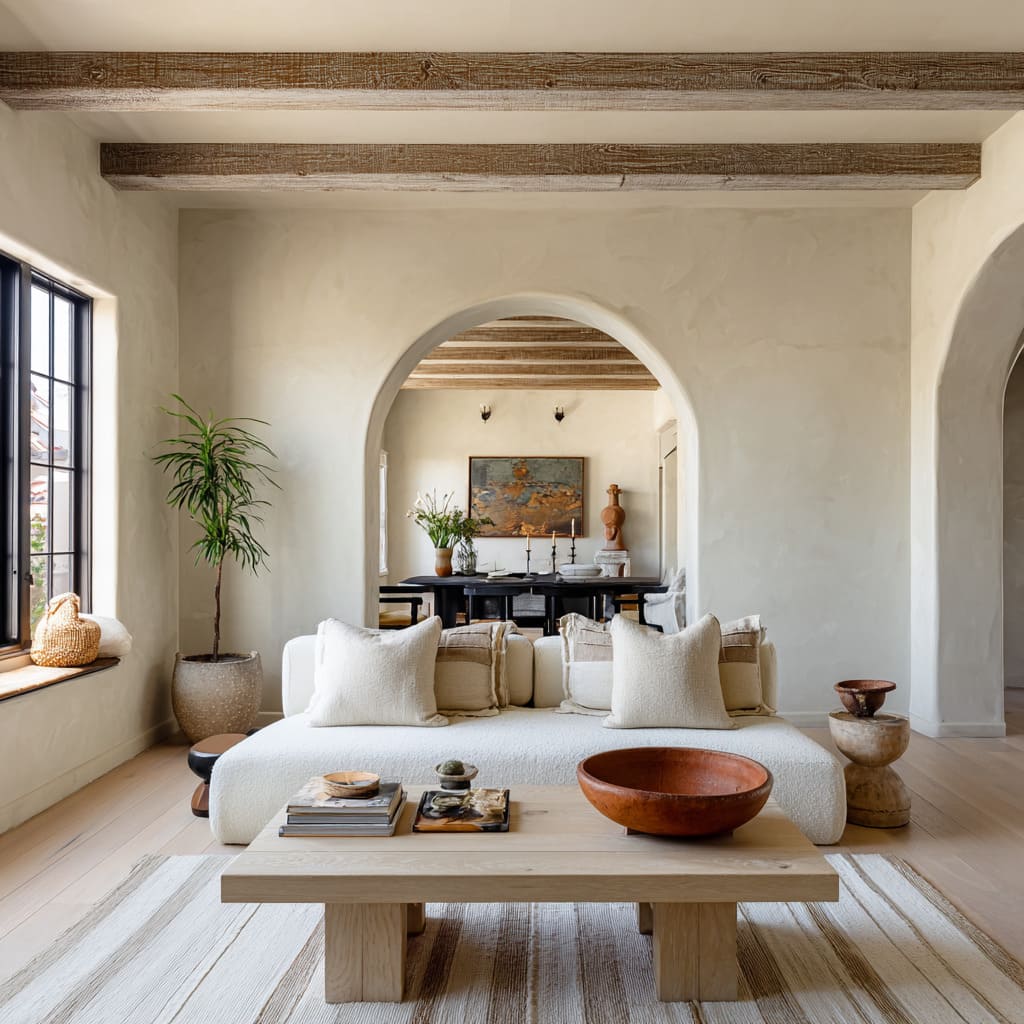
Vaults, Arches, and Rhythmic Openings
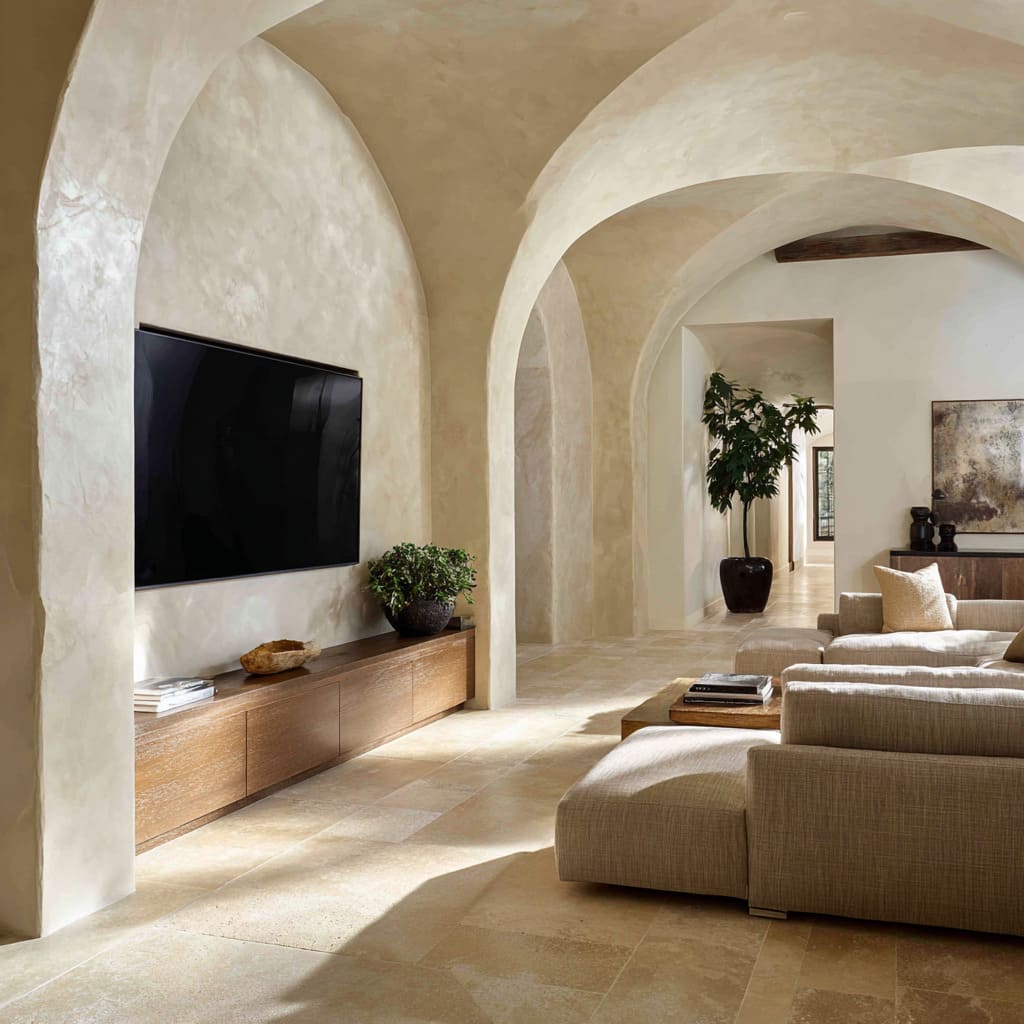
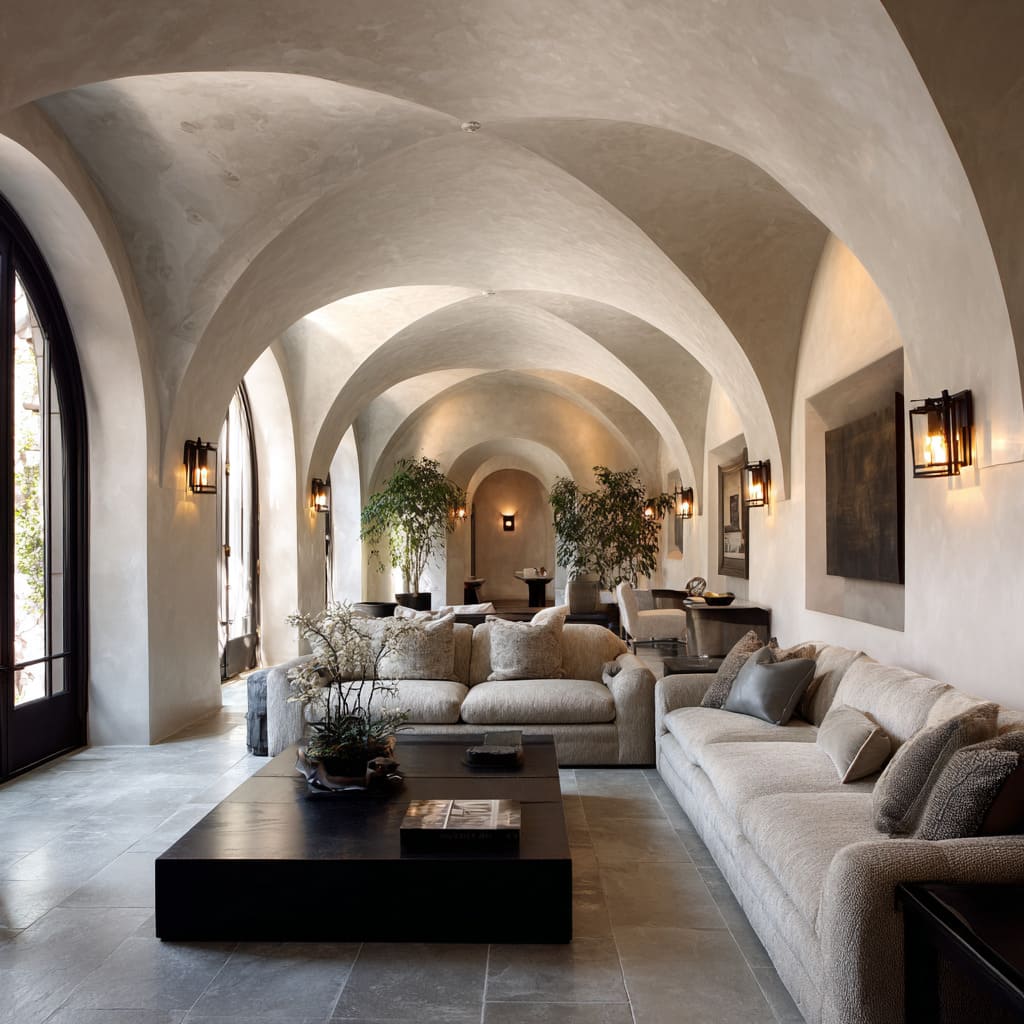
Arches are not simply accents in such interiors—they serve as repeated spatial cues that structure the design with a rhythmic, almost meditative motion. Often, vaults run continuously along the length of the living room, with each one slightly shifting in width or curvature.
This subtle irregularity adds visual movement without introducing clutter. The effect is especially strong when daylight enters from one side of the room, casting soft shadow bands that travel across the vaults throughout the day.
From an interior design standpoint, these variations turn the ceiling into an expressive sculptural field. Thick arched windows, deep-set doorways, and softly curved hall openings reinforce the sense of being inside carved architecture.
These repeated arcs connect directly to the broader lineage of Spanish revival interior design while avoiding heavy historical detailing. Their strength lies in repetition, proportion, and the calm rhythm they introduce into the living environment.
Light as the Primary Ornament
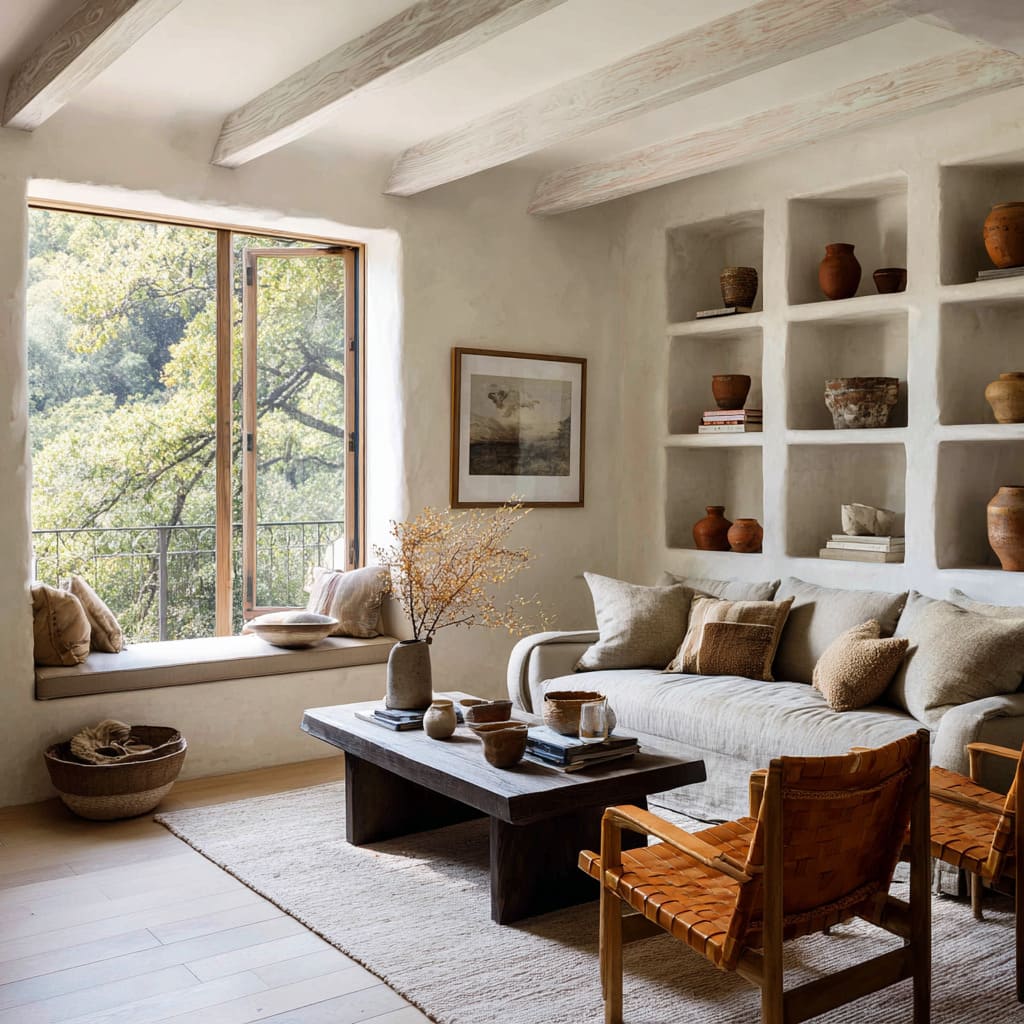
Light forms the most expressive decoration in such living room designs, replacing the need for patterned surfaces or bold color. Because walls and ceilings are shaped with gentle irregularities, sunlight creates micro-shadows that bring a quiet richness to the matte plaster.
Artificial light plays an equally significant role. Small sconces placed between windows or along a curved wall produce warm glows that glide across the surfaces, creating layers of brightness and softness at the same time.
The synergy between daylight and warm evening lighting generates shifting atmospheres throughout the day, making the living room dynamic even in complete stillness. One of the most distinctive effects appears when steel window mullions cast angular shadows over curved architecture, creating a temporary graphic pattern that moves with the sun.
This use of light as decoration differentiates the spaces from typical colonial Spanish interior design, elevating them into sculptural environments where illumination replaces ornament.
Fireplaces as Sculptural Anchors
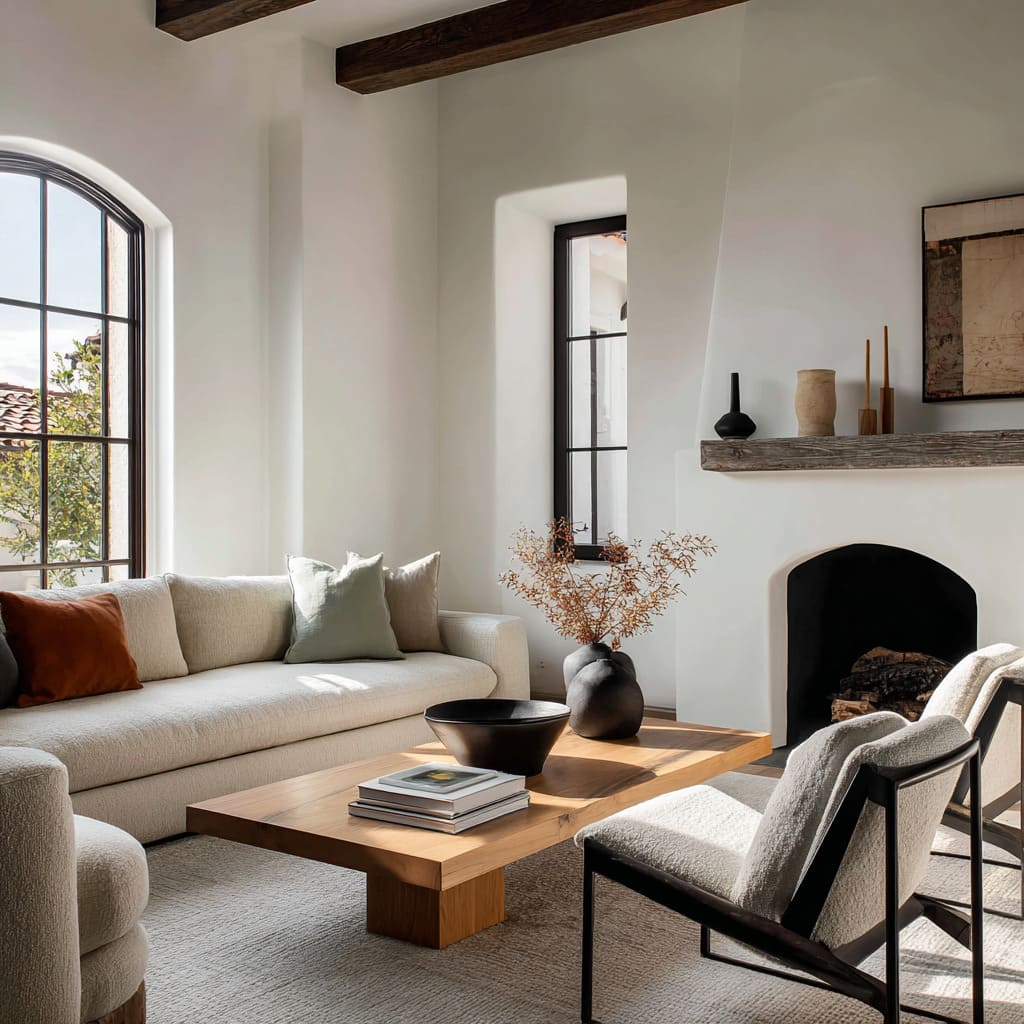
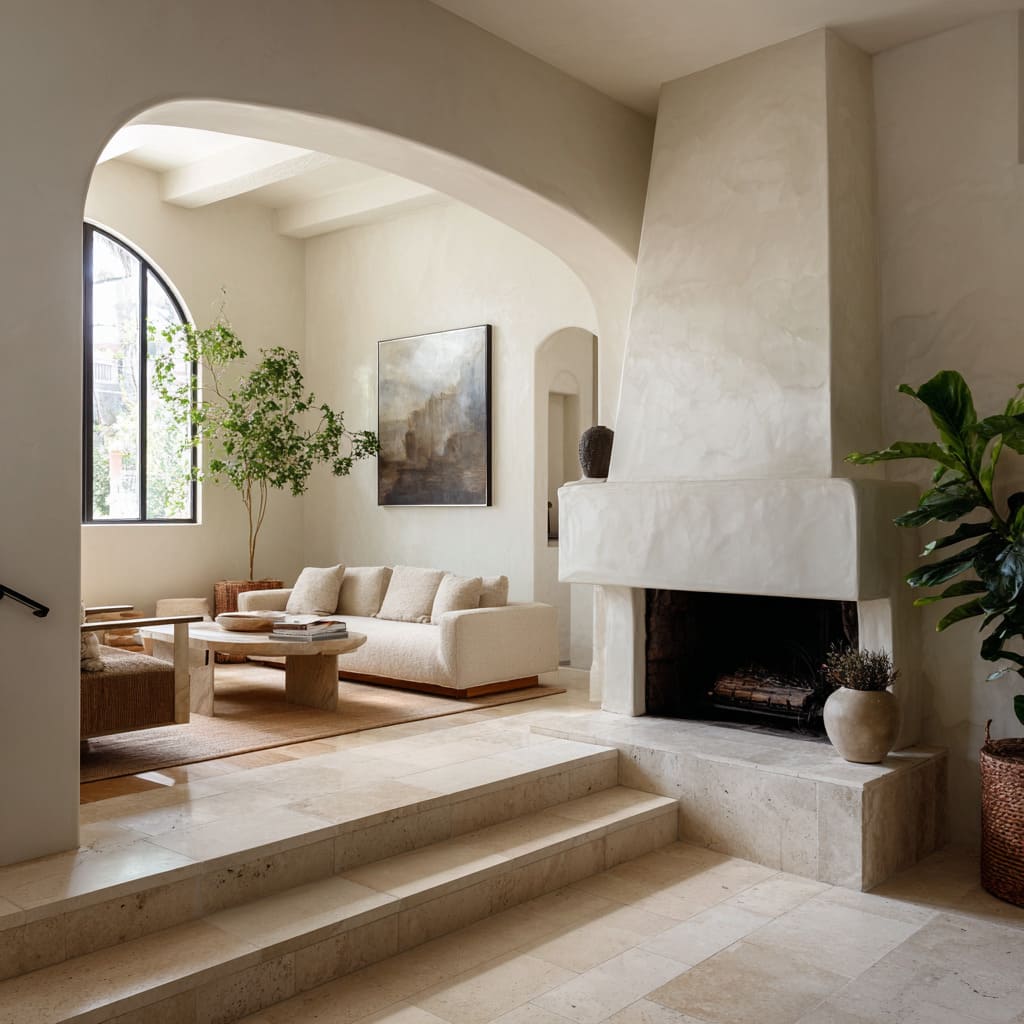
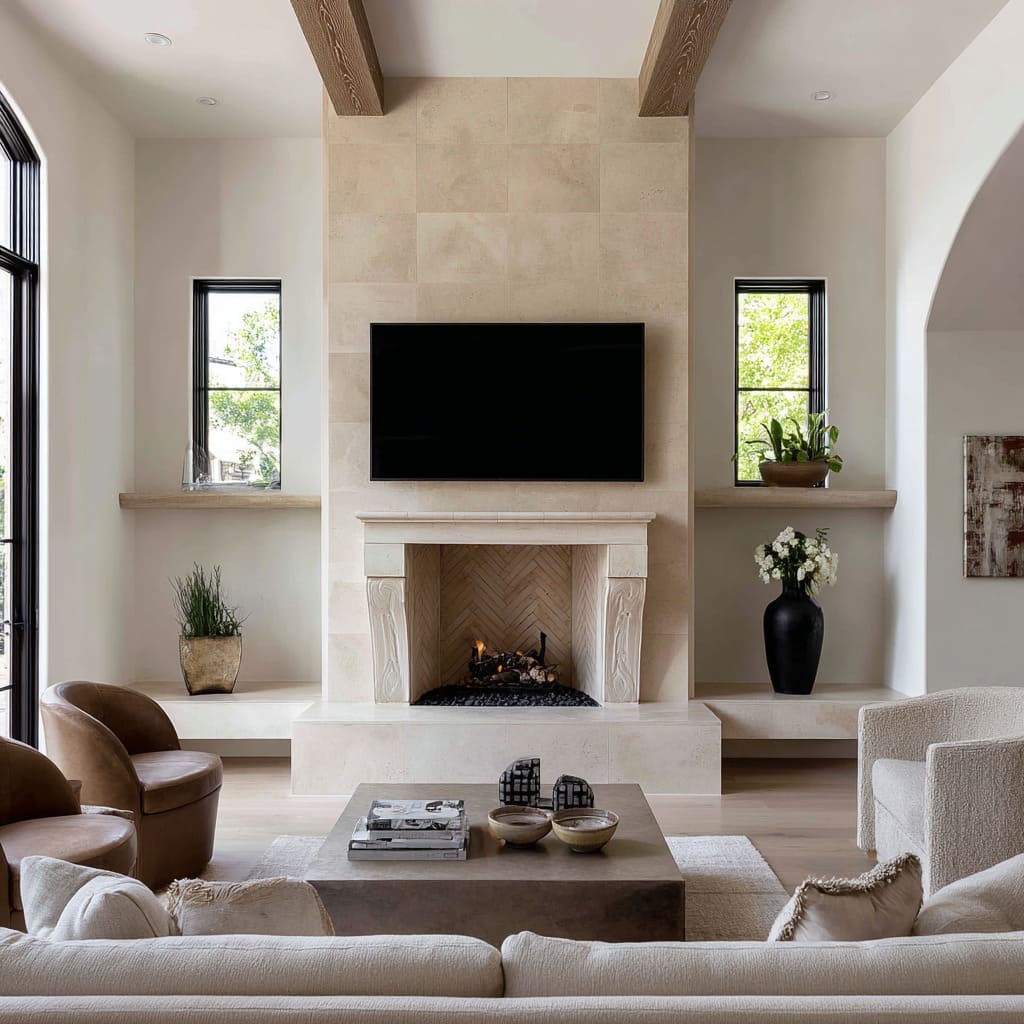
The fireplace becomes a monumental gesture rather than a traditional hearth. Many designs use towering plaster forms that taper upward, dissolving into the wall without mantels or heavy trim.
This tapering gives visual lift while preserving a grounded presence at the base. These fireplaces often include wide hearth extensions or integrated ledges, which serve as display surfaces for pottery, sculptural objects, or branches positioned for their shadows rather than their literal appearance.
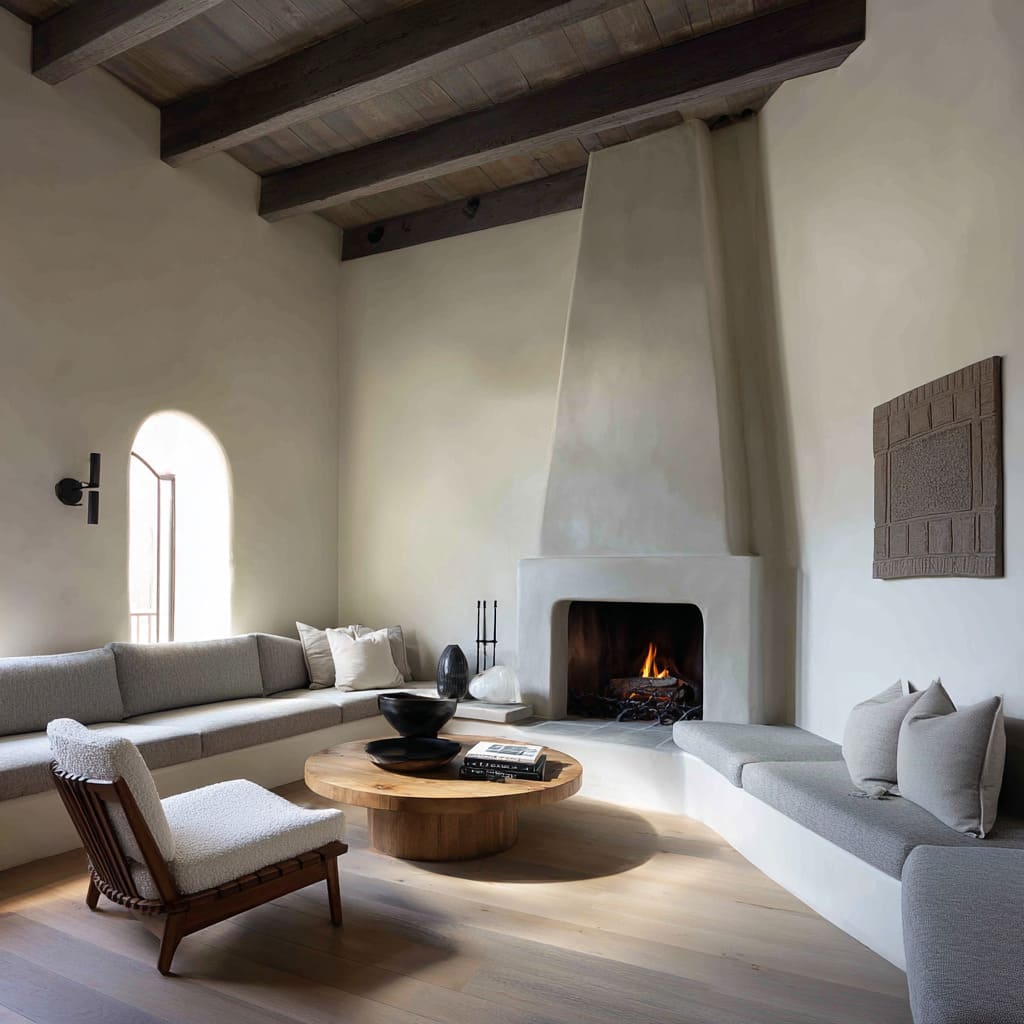
Some designs introduce tile or stone in subtle tonal variations, using small shifts in color and texture to introduce richness without pattern. The overall treatment of the fireplace aligns closely with the aesthetic of Spanish colonial revival interior design, where the hearth is a symbolic center—yet here, the form becomes quieter, smoother, and more abstract.
The fireplace acts as a core architectural sculpture, giving the living room a strong sense of focus.
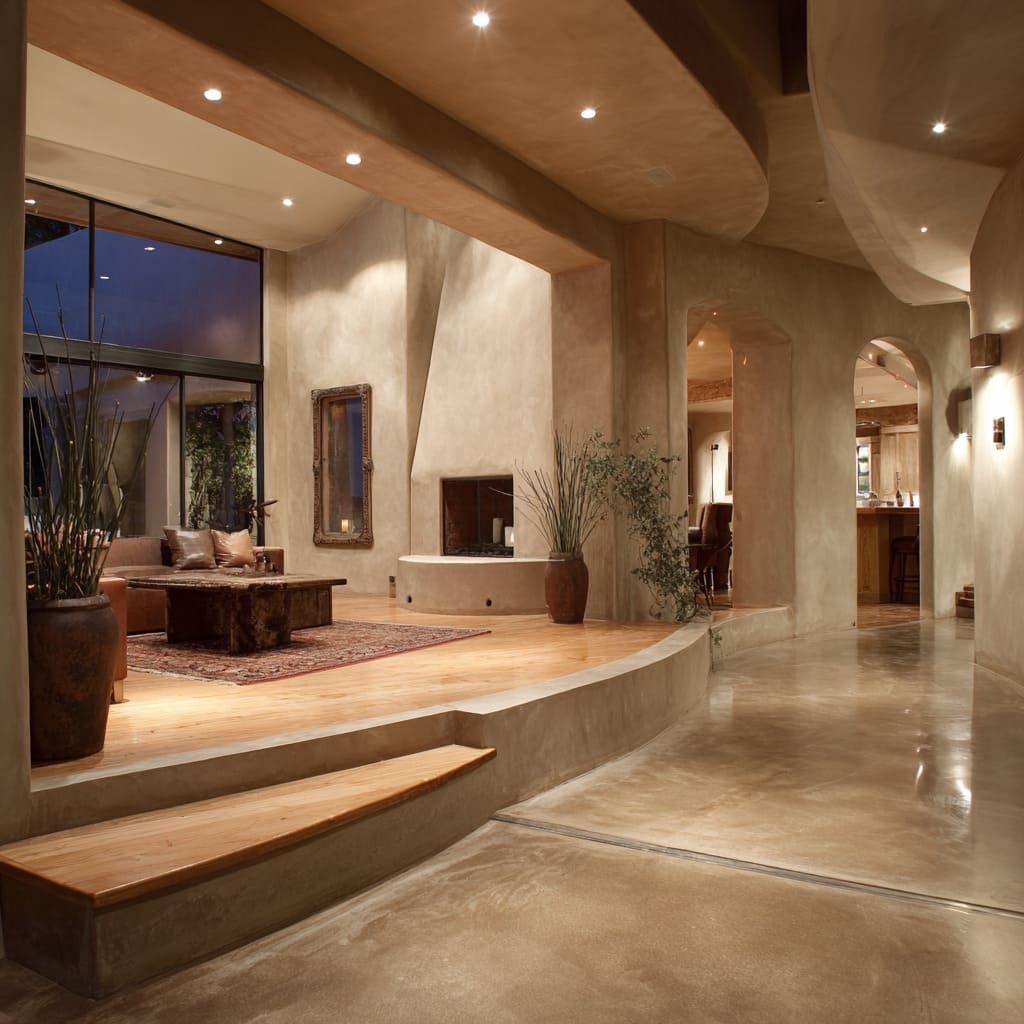
Furniture as Soft, Grounded Geometry
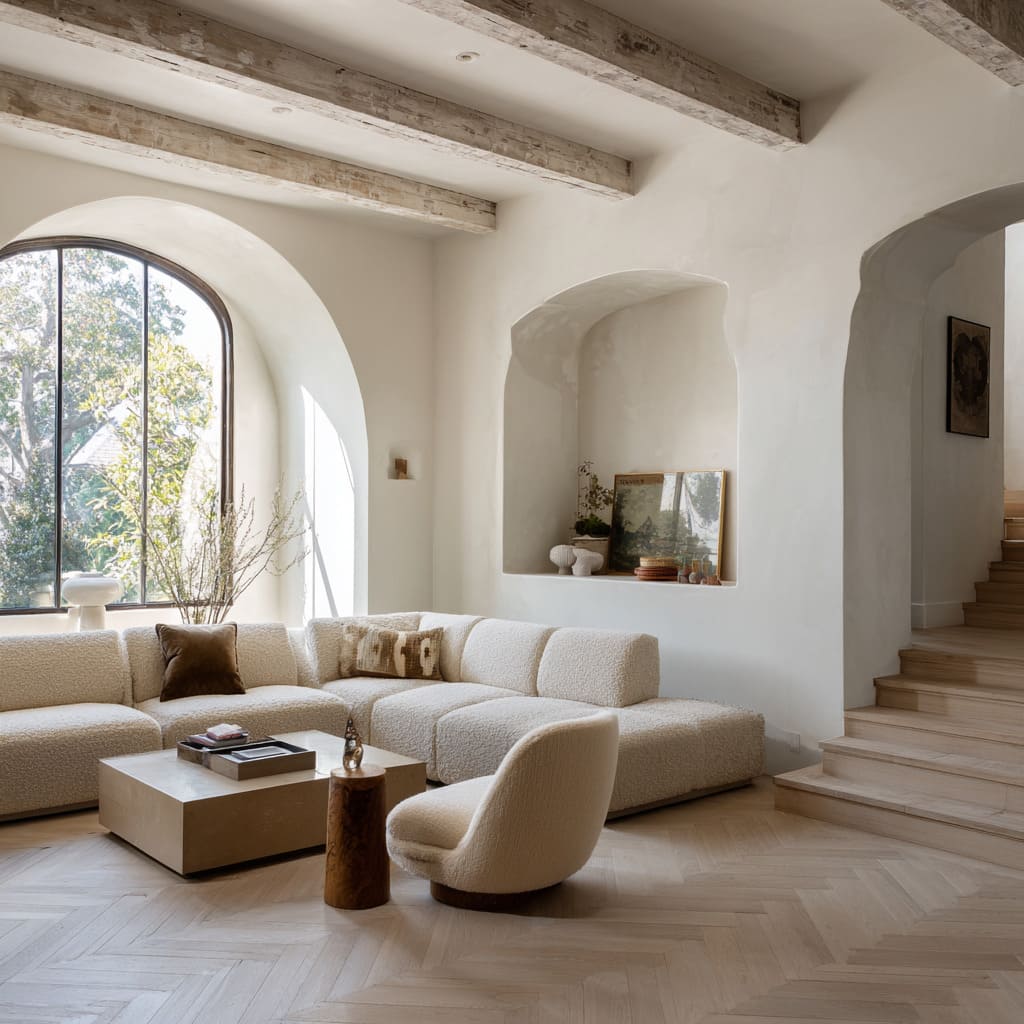
Furniture carries a sense of softness that counters the stone-like presence of the architecture. Sofas often feature rounded edges, deep seats, and textured fabrics that mimic the tactile quality of natural materials.
Many seating pieces are low to the ground, creating a horizontal horizon line that reinforces the room’s calm flow. The softness of boucle, looped textiles, or slightly rumpled linen blends gently with the plaster, producing a cloud-like comfort.
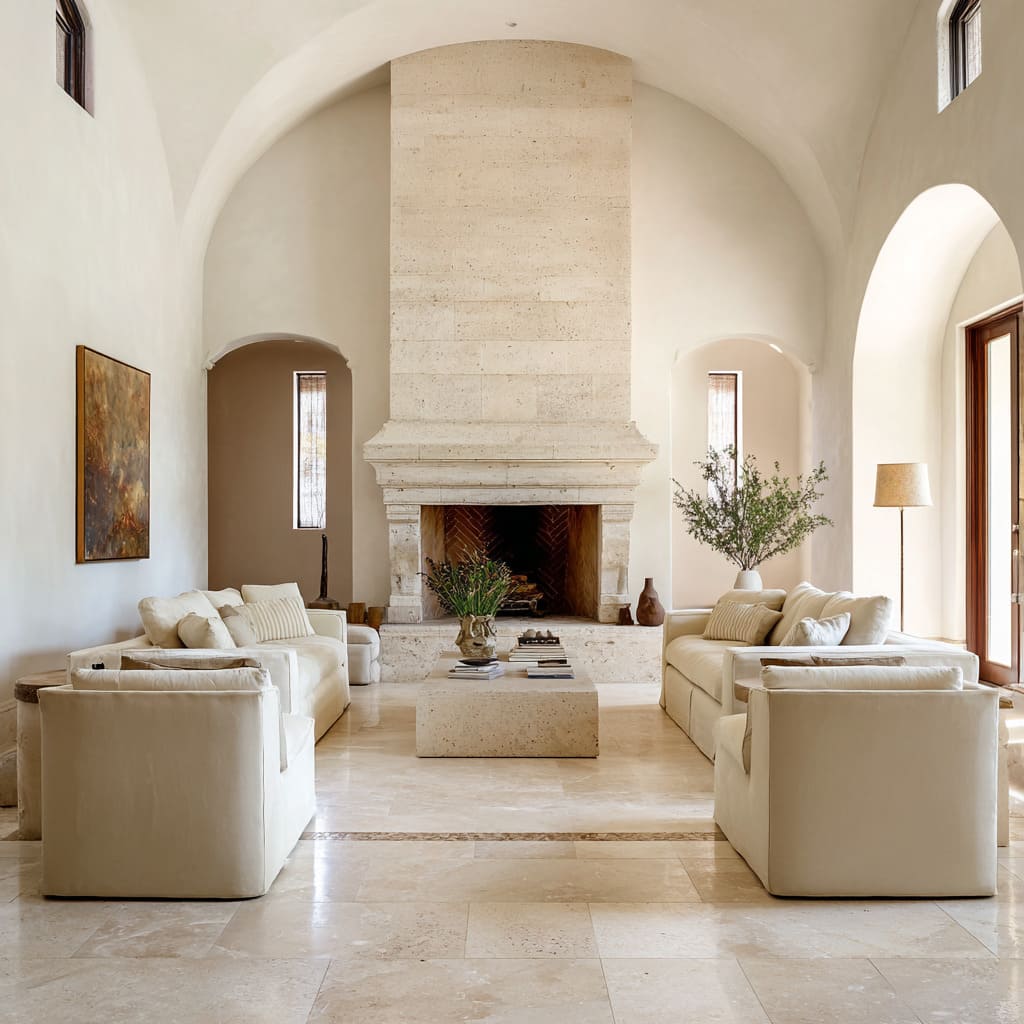
In contrast, coffee tables usually adopt the opposite strategy: they appear as dense blocks of stone or thick slabs of wood, acting as grounding anchors. Their shapes remain simple—rectangles, circles, squares—but their material weight balances the softness of the seating.
This dialogue between plush furniture and monolithic tables expresses one of the most recognizable aspects of Spanish colonial decorating ideas in a modern context: the interplay of comfort and solidity.
Built-In Seating and Architectural Furniture
Some designs prefer using benches and window seats that are sculpted directly into the architecture. These built-in elements serve as extensions of the walls themselves, maintaining the continuity of the plaster envelope.
A long bench running along a wall or beneath a window offers a subtle yet powerful organizing element, giving the room a strong horizontal line without introducing heavy furniture.
When cushions in sand or cream tones rest on these plaster benches, the visual effect becomes one of softness embedded in solidity. This approach also supports a layered interior experience, where the thickness of walls and ledges becomes a functional design feature.
These interior moves echo traditions from Spanish colonial house interior ideas, where built-in seating in courtyards or thick-walled alcoves provided natural gathering zones.
Niches, Alcoves, and Display as Storytelling
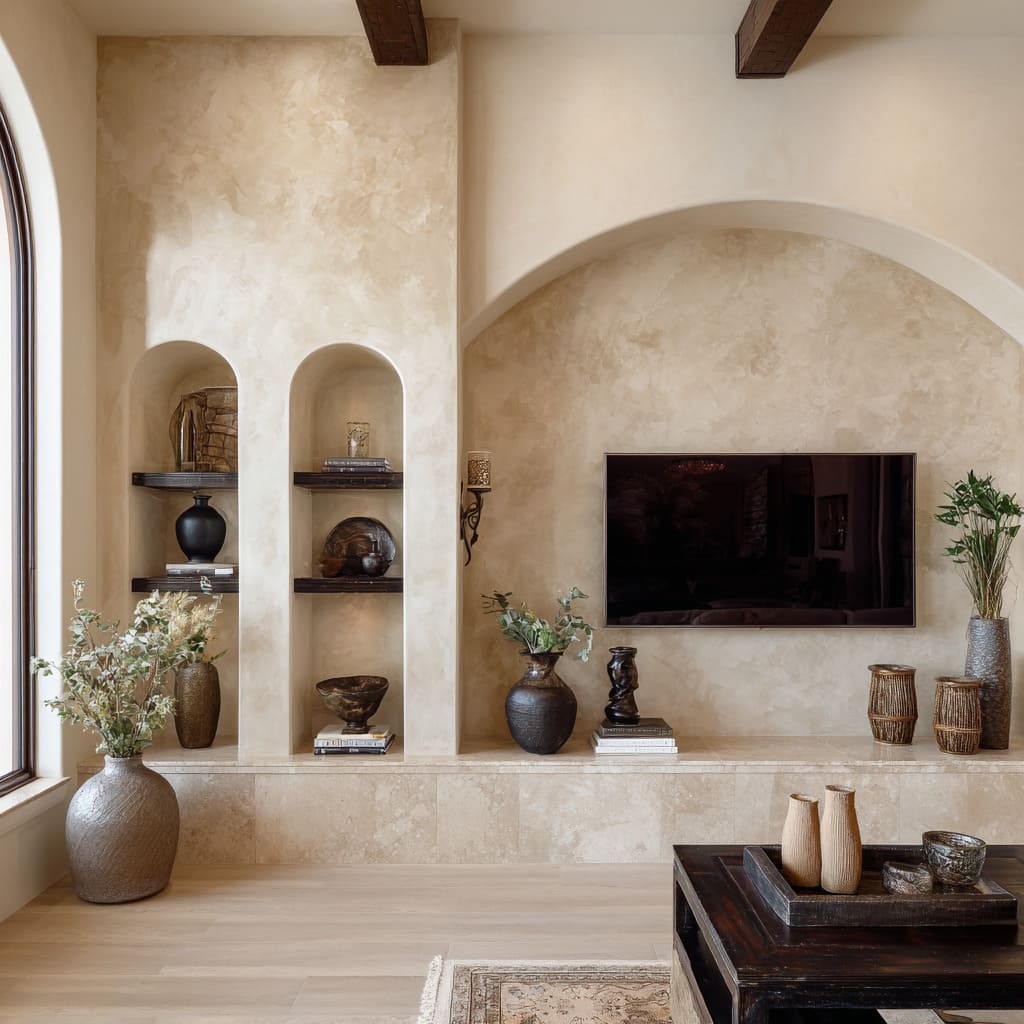
Deep niches and alcoves are essential sculptural features in the modern reinterpretations of Spanish design. Their uneven edges, varied depths, and softly rounded interiors create pockets of shadow that instantly introduce depth to an otherwise calm wall surface.
These recesses act as curated micro-galleries, holding pottery, carved stone, matte ceramics, and books arranged with intentional spacing. Instead of filling every shelf, the styling favors negative space, allowing each object to stand with presence.
Many interpretations use a single oversized vase with branches, a small collection of aged vessels, or a few sculptural pieces in dark clay. The calm, natural textures of these items resonate with the earthy palette and handcrafted roots of colonial Spanish interior design while maintaining the restraint of contemporary interiors.
The alcoves themselves become visual pauses—moments where the architecture interacts with curated small-scale art.
Earth Tones and Neutrals as the Primary Palette
Color is subtle yet rich. Instead of bright or saturated hues, such designs use a spectrum of warm neutrals: sand, clay, limestone, chalk, soft brown, and creamy white.
The palette reflects earth materials rather than pigments, which allows textures to become the primary source of variation. For example, matte plaster plays against natural wood, terracotta pottery, bleached beams, pale stone tiles, and soft fabric upholstery.
Occasional accents—rust leather, muted olive cushions, or terracotta tones—appear only when they echo existing materials. Black is used carefully, often limited to steel window frames, slim furniture legs, or matte black vessels that add definition without dominating.
This palette aligns closely with the visual rhythm seen in Spanish colonial interior design while also softening and simplifying it for modern living rooms.
Pottery, Natural Materials, and the Role of Handcrafted Objects
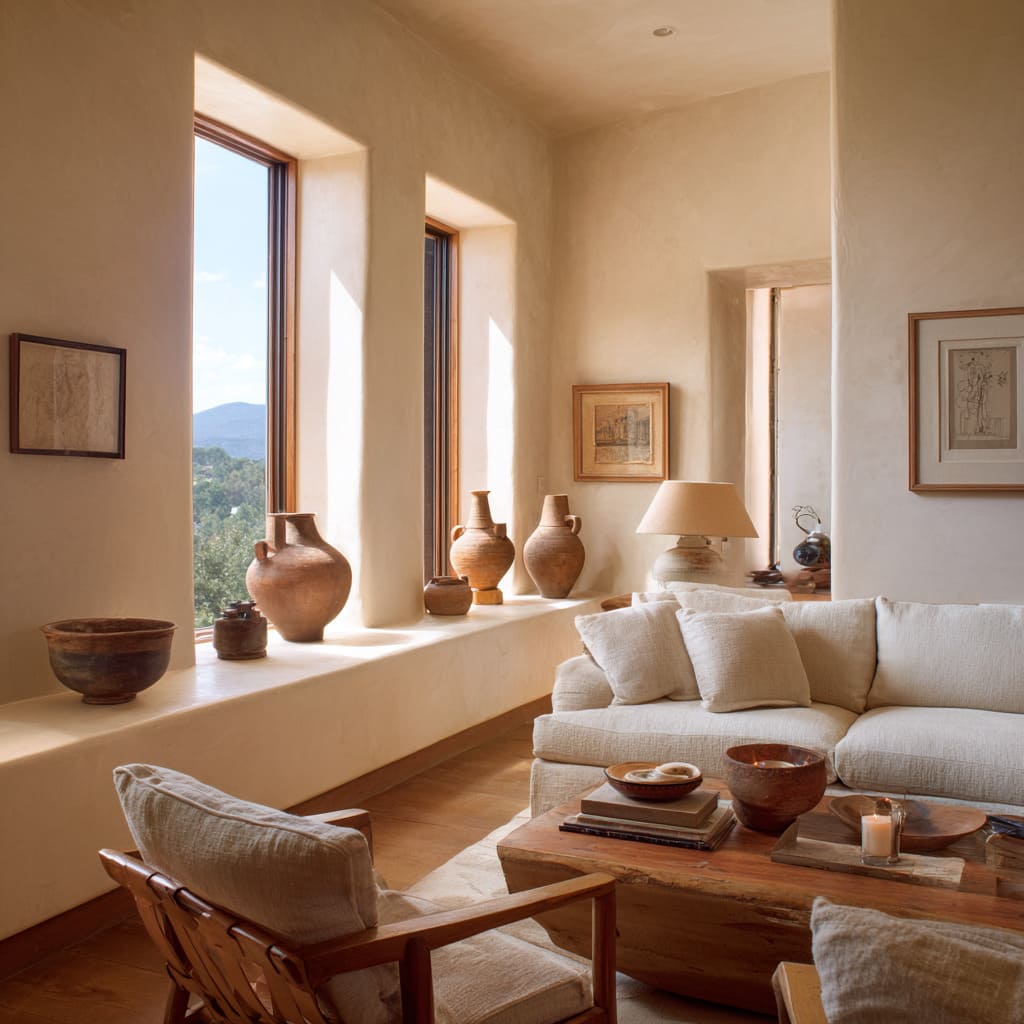
Handcrafted objects play a major role in suh decorating approaches, shaping the atmosphere with their earthy textures and gentle imperfections. Large terracotta vessels, carved wooden bowls, patinated pottery, and rustic ceramics appear frequently, often placed in simple groupings.
The purpose of these pieces is not decoration for its own sake—they establish a connection to natural materials that harmonizes with the sculpted architecture.
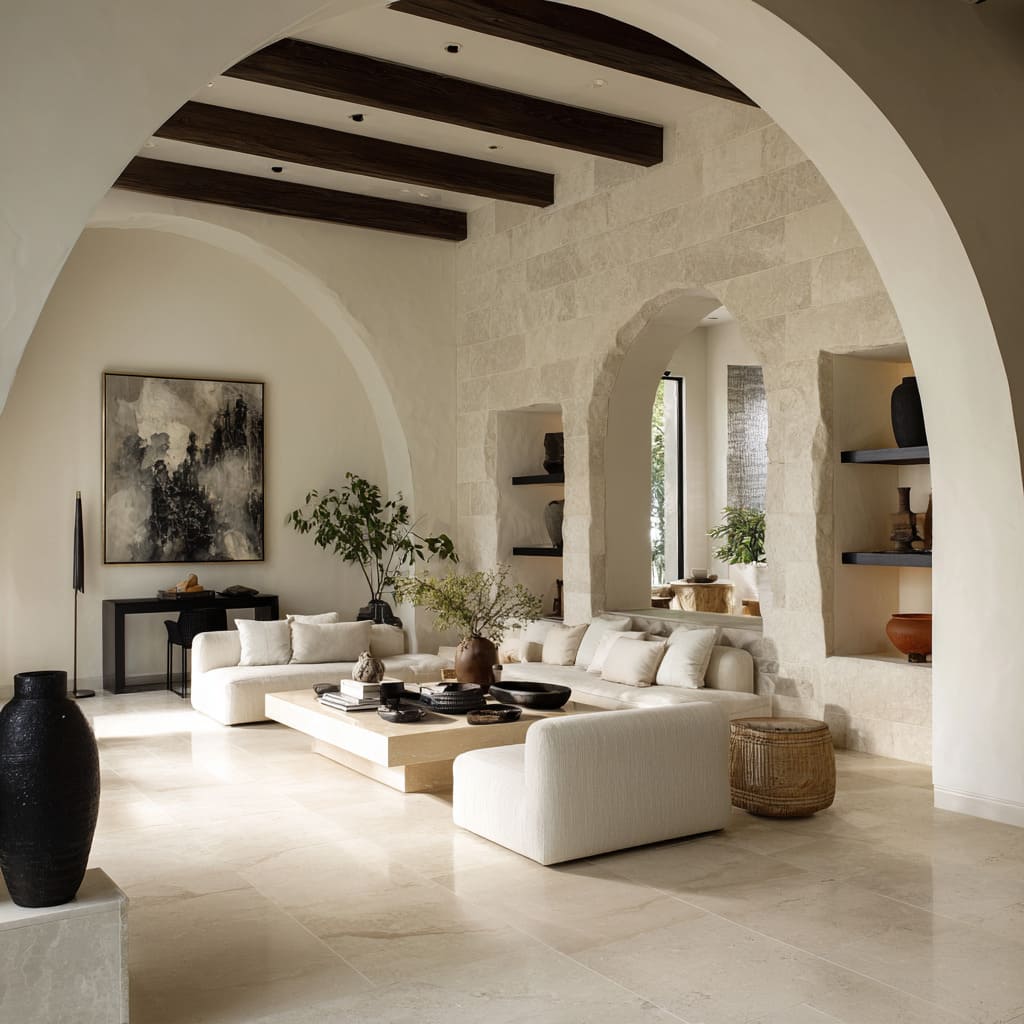
In many concepts, pottery is placed on long plaster ledges, inside deep niches, near arched windows, or at the base of the fireplace. Driftwood, dried branches, and woven baskets add tactile variations and slight irregularity to the otherwise smooth, minimal surroundings.
These objects echo traditions found in colonial Spanish interior design while aligning with contemporary taste for artisanal, grounded materials.
Modern Media Integration and Quiet Functionalism
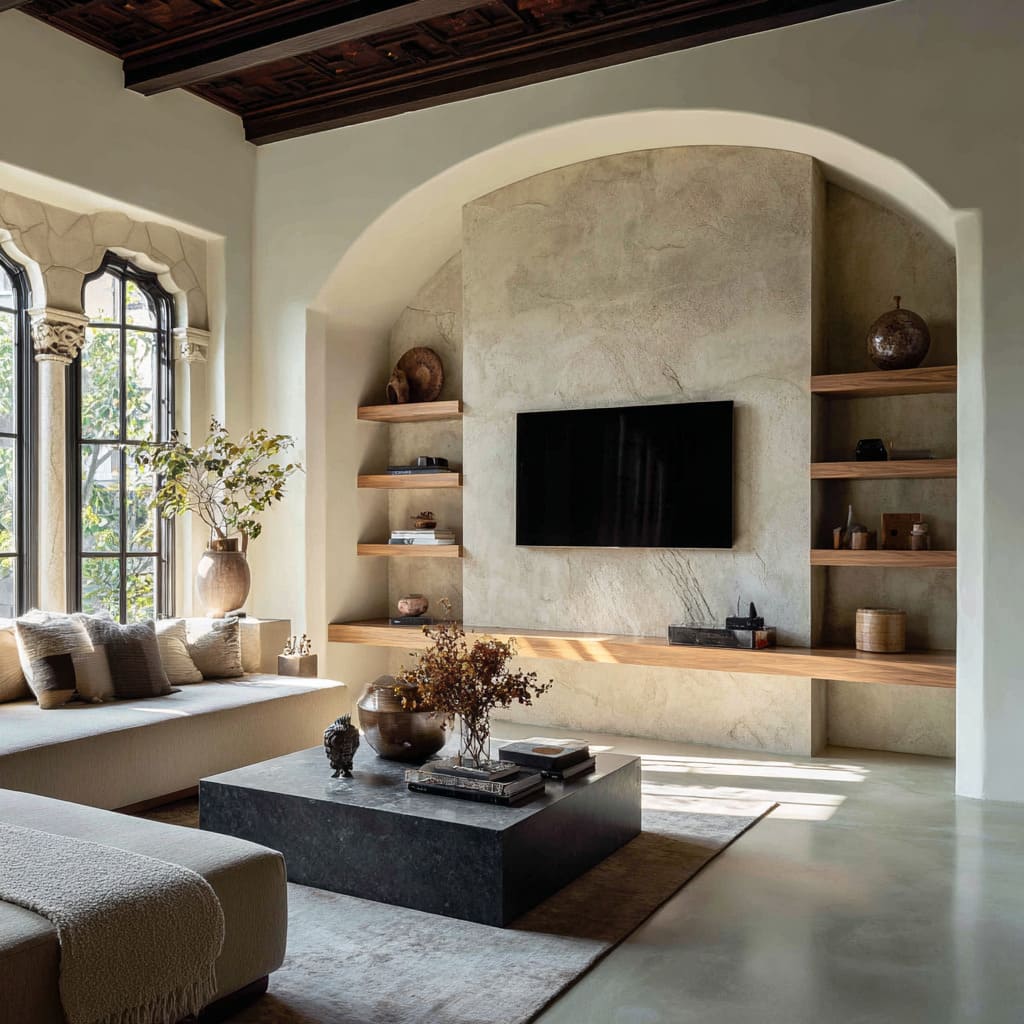
Televisions and media consoles appear in ways that respect the sculptural continuity of the walls. Screens can be mounted flush against plaster surfaces or set into shallow recessed arches, turning them into part of the architecture rather than intrusive technological elements.
Wooden consoles feature uninterrupted grain patterns and low silhouettes, aligning with the horizontal lines established by benches and sofas.
Styling remains minimal—one plant, a few stacked books, or a carved bowl—to maintain visual clarity. This approach merges functional needs with a sculptural environment and supports the refined atmosphere characteristic of modern Spanish colonial interior design.
Rather than disrupt the plaster’s softness or the arches’ rhythm, media elements become quiet participants in the overall composition.
Indoor–Outdoor Continuity as Central Character
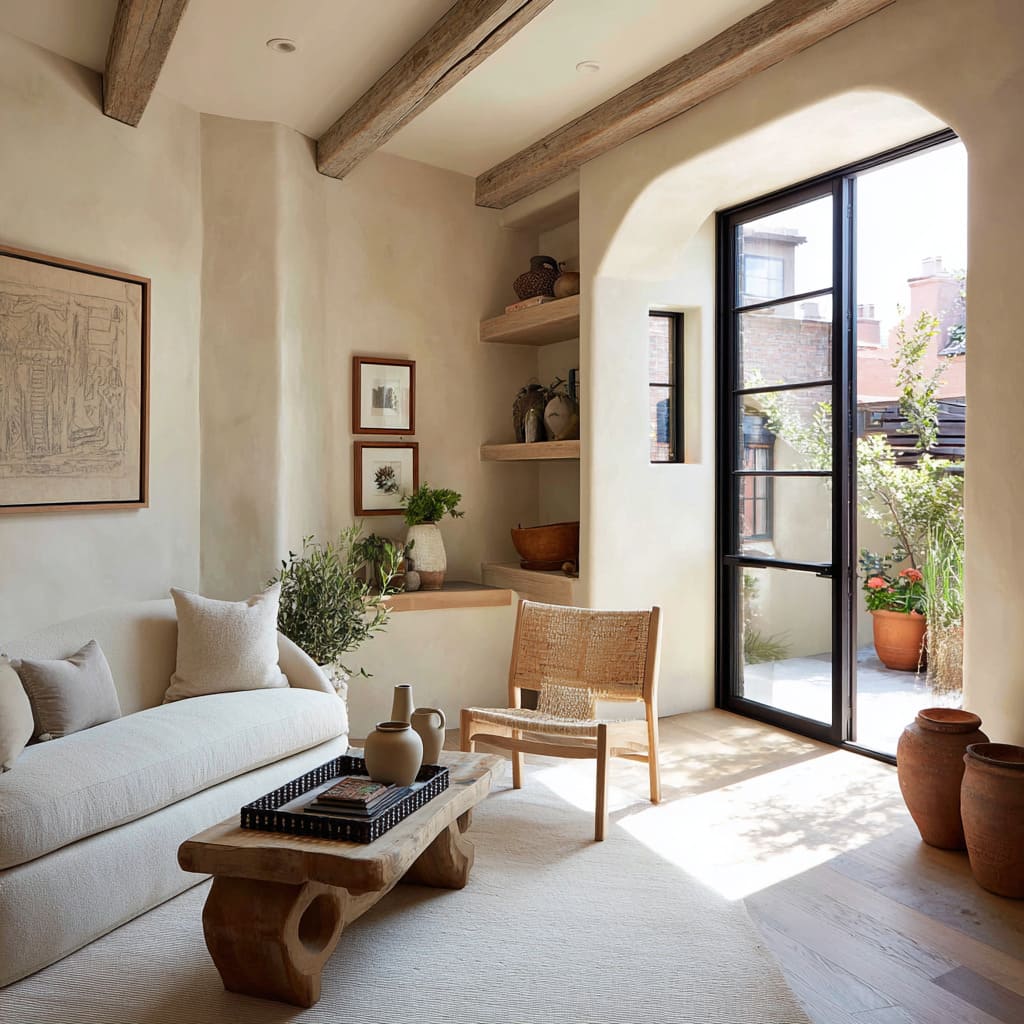
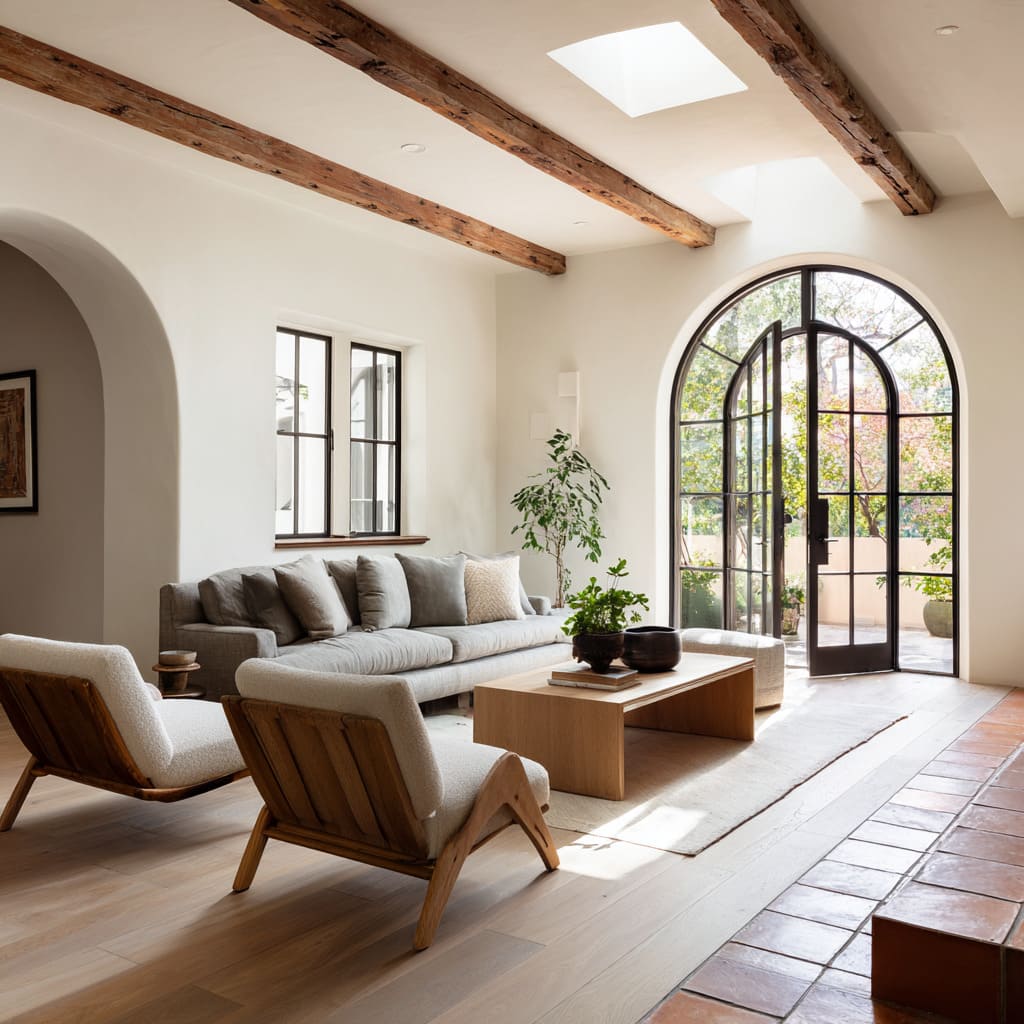
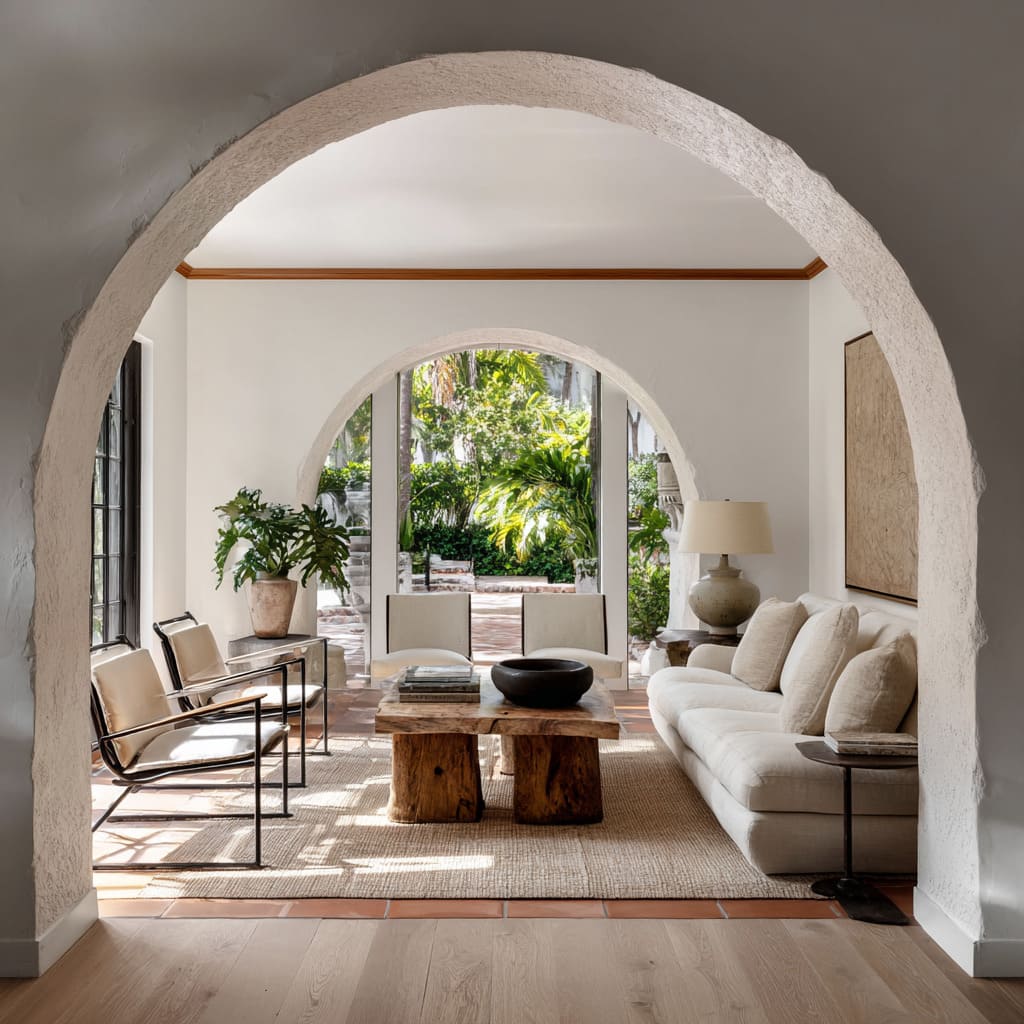
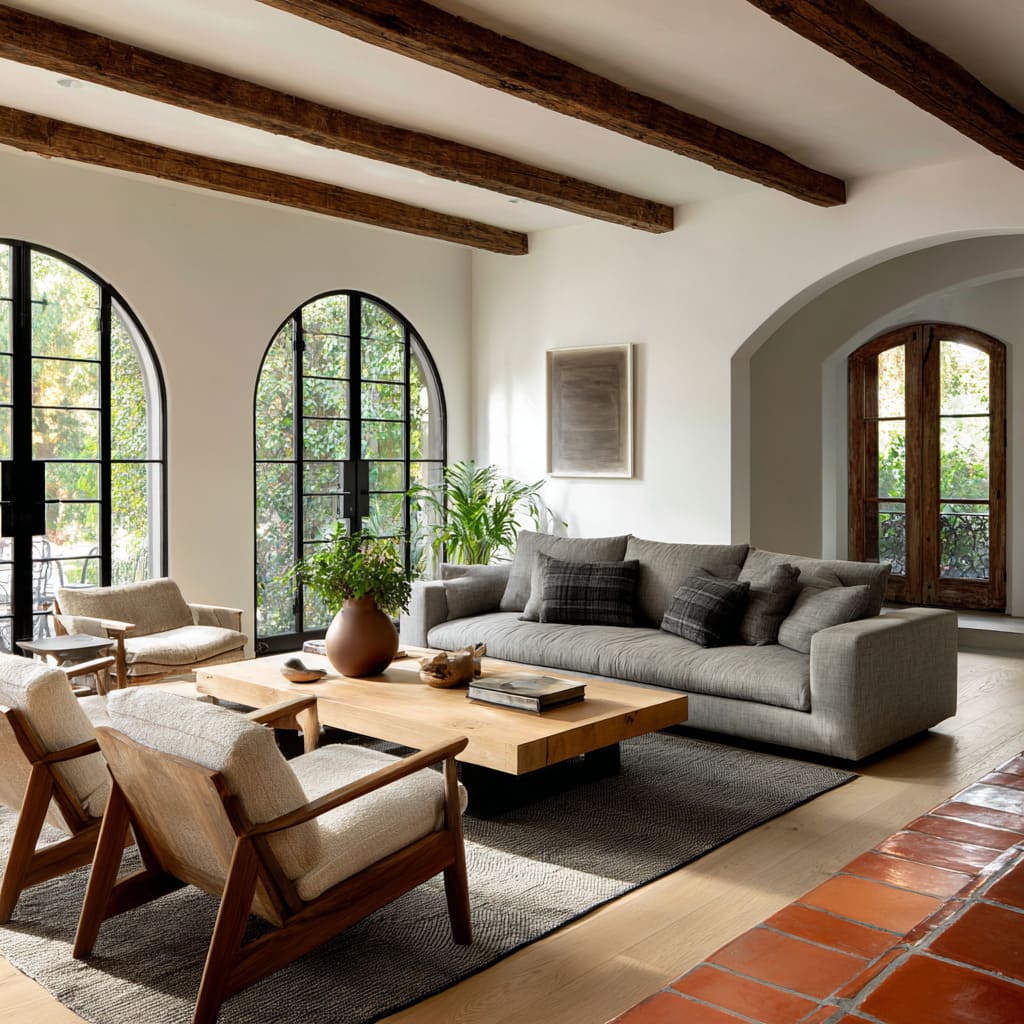
Indoor–outdoor flow is foundational in this style. Tall arched windows, steel-framed glass doors, or wide openings align perfectly with exterior vistas, turning greenery, hills, or courtyards into part of the interior composition.
The view outside functions almost like a living, shifting artwork that extends the color palette indoors. Terracotta planters, outdoor tiles, and potted palms echo materials used inside, reinforcing a seamless visual transition.
This connection also strengthens the atmospheric quietness: natural light moves gently across plaster surfaces, and the presence of plants—sometimes deliberate and sculptural—softens the room’s firmness. These transitions reflect core ideas found in Spanish colonial revival interior design while pushing them into a more minimal and contemporary realm.
A Calm Fusion of Past and Present
The underlying principle is a balance between heritage and modernity. Curved architecture, warm plaster, deep niches, terracotta pottery, and wooden beams carry the essence of Spanish colonial interior design, while cloud-soft sofas, sculptural tables, monochromatic palettes, and restrained styling introduce contemporary clarity.
The resulting living rooms are grounded yet gentle, structured yet calm, rooted in tradition yet free of heaviness.
This fusion represents one of the most refined interpretations of Spanish colonial house interior ideas—a way of shaping atmosphere through carved surfaces, soft geometry, natural materials, and the steady presence of light. It becomes a sculptural language where old-world warmth and current design thinking coexist in quiet harmony, forming a living environment that feels both timeless and distinctly current.