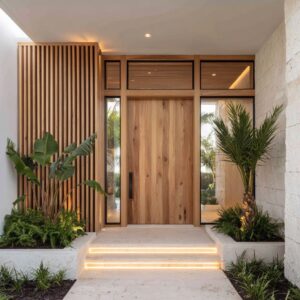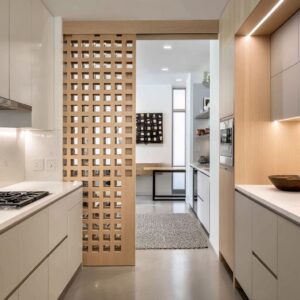
Today’s most inspiring front door ideas for color are not about loud shades or showing off personality in one brushstroke. They are about shaping a feeling from the street and carrying that same tone right up to the threshold, where light, texture, trim, and plants quietly guide the perception.
Modern home exteriors rely on calm materials like stone, painted brick, and smooth stucco, and that is where nuanced exterior door color ideas work best — colors that breathe with daylight, settle into natural surroundings, and form subtle contrast with wood beams, matte hardware, and tidy landscaping. Instead of isolating the door as a decorative moment, current design thinking treats color as a link between facade, porch, and garden, creating one calm, connected atmosphere.
Soft Greens, Gentle Grays, and Earth Tones: Color That Feels Connected to Landscape
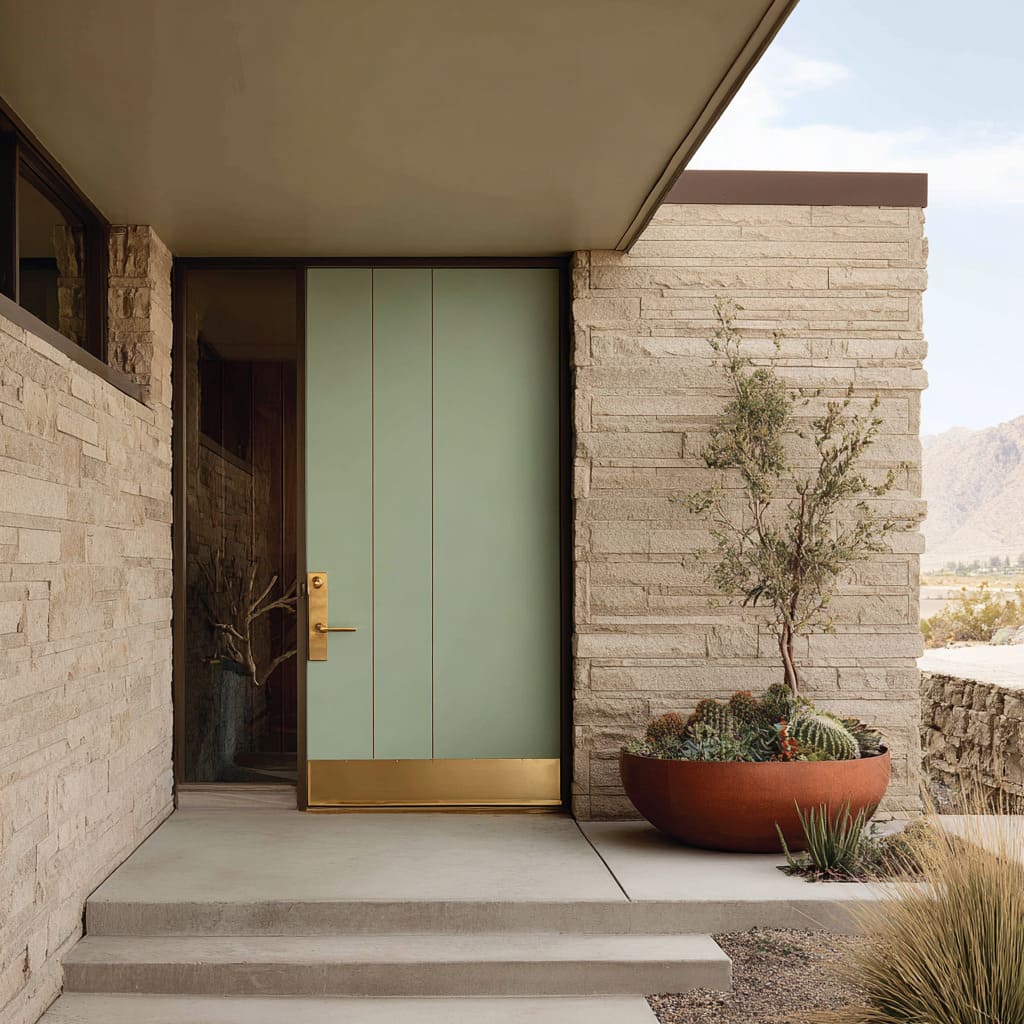
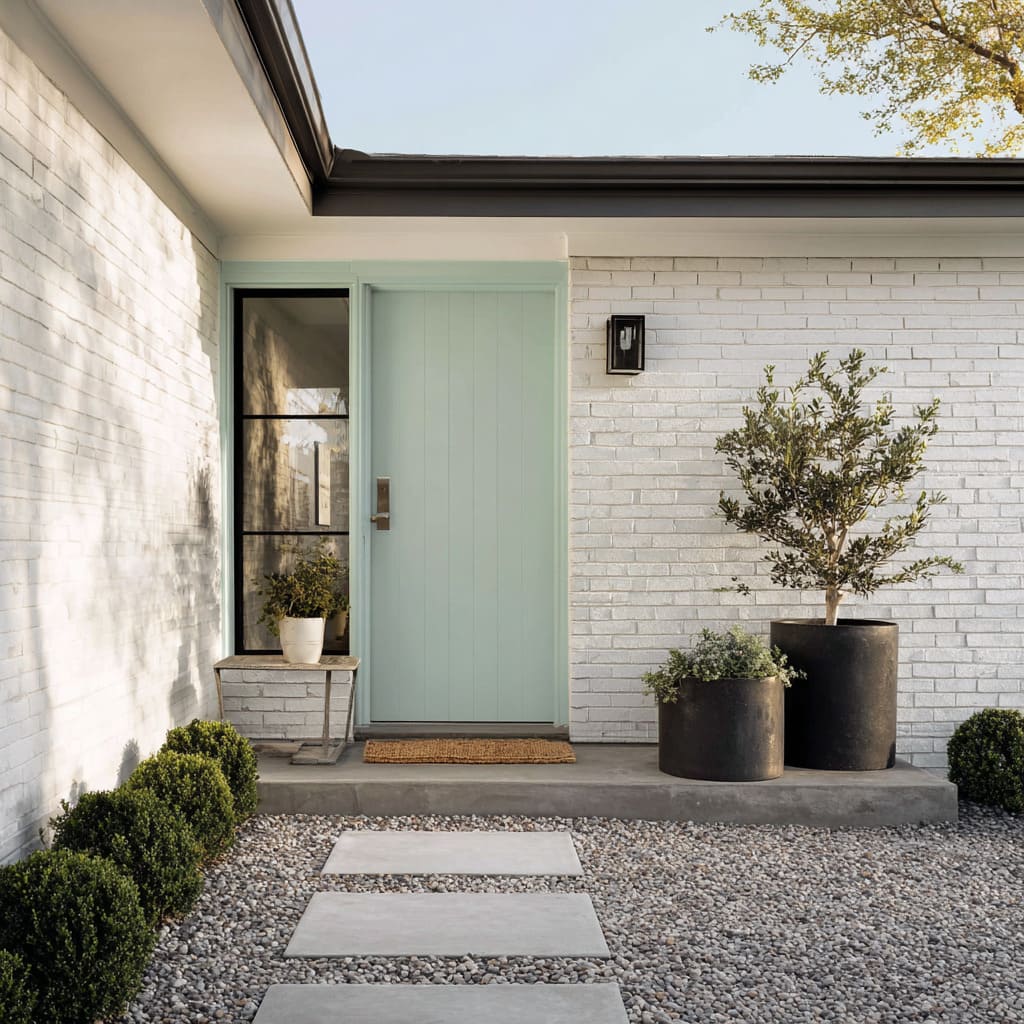
One of the most visible themes in modern entry door color ideas is the shift toward nature-inspired tones with quiet depth: olive-sage, muted moss, sea-foam mint, and dusty clay. These colors behave like plant life and limestone in the shade — they change with the sun instead of sitting flat.
Paired with pale stone steps, cedar soffits, and planters full of clipped grasses or olives, the door becomes a bridge between home and landscape.
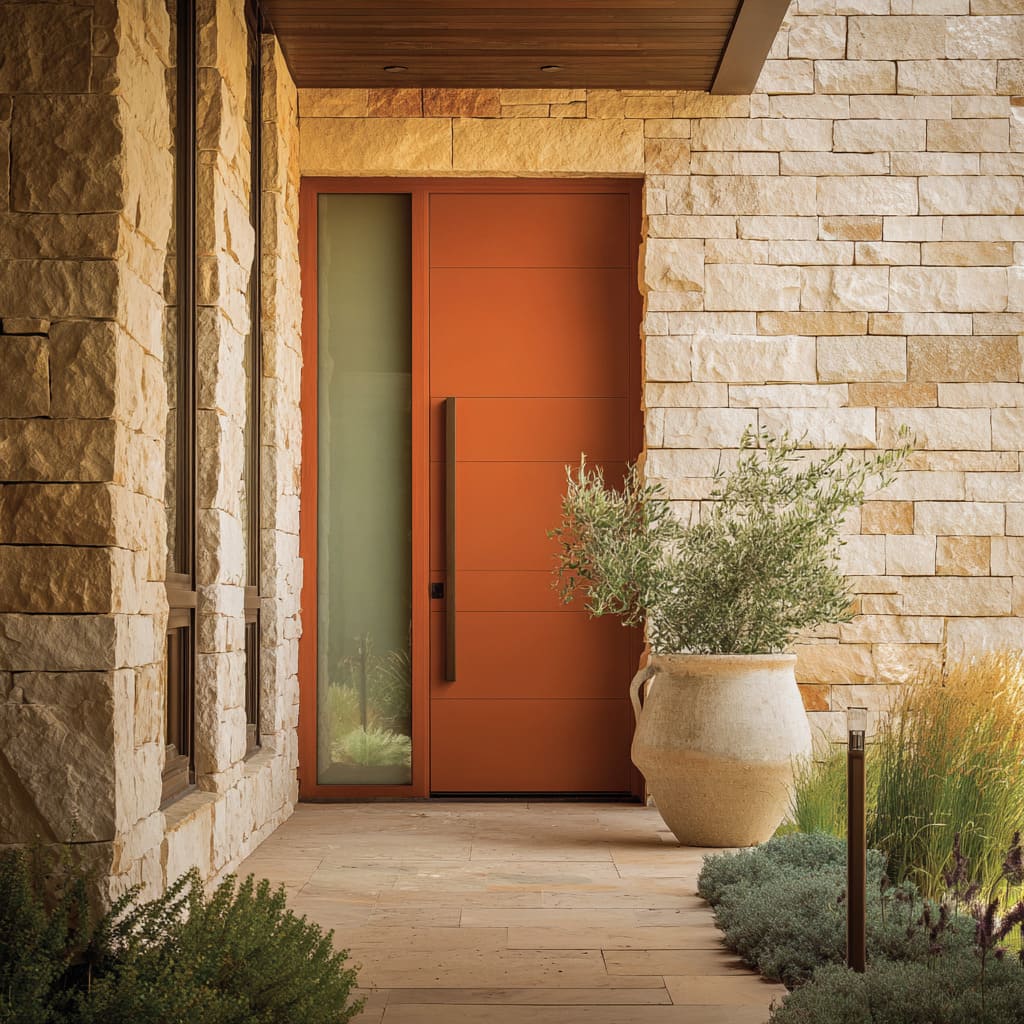
These softened shades do interesting things psychologically. They signal a calm welcome, give a sense of ease before stepping inside, and settle beautifully next to warm wood or cool stone.
They also look consistent in shadow under porch eaves and glow softly at golden hour.
In many front door paint color ideas, a slim black frame or brushed bronze pull isn’t meant as contrast alone — it acts like punctuation, keeping the color field controlled and confident. Meanwhile, neighboring shrubs or tall planters repeat the leaf tone, grounding the door in greenery just like a framed painting rests inside a room.
Warm Citrus and Clay Shades That Bring Light Without Shouting
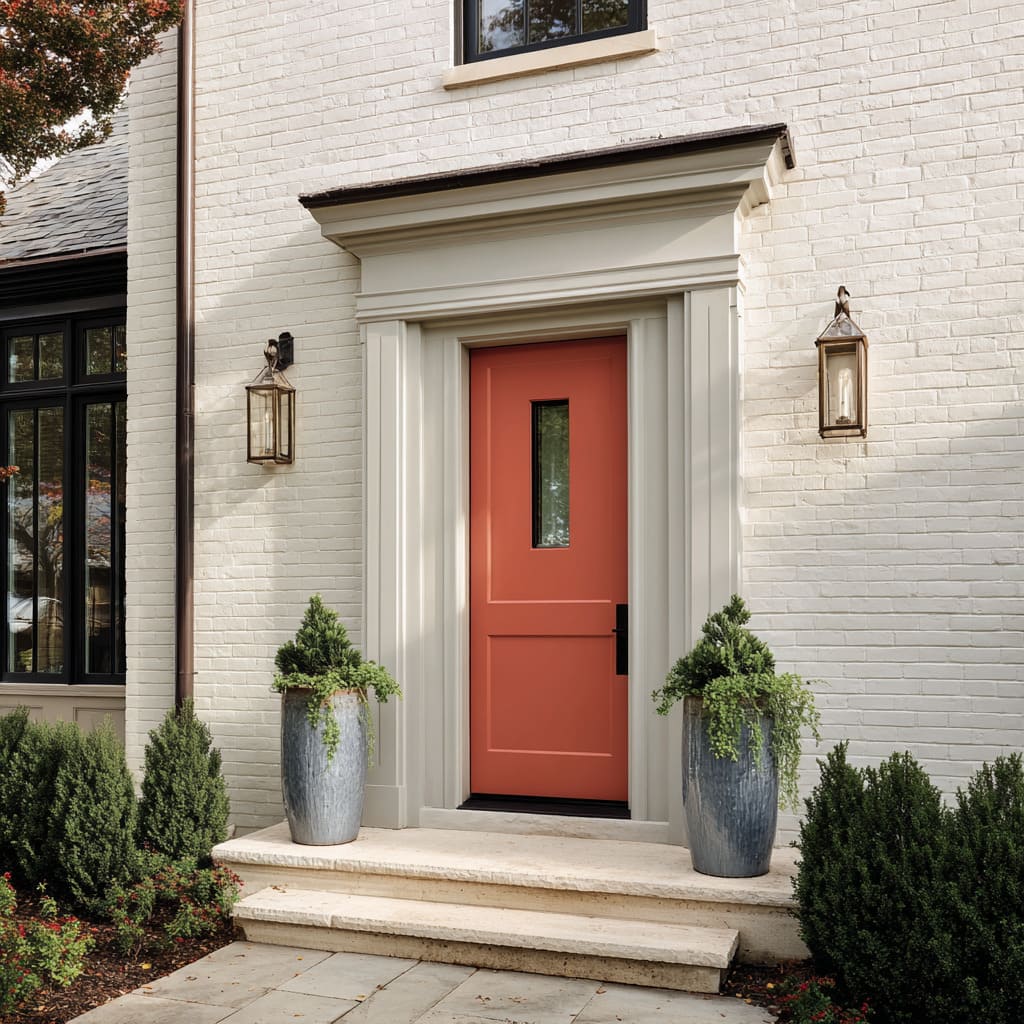
Designers are embracing richer tones too — marigold, saffron, turmeric, terracotta, and brick-red — but there is a new way those hues are handled.
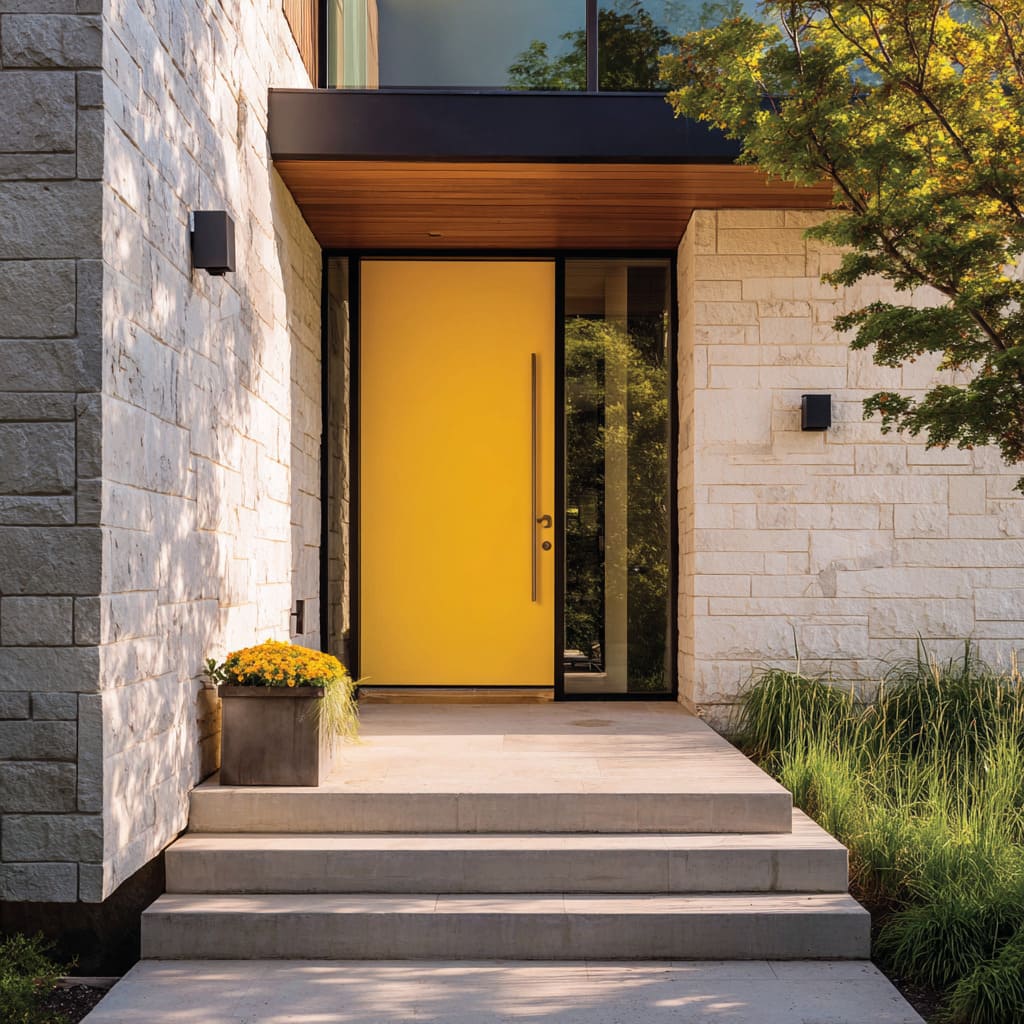
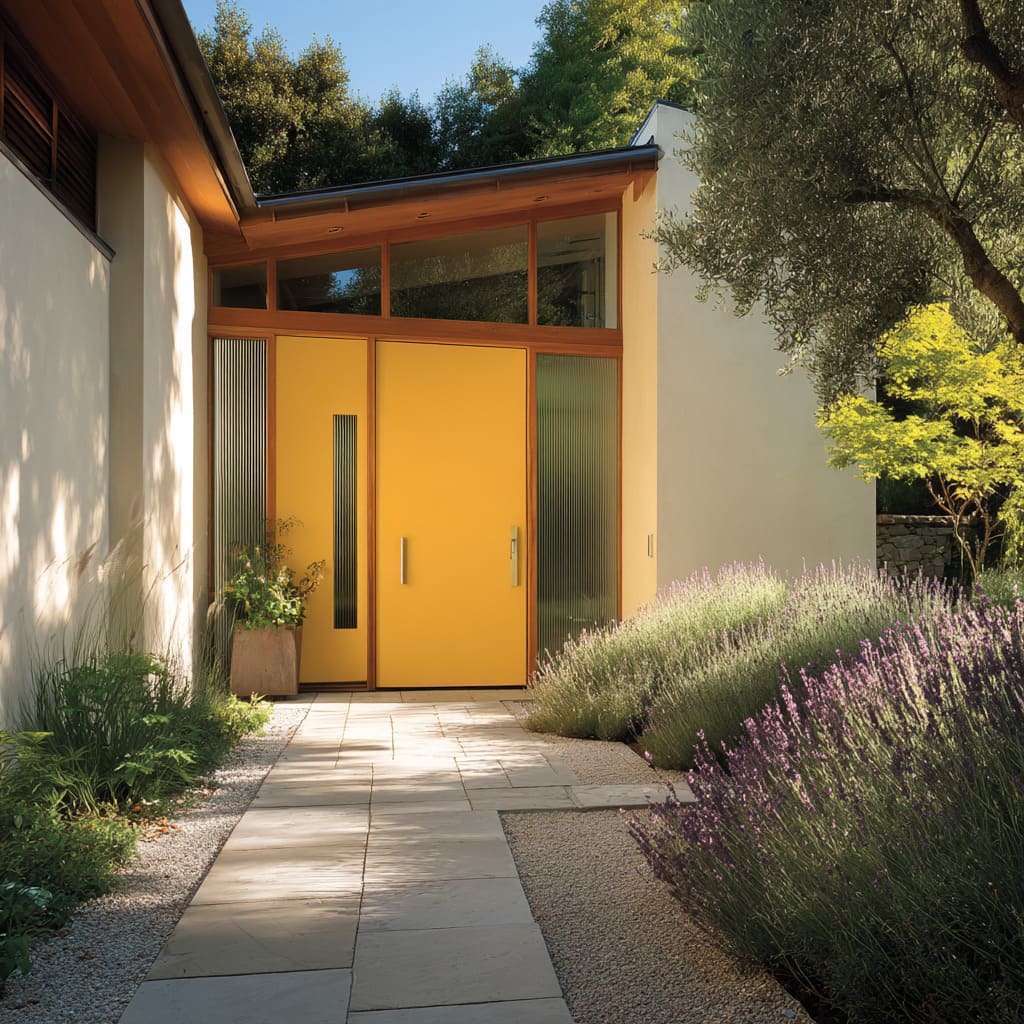
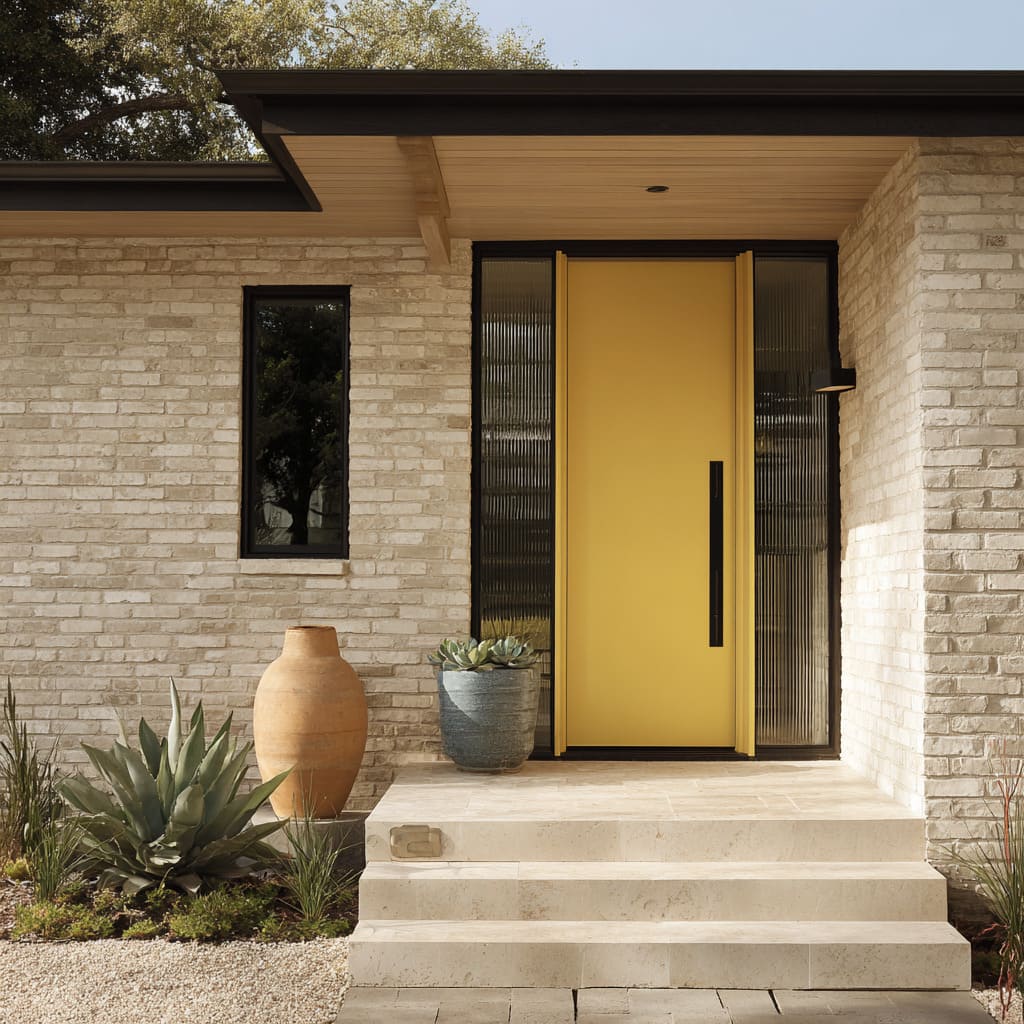
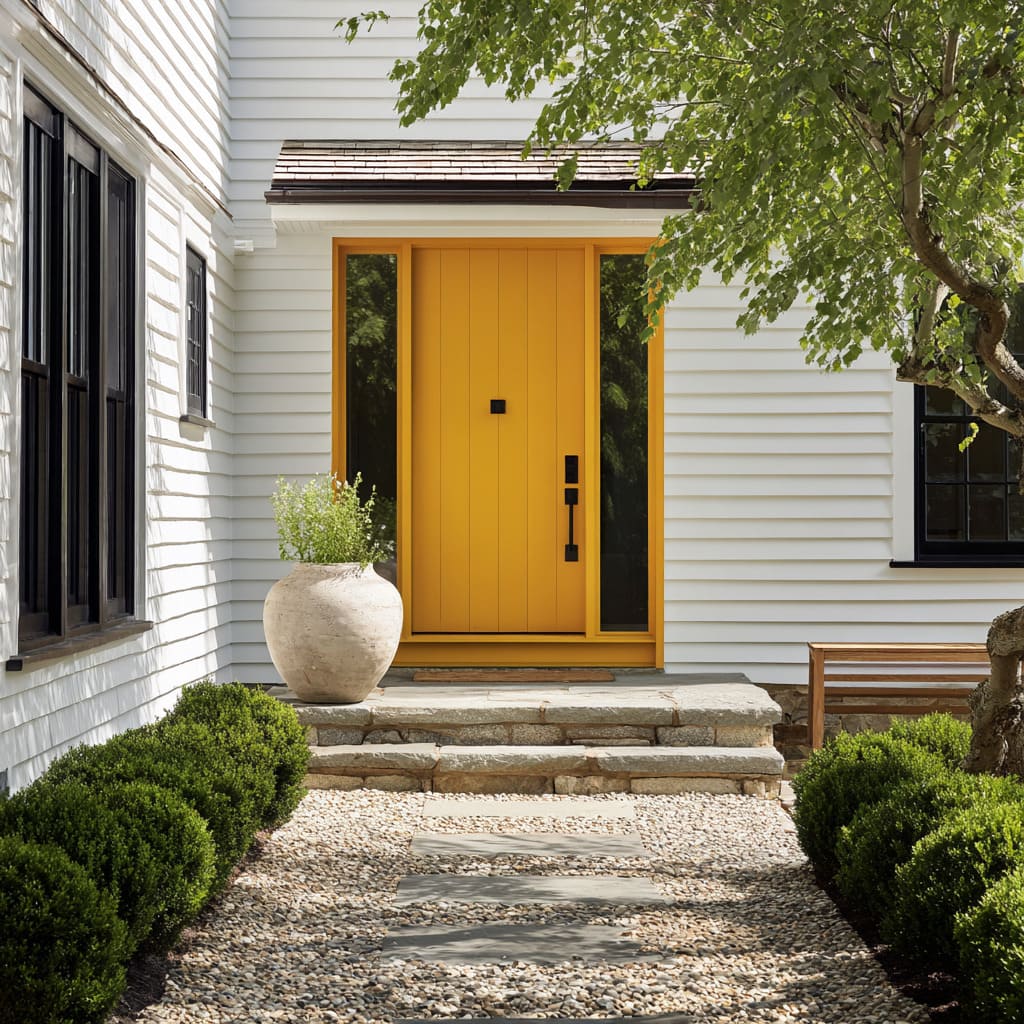
Instead of high gloss or neon punch, these exterior door paint ideas rely on matte finishes and clipped geometry. The door, frame, and sometimes mullions are painted the same shade, creating one warm rectangle that glows softly against pale stucco or light masonry.
When lively tones are paired with dark hardware and clear vertical pulls, the feeling is cheerful yet precise.
Plants play a key supporting role here. Lavender and rosemary add violet and dusty green highlights, cooling warm doors in summer light.
Round boxwood shapes add shadow and stability so colors don’t feel sugary. A pale gravel path or limestone step reflects warm light back upward, lifting the lower half of the tone and creating a pleasing vertical gradient.
These main door ideas for color feel confident and friendly from far away, yet refined when the guest arrives at arm’s length.
The Power of Edges, Frames, and Thin Lines
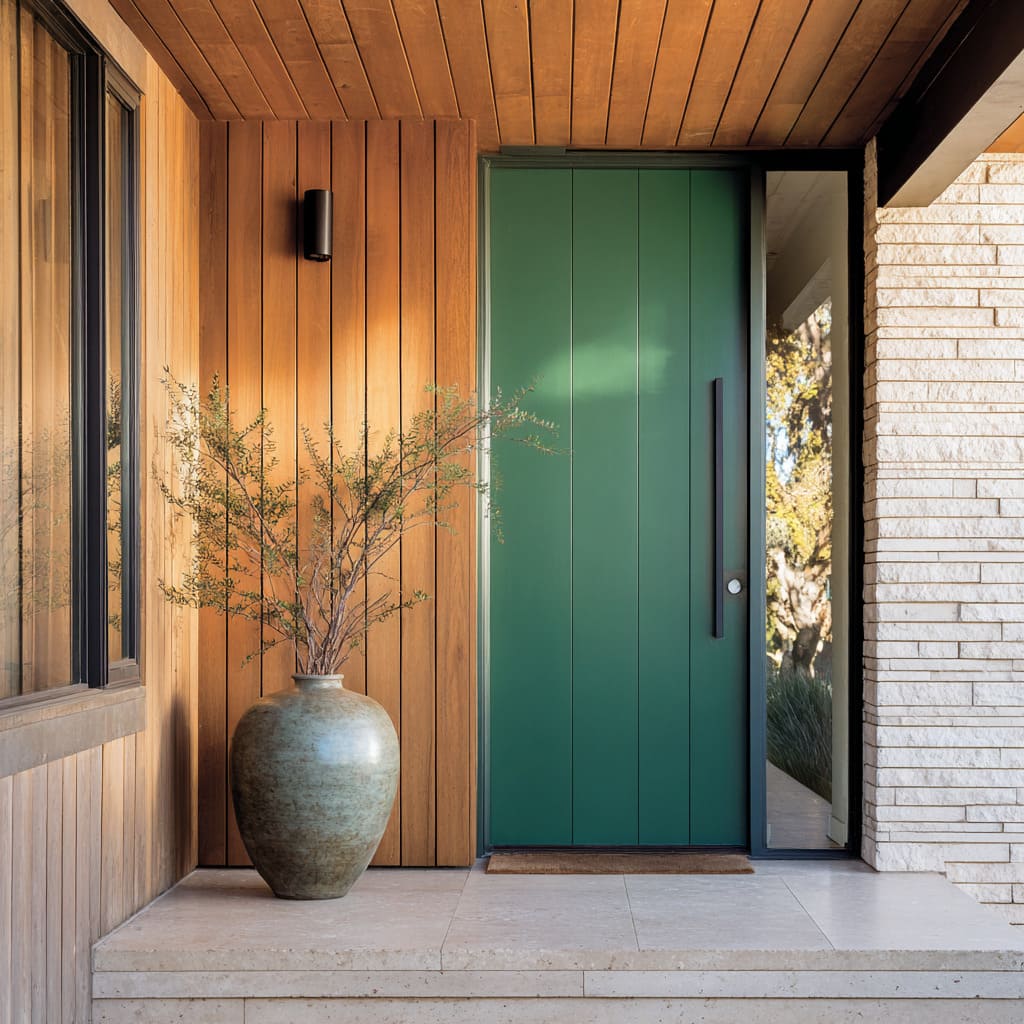
Beyond the color itself, what happens at the perimeter influences how the door feels. Modern design often plays with two strategies:.
- Extended color field: door, casing, and jamb painted in one shade to form a continuous panel
- Graphic outline: slim black or deep bronze frame to sharpen the edges and raise the visual density of the door
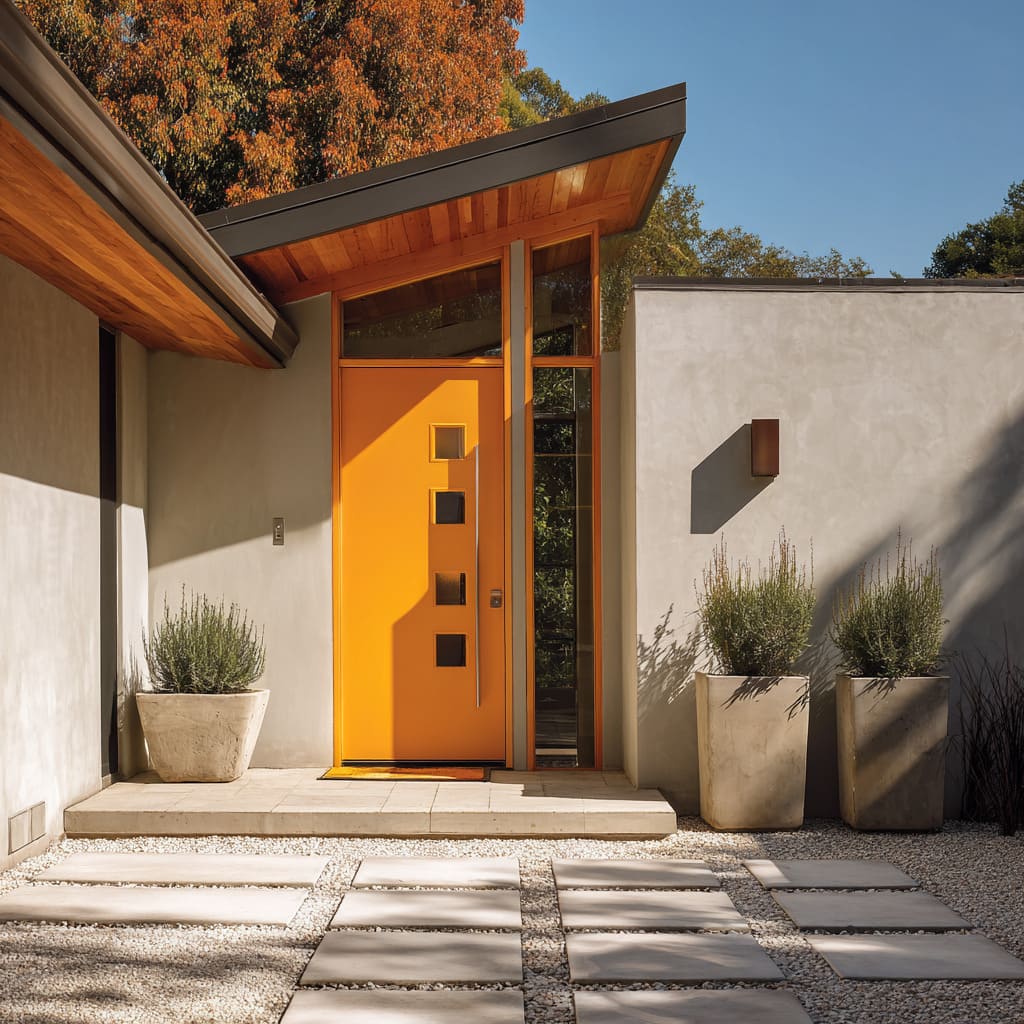
The first approach feels calm and broad, ideal for pastel greens, putty grays, and lavender-washed tones. The second feels crisp and modern, great for sunflower, saffron, or soft pistachio shades.
These directional choices elevate front door paint color ideas from simple swatches to studied compositions. A dark frame also lines up with window mullions and sconces, subtly guiding the eye around the elevation and giving rhythm without ornament.
Light and Sheen: Why Matte Surfaces Lead the Trend
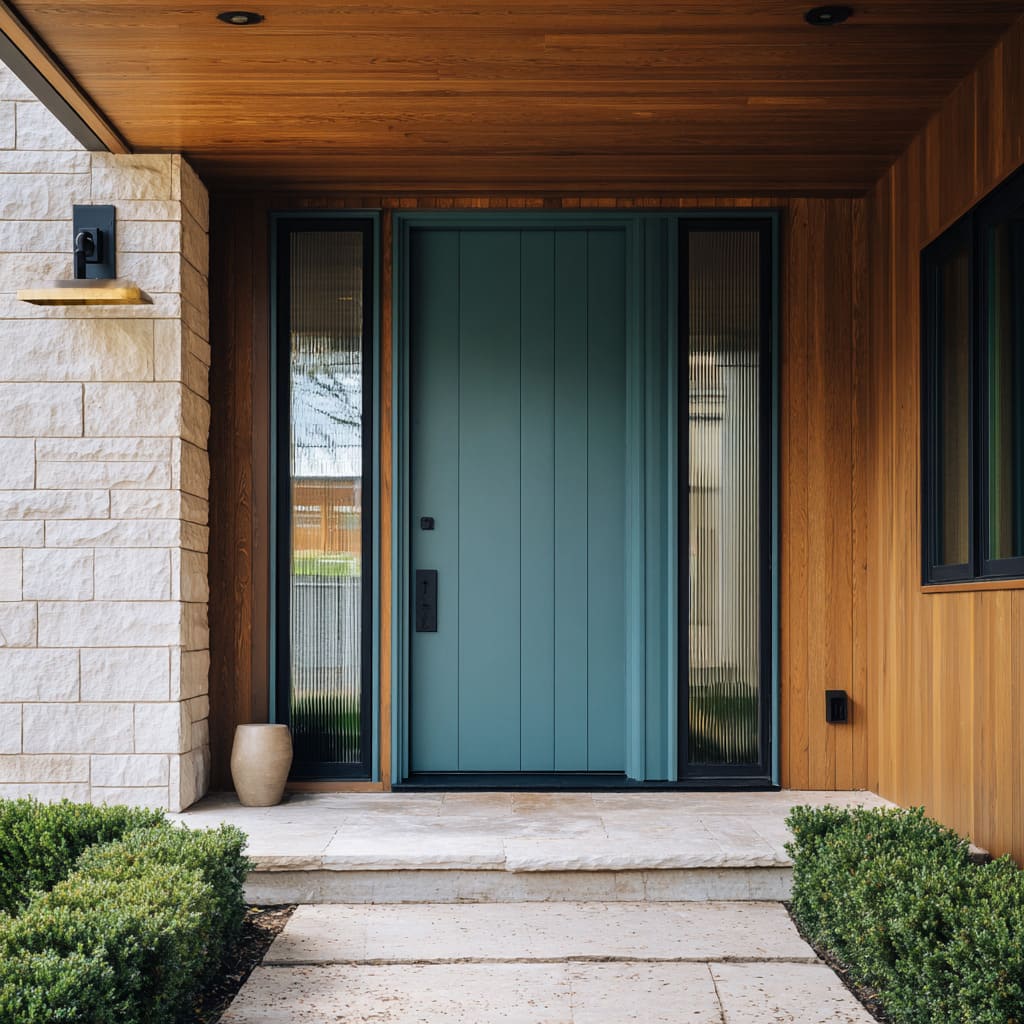
Many of the most thoughtful exterior door color ideas prefer matte or low sheen finishes. Matte absorbs brightness, showing tone over glare, and brings out the softness in botanical colors and earthy reds.
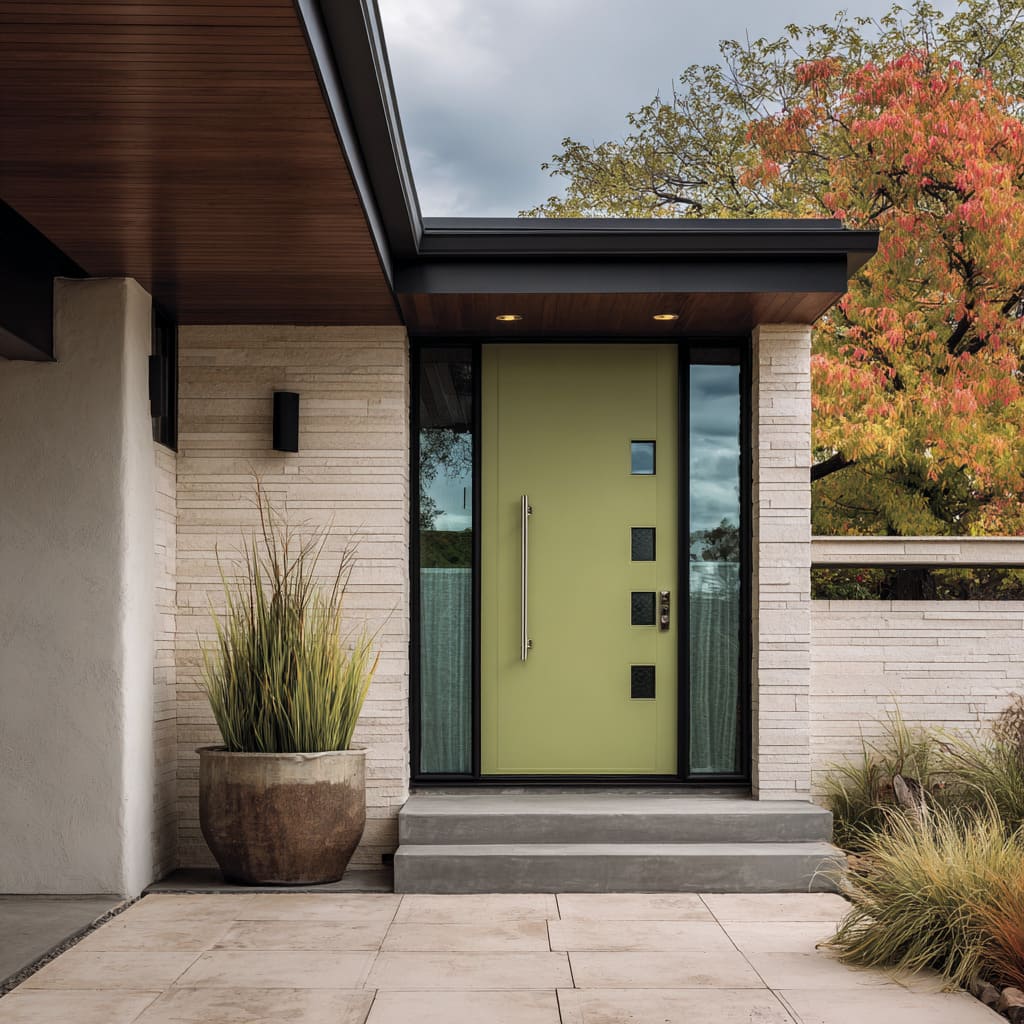
It lets shadows and daily light vary the read, making the entry lively without busyness. Under soffits, upper parts of the slab stay shaded and appear deeper; near pale steps, the bottom third may glow softly.
This gradient effect adds depth the same way linen texture brings dimension to a solid-colored shirt.
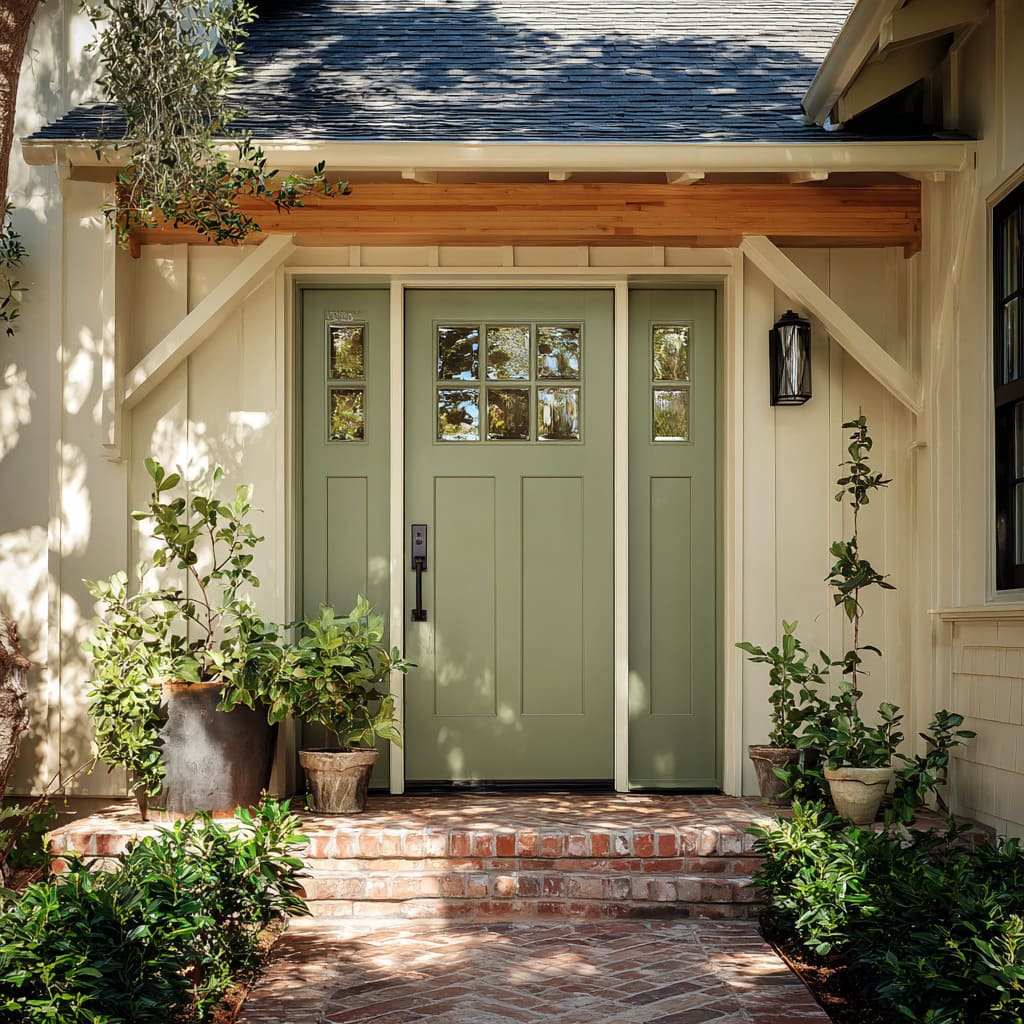
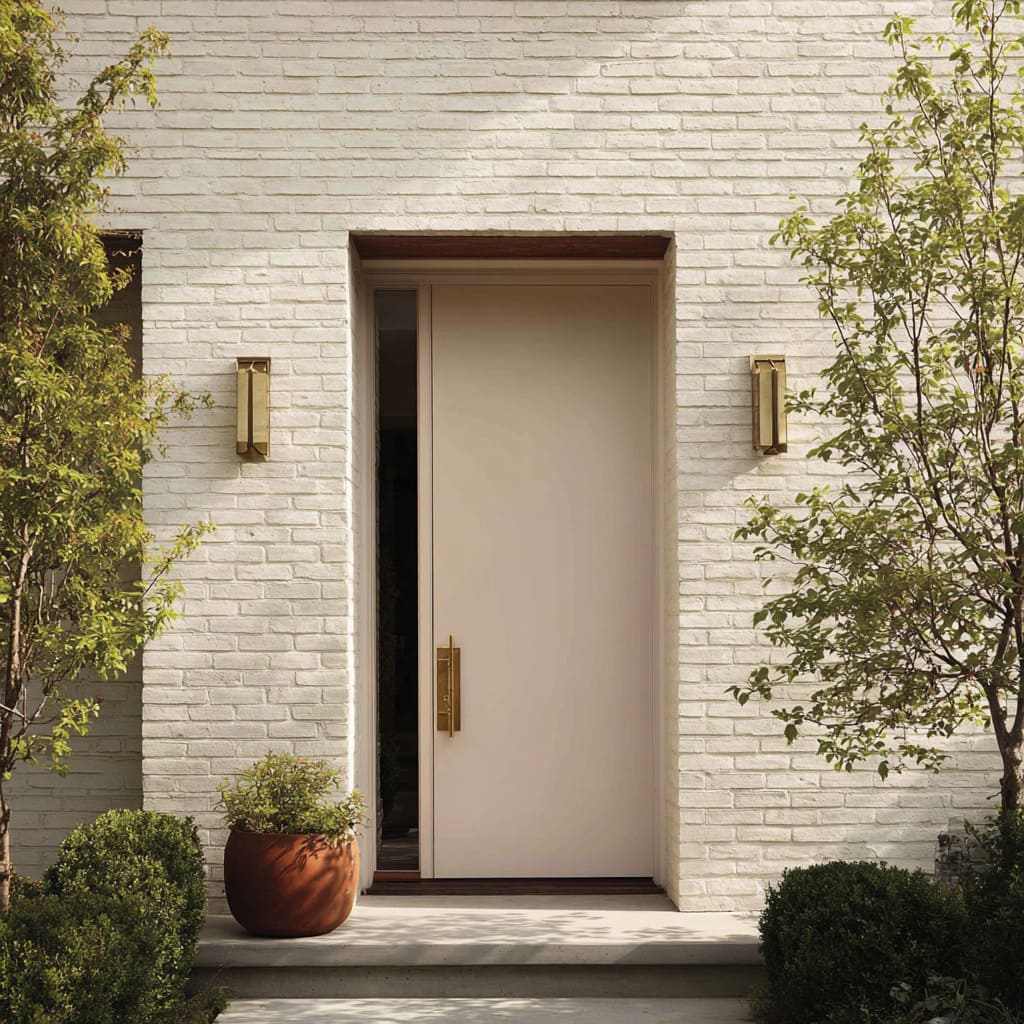
Meanwhile, ribbed or reeded glass adds motion without transparency, creating shimmer beside cool greens or deep teals. Selected carefully, hardware becomes part of the palette — polished brass warms cool hues; black steel sharpens light tones; brushed steel chills saffron just enough to feel modern rather than retro.
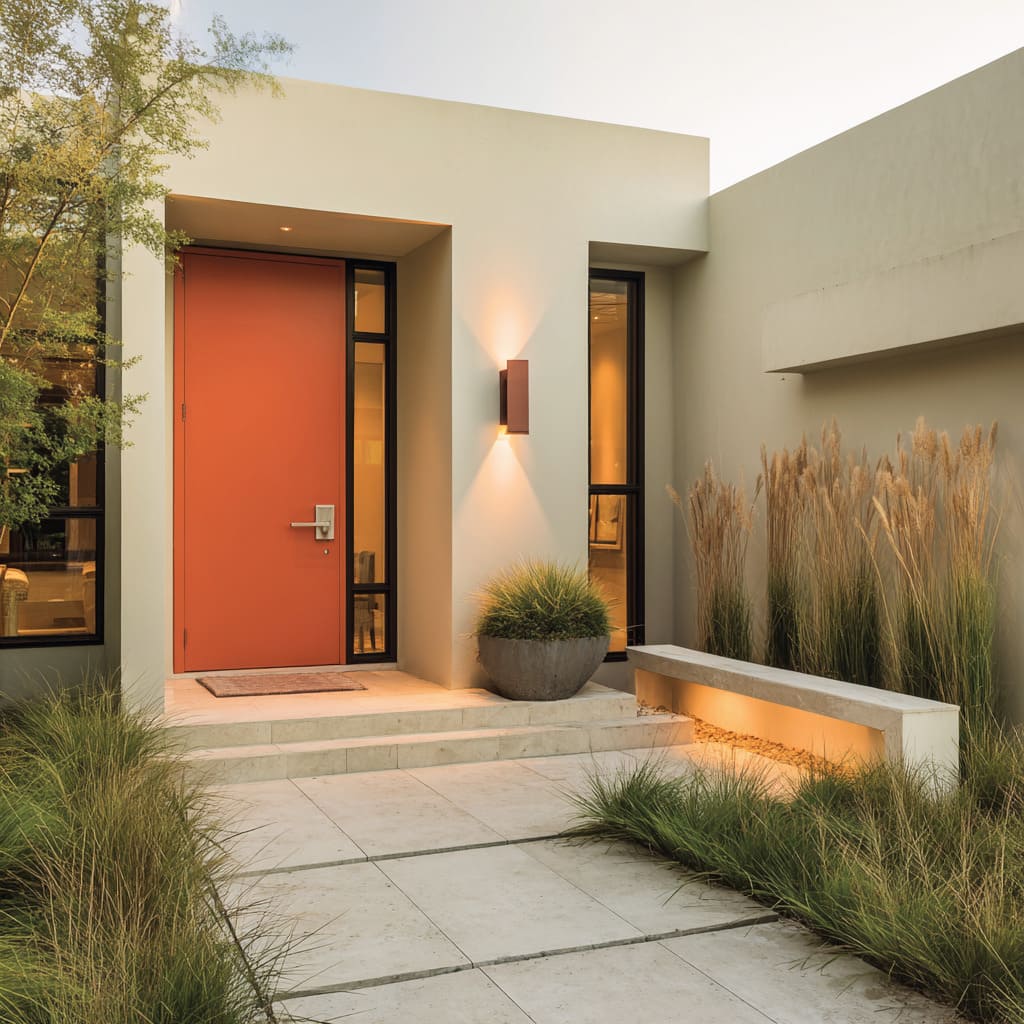
Door Color as Part of a Larger Exterior Palette
Rather than treating color as a stand-alone decision, current entry door color ideas view it as part of a chain reaction across materials. You see it in three ways:
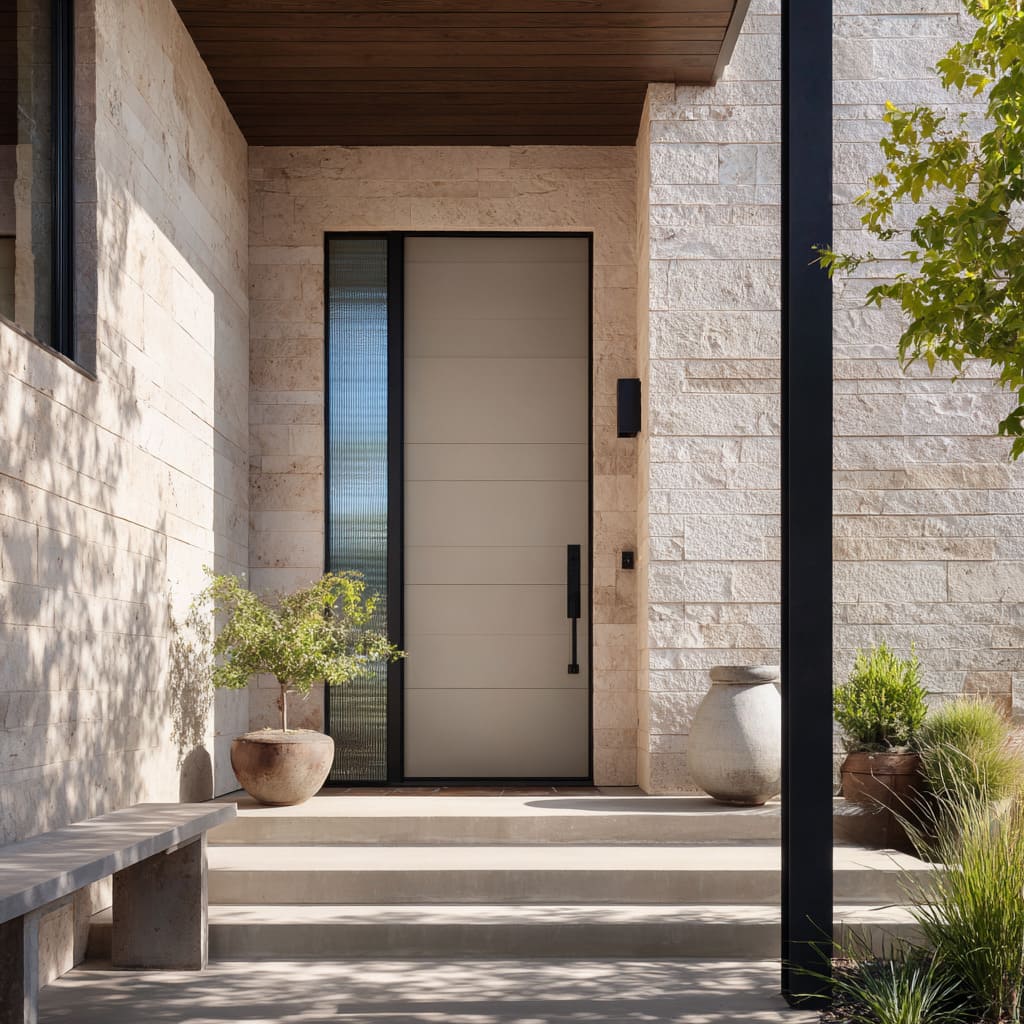
Stone and Brick as Tone Anchors
- Pale limestone brightens subtle greens and mints — ideal for quiet, serene houses.
- Red brick pulls moss or clay shades into a grounded, timeless place.
- Painted white brick softens pastels and keeps them airy.
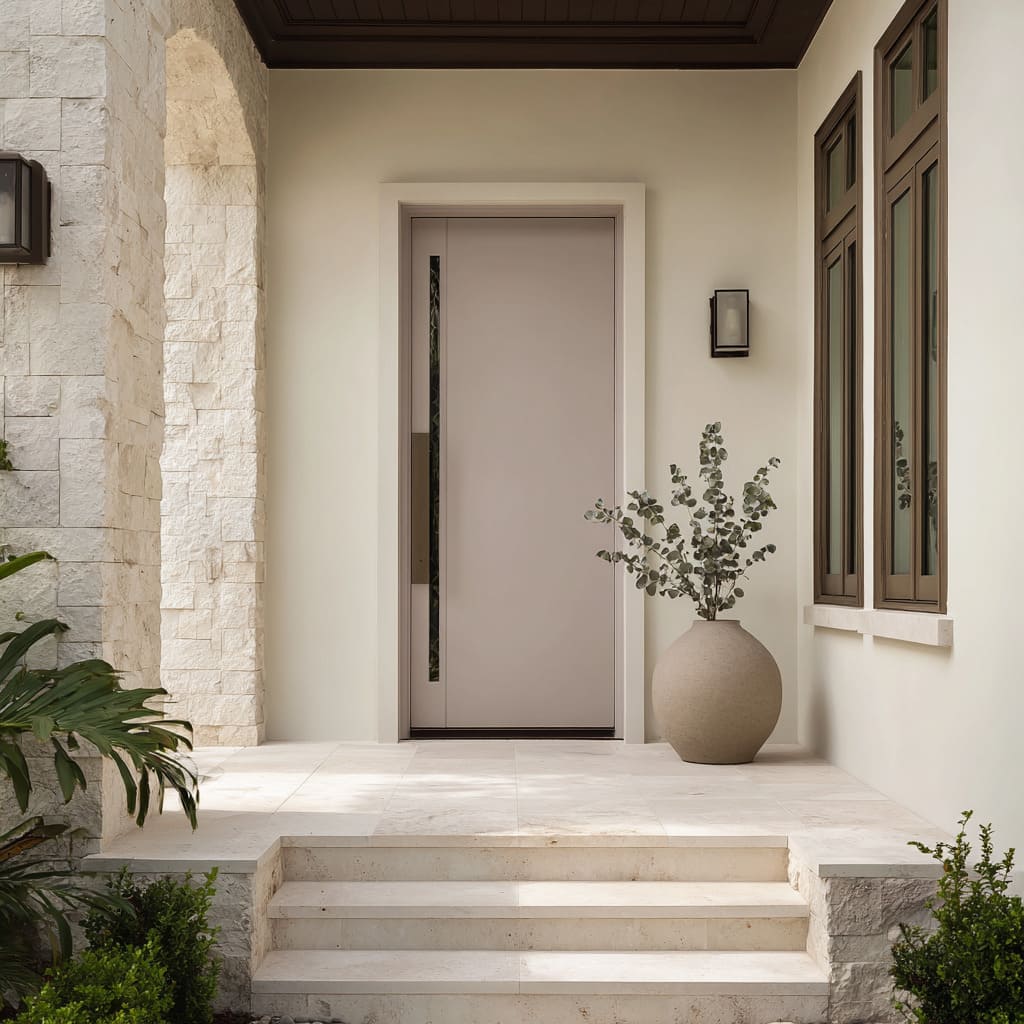
Timber as a Warm Counterbalance
- Cedar soffits and warm wood trims temper teal, jade, and pistachio.
- Even a narrow timber header reveal can shift a cool door toward comfort.

Landscaping as a Mood Layer
- Clipped spheres create shadow and formality.
- Loose grasses soften rectilinear geometry.
- Silvery olive leaves echo gray-green undertones in sage and mint.
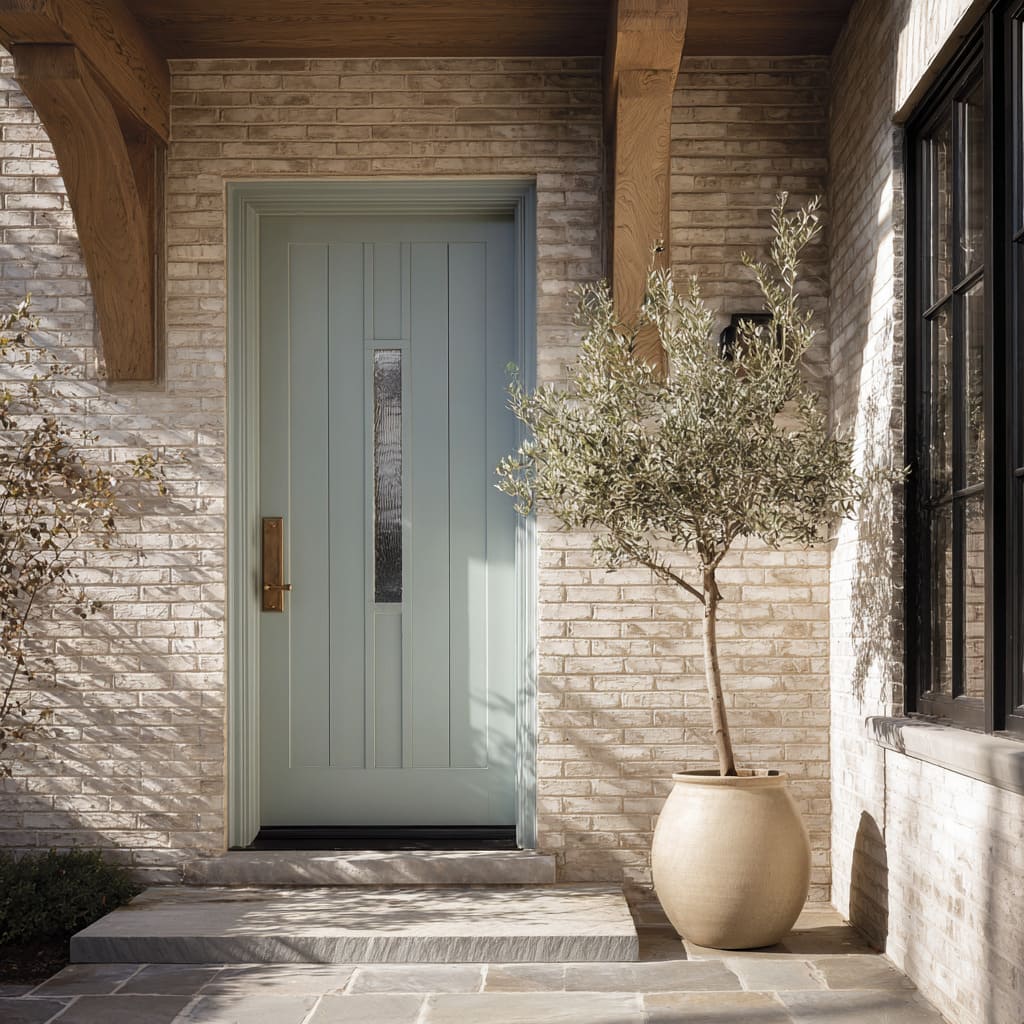
This is where the door acts less like a decorative plane and more like a consistent, gentle anchor — a visual link between architecture and outdoor life, completing the composition without effort.
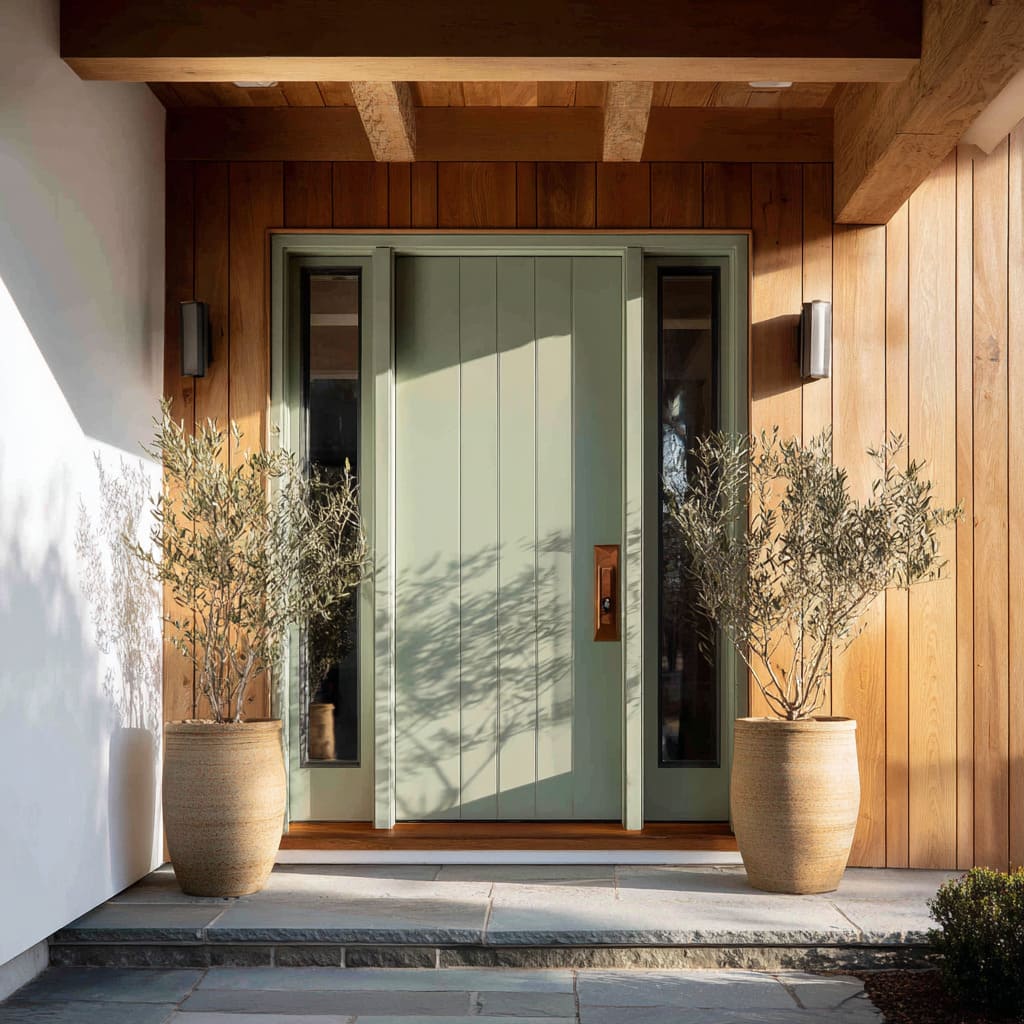
Vertical Rhythm, Hardware, and Subtle Glass Choices
The vertical proportion matters as much as the hue. Many modern doors use slim grooves, full-height pulls, and tall sidelites that reinforce the height.
These elements don’t compete with color; they tighten the visual structure so the tone feels intentional. Reeded glass introduces texture that catches daylight like water ripples, especially in pastel or green-tinted shades.
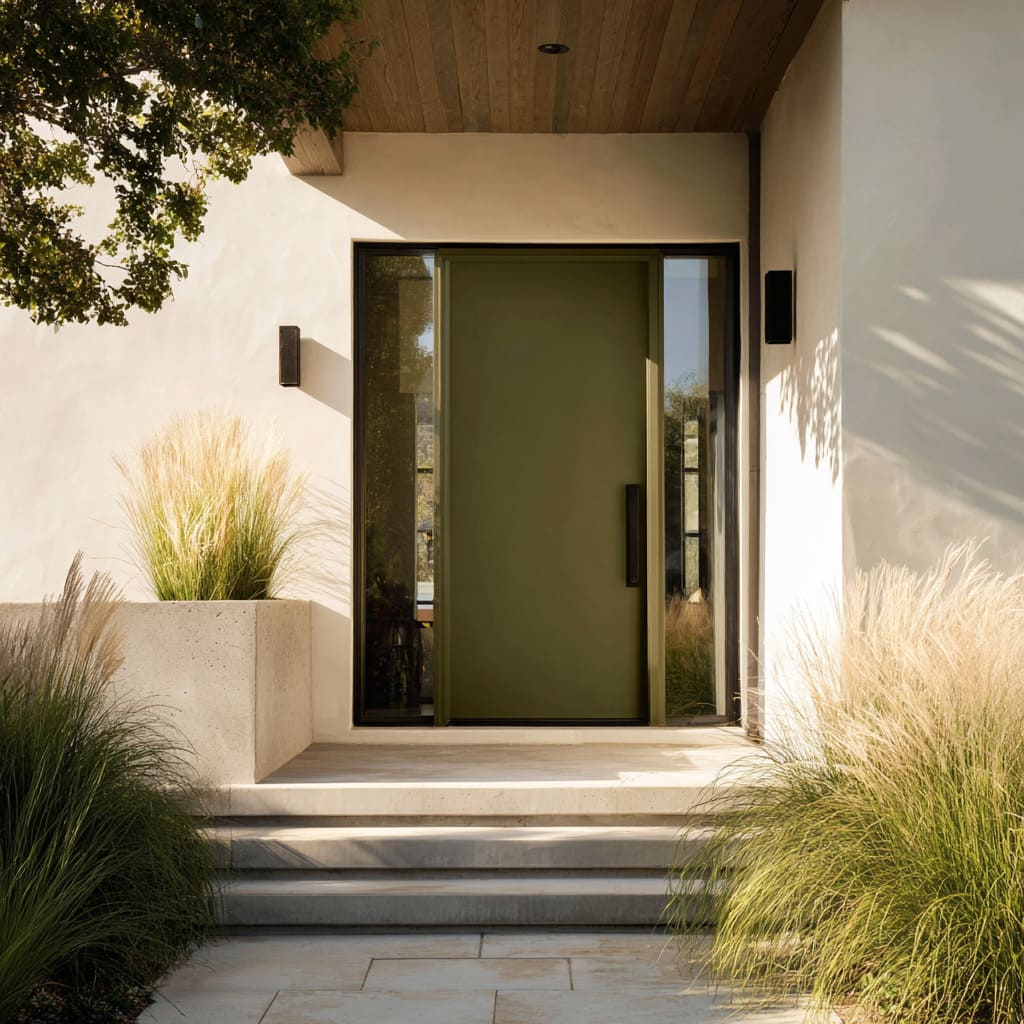
Sometimes the groove spacing mirrors nearby board-and-batten cladding, creating harmony across the entry. Sometimes a single tiny glass slit brings intrigue while leaving most of the tone uninterrupted.
The trick is control — just enough movement to spark interest, not enough to scatter the focus away from the color field.
Mood First, Color Second: How Doors Communicate Emotion
Modern front door ideas for color fall into several emotional families:
- Natural ease: olive, moss, sage, and pistachio paired with limestone and cedar
- Warm optimism: marigold, turmeric, ochre softened by matte finish and dark outline
- Earth calm: terracotta, clay-rose, brick-red with pale stone and bronze touches
- Quiet cool: lavender-gray, smoky-aqua, slate-mint with stone and brushed metal
- Clean modernity: stone-gray, pale cream, and warm greige framed sharply in dark lines

These aren’t rules — they’re visual moods that repeat across stylish neighborhoods and new builds that value a grounded, welcoming feel without bold theatrics.
How Front Door Color Holds the Whole Entry Together
Strong main door ideas for color work at three distances:
- From the street — clear tone and outline create identity
- Along the path — grooves, planters, and glass guide attention without noise
- At the doorstep — undertones and sheen become more noticeable, revealing quality and calm
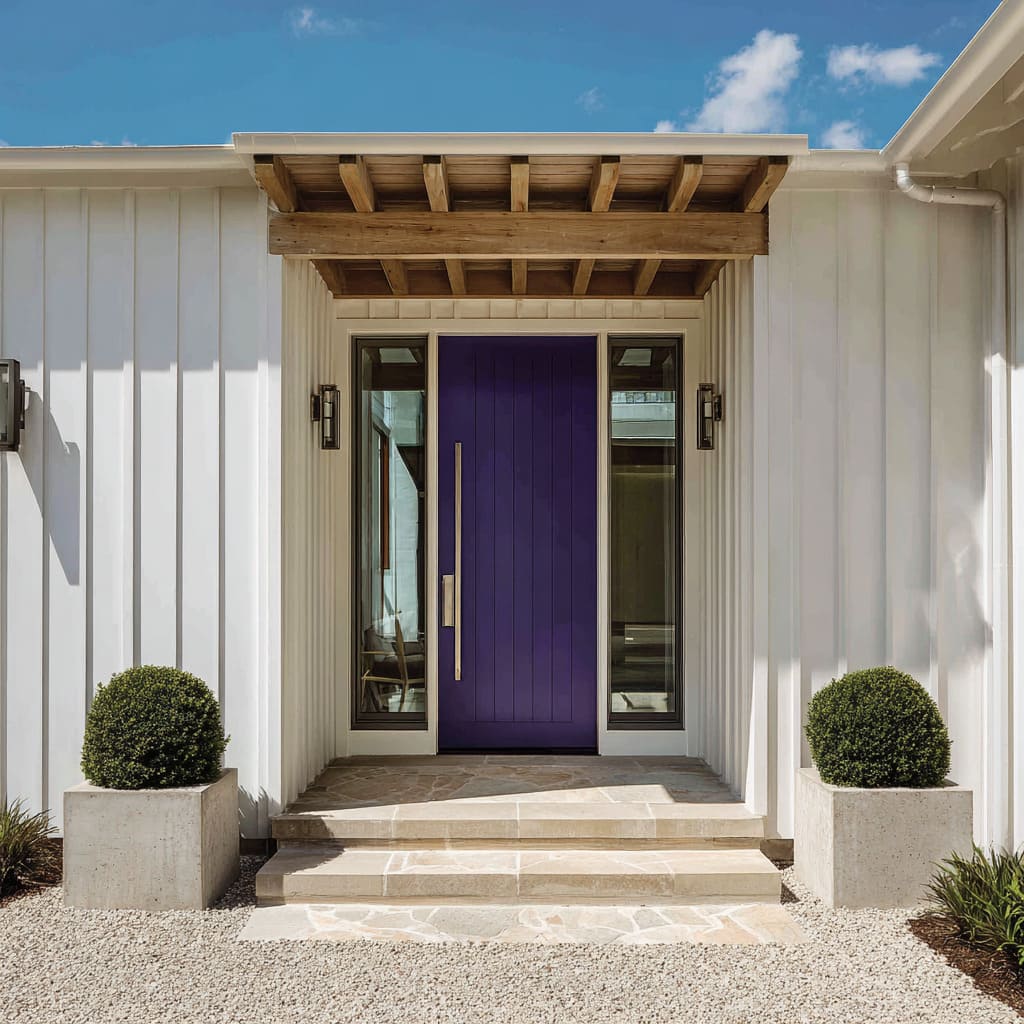
Because of this layered read, the door acts as a gentle anchor in modern exteriors — not a spotlight, not a shout, but a steady moment of style and atmosphere. This approach has turned exterior door paint ideas into a design language rather than a single pigment choice.
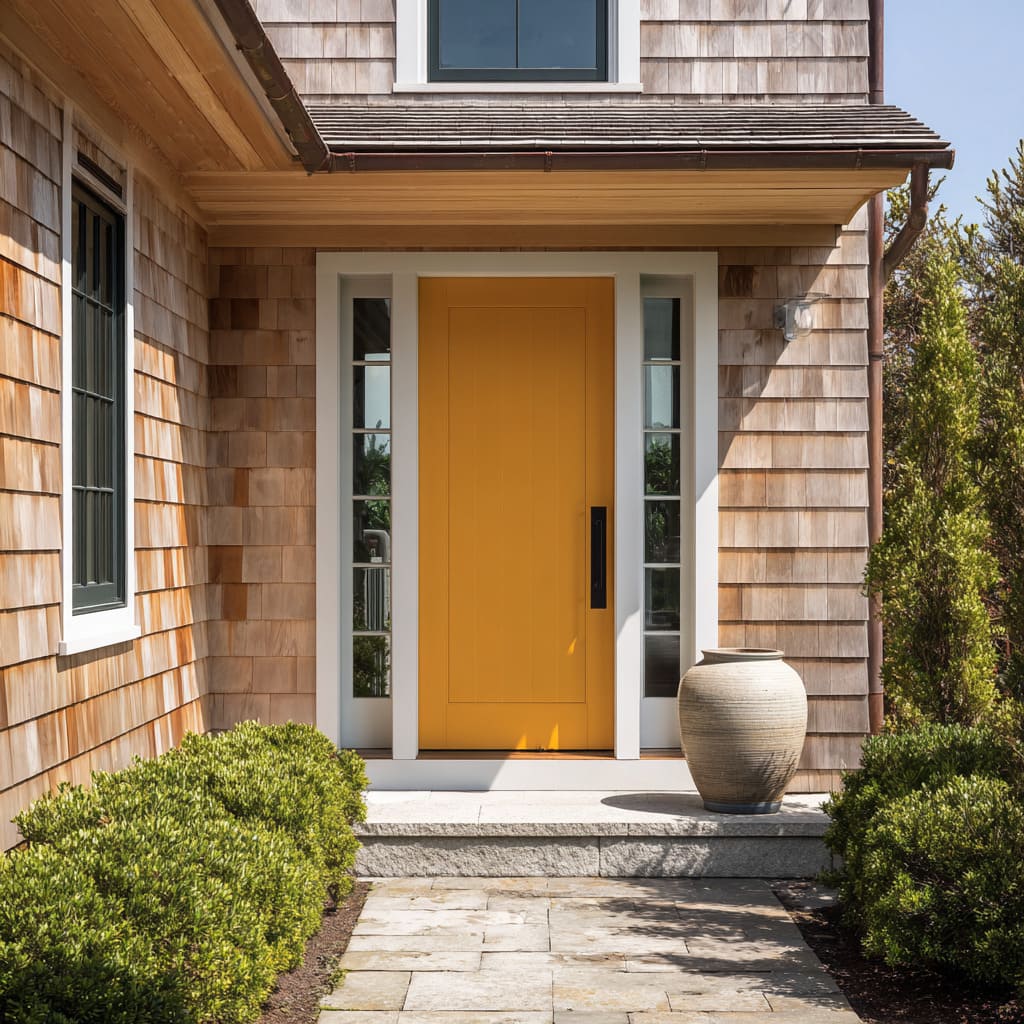
Final Thoughts: Color as a Quiet Entry Statement
The most striking entry door color ideas today do not rely on strong contrast or bold graphics alone. They rise from the way paint, frame, trim, stone, timber, plants, and light work together.
Warm-cast soffits, pale stone that reflects light upward, brushed brass or black steel that adds a calm accent — these are the touches that make a muted sage or dusty saffron feel confident and lasting.
This new generation of front door ideas for color values mood over noise, natural balance over trends, and layers of quiet visual decisions that create an easy, elevated welcome every single day.