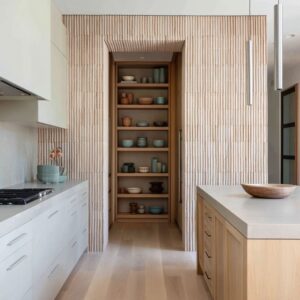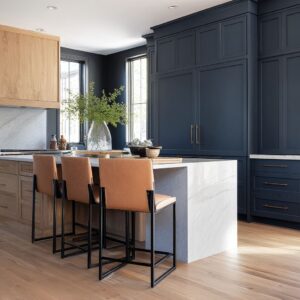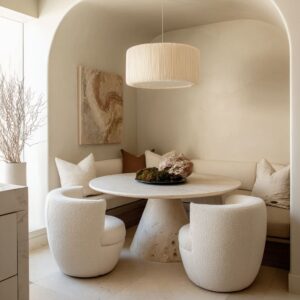
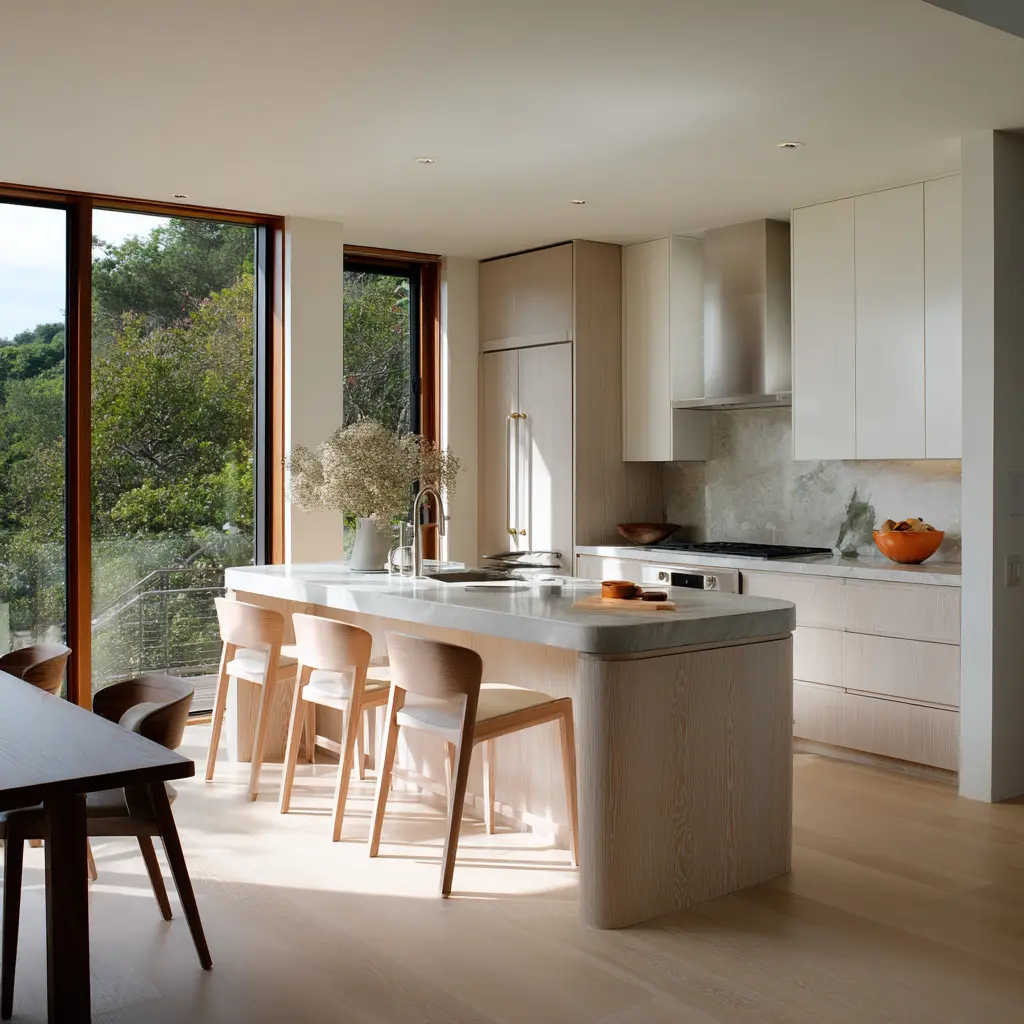
A kitchen island can add storage, extra work surface, and a place to sit. But a furniture-style kitchen island does something different.
It changes the emotional center of the room. A furniture-style kitchen island carries the main visual and social weight of the kitchen.
Even in rooms with substantial cabinetry, large hood features, tall pantry walls, or strong window framing, the eye will be kept returning to the island. It held the gathering edge.
It shaped the mood. It helped the kitchen feel settled and inhabitable rather than purely functional.
That shift matters because many homeowners and designers still talk about islands as if they are simple cabinet blocks with seating added to one side. The deeper idea is that a true furniture-style island works by a different logic.
It behaves like a central furnishing placed inside the kitchen, with the same kind of spatial importance that a dining table, sideboard, or built-in banquette can carry in other parts of the home. The difference starts much earlier.
It does not begin with decorative trim, a fashionable stool, or a trendy finish. It begins with structure, mass, proportion, and the way the island meets the floor.
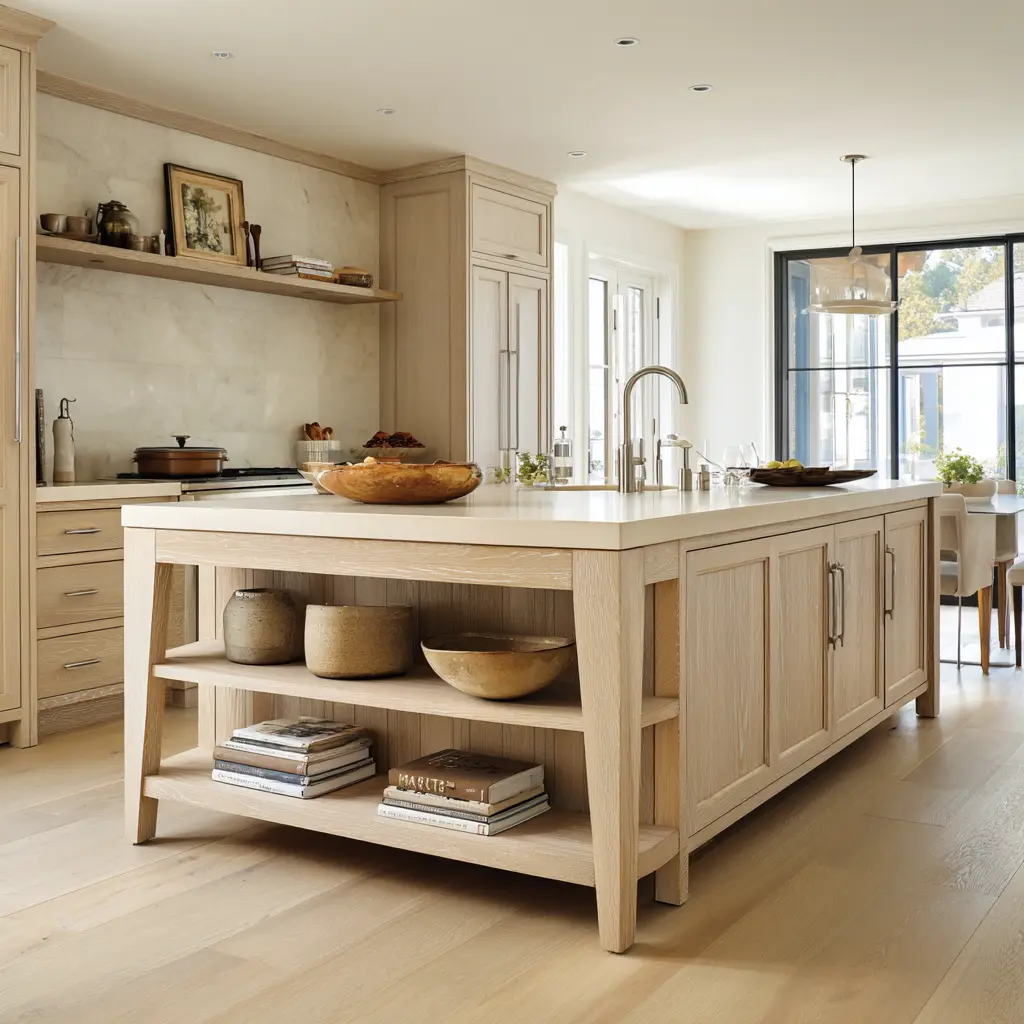
The change starts at the base
Furniture character is shaped less by broad style labels like modern, farmhouse, coastal, or classic, and far more by floor-contact grammar. The island becomes furniture when its support logic feels intentional and legible.
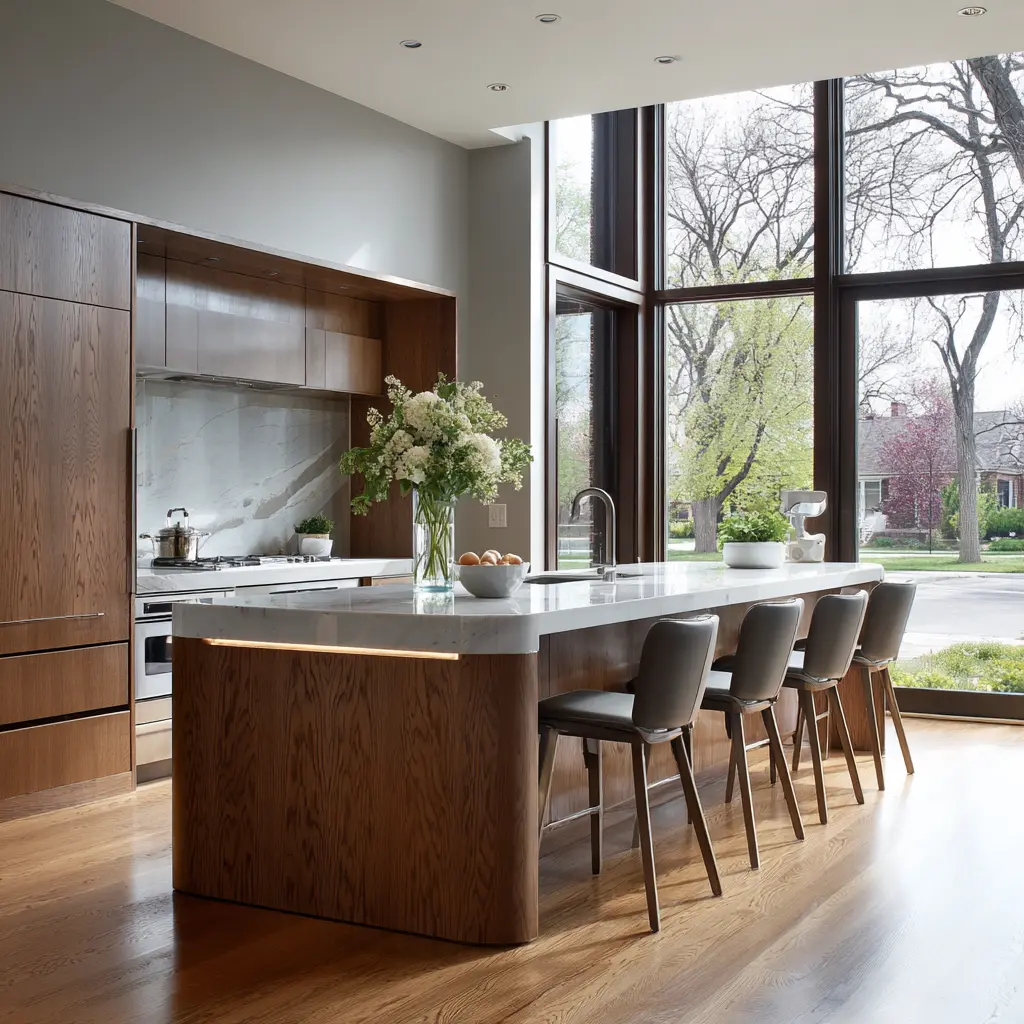
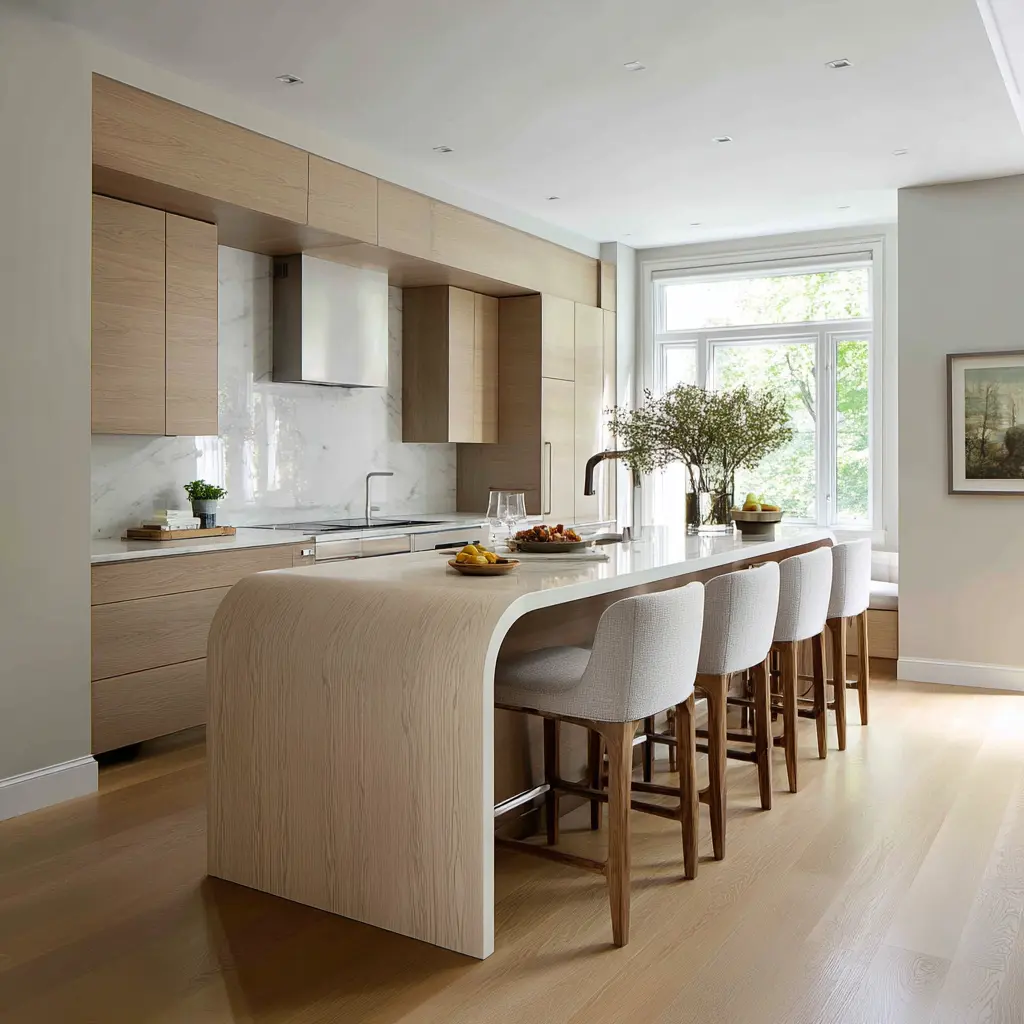
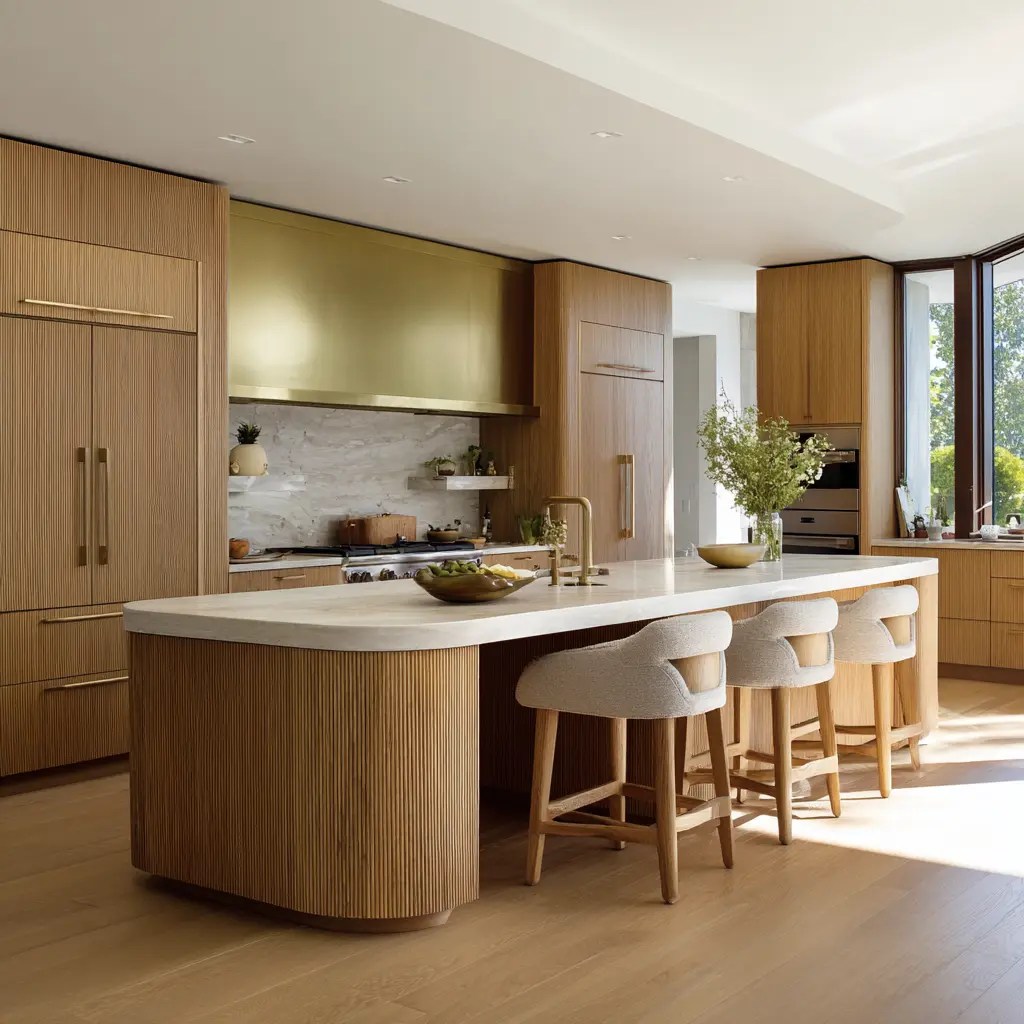
Three main types of support: The first is the closed sculpted mass. In such kitchens, the island still meets the floor as a continuous block, but that block is softened through curves, rounded corners, layered reveals, or gentle shaping.
It still has presence, but it feels shaped rather than blunt. The result is often a very clean contemporary island that feels custom without looking cold.
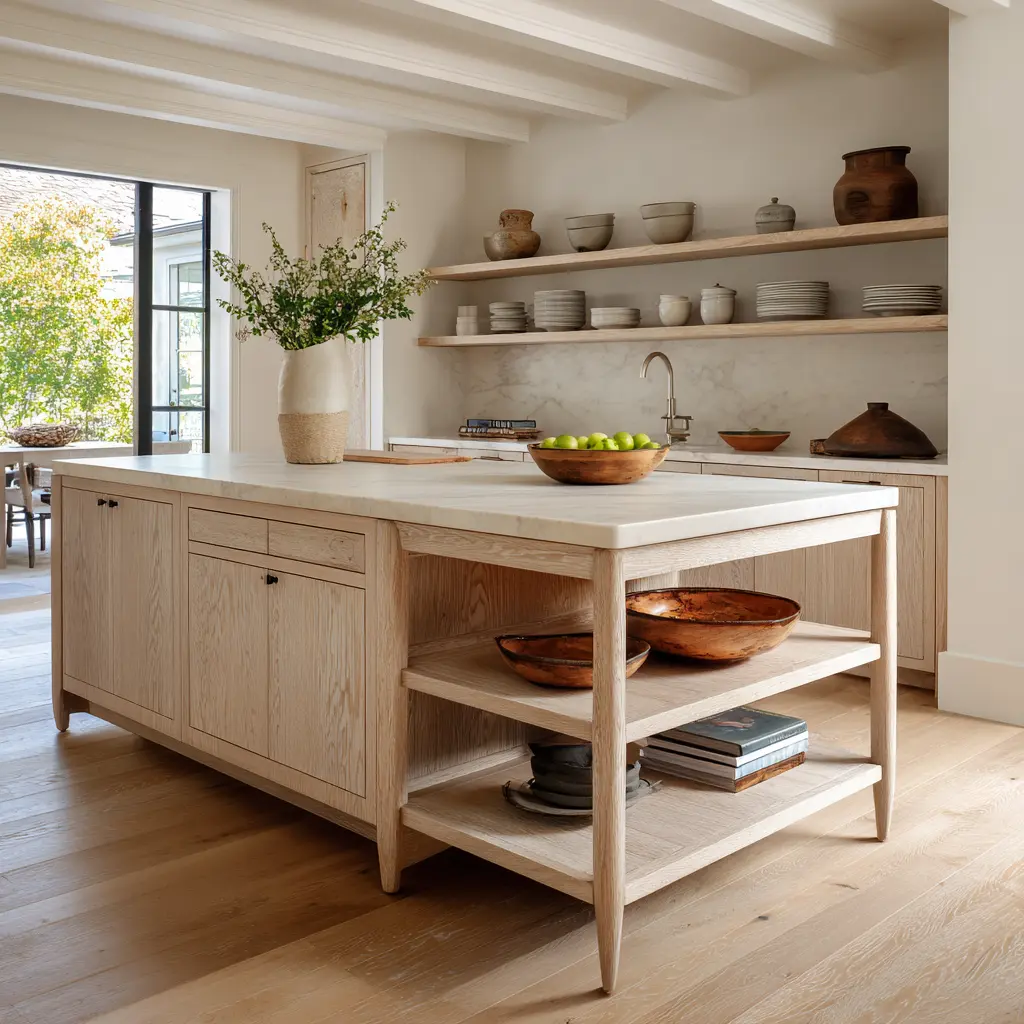
The second is the legged or framed table structure. Here, the island visibly stands on posts, legs, corner supports, or a table-like frame.
This changes the emotional reading right away. The piece starts to feel closer to a worktable, serving table, or freestanding cabinet than a fixed run of base cabinetry.
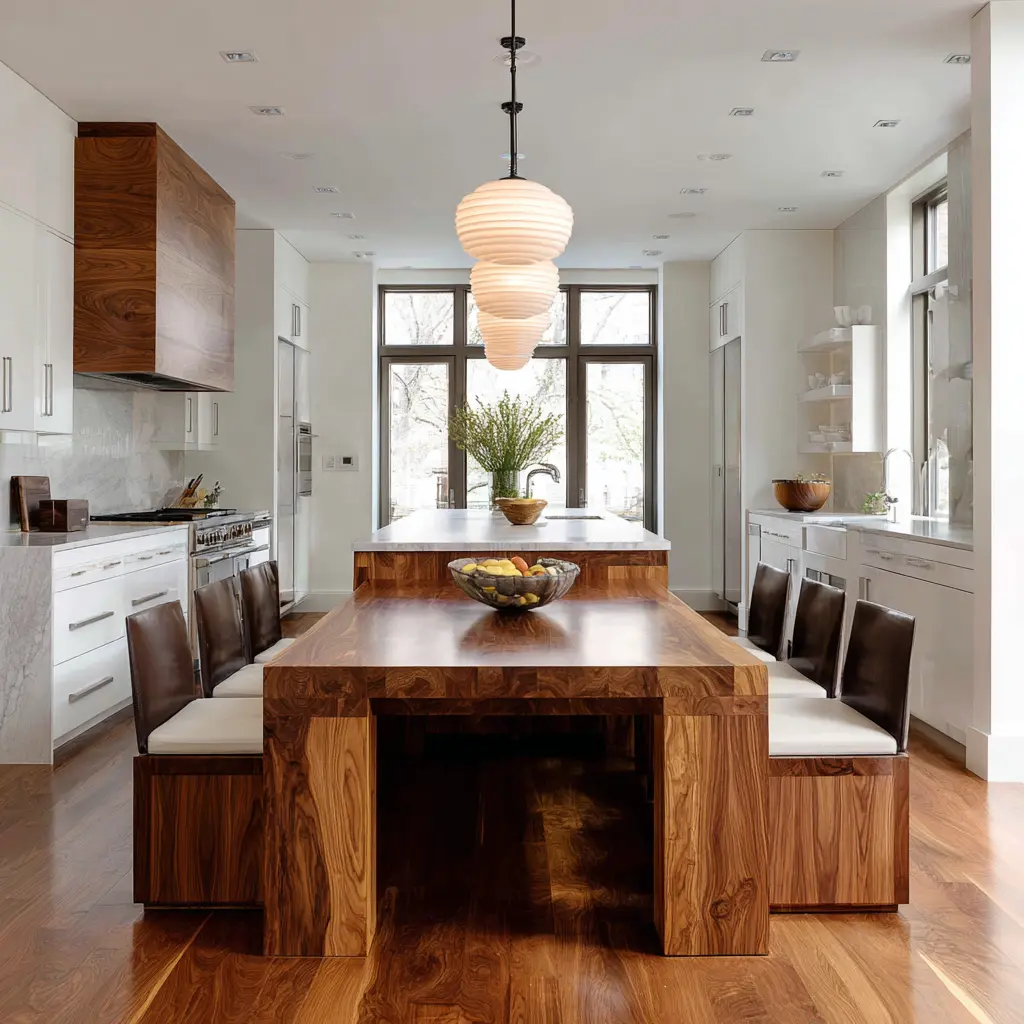
The third is the composite support type. In these cases, the island becomes a hybrid piece: part cabinet mass, part table, part dining extension, or even part built-in seating composition.
These are often the most socially ambitious islands because they are designed for gathering in a fuller way.
Many people assume that furniture style comes from surface details such as turned legs, fluting, or open shelves. Those details matter, but they are not the first move.
The first move is support logic. Once the island’s support system starts to communicate table logic, sculpted-object logic, or hybrid social-object logic, the entire piece shifts away from generic cabinetry.
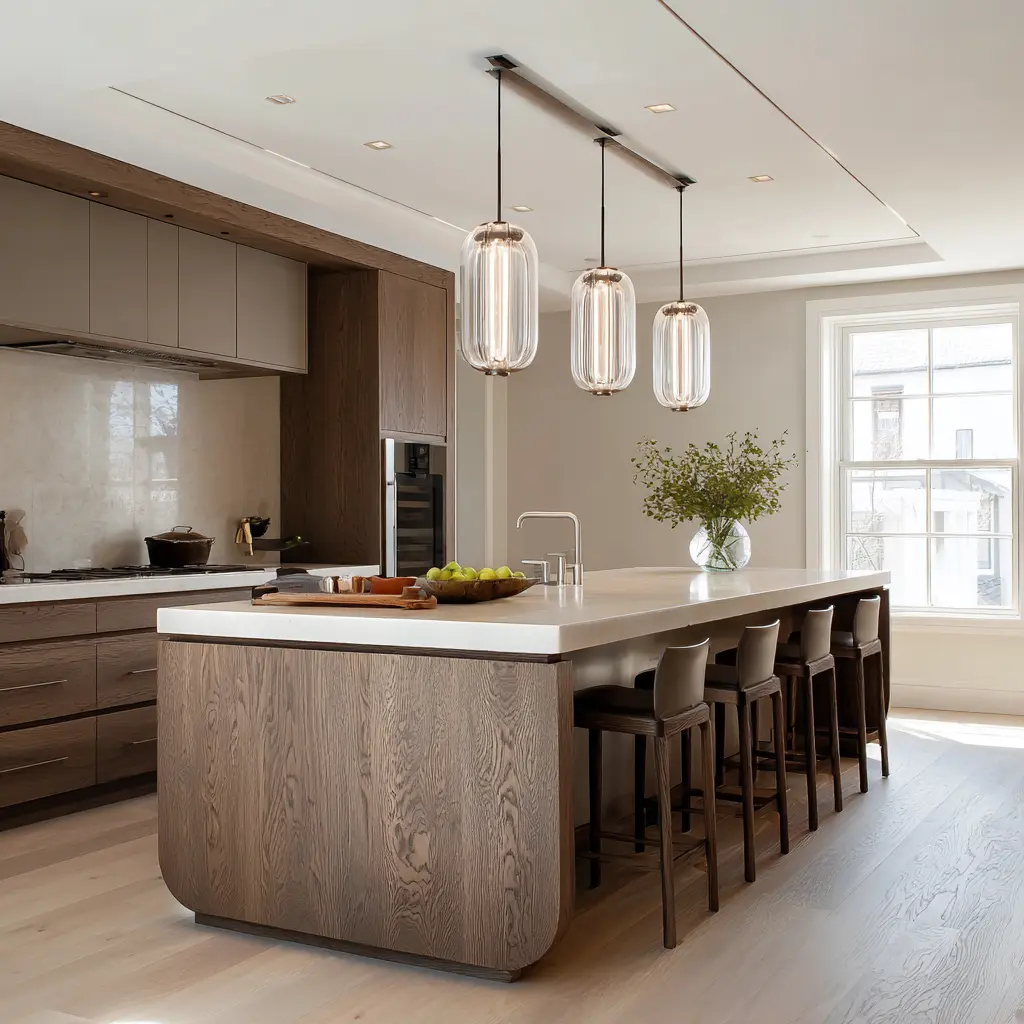
Curves and legs solve the same problem in opposite ways
One of the richest ideas is that curved monolithic islands and legged furniture-table islands often look very different, yet they are solving the same design problem. That problem is scale.
Kitchen islands are often large. They need enough length for prep, seating, circulation, and sometimes a sink or storage.
Without some kind of visual softening, that size can easily turn into bluntness. The island may feel heavy, overbuilt, or static.
Curves solve this by smoothing the stop points. A rounded end, softened corner, or sweeping support makes the eye move around the island instead of colliding with it.
The island feels shaped to movement and daily life. It feels less abrupt.
Even a very substantial island can feel more approachable once hard corners are eased and end conditions are rounded.
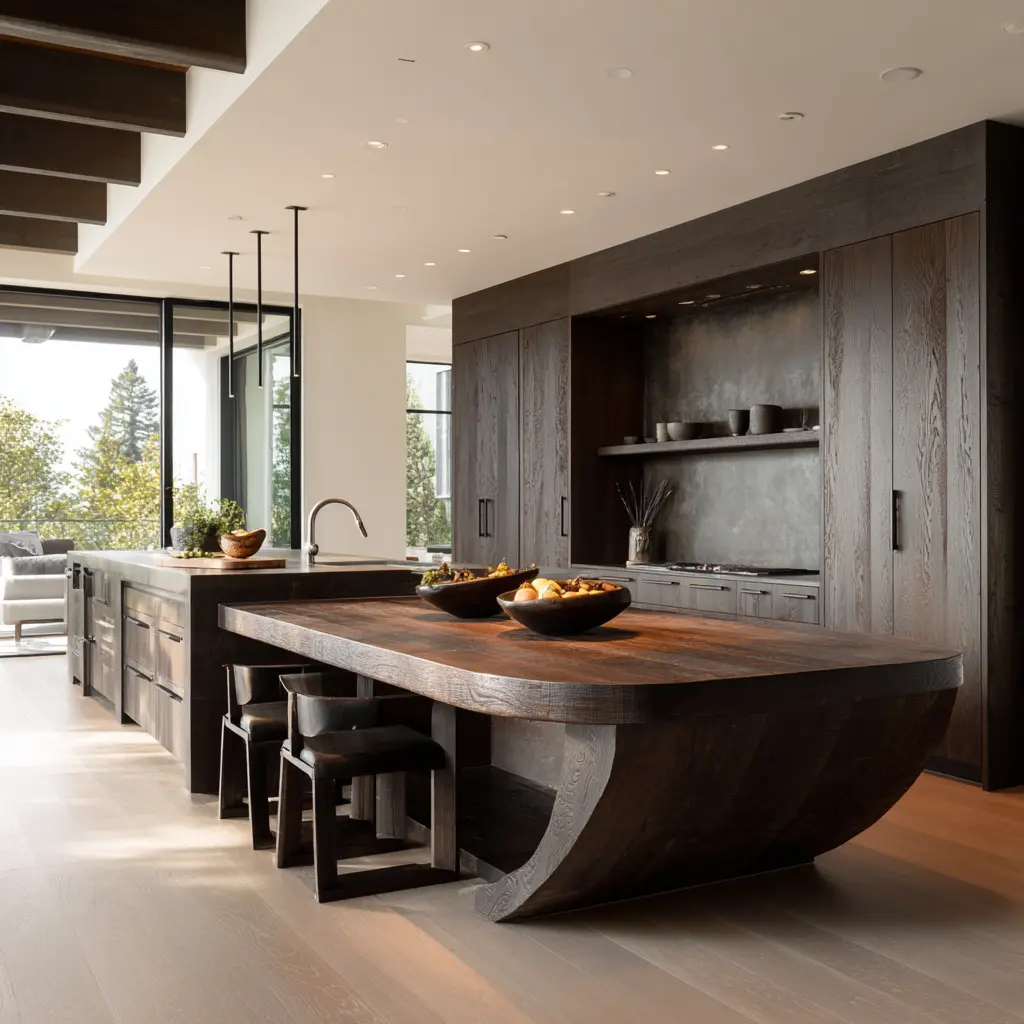
Legs and framed supports solve the same issue from the opposite direction. Instead of softening the outer line, they break up the base mass.
The eye can pass beneath the structure. The island feels lifted.
There is air around the support, and that creates relief under the countertop. The piece still has visual weight, but it does not sit on the floor as one sealed object.
This is a key design principle worth holding onto: furniture-likeness is often a mass-softening problem, not a decorative one. Curves soften the mass by reshaping it.
Legs soften the mass by opening it.
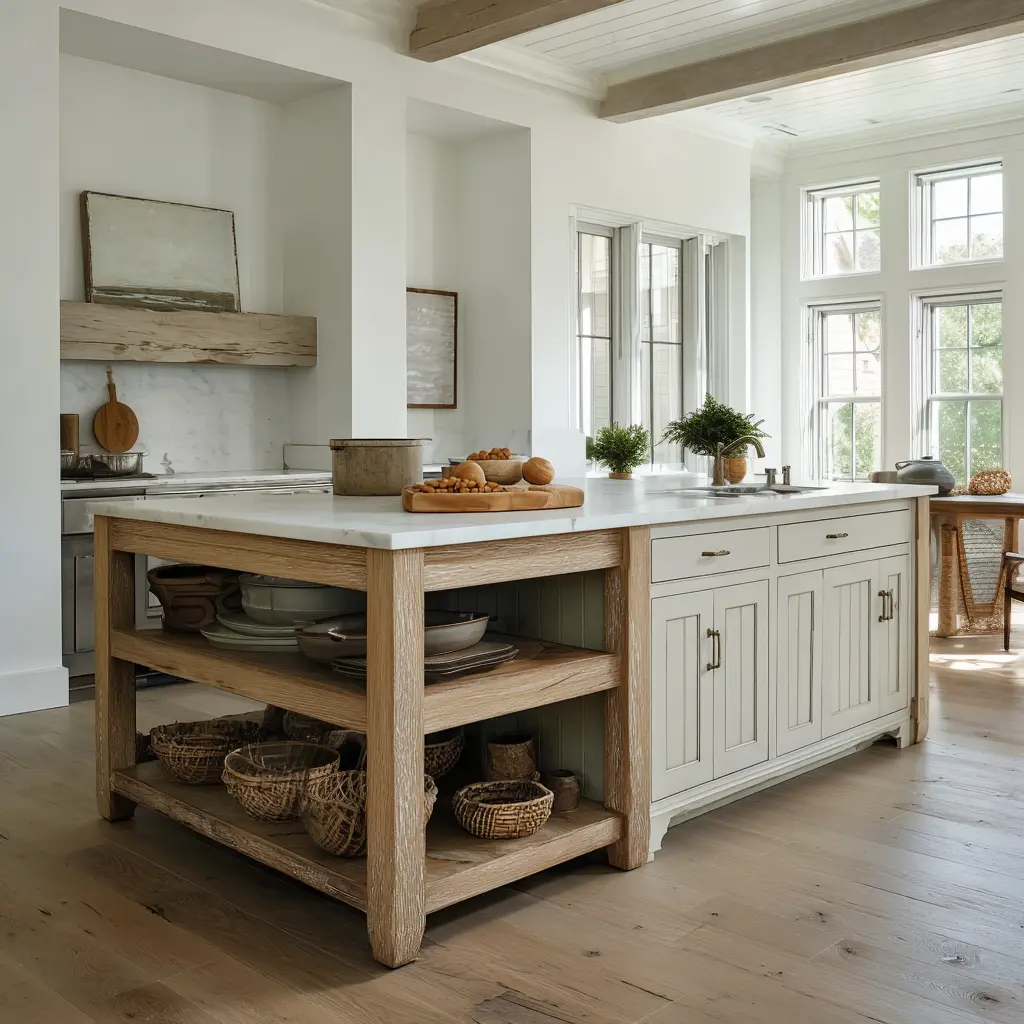
The short end carries huge design value
Many kitchen islands put most of their practical activity on the long face. That is usually where the seating sits, where people gather, and where the overhang or legroom zone is located.
The top surface often carries prep work, serving, or sink placement. That leaves the short end with a different job.
The short end is often the place where the island declared its identity. The design move happened there: a rounded terminal sweep, a thick end support, a full stone bookend, open shelving, a fluted curved end, a sculpted inner corner, or a table-like legged termination.
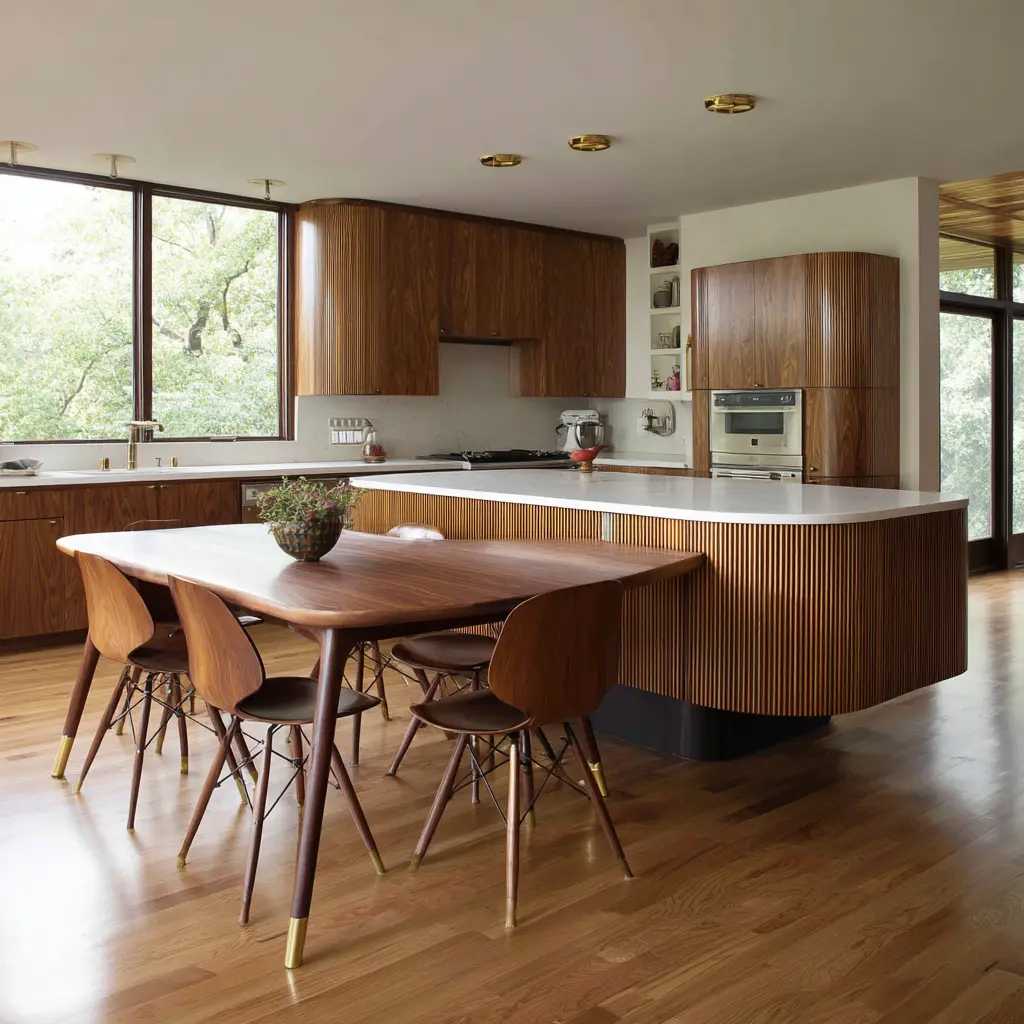
This is one of the most useful insights for design work because it changes where you put your attention. A designer does not always need to reinvent the entire island.
Often, one highly intentional end condition can shift the whole object from ordinary to custom. A plain rectangular island can look surprisingly generic even with premium materials.
A well-considered short end can give it a stronger profile, a clearer identity, and a better sense of finish. The island starts to feel designed from all angles, not only from the stool side.
Large islands feel lighter through decompression
A common mistake in kitchen discussions is assuming that visual heaviness comes from size alone. Islands can be large, yet they do not necessarily feel oppressive.
They can stay light through decompression. That decompression took several forms.
Island design can use rounded corners or curved supports so the mass felt less abrupt. Some come rely on open legroom or framed supports to create visual passage underneath.
Some designs can introduce open-end shelving, which breaks up the lower zone and add depth. Or they can use underlighting or a slim shadow reveal to separate the top from the base.
Others can keep the island bright at the top and warmer or darker below, which helps the eye read the piece in layers rather than as one dense block. Lightweight seating also plays a major role in keeping the center open.
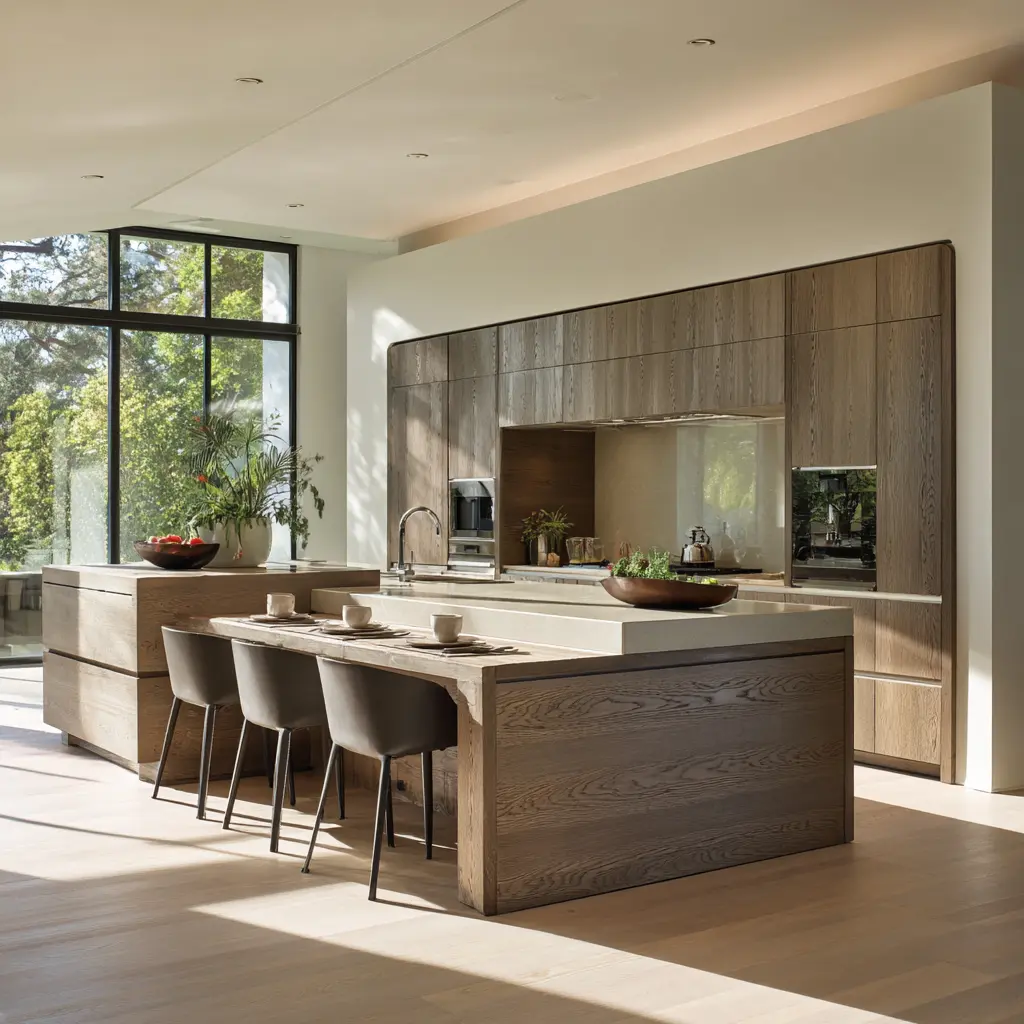
The lesson here is simple but very important: perceived heaviness depends less on the actual footprint and more on whether the eye can separate, move through, or move around the mass. That is why some wide islands can still feel easy in the room, while smaller but poorly handled islands can feel dense and awkward.
Geometry, section profile, voids, reveals, and layering often matter more than square footage.
A furniture-style island carries social meaning
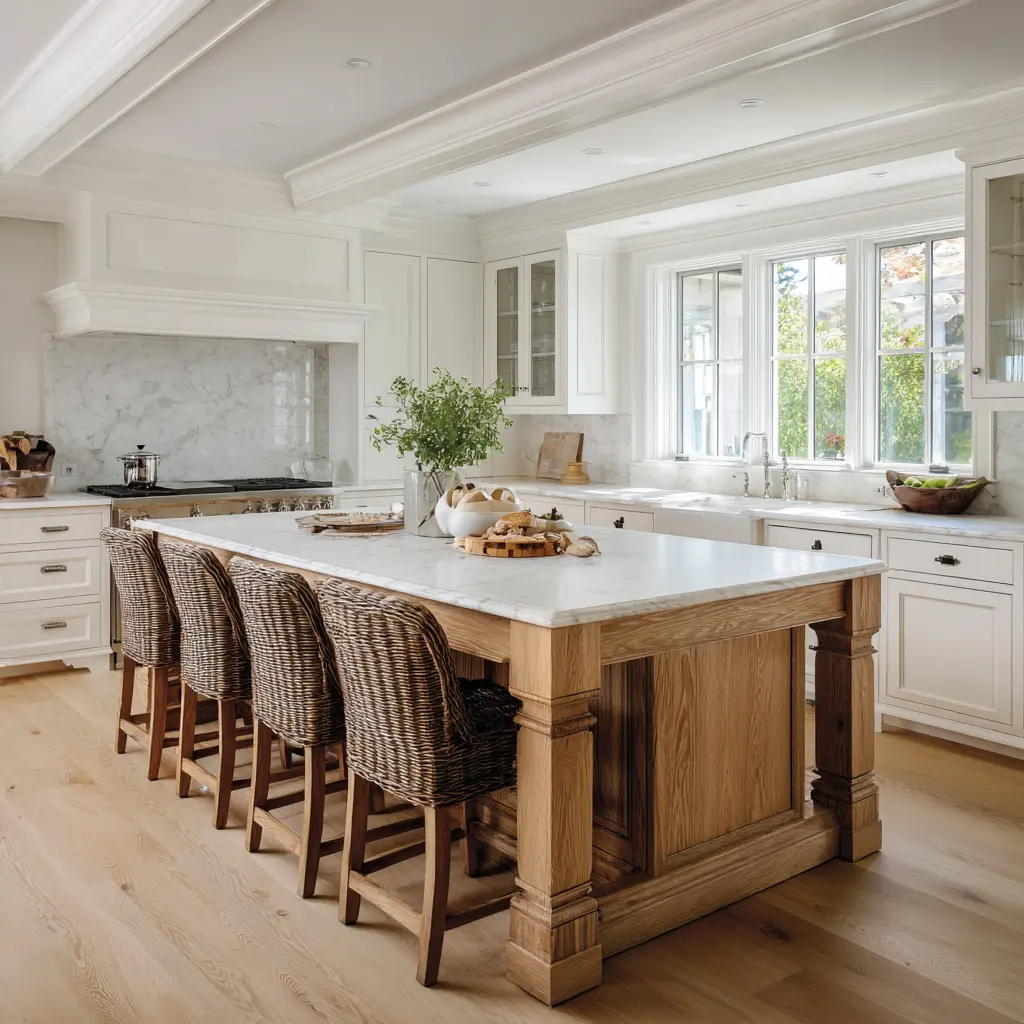
Another idea is that the island becomes furniture not only through its shape, but through its social role. Furniture-style islands can be framed as gathering edges, casual dining places, conversation points, bridges between the kitchen and adjacent zones, and surfaces for lingering rather than only working.
The island can be linked the kitchen to dining, glazing, a sitting area, or an integrated bench composition. In other words, the island is doing spatial and social work at the same time.
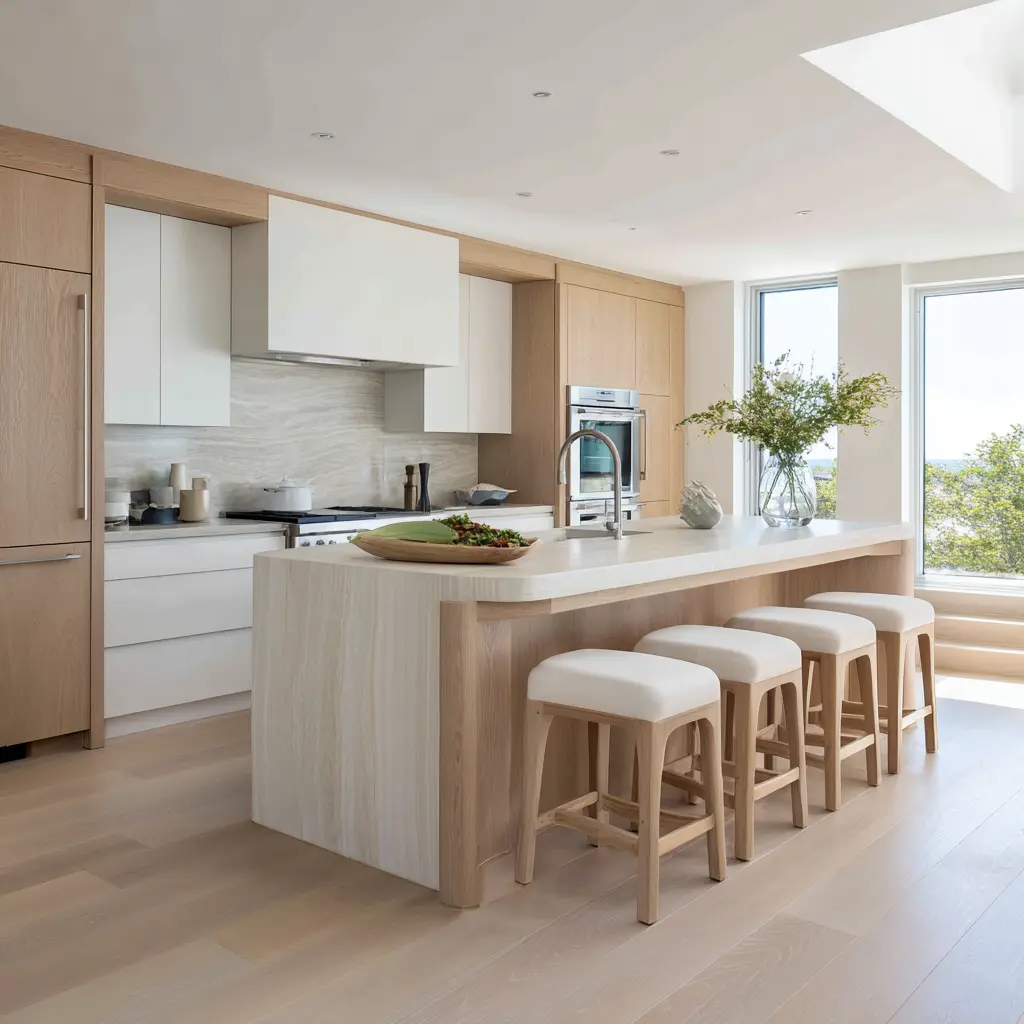
That shift changes the meaning of the kitchen. The island stops being a functional middle block and starts acting as a domestic object inside a work room.
This is why seating matters so much. Seating is not a decorative afterthought.
It confirms what the island is supposed to be. A stool line tells people where the room gathers.
A dining-height extension changes the pace of use. A banquette or table attachment turns the center of the kitchen into a place with duration, not only quick utility.
This is also why many furniture-style islands feel especially strong in open-plan homes. They help define how the home is used.
They give shape to the overlap between kitchen work, casual meals, conversation, family movement, and time spent together.
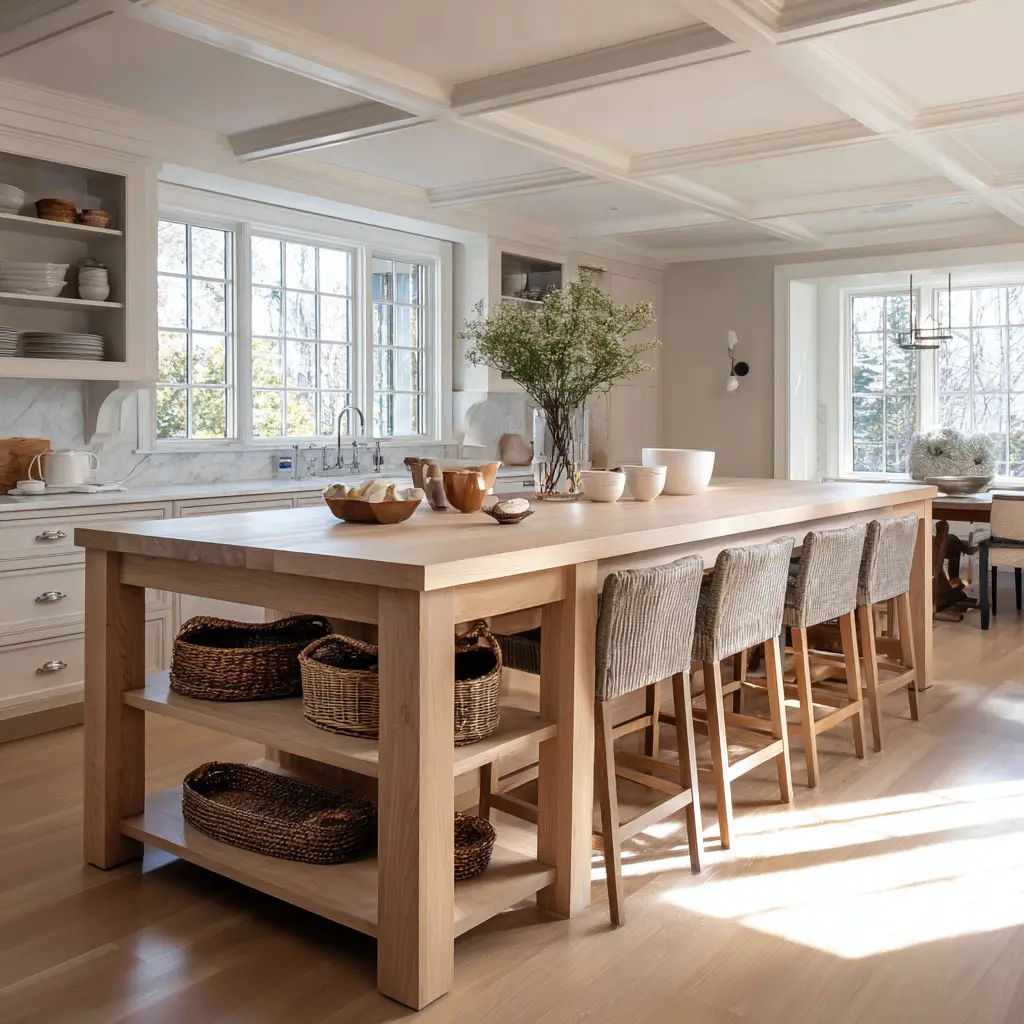
Seating can strengthen the idea or weaken it fast
Seating either supports the island concept or damages it. Three main seating types: The first is visually light seating.
These stools or chairs keep the island open. They are common in softened contemporary islands where the base already has a smooth broad presence and does not need heavy companions.
Slender frames, light tones, and simpler forms help the island remain dominant.
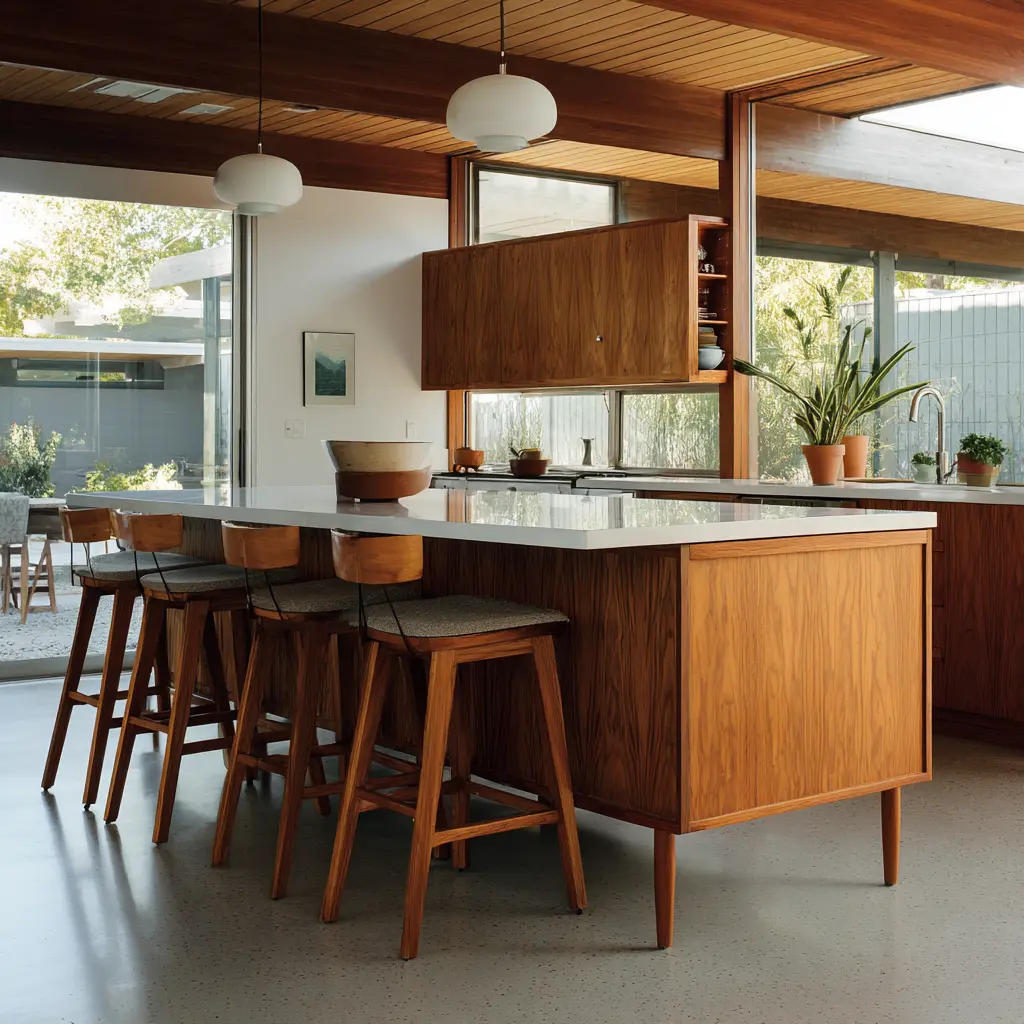
The second is substantial tactile seating. These are better suited to heavier timber islands, classic table-style islands, and rustic-lux variations.
They have enough visual presence to stand beside stronger wood grain, deeper tones, thicker tops, or larger supports. The third is dining-like seating.
This is an option for islands that are trying to move beyond quick perching. A more chair-like seat, a true table extension, or integrated bench seating changes the island into a place for meals, conversation, homework, and longer use.
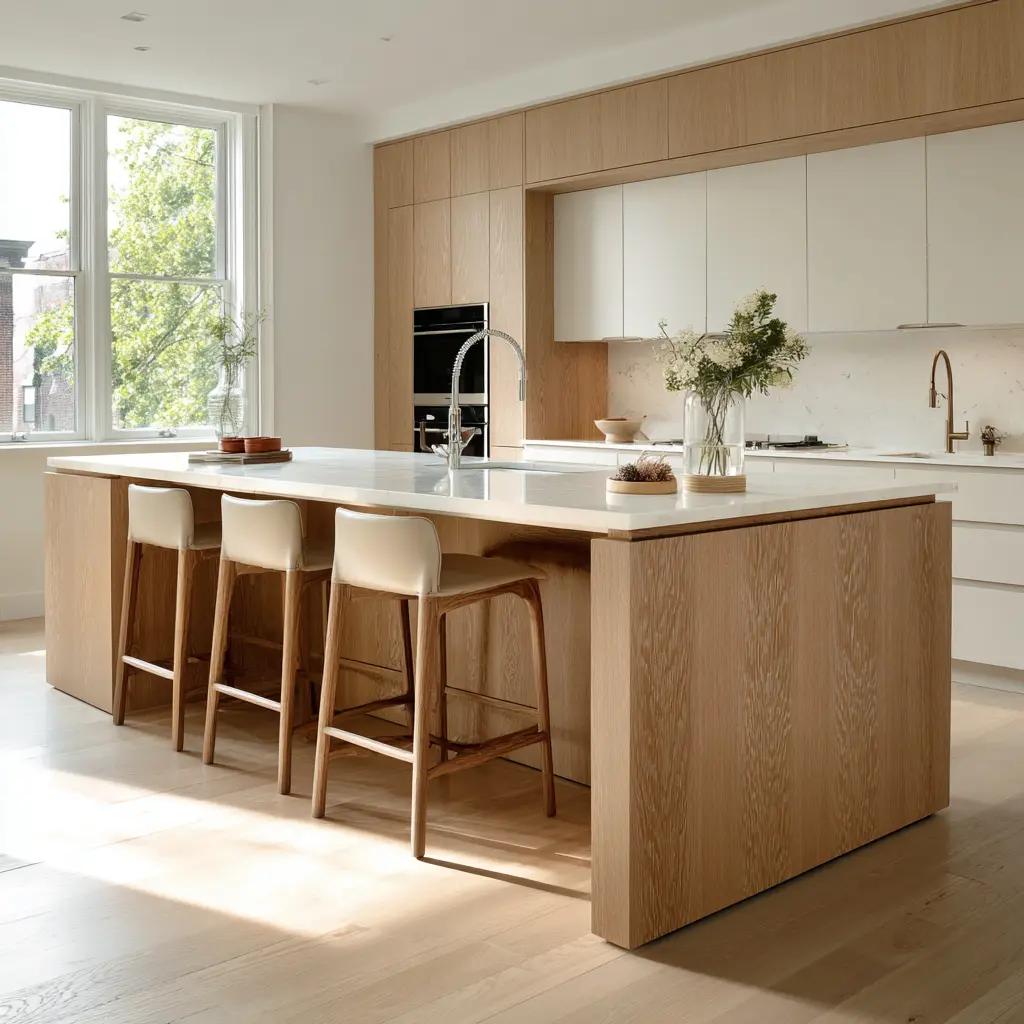
The core idea is clear: the seating has to match the island’s mass logic. A heavy island paired with weak, visually slight stools can feel unresolved.
A soft pale island paired with bulky high-contrast seating can feel congested. A strongly textured island paired with equally loud seating can turn busy very quickly.
But when the seat repeats the island’s material tone, curves, weight, or structural language, the whole composition settles. For many kitchens, this is the point where good intentions fail.
The island may be well designed, but the wrong stool choice breaks the continuity.
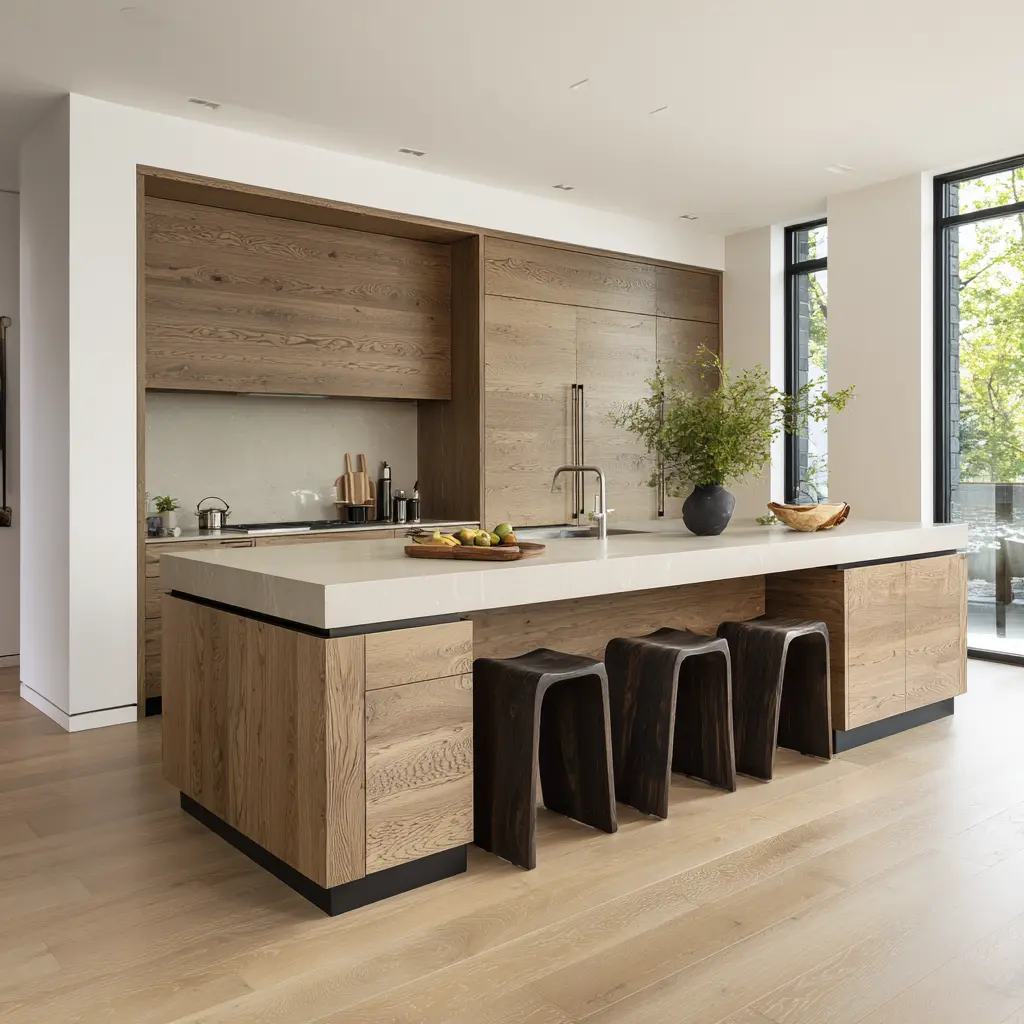
Open shelving works only with restraint
Open lower shelving can add warmth and domestic depth, but only under narrow conditions. It is better to keep the exposure localized rather than spreading open shelving across the entire base.
The objects can stay within a limited tonal family. The number of visible items can be edited.
The scale can be changed enough to feel natural, but not so much that the shelf becomes chaotic. Most importantly, the shelves add depth without turning into visual clutter.
This matters because open shelving is often treated as a quick way to make an island feel collected or lived in. In practice, it can quickly make the island feel restless if too much is exposed or if the displayed objects are too varied in color, size, or surface character.
So, furniture-style openness comes from selective exposure, not from abundance. The shelf should feel like one quiet layer of depth, not a storage problem on display.
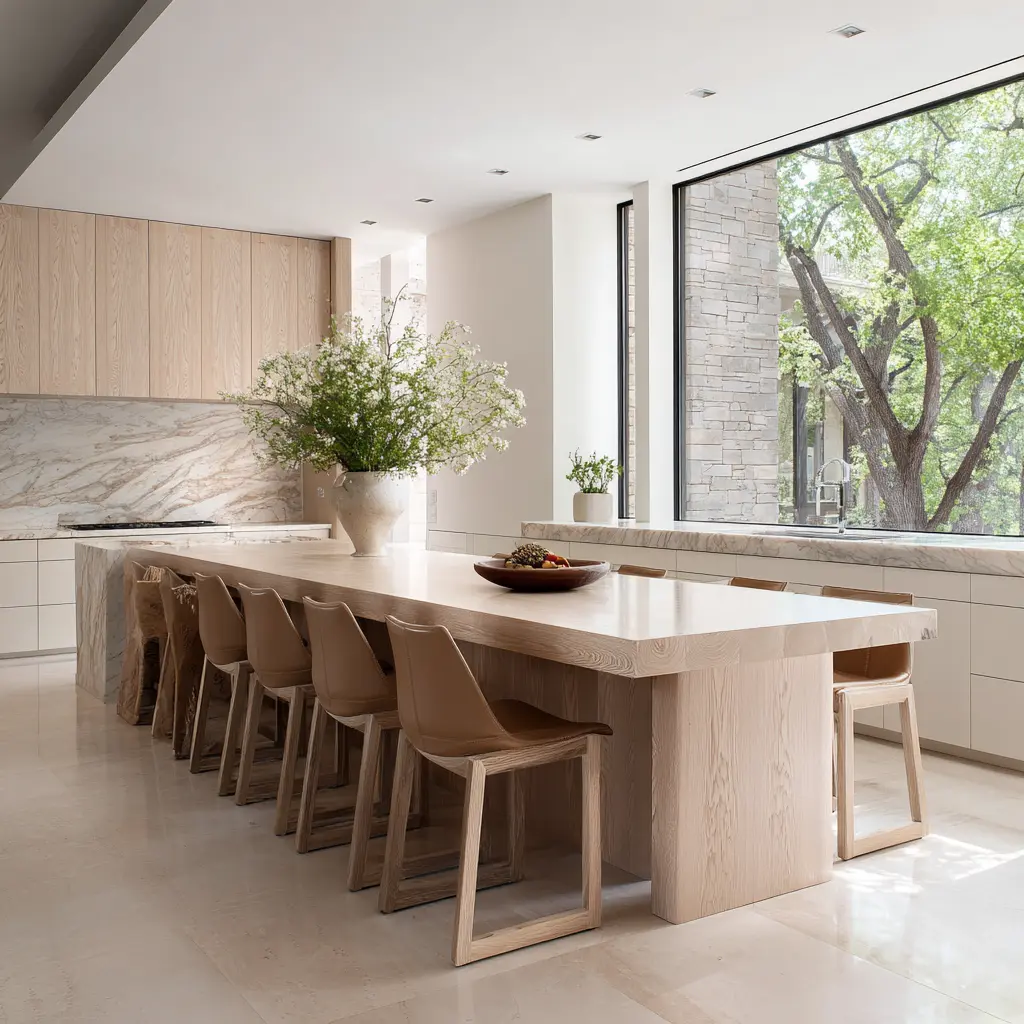
The perimeter has to stay quieter than the island
One more design point is background restraint. Islands often look strong because the perimeter kitchen stays simpler.
The cabinetry walls can be flatter, more continuous, more repetitive, or more recessed. Decorative intensity can be limited.
The island is allowed to carry the main identity. This is a very important point because the furniture effect of the island is relational.
It does not exist in isolation. A carefully shaped, richly detailed, or materially expressive island loses force if the back wall is equally busy, equally textured, or full of competing focal points.
That is why such kitchens often use flush cabinetry, large simple cabinet faces, tonal continuity, recessed cooking walls, or just one framed niche rather than several competing features. The background gives the island room to lead.
A furniture-style island works best within a clear hierarchy. The center can be expressive, but the perimeter has to support that decision.
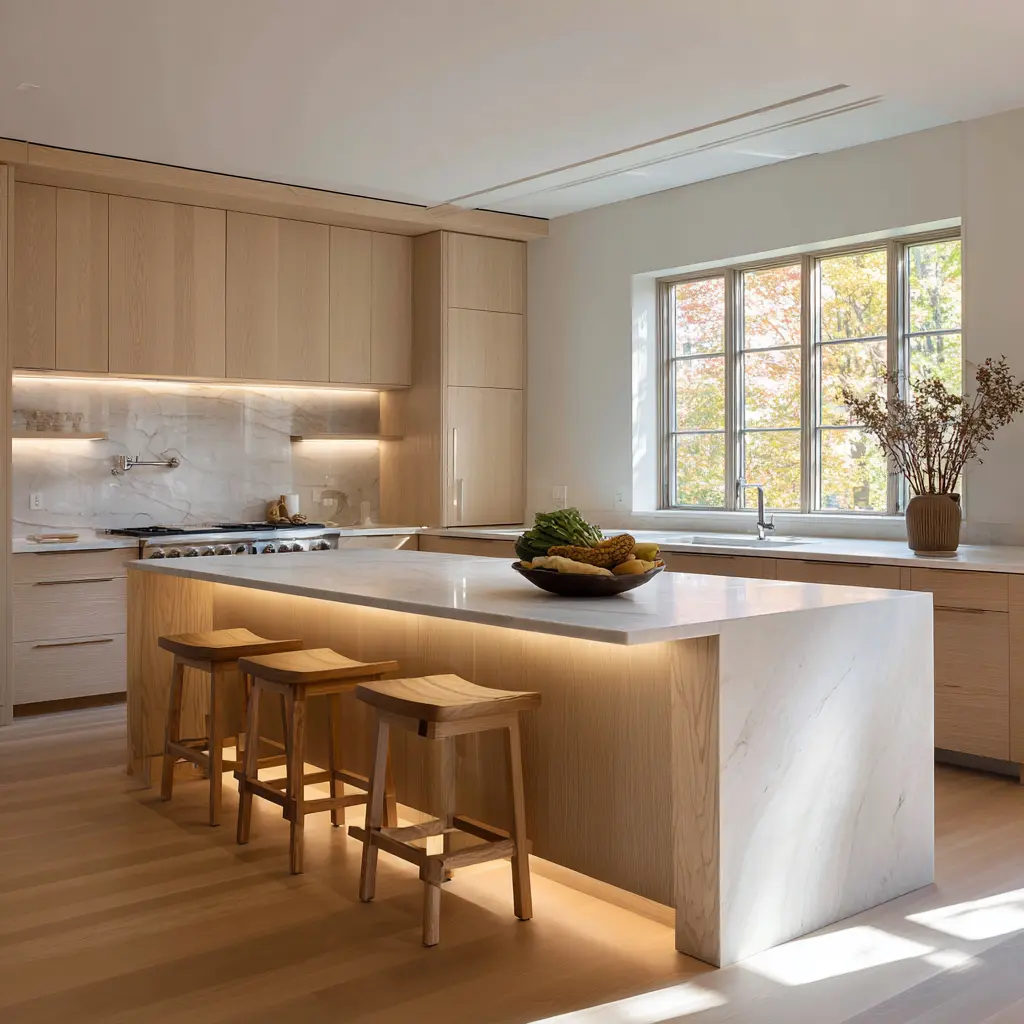
Pale islands and dark islands hold attention in different ways
There is an important split between lighter and darker islands. Pale islands often gained presence through daylight, luminous top surfaces, subtle curves, tonal blending, and carefully refined edges.
They do not need dramatic contrast because their strength comes from shape, softness, and the way light move over broad surfaces.
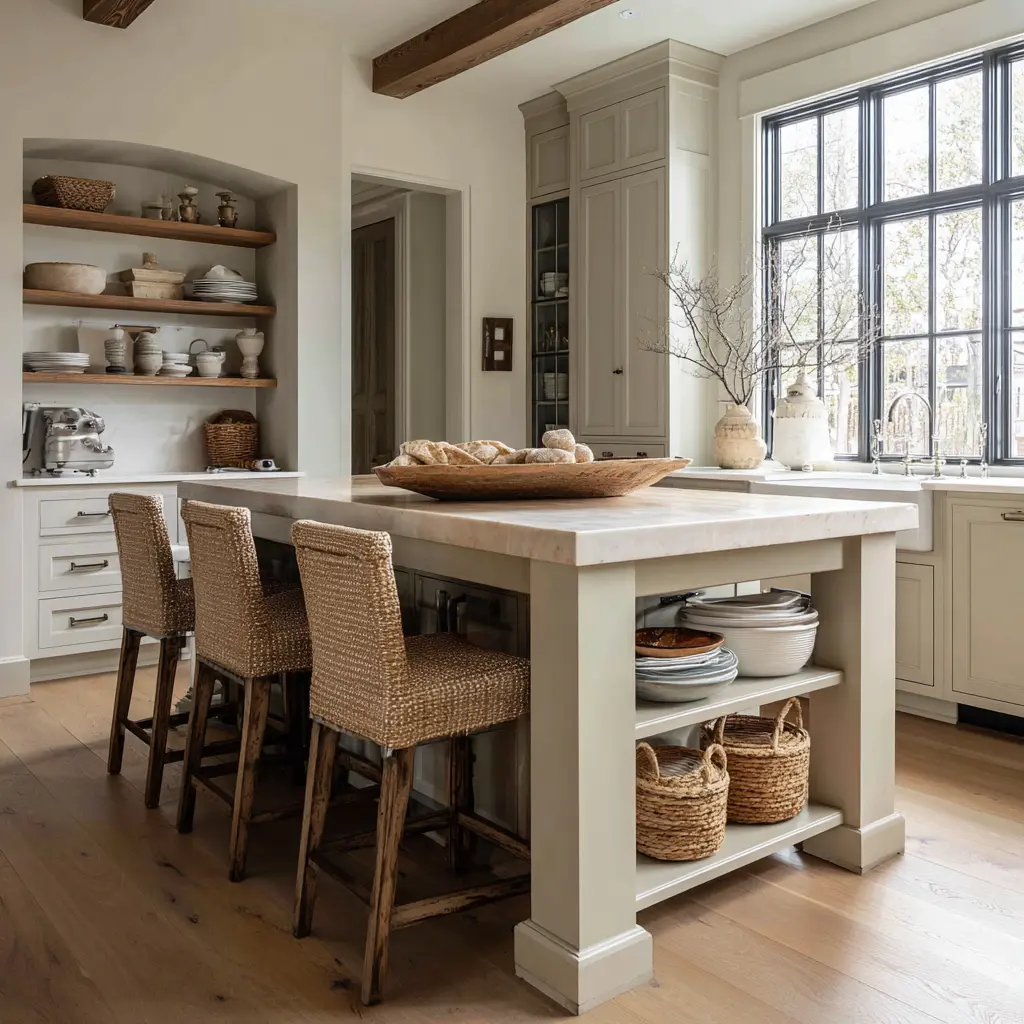
Dark islands work differently. In richer wood kitchens, stronger grain, heavier supports, sharper silhouette, and clearer geometric identity carries more weight.
The darker the island, the more important form becomes. If a dark island lacked strong shaping, support expression, or a clear section profile, it could blend too easily into the surrounding cabinetry and lose its presence.
That leads to a very useful practical conclusion: in lighter kitchens, a pale island can hold the room through light capture and gentle shaping. In darker kitchens, geometry has to work harder.
This is why dark islands often use stronger curves, fluting, thicker tops, more defined supports, or clearer contrast between top and base.
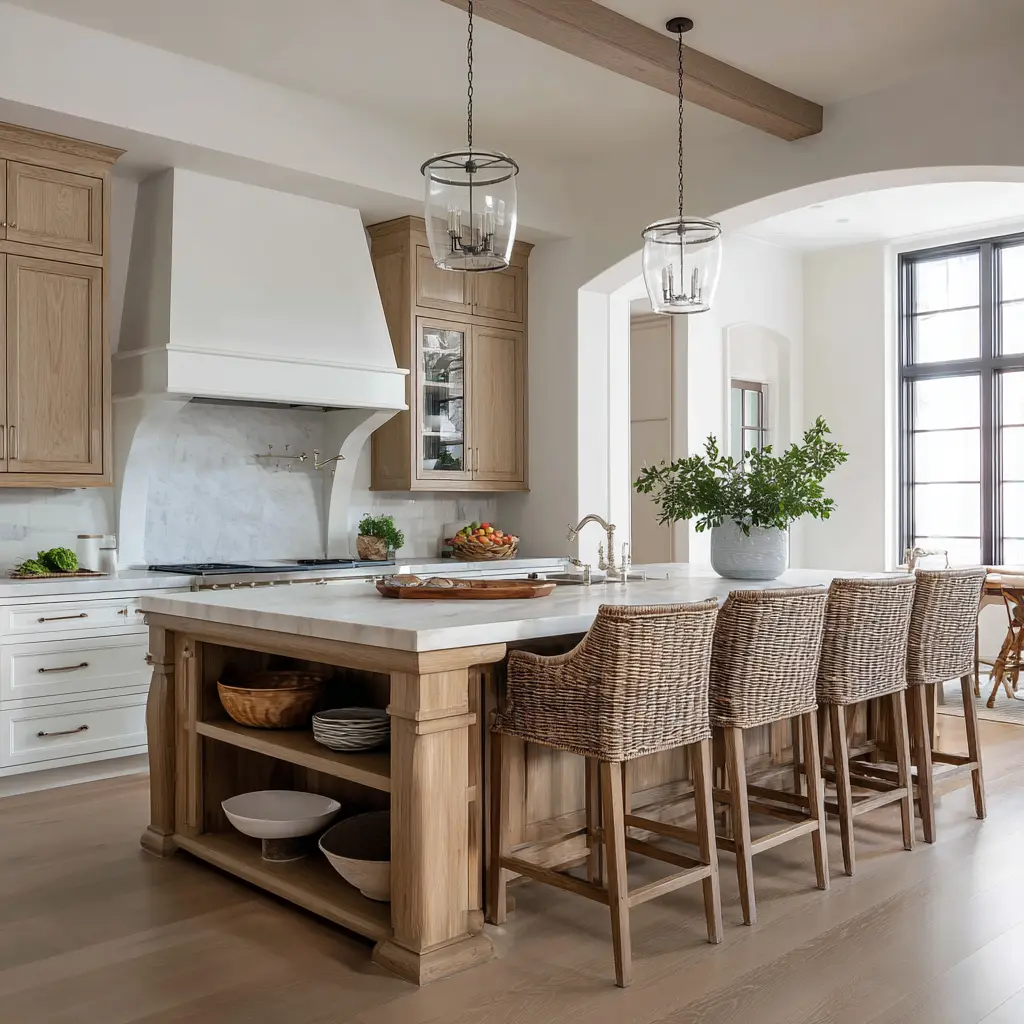
Four main furniture-style island families
There are four broad furniture-style kitchen families, and each one suggests a different design mood. The first is the soft-sculpted contemporary monolith.
These islands use smooth massing, rounded corners, low-contrast palettes, broad bright tops, and restrained seating. They feel composed, current, and humanized without heavy decoration.
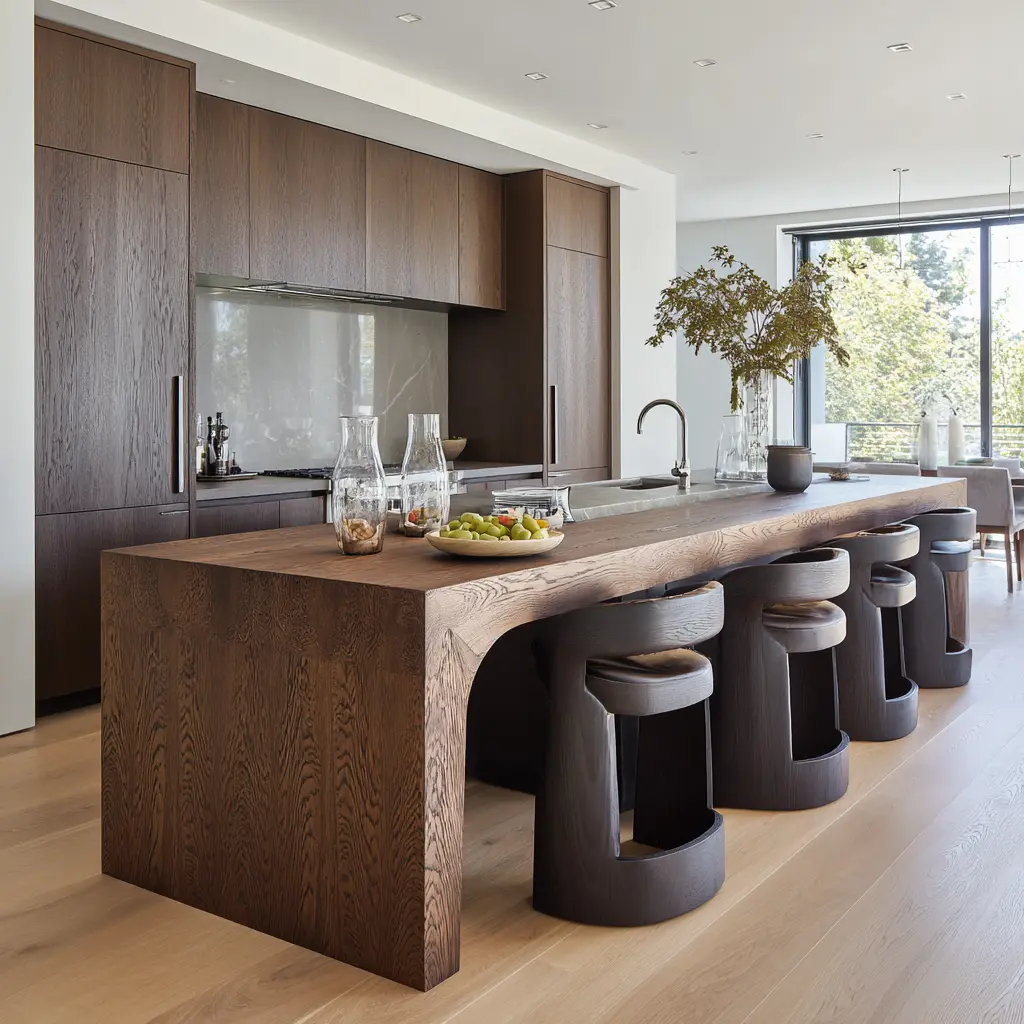
The second is the luminous layered stone-wood block. These islands keep a stronger slab logic but use layering, reveals, underlighting, or a clear bright-top-over-warm-base relationship to stop the mass from turning dull.
They often feel architectural and refined. The third is the furniture-table island.
These are the most direct translation of furniture language into the kitchen. Legs, posts, corner supports, framed ends, and in some cases open shelving help the island feel like a central table or workpiece placed inside the room.
Such kitchens often feel especially warm and domestic.
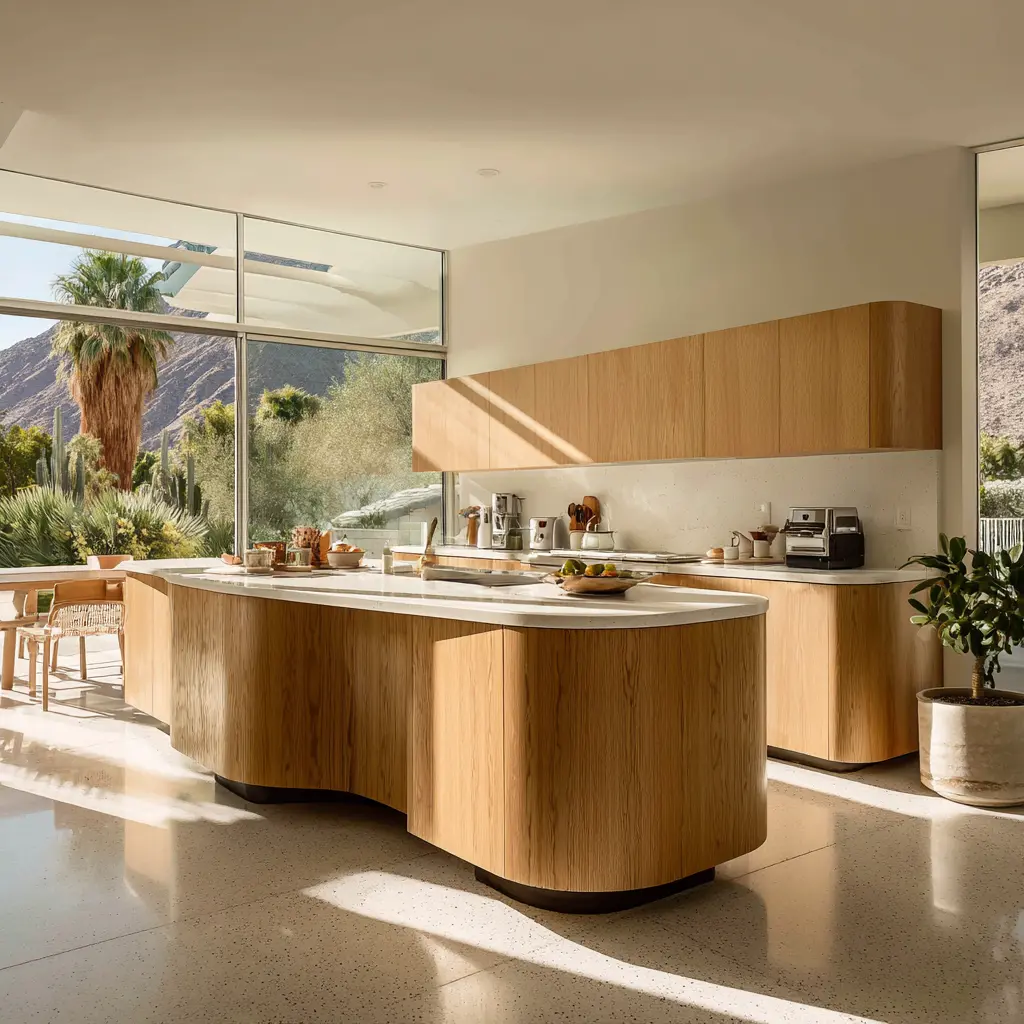
The fourth is the composite social platform. Such islands combine table and island logic, sometimes with a dining extension, integrated bench seating, or a hybrid mass that serves multiple kinds of use.
These are often the most socially charged furniture-style kitchen ideas because the center of the kitchen becomes a true daily platform rather than a simple prep zone. Each family can work well.
The right choice depends on the house, the plan, and the kind of daily life the kitchen is expected to support.
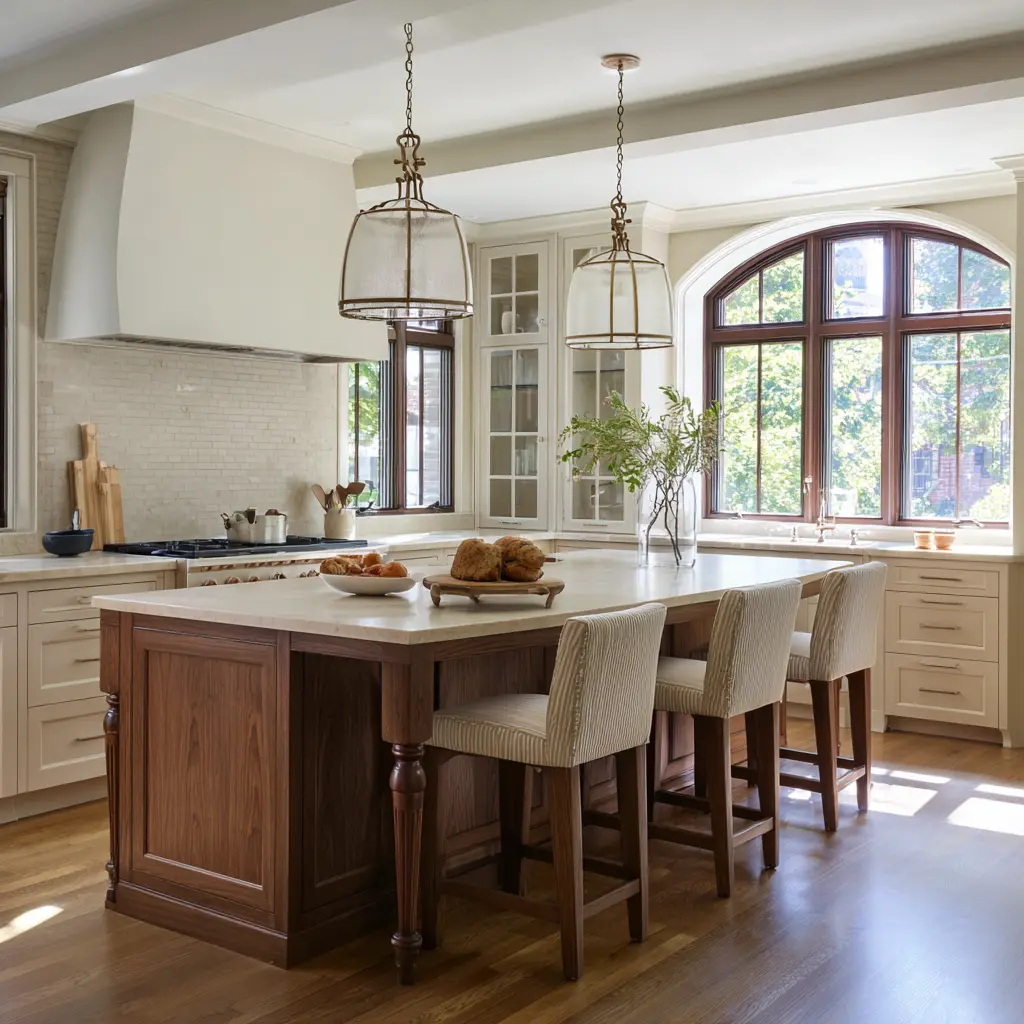
What really makes a furniture-style island work
A stylish furniture-style island design usually combines several key conditions. It needs clear support logic, whether that comes from a sculpted mass, visible legs, framed ends, or a hybrid form.
It needs some kind of mass-softening device, such as a curve, reveal, open shelf, legroom zone, or layered top-to-base separation. It needs seating that fits the island’s weight and social purpose.
It benefits from strong wood presence because wood carries warmth, grain, and the emotional association of furniture. It needs a quieter perimeter so the center can lead.
And it needs edited surface exposure, with enough empty space to keep the form legible.
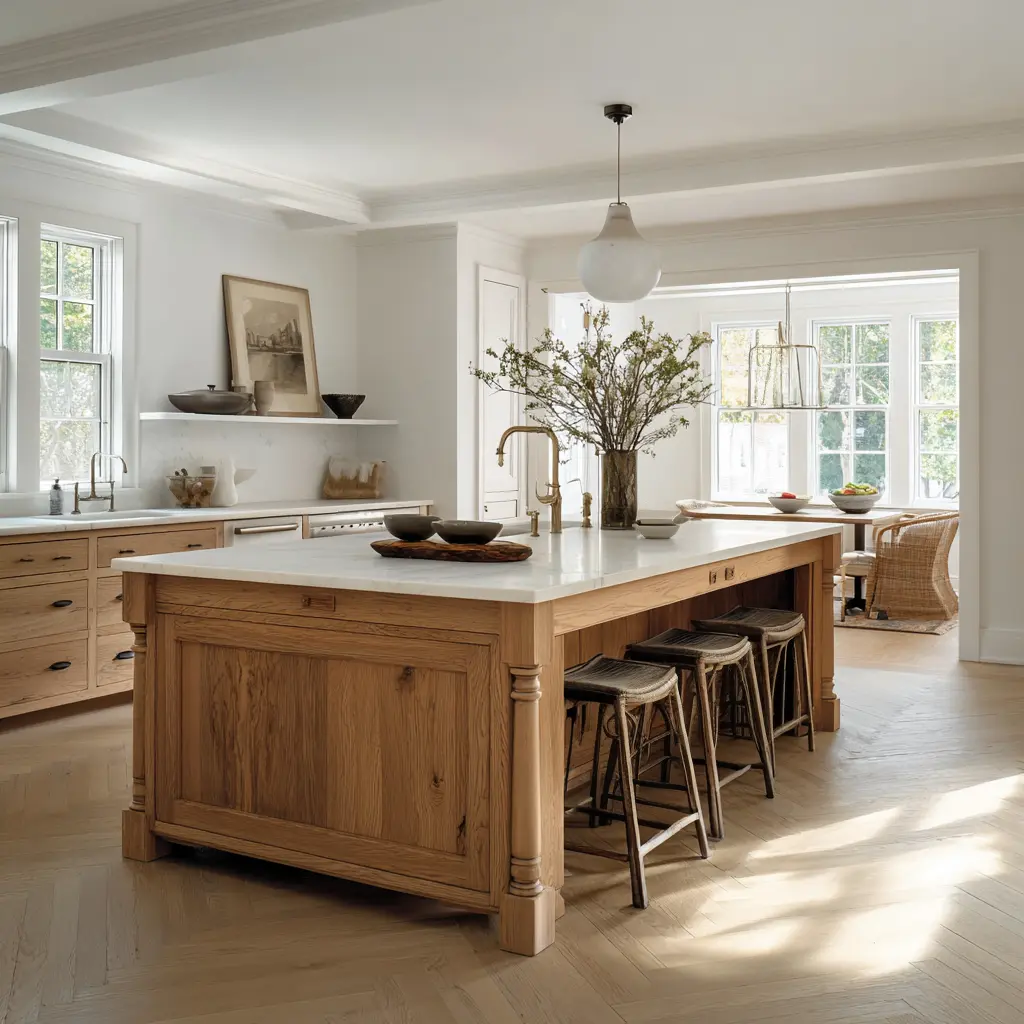
If only one of these is present, the island may still be attractive. If several are present together, the object often shifts from cabinetry to centerpiece.
That is the formula behind this design category.
Conclusion
The deeper value of furniture-style kitchen island design is not limited to appearance. It helps explain why some kitchens feel inhabitable, balanced, and fully integrated into the life of the home, while others feel like a line of built-ins with an extra block in the middle.
A strong furniture-style island gives the kitchen a center with character. It helps large spaces feel organized.
It can soften the transition between work and gathering. It can link kitchen and dining, kitchen and view, kitchen and family life.
It can make the room feel shaped around daily living rather than only around appliances and storage.
That is why this design direction has such lasting appeal. It gives the kitchen a central object that carries warmth, structure, and social meaning at the same time.
The main takeaway: furniture-style kitchen island design is not mainly a matter of surface styling. It is a structural way of turning the kitchen’s central mass into a meaningful piece of interior furniture.
Once the support logic is intentional, the mass is softened, the seating fits the form, the short end carries identity, and the perimeter steps back, the island starts to do something much richer than simple utility. It becomes the piece that holds the room together.