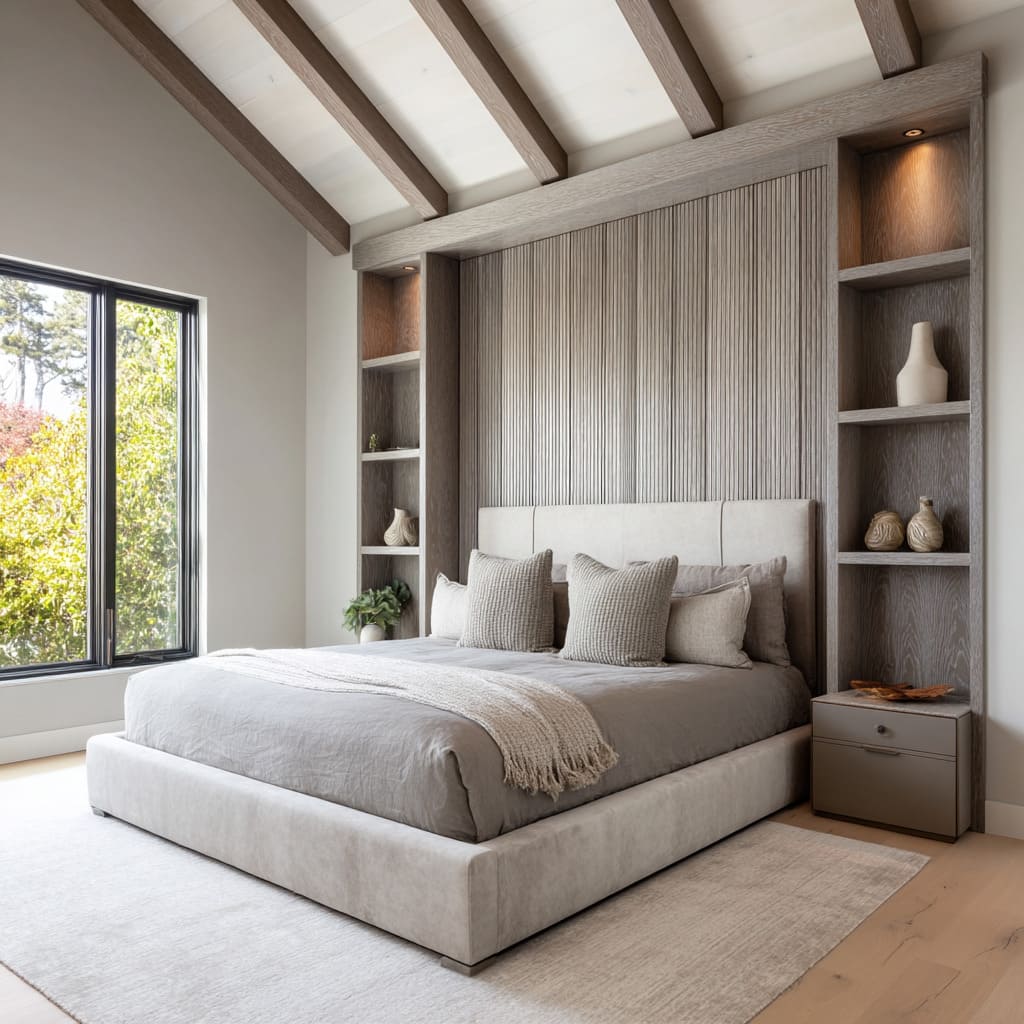
Grey headboards act as quiet conductors in these bedrooms—organizing light, texture, and proportion while allowing stronger colors to sit in the background. In spaces that rely less on decorative clutter and more on spatial nuance, the presence of a grey bed headboard becomes the visual anchor without shouting for attention.
What often appears simple at first glance holds a surprising amount of thought. Beyond fabric choice or size, these surfaces shape how the room feels by merging with walls, hiding structural seams, and responding to light with subtle shifts.
Some of the most thoughtful grey headboard bedroom ideas reveal themselves not in bold design choices, but in how they interact with architectural lines. The finest ones carry the room’s composition—sometimes replacing artwork, sometimes softening a wall—but always working with their environment instead of sitting apart from it.
Headboard-as-Architecture
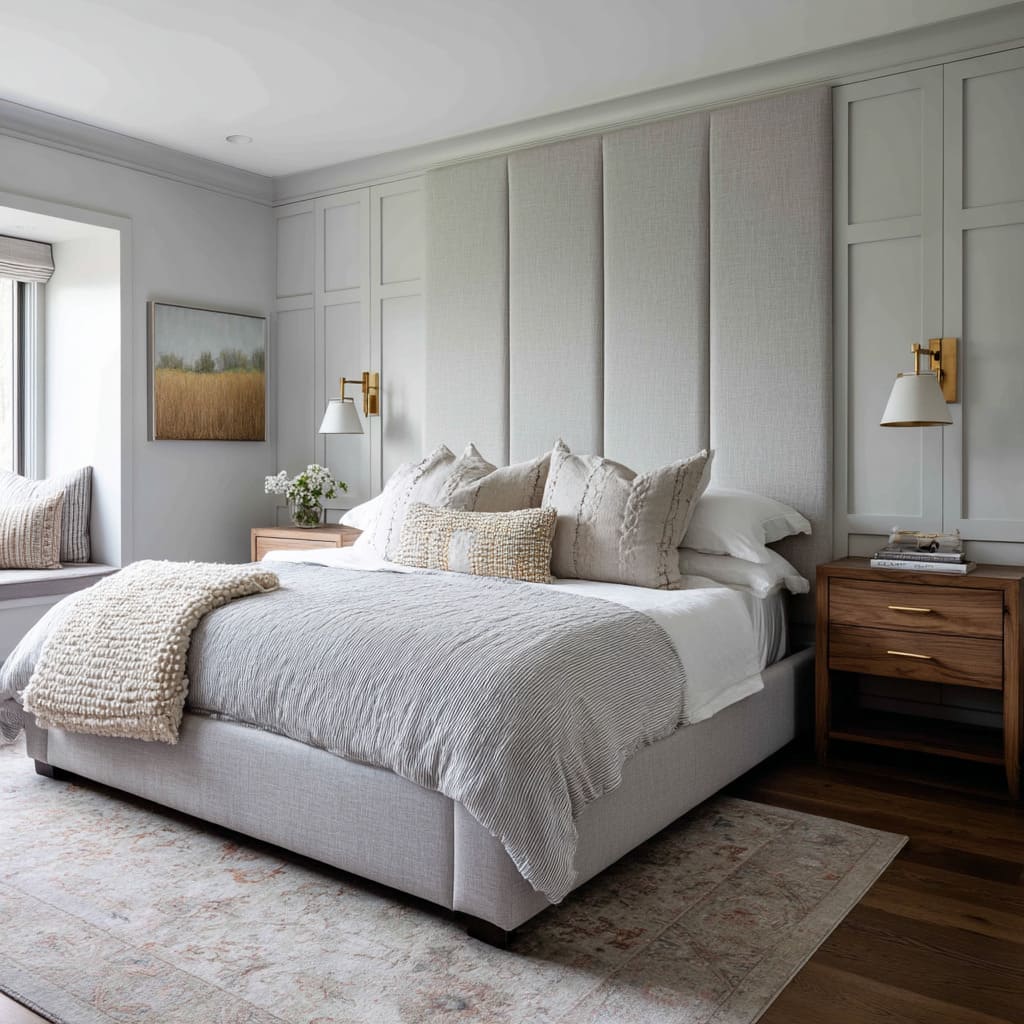
Some headboards don’t sit against a wall—they become it. In many of today’s bedrooms, upholstered panels run from the floor all the way to the ceiling, effectively dissolving the distinction between bed and backdrop.
This technique gives the illusion of taller ceilings and broader space, especially when the headboard is trimmed flush to the upper molding or hidden behind shallow coves. Instead of a bed placed in a room, the entire wall becomes part of the bed’s silhouette.
That lack of division is what makes the space feel composed, even without adding color or pattern.

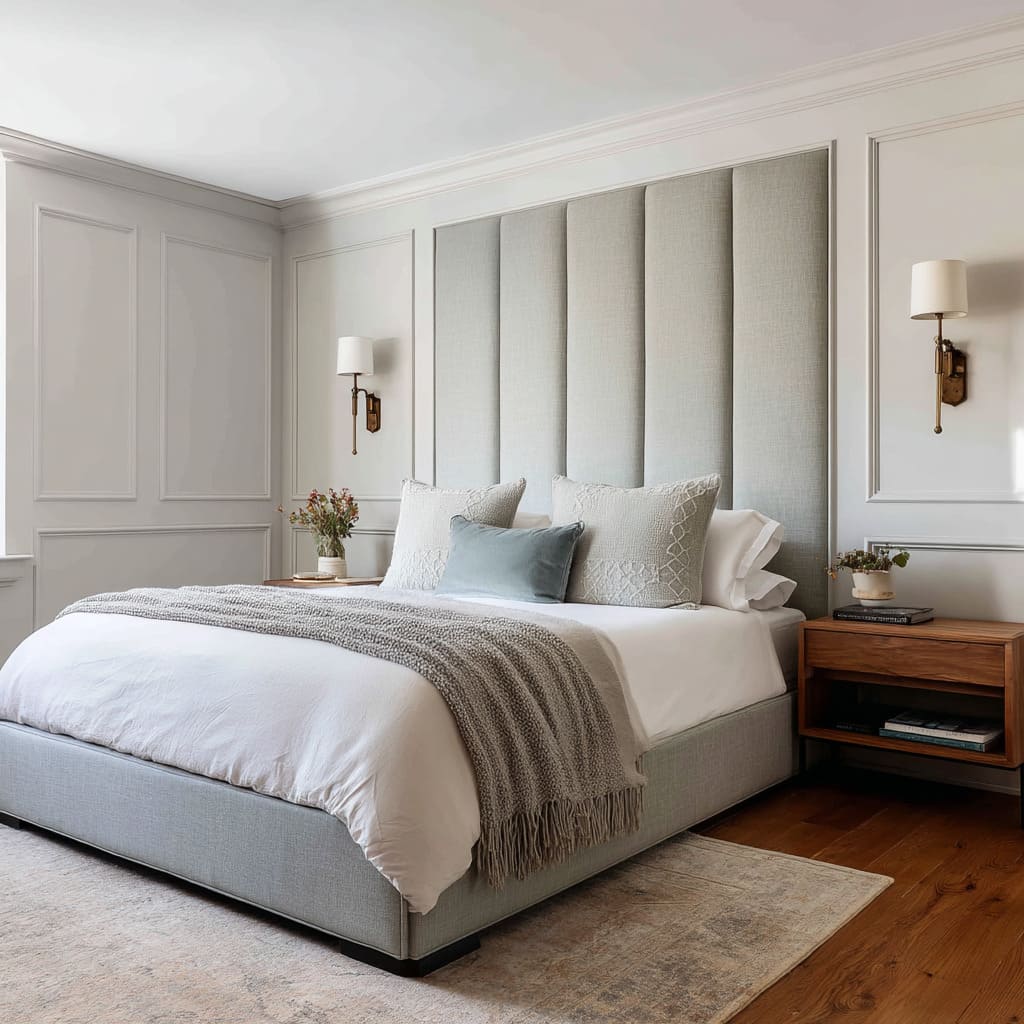
Classical trim work is often used as a structure to frame the headboard, and in modern interiors, this produces a layered effect. Narrow vertical upholstered panels can be inset directly into colonial-style paneling—making the fabric feel embedded, not attached.
It’s a way of using familiar architectural language while introducing a softer element that doesn’t overpower the setting. The difference in material is what makes the shape read clearly, but the tones remain calm and consistent.

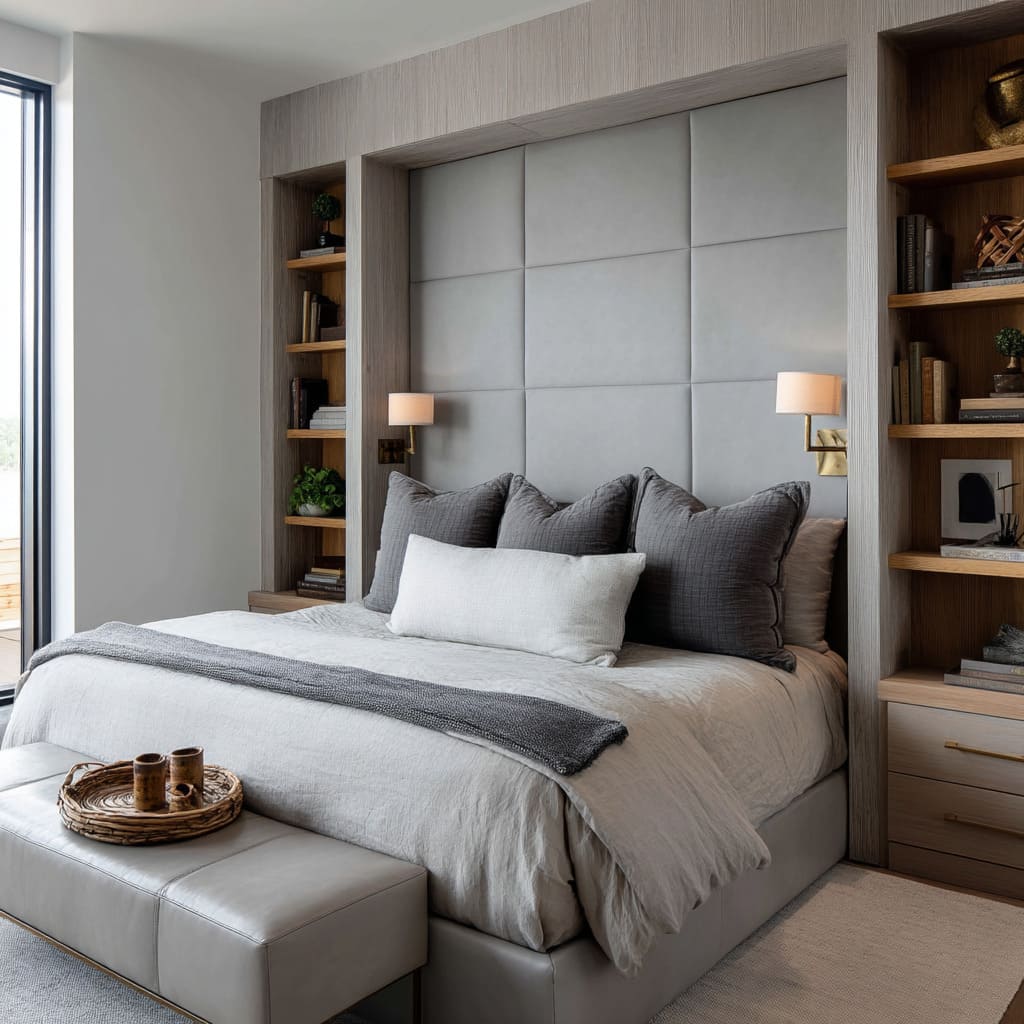
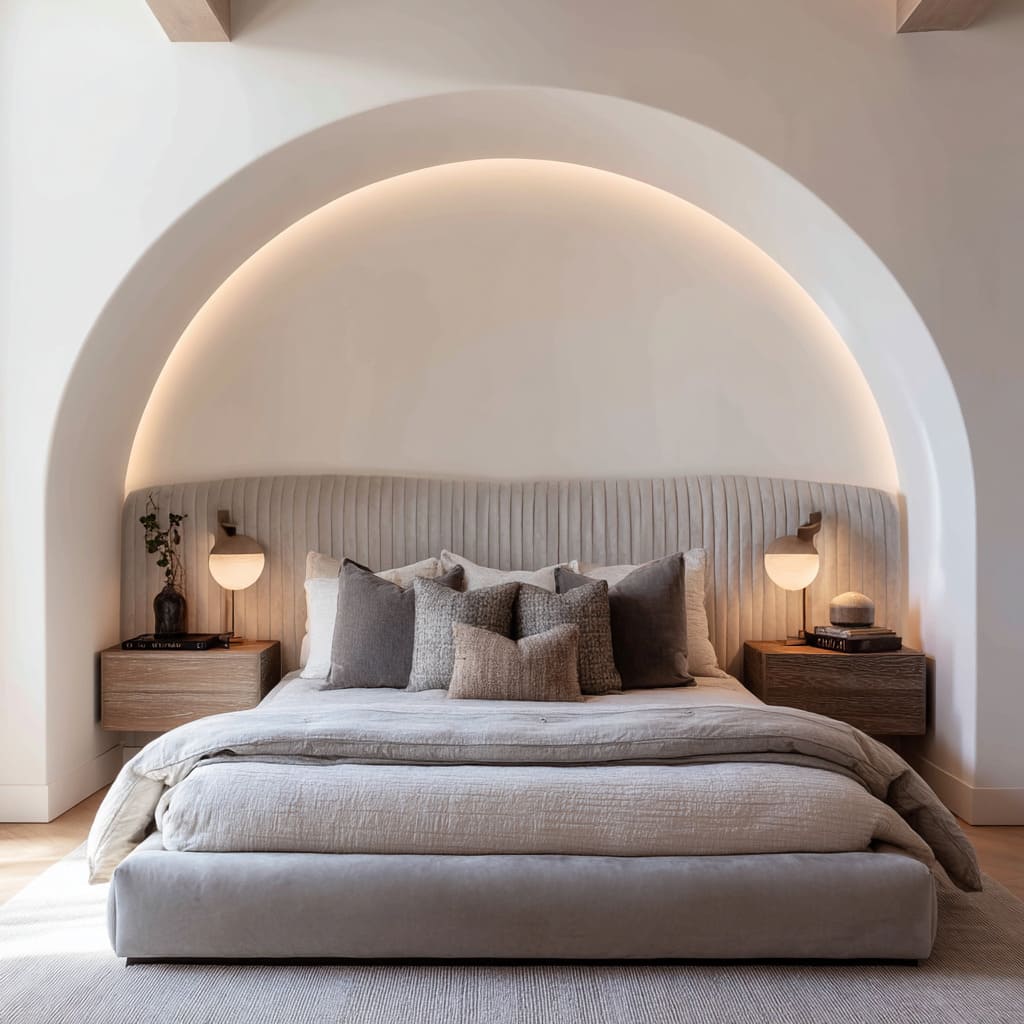
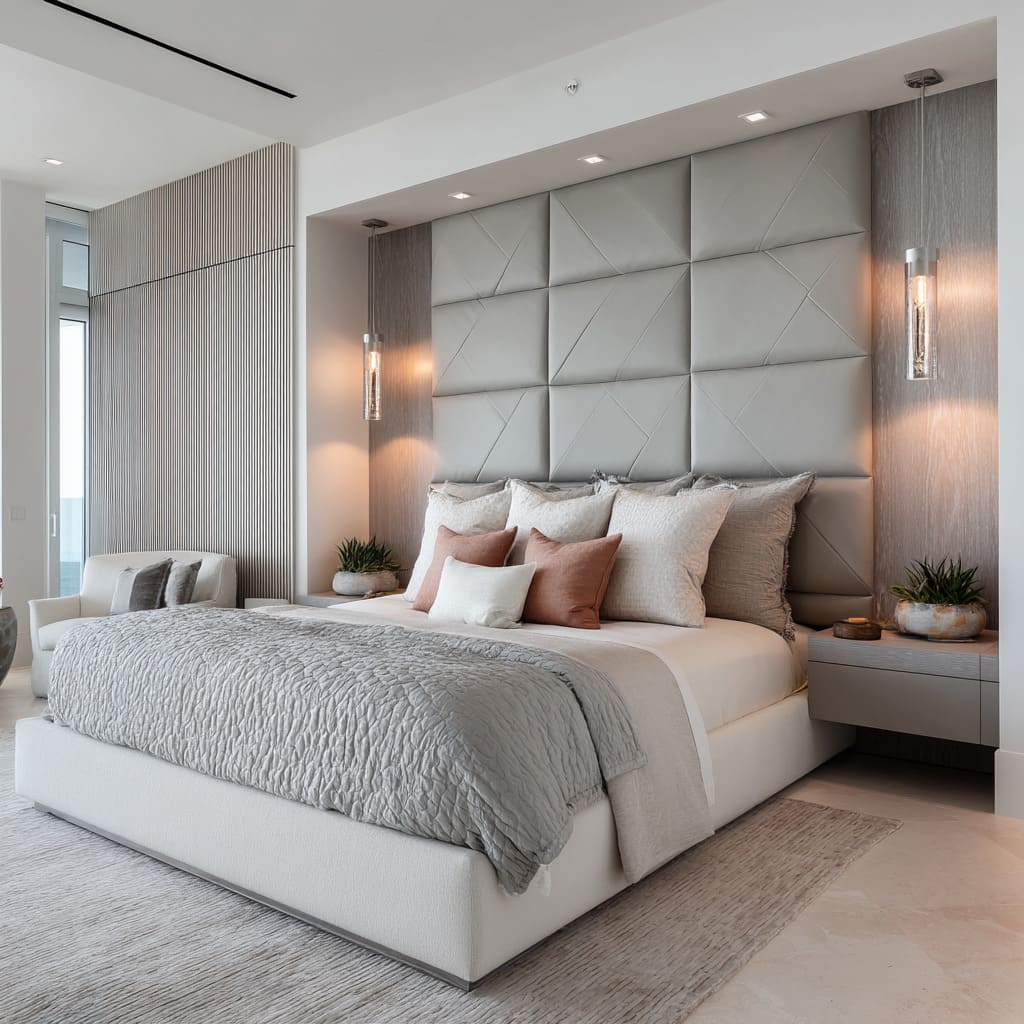
In more sculptural layouts, arched alcoves or deeply recessed niches are built to house the headboard. These cut-ins don’t only contain the bed—they shape how light moves across the surface.
Even a few inches of depth can create enough shadow play to replace the need for wall décor. In rooms where every inch counts, this quiet shaping of negative space does the visual work of larger furnishings.
These grey installations don’t break the wall—they settle into it, letting architectural rhythm carry the room from floor to ceiling with nothing sticking out or shouting for attention.
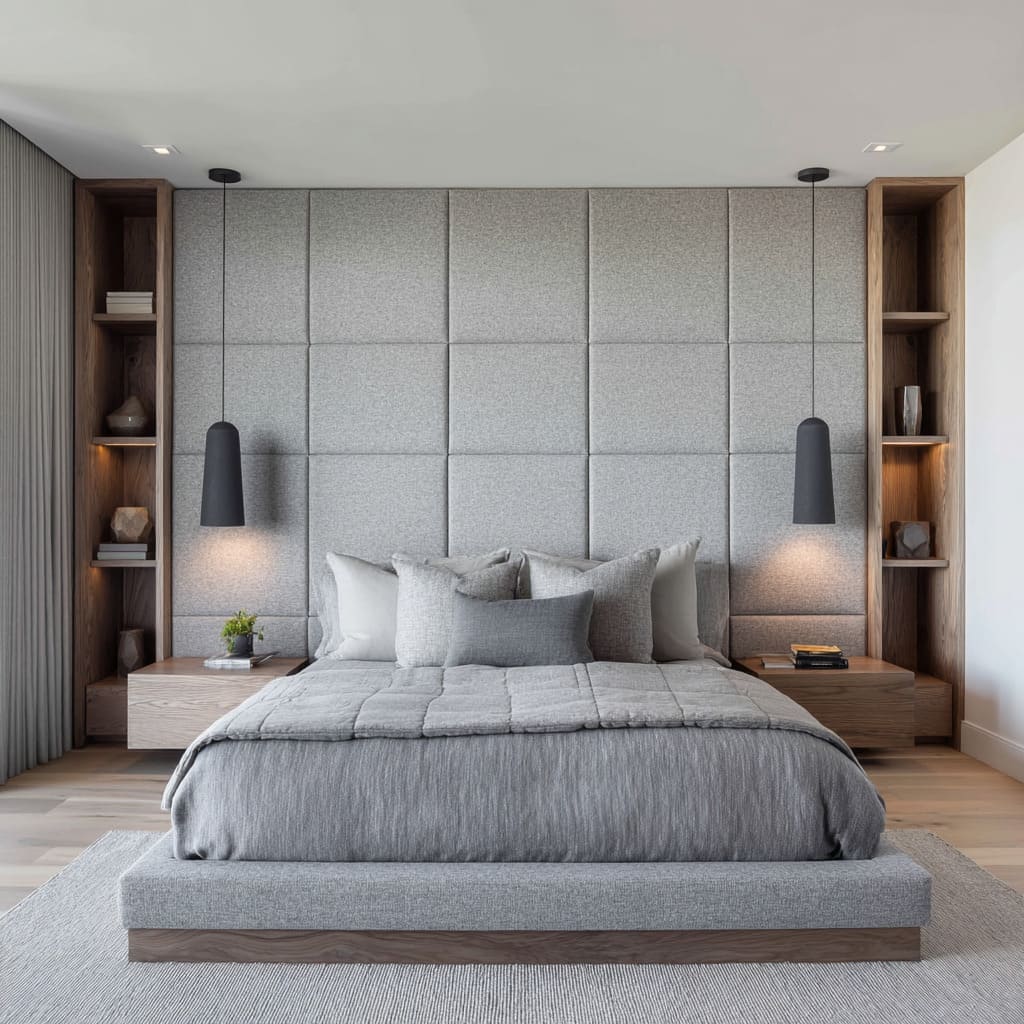
Rhythms of Line and Plane
The strongest rooms often rely on rhythm more than color. Repetition, interruption, and subtle direction shifts give grey bedrooms their structure—even when every material is close in tone.
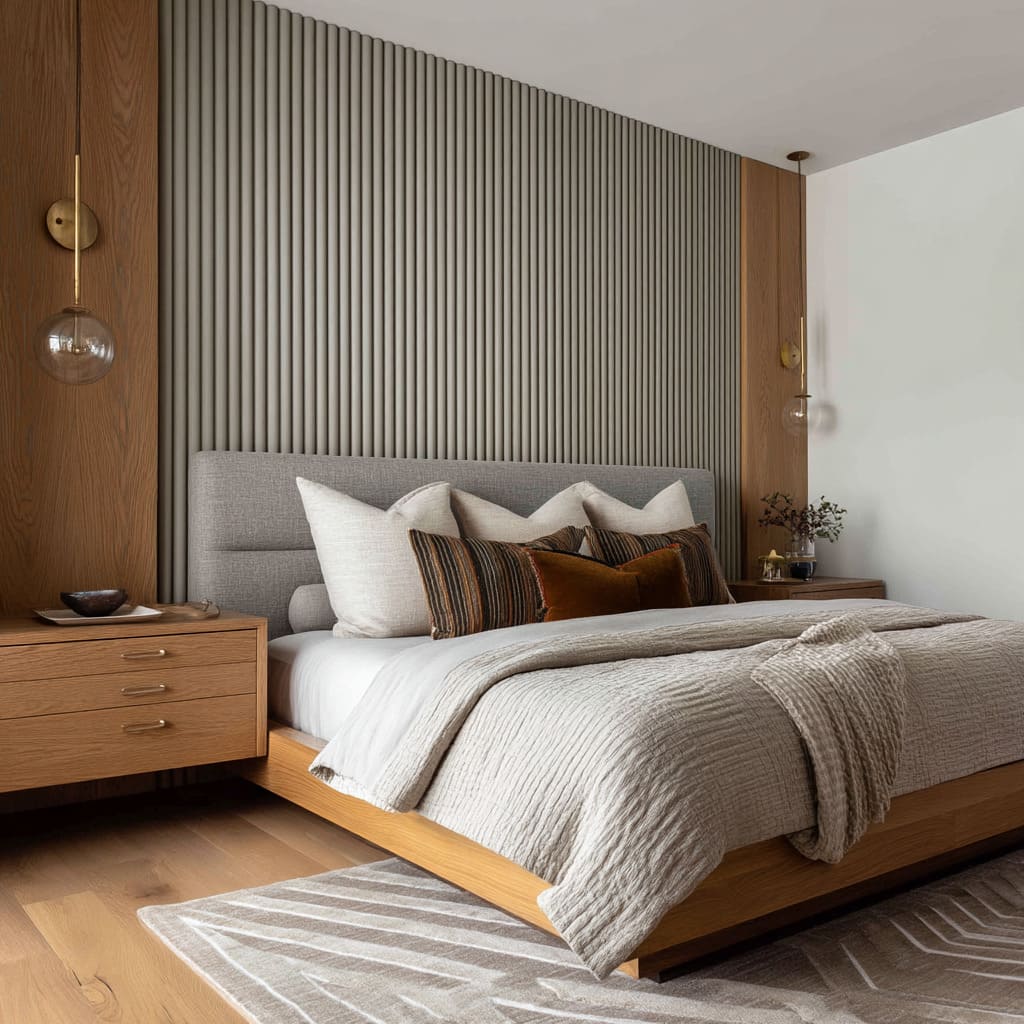
In many examples, wall elements are vertically aligned: thin slats, ribbed wood, or fluted plaster create a tall visual push. But right in the center, the grey headboard often shifts direction.
Horizontal tufting or long lumbar cushions cut across the vertical flow, slowing it down and adding balance. This crossing of lines creates pause—it’s not loud, but it holds the eye long enough to give the bed presence without ornament.
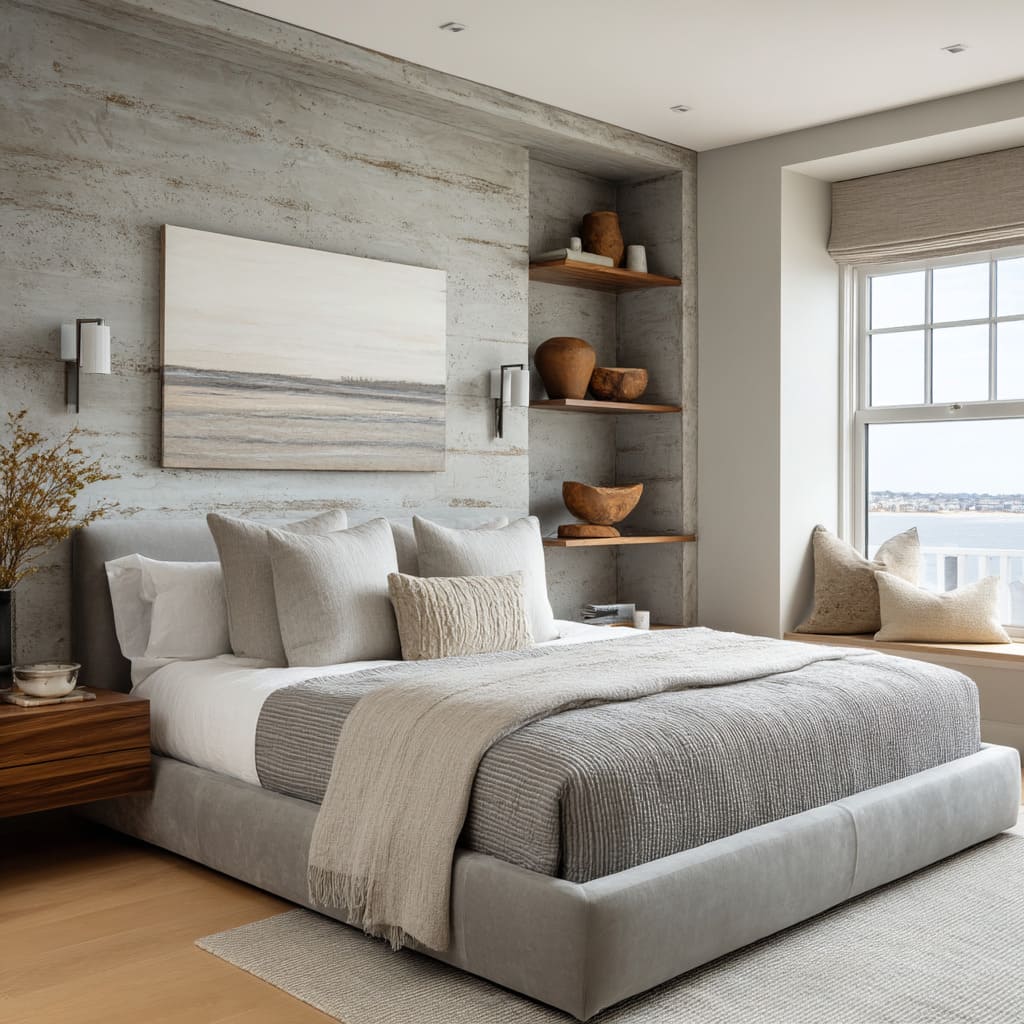
Panel sizing is another way that structure appears without fuss. Some rooms use panels that grow in width as they move toward the bed’s center.
The subtle widening builds quiet emphasis, almost like a visual breath. The bed becomes the focal point not through height or saturation, but through proportion.
Slimmer edge panels hold their place without pulling attention, framing the larger central section like margins around a page.
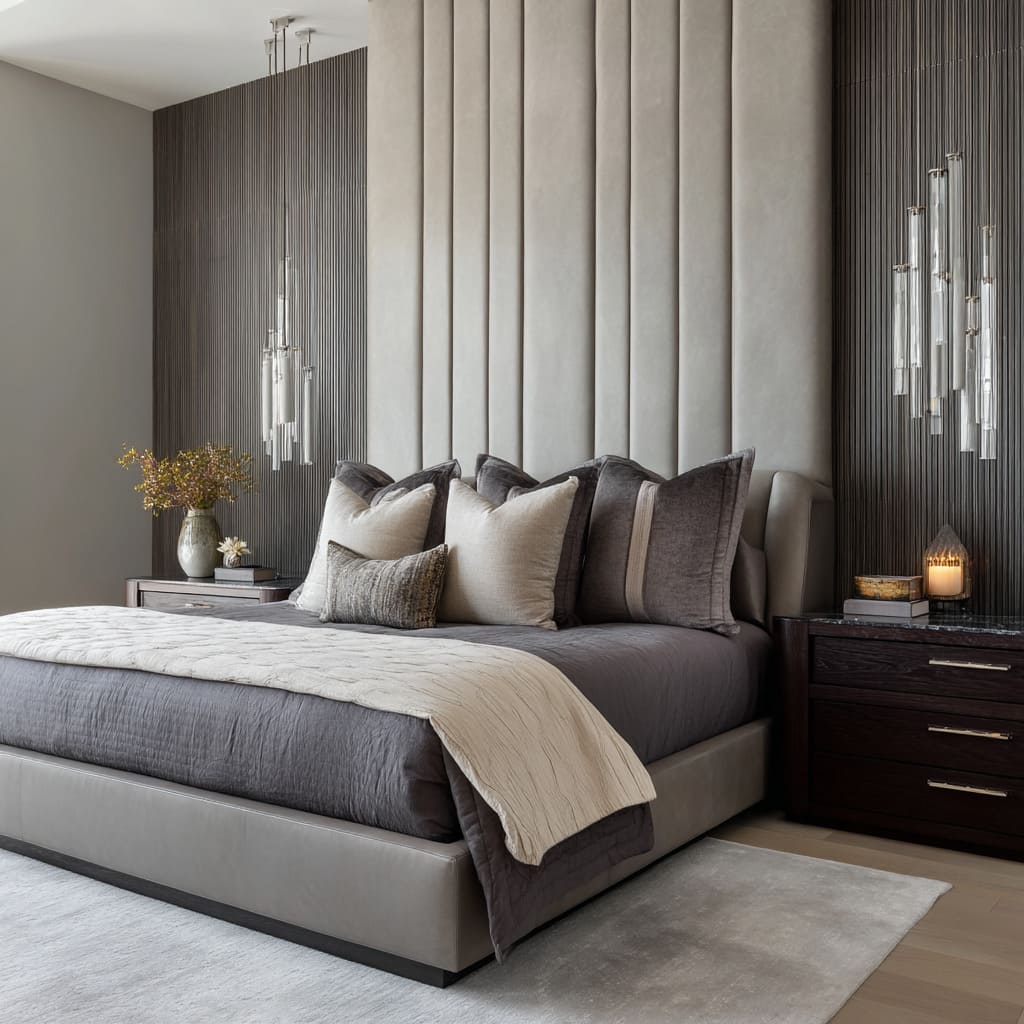
For those looking for more detail without adding visual clutter, fine lines cut into the surface do the work. Brass inlays slide between grey panels or catch the light along stitching seams, but their tone stays muted.
Or in some cases, a set of diagonal seams breaks an expected grid, creating tension in the surface without using contrast. These are the kinds of moves that make gray headboard room ideas feel custom—not through complexity, but through how clean lines are pushed and pulled.
Tonal Layering Rather Than Color
In these bedrooms, color doesn’t lead—light does. What sets one grey apart from another isn’t its place on a color wheel but how it reacts to what’s around it.
That’s why surface finish is everything. Boucle reads differently under diffused lighting than velvet does beneath a pendant.
Matte linen goes quiet, while suede pulls in shadows. Together, these materials build depth not through contrast, but through how they absorb or reflect ambient tone.
Many of the best rooms use this approach to warm a cool palette. A soft grey headboard might sit near a pair of oak nightstands or walnut shelves.
These woods don’t demand attention, but they send back a golden tone that softens the textile just enough. It’s a quiet trick, and it keeps the room from tipping into the cold side of minimalism.
The wood isn’t there as a feature—it’s there to complete the color temperature.
There’s also a careful play of sameness. In some rooms, the bed base matches the headboard in tone exactly, but shifts slightly in material.
A headboard in velvet may be echoed by linen side rails. Or the wall might carry plush channels while the bed keeps things smooth.
These choices are almost invisible—but that’s the point. The eye registers difference without having to name it.
They prevent monotony while keeping everything inside one visual language. Across this collection, grey headboard ideas prove that restraint doesn’t mean limitation.
A room can feel rich in detail, even if every element is in the same family of color—as long as those surfaces speak in different textures, shapes, and finishes.
Light as a Finishing Material
In these rooms, lighting is not an accessory—it’s a surface modifier. Instead of spotlighting objects or artwork, the light is built into the structure, aimed to highlight texture, not things.
Recessed LED strips are often hidden inside coves or above shelving lines, casting soft horizontal glows that move across vertical ribs or stitched headboard panels. These lights don’t call attention to themselves, but the shadows they create define the space.
A simple slatted wall becomes dimensional when each groove catches its own trace of light.
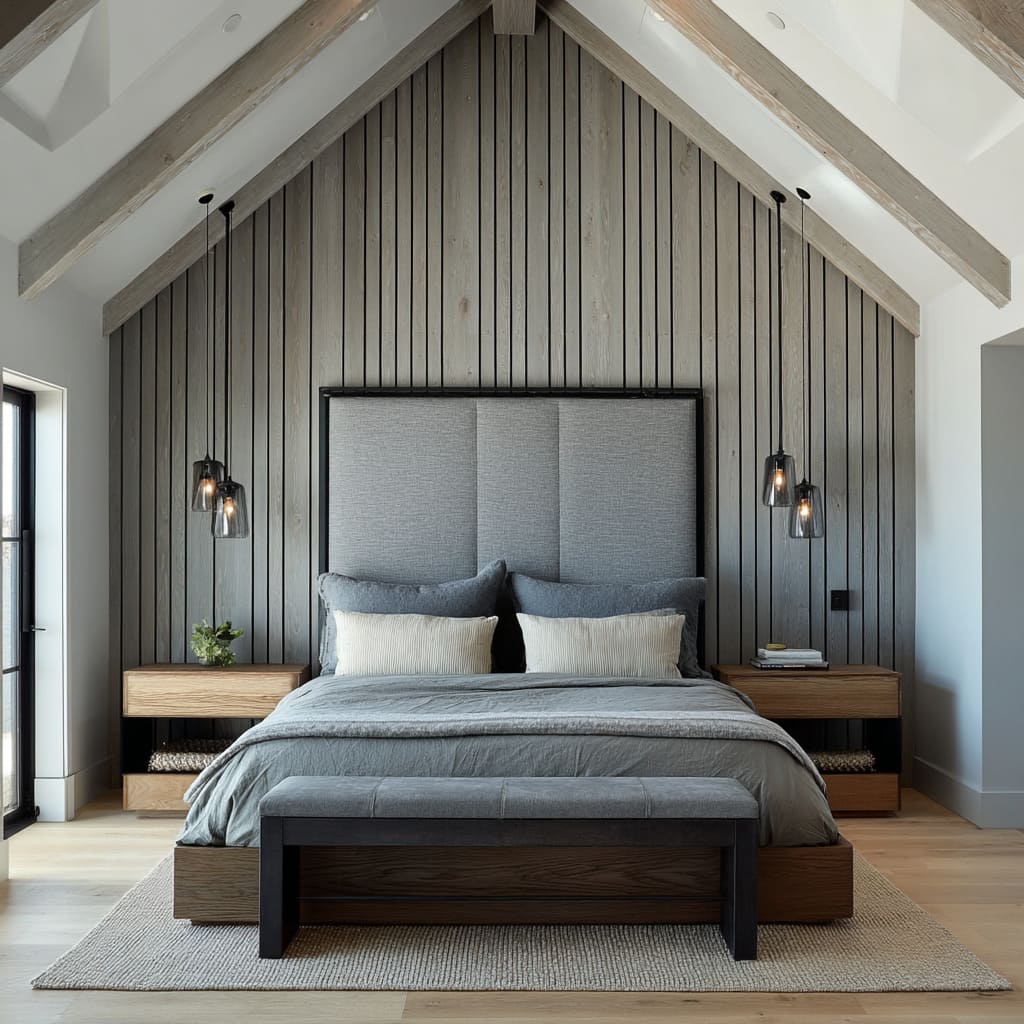
Pendant placement carries just as much thought. Whether using slim glass cylinders or frosted globe shades, these fixtures are often suspended directly in front of headboard seams or panel joints.
The precision in placement draws a line from ceiling to bedside without blocking the wall’s rhythm. These lines act like punctuation marks in a room built on alignment.
Light becomes a compositional tool, holding symmetry and proportion without adding mass. In spaces with shelving built into the headboard wall, tiny downlights add a warmth that fabric alone can’t provide.
A matte grey textile might feel quiet on its own, but when warm light grazes across ceramics or wood tones tucked into the shelf, the entire wall changes character. Without introducing color, the scene softens.
It’s a kind of quiet glow that fills the gap between softness and clarity.
Counterbalancing Hard and Soft
Many of these bedrooms pair raw material with softness, and grey is often the link between the two. Concrete walls, dark oak panels, and natural plaster finishes come with a strong presence, but they risk feeling sharp or heavy if left unbalanced.
Insert a grey upholstered surface into that context, and the tone shifts. The textile doesn’t compete with the structure—it mellows it, offering something tactile to rest against while still holding the palette steady.
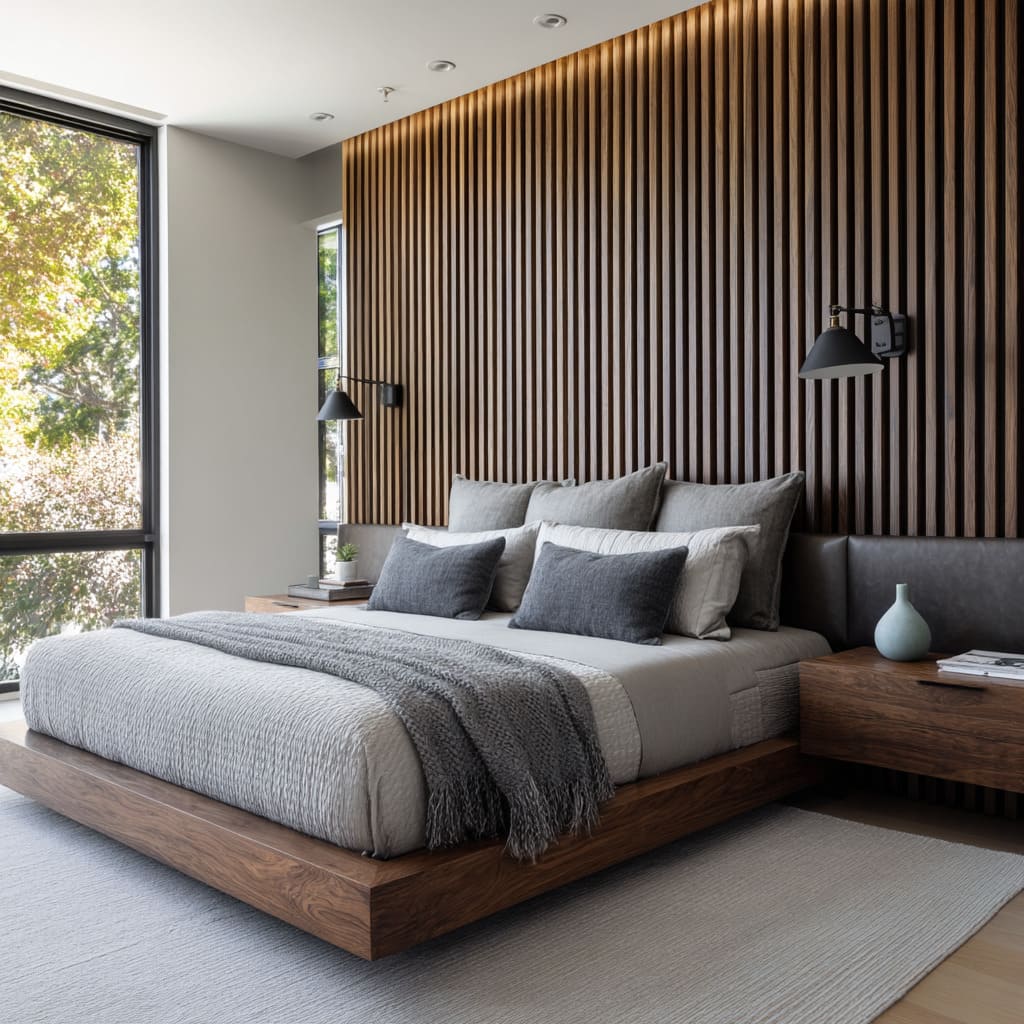
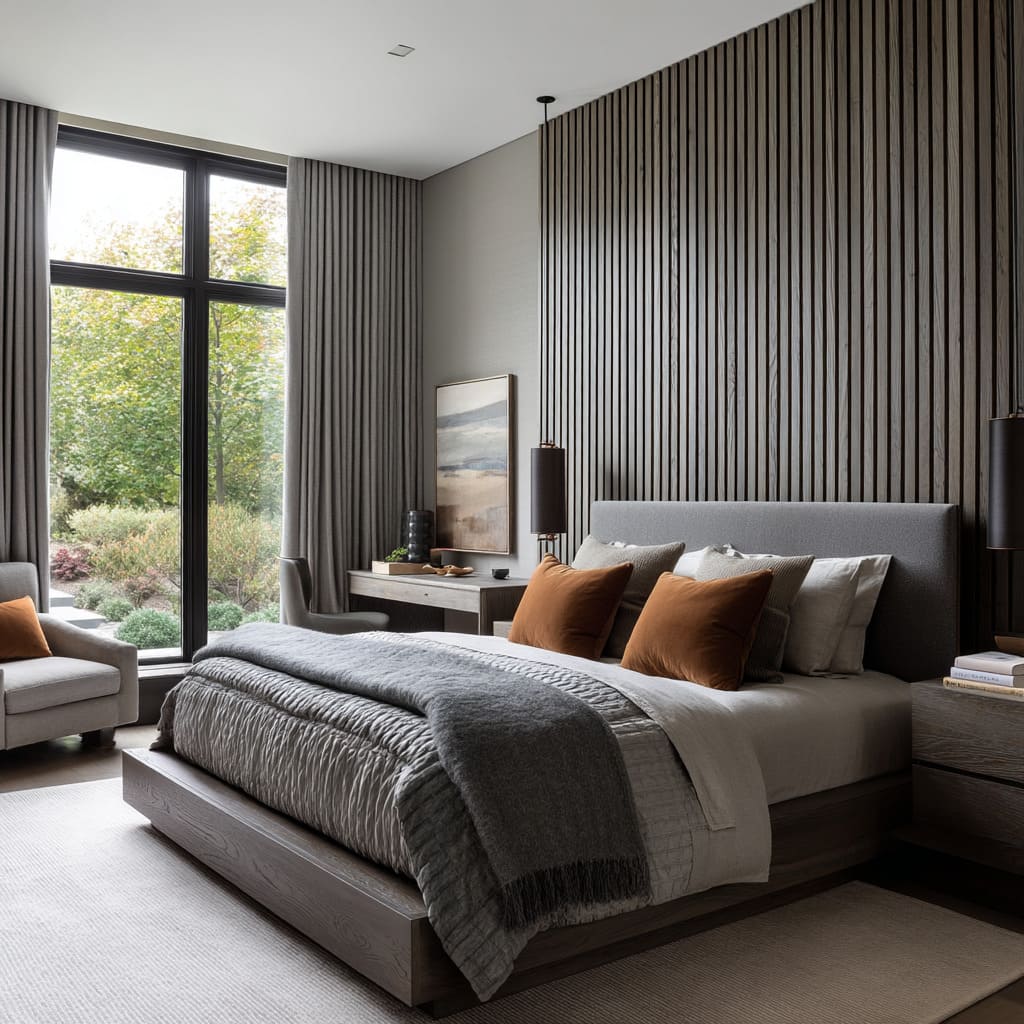
In spaces where the walls have deep pattern—like narrow walnut slats or board-formed concrete lines—the headboard is intentionally low. The thinking is clear: let the wall do the talking.
A simple upholstered form, kept close to the mattress line, allows the texture behind it to remain uninterrupted. There’s no need for the headboard to stand tall when the wall already has depth and rhythm.
Where some materials lean cool and flat, reflective surfaces help catch what’s missing. Thin brass strips between grey panels pull in soft highlights from nearby lamps.
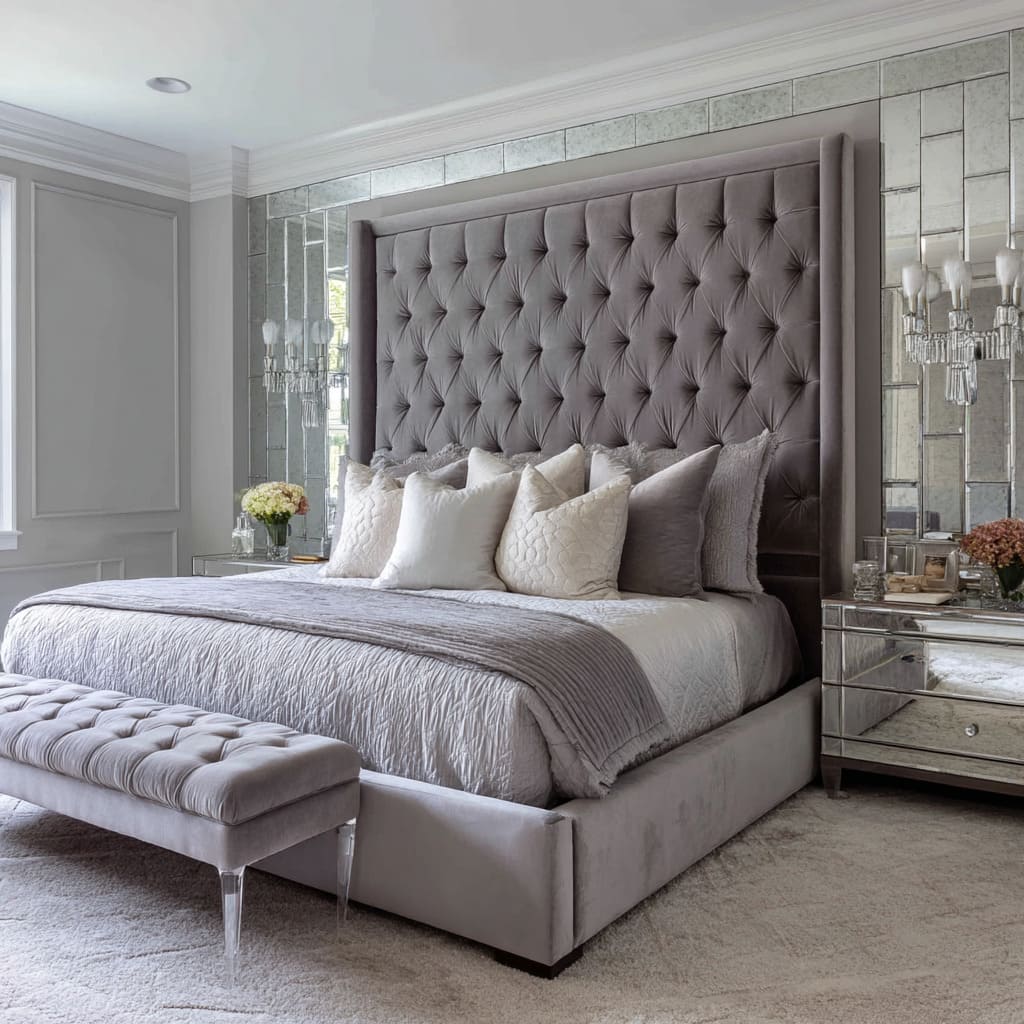
Antiqued mirrors used around or behind a headboard bounce light, but never sharply. The reflections are always blurred, tinted slightly warm, and often patterned with age.
These choices keep wide areas of matte grey from reading dull or dim. The goal isn’t to shine—but to reflect enough to keep the tone alive.
This combination—soft fabric against structured surfaces, neutral palette held together by glow and grain—is at the core of many successful bedroom ideas with a gray headboard. The room doesn’t need to declare contrast.
It carries it quietly, in how the materials answer each other.
Hidden Gestures Most Viewers Miss
Some of the most refined details in these spaces don’t announce themselves—they sit quietly in alignment, waiting to be noticed by someone paying close attention. In more than one room, the spacing between floating walnut shelves directly mirrors the width of the vertical seams in the headboard below.
That measured repetition creates an invisible grid across the whole wall. Even without calling it out, the viewer feels it.
It’s rhythm without decoration.
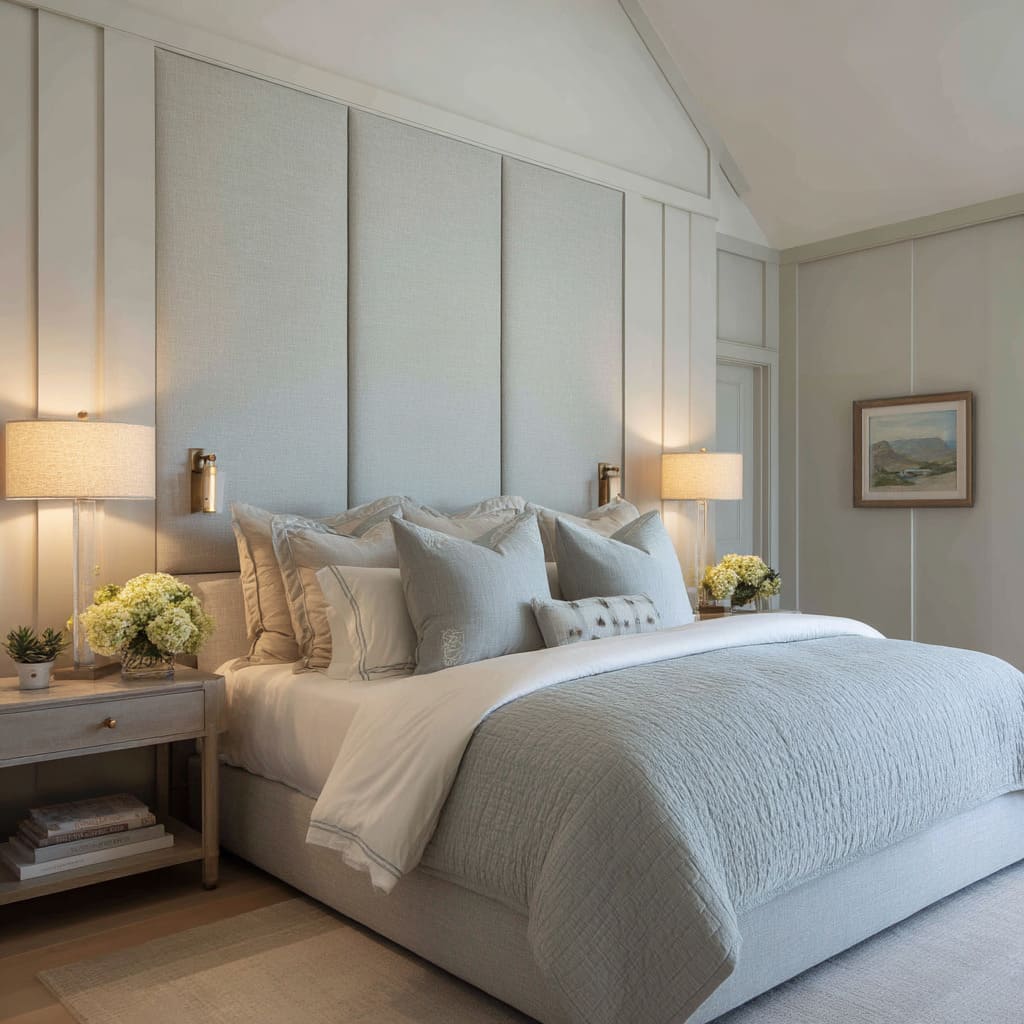
Grey has another trick: it changes with the light. A velvet headboard in the morning might look almost silver as sunlight brushes across it.
By evening, that same surface deepens into slate. There’s no change in the materials, but the character of the room shifts completely.
These subtle shifts mean a single setup can feel layered without adding or removing anything. Color isn’t introduced—light does the editing.
Then there’s the role of asymmetry. Not everything needs to match to feel resolved.
A shelf recessed only on one side of the bed, or a pendant light dropped just slightly off-center, keeps the composition from freezing into perfection. These small offsets introduce movement, but the surrounding discipline in material and color keeps everything from feeling off-balance.
In these rooms, irregularity works precisely because the rest of the visual rules are so tightly held.
Style Mix Made Possible by Grey
One of grey’s strongest traits is its ability to blend without losing character. Across such bedrooms, you see architectural elements that normally wouldn’t belong together—arched niches with modern lighting, colonial wainscoting framing a padded wall, brass trims next to matte concrete—but grey holds them together like thread in a patchwork.
It doesn’t erase the differences. It allows each voice to speak without interruption.

Whether it’s in a mid-century ranch or a coastal shingle-style home, the tone remains compatible. This is why so many period details—board-and-batten wall sections, mirrored trim panels, narrow fluted moldings—find common ground in a grey palette.
Instead of competing, these references settle into the background, grounded by the cool neutrality of the main surface.
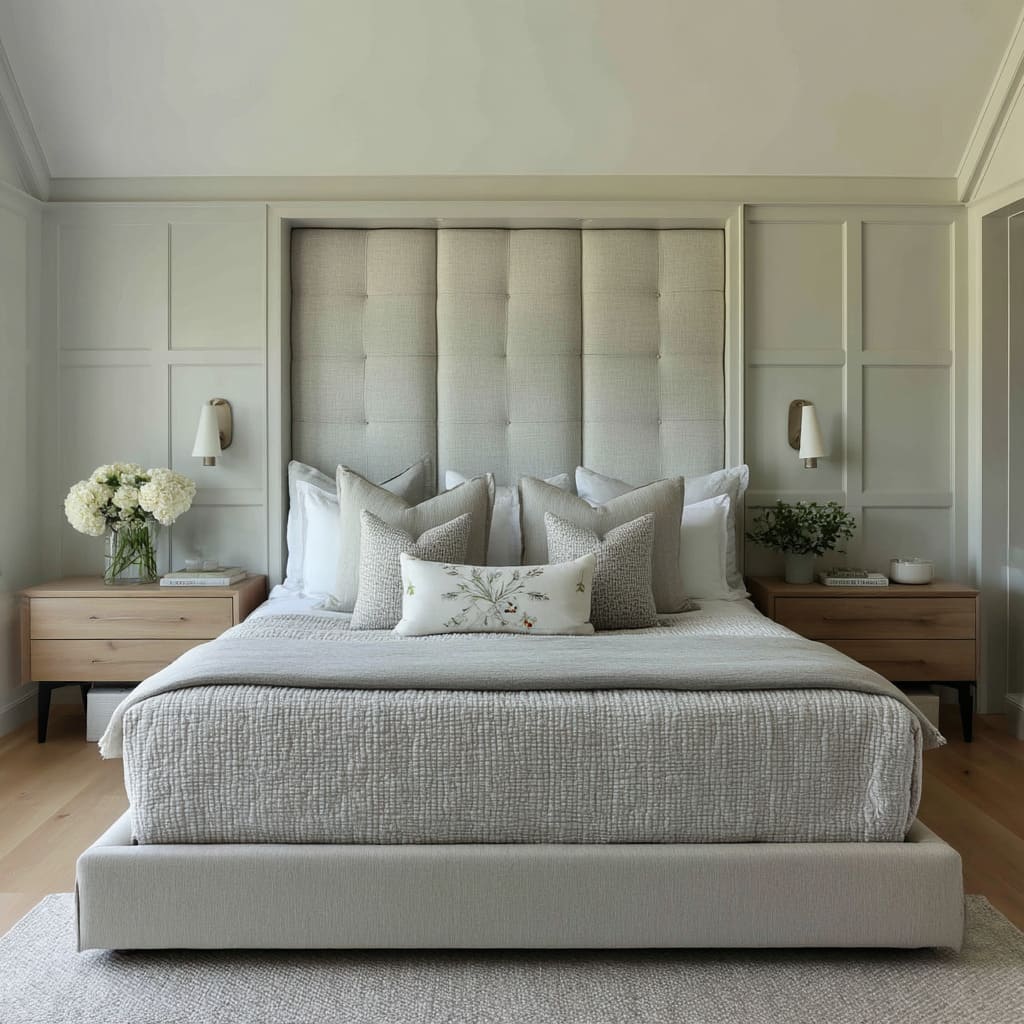
There’s a quiet range in how grey behaves, too. In some rooms, it leans warm and wool-like, softening the formality of traditional trim.
In others, it picks up reflective notes—platinum velvet or brushed suede—bringing out the shape of more contemporary detailing. This flexibility allows the same material to respond to multiple styles without contradiction.
The grey headboard bedroom design isn’t locked into a trend—it flexes to support the whole room’s intent, whether that’s coastal softness or mid-century sharpness.

Conclusion
Across such examples, grey proves that subtlety can hold just as much weight as bold design choices—if not more. The difference lies in how the material is handled.
Texture variation, careful alignment, and controlled light can shift a room’s tone without ever changing its color. A single brass trim line, a shift from boucle to velvet, or the way shadows move across vertical seams can shape the entire atmosphere.
What stands out in many of these rooms is the way the headboard becomes part of the wall—no longer just a backdrop for pillows, but a structural presence. This integration creates a sense of calm unity, where surface and form are part of one thought.
Walls gain depth without the need for separate art pieces, and upholstery becomes part of the architecture itself.
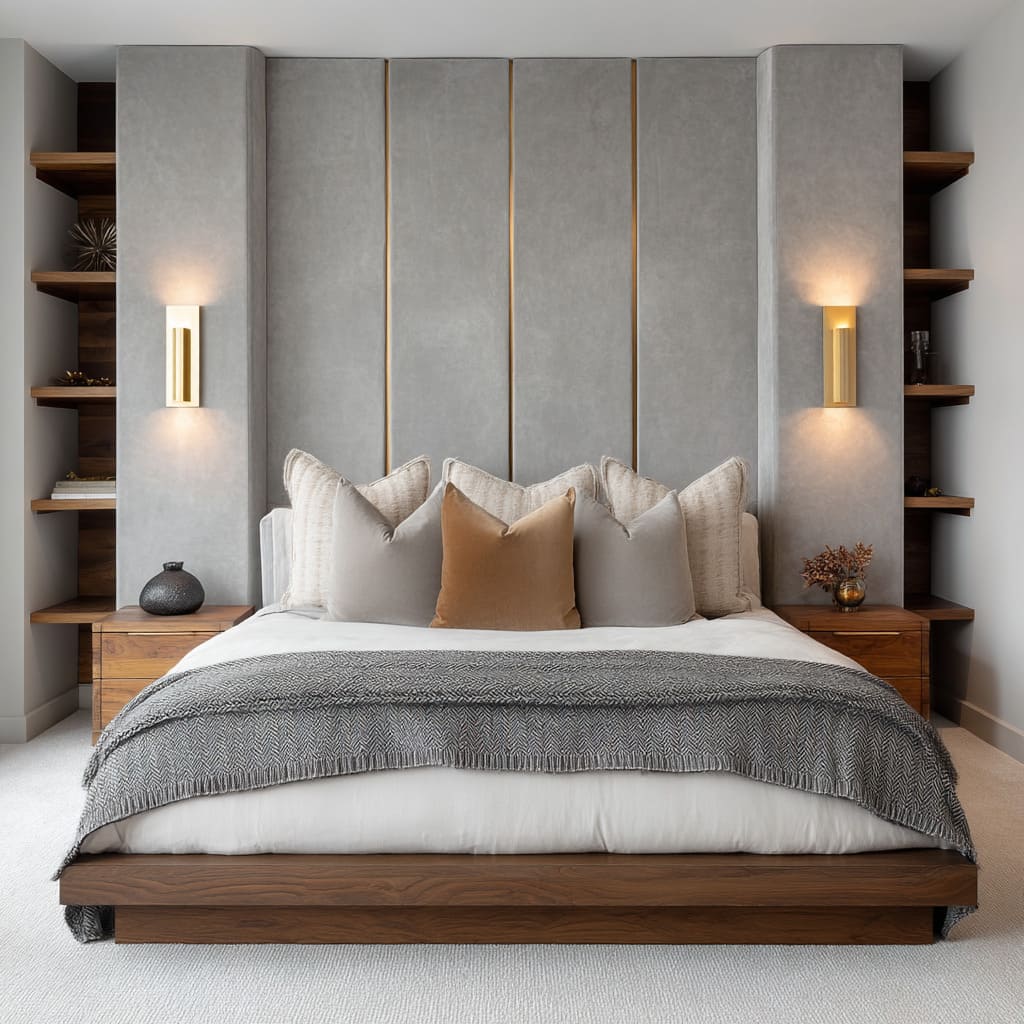
Lighting decisions are just as deliberate. Pendants and LED strips aren’t placed for decoration—they’re aligned to activate texture and carry the room’s rhythm from floor to ceiling.
In this setting, light works more like a soft brush, defining shape and contrast without needing ornament. Wood tones, brass details, and soft neutrals make brief but important appearances, keeping cooler greys from becoming flat.
These warmer accents aren’t leading—they’re supporting the composition in measured ways that tip the balance toward comfort.
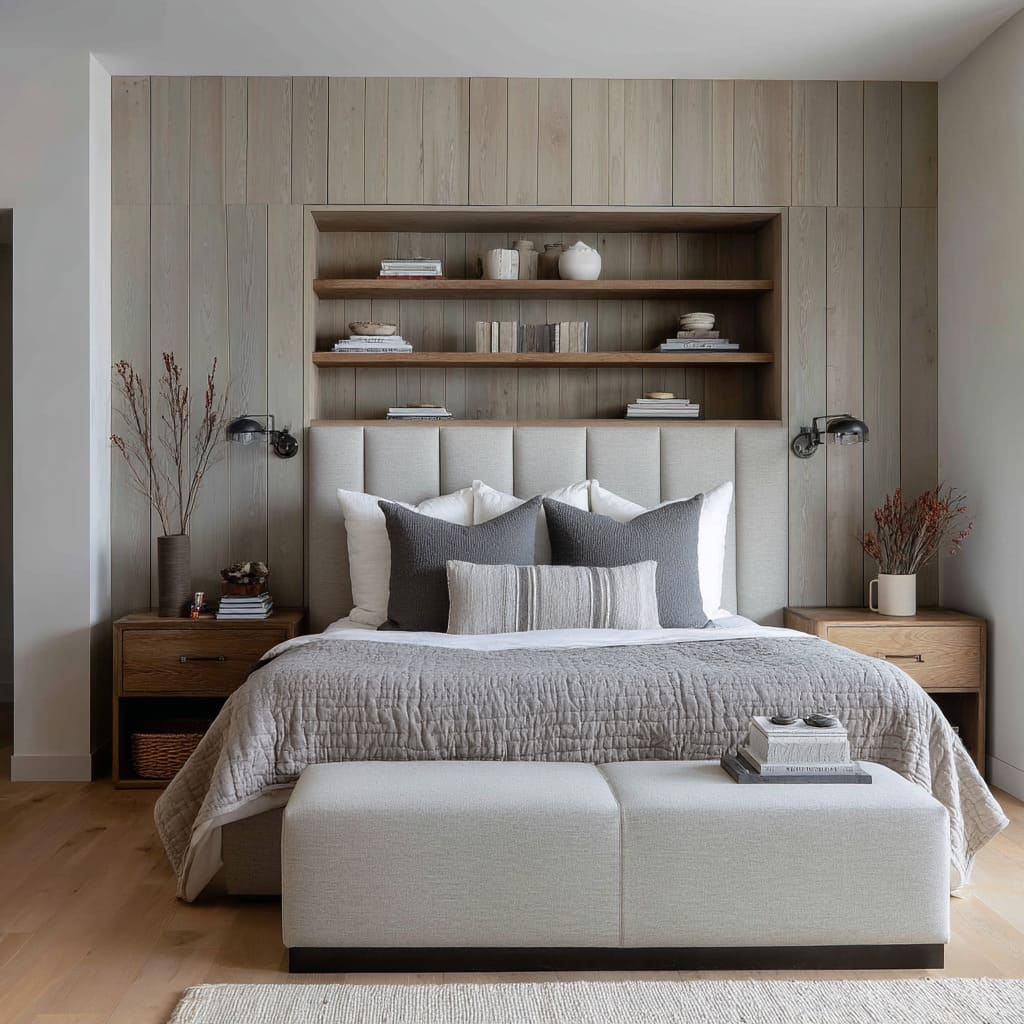
And finally, what looks symmetrical at first glance often contains a well-placed exception. An off-center pendant, a shifted shelf, or a bench that breaks alignment—all these moves pull the space back from feeling overly controlled.
That small variation invites quiet personality, while the rest holds everything together. There’s a reason so many master bedroom ideas with a grey headboard continue to feel relevant across different styles and settings.
Grey isn’t just safe—it’s flexible. And when combined with sharp attention to surface, light, and proportion, it becomes one of the most expressive tools in the language of modern bedroom design.