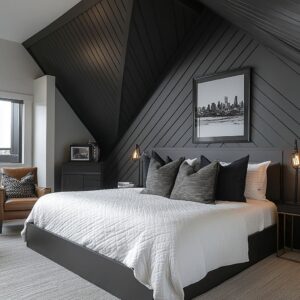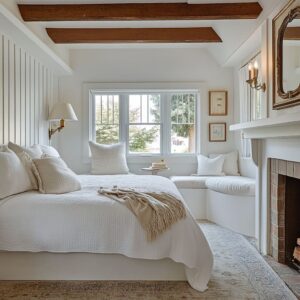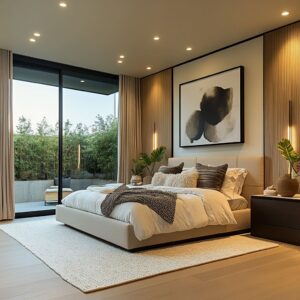
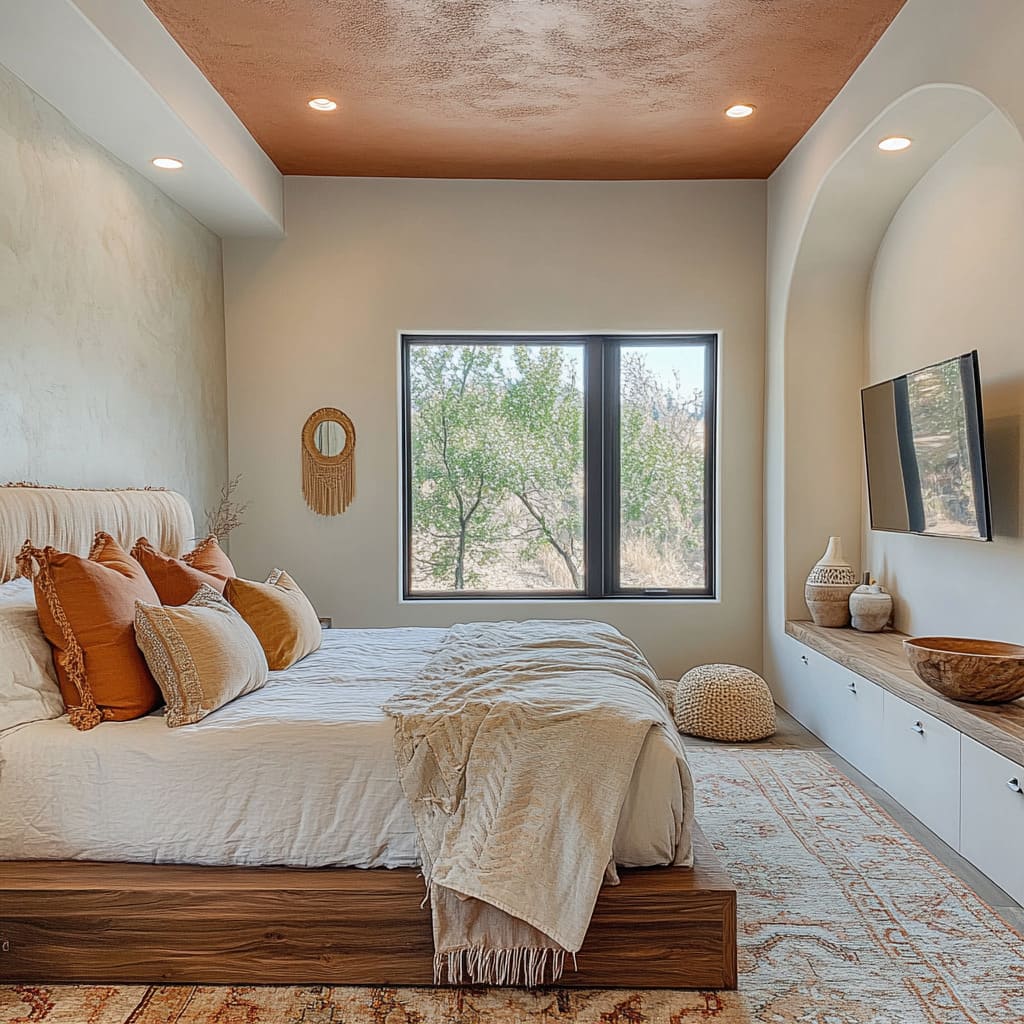
Boho interiors have been around for decades, but the latest take on the boho style bedroom feels more thoughtful, more grown-up, and far more refined than the over-layered looks of the past. Instead of just stacking pillows or tossing macramé on every wall, designers today are weaving in quiet detail, natural shapes, and raw textures that create a space that feels calm without being plain.
This shift isn’t about throwing patterns around—it’s about picking the right ones, and letting materials and silhouettes carry the design.
Across modern homes from desert towns to coastal suburbs, the mood is easygoing yet intentional. Neutral walls meet warm wood finishes, curved arches echo ceiling slopes, and pillows mix velvet with coarse linen.
It’s the balance between restraint and texture that gives these rooms depth. A boho chic bedroom decorating idea might be as simple as a sunhat on a carved hook or a single pressed-leaf print in a wooden frame—but every choice adds to a larger visual rhythm.
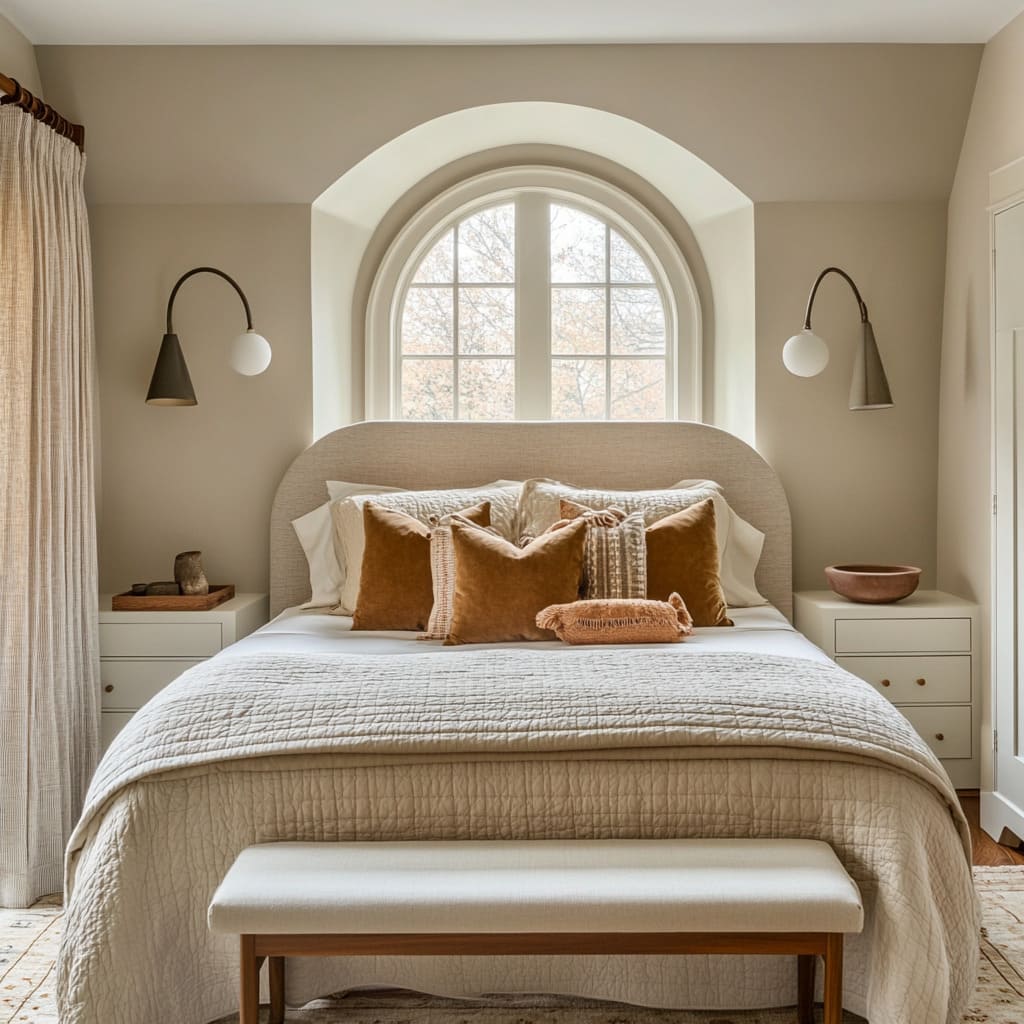
What makes this new direction so compelling is how it lets craft and character show without shouting. Whether it’s a cane headboard shaped like a sunrise or a hand-knotted throw casually folded across a footboard, these rooms don’t try too hard—but they get it right.
And that’s exactly why this updated Boho style is catching attention again.
Architectural Envelope Shapes and Soft Framing
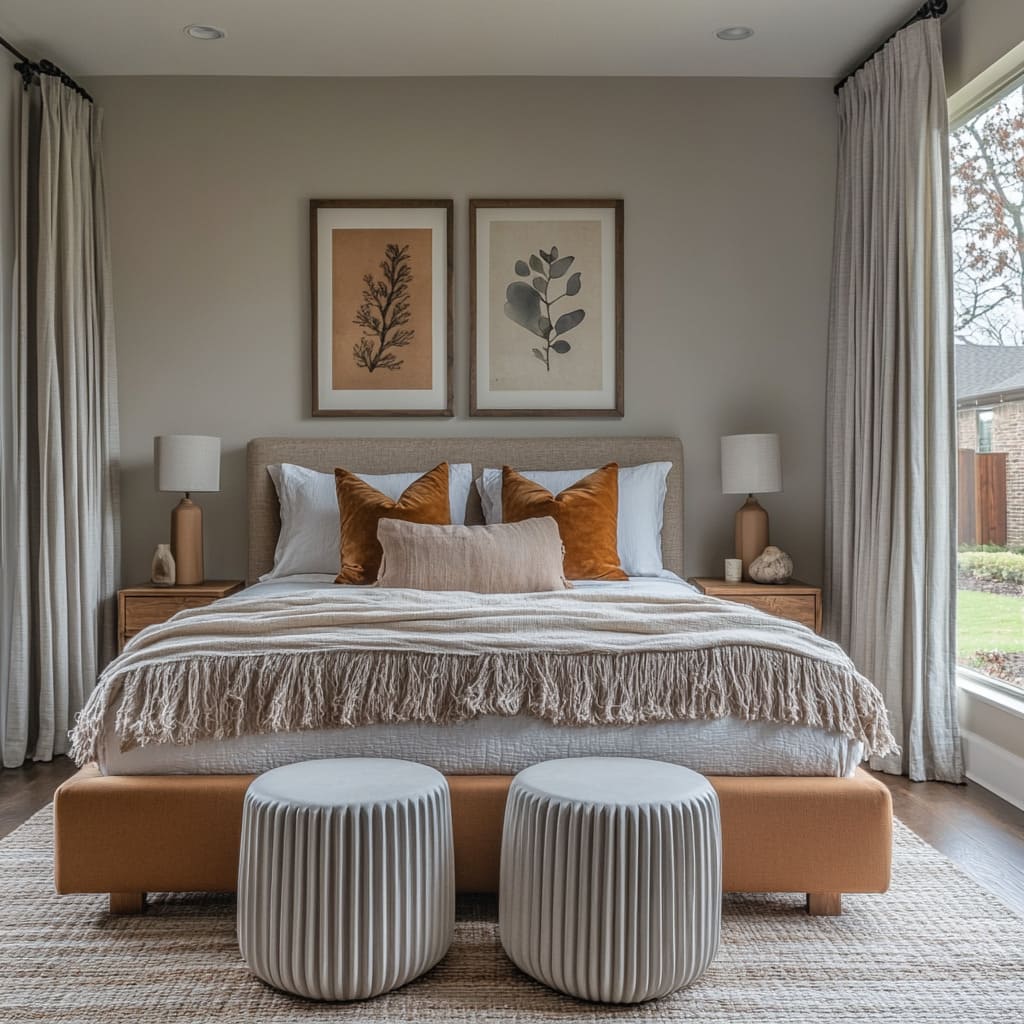
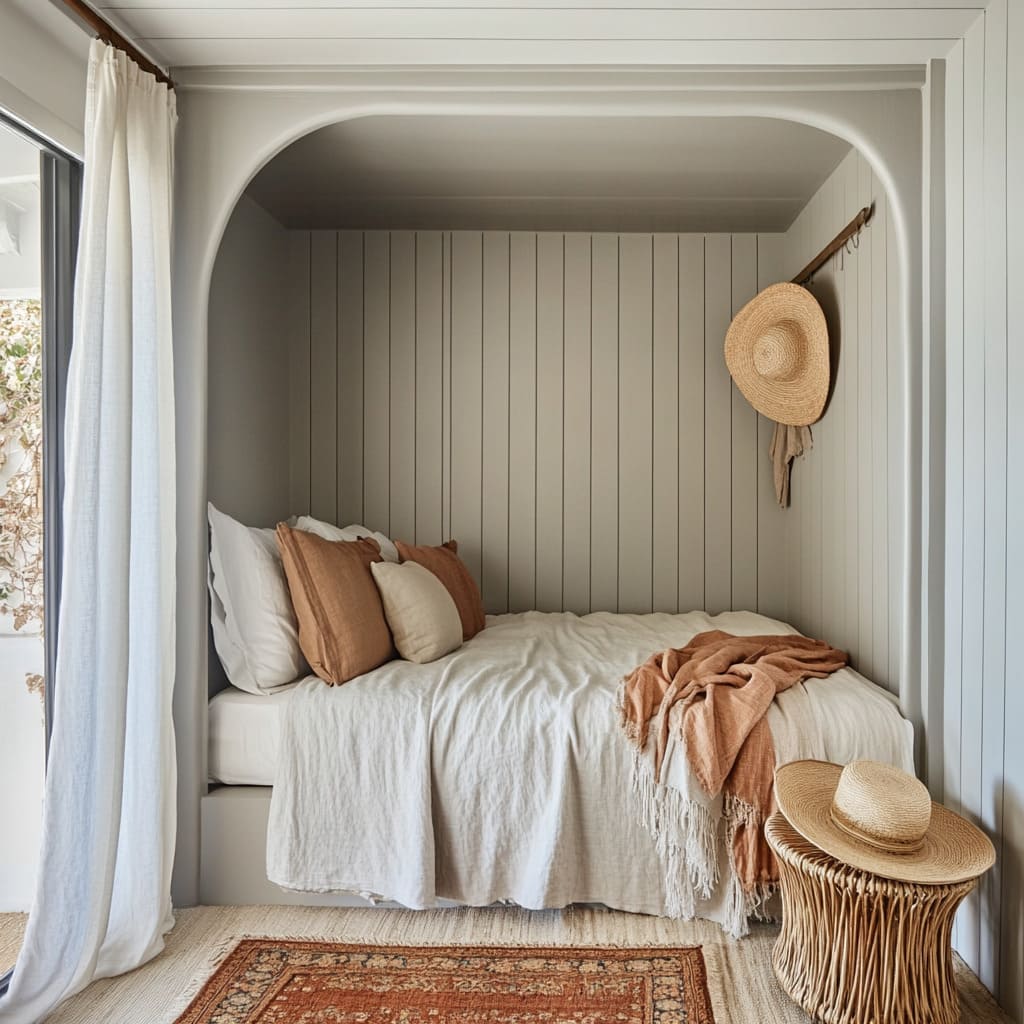
One of the more surprising trends involves how curved and recessed architectural details—arches above beds, alcove nooks, and softly molded ceiling lines—are used as a gentle framework for the Boho narrative. Rather than standing purely as decorative arches, these elements create an all-encompassing feeling of protection and enclosure:.
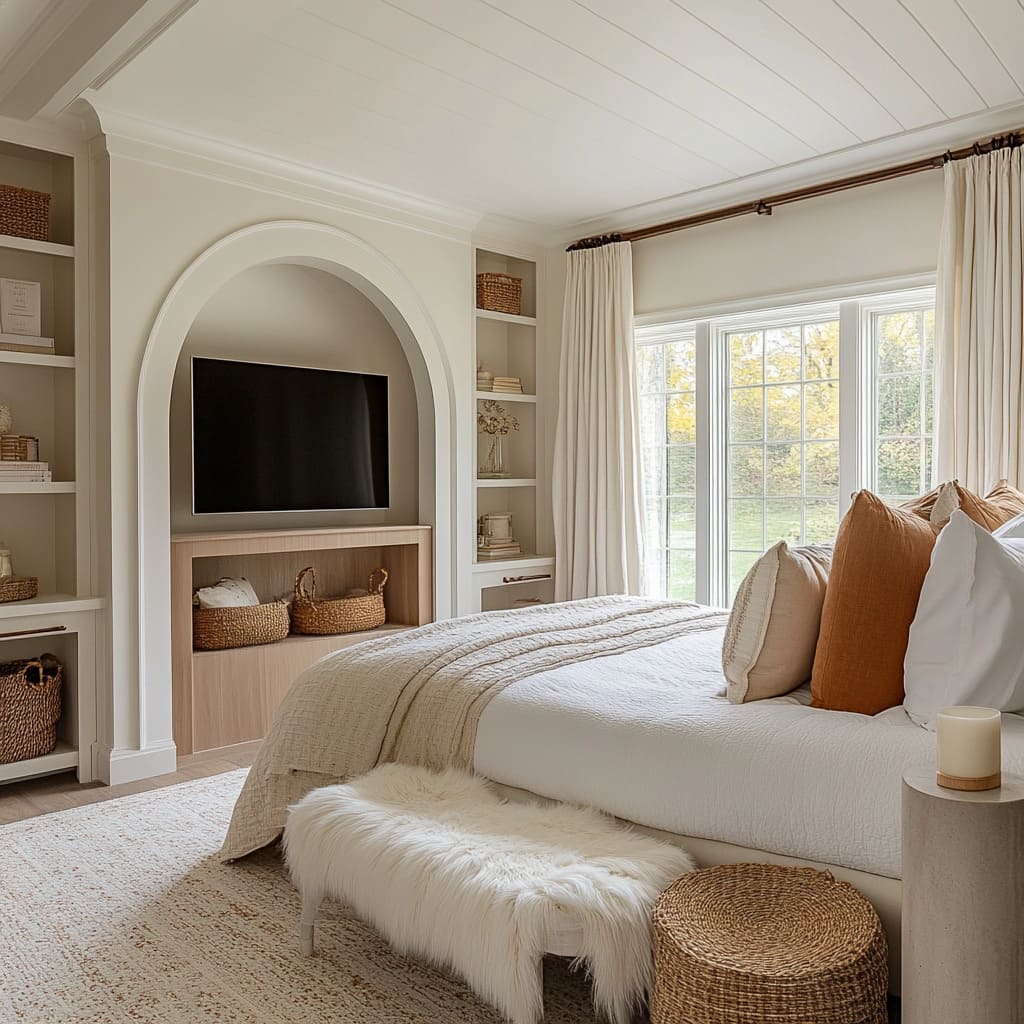
- Triple-Beveled Arches and Layered Moldings. Several rooms make use of multiple layers or bevels within an arch. This results in shadow play that shifts throughout the day, adding quiet dynamism. The effect is subtle yet creates an ever-changing backdrop, reinforcing the relaxed and organic aura of Boho without explicit patterning.
- Ceiling Finishes that Amplify Curvature. Hand-finished plaster ceilings in warm tones or recessed beam structures can complement the curved arches, creating an upper boundary that feels softly contoured. This synergy between arches and upper surfaces underscores a fresh approach: letting the architecture itself become part of the decor, rather than relying solely on accessories.
Micro-Layering with Color Ties
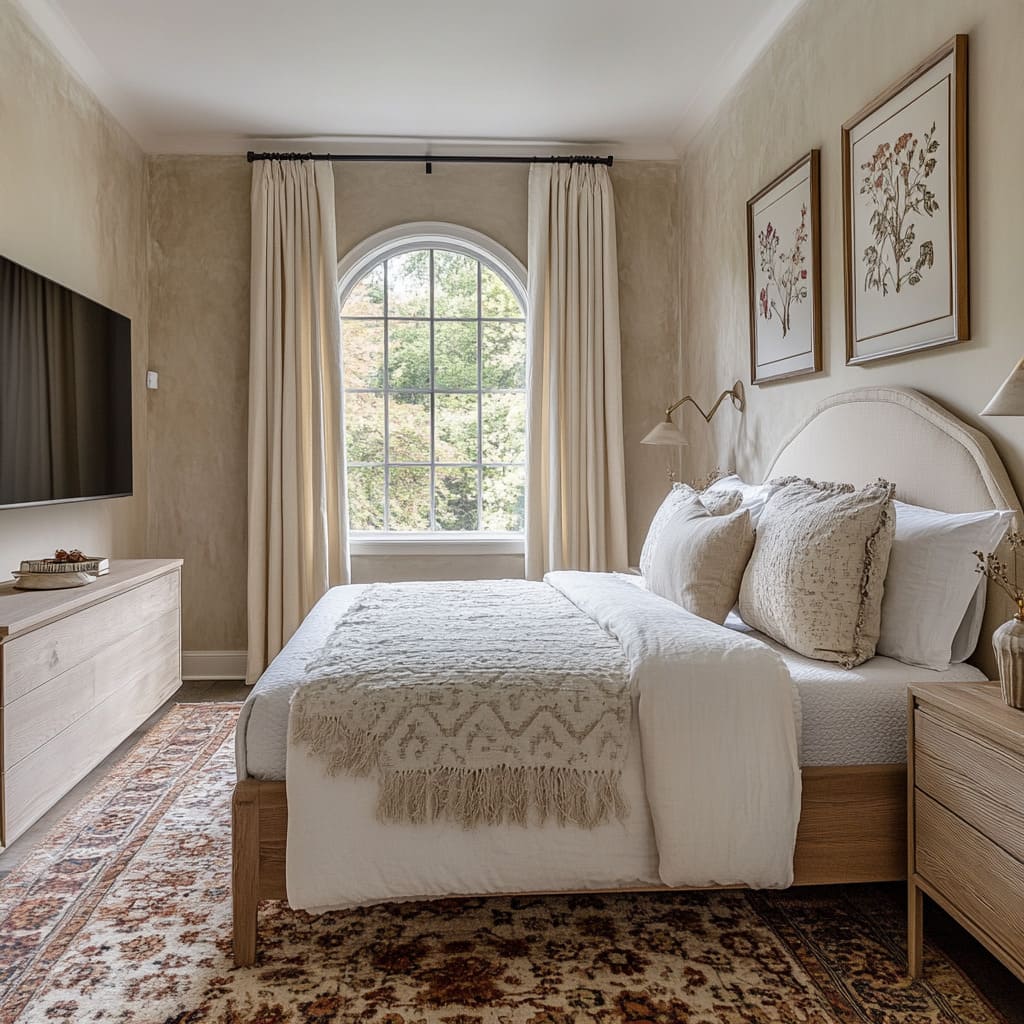
Although Boho Chic often celebrates color mixing, a nuanced approach has emerged: micro-layering the same color family across multiple surfaces and textiles, producing subtle but impactful unity.
- Muted Sage and Ochre Across Textiles and Walls. Sage-gray walls paired with ochre throws, or desert greens paired with rust pillows. These gentle echoes ensure harmony: a color on a pillow echoes a tone in the rug border, or a throw references the background of wall art. This practice elevates each hue’s presence without feeling overly matched.
- Soft Earthy Palettes with Strategic Saturation. Many spaces exhibit mostly soft neutrals, then inject one deeper color moment—an ochre pillow or an emerald throw. This approach spots color strategically, focusing the eye on certain corners of the room.
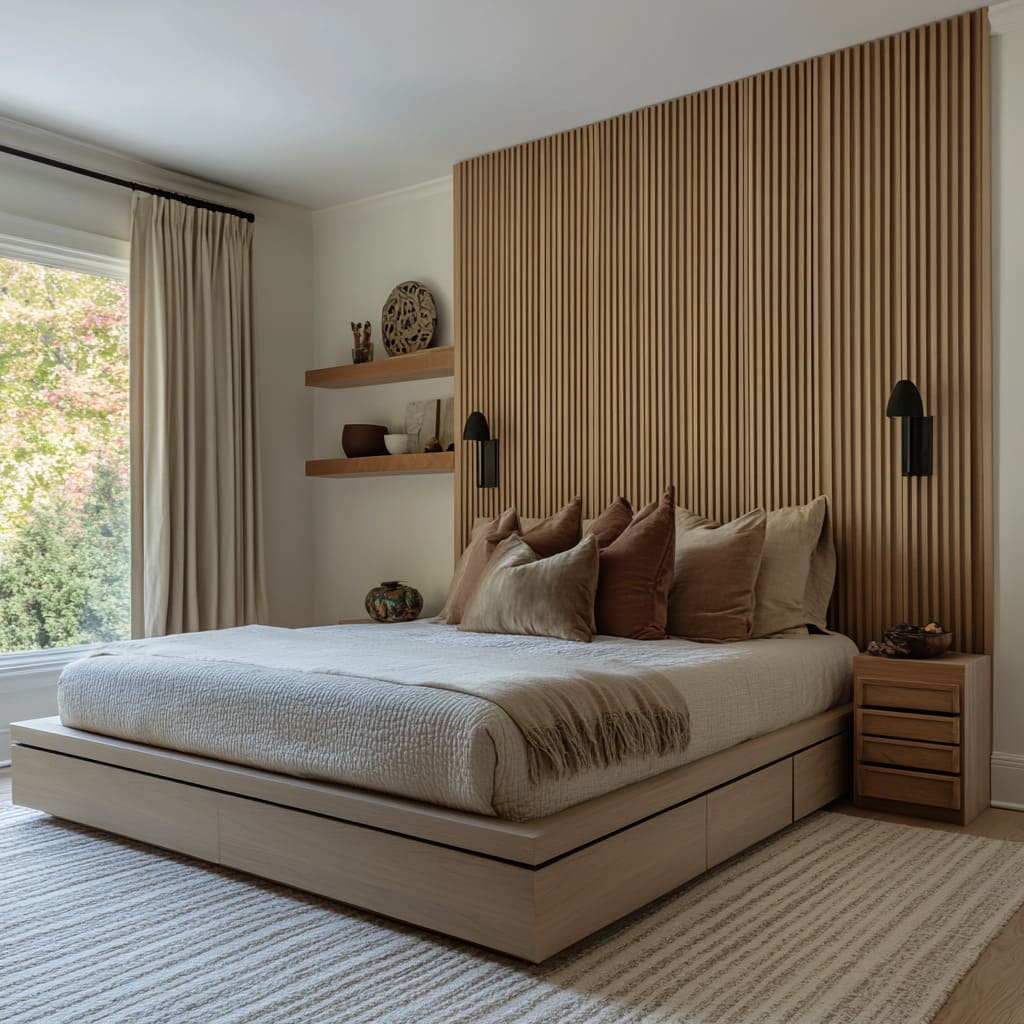
Minimalist Warmth—The Quiet Side of Boho
A strong theme is the merging of Boho’s laid-back spirit with a toned-down, minimalist ethos. The result is a style that avoids overly busy layering but still retains warmth through targeted materials and subtle textures.
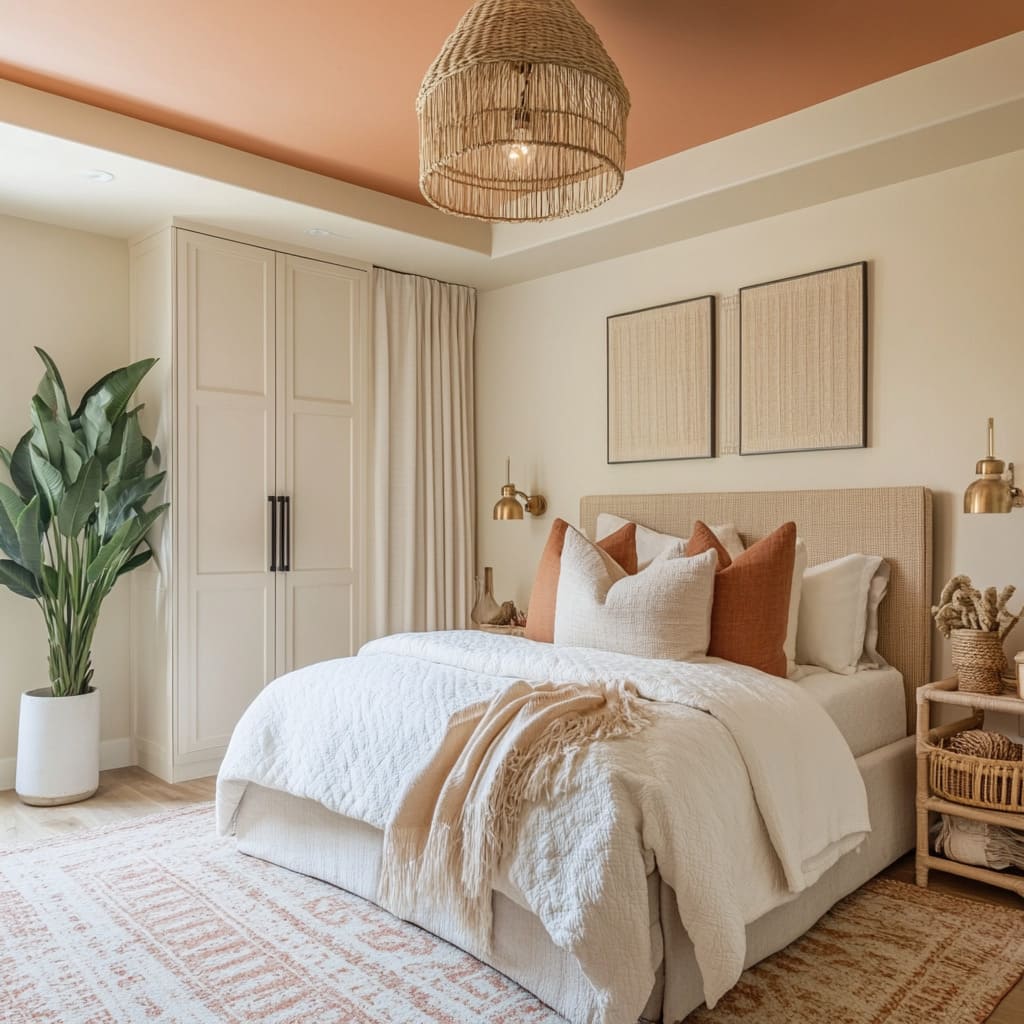
- Restraint in the Number of Objects. Instead of multiple patterned pillows, it’s a controlled palette of neutrals or near-neutrals, supplemented by a single accent shade. The same principle applies to styling shelves: just a few ceramic pieces and simple dried botanicals, arranged in a balanced manner.
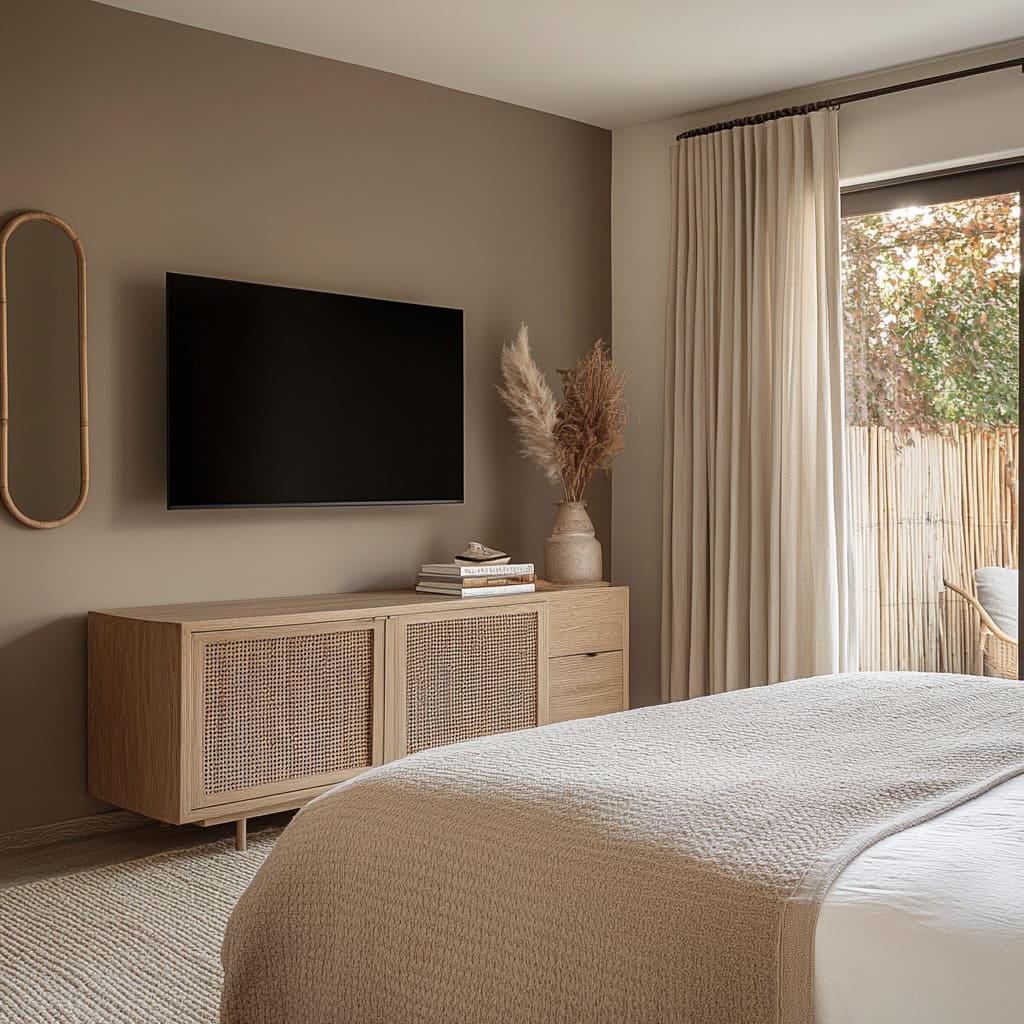
- Controlled Textural Contrasts. An understated Boho scheme might include a cane-front credenza, a chunky boucle bench, and a single woven lamp pendant—each with a distinct texture but deliberately limited in color, so these tactile qualities can stand out without visual competition.
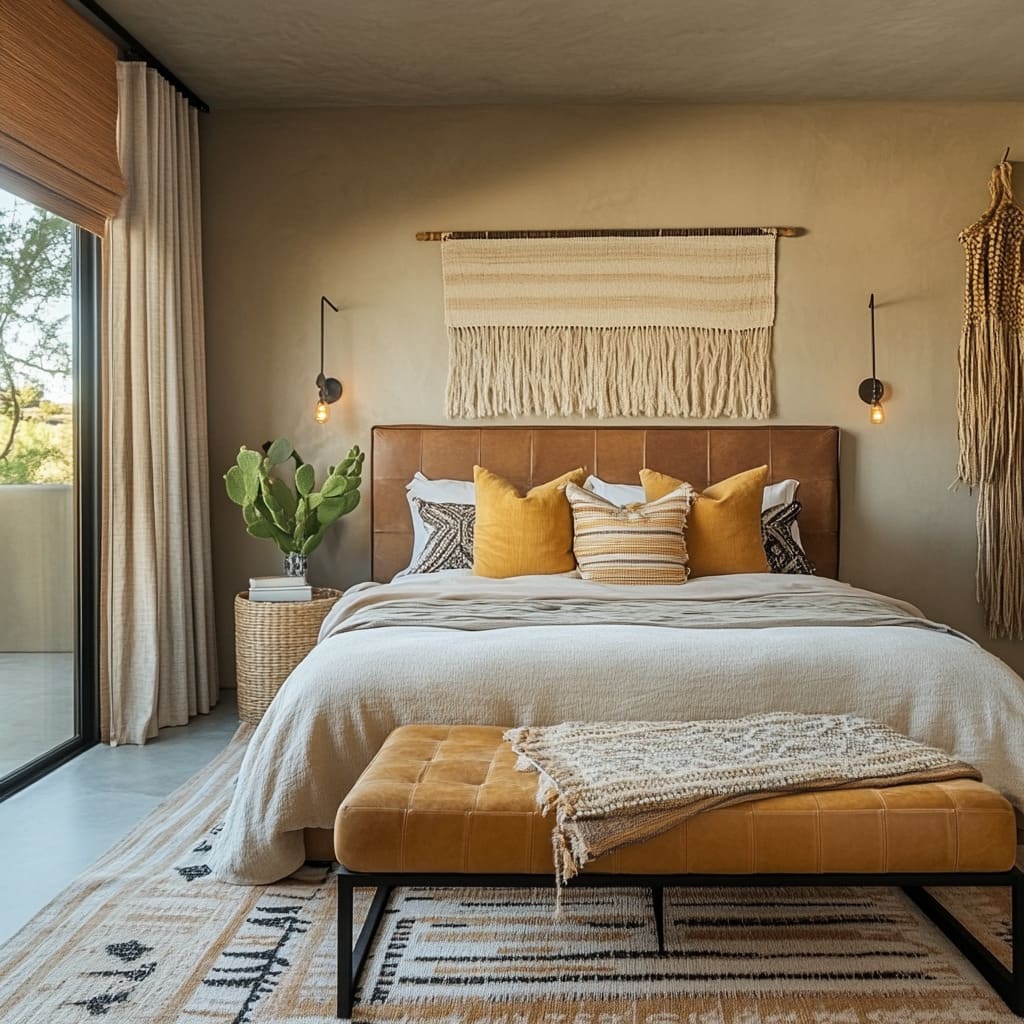
Elevated Craft Touches: Emphasis on Hand-Finished Details
A recurring motif is the use of items that show the maker’s hand or traces of artisanal production:.
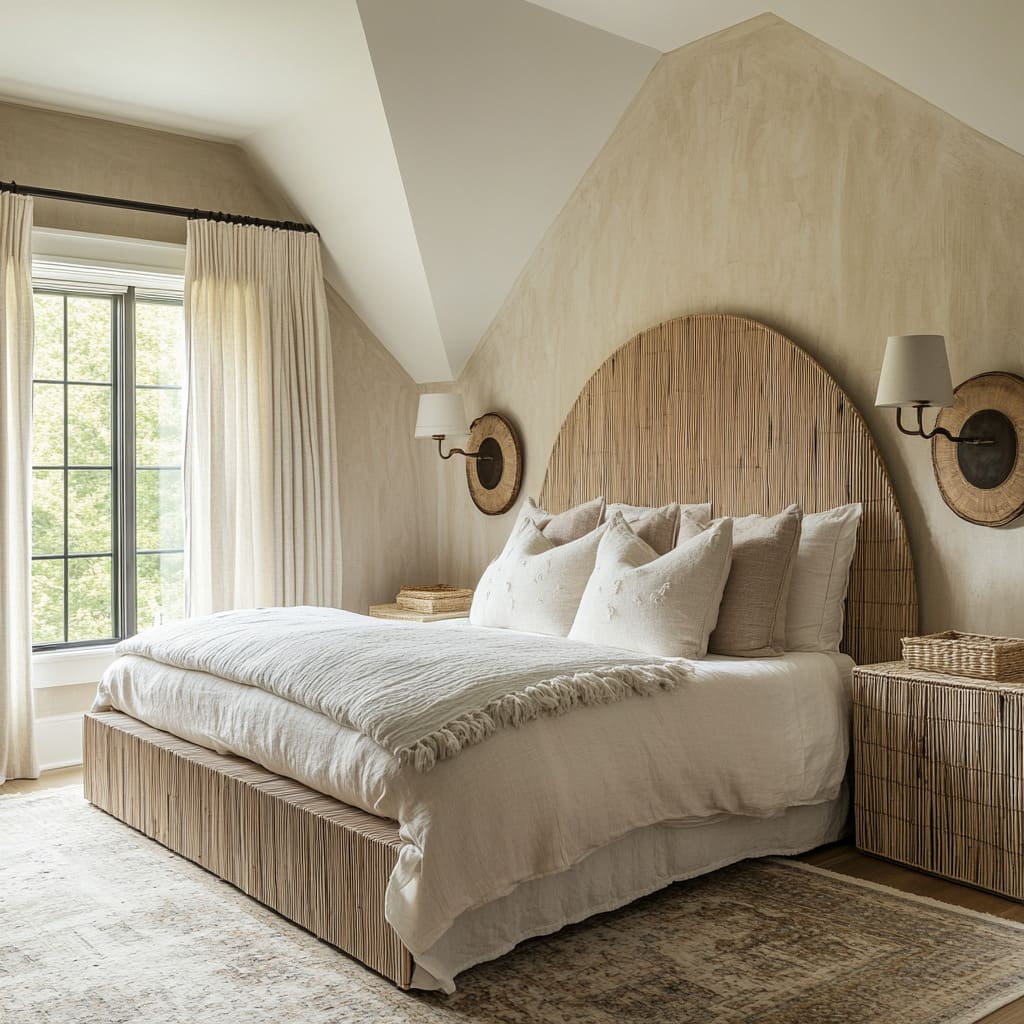
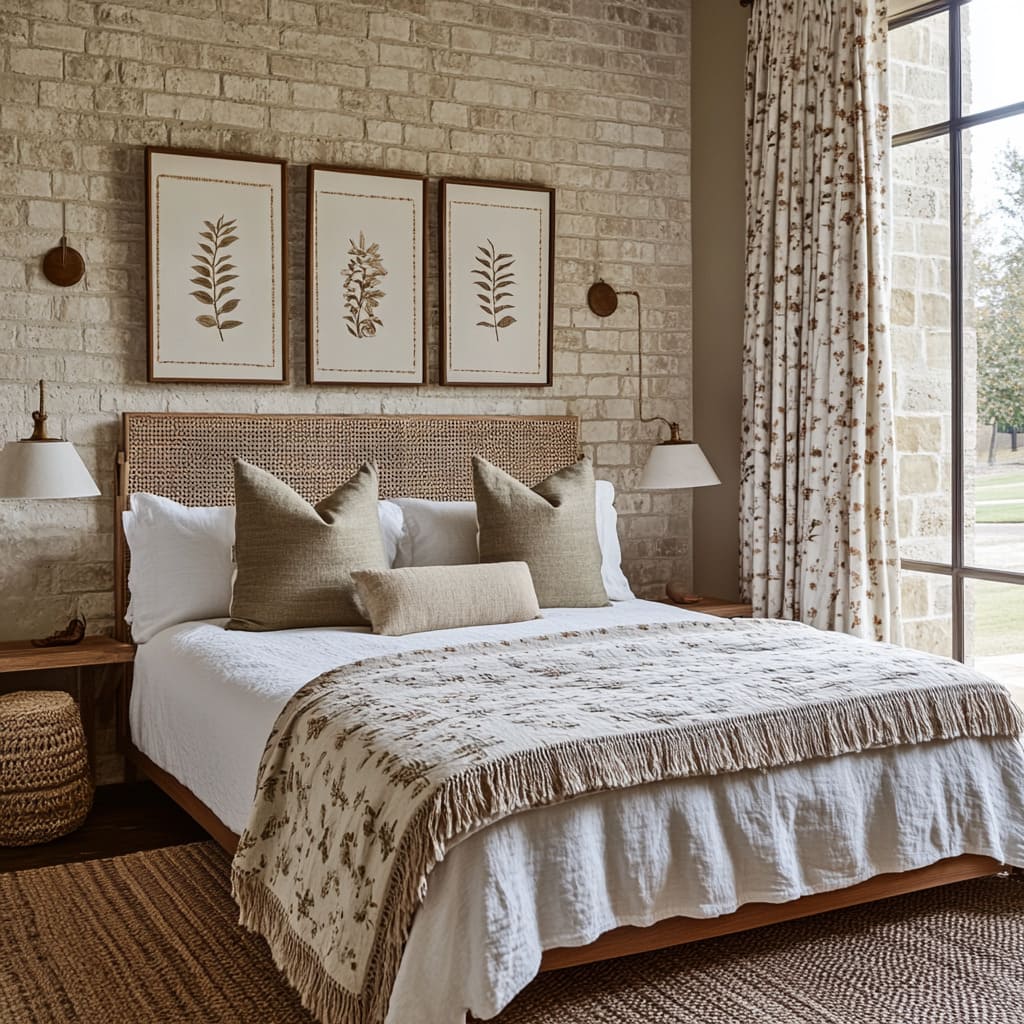
- Woven Cane, Rattan, or Reed Headboards. Often Boho Chic bedrooms feature headboards with a curved profile made of bundled cane or rattan. The natural spacing of the materials highlights small irregularities and fosters a sense of closeness to craft traditions. These pieces often mirror architectural lines—such as a pitched ceiling or the silhouette of an arched window niche—underscoring their importance as focal points.
- Hand-Knotted Textiles and Tiny Imperfections. Throws with raw edges, pillows with tufted stitching, and rugs featuring washed or faded patterns convey uniqueness. They make each item feel storied, even in newly designed spaces. This is a shift from previous takes on Boho, where mass-produced, globally inspired prints were more dominant. Now, there’s an emphasis on subtle craftsmanship rather than overt motifs.
Subtle Symmetry vs. Intentionally Casual Asymmetry
Many boho bedrooms strike a balance between symmetrical frameworks (often the bed as a centerline) and slight disarray or asymmetry in styling, which appears thoughtfully unplanned:.
- Symmetry Anchors the Bed Area. Pairs of pillows, matching sconces, or twin nightstands maintain a sense of structure. This underlying symmetry creates a calm anchor that resonates well with the easygoing personality of Boho interiors.
- Asymmetry in Décor Accents. While the bed area is symmetrical, accessories like pampas grass arrangements, art prints, or baskets on shelving are placed in ways that break perfect mirror-imaging. This keeps the room from feeling too formal. Just a slight offset or an unexpected grouping of objects provides enough tension to keep the design interesting.
Cultural Referencing Without Overt Theme
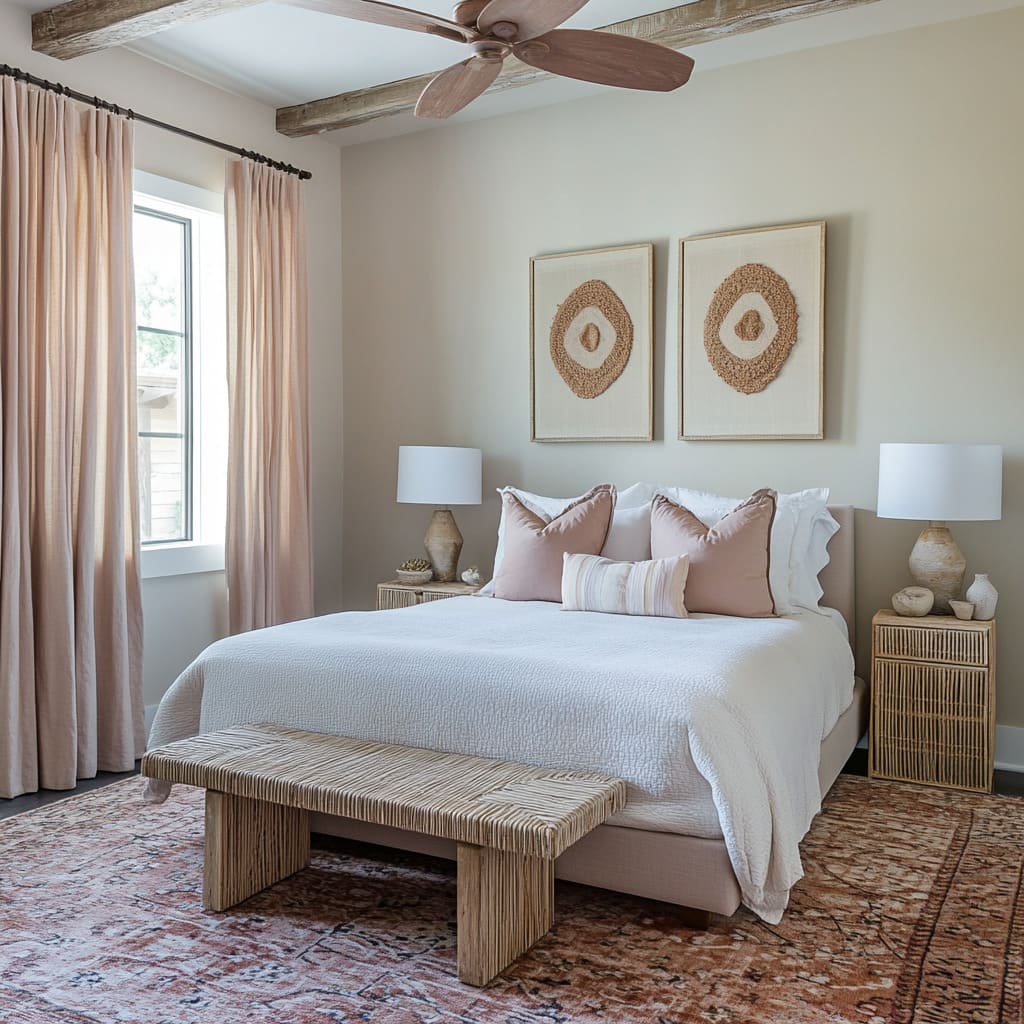
The newer approach to Boho often hints at global craftsmanship—Middle Eastern rugs, tribal basket art, or Moroccan-inspired lamps—but does so lightly, without slipping into themed decor:.
- Subdued Global Patterns. Kilim or tribal motifs are toned down to blend into broader palettes, frequently appearing in softly faded or neutralized colorways. This approach evokes global influences while preserving a calmer backdrop.
- Diverse Origins in a Single Space. It’s common to see a modern American oak dresser with African-style woven baskets overhead, or Moroccan-inspired pottery next to Southwestern cacti. The unifying factor is the coherent color scheme rather than a single cultural reference. It’s the layering of crafts from different regions, curated so each piece can stand on its own merit.
Thoughtful Lighting as a Design Element
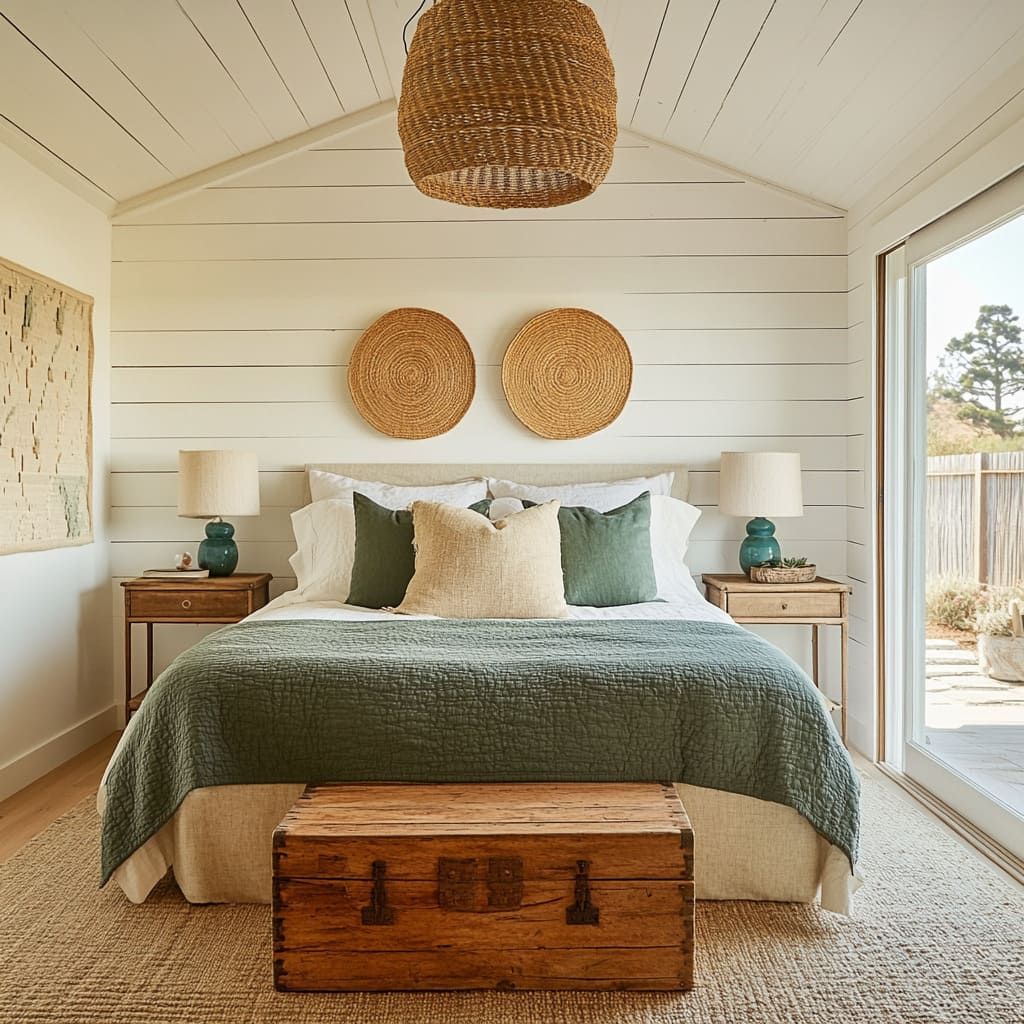
Lighting in these Boho bedrooms does more than illuminate; it often acts as sculptural or textural punctuation:.
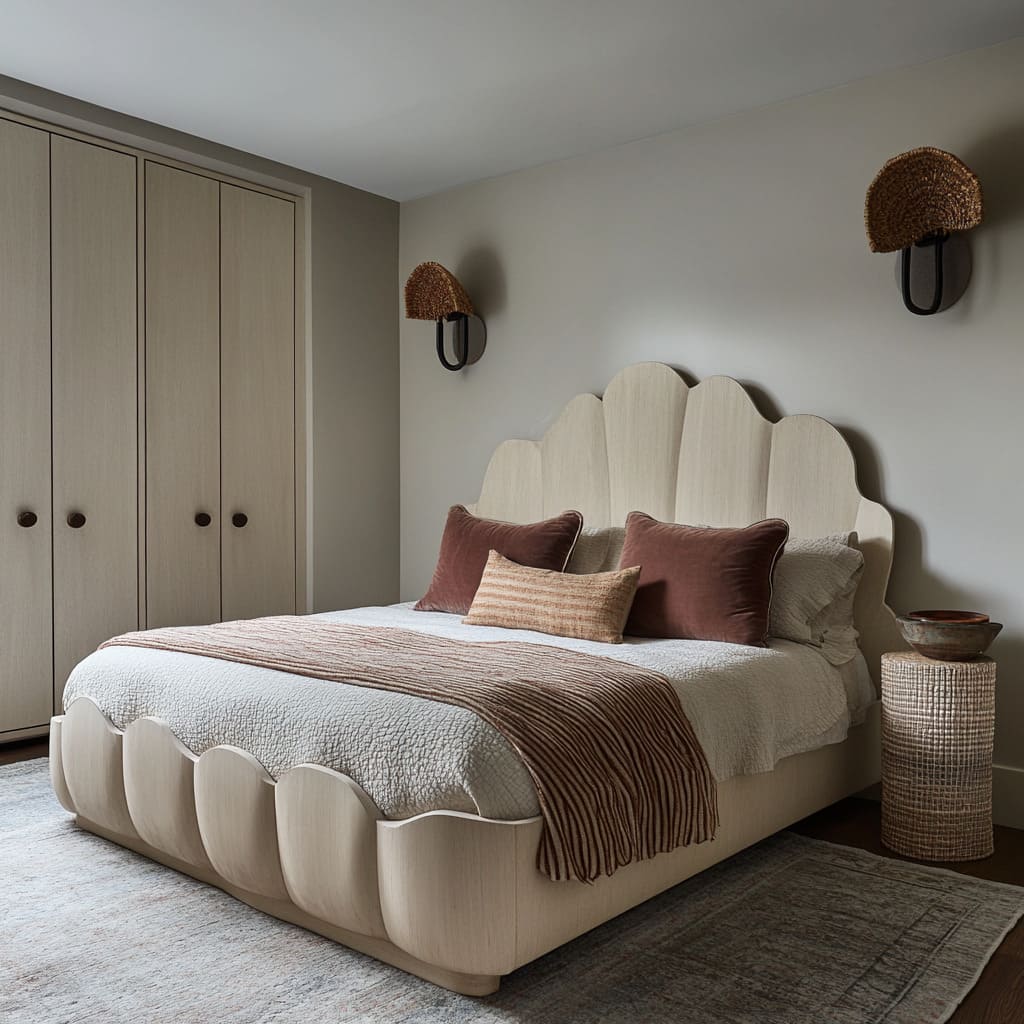
- Woven Pendants, Leather-Strapped Sconces, and Rattan Shades. Boho chic bedroom decorating ideas often focus to sconces made of rattan discs, or pendant lamps with an open-weave structure that casts patterned shadows. These are not just sources of light; they become organic shapes that fill negative space in the upper or side portions of the room.
- Warm Bulb Hues. The ambiance is almost always softly lit, suggesting bulbs of a warm temperature (2700–3000K). This ties back to the earthy palette and the notion of quiet comfort. Even in rooms with black metal frames or modern lines, the lighting’s softness maintains a gently welcoming spirit.
Botanical Motifs, Both Literal and Abstract
Plants or leaf prints are abundant, but they’re employed in a manner that can shift from near-scientific references (herbarium-inspired prints) to playful groupings of actual greenery:.
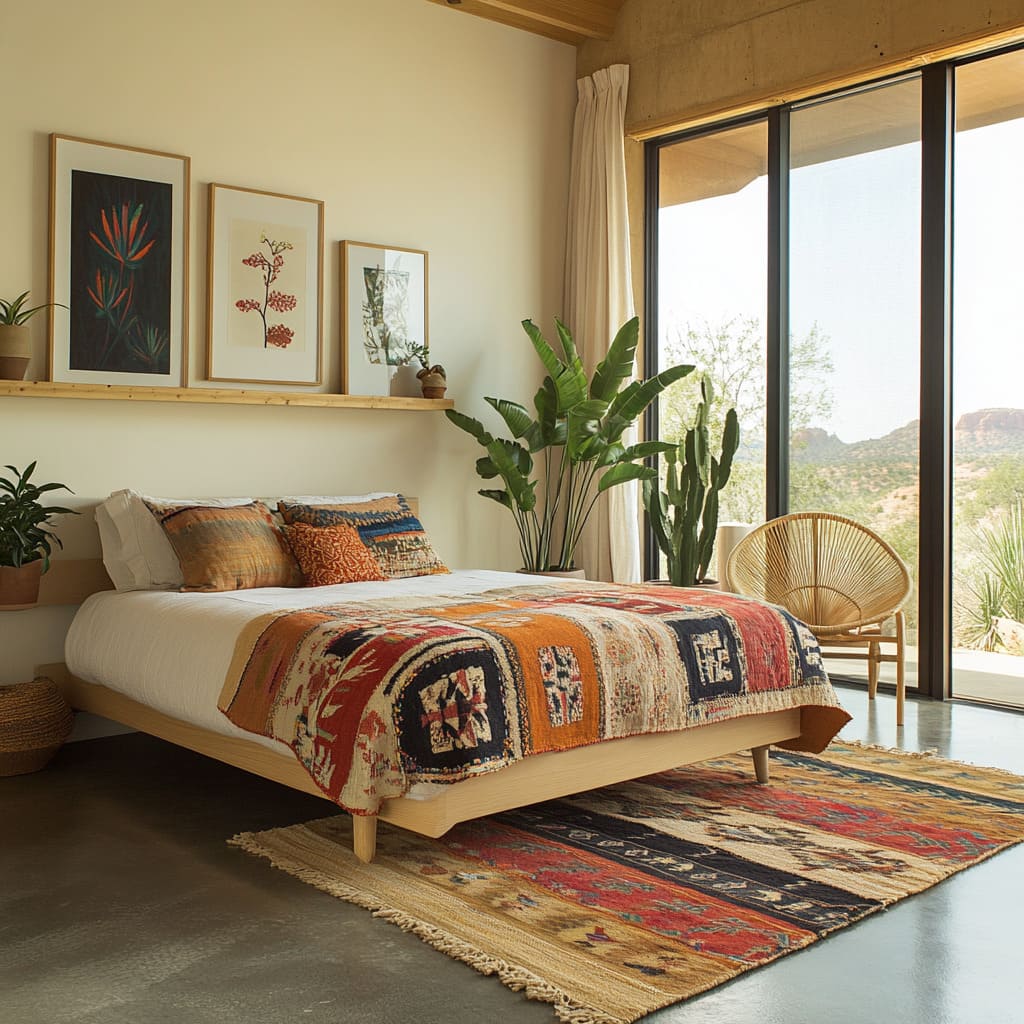
- Framed Pressed Leaves, Botanical Sketches, and Subtle Floral Embroidery. Rather than large, busy floral patterns, designs often showcase single stems or minimal outlines that suggest nature with a light hand. This is especially evident in the “pressed leaf” style art or sketches of desert flora.
- Actual Greenery, Chosen for Textural Contrast. The presence of cacti, tall tropicals, or pampas grass not only adds color but also a new dimension in height or shape. These plants anchor corners, provide vertical lines, or break up expansive blank walls. The difference in leaf structure (like the broad leaves of a bird of paradise) becomes an aesthetic choice as much as a horticultural one.
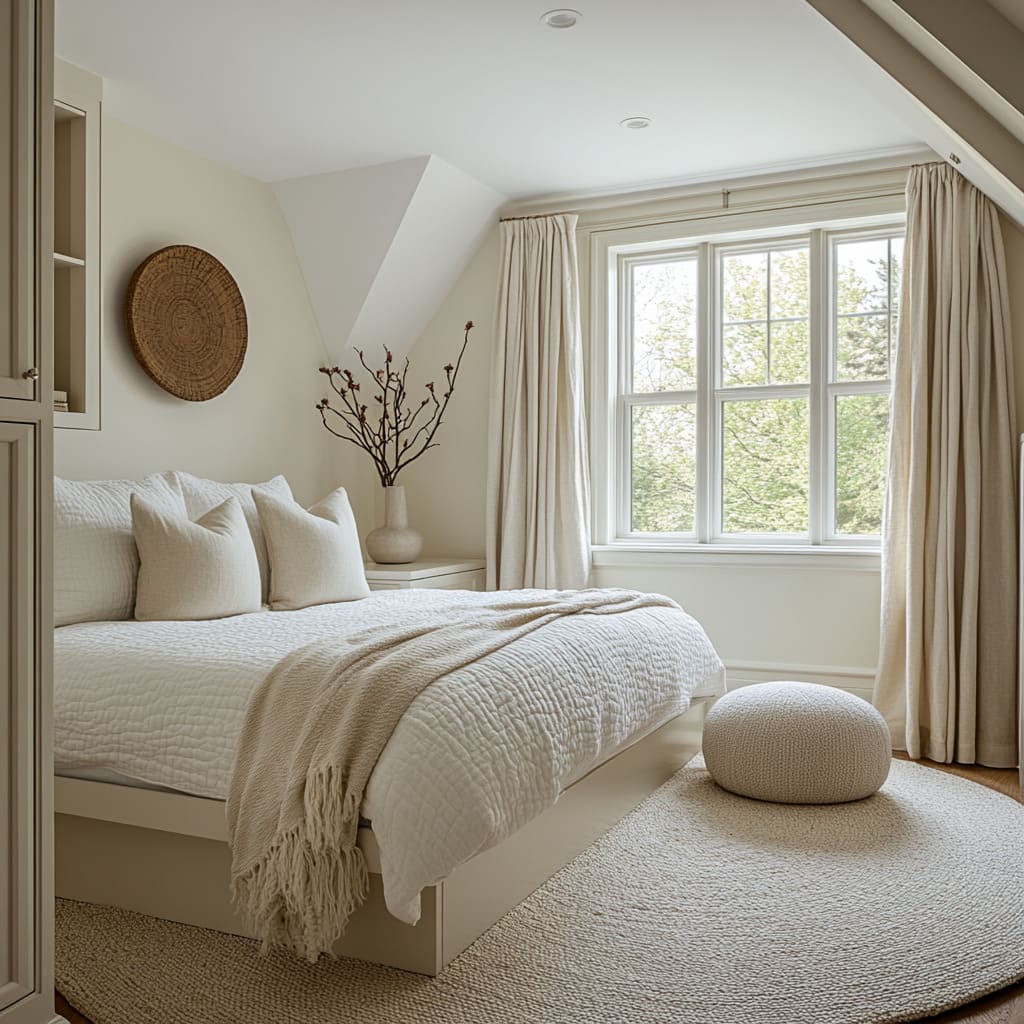
The Rise of the Neutral but Textured Approach
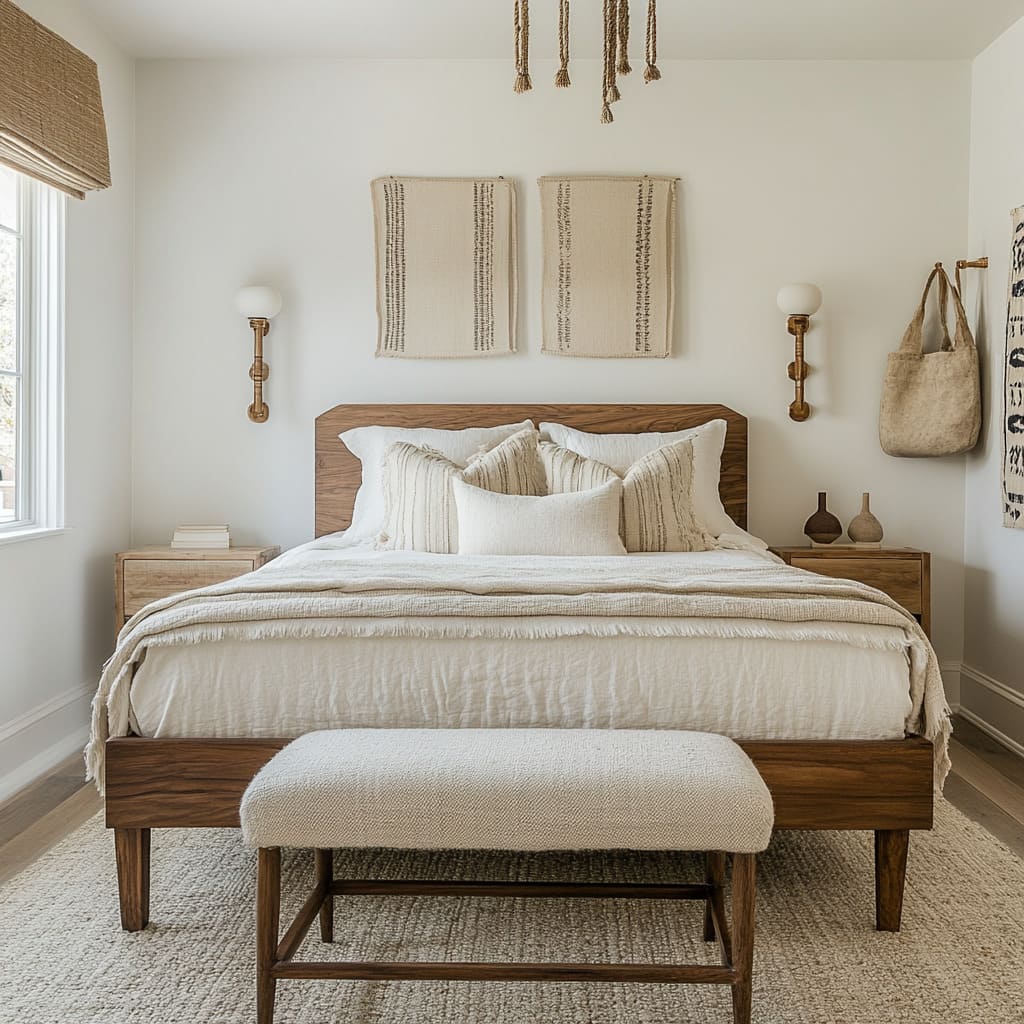
An ongoing shift toward near-monochromatic spaces relies on layering everything from stonewashed linens to nubby textiles, so each surface feels distinct despite similar base hues:.
- Tactile Emphasis Over Vivid Prints: lightly puckered coverlets, crumpled linen bedding, or fringe detailing. These small textural variations create interest within a single color family, letting textures do the work once done by bold prints.
- Focal Points in Tone-On-Tone bedooms. In very softly colored rooms (like cream-on-cream or beige-on-beige), a single wooden bench, a woven basket, or a cluster of earthen pottery can provide the primary visual anchor. The difference lies in texture and form rather than color shock.
New Kinds of Accent Walls
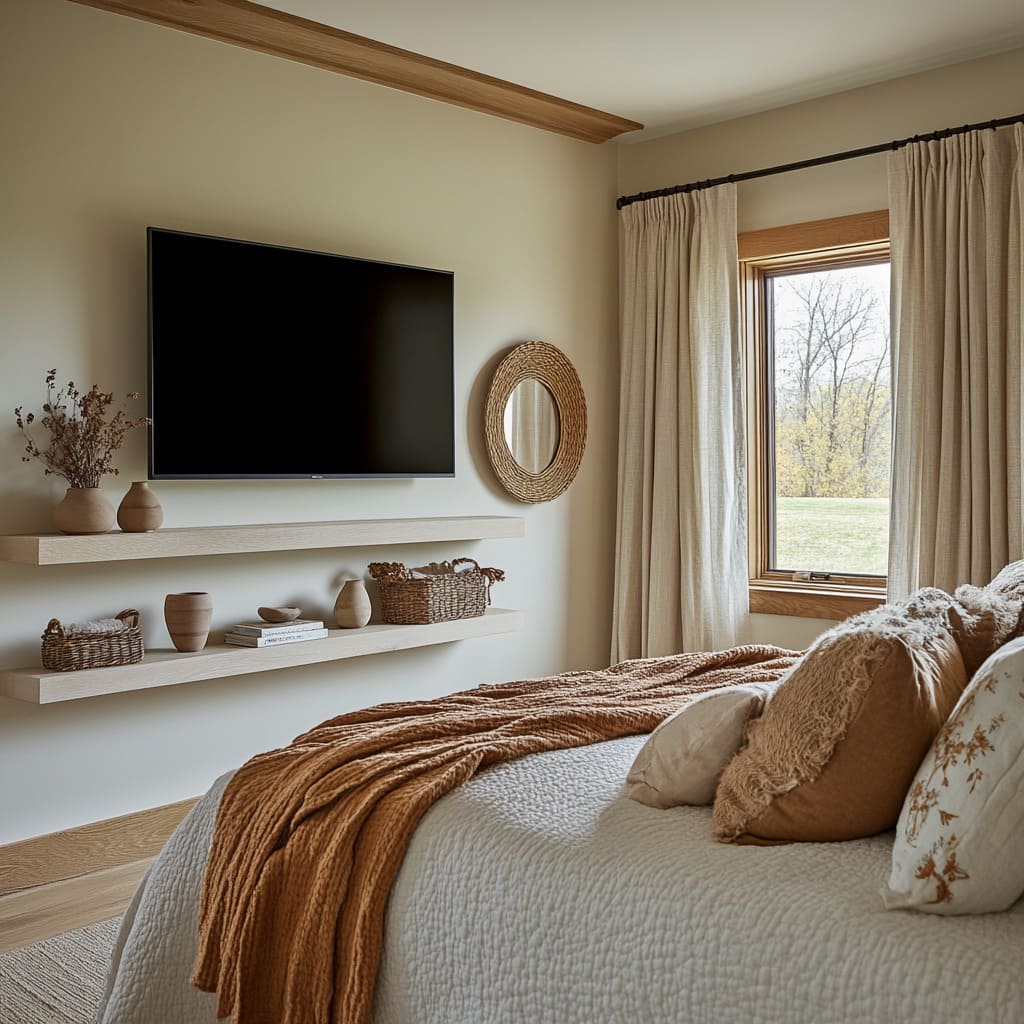
While statement walls are nothing new, the way they’re being approached in Boho contexts has evolved. Instead of a single paint color pop, we see:.
- Vertical Slat Walls in Light Woods. These serve as both headboard extensions and accent walls, giving a structured but still natural effect. The uniform spacing of slats can replicate a sense of calm repetition without needing extra décor.
- Subtle Plaster or Limewash Effects. Some designs you could see refer to a barely-there mottled texture on the walls, imparting a handcrafted look reminiscent of old-world stucco. This approach is more textural than a typical smooth wall finish, but it stays neutral in color, maintaining a soft presence.
Interplay of Sharp Geometry and Organic Softness
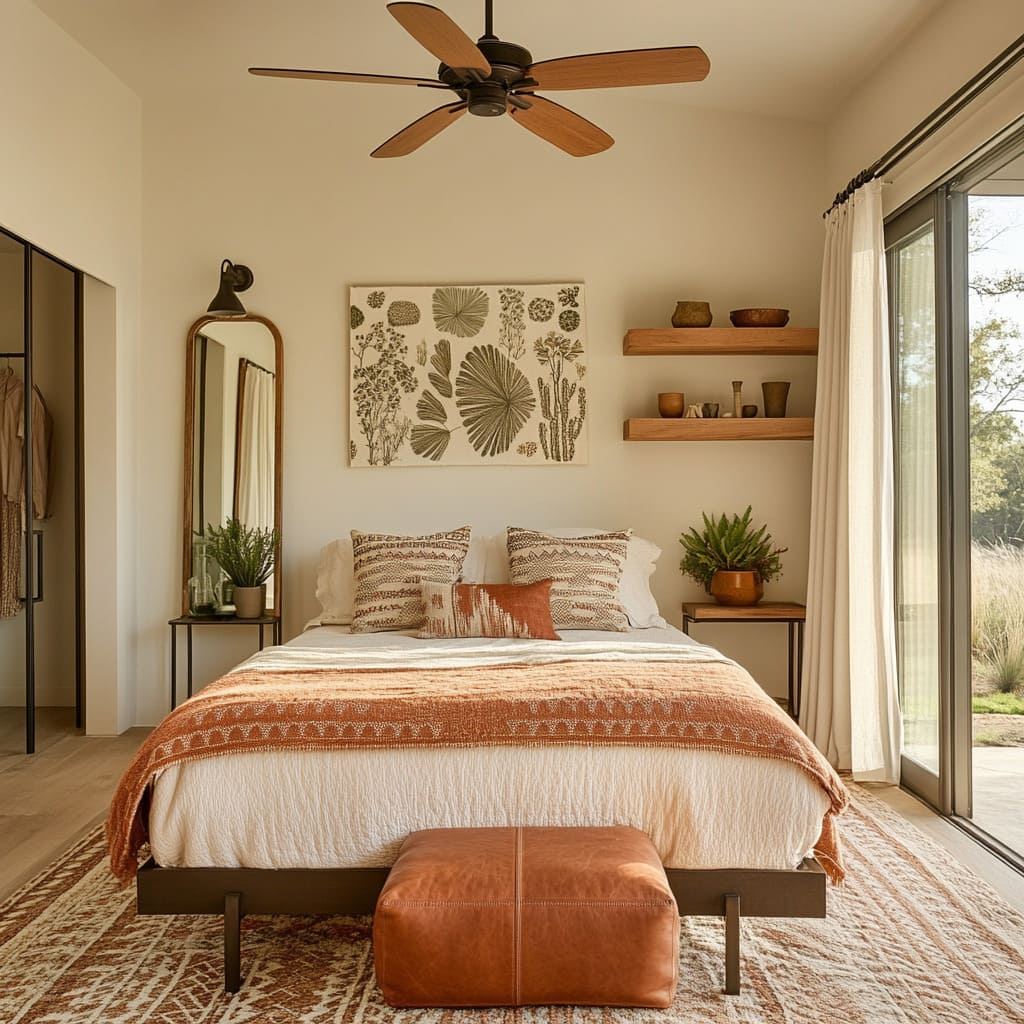
Boho bedroom designs introduce a careful balance between linear elements (modern frames, rectangular windows, or built-ins) and fluid, handcrafted lines (curved headboards, archways, circular mirrors):.
- Balancing Rectilinear Furniture with Round Décor. Angular bed frames might be offset by round rattan baskets or circular woven wall art overhead. This ensures a sense of contrast: the crisp edges of modern shapes receive a gentle counterweight from softer, circular objects.
- Strategic Repetition of Shapes. An arch may be echoed in the shape of a headboard or repeated in the arrangement of a curved bench and a circular mirror. This sense of repetition unifies the space and can bring a tranquil rhythm to the overall composition.
Subtle Use of Vintage Elements
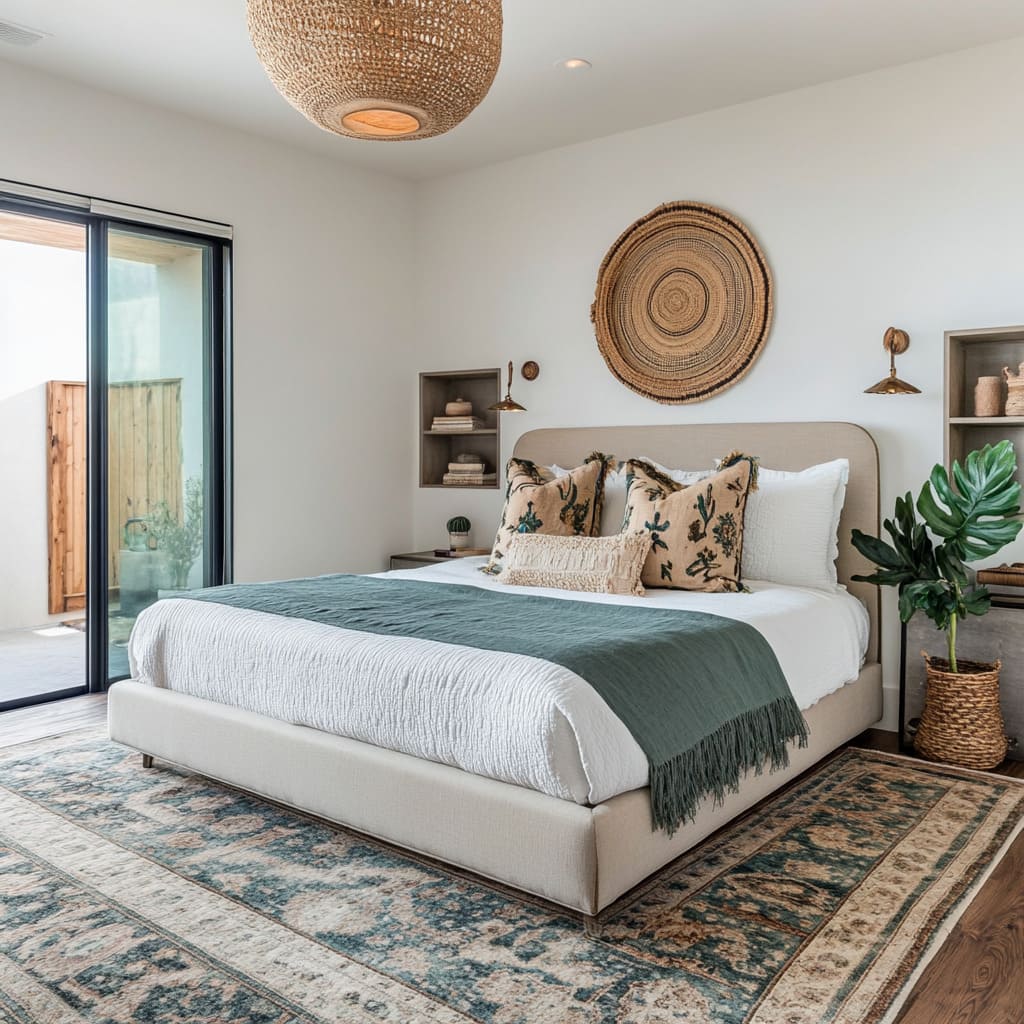
Boho interiors can include a trunk at the foot of the bed, a worn bench, or a faded vintage rug. These pieces contribute age and complexity without turning the room into a purely antique setting:.
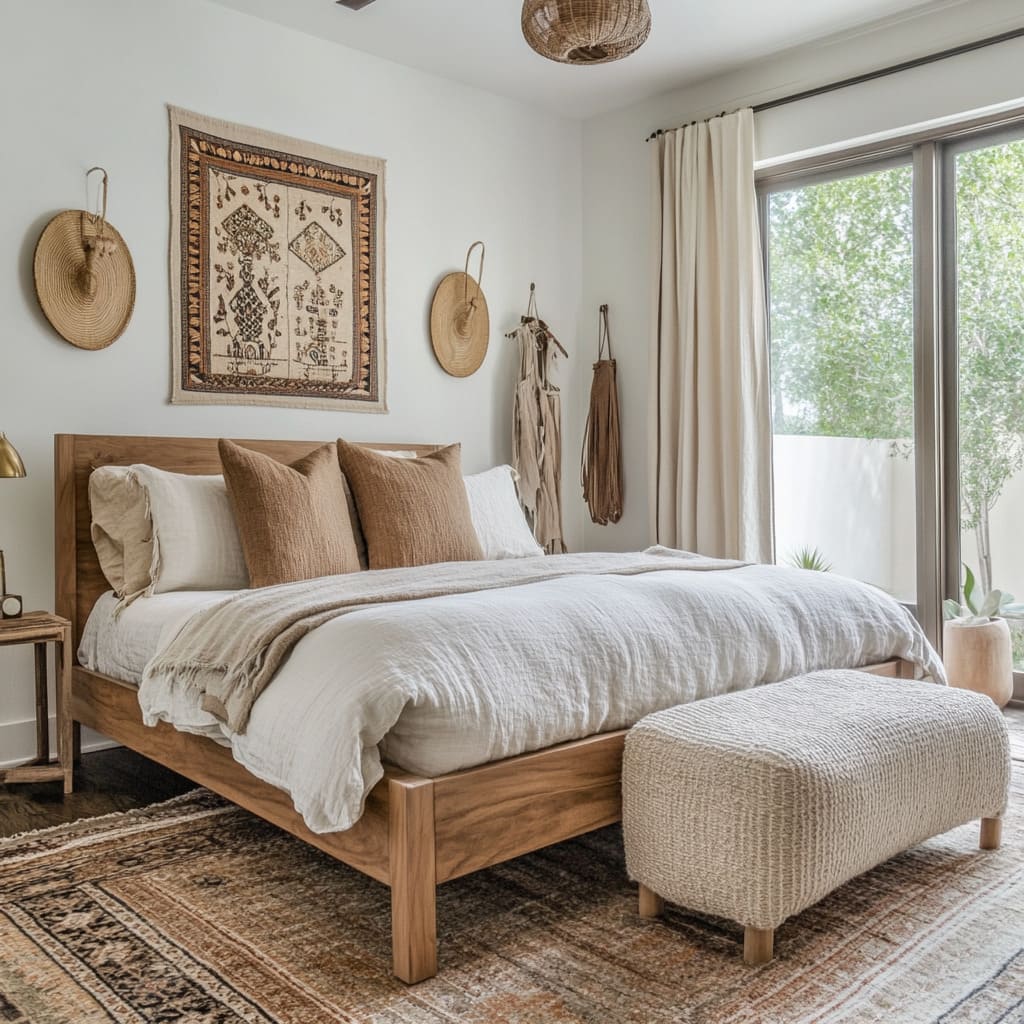
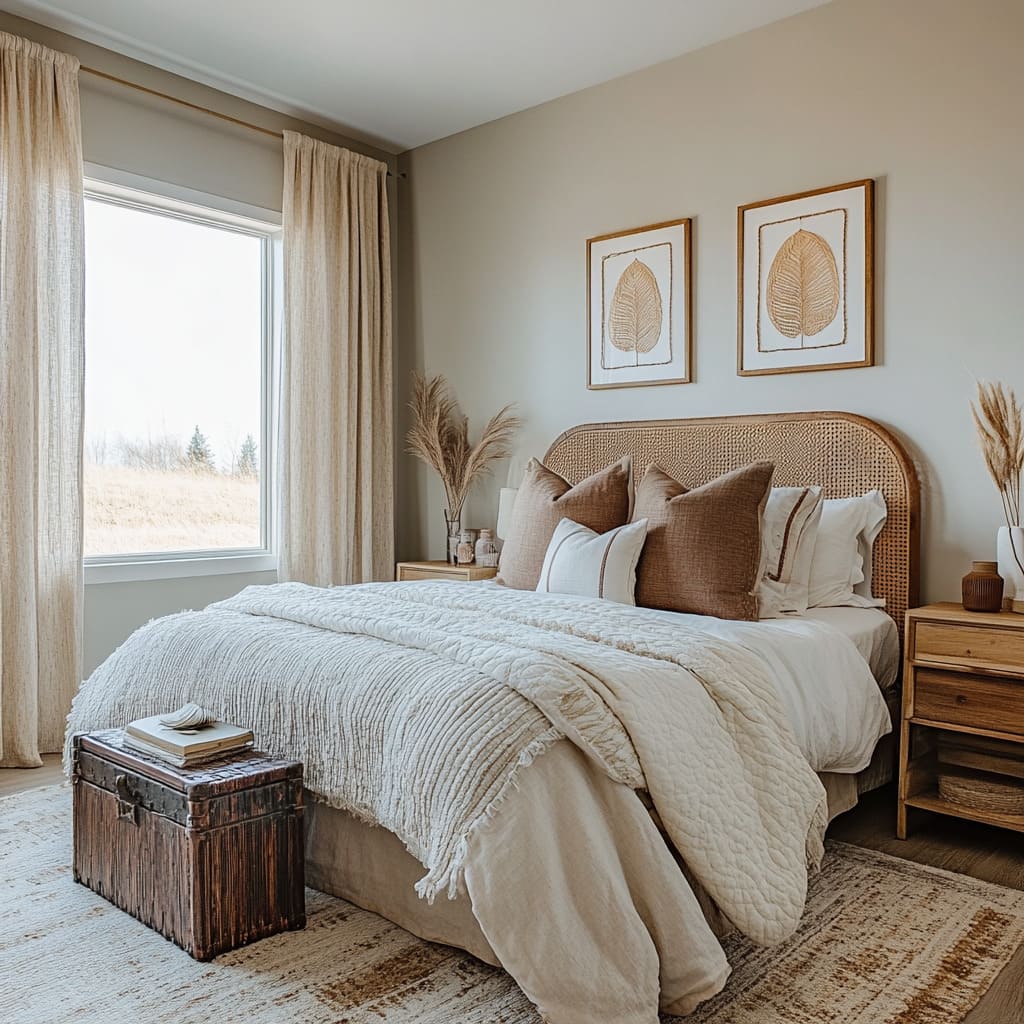
- Functional Vintage Additions. A wooden trunk can act as storage while bringing in a sense of heritage. Faded rugs often ground an otherwise fresh color scheme, ensuring the bedroom doesn’t feel overly polished.
- Weathering and Distressing as Contrast. A single piece with visible patina can make the rest of the newer elements seem more approachable and less staged. The key is balance: one or two distressed elements prevent the design from appearing theme-focused.
Unconventional Placement of Small Accessories
Boho is known for layering accessories, but there is a modern approach to that layering:.
- Wearable Items as Decor. Sun hats or macramé bags hang on hooks, bridging function and style. They bring a sense of everyday life into the visual field rather than feeling strictly ornamental.
- Sculptural Botanicals and Dried Arrangements. Instead of big floral bouquets, we see single branches, dried pods, or pampas plumes arranged in minimal vases. This looks curated yet retains an easygoing vibe—stripping away any formal, symmetrical bouquet arrangement.
Progression Toward Artful Scandi-Boho
A subtle thread is the merging of Scandi minimalism—clean lines, pale woods, soft neutrals—with the natural textures and collected spirit associated with Boho. This blend can be recognized through:.
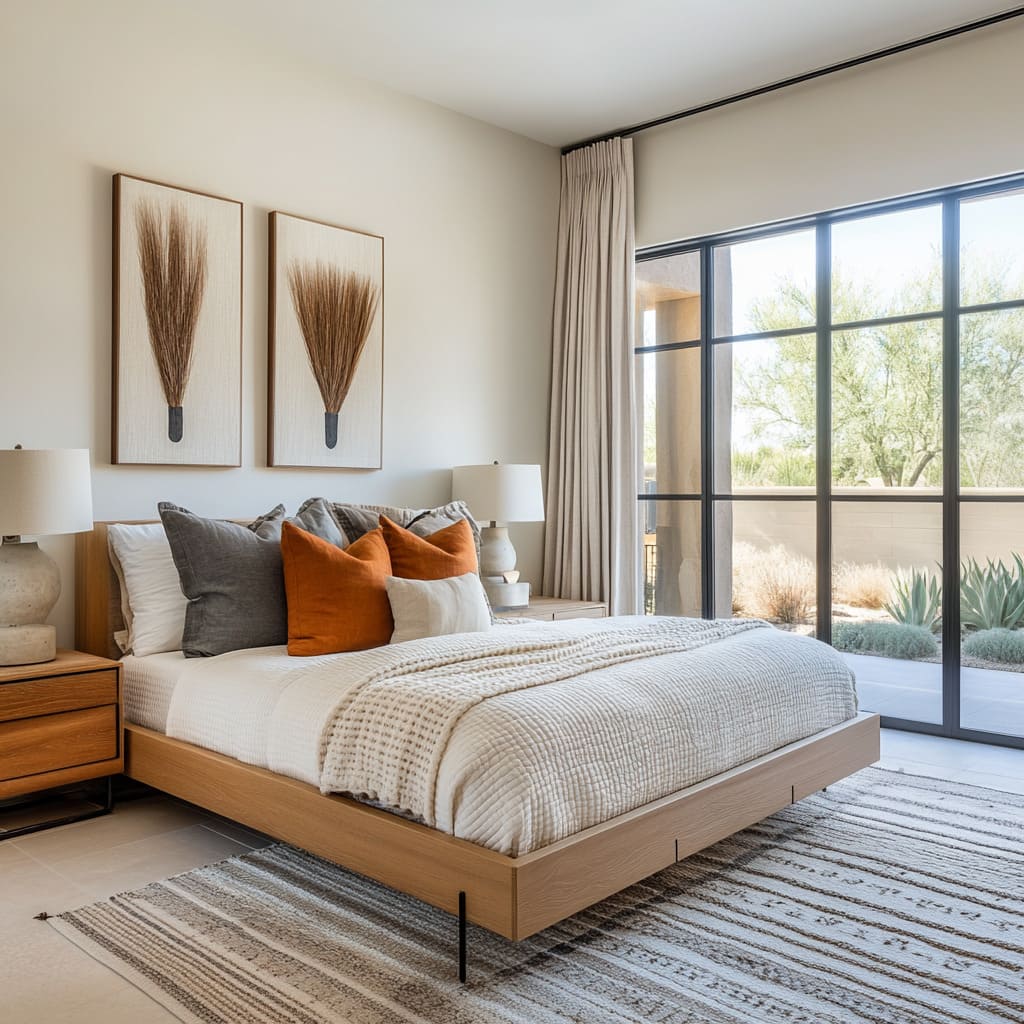
- Low-Profile, Scandinavian-Inspired Furniture. Platform beds with slim legs, storage integrated discreetly, or sleek silhouettes clad in light oak. They anchor the room without adding bulk, supporting the airy aesthetic.
- Crisp White Backdrops with Earthen Overlays. The easiest way to spot this mixture is a near-white room brought to life with woven baskets, rattan pendants, washed textiles, and hints of southwestern color. The cool serenity of Scandi style unites with the warmth of global craft touches.
Emphasis on Negative Space and Breathability
Some bedrooms are intentionally pared down so that the pieces can be spaced out, granting each object or textile breathing room:.
- Floating Shelves with Sparse Arrangements. Rather than filling every inch with books and objects, shelves display a handful of curated items, allowing negative space to play a significant role. This also draws greater attention to each piece that is showcased.
- Light, Airy Window Treatments. Gauzy or soft linen curtains that allow abundant daylight to filter in serve as a hallmark of these designs. Their transparency or partial translucence is as important as the style of the textile itself, creating an ethereal moment that complements the heavier weaves found elsewhere.
Color as a Way to Anchor or Lift
Some of the newer Boho-inflected bedrooms discuss coloring strategies that affect the perceived height or stability of the space:.
- Darker Tones in the Upper Portions. Painting the top third of the wall in a deeper olive-brown or installing a warm terracotta ceiling encloses the room in a comforting manner. It contrasts with typical advice that a ceiling should remain light. Here, the deeper color overhead can form a cozy canopy effect, especially effective in larger rooms that might otherwise feel too expansive.
- Grounding with a Striking Rug. Conversely, in rooms with light walls and ceilings, a heavier-toned or richly patterned rug keeps the design from feeling adrift. This weight at the floor level balances the visual plane—ensuring an overall sense of completeness.
Integration of Architectural Storage and Design Elements
Beyond furniture, the built-in shelving niches or insets used in boho chic bedrooms show a carefully planned approach to space:.
- Incorporating Seagrass Baskets or Cane Panels. When built-ins exist, they’re often fronted with organic panels or outfitted with baskets that complement other woven textures. This merges function with aesthetic continuity. The boho vibe is reinforced while storing items discreetly.
- Hidden Storage Within Platform Beds. The practical side of Boho modern living can emerge in the form of drawers integrated into platform beds. This nods to real-life needs while maintaining the refined look of minimal silhouettes.
Layered Artwork That Hints at Improvised Display
Usually art pieces simply leaned against walls or shelves, evoking a laid-back, improvisational attitude:.
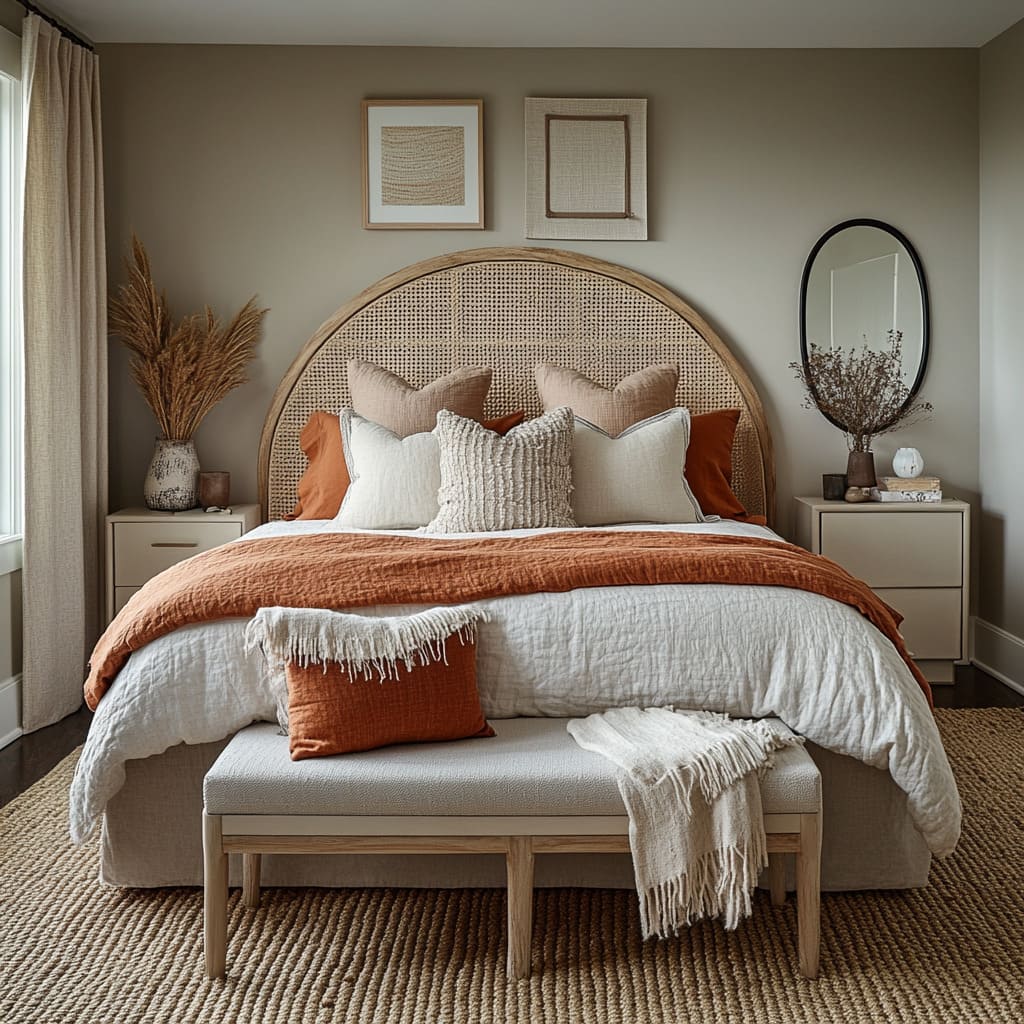
- Shelf-Level Art Arrangement. Instead of hanging everything at eye level, art or botanical prints are rested on a floating shelf. Smaller frames might overlap each other casually. This arrangement blends well with Boho’s collected approach, suggesting that items can be rearranged on a whim.
- Mixed-Media Combinations. Many bedrooms incorporate tapestry art, woven hangings, and framed prints in one arrangement. It underscores the handcrafted dimension, but also signals a modern acceptance of mixing 2D art with textural pieces, giving the wall extra dimension.
Intentional Imperfection in Styling
Finally, a key theme is the art of purposeful casualness. Beds may appear slightly rumpled, throws are never folded in a perfect line, and hats are hung in a way that feels spontaneous yet curated.
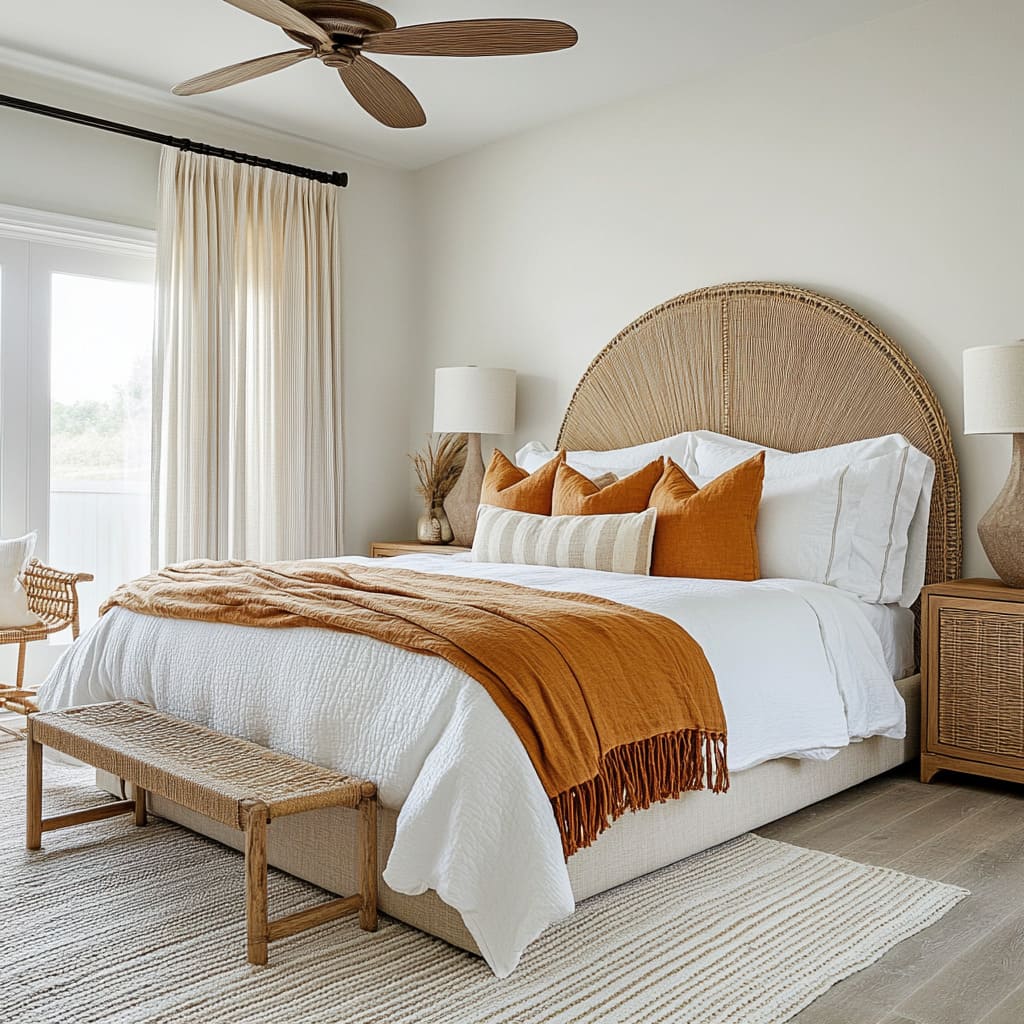
- Relaxed Linens. Boho bedrooms often emphasize linen’s natural wrinkle as part of its charm. Creases are welcomed, indicating a preference for comfortable realism over stiff presentation.
- Serendipitous Arrangement of Objects. Items like planters, baskets, or small sculptures are placed in an off-center manner that suggests an easy, unforced approach. The skill lies in selecting pieces that harmonize in color and material, so the overall composition remains cohesive without seeming staged.
Final Thoughts on Emerging Directions
Modern Boho Chic bedrooms are steadily drifting toward a more refined, crafts-focused expression that privileges textural nuance, gentle architectural gestures, and calm palettes. The interplay of curvilinear headboards with linear slat walls, or desert-toned plaster finishes with minimal furniture, reveals a style that’s comfortable merging old and new influences.
The key to this updated aesthetic is a disciplined approach to color and pattern, letting textural detail, artisanal furniture, and restrained decorative objects do the work. Small personal touches—hats, rustic ceramics, pressed leaf prints—infuse personality without overwhelming the overall serenity.
This shift underscores how Boho needn’t be chaotic or overly bright to be inviting. By carefully balancing natural materials, handcrafted elements, and quiet negative space, these bedrooms manage to feel tranquil, grounded, and full of subtle design intelligence.