A kitchen is more than just a place to cook—it’s where conversations unfold over morning coffee, where meals are prepared with care, and where the atmosphere shapes the rhythm of everyday life. Few styles capture this feeling quite like a French style kitchen, where rustic charm meets effortless comfort.
Rooted in tradition yet adaptable to modern living, this design embraces warmth, texture, and a relaxed approach to beauty. At the heart of this style is an appreciation for materials that feel authentic and full of character.
Instead of sleek, uniform finishes, a French kitchen is layered with textures—exposed beams, aged stone, soft linen curtains, and well-worn wood—elements that make the space feel inviting and personal. The colors are just as welcoming: creamy whites, muted blues, gentle sage greens, and warm neutrals create a soft, lived-in atmosphere that never feels stark or cold.
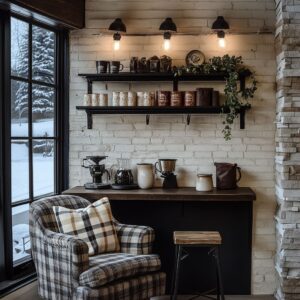
Storage in these kitchens is designed with both function and charm in mind. Open shelving showcases everyday essentials, from ceramic dishes to copper cookware, making them easy to reach while adding to the visual warmth of the space.
Instead of hiding everything behind closed doors, carefully chosen pieces are displayed with intention, creating a balance between practicality and style. The lighting and seating arrangements further enhance the welcoming nature of a French-inspired kitchen.
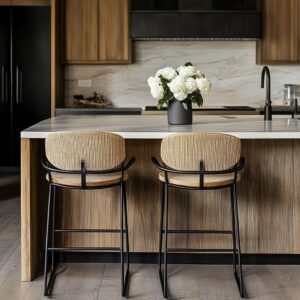
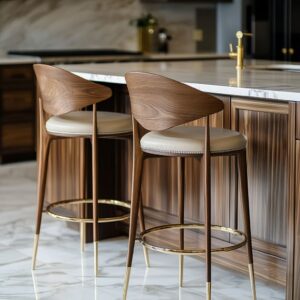
A wrought-iron chandelier or lantern-style pendant sets the mood, while small-scale seating—like a cozy banquette, a round café table, or woven counter stools—encourages relaxed gatherings. It’s a space designed not just for cooking, but for slowing down and enjoying the little moments that make a house feel like home.
Bringing elements of this design into your kitchen doesn’t require a complete renovation. A few thoughtful details—like a farmhouse sink, vintage-inspired hardware, or a touch of natural stone—can introduce the warmth and character that defines this style.
Whether you’re drawn to the charm of a countryside farmhouse or the understated elegance of a Parisian apartment, a French kitchen is always about comfort, beauty, and an effortless sense of home.
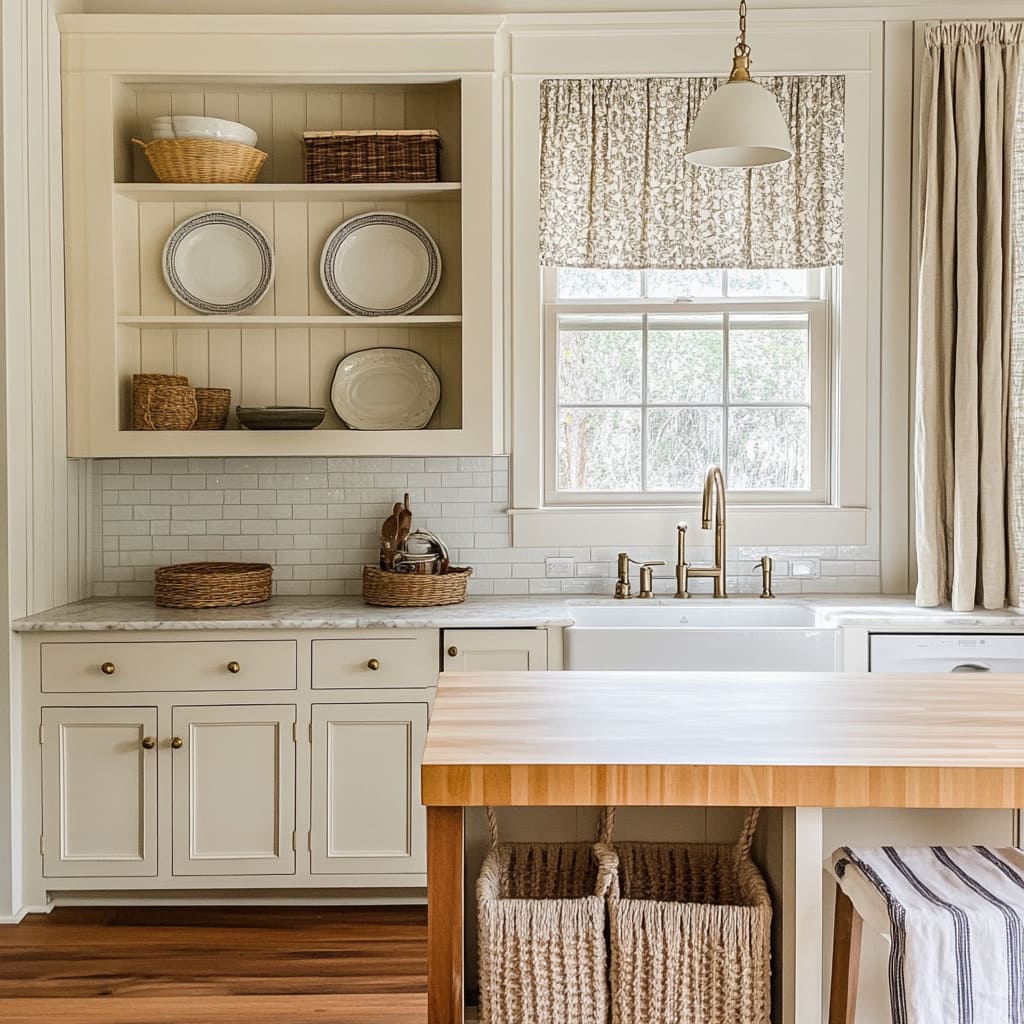
Core Themes & Subtle Commonalities
Celebrating Texture and Natural Patina
French country kitchen design embraces materials that feel lived-in and full of character. Rather than chasing a sleek, flawless look, these spaces highlight the beauty of natural imperfections.
Wood beams, stone walls, and plaster finishes all contribute to an organic, welcoming atmosphere where age and texture tell a story. The cracks in exposed beams, the uneven surface of hand-applied plaster, or the rough edges of a limestone backsplash are not flaws—they are part of the charm.
Finishes in these kitchens are carefully chosen to maintain a sense of authenticity. Highly polished surfaces are rare, and when they do appear—such as a smooth marble countertop—they are often contrasted with raw, unfinished wood or unpolished stone.
This thoughtful mix prevents the space from feeling too refined or formal, keeping it warm and inviting. A French provincial kitchen does not strive for perfection but instead values the depth that comes from materials that evolve over time.
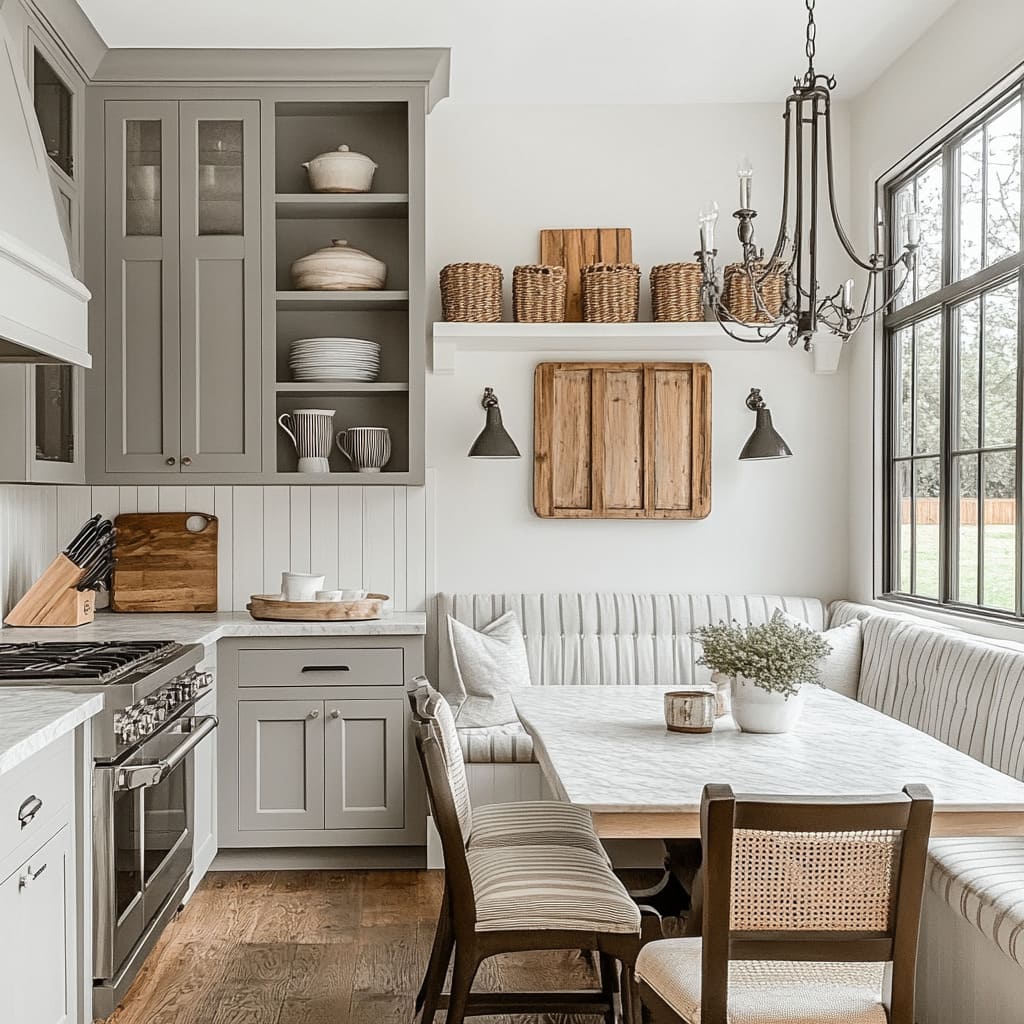
Warm, Soft Color Palettes
Color plays a key role in setting the right mood. Rather than crisp whites or stark contrasts, these kitchens rely on muted, earthy tones that feel effortlessly timeless.
Soft shades of beige, sage green, dusty blue, and warm gray are common choices, each offering a subtle nod to the rolling landscapes of the French countryside. These colors have warm undertones, preventing the space from feeling cold or sterile.
Even when contrast is introduced, it is done in a way that feels natural. A deep wood island, dark metal window frames, or aged black iron sconces provide just enough variation to keep the space visually engaging without overpowering the soft, neutral backdrop.
This approach ensures that the kitchen remains calm and harmonious, with just enough depth to prevent it from feeling one-dimensional.
Historic References Balanced with Practicality
French country kitchens are inspired by generations of craftsmanship, but they are also designed to be highly functional. Arched alcoves over the stove, farmhouse sinks with bridge faucets, and copper pots hanging from iron racks all reflect the influence of historical European kitchens.
These are not just decorative choices—they are practical elements that have stood the test of time. Storage is another area where tradition meets usability.
Open shelving is a signature feature, allowing easy access to everyday dishware, glassware, and cookware. But unlike modern minimalist kitchens where shelves might be sparsely styled, French kitchens take a different approach.
Plates are stacked, utensils are within reach, and ceramic jars filled with essentials sit ready for use. Everything is intentionally placed, ensuring that beauty and function go hand in hand.
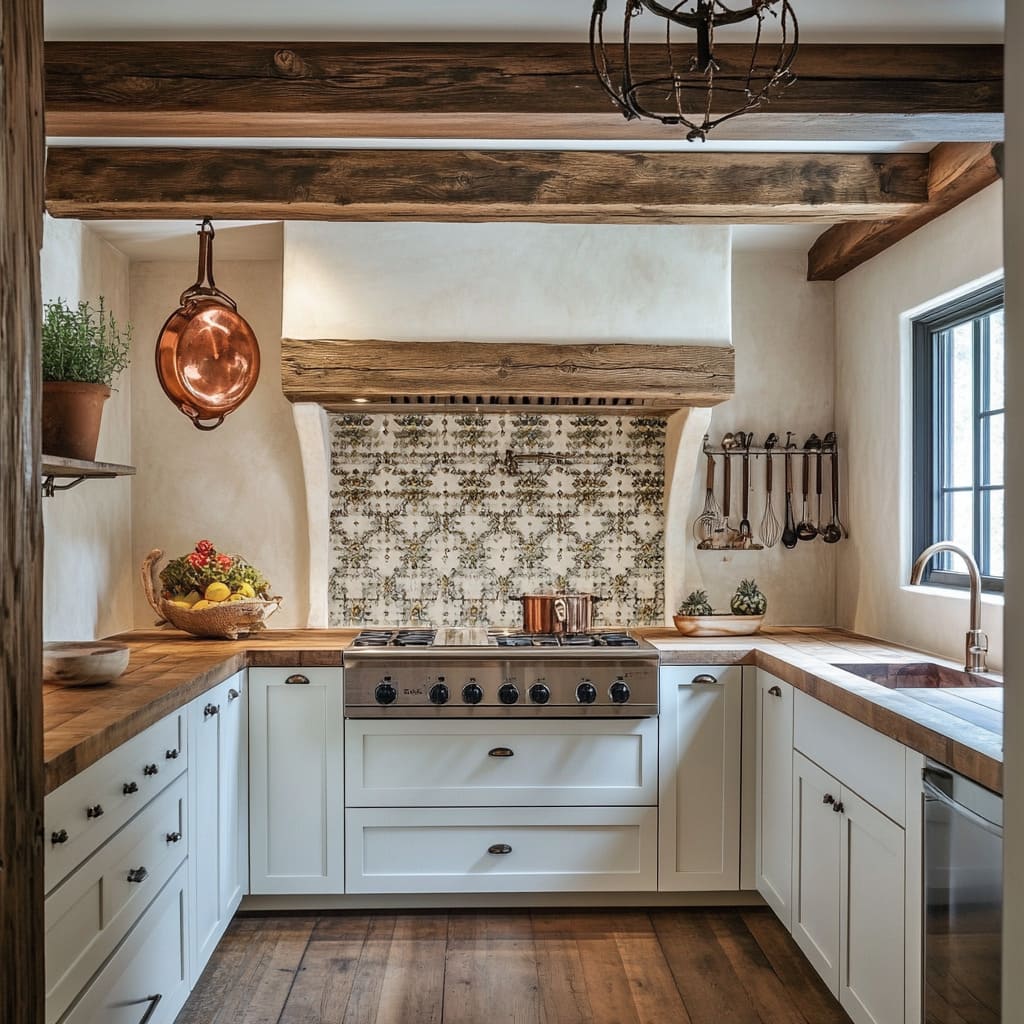
Relaxed Informality
One of the most defining characteristics of these kitchens is their effortless sense of comfort. They are designed to feel lived-in, with subtle mismatches and layered textures that make them warm and approachable.
The use of reclaimed wood alongside polished stone or aged brass fixtures paired with crisp white tile adds character, preventing the space from feeling too uniform. Instead of looking like a carefully curated showroom, a well-designed French country kitchen feels like a space where generations have gathered, cooked, and shared meals.
Seating areas play a major role in reinforcing this informal atmosphere. Banquettes, breakfast nooks, and cushioned benches create inviting spots to linger over coffee or a glass of wine.
The focus is not just on cooking—it’s about making the kitchen a space for conversation and togetherness. Whether it’s a sunlit dining table tucked into a corner or a small wooden stool pulled up to a farmhouse island, the seating choices encourage a relaxed, social flow that reflects the heart of French living.
In every detail, from the worn edges of a butcher-block countertop to the carefully placed copper pots above a range, the charm of French country kitchen design lies in its balance of refinement and rustic simplicity.
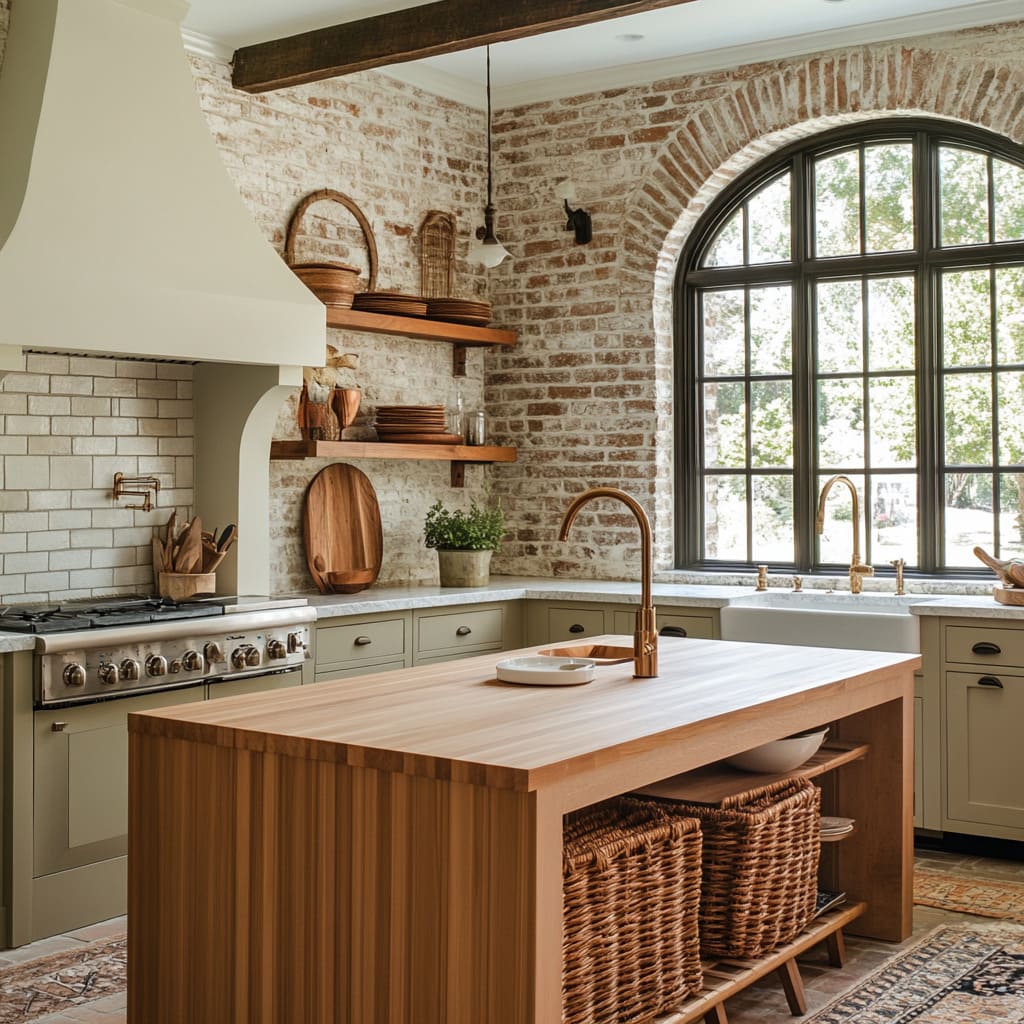
Deeper Insights People Often Miss
Layered Lighting Strategy
Lighting in french country kitchens is anything but flat. Instead of relying on a single central fixture, these spaces use a thoughtfully layered approach that combines different light sources to create warmth and depth.
Pendant lights above the island might set the stage, but the supporting cast—sconces, under-cabinet lights, and even small table lamps—adds nuance. This arrangement takes cues from historical kitchens, where light came from candles, lanterns, and fires rather than uniform overhead fixtures.
Metal choices play a crucial role in how light interacts with the space. Black wrought iron pendants bring a traditional farmhouse feel, while brass or copper sconces introduce a softer glow.
The slight variations in finish—aged brass, polished copper, or matte iron—ensure that different light sources cast reflections in unique ways, giving the room a natural radiance that shifts throughout the day. This interplay prevents the space from feeling static, making it feel more inviting, especially in the evenings.

Masterful Organized Clutter
At first glance, these kitchens may seem casually arranged, but there’s a method to the apparent informality. The right balance between function and aesthetics is what makes them feel effortless.
Instead of hiding everything behind closed doors, wood cutting boards lean against the backsplash, baskets hold fresh produce, and copper utensils hang within easy reach. These small elements keep essential items accessible while adding warmth and personality.
Open shelving is another key feature, but it’s never overfilled or purely decorative. Plates, bowls, and vintage spice jars are arranged with purpose, ensuring that the space looks curated rather than chaotic.
This blend of practicality and charm creates a kitchen that feels lived-in rather than staged—every item looks like it belongs because it serves a role, even if that role is simply to make the space feel more inviting.
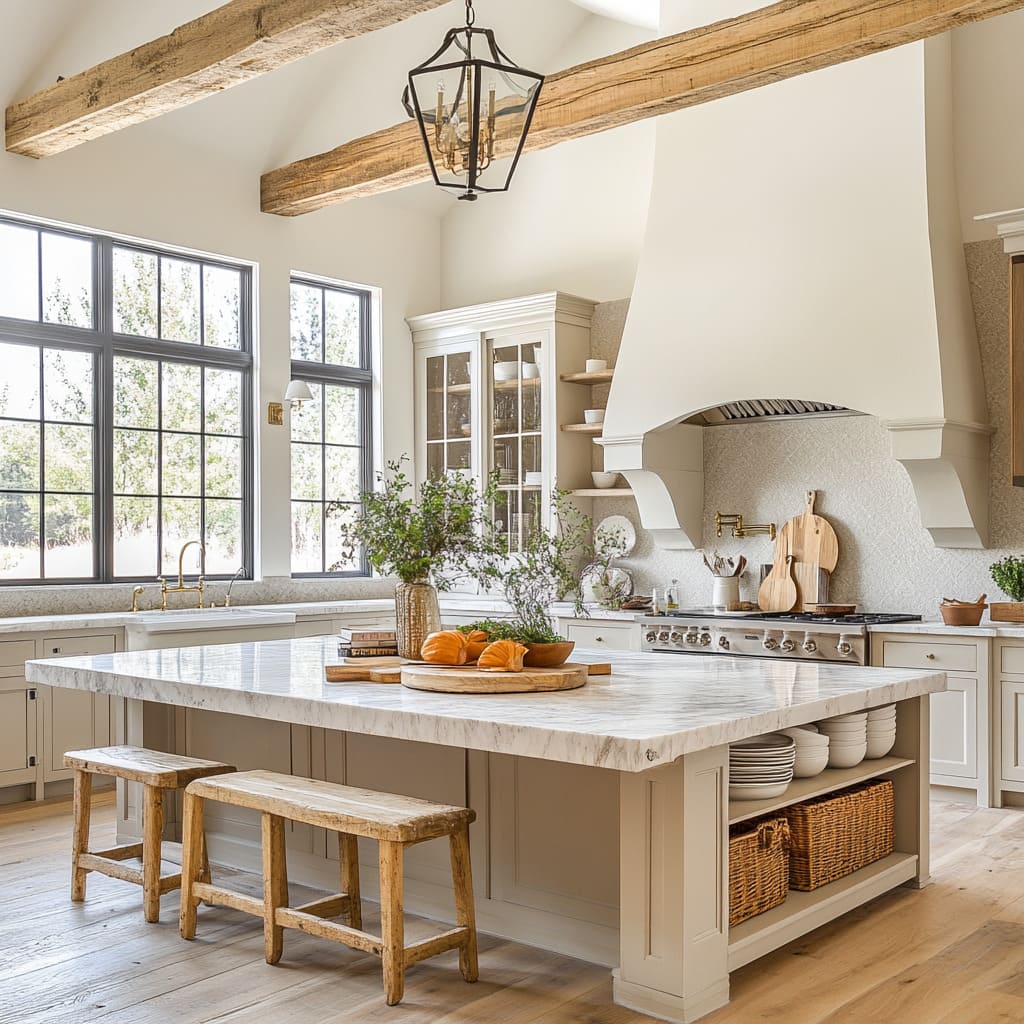
Social Connection & Comfort
Kitchens designed in this style do more than just provide a space for cooking—they encourage gathering, conversation, and a slower approach to daily life. Banquette seating, tucked into corners or placed beside windows, offers a comfortable alternative to traditional dining chairs, inviting people to linger.
Even in larger layouts, there’s often a cozy nook that feels like the ideal spot for morning coffee or an afternoon break. Soft furnishings help to balance the rawness of wood and stone, making the space feel welcoming rather than rigid.
Linen curtains, ruffled sink skirts, and upholstered chairs add gentle texture, bringing in a subtle sense of warmth and casual charm. These fabric touches also introduce patterns and colors in a way that feels relaxed rather than overly planned, enhancing the overall lived-in appeal.
The Subtle Role of Imperfections
Rather than aiming for a pristine, untouched look, these kitchens celebrate the beauty of age. Worn copper cookware, lightly distressed cabinet finishes, and butcher block countertops that show signs of daily use are all embraced.
This philosophy is rooted in a respect for craftsmanship—materials that stand the test of time don’t need to be replaced or refinished constantly. Instead, their natural patina tells a story.
Walls play a similar role in adding depth and authenticity. Whether it’s a lightly textured plaster wall, an uneven stone backsplash, or a slightly weathered painted surface, these elements break up uniformity and introduce organic variation.
Even in a neutral-toned kitchen, these small details prevent the space from feeling flat, ensuring that every surface has a sense of depth and history.
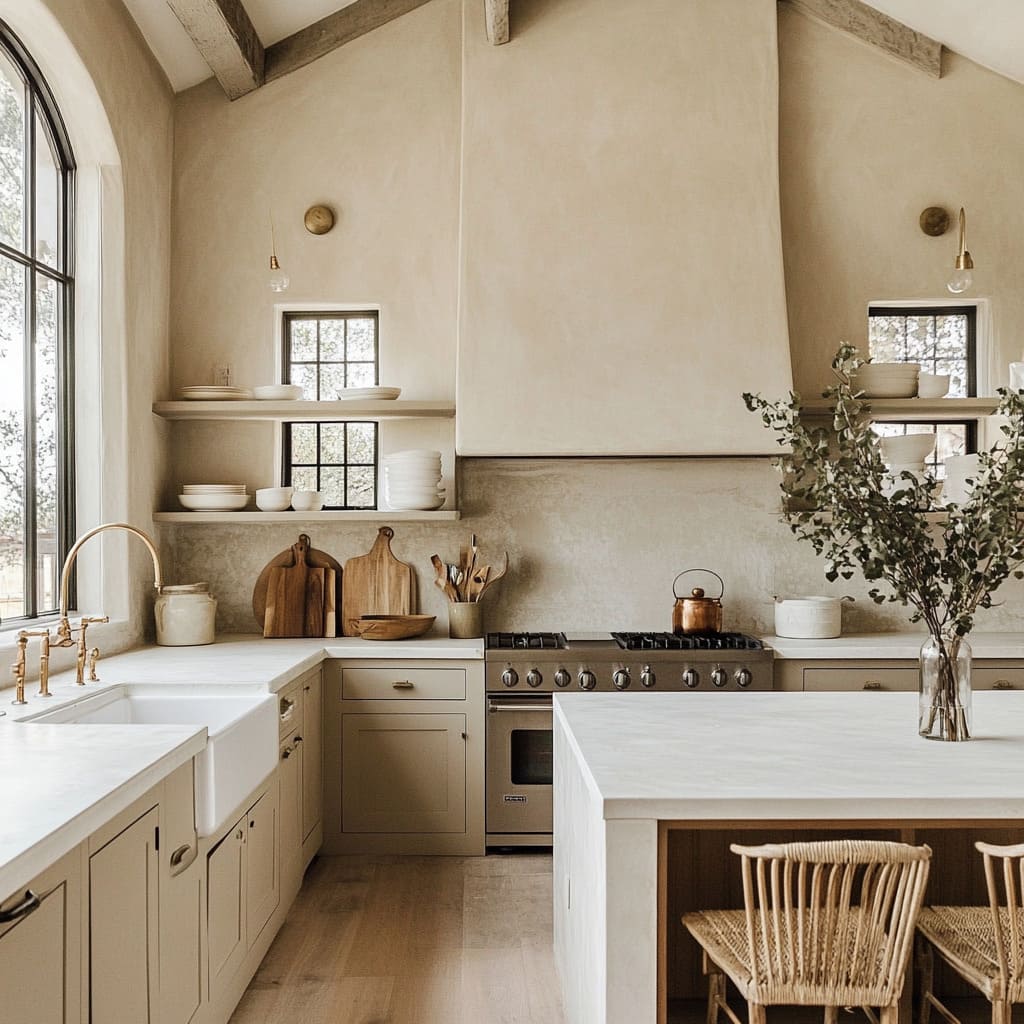
Small Architectural Highlights
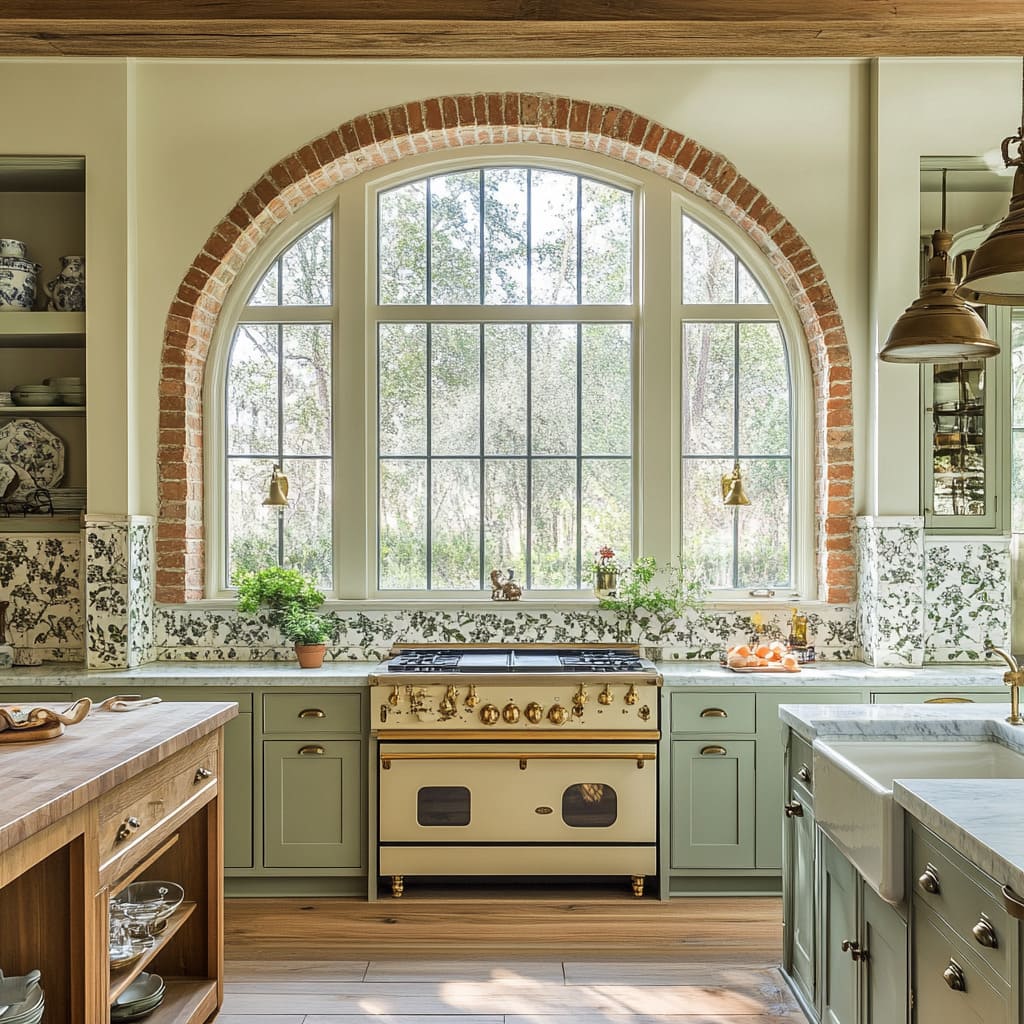
There’s a reason arches appear so frequently in these kitchens—they subtly reference classic European architecture. Whether framing a window, outlining a recessed shelf, or forming a gentle curve above a stove, these rounded shapes soften the hard lines of cabinetry and countertops, making the space feel more inviting.
Cabinet design also plays a role in keeping things visually interesting. Instead of uniform panels, these kitchens often incorporate a mix of beadboard, glass-paneled doors, and even ribbed glass.
These variations add detail and break up larger expanses of cabinetry, preventing them from feeling too heavy. It’s a simple but effective way to introduce character without overwhelming the space.
By layering materials, textures, and subtle imperfections, these kitchens create an atmosphere that feels both refined and relaxed, where every detail contributes to the timeless charm that defines this style.
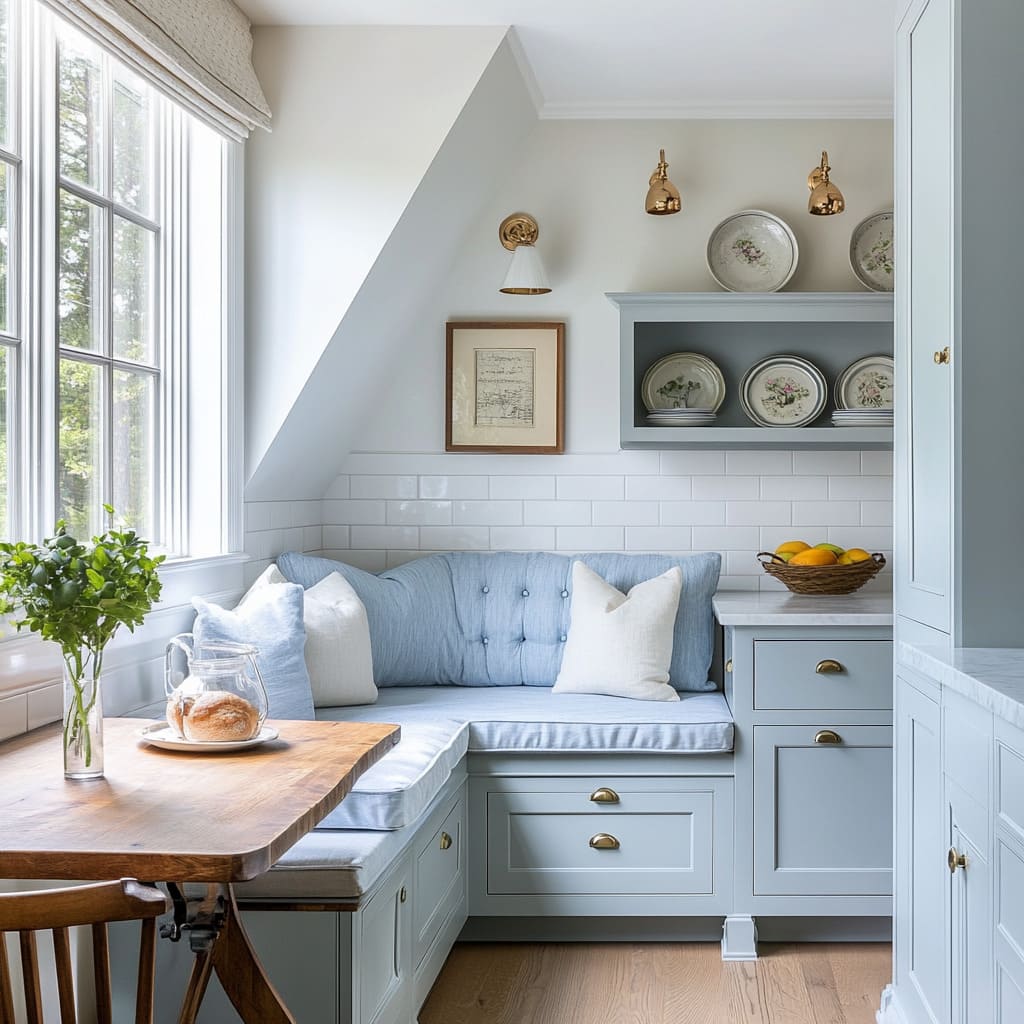
Practical Design Tips for Your Own Kitchen
Creating a space that captures the warmth and charm of a traditional French kitchen isn’t about following rigid design rules—it’s about blending textures, colors, and materials in a way that feels inviting and natural. Whether you’re starting from scratch or making small updates, these ideas will help bring the character of French country kitchen cabinets, natural elements, and rustic elegance into your home.
Combine At Least Two Rustic Materials
French kitchens rarely feel overly polished or new. Instead, they embrace a mix of materials that create depth and contrast.
The key is to pair one rough, organic surface with something more refined. Think about combining unfinished wood beams with honed marble countertops or an aged stone backsplash with a smooth ceramic sink.
These pairings create an effortlessly layered look that makes the space feel lived-in rather than staged. If you have a kitchen island, consider using reclaimed wood for the base while topping it with a polished stone surface.
The natural grain and imperfections in the wood will contrast beautifully against the sleekness of the countertop, adding that perfect balance of rustic charm and understated refinement.
Embrace Soft, Low-Contrast Colors
French kitchens often lean toward muted, earthy tones, avoiding high-contrast color schemes. The goal is to create a soft, welcoming atmosphere that feels gentle on the eyes.
Classic shades include warm off-whites, sage greens, dusty blues, and pale grays. These colors provide just enough variation to keep the space interesting without making it feel too modern or trendy.
Even if you’re drawn to deeper colors, consider using them sparingly—perhaps as an accent on an island, a freestanding hutch, or even inside glass-front cabinets. This approach keeps the space timeless while allowing you to incorporate colors that reflect your personality.
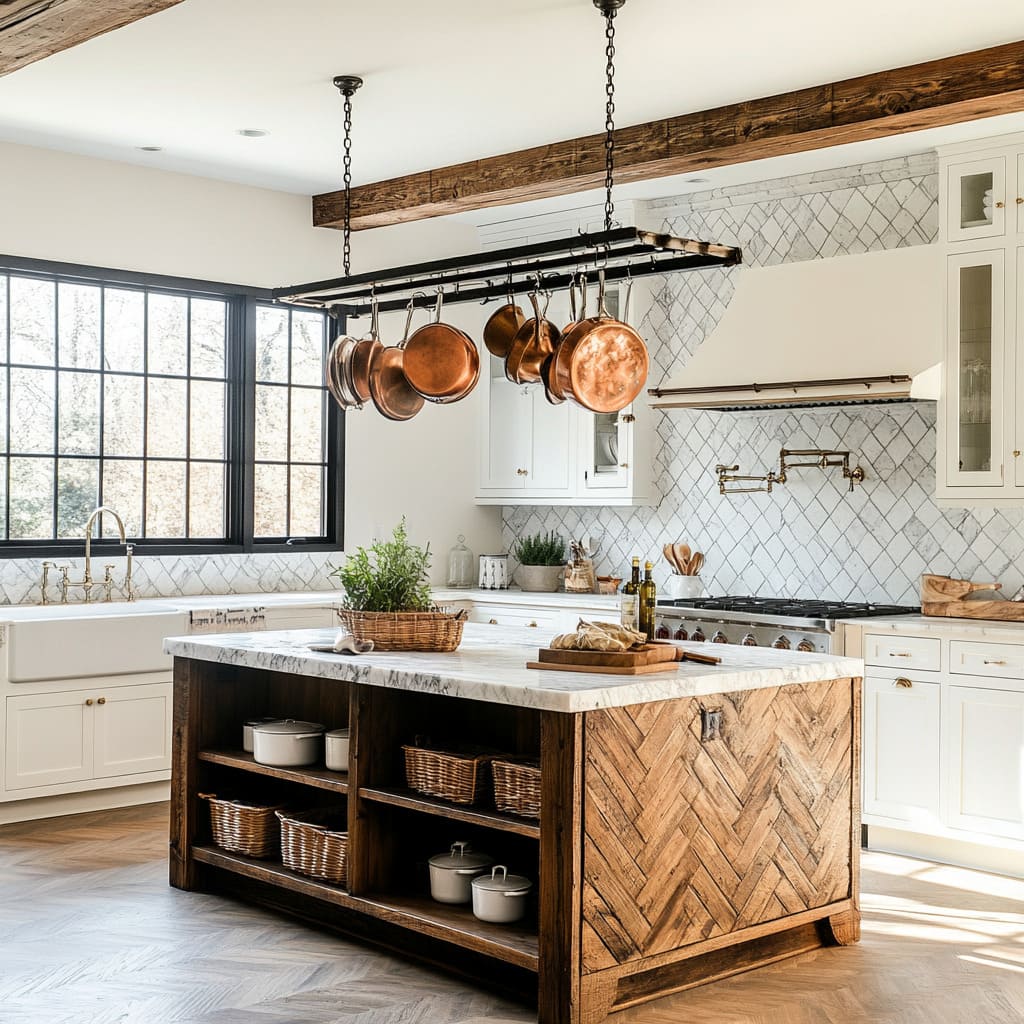
Highlight Authentic Wear
One of the biggest mistakes people make when trying to recreate a French country aesthetic is making everything look brand new. The secret to an authentic feel is embracing the signs of use rather than trying to erase them.
- If you have wood beams or floors that show slight wear, let them stay that way. Instead of sanding them down to a perfect finish, allow the grain, knots, and natural imperfections to show through.
- Aged brass faucets with a bit of patina look far more authentic than something highly polished.
- If you love painted cabinetry, consider a hand-brushed finish rather than a spray-painted one. The visible brushstrokes add subtle texture, mimicking the way older kitchens were originally painted.
Every small detail that looks slightly aged contributes to the warmth and history of the space.
Open Shelving for Everyday Items
Storage in a French-style kitchen isn’t just about function—it’s also about showcasing the beauty of everyday objects. Open shelving is a great way to keep essentials within reach while adding personality.
The key is curating what’s displayed so it feels intentional rather than cluttered. Stack plates and bowls in neat piles, arrange wooden cutting boards upright against the wall, and fill glass jars with grains, flour, or dried herbs.
Woven baskets can hold linens, fresh produce, or kitchen towels, while a simple row of vintage mugs adds charm. If you’re not ready to commit to fully open shelving, consider a hybrid approach.
Glass-front cabinets offer the same airy feel while still keeping items protected from dust. Frosted or ribbed glass can also add texture while providing a bit of privacy.
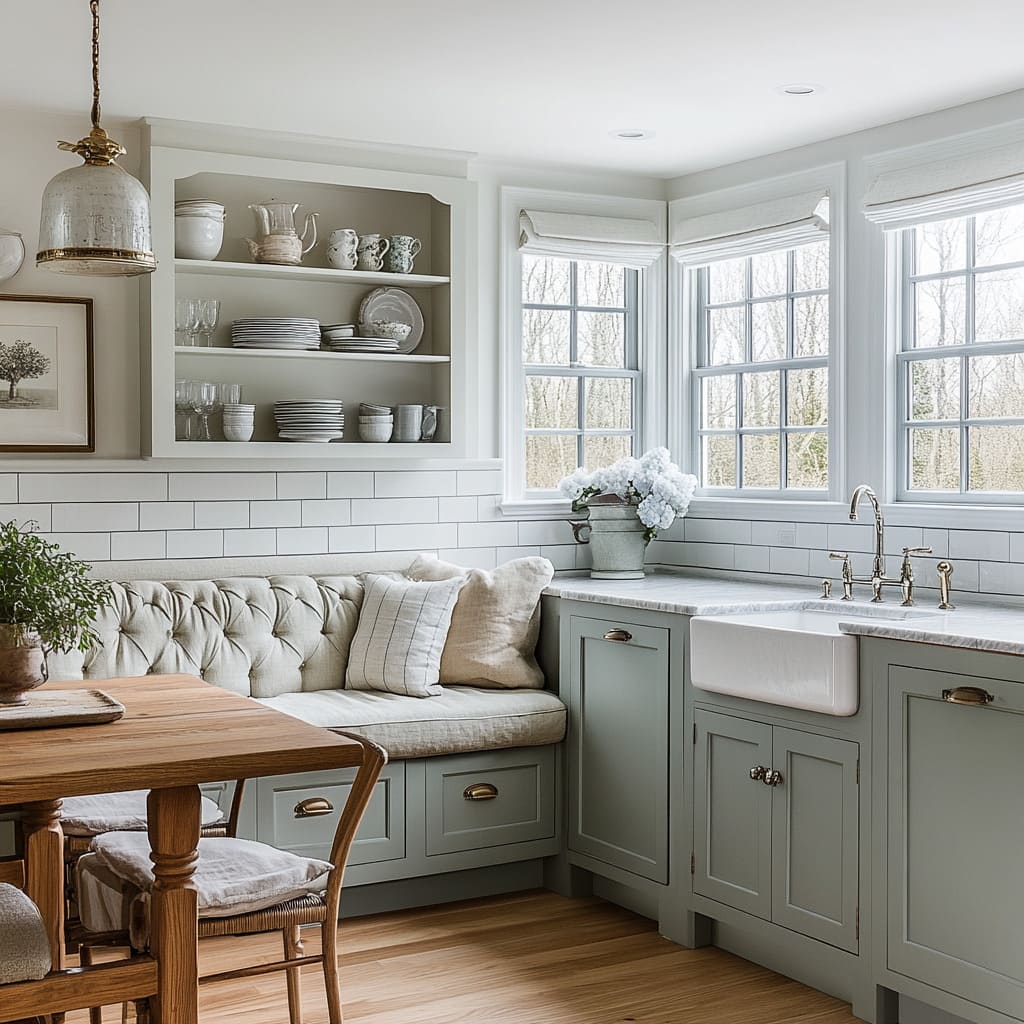
Blend Lighting Fixtures
Lighting is one of the most overlooked elements in a kitchen, yet it plays a huge role in setting the mood. Instead of relying on just one type of lighting, layer different sources to create depth and warmth.
A statement pendant light—such as a wrought-iron lantern or a vintage-inspired chandelier—works beautifully over an island or dining area. To avoid harsh overhead lighting, add sconces on either side of a window or range hood.
Under-cabinet lighting or a small table lamp on the counter can also add warmth, especially in the evening. Mixing metal finishes can also enhance the lighting’s impact.
A black iron chandelier provides a strong contrast against pale cabinetry, while brass sconces introduce warmth. The key is to blend two or three finishes rather than sticking to just one.
Accessorize with Purpose
Unlike modern kitchens that prioritize sleek, clutter-free surfaces, a French country kitchen embraces decorative touches that feel personal and functional. The best way to accessorize is by incorporating everyday kitchen items in a way that feels natural.
- A ceramic crock filled with wooden spoons next to the stove keeps utensils within reach while adding a rustic element.
- A small bundle of fresh or dried lavender in a pitcher brings subtle color and a hint of fragrance.
- A few stacked cutting boards not only look beautiful but are always ready for use.
The trick is to keep the decor practical—nothing should feel like it was placed there just for show.
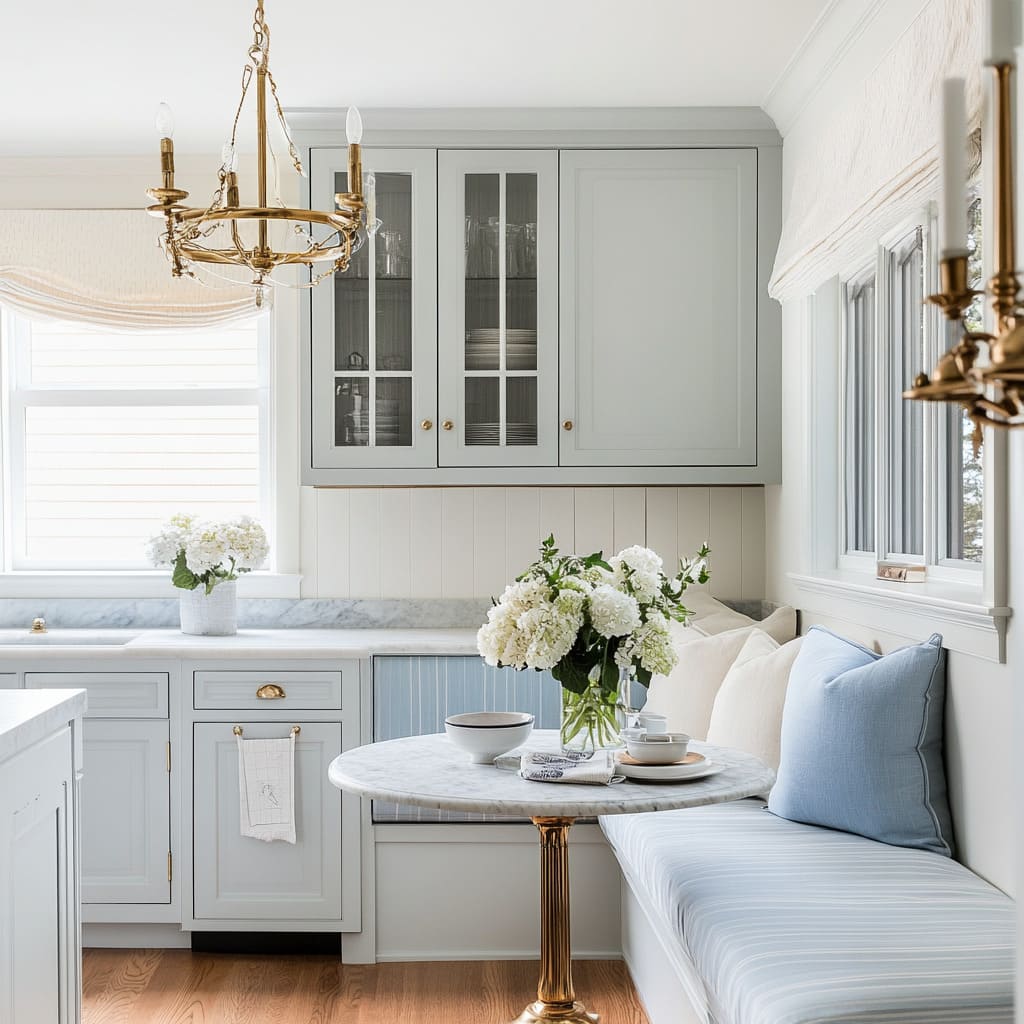
Consider a Banquette or Small Bistro Area
One of the most charming aspects of a French country kitchen is that it’s designed for gathering. If you have the space, a built-in banquette or a small café-style table can create an inviting spot for morning coffee, casual meals, or reading.
Banquettes are especially useful in smaller kitchens because they maximize seating without taking up too much space. Upholstered cushions or linen slipcovers soften the look, making the seating feel cozy.
For a more Parisian touch, opt for a small round bistro table with metal or marble details. Pair it with woven rattan chairs, and you’ll instantly create a space that feels both relaxed and effortlessly stylish.
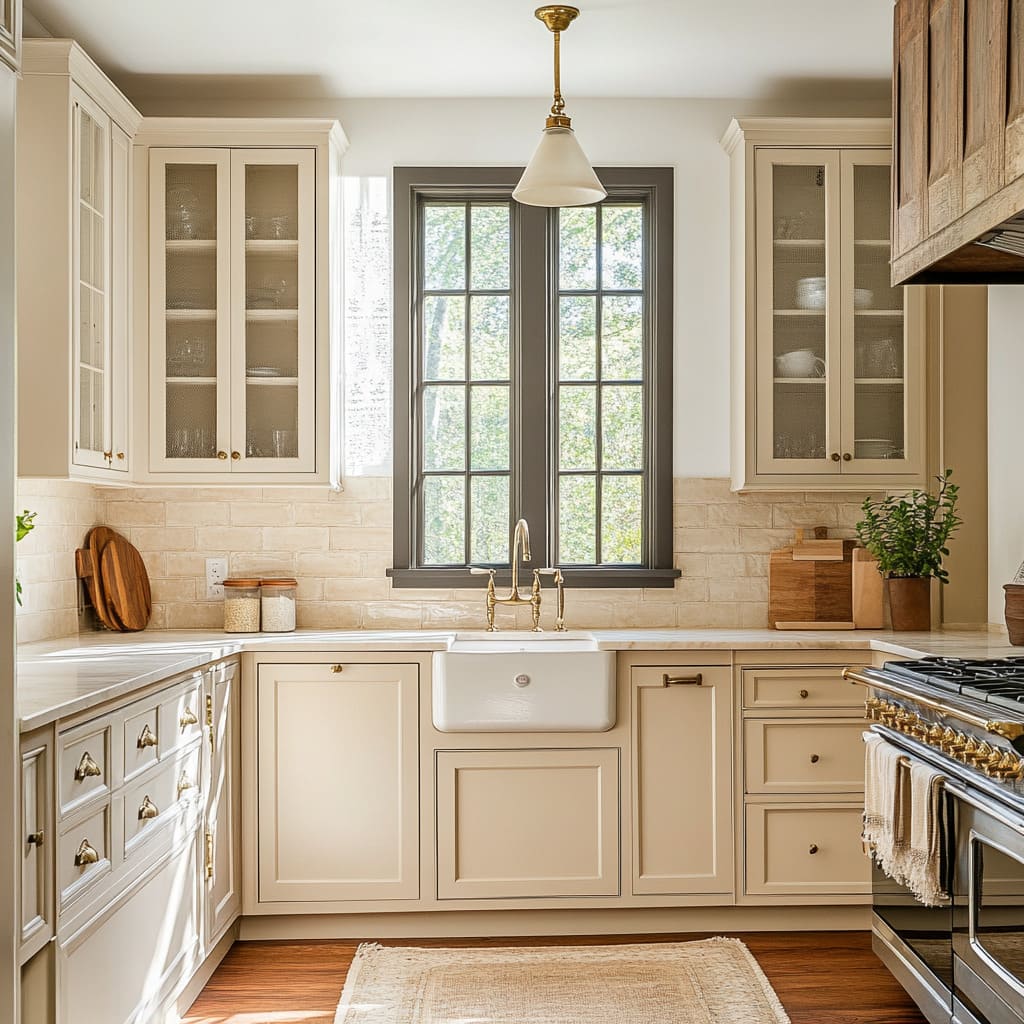
Feature One Textural Focal Point
Every well-designed kitchen benefits from a focal point—a feature that draws the eye and sets the tone for the space. In a French-style kitchen, this could be:
- A stone range hood with a curved or arched design
- An exposed brick wall
- A butcher-block island with visible wood grain
The key is to let that one feature stand out while keeping the surrounding elements more restrained. This prevents the kitchen from feeling too busy or overwhelming.
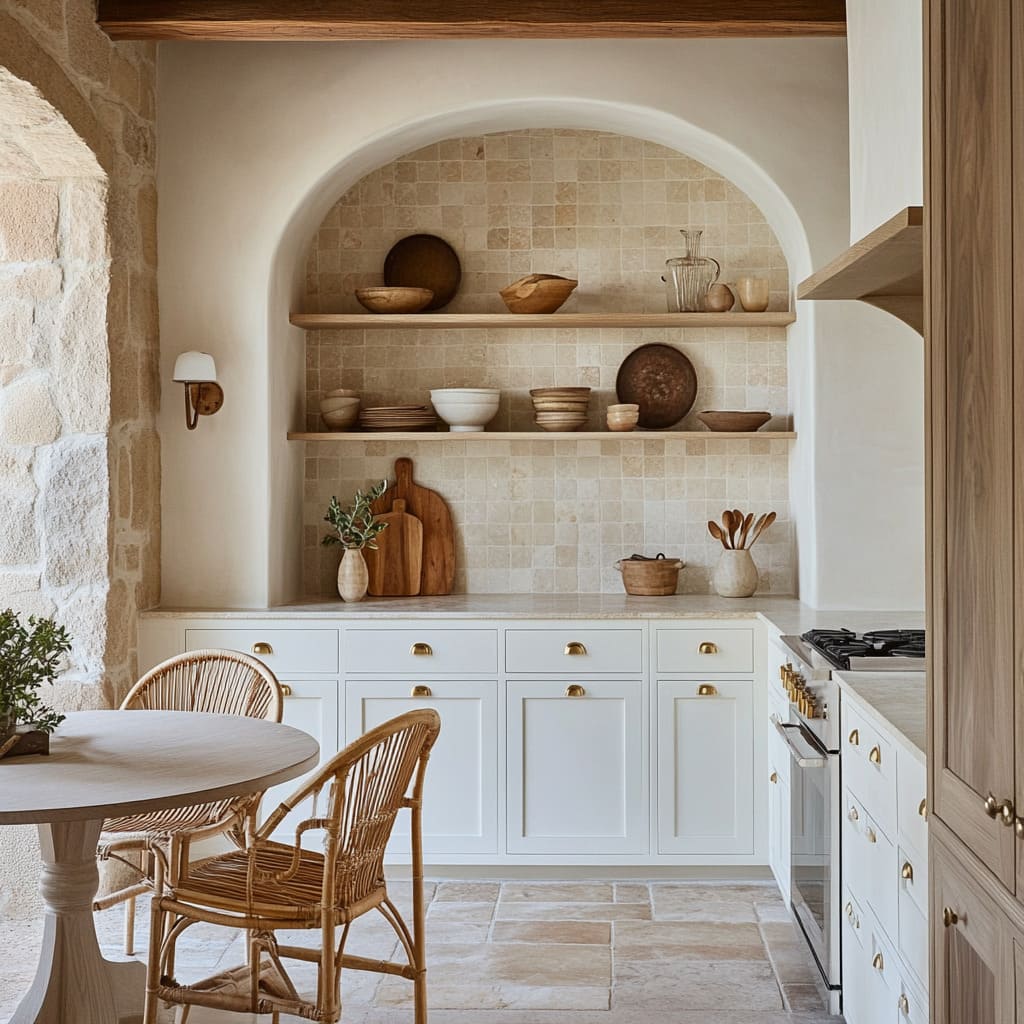
Mix Metal Finishes Gently
French kitchens rarely stick to a single metal finish. Instead, they balance warm and cool tones to create a layered, collected feel.
If your kitchen features brass faucets, consider adding black iron cabinet pulls or a bronze chandelier. A touch of aged copper cookware displayed above the range can introduce a soft, warm contrast.
The trick is to limit yourself to two or three metals so the mix feels intentional rather than chaotic.
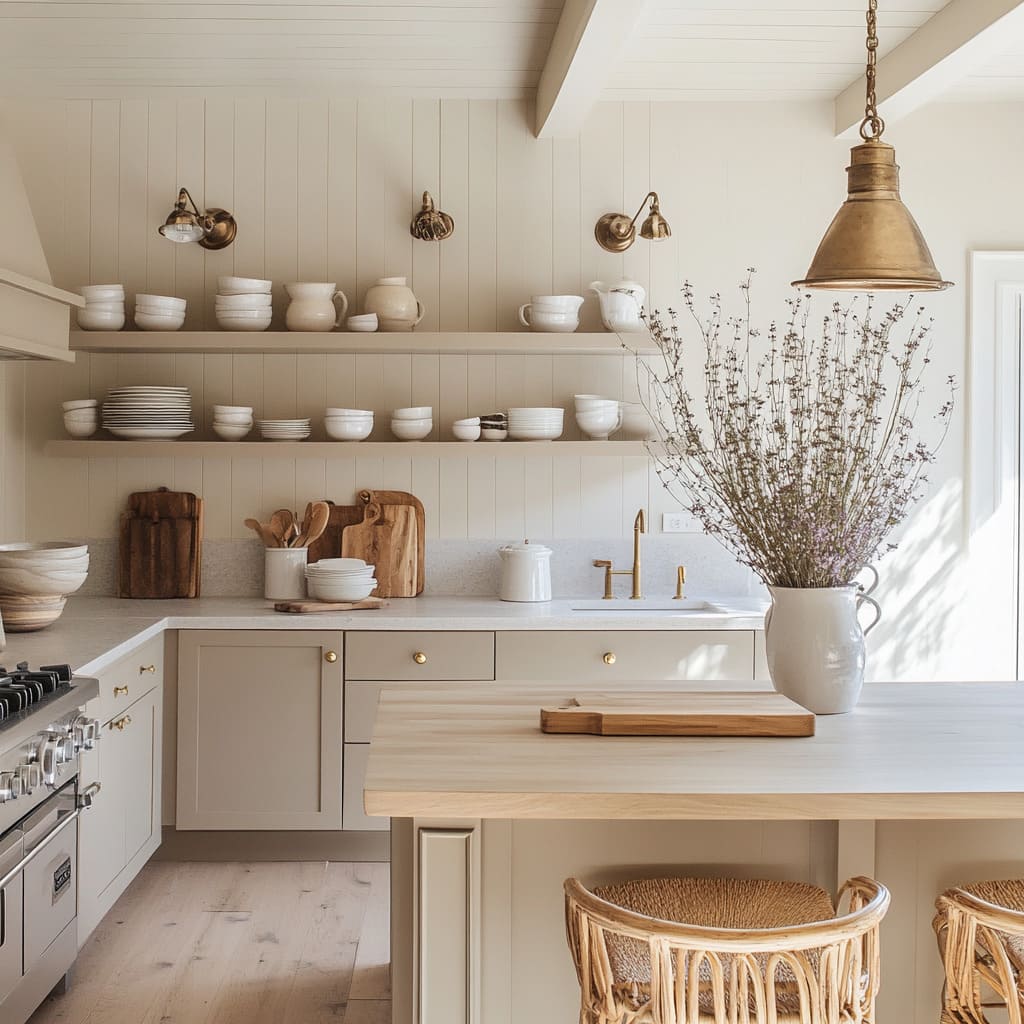
Add Subtle Decor
Decorating a French-style kitchen is all about understated details. Instead of overwhelming the space with decorative pieces, choose a few meaningful accents that reflect the warmth and charm of the style.
- A vintage rug in muted tones adds softness underfoot.
- A set of ceramic canisters for flour, sugar, and coffee keeps essentials organized while adding character.
- A simple linen curtain below the sink creates a soft, old-world touch.
These small additions enhance the space without overpowering it, ensuring that everything still feels natural and functional. Bringing the essence of a French country kitchen into your home isn’t about replicating a specific look—it’s about creating a space that feels warm, timeless, and full of character.
By blending natural textures, embracing soft colors, and incorporating functional decor, you can craft a kitchen that feels effortlessly welcoming, whether you’re cooking, gathering, or simply enjoying a quiet moment with a cup of coffee.
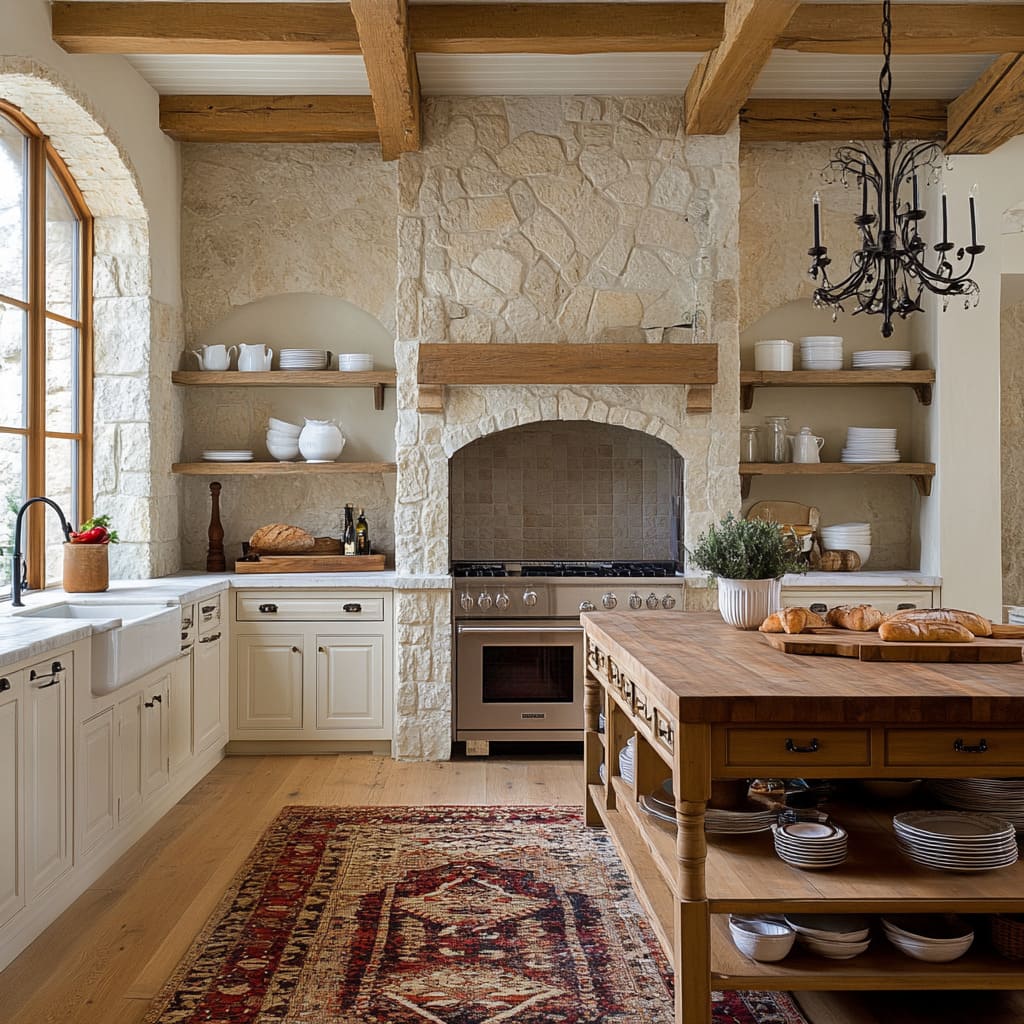
Ways to Adapt If You Have a Modern or Smaller Kitchen
Creating a French kitchen style in a smaller or more contemporary space doesn’t mean sacrificing its warmth and character. Even in a compact kitchen, thoughtful design choices can bring in the charm of French country kitchen ideas without overwhelming the room.
Whether you live in a city apartment, a townhouse, or simply have a more modern layout, these adjustments will help infuse classic French elements while keeping the space functional and visually balanced.
Soft Palette & Focal Wall: Blending Modern Simplicity with Rustic Charm
A light and muted color scheme is one of the simplest ways to bring the coziness of French country interiors into a modern kitchen. Soft shades of warm white, pale beige, gentle sage, dusty blue, or muted gray can transform a sleek, contemporary space into something far more inviting.
If your kitchen already has modern cabinetry with clean lines, consider painting them in a soft, warm tone that complements natural materials. A subtle patina finish or hand-brushed paint application can add just enough texture to keep them from looking too flat or manufactured.
For those who prefer a bolder contrast, a focal wall made of stone, exposed brick, or even textured plaster can introduce the layered, aged appearance that defines French interiors. If structural changes aren’t an option, textured wallpaper or peel-and-stick faux brick panels can achieve a similar effect without a full renovation.
A few easy ways to create a statement feature in a small or modern kitchen include:
- A rustic stone backsplash behind the stove for an old-world effect.
- A narrow exposed brick wall to add depth without overwhelming the space.
- A wood-paneled range hood to introduce warmth and a touch of rustic contrast.
- A set of antique brass or wrought-iron sconces against a plaster-textured wall to bring in the feeling of a vintage French kitchen.
By keeping the overall palette soft and neutral, you can introduce these elements without making the space feel cramped or overly busy.
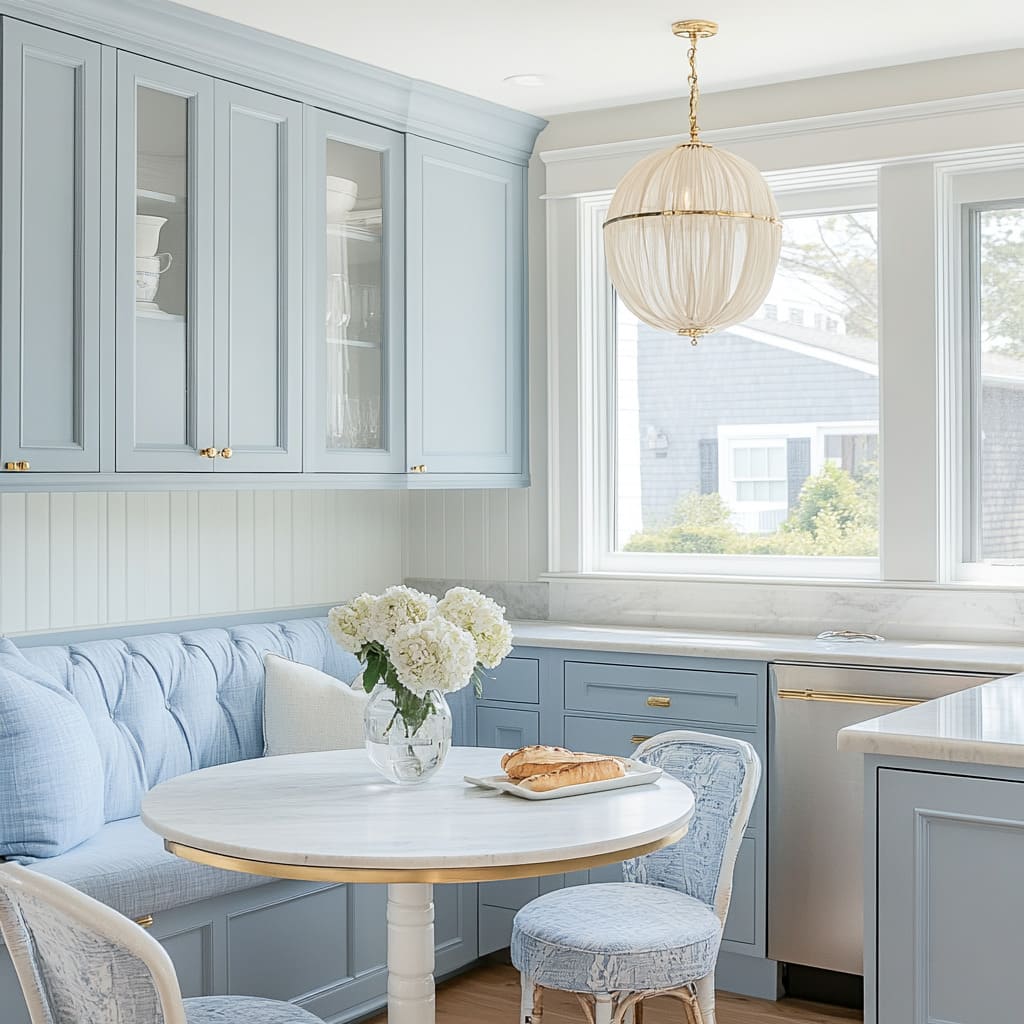
Compact Seating: Creating a Cozy Dining Nook in a Small Kitchen
One of the most charming elements of a French kitchen is its focus on hospitality—but in a smaller layout, a large dining table isn’t always an option. Instead, compact seating solutions can provide the same warmth without taking up too much space.
A wall-mounted banquette with cushions is an excellent way to create an inviting breakfast nook without sacrificing square footage. These built-in benches maximize seating while keeping the space open, making them a perfect choice for smaller kitchens.
Pair a simple wood or marble-top café table with a couple of woven bistro chairs for a cozy, Parisian-inspired touch. If a built-in bench isn’t an option, consider:
- A slim, rectangular table with a bench on one side to save space.
- A folding wooden table that can be extended when needed.
- Stackable rattan or bistro chairs that can be tucked away when not in use.
- A high-top counter or breakfast bar with French-style stools for a relaxed, café-inspired setup.
Soft, textured elements—like linen cushions, a checkered tablecloth, or a simple draped curtain—can enhance the warmth of the space while keeping it relaxed and inviting.
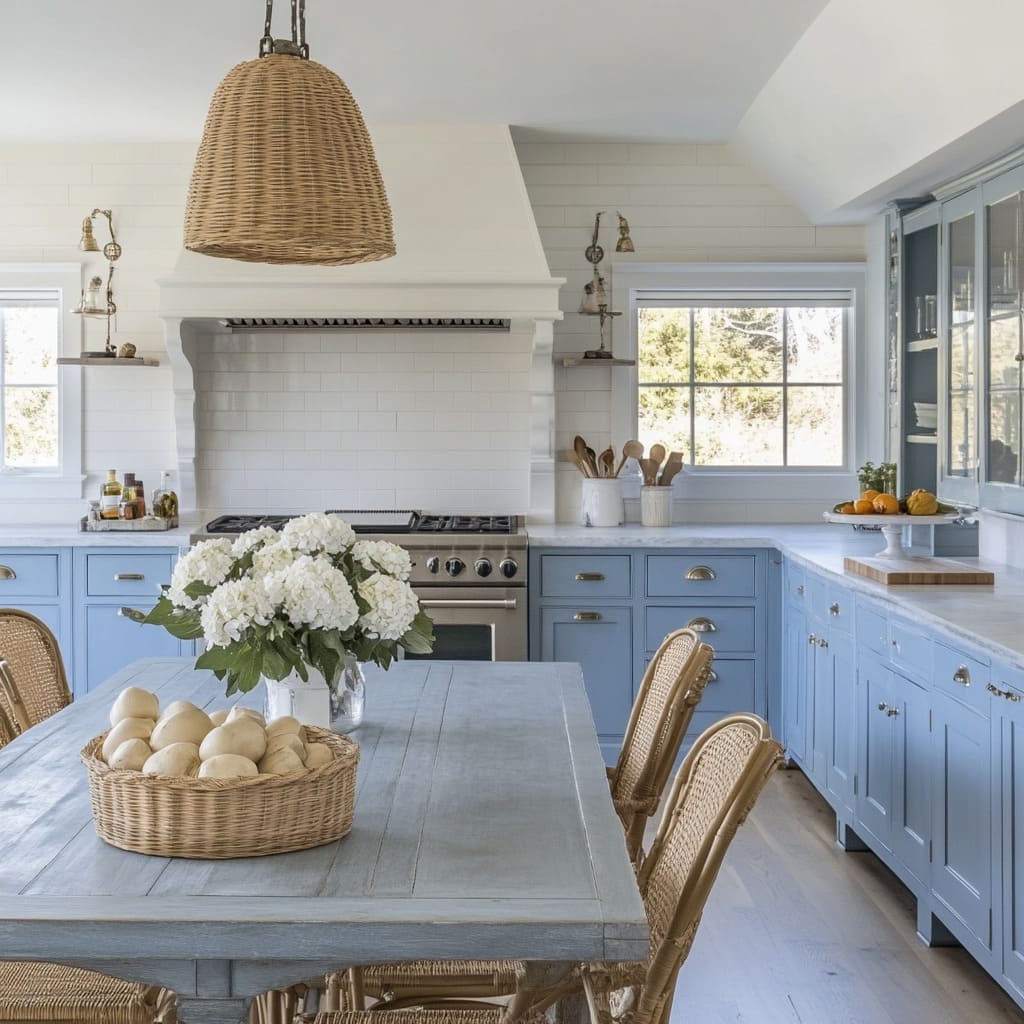
Hybrid Open/Closed Storage: Striking a Balance Between Display and Function
Traditional French kitchens often feature open shelving filled with stacks of dishes, ceramic bowls, and copper pots. While this look is beautiful, it can be impractical in a small or modern kitchen where storage space is limited, and clutter can quickly become overwhelming.
A great solution is to combine open and closed storage, allowing for both practicality and style. Glass-front cabinets, narrow floating shelves, and recessed niches can help achieve the open, airy feel of a French kitchen without sacrificing functionality.
To integrate this look into a smaller space:.
- Opt for half-glass cabinet doors instead of fully open shelving to display select pieces while keeping others hidden.
- Choose ribbed or frosted glass panels for a softer, more textured look that provides privacy while still allowing light to pass through.
- Install a small set of open shelves above the sink or range to display curated kitchen essentials, like spice jars, wooden cutting boards, or a vintage tea set.
- Keep everyday dishware and cookware in easily accessible lower cabinets, while using upper shelves for decorative accents like ceramic pitchers or woven baskets.
This mix of open and closed storage helps maintain the effortless charm of a French kitchen while keeping the space uncluttered and easy to use.
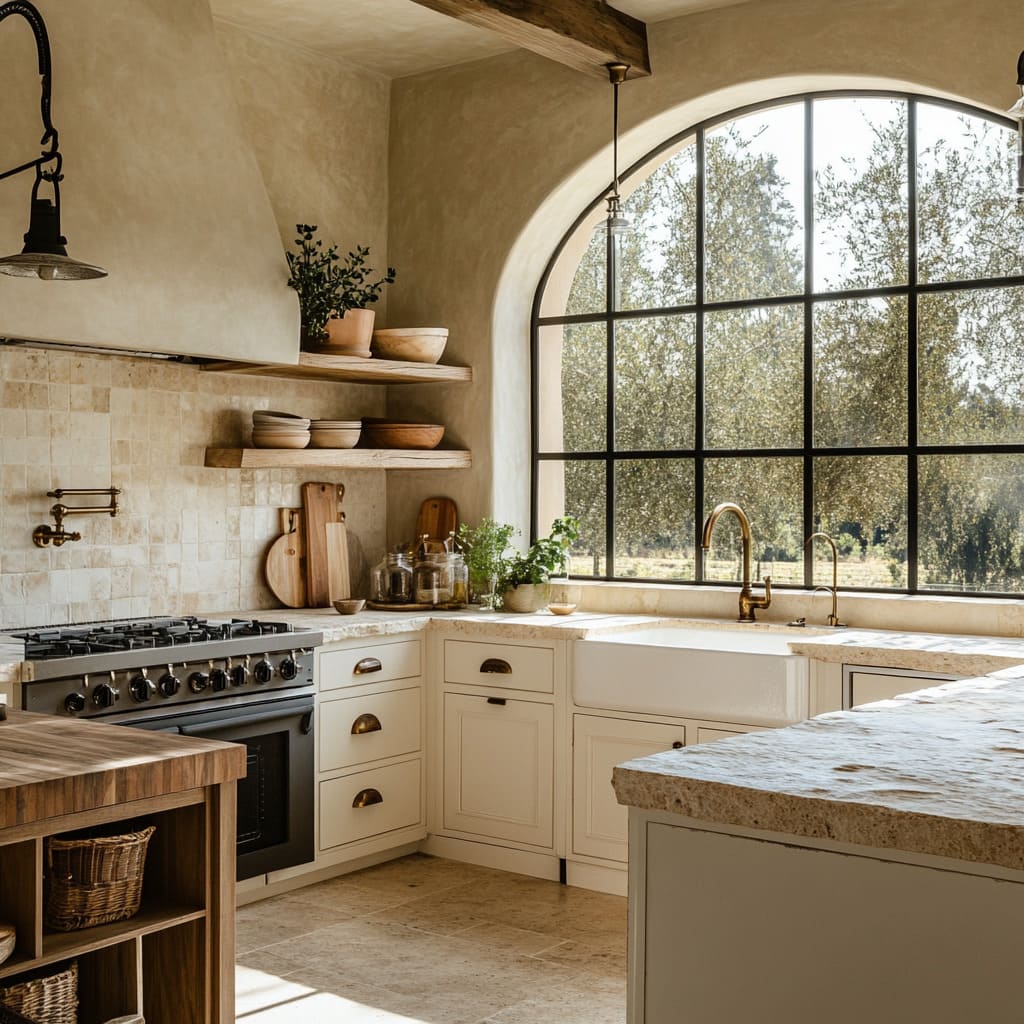
Texture in Small Doses: Adding Character Without Overwhelming the Space
If a full-scale renovation isn’t in the plans, introducing texture through subtle details can go a long way in making a modern kitchen feel more in tune with French country aesthetics. You don’t need to change everything—just a few key elements can shift the entire feel of the space.
Some simple ways to add texture without taking up valuable space:
- A rustic wooden range hood can break up the sleekness of modern cabinetry and provide a focal point.
- A single row of exposed brick or stone tile as a backsplash can add just enough old-world character without overwhelming a compact kitchen.
- Natural linen or ruffled sink skirts can replace traditional cabinet doors under the sink to soften the look.
- A wooden ladder or rail with hanging copper cookware adds warmth while doubling as functional storage.
- Reclaimed wood floating shelves hold everyday kitchenware while introducing a subtle rustic contrast.
Even small swaps, like replacing stainless steel hardware with antique brass knobs or using a woven rattan pendant light over the island, can significantly shift the feel of the space.
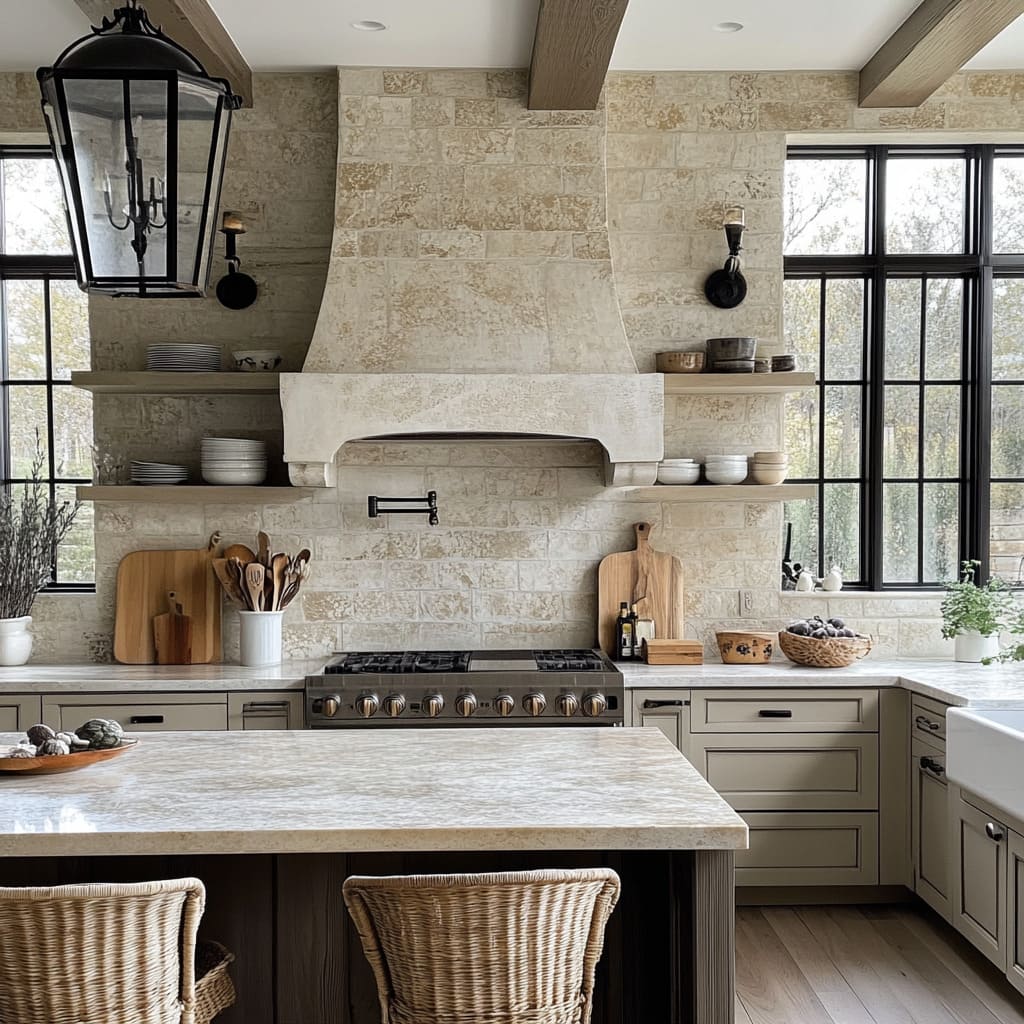
Blending Modern Convenience with French Charm
A French-inspired kitchen doesn’t have to be purely traditional—it’s all about balancing modern functionality with old-world warmth. The key is to integrate these elements in a way that feels natural and inviting, rather than trying to force an outdated aesthetic into a contemporary space.
- Keep appliances integrated or subtly hidden to allow natural materials and textures to shine. A modern refrigerator can be softened with a custom panel that matches the cabinetry rather than standing out as a stainless steel focal point.
- Use natural materials wherever possible—even if it’s just small touches like a wooden cutting board leaning against the backsplash or a stone fruit bowl on the counter.
- Introduce soft, vintage-inspired lighting to counteract the starkness of recessed modern lighting. A small table lamp on the counter or a set of iron sconces can shift the entire atmosphere.
- Mix traditional and modern fixtures thoughtfully—a sleek quartz countertop can still work beautifully with aged brass hardware, and a simple farmhouse sink pairs effortlessly with contemporary cabinetry.
Even if your kitchen leans modern or lacks the expansive layout of a countryside home, these French country kitchen ideas can be adapted in a way that makes sense for your space. Soft color palettes, mixed materials, compact seating solutions, and layered textures allow you to embrace the charm of a French kitchen style without sacrificing efficiency.
Whether it’s a simple brick accent wall, a cozy banquette, or an open shelf styled with everyday cookware, each small detail helps create an inviting kitchen that feels both practical and full of character.
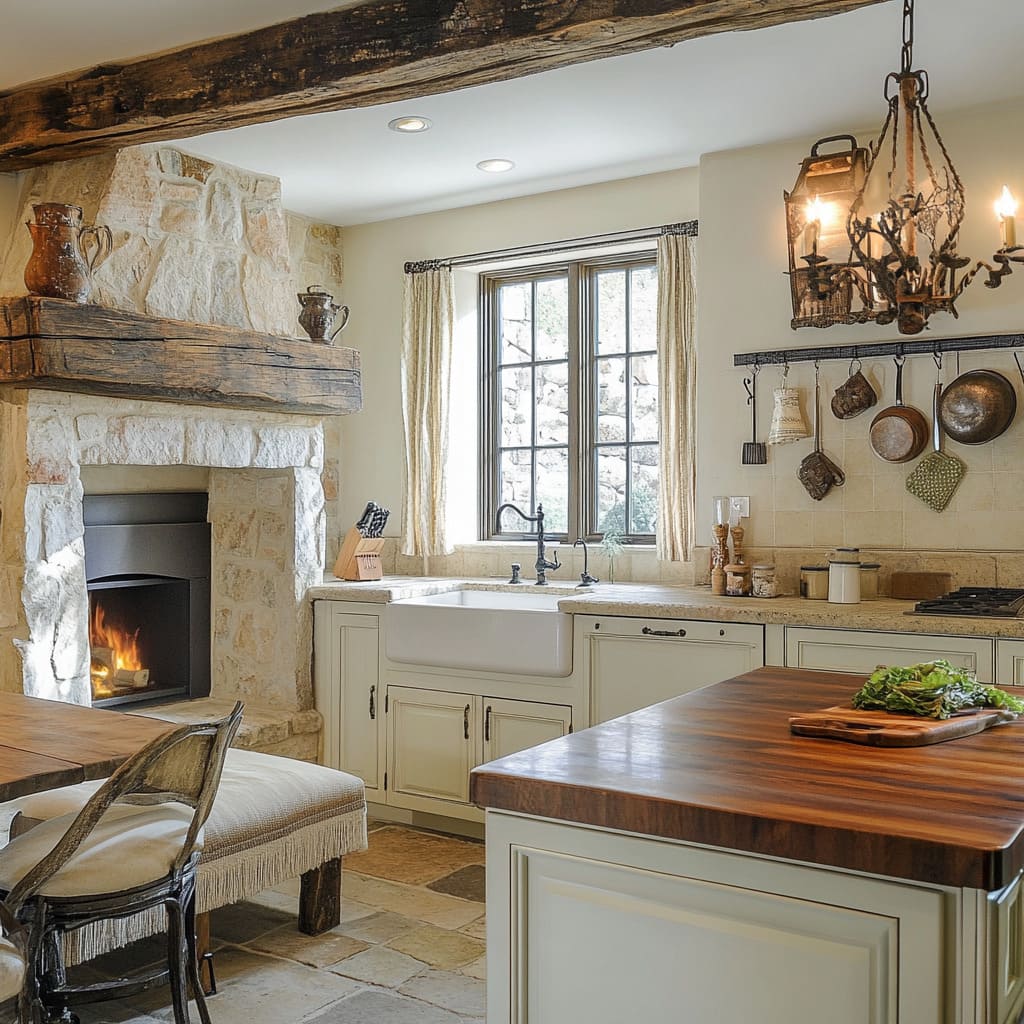
Conclusion
A French country kitchen isn’t just about aesthetics—it’s about creating a space that feels warm, inviting, and filled with character. These kitchens bring together everyday functionality with timeless design choices, blending rustic textures with refined elements to form a space that feels both lived-in and charming.
Whether you are designing a new kitchen from the ground up or looking to bring subtle changes into an existing space, the essence of this style lies in its balance—balancing old with new, soft with textured, and practical with beautiful. At its core, a French kitchen is meant to feel unhurried and welcoming, a place where time slows down and simple pleasures—like cooking, gathering with loved ones, and enjoying fresh ingredients—take center stage.
Unlike overly polished or showroom-style kitchens, these spaces embrace imperfection as part of their charm. Aged stone countertops, cabinets with a soft patina, exposed wooden beams, and handmade tiles all contribute to an atmosphere that feels personal rather than manufactured.
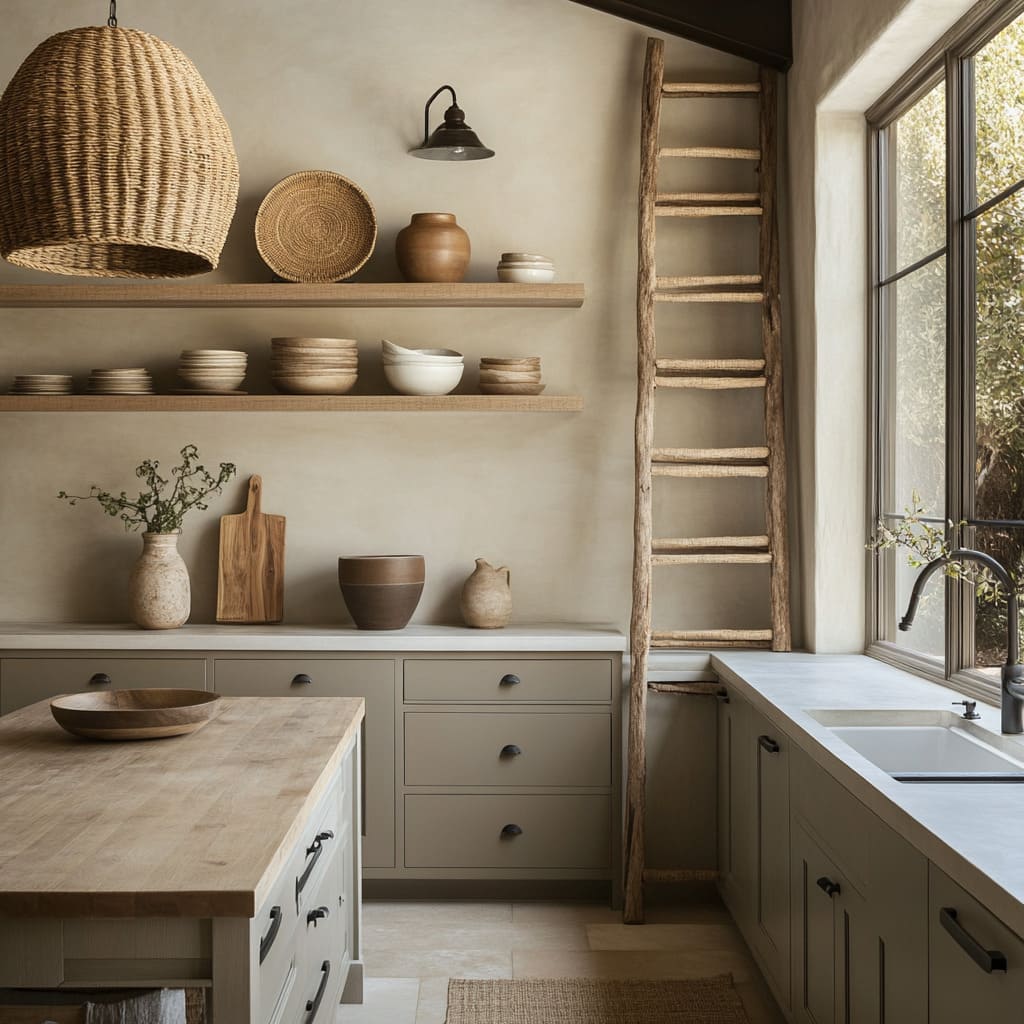
The Beauty of Imperfection & Patina
Unlike modern kitchens that often aim for sleek, spotless finishes, French country kitchens thrive on natural wear and history. Over time, brass fixtures develop a warm patina, butcher-block countertops gain gentle marks from years of cooking, and limestone backsplashes show subtle variations in texture.
These elements don’t take away from the design—they add to it, making the space feel welcoming rather than overly pristine. Instead of constantly refinishing, repainting, or sanding down natural materials, allow them to tell a story.
Let wooden floors show slight scuffs, let stone surfaces reveal their natural veins and inconsistencies, and choose fixtures that will age beautifully rather than deteriorate over time. This approach isn’t just about aesthetics—it’s practical, too.
A kitchen with a timeworn look won’t feel stressful to maintain because it already embraces the passage of time.
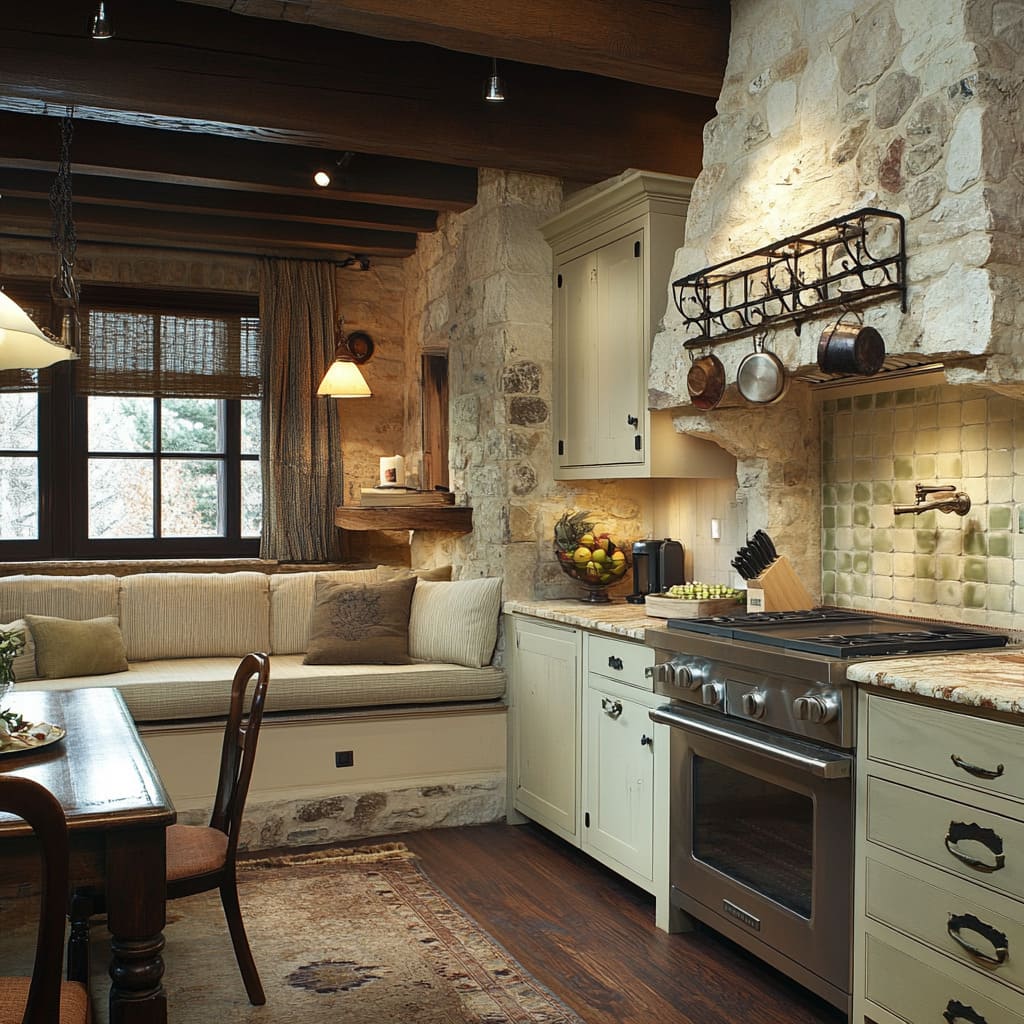
Creating an Inviting Atmosphere
One of the greatest strengths of a French country kitchen is its ability to make a home feel instantly more inviting. The soft lighting, warm colors, and carefully chosen details create an environment that encourages long conversations over coffee, casual family meals, and an effortless flow between cooking and gathering.
The seating choices—whether a cozy banquette, a simple wooden dining table, or a few woven counter stools—reinforce this idea. These kitchens aren’t just for cooking; they are spaces where family and friends naturally linger.
Even small details, like an antique vase filled with fresh lavender, a basket of market produce sitting on the counter, or a stack of well-loved cookbooks on an open shelf, help tell a story. These are kitchens meant to be used and enjoyed daily, not just admired from a distance.
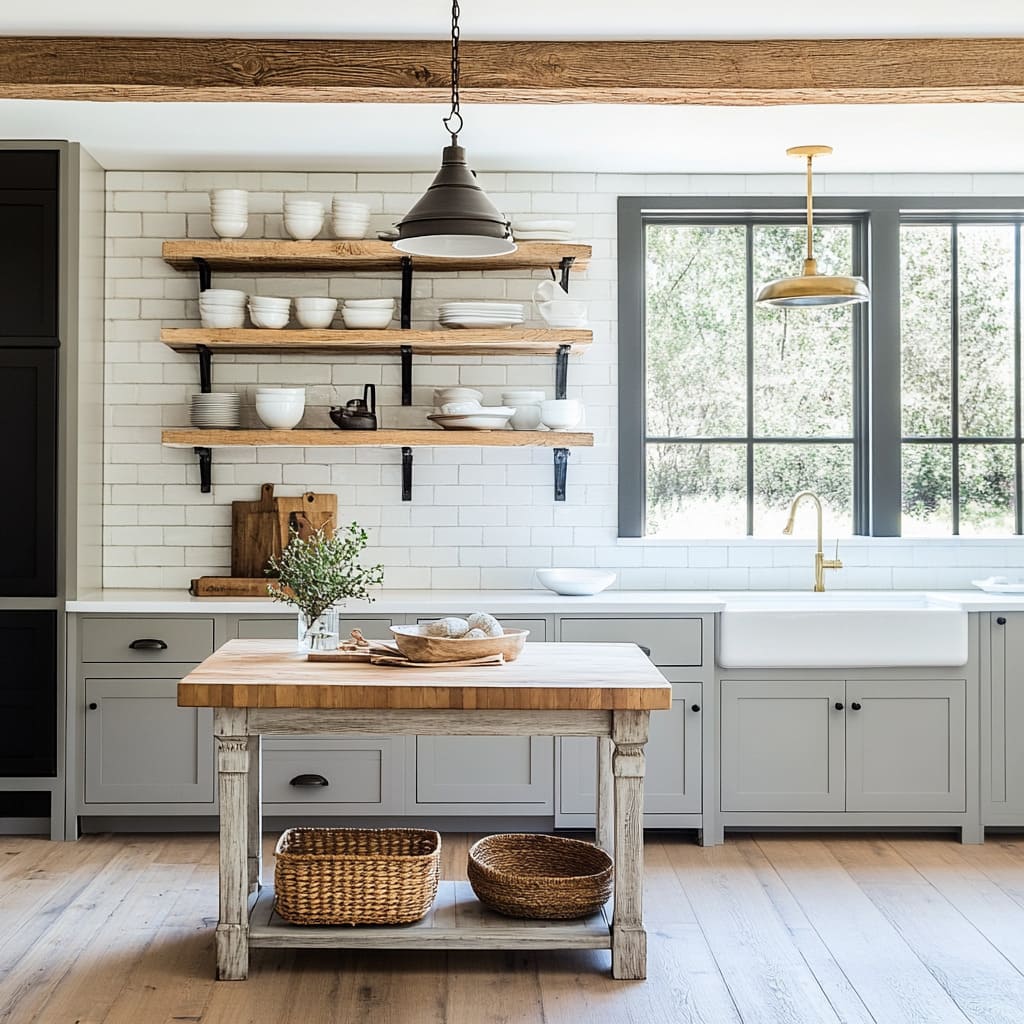
A Style That Blends Tradition with Modern Living
While rooted in history, French country kitchen ideas are highly adaptable to modern living. Whether your home is an old farmhouse or a sleek apartment, the principles of this style can work in nearly any setting.
It’s all about thoughtful choices:
- Natural materials that bring warmth and depth to the space.
- Soft, muted colors that create a relaxed and timeless feel.
- Layered lighting that enhances both functionality and ambiance.
- A balance of open and closed storage, ensuring beauty without sacrificing practicality.
- Seating arrangements that encourage lingering, turning the kitchen into a social hub.
Even in a contemporary home, incorporating just a few of these elements can instantly soften the space, making it feel more inviting and full of character. A sleek, modern kitchen can take on a more relaxed and lived-in feel with the addition of a farmhouse sink, vintage-inspired brass hardware, or reclaimed wood shelving.
Final Thoughts
A French-inspired kitchen isn’t about following strict design rules—it’s about crafting a space that feels natural, welcoming, and effortlessly stylish. By embracing the beauty of aged materials, thoughtful details, and a relaxed approach to decor, you can create a space that balances rustic charm with everyday practicality.
Whether you lean toward the weathered elegance of a farmhouse kitchen or the refined charm of a French cottage, the essence of this style remains the same: a place where cooking feels joyful, gatherings feel effortless, and the details tell a story of comfort and warmth.