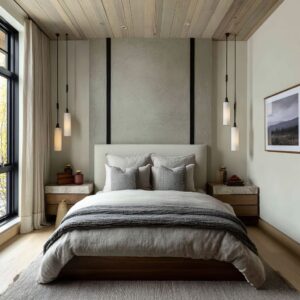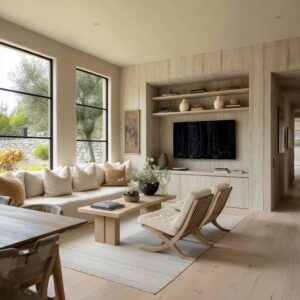
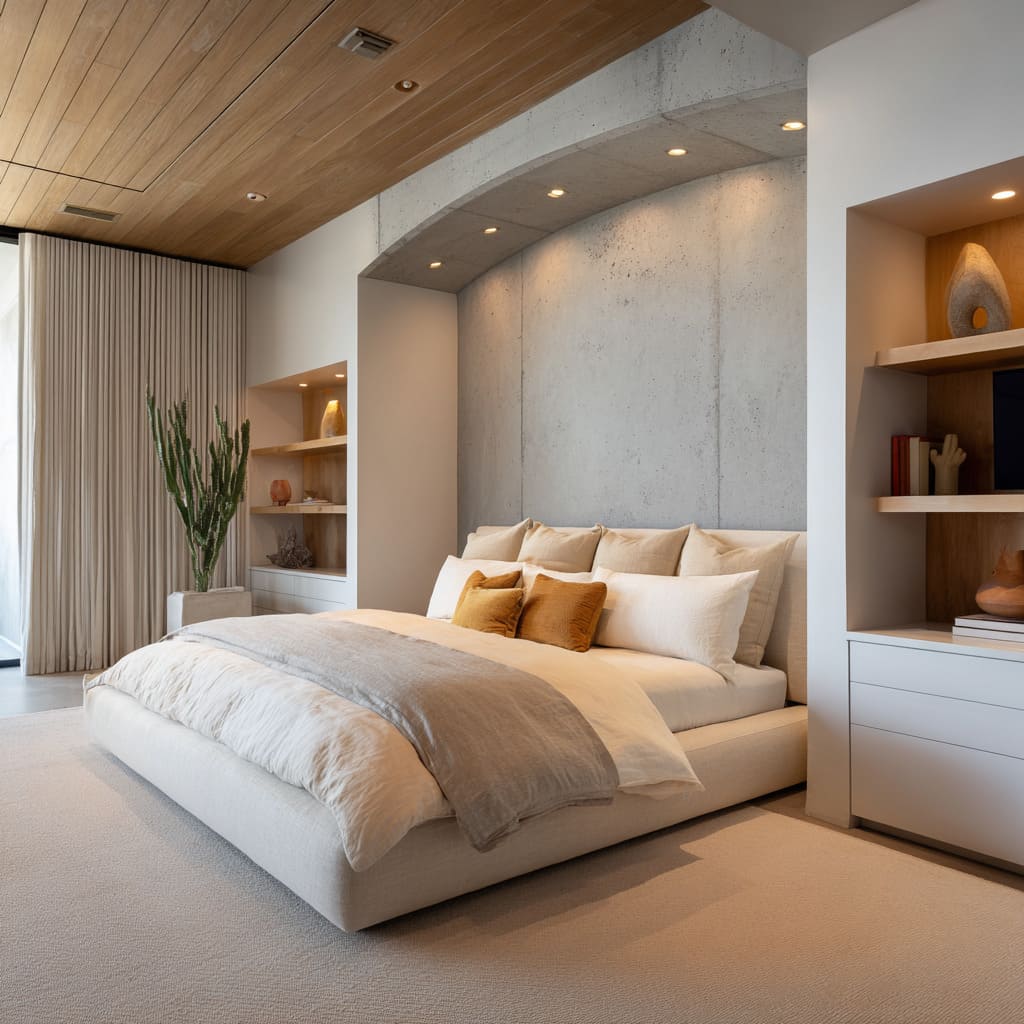
Concrete-centered bedrooms rarely read as one fixed mood. The same material language can feel gallery-quiet, resort-soft, monastic, coastal, or suite-like, depending on how the surfaces are positioned, how light touches them, and where softness is concentrated.
In concrete style bedroom design, concrete tends to behave as a visual “content surface” that already carries pattern, scale cues, and atmosphere—so the rest of the room often becomes an exercise in editing, spacing, and controlled warmth.
Concrete becomes a “content surface”
Concrete finishes carry built-in visual information: seams, tie marks, mottling, fine speckle, and tone drift. Instead of being treated like a neutral field, concrete often replaces the role of wallpaper, heavy art walls, or highly decorated headboards by supplying a calm, structured surface that already feels intentional.
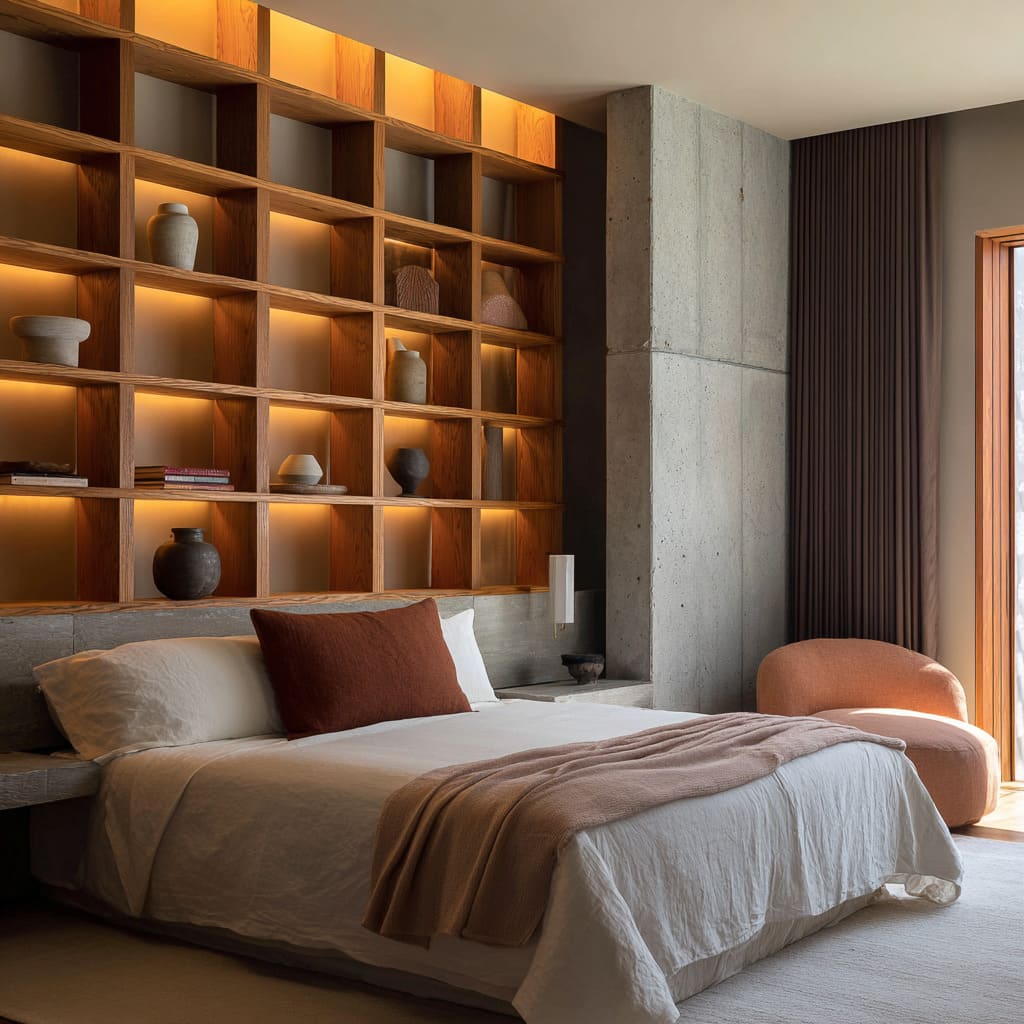
Two common concrete “content modes”
A) Grid-content concrete
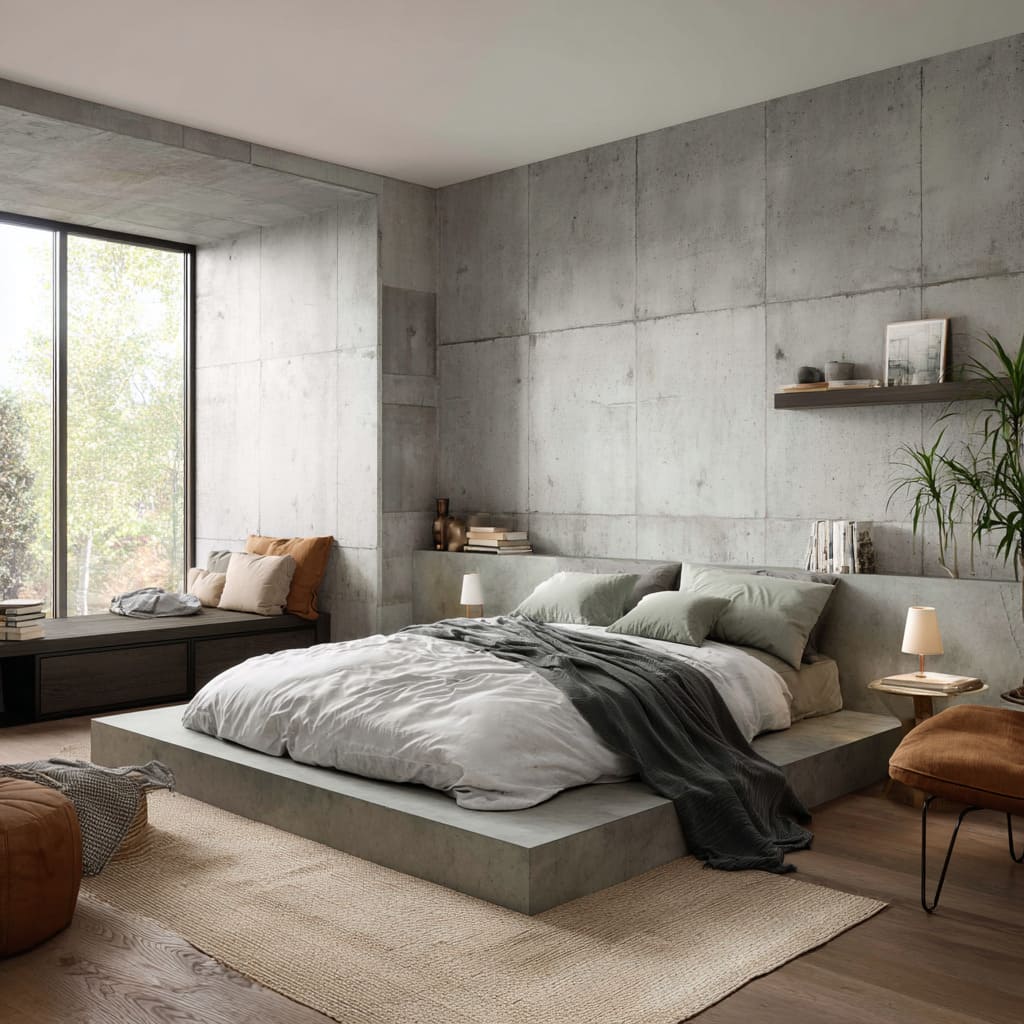
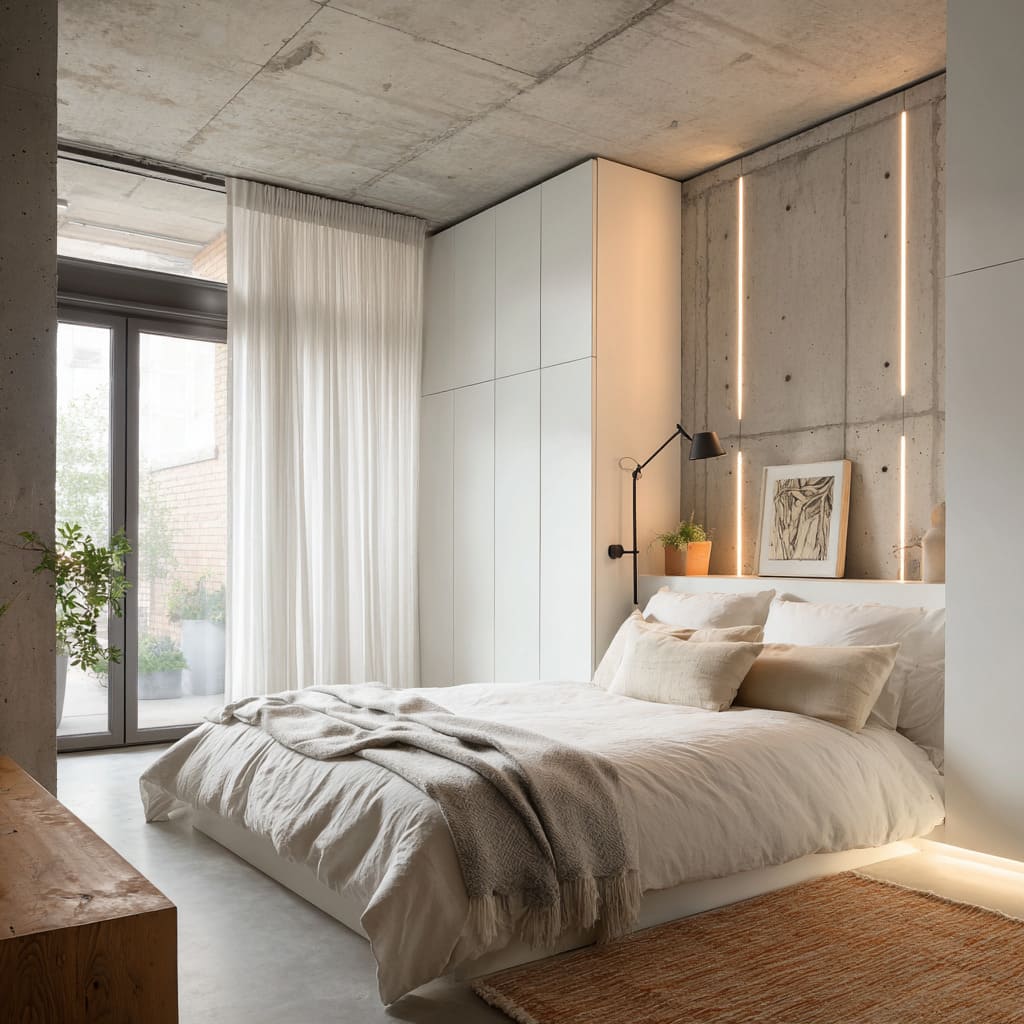
Panel seams and tie marks create a quiet system that reads architectural. The effect is orderly and calm, and the wall’s “pattern” comes from structure rather than print.
This mode often supports a sharper, more urban mood associated with brutalist bedroom design, where the wall has discipline and the room’s softness is expressed through textiles and lighting rather than ornament.
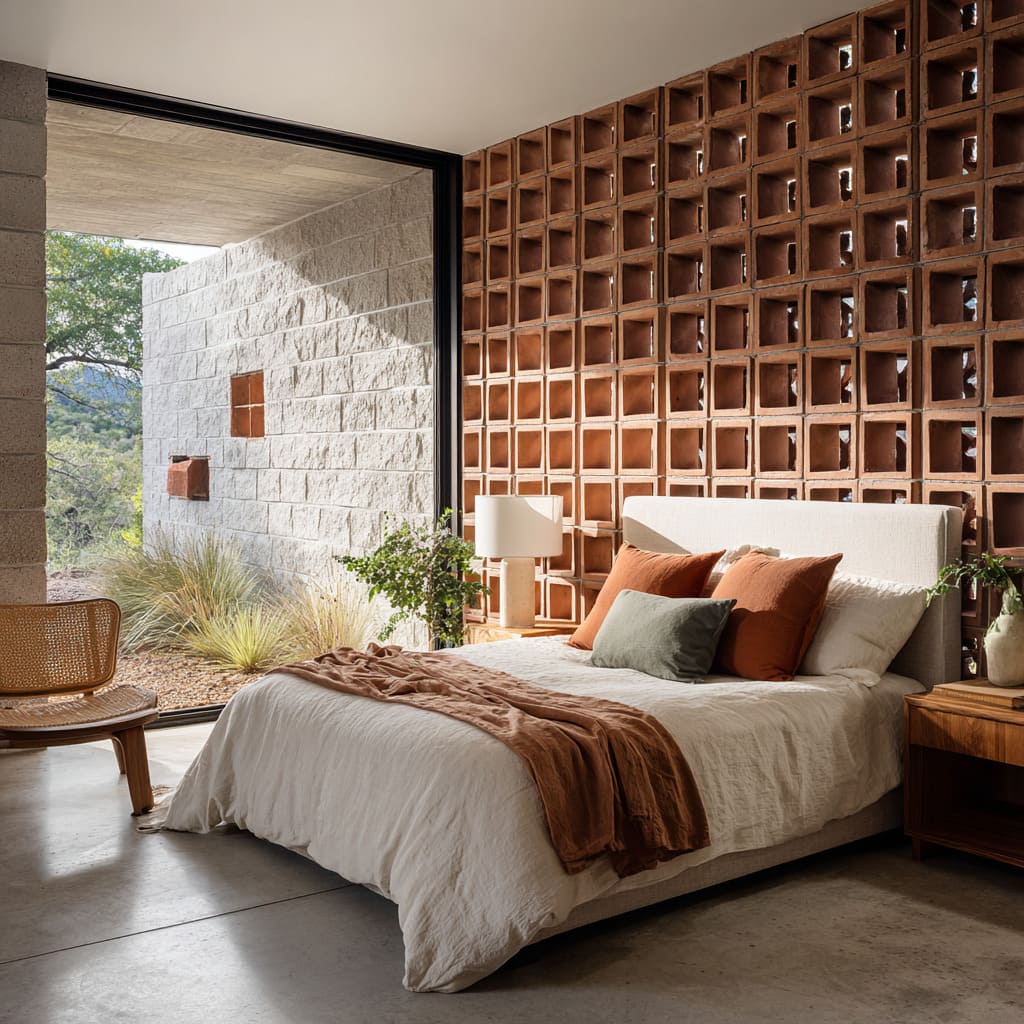
B) Cloud-content concrete
Mottled, softly shifting tones read closer to stone or plaster-stone. The surface feels atmospheric and slightly handmade, so the room can stay minimal without feeling empty.
This mode creates depth through tone rather than through obvious contrast.
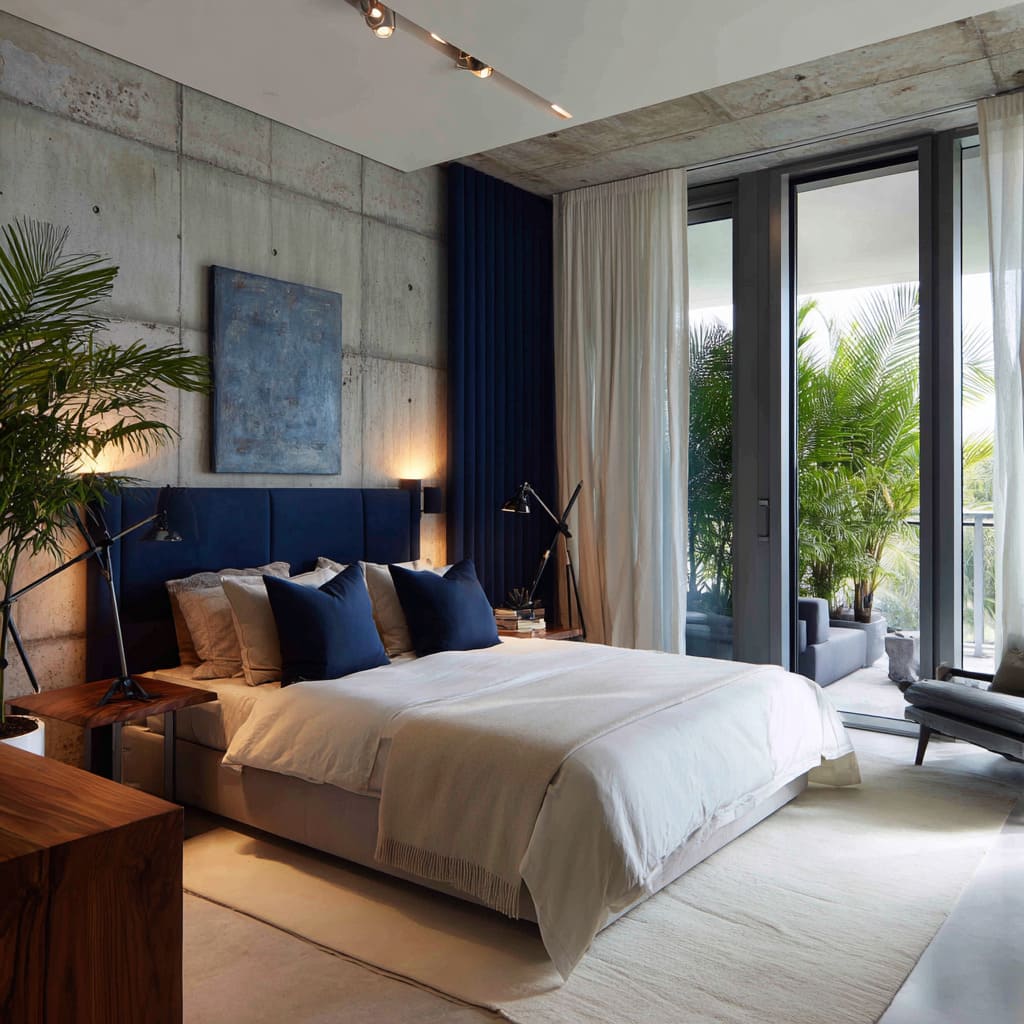
A key idea in concrete look wall bedroom design is that the wall already contains enough visual movement that additional pattern elsewhere can become unnecessary; the room stays rich through texture and shadow.
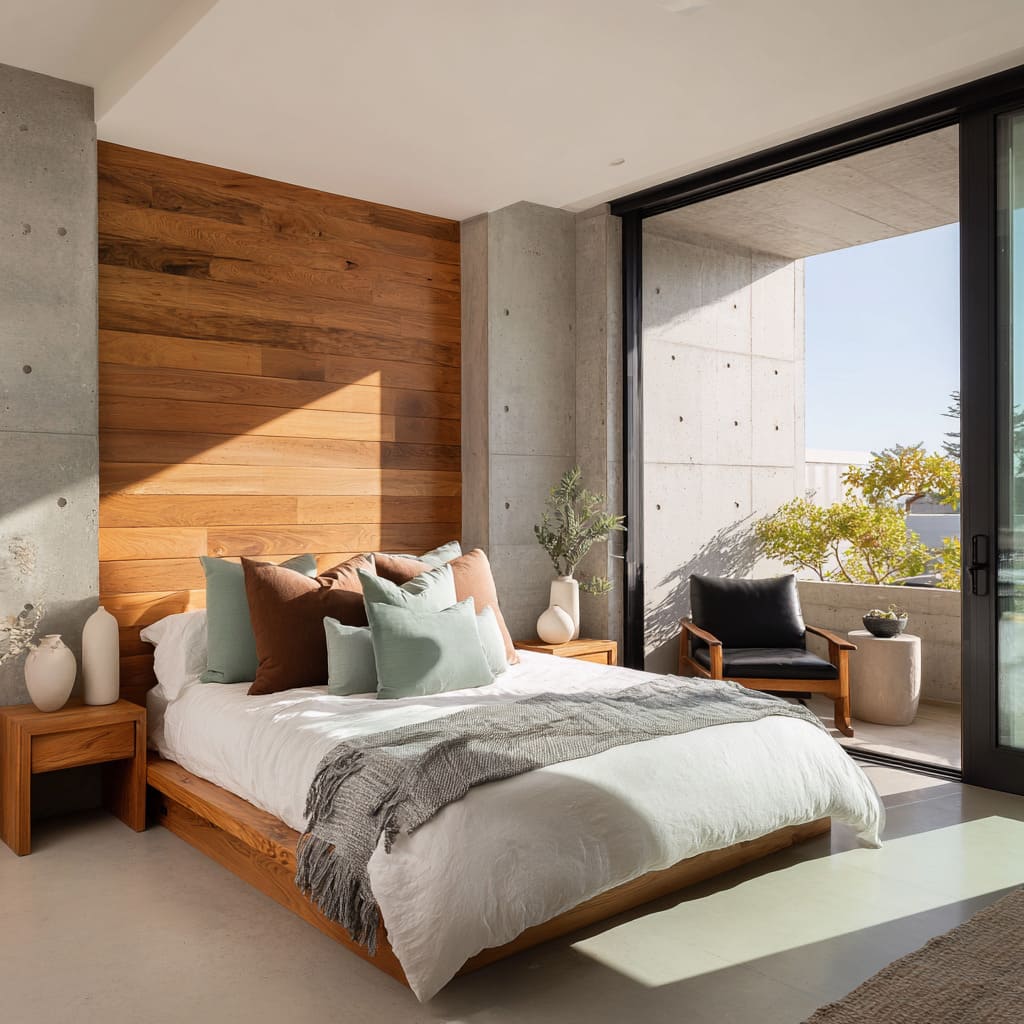
Placement is what decides concrete’s personality
Concrete look changes character dramatically based on where it appears. The same finish can feel strict or gentle simply through placement and proportion.
A) Concrete as a full “shell”
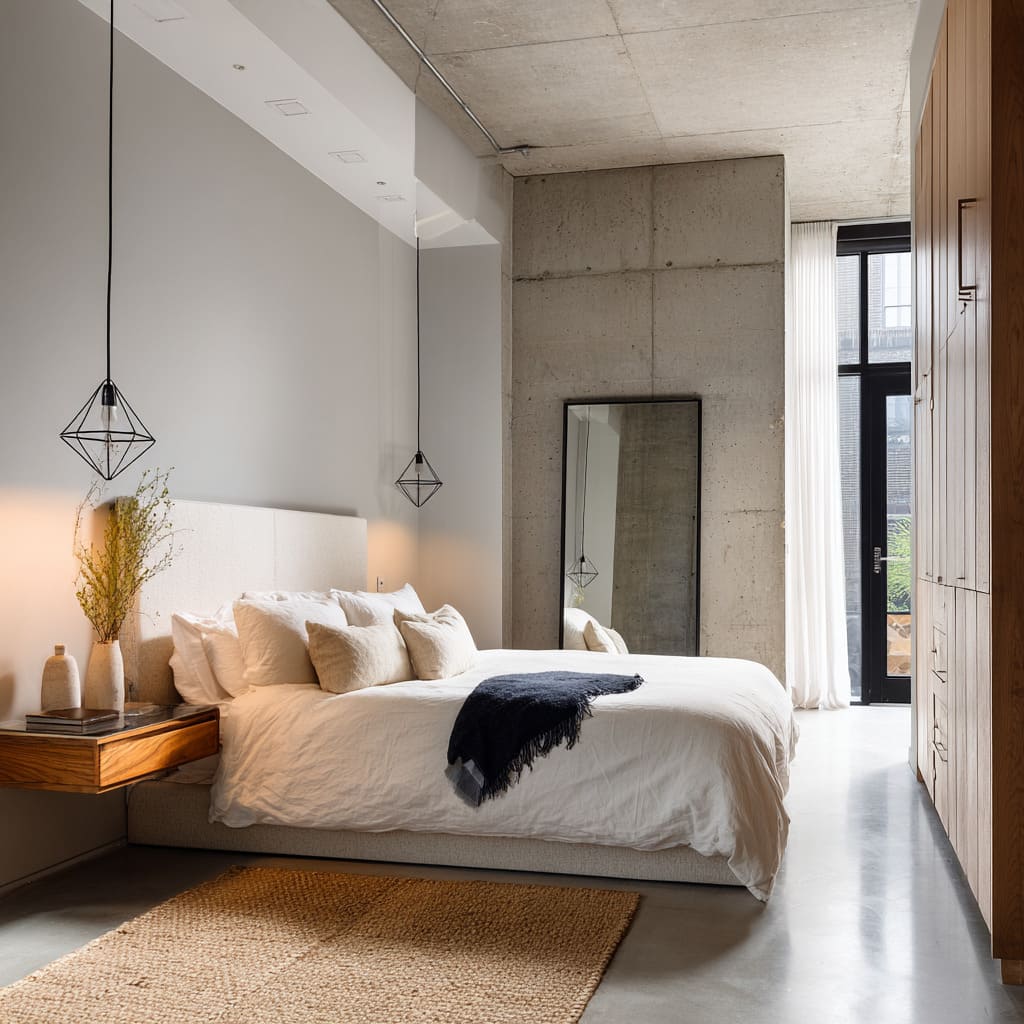
When concrete finish occupies multiple planes (wall + ceiling, sometimes floor), it forms a carved-volume effect: a calm container that feels stable and intentional. Softness typically gathers in contact zones—bedding layers, rug edges, curtain planes—while the concrete remains the quiet architecture.
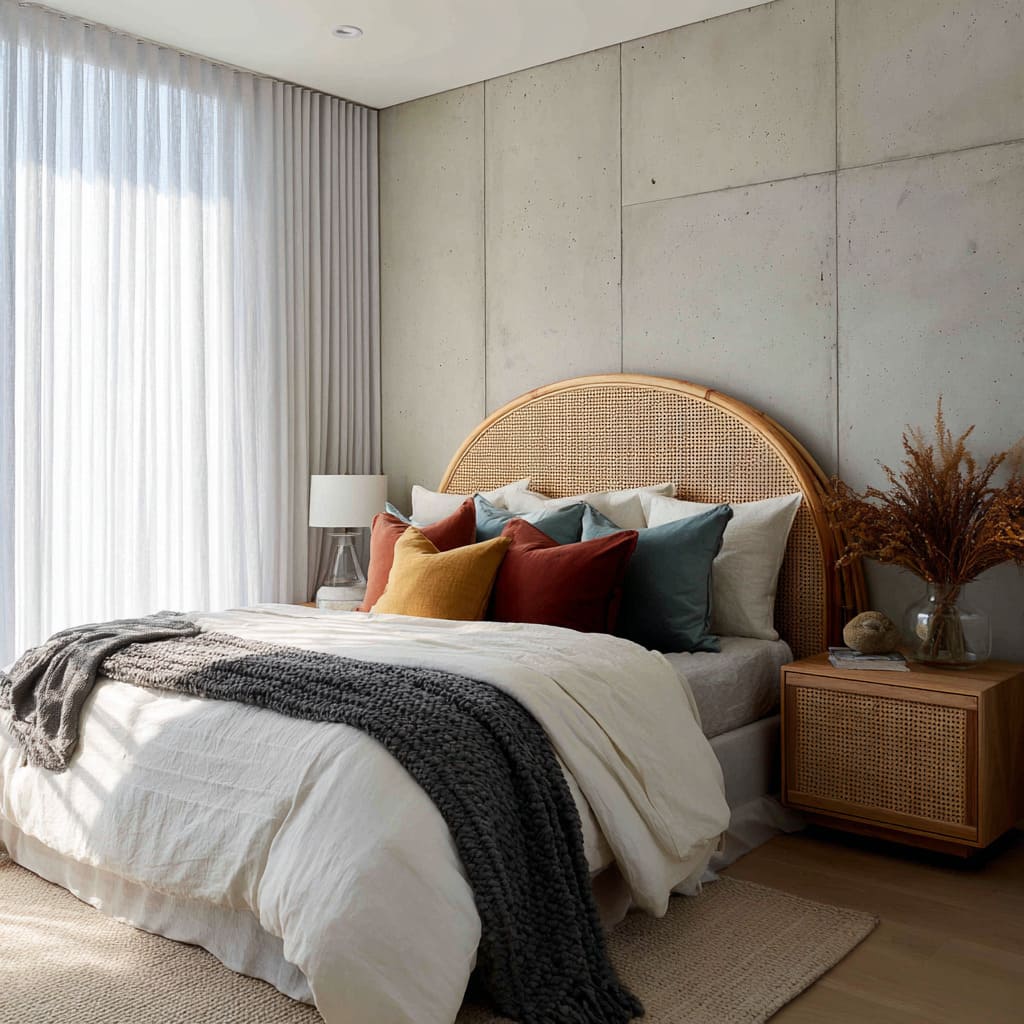
B) Concrete as a horizontal band
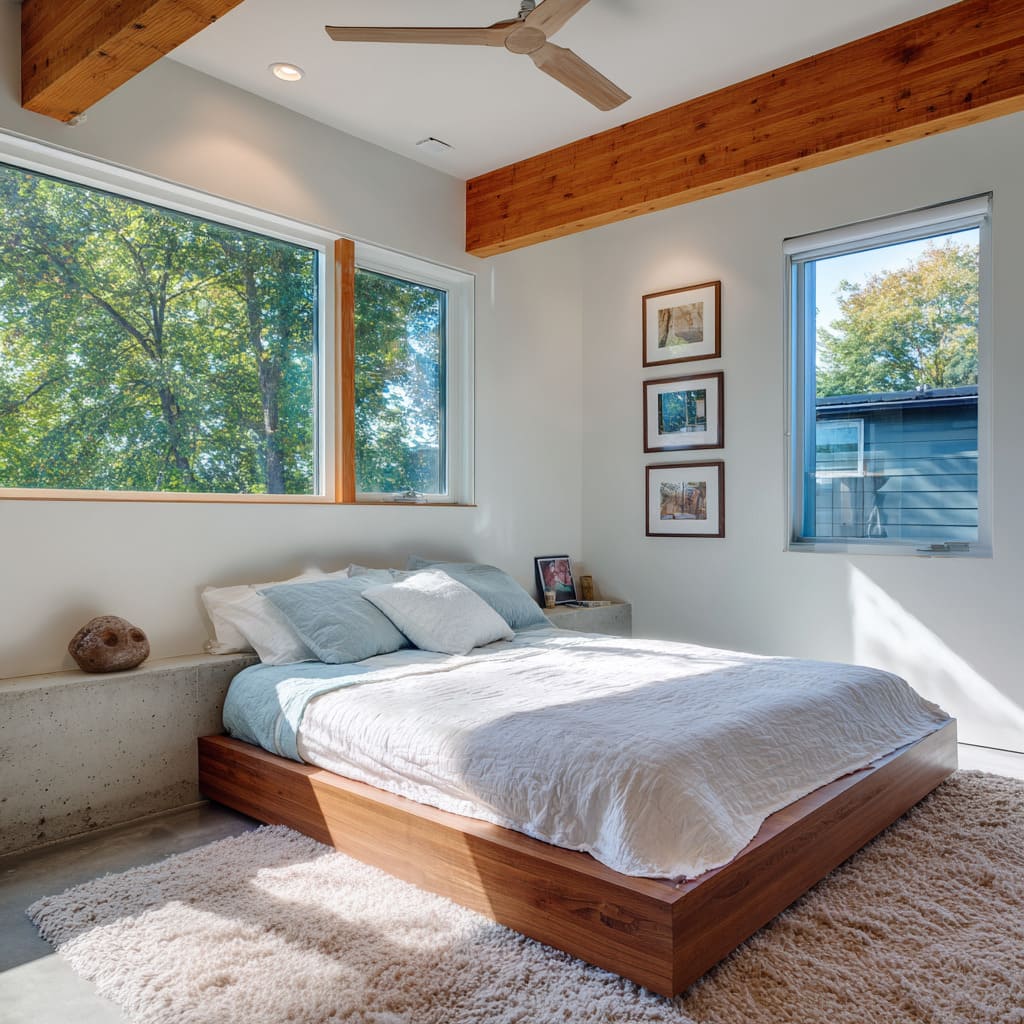
When concrete appears as a low headboard strip or a continuous ledge at pillow height, it reads like tailored detailing rather than a dominant theme. This is a frequent strategy in bedroom cement design that aims for calm luxury: concrete becomes a precise line that frames the bed and then steps back, allowing warmer materials and textiles to carry the emotional tone.
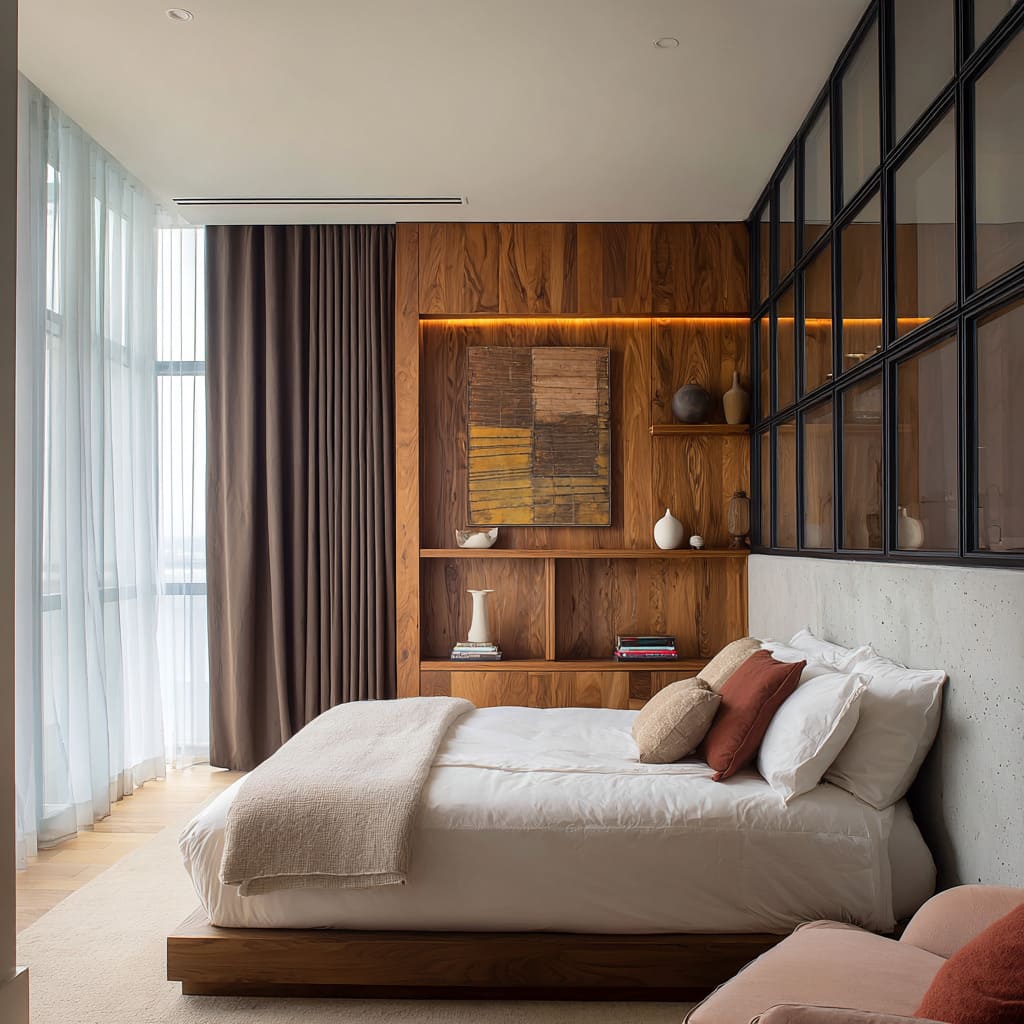
C) Concrete as a punctuation element
A concrete pier, a column, or a single edge can act like a visual comma: it organizes the design and hints at architectural honesty without making the bedroom feel severe. Cylinders tend to read sculptural because they avoid corners; flat panels read architectural because they carry seams and alignment.
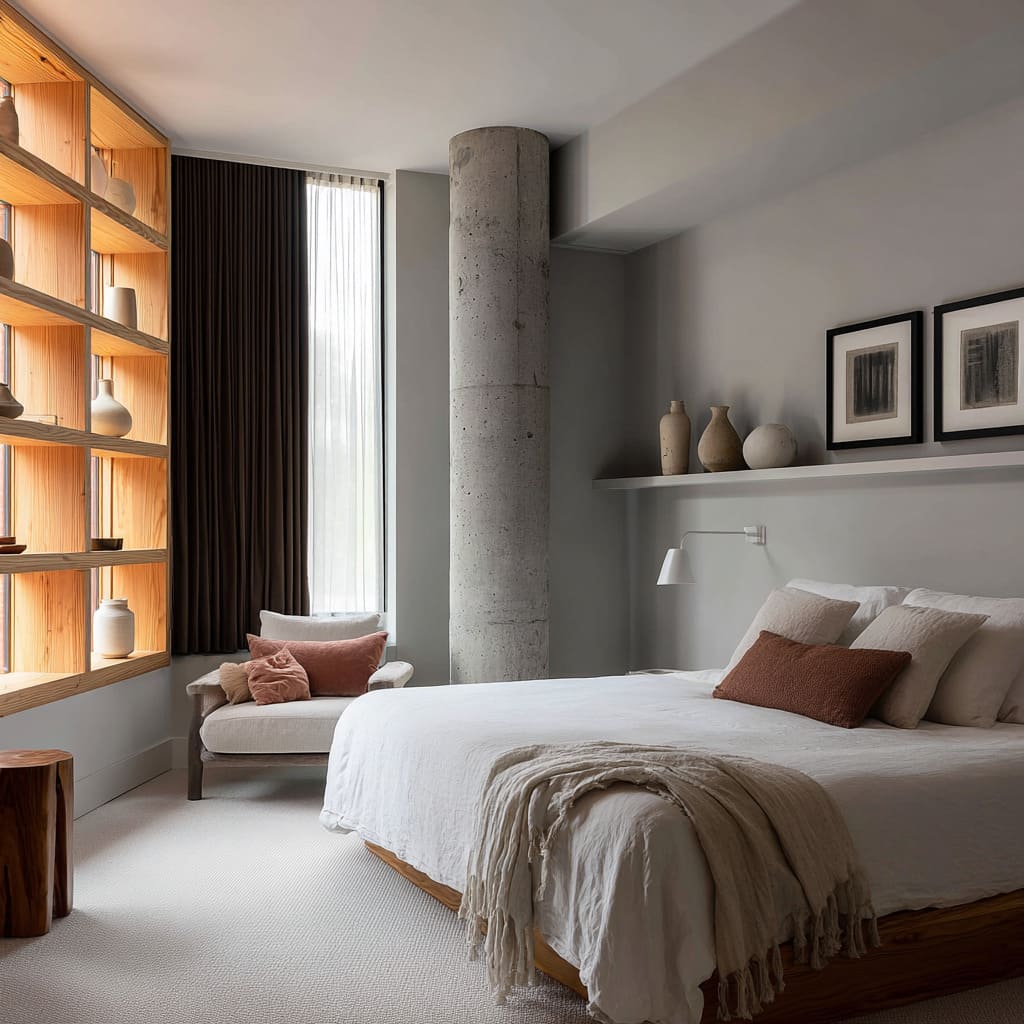
D) Concrete as a shelter shape
When concrete is expressed as a canopy gesture—such as a curved band framing the bed—the mood shifts toward protection and softness. Shape does emotional work here: a curve reads sheltering even before furnishings and textiles enter the story.
E) Concrete as atmospheric plaster-stone
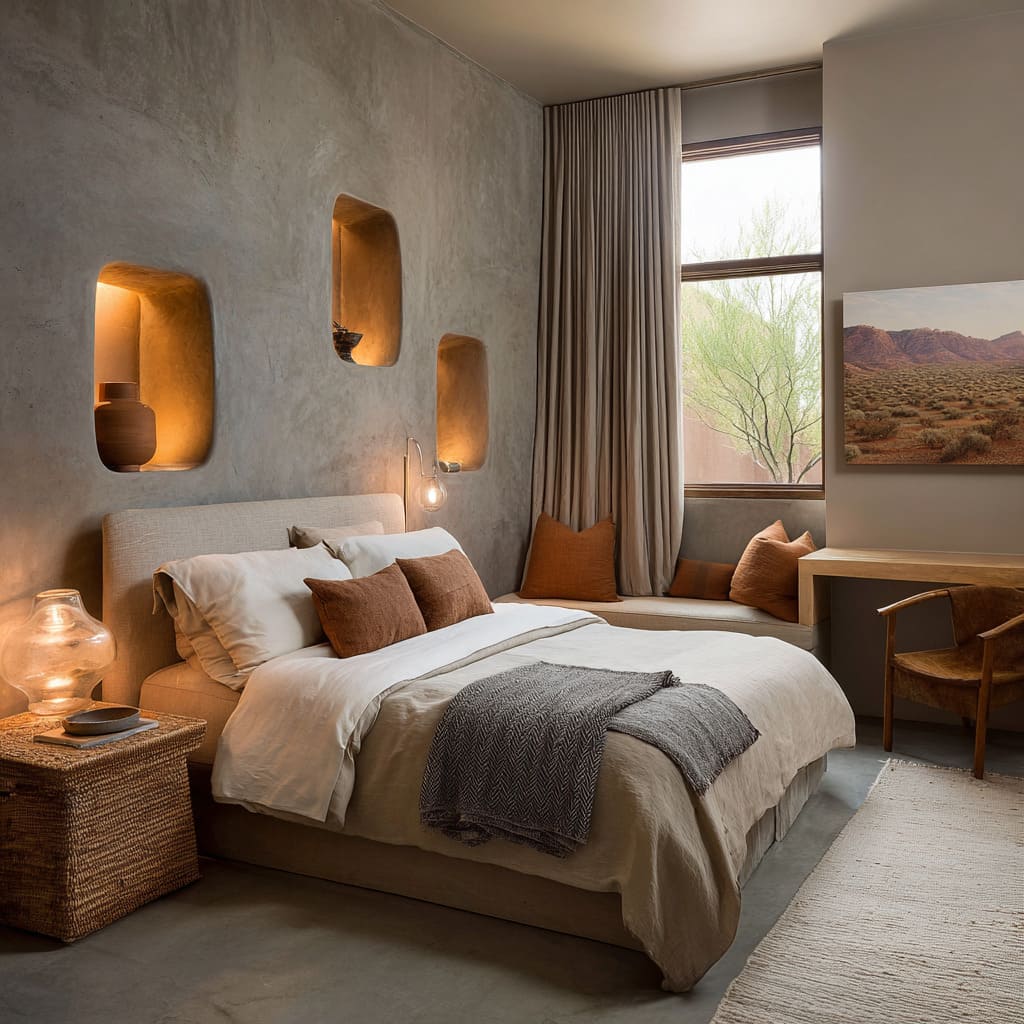
A plaster-like concrete look with gentle mottling and softened edges can support carved niches or recessed voids that act as the room’s ornament. The surface feels warm-grey and quiet, letting light and depth become the main decorative tools.
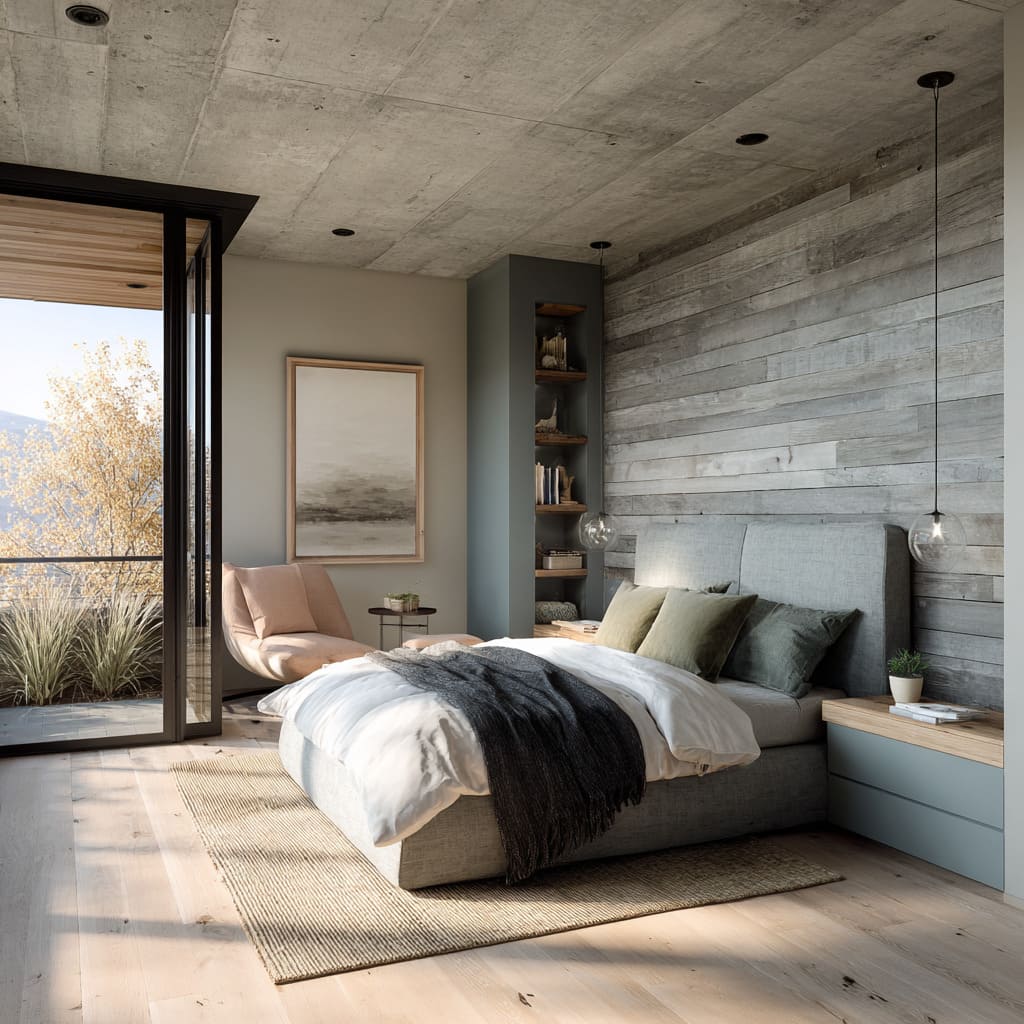
Light becomes the main “temperature control”
Concrete rarely needs constant warm wood to feel comfortable. Many concrete bedroom designs rely on light as the warmth source: warm glow, narrow beams, grazing illumination, and pocketed lighting that turns texture into atmosphere.
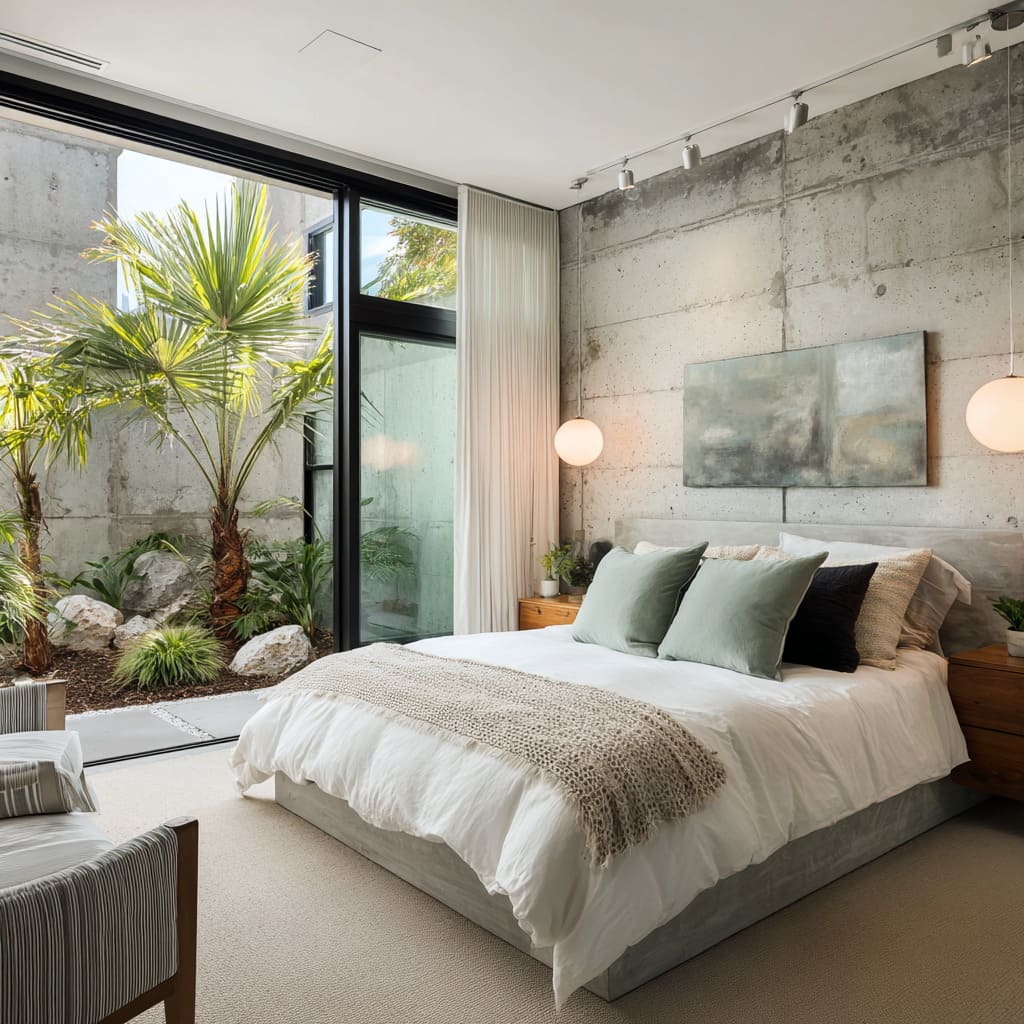
Lighting strategies that reshape concrete
- 1) Vertical light lines as light-architecture. Slim vertical strips behave like luminous structure: they stretch height, sharpen the wall’s rhythm, and make micro-texture readable without turning the room busy.
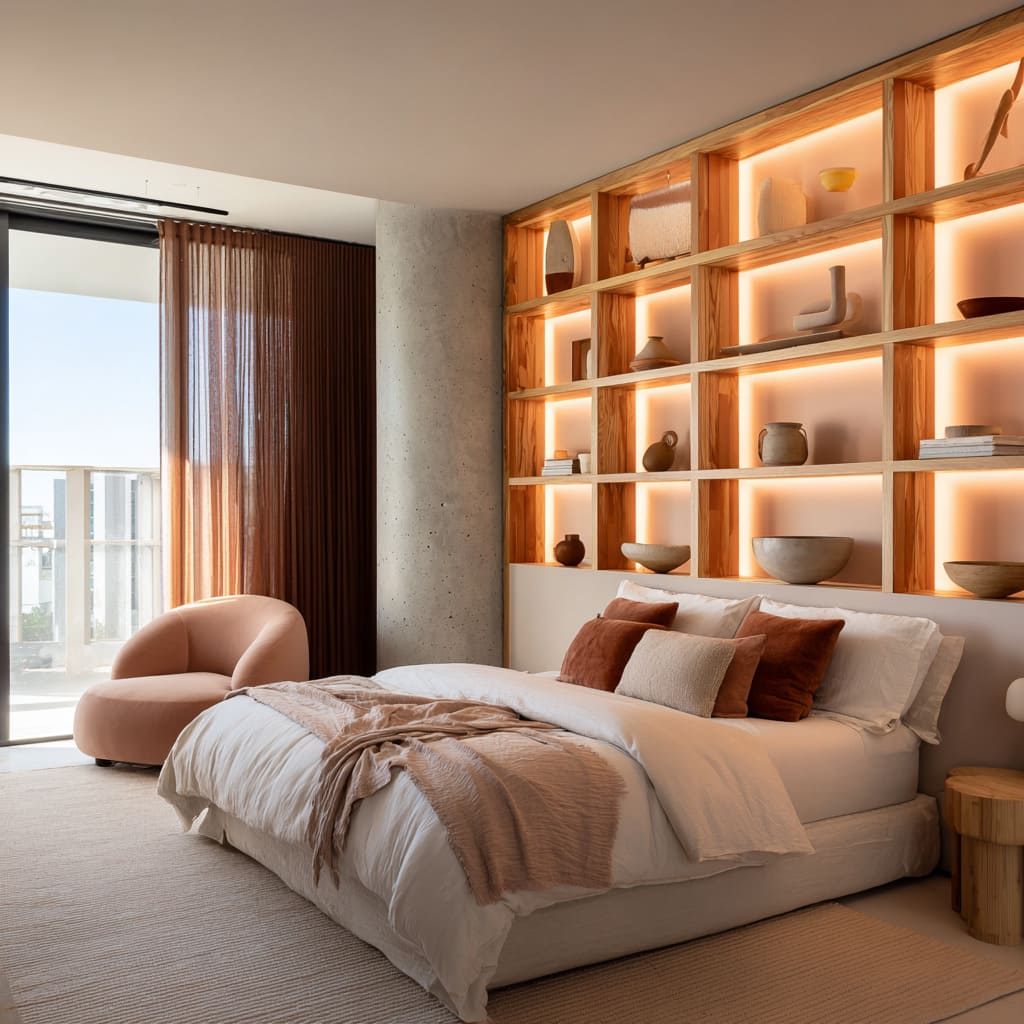
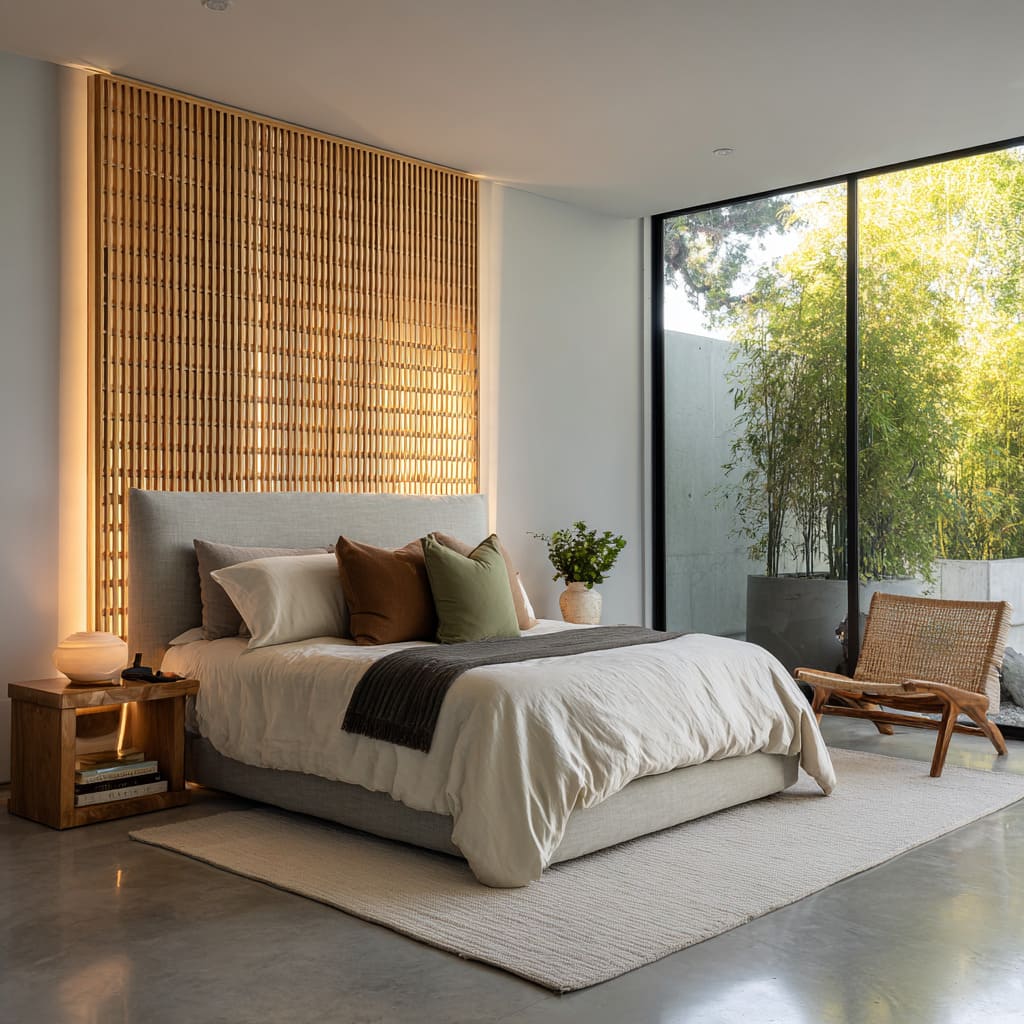
- 2) Backlit shelving and grids as the headboard idea. A glowing timber grid turns storage into ambient identity. The wall reads comforting at night without relying on table lamps, while negative space within the grid keeps the composition calm instead of display-heavy.
- 3) Halo backlighting behind patterned panels. A backlit screen creates a floating effect that reads custom and layered. The panel gains depth through separation, and the glow carries warmth into the space without adding objects.
- 4) Glowing niches as warm pockets. Recessed niches with internal warm light provide depth, shadow, and a handmade architectural feel. A single sculptural object inside each niche reads curated because the light frames it like a small exhibit.
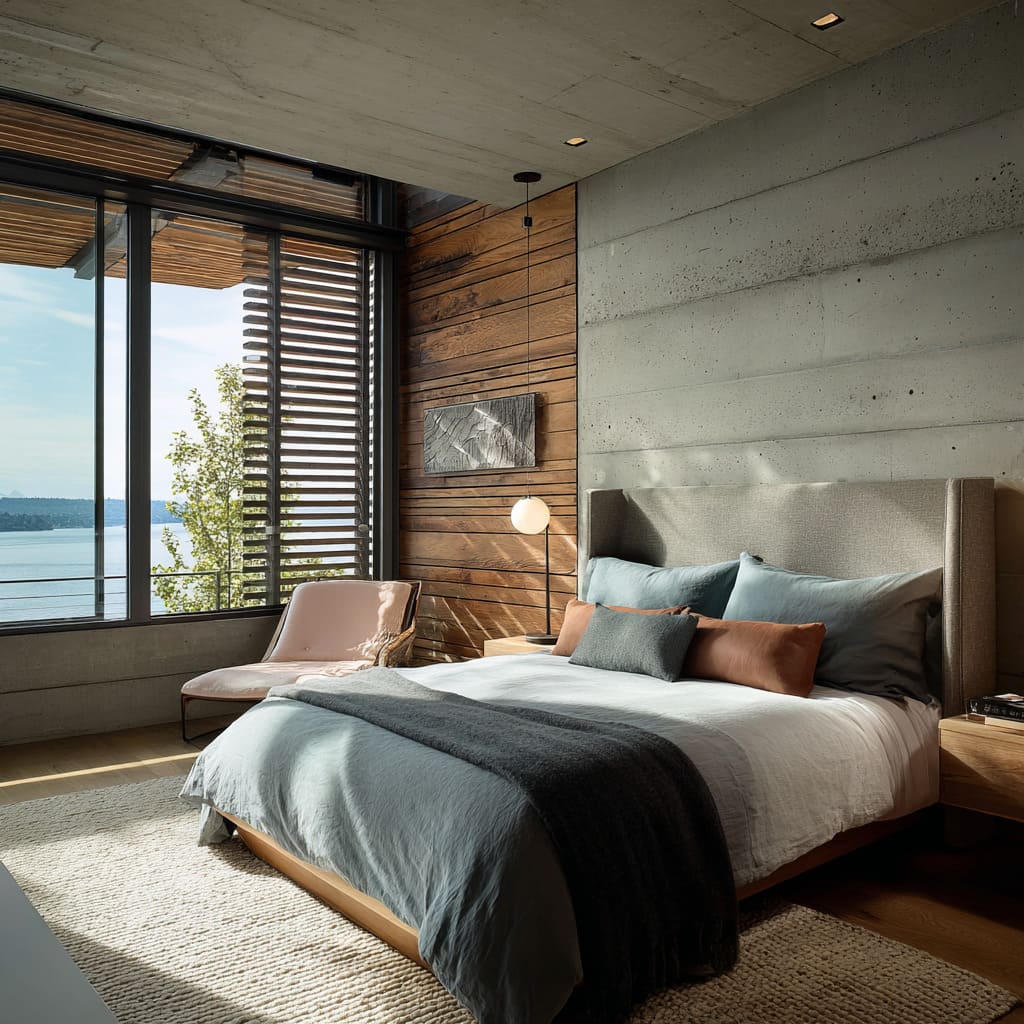
- 5) Filtered daylight as a texture tool. Slatted screens or layered sheers break daylight into stripes and gradients. Concrete looks most tactile when light grazes and shifts rather than blasting the surface flat.
- 6) Round light forms as softness punctuation. Globes or rounded lamps soften the rectangle logic of panels, frames, and seams. Circular light also reads human-scale, bringing intimacy to a room dominated by large planes.
Softness is engineered through contact zones, not decoration
Concrete bedroom designs often feel expensive when softness is placed with discipline: concentrated where the body lives, restrained elsewhere.
The recurring softness zones
- Pillow mass as a soft “headboard field”. Oversized pillow layering can act as the main softness block, letting concrete read as a frame behind the bed rather than a cold surface.
- Underfoot island. A rug defines the bed’s landing zone, visually preventing concrete surfaces from “pulling” the room downward. This creates a quiet boundary that supports calm.
- Curtain plane as a soft wall. Sheers form a luminous vertical plane that makes concrete feel gentler. Heavier drapes add depth bands that keep the room from looking flat in daylight.
- Secondary seat scene. A chair corner or window bench shifts the room from “bed display” to retreat logic. This often stabilizes the mood when hard surfaces are prominent, because the bedroom gains a second slow-use zone.
Curves work as a single high-impact counter-move
A popular strategy is strong straight-line structure paired with one meaningful curve. Concrete seams, black frames, and shelving grids supply rectilinear order; a curved headboard, a rounded chair, or a globe light introduces softness at the focal point.
The curve doesn’t need repetition everywhere—its placement is what gives it power.
Color behaves best as gradients, not sharp contrast
Concrete rooms tend to look calmer when color transitions are gradual and intentional.
Common gradient patterns
- Concrete → warm grey upholstery → white bedding
A softened mid-tone acts as the bridge, avoiding harsh jumps. - Concrete → white bedding → one warm “heat point”
A small rust/caramel note can make greys feel richer and lighting feel creamier, without turning the space colorful. - Concrete → deep blue as a soft field
A saturated but calm blue can behave like a textile wall, creating a cinematic hush without visual clutter. - Concrete + earth-toned architecture
Terracotta or sand-toned elements paired with concrete create warmth through material color and shadow rather than through decor.
These approaches frequently appear in curated concrete bedroom ideas that aim for calm: color is present, but controlled and placed.
Depth tools that make concrete read refined
Concrete can look flat if everything sits on one plane. Many concrete bedrooms use depth tools that add richness without adding clutter.
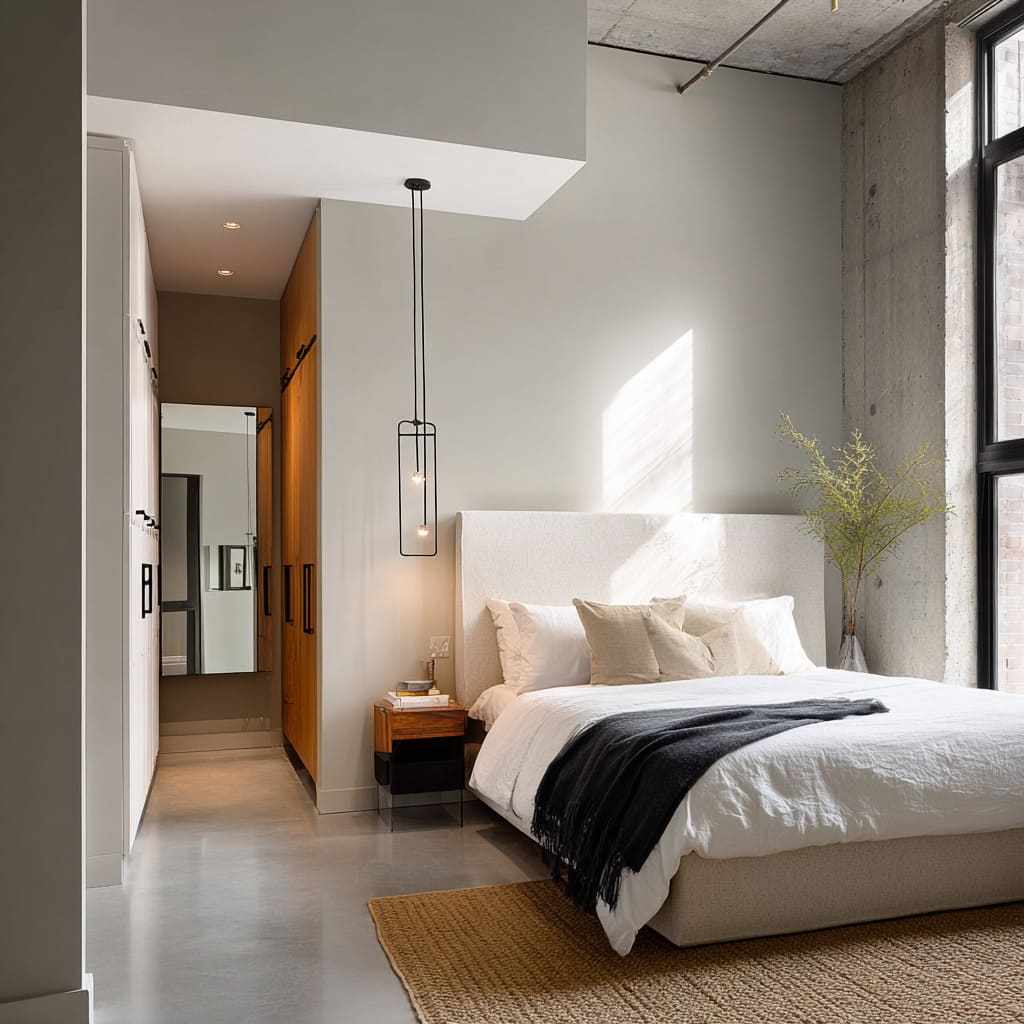
- Mirrors as depth amplifiers.
A mirror can extend space, repeat lighting geometry, and reflect daylight so the room gains “volume” without additional objects. - Shadow gaps and floating effects.
Thin separation lines, underlighting, and halo panels make surfaces feel layered and intentional, which keeps concrete from feeling leftover or unfinished. - Built-in voids.
Recesses and shelving cavities create negative-space décor: depth becomes the ornament, and the room stays visually quiet.
Suite logic changes the mood more than décor does
Concrete designs often feel calmer when the layout reads like a small suite. A corridor-like entry sequence, a closet run that behaves as a long matte plane, a column that zones without blocking light, or a window bench that creates a seated “scene” can make the room feel structured and lived, even with minimal decoration.
Distinct concrete bedroom “looks” created by the same toolkit
Concrete-based bedroom designs often fall into recognizable visual identities, driven by placement + light + softness placement:.
- Gallery-loft calm: concrete grid surfaces, crisp black framing, plush bed island, and one depth amplifier (mirror or glazing).
- Retreat warmth: concrete on one major plane paired with timber texture, breathable daylight, and a niche or shelf depth moment.
- Desert rhythm: concrete as a quiet base with carved voids or warm screens, where shadow becomes the decorative rhythm.
- Coastal soft-minimal: refined concrete paneling as backdrop with woven texture, bright curtains, and a light palette anchored by one warm note.
- Tailored suite: concrete used as a band/pier, surrounded by built-ins and warm glow, with negative space doing the luxury work.
- Monastic architecture: concrete planes plus low platform logic, with softness concentrated at bed, rug, and bench zones.
The quiet rules that keep concrete bedrooms feeling calm
Certain patterns repeatedly create the most controlled concrete bedrooms:
Window planes are frequently softened with sheers, screens, or deep framing so concrete feels gentle in the room’s overall atmosphere.