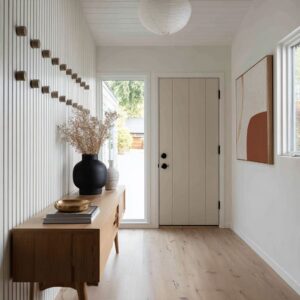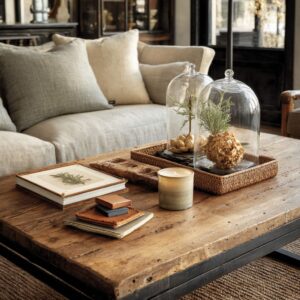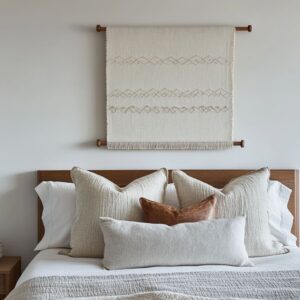
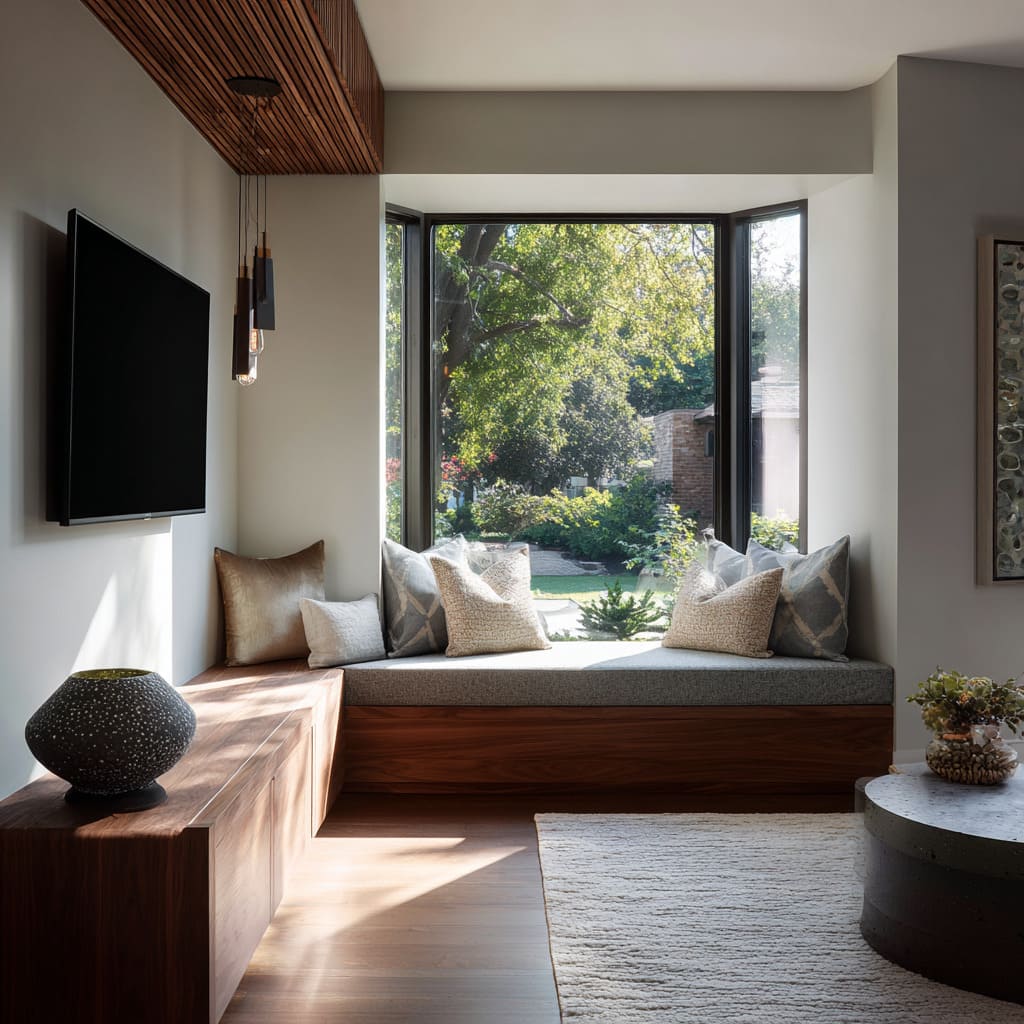
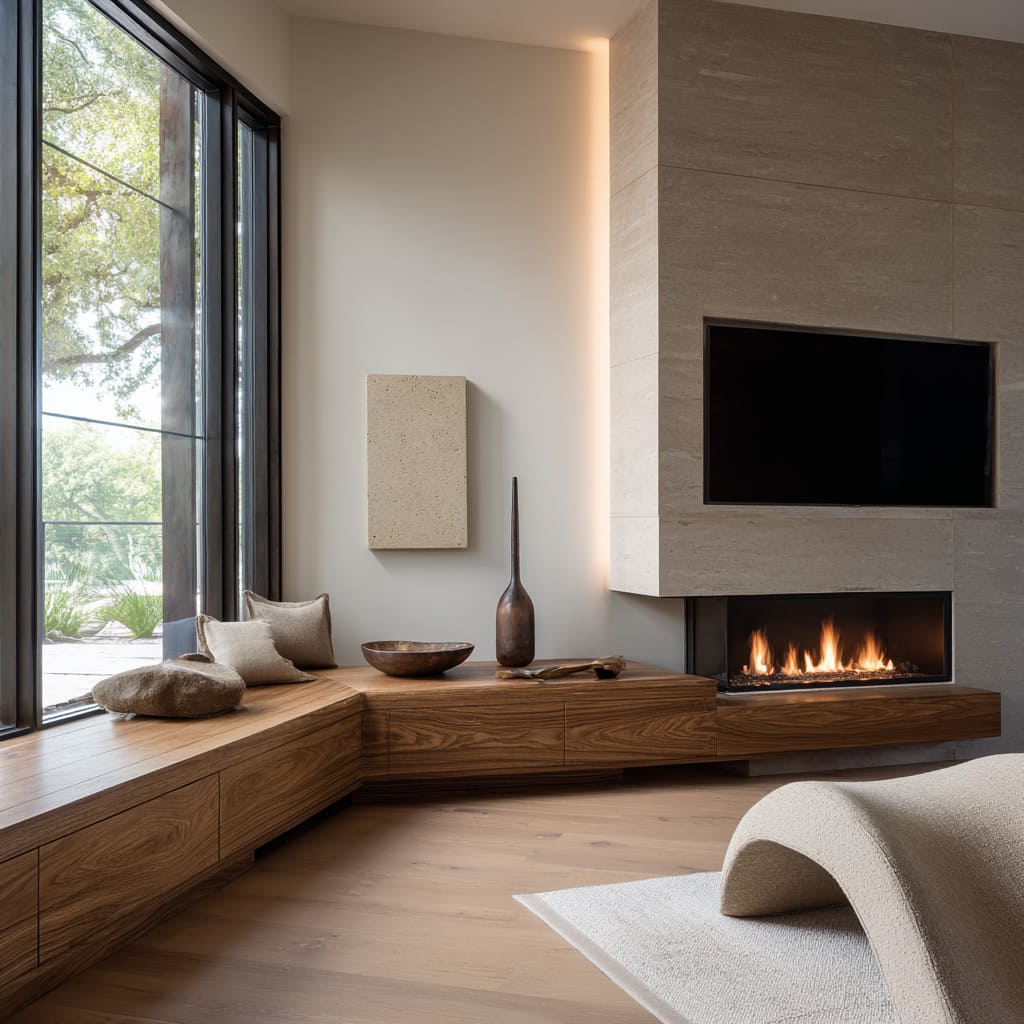
A modern corner reads best as a hinge that ties two stories together—often a window scene on one side and a media or feature wall on the other—so corner decor ideas center on continuity rather than termination. A single, uninterrupted datum such as a long bench or slim console glides through the angle and links surfaces, letting the eye track one calm line before noticing changes in texture, tone, or function.
This move shifts living room corner ideas from “fill the gap” to “connect the planes,” and the result is a corner that looks deliberate, breathable, and softly important within the overall composition of living room corner decor.
When one horizontal element spans both sides, the corner stops looking like a collision of walls and instead feels like a gentle pivot. In refined living room corner decor ideas, this line often travels under glazing and continues beneath a TV, or moves from plaster to a ribbed timber field without visual friction.
The piece looks architectural if pillows are spaced wide, ceramics are few, and a clean rim of wood or stone remains visible so the line reads clearly across the turn.
Long–Low Lines Set the Mood
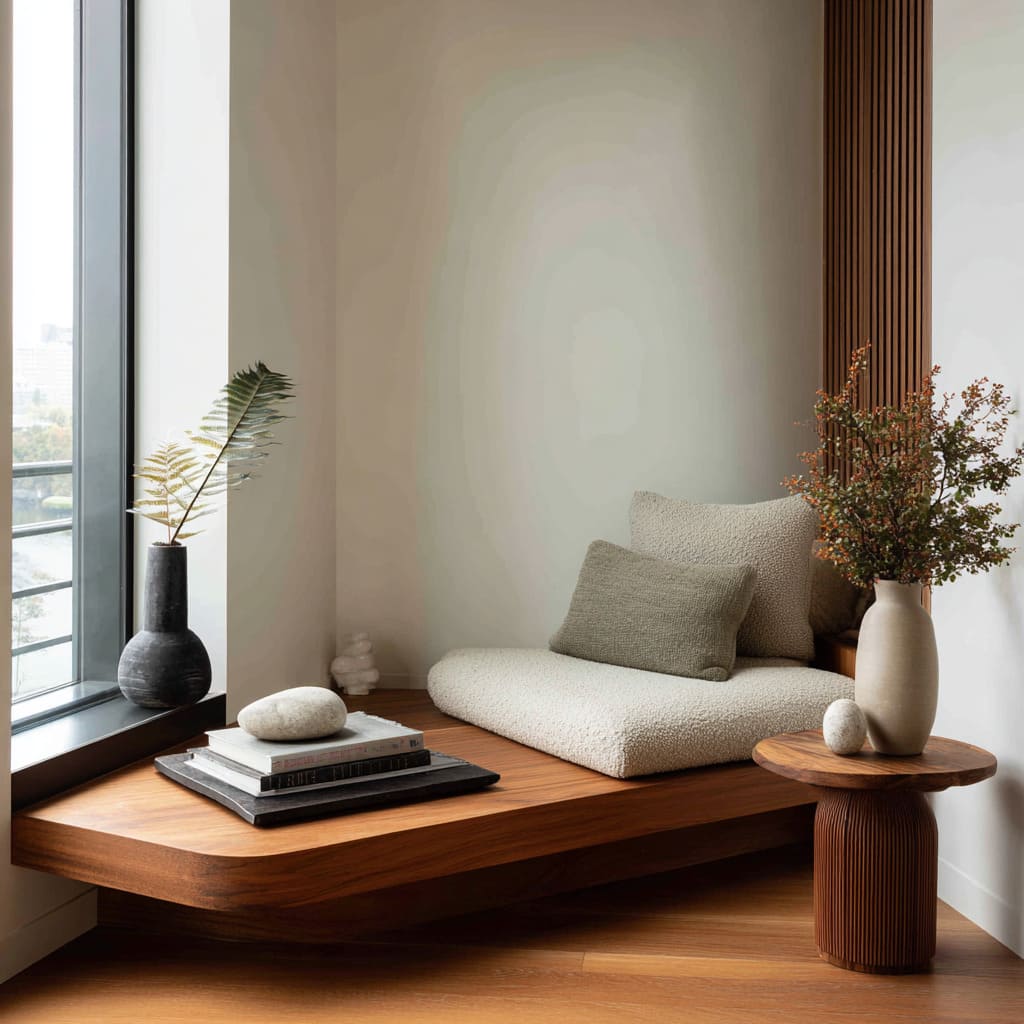
In many design ideas for living room corners, the most consistent thread is the long, low horizontal: benches, floating consoles, wafer-thin ledges. These keep mass below eye level, give small objects a stage, and create a steady baseline that makes tall items feel anchored.
The best rooms allow generous negative space on these surfaces; one grounded bowl, a book stack with a single river stone, or a shallow tray becomes enough for decor ideas for corner of a living room where quiet is the core aesthetic.
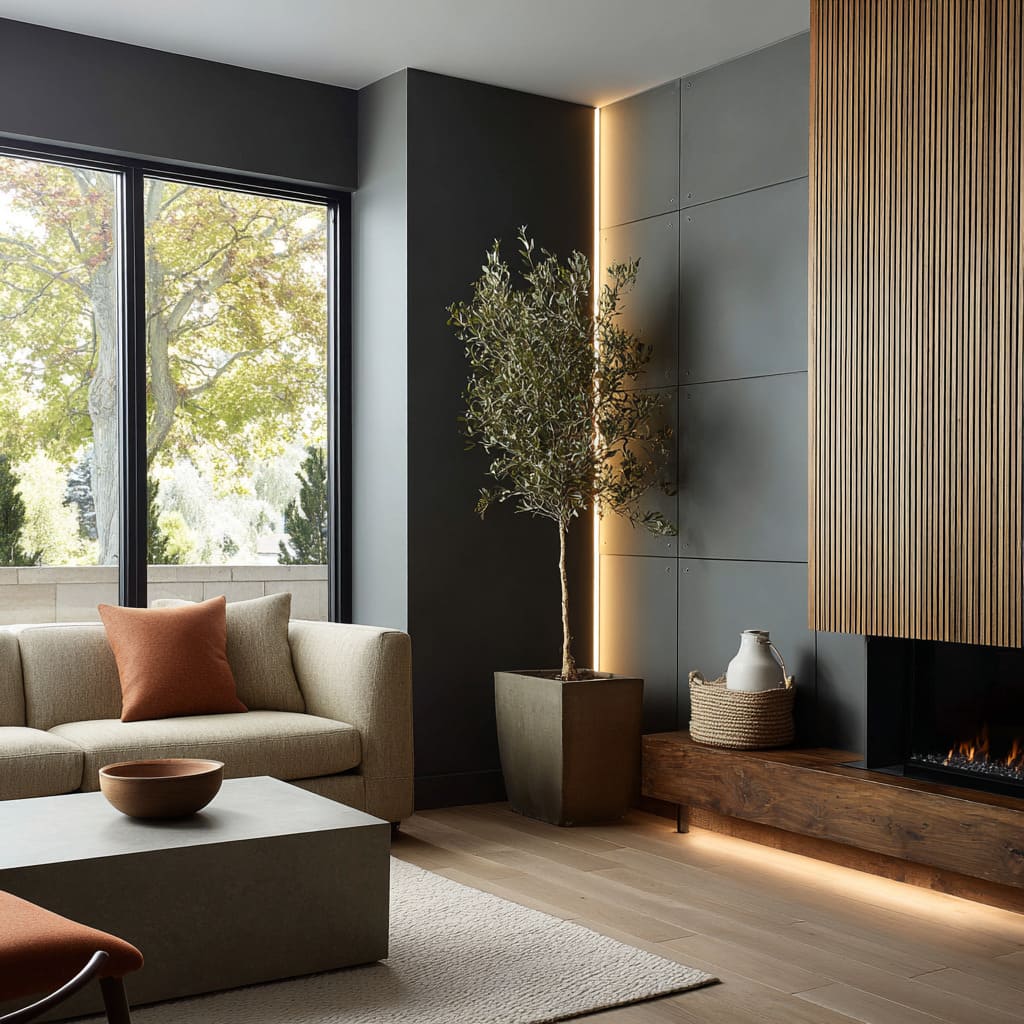
A stable horizontal narrows a TV visually, keeps a fireplace composition disciplined, and makes even varied surfaces—plaster, slats, stone—feel like parts of one sentence. Within living room ideas for a corner, this is the difference between a wall that jitters and a wall that feels settled.
Value Over Color, Texture Over Pattern
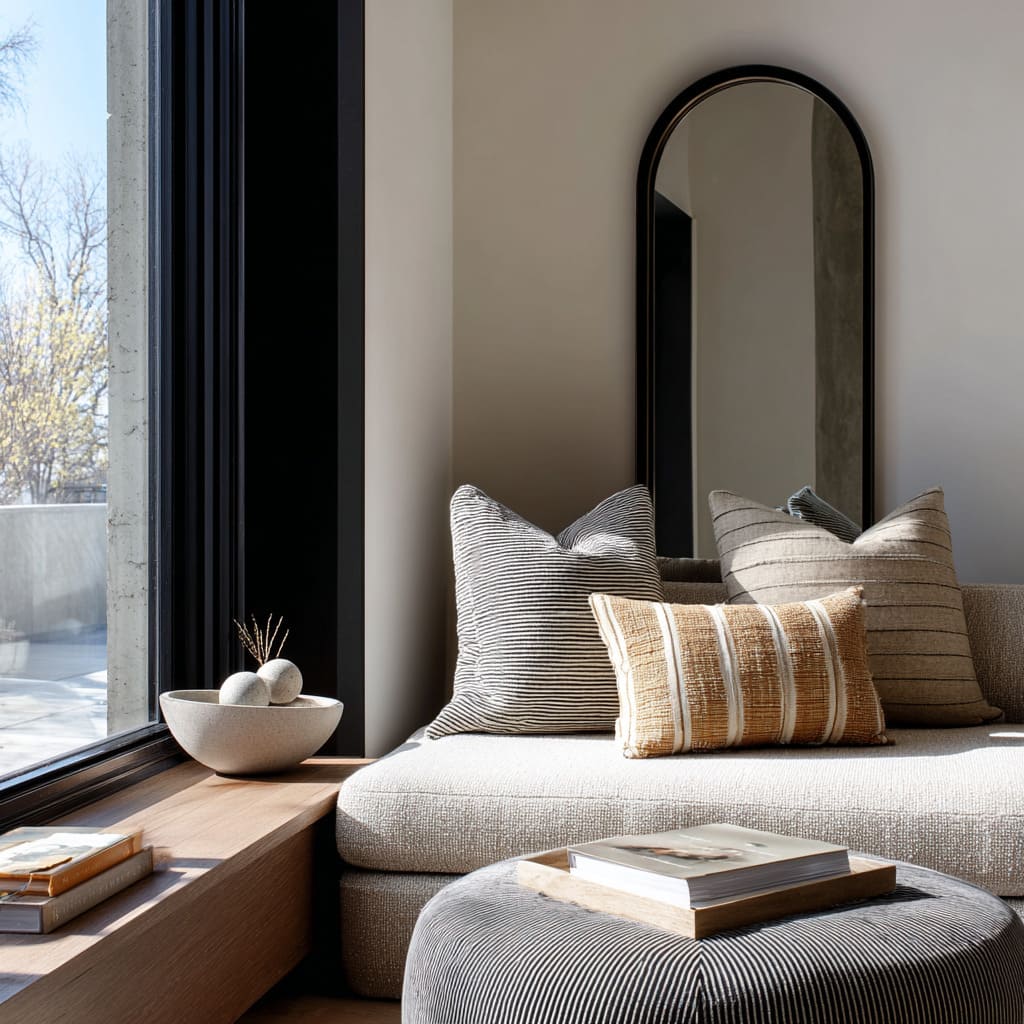
Modern corner interior design ideas rely on value relationships and texture rather than bright palettes. Black frames, pale walls, and mid-tone woods form a dependable triad; chalky ceramics, boucle upholstery, and gentle grain carry the story without glare.
The brightest hue typically arrives from the garden or sky beyond the glazing, so living room corner design ideas let nature take the chroma role while the interior provides the canvas.
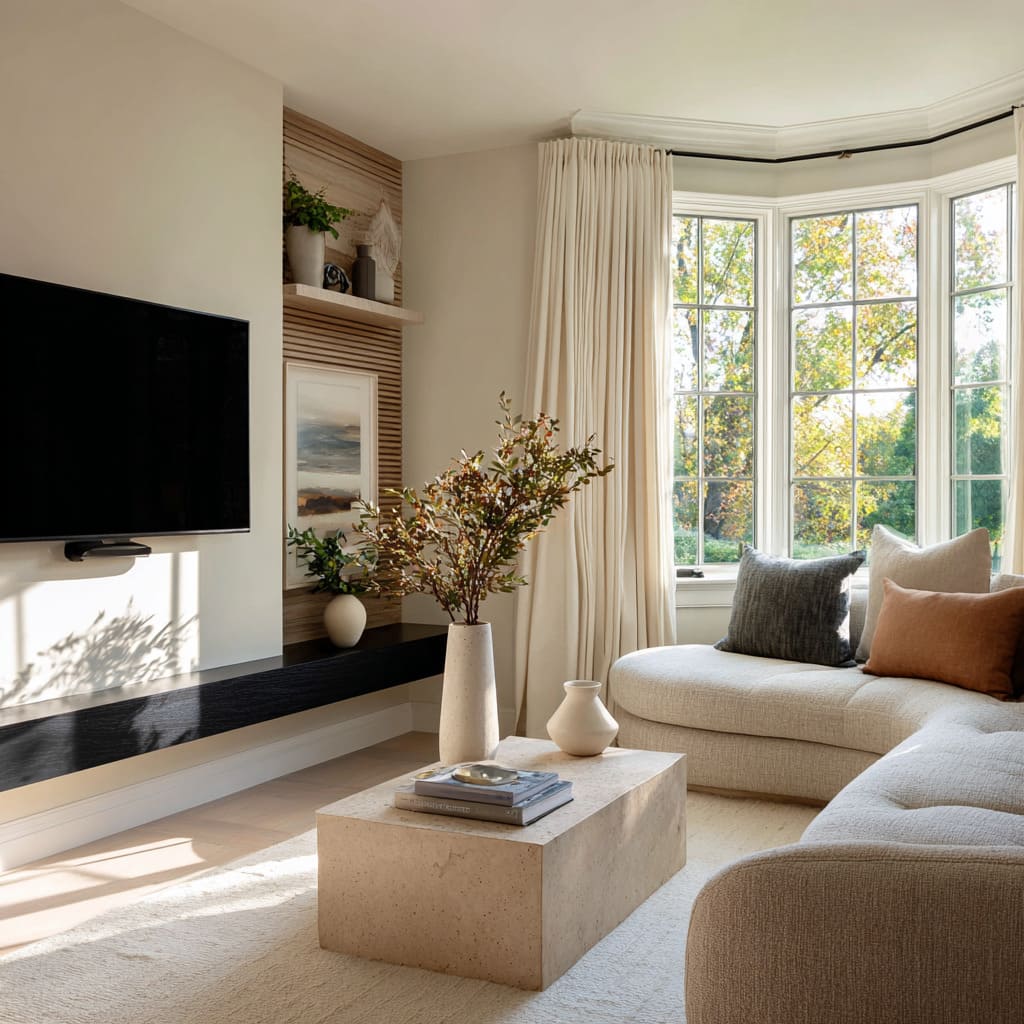
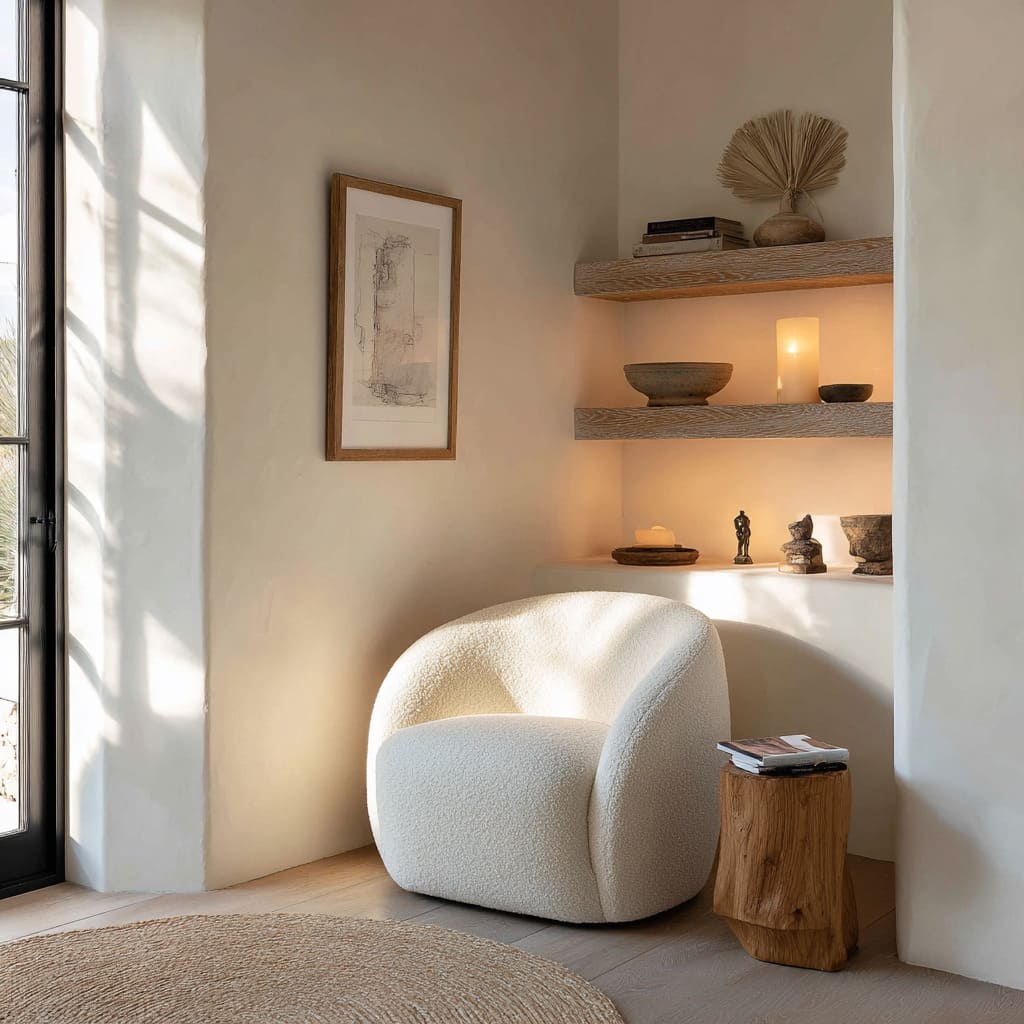
Boucle reads as soft relief; lime-wash and plaster catch daylight in subtle gradients; ribbed timber throws neat pencil shadows. In a list of living room corner ideas, these finishes sit at the top because they help corners look rich in both sun and evening glow.
Negative Space Works Like an Ingredient
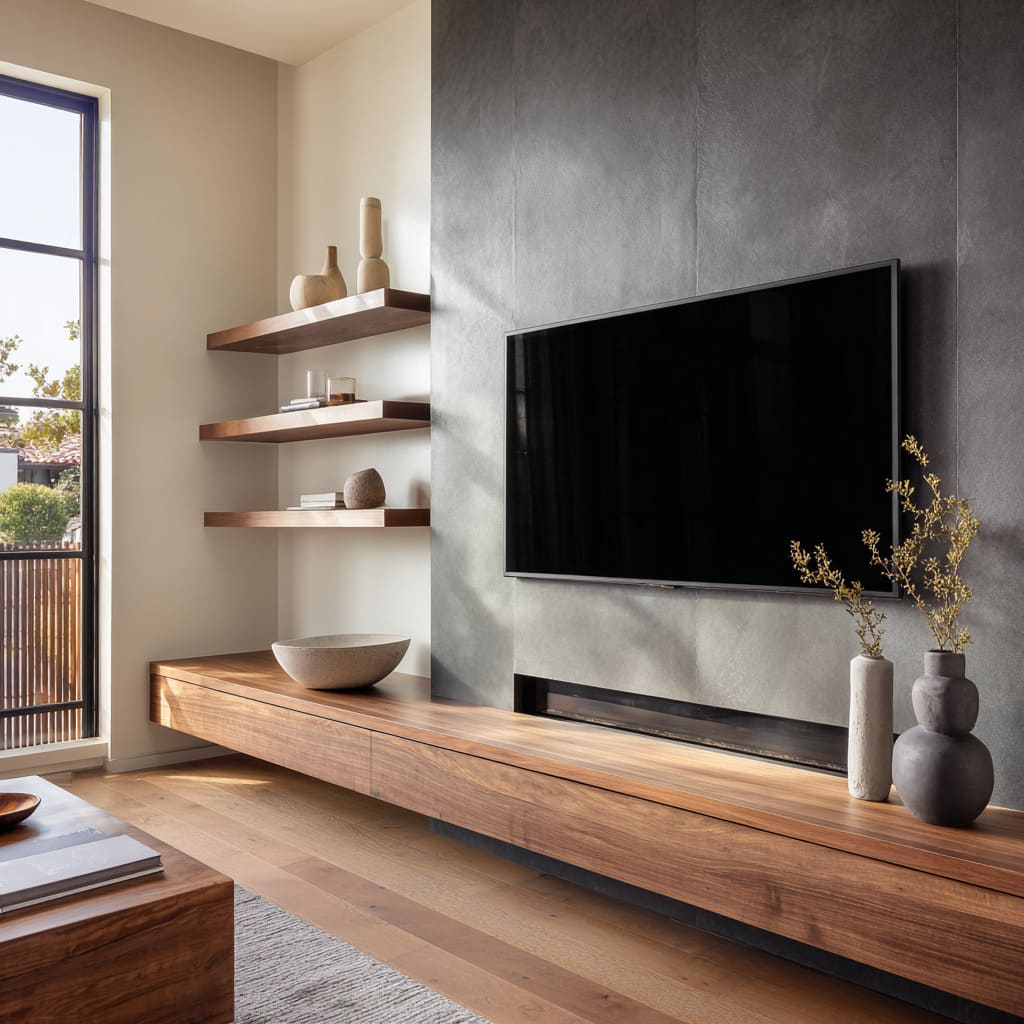
The spare band in the middle—the stretch of empty bench or the shelf gap—does real work. It shows grain, gives light a place to skim, and helps object silhouettes read cleanly.
In elevated decorating ideas for a corner in the living room, fewer items with wider spacing beat many smalls every time. The look is confident because the air around things is part of the styling.
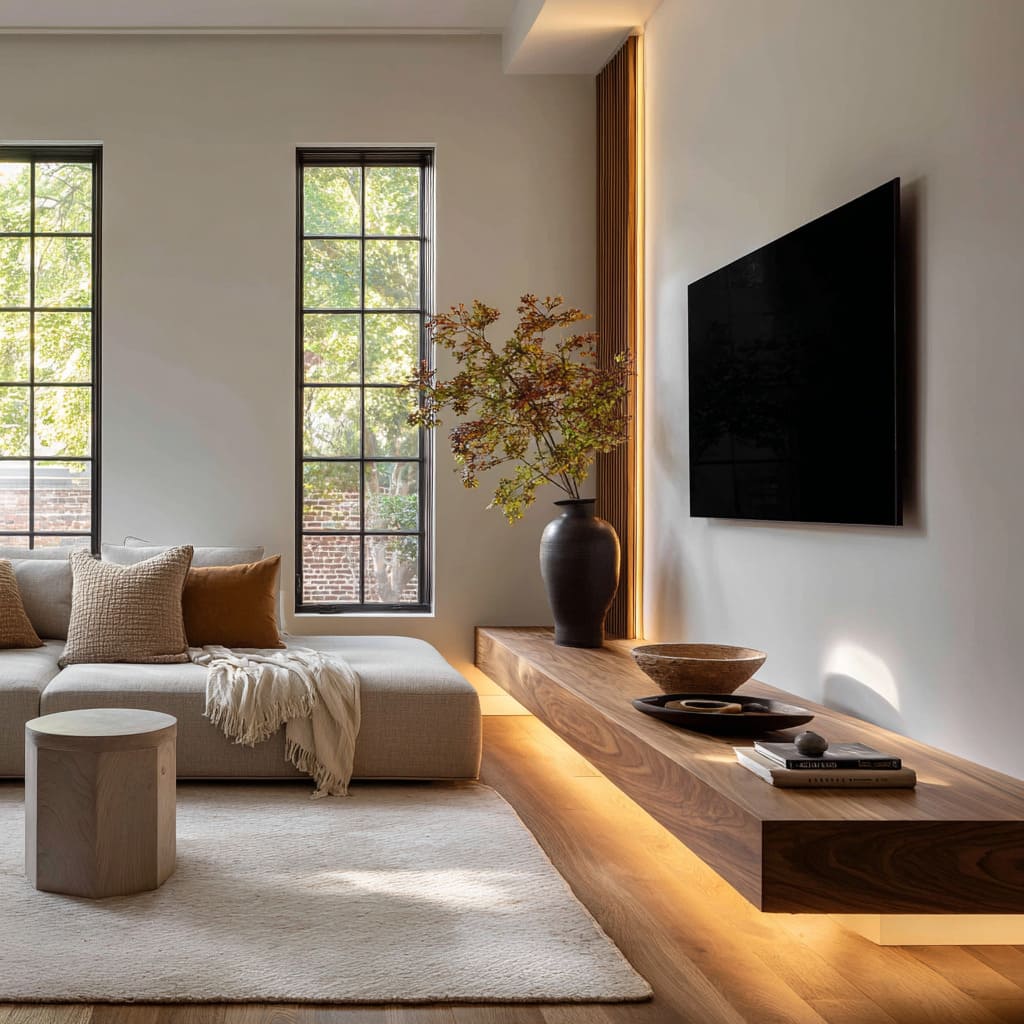
Corners that feel refined follow a rhythm: beat (object), rest (air), beat (object). Books act as spacers, stones add quiet weight, and trays keep tiny items from dissolving into clutter.
It’s styling as pacing.
Height Duets: One Tall, One Low
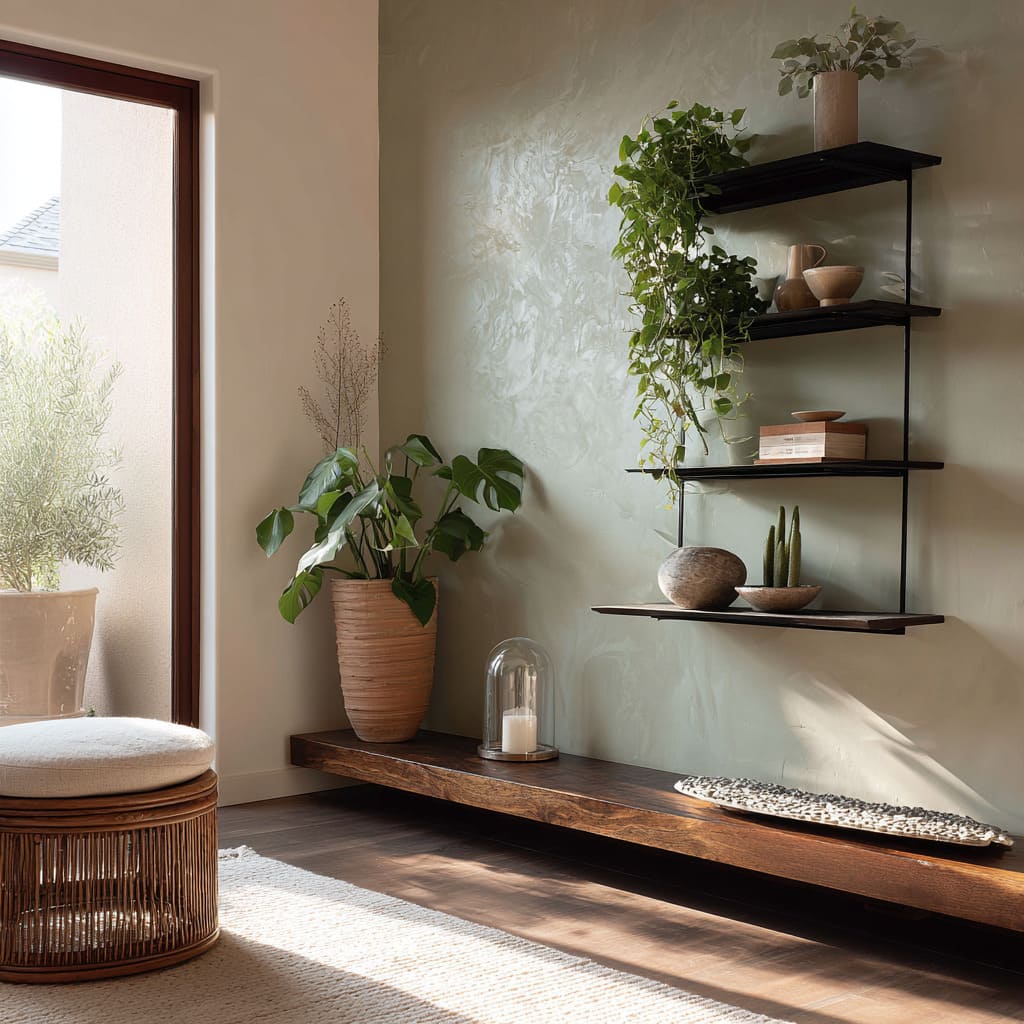
A reliable compositional duet appears throughout sophisticated corner decoration ideas for a drawing room: one tall, slender element—branch vase, narrow mirror, or floor lamp—paired with one low, wide anchor—bowl, book stack, or moss dish. This pairing supplies reach and grounding without a crowd, often placed just off the angle so the composition feels effortless rather than centered.
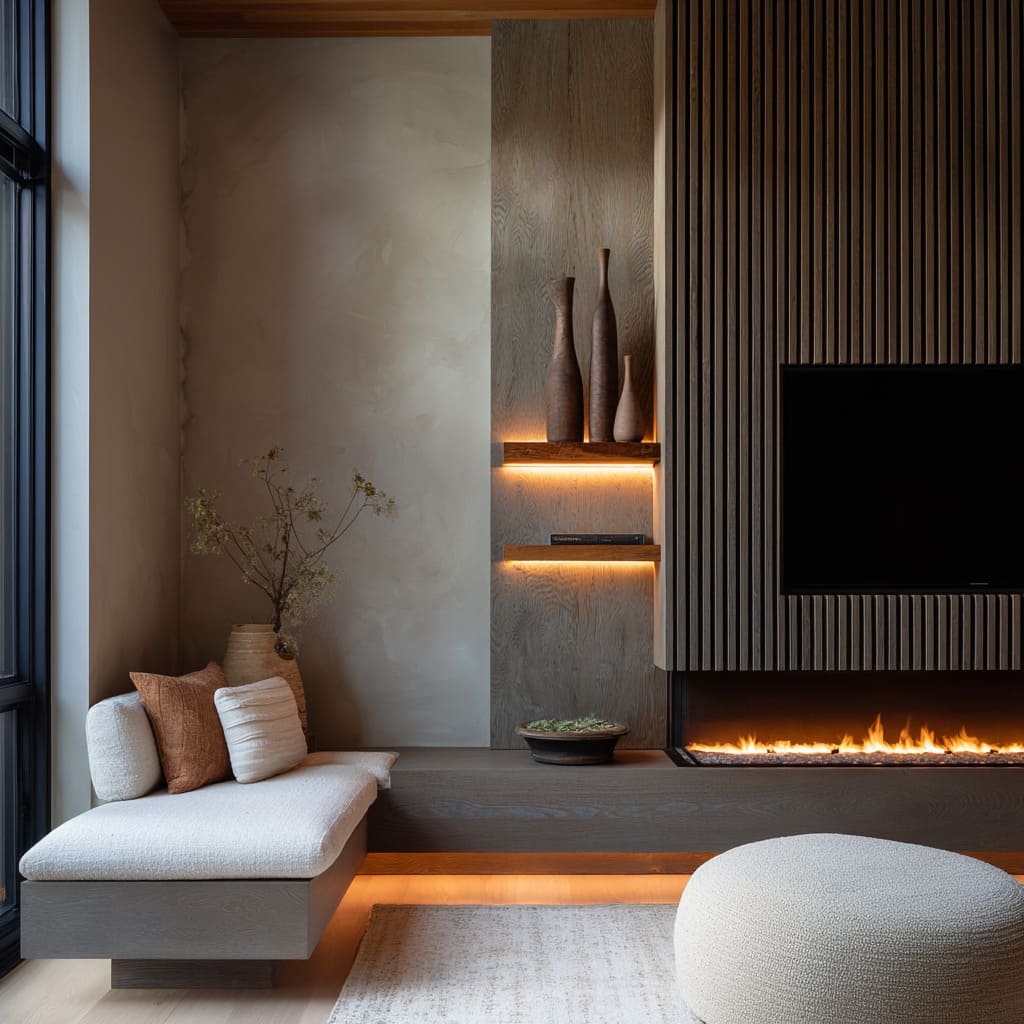
The tall element addresses the vertical, the low element stabilizes the horizontal, and the empty band between them keeps the eye from sticking. Together, they create a readable silhouette that suits both daylight and evening light.
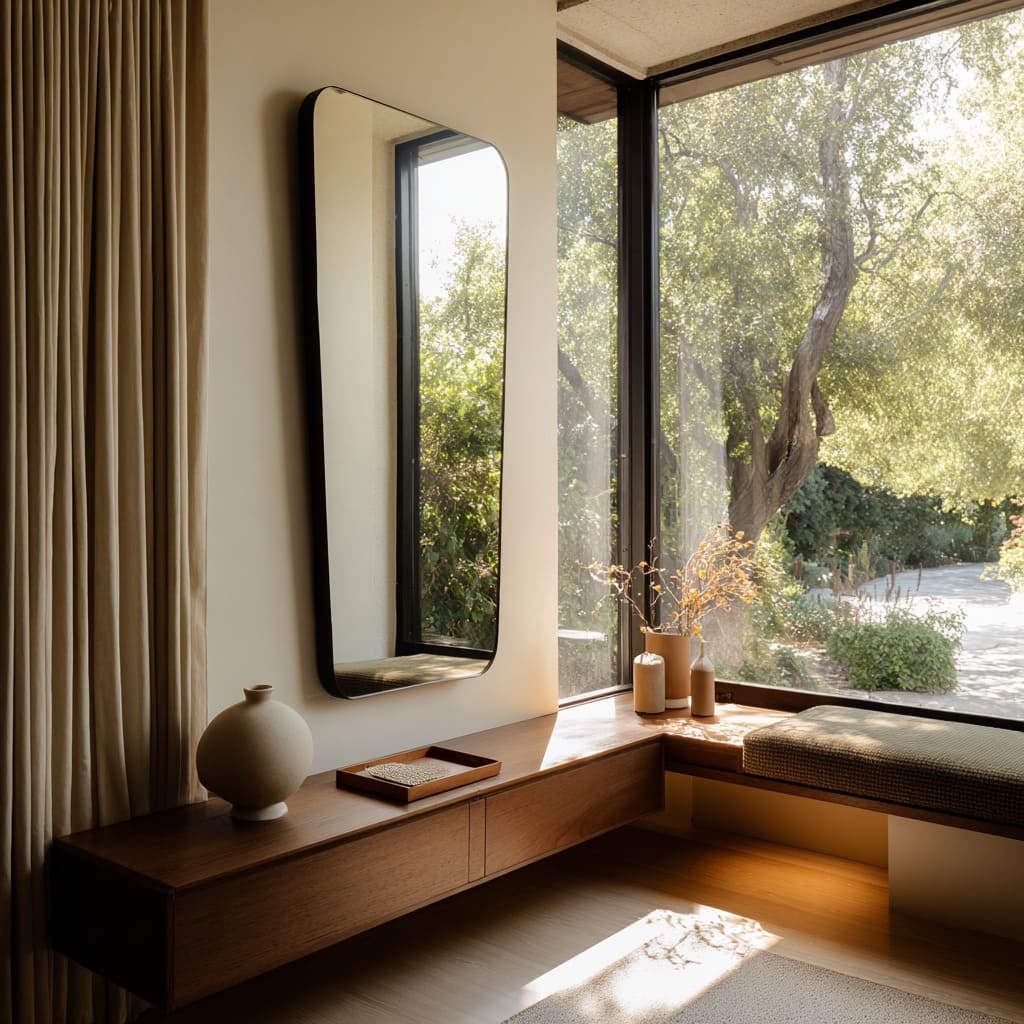
Softening the Elbow With Rounded Elements
Rounded bench noses, eased shelf corners, ribbed mushroom lamps, pebble ottomans, and arched mirrors soften the hard 90° of a room corner. Within living room corner decor, even a small chamfer at the bench turn can change the entire read, shifting an abrupt junction into a relaxed landing.
The presence of one decisive curve—the arch on a mirror, the soft lip of a bowl—tempers a field of right angles. The space looks less mechanical, more human.
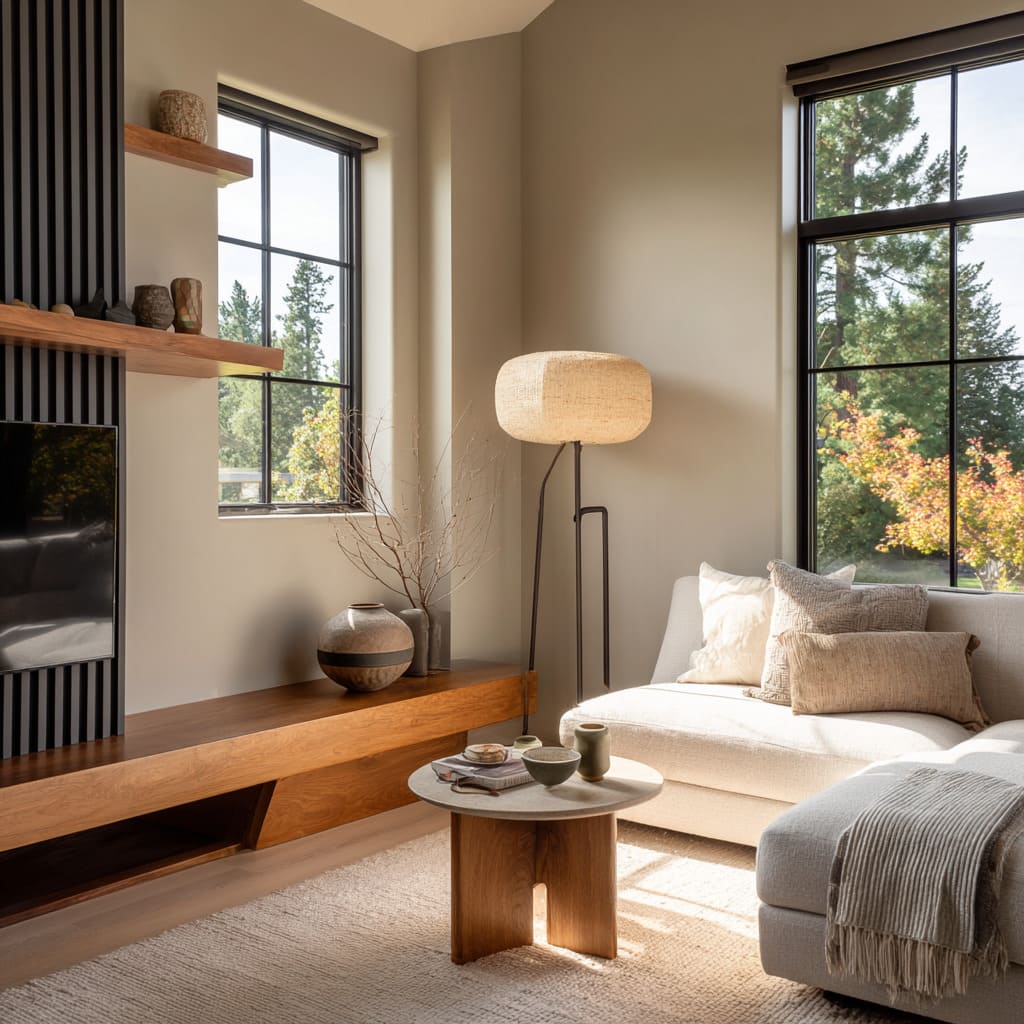
Ribbing for Shadow, Not Noise
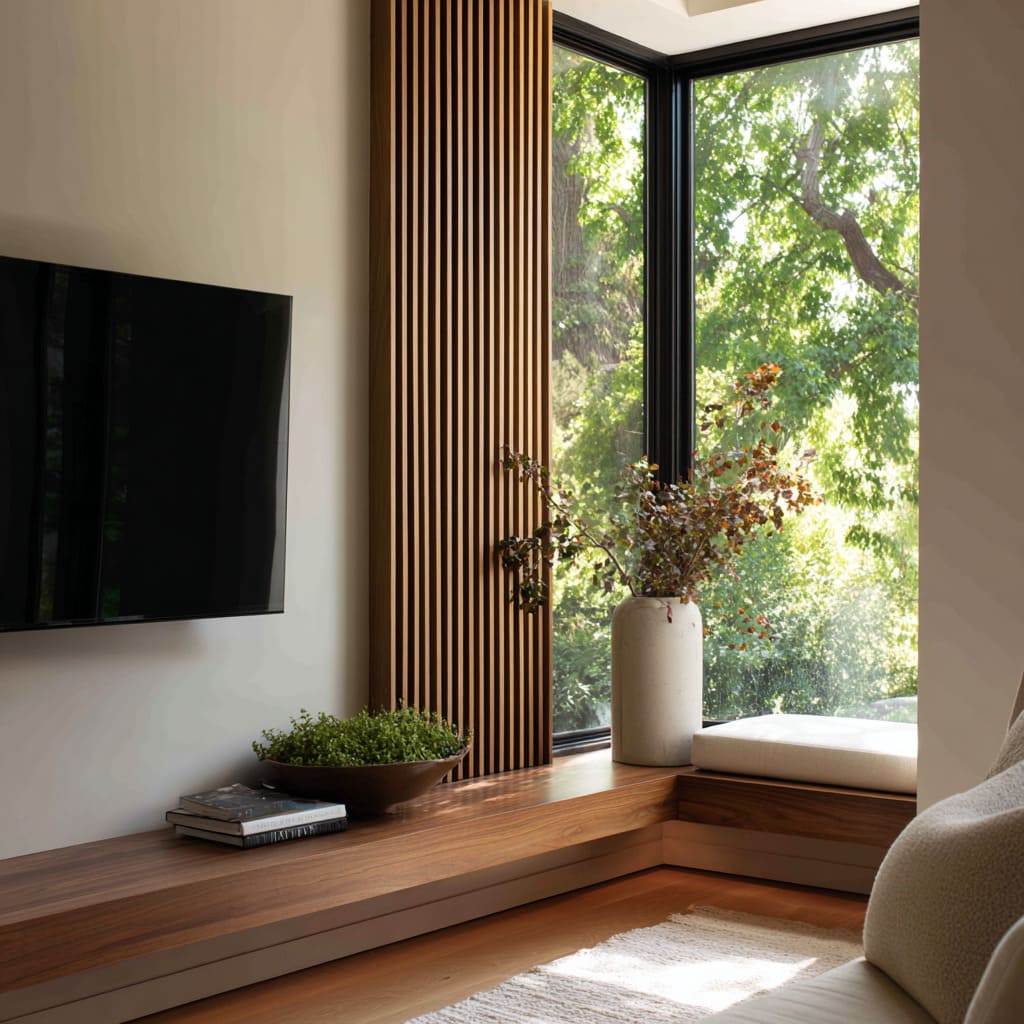
Vertical slats, ribbed panels, and fluted backgrounds appear not as a pattern to show off but as small shadow machines. In high-level living room corner design ideas, grooves keep dark planes lively and disguise wall seams, especially where two materials meet.
The most convincing spaces repeat the ribbed note in three scales (panel, planter bands, pleated shade) so the texture family feels connected. When a texture repeats in three places—each in a different size—it reads intentional rather than matched.
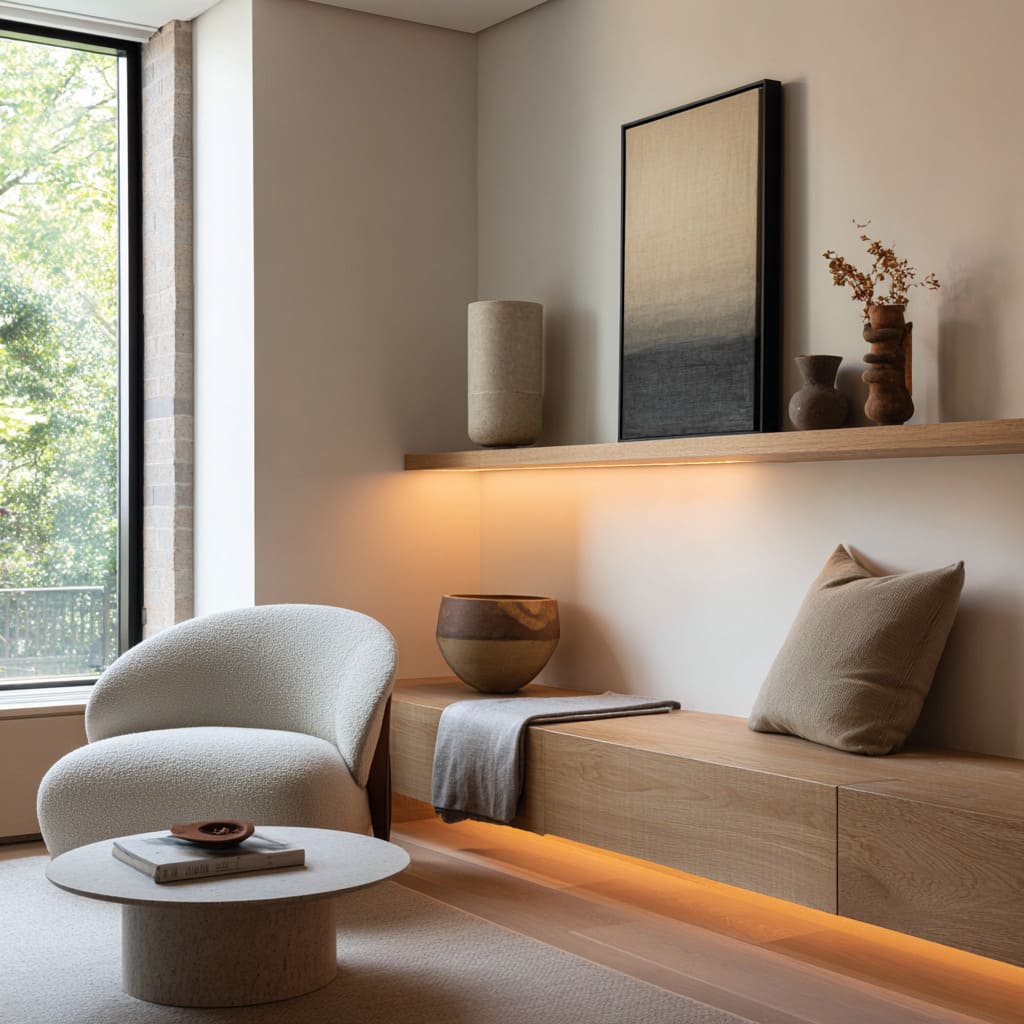
Low, Warm Under-Glow
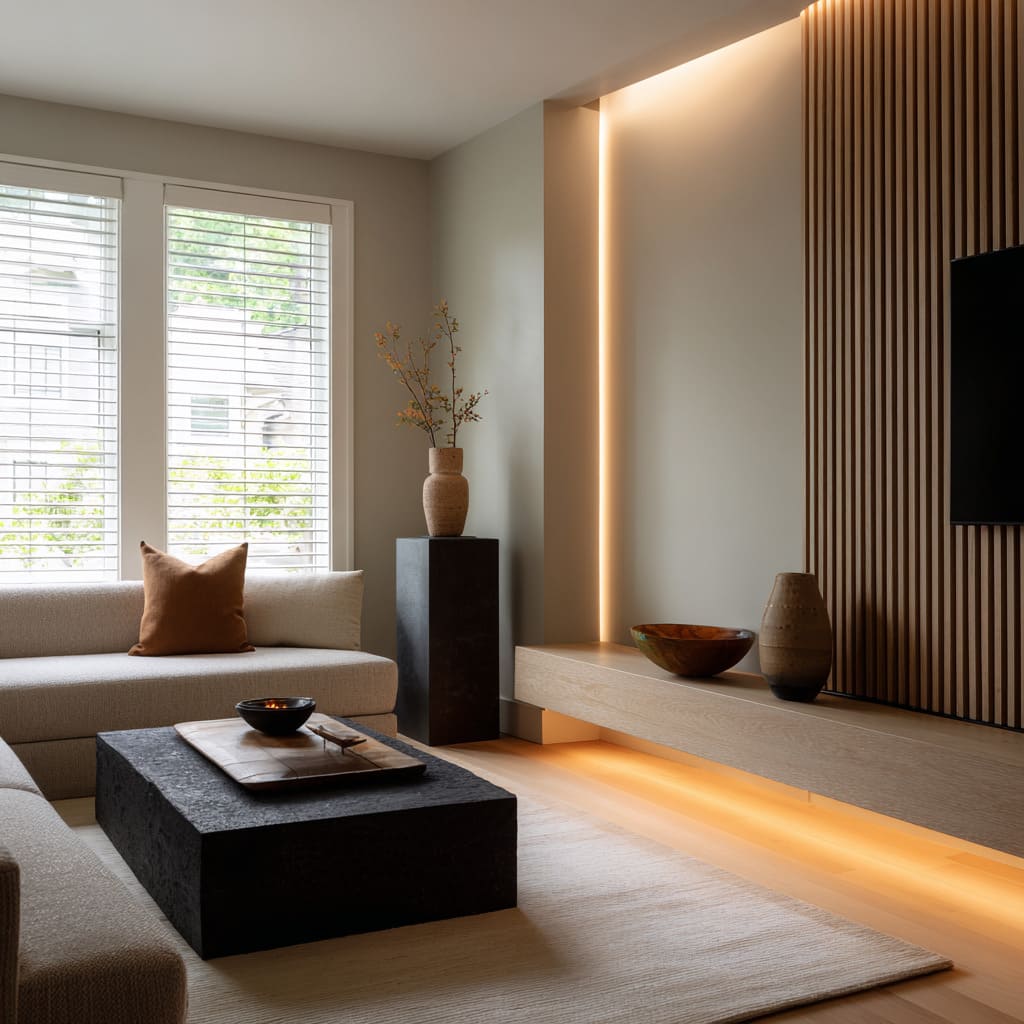
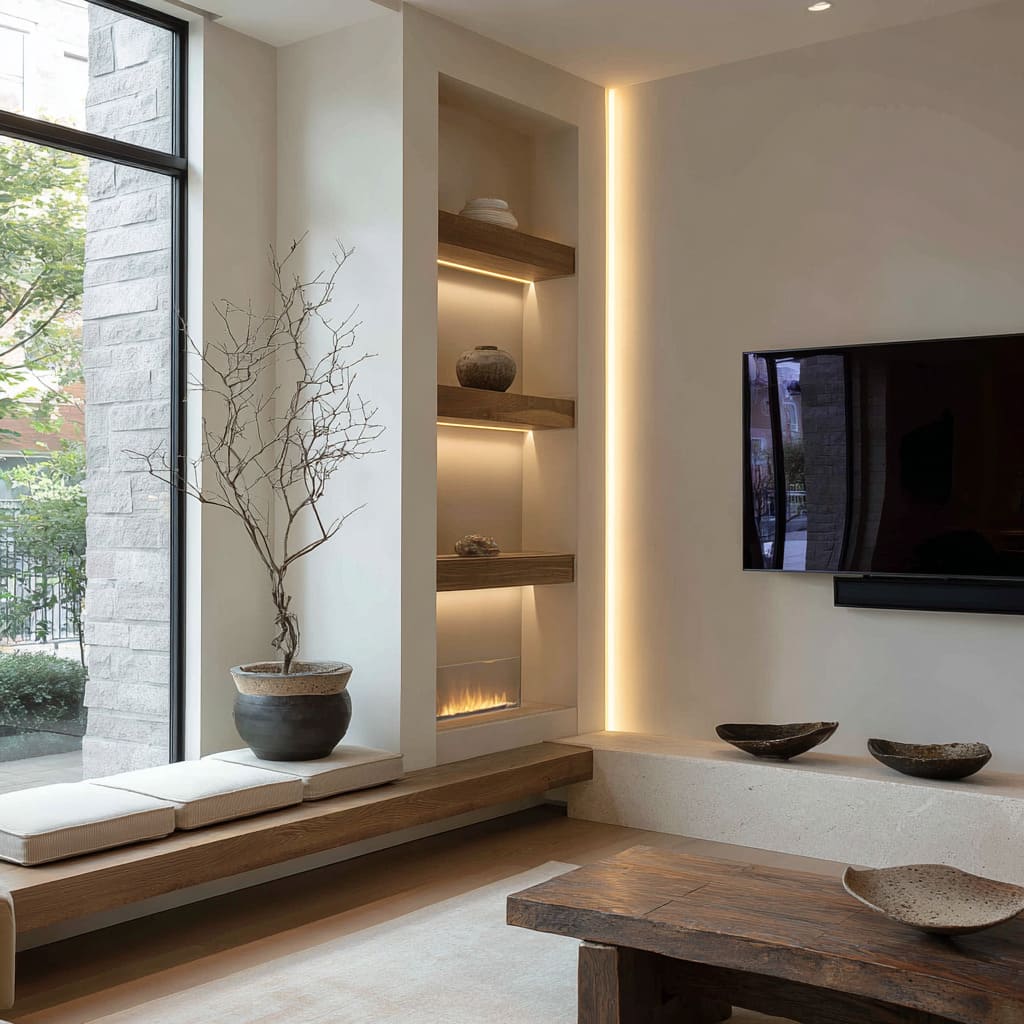
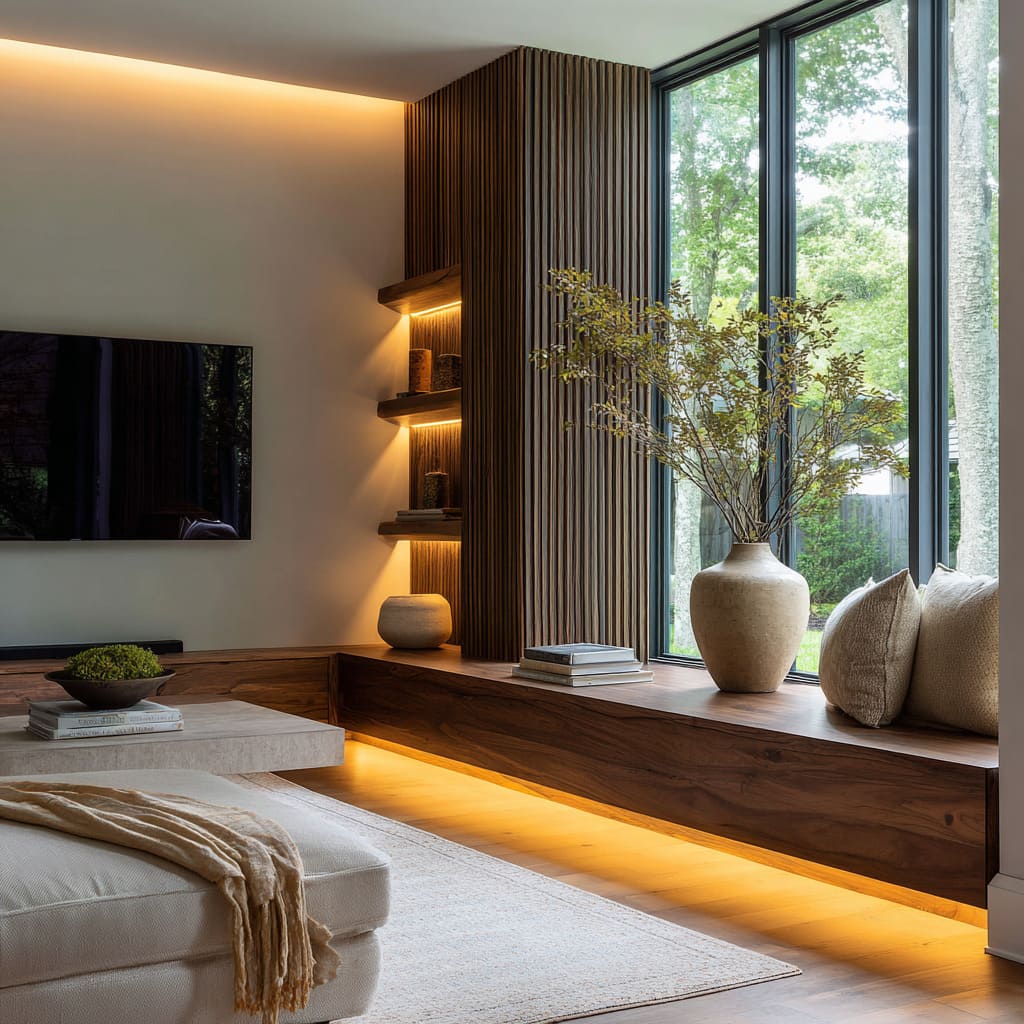
A subtle glow tucked under a bench or console floats heavy mass and draws focus to the corner at night without glare. This quiet halo works especially well when living room corner ideas include darker backdrops around a TV; the base light balances the composition and keeps the eye moving along the long line.
Why does it work? Because the light sits at floor level, it sketches form rather than spotlighting objects.
The room keeps its calm.
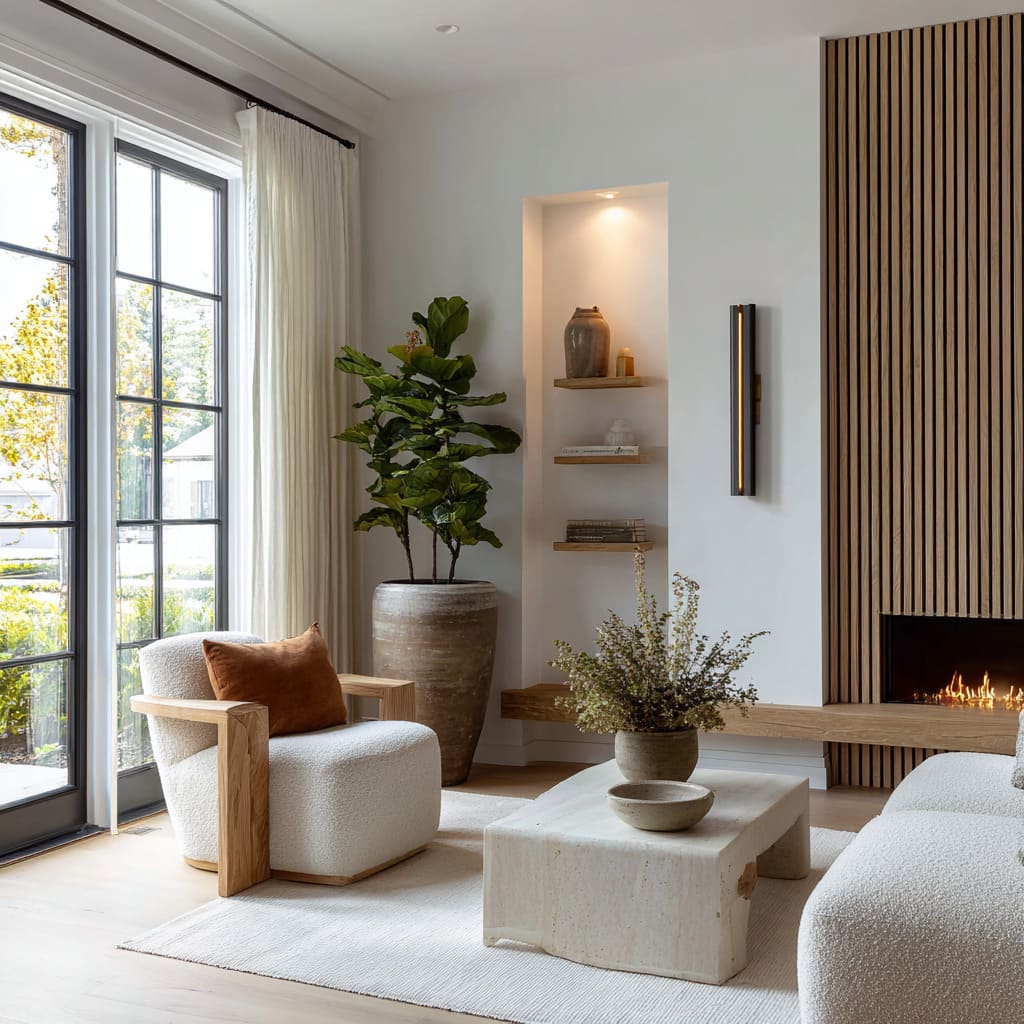
Slim Verticals: Mirrors and Light Seams
Tall, narrow mirrors and pencil-thin light seams lift corners without adding bulk. In living room corner decor ideas, mirrors double daylight and soften hard geometry; light seams carve a clean boundary where dark planes meet, turning the joint into a glowing column rather than a blunt edge.
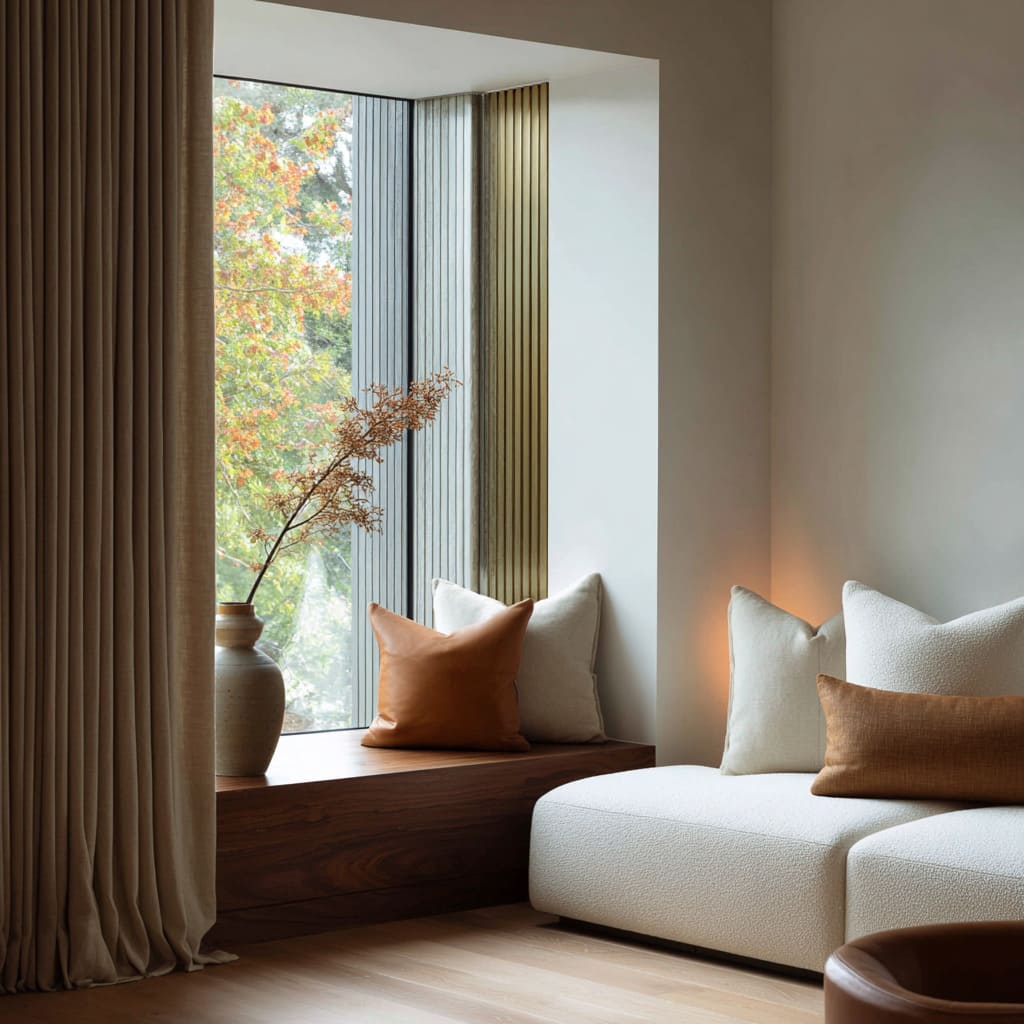
When Each Device Shines
- Mirror: when the corner lacks height or needs daylight bounce.
- Light seam: when adjacent surfaces need a crisp, luminous divider.
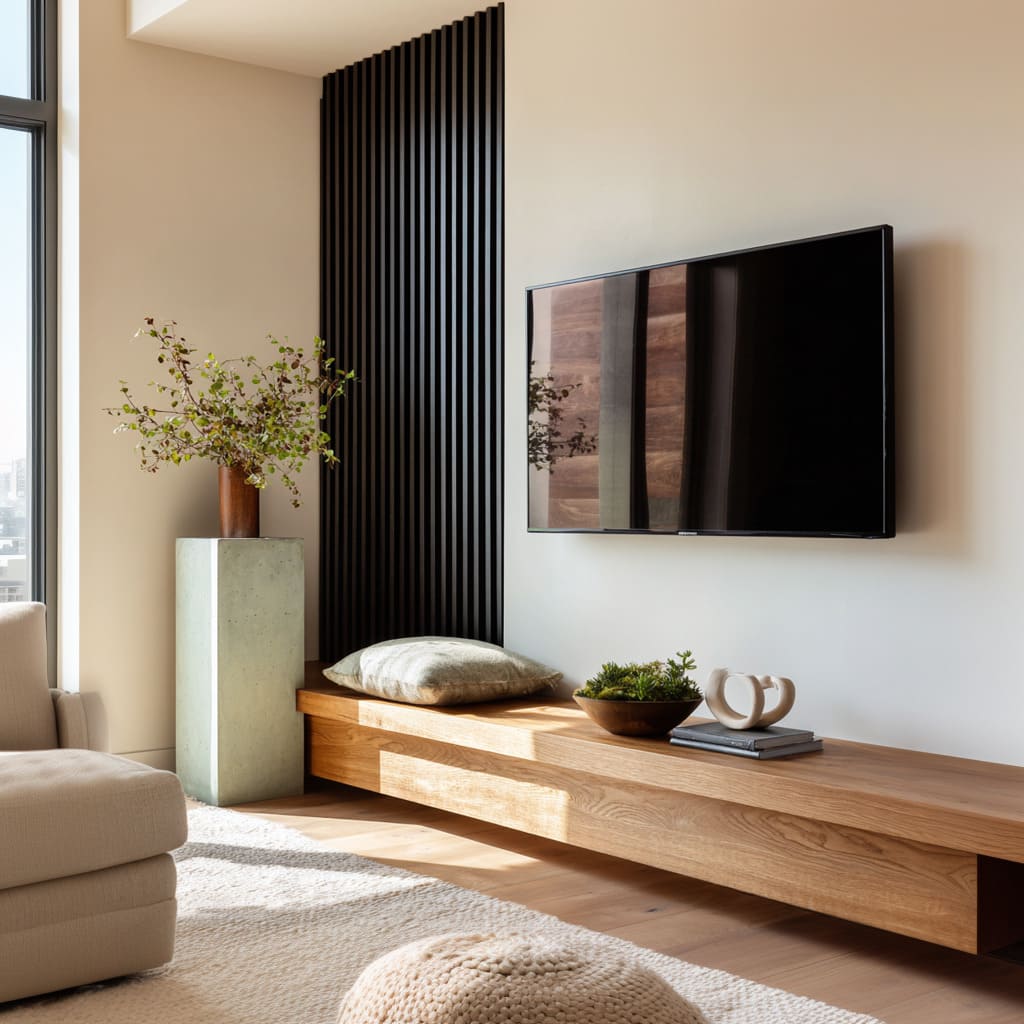
L-Benches as Bridge, Perch, and Gallery
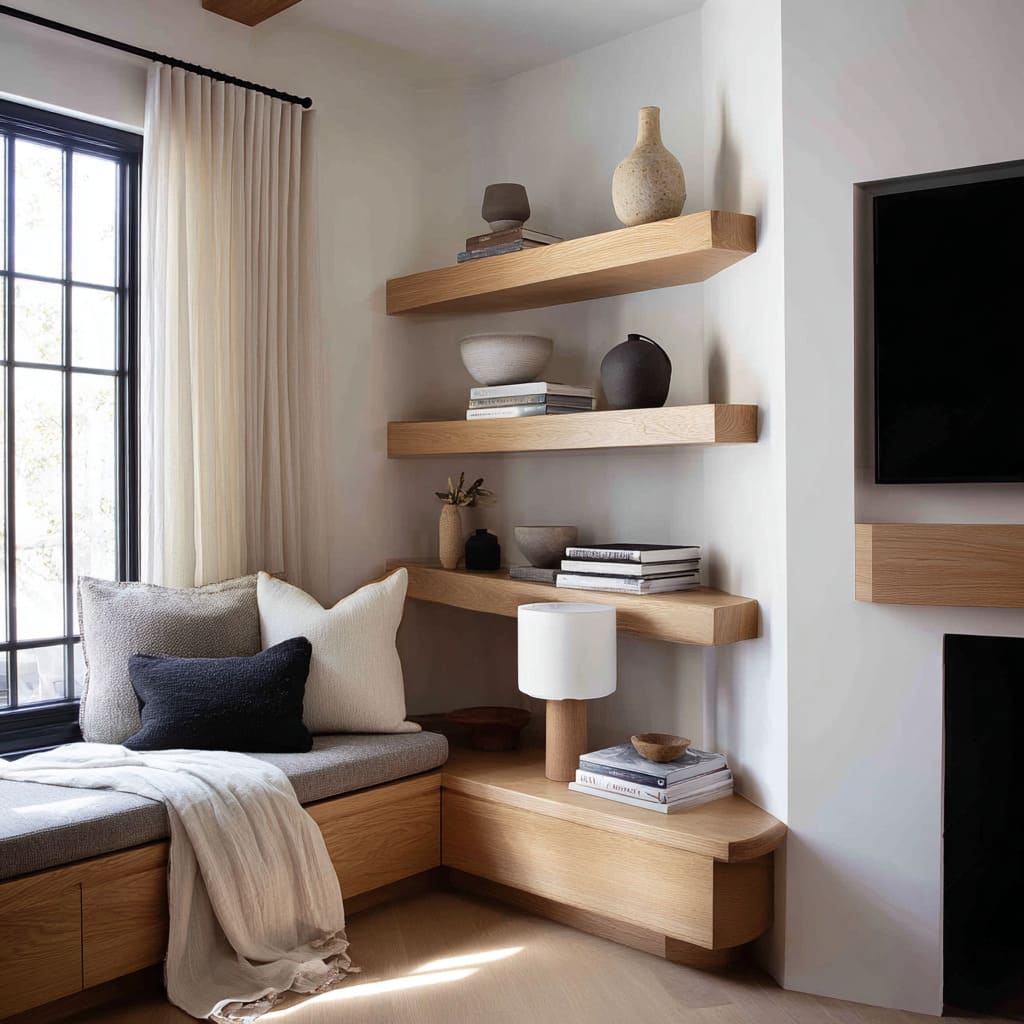
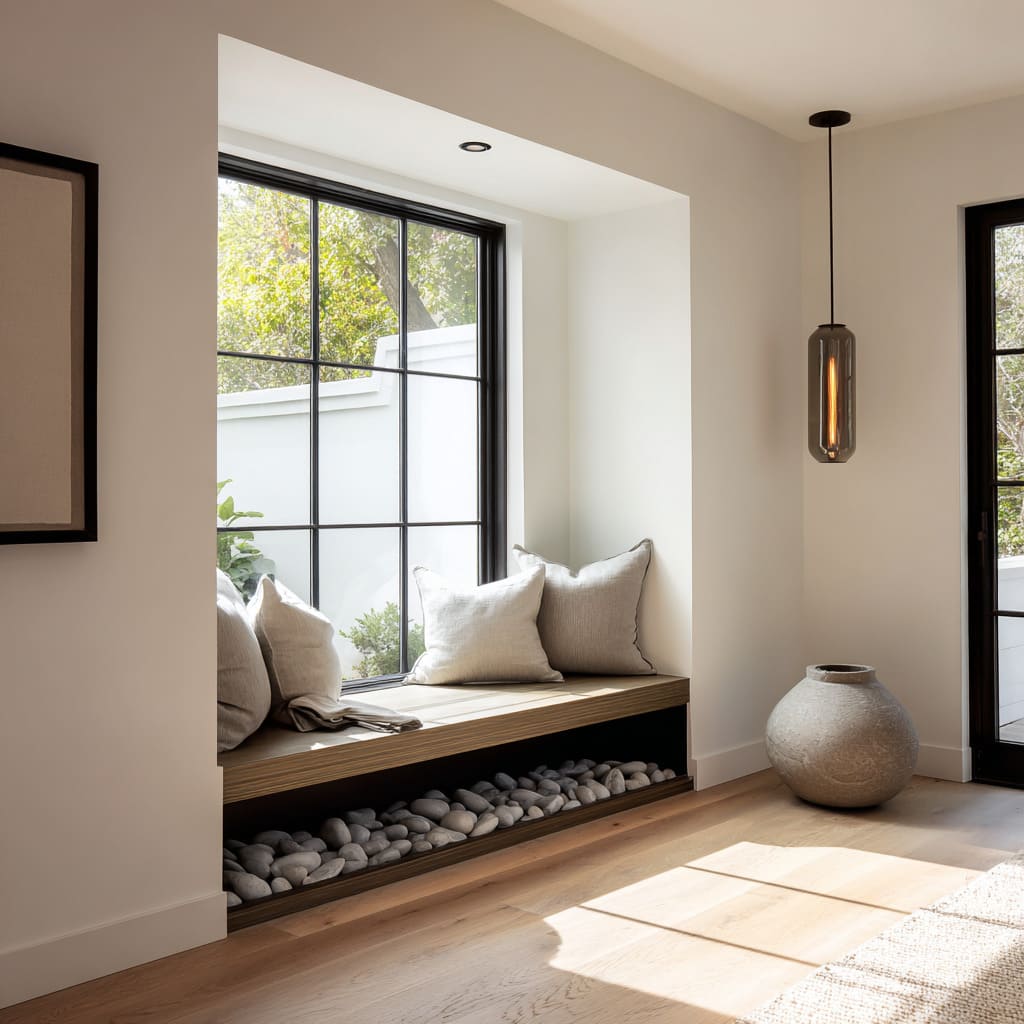
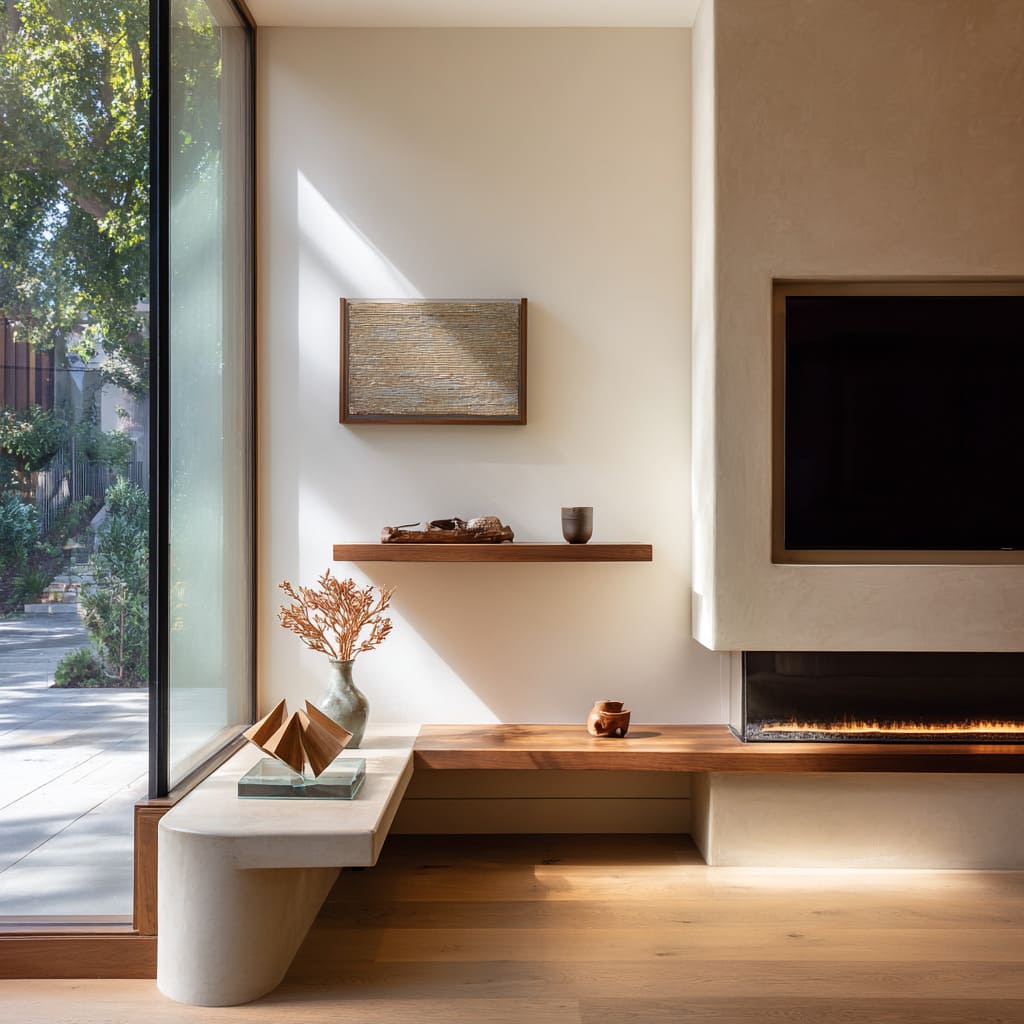
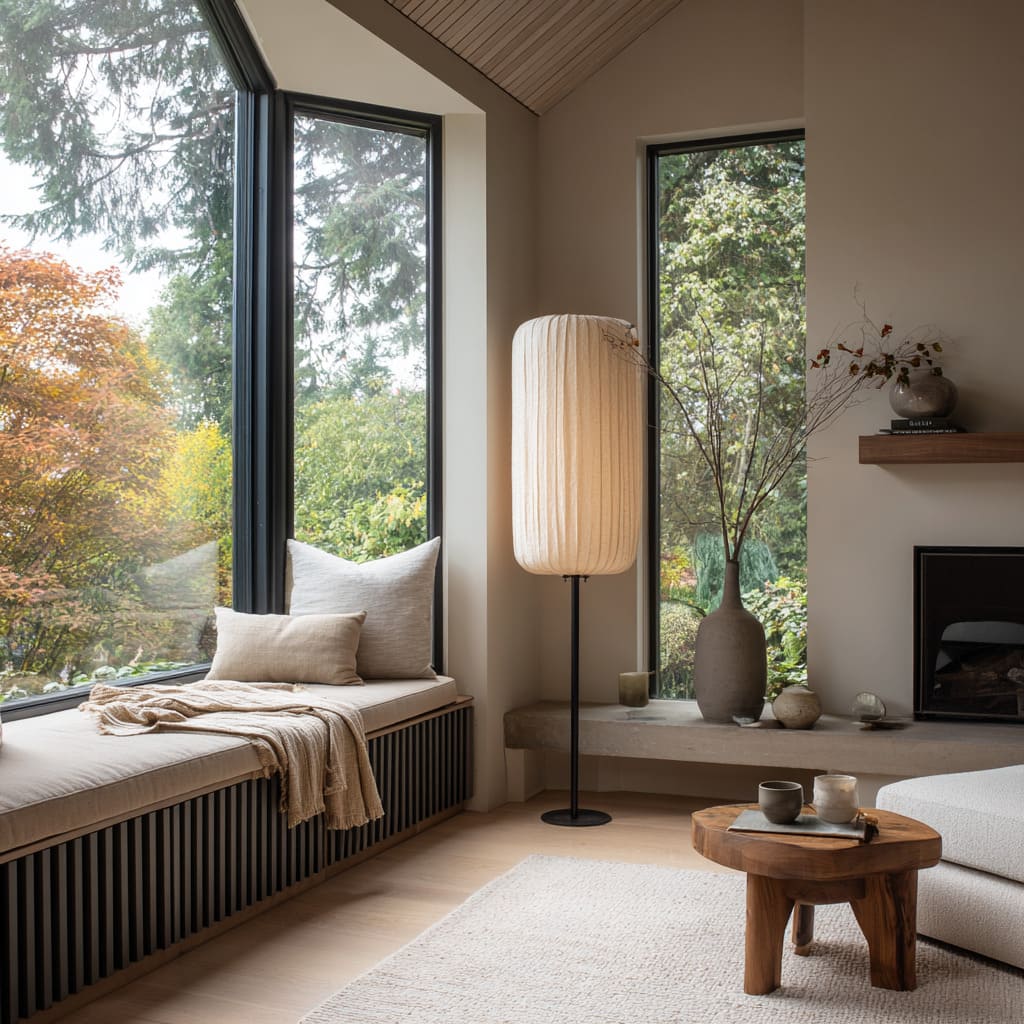
An L-bench is a triple asset: it bridges window and wall, offers a small reading perch, and provides a runway for objects. The refined versions keep part of the run uncushioned to preserve the line and place pillows far apart so the bench remains a designed element rather than a sofa substitute—an approach widely favored among living room corner ideas for a corner that aim for calm order.
Display With Discipline
A low bowl, a book, a single figure; long stretches of air; a rim of wood left visible. Simplicity that looks intentional.

Shelf Thickness Sets the Character
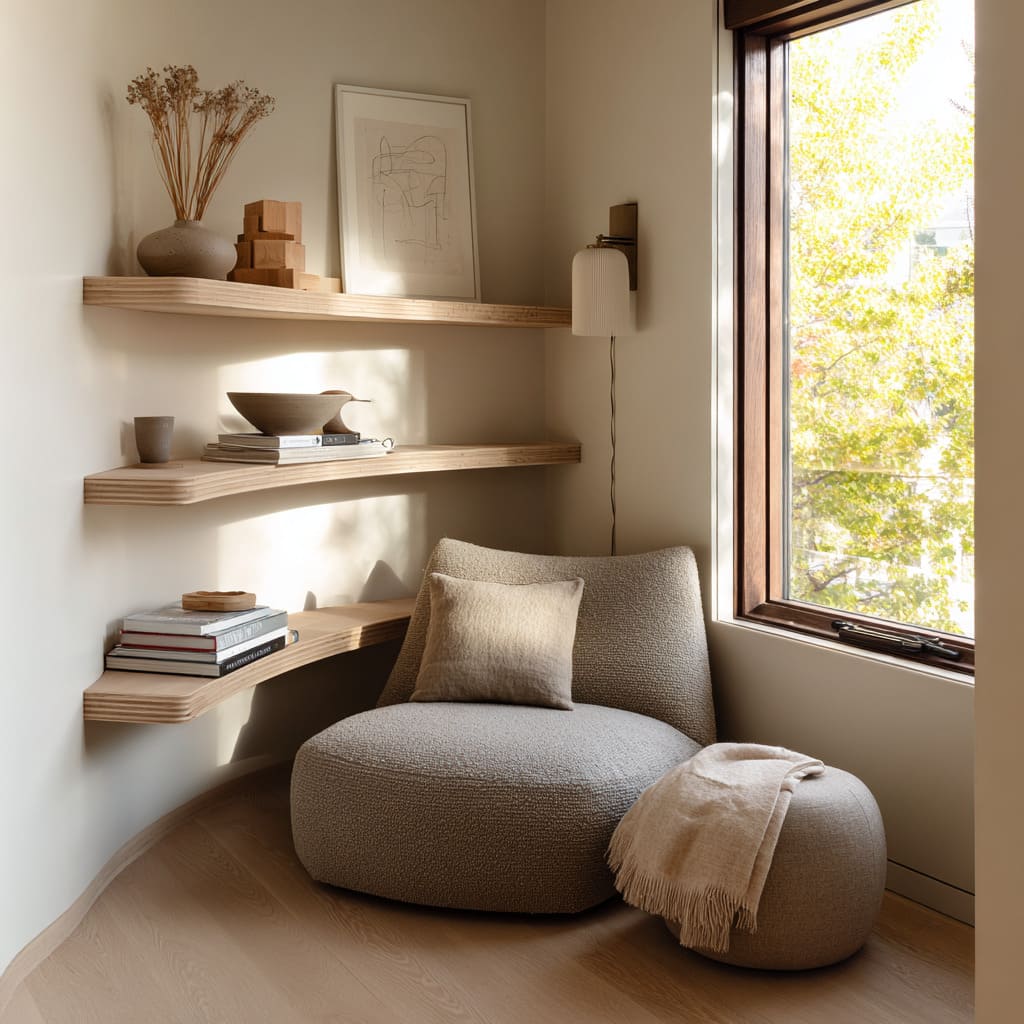
Thick shelves feel crafted and can carry very sparse curation; wafer-thin shelves feel weightless and need extreme restraint—two or three items, tops. Another small but powerful move in corner interior design ideas: stop shelves just shy of the side wall, leaving a slim breathing slit that acts like visual punctuation.
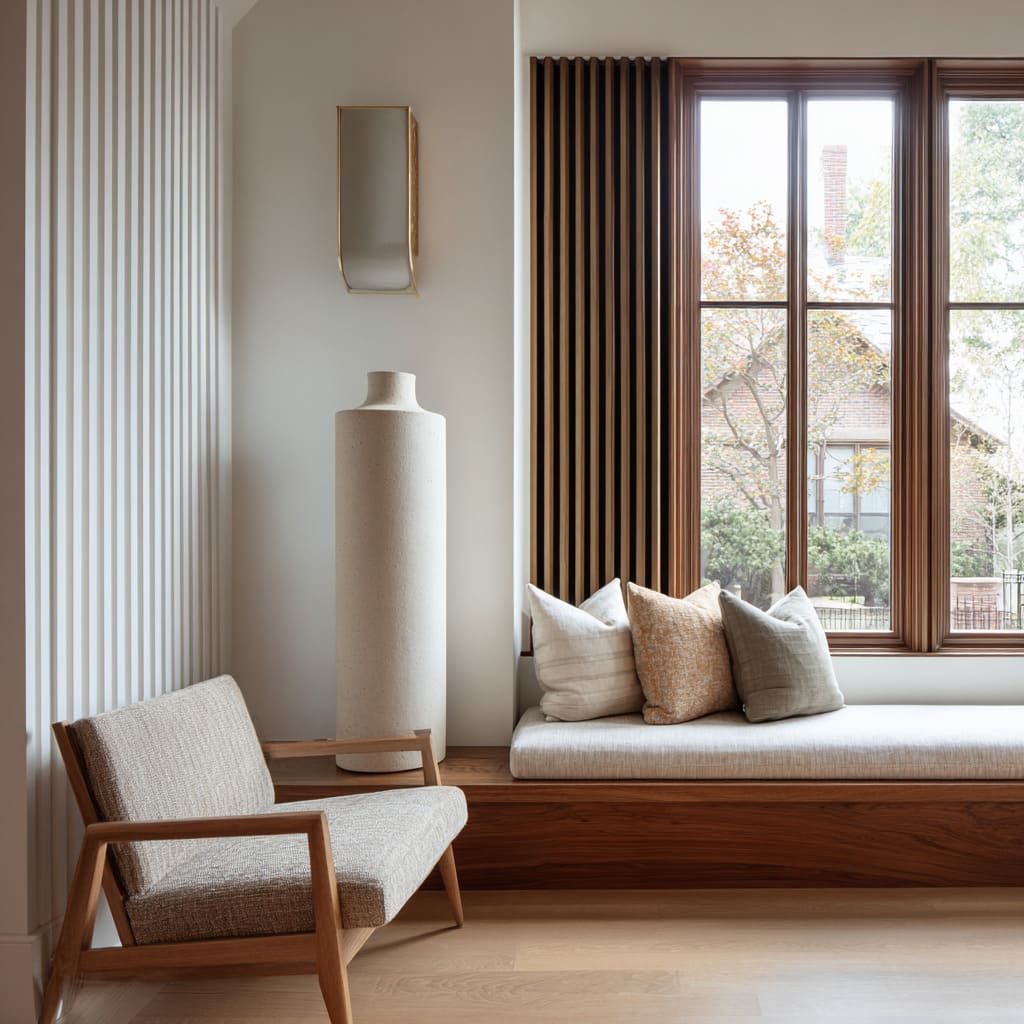
Families, Not Assortments
Objects grouped by material—three pale stone bowls, two ribbed jars—read calmer than mixed assortments; height shifts within the family add interest without chaos.
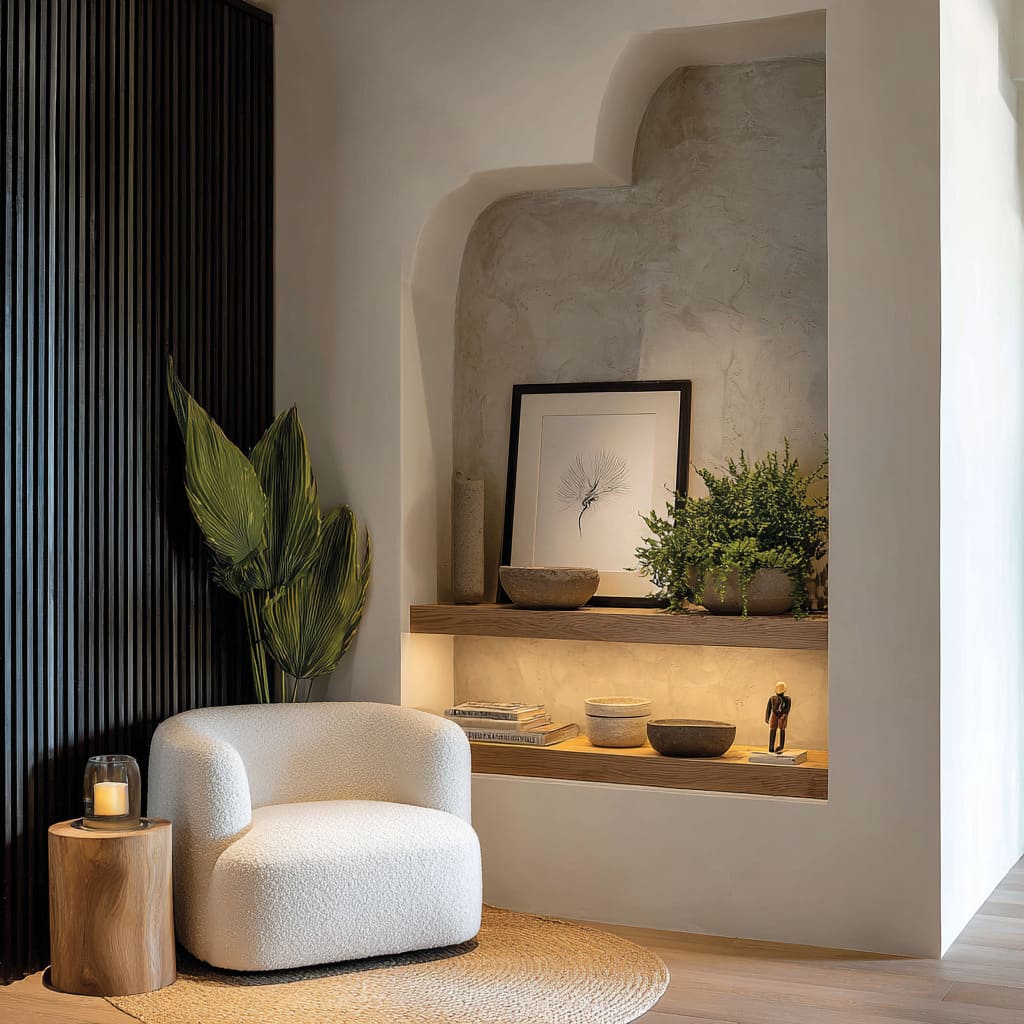
Plants as Line Drawings
Greenery functions like ink lines: airy branches against a dark ribbed field, a broad leaf leaning toward a window, a slim tree in a ribbed pot that rhymes with nearby slats. In this style of decorating the corner of a room, plants provide silhouette and motion rather than volume.
Place foliage where sunlight or a vertical glow seam can outline leaves. The plant becomes a living graphic.
Object Choreography and Quiet Narratives
Corners gain personality through one or two narrative objects placed with theater: a small figurine on a ledge, a hand-thrown pot by a light seam, a driftwood stick on a glass plinth. In polished living room corner decor, singular accents speak more clearly than lines of trinkets.
Heights usually step upward toward the angle; alignments echo bench tops, sills, or ledge bottoms so nothing looks arbitrary.
Black Lines as Eyeliner
Slim black frames, dark mullions, and narrow media ledges outline the composition and prevent soft palettes from going mushy. This crisp note ties window grids, TV edges, and shelf shadows into one family—an essential visual trick across many living room corner design ideas.
One black line can unify multiple zones. The interior keeps its calm while gaining definition.
The Floor Stays Light and Open
Less is more on the floor: a single sculptural vase, a slim pedestal, or a pouf instead of a heavy side table. Rugs often float past the angle or end cleanly before it; nothing jams into the corner.
For ideas for a corner in a living room, an open base lets the long line breathe and keeps the scene graceful. Why does it matter?
A clear floor lets the corner read as part of the wall composition, not a furniture storage point.
Hidden Datums Create Quiet Order
Invisible alignments keep chaos away—art bottoms lining with fire openings, mirror bottoms keyed to bench tops, shelf undersides matching sill heights. Visitors may not parse the alignments, but the eye relaxes because the layout feels orderly—an undercurrent in many design ideas for living room corners.
Soft vs. Crisp, Held in Balance
One soft element (plaster recess, rounded shelf, boucle chair, pleated shade) set against one crisp element (ribbed panel, light seam, black frame) yields depth without noise.

Texture Stack: Gentle, Then Gentler
Nubby textiles for catch-light; ribbing for slender shadows; lime-washed plaster for depth; ceramics with chalky skins for light absorption. In living room corner ideas, these textures make corners look rich in photographs and in person without resorting to bold pattern.
The Arched Relief
One arch—mirror, lamp neck, shelf radius—softens a field of right angles. Choose a curve that reads from across the room; small and timid curves disappear.
Breathing Lines Around Pillows
Pillows placed far apart preserve the architectural read of a bench. A visible stretch of wood or cushion between them keeps the long line legible, which is central to serene living room corner decor.
Daylight as Stylist
Surfaces are chosen to catch and show light: rounded noses, oak grain, ribbing. After sunset, low sources—under-glow, lanterns, mushroom lamps—continue the same directionality.
Slimming the Screen Without Hiding It
Rather than burying the TV, designers make it look slimmer: a dark ribbed field behind, a narrow ledge beneath as an outline, and a tight illuminated niche nearby that gently steals a bit of attention. The screen blends into a rhythm already present—an approach often seen in high-end living room corner decor ideas.
Mirror or Light Seam?
Mirrors double daylight and lift height; light seams clarify joints and brighten dark intersections. Both remain slim, tall, and disciplined.
Seasonal Tuning With Small Swaps
Because the palette is value-based, seasonal mood shifts come from one or two micro changes: a clay-tone throw, a dry grass sprig, a lighter linen. The base kit stays steady; the corner keeps its composure—useful for timeless living room corner ideas that avoid trend whiplash.
The Stop-Short Technique
Ending a shelf or console just before the adjacent plane leaves a pencil-thin gap that works like a breath mark and offers a perfect notch for a slender lamp or branch vase.
Trays, Stones, and Books as Quiet Tools
Books flatten hot spots, trays corral smalls, stones add weight with no shine. These micro-tools keep surfaces spare but not bare and appear again and again in thoughtful corner decor ideas.
Broken Symmetry Feels Lived-In
Heights often rise toward the corner; pendant clusters hang slightly off one side; displays avoid mirror-image balance. The layout feels human but remains tidy through careful alignment.
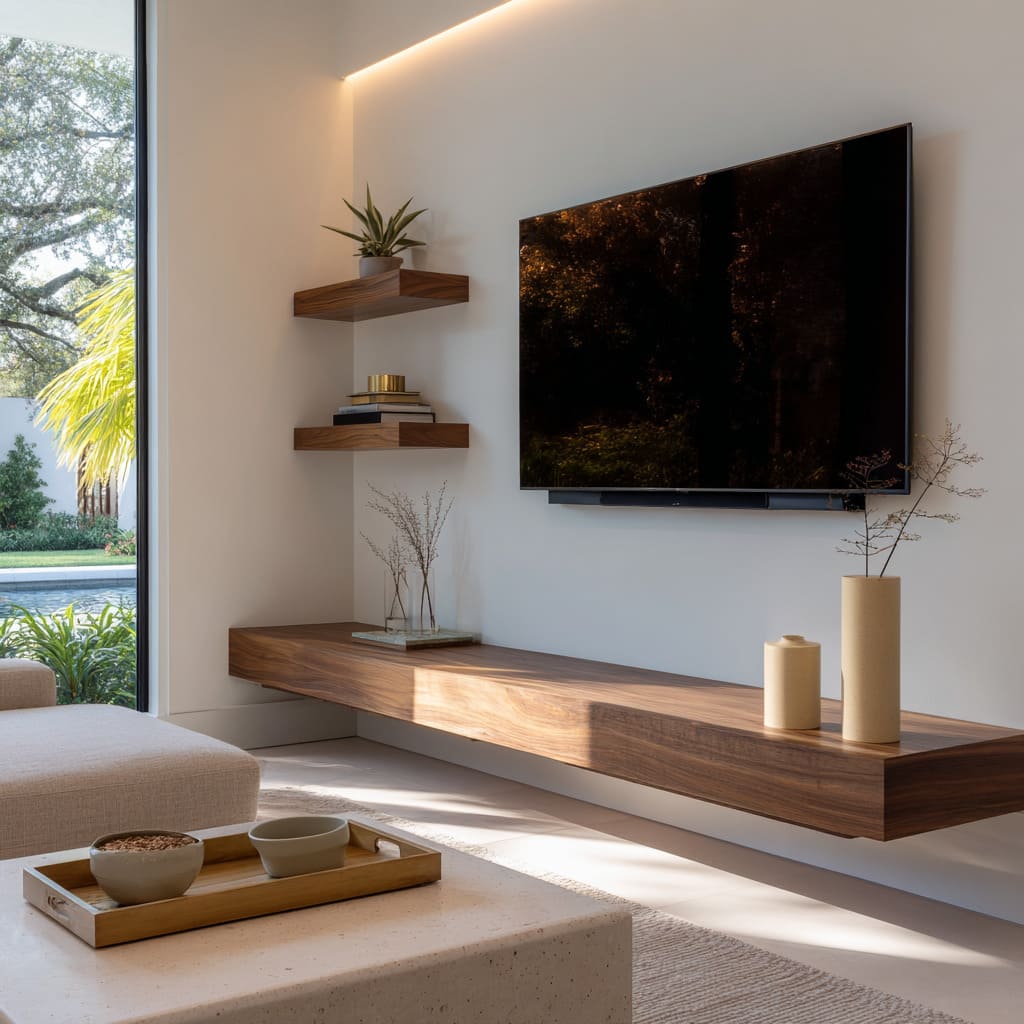
Poufs Instead of Side Tables
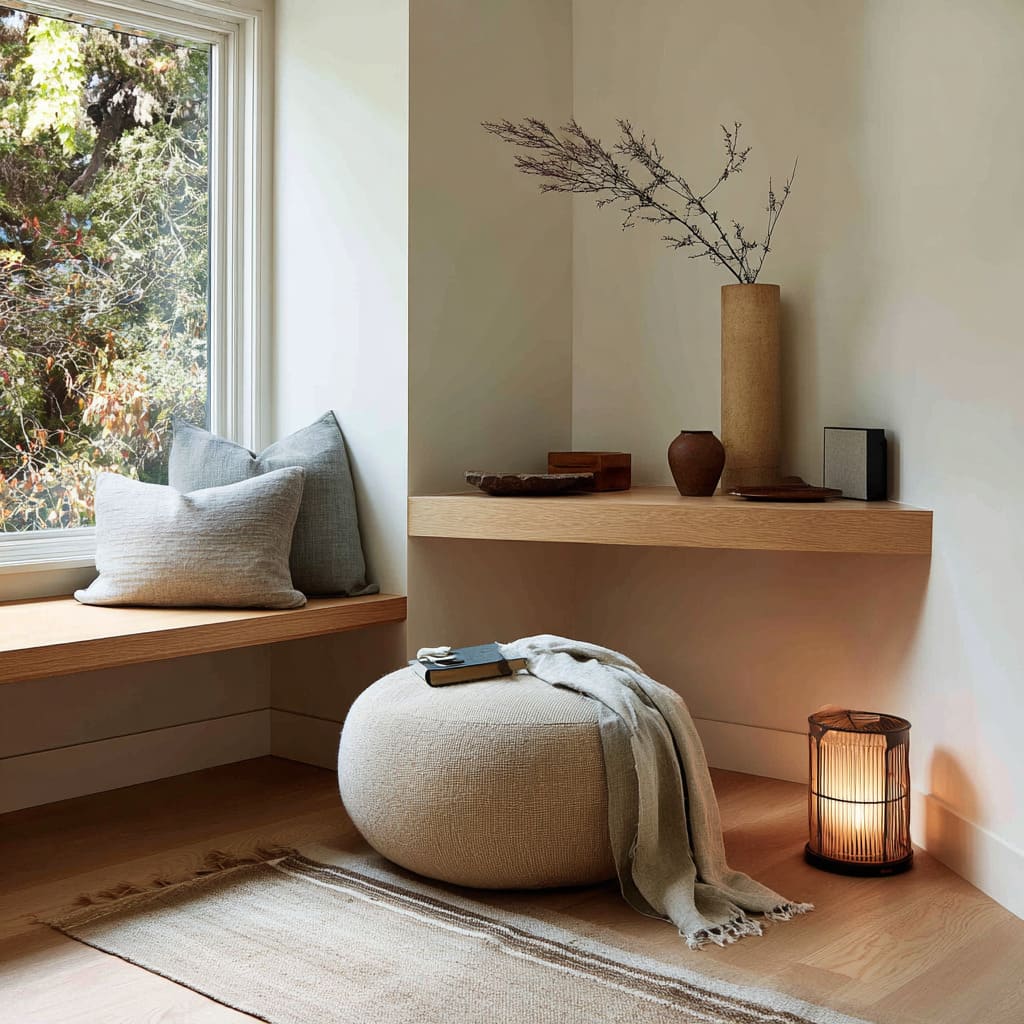
A large pouf keeps edges soft and the plan flexible. Its height sits below benches and ledges so the long line remains the star—an understated tactic within many living room corner ideas for a corner that favor clarity.
Drapery as a Soft Eraser
Full, creamy pleats blur the elbow where glazing meets wall. When nearby objects stay low, the drapery reads as the tall, soft element that reconciles hard geometry.
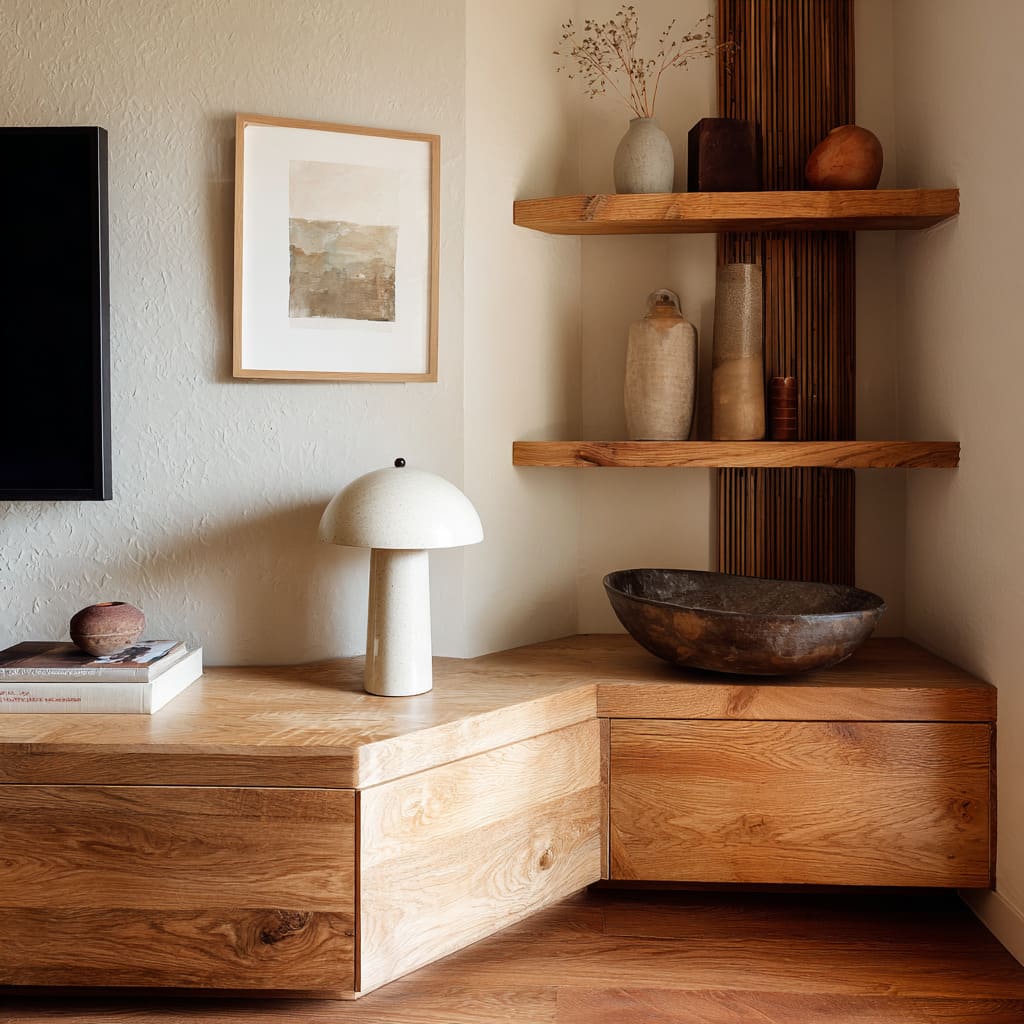
Mass Without Weight
One chunky shelf, one deep bowl, or one dark pedestal provides mass; the rest can stay spare. A single heavy note makes the corner feel intentional—an approach seen widely across decorating the corner of a room in contemporary design concepts.
Visual Pitfalls to Avoid
- Too many tiny objects forming a fuzzy stripe on the ledge
- Pillow piles that turn a bench into a bed
- Glossy items near windows that fight reflections
- Bulky side tables wedged into the angle
- Bright accent colors that compete with the view
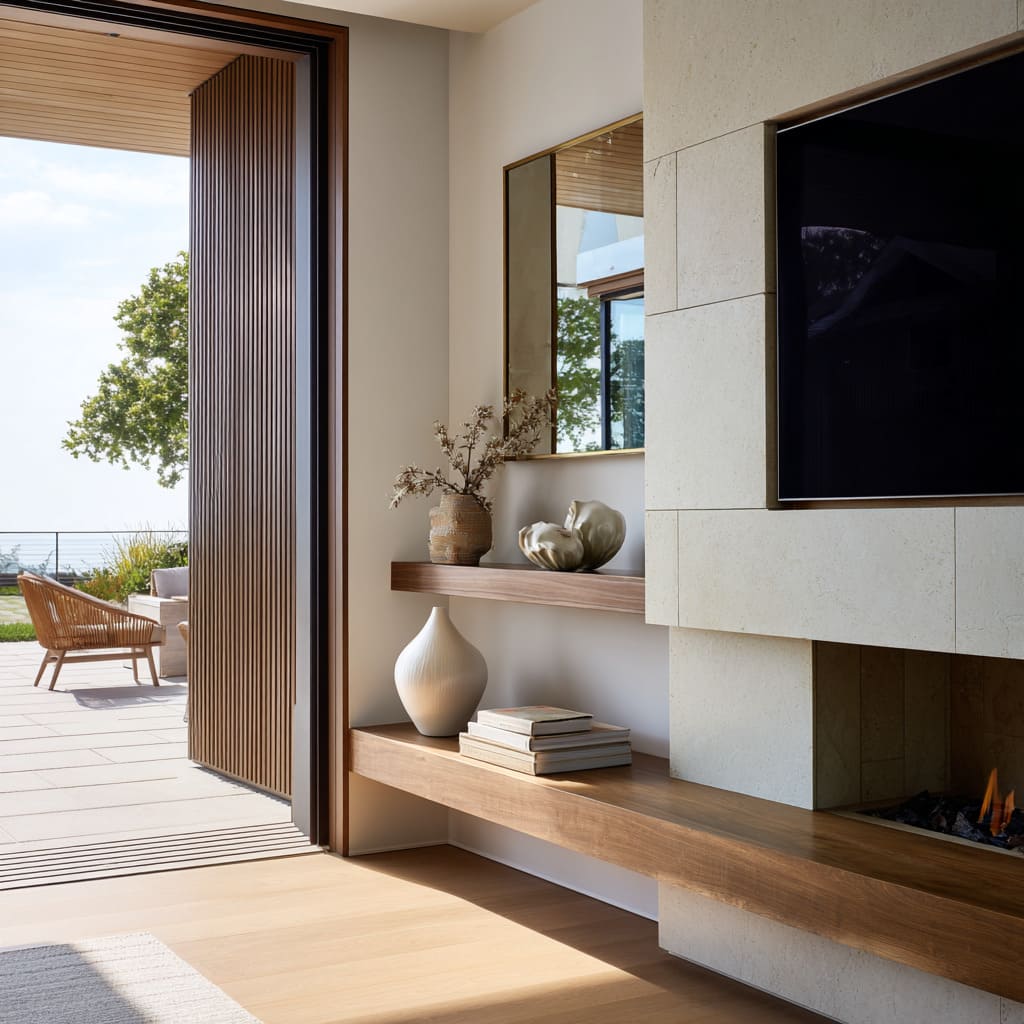
Quick Typologies
- Gallery Hinge: long bench + light seam + one tall vessel; calm and curated.
- Reading Perch: L-bench + two widely spaced pillows + small lamp; cozy but spare.
- Soft-Crisp Dialogue: plaster recess + ribbed panel + oversized leaf; textured balance.
- Daylight Doubler: arched mirror + low ledge + ribbed ottoman; bright and unforced.
- Night Halo: floating console + warm under-glow + dark backdrop; intimate and composed.
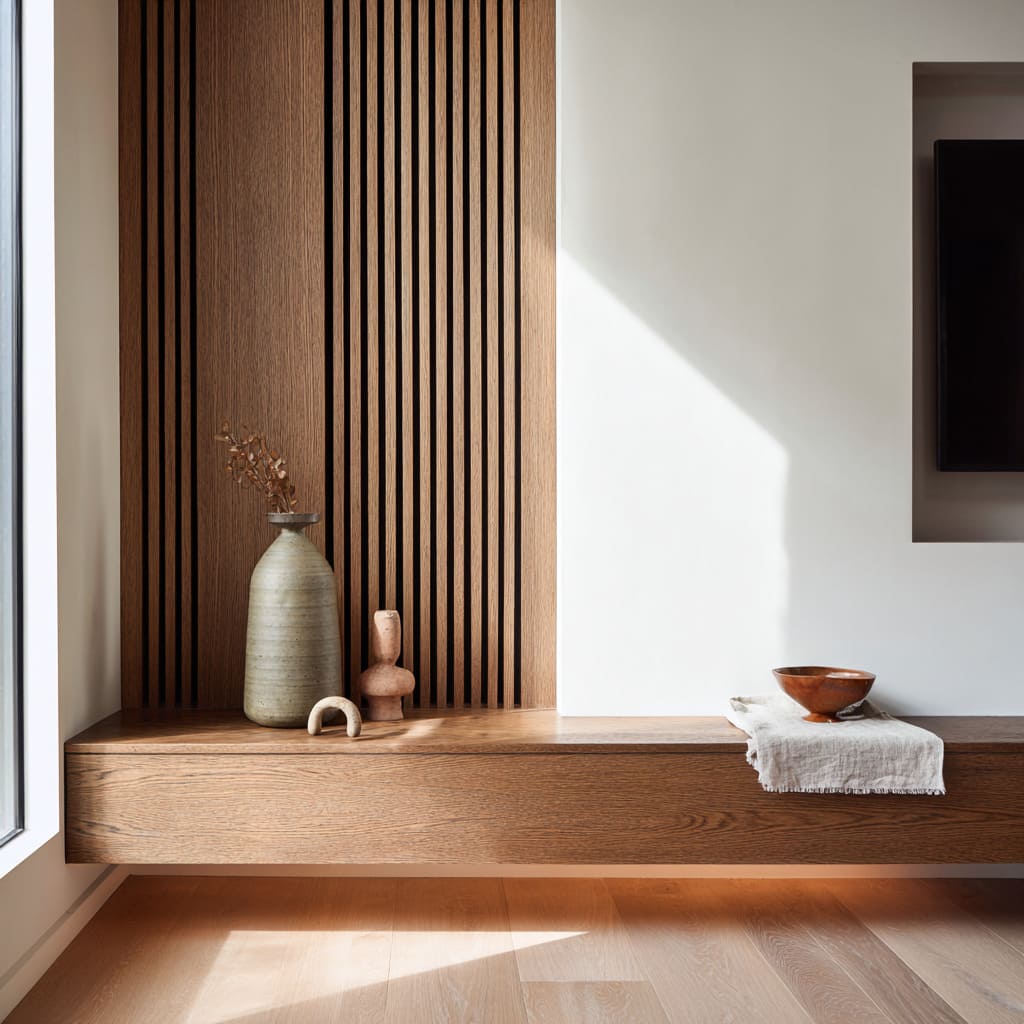
Material Sets That Consistently Work
Walnut and pale oak for readable grain; chalky ceramics that absorb light; boucle and heavy knits to catch highlights; lime-wash and plaster for gradient-friendly walls; ribbed timber for neat shadow lines. These combinations sit at the heart of enduring living room corner ideas, living room corner decor, and living room corner design ideas that remain photogenic and calm.
Micro-Moves That Change the Whole Read
Slide a cushion back to leave a neat rim of wood; lean a framed textile rather than hang it; place the tallest object just off the corner rather than dead-center; stop a shelf short to leave a breathing slit; align tops to an unseen datum such as bench or sill. These small decisions separate ordinary decorating ideas for a corner in the living room from collected, gallery-like compositions.
Corner Lighting That Feels Natural
Floor-level glow to float mass; one pendant hung low and near the wall so it reads like a candle; pleated or woven shades for soft gradients; a quiet ceiling wash that frames the area instead of spotlighting objects. Light sketches the architecture first, then the objects—an enduring practice across modern living room corner ideas, corner decor ideas, and living room corner decor ideas.
Structured Summary Lists
Visual Elements Often Seen in Successful Corners
- long, uninterrupted horizontals (bench, console, ledge)
- one slender, tall accent (branch vase, mirror, lamp)
- one grounded, low anchor (bowl, book stack, moss dish)
- ribbed or slatted field for fine shadow lines
- low, warm under-glow to float mass
- negative space as a deliberate band
- slim black lines to outline the composition
Styling Families That Read Calmly
- chalky ceramics in pale tones
- linen and boucle in oat, flax, and ivory
- walnut and light oak with visible grain
- lime-wash/plaster walls that carry daylight softly
- ribbed planters or pleated shades echoing slatted panels
Compositional Cadences
- beat – rest – beat across a bench
- heights stepping up toward the angle
- one rounded profile balancing many straight edges
- singular narrative object instead of multiple trinkets
Closing: The Modern Corner as a Quiet Highlight
In today’s refined interior concepts, living room corner ideas no longer treat corners as leftover geometry; they become gentle pivots where long horizontals glide, slim verticals lift the gaze, and objects speak in a slow rhythm with air between them. The palette tends toward value and texture rather than loud color, daylight does much of the styling, and evening glow takes over without breaking the mood.
Gathered together, these corner decor ideas, decorating ideas for a corner in the living room, and living room corner decor strategies create corners that feel composed and tranquil—places where architecture and small, well-chosen things meet with quiet clarity.