There’s a quiet strength in how today’s cottagecore aesthetic bedroom ideas take shape—less through decoration and more through placement, weight, and material rhythm. Such rooms don’t depend on obvious motifs or styled layers.
Instead, they rely on gentle decisions: a softened beam overhead, a low bench that holds both function and form, a patch of wall left blank so light can do the work. This approach doesn’t aim for nostalgia or novelty.
It builds mood through restraint. Surfaces are often matte, tones stay close, and textures shift gradually rather than loudly.
The mood comes not from abundance but from balance—how a single quilted fold rests beside a blocky bedside ledge, or how an arched niche feels both structural and quiet. Rather than centering on decoration, the space grows outward from its bones.
Texture becomes memory. Shape becomes comfort.
And the small gestures—a pleated lamp shade, a worn book spine, a sprig in a clay vase—carry more presence than any large furniture piece could. This article breaks down how that feeling is built—through volume, material, and subtle contrast.
Each section explores the moves that create atmosphere without noise, offering a deeper look into what makes this style feel settled rather than staged.
Architecture Treated as Furniture
In many such spaces with a cottage core bedroom feel, the line between structural form and interior furnishing becomes intentionally blurred. Architecture isn’t merely a backdrop—it participates directly in the composition, often replacing the need for additional objects.
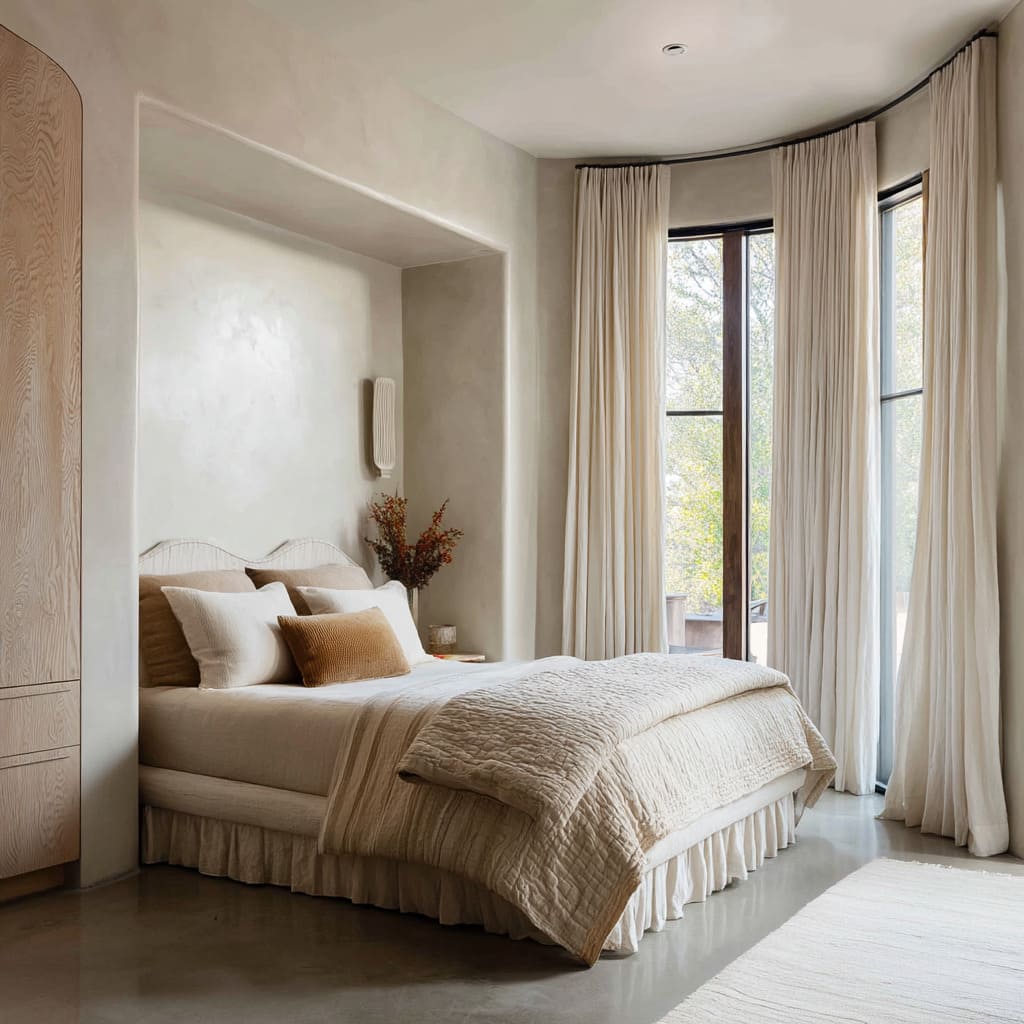
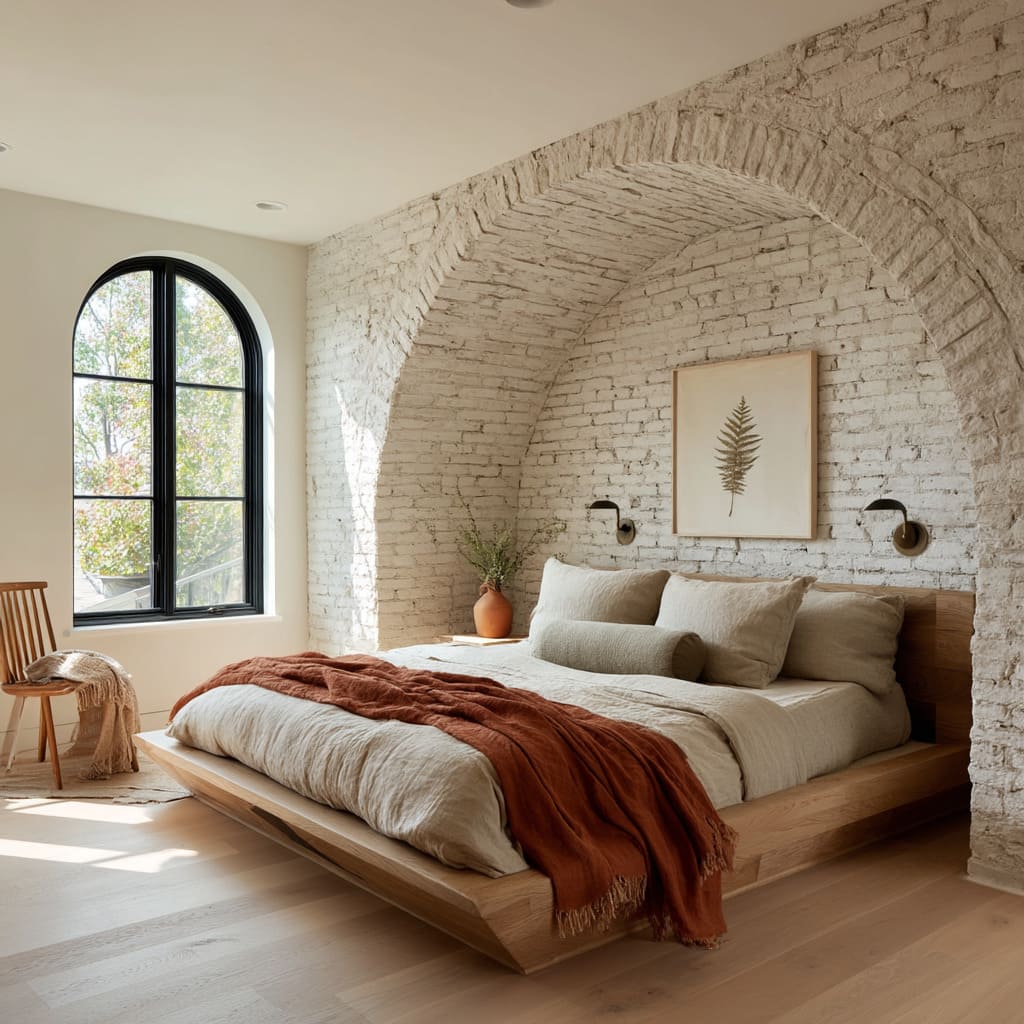
One of the clearest examples of this is the use of carved alcoves as bed surrounds. These aren’t decorative flourishes—they are mass, weight, and shadow built into the wall itself.
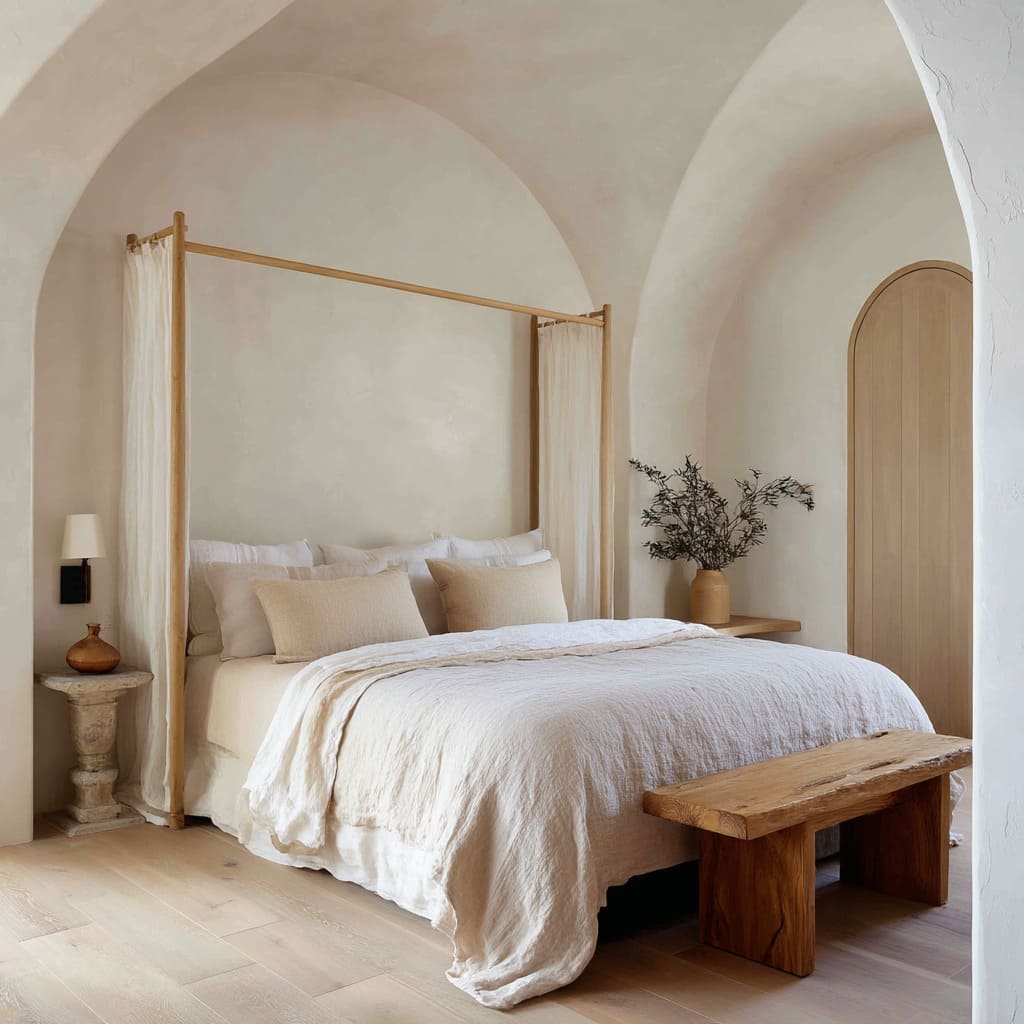
When a bed is set into a deep niche with rounded corners and thickened plaster edges, the alcove becomes its frame. The edges don’t just contain the bed; they lend it quiet sculptural presence.
This approach removes the need for traditional headboards, while still creating a visual enclosure that holds the space.
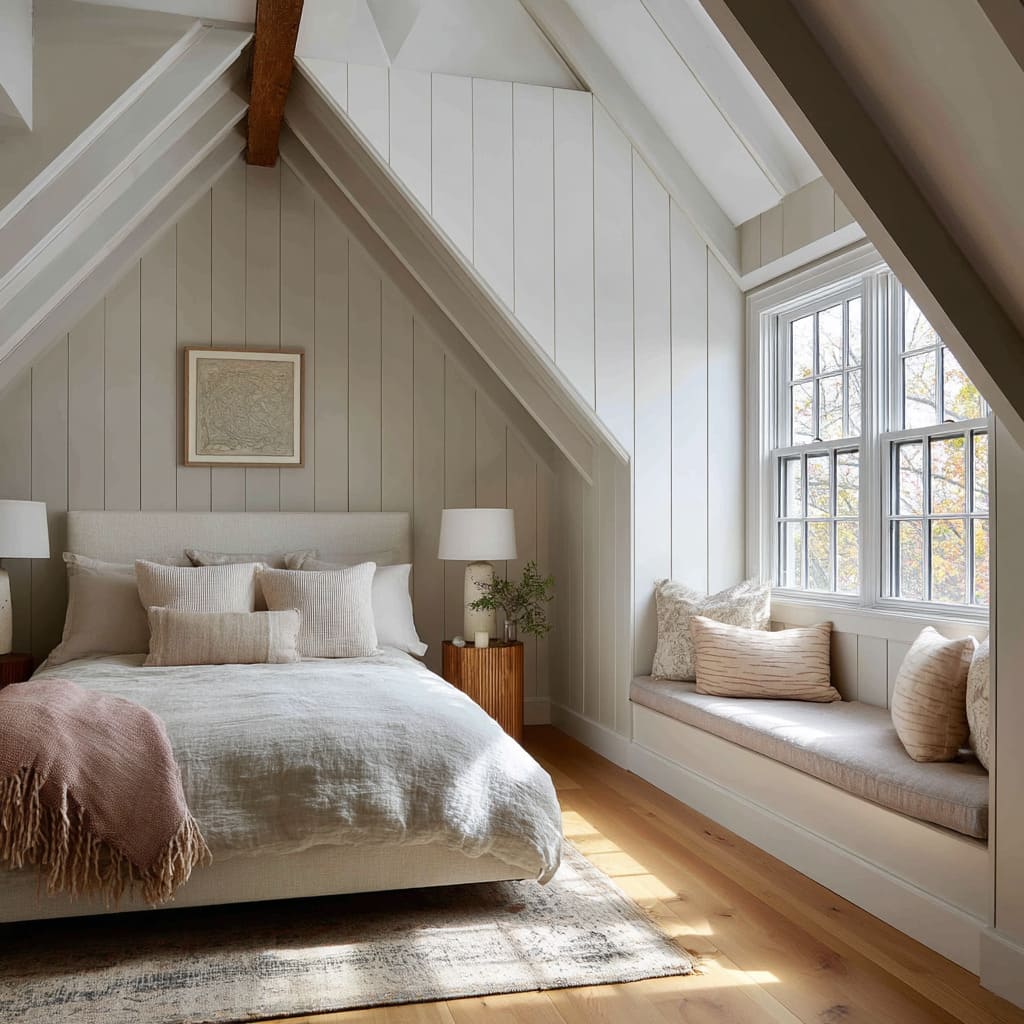
Another strategy often found in cottage core aesthetic rooms is how window seats become part of the architecture. Deep sills are treated not as thresholds, but as ledges for sitting, leaning, or reflecting.
They act like built-in benches, but visually they offer more than function. Their depth, shape, and shadow contribute to the atmosphere without demanding cushions covered in pattern or bright color.
These windows are left simple—bare or minimally dressed—to allow their form to speak. Beams, too, are given a role beyond support.
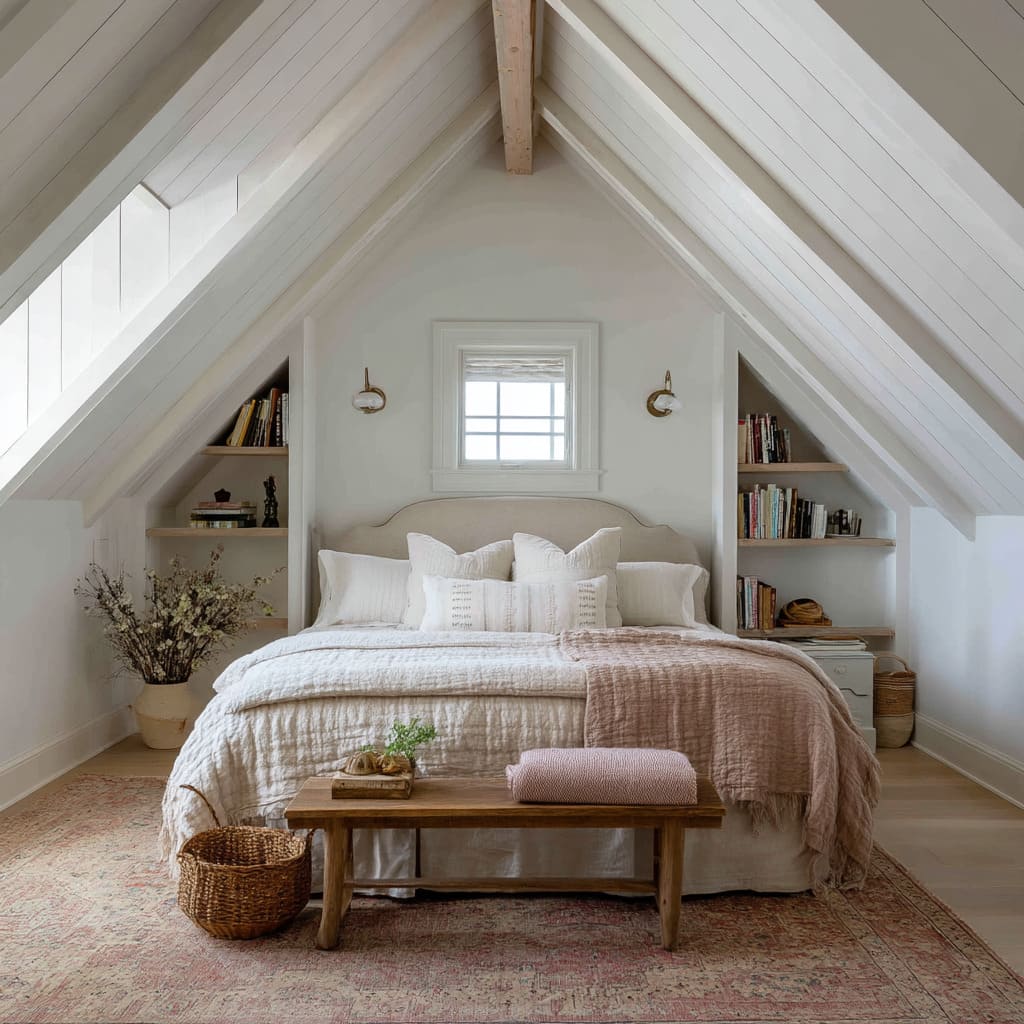
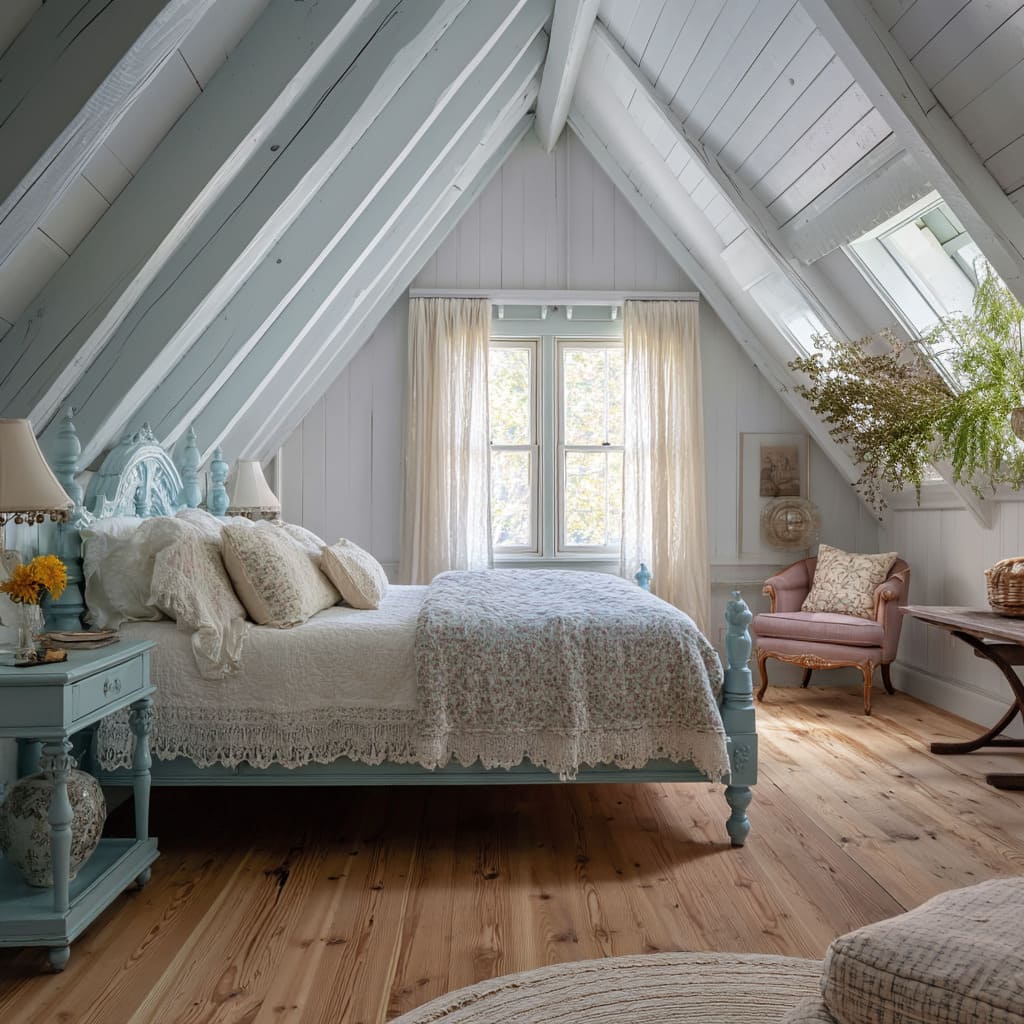
In many attic rooms, a single unpainted or subtly stained beam slices through an otherwise pale ceiling, acting more like a drawn line than a structural necessity. It carries the visual strength of a sketch—one precise stroke across an open surface.
These beams interrupt symmetry in a way that replaces artwork. Instead of hanging frames or objects, the beam does the compositional work, giving the ceiling rhythm and the room quiet weight.
Each of these moves lets the structure stand in for decoration. Instead of layering more, the space is shaped to carry its own meaning.
Negative Space as Color
In cottage core bedrooms, blankness has tone. Designers working within the cottage core aesthetic aren’t trying to fill every surface.
Instead, they allow portions of the room to breathe—and in doing so, they shift the viewer’s eye toward space itself as a visible element. One of the clearest examples is found in the space above the bed.
Often left uninterrupted by artwork or shelving, the wall becomes a quiet field. When painted in a pale shade, this area doesn’t disappear—it glows.
Its stillness draws in ambient light and reflects it back with softness. These kinds of expanses serve as the palest visual notes in the room’s palette, operating like a diluted pigment would in a watercolor.
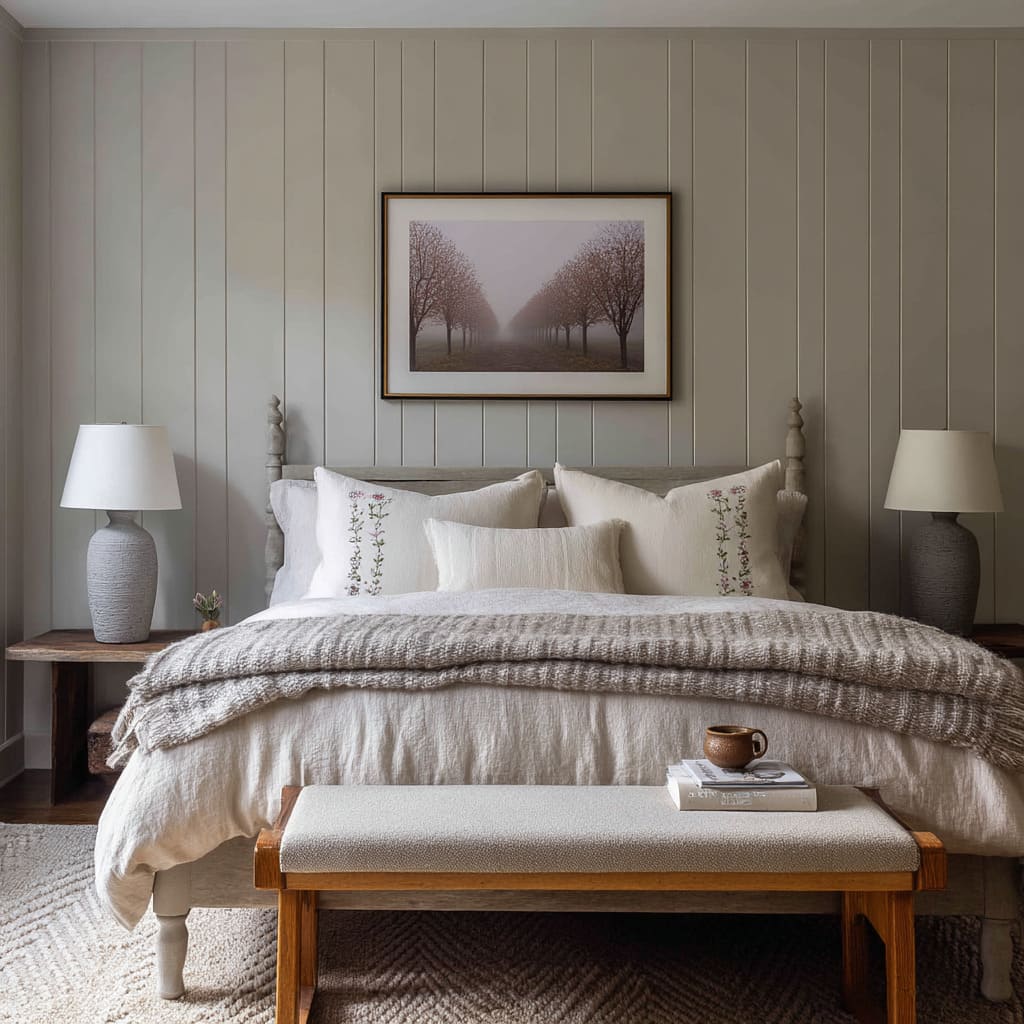
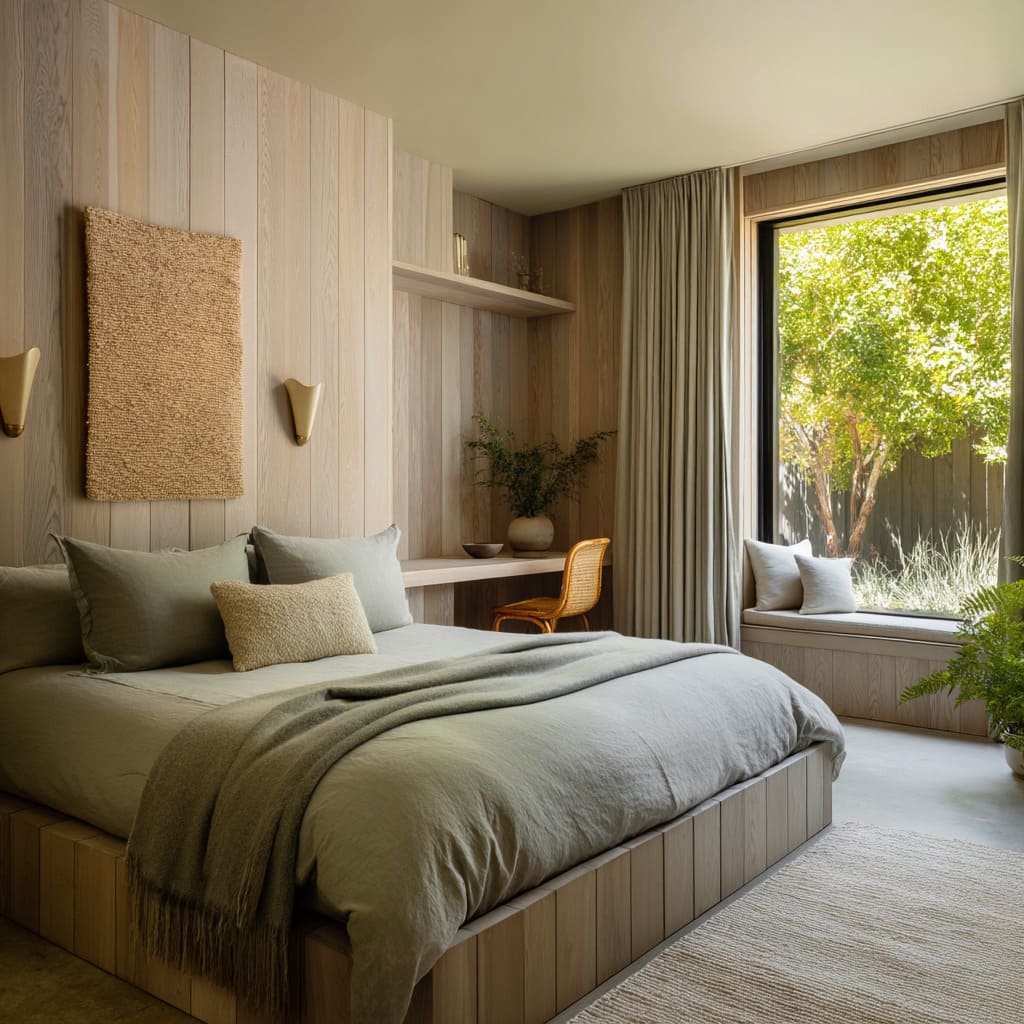
In more wood-wrapped rooms, the approach takes another form. Here, every surface may be clad in natural planks, from ceiling to wall to built-in furniture.
But even then, designers resist filling every corner. Instead of installing trim or accessories in every gap, they leave vertical and horizontal negative zones between built-in pieces.
These pauses gather shadows. They deepen gently, reading not as absence but as a desaturated accent—a sort of quiet tonal shift that breaks the monotony of wood while still staying inside the same material language.
This way of thinking turns emptiness into a kind of color—a move that’s especially powerful in rooms where the palette is already restrained. The eye isn’t pulled toward what has been added, but instead becomes sensitive to how air and material meet.
The approach builds tone from contrast between what’s there and what’s allowed to remain untouched. Through this restraint, a cottage core bedroom gains its softness not through hue but through atmosphere.
And it’s in those stretches of blankness that the room starts to glow with intent.
Texture as Time Stamp
Texture becomes a quiet but powerful storyteller in rooms shaped by the cottage core bedroom aesthetic. Rather than relying on literal signs of age—chipped paint, frayed fabrics, or vintage objects—the surface treatment itself holds the suggestion of time.
These finishes aren’t distressed; they’re tuned. They hint at history without needing proof.
Take cloudy stucco, for instance. Its surface isn’t flat or glossy.
Instead, it carries a muted, uneven tone that shifts subtly depending on where the light falls. This irregularity mimics the effect of many coats applied over time—layer after layer built up and worn back.
It doesn’t pretend to be old; it simply avoids looking fresh. In rooms where walls have no artwork, that softly varied surface becomes the visual interest.
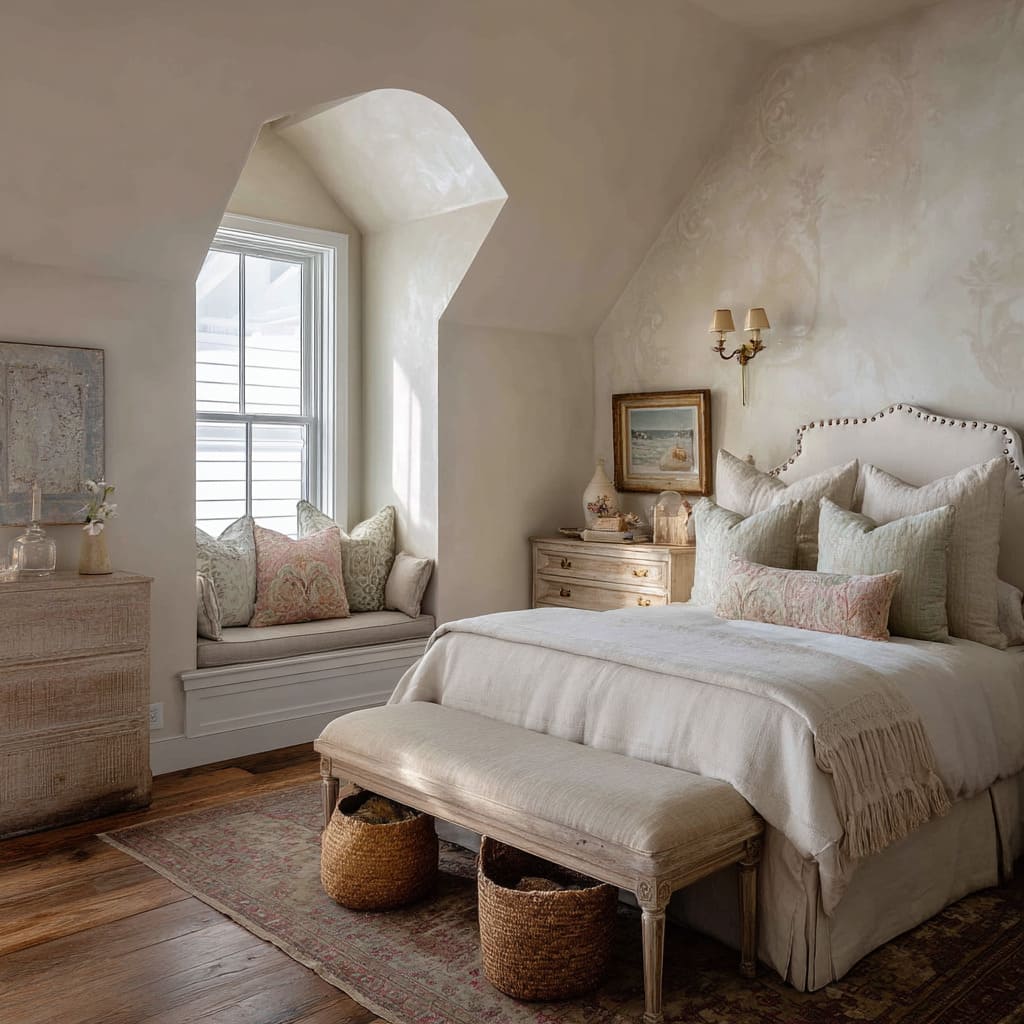
There’s also wax-soft plaster, with a smoother touch but no less complexity. Its gentle sheen isn’t showy, but it catches daylight in a way that looks settled—like a wall that has absorbed years of quiet afternoons.
Shadows roll across it slowly, never sharply. The effect calls to mind limewashed homes where time doesn’t leave damage, only depth.
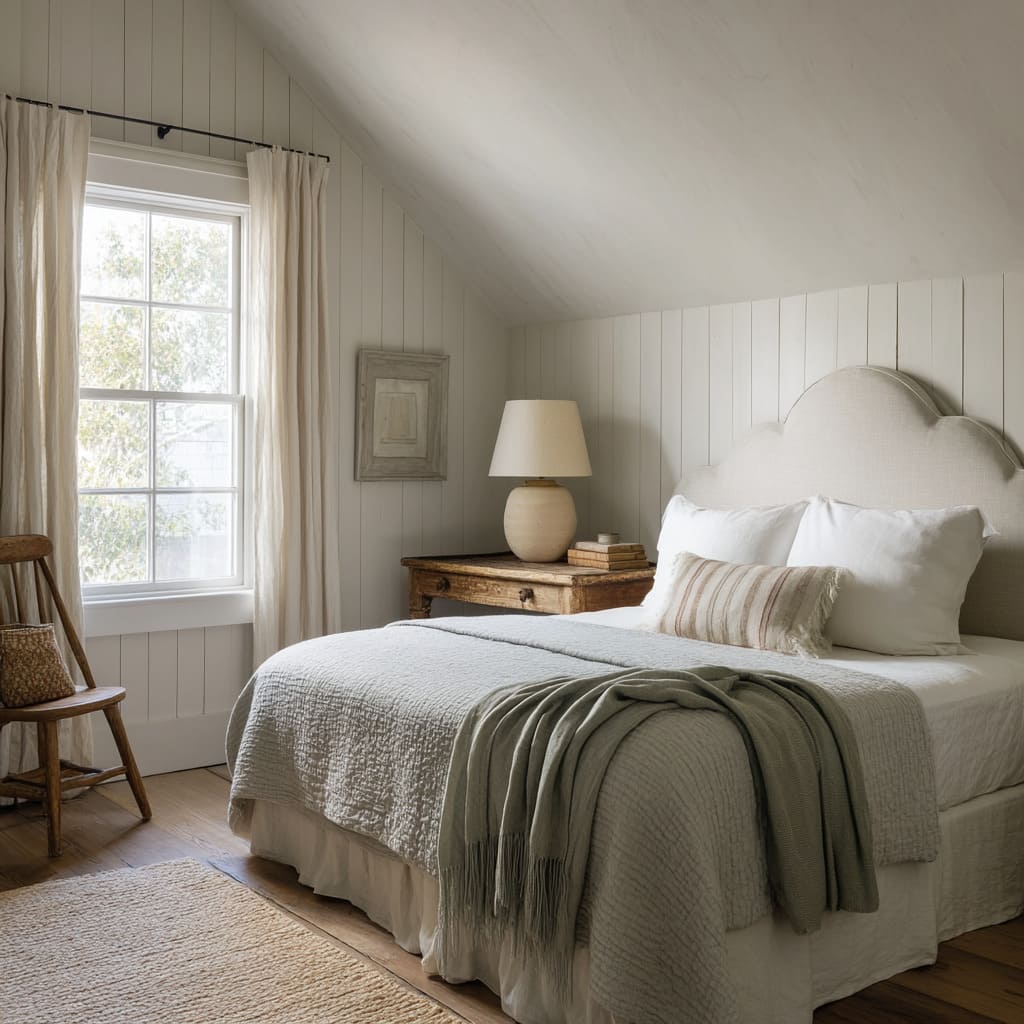
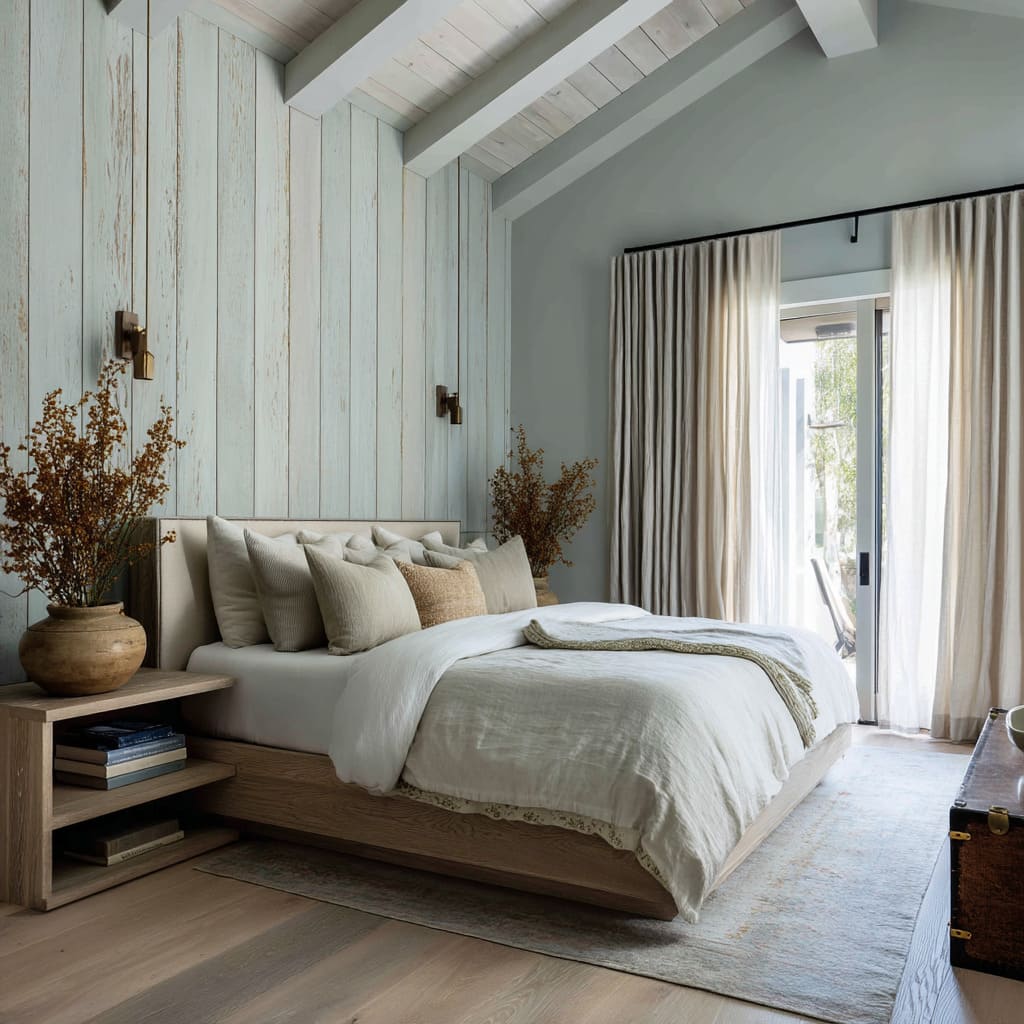
In some cases, it’s the wood that carries this message. Knotty pine boards, placed vertically or on a ceiling slope, bring warmth through repetition.
The boards themselves may be cleanly installed, but their whitewashed or bleached surface mutes the color just enough to feel faded by years of sea air or dry sun. Grain remains visible, but softened.
This isn’t salvage lumber—it’s new material that has been tuned to feel familiar, like it already belongs. It’s one of the most thoughtful qualities found across cottagecore bedroom ideas: the sense that everything has been quiet for a long time, even if it was only built yesterday.
Through these surface treatments, the rooms suggest stories without ever needing to tell them outright.
Quiet Asymmetry
Perfect symmetry often feels staged. In contrast, these cottage-inspired bedrooms lean into something quieter: balanced imperfection.
Objects still relate to each other, but not always as mirror images. It’s a careful looseness—one that keeps the rooms soft and real.
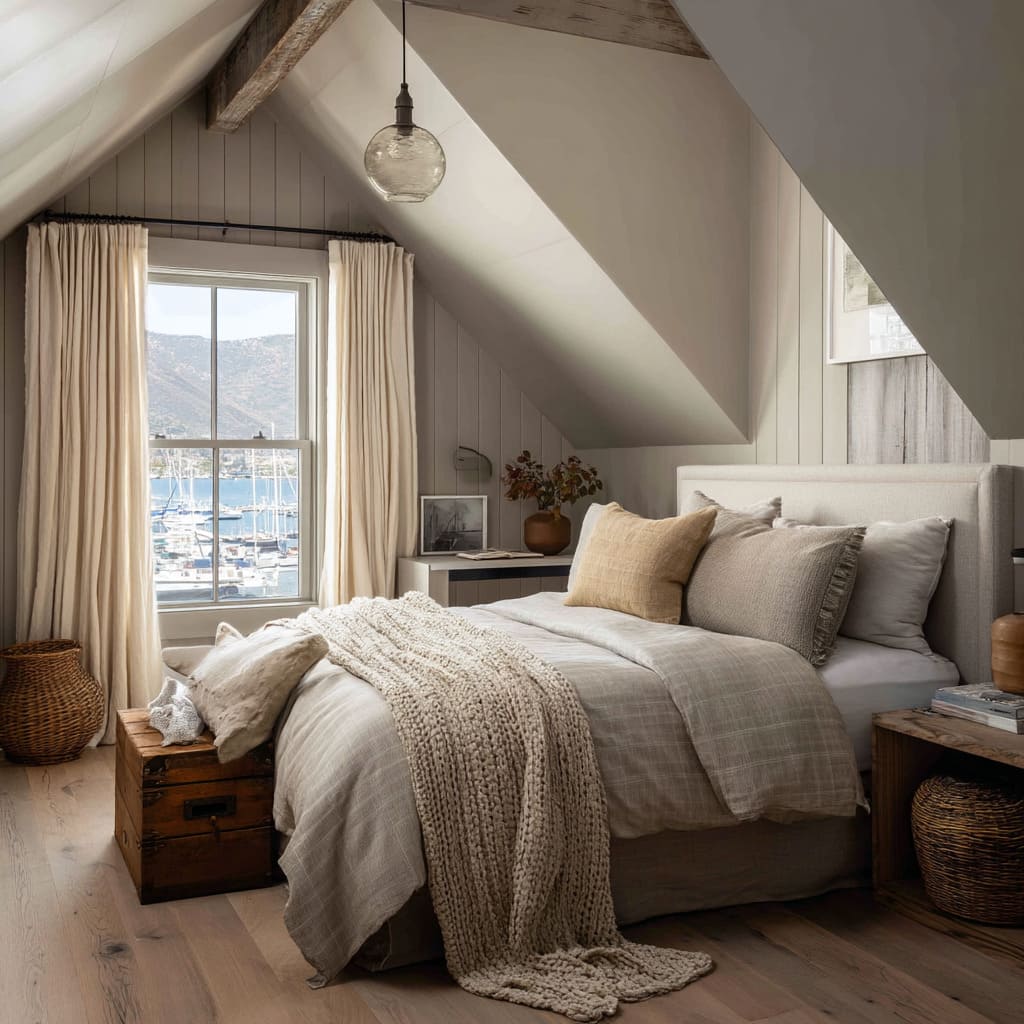
One clear way this shows up is in bedside pairings. A trunk might sit on one side of the bed, grounding the space with its solid, vintage profile.
On the opposite side, a floating shelf or slim table keeps things lighter, leaving the floor visible. The room feels steady, but not in a way that calls attention to itself.
The asymmetry is calm, not chaotic. This strategy repeats in more subtle ways.
For example, two identical lamps might frame the bed, but a throw blanket casually dropped to one side disrupts the expected visual pattern. The result is movement—something the eye can follow without feeling forced.
It lets the space feel used, rather than arranged.
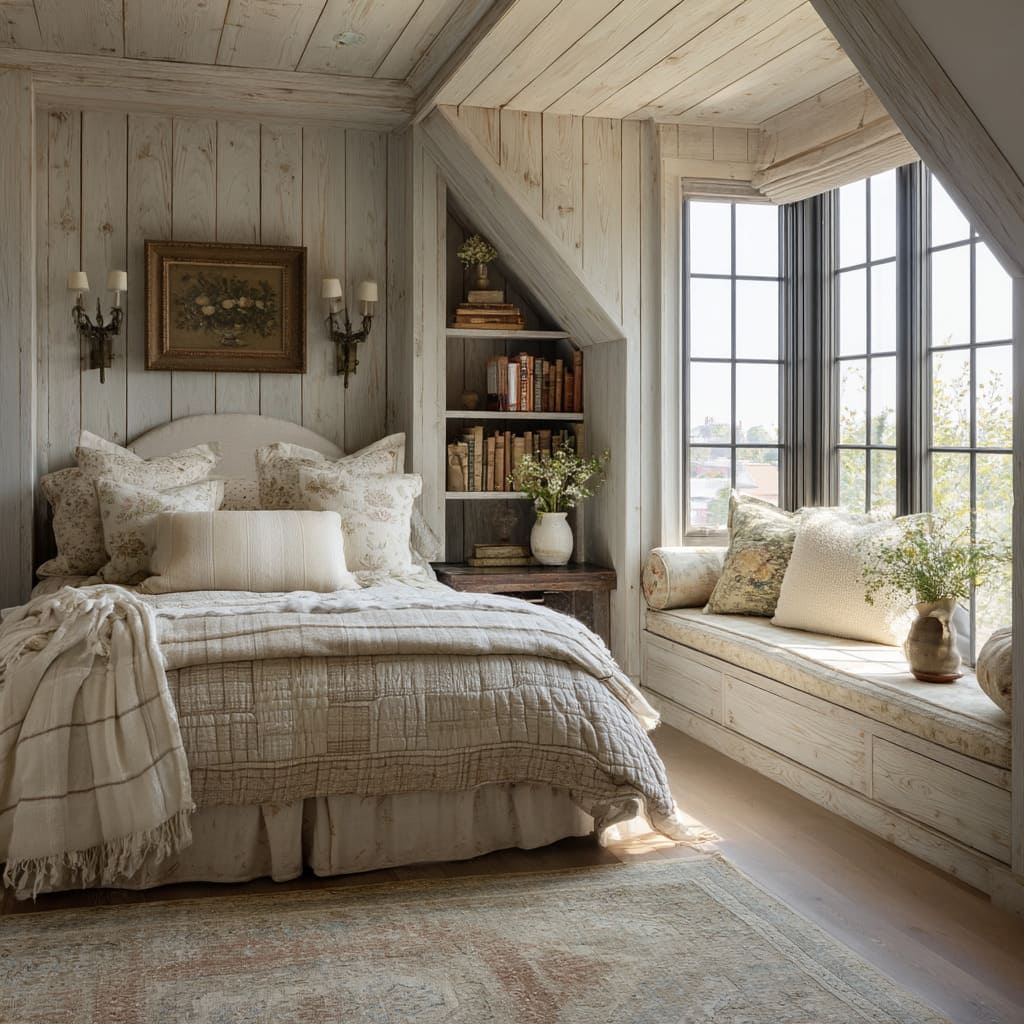
Bookshelves and built-ins often follow this rhythm too. Books may be stacked unevenly, placed upright on one level and laid flat on another.
Items like bowls, straw hats, or hand-thrown pottery might be leaned rather than lined up. This kind of casual variation doesn’t signal clutter—it signals presence, the kind of human placement that happens when things are lived with rather than displayed.
These slight deviations make the difference between a room that looks set up and one that feels settled. In every example, the cottage core bedroom aesthetic avoids perfection in favor of honesty.
That’s where its warmth lives—in how things are allowed to be slightly off-center, quietly uneven, and all the more believable.
Story Objects, Not Theme Objects
A key distinction in many cottagecore aesthetic bedroom ideas is the quiet rejection of styled themes in favor of personal objects that feel found, not curated. Instead of layering a room with predictable signs—anchors, seashells, gingham patterns—these interiors rely on subtler markers of place and memory.
The effect is slower, softer, and far more layered.
Think of a straw hat resting on a bookshelf, its brim slightly curled—not displayed as decoration, but simply set down. Or a botanical sketch pressed behind glass, thinly framed and hung just off-center.
These aren’t props; they’re fragments. They don’t shout their meaning, but they hold it.
A small bowl of seed pods becomes a still life, suggesting a walk or a gathering ritual, not a styling session. And in some corners, an aged nautical painting might lean against the wall, rather than being hung.
It whispers context—hinting at weather, water, or past lives—without naming them outright.
These details form a quiet rhythm. One or two of them per room is usually enough.
Because they aren’t meant to carry a message—they simply rest there, allowing meaning to arrive slowly. That restraint helps avoid visual noise, while still rooting the space in something that feels lived and specific.
It’s a move that gives the cottagecore bed room depth without filling it. Rather than pushing a concept, the room lets the past arrive in fragments.
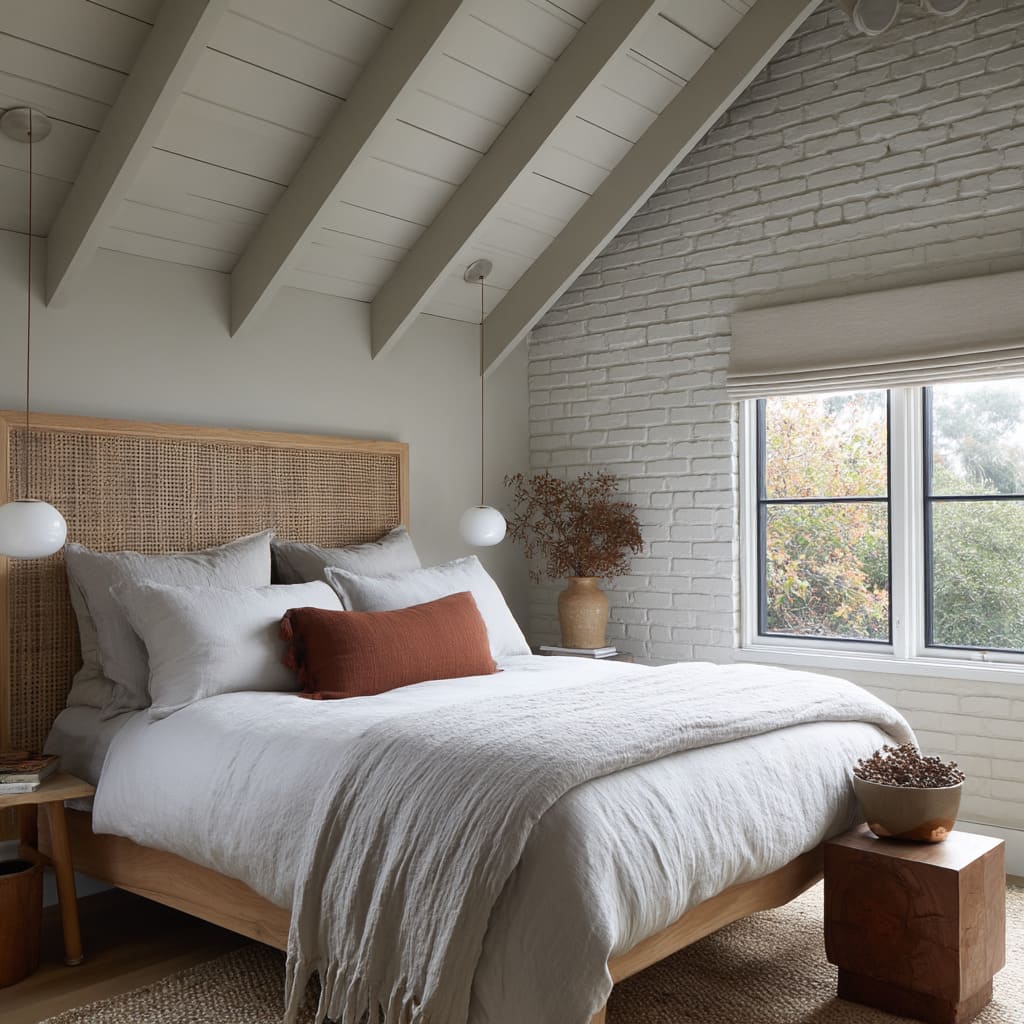
Edges That Soften Volume
Geometry alone rarely defines the mood in a cottagecore interior. Even in rooms built with strong lines—sloped ceilings, rectangular windows, flat floors—there’s often a visual counterpoint: softened edges that quiet the structure.
These are subtle details, but they make a room feel less rigid and more human. One example is found in rounded wall-to-bed joints.
When the corner where wall meets built-in alcove is curved rather than sharp, the transition feels softened. The bed sits inside its frame not like an insert, but like part of the architecture.
It calms the visual weight and suggests enclosure without confinement.
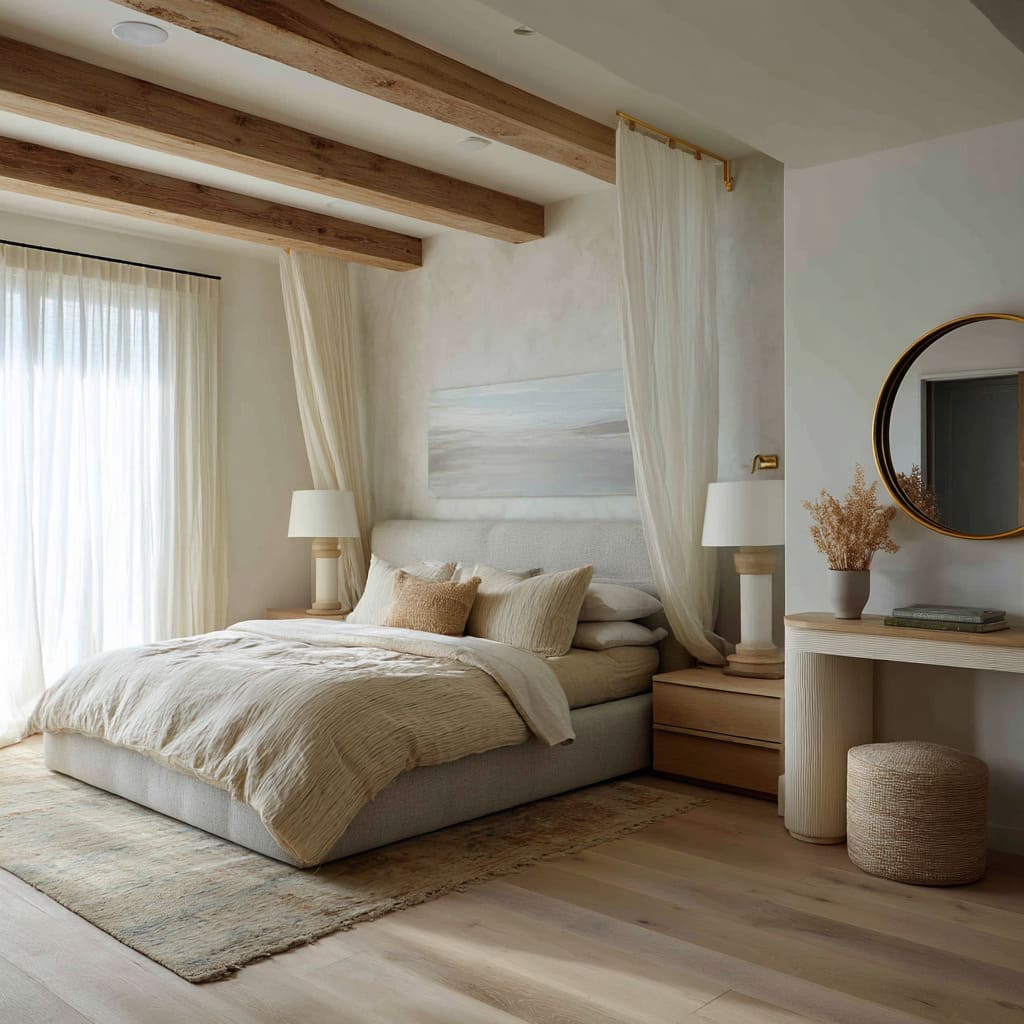
Another moment of softness appears in how some canopy curtains flare outward, mounted just beyond the width of the bed itself. They don’t enclose the space completely—just hover a little wider, like arms not quite reaching around.
The slight offset between curtain and mattress makes the bed feel like it’s floating in its own frame, not boxed in.
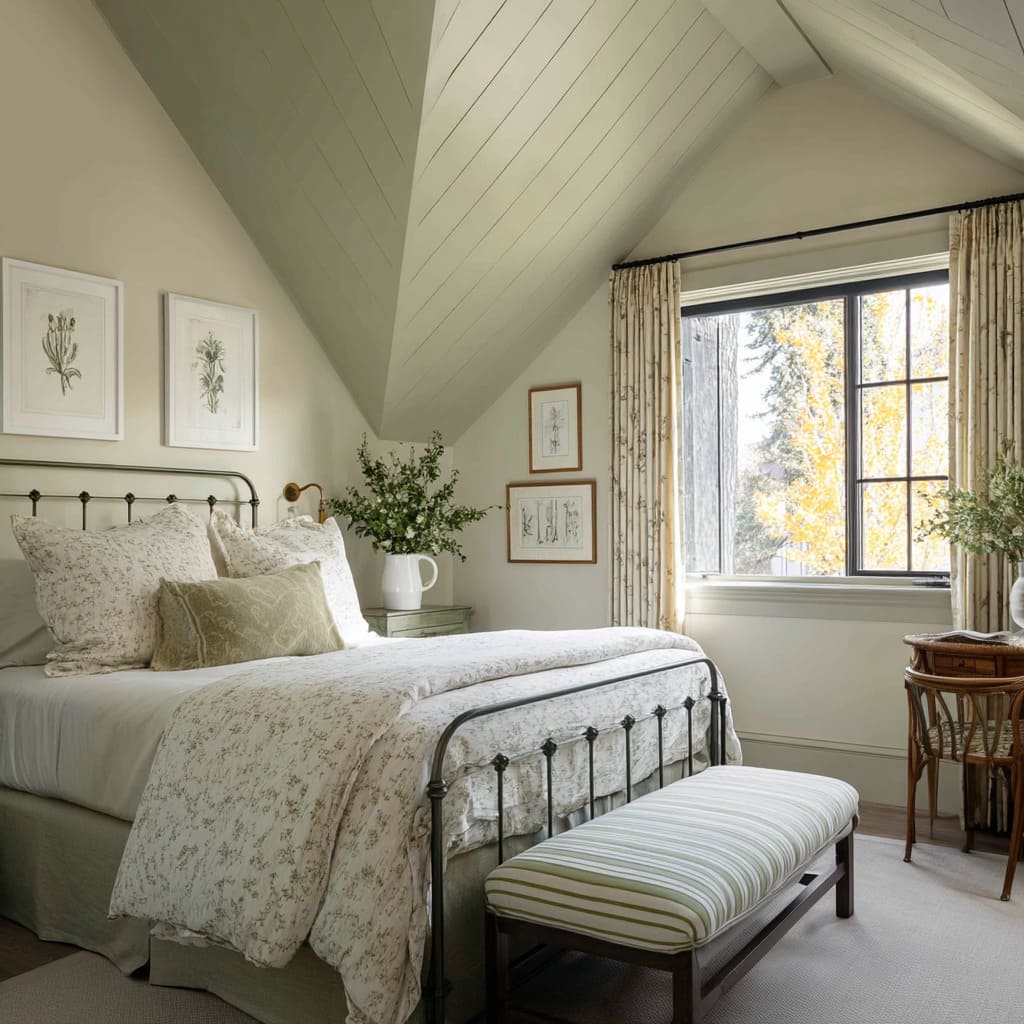
Even at floor level, structure is often blurred. Skirted upholstery, as seen in some examples, lets the edge of the bed disappear into the textile.
There’s no break between bed and floor—no visible gap or leg to interrupt the line. Instead, the entire form reads as one grounded block of fabric, simple but dense, present but gentle.
These softened volumes help shape a space that feels held together without being tight. The edges aren’t removed—they’re given just enough curve or cloth to feel settled rather than stiff.
That approach shows up again and again in refined versions of the cottagecore aesthetic, where geometry always has a layer of comfort folded around it.
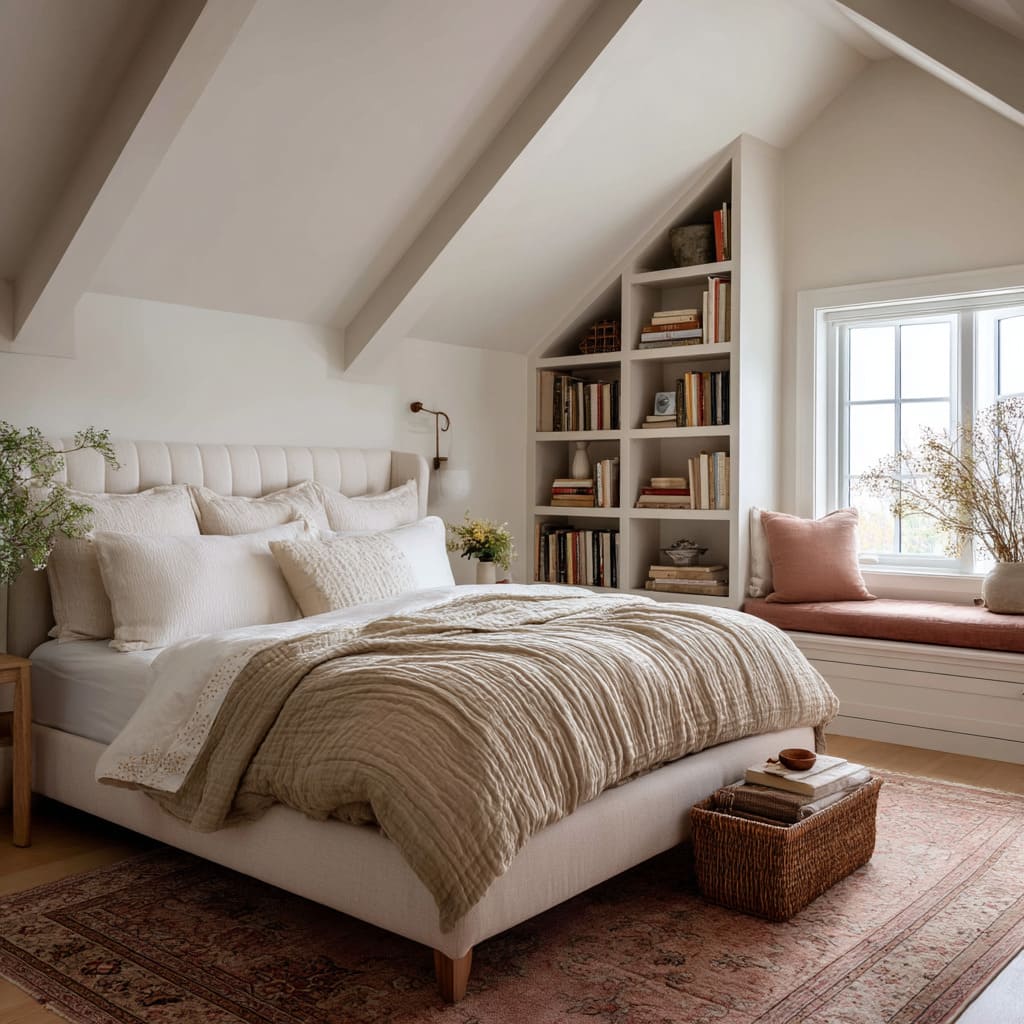
Layer Hierarchies
In many cottage core bedroom ideas, the bed isn’t styled as a centerpiece—it’s built as a surface. And that surface carries quiet complexity, not through color, but through layered texture.
There’s a visual structure at work, even if the palette stays neutral. What gives these beds depth is the thoughtful use of textile scale—each layer doing something different for the eye and the touch.
It usually begins with a smooth base—a flat sheet or tightly woven coverlet, often matte, often pale. This layer sets the tone.
It reflects light gently and keeps the base clean and stable. Above that comes the primary quilt or duvet, typically heavier in feel but not stiff.
It may have a crinkled cotton surface or light quilting—just enough body to rise slightly above the base and catch shadows along the folds.
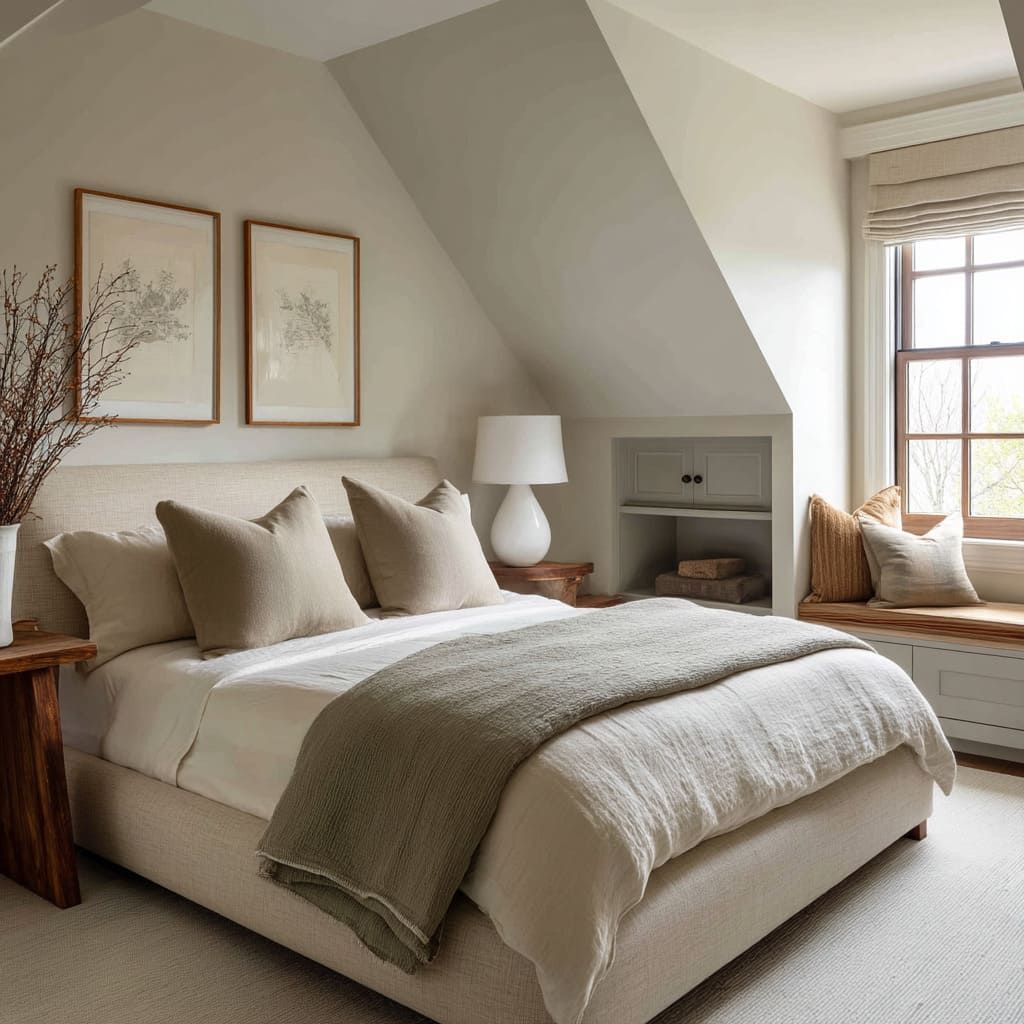
At the next level is the edge accent—the part that often breaks the formality. This could be a lace-edged linen draped at an angle, a chunky knit folded near the foot, or a waffle-textured blanket left slightly unaligned.
These accents don’t overpower the bedding—they activate it. Their finer weave or looser drape adds a deliberate imbalance, softening the bed’s outline without clutter.
Then there’s the micro accent, usually a single cushion—often denser in weave, deeper in tone, or more visually compact than anything else on the bed. This piece doesn’t compete; it closes the loop.
Sometimes it’s embroidered. Sometimes it’s plain but tightly tailored.
Either way, it gives weight to the softness without pulling focus. This textile arrangement doesn’t read like styling—it reads like memory: built slowly, with contrast in scale, not saturation.
In a cottagecore aesthetic room, it’s not the color that holds the bed together—it’s the rhythm of texture across the horizontal plane.
Modern Forms Hidden in Plain Sight
Cottagecore interiors often reference the past, but what keeps them visually fresh is a quiet undercurrent of modern formwork. These pieces don’t shout their era.
Instead, they’re slipped in where they make sense—holding their shape but softening their finish. This approach allows even the most nostalgic spaces to stay grounded in the present.
Take the use of fluted cylindrical tables. These aren’t rustic stumps or vintage nightstands—they’re geometric and graphic.
But their tone—maybe raw oak, maybe stained pine—is natural enough to sit next to cane, plaster, or linen. They carry clean lines without feeling sharp.
Brass sconces shaped like thin discs or long stems often appear too. A single circle intersected by a clean rod, for instance, becomes a small punctuation mark on a wood-paneled wall.
They feel modern in silhouette, but their surface—a brushed finish or darkened patina—keeps them from clashing with the softness around them.
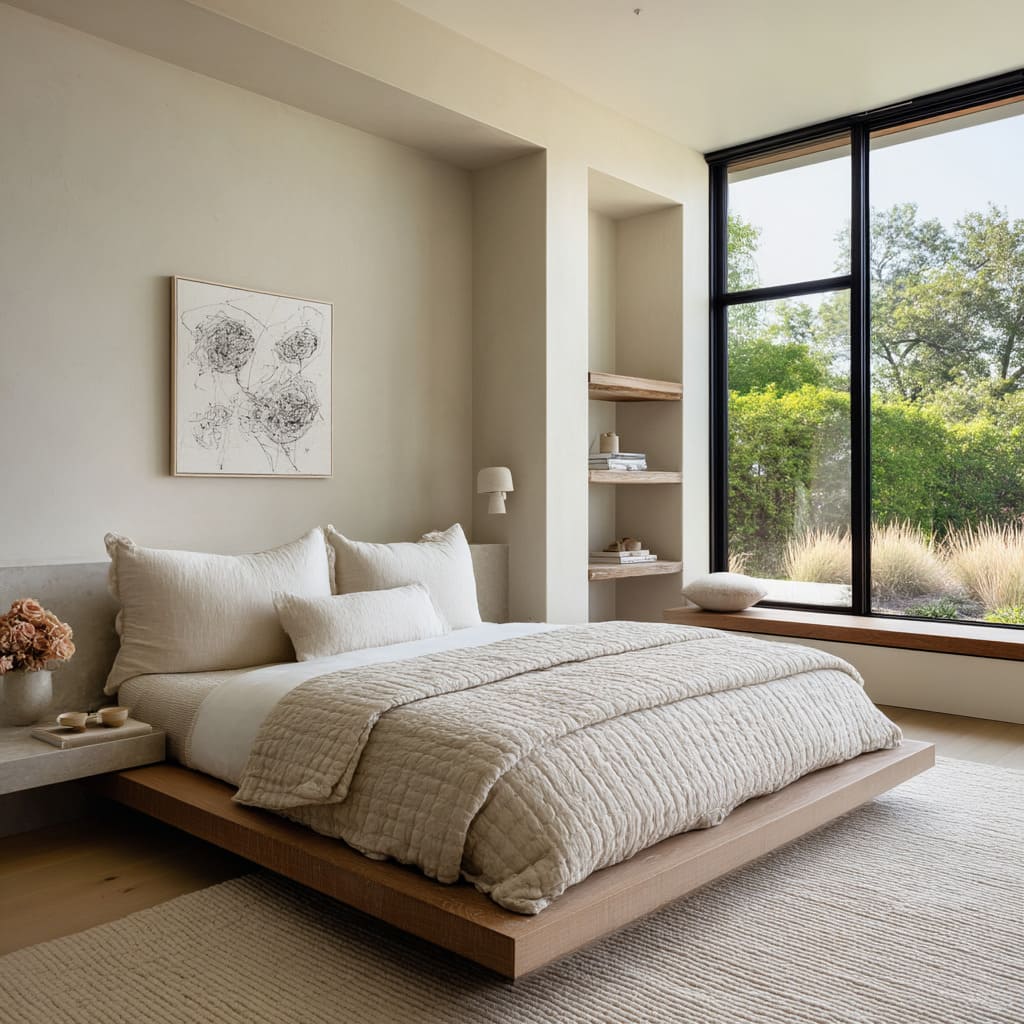
Even a concrete ledge might appear beside the bed, shaped into the wall like a shelf. On paper, this sounds severe.
But when it’s sanded smooth and warmed by the tones of clay bowls or dried stems, it joins the space without drawing attention to itself. It acts as a counterweight—a small moment of structure in a room full of fiber and light.
These moves allow the space to shift without looking forced. They keep the room from becoming frozen in time.
In many cottagecore aesthetic rooms, this balance is what gives the softness shape. It’s old mood, modern edge—just quiet enough not to interrupt.
Key Takeaways for a Present-Day Cottage-Core Feel
What shapes today’s most thoughtful cottagecore rooms isn’t theme—it’s the way form, texture, and gesture are arranged to suggest age, comfort, and calm presence. Instead of filling the room with decorations, the space is built in a way that lets its structure and subtle choices speak for themselves.
A common approach is letting the architecture carry the decorative load. Rather than hanging art or placing styled pieces everywhere, the room might lean on an arched niche, a thick beam, or a deep window bench.
These elements serve as focal points without needing to be embellished. The alcove becomes the frame, the bench becomes the sculpture, the beam becomes the line.
That mass holds the visual rhythm together.
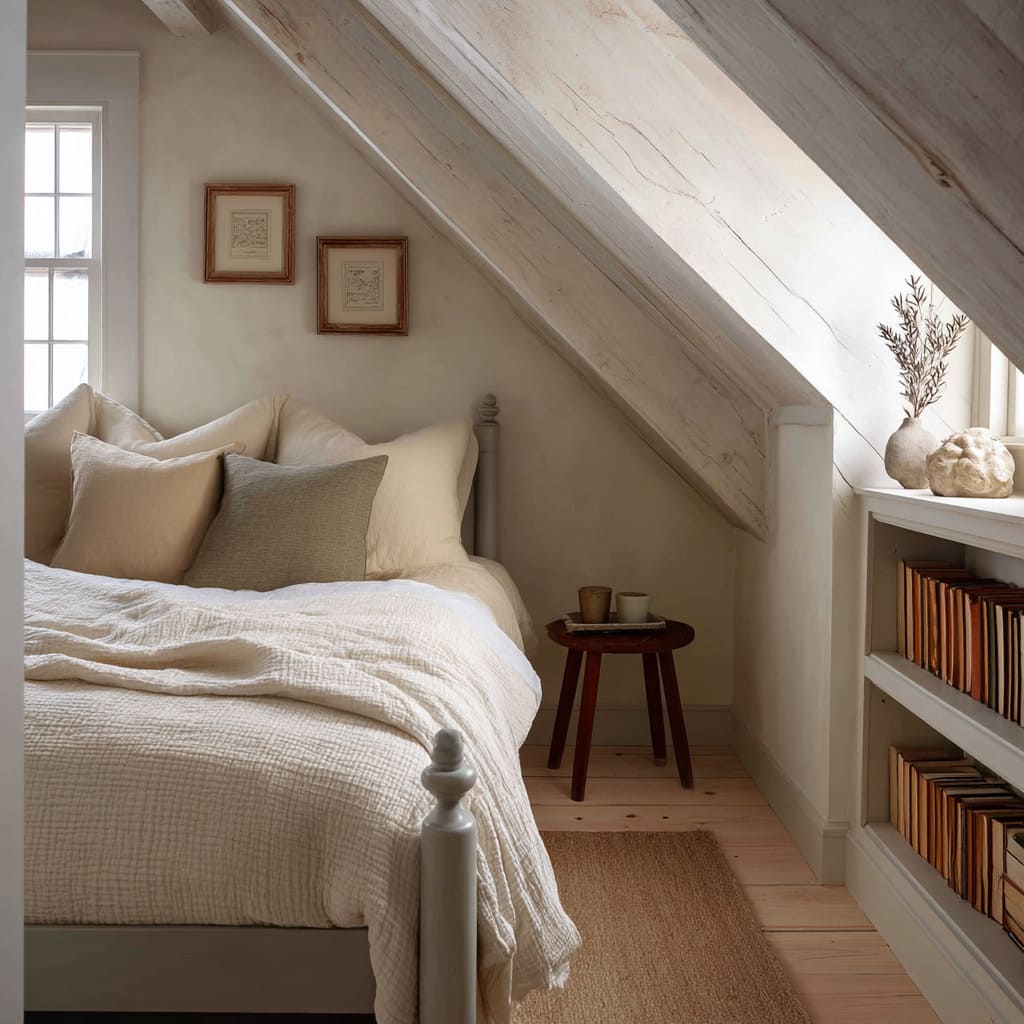
The palette often rests on one color anchor. In a room filled with natural tones—bone, flax, oatmeal—a single throw blanket in burnt ochre or a moss green cushion will be enough to ground the scene.
It doesn’t shout. It simply centers everything else around its weight.
These choices do more than add contrast—they add placement, keeping the room steady without filling it. Instead of relying on print or decoration to bring feeling, these spaces use shape as the emotional language.
A rounded doorway, an arched bed alcove, or a steep-pitched ceiling isn’t just a construction choice—it’s a way of adding softness. Curves offer movement.
Peaks offer shelter. None of it needs to be labeled.
The shapes carry meaning quietly.
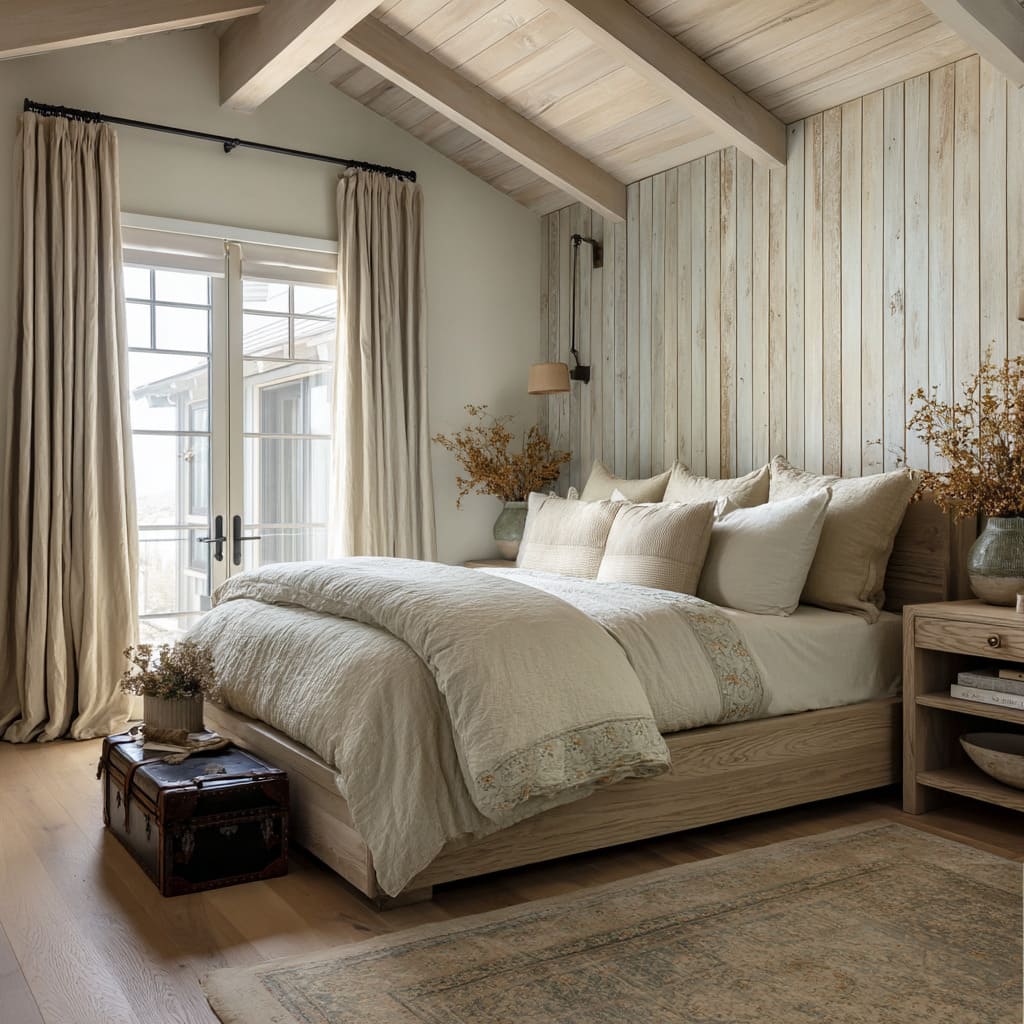
Surface finishes contribute just as much. A wall treated with waxed stucco, or a pine ceiling left lightly whitewashed, holds more story than a patterned wallpaper ever could.
These finishes are gentle. They don’t glow; they mutely reflect, like something touched by time—even if it was only just built.
The surfaces say the space has always been here, even if that’s not true. Finally, styling is handled in fractions rather than full sets.
Instead of balancing every element perfectly, the room allows a few things to be slightly off. A stack of books leans.
A blanket spills just beyond the frame of the bed. A vase sits alone on one side of a shelf.
These irregularities make the space feel lived, not arranged.
That’s where the strength of these cottagecore room ideas lives—in the restraint. In what’s left unfinished, what’s placed lightly, what’s suggested rather than declared.
The result is a space that feels grounded and present, not recreated or themed. A place that doesn’t try to perform comfort—but allows it to grow quietly through shape, texture, and the feel of real use.