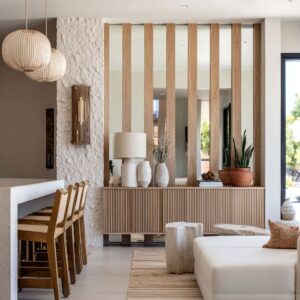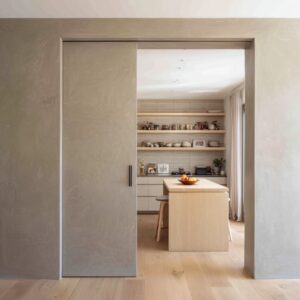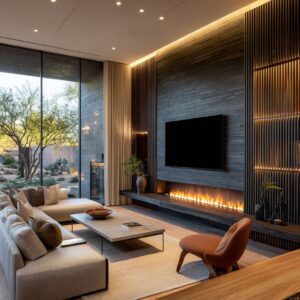

In modern fireplace design, a trend is to treat the fireplace zone as a composed visual language: lines that stabilize, surface fields that carry texture, voids that add depth, and a few controlled objects that act like punctuation. Many contemporary fireplace ideas look quiet on the surface, yet they feel complete because proportion, spacing, and light do most of the work—color and decoration stay secondary.
Below is a structured set of decorating strategies that describe the main visual looks and the specific moves that create them.
The Horizon-Line Fireplace
What it creates: gallery-calm, wide, architectural, “edited. ”
Design logic: a long baseline turns the fireplace into a room-stabilizing rule rather than a single feature object.
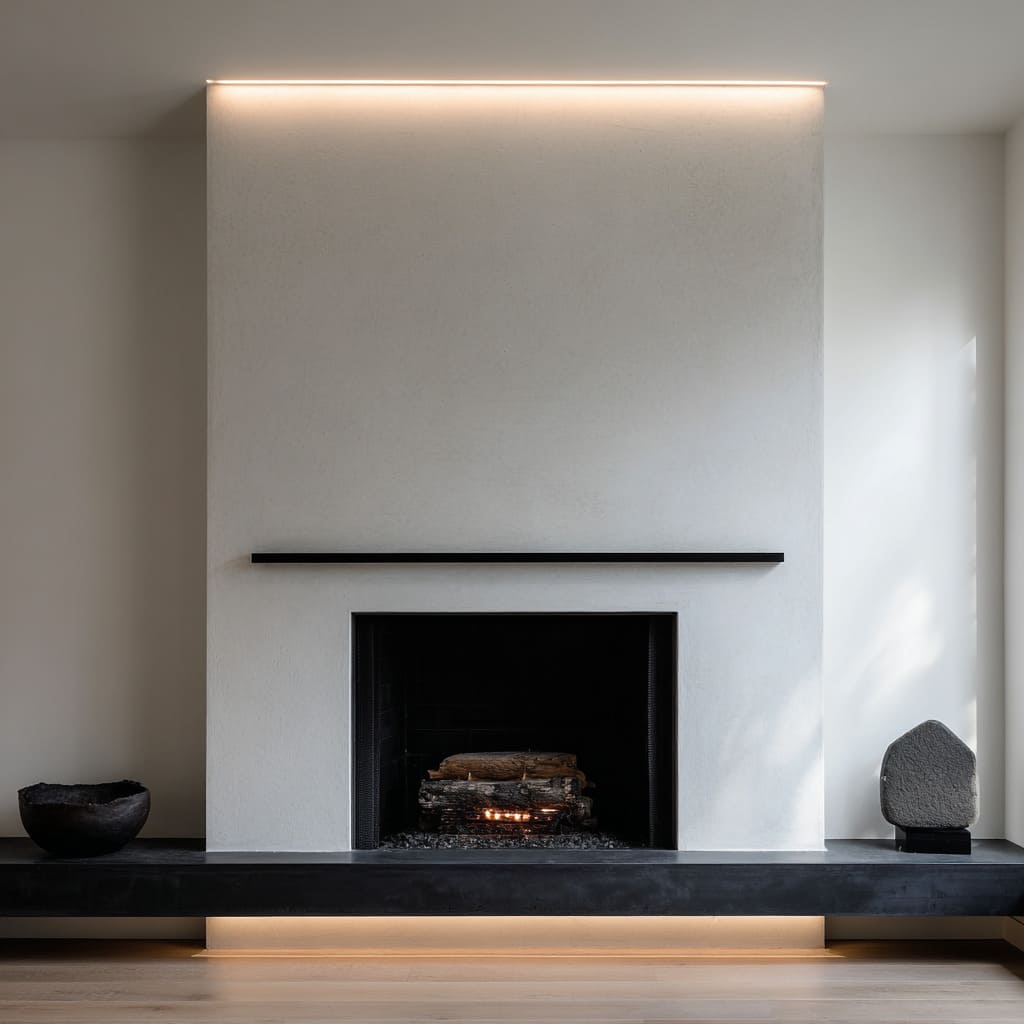
A recurring strategy in modern fireplace design ideas is to let one continuous horizontal element govern the whole wall: a hearth-like ledge, a mantel bar, or a long shadow-gap shelf. When that horizon is dominant, the fire opening reads as a precise cut within a larger composition, not as the main object that demands attention.
The wall starts to feel like a single organized field, and the room often looks wider because the eye uses the baseline as a reference for scale.

The quieter effect of the horizon approach is emotional: it reduces visual “noise” even in open layouts. The fire becomes a warm underline inside a calmer system, so the atmosphere feels steady rather than theatrical.
This is also why the upper wall can remain largely empty—emptiness stops reading as unfinished once the baseline provides a clear structure.

Common visual cues inside this look:.
- a low, long fire opening that behaves like an underline rather than a spectacle
- a ledge/shelf that reads as one continuous stroke
- objects kept short and spaced so the line stays dominant

The Line-Family Composition
What it creates: centered fireplaces that still feel room-wide and contemporary.
Design logic: repeat related horizontals so the fireplace becomes the “parent line,” and adjacent elements become its relatives.
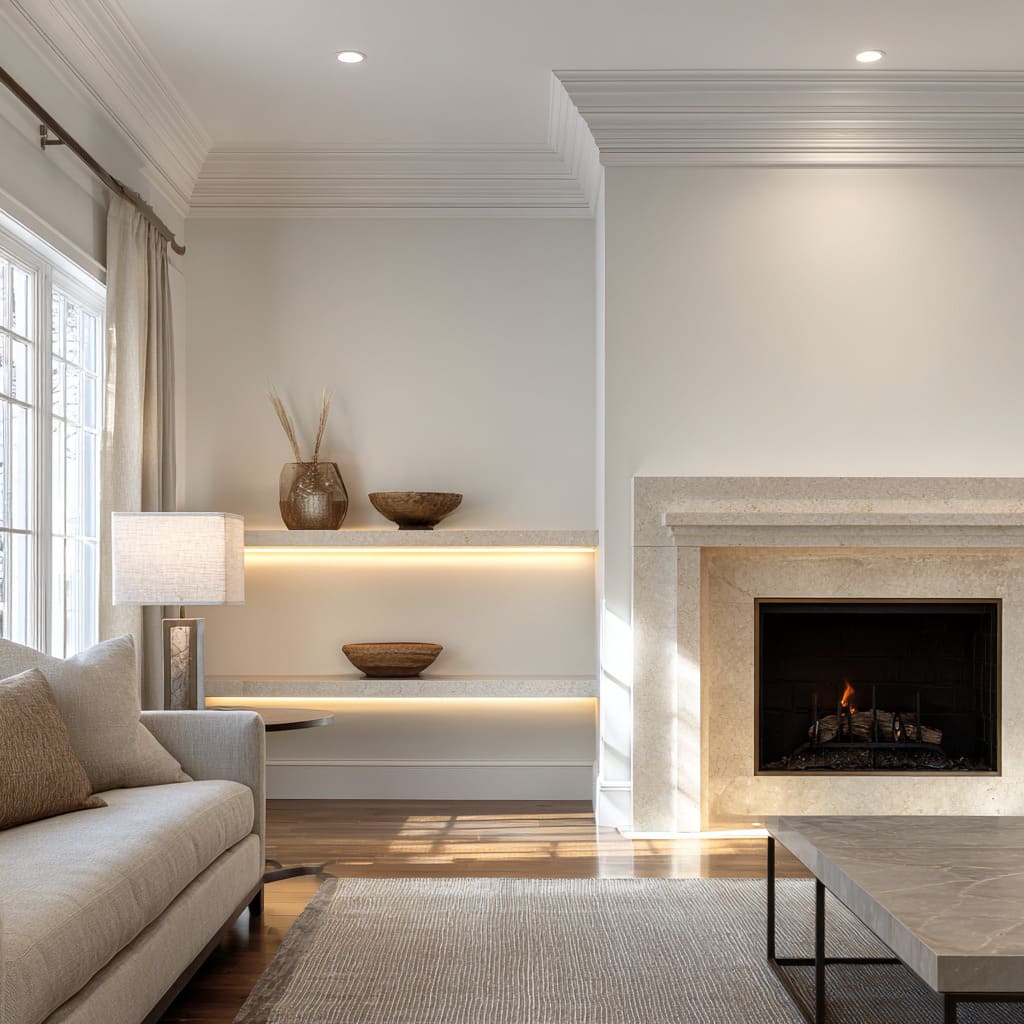
This approach uses a small family of parallel lines—often a mantel plus one or two lighter shelves—to spread the fireplace’s authority into the wider wall area. Even when the firebox sits in the middle, the room avoids the “monument” feeling because the surrounding lines keep the eye moving laterally.
The composition feels intentional because multiple planes agree on alignment and height relationships. A defining nuance is restraint in shelf occupancy.
Long lengths are frequently left empty on purpose, with objects grouped off-center to preserve negative space. That partial occupancy is not accidental styling; it is what keeps the shelves reading as architecture rather than display.

Modern fireplace wall ideas: the wall as a calm stage
What it creates: atmosphere-driven walls that look complete without relying on art-heavy decoration.
Design logic: the wall reads like a stage set—one main surface field, one controlled void, and a light gradient that activates “empty” space.

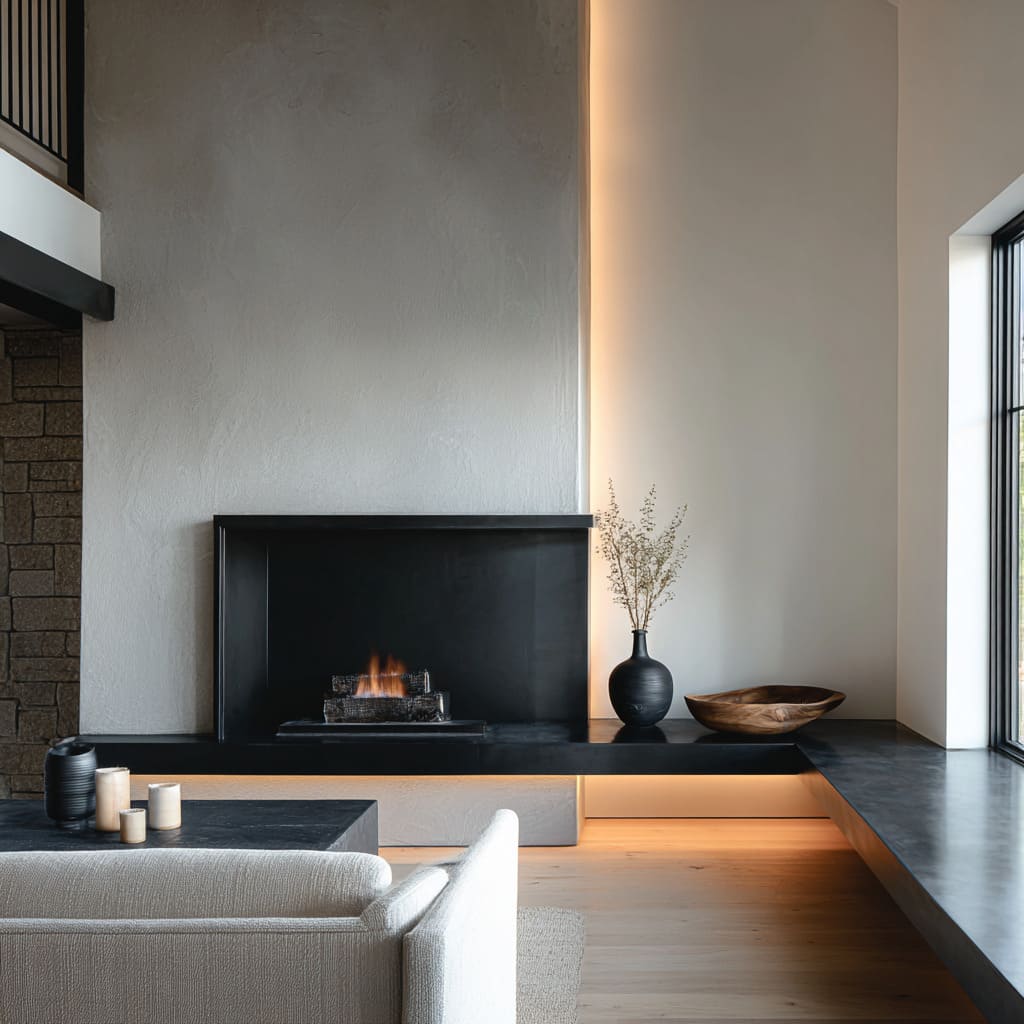
A stage-set wall avoids looking blank by giving the upper zone a soft job: a gentle wash near the ceiling, a warm band that creates a gradient, or a quiet surface texture that holds micro-shadow detail. The goal is subtle activity without busyness.
The wall becomes readable in daylight and still feels curated at night because light provides dimension and the surface provides quiet texture.

Depth is often built through layered cues rather than extra materials:.
- the black firebox void gives one deep “pocket”
- a secondary niche or negative cutout adds another depth layer
- a gentle wash adds atmospheric depth without adding objects
The result is richness that stays restrained: the room feels finished because the wall itself carries visual interest in a controlled way.
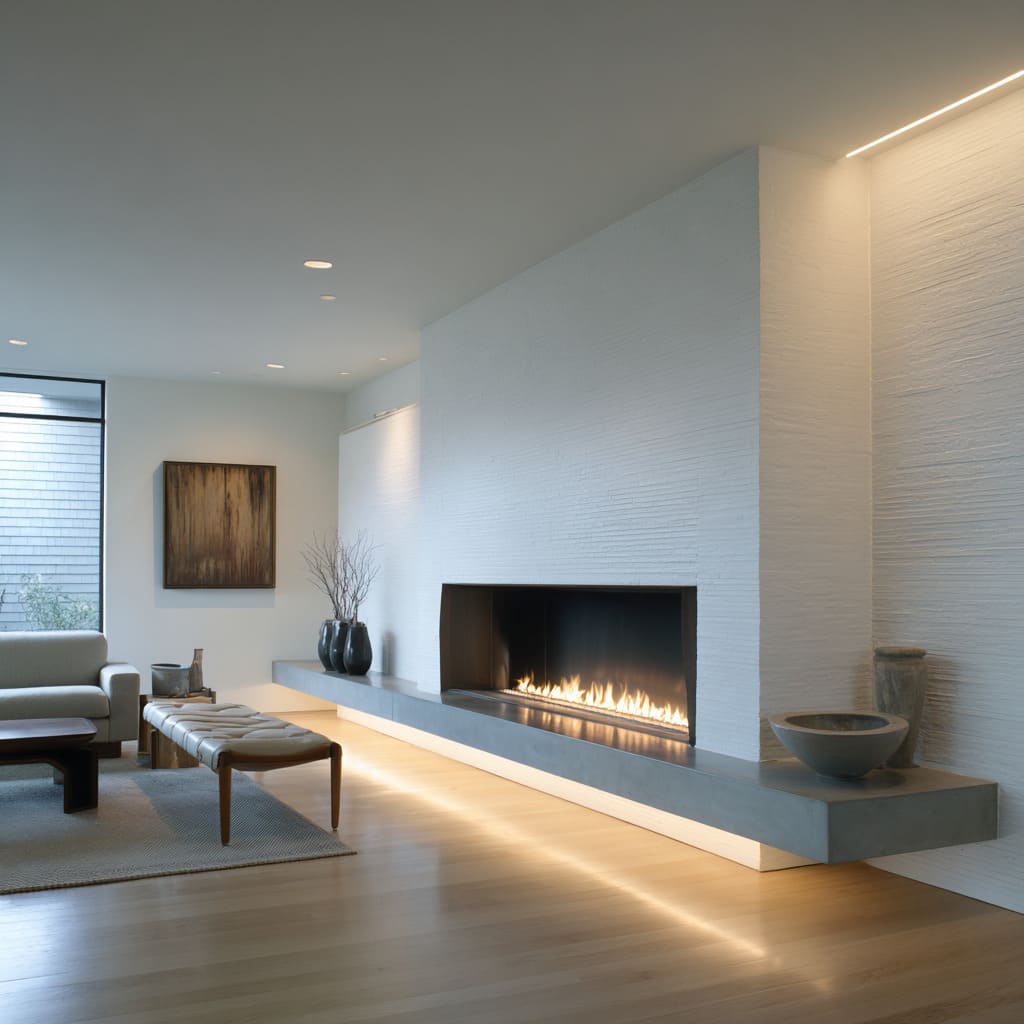
The Monolith and the Frame
What it creates: sculptural presence, strong hierarchy, grounded confidence.
Design logic: the fireplace becomes either a vertical core or a framed central block; surrounding elements act as borders that contain and clarify the mass.

A monolithic approach uses a large, calm main plane—often stone, plaster-like surfaces, or dark paneling—to establish a single dominant shape. The firebox opening is usually proportioned to read as an inset within that mass rather than as a hole that dominates it.
This proportion choice creates a restrained sense of luxury: the surround feels weighty, but the room avoids heaviness because the void stays controlled.

A framing approach adds side fields—slatted panels, warm wood posts, or textured borders—that function as visual brackets. This is a subtle compositional move: vertical rhythm at the edges can energize the perimeter while keeping the center quieter, so the eye reads “frame → core → void” in a clear order.
Many contemporary fireplace designs also rely on hierarchy to survive open-plan competition (pendants, kitchen elements, multiple openings). A single, unbroken vertical plane can dominate a busy background without needing extra decoration—because scale and clarity outperform small competing details.
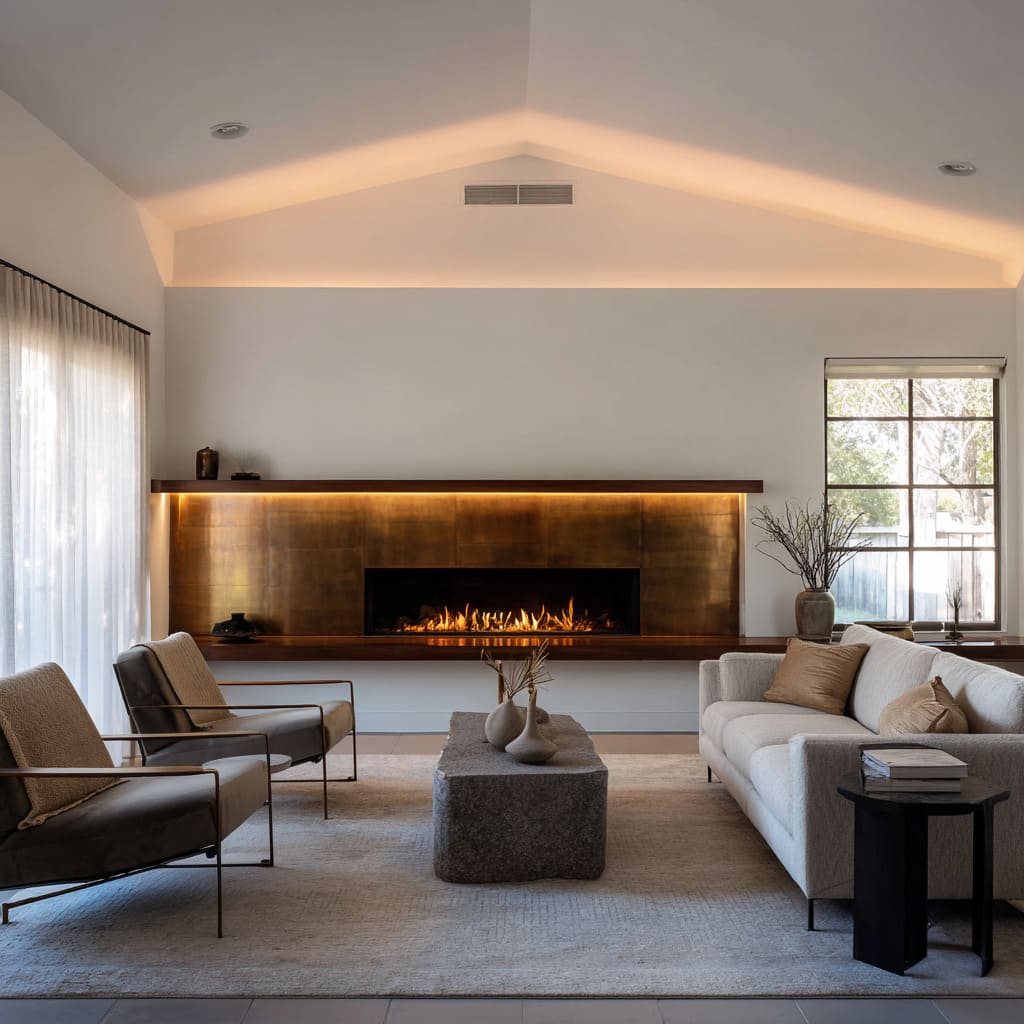
The Void-as-Sculpture Fireplace
What it creates: minimal, gallery-like sharpness; strong negative-space identity.
Design logic: the firebox behaves like sculptural negative space, and seams/edges/light act as the compositional signature.
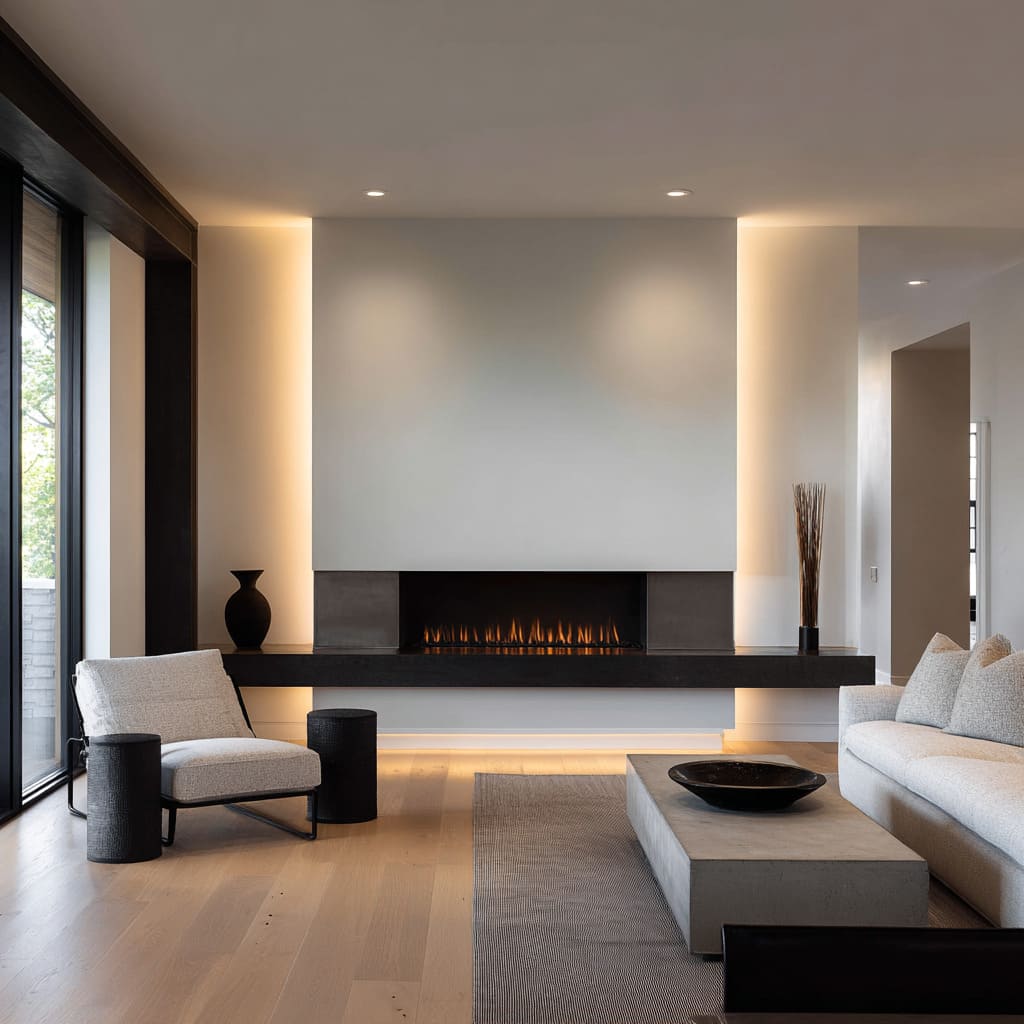
This look treats darkness as a designed material. The firebox interior becomes a deliberate “pocket,” and surrounding transitions are kept crisp so the void reads intentional, not accidental.
The most refined versions treat seams and junctions as key features: a clean meeting of two wall conditions, a thin light seam that marks a transition, or a shadow gap that separates “surface field” from “object line. ” The main risk of a deep black void—feeling too harsh—gets solved by distributing dark accents elsewhere: window frames, thin furniture bases, bowls, or small sculptural pieces.
Darkness becomes a repeated motif rather than a single heavy event.

Calm Asymmetry and Visual Weight
What it creates: modern balance without the stiffness of mirror symmetry.
Design logic: balance comes from weight, silhouette, and spacing rather than matching pairs.
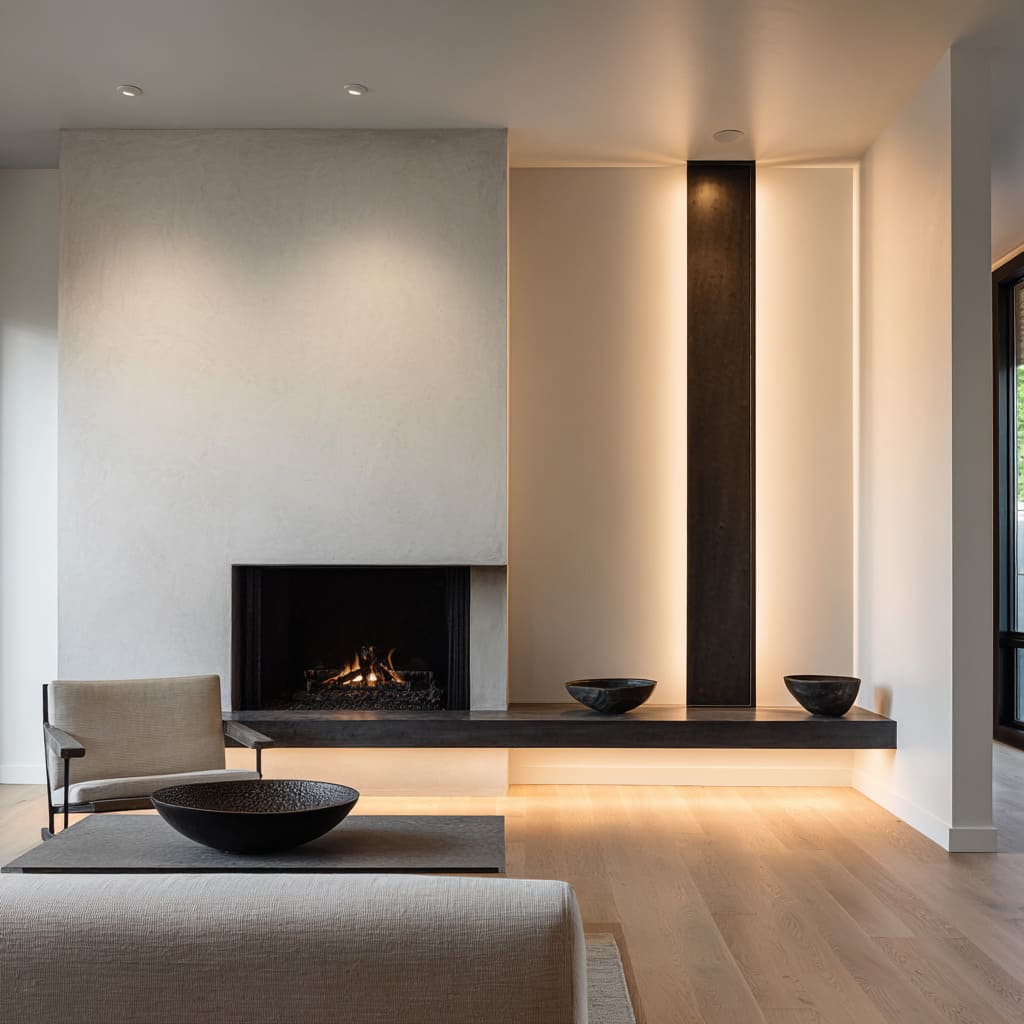
A common high-level move is to let one side carry “mass weight” (a taller, fuller object) while the other carries “length weight” (a longer, flatter element). Another version uses “resting weight vs.
standing weight”: a low matte object on one side and a taller vertical punctuation on the other. When the mantel or ledge line is long and continuous, asymmetry reads calm because the baseline stabilizes the entire arrangement.
This is also why the objects are often separated instead of clustered. Spacing becomes part of the balance equation; distance is used like a compositional tool, not empty leftover.
Texture Speed and the “Micro-Shadow” Effect
What it creates: richness without loud pattern; depth that stays quiet.
Design logic: textures are chosen for the way they read at different distances—close-range detail with far-range calm.
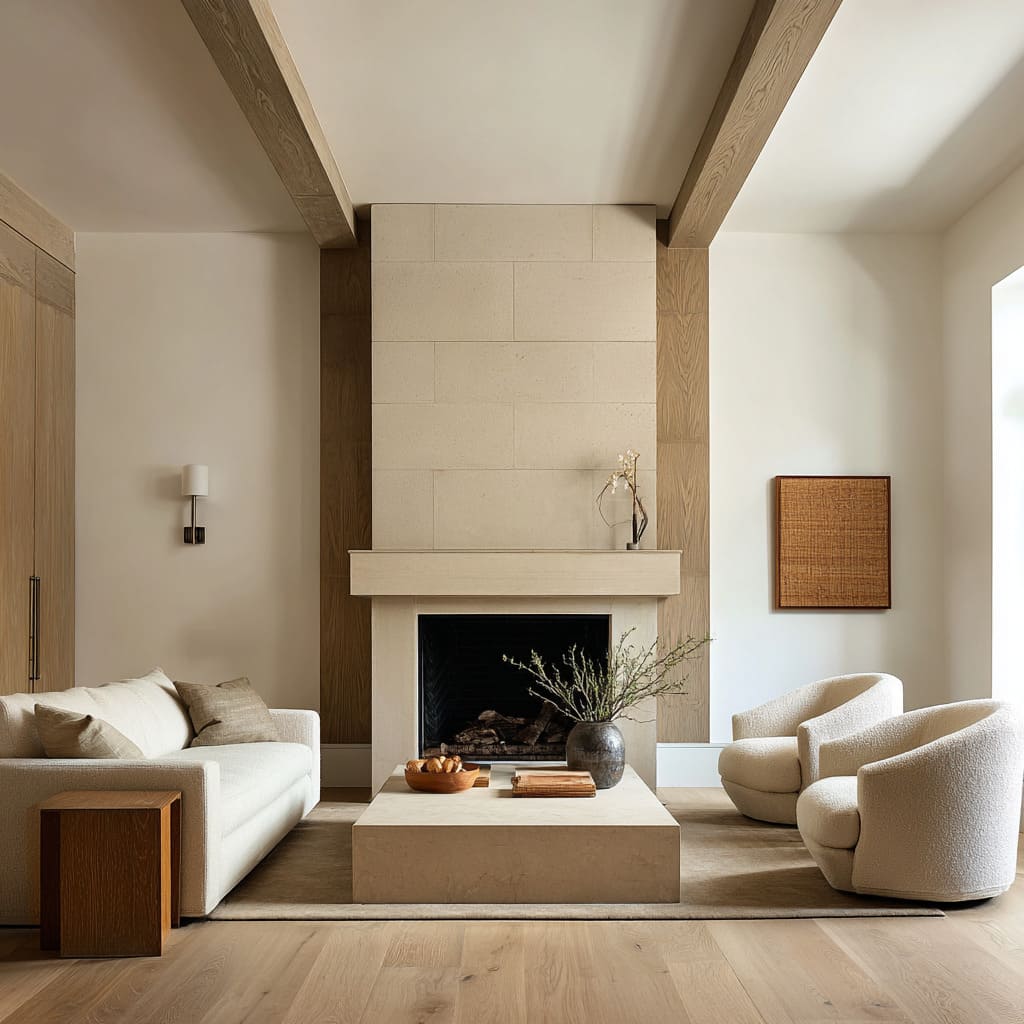
Thin stacked stone, fine striations, and tightly controlled ribbing create micro-shadows that make pale walls feel dimensional in daylight. The key is tonal discipline: the texture provides the movement, while color stays narrow so the wall still reads as one plane.
A subtle refinement appears when different texture speeds coexist: large, slow-grain elements (like broad wood beams) can sit alongside quieter horizontal stone courses because both read as calm rhythms at a distance. The room feels ordered because patterns don’t compete at the same visual “volume.
”.
Light as an Editing Tool
What it creates: lifted massing, layered planes, calm glow that replaces overt decoration.
Design logic: light separates planes and sets hierarchy, rather than acting as a decorative showpiece.
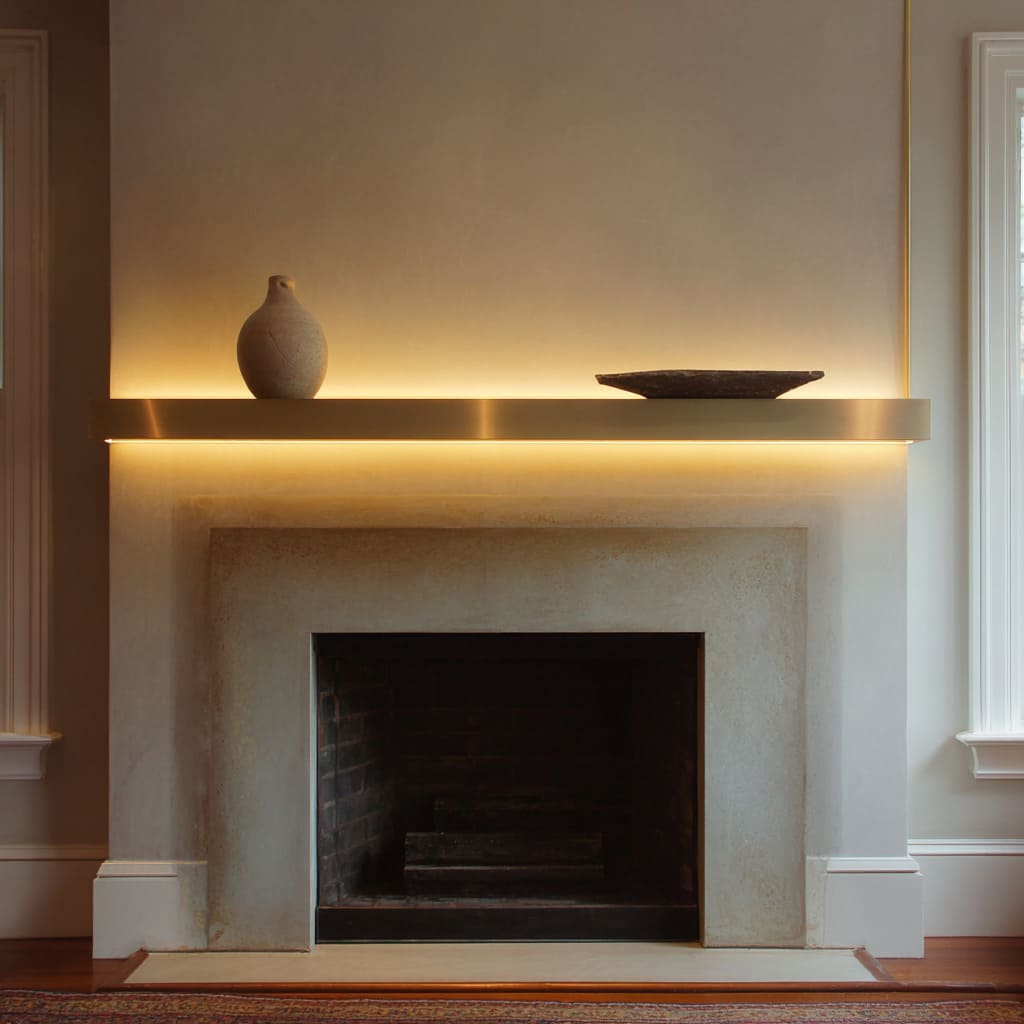
Under-glow beneath shelves or benches visually detaches heavy elements from the floor plane, creating a floating effect that reads refined rather than bulky. Ceiling-adjacent washes activate large blank walls so emptiness looks deliberate.
Side light columns can act as bookends, letting a central pale field feel purposeful instead of flat. The quiet power here is clarity: light defines where one zone ends and the next begins, so the composition feels “edited” even with minimal objects.
Layout Echoes for a Modern Living Room
What it creates: a fireplace design that feels integrated into the room composition rather than treated like a throne.
Design logic: furniture repeats the fireplace’s line language, while a small amount of curvature softens the geometry.
In a fireplace for a modern living room design, the seating and tables often echo the fireplace’s dominant geometry: low profiles reinforce a low horizon; thin dark furniture lines echo a dark firebox; pale table volumes echo pale wall fields. The space between furniture pieces matters as much as the pieces themselves—negative space becomes part of the composition’s calm.
Curves appear as controlled relief: rounded tables, bowls, boucle-like chairs, or a single curved sculptural form. These soften the rectangle-heavy architecture without turning the room into a mixed-shape collage.
This is why many modern living room fireplace ideas feel warm without relying on busy decor: softness arrives through silhouette and surface tactility, not through clutter.
A condensed visual-system checklist
- Shape: long horizon (wide calm) or tall core (sculptural presence).
- Darkness: one main void, then distribute smaller dark echoes elsewhere.
- The upper wall a role: gradient wash or quiet texture so emptiness reads intentional.
- Objects: clear silhouettes, limited count, spaced placement.
- Weight: mass vs. length, resting vs. standing, disk vs. vertical cluster.
- Curve relief sparingly: one or two rounded forms to soften strict geometry.
- Light separate planes: under-glow and washes to define layers and hierarchy.
These strategies describe how calm, high-end fireplace compositions are typically built as visual systems—so the room reads complete through proportion, spacing, texture, and light rather than overt decoration.
Disclaimer: This article is for visual inspiration only and focuses on interior styling ideas. It does not address technical, structural, or safety considerations related to fireplaces.