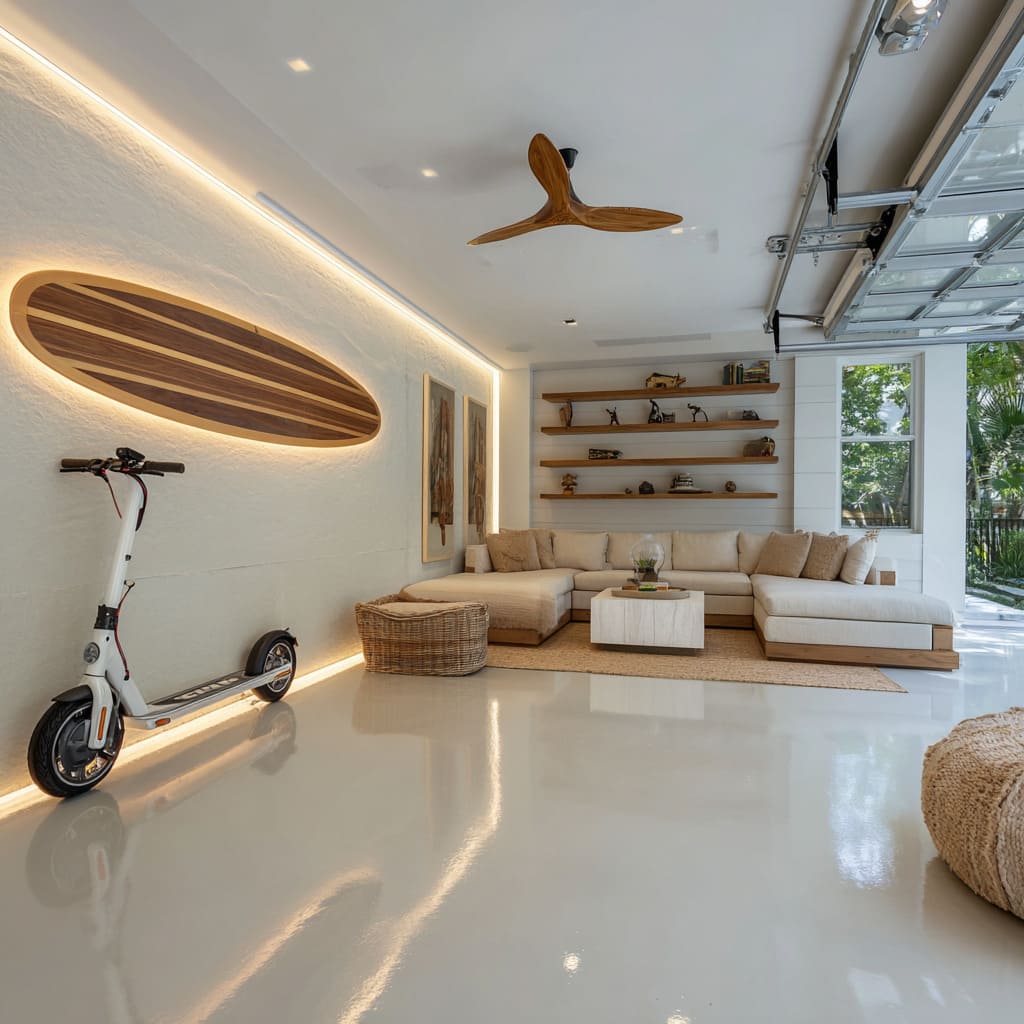
Turning a garage into a modern man cave has become one of the most exciting directions in interior design today. Across new projects, designers are showing how raw, utilitarian shells can shift into expressive, structured lounges that feel both cool and composed.
The best garage man cave ideas mix calm geometry, warm materials, and smart wall organization instead of relying on clutter or nostalgia. Each design transforms a garage into a refined hangout with depth, light rhythm, and a strong visual pulse rather than just a collection of hobby items.
The New Direction of Garage Man Cave Design
The latest garage mancave ideas treat the garage like an open studio instead of a storage space. Brick, stone, timber, and concrete no longer signal grit—they’re used as textured backgrounds for collections, lighting seams, or display walls.
The modern approach uses one dominant material field, such as reclaimed planks, stone veneer, or matte plaster, to calm the room and let other elements sit quietly in front of it. This trick makes equipment—bikes, guitars, boards, or tools—feel curated rather than stored.
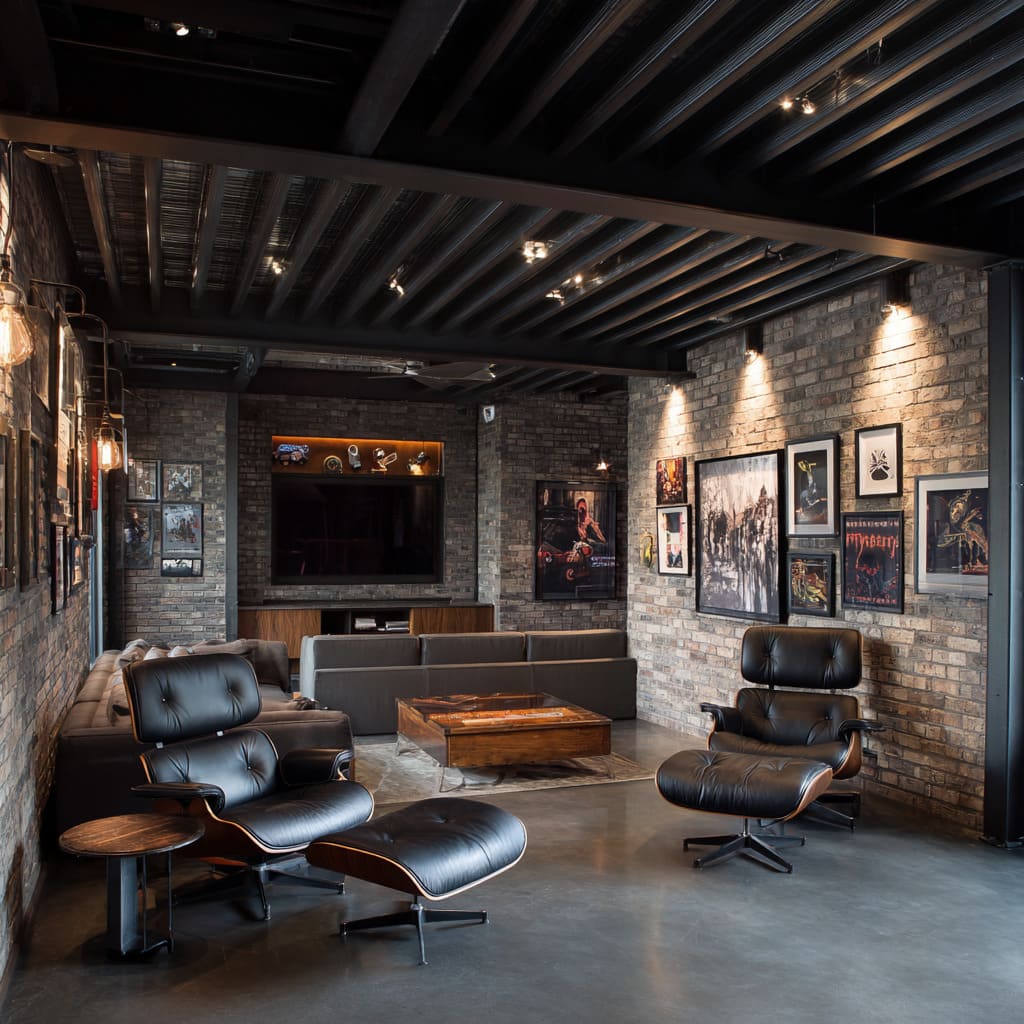
Lighting has become the main visual instrument. Linear seams skim walls, toe glows lift furniture, and low coves float the ceiling edges.
These subtle lines define zones and height without adding glare, giving every garage lounge a composed look even with visible gear. What used to be dark, heavy man caves are now atmospheric spaces shaped by light, texture, and visual discipline.
Lighting as Drawing, Not Decoration
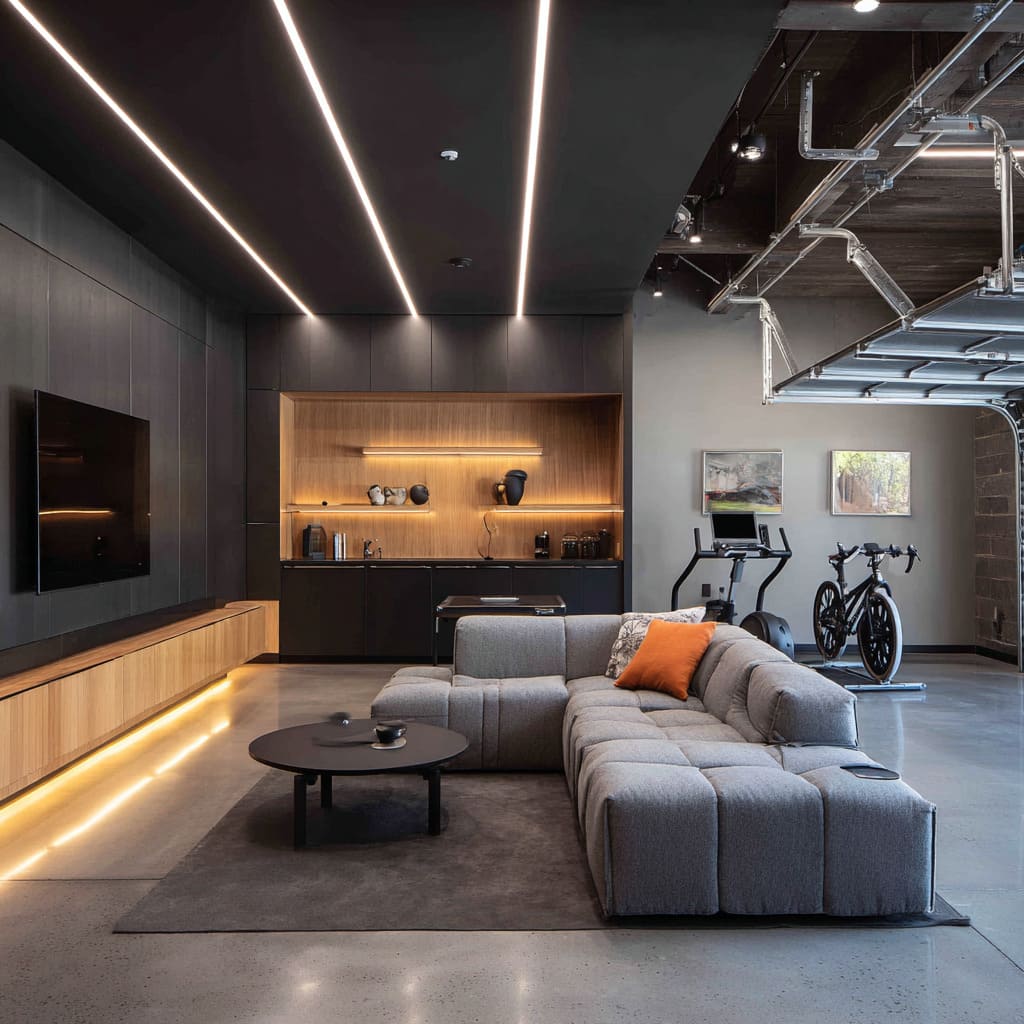
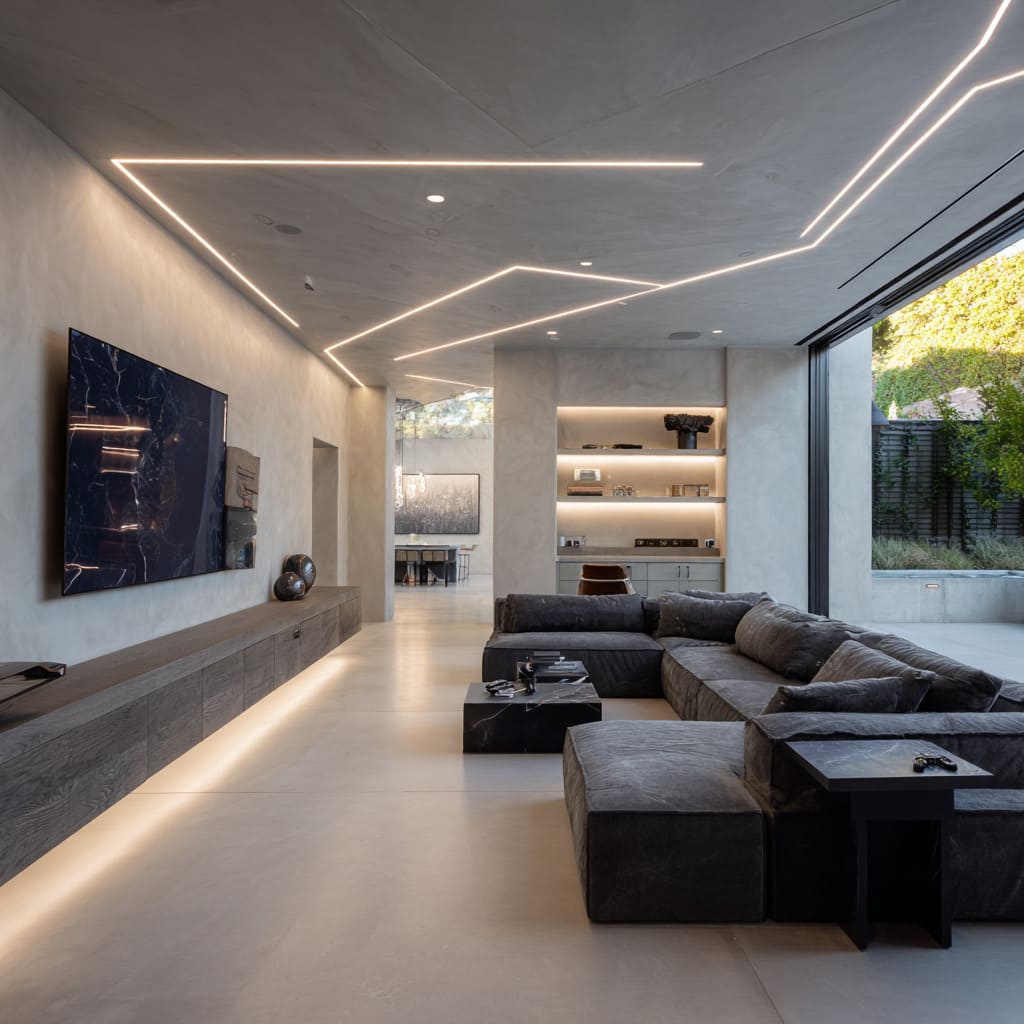
A defining element in cool ideas for garage man cave designs is how lighting sketches the structure instead of flooding it. Thin LED seams follow rafters, cabinetry lines, or beam edges to draw the room’s form.
In vaulted setups, the light often traces diagonals along trusses, while in flat ceilings it runs in straight, measured lanes parallel to the cabinetry below.
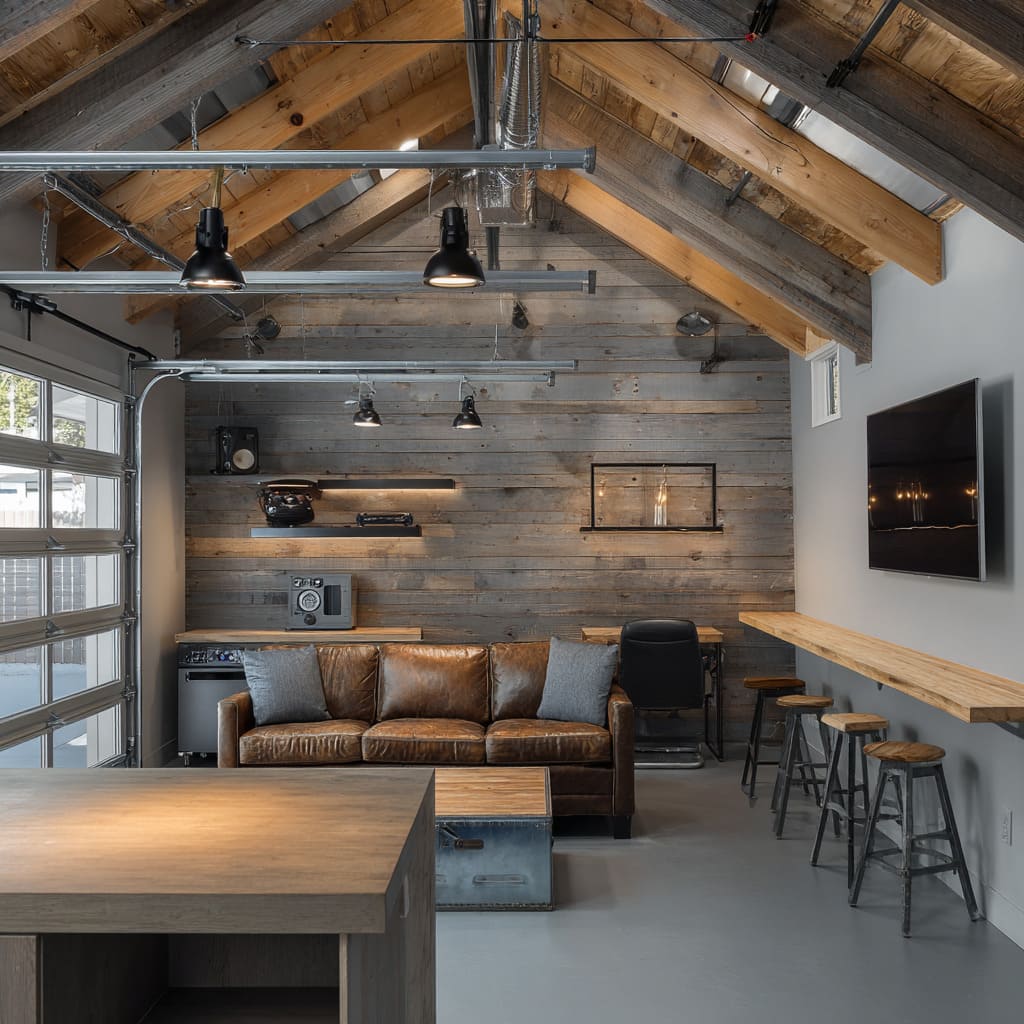
There are three visual functions of lighting repeated across modern man cave garage design ideas:
- Wall grazing: to bring out texture and soften heavy materials like brick or stone
- Vertical seams: to create quiet room dividers that add height without walls
- Toe-glows and under-shelf light: to float cabinets or consoles and shape zones without clutter
The effect feels cinematic—depth without glare, mood without chaos. Floors often carry a faint reflection from these seams, doubling the light as soft streaks that expand the space.
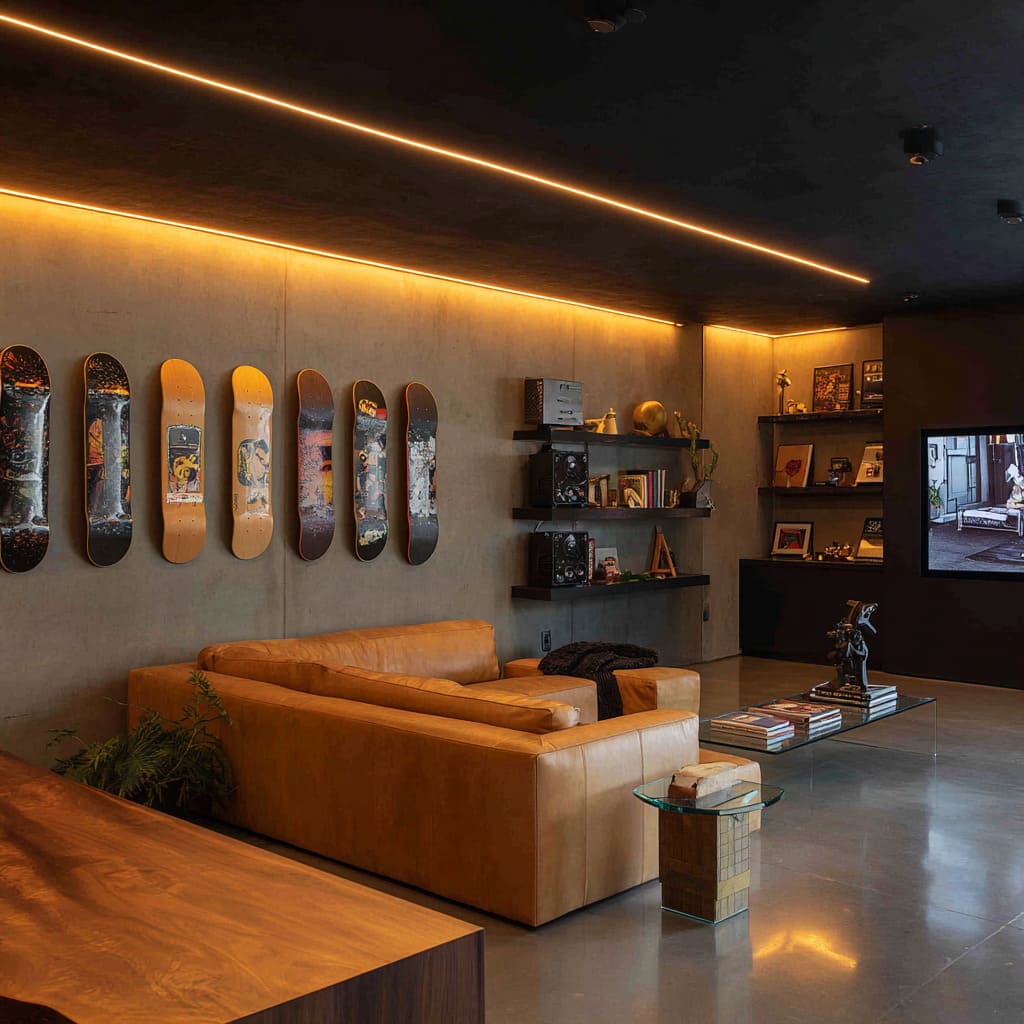
Wall Systems and Calm Storage Fields
One of the strongest visual upgrades seen in garage man cave wall ideas is the use of consistent wall cladding. Whether it’s wood planks, stone tiles, mesh panels, or smooth plaster, the entire wall surface reads as one continuous background.
This approach lets sports gear, framed art, or instruments align neatly in even rows, forming a rhythm that feels architectural rather than busy.

Designers also use a “single horizon line” technique, where wood tops on credenzas, desks, and shelves all meet at the same height, wrapping around the room like a visual belt. It’s a small move that keeps a space organized by sight even when filled with objects.
Pegboard panels, metal mesh fields, and recessed shelving niches repeat this disciplined layout—everything anchored to a grid so collections feel intentional.
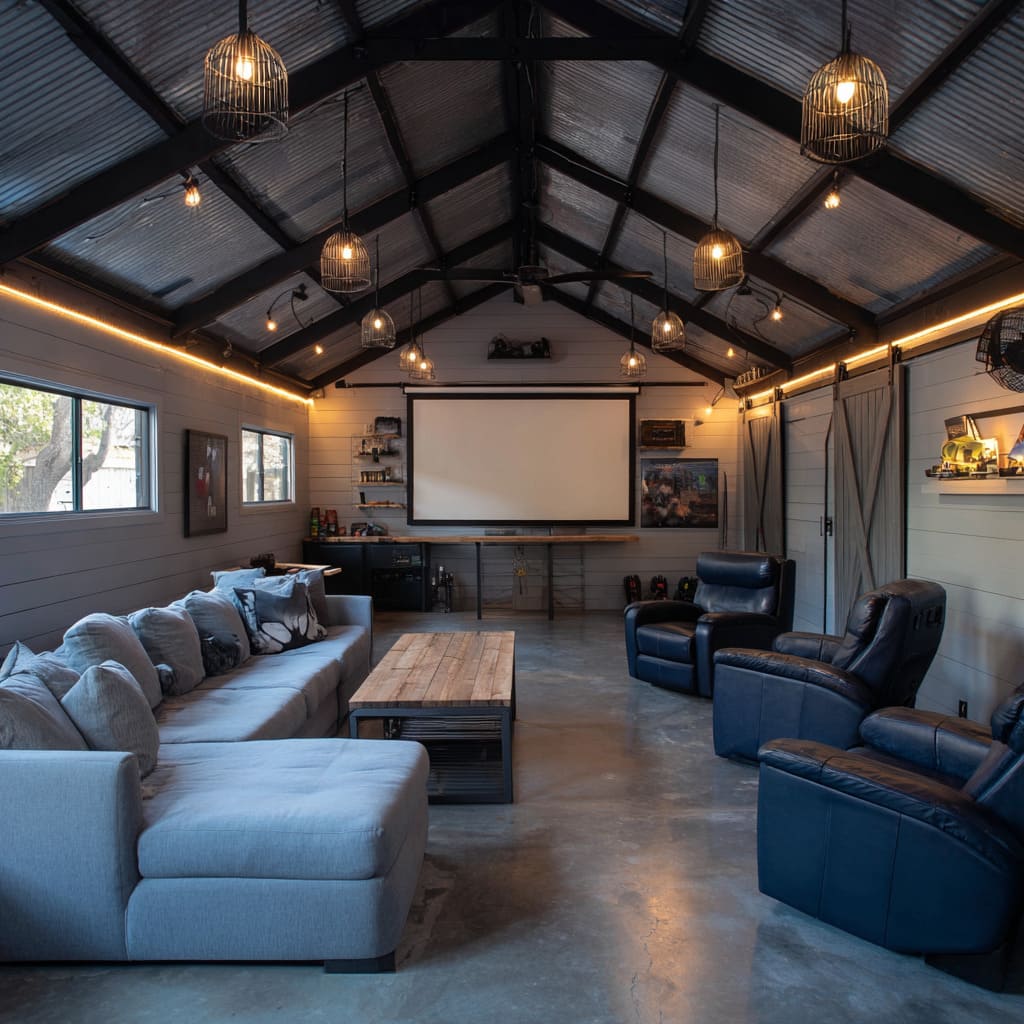
Furniture with Weight, Not Bulk
Modern garage man cave ideas for small garage focus on proportion and weight balance. Low, squared-off sectionals and open-frame chairs maintain visual breathing room while keeping the floor visible.
Deep seats and broad arms suggest comfort but remain grounded through matte finishes and heavy textures like graphite fabric or caramel leather.
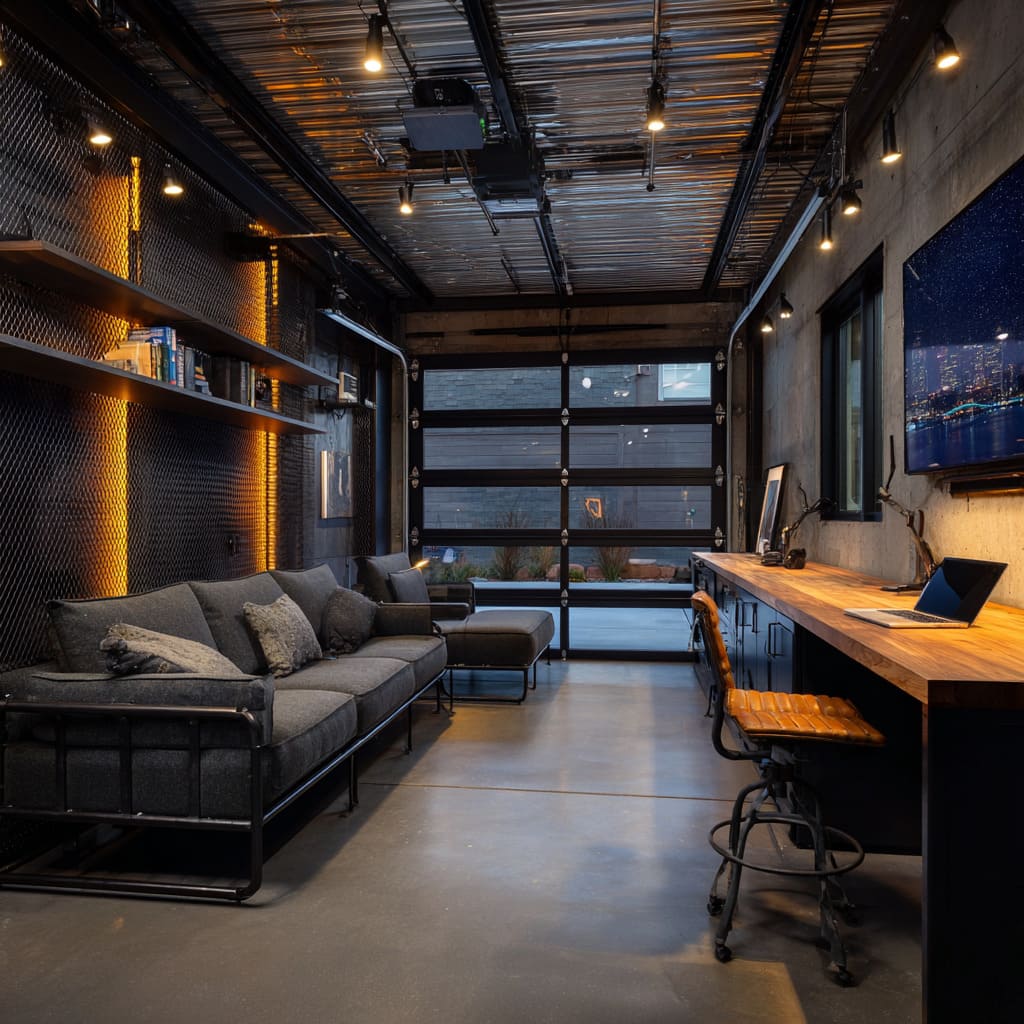
Tables and consoles follow a quiet logic: thick tops, inset legs, and consistent materials. Surfaces stay below eye level to preserve sightlines toward screens or displays.
Natural-fiber rugs—especially jute or sisal—anchor seating islands, catch grit near doors, and add a grain contrast against smooth concrete or terrazzo floors. This measured layering creates a modern lounge mood that still respects the garage’s purpose.
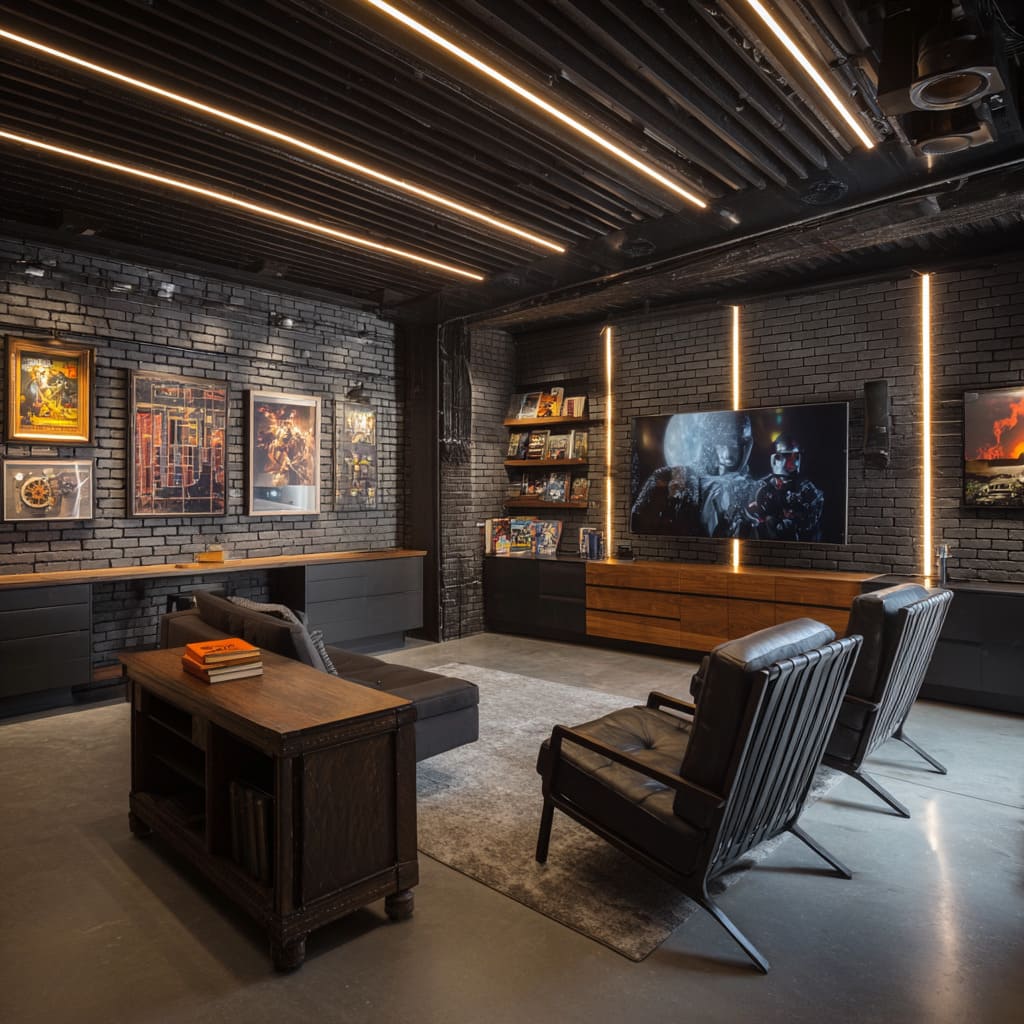
How the Ceiling Becomes the Fifth Wall
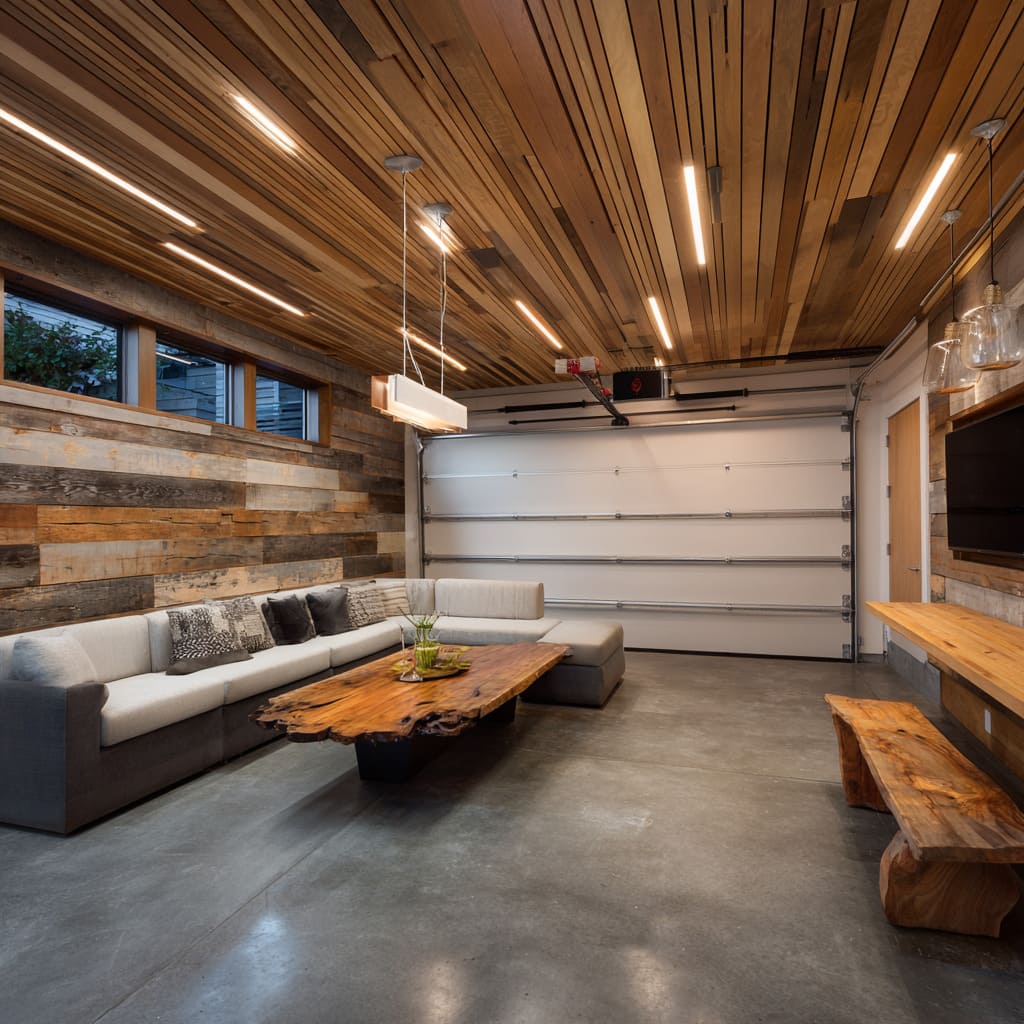
Ceiling design is one of the subtle shifts setting apart today’s garage loft man cave projects. Exposed joists, steel beams, or timber boards now serve as key aesthetic layers.
Lighting fits between these elements, tracing structure with warm streaks that mirror natural grain or truss rhythm. In brighter concepts, white panels float between beams with soft edge glows, creating a ceiling that reads like a lantern grid.

Each of these treatments works because they stay honest to the structure—no dropped ceilings, just precise alignment of texture and light. A polished concrete or terrazzo floor reflects those warm strips, amplifying brightness and visual height without any extra fixtures.
The result feels open yet grounded, turning raw construction into compositional design.
Material and Color Strategies
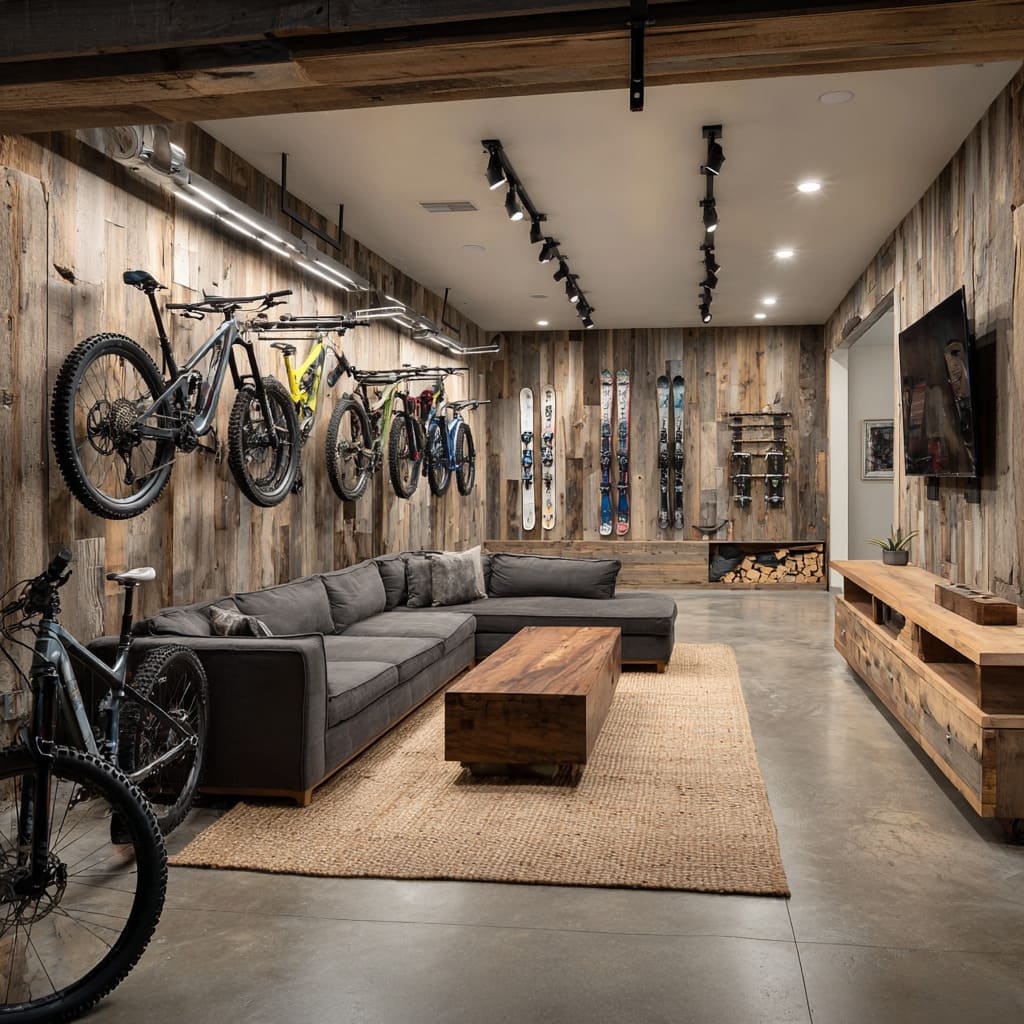
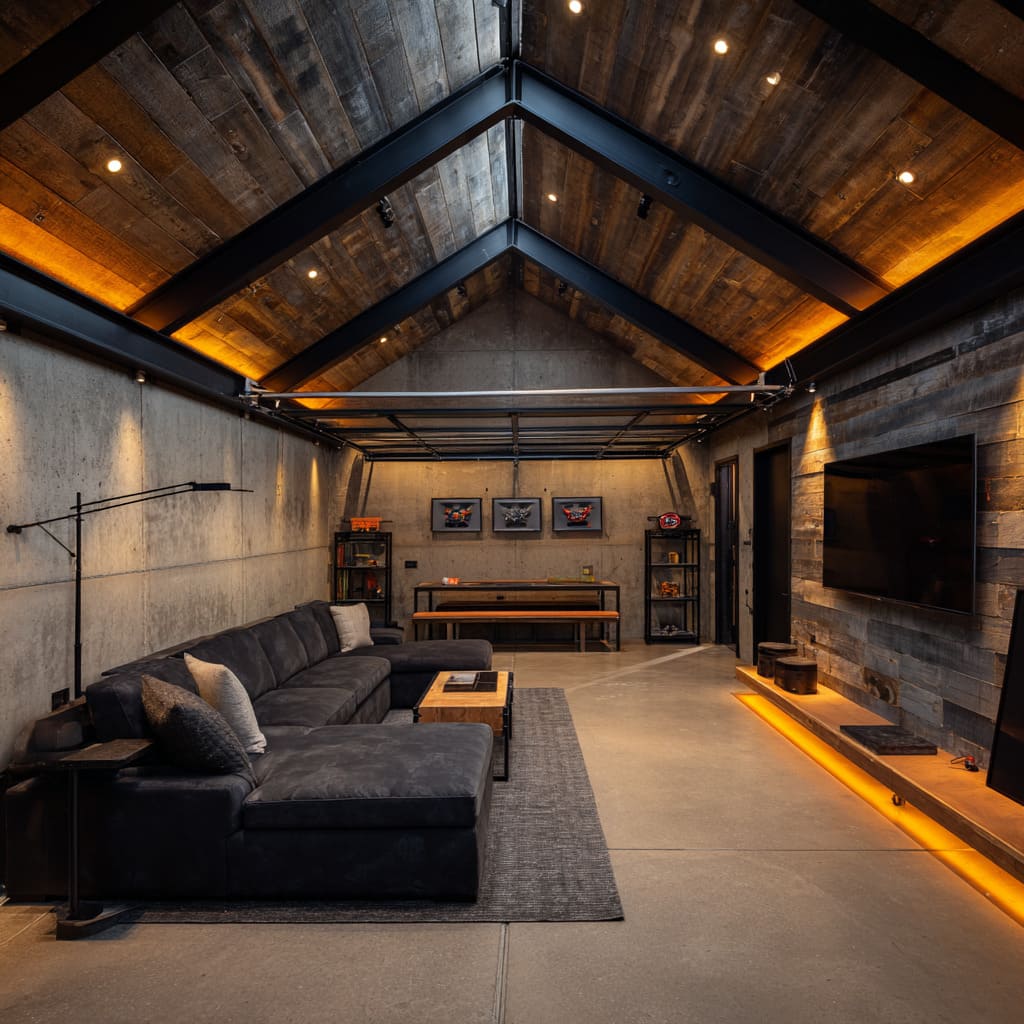
The dominant theme across cool garage man cave ideas is the interplay between cool shells and warm inserts. Designers favor concrete, black brick, or stone for the envelope, paired with oak, walnut, or caramel leather for warmth.
This contrast gives the rooms their “strong cool look”—masculine without heaviness, refined without shine.
Other balanced palettes emerge as:.
- Graphite and oak with amber light: structured and contemporary
- Brick and caramel leather: rich and club-like but relaxed
- White shell with bleached wood: bright coastal style for calm energy
- Stone gray with pale oak: subtle mountain-modern tone for a balanced warmth
Each palette keeps sheen levels low—matte wood, soft leather, brushed metal—so the glow lines and structure stay the main visual draw.

Integrating Collections and Hobbies as Design Elements
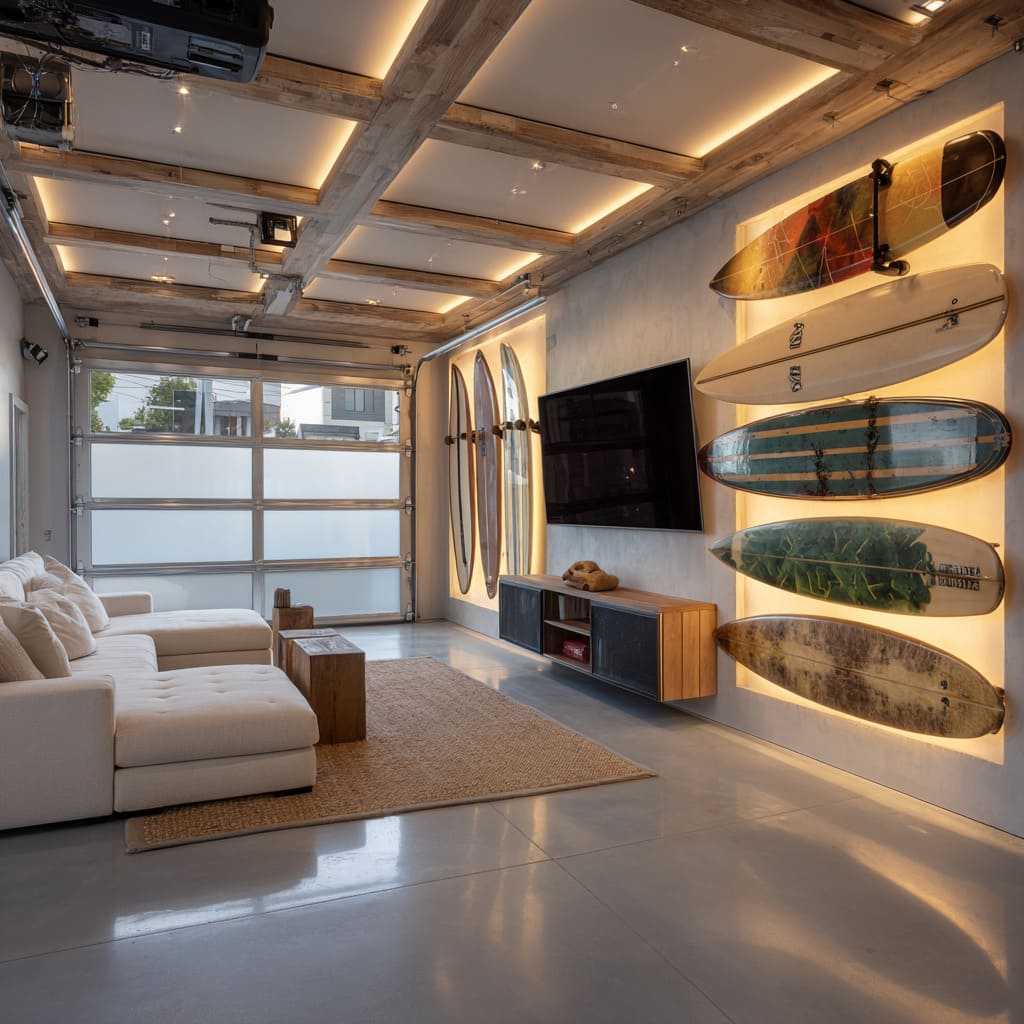
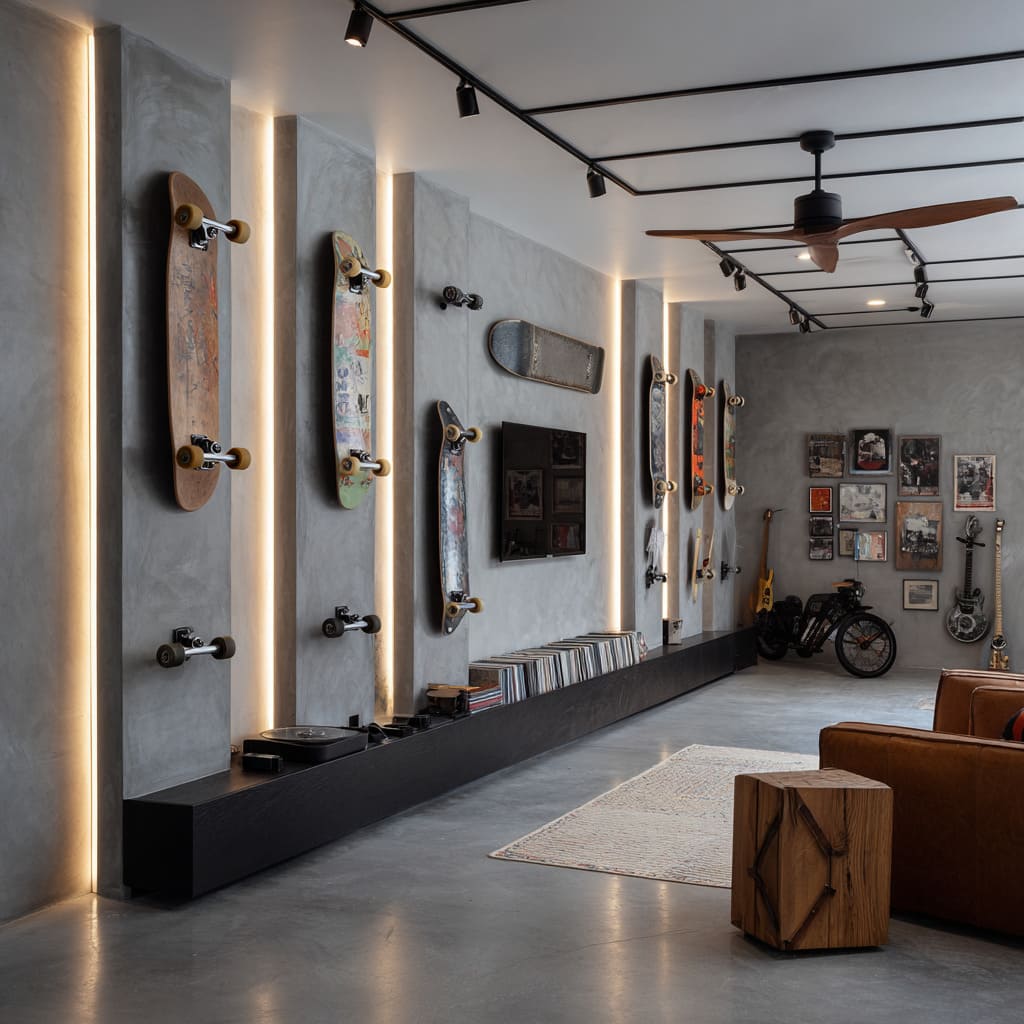
What sets recent ideas for a man cave in the garage apart is how collections become visual features rather than clutter. Guitars hang in perfect rhythm with subtle backglow; surfboards rest on narrow pegs inside lit recesses; vintage boards align with slim vertical light seams between them.
Even bikes mounted on uniform racks turn into graphic displays when spacing and lighting stay consistent.
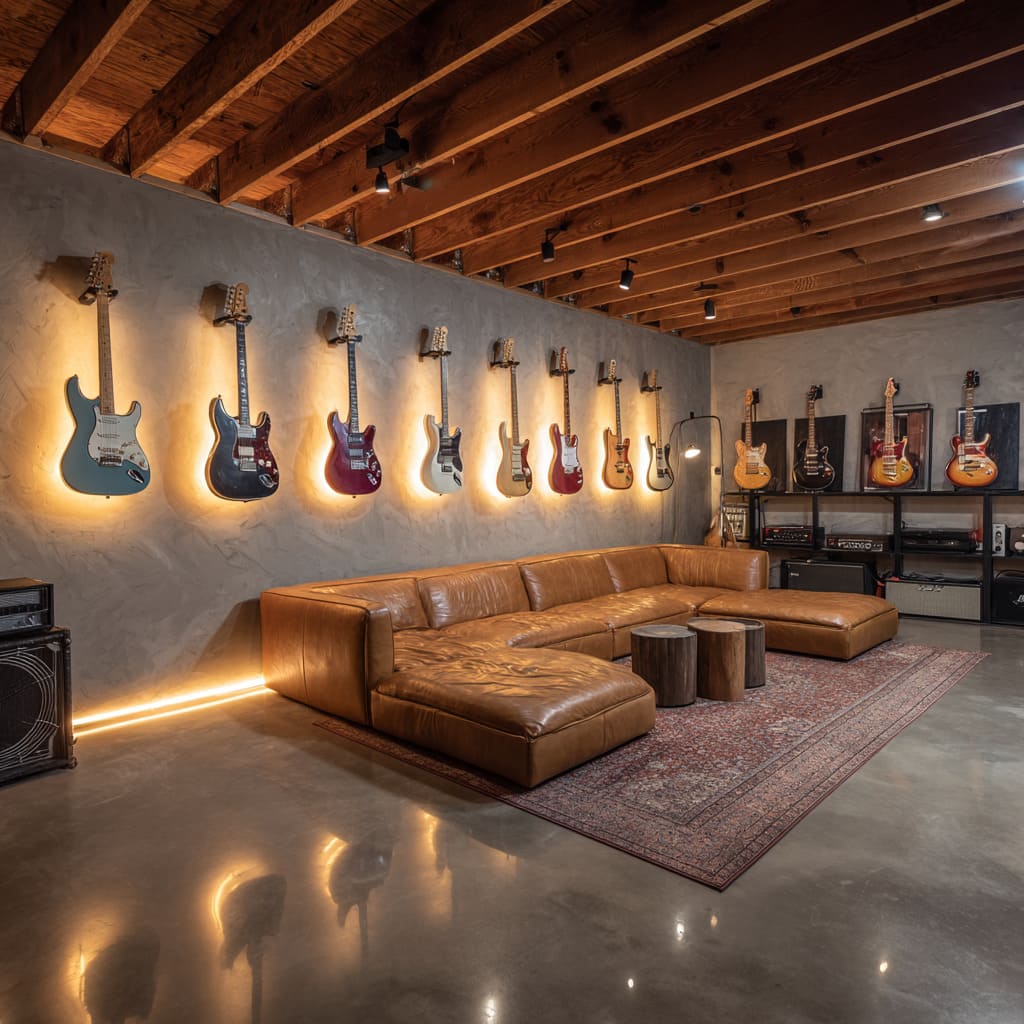
This method of “display discipline” turns the garage from a storage bay into a gallery. The key pattern across projects: same mounts, equal spacing, single height line.
Negative space around each object becomes part of the design language, giving collections room to breathe and making materials—resin, chrome, lacquer, or wood—read richer under soft light.

Zoning Without Building Walls
Modern making a garage into a man cave projects favor zoning through layout and contrast instead of partitions. Many garages now read as three clear bands—work area, lounge core, and storage or bar strip.
A long desk or counter runs along one side for hobbies or laptop work, a deep sectional anchors the center for watching or gaming, and cabinetry lines the far wall for storage or gear.
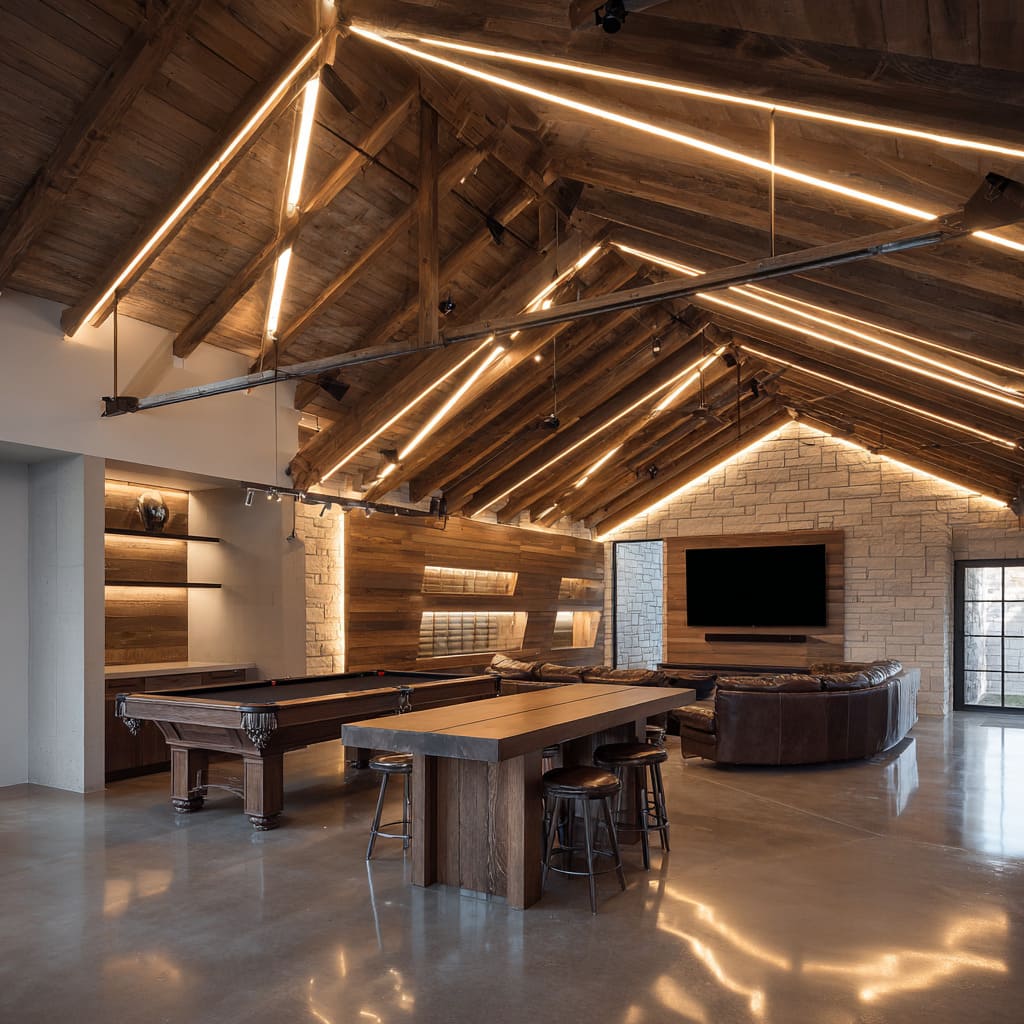
Some versions layer zones front to back: a conversation set near the door, a mid-field sectional with low tables, and a rear media niche with backlit shelving. These arrangements keep pathways clear while ensuring the room can shift between work, rest, and play without losing structure.
Architectural Hardware as Graphic Element
In many of the new man cave ideas for small garage layouts, the overhead door is no longer an eyesore—it becomes part of the composition. Black-framed glass panels echo the rhythm of interior shelving or wall seams, tying structure inside and out.
Tracks and hinges stay visible and symmetrical, their repetition reinforcing the modern linear language found throughout the lighting and cabinetry. Even when frosted for privacy, the door maintains light flow and connects the garage visually to outdoor space.
Texture, Reflection, and Light Play
Floor finishes have moved beyond dull concrete slabs. Designers now use polished or semi-gloss finishes that catch low light lines and echo ceiling patterns.
This reflective balance expands smaller garages visually, creating an illusion of volume. Rugs introduce friction—literally and visually—where needed.
They break echo, define boundaries, and act as color anchors in largely neutral palettes.

This careful handling of texture and reflection forms a visual rhythm: rough walls, soft fabrics, smooth floors, subtle glows. It’s this rhythm that gives the best garage man cave ideas their calm power, allowing different materials to coexist without noise.
The Emotional Tone of Modern Garage Lounges
Across projects, the emotional quality of these spaces stands out. The modern garage man cave no longer plays up macho themes or cluttered collections.
It’s about balance: confident geometry, warm light, honest materials, and personal meaning held in disciplined displays. Whether it’s a surfboard haloed by light, a run of guitars on a plaster wall, or a quiet oak pocket framing stone, every choice adds composure.

This approach explains why cool ideas for garage man cave are now among the most shared design inspirations online—they merge comfort with clarity. The garage becomes not a leftover space but a refined, flexible environment shaped by texture, tone, and rhythm.