Bench seating in a kitchen-dining space often looks simple on the surface, yet the strongest modern ideas can behave like composition devices: long horizontal choices that control contrast, visual weight, and how the dining zone relates to cabinetry, stone, windows, and shelving. In decorating terms, benches tend to succeed when they operate as a single clear gesture—a stabilizing line, a soft volume, or an architectural extension—rather than an extra seat added at the end.
This article breaks down the most effective visual effects used in modern bench seating design ideas for kitchen and dining table areas, focusing on the look and atmosphere.
The bench as a ground line that stabilizes the design
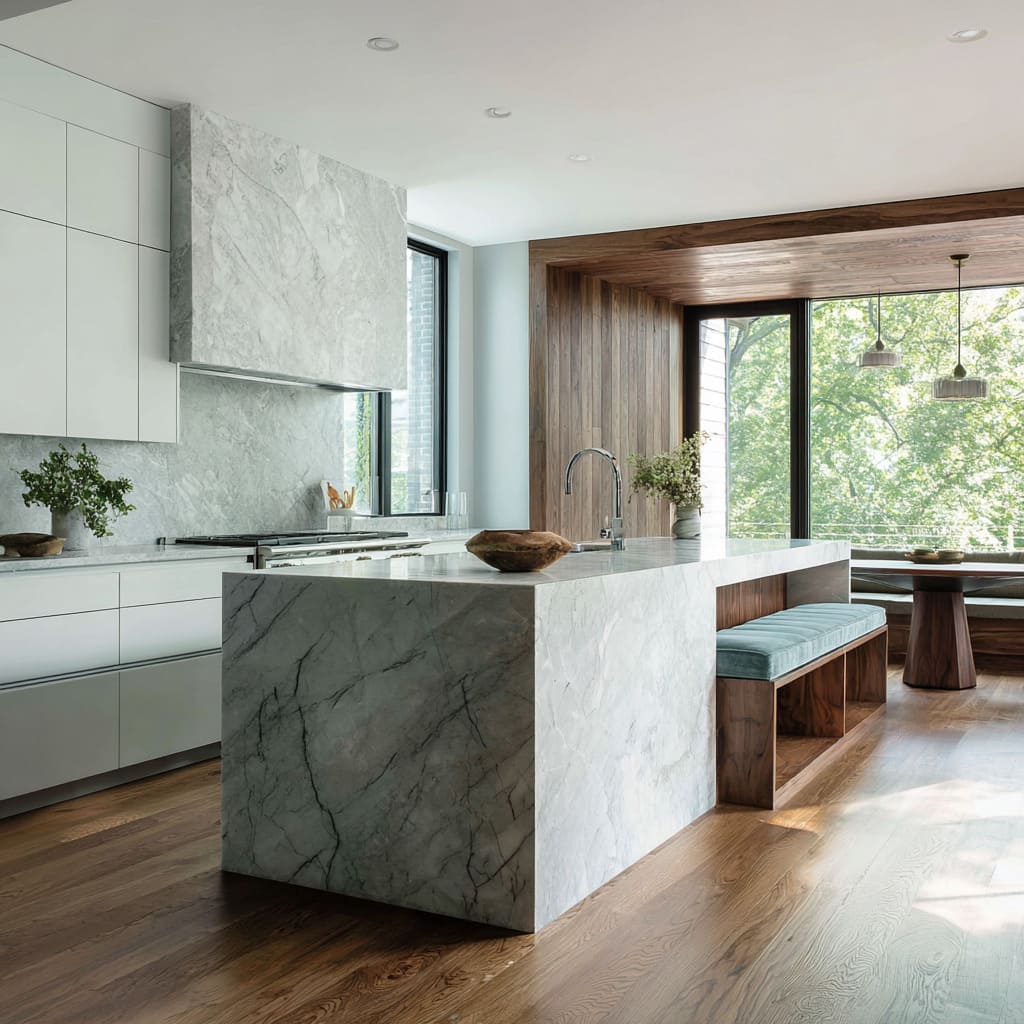
One of the strategies in modern kitchen bench seating ideas is the low horizontal anchor: a bench that sits close to the floor visually and creates a steady base beneath tall windows or bright glass walls.
- Large panes of glass and outdoor views push attention upward and outward. A bench in a darker value near the floor introduces a calm counterforce, so the dining area doesn’t feel visually lifted or unsettled.
- Dark upholstery can either reflect softly (leather-like surfaces that pick up gentle highlights) or absorb light (charcoal textiles that read matte and quiet). Both approaches create the same visual outcome: the room gains a stable lower “band,” which makes bright glazing feel composed rather than overpowering.
This is a common foundation for modern bench seating for dining table near window wall layouts, because the bench becomes the visual “bottom edge” that keeps the dining zone grounded.
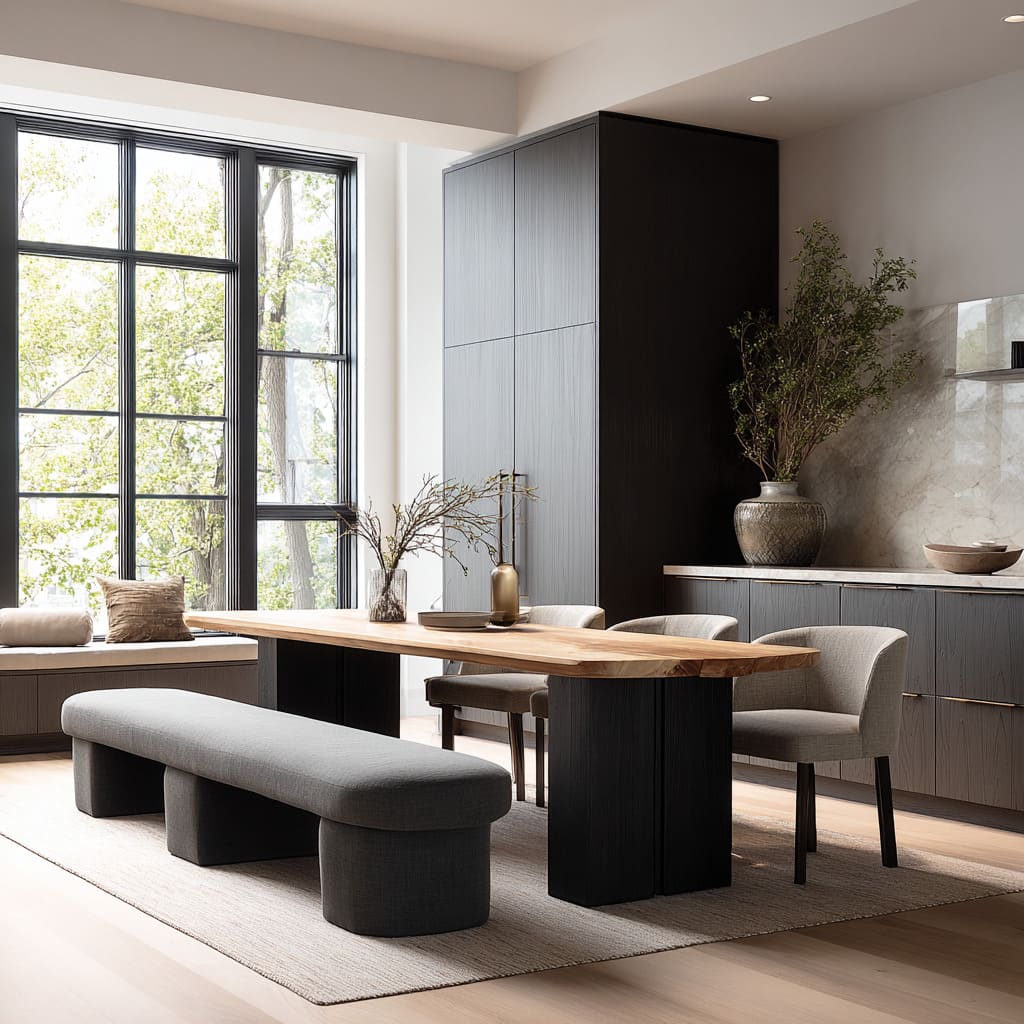
The bench as a single sculpted volume
Another strong set of modern bench seating design ideas relies on shape rather than decoration. Instead of tufting, piping, or multiple pillows, the softness is carried by a continuous silhouette.
- Rounded ends, capsule forms, and subtly curved seat profiles read calm because they remove sharp stops and corners.
- When the support is visually tucked in—block-like supports set slightly inward, or bases that create shadow pockets—the bench gains depth without extra detail. Those shadow pockets act like controlled negative space, preventing a dark bench from turning into a heavy visual brick.
This approach often shows up in minimalist modern dining bench seating ideas because it keeps the look clean while still feeling welcoming.
The upholstered bench as a quiet counterweight to black cabinetry and dark window frames
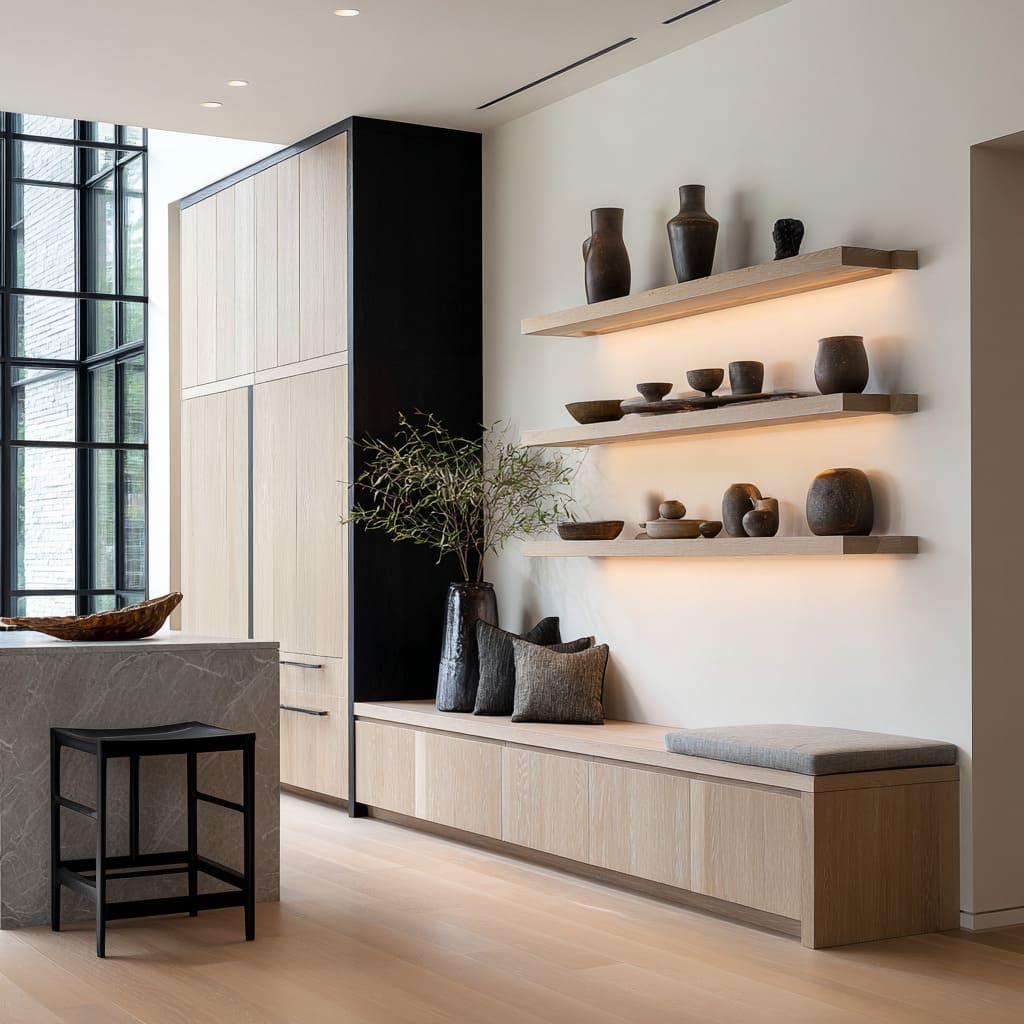
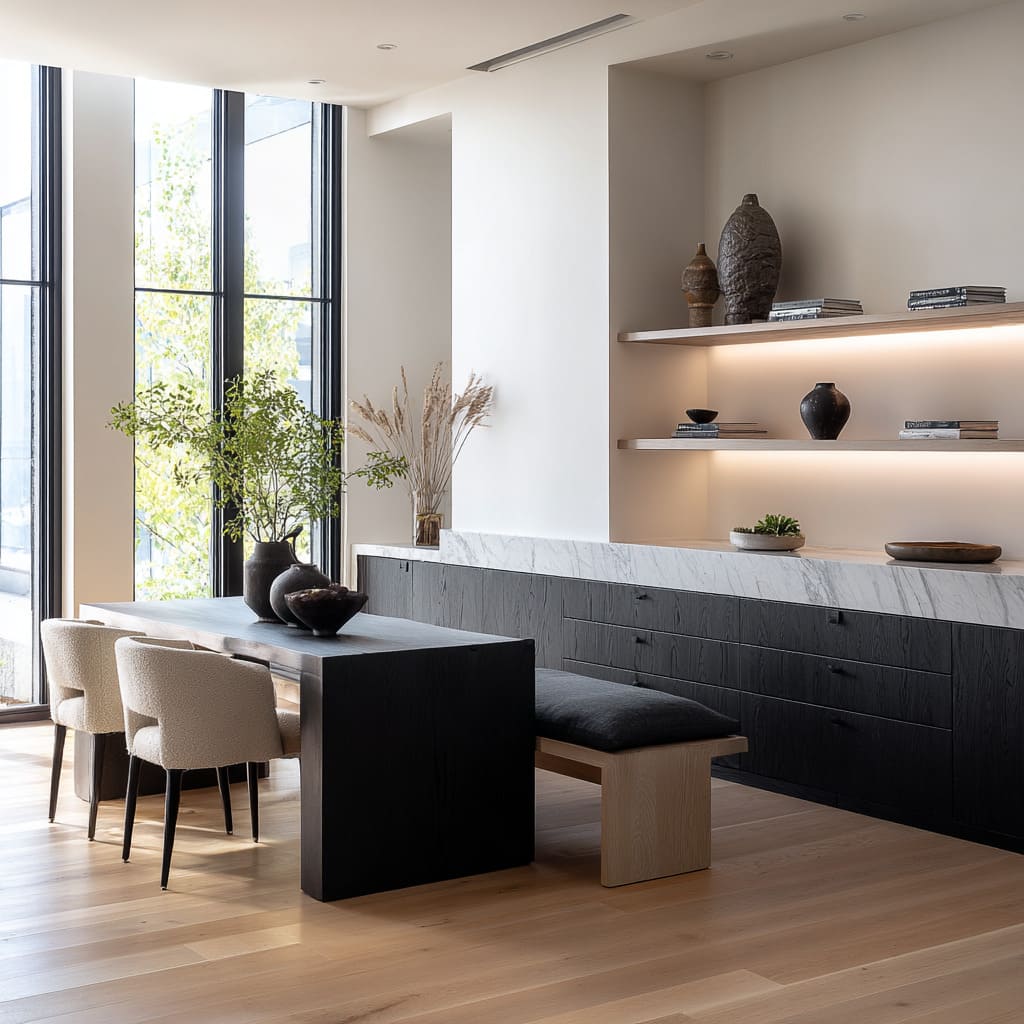
In many modern kitchen designs, black appears as tall cabinetry volumes, window mullions, shelving, or a table base. In that context, bench seating succeeds when it becomes a soft counterweight instead of another competing statement.
- A medium-to-deep neutral upholstered bench (graphite, deep grey, warm charcoal) can read like a low padded beam: controlled, simple, and intentionally restrained.
- Repetition of dark elements across separate zones—window frames, cabinet towers, table base—makes dark tones feel planned. The bench then becomes the soft bridge between those darker masses and warmer wood surfaces.
This is a recurring structure in modern dining bench seating with black kitchen cabinets styling, where the bench prevents the room from feeling overly sharp while keeping the palette disciplined.
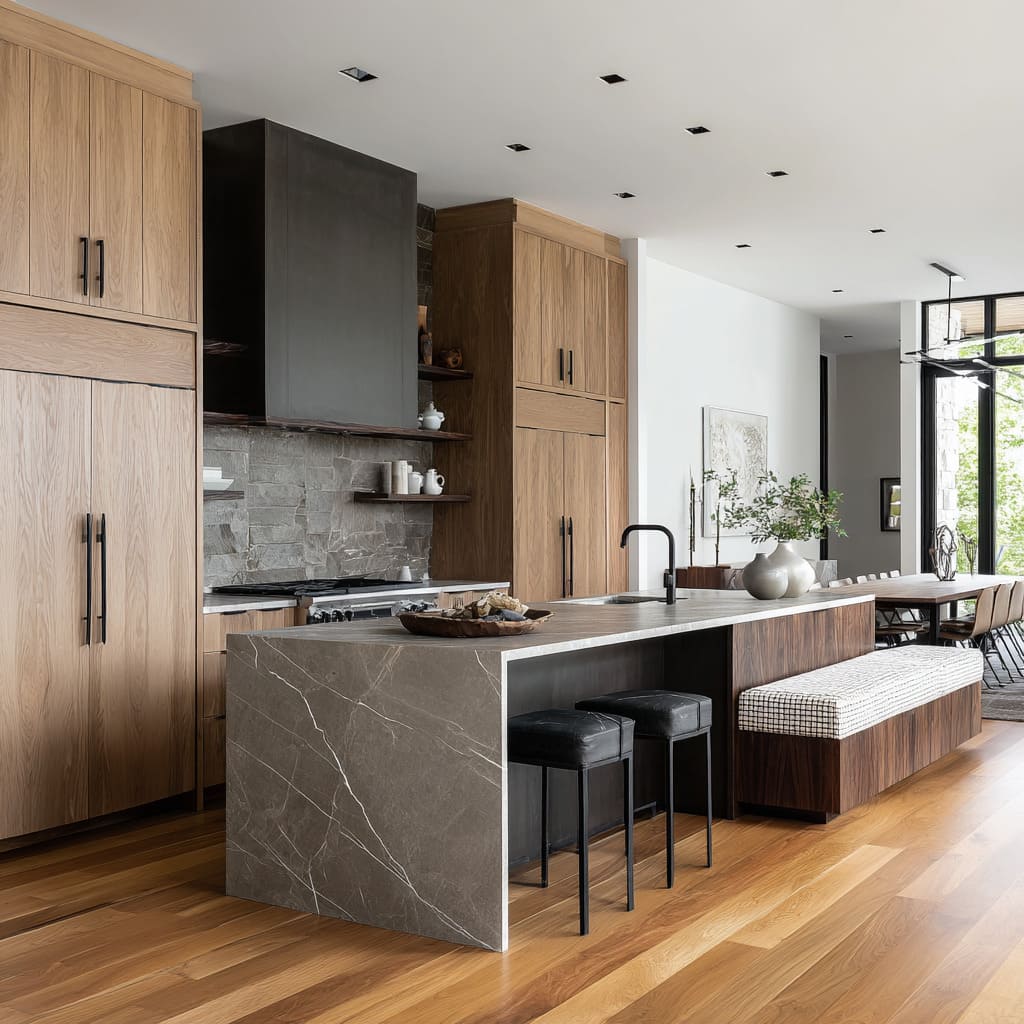
The bench as a soft perimeter that changes how an island “feels”
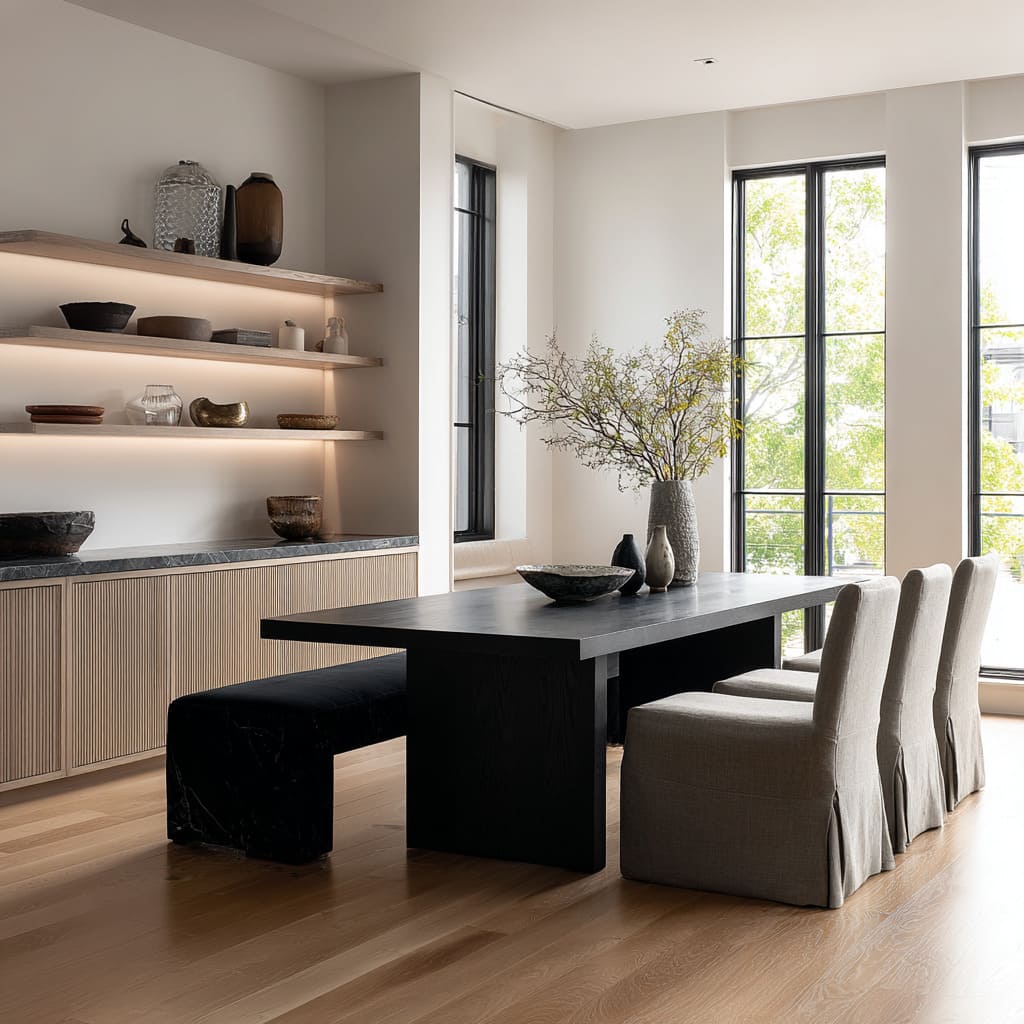
Modern kitchens often treat the island as a stone or stone-look block. Bench seating modifies that perception without changing the room’s clean geometry.
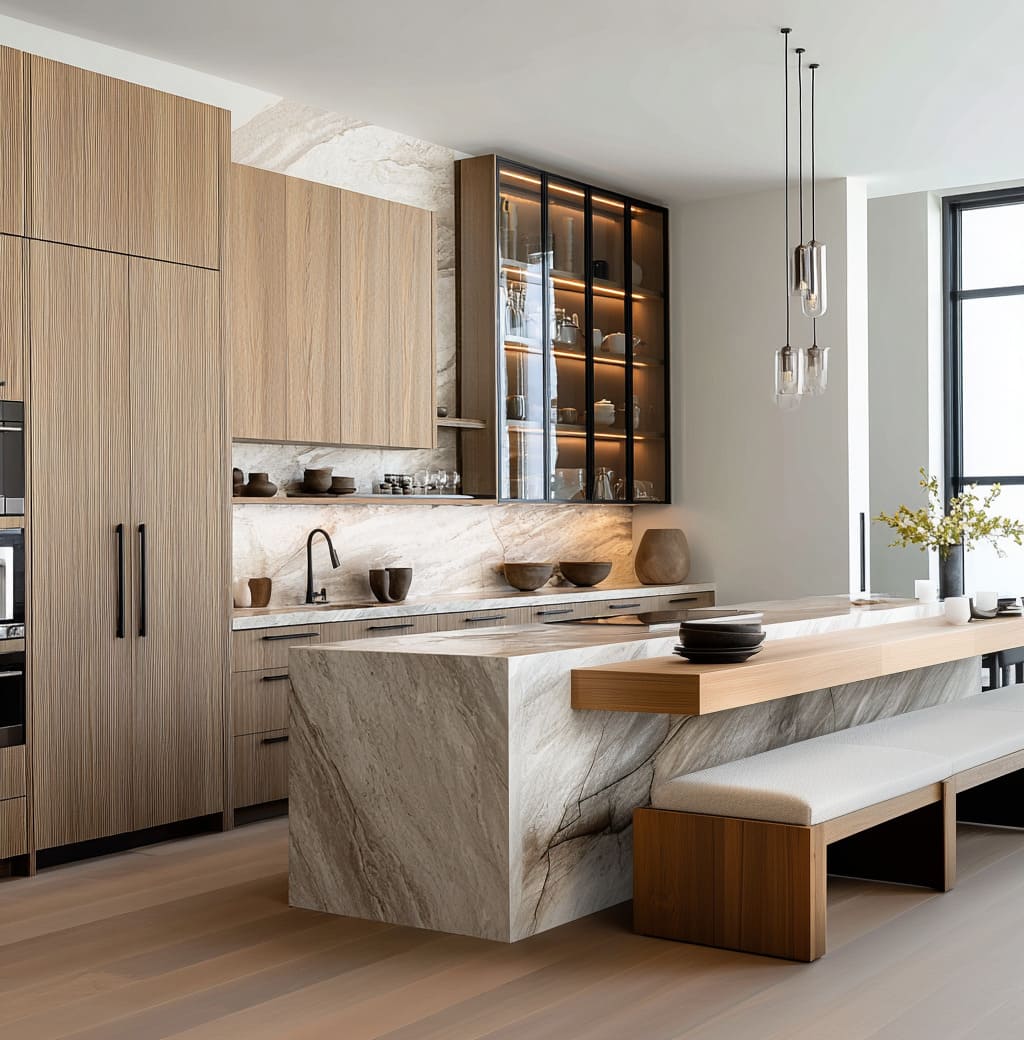
- A bench placed along the outer side of the island shifts the island from a pure work object into a social edge.
- Side-facing seating changes posture. Instead of a row of stools facing the countertop, the seating reads parallel to the room, which creates a more communal, less bar-like atmosphere.
- A continuous bench silhouette also reduces “leg clutter.” Many small stool legs create repeated small shadows, which can look busy beside dramatic stone veining. A bench compresses that visual noise into one calm line.
This is central to kitchen island bench seating ideas with waterfall edge compositions, where the goal is comfort without extra visual interruption.
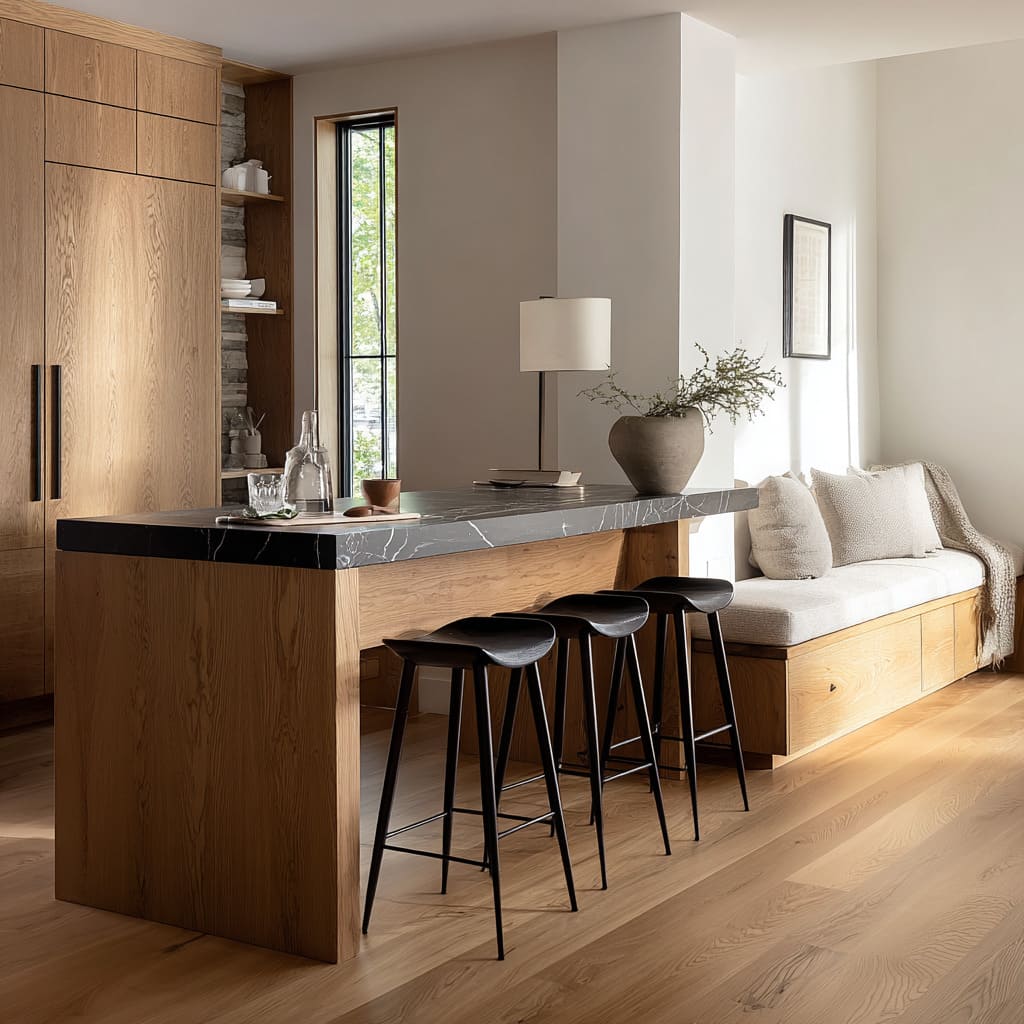
Benches that read like millwork: the built-in calm effect
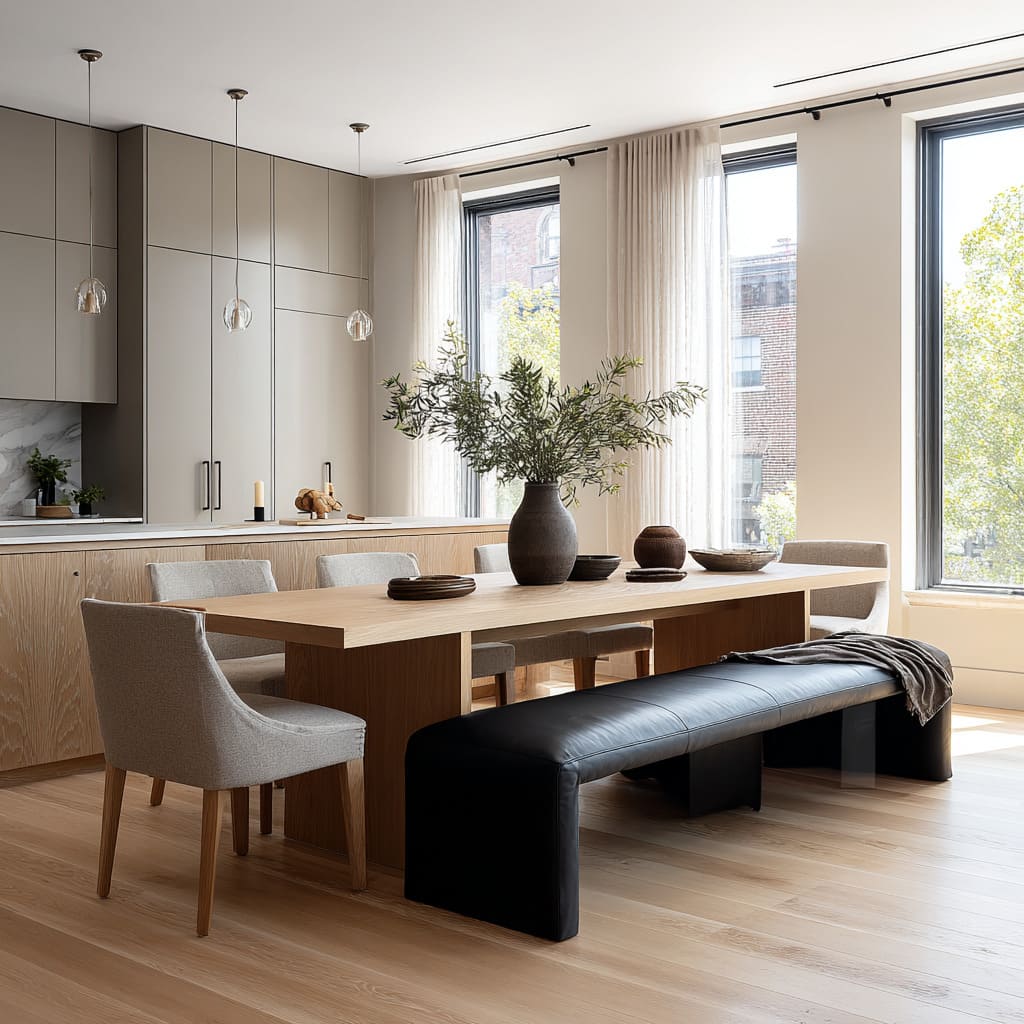
A major visual difference between ordinary benches and high-end modern banquettes is the feeling that seating belongs to the architecture.
- Wood bases that match cabinetry tones, long flush faces, and minimal hardware make the bench read as part of a wall system.
- When a bench aligns with nearby drawer runs, shelving bands, or long countertop caps, it begins to look “inevitable” in the composition rather than optional.
This is why built-in banquette seating ideas for modern kitchens often feel especially calm: the seating becomes part of the room’s long lines and repeated materials, rather than a separate furniture story.
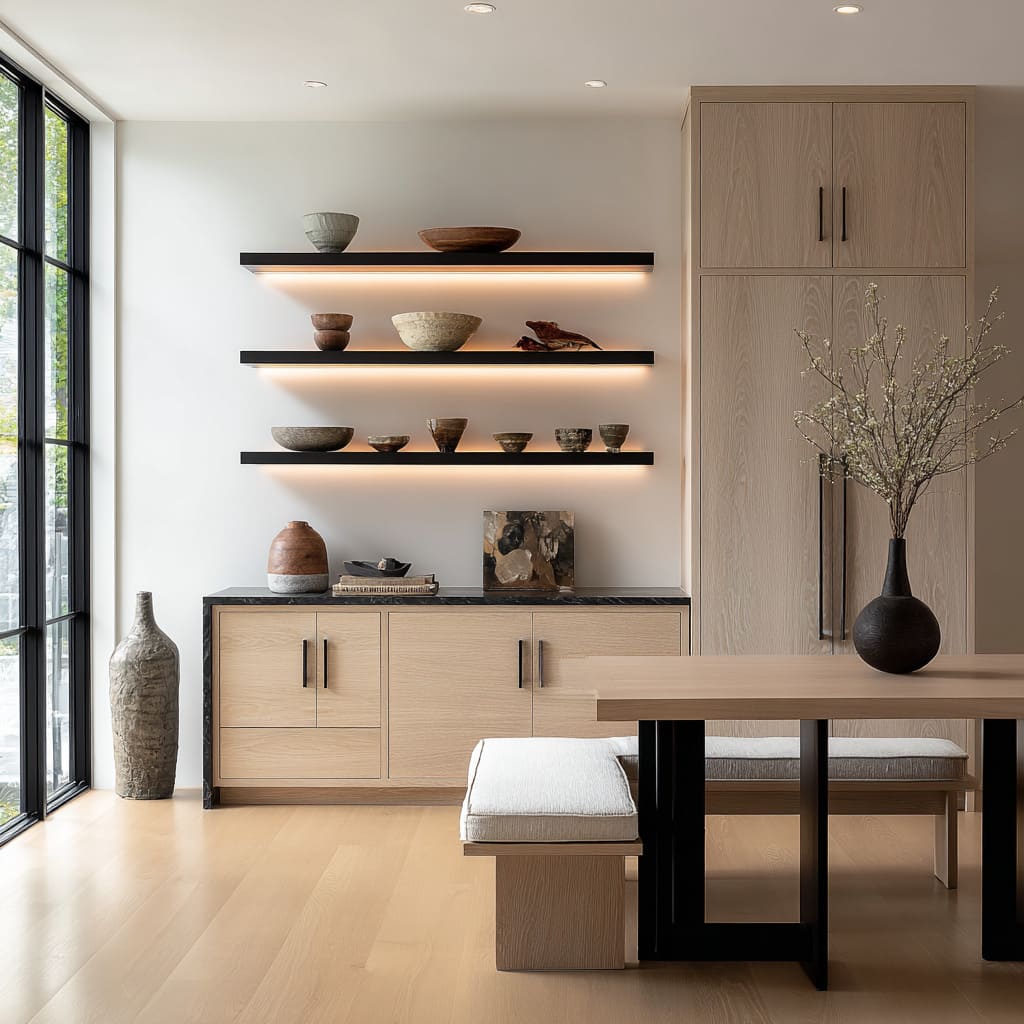
The band-composition method
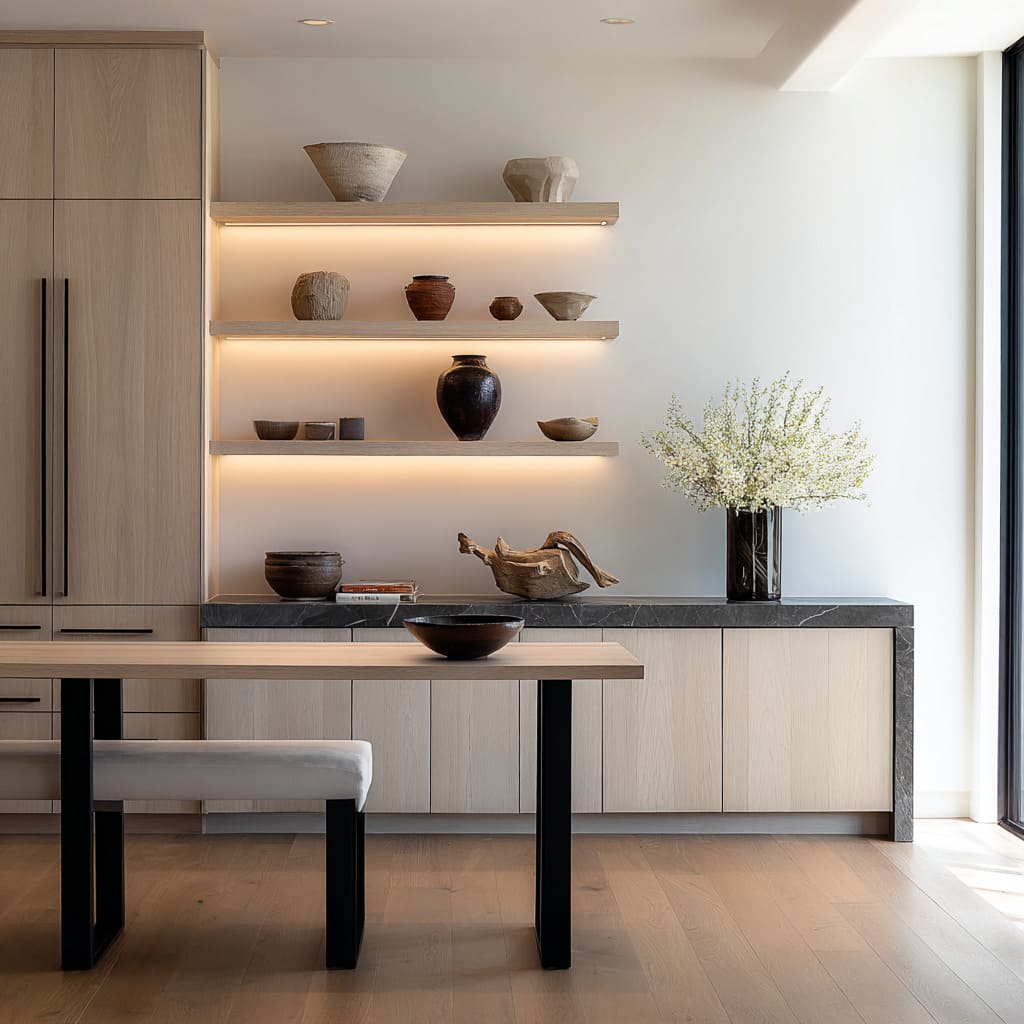
Some of the most refined modern dining nooks use benches as one piece of a horizontal “stack” of layers:.
- a low bench line,
- a drawer run or console plane,
- a stone cap or counter band,
- shelves above, often with warm lighting.
The eye reads the room as a sequence of long strokes instead of many objects. That’s why these spaces feel edited and controlled, even when they include pottery, branches, and décor.
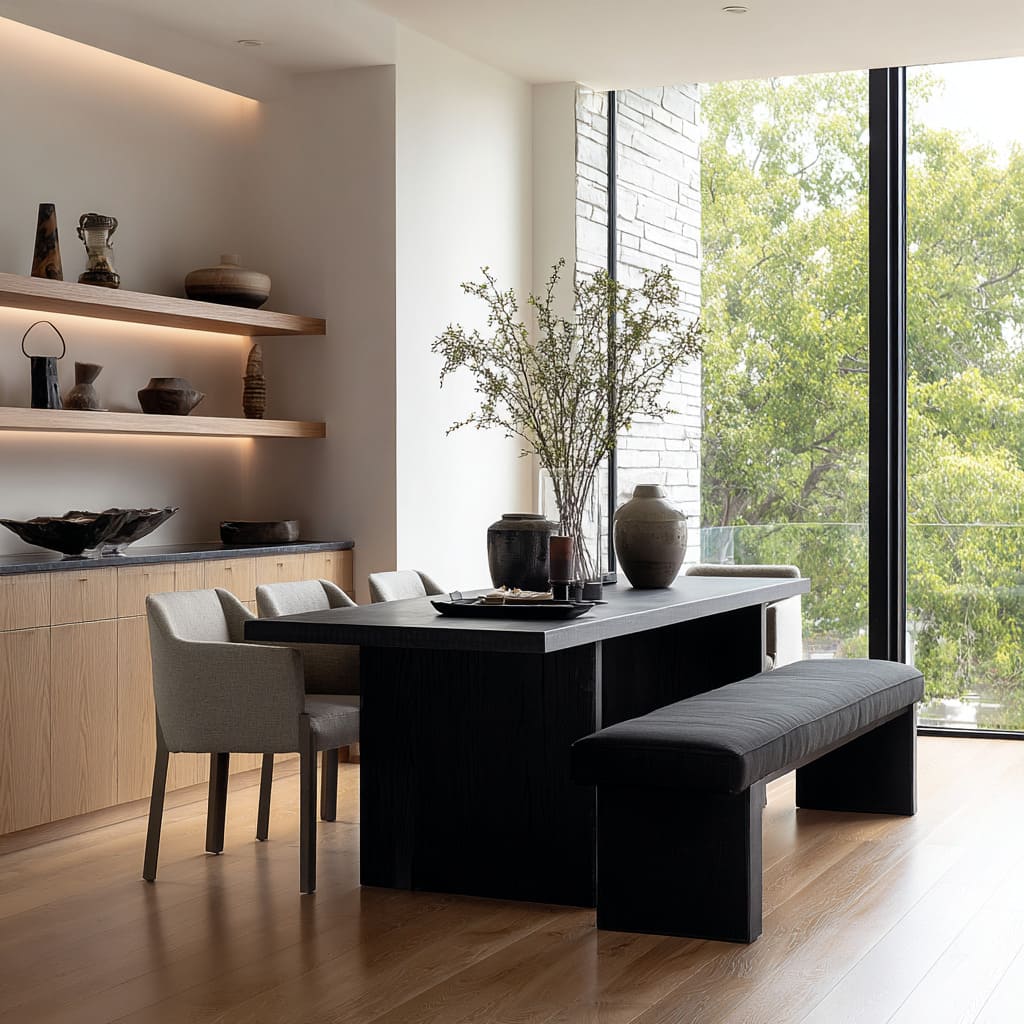
This layered logic is common in modern kitchen dining bench seating with floating shelves because shelves and benches naturally create parallel lines that structure the wall.
Shadow rhythm: repeated gaps
A subtle but powerful bench strategy comes from what happens underneath the seat.
- Instead of thin corner legs, a bench base can be segmented into repeated supports with small shadow gaps between them.
- Those gaps create a gentle rhythm that can visually echo window mullions, cabinet seams, or vertical pulls.
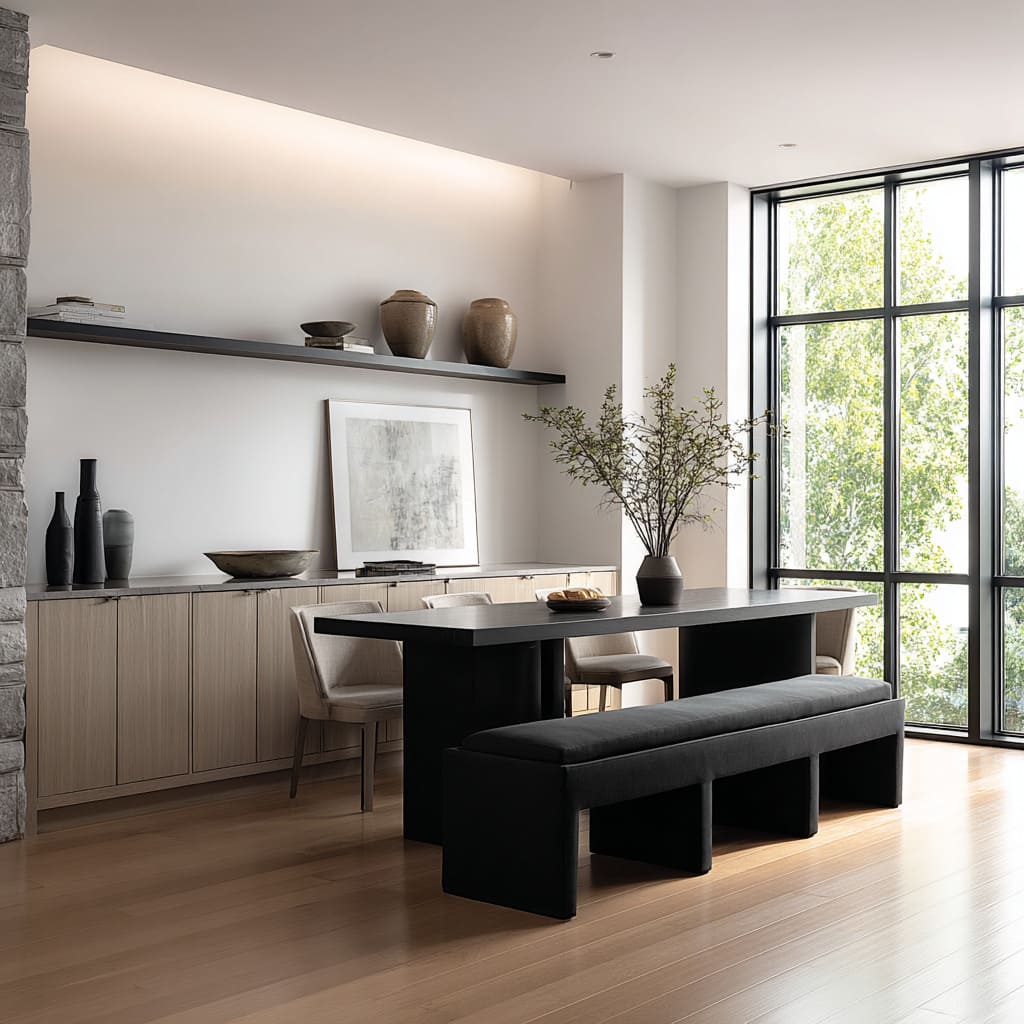
When furniture rhythm matches architectural rhythm, the bench feels connected to the room’s framework. This effect is typical in contemporary dining bench design with architectural base styling, where the bench looks intentional even with minimal detailing.
Pattern on benches as controlled texture
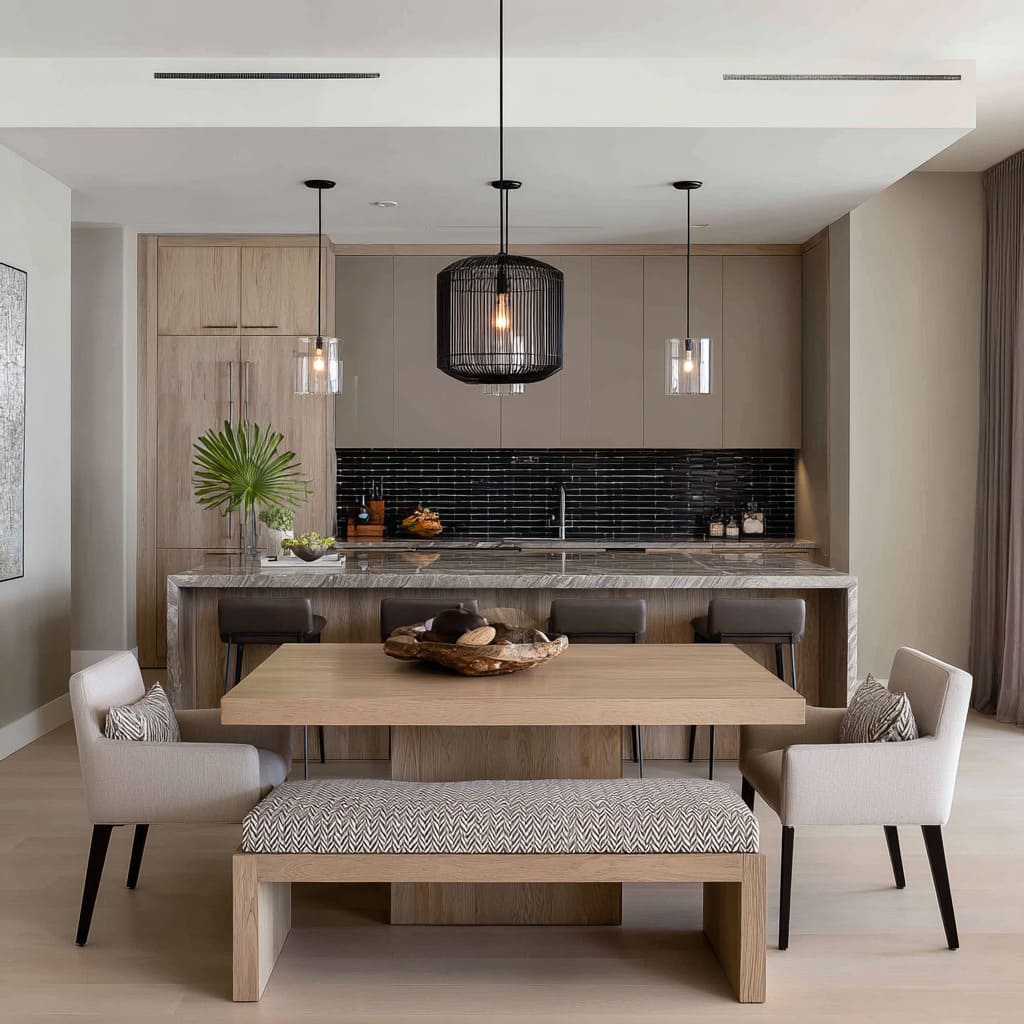
Patterned bench cushions show up in modern kitchens when the room is built from smooth planes—flat cabinetry, calm stone, and consistent backsplashes.
- A micro-pattern (fine herringbone, chevron-like weave, tight checks) adds tactile depth at close range but stays quiet from a distance.
- This works best when large surfaces remain visually smooth, so the bench becomes the single place where texture speaks a bit louder.
This strategy often appears in modern dining bench seating ideas with patterned upholstery because it adds richness without expanding the color palette.
Weight-class matching: bench and table sharing the same visual “mass language”
Bench seating looks most cohesive when the table and bench belong to the same mass category.
- A thick slab table pairs naturally with a bench that reads grounded and solid.
- A thin, delicate table tends to make a heavy bench look overly dominant, while a very light bench can look temporary next to a massive table.
The most graphic expression of this idea is the monolithic set: a strong table volume paired with a compact, block-like bench, while softer upholstered chairs provide the textile counterpoint. This is frequently seen in modern black dining table with bench seating compositions, where calm authority comes from shared visual weight.
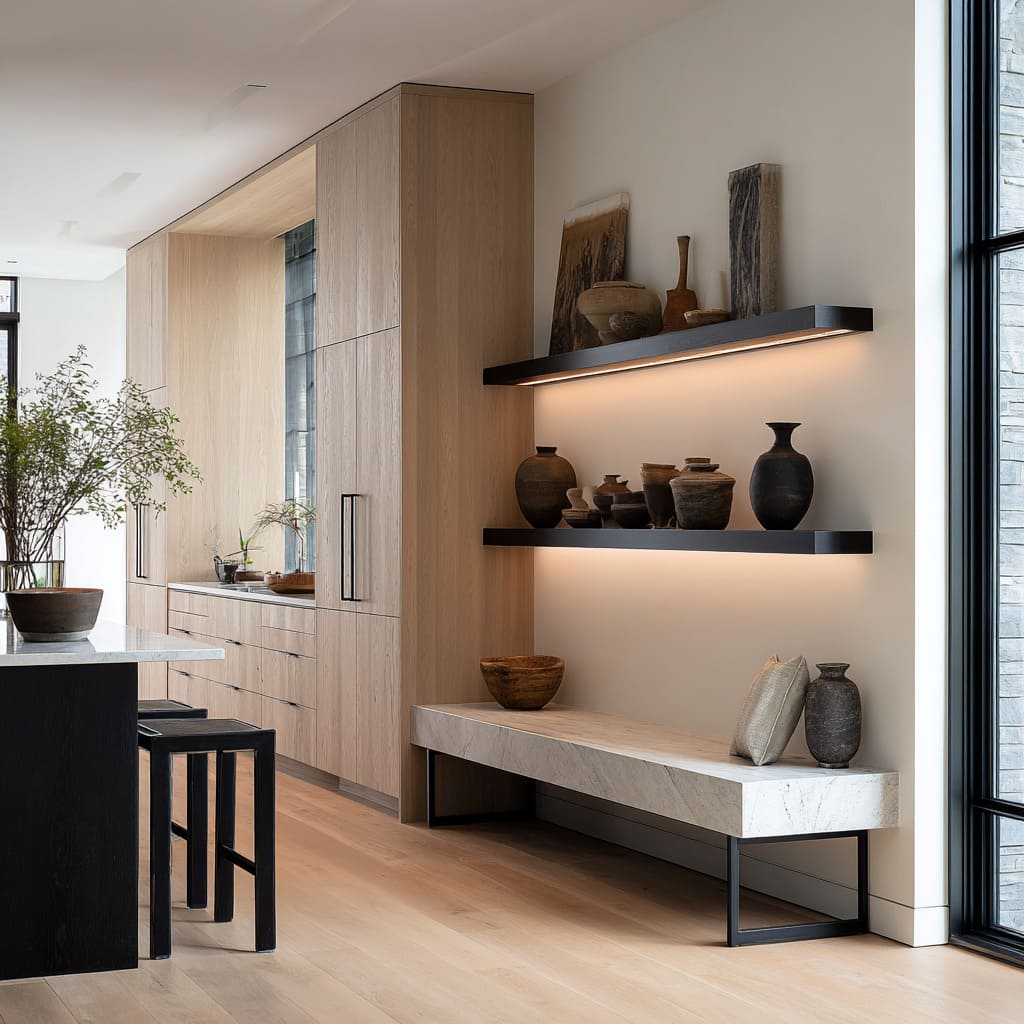
Shelf lighting and benches: creating a pause zone under curated display
Warm underlit shelves change how bench seating reads in a modern kitchen-dining room.
- Underlighting creates floating shelf bands and gives pottery a silhouette effect.
- The bench below becomes the base that completes the vertical composition: display above, pause zone below.
Object density is usually split: shelves can carry clustered ceramics, while the bench stays visually usable with sparse styling—often just a couple of pillows and one vessel. This supports modern kitchen bench seating under floating shelves layouts, where the wall reads curated without feeling crowded.
Social signaling through silhouettes: what bench types imply visually
Even without emphasizing function, benches communicate mood through shape and placement.
- A long backless bench implies looseness and flexibility: a clean, shared seat line that keeps the dining zone visually tidy.
- A cushioned banquette with multiple back cushions implies a lounge-like atmosphere, where the kitchen reads closer to a living area.
- A recessed or island-attached bench implies intentional integration: seating that looks planned as part of the room’s main geometry.
These signals are central to modern kitchen banquette seating that feels like a living room compositions, where softness is introduced without changing the modern language.
A vocabulary of modern bench “looks” and the visual effect each creates
Modern bench seating design ideas tend to cluster into recognizable visual roles:.
- Dark sculpted bench as an anchor line
A low, continuous dark stroke that stabilizes bright glazing and keeps the dining area grounded. - Medium-dark upholstered bench as a soft beam
A restrained padded volume that balances black cabinetry and frames while staying calm. - Wood-base + pale cushion integrated bench
A bench that reads like part of cabinetry, often used in kitchen island bench seating integrated into millwork scenes. - Banquette with drawers and layered cushions
A seating strip that shifts the kitchen mood toward a relaxed lounge atmosphere. - Rhythmic base bench with shadow gaps
A bench where repeated under-seat divisions add subtle architectural cadence. - Stone + thin metal console-style bench
A mixed-material bench that reads refined through contrast: thick top, slim support, controlled shadow line. - Micro-pattern bench cushion in a smooth, symmetrical kitchen
A texture-focused bench that adds richness while keeping the palette quiet and coordinated.