Modern interiors increasingly rely on sliding architectural elements to shape atmosphere, control visual flow, and adjust the character of connected rooms. In this context, pocket doors have evolved from simple space-saving mechanisms into expressive surfaces that influence light, color, and the perceived thickness of walls.
They can appear as seamless planes of plaster, warm timber frames, translucent filters, or graphic layers that echo the surrounding architecture.
Because they shift, hide, reveal, and reorganize the visual story of a home, such sliding elements support interior compositions that feel calm when needed, energised when opened, and quietly edited when partially drawn. The following exploration examines how contemporary pocket door concepts use surface language, texture, proportion, and spatial sequencing to craft sophisticated transitions between zones, letting each room participate in a larger environmental mood.
Timber Bands and Warm Organizing Frameworks
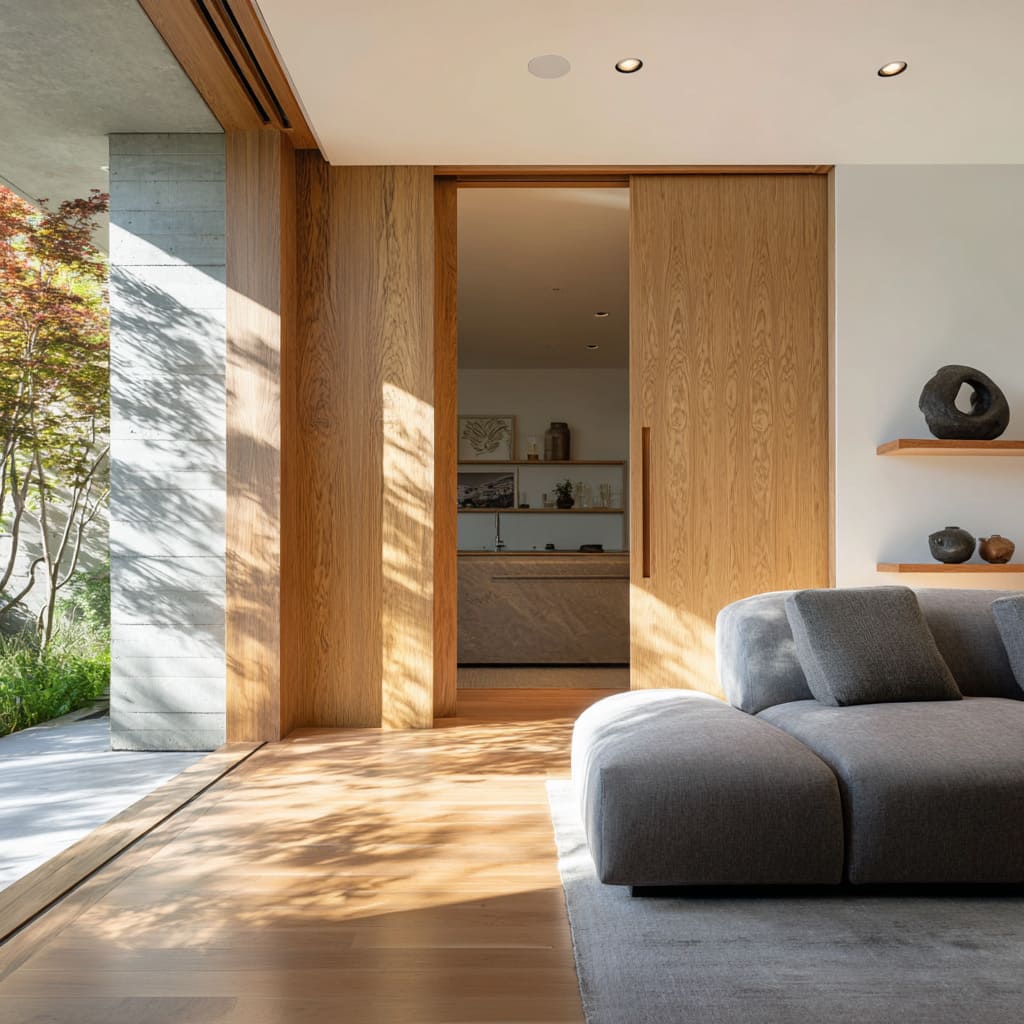
Timber versions of modern pocket doors introduce a completely different emotional register. Rich wood tones—whether pale oak, warm walnut, or dusted mid-tones—often appear as uninterrupted vertical sheets that stretch from floor to ceiling.
When these planes line up with overhead beams, built-in cabinetry, or floating shelves, the timber leaf becomes part of a larger architectural “frame” that holds the room’s visual order together.
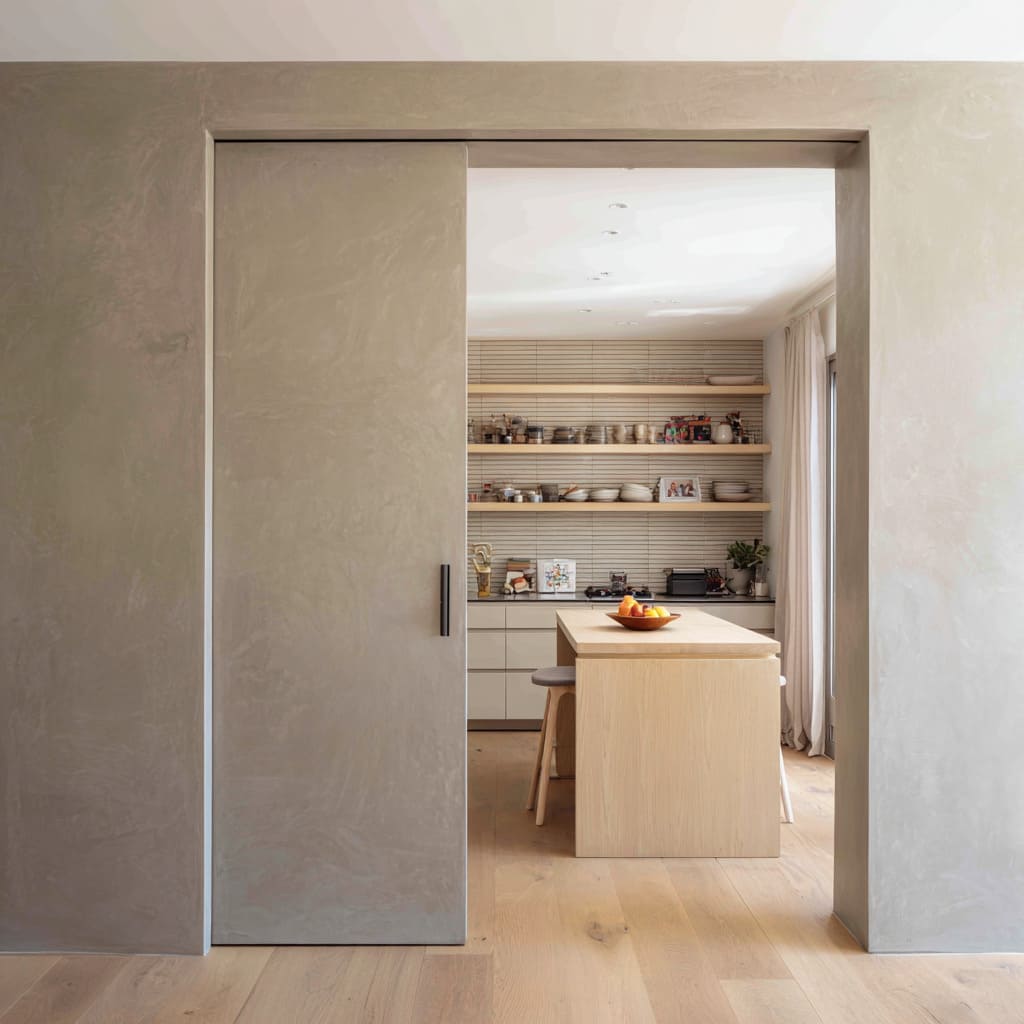
Some design concepts even treat the doorway as part of a nested sequence, where a timber-wrapped corridor opens into another warm zone, creating the sense of passing from one wooden envelope to another.
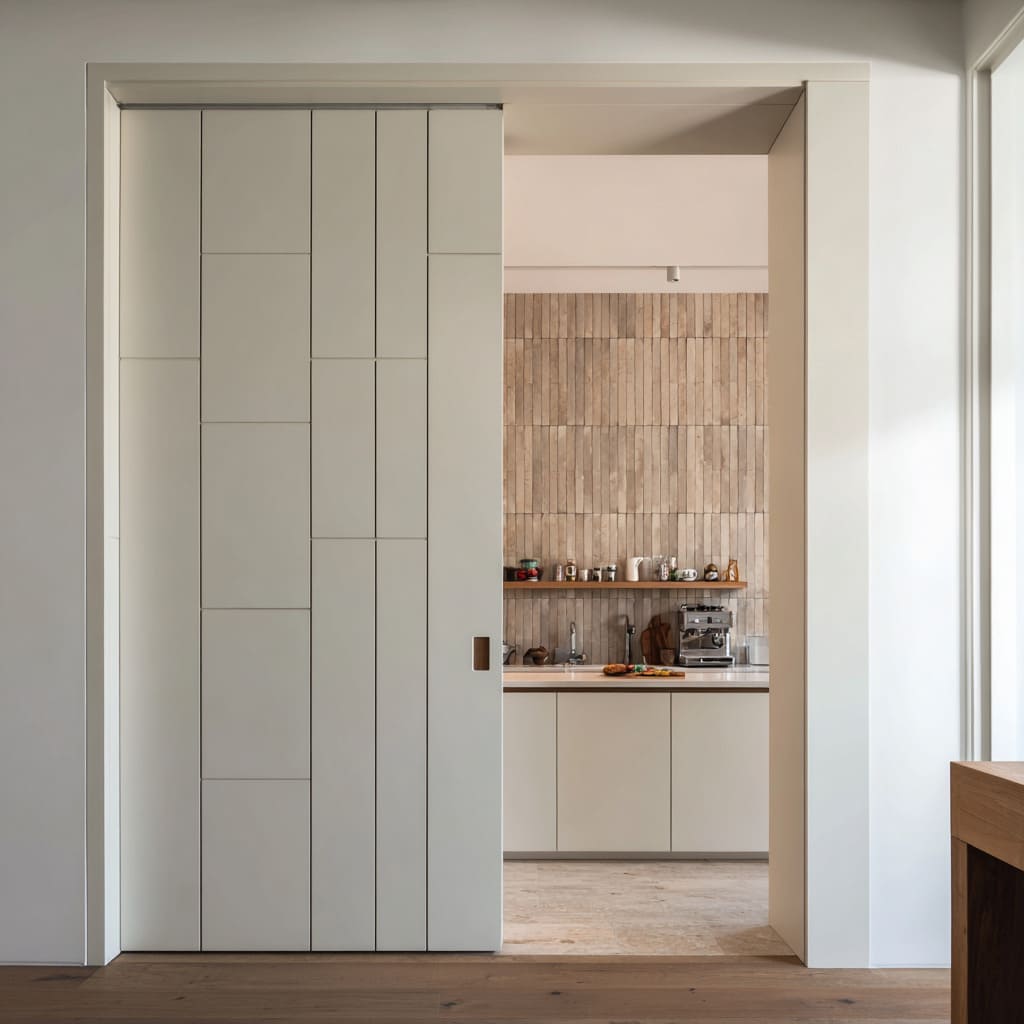
This approach often includes:
- Doorframes aligned with cabinetry heights to reinforce continuous horizontal datums
- Vertical grain orientations that elongate proportions and add calm
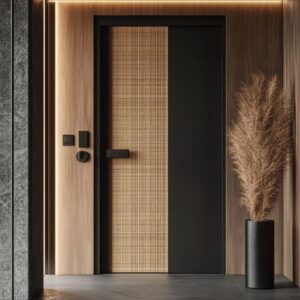
- Pairings of fluted and flat timber for quiet tactile contrast
Through these compositions, the door becomes a warm mediator in environments where stone, fabric, and plaster already compete for attention, balancing the architectural language with a welcoming middle tone.
Textural Filters and Semi-Transparent Sliding Layers
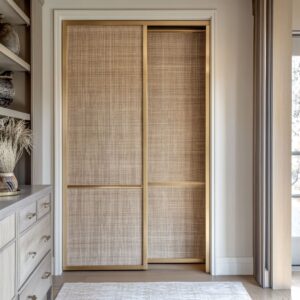
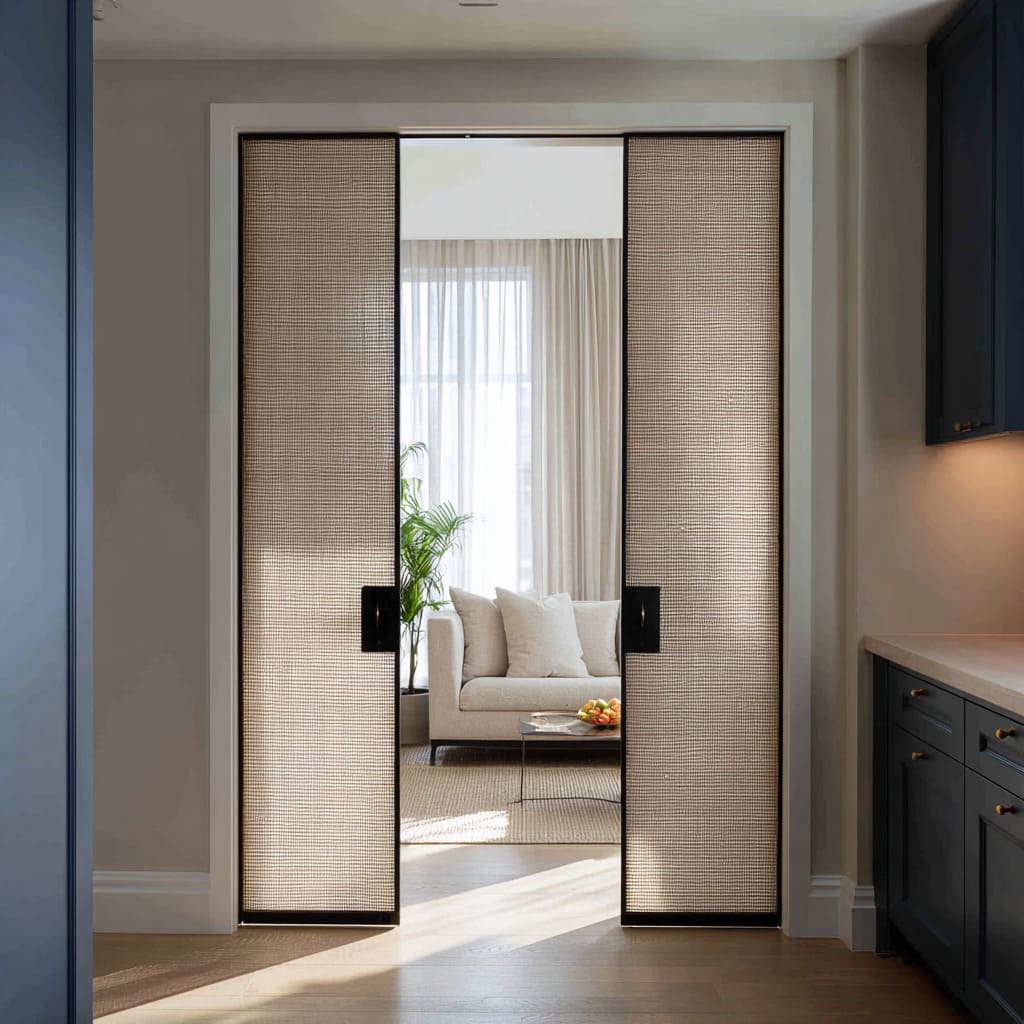
Not all sliding elements rely on opacity. Many ideas for pocket doors make use of slatted wood, woven cane, or fine lattice structures to craft elegant filters between zones.
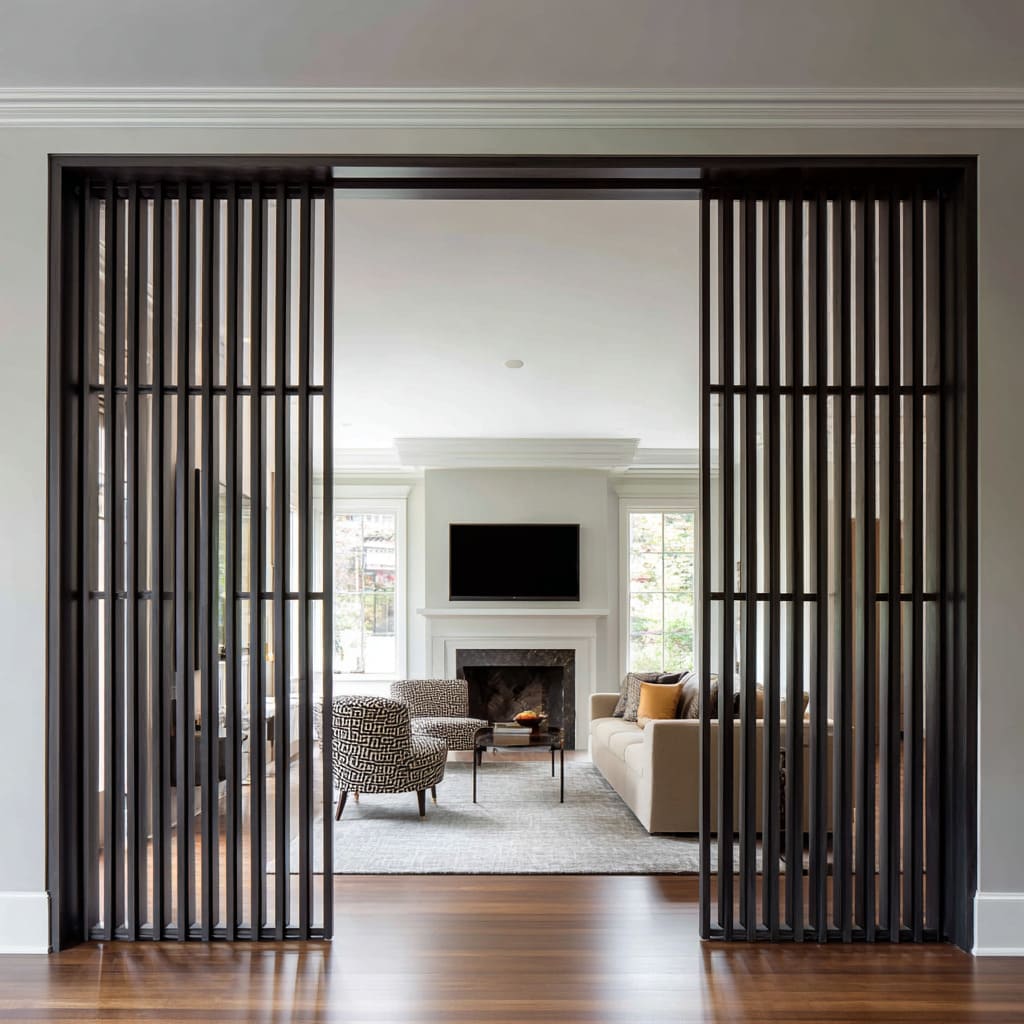
These layers soften the view while still permitting a sense of life and motion beyond. Slatted versions, especially in darker tones, create shifting stripes of shadow as light moves across them.
Woven or cane infills pick up ambient light and glow gently, almost behaving like large vertical lanterns.
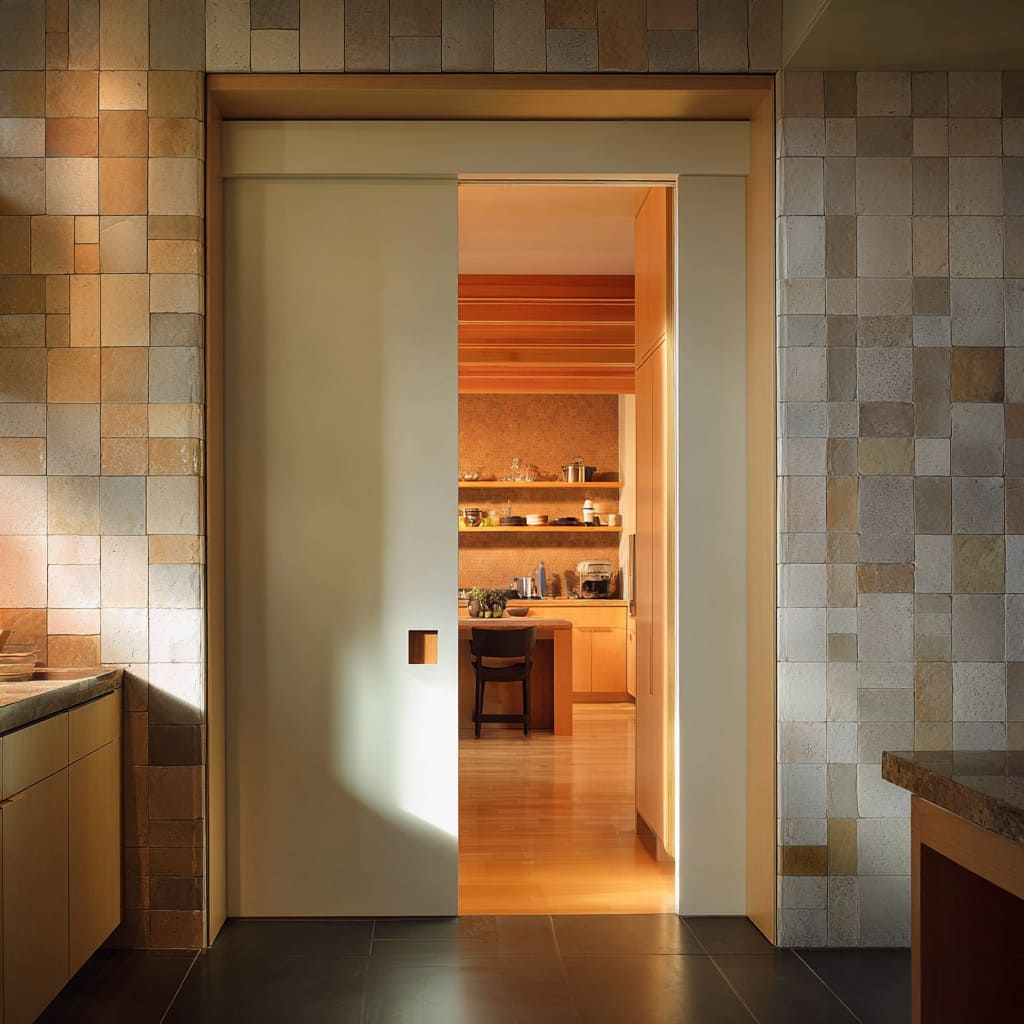
Their visual impact can be grouped into three effects:
- Softened silhouettes — movement behind the screen becomes impressionistic rather than sharply outlined.
- Layered light — backlit slats or cane panels transform sunlight into delicate gradients.
- Graphic order — repeating verticals reinforce rhythms created by window mullions, rugs, joinery, or artwork.
These screens allow interior boundaries to feel both present and permeable, offering separation without removing the sense of shared atmosphere.
Thresholds as Emotional Temperature Shifts
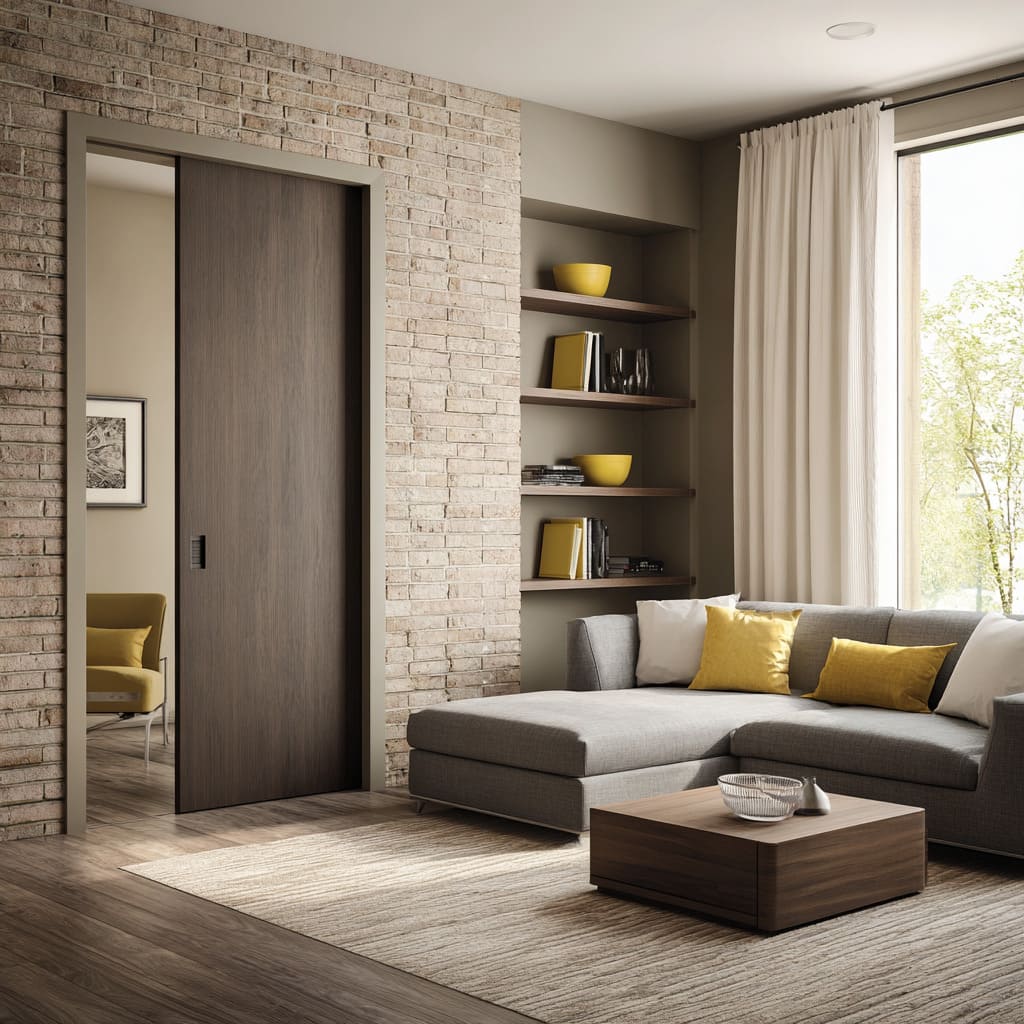
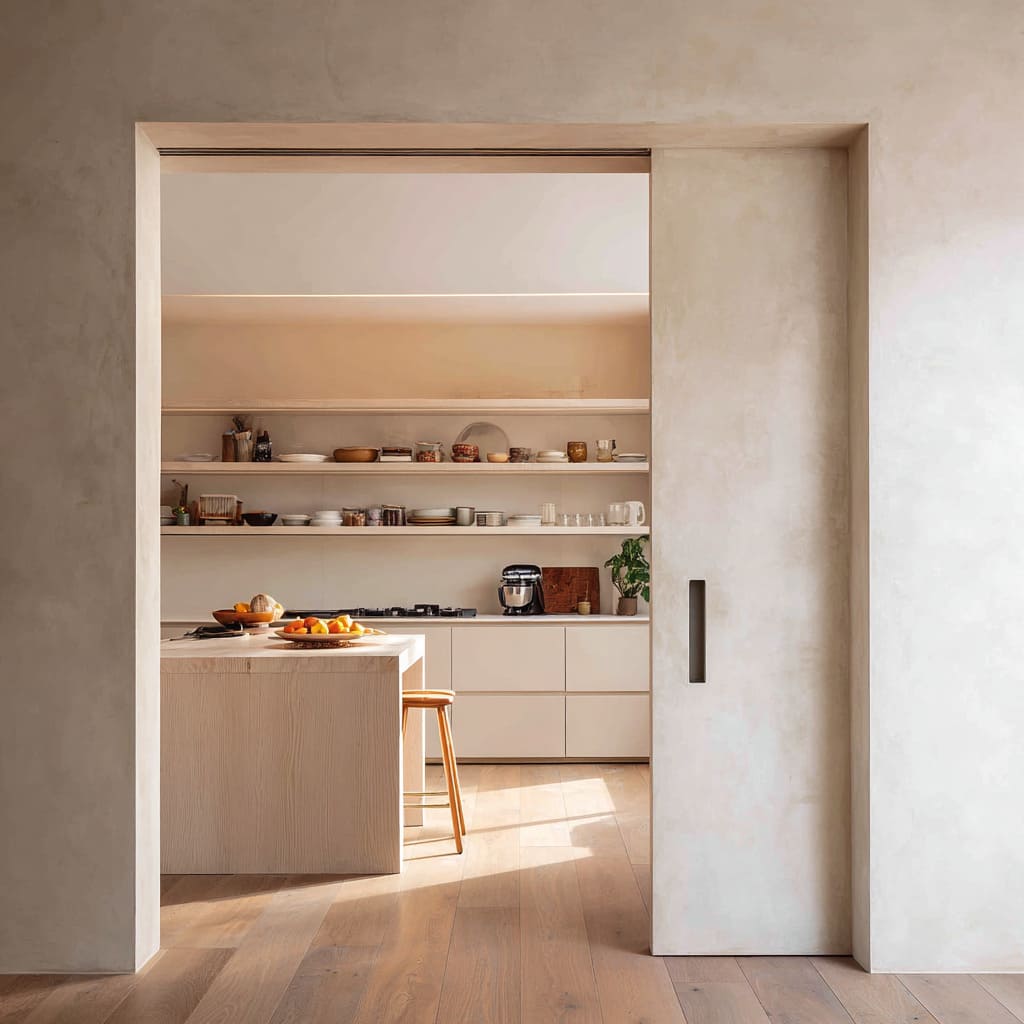
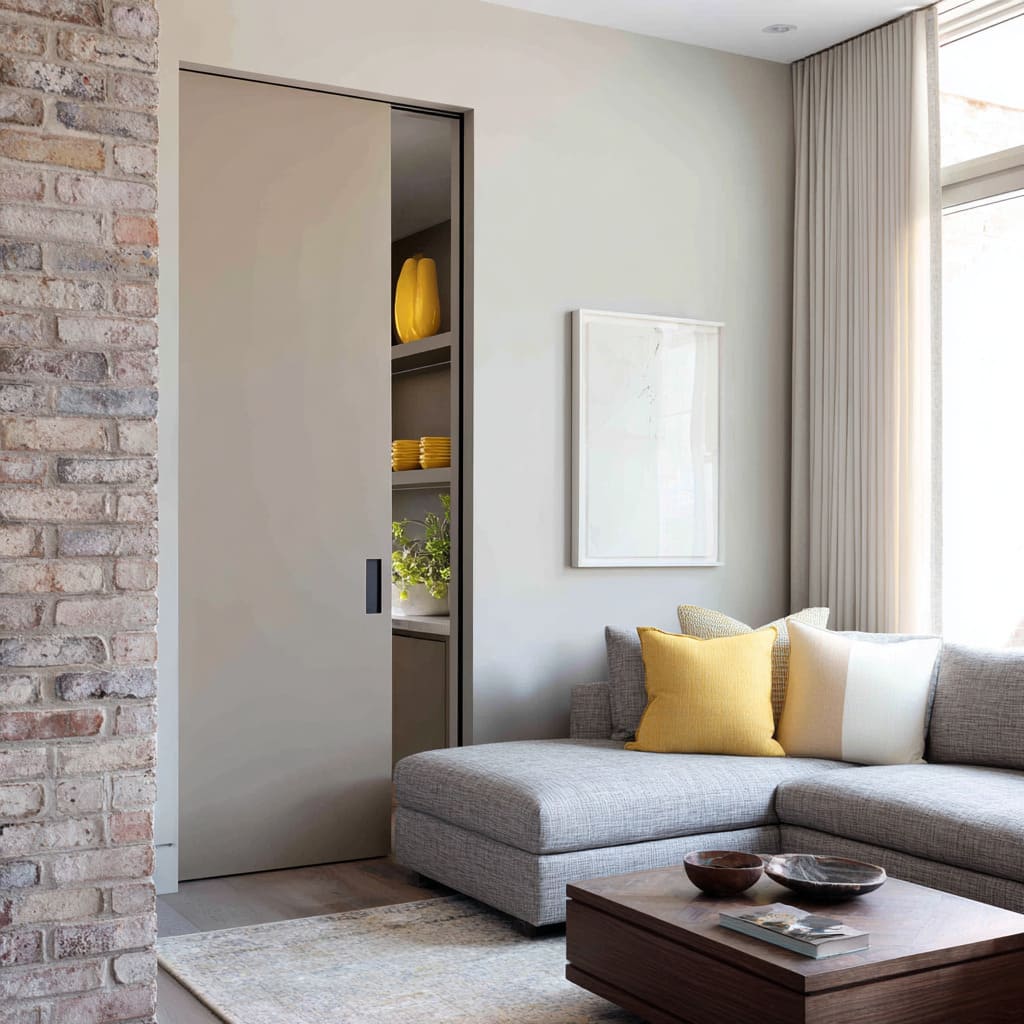
A pocket door can act as the adjustable membrane between atmospheres with very different emotional temperatures—warm, glowing zones on one side and cooler, quieter settings on the other. The transition often relies on thoughtful tonal sequencing: matte plaster leading into luminous timber; darker corridors opening into bright social rooms; earthy, tile-wrapped spaces concealing soft pantry interiors.
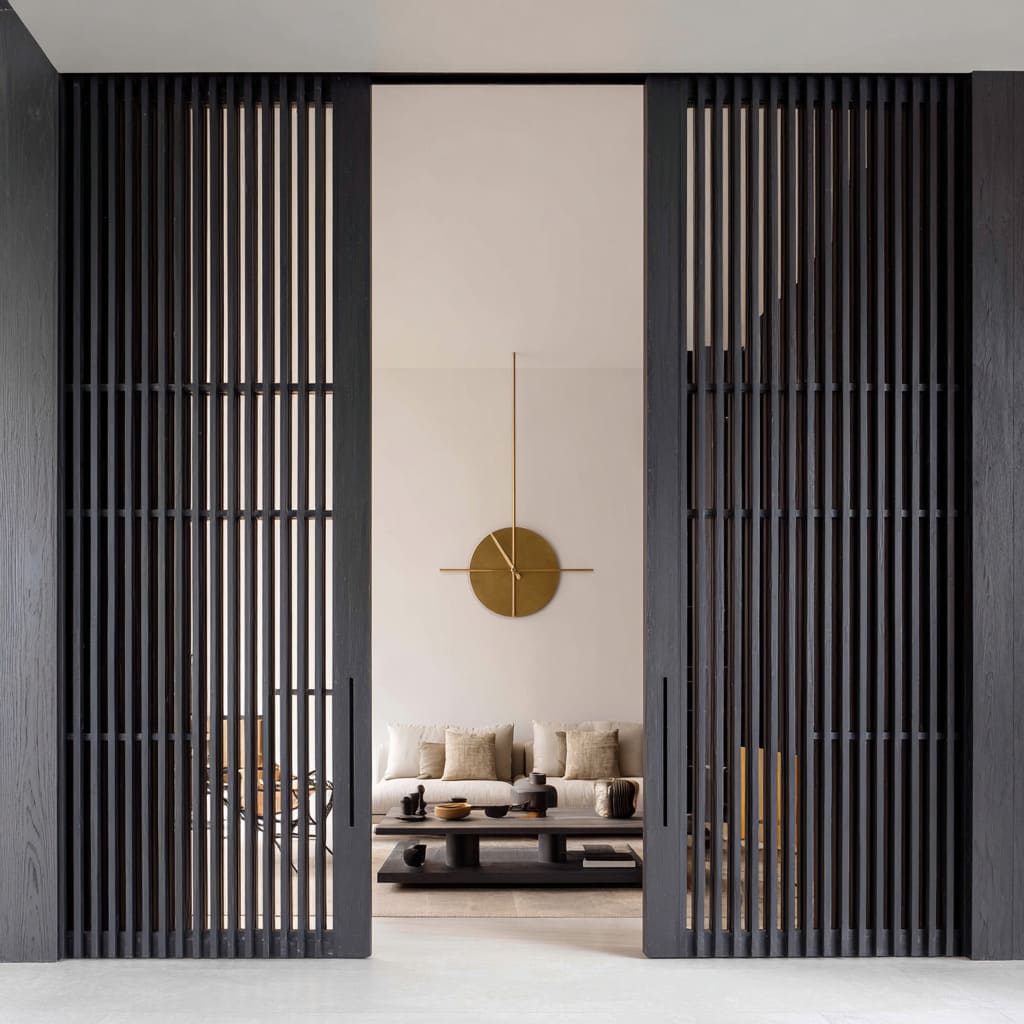
The door’s position determines how much visual warmth or coolness passes into the neighboring room, functioning almost like a dimmer switch for the architectural palette. Light spilling diagonally across the sliding leaf intensifies this effect, announcing the presence of life on the other side.
When the door closes, the emotional gradient stops; when it opens, color and brightness travel freely, establishing continuity between previously distinct moods.
Color Pathways and the Door as a Visual Gatekeeper
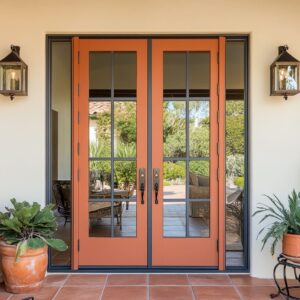
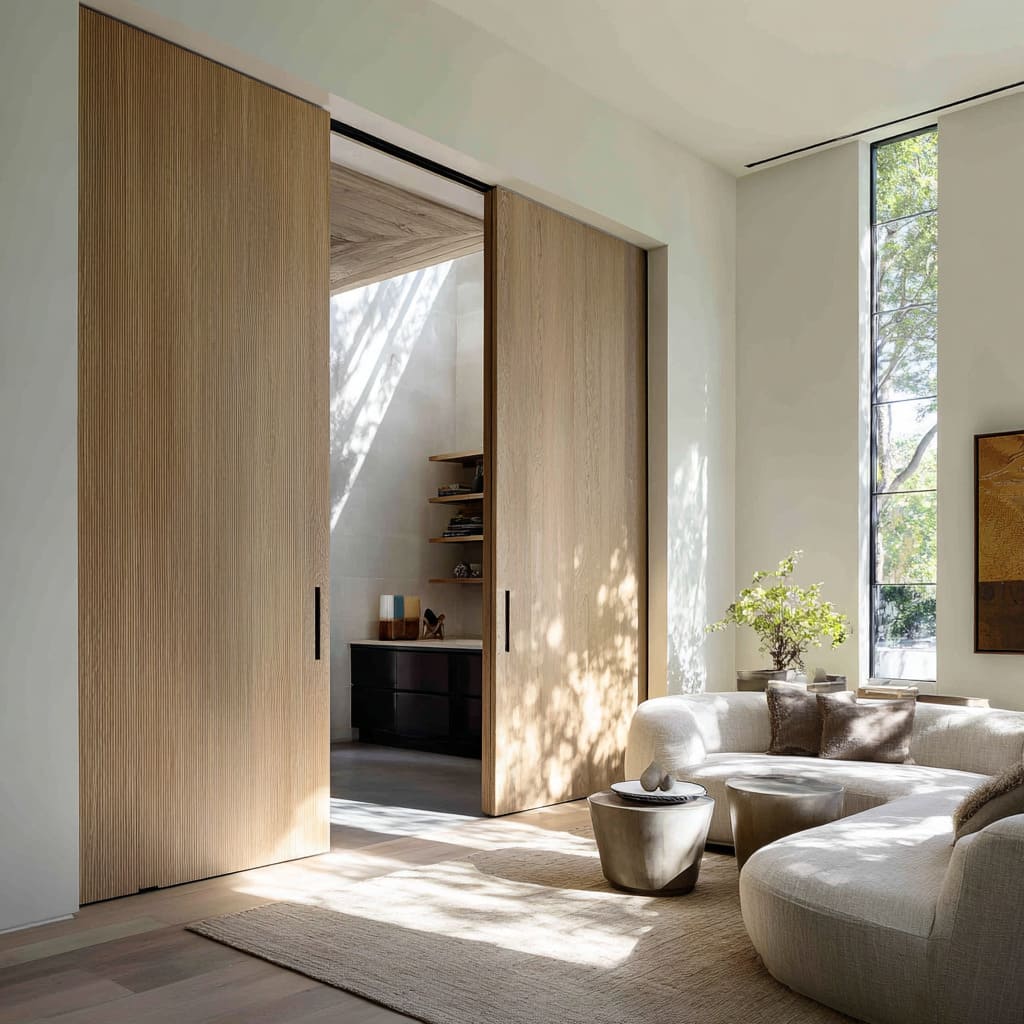
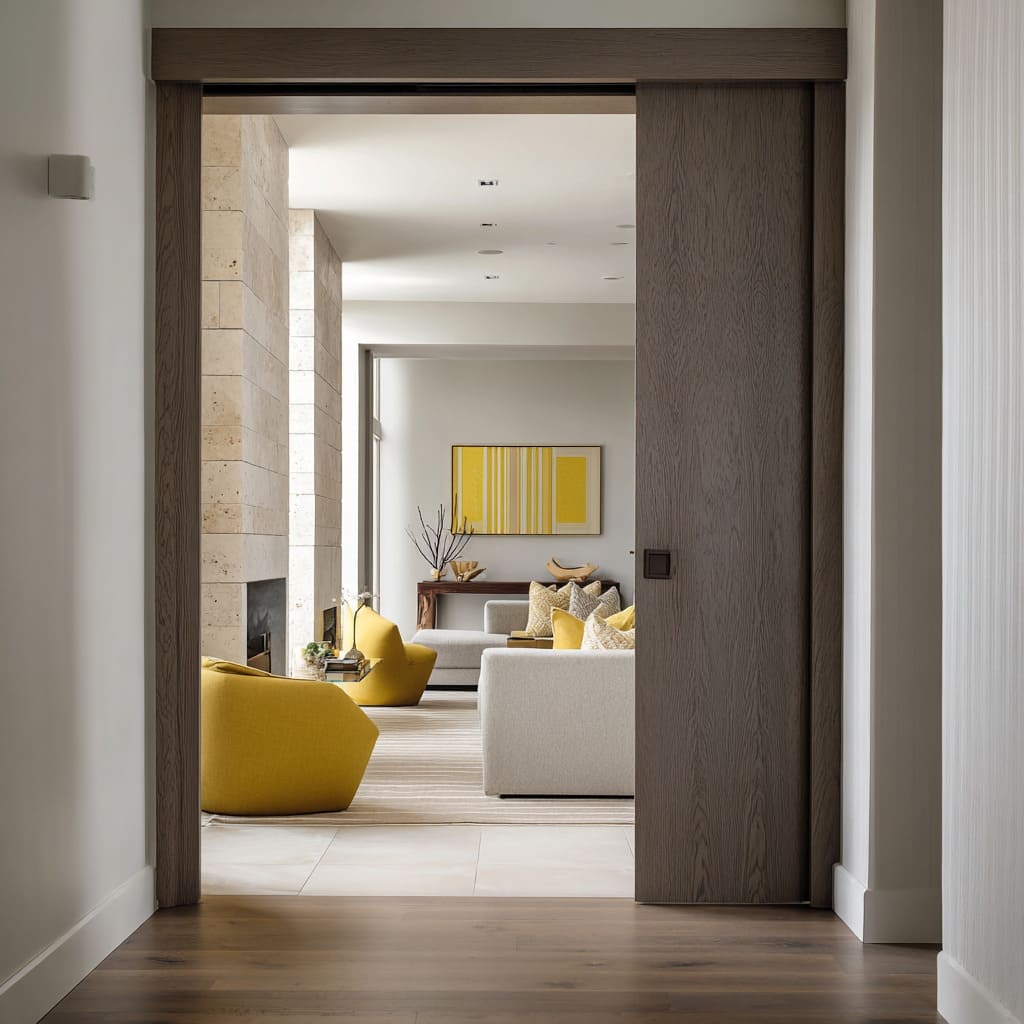
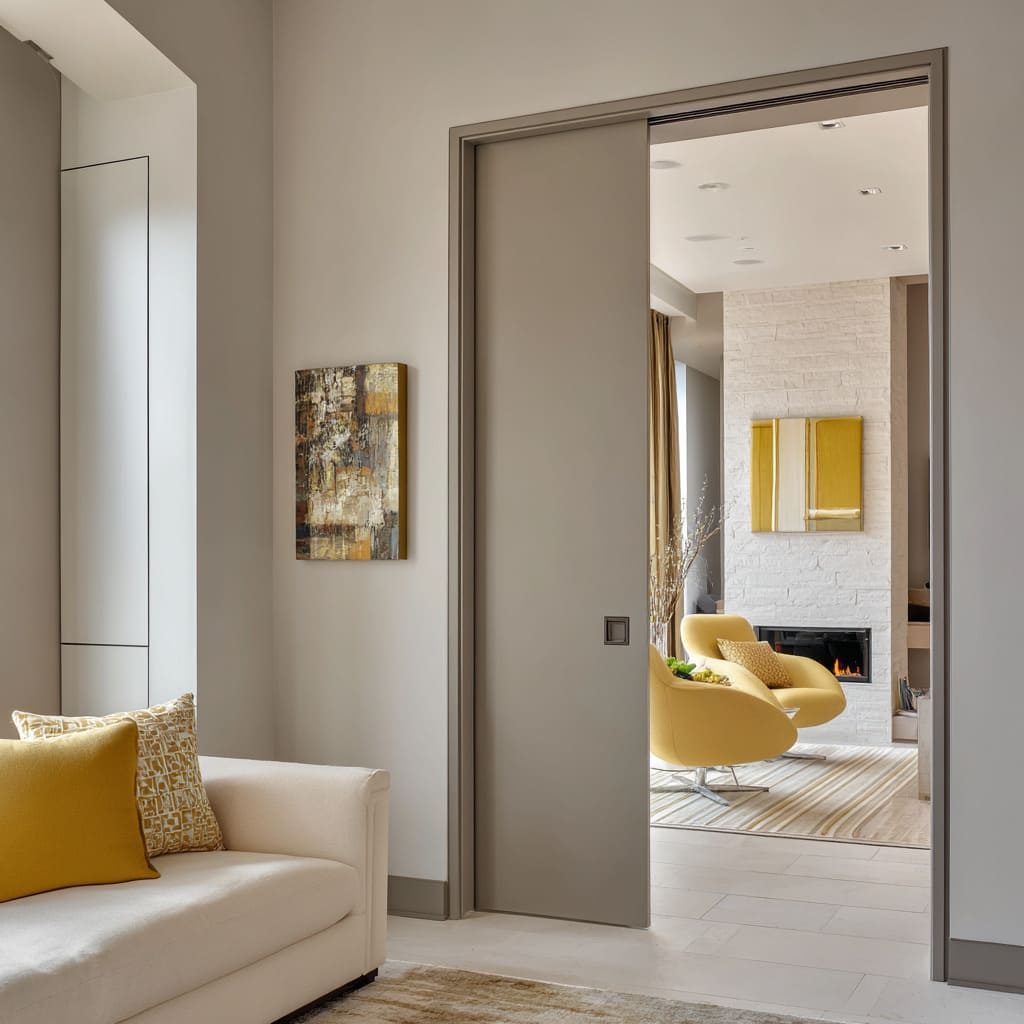
Color themes in modern interior designs often rely on continuity across multiple rooms, and the pocket leaf becomes the gate that manages how those colors travel. A neutral panel may sit silently between two spaces that share a palette—muted yellows, deep blues, soft rust tones—allowing the color story to appear or fade depending on the door’s position.
Some designs hide vibrant accent niches behind nearly color-matched sliding surfaces; once opened, the concealed color reads like a surprise vignette. In other cases, saturated seating, artwork, or rugs appear deeper in the plan, and the pocket doorway frames these accents like a controlled, architectural reveal.
This strategy gives color a spatial dimension, letting hues behave like destinations, hints, or quiet backdrops according to the configuration of the sliding plane.
Classic Trim, Contemporary Contrast, and Hybrid Aesthetics
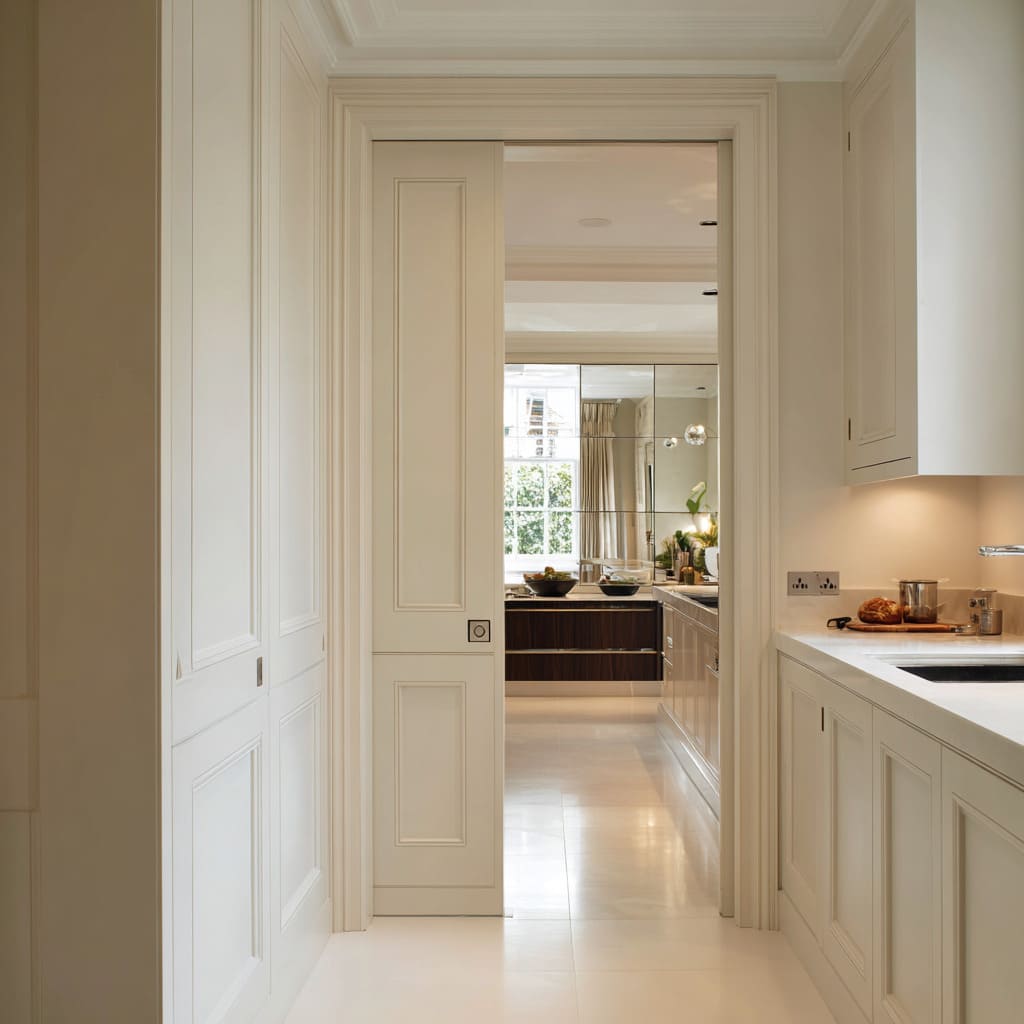
Pocket doors can sit comfortably within interiors that combine traditional trim with modern additions. Raised panel profiles, beaded frames, stepped casings, and coffered ceilings can work seamlessly with sliding leaves when the panel language is repeated consistently across walls, cabinetry, and door surfaces.
In more eclectic settings, dark slatted screens may be fitted into ornate openings, creating a striking juxtaposition between old-world framing and contemporary filtering. Mirrored dining zones or reflective surfaces beyond the threshold amplify this hybrid expression by pulling light and pattern back toward the door.
In such scenarios, the sliding leaf becomes a stylistic hinge, reconciling classic and modern sentiments without letting the opening feel forced or disconnected from its architectural context.
Light as the Primary Interpreter of the Sliding Plane
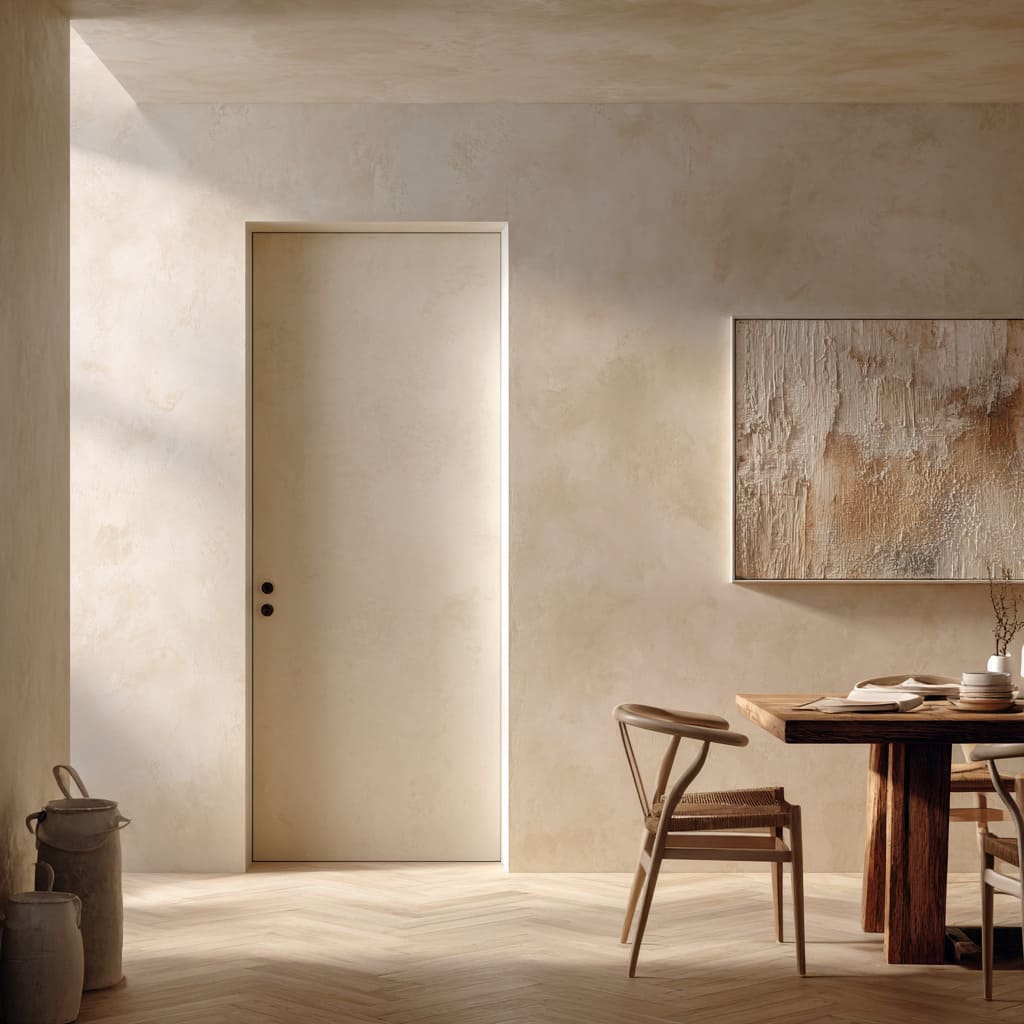
Modern interiors rely heavily on lighting to express the purpose and presence of a pocket door. The door itself may be almost invisible until a streak of light strikes the reveal and outlines its edges.
Ambient light from the next room may illuminate the inside surface of the jamb, marking a bright frame around an otherwise quiet leaf.
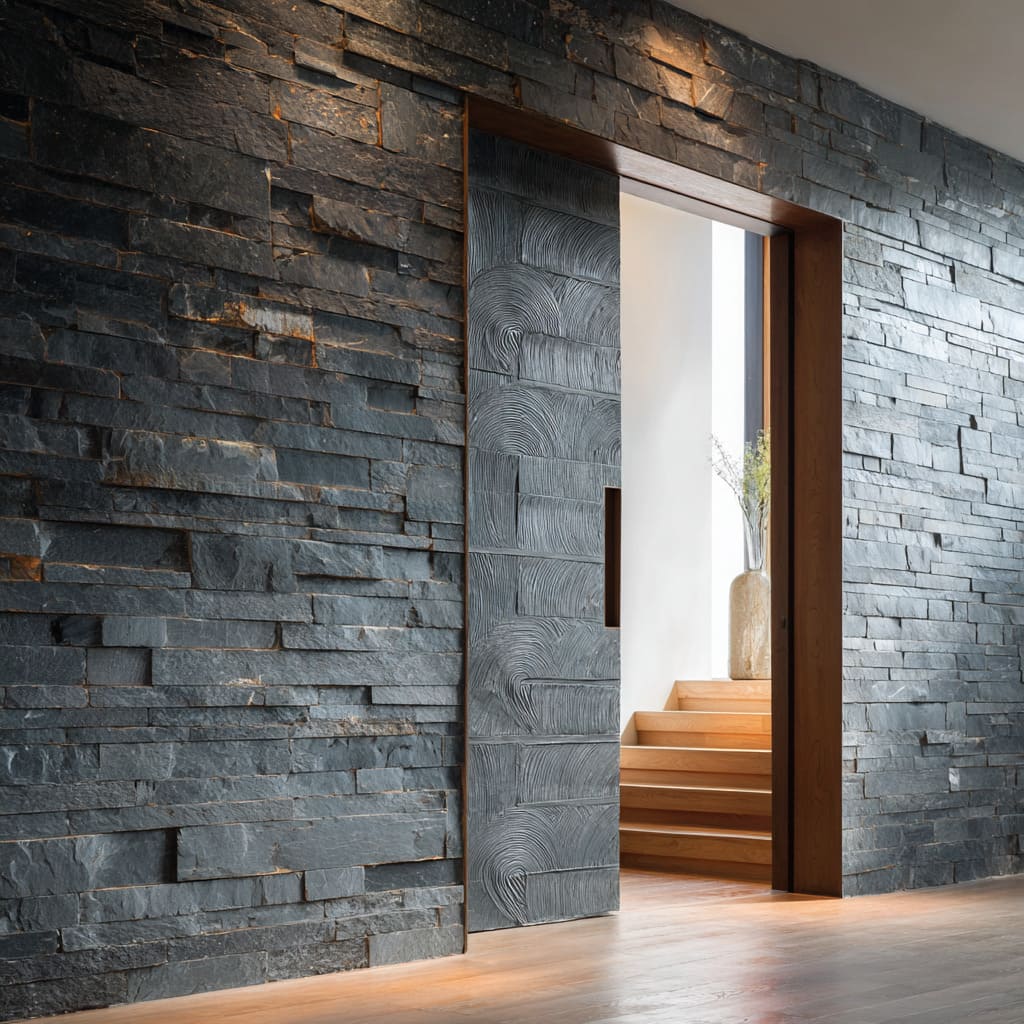
The slatted or woven infill can capture rays and transforms them into luminous vertical gradients. Uplighting near walls enhances textural contrast, revealing subtle differences between wall surfaces and smoother sliding panels.
The entire visual identity of the pocket door can change by the hour depending on how light falls onto it, making illumination a fundamental component of contemporary configurations.
Visual Datums, Alignment Strategies, and the Power of Small Anchors
Although large planes dominate the composition, much of the door’s integration depends on minute alignments and relationships. Recessed pulls, often dark and minimal, sit within a “hand-height band” that also connects to tabletop edges, sofa arms, or counter heights.
This subtle alignment creates an intuitive physical rhythm across adjacent zones. Panel grids on sliding surfaces may correspond with tile joints, cabinet divisions, or abstract artwork, tying disparate elements into a shared geometric field.
When the door moves, these relationships shift, allowing the interior to reorganize itself without visual agitation. Even the direction of plank flooring or the orientation of grain on adjacent joinery influences how calm or dynamic the threshold feels.
Sliding Edits Between Daily Life and Composed Interiors
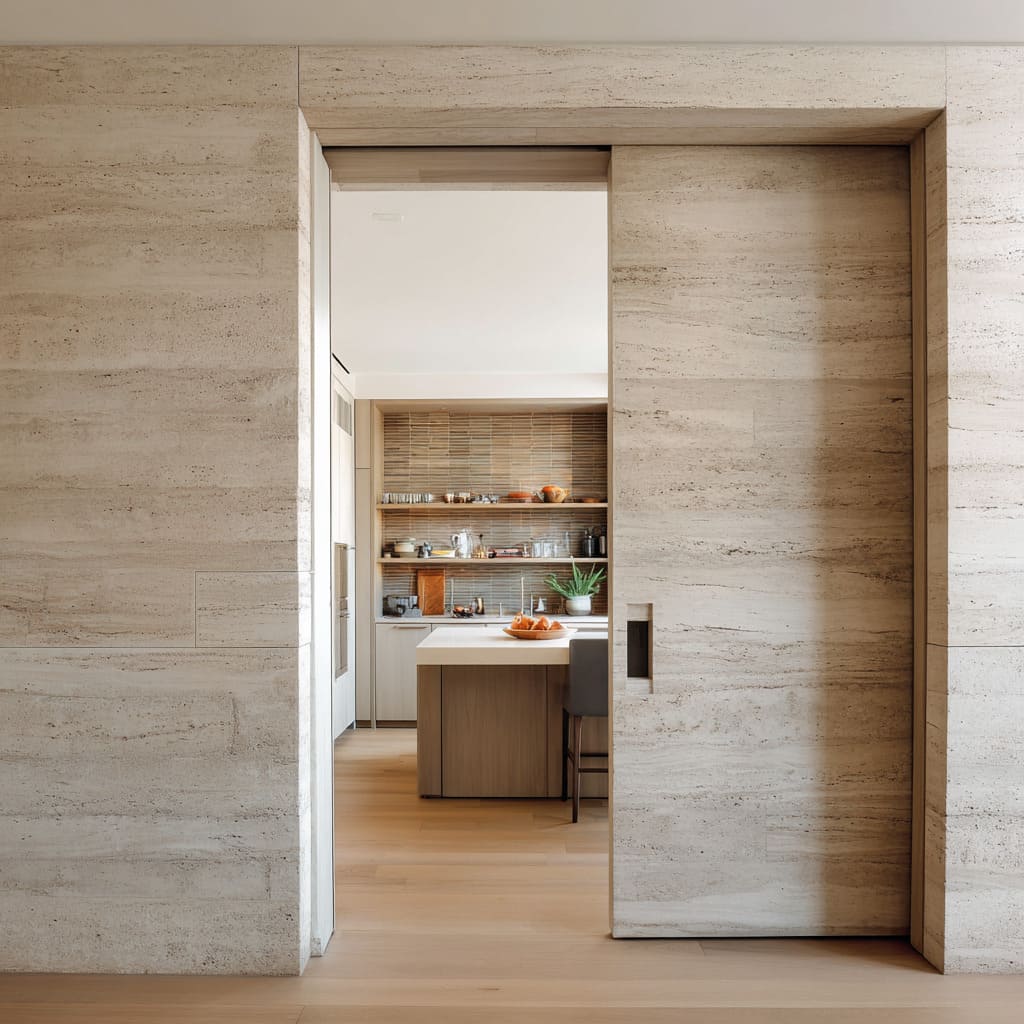
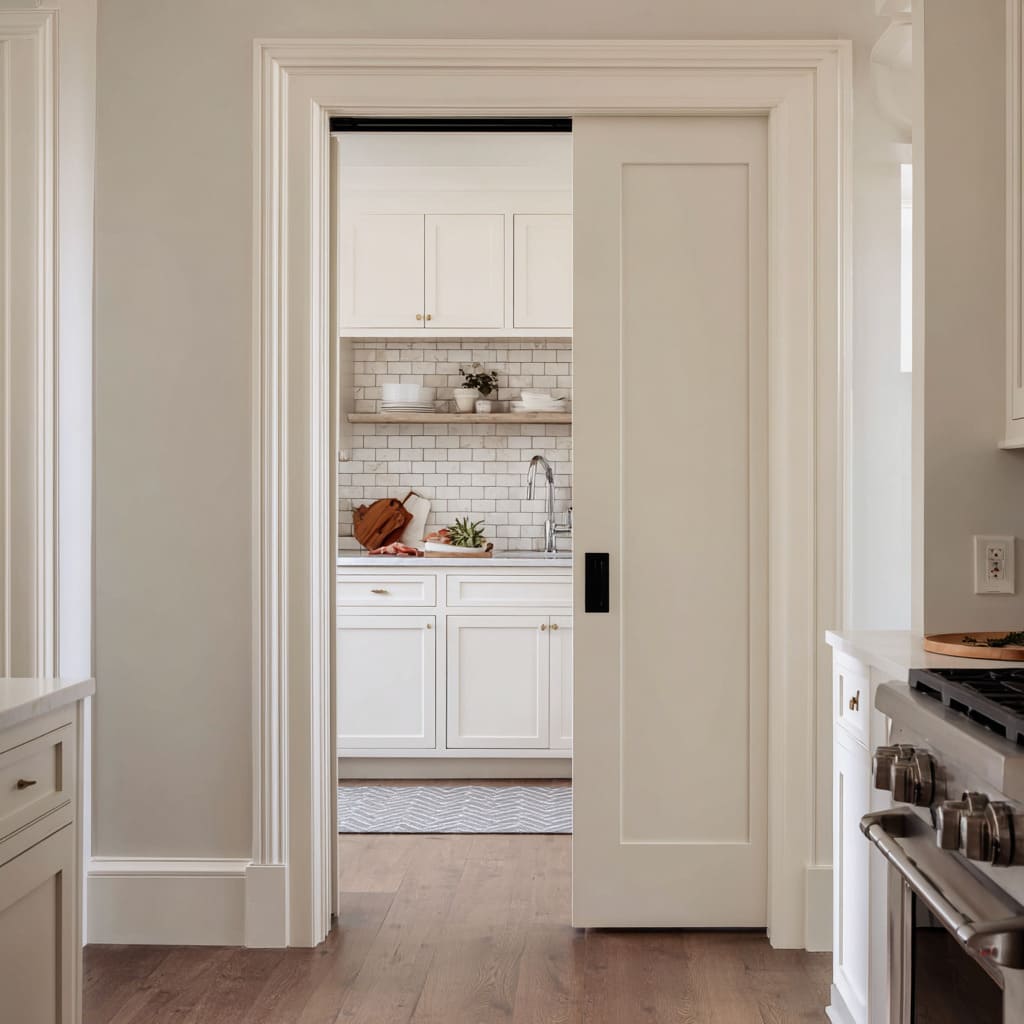
Many cool pocket door ideas address the tension between lived-in activity and controlled presentation. The sliding plane becomes a visual editor, permitting daily clutter, pantry objects, or working kitchens to participate in the broader atmosphere—or recede instantly behind a serene surface.
Importantly, such concealed zones are designed with the same aesthetic care as the main rooms, transforming the act of opening the door into a form of curated storytelling. The sliding leaf therefore becomes a dynamic instrument: open for openness, half-open for filtered intrigue, closed for composure.
Its function shifts from privacy provision to mood management, making the pocket system a cinematic tool for shaping how domestic life unfolds visually.
The Many Faces of Modern Sliding Boundaries
From unified plaster planes to warm timber frames, from cane filters to slate-like sculptural slabs, contemporary interiors use sliding systems to create layered, expressive thresholds. Taken together, these pocket door ideas reveal a design language in which the door is not a hinge-bound object but a modifiable architectural condition.
It can behave like a moving portion of the wall, a glowing textile, a carved monolith, or a subtle extension of cabinetry.
Some interior designs can introduce double pocket door ideas to widen the threshold and create symmetrical compositions, while others explore narrow openings for intimate, almost secretive effects. Across all variations, the intent is the same: to let rooms adapt visually throughout the day, ensuring that the flow of surfaces, textures, light, and color feels continuous even when spaces shift roles.