A rock fireplace has a strange double life in interiors. It can read as pure nature—raw, irregular, heavy—or it can read as a highly edited art object that simply happens to be made of stone.
The difference is rarely the stone alone. The difference is the design grammar around it: how the innterior design gives the rock a job, how the fire is framed as movement, how soft furnishings “translate” the texture, and how a few disciplined lines stop the surface from taking over the whole scene.
Rock fireplace ideas can feel modern, warm, and visually controlled by using visual logic and the styling choices that make stone feel deliberate.
Stone as “visual gravity”
Rock naturally behaves like gravity in interior design. It pulls attention because it carries three powerful signals at once: texture, shadow, and perceived mass.
Many designs fail not because the stone is wrong, but because the interior concept forgets that stone needs a counterweight.
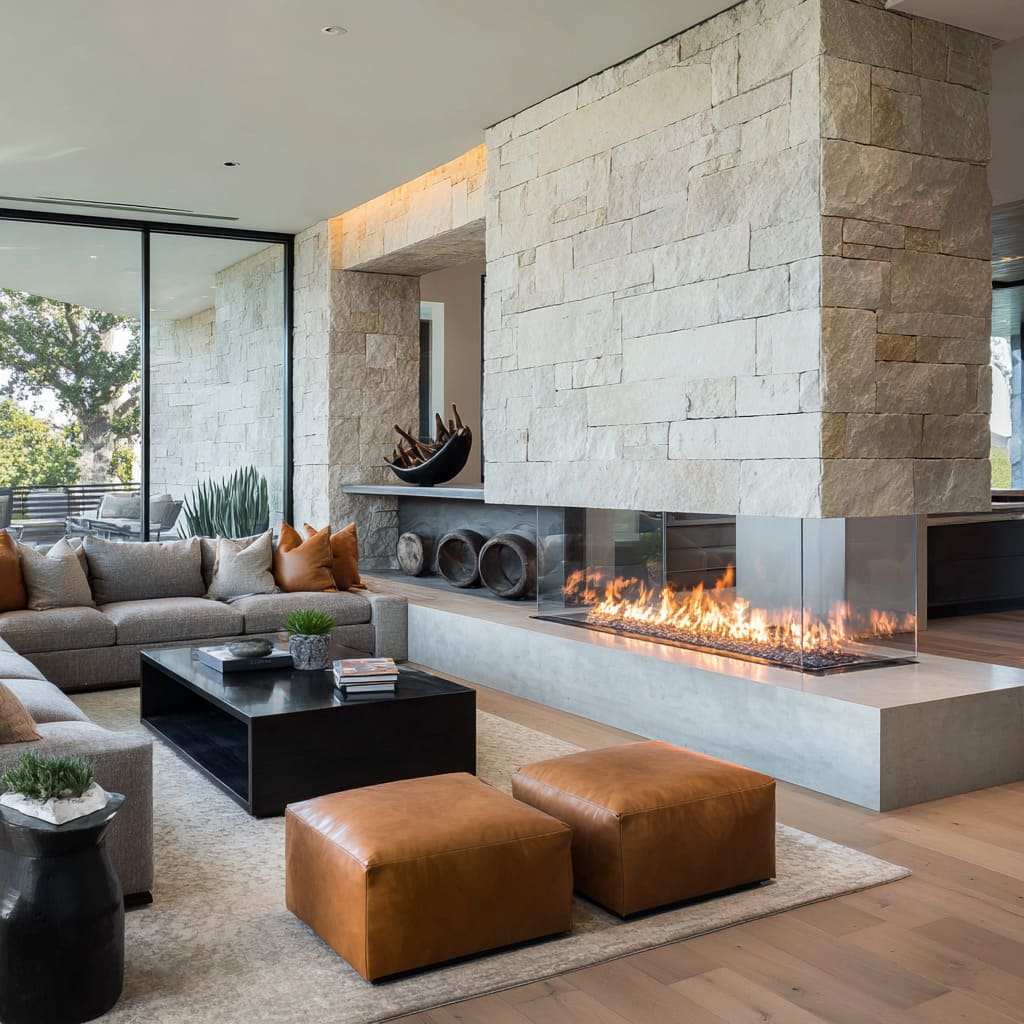
Two main counterweights for rock fireplaces:
- Negative space as relief. When the stone surface is busy, the most effective partner is a quiet field: clean plaster, pale walls, smooth ceilings, large windows. This is not minimalism for its own sake. It’s a visual breathing system. The eye needs a blank area to recover so the stone reads as “feature” rather than “noise.”
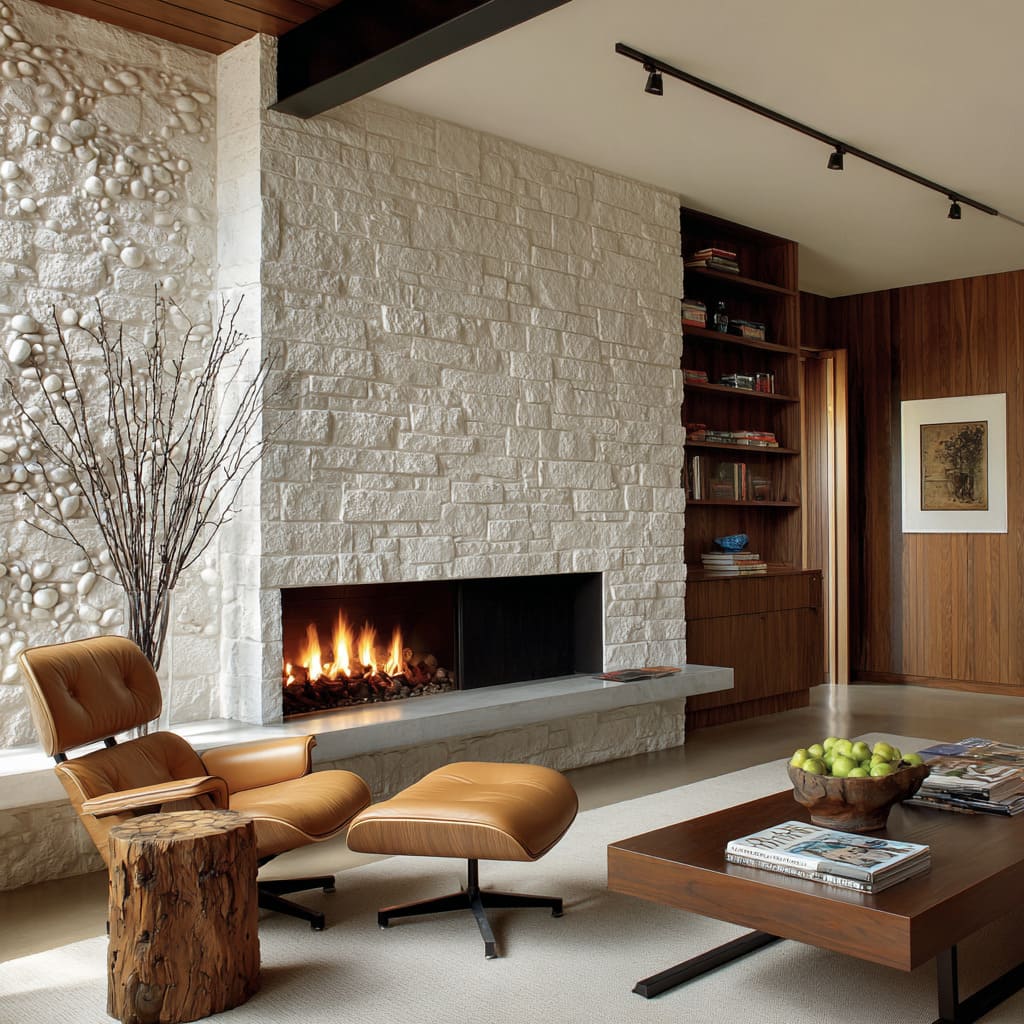
- One crisp geometry that proves intention. The moment a sharp line frames organic rock—like a thick white ledge, a clean hearth bench, or a rectilinear stone volume—the rock stops reading accidental. The room is basically saying: “This texture is here on purpose, and here is the line that contains it.”
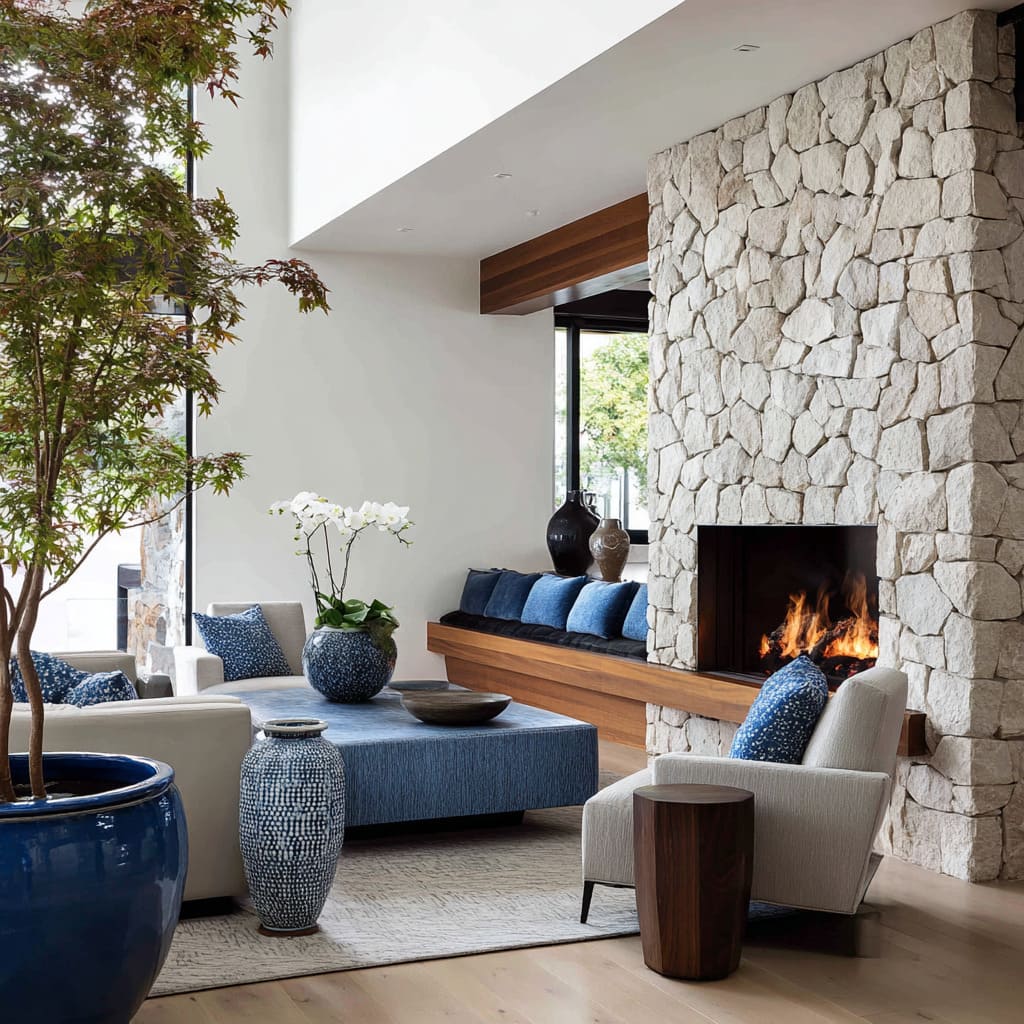
A subtle point that people often miss: stone does not need to be toned down; it needs to be measured. Measurement can be done with an underline, a bracket, or a clean cutout.
Those moves turn nature into composition.
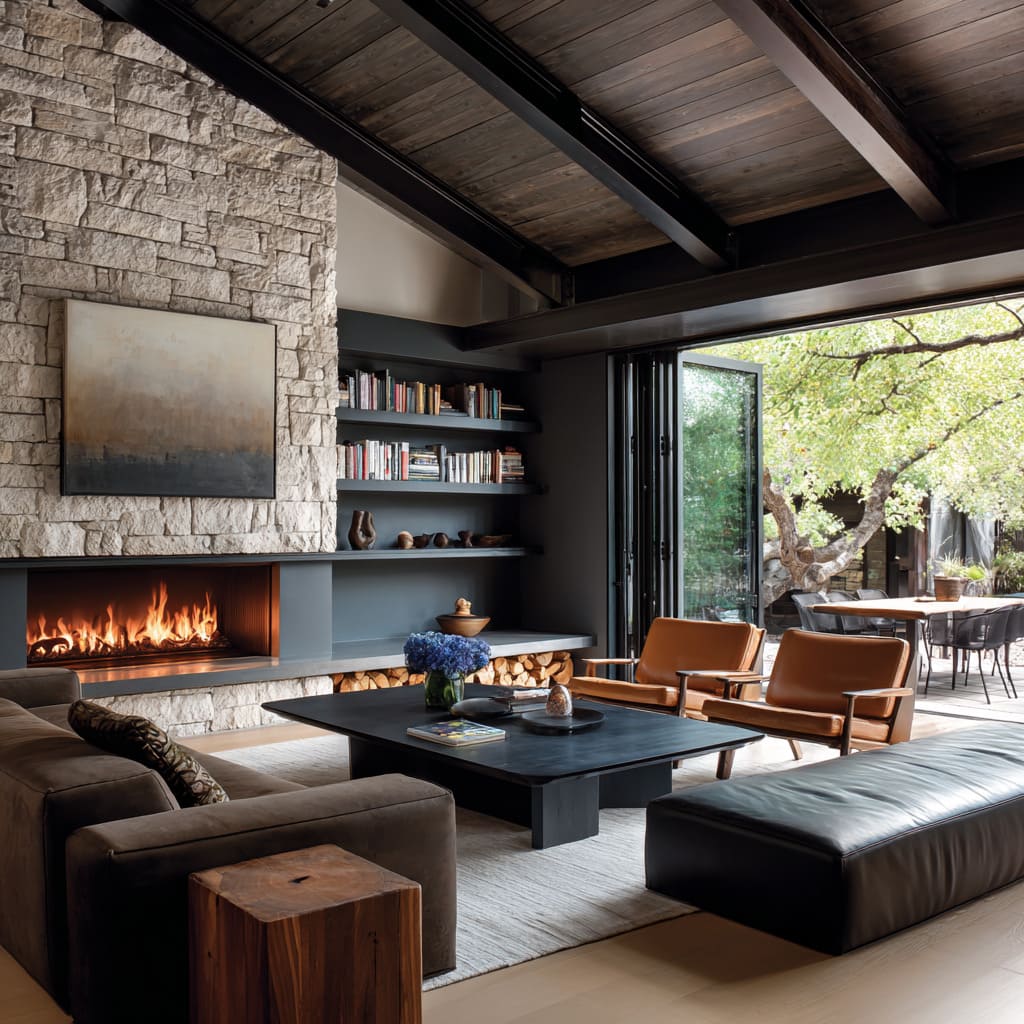
The “horizon line” that keeps stone from feeling too tall or too loud
One of the biggest visual problems with rock fireplaces is vertical overwhelm—especially with tall chimneys, double-height rooms, or simply large stone surfaces. The fix is rarely less stone.
It’s the horizon line: a long, calm horizontal element that interrupts the climb.
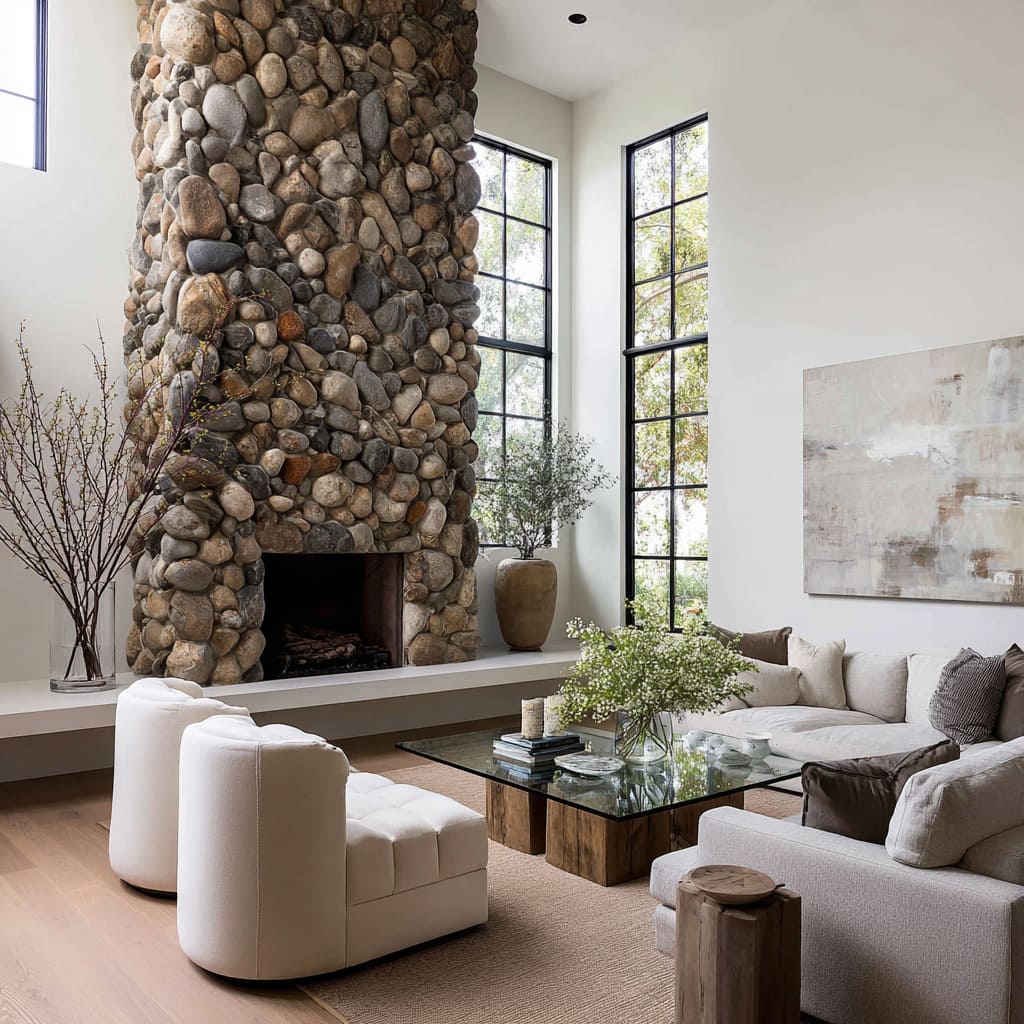
This is where rock fireplace mantel decorating ideas quietly change meaning. The mantel should not be treated as a shelf for objects.
It can be treated as a baseline that edits the whole elevation:
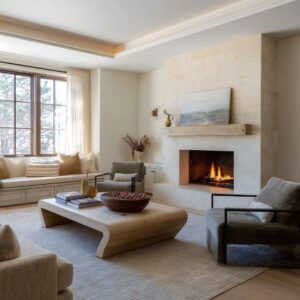
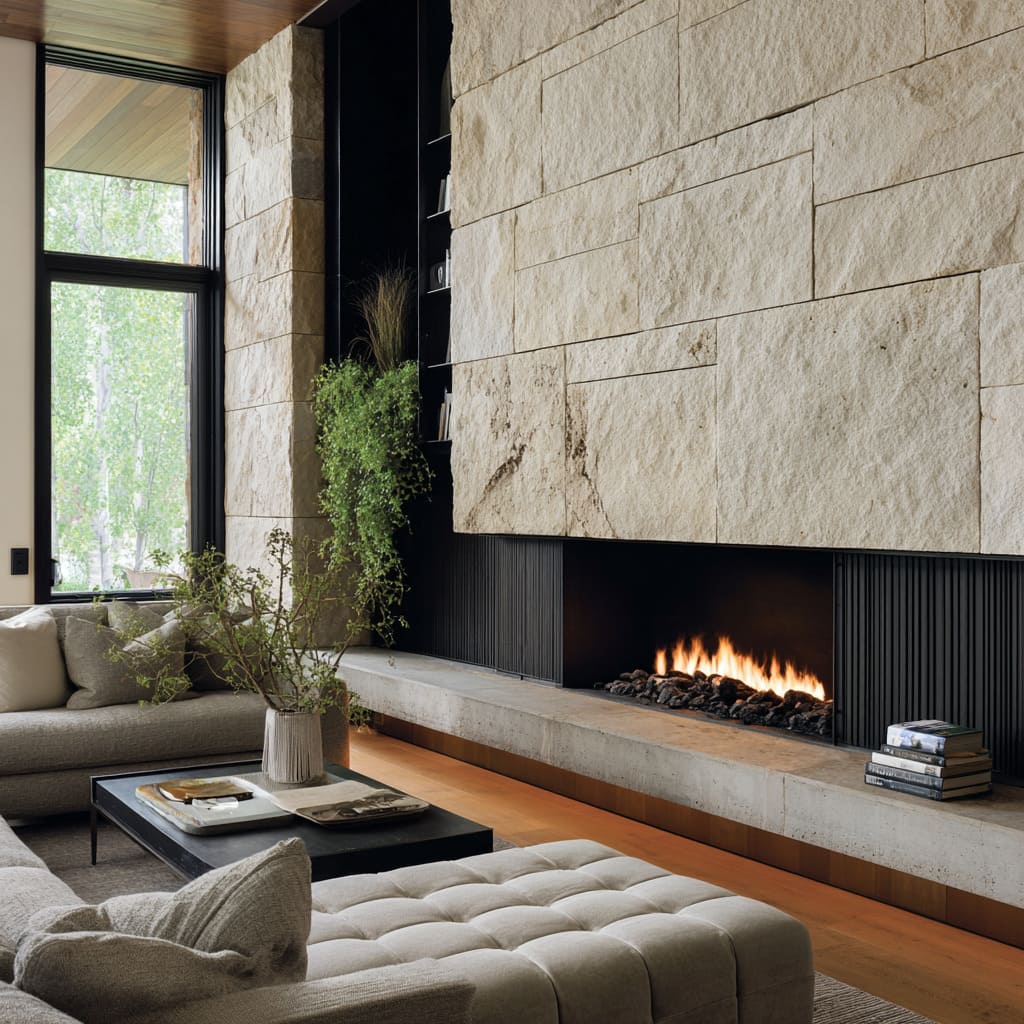
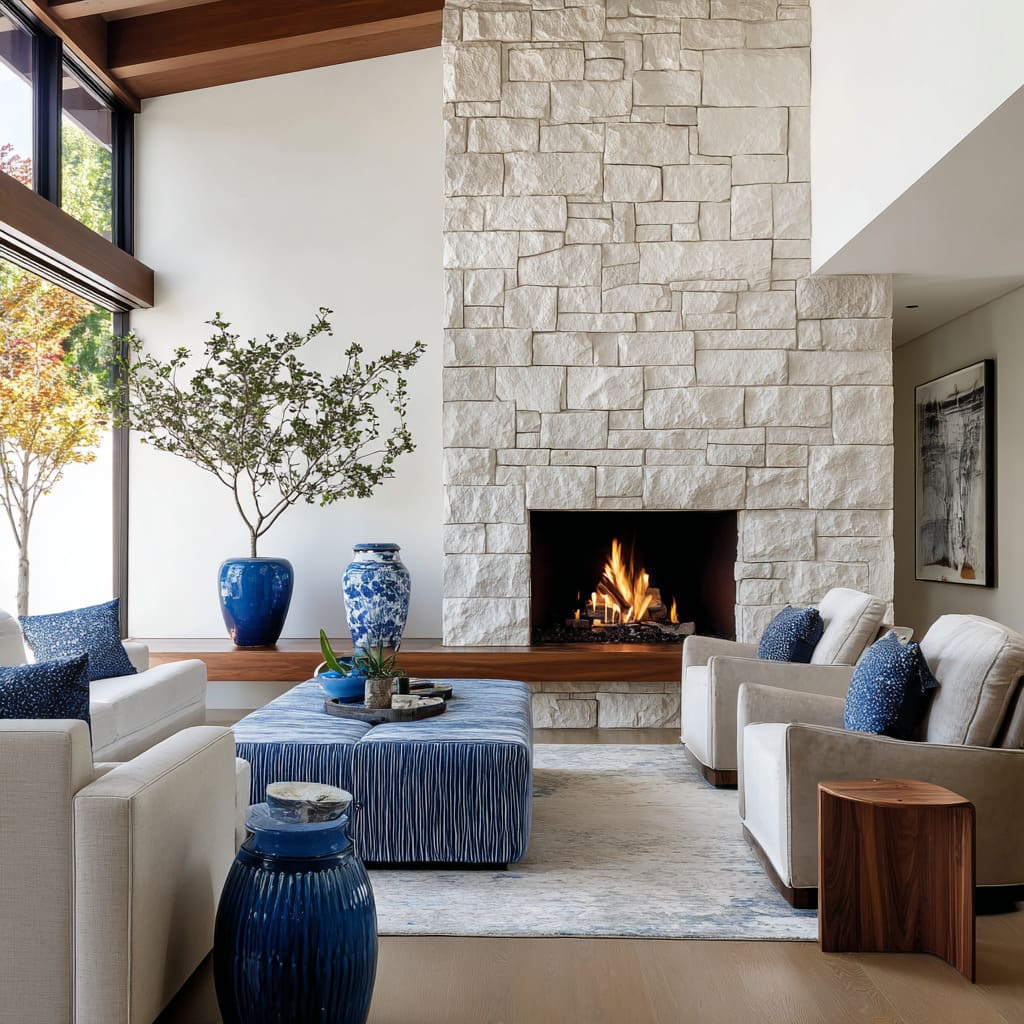
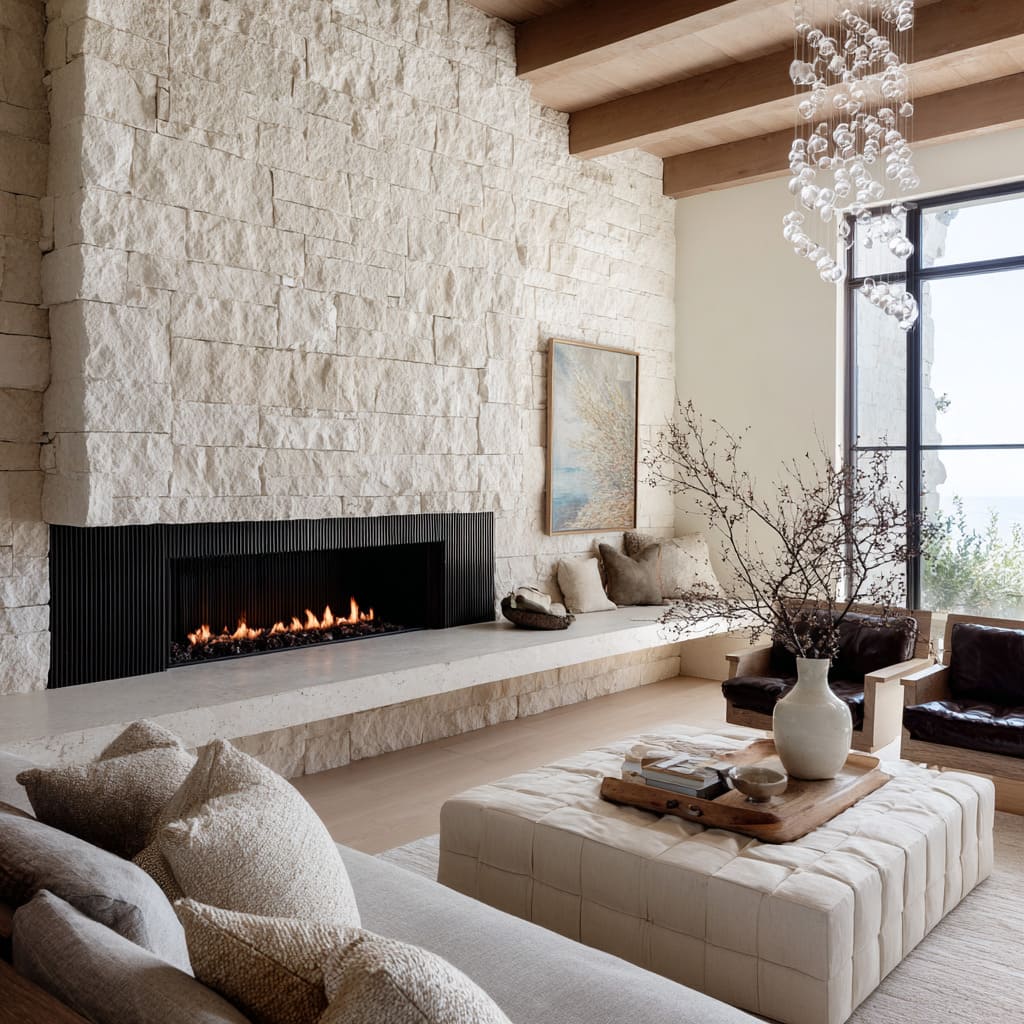
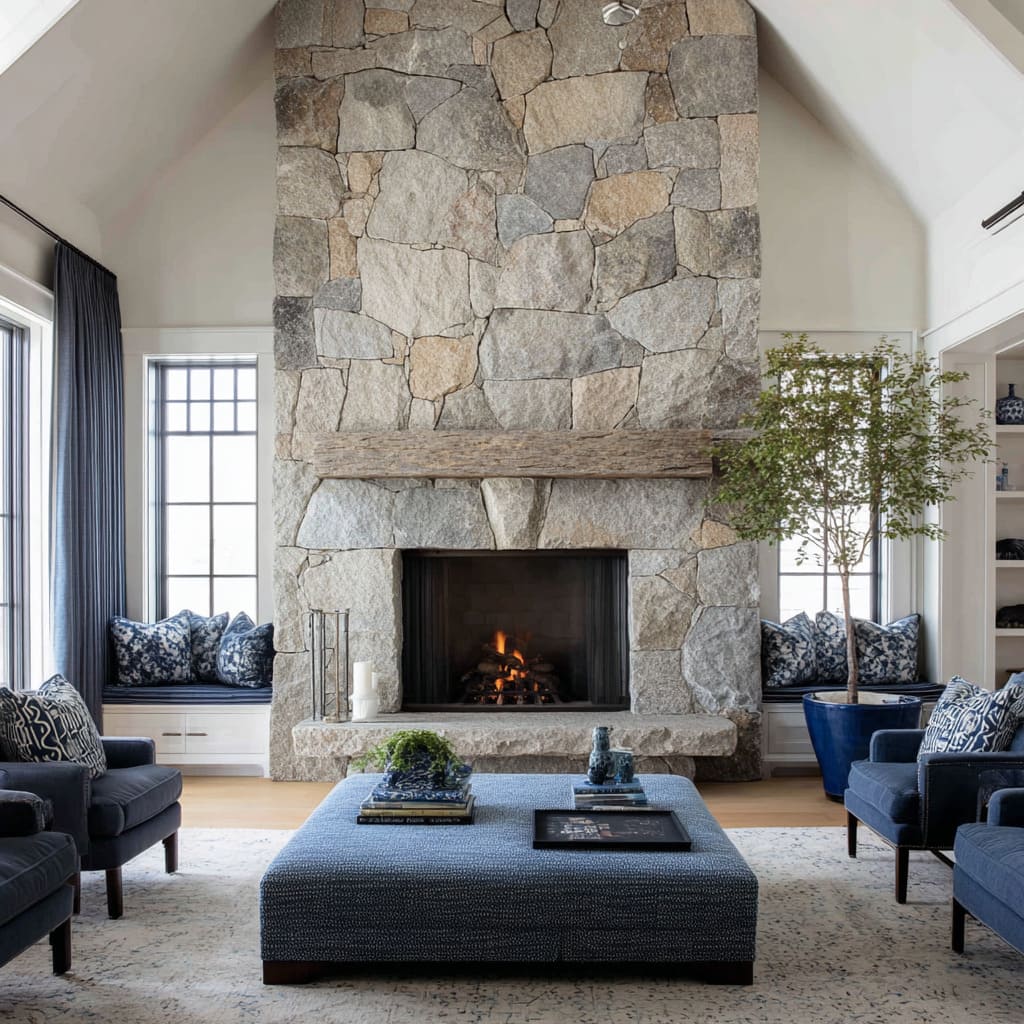
- A thick ledge that wraps or extends beyond the firebox acts like a visual underline.
- A long bench-like hearth becomes a social edge and a compositional ruler at the same time.
- A continuous slab-like line creates a “pause” that lets the stone feel monumental without feeling chaotic.
The deeper idea: when stone is irregular, the interior design benefits from a single steady line that behaves like a horizon. It gives your eye a place to land, so the stone can stay textured without making the space feel restless.
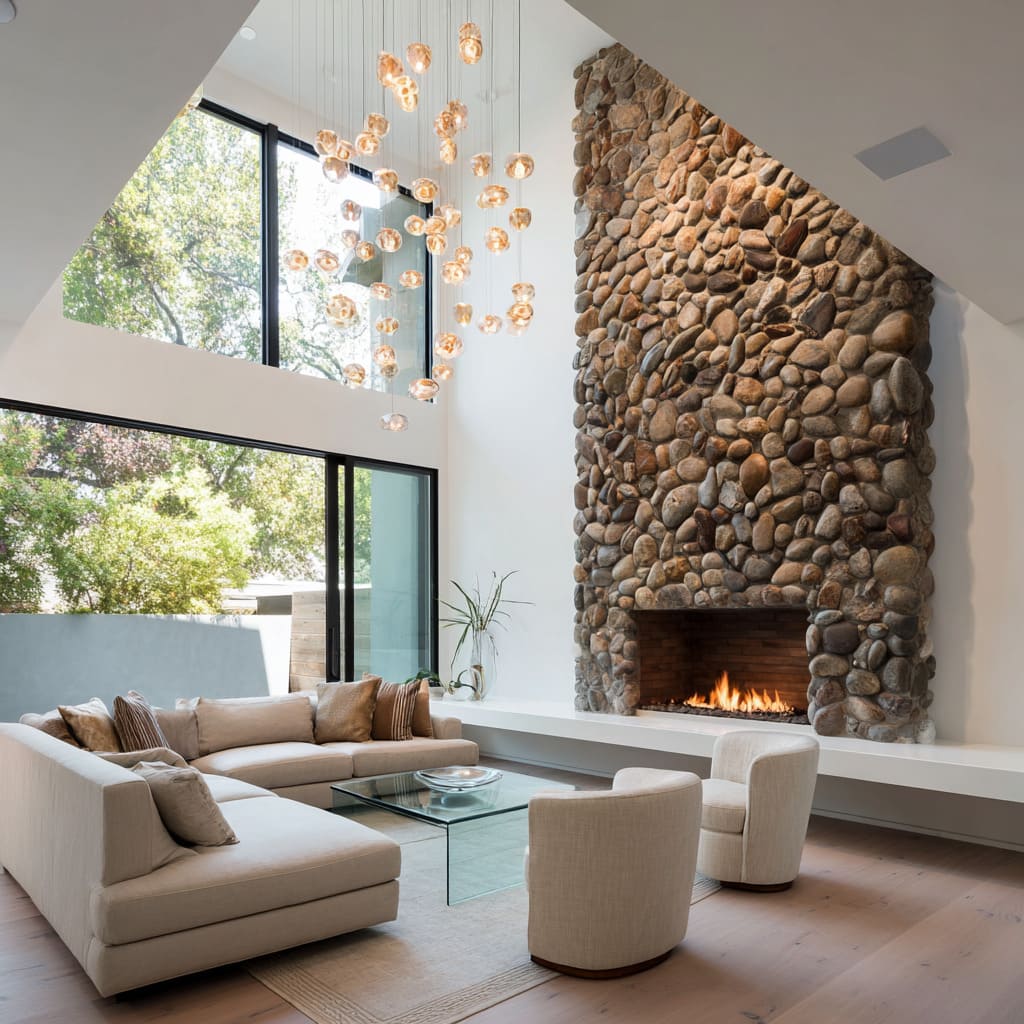
Rock can behave like a landscape, or it can behave like furniture
There are two main characters a rock fireplace can play, and the strongest rooms pick one clearly.
A) The “landform” fireplace
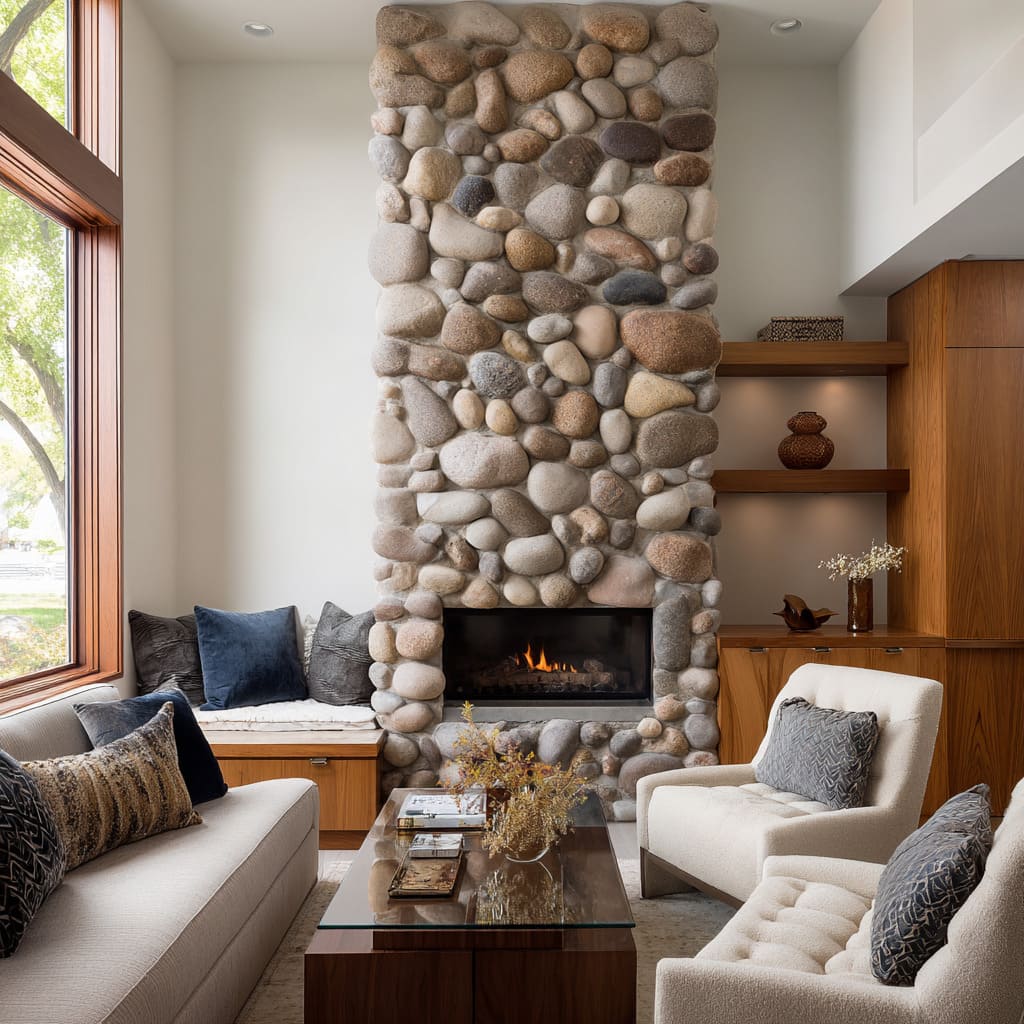
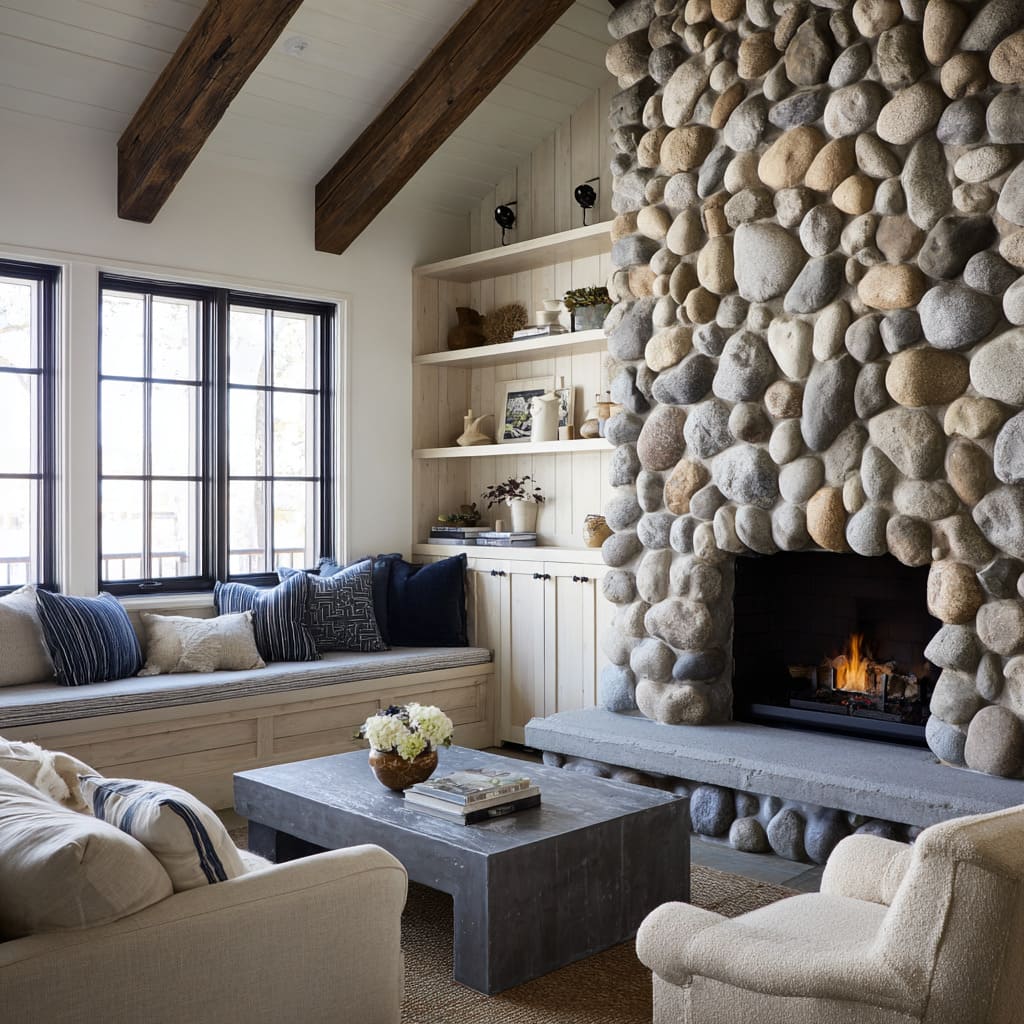
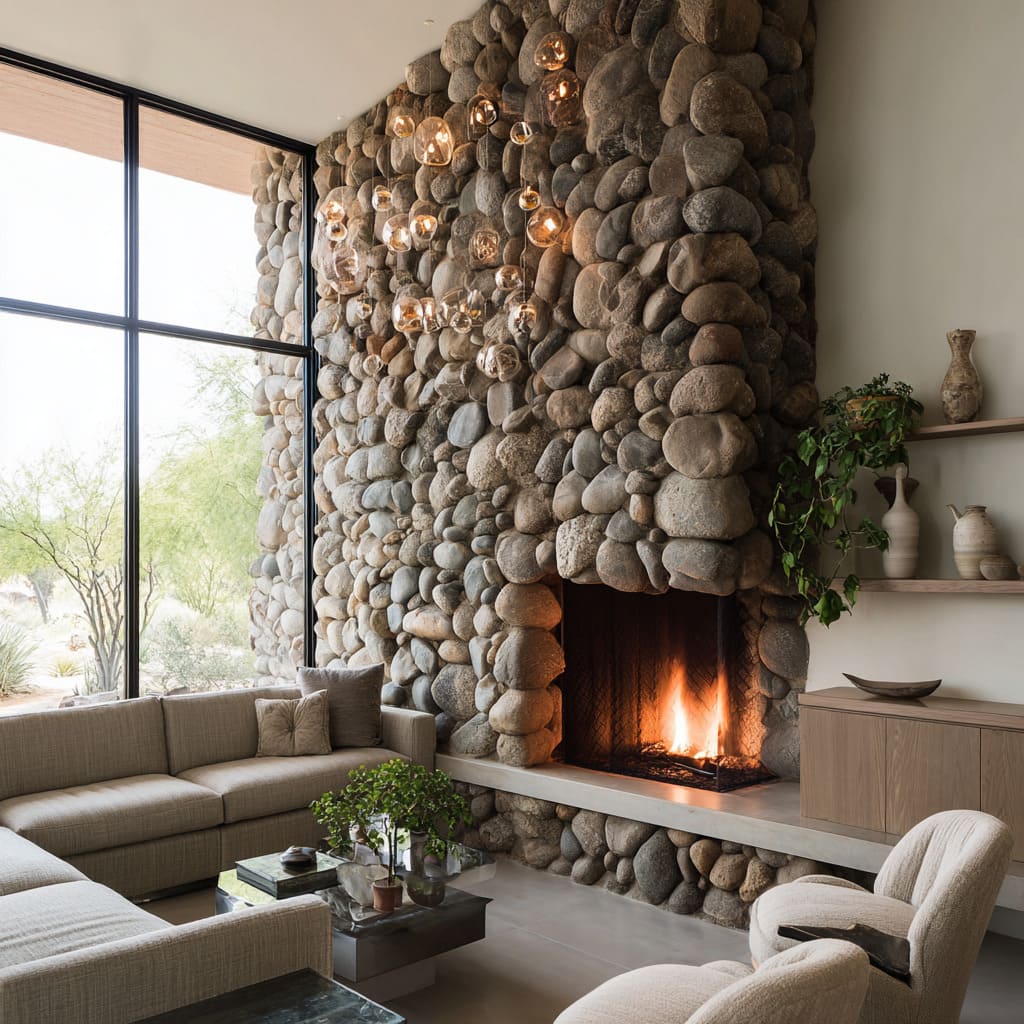
This is where river rock or large, rounded stone reads like a cliff inside a clean interior design. The firebox feels like a warm opening carved into a natural mass.
The supporting styling becomes crucial: soft, pale upholstery and calm surfaces keep the landform from turning into a theme.
This is where river rock fireplace ideas become unexpectedly modern: the roundness is not hidden; it is echoed elsewhere in a refined way (more on that in the lighting section). The room doesn’t fight the organic quality—it pairs it with clarity.
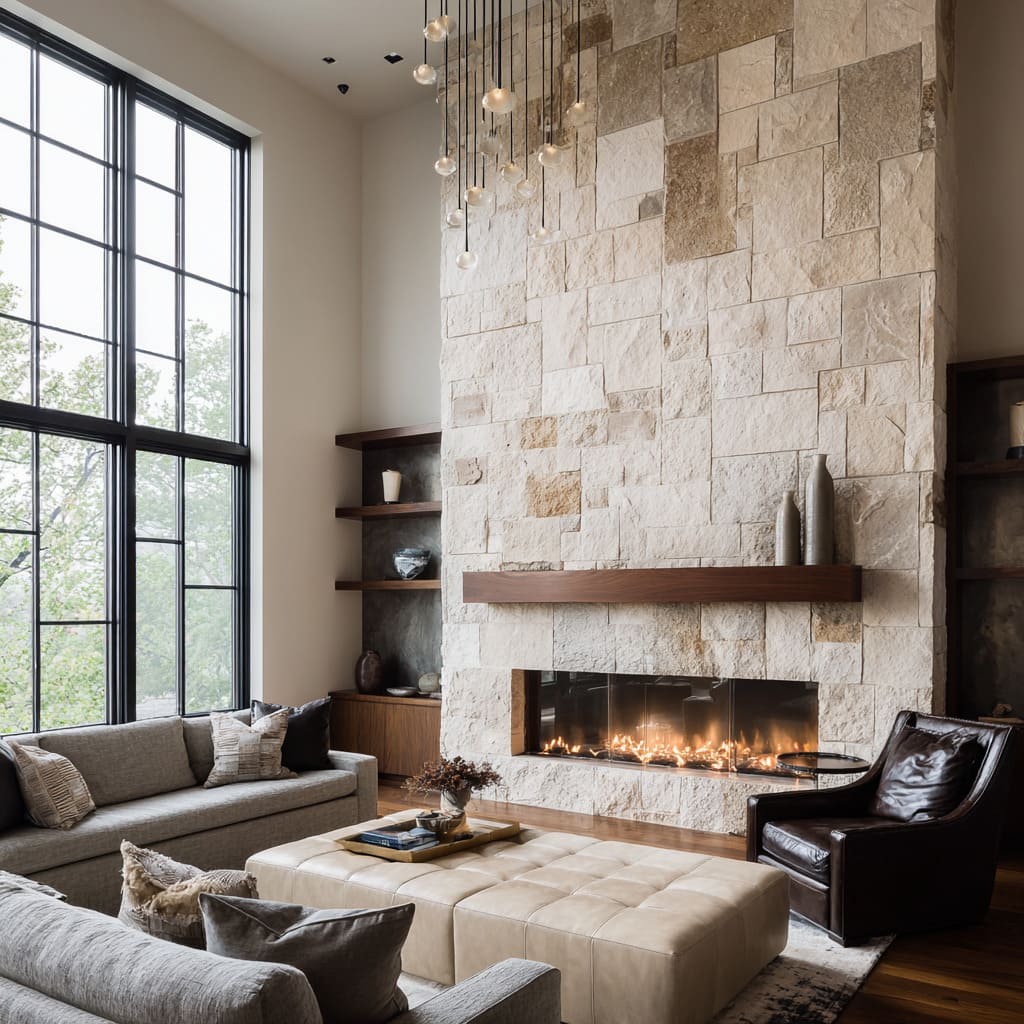
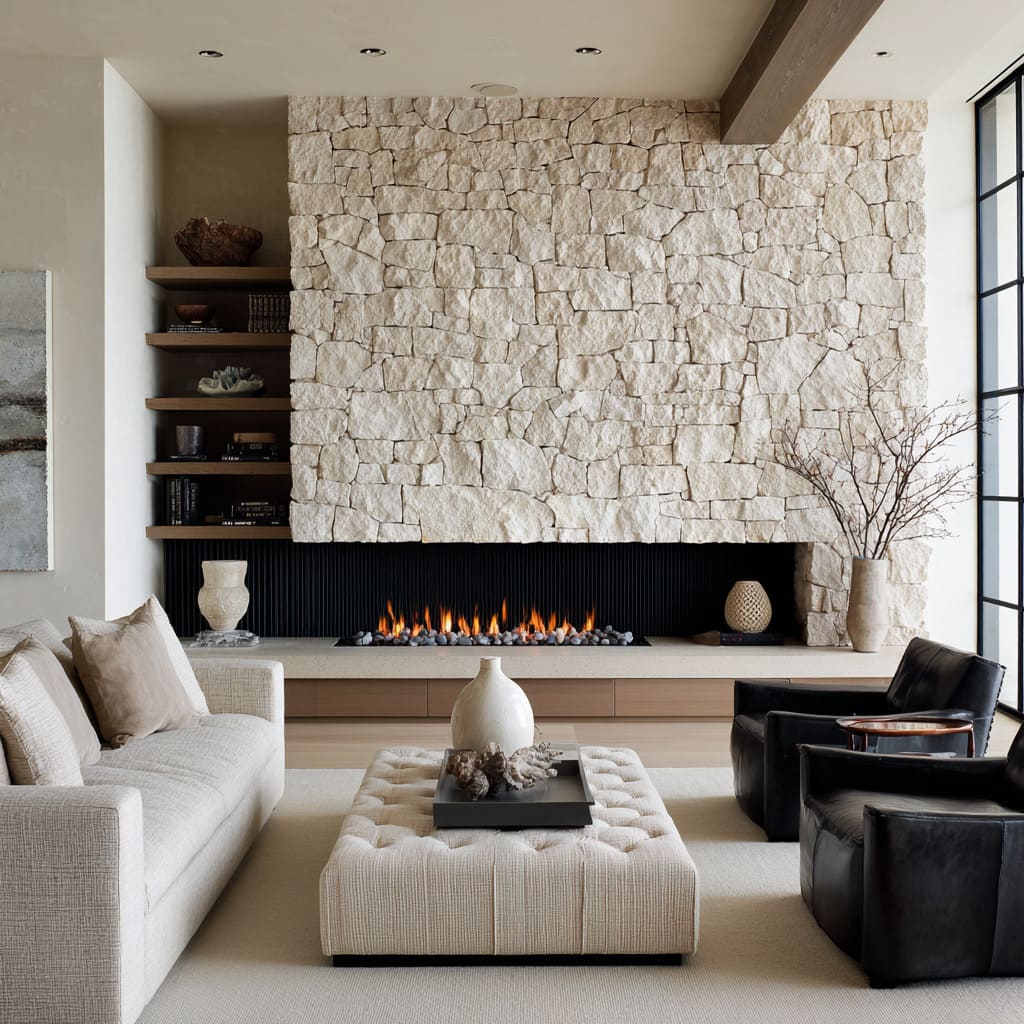
B) The “object” fireplace
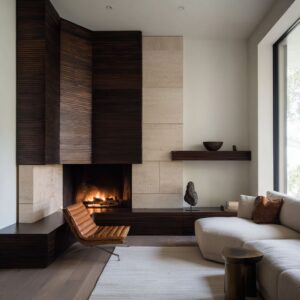
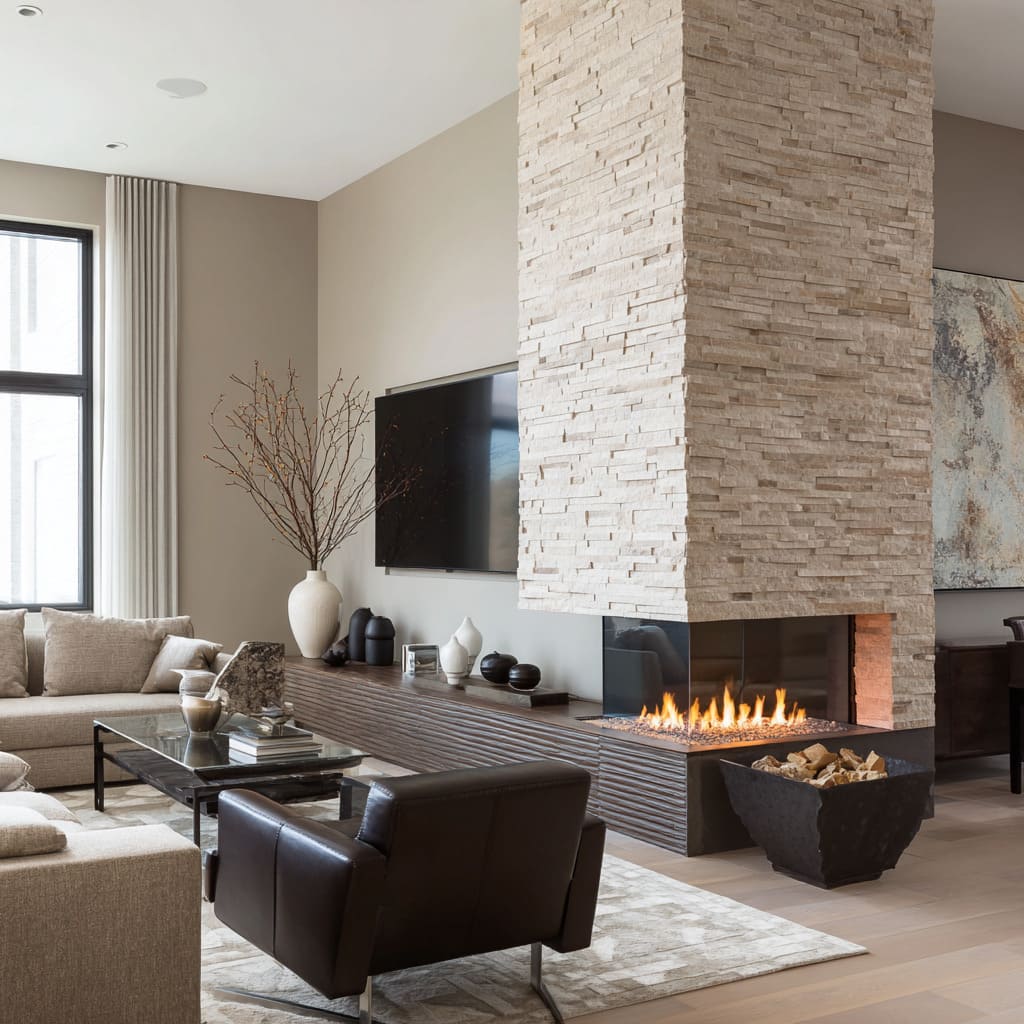
Here stone becomes a rectilinear volume—almost like a sculptural cabinet placed in the plan. The fire becomes a seam of movement inside a heavy block.
This approach is especially effective in open layouts because it allows the fireplace to belong to the center of the home, not only to one wall. The stone reads less like “feature wall” and more like “architectural furniture.
”.
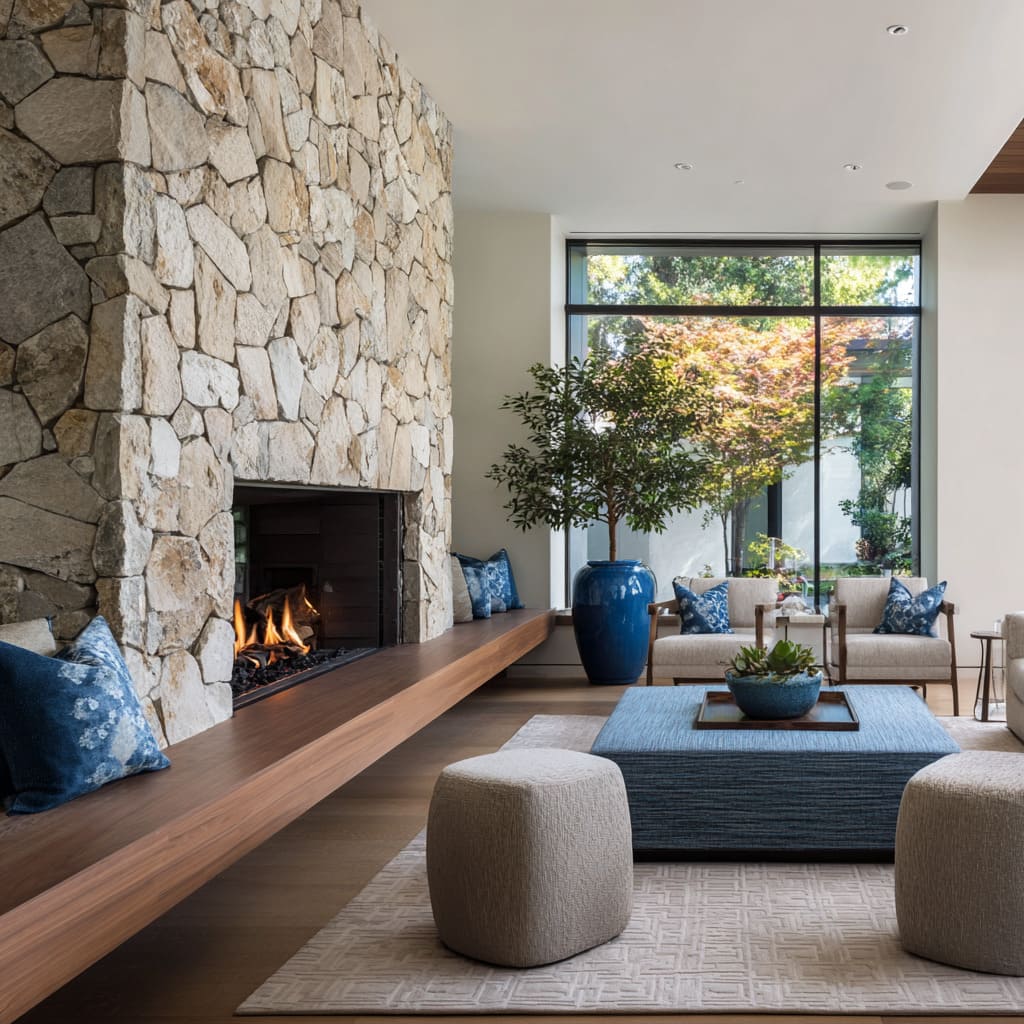
A takeaway: modern stone doesn’t always look modern because it is smooth or minimal. It looks modern because the room assigns it a clear identity—landform or object—then supports that identity consistently.
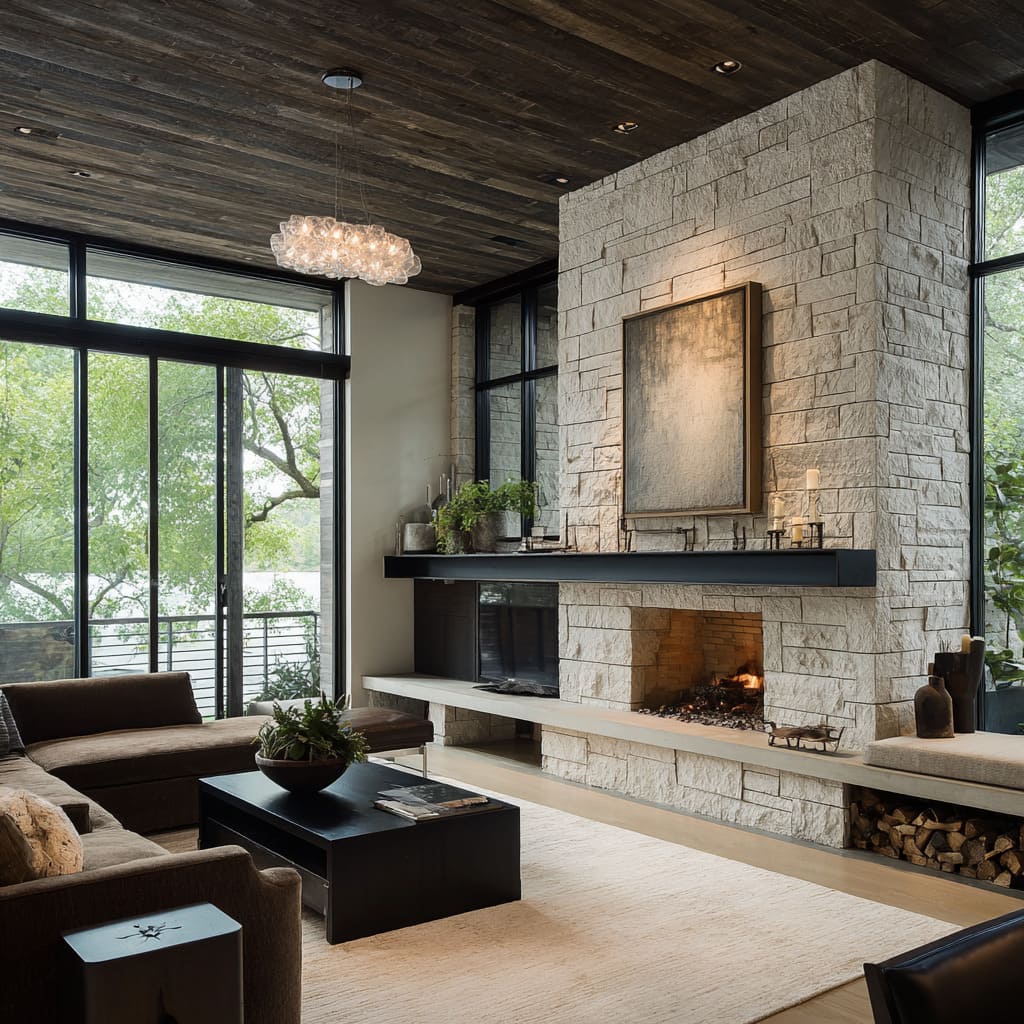
The fire as a “thin line of life” that edits heavy materials
Stone is still; fire is movement. The design concepts can treat the presence of a flame like a design element with its own job, not simply a cozy bonus.
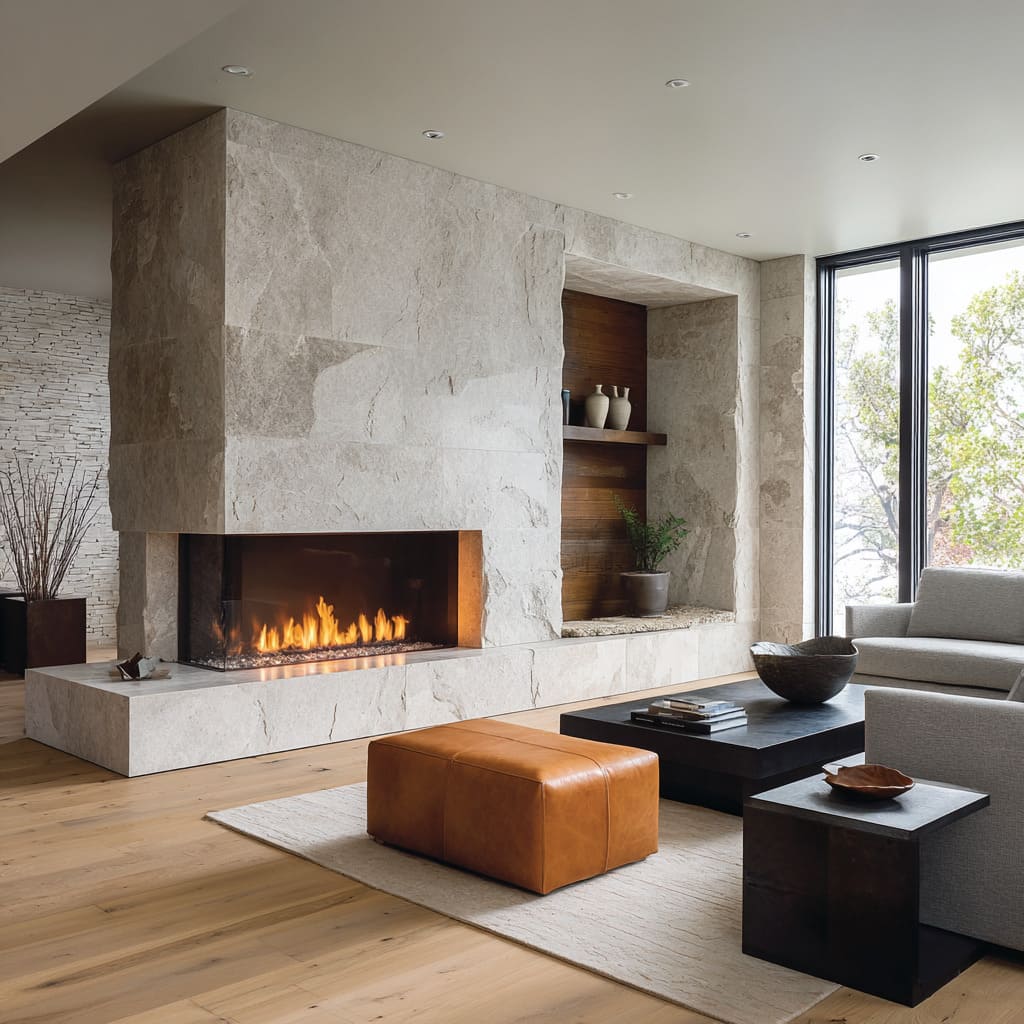
There are two recurring “fire behaviors” that make rock feel elevated:.
- The seam: a long, low flame reads as a glowing underline. This turns the fireplace into a calm graphic gesture rather than a traditional focal scene. Because the line is thin and controlled, the stone can be large without feeling theatrical.
- The incision: when a firebox looks like it has been cut cleanly into a massive stone volume, the contrast becomes the story—warmth contained inside weight. The flame feels precious because it is framed by mass.
This solves a common visual gap: people often think the stone is what creates drama, but the real drama comes from the relationship between mass and movement. A rock fireplace becomes “high-end calm” when the flame is treated like a deliberate line, not a random burst of brightness.
Texture management: how rough stone stays calm next to soft furnishings
Stone texture can easily overpower textiles because stone carries micro-shadows everywhere. The interior designs that feel composed don’t try to out-texture the stone.
Instead, they translate it.
This is the quiet logic behind decorating a rock fireplace in a way that looks curated rather than cluttered:
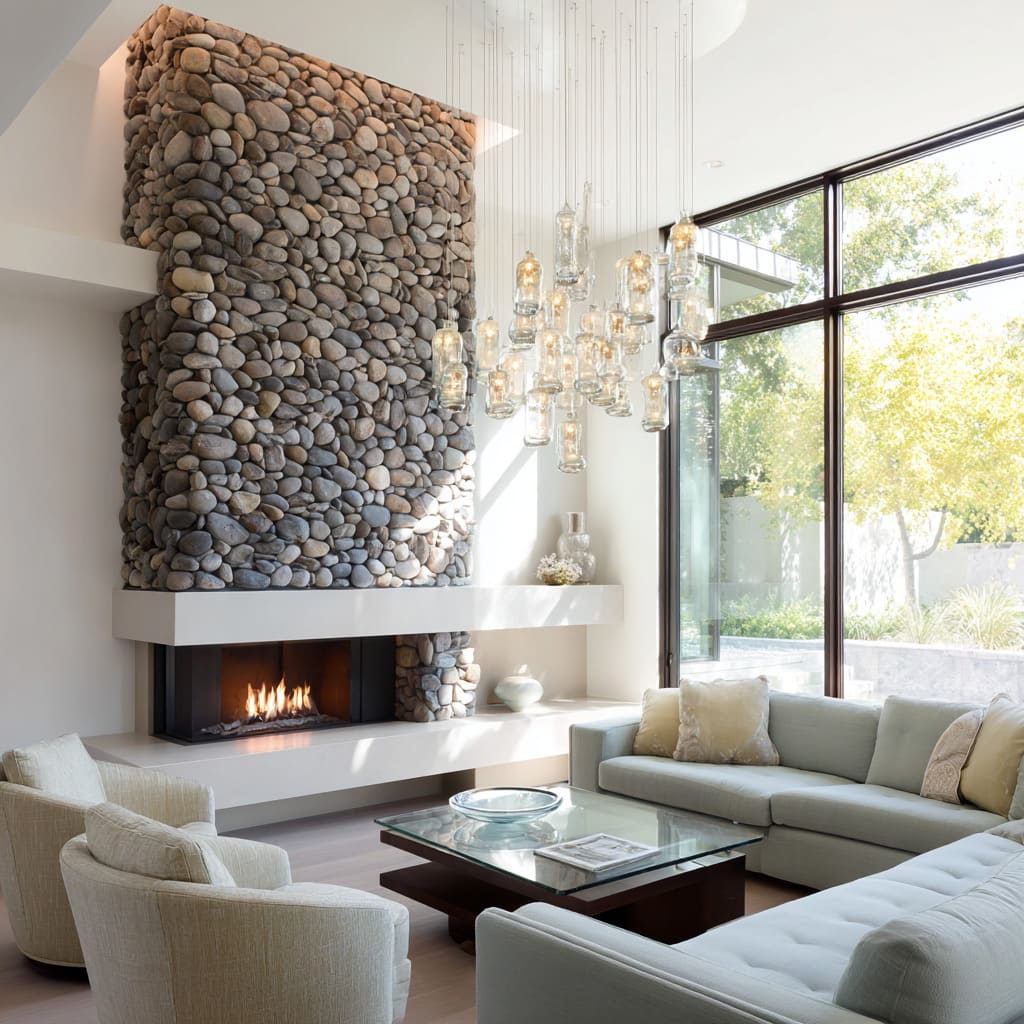
- Softness is kept large-scale. Instead of many small patterns, the upholstery stays broad and calm—plush cushions, matte fabrics, minimal prints. Large softness reads as a “cloud field” next to the stone’s micro-relief.
- Texture is grouped, not scattered. One chunky knit pillow, one boucle chair, one thick rug—each texture appears as a single block. That keeps the room from looking busy while still feeling rich.
- The center of the room often disappears. Glass tables or visually light coffee tables reduce competing mass. When the center is quieter, the rock gets focus without making the room feel heavy.
A useful way to frame it: stone is high-frequency texture. The rest of the design works best as low-frequency texture.
That contrast is what makes the stone feel intentional.
Shape echo: Repeating the stone’s geometry in unexpected places
One of the design patterns is what could be called shape echo—repeating the idea of the stone’s shape elsewhere so the fireplace doesn’t look like it landed in the design from another universe.
- Rounded river stones often pair beautifully with clusters of small glass pendants or globe-like lights. The stone is matte and heavy; the glass is shiny and weightless. The shared roundness creates harmony, while the material difference creates sophistication.
- Linear stacked stone often pairs with ribbed wood consoles, long low benches, or thin-edged tables. The stone’s stratified lines get repeated in furniture rhythm, so the room feels “edited” rather than purely natural.
This is where many fireplace rock designs miss the mark: people focus on matching colors, but the more powerful match is shape language. When the room echoes the stone’s geometry—round with round, linear with linear—the fireplace feels integrated even if everything else is very minimal.
“Edge discipline”: the quiet role of black lines, frames, and recess shadows
Another non-obvious pattern is edge discipline—using a few crisp boundaries to keep soft palettes from drifting into blandness.
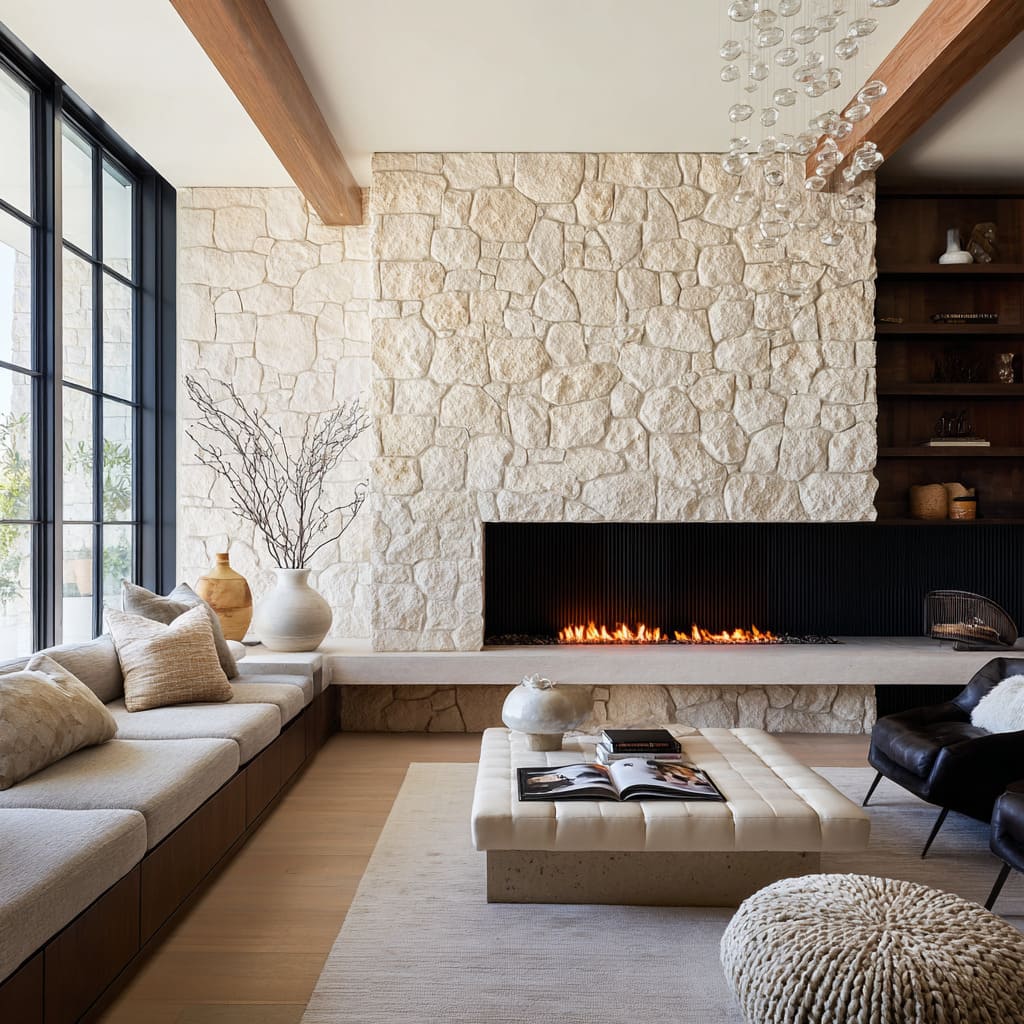
The black or very dark elements are not everywhere. They appear in concentrated, strategic places:.
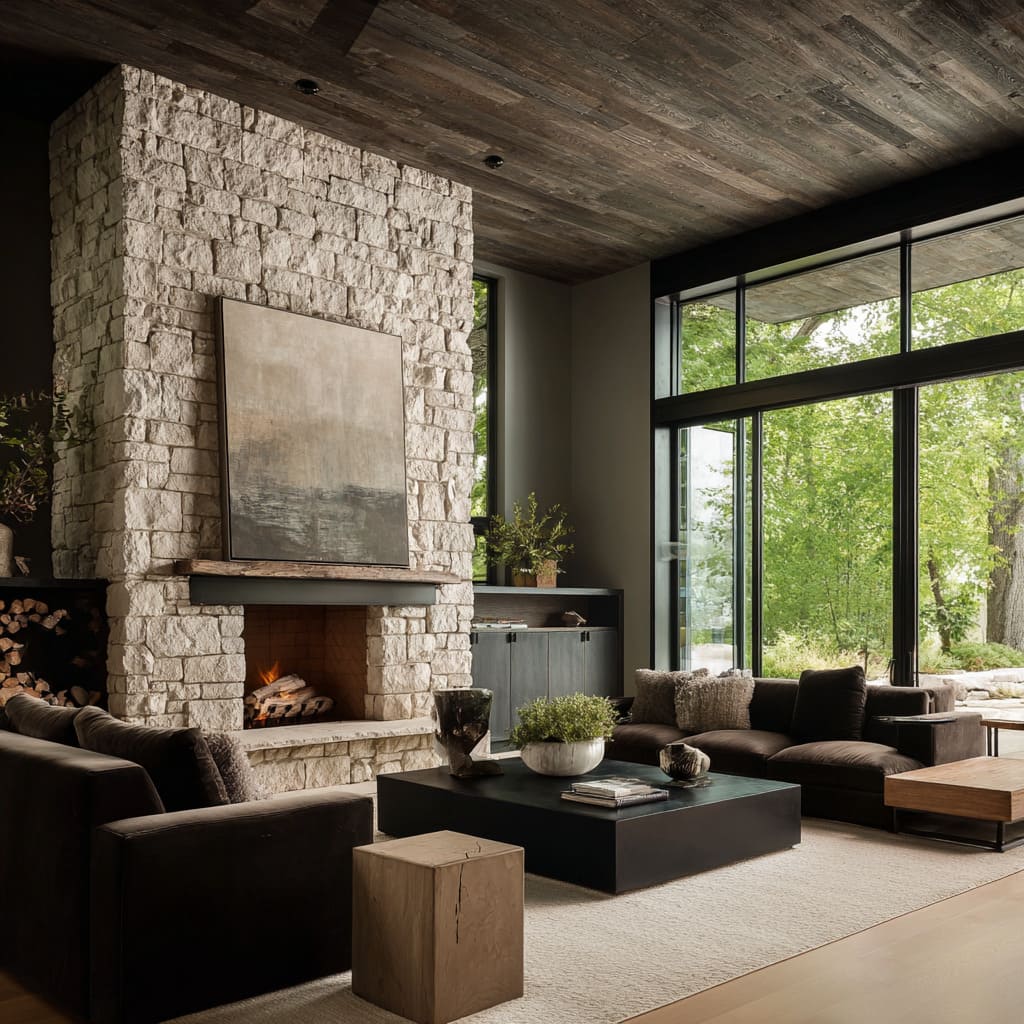
- thin window frames that act like ink lines
- a dark firebox interior that gives the flame contrast
- a single black coffee table or sculptural accent that anchors the room’s value range
Because the stone is textured, it already produces lots of soft shadow. The interior design benefits from a couple of hard edges that feel intentional.
This is how pale stone avoids looking washed out: the room supplies sharp punctuation without turning into a high-contrast theme.
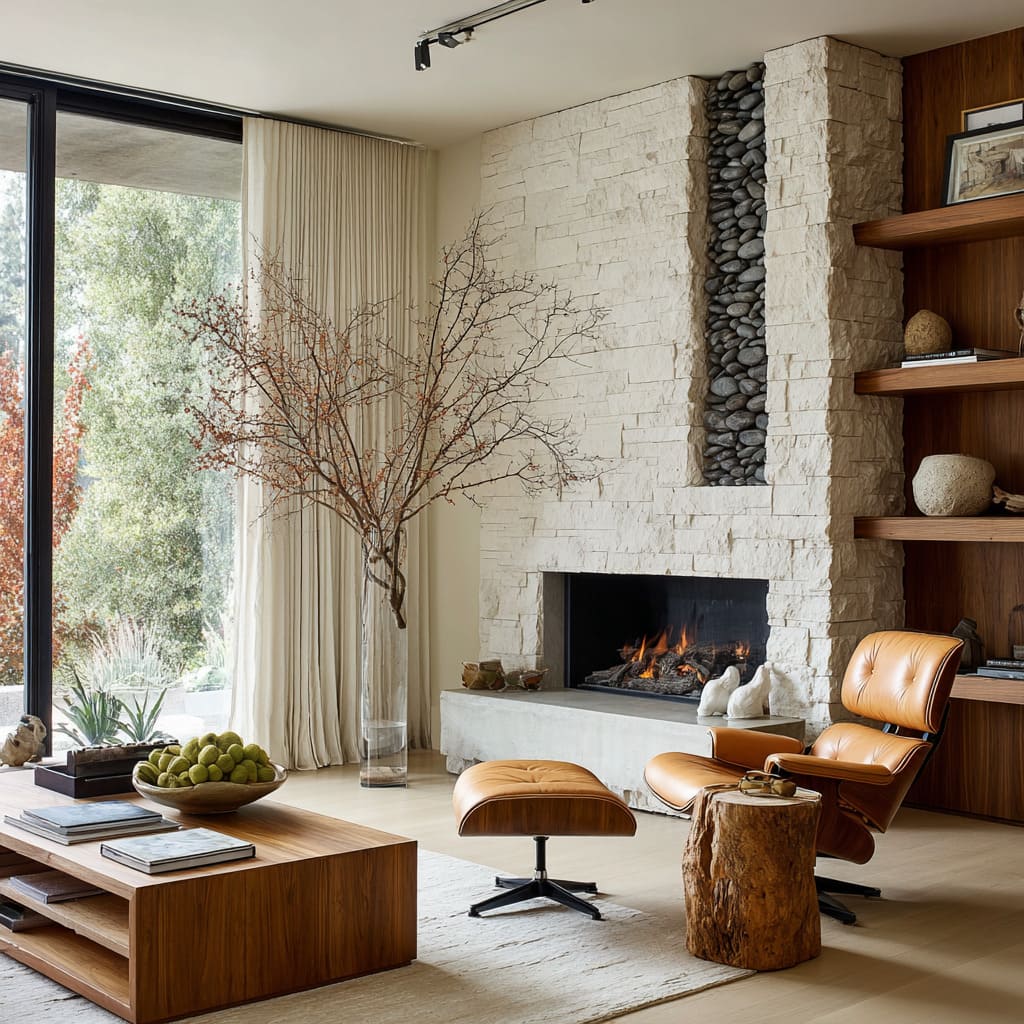
The “pause niche”: warm recesses that make pale stone feel human
One of the most sophisticated moves is the recessed niche beside or within the fireplace volume. It works because it creates a controlled moment of warmth and depth without adding clutter.
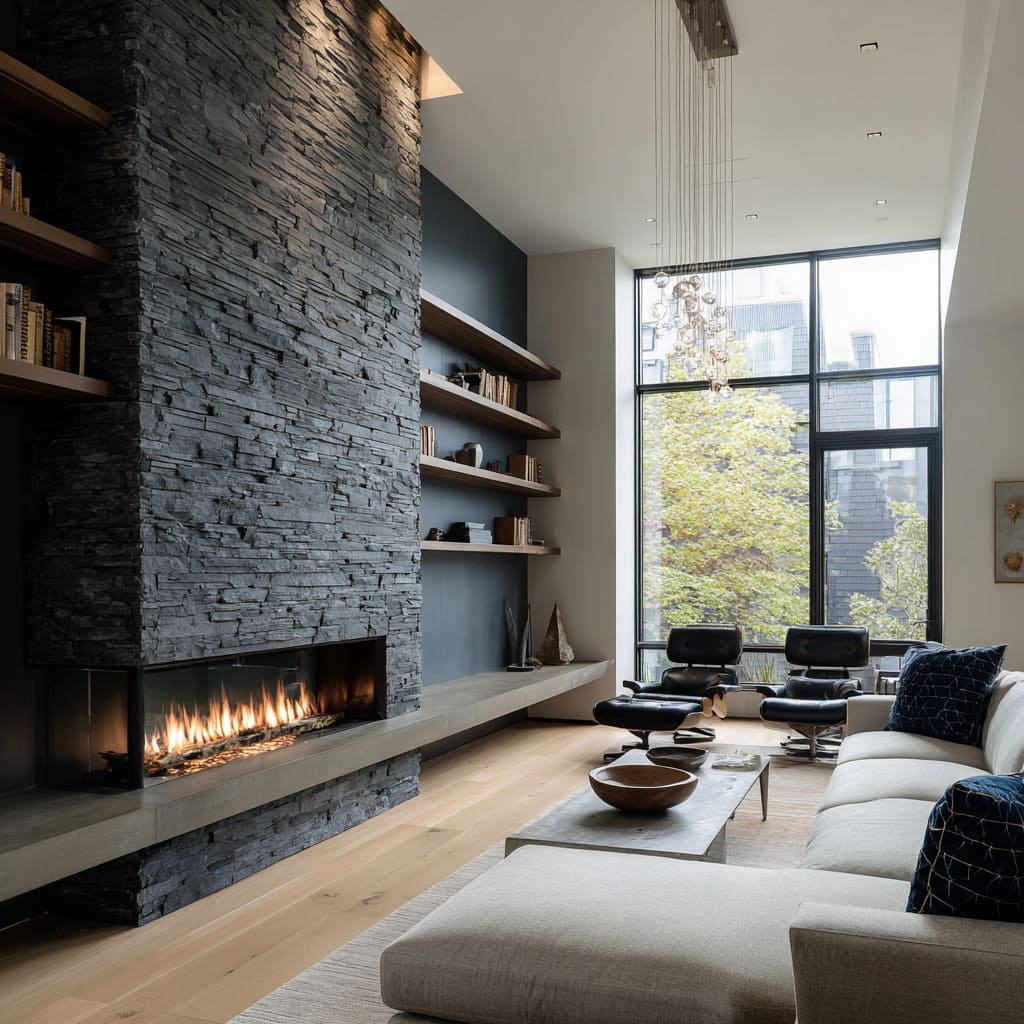
A niche behaves like a visual breath:.
- It interrupts the stone mass with a negative void.
- It adds a warm back panel (often wood-toned), which changes the emotional temperature of the entire wall.
- It provides a stage for only a few objects—ceramics, a plant, one sculptural piece—so styling feels deliberate.
This is a major gap in many stone fireplace rooms: people try to add warmth with many accessories. The niche approach adds warmth through composition instead of quantity.
It turns the fireplace wall into an arrangement: solid, void, solid; cool, warm, cool; heavy, light, heavy.
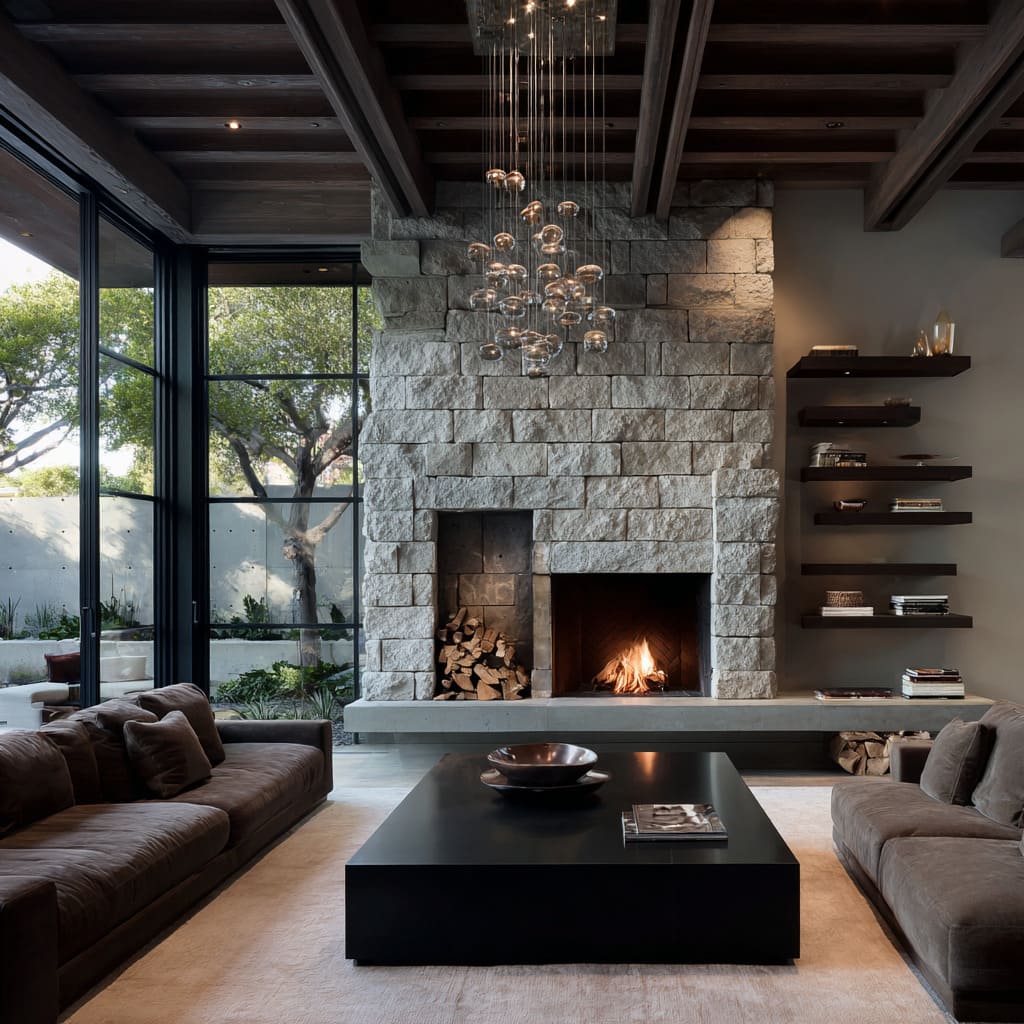
Styling as punctuation: objects that don’t compete with rock
Stone already contains visual information. They can treat decor as punctuation marks, not paragraphs.
A styling strategy is restraint with purpose:.
- One tall branch arrangement to echo stone’s irregularity in a lighter, airy form.
- One low bowl or tray to keep the coffee table calm and grounded.
- Ceramics with matte finishes so nothing glossy fights the fire.
- Very limited color accents, usually pulled from the environment (greens outside, warm flame tones, muted blues) so the palette feels natural.
The bigger idea: when rock is the headline, decor should read like captioning—supportive and placed with intention, not trying to become a second focal story.
The “gallery room” effect: stone as art
Interior design can feel like galleries—high ceilings, big glass, pale walls, minimal objects—yet they still feel warm. That warmth comes from a controlled mix:.
- One primal element: fire
- One natural mass: rock
- One soft field: textiles
- One clean shell: quiet walls and ceilings
This combination creates a room that feels curated without feeling cold. The rock becomes an art object because it has space around it, and the fire becomes the living element because it has clear framing.
A subtle point: a gallery-like room design does not require emptiness. It requires hierarchy.
When the fireplace wall is allowed to be the most complex surface, the rest of the room can stay simpler and still feel complete.
Mood control: how stone can feel serene, dramatic, or intimate
What changes the mood is not the stone category; it is the balance of scale, light, and softness around it.
- Serene: pale stone, long horizontal fire line, minimal decor, soft matte textiles, lots of daylight.
- Dramatic: tall stone mass, concentrated warm lighting (especially clustered pendants), strong black framing lines, fewer competing objects.
- Intimate: a lower firebox that sits near seated eye level, deeper upholstery, warmer wood accents, and tighter grouping of furniture.
The key insight is that stone is emotionally flexible. It can read calm or intense depending on how the room edits contrast and how the fire is presented—seam or incision.
Closing synthesis: the quiet rules that make rock feel designed
Taken together, the rock fireplace interior designs can follow a set of quiet rules:.
- Stone is treated as gravity, and the room supplies counterweight through negative space.
- A horizon line edits the stone’s scale and gives the eye a resting place.
- Fire is presented as a deliberate line of movement, not a random glow.
- Texture is translated through large, calm softness and minimal pattern noise.
- Shape language is repeated so organic rock feels integrated.
- A few crisp edges and deep recesses add definition without busyness.
These are the underlying moves that keep stone from feeling “too rustic” or “too heavy,” while preserving what makes it desirable in the first place: depth, shadow, and a sense of permanence that the rest of the room can orbit.
Disclaimer: This article explores rock fireplace design from a visual styling point of view only. It focuses on look, layout, and decor mood, and does not cover any construction, installation, safety requirements, or product selection.