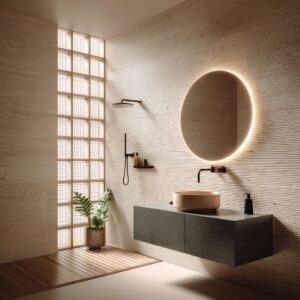
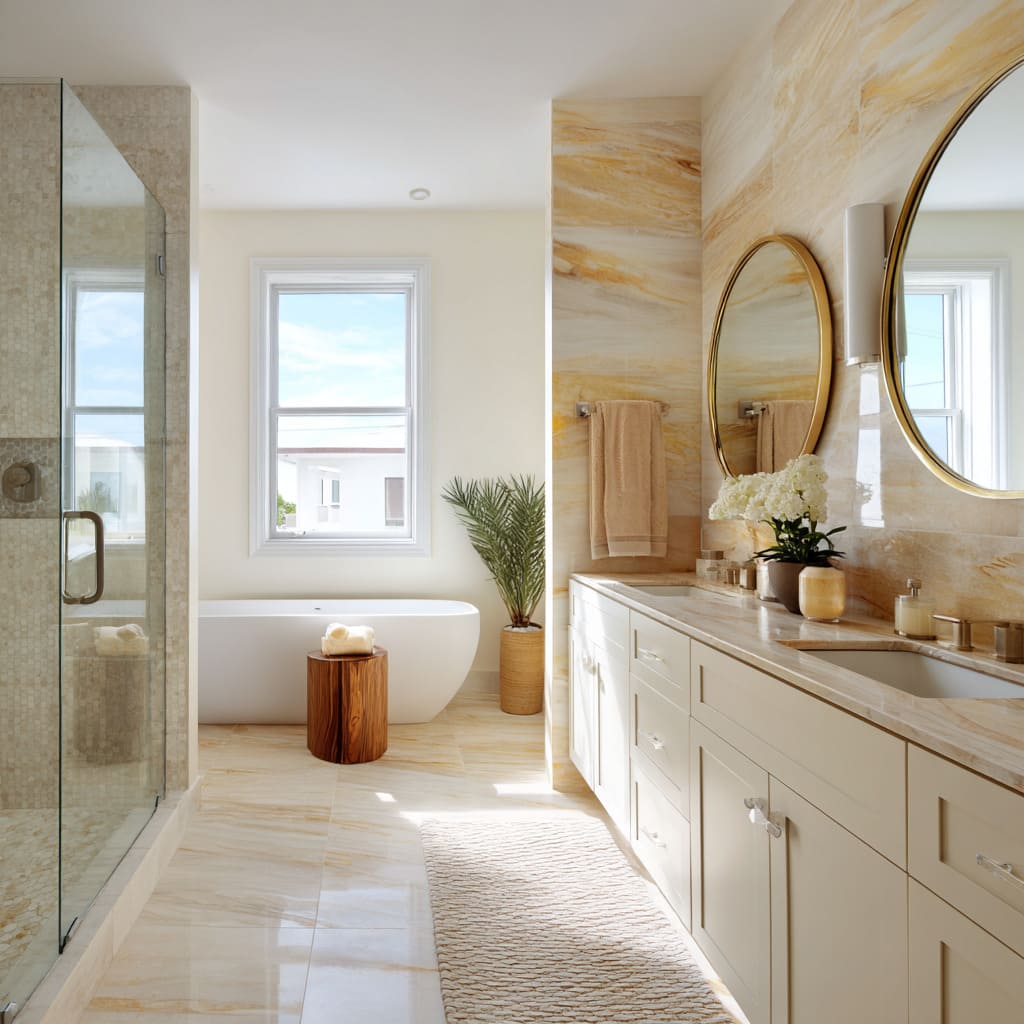
Sand in modern bathroom designs exists as a complete spectrum rather than a single hue, and each point on that spectrum supports a distinct emotional register. Cool, driftwood-leaning beige creates a calm, almost shoreline clarity, while warmer wheat, sun-tinted oat, and faint clay-blush variations suggest comfort, daylight, or soft evening warmth.
This range becomes especially powerful in spaces where the floor, walls, shower volume, and vanity joinery speak the same color language but shift subtly in undertone. When a design is wrapped in these gradations, whether through plaster walls, stone-look porcelain, or painted millwork, the space behaves like a continuous envelope with changing light pockets.
In many modern homes, the mood of a sand color bathroom design comes not from the amount of sand tone used, but from how the undertones relate to wood species, metal finishes, greenery, and the natural light.
Understanding Sand as Five “Design Landscapes”
Sand can play dramatically different roles depending on its temperature and movement. These roles emerge as recognizable “landscapes” in contemporary design:.
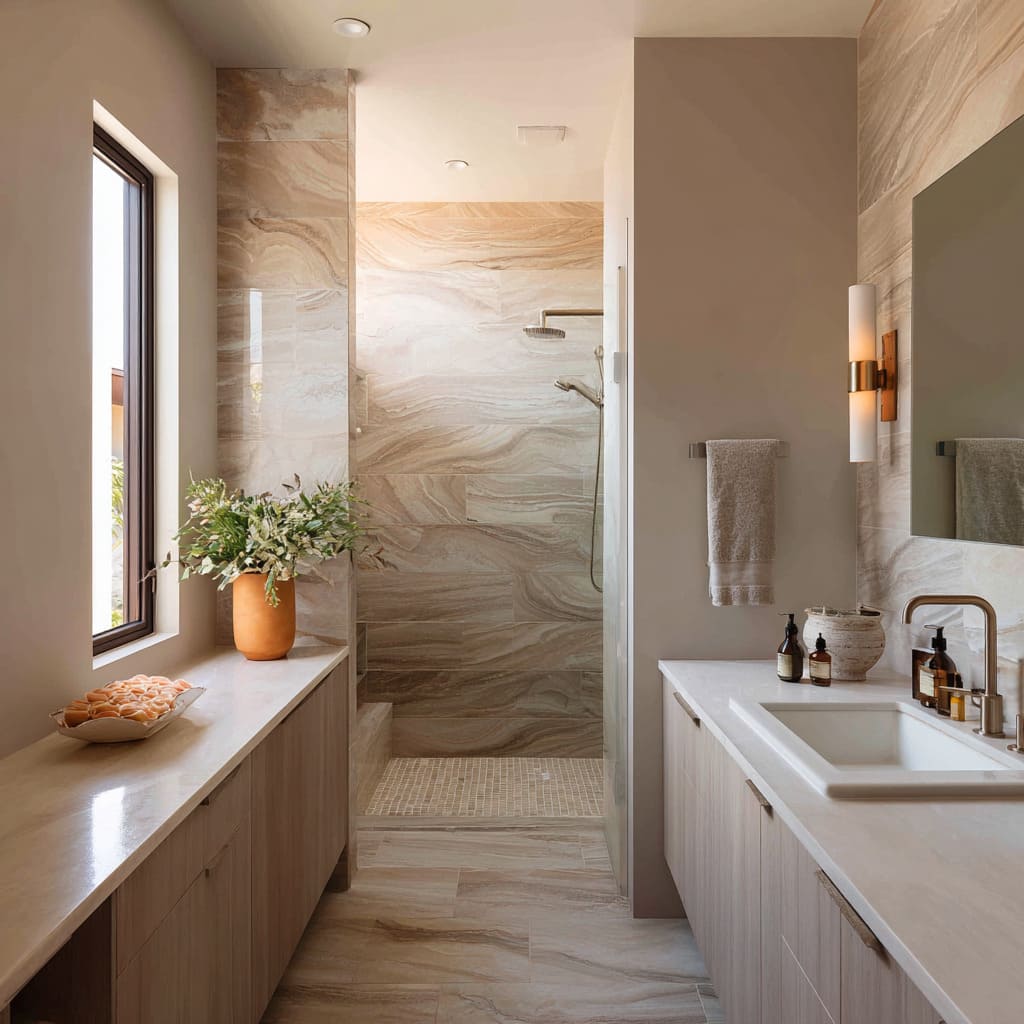
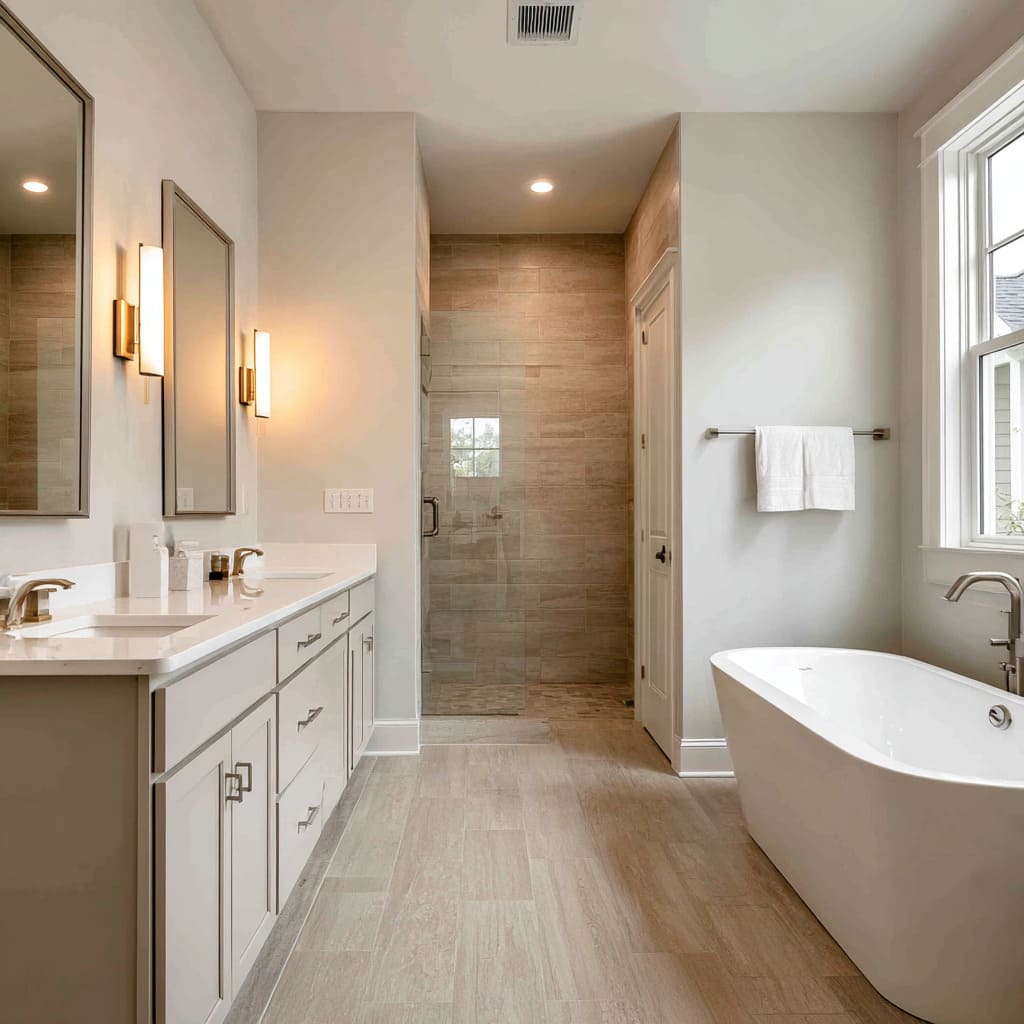
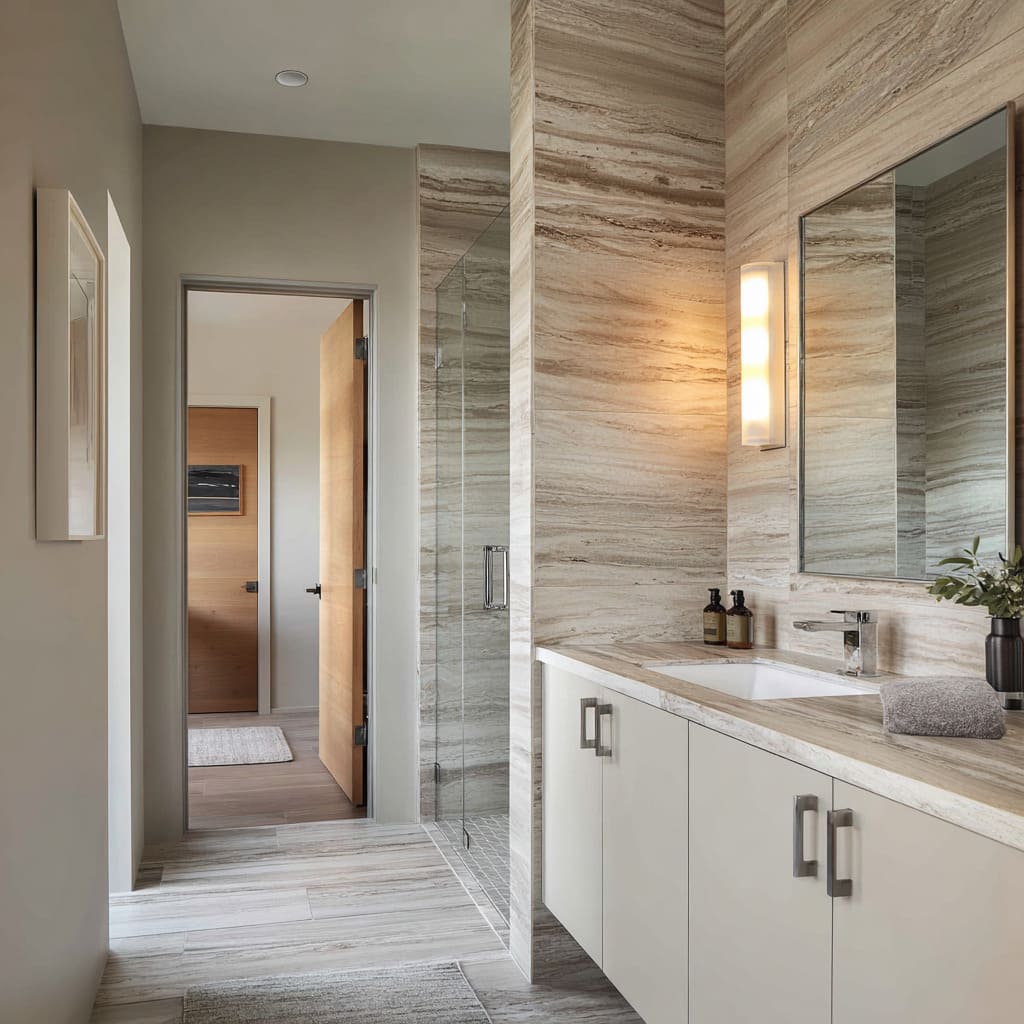
- Shore Sand with cool taupe striations suggests long horizontals and subtle movement; perfect for elongated rooms that benefit from a directional visual flow.
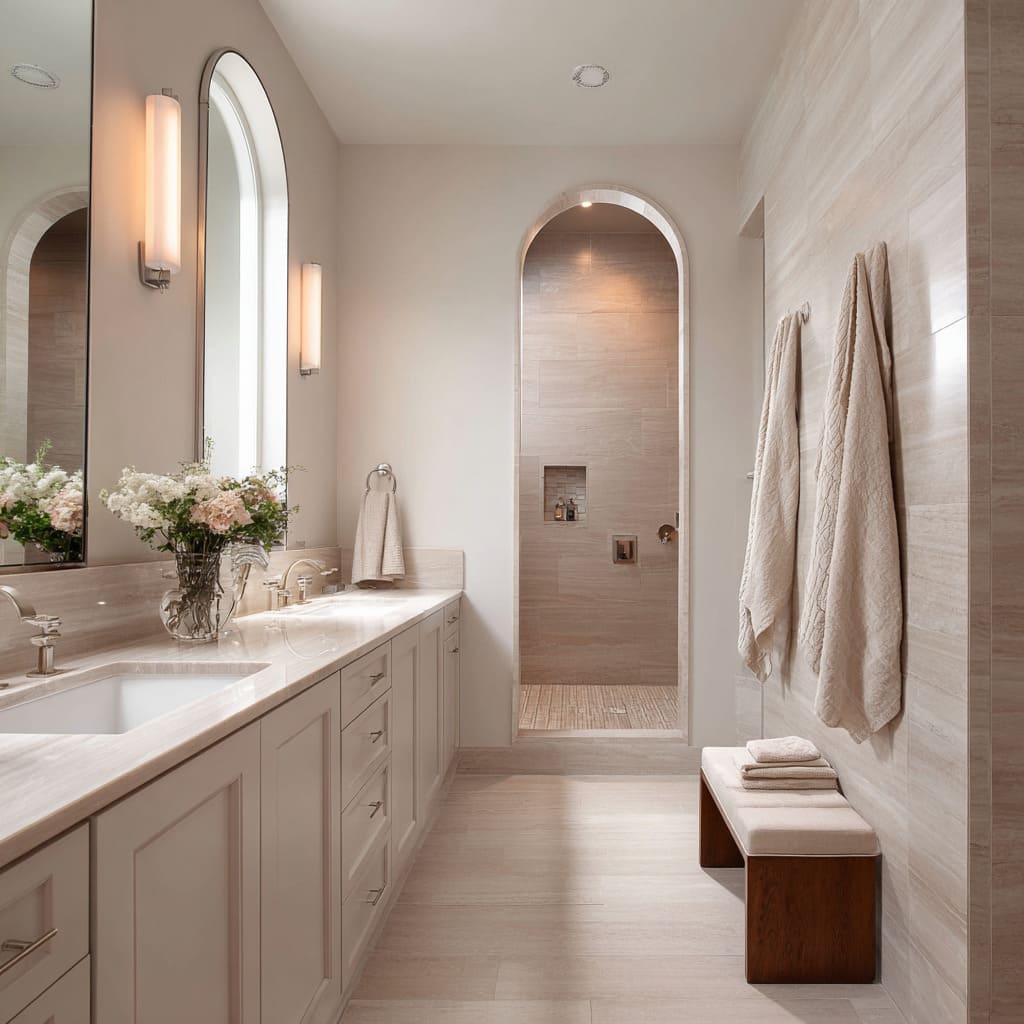
- Cream Cloud Sand, built from soft ivory and warm greige, wraps a bathroom in cloud-like calm and blends traditional cabinetry into the wall plane.
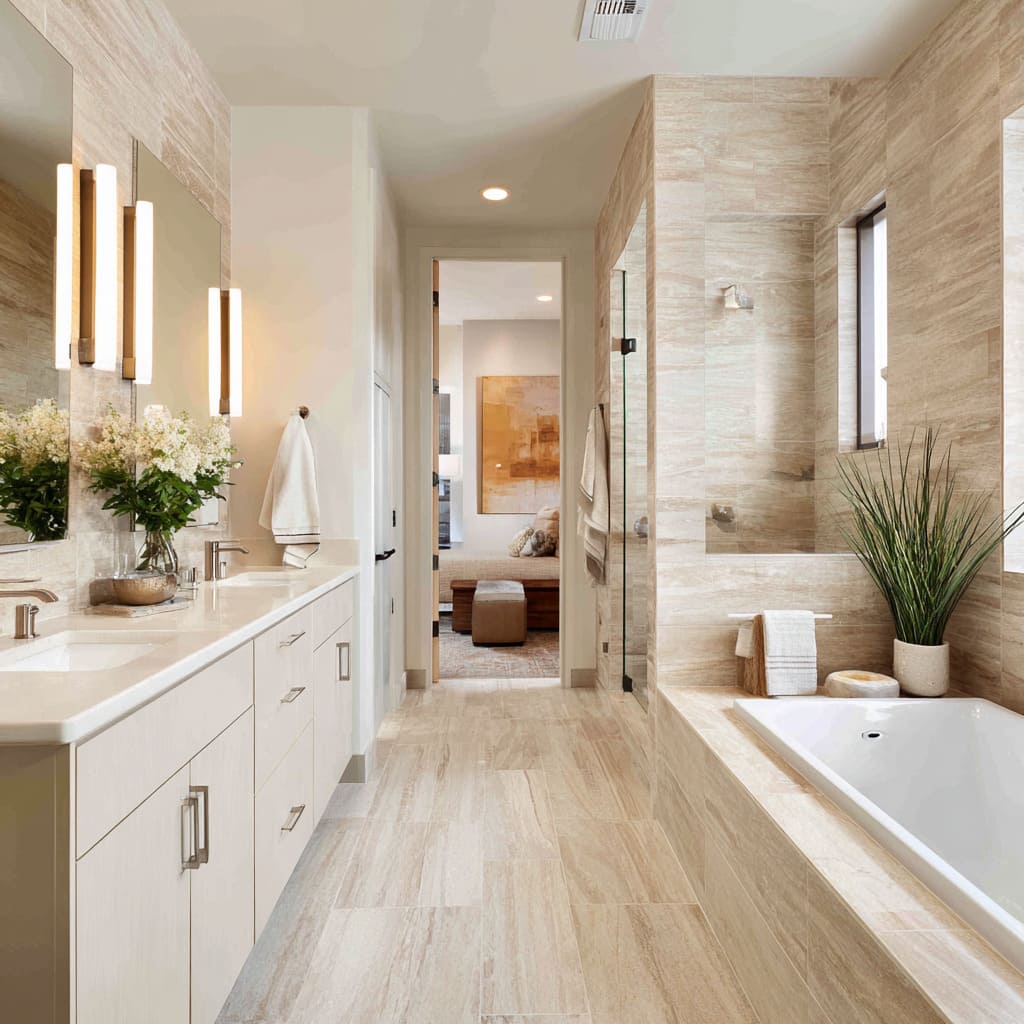
- Dune-Washed Sand, luminous and honey-veined, interacts beautifully with brushed brass, oak, and creamy stone, creating a warm, hotel-suite quality.
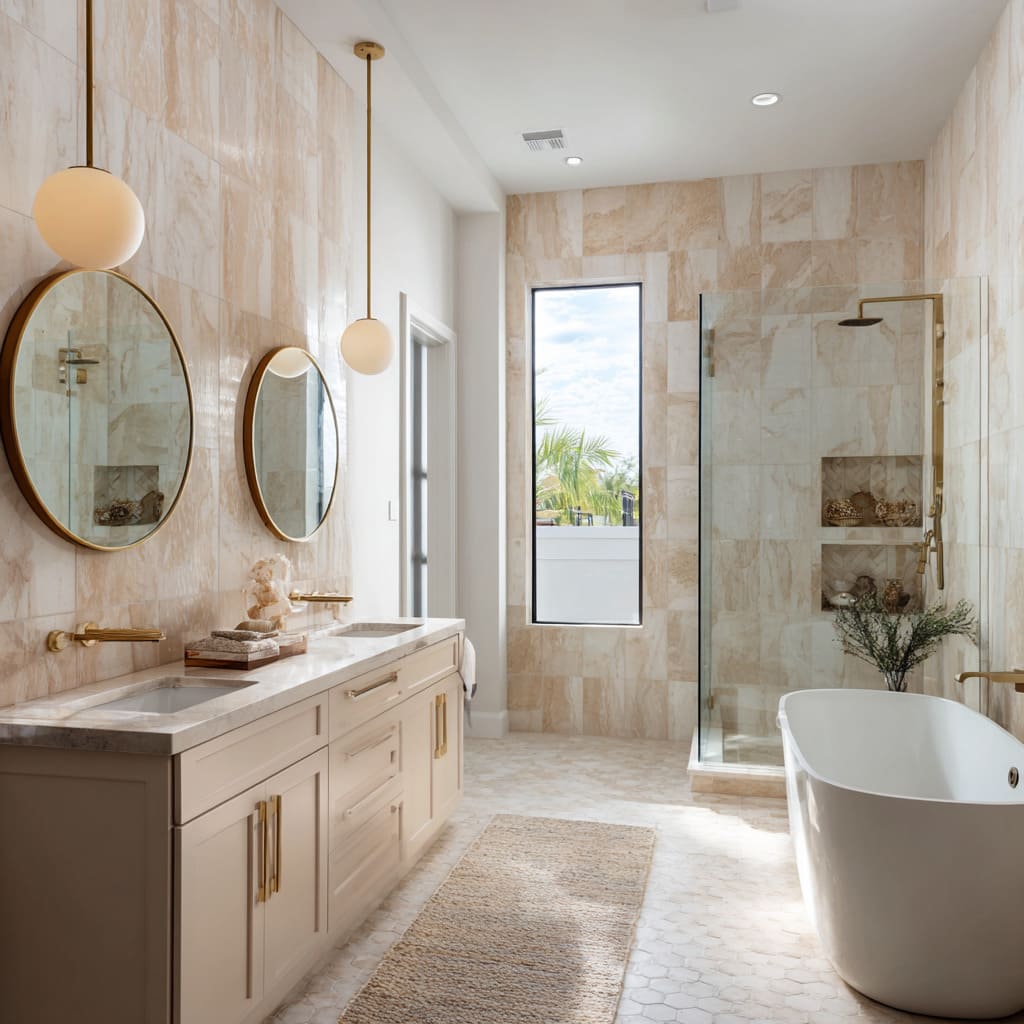
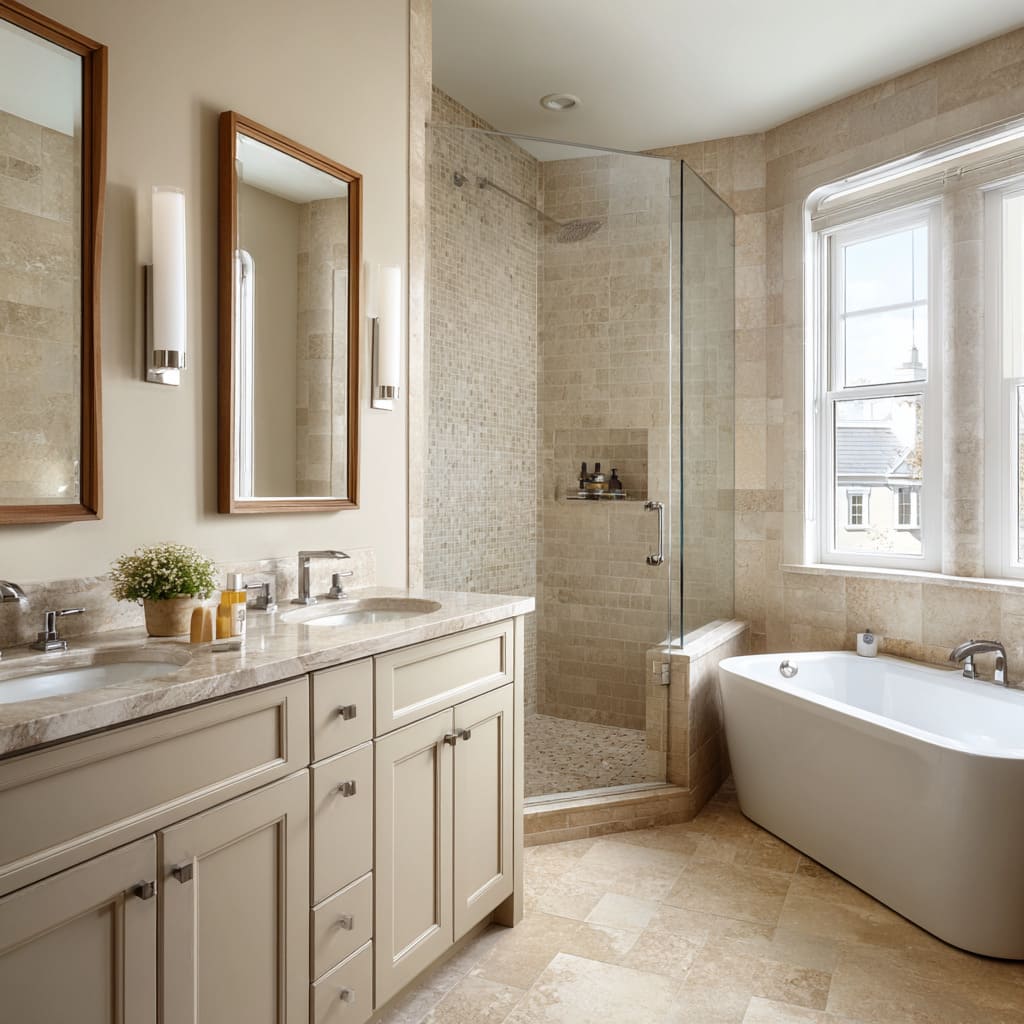
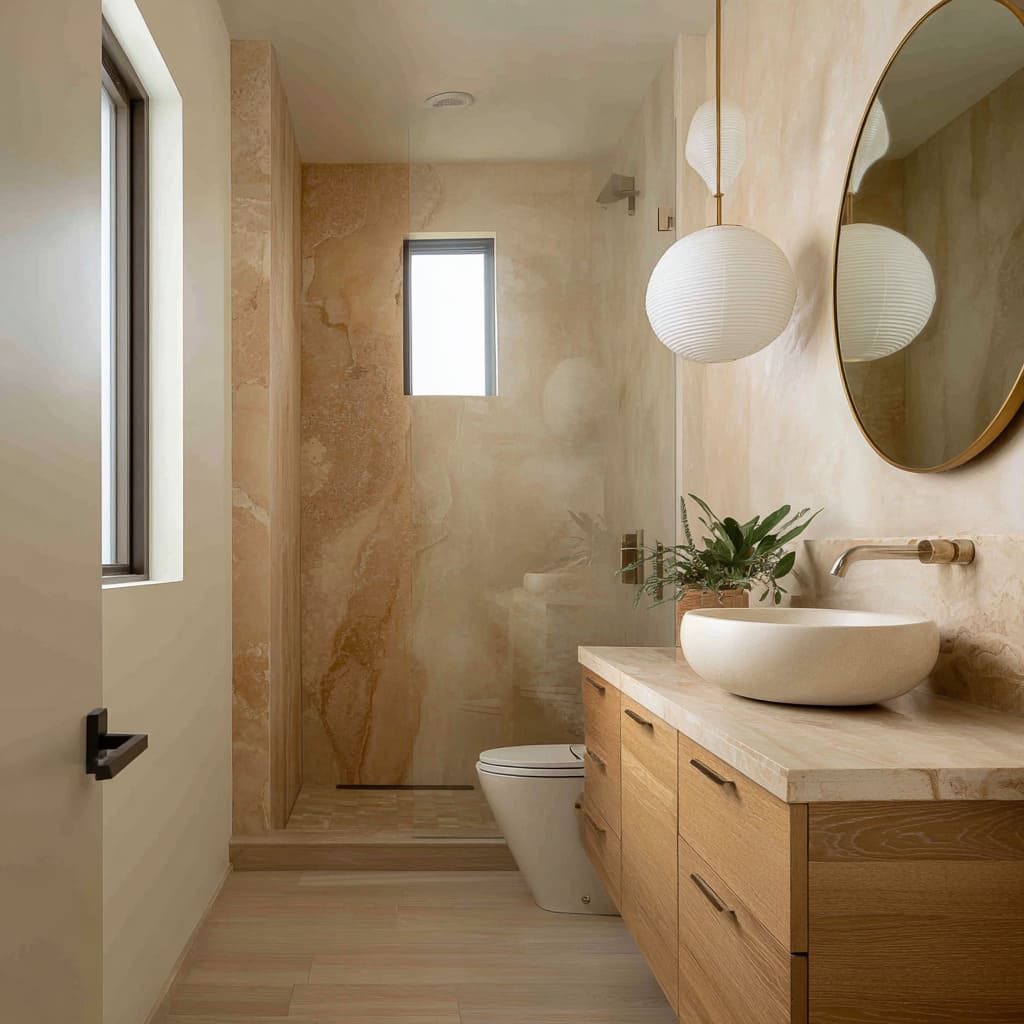
- Blush-Tinted Sand, edged with faint peach or clay, becomes flattering and soft, especially when paired with globe lighting or rounded tub forms.
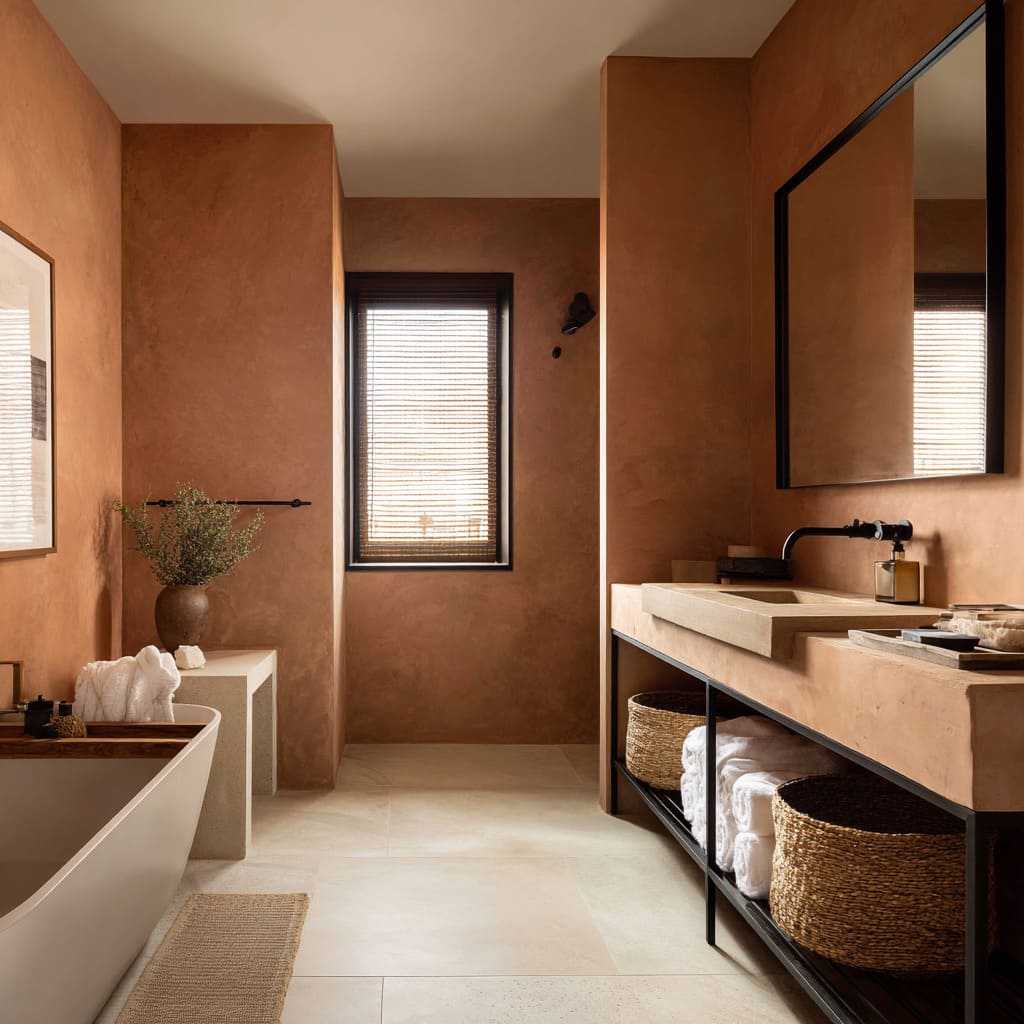
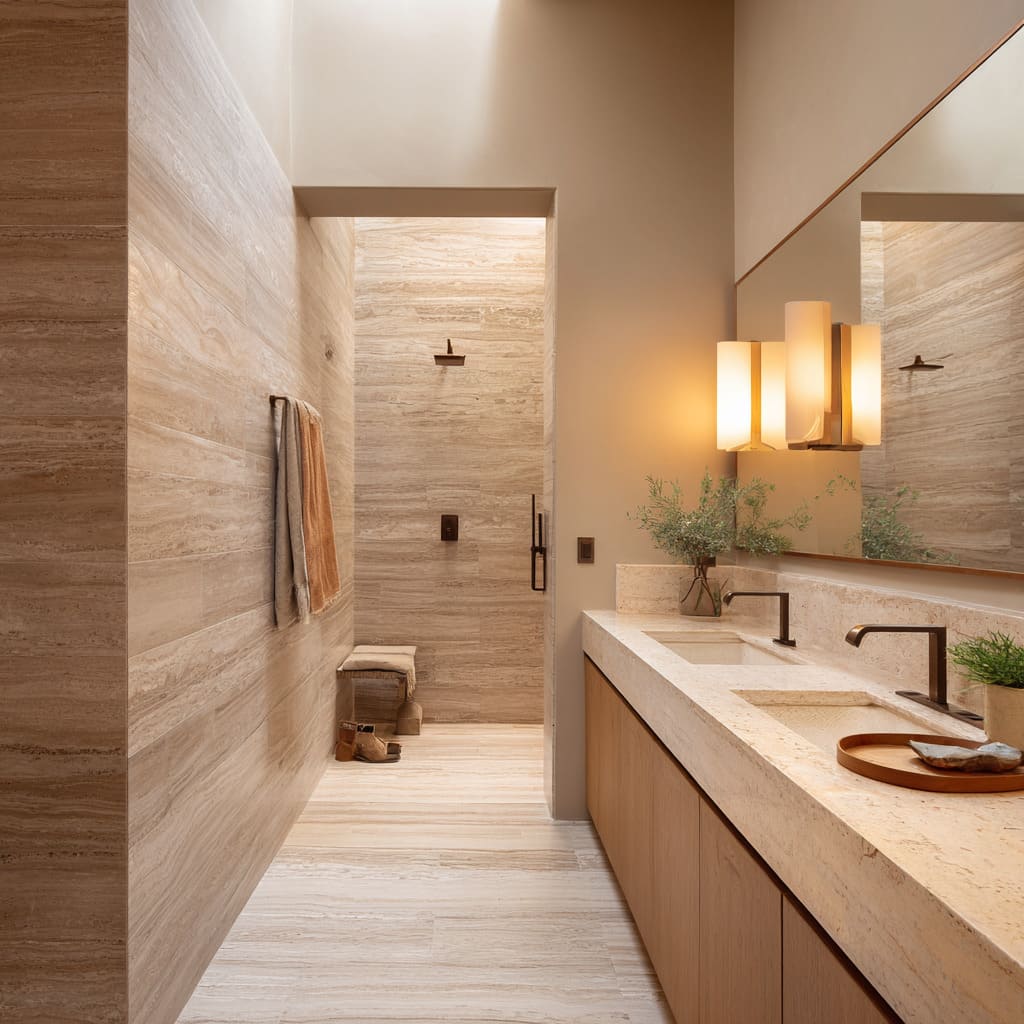
- Desert Silt Sand, deeper and matte, gives weight and texture to plaster walls and pairs impressively with dark bronze or black detailing.
Each of these approaches highlights how sand bathroom ideas can shift mood entirely through temperature, pattern, and the natural associations each tone evokes.
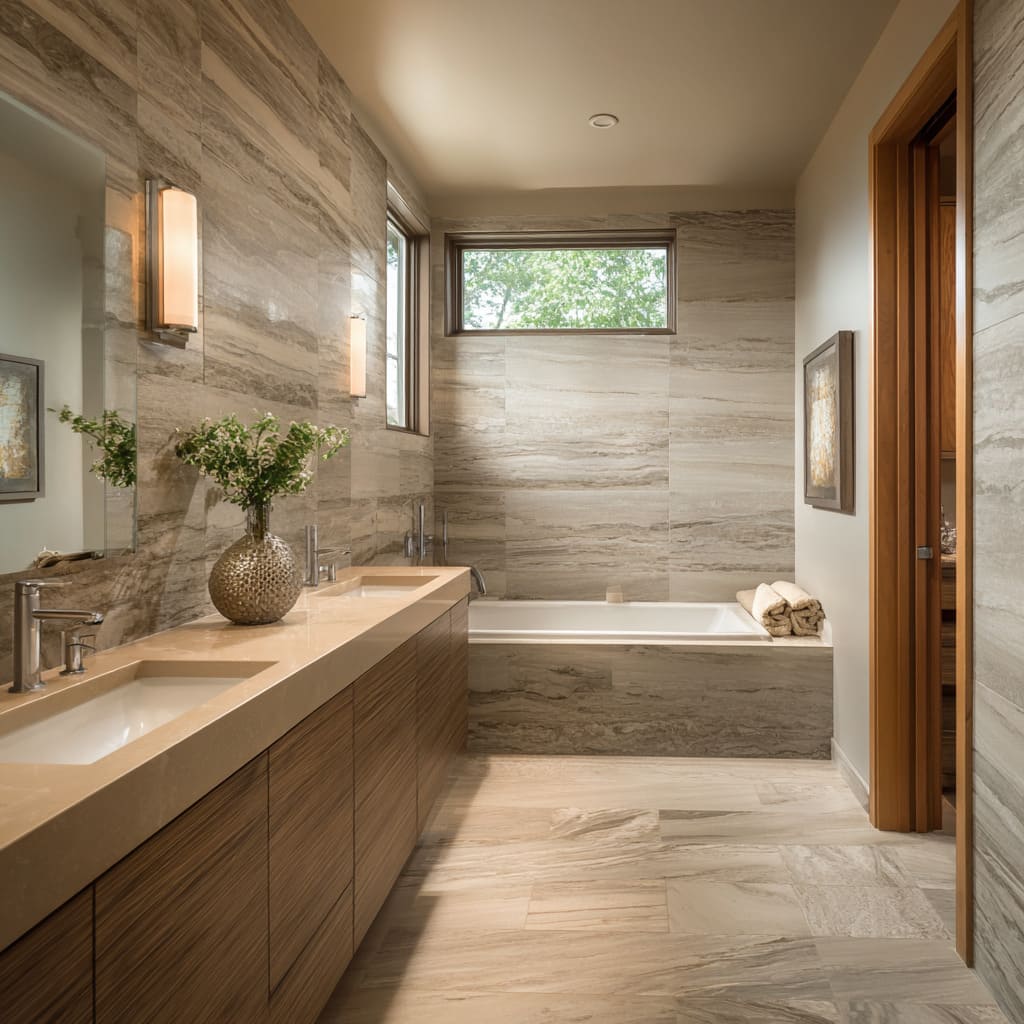
Directionality: How Movement in Sand Patterns Shapes the Design
One of the least-discussed but most powerful aspects of sand bathroom designs is how directional grain affects spatial experience. Many large-format tiles feature horizontal striations resembling pressed sediment or wind-worn stone layers, and this horizontal flow lengthens narrow rooms and visually calms tight footprints.
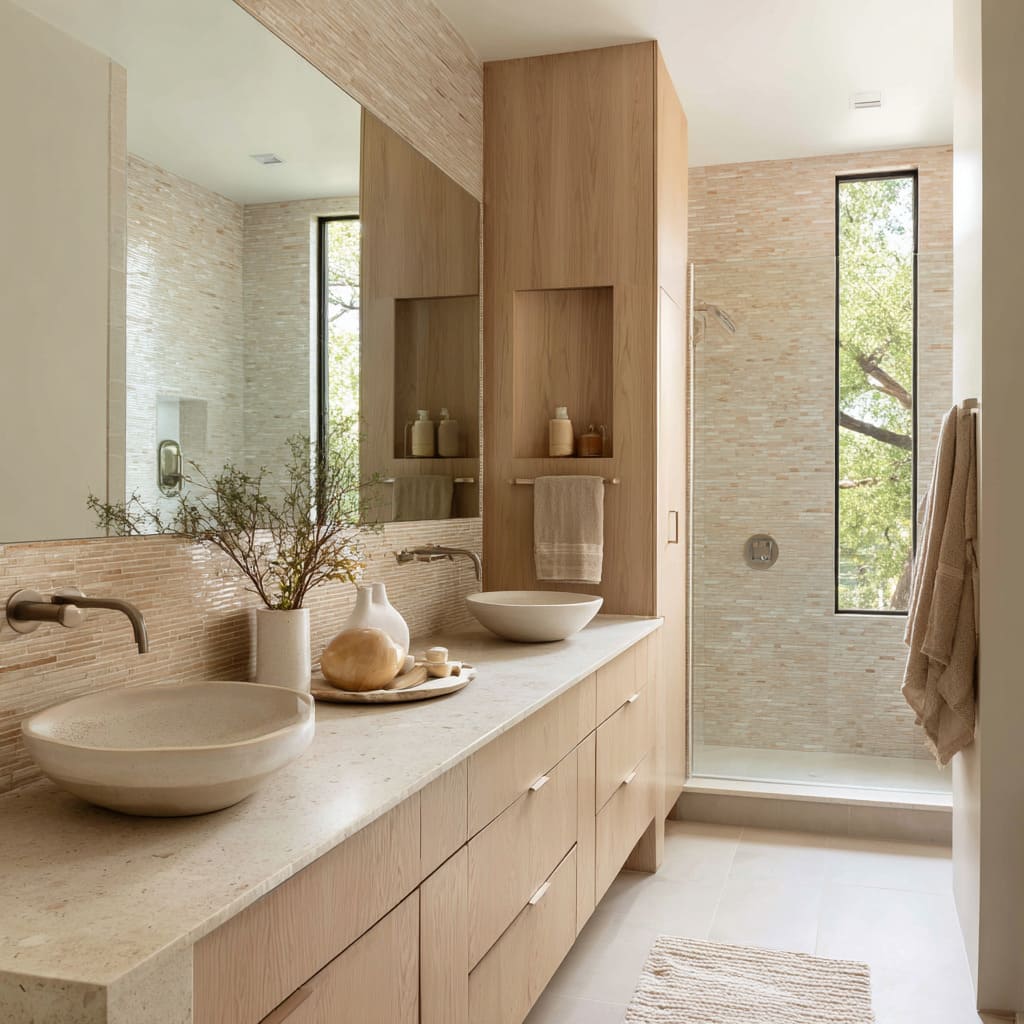
Direction is not limited to tile; wood grain also participates. A vanity with horizontal timber lines reinforces the soft run of stone veining, while vertical grain in a storage tower or mirror frame introduces a counter-movement that keeps the eye engaged.
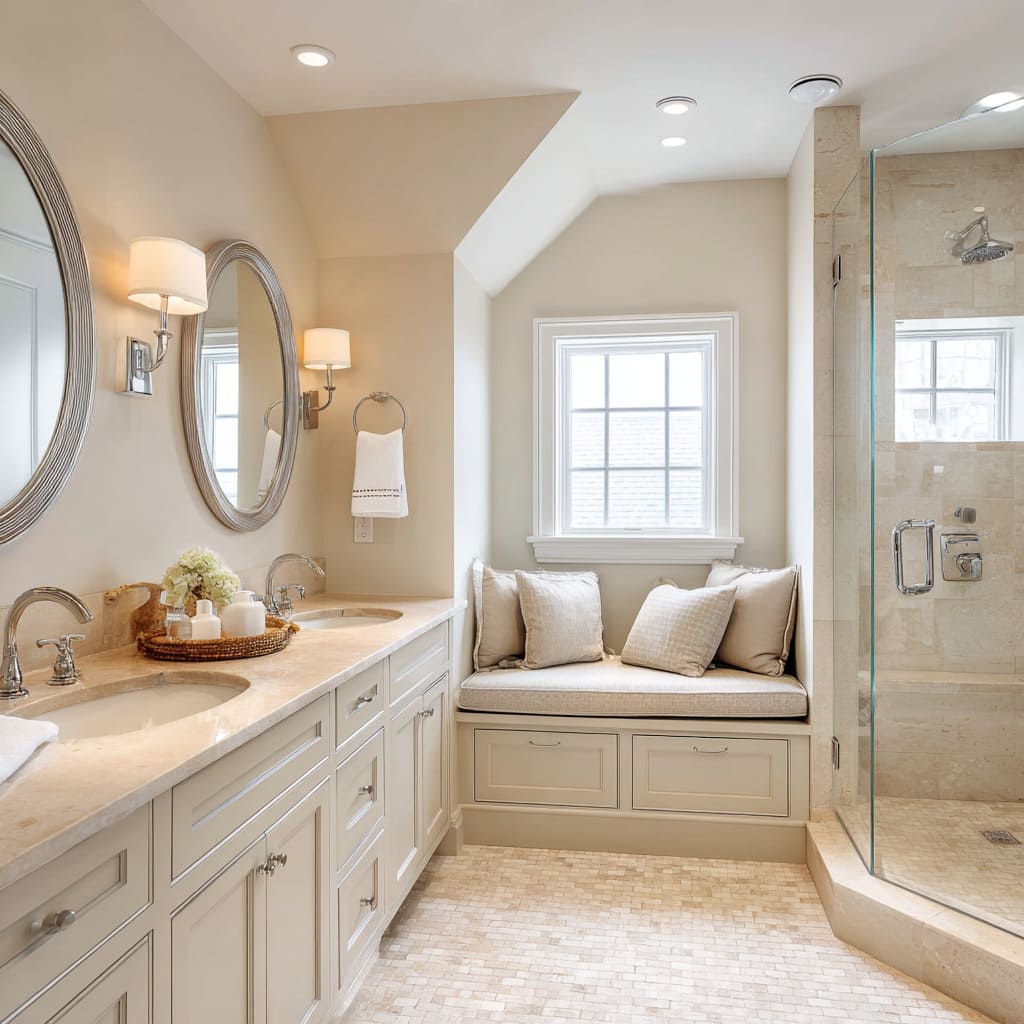
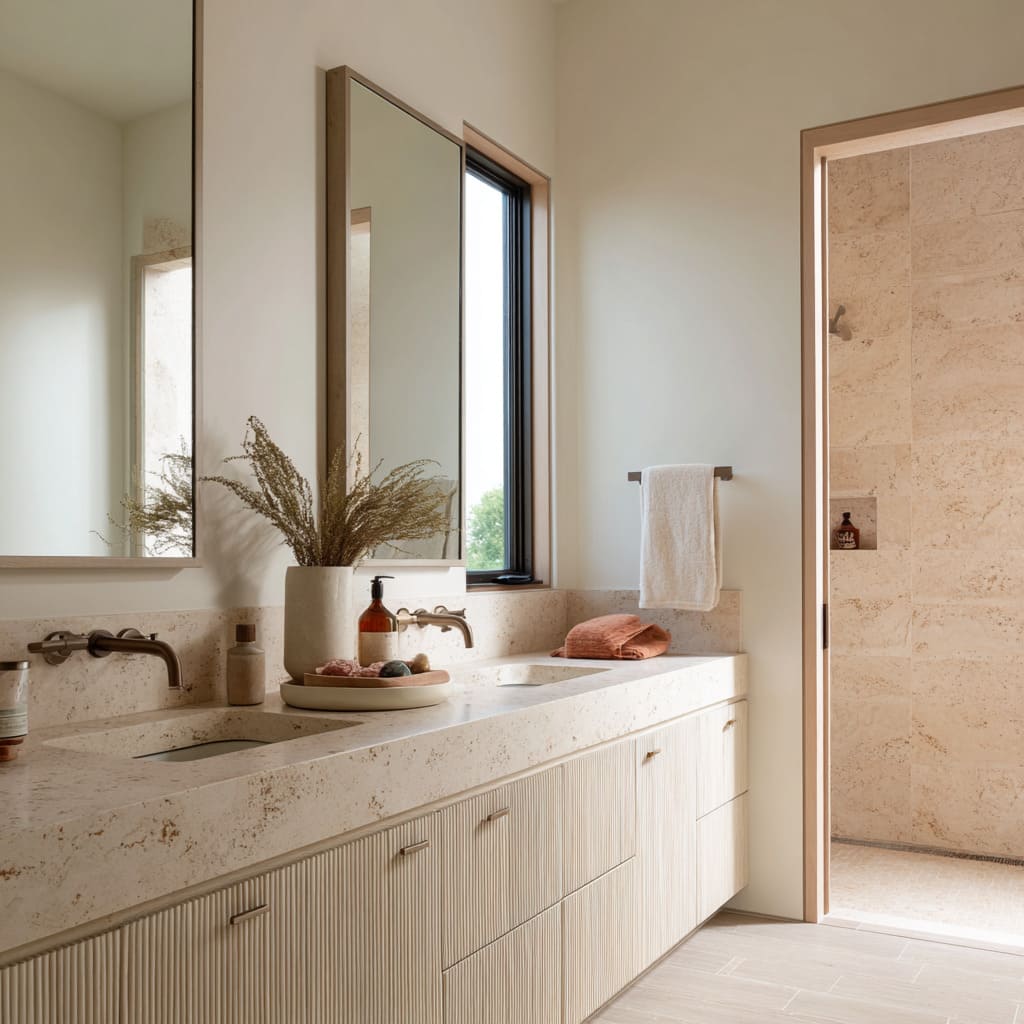
In designs where a mosaic or ribbed surface appears, the shift in texture scale acts like punctuation: large stone grounds the atmosphere, medium-scale ribbing adds gentle rhythm, and small mosaics introduce fine-grain detail without introducing new colors. Together, this orchestration of direction and texture gives sand color bathroom ideas the layered sophistication they are known for.
The Continuity Effect: Creating Seamless Sand Envelopes
Sand tones reveal their strongest potential when applied as a nearly continuous surface strategy. Many contemporary designs wrap the floor, lower walls, shower enclosure, and even tub surround in one family of tiles.
This creates a carved-from-stone sensation, even when the materials are engineered or ceramic. The continuity allows small visual details—like a slightly smoother countertop, a slim metal line, or a mosaic shower floor—to become meaningful rather than lost.
A unified sand palette also lets white elements function as accents with surgical precision: a freestanding tub becomes a sculptural break, a folded towel becomes a bright horizontal line, and the basin interior becomes a tiny center of clarity.
Sub-effects of Continuity
- Softens the transition between wet and dry zones.
- Reduces visual noise from grout changes or color breaks.
- Allows minimal hardware or lighting to stand out without overwhelming the scheme.
This approach illustrates why ideas for sand-colored bathrooms often revolve around controlled material repetition rather than multicolor contrasts.
Metal Finishes as Temperature Control
Metal choices act like temperature dials in a sand-tone scheme. Chrome and brushed nickel blend seamlessly into cooler sand environments where grey and driftwood tones dominate.
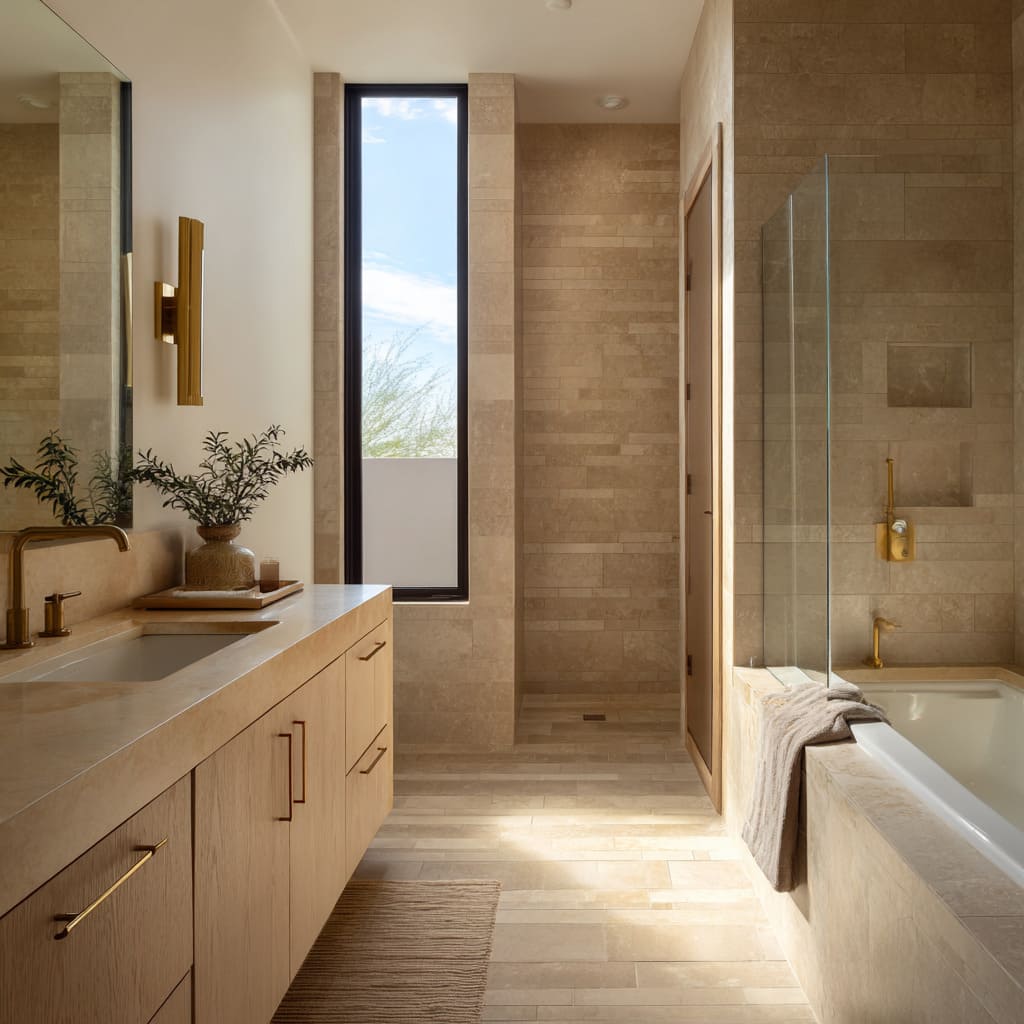
Brushed brass harmonizes with golden and blush undertones, amplifying the warm glow embedded in the stone’s veining. Dark bronze or black metals anchor deeper sand walls, particularly in bathroom designs with plaster textures or travertine-like shells.
In each case, the metal is not simply a fixture material; it becomes a visual tuning mechanism.
How Metal Interacts with Sand
- Brass: Enhances warmth, catches light in concentrated glints.
- Nickel/Chrome: Neutralizes cool stones without making the room feel sterile.
- Black/Bronze: Frames views, anchors joinery, sharpens edges within monochrome sand palettes.
A single metal tone used consistently through taps, pulls, shower fittings, and mirror frames brings order to a room where the palette depends on close tonal harmony.
Wood and Sand: Partners in Soft Geometry
Wood plays a subtle but essential role in the feel of sand-colored bathroom designs. Light oak and pale ash bridge the cooler and warmer sides of the sand spectrum, while medium timber tones anchor airy palettes with grounding weight.
Wood grain direction becomes a design tool: horizontal grain can lengthen a room; vertical grain breaks up long sand walls with light structure; natural grain patterns introduce organic movement that softens the rectilinear geometry of tile grids.
Three Roles Wood Commonly Plays
- Connector between creamy stone, soft textiles, and neutral paint.
- Anchor in rooms that risk becoming visually weightless due to pale continuous surfaces.
- Directional Guide, reinforcing or countering stone veining to shape how the eye travels.
This coordinated use of grain gives sand bathroom designs a quiet, modern authenticity that feels natural rather than overly polished.
Light, Windows, and Greenery as Visual Counterpoints
Sand tones are unusually receptive to natural light. A tall slot window framed in dark metal behaves like a minimalist artwork, turning the outside view—tree canopy, sky fragment, or garden foliage—into the only cool color note in the room.
Mirrors positioned to catch this view multiply the green and blue tones without overpowering the palette.
Greenery in Sand Bathroom Designs
Even the smallest plant or branch softens a fully sand-wrapped room by introducing natural irregularity.
Globe pendants, lantern-like sconces, and vertical tube lights further enrich the atmosphere by tinting the tile with warm light gradients. Through these layers, sand bathroom ideas achieve dimension without relying on stronger colors.
Texture Scale: The Hidden Source of Richness
Texture, not color, provides the depth that keeps sand designs from feeling flat. Large stone slabs or wide planks form the primary layer.
Medium textures—ribbed cabinets, woven baskets, slim mosaics—supply rhythm. Fine textures such as quilted towels, dried grasses, or jute runners add softness and detail near the body.
Why This Matters
The interplay of coarse, medium, and fine grains captures the calm richness of natural sand without introducing visual noise.
Sand as Stylistic Shapeshifter
Sand tones can completely transform how design communicates stylistically without altering the layout. A design with traditional joinery instantly feels lighter when the cabinets adopt warm ivory sand instead of stark white.
A corridor-like room becomes spa-like when horizontal stone patterns guide the eye toward a distant window. A more dramatic mood emerges when desert-silt plaster pairs with black accents and woven baskets.
A soft hotel atmosphere appears when golden stone veining meets brushed brass and paper-like globe lights.
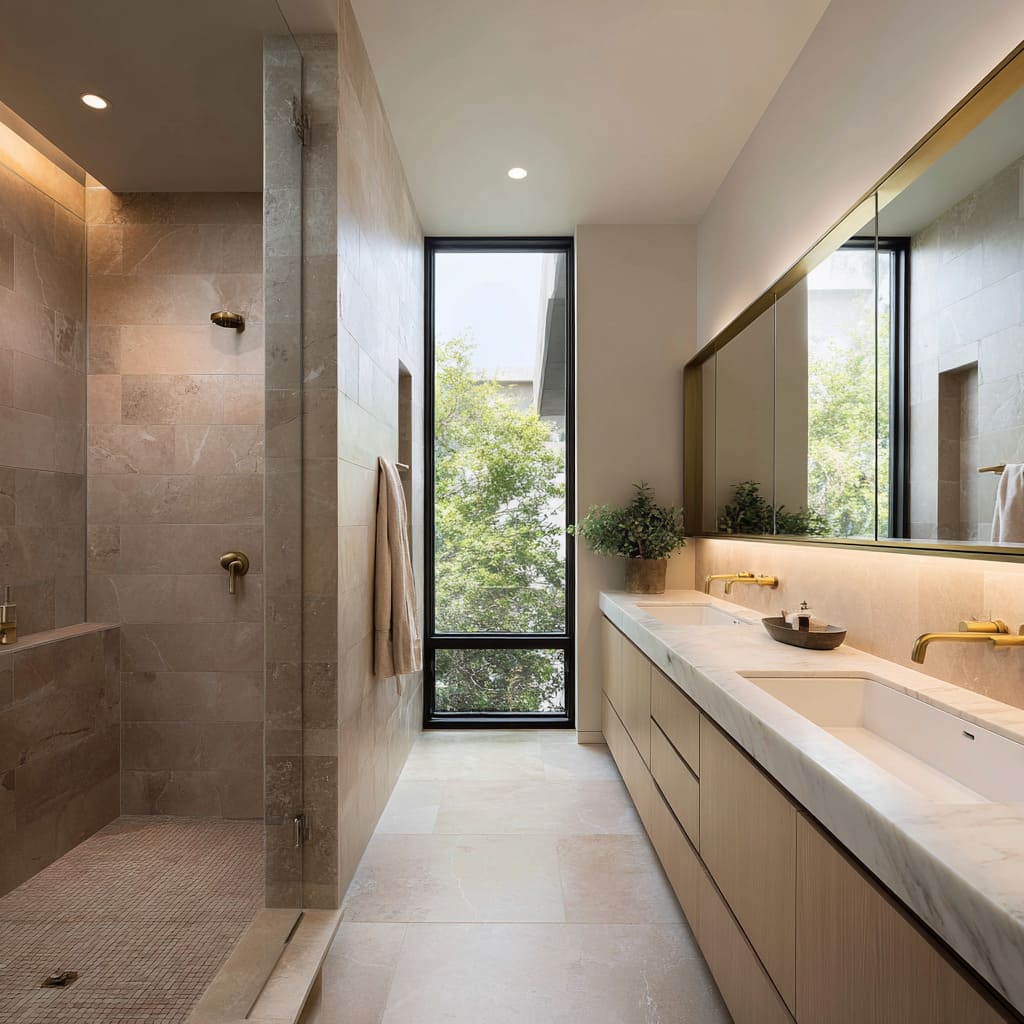
Through these shifts, the palette shows why ideas for sand-colored bathrooms remain so flexible: sand works equally well with clean modern lines, rounded sculptural forms, rustic texturing, or subtle classical paneling.
Conclusion
Across all its variations—from cool shoreline tones to warm dune shades, from blush-tinted stone to deeper desert plasters—sand remains one of the most adaptable palettes in contemporary bathroom design. Its softness supports sculptural forms and subtle metal accents, its texture depth creates visual rhythm without demanding strong contrast, and its responsiveness to natural light gives each room a sense of calm motion.
The diversity of sand color bathroom ideas lies in how undertone, grain direction, window placement, and texture scale shape the atmosphere. Within these layered approaches, ideas for sand-colored bathrooms become a study in quiet detail, natural softness, and modern refinement.