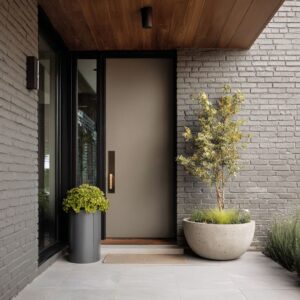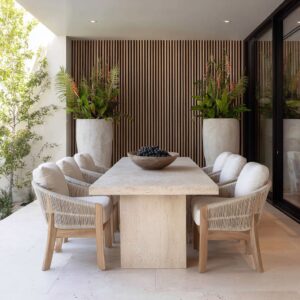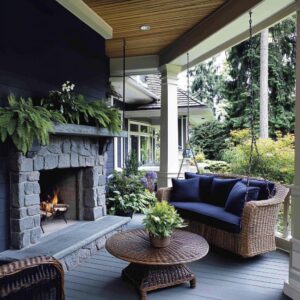
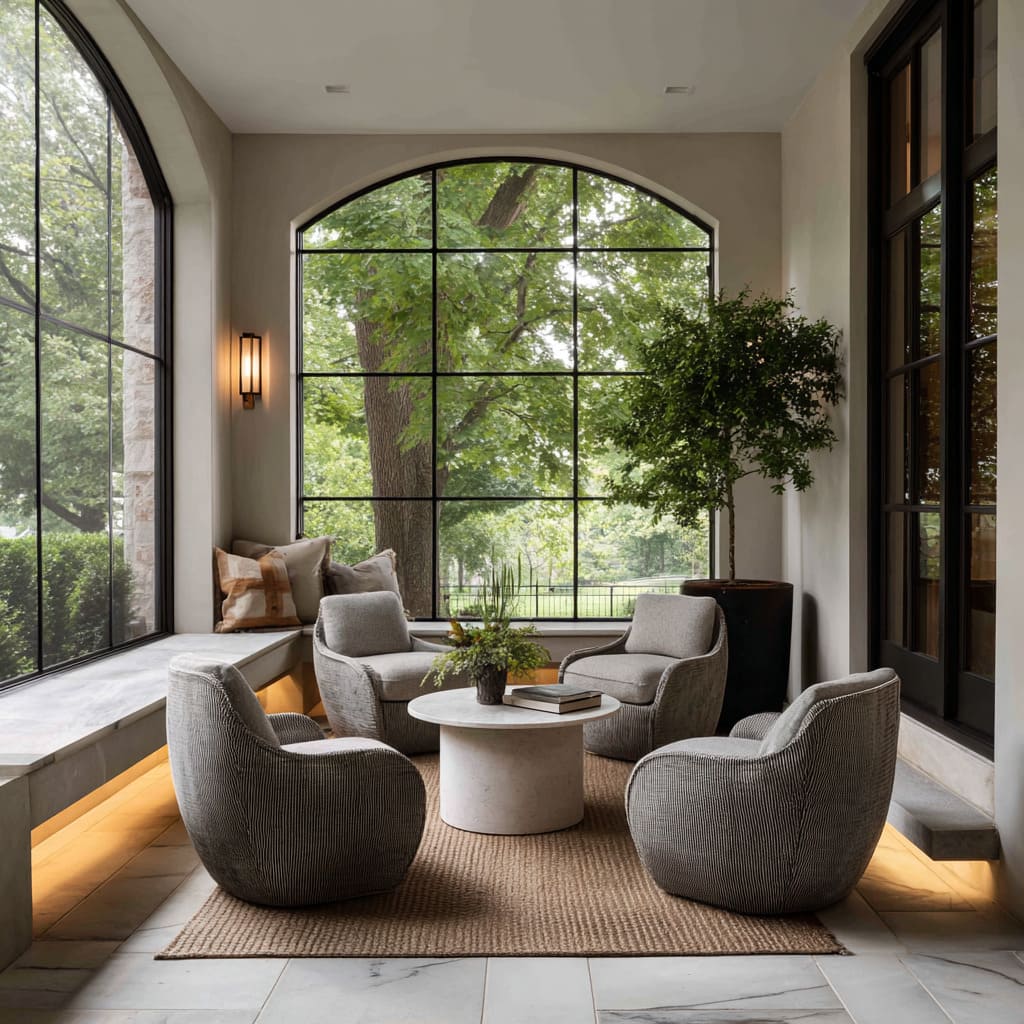
A modern screen porch design acts as a complete living space drawn with light, proportion, and texture, offering a calm extension of the home. The trend moves away from rustic rocking chairs and overloaded planters toward visual clarity, floating lines, and disciplined palettes.
Every surface—from the mesh panels to the stone floor—plays a role in composition, turning what used to be a simple buffer between inside and outside into a refined architectural statement. Across modern screen porch ideas, design success comes not from the amount of furniture or color but from the visual logic: benches that appear to hover, screens that behave like soft fabric walls, and glow lines that trace the architecture instead of shouting at it.
From Veranda to Living Space
A porch once served as a shaded pause before the front door; now, in modern enclosed front porch ideas, it becomes an intentional room shaped by rhythm and proportion. Many contemporary porches adopt built-in seating or long sectional lines that run parallel to the house façade.
Such benches replace loose chairs, making the porch feel part of the home’s geometry. Minimal frameworks in black, bronze, or white-oak finishes create visual cadence that defines structure without visual noise.
Inside that framework, the decor uses texture layering rather than decorative excess—linen, rope, woven jute, brushed stone. The effect is subtle but powerful: the porch reads as architecture, not furniture staging.
Such transformation is especially visible where the palette stays neutral. Oatmeal cushions against dark framing, soft plaster walls with black mesh, or stone floors washed by warm light all play in tonal layers instead of color competition.
The trend aligns with the wider architectural preference for quiet luxury—design that speaks softly yet feels intentional from every angle.
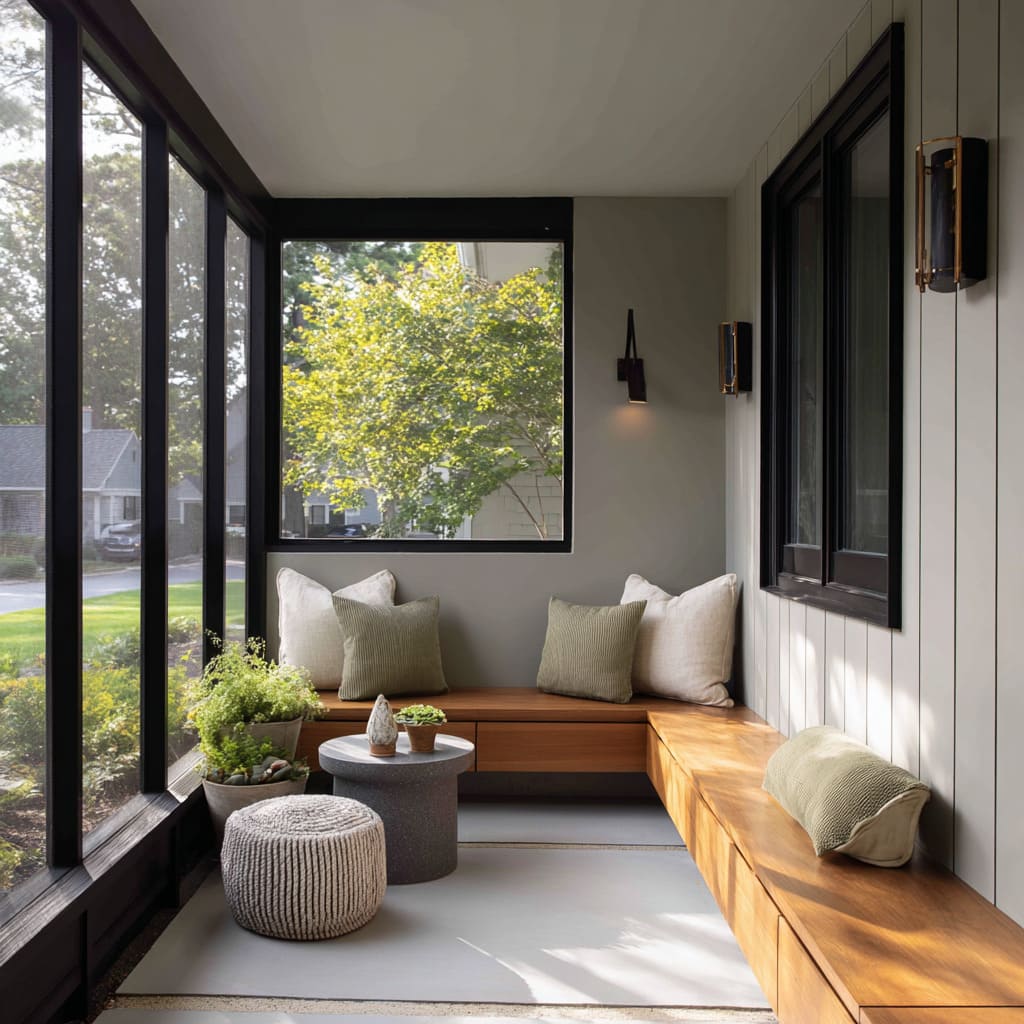
Horizontal Glow and Floating Lines
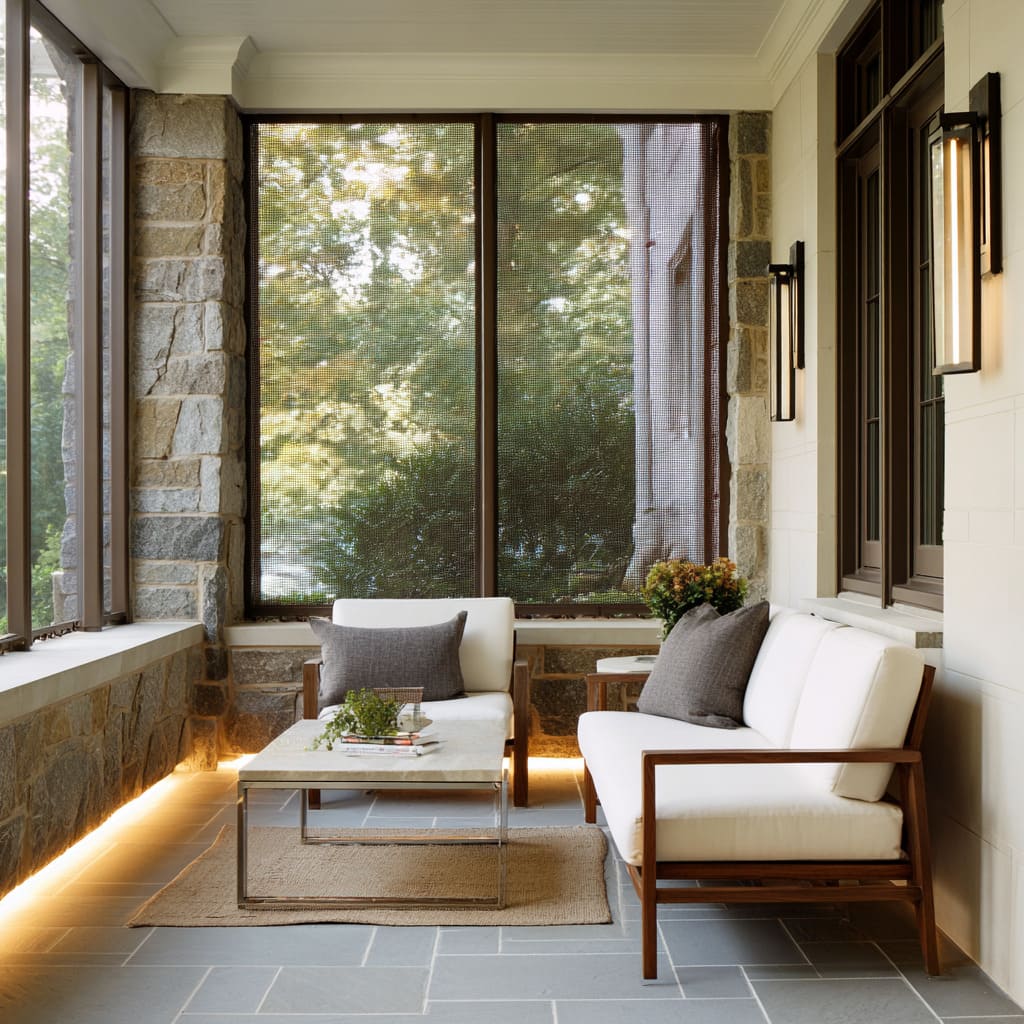
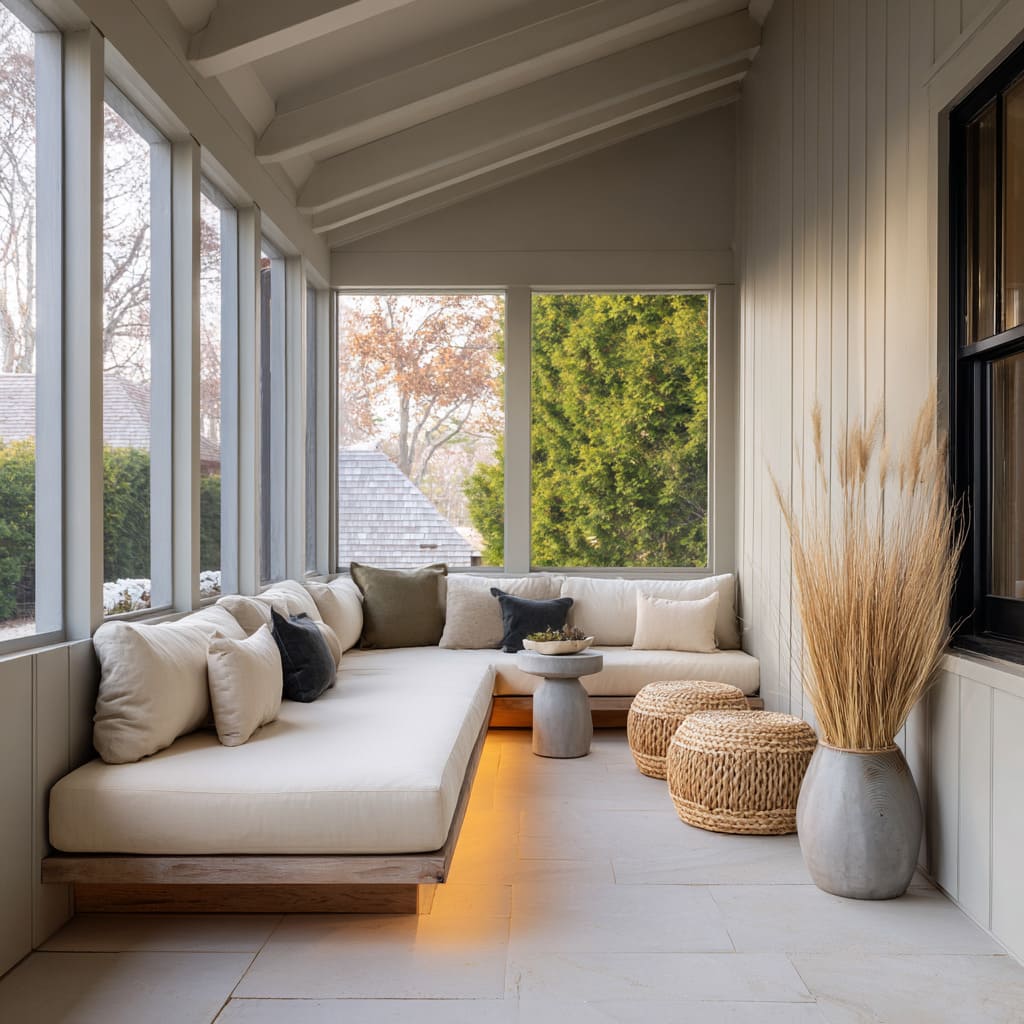
The visual innovation defining most modern screened in porch ideas is the use of linear light. Instead of hanging lamps or visible fixtures, designers now rely on integrated light lines—continuous LED strips under benches, concealed coves along eaves, or narrow grazers hidden behind consoles.
This lighting method performs more than illumination; it becomes part of the composition. A toe-kick glow under a built-in bench lifts it visually, making it appear to hover above the floor.
A single warm cove tracing the ceiling perimeter highlights texture, while leaving the rest in a gentle shadow.
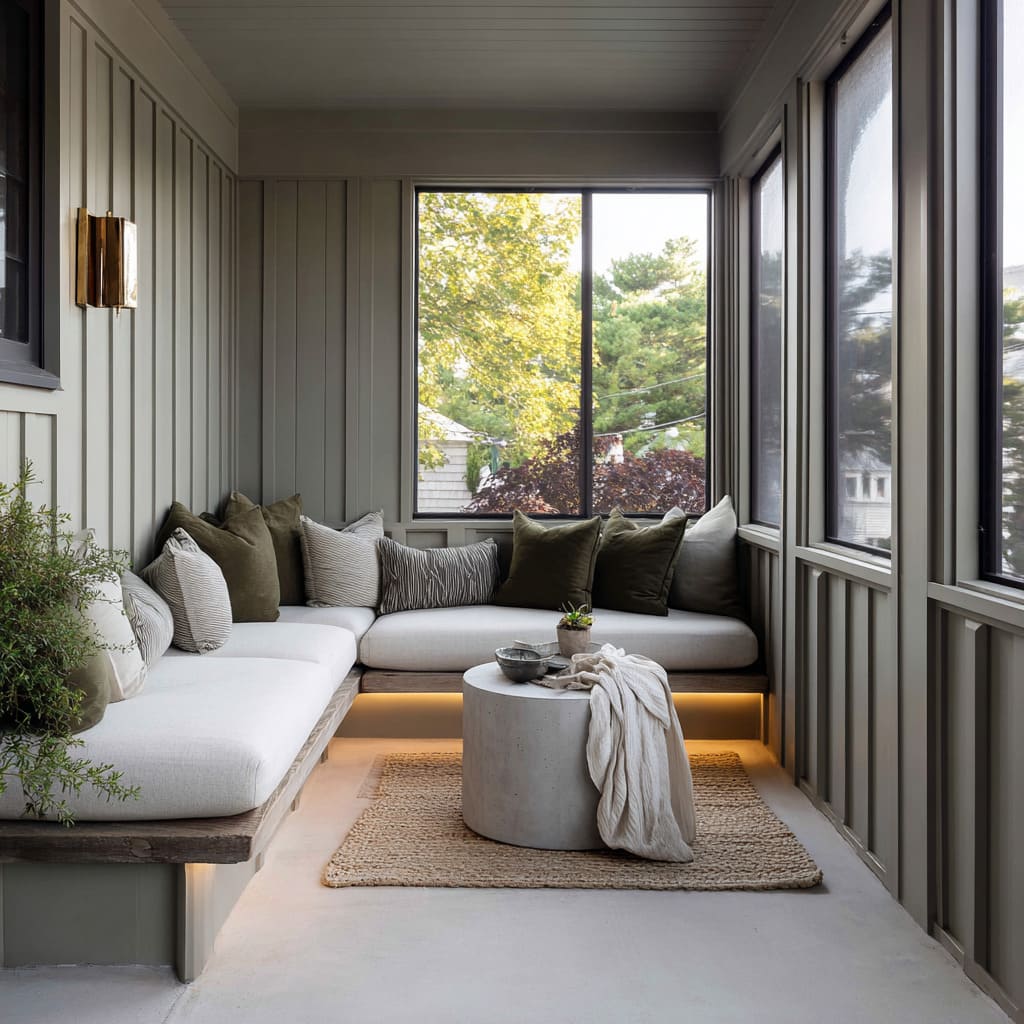
These horizontal glows serve three aesthetic goals:.
- Weight control – heavy elements feel lighter once detached by light.
- Spatial extension – long lines of light visually stretch narrow porches.
- Evening mood – soft ambient light replaces harsh porch lanterns, keeping the space calm and cinematic.
The approach treats light as drawn geometry rather than ornament. When paired with stone or ribbed wood walls, it reveals surface texture instead of flattening it—one of the key reasons modern porches feel so composed at night.

Screens as Soft Architecture
Screens, once purely practical, have evolved into aesthetic surfaces in today’s modern screen porch design language. Fine mesh now reads like woven fabric; ribbed lower panels blur the view just enough to create privacy while catching daylight in soft patterns.
Some porches mix open upper panels with textural lower ones, a quiet way to balance openness and shelter. When light skims across this mesh, it acts as a living texture that changes from morning translucence to night reflection.
Designers treat screens as part of the rhythm of the facade. They line up with posts, window mullions, and rafters so that the porch façade appears designed, not fenced.
The result is visual calm: a front porch that looks curated from the street and serene from inside. This textile-like approach to screening keeps the composition gentle and refined—air passes through, but the gaze lingers.
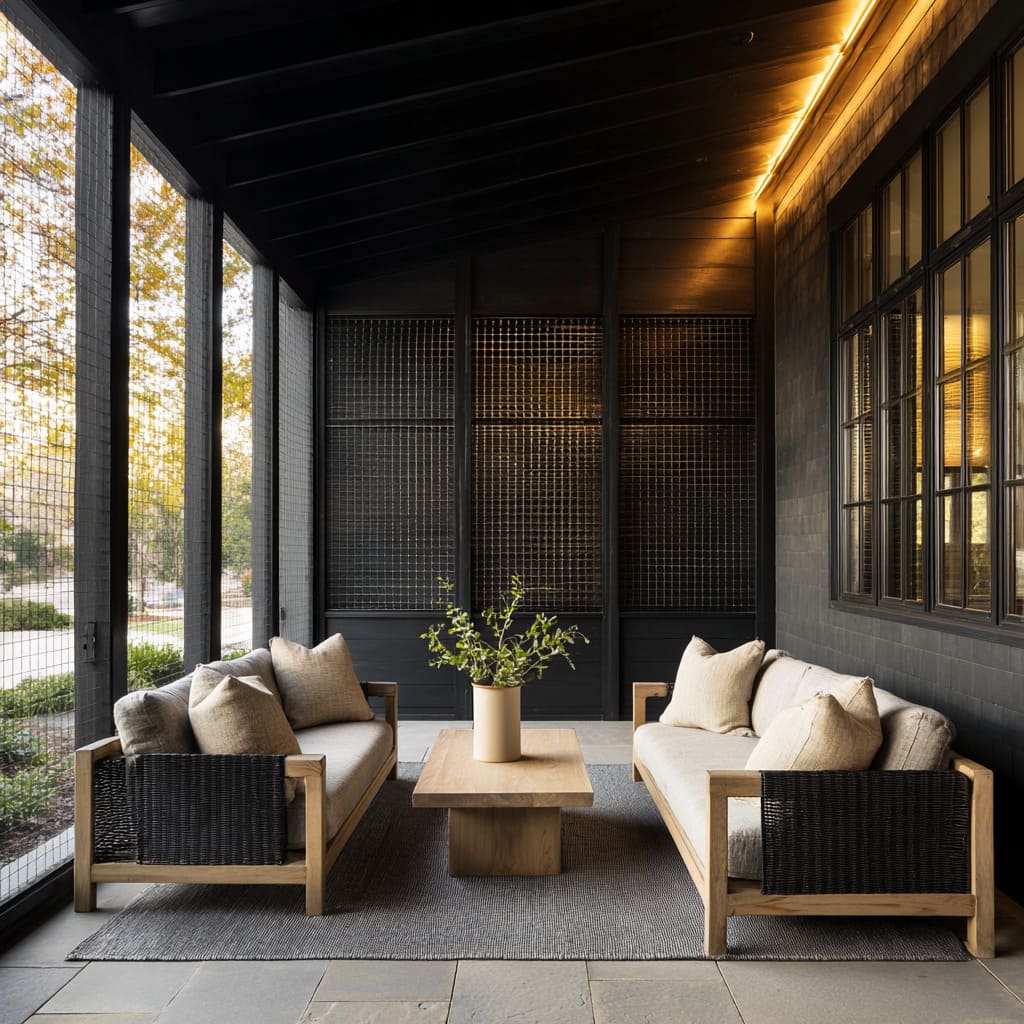
Palettes of Quiet Luxury: Letting Nature Do the Color Work
Across the most admired modern enclosed front porch ideas, color restraint defines sophistication. Neutrals dominate—stone, sand, blackened bronze, warm oak, pale grey—and outdoor greenery becomes the actual accent.
Instead of introducing bright décor, the palette echoes surrounding tones: tree greens, soft sky blues, or clay undertones. By holding back, the porch lets the landscape provide the changing hues throughout the day.
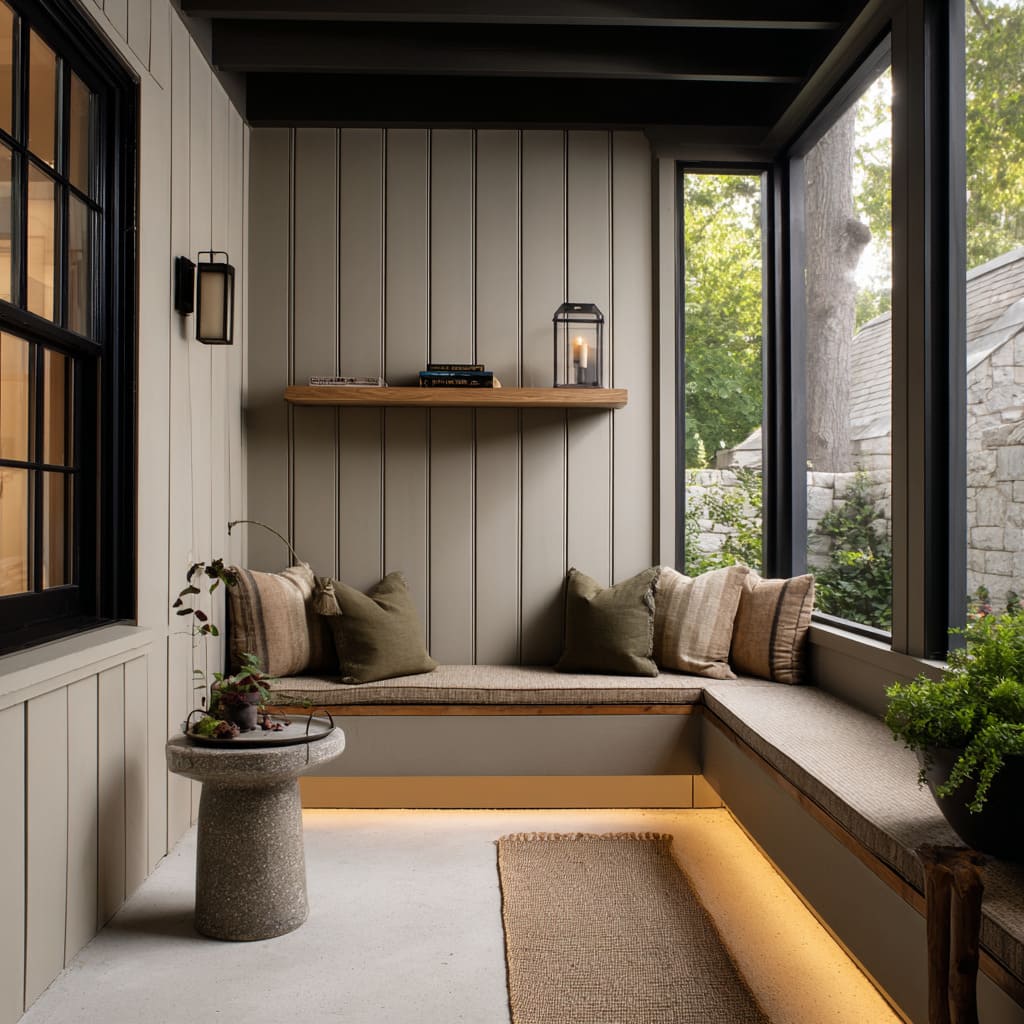
Textures replace color as the expressive element:.
- ribbed boards and woven ropes catch shadow,
- smooth concrete and stone reflect light softly,
- matte cushions absorb glare.
This strategy keeps the space timeless. Because materials are natural and finishes are matte, the porch looks as harmonious under cloudy daylight as it does by warm evening glow.
The discipline of limited tones is what makes a modern screened in porch idea look expensive without extravagance.
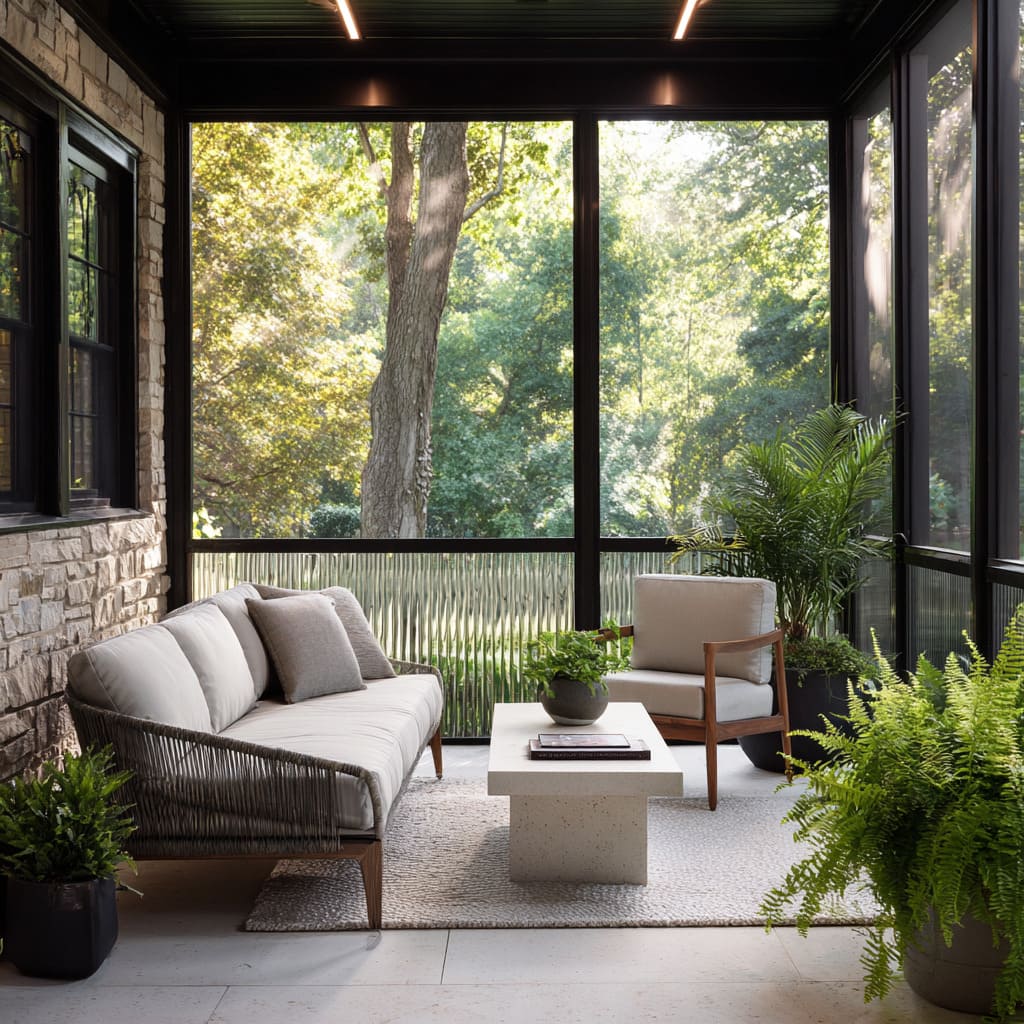
Furniture: Compositions That Define Space
In modern porches, furniture placement is architectural thinking. Every example builds its social rhythm through layout rather than accessory count.
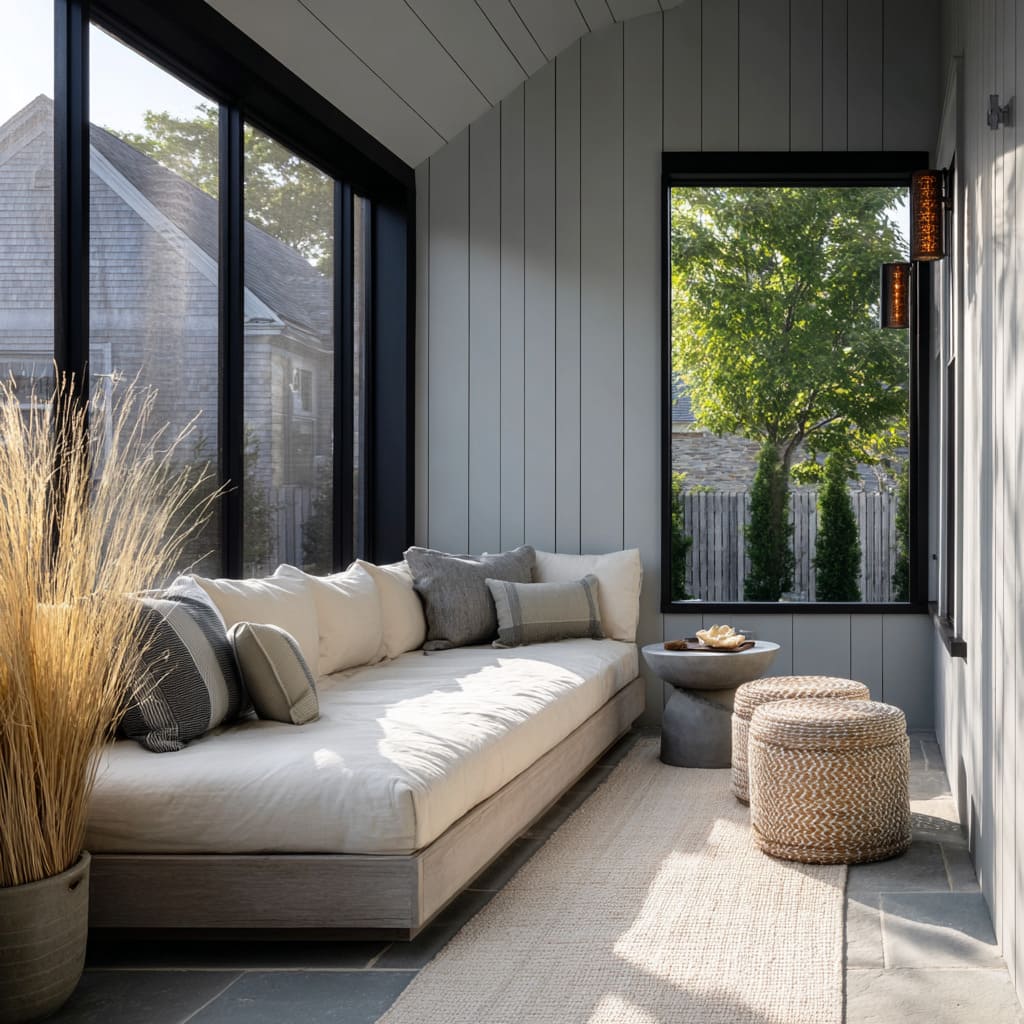
Long L-shaped benches wrap corners; parallel sofas establish salon symmetry; daybeds or low sectionals stretch along window lines to keep sightlines open. Such arrangements create a hierarchy where nothing feels accidental.
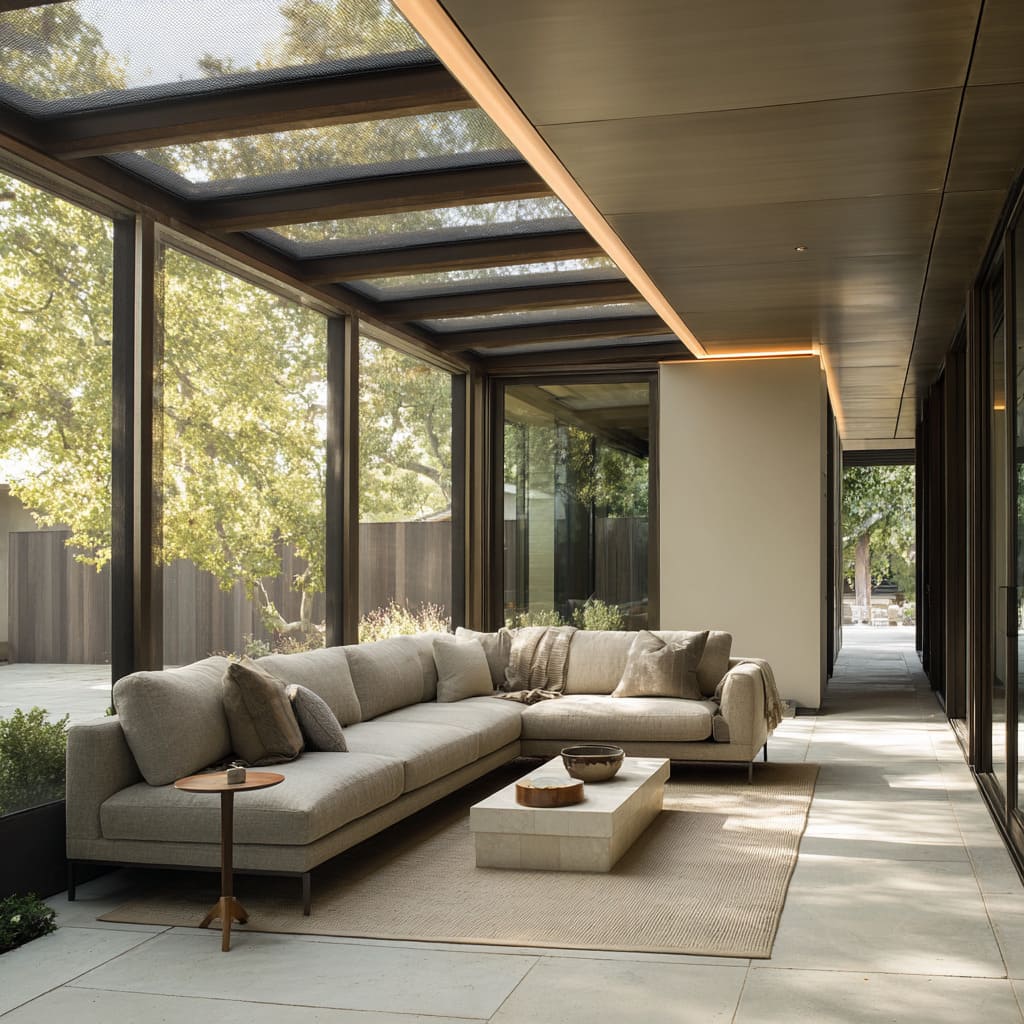
Designers often organize seating to emphasize either horizon or center:.
- Horizon-focused setups align seating parallel to the landscape view, framing nature like a panoramic mural.
- Center-focused compositions—two facing sofas, or a circular group under arches—celebrate conversation and symmetry.
- Corner lounges use continuous built-ins to unify awkward small porches, adding intimacy without clutter.
The principle behind all: fewer pieces, stronger geometry. The plan itself delivers style, proving that composition—rather than decoration—is the true mark of a contemporary porch.
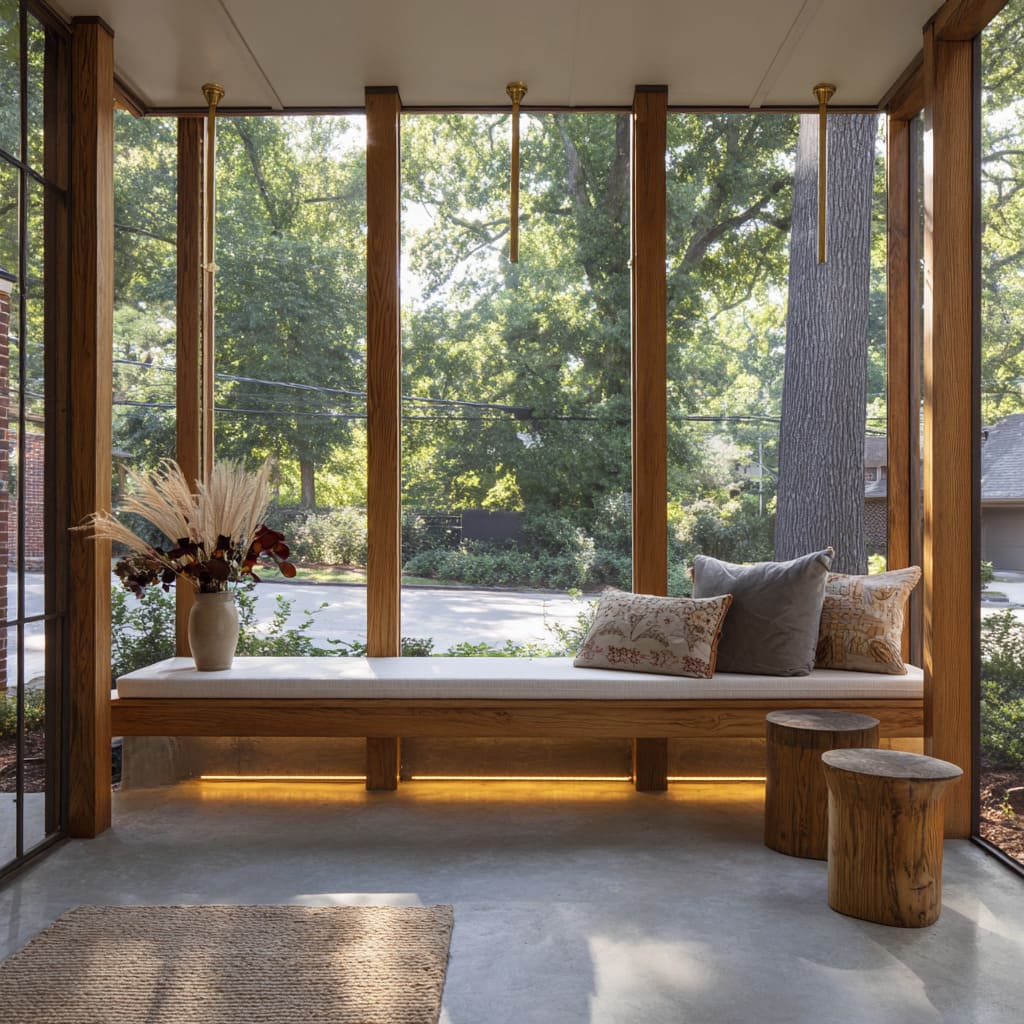
The Balance of Curves and Lines
A defining characteristic of the newest modern screen porch ideas is the interplay between strict structure and soft shape. Architectural framing remains rectilinear—posts, boards, ceiling beams—but the décor introduces gentle curves to break the rigidity.
Rounded coffee tables, poufs, barrel chairs, and cylindrical planters introduce human softness. This measured contrast prevents minimalism from turning sterile.
The art lies in proportion: each curved element holds volume and simplicity, echoing the clarity of the straight lines around it. The conversation between geometry and comfort is what makes the porch modern yet inviting.
The curve doesn’t dominate; it breathes into the framework.
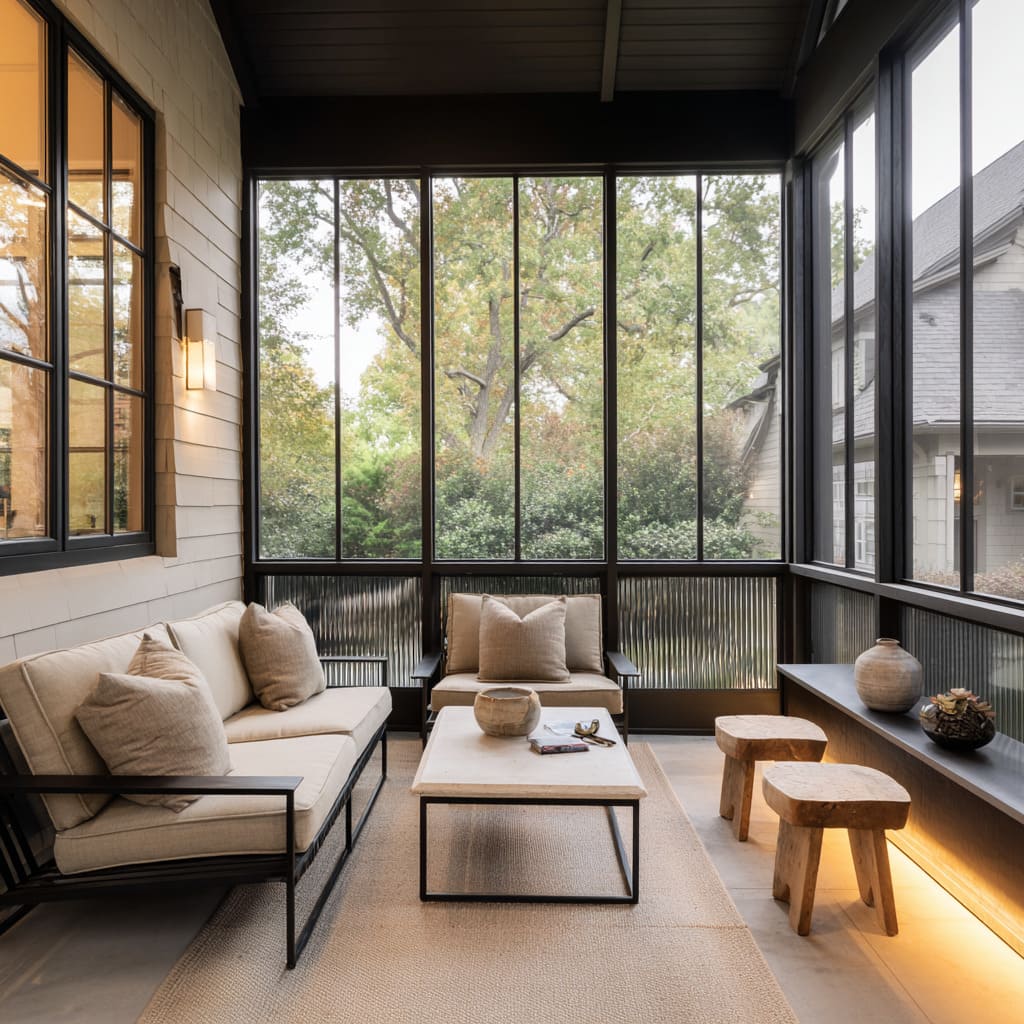
Rugs, Gaps, and Edges: The Hidden Design Language
Even subtle details such as rug size and placement carry weight in modern enclosed front porch ideas. Designers often use intentionally undersized rugs that leave visible borders of stone or concrete, creating the effect of a picture frame around the floor.
These borders elongate the space and add visual relief. Textures tend to be low-pile or ribbed—flat enough to read as surface pattern rather than soft décor—because porches depend on the architecture’s rhythm, not plush comfort.
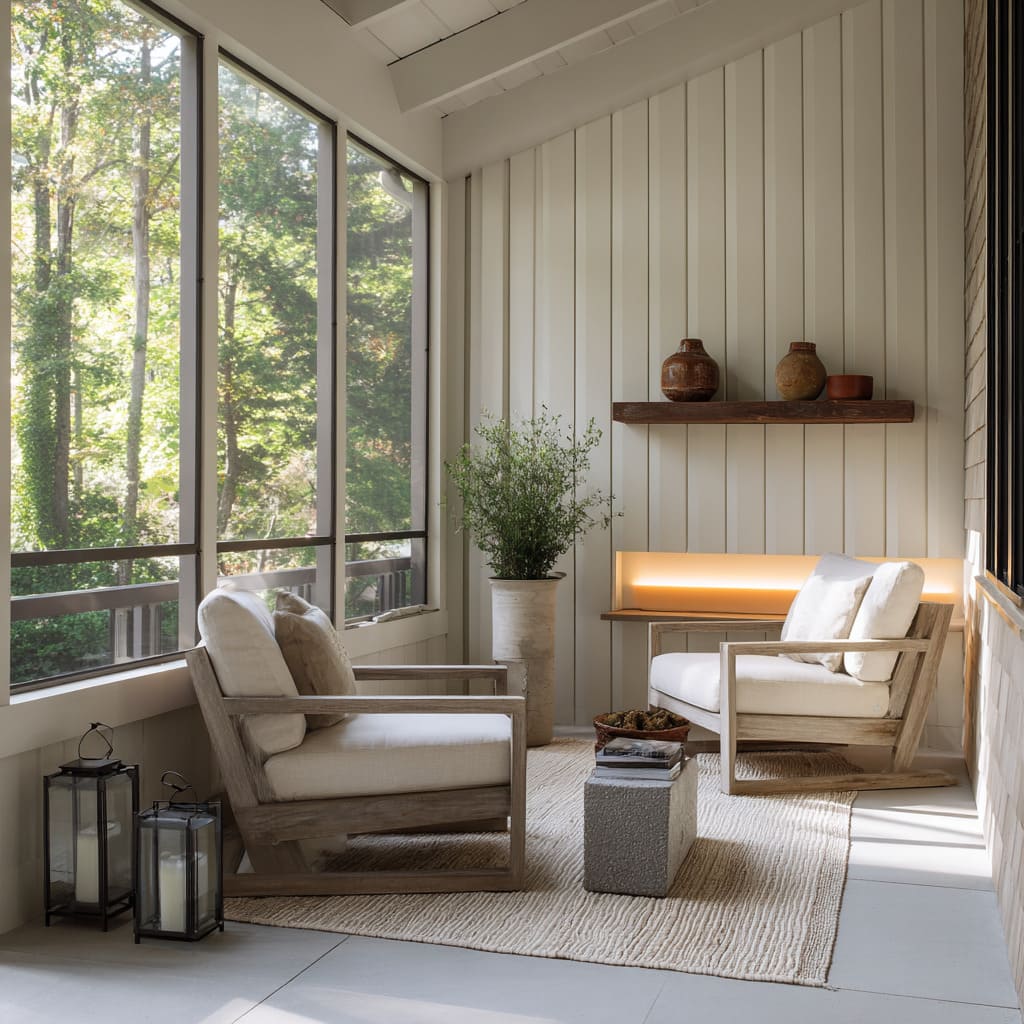
Small spatial pauses also matter: a few inches between sofa backs and screens create shadow bands that frame the furniture. Off-center runners define walkways and reinforce directionality, guiding the eye naturally from entry to seating zone.
This quiet mastery of proportion is rarely noticed by visitors, but it’s what gives the scene its visual calm.
Objects and Styling: The Luxury of Restraint
In advanced modern screen porch design, styling operates on the principle of “less, but deliberate. ” The spaces avoid over-decoration; instead, they rely on silhouettes and material honesty.
A single branch arrangement, a tall ceramic vase, or a woven lantern cluster is often enough. Surfaces are left mostly clear so that light and texture become the decoration.
Typical patterns:.
- one or two pottery pieces stretched along a bench,
- a sculptural wood stump used as both seat and art piece,
- soft textiles in limited tones—linen, jute, boucle—used for sound and warmth rather than color drama.
This editing reflects confidence and keeps the focus on architectural form. Modern porches achieve luxury through emptiness that feels curated, not unfinished.
Plants as Compositional Tools
Planting in modern screened in porch ideas is structural, not decorative. Large leafy pots appear at rhythm points—post lines, bench terminations, corners.
Smaller herb pots or vines add mid-level texture. The arrangement usually follows a vertical sequence: ground cover at floor level, sculptural mid-plants, and one tall statement specimen.
Each plant aligns visually with architectural features rather than random corners, integrating greenery into the design grammar.
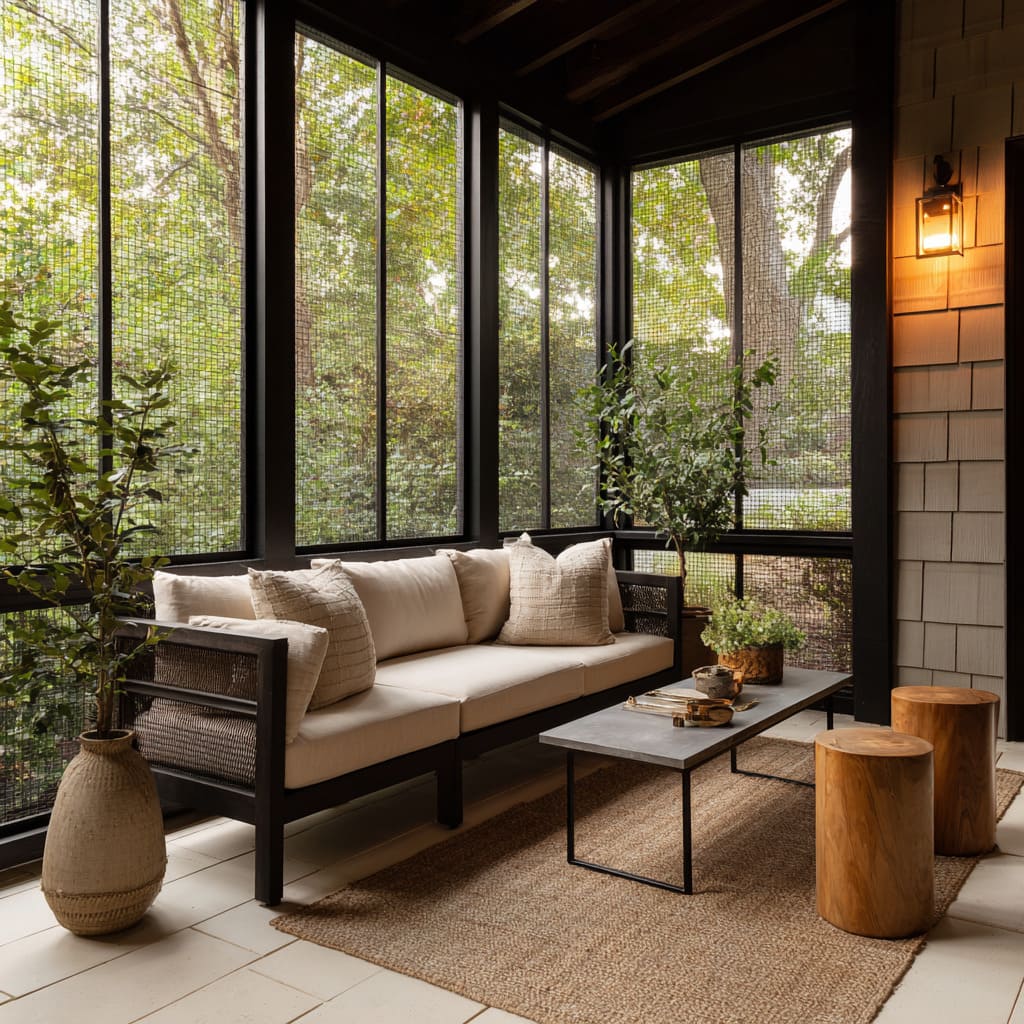
The species choice also reflects design logic: palms, ficus, or olive trees emphasize shape over bloom. When light filters through the mesh, their shadows animate the walls, giving the space motion without visual noise.
This dialogue between foliage and architecture blurs the line between indoor calm and outdoor vibrancy—the hallmark of the modern porch aesthetic.
Light as Atmosphere Script
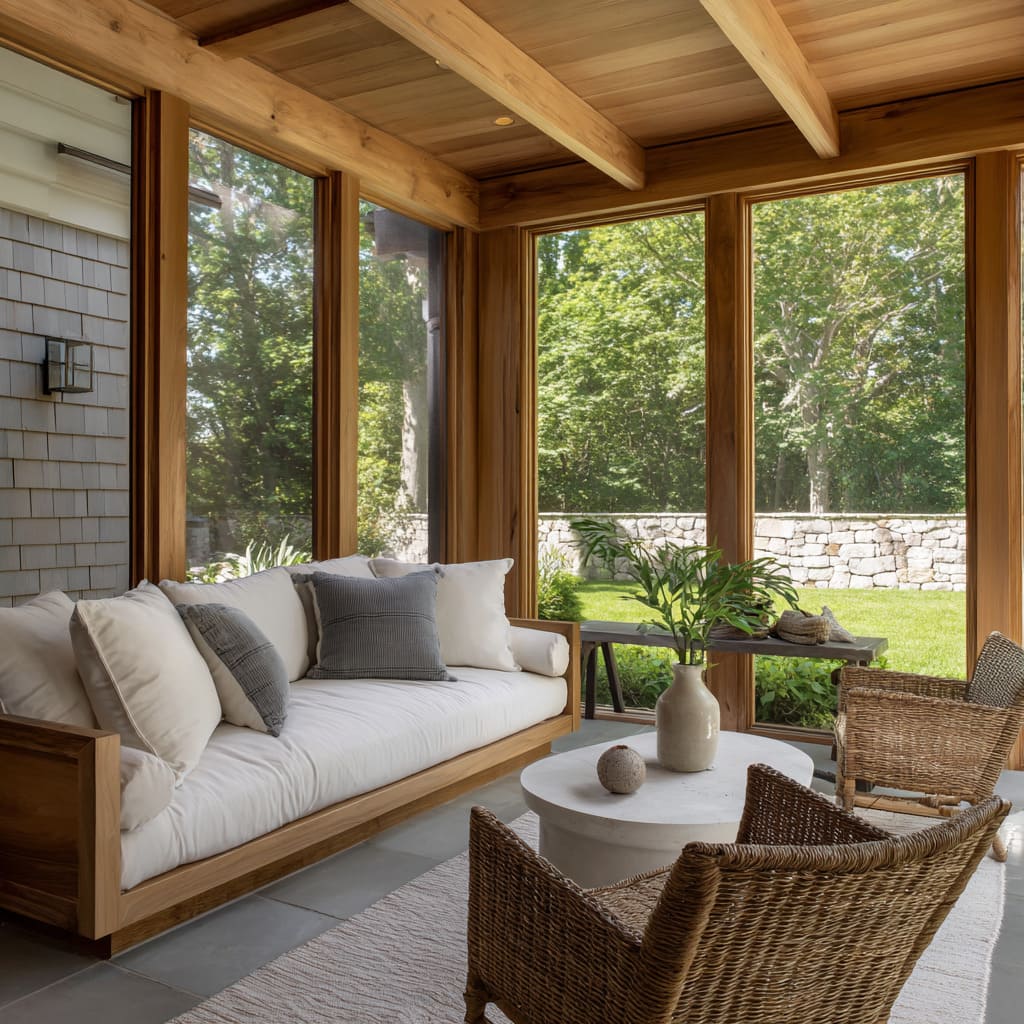
Lighting layers define mood transitions throughout the day. In the best modern enclosed front porch ideas, one main light gesture leads the composition—perhaps a bench glow, a ceiling cove, or slim sconces repeating between wall boards.
The key is consistency: one tone of warmth, one rhythm of placement, and no scattered brightness. Light grazes surfaces—never spotlights them—so materials like ribbed wood, stone, or woven mesh reveal subtle shadows.
The absence of visible fixtures is what keeps such spaces stylish. Even at night, the glow reads as part of the architecture, not a separate feature.
This subtle use of light transforms the porch into an evening lounge, connecting seamlessly with interior lighting seen through windows.
Why Such Porches Look So Fresh
All such modern screen porch design ideas share a common discipline: they treat the porch as design, not decoration. Each element—light, line, screen, furniture, plant—has a defined job within a larger visual system.
Together, they produce porches that photograph beautifully by day and glow with calm intention by night. They express the new direction in front porch design: a shift from ornamental to architectural, from crowded to composed.
Instead of shouting trend, they whisper precision. That quiet confidence is the signature of the contemporary porch—where air, shadow, and structure cooperate to make even a modest front step feel like modern living.