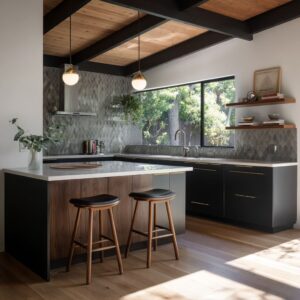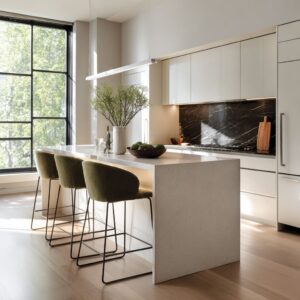
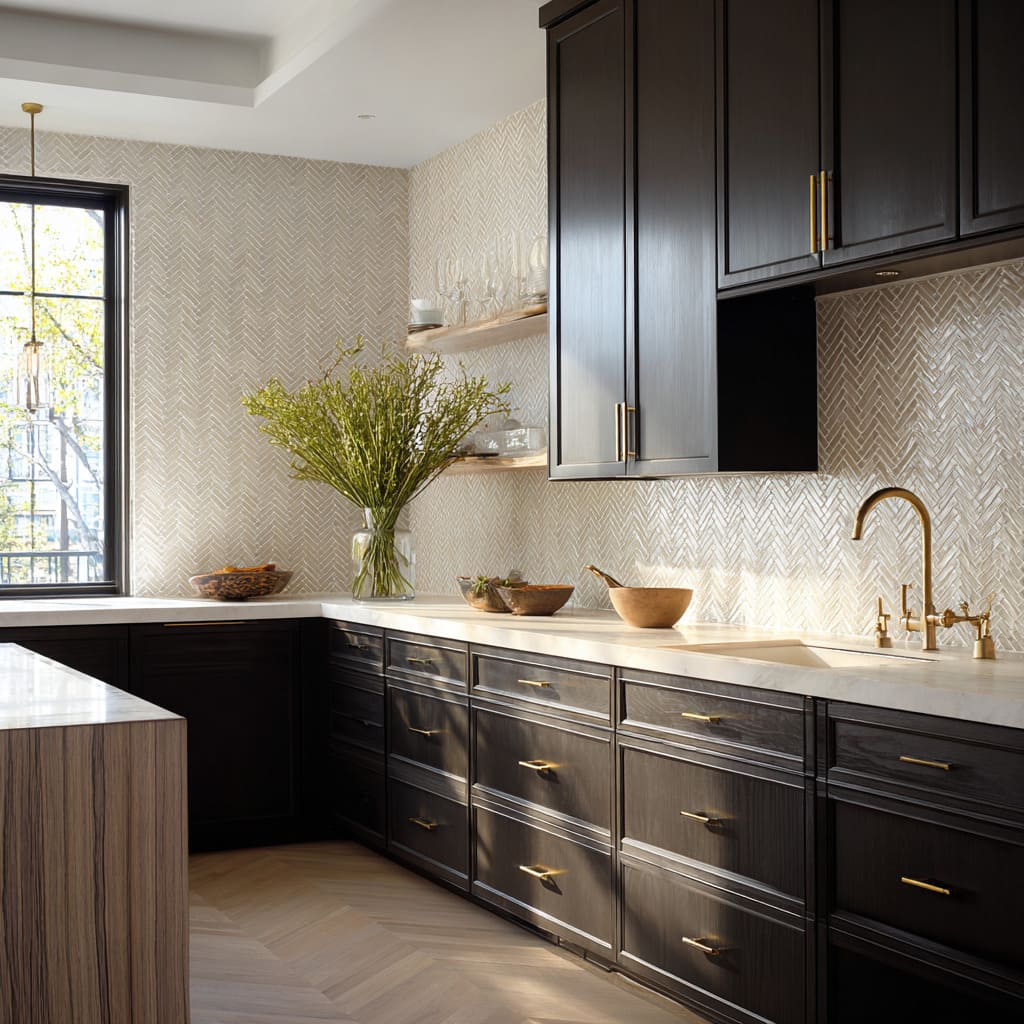
Modern kitchen backsplash tile ideas often take inspiration from fabrics rather than traditional ceramic layouts, turning the wall into a gentle background that behaves more like woven cloth than a set of rigid units. Designers do this by working with tiny tile pieces, softened grout, and surface reliefs that catch the light the way a textured textile would.
In many current spaces, narrow strips laid in quiet herringbone flows read like diagonal fibers, and small convex tiles appear like padded squares or beadwork. When arranged as a full-height surface, these miniature elements combine into a kind of visual fabric that wraps corners and connects shelving lines into one continuous story.
This move is especially powerful in kitchen designs that mix deep cabinetry with pale wall treatments; the tile surface becomes the luminous counterweight to more solid areas. The effect is a gentle layer that settles behind shelving, stone slabs, or dark wood without competing with them.
Instead of loud patterns, the backsplash behaves like a soft backdrop that supports brighter metal fixtures, warm pottery, or strong wood grain. This textile-inspired approach brings a sense of calm and depth, making the wall feel welcoming without any need for bold color.
Direction, Rhythm, and the Subtle Power of How Tile Moves Across a Wall
Contemporary kitchen wall tiles ideas make direction and rhythm central to the look. Vertical, diagonal, and horizontal flows each shape the room differently, even when colors stay neutral.
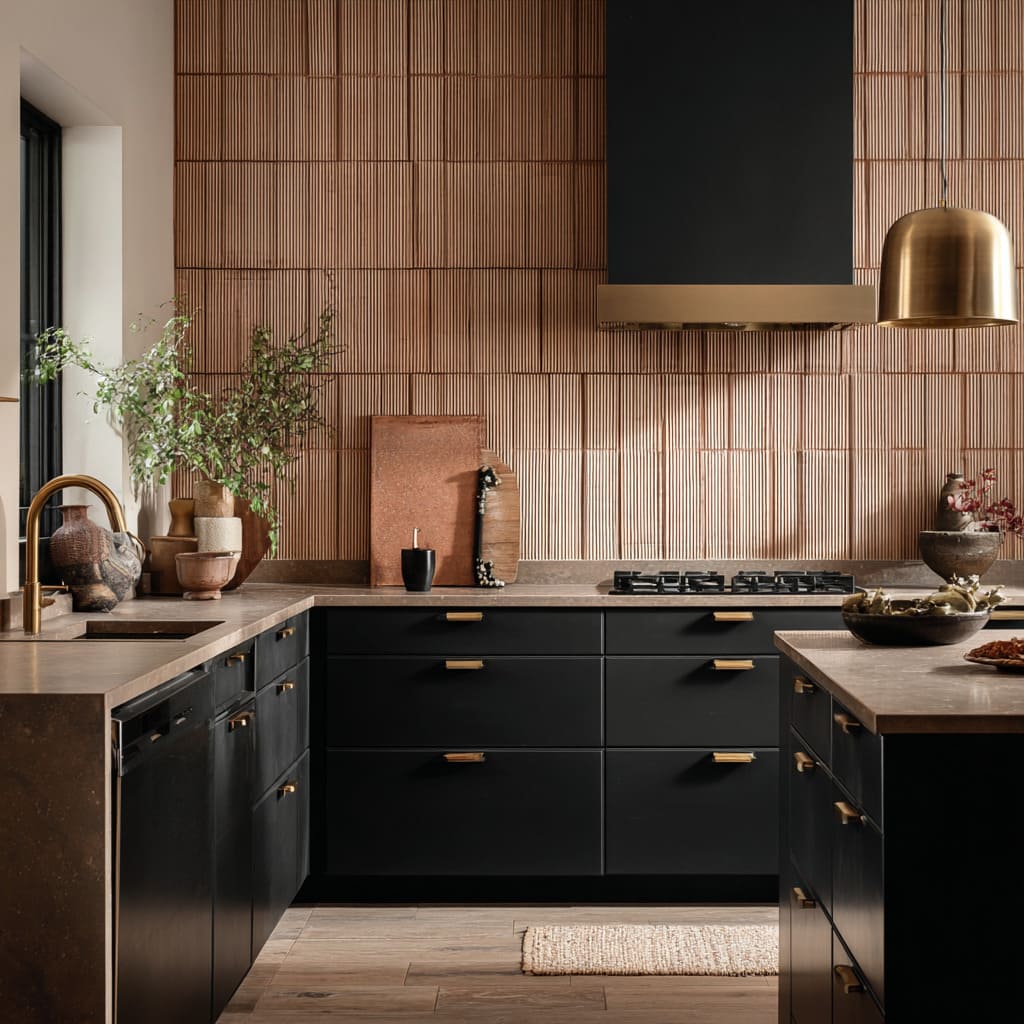
Vertical lines—seen in reed-like terracotta strips or long glassy mosaics—stretch the height of the room, giving the sense of a tall paneled wall. These lines often align with other elements, such as wood hoods, tall pantry doors, or long brass pulls, creating a quiet hierarchy of thicknesses.
Diagonal layouts like tight herringbone turns introduce movement through delicate shifts in tone; they glow softly as daylight slides across the surface. Horizontal flows, especially when paired with a thin stone shelf or a continuous hood line, create a grounded, anchored niche.
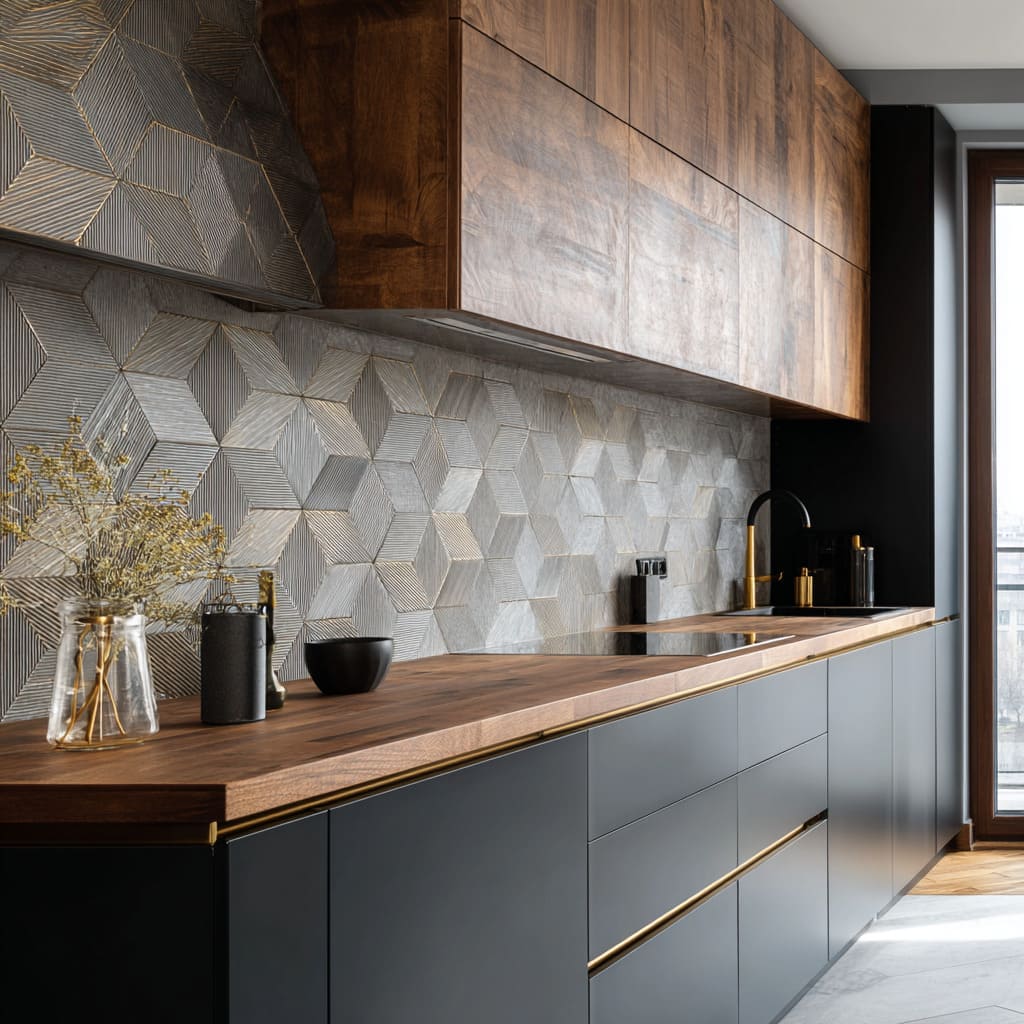
Here, the eye stays steady because the wall works as a single, settled band behind the cooktop. Many kitchen designs blend these lines in pairs, using one dominant direction and allowing the others to act as supportive patterns.
What emerges is a controlled kind of motion: the wall isn’t static, but its movement is subtle and measured, shaped entirely by light and line rather than bright pigments or strong contrasts.
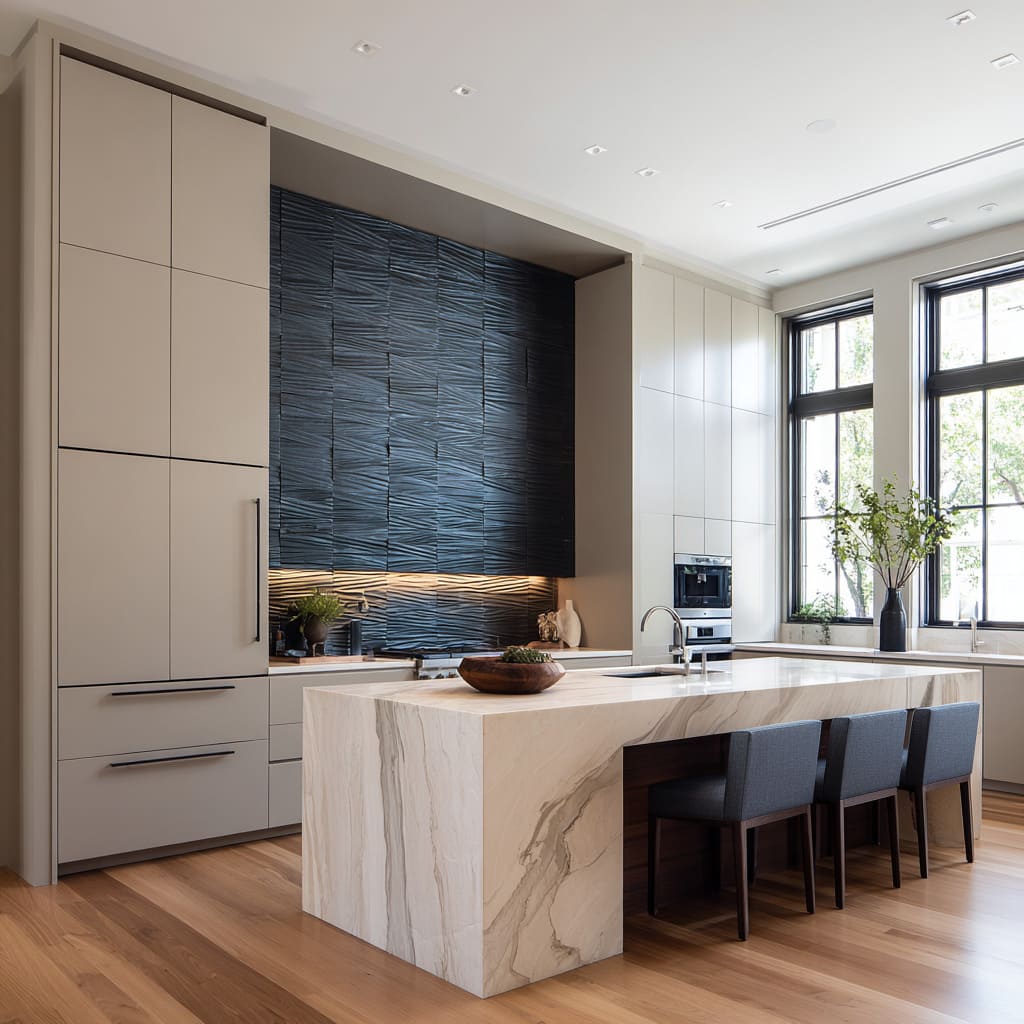
Using Scale as a Silent Tool: Tiny Units, Oversized Shapes, and the Spaces Between
In many modern rooms, backsplash tile ideas rely on scale more than color. Tiny mosaics create a refined grain, while oversized polygons or broad stone slabs deliver expansive calm.
Each scale communicates something different:.
Small-Scale Surfaces
- Mini tiles, penny rounds, and tiny pillowed squares create richness at close distance and softness from afar.
- When used on large walls, they become a continuous fabric-like texture rather than a pattern of grids.
- These surfaces pair well with simple cabinets and quiet stone counters, letting the micro-pattern carry all the visual detail.
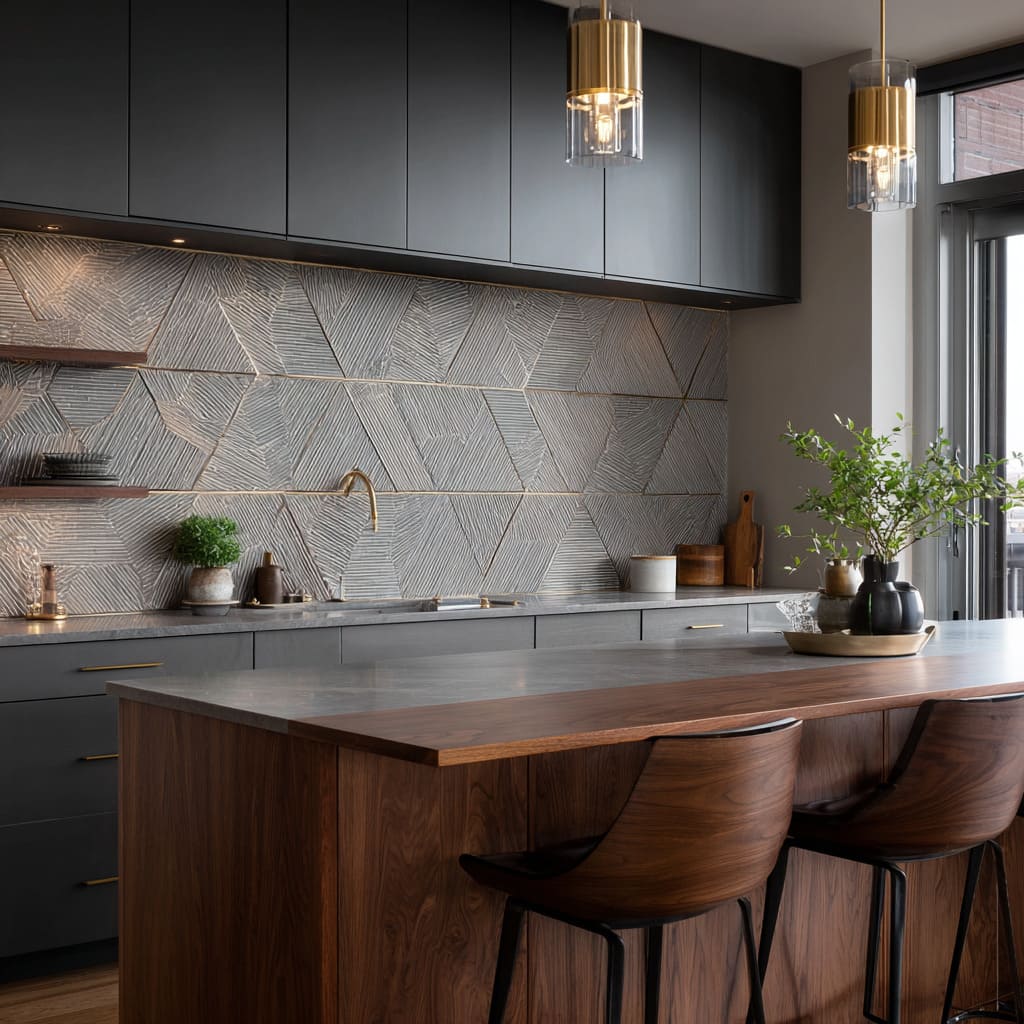
Large-Scale Surfaces
- Big hexagons, elongated diamonds, and large relief squares behave like sculptural panels.
- Because joints are fewer, the eye reads the entire wall as one slow-moving surface with shifting grooves.
- Under calm lighting, these big tiles feel almost architectural, turning the cooking area into a framed plane.
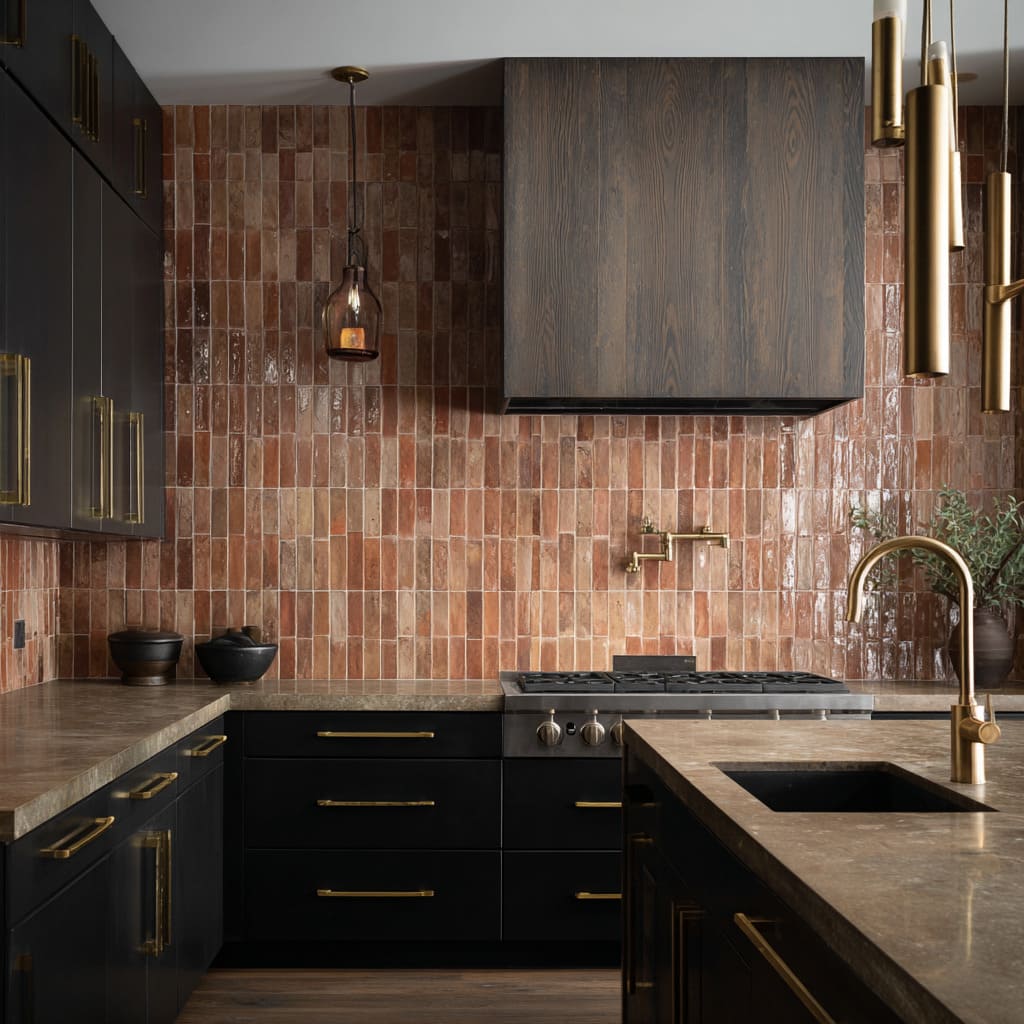
This relationship between scale and surrounding simplicity is essential. When micro-scale tiles take over the wall, everything around them stays quiet to maintain balance.
When large tiles dominate, designers let small objects—ceramics, foliage, or metal taps—become the delicate accents that soften the broad geometry.
Light as the Second Material: How Illumination Completes the Pattern
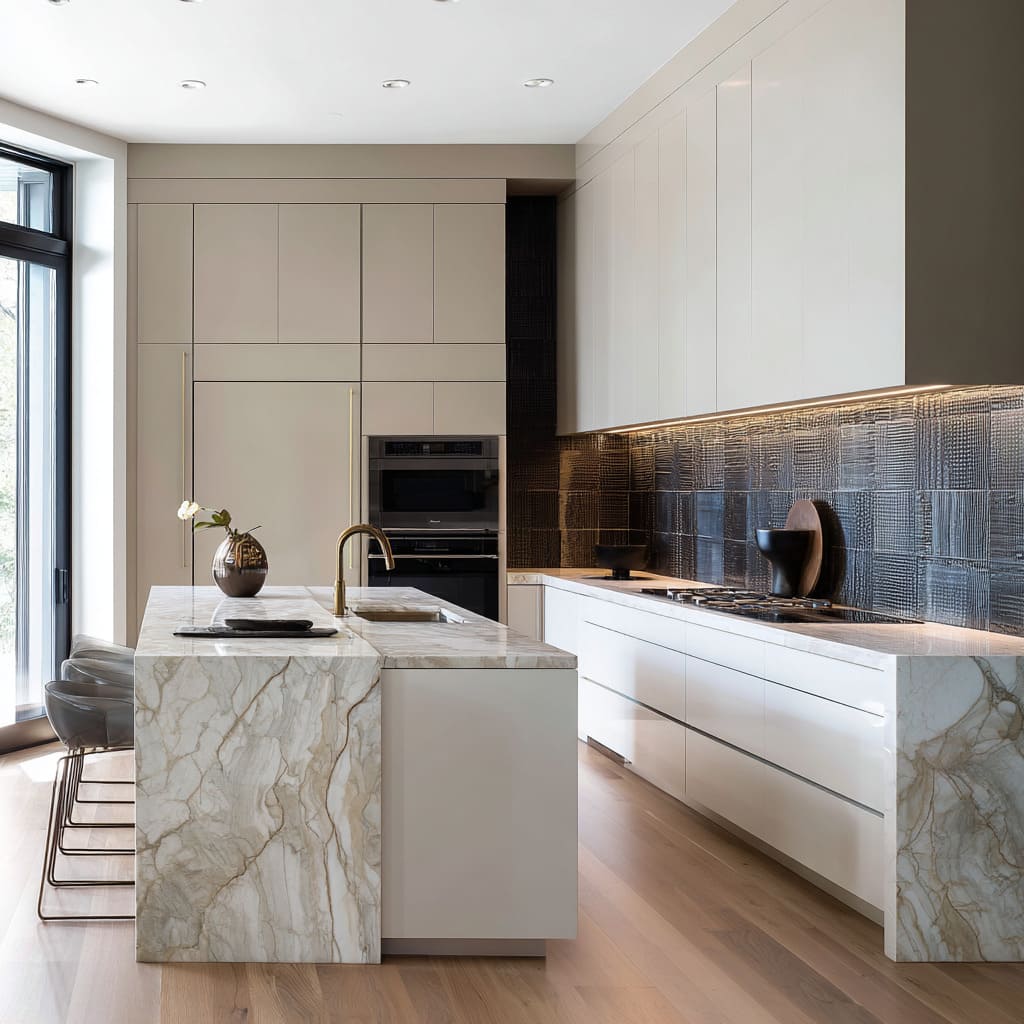
Often, kitchen splashback tiles ideas depend on how the wall interacts with light rather than on the tile material itself. Grazing light from under-cabinet fixtures or slim LED lines reveals the fine grooves in ribbed ceramics, the shimmer in metallic mosaics, and the soft peaks of convex shapes.
This kind of lighting draws gentle shadows that transform the tile surface into a shifting field throughout the day. During daylight, matte terracotta, dusty brick tones, and dry clay textures feel warm and grounded.
At night, textured graphite tiles or metallic rounds brighten into a soft glow, mimicking embers or brushed metal. Light becomes a design tool that decides how active or calm the wall appears.
For dark niches, a single horizontal LED can carve a clean line across the surface, giving the tile depth and highlighting each relief. For pale, shimmering mosaics, a wide wash of illumination turns the surface into a subtle scatter of tiny highlights.
Modern kitchens treat lighting as part of the backsplash itself—another surface that moves across the wall and shapes the room’s atmosphere.
Color as a Gentle Mediator Between Warm and Cool Materials
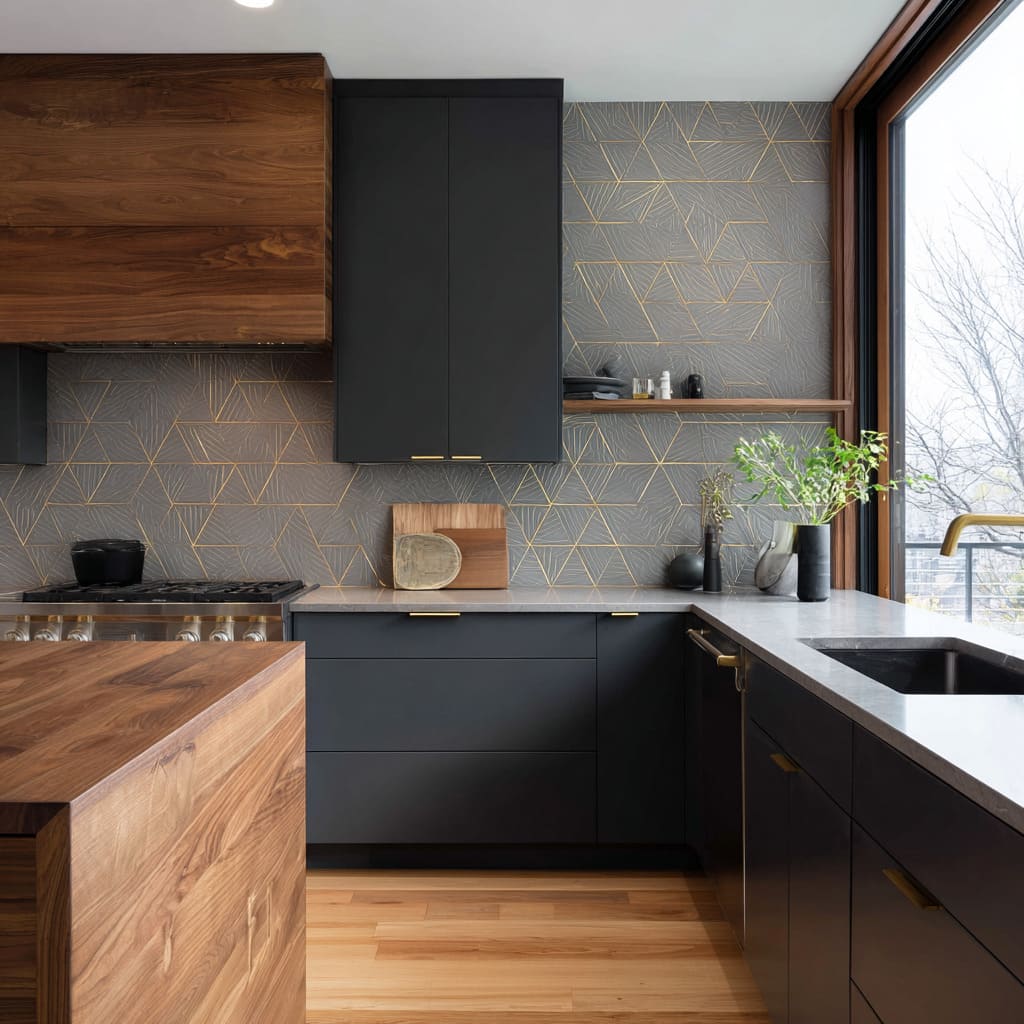
The most nuanced kitchen back splash tile ideas are those that sit between the warm and cool elements of a room, acting as a quiet intermediary. Many current interiors feature combinations of pale marbles, graphite cabinetry, soft taupe lacquers, walnut, brass, and smoky stone.
The backsplash becomes the link that allows these materials to speak to one another. Mid-tone greys connect dark cabinetry to warm wood islands, while graphite-champagne mosaics carry both warm glints and cool shadows.
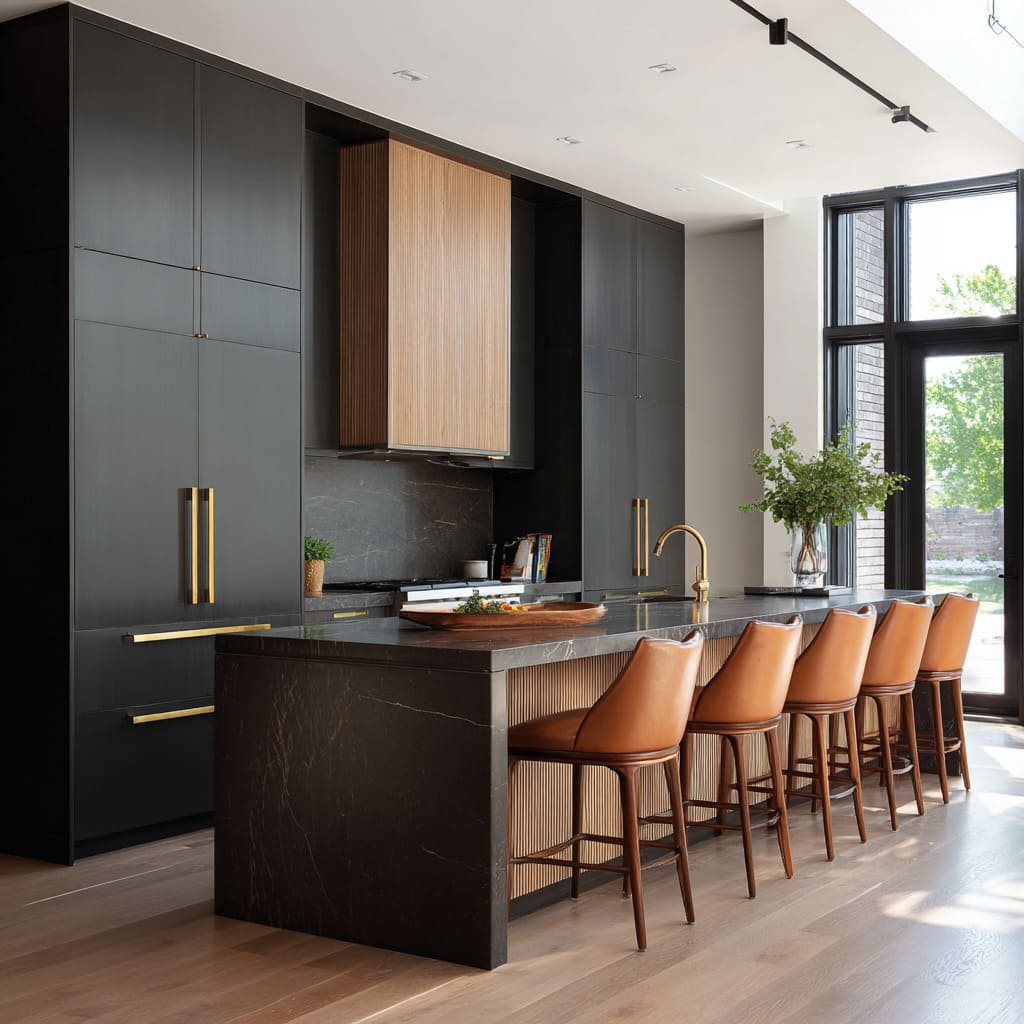
Clay-based palettes soften heavy black volumes and make a kitchen feel more approachable without seeming rustic. Soft off-white mosaics with warm grout pair tenderly with brass fixtures and pale stone shelves, making the vertical surface feel cohesive with the rest of the palette.
This mediator role avoids stark contrasts; instead, it gently merges the cool clarity of stone with the warmth of wood and metal. These color-strategies make the backsplash feel grounded, flexible, and capable of harmonizing a wide palette without taking over the room.
The Backsplash as a Connector Between Architectural Elements
In many recent backsplash tile design ideas, the wall does more than fill the space between counter and cabinet—it becomes the visual link tying the entire elevation together. Shelves often align directly with tile joints or cut across the wall at deliberate proportions that echo the thickness of the grout lines.
Hoods might be wrapped in wood echoing the tile direction, or they may be carved into a tile-lined recess so the cooking niche reads like one continuous composition. Corners wrapped in tile, rather than stopping abruptly, create a soft transition between runs of cabinetry.
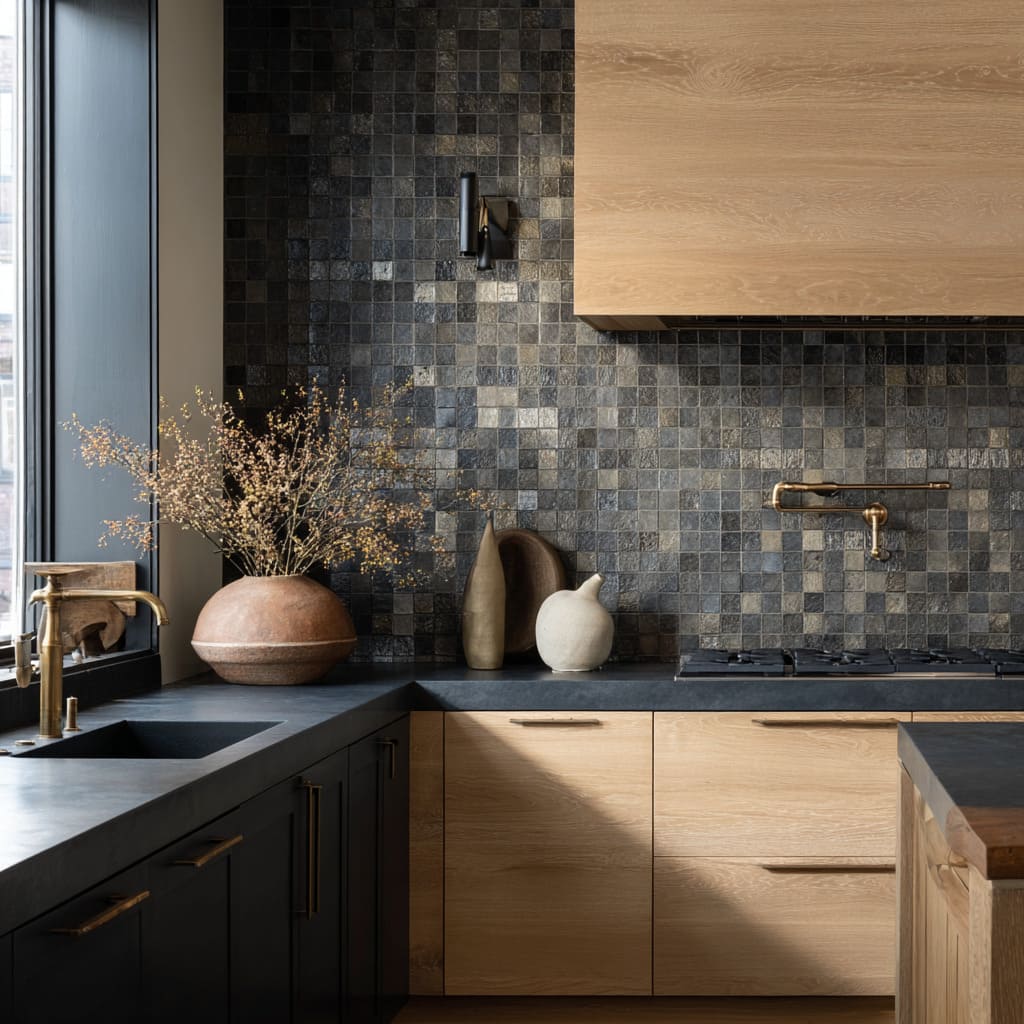
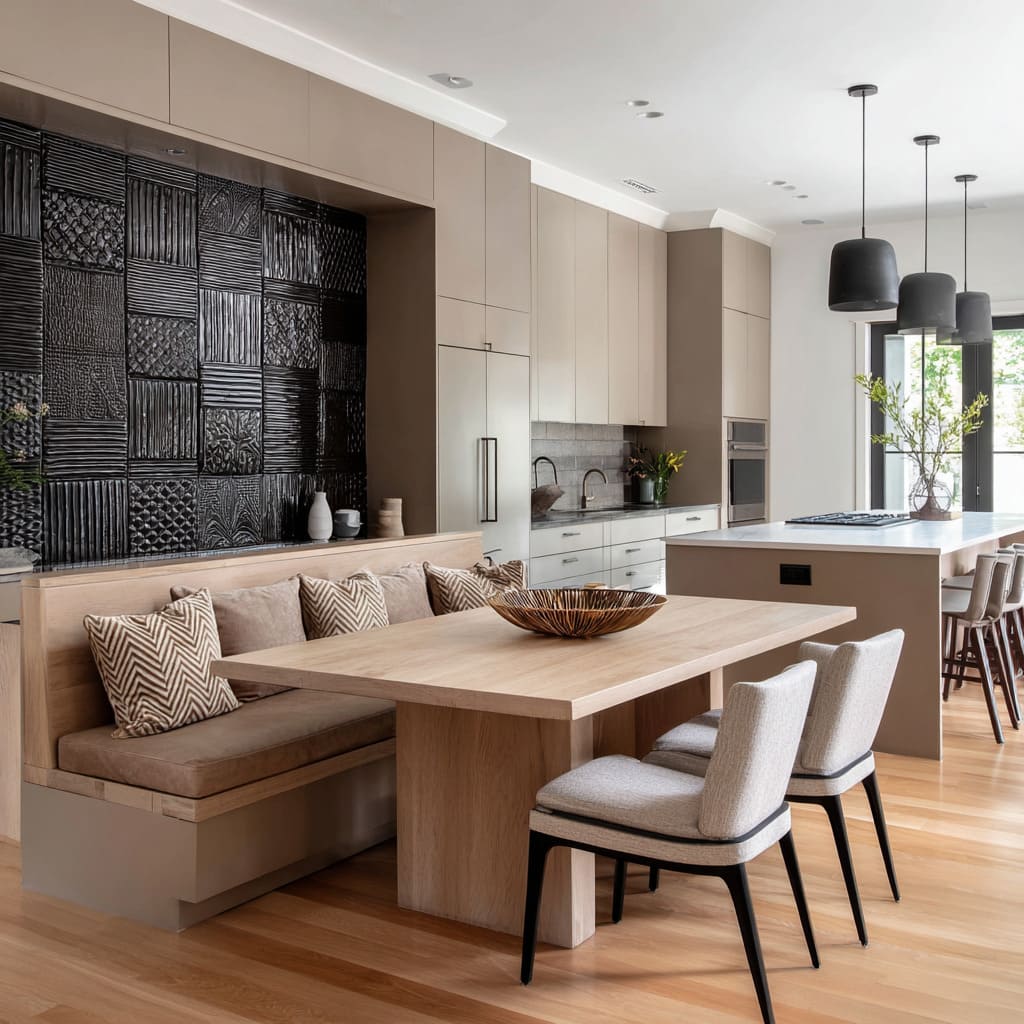
When different cabinet colors meet—black on one side, pale oak on the other—the backsplash becomes the bridge that unifies the two palettes. Even seating zones benefit from this technique: built-in benches against dark textured tile create tactile moments that feel more like art than background.
The wall becomes the glue that holds objects, materials, and proportions together. Instead of existing as an isolated panel, the backsplash performs as the structural rhythm that moves cleanly from one element to the next.
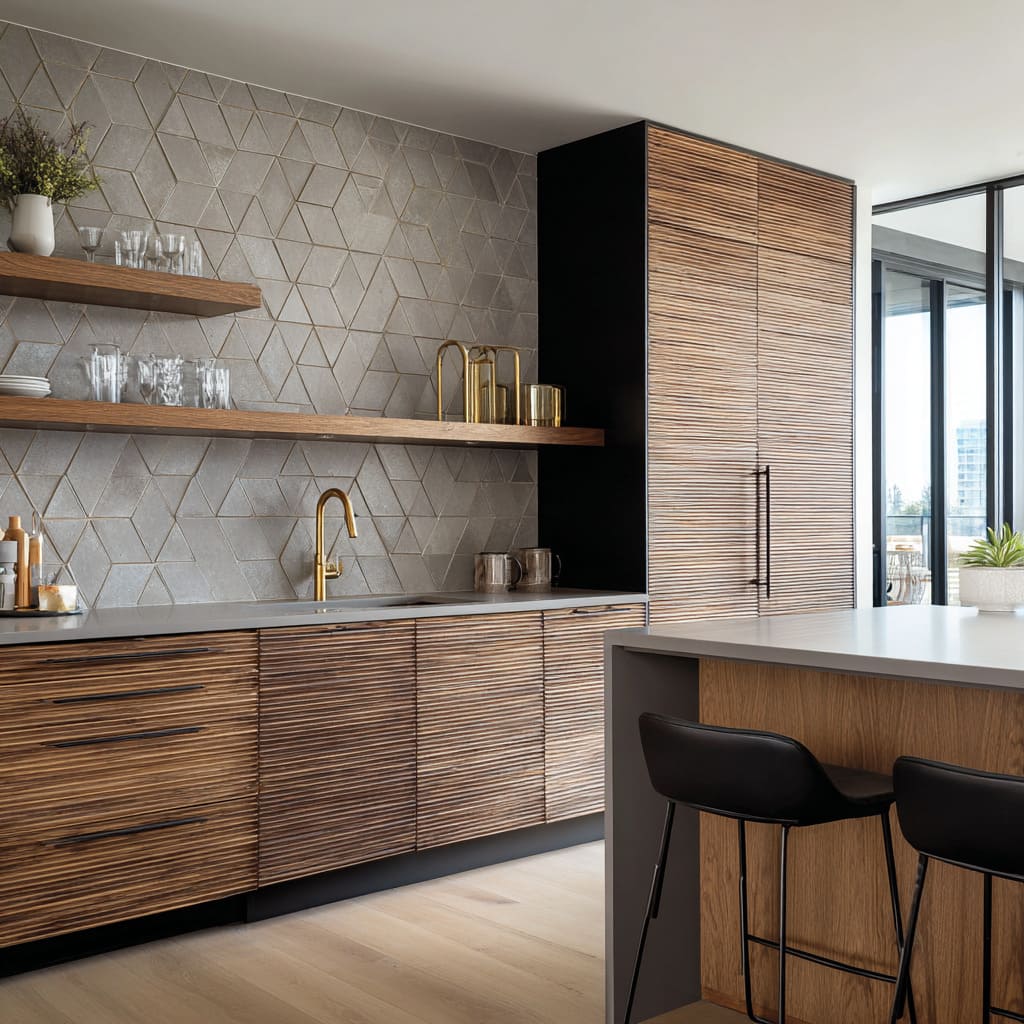
Emotional Atmospheres: Warm Cocoon, Quiet Gallery, or Refined Craft
Modern tile backsplash kitchen designs explore mood more than overt style labels. Terracotta reeds and rich clay tones create a warm cocoon around the cook zone; these surfaces blend shadow and tone into a protective screen that feels grounded and earthy.
By contrast, sculpted dark niches with folded or rippled tiles have a quiet gallery mood, where lighting pulls subtle highlights across the wall like a curated display.
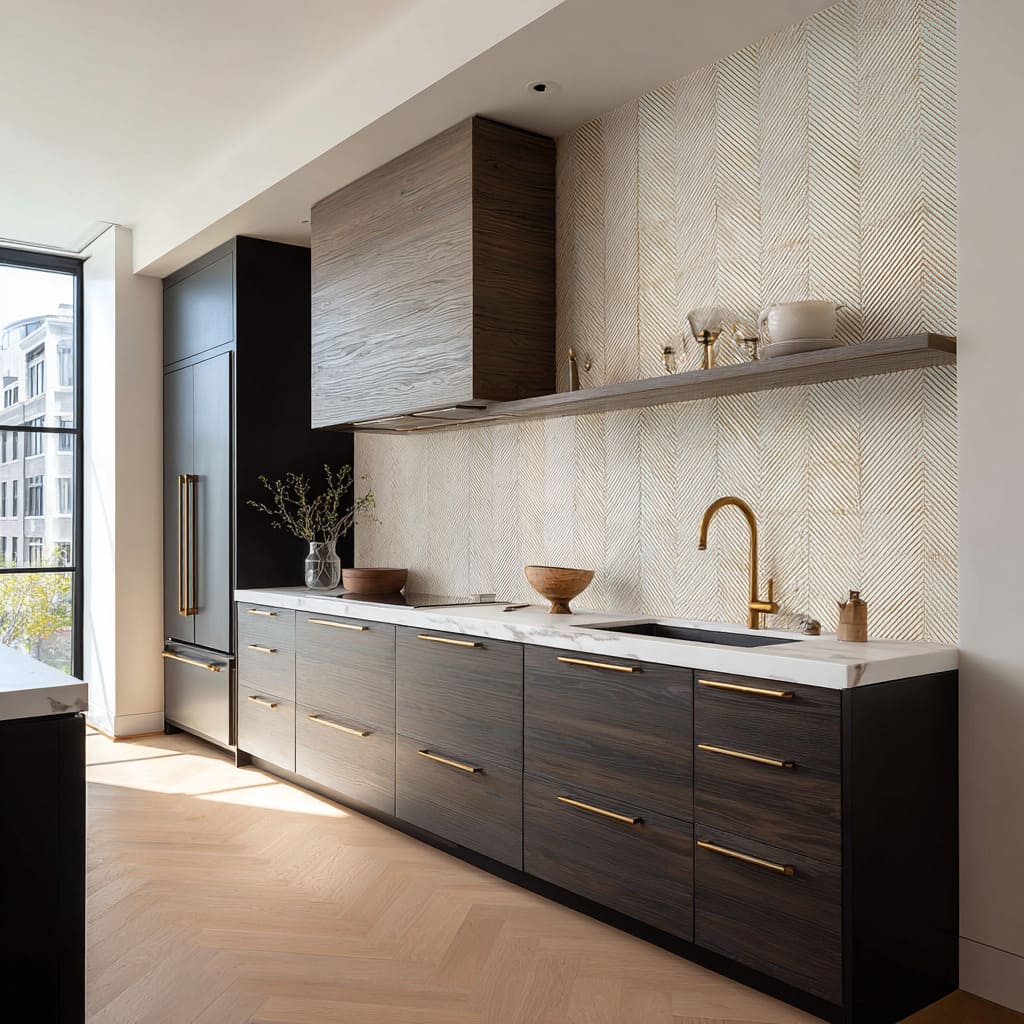
In more refined kitchen concepts, pillowy mosaics, soft square grids, and bead-like surfaces create a crafted atmosphere—calm, handmade, and glowing gently under natural daylight. These moods arise not from strong colors or high contrast, but from how texture, direction, scale, and lighting blend together.
A kitchen with a carved grey stone slab might feel cinematic and moody, while one with shimmering penny rounds feels shaded and fluid. A space with etched polygons feels tailored and structured, while one with sandy reed tiles feels warm and collected.
The backsplash defines the emotional character of the room, turning the cooking zone into a calm retreat, a sculptural focal point, or a crafted surface that softens everything around it.
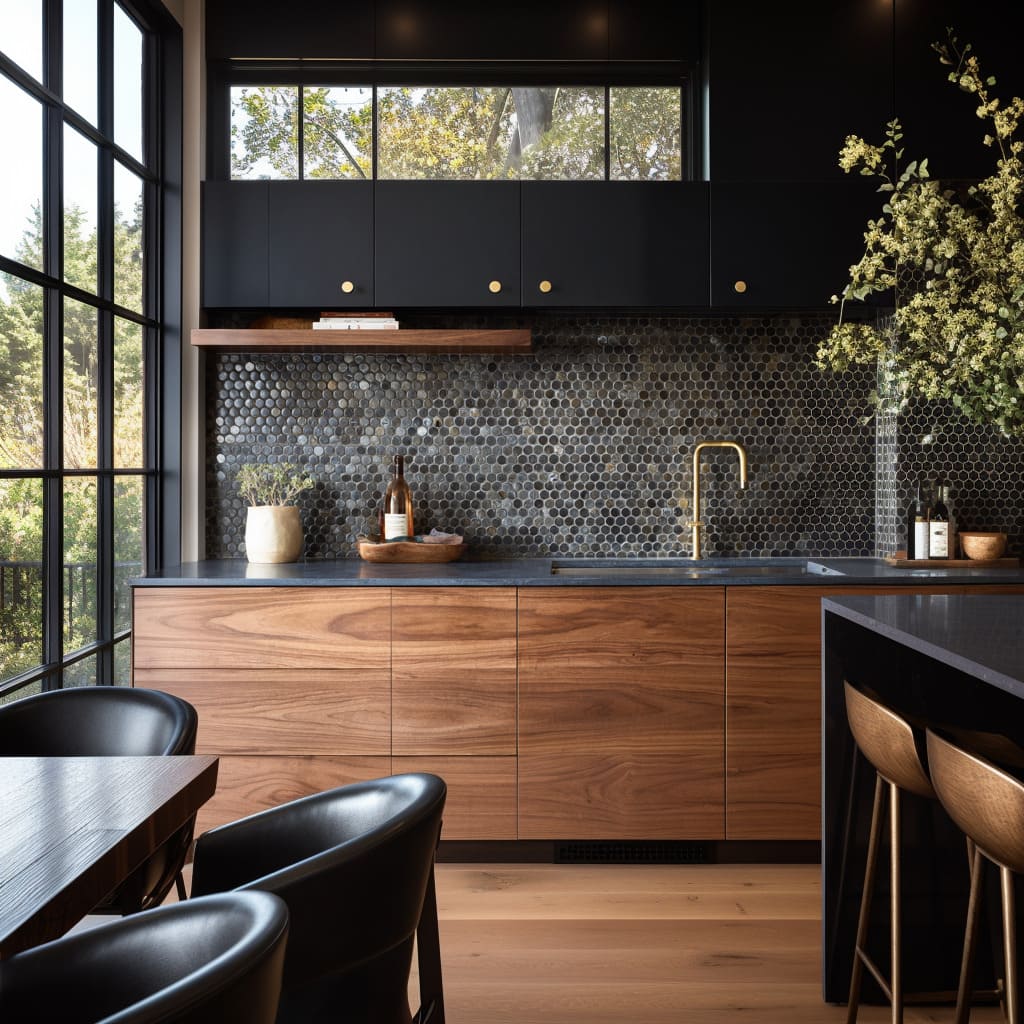
Organizing Surfaces to Support the Backsplash as the Main Visual Story
Many recent backsplash tile ideas succeed because they keep the surrounding elements disciplined, allowing the wall to carry the visual narrative. When the backsplash features micro-tiles, the cabinets stay smooth and hardware remains simple to prevent competing details.
When stone or oversized relief tiles take center stage, objects on the counter remain intentionally sparse. In some kitchen designs, the tile wall forms the only place with active pattern, while the island, shelving, fixtures, and tall cabinets all behave like plain frames that highlight the textured surface.
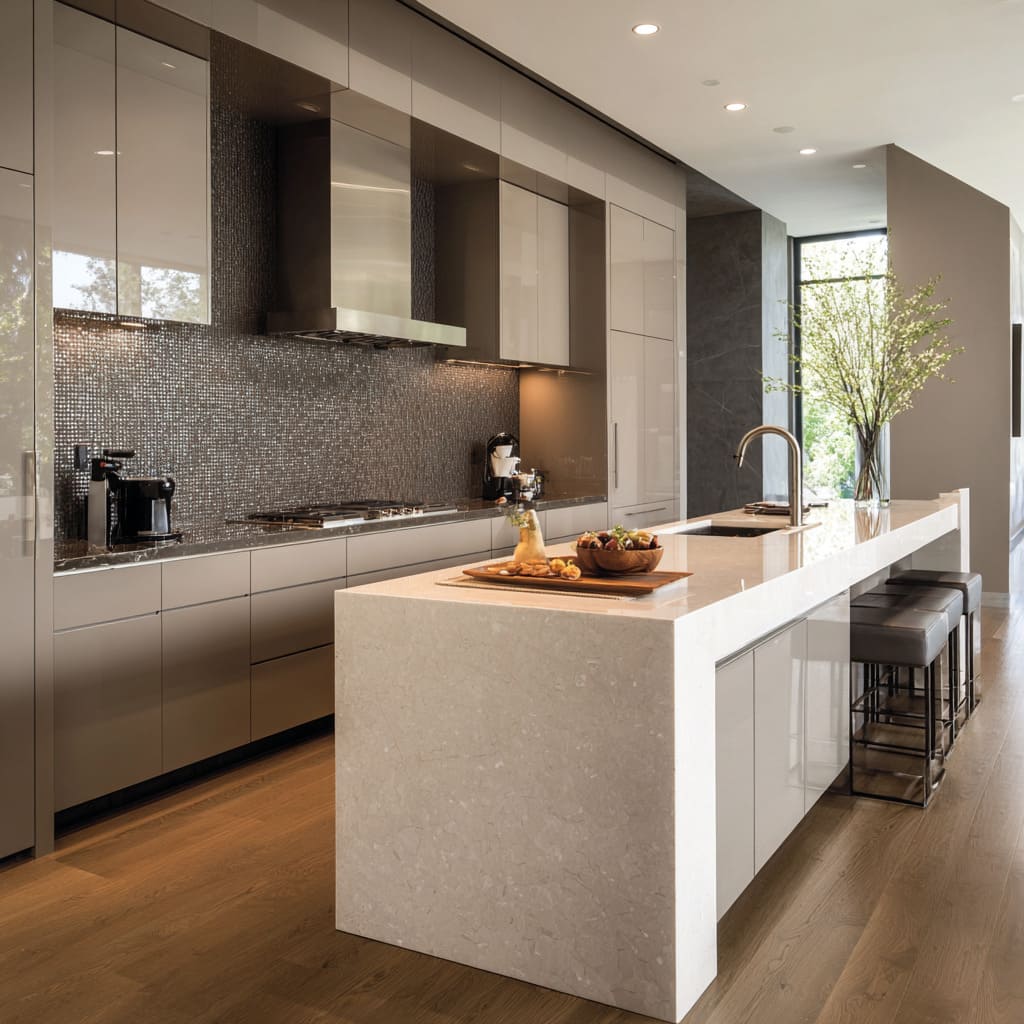
Even in dining nook compositions, where built-in seating runs directly along the tile, the rest of the room often uses light tones and simple lines so the dark, patterned wall becomes the visual anchor. This organization demonstrates a clear idea: one dominant story per elevation.
By keeping the visual energy focused in a single layer—tile, stone, or sculpted wall—the entire room feels composed and steady. This approach keeps even textured or richly patterned surfaces calm and balanced, making the wall work beautifully as the main character in the composition.
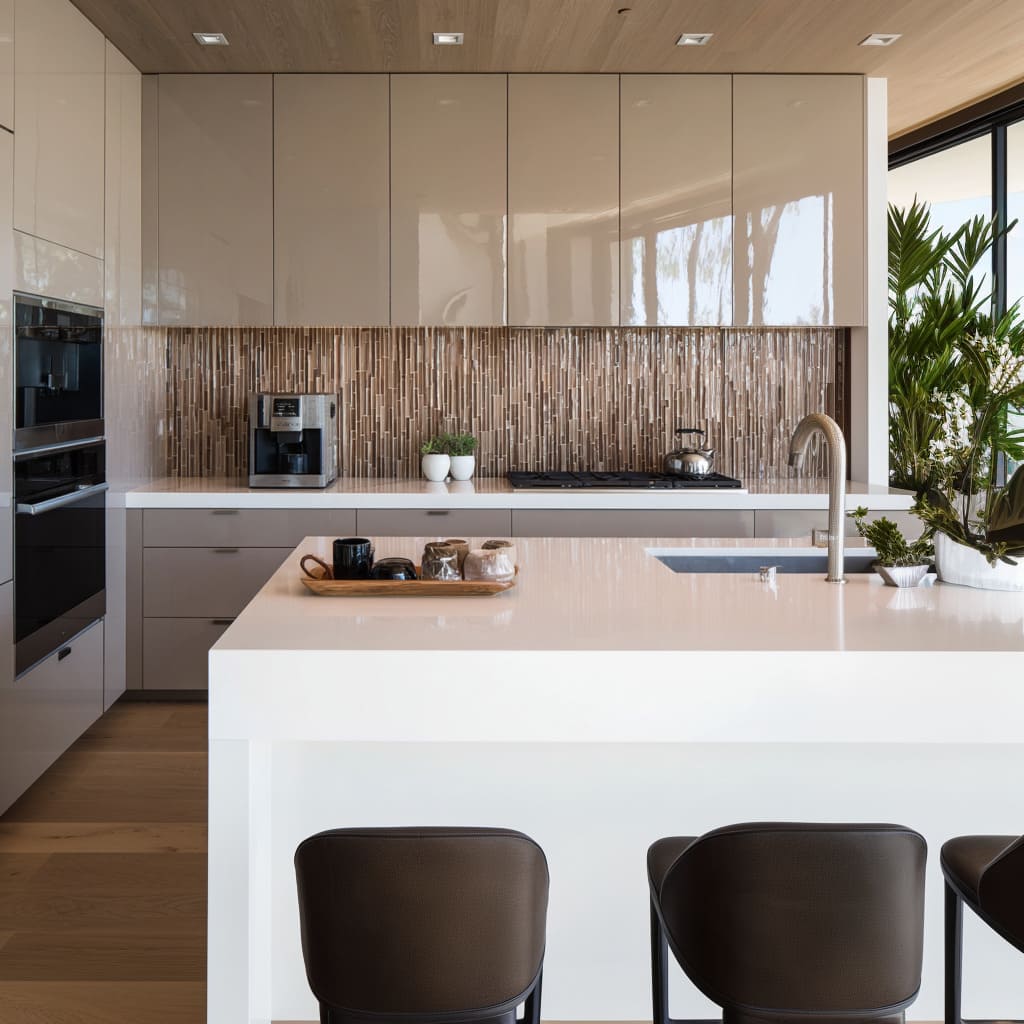
Creative Structuring of Mixed Materials: Tile, Wood, Stone, and Metal in Conversation
Contemporary kitchen splashback tiles ideas often thrive when multiple materials converse through subtle visual links rather than matching tones. Tile grooves echo the ribs in wood-paneled islands; warm grout aligns with brass taps; dark textured surfaces repeat the tone of black appliances; and pale stone shelves match the thickness of tile courses, creating a balanced composition.
In some kitchen designs, the backsplash becomes the intermediary where such materials meet: stone veining is aligned with shelf lines, brass inlays echo the arc of the faucet, and clay tones blend with light wood to soften dark cabinetry. The tile surface is not isolated—it is part of a larger rhythm of materials, each one respecting the others through shared direction, shared thickness, or shared light behavior.
These relationships turn the kitchen into a cohesive interior landscape rather than a collection of surfaces. Tile, stone, wood, and metal coexist as one layered story.
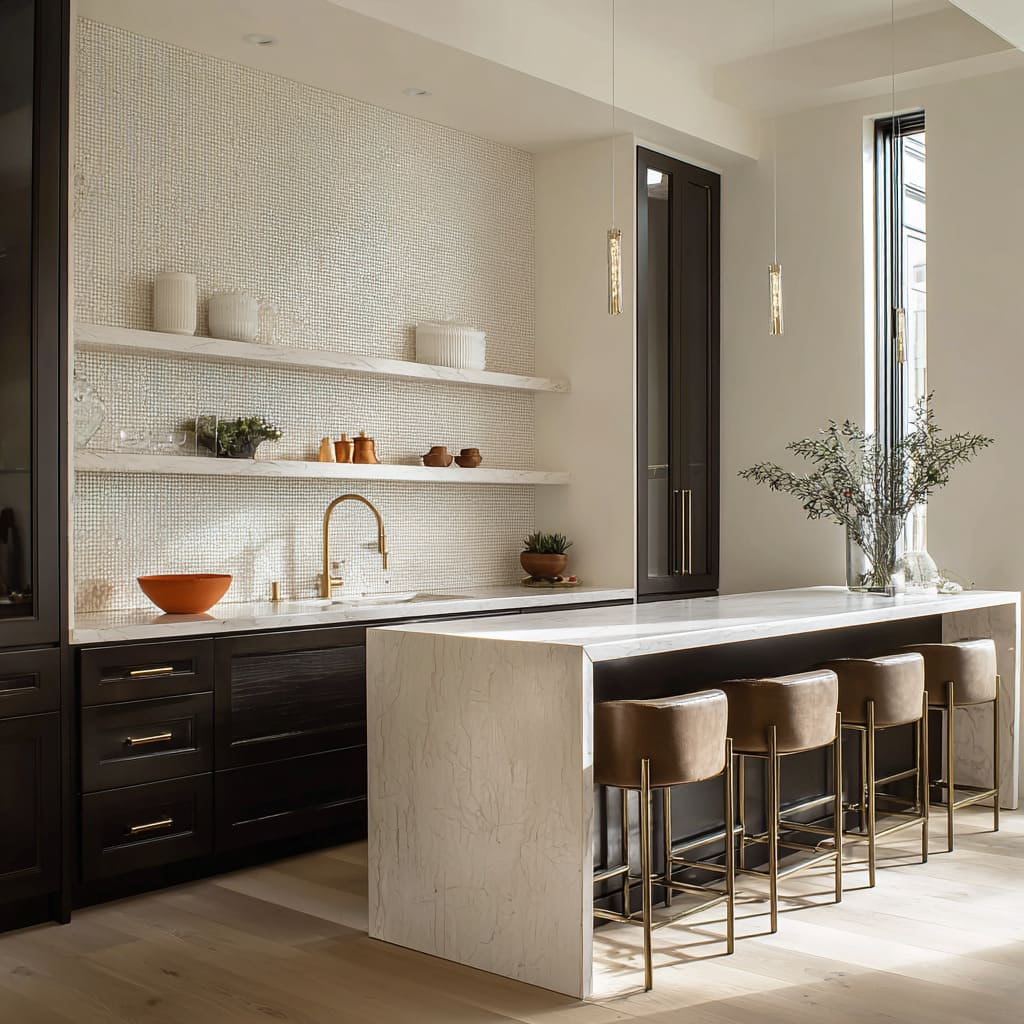
Backdrops That Feel Intentional: The Art of Highlighting the Cooking Zone
One of today’s most striking kitchen back splash tile ideas turns the cooking area into a framed feature. Designers use tall recesses lined with textured tile, dark checkerboards behind dining benches, or full-slab stone walls that behave like dramatic backgrounds for brass hardware.
When the room is arranged around this focal zone, all surrounding surfaces—whether oak seating, pale cabinetry, or low-sheen counters—quietly point the eye toward the tiled wall. Some kitchen concepts use a band of dark relief to balance pale joinery; others use shimmering mosaic to add movement behind a simple cooktop.
In each case, the backsplash becomes the part of the room that carries the story, while the rest of the layout stays calm. This approach ensures that the cooking zone looks composed from every angle in the room, especially when combined with slender lighting, simple accessories, and carefully arranged proportions.