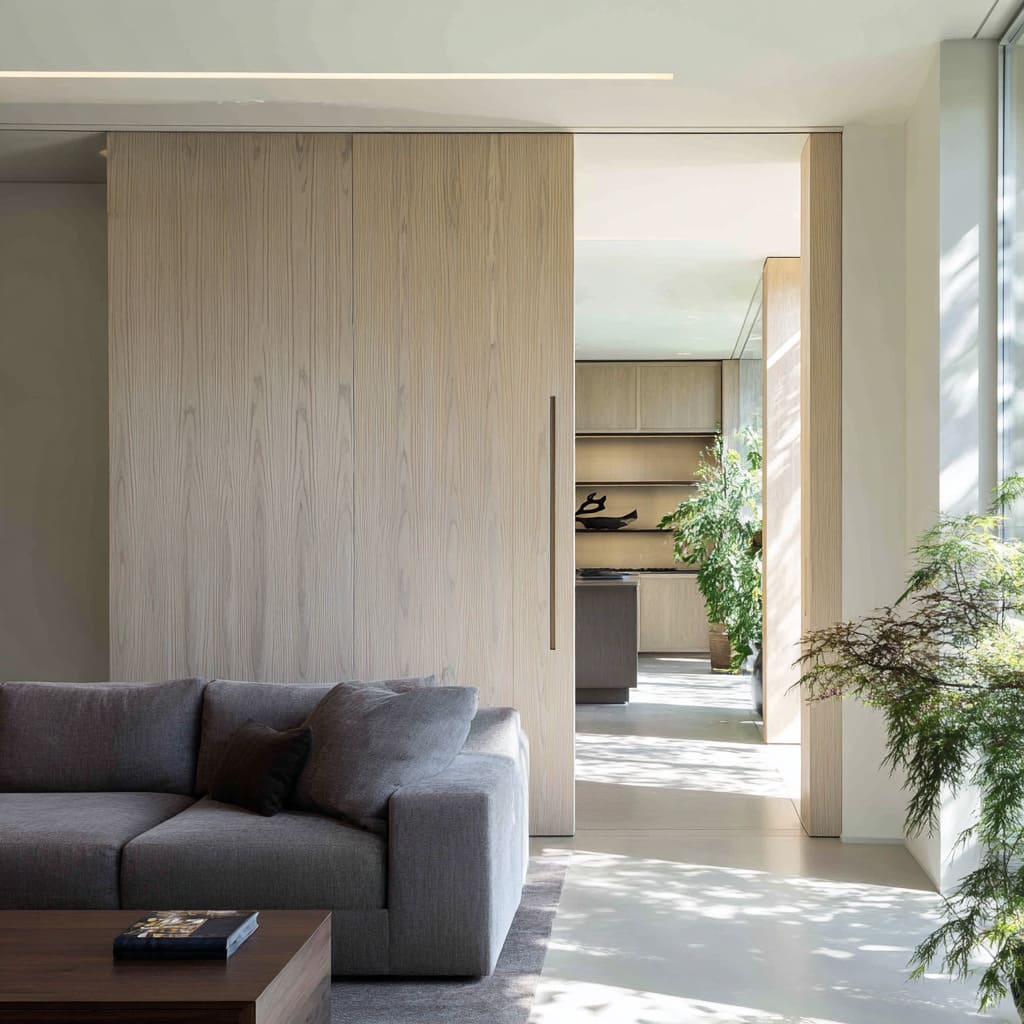
Modern sliding panels can be treated as mobile pieces of architecture rather than separate objects of joinery. Instead of a modest door leaf floating in a white frame, panels often run from floor to ceiling, match the surrounding wall, and conceal their tracks behind quiet soffits or timber fascias.
This gives them the visual weight of a wall that can shift sideways. Full-height proportions, matched jamb cladding, and continuous grain carry the eye upward and outward, so the opening feels taller and more generous than it might be in reality.
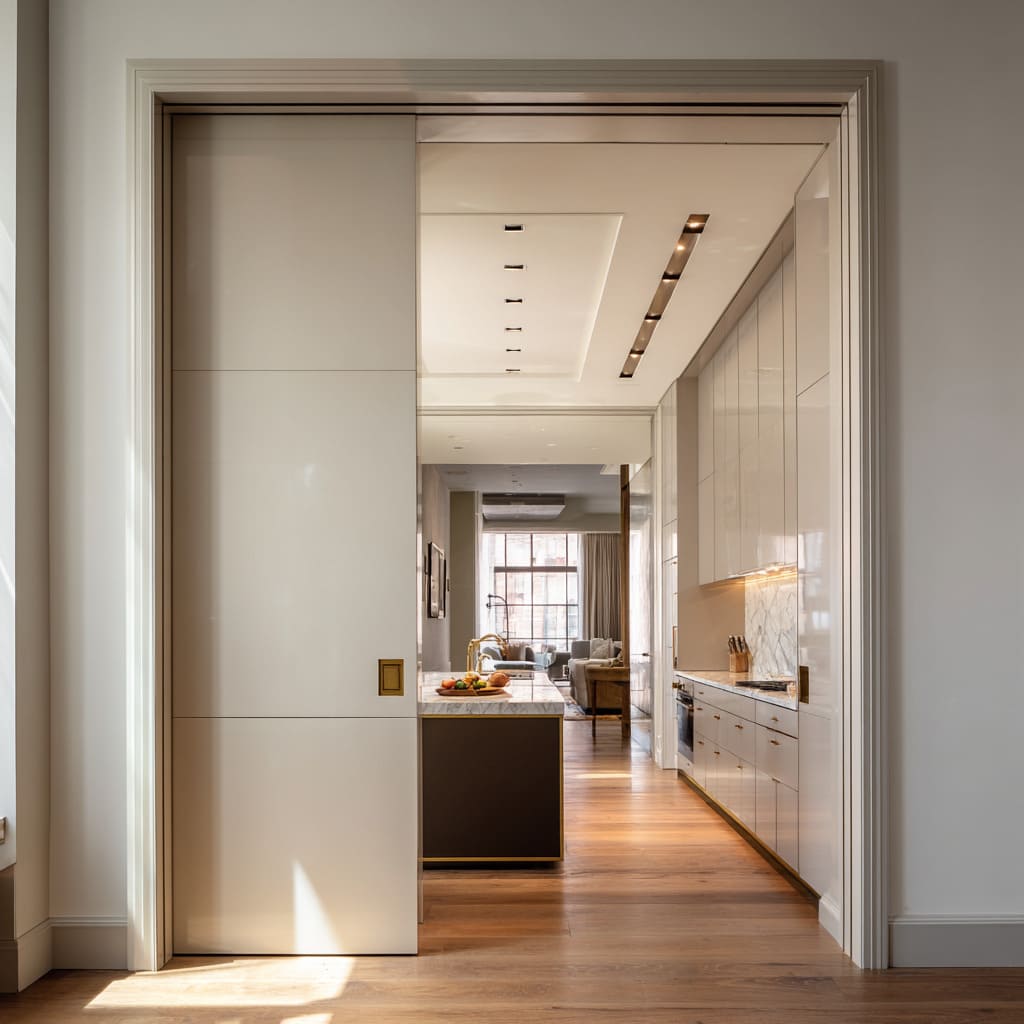
A pale timber panel aligned with nearby cabinetry reads as another vertical bay of the built-in storage, even when it is actually concealing a circulation route or service area. Glossy lacquer in a gentle cream tone can merge with a corridor wall until a slim brass pull catches the light and reveals the leaf as a moving surface.
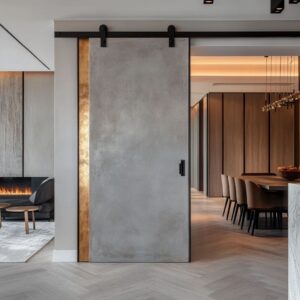
In this kind of sliding door design, the door behaves like a tool for editing architecture: closed, it completes the envelope of a room; open, it subtracts a piece of wall and reveals a carefully prepared tableau beyond. Because the surface is calm and mostly uninterrupted, even small details—the position of the handle, a subtle division into horizontal bands, a shadow line around the frame—feel deliberate and refined, reinforcing the sense that the opening was designed together with the cabinetry, fireplace walls, and ceiling lighting, not added as a later afterthought.
Color as a Transitional Device Between Zones
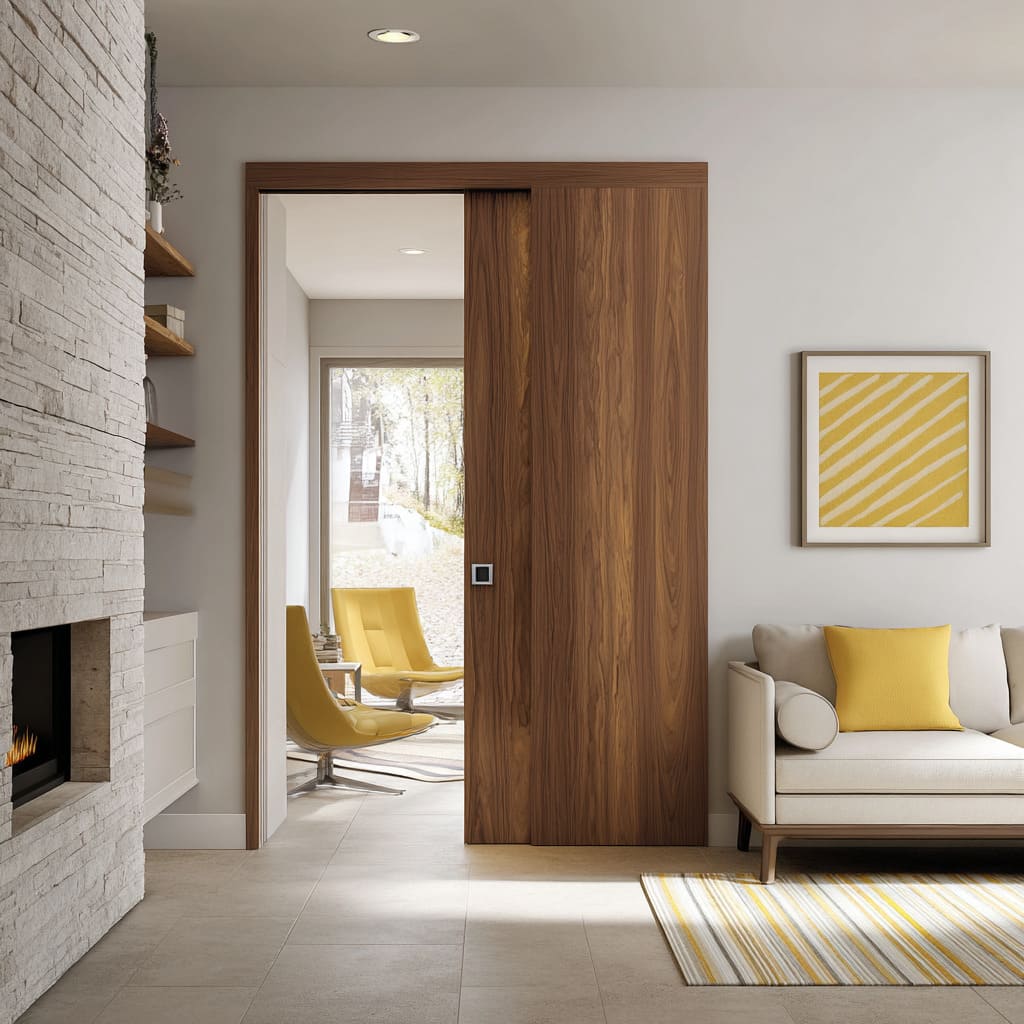
Sliding doors often serve as mediators in the color palette, smoothing the transition from one atmosphere to another. A panel in a mid-range tone—neither the lightest nor the darkest in the sequence—helps bridge softer sitting areas and more task-oriented rooms such as kitchens or studios.
Designers frequently think in tonal gradients: for example, pale floors stepping into warm woods and then into richer joinery. Placing the sliding surface at a transitional point in this ladder prevents abrupt shifts and encourages the eye to move gently through the plan.
Panels can act in three distinct roles within this palette choreography: as buffers that soften contrast; as translators that carry hints of both surrounding zones; and as echoes that share their tone with smaller supporting elements such as lamp bases, art frames, or textile accents. When a door participates in this larger chromatic dialogue, its movement changes not only the floor plan but also the active palette of the interior.
Degrees of Opacity and the Soft Screen Effect
Modern sliding concepts span a spectrum of visual permeability, each offering different emotional and spatial qualities.
Solid Planes
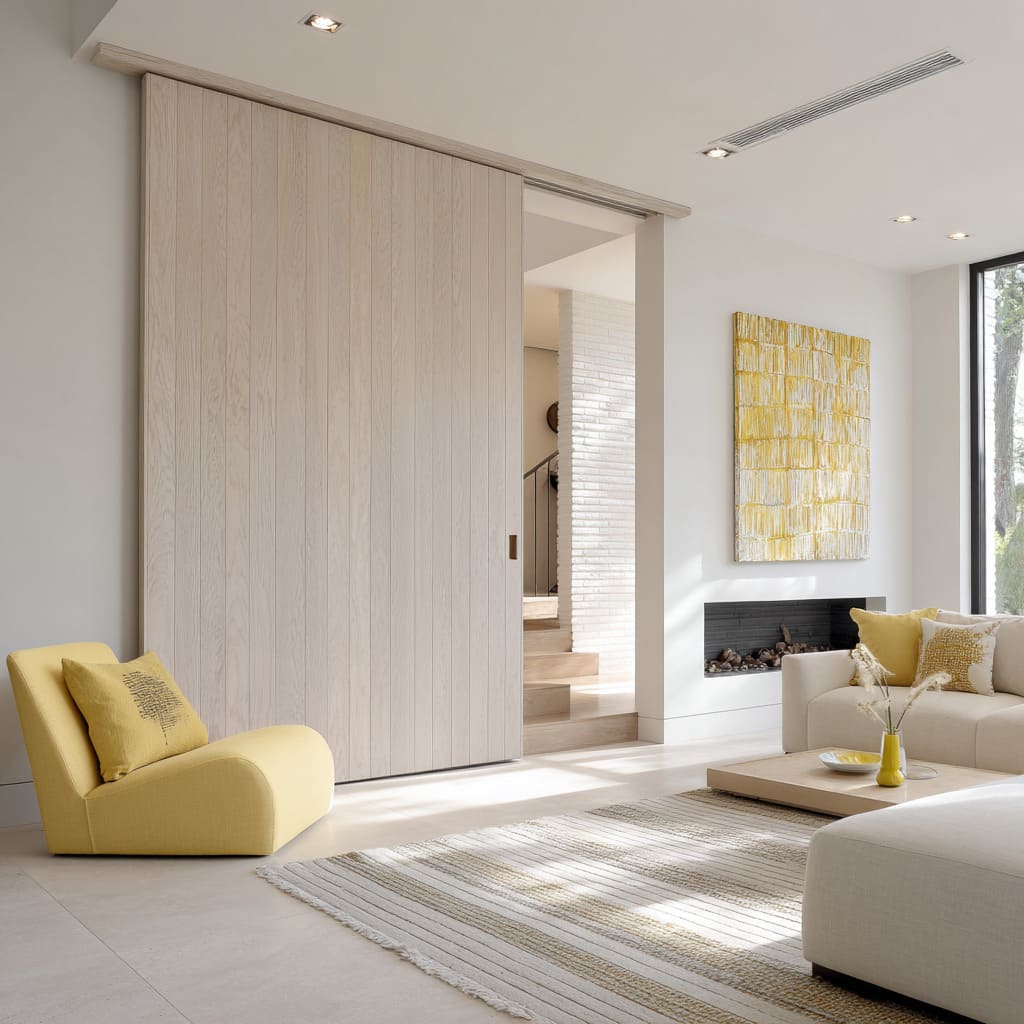
Opaque panels in timber or lacquer give calm and order. They temporarily remove the complexity of what lies behind them, making the foreground elements—sofas, tables, art—feel more anchored.
Because such planes are visually minimal, light gradients or subtle reflections become expressive across their surfaces.
Slatted Filters
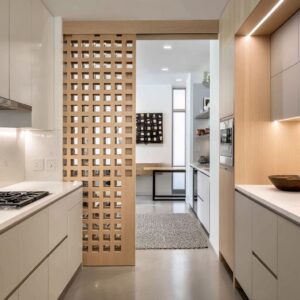
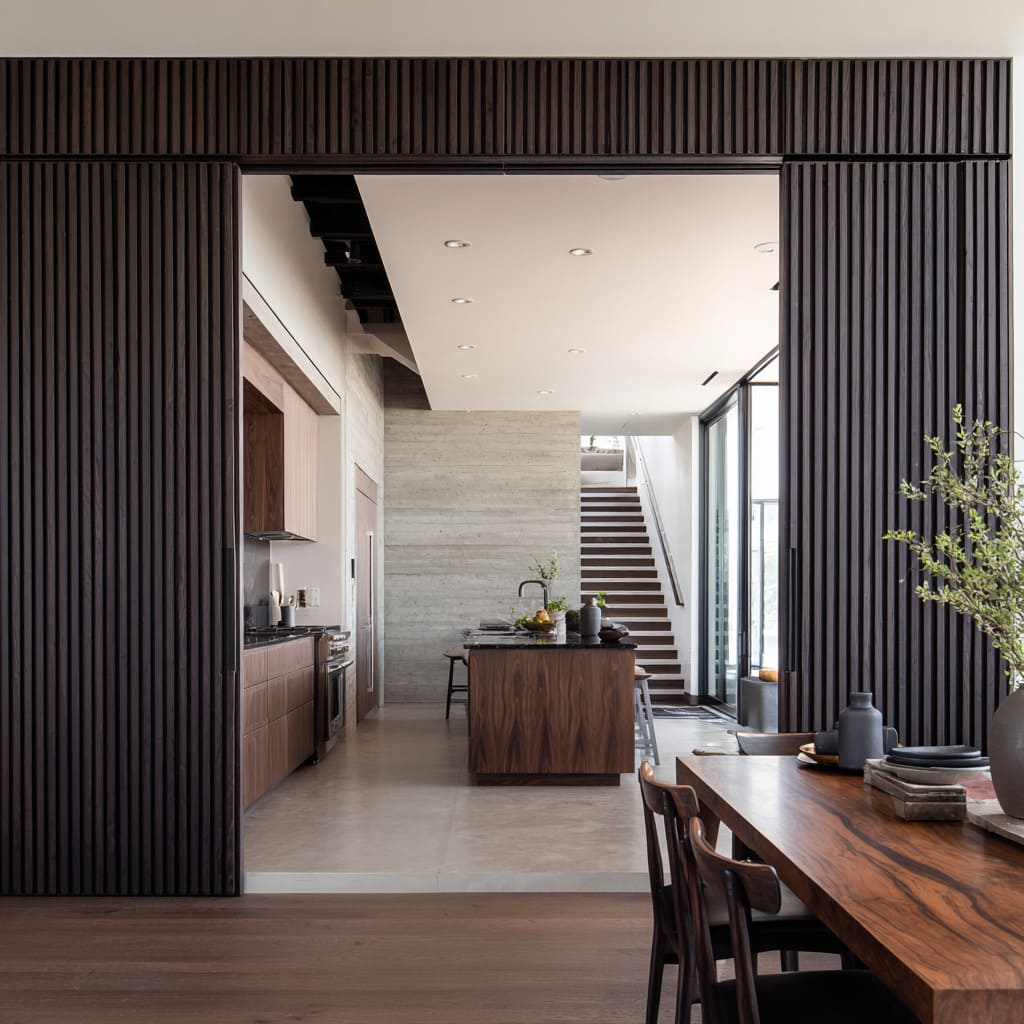
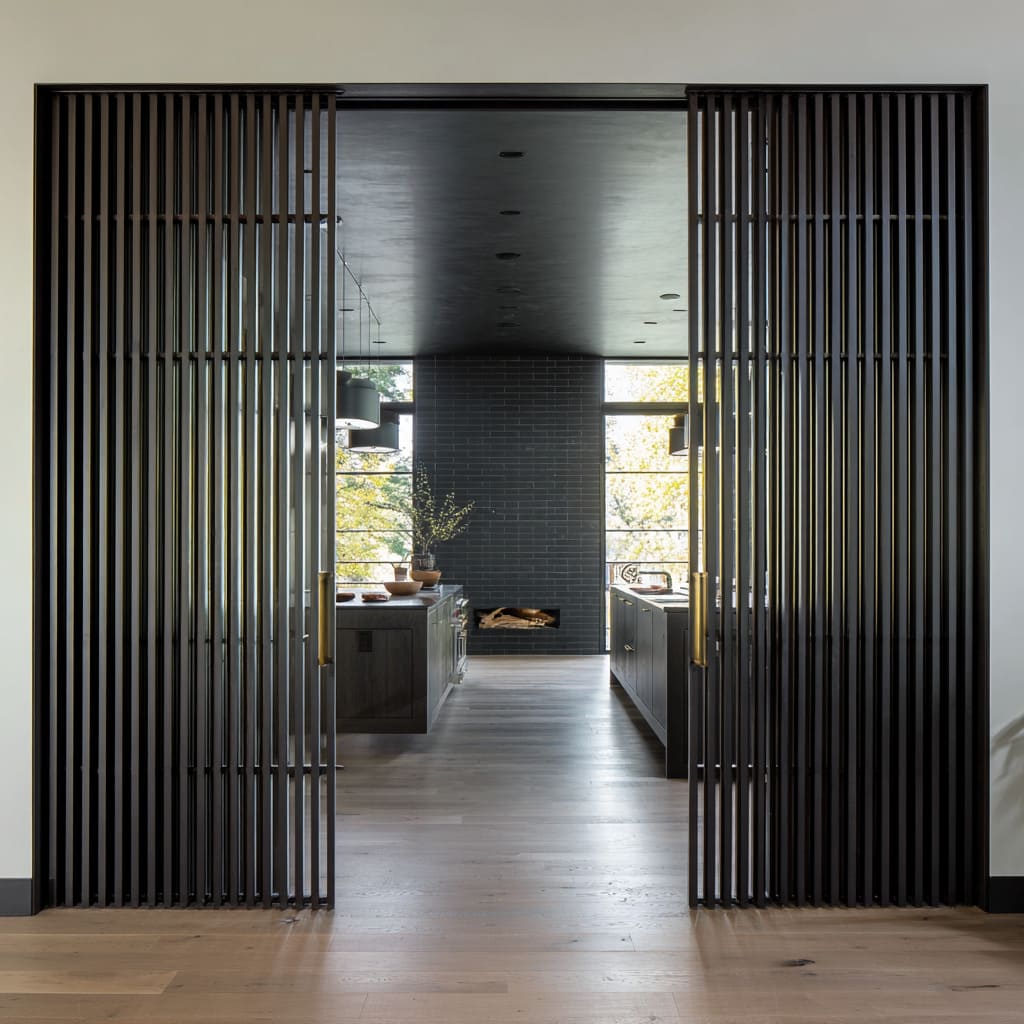
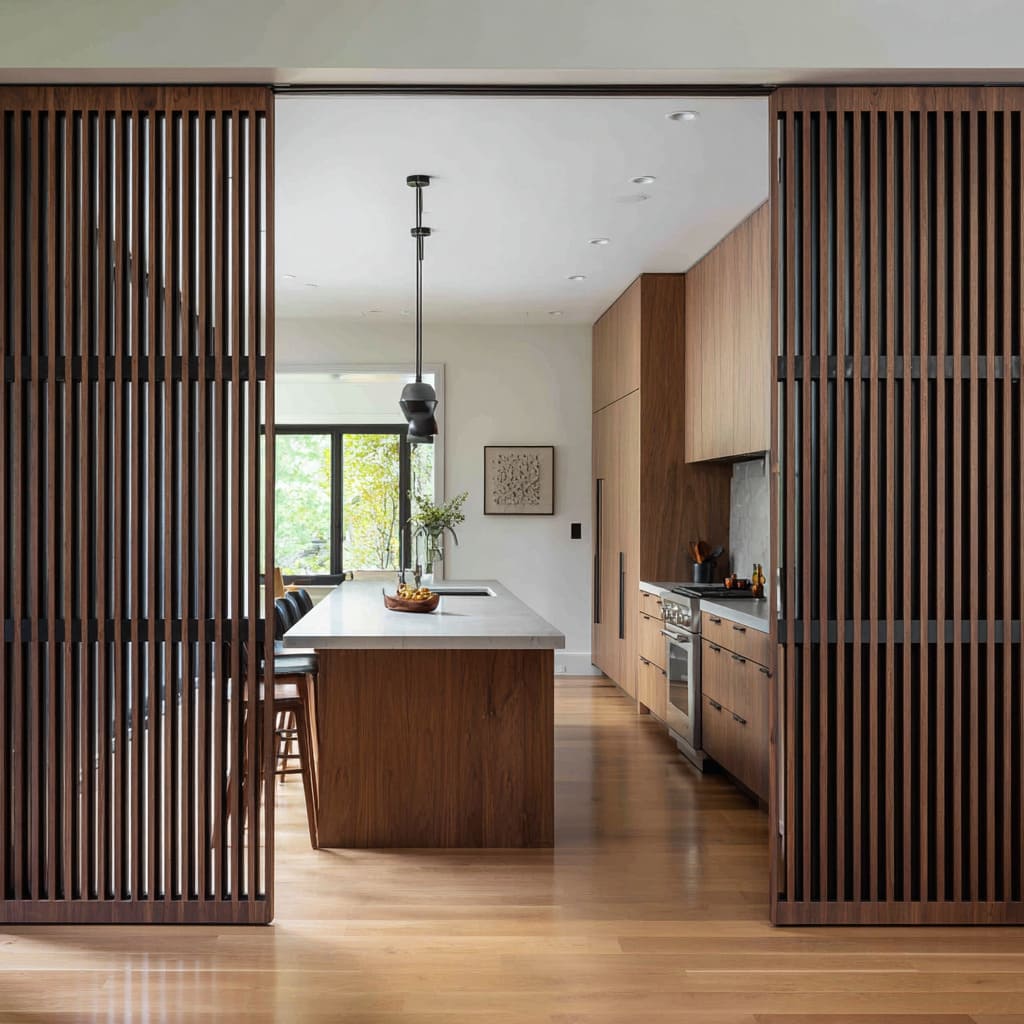
Vertical slats with controlled gaps create a balance between visibility and concealment. Light can slip through, and glimpses of the next zone appear in narrow stripes that shift as one moves past the opening.
When slatted systems align with other vertical elements such as battens or mullions, they reinforce the interior’s underlying rhythm.
Textile-like and Luminous Screens
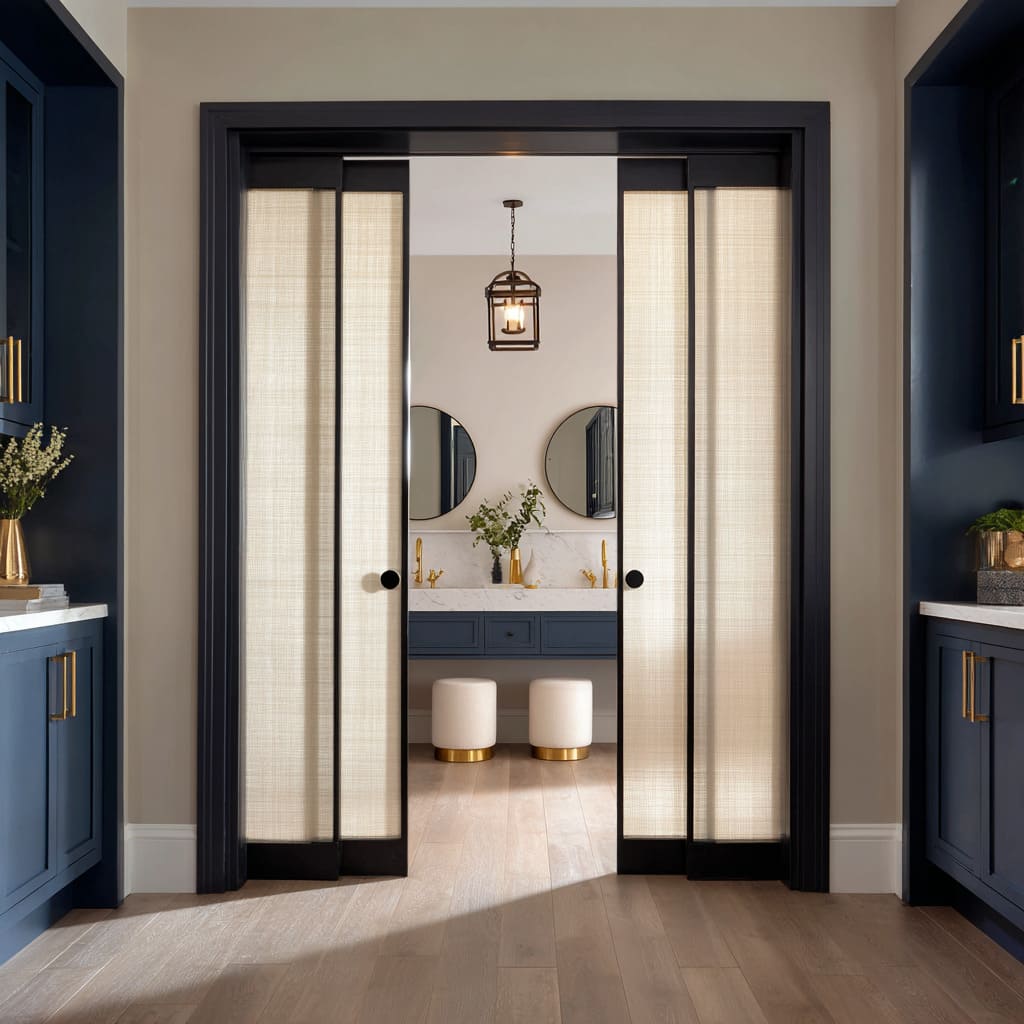
Panels with woven, mesh, or frosted infill act more like soft, luminous surfaces than partitions. Light behind them becomes diffused, creating gentle silhouettes and a sense of glow.
These screens introduce a micro-texture that enriches otherwise plain walls, and they can serve as both ambient lighting sources and privacy layers.
Together, these approaches define a flexible vocabulary of sliding door ideas in which the threshold becomes a site for shaping light, privacy, and atmosphere.
Rhythm and Geometry: Stripes, Grids, and Bands
Sliding panels often reinforce or counterbalance the interior’s dominant geometry. When a room relies heavily on vertical repetition—timber battens, tall cabinets, linear wall treatments—the sliding leaf can adopt matching vertical grain or slatted construction to extend that order.
Layering multiple depths of vertical rhythm creates a sense of visual calm even when several materials are involved.
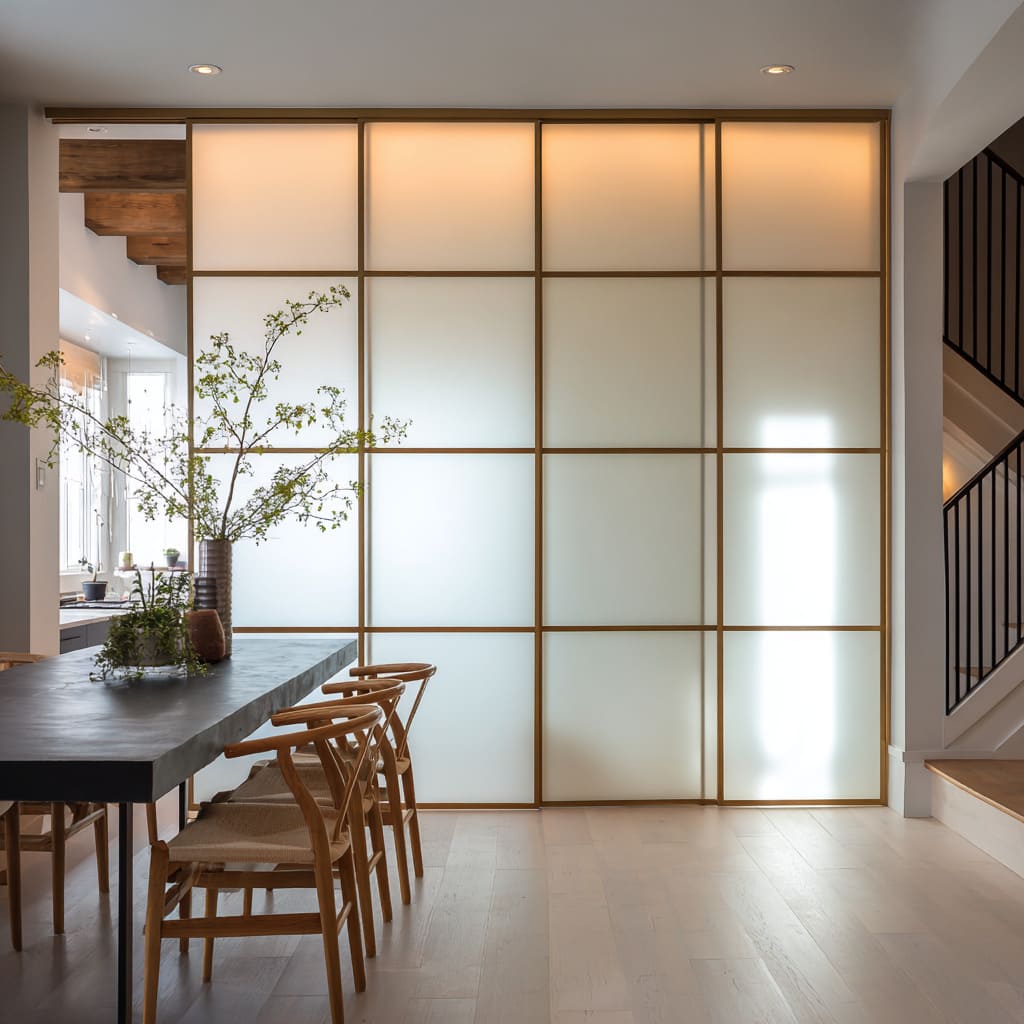
In more graphic interior designs, panels may use grid-like divisions that contrast with long floorboards or horizontal brick courses. The grid acts as a stabilizing visual field and lends a structured, gallery-like presence to the threshold.
Horizontal banding on tall doors can subdivide height into calmer proportions. Whether striped, gridded, or banded, these geometric strategies determine how the door participates in the larger interior pattern, ensuring that movement at the opening feels integrated with the overall design logic.
Light as a Co-Author of the Threshold
Sliding leaves shape the behaviour of both natural and artificial light. Smooth, pale surfaces reflect daylight across the room, turning the door into a gentle light modulator.
Timber graining or stone-like textures reveal their figure when side-lit, giving the panel depth even without ornament. Slatted constructions allow narrow beams of light to pass through, creating shifting patterns on floors and adjacent cabinets.
As the door moves, these patterns animate the space and subtly change the perceived depth of the rooms. Translucent screens amplify light even more, glowing softly when a brighter room sits behind them or when concealed fixtures provide intentional backlighting.
In social areas such as dining zones, backlit grids or shoji-inspired systems can become both ambient lighting and visual centerpiece, enhancing the atmosphere during evenings. Across these variations, the sliding surface becomes an active part of the lighting strategy rather than a passive backdrop.
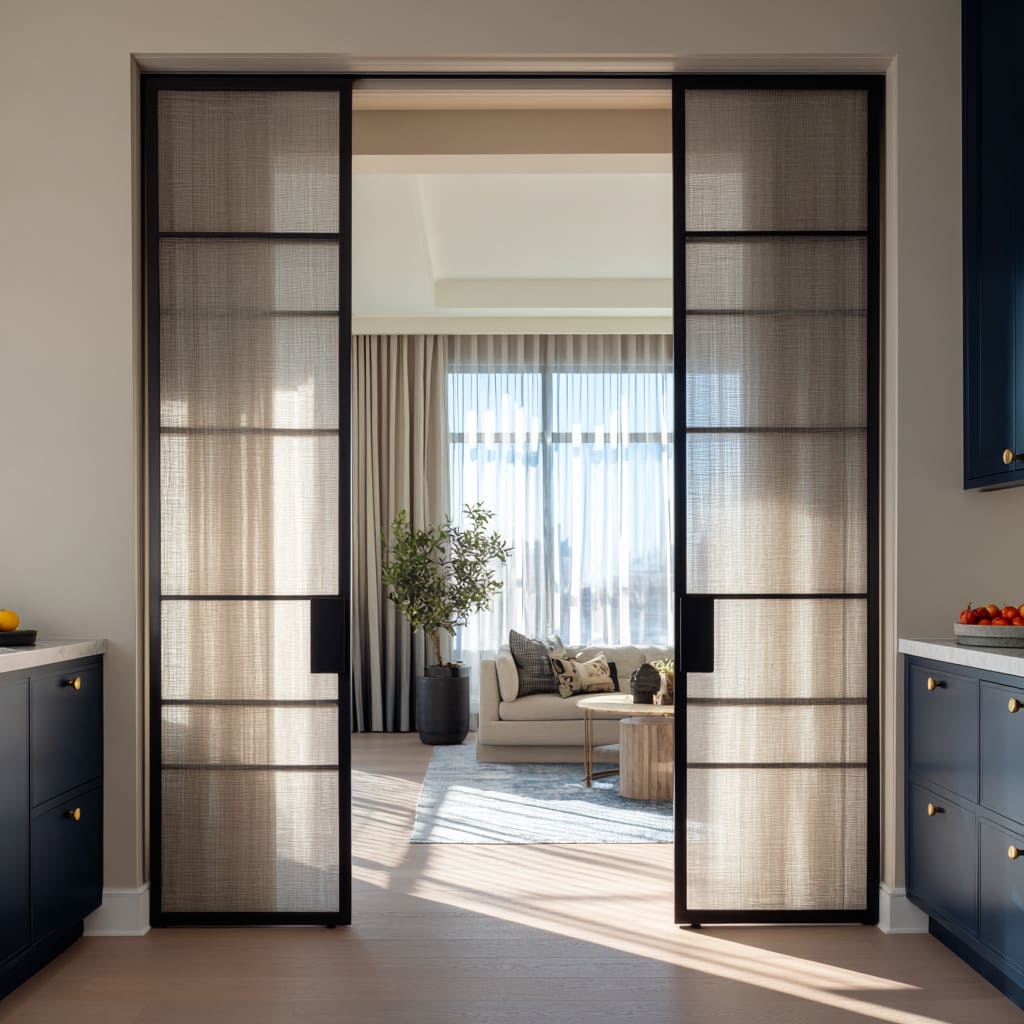
Framing Views and Editing Space
Sliding panels influence not only how spaces connect but also how they are visually edited. Instead of simply opening the full width of a room, many designs treat the threshold as a framing device.
By aligning focal elements—such as a central table, pendant light, or art arrangement—with the opening, the adjacent space becomes a composed vignette when viewed through the doorway.
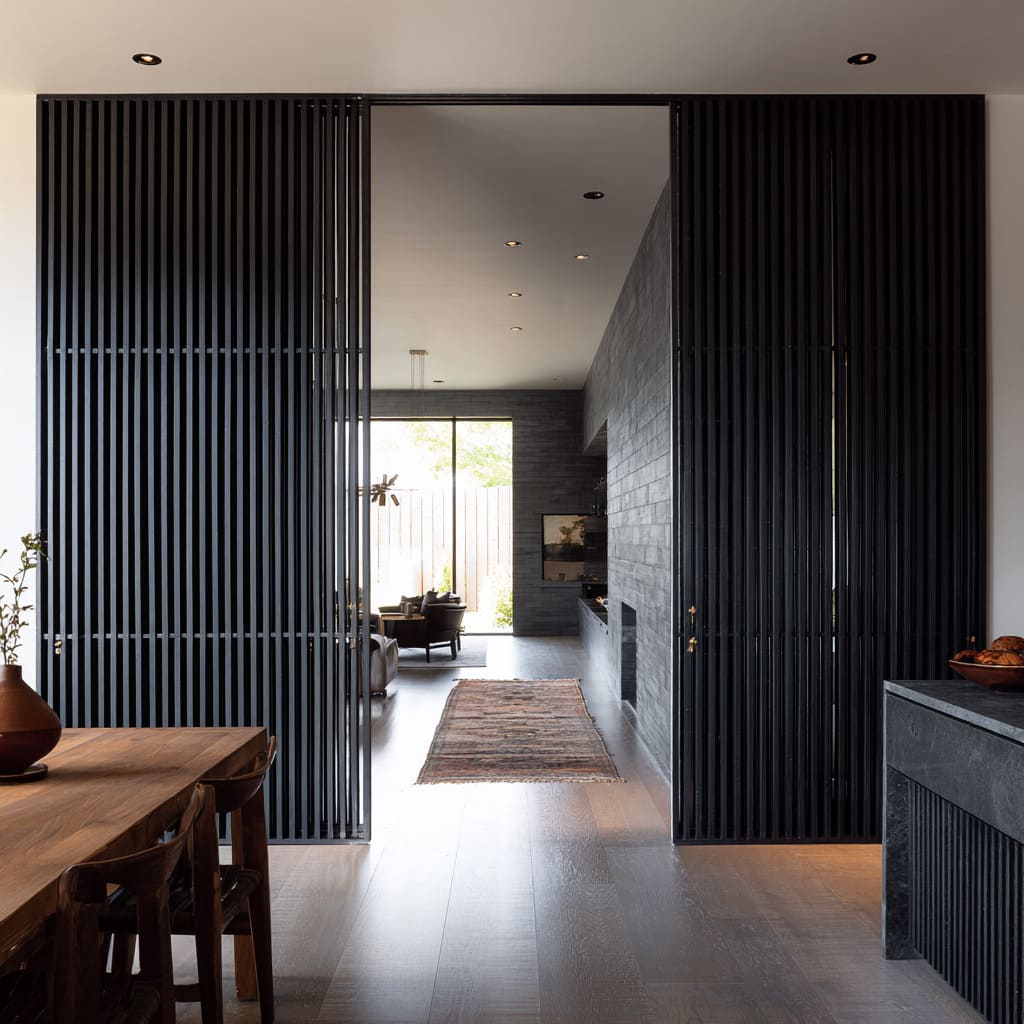
Asymmetric openings are equally intentional. Allowing the door to reveal only part of a room, or only a fraction of a background wall, creates a sense of depth and invites the viewer to imagine the unseen continuation.
Some interiors take advantage of intermediate panel positions: overlapping slats or gridded frames can generate layered patterns, turning a half-open state into a visually rich composition. These strategies elevate the threshold into a tool for curating spatial experiences, where each degree of openness presents a distinct view.
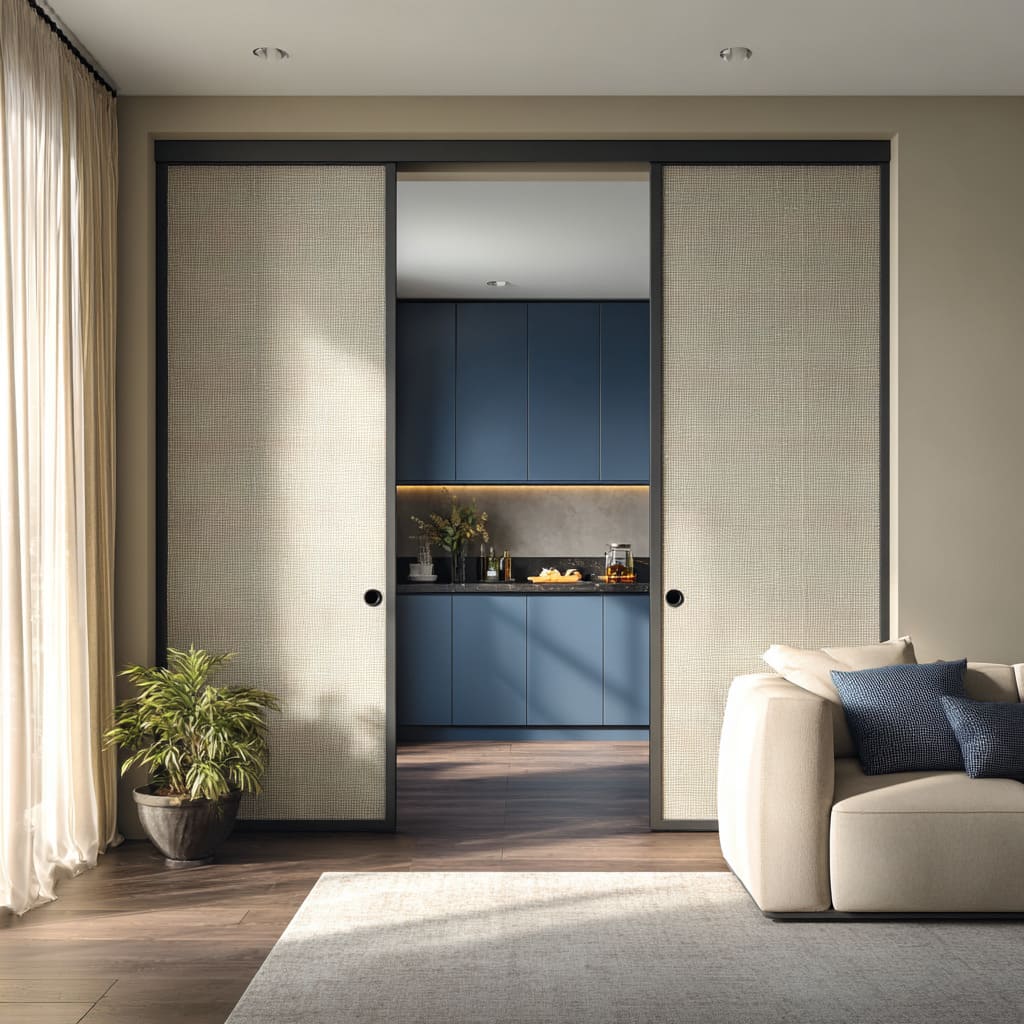
Furniture, Rugs, and Accessories at the Threshold
The surroundings of a sliding opening are often arranged to reinforce the panel’s architectural role. Seating may be placed close enough to acknowledge the sliding leaf as part of the enclosing wall, yet with a small intentional clearance that signals its mobility.
In dining or lounge settings, maintaining a clean strip of floor in front of the panels allows the threshold to breathe and prevents visual clutter from competing with the sliding surface.
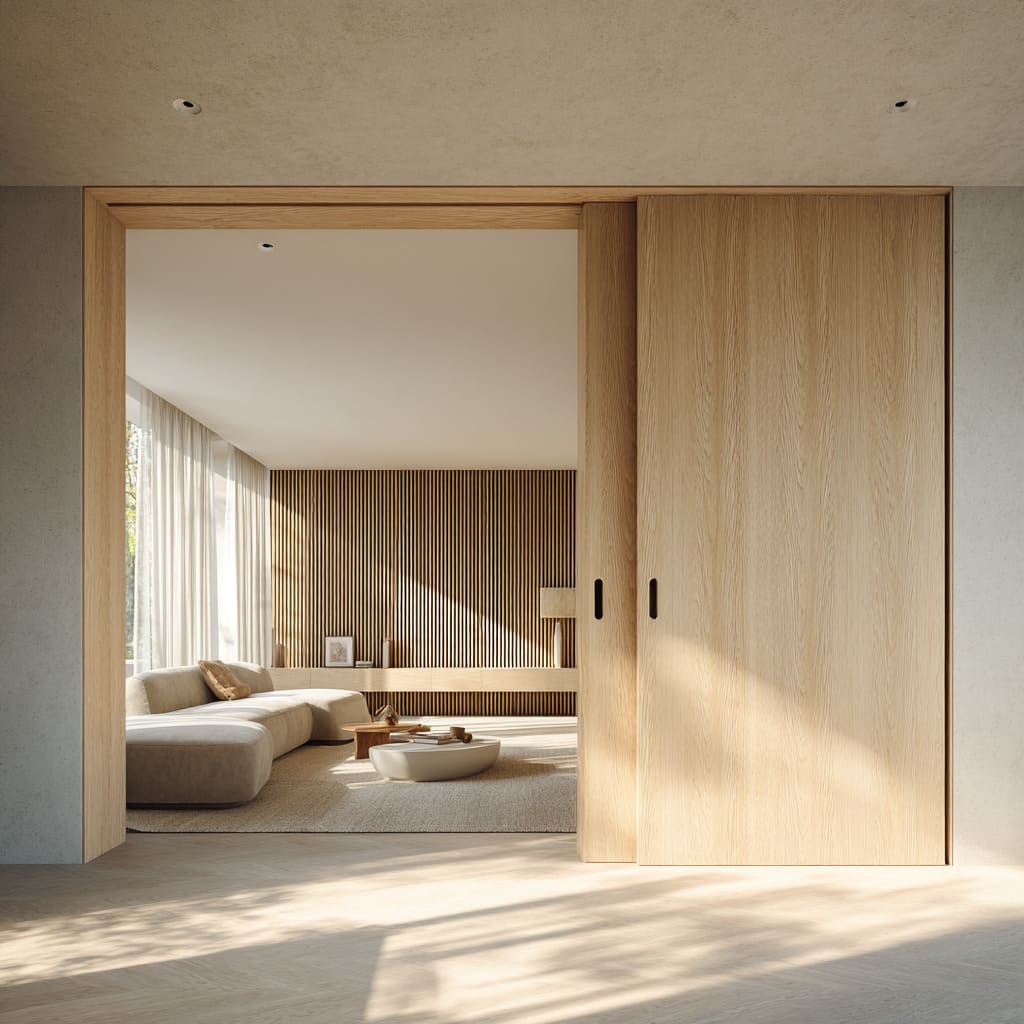
Rugs frequently stop short of the doorway, distinguishing the primary activity zone from the transitional zone without breaking flooring continuity. Meanwhile, colour accents—perhaps a tone repeated in cushions, ceramics, or artwork—can echo the door finish and create a visual thread between spaces.
Repetition of form also plays a role: circular pulls may resonate with rounded furniture silhouettes, while square hardware can relate to rectilinear art or shelving. These coordinated gestures ensure that the sliding panel participates harmoniously in the broader interior composition.
Mood, Intimacy, and Spatial Behaviour
Sliding systems shape the emotional tone of interiors by modulating openness, privacy, and visual complexity. In their closed state, they can hide the bustle of kitchens or work areas, allowing nearby rooms to function as quiet, composed retreats.
Fully open, they create long, connected vistas that encourage sociability and fluid movement. Partially open, they break large plans into gentle pockets while still allowing light and sound to mingle.
Different material choices heighten these effects. Slatted doors maintain a sense of connection even when obscuring details; translucent screens provide privacy without losing brightness; solid panels offer the deepest sense of enclosure.
These conditions allow interiors to shift between focused, intimate modes and expansive, interactive modes without altering furniture or layout. In effect, sliding panels influence how daily rituals unfold—morning calm, evening gatherings, quiet work sessions—and how each zone relates to the next.
Sliding Panels as a Broader Interior Language
Taken together, these strategies form a wide-ranging vocabulary in contemporary interiors: sliding surfaces as moving walls, luminous planes, vertical filters, or architectural portals. They link materials across rooms, extend geometric rhythms, shape how daylight spreads, and orchestrate curated views.
They interact with rugs, furniture, and small accents to create transitions that feel composed rather than accidental.
This broader approach to sliding ideas shows how the threshold can become one of the most expressive elements in modern interiors. Whether solid, slatted, translucent, or backlit, the sliding panel acts not merely as a divider but as a participant in the spatial character of the home.
Through surface, geometry, light, and placement, it establishes a refined continuity between rooms while allowing each to shift in mood and behaviour with a simple sideways movement—an adaptable design strategy that continues to shape the evolution of contemporary sliding door ideas.