A modern blue and silver living room design thrives on balance—the kind that quietly controls the mood through subtle rhythm instead of loud color blocking. Silver often plays the structural and reflective role, while blue fills the emotional space.
The result feels calm but never cold, luminous without glare. Silver outlines the architecture; blue becomes the air within it.
Together, they form one of the most visually stable palettes for contemporary living rooms, especially when softened by natural textures and warm undertones that stop the scheme from drifting into pure grayscale minimalism.
The Visual Temperature of Blue and Silver
In well-orchestrated blue and silver living room ideas, color temperature is the silent organizer. Blue contributes psychological depth—powder, denim, or steel tones each shape the atmosphere differently—while silver regulates light, tracing the boundaries where blue begins and ends.
Pale silver finishes behave like water, carrying reflections across furniture edges and glass surfaces.
This interaction keeps the eye moving even in quiet compositions. When blue dominates as a wall color or upholstery tone, silver steps in as the light manager, allowing natural or artificial glow to glide gently across metal edges, mirrored bases, and polished frames.
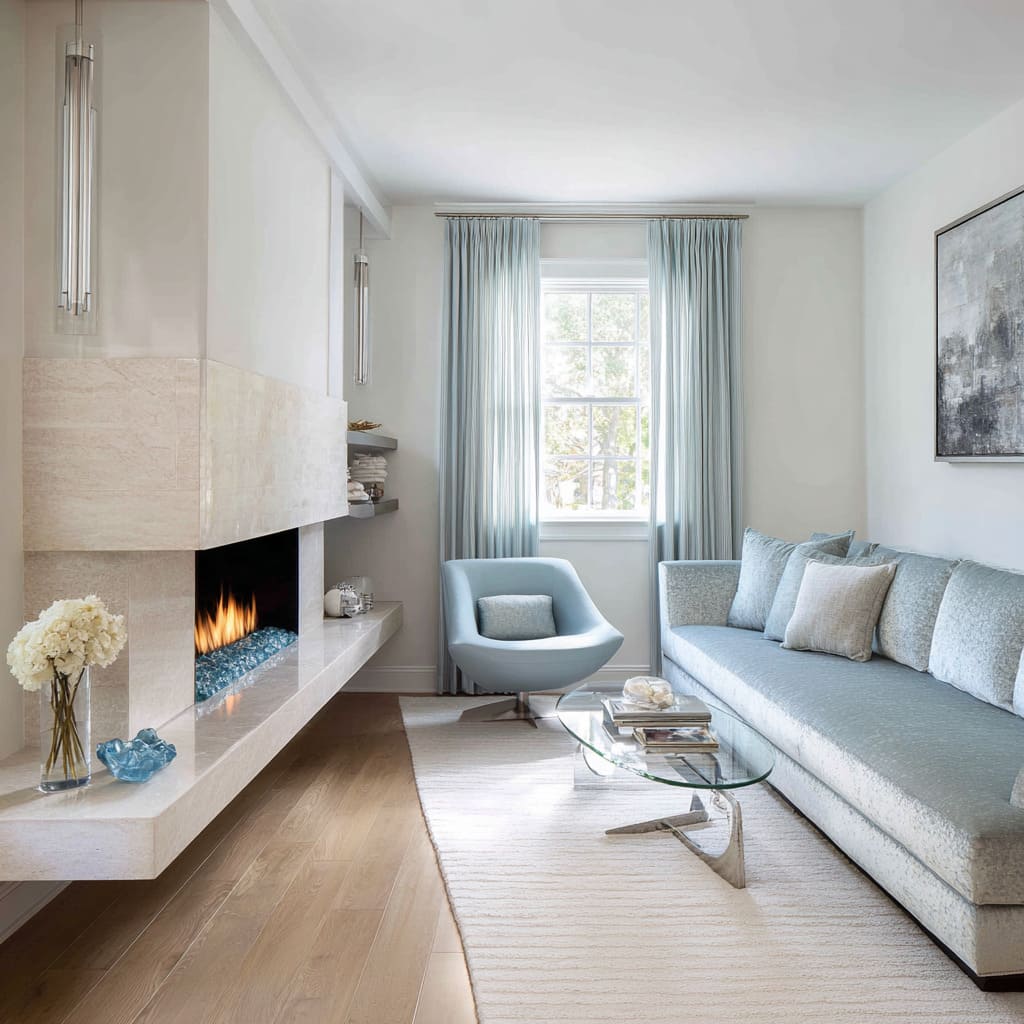
A softer blue palette, from sky to fog, absorbs daylight like fabric, while brushed nickel and satin chrome reintroduce sparkle without turning glossy. The trick found across many silver and blue living room ideas is that reflectivity is never constant: it’s tuned by surface texture.
The brushed metal on table bases and polished trim on sconces behave differently depending on distance and direction of light. This controlled shift in reflection gives the space its visual movement—the eye perceives flicker and calm at once.
The Role of Silver as a Structural Accent
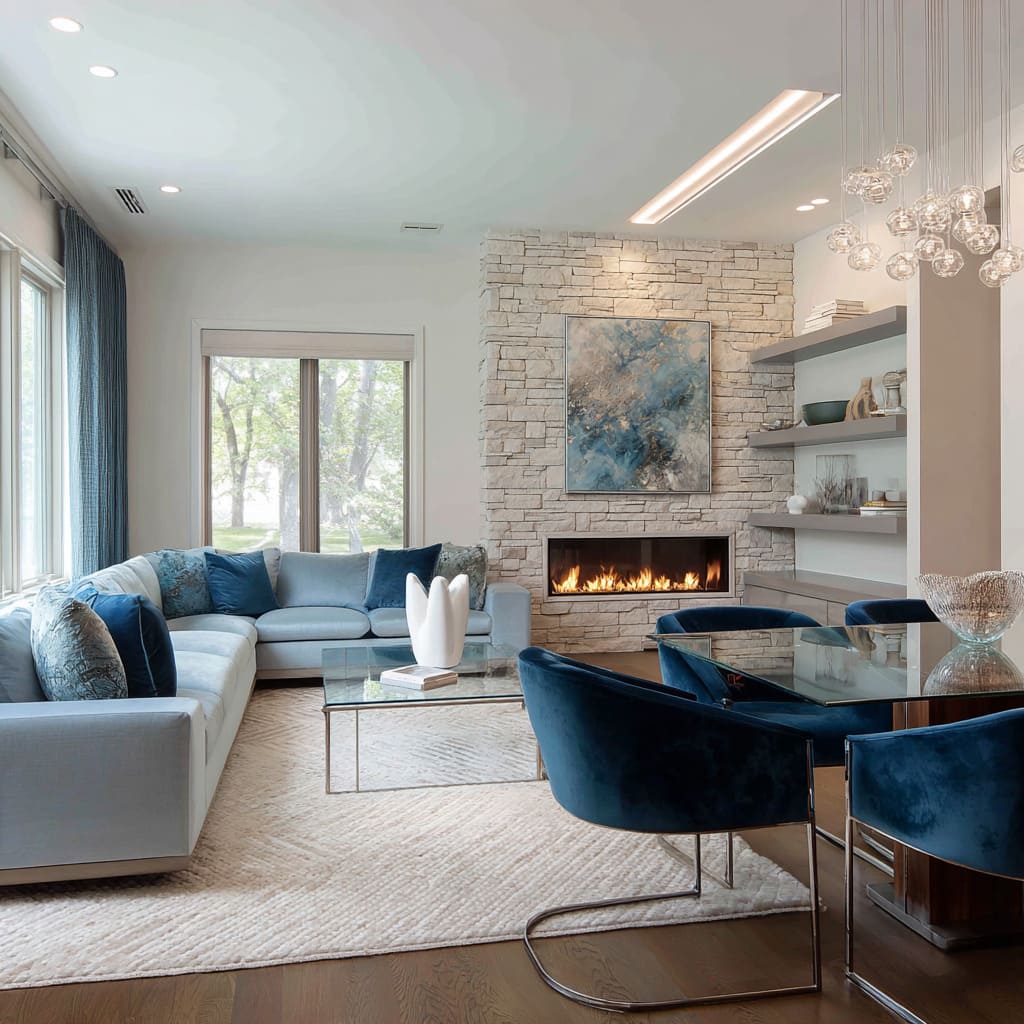
Silver, in the context of silver blue living room design, operates less as color and more as geometry. It draws invisible frames.
Chrome chair legs sketch rectangles in the air; thin picture lights underline artworks; a polished tray or lamp base punctuates the soft blues with clean, decisive lines. Because silver inherently mirrors its surroundings, it multiplies the chosen blue tones rather than competing with them.
The atmosphere becomes one of reflective layering: blue seen directly, blue seen as reflection, and blue diffused in daylight bouncing off metal.
In layered interiors, designers often spread silver by height:.
- Low zone (ankle to knee): chair bases, table legs, and low rails—subtle sparkle that guides movement.
- Middle zone (hand height): side tables, lamps, or metallic trays that interact with daily touch.
- Upper zone (eye level): slim sconces, picture frames, or pendant trims catching soft light.
This tiered placement stabilizes the composition. Even if the palette shifts from sky to navy, the consistent presence of silver lines keeps the design coherent from every angle.
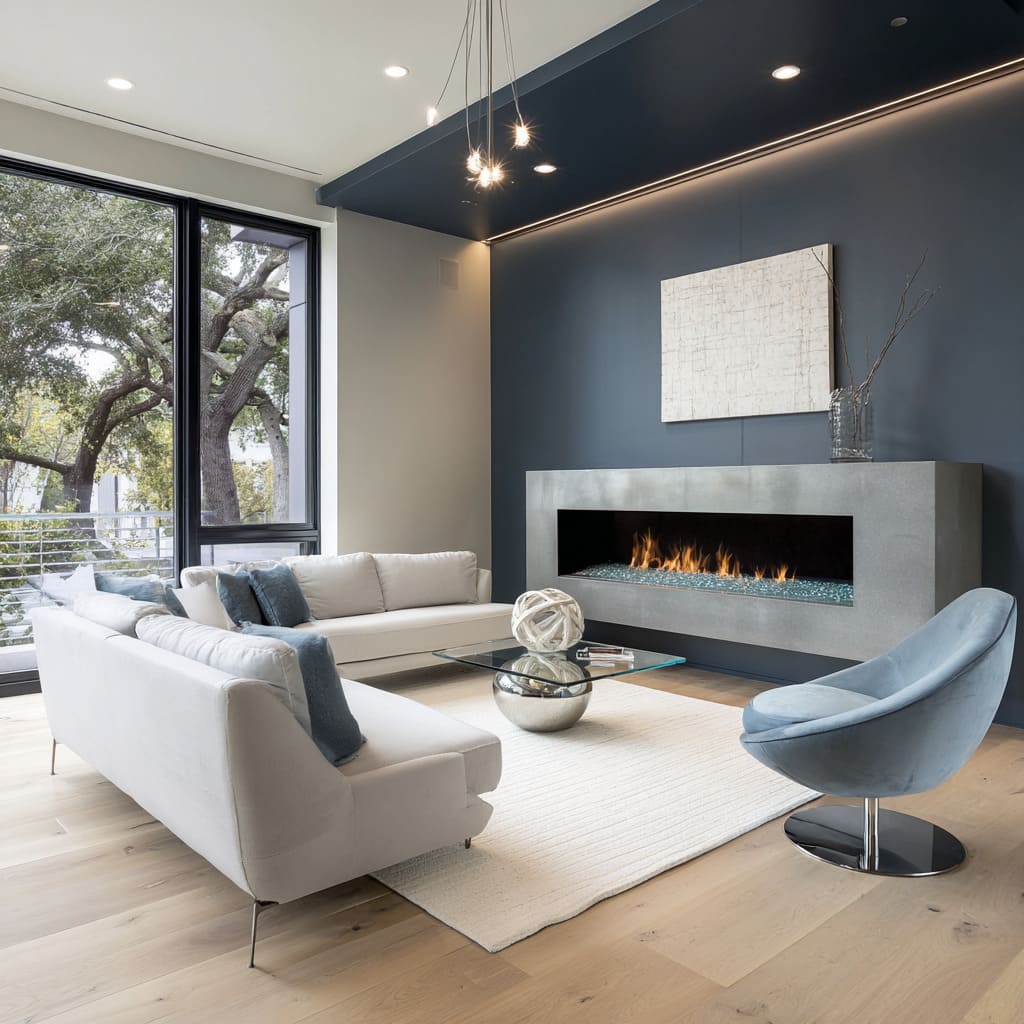
How Blue Balances Light and Weight
Blue is the emotional driver in blue silver living room design. It can act as both background and highlight depending on tone and texture.
Powder blue walls read expansive and calm, anchoring the metallic glints of silver, while deeper blues introduce intimacy.
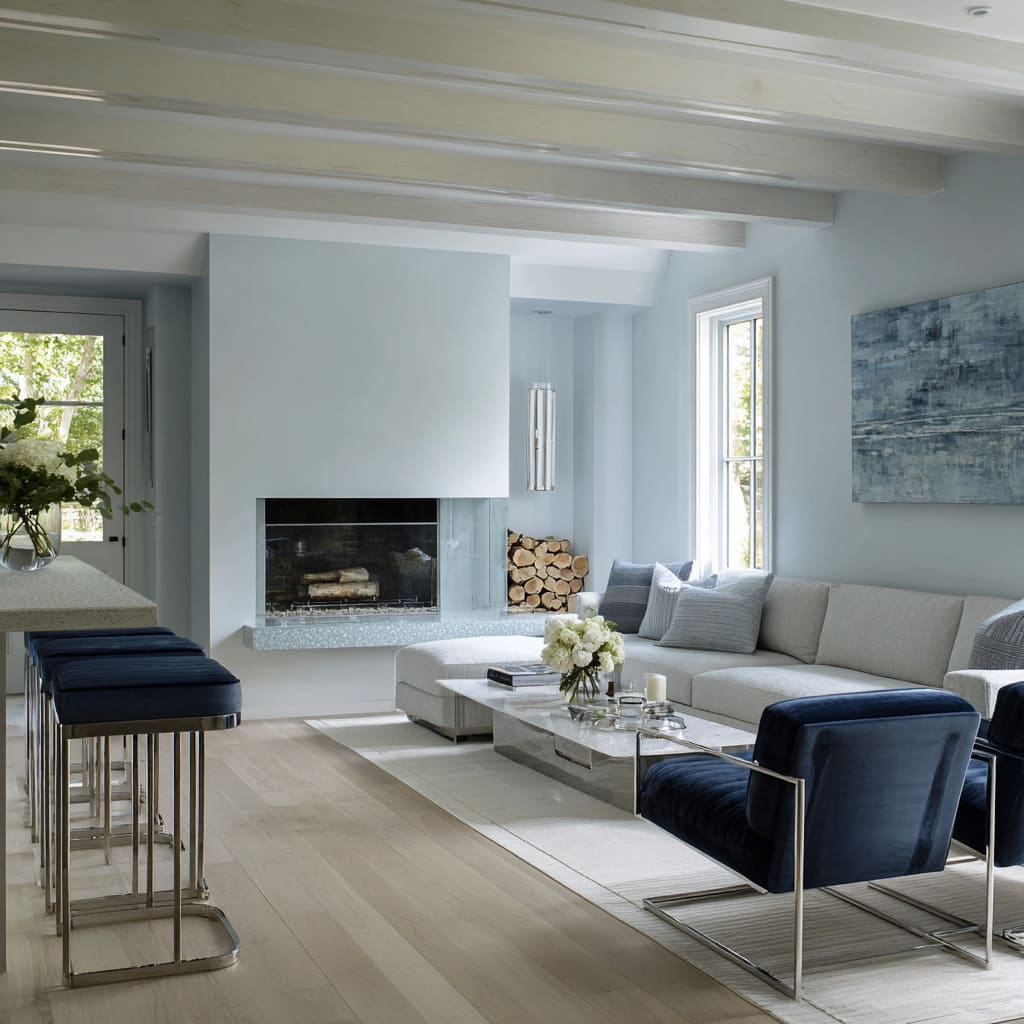
A mid-range denim hue—used on upholstery or drapery—bridges pale neutrals and metallics, keeping the visual temperature even. What gives the pairing depth is that blue behaves differently under changing light: it cools at noon and warms by sunset when filtered through parchment or ivory textiles.
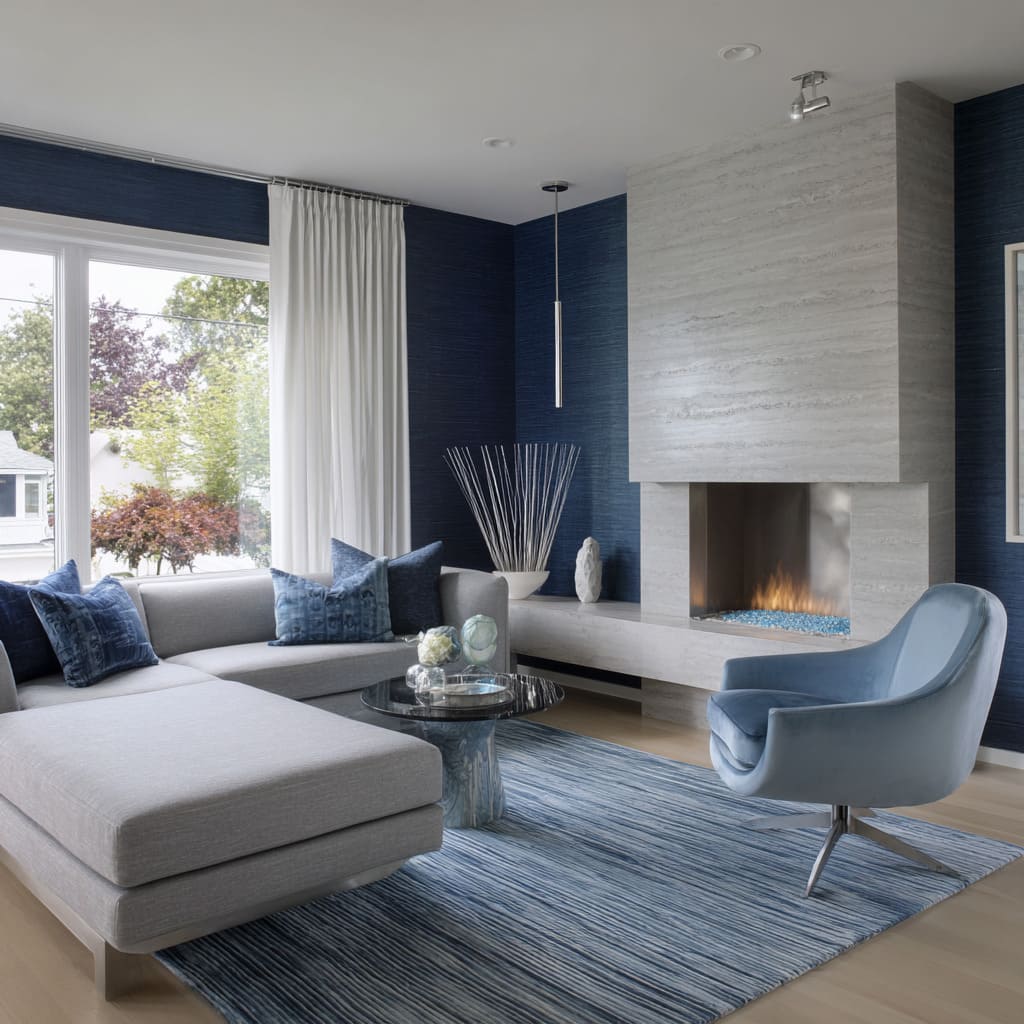
Across silver and blue living room ideas, the success of the color relationship depends on what stands between them. Limestone, chalk plaster, oak, or thick wool rugs work as mediators.
Their matte nature catches stray reflections and diffuses them, allowing the metallic and chromatic elements to remain distinct but related. Without these soft materials, the palette could lean clinical; with them, it becomes tactile and lived-in.
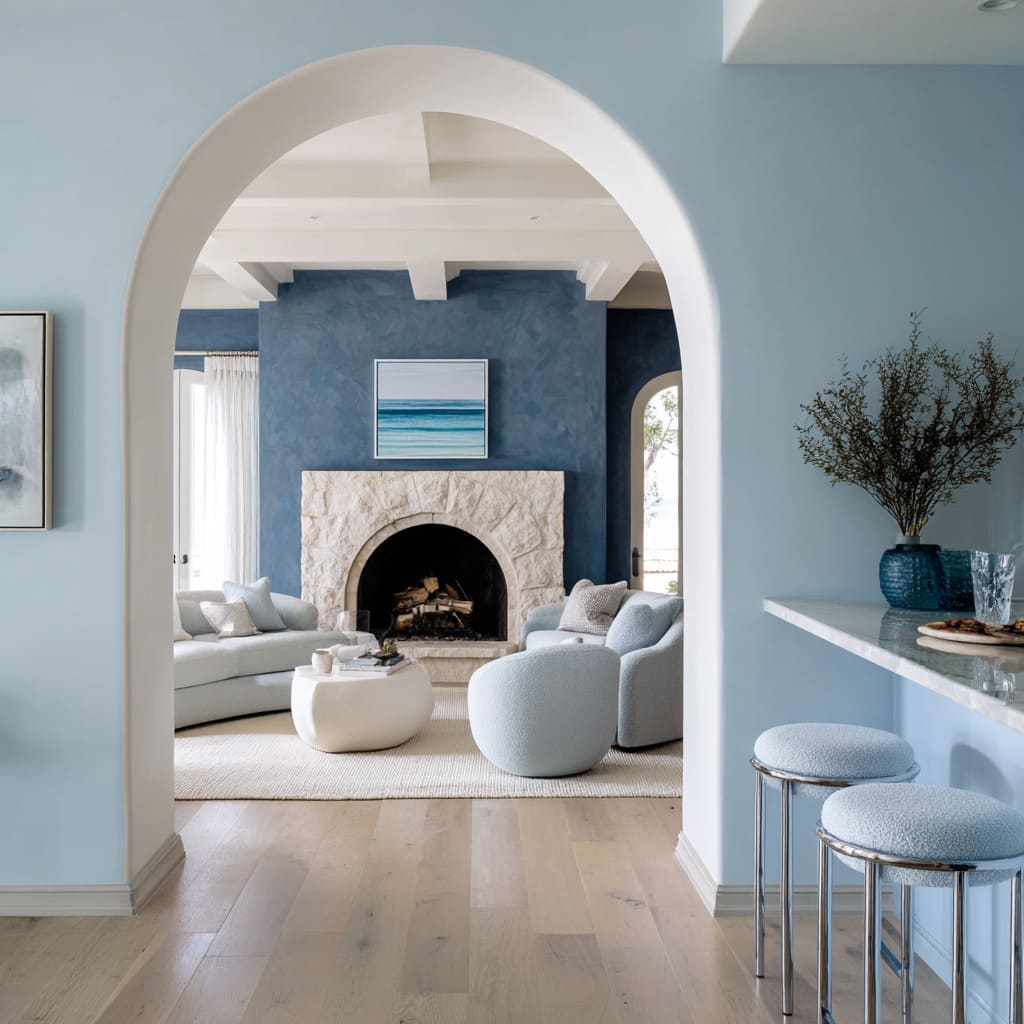
The Language of Surfaces and Sheen
The refinement of blue and silver living room design often comes down to sheen hierarchy. Every reflective surface needs a counterbalance in matte texture.
For example, a brushed-steel base under a glass coffee table should be paired with a looped ivory rug below it; the rug absorbs excess shine, turning reflection into shimmer rather than glare. Silver finishes next to honed stone look expensive because they catch fragmented highlights, not full mirror reflections.
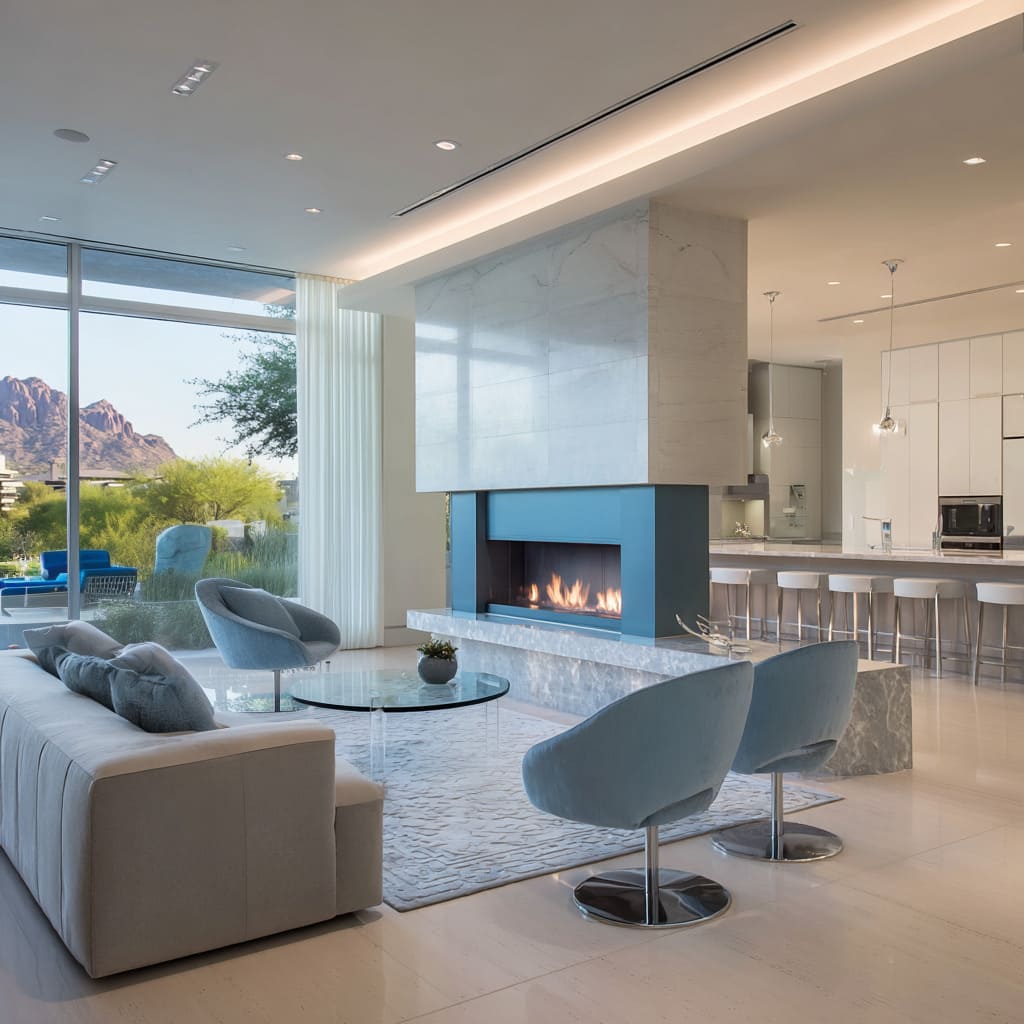
To prevent a monotone feel, successful interiors mix surface characters:.
- Dry blue linen or velvet upholstery against satin nickel accessories.
- Matte plaster or limestone beside mirrored glass or chrome cylinder lamps.
- Ribbed or pebble-texture rugs under metal-framed tables.
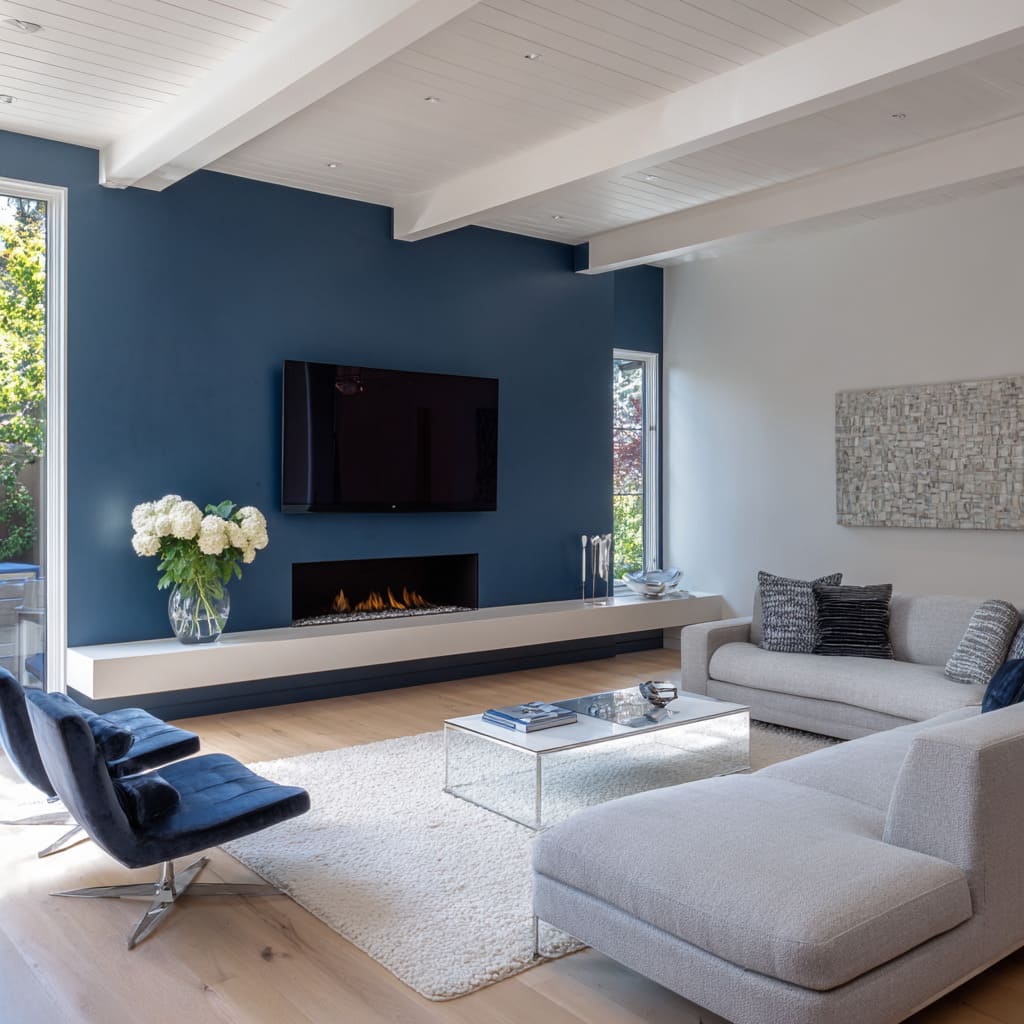
This pairing of rough with sleek gives the composition a visual “breathing rhythm. ” Light scatters, pauses, and resumes—like waves hitting sand—making the metallic and chromatic dialogue feel organic.
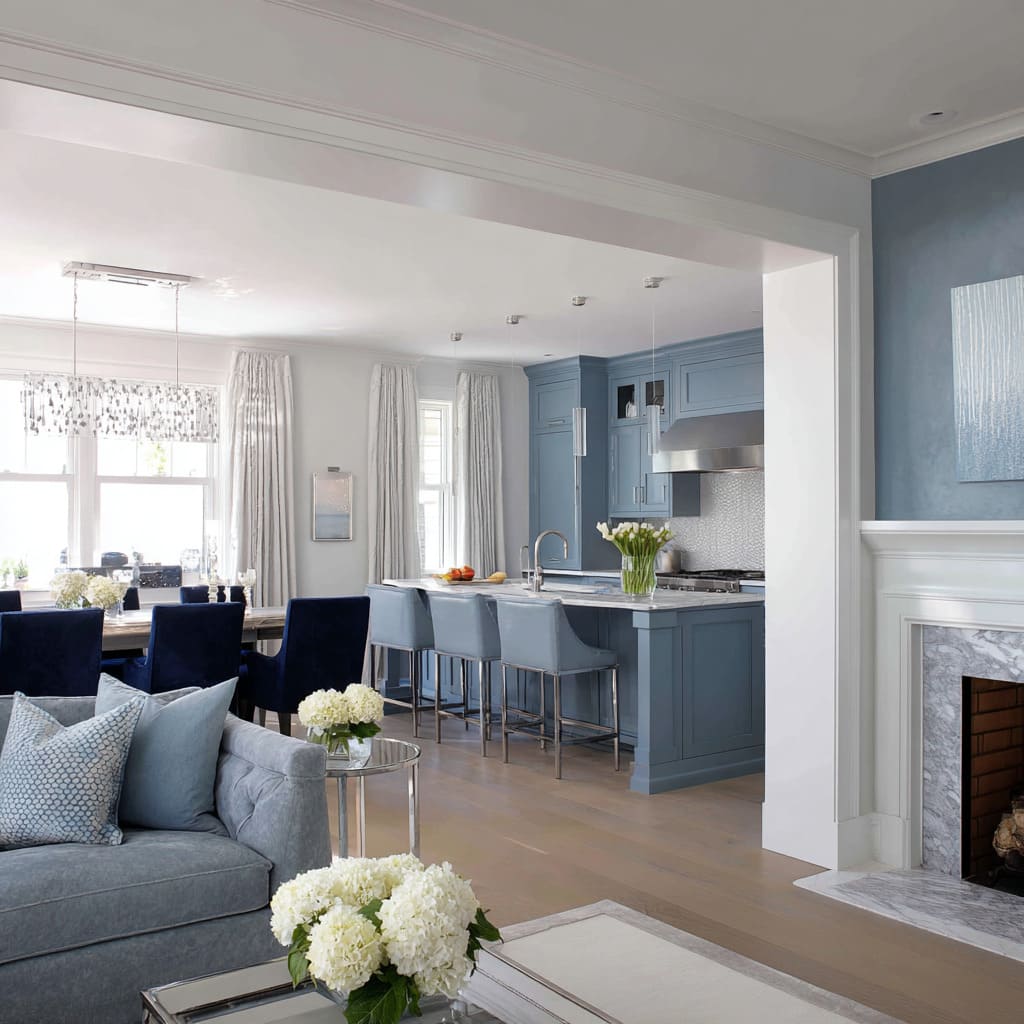
Spatial Composition and Color Flow
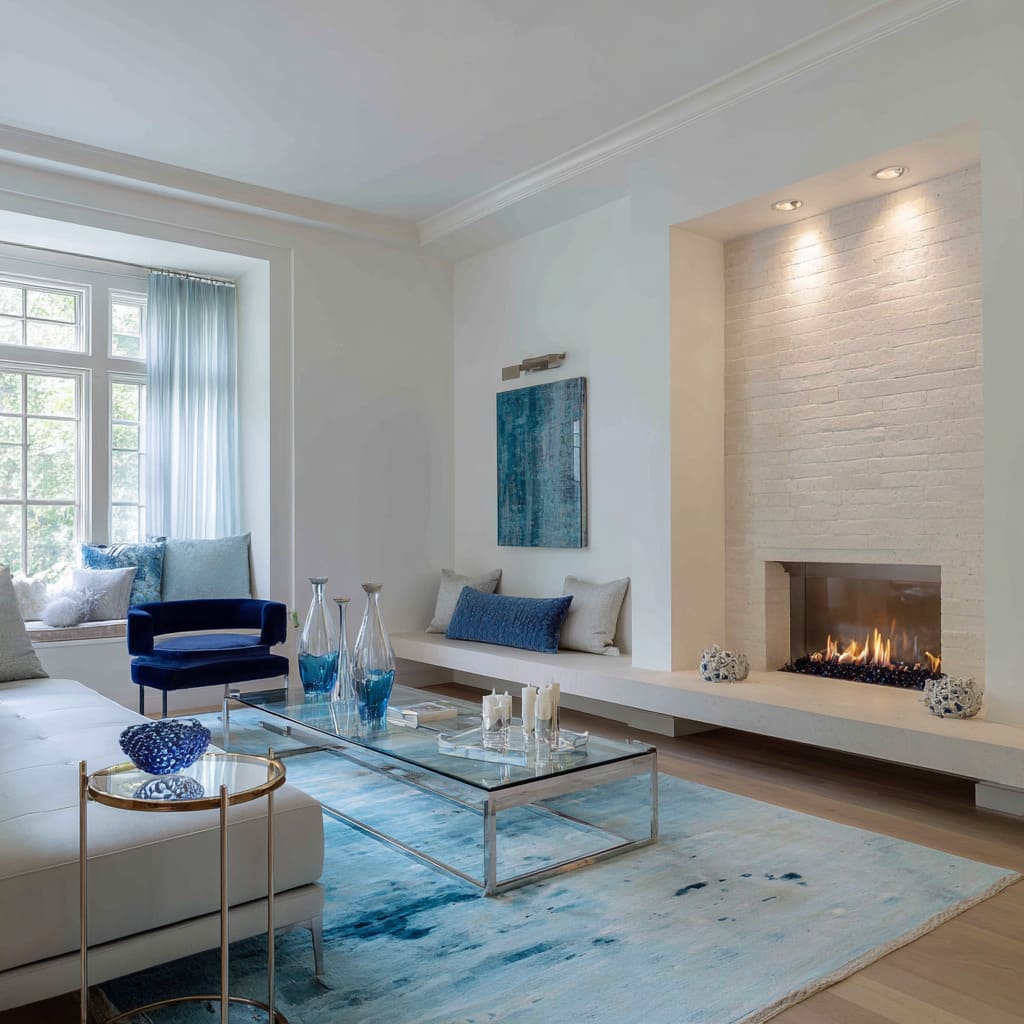
The composition in silver and blue living room ideas often follows a horizontal logic. A long bench, shelf, or hearth line forms the base, usually in pale stone or matte wood, while blue steps upward through fabrics—pillows, upholstery, or artwork.
Silver then defines the lines that separate these zones. The result is not a room filled with objects but a choreography of reflections and tones.
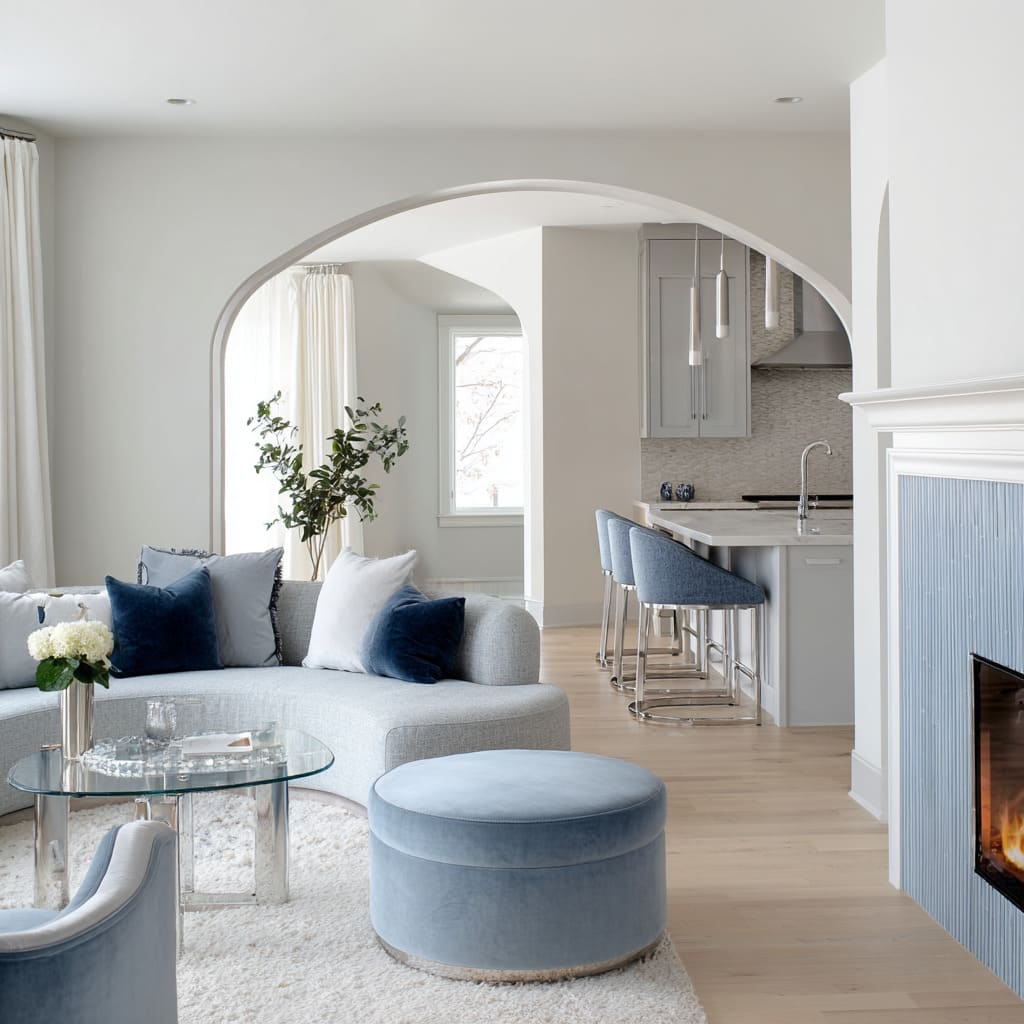
In many sophisticated layouts, the palette moves in a gradient: deepest blue in the background (a wall or artwork), mid-tone at furniture level, and palest silver-white in the ceiling or rug. This vertical fading of color keeps the atmosphere weightless.
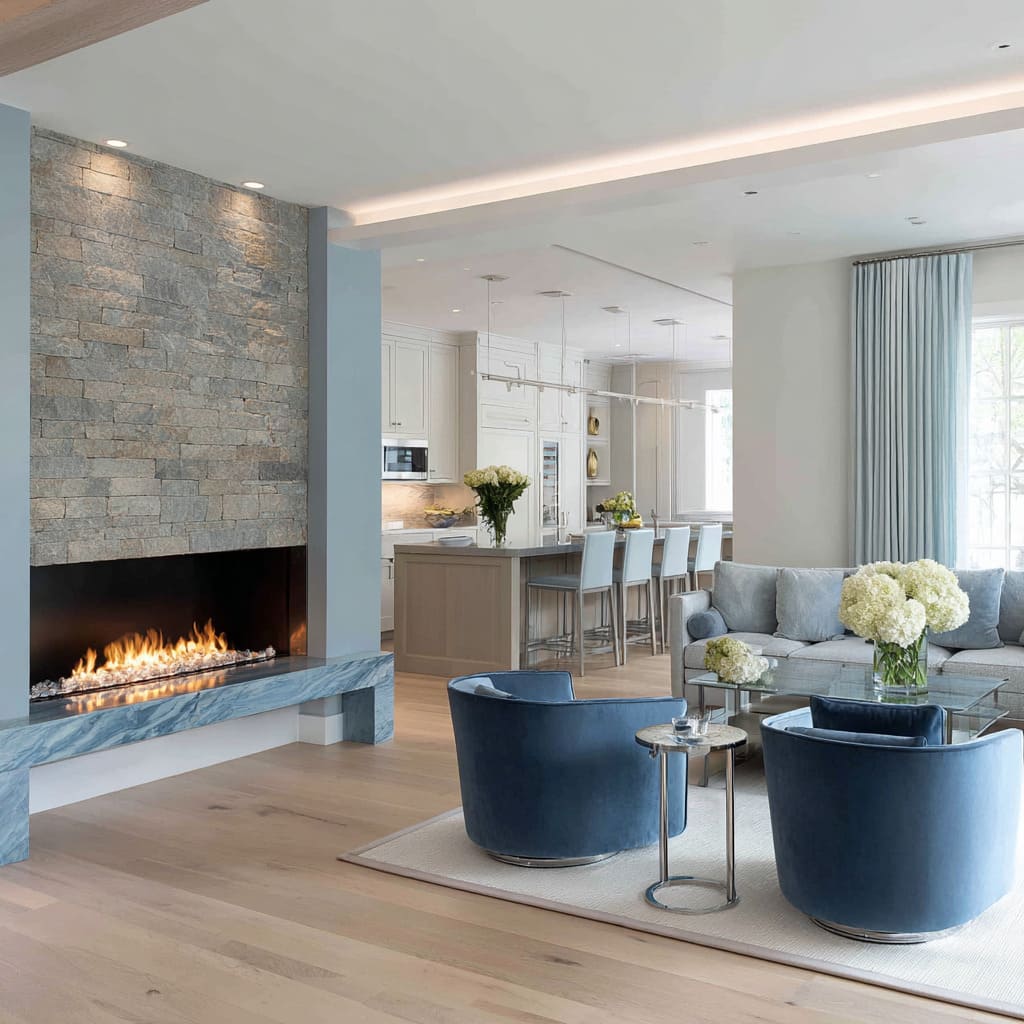
The flame of a fireplace or a golden lamp accent often acts as the lone warm note, bridging the cool scheme with natural light. These small injections of warmth make the metallic composition humane and emotionally balanced.
Mood and Psychological Read
A silver and blue living room design feels inherently composed, but it’s not emotionless. The calm comes from orchestration rather than minimalism.
Blue introduces serenity; silver brings clarity. When combined with soft neutral floors, clear glass, and tactile fabrics, the environment reads as luxurious in a quiet way.
Even without ornament, the balance of reflectivity and softness creates visual richness.
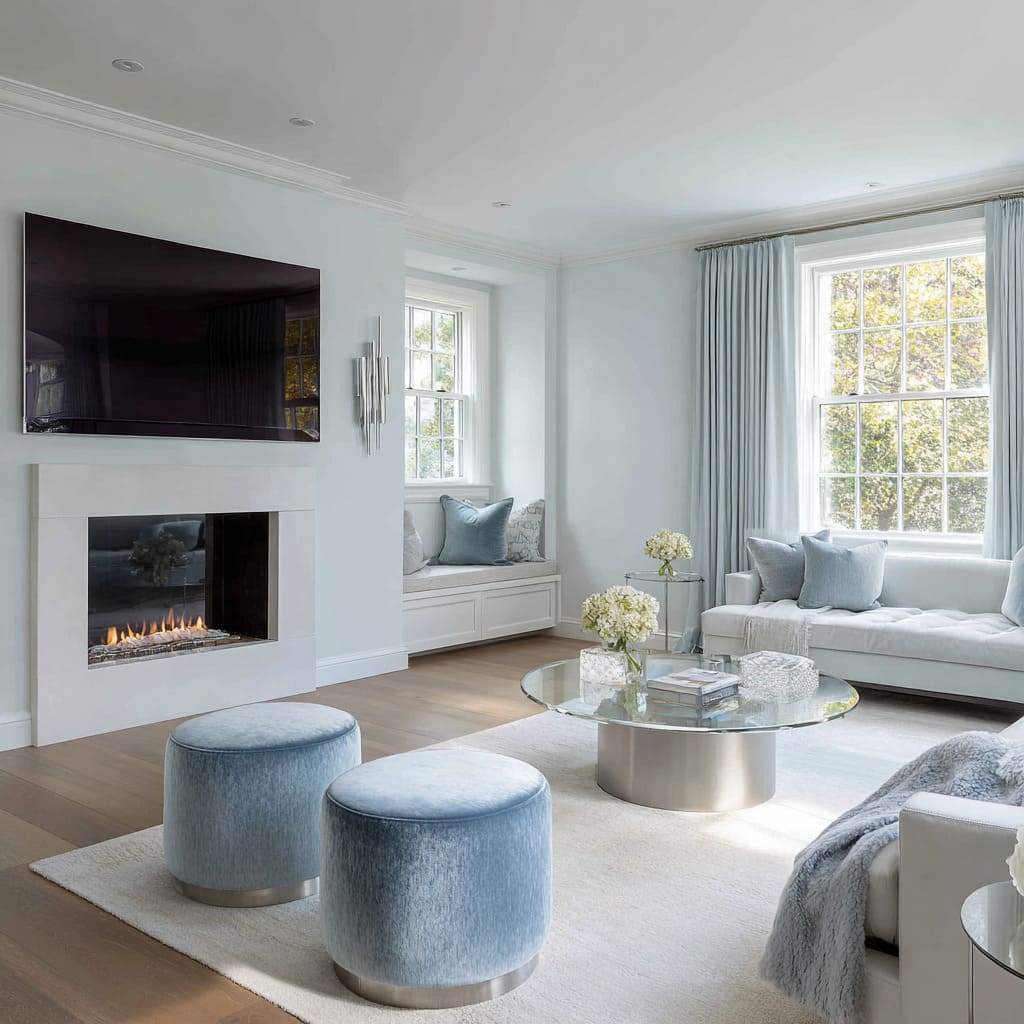
The overall feeling can shift slightly depending on proportion: more blue equals intimacy, more silver equals openness. The sweet spot sits where blue provides depth and silver outlines the edges of light.
This interplay gives the eye rest zones and highlights, making even compact rooms feel architectural. It’s a scheme that encourages lingering rather than constant movement.
Texture as the Hidden Color
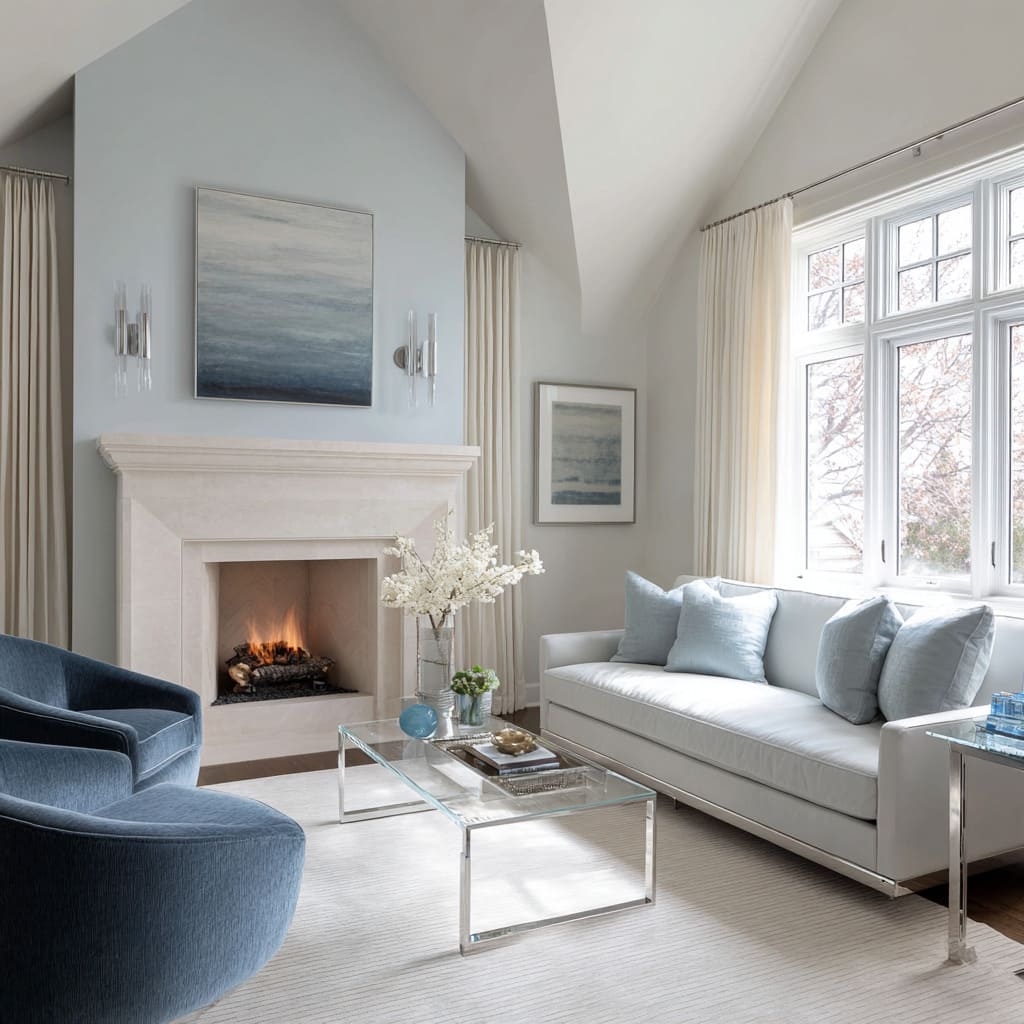
In high-level blue and silver living room ideas, texture acts as a third color. Bouclé cushions, brushed nickel lamps, linen drapes, and wool rugs all reflect light differently, creating micro-contrasts that keep the palette lively.
This is how designers achieve motion in a restricted color story. Instead of adding another pigment, they let materials bend the light.
The shine of a polished edge beside a chalky ceramic tells a story of restraint and awareness. The tactile play keeps the cool tones human and grounded.
Lighting as the Silent Collaborator
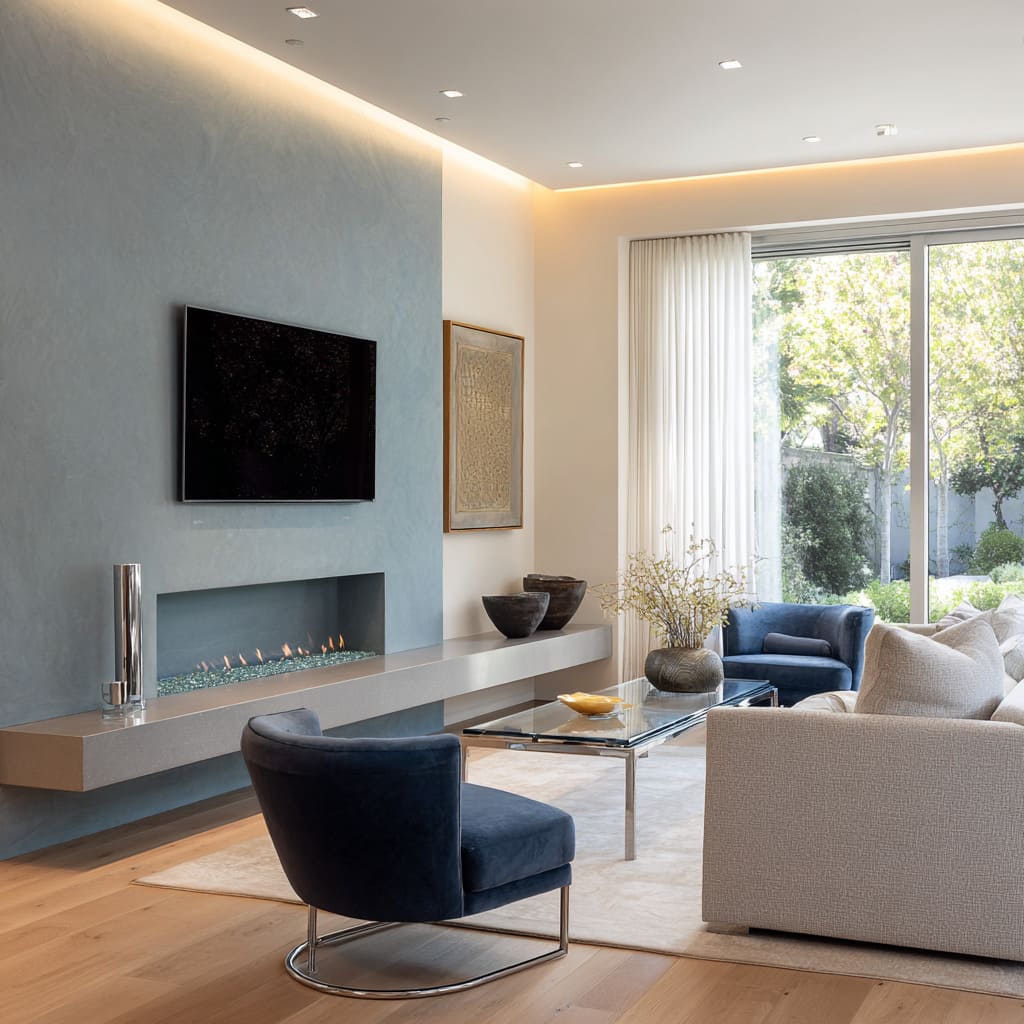
In silver blue living room designs, lighting determines the drama. Cove lights grazing a silver-framed mantel, a pendant reflecting in a glass table, or a daylight beam passing over a blue velvet chair—all these moments define mood more than the materials themselves.
Under bright daylight, silver behaves almost white; under warm lamps, it leans toward champagne. Blue, meanwhile, absorbs and deepens.
The duality means that the same room reads different across hours—fresh at noon, cocooned by evening.
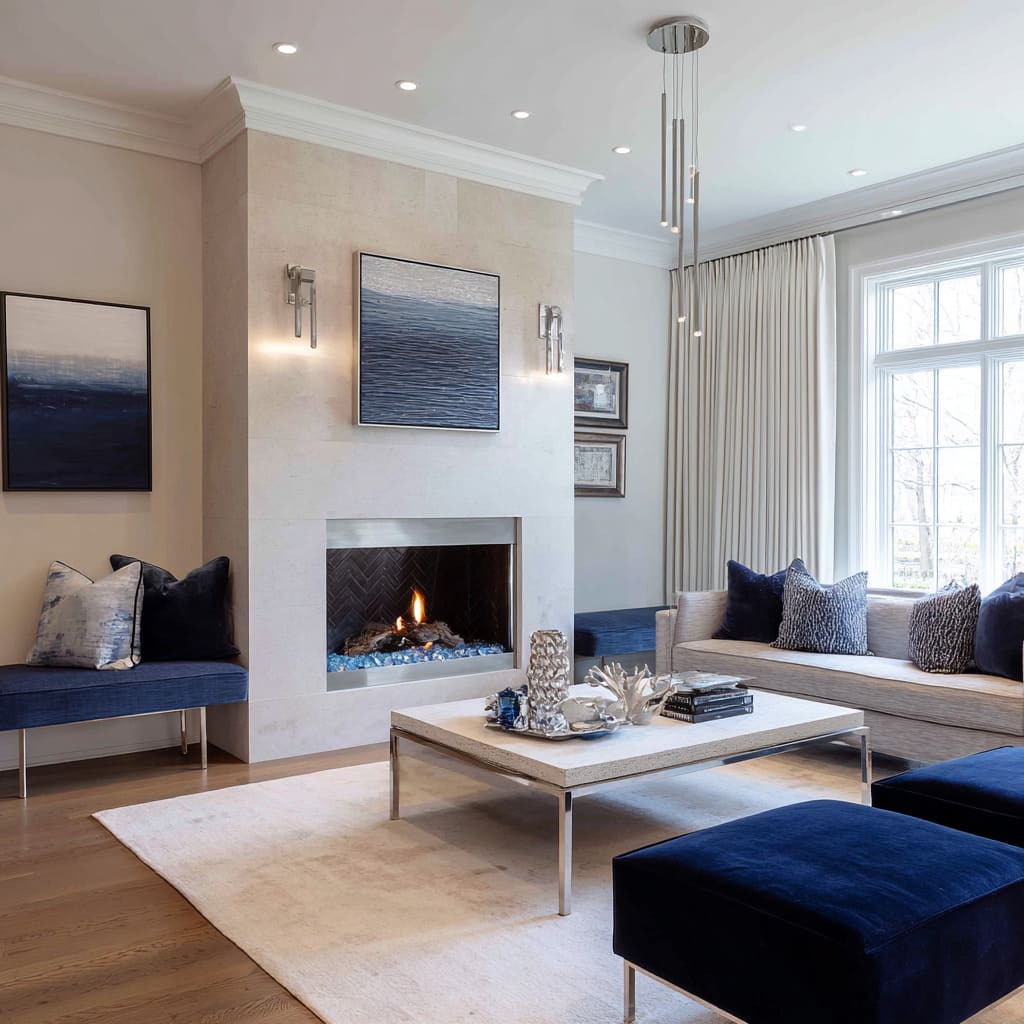
Indirect light sources work best: slim track lights, hidden LED lines, or reflective surfaces that spread glow sideways instead of straight down. This ensures that silver always gleams softly and blue retains its dimension.
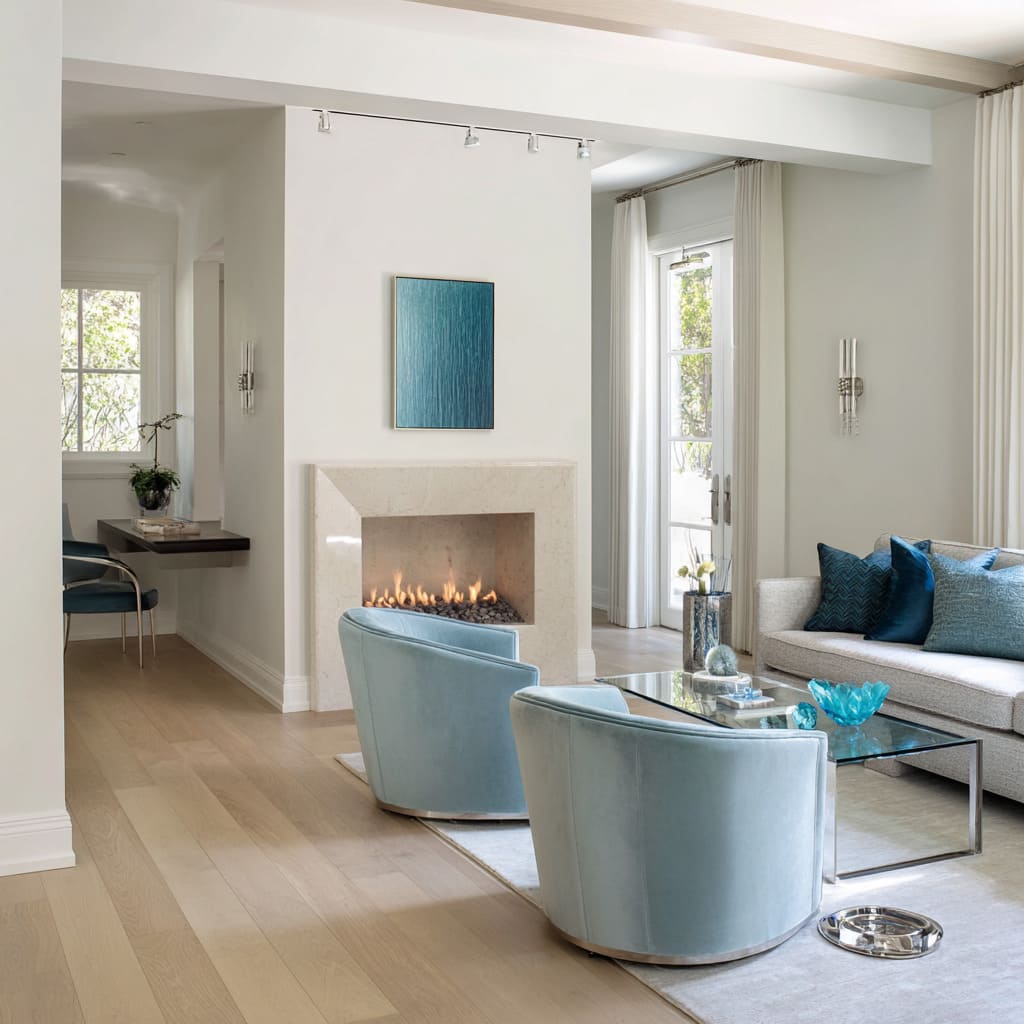
Compositions
Common and visually successful patterns:.
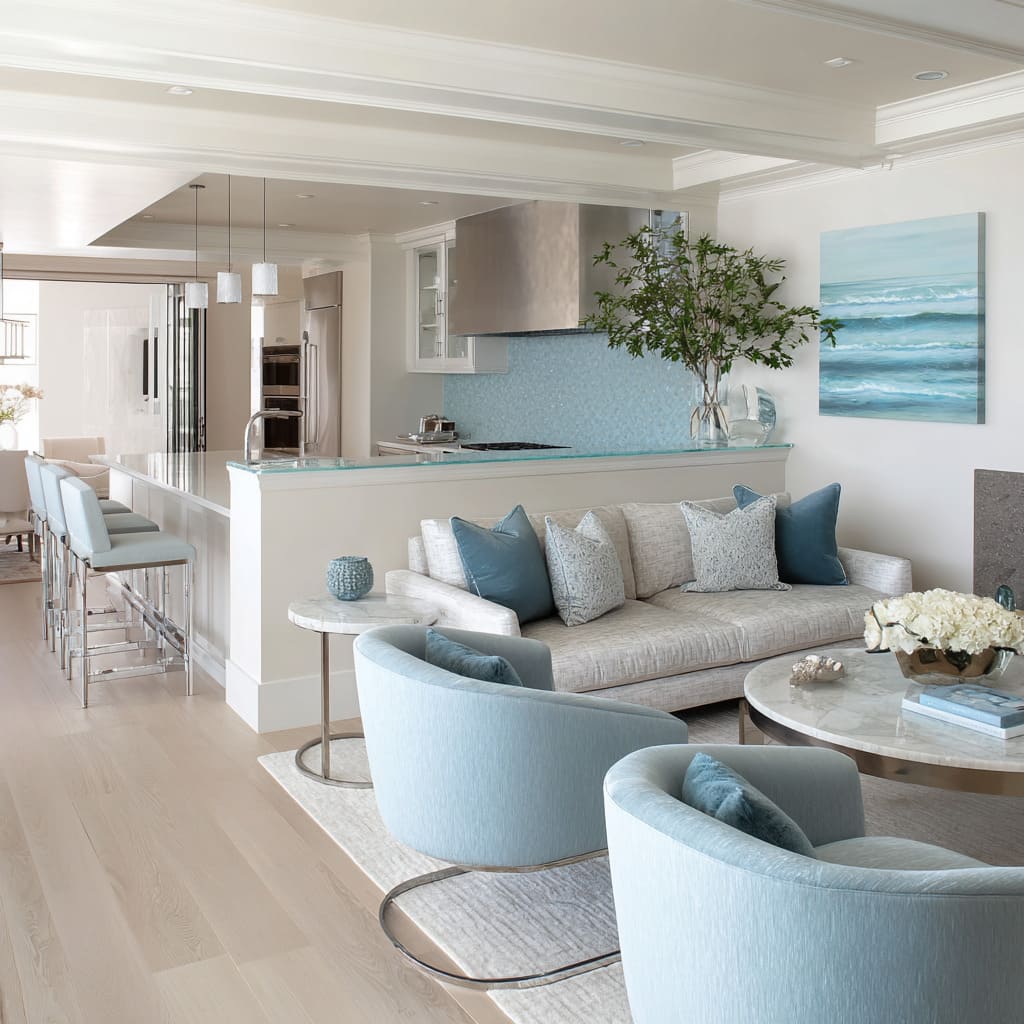
- Soft Coastal: Pale sky walls, chrome accents, white boucle sofa, sandy wood floor, and clear glass decor.
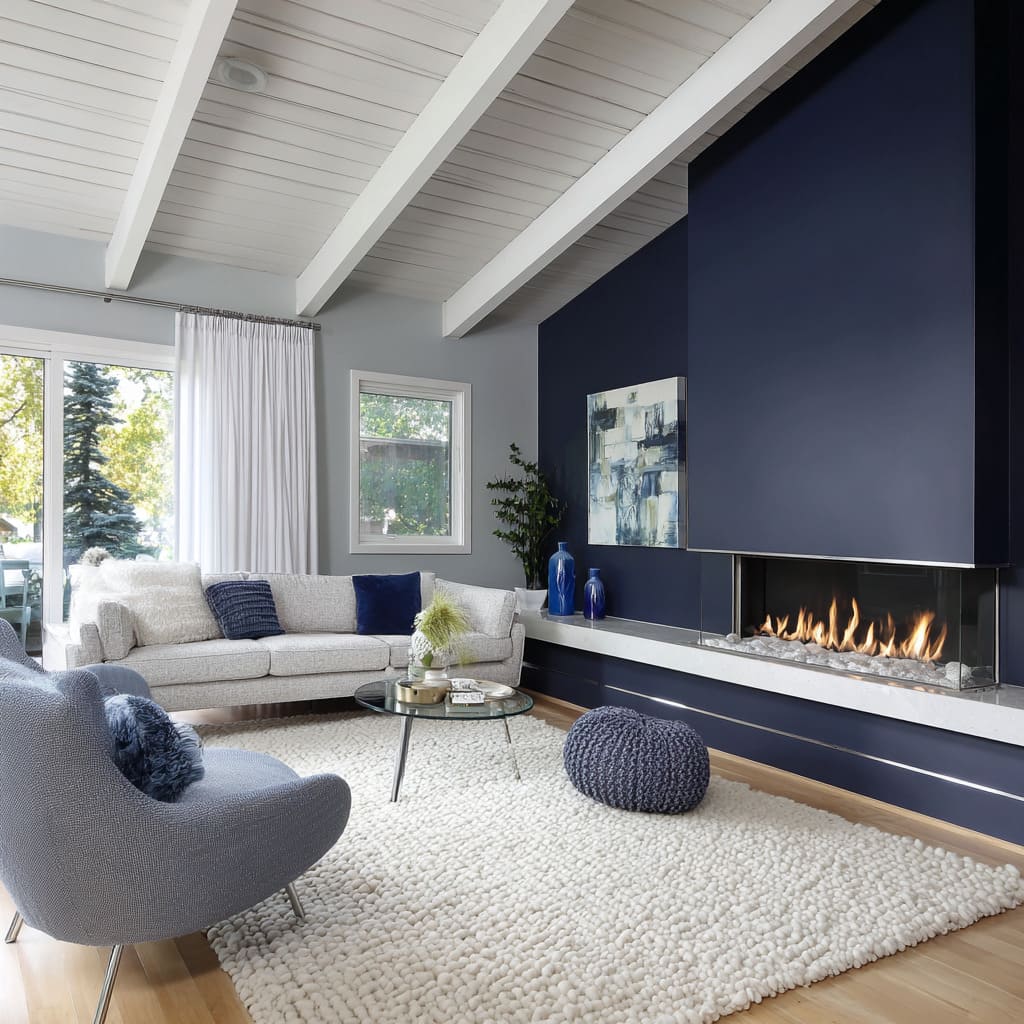
- Urban Minimal: Deep navy wall, brushed steel fireplace, off-white sofa, silver lighting trims, and geometric rug.
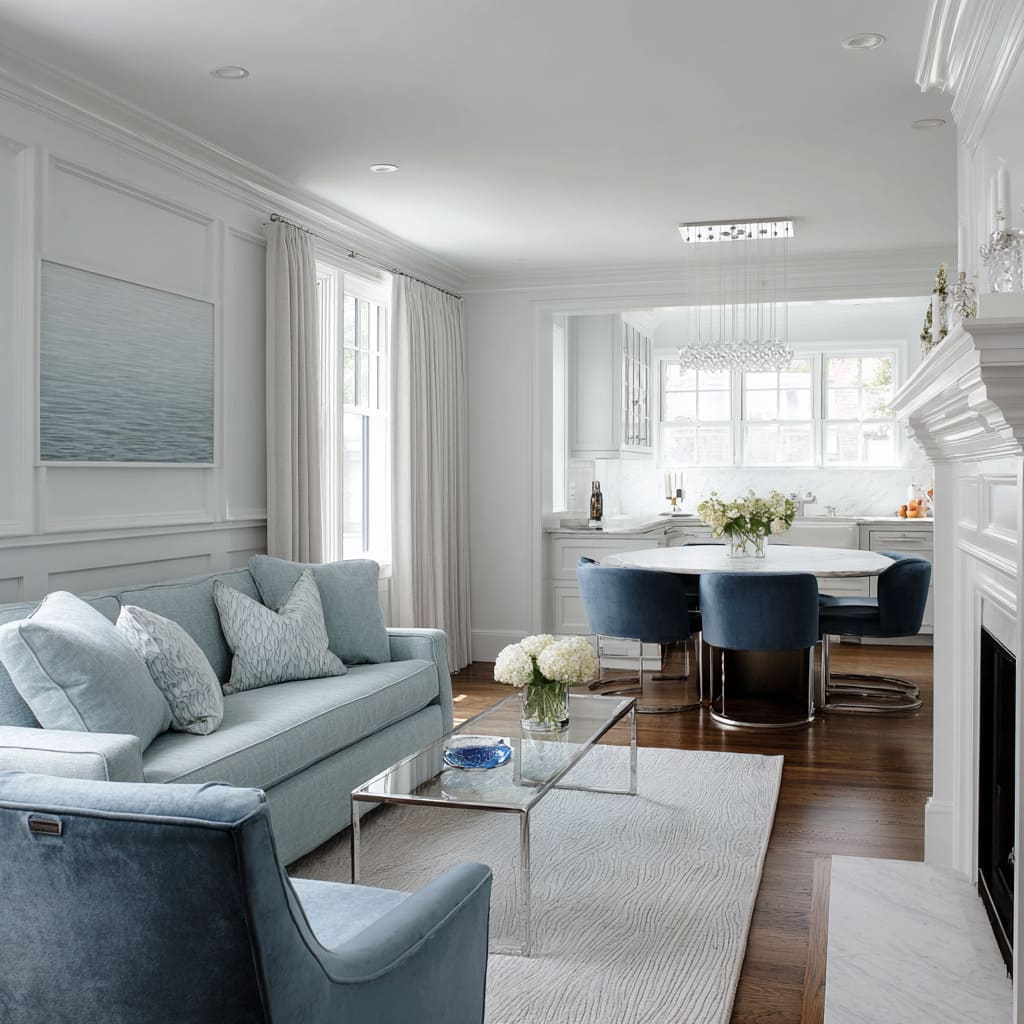
- Transitional Calm: Silvery-white envelope, powder-blue upholstery, nickel sconces, and soft marble mantle.
- Contemporary Lounge: Steel-blue feature wall, polished chrome chair base, ice-gray sectional, and ribbed texture rug.
Each variation follows the same rule—silver defines geometry, blue fills space, and texture mediates between reflection and softness.
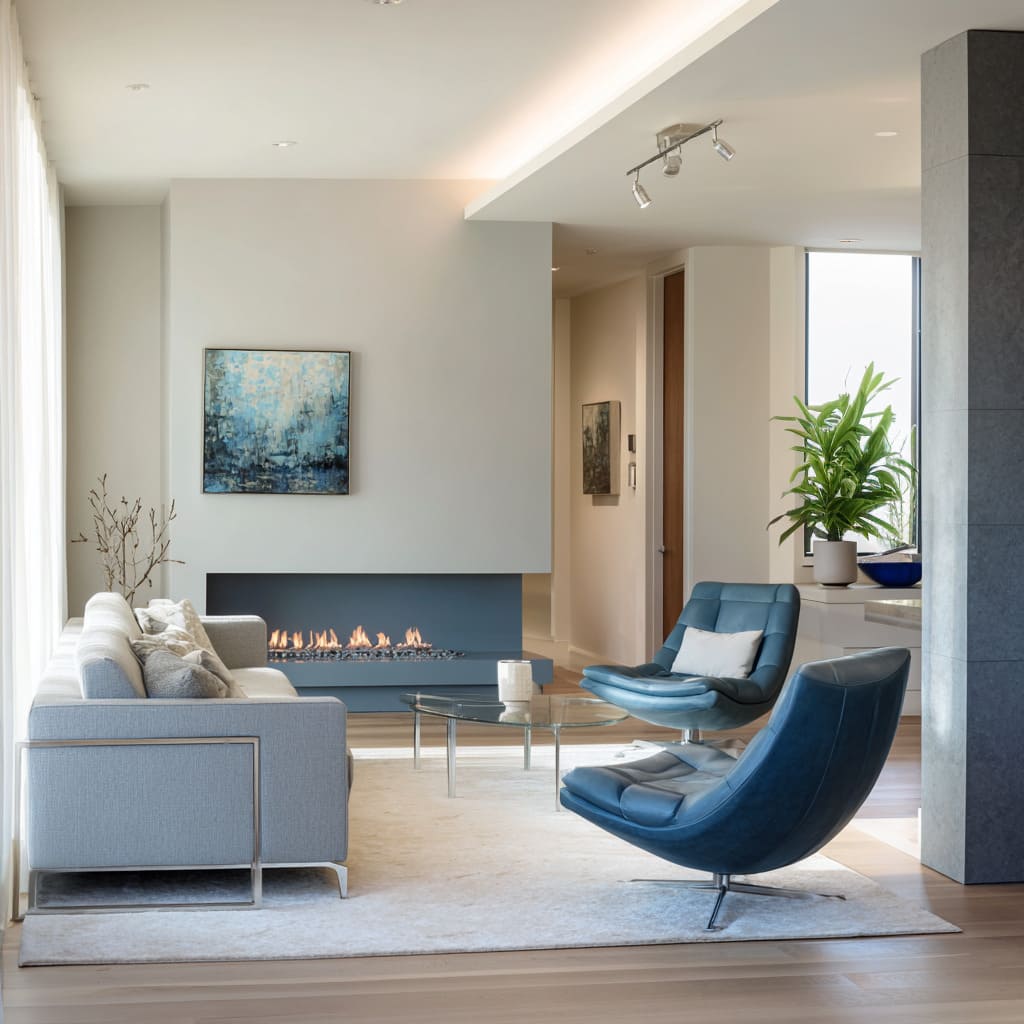
The Quiet Luxury of Reflective Discipline
Ultimately, blue silver living room design succeeds when metals are disciplined and color is layered. The pairing’s charm lies in restraint: there’s shine, but never glare; depth, but never heaviness.
Silver is the rhythm; blue is the melody. Their partnership creates a light-infused calm that works across seasons and lighting moods.
The feeling is modern, graceful, and collected—an aesthetic language where calm surfaces hum quietly instead of shouting for attention.
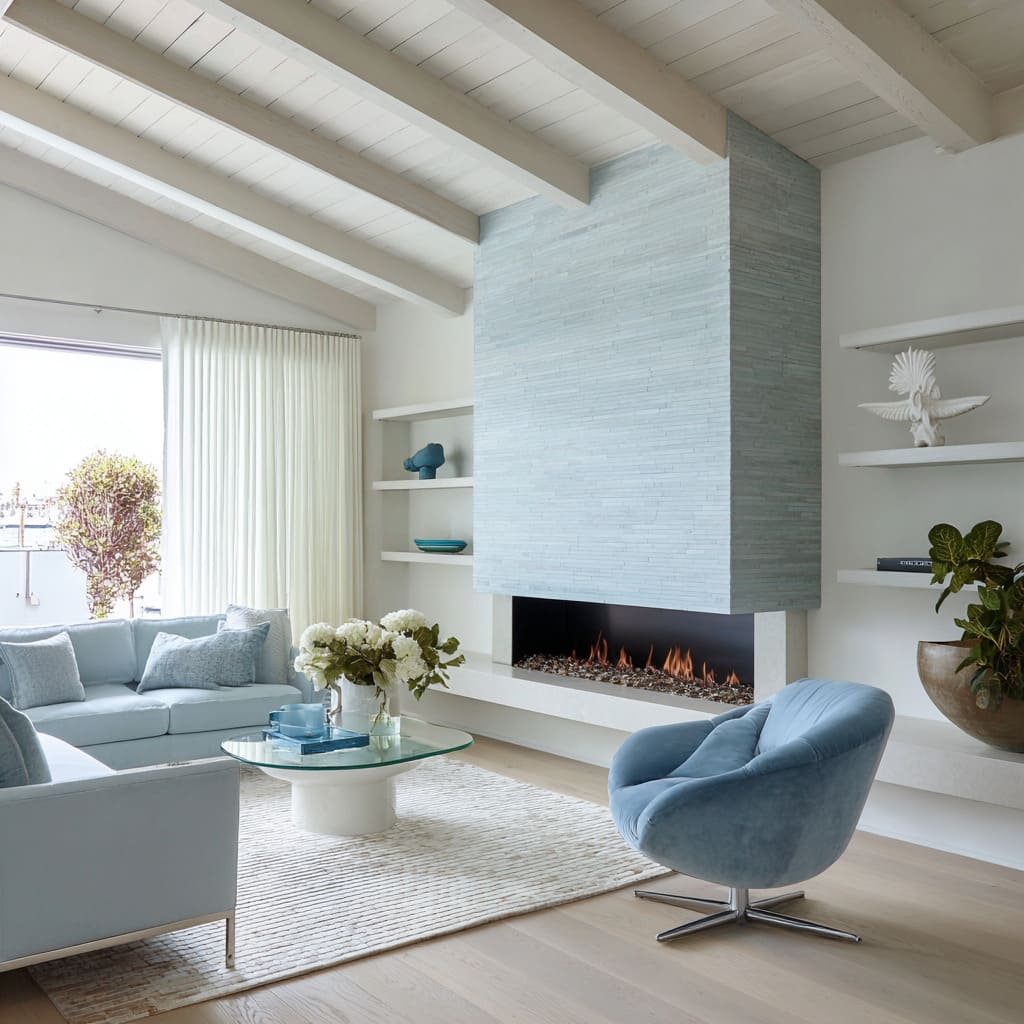
The viewer rarely notices the metal first. What registers instead is harmony—a sense that every reflection, shade, and texture knows its place in the room’s visual score.