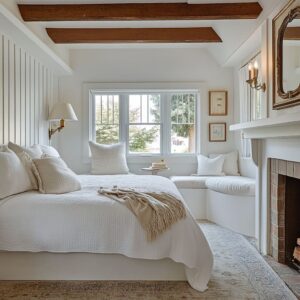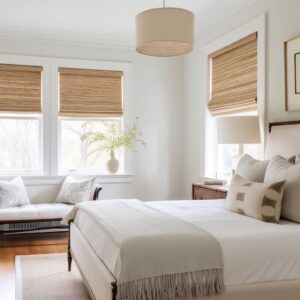
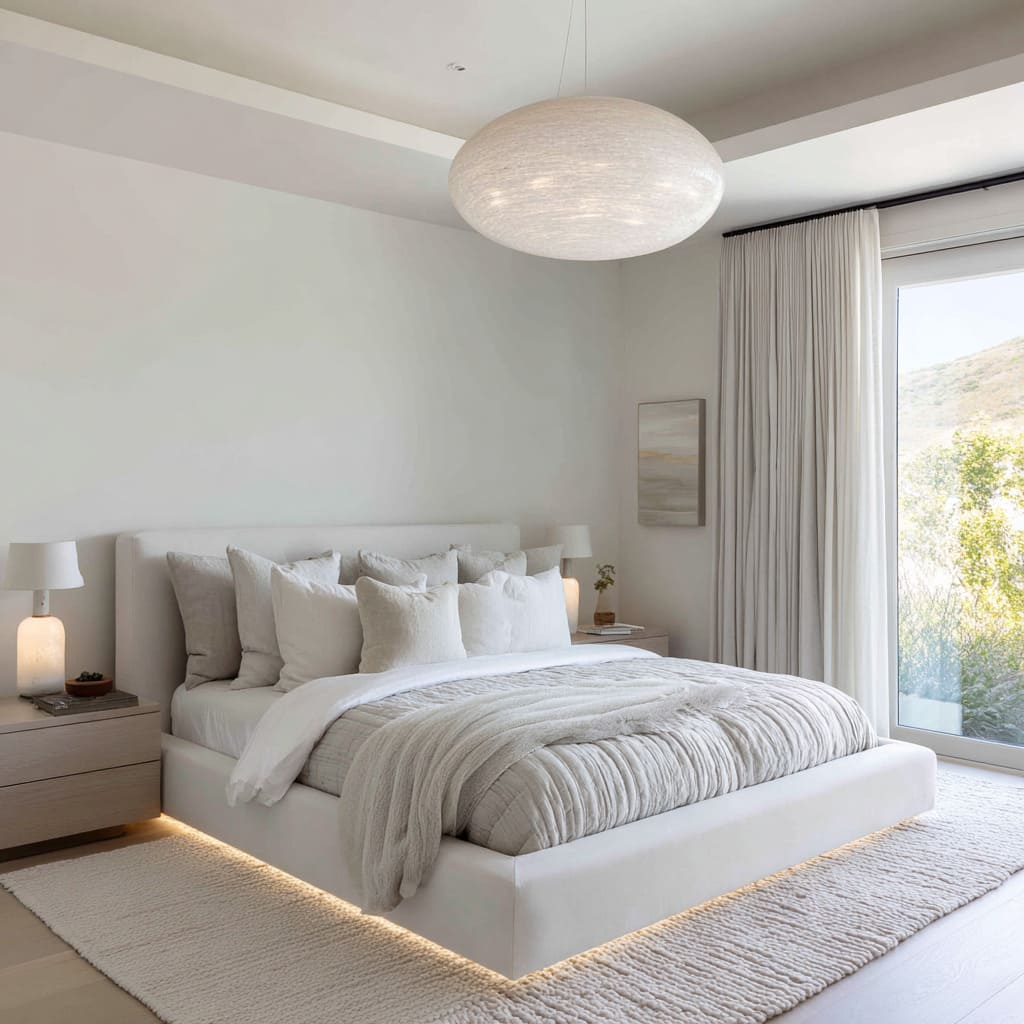
In this palette, silver reads less like a color and more like the way surfaces carry light, while white works as the quiet field that lets those reactions be seen clearly. Think of fogged metal glows, satin textiles, brushed plaster, antiqued mirror, suede-like panels, and glass edges that catch points of brightness; none of these scream for attention, yet together they create a calm shimmer that steadies the entire scene.
The best white and silver bedroom designs are built on restraint: big shapes stay matte and softly textured so small glints can do the expressive work, and the eye moves in a slow line from the headboard field to the bed crest to the edges of lighting and mirror seams. This is why a room can feel luminous without feeling glossy—silver behaves, white hosts, and the composition lets both roles stay legible.
Micro-tonal stacking: how “all white” has depth
The layered bed is never one white; it’s a patient ladder of half-tones and weaves that add depth without resorting to high contrast. Sheets bring a crisp base, a slightly dulled quilt adds body, a heathered coverlet deepens the field, and a nubby throw breaks the surface with micro-shadows; pillows then step from chalk to stone with just enough difference to read in daylight and in lamplight.
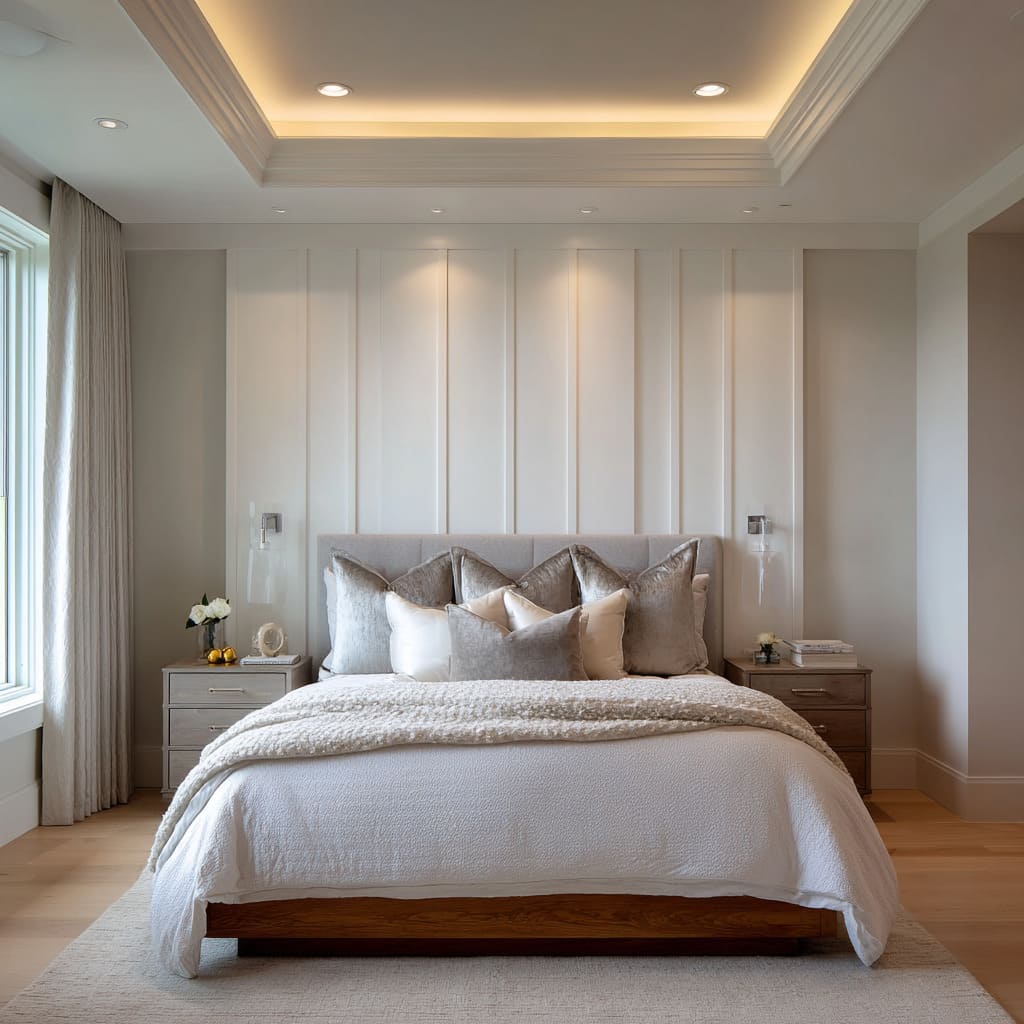
This slow gradient prevents the center of the room from flattening, and it lets satin notes—one pillow face, a slim border, a stitched channel—register as gentle highlights rather than bright spots. That same logic carries to drapery and rugs: tight pleats become vertical texture; looped or ribbed rugs put a faint grain underfoot so the bed doesn’t float in emptiness.
The result is a quietly dimensional core that supports broader white and silver bedroom ideas without resorting to busy patterns.
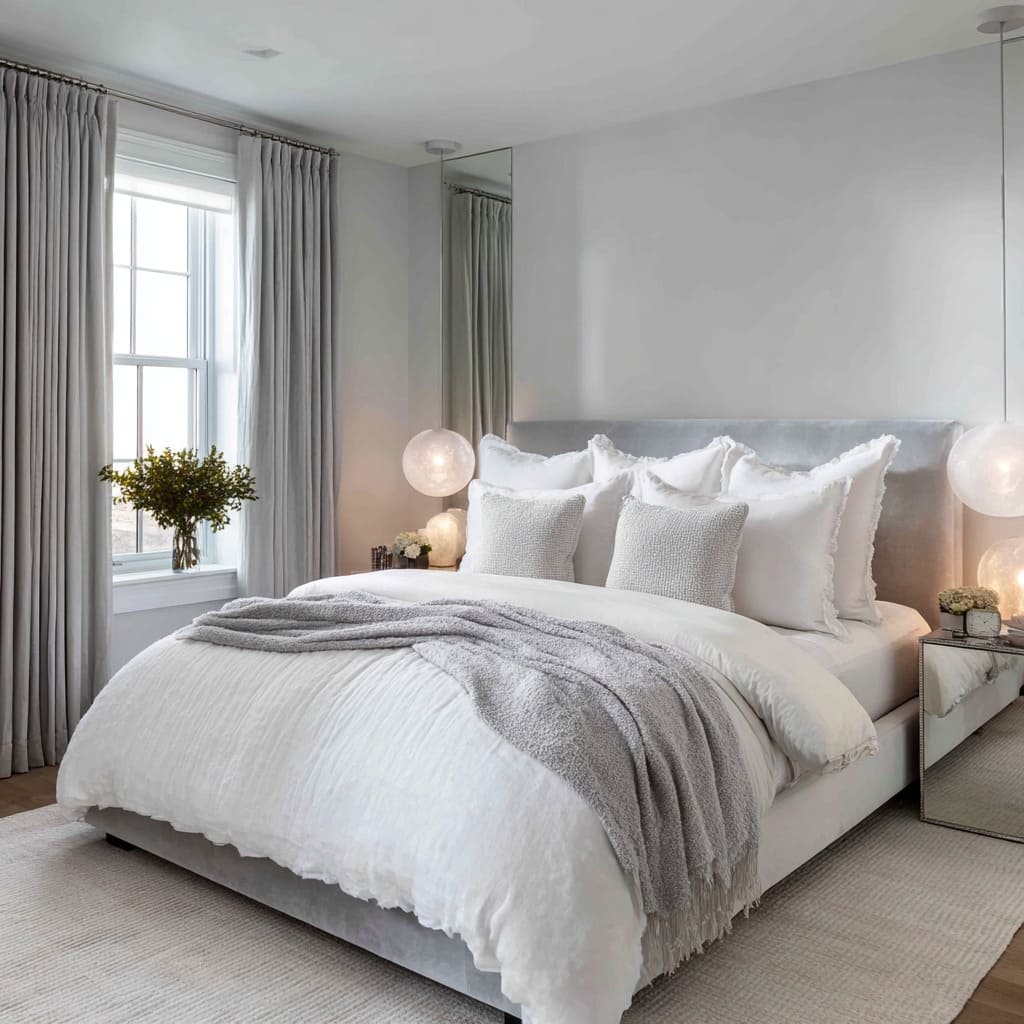
Architectural containers: curves, arches, niches, canopies
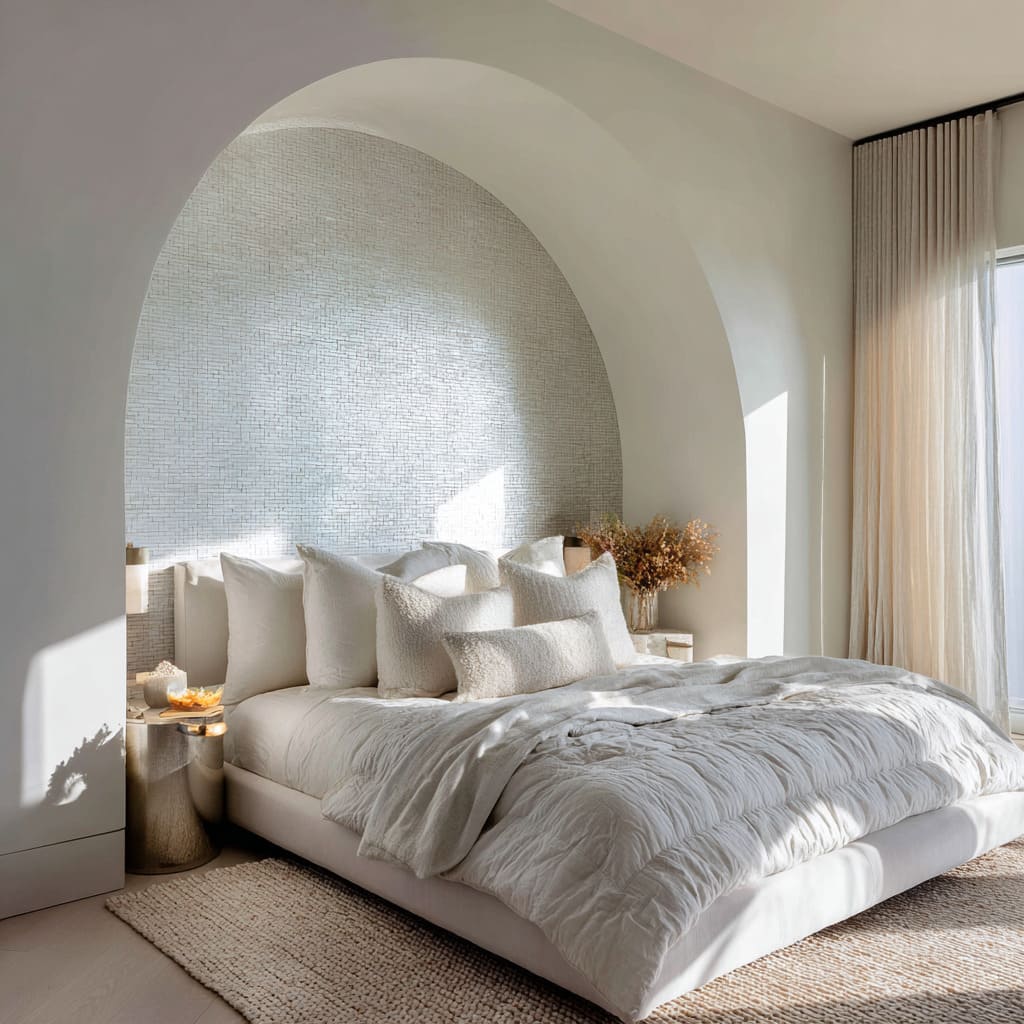
Curved walls, arched recesses, padded canopies, and shallow overhead frames give the bed a home inside the room, and the silver notes gather where the form changes. A cove along a gentle arc reads like a horizon at dusk; a mosaic-lined niche scatters daylight into a soft sparkle; a padded canopy edged with a slim metallic line sets a precise stop for the eye; and twin mirrors flanking the headboard widen the field without adding extra objects.
These containers compress focus around the mattress and make small accents—glazed lamp bases, beaded frames, chrome droplets—feel intentional rather than decorative. Lists of shapes might sound formal, but in practice the forms behave like stagecraft: they cradle the white mass of the bed, quiet the corners, and give silver a route to travel.
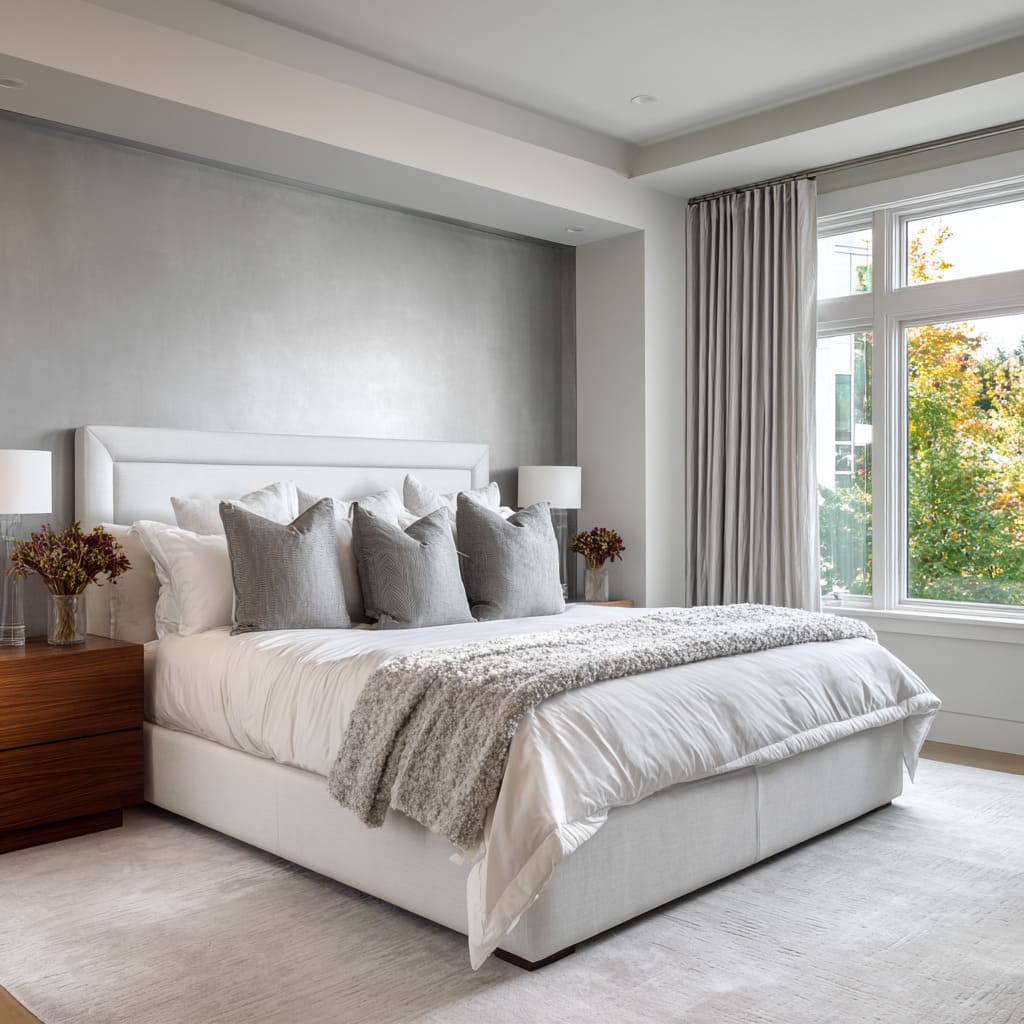
Useful shape families inside this language
- Cradle forms: arches, shallow curves, padded canopies that lower the “sky” above the bed.
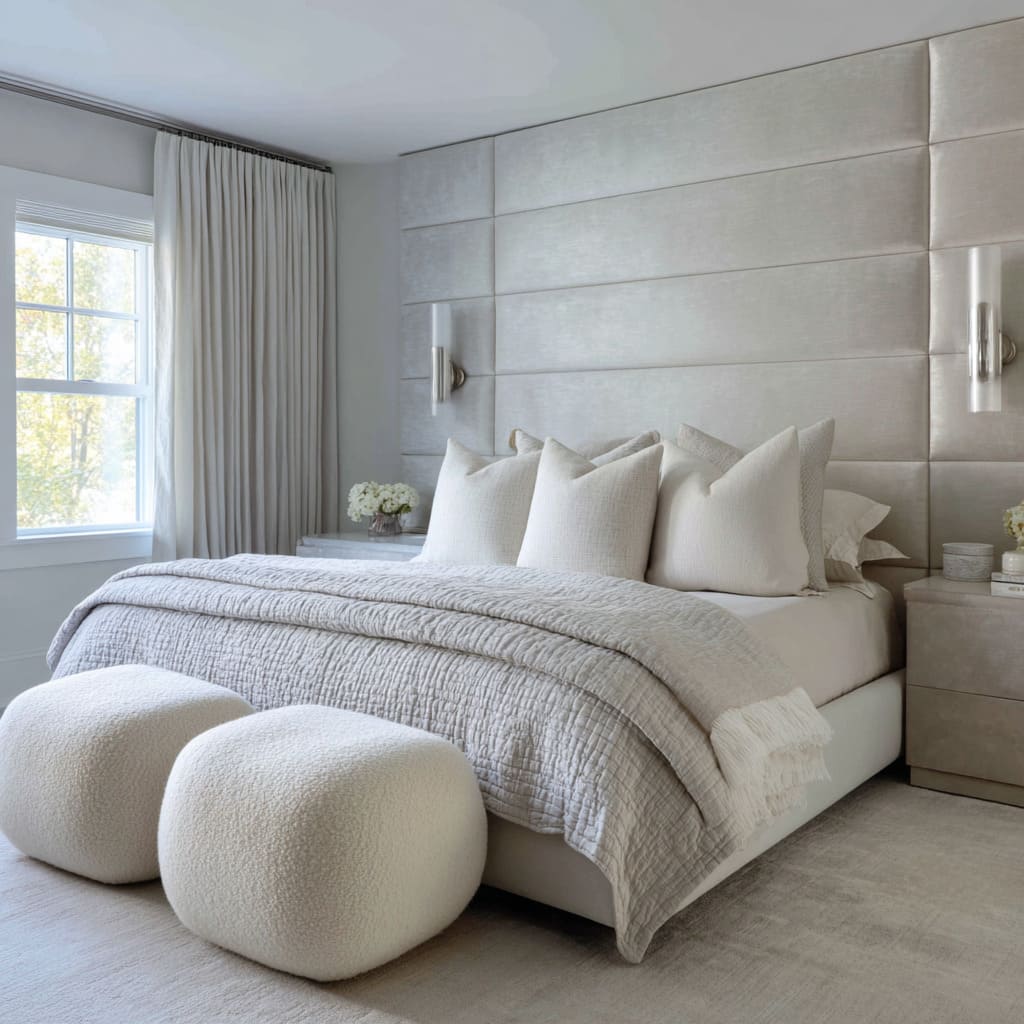
- Field forms: tall panel grids, pearly plaster planes, horizontal seam runs that stretch the wall.
- Lens forms: flanking mirrors, antiqued doors, beaded frames that widen or soften reflection.
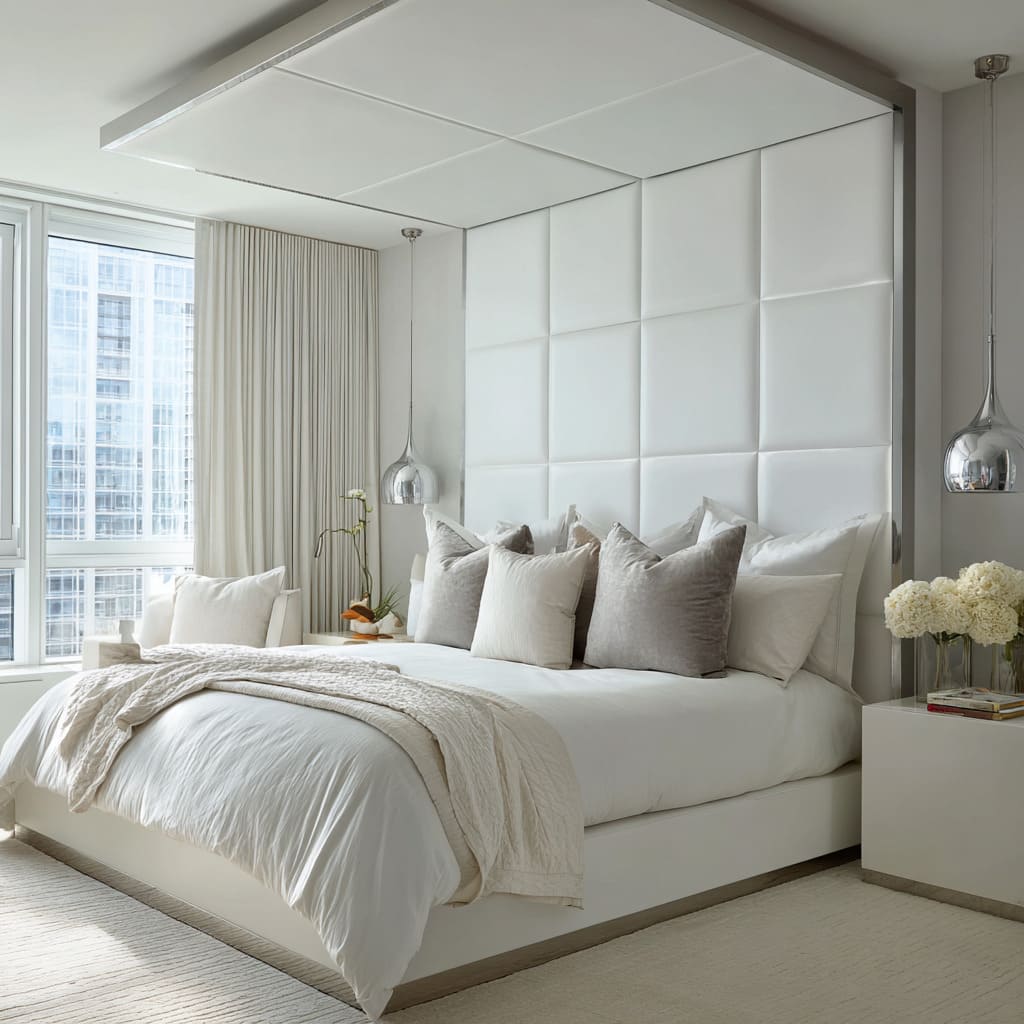
Hover, halo, and the illusion of levitation
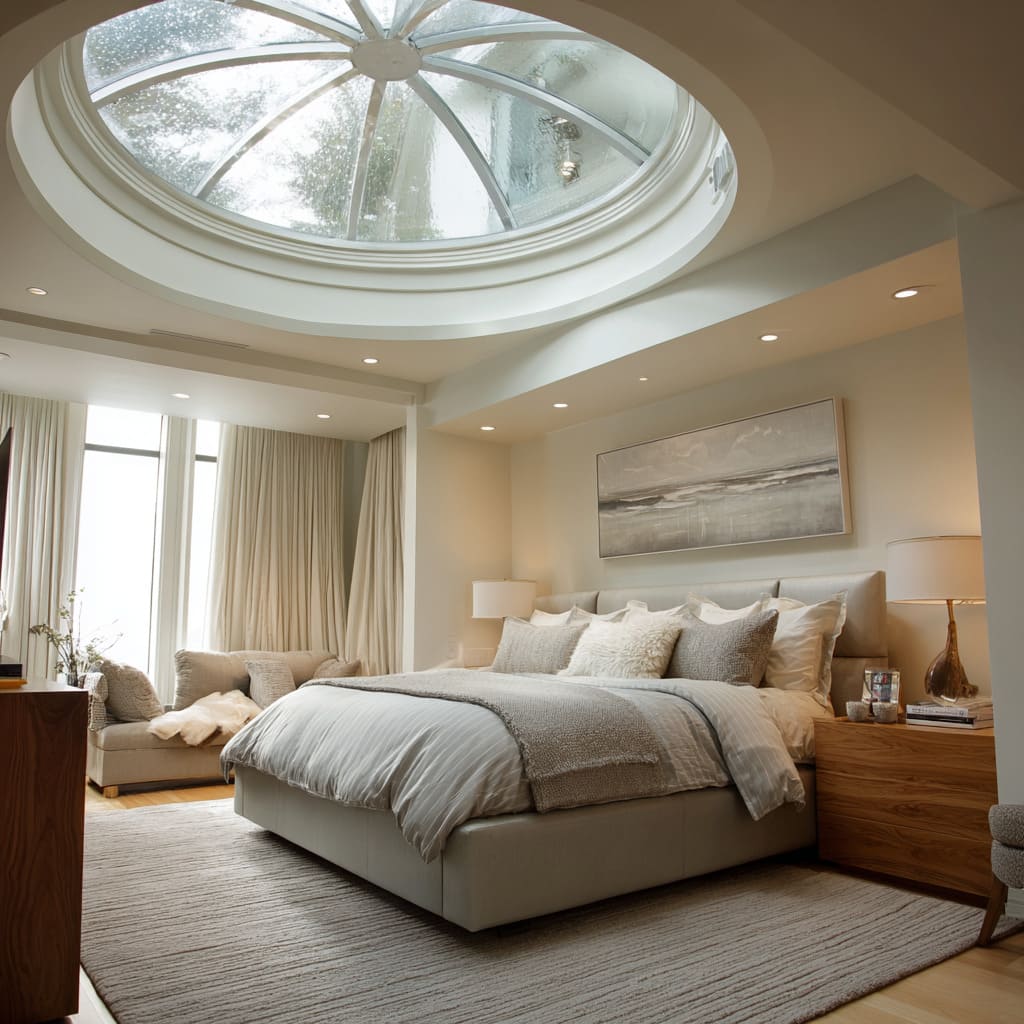
Light isn’t an accessory here; it’s part of the composition. A hidden line above a headboard becomes a datum that pillows climb to meet; a soft perimeter strip under the bed makes the mattress look lighter; a ceiling cove wraps the room in a low, even glow; and a round skylight drops daylight in a cone that turns every textile slightly silver.
None of this is about brightness for its own sake—the point is to sculpt weight. Big white volumes seem to float; satin edges catch a faint glimmer and carry it along seams and folds; mirrors borrow these halos and repeat them in softened echoes.
In a single glance the viewer reads “quiet lift” instead of “fixture,” which is why the space feels settled even with minimal decor.
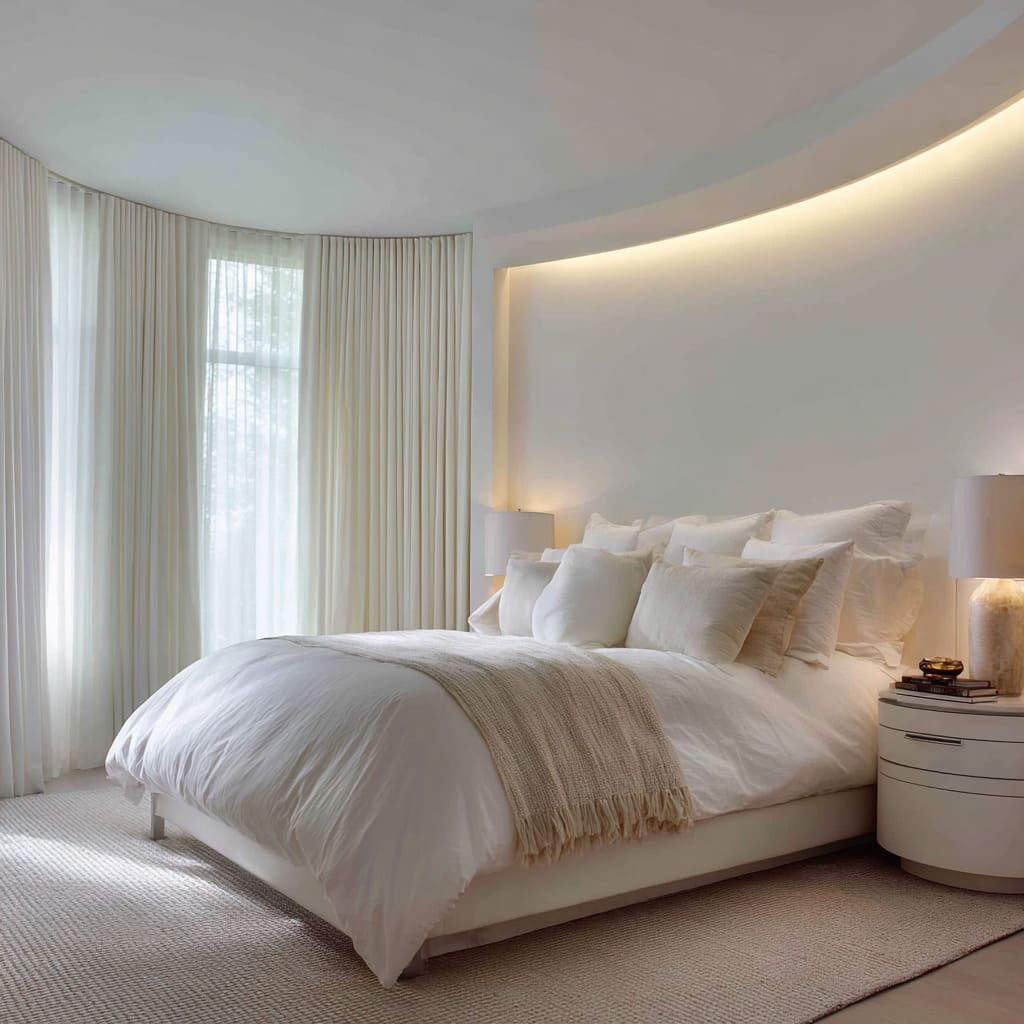
Light roles inside the palette
- Lines: coves, ribbons, and shelf slots that set height, width, and focus.
- Clouds: oculus daylight, diffuser pendants, dense sheers that turn windows into soft panels.
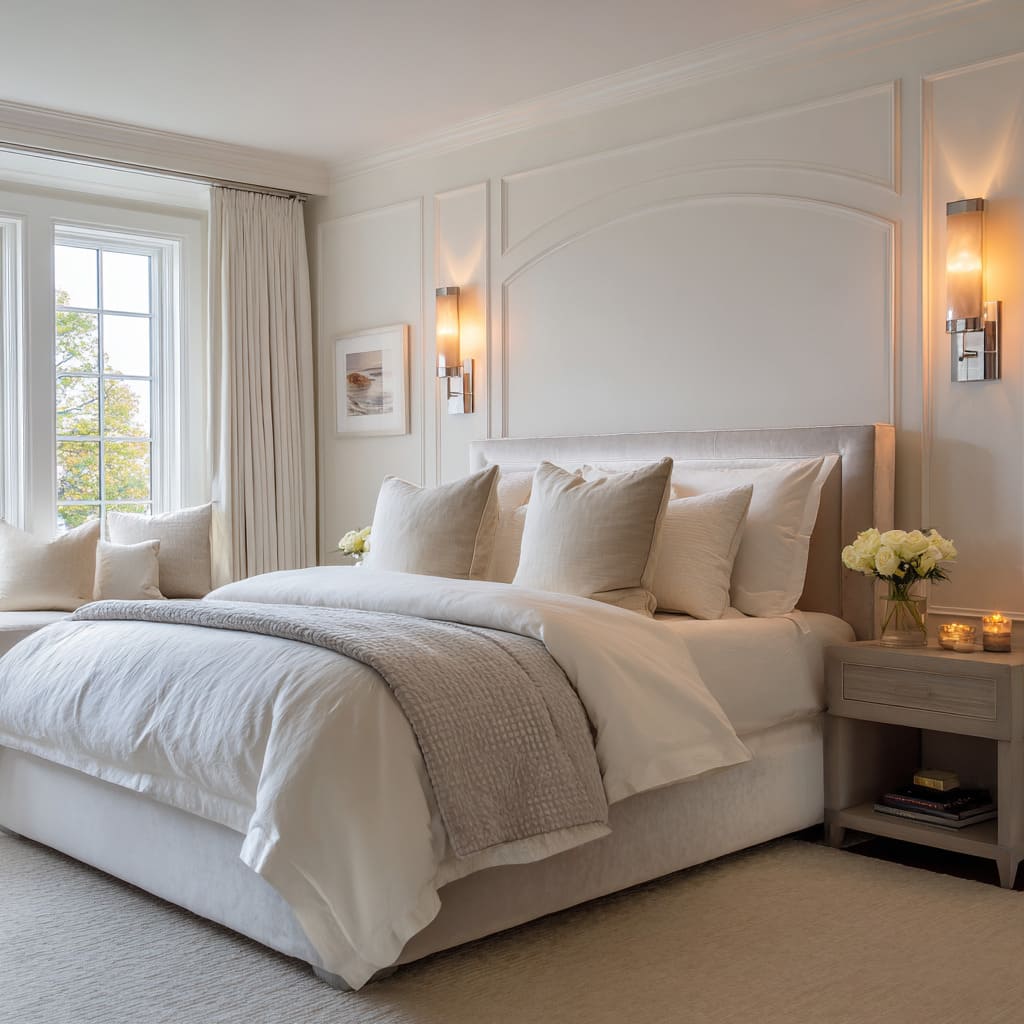
- Punctuations: sconces with frosted sleeves, chrome droplets, tea lights that dot a path across low surfaces.
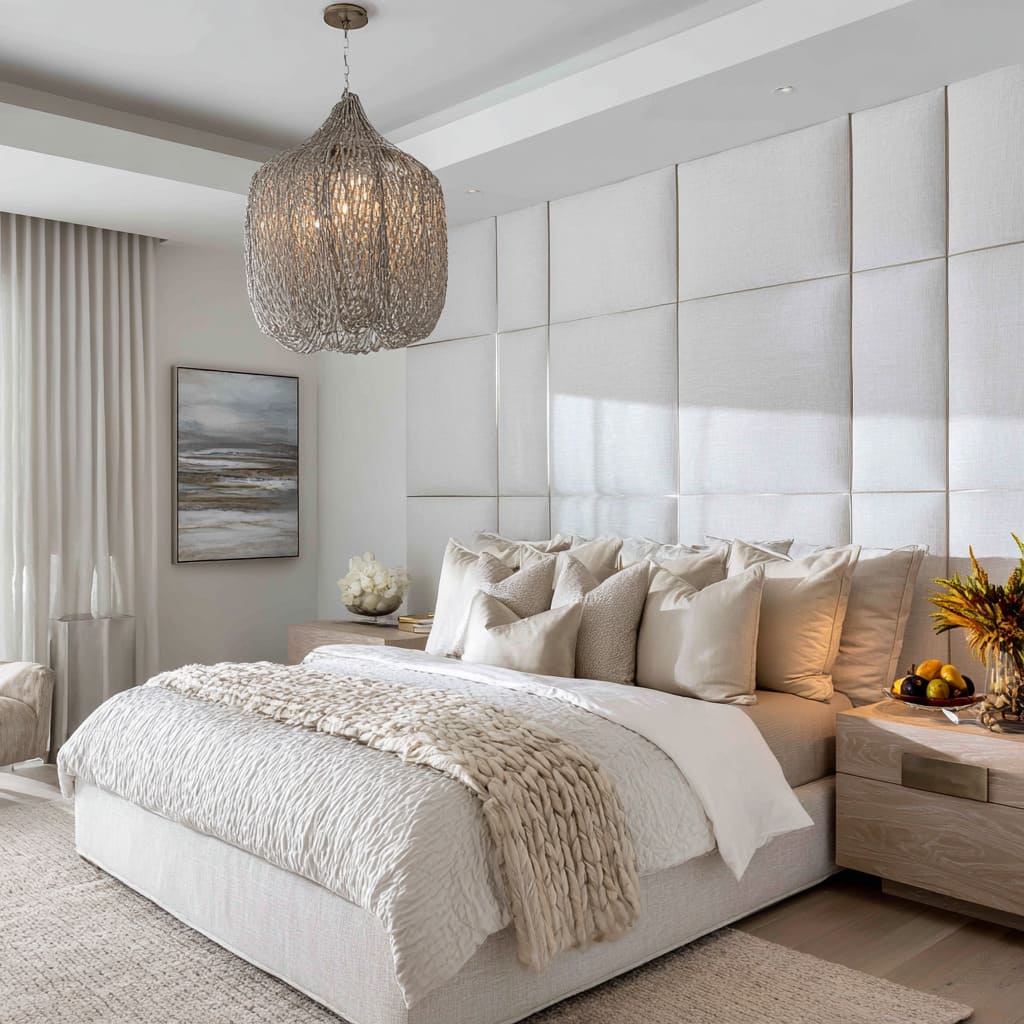
Rhythm systems: horizontal calm, vertical order, gentle curves
Under the calm palette sits a strict rhythm that keeps the room from dissolving. Horizontal bands—panel seams, shelf lines, mirror joints, low beds—stretch a wall and create a coast-like serenity.
Vertical orders—tight pleated drapery, tall padded squares, mirrored wardrobes—add composure and make compact rooms feel taller. Curves and arcs step in as relief: rounded nightstands by a panel grid, an arched recess inside a field of reeds, a cloudlike pendant softening strict edges.
Silver follows these rhythms as a tracing element: a pull, a seam, a canopy edge, a slim frame. Because the eye recognizes a consistent beat, even a very pared-back room feels complete.
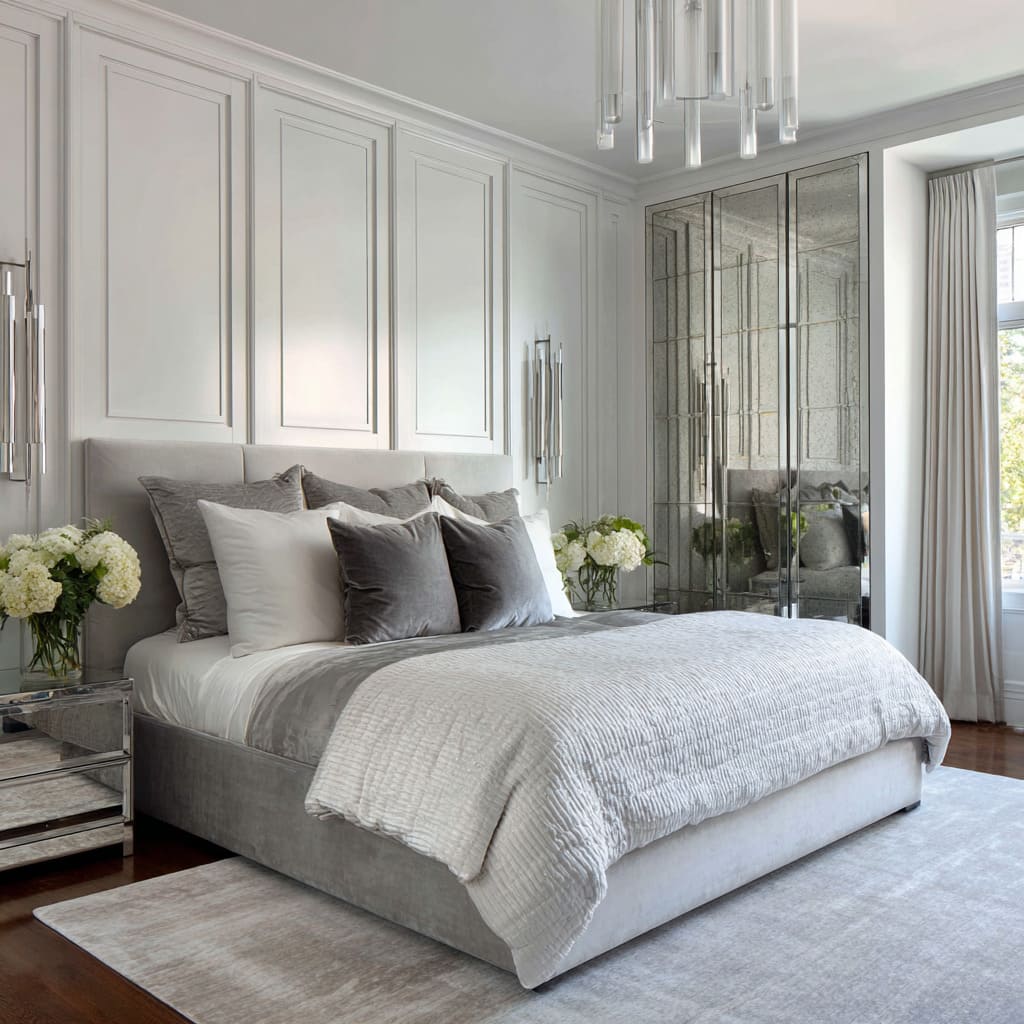
Tactility first: quiet materials that carry light softly
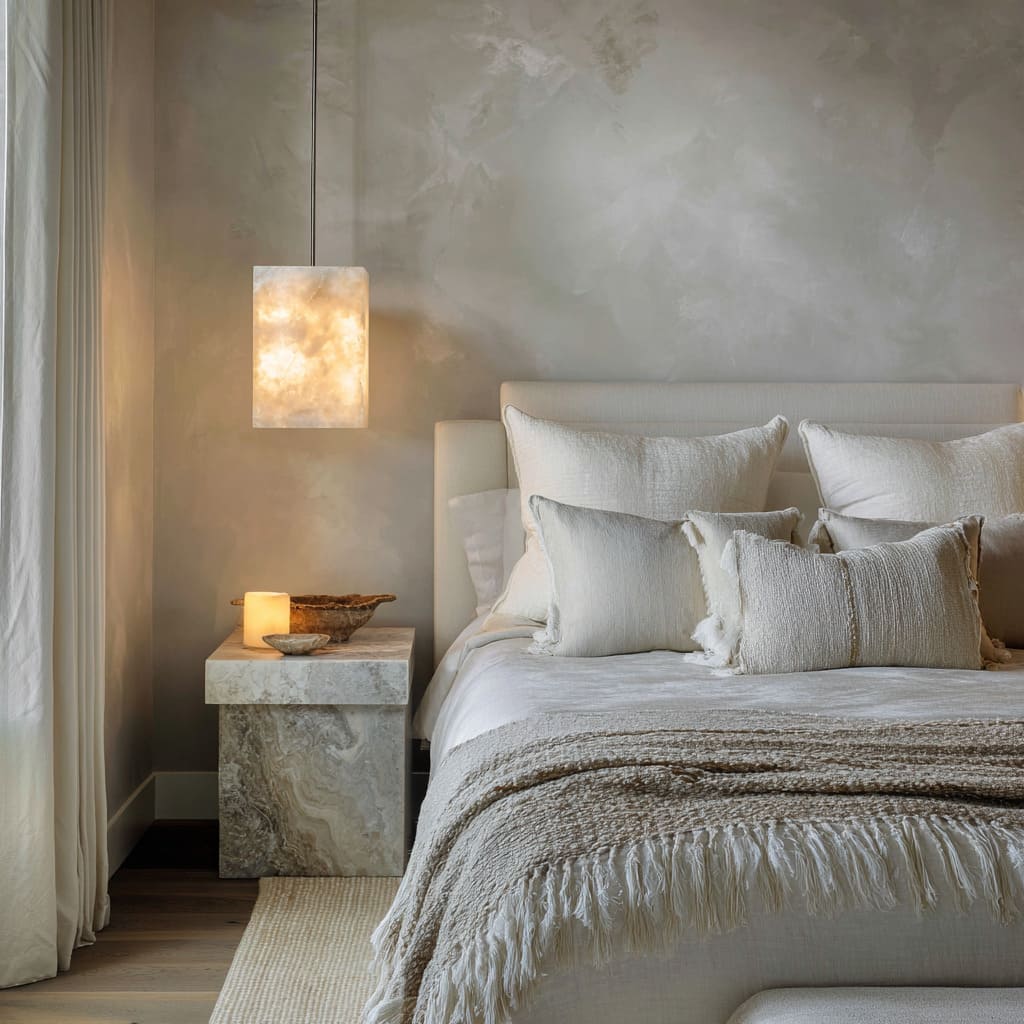
The palette thrives on texture pairings that calm each other: bouclé beside satin, brushed suede near glass, lime-washed plaster across from a crushed duvet, looped rugs under smooth cotton, hammered side tables next to clean panel lines. Silver hides in mineral and textile stories—veining in stone, a faint metallic undertone in plaster, a satin nap that turns a crease into a soft highlight—so the scene glows without glare.
Dense sheers filter views into milky fields; padded planes read velvety; knit throws add shadow and soften repeated rectangles. Fringes, tassels, and small irregularities keep the room human and prevent the bed from looking like a showroom stage.
This is the foundation that supports broader white and silver bedroom decor ideas while keeping the whole space gentle.
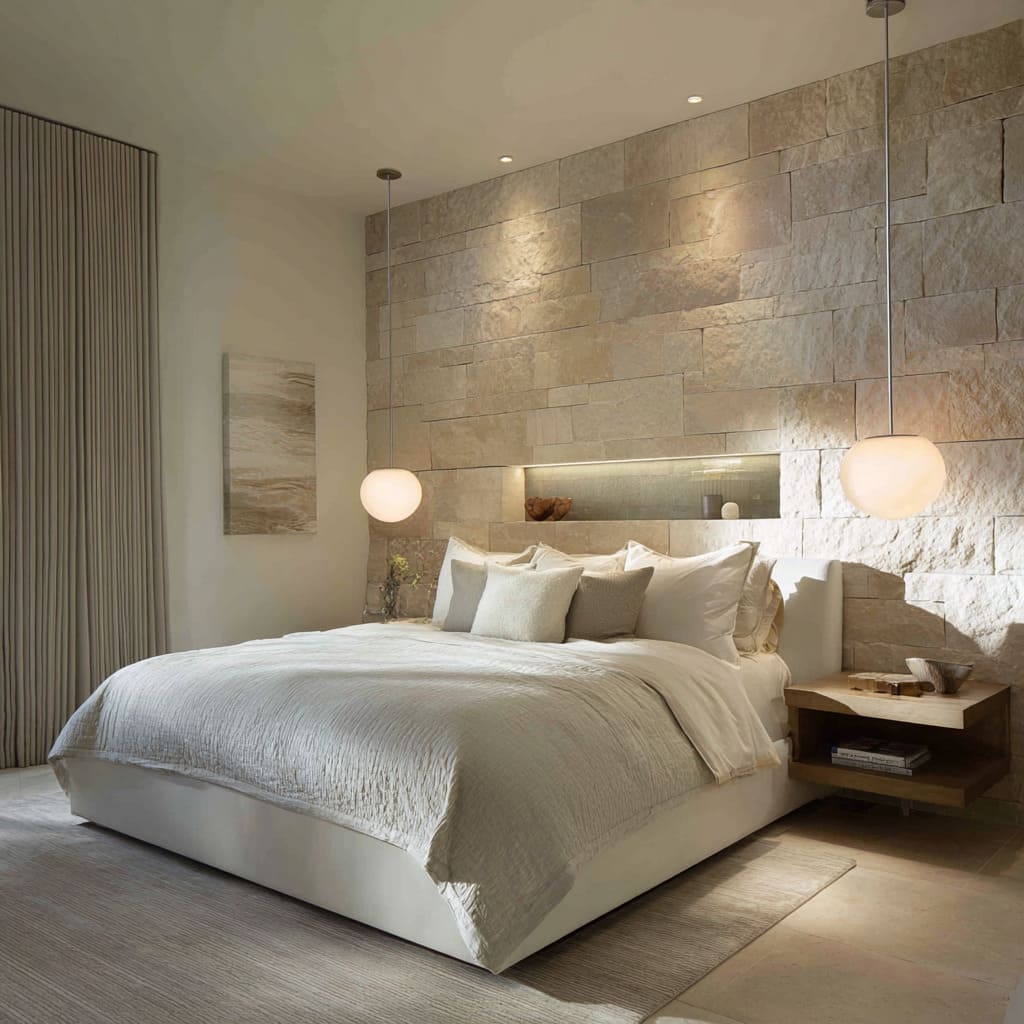
Mirrors with manners: reflection shaped, not splashed
Mirrors never appear as random rectangles; they flank, frame, or soften. Antiqued doors add a smoky repeat of the room; beaded frames turn points of light into a delicate constellation; tall pairs stop just above the pillow crest to widen the bed without crowding the ceiling; full-height sheets behind the bed borrow ceiling forms and pendant clusters to make the architecture feel richer.
Even reflective furniture behaves: ribbed faces break up glare, and mirrored cubes multiply a single globe lamp into a tidy vignette. The underlying principle is simple—reflection is a material, not a spectacle—so it’s modulated to support the rhythm already in place.
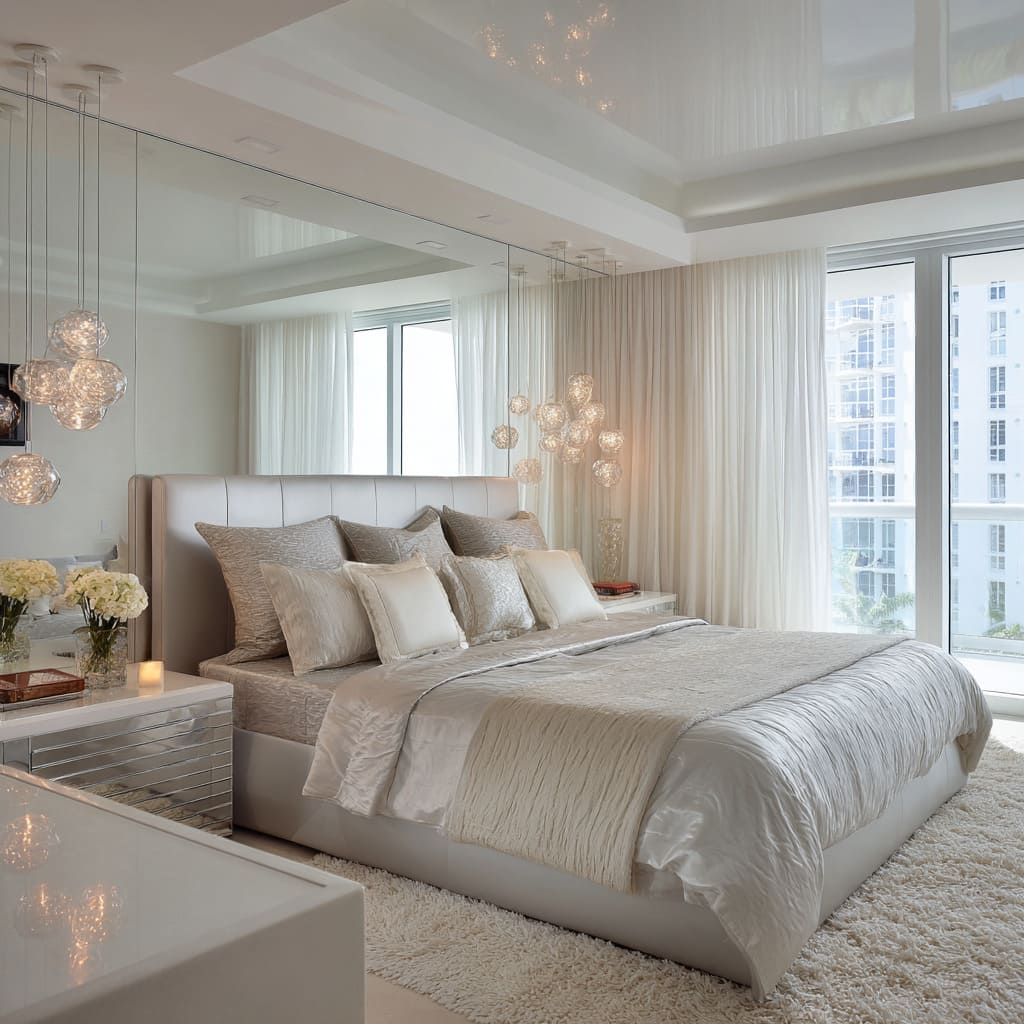
Ways reflection gets tuned
- Softened: antiqued silvering, cloudy panels, mosaics that scatter light.
- Directed: frames, flanks, and canopy alignments that aim the repeat.
- Textured: ribbing, bevels, or beading that turn flashes into a fine grain.
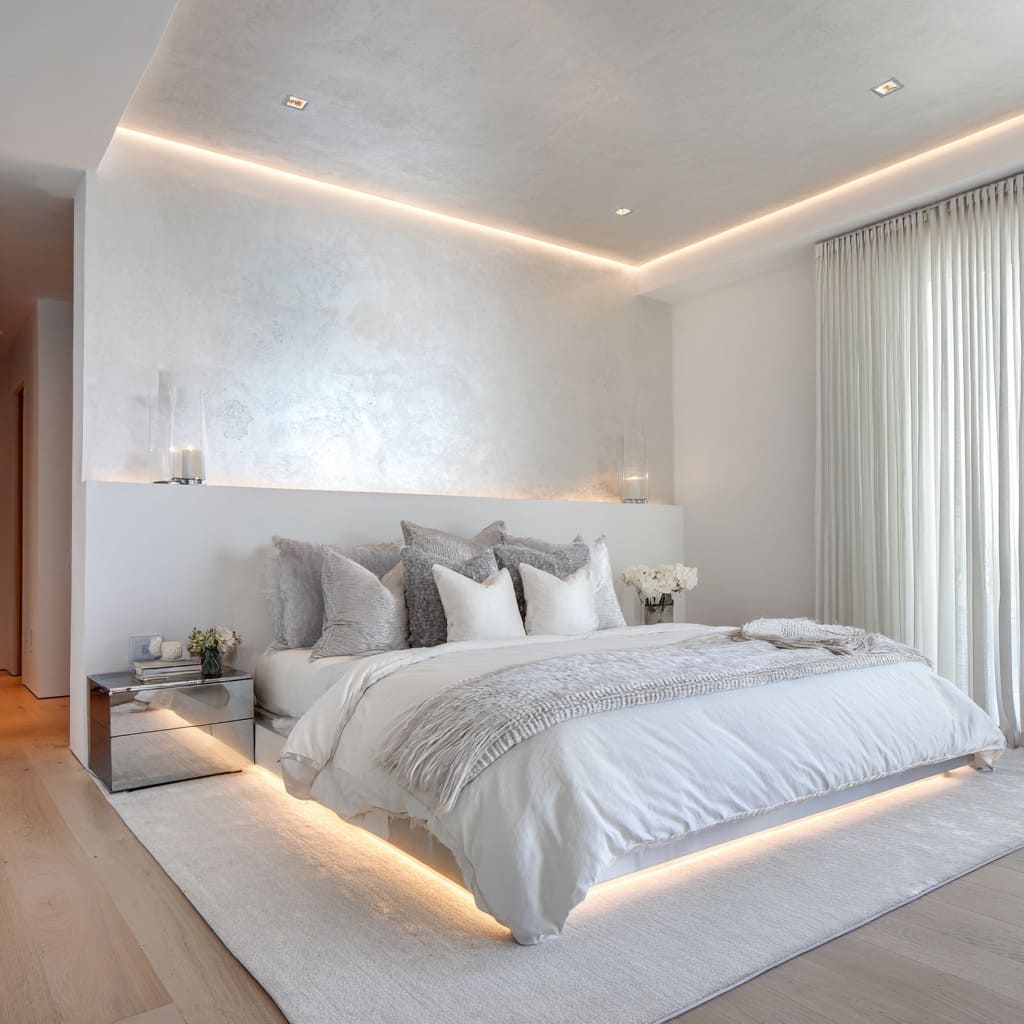
Warmth threads that keep the palette from going clinical
A small, steady thread of warmth keeps the cool scheme calm rather than chilly. Pale to mid-tone woods appear where hands and eyes rest—nightstands, dresser edges, bed bases, tray rims—so the grain reads as a friendly underline.
Botanicals arrive as simple stems or meadow sprigs to add a live silhouette without changing the temperature. Tiny metal accents in a warmer register—one bronze dish, a soft gold rim, a single apple object—tilt silver toward comfort while preserving the cool identity of the room.
This is where silver white bedroom ideas feel effortless: the cool field carries the look, the warm notes stop it from feeling remote.
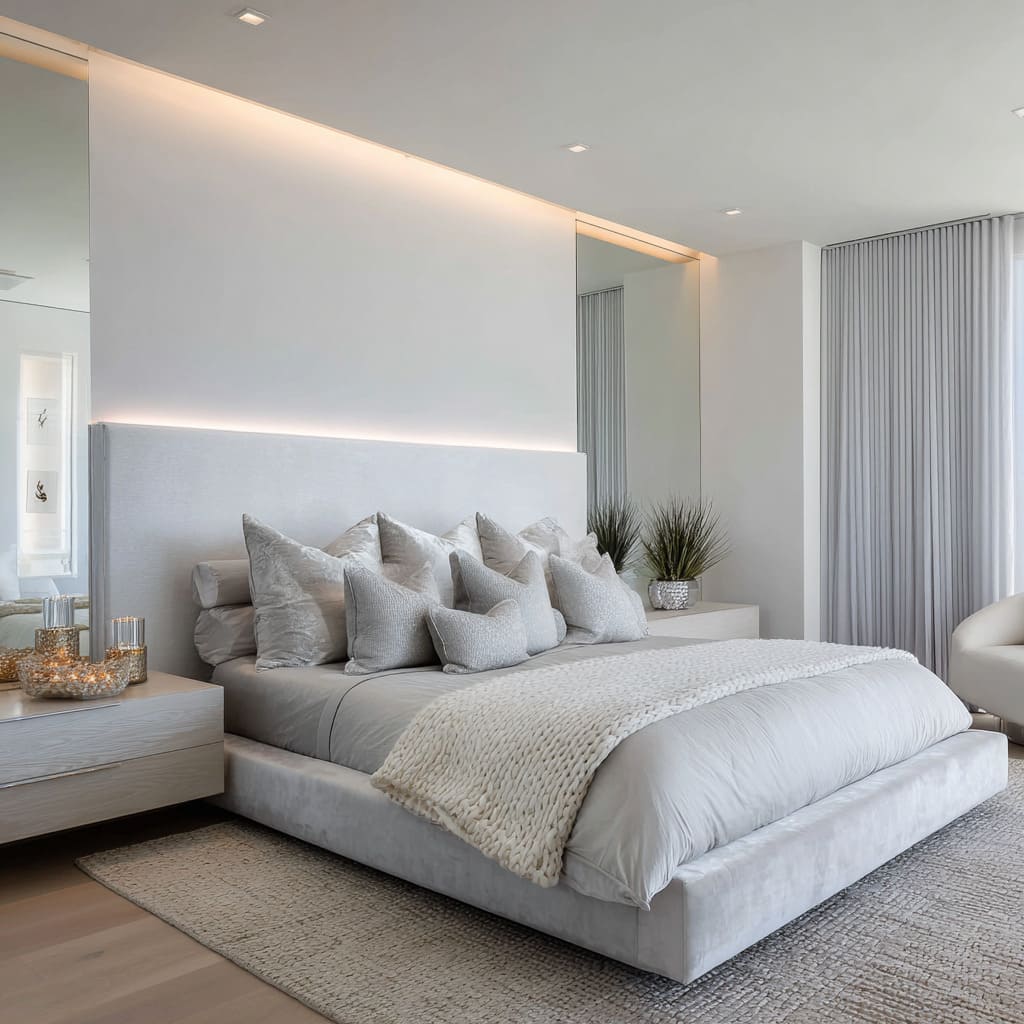
Micro-highlights and the art of the dotted line
In such designs, small bright points are spaced like punctuation marks to guide the gaze. A pair of frosted sconces grazes an upholstered band and reveals its nap; a glass rim flashes at the edge of a tray; a single satin pillow catches a crease; a tea light turns into a warm dot on a mirrored surface; chrome tips at a pendant string read like commas in a sentence.
None of these are large enough to pull focus, but together they write a subtle path across the bedscape and around the headboard wall. Place them along rhythm lines—panel joints, shelf edges, canopy fronts—and the eye reads composed sparkle rather than scatter.
This is the quiet heart of white silver bedroom ideas: fine glints that keep the scene alive.
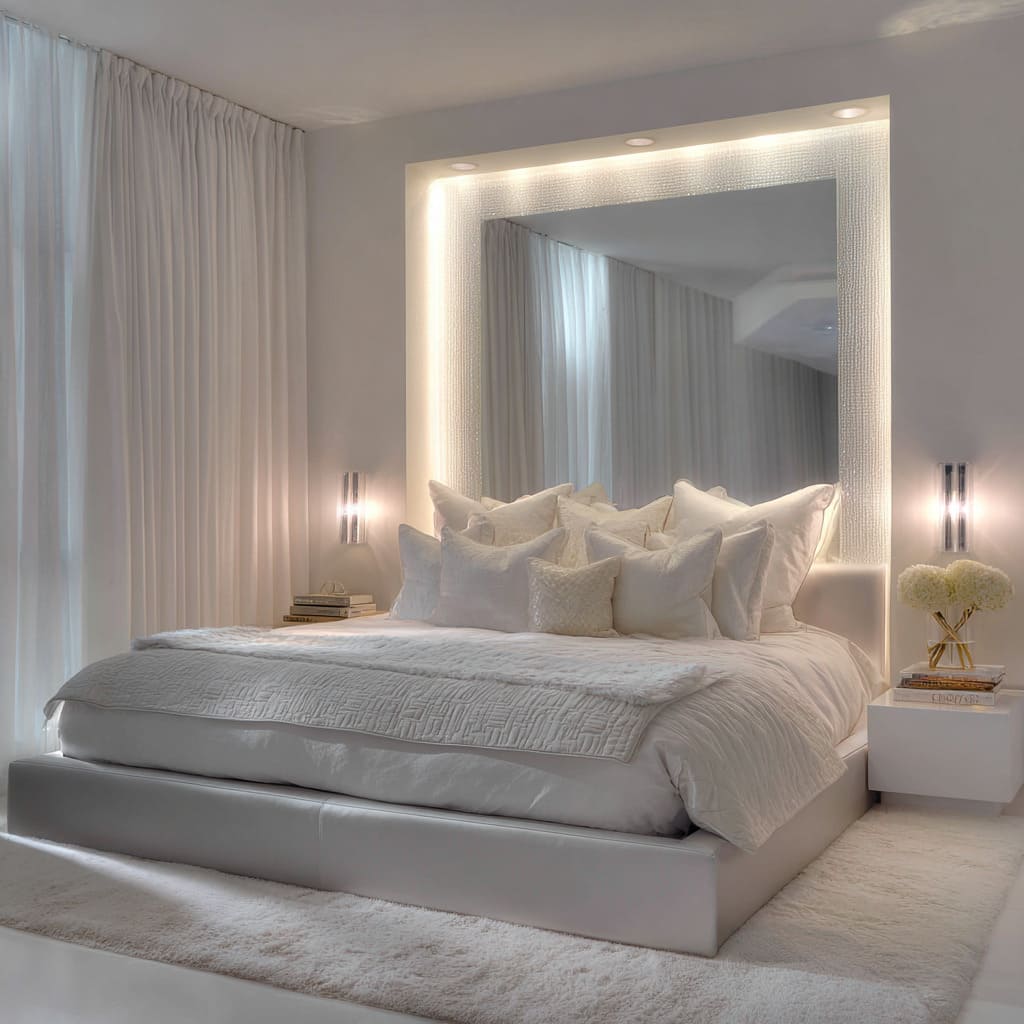
Style archetypes inside the same palette
Even with identical colors, the mood can shift widely depending on container and texture logic. Below are common archetypes that emerge from this language; each stays firmly non-technical and visual.
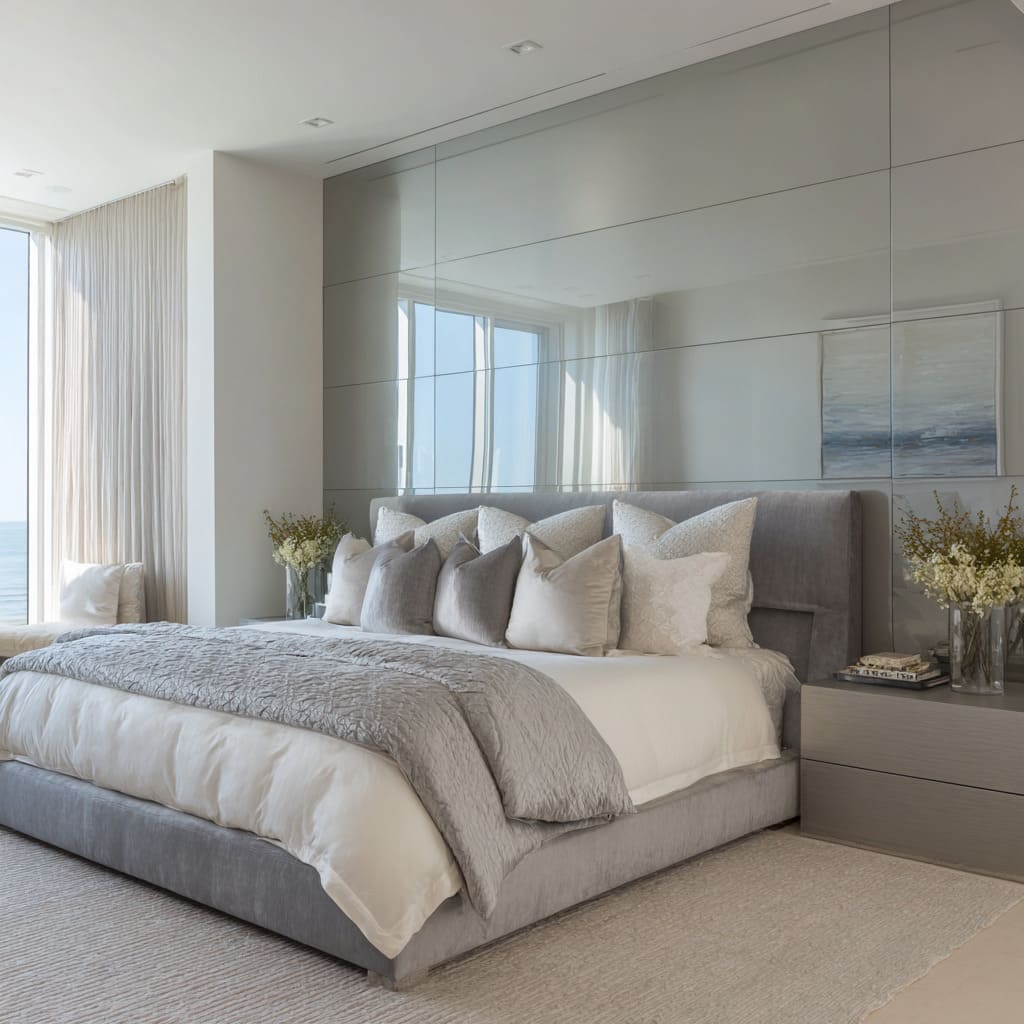
Cloud containment
Padded canopies, continuous coves, beaded-frame mirrors, under-bed glow; the bed looks lighter than its mass, and silver travels as a thin line or halo.
Mineral calm
Lime-washed plaster, limestone blocks, onyx-veined nightstands, woven pendants; reflection is absorbed into stone and soft textiles, so the glow feels grounded.
Formal sheen
Paneled headboard walls, mirrored chests, ribbed dressers catching hairline glints, glass-tube chandeliers; reflective notes are structured by strong geometry.
Niche and arch
Deep recesses, mosaic linings, rounded nightstands and lamps; light gathers inside curves and the bed sits in a cradle that frames the scene like a stage set.
Compact city clarity
Tall panel grids, chrome punctuation, tight drapery, strict alignments; mirrors widen and brighten without disturbing the order.
Composition stories that keep design readable
Every successful design tells a simple organizing story that the eye can summarize in a breath. A long horizontal light ribbon sets the pillow height and stretches the wall; an arched recess frames the bed and throws a crescent shadow that makes the headboard look brighter; a pearly plane folds from wall to ceiling and turns movement into gradients; a round skylight drops a soft cone that silvers every textile in reach; a floating platform repeats the ceiling’s hover so the bed reads composed from any angle.