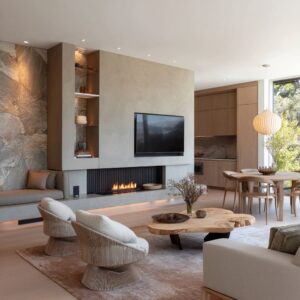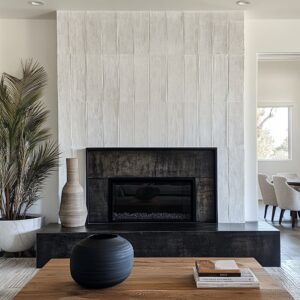
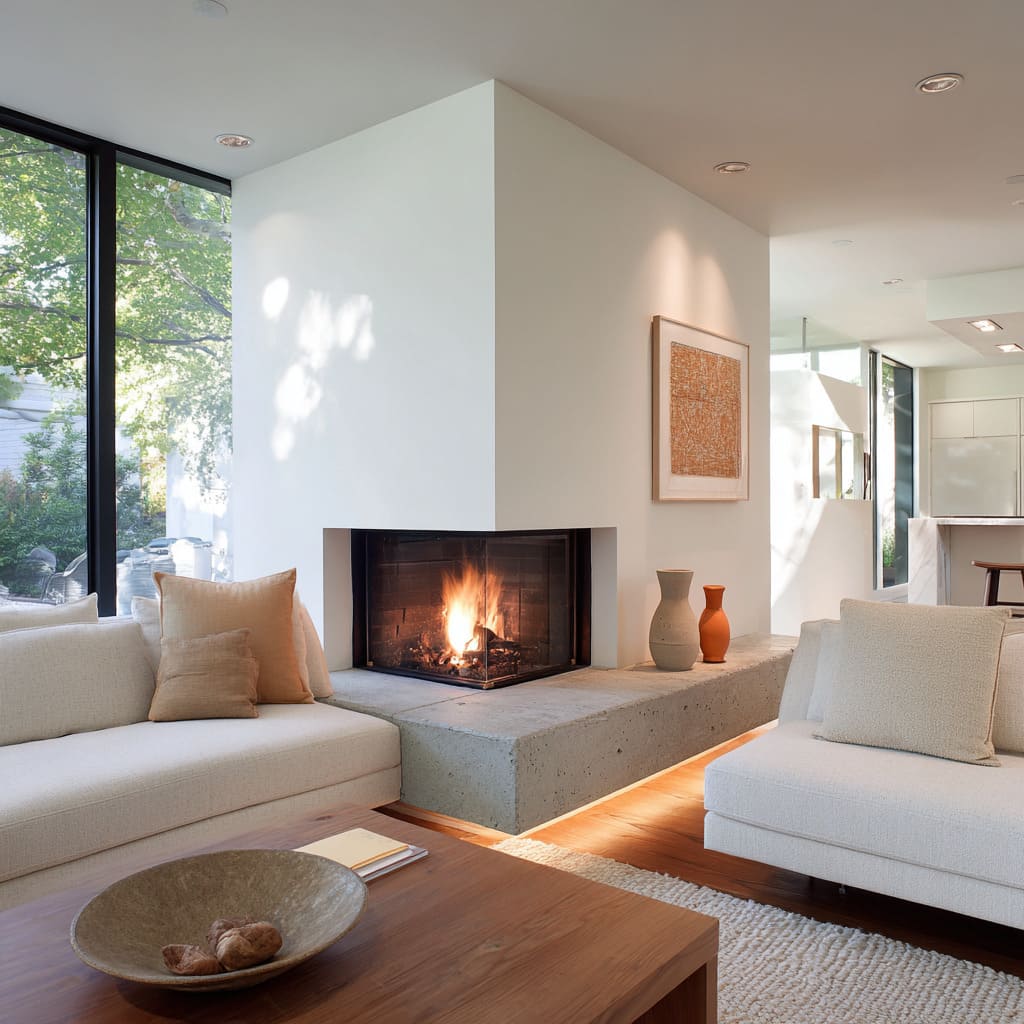
A corner fireplace design carries a calm kind of drama that does not shout. Instead, it holds the room like a gentle hinge, easing two planes into one mood while warming both sight and air.
This quiet connector quality is what makes ideas for corner fireplace spaces so charming in thoughtful homes, especially when paired with soft textures, subtle reflection, and seating that feels built with intention. The goal is not to make the corner loud—it is to let it breathe, hold warmth, and guide the eye in smooth motions from one zone to another.
In many modern rooms, corner fireplace design ideas treat the angle as a flow point rather than a leftover nook. Long ledges run into the corner and continue with no break; stone or plaster planes turn gently; glass rounds the angle with fire flickering along both sides.
The room design reads unified because the fireplace does not end at an edge—it sweeps through it.
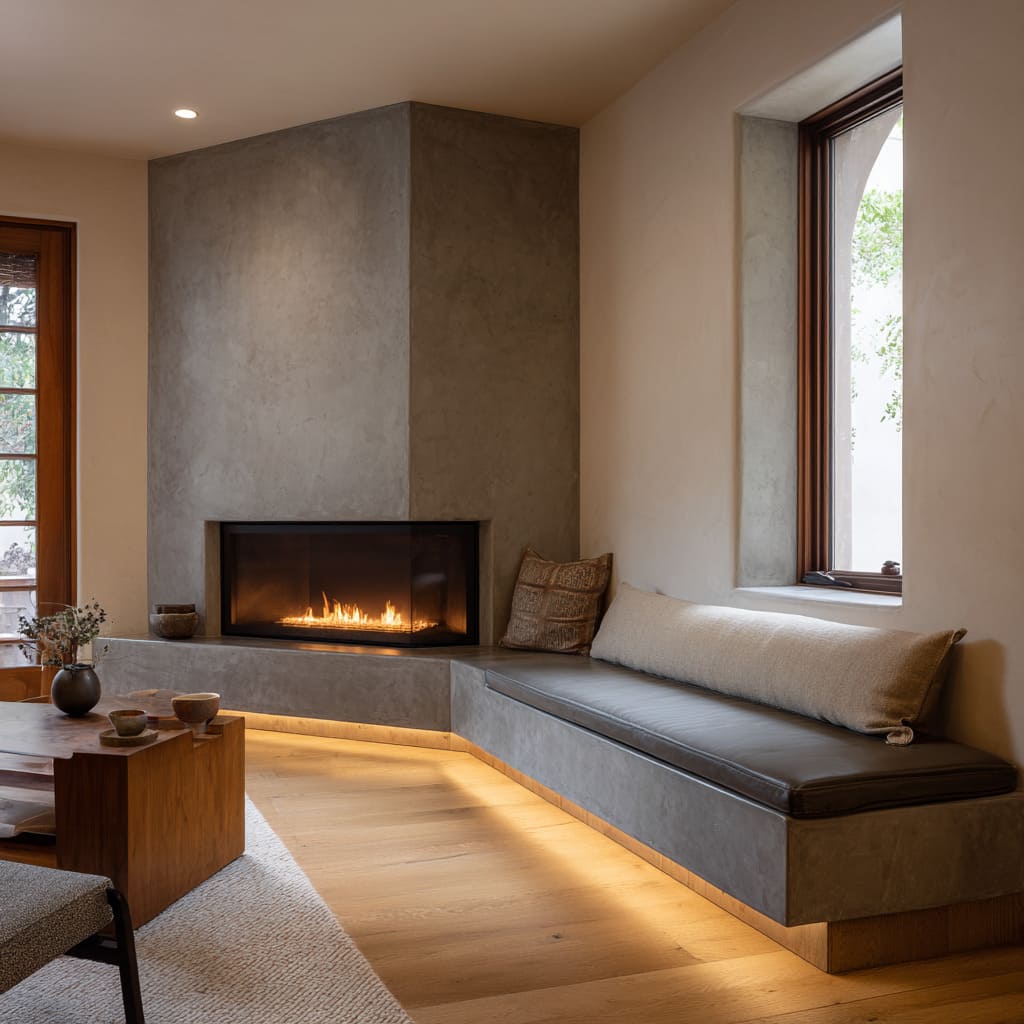
The effect is especially noticeable when daylight brushes across the finish and meets the glow from below a bench or hearth slab. When the space carries this kind of light layering, the corner feels more open and airy even with a strong fire presence resting in it.
This article shares visual styling ideas and mood concepts for interiors. It is for design inspiration only.
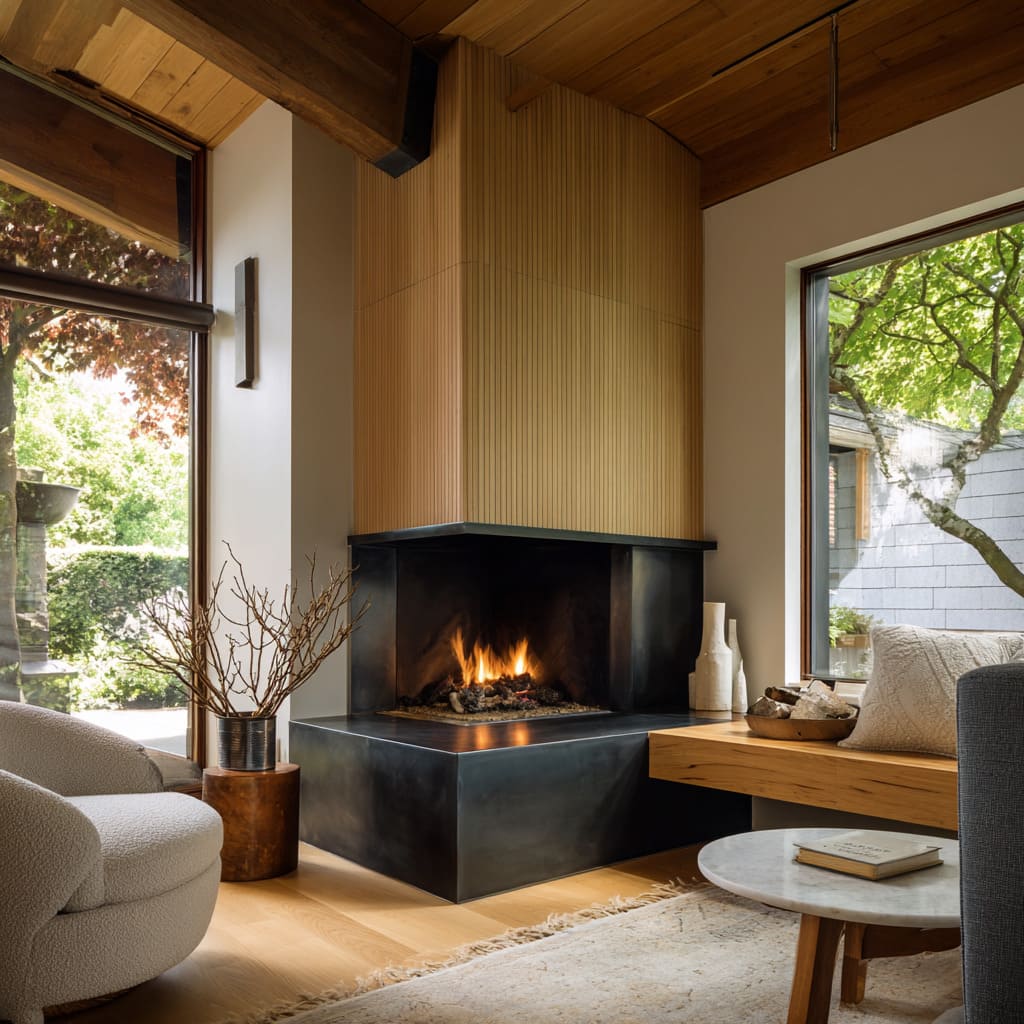
The Corner as a Soft Turning Point
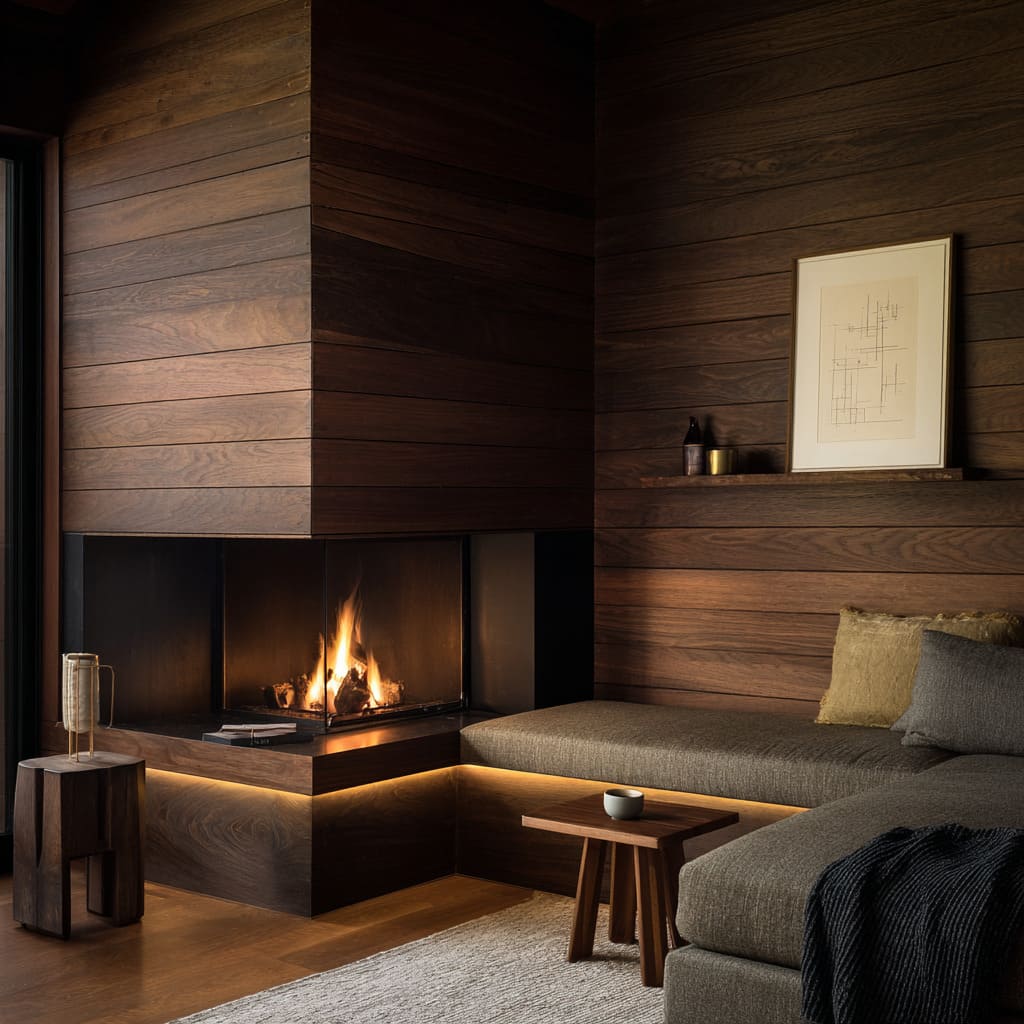
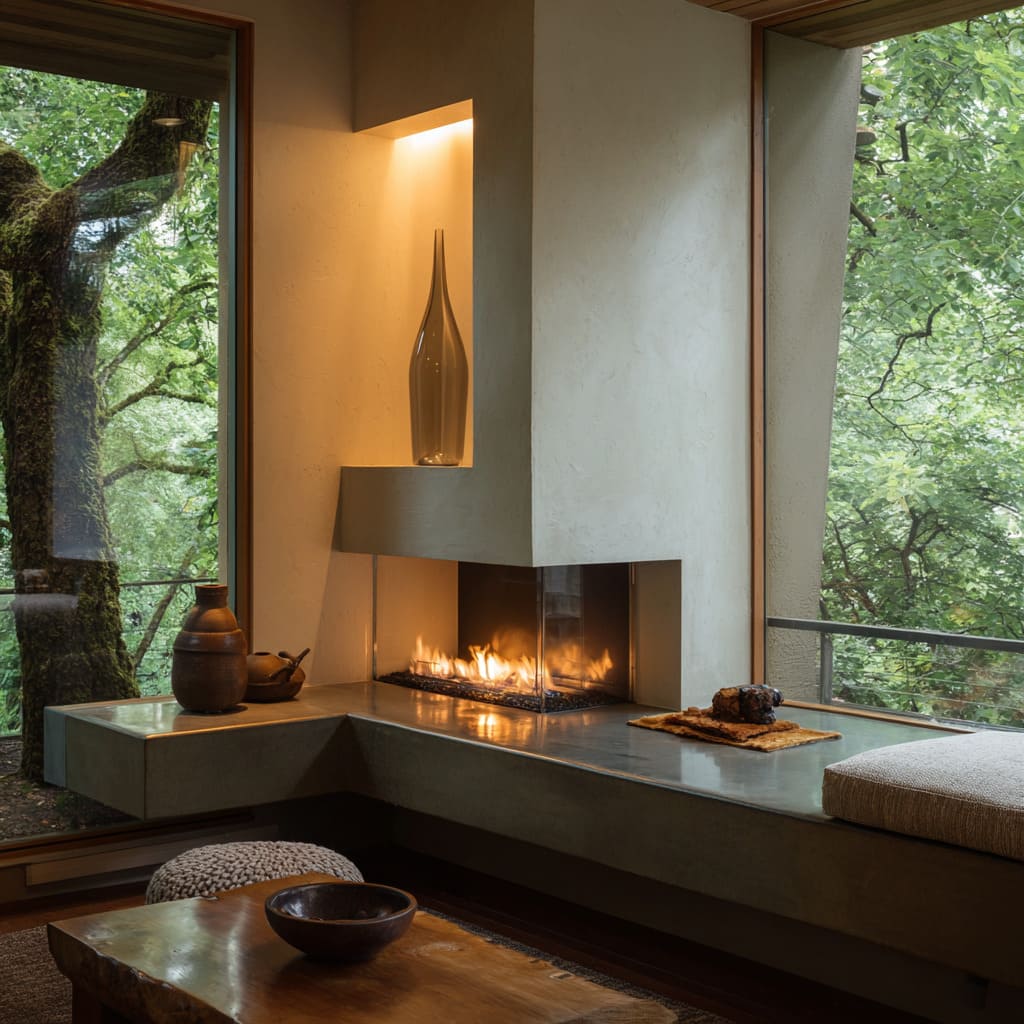
The most striking corner fireplace interior design uses the angle as a hinge between moods: the living zone on one side, the reading or lounge perch on the other. Long benches are common here—stone or concrete stretching into the window bay, trimmed with a slender cushion, forming a place to settle with a book.
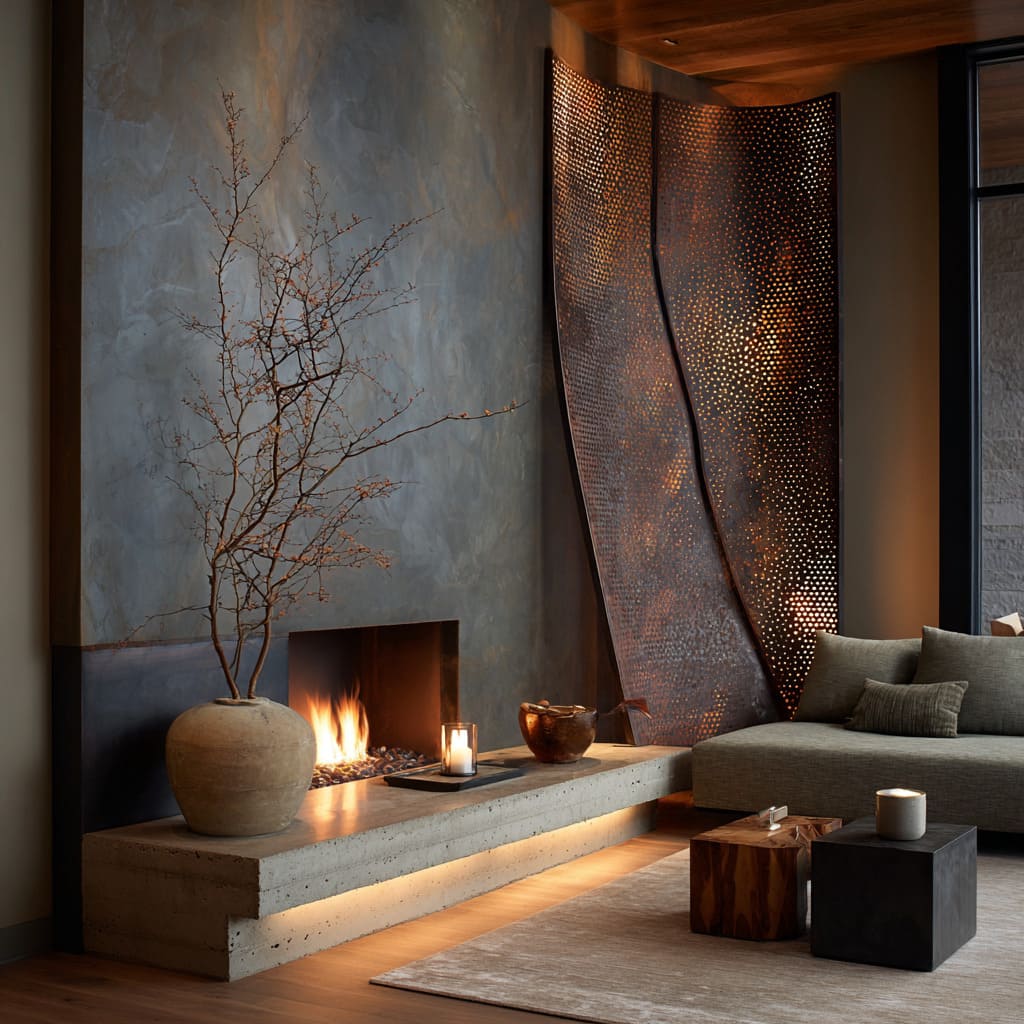
Such benches almost always show a tiny space below or a hidden glow line, so the mass floats and remains friendly, never heavy. A warm base light beneath the seat works like moonlight on the floor—gentle, atmospheric, and full of comfort.
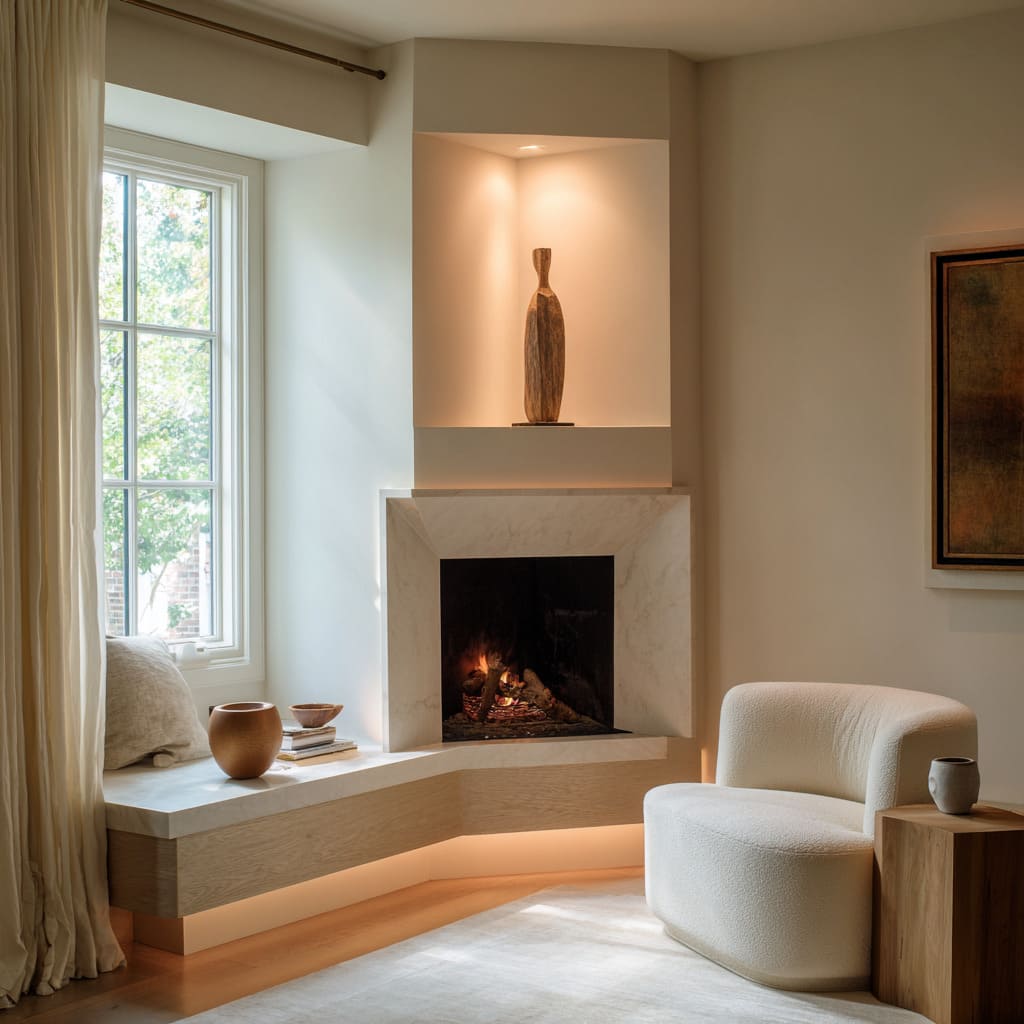
And instead of making the corner feel tight, these designs often give it room to breathe by keeping decorations low and sparse. A matte ceramic shape, a softened wood bowl, a few branches in a vase—simple elements placed to one side, so nothing feels centered and stiff.
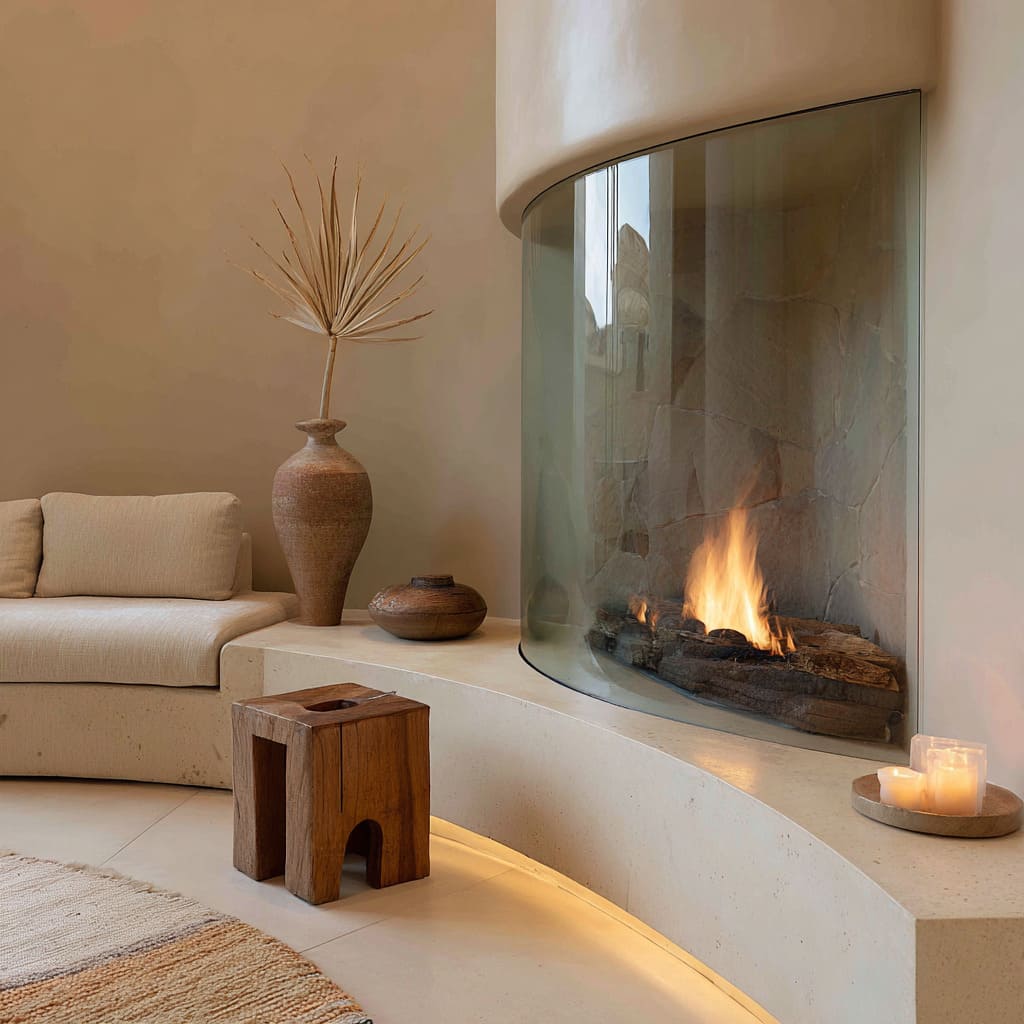
The eye moves in slow waves, not jolts. The shapes stay grounded in natural texture: rough limestone, oak beams, brushed steel, or grainy plaster.
Nothing glossy in excess; shine stays subtle, like a calm shimmer on a warm tea-light plate.
Light as Shape, Not Just Illumination
One of the most overlooked parts of corner fireplace design ideas is the way light becomes part of the composition, not just a tool to see the room. The most thoughtful examples use a light pattern, not a beam.
A soft line runs under a stone bench; small dots fall through a perforated metal wrap; ribbed interior brick channels shadow inside the firebox. Glow feels gentle and textural rather than bright and demanding.
When paired with natural daylight sliding across plaster or wood slats, the scene feels steady, almost meditative.

Light forms that shape these corners include:
- A single vertical glow seam that balances the long fire line
- Under-bench grazers that float mass and ease shadows
- Tiny lanterns placed at the bend to add a second flame echo
- Low spotlight in a niche, for one sculptural object only
- Pin light over a twig or dried stem cluster near the corner
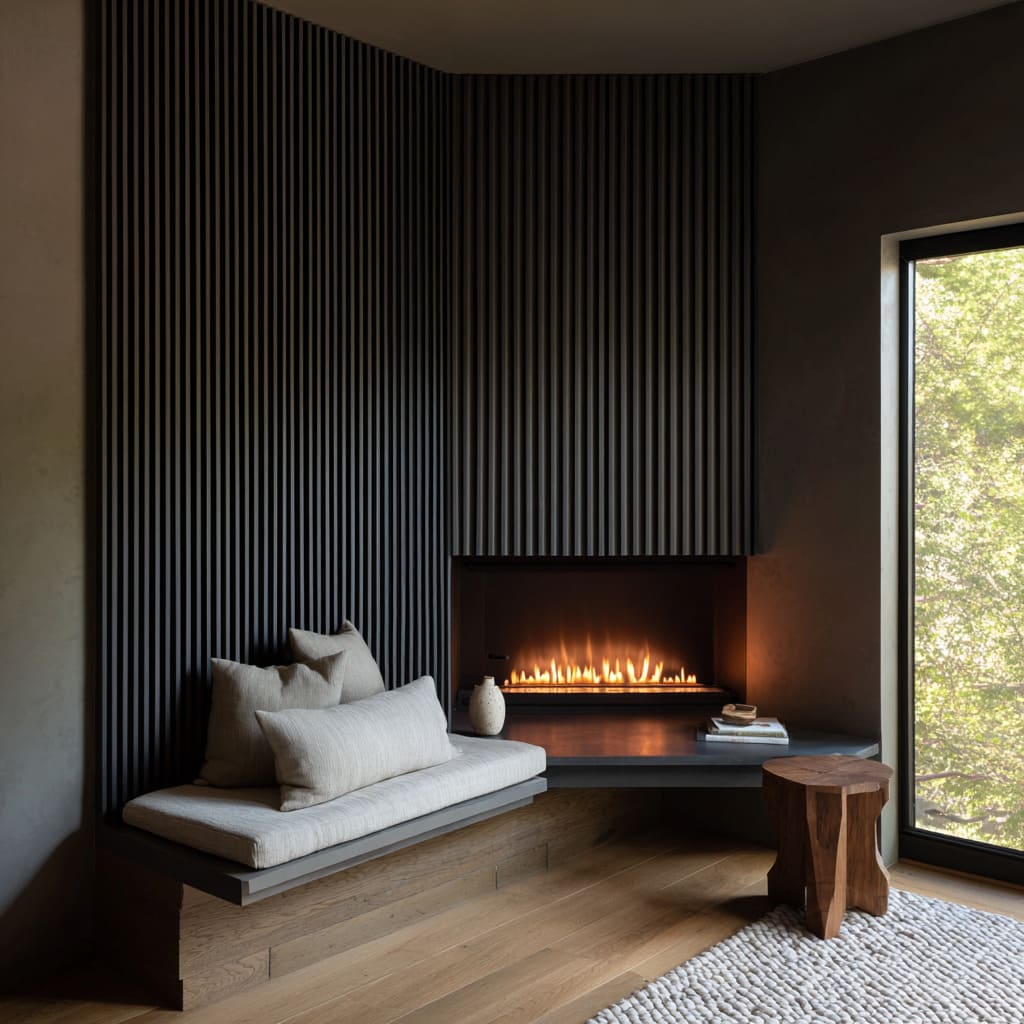
Each of these lighting touches works together, forming layers of atmosphere rather than obvious fixtures. They keep the flame as the true star, yet support the mood in a quiet, steady way.
Reflection Used With Restraint
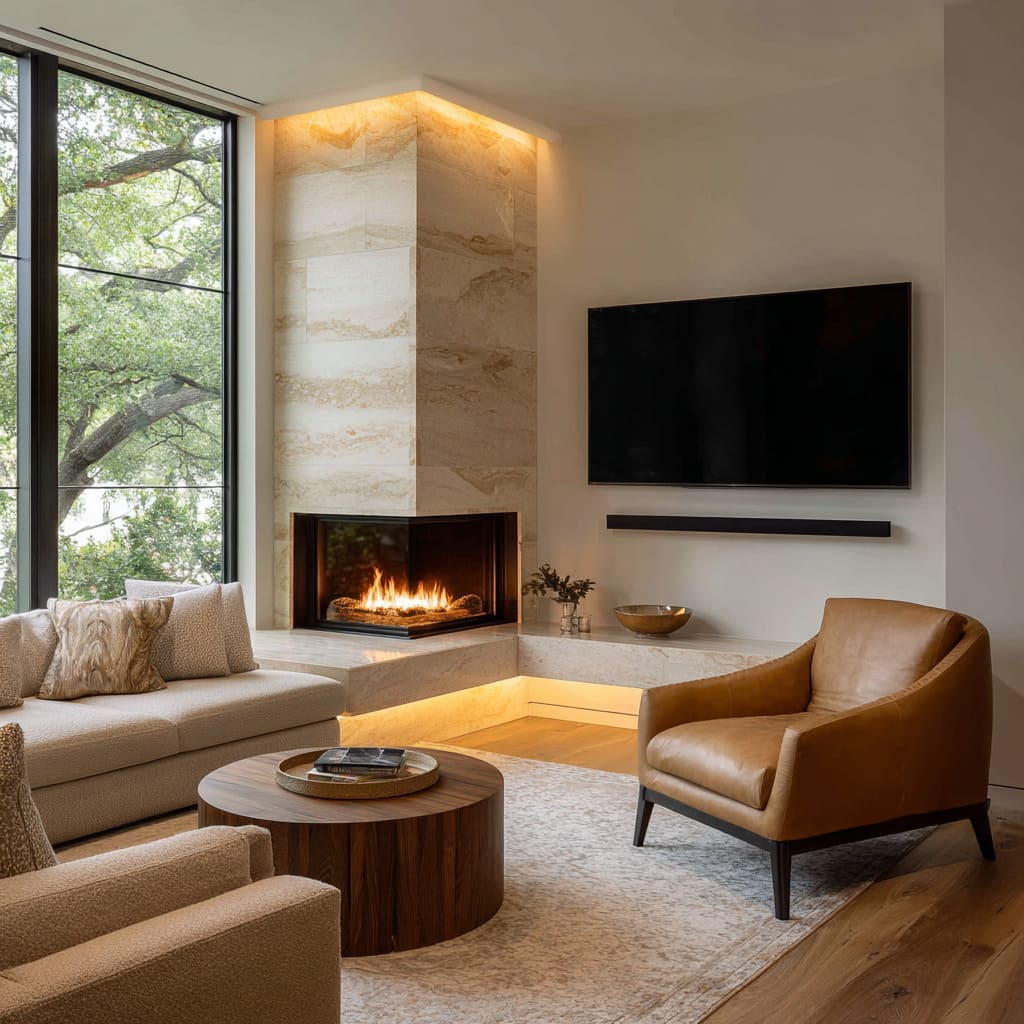
Mirrors in corner fireplace interior design settings seldom shout. Instead, they appear as thin blades, low horizon ribbons, or small sculptural fins.
Their job is not to show faces; it is to lengthen light and double the quiet glow.
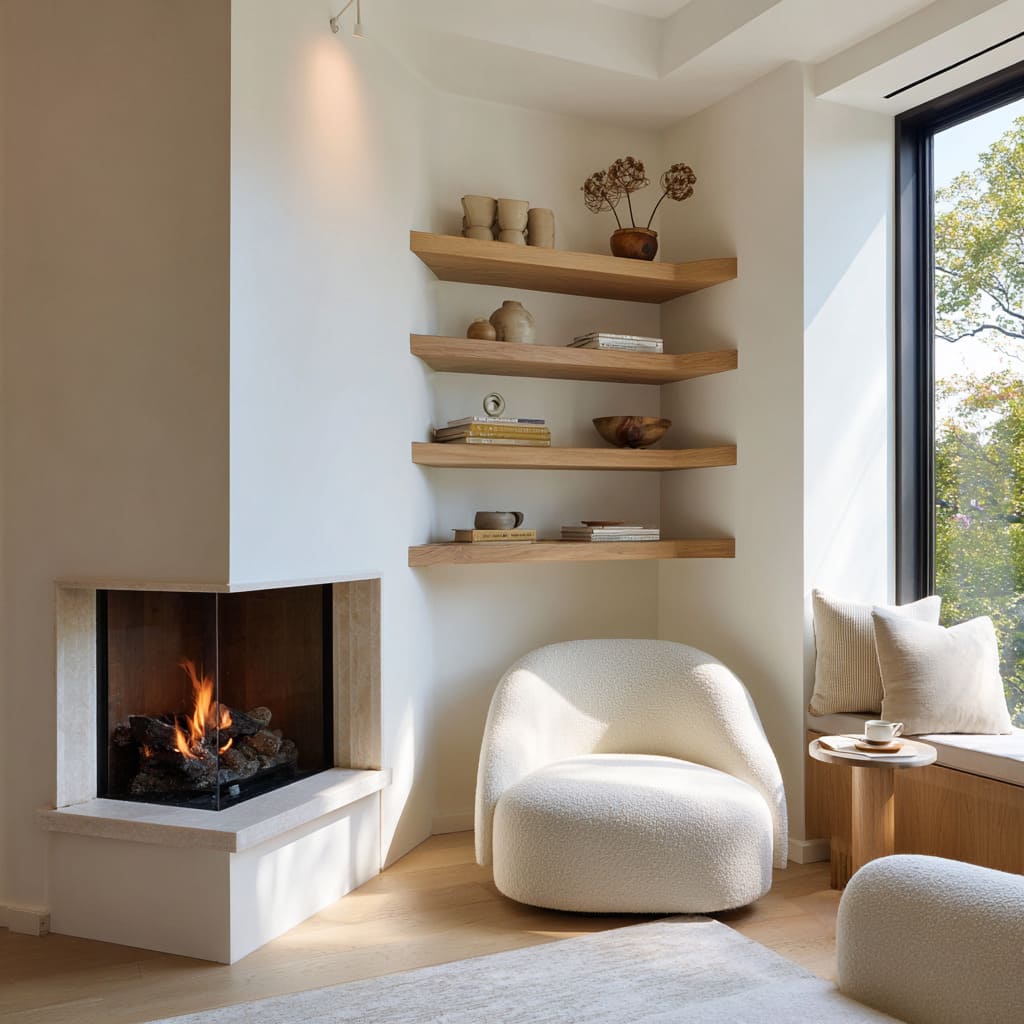
Many design pros avoid placing them at eye height near lounge seating, because visible self-reflection interrupts calm. Instead, they settle them just above bench level, or tuck them as a slender strip beside vertical slats, or nestle them under a floating slab, catching only amber shimmer and daylight flicker from nearby trees.
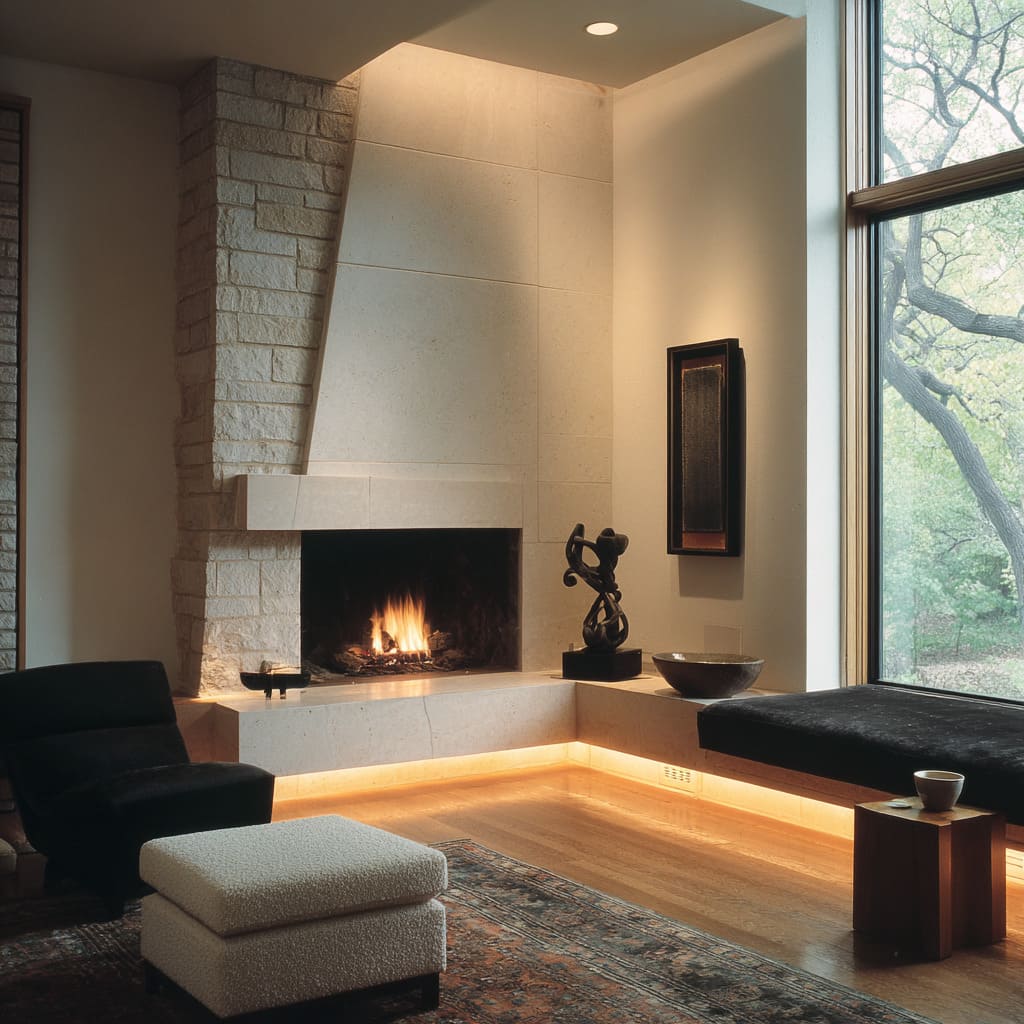
Often the mirror edge is tucked into a material joint—between limestone ribs, behind timber boards, or along a plaster seam. This hides the presence of the glass until it catches flame color.
Some use bronze tint to warm the reflection and soften the transition. Others lightly smoke the glass for a gray tone that plays well with dark steel or charcoal textured walls.
The mirror becomes a hint, not a centerpiece.
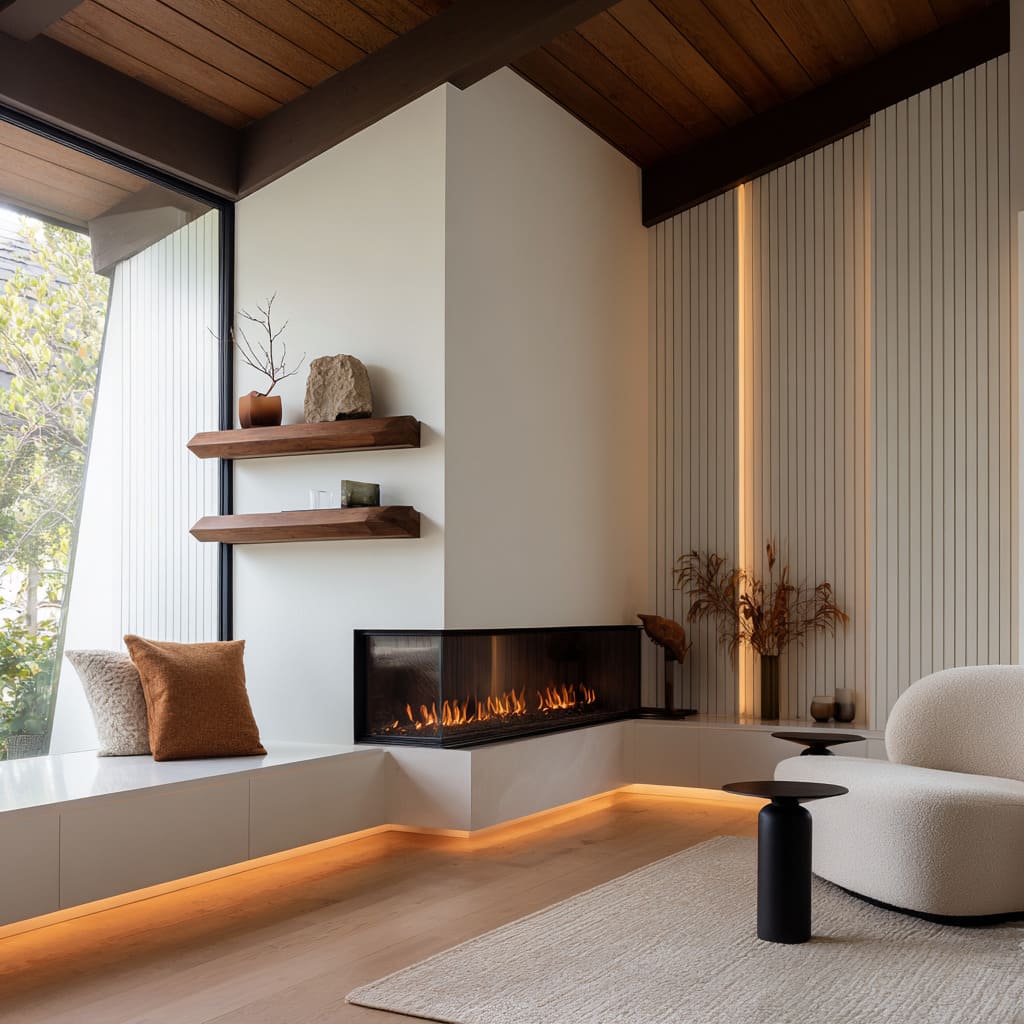
Three common mirror forms:
- Low mirror band: 8–12 cm tall along the back of a seat or hearth edge
- Slim vertical fin: 18–22 cm wide, aligned with a light seam or slat rhythm
- Curved ribbon: paired with radius hearths to continue the sweep line
These shapes stretch the room without clutter, making the corner feel deeper, layered, and softly bright.
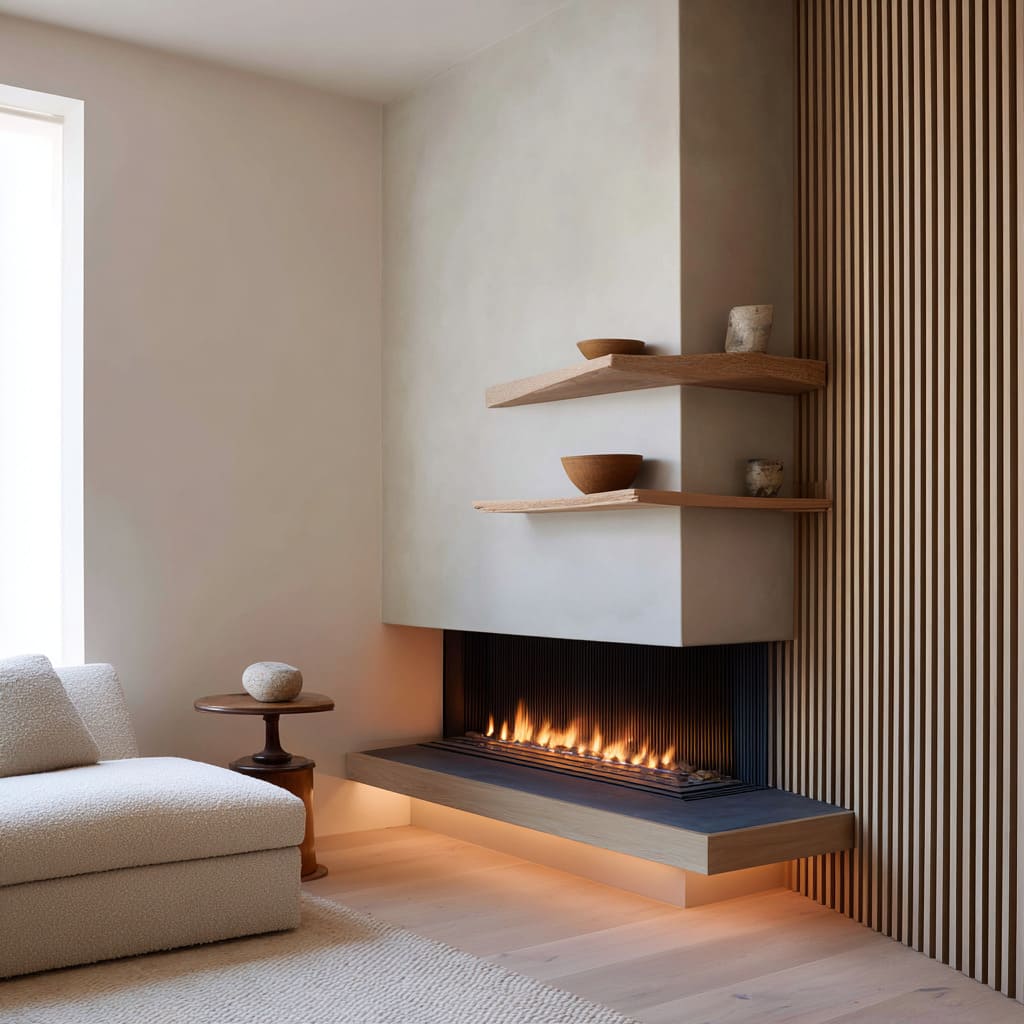
Mood Anchors: Stone, Plaster, Wood, and Matte Metals
Corner fireplaces often lean on warm natural finishes that show subtle character under soft light. Smooth limestone and rough split-face stone appear again and again, sometimes paired with thick oak benches or slim wood mantels.
Neutral plaster, with its gentle trowel variation, gives the eye calm ground. Blackened steel softly reflects flame without strong glare.
Leather seating in caramel tones brings warmth; boucle or nubby linen adds touchable comfort.
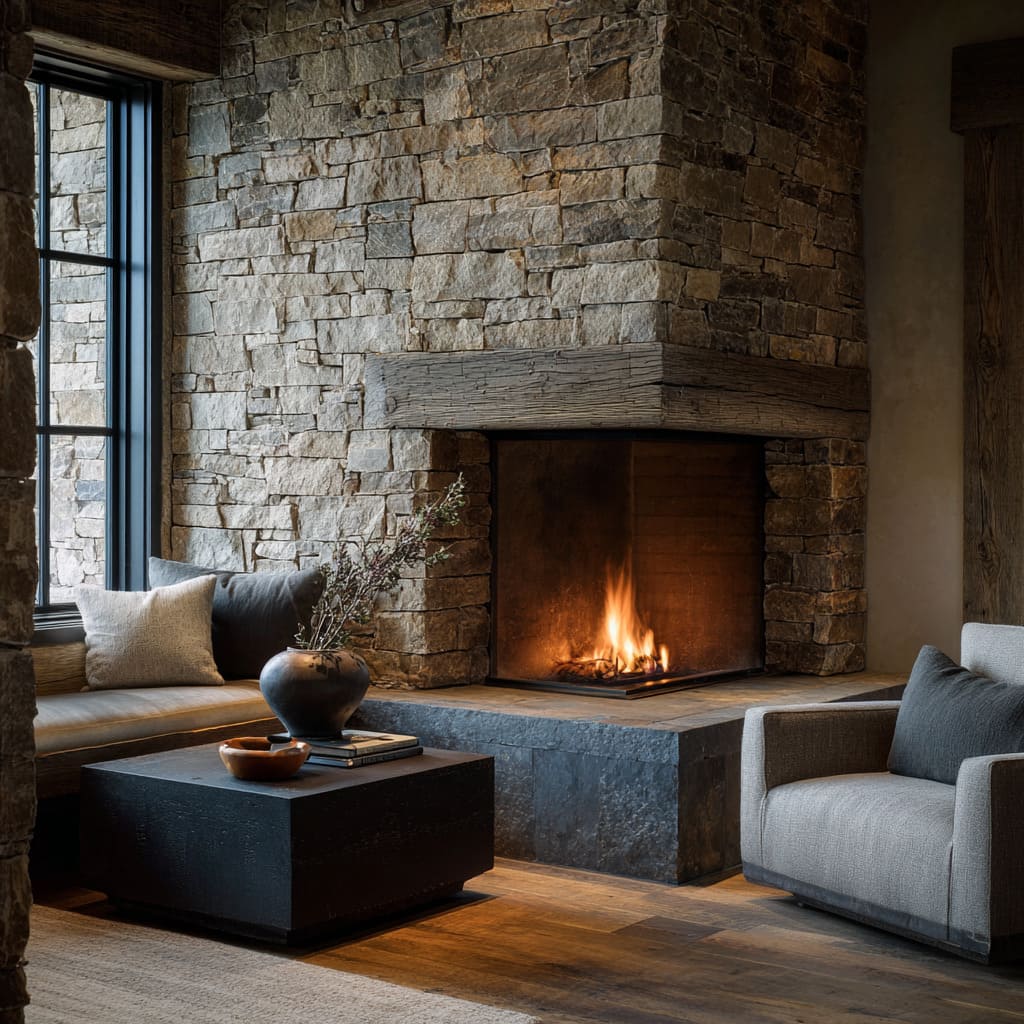
Furnishings nearby stay grounded and simple:.
- Stools carved in solid shapes
- Low ceramic pots with slim branches
- Throws in earthy fiber tones with no sharp patterns
- Quiet rugs in oatmeal or stone shades
- Soft chairs with round corners and no busy lines
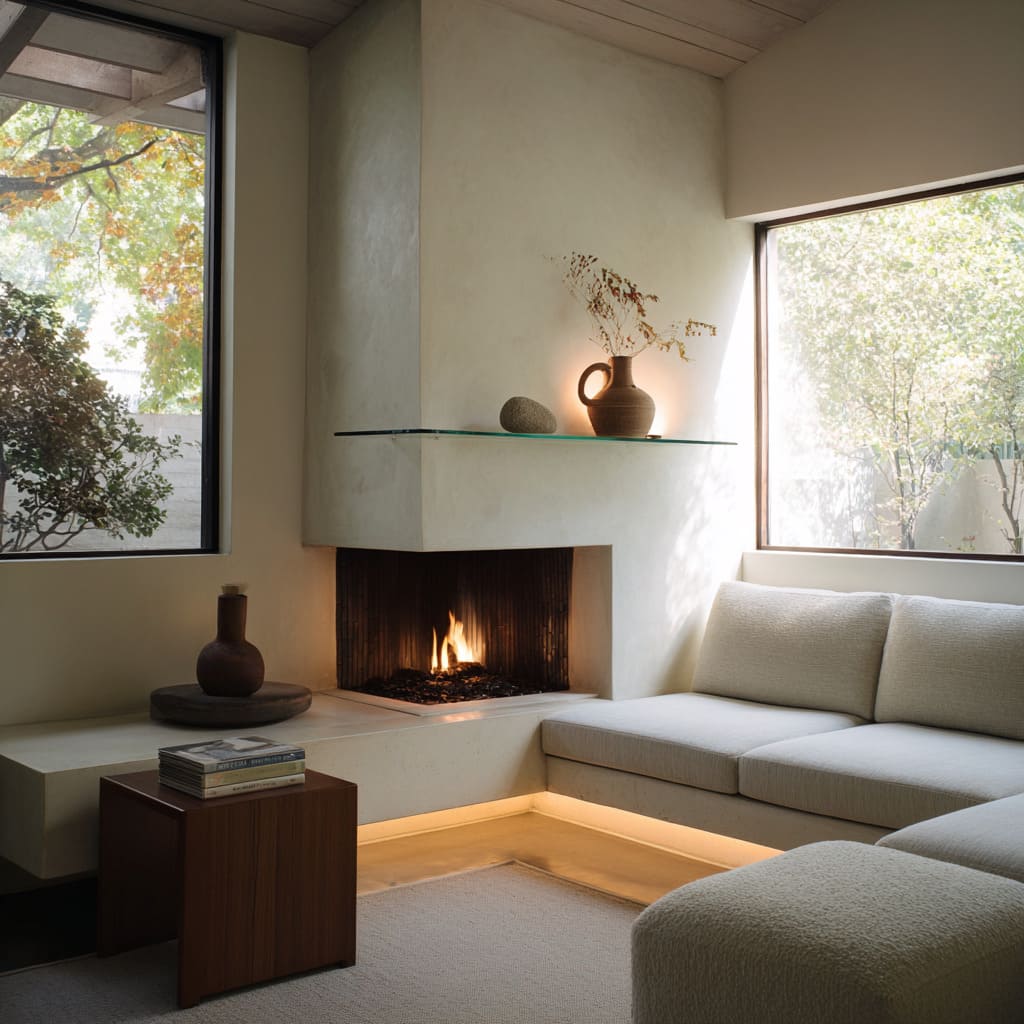
This palette clears room for the fireplace to carry mood. When greenery outside reflects softly in the mirror band or glass, nature becomes part of the scene, cooling warm tones and adding quiet breath.
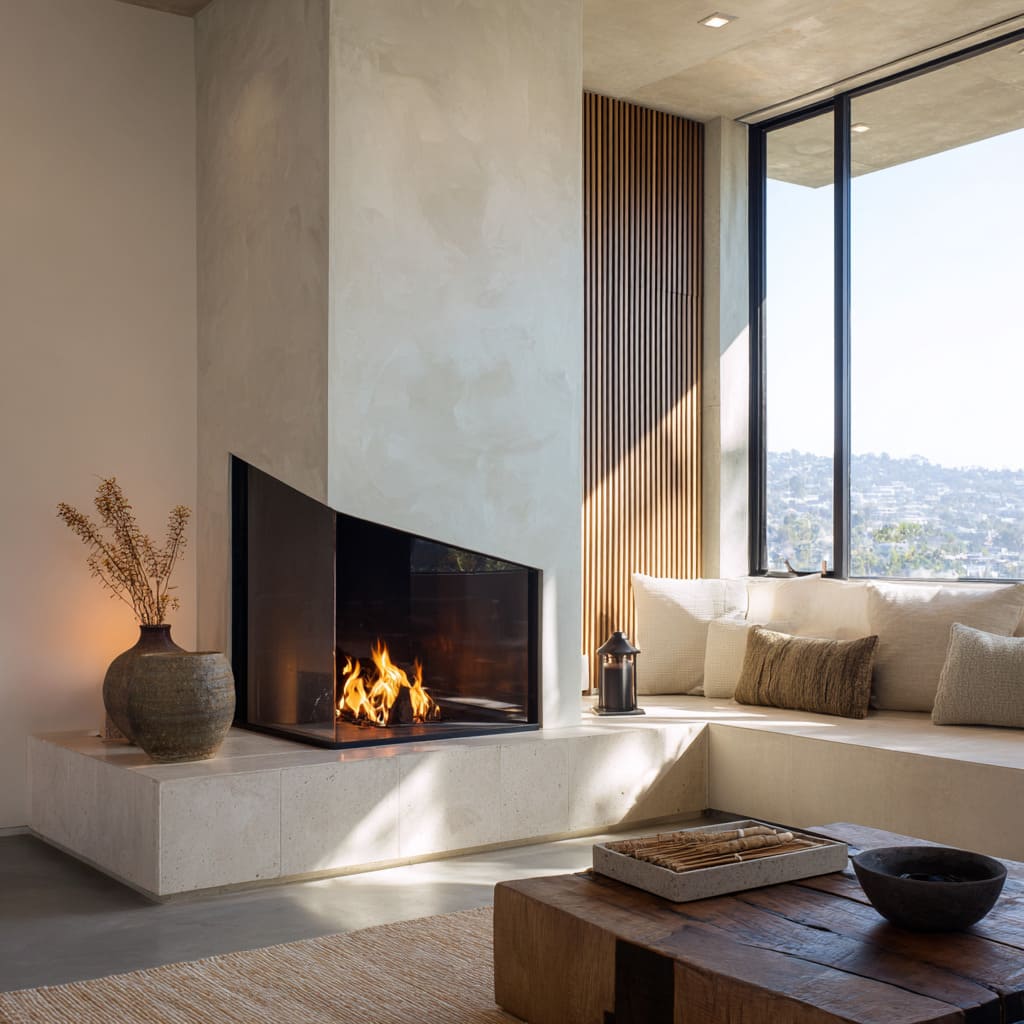
Rhythm and Pause: Shelves, Slats, Perforation, and Quiet Surfaces
What makes many ideas for corner fireplace feel so composed is a sense of rhythm. Vertical slats on one wall, a continuous bench line below, a single sculptural shelf above, and maybe one tucked art niche.
The room gets a beat—a slow, steady one.
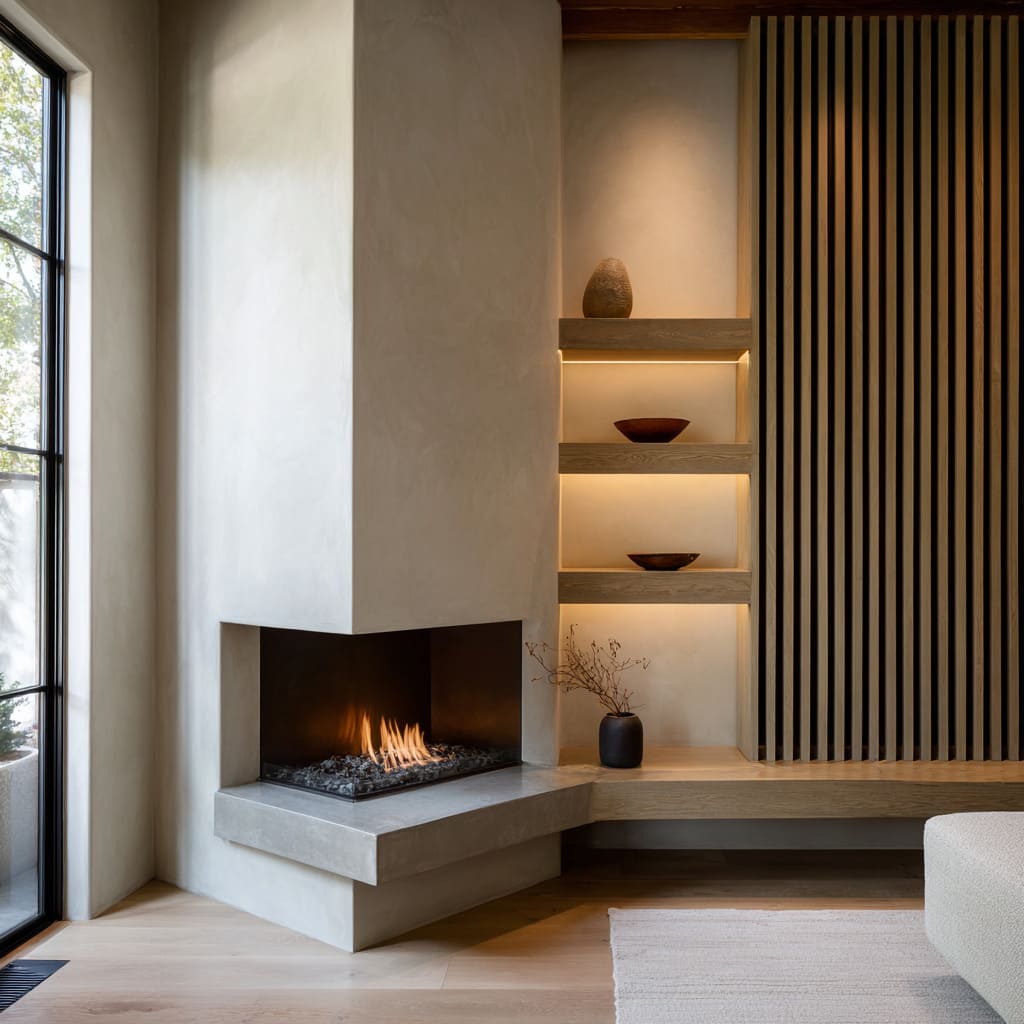
Ribs tighten at the angle, shelves step through the turn, slats sweep across wall and ceiling planes in one simple motion. Instead of clutter, there is a gentle drum of repetition, then a pause where the flame sits or where an empty plaster plane catches moving shadow.
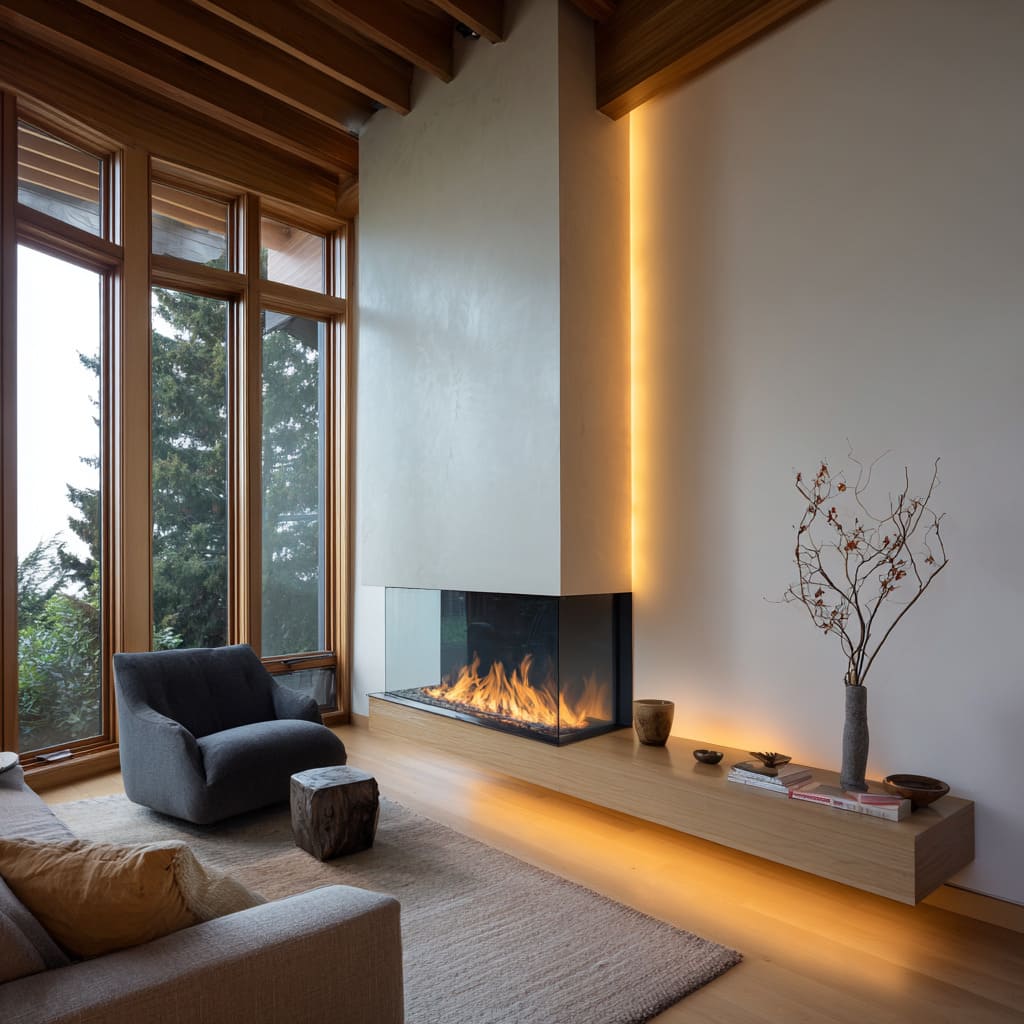
Objects avoid loud clustering. They gather lightly at one end of the bench or niche.
They rarely sit dead center. Weight stays low.
A group of books trimmed to similar tones, a branch silhouette rising at the corner, a single vintage bowl. The corner stays breathable, letting air and light pass through visually.
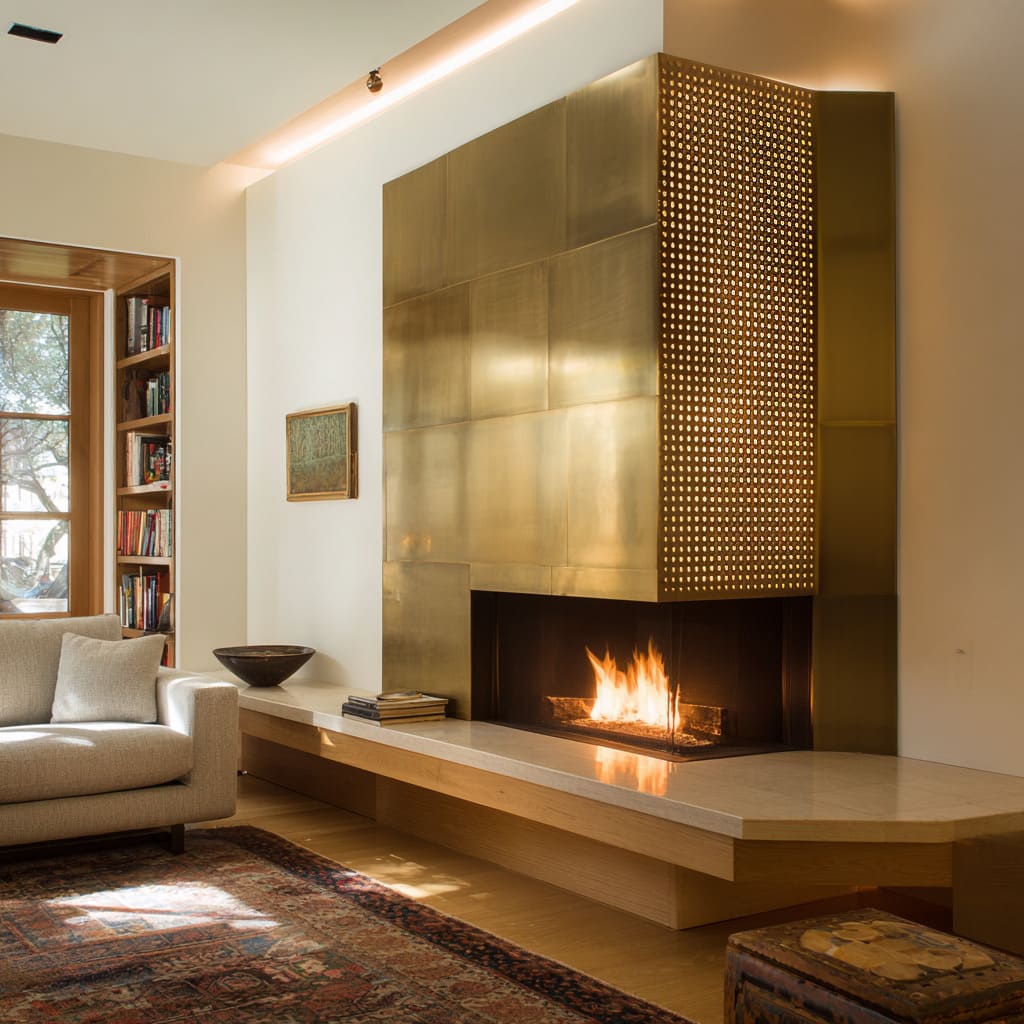
Shaped Turns: Facets, Soft Radii, or Clean Seams
Not all corners stay sharp. Some ease into sculpted forms.
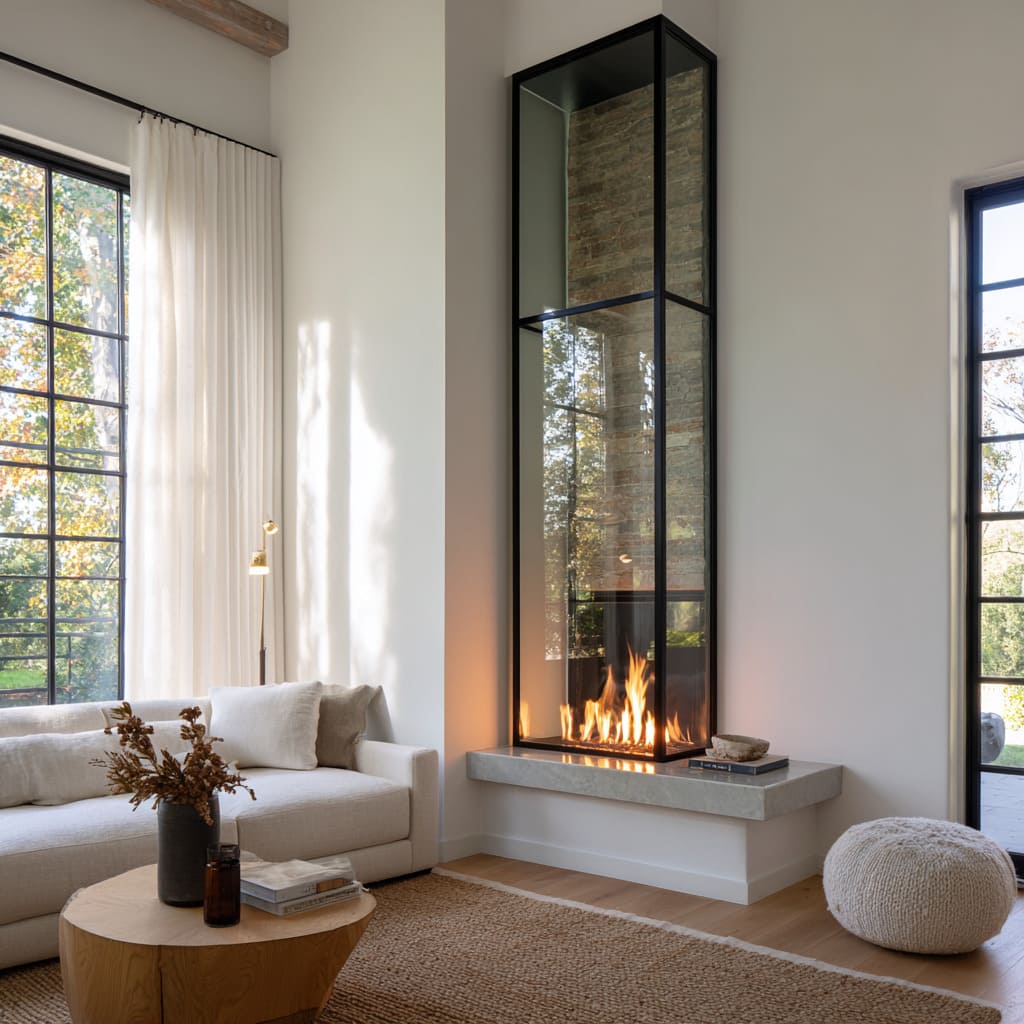
This is where corner fireplace design ideas get subtle but powerful. A clipped firebox mouth softens the turn; a radius glass curve gives a gentle sweep; a faceted plaster hood bends like folded paper.
Each gesture changes how the eye bends with the fireplace. A straight seam feels crisp and architectural.
A radius brings softness and lounge character. A faceted surface feels crafted and intentional, like a stone edge chiseled by hand.
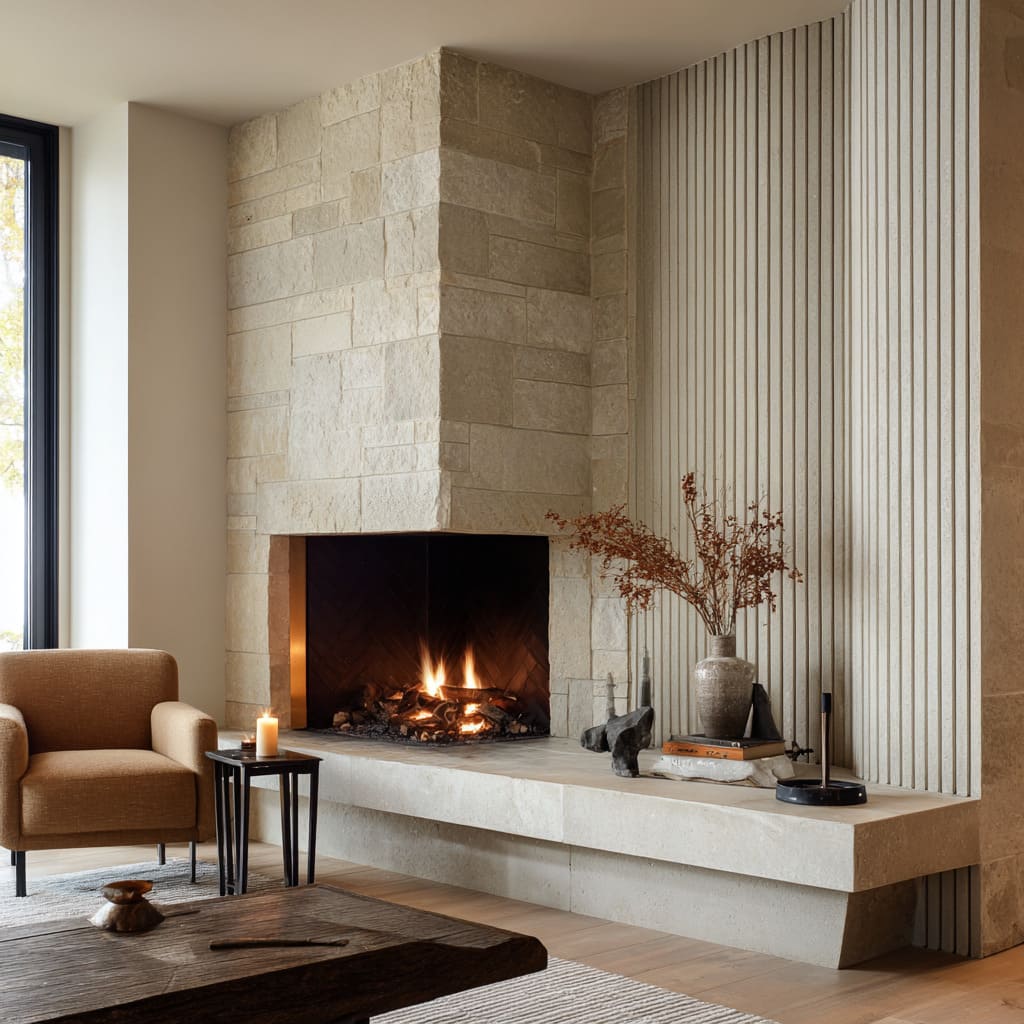
Pair these shapes with matching mirror forms or trim lines, and the design feels tuned as one thought, not a set of parts.
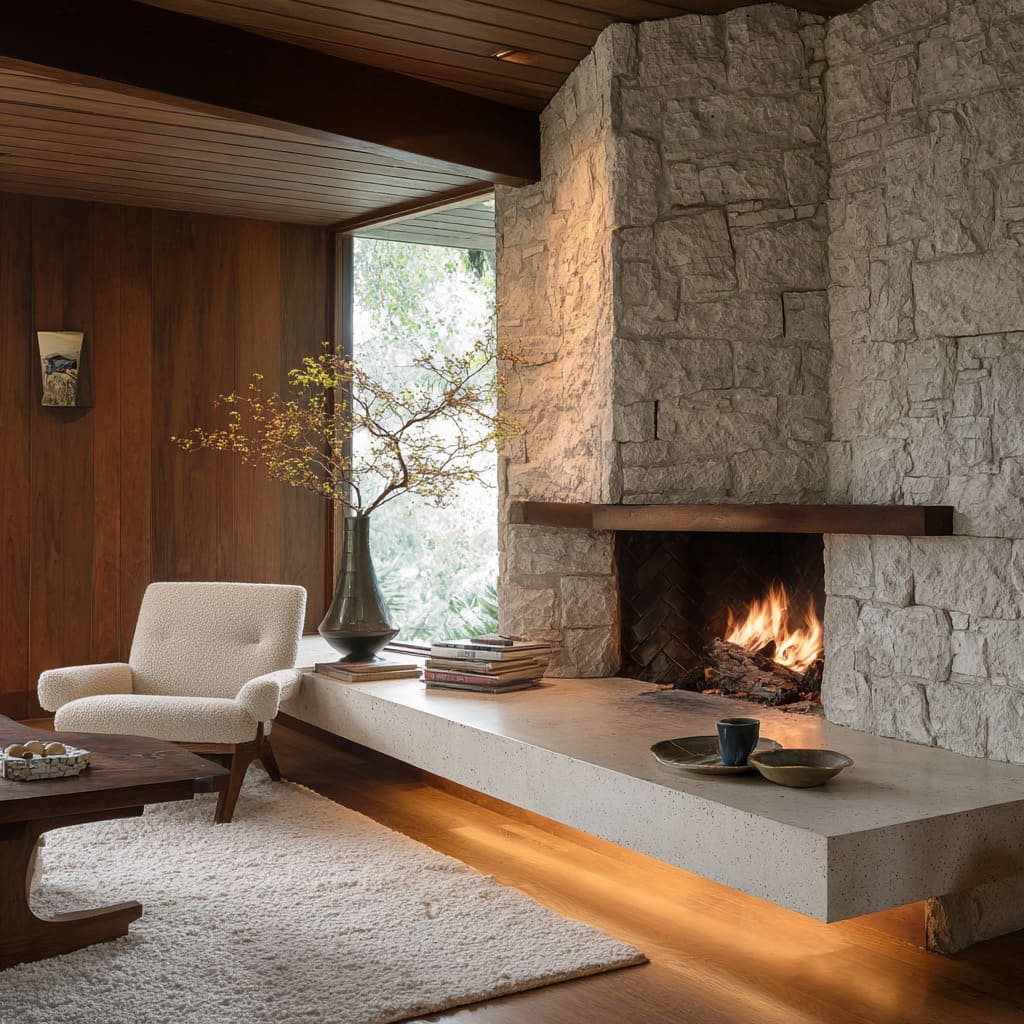
Layering Zones Without Noise
What stands out across the best corner fireplace interior design examples is restraint paired with depth. The fireplace corner may include fire, a bench, a lamp, a tiny cluster of pottery, and a mirror band—yet it never feels full.
Because each item sits with space around it, shadows fall gently, and the corners hold stillness rather than pressure. The result is a place that feels restful, quiet, yet visually rich.
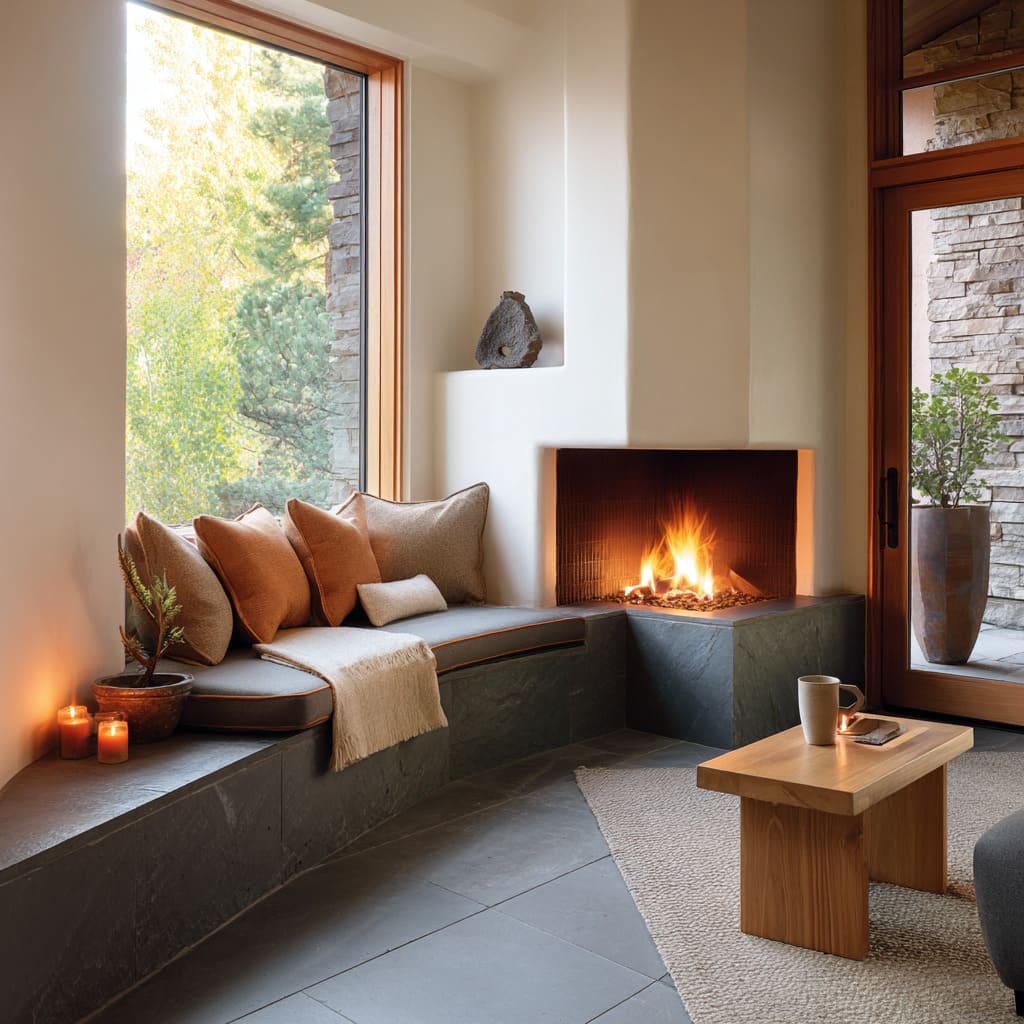
Common scene elements seen across beautiful rooms:
- Floating hearth slab with warm under-glow
- Bench that turns the corner and touches a window seat
- Low vertical slat wall or gentle rib panel
- Very thin metal details (frame, edge, nib)
- Calm rug base in pale wool or soft sandy tone
- Only one small sculptural statement
- Branches or dried stems for height and balance
Everything cooperates. Nothing competes.
Closing Thought
The real charm in ideas for corner fireplace designs lies in how softly they guide attention. They shape a pause, not a climax.
Fire sits as a warm thread, not a loud blaze.
Shadows gather in ribs and slats, light glides under stone, and small reflective moments stretch space without turning flashy. When arranged with this gentle attitude, a corner fireplace becomes a place of slow rhythm, calm glow, and true rest for the eye.