A console placed inside a kitchen shifts the room from a strict work zone into a relaxed social place without interrupting the rhythm of the main counters. In many modern layouts, the console becomes the point where the heavy, functional island releases into a softer strip designed for conversation, small meals, or laptop use.
The best kitchen console table ideas rely on how this piece interacts with stone, wood, light, and the shapes around it. A console usually lives at the edge of the island, against a window, or inside a side alcove, right where two moods meet.
This position allows it to act as a visual translator between materials—cool stone on one side, warm floorboards on the other—so the eye moves calmly from one zone into the next.
The shift in material temperature is rarely dramatic; instead, the console becomes the warm midpoint that settles the palette. What makes these compositions so visually successful is that the console is never an interruption.
It is always attached to a larger architectural idea, either stretching the island, softening a circulation path, or turning a narrow wall into a social strip. When placed with intention, the console becomes the place where everyday life pauses, where someone sits with a drink while another person finishes prep, and where a kitchen starts behaving like a lounge without losing its sense of order.
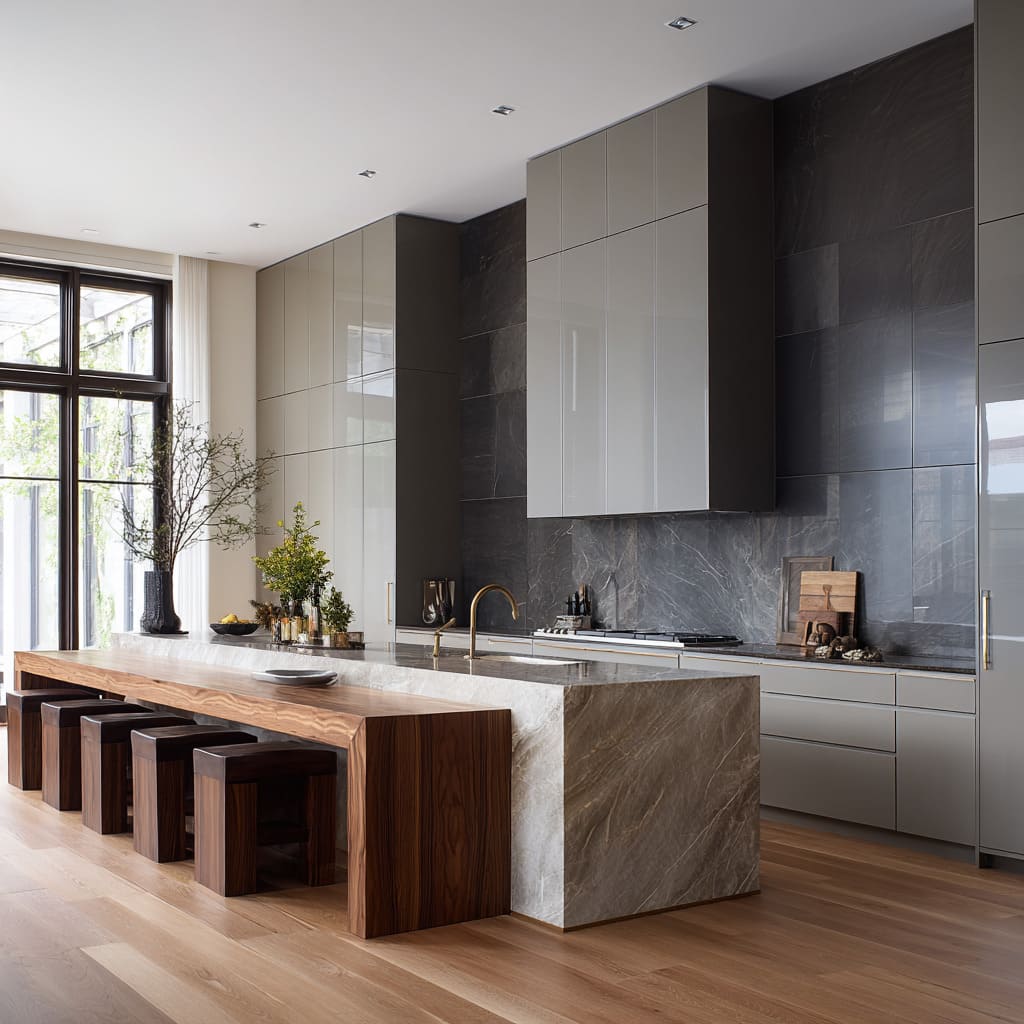
The Hidden Language of Console Thickness, Edge Shape, and Material Tone
One of the most powerful visual tools in modern kitchen design is console thickness. A slim stone or wood strip instantly reads as a café-like ledge—light, quiet, and open—while a thick console feels more like a compact dining surface.
These choices are never accidental; the thickness tells you how the area should feel. Designers often use three thickness categories to signal purpose:.
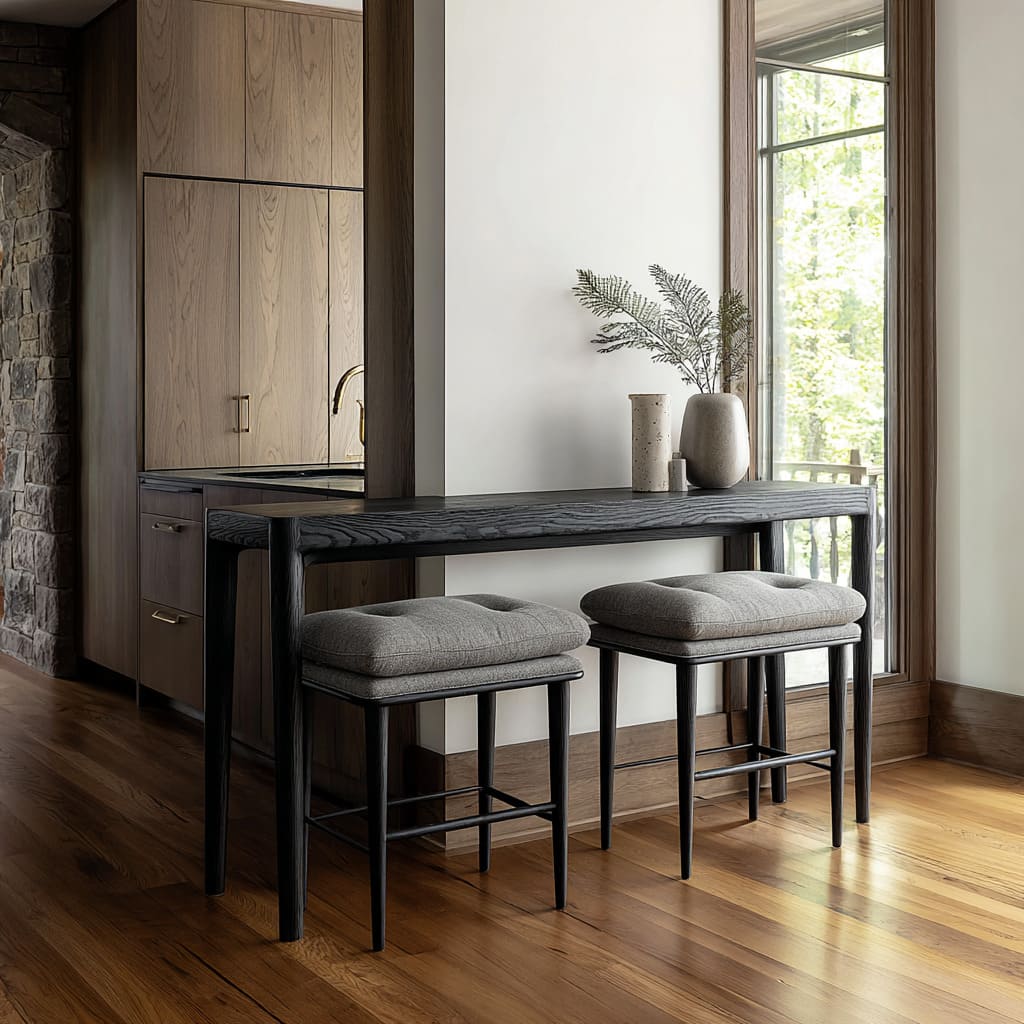
• Slim tops
Perfect for light meals or quick breaks. They sit just proud of the wall or island, letting shadows draw a fine outline.
Slim shapes also help a compact area feel longer and more refined, especially when paired with slender legs.
• Medium tops
These bring a subtle table-like feel while staying visually light. They often appear beside windows or against alcoves, giving enough depth for plates and objects without creating bulk.
• Thick tops
Used when the console behaves almost like a modest table. Thick edges usually match a shelf or hood trim so the whole room shares a single visual weight.
They are excellent at grounding compositions with strong stone islands or dark cabinetry.
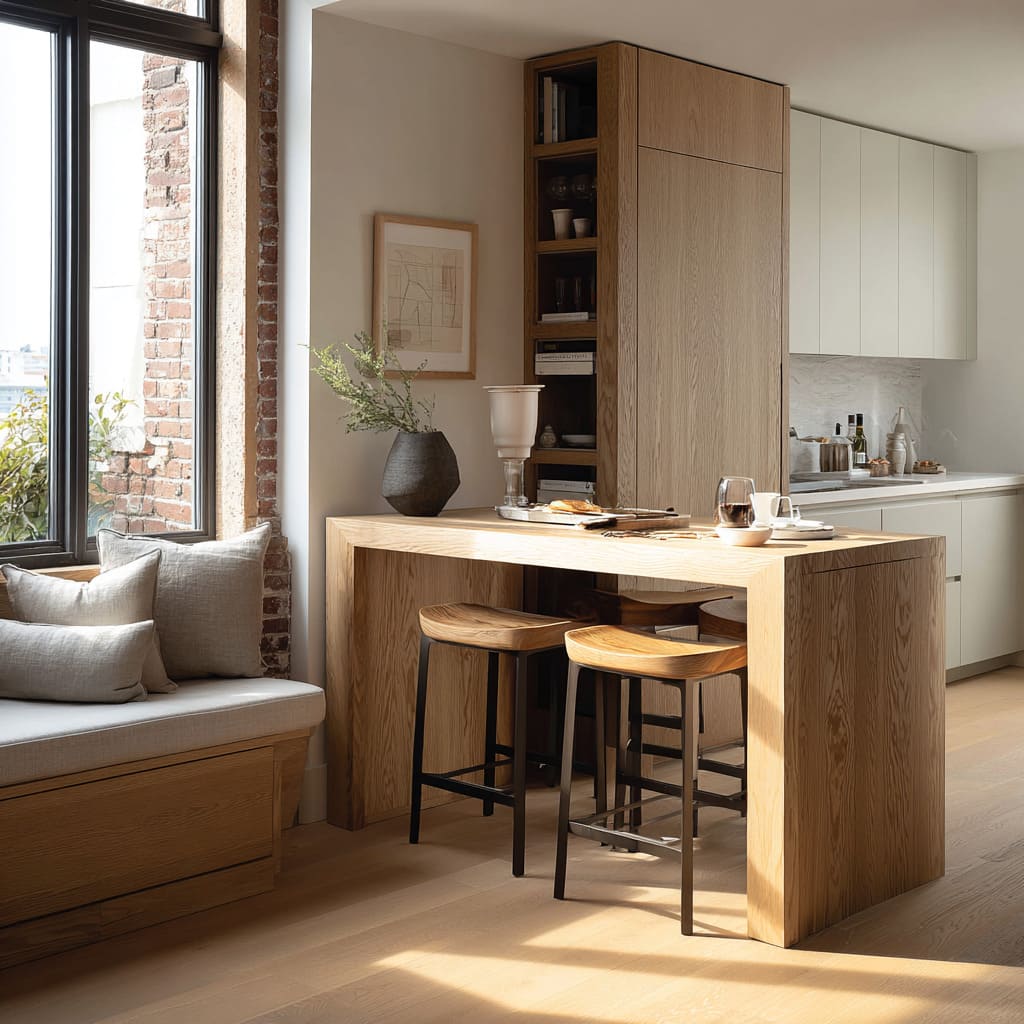
Edge shape adds its own subtle tone. A gentle curve softens tight walkways and keeps the scene calm, while a faintly eased edge keeps a modern piece from looking harsh.
Material temperature is equally important: consoles often occupy the middle of the palette, transitioning from cold stone to warm oak so the kitchen feels continuous instead of chopped into pieces. This interplay between thickness, shape, and tone is the quiet design language that gives every console its voice.
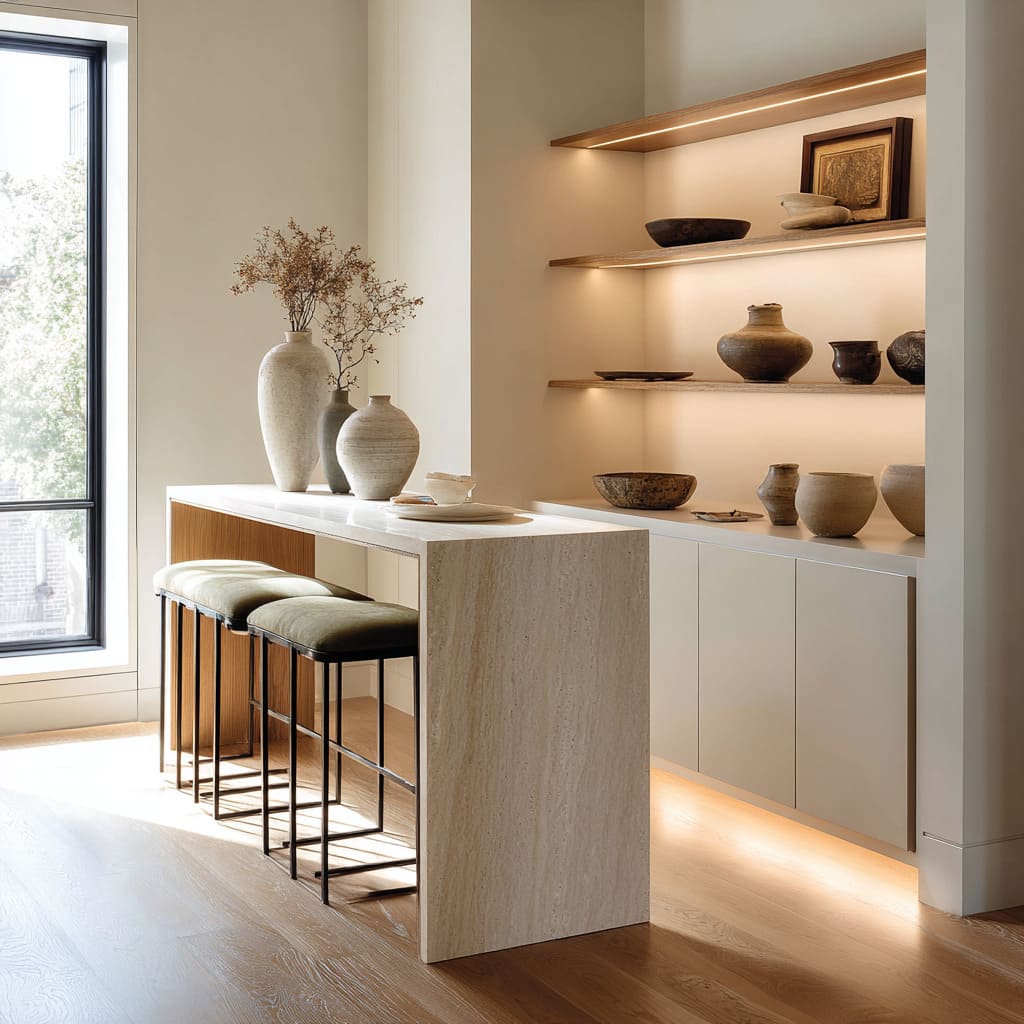
Where to Position a Console for Maximum Visual Harmony
Placement determines whether a console looks like part of the architecture or something added later. Designers gravitate toward four main positions, each offering a distinct mood and a different kind of interaction between people and space.
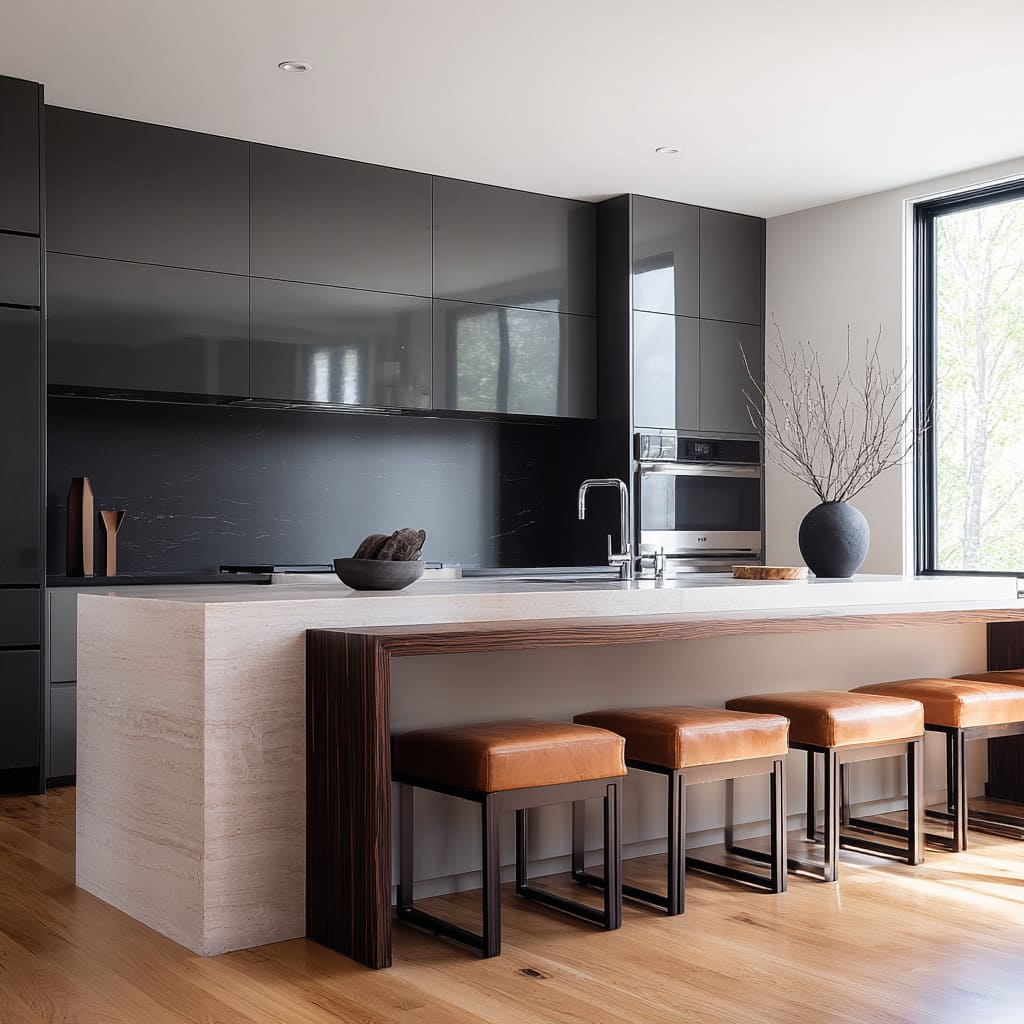
Island extensions
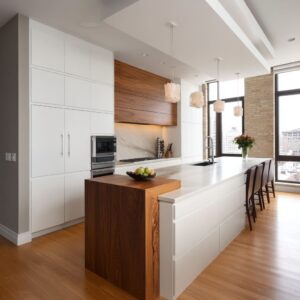
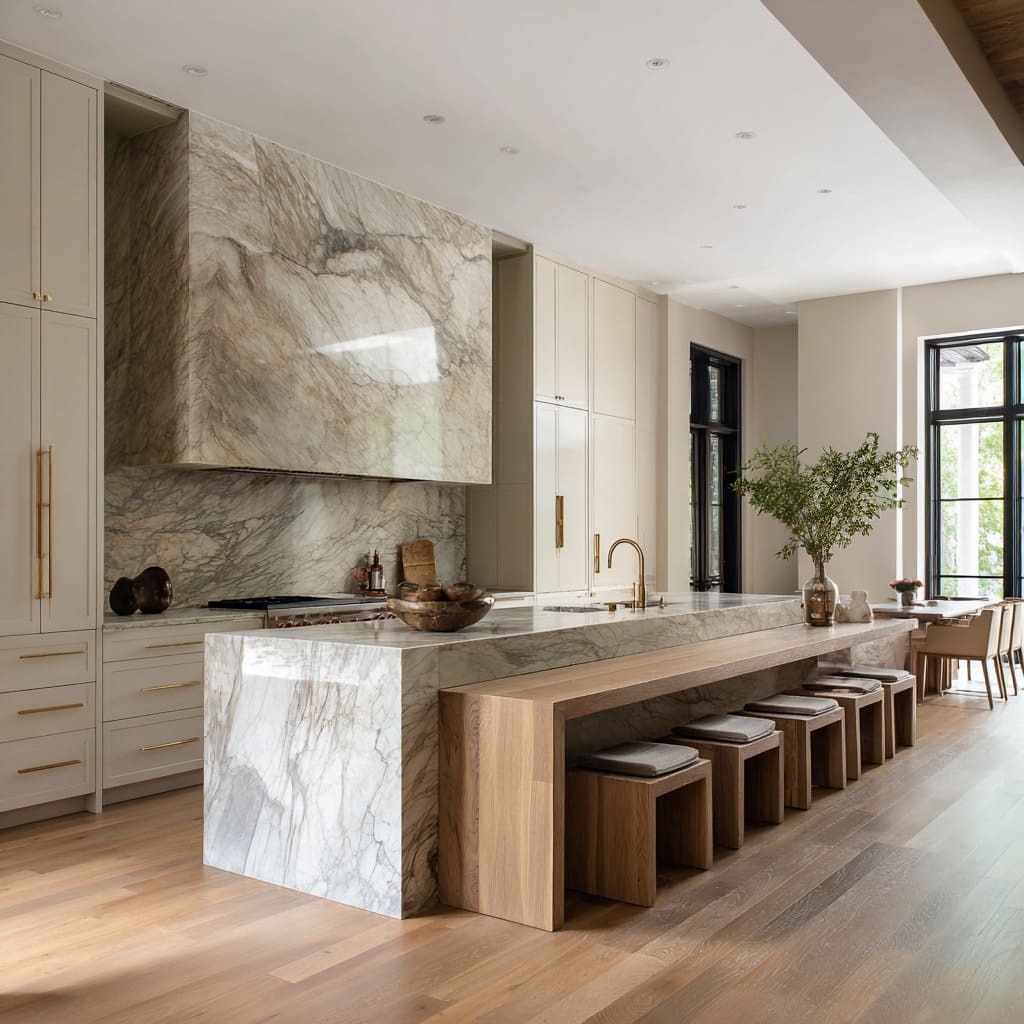
Here the console stretches from the stone block like a wooden wing. This arrangement unites cooking and socializing without pushing guests too close to the prep zone.
It also makes the island appear longer, creating a soft transition toward the living area. These compositions often work well when exploring kitchen island table ideas, because they add purpose without crowding the main surface.
Window-side perches
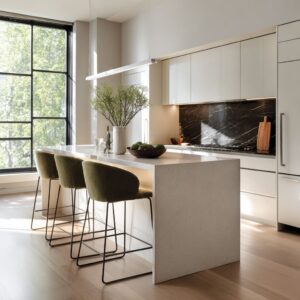
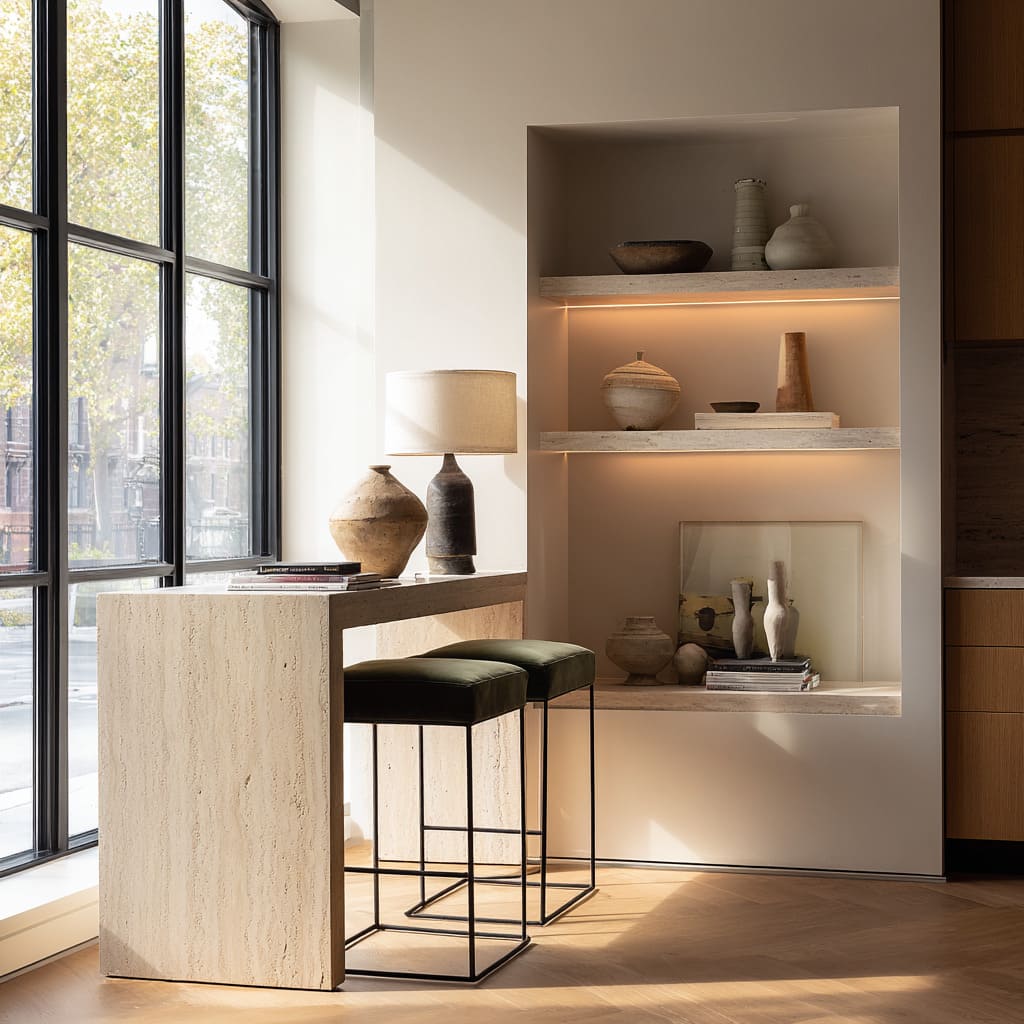
Console tables along a window frame behave like indoor lookout spots. They give someone a seat near daylight, ideal for a small morning break.
When placed beside tall glazing, the console becomes part of the view, especially if stool colors echo trees or sky tones.
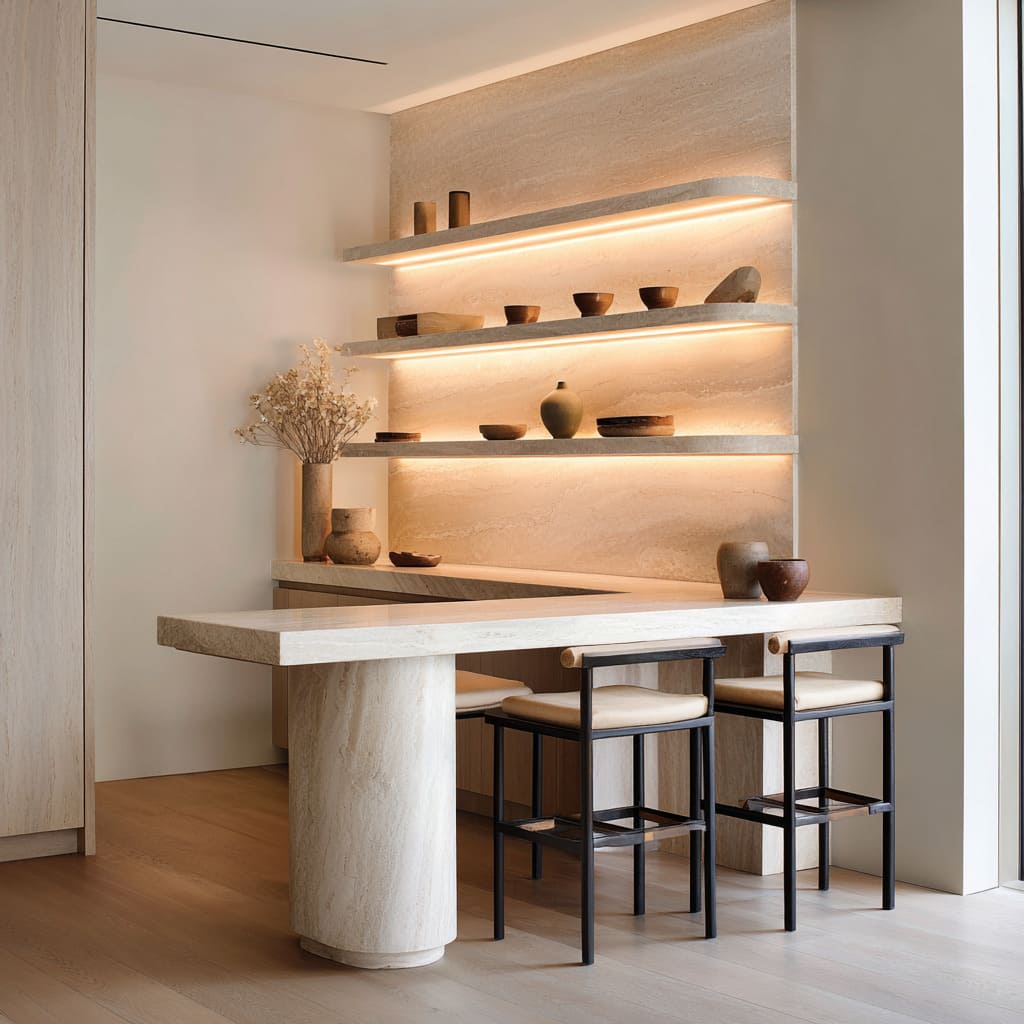
Alcove and niche setups
Some kitchen designs carve out small recessed areas wrapped in stone or wood. A console inside such a niche transforms leftover geometry into a tiny food-and-drink zone.
This approach is excellent for compact kitchens, because it turns hollow space into a curated vignette.
Side-wall rails
Thin consoles set along a side wall act as hospitality strips for quick snacks, drinks, or laptop time. They feel like furniture placed inside a kitchen rather than more cabinetry, which gives the room a more residential mood.
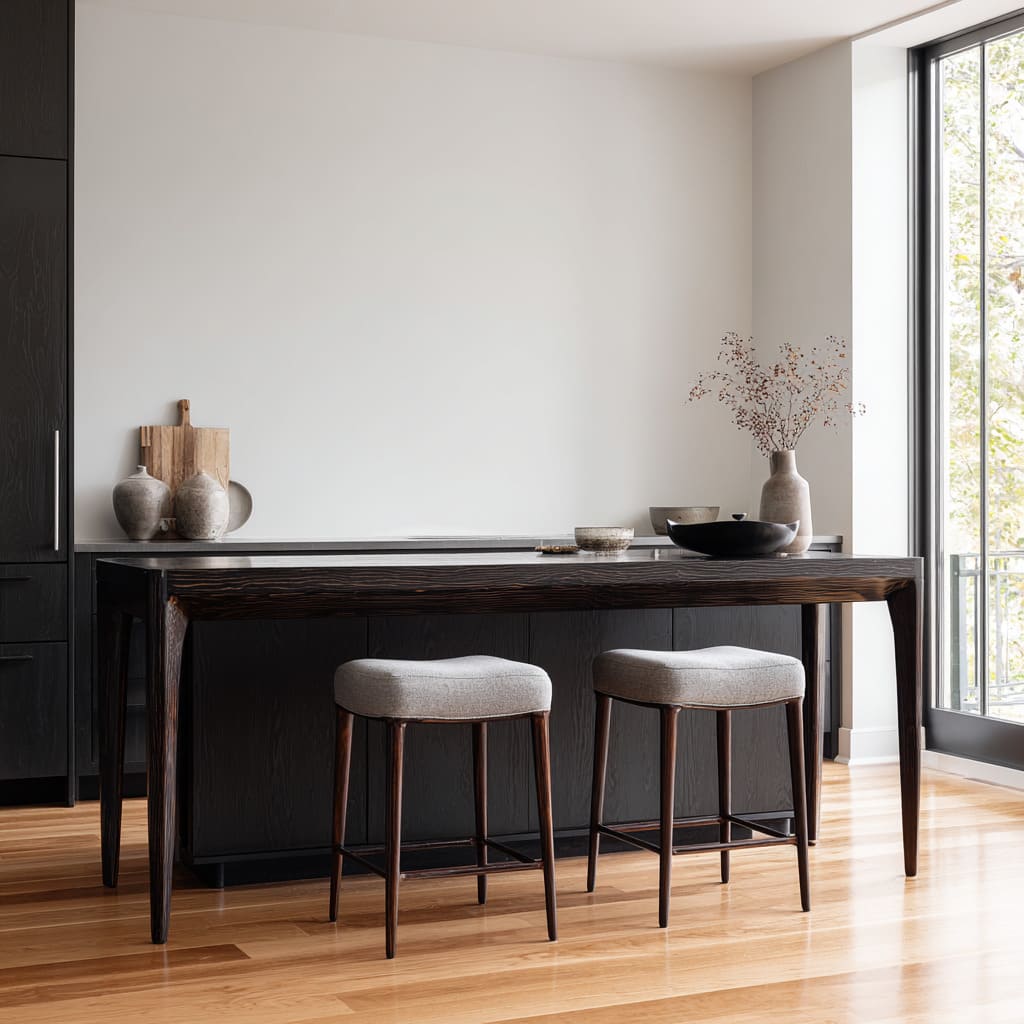
Each position supports a different lifestyle, but visually they all share one rule: the console lines up with something meaningful—the window trim, shelf edge, island top, or a strong cabinet rail—so the room reads as one continuous design story.
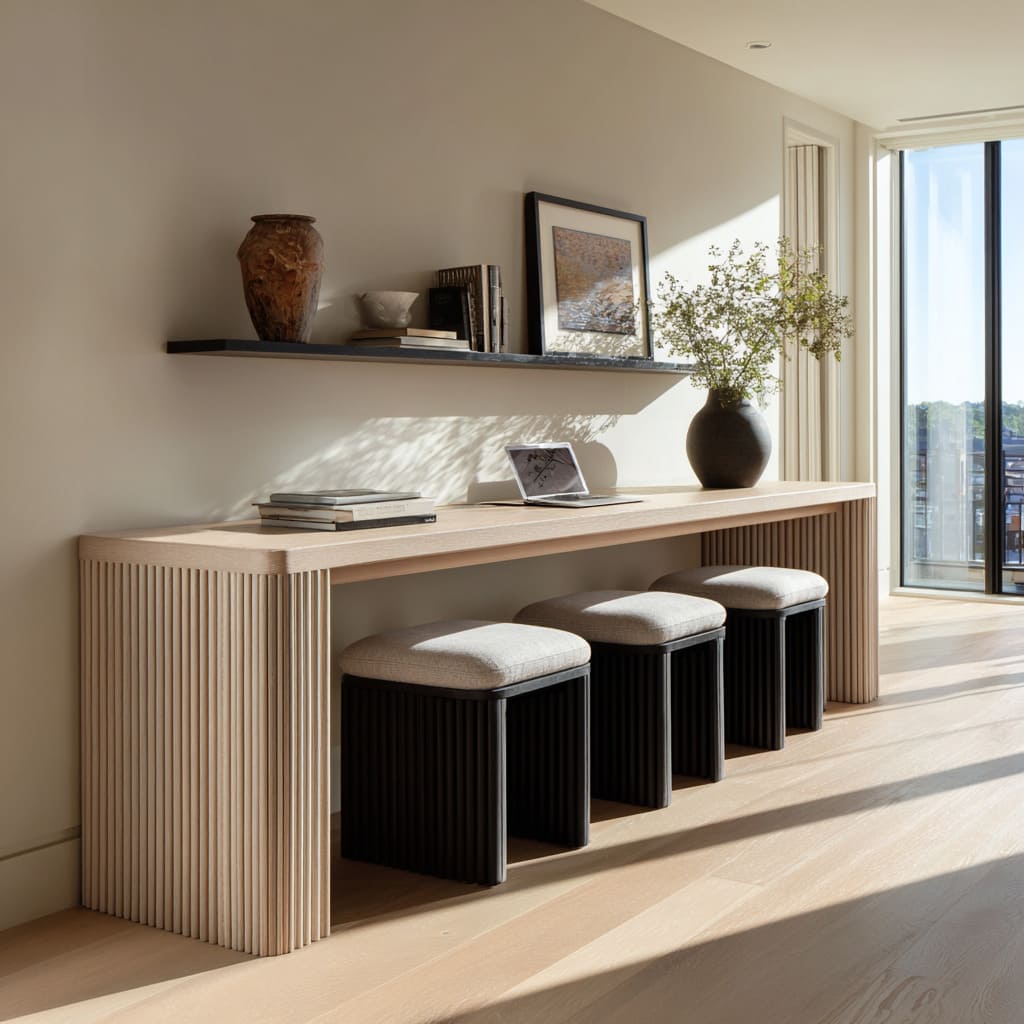
Seating Strategy: Low Backs, Hidden Rhythms, and Visual Balance
Seating beneath a console is often the detail that decides whether the entire scene feels calm or cluttered. Since the console frequently sits near a major horizon line—such as the island top—stool backs are deliberately kept low or removed entirely.
This protects the long, uninterrupted stripe that the eye reads as the main architectural level. The difference between a serene composition and a noisy one often lies in whether stool backs rise above this line.
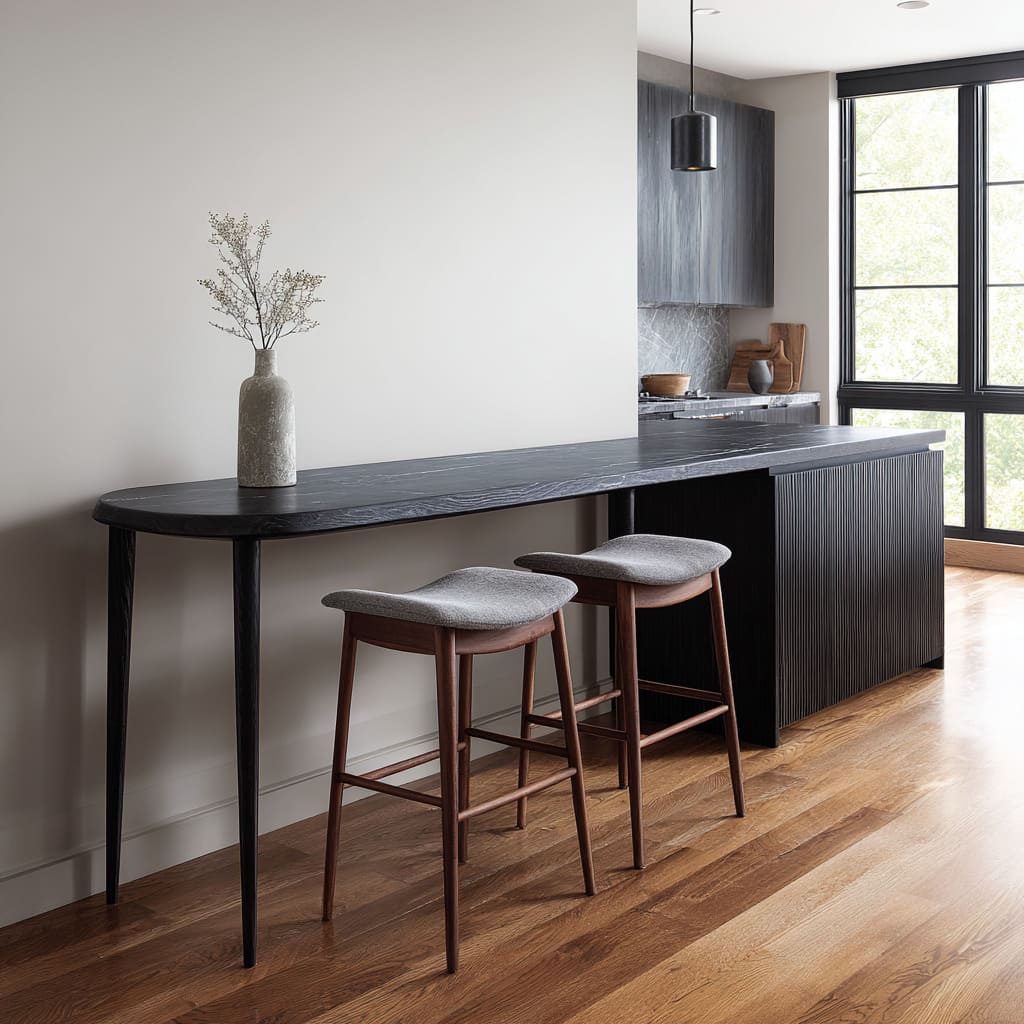
Stools themselves form subtle patterns that guide the eye. They often organize stools into repeating rhythms, spacing each seat with identical gaps so that the row reads like a steady sequence.
This rhythm plays an important role in island table ideas, because repeated seating shapes visually extend the length of the console and reduce the feeling of objects being scattered. Cushions and upholstery colors also maintain balance.
When the stone is cool and the floor is warm, stools often carry intermediate tones like moss, grey, or tan. These colors mediate between the surrounding materials, linking the console to the broader palette.
Backless cubes create a clean profile and tuck completely within the console, turning the entire under-counter volume into a tidy shadow box. Sled bases echo window mullions and slender shelf supports, reinforcing the room’s linework.
Tall, upholstered chairs appear only when the console is intended to act as a real dining surface, announcing a different level of comfort without disturbing the larger composition.
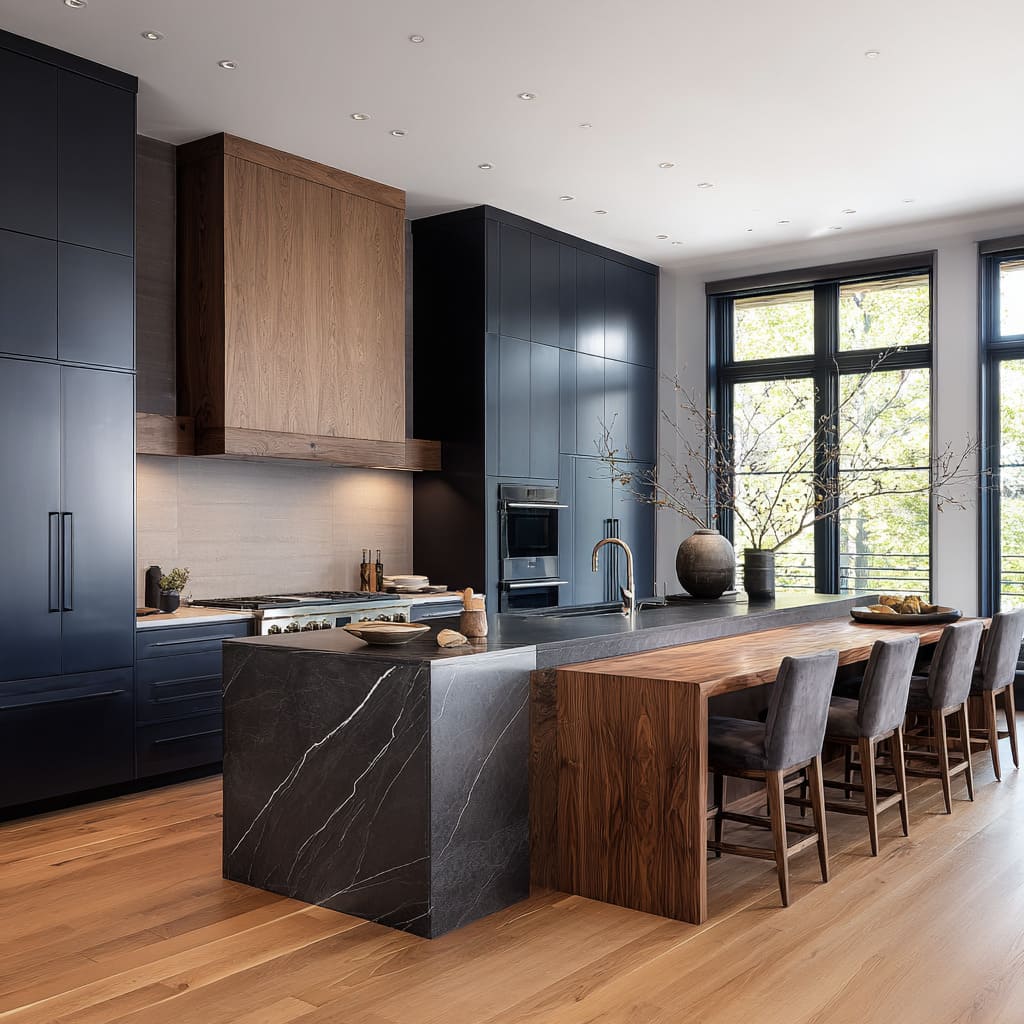
How Consoles Create Order Through Placement
Modern console designs rely heavily on alignments that keep the environment visually controlled even when the space has varied materials and shapes. These alignments can be horizontal, vertical, or even related to daylight.
The most important horizontal connection is between the console top and a strong architectural line such as the island surface, a shelf edge, or the lower rail of a hood. When these match, the room feels edited and unified.
Vertical alignments often involve placing console legs in line with window muntins, pantry stiles, or seams in tall cabinetry. These alignments help lock the console to the surrounding architecture so it does not appear to float randomly.
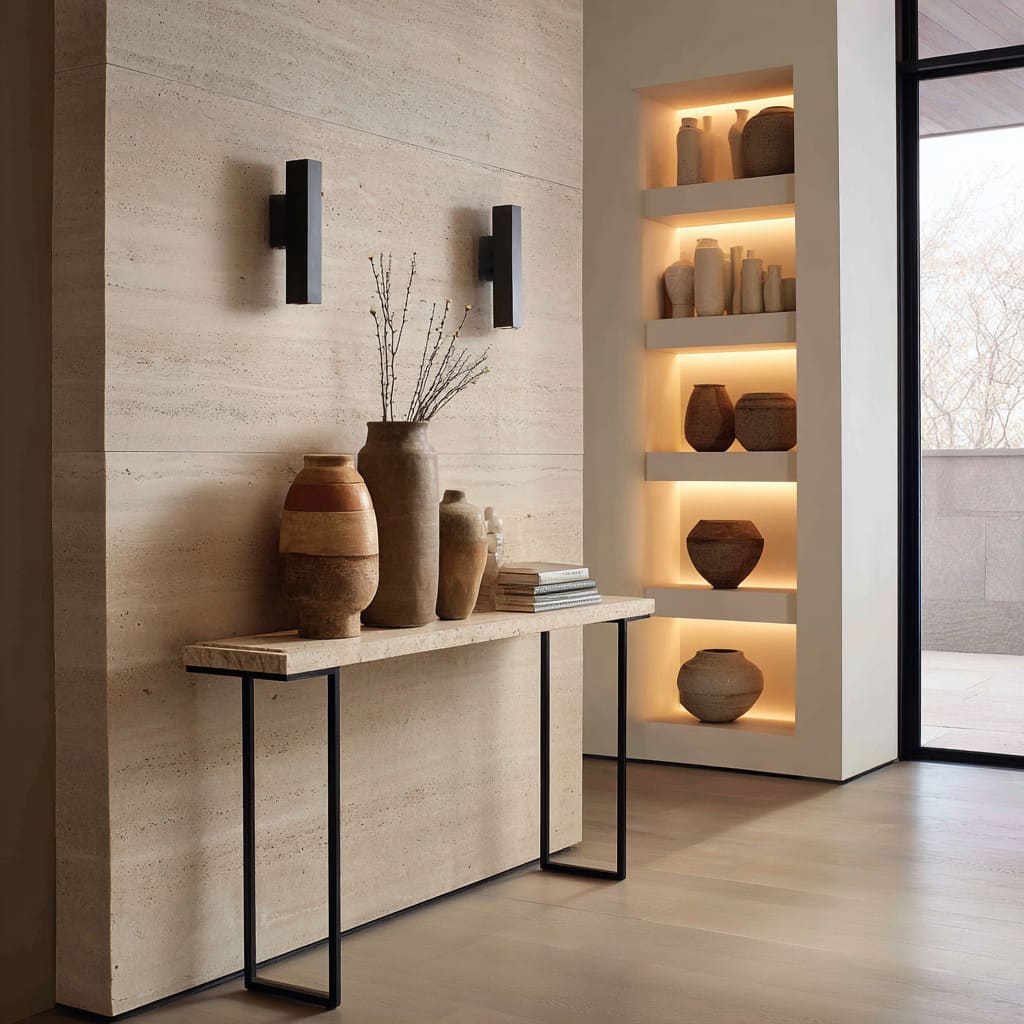
Some alignments happen at micro scales. Designers frequently offset the console by just a few millimeters from an island or wall, creating a neat shadow gap.
This slim line of darkness becomes a graphic detail that separates materials while keeping them visually friendly. Consoles often sit slightly proud of nearby surfaces to give the impression of a deliberate, sculpted joint.
Object placement also contributes to the alignment story. A lamp might overlap a console leg so that the object looks anchored rather than drifting.
A vase on the console might echo the height of a shelf above, creating a line of continuity. These small calibrations create a compound effect: the room feels intentional, layered, and composed even when the materials are diverse.
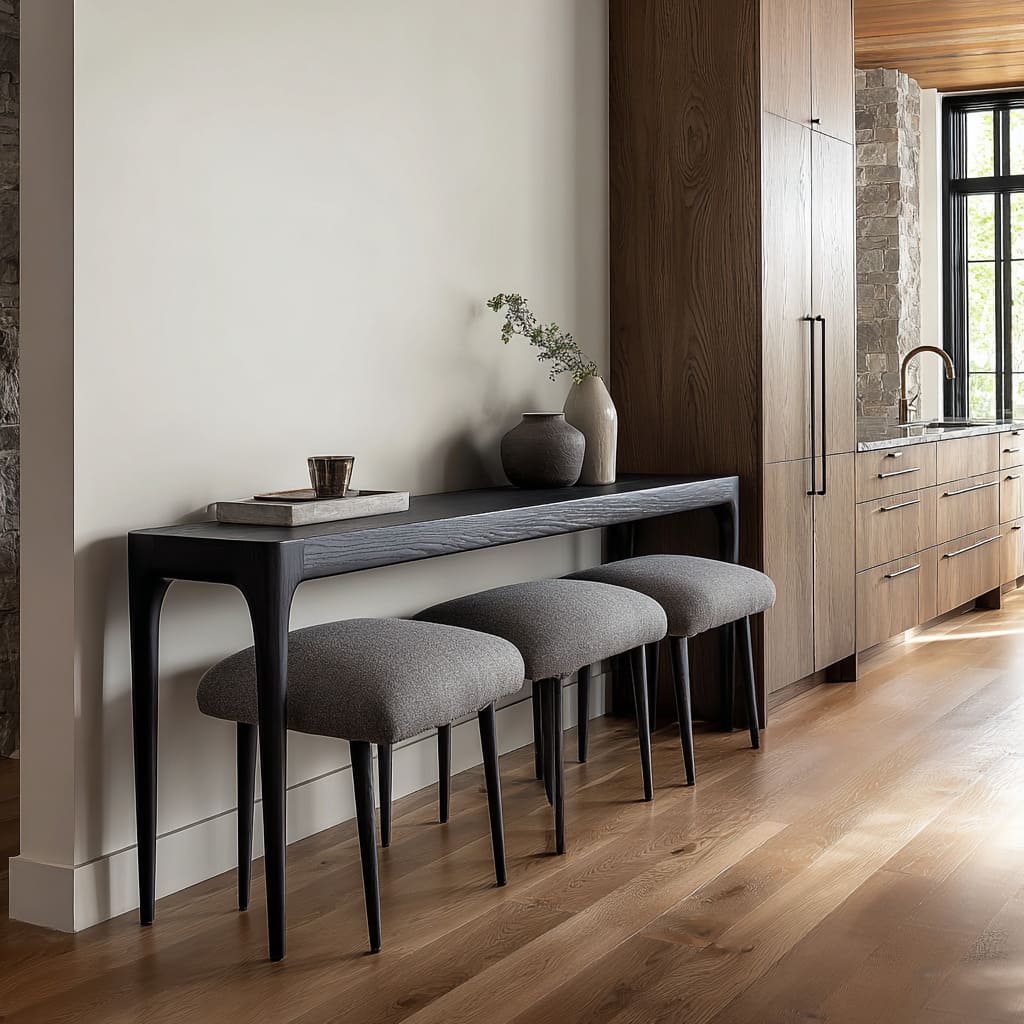
Light as a Design Ingredient
Light plays a transformative role in making consoles feel airy, warm, or sculptural. When a console sits near large windows, daylight moves along surfaces and textures in ways that change the mood throughout the day.
Grain structures become stronger, stone pores glow subtly, and fluted or ribbed details cast narrow shadows that look like drawn lines. This makes the console feel alive without needing pattern-heavy materials.
In window-based compositions, daylight often becomes the main reason the console feels welcoming.
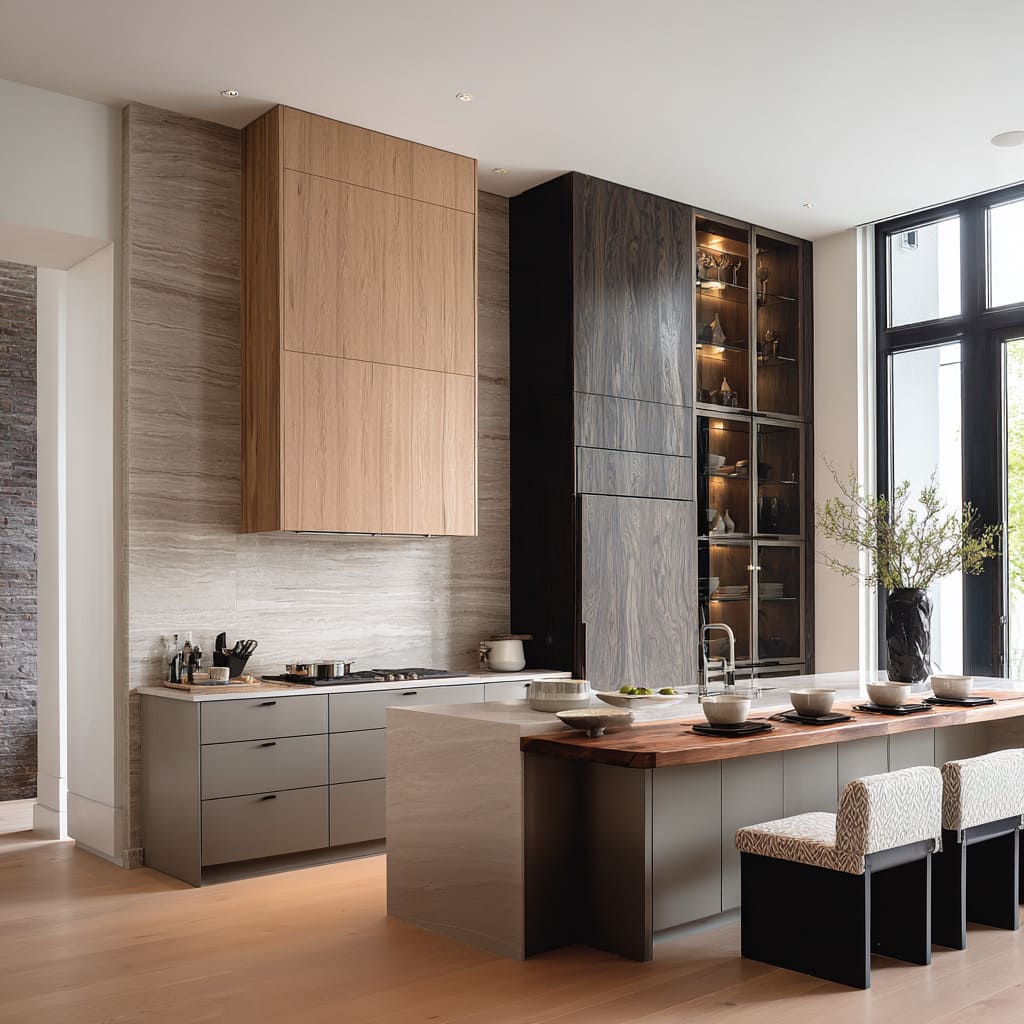
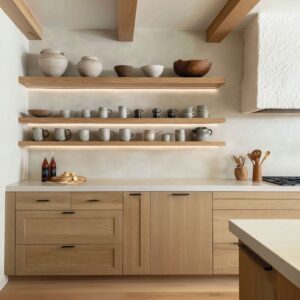
Artificial light further enhances the design. Many setups include hidden glow lines under shelves, inside niches, or along toe spaces beneath tall cabinets.
This glow keeps the wall from looking flat and brings depth to the console’s surroundings. When a console sits beneath a display wall with illuminated shelves, the glow reflects off stone edges and ceramic objects, making the area feel curated as well as functional.
In some scenes, console objects such as a lamp or a tall vase become secondary light reflectors. Their silhouettes catch the glow, strengthening the visual connection between layers of the room.
The lighting effect is subtle but important: it prevents the console from feeling like a heavy element on the floor and instead allows it to float with the support of light.
How Negative Space Turns Consoles into Architectural Features
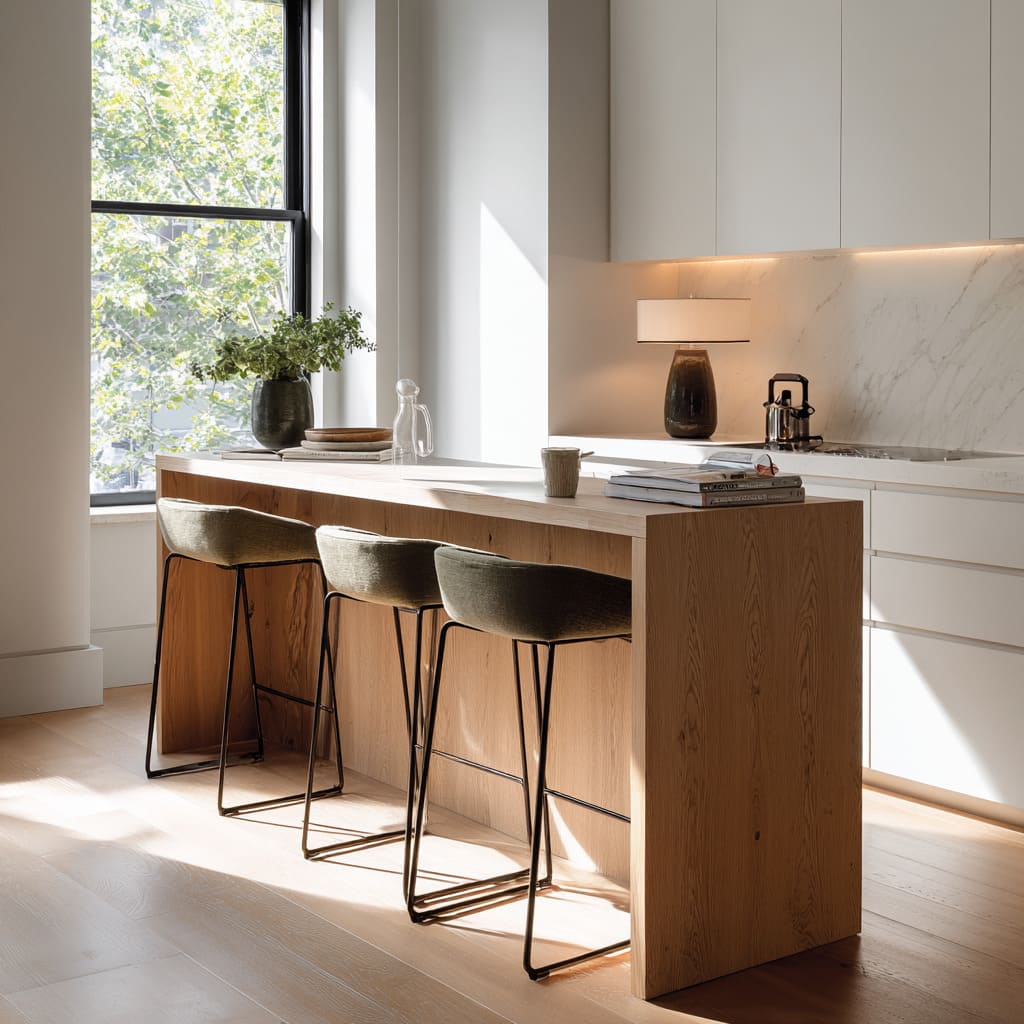
Many modern kitchen designs treat the space beneath a console with the same care as the console itself. Instead of leaving the area dark or undefined, designers turn the knee opening into a framed volume that becomes part of the composition.
This can be done with U-shaped frames, recessed shadows, or continuous wood reveals that wrap the interior. When the recess is lined in a different tone—like dark paint or ribbed wood—the stools read as silhouettes, giving the entire zone an intentional sculptural feel.
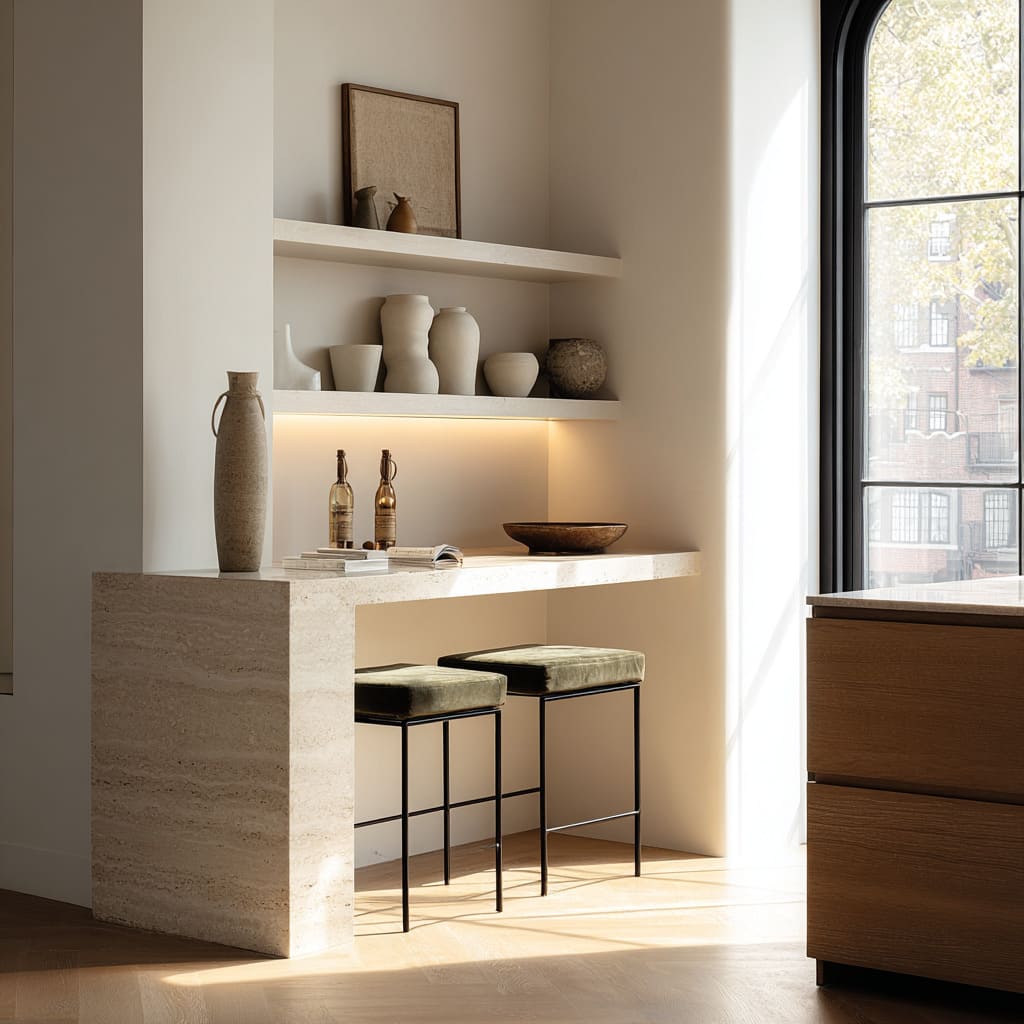
This handling of negative space is central to console table in kitchen ideas, because it transforms what could be an empty void into something visually satisfying. In stone consoles, the inside of the U-shape might be lined in a warmer wood, softening the connection between stone and seating.
In wooden consoles, the underside might be lit from nearby shelves to maintain brightness and allow stools to disappear cleanly. The effect is similar to museum display cases: the emptiness becomes purposeful.
Fully tucking stools into these shadowed areas emphasizes the architectural outline of the console, making the whole piece feel like a built element rather than an accessory. This approach is especially useful in kitchens where open circulation is important; the console can remain visually strong even when the stools are tucked away.
Styling Objects: Low Profiles, Soft Curves, and Calm Groupings
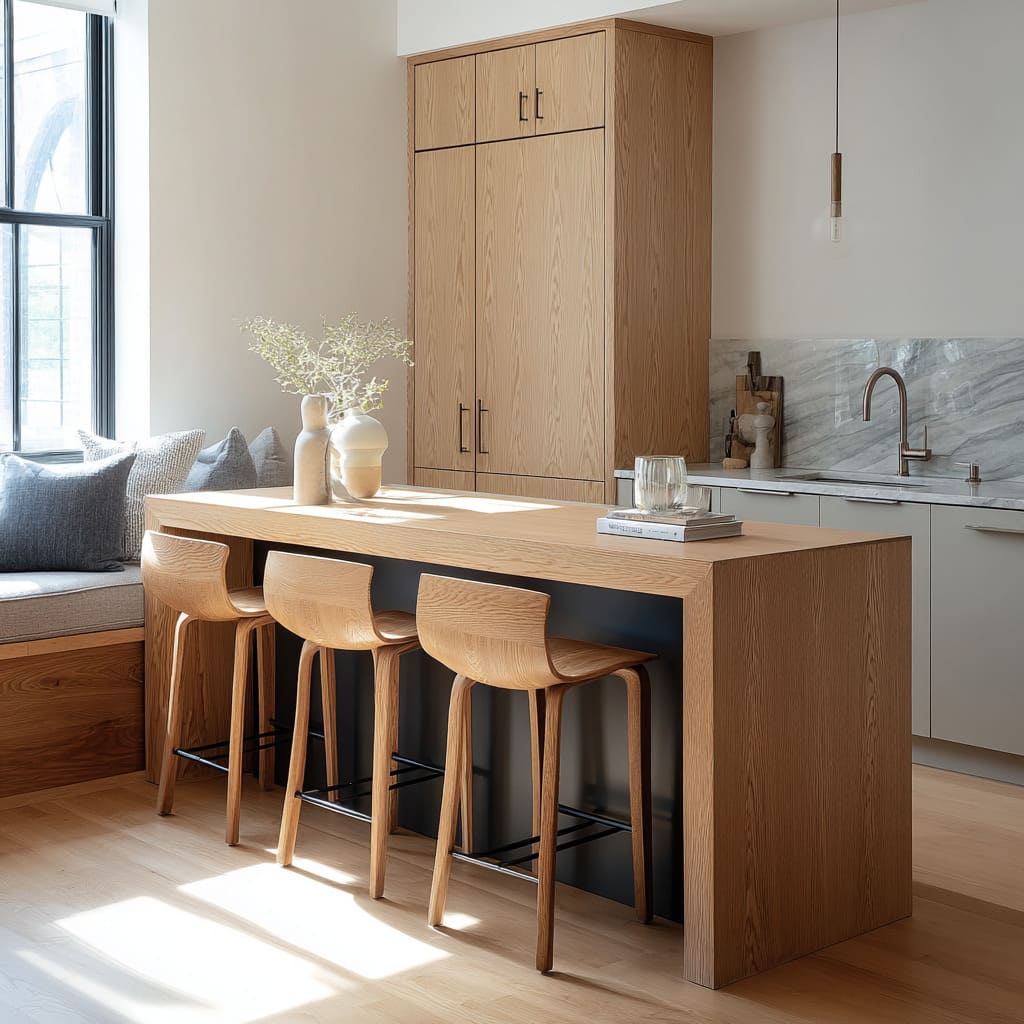
Objects placed on consoles are kept minimal, but their arrangement carries significant weight in shaping the atmosphere. They often follow a pattern of stepping heights: a low tray, a medium vase, and a taller branch.
This creates a soft upward movement that mirrors shelf tiers or window proportions without distracting from the main horizontal line. Object profiles are chosen for their contours rather than their colors.
Neutral tones allow the stone or wood surface to stay the main character, and the shapes of the objects introduce a subtle sculptural quality.
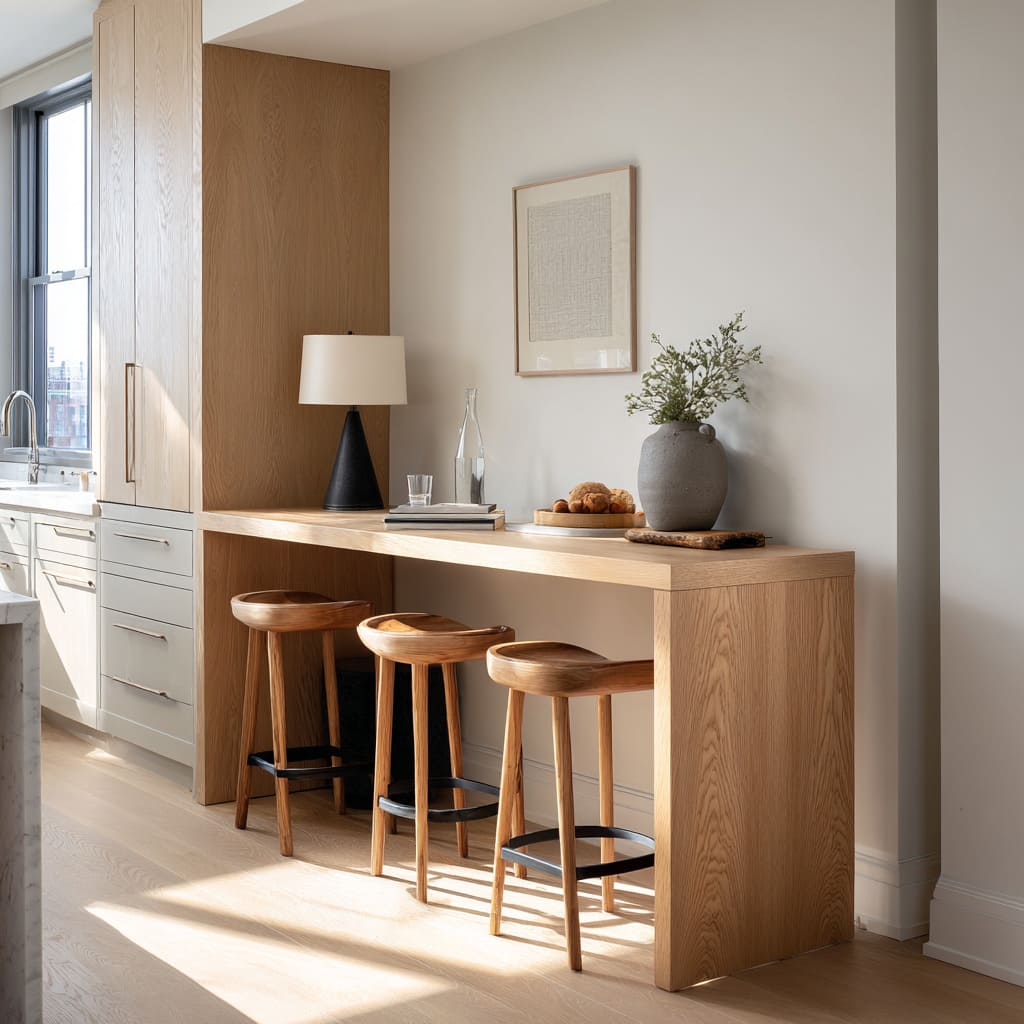
Many compositions use one curved item to soften the console’s strong geometry, such as a rounded jug, a bulbous vase, or a softly tapered vessel. This one curved element often echoes something else in the room—a rounded shelf edge, a curved stool back, or a window arch.
The series of choices stay quiet but add richness. When consoles sit beneath glowing shelves, the chosen objects often repeat a matte quality so they react softly to the light.
Layered bowls, tall bottles, or a single rough clay piece each carry enough presence to give character without creating clutter. These choices give the console the ability to behave like a mini display zone, one that’s connected to the broader architecture rather than competing with it.
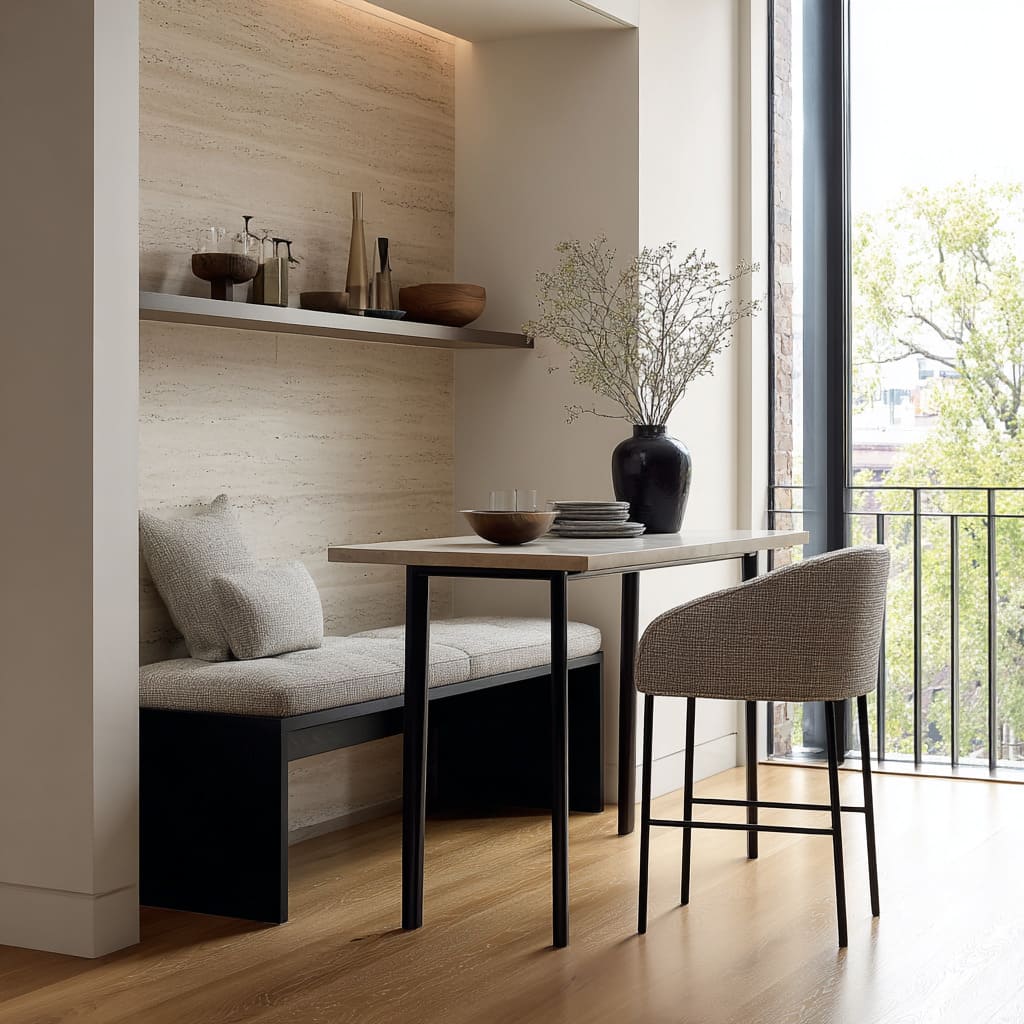
How Consoles Expand the Island: From Narrow Rails to Full Dining Strips
When a console attaches to the side of an island, it changes how the kitchen behaves. A strong stone block can feel severe on its own, but when an oak console wraps a corner or extends outward, it makes the island feel more approachable and social.
This layered relationship is at the heart of ideas that blend a narrow kitchen island table with a more generous wooden extension. The island keeps its functional presence, but the console adds hospitality, giving guests a clear place to sit without interrupting food preparation.
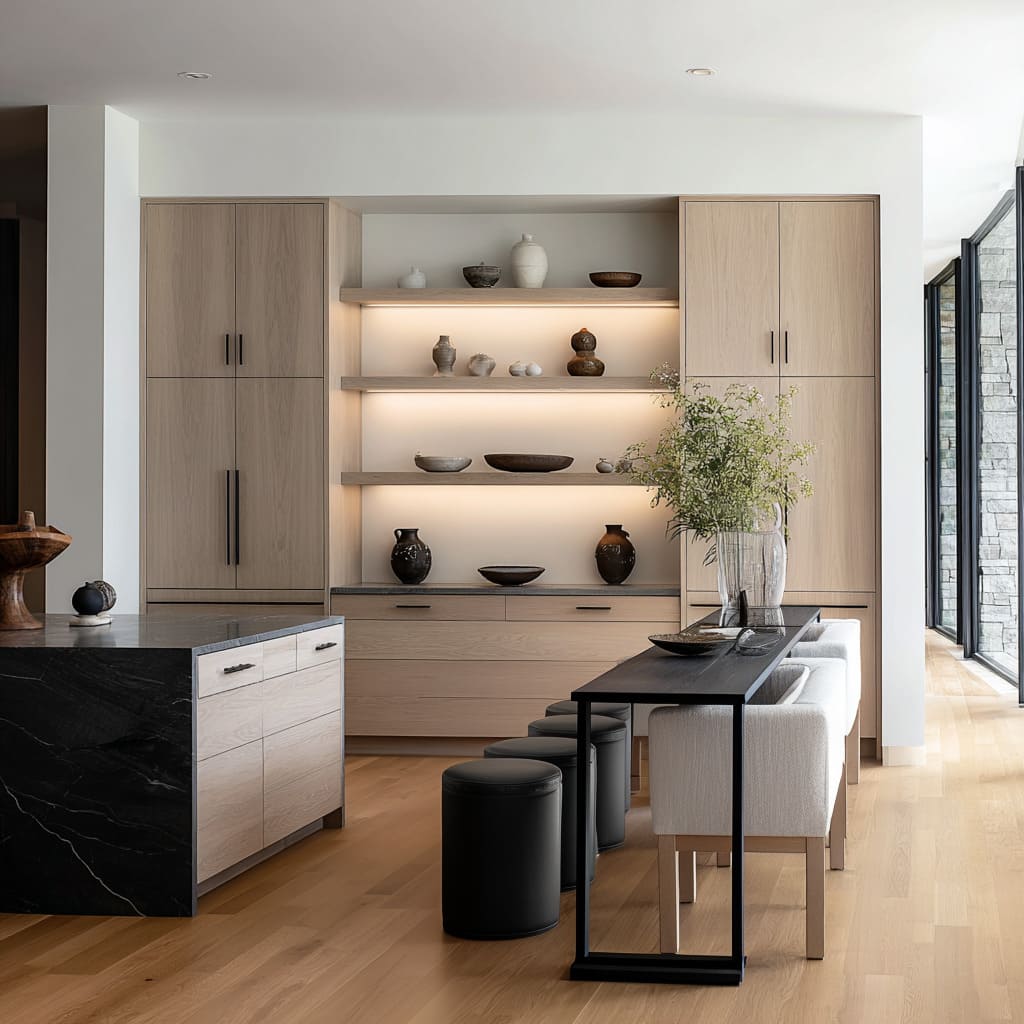
This layered arrangement appears in both compact and spacious kitchens. In smaller rooms, a slim wood or stone surface on needle-like legs becomes a miniature console table in kitchen ideas solution, bridging the gap between island and window without crowding the floor.
In larger rooms, the console often matches the width of the island and continues the surface forward, turning the composition into a long dining strip. Materials extend the idea further.
When the grain of the console aligns with the length of the room, it adds visual depth, while a cool stone veining that points toward the dining end creates a gentle directional pull. These compositions often blend furniture-like softness with sturdy architectural anchors.
The result is a hybrid form—part island, part dining, part display—that merges utility and comfort into one elegant gesture.
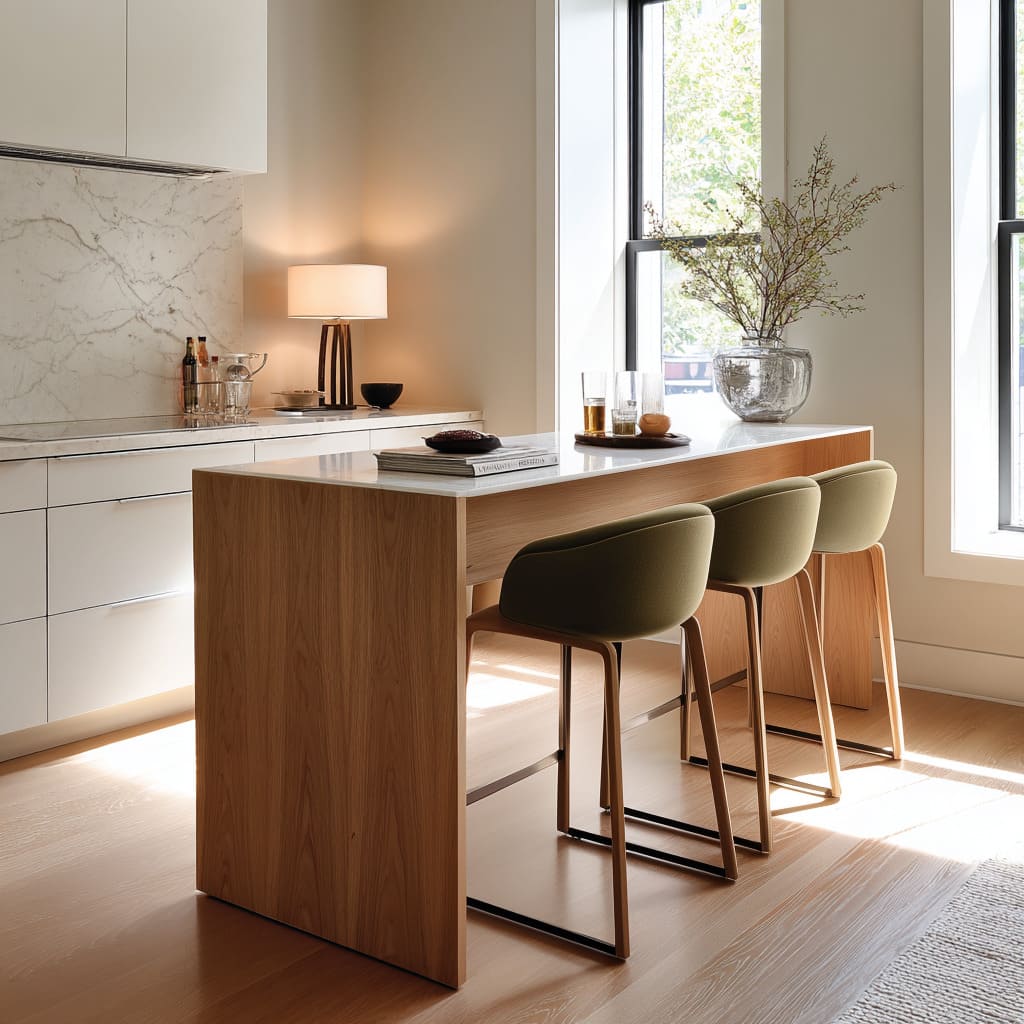
Designing for Flow: Lines, Shadows, and Seamless Transitions
A modern kitchen console excels when it syncs with the room’s existing lines. For example, if the floorboards run the length of the room, the console often mirrors that direction, giving the impression of extended movement.
If the cabinet pulls or mullions form narrow vertical accents, console legs with slim profiles echo those cues without distraction. This is why the best narrow kitchen island table compositions feel cohesive: instead of inserting a blocky form, the console becomes an extension of the room’s visual flow.
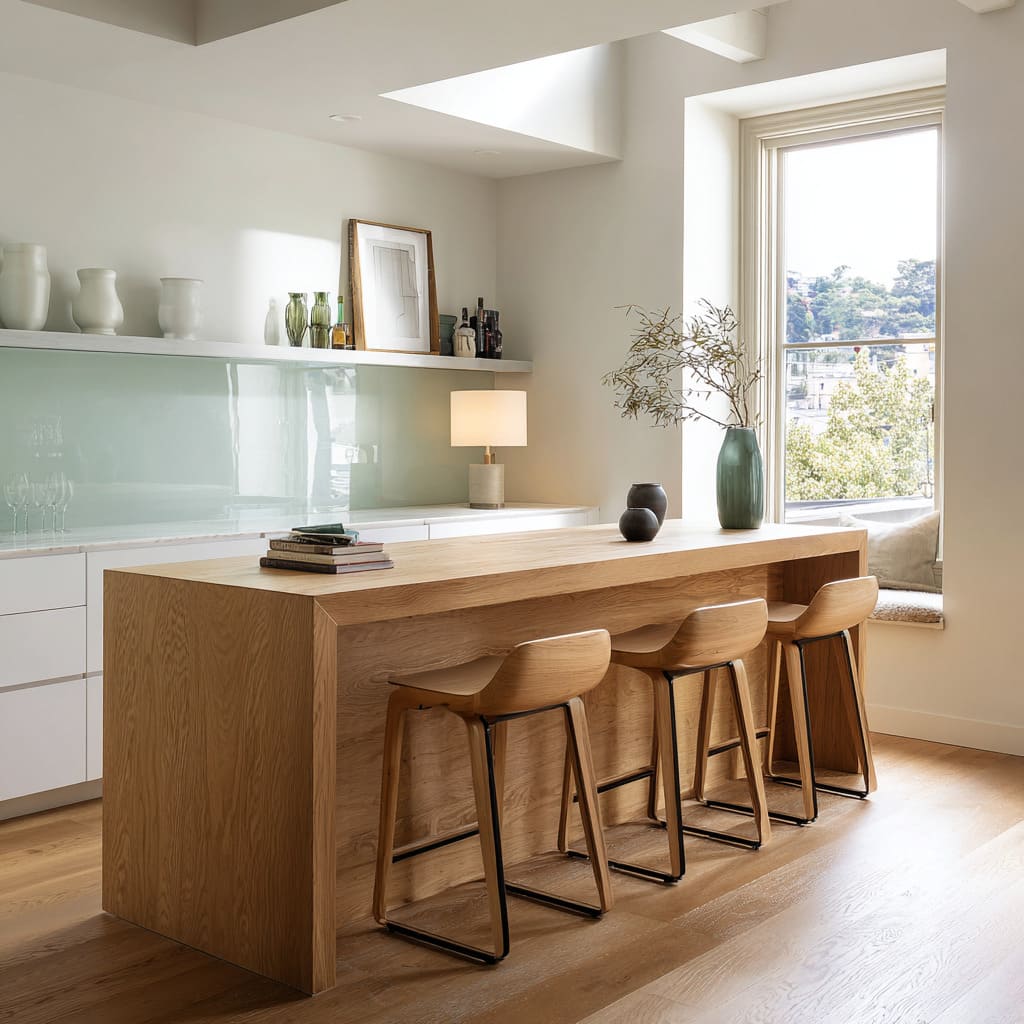
Shadow lines contribute just as much as actual lines. When the console top sits a few millimeters above or below the island surface, a thin shadow forms, drawing a crisp graphic separation.
These tiny gaps keep materials from blending into a heavy block and emphasize craftsmanship without being loud. Subtle differences between console thickness and nearby shelf thickness add variety, so the wall does not look like a monotone panel.
In spaces where stone or wood patterns could dominate, consoles act as calm editors. Their smooth surfaces and clean silhouettes balance the visual energy of strong veining or heavy textures.
This harmony is also why designers frequently pair consoles with low-profile stools—they maintain the simplicity of the silhouette without breaking the main horizon line.
A Multi-Layered Summary of Modern Console Roles in Kitchen Designs
The modern kitchen console is one of the most versatile decorative tools in contemporary interiors. It can bridge an island and a window, turn a tight wall into a graceful ledge, or extend the social reach of a cooking area by adding a warm wooden strip.
The joy of these arrangements is that they fold several functions into one slim shape without overwhelming the room. In designs where people seek fresh kitchen island table ideas, the console brings all the softness of furniture while respecting the clarity of the architecture around it.
Shapes, grain directions, seating profiles, and curated objects all work together to create a setting that feels welcoming and visually controlled.
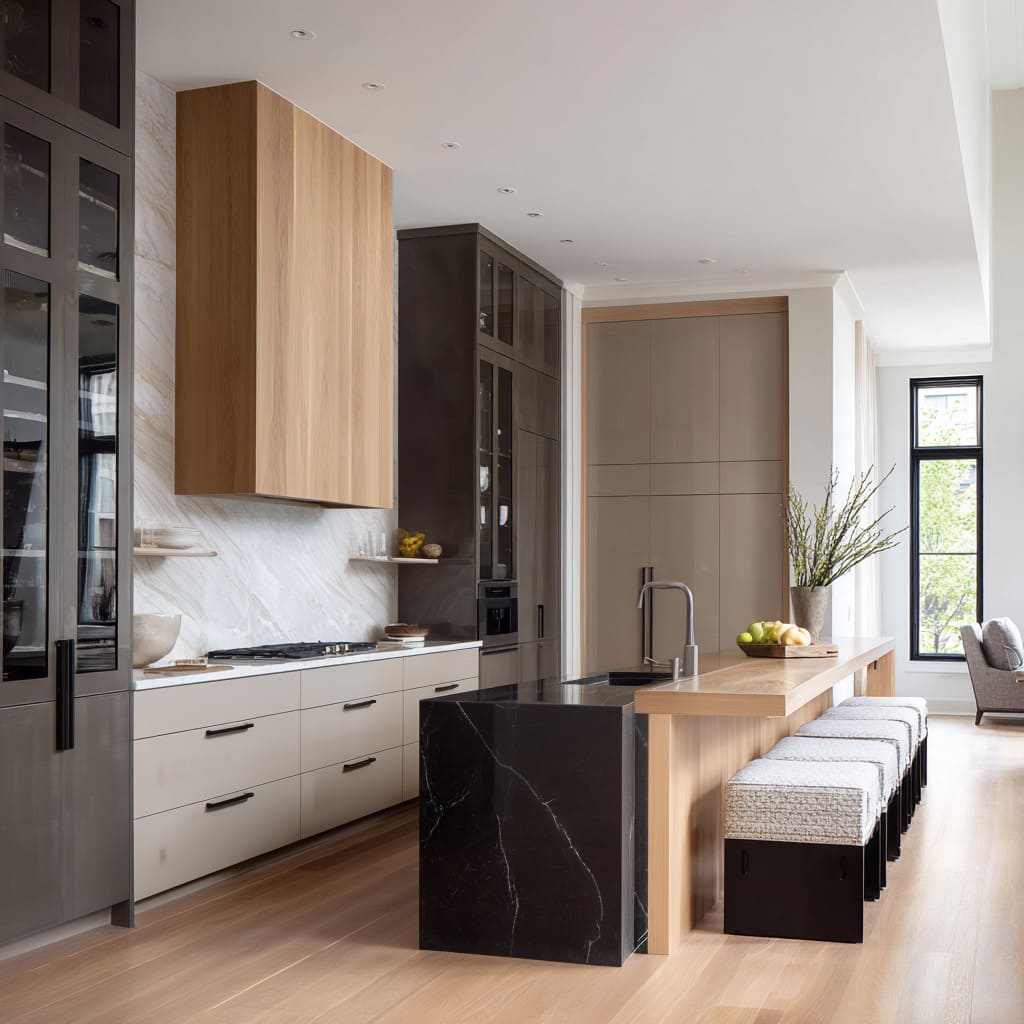
Some consoles channel a lounge-like mood with upholstered stools, soft lighting, and repeated curves. Others keep a gallery-like precision with stone frames, tall vases, and quiet shelves glowing above.
When consoles run parallel to an island, they produce a seating rail that feels long and easy; when they sit beneath windows, they feel airy and peaceful. In compact layouts, they act as subtle connectors, guiding the eye from kitchen to living area.
These layered elements, explored through various island table ideas, form a complete visual language of modern kitchen design. They highlight how slim surfaces, calming shapes, curated objects, and precise alignments can turn a single line of wood or stone into a social anchor inside the kitchen.