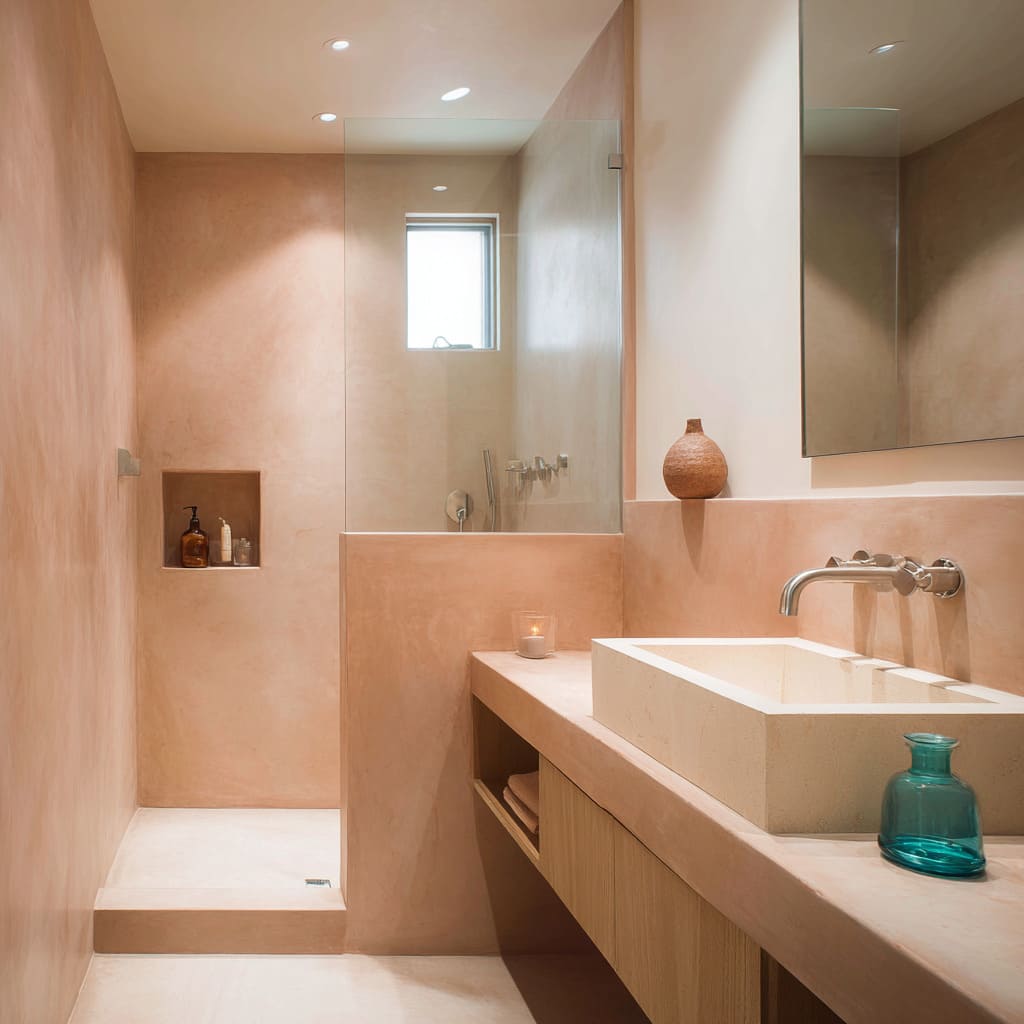
Modern terracotta bathroom concepts increasingly treat clay-toned surfaces as part of the architecture rather than as small decorative accents. Instead of using isolated splashes of colour, many designs form large, calm planes of warm, peach-rose plaster or soft clay micro-coatings that wrap walls, niches, and deep window reveals in a single continuous tone.
Terracotta can become a kind of atmospheric skin—one that controls how the room feels before any furniture or decor even enters the picture. It is a method that creates immediate softness and visual quiet because there are no grout lines breaking the surfaces and no harsh shifts between materials.
.
The effect behaves almost like stepping inside a carved clay chamber where light, air, and movement sit against a warm, mineral backdrop. These soothing planes often meet neutral floors in pale stone or soft beige tile, letting the warm colour read as a sculpted mass floating above a light base.
This architectural treatment is central in many terracotta bathroom ideas, presenting clay not as a bright accent shade but as a subtle, elegant foundation that defines the room’s identity. Within this approach, shadows, gradients, and soft illumination become additional layers of colour, giving the plaster a mood and rhythm that changes throughout the day and into the evening.
Terracotta as Patterned Surface: Mosaics, Strips, and Woven Effects
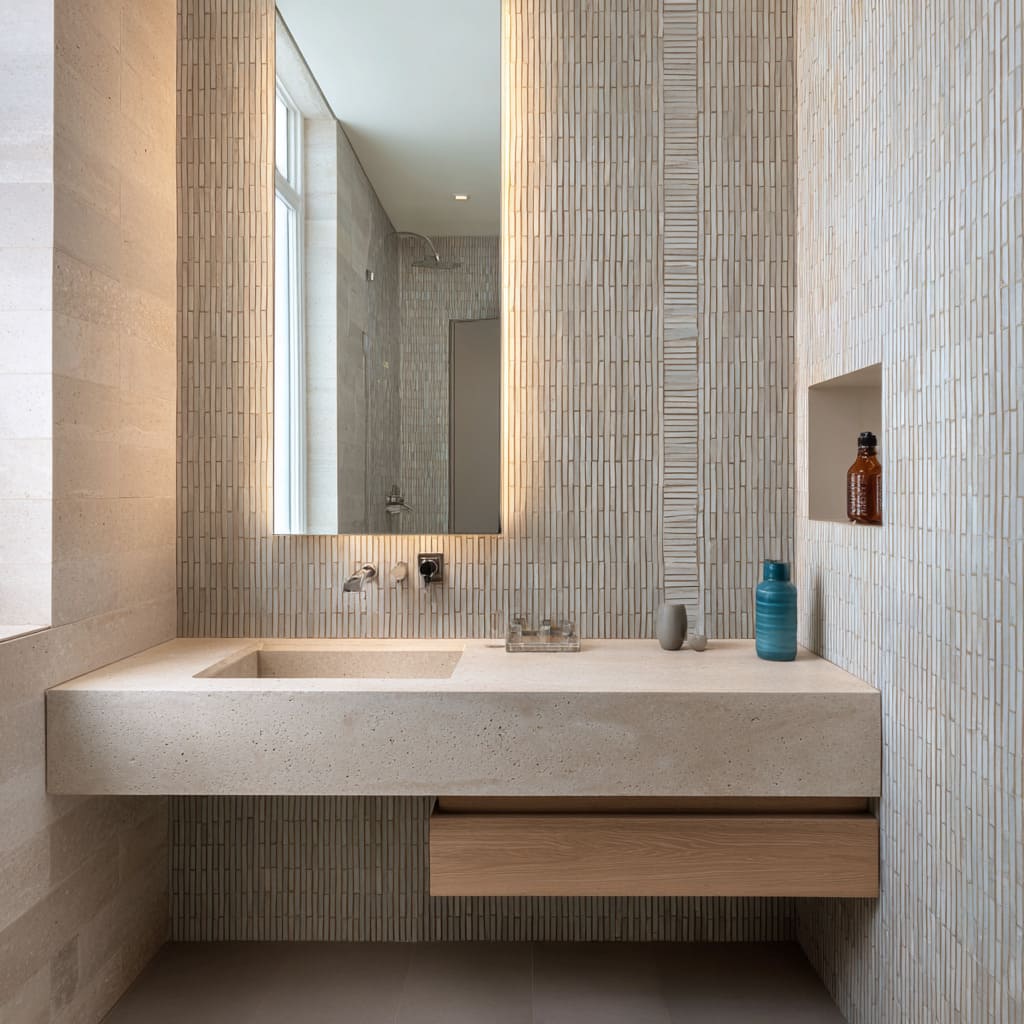
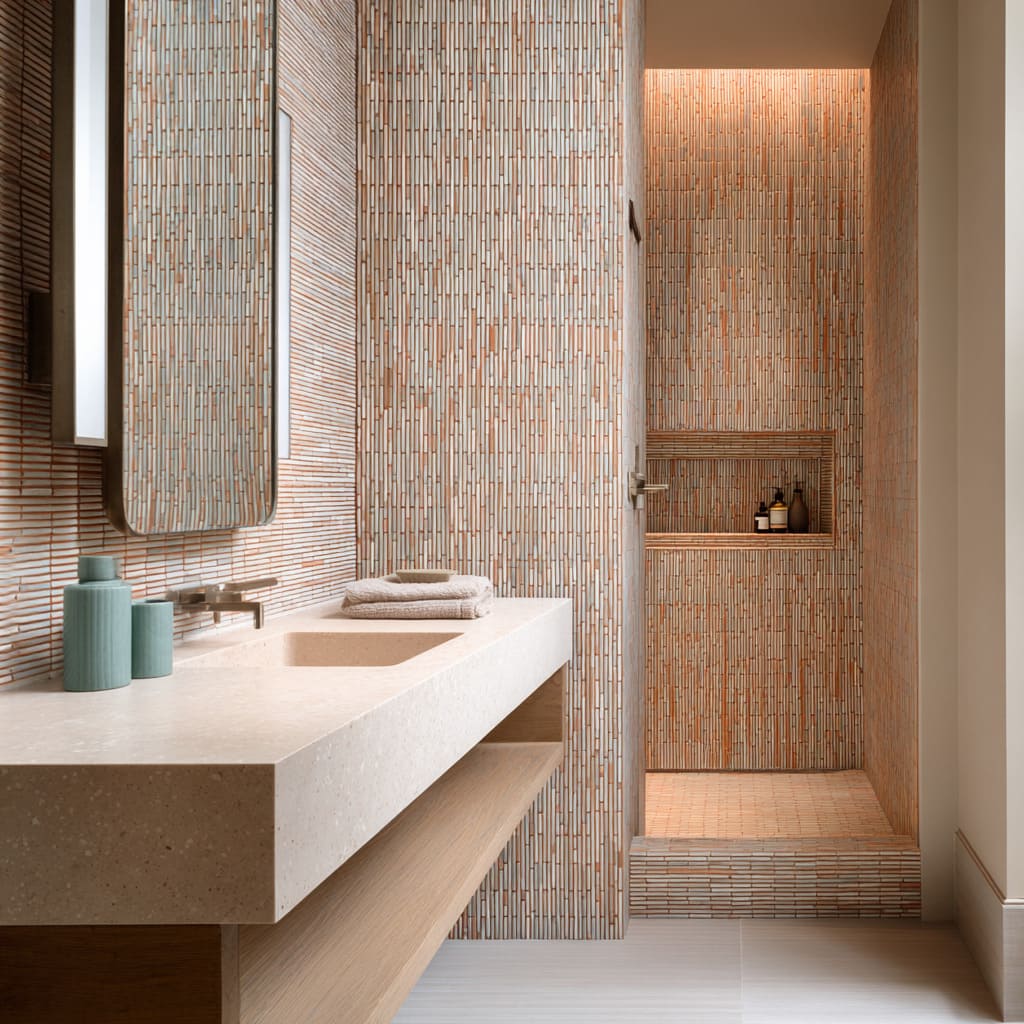
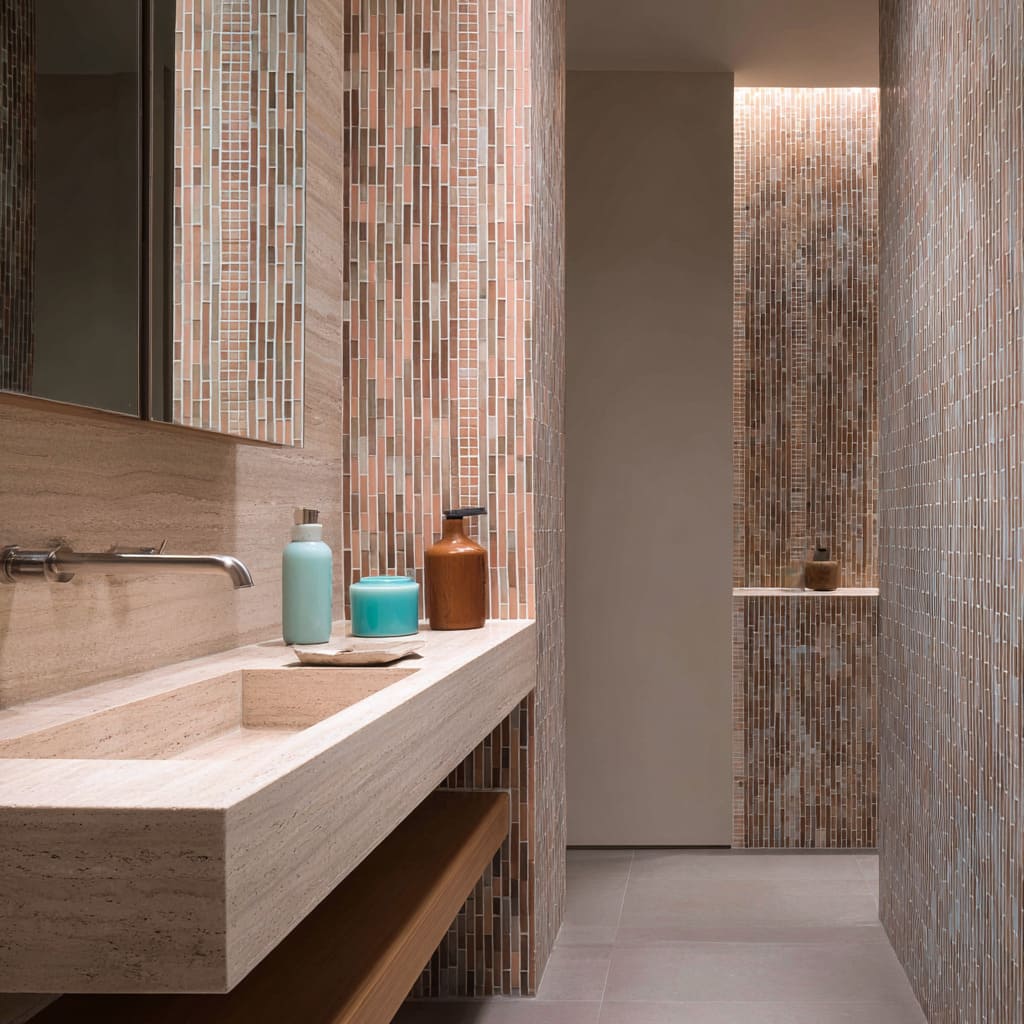
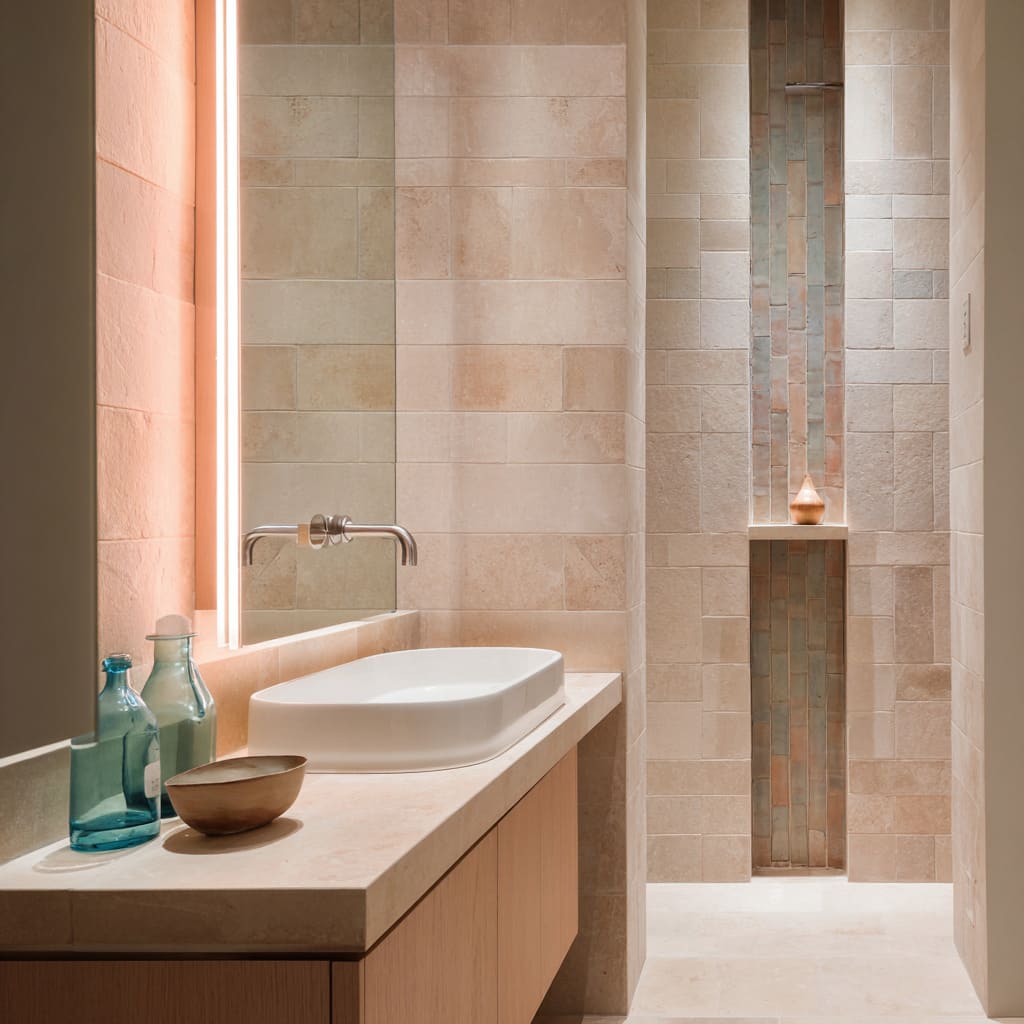
Another strong design direction turns terracotta into the “fabric” of the room rather than the structural shell. Slim vertical mosaics—some barely wider than a pencil—are stacked in long lines over walls, shower recesses, and vanity zones.
These stripes mix notes of clay, cream, soft grey, and sandy beige to create intricate, woven-like patterns that read almost like linen or textiles rather than tile. This approach is particularly compelling in terracotta tile bathroom ideas, where designers explore shifts in scale, colour, and pattern density.
Often, the eye travels upward along the fine vertical rhythm of the mosaics, giving even a compact room design the illusion of extra height. Variation is a crucial ingredient: some stripes lean warmer, others cooler, and some shift gently from one tone to another; together they keep the surface lively without overwhelming the design.
Sometimes designers interrupt these slim strips with a single vertical band of tiny squares, functioning like a decorative ribbon or accent border on fabric. Others run the mosaic across the front of shower steps or along the curve of a built-in niche, forming a continuous textile-like wrap.
The beauty of this strategy is that it brings texture without weight. It also allows terracotta to mingle with neutrals in the same field, producing a contemporary, soft interpretation of clay tones—perfect for rooms that require warmth but still aim for a sleek, modern look.
Terracotta Balanced with Stone: Geology as Design Language
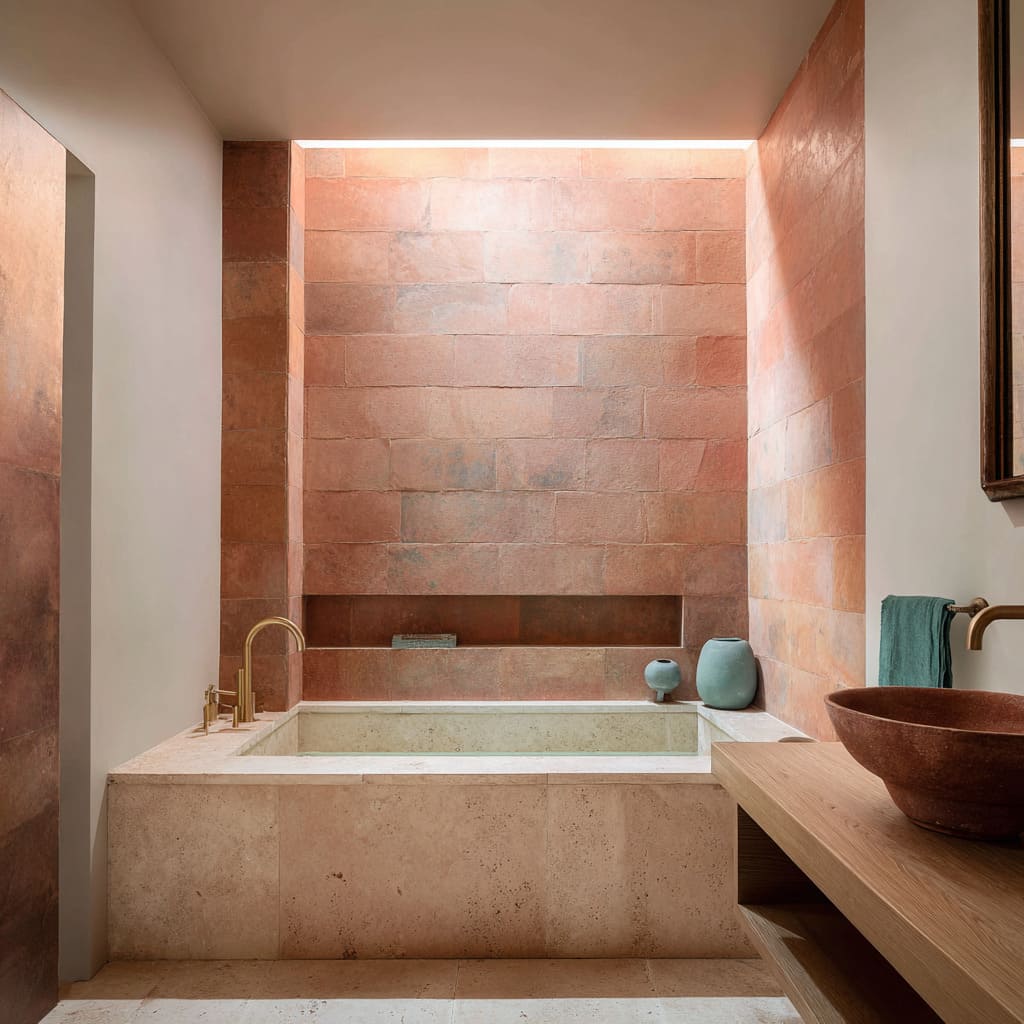
In a different direction, terracotta is used not as a pattern but as a deep, mineral expression—something closer to geology than décor. This aesthetic transforms the bathroom into a refined, stone-forward retreat where warm clay colours meet creamy limestone or toasted travertine.
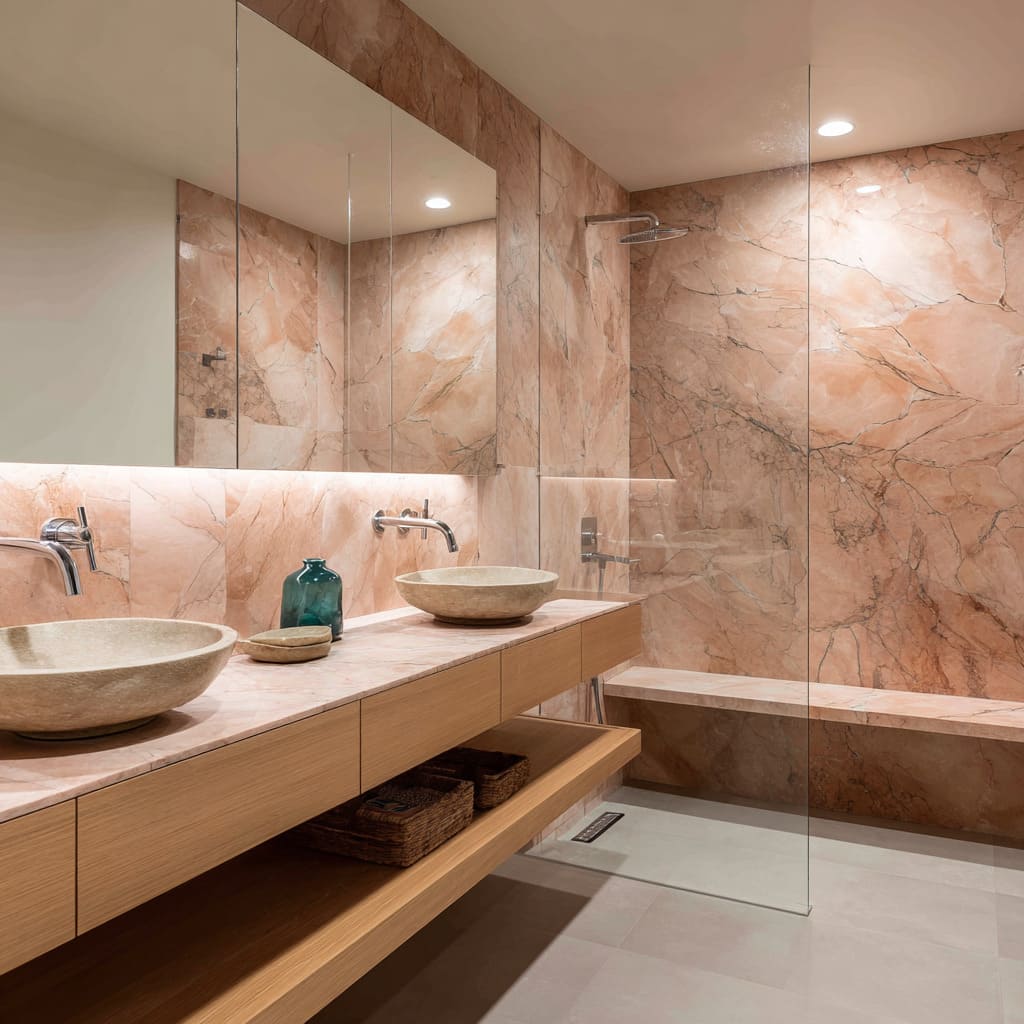
Some concepts use hand-pressed, slightly irregular tiles in soft salmon, rose, and biscuit tones to evoke a worn courtyard wall with subtle imperfections that feel storied and gentle. Others adopt large marble-look slabs where sweeping, clay-tinted veins run diagonally across the walls like sediment layers exposed by erosion.
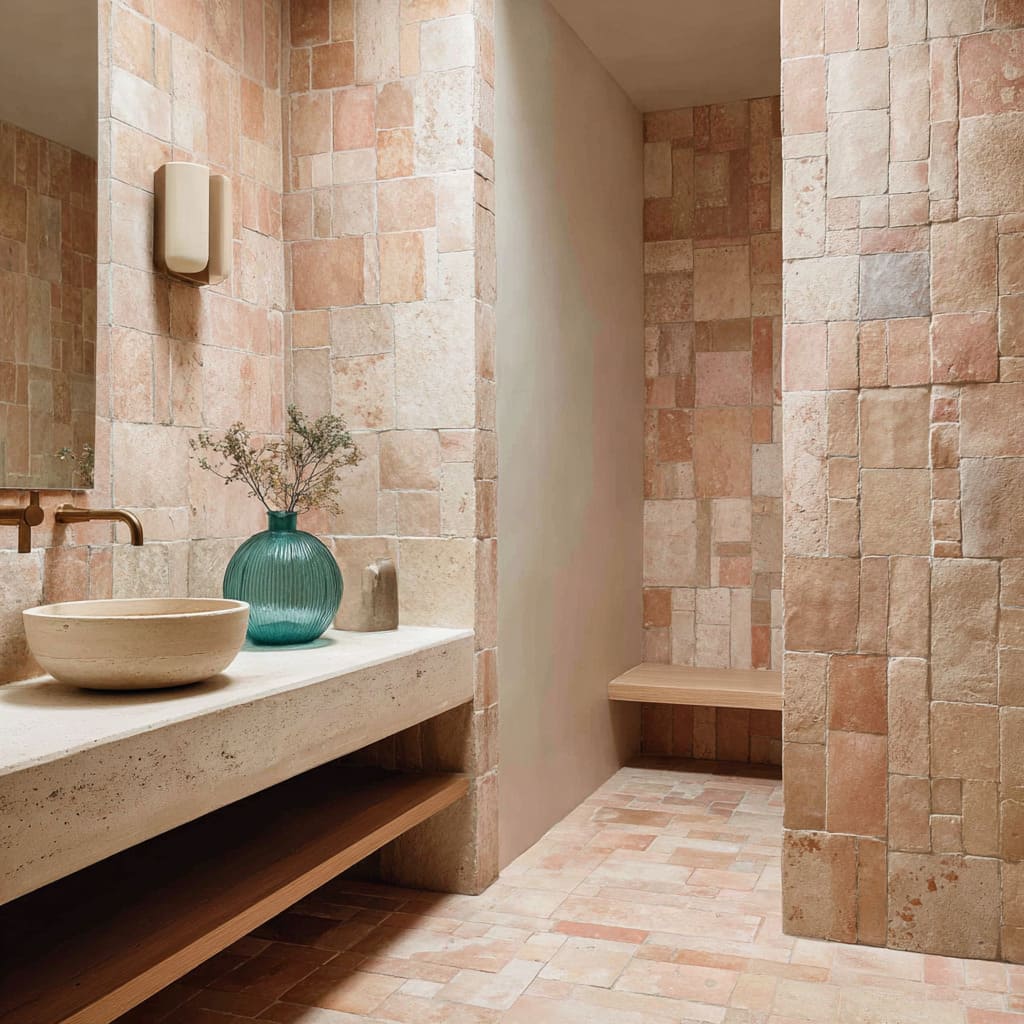
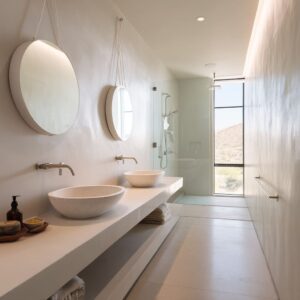
Vanities cut from solid creamy stone sit beneath broad mirrors, while vessels in chalky tones rest on thick slabs, forming compositions that resemble carved water basins inside natural rock. This approach offers visually rich terracotta floor bathroom ideas, where the base plane becomes part of the overall geological story.
A floor of sandy limestone or smooth stone-look tiles extends into open wood shelves or slatted timber seats, adding a soft, earthy contrast to the warm clay walls. The dialogue between stone and terracotta is further strengthened by subtle colour transitions: pale stone counters prevent the clay tones from feeling heavy, while wood bases or benches introduce a sun-warmed, natural warmth that mirrors the tones in the tile or plaster.
The whole composition radiates calm through simplicity, yet feels visually layered because of the complex, subtle variations in the materials themselves.
Colour Concentration and the “Clay Chamber” Concept
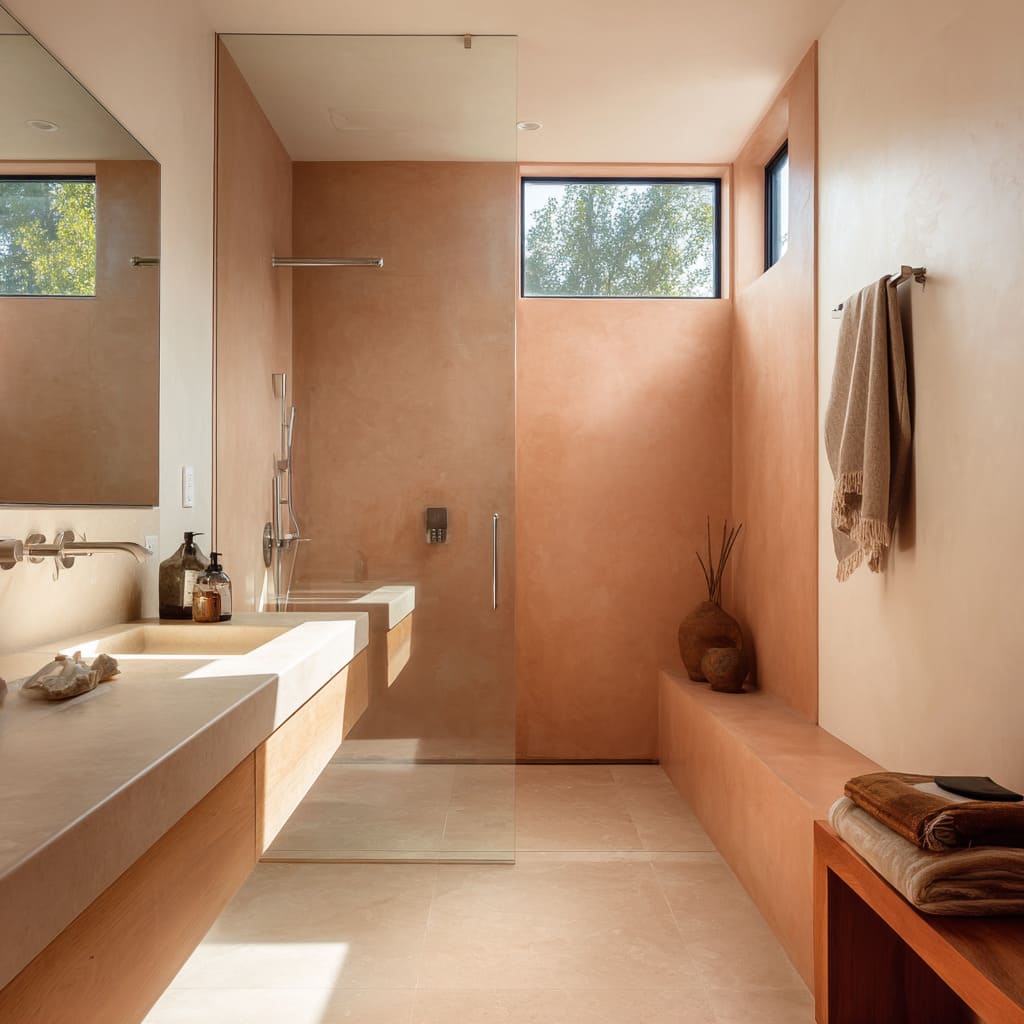
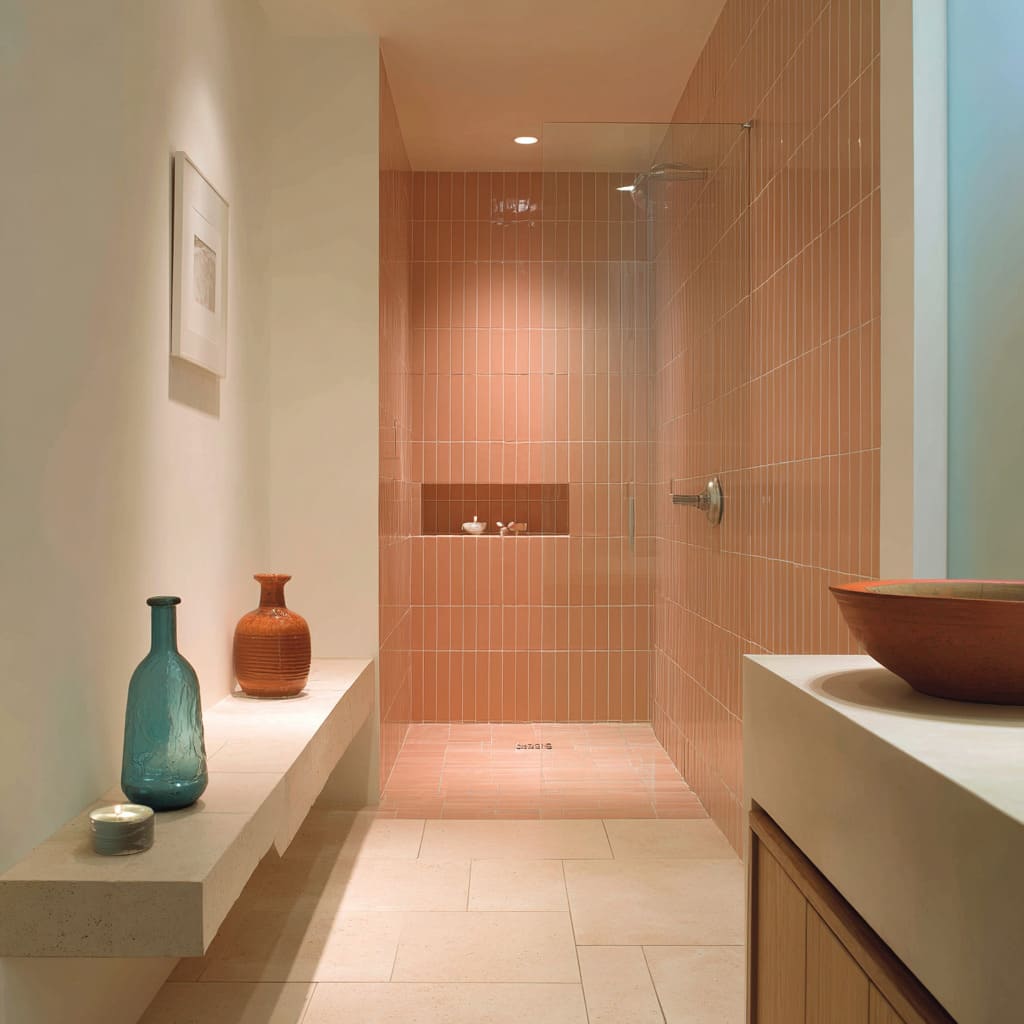
A particularly striking design method concentrates terracotta into one focused zone instead of spreading it across the entire room. A deep clay recess—usually the shower—acts as the warm heart of the composition, especially in the kinds of layouts where you walk through a neutral design and arrive at a saturated end wall.
Smooth satin terracotta tiles or soft clay-plaster walls wrap the shower from floor to ceiling, creating what feels like a carved clay capsule. This approach is especially effective in long layouts, where the eye is pulled toward the end of the room by the warm block of colour.
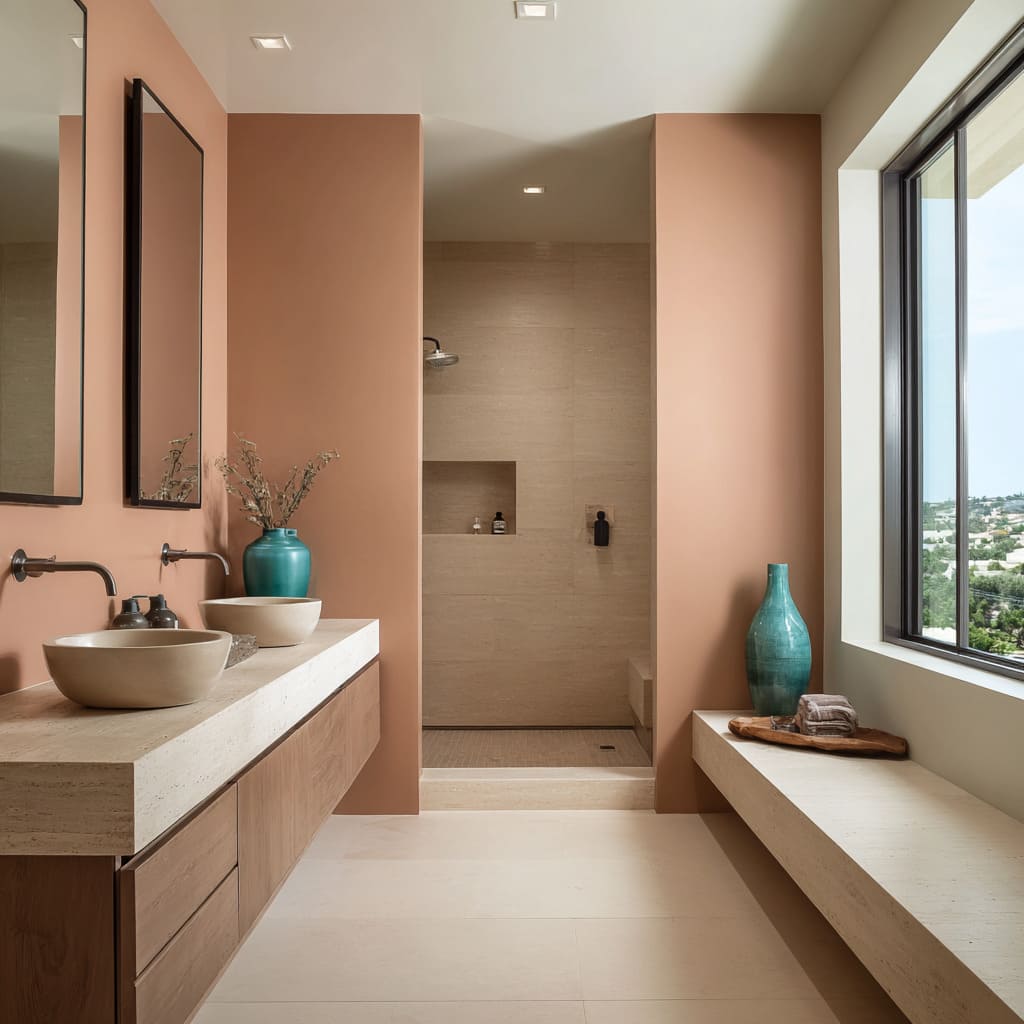
In such compositions, the corridor is kept pale and calm: stone floors, light walls, and minimalist vanities guide attention forward. A floating bench in stone or timber often sits just before the shower, holding a teal glass bottle or a clay vessel that acts as a visual “stepping stone” into the warmer chamber.
This interplay between warm recess and cool entry creates a dramatic spatial progression. The clay zone glows under soft overhead lighting, while white or sandy surfaces outside remain quiet and supportive.
That difference in atmosphere makes terracotta feel energizing yet serene, and it helps maintain long-term versatility—ideal for designs that want strong identity without overwhelming everyday use. Many designers rely on this visual progression when creating subtle transitions in bathroom ideas with terracotta floor tiles, allowing the clay tone to feel special within the larger palette rather than repeating across all surfaces.
Terracotta Layered Through Object Styling and Colour Counterpoints
While terracotta makes an impact on walls and floors, object styling enriches the palette with quiet, intentional contrasts. One of the most distinctive visual patterns across many modern clay-toned bathrooms is the frequent use of teal or deep blue-green glassware.
These vases, bottles, and small jars act as cool, watery counterpoints to the sun-warmed clay tones. Their translucent nature allows light to pass through, casting soft shadows and subtle blue glints onto stone counters.
They often place this glass at transition points—where clay walls meet stone slabs, where a plaster recess leads into a vanity zone, or where a wooden bench sits before a shower entry. Additional décor objects expand the clay narrative gently: rough terracotta vessels, cork trays, and stone dishes add layers of matte texture; dried stems rise as slim organic lines against the heavier stone and plaster backgrounds; and neatly folded sand-coloured towels echo the clay warmth without repeating it exactly.
These strategically placed styling elements become miniature versions of the room’s larger palette: clay, stone, wood, cool glass, and soft textiles all captured in a few small items. This subtle integration strengthens the atmosphere without cluttering, shaping a refined approach to terracotta bathroom decor that emphasizes harmony rather than ornamentation.
Terracotta Blended with Soft Neutrals: Whispered Warmth
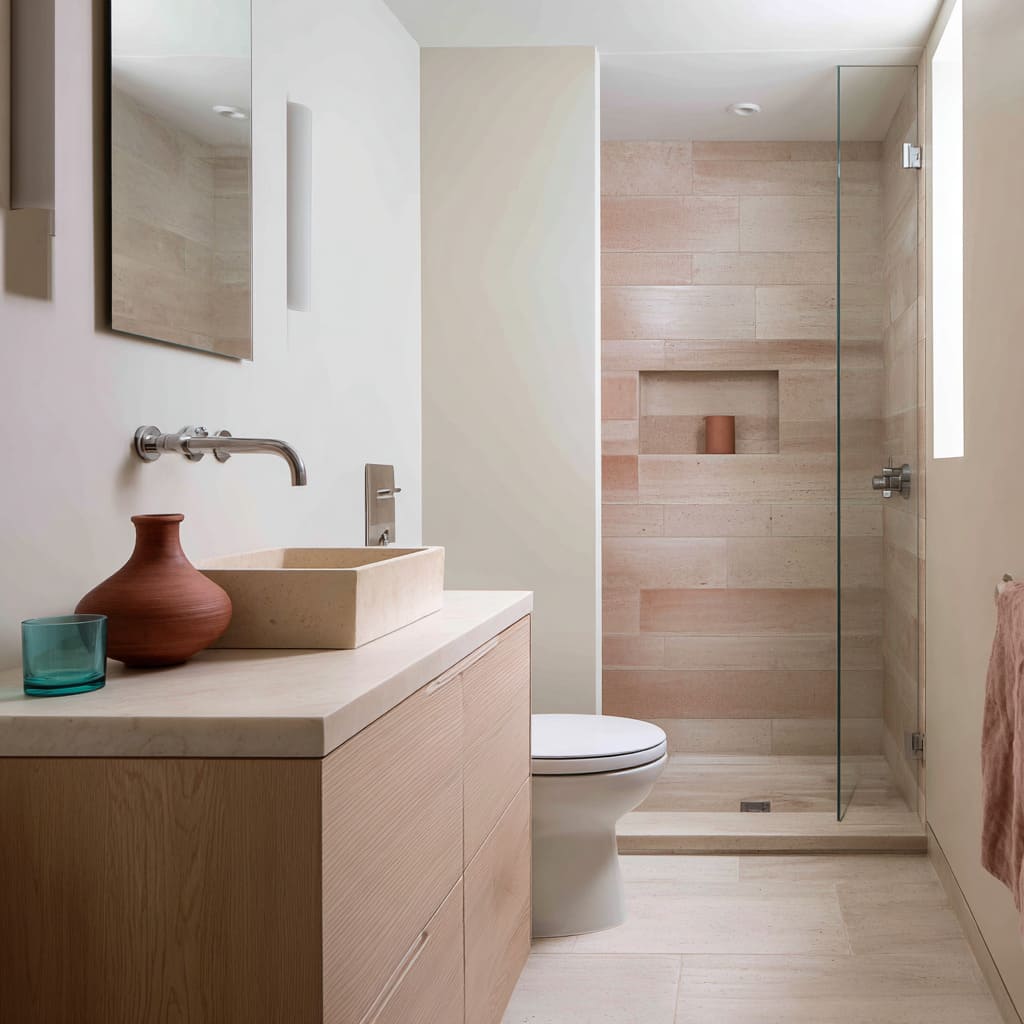
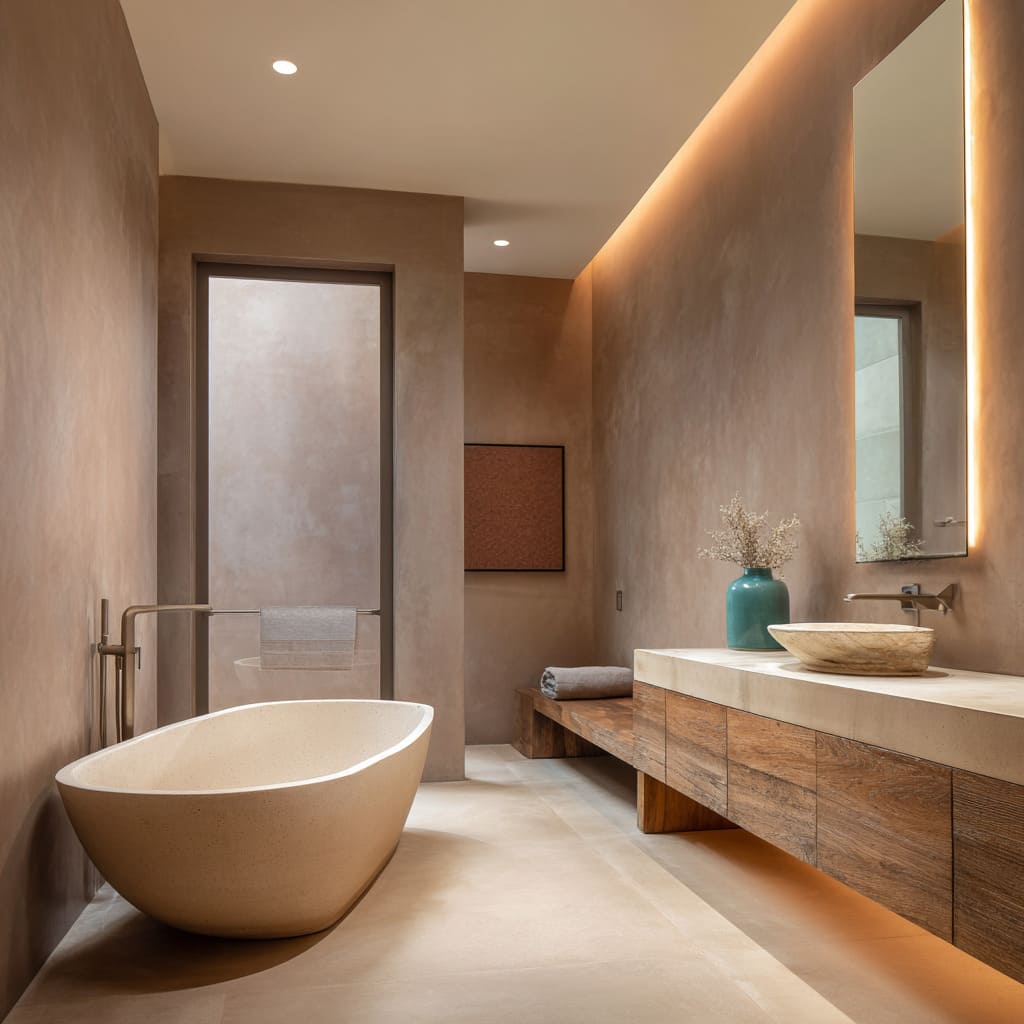
Not all terracotta bathrooms rely on strong colour statements; many explore the subtle side of clay through near-neutral palettes with faint peach or rosy undertones. In such designs, beige, greige, and sand-toned tiles form the main surfaces while terracotta only appears through delicate inclusions: a vertical band of slim clay tiles inside a niche, a soft blush tint in the plaster, a muted clay vessel on a shelf, or a faint peach cast introduced by warm ambient lighting.
The result is a barely-there warmth that creates a serene, meditative quality without committing to visible colour blocks.
This tone-on-tone softness works well in compact rooms, where visual calm is essential, and aligns with the increasingly popular terracotta and grey bathroom direction in contemporary styling. Pairing clay blushes with gentle grey notes—either in stone, grout, or small accessories—brings balance while preventing the design from leaning too warm.
This restraint lets terracotta operate at the level of mood rather than obvious pigment, offering a versatile, timeless design strategy. Even cabinetry and vanities participate in this whisper-soft palette: pale oak, soft beige stone, and light plaster surfaces blend the clay note so smoothly that the entire room feels dipped in warm daylight.
Terracotta as Modern Minimalism: Clean Lines, Calming Geometry
Many contemporary terracotta bathroom concepts play with strict geometry to create quiet yet visually powerful compositions. In such settings, stone counters appear as solid horizontal slabs with integrated basins carved directly into them, producing seamless monolithic shapes.
Wood vanities are typically handled as floating blocks or slatted facades that create delicate vertical rhythms against warm clay walls. Mirrors stretch vertically to elongate the room and reflect the terracotta envelope, multiplying the warm tone without visually crowding the design.
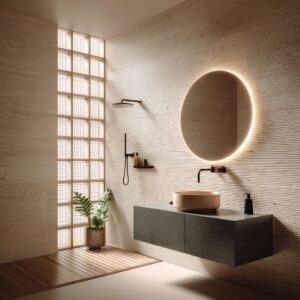
Large uninterrupted plaster planes form calm backgrounds for simple round basins or rectangular trough sinks, and shower niches become geometric voids that highlight the clay colour rather than distract from it. Within this structured minimalism, lighting becomes the shaping force: concealed strips behind mirrors, recessed coves along ceiling edges, and soft downlights over textured clay create gentle gradients that let the colour shift organically.
This structured modernity is an option for terracotta floor bathroom ideas, where pale floors meet clay walls at clean, crisp lines that enhance spatial clarity. The overall effect is calm, sculptural, and contemporary—designs defined by steady shapes rather than loud decor.
Terracotta as Focused Accent Within Pale Stone Environments
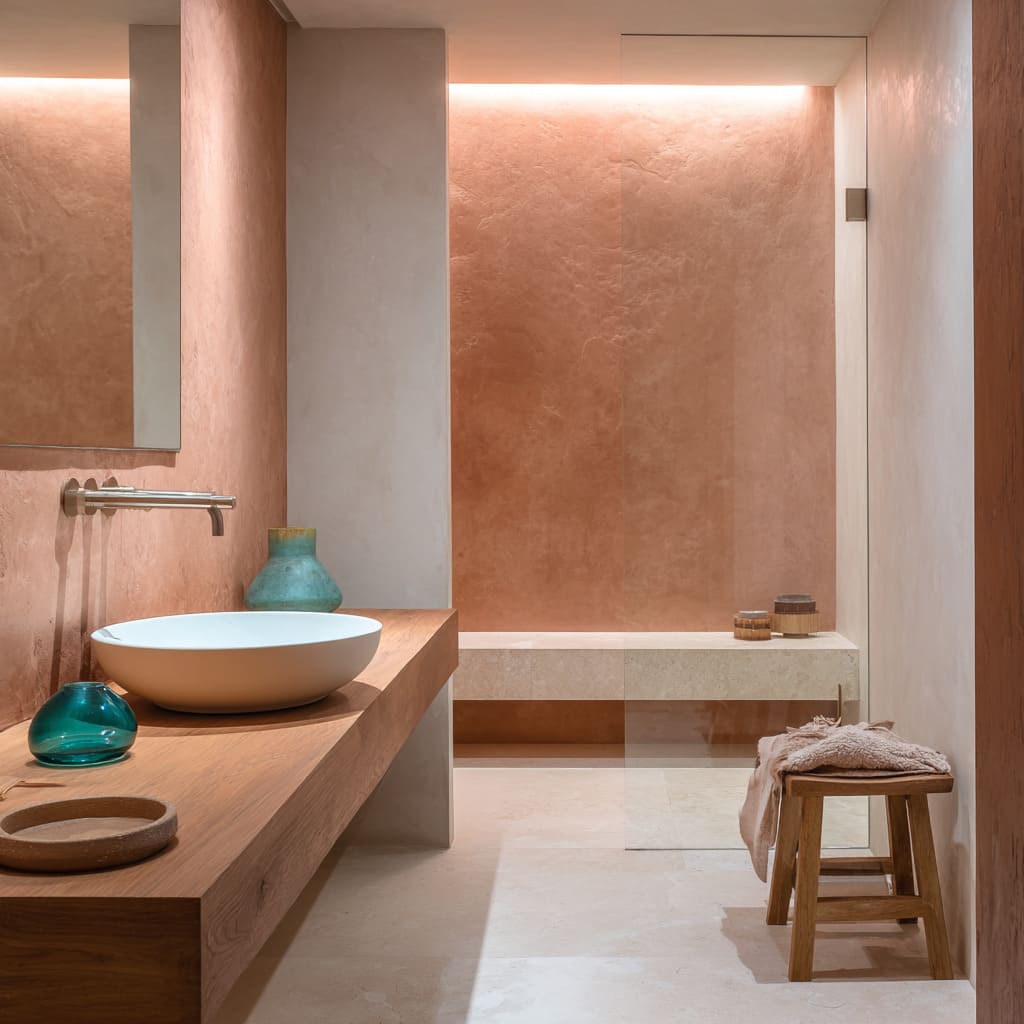
There is another approach where terracotta becomes a single, concentrated accent rather than the room’s dominant colour. This method often places warm clay tones on one key wall—typically behind the vanity—while surrounding areas remain in stone, plaster, or light tile.
The result is a deliberate contrast between the warm clay “stage” and the cool architectural frame surrounding it. An oak stool, a bright white vessel basin, and a slim tall mirror often sit against this clay panel, forming a compact, sculptural vignette.
The shower area then stays calm in soft limestone, letting the terracotta read like an intentional introduction rather than the entire identity.
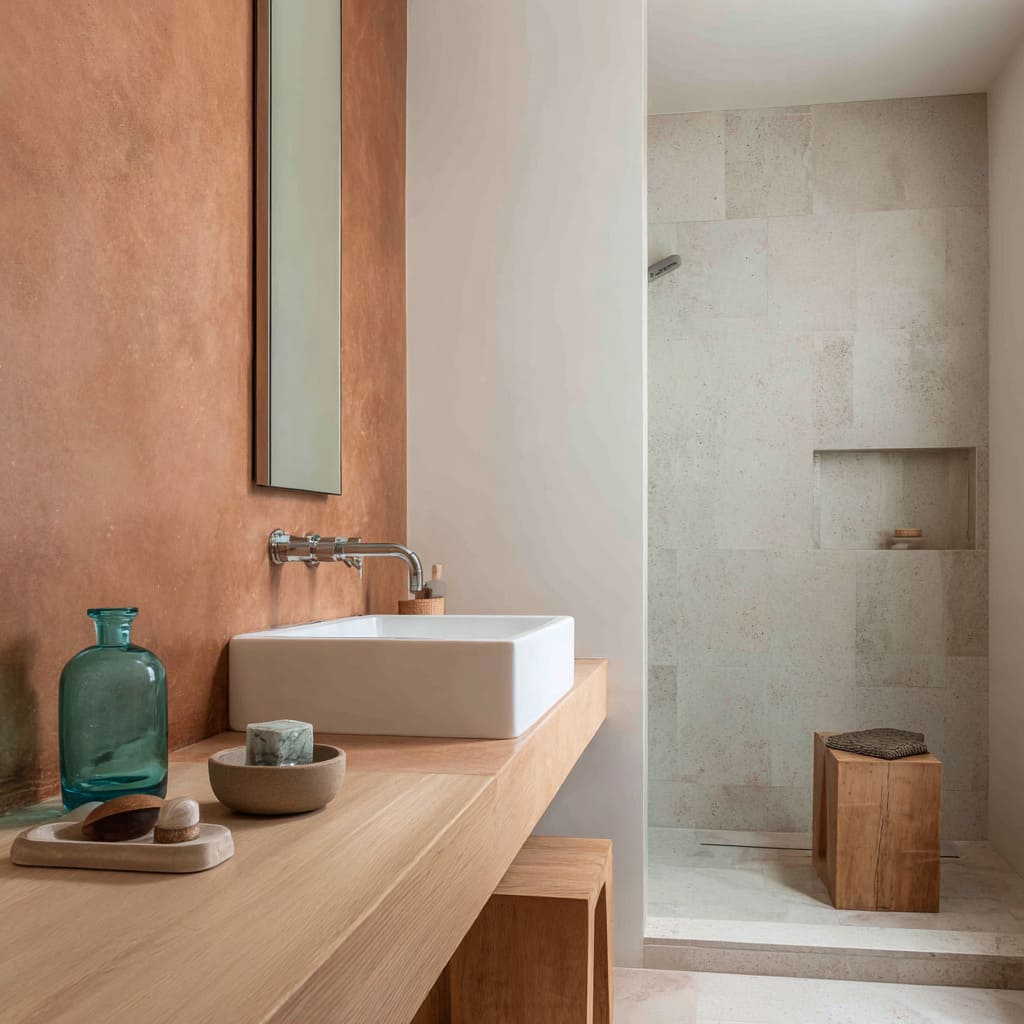
This mild use of clay works beautifully in compact layouts and offers subtle design depth without overwhelming everyday activities. It also harmonizes with many interpretations of terracotta floor bathroom ideas, where warm stone flooring or pale timber planks maintain a quiet base while terracotta appears only where visual emphasis is needed.
The balance between warm terracotta zones and pale stone surroundings yields interiors that feel both expressive and serene—ideal for homeowners or designers aiming for warm modernity without strong saturation.
Terracotta as Immersive Warmth for Contemporary Retreats
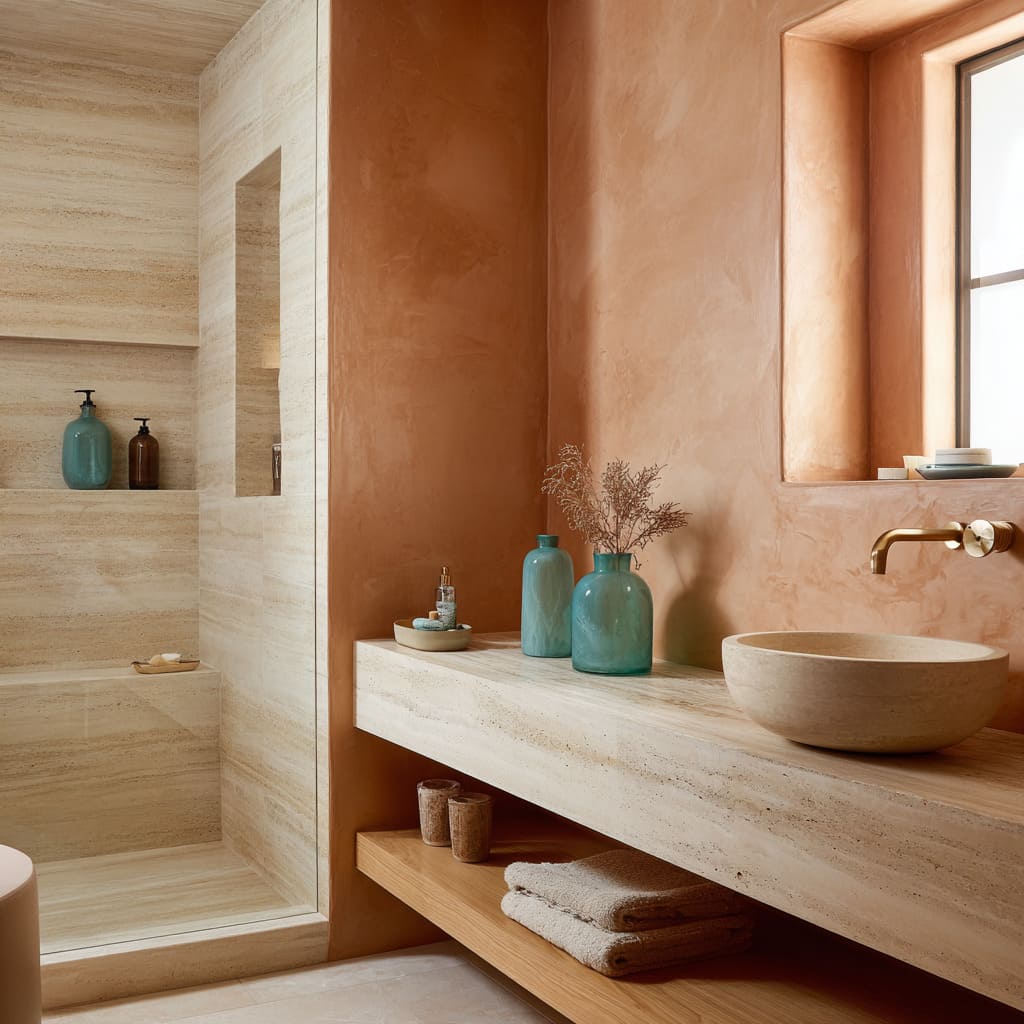
As modern bathrooms increasingly lean toward spa-like atmospheres, terracotta has become an unexpectedly sophisticated tool for shaping warm, enveloping retreats. When used in continuous micro-plaster over walls and floors, it creates the sensation of a molded clay volume.
When combined with creamy stone slabs and slim timber furniture, it forms a gentle sculptural environment reminiscent of boutique wellness spaces. When paired with teal accents and stone bowls, it evokes elemental contrasts—water against warm earth, shadow moving across clay, soft light warming surfaces that feel natural yet refined.
These layered ideas create designs that feel intimate without being rustic, warm without being dark, and modern without feeling cold. They often borrow from these concepts when creating luxurious, minimalistic environments inspired by natural materials and quiet colour palettes.
Even designs that introduce smooth greys, calm neutrals, or faint cool notes can carry terracotta elegantly, offering a restrained and visually rich direction for terracotta and grey bathroom combinations or for integrating subtle clay hints into wider contemporary palettes.